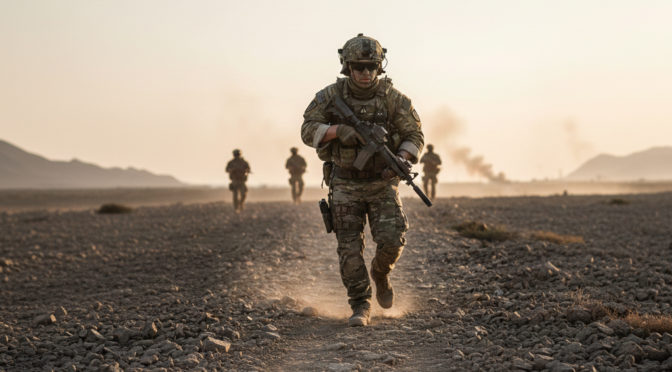
The designation of “elite” within the contemporary military landscape is frequently misconstrued as a mere superlative for physical prowess or advanced weaponry. From the perspective of a military analyst, however, elitism is a structural, psychological, and philosophical framework that enables a small cohort of operators to achieve strategic effects disproportionate to their numerical strength. The “best of the best” are defined not by their participation in high-risk missions, but by their adherence to a specialized set of foundational truths, a rigorous and scientifically validated selection process, and a unique organizational position that bridges the gap between tactical action and national policy. Special operations forces (SOF) represent a “strategic weapon system” where the human operator is the primary platform, and technology serves as a secondary enabler.1
The Philosophical Foundation: The Five SOF Truths
The operational effectiveness of special operations is governed by five foundational principles known as the SOF Truths. These truths are not merely slogans but are the governing logic of force generation and employment for organizations such as the United States Special Operations Command (USSOCOM), the British Special Air Service (SAS), and the Canadian Joint Task Force 2 (JTF 2).1 They dictate that elitism is a product of long-term investment, emphasizing that the capabilities required for high-stakes missions cannot be rapidly manufactured in response to a crisis.
| SOF Truth | Operational and Strategic Implication |
| I: Humans are more important than hardware. | People, not equipment, make the critical difference. The right people can accomplish the mission with available gear, but the best gear cannot fix a lack of the right people.1 |
| II: Quality is better than quantity. | A small number of carefully selected, well-trained, and well-led individuals is superior to a larger force that may be less capable.1 |
| III: SOF cannot be mass produced. | High-level proficiency takes years of training; hastening the process degrades the ultimate capability of the unit.1 |
| IV: Competent SOF cannot be created after emergencies. | Employment of fully capable SOF on short notice requires units that are highly trained and constantly available in peacetime.1 |
| V: Most special operations require non-SOF support. | SOF effectiveness depends on integration with joint service partners, intelligence analysts, and technical specialists.1 |
The Primacy of the Human Variable
The first SOF truth—that humans are more important than hardware—serves as the cornerstone of elitism. In conventional military doctrine, “lethality” is often measured by platform numbers: the quantity of tanks, aircraft, or naval vessels. In special operations, the “center of gravity” shifts entirely to the individual soldier.2 This philosophy posits that properly prepared soldiers possess the unique ability to think, learn, reason, and adapt to changing conditions in ways that technological systems cannot emulate.2 Elitism, therefore, is defined by the quality of the relationships and the trust built within a team before a mission is ever greenlit.7 This “people-centric” focus allows SOF to navigate the “human domain,” shaping the battlespace through influence and rapport as much as through kinetic force.8
The Time-Threshold of Elitism
Truths III and IV establish that elitism is inherently time-bound. Unlike conventional infantry, which can be surged through accelerated training cycles during wartime, special operations units require years of institutional and unit-level training to reach operational proficiency.1 This constraint creates a natural “scarcity” of elite talent. Because the standards of units like Delta Force or the SAS are non-negotiable, the forces cannot be mass-produced without sacrificing the very precision that makes them effective.1 Consequently, the world’s best SOF units are those that have maintained a high state of readiness during periods of peace, ensuring that their unique skill sets are available to policymakers at the onset of a crisis rather than being developed as a reaction to one.1
The Filtering Mechanism: Selection and Assessment
What separates the elite from the conventional is the “filter” of Selection and Assessment (S&A). This process is designed to identify individuals who possess a specific blend of physical resilience, cognitive agility, and psychological stability. S&A is not a training course; it is an evaluation of an individual’s “trainability” and potential for long-term service in a high-stress environment.10
Comparative Selection Methodologies
Units like the British SAS and the U.S. Army Delta Force (1st SFOD-D) utilize selection processes that serve as the global gold standard for military elitism. The British SAS selection, founded in 1941, remains one of the world’s most demanding, focusing on long-distance endurance navigation, survival, and resistance to interrogation.9 Delta Force, founded in 1977 by Colonel Charles Beckwith, was heavily modeled on the SAS after Beckwith spent time as an exchange officer with the British unit.4
| Selection Phase | British SAS | U.S. Army Delta Force |
| Duration | Several months (includes hills, jungle, and SERE).12 | Approximately 31 days (initial phase).12 |
| Core Focus | Endurance, jungle warfare, questioning resistance.9 | Individual performance under extreme stress, land navigation.13 |
| Recruitment | All branches of the British military.9 | Primarily U.S. Army Special Forces and 75th Ranger Regiment.13 |
| Success Rates | Frequently below 10%; some cycles yield zero graduates.9 | Highly secretive, but comparable to the SAS in exclusivity.9 |
The difference in selection philosophy often stems from the recruitment pool. Delta Force typically recruits “seasoned” candidates who are already special operations qualified (such as Green Berets or Rangers), meaning they have already passed significant physical and tactical filters.12 The SAS recruits from across the entire military, including conventional units, necessitating a longer selection process to bring candidates up to the required standard of specialized soldiering.12
Cognitive Benchmarks and Intelligence
The modern elite operator must be an “intellectual athlete.” Research into the Special Forces Assessment and Selection (SFAS) process demonstrates that cognitive ability (IQ) is one of the strongest predictors of success.10 High-tier SOF candidates must demonstrate superior problem-solving skills, working memory, and spatial ability.10 This “cognitive overmatch” is essential because operators must often work in small teams with minimal oversight, requiring them to process complex information and make high-stakes decisions under conditions of extreme fatigue and duress.15 In German KSK selection, for instance, officers are held to even higher cognitive performance standards in computer-based testing than enlisted personnel, reflecting the increased decision-making responsibility of leadership.11
The Psychological Profile of Elitism
Beyond IQ, elite status is defined by a specific personality configuration. Studies comparing special operations operators to civilian and conventional military groups show that elite commandos are significantly less neurotic, more conscientious, and often score higher on “grit” and “perseverance”.14
- Emotional Regulation: The ability to remain calm and focused despite intense sensory overload (smells, sounds, and images of combat) is a primary differentiator.16
- Adaptability: The capacity to adjust thinking and behavior in response to a fluid environment is ranked by operators themselves as one of the most crucial traits for professional functionality.18
- Humility and Self-Control: Unlike the aggressive stereotype of “action movies,” real-world elite operators value humility—the ability to learn from mistakes—and self-control, which is necessary for the discriminate use of force in politically sensitive areas.17
- Stubbornness: A relatively novel finding in research on UK special forces identifies “stubbornness” as a key factor; a refusal to quit even when every physical indicator suggests they should.17
Psychological assessments like the MMPI-2 are utilized to identify candidates who can most effectively integrate into these specialized subcultures. Findings suggest that scales related to energy level, risk-taking, and low anxiety are strongly correlated with graduation from high-tier qualification courses.10
Mission Profiles: The Scalpel vs. The Hammer
The capabilities that set elite forces apart are best understood through the dichotomy of the direct and indirect approaches to warfare. While most conventional units are designed for large-scale combat operations (LSCO), SOF are designed for precision effects and strategic influence.22
The Direct Approach: Surgical Precision
The direct approach is characterized by technologically enabled, small-unit precision lethality. These missions are typically brief, high-risk, and kinetic.22 Elite units like the Navy SEALs (specifically DEVGRU) and Delta Force are the primary practitioners of this approach.9
- Hostage Rescue (HR): This is perhaps the most demanding SOF mission set. It requires perfect intelligence, extreme speed, and a level of marksmanship where operators must distinguish between a hostage and a captor in a fraction of a second.4
- Counter-Terrorism (CT): Raids to capture or neutralize high-value targets (HVTs) are the staple of Tier 1 units. The Navy SEAL operation to recover hostages from Somali pirates is a classic example of this direct capability.22
- Direct Action (DA): Short-duration strikes to seize or destroy enemy infrastructure. These operations often require specialized infiltration methods, such as HALO (High Altitude Low Opening) or combat diving.26
Delta Force is often described as the “scalpel” because of its emphasis on undercover tradecraft and its ability to blend into civilian populations to gather intelligence before striking.24 Navy SEALs are often seen as the “hammer,” particularly in maritime environments where their mastery of underwater demolition and coastal raids provides a unique infiltration advantage.24
The Indirect Approach: The Art of Influence
While the direct approach generates headlines, the indirect approach often generates long-term strategic results. This is the primary domain of U.S. Army Special Forces (the Green Berets).22
- Unconventional Warfare (UW): Supporting a resistance movement or insurgency to disrupt or overthrow a hostile government or occupying power.23 This is arguably the most complex military mission, requiring operators to act as diplomats, trainers, and guerrilla leaders simultaneously.23
- Foreign Internal Defense (FID): Training and advising the security forces of partner nations to handle their own internal threats. This “by, with, and through” approach minimizes the need for large-scale U.S. troop deployments.3
- Civil Affairs (CA) and Military Information Support Operations (MISO): Shaping the human environment through infrastructure projects and persuasive communication. This “non-kinetic” side of special operations is essential for stabilizing volatile regions and countering violent extremism.3
Elitism in the indirect approach requires a high degree of Cultural Intelligence (CQ). An operator lacking CQ is considered a liability, as a single cultural misstep can undermine months of relationship-building with local tribal leaders or host-nation officials.31 High CQ allows operators to understand the “strategic culture” of their environment, identifying the triggers that might lead to violence or cooperation.31
Command, Control, and the Strategic Corporal
One of the most profound markers of elite status is the devolution of command responsibility to the lowest possible level. In special operations, the “Strategic Corporal” is a reality of the modern battlefield.32
The Three Block War
The “Three Block War” concept, introduced by Marine General Charles Krulak, describes a scenario where a small unit must simultaneously conduct humanitarian aid, peacekeeping, and high-intensity combat within a three-block radius.33 In such environments, the decision-making of a junior NCO can have immediate strategic and political consequences.32 Elite units are unique because they train their junior leaders to be “autonomous self-starters” who can interpret the commander’s intent and take independent action in the absence of orders.18
Decoupling the Chain of Command
Conventional forces often rely on a rigid, top-down hierarchy. Elite units, however, favor a “flattened” command structure. This is necessitated by the speed of modern conflict and the pervasive nature of media, where a single tactical action can be broadcast globally in minutes.32 The “strategic corporal” must be technically proficient with arms, but also sensitive to political and media optics.32 This requirement for “political and media sensitivity” is a key part of the professional development for elite units, distinguishing them from ordinary infantry.32
The Targeting Engine: F3EAD
Elite forces have revolutionized military intelligence through the integration of the F3EAD cycle: Find, Fix, Finish, Exploit, Analyze, and Disseminate.35 This model, pioneered by General Stanley McChrystal and the Joint Special Operations Command (JSOC) in Iraq, transformed counter-terrorism into a high-tempo, “industrialized” process.37
The Collaborative Warfare Model
In F3EAD, the “Finish” (the raid) is merely one part of a continuous loop. The real power of the cycle lies in “Exploitation” and “Analysis”.35
| Phase | Description | Key Enablers |
| Find | Locating the target within a social or operational network.35 | HUMINT, SIGINT, OSINT, and financial data.35 |
| Fix | Tracking the target to a specific time and location.35 | Geolocation, covert observation, and persistent surveillance.35 |
| Finish | The kinetic operation (capture or kill).35 | Tactical precision, speed, and surprise.36 |
| Exploit | Gathering intelligence (documents, cell phones, laptops) from the site.35 | Digital forensics and document exploitation (DOMEX).35 |
| Analyze | Processing exploitation data to identify new target nodes.35 | Fusion centers and interagency analysts.35 |
| Disseminate | Sharing findings across the force to initiate the next cycle.35 | Real-time digital networks and interagency task forces.35 |
By co-locating representatives from the CIA, NSA, FBI, and other agencies within SOF headquarters, these units eliminated the “organizational seams” that traditionally delayed intelligence sharing.37 This allowed JSOC to conduct a “wholesale attrition” of terrorist organizations, taking down dozens of targets in a single night based on intelligence gathered from the previous night’s raids.37 This “tempo of operations” is a hallmark of elitism, allowing SOF to operate inside an adversary’s decision cycle.35
Technological Overmatch and SOF-Peculiar Equipment
While the SOF Truths emphasize “humans over hardware,” elite forces maintain a technological edge through “SOF-peculiar” (SO-P) equipment—gear designed specifically for missions where conventional equipment is inadequate.1
Unique Acquisition Authorities
In the United States, elitism is underwritten by the Major Force Program 11 (MFP-11) budget.40 Unlike the military services (Army, Navy, Air Force) which buy “service-common” gear like C-130 cargo planes, USSOCOM has the authority to buy SO-P modifications, such as the targeting computers and howitzers that turn a C-130 into an AC-130 Ghostrider gunship.40 This authority allows elite units to:
- Rapidly Prototype: Using Other Transaction Authorities (OTAs), SOF can move from a problem statement to an awarded contract in as little as 110 days.43
- Adapt at Speed: Elite units often buy small quantities of five different versions of a tool to see which works best in the field, a “buy, try, and decide” approach that the larger military cannot replicate.41
Cutting-Edge Weaponry and Enablers
The equipment utilized by Tier 1 units provides a massive advantage in situational awareness and stealth.
- Ground Panoramic Night Vision Goggles (GPNVG-18): Standard night vision offers a 40-degree field of view (FOV). The GPNVG-18 uses four tubes to provide a 97-degree FOV, allowing operators to see into their periphery without turning their heads. This drastically reduces “dead space” and increases reaction time in close-quarters combat.45
- Black Hornet Nano-UAV: A 33-gram drone that fits in a pocket and is nearly silent. It provides squads with immediate “over-the-hill” or “around-the-corner” reconnaissance without alerting the enemy.46
- Specialized Infiltration Tools: These include HALO/HAHO parachuting gear for high-altitude insertion and “rebreather” diving equipment for clandestine maritime approaches that leave no bubble trail on the surface.26
Case Studies in Global Elitism
To understand what makes these forces elite, one must examine how they compare across national borders.
The Special Air Service (SAS) and the British Model
The SAS is the template for modern special operations.4 Its motto, “Who Dares Wins,” reflects a culture that encourages initiative and independent thinking.9 The SAS is smaller than many of its counterparts (approx. 400-600 operators) but maintains an outsized reputation for long-range reconnaissance and “quiet professionalism”.9 During the Gulf War and operations in Northern Ireland, the SAS demonstrated an ability to operate deep behind enemy lines for extended periods with minimal support.4
Delta Force and the American Tier 1 Standard
The 1st Special Forces Operational Detachment-Delta is the U.S. Army’s answer to the SAS. While it shares the British unit’s roots, it has evolved into a force with significantly more funding and a primary focus on counter-terrorism and hostage rescue.9 Delta operators are masters of tradecraft, often operating in civilian clothes and utilizing specialized firearms like the MCX Spear-LT.24 Their selection process emphasizes the “hills phase” from the SAS but adds advanced psychological screening to ensure candidates can handle the extreme political sensitivity of national-level missions.9
JTF 2: Canada’s Quiet Professionals
The Canadian Joint Task Force 2 is frequently cited as one of the most capable units in the world, though it is among the most secretive.5 Created in 1993, JTF 2 gained international acclaim as part of Task Force K-Bar in Afghanistan, where they worked alongside U.S. Green Berets and the SAS.25 JTF 2 is known for its high-readiness and precision; in 2017, a JTF 2 sniper set a then-world record with a confirmed kill at 3,540 meters, highlighting the unit’s exceptional marksmanship.52
The KSK and GIGN: The European Perspective
- KSK (Germany): Established in 1996 with SAS assistance, the KSK is a brigade-level unit responsible for hostage rescue and unconventional warfare.28 The unit is structured into specialized platoons for desert, jungle, mountain, and arctic environments.53
- GIGN (France): Primarily a gendarmerie (police) unit with military status, GIGN is renowned for its hostage rescue capabilities and its training of foreign intervention units.53 It served as one of the models for the KSK alongside the SAS.53
The Future of Elitism: Great Power Competition
The role of special operations forces is currently undergoing a strategic shift. The “direct action” focus of the Global War on Terror is being balanced with a return to “irregular warfare” and “gray zone” competition against peer adversaries like Russia and China.23
Cyber and Space Integration
The future of elitism lies in the convergence of SOF with space and cyber capabilities.30 A SOF team might provide the physical access necessary for a cyber intrusion into a denied air-defense network.55 In future conflicts, the ability of SOF to support “Project Convergence” by providing early warning and flexible deterrent options will be a decisive factor in maintaining a national strategic advantage.30
AI-Driven Information Operations
Artificial Intelligence is fundamentally reshaping the “human domain.” Elite units are now embedding AI-driven capabilities—such as real-time sentiment analysis and deepfake counter-messaging—into their Military Information Support Operations (MISO).30 This allows SOF to achieve “cognitive superiority,” automated and amplified psychological effects at scale in contested environments.30
The Enduring Value of the Indirect Approach
Despite the rise of high-tech warfare, the ability to build relationships with indigenous populations remains the most unique SOF capability. In Great Power Competition, the indirect approach—building the capacity of allies to resist aggression—is more cost-effective than conventional intervention.3 Special Forces operators who are “regionally focused, foreign language qualified, and culturally sensitive” will continue to be the primary tool for shaping the strategic environment short of war.23
Conclusion: What Truly Makes Them Elite?
In summary, the elitism of the world’s best special operations forces is not defined by any single factor, but by the synergy of three core elements:
- Selection of the Right Humans: The use of scientifically validated physical and psychological filters to identify individuals with the IQ, adaptability, and grit necessary for specialized warfare.10
- Strategic Autonomy: The “Strategic Corporal” concept, which empowers junior leaders to make high-stakes decisions in ambiguous, politically sensitive environments.32
- Collaborative Integration: The ability to fuse intelligence and operations through interagency teams and the F3EAD cycle, creating a tempo of operations that conventional forces cannot match.35
Elite forces represent a long-term investment by a nation. They are a “scalpel” used for surgical interventions where the “hammer” of conventional force is too blunt or too risky.22 As the battlefield expands into the digital and cognitive realms, the “best of the best” will continue to be defined by their ability to adapt, their commitment to “quality over quantity,” and their unwavering adherence to the principle that in special operations, the human is always the most important piece of hardware.1
Please share the link on Facebook, Forums, with colleagues, etc. Your support is much appreciated and if you have any feedback, please email us in**@*********ps.com. If you’d like to request a report or order a reprint, please click here for the corresponding page to open in new tab.
Sources Used
- SOF Truths – SOCOM.mil, accessed February 8, 2026, https://www.socom.mil/about/sof-truths
- The Special Operations Forces (SOF) Truths—humans are more important than – The Cyber Defense Review, accessed February 8, 2026, https://cyberdefensereview.army.mil/Portals/6/Documents/CDR%20Journal%20Articles/Special_Operations_Forces_Truths_Fogarty_Nasi.pdf?ver=2018-08-01-090211-527
- BEYOND THE RAMPARTS – CSBA, accessed February 8, 2026, https://csbaonline.org/uploads/documents/SOF-Report-CSBA-Final.pdf
- Delta Force vs. Special Air Service (SAS): How do they compare? – General Discharge, accessed February 8, 2026, https://gendischarge.com/blogs/news/delta-force-vs-special-air-service
- Joint Task Force 2 (JTF 2) – Canada.ca, accessed February 8, 2026, https://www.canada.ca/en/special-operations-forces-command/corporate/organizational-structure/joint-task-force-2.html
- SOF Truths – SOCOM.mil, accessed February 8, 2026, https://www.socom.mil/socpac/Pages/SOF-Truths.aspx
- SOF Truths…Relationships truly matter > Air Force Special Operations Command > Display – AFSOC, accessed February 8, 2026, https://www.afsoc.af.mil/News/Commentaries/Display/Article/163618/sof-truthsrelationships-truly-matter/
- Us Army special Operations command ArsOF 2022 – usajfkswcs, accessed February 8, 2026, https://www.swcs.mil/Portals/111/SW_2602.pdf
- Which are the world’s most powerful special forces? – News.az, accessed February 8, 2026, https://news.az/news/which-are-the-worlds-most-powerful-special-forces
- (PDF) Examining the Utility of Cognitive and Psychological …, accessed February 8, 2026, https://www.researchgate.net/publication/354270203_Examining_the_Utility_of_Cognitive_and_Psychological_Assessments_for_Special_Forces_Selection
- Elite Forces: Selection and Training | UF PRO Blog, accessed February 8, 2026, https://ufpro.com/us/blog/sof-selection-training-21st-century
- Differences between Delta and 22 SAS selection? Aren’t they very similar from what I’ve heard and read? – Reddit, accessed February 8, 2026, https://www.reddit.com/r/JSOCarchive/comments/zq4e1s/differences_between_delta_and_22_sas_selection/
- Delta Force vs British Special Air Squadron (SAS) – SEALgrinderPT, accessed February 8, 2026, https://sealgrinderpt.com/fitness/workout/delta-force-vs-sas.html/
- The Roles of Perseverance, Cognitive Ability, and Physical Fitness in U.S. Army Special Forces Assessment and Selection – DTIC, accessed February 8, 2026, https://apps.dtic.mil/sti/tr/pdf/ADA525579.pdf
- What a Special Operations Cognitive Assessment Should Look Like, accessed February 8, 2026, https://jsomonline.org/wp-content/uploads/2024/02/2023318Biggs.pdf
- Personality Traits of Special Forces Operators: Comparing Commandos, Candidates, and Controls – Gwern.net, accessed February 8, 2026, https://gwern.net/doc/psychology/personality/conscientiousness/2022-huijzer.pdf
- An Exploration of the Psychological Traits Deemed Crucial for Success in UK Special Forces Operators – ResearchGate, accessed February 8, 2026, https://www.researchgate.net/publication/395171951_An_Exploration_of_the_Psychological_Traits_Deemed_Crucial_for_Success_in_UK_Special_Forces_Operators
- arsof core attributes – usajfkswcs, accessed February 8, 2026, https://www.swcs.mil/About-Us/Core-Attributes/
- An Exploration of the Psychological Traits Deemed Crucial for Success in UK Special Forces Operators – PMC, accessed February 8, 2026, https://pmc.ncbi.nlm.nih.gov/articles/PMC12466407/
- An Exploration of the Psychological Traits Deemed Crucial for Success in UK Special Forces Operators – PubMed, accessed February 8, 2026, https://pubmed.ncbi.nlm.nih.gov/41009224/
- “The predictive validity of the MMPI-II in candidates who were selected” by Crystal Dawn Connors – DigitalCommons@Fayetteville State University, accessed February 8, 2026, https://digitalcommons.uncfsu.edu/dissertations/AAI1484515/
- The Importance of Special Operations Forces Today and Going …, accessed February 8, 2026, https://www.heritage.org/sites/default/files/2019-10/2015_IndexOfUSMilitaryStrength_The%20Importance%20of%20Special%20Operations%20Forces%20Today%20and%20Going%20Forward.pdf
- Special Forces Mission & Mindset: Reclaiming Unconventional …, accessed February 8, 2026, https://sofsupport.org/special-forces-mission-mindset-reclaiming-unconventional-warfare-in-the-renewed-age-of-irregular-conflict/
- Delta Force vs Navy SEALs: The Differences – USAMM, accessed February 8, 2026, https://www.usamm.com/blogs/news/delta-force-vs-navy-seals-differences
- Joint Task Force 2 – Wikipedia, accessed February 8, 2026, https://en.wikipedia.org/wiki/Joint_Task_Force_2
- Special Forces Advanced Skills Training, accessed February 8, 2026, https://specialforcestraining.info/advancedskills.htm
- List of HALO/HAHO jump capable units – Wikipedia, accessed February 8, 2026, https://en.wikipedia.org/wiki/List_of_HALO/HAHO_jump_capable_units
- German Army Special Forces Command (Kommando Spezialkräfte) Selection & Training – Boot Camp & Military Fitness Institute, accessed February 8, 2026, https://bootcampmilitaryfitnessinstitute.com/elite-special-forces/german-elite-special-forces/german-army-special-forces-command-kommando-spezialkrafte-selection-training/
- Joint Special Operations and Covert Foreign Internal Defense – DTIC, accessed February 8, 2026, https://apps.dtic.mil/sti/trecms/pdf/AD1212446.pdf
- Publications – Joint Special Operations University, accessed February 8, 2026, https://jsou.edu/Press/Publications
- Cultural Intelligence for Special Forces Personnel – GovInfo, accessed February 8, 2026, https://www.govinfo.gov/content/pkg/GOVPUB-D-PURL-gpo81281/pdf/GOVPUB-D-PURL-gpo81281.pdf
- The Strategic Corporal: Some Requirements in Training and …, accessed February 8, 2026, https://researchcentre.army.gov.au/library/australian-army-journal-aaj/volume-2-number-2/strategic-corporal-some-requirements-training-and-education
- Three Block War – Wikipedia, accessed February 8, 2026, https://en.wikipedia.org/wiki/Three_Block_War
- (PDF) Commanding the Strategic Corporal – Academia.edu, accessed February 8, 2026, https://www.academia.edu/30747204/Commanding_the_Strategic_Corporal
- F3EAD: SOF Specific Targeting in the Intelligence Cycle – SOF Support Foundation, accessed February 8, 2026, https://sofsupport.org/f3ead-sof-specific-targeting-in-the-intelligence-cycle/
- Optimizing the Alternate Targeting Methodology F3EAD – Line of Departure – U.S. Army, accessed February 8, 2026, https://www.lineofdeparture.army.mil/Journals/Military-Intelligence/MIPB-January-June-2024/Optimizing-the-Alternate-Targeting-Methodology-F3EAD/
- Global SOF and Interagency Collaboration – Digital Commons @ USF, accessed February 8, 2026, https://digitalcommons.usf.edu/cgi/viewcontent.cgi?article=1371&context=jss
- Secret Weapon: High-value Target Teams as an Organizational Innovation StratEgiC PErSPECtivES 4, accessed February 8, 2026, https://inss.ndu.edu/Portals/68/Documents/stratperspective/inss/Strategic-Perspectives-4.pdf
- F3EAD: SOF Specific Targeting in the Intelligence Cycle – Small Wars Journal, accessed February 8, 2026, https://smallwarsjournal.com/2025/12/26/f3ead-targeting-irregular-warfare-lsco/
- Acquisition Authority – SOCOM.mil, accessed February 8, 2026, https://www.socom.mil/SOF-ATL/Pages/Acquisition-Authority.aspx
- 14.0 The SOF-To-Service Transition Model – Use Rogue, accessed February 8, 2026, https://www.userogue.com/how-to-sell-technology-to-the-government/sof-to-service
- The Dilemma for USSOCOM: Transitioning SOF-Peculiar to Service-Common – DTIC, accessed February 8, 2026, https://apps.dtic.mil/sti/citations/ADA568297
- Modern Software Acquisition to Speed Delivery, Boost Warfighter Lethality, accessed February 8, 2026, https://www.war.gov/News/News-Stories/Article/Article/4114775/modern-software-acquisition-to-speed-delivery-boost-warfighter-lethality/
- Transforming the Defense Acquisition System into the Warfighting Acquisition System to Accelerate Fielding of Urgently Needed Ca – Department of War, accessed February 8, 2026, https://media.defense.gov/2025/Nov/10/2003819439/-1/-1/1/TRANSFORMING-THE-DEFENSE-ACQUISITION-SYSTEM-INTO-THE-WARFIGHTING-ACQUISITION-SYSTEM-TO-ACCELERATE-FIELDING-OF-URGENTLY-NEEDED-CAPABILITIES-TO-OUR-WARRIORS.PDF
- L3Harris GPNVG Ground Panoramic Night Vision Goggle (2376+ Min. FOM) – TNVC, accessed February 8, 2026, https://tnvc.com/shop/l3harris-gpnvg-ruggedized-bridge/
- Teledyne FLIR Defense Wins $94 Million IDIQ Contract from U.S. Army for Black Hornet 3 Nano-Drones, accessed February 8, 2026, https://defense.flir.com/about/news/contract-from-u.s.-army-for-black-hornet-3-nano-drones/
- Additional Black Hornet Nano-UAS for US Army – Defense Advancement, accessed February 8, 2026, https://www.defenseadvancement.com/news/additional-black-hornet-nano-uas-for-us-army/
- What Is The $195,000 Black Hornet Drone Capable Of? – YouTube, accessed February 8, 2026, https://www.youtube.com/watch?v=xldvo-bUfyc
- HIGH ALTITUDE parachute jumps (HALO HAHO), accessed February 8, 2026, https://www.cpsworld.com/solutions/high-altitude-halo-haho/
- Out of the 3, which special operations group would you say is the most elite? Delta force, British SAS, or CIA special activities center. : r/SpecOpsArchive – Reddit, accessed February 8, 2026, https://www.reddit.com/r/SpecOpsArchive/comments/1jqzkly/out_of_the_3_which_special_operations_group_would/
- U.S Navy SEALS vs Joint Task Force Two Canadian Special forces : r/whowouldwin – Reddit, accessed February 8, 2026, https://www.reddit.com/r/whowouldwin/comments/1t528a/us_navy_seals_vs_joint_task_force_two_canadian/
- Canada’s JTF2 (World’s Toughest Special Forces) – YouTube, accessed February 8, 2026, https://www.youtube.com/watch?v=RNGcJHcKgCg
- Kommando Spezialkräfte – Wikipedia, accessed February 8, 2026, https://en.wikipedia.org/wiki/Kommando_Spezialkr%C3%A4fte
- German Army Special Forces Command, Kommando Spezialkräfte (KSK) – Boot Camp & Military Fitness Institute, accessed February 8, 2026, https://bootcampmilitaryfitnessinstitute.com/elite-special-forces/german-elite-special-forces/german-army-special-forces-command-kommando-spezialkrafte-ksk/
- Review of Special Operations and National Security: Policies, Strategies, and Tactics by Ben Gans – Irregular Warfare Initiative, accessed February 8, 2026, https://irregularwarfare.org/articles/review-of-special-operations-and-national-security-policies-strategies-and-tactics-by-ben-gans/