Executive Summary
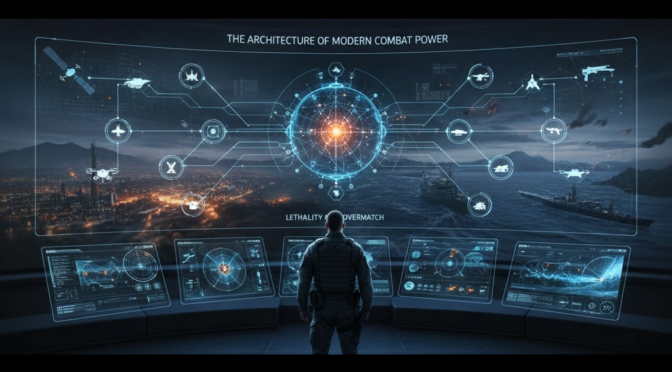
The global security landscape is experiencing a paradigm shift as the era of counter-insurgency gives way to Great Power Competition and the looming requirement for large-scale combat operations. In this context, the United States Army has redefined its core warfighting principles, centering its modernization strategy on the twin concepts of lethality and overmatch. Traditionally viewed as the physical capacity to destroy a target, lethality has evolved into a holistic framework that integrates technical proficiency, adaptive innovation, and human vitality. This report examines how the Army transitions from a purely technoscientific understanding of lethality toward a regenerative model that encompasses the cognitive and emotional resilience of the force. 1
Simultaneously, the concept of overmatch has been expanded beyond simple numerical or technological superiority. In the modern multi-domain operational environment, overmatch is defined as the creation of a position of relative advantage through the convergence of capabilities across land, air, maritime, space, and cyberspace. This report details the mechanisms of convergence—how the synchronized application of long-range precision fires, next-generation combat vehicles, and advanced sensor networks creates simultaneous dilemmas for an adversary that render their defensive systems ineffective. 3
A critical component of this analysis is the compression of decision cycles, modeled through the Observe-Orient-Decide-Act (OODA) loop. As artificial intelligence and autonomous systems are integrated into the “Super OODA” loop, the speed of information processing has become a primary determinant of victory. This report explores the transition from human-centric decision-making to AI-augmented “Prediction-Centric Warfare,” where the ability to out-think an opponent is as vital as the ability to out-range them. 5
Finally, the report analyzes the specific materiel solutions driving these concepts, including the Long-Range Precision Fires portfolio and the XM30 Mechanized Infantry Combat Vehicle. By synthesizing doctrinal theory with empirical performance data from Combat Training Centers and mathematical models of kill probability, this analysis provides a comprehensive roadmap for how a modern force achieves and maintains dominance in a relentlessly lethal and contested environment. 7
1.0 Doctrinal Foundations of Lethality and Combat Power
The American military’s return to large-scale combat operations (LSCO) has necessitated a rigorous re-examination of Field Manual (FM) 3-0, Operations. Within this capstone doctrine, lethality is positioned not merely as a characteristic of a weapon system, but as the fundamental capability and capacity to effectively neutralize or destroy an enemy target to achieve mission objectives. 1
1.1 Historical Context and the Shift to Multi-Domain Operations
The current focus on lethality is a direct response to the erosion of long-held U.S. freedom of action. For decades, the joint force operated with relative impunity in the air and maritime domains, but peer threats—specifically Russia and China—have fielded capabilities designed to contest every domain. 10 This reality has driven the Army to adopt Multi-Domain Operations (MDO), a concept that focuses on the integration of all elements of combat power to create and exploit relative advantages. 3
1.2 The Relationship Between Lethality and Maneuver
Doctrine specifies that lethality is enabled by formations maneuvering into positions of relative advantage. 1 Once in these positions, units employ weapon systems and mass effects to destroy enemy forces or place them at such a high risk of destruction that their will to fight is broken. 1 This relationship highlights that lethality is not an isolated variable; it is the culmination of a unit’s ability to shoot, move, and communicate effectively. 1
2.0 The Holistic Lethality Framework: Procedural, Adaptive, and Regenerative
While traditional metrics for measuring combat readiness—personnel, equipment on hand, and training proficiency—provide a baseline, they often fail to capture the complexities of real-world combat. 1 To address this, military theorists have introduced a multi-dimensional lethality framework that looks beyond the capacity to kill and considers how force is sustained and adapted in conflict. 12
2.1 Procedural Lethality and Task Proficiency
Procedural lethality is conceptualized as the specific sequence of required steps to achieve mission success within a known context. 12 It is the most measurable form of lethality, closely tied to the Integrated Weapons Training Strategy (IWTS). Procedural lethality ensures that every soldier is qualified and proficient on their assigned weapon system, from individual marksmanship to collective live-fire events. 1
2.2 Adaptive Lethality and Innovation
Adaptive lethality is the ability of a unit to remain lethal in multiple and novel contexts, even when standardized procedures fail or are interrupted. 12 This construct relies on individual and organizational character, trust, and risk acceptance. 12 In a multi-domain environment where communications may be jammed and GPS denied, adaptive lethality allows a unit to innovate on the fly, using available assets to achieve the commander’s intent. 14
2.3 Regenerative Lethality and Vitality
Regenerative lethality focuses on the foundational elements enabling the attainment of personal and organizational vitality. 12 It views the human soldier as the central component of the lethality chain, requiring the continuous restoration of physical and psychological effectiveness. 12
Table 1: The Components of Regenerative Lethality (Vitality) 12
| Element | Focus Area | Impact on Lethality |
| Mind | Cognitive and psychological beliefs | Building or breaking resolve; resilience against cognitive warfare. |
| Heart | Affective and emotional values | Fostering trust within the formation; maintaining the “warrior ethos”. |
| Hand | Behavioral and physiological skills | Sustaining physical capability; Holistic Health and Fitness (H2F). |
3.0 The Mechanics of Overmatch: Achieving Relative Advantage
Overmatch is the application of capabilities in such a manner that the adversary is unable to respond effectively. 4 It is not necessarily a permanent state of superiority but a condition created at a specific time and place to achieve a tactical or operational objective. 3
3.1 Convergence as the Engine of Overmatch
In the MDO context, overmatch is achieved through convergence—the concerted employment of capabilities from multiple domains (land, air, maritime, space, and cyberspace) and echelons. 14 Convergence attacks the adversary’s integrated defensive and offensive networks at combinations of decisive points. 14
3.2 Temporal and Cognitive Overmatch
Overmatch is often categorized by its primary effect on the adversary:
Table 2: Dimensions of Overmatch 17
| Dimension | Mechanism | Desired Outcome |
| Physical | Superior range, firepower, and armor protection. | Destruction of enemy hardware and personnel. |
| Temporal | Faster decision-making and execution cycles. | Getting “inside” the enemy’s decision cycle (OODA loop). |
| Cognitive | Overwhelming the enemy’s ability to process information. | Decision paralysis, confusion, and loss of will to fight. |
4.0 Decision Dominance: The OODA Loop and AI Augmentation
The OODA loop—Observe, Orient, Decide, Act—remains the primary mental model for understanding decision speed in combat. 20 Developed by Colonel John Boyd, the model posits that the entity that cycles through these four stages most rapidly will win. 19
4.1 The Traditional OODA Loop
In traditional, human-centered OODA loops, the “Orient” phase is the most critical and complex. 19 It involves synthesizing observations with cultural, experiential, and contextual factors to form a meaningful understanding of the environment. 22 However, human processing is limited by cognitive load, fatigue, and stress. 23
4.2 The Transition to the “Super OODA” Loop
Artificial intelligence (AI) is transforming the OODA loop by automating the Observe and Orient phases. 5 AI systems can process massive quantities of sensor data at machine speed, identifying patterns and targets that would be invisible to human operators. 5
Table 3: Decision Cycle Time Comparison (Conceptual) 23
| System Type | Observe/Orient Time | Decide/Act Time | Total Cycle Time |
| Human-Centric | Minutes/Seconds | Seconds | Variable (High Latency) |
| Technology-Enhanced | Seconds | Seconds | Fast |
| AI-Augmented (Super OODA) | Milliseconds | Milliseconds | Near-Instantaneous |
5.0 Modernization Priority: Long-Range Precision Fires (LRPF)
To achieve overmatch in the “Deep Fight,” the Army has identified Long-Range Precision Fires as its number one modernization priority. 17
5.1 The LRPF Portfolio and Technological Goals
The LRPF Cross-Functional Team (CFT) is developing a family of interconnected weapons designed to attack targets across the entire theater of operations. 17
Table 4: Key Long-Range Precision Fires Programs 17
| Program | Intended Range | Primary Target Set |
| Extended Range Cannon Artillery (ERCA) | 70 km | Tactical fires; enemy artillery and forward air defense. |
| Precision Strike Missile (PrSM) | 499+ km | Operational fires; C2 nodes, ballistic missiles, A2/AD systems. |
| Mid-Range Capability (MRC) | Intermediate | Mobile land and maritime targets. |
| Strategic Long-Range Cannon (SLRC) | Up to 1,000 miles | Strategic targets; high-value infrastructure. |
| Long-Range Hypersonic Weapon (LRHW) | Strategic | Time-sensitive, heavily defended high-value targets. |
6.0 The Evolution of Close Combat: The XM30 and Robotic Systems
While LRPF handles the deep fight, the Next Generation Combat Vehicle (NGCV) portfolio is designed to ensure overmatch in the close fight. 27 The centerpiece of this effort is the XM30 Mechanized Infantry Combat Vehicle. 29
6.1 XM30 Lethality and Capability Parameters
The XM30 is engineered with a “soldier-centric” design, intended to improve how infantry formations maneuver and engage the enemy. 30
Table 5: XM30 Performance and Lethality Requirements 27
| Requirement | Specification | Tactical Significance |
| Main Armament | 30mm or 50mm Autocannon | Defeats enemy IFVs beyond their engagement range. |
| Secondary Weapons | ATGMs and SHORAD (Stinger/Coyote) | Multi-domain defense against armor and drones. |
| Manning | Optionally Manned | Allows for remote operation in high-risk zones. |
| Squad Capacity | 6 Dismounts (plus 2 crew) | Optimized infantry delivery under armor. |
| Air Transport | 2 vehicles per C-17 | Ensures rapid global deployability. |
6.2 Robotic Combat Vehicles (RCV) as Force Multipliers
Complementing the XM30 are the Robotic Combat Vehicles, which come in Light, Medium, and Heavy variants. 29
Table 6: Robotic Combat Vehicle (RCV) Classifications 29
| Class | Weight | Primary Armament | Role |
| RCV-Light | < 10 Tons | Light weapon station / ATGM | Reconnaissance and stealthy sensing. |
| RCV-Medium | 10-20 Tons | Medium caliber cannon | Direct fire support and durability. |
| RCV-Heavy | 20-30 Tons | Main gun (Tank-like) | Decisive lethality and armored overmatch. |
7.0 The Mathematics of Lethality: Pk and Range Curves
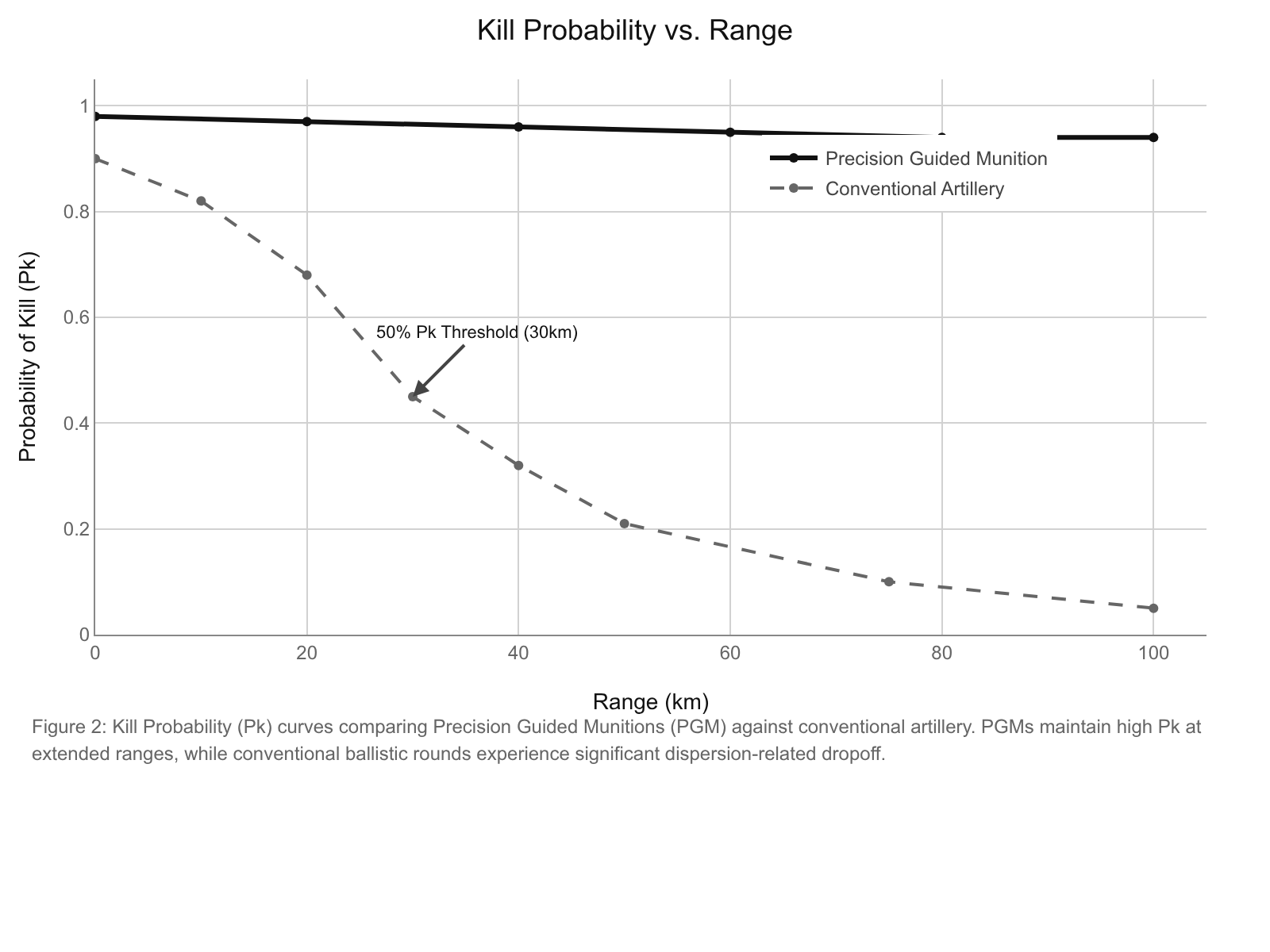
Military analysts use the Probability of Kill (Pk) to statistically determine the effectiveness of an engagement. 35
7.1 The Pk Formula
The probability of kill for a single engagement is generally calculated as:
Pk = Phit * Pd * Rsys * Rw
In this formula, Phit is the probability of a hit; Pd is the probability of detection by sensors; Rsys is the reliability of the targeting system; and Rw is the reliability of the weapon. 9
7.2 Lethal Radius and Damage Functions
The “lethality” of a weapon is often expressed through its damage function, D(r), representing the probability that a target is killed by a weapon at a miss distance of r. 36
8.0 Cognitive Maneuver and Information Dominance
In the 21st century, lethality is not just about destroying physical targets; it is about “Information Overmatch”—the ability to use data to achieve strategic, operational, and tactical effects. 18
8.1 Cognitive Warfare and the Target of the Mind
Cognitive warfare is the art of using technologies to alter the cognition of human targets. 37 By distorting an adversary’s perception of the battlespace, a force can induce hesitation and ultimately break the enemy’s will to resist. 37
8.2 Non-Lethal Weapons (NLW) as a Strategic Lever
The Department of Defense Non-Lethal Weapons Program provides options in the “gray zone” between presence and lethal force. 39 NLWs create decision space for commanders and prevent miscalculation. 39
9.0 Strategic Synthesis: Deterrence by Denial
The ultimate purpose of building a lethal force capable of achieving overmatch is to support a strategy of deterrence by denial. 40 Deterrence by denial seeks to make aggression unprofitable by rendering the target harder to take and keep. 41
9.1 Implications for the Indo-Pacific and Beyond
The current U.S. defense strategy focuses on deterrence by denial vis-à-vis China in the Asia-Pacific theater. 40 This requires robust constellations of space assets, long-range precision fires capable of sinking ships, and hardened ground formations. 42
10.0 Future Trajectories of Combat Power
The character of war is shifting rapidly, driven by drones, long-range precision fires, cyber effects, and electronic warfare. 44 Victory in future conflict will belong to the side that adapts faster and endures longer. 44 The architecture of combat power in 2030 and beyond will be defined by its ability to sense, think, and strike with a speed and precision that renders enemy resistance futile. 44
Please share the link on Facebook, Forums, with colleagues, etc. Your support is much appreciated and if you have any feedback, please email us in**@*********ps.com. If you’d like to request a report or order a reprint, please click here for the corresponding page to open in new tab.
Sources Used
- Decoding Lethality: Measuring What Matters; Command Sgt. Maj …, accessed February 16, 2026, https://www.armyupress.army.mil/Portals/7/military-review/Archives/English/Online-Exclusive/2024/Decoding-Lethality/Holland-Decoding%20Lethality-UA.pdf
- Decoding Lethality – Army University Press, accessed February 16, 2026, https://www.armyupress.army.mil/Journals/Military-Review/Online-Exclusive/2024-OLE/Decoding-Lethality/
- FM 3-0, Operations – Cyberwar.nl, accessed February 16, 2026, https://cyberwar.nl/d/20171005_US-Army-Field-Manual-FM-3-0-Operations.pdf
- Field Manual 3-0 Doctrine Addressing Today’s Fight – Army University Press, accessed February 16, 2026, https://www.armyupress.army.mil/Journals/Military-Review/English-Edition-Archives/Jan-Feb-2019/FM-3-0/
- FM 3-0 | Soldat & Technik, accessed February 16, 2026, https://soldat-und-technik.de/wp-content/uploads/2022/10/ARN36290-FM_3-0.pdf
- Outthinking Adversaries: The Future of Warfare in a Multi-Domain World | Article – U.S. Army, accessed February 16, 2026, https://www.army.mil/article/289600/outthinking_adversaries_the_future_of_warfare_in_a_multi_domain_world
- On Lethality: Toward a More Complete Definition and Formation of …, accessed February 16, 2026, https://press.armywarcollege.edu/cgi/viewcontent.cgi?article=3371&context=parameters
- On Lethality: Toward a More Complete Definition and Formation of the Lethality Framework, accessed February 16, 2026, https://publications.armywarcollege.edu/News/Display/Article/4361788/on-lethality-toward-a-more-complete-definition-and-formation-of-the-lethality-f/
- Who “Does” MDO? What Multi-Domain Operations Will Mean For …, accessed February 16, 2026, https://mwi.westpoint.edu/who-does-mdo-what-multi-domain-operations-will-mean-for-and-require-of-the-armys-tactical-units/
- When Automation Accelerates War, Identity Determines Victory, accessed February 16, 2026, https://mwi.westpoint.edu/when-automation-accelerates-war-identity-determines-victory/
- What Does Lethality Really Mean in Modern War? – CSIS, accessed February 16, 2026, https://www.csis.org/analysis/what-does-lethality-really-mean-modern-war
- Preparing for future battlefields: The Next Generation Combat Vehicle | Article – Army, accessed February 16, 2026, https://www.army.mil/article/211236/preparing_for_future_battlefields_the_next_generation_combat_vehicle
- Transforming the Multidomain Battlefield with AI: Object Detection, Predictive Analysis, and Autonomous Systems – Army University Press, accessed February 16, 2026, https://www.armyupress.army.mil/Journals/Military-Review/Online-Exclusive/2024-OLE/Multidomain-Battlefield-AI/
- Multi-Domain Operations: Bridging the Gaps for Dominance – Air University, accessed February 16, 2026, https://www.airuniversity.af.edu/Wild-Blue-Yonder/Articles/Article-Display/Article/2109784/multi-domain-operations-bridging-the-gaps-for-dominance/
- The U.S. Army’s No. 1 Modernization Priority: Long-Range Precision Fires, accessed February 16, 2026, https://nationalinterest.org/blog/reboot/us-armys-no-1-modernization-priority-long-range-precision-fires-197449
- Information Overmatch: How Information Dominance Will Win Our Nation’s Wars – USAASC, accessed February 16, 2026, https://asc.army.mil/web/news-information-overmatch-how-information-dominance-will-win-our-nations-wars/
- OODA loop – Wikipedia, accessed February 16, 2026, https://en.wikipedia.org/wiki/OODA_loop
- The Power of Cognitive Maneuver: Don’t Underestimate its Value – Threat Tec, accessed February 16, 2026, https://threattec.com/the-power-of-cognitive-maneuver-dont-underestimate-its-value/
- What’s an OODA Loop and How to Use It | Miro, accessed February 16, 2026, https://miro.com/strategic-planning/what-is-ooda-loop/
- WHY TIMING IS EVERYTHING, accessed February 16, 2026, https://www.europarl.europa.eu/cmsdata/155280/WendyRAnderson_CognitiveTimes_OODA%20LoopArticle.pdf
- Stuck between real and ideal: the OODA loop and military AI – Luftled, accessed February 16, 2026, https://luftled.info/stuck-between-real-and-ideal-the-ooda-loop-and-military-ai/
- Reshaping Air Power Doctrines: Creating AI-Enabled ‘Super-OODA Loops’ – Shift Paradigm., accessed February 16, 2026, https://theairpowerjournal.com/reshaping-air-power-doctrines-creating-ai-enabled-super-ooda-loops/
- The Army’s Top 3 Strategic Priorities for Long-Range Precision Fires – IDGA, accessed February 16, 2026, https://www.idga.org/events-futureindirectfires/downloads/the-armys-top-3-strategic-priorities-for-long-range-precision-fires
- RDECOM’s road map to modernizing the Army: Long-range precision fires – DVIDS, accessed February 16, 2026, https://www.dvidshub.net/news/294463/rdecoms-road-map-modernizing-army-long-range-precision-fires
- U.S. Army Long-Range Precision Fires: Background and Issues for Congress, accessed February 16, 2026, https://www.congress.gov/crs_external_products/R/PDF/R46721/R46721.2.pdf
- Army Developing Next Generation Combat Vehicles – Mobility Engineering Technology, accessed February 16, 2026, https://www.mobilityengineeringtech.com/component/content/article/33157-army-developing-next-generation-combat-vehicles
- Next Generation Combat Vehicle – Wikipedia, accessed February 16, 2026, https://en.wikipedia.org/wiki/Next_Generation_Combat_Vehicle
- The Army’s XM-30 Mechanized Infantry Combat Vehicle (Formerly Known as the Optionally Manned Fighting Vehicle [OMFV]) – Congress.gov, accessed February 16, 2026, https://www.congress.gov/crs_external_products/IF/PDF/IF12094/IF12094.8.pdf
- The Army’s XM-30 Mechanized Infantry Combat Vehicle (Formerly Known as the Optionally Manned Fighting Vehicle [OMFV]) | Congress.gov, accessed February 16, 2026, https://www.congress.gov/crs-product/IF12094
- The XM30 Infantry Fighting Vehicle Has A Message for the U.S. …, accessed February 16, 2026, https://nationalsecurityjournal.org/the-xm30-infantry-fighting-vehicle-has-a-message-for-the-u-s-army/
- OMFV & RCV Programme Updates – European Security & Defence – Euro-sd, accessed February 16, 2026, https://euro-sd.com/2022/10/news/27528/omfv-rcv-programme-updates/
- XM30 Mechanized Infantry Combat Vehicle – Wikipedia, accessed February 16, 2026, https://en.wikipedia.org/wiki/XM30_Mechanized_Infantry_Combat_Vehicle
- Next-Gen Robotic Combat Vehicles | Military Insight – Advanced Conversion Technology, accessed February 16, 2026, https://www.actpower.com/blog/next-generation-combat-vehicle-rcv/
- Probability of Kill | www.dau.edu, accessed February 16, 2026, https://www.dau.edu/glossary/probability-kill
- Probability of kill – Wikipedia, accessed February 16, 2026, https://en.wikipedia.org/wiki/Probability_of_kill
- Notes on Firing Theory – Faculty, accessed February 16, 2026, https://faculty.nps.edu/awashburn/Files/Notes/FiringTheory.pdf
- On Guidance and Control for Guided Artillery Projectiles, Part 1: General Considerations – FOI, accessed February 16, 2026, https://www.foi.se/rest-api/report/FOI-R–3291–SE
- Assessing “Cognitive Warfare”, accessed February 16, 2026, https://irregularwarfare.org/articles/assessing-cognitive-warfare/
- The “Ins” and “Outs” of Cognitive Warfare: What’s the Next Move?, accessed February 16, 2026, https://inss.ndu.edu/Media/News/Article/4217626/the-ins-and-outs-of-cognitive-warfare-whats-the-next-move/
- UNCLASSIFIED UNCLASSIFIED WHITE PAPER “WAR WITHOUT GUN SMOKE” USING NON-LETHAL WEAPONS TO COUNTER CHINA’S ASYMMETRIC MARIT, accessed February 16, 2026, https://media.defense.gov/2025/Dec/30/2003849801/-1/-1/0/WHITE%20PAPER-J8%20FORCE%20PROTECTION_NLWS%20TO%20COUNTER%20CHINA%20ASYMMETRIC%20MARITIME%20A2AD_FINAL_V1.1_16MAR22.PDF
- Adapting US Defense Strategy to Great-Power Competition – US Army War College – Publications, accessed February 16, 2026, https://publications.armywarcollege.edu/News/Display/Article/4129357/adapting-us-defense-strategy-to-great-power-competition/
- The-Case-for-Deterrence-by-Denial-150812, accessed February 16, 2026, https://www.mca-marines.org/wp-content/uploads/The-Case-for-Deterrence-by-Denial-150812.docx
- The Army Strategy – CASCOM, accessed February 16, 2026, https://cascom.army.mil/docs/army-strategy.pdf
- Space Denial: A Deterrence Strategy – NDU Press – National Defense University, accessed February 16, 2026, https://ndupress.ndu.edu/Joint-Force-Quarterly/Joint-Force-Quarterly-111/Article/Article/3569640/space-denial-a-deterrence-strategy/
- 2025 Force Design Update – Marines.mil, accessed February 16, 2026, https://www.marines.mil/Portals/1/Docs/Force_Design_Update-October_2025.pdf