1. Executive Summary
The operational landscape over the past seven days highlights a critical turning point in how militaries deploy unmanned and autonomous systems across all physical domains. The integration of uncrewed systems has formally shifted from ad hoc, experimental battlefield tests to standardized, major procurement programs for high-intensity conflict against peer adversaries. In the air domain, the rapid spread of low-cost, expendable drones has severely strained traditional layered air defense systems. In response, the U.S. Army approved a $464.8 million production contract for the LOCUST X3 high-energy laser, marking the operational readiness of directed-energy counter-unmanned aerial systems (C-UAS). This shift aims to fundamentally change the cost equation that previously favored low-cost drone threats by moving from limited inventories of expensive interceptor missiles to deep, generator-powered laser magazines. At the same time, the U.S. Navy released a formal solicitation for its first carrier-capable Collaborative Combat Aircraft (CCA), marking a major shift in naval aviation strategy. By separating the procurement of the physical airframe from the autonomous command-and-control software, the Navy plans to build affordable combat capacity, expanding its sensor and strike networks deep into contested anti-access/area denial (A2/AD) zones without putting high-cost crewed aircraft or pilots at risk.
In the maritime domain, operating range and fuel supply remain the main barriers to deploying persistent unmanned surface and underwater vessels (USV/UUV). The Naval Air Warfare Center Weapons Division (NAWCWD) recently demonstrated successful robotic, at-sea refueling for the T38 USV, establishing a technical foundation for fully autonomous fleets. By freeing unmanned platforms from relying on shore ports and manned support ships, naval forces can maintain continuous radar coverage, communications relays, and electronic warfare operations across vast ocean areas, especially to support hypersonic weapons testing.
Meanwhile, developments in the Black Sea show how rapidly attack USVs are evolving. Russia’s quick construction of fortified USV shelters in Crimea and its use of trained marine mammals to counter sophisticated Ukrainian surface drone attacks show that robotic naval warfare is becoming fully institutionalized. The maritime domain is no longer just an experimental testing ground but a primary arena for force-on-force robotic combat.
At the same time, the underwater domain is seeing a resurgence in covert, uncrewed strike capabilities. The expansion of the U.S. Navy’s MEDUSA autonomous underwater mining drone program reflects a strategic pivot toward stand-off seabed warfare. By using expendable UUVs launched from standard submarine torpedo tubes to autonomously lay minefields in narrow ocean passages, naval forces can control key areas and impose heavy mine-clearing burdens on adversaries while avoiding the risk of losing costly nuclear submarines. This aligns with broader undersea developments, such as the delivery of the INS Drakon to the Israeli Navy. The submarine features an enlarged sail that likely houses a vertical launch system (VLS) for ballistic missiles, securing a reliable second-strike deterrent amid rising Middle Eastern tensions.
However, the rapid adoption of autonomous technology is creating bureaucratic and organizational friction within established military command structures. The U.S. Army’s decision to disband the Unmanned Assault Battalion, a specialized drone unit within the 173rd Mobile Brigade Combat Team in Europe created to rapidly test and apply drone tactics learned from Ukraine, has raised significant concern in Congress. This administrative decision highlights the tension between traditional force structure models and the need to adapt at the pace of modern, software-driven warfare. Disbanding this specialized team suggests that while defense suppliers are delivering autonomous hardware efficiently, military leadership is still working through the organizational changes needed to fully use these capabilities.
Around the world, the integration of unmanned systems is speeding up distributed and multi-domain combat operations. From NATO deploying the StrikeMaster coastal defense system to the isolated Arctic island of Jan Mayen to Russia’s continued use of jet-powered strike drones in Eastern Europe, advanced autonomous and semi-autonomous systems are expanding where and how fast battles occur. These developments require militaries to re-evaluate layered air defense architectures, decentralized command networks, and the defense industry’s capacity to build autonomous systems at the scale needed for prolonged conflicts.
2. Global Situation Log
North American & European Theaters (Institutional & Technological Maturation)
Event & Development: U.S. Army Awards First Production Contract for LOCUST X3 High-Energy Laser
The U.S. Army Portfolio Acquisition Executive for Fires (PAE Fires) awarded AeroVironment a $464.8 million Other Transaction Agreement (OTA) to produce the LOCUST X3 high-energy laser weapon system. As the Army’s first production contract for a directed-energy weapon, the award falls under the Enduring-High Energy Laser (E-HEL) program. The LOCUST X3 is a 30-kilowatt, electrically powered laser designed to destroy Group 1, 2, and 3 drone threats. The system can be mounted on light tactical vehicles, such as the Joint Light Tactical Vehicle (JLTV), or installed on palletized platforms. Production will be supported by a newly announced $30 million expansion of AeroVironment’s Albuquerque, New Mexico facility, which serves as the company’s Space & Directed Energy Group headquarters.
Tactical & Operational Lessons:
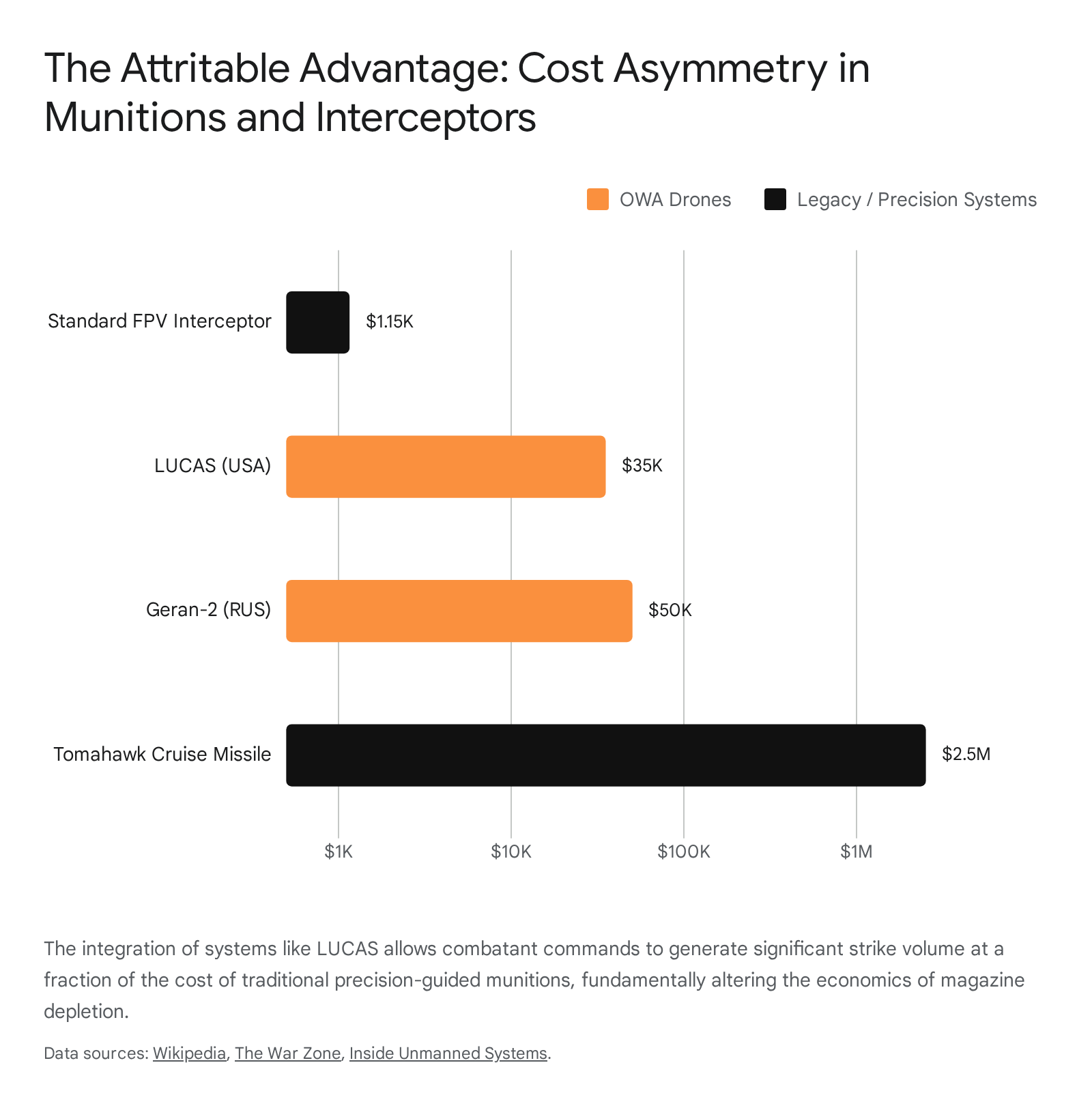
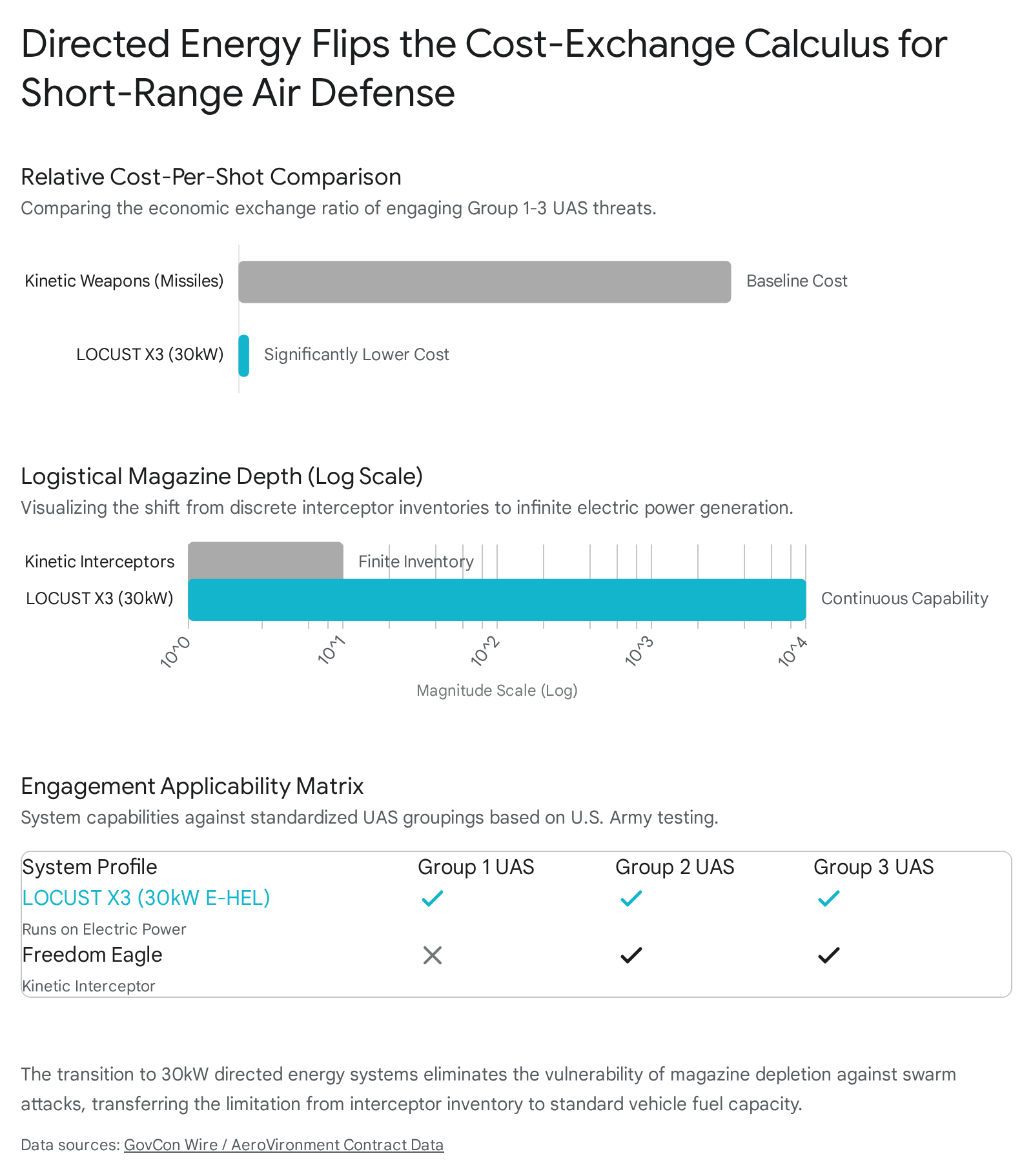
Deploying the LOCUST X3 directly addresses the tactical risk created by the widespread use of low-cost loitering munitions. Traditional air defense relies on interceptor missiles, which have limited magazine capacity and poor cost efficiency when engaging drones that cost a small fraction of the missile itself. A 30kW laser delivers enough focused heat to cause structural failure on small to medium drones by melting composite airframes, blinding electro-optical/infrared (EO/IR) optics, or detonating onboard explosives.
Because the LOCUST X3 draws power directly from the vehicle’s electrical generator rather than relying on stored ammunition, it provides virtually unlimited firing capacity, constrained only by fuel availability. This significantly cuts the supply tail needed to protect ground forces. The main engineering challenge in the field is keeping the laser beam precisely focused on a fast-moving, agile target. Mounting the system on a JLTV requires advanced beam stabilization (jitter control) to isolate the optic head from vehicle vibrations and rough terrain, ensuring the thermal energy stays on target long enough to destroy it. This production contract follows extensive prototype testing at White Sands Missile Range under the Army’s Multi-Purpose High Energy Laser initiative.
Strategic Lessons:
This award indicates that the Department of Defense (DoD) has successfully moved mid-tier directed energy weapons from testing facilities to active equipment requirements. Strategically, this forces competitors to rethink swarm drone tactics. If U.S. units can reliably neutralize drones for pennies per shot, opponents must either build larger swarms to overheat the laser’s cooling systems or invest in faster, high-altitude Group 4 and 5 drones, which require significantly higher manufacturing costs. AeroVironment’s facility expansion in Albuquerque, driven by CEO Wahid Nawabi’s growth strategy following the BlueHalo acquisition, aims to generate $670 million in economic impact while building resilient domestic supply chains for defense electronics and C-UAS hardware. The expansion will add more than 450 high-wage positions and create a consolidated manufacturing campus, supporting Nawabi’s long-term plan to scale autonomous platform manufacturing to tens of thousands of units monthly. This reflects the Pentagon’s wider push to quickly deploy counter-drone tracking systems, as shown by the Defense Innovation Unit’s request for sensors that can ignore biological noise and operate safely near civilian areas to protect military facilities from small drone threats.
Event & Development: U.S. Navy Issues RFI for Carrier-Capable Collaborative Combat Aircraft (CCA)
On August 31, 2026, Naval Air Systems Command (NAVAIR) released Request for Information (RFI) N00019-27-RFI-PMA228-CCA, inviting industry proposals to build two prototype carrier-capable autonomous combat aircraft on an accelerated schedule. This initial Increment 1 CCA will operate alongside manned fourth- and fifth-generation strike fighters (F/A-18E/F and F-35C) aboard Gerald R. Ford and Nimitz-class aircraft carriers. The Navy requires a modular architecture that separates the aircraft hardware from the flight autonomy software and command-and-control (C2) systems. This modular approach requires suppliers to provide digital models and digital twins while granting government access to open C2 software interfaces, ensuring independent system testing and avoiding single-vendor dependency.
Tactical & Operational Lessons:
Operating uncrewed aircraft on an aircraft carrier presents significant engineering and operational demands. The CCA must handle the violent mechanical forces of Electromagnetic Aircraft Launch System (EMALS) or steam catapult launches and arrested tailhook recoveries, all while surviving corrosive saltwater conditions. Keeping the aircraft’s flight deck footprint small is essential; excess storage or deck footprint directly reduces space for manned fighters, lowering total combat output.
In operations, an expendable or risk-tolerant CCA serves as a forward sensor and weapon platform within Manned-Unmanned Teaming (MUM-T) formations. Flying CCAs far ahead of the carrier air wing allows the Navy to strike surface or land targets without exposing human crews to advanced air defense missiles. Furthermore, shipboard radars, jamming systems, and communications create heavy electromagnetic interference (EMI) on the flight deck. As a result, the CCA’s flight controls and data links must resist both friendly signal interference and enemy radio jamming.
| CCA Integration Parameter | Operational Requirement | Tactical Implication |
| Launch & Recovery | EMALS/Steam catapult compatible; arrested tailhook landing. | Must possess high structural rigidity, adding weight and complicating aerodynamic efficiency compared to runway-launched UAS. |
| Deck Footprint | Compact parking and handling space. | Prevents the displacement of F-35C and F/A-18E/F squadrons; maintains total Carrier Strike Group sortie generation rates. |
| System Architecture | The system features “Platform In A Box” modularity and provides government access to C2 interfaces. | Allows rapid, hardware-agnostic software updates to the autonomy stack, bypassing traditional multi-year block upgrades. |
| Mission Profile | Extended-range, weaponized, EW and communications relay. | Projects the sensor-shooter kill web deep into A2/AD zones while assuming tactical risk away from human operators. |
Strategic Lessons:
The CCA program marks a major change in how naval aviation builds combat power. The U.S. Navy is moving away from relying entirely on multi-role manned aircraft to a distributed network model. By requiring modular designs, the Navy can upgrade autonomy software and mission packages rapidly without waiting on slow, multi-year airframe updates. NAVAIR’s potential use of Other Transaction Authority (OTA) under 10 U.S.C. §4022 shows a strong intent to streamline standard procurement timelines. This initiative builds on progress made by the MQ-25 Stingray program, which is establishing the C2 software and shipboard protocols needed for routine carrier drone operations.
Event & Development: U.S. Army Terminates Ukraine-Informed Drone Battalion
Following Exercise Saber Junction in Germany in September 2026, the U.S. Army directed the Unmanned Assault Battalion, a 600-soldier element within the 173rd Mobile Brigade Combat Team, to end its specialized drone assignment and return to standard airborne infantry duties. The unit had spent the last year testing drone combat concepts based on Ukrainian military operations and developing operational guidelines for a dedicated brigade-level drone battalion. On September 1, a bipartisan group of lawmakers, including Senators Jeanne Shaheen, Thom Tillis, Angus King, and Rep. Mike Turner, sent a joint letter to acting Army Chief of Staff Gen. Christopher LaNeve and resigning Army Secretary Dan Driscoll, requesting a detailed briefing by September 21 on how the Army plans to retain the tactical lessons learned by the unit.
Tactical & Operational Lessons:
Disbanding the Unmanned Assault Battalion underscores the challenge of incorporating fast-moving commercial technology into standard military structures. In Ukraine, drone tactics change weekly through custom first-person view (FPV) builds, rapid software updates to counter electronic jamming, and decentralized command methods. A dedicated drone battalion allowed the U.S. Army to simulate this rapid pace, evaluating how a specialized unit could provide reconnaissance, kinetic strikes, and signal jamming for a combat brigade without taking frontline infantry away from core duties. Reassigning these 600 soldiers spreads out the specialized expertise they built up. While the Army plans to apply their findings to future force planning, its ability to evaluate uncrewed systems in an operational field unit is paused for now. The unit will formally turn over its tactical findings and operational reports to Army leadership when Exercise Saber Junction concludes at the end of September.
Strategic Lessons:
This decision illustrates organizational friction inside the DoD between adopting commercial tech quickly and maintaining standardized unit readiness. Gen. LaNeve’s focus on foundational training, outlined in “The Army Azimuth,” emphasizes traditional combat skills over specialized experimental units. However, this approach contrasts with the strategy pushed by outgoing Secretary Driscoll to secure “drone dominance” and prepare for conflicts involving high platform loss rates, as seen in Ukraine and the Middle East. Lawmakers specifically noted recent Middle East conflicts, where low-cost drones have drawn down expensive defense missile stocks, as evidence that the U.S. must formalize drone units quickly. The unit’s dissolution shows that while defense contractors can provide modern hardware, military administrative structures struggle to adopt new operational models without disrupting conventional unit readiness. Additionally, this shift occurs alongside leadership transitions in the Pentagon, following the departure of former Army Chief of Staff Gen. Randy George in April and the resignation of Army Secretary Dan Driscoll, both of whom advocated for rapid commercial drone adoption.
Naval & Maritime Theaters (Logistical Autonomy & Sub-surface Warfare)
Event & Development: U.S. Navy Demonstrates Robotic At-Sea Refueling for T38 USV
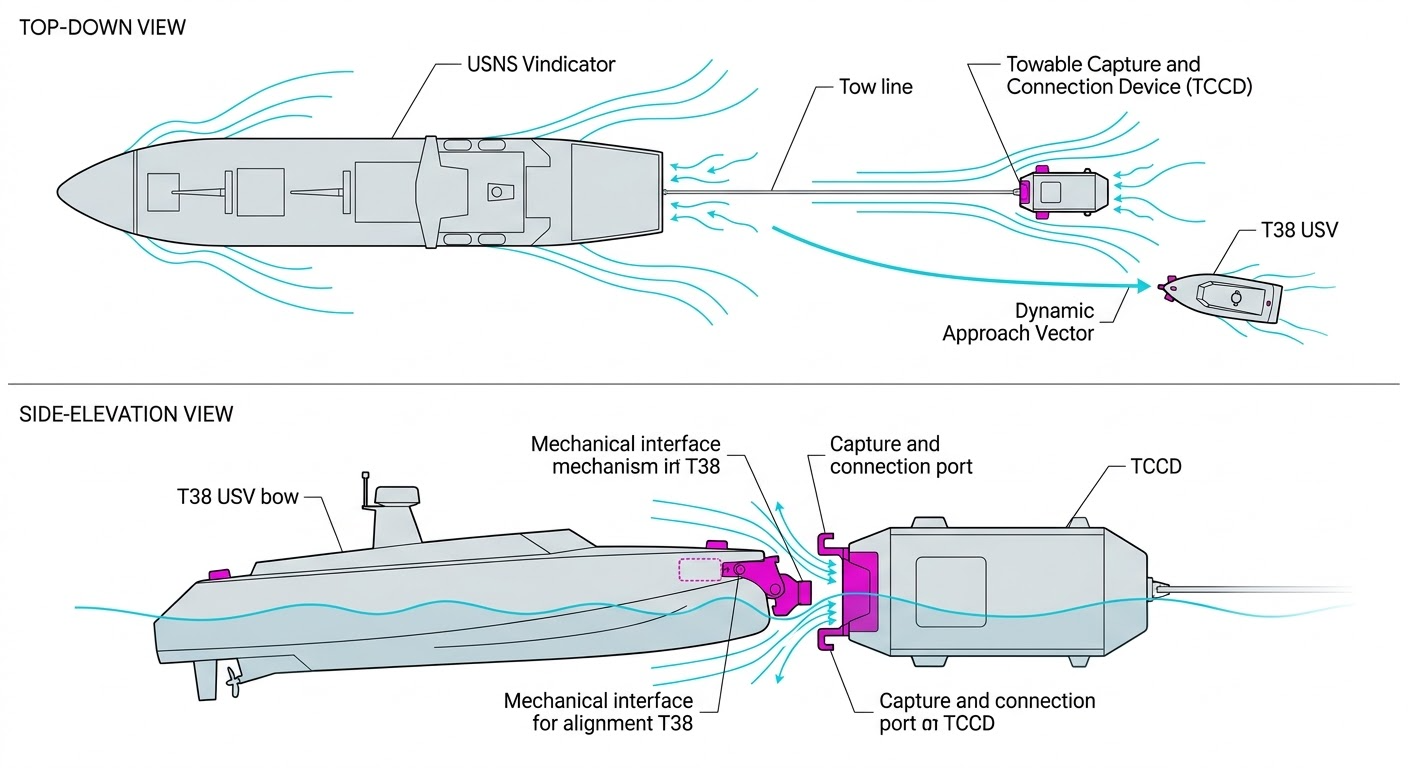
On August 11, 2026, the U.S. Navy completed automated at-sea refueling tests with the T38 unmanned surface vessel. Led by the Naval Air Warfare Center Weapons Division (NAWCWD) Blue Water Instrumentation team and Sealartec off the Virginia coast, the exercise used the support ship USNS Vindicator (TSV 5) towing a Towable Capture and Connection Device (TCCD). Over several days, the team executed roughly 100 connection tests and transferred 400 gallons of fuel to the MARTAC T38 USV in open sea conditions.
Tactical & Operational Lessons:
Operating endurance remains the primary limitation for unmanned surface craft, as onboard payload weight directly trades against fuel capacity. Automated refueling in open water presents complex marine control and hydrodynamic challenges. The T38 must steer toward a towed capture device, make constant adjustments for wave motion across six degrees of freedom, and line up perfectly with the docking port to make a secure fuel connection. By executing an accurate approach vector into the capture rig, the vessel avoids tow cable slack and completes fuel transfers without deck personnel. Completing 100 successful connections verified the navigation positioning systems and mechanical coupling durability. The extensive testing produced substantial performance data to measure control accuracy and system reliability. Practically, NAWCWD plans to use refueled USVs as remote telemetry nodes to monitor long-range missile tests over wide ocean ranges, avoiding the need for vessels to return to port for fuel and eliminating monitoring gaps.
Strategic Lessons:
Automated refueling at sea significantly expands the operational reach of uncrewed fleets. Extending vessel endurance turns small surface craft from short-range coastal tools into persistent ocean platforms. Strategically, naval commanders can maintain dense sensor and defense networks inside high-risk areas while keeping crewed support ships at safe standoff distances. Moving toward fully autonomous refueling, covering target location, approach, connection, transfer, and separation, will help sustain naval operations even when communication signals are jammed. This capability fits into broader Navy USV programs, such as Task Force 59 using Saronic Corsair USVs for search-and-rescue operations in the Gulf of Oman and the 4th Fleet employing surface drones to monitor drug trafficking channels in the Caribbean.
Event & Development: U.S. Navy Expands MEDUSA Autonomous Underwater Mining Drone Program
On July 7, 2026, the U.S. Navy expanded the MEDUSA (Mining Expendable Delivery Unmanned Submarine Asset) program by awarding General Dynamics Mission Systems (GDMS) a $13.81 million contract modification, bringing total potential program funding to $58.07 million. This adjustment funds component testing and design refinements through July 2028. The MEDUSA is a medium-class UUV designed to be launched from standard 533 mm (21-inch) submarine torpedo tubes to place naval mines covertly at long distances.
Tactical & Operational Lessons:
Unlike reusable UUVs, MEDUSA functions as a single-use delivery platform. An attack submarine launches MEDUSA from a standard torpedo tube, allowing the drone to travel autonomously along programmed routes to lay mines in targeted waterways. This design enables the host submarine to exit the area immediately, minimizing its acoustic signature and keeping enemy forces from pinpointing its position. It also removes the complex process of recovering underwater drones, which typically forces submarines to operate in shallow, vulnerable coastal areas.
Strategic Lessons:
The MEDUSA contract highlights a renewed focus on offensive mine warfare. By deploying mines remotely via autonomous drones, the Navy can deny access to key waterways without exposing crewed submarines to detection. Seeding minefields near strategic harbors forces opponents to delay shipping, deploy mine-clearing vessels, and scan the sea floor. This program complements other undersea initiatives, such as Boeing’s Orca Extra Large UUV (XLUUV), an 85-foot autonomous submarine designed for long-range minelaying, and Raytheon’s HADALUS long-endurance UUV.
Eastern European Theater (Russo-Ukrainian War)
Event & Development: Russian Shift to Jet-Powered Strike Drones in Kyiv Attack
On Friday, September 4, a Russian strike drone penetrated air defense layers to strike the SBU security service headquarters in central Kyiv. The strike reflects an operational shift: instead of relying solely on large night barrages of mixed missiles and slow propeller drones, Russian forces are increasingly launching smaller, frequent attacks using fast, jet-powered drones.
Tactical & Operational Lessons:
Using jet-powered attack drones shortens response times for air defense crews. Earlier, low-cost loitering drones (like the Shahed series) produced distinct engine sounds and flew at lower speeds, allowing ground teams to locate and engage them with heavy machine guns. Jet-powered models fly faster and at higher altitudes, bypassing low-altitude gun teams and forcing defenders to launch expensive, limited air defense missiles (such as Patriot or NASAMS) against lower-cost targets. Striking a target in central Kyiv during daylight indicates growing reliance on the flight speed and target accuracy of these newer drone systems.
Strategic Lessons:
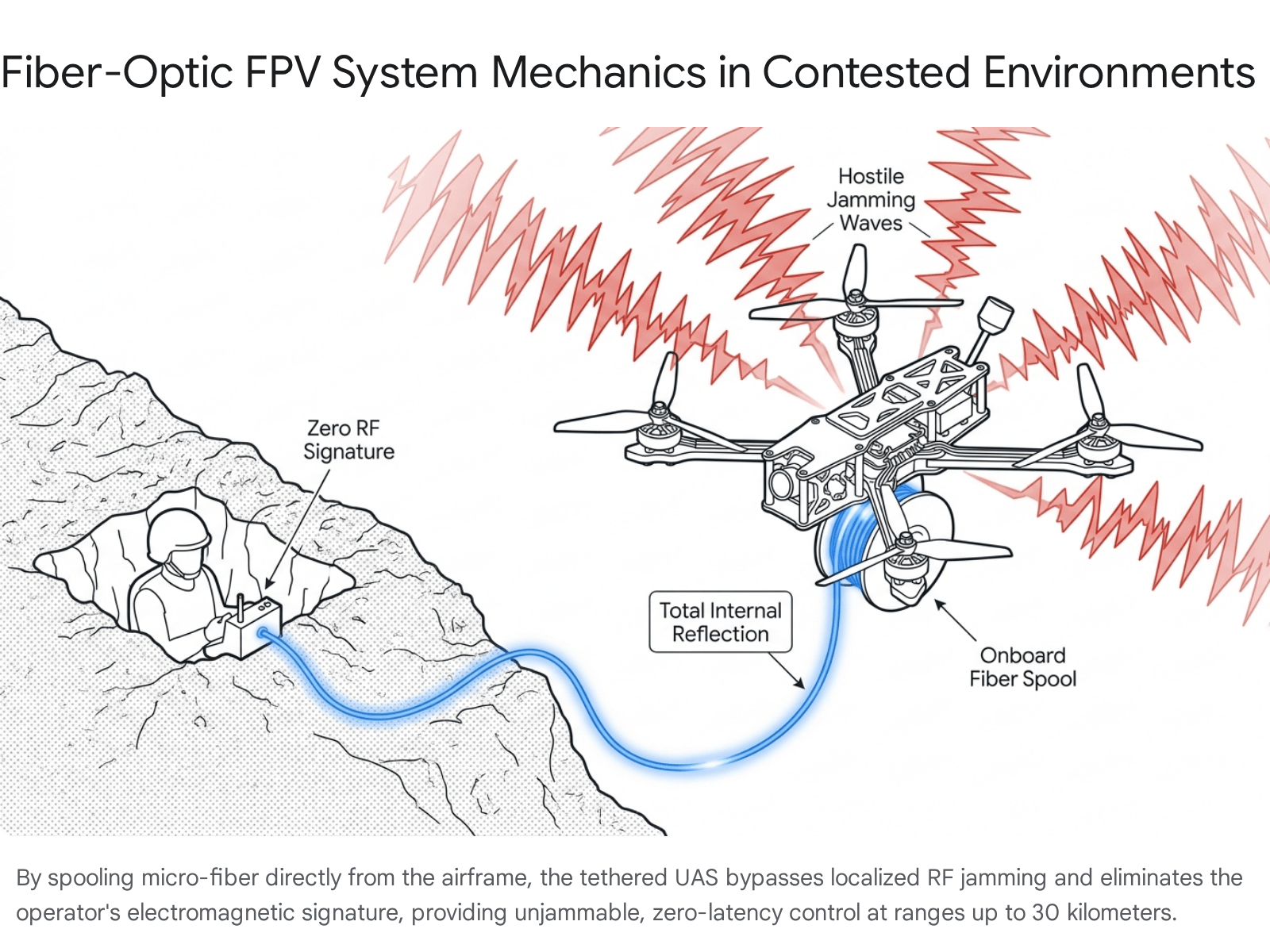
Russia’s deployment of faster drones reflects ongoing updates to its platform designs based on combat experience. Transitioning to higher-speed engines aims to impose higher supply costs on Western-supplied air defense batteries. To address this trend, C-UAS weapons must be accelerated, such as field trials of Ukraine’s compact “Sunray” laser system, and automated RF signal tracking networks must be expanded to preserve expensive air defense inventories.
Event & Development: Ukrainian USV Strike on Sochi and Russian Counter-USV Infrastructure
On September 3, 2026, released footage confirmed a Ukrainian surface drone attack on the Russian government-linked vessel Nefrit near Sochi. The video showed that the Russian Navy has posted trained dolphins and beluga whales to protect naval assets from divers and underwater drones. Separately, satellite analysis on September 1 identified 21 covered boat shelters built into the shoreline of Lake Donuzlav in Crimea, constructed specifically to harbor Russian surface drones.
Tactical & Operational Lessons:
The Black Sea continues to serve as an active proving ground for naval drone tactics. Utilizing trained marine mammals, which act as natural biological sonar, reflects the difficulty of detecting low-profile underwater threats in noisy shallow waters. At the same time, building 21 covered shelters at Lake Donuzlav shows that Russia is formalizing its surface drone operations into dedicated units. Housing craft in covered facilities protects them from drone reconnaissance and air strikes.
Meanwhile, Ukrainian USV technology continues to advance. Newer Magura V7 variants carry specialized warheads, including explosively formed penetrators (EFPs) designed to pierce vessel armor. Other Magura configurations have been modified to launch FPV attack drones, expanding the boat’s function from a direct-impact weapon to a mobile launch platform capable of striking coastal radar sites in Crimea.
| Capability Vector | Ukrainian USV Force | Russian Counter-USV / USV Force |
| Offensive Strike Platforms | Multi-variant USVs (Magura V7 with EFP, Cossack Mamai, Barracuda armed with rockets and FPVs). | Increased deployment of indigenous surface drones in the Black Sea and near the Romanian coast. |
| Basing & Logistics | Highly dispersed, mobile launch points utilizing commercial transport concealment and Starlink C2. | Formalized, hardened USV bases (Lake Donuzlav) with 21 covered hangars built into the shoreline. |
| Force Protection | Evasive routing, low thermal/radar signatures, high-speed terminal maneuvers. | Physical booms and biological C-UUV (trained dolphins/belugas). |
Strategic Lessons:
Constructing permanent USV facilities in Crimea confirms that Russia regards surface drones as long-term naval assets rather than short-term experiments. For international naval observers, operations in the Black Sea demonstrate that control of coastal waters can no longer be assured by traditional frigates and destroyers alone. The rise of low-cost, high-lethal USVs, alongside allied efforts like Denmark’s €50,000 Shadowfin AUV project, is pushing major navies to strengthen harbor defenses and deploy distributed, low-cost vessels of their own.
Arctic & Indo-Pacific Theaters (Expeditionary & Strategic Posture)
Event & Development: NATO Deployment of StrikeMaster Coastal Defense System to Jan Mayen
Between August 26 and September 4, 2026, as part of NATO’s Operation Atlantic City, the Arctic Sentry program, and Exercise Northern Viking 26, allied forces transported a KONGSBERG StrikeMaster coastal defense unit to the isolated island of Jan Mayen. The operation, supported by the Norwegian Home Guard, Royal Air Force (RAF) A400M transport aircraft, and U.S. Marine Corps control units, tested the rapid deployment of precision anti-ship missiles into remote environments. The StrikeMaster system mounts Naval Strike Missiles (NSM) on mobile Thales Bushmaster vehicles.
Tactical & Operational Lessons:
Deploying missile systems to an isolated location without major port facilities presents clear logistical demands. Jan Mayen, located 1,000 km off the Norwegian coast, relies on C-130 and A400M air transports for supplies. The mission demonstrated the Expeditionary Advanced Base Operations (EABO) model. By airlifting a mobile, automated missile launcher to a remote landmass, NATO forces created an operational anti-ship barrier. Operating within a distributed tactical network, U.S. Marines and Norwegian troops established local command setups in harsh weather, proving that offshore sensor data can guide land-based missile launchers without relying on a single, fixed command center.
Strategic Lessons:
Jan Mayen holds strategic position north of the Greenland-Iceland-UK (GIUK) Gap. Demonstrating rapid deployment of the StrikeMaster system there shows NATO’s ability to restrict naval movements out of the Arctic. This deployment reflects similar concepts under the U.S. Marine Corps’ NMESIS (Navy Marine Expeditionary Ship Interdiction System) program in the Indo-Pacific, where mobile ground units secure maritime areas to offset large surface warships. The StrikeMaster production setup, spanning Kongsberg and Thales facilities in Australia with 150 local suppliers, highlights growing allied manufacturing capacity for precision weapons. This aligns with broader defense expansions among allies, such as Japan’s Ministry of Defense requesting an 8.9 trillion yen ($55.5 billion) FY2027 budget focused on Aegis System Equipped Vessels (ASEV) and new frigate builds to counter regional anti-access capabilities.
Middle Eastern Theater (Strategic Deterrence)
Event & Development: TKMS Delivers INS Drakon to Israel with Probable VLS Capability
On September 1, 2026, ThyssenKrupp Marine Systems (TKMS) formally delivered the INS Drakon to the Israeli Navy in Kiel, Germany. The boat is the third and final HDW Dolphin-class submarine equipped with Air-Independent Propulsion (AIP). Notably, the INS Drakon features a widened sail superstructure, which analysts indicate houses a vertical launch system (VLS) for submarine-launched ballistic missiles (SLBMs).
Tactical & Operational Lessons:
Integrating vertical launch tubes inside the sail of a conventional AIP submarine represents a major design modification. Earlier Israeli Dolphin-class vessels launched cruise missiles through oversized 650mm torpedo tubes. Adding a dedicated VLS cell structure in the sail expands missile payload options and changes launch dynamics, enabling the submarine to carry larger, faster long-range missiles while leaving standard torpedo tubes open for anti-submarine and surface weapons. The air-independent propulsion system provides the Drakon with extended underwater endurance, allowing it to remain submerged without surfacing to recharge batteries and reducing its risk of detection.
Strategic Lessons:
The delivery of the INS Drakon comes amid heightened regional tensions, including Iranian drone attacks, U.S. strikes on radar facilities in the region, and ongoing military operations across Gaza and Jordan. Equipping the Drakon with ballistic missile capability strengthens Israel’s sea-based second-strike capability, ensuring a strategic deterrent force at sea. Meanwhile, Israel’s €3 billion air defense agreement with Greece (Achilles Shield) underscores broader efforts across the region to deploy multi-layered sensor and interceptor networks against missile and drone threats.
Please share the link on Facebook, Forums, with colleagues, etc. Your support is much appreciated and if you have any feedback, please email us in**@*********ps.com. If you’d like to request a report or order a reprint, please click here for the corresponding page to open in new tab.
Sources Used
- Unmanned Airspace: Global spending on C-UAS systems reaches more than USD53 billion in the first eight months of 2026. [URL: https://www.unmannedairspace.info/counter-uas-systems-and-policies/global-spending-on-c-uas-systems-reaches-more-than-usd53-billion-in-the-first-eight-months-of-2026/]
- IDGA: Defense News Digest February 2026. [URL: https://www.idga.org/command-and-control/articles/defense-news-digest-february-2026]
- AP News: US strikes Iranian military targets. [URL: https://apnews.com/article/iran-us-strikes-ad84a64884aedbbd1e5914182bb3cd8d]
- Financial Times: Russian drone hits Ukraine SBU headquarters. [URL: https://www.ft.com/content/51270bb6-225c-4270-ae4e-fe063dfd2a33?syn-25a6b1a6=1]
- GovConWire: AeroVironment Secures $465M Army Contract for LOCUST X3. [URL: https://www.govconwire.com/articles/aerovironment-army-locustx3-laser-weapon]
- AP News: Mideast, Iran, Israel, Palestinians August 31, 2026. [URL: https://apnews.com/article/mideast-iran-israel-palestinians-august-31-2026-52b62137e842b9a25612a857368207b6]
- DefenseScoop: Lawmakers press Army about decision to terminate unit’s drone mission. [URL: https://defensescoop.com/2026/09/03/lawmakers-press-army-about-decision-to-terminate-units-drone-mission/]
- Army Recognition: U.S. Navy Opens Race for First Carrier-Based Loyal Wingman Combat Aircraft. [URL: https://www.armyrecognition.com/news/navy-news/2026/u-s-navy-opens-race-for-first-carrier-based-loyal-wingman-combat-aircraft-for-ford-and-nimitz-class-carriers]
- Army Recognition: U.S. Navy Tests Robotic At-Sea Refueling to Extend T38 Unmanned Surface Vessel Endurance. [URL: https://www.armyrecognition.com/news/navy-news/2026/u-s-navy-tests-robotic-at-sea-refueling-to-extend-t38-unmanned-surface-vessel-endurance]
- ExecutiveGov: Unmanned Vessels Navy Usage (UUV/USV). [URL: https://www.executivegov.com/articles/unmanned-vessels-navy-usage-navy-uuv-usv-mcm-musv]
- Army Recognition: US Navy expands MEDUSA autonomous underwater mining drone program. [URL: https://www.armyrecognition.com/news/navy-news/2026/us-navy-medusa-submarine-launched-mine-warfare-drone]
- Naval News: TKMS Delivers INS Drakon to Israel: Final Dolphin-class Submarine Features New Missile Capability. [URL: https://www.navalnews.com/naval-news/2026/09/tkms-delivers-ins-drakon-to-israel-final-dolphin-class-submarine-features-new-missile-capability/]
- HI Sutton / Covert Shores: OSINT updates on Russian USV bases, trained dolphins, and Ukrainian Magura strikes. [URL: https://www.hisutton.com/]
- Naval News: Japan’s Record FY2027 Budget Request: Focus on New FFM, ASEV and Submarines. [URL: https://www.navalnews.com/naval-news/2026/08/japan-record-fy2027-defense-budget-new-ffm-submarines/]
- United24 Media: Magura Sea Drones Goes From Hunter to FPV Mothership. [URL: https://united24media.com/war-in-ukraine/magura-sea-drones-goes-from-hunter-to-fpv-mothership-striking-russian-radars-in-crimea-21274]
- Army Recognition: U.S. Navy Collaborative Combat Aircraft CCA carrier RFI details PMA-228. [URL: https://www.armyrecognition.com/news/navy-news/2026/u-s-navy-opens-race-for-first-carrier-based-loyal-wingman-combat-aircraft-for-ford-and-nimitz-class-carriers]
- Army Recognition: U.S. Navy T38 unmanned surface vessel robotic refueling NAWCWD Sealartec details. [URL: https://www.armyrecognition.com/news/navy-news/2026/u-s-navy-tests-robotic-at-sea-refueling-to-extend-t38-unmanned-surface-vessel-endurance]
- DefenseScoop: US Army European airborne battalion drone unit decision lawmakers letter details. [URL: https://defensescoop.com/2026/09/03/lawmakers-press-army-about-decision-to-terminate-units-drone-mission/]
- KONGSBERG StrikeMaster Jan Mayen NATO Arctic exercise details. [URL: https://www.navalnews.com/naval-news/2026/09/kongsberg-strikemaster-jan-mayen-nato-exercise/]
- GovConWire: AeroVironment LOCUST X3 high energy laser contract Army details. [URL: https://www.govconwire.com/articles/aerovironment-army-locustx3-laser-weapon]