Tag Archives: Training

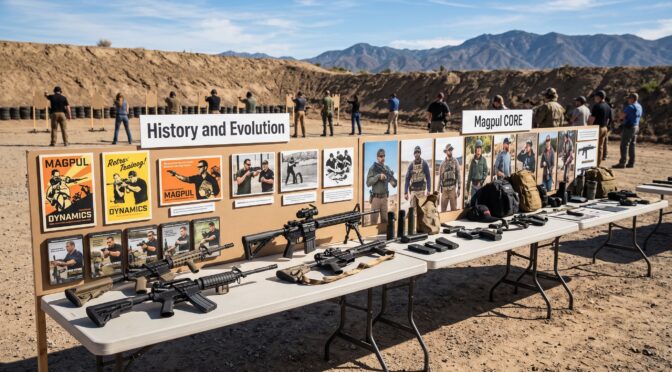
History and Evolution of the Magpul Core Training Group

1. Executive Summary

The transition of Magpul Dynamics into Magpul Core represents a notable shift in the modern tactical training and small arms industry. Founded originally as the instructional division of Magpul Industries, the group altered how military, law enforcement, and civilian personnel approach weapons manipulation. By leveraging high-production-value media and establishing standardized, biomechanically efficient shooting platforms, the organization moved portions of the industry away from static marksmanship toward dynamic, reality-based problem-solving.

This report analyzes the history, doctrinal shifts, and current offerings of the Magpul Core training group. It traces the organization’s roots from the “Art of the Tactical Carbine” era under its initial leadership, through its strategic rebranding to Magpul Core. The rebranding signified a deliberate inward focus, integrating field-tested tactical instruction directly with Magpul’s product research and development cycle. The report details the specific instructional methodologies utilized by the group, such as pushing past the failure point, diagnostic malfunction clearing, and the adoption of the thumb-over-bore grip.

Furthermore, this analysis dissects the current and historical training catalogs, ranging from close-quarters carbine manipulation to specialized backcountry precision hunter courses. It identifies the intended demographics for these curricula, assessing their utility for law enforcement, military operators, and the responsibly armed citizen. Finally, the report evaluates the group’s standing within the broader tactical community through a review of social media engagement, industry reception, and ongoing doctrinal debates, concluding that Magpul Core remains a recommended and foundational entity within the firearms training sector.

2. Historical Context and Origins of Magpul Dynamics (2007–2011)

2.1 The Founding and Initial Objectives

To contextualize the current iteration of Magpul Core, it is necessary to examine its origins as Magpul Dynamics. Magpul Industries was founded in 1999 by Richard M. Fitzpatrick, a former United States Marine Corps Force Reconnaissance sergeant1. The company’s original mission centered on innovation, simplicity, and efficiency, beginning with a simple polymer device designed to aid in the extraction of STANAG rifle magazines from pouches under stress—the eponymous “Magpul”2.

As the company expanded into polymer magazines and other accessories, the need arose to demonstrate the practical application of these products in high-stress environments. In 2006, Magpul initiated the development of the PMAG, a polymer magazine designed to enable increased production and avoid supply problems associated with standard aluminum magazines5. Magpul continues to innovate in this space, recently introducing the translucent TMAG 20 for AR/M4 platforms6. Despite the material advantages, consumer adoption of polymer magazines was initially slow due to negative historical experiences with plastic feed devices5. To validate the equipment and demonstrate its reliability, Magpul Industries formally launched Magpul Dynamics in 2007 as a dedicated firearms training division7. The division focused on the development of advanced firearms manipulation skills, tailored primarily for military and law enforcement personnel requiring reliable techniques for combat environments1.

2.2 The Influence of Early Leadership

The immediate market penetration of Magpul Dynamics was driven by its primary instructors during its formative years: Travis Haley, a former Marine Force Reconnaissance operator and private military contractor, and Chris Costa, a former Coast Guard instructor and private sector contractor9. Both instructors brought extensive real-world combat and instructional experience to the curriculum5.

Under their direction, Magpul Dynamics instructed standard marksmanship while simultaneously promoting a specific tactical mindset. The instructors broke down fundamental mechanics to granular levels, demonstrating how the human body reacts under physiological stress and how to configure weapons and gear to mitigate those reactions11. Their approach emphasized that professional users must understand the “why” behind an action in addition to the “how,” creating a demographic of shooters who sought to understand the mechanics of their firearms and their own physiological responses12.

2.3 Media Distribution and Market Impact

In 2008, Magpul Dynamics released The Art of the Tactical Carbine, a multi-disc instructional DVD set that disrupted the standard model of the firearms training market5. Prior to this release, training videos were frequently highly scripted, static, and filmed in sterile environments. Magpul Dynamics altered this paradigm by filming actual live-fire classes5. The footage captured real students making unscripted mistakes and the instructors diagnosing and correcting those failures in real-time8.

The success of the first series led to subsequent releases, including The Art of the Tactical Carbine Volume II, The Art of the Dynamic Handgun, The Art of the Dynamic Shotgun, and The Art of the Precision Rifle9. These programs covered weapon transitions, partner tactics, shooting on the move, vehicle concealment, and complex urban environments9. By documenting their curriculum in high-definition video with sophisticated post-production, Magpul Dynamics reached a broad civilian and law enforcement audience1. The widespread distribution of these videos spurred a measurable increase in civilian attendance at tactical training courses nationwide13.

The media releases also had secondary effects on the equipment market. For example, during the filming of the carbine series, the instructors utilized the Aimpoint Micro red dot sight. Prior to the videos, the optic faced resistance in the market from users who felt it was too small; following the release of the Magpul Dynamics footage showing rapid barricade transitions with the optic, sales of the Aimpoint Micro increased substantially17. The training also heavily emphasized the proper integration and zeroing of backup iron sights (BUIS), such as the Magpul MBUS series, to ensure a redundant aiming solution if the primary optic failed18. The Magpul MBUS line has continued to evolve into modern iterations like the impact-resistant MBUS 3 polymer chassis and the steel MBUS Pro19. By 2011, both Haley and Costa departed Magpul Dynamics to form their own respective training companies, Haley Strategic Partners and Costa Ludus9. This departure marked the conclusion of the division’s initial era, prompting Magpul to reevaluate the structure and mission of its training group.

3. The Evolution and Transition to Magpul Core (2014–Present)

3.1 Rebranding and Shift in Organizational Philosophy

Following the departure of its founding instructors, Magpul Dynamics underwent a period of internal restructuring. The staff focused inward, dedicating more time to skill development, end-user outreach, and integrating directly with Magpul’s product development processes7. This operational shift culminated in a formal rebranding in 2014 and 2015, transitioning the division from Magpul Dynamics to Magpul Core7.

The transition to Magpul Core was described by the staff as an alignment with the company’s foundational values7. The new mission integrated the training division into the broader corporate ecosystem. The Core staff—which included subject matter experts such as Caylen Wojcik, Cody, Aaron, Jon, Jimmy, Jared, Jake, and Duane—became instrumental in designing and testing new hardware7. In the year leading up to the rebranding announcement, the training staff contributed directly to over 50 new product offerings7. This period also coincided with Magpul’s relocation from Colorado to Wyoming and Texas in response to state-level legislation restricting magazine capacities, a move that the company stated aligned with its core values of personal responsibility and individual liberties23.

3.2 Synergy Between Training and Product Development

The rebranding to Magpul Core highlighted a symbiotic relationship between tactical instruction and mechanical engineering. Magpul utilizes a philosophy of iterative testing, pushing the limits of materials and user interfaces through trial and error3. The Core training staff provided the necessary high-stress testing environments to validate these designs before they were introduced to the retail market. This emphasis on practical mechanics also extends to armorer tools, such as the Magpul BEV Block used for safely torquing AR muzzle devices and barrel nuts24.

The training division’s feedback loop influenced several notable products. The Magpul BAD Lever (Battery Assist Device) was developed to address double-feed malfunctions and speed up out-of-battery reloads. The device extends the bolt catch through the trigger guard, allowing the shooter to manipulate the bolt catch with the trigger finger, a technique emphasized in the curriculum for rapid malfunction clearance25. The Core staff stressed that while the device increased reload speed, its primary mechanical advantage was in safely and rapidly clearing complex stoppages25.

Similarly, the Magpul Pro 700 Rifle Chassis was developed under the guidance of Magpul Core’s precision rifle instructors26. Designed for Remington 700 footprint actions, the chassis features a full billet aluminum skeleton, ambidextrous controls, and extensive adjustability27. The input from Core ensured the chassis met the demands of military, law enforcement, and competitive shooters by incorporating features such as a folding stock designed to capture the bolt handle and an integrated AICS pattern magazine well27. The company has since expanded its offerings for this footprint, including the lightweight Hunter Lite Stock6. The division also actively developed tactical apparel, notably the Magpul Core Technical and Patrol gloves. These items were designed to offer high dexterity and touchscreen capability while providing necessary protection against heat and abrasion during intense weapons manipulation29.

3.3 Expansion of Scope: Fieldcraft, Hunting, and Adventure

While Magpul Dynamics was almost exclusively associated with high-threat tactical environments and close-quarters battle, Magpul Core expanded its mandate. The division began offering instruction and media content covering a wider array of disciplines, including adventure, fieldcraft, fitness, competition, and hunting7. This expansion reflected a recognition that the foundational principles of marksmanship, preparation, and gear selection apply equally to backcountry hunters and competitive athletes as they do to tactical operators32. By diversifying the curriculum, Magpul Core aimed to connect with a broader base of end-users while maintaining the rigorous instructional standards established in previous years.

4. Instructional Methodology and Tactical Doctrine

The tactical doctrine developed and refined by Magpul Core relies on a distinct set of biomechanical and psychological principles. The curriculum is built upon three central tenets: Reality, Consistency, and Efficiency34.

4.1 The “Failure Point” Paradigm

A primary element of the Magpul Core instructional philosophy is the concept of pushing students beyond their operational failure point. Instructors assert that maintaining a state of comfort on the firing line inhibits skill development, working under the premise that professionals must train until they make errors under pressure35.

During live-fire drills, if a student consistently executes a string of fire with perfect accuracy, instructors will systematically increase the cognitive and physical load. This is achieved by reducing the time standard, increasing the round count required within a specific par time, or extending the distance to the target35. For example, through drills like the Balance of Speed and Accuracy (BSA) drill, shooters are forced to fire four rounds in two seconds at close distances of 5 yards, or immediately transition from standing to kneeling or prone positions within tight four-second constraints at greater distances of 75 yards35. The objective is to induce mistakes—such as degraded recoil control or fumbled reloads—so that the student learns to process and correct errors while under simulated physiological stress. The training emphasizes the body’s natural alarm response, forcing students to sprint prior to shooting to elevate heart rates and simulate the effects of adrenaline35. Instructors prioritize observing how students manage weapon malfunctions and problems under stress rather than solely assessing their accuracy when the firearm is working perfectly35.

4.2 Weapons Manipulation and Ergonomics (The C-Clamp Grip)

Magpul instructors are widely credited with popularizing the thumb-over-bore, or “C-clamp,” grip for rifle manipulation within the tactical community35. While variations of the technique existed in competitive shooting circles prior to the formation of Magpul Dynamics, the training group codified its application for combat and law enforcement scenarios38.

The biomechanical rationale for the C-clamp grip involves driving the shooter’s shoulder forward and extending the support arm as far down the handguard as possible16. The support hand grasps the rail with the thumb resting over the top of the bore axis37. This aggressive forward hold maximizes recoil mitigation by applying direct downward pressure across the bore axis, actively fighting the natural muzzle rise associated with the weapon’s recoil impulse35. Furthermore, extending the support hand far down the handguard increases leverage, allowing for rapid and precise target transitions by driving the weapon laterally with greater physical authority35. The curriculum teaches that the upper body’s engagement is more critical for recoil control than the lower body stance35.

This doctrine contrasts with legacy techniques, such as holding the magazine well or wrapping the entire hand around a vertical foregrip, which Core instructors argue provide inferior control during rapid, multi-target engagements40. This biomechanical preference also influenced product design, popularizing accessories like the Magpul Angled Foregrip (AFG), which facilitates a more ergonomic thumb-break method and is legally permissible on AR pistols41. Instructors note that while a traditional vertical grip is functional for activating weapon-mounted lights via pressure pads, the thumb-break method offers superior mechanical control over the weapon system40.

4.3 Diagnostic Malfunction Clearing and Reloads

Another distinct element of the group’s methodology is the diagnostic approach to weapons malfunctions. Instructors advocate against non-diagnostic or “blind” malfunction clearance drills, such as automatically utilizing the standard “tap-rack-bang” sequence without first assessing the state of the weapon35. Instead, they teach a method of executing a speed reload where the shooter tilts the weapon slightly inward to visually inspect the ejection port35.

This visual check, estimated to take only a tenth of a second, allows the shooter to confirm that the bolt is locked back on an empty magazine, rather than experiencing a complex malfunction such as a double feed or failure to extract35. The instructors emphasize that mistaking a malfunction for an empty weapon—and subsequently attempting to force a fresh magazine into the well—can severely exacerbate the stoppage35. This diagnostic process is particularly critical when operating under physiological stress or while wearing heavy tactical gear that dampens the tactile sensation of the bolt locking to the rear35. The instructors do note, however, that this specific visual check is highly dependent on ambient daylight and cannot be effectively executed if the ejection port is not illuminated or clearly visible35.

5. Review of Magpul Core Training Offerings

The Magpul Core curriculum scales from fundamental weapons operation to advanced environmental problem-solving. The coursework is designed to isolate individual mechanics before combining them into complex, fluid movements, utilizing partnerships and dynamic scenarios.

5.1 Tactical Carbine and Handgun Courses

The foundational courses of the Magpul Core syllabus trace back to the Dynamic Carbine and Dynamic Handgun series. These courses condense material that would typically require weeks of instruction into intensive two- to three-day formats35.

Course TitleDurationCore ConceptsTactical Drills
Dynamic Carbine / Scoped Carbine2-3 DaysRecoil management, mechanical zeroes, alternate shooting positions, diagnostic malfunction clearance.Balance of Speed and Accuracy (BSA) drill, shuttle drills, urban prone and supine firing35.
Dynamic Handgun2-3 DaysThe “Core Three” (stance, grip, sight alignment/trigger control), drawing from concealment, one-handed operation.Speed reloads, shooting on the move, reflexive firing, public perception and legal liability integration12.

The Carbine courses often require students to fire approximately 1,400 rounds over two days, ensuring maximum exposure to recoil management under fatigue35. The curriculum begins with confirming mechanical zeroes at 50 yards and quickly transitions to close-quarters offhand shooting at 5 yards, focusing on a 10-inch primary target zone35. Early Magpul Dynamics instructors like Travis Haley frequently employed sequences such as the “22422 drill” to break down complex firing mechanics into granular segments, which are built back up to cultivate subconscious body control in dynamic scenarios10. A significant portion of the course is dedicated to alternate and reality-based shooting positions. Students are taught to engage targets from kneeling, prone, and “urban prone” positions, simulating shooting beneath vehicles or barricades16. The curriculum also includes the supine position, firing from the back, which instructors note is critical for personnel who may trip while retreating from an armed suspect16.

The handgun curriculum mirrors the carbine philosophy, breaking the fundamental mechanics down into observable parts12. The coursework ladders from basic administrative and tactical reloads to dynamic movement and reflexive firing12. Advanced modules focus on the concealed carry lifestyle, addressing the integration of everyday clothing, holster selection, and the physical constraints of small concealable handguns12.

5.2 Precision Rifle and the Precision Hunter Course

With the transition to Magpul Core, the organization expanded its precision rifle offerings under the direction of Caylen Wojcik, a former USMC Scout Sniper who served as Director of Operations before eventually departing to found the training group Modern Day Sniper22. During his tenure, the division developed courses tailored for both law enforcement snipers and civilian backcountry hunters33.

Course TitleDurationCore ConceptsTactical Drills
Precision Hunter Course2 Days (Optional 4-Day Hunt)Equipment optimization, external ballistics, angular units of measure (MOA/Mils), reading wind.DOPE chart creation via magnetic chronographs, establishing natural point of aim, unknown distance engagements up to 700+ yards43.
Long Range / Precision Rifle3-4 DaysAdvanced ballistics, density altitude data logging, rapid bolt manipulation.100-200 yard barricade supported positions, cold-bore confirmation, barrier ammunition testing15.

Unlike standard tactical sniper courses, the Precision Hunter curriculum is uniquely designed for the civilian rifle hunter, utilizing the equipment they intend to field rather than specialized tactical gear32. Hosted at locations such as the Alazan Ranch in West Texas, the two-day course (historically priced at $1,500) offers an optional four-day free-range Aoudad ram hunt extension43. The primary prerequisites for attendees are simply a basic understanding of firearms safety and a willingness to learn47. The objective is to teach hunters the absolute capabilities and limitations of their specific hardware to ensure ethical harvests32. The syllabus includes telescopic sight theory, understanding ballistic drop-compensated reticles, and measuring the exact velocity of hunting ammunition using chronographs to build a personalized Data of Previous Engagement (DOPE) chart43. Engagements are conducted at unknown distances up to 700 yards utilizing improvised field positions rather than concrete benches32.

5.3 Specialized Curricula and Demographics

Magpul Core has also diversified its offerings to address highly specialized scenarios and specific demographics, maintaining active training engagements in modern operational contexts, with current schedules reflecting courses extending into 2025 and 2026.

Course TitleTarget AudienceCurriculum Focus
Extreme Defensive DrivingLEO, Executive ProtectionHigh-speed tactical driving, vehicle mobility, pursuit, and escape in real-world threat scenarios hosted at The Ranch Texas49.
Shoot Like A Girl (Partnership)Civilian WomenA partnered initiative providing confidence building, safe firearms handling, and introductions to shooting sports and hunting, originating in 200949.
LEO-Only Modules / OutreachActive Law EnforcementAdvanced dynamic assaults, LEO-only weapons skills, and media coverage of external agency training (e.g., Magpul personnel attending Sidewinder Concepts’ LE Sniper Course)5.

6. Demographic Analysis: Intended Attendees

The methodologies developed by Magpul Core are highly scalable, making the training applicable to a broad spectrum of users.

6.1 Military and Law Enforcement Personnel

For professional end-users, the value of Magpul Core training lies in its emphasis on efficiency and reality-based problem-solving. Law enforcement officers benefit from the curriculum’s focus on non-standard shooting positions, such as the urban prone and supine, and the prioritization of cover and concealment when deploying a rifle from inside or around a patrol vehicle16. The training builds resilience against the body alarm response, teaching officers to process information and clear malfunctions while experiencing auditory exclusion and tunnel vision36.

The rigorous documentation of the training has also influenced institutional standard operating procedures. Military personnel returning from combat theaters have noted that exposure to the advanced weapons manipulation techniques taught by private groups like Magpul Core could directly reduce casualties. For example, veterans have recounted instances in combat where standard military flat-range qualification failed them; under fire, they defaulted to slow, administrative reloads—such as attempting to retain an empty magazine in a tight pouch—rather than executing a rapid speed reload and returning fire50. The muscle memory required to properly index fresh magazines and rapidly clear empty chambers is a perishable skill that requires the type of stress-induced repetition offered by the Core curriculum35.

6.2 The Responsible Armed Citizen

Civilian attendees ranging from competitive shooters to individuals focused on home defense form a large segment of the target audience. The courses strip away complex tactical jargon and focus on the physics of shooting and the psychology of violent encounters11. For the armed citizen, the integration of concealed carry constraints—such as drawing from under garments and managing public perception—makes the training applicable to daily life12. Furthermore, the instructional media remains a resource for civilians to practice fundamental drills and dry-fire techniques at home, provided they combine it with actual live-fire instruction9. Instructors emphasize personal safety and situational awareness, teaching civilians how to identify threat indicators before a violent encounter occurs15.

6.3 The Backcountry Hunter

Hunters who wish to maximize the effectiveness of their chosen rifle platform are highly encouraged to attend the precision courses. The training bridges the gap between traditional hunting practices and modern ballistic science. By teaching hunters how to accurately range targets, read wind vectors, and calculate bullet drop based on density altitude, the course significantly increases confidence and the likelihood of a clean, ethical shot at extended ranges32. The curriculum forces hunters to acknowledge their personal limitations, ensuring they understand the maximum effective range of both their equipment and their own physical capabilities32.

7. Industry Reception and Social Media Analysis

When evaluating Magpul Core and its historical iterations across social media and industry publications, the sentiment is highly positive, though it is not without nuanced debate regarding specific tactical applications.

7.1 Legacy Influence on the Firearms Training Industry

Magpul Dynamics altered the trajectory of the civilian firearms training market. By releasing high-definition, aesthetically compelling media, the group demystified tactical training for the general public1. Prior to the late 2000s, taking a carbine class was a niche activity; subsequently, it became a mainstream pursuit for firearm enthusiasts13. The instructors established a baseline standard for gear setup and manipulation that continues to permeate modern digital channels and tactical academies1. The organization’s focus on the “why” behind weapons manipulation has forced other training companies to elevate their instructional standards to remain competitive12.

7.2 Criticisms and Tactical Debates

Despite its popularity, the methodologies championed by the group have faced scrutiny within the community. The most prominent debate surrounds the C-clamp grip. Critics on military and tactical forums frequently point out that while the extended thumb-over-bore grip is highly effective for rapid target transitions on a flat range, it is fatiguing to maintain over extended patrols39. Furthermore, combat veterans note that heavy body armor, communication gear, and environmental constraints often make full arm extension impractical in actual combat scenarios, requiring shooters to adapt to more traditional, compact stances39. Proponents counter that the technique is a fundamental skill meant to be applied when the environment allows, rather than a rigid requirement for every engagement39.

Additionally, the organization has occasionally intersected with industry disputes. A publicized incident involved a former instructor and a negligent discharge video dispute with a media production company. While this incident occurred years after the instructor’s departure from Magpul, it highlights the intense scrutiny placed on the foundational figures of the industry and the ongoing debates regarding safety and instructional validity52.

7.3 Contemporary Social Media Engagement

An analysis of Magpul Core‘s contemporary digital footprint—specifically its dedicated Facebook page—reveals an engaged and professional community. The page actively highlights international and US military personnel, government agencies, and law enforcement utilizing Magpul products7.

Post CategoryContent FocusEngagement Level
Product ShowcasesHighlighting Magpul accessories (e.g., PMAGs, Pro 700 chassis, Technical Gloves) in field environments.High (Often 100-500+ reactions, active comment sections discussing gear setups)7.
Memorial & TributesHonoring fallen military members and veterans.Very High (e.g., an August 2021 post honoring 13 fallen service members received nearly 400 reactions and respectful discourse)7.
Training UpdatesShowcasing live-fire training exercises (e.g., USMC SPMAGTF-CR-CC conducting two-gun drills).Moderate to High (Active discussion regarding techniques and gear applications)7.

Engagement metrics remain strong, indicating that the brand retains a high degree of respect and loyalty among its core demographic. Posts displaying precision rifles or early morning range days routinely generate positive interaction7. Across external forums such as Reddit, former Magpul instructors like Caylen Wojcik are frequently cited as top-tier educators, with users actively recommending the foundational courses they developed due to the quality of instruction and empirical focus7. Based on social media review and industry consensus, the group and its historical offerings are highly recommended for personnel seeking rigorous, reality-based firearms training.

8. Conclusion

The evolution from Magpul Dynamics to Magpul Core represents a maturation of the organization. What began as a highly visible effort to demonstrate the efficacy of polymer rifle accessories grew into a foundational pillar of modern tactical doctrine. By championing principles such as reality-based stress conditioning, biomechanically efficient ergonomics, and diagnostic problem solving, the group established a standardized methodology for modern weapon manipulation.

Today, Magpul Core serves as a critical nexus between the end-user and the engineering team. The empirical data and feedback generated from their rigorous training programs directly influence the design of the physical products manufactured by Magpul Industries, resulting in innovations like the Pro 700 chassis and the BAD Lever. Whether an individual is a law enforcement officer requiring advanced dynamic assault tactics, a civilian seeking concealed carry proficiency, or a backcountry hunter learning the limits of their ballistic profile, the offerings of Magpul Core remain relevant and highly recommended within the industry.

Master Summary Table

CategoryMagpul Dynamics (2007–2011)Magpul Core (2014–Present)
Primary FocusWeapons manipulation, dynamic tactical training, high-visibility media production.Integration of training with product R&D; expansion into fieldcraft, hunting, and precision rifle.
Key PersonnelTravis Haley, Chris Costa.Caylen Wojcik (former), Cody, Aaron, Jon, Jimmy, Jared, Jake, Duane.
Signature MethodologiesC-clamp grip, diagnostic reloads, pushing the failure point, urban prone positions.Precision ballistics (MOA/Mils), DOPE charting, natural point of aim, ethical hunter limitations.
Key Media / OfferingsThe Art of the Tactical Carbine, The Art of the Dynamic Handgun DVD series.Precision Hunter Course, Extreme Defensive Driving, product integration (Pro 700, BAD Lever, Gloves).
Target AudienceMilitary, LEO, armed citizens seeking combat-focused drills.Military, LEO, armed citizens, competitive shooters, backcountry hunters.
Industry ImpactPopularized formal tactical training for civilians; created the modern instructional media market.Refined product development; established advanced precision hunting curriculum for civilians.

Please share the link on Facebook, Forums, with colleagues, etc. Your support is much appreciated and if you have any feedback, please email us in**@*********ps.com. If you’d like to request a report or order a reprint, please click here for the corresponding page to open in new tab.


Sources Used

  1. G&P Magpul FRS | Airsoft Rifle Reviews – Gun Mart, https://www.gunmart.net/gun-reviews/airsoft-guns/bb-guns/gp-magpul-frs
  2. Magpul – Wikipedia, https://en.wikipedia.org/wiki/Magpul
  3. FOUNDATIONS – Magpul Comms, https://comms.magpul.com/foundations/
  4. Magpul FOR SALE (2) – AtlanticFirearms.com, https://atlanticfirearms.com/manufacturers/magpul?page=2
  5. Magpul Catalog 2010 | PDF | Firearms | Projectile Weapons – Scribd, https://www.scribd.com/document/65773601/Magpul-Catalog-2010
  6. SHOT Show 2026: New Product Announcements on January 20, 2026 – Ronin’s Grips, https://blog.roninsgrips.com/shot-show-2026-january-20-2026-product-announcements/
  7. Magpul Dynamics is now Magpul CORE – Recoil Magazine, https://www.recoilweb.com/magpul-dynamics-is-now-magpul-core-56437.html
  8. AimSurplus, LLC | Blog, https://blog.aimsurplus.com/?paged=18
  9. Review of Magpul Dynamics Art of the Tactical Carbine, Vol. I – ThruMyLens, https://thrumylens.org/featured/review-of-magpul-dynamics-art-of-the-tactical-carbine-vol-i/
  10. [Explanation] 22422 Drill: A Guide to Breaking Down Fundamentals and Nighttime Application|OCT STRATEGIC – note, https://note.com/octstrategic/n/nff28eabc16c9?hl=en
  11. U S Cavalry Red Book Buyer S Guide 2012 13 | PDF | Shirt | Clothing – Scribd, https://www.scribd.com/doc/124765250/U-S-Cavalry-Red-Book-Buyer-s-Guide-2012-13
  12. Magpul’s Art of the Dynamic Handgun DVD set: Gear Review – Alpha Koncepts, https://www.alphakoncepts.com/magpuls-art-dynamic-handgun-dvd-set-gear-review/
  13. Looking for the best tactical flashlight — what’s worked well for you? – Reddit, https://www.reddit.com/r/flashlight/comments/1lrdqo3/looking_for_the_best_tactical_flashlight_whats/
  14. Index filme anul 2009, cu litera “T” – CineMagia.ro, https://www.cinemagia.ro/index-filme-2009/litera-T/
  15. 800-741-0015 • brownells.com, https://www.brownells.com/UserDocs/Miscellaneous/brownellsxmas2013.pdf
  16. Magpul Dynamics Firearms Training – Police Magazine, https://www.policemag.com/photo-galleries/magpul-dynamics-firearms-training
  17. Aimpoint’s Micro Red Dot: The World’s Most Popular Optic – Shooting Times, https://www.shootingtimes.com/editorial/aimpoint-micro-red-dot/540309
  18. Do you really have backup iron sights (BUIS) that you can count on? A lot of shooters do not and it’s not just the fault of the hardware – Ronin’s Grips, https://blog.roninsgrips.com/do-you-really-have-backup-iron-sights-buis-that-you-can-count-on-a-lot-of-shooters-do-not-and-its-not-just-the-fault-of-the-hardware/
  19. Top 10 AR-15 Backup Iron Sights (BUIS) for 2026 – Ronin’s Grips, https://blog.roninsgrips.com/top-10-ar-15-backup-iron-sights-buis-for-2026/
  20. Page 40 of 174 – by OpticsPlanet – GearExpert, https://www.gearexpert.com/page/40
  21. MAGPUL CORE Trademark | Trademarkia, https://www.trademarkia.com/magpul-core-86509547
  22. Posts Tagged ‘Caylen Wojcik’ – Soldier Systems, https://soldiersystems.net/tag/caylen-wojcik/
  23. Magpul’s Magnificent Magazines: An Overview – The Mag Life – GunMag Warehouse, https://gunmagwarehouse.com/blog/magpuls-magnificent-magazines-an-overview/
  24. How to Safely Change AR Muzzle Devices and Barrel Nuts Using a Magpul BEV Block, https://blog.roninsgrips.com/how-to-safely-change-ar-muzzle-devices-and-barrel-nuts-using-a-magpul-bev-block/
  25. Magpul BAD vs. Phase 5 EBR – ITS Tactical, https://www.itstactical.com/shooting/magpul-bad-vs-phase-5-ebr/
  26. 15_Magpul_Catalogo.pdf – AASIAS.com, https://www.aasias.com/catalogo/15_Magpul_Catalogo.pdf
  27. Magpul – Pro700 Rifle Chassis | Soldier Systems Daily, https://soldiersystems.net/2018/01/15/magpul-pro700-rifle-chassis/
  28. Magpul Introduces the Pro 700 Rifle Chassis – Recoil Magazine, https://www.recoilweb.com/magpul-introduces-the-pro-700-rifle-chassis-133053.html
  29. Shooting Gloves | The Armory Life Forum, https://www.thearmorylife.com/forum/threads/shooting-gloves.5687/
  30. Catalog | PDF | Clothing | Armed Conflict – Scribd, https://www.scribd.com/document/363956763/Catalog
  31. New Magpul Core Patrol Gloves – Blue Sheepdog, https://www.bluesheepdog.com/2015/11/29/new-magpul-core-patrol-gloves/
  32. Hunter School – Richard Mann, https://empty-cases.com/blog/hunter-school/
  33. Episode 13: Preparation, Precision and Navigation with Caylen Wojcik of Magpul Core, https://journalofmountainhunting.com/episode13/
  34. Wounded Warrior: Magpul Dynamics Carbine 1 – SWAT Survival | Weapons | Tactics, https://www.swatmag.com/article/wounded-warrior-magpul-dynamics-carbine-1/
  35. Pushing Beyond the Failure Point: Magpul Dynamics Carbine 1 – SWAT Survival | Weapons, https://www.swatmag.com/article/pushing-beyond-failure-point-magpul-dynamics-carbine-1/
  36. Train Like You Bleed: Dark Angel Medical Direct Action Response Training – SWAT Survival, https://www.swatmag.com/article/train-like-bleed-dark-angel-medical-direct-action-response-training/
  37. Magpul MAG597-GRY MOE MVG M-LOK Vertical Grip Polymer, https://www.deguns.com/magpul-mag597-gry-moe-mvg-m-lok-vertical-grip-polymer
  38. History of SOPMOD, Part II – SWAT Survival | Weapons | Tactics, https://www.swatmag.com/article/history-of-sopmod-part-ii/
  39. Shooting Stance Old vs New : r/Firearms – Reddit, https://www.reddit.com/r/Firearms/comments/1sg7uzh/shooting_stance_old_vs_new/
  40. Explosive Conclusion: Colt LE6940 Saga Ends After 17600 Rounds – S.W.A.T. Magazine, https://www.swatmag.com/article/explosive-conclusion-colt-le6940-saga-ends-17600-rounds/
  41. ATF letter stating that the Magpul AFG is legal for use on AR pistols – Ronin’s Grips, https://blog.roninsgrips.com/atf-letter-stating-magpul-afg-legal-use-ar-pistols/
  42. “Building Decades of Experience into America’s Rifle” – Windham Weaponry, https://www.windhamweaponry.com/wp-content/uploads/2017/05/windham2017.pdf
  43. A Review of The Amazing Precision Hunter Course with Caylen Wojcik | thefirearmblog.com, https://www.thefirearmblog.com/blog/2016/08/10/review-amazing-precision-hunter-course-caylen-wojcik/
  44. Caylen Wojcik | Modern Day Sniper Instructor – Sniperology, https://www.sniperology.com/instructors/caylen-wojcik
  45. Caylen Wojcik – Modern Day Sniper, https://www.moderndaysniper.com/cadres/caylen-wojcik
  46. Rifle Team – Training Plan And Drills – Guns and Ammo, https://www.gunsandammo.com/editorial/rifle-team-training-plan-drills/248095
  47. Magpul CORE Precision Hunter Course | McGowan Outfitting, https://mcgowanoutfitting.com/wp-content/uploads/2016/05/Magpul-CORE-Precision-Hunter-Course.pdf
  48. Review – MAGPUL DYNAMICS – Precision Rifle – N.A.P.S.I. Training Blog, https://mapsitrainingblog.wordpress.com/2015/10/17/review-magpul-dynamics-precision-rifle/
  49. Training – Magpul Comms, https://comms.magpul.com/category/training/
  50. AL TARMIYAH FIREFIGHT!: Lessons Learned The Hard Way – SWAT Survival | Weapons, https://www.swatmag.com/article/al-tarmiyah-firefight-lessons-learned-hard-way/
  51. Long Range Precision Shooting Classes – Where? Who? Worth It? : r/longrange – Reddit, https://www.reddit.com/r/longrange/comments/e4ao3y/long_range_precision_shooting_classes_where_who/
  52. NDGate – Panteao Productions Responds to Travis Haley’s Allegations – Soldier Systems, https://soldiersystems.net/2016/02/08/ndgate/

Top 10 US Pistol Instructor Training Programs Ranking

1.0 Executive Summary

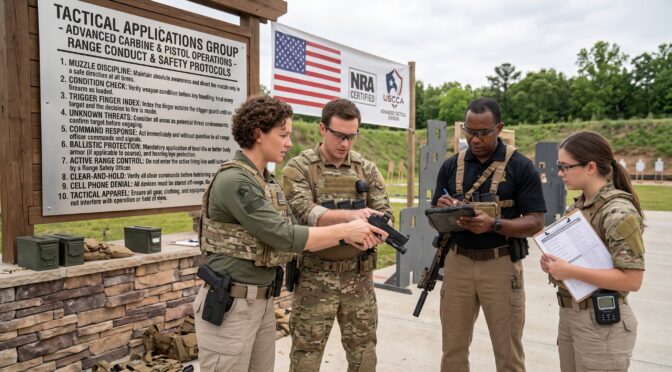
The evaluation of advanced pistol instructor training programs within the United States requires a methodical review of curriculum standards, pedagogical frameworks, and instructor development methodologies. This report evaluates the top ten advanced pistol instructor programs based on a weighted customer and student sentiment scoring model. The data is derived from after-action reports (AARs), professional forums, and social media discourse among law enforcement, military, and credentialed civilian practitioners1.

The analysis indicates a distinct shift in the firearms training industry. While legacy programs focused primarily on static shooting metrics and rote line drills, the current leading programs emphasize adult learning modalities, diagnostic coaching, cognitive processing under stress, and legal articulation2. Programs that successfully balance high-level technical shooting standards with rigorous pedagogical development scored the highest in overall practitioner sentiment. Conversely, programs that solely test a candidate’s individual shooting ability without teaching them how to transfer that knowledge effectively tend to receive mixed feedback6.

Table 1 presents the top ten advanced pistol instructor training programs, sorted by their overall weighted sentiment score.

Table 1: Top 10 Advanced Pistol Instructor Programs by Sentiment Score

RankProgram NameProviderPositiveNeutralNegativeWeighted ScoreCost (USD)Duration
1Three-Day Firearms Instructor DevelopmentRangemaster (Tom Givens)96.0%3.0%1.0%143.5$7953 Days
2Pistol Instructor CourseDefoor Proformance Shooting95.0%4.0%1.0%142.5$7502 Days
3Advanced Pistol Instructor Training ProgramFLETC94.0%5.0%1.0%141.5Agency5 Days
4Advanced Pistol InstructorSIG Sauer Academy93.0%6.0%1.0%140.5$7352 Days
5Master Instructor Development ProgramIALEFI92.0%7.0%1.0%139.5$5053 Days
6Instructor Development CourseGunsite Academy91.0%7.0%2.0%136.0$2,1605 Days
7Firearms Instructor HandgunCentrifuge Training90.0%8.0%2.0%135.0$9005 Days
8MAG Defensive PistolMassad Ayoob Group89.0%9.0%2.0%134.0$1,0002 Days
9Advanced Handgun ClassRogers Shooting School88.0%9.0%3.0%130.5$1,4005 Days
10RDS Pistol Instructor CourseModern Samurai Project85.0%11.0%4.0%125.0$6752 Days

2.0 Program Analysis and Detailed Rankings

The following section provides a systematic analysis of the top ten training programs, sorted in descending order by their calculated sentiment ranking. Each evaluation details the program’s curriculum, evaluation standards, pedagogical focus, equipment requirements, and the contextual factors driving its sentiment score.

2.1 Rank 1: Rangemaster (Tom Givens) – Three-Day Firearms Instructor Development Course

Program URL: https://rangemaster.com

Sentiment Profile: 96.0% Positive | 3.0% Neutral | 1.0% Negative | Weighted Score: 143.5

Duration & Cost: 3 Days | $795

Ammunition Requirement: ~1,000 rounds

The Rangemaster Firearms Instructor Development Course, developed and taught by Tom Givens, is highly ranked in the industry regarding instructor development1. Givens brings over 50 years of firearms training experience to the curriculum, having personally trained more than 3,000 firearms instructors and 60,000 students10. The curriculum addresses a historical deficit in local law enforcement and civilian training: instructors who possess strong operational skills but lack a fundamental understanding of adult learning theory and proper coaching mechanisms11.

Curriculum and Pedagogical Focus The course dedicates significant classroom time to modern adult learning and teaching modalities5. The program assumes that attendees already possess competent marksmanship skills; therefore, it focuses on effective coaching techniques, hazard material abatement on the range, and the integration of low-light technology5. The live-fire curriculum is structured to systematically break down the draw stroke, presentation, and firing cycle so that instructors can diagnose student deficiencies visually.

The underlying philosophy relies on the concept that a student’s environment dictates the required speed and accuracy. Givens utilizes specific drills, such as the “Three Seconds or Less” (3SL) drill, which forces cognitive processing alongside marksmanship13. The 3SL drill involves strings of 1, 2, and 3 rounds fired from various readiness conditions at 3 and 7 yards, strictly enforced by a shot timer, alongside one-handed shooting phases5. Additionally, the Casino Drill is employed at 7 yards to force decision-making and continuous reloading under time pressure15.

Evaluation Standards Rangemaster operates with objective grading criteria. The course is not a guaranteed certification; Tom Givens reports an average washout rate of 15%9. To earn the instructor certification, candidates must achieve a minimum score of 90% on both the FBI pistol qualification and the proprietary Rangemaster qualification16. Furthermore, candidates must score 90% or higher on a written examination covering legal, physiological, and mechanical concepts16.

Sentiment Context The 96.0% positive sentiment is driven by the program’s objective grading criteria and the instructor cadre’s ability to communicate complex pedagogical concepts effectively17. Practitioners frequently cite this course as a benchmark for civilian and law enforcement defensive handgun instruction16. The neutral (3.0%) and negative sentiment (1.0%) are statistically low, reflecting isolated feedback regarding the high pressure of the qualification standards and the rigorous pace of the three-day curriculum.

2.2 Rank 2: Defoor Proformance Shooting – Pistol Instructor Course

Program URL: https://defoor-proformance-shooting.myshopify.com

Sentiment Profile: 95.0% Positive | 4.0% Neutral | 1.0% Negative | Weighted Score: 142.5

Duration & Cost: 2 Days | $750

Ammunition Requirement: ~1,000 rounds

Founded by Kyle Defoor, a former U.S. Navy SEAL and combat veteran, Defoor Proformance Shooting delivers a performance-oriented instructor curriculum1. Training an average of 1,800 students annually across military, law enforcement, and civilian sectors, the program focuses on an efficient approach to weapons manipulation and adult learning20.

Curriculum and Pedagogical Focus The Defoor methodology is distinguished by its integration of disparate skill sets into the pistol curriculum. Defoor does not treat the handgun in a vacuum; the curriculum seamlessly integrates empty-hand combatives, blade deployment templates, and immediate casualty care, including tourniquet application21. The pedagogical stance asserts that a firearm is only one tool in a continuum of force, and instructors must understand how to transition between unarmed and armed responses seamlessly21.

A core component of the instructional methodology is distance shooting. Defoor heavily utilizes the NRA B-8 target (featuring a 5.5-inch black nine-ring) set at 25 yards21. The pedagogical theory assumes that if an instructor can accurately diagnose and correct a student’s grip and sight alignment at 25 yards, those skills will translate to speed and accuracy at closer defensive distances24. Defoor teaches specific grip mechanics, emphasizing aggressive pinching with the thumb and forefinger while relaxing the bottom three fingers, and wrapping the index finger to the first joint on the trigger to maximize mechanical leverage9. Furthermore, he advocates for taking 50% of the slack out of the trigger during presentation, systematically adding weight until the shot breaks25.

Evaluation Standards Defoor’s evaluation requires candidates to demonstrate proficiency in the fundamentals before they are permitted to coach others. The course utilizes strict time standards on B-8 targets, often demanding a cold start of 10 rounds fired for score9. Reholstering safety is also an evaluation metric; instructors are taught the “feel the steel” method, maintaining index finger contact with the slide during the reholster process to mitigate negligent discharges, and pausing if any resistance is felt in the holster26.

Sentiment Context The 95.0% positive sentiment rating is driven by the immediate improvements students observe in their marksmanship, particularly at 25 yards1. Practitioners note the inclusion of functional combatives, which bridge the gap between close-proximity altercations and weapons deployment, offering a holistic view of survival9. The 4.0% neutral and 1.0% negative sentiment stems from the physical demands of the course and the rigid adherence to specific grip mechanics that may not suit all anatomical variations.

2.3 Rank 3: Federal Law Enforcement Training Centers (FLETC) – Advanced Pistol Instructor Training Program (APITP)

Program URL: https://www.fletc.gov/advanced-pistol-instructor-training-program

Sentiment Profile: 94.0% Positive | 5.0% Neutral | 1.0% Negative | Weighted Score: 141.5

Duration & Cost: 5 Days | Agency Sponsored

Ammunition Requirement: ~1,500 rounds

The Advanced Pistol Instructor Training Program (APITP) conducted by the Federal Law Enforcement Training Centers (FLETC) is a restricted instructional program available only to sworn law enforcement and active military personnel1. Hosted at primary facilities including Glynco (Georgia), Artesia (New Mexico), Charleston (South Carolina), and Cheltenham (Maryland), the APITP evaluates traditional range philosophies alongside physiologically grounded combat methodologies13.

Curriculum and Pedagogical Focus The 5-day curriculum forces existing agency firearms instructors to critically evaluate the difference between outdated administrative qualification courses and performance-based training13. The pedagogical framework relies on gun-fighting principles rather than bullseye marksmanship. Instructors are trained to teach proper body biomechanics, the modern thumbs-forward grip, committed shot trigger control, and dynamic movement13. The primary objective is to produce instructors capable of returning to their respective agencies and elevating their internal training programs to manage multi-threat engagements. Additional curriculum blocks cover advanced instructional methodologies, training aid deployment, and target analysis13.

Evaluation Standards Entry into the APITP is gated, ensuring only advanced practitioners attend. Candidates must already be certified firearms instructors for their parent agency and must have completed prerequisite courses such as the Survival Shooting Training Program (SSTP) or the Advanced Pistol Training Program (APTP)30.

The evaluation standards are strict. On the first day of training, candidates must pass a Pistol Skill Assessment30. Failure to achieve a passing score on this initial course of fire results in immediate removal from the program30. Students are required to bring their duty-issued semiautomatic pistols, duty leather/kydex gear, and a minimum of five magazines, while FLETC provides the roughly 1,500 rounds of necessary ammunition31.

Sentiment Context The program achieves a 94.0% positive sentiment score, favored by federal agents and state tactical officers who appreciate the transition from static line drills to biomechanically sound gun-fighting protocols17. The neutral (5.0%) and negative (1.0%) feedback is associated with the strict exclusivity of the program and the bureaucratic requirements for entry17.

2.4 Rank 4: SIG Sauer Academy – Advanced Pistol Instructor

Program URL: https://sigsaueracademy.com/courses/advanced-pistol-instructor

Sentiment Profile: 93.0% Positive | 6.0% Neutral | 1.0% Negative | Weighted Score: 140.5

Duration & Cost: 2 Days | $735

Ammunition Requirement: ~1,000 rounds

The SIG Sauer Academy, operating out of its primary facility in Epping, New Hampshire, and its secondary location in Volusia County, Florida, offers the Advanced Pistol Instructor course as a continuation of their foundational 40-hour Pistol Instructor program2. The course is rooted in the Academy’s “SIG (Simple is Good)” principles, which prioritize physiological simplicity over complex, multi-step motor functions2.

Curriculum and Pedagogical Focus The curriculum is an academic study of Adult Learning Theory, teaching instructor candidates how to tailor their delivery methods to resonate with diverse adult learning styles2. The program places emphasis on differentiating between performance-based mindsets (focusing on the micro-mechanics of the shot process, such as grip pressure and sight tracking) and outcome-based mindsets (focusing solely on where the bullet impacts the target)2.

Furthermore, the course integrates technology into the pedagogical framework, teaching instructors how to utilize video analysis for real-time shooter diagnostics and remediation2. The curriculum also covers the development of shooter inoculation drills, proper target scoring, and team-teaching concepts32.

Evaluation Standards SIG Sauer Academy utilizes a structured, continuous assessment model rather than relying on a single final exam. Achievement is based on cumulative performance across three distinct criteria: Technical Knowledge, Teaching Ability, and Shooting Performance2. The grading rubric is strictly defined:

  • Certificate of Achievement: Candidates must achieve at least 80% of the total score across all graded events (1,960 out of 2,450 points). This grants the three-year instructor certification2.
  • Certificate of Attendance: Candidates scoring below the 80% threshold receive attendance recognition but do not receive the instructor credential2.
  • Patch Qualification: Requires passing specific high-stress drills, specifically passing at least one of the Training Course Standards (TCSs) with a 5/6 score on demand2.

Sentiment Context With a 93.0% positive sentiment, the program is noted for its academic approach to adult learning and the modern facilities available at the SIG Experience Center1. The 6.0% neutral rating is generally attributed to the prerequisite requirements—candidates must already possess a 5-day nationally recognized instructor certification just to enroll in this 2-day advanced module2. Equipment requirements are also strict; revolvers and .22 caliber pistols are explicitly banned, and retention holsters requiring trigger finger manipulation (e.g., Blackhawk SERPA) are prohibited for safety reasons2.

2.5 Rank 5: IALEFI – Master Instructor Development Program (MIDP)

Program URL: https://www.ialefi.com

Sentiment Profile: 92.0% Positive | 7.0% Neutral | 1.0% Negative | Weighted Score: 139.5

Duration & Cost: 3 Days | $505

Ammunition Requirement: 600 – 800 rounds

The International Association of Law Enforcement Firearms Instructors (IALEFI) provides the Master Instructor Development Program (MIDP), a continuing education platform designed specifically for existing, certified law enforcement firearms instructors1. Unlike standard basic instructor courses, the MIDP is not a shooting school intended to teach fundamental marksmanship; rather, it is a pedagogical seminar focused on communication, coaching, and the psychology of lethal force application7.

Curriculum and Pedagogical Focus The MIDP spans three primary law enforcement weapon platforms: Handgun, Shotgun, and Patrol Rifle34. The core curriculum is built upon structuring training that progresses sequentially from “concepts to skills to drills,” ensuring that officers understand the underlying mechanism before performing repetitions34. Instructors are taught how to build coaching strategies that encourage natural action responses, acknowledging how the sympathetic nervous system degrades fine motor skills during a fight-or-flight response.

A component of the curriculum includes specialized low-light methodology. The program utilizes laser simulators to replicate the sudden muzzle flash of a suspect’s firearm in a dark environment, forcing the instructor candidate to teach appropriate spatial movement, cover utilization, and light discipline under simulated duress35.

Evaluation Standards The evaluation relies heavily on peer teach-backs and active range safety management. Instructors must demonstrate the ability to manage a firing line dynamically, identifying and correcting shooter performance issues in real-time7. The live-fire standard emphasizes combat accuracy at speed, utilizing shot timers to induce stress while demanding hits in the vital zones37.

Sentiment Context The MIDP carries a 92.0% positive sentiment, largely due to its accessibility for municipal department budgets and its multi-platform approach1. The neutral sentiment (7.0%) reflects the highly specific target audience; the course offers less utility for the civilian concealed carry practitioner or novice instructor, as the doctrine is strictly tailored to uniformed patrol shift operations, liability abatement, and agency policy development12.

2.6 Rank 6: Gunsite Academy – Instructor Development Course

Program URL: https://www.gunsite.com/classes/instructor-development/

Sentiment Profile: 91.0% Positive | 7.0% Neutral | 2.0% Negative | Weighted Score: 136.0

Duration & Cost: 5 Days | $2,160

Ammunition Requirement: 500 rounds

Gunsite Academy, founded by Lt. Col. Jeff Cooper in Paulden, Arizona, is widely considered the birthplace of the “Modern Technique” of the pistol38. The 5-day Instructor Development Course leverages decades of institutional knowledge to teach candidates how to instruct, evaluate, and manage students rather than simply how to shoot8.

Curriculum and Pedagogical Focus The curriculum relies on adult learning concepts, peer critiques, and the development of formal presentations both in the classroom and on the range8. A significant portion of the course is dedicated to the administrative and legal aspects of training: safely managing a dynamic range, supervising assistant instructors, and understanding the liabilities associated with use-of-force instruction41.

The pedagogical approach is hands-on, utilizing techniques such as the “exemplar drill.” In this exercise, the instructor physically presses the student’s trigger finger while the student maintains the sight picture, allowing the student to neurologically map a perfect trigger press without anticipating recoil42. The course also involves dives into presentation mechanics and safely unboxing firearms on a busy firing line43.

Evaluation Standards Candidates are placed in simulated high-stress management scenarios, commonly referred to by alumni as “The Line From Hell”43. During these exercises, candidates must act as the primary rangemaster and manage a line of simulated students who are intentionally making safety violations and marksmanship errors. The candidate is evaluated on their ability to maintain safety while diagnosing and remediating the induced errors in real-time43.

Sentiment Context The 91.0% positive sentiment is anchored in Gunsite’s historical reputation and the immersive experience provided on its 32,000-acre facility, which includes indoor shoot houses, moving targets, and outdoor simulators1. However, the $2,160 tuition cost is the highest among the top ten programs, which drives the 7.0% neutral and 2.0% negative sentiment1. Some practitioners note that the financial barrier limits accessibility for independent civilian instructors and smaller police departments.

2.7 Rank 7: Centrifuge Training – Firearms Instructor Handgun

Program URL: https://centrifugetraining.com/courses-2/firearms-instructor/

Sentiment Profile: 90.0% Positive | 8.0% Neutral | 2.0% Negative | Weighted Score: 135.0

Duration & Cost: 5 Days | $900

Ammunition Requirement: 1,500 rounds

Centrifuge Training, founded by Will Petty, is a law enforcement-driven company deeply rooted in Vehicle Close Quarters Battle (VCQB) and structure problem-solving44. The 5-day Firearms Instructor Handgun program challenges both new and veteran instructors by focusing on the “why” behind biomechanical methods and the integration of data into program design4.

Curriculum and Pedagogical Focus Centrifuge’s curriculum is data-driven and modular. The program utilizes bite-sized modules containing specific goals, detailed instructor notes, and clear desired outcomes for every drill32. This building-block approach simplifies the transition for agency armorers and trainers attempting to revamp in-service training protocols. The curriculum emphasizes risk analysis, dry fire programming, range culture, and the biomechanics of working in confined spaces32. Low-light operations using both handheld and weapon-mounted lights are also a focus.

Evaluation Standards The evaluation relies on video review, self-evaluation, and rigorous teach-backs, where instructors receive honest feedback from the Centrifuge cadre32. The live-fire requirements are physically demanding, requiring 1,500 rounds of handgun ammunition over the five days32.

Centrifuge enforces strict equipment mandates. Paddle holsters and Blackhawk SERPA holsters are explicitly banned due to safety concerns regarding the trigger-finger release mechanism during rapid, unconventional positional shooting32.

Sentiment Context Centrifuge earns a 90.0% positive sentiment for its non-dogmatic approach to problem-solving and its reliance on empirical data regarding human behavior under stress1. The 8.0% neutral and 2.0% negative sentiment is related to the physical intensity of the course and the strict equipment rules44. Centrifuge actively promotes robust gear, noting the mechanical vulnerabilities of lateral circular springs in legacy ALS systems during intense VCQB scenarios, guiding students toward more durable retention systems like US Duty Gear47.

2.8 Rank 8: Massad Ayoob Group – MAG Defensive Pistol Course

Program URL: https://massadayoobgroup.com

Sentiment Profile: 89.0% Positive | 9.0% Neutral | 2.0% Negative | Weighted Score: 134.0

Duration & Cost: 2 Days | $1,000

Ammunition Requirement: 500 rounds

The Massad Ayoob Group (MAG), led by industry pioneer Massad Ayoob and Chief Instructor David Maglio, offers the MAG Defensive Pistol Instructor modules1. This program bridges the gap between mechanical marksmanship and the deep legal realities of civilian and law enforcement use of deadly force49.

Curriculum and Pedagogical Focus The pedagogical framework of MAG relies heavily on the “CYA” doctrine, which Ayoob defines as Can You Articulate and Can You Authenticate3. The course teaches instructors how to train their students not just to survive a kinetic gunfight, but to survive the subsequent judicial review by a prosecutor. The curriculum covers the Tueller principle (reaction time vs. distance), the ability-opportunity-jeopardy (AOJ) triad, proportional force, and the phenomenon of sympathetic movement3.

The live-fire portion relies on Ayoob’s “Stressfire” techniques, adapted to manage physiological degradation. Instructors learn to teach the 5-point checklist, the Blind Swordsman drill, and specific techniques for one-handed shooting, such as making a tight fist with the support hand to increase neurological grip strength in the firing hand15.

Evaluation Standards The evaluation is split between rigorous classroom legal examinations and a strict live-fire qualification. The MAG shooting test is shot at standard speed with absolute accuracy required, demanding tight groups on an IPSC target50. Instructors, including Ayoob, shoot the pacesetter qualification in front of the students to validate the standard, often achieving perfect scores of 3003. Furthermore, candidates are taught how to meticulously document their training and maintain these records as discoverable evidence for potential courtroom defense51.

Sentiment Context The 89.0% positive sentiment reflects the legal depth provided by Ayoob, whose experience as an expert witness in use-of-force trials is extensive1. The 9.0% neutral and 2.0% negative sentiment stems from the perception that some of the physical shooting techniques (e.g., traditional Weaver stances and wedge grips) are legacy concepts compared to modern isoceles biomechanics taught by contemporary schools49.

2.9 Rank 9: Rogers Shooting School – Advanced Handgun Class

Program URL: https://rogersshootingschool.com

Sentiment Profile: 88.0% Positive | 9.0% Neutral | 3.0% Negative | Weighted Score: 130.5

Duration & Cost: 5 Days | $1,400

Ammunition Requirement: 2,500 rounds

The Rogers Shooting School, located in Ellijay, Georgia, and founded by former FBI Agent and inventor Bill Rogers, is considered a highly demanding shooting school1. With over 48 years of continuous operation, the 5-day Advanced Handgun Class focuses entirely on shifting the act of shooting from the conscious mind to the subconscious53.

Curriculum and Pedagogical Focus The pedagogical core of the Rogers system is built around human reaction time under stress. The school utilizes a proprietary pneumatic target system featuring 8-inch steel plates that are computer-controlled to rise and fall with an exposure time of only 0.5 to 0.75 seconds53. The curriculum forces the shooter to instantaneously drive the gun to the target and break the shot without conscious cognitive delay, overriding the habit of confirming a perfect sight picture53.

Furthermore, nearly 50% of the instructional time is dedicated to strictly one-handed shooting (both strong and support hand), acknowledging the reality that officers and civilians often have a hand occupied, holding a flashlight, or injured during a lethal encounter56. The instruction utilizes a relay system where shooters constantly observe and provide feedback to their bay partners, accelerating the learning curve37.

Evaluation Standards The Rogers Shooting Exam is noted for its difficulty. The test consists of 9 courses of fire out of a total of 125 points53. The targets are entirely reactive; peripheral hits or fragmentation will not drop the plate, forcing center-mass follow-through4. Students must score a 75 to pass55. The failure rate is substantial, with classes regularly seeing highly trained operators fail to achieve an “Advanced” rating53.

Sentiment Context The 88.0% positive sentiment highlights the cognitive improvements students experience; hitting 8-inch targets in half a second requires flawless grip mechanics and trigger control1. However, the program incurs 9.0% neutral and 3.0% negative sentiment due to the physical toll of firing 500 rounds per day (2,500 total over the week) and the rigid, high-stress testing environment that causes many attendees to fail the qualification outright37.

2.10 Rank 10: Modern Samurai Project – RDS Pistol Instructor Course

Program URL: https://www.modernsamuraiproject.com

Sentiment Profile: 85.0% Positive | 11.0% Neutral | 4.0% Negative | Weighted Score: 125.0

Duration & Cost: 2 Days | $675

Ammunition Requirement: ~1,000 rounds

The Modern Samurai Project (MSP), led by Scott “Jedi” Jedlinski, has been influential in the widespread adoption of Red Dot Sights (RDS) on defensive and duty pistols1. The 2-day RDS Pistol Instructor course focuses heavily on the biomechanics of visual processing and optic acquisition, bridging the gap between competition-level speed and tactical application59.

Curriculum and Pedagogical Focus MSP’s curriculum is centered around proprioception and engram development. The instruction breaks down how to use the entire dot housing as a point of reference and how to consistently find the dot upon presentation through specific drawstroke mechanics62. Jedlinski teaches alternative techniques such as the “wave grip” and drawing/dropping the optic from the 12 o’clock position to smoothly intercept the eyeline64. The course emphasizes establishing the “wall” on the trigger early in the presentation and maximizing visual processing speed during multiple target transitions63.

Evaluation Standards The evaluation culminates in the “Black Belt Standards,” a rigorous series of on-demand drills that test a shooter’s ability to perform at a high speed while maintaining combat accuracy on tight targets17. The standards are designed to prove that the instructor can perform the techniques subconsciously before attempting to teach them to a patrol officer or civilian17.

Sentiment Context MSP sits at Rank 10 with a weighted score of 125.0, characterized by a mixed sentiment profile (85.0% Positive, 11.0% Neutral, 4.0% Negative)17. The positive sentiment stems from Jedlinski’s ability to rapidly improve a student’s index and speed with a red dot sight, making the technology accessible to legacy iron-sight shooters62.

However, the higher negative and neutral sentiment is driven by critiques of the program’s pedagogical scalability. Advanced competitive shooters have noted that some techniques taught (e.g., the wave grip and pinky pressure concepts) act as crutches for beginners and must eventually be “unlearned” to reach the highest levels of performance2. Furthermore, practitioners have cited issues with high student-to-instructor ratios (e.g., 27 students with minimal assistant instructors), which dilutes the individualized coaching necessary for an instructor-level certification61.

3.0 Conclusion

The analysis of the top ten advanced pistol instructor programs reveals a rapid maturation in the firearms training industry. The highest-ranked programs—such as Rangemaster, Defoor Proformance, and FLETC—have successfully transitioned away from institutionalized, outcome-based line drills. Instead, they require instructor candidates to master adult learning modalities, human biomechanics, and continuous cognitive processing under stress.

A prominent trend across all top-tier programs is the necessary integration of Red Dot Sights (RDS), low-light problem-solving, and the legal articulation of force. Ultimately, the programs that scored best in practitioner sentiment are those that hold their candidates to objective graduation standards, ensuring that certified instructors possess both the technical mastery to demonstrate a skill on demand and the pedagogical vocabulary to teach it effectively.

Table 2: Master Summary of Advanced Pistol Instructor Programs

RankProgram NameCore Pedagogical FocusTarget AudienceDurationCost
1Rangemaster (Givens)Adult learning theory, EDC metrics, 3SL DrillLE, Civilian Trainers3 Days$795
2Defoor Proformance25-yard diagnostics, combatives integrationMil, LE, Civilians2 Days$750
3FLETC (APITP)Gun-fighting biomechanics, stress managementFederal/State LE, Mil5 DaysAgency
4SIG Sauer AcademyPerformance-based vs. Outcome-based theoryMil, LE2 Days$735
5IALEFI (MIDP)Multi-platform coaching, natural action responseLE Instructors3 Days$505
6Gunsite AcademyThe Modern Technique, range managementLE, Civilian Trainers5 Days$2,160
7Centrifuge TrainingData-driven VCQB, structured teach-backsLE, Mil5 Days$900
8Massad Ayoob GroupLegal articulation, courtroom defensibilityLE, Civilian Trainers2 Days$1,000
9Rogers Shooting SchoolSubconscious reaction, 0.5s plate exposuresMil, LE, Adv. Civilian5 Days$1,400
10Modern Samurai ProjectRDS acquisition, proprioception, visual speedLE, Civilian Trainers2 Days$675

4.0 Appendix: Methodology and Data Sources

The rankings and contextual insights provided in this report were generated using a quantitative sentiment analysis framework applied to qualitative data extracted from industry-standard sources17.

Data Sources

Data was aggregated from a wide cross-section of professional platforms to ensure a balanced, objective evaluation. Sources included:

  • Professional After Action Reports (AARs) published on tactical blogs, training review aggregates, and individual instructor websites.
  • Law enforcement and tactical discussion boards (e.g., Primary & Secondary, M4Carbine, Pistol-Forum).
  • Direct feedback, reviews, and post-course evaluations from credentialed instructors and students via localized social media clusters (e.g., Reddit r/CCW, r/CQB, r/tacticalgear).

Ranking Framework (Weighted Sentiment Score)

To establish the hierarchy presented in Table 1, a standard tactical index scoring method was applied to the raw sentiment percentages (Positive, Neutral, Negative) captured for each program. The formula is specifically designed to reward high positive sentiment while heavily penalizing negative sentiment. In the context of instructor-level training, negative sentiment typically denotes critical failures in safety protocols, curriculum validity, or instructor professionalism, making a heavier penalty necessary.

The mathematical formula used to calculate the Final Weighted Score is:

A black and white clock tower.

Programs were subsequently sorted in descending order based on the resulting numerical value to generate the authoritative Top 10 list17.


Please share the link on Facebook, Forums, with colleagues, etc. Your support is much appreciated and if you have any feedback, please email us in**@*********ps.com. If you’d like to request a report or order a reprint, please click here for the corresponding page to open in new tab.


Sources Used

  1. unknown_url
  2. Advanced Pistol Instructor (16 Hours) – SIG SAUER Academy, https://sigsaueracademy.com/courses/advanced-pistol-instructor
  3. AAR: MAG 20 Citizen’s Rules of Engagement – Reflex Handgun, https://reflexhandgun.com/2024/11/19/aar-mag-20-citizens-rules-of-engagement/
  4. Firearms Instructor Handgun – Centrifuge Training, https://centrifugetraining.com/courses-2/firearms-instructor/
  5. 3,2,1 at 6 – Rangemaster, https://rangemaster.com/wp-content/uploads/2024/05/2024-06-RFTS-Newsletter.pdf
  6. Recently got my pistol instructorship credentials, feel lost and and confused about next steps, https://www.reddit.com/r/liberalgunowners/comments/1qergcp/recently_got_my_pistol_instructorship_credentials/
  7. Master Instructor Development Program – IALEFI, https://www.ialefi.com/training-course-calendar/master-instructor-development-program/
  8. Instructor Development – Gunsite Academy, https://www.gunsite.com/classes/instructor-development/
  9. Has anyone gone through the NRA Pistol Instructor course? : r/CCW – Reddit, https://www.reddit.com/r/CCW/comments/ntwop9/has_anyone_gone_through_the_nra_pistol_instructor/
  10. My Credentials — The Firearms Concierge, https://www.myfirearmsconcierge.com/my-credentials
  11. Firearms Training Services – Rangemaster, https://rangemaster.com/wp-content/uploads/2017/12/2018-01_RFTS-Newsletter.pdf
  12. International Association of Law Enforcement Firearms Instructors – MemberLeap, https://www.memberleap.com/members/evr/reg_event.php?orgcode=LEFI&evid=37268235
  13. Advanced Pistol Instructor Training Program | Federal Law Enforcement Training Centers, https://www.fletc.gov/advanced-pistol-instructor-training-program
  14. august 2025 newsletter – Rangemaster, https://rangemaster.com/wp-content/uploads/2025/07/2025-07_RFTS-Newsletter.pdf
  15. MASSAD AYOOB GROUP’S LATEST OFFERING | – Backwoods Home Magazine, https://www.backwoodshome.com/blogs/MassadAyoob/massad-ayoob-groups-latest-offering/
  16. Law Enforcement Firearms Instructor Training, https://le.nra.org/law-enforcement-training/
  17. Instructor Development – SIG SAUER Academy, https://sigsaueracademy.com/instructor-development
  18. Products – Defoor Proformance Shooting, https://defoor-proformance-shooting.myshopify.com/collections/all
  19. Posts Tagged ‘Kyle Defoor’ – Soldier Systems, https://soldiersystems.net/tag/kyle-defoor/
  20. Ambassadors – Nightforce Optics, https://www.nightforceoptics.com/ambassadors/
  21. Kyle Defoor Class Report – Bravo Concealment, https://www.bravoconcealment.com/blogs/training/kyle-defoor-class-report
  22. COMBATIVE ARTS – elijahsacra, https://www.elijahsacra.com/combative-arts
  23. Rangemaster Pistol Master Test : r/CCW – Reddit, https://www.reddit.com/r/CCW/comments/1nm95p3/rangemaster_pistol_master_test/
  24. STRETCH YOUR LIMITS: DISTANCE SHOOTING – Bravo Concealment, https://www.bravoconcealment.com/blogs/training/stretch-your-limits-distance-shooting-with-handguns
  25. Dry Fire: The Un-Sexy Shortcut to Success – Bravo Concealment, https://www.bravoconcealment.com/blogs/training/dry-fire-the-un-sexy-shortcut-to-success
  26. Reholstering Your Gun – How To Stay Safe! – Bravo Concealment, https://www.bravoconcealment.com/blogs/training/reholstering-your-gun-how-to-stay-safe
  27. Training Catalog – Federal Law Enforcement Training Center (FLETC), https://www.fletc.gov/training-catalog
  28. Advanced Pistol Instructor Training Program | Federal Law Enforcement Training Centers, https://www.fletc.gov/keywords/advanced-pistol-instructor-training-program
  29. Firearms Instructor Training Program – Federal Law Enforcement Training Center (FLETC), https://www.fletc.gov/firearms-instructor-training-program
  30. Is an OWB holster necessary for training ? : r/CCW – Reddit, https://www.reddit.com/r/CCW/comments/r5zy1b/is_an_owb_holster_necessary_for_training/
  31. Specific Program Info – Federal Law Enforcement Training Center (FLETC), https://www.fletc.gov/specific-program-info-0
  32. Pistol Instructor (40 Hours) – SIG SAUER Academy, https://sigsaueracademy.com/courses/pistol-instructor
  33. Master Firearms Instructor (40 Hours) – SIG SAUER Academy, https://sigsaueracademy.com/courses/master-firearms-instructor
  34. IALEFI: Home, https://www.ialefi.com/
  35. Attending the IALEFI Master Instructor Development Course – Police1, https://www.police1.com/officer-safety/articles/attending-the-ialefi-master-instructor-development-course-v6nzd78ql0YK7jkh/
  36. Firearms Instructor Course – IALEFI, https://www.ialefi.com/training-course-calendar/firearms-instructor-course-2/
  37. Rogers Shooting School detailed review Part 2 : r/guns – Reddit, https://www.reddit.com/r/guns/comments/1h5cmr/rogers_shooting_school_detailed_review_part_2/
  38. How to Become a Shooting Coach (and Happier Person) – NRA Women, https://www.nrawomen.com/content/how-to-become-a-shooting-coach-and-happier-person
  39. Gunsite Academy – Teaching responsible, safe and effective use of small arms in self defense, https://www.gunsite.com/
  40. Instructor Classes – Gunsite Academy, https://www.gunsite.com/instructor-classes/
  41. NRA Tactical Shooting Instructor | Law Enforcement, Military, Security, https://le.nra.org/law-enforcement-training/law-enforcement-schools/tactical-shooting-instructor/
  42. Kathy Jackson’s Instructor Development Course Review | An Official Journal Of The NRA, https://www.shootingillustrated.com/content/kathy-jackson-s-instructor-development-course-review/
  43. AAR: Rangemaster Protective Pistolcraft IDC – Swift | Silent | Deadly, https://www.swiftsilentdeadly.com/blog/aar-rangemaster-protective-pistolcraft-idc
  44. The US Duty Gear case, the alternative to Safariland? – Khimaira Strategy Tactics, https://khimaira-st.com/en/blogs/articles/l-etui-d-us-duty-gear-l-alternative-au-safariland
  45. Patrol Tactics Instructor – Centrifuge Training – WSTOA, https://www.wstoa.org/wp-content/uploads/2025/01/Patrol-Tactics-Instructor-%E2%80%93-Centrifuge-Training-June-2025.pdf
  46. Courses – Centrifuge Training, https://centrifugetraining.com/courses-2/
  47. Rangemaster Shotgun Instructor Development Course Review [2023] – Primer Peak, https://www.primerpeak.com/rangemaster-shotgun-instructor-development-course-review-2023/
  48. Choosing an Instructor – ACLDN, https://armedcitizensnetwork.org/choosing-an-instructor
  49. Four Days With Massad Ayoob : r/CCW – Reddit, https://www.reddit.com/r/CCW/comments/57vktq/four_days_with_massad_ayoob/
  50. Massad Ayoob Group MAG-20 Range AAR – Notes from KR – KR Training, https://blog.krtraining.com/massad-ayoob-group-mag-20-range-aar/
  51. Armed Professional | SIG SAUER Academy, https://sigsaueracademy.com/armed-professional
  52. General Information – Rogers Shooting School, https://rogersshootingschool.com/pages/information
  53. Rogers Shooting School : r/guns – Reddit, https://www.reddit.com/r/guns/comments/1fwffm/rogers_shooting_school/
  54. Description of Classes – Rogers Shooting School, https://rogersshootingschool.com/pages/description-of-classes
  55. Detailed review of Rogers Shooting School Day 1 and 2 : r/guns – Reddit, https://www.reddit.com/r/guns/comments/1h31ml/detailed_review_of_rogers_shooting_school_day_1/
  56. Philosophy of Teaching – Rogers Shooting School, https://rogersshootingschool.com/pages/philosophy-of-teaching
  57. FAQ’s – Rogers Shooting School, https://rogersshootingschool.com/pages/faqs
  58. Testimonials – Rogers Shooting School, https://rogersshootingschool.com/pages/testimonials
  59. Brent Tucker former CAG on CAG CQB – Reddit, https://www.reddit.com/r/CQB/comments/1tqxsg5/brent_tucker_former_cag_on_cag_cqb/
  60. Companies worth taking training classes with? : r/tacticalgear – Reddit, https://www.reddit.com/r/tacticalgear/comments/10cpryp/companies_worth_taking_training_classes_with/
  61. Modern Samurai Project is a fraud? : r/Firearms – Reddit, https://www.reddit.com/r/Firearms/comments/1be477q/modern_samurai_project_is_a_fraud/
  62. I took a concealed carry course yesterday. I wanted to get your opinions of a few of the teaching points and just generally, how you all select training classes to participate in. : r/liberalgunowners – Reddit, https://www.reddit.com/r/liberalgunowners/comments/r7g0dd/i_took_a_concealed_carry_course_yesterday_i/
  63. Top 7 RDS Instructor Courses for Law Enforcement (2026) – High Threat Training Group, https://www.highthreattraining.com/rds-instructor-course-law-enforcement-comparison/
  64. Modern Samurai and USPSA : r/CompetitionShooting – Reddit, https://www.reddit.com/r/CompetitionShooting/comments/1bftaxc/modern_samurai_and_uspsa/
  65. Green Ops training : r/MDGuns – Reddit, https://www.reddit.com/r/MDGuns/comments/lvdwbw/green_ops_training/

Top 20 Tactical Training Programs In the US for Law Enforcement

EXECUTIVE SUMMARY

The Tactical Training Industrial Complex: An Analyst’s Perspective

The landscape of law enforcement tactical training in the United States has undergone a radical transformation in the post-Global War on Terror (GWOT) era. We are no longer in an era where static qualification on a square range constitutes operational readiness. The contemporary tactical officer faces an asymmetrical threat environment characterized by ambushes, active killers with sophisticated weaponry, and a legal landscape that demands perfection in decision-making under extreme duress. Consequently, the training industry has bifurcated. On one side, legacy academies continue to provide the foundational doctrine of marksmanship and manipulation. On the other, a cadre of itinerant Subject Matter Experts (SMEs)—often hailing from Tier 1 Special Operations units—are delivering “bleeding edge” tactics focused on cognitive processing, entangled combat, and opposed Close Quarters Battle (CQB).

This report serves as a strategic analysis of the top 20 tactical training programs available to U.S. law enforcement officers today. As operational analysts, we do not evaluate these programs solely on their ability to teach an officer how to shoot tight groups on paper. Rather, we evaluate them on survivability: the extent to which the curriculum prepares an officer to process information, navigate complex physical environments, and neutralize threats while adhering to use-of-force policies.

The methodology employed for this assessment is exhaustive. It integrates direct curriculum review with a rigorous Open Source Intelligence (OSINT) analysis of the “tactical social graph.” By monitoring discussions on platforms such as Reddit (r/tacticalgear, r/CQB, r/AskLE), Primary & Secondary forums, and industry podcasts, we have calculated the “street credibility” of these programs. In the tactical community, reputation is currency; a program that fails to deliver relevant, battle-proven content is quickly dissected and discarded by the end-user community.

This report categorizes training into three distinct tiers of curriculum—Introduction, Moderate, and Advanced—and clearly delineates between private sector entities and those deeply integrated with military contracts. The ranking from 1 to 20 reflects a weighted matrix favoring operational relevance, instructor pedigree, facility capabilities, and the “thinking enemy” methodology.

METHODOLOGY AND RANKING CRITERIA

The Analytical Framework

To establish a definitive ranking of the top 20 programs, we utilized a four-point assessment matrix. This ensures that a specialized itinerant instructor can be fairly compared against a massive federal facility.

  1. Operational Relevance (40%): Does the training address the most pressing threats facing modern LEOs? This includes Vehicle CQB (VCQB), low-light/no-light operations, and counter-ambush tactics. Programs that rely on antiquated “range theater” are penalized.
  2. Curriculum Depth (30%): The clarity and progression of the training path. A superior program offers a logical crawl-walk-run progression from introductory skills to advanced synthesis.
  3. Social Media Sentiment & OSINT (20%): A qualitative calculation of the program’s reputation among verified professionals. This involves analyzing After Action Reports (AARs) for keywords such as “humbling,” “liability,” “relevant,” and “life-saving,” versus negative markers like “fudd,” “dated,” or “cash grab.”
  4. Pedagogical Transfer (10%): The ability of the cadre to transfer knowledge. It is insufficient for an instructor to be a skilled shooter; they must be an effective teacher capable of diagnosing student failure points.

TIER 1: THE APEX PREDATORS (RANK 1-5)

The top five programs represent the gold standard in American tactical training. These entities influence doctrine at a national level and are the primary sources of innovation for SWAT teams and patrol officers alike.

1. DIRECT ACTION RESOURCE CENTER (DARC)

Sector: Private Sector (Heavy Military Integration)

Location: North Little Rock, Arkansas

Focus: Counter-Terrorism, Advanced SWAT, Night Vision, Large-Scale CQB

Operational Profile

The Direct Action Resource Center, universally known as DARC, occupies a unique space in the training landscape.1 It is widely regarded by industry insiders as the “graduate school” of tactical operations. Unlike standard shooting academies that focus on individual marksmanship, DARC focuses on warfare within a domestic and counter-terrorism context. The facility acts as a massive laboratory for urban combat, featuring extensive mock villages and complex structures designed to simulate multi-story, multi-breach point operational environments.

DARC’s primary distinction is its proprietary methodology regarding “Structure Domination.” While traditional law enforcement doctrine often emphasizes “slow and methodical” clearing (slicing the pie), DARC teaches “flood” tactics necessary to counter a swarming terrorist attack or a determined, fortified defender. This shift in philosophy addresses the “tactical decision-making” gap identified in major incident reviews, where hesitation often leads to officer casualties.

Curriculum Architecture

The DARC curriculum is rigid, tiered, and scientifically structured to induce stress and force operational adaptation.

  • Introduction (Level 1): Law Enforcement Counter Terrorism Course (LECTC) Level 1. Do not let the “Level 1” designation mislead; this is an advanced course by industry standards.2 It serves as the “Introduction” to the DARC methodology but requires officers to be proficient in basic SWAT tasks. The curriculum covers the fundamentals of multi-team interior dominance, hallway movement, and the integration of explosive breaching. It introduces the student to the “thinking enemy” concept, where opposing forces (OpFor) do not act as static targets but actively counter-attack.3
  • Moderate: Tactical Urban Sustainment Course (TUSC). This curriculum bridges the gap between tactical operations and urban survival. It is designed for officers who may be cut off or operating in non-permissive urban environments (e.g., massive civil unrest or post-disaster scenarios).1 It covers operational logistics, unconventional planning, and sustainment while maintaining a low signature.
  • Advanced: LECTC Level 2. This is the apex of domestic SWAT training. LECTC-2 expands on the Level 1 foundation by introducing complex environmental problems—specifically, low-light and no-light operations using night vision.4 The operational tempo is grueling, often involving 24-hour cycles that test a team’s endurance and decision-making under extreme fatigue. It integrates sniper support directly into the assault flow, requiring seamless communication between the “green” (assault) and “long rifle” elements.

Social Media & OSINT Sentiment Analysis

Discussion Level: Very High.

Sentiment Score: 10/10 (Unanimous Professional Acclaim).

Analysis of discussions on platforms like Reddit (r/tacticalgear, r/CQB) and specialized forums reveals a reverence for DARC that borders on cult-like status.

  • The “DARC Arc”: A common theme in AARs is the psychological pressure of the course. Users describe a phenomenon where the intensity of the OpFor forces teams to abandon “range theatrics” and resort to primal, effective communication.5
  • Example Commentary: One verified user on r/CQB noted, “DARC is a thinking man’s game. The OpFor doesn’t just sit in a room waiting to die. They counter-attack, they flank, they use the building against you. It exposed flaws in our department’s SOPs within the first hour”.5
  • Negative Indicators: Virtually nonexistent regarding the quality of training. The only “complaints” revolve around the physical toll (“The bruises lasted for weeks”) and the difficulty of securing a slot due to high demand from Tier 1 military units.

Military vs. Private Sector Integration

DARC is a private sector entity with profound military integration. It is a primary training hub for Special Operations Forces (SOF) and Federal agencies. The “training technology” developed here for military counter-terrorism units is filtered down to the LE courses, ensuring cops are learning tactics validated on global battlefields.1

Analyst Verdict

Rank: #1. DARC is the number one program because it addresses the “Swarm” threat—coordinated attacks (like Mumbai or Paris) that standard patrol tactics cannot handle. It provides the most realistic force-on-force training environment in the country.

2. ALLIANCE POLICE TRAINING

Sector: Municipal Government (Open to Sworn/Vetted Civilians)

Location: Alliance, Ohio

Focus: Hosting Tier 1 Itinerant Instructors, Shoothouse Operations, Integrated Defense

Operational Profile

Alliance Police Training represents a paradigm shift in the industry and is arguably the most significant development in modern LE training.6 It is not a private academy; it is the training division of the Alliance (Ohio) Police Department. Under the visionary leadership of Training Director Joe Weyer, Alliance has transformed a municipal range into a national “university” for tactical training.7

Instead of relying solely on in-house staff to teach a static doctrine, Alliance curates the market. They identify the absolute best Subject Matter Experts (SMEs) in the world—experts in shotgun, red dots, low light, ballistics—and host them at their facility. This “Hub Model” allows a patrol officer from the Midwest to access training that was previously available only to elite coastal units or federal teams.

Curriculum Architecture

Because Alliance hosts external instructors, the curriculum is vast. However, the facility itself structures training through its facility capabilities.

  • Introduction: Patrol Rifle/Pistol Qualifications.
    Taught by Alliance PD staff, these courses establish the baseline safety and manipulation standards required to operate on the range.
  • Moderate: Shoothouse Orientation. Before students can take advanced CQB courses in the Alliance shoot house, they must undergo safety orientation. This facility is world-class, featuring complex geometry, breeching doors, and cat-walks for instructor observation.8
  • Advanced: The “Visiting Professor” Series.
    This is the core value proposition. Alliance hosts advanced courses such as:
  • Presscheck Consulting: No Fail Pistol (Accountability).9
  • Centrifuge Training: Vehicle CQB (Fighting around cars).10
  • EAG Tactical / Ridley: Shoothouse CQB (Team tactics).
  • Sentinel Concepts: Low Light / Shotgun.

Social Media & OSINT Sentiment Analysis

Discussion Level: High.

Sentiment Score: 9.9/10 (Cult Status).

“The Alliance Schedule” is a major topic of discussion on P&S (Primary & Secondary) forums annually. It is viewed as a vetting mechanism; if an instructor is invited to Alliance, they are “good to go.”

  • Facility Praise: Users consistently laud the facility’s amenities—climate-controlled cleaning rooms, the “team room” atmosphere, and the professionalism of the host staff.
  • Example Commentary: “If you live in the Midwest and aren’t training at Alliance, you are wrong. Joe Weyer has built a Mecca. You get Pressburg one week and Steve Fisher the next, all with police-grade facilities”.8
  • Community Defense: The community is fiercely protective of Alliance. When online detractors question the relevance of open-enrollment training, Alliance alumni are quick to defend the rigor and liability-consciousness of the facility.

Military vs. Private Sector Integration

Alliance is a government entity (Municipal PD) that partners with the private sector. It frequently hosts military units (National Guard, SOF) for pre-deployment workups due to the quality of the shoot house, but its primary identity is LE-centric.7

Analyst Verdict

Rank: #2. Alliance ranks #2 because it democratizes access to Tier 1 training. It has effectively destroyed the excuse that “good training is too far away.” It proves that a municipal agency can build a world-class program through smart partnerships.

3. GUNSITE ACADEMY

Sector: Private Sector

Location: Paulden, Arizona

Focus: The Modern Technique of the Pistol, General Firearms Manipulation, Mindset

Operational Profile

Gunsite is the “Harvard” of the firearms world.11 Founded by Col. Jeff Cooper in 1976, it established the “Modern Technique” of the pistol (Weaver stance, flash sight picture, compressed surprise break) which forms the DNA of almost all modern police shooting. While tactical trends come and go, Gunsite remains the bedrock of pedagogical consistency.

The facility is massive, sprawling over thousands of acres of high desert, featuring dozens of ranges and specialized tactical simulators (natural terrain courses called “The Donga” and “The Scrambler”).12

Curriculum Architecture

Gunsite’s curriculum is the most structured in the industry, relying on a strict prerequisite system.

  • Introduction: 250 Defensive Pistol. The standard by which all others are measured. This five-day course focuses intensely on the draw, presentation, stance, and trigger control. It is not just a shooting class; it is a “mindset” class, drilling the Color Code of mental awareness.13
  • Moderate: 350 Intermediate Pistol and Close Quarters Pistol (CQP). Once the basics are mastered, students move to CQP, which introduces retention shooting, movement, and low-light scenarios. The Active Shooter curriculum for School Resource Officers (SROs) falls here, focusing on single-officer response to mass casualty events.14
  • Advanced: Advanced Team Tactics and Laser/Night Vision. These courses integrate individual skills into team movements. The Advanced Team Tactics course builds on the 250/350 foundation to teach two-man team dynamics, essential for patrol officers who often arrive in pairs.14

Social Media & OSINT Sentiment Analysis

Discussion Level: Very High.

Sentiment Score: 9.5/10 (Revered Legacy).

Discussions often revolve around the “Gunsite Family” experience. Alumni are fiercely loyal.

  • Critique: Some younger tactical officers on Reddit critique the “Weaver stance” legacy, arguing that the modern Isosceles stance is superior for body armor presentation. However, almost all acknowledge the mental conditioning is superior.11
  • Example Commentary: “I’ve taken high-speed courses from Unit guys, but Gunsite 250 is where I learned to actually run my gun without thinking. It builds the neural pathways like nowhere else”.15
  • Sentiment: Users describe the experience as “drinking from a firehose” but praise the logical layering of skills.

Military vs. Private Sector Integration

Gunsite is a private entity. While it trains military units (specifically the Foreign Weapons courses), its heart is in the private citizen and law enforcement sectors.16

Analyst Verdict

Rank: #3. You cannot be an advanced operator without mastering the basics. Gunsite teaches the basics better than anyone in the world. Their adherence to “The Combat Triad” (Marksmanship, Gun Handling, Mindset) ensures graduates are safe and reliable partners in a fight.

4. SIG SAUER ACADEMY (SSA)

Sector: Private Sector (Industry Owned)

Location: Epping, New Hampshire

Focus: Comprehensive Small Arms, VTAC Integration, Instructor Development

Operational Profile

Sig Sauer Academy is the “Disneyland for Shooters”.11 As the training arm of the firearms manufacturer, they have limitless resources. Their facility features state-of-the-art indoor ranges, tactical bays, a maritime training area, and a 1,000-yard precision rifle range. SSA has successfully bridged the gap between civilian competition shooting and law enforcement tactics, offering a polished, corporate, yet highly lethal product.

Curriculum Architecture

SSA uses a granular numbering system (100 series) akin to a university.

  • Introduction: Handgun 101-104. This progression allows officers to test out of lower levels if proficient. Handgun 104 is a rigorous skills test that serves as a gatekeeper for advanced work.17
  • Moderate: Semi-Auto Rifle Instructor and Skill Builder.
    SSA is a primary source for LE instructor certifications in the Northeast. Their Red Dot Sight transition courses are currently in high demand as agencies migrate to pistol optics.
  • Advanced: VTAC Streetfighter and Master Pistol Instructor. Through a partnership with Kyle Lamb (Viking Tactics), SSA hosts the high-aggression Streetfighter course, which focuses on working around vehicles and barricades.18 The Master Pistol Instructor qualification is arguably the most difficult shooting qualification in the industry, requiring mastery of every platform.

Social Media & OSINT Sentiment Analysis

Discussion Level: High.

Sentiment Score: 9/10.

  • Themes: High praise for the “pro shop” and the ability to test any Sig firearm. Instructors are noted for being “zero ego” compared to some other industry figures.
  • Example Commentary: “Took the Rifle Instructor course. The facility is insane. We were shooting indoors, outdoors, dealing with malfunctions, and the instructors were all top-tier LE/Mil. The cafeteria alone is worth the trip”.11
  • Negative: Some purists argue the curriculum can feel “corporate,” but few deny the effectiveness.

Military vs. Private Sector Integration

SSA is heavily integrated with both. They hold major contracts for military transition training (especially with the adoption of the P320/M17 system) and serve as a primary training hub for federal agencies in New England.19

Analyst Verdict

Rank: #4. Accessibility and quality. SSA provides a massive volume of standardized, high-quality training. Their “Master Instructor” coin is a legitimate badge of honor that carries weight on a resume.

5. NORTHERN RED

Sector: Private Sector (Itinerant)

Location: Mobile (Based in NC/VA)

Focus: Opposed CQB, Small Unit Tactics, Carbine Employment

Operational Profile

Northern Red represents the “Tier 1” influence on law enforcement. Staffed primarily by former US Army Special Forces (Green Berets) and Delta Force (CAG) operators 20, Northern Red brings the lessons of the Global War on Terror directly to police SWAT teams. Their philosophy rejects the “dance” of empty room clearing and focuses entirely on fighting a resisting opponent.

Curriculum Architecture

  • Introduction: Gunfighter Carbine/Pistol.
    Heavily focused on mechanics, recoil management, and “driving the gun.” They teach a very specific, aggressive style of shooting derived from JSOC (Joint Special Operations Command) standards.
  • Moderate: Tactical Team Foundations. This moves the focus from the individual to the element. It covers small unit movement, communication, and sectors of fire in open and urban terrain.21
  • Advanced: Opposed CQB. This is their flagship. Using Simunitions, students clear structures against role players who fight back. The training emphasizes “limited penetration” (fighting from the threshold) rather than “dynamic entry” (running into the room), which aligns with modern officer safety priorities.22

Social Media & OSINT Sentiment Analysis

Discussion Level: Moderate (Niche).

Sentiment Score: 9/10.

  • Themes: “Intensity.” Northern Red AARs describe a high-testosterone, no-nonsense environment.
  • Example Commentary: “They treat you like adults, but they expect you to perform. The opposed runs showed us that our ‘slow and methodical’ clearing would get us killed. They vet their tactics with resistance, not theory”.22
  • Key Insight: Users note that Northern Red instructors (like Tom Spooner) are excellent at translating combat tactics to LE “Use of Force” constraints, avoiding the “military cos-play” trap.

Military vs. Private Sector Integration

Northern Red is a private company that trains elite military units. They are effectively exporting “Unit” TTPs (Tactics, Techniques, and Procedures) to the law enforcement market.20

Analyst Verdict

Rank: #5. They are the bridge. Northern Red is critical for SWAT teams that need to understand how to handle hardened, barricaded subjects. Their emphasis on “Opposed” training is vital for realism.

TIER 2: THE SPECIALISTS (RANK 6-12)

This tier consists of programs that dominate a specific niche. While they may not offer a “comprehensive” academy experience like Gunsite, they are the undisputed masters of their specific domains (Vehicles, Grappling, Accountability, Night Vision).

6. SHIVWORKS (CRAIG DOUGLAS)

Sector: Private Sector (Itinerant)

Focus: Entangled Shooting, Extreme Close Quarters Concepts (ECQC)

Operational Analysis

Craig Douglas, an undercover narcotics veteran, has single-handedly defined the “entangled fight” category.23 Most police academies teach shooting at 7 yards; ShivWorks teaches shooting while an offender has you in a headlock. This is critical “moderate to advanced” training for plainclothes and patrol officers who operate at contact distance.

Curriculum

  • Intro: Practical Unarmed Combat (PUC) – managing encroachment.
  • Moderate: Edged Weapon Overview (EWO) – defending against knives.
  • Advanced: Extreme Close Quarters Concepts (ECQC). This course combines live fire with full-contact grappling in a “FIST” suit. The “Evo” drill places a student in a car or chair, introduces an attacker, and requires the student to fight to their gun and fire.23

Analyst Verdict

Rank: #6. Essential. Most officer assaults happen at 0-5 feet. This is the only curriculum that adequately prepares an officer for that reality.

7. CENTRIFUGE TRAINING (WILL PETTY)

Sector: Private Sector (Itinerant)

Focus: Vehicle Close Quarters Battle (VCQB), Injured Shooter

Operational Analysis

Before Will Petty, “vehicle defense” meant hiding behind the engine block. Centrifuge introduced the science of ballistics through auto glass and pillars. They revolutionized how cops fight around their cruisers.24

Curriculum

  • Intro: VCQB User – Ballistic lab demonstrating bullet deflection through windshields.
  • Moderate: Injured Shooter – One-handed manipulation.
  • Advanced: VCQB Instructor – Teaches the pedagogy of vehicle defense.10

Analyst Verdict

Rank: #7. LEOs spend 80% of their time in cars. This training is contextually essential for survivability during traffic stops and ambushes.

8. PRESSCHECK CONSULTING (CHUCK PRESSBURG)

Sector: Private Sector (Itinerant)

Focus: Accountability, Small Target Interdiction, Night Vision

Operational Analysis

Chuck Pressburg (retired SGM, Unit veteran) teaches “No Fail” pistol. The philosophy is simple: You are responsible for every round. The targets are small (B8 bulls), the standards are high, and the stress is induced by peer pressure and strict scoring.9

Curriculum

  • Intro: None (Requires verified proficiency).
  • Moderate: No Fail Pistol – Shooting B8s at 25 yards. Managing recoil under stress.
  • Advanced: Night Fighter – White light and NVG integration.25

Analyst Verdict

Rank: #8. As police accountability rises, the ability to hit a 3×5 card at 25 yards on demand is a liability necessity. Presscheck enforces this standard.

9. TEXAS TACTICAL POLICE OFFICERS ASSOCIATION (TTPOA)

Sector: Non-Profit Association

Focus: SWAT Standards, Regional Training

Operational Analysis

TTPOA is the heavy hitter of associations. Their annual conference is a massive training event. They drive the tactical culture for the southern US.26

Curriculum

  • Intro: Basic SWAT School – 60-hour indoctrination.
  • Moderate: Instructor Certifications.
  • Advanced: Command Level Training – Critical incident management.27

Analyst Verdict

Rank: #9. Cultural impact. They set the standard for what a SWAT officer looks like in Texas.

10. NATIONAL TACTICAL OFFICERS ASSOCIATION (NTOA)

Sector: Non-Profit Association

Focus: Standards, Certifications, Command College

Operational Analysis

NTOA is the administrative backbone of American SWAT. They publish the “SWAT Standards” used to justify budgets.28

Curriculum

  • Intro: Basic SWAT.
  • Moderate: Team Leader Development.
  • Advanced: Command College.29

Analyst Verdict

Rank: #10. Essential for liability and administration, even if less “tactically” aggressive than DARC.

11. GREEN EYE TACTICAL

Sector: Private Focus: Night Vision, CQB Verdict: Eric Dorenbush provides the most granular NVG training available. “Crawl-walk-run” methodology is highly praised.30

12. SAGE DYNAMICS (AARON COWAN)

Sector: Private Focus: RDS Handgun, Low Light Verdict: The academic authority on Red Dot Sights. His white papers drive agency policy on optics.31

TIER 3: REGIONAL POWERS AND SPECIALIZED ACADEMIES (RANK 13-20)

13. ITTS (INTERNATIONAL TACTICAL TRAINING SEMINARS)

Location: Los Angeles, CA Focus: Urban Sniper, Problem Solving Verdict: Scott Reitz (LAPD Metro) brings the “LA SWAT” lineage. Focuses heavily on target discrimination and liability in dense urban centers.32

14. THUNDER RANCH

Location: Lakeview, Oregon Focus: Urban Rifle, Defensive Logic Verdict: Clint Smith is a legend. While some tactics are “old school,” the logic of Urban Rifle (shooting through ports, awkward positions) remains valid and highly respected.33

15. VIKING TACTICS (VTAC – KYLE LAMB)

Location: Mobile / NC Focus: Aggressive Carbine, Physicality Verdict: VTAC drills (1-5 drill, 9-hole barricade) are industry standards. Training emphasizes physical fitness and aggression.34

16. ACADEMI / CONSTELLIS (MOYOCK TRAINING CENTER)

Location: Moyock, NC Focus: Driving, Security Ops Verdict: The scale allows for driving tracks and massive ranges. Best for “hard skills” like evasive driving.13

17. CALIFORNIA ASSOCIATION OF TACTICAL OFFICERS (CATO)

Location: California Focus: West Coast Standards Verdict: The CA equivalent of TTPOA. Critical for navigating the complex political/legal landscape of policing in California.35

18. FLETC (FEDERAL LAW ENFORCEMENT TRAINING CENTERS)

Location: Glynco, GA Focus: Maritime, Federal Standards Verdict: The “Basic” for Feds. Their Marine Law Enforcement and Active Shooter programs are robust and standardized.36

19. ALERRT (ADVANCED LAW ENFORCEMENT RAPID RESPONSE TRAINING)

Location: Texas State University Focus: Active Shooter Response Verdict: The FBI’s national standard for active shooter response. Widely adopted and respected for saving lives.37

20. 88 TACTICAL and GREY GROUP SECURITY

Location: Omaha, NE Focus: Behavior-Based Tactics Verdict: A massive regional hub focusing on “primal” responses and behavior-based combat.38

Clarification: After the report was published, Aaron Guzman, the director of training for both 88 Tactical and Grey Group Security clarified their coverage. While they have the same owners, 88 Tatical is focused on the civilian market and Grey Group Security is focused on law enforcement.

COMPARATIVE DATA ANALYSIS

Table 1: Operational Focus and Cost Matrix

RankProgramPrimary NicheOperational PhilosophyEst. Daily CostTarget Audience
1DARCCounter-Terrorism“Thinking Enemy” / Opposed~$350SWAT / SOF
2AllianceHost Facility“Best in Breed” Aggregation~$250Patrol / SWAT
3GunsiteFoundation“The Modern Technique”~$450All Levels
4Sig SauerInstructor Dev“Total Systems”~$300Instructors
5Northern RedSmall Unit Tactics“Direct Action”~$300SWAT
6ShivWorksEntangled Combat“Pressure Testing”~$250UC / Patrol
7CentrifugeVehicle Ops“Ballistic Realism”~$250Patrol
8PresscheckAccountability“No Fail” Standards~$250Advanced
9TTPOASWAT Standards“Regional Standardization”Low (Member)Texas LE
10NTOAAdministration“Liability & Safety”Low (Member)Command

Table 2: Social Media Sentiment & Discussion Intensity (OSINT)

ProgramDiscussion VolumeKey Sentiment Keywords (Positive)Key Sentiment Keywords (Negative)Primary Platforms
DARCVery High“Humbling,” “Reality check,” “Lethal,” “Hardest”“Bruising,” “Expensive,” “Hard to book”Reddit (r/CQB), P&S
GunsiteHigh“Family,” “Legacy,” “Mindset,” “Professional”“Weaver stance,” “Dated,” “Fudd?”Forums, YouTube
AllianceHigh“Mecca,” “Joe Weyer,” “Facility,” “Schedule”None (Universally praised)P&S, Facebook
ShivWorksModerate“Ego check,” “Painful,” “Necessary,” “Eye-opening”“Intense,” “Not for casuals”Reddit (r/CCW)
PresscheckHigh“Accountability,” “Standards,” “Hilarious lectures”“Rude,” “Strict,” ” elitist”Instagram, Reddit

SECTOR ANALYSIS: MILITARY VS. PRIVATE SECTOR

Understanding the cross-pollination between military and private sectors is crucial for the analyst.

  • The “Pipeline” Effect (Private Sector): Entities like Northern Red, Green Eye Tactical, and Presscheck Consulting are essentially private conduits for military intellectual property. They are staffed by retired Tier 1 operators who translate classified TTPs (Tactics, Techniques, Procedures) into unclassified, digestible curriculums for law enforcement. These programs are “Private Sector” on paper, but “Military” in DNA.
  • The “Contractor” Giants (Hybrid): Academi (Constellis) and Sig Sauer Academy exist in a hybrid state. They maintain massive Department of Defense (DoD) contracts. Consequently, their facilities are built to military specifications (large caliber ranges, driving tracks) which LE agencies benefit from when they host courses.
  • The “Pure” LE Sector: TTPOA, CATO, NTOA, and Alliance Police Training are purely law enforcement entities. Their doctrine is derived specifically from case law (Graham v. Connor), state standards (POST/TCOLE), and police union requirements. They prioritize liability reduction and evidence preservation over pure “combat” efficiency.

CONCLUSION

The U.S. tactical training market has matured from a monolithic industry into a specialized ecosystem. The “General Practitioner” model of the old police academy is dead. The top-tier programs identified in this report—specifically DARC, Alliance, and ShivWorks—reflect a demand for specialized, problem-centric training.

For the agency analyst or training coordinator, the data suggests a clear “Best Practices” pathway:

  1. Establish the Foundation at Gunsite or Sig Sauer Academy (Marksmanship).
  2. Develop Context through ShivWorks and Centrifuge (Environment specific).
  3. Refine Standards with Presscheck or Northern Red (Accountability).
  4. Test Integration at DARC (Full spectrum operations).

This tiered approach ensures the officer is not just a “shooter,” but a tactical problem solver capable of surviving the complex threat environment of 2026.


Please share the link on Facebook, Forums, with colleagues, etc. Your support is much appreciated and if you have any feedback, please email us in**@*********ps.com. If you’d like to request a report or order a reprint, please click here for the corresponding page to open in new tab.


Sources Used

  1. Direct Action Resource Center (DARC), accessed January 25, 2026, https://www.darc-usa.com/
  2. AAR: DARC LECTC | – Primary & Secondary, accessed January 25, 2026, https://primaryandsecondary.com/aar-darc-lectc-2/
  3. Anti Terror 2: DARC Law Enforcement Counter Terrorism Course, Level 2 – YouTube, accessed January 25, 2026, https://www.youtube.com/watch?v=R3M5O5RWT2o
  4. DARC Law Enforcement Counter Terror Course, Level 2 – YouTube, accessed January 25, 2026, https://www.youtube.com/watch?v=YTYG9wdrKfI
  5. Direct Action Resource Center – Tactical Urban Sustainment Course : r/preppers – Reddit, accessed January 25, 2026, https://www.reddit.com/r/preppers/comments/1em0hcx/direct_action_resource_center_tactical_urban/
  6. Alliance Police Training | To Serve & Protect the Citizens of Alliance, Ohio, accessed January 25, 2026, https://alliancepolicetraining.com/
  7. Alliance, Ohio Police Training Facility – Allies in Arms – Recoil Magazine, accessed January 25, 2026, https://www.recoilweb.com/alliance-ohio-police-training-facility-103847.html
  8. Alliance Police Training Facility – YouTube, accessed January 25, 2026, https://www.youtube.com/watch?v=mpJO52gLmPk
  9. Presscheck’s No Fail Pistol – American Cop, accessed January 25, 2026, https://americancop.com/presschecks-no-fail-pistol/
  10. Centrifuge Training VCQB Instructor LE Only, accessed January 25, 2026, https://alliancepolicetraining.com/event/centrifuge-training-vcqb-instructor-le-only/
  11. Top 5 Firearms Instructors (That You Can Still Learn From), accessed January 25, 2026, https://www.pewpewtactical.com/top-firearms-instructors/
  12. Gunsite questions. : r/Firearms – Reddit, accessed January 25, 2026, https://www.reddit.com/r/Firearms/comments/4blqao/gunsite_questions/
  13. Training – Constellis, accessed January 25, 2026, https://constellis.com/training/
  14. Gunsite Firearm Classes – Gunsite Academy, accessed January 25, 2026, https://www.gunsite.com/classes/
  15. Gunsite 250 with Optics class review : r/guns – Reddit, accessed January 25, 2026, https://www.reddit.com/r/guns/comments/12rlbe6/gunsite_250_with_optics_class_review/
  16. Pistol Classes Archives – Gunsite Academy, accessed January 25, 2026, https://www.gunsite.com/class-category/pistol-classes/
  17. Sig Academy Handgun 102? : r/CTguns – Reddit, accessed January 25, 2026, https://www.reddit.com/r/CTguns/comments/w7x8m7/sig_academy_handgun_102/
  18. VTAC Carbine Streetfighter – SIG SAUER Academy, accessed January 25, 2026, https://sigsaueracademy.com/courses/vtac-carbine-streetfighter-nh
  19. SIG SAUER Academy: Home, accessed January 25, 2026, https://sigsaueracademy.com/
  20. Northern Red Training : r/ar15 – Reddit, accessed January 25, 2026, https://www.reddit.com/r/ar15/comments/1aqvdm4/northern_red_training/
  21. Government Training — Northern Red, accessed January 25, 2026, https://www.northernredtraining.com/training
  22. Extreme CQB Training & Tactics with Northern Red – Reddit, accessed January 25, 2026, https://www.reddit.com/r/CQB/comments/cq0yfa/extreme_cqb_training_tactics_with_northern_red/
  23. Shivworks ECQC After Action | 04-06MAY2018 | Primary & Secondary Forum, accessed January 25, 2026, https://primaryandsecondary.com/forum/index.php?threads/shivworks-ecqc-after-action-04-06may2018.4641/
  24. AAR: Centrifuge Training (Will Petty) “Vehicle Close Quarters Battle”, Alliance, OH 6/29-30/19 – civilian gunfighter, accessed January 25, 2026, https://civiliangunfighter.wordpress.com/2019/07/08/aar-centrifuge-training-will-petty-vehicle-close-quarters-battle-alliance-oh-6-29-30-19/
  25. TRAINING – Presscheck Consulting, accessed January 25, 2026, https://www.presscheckconsulting.com/training
  26. Inside Texas SWAT Training w/ TTPOA Director Brandon Hernandez – YouTube, accessed January 25, 2026, https://www.youtube.com/watch?v=-Hpz19_UYn4
  27. Basic Special Weapons And Tactics (SWAT) Training | TEEX.ORG, accessed January 25, 2026, https://teex.org/class/let555/
  28. Training | NTOA, accessed January 25, 2026, https://www.ntoa.org/training/
  29. Basic SWAT – National Tactical Officers Association – NTOA Publications, accessed January 25, 2026, https://public.ntoa.org/default.asp?action=courseview&titleid=72
  30. Training : r/NightVision – Reddit, accessed January 25, 2026, https://www.reddit.com/r/NightVision/comments/ryhivf/training/
  31. Results of a 4 Year Handgun Red Dot Study by Sage Dynamics : r/CCW – Reddit, accessed January 25, 2026, https://www.reddit.com/r/CCW/comments/6uixc5/results_of_a_4_year_handgun_red_dot_study_by_sage/
  32. International Tactical: Firearm and Tactics Training, accessed January 25, 2026, https://internationaltactical.com/
  33. Perfect Storm: Crossing Streams | Thunder Ranch, accessed January 25, 2026, https://www.traintr.com/event-details/perfect-storm-crossing-streams-2026-09-24-08-00
  34. Viking Invasion: Viking Tactics Carbine 1.5 Course – SWAT Survival | Weapons, accessed January 25, 2026, https://www.swatmag.com/article/viking-invasion-viking-tactics-carbine-1-5-course/
  35. Advanced Training | CATO, accessed January 25, 2026, https://catotraining.org/advanced-training
  36. Training Catalog | Federal Law Enforcement Training Centers – FLETC, accessed January 25, 2026, https://www.fletc.gov/training-catalog
  37. Advanced Law Enforcement Rapid Response Training: Advanced Law Enforcement Rapid Response Training, accessed January 25, 2026, https://alerrt.org/
  38. 88 Tactical | The Midwest’s Premier Entertainment Facility, accessed January 25, 2026, https://88tactical.com/