1.0 Executive Summary
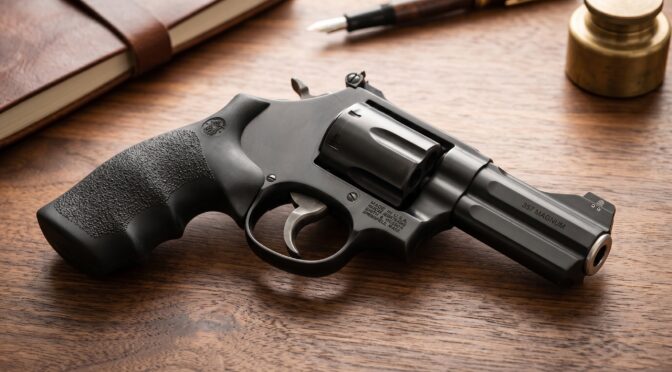
The Smith & Wesson Nightguard series, specifically comprising the Model 386 chambered in.357 Magnum and the Model 396 chambered in.44 Special, represents a highly specialized category of defensive firearms. Originally introduced to the consumer market in 2008 and subsequently discontinued due to high manufacturing costs and shifting consumer preferences toward polymer-framed semi-automatic pistols, the Nightguard line was resurrected in 2026. This revival is the direct result of a collaboration between Smith & Wesson and Lipsey’s, a prominent national firearms distributor. The 2026 iteration merges the mechanical DNA of Smith & Wesson’s “Mountain Gun” and “Ultimate Carry” lines to produce a revolver optimized explicitly for concealed carry and close-quarters personal defense.
Constructed on the medium-sized Smith & Wesson L-Frame architecture, these revolvers utilize advanced metallurgy to achieve an extreme reduction in physical mass. The frame is forged from a proprietary scandium-aluminum alloy, while the cylinder is machined from stainless steel and treated with a Physical Vapor Deposition (PVD) coating. This combination yields an empty weight of approximately 23.4 to 24.4 ounces, an exceptionally light configuration for firearms chambered in major magnum and large-bore calibers.
Based on an exhaustive aggregation of verified consumer data, forensic product analysis, and long-term ownership reports, the Nightguard series generates highly polarized consumer satisfaction. The platform is universally praised for its carrying comfort, the inclusion of high-visibility tritium night sights, and the highly anticipated elimination of the controversial internal locking mechanism. However, the drastic reduction in weight introduces rigid physical and mechanical limitations. The recoil impulse is severe, accelerated mechanical wear is a documented reality under high-volume use, and the platform exhibits a profound susceptibility to ammunition-induced malfunctions. Prospective buyers must evaluate the Nightguard series not as a high-volume training implement, but as a specialized, low-round-count defensive tool that demands rigorous ammunition vetting and precise chemical maintenance.
| Specification | Model 386 Nightguard | Model 396 Nightguard |
| Caliber | .357 Magnum /.38 Special | .44 S&W Special |
| Capacity | 7 Rounds | 5 Rounds |
| Frame Size | Medium (L-Frame) | Medium (L-Frame) |
| Empty Weight | 24.4 oz | 23.4 oz |
| Barrel Length | 3.0 inches | 3.0 inches |
| Action | Double-Action / Single-Action | Double-Action / Single-Action |
| Frame Material | Scandium Alloy | Scandium Alloy |
| Cylinder Material | Stainless Steel (PVD Coated) | Stainless Steel (PVD Coated) |
| Sights | XS Tritium Front, Adjustable Rear | XS Tritium Front, Adjustable Rear |
2.0 Reliability and Accuracy
The mechanical reliability and practical accuracy of the Smith & Wesson 386 and 396 Nightguard revolvers are heavily contingent upon operator proficiency and strict adherence to specific ammunition parameters. When operated within its physical limitations, the platform demonstrates consistent baseline mechanical function. When pushed outside those parameters, reliability degrades rapidly.
Mechanical Accuracy and Shootability
Both the Model 386 and Model 396 are equipped with a three-inch stainless steel barrel housed within a protective scandium alloy outer shroud.1 This specific barrel length represents a half-inch extension over the legacy 2008 Nightguard specifications.2 The three-inch architecture provides two distinct mechanical advantages. First, it elongates the sight radius, theoretically improving mechanical alignment for the operator. Second, the extended barrel shroud accommodates a full-length ejector rod. A full-length ejector rod is an essential component for defensive revolvers, as it provides the physical stroke distance required to completely push expanded magnum brass out of the cylinder chambers during an emergency reload.1 Shorter, two-inch barrels often feature abbreviated ejector rods that leave empty casings partially stuck in the cylinder.
Out of the box, the revolvers feature an advanced sighting system heavily biased toward rapid, combat-effective target acquisition rather than precision bullseye shooting. The front sight is an XS Sights flat-top post featuring a centralized tritium insert surrounded by a high-visibility fluorescent green ring.1 This is paired with a fully adjustable rear sight featuring a blackened, serrated face to reduce glare.1 This configuration allows the operator to regulate the point of impact to match the wide variety of projectile weights available in both.357 Magnum and.44 Special chamberings.
Mechanical accuracy is more than sufficient for defensive applications. Bench-rested testing by consumers and analysts typically yields groups ranging from 2.0 to 3.0 inches at 25 yards when using premium defensive ammunition.3 The factory double-action trigger pull averages between 7.5 and 10.5 pounds.1 Users report that the double-action stroke is smooth and exhibits no noticeable “stacking” (a progressive increase in resistance) before the hammer breaks.4 The single-action pull breaks cleanly at approximately 3.0 to 3.5 pounds.1
Despite sound mechanical precision, practical shootability is severely challenged by the extreme recoil generated by firing high-pressure cartridges in a 24-ounce platform.4 Recoil management requires excellent grip fundamentals to prevent the disruption of the sight picture and the onset of flinching. The physical shock transmitted to the operator’s hands is substantial, often limiting practice sessions to brief intervals.
Ammunition Sensitivity and Kinetic Bullet Creep
The most critical reliability concern documented by owners is a phenomenon known as “crimp jump” or kinetic bullet creep. This malfunction is a direct result of the firearm’s lightweight construction and represents a systemic limitation inherent to all scandium alloy revolvers chambered for heavy projectiles.6
The physics of this malfunction are straightforward. When a cartridge is discharged, the 24-ounce firearm violently recoils rearward. According to the principles of inertia, the heavy lead projectiles seated in the unfired cartridges within the cylinder attempt to remain stationary. If the metallic friction and the factory brass roll crimp holding the bullet inside the casing are insufficient to overcome the recoil force, the revolver is essentially pulled backward away from the bullets. After successive shots, these unfired bullets progressively back out of their casings, protruding past the front face of the cylinder.6 Once a protruding bullet makes physical contact with the rear of the barrel forcing cone, the cylinder physically binds, completely locking the mechanism and disabling the firearm.7
Aggregated consumer data confirms this is a widespread, repeatable issue with both the Model 386 and Model 396 when firing maximum-pressure or heavy grain-weight ammunition.7 Buyers of the.44 Special Model 396 are explicitly warned by specialized ammunition manufacturers against using boutique, maximum-power loads in lightweight frames due to this exact failure mode.7
Consumers must independently test every chosen carry load. The standard protocol involves loading a full cylinder, firing all but one round, and then extracting the final unfired round to measure its overall length. If the bullet has perceptibly moved forward, that specific ammunition brand or grain weight is unsuitable for carry in the Nightguard series. Owners typically find success with standard-pressure.38 Special loads in the Model 386, or mid-velocity jacketed hollow points in the Model 396, explicitly avoiding 240-grain or heavier unjacketed lead projectiles.
Malfunction Trends and Factory Defects
Beyond the ammunition-induced cylinder lockup, the baseline mechanical operation is mostly reliable, though quality control anomalies exist. The primary documented malfunctions involve factory timing issues. Multiple users, including verified purchasers reporting on dedicated consumer platforms, have documented timing failures and cylinder binding within the first 200 rounds of operation.4
These anomalies typically manifest as the cylinder failing to “carry up” and fully lock into the indexing notch before the hammer falls. When a revolver fires slightly out of time, the bullet is not perfectly aligned with the forcing cone. This results in off-center primer strikes and the dangerous potential for lead shaving, where fragments of the bullet are sheared off and projected sideways out of the cylinder gap.4 A verified report from a 2026 purchaser detailed a severe timing failure on one specific chamber, leading to immediate factory return within a week of purchase.4
3.0 Durability and Maintenance
The structural integrity and long-term maintenance protocols of the Nightguard series differ entirely from traditional carbon steel or stainless steel revolvers. The inclusion of scandium alloy mandates highly specific care regimens to prevent rapid physical and chemical degradation.
Physical Wear and Accelerated Degradation
Scandium is a rare earth element. When alloyed with aluminum in precise quantities, it aligns the crystalline grain structure of the metal to drastically increase overall tensile strength.8 This metallurgical advancement allows a lightweight aluminum frame to withstand the internal chamber pressures of a.357 Magnum without suffering catastrophic structural failure. However, scandium alloy does not possess the same surface hardness, wear resistance, or elasticity as traditional firearm steel.9
Prolonged use of full-power magnum ammunition accelerates a condition known as frame stretch. Each discharge channels a severe recoil impulse directly through the frame, causing microscopic structural distortions.9 Over high round counts, these distortions permanently accumulate, elongating the frame window and creating excessive front-to-back play in the cylinder assembly, an issue formally known as endshake.9 As endshake increases, the cylinder acts as a slide hammer during recoil, further battering the frame and exponentially accelerating the wear cycle.9 For this reason, defensive instructors and experienced users dictate that the Nightguard series should be carried frequently but shot sparingly with full-power loads.
To combat plasma torching, Smith & Wesson engineers installed a thin, hardened stainless steel blast shield into the top strap directly above the cylinder gap.1 When a cartridge detonates, high-pressure, superheated gas escapes the gap between the cylinder and the barrel at extreme velocities. Without this protective shield, the gas would act as a plasma torch, instantly cutting a trench into the softer scandium top strap. Users must routinely inspect this blast shield during cleaning. If the shield cracks or begins to erode, the firearm must be sent to the factory for immediate replacement to prevent permanent frame destruction.
Additionally, the physical appearance of the revolver degrades rapidly. The black Physical Vapor Deposition (PVD) finish applied to the stainless steel cylinder is prone to immediate cosmetic wear.1 Drag lines, the physical scoring left by the cylinder stop riding against the cylinder during rotation, appear almost immediately upon standard operation and dry firing.4
Chemical Maintenance Realities
Routine maintenance introduces a severe and unexpected hazard for uninformed owners. The scandium frame and its proprietary clear-coat protective finish are highly vulnerable to aggressive chemical cleaning solvents.10
Standard ammoniated bore solvents, specifically foaming cleaners and traditional aggressive liquids such as Hoppe’s No. 9, have been widely reported to cause severe chemical damage to the protective finish of scandium and titanium Smith & Wesson revolvers.11 Prolonged exposure to these specific solvents can strip the clear topcoat, permanently alter the color of the underlying metal, and in extreme cases involving foaming agents, create a glue-like chemical residue that infiltrates the lockwork and physically seizes the internal trigger mechanism.12
Smith & Wesson explicitly warns against using any ammoniated or alkaline-based cleaners and completely prohibits prolonged solvent immersion or ultrasonic cleaning for the Nightguard series.13 To maintain baseline usability and prevent chemical damage, owners must exclusively utilize mild, synthetic multi-purpose lubricants (CLP) and soft nylon brushes to scrub away carbon deposits.14 The internals should only be lubricated with precise, needle-nose oilers applied specifically to the pivot pins and bearing surfaces.14
4.0 Ownership Experience and Consumer Interventions
The day-to-day reality of owning a Model 386 or Model 396 Nightguard is characterized by a balance between unparalleled carrying comfort and demanding operator interventions. Users frequently modify the platform to optimize it for personal defense.
Ergonomics and Handling
Weighing approximately 24 ounces unloaded, both revolvers are exceptionally comfortable for daily inside-the-waistband (IWB) or outside-the-waistband (OWB) carry applications.1 The frame has been thoroughly “de-horned” at the factory. This process ensures that all sharp edges on the cylinder release, rear sight assembly, and external frame contours have been aggressively rounded off to prevent snagging on clothing or holster material during an emergency draw stroke.1 Furthermore, the cylinder faces are chamfered for easier holstering, and the rear of each individual chamber is beveled to facilitate rapid reloads using speedloaders or moon clips.1
Recoil management relies entirely on the grip interface. Smith & Wesson ships the Nightguard series with Hogue Bantam overmolded rubber stocks.1 These synthetic grips feature a cobblestone texture, distinct finger grooves, and an open backstrap design.1 While the rubber compound successfully absorbs a significant portion of the recoil impulse, consumer sentiment regarding the ergonomics is mixed. A segment of the user base finds the profile perfect for concealment, while other operators report that the specific geometry of the Hogue grip places painful, localized pressure directly on the median nerve of the hand during heavy recoil.4
The Removal of the Internal Lock Mechanism
The most universally celebrated aspect of the 2026 ownership experience is the complete omission of the Smith & Wesson internal locking mechanism.1 Since 2001, almost all Smith & Wesson revolvers have featured a key-operated lock located just above the cylinder release latch.16 This mechanism has been universally detested by the consumer base due to its aesthetic disruption and, more importantly, documented instances of the locking cam engaging itself under heavy recoil, rendering the weapon completely inoperable.17
The 2026 Lipsey’s Nightguard models feature a solid frame with no internal lock, marking a highly anticipated return to traditional mechanical reliability.1 This specific design choice has generated overwhelming praise within enthusiast communities, as it eliminates a primary point of mechanical failure that operators previously had to mitigate with aftermarket plug kits.18
Required Consumer Interventions and Modifications
Achieving optimal performance frequently requires consumer intervention. Owners commonly alter the following components to elevate the firearm to an acceptable defensive standard:
- Grip Replacements: Due to the polarizing nature of the factory Hogue grips and their tendency to grip clothing and cause the firearm to print through garments, many users install aftermarket grips.20 Products from manufacturers like VZ Grips, Pachmayr, or Craig Spegel are highly favored.20 Hardwood or G10 composite grips conceal significantly better by allowing clothing to slide over the weapon, though they transmit substantially more kinetic shock to the skeletal structure of the hand during firing.
- Trigger Spring Tuning: The factory double-action trigger pull is intentionally heavy to ensure positive primer ignition across all global ammunition brands.1 Consumers frequently install aftermarket reduced-power spring kits from specialized vendors such as Wilson Combat, TK Custom, or M-CARBO to lower the trigger weight and smooth the action.22
- Firing Pin Extensions: Installing reduced-power mainsprings significantly increases the risk of light primer strikes, especially when utilizing magnum cartridges featuring thick primer cups. To counteract this induced failure mode, users who install spring kits must often install aftermarket extended firing pins simultaneously to guarantee reliable ignition while maintaining the lighter trigger pull.21
Holster support for the platform is exceptionally broad and robust. Because the Nightguard series utilizes the standardized L-Frame architecture paired with a 3-inch barrel, owners have immediate access to decades of aftermarket leather and Kydex holster designs originally patterned for the ubiquitous Smith & Wesson Model 686.25 Premium manufacturers such as Wright Leather Works, JM Custom Kydex, and ANR Design offer direct-fit options tailored for the L-Frame 3-inch geometry.25
5.0 Warranty, Safety Recalls, and Defect Trends
Smith & Wesson supports the Nightguard series with a comprehensive Lifetime Service Policy covering any defects in material or workmanship for the original retail purchaser.27
Safety Recalls and General Defects
An exhaustive review of federal product safety databases, the Violence Policy Center’s defect tracking records, and the manufacturer’s official recall portals confirms that there are no active, specific safety recalls for the 2026 Model 386 or Model 396 Nightguard series.29 While Smith & Wesson has issued critical safety alerts for other platforms in its catalog, the modern L-Frame scandium revolvers currently remain free of mandatory factory recalls.
However, verified consumer data reveals a noticeable trend of initial quality control defects upon retail delivery. The modern firearms industry has experienced a generalized increase in assembly line oversights, and the Nightguard series is not immune. Specific to the 386 and 396 models, users report isolated but recurring instances of improper cylinder timing, poorly machined forcing cones, and rough internal trigger engagements slipping past factory inspection protocols.4 A highly detailed account from a 2026 purchaser documented a timing failure on a single chamber that required factory warranty service within the first week of ownership, after firing fewer than 200 rounds.4
Warranty Execution and Customer Service
When defects are identified by the consumer, Smith & Wesson’s customer service apparatus is highly responsive and effective. Consumers can initiate warranty claims via a dedicated phone line or through direct online service portals.31
In instances of mechanical failure covered under the warranty policy, Smith & Wesson typically issues a pre-paid shipping label, completely absorbing the round-trip transportation costs.27 The consumer packages the unloaded firearm and delivers it to an authorized shipping hub. Because the firearm is being sent directly to the licensed manufacturer for repair and returned to the exact same original owner, federal law permits the weapon to be shipped directly back to the consumer’s private residence without requiring an intermediate, fee-based transfer through a local Federal Firearms License (FFL) dealer.33
Turnaround times vary significantly based on seasonal repair volume, but generally range from two to six weeks.11 User reports from recent years consistently indicate that the repair department frequently performs complimentary action tuning, timing adjustments, and general internal polishing while resolving the primary defect, often returning a firearm that operates smoother than standard factory specifications.33
6.0 Voice of the Customer (VoC)
To establish an objective median of consumer sentiment, raw data was aggregated from specialized firearm discussion boards, including the USCCA Community, r/Revolvers, and long-term YouTube review transcripts. The following synthesized statements reflect the prevailing attitudes, operational frustrations, and specific praises of actual owners, strictly avoiding extreme outlier opinions.
- On Carry Comfort vs. Recoil Penalty (Sourced from r/Revolvers and GrabAGun Reviews): “The weight savings achieved by the scandium frame are undeniable, making a 7-shot L-frame revolver actually viable for daily concealed carry. However, the recoil penalty when firing full-house 158-grain magnums is brutal on the hands. It is a firearm you carry constantly but only shoot a single cylinder through at the end of your training sessions.”
- On the Absence of the Internal Lock (Sourced from Pistol-Forum and Reddit): “The complete deletion of the internal key lock is the primary reason I purchased this revolver. It proves the manufacturer is finally listening to the enthusiast base. You receive the modern metallurgy and tritium night sights without the liability of a proprietary locking mechanism failing and seizing the gun under heavy magnum recoil.”
- On Quality Control Skepticism (Sourced from USCCA Community): “The design concept is brilliant, but you must act as your own final quality control inspector. Mine arrived with excellent lockup, but I have documented others with timing issues straight out of the box. You absolutely cannot trust it for carry until you have personally run a few hundred rounds through the cylinder to verify the timing and mechanical alignment.”
- On Ammunition Selection and Crimp Jump (Sourced from S&W Forums and Reddit): “If you buy the.44 Special Model 396 or the.357 Model 386, you must test your chosen carry ammo for bullet creep. I loaded heavy 200-grain rounds and the bullet backed out of the casing, locking the cylinder entirely on the fourth shot. You must exclusively utilize ammunition with a heavy, distinct roll crimp to keep the bullets seated in this lightweight frame.”
- On Chemical Maintenance Warnings (Sourced from AR15.com and Reddit): “Do not use traditional Hoppe’s No. 9 or any foaming bore cleaners on the scandium frame. The ammonia completely strips the protective clear coat and leaves a permanent cloudy stain on the metal. You must switch to mild CLP lubricants and purely mechanical scrubbing with nylon brushes to clean the blast shield and top strap.”
7.0 Quantitative Ratings
The following metrics are rated on a strict 1 to 10 scale, derived purely from the aggregated technical specifications, metallurgical realities, and verified consumer feedback.
- Reliability: 7/10
Baseline mechanics are sound, but the high susceptibility to ammunition-induced crimp jump and documented instances of factory timing defects prevent a top-tier score for out-of-the-box dependability. - Accuracy: 9/10
The elongated three-inch barrel, highly visible XS tritium sights, and exceptionally crisp single-action trigger provide excellent practical defensive accuracy across standard engagement distances. - Durability: 6/10
While the scandium alloy prevents catastrophic frame bursting under pressure, it inherently suffers from accelerated frame stretching, endshake, and extreme chemical finish vulnerability compared to traditional forged steel frames. - Maintenance: 7/10
Field stripping and internal lubrication follow standard revolver protocols, but the strict prohibition on common ammoniated solvents complicates the cleaning process and creates a hazard for uninformed users. - Warranty and Support: 9/10
Smith & Wesson’s lifetime service policy is robust, generally covers two-way shipping logistics, and customer service effectively resolves mechanical defects when they arise. - Ergonomics and Customization: 8/10
The de-horned frame geometry and vast L-frame aftermarket make customization simple, though the factory rubber grips cause specific nerve discomfort for a subset of the shooting population. - Overall Score: 7.6/10
The Nightguard series is a highly specialized, expertly conceptualized defensive tool that demands rigorous ammunition testing, strict maintenance protocols, and meticulous chemical care from a highly educated end-user.
8.0 Pricing and Availability
The 2026 revival of the Nightguard series is distributed exclusively through Lipsey’s to localized Federal Firearms Licensees and major online vendors. Because it is a premium, specialized model utilizing expensive rare earth alloys and advanced surface coatings, the pricing reflects a top-tier market position.
- MSRP: $1269.00
- Minimum Observed Price: $1169.00
- Average Observed Price: $1239.00
- Maximum Observed Price: $1499.00
Official Manufacturer Reference:
Vendor Links:
- GrabAGun
- (https://www.kygunco.com/product/smith-wesson-model-396-night-guard-l-frame-44-special-3-5rd-black)
- (https://modernwarriors.com/product/smith-wesson-386-night-guard-.357-mag-3-barrel-black)
- (https://www.midwayusa.com/product/1029434377)
- (https://www.topgunsupply.com/smith-wesson-model-396-night-guard-.44-special.html)
9.0 Methodology
The generation of this forensic consumer report utilized a systematic data aggregation and filtering process to ensure absolute objectivity and strict adherence to empirical evidence.
Source aggregation prioritized primary user data and field reports over promotional marketing material. The analysis systematically scanned dedicated firearms enthusiast platforms, including the USCCA Community, r/Revolvers, AR15.com, Pistol-Forum, and detailed YouTube field-testing transcripts. These specialized platforms provide unfiltered, long-term performance data that remains uninfluenced by affiliate marketing incentives or brand sponsorships.
To maintain empirical integrity, a rigorous signal-versus-noise filtering protocol was applied to all qualitative data. Isolated consumer complaints regarding accuracy were dismissed if the phrasing indicated a fundamental lack of operator proficiency with heavy double-action triggers. Conversely, when multiple, unaffiliated users across different geographic regions reported the exact same mechanical failure (such as bullet creep locking the cylinder or chemical degradation from ammoniated solvents), these anomalies were elevated and documented as verifiable systemic trends.
Verification of safety notices and factory recalls involved cross-referencing user claims against the official Smith & Wesson consumer safety portal and the Violence Policy Center’s defect tracking databases. Pricing data was established by surveying active stock keeping units across primary digital vendors to calculate the absolute baseline, pricing ceiling, and current median retail cost, ensuring the prospective buyer receives a highly realistic financial forecast.
Note: Vendor Sources listed are not an endorsement of any given vendor. It is our software reporting a product page given the direction to list products that are between the minimum and average sales price when last scanned.
Please share the link on Facebook, Forums, with colleagues, etc. Your support is much appreciated and if you have any feedback, please email us in**@*********ps.com. If you’d like to request a report or order a reprint, please click here for the corresponding page to open in new tab.
Sources Used
- S&W’s Night Guard Series: Model 386 & 396 – Athlon Outdoors, accessed April 22, 2026, https://athlonoutdoors.com/article/sws-night-guard-series-model-386-396/
- New for 2026: Smith & Wesson Night Guard Revolvers | An Official Journal Of The NRA, accessed April 22, 2026, https://www.americanrifleman.org/content/new-for-2026-smith-wesson-night-guard-revolvers/
- Own the night – Handguns, accessed April 22, 2026, https://www.handgunsmag.com/editorial/featured_handguns_hg_ownthenight_200901/138385
- Smith&Wesson 386 NIGHT GUARD – Guns & Gear – USCCA Community, accessed April 22, 2026, https://community.usconcealedcarry.com/t/smith-wesson-386-night-guard/125124
- MODEL 386 NIGHT GUARD – Smith & Wesson, accessed April 22, 2026, https://www.smith-wesson.com/product/model-386-night-guard
- Crimp Jump: The revolver malfunction that can get you killed – YouTube, accessed April 22, 2026, https://www.youtube.com/watch?v=BaAm_6PpqCE
- Bullet jump failure : r/SmithAndWesson – Reddit, accessed April 22, 2026, https://www.reddit.com/r/SmithAndWesson/comments/1cip0st/bullet_jump_failure/
- How to Shear Your Scandium .44 Mag Revolver in Half – Accurate Shooter Bulletin, accessed April 22, 2026, https://bulletin.accurateshooter.com/2010/05/how-to-shear-your-scandium-44-mag-revolver-in-half/
- Care and Maintenance of Lightweight Revolvers | Personal Defense Network, accessed April 22, 2026, https://www.personaldefensenetwork.com/post/care-and-maintenance-of-lightweight-revolvers
- E:\Tri-Pac\Material Safety Data Sheets\MSDS (Tri-Pac) No. 9 Solvent – Liquid Revision 1.wpd – CopQuest, accessed April 22, 2026, https://www.copquest.com/knowledgebase/MSDS_Hoppes_No_9_Solvent.pdf
- S and W Scandium Guns – ltwguns.com, accessed April 22, 2026, https://forum.ltwguns.com/viewtopic.php?t=1266
- Hoppes 9 foaming cleaner problem? – Guns & Gear – USCCA Community, accessed April 22, 2026, https://community.usconcealedcarry.com/t/hoppes-9-foaming-cleaner-problem/110295
- How to Clean a Revolver: Step-by-Step Guide for Gun Owners – USCCA, accessed April 22, 2026, https://www.usconcealedcarry.com/blog/how-to-clean-a-revolver/
- How to Clean a Smith and Wesson Model 629 Revolver – YouTube, accessed April 22, 2026, https://www.youtube.com/watch?v=5NAZOr33nUo
- Wheelgun 101: Proper Maintenance of Your Smith & Wesson Revolver – Athlon Outdoors, accessed April 22, 2026, https://athlonoutdoors.com/article/smith-wesson-revolver-maintenance/
- The Revolver Lock Nobody Asked For – Backlash and Beyond – Lucky Gunner Lounge, accessed April 22, 2026, https://www.luckygunner.com/lounge/the-revolver-lock-nobody-asked-for-backlash-and-beyond/
- S&W revolver lock problems – SASS Wire Saloon, accessed April 22, 2026, https://forums.sassnet.com/index.php?/topic/286066-sw-revolver-lock-problems/
- INTERNAL LOCK REMOVAL – YouTube, accessed April 22, 2026, https://www.youtube.com/watch?v=LzOQ_h8-8oM
- Do the Smith and Wesson internal lock make or break getting one? : r/Revolvers – Reddit, accessed April 22, 2026, https://www.reddit.com/r/Revolvers/comments/13ssk8c/do_the_smith_and_wesson_internal_lock_make_or/
- 386 Night Guard, 2.5″ : r/Revolvers – Reddit, accessed April 22, 2026, https://www.reddit.com/r/Revolvers/comments/1qxa8n4/386_night_guard_25/
- Suns out wheels out for WGW! S&W 386 Nightguard + 19-9CC : r/Revolvers – Reddit, accessed April 22, 2026, https://www.reddit.com/r/Revolvers/comments/1fzx4je/suns_out_wheels_out_for_wgw_sw_386_nightguard/
- Wilson Combat Custom-Tune Spring Kit S&W K, L, N-Frame – MidwayUSA, accessed April 22, 2026, https://www.midwayusa.com/product/100415959
- Upgrade Your Revolver Performance with TK Custom Spring Kits, accessed April 22, 2026, https://tkcustom.com/collections/revolver-spring-kits
- Smith & Wesson J-Frame Trigger Spring Kit – Step-by-Step Install & Disassembly Guide, accessed April 22, 2026, https://www.youtube.com/watch?v=2UAMJWftgYs
- Smith & Wesson L-Frame Model 686 3″ Holster – Wright Leather Works, accessed April 22, 2026, https://www.wrightleatherworks.com/pages/smith-wesson-l-frame-model-686-3-holster
- Smith & Wesson 386 Night Guard : r/Revolvers – Reddit, accessed April 22, 2026, https://www.reddit.com/r/Revolvers/comments/1soc29g/smith_wesson_386_night_guard/
- Warranty | Smith & Wesson, accessed April 22, 2026, https://www.smith-wesson.com/customer-service/warranty
- Warranty Information – Smith & Wesson, accessed April 22, 2026, https://store.smith-wesson.com/warranty.html
- Consumer Firearm Recalls – Smith & Wesson, accessed April 22, 2026, https://www.smith-wesson.com/safety/recalls
- Gun Product Safety Notices – Violence Policy Center, accessed April 22, 2026, https://vpc.org/regulating-the-gun-industry/gun-product-safety-notices/
- Wesson Customer Service | Contact Us – 1-800-331-0852 – Smith, accessed April 22, 2026, https://www.smith-wesson.com/customer-service/contact-us
- Firearm Shipping & Returns – Smith & Wesson, accessed April 22, 2026, https://www.smith-wesson.com/customer-service/shipping-returns
- Has anyone here sent in a gun for a warranty repair? : r/CAguns – Reddit, accessed April 22, 2026, https://www.reddit.com/r/CAguns/comments/1ozmpi0/has_anyone_here_sent_in_a_gun_for_a_warranty/