1. Executive Summary
The small arms industrial base navigated a highly volatile operating environment between June 20 and June 27, 2026. This week was shaped by landmark Supreme Court rulings, aggressive state-level regulatory maneuvering, unusual policy realignments within the ATF, and the rollout of niche firearms targeting both historical preservation and specialized hunting. This report synthesizes these events in chronological order to provide industry stakeholders with a clear assessment of the current commercial, legal, and operational landscape.
In the courts, the U.S. Supreme Court delivered two decisions that fundamentally alter the boundaries of firearms ownership and concealed carry. In Wolford v. Lopez, the Court invalidated Hawaii’s restrictive property-carry law, re-establishing the common-law default that public-facing private property is open to lawful carry unless specifically restricted by the owner.1 Just prior to this period, the Court unanimously narrowed the federal controlled-substance prohibition in U.S. v. Hemani, a structural adjustment that opens the door for state-legal marijuana users to eventually enter the legal firearms market.3
Conversely, the industry is facing fierce headwinds at the state level. Virginia’s impending Firearm Industry Accountability Act (FIAA) introduces strict statutory standards explicitly designed to bypass the liability shields provided by the federal Protection of Lawful Commerce in Arms Act (PLCAA). This has triggered immediate legal countermeasures and regional market volatility, compounded by a late-week judicial injunction that temporarily paused the state’s separate assault weapons ban.
At the federal level, the Bureau of Alcohol, Tobacco, Firearms and Explosives (ATF) is executing a notable operational pivot. Under Director Robert Cekada, the agency is actively rolling back recent regulations surrounding private transfers, marking a distinct departure from its previous enforcement posture.4 This easing from the ATF contrasts sharply with mounting civil liability challenges testing the PLCAA’s boundaries in both state and federal courts across the country.
Commercially, the geographic migration of the industry out of the Northeast continues, highlighted by Sturm, Ruger & Co. finalizing its headquarters relocation to North Carolina.6 On the product front, manufacturers utilized the mid-year window to release specialized platforms, including Weatherby’s debut in the muzzleloader market and heavily engraved commemorative collections celebrating the upcoming national semiquincentennial.19 Concurrently, software integration into traditional shooting disciplines continues to mature, evidenced by major digital ecosystem updates from long-range accessory manufacturers.8
2. Contextual Milestones: Early June 2026
To properly contextualize the events of this reporting period, it is necessary to highlight a few critical legal and commercial developments that occurred just prior to June 20.
2.1 Supreme Court Jurisprudence: U.S. v. Hemani
On June 18, 2026, the Supreme Court issued its opinion in U.S. v. Hemani, narrowing the scope of 18 U.S.C. § 922(g)(3), the federal statute criminalizing firearm possession by an “unlawful user” of a controlled substance.3 The case involved a Texas resident prosecuted solely for admitting to periodic marijuana use while possessing a firearm.10
Applying the historical analysis framework established in Bruen, the Court unanimously agreed in the judgment that the government failed to prove a blanket disarmament based on substance use aligns with the nation’s historical tradition of firearm regulation.3 The government’s attempt to equate the defendant with historical laws disarming “habitual drunkards” failed, as those early statutes required individualized adjudications of danger.3
For the industry, this ruling represents a potential expansion of the Total Addressable Market (TAM). The federal marijuana prohibition enforced via the ATF Form 4473 has long deterred consumers in states with legal cannabis frameworks. By recognizing that blanket disarmament based solely on substance use fails constitutional scrutiny, the Court laid the groundwork for eventually modifying the Form 4473, enfranchising a previously untapped demographic for the defensive handgun and home-defense sectors.
2.2 Engineering Developments: The One Horse Express Rifle
On June 19, One Horse launched the Express Rifle in collaboration with Atrius Development Group.11 This platform is the first factory-built production rifle engineered specifically around the Atrius Forced Reset Selector (FRS).11
The integration of an FRS directly into a factory-built platform is a calculated maneuver. Historically, the ATF has targeted drop-in “Forced Reset Triggers” (FRTs) by classifying them as machine guns. By building the forced reset geometry into the selector mechanism and designing the entire rifle to handle altered cyclic rates—featuring a mid-length gas system, H2 buffer, and SOCOM-profile barrel—Atrius and One Horse are testing the limits of current ATF technological definitions while meeting consumer demand for high-cyclic-rate platforms.11
2.3 Foundational Defense Contracts: Hawthorne Army Depot
During this preliminary window, the U.S. Army awarded a $2.3 billion firm-fixed-price contract to Day & Zimmermann Hawthorne Corp. to operate and modernize the Hawthorne Army Depot in Nevada.12 Running through December 2046, the contract covers ammunition supply depot operations and the complex demilitarization of obsolete ordnance.12 This massive capitalization highlights the Department of Defense’s reliance on private contractors to maintain the logistics required for the national strategic ammunition reserve.
3. June 20-22: Liability Shields Tested and Heritage Products
The early phase of the reporting period saw state-level regulatory announcements designed to maximize industry liability, alongside a wave of product releases focused on historical preservation.
3.1 Virginia’s FIAA and PLCAA Vulnerabilities
On June 22, Virginia Attorney General Jay Jones announced his office’s intent to aggressively enforce the new Firearm Industry Accountability Act (FIAA), taking effect on July 1.14 This legislation is a sophisticated strategy engineered to bypass federal liability protections.
The federal Protection of Lawful Commerce in Arms Act (PLCAA) generally shields the industry from civil liability arising from a third party’s criminal misuse of a firearm.14 However, the PLCAA includes a “predicate exception” allowing lawsuits to proceed if an industry member knowingly violates a state or federal statute applicable to the sale or marketing of firearms.14
Virginia’s FIAA exploits this exception by codifying a statutory “reasonable controls” standard. It requires industry members to implement proactive business practices to prevent gun trafficking, straw purchases, and sales to prohibited persons.14 Failing to meet these state-mandated standards triggers the PLCAA predicate exception, exposing manufacturers and dealers to civil lawsuits and financial penalties.14 Attorney General Jones specified that enforcement will target dealers who ignore straw purchases and manufacturers alleged to market products irresponsibly.14
3.2 Product Engineering: Weatherby and Commemorative Releases
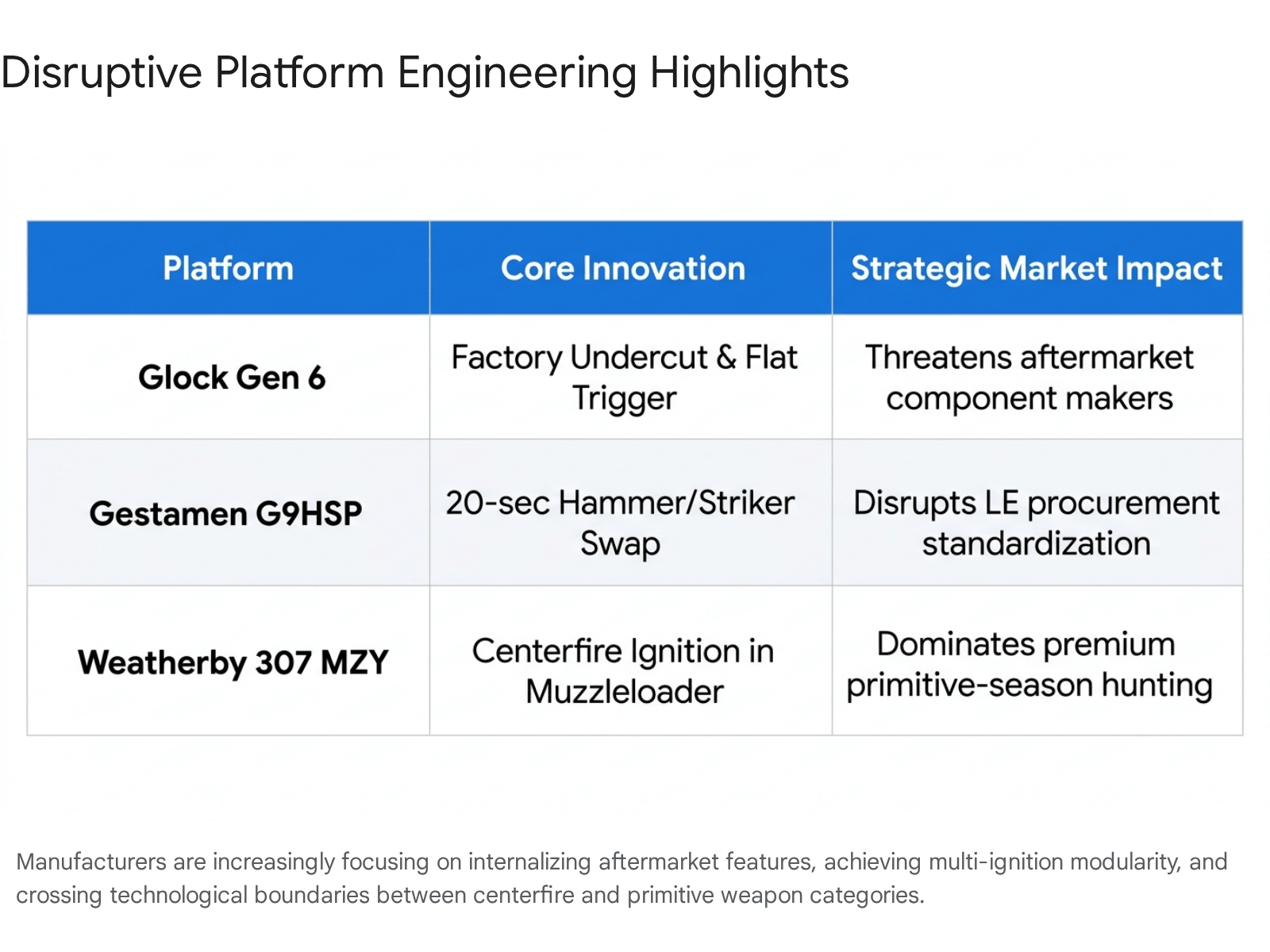
In the sporting arms sector, Weatherby disrupted the muzzleloader market by introducing the Model 307 MZY, the company’s first production muzzleloader.8 Built on a modified bolt-action receiver, the MZY utilizes the Arrowhead Rifles Gen2 ignition system.8 This system replaces traditional 209 shotgun primers with a modular brass casing holding a Large Rifle Magnum centerfire primer. This creates a complete seal, eliminating gas blowback and yielding exceptionally low standard deviations in muzzle velocity, effectively offering centerfire precision out of a front-loading platform.8
Capitalizing on the upcoming national semiquincentennial, manufacturers leaned heavily into the premium collector market. Henry Repeating Arms began shipping its America’s 250th Anniversary Tribute Edition Collection, featuring lever-action rifles finished with full-color Cerakote flags, nickel plating, and Fancy-grade American walnut.8 Similarly, Magnum Research announced a limited “250 Years of Liberty” edition of the Desert Eagle, featuring historic engravings and a nickel-bronze finish.19
Additionally, Murdoch & Co. generated significant interest by beginning shipments of the EM-85, a $12,000 American-made clone of the British SA80/L85A3 bullpup rifle.16 The platform incorporates structural refinements to address the historical reliability issues of the original design, demonstrating the viability of high-end boutique manufacturing to fulfill niche historical demands.16
4. June 23: Virginia Market Volatility and International Shifts
Mid-week developments revealed deep fractures in state-level enforcement capabilities, alongside notable corporate consolidation in the European market.
4.1 Municipal Non-Enforcement and Demand Volatility in Virginia
Following the Virginia Attorney General’s FIAA announcement, operational friction emerged regarding the state’s separate, incoming assault weapons ban (SB 749/HB 217).15 A coalition of local prosecutors indicated they will refuse to enforce these new hardware restrictions when they take effect on July 1.15
Commonwealth’s Attorneys in counties like Powhatan and Smyth publicly labeled the bans on assault-style weapons and large-capacity magazines as “facially unconstitutional,” stating their offices will not support criminal charges resulting solely from technical violations of the ban.15 Concurrently, the NRA’s Institute for Legislative Action filed lawsuits challenging the measures in state and federal courts.15
This regulatory uncertainty triggered a massive wave of accelerated purchasing as consumers anticipated severe supply constraints. Virginia State Police reported 72,956 background checks for firearms sales in May 2026, a 105% year-over-year increase compared to May 2025.17
4.2 International Consolidation: Verney Carron SA
In the European sector, the French heritage arms manufacturer Verney Carron SA underwent significant restructuring. Following bankruptcy proceedings in early 2025, a commercial court approved the takeover of the company by the French distribution group Rivolier and the Czech investment group RSBC.18 The acquisition stabilizes Verney Carron, ensuring the continuation of its specialized manufacturing and defense contracts, and highlights a broader trend of independent manufacturers being absorbed into diversified portfolios to survive high European regulatory barriers.18
4.3 International Legal Pressures
Liability pressures also mounted internationally. The ongoing sovereign lawsuit filed by the Government of Mexico against major U.S. gun manufacturers secured a favorable advisory opinion from the Inter-American Court of Human Rights.19 The Court concluded that the illicit trafficking of small arms is intrinsically linked to transnational organized crime and human rights violations.19 While this court lacks direct enforcement authority over U.S. entities, the opinion provides foreign plaintiffs with a formalized legal framework to legitimize their claims and exert reputational pressure on the U.S. industrial base.
5. June 24: Corporate Migrations and Federal Oversight
June 24 brought confirmations regarding corporate geography and escalating Congressional oversight of the executive branch.
5.1 Corporate Migration: Ruger Relocates to North Carolina
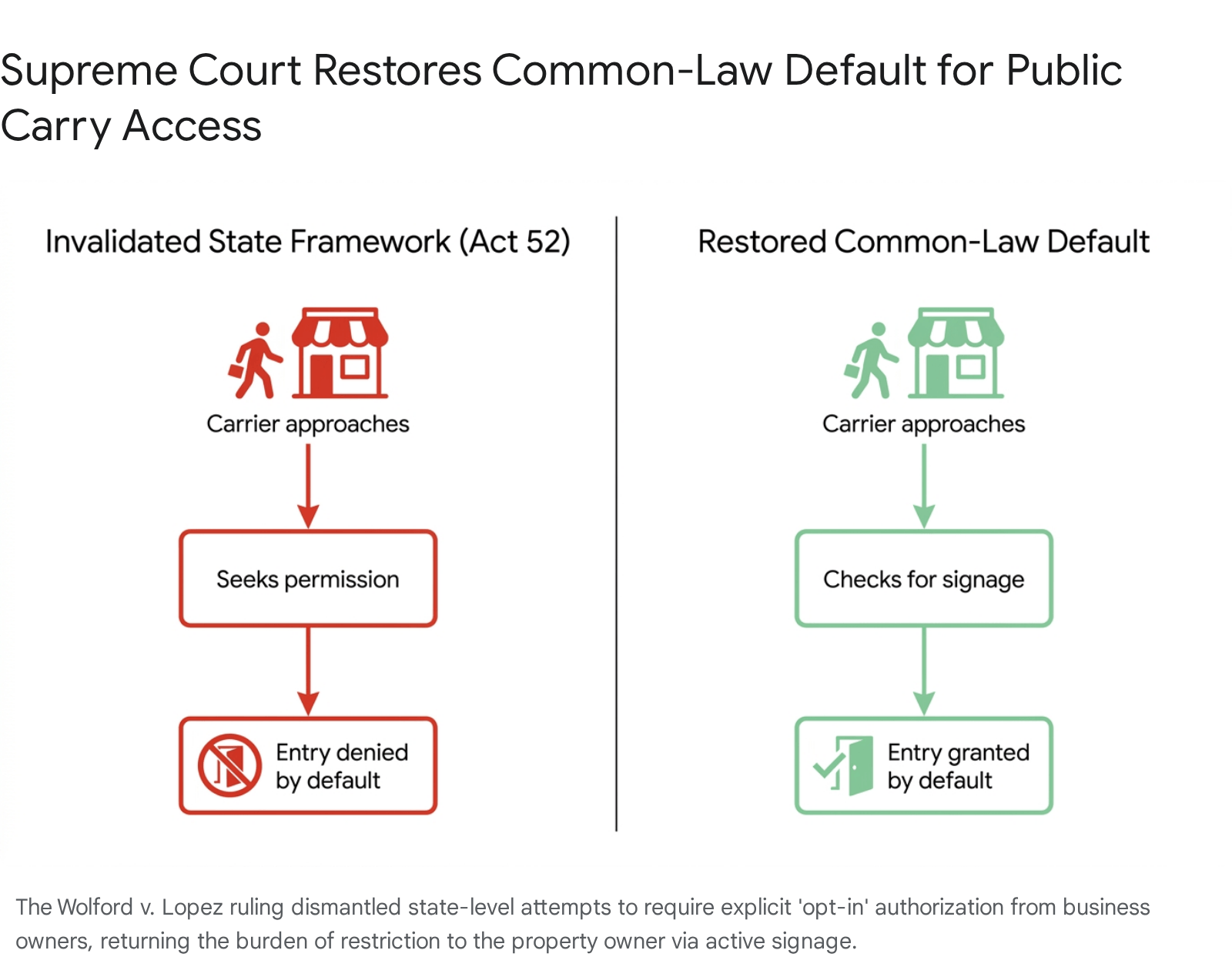
Industry analysts confirmed that Sturm, Ruger & Co. quietly relocated its corporate headquarters from Southport, Connecticut, to Mayodan, North Carolina.6 The relocation was widely reported this week after industry watchers noted dateline changes on corporate press releases.7
Founded in Connecticut in 1949, Ruger ceased physical manufacturing at the Southport facility in 1999.6 By relocating to Mayodan, Ruger consolidates its executive leadership alongside its major manufacturing hub. The timing correlates strongly with regulatory pressures, occurring shortly after Connecticut’s Attorney General issued public warnings to Ruger regarding alleged safety concerns, implying potential legal action.7 This strategic retreat reinforces the American South as the primary center of gravity for U.S. small arms engineering.
5.2 Congressional Oversight: Executive Branch and Civil Litigation
The House Committee on Oversight and Government Reform escalated its investigation into alleged coordination between the Biden Administration’s White House Office of Gun Violence Prevention (WHOGVP) and the advocacy group Everytown for Gun Safety.20
Chairman James Comer issued requests and subpoenas to the ATF and the WHOGVP regarding a specific timeline: On December 20, 2023, the WHOGVP held a private meeting with Glock, pressuring the manufacturer to alter its pistol designs. Three months later, the City of Chicago filed a lawsuit against Glock, utilizing Everytown Law as the plaintiff’s counsel.20 The committee highlighted a personnel pipeline between the executive branch and Everytown, suggesting political actors are utilizing executive influence to catalyze municipal tort litigation to force product redesigns.20
5.3 Digital Integration: Longshot Cameras App Update
In the accessories sector, Longshot Cameras announced a major software update to its Longshot App, which is critical for shooters relying on target cameras to verify impacts at extended distances.8 The update includes an upgraded “Blinker Shot Locator,” a data-logging tool allowing shooters to isolate shot strings, analyze point-of-impact shifts, and manipulate highly precise point-of-aim measurements computationally.8 This highlights the industry’s continued integration of digital diagnostics into physical shooting disciplines.
6. June 25: Supreme Court Restores Private Property Carry Defaults
The late-week news cycle was dominated by a landmark Supreme Court decision that reconfigured the legal parameters of concealed carry.
6.1 Supreme Court Jurisprudence: Wolford v. Lopez
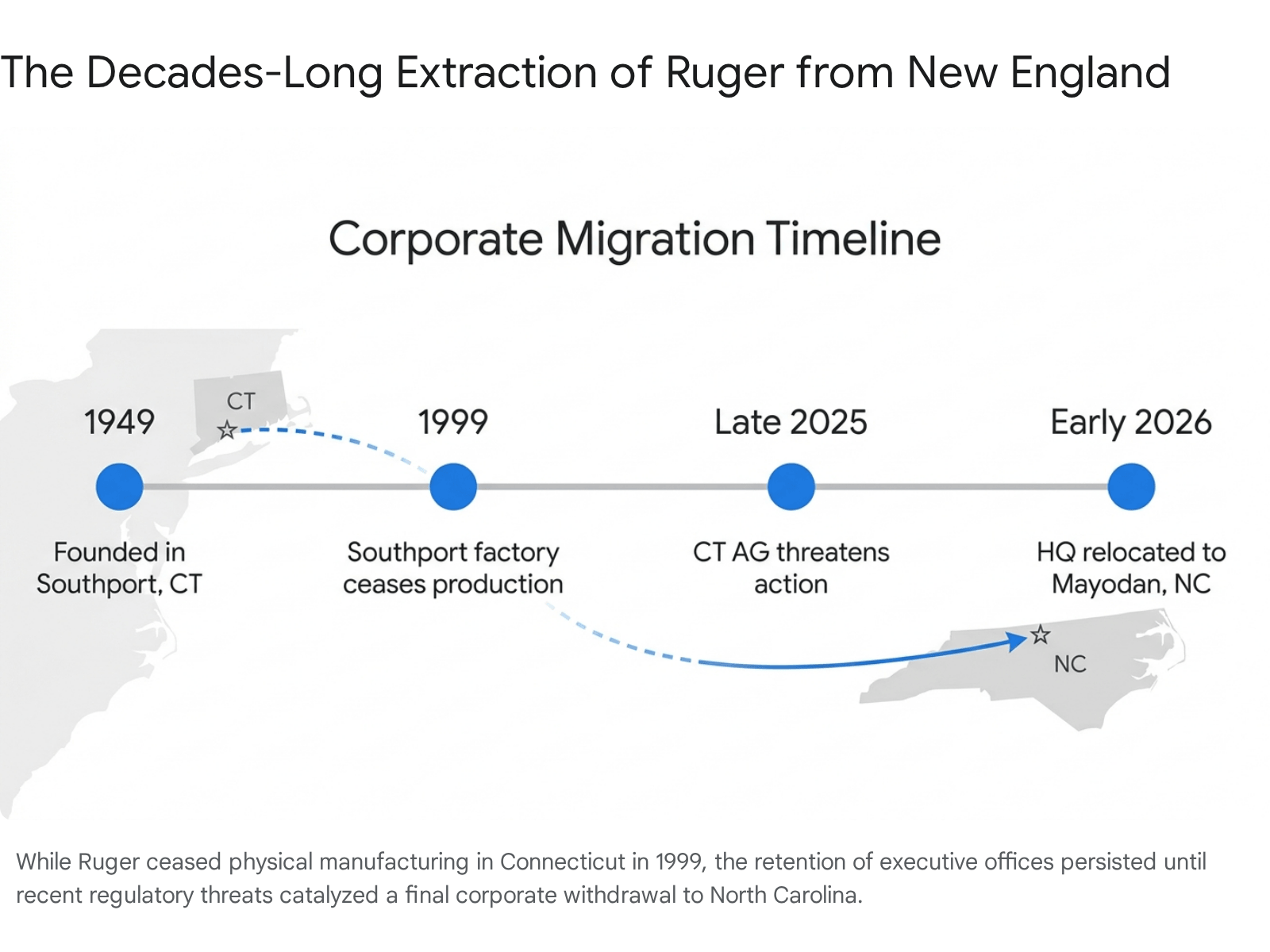
On June 25, the Supreme Court issued a 6-3 decision in Wolford v. Lopez, striking down a core provision of Hawaii’s Act 52.2 The law prohibited individuals with valid concealed carry permits from bringing firearms onto private property open to the public (like retail stores and restaurants) unless the property owner had explicitly granted prior authorization.1
The decision, authored by Justice Samuel Alito, dismantled the state’s attempt to invert traditional property access rights. Applying the Bruen historical framework, the Court analyzed common-law default rules, concluding that an individual is presumed to have an implicit invitation to enter a public-facing business unless the property owner actively prohibits entry via signage.1 Hawaii’s requirement for explicit “opt-in” authorization was found inconsistent with historical traditions of firearm regulation.1
The immediate effect is the restoration of default carry rights across Hawaii and the nullification of similar “vampire laws” in states like California, New York, and New Jersey.1 For commercial retailers, the burden of policy enforcement shifts back to the enterprise; property owners who wish to restrict firearms must now actively procure and enforce exclusionary signage.1
New Product Releases Summary Table
| Manufacturer | Model / Series | Platform Type | Key Feature / Innovation |
| One Horse | Express Rifle | Semi-Auto Rifle | Factory integration of Atrius Forced Reset Selector (FRS). |
| Weatherby | Model 307 MZY | Muzzleloader | Arrowhead Gen2 centerfire ignition system on a bolt-action receiver. |
| Remington | Performance Wheelgun | Rimfire Ammo | 39-grain low-velocity load engineered for vintage revolvers. |
| Murdoch & Co. | EM-85 (L85A3 clone) | Bullpup Rifle | American-made SA80 architecture with modernized internals. |
| Henry | America’s 250th | Lever-Action Rifle | Collector-grade Cerakote flag finish, nickel plating, Fancy-grade walnut. |
| Magnum Research | 250 Years of Liberty | Semi-Auto Pistol | Limited-edition Desert Eagle with historic engravings and nickel-bronze finish. |
| Longshot | Longshot App | Software | Overhauled UI and “Blinker Shot Locator” for shot tracking. |
7. June 26-27: PLCAA Vulnerabilities and Federal Contracting
The conclusion of the reporting period saw a cascade of developments threatening the industry’s civil liability shields, alongside significant defense contracting updates.
7.1 Escalating Civil Liability and PLCAA Challenges
On June 26, the U.S. Supreme Court declined to hear an appeal by the National Shooting Sports Foundation (NSSF) challenging New York’s public nuisance statute. This law requires the industry to implement safeguards against gun trafficking and allows civil lawsuits by state officials and the public. By turning away the challenge, the Court allows New York’s law to stand, reinforcing the viability of state-level statutes designed to trigger the PLCAA’s predicate exception.
Simultaneously, attorneys for Kel-Tec Industries and Rural King agreed to settle a wrongful death lawsuit out of court in Pennsylvania. The lawsuit involved a victim murdered with a firearm acquired via an in-store straw purchase. The defendants had previously requested dismissal under the PLCAA. Agreeing to a settlement rather than forcing a dismissal sets a concerning precedent for manufacturers facing similar point-of-sale negligence tort claims.
Internationally, the Supreme Court of Canada announced it will not review an Ontario appellate court’s decision allowing a class-action negligence lawsuit against Smith & Wesson to proceed, stemming from allegations that the manufacturer failed to implement technology to prevent unauthorized use.
Adding to the legal chaos, a judge in Lancaster County, Virginia, issued an injunction late on June 25 that put the state’s impending assault weapons ban on hold statewide, pending a final ruling. The Attorney General immediately announced plans to appeal, leaving retailers navigating a highly volatile, ping-ponging compliance landscape.
7.2 ATF Leadership Scrutiny and Surveillance Rollbacks
Media reporting over the weekend heavily scrutinized recent actions by the ATF under its newly confirmed Director, Robert Cekada.4 Following a press conference held earlier in the quarter alongside executives from the NSSF and NRA, the agency’s policy shifts are taking effect, implementing 32 new regulatory rules designed to ease operational burdens on the industry.4 The core of this package was the repeal of a rule targeting the “gun show loophole.”5 Director Cekada has also publicly defended the industry against state-level regulations, signaling a distinct ideological shift at the highest echelons of the agency toward commercial facilitation.4
In a related operational adjustment on June 26, the ATF abruptly canceled a controversial surveillance contract for a program known as “Webloc.”24 This tool enabled the warrantless tracking of mobile devices utilizing bulk commercial location data. The cancellation followed intense bipartisan pressure from lawmakers who raised constitutional concerns regarding the tool’s legality in criminal investigations.24
7.3 Ancillary Defense Contracting
Defense procurement continued steadily through the end of the period. Notably, the Indian Army placed multiple orders for SSS Defence’s T-12 semi-automatic shotgun, marking the first time the Bengaluru-based company will supply a weapon system to the military. The T-12 is entering service specifically as a counter-drone platform, reflecting lessons drawn from recent conflicts requiring a last line of defense against small explosive-laden drones. Domestically, the Defense Logistics Agency awarded a $350,000 contract for small arms slings to support ongoing operational readiness.
Recent Defense Contracting Summary Table
| Contractor | Agency | Value | Scope of Work |
| Day & Zimmermann | U.S. Army | $2.30 Billion | Operation, maintenance, and modernization of Hawthorne Army Depot; demilitarization of ammunition. |
| SSS Defence | Indian Army | Undisclosed | Supply of T-12 semi-automatic shotguns for counter-UAS applications. |
| Undisclosed | DLA | $350,000 | Procurement of small arms slings for the Department of Defense. |
8. Strategic Outlook
The small arms industry is operating in a deeply polarized crosscurrent. Federal judicial rulings are systematically dismantling localized carry restrictions and historical consumer prohibitions, signaling a measurable expansion in the legal consumer market. Conversely, the legislative environment at the state level is increasingly hostile. Jurisdictions like Virginia and New York are successfully pioneering tort strategies via the PLCAA predicate exception, transferring the regulatory battlefield directly to the civil courtroom. This dynamic will force manufacturers to increase compliance and insurance expenditures and will inevitably accelerate the geographic relocation of corporate operations to favorable regulatory environments.
Technologically, the industry continues to balance heritage platforms with modern digital integrations. The continued release of specialized niche platforms—from high-end bullpup clones to commemorative revolvers—demonstrates sustained consumer demand across both traditional and high-tech segments. Entities capable of insulating their operations in favorable jurisdictions while rapidly adapting to localized compliance mandates are optimally positioned to capture expanding market share in the upcoming cycles.
Please share the link on Facebook, Forums, with colleagues, etc. Your support is much appreciated and if you have any feedback, please email us in**@*********ps.com. If you’d like to request a report or order a reprint, please click here for the corresponding page to open in new tab.
Sources Used
- A Stake to the Heart: U.S. Supreme Court Strikes Down Hawaii …, accessed June 27, 2026, https://www.asisonline.org/security-management-magazine/latest-news/today-in-security/2026/june/SCOTUS-Strikes-Down-Hawaii-Law/
- Supreme Court Decides Wolford v. Lopez, Attorney General of Hawaii | Publications | Insights, accessed June 27, 2026, https://www.faegredrinker.com/en/insights/publications/2026/6/supreme-court-decides-wolford-v-lopez-attorney-general-of-hawaii
- U.S. Supreme Court Unanimously Narrows Scope of Unlawful Drug User Prohibition, accessed June 27, 2026, https://www.nraila.org/articles/20260622/us-supreme-court-unanimously-narrows-scope-of-unlawful-drug-user-prohibition
- The New ATF Director Is Going Out of His Way to Appeal to Gun Groups, accessed June 27, 2026, https://smokinggun.org/the-new-atf-director-is-going-out-of-his-way-to-appeal-to-gun-groups/
- The Trump Administration Made a Big Show of Repealing a Biden-Era Gun Rule. It Never Amounted to Much Anyway., accessed June 27, 2026, https://www.thetrace.org/2026/06/atf-gun-show-loophole-rule-repeal/
- Ruger HQ Moves To South Carolina – The Firearm Blog, accessed June 27, 2026, https://www.thefirearmblog.com/blog/ruger-hq-moves-to-south-carolina-44829163
- Ruger Quietly Moves Headquarters Out of Connecticut – GunsAmerica, accessed June 27, 2026, https://gunsamerica.com/digest/ruger-headquarters-move-north-carolina/
- Shooting Industry Magazine ICYMI: Industry News From June 20 …, accessed June 27, 2026, https://shootingindustry.com/dealer-advantage/icymi-industry-news-from-june-20-june-26-2026/
- US Supreme Court expands Second Amendment rights, eyes more gun cases, accessed June 27, 2026, https://wtvbam.com/2026/06/26/us-supreme-court-expands-second-amendment-rights-eyes-more-gun-cases/
- 24-1234 United States v. Hemani (06/18/2026) – Supreme Court, accessed June 27, 2026, https://www.supremecourt.gov/opinions/25pdf/24-1234_g2bh.pdf
- One Horse to Launch One Horse Express Rifle in Collaboration With Atrius Development Group – The Outdoor Wire, accessed June 27, 2026, https://www.theoutdoorwire.com/releases/2026/06/one-horse-to-launch-one-horse-express-rifle-in-collaboration-with-atrius-development-group
- Day & Zimmermann Wins $2.3B Army Contract for Ammo Depot Modernization, accessed June 27, 2026, https://www.govconwire.com/articles/day-zimmermann-2-3b-hawthorne-army-depot-contract-award
- Contracts for June 9, 2026 – War.gov, accessed June 27, 2026, https://www.war.gov/News/Contracts/Contract/Article/4512718/contracts-for-june-9-2026/
- Heightened Scrutiny in Virginia and the Future of PLCAA Protections …, accessed June 27, 2026, https://www.williamsmullen.com/insights/news/legal-news/heightened-scrutiny-virginia-and-future-plcaa-protections
- Virginia’s New Gun Laws Challenged by Some Local Prosecutors …, accessed June 27, 2026, https://www.insurancejournal.com/news/east/2026/06/23/874887.htm
- [SHOT 2026] Murdoch & Co. Launch American-Made SA80s! | thefirearmblog.com, accessed June 27, 2026, https://www.thefirearmblog.com/blog/shot-2026-murdoch-co-launch-american-made-sa80s-44825827
- Gun Sales Are Booming In Virginia Ahead Of “Assault Firearm” Ban | thefirearmblog.com, accessed June 27, 2026, https://www.thefirearmblog.com/blog/gun-sales-are-booming-in-virginia-ahead-of-assault-firearm-ban-44828887
- Sandy Hook Engagement Report June 2026 – City of Philadelphia, accessed June 27, 2026, https://www.phila.gov/media/20260617132406/PGW-sandy-hook-engagement-report-2026-06.pdf
- Firearms Trafficking Comes to the Inter-American Court of Human Rights in Recent Advisory Opinion – Just Security, accessed June 27, 2026, https://www.justsecurity.org/133687/firearms-trafficking-iachr-advisory-opinion/
- Comer Seeks Additional Information on Biden-Era ATF Collusion with Anti-Second Amendment Group on Activist Litigation, accessed June 27, 2026, https://oversight.house.gov/release/comer-seeks-additional-information-on-biden-era-atf-collusion-with-anti-second-amendment-group-on-activist-litigation/
- Supreme Court strikes down Hawaii law regulating firearms possession, accessed June 27, 2026, https://constitutioncenter.org/blog/supreme-court-strikes-down-hawaii-law-regulating-firearms-possession
- 6–3 Second Amendment SCOTUS Decision in Wolford v. Lopez, Explained, accessed June 27, 2026, https://www.everytown.org/wolford-v-lopez-second-amendment-scotus-decision-explained/
- After Supreme Court Blow To Gun Restrictions, What’s Next For …, accessed June 27, 2026, https://civilbeat.org/2026/06/after-supreme-court-blow-to-gun-restrictions-whats-next-for-hawaii/
- ATF cancels phone tracking contract after lawmakers raise concerns, accessed June 27, 2026, https://www.wsls.com/tech/2026/06/26/atf-cancels-phone-tracking-contract-after-lawmakers-raise-concerns/