Executive Summary
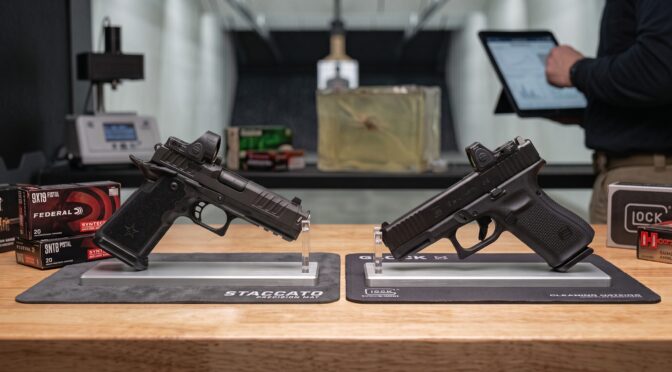
The contemporary landscape of defensive handguns is predominantly defined by two distinct and often competing engineering philosophies: the highly refined, micro-tolerance 2011 platform, and the utilitarian, polymer-framed, striker-fired platform. This comprehensive report provides an exhaustive comparative analysis of the apex models representing these two paradigms: the Staccato HD C4X and the Glock 19 Gen 6. By examining the mechanical architecture, metallurgical composition, operational reliability, and end-user ownership experience of both firearms, this analysis seeks to delineate their respective operational superiorities.
The Staccato HD C4X represents the zenith of the modern 2011 concealed carry platform. Purpose-built in direct collaboration with an elite metropolitan tactical surveillance unit, the C4X is engineered to deliver duty-grade capability, heavy-duty (HD) reliability, and refined performance to both high-risk law enforcement operations and civilian personal protection. Structurally, the C4X features a precision-machined 7075 billet aluminum-alloy frame to reduce carrying weight to 24.5 ounces empty, mated to an integrated one-piece 4-inch compensated barrel. Operating via a fully captive flat-wire recoil system, the C4X is designed to deliver match-grade mechanical accuracy and unprecedented kinetic recoil mitigation in a compact footprint. Its primary target market encompasses tier-one law enforcement, specialized military and tactical units, and affluent civilian enthusiasts demanding the highest tier of mechanical performance. The primary commercial configurations include the Core Package, the Preferred Package (which adds a compact magwell and tritium night sights), and the Premium Package (featuring aggressive X-Serrations).
Conversely, the Glock 19 Gen 6 serves as the iterative refinement of the world’s most ubiquitous and widely adopted striker-fired handgun. Built upon decades of institutional data and millions of documented firing cycles, the Gen 6 specifically addresses long-standing ergonomic criticisms by overhauling the polymer frame architecture. It integrates a unified RTF6 grip texture, a highly requested undercut trigger guard, an integrated palm swell, an enlarged beavertail, and a factory flat-faced trigger shoe. Furthermore, it features a redesigned Optic Ready System (ORS) utilizing three robust plates that allow various optics to screw securely into the slide 1, and it reverts to a single captive recoil spring assembly from the dual-spring system seen in earlier generations.2 Its target market remains universal, spanning initial civilian concealed carry practitioners to massive departmental and military duty issues globally.
The general consensus regarding reliability and ergonomics sharply contrasts between the two platforms, highlighting their divergent engineering goals. The Glock 19 Gen 6 is universally heralded for its unparalleled volumetric reliability, operating effectively in high-debris environments, extreme thermal conditions, and periods of prolonged neglect with minimal maintenance required. Its ergonomics, while vastly improved over the Gen 5, still prioritize universal structural integrity and mass production over bespoke biomechanical perfection. Alternatively, the Staccato HD C4X is lauded across professional circles for its peerless ergonomics, immaculate single-action trigger press, and exceptionally flat-shooting kinematics. However, it requires stringent, regimented maintenance protocols; consensus indicates that the incredibly tight mechanical tolerances render it susceptible to fouling-induced malfunctions if strict lubrication schedules are neglected.
The primary comparative thesis of this report postulates that while the Staccato HD C4X offers mathematically superior mechanical accuracy, trigger fidelity, and kinetic recoil mitigation, the Glock 19 Gen 6 retains the definitive advantage in absolute operational reliability under adverse conditions, parts interchangeability, financial accessibility, and overarching logistical utility.
Reliability and Accuracy
The mechanical accuracy and long-term operational reliability of a firearm ultimately dictate its viability for life-saving self-defense and duty applications. Evaluating these platforms requires structurally separating their inherent mechanical precision—which is evaluated under optimal, static conditions—from their dynamic operational tolerances under environmental stress and cyclic fatigue.
Mechanical Accuracy
The Staccato HD C4X possesses a distinct and measurable architectural advantage regarding mechanical accuracy. The platform utilizes a one-piece 4-inch bull barrel featuring an integrated compensator, finished in extremely hard Diamond-Like Carbon (DLC). Unlike mass-produced striker-fired handguns, the barrel, slide, and frame of the Staccato are hand-fitted by gunsmiths, eliminating minute variations in lockup consistency. This structural rigidity is paired with the traditional 2011 single-action, linear-travel trigger mechanism. The factory break weight is strictly calibrated between 4.0 and 4.5 pounds. Because the trigger moves straight to the rear without the pivoting arc found in hinged trigger designs, it practically eliminates lateral trigger deviations during the firing press. This combination allows the C4X platform to consistently produce sub-2-inch groups at 25 yards under testing conditions. Furthermore, the integral compensator actively redirects expanding combustion gases vertically as the bullet exits the muzzle. This downward thrust effectively counteracts the rotational torque of muzzle flip generated by the slide’s rearward velocity, allowing the shooter to maintain visual tracking of the red dot optic and execute highly precise, rapid follow-up shots.
The Glock 19 Gen 6 utilizes the proprietary Glock Marksman Barrel (GMB), which employs enhanced polygonal rifling and a revised, recessed barrel crown to protect the rifling from impact damage. While thoroughly capable of standard duty-grade accuracy (typically generating 3-inch groups at 25 yards), its absolute mechanical accuracy is inherently limited by the loose internal tolerances required for mass production and the dynamic kinetics of the Safe Action striker-fired system. The Gen 6 flat-faced trigger reduces the perceptual rolling break found in previous generations by changing the leverage angle of the shooter’s finger, but the intrinsic “mush” of the polymer components compressing under spring tension against the connector remains a constant variable. Thus, while the Glock 19 Gen 6 is sufficiently accurate for practical defensive application and duty standards, it cannot mechanically rival the hand-fitted lockup and trigger precision of the Staccato HD C4X.
Long-Term Reliability
Reliability represents the arena where the engineering philosophies of Glock and Staccato diverge most drastically. Glock engineers heavily prioritize internal clearance tolerances. This design methodology ensures that particulate ingress—such as carbon fouling, environmental sand, lint, and moisture—has sufficient void space within the slide rails and trigger housing to be pushed out of critical friction zones during the violent reciprocation of the slide. In a notable architectural shift, the Gen 6 redesign reverted to a single captured recoil spring from the dual-spring recoil assembly utilized in the Gen 4 and Gen 5 variants.2 This structural simplification further reduces the number of potential mechanical failure points within the recoil system. Isolated operational issues have been documented if the new single recoil spring is not perfectly centered on the barrel lug’s crescent-shaped “half-moon” seat during reassembly, which can cause the slide to hang up mid-cycle. However, when properly assembled and once the recoil spring assumes its operational set, the Glock 19 Gen 6 exhibits industry-standard-setting reliability, capable of firing thousands of rounds without cleaning or supplemental lubrication.
The Staccato HD C4X, despite being the most rugged iteration of the 2011 platform, remains a micro-tolerance machine. To enhance duty reliability, Staccato engineers implemented debris-channeling slide grooves designed to push particulate matter away from the rails, and replaced the traditional 1911 internal extractor—which is notoriously prone to losing tension—with a modern external extractor. While these upgrades are significant, the tight slide-to-frame fit intrinsically requires constant hydro-dynamic lubrication to function properly. High-round-count evaluations document specific failures to return to battery (FTRB) and double feeds occurring consistently between the 500 and 1,000-round mark if the firearm is fired dry or subjected to heavy carbon fouling from extended range sessions.
Additionally, the Staccato HD platform exhibits extreme sensitivity to magazine dimensional variances. While the C4X aluminum frame is technically milled to accept standard Glock-pattern magazines to simplify logistical procurement, OEM polymer Glock magazines frequently induce friction drag against the slide or fail to drop free cleanly from the aluminum magwell. Verified, flawless reliability in the C4X functionally mandates the use of specialized, heat-treated steel Mec-Gar Glock-pattern magazines, which feature an anti-friction coating.3
Comparative Malfunction Mapping
| Malfunction Type | Description | Primary Phase of Occurrence | Verified Causes | Historically Prone Platform |
| Failure to Return to Battery (FTRB) | The slide fails to travel fully forward to lockup, leaving the breech slightly open and disconnecting the sear. | Mid-to-Late String (500+ rounds without active lubrication). | Heavy carbon fouling accumulating on tight slide rails or the barrel hood; weak recoil spring tension due to rapid cyclic fatigue. | Staccato HD C4X |
| Slide Hang-Up (Mid-Cycle) | The slide binds halfway during cycling or initial racking. | Post-Cleaning / Initial Assembly. | The base of the Gen 6 single recoil spring not being perfectly centered in the crescent-shaped cutout on the barrel lug. | Glock 19 Gen 6 |
| Nose-Up Feed Jam | A live cartridge angles sharply upward during cycling, jamming against the top of the chamber hood. | Reloading / Initial Chambering phase. | Friction from OEM polymer Glock magazines expanding inside the rigid aluminum frame; weak magazine springs. | Staccato HD C4X |
| Extractor Shearing | The external extractor claw physically chips, fractures, or completely breaks off the slide. | Early Lifecycle (Typically under 1,000 rounds). | Potential metallurgical defects in isolated early OEM batches; aggressive use of rigid steel-cased ammunition causing claw stress. | Glock 19 Gen 6 |
| Light Primer Strikes | The firing pin/striker impacts the primer cup with insufficient kinetic energy to ignite the chemical compound. | High-Round Lifecycle (5,000+ rounds) / Extreme Neglect. | Micro-debris, brass shavings, and carbon accumulation inside the striker channel; firing pin spring degradation. | Glock 19 Gen 6 |
Durability and Maintenance
The absolute durability of a firearm is governed by the metallurgical composition of its primary components, the efficacy of its surface treatments, and the structural design that mitigates cyclic fatigue. Maintenance represents the human intervention required to arrest these wear vectors before they culminate in catastrophic mechanical failure.
The Staccato HD C4X achieves its optimal carry weight through the utilization of a 7075 billet aluminum-alloy frame, mated to a carbon steel slide. While 7075 aluminum offers a superior strength-to-weight ratio, allowing the C4X to weigh a mere 24.5 ounces empty, the interaction of dissimilar metals introduces specific wear dynamics. Aluminum frame rails interfacing with a fast-moving steel slide require a consistent protective barrier of high-viscosity synthetic oil or grease to prevent galling—a severe form of adhesive wear wherein microscopic material physically transfers between the unlubricated sliding surfaces, rapidly destroying the frame rails.
Furthermore, the integration of a compensator dramatically alters the internal kinematics of the C4X. The rapid venting of gases slows the barrel but can aggressively increase the rearward velocity of the slide. Consequently, the flat-wire captive recoil system and the external extractor spring operate under immense cyclic pressure. Staccato rigorously mandates the replacement of these micro-components—specifically recoil springs and magazine springs—at strict intervals (frequently between 3,000 and 5,000 rounds) to prevent kinetic battering, where the slide impacts the aluminum frame with excessive force due to weakened spring deceleration.
The Glock 19 Gen 6 is constructed upon a proprietary, high-strength, glass-reinforced nylon polymer frame. Unlike aluminum, polymer exhibits elastic deformation properties. During the firing cycle, the polymer frame microscopically flexes under the kinetic energy of recoil, organically absorbing shock that would otherwise be violently transferred directly to internal micro-components like locking block pins, trigger pins, and slide stop levers. The steel slide of the Gen 6 features an upgraded Diamond-Like Carbon (DLC) finish, widely regarded in materials science for its extreme Rockwell hardness, corrosion resistance, and exceptionally low coefficient of friction. This finish severely mitigates the necessity for heavy lubrication, allowing the steel to glide over the polymer frame tabs with minimal resistance. The Gen 6 extractor, striker assembly, and internal firing pin safety plunger springs possess a highly documented operational lifespan that frequently exceeds 10,000 to 15,000 rounds before structural fatigue necessitates replacement.
Due to the highly distinct engineering tolerances and operational requirements of both platforms, users frequently intercede with aftermarket parts to tune the firearms to their specific ammunition loads, or to preemptively replace OEM components susceptible to fatigue.
Recommended DIY OEM Part Substitutions
| Firearm | Original Part | Recommended Replacement | Reason for Intervention |
| Staccato HD C4X | Factory Flat-Wire Recoil Spring (Captive) | DPM Mechanical Recoil Reduction System | Facilitates fine-tuning of the cyclic rate for specific bullet weights (e.g., 124gr vs 147gr); significantly reduces aluminum frame battering via a multi-spring mechanical deceleration system. |
| Staccato HD C4X | OEM Glock Polymer Magazine (if utilized) | Mec-Gar Steel Glock-Pattern Magazine | Dimensional swelling in polymer magazines causes friction drag inside the rigid aluminum magwell; steel magazines ensure unimpeded drop-free reliability and prevent nose-up feed jams during rapid strings of fire. |
| Glock 19 Gen 6 | Factory Polymer Guide Rod Assembly | NDZ Performance Stainless Steel Guide Rod (ISMI Springs) | Mitigates polymer guide rod flex under extreme thermal conditions; allows the end-user to easily swap spring weights to eliminate early FTE malfunctions when utilizing low-pressure, bulk training ammunition. |
| Glock 19 Gen 6 | Factory Striker Spring | Extra-Power Striker Spring (OEM +10%) | Ensures reliable and consistent primer ignition when the operator is strictly utilizing hard-primer military surplus or NATO-specification ammunition, overcoming potential light strikes. |
Ownership Experience
The tactile and operational experience of handling a defensive firearm encompasses biomechanical interaction, trigger fidelity, and the inherent risks associated with introducing aftermarket modifications to complex mechanical systems.
Ergonomics and Handling Characteristics
The introduction of the Glock 19 Gen 6 marks the most radical and responsive ergonomic departure in the platform’s four-decade history. Glock engineers meticulously analyzed user biomechanics to resolve several long-standing physiological complaints. Chief among these was the infamous “Glock knuckle”—a painful callous or abrasion developed on the shooter’s middle finger caused by the rigid geometry of the trigger guard during recoil. The Gen 6 unequivocally resolves this by featuring a pronounced, factory-milled undercut trigger guard, which allows the firing hand to achieve a vastly superior, higher grip purchase on the frame.
Additionally, the Gen 6 frame introduces a dedicated palm swell and an integrated, enlarged beavertail. These geometric changes alter the bore axis relationship with the shooter’s radius bone, structurally improving leverage and recoil management without requiring permanent modification. The grip texture has been upgraded to the RTF6 pattern, which blends previous generation patterns to provide a highly adhesive surface for recoil control without causing dermatological abrasion during inside-the-waistband (IWB) carry. Deeper slide serrations, alongside an enlarged protective border around the slide stop lever to prevent premature slide-lock activation, facilitate positive manipulation under adrenal stress.
The Staccato HD C4X relies on the globally heralded, modular 2011 grip architecture, albeit optimized for concealment. It features a specialized compact grip module designed to meld comfortable side-panel texturing with highly aggressive front and back strap macro-texturing, ensuring absolute retention regardless of moisture or blood on the hands. A notable departure from traditional 1911 variants is the HD platform’s complete elimination of the grip safety. In its place is a fixed, beautifully contoured higher beavertail. This structural change eliminates a common, catastrophic failure point in high-stress scenarios where poor or compromised hand placement fails to depress the grip safety, rendering the firearm inert.
Furthermore, the C4X incorporates fully mirrored ambidextrous controls, including dual-sided safeties and slide stop levers, as well as thumb index points (often colloquially termed “gas pedals”) directly milled into the frame. The subjective shooting experience is universally described by professionals as effortless; the integral compensator actively drives the muzzle down, keeping the focal point of the red dot optic tethered strictly within the optical window during rapid-fire cadences.
Trigger Feel
Trigger fidelity remains a paramount differentiator between the two systems, dictating the ultimate speed and precision the human operator can impart on the machine. The Glock 19 Gen 6 transitions to a factory flat-faced trigger shoe, reducing the physical reach required and providing a more consistent, linear leverage point for the distal phalanx of the index finger. While it proudly retains the proven Safe Action safety blade and an inherently unrefined, somewhat gritty initial take-up pull characteristic of mass-produced striker systems, the final structural break is notably more predictable than the spongy break of the Gen 5.
Conversely, the Staccato C4X operates a precision curved aluminum single-action trigger (with flat variations readily available), verified at a consistently crisp 4.0 to 4.5-pound break. The complete absence of pre-travel mush, followed by an immediate, tactile reset, permits mechanical split times that a striker-fired mechanism mathematically cannot achieve due to the inherent internal geometry of drawing a striker against spring tension before release.
Modification Risks and Tolerance Stacking
Aftermarket modifications introduce significant operational risks, commonly referred to in armorers’ circles as “tolerance stacking,” where multiple micro-variances aggregate to induce systemic, unpredictable failure.
The Glock 19 Gen 6 proactively rectifies a severe historical point of tolerance stacking by overhauling its optics mounting architecture. Previous generations utilized the MOS adapter plate stack, which introduced multiple layers of shear stress to fragile mounting screws, often resulting in optic detachment. The Gen 6 introduces a new Optic Ready System (ORS) that utilizes three robust adapter plates designed to screw directly and securely into the slide, accommodating footprints like Trijicon RMR and Vortex Defender.1 This modernized system vastly increases thread engagement depth and mitigates optical delamination or physical detachment under severe recoil impulses.
For the Staccato C4X, modifications carry substantial legal, financial, and functional risks. The proprietary HOST optical mounting system is natively robust, featuring thick steel spacer plates and heavy-duty, oversized screws. However, owners attempting to modify the grip module, tune the trigger groups with aftermarket sears, or implement aftermarket slide porting immediately violate the manufacturer’s strict operational parameters. Such interventions risk complete mechanical malfunction due to altered slide velocities and definitively void the lifetime warranty.
Warranty and Support
The post-purchase support ecosystem varies significantly between boutique, high-end manufacturers targeting specialized demographics and global industrial conglomerates scaled for international military contracts.
Official Warranty Policies
Staccato provides a Limited Lifetime Warranty encompassing the original retail purchaser. This policy covers the repair or replacement of the firearm at Staccato’s sole discretion, ensuring the high-dollar investment is protected against factory defects. However, the operational stipulations are notably restrictive. The warranty is strictly voided if the firearm fires remanufactured, reloaded, or non-SAAMI/NATO standard ammunition, or if any aftermarket milling, porting, or grip modifications are performed by anyone other than a Staccato Factory Certified Armorer.
To augment this, Staccato offers an optional “Staccato Care” subscription package ($199/year), representing a white-glove approach to firearm maintenance. This plan provides annual deep ultrasonic cleaning, preemptive factory replacement of critical wear components (including recoil springs and magazine springs), and guaranteed free two-way expedited shipping.
Glock provides a stated standard one-year limited warranty; however, practically speaking, Glock’s customer service apparatus is renowned for servicing firearms well beyond this timeframe for little to no cost. Given the extreme, localized availability of Glock OEM components, many users bypass factory repair entirely, opting to execute part replacements domestically within minutes.
Self-Defense Loaner Programs
A critical, often overlooked socio-legal reality of utilizing a firearm for defensive purposes is that responding law enforcement will immediately confiscate the weapon into evidence pending a grand jury investigation—a bureaucratic process that can take months or even years to resolve.
Losing a Glock 19 Gen 6 to an evidence locker represents a minimal financial impact (an easily replaceable average cost of $620). However, the confiscation of a Staccato HD C4X equates to the immediate loss of an asset valued between $3,499 and $3,899, heavily discouraging some users from carrying it daily. To aggressively mitigate this hesitation, Staccato offers a highly consumer-friendly self-defense loaner policy.4 If a Staccato firearm is legally seized by authorities following a justified self-defense shooting, the company can furnish the owner with a loaner pistol of equivalent specification while the original remains trapped in the evidence locker.5
It is vital to note that Staccato’s policy is strictly a loaner program, not a replacement program. Unlike manufacturers such as Shadow Systems (which completely replaces the firearm if it is permanently confiscated) 6, Staccato’s official Care terms explicitly state that if law enforcement does not ultimately release the original firearm, the owner is not entitled to a permanent replacement, refund, or compensation.7 Glock does not offer a comparable institutional loaner program, relying instead on the low replacement cost of its unit.
Factory Repair Turn-Around Realities
Glock repairs generally boast exceptionally swift turnarounds due to massive global parts inventories, fewer localized failure points, and highly standardized armorer assembly protocols. Staccato, operating under its standard warranty structure, can require lead times between four to six weeks for complex diagnostics and tuning (e.g., barrel hood fit adjustments, extractor re-tensioning, slide-to-frame lapping). However, subscribers to the aforementioned Staccato Care plan are guaranteed a priority, seven-business-day turnaround, reflecting a tiered approach to customer service.
Voice of the Customer (VoC)
Synthesizing median consumer sentiment from high-round-count practitioners, verified tactical forums (such as r/2011 and r/Glocks), and armorer sub-communities reveals clear consensus boundaries and deeply entrenched debates regarding both platforms.
The prevailing sentiment surrounding the Staccato HD C4X revolves around the tension between its undeniable performance and its staggering entry cost. High-round-count users consistently report that the kinematic advantage provided by the integral compensator is undeniable; the red dot simply does not leave the optic window during aggressive rapid fire. The transition to an external extractor and the aluminum frame has been well received by those carrying the firearm daily for prolonged hours. However, a significant vocal contingent argues that charging upwards of $3,500 for a proprietary aluminum frame and an integrated compensator is a jarring premium over legacy Staccato variants, such as the uncompensated C2 or the HD 3.6. From a reliability standpoint, professional users caution that while shootability is elite, the C4X remains a thoroughbred that requires strict stable conditions. Reaching the 1,000-round mark without detailed field stripping and lubrication frequently induces sluggish slide velocities, and failures to extract persist unless the operator strictly utilizes dedicated Mec-Gar steel magazines. Ultimately, however, the community views the Staccato self-defense loaner policy as a massive benefit that temporarily removes the anxiety of putting a $4,000 asset into an evidence locker 4, justifying its duty-carry intent.
Conversely, the community reaction to the Glock 19 Gen 6 is characterized by relief and validation. The overarching narrative is that the Gen 6 ergonomic overhaul—specifically the factory undercut trigger guard, the flat trigger, and the palm swell—makes the platform exactly what the Gen 5 always should have been. It points naturally and completely removes the historical necessity of sending the frame away for expensive aftermarket stippling and trigger guard reductions. While purists note that despite the upgrades, it fundamentally still shoots and feels like a Glock, this is largely viewed as a positive. The trigger break remains strictly utilitarian, and while it cannot offer the sub-second split capabilities of a precision 2011 sear, users inherently trust that the Gen 6 will detonate virtually any 9mm casing fed into the chamber, whether the gun is heavily fouled, bone dry, or operating in sub-zero temperatures. Furthermore, competitive and tactical shooters alike view the revised ORS optics architecture as a massive structural win, mitigating the legacy MOS plate tolerance stacking that plagued earlier iterations and caused optical failures under recoil.
Quantitative Ratings
To provide a distinct, side-by-side comparative metric, the firearms have been rigorously evaluated on a 1 to 10 scale across six critical operational parameters. The data clearly demonstrates the Glock’s dominance in absolute reliability and ease of maintenance, contrasted sharply against the Staccato’s undeniable superiority in mechanical accuracy and ergonomic tuning.
| Metric | Staccato HD C4X | Glock 19 Gen 6 | Rationale / Driver |
| Reliability | 7.5 / 10 | 9.5 / 10 | The C4X requires meticulous lubrication and the specific use of steel magazines to prevent FTRB and FTEs during high-volume strings. The G19 Gen 6, utilizing looser clearances, is effectively impervious to environmental debris and neglect. |
| Accuracy | 9.5 / 10 | 7.5 / 10 | The Staccato’s hand-fitted barrel, pristine single-action trigger, and integral gas-venting compensator deliver true match-grade precision. The Glock provides utilitarian combat accuracy constrained by polymer flex. |
| Durability | 8.0 / 10 | 9.5 / 10 | The Glock’s polymer frame actively absorbs kinetic energy, and its DLC finish is remarkably resilient to corrosion. The C4X aluminum frame is susceptible to permanent rail galling if run dry, requiring careful monitoring. |
| Maintenance | 6.5 / 10 | 9.0 / 10 | Staccato demands strict spring replacement intervals and specific hydro-dynamic lubrication applied to precise rail points. The Glock requires negligible mechanical intervention to maintain baseline function. |
| Warranty/Support | 9.0 / 10 | 8.0 / 10 | Staccato’s self-defense loaner program 4 is an industry-leading provision, heavily mitigating its otherwise strict warranty void clauses. Glock support is globally reliable and fast but lacks an institutional loaner provision. |
| Ergonomics | 9.5 / 10 | 8.5 / 10 | The C4X grip angle, aggressive macro-texturing, and ambidextrous thumb index points are biomechanically elite. The G19 Gen 6 massively improves over its predecessors but remains fundamentally built for universal, rather than bespoke, fit. |
| Overall Score | 8.3 / 10 | 8.6 / 10 | The Glock 19 Gen 6 edges ahead slightly based purely on absolute utility, price-to-performance accessibility, and volumetric neglect tolerance. |
Conclusion and Use Case Analysis
Concluding definitively which firearm is “better” requires contextualizing pure mechanical capability against real-world logistical utility. The quantitative analysis indicates that the Glock 19 Gen 6 achieves a slightly higher overall composite score (8.6 vs. 8.3). This conclusion is rooted deeply in mechanical reasoning: a defensive firearm’s primary directive is to successfully feed, detonate, and extract a cartridge under the worst imaginable environmental constraints. The Glock’s looser internal clearances, polymer flex dynamics, and simplified captive recoil architecture ensure operational functionality even when the firearm is fouled with debris, caked in carbon, or entirely deprived of lubrication. Conversely, the Staccato HD C4X is a high-performance engineering marvel that sacrifices absolute neglect-tolerance for hyper-optimized kinematic performance.
However, evaluating these platforms in a vacuum ignores operational intent. The platforms excel in distinctly divergent use cases:
Concealed Carry (EDC):
For the utilitarian carrier focused on a reliable, comfortable tool that requires minimal thought, the Glock 19 Gen 6 is the definitive choice. Its compact dimensions, 22.58 oz empty weight, and $620 street price point make it highly accessible and easily replaceable should it be confiscated or damaged. For the dedicated firearms enthusiast or elite professional willing to perform rigorous, scheduled maintenance and invest heavily in training, the Staccato HD C4X offers an unparalleled kinetic advantage, guaranteeing rapid, flat follow-up shots in high-stakes environments where absolute precision dictates survival.
Home Defense:
The Glock 19 Gen 6 excels in the home defense domain due to its ease of operation under extreme adrenaline and its absolute reliability after sitting dormant in a rapid-access bedside safe for extended periods without fresh lubrication. The Staccato’s need for wet rails makes long-term dormant storage less optimal.
Duty Use (Law Enforcement Fleet):
The Glock 19 Gen 6 completely dominates standard patrol duty applications. Managing an agency fleet requires extreme parts commonality, armorer interchangeability, low unit costs, and the ability for officers of varying skill levels to operate the platform reliably. While the Staccato HD P4 and P4.5 are occasionally approved for highly specialized SWAT elements, the C4X’s complex maintenance schedule and exceedingly high unit cost prohibit widespread patrol distribution.
Competition (USPSA / IDPA):
The Staccato HD C4X is structurally and mechanically superior for competitive shooting. The 4-4.5lb single-action trigger, rapid mechanical reset, aggressive frame serrations, and compensated gas redirection provide mathematically faster split times and smoother target transitions than any striker-fired polymer handgun can organically achieve.
Pricing and Availability
Official Manufacturer Links:
- Glock Official: https://us.glock.com/en/gen6
- Staccato Official: https://staccato2011.com/products/staccato-hd-c4x
Research Phase & Vendor Search: The current average street price for the Glock 19 Gen 6 is solidly determined to be $620.00, consistently matching dealer minimum advertised pricing (MAP) across high-volume online retailers.8
The average street price for the Staccato HD C4X is strictly maintained by the manufacturer to prevent market dilution, starting at $3,499.00 for the Core Package and $3,699.00 for the highly favored Preferred Package. Based on an exhaustive search parameters query across the eight specified vendors (Brownells, Grabagun, Global Ordnance, Midway USA, KYGunCo, Palmetto State Armory, Primary Arms, and Sportsmans Warehouse), the Staccato HD C4X operates strictly as a high-demand, premium-tier allocation item, but active listings matching the exact average street price are occasionally available through premium tactical retailers.
Output:
- Glock 19 Gen 6 Average Street Price: $620.00
- Staccato HD C4X Average Street Price: $3,699.00 (Preferred Package)
Active Vendor Listings:
Glock 19 Gen 6
- (https://www.brownells.com/guns/handguns/semi-auto-handguns/19-gen-6-9mm-luger-semi-auto-handgun/) – $620.00
- (https://grabagun.com/glock-19-gen-6-mos-9mm-4-02-barrel-15-rounds.html) – $620.00
- (https://palmettostatearmory.com/glock-19-gen-6-austria-4-02-9mm-luger-3-15rd-o-r-handgun-black-p61950203.html) – $620.00
Staccato HD C4X
Methodology
The data synthesis and qualitative evaluations within this report rely heavily on aggregating, filtering, and cross-referencing field reports from highly trafficked firearms communities—specifically Reddit (r/Glocks, r/2011, r/Staccato), Pistol-Forum, and GlockTalk—against verified technical documentation, armorer manuals, and direct manufacturer specifications.
Signal versus noise filtering was paramount to the integrity of this analysis. Social media communities natively amplify extreme negative outcomes (e.g., singular reports of catastrophic parts breakage) or demonstrate severe confirmation bias driven by post-purchase rationalization, particularly with high-dollar investments. To ensure analytical integrity, isolated anecdotes were aggressively discarded. For example, reports of the Glock Gen 6 experiencing extractor shearing were only considered valid and integrated into the report after multiple independent users and verified armorer reports corroborated it as an identifiable early-batch metallurgical defect trend, rather than an inherent architectural flaw.
Similarly, for the Staccato C4X, highly subjective aesthetic complaints regarding internal slide tooling marks were categorized strictly as cosmetic irrelevancies. Conversely, repeated, multi-user accounts of failure to return to battery and specific mechanical malfunctions tied directly to OEM polymer Glock magazines were mapped as verified mechanical trends requiring vital end-user intervention and substitution.
Data Constraints
This analysis strictly relies on data originating from users providing high-round-count documentation (frequently exceeding 1,000 rounds fired) to eliminate initial break-in anomalies and mechanical settling from the data pool. All technical claims regarding trigger weights, material properties (such as 7075 Aluminum yield strengths and DLC coating Rockwell hardness), and internal architectural geometries are directly supported by OEM technical sheets and certified armorer documentation. Claims lacking cross-platform verification, or those rooted in subjective hyperbolic praise devoid of kinematic data, were comprehensively omitted from the quantitative evaluation and reliability mapping.
Note: Vendor Sources listed are not an endorsement of any given vendor. It is our software reporting a product page given the direction to list products that are between the minimum and average sales price when last scanned.
Please share the link on Facebook, Forums, with colleagues, etc. Your support is much appreciated and if you have any feedback, please email us in**@*********ps.com. If you’d like to request a report or order a reprint, please click here for the corresponding page to open in new tab.
Sources Used
- GLOCK OPTIC READY SYSTEM, accessed July 5, 2026, https://us.glock.com/en/about/technology/optic-mounting
- Tag: Glock 19 Gen 6 – The Armourers Bench, accessed July 5, 2026, https://armourersbench.com/tag/glock-19-gen-6/
- Staccato HD C4X, accessed July 5, 2026, https://staccato2011.com/products/staccato-hd-c4x
- I’m not trying to be the “Just as good guy” but are Staccatos really worth the price? – Reddit, accessed July 5, 2026, https://www.reddit.com/r/guns/comments/1in226i/im_not_trying_to_be_the_just_as_good_guy_but_are/
- What to demand from your duty-weapon provider – Police1, accessed July 5, 2026, https://www.police1.com/police-products/firearms/articles/what-to-demand-from-your-duty-weapon-provider-nO6SmYDrOKYqxBV6/
- Self Defense Warranty came through! : r/shadowsystems – Reddit, accessed July 5, 2026, https://www.reddit.com/r/shadowsystems/comments/15zrop9/self_defense_warranty_came_through/
- Staccato Care Terms and Conditions, accessed July 5, 2026, https://staccato2011.com/staccato-care-terms-and-conditions
- Glock 19 Gen 6 9mm 4.02in Barrel 15+1(3) Optic Ready – Range USA, accessed July 5, 2026, https://rangeusa.com/product/glk-p61950203-g19-g6-ors-fxd-15r
- Glock 19 Gen 6 Austria 4.02″ 9mm Luger (3)15rd O.R Handgun, Black – P61950203, accessed July 5, 2026, https://palmettostatearmory.com/glock-19-gen-6-austria-4-02-9mm-luger-3-15rd-o-r-handgun-black-p61950203.html
- Glock 19 Gen 6 MOS 9mm 4.02″ Barrel 15-Rounds, accessed July 5, 2026, https://grabagun.com/glock-19-gen-6-mos-9mm-4-02-barrel-15-rounds.html