1. Executive Summary
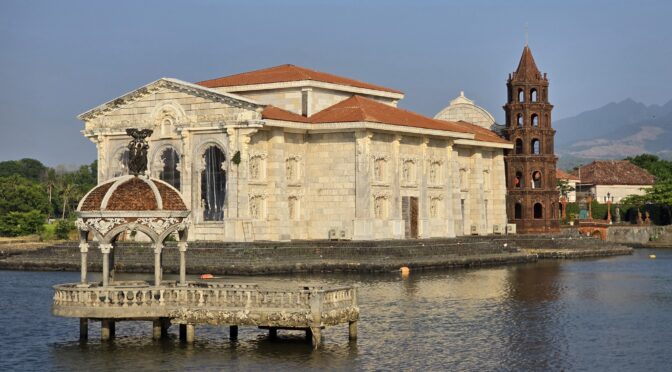
The preservation of architectural heritage in the Philippines operates within a highly challenging socio-economic and environmental matrix. The nation’s built history is perpetually threatened by a combination of severe tropical weathering, seismic activity, chronic state underfunding for historical conservation, and the relentless pressure of rapid urban redevelopment. Within this precarious environment, the private sector has occasionally intervened, though rarely on the scale observed in Bagac, Bataan. Here, Las Casas Filipinas de Acuzar has emerged as a monumental structural reserve and a focal point of intense academic and ethical debate within the fields of heritage conservation and cultural geography. Operating on a sprawling 400-hectare coastal estate, the complex functions simultaneously as an open-air museum, a commercial resort, and an active laboratory for the revitalization of traditional Filipino craftsmanship.
Conceptualized and executed by real estate magnate José “Jerry” Rizalino Acuzar, the site represents a radical departure from standard in-situ conservation practices. Instead of preserving structures in their original geographical context, Las Casas employs a methodology of physical translocation. This involves the meticulous documentation, dismantling, transportation, and reconstruction of colonial, post-colonial, and indigenous structures from their original provinces to a synthesized historic township adjacent to the West Philippine Sea.
This analytical report provides an in-depth examination of Las Casas Filipinas de Acuzar. It begins by tracing the biographical origins of the Acuzar family’s collection and the evolution of their preservation philosophy. It explicates the technical and artisanal processes involved in architectural relocation, subsequently categorizing the diverse structural typologies currently preserved on the estate. The analysis critically examines the ongoing discourse surrounding authenticity, the embodied energy of historical materials, and the profound socio-cultural implications of uprooting ancestral patrimony from its native soil. Finally, the report projects the future trajectory of the estate, noting its expanding role as a pedagogical nexus, its expansion into urban adaptive reuse, and its necessary alignment with emerging coastal sustainability mandates.
2. Biographical Foundations and the Genesis of an Architectural Collection
To fully understand the scale, ambition, and inherent contradictions of Las Casas Filipinas de Acuzar, it is necessary to examine the biographical and professional trajectory of its founder. The conceptualization of the estate is inextricably linked to the personal history and business acumen of its primary benefactor.
Early Life and Formative Education
José “Jerry” Rizalino Acuzar was born on June 19, 1955, in the provincial capital of Balanga, Bataan.1 Born to Marcelino A. Acuzar and Maria Larión, his early life was rooted in the very provincial landscape that he would later transform into a national heritage center.1 His foundational education was completed locally; he finished his primary schooling at the Balanga Elementary School in 1967 and his secondary education at the Arellano Memorial High School (now Bataan National High School) in 1974.1
Acuzar’s initial entry into the realm of the built environment was practical and technical rather than purely academic. He completed a vocational course in drafting at the Bataan National School of Arts and Trades (BNSAT) in Balanga, an institution that is now part of the Bataan Peninsula State University.1 This early grounding in drafting provided him with the fundamental spatial and structural literacy required to understand architectural composition. In 1975, this skill set led to his employment as a draftsman for the Tondo Foreshore Redevelopment Project in Manila.1 This project is historically significant, as it exposed Acuzar to the complexities of urban planning, housing crises, and the physical realities of urban decay in one of the densest and most impoverished districts of the Philippine capital. He later formalized his education by obtaining a college degree in architecture from the Technological Institute of the Philippines in 1983.1
The Rise of New San Jose Builders, Inc.
Following his education and a period working as an independent contractor in the 1980s, Acuzar established his own real estate firm, New San Jose Builders, Inc. (NSJBI), in 1986.1 NSJBI distinguished itself in the highly competitive Philippine real estate market through a strategy of vertical integration. By maintaining its own construction arm, the company enhanced quality control and shortened project timelines, allowing it to offer housing units at highly competitive price points.2
Initially focusing on low-cost housing, NSJBI eventually expanded to address middle-income residential demands.2 The firm became known for developing residential and commercial condominiums that integrated extensive lifestyle amenities. Projects such as Victoria de Manila 2 and Victoria Station 2 in Quezon City were notable for incorporating world-class sports centers—featuring Olympic-sized swimming pools, basketball courts, and shooting ranges—directly into residential complexes.2 The company also achieved national prominence through its involvement in monumental construction projects, most notably the Philippine Arena.1 Acuzar’s success in commercial real estate eventually led to high-level government appointments. He served as the second Secretary of Human Settlements and Urban Development beginning in 2022, and subsequently as the Presidential Adviser for Pasig River Rehabilitation starting in 2025.1
The Evolution of an Antiquarian Passion
The trajectory from a developer of modern, affordable urban condominiums to a savior of elite colonial heritage is marked by a gradual evolution in Acuzar’s personal antiquarian interests. Originally, Acuzar and his family, including his wife Maria Theresa Ochoa, resided in a modest home situated on the grasslands of Balanga, adjacent to a river.1 As his construction and real estate enterprises flourished, Acuzar began to collect antiques.
Initially, this collection consisted of architectural fragments salvaged from the demolition of historical structures in Manila and surrounding provinces. As urban sprawl and modernization efforts accelerated, countless 18th- and 19th-century homes were torn down to make way for modern commercial buildings or infrastructure.3 Acuzar collected old wooden floorboards, intricately carved doors, iron grills, and capiz-shell windows, utilizing them to upgrade his own residence.4 Jam Acuzar, one of his daughters, recounted how their family home slowly filled with these disembodied parts of history.4
The critical philosophical shift that would eventually birth Las Casas occurred when Acuzar recognized the inherent inefficiency and historical tragedy of this fragmented approach. Rather than merely collecting the salvaged remains of demolished structures, he questioned why he could not acquire, preserve, and restore the entire structure itself.4 This realization transitioned his efforts from casual antique collecting to large-scale, systematic structural preservation.
This vision was further catalyzed by his international travels. While touring Europe, Acuzar observed the meticulous heritage preservation efforts in cities across Estonia.5 He also studied the historical narratives surrounding the post-war reconstructions of London and Moscow, recognizing how those cities painstakingly rebuilt their architectural identity following widespread devastation.5 These observations threw the comparative lack of architectural patrimony preserved in the Philippines into sharp relief.5 Combined with the academic influence of his son, who had completed a degree in art history, Acuzar’s disparate collections of doors and floors coalesced into a singular, monumental vision: to rescue the nation’s fading architectural heritage by moving it to a protected sanctuary.4
3. The Evolution of the Bagac Estate: From Private Sanctuary to Heritage Destination
The physical execution of Acuzar’s preservation philosophy required an expansive geographical canvas, far removed from the spatial constraints and urban pressures of Metropolitan Manila. The search for a suitable location led him back to his home province of Bataan.
Land Acquisition and Initial Concept
In 2003, Acuzar identified and acquired a 400-hectare tract of land in Barangay Pag-Asa, situated near the coastal fishing village of Bagac.7 The location, located approximately an hour away from his hometown of Balanga, offered a dramatic topographical setting. The sprawling property featured mostly undeveloped grasslands bordered by mountainous terrain, overlooking the Umagol River as it fed into the expanse of the West Philippine Sea.8
Initially, this vast estate was never intended for public access or commercial exhibition. Acuzar developed the land as a private residential retreat for his family, constructing a quaint, three-bedroom country manor complemented by horse stables and a series of small, modern cottages.7 For the first several years, the estate functioned purely as a secluded vacation property.
The Catalyst for Translocation
The transformative moment for the estate occurred five years after the initial land purchase. In 2008, Acuzar was approached with an offer to purchase parts of a historic wooden home built on stilts, originating from the Cagayan Valley.7 Applying his new philosophy of holistic preservation, Acuzar declined to buy merely the parts. Instead, he negotiated the purchase of the entire structure, which was in the process of being dismantled.8
This structure, which would become known as Casa Cagayan, was carefully transported and rebuilt piece-by-piece on the Bagac estate.7 This successful reconstruction served as the crucial proof-of-concept for his methodology. Once word circulated that the chairman of NSJBI was willing to purchase entire decaying heritage homes, Acuzar was inundated with offers from property owners across the archipelago.7 Many of these owners possessed structures of immense historical value but lacked the considerable financial resources required to maintain, repair, or secure them against vandalism and the elements. Using the same systematic method of dismantling, relocating, and rebuilding, Acuzar began transporting a succession of heritage homes to his coastal property.7
The Transition to a Commercial Enterprise
As the collection of translocated houses grew rapidly between 2008 and 2010, the financial realities of the endeavor became unavoidable. The costs associated with purchasing, transporting, and executing historically accurate restorations of massive colonial-era structures were staggering.8 Furthermore, as the local population and heritage circles became aware of the massive reconstruction efforts occurring in Bagac, public interest surged.8
Recognizing both the opportunity to share this localized history and the necessity of generating revenue to subsidize the exorbitant maintenance and refurbishment costs, Acuzar decided to pivot the operational model of the estate.7 The private family compound was systematically transformed into a commercial resort and a living, open-air museum. After two years of continuous, intensive construction and landscaping work, the estate officially opened to the general public in March 2010 under the name “Las Casas Filipinas de Acuzar”.6 Prior to its official public debut, the visual majesty of the growing site had already attracted media attention; as early as March 2009, the grounds were utilized as a taping location for the GMA Network television series Zorro.6
To manage the complex logistics of hospitality within a heritage environment, Acuzar initially placed the entire facility under the management of Genesis Hotels and Resorts Corporation.6 Operations were later transitioned to Marivent Resort Hotel Inc., a hospitality group established to manage heritage resorts.6 Today, the resort operates as a fully integrated destination featuring cobblestone streets, Venice-inspired waterways, a central plaza, and a fully functional replica of a Spanish colonial church, the Sanctuario de San Jose.6

The rapid development of the site from a private retreat to an internationally recognized heritage destination can be tracked through several key milestones, demonstrating the speed and scale of Acuzar’s undertaking.
Table 1: Chronological Evolution of the Bagac Estate
| Year | Milestone Event |
| 2003 | José Acuzar acquires a 400-hectare tract of land in Bagac, Bataan, initially developing it as a private residential retreat. |
| 2008 | The foundational acquisition occurs; components of a historic home from the Cagayan Valley are purchased, dismantled, and fully reconstructed on the estate (Casa Cagayan). |
| 2009 | The visually striking, partially completed estate attracts media attention and is utilized as the primary filming location for the GMA Network series Zorro. |
| 2010 | Following two years of intensive reconstruction of multiple heritage structures, Las Casas Filipinas de Acuzar officially opens to the public in March as a commercial resort. |
| 2017 | The resort achieves international recognition for its unique preservation model and is officially inducted into the prestigious Historic Hotels Worldwide organization. |
| 2021 | The site is voted “Best Historic Hotel in Asia and the Pacific” by the Historic Hotels Awards of Excellence, cementing its status as a premier heritage destination. |
Data indicates the rapid transformation of the site, highlighting the momentum of Acuzar’s project and the scale of expansion between the initial land purchase and international recognition.6
4. The Anatomy of Translocation: Processes in Architectural Salvage
The creation of Las Casas Filipinas de Acuzar relies on an engineering and logistical process that borders on obsession. Translocating a centuries-old structure—particularly those constructed from heavy stone blocks and fragile, aging timber—is not a simple matter of moving building materials. It is a highly complex, multidisciplinary exercise in historical forensics, structural engineering, and traditional artisanal craft.
Documentation and Deconstruction
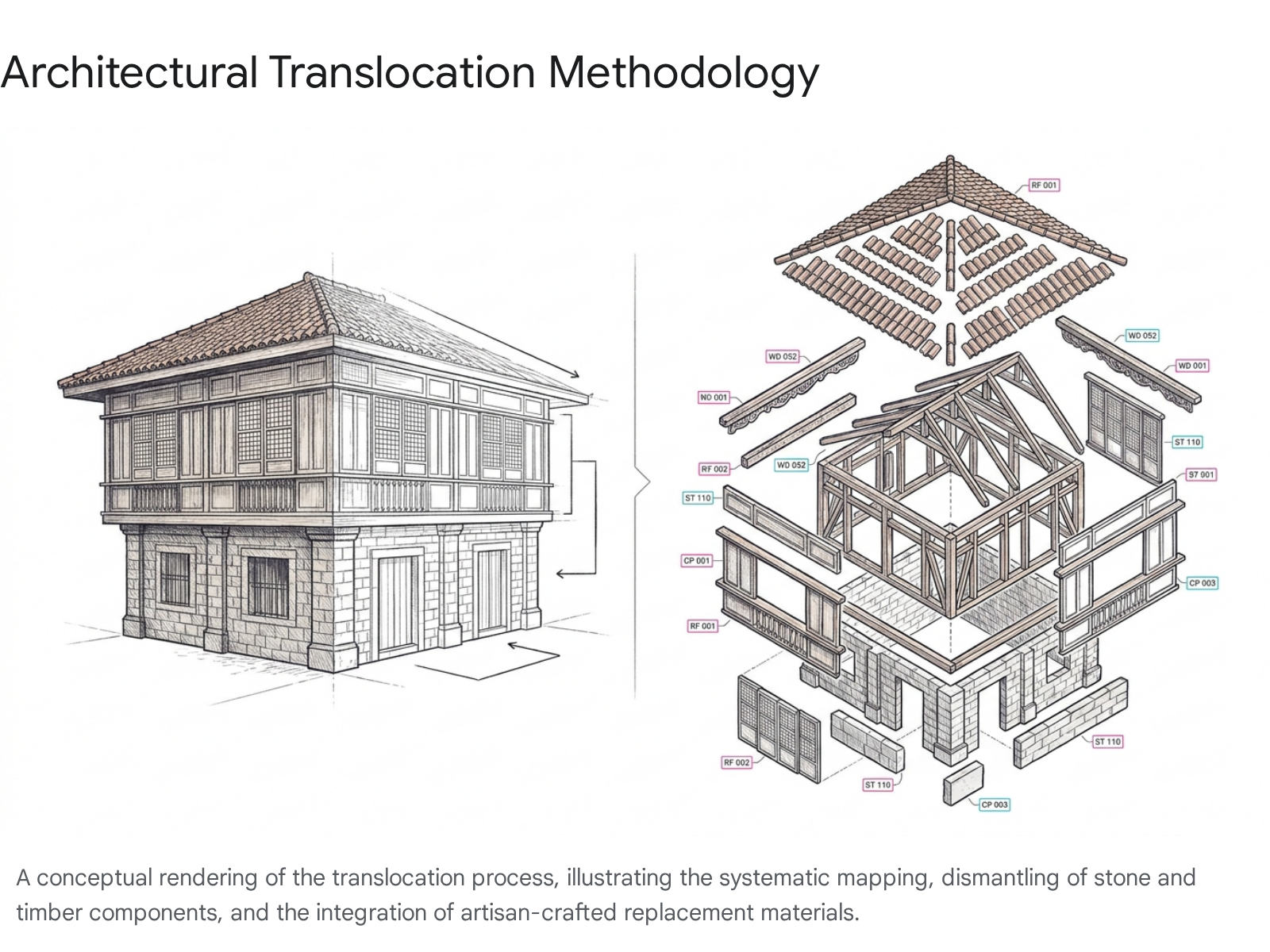
The journey of a heritage structure begins at its original geographical location. Before a single stone is moved or a wooden beam unseated, teams comprising architects, local historians, and master craftsmen arrive to conduct an exhaustive structural and historical survey.11 The physical state of the building is meticulously documented. Every architectural detail, every joint, and every structural anomaly is photographed, sketched, and mapped.11
Once the documentation phase is complete, the deconstruction process begins. This is not a demolition; it is a systematic dismantling. Each individual piece of the house—from the heavy adobe foundations to the delicate capiz shell window panes—is carefully extracted, numbered, and cataloged.11 The numerical identifiers ensure that the exact spatial orientation and relationship of the materials can be replicated during the reassembly phase.11
The physical transportation of these dismantled structures presents significant logistical hurdles. Many of the homes originate from interior provinces or heavily congested urban centers, requiring the transportation of massive, fragile loads across challenging topographies, and occasionally across bodies of water.4 The removal of a historic structure often becomes a poignant community event, with entire towns sometimes gathering to witness the departure of buildings that have served as local landmarks for generations.11
[Image: A conceptual rendering of the translocation process, illustrating the systematic mapping, dismantling of stone and timber components, and the integration of artisan-crafted replacement materials.]
Reconstruction and the Artisanal Village
Upon the arrival of the cataloged components at the Bagac estate, the arduous process of reconstruction commences. On average, it takes a painstaking two to three years to completely dismantle, transport, and reconstruct a single heritage house.12
At Las Casas, the reconstruction philosophy dictates that the houses must not merely stand as static museum displays; they must function as living, sheltering spaces equipped to host modern resort guests while retaining their historical integrity.11 This requires a delicate balance between historical fidelity and modern engineering. While the aesthetic and primary structural elements remain true to the original 18th- or 19th-century designs, modern structural reinforcements are occasionally integrated out of sight to ensure the buildings can withstand the harsh coastal winds and saline environment of the West Philippine Sea, as well as comply with contemporary safety standards.11
A significant challenge in the reconstruction process is dealing with missing or irreparably damaged materials. Many of these houses were acquired in a state of advanced decay, requiring extensive replacement of original fabric. To address this, Acuzar has fostered the development of an active artisanal village within the resort.5 Rather than utilizing modern, mass-produced materials for repairs, the resort employs a small army of traditional craftsmen, wood carvers, painters, and stained glass artists from various parts of the country.13
These artisans are tasked with manufacturing replacement components using the exact building methods of the era in which the house was originally constructed.6 Acuzar’s mandate is strict: when a newly manufactured material is placed beside an original component, the two must be indistinguishable in texture, weight, and aesthetic finish.5 This requires a deep understanding of historical manufacturing. For instance, artisans manually create clay bricks from scratch, a highly labor-intensive process that takes approximately three months from shaping the raw clay to the final baking and sun-drying.13 The artisans also recreate intricate wooden balusters, forge old-fashioned iron grills, and mold Spanish mission tiles.5 By cultivating these skills on-site, Las Casas not only restores physical buildings but acts as an incubator preserving the intangible cultural heritage of traditional Filipino craftsmanship.14
5. Typological Profiles: A Survey of Translocated Heritage Structures
The architectural collection at Las Casas Filipinas de Acuzar is vast, encompassing over 60 fully restored heritage houses and more than 30 historically significant ancillary structures.5 The curation of these buildings was not haphazard; structures were selected based on their specific historical, cultural, and architectural value, creating a comprehensive cross-section of Philippine architectural evolution.6
The primary architectural typology represented on the estate is the Bahay na Bato (stone house). This structural form is the defining domestic architecture of the Spanish colonial period in the Philippines. It represents an evolutionary synthesis of traditional indigenous stilt houses (Bahay Kubo), Spanish structural engineering, and Chinese craftsmanship. A standard Bahay na Bato features a solid, heavy foundation of adobe stone or brick on the ground floor (designed to withstand earthquakes and humidity), supporting a lighter, overhanging wooden upper story characterized by massive sliding windows made of translucent capiz shells (designed to maximize cross-ventilation in the tropical heat).12
The nomenclature of the structures at Las Casas generally reflects either their geographical municipality of origin or the prominent families that originally inhabited them.12 To fully appreciate the depth of the collection, it is necessary to examine the specific histories of several key structures, categorizing them by their socio-economic and historical functions.
Table 2: Master Inventory of Significant Heritage Dwellings
| Structure Name | Era/Date Built | Geographic Origin | Primary Historical Significance |
| Casa Lubao | 1920 | Lubao, Pampanga | Sugar/rice plantation storage; utilized as a Japanese military garrison during World War II. |
| Casa Candaba | 1780 | Candaba, Pampanga | Residence for the Spanish Governor-General during provincial administrative visits. |
| Casa Hidalgo | 1867 | Quiapo, Manila | Designed by the first Filipino architect; served as the original UP School of Fine Arts. |
| Casa Bizantina | 1890 | Binondo, Manila | First home of the University of Manila; designed by Catalan architect Joan Josep Hervas. |
| Casa Luna | 1850 | Namacpacan, La Union | Ancestral home connected to the mother of revolutionary heroes Antonio and Juan Luna. |
| Casa Baliuag 1 | 1898 | Baliuag, Bulacan | Prominent estate of Kapitan Fernando Vergel de Dios; noted for intricate floral wood carvings. |
| Casa Ordoveza | 1744 | Majayjay, Laguna | The second oldest documented bahay-na-bato in the Philippines prior to its relocation. |
Data indicates the diverse geographical origins and socio-political histories embedded within the architectural collection at Las Casas Filipinas de Acuzar.7
5.1. Elite Dwellings and Educational Incubators
Several structures in the collection represent the zenith of urban Ilustrado (educated elite) architecture during the late Spanish colonial period. These structures frequently served dual purposes as elite residences and early centers of higher learning.
Casa Hidalgo: Constructed in 1867, this structure originally stood in the bustling district of Quiapo, Manila.7 Its architectural pedigree is notable, as it was designed by Felix Roxas y Arroyo, widely recognized as the first Filipino to officially practice architecture in the country.7 Originally owned by Rafael Enriquez, the house was lauded as one of the most elegant structures of the Spanish Colonial era.7 Beyond its aesthetic value, Casa Hidalgo holds profound significance in Philippine art history. It served as the foundational campus for the University of the Philippines School of Fine Arts, where Enriquez served as a professor and its first director, holding classes within the home until 1926.7 The house is noted for its connection to legendary Filipino painters, including Juan Luna, whom Enriquez taught.3
Casa Bizantina: Also known as the “Don Lorenzo del Rosario House,” this massive structure was erected in 1890 in the district of Binondo, Manila.7 Designed by Catalan architect Joan Josep Jose Hervas y Arizmendi, the house represents the infusion of European architectural trends into the Philippine capital.7 Similar to Casa Hidalgo, Casa Bizantina played a crucial role in Philippine education, serving as the first home of the University of Manila upon its founding in 1914.7 Currently, at Las Casas, it functions as one of the most luxurious multi-bedroom accommodations on the property.15
5.2. Provincial Administration and Plantation Houses
The collection also features massive provincial estates that served as the economic and administrative engines of the rural Philippines.
Casa Candaba: Built in 1780, this structure from Candaba, Pampanga, is documented as one of the oldest buildings in the resort.7 Owned by the Reyes family, it held significant political weight during the colonial era, serving as the official residence and headquarters for the Spanish Governor-General whenever he conducted administrative visits to the province of Pampanga.7
Casa Lubao: Originating from Lubao, Pampanga, this structure provides a window into the agricultural economy and wartime history of the Philippines. Constructed in 1920 by the Arrastia and Salgado families (and later connected to the Vitug family), the house originally functioned as a massive plantation facility to manage and store rice and sugar.7 The architectural style of Casa Lubao reflects a transitional period, blending Filipino bahay na bato traditions with emerging American architectural influences.12 The structure’s history took a dark turn during World War II when it was requisitioned by invading forces and utilized as a Japanese military garrison.9 A notable historical anecdote attached to the house suggests it survived the war due to a Japanese colonel who stopped his men from burning the structure; before the war, the colonel had secretly worked as a driver and gardener for the Arrastia family, who had treated him with kindness.9
Casa Baliuag 1 and 2: Casa Baliuag 1 was constructed in 1898 in Baliuag, Bulacan, by Kapitan Fernando Vergel de Dios.9 Originally situated across from the town’s San Agustin church, the house was locally referred to as “Luwasan,” indicating it was the house passed when traveling toward Manila, as opposed to the Kapitan’s other house, “Hulo,” located at the end of the town.9 Inherited by his daughter Juliana VD Reyes, the house is highly regarded for its intricate, floral-motif wood carvings.9 Casa Baliuag 2 was similarly relocated from an Iglesia ni Cristo compound in the same municipality, originally owned by the Gonzalez family.9
5.3. Salvaged Fragments and Historical Recreations
While Acuzar’s primary goal is the relocation of original structures, the reality of heritage conservation means some buildings cannot be saved intact, or are legally prohibited from being moved. In these instances, Las Casas features structures that are either heavily reconstructed from salvaged parts or are entirely accurate replicas.
Casa Mexico: This structure represents an extreme example of architectural salvage. Originating from Mexico, Pampanga, the building was largely recovered from a junk shop.9 Because the original structure was thoroughly dismantled prior to acquisition, the architects at Las Casas had to reconstruct the building by studying an old, surviving photograph.9 The resulting structure is notable for highlighting Art Nouveau stylistic elements, particularly visible in its curving, vine-like floral designs, which were popular in the early 20th century.12
Casa Biñan (Alberto House): This structure stands as a replica of the ancestral home of Cipriano Alonzo, the grandfather of Philippine national hero Dr. Jose Rizal, and the childhood home of Rizal’s mother, Teodora Alonzo.9 Acuzar originally intended to acquire the authentic house, which was slated to be donated by its current owner, Gerardo Alberto.9 However, the planned extraction of the house from Biñan, Laguna, triggered massive protests from local government officials and passionate heritage advocates who argued the structure was too deeply tied to the national hero’s legacy to be removed from its municipality.9 Yielding to the controversy, Acuzar abandoned the acquisition of the main structure. Instead, he utilized a few original components he had already legally acquired—including an original wooden door, a staircase, and several wooden planks—to anchor a highly detailed replica on the Bagac estate.9 The house is also famous for its dark familial history; it was the site of a severe scandal wherein Teodora Formosa (the sister-in-law of Rizal’s mother) was locked inside a room by her father-in-law under accusations of infidelity.12 When Formosa managed to sneak a letter to the authorities, she falsely accused Teodora Alonzo of attempting to poison her.12
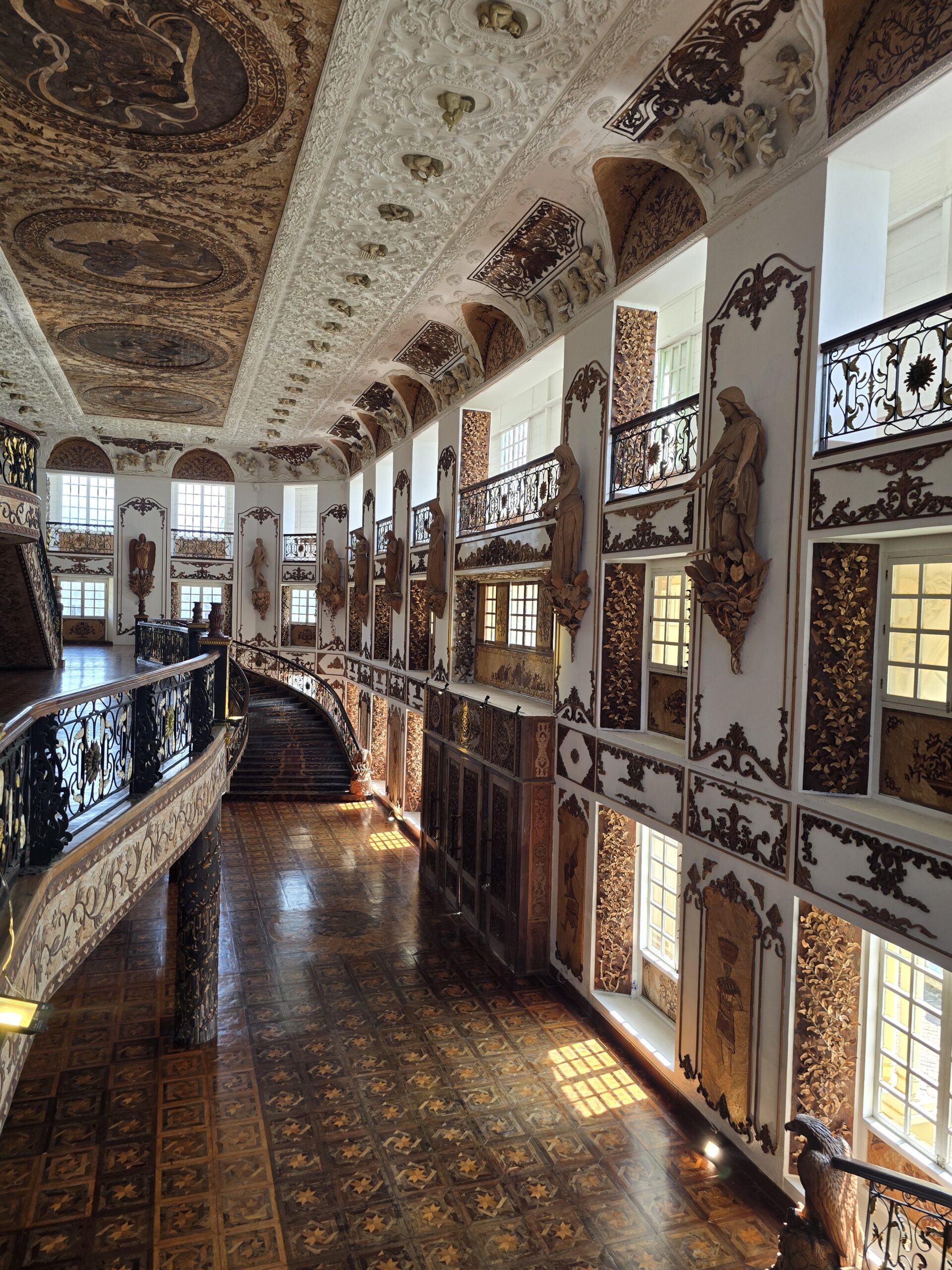
Hotel de Oriente: To provide the massive convention and event space required for a modern resort, Acuzar directed the construction of a replica of the Hotel de Oriente.15 The original, built in 1889 in Binondo, Manila, holds the distinction of being the first luxury hotel in the Philippines.15 The replica in Bagac stands as a towering testament to the skill of the on-site artisans, featuring vast halls composed of incredibly intricate, handcrafted wooden mosaics and carvings.15

5.4. Vernacular and Indigenous Representations
To prevent the estate from becoming an exclusive monument to elite Spanish colonial wealth, efforts have been made to include vernacular architecture representing the lower-income and indigenous populations of the archipelago.
Casa Cagayan: This cluster consists of four relatively modest wooden houses built entirely on stilts.9 Originating from the Cagayan Valley, these structures represent the standard domestic architecture of impoverished coastal and riverine communities in the early 1900s, designed to mitigate flooding and provide ventilation without the massive stone foundations of the Ilustrado class.9 Notably, Casa Cagayan was the very first structure Acuzar relocated to the estate in 2008, sparking the entire Las Casas enterprise.8
The Maranao Torogan: Expanding beyond Hispanic influences, the heritage park includes a torogan, a traditional royal clan house of the Maranao people from Lanao in Mindanao.4 The inclusion of this structure is critical, as it incorporates pre-colonial, Islamic-influenced architectural forms—characterized by the sweeping, ornately carved panolong (wing-like house beams)—into the broader narrative of Philippine architectural history curated at the resort.6
6. The Conservation Dialectic: Ethics, Embodied Energy, and Socio-Cultural Context
The very existence of Las Casas Filipinas de Acuzar sits at the epicenter of a highly polarized, ongoing debate within Philippine heritage conservation circles. The fundamental conflict pits the idealized principles of in-situ preservation (maintaining and restoring a structure in its original geographical, social, and historical location) against the brutal pragmatism of ex-situ salvation (uprooting a structure to prevent its imminent physical destruction).
The Argument Against Relocation: The Severing of Contextual Moorings
From the perspective of traditional conservationists, cultural geographers, and purist historians, architecture is fundamentally tethered to its specific site. The identity of a building is not contained solely within its wooden planks and stone foundations; it is generated by its relationship to the surrounding town plaza, the adjacent colonial church, the street network, and the local community whose ancestors built and interacted with the space.18
Critics argue that removing a building from its original geography destroys these “physical, social, and historical moorings,” effectively transforming an authentic historical artifact into a disembodied architectural specimen.18 A profound and highly controversial example of this dynamic involved Casa Ordoveza. Constructed in 1744 in Majayjay, Laguna, Casa Ordoveza was widely believed to be the second oldest surviving bahay-na-bato in the Philippines, predated only by the Jesuit House in Cebu City (built 1730).18 Historian Luciano P.R. Santiago published academic work noting the structure’s rare longevity, highlighting that it had remained in the continuous possession of the same local family, descended from the gobernadorcillo Don Lorenzo Pangotangan, for over two and a half centuries.18 When this incredibly significant structure was demolished for reconstitution at Las Casas, it sparked intense outrage.18 Heritage advocates argued that no national culture agency or local government unit intervened to save the structure in its original location, and its removal permanently severed a provincial town from its deepest historical anchor.18
Furthermore, some academic critiques charge that Las Casas prioritizes commercial profit over true cultural preservation.20 Critics argue that the exorbitant costs of relocating structures without necessarily seeking local approval deprive the original communities of potential localized tourism benefits.20 By charging relatively high access fees for tours and resort accommodations, Las Casas effectively restricts the enjoyment of national patrimony to those who can afford the entrance fee, commodifying history and transforming community landmarks into exclusive resort attractions.19 Additionally, architectural critics have raised practical concerns that exposing inland-provincial structures to the harsh saline environment and extreme weather of the Bataan seaside may ironically hasten the deterioration of the centuries-old materials the resort seeks to protect.18 Finally, some argue that for specific structures, such as the torogans and the Alberto House, relocation was unnecessary as alternative restoration funds and UNESCO preservation opportunities were potentially available.20
The Argument for Salvation: Adaptive Reuse and Urban Reality
Conversely, proponents of Acuzar’s methodology—including Acuzar himself—argue from a standpoint of practical urgency and urban reality. Heritage conservation in the Philippines suffers from chronic, systemic underfunding at both the national and local government levels.6 Many of the ancestral homes acquired by NSJBI were not pristine monuments waiting for UNESCO plaques; they were suffering from severe, advanced neglect.3 Many had been abandoned by families who could no longer afford their upkeep, heavily vandalized, or occupied by informal settlers.4
In a rapidly urbanizing landscape where real estate values continually supersede historical sentiment, many of these structures were slated for imminent demolition to make way for modern commercial buildings.3 Acuzar contends that the choice presented to him was rarely between relocation and ideal in-situ restoration; rather, it was a binary choice between relocation to Bataan or total, irreversible oblivion.6
This pragmatic approach finds support among certain leading architectural historians. Dr. Gerard Lico, a prominent conservation architect and Professor at the University of the Philippines Diliman College of Architecture, has extensively studied the trauma of Philippine architecture, particularly in the context of post-war Manila, which was the second most devastated Allied city in the world.21 Lico emphasizes the critical necessity of “adaptive reuse”.23 He argues that the ultimate goal of conservation is keeping a building “alive”.23 A heritage structure remains alive only if people continue to utilize it, adapting it to contemporary contexts rather than freezing it as a dead museum piece.23 By transforming decaying, abandoned structures into highly functional hospitality and educational spaces, Las Casas ensures the physical survival of the architectural fabric, even if the geographic context is unavoidably altered. As Acuzar stated, he was simply trying to save old, abandoned structures that possessed historical value, and given the pace of urban development, transplanting them to a protected sanctuary was the only viable method to restore their dignity.6
The Environmental Metric: Sustainability and Embodied Energy
Beyond cultural ethics, the translocation methodology has been evaluated through the lens of environmental sustainability. Nicolo Del Castillo, an Assistant Professor at the UP College of Architecture, conducted a specific study on the carbon footprint of relocated houses at Las Casas Filipinas de Acuzar.24
Utilizing the Life Cycle Assessment (LCA) method of the Athena Sustainable Materials Institute (ASMI), Del Castillo provided a broad-stroke assessment of the environmental costs associated with uprooting and moving a house.24 The study concluded that relocating heritage houses is highly practical from an environmental standpoint.24 By saving the massive timber beams, stone blocks, and bricks from demolition and landfills, the process preserves the massive “embodied energy” of the historical structures.24 The carbon expenditure required to manufacture, transport, and assemble entirely new building materials for modern replacement structures far exceeds the carbon footprint of relocating the old materials.24 Del Castillo’s research suggests that while architectural conservation practitioners may frown upon the loss of “authenticity” regarding the original location, this ideological issue may be less significant than the tangible environmental and structural benefits of preserving the house itself.24
7. Pedagogical Applications and Cultural Programming
Despite the valid academic controversies surrounding its methodology, Las Casas Filipinas de Acuzar has successfully positioned itself as a vital educational nucleus. The estate leverages its massive physical assets to foster a deep, immersive appreciation for Philippine history, arts, and entrepreneurial modeling, serving as a multi-dimensional pedagogical tool for domestic tourists, scholars, and university students.
The resort has heavily institutionalized cultural tourism. Rather than relying on static plaques, the site offers structured heritage walking tours guided by local experts who provide historical context for each specific structure.9 Furthermore, the resort employs young performers to execute interactive theatrical performances and historical reenactments across the grounds.13 A prominent example is the interactive play “The Rebirth of Noli Me Tangere,” which allows visitors to participate and portray characters from Dr. Jose Rizal’s foundational literature.26 By contextualizing these socio-political themes within the exact architectural spaces that define the era of the novels, the resort provides an experiential learning environment that traditional textbooks cannot replicate.26
Consequently, Las Casas has become a highly sought-after destination for academic exposure trips. In May 2023, the School of Architecture at Manuel L. Quezon University (MLQU) organized a transformative journey for aspiring architects to the site.16 The students were exposed to the practical realities of heritage conservation, engaging in technical conversations with the resort’s preservation team regarding architectural research, traditional material sourcing, and the integration of historical craftsmanship with modern structural engineering.16
Similarly, the site serves as a massive case study for business and interdisciplinary studies. In May 2025, a massive contingent of leadership and faculty from the Manuel S. Enverga University Foundation (MSEUF), led by Chairman Wilfrido L. Enverga, conducted a comprehensive cultural tour of the estate.27 Beyond architecture, the resort demonstrates to students how cultural preservation can be ethically and profitably integrated with modern entrepreneurship and the hospitality sector.28 By observing the synthesis of culture and commerce, students learn how historical narratives can be transformed into sustainable business models that generate economic value, provide local employment for traditional artisans, and promote cultural appreciation.13
Additionally, the estate hosts the Bellas Artes Projects, a philanthropic initiative designed to support creative and knowledge production.14 This program provides residency platforms for local and international contemporary artists, facilitating interdisciplinary collaboration and allowing modern artistic experimentation to occur against the stark, historical backdrop of colonial antiquity.14
8. Future Trajectories: Urban Expansion and Coastal Sustainability
As Las Casas Filipinas de Acuzar projects its operational masterplan toward the latter half of the decade (2026-2030), the enterprise is actively pursuing a dual mandate: targeted geographical expansion into urban centers and a deeper integration of environmental sustainability practices required of coastal operations.
Urban Adaptive Reuse: The Las Casas Heritage Collection
The immense success of the Bataan estate has prompted NSJBI to expand its heritage hospitality model beyond massive provincial resorts, extending its reach into the dense urban core of Metro Manila via the “Las Casas Heritage Collection”.29 The primary manifestation of this strategy is Las Casas in Quezon City, an exclusive events space and boutique hotel established around Casa Juico.29
Acquired in 2016, the property is located along Roosevelt Avenue and features the childhood home of the Juico family.29 The original owner, Felipe Juico, established the first Filipino-owned travel agency in the country.29 Notably, the original structure of the house was designed by National Artist for Architecture Pablo Antonio Sr., showcasing prominent Art Deco elements.29 Initially, because NSJBI is a massive real estate developer, the 7,500-square-meter property was considered for demolition to construct a high-density residential building—a standard industry practice in Metro Manila.29 However, recognizing the architectural beauty of the Art Deco design and the presence of numerous ancient tree varieties on the lot, the Acuzar family pivoted.29 They chose to retain the original architecture, preserving the trees and the original swimming pool, thereby importing their heritage hospitality model into the city.29 This indicates a strategic shift toward in-situ urban adaptive reuse, demonstrating that the Las Casas brand can preserve history without resorting to translocation when the geographical constraints allow for profitable commercial integration.29
Environmental Guardrails and Coastal Management
Simultaneously, the foundational estate in Bagac must navigate increasingly complex environmental realities. The resort operates on the coastline of the West Philippine Sea, a region subject to stringent ecological scrutiny. The long-term masterplan of the resort must heavily align with integrated coastal management initiatives.
The national government’s recent legislative focus on coastal resources directly impacts operators in these zones. In March 2024, the Philippine government signed Republic Act No. 11985, the Philippine Salt Industry Act, aimed at accelerating local salt production.30 However, environmental organizations like Wetlands International Philippines, led by Dr. Annadel Cabanban, are working closely with the Department of Agriculture Bureau of Fisheries and Aquatic Resources (DA-BFAR) to ensure that the expansion of the salt industry does not destroy vital coastal ecosystems.30 A primary concern is that increased salinity in Abandoned, Underdeveloped, and Underproductive (AUU) fishponds will make it ecologically impossible to revert those areas into protective mangrove forests.30 As a massive coastal landowner, Las Casas must ensure its ongoing landscaping, water management, and potential expansion do not conflict with these critical marine conservation efforts, balancing heritage tourism with the realities of climate change adaptation.30
Furthermore, the resort currently participates in local marine conservation, offering guests the opportunity to witness pawikan (sea turtle) hatchlings make their way to the ocean, highlighting a growing integration of eco-tourism into their heritage model.10
Finally, the broader regional infrastructure of Bataan is evolving to handle the influx of tourism generated by sites like Las Casas. The proposed expansion of the Metro Port Capinpin Station in Orion, Bataan, aims to revitalize the transportation terminal to meet growing passenger and freight demands.31 As regional economic activity and heritage tourism load increase, the integration of sustainable, high-capacity transport infrastructure will be vital to ensuring that the massive influx of visitors to the Bagac estate does not overwhelm the provincial logistics network.31
9. Conclusion
Las Casas Filipinas de Acuzar occupies a unique, highly contested, and undeniably critical space in the landscape of Philippine cultural patrimony. Driven by the singular vision and vast capital of José Acuzar and New San Jose Builders, the estate represents a monumental private intervention in a heritage sector traditionally characterized by chronic public underfunding, bureaucratic inertia, and civic apathy.
The translocation methodology employed by the estate forces a necessary reevaluation of traditional conservation dogmas. While critics validly mourn the loss of geographic authenticity and the extraction of heritage from local provincial communities, the pragmatic reality remains that many of these structures would have been entirely lost to the wrecking ball, informal settling, or natural decay had they not been dismantled and sheltered in Bataan. By treating heritage houses not as immovable objects but as massive, reconstructable modular systems, Las Casas preserves the tangible, physical evidence of Filipino architectural ingenuity—from the grand Ilustrado mansions and their intricate floral carvings to the humble vernacular stilt houses of the working class.
Ultimately, Las Casas Filipinas de Acuzar transcends its classification as a static museum or a luxury commercial resort. It is a living, evolving experiment in the economics of heritage and adaptive reuse. By successfully merging large-scale architectural salvation with commercial tourism, cultivating an artisanal workforce capable of recreating centuries-old building materials, and expanding into urban Art Deco preservation, the estate has ensured the physical survival of the nation’s built history. In doing so, it serves as a vital, albeit controversial, bridge connecting the craftsmanship and narratives of the Philippine past with the cultural identity of its future.
Photos were obtained during a visit from April 21-23, 2026.
Please share the link on Facebook, Forums, with colleagues, etc. Your support is much appreciated and if you have any feedback, please email us in**@*********ps.com. If you’d like to request a report or order a reprint, please click here for the corresponding page to open in new tab.
Sources Used
- Jose Acuzar – Wikipedia, accessed April 24, 2026, https://en.wikipedia.org/wiki/Jose_Acuzar
- The Philippines – Jose Acuzar, Chairman of NSJBI – The Worldfolio, accessed April 24, 2026, https://www.theworldfolio.com/news/jose-acuzar-chairman/1259/
- Two sides of the heritage coin | Inquirer Opinion, accessed April 24, 2026, https://opinion.inquirer.net/60673/two-sides-of-the-heritage-coin
- Contemporary art finds a home in Las Casas de Filipinas de Acuzar – Lifestyle.INQ, accessed April 24, 2026, https://lifestyle.inquirer.net/9202/art-heritage-las-casas-acuzar/
- For Jerry Acuzar, restoring the heritage houses in Las Casas Filipinas de Acuzar took a village | GMA News Online – GMA Network, accessed April 24, 2026, https://www.gmanetwork.com/news/lifestyle/artandculture/949954/for-jerry-acuzar-restoring-the-heritage-houses-in-las-casas-filipinas-de-acuzar-took-a-village/story/
- Las Casas Filipinas de Acuzar – Wikipedia, accessed April 24, 2026, https://en.wikipedia.org/wiki/Las_Casas_Filipinas_de_Acuzar
- Las Casas Filipinas de Acuzar – Historic Hotels of America, accessed April 24, 2026, https://www.historichotels.org/hotels-resorts/las-casas-filipinas-de-acuzar/history.php
- Hotel Beach Resort | Bagac, Bataan – Las Casas Filipinas de Acuzar, accessed April 24, 2026, https://www.lascasasfilipinas.com/About/OurStory
- Las Casas Filipinas de Acuzar: A flashback catch-sight of the past beyond a facade of the present – CJ LAO, accessed April 24, 2026, https://cleiffordjourney.wordpress.com/2017/03/17/las-casas-filipinas-de-acuzar/
- Las Casas Filipinas de Acuzar Heritage Tour (2026) – Project Gora, accessed April 24, 2026, https://projectgora.com/las-casas-filipinas-de-acuzar/
- Beyond Time’s Boundaries: A Journey Through Las Casas Filipinas de Acuzar -, accessed April 24, 2026, https://balikbayanmagazine.com/features/beyond-times-boundaries-a-journey-through-las-casas-filipinas-de-acuzar/
- Las Casas Filipinas de Acuzar – Part 1 – Missy Castro, accessed April 24, 2026, http://missyrcastro.com/las-casas-filipinas-de-acuzar-part-1/
- Las Casas Filipinas de Acuzar: Protecting heritage, promoting Filipino craftsmanship, accessed April 24, 2026, https://mb.com.ph/2022/11/03/las-casas-filipinas-de-acuzar-protecting-heritage-promoting-filipino-craftsmanship/
- about – Las Casas Filipinas de Acuzar | Hotel Beach Resort | Bagac, Bataan, accessed April 24, 2026, https://www.lascasasfilipinas.com/About
- A tale of love and legacy | Philstar.com, accessed April 24, 2026, https://www.philstar.com/lifestyle/2024/02/03/2330439/tale-love-and-legacy
- Experiencing the Rich Tapestry of Heritage Conservation: A Memorable Exposure Trip – Manuel L. Quezon University %, accessed April 24, 2026, https://www.mlqu.edu.ph/experiencing-the-rich-tapestry-of-heritage-conservation-a-memorable-exposure-trip/
- casa stories – Las Casas Filipinas de Acuzar | Hotel Beach Resort …, accessed April 24, 2026, https://www.lascasasfilipinas.com/CasaStories
- 2nd oldest house in the Philippines demolished – Nation Thailand, accessed April 24, 2026, https://www.nationthailand.com/life/30292621
- A ‘Mansyon’ of memories | Inquirer Opinion, accessed April 24, 2026, https://opinion.inquirer.net/111978/a-mansyon-of-memories
- Profit vs. Heritage at Las Casas | PDF – Scribd, accessed April 24, 2026, https://www.scribd.com/document/551991175/Why-Do-I-Preserve-Thee-for-Heritage-or-P
- METamporphosis: Reviving Filipino Heritage | Gerard Lico | TEDxUPDiliman – YouTube, accessed April 24, 2026, https://www.youtube.com/watch?v=tA86n4dBm-E
- +2017 Gerard Lico – Rising From of The Ashes DJ57 | PDF – Scribd, accessed April 24, 2026, https://www.scribd.com/document/485515047/2017-Gerard-Lico-Rising-from-of-the-Ashes-DJ57
- This Ancestral Home Was Restored To Its 1920s Glory In A Brand …, accessed April 24, 2026, https://metro.style/living/makeovers/architect-gerard-lico-s-casa-floria-adaptive-reuse/33842
- The Carbon Footprint of Two Houses in Las Casas Filipinas de Acuzar, Bagac, Bataan – NICOLO DEL CASTILLO – ResearchGate, accessed April 24, 2026, https://www.researchgate.net/profile/Nicolo-Del-Castillo/publication/363137166_THE_SUSTAINABILITY_VALUES_OF_RELOCATED_HERITAGE_HOUSES_The_carbon_footprint_of_two_houses_in_Las_Casas_Filipinas_de_Acuzar_Bagac_Bataan/links/630f3f9f61e4553b95529638/THE-SUSTAINABILITY-VALUES-OF-RELOCATED-HERITAGE-HOUSES-The-carbon-footprint-of-two-houses-in-Las-Casas-Filipinas-de-Acuzar-Bagac-Bataan.pdf
- (PDF) THE SUSTAINABILITY VALUES OF RELOCATED HERITAGE HOUSES The carbon footprint of two houses in Las Casas Filipinas de Acuzar, Bagac, Bataan – ResearchGate, accessed April 24, 2026, https://www.researchgate.net/publication/363137166_THE_SUSTAINABILITY_VALUES_OF_RELOCATED_HERITAGE_HOUSES_The_carbon_footprint_of_two_houses_in_Las_Casas_Filipinas_de_Acuzar_Bagac_Bataan
- A Study on Created Cultural Experiences: The Case of Las Casas Filipinas de Acuzar – OFFICE OF FIELD ACTIVITIES – University of the Philippines Diliman, accessed April 24, 2026, https://ofa.upd.edu.ph/a-study-on-created-cultural-experiences-the-case-of-las-casas-filipinas-de-acuzar
- Cultural Heritage in Motion: MSEUF Executives, Deans, Heads, and Staff immerse in the Legacy of Las Casas Filipinas de Acuzar – Enverga University, accessed April 24, 2026, https://mseuf.edu.ph/news/2025/5/25/bataan-heritage-tour
- Educational Tour Report: Las Casas Bataan | PDF | Entrepreneurship | Creativity – Scribd, accessed April 24, 2026, https://www.scribd.com/document/958518359/narrative-report-business-planidea-final
- A home for history – Manila Bulletin, accessed April 24, 2026, https://mb.com.ph/2018/06/13/a-home-for-history/
- Sustainability guardrails must regulate Philippine salt industry expansion, accessed April 24, 2026, https://philippines.wetlands.org/guardrails-needed-on-proposed-salt-industry-expansion/
- Metro Port Capinpin Revitalization Thesis | PDF | Transport – Scribd, accessed April 24, 2026, https://www.scribd.com/presentation/797118107/THESIS-BOOK-DEFENSE-MPCS-PPT-FORMAT-AY-2024-2025-1