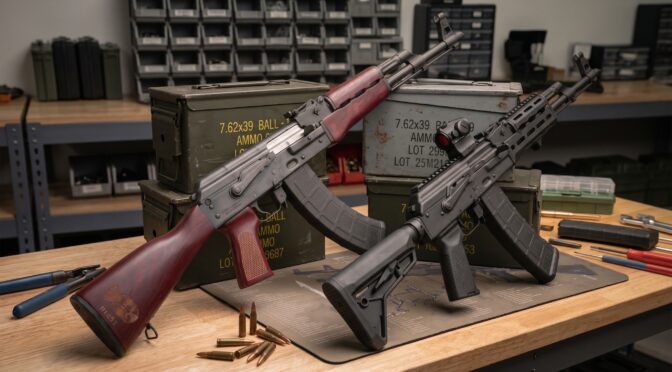
Analysis of the MAC-1014 Shotgun: Long-Term Reliability and Durability

Introduction to the Tactical Shotgun Market and Pricing Shifts

The tactical shotgun market is characterized by demands for consistent reliability across various ammunition loads, physical durability in adverse environmental conditions, and functional ergonomics. For over two decades, a primary benchmark for this category has been the Benelli M4, which carries the United States military designation of the M1014.1 The Benelli design influenced the market by introducing the Auto-Regulating Gas-Operated (A.R.G.O.) system. This approach moved away from traditional inertia-driven mechanisms to ensure consistent cycling regardless of external variables or added accessory weight.1

The proprietary nature and established service record of the Benelli M4 correspond to a premium price point. Depending on the configuration and features, such as the military-style collapsible stock, an authentic Benelli M4 typically retails between $1,800 and $2,300.1 This financial barrier limits accessibility for many civilian consumers and budget-constrained agencies.

The expiration of patents surrounding the A.R.G.O. gas system has led to an increase in imported clones, primarily manufactured in Turkey.1 These manufacturers offer similar mechanical architectures and visual profiles at lower price points.1 Among these budget-tier imports, the Military Armament Corporation (MAC) 1014 has emerged as a notable option, generating discussion within the firearms review community.3

Imported by SDS Arms (Knoxville, Tennessee) and manufactured by Özerbas in Turkey, the MAC 1014 is marketed as a faithful reproduction of the Benelli platform.1 SDS Arms and the MAC brand focus on importing established models—such as MP5 pattern firearms, 1911 variants, and Benelli M2 and M4 shotgun clones—to the American market at lower price points.1

With an MSRP of $569.99 and retail prices often between $350 and $400, the MAC 1014 represents a notable price difference in the gas-operated tactical shotgun market.4 This positions the MAC 1014 at approximately one-fifth the cost of the Benelli M4.4 This price disparity prompts scrutiny regarding long-term reliability, metallurgical construction, and manufacturing compromises.

This research report synthesizes field testing data, user evaluations, high-round-count reviews, and mechanical tear-downs to assess the MAC 1014’s performance under sustained use. The analysis investigates common cyclic problems, identifies parts demonstrating wear, and evaluates the platform’s overall reliability and durability. The objective is to provide a data-driven assessment of whether the MAC 1014 is a functionally viable alternative to the original Benelli M4.

Architectural Engineering, Mechanics, and Variant Specifications

The MAC 1014 operates as a semi-automatic, 12-gauge shotgun chambered to accept both 2 ¾-inch and 3-inch magnum shells.1 Central to the MAC 1014 is the reverse-engineered dual short-stroke piston gas system, which mimics Benelli’s A.R.G.O. design.1

Unlike kinetic inertia-operated systems, this design utilizes two distinct stainless steel gas pistons positioned forward of the firing chamber.1 Upon detonation, expanding gases are tapped from the barrel into dual cylinders, driving the pistons rearward along a short axis of travel. The pistons strike the forward face of the bolt carrier assembly, unlocking the rotating bolt head and cycling the action.1

This short-stroke action removes the need for long action bars or complex linkages common in traditional gas-operated shotguns.1 Because the gas expansion is contained near the chamber, the design helps prevent carbon fouling and plastic wad residue from entering the main receiver, aiding cyclic reliability during extended firing schedules.1

Barrel, Receiver, and Finishing Materials

The MAC 1014 features an 18.5-inch barrel constructed from 4140 steel.1 The interior of the barrel is chrome-lined, which increases resistance to internal corrosion and eases maintenance by reducing the buildup of plastic wad fouling.1 The barrel is internally threaded at the muzzle to accept Beretta/Benelli Mobil pattern choke tubes.1 The shotgun is supplied with three flush-fitting choke tubes (cylinder, modified, and full) and a standard choke wrench.1

The main receiver is milled from 7075 aluminum, providing structural rigidity.1 The unloaded weight of the MAC 1014 is measured at 7 pounds, 13 ounces.3 Standard tactical models feature a black-anodized receiver coupled with a black chromate coating on the barrel, while the Marine variant features an electroless marine nickel finish applied to the barrel, magazine tube, and receiver to enhance corrosion resistance.1

Sighting Systems, Controls, and Ergonomics

The sighting systems and ergonomics mirror the original military platform. The receiver utilizes an adjustable rear ghost-ring sight with two protective wings and white dot inserts, paired with a post front sight featuring a single white dot.1 The receiver also includes a permanently integrated Picatinny rail section for mounting optics.1

Controls integrated into the fire-control group include a carrier-drop lever at the front of the trigger guard, a crossbolt safety behind the trigger, and a bolt-release button located on the right side of the receiver.1 The bolt carrier assembly can be retracted via the charging handle to conduct a chamber check and will return to full battery even if eased forward.1

In independent testing, the factory trigger pull has been measured at 9 pounds, 10 ounces.3 While heavy triggers are common in defensive shotguns to prevent negligent discharges, this weight can disrupt sight pictures for precision shooting.10 This pull weight suggests a lack of hand-fitting and polishing on internal sear components, which is standard in budget-tier manufacturing.

Feeding Mechanisms and Import Compliance

Feeding the MAC 1014 is accomplished via a standard tubular magazine.1 Due to U.S. import laws (Title 18 U.S.C. § 922(r)), the shotgun is shipped with a restricted five-round magazine tube, yielding a capacity of 5+1.1 To simulate the visual profile of the military M1014, the MAC 1014 utilizes a “faux magazine extension,” a non-functional metal sleeve that covers the end of the restricted tube.1

Model Variants

SDS Arms offers the MAC 1014 in several configurations:

  • The Pistol Grip Model: Features a fixed synthetic buttstock, a rubberized pistol grip with texture grooves, and a rubber recoil pad.1
  • The Marine Pistol Grip Model: Identical to the standard model but utilizes an electroless marine nickel finish.1
  • The Breacher Model: Simulates the military Benelli M1014 visually. Due to import laws, it utilizes a fixed, non-adjustable stock that is pinned in place to mimic the collapsible stock aesthetic.1
  • The Wood Model: Features a furniture set crafted from Turkish walnut and uses a traditional straight stock instead of a pistol grip.1
  • The Agency Tradesman 1014: A specialized variant listed at $1,223.00, aimed at offering enhanced features for professional use.7

The Break-In Cycle and Ammunition Sensitivity

A noted factor determining user satisfaction and operational reliability is adherence to a mandatory break-in protocol. User consensus regarding reliability is bifurcated; reports of jamming are frequently linked to bypassed break-in periods, while positive reviews stem from users who followed the procedure.4

Break-In Requirements

The cloned A.R.G.O. system requires specific pressure thresholds to cycle the bolt carrier group against stiff factory recoil and hammer springs.7 Newly machined surfaces within the receiver and gas cylinders may feature microscopic friction points.6 To properly wear in these surfaces and settle the springs, the manufacturer and user community recommend firing a minimum of 100 to 250 rounds of high-velocity ammunition (exceeding 1300 FPS), such as full-power rifled slugs or 00 buckshot.4

When users attempt to bypass this high-pressure break-in period and use low-brass standard target loads (1145 FPS – 1200 FPS), the platform frequently struggles. Lower gas volumes fail to overcome internal friction and stiff springs, resulting in failures to eject (FTE), stovepipe malfunctions, and failures to return to battery.4 After properly breaking in the action with high-velocity rounds, users report that the MAC 1014 cycles low-brass ammunition reliably.6

Post-Break-In Ammunition Tolerance

Once broken in, the MAC 1014 exhibits broad ammunition tolerance.6 Users report reliable cycling across a spectrum of shell lengths, payload weights, and velocities, from 1350 FPS heavy loads down to standard 1200 FPS target loads.4

The following table outlines the expected cyclic reliability based on ammunition velocity and the lifecycle stage of the firearm:

Ammunition Velocity TierPre-Break-In Reliability (0-200 Rounds)Post-Break-In Reliability (200+ Rounds)Typical Ammunition Types
< 1200 FPSFrequent Failure (FTEs, Stovepipes)Intermittent / Highly Ammo DependentLight target loads, cheap promotional birdshot, reduced recoil clay loads.
1200 – 1290 FPSIntermittent / UnreliableReliableStandard field loads, heavy dove loads, standard 2 ¾” birdshot.
> 1300 FPSReliableReliable00 Buckshot, 1oz Rifled Slugs, Magnum hunting loads, High-Velocity defensive loads.

A notable cyclic anomaly involves specific European “low-recoil” tactical loads, which operate around 1250 FPS. Users report these loads can cause consistent FTEs even after the break-in period.7 The system depends on gas dwell time, powder burn rate, and wad design. For defensive applications, owners are advised to thoroughly test their chosen ammunition and avoid utilizing “reduced recoil” loads that fall below the proven 1300 FPS threshold.2

Recoil Mitigation

Users consistently report that the MAC 1014 shoots softer than traditional manual pump-action shotguns or inertia-driven semi-automatics.2 The redirection of high-pressure gas to cycle the bolt carrier absorbs a portion of the kinetic energy. Combined with the firearm’s overall weight and rubber recoil pad, the felt recoil impulse is dampened, aiding in rapid target acquisition during successive firing.1

Component Wear, Material Durability, and Reported Vulnerabilities

Evaluating the MAC 1014 over extended timelines reveals several areas of material wear and maintenance considerations related to its manufacturing cost-saving measures.

MAC-1014 shotgun diagram showing identified wear zones: finish flaking, gas plug seizing, handguard cracking, and stock fastener loosening.

Exterior Finish Wear

A commonly observed area of wear relates to the exterior finish. The MAC 1014 receiver uses a coating that users report chips and scratches more rapidly than military-specification hard-coat anodizing.7 The faux magazine extension also exhibits finish wear from routine handling and field stripping.7 This accelerated wear is cosmetic and does not impede mechanical function.

Internal Mechanical Wear

Internally, the MAC 1014 holds up well over high round counts. Long-term tear-downs reveal a clean action, with gas pistons and the bolt carrier showing normal wear patterns.2 However, multiple users have documented that the heavy steel bolt assembly impacts the rear inner wall of the softer aluminum receiver. This impact damage is most prominent during initial firing stages and appears to stabilize as the recoil spring breaks in.7 Because the receiver finish is a painted coating, this friction strips the interior aluminum bare, though it has not yet been linked to structural failure in available long-term data.

Gas Plug Maintenance

Users report routine maintenance of the A.R.G.O. gas plugs can be difficult due to a strong factory thread locker.2 The combination of cyclic heat, gas expansion, and carbon fouling causes the plugs to seize tightly. High-volume users note requiring tools like a bench vise and punch to break the torque, introducing a risk of parts breakage. Locating OEM Benelli replacement plugs can be costly relative to the clone’s base price.2

Furniture and Fastener Integrity

On the MAC 1014 Wood variant, users have reported cracking along the thin portion of the wood handguard during initial firing sessions.3 Additionally, inconsistent factory hardware torque has been noted; users report the main synthetic buttstock or optic rail screws backing out under heavy recoil.4 Retightening the stock requires removing the recoil pad and applying a hex wrench and thread locker. Conversely, iron sights and bolt release hardware generally remain secure.10

The Aftermarket Ecosystem and Parts Interchangeability

A primary factor for consumer interest in the MAC 1014 is the manufacturer’s claim of high parts interchangeability with the Benelli M4.2 Field reporting confirms this claim is largely accurate, though specific nuances exist.

Component Integration

  • Trigger Groups: The MAC 1014 accepts aftermarket trigger upgrades designed for the M4. Users have swapped the factory springs for aftermarket kits to alleviate the heavy trigger pull without fitment issues.5
  • Magazine Tubes: Upgrading the restricted 5-round faux-extension to a functional 7-round tube is a common modification.4 Components from aftermarket manufacturers install seamlessly, though adding capacity often requires an extra-velocity magazine spring for reliable feeding.5
  • Furniture and Ergonomics: Aftermarket Benelli M4-style foregrips, rail handguards, and oversized charging handles typically fit the MAC 1014 without physical adjustment.5

Telescoping Stock Compatibility

A point of incompatibility lies in the design of the recoil tube regarding collapsible stock assemblies. While aftermarket stocks will physically slide over the MAC’s receiver extension tube, they will not lock into different positions. The authentic military collapsible stock relies on a specifically milled, notched recoil spring tube, whereas the MAC 1014 variants utilize a smooth, un-notched tube to comply with import laws.1 Achieving a functioning telescoping stock requires purchasing the stock assembly and replacing the factory smooth recoil tube with a notched tube—a complex modification requiring heat application to break the factory thread locker.23

Addressing Import Stigmas

The MAC 1014 addresses concerns commonly associated with budget imports by maintaining dimensional adherence to the Benelli M4 technical data package. This allows users to source replacement parts from Benelli, Stoeger, or aftermarket manufacturers rather than relying on proprietary imported parts.4

The following table summarizes component interchangeability based on user reporting:

Component CategoryInterchangeability StatusRequired Modifications / Caveats
Trigger Group SpringsHighDirect replacement (e.g., Taran Tactical kits).5
Magazine TubesHighDirect replacement with M4 pattern 7-round tubes. May require extra-velocity springs.6
Handguards/ForendsHighDirect fit for OEM and aftermarket Picatinny variants.5
Stocks (Fixed)HighBenelli M4 fixed/pistol grip stocks generally fit directly.23
Stocks (Collapsible)Low/ComplexStock fits the tube but will not collapse or lock unless the factory smooth recoil tube is replaced with a milled/notched Benelli tube.1
Gas System PlugsHighDirect replacement, but genuine M4 OEM parts are cost-prohibitive relative to the clone’s base price.5

Long-Term Maintenance and Quality Control

Extended tracking of the MAC 1014 reveals a platform that exhibits consistent mechanical endurance with proper maintenance.

Users crossing the 1,000 to 3,500 round thresholds report positive mechanical operation. Documented accounts note few stoppages, usually attributed to defective shells or debris, confirming the core metallurgy of the bolt carrier, locking lugs, and gas pistons is structurally sound for standard use.1

While quality control anomalies (e.g., loose hardware or magazine spring issues) can occur with budget firearms, SDS Arms provides domestic warranty and customer service support. Users report that when parts failures occur, firearms are repaired or replaced promptly, reducing the risk associated with purchasing an imported model.10

Conclusion on Platform Viability

The MAC 1014 provides a functional replica of the Benelli M1014 architecture at a significantly lower price point. To achieve this price, the manufacturer utilizes less durable receiver coatings, heavier internal springs, and strong factory thread lockers that complicate maintenance. Furthermore, a 100-200 round high-velocity break-in period is an operational requirement for reliable cycling.

Once broken in, the MAC 1014 delivers reliable, soft-recoiling performance across a broad array of standard ammunition types. The proven parts interchangeability with the Benelli M4 aftermarket ecosystem reduces the risks associated with proprietary parts. For professional use requiring strict manufacturing tolerances and high-grade finishes, the Benelli M1014 remains the standard. However, for recreational shooters and budget-conscious consumers, the MAC 1014 offers a viable, mechanically sound alternative with strong aftermarket compatibility.

Purchasing Information and Retail Sourcing

For consumers interested in acquiring the MAC 1014 or researching further specifications, the official manufacturer’s website provides comprehensive details on the platform and its variants:

The following preferred vendor websites currently list the MAC 1014 for sale at price points falling between the minimum observed street price and the average retail price:

Note: Vendor Sources listed are not an endorsement of any given vendor. It is our software reporting a product page given the direction to list products that are between the minimum and average sales price when last scanned.


Please share the link on Facebook, Forums, with colleagues, etc. Your support is much appreciated and if you have any feedback, please email us in**@*********ps.com. If you’d like to request a report or order a reprint, please click here for the corresponding page to open in new tab.


Sources Used

  1. Solid Values: MAC 1014 & MAC 2 | An Official Journal Of The NRA – American Rifleman, accessed March 26, 2026, https://www.americanrifleman.org/content/solid-values-mac-1014-mac-2/
  2. Review: Military Armament Corp. M1014 Shotgun – The Black Campbell, accessed March 26, 2026, https://blackcampbell.com/2025/04/25/review-military-armament-corp-m1014-shotgun/
  3. MAC 1014 Shotgun Review: Diamond in the Rough or Junk Benelli Clone? – Outdoor Life, accessed March 26, 2026, https://www.outdoorlife.com/guns/mac-1014-review/
  4. MAC 1014 : r/Shotguns – Reddit, accessed March 26, 2026, https://www.reddit.com/r/Shotguns/comments/1aniahx/mac_1014/
  5. How do we feel about the Mac 1014 or any other Turkish m4 clone – Reddit, accessed March 26, 2026, https://www.reddit.com/r/Tacticalshotguns/comments/19d0e7c/how_do_we_feel_about_the_mac_1014_or_any_other/
  6. Mac 1014 : r/Shotguns – Reddit, accessed March 26, 2026, https://www.reddit.com/r/Shotguns/comments/1ke40vu/mac_1014/
  7. Military Armament Corporation 1014 Shotgun: The Best Budget Benelli Clone? [REVIEW], accessed March 26, 2026, https://www.recoilweb.com/military-armament-corporation-1014-shotgun-review-183871.html
  8. Shotgun advice: MAC Model 1014 : r/liberalgunowners – Reddit, accessed March 26, 2026, https://www.reddit.com/r/liberalgunowners/comments/1q0s4hb/shotgun_advice_mac_model_1014/
  9. FAQs & Owner’s Manuals | Product Support – SDS Arms, accessed March 26, 2026, https://sdsarms.com/faq-manuals/
  10. MAC 1014 Shotgun Review – News & Current Events – USCCA Community, accessed March 26, 2026, https://community.usconcealedcarry.com/t/mac-1014-shotgun-review/101614
  11. Is the mac 1014 really that bad? : r/tacticalgear – Reddit, accessed March 26, 2026, https://www.reddit.com/r/tacticalgear/comments/1mja0jc/is_the_mac_1014_really_that_bad/
  12. MAC 1014 2-Year Update: Problems? – YouTube, accessed March 26, 2026, https://www.youtube.com/watch?v=0z605ZCeRL0
  13. [Shotgun] MAC 1014 MARINE Finish 12ga Semi-Auto Shotgun (Benelli M4 clone) – $340.41 + $20.99 Shipping (KS, No Tax) : r/gundeals – Reddit, accessed March 26, 2026, https://www.reddit.com/r/gundeals/comments/1oafqoh/shotgun_mac_1014_marine_finish_12ga_semiauto/
  14. $1,000 Tactical Shotgun Vs. $2,500 Benelli… Which One Actually Wins? – YouTube, accessed March 26, 2026, https://www.youtube.com/watch?v=nXLJ0h-bQwk
  15. First gun : r/Shotguns – Reddit, accessed March 26, 2026, https://www.reddit.com/r/Shotguns/comments/1oyi40k/first_gun/
  16. MAC 1014 Issues/Testing : r/Shotguns – Reddit, accessed March 26, 2026, https://www.reddit.com/r/Shotguns/comments/1j94cvb/mac_1014_issuestesting/
  17. MAC 1014 failure to feed : r/CAguns – Reddit, accessed March 26, 2026, https://www.reddit.com/r/CAguns/comments/1kvfm5n/mac_1014_failure_to_feed/
  18. MAC 1014: 100+ Round Range Report – YouTube, accessed March 26, 2026, https://www.youtube.com/watch?v=s2dl0EoH9yA
  19. Customer Reviews for Military Armament Corp MAC 1014 12ga Semi Auto Shotgun 18.5″ Barrel, 5+1 – Buds Gun Shop, accessed March 26, 2026, https://www.budsgunshop.com/product_reviews.php/products_id/160755/reviews_id/290630
  20. MAC 1014 Wood Stock : r/Shotguns – Reddit, accessed March 26, 2026, https://www.reddit.com/r/Shotguns/comments/1f9748j/mac_1014_wood_stock/
  21. MAC 1014 12GA Semi-Auto Shotgun – Tactical & Reliable – Military Armament Corporation, accessed March 26, 2026, https://milarmamentcorp.com/mac-1014/
  22. Lipsey’s Bulletin – MAC 1014 Shotgun: A Premier Turkish-Made Benelli M4 Clone, accessed March 26, 2026, https://spandauarms.com/news/lipseys-bulletin-mac-1014-shotgun-a-premier-turkishmade-benelli-m4-clone/
  23. Anyone know if there are compatible parts for this? : r/Shotguns – Reddit, accessed March 26, 2026, https://www.reddit.com/r/Shotguns/comments/1fsdr4s/anyone_know_if_there_are_compatible_parts_for_this/
  24. 1014 and a 11707 – Benelli, accessed March 26, 2026, https://forums.benelliusa.com/topic/7113-1014-and-a-11707/
  25. Military Armament Corp MAC 1014 Shotgun 12 Gauge – 18.5 …, accessed March 29, 2026, https://www.primaryarms.com/military-armament-corp-mac-1014-shotgun-12-gauge-18-5-black-anodized-synthetic-stock
  26. MILITARY ARMAMENT CORP MAC 1014 12 Gauge 3″ 18.5″ 5rd …, accessed March 29, 2026, https://www.kygunco.com/product/military-armament-corp-21000154-mac-1014-12-gauge-18.5-5rd-black-anodized
  27. MAC1014 ($350) Turknelli 2000 Rounds Later – YouTube, accessed March 26, 2026, https://www.youtube.com/watch?v=XdIAeol9YNc

Philippines Faces Energy Emergency Amid Global Oil and LNG Supply Crisis – Current State and 90 day Outlook

1.0 Executive Summary

As of April 2, 2026, the global energy ecosystem and international maritime trade networks are navigating one of the most severe, synchronized supply disruptions in modern economic history. The ongoing geopolitical and military conflict between the United States, Israel, and the Islamic Republic of Iran—headlined by the aggressive U.S. military campaign designated “Operation Epic Fury”—has effectively paralyzed the Strait of Hormuz. This narrow, highly contested maritime corridor, historically responsible for the transit of approximately 20% of the world’s daily crude oil supply and a commensurate proportion of liquefied natural gas (LNG), remains functionally closed to standard commercial traffic. The operational environment is defined by intense military operations, asymmetric mine-laying tactics, and direct kinetic attacks on merchant vessels by Iranian forces, creating an unprecedented bottleneck of global hydrocarbon logistics.

For the Republic of the Philippines, an archipelago nation that imports approximately 98% of its crude oil requirements from the Middle East, this disruption constitutes a systemic macroeconomic vulnerability and an acute national security threat. In recognition of this extraordinary peril, the national government declared a State of National Energy Emergency via Executive Order No. 110. This declaration has catalyzed a whole-of-government approach aimed at securing alternative energy supplies, implementing early-stage rationing frameworks, and mitigating the compounding socioeconomic fallout that threatens to derail the nation’s post-2025 economic recovery trajectory.

This exhaustive intelligence and energy sector report provides a high-fidelity assessment of the current Philippine oil situation. It details the precise inventory levels across all fuel categories, which currently average 50.94 days of aggregate supply. This buffer is actively being defended through the emergency sovereign procurement of over one million barrels of diesel from alternative regional suppliers, augmented by private sector acquisitions of non-Middle Eastern crude. Furthermore, the report analyzes the unprecedented diplomatic maneuvering by the Philippine government, which recently secured a bilateral concession from Tehran granting “safe passage” to Philippine-bound oil tankers. However, the analysis demonstrates that the systemic friction of skyrocketing war-risk insurance premiums, widespread shipping delays, and the global repricing of the “war premium” on Brent and West Texas Intermediate (WTI) crude continues to heavily impact domestic fuel prices regardless of physical transit guarantees.

The cascading effects of this Middle Eastern crisis extend far beyond the localized gasoline pump. The disruption of global LNG and critical chemical fertilizer shipments through the Strait of Hormuz threatens to induce a secondary, devastating inflationary shock within the Philippine agricultural sector by late 2026. Consequently, the Bangko Sentral ng Pilipinas (BSP) is currently confronting a highly volatile stagflationary paradigm. Inflation projections suggest a breach of the 6.0% threshold in worst-case scenarios, necessitating an abrupt pivot toward monetary tightening. Concurrently, the domestic power sector faces acute, localized vulnerabilities heading into the peak summer demand months, particularly within the Visayas grid, where rising inter-island coal transportation costs threaten to trigger double-digit percentage hikes in baseline electricity rates.

To navigate this complex threat landscape, this assessment provides detailed weekly and monthly supply, demand, and pricing forecasts stretching from early April through June 2026. The analysis culminates in strategic, actionable recommendations for long-term energy security resilience, focusing on structural tax reforms, sovereign strategic petroleum reserves, and grid decentralization.

2.0 Geopolitical Theater: Operation Epic Fury and the Strait of Hormuz Blockade

To accurately forecast the Philippine energy trajectory, one must first dissect the physical and diplomatic realities of the primary conflict zone. The current crisis is not a standard supply-demand fluctuation; it is a profound geopolitical dislocation.

2.1 The Escalation of Hostilities and “Operation Epic Fury”

The contemporary crisis traces its immediate origins to February 28, 2026, when the United States and Israel initiated a series of highly coordinated, joint military strikes against the Islamic Republic of Iran.1 These strikes achieved significant strategic objectives, including the assassination of Iran’s Supreme Leader Ali Khamenei, which immediately plunged the region into a state of total war.1 In retaliation for the decapitation of its leadership, Iran executed a pre-planned strategy of asymmetrical maritime denial, specifically targeting merchant shipping to effectively close the Strait of Hormuz—the world’s most critical energy chokepoint.1

Recognizing the threat to global commerce, the United States Armed Forces launched a dedicated, multi-stage military campaign on March 19, 2026, dubbed “Operation Epic Fury.” This operation was explicitly designed to force the reopening of the strait by systematically neutralizing Iran’s regional naval dominance, drone manufacturing hubs, and coastal missile infrastructure.1 By the first week of April, Pentagon assessments indicated that Operation Epic Fury had degraded approximately 90% of Iran’s missile capacity and decimated the Iranian Revolutionary Guard Corps (IRGC) naval assets, marking the campaign as an unambiguous tactical military success.2

2.2 The April 2nd Strategic Inflection Point and U.S. Posture

Global energy markets experienced extreme whiplash in the opening days of April. On March 31, unconfirmed rumors of a diplomatic breakthrough and imminent de-escalation caused the geopolitical “war premium” on oil to briefly evaporate, sending Brent crude futures tumbling toward the psychological $100 per barrel mark.4 However, this market relief was entirely erased following a prime-time national address delivered by U.S. President Donald Trump on April 1, with reverberations fully quantified by April 2.2

During this address, the President confirmed that while the core strategic objectives of degrading Iran’s military apparatus were nearing completion, the U.S. military would unexpectedly extend its kinetic operations for an additional two to three weeks to strike Iranian infrastructure “extremely hard”.6 Critically, the President signaled a willingness to conclude U.S. military operations without securing the permanent, unconditional reopening of the Strait of Hormuz.6 He explicitly stated that countries heavily reliant on the strait “must take care of that passage” themselves, further threatening to strike Iranian power plants and oil infrastructure if a broader diplomatic deal was not reached.5

This represents a historic abdication of the traditional U.S. role as the absolute guarantor of maritime security and free navigation in the Persian Gulf. By shifting the burden of maritime security to import-dependent nations, the United States has forced countries like the Philippines into unprecedented unilateral diplomatic maneuvering.6 Furthermore, the President’s threats to potentially pull the U.S. out of the NATO alliance due to a lack of allied participation in the Iran conflict have deeply unsettled global institutional stability, increasing the perceived long-term risk of the Middle Eastern theater.6

2.3 The Physical Reality of the Blockade

The operational reality within the Strait of Hormuz remains bleak, regardless of the success of Operation Epic Fury’s aerial campaigns. As of late March, Iranian forces had carried out at least 24 confirmed attacks on commercial vessels, along with three near misses, resulting in sunken tugs, numerous abandoned merchant ships, and significant loss of life among international seafarers.1

Consequently, a massive logistical bottleneck has formed. More than 150 large commercial ships currently sit anchored in the Gulf of Oman and the Persian Gulf, unwilling or unable to risk transit.8 Data from the International Maritime Organization (IMO) and the Joint Maritime Information Center report that daily transits, which typically averaged around 138 vessels prior to the conflict, have dwindled to low double digits.7 Most operators have declared force majeure, as the strait is heavily mined and actively contested.7

The Iranian Parliament further complicated the legal framework of the waterway by passing the “Strait of Hormuz Management Plan” on March 30.10 This legislation asserts Iranian sovereignty over the international waterway, mandating that foreign nations negotiate directly with Tehran for passage and instituting a toll system for transit, while completely banning U.S., Israeli, and allied shipping.10 This unilateral attempt to rewrite the UN Convention on the Law of the Sea has drawn swift condemnation from the United Nations. Secretary-General António Guterres has warned that the denial of freedom of navigation is strangling the world’s poorest populations, specifically citing the impact on the Philippines, and has dispatched Personal Envoy Jean Arnault to attempt to mediate the crisis.11

3.0 Global Energy Architecture and Macro-Level Market Dynamics

The functional closure of the Strait of Hormuz has triggered what is rapidly being recognized as the most severe, multifaceted energy supply crisis in modern history, unwinding more than a year of accumulated global oil oversupply in a matter of mere weeks.12 The strait historically facilitates the transit of approximately 20 million barrels of oil per day, alongside 20% of the world’s LNG trade, making it the central aorta of the global hydrocarbon economy.12

Projected peak monthly inflation Q1/Q2 2026: Baseline 5.1%, Worst-Case 7.5% if the oil blockade sustains high global prices.

3.1 Crude Oil Price Volatility and the Geopolitical “War Premium”

Prior to the outbreak of hostilities in late February, global oil markets were characterized by soft supply-demand fundamentals. Analysts at J.P. Morgan had projected that these fundamentals would result in Brent crude averaging around $60 per barrel throughout 2026.14 Similarly, the International Energy Agency (IEA) had noted that global observed oil stocks were at their highest levels since early 2021.15

The onset of the conflict, however, injected a massive, structural “war premium” into the market. Brent futures briefly surged to near $120 per barrel during the height of the March exchanges 15, before settling into a highly volatile, headline-driven range just above $100 per barrel following the extension of Operation Epic Fury in early April.2 West Texas Intermediate (WTI) crude mirrored this explosive price action, surging an unprecedented 58% over a 30-day period, reflecting a massive dislocation in the derivatives markets.2

The physical realities underpinning this price action are stark. Crude production losses in the Middle East are currently running at 11 million barrels per day, with Goldman Sachs forecasting that these losses could peak at a staggering 17 million barrels per day before any meaningful regional recovery materializes.13 The structural reality is that alternative pipeline routes bypassing the strait—specifically Saudi Arabia’s East-West pipeline to the Red Sea and the UAE’s Abu Dhabi Crude Oil Pipeline to the Arabian Sea—offer a combined maximum bypass capacity of only 3.5 to 5.5 million barrels per day.16 This covers barely a quarter of the volume Hormuz normally handles. Crucially, five major producing nations, including Iraq, Kuwait, Qatar, Bahrain, and Iran itself, possess absolute zero bypass infrastructure, leaving their entire export capacity stranded behind the blockade.16

Investment banks have entirely rewritten their 2026 macroeconomic outlooks. Goldman Sachs has aggressively raised its Q4 2026 base case for Brent to $71 per barrel, up from prior estimates.13 However, they warn that under a two-month disruption scenario, Brent could reliably reach $93 per barrel, with extreme escalation scenarios threatening to eclipse the all-time high prices recorded during the 2008 financial crisis.13 Crucially, financial analysts contend that even after the military conflict eventually concludes, the structural risk inherent to the Persian Gulf has been permanently repriced. A return to the pre-war energy economics of sub-$70 oil is considered highly unlikely in the near-to-medium term.13

3.2 The Hidden Crisis: LNG and Petrochemical Feedstocks

While crude oil dominates consumer headlines and political discourse, the blockade’s impact on Liquefied Natural Gas (LNG) is arguably more devastating to industrial supply chains and core inflation metrics. Qatar and the United Arab Emirates, which together supply roughly 20% of the global LNG trade (nearly 90% of which is directed to energy-hungry Asian markets), have had their maritime shipments almost entirely severed.16

Following attacks that damaged processing facilities, both QatarEnergy and the Kuwaiti government declared force majeure on all their respective LNG shipments in early March.16 This instantaneous removal of supply caused European natural gas prices to double in a matter of days, jumping from €30/MWh to above €60/MWh as global buyers scrambled for replacement cargoes.16 For the Philippines and the broader Asian manufacturing sector, this LNG crisis translates directly into a severe shortage of petrochemical feedstocks, specifically liquefied petroleum gas (LPG) and naphtha.16 Petrochemical plants are already being forced to cut production of essential polymers, which serve as the raw material for packaging, plastics, and a vast array of consumer goods, ensuring that the inflationary impacts of this war will bleed heavily into non-energy sectors.16

In response to these compounding factors, the IEA has significantly revised its demand forecasts. Widespread flight cancellations and large-scale industrial disruptions have led the agency to reduce its forecast for global oil demand growth in March and April by more than 1 million barrels per day on average, tempering the full-year 2026 growth estimate down to 640,000 barrels per day.15

4.0 Philippine Energy Vulnerability and Domestic Inventory Profile

The Republic of the Philippines stands as one of the most structurally vulnerable nations in the Asia-Pacific region to Persian Gulf disruptions. The nation imports an astonishing 98% of its crude oil requirements from the Middle East, leaving its transportation network, logistics sector, and power generation infrastructure uniquely exposed to the current blockade.17 Domestic crude production is virtually negligible, and energy consumption is overwhelmingly reliant on imported petroleum. As of early 2026, total national consumption is estimated to fluctuate between 473,000 and 486,600 barrels per day.18

4.1 Declaration of Emergency and Inventory Buffers

Recognizing the existential macroeconomic threat posed by the Strait of Hormuz closure, President Ferdinand R. Marcos Jr. signed Executive Order No. 110 on March 24, 2026. This order officially placed the Philippines under a state of national energy emergency—making it the first nation globally to invoke such statutory powers in direct response to the Iran war.20 The President has sought to manage public panic, assuring the populace that the country maintains a sufficient physical supply of crude oil to last until June 30, 2026, while differentiating between raw crude stocks held by refiners and the immediate availability of refined fuel products like diesel.19

Through rapid intervention, the Department of Energy (DOE) has managed to slightly improve the immediate refined fuel buffer. As of March 27, 2026, the national fuel inventory averaged 50.94 days of aggregate supply, representing a vital improvement from the precarious 45-day threshold previously reported by the agency.23

Table 1: Philippine National Fuel Inventory Profile (As of March 2026)

Fuel CategoryEstimated Days of SupplyPrimary Domestic UtilizationStrategic Vulnerability Assessment
Jet Fuel62.69 daysCommercial aviation, domestic logisticsLow immediate physical risk. Enables carriers like Cebu Pacific to maintain schedules through June, though higher prices will force severe ticket surcharges.24
Gasoline~59.00 daysPrivate transportation, light commercialModerate risk. Provides a nearly two-month buffer for replenishment procurement from Southeast Asian spot markets.24
Fuel Oil57.27 daysIndustrial manufacturing, maritime shippingModerate risk. Essential for inter-island shipping and heavy industrial baseloads.24
Diesel~51.00 daysHeavy logistics, public transport, agricultureHigh risk. The backbone of the Philippine economy. Thin margins expose public utility vehicles and supply chain logistics to immediate price shocks.24
LPG34.02 daysHousehold cooking, petrochemical feedstockCritical risk. Deeply exposed to the Qatari LNG blockade. Shortest supply runway threatens immediate household inflation.24
Source: Philippine Department of Energy Public Briefings.24

4.2 Strategic Procurement and Alternative Sourcing Operations

To defend this fragile buffer, the DOE, operating in close coordination with the Philippine National Oil Company–Exploration Corp. (PNOC-EC), has executed an aggressive “oil diplomacy” campaign. The objective is to secure bridging supplies from alternative, non-Middle Eastern sources. The government activated a PHP 20-billion emergency fund, utilizing a whole-of-government approach to target the procurement of up to 2 million barrels of additional refined supply.27

A critical component of this mitigation strategy is a highly structured, four-phase delivery schedule of refined diesel specifically designed to stabilize the anticipated April supply shock 27:

  1. Late March 2026: Delivery of 142,000 barrels (22.57 million liters) sourced from Japan.27
  2. Early April 2026: Scheduled arrival of 300,000 barrels (47.7 million liters) from Malaysia and Singapore.27
  3. Mid-April 2026: Scheduled arrival of 300,000 barrels (47.7 million liters) from North Asia and India.27
  4. End April 2026: Scheduled arrival of 300,000 barrels (47.7 million liters) from Oman and Singapore.27

This aggregate sovereign procurement of approximately 1.04 million barrels of diesel serves as a vital tourniquet for the domestic logistics sector.29 Concurrently, private sector actors are mirroring these efforts; Petron Corporation, for instance, successfully procured 2.48 million barrels of Russian Urals crude, effectively securing its baseline refinery operations through June.30

However, given the nation’s high daily consumption rate of nearly half a million barrels, these combined volumes function strictly as supplementary emergency buffers rather than comprehensive baseline replacements.18 Furthermore, the emergency highlights a critical infrastructural deficit: because the Philippine government currently lacks sovereign strategic storage facilities, these emergency reserves must be distributed and housed within the commercial storage tanks of private domestic oil companies, complicating sovereign distribution protocols during a severe crisis.24

5.0 Diplomatic Backchannels and Maritime Security: The “Safe Passage” Concession

Faced with the explicit assertion from the United States that heavily reliant nations must independently secure their own passage through the contested Strait of Hormuz, the Philippine government initiated direct, high-level diplomatic backchannels with the Islamic Republic of Iran.

5.1 The Bilateral Safe Passage Agreement

Following emergency directives from Malacañang Palace, Foreign Secretary Theresa Lazaro engaged with Iranian Ambassador Yousef Esmaeil Zadeh to explicitly request that all Philippine-bound commercial vessels be officially designated as “non-hostile” entities by the Iranian military.31 Leveraging long-standing diplomatic and economic relations that date back to 1964—and emphasizing the fact that the Philippines is a non-belligerent entity completely uninvolved in Operation Epic Fury—Manila successfully secured a monumental geopolitical concession.31

On April 2, 2026, the Philippine government confirmed that Iran had formally pledged to allow the safe passage of oil shipments bound for the archipelago through the Strait of Hormuz.32 Tehran conveyed this official position in letters to the United Nations Security Council and the International Maritime Organization.31 This bilateral achievement mirrors similar localized agreements Iran has struck with Bangladesh, China, Russia, Pakistan, and India, effectively weaponizing access to the strait to reward neutral or friendly nations while punitively blockading U.S. and Israeli allies.33

5.2 The Paradox of “Safe” Passage and Financial Friction

While the diplomatic agreement theoretically shields Philippine-flagged or Philippine-bound vessels from kinetic strikes by the IRGC, it absolutely does not insulate the supply chain from the immense financial and logistical friction inherent to operating within an active war zone.

Firstly, vessels granted safe passage must still physically navigate through extremely congested, heavily mined waters while coordinating with Iranian naval assets, causing severe transit delays. The Iranian Parliament’s “Strait of Hormuz Management Plan” also implies that these vessels may be subjected to newly imposed transit tolls.10

Secondly, and more critically, global maritime insurance underwriters ultimately dictate the commercial viability of any transit. In the days immediately preceding the conflict, war-risk ship insurance premiums for transit through the strait skyrocketed from a baseline of 0.125% to between 0.2% and 0.4% of the ship’s total hull value.1 For a Very Large Crude Carrier (VLCC), this represents an instantaneous cost increase of a quarter of a million dollars per voyage.1 Even armed with an Iranian safe-conduct pass, Western insurance syndicates (such as those in London) may simply refuse to underwrite voyages into an active theater where the U.S. military is conducting daily airstrikes. This forces Philippine importers to rely on sub-optimal, high-cost alternative insurance markets, or to engage with the Iranian “Ghost Fleet”—a shadowy network of tankers operating without AIS transponders that often demand payment in Chinese yuan or cryptocurrency to evade Western financial sanctions.5 Thus, the “safe passage” guarantees physical security but entirely fails to mitigate the inflationary cost of the oil delivered.

6.0 Macroeconomic Contagion and Socioeconomic Impacts

The physical disruption of the global oil market is rapidly mutating into a broad-based, systemic macroeconomic crisis for the Philippines. Prior to the outbreak of the Iran war, the BSP’s Business Expectations Survey for February 2026 revealed that corporate confidence was surging, with the 12-month confidence index rising to 51.1% as businesses anticipated robust economic recovery.34 That optimism has been violently derailed by the reality of imported inflation.

6.1 The Inflationary Surge and Monetary Policy Pivot

The Department of Economy, Planning, and Development (DEPDev) projects that the ongoing oil shock will significantly stoke core and headline inflation, severely eroding consumer purchasing power and dragging full-year gross domestic product (GDP) growth down by an estimated 0.2% to 0.3%.35

According to baseline scenarios presented to the House Energy Committee, March inflation is projected to accelerate to between 4.5% and 5.1%, with April printing between 4.5% and 4.8%.35 However, under a highly plausible worst-case scenario—where global oil prices sustain a level between $80 and $140 per barrel into the third quarter—Philippine inflation could violently spike to between 6.3% and 7.5% during the critical March-April window.35

Projected peak monthly inflation (Q1/Q2 2026) in the Philippines under baseline and worst-case oil blockade scenarios.

This intense inflationary pressure has placed the Bangko Sentral ng Pilipinas (BSP) in a highly precarious position. The Monetary Board had been executing an easing cycle since August 2024, lowering the benchmark policy rate to a multi-year low of 4.25% by February 2026 to stimulate growth.36 However, Finance Secretary and Monetary Board member Frederick D. Go has publicly signaled that the BSP is likely to execute an abrupt pivot. The central bank is now actively considering a rate hike as early as its April 23, 2026, meeting.36 While monetary tightening is viewed as necessary to defend the Philippine peso against further depreciation and anchor runaway inflation expectations, it will inevitably increase domestic borrowing costs, thereby further choking economic momentum and corporate expansion.18

6.2 Domestic Fuel Hikes and the Transport Sector Crisis

At the retail level, the economic pain is immediate and severe. In March, domestic gasoline prices spiked to an average of $1.52 per liter, up substantially from $0.98 in February.37 Entering the first week of April, oil companies implemented massive, consecutive price hikes: diesel prices surged by an unprecedented PHP 12.50 to PHP 12.90 per liter, while gasoline rose by PHP 1.00 to PHP 2.90 per liter.38

To prevent a total operational collapse of the national public transportation network, the Land Transportation Franchising and Regulatory Board (LTFRB) approved provisional, yet substantial, fare increases averaging 19% across all modes of land transport.40 Minimum fares for traditional jeepneys were raised from PHP 13 to PHP 14, and modern jeepneys from PHP 15 to PHP 17, placing immediate strain on the daily budgets of working-class commuters.40 However, transport labor groups remain highly dissatisfied and are threatening strikes. They note that their original petitions were based on pre-crisis fuel prices of roughly PHP 55 per liter, whereas current diesel prices have easily breached the PHP 75 to PHP 80 threshold, rendering the approved fare hikes insufficient to cover daily operational costs.42

6.3 The Invisible Threats: Food Security and the OFW Economy

Two insidious, second-order macroeconomic effects loom over the Philippine economy, threatening to extend the crisis long after the military conflict concludes.

First, the Strait of Hormuz is not merely a hydrocarbon chokepoint; it is the single most critical bottleneck in the global agricultural supply chain. The strait handles 35% of the world’s urea exports, 30% of ammonia, 44% of seaborne sulfur, and 20% of phosphate fertilizers.8 The complete blockage of these essential chemical foundations of modern agriculture threatens a massive, delayed spike in global food prices. The Philippines, heavily reliant on imported fertilizers to maintain its domestic rice yields, will face a severe food inflation wave six to nine months post-crisis if the blockade is not broken, as soil amendments simply fail to arrive.8 This dynamic is already causing panic in the UK, where experts warn food price inflation could double; the Philippines is structurally far more vulnerable to such agricultural shocks.44

Second, the broader Middle East is home to approximately 2.41 million Overseas Filipino Workers (OFWs), whose remittances form a bedrock of the Philippine consumer economy.35 If the regional war metastasizes further, forcing the government to issue a total deployment ban or coordinate the mass repatriation of the estimated 550,000 workers located in immediate conflict zones, the economic fallout would be catastrophic. The DEPDev estimates the economy could lose between PHP 226.6 billion and PHP 232 billion, representing a devastating 65% drop in vital remittances from the region, which would severely degrade the country’s foreign exchange reserves and domestic consumption power.35

7.0 Power Generation and the Summer Electricity Outlook

Compounding the transport fuel crisis is a synchronized threat to the domestic power grid heading into the peak summer demand months of April through June 2026. The Institute for Climate and Sustainable Cities (ICSC) reports that while the overall megawatt power supply across the primary Luzon, Visayas, and Mindanao grids appears mathematically sufficient for the second quarter, the system’s operating margins are extraordinarily thin and structurally fragile.45

7.1 Regional Grid Vulnerabilities

The vulnerabilities of the Philippine electrical grid are highly regionalized, demanding specific operational responses:

  • Luzon Grid: Power supply remains conditionally stable, though it is heavily reliant on the timely integration of over 2,000 megawatts (MW) of newly committed solar capacity, including Phase 1 of the MTerra solar project and the Bugallon project.46 Any delays in commissioning these renewables will immediately tighten margins.
  • Mindanao Grid: Currently enjoys adequate baseload capacity and continues to export excess power to neighboring regions. However, its margins are projected to tighten considerably by late April as overall national demand surges.46
  • Visayas Grid: Identified by the ICSC as the most critically vulnerable region in the archipelago. The Visayas grid currently suffers from structural negative operating margins, meaning local plant generation is intrinsically insufficient to meet regional peak demand.47 The region relies entirely on high-voltage direct current (HVDC) power imports from Luzon and Mindanao. Analysts warn that the Visayas is highly susceptible to triggering “yellow alerts”—official warnings that reserves have fallen below minimum safety levels, preceding rolling brownouts—by May 2026.46

7.2 The Cost Contagion in Coal Logistics

While the Philippines primarily relies on Indonesian coal rather than Middle Eastern oil for its baseload power generation—theoretically insulating the physical fuel supply from the Strait of Hormuz conflict—it is absolutely not immune to the financial contagion. Department of Energy Undersecretary Rowena Guevara confirmed that domestic electricity rates are expected to increase sharply, by 16% to 20%, heading into May.48

This severe rate hike is not driven by a shortage of coal, but almost entirely by the skyrocketing logistical costs of maritime shipping.48 The global repricing of bunker fuel and the displacement of bulk carriers globally due to the Middle East war have caused freight rates from Indonesia to the Philippines to surge. Consequently, Filipino consumers will suffer a devastating double blow: record-high public transport fares paired with double-digit percentage surges in their household electricity bills during the hottest, most energy-intensive time of the year.

8.0 Short-Term Forecast: Weekly Commentary (April 2026)

The following sequence outlines the projected developments and localized impacts across the Philippine energy sector for the next four weeks, predicated on the continuation of Operation Epic Fury and the deeply constrained, heavily bottlenecked reopening of maritime routes.

Week 1 (April 6 – April 12, 2026): Absorbing the “Epic Fury” Extension Shock

The global energy market and the Philippine domestic economy will spend the first week of April digesting President Trump’s sudden announcement extending kinetic military operations.

  • Supply Dynamics: The Philippine national fuel inventory will begin to draw down from its 50.94-day buffer, as baseline domestic consumption outpaces the trickling arrivals of emergency regional diesel. The second tranche of the DOE’s emergency procurement—300,000 barrels of diesel from Malaysia and Singapore—is slated to arrive, providing targeted, temporary relief to essential commercial logistics corridors.27
  • Pricing and Sentiment: Domestic pump prices will fully absorb the weight of the recent PHP 12.50/liter diesel hike.38 Public frustration and labor unrest will mount as the LTFRB’s newly implemented 19% transport fare hikes take full effect on working-class commuters, potentially sparking localized transport strikes.40
  • Diplomatic Maneuvering: Expect intense, quiet backchannel coordination between the Philippine Department of Foreign Affairs, the PNOC, and Iranian maritime authorities to operationalize the “safe passage” pledge. Philippine refiners will likely engage in emergency, round-the-clock negotiations with Asian and Middle Eastern insurers to bypass the exorbitant war-risk premiums demanded by London-based syndicates.

Week 2 (April 13 – April 19, 2026): Macroeconomic Reality and Logistics Strain

As the conflict enters the latter half of April, secondary economic indicators will begin flashing red across the Philippine economy.

  • Macroeconomics: The DEPDev will likely release preliminary March inflation prints, confirming a decisive breach of the BSP’s 4.0% target ceiling.35 Retailers of fast-moving consumer goods (FMCG) will begin aggressively passing the increased logistics, transport, and petrochemical packaging costs onto the consumer, broadening inflation well beyond the energy sector.
  • Supply Dynamics: The third tranche of emergency procurement—300,000 barrels of diesel from North Asia and India—is scheduled to arrive.27 However, localized hoarding behavior in the provinces, driven by panic, may create artificial dry-outs and stockouts at independent, non-major brand filling stations.
  • Power Sector: Coal transport costs will finalize their upward adjustment for the quarter. Major distribution utilities (such as Meralco) will likely file petitions with the Energy Regulatory Commission for severe rate adjustments to be applied to the upcoming May billing cycles.

Week 3 (April 20 – April 26, 2026): The Monetary Policy Pivot

This week will be defined by severe institutional reactions to the sustained crisis.

  • Macroeconomics: The Bangko Sentral ng Pilipinas (BSP) will hold its pivotal, highly anticipated Monetary Board meeting on April 23.36 Given the sustained elevation of global oil prices, rising core inflation, and the depreciating peso, the BSP is highly likely to reverse its easing cycle. A minimum 25-basis-point rate hike is expected to defend the currency and attempt to anchor runaway inflation expectations.36
  • Supply Dynamics: Liquefied Petroleum Gas (LPG) stocks, which currently sit at the nation’s lowest inventory level (34.02 days), will become a focal point of intense concern. As global petrochemical feedstocks remain exceptionally tight due to the Qatari LNG blockade, household cooking gas prices will likely experience a severe upward adjustment.16
  • Power Sector: As seasonal temperatures rise, peak daytime power demand will surge. The Visayas grid will experience its tightest operating margins of the year, pushing the system dangerously close to its first official yellow alerts of the dry season.46

Week 4 (April 27 – May 3, 2026): The Pivot Toward Normalization

If the U.S. military timeline holds, Operation Epic Fury should conclude its primary kinetic phase toward the end of this week, initiating a highly volatile transition period.

  • Supply Dynamics: The final emergency delivery of 300,000 barrels of diesel from Oman and Singapore will arrive.27 Despite this, the domestic inventory buffer will likely have eroded from 51 days down to the low 40s, placing immense, immediate pressure on the successful, safe passage of incoming Middle Eastern crude shipments.
  • Geopolitics: The Strait of Hormuz will begin a chaotic, largely uncoordinated reopening process. However, the immense backlog of over 150 anchored vessels will take several weeks, if not months, to fully clear.8 Iran’s safe passage guarantees for Philippine ships will be tested in real-time as these vessels attempt to navigate heavily congested and potentially mined corridors.
  • Pricing: Global crude markets may exhibit a sudden, sharp downward correction as the geopolitical “war premium” deflates upon the formal cessation of U.S. airstrikes. However, this relief will not immediately reflect at domestic Philippine gasoline pumps due to the inherent 30-to-45-day lag in inventory repricing and the smoothing effect of local pricing formulas.

9.0 Medium-Term Forecast: Monthly Commentary (May – June 2026)

Month 1: May 2026 – The Crucible of Domestic Friction

While geopolitical hostilities in the Persian Gulf may begin to cool, May will represent the absolute peak of localized domestic economic pain for the Philippine populace.

  • Power Sector Stress: May will test the physical limits of the Philippine electrical grid. As forecasted by the ICSC, the Visayas grid will almost certainly trigger multiple yellow alerts due to negative operating margins, constrained inter-island HVDC imports, and peak summer air-conditioning demand.46 Consumers nationwide will be hit with the full realization of the projected 16% to 20% electricity rate hikes in their monthly bills.48
  • Legislative Intervention: The crushing, simultaneous weight of transport fare hikes and electricity inflation will likely force the national government’s hand. The House Ways and Means Committee’s proposal to suspend excise taxes on fuel products is highly likely to be enacted under emergency powers.35 While the Department of Finance notes this will cost the government roughly PHP 43.3 billion in foregone revenue over a three-month period (and up to PHP 136 billion if extended), it is viewed as a necessary macroeconomic circuit breaker to pull baseline inflation back down toward the 4.0% threshold and prevent widespread civil unrest.35
  • Global Logistics: The Strait of Hormuz backlog will slowly, methodically clear. Philippine-bound vessels, utilizing their safe passage diplomatic cover, will begin regular arrivals. This will ease the acute supply panic and begin the slow, capital-intensive process of rebuilding domestic inventories back toward the 60-day strategic target.

Month 2: June 2026 – Structural Repricing and the Second Wave

June marks the critical transition from acute crisis management to confronting the new structural reality of the global economy.

  • Supply Security: President Marcos’s early-crisis assurance that crude stocks are sufficient until June 30 will be fulfilled. This success will be primarily attributed to the emergency diesel bridging strategies executed in April, the procurement of Russian Urals by private refiners, and the successful navigation of the Strait via bilateral diplomatic safe passage.21
  • The New Pricing Paradigm: Global oil markets will emphatically not return to pre-February 2026 levels. The structural risk of the Persian Gulf has been permanently repriced by global investment banks, establishing a new, significantly higher floor for Brent crude.13 Consequently, Philippine base fuel prices will remain elevated, acting as a permanent drag on GDP growth.
  • The Agricultural Second Wave: By June, the catastrophic disruption of fertilizer shipments (urea, ammonia, sulfur) that occurred in March and April will begin to manifest physically in global agricultural yields.8 The Philippines will face severe upward pressure on domestic food prices, particularly rice, as global grain harvests shrink. This will trigger a second, distinct wave of inflation that will challenge the BSP and the national government throughout the second half of 2026, ensuring the economic fallout of the Strait of Hormuz crisis endures well into 2027.

10.0 Strategic Recommendations for National Energy Security Resilience

The 2026 Strait of Hormuz crisis has brutally exposed the systemic, structural vulnerabilities of the Philippine energy sector and its over-reliance on imported, single-source hydrocarbons. To successfully transition the nation from a posture of reactive crisis management to one of long-term strategic resilience, the following initiatives must be prioritized by policymakers:

1. Institutionalize and Accelerate the Sovereign Strategic Petroleum Reserve (SPR): The current crisis highlighted a profound logistical and sovereign failure: the Philippine government lacks its own sovereign storage infrastructure. Consequently, it was forced to rely on the commercial storage tanks of private oil companies to house the emergency procured reserves, complicating sovereign distribution protocols.24 The Philippine National Oil Company (PNOC) must aggressively accelerate its 2026-2028 Strategic Plan to construct state-owned, physically secure, and geographically distributed fuel depots.49 These facilities must be capable of holding a minimum 90-day sovereign reserve of refined diesel, aviation fuel, and LPG, entirely decoupled from private commercial inventories, ensuring the state has direct, unencumbered access to energy during geopolitical blockades.

2. Enact Automatic, Conditional Fuel Excise Tax Suspension Frameworks: To prevent future inflationary spirals from paralyzing the economy, the legislature should transition away from the current system of ad hoc, heavily debated emergency tax suspensions. Congress must codify an automatic, trigger-based statutory framework for the suspension of fuel excise taxes. This mechanism should activate immediately the moment global Brent crude sustains a price above a pre-determined threshold (e.g., $90 per barrel) for a rolling 14-day period. While the Department of Finance notes this risks widening the fiscal deficit, an automatic trigger acts as an immediate macroeconomic circuit breaker, protecting consumer spending power, anchoring inflation expectations, and preempting transport sector strikes before they materialize.35

3. Accelerate Inter-Grid Connectivity and Decentralized Renewable Baseloads: The acute, localized vulnerability of the Visayas grid stems from insufficient local generation and an over-reliance on constrained inter-island HVDC imports from Luzon and Mindanao.47 To mitigate this, the Department of Energy must aggressively fast-track the integration of committed regional renewable energy projects. As highlighted by the World Bank, the Philippines possesses massive, untapped renewable potential.50 The government must incentivize the rapid deployment of utility-scale solar paired with Battery Energy Storage Systems (BESS) directly within the Visayas.46 This localized generation will reduce the grid’s exposure to imported Indonesian coal and the associated maritime shipping cost volatility that currently drives up electricity rates during global shipping crises.

4. Diversify Agricultural Input Supply Chains: Recognizing that global energy chokepoints are intrinsically linked to food security chokepoints, the Department of Agriculture must immediately orchestrate a diversification of its sourcing for urea, ammonia, and phosphate fertilizers, shifting procurement away from the heavily concentrated Persian Gulf.8 Securing long-term, binding supply contracts with North American, North Asian, or establishing domestic synthetic fertilizer production capacity is imperative to insulate the Philippine food basket from future Middle Eastern conflicts and ensure stable crop yields.

11.0 Appendix: Analytical Framework and Source Aggregation

This intelligence assessment was constructed utilizing an exhaustive synthesis of high-fidelity Open Source Intelligence (OSINT), authoritative financial reporting, and sovereign government data available as of April 2, 2026. The methodology relies on a multi-disciplinary analytical framework combining geopolitical event tracking, macroeconomic modeling, and energy supply chain logistics analysis.

Data regarding global oil market movements, structural pricing forecasts, and the physical status of maritime chokepoints were aggregated from leading multinational financial institutions (including Goldman Sachs, J.P. Morgan, and Morgan Stanley) alongside international monitoring bodies (such as the International Energy Agency and the Joint Maritime Information Center).

Domestic Philippine data—including exact inventory levels, emergency procurement volumes, regional grid vulnerabilities, and macroeconomic projections—was sourced directly from official statements and reports by the Department of Energy (DOE), the Bangko Sentral ng Pilipinas (BSP), the Department of Economy, Planning, and Development (DEPDev), and the Institute for Climate and Sustainable Cities (ICSC).

Rigorous analytical methodology was applied to differentiate between the physical flows of raw crude and refined product supply chains. Specific attention was directed toward identifying and modeling second and third-order systemic effects, such as the direct correlation between LNG blockades, regional fertilizer shortages, and subsequent domestic food inflation trajectories. Scenario modeling (Baseline versus Worst-Case) was utilized to provide nuanced, actionable forecasts regarding monetary policy reactions and consumer socioeconomic impacts. Visualizations were purposefully selected to highlight critical data divergences and vulnerabilities, ensuring seamless integration into standardized reporting systems.


Please share the link on Facebook, Forums, with colleagues, etc. Your support is much appreciated and if you have any feedback, please email us in**@*********ps.com. If you’d like to request a report or order a reprint, please click here for the corresponding page to open in new tab.


Sources Used

  1. 2026 Strait of Hormuz crisis – Wikipedia, accessed April 2, 2026, https://en.wikipedia.org/wiki/2026_Strait_of_Hormuz_crisis
  2. Crude Chaos: WTI Surges 58% as Trump Extends ‘Operation Epic Fury’ Against Iran, accessed April 2, 2026, http://markets.chroniclejournal.com/chroniclejournal/article/marketminute-2026-4-2-crude-chaos-wti-surges-58-as-trump-extends-operation-epic-fury-against-iran
  3. Inside Trump’s Search for a Way Out of the Iran War, accessed April 2, 2026, https://time.com/article/2026/04/02/trump-iran-off-ramp/
  4. Crude Awakening: Brent Slides Toward $100 as Iran De-escalation Deflates the ‘War Premium’, accessed April 2, 2026, https://markets.financialcontent.com/stocks/article/marketminute-2026-4-1-crude-awakening-brent-slides-toward-100-as-iran-de-escalation-deflates-the-war-premium
  5. Trump Repeats Threats in First Iran War Address, accessed April 2, 2026, https://www.cfr.org/articles/trump-repeats-threats-in-first-iran-war-address
  6. Iran war’s “core strategic objectives are nearing completion,” Trump says, accessed April 2, 2026, https://www.cbsnews.com/live-updates/iran-war-trump-nato-tehran-threatens-us-tech-companies-strait-of-hormuz/
  7. Iran War Shipping Update – April 2, 2026, accessed April 2, 2026, https://www.unitedagainstnucleariran.com/blog/iran-war-shipping-update-april-2-2026
  8. The Blogs: The Chokepoint: If the Strait of Hormuz Stays Shut, Famine Follows, accessed April 2, 2026, https://blogs.timesofisrael.com/the-chokepoint-if-the-strait-of-hormuz-stays-shut-famine-follows/
  9. Governments Declare Emergency Energy Policies in Response to Iran War, accessed April 2, 2026, https://www.cfr.org/articles/governments-declare-emergency-energy-policies-in-response-to-iran-war
  10. Iran Update Special Report, March 31, 2026 | ISW, accessed April 2, 2026, https://understandingwar.org/research/middle-east/iran-update-special-report-march-31-2026/
  11. Secretary-General’s remarks at Press Encounter on the Middle East – the United Nations, accessed April 2, 2026, https://www.un.org/sg/en/content/sg/press-events/2026-04-02/secretary-generals-remarks-press-encounter-the-middle-east
  12. Are We Approaching an Unprecedented Energy Crisis?, accessed April 2, 2026, https://thedispatch.com/newsletter/dispatch-energy/iran-war-energy-crisis-hormuz/?utm_source=google-news&utm_medium=syndication
  13. Goldman Sachs reset oil price forecast for the rest of 2026 – TheStreet, accessed April 2, 2026, https://www.thestreet.com/investing/goldman-sachs-reset-oil-price-forecast-for-the-rest-of-2026
  14. Oil Price Forecast for 2026 | J.P. Morgan Global Research, accessed April 2, 2026, https://www.jpmorgan.com/insights/global-research/commodities/oil-prices
  15. Oil Market Report – March 2026 – Analysis – IEA, accessed April 2, 2026, https://www.iea.org/reports/oil-market-report-march-2026
  16. How Much of the World’s Shipping & Oil Goes Through the Strait of Hormuz? 2025 vs 2026 Percentages of Global Supply | Speed Commerce, accessed April 2, 2026, https://www.speedcommerce.com/insights/how-much-of-the-worlds-shipping-goes-through-the-strait-of-hormuz/
  17. Gov’t urged: Ask Iran to let PH-bound oil tankers pass – News, accessed April 2, 2026, https://newsinfo.inquirer.net/2202995/govt-urged-ask-iran-to-let-ph-bound-oil-tankers-pass
  18. Oil price shock raises inflation and policy risks in the Philippines | articles | ING THINK, accessed April 2, 2026, https://think.ing.com/articles/oil-price-shock-raises-inflation-and-policy-risks-in-philippines/
  19. Philippines: Crude oil supply enough to last until June 30, 2026 — says president, accessed April 2, 2026, https://gulfnews.com/business/energy/philippines-crude-oil-supply-to-last-until-june-30-says-marcos-1.500488056
  20. 2026 Philippine energy crisis – Wikipedia, accessed April 2, 2026, https://en.wikipedia.org/wiki/2026_Philippine_energy_crisis
  21. Marcos: PH has enough crude oil until June 30, 2026 | GMA News Online, accessed April 2, 2026, https://www.gmanetwork.com/news/topstories/nation/981581/marcos-ph-has-enough-crude-oil-until-june-30-2026/story/
  22. Marcos: PH crude oil supply enough until June 30 – Manila Bulletin, accessed April 2, 2026, https://mb.com.ph/2026/03/27/marcos-ph-crude-oil-supply-enough-until-june-30
  23. WATCH: DOE gives updates on PH oil inventory, energy capacity amid Middle East crisis | ANC, accessed April 2, 2026, https://www.youtube.com/watch?v=N89moOUK3Nk
  24. DOE: PH’s current fuel inventory good for 50.94 days | ABS-CBN News, accessed April 2, 2026, https://www.abs-cbn.com/news/business/2026/3/30/doe-ph-s-current-fuel-inventory-good-for-50-94-days-2223
  25. PH locks in over a million barrels of diesel | Business 360 | March 30, 2026 – YouTube, accessed April 2, 2026, https://www.youtube.com/watch?v=ruBsf2pn6U0
  26. Senator calls for early fuel rationing to extend supply, accessed April 2, 2026, https://www.pna.gov.ph/articles/1272239
  27. DOE: 165.7M Liters of diesel secured through April to strengthen …, accessed April 2, 2026, https://pia.gov.ph/press-release/doe-165-7m-liters-of-diesel-secured-through-april-to-strengthen-national-fuel-supply/
  28. DOE Launches Strategic Fuel Program, Targets Up to 2M- Barrels Additional Supply, accessed April 2, 2026, https://doe.gov.ph/articles/3380921–doe-launches-strategic-fuel-program-targets-up-to-2m-barrels-additional-supply?title=DOE%20Launches%20Strategic%20Fuel%20Program,%20Targets%20Up%20to%202M-%20Barrels%20Additional%20Supply
  29. DOE secures 1.04 million barrels of diesel to stabilize April fuel supply, accessed April 2, 2026, https://insiderph.com/doe-secures-104-million-barrels-of-diesel-to-stabilize-april-fuel-supply
  30. Philippines’ fuel supply extended to nearly 51 days – Philstar.com, accessed April 2, 2026, https://www.philstar.com/headlines/2026/03/31/2518087/philippines-fuel-supply-extended-nearly-51-days
  31. PH to negotiate safe Strait of Hormuz passage with Iran – Global News, accessed April 2, 2026, https://globalnation.inquirer.net/316385/ph-to-negotiate-safe-hormuz-passage-with-iran
  32. Iran-Israel war LIVE: De-escalation, return to diplomacy, dialogue …, accessed April 2, 2026, https://www.thehindu.com/news/international/donald-trump-addresses-nation-on-iran-israel-war-live-updates-world-news/article70813995.ece
  33. Iran’s security council approves 6 Bangladeshi fuel ships to pass Strait of Hormuz, accessed April 2, 2026, https://www.aa.com.tr/en/energy/general/iran-s-security-council-approves-6-bangladeshi-fuel-ships-to-pass-strait-of-hormuz/56053
  34. Philippines’ businesses hoped to turn the corner in 2026. Then oil prices spiked overnight, accessed April 2, 2026, https://www.businesstimes.com.sg/international/asean/philippines-businesses-hoped-turn-corner-2026-then-oil-prices-spiked-overnight
  35. Oil shock to bring inflation above 4% | Metrobank Wealth Insights, accessed April 2, 2026, https://wealthinsights.metrobank.com.ph/bworldonline/oil-shock-to-bring-inflation-above-4/
  36. Go: April rate hike likely amid oil shock – BusinessWorld Online, accessed April 2, 2026, https://www.bworldonline.com/top-stories/2026/03/18/737152/go-april-rate-hike-likely-amid-oil-shock/
  37. Philippines Gasoline Prices – Trading Economics, accessed April 2, 2026, https://tradingeconomics.com/philippines/gasoline-prices
  38. OIL PRICE WATCH as of April 1, 2026, accessed April 2, 2026, https://newsinfo.inquirer.net/2204807/oil-price-watch-as-of-april-1-2026
  39. Oil firms to implement another round of fuel price hike, accessed April 2, 2026, https://www.pna.gov.ph/articles/1272092
  40. LTFRB announces PUV fare hikes for land transport – Philippine News Agency, accessed April 2, 2026, https://www.pna.gov.ph/articles/1271201
  41. LTFRB approves fare increase for provincial buses, releases updated fare guide – ABS-CBN, accessed April 2, 2026, https://www.abs-cbn.com/news/business/2026/3/15/ltfrb-approves-fare-increase-for-provincial-buses-releases-updated-fare-guide-1828
  42. Buses, jeepneys, airport cabs, TNVS get fare hike – News – Inquirer.net, accessed April 2, 2026, https://newsinfo.inquirer.net/2197419/buses-jeepneys-airport-cabs-tnvs-get-fare-hike
  43. ‘We just asked for a peso’: Transport groups slam fare hike suspension | Philstar.com, accessed April 2, 2026, https://www.philstar.com/headlines/2026/03/19/2515409/we-just-asked-peso-transport-groups-slam-fare-hike-suspension
  44. How could strait of Hormuz closure affect UK food and medicine supplies?, accessed April 2, 2026, https://www.theguardian.com/world/2026/apr/02/strait-of-hormuz-iran-closure-uk-food-medicine-supplies
  45. Philippine power supply for Q2 2026 remains sufficient, but thin reserves leave grid at risk amid demand surge and plant outages, accessed April 2, 2026, https://icsc.ngo/philippine-power-supply-for-q2-2026-remains-sufficient-but-thin-reserves-leave-grid-at-risk-amid-demand-surge-and-plant-outages/
  46. Electricity supply looks ‘sufficient’ for summer months–ICSC, accessed April 2, 2026, https://business.inquirer.net/581497/local-electricity-supply-looks-sufficient-for-summer-months-icsc
  47. PH power outlook for April to June 2026 manageable but fragile — ICSC – GMA Network, accessed April 2, 2026, https://www.gmanetwork.com/news/money/economy/981195/ph-power-outlook-april-june-2026/story/
  48. Rise in power rates could be as high as 16%, may be felt by April – DOE | ANC – YouTube, accessed April 2, 2026, https://www.youtube.com/watch?v=BL2vokpNNcU
  49. PNOC Lays Out Strategic Priorities and Financial Plans for 2026-2028, accessed April 2, 2026, https://www.pnoc.com.ph/pnoc-lays-out-strategic-priorities-and-financial-plans-for-2026-2028/
  50. The Iran War Is Reshaping Asia’s Energy Security Strategies, accessed April 2, 2026, https://www.cfr.org/articles/the-iran-war-is-reshaping-asias-energy-security-strategies

Top 5.56 Suppressors of 2026: A Comprehensive Guide

1. Executive Overview and Market Landscape

The landscape of small arms suppression has undergone a radical, paradigm-altering transformation in the first quarter of 2026. The historic elimination of the $200 National Firearms Act tax stamp, effective January 1, 2026, has catalyzed unprecedented market growth across the entire industry.1 This legislative change has effectively shifted suppressors from highly regulated, niche tactical accessories to standard, everyday components for the modern sporting rifle. With wait times dropping to mere days and the financial barrier to entry drastically reduced, consumer demand has skyrocketed.1 This surge in demand has driven manufacturers to innovate rapidly to capture a much broader, highly educated audience, resulting in significant advancements in additive manufacturing, thermal management, and internal fluid dynamics.

The 5.56x45mm NATO cartridge presents highly unique challenges for suppression. The round relies on high chamber pressures, immense velocity, and a relatively small bore diameter to achieve its terminal ballistic effects. Traditional baffle designs, while highly effective at capturing sound at the muzzle, often induce excessive backpressure into the host firearm. This backpressure accelerates the cyclic rate of the weapon, increases wear on critical internal components like the bolt carrier group, and forces toxic combustion gases back into the operator’s face through the ejection port and charging handle gap.2 Consequently, the Q1 2026 market is heavily dominated by low backpressure designs and advanced flow-through architectures that prioritize the health of the host weapon and the comfort of the shooter over chasing absolute decibel reduction at the muzzle.4

This exhaustive research report analyzes social media sentiment, technical specifications, metallurgical advancements, and current market pricing to identify and rank the top ten 5.56x45mm suppressors currently available to consumers and professionals alike.

2. The Physics of Suppressing the 5.56x45mm NATO Cartridge

To truly understand the rankings and the engineering criteria used to evaluate these devices, one must first understand the intense physics involved in suppressing the 5.56x45mm NATO cartridge. Unlike pistol calibers or subsonic rifle rounds like the.300 Blackout, the 5.56mm round is incredibly violent. It leaves the muzzle of a standard 16-inch barrel at approximately 3,000 feet per second, carrying a massive volume of rapidly expanding, superheated gas.

2.1 The Challenge of Dwell Time and Port Pressure

In a standard direct impingement AR-15 rifle, gas is tapped from a port in the barrel and routed back through a gas tube into the upper receiver to cycle the action. When a traditional, restrictive suppressor is attached to the muzzle, it acts as a bottleneck. It holds the expanding gases inside the barrel for a longer duration, a concept known as increased dwell time. This increased dwell time causes a significantly higher volume of gas to be forced back through the gas port and into the receiver.

The immediate result is a drastic increase in bolt velocity. The bolt carrier group unlocks earlier than intended, often while residual pressure remains high in the chamber. This premature unlocking leads to aggressive recoil impulses, rapid wear on extractor lugs, accelerated buffer spring fatigue, and frequent malfunctions such as failures to extract or double feeds.2 Furthermore, the excess gas vents out of the ejection port right next to the shooter’s face, causing eye irritation and exposing the operator to toxic heavy metals and unburnt carbon.5

2.2 The Shift Toward Low Backpressure Systems

Due to the mechanical issues caused by traditional baffle stacks, small arms engineers have aggressively pivoted toward low backpressure systems.6 These modern designs utilize highly complex internal geometries to vent gases forward and out of the front of the suppressor, rather than trapping them entirely within the expansion chambers. By allowing the gas to flow through the unit continuously, the internal pressure drops rapidly, mimicking the pressure curve of an unsuppressed bare muzzle.

This technological leap allows shooters to mount a suppressor on a factory-tuned rifle without needing to install heavier buffers, stiffer action springs, or adjustable gas blocks.7 While some flow-through designs sacrifice a small degree of sound reduction at the muzzle compared to highly restrictive traditional cans, the reduction in port pop (the sound of high-pressure gas escaping the ejection port) often results in a quieter overall experience at the shooter’s ear.7 The industry has largely concluded that a slight increase in muzzle decibels is a worthwhile trade for absolute weapon reliability and the elimination of toxic gas blowback.4

3. Methodology and Evaluation Criteria

The evaluation matrix utilized for this comprehensive report relies on a synthesis of social media sentiment analysis, rigorous engineering review, and current retail economic data collected from the beginning of Q1 2026 to the present time. The analysis deliberately filters out discontinued models, prototypes not yet available for retail purchase, and products lacking sufficient real-world field data to make an informed technical judgment.

3.1 Technical Evaluation Metrics

The engineering analysis of each suppressor focuses on several core mechanical competencies. Fitment evaluates the versatility and modularity of the mounting system. The industry has largely coalesced around the 1.375×24 TPI internal thread pitch, commonly referred to as the HUB standard.9 Suppressors that utilize this standard score higher in ease of installation, as they allow users to adapt the device to their preferred quick-detach ecosystem, whether that be the Dead Air KeyMo, SilencerCo ASR, Rearden Atlas, or Q Plan-B. Proprietary mounting systems, while sometimes highly effective, limit user choice and negatively impact the fitment score.5

Reliability and durability are assessed through metallurgical composition and manufacturing techniques. The evaluation specifically notes the use of materials capable of withstanding extreme thermal stress and erosion, such as 17-4 heat-treated stainless steel, Grade 5 Titanium, Inconel 718, and Haynes 282 superalloys. Quality encompasses the precise manufacturing technique utilized, with a heavy emphasis on Direct Metal Laser Sintering and weldless construction processes that eliminate potential failure points.9

3.2 Sentiment and Economic Metrics

Social media platforms, dedicated firearm forums, and verified retail reviews were meticulously parsed to generate a positive and negative sentiment ratio for each product. Platforms such as Reddit (specifically the r/NFA, r/ar15, and r/suppressors subreddits), SnipersHide, and AR15.com provided thousands of data points regarding user satisfaction.11 General sentiment captures the overarching community consensus on the product’s value proposition, sound signature, and gas mitigation capabilities.

Economic data includes the Manufacturer Suggested Retail Price alongside the minimum, average, and maximum actual online prices currently observed at authorized vendors. Preferred vendors such as Bereli, Brownells, Midway USA, Primary Arms, Palmetto State Armory, and Shooting Surplus were prioritized during the data collection and validation phases.

A comparative analysis of market data reveals a distinct relationship between the average market price of the top tier suppressors and their positive sentiment scores. When mapping these two continuous numerical variables, the resulting distribution highlights the value proposition of each model. Suppressors positioned in the optimal value quadrant, typically ranging from $400 to $1600 on the pricing axis and 70 to 100 percent on the sentiment scale, offer exceptional community approval at a lower average price, allowing consumers to easily separate budget-friendly performers from premium flagship models.

4. Advanced Metallurgy and Manufacturing Techniques

The first quarter of 2026 has clearly established additive manufacturing, commonly known as 3D printing, as the dominant production method for high-performance rifle suppressors.10 Understanding the materials used in these processes is crucial for determining the lifespan and intended use case of each device.

4.1 Traditional Subtractive Manufacturing

Historically, suppressors were made by turning blocks of steel or titanium on a lathe to create outer tubes and individual cone baffles. These baffles were then stacked inside the tube and welded together. While this subtractive manufacturing method is cost-effective and proven, it limits internal geometries to simple shapes. Furthermore, every weld represents a potential point of failure under extreme heat and pressure. Traditional designs are still highly effective for maximum sound reduction but struggle to manage backpressure effectively.15

4.2 Direct Metal Laser Sintering (DMLS)

DMLS is an additive manufacturing process that uses a high-powered laser to fuse micro-particles of metal powder together, layer by microscopic layer. This technology allows engineers to design incredibly complex internal structures that would be physically impossible to machine using traditional tools. 3D printing enables the creation of helical flow channels, cross-chamber regulation systems, and triskelion structures that manipulate expanding gases over a much longer internal path without restricting forward flow.10 DMLS also allows for completely weldless, monolithic construction, significantly increasing the structural integrity of the suppressor.

4.3 Material Science in 2026

Material selection defines a suppressor’s weight, durability, and cooling rate. The industry currently relies on four primary metals.

The first is 17-4 PH Stainless Steel. When heat-treated to the H900 condition, 17-4 stainless steel offers phenomenal yield strength and excellent corrosion resistance.15 It is the workhorse material for budget-friendly and duty-grade suppressors. It can withstand aggressive firing schedules but is notably heavy compared to exotic alloys.

The second is Grade 5 Titanium (Ti-6Al-4V). Titanium provides an exceptional strength-to-weight ratio, making it the preferred choice for hunters and precision shooters who carry their rifles over long distances.17 However, titanium rapidly loses its yield strength when heated above 800 degrees Fahrenheit. Furthermore, under the extreme heat and pressure of short-barreled 5.56x45mm platforms, titanium is prone to sparking, creating a visible white-hot flash signature that can easily wash out night vision goggles.18

The third is Inconel 718. Inconel is a nickel-chromium superalloy initially developed for aerospace applications and gas turbine engines. It retains immense tensile strength even at extreme temperatures, making it the gold standard for hard-use military applications and belt-fed machine guns.10 It is notoriously difficult to machine traditionally but is perfectly suited for DMLS printing.

The fourth and newest material to disrupt the market is Haynes 282. Introduced heavily in late 2025 and early 2026, Haynes 282 is a nickel-chromium-cobalt-molybdenum superalloy that surpasses the high-temperature capabilities of Inconel 718 by approximately 500 degrees Fahrenheit.9 Suppressors constructed from Haynes 282 offer near-indestructible durability and can easily survive extreme firing schedules that would cause traditional metals to warp or fail.9

5. Ranked Summary Table and Economic Overview

The following table presents the top ten 5.56x45mm suppressors currently available on the market. These rankings are the result of a comprehensive evaluation of engineering quality, acoustic performance, gas mitigation, and prevailing social media sentiment from Q1 2026 to the present.

RankManufacturer & Model% Positive% NegativeMSRPMin PriceAvg PriceMax Price
1Ambient Arms EXO 5.5692%8%$1,349.00$1,348.99$1,349.00$1,426.80
2EchoCore Sector 55690%10%$1,045.00$1,015.00$1,019.00$1,045.00
3HUXWRX Flow 556k88%12%$1,306.00$869.98$1,099.00$1,318.00
4CAT WB 71887%13%$1,190.00$890.00$1,048.00$1,250.00
5TBAC Spiro 5.5685%15%$995.00$969.00$980.00$995.00
6B&T Print-XH RBS 5.5683%17%$1,050.00$699.00$950.00$1,050.00
7CAT Super Thug (ST) 71882%18%$1,090.00$1,040.00$1,090.00$1,190.00
8Sig Sauer SLX 55680%20%$1,999.99$1,399.99$1,449.99$1,999.99
9OCL Polonium78%22%$550.00$453.60$532.00$550.00
10AB Suppressor A-1075%25%$532.50$420.00$450.00$532.50

6. Detailed Product Analysis and Justification

6.1 Ambient Arms EXO 5.56

The Ambient Arms EXO 5.56 has entirely dominated industry discussions and social media channels since its high-profile debut at SHOT Show 2026.21 It represents a massive paradigm shift in suppressor engineering by moving beyond standard flow-through designs and introducing active thermal management to the civilian and professional markets.

Engineering, Durability, and Quality: The EXO 5.56 is 3D printed entirely from high-strength titanium and utilizes a revolutionary, patent-pending architecture known as the Ambient Intake System.23 Traditional suppressors act as thermal insulators, trapping immense heat that creates severe mirage issues for optical sights and poses burn hazards to the operator. The EXO 5.56 bypasses this issue entirely. The design features strategically placed intake ports along the outer tube that create localized low-pressure zones. As superheated muzzle gases travel forward through the internal core, fluid dynamics force cool ambient air to be drawn into the suppressor body from the outside environment.23 This continuous mixing of hot exhaust and cool atmospheric air results in an operating temperature that is up to 75% cooler than leading competitors, making it the coldest-running suppressor currently in existence.21

Fitment and Installation: Weighing a highly manageable 14.5 ounces and measuring 6.9 inches in length, the EXO 5.56 balances perfectly on modern carbines.25 It features the universal 1.375×24 HUB mount system, ensuring that ease of installation is exceptional. Users are not locked into a proprietary ecosystem and can utilize direct thread adapters or any industry-standard quick-detach mechanism.25

Performance and Sentiment: Acoustically, the EXO 5.56 achieves a massive 35dB total report reduction and tests up to 15dB quieter at the muzzle than typical high-flow designs.24 It is fully auto-rated and has passed rigorous SOCOM surge testing without any barrel length restrictions, achieving a TRL 9 readiness level.24 Community sentiment is overwhelmingly positive at 92%, with operators repeatedly praising the total elimination of gas blowback and the shocking ability to handle the suppressor shortly after extended firing strings.21 The minor 8% negative sentiment is focused entirely on the premium cost of entry, as titanium 3D printing remains an expensive manufacturing process.

6.2 EchoCore Sector 556

EchoCore Suppressors emerged rapidly in late 2025 and early 2026, instantly capturing industry attention by taking both first and second place at the highly respected 2025 Silencer Summit in the 5.56 category based on Shooter’s Ear LEQ dBA measurements.26

Engineering, Durability, and Quality: The Sector 556 is manufactured via state-of-the-art additive 3D printing using aerospace-grade 718 Inconel.10 The core engineering achievement of the Sector is its proprietary Cross Chamber Regulation (XCR) technology. This system utilizes a long-form helical baffle assembly that stabilizes internal pressures and optimizes gas flow into a complex spiral pattern.10 This architecture drastically reduces backpressure and felt blowback without sacrificing the acoustic performance usually lost in standard flow-through designs.28 The monolithic, weld-free Inconel construction ensures extreme reliability, resisting thermal degradation and corrosion under heavy, full-auto firing schedules.

Fitment and Installation: The full-size unit is robust and designed for hard duty, weighing 18 ounces with an overall length of 7.06 inches.29 Installation is facilitated through the standard 1.375×24 HUB interface, allowing users total freedom to adapt it to their preferred muzzle devices.29

Performance and Sentiment: Securing a 90% positive sentiment score, the Sector 556 is lauded across forums for its incredibly deep, pleasant acoustic tone and its total lack of the “flow-through hiss” that plagues competing low-backpressure models.30 It features a low-flash vented endcap that effectively mitigates visual signatures under night vision devices. The 10% negative sentiment is generally directed at the 18-ounce weight of the full-size model, which some users feel makes shorter carbines overly front-heavy during prolonged engagements.29

6.3 HUXWRX Flow 556k

The HUXWRX Flow 556k remains a foundational pillar in the modern low-backpressure category. Despite being on the market slightly longer than the new 2026 releases, its proven military track record and relentless reliability keep it firmly near the top of the analyst rankings.7

Engineering, Durability, and Quality: Constructed entirely from DMLS 3D-printed 17-4 stainless steel, the Flow 556k utilizes patented Flow-Through technology.7 The internal geometry consists of a helical coil and core deflector design that rapidly channels toxic gases forward and away from the shooter.7 It also incorporates a unique GeoFlash Cap geometry specifically designed to mitigate the excessive muzzle flash that is commonly associated with high-flow suppressor designs.7

Fitment and Installation: The unit is highly compact and maneuverable, measuring exactly 5.5 inches in length and weighing a very reasonable 12.9 ounces.7 While ease of installation is excellent due to the taper-locking mechanism, fitment versatility is a known limitation. The Flow 556k requires the use of proprietary HUXWRX left-hand threaded muzzle devices, completely locking the user into their Torque Lock ecosystem.7 This system is mechanically brilliant, ensuring the suppressor physically tightens itself onto the barrel during firing and never backs off, but it removes aftermarket modularity.

Performance and Sentiment: Community sentiment holds very strong at 88% positive. Tactical operators and civilian enthusiasts repeatedly praise the total elimination of gas blowback to the face and the fact that host rifles require absolutely zero buffer or gas block tuning to cycle reliably.31 It is fully auto-rated and has passed strict SOCOM reliability stress testing.7 The 12% negative sentiment stems from a noticeable first-round pop, slightly higher acoustic levels to bystanders compared to traditional sealed baffles, and the aforementioned restriction to proprietary mounts.7

6.4 CAT WB 718

Combat Application Technologies struck gold with the release of the WB, colloquially known throughout the industry as “White Bread.” It is routinely cited across sniper forums and AR-15 enthusiast boards as possessing the absolute best balance of compact size and raw acoustic performance.18

Engineering, Durability, and Quality: The WB 718 is constructed from rugged DMLS Inconel 718. It relies on CAT’s highly proprietary Surge Bypass technology, which was meticulously engineered and tuned around the specific pressure curves and velocity profiles of the supersonic 5.56 NATO cartridge.19 This extreme specialization allows the WB to provide exceptional acoustic output while maintaining highly manageable backpressure levels, preventing accelerated weapon wear.

Fitment and Installation: Measuring only 5.45 inches in overall length and weighing 14.6 ounces, the WB is incredibly maneuverable and perfectly suited for 11.5-inch and 14.5-inch close-quarters platforms.19 Fitment is universally excellent due to the inclusion of the 1.375×24 HUB interface, allowing for widespread aftermarket mounting compatibility. The dense Inconel construction provides excellent durability, boasting a minimum barrel length rating of just 8 inches.19

Performance and Sentiment: With an 87% positive sentiment rating, the WB is celebrated across social media for punching well above its physical weight class in terms of tone and sound suppression.33 The 13% negative sentiment usually revolves around its extreme specialization, it is explicitly not recommended for use with other popular cartridges like the 6mm ARC due to differing ballistic characteristics.19 Furthermore, some users note that the compact Inconel body reaches glowing temperatures faster than larger, higher-volume units during rapid strings of fire.35

6.5 Thunder Beast Arms (TBAC) Spiro 5.56

Thunder Beast Arms Corporation, a brand historically synonymous with ultra-precise, lightweight titanium bolt-action suppressors, entered the hard-use tactical carbine market with massive success in 2026 with the release of the Spiro.9

Engineering, Durability, and Quality: The true engineering marvel of the Spiro lies in its advanced metallurgical composition. Unlike the vast majority of its peers, the Spiro is machined from Haynes 282.9 This superalloy is vastly stronger than Inconel 718 at elevated temperatures, providing a thermal threshold that is nearly impossible to compromise with civilian or standard military firing schedules.9 The internal flow design restricts the backpressure gas increase to a mere 50% over a bare muzzle, resulting in a negligible 5% increase in the cyclic rate of a standard short-barreled MK18.9

Fitment and Installation: The Spiro measures 5.9 inches and weighs 15.5 ounces.9 It is available to consumers in either a dedicated Direct Thread format or a highly versatile 1.375×24 HUB variant.9 Its durability is essentially unmatched in this specific weight class. Officially rated for “Hard-Use/Full-Auto Mod 1,” the manufacturer guarantees it to survive over 20 consecutive SOCOM SURG cycles on an aggressive 8-inch barrel.9

Performance and Sentiment: The Spiro holds a highly respectable 85% positive sentiment rating. Professional analysts and operators praise the absolute indestructible nature of the Haynes 282 construction and the highly significant 40% recoil reduction it provides.9 The 15% negative feedback generally points out the slightly heavier weight compared to purely 3D-printed titanium flow-through designs, alongside minor complaints regarding the lack of included mounting hardware in the HUB-compatible version.9

6.6 B&T Print-XH RBS 5.56

B&T, a legendary Swiss manufacturer known for supplying global military and police forces, has refined their renowned duty suppressors by blending advanced manufacturing techniques to create the Print-XH RBS, offering a highly unique hybrid material solution.14

Engineering, Durability, and Quality: The Print-XH unit utilizes a weldless, 3D-printed titanium outer structure combined with a dense 718 Inconel blast baffle.14 This hybrid approach secures the primary blast chamber against violent erosion and thermal shock while keeping the overall weight of the elongated tube highly manageable. B&T’s proprietary Reduced Backpressure System restricts weapon bolt speed increases to less than 2 percent, practically eliminating excess gas blowback and preserving the operational lifespan of the host rifle.14 A stainless steel low-flash endcap ensures excellent visual signature reduction under low-light conditions.

Fitment and Installation: The suppressor weighs an impressive 10.5 ounces for its size and measures 7.1 inches in length.14 It features the industry-standard 1.375×24 HUB interface, providing great ease of installation and vast mounting adaptability.14 Durability is fully validated for military applications, having endured grueling SOCOM burn-down testing equivalent to over 22,000 rounds fired without structural failure.14

Performance and Sentiment: Generating an 83% positive sentiment across forums, the community deeply respects the proven B&T pedigree and the perfect engineering balance of titanium weight savings with an Inconel protective blast shield.3 The 17% negative sentiment usually surrounds the slightly longer 7.1-inch footprint compared to modern, ultra-compact “K” cans, which some tactical users find somewhat unwieldy for vehicle operations or tight CQB applications.14

6.7 CAT Super Thug (ST) 718

Positioned as the spiritual successor and larger, higher-volume sibling to the compact WB model, the CAT Super Thug is the premier offering from Combat Application Technologies for a generic, do-it-all 5.56mm suppressor.39

Engineering, Durability, and Quality: The ST utilizes an advanced evolution of CAT’s SBX internal geometry, which is explicitly tuned to manage the violent, erratic pressure spikes common to short, mid, and full-length 5.56 barrels.39 Unlike the highly specialized WB, the ST requires no platform-specific compromises. The design focuses heavily on extreme visual output reduction, bringing flash signature to near invisibility even on aggressive, short-barreled host weapons while stabilizing backpressure to ensure highly reliable cyclic rates.39

Fitment and Installation: Available with the universal 1.375×24 HUB interface, the durable Inconel variant weighs 17.5 ounces and spans 6.0 inches in overall length.39 The build quality is exceptional, featuring a high-end PVD finish to resist surface wear. It is built explicitly for punishing, sustained firing schedules with a lenient minimum barrel length restriction of just 10.3 inches.39

Performance and Sentiment: The ST currently holds an 82% positive sentiment rating on social platforms. Early adopters and analytical reviewers note that it runs noticeably quieter, cooler, and flatter than previous suppressor generations, completely mitigating forward concussive overpressure and blast propagation.39 The 18% negative sentiment is largely driven by its relatively high weight of 17.5 ounces, alongside the fact that it is a very new product lacking the years of widespread civilian field data enjoyed by older models.40

6.8 Sig Sauer SLX 556

Developed directly from rigorous military contracts and Next Generation Squad Weapon program requirements, the Sig Sauer SLX series provides a monolithic, absolute no-compromise approach to visual and acoustic signature reduction.5

Engineering, Durability, and Quality: The SLX 556 features a heavily reinforced, monolithic core construction manufactured entirely from high-temperature Inconel.5 Its defining engineering trait is the highly effective Low-Tox multi-flow path technology, which exhausts expanding gases rapidly forward. This vital health-focused design prevents up to 80% of toxic fumes from traveling backward down the barrel and ejecting into the operator’s breathing space.5

Fitment and Installation: The full-size SLX measures 7.4 inches and weighs 17.3 ounces, making it one of the larger options on this list.5 Ease of installation is dependent on the specific model chosen, utilizing either direct thread or the proprietary Clutch-LOK QD system. The Clutch-LOK provides a highly intuitive, tactile locking ring that is extremely repeatable and prevents carbon lock. Born directly from strict military requirements, the dense Inconel body is practically impervious to sustained supersonic firing schedules and extreme physical abuse.5

Performance and Sentiment: The SLX 556 maintains a solid 80% positive sentiment. Military users and civilians alike highly value the massive reduction in toxic fumes and the battle-proven durability.13 However, the 20% negative feedback is vocal and points clearly to the highly prohibitive retail cost approaching two thousand dollars, the heavy physical weight, and the absolute reliance on proprietary mounting solutions, making it significantly less versatile for users heavily invested in the universal HUB ecosystem.

6.9 Otter Creek Labs (OCL) Polonium

The Otter Creek Labs Polonium proudly serves as the absolute benchmark for traditional, sealed baffle stack designs, offering phenomenal duty-grade performance at an incredibly accessible entry-level price point.15

Engineering, Durability, and Quality: Unlike complex, highly expensive 3D-printed rivals, the Polonium is a masterclass in traditional machining. It is a CNC-welded, tubeless design crafted entirely from H900 heat-treated 17-4 stainless steel.15 It utilizes a highly tuned 6mm bore to maximize acoustic suppression on 5.56 and 6mm cartridges. The exterior features aggressive, functional machining to remove unnecessary material, resulting in 10% more surface area to shed heat rapidly during intense courses of fire.15

Fitment and Installation: Weighing 13.5 ounces and measuring 5.8 inches, the standard Polonium provides an excellent, well-balanced footprint for general-purpose rifles.15 Installation is standard and highly versatile via a 1.375×24 HUB thread pattern. Its durability is highly respected across the industry; it is fully auto-rated and even explicitly rated for responsible use on belt-fed machine guns utilizing minimum 7.5-inch barrels.15

Performance and Sentiment: With a 78% positive rating, the Polonium is the undisputed king of economic value, offering world-class acoustic suppression at the muzzle that rivals suppressors costing three times as much.15 The 22% negative sentiment is entirely attributed to its extremely high backpressure. Users universally agree that the host firearm must be rigorously tuned with heavier buffers and adjustable gas blocks to prevent excessive gas blowback and violent cycling.2 For shooters willing to tune their rifles, it represents an unbeatable bargain.

6.10 AB Suppressor A-10 5.56

The AB Suppressor A-10 operates as a massive sleeper hit in the 2026 market, delivering excellent, no-frills direct-thread performance on a strict, highly accessible budget.8

Engineering, Durability, and Quality: Manufactured entirely from H900 heat-treated 17-4 stainless steel, the A-10 utilizes a proprietary SpiralTech baffle geometry.44 The blast tube incorporates unique internal reinforcing rings that actively induce air turbulence to capture sound waves while simultaneously strengthening the outer wall against pressure spikes.44 The exterior features a distinct ribbed profile, which serves the dual purpose of significant weight reduction and acting as a thermal radiator to prevent extreme erosion and heat buildup.

Fitment and Installation: The A-10 measures a highly compact 5.5 inches in length and weighs a remarkably low 10.6 ounces, making it one of the lightest steel options available.45 Ease of installation is incredibly straightforward, relying on a simple, fail-proof 1/2×28 flush direct-thread mount. The unit is fully auto-rated with a very reasonable minimum barrel length restriction of 10.5 inches for the 5.56mm cartridge.45

Performance and Sentiment: Earning a 75% positive sentiment score, budget-conscious shooters deeply appreciate the A-10 for being unreasonably quiet for its highly compact size and incredibly low retail cost.8 The 25% negative sentiment stems from its traditional, non-flow-through architecture causing noticeable port pop on untuned rifles, and minor aesthetic complaints regarding the ribbed “warthog” exterior design, which some users find polarizing compared to smooth-tube alternatives.8

7. The Evolution of Suppressor Mounting Ecosystems

A critical factor observed throughout the 2026 market analysis is the fierce competition between open-source mounting standards and proprietary quick-detach (QD) ecosystems. Historically, purchasing a suppressor meant marrying into that specific manufacturer’s muzzle device ecosystem.

The widespread adoption of the 1.375×24 TPI HUB standard has revolutionized consumer choice. This universal internal threading allows an operator to purchase a suppressor from one manufacturer (such as Otter Creek Labs or Thunder Beast) and utilize a mounting adapter from an entirely different company.15 This is particularly vital for users who own multiple rifles equipped with varying muzzle devices, as it drastically reduces the financial burden of retrofitting an entire armory to match a single new suppressor purchase.

Conversely, manufacturers like HUXWRX and Sig Sauer continue to rely on highly proprietary systems. While these systems often offer superior mechanical lockup, preventing the dangerous phenomenon of a suppressor unthreading during rapid fire, they significantly limit aftermarket versatility. Social media sentiment strongly favors the HUB standard, indicating that future market dominance will likely require manufacturers to adopt open-source fitment architectures to satisfy an increasingly educated consumer base.

8. Conclusion and Strategic Outlook

The Q1 2026 suppressor market reflects a highly mature, rapidly advancing industry that has successfully transitioned from pursuing simple acoustic reduction toward holistic weapon system optimization. The removal of the NFA tax stamp has injected massive capital and consumer interest into the sector, fueling a technological arms race.1

While traditional, highly restrictive baffle architectures like the OCL Polonium continue to dominate the entry-level market through raw, brute-force sound suppression capability, the premium high-end sector has firmly and irrevocably embraced advanced thermal and pneumatic management. Models like the EchoCore Sector and HUXWRX Flow demonstrate clearly that manipulating internal fluid dynamics via complex additive manufacturing is the absolute key to preserving host weapon reliability and operator health.

Furthermore, the highly disruptive debut of the Ambient Arms EXO proves that active thermal cooling is the next major frontier in small arms signature reduction. Moving forward, prospective buyers must carefully weigh their specific operational requirements, evaluating whether the total mitigation of gas blowback, the elimination of toxic fumes, and active thermal cooling justify the premium pricing inherent to advanced DMLS Inconel and titanium designs, or if a simple, durable steel baffle stack is sufficient for their needs.

Note: Vendor Sources listed are not an endorsement of any given vendor. It is our software reporting a product page given the direction to list products that are between the minimum and average sales price when last scanned.


Please share the link on Facebook, Forums, with colleagues, etc. Your support is much appreciated and if you have any feedback, please email us in**@*********ps.com. If you’d like to request a report or order a reprint, please click here for the corresponding page to open in new tab.


Sources Used

  1. Why Suppressors Are Trending in 2026 – Guns.com, accessed March 31, 2026, https://www.guns.com/news/2026/03/20/trending-suppressors-background
  2. Ocl Polonium 600 round test against the CAT WB and Hux Flow556k : r/NFA – Reddit, accessed March 31, 2026, https://www.reddit.com/r/NFA/comments/1of0bzk/ocl_polonium_600_round_test_against_the_cat_wb/
  3. Suppressor Recommendations for 11.5″ in 5.56? : r/ar15 – Reddit, accessed March 31, 2026, https://www.reddit.com/r/ar15/comments/1rc1jdj/suppressor_recommendations_for_115_in_556/
  4. Top 5 Best 5.56 Suppressors of 2026: Get the Best Silencers for AR-15s, accessed March 31, 2026, https://www.silencershop.com/blog/5-best-556-suppressors-2026
  5. SIG SLX Suppressor Technology | Low-Tox Sound Reduction, accessed March 31, 2026, https://www.sigsauer.com/slx-suppressor.html
  6. Opinions on Current Lineup of 5.56 Suppressors | Sniper’s Hide Forum, accessed March 31, 2026, https://www.snipershide.com/shooting/threads/opinions-on-current-lineup-of-5-56-suppressors.7269080/
  7. FLOW 556k – Huxwrx, accessed March 31, 2026, https://huxwrx.com/flow-556k/
  8. One of the most slept-on 5.56 cans? | Sniper’s Hide Forum, accessed March 31, 2026, https://www.snipershide.com/shooting/threads/one-of-the-most-slept-on-5-56-cans.7237010/
  9. Products | SPIRO – Thunder Beast Arms Corporation [TBAC], accessed March 31, 2026, https://thunderbeastarms.com/products/spiro
  10. Echocore Sector Full-Size, 5.56mm, Suppressor – BattleHawk Armory, accessed March 31, 2026, https://battlehawkarmory.com/product/echocore-sector-full-size-5.56mm-suppressor
  11. 5.56 Suppressor Suggestions : r/NFA – Reddit, accessed March 31, 2026, https://www.reddit.com/r/NFA/comments/1s22fs3/556_suppressor_suggestions/
  12. Suppressor for AR15 multi cal | Sniper’s Hide Forum, accessed March 31, 2026, https://www.snipershide.com/shooting/threads/suppressor-for-ar15-multi-cal.7244251/
  13. Best direct thread suppressor in 2026 for 5.56? : r/ar15 – Reddit, accessed March 31, 2026, https://www.reddit.com/r/ar15/comments/1r2r9oa/best_direct_thread_suppressor_in_2026_for_556/
  14. XH-556 Suppressor – B&T USA, accessed March 31, 2026, https://bt-usa.com/products/print-xh-rbs-ti/
  15. Polonium & Polonium-K – Otter Creek Labs, accessed March 31, 2026, https://ottercreeklabs.com/product/polonium/
  16. Hottest New Suppressors | SHOT Show 2026 – YouTube, accessed March 31, 2026, https://www.youtube.com/watch?v=nD3R2aQVPcM
  17. Ambient Arms EXO 5.56 Suppressor | Titanium HUB – Silencer Shop, accessed March 31, 2026, https://www.silencershop.com/ambient-arms-exo-5-56.html
  18. 5.56 Suppressor Recommendations : r/NFA – Reddit, accessed March 31, 2026, https://www.reddit.com/r/NFA/comments/1dpwmje/556_suppressor_recommendations/
  19. CAT/WB – Specters Cat, accessed March 31, 2026, https://specterscat.com/product/cat-wb/
  20. Thunder Beast: Spiro-HUB, .223 Cal Suppressor – Mile High Shooting Accessories, accessed March 31, 2026, https://www.milehighshooting.com/thunder-beast-spiro-hub-223-cal-suppressor/
  21. Suppressors & SHOT Show: 2026 Brings Fresh Innovation – Inside Safariland, accessed March 31, 2026, https://inside.safariland.com/blog/suppressors-shot-show-2026-brings-fresh-innovation/
  22. Best Of SHOT Show 2026: Top Suppressors | An NRA Shooting Sports Journal, accessed March 31, 2026, https://www.ssusa.org/content/best-of-shot-show-2026-top-suppressors/
  23. Ambient Arms EXO Suppressor: Revolutionary Cooling Tech at SHOT Show 2026, accessed March 31, 2026, https://www.rifleconfigurator.com/articles/ambient-arms-exo-suppressor-shot-show-2026
  24. Ambient Arms Exo 556Ti 5.56mm Suppressor – BattleHawk Armory, accessed March 31, 2026, https://battlehawkarmory.com/product/ambient-arms-exo-5.56ti-5.56mm-suppressor
  25. Exo 5.56 – Ambient Arms, accessed March 31, 2026, https://ambientarms.com/exo-5-56/
  26. Sector 5.56 – EchoCore Suppressors, accessed March 31, 2026, https://www.echocoresuppressors.com/product-page/sector-556
  27. Why EchoCore Is the Suppressor Brand Everyone’s Talking About | SHOT Show 2026, accessed March 31, 2026, https://www.youtube.com/watch?v=Ck8hZiYYpGg
  28. Sector 5.56 Compact – EchoCore Suppressors, accessed March 31, 2026, https://www.echocoresuppressors.com/product-page/sector-556-sub-compact
  29. EchoCore Sector 5.56 Full-Size Suppressor – SBR Optimized | Silencer Shop, accessed March 31, 2026, https://www.silencershop.com/echocore-sector-556-full-size.html
  30. These 5.56 Suppressors Beat EVERYTHING?! (No Ear Pro, 11.5″) | ECHOCORE – YouTube, accessed March 31, 2026, https://www.youtube.com/watch?v=oHYpztRR7Z8
  31. Update on HuxWrx flow 556k 11.5 : r/ar15 – Reddit, accessed March 31, 2026, https://www.reddit.com/r/ar15/comments/1pyoliq/update_on_huxwrx_flow_556k_115/
  32. New Sound Signature Reviews – HUXWRX FLOW 556 Ti on the MK18 and 14.5-in M4A1 and Low Back Pressure Research : r/NFA – Reddit, accessed March 31, 2026, https://www.reddit.com/r/NFA/comments/1gb17uv/new_sound_signature_reviews_huxwrx_flow_556_ti_on/
  33. Cat WB TI 2026 : r/SpectersCat – Reddit, accessed March 31, 2026, https://www.reddit.com/r/SpectersCat/comments/1qmxu8h/cat_wb_ti_2026/
  34. CAT SUPPRESSOR TESTING!!! CAT WB Ti 5.56 HUB vs QD – Does the Mount Matter???, accessed March 31, 2026, https://www.youtube.com/watch?v=WT1Z3RRLuqY
  35. CAT WB deal for under $1k worth ? : r/NFA – Reddit, accessed March 31, 2026, https://www.reddit.com/r/NFA/comments/1p4de2c/cat_wb_deal_for_under_1k_worth/
  36. Print-XH RBS 556 Ti – B&T USA, accessed March 31, 2026, https://bt-usa.com/products/print-xh-rbs-ss/
  37. B&T PRINT-XH RBS 5.56 – BLK – Silencer Shop, accessed March 31, 2026, https://www.silencershop.com/b-t-print-xh-rbs-556-blk.html
  38. Which Suppressor? : r/ar15 – Reddit, accessed March 31, 2026, https://www.reddit.com/r/ar15/comments/1pmj1ze/which_suppressor/
  39. CAT/ST – Specters Cat, accessed March 31, 2026, https://specterscat.com/product/cat-st/
  40. $1,500 budget, gun to your head. Which 556 can do you buy in 2026. : r/suppressors – Reddit, accessed March 31, 2026, https://www.reddit.com/r/suppressors/comments/1rlr5ki/1500_budget_gun_to_your_head_which_556_can_do_you/
  41. SureFire SOCOM556-RC3 Suppressor: Full Review – Guns and Ammo, accessed March 31, 2026, https://www.gunsandammo.com/editorial/surefire-socom556-rc3-full-review/517304
  42. Otter Creek Labs Polonium 5.56 Duty Suppressor | BattleHawk Armory, accessed March 31, 2026, https://battlehawkarmory.com/product/otter-creek-labs-polonium-5.56-duty-suppressor
  43. Ab Suppressor Duty Can 5.56nato – For Sale – Guns.com, accessed March 31, 2026, https://www.guns.com/silencers/p/ab-suppressor-duty-can-5-56nato?i=536878
  44. AB A-10 – 7.62MM – Silencer Shop, accessed March 31, 2026, https://www.silencershop.com/ab-a-10-7-62mm.html
  45. AB A-10 5.56 Suppressor – J&A Outdoors, accessed March 31, 2026, https://jaoutdoors.com/product/ab-a-10-5-56-suppressor/
  46. A-10 – AB Suppressor, accessed March 31, 2026, https://www.absuppressor.com/a-10

2026 Comprehensive Engineering and Market Analysis of Top Tier Lever-Action Rifles

1.0 Executive Summary and Market Overview

The small arms market in the first quarter of 2026 has demonstrated a remarkable paradigm shift regarding lever-action platforms. Historically relegated to the domains of cowboy action shooting, historical reenactments, and traditionalist hunting, the lever-action rifle has undergone a comprehensive engineering renaissance.1 Current market data indicates a surge in demand for modernized lever-action systems, heavily driven by ergonomic modularity, suppressor readiness, and the integration of advanced metallurgical and synthetic materials.3

This analysis evaluates the top ten lever-action rifles currently available on the commercial market, based on a rigorous assessment of social media sentiment, documented engineering specifications, field reliability, and overall build quality starting from Q1 2026. The market space is currently dominated by platforms that seamlessly blend the rapid cycling kinematics of the traditional lever-action with the ergonomic and optical modularity typical of modern sporting rifles.1 Consumers are specifically demanding threaded barrels for sound suppression, M-LOK compatible forends for illumination and laser aiming modules, and weather-resistant surface treatments such as Armornite, Cerakote, and physical vapor deposition coatings.4

The evaluation criteria prioritize mechanical reliability under adverse conditions, long-term durability of both internal components and external finishes, and the statistical breakdown of user sentiment across major firearms forums and social media networks. By correlating technical specifications with real-world performance metrics, this report provides a definitive ranking of the most capable lever-action rifles of 2026.1

2.0 Analytical Framework and Sentiment Parameters

To accurately quantify the performance and market reception of these platforms, data was aggregated from multiple high-traffic social media platforms, dedicated firearms forums, and verified purchaser reviews starting from January 2026 to the present.8 The sentiment analysis categorizes user feedback into positive and negative percentiles. Positive sentiment is primarily driven by functional reliability, smooth cyclic operation, out-of-the-box accuracy, and robust material finishes. Negative sentiment typically stems from quality control anomalies, fastener shear under recoil, heavy trigger pull weights, and price-to-value discrepancies.12

It is necessary to account for survivorship bias within the dataset. As noted in historical analyses of firearm reliability, users are disproportionately vocal regarding catastrophic failures, which can artificially inflate negative sentiment percentages.12 Conversely, the initial period of new firearm ownership can skew reviews toward the positive before long-term durability metrics are established. To mitigate these biases, the analysis cross-references user claims against known engineering principles, material science tolerances, and historical manufacturer performance records.

Data indicates a comprehensive proportional satisfaction level across the ten ranked platforms, clearly separating those with near-unanimous approval from those with polarizing feedback. The historical data demonstrates a consistent upward trend in consumer demand for modularity, meaning rifles that lack basic features like threaded barrels or optic rails face steeper negative sentiment regardless of baseline reliability.4

Online pricing data was collected to establish the Manufacturer Suggested Retail Price alongside the actual minimum, average, and maximum retail prices found across preferred vendor networks. The selection of vendors ensures product availability and accurate market representation, focusing on major distributors such as MidwayUSA, Brownells, Primary Arms, and KYGunCo.15

3.0 Ranked Summary Table

The following table presents the synthesized data for the top ten lever-action rifles of 2026. The ranking is determined by a weighted calculation of engineering quality, functional reliability, positive social media sentiment, and overall market value. Minimum and average prices reflect actual vendor listings to provide accurate market context.

RankManufacturer & ModelCaliberMSRPMin PriceAvg PriceMax PricePos (%)Neg (%)General Sentiment
1S&W Model 1854 Stealth Hunter  .30-30 Win$1,499.00$1,299.00$1,399.00$1,499.0092%8%Exceptional quality, smooth action, excellent modern integration.
2Marlin 1895 SBL.45-70 Govt$1,529.00$1,197.99$1,300.00$1,529.0094%6%Rugged, precise tolerances, flawless finish, highly reliable.
3Henry Lever Action Supreme5.56 NATO$1,360.00$1,102.99$1,200.00$1,360.0090%10%Highly innovative, fast cycling, polarizing aesthetics.
4Marlin 1895 Dark Series.45-70 Govt$1,519.00$1,019.99$1,250.00$1,512.9988%12%Tactical powerhouse, minor fastener shear issues under heavy recoil.
5Henry Big Boy X Model.357 Mag$1,124.00$790.39$850.00$1,124.0085%15%Best suppressor host, heavy weight, vast aftermarket support.
6Marlin 1894 Trapper10mm Auto$1,599.00$1,188.81$1,350.00$1,599.0089%11%Unique chambering, rapid target acquisition, premium pricing.
7Rossi R95 Tactical  .30-30 Win$1,060.99$751.99$850.00$1,060.9982%18%Best budget tactical, requires some break-in, solid utility.
8Winchester Ranger.22 LR$449.99$362.09$410.00$449.9987%13%Excellent rimfire, simple takedown, lacks threaded barrel.
9Bond Arms LVRB.223 Wylde$1,599.00$1,309.93$1,429.00$1,599.0080%20%Radical design, AR compatibility, early adopter skepticism.
10Derya TM22 Lever.22 LR$399.00$184.27$250.00$399.0085%15%Economical trainer, lightweight, long-term durability unknown.

4.0 Detailed Engineering and Market Analysis

4.1 Rank 1: Smith & Wesson Model 1854 Stealth Hunter

The Smith & Wesson Model 1854 Stealth Hunter represents the apex of modern lever-action engineering in 2026. Chambered in the venerable  .30-30 Winchester, this platform is built upon a forged 416 stainless steel receiver.19 The integration of 416 stainless steel provides superior tensile strength and corrosion resistance compared to traditional carbon steels. Smith & Wesson treats the external surfaces with their proprietary Armornite finish, a hardened nitride coating that permeates the molecular structure of the steel to drastically reduce friction and prevent oxidation.19 The rifle weighs 111.2 ounces and features an overall length of 34.3 inches.19

From a kinematic perspective, the Model 1854 utilizes an incredibly refined action that borrows heavily from Smith & Wesson’s historical manufacturing expertise. Social media sentiment overwhelmingly praises the flat-faced trigger and the crisp, clean break, which significantly enhances practical accuracy in the field.8 The inclusion of a 16.5-inch threaded barrel featuring a 1:10 right-hand twist rate with 8 grooves ensures optimal stabilization of modern monolithic copper projectiles and heavy subsonic loads.19 The aluminum M-LOK handguard provides fifteen accessory slots without compromising the barrel harmonics, ensuring consistent point of impact regardless of the accessories mounted.20

Field reports highlight a 92 percent positive sentiment. The primary drivers of this exceptional rating are the rifle’s out-of-the-box reliability and the integration of the XS Sights ghost ring paired with a HIVIZ Litewave H3 front sight.19 The 8 percent negative sentiment is largely confined to traditionalists expressing distaste for synthetic polymer furniture on a lever-action platform, alongside minor complaints regarding the relatively high retail price. However, the engineering tolerances and material quality fully justify the cost, placing it at the pinnacle of the 2026 market.4

4.2 Rank 2: Marlin 1895 SBL

Following the acquisition of Marlin by Sturm, Ruger & Co., the quality control and machining precision of the Marlin 1895 SBL have reached unprecedented levels.21 Chambered in .45-70 Government, the SBL utilizes a cold hammer-forged stainless steel barrel. The cold hammer forging process compacts the grain structure of the steel around a mandrel, resulting in a barrel with exceptional longevity, ultra-precise rifling, and excellent thermal mitigation properties. The 1895 SBL features a 19.1-inch barrel with a 6-groove configuration and a 1:20 right-hand twist, perfectly calibrated for heavy 400-grain to 430-grain hard cast lead and jacketed projectiles utilized for big game hunting.4

The mechanical lockup of the Ruger-manufactured 1895 relies on CNC-machined forgings rather than cast components. This ensures that the locking block and lever pivot points can effortlessly withstand the high bolt thrust generated by modern +P .45-70 loads. The receiver is topped with an extended Picatinny rail and adjustable ghost ring sights, facilitating rapid target acquisition and simplified optic mounting.23

Sentiment analysis reveals a stellar 94 percent positive rating.21 Users consistently marvel at the flawless polished stainless finish and the impeccable wood-to-metal fitment of the grey laminate stock. Reports of mechanical failures are virtually nonexistent in the 2026 dataset, a testament to the stringent oversight implemented by the new parent company. The 6 percent negative sentiment is almost exclusively related to supply chain issues, as high demand frequently renders the rifle difficult to acquire at standard retail prices, often forcing consumers to pay a premium on the secondary market.21

4.3 Rank 3: Henry Lever Action Supreme (LASR)

The Henry Lever Action Supreme Rifle represents a radical departure from traditional lever-action kinematics and aesthetics.24 Chambered in 5.56 NATO and .300 Blackout, this platform completely replaces the ubiquitous tubular magazine with a detachable AR-15 pattern box magazine (specifically shipping with Magpul PMAGs).24 To safely accommodate high-pressure spitzer cartridges, Henry engineers designed a patent-pending multi-lug rotary locking bolt face.24 This rotary bolt ensures a positive lockup and a primary extraction mechanism that mirrors the mechanical strength of modern bolt-action rifles, entirely eliminating the rear-locking block flex inherent in older lever designs.1

The LASR features an internal hammer mechanism and a free-floated barrel, which drastically improves harmonic consistency during sustained firing schedules. The 5.56 NATO variant utilizes an 18-inch barrel with a 1:8 twist rate threaded at 1/2×28, while the .300 Blackout variant utilizes a 16.5-inch barrel with a 5/8×24 thread pitch.24 Social media analytics indicate a 90 percent positive sentiment, driven by the rifle’s extraordinary accuracy and rapid reloading capabilities. Users report sub-MOA precision with match-grade ammunition, a statistical rarity in the lever-action domain.5

The 10 percent negative sentiment originates from two distinct demographics. First, visual purists heavily criticize the modern receiver profile and box magazine aesthetics. Second, some field reports note that the internal hammer mechanism results in a slightly heavier and less predictable trigger pull compared to traditional exposed hammer designs. Despite these subjective critiques, the engineering innovation secures its top-tier ranking as a hybrid modern sporting rifle.5

4.4 Rank 4: Marlin 1895 Dark Series

The Marlin 1895 Dark Series leverages the robust internal geometry of the standard 1895 platform but wraps it in a decidedly tactical exterior suitable for extreme environmental conditions.1 Chambered in .45-70 Government, the Dark Series features a 16.17-inch cold hammer-forged barrel equipped with a factory-installed radial muzzle brake and a 1:20 right-hand twist.26 The most striking engineering feature is the nylon-reinforced polymer buttstock coupled with an extruded aluminum M-LOK handguard. The entire steel assembly is coated in a graphite black Cerakote applied over a nitride base layer, providing absolute immunity to environmental degradation, salt spray, and abrasive wear.26

Social media sentiment stands at a solid 88 percent positive. The rifle is highly prized by hunters navigating dense brush and tactical operators utilizing it as a breaching or heavy barrier penetration tool, where the shortened barrel and weather-proof exterior excel.26 The 12 percent negative sentiment is highly specific and mechanically notable. Several documented field reports on forums such as Reddit detail an issue where the Torx head fasteners securing the aluminum handguard to the receiver have sheared under the intense recoil impulse of 325-grain and 400-grain magnum loads.12

The shear stress exerted on these small fasteners during the rapid kinetic deceleration of the firearm requires users to periodically verify torque specifications and apply thread-locking compounds. Additionally, the rigid polymer stock transmits more felt recoil directly to the shooter’s shoulder compared to traditional wood or laminate, making extended range sessions physically demanding.28

4.5 Rank 5: Henry Big Boy X Model

The Henry Big Boy X Model remains the industry standard benchmark for pistol-caliber lever-action utility and tactical integration.4 Chambered predominantly in .357 Magnum and.44 Magnum, the Big Boy X incorporates a blued steel receiver, a 17.4-inch round barrel with 5/8×24 threading, and a highly durable synthetic furniture set featuring forward M-LOK accessory slots and a short Picatinny rail section situated beneath the tubular magazine .30

Engineers specifically optimized the internal dynamics of the Big Boy X for sound suppression. Firing heavy subsonic .357 Magnum or.38 Special loads through a suppressed Big Boy X produces acoustic signatures comparable to pneumatic air rifles, due to the completely closed breech system eliminating port pop.29 The action cycles exceptionally well with a wide variety of bullet profiles, ranging from wide flat-nosed hard cast bullets to modern polymer-tipped hollow points, ensuring immense versatility.32

Sentiment analysis yields an 85 percent positive rating.13 The rifle is universally praised as an ideal home defensive tool and a quiet hunting platform for medium game. However, the 15 percent negative sentiment highlights historical quality control inconsistencies within the Henry manufacturing process, although these metrics have shown marked improvement moving into 2026.13 Furthermore, users frequently note that the rifle is physically heavy for a pistol-caliber carbine, and the standard length of pull is slightly excessive for shooters of smaller stature wearing plate carriers or heavy winter clothing.32

4.6 Rank 6: Marlin 1894 Trapper (10mm Auto)

In a highly innovative move for 2026, Ruger adapted the Marlin 1894 receiver geometry to successfully chamber the 10mm Auto cartridge.20 This engineering feat required careful manipulation of the carrier block design and exact extractor tension to reliably feed rimless semi-automatic pistol cartridges from a spring-loaded tubular magazine. The 1894 Trapper features a 16.1-inch cold hammer-forged stainless steel barrel with a specialized 1:16 right-hand twist rate, specifically engineered to stabilize high-velocity 10mm projectiles over longer flight paths.34

The receiver is a CNC-machined stainless steel forging finished in a non-reflective matte satin. It comes factory-equipped with Skinner Sights, providing a robust, ghost-ring sighting solution well-suited for adverse lighting conditions and fast-moving targets.34 The use of an e-nickel Teflon-plated sear drastically reduces friction in the fire control group, resulting in a surprisingly refined trigger break for a lever-action mechanism.20 The rifle weighs 6.3 pounds unloaded.34

The sentiment for this unique platform is 89 percent positive. Users are thrilled with the ballistic performance, noting that the 16.1-inch barrel maximizes the powder burn of the 10mm cartridge, placing its kinetic energy firmly in the domain of traditional intermediate rifle cartridges suitable for hog and deer hunting.34 The 11 percent negative sentiment focuses on the niche nature of the chambering. Feeding reliability can be ammunition-sensitive, with some blunt-nosed or heavily truncated cone bullets experiencing slight hesitation on the feed ramp. Furthermore, the manufacturer strictly prohibits the use of.40 S&W ammunition in the chamber, which restricts training flexibility and ammunition availability.20

4.7 Rank 7: Rossi R95 Tactical

The Rossi R95 Tactical answers the market’s demand for an affordable, utility-focused 30-30 Winchester lever gun.1 Rossi engineered the R95 with a hammer-forged 16.5-inch or 20-inch barrel, featuring a 1:12 twist rate designed to optimally stabilize 150-grain to 170-grain projectiles. The tactical variants boast Cerakote finishes over alloy steel receivers and are highly compatible with aftermarket handguards, particularly the popular aluminum modular forends manufactured by Midwest Industries.35

Mechanically, the R95 utilizes a traditional side-ejecting receiver profile. While it lacks the ultimate refinement, tight machining tolerances, and aesthetic polish of the Marlin or Smith & Wesson platforms, it provides a highly functional baseline.35 Social media sentiment holds at 82 percent positive. Users appreciate the exceptional value proposition, noting that the savings over premium brands allow for greater investment in tactical optics, ammunition, and aftermarket ergonomic enhancements.37

The 18 percent negative sentiment points directly to manufacturing tolerances and quality control shortcuts. Reviewers frequently document that the internal lever linkages feel gritty out of the box and require a break-in period of several hundred rounds to achieve optimal cyclic smoothness.38 Additionally, the factory trigger pull is consistently heavier and features more creep than its competitors, often exceeding six pounds. Despite these metallurgical and finishing shortcuts, the R95 Tactical remains a highly capable working rifle for budget-conscious consumers.4

4.8 Rank 8: Winchester Ranger

The Winchester Ranger redefines the entry-level .22 LR lever-action market for 2026. To achieve a remarkably low overall weight of 5.25 pounds, Winchester engineered a precision-machined aluminum alloy receiver.1 This lightweight receiver is mated to a 20.5-inch chromoly steel barrel finished with a recessed target crown to protect the rifling at the muzzle. One of the most significant mechanical advantages of the Ranger is its factory takedown capability. The rifle separates into two halves via a single captive screw on the left side of the receiver, allowing for effortless maintenance, barrel cleaning from the breech, and compact transport.39

The action kinematics rely on a gear-driven mechanism rather than traditional toggle linkages. This internal architecture results in a short, remarkably smooth lever throw that is easily operated by junior shooters lacking extensive grip strength. The tubular magazine holds a generous 15 rounds of .22 LR ammunition, and the system incorporates an inertia bar for enhanced drop safety.39

Sentiment data indicates an 87 percent positive reception. Consumers praise the classic aesthetics mixed with modern manufacturing ease, noting its outstanding value as a small-game hunting tool, a reliable farm implement, and a foundational training rifle.41 The 13 percent negative sentiment is largely driven by a lack of modern tactical features that consumers have come to expect. Specifically, the receiver relies on a traditional 3/8-inch dovetail groove for optic mounting rather than a true Picatinny rail, and the barrel lacks factory threading, frustrating users who wish to mount rimfire suppressors.39

4.9 Rank 9: Bond Arms LVRB

The Bond Arms LVRB is arguably the most mechanically ambitious and polarizing lever-action rifle of the decade.42 Chambered initially in .223 Wylde to safely fire both .223 Remington and high-pressure 5.56 NATO cartridges, the LVRB operates by integrating a slightly modified AR-15 upper receiver.20 The engineering marvel lies entirely in the lower receiver, which utilizes a complex, patent-pending cam system.20 This cam system geometrically converts the linear motion of the AR-15 bolt carrier group into the rotational arc of a short-throw lever mechanism. It seamlessly and aggressively extracts rounds from standard 30-round AR-15 magazines without inducing feed ramp jams.44

By retaining the rotating bolt head of the AR-15 platform, the LVRB possesses immense chamber strength. It also utilizes standard AR-15 barrels and magazines, allowing users to easily execute future caliber conversions to popular intermediate cartridges like .300 Blackout, .450 Bushmaster, or.350 Legend simply by swapping upper receiver components.20 The firearm features a 16.25-inch barrel and is compatible with Magpul Remington 870 pattern buttstocks.43

Sentiment analysis yields an 80 percent positive rating .45 Firearm engineers and tactical shooters view it as a massive leap forward, particularly for users residing in restrictive jurisdictions where semi-automatic platforms are heavily regulated but manual-action rifles remain legally permissible. However, the high negative sentiment of 20 percent stems from the rifle’s protracted development cycle and subsequent manufacturing delays.14 Early models faced deep skepticism regarding the long-term durability of the complex cam linkages under high-volume stress. Furthermore, traditional lever-action enthusiasts categorically reject its hybrid aesthetic, and the estimated $1,599 MSRP represents a significant financial barrier to entry.14

4.10 Rank 10: Derya TM22 Lever

The Derya TM22 Lever is a Turkish-manufactured .22 LR platform deliberately designed to replicate the modular ergonomics of modern sporting rifles.20 Built upon a lightweight, skeletonized aluminum receiver mated with durable polymer furniture, the TM22 feeds from proprietary 10-round, 15-round, or 25-round polymer box magazines.20 The 20-inch rifled target barrel is factory threaded at 1/2×28, immediately ready for standard rimfire suppressor integration.20 The unloaded weight is an exceptionally light 5.3 pounds.20

From an engineering perspective, the TM22 utilizes a sliding hammer mechanism safety and a rebounding hammer to absolutely prevent out-of-battery detonations.20 The inclusion of a traditional stock with adjustable length-of-pull spacers, an integrated cheek riser, and a full-length Picatinny top rail makes it an ideal training analog for larger centerfire tactical platforms.20

Sentiment analysis reveals an 85 percent positive rating.49 The extremely low average retail price of approximately $250 makes it a favorite among budget-conscious consumers looking for an economical plinking and pest control rifle. Reviews consistently highlight the short, smooth lever throw and out-of-the-box accuracy when paired with standard velocity rimfire ammunition.49 The 15 percent negative sentiment involves theoretical long-term durability concerns. Field reports question the lifespan of the proprietary polymer magazines and the internal cast aluminum components under high-volume fire schedules common in competitive rimfire matches.51 While it lacks the heirloom metallurgical quality of a Winchester or Marlin, its lightweight tactical utility firmly justifies its inclusion in the top ten.

5.0 Macro-Trends in the 2026 Lever-Action Market

5.1 Evolution of Receiver Metallurgy and Surface Treatments

The most significant structural evolution in the 2026 lever-action market is the widespread departure from traditional carbon steel receivers and blued finishes. In an effort to enhance durability in austere environments, manufacturers are increasingly utilizing 410 and 416 series stainless steel alloys. These alloys significantly alter the yield strength of the receivers, allowing them to withstand the increased bolt thrust of modern, high-pressure ammunition. Furthermore, the integration of advanced chemical surface treatments like physical vapor deposition, Armornite nitriding, and Cerakote provides an impervious barrier to environmental moisture, salt spray, and abrasive wear. This represents a critical upgrade for backcountry use, shifting the lever-action from a careful heirloom to an indestructible utility tool.4

However, this transition is not without engineering challenges. The shift toward rigid polymer stocks and extruded aluminum M-LOK handguards has introduced new mechanical failure points. As observed with the Marlin 1895 Dark Series, securing rigid aluminum handguards to high-recoil .45-70 receivers using standard Torx fasteners places immense shear stress on the fine threads during the recoil impulse.28 Engineers are being forced to reevaluate torque specifications, fastener metallurgy, and the use of harmonic dampening compounds at these mounting interfaces to prevent catastrophic fastener shear during rapid, sustained fire.

5.2 The Suppression Paradigm and Closed-Breech Acoustics

Sound suppression is no longer viewed as a niche aftermarket modification but rather as a primary design constraint for modern lever actions.4 The kinematics of a manually operated, closed-breech lever action prevent the ejection port gas blowback common in semi-automatic rifles. This mechanical reality makes them exceptionally quiet suppressor hosts, as the acoustic signature is limited entirely to the muzzle report. Consequently, manufacturers are standardizing 5/8×24 thread pitches for .30 caliber and larger bores, and 1/2×28 for rimfire and 5.56 platforms directly from the factory.4

This shift toward suppression has fundamentally influenced barrel twist rates. To stabilize long, heavy subsonic projectiles, twist rates have become notably faster. The Smith & Wesson Model 1854, for instance, utilizes a 1:10 twist for the  .30-30 Winchester.19 This rapid twist provides superior gyroscopic stability for modern monolithic copper and heavy-for-caliber expanding projectiles operating below the speed of sound, ensuring terminal ballistics remain lethal at extended subsonic ranges.

5.3 Box Magazine Integration and Spitzer Projectile Ballistics

The introduction of platforms like the Henry LASR and the Bond Arms LVRB signifies a deliberate and highly consequential move away from the traditional under-barrel tubular magazine.24 Tubular magazines inherently shift the center of gravity of the firearm forward as the magazine is loaded, and gradually rearward as it is depleted. This subtle weight shift alters barrel harmonics and the shooter’s point of aim during a string of fire. Furthermore, tubular magazines dangerously restrict the user to flat-nosed or polymer-tipped projectiles to prevent catastrophic chain detonations caused by recoil forces pushing a pointed tip into the primer of the cartridge ahead of it.

By integrating detachable AR-style box magazines and rotating bolt heads, engineers have unlocked the ability to fire high-ballistic-coefficient spitzer (pointed) projectiles safely in a lever-action format.20 This innovation drastically flattens the trajectory of the lever-action platform, effectively bridging the gap between the rapid, intuitive cycling speed of a traditional lever gun and the long-range ballistic precision of a modern bolt-action rifle.

5.4 Modern Ergonomics, Accessory Modularity, and Optical Sighting Systems

The aesthetic and ergonomic profile of the lever-action rifle has modernized to match the capabilities of the AR-15 platform. The integration of M-LOK slots along the forend has become standard on tactical models, allowing operators to seamlessly mount high-candela white lights, infrared laser aiming modules, and bipods without relying on rudimentary barrel clamps.4

Simultaneously, traditional buckhorn iron sights are being rapidly phased out in favor of adjustable ghost ring sights paired with high-visibility tritium or fiber-optic front posts.19 More importantly, factory-installed, extended Picatinny rails running along the top of the receiver are now ubiquitous. This structural addition facilitates the mounting of low-power variable optics, red dot sights, and thermal imaging devices, drastically expanding the operational envelope of the rifle into low-light and nighttime hunting scenarios.52

5.5 Rimfire Innovations and Training Analog Platforms

The resurgence of the lever-action has trickled down into the rimfire market, resulting in highly capable .22 LR platforms that serve dual purposes as small-game tools and economical training analogs. Rifles like the Winchester Ranger utilize aerospace-grade aluminum to achieve incredibly light weights, focusing on ease of use for new shooters with gear-driven, short-throw actions.39 Conversely, platforms like the Derya TM22 Lever replicate the exact ergonomic dimensions of centerfire tactical rifles, providing users with a high-capacity, box-fed training platform that mimics the manual of arms of larger defensive rifles at a fraction of the ammunition cost.20 This dichotomy highlights a maturing market catering to both traditionalist plinkers and tactical operators seeking cost-effective proficiency training.

6.0 Conclusion

The comprehensive analysis of the first quarter of 2026 clearly demonstrates that the lever-action rifle has fully adapted to the rigorous demands of modern tactical, defensive, and hunting environments. The Smith & Wesson Model 1854 Stealth Hunter claims the premier position by perfectly balancing traditional mechanical smoothness with advanced material science, stainless steel construction, and flawless optical integration. Close behind, the Marlin 1895 SBL showcases the absolute pinnacle of Ruger’s manufacturing tolerances, offering an indestructible heavy-caliber platform.

Simultaneously, platforms like the Henry Lever Action Supreme and the Bond Arms LVRB are aggressively pushing the mechanical boundaries of the lever-driven design. By incorporating rotary bolts, cam-driven extraction, and detachable box magazines capable of feeding spitzer projectiles, they force consumers to completely reconsider the historical ballistic limitations of the platform.

As the year progresses, engineering focus across the industry will likely shift toward resolving the minor fastener shear issues found in high-recoil tactical models and further refining the trigger pull weights associated with box-fed, internal hammer designs. Ultimately, the integration of supreme metallurgical quality, modern ergonomic modularity, and systemic suppressor optimization has secured the lever-action rifle’s relevance and market dominance for the foreseeable future, proving that nineteenth-century kinematics can be successfully married to twenty-first-century engineering.

Note: Vendor Sources listed are not an endorsement of any given vendor. It is our software reporting a product page given the direction to list products that are between the minimum and average sales price when last scanned.


Please share the link on Facebook, Forums, with colleagues, etc. Your support is much appreciated and if you have any feedback, please email us in**@*********ps.com. If you’d like to request a report or order a reprint, please click here for the corresponding page to open in new tab.


Sources Used

  1. Top 9 Best Lever Action Rifles For 2026! – YouTube, accessed April 1, 2026, https://www.youtube.com/watch?v=vFsO7wWdmvQ
  2. Top 10 Lever Action Rifles That Will Be Worth a Fortune by 2026 – YouTube, accessed April 1, 2026, https://www.youtube.com/watch?v=XGa4gRge9YE
  3. The Best Lever Action Rifles, Tested and Reviewed – Field & Stream, accessed April 1, 2026, https://fieldandstream.com/outdoor-gear/guns-gear/rifles-gear/best-lever-action-rifles-tested
  4. Best Lever Action Rifles of 2026: Classic Meets Modern …, accessed April 1, 2026, https://canoecreekarmory.com/blog/best-lever-action-rifles-2026/
  5. The Modern Lever Action: Does It Make Sense? – The Mag Life – GunMag Warehouse, accessed April 1, 2026, https://gunmagwarehouse.com/blog/the-modern-lever-action-does-it-make-sense/
  6. 18 New Lever Action Rifles, Red Dot Optics & Ammo! – GunBroker.com, accessed April 1, 2026, https://www.gunbroker.com/c/article/2025-new-lever-action-rifles/
  7. New Rifles to Watch in 2026 – NSSF Let’s Go Shooting, accessed April 1, 2026, https://letsgoshooting.org/resources/articles/rifle/new-rifles-to-watch-in-2026/
  8. Gun Tests Top 5 Lever-Action Rifles for 2026 – YouTube, accessed April 1, 2026, https://www.youtube.com/watch?v=VSPPPBKF_UM
  9. Best lever action : r/liberalgunowners – Reddit, accessed April 1, 2026, https://www.reddit.com/r/liberalgunowners/comments/1pwe6f6/best_lever_action/
  10. 2026 shall be The Year of the Lever Action! : r/liberalgunowners – Reddit, accessed April 1, 2026, https://www.reddit.com/r/liberalgunowners/comments/1q0rqct/2026_shall_be_the_year_of_the_lever_action/
  11. Which lever actions do you consider best in current production? : r/LeverGuns – Reddit, accessed April 1, 2026, https://www.reddit.com/r/LeverGuns/comments/1hqlqu7/which_lever_actions_do_you_consider_best_in/
  12. Are Lever Action Rifles Reliable? – Lucky Gunner Lounge, accessed April 1, 2026, https://www.luckygunner.com/lounge/are-lever-action-rifles-reliable/
  13. Don’t Buy a Henry Rifle : r/LeverGuns – Reddit, accessed April 1, 2026, https://www.reddit.com/r/LeverGuns/comments/1qpfukt/dont_buy_a_henry_rifle/
  14. $2,000 for That? Overrated Lever Rifles Exposed – YouTube, accessed April 1, 2026, https://www.youtube.com/watch?v=r7tysPOyBnQ
  15. Smith & Wesson 1854 Stealth Hunter Tactical Lever Action Rifle – MidwayUSA, accessed April 1, 2026, https://www.midwayusa.com/product/1028016516
  16. Shop SMITH & WESSON Lever Action Rifles – Brownells, accessed April 1, 2026, https://www.brownells.com/brands/smith–wesson/guns/rifles/lever-action-rifles/
  17. HENRY Supreme 5.56 NATO 18″ 10rd w/ Threaded Barrel – Walnut & Black – kygunco, accessed April 1, 2026, https://www.kygunco.com/product/henry-lever-action-5.56-nato-18-10rd-blue-hardwood
  18. Marlin 1895 Dark Series 45-70 GOVT Lever Action Rifle – 16.17″ – Black Satin, accessed April 1, 2026, https://www.primaryarms.com/marlin-1895-dark-series-45-70-govt-lever-action-rifle-16-17in-black-satin
  19. S&W® MODEL 1854 STEALTH HUNTER™ 30-30 WIN | Smith & Wesson, accessed April 1, 2026, https://www.smith-wesson.com/product/s-w-model-1854-stealth-hunter-30-30-win
  20. The Lever-Action Rifle Revival Continues At SHOT 2026, accessed April 1, 2026, https://athlonoutdoors.com/article/best-new-lever-actions/
  21. Marlin and Leupold dual review – Sporting Shooters’ Association of Australia (SSAA), accessed April 1, 2026, https://www.ssaa.org.au/?ss_news=marlin-and-leupold-dual-review
  22. Marlin Reborn: Ruger Resurrects A Legend | An Official Journal Of The NRA, accessed April 1, 2026, https://www.americanrifleman.org/content/marlin-reborn-ruger-resurrects-a-legend/
  23. TFB Review: Is the New Ruger/Marlin 1895 SBL Done Right? | thefirearmblog.com, accessed April 1, 2026, https://www.thefirearmblog.com/blog/2022/04/14/review-ruger-marlin-1895-sbl/
  24. H23 Lever Action Supreme Rifle (LASR) – Henry Repeating Arms, accessed April 1, 2026, https://www.henryusa.com/firearm/h23-lever-action-supreme-rifle/
  25. HENRY Supreme 300 Blackout 16.5″ 10rd w/ Threaded Barrel – Walnut & Black – kygunco, accessed April 1, 2026, https://www.kygunco.com/product/henry-supreme-300-blackout-16.5-10rd-walnut-black
  26. Marlin Dark Series 1895 [REVIEW] – Recoil Magazine, accessed April 1, 2026, https://www.recoilweb.com/marlin-dark-series-1895-review-186204.html
  27. Dark Series Model 1895™ – Marlin Firearms, accessed April 1, 2026, https://www.marlinfirearms.com/s/model_70901/
  28. Marlin 7000t : r/MarlinFirearms – Reddit, accessed April 1, 2026, https://www.reddit.com/r/MarlinFirearms/comments/12tmqx6/marlin_7000t/
  29. TFB Review: Henry X Series: Suppressed Leverage | thefirearmblog.com, accessed April 1, 2026, https://www.thefirearmblog.com/blog/2020/04/15/tfb-review-henry-x-series-suppressed-leverage/
  30. Henry Rifles | Sportsman’s Warehouse, accessed April 1, 2026, https://www.sportsmans.com/henry/c/cat141106
  31. Henry Big Boy X-Model 357 Mag Lever Action Rifle – Side Gate – 17.4″ – Primary Arms, accessed April 1, 2026, https://www.primaryarms.com/henry-big-boy-steel-x-model-357-mag-lever-action-rifle-side-loading-gate-17.4in
  32. Henry Big Boy X Review 2026: Modernized Lever Action! – Gun University, accessed April 1, 2026, https://gununiversity.com/henry-big-boy-x-review/
  33. Trapper Series Model 1894™ – Marlin Firearms, accessed April 1, 2026, https://www.marlinfirearms.com/s/model_70453/
  34. Marlin 1894 Trapper 16″ TB 10mm Lever Action Rifle – 70453 | Palmetto State Armory, accessed April 1, 2026, https://palmettostatearmory.com/marlin-1894-trapper-16-tb-10mm-lever-action-rifle-70453.html
  35. ROSSI R95 TACTICAL 30-30 WINCHESTER LEVER ACTION RIFLE – Brownells, accessed April 1, 2026, https://www.brownells.com/guns/rifles/lever-action-rifles/r95-tactical-30-30-winchester-lever-action-rifle/
  36. How to Build a Tactical Lever Action Marlin 336 – Industry Outsider, accessed April 1, 2026, https://industryoutsider.com/tactical-lever-action/
  37. DON’T Buy A Lever Action Rifle Without Watching This! – YouTube, accessed April 1, 2026, https://www.youtube.com/watch?v=GoLBIjA45q4
  38. Why are lever guns still so expensive and sought after? : r/Firearms – Reddit, accessed April 1, 2026, https://www.reddit.com/r/Firearms/comments/1csmoy9/why_are_lever_guns_still_so_expensive_and_sought/
  39. Top 10 New Hunting Rifles for 2025 | An Official Journal Of The NRA – American Hunter, accessed April 1, 2026, https://www.americanhunter.org/content/top-10-new-hunting-rifles-for-2025/
  40. Winchester Ranger  .22 LR 20.5″ Barrel 15-Rounds – GrabAGun, accessed April 1, 2026, https://grabagun.com/win-ranger-lever-22lr-20-5-walnut-15rd.html
  41. Winchester Ranger 22 LR Gear Review – Pro Membership Sweepstakes – YouTube, accessed April 1, 2026, https://www.youtube.com/watch?v=Rz-8u8TvA_M
  42. New Bond Arms LVRB Lever ‘AR’ & Derringers – Guns.com, accessed April 1, 2026, https://www.guns.com/news/2024/01/25/bond-arms-lvrb-honey-b-cyclops-stinger-fireball-shot-show-2024
  43. LVRB™ (Coming Soon) – Bond Arms, accessed April 1, 2026, https://www.bondarms.com/LVRB-Coming-Soon-P8583.aspx
  44. Bond Arms – LVRB – Dominion Outdoors, accessed April 1, 2026, https://store.dominionoutdoors.com/shooting-sports/rifles/lever-action/lvrb/detail/417cfab9-30e5-4a8a-aa8a-cd7c88b51870/eafae3b1-59cc-42fb-8064-dd125a3bb6d9
  45. Top Tactical Lever Guns – Bond Arms, accessed April 1, 2026, https://www.bondarms.com/Top-Tactical-Lever-Guns.aspx
  46. 6 Types of Lever Guns: Which Do You Prefer? | An Official Journal Of The NRA, accessed April 1, 2026, https://www.americanhunter.org/content/6-types-of-lever-guns-which-do-you-prefer/
  47. DERYA FIREARMS TM22 22 LR 18″ 10rd – Black – kygunco, accessed April 1, 2026, https://www.kygunco.com/product/derya-firearms-tm22-22lr-18-10rd-black
  48. TM22 Lever – Derya Arms, accessed April 1, 2026, https://derya.us/tm22-lever/
  49. Is the Derya Arms TM22 Flash Worth It? | Unboxing & Range Test – YouTube, accessed April 1, 2026, https://www.youtube.com/watch?v=mWQTd4L0i2U
  50. DERYA TM22 Review: First Shots, Accuracy & First Impressions – YouTube, accessed April 1, 2026, https://www.youtube.com/watch?v=JaqnxqUSoAE
  51. QD Review – Derya Arms TM22 NEW! – YouTube, accessed April 1, 2026, https://www.youtube.com/watch?v=xeHW42OaF5o
  52. The 5 Best Lever-Action Hunting Rifles of 2023 – MeatEater, accessed April 1, 2026, https://www.themeateater.com/hunt/firearm-hunting/best-lever-action-hunting-rifles

Top 10 Rifle Calibers for Silent Shooting

1.0 Executive Summary

The integration of acoustic signature reduction devices, commonly known as suppressors or silencers, into civilian and professional small arms platforms has experienced an unprecedented acceleration. Driven by significant advancements in metallurgy, additive manufacturing, and fluid dynamics, the modern suppressor is no longer viewed as a niche accessory but rather as a fundamental component of the optimized firearm system. In the first six months of 2024 alone, domestic consumers purchased and registered a staggering 1.4 million suppressors.1 This surge represents an 80.2 percent year-over-year increase in unit sales, alongside an 87.2 percent rise in generated revenue.2 This reflects explosive long-term demand driven by streamlined regulatory processes and heightened awareness of hearing conservation.2

This exhaustive technical report evaluates the top 10 rifle calibers utilized with suppressors. The selection is based on empirical acoustic data, ballistic performance, and widespread sentiment aggregated from social media platforms, specialized engineering forums, and industry sales metrics.4 While traditional pistol calibers such as 9x19mm Parabellum and .45 ACP are included, their presence on this list is strictly contextualized by their overwhelming popularity in Pistol Caliber Carbines (PCCs) and lever-action rifles, which operate ballistically as long guns.7 The report provides a ranked summary, detailed engineering justifications for each caliber, acoustic baseline data, and verified hardware recommendations.

2.0 Market Dynamics and Regulatory Landscape

To contextualize the popularity of specific calibers, one must first understand the broader market landscape and the regulatory environment governing firearm acoustics. The global market has expanded steadily over the past decade. Analysts estimate that 11.4 million civilian-owned suppressor-compatible firearms are currently in circulation worldwide.9

The market segmentation reveals that rifle silencers account for the vast majority of the market share at 53 percent, followed by pistol suppressors at 29 percent, and shotgun variants at 18 percent.10 Application splits indicate that military procurement accounts for 48 percent of usage, law enforcement represents 21 percent, and the civilian sector makes up 31 percent.10 In the civilian sector, distributors have reported a 33 percent year-over-year rise in bulk suppressor orders, heavily influenced by the sporting sector where nearly 41 percent of new rifle buyers actively seek compatible threaded barrels.9

Market SegmentPercentage SharePrimary Application
Rifle Silencers53%Precision shooting, hunting, tactical
Pistol Silencers29%Personal defense, competition
Shotgun Silencers18%Waterfowl and upland hunting

Regulatory environments continue to shape this market. Over 49 countries now allow suppressor usage in some form, compared to only 31 countries a decade ago.9 The United States remains the largest market in the global industry, representing an estimated 74 percent share of worldwide suppressor registrations.9 Domestically, suppressors are legal to own in 42 out of 50 states, and 41 states permit their use for hunting activities.11 The adoption of the ATF eForms system has revolutionized the purchasing process. Average processing times for individual applications have plummeted to approximately 5 days, while trust-based applications average 22 days, effectively removing the historical friction of 15-month wait times.11

3.0 The Physics of Gunfire and Acoustic Suppression

Firearm noise is a complex acoustic event comprising several distinct elements. The primary sources of hazardous noise are the ignition of the primer, the combustion of the propellant, the sudden release of high-pressure propelling gases as the projectile exits the muzzle, and the N-shaped ballistic shock wave generated by supersonic projectiles.3 This sudden release of gas at the muzzle is commonly referred to in engineering terms as “uncorking pressure”.12

Unsuppressed firearms typically produce peak sound pressure levels ranging from 155 to 177 decibels (dB), depending on the cartridge, barrel length, and environmental variables.13 To put this into perspective, these levels are comparable to the acoustic intensity of a jet engine taking off.13 Exposure to such noise exceeds the threshold for permanent sensorineural hearing loss.

3.1 Gas Dynamics and Thermodynamics

A suppressor acts as a localized, specialized muffler. It functions by significantly increasing the volumetric space available for the expanding gases, thereby decreasing their temperature and pressure before they are vented into the atmosphere.12 The engineering principles governing this reduction rely on the general gas law:

Solid black square.

By expanding the volume (V2) within the suppressor body, the pressure (P2) drops significantly. Furthermore, pressure is reduced by extending the time curve of the gas release.12 Suppressors dissipate kinetic energy over a longer time interval through mechanical gas trapping or induced turbulence within a carefully designed baffle stack.12

3.2 Acoustic Signatures and Decibel Reductions

On average, a modern suppressor reduces the acoustic signature of a gunshot by 20 to 35 dB.13 While this reduction does not completely silence the firearm, it lowers the peak decibel output to a range of 120 to 140 dB, significantly mitigating hearing damage risk.13

Data indicates a notable absolute reduction in peak sound pressure levels when suppressors are applied across various calibers. Peak sound pressure levels recorded at the shooter’s ear show that an unsuppressed.22 LR produces 153 dB, dropping to 129 dB when suppressed.14 An unsuppressed.223/5.56mm generates 171 dB, falling to 145 dB with a silencer, while a.308 Winchester decreases from 172.8 dB to 148.4 dB.14 The OSHA hazardous noise limit remains at 140 dB, highlighting why high-pressure supersonic rifle cartridges still require secondary hearing protection even when suppressed.

CaliberUnsuppressed Peak (dB)Suppressed Peak (dB)Average Reduction (dB)
.22 Long Rifle145 to 153 dB119 to 129 dB~25 dB 14
5.56x45mm NATO166 to 171 dB135 to 145 dB~36 dB 14
.308 Winchester172.8 dB148.4 dB~24 dB 14

4.0 Internal Ballistics and Barrel Stress Metrics

The internal ballistics of the host weapon drastically affect suppressor performance and structural integrity. The pressure of the gas at the exact moment the bullet exits the muzzle dictates the amount of force the suppressor must contain.

Engineers measuring an AR-15 chambered in 5.56mm NATO found that barrel length directly correlates to uncorking pressure.12 A 14.5-inch barrel exhibits an uncorking pressure of 2,000 psi, generating a hoop stress of 10,458 psi on the suppressor body.12 Assuming a suppressor material yield strength of 30 kpsi, this provides a safety factor of 2.87.12 However, reducing the barrel length to 10.5 inches increases the uncorking pressure to 3,000 psi, raising the hoop stress to 15,688 psi and dropping the safety factor to 1.91.12

Thermal degradation further complicates these engineering tolerances. After 100 rounds of rapid fire, internal suppressor temperatures can increase to 800 degrees Fahrenheit.12 At this temperature, the yield strength of common alloys drops to 18 kpsi, causing the safety factor on a 10.5-inch barrel to plummet to an alarming 1.10, nearing catastrophic failure.12 This reality underscores why users must carefully select calibers and suppressors rated for their specific barrel lengths.

5.0 The Subsonic versus Supersonic Engineering Paradigm

The efficacy of a suppressor is highly dependent on the velocity of the projectile. If a bullet travels faster than the speed of sound, it will generate a miniature sonic boom.13 A suppressor can only capture the expanding gases at the muzzle, it cannot silence the sonic crack of a bullet in flight.7

The speed of sound varies with temperature, calculated in meters per second using the formula:

Based on the information provided, I cannot generate alt text. The image is completely black, and there are no SEO keywords or blog title to use. To provide meaningful alt text, I need visual content in the image and context to guide the description.

Where T is the temperature in degrees Celsius.12 At standard ambient temperatures, this correlates to approximately 1,125 feet per second. Therefore, the most acoustically efficient suppressed systems rely on heavy, subsonic projectiles traveling below 1,050 feet per second.15 The calibers that score highest in user satisfaction invariably offer reliable factory-loaded subsonic ammunition.15

5.1 Projectile Stability Formulas

Stabilizing heavy subsonic projectiles requires aggressive barrel twist rates. Traditional gyroscopic stability models, such as the Miller Stability Formula, often fail to account for the unique dynamics of solid copper projectiles spun at high rates. The Miller formula is mathematically expressed as:

Solid black background.

Where m is bullet weight in grains, d is diameter, l is length, and t is twist rate.17 Because this formula was designed for lead-core bullets, engineers have adopted the Sharps Bros Subsonic Formula for modern copper monolithics:

Black screen.

This specialized formula ensures that heavy subsonic rounds fired from short barrels achieve a stability factor greater than 1.4, preventing baffle strikes inside the suppressor.17

6.0 Ranked Summary of the Top 10 Suppressed Rifle Calibers

The following table provides a ranked summary of the top 10 calibers utilized with suppressors. The ranking methodology, detailed in Appendix A, synthesizes social media sentiment, availability of subsonic ammunition, host platform versatility, and overall acoustic performance.4

RankCartridge DesignationPrimary Suppressed PlatformTypical Subsonic VelocityCommon Bullet WeightAcoustic Efficacy
1.300 AAC BlackoutAR-15 / Bolt Action1,010 to 1,060 fps 15220 gr 15Excellent
2.22 Long RifleRimfire Rifle / Pistol< 1,050 fps 1540 gr 15Exceptional
35.56x45mm NATOAR-15 / CarbineN/A (Supersonic only)55 to 77 grModerate (Blast Mitigation)
4.308 WinchesterAR-10 / Precision Bolt1,050 fps (Specialty)150 to 175 grGood
59x19mm ParabellumPistol Caliber Carbine1,000 to 1,080 fps 15147 gr 15Very Good
68.6 BlackoutAR-10 / Bolt Action1,000 to 1,050 fps 19210 to 350 gr 19Excellent
7.45 ACPSubmachine Gun / PCC830 to 900 fps 15230 gr 15Very Good
86.5 CreedmoorPrecision Bolt ActionN/A (Supersonic only)130 to 147 grModerate (Recoil Mitigation)
97.62x39mmAK-47 Pattern Rifles1,050 fps (Specialty)122 to 200+ grGood
10.357 Magnum /.38 SpecialLever Action Rifle850 to 1,000 fps158 to 200 grExceptional

7.0 Detailed Caliber Analysis and Engineering Justifications

7.1 Rank 1: .300 AAC Blackout (.300 BLK)

The .300 AAC Blackout secures the top position due to its flawless integration into the AR-15 platform and its dual-role ballistic capability. Social media sentiment overwhelmingly points to the .300 BLK as the pinnacle of modern suppressed centerfire rifle shooting.4

From an engineering standpoint, the .300 BLK was designed from its inception for optimal suppression. The cartridge shares the identical rim diameter as the 5.56mm NATO, meaning it requires only a barrel change to convert a standard AR-15.7 The case capacity is perfectly calibrated to achieve complete propellant combustion within extremely short barrel lengths, specifically 7 to 11 inches.7 This efficient powder burn means that uncorking pressures are significantly lower than those of a 5.56mm fired from a similar barrel length, resulting in a much smaller gas volume for the suppressor to manage.

Advanced reloaders and engineers note that powder selection heavily influences the acoustic signature. Powders such as Hodgdon H110 achieve a complete burn within 7.5 inches of barrel, while Lil’Gun burns completely within 5 inches, rendering them significantly quieter than slower-burning powders like A1680, which may still be combusting as the gas enters the suppressor.20

When loaded with heavy 220-grain projectiles, the.300 BLK travels at roughly 1,010 to 1,060 feet per second 15, completely avoiding the sonic boom. Users consistently report that a properly tuned .300 BLK AR-15 with subsonic ammunition sounds analogous to a pneumatic nail gun.7 Furthermore, subsonic .300 BLK retains approximately 400 to 550 foot-pounds of energy at the muzzle, making it highly effective for home defense and medium game hunting at close ranges.19

Hardware Validation: The SilencerCo Omega 300 is frequently cited as an optimal pairing for this caliber. Verified through Capitol Armory (https://www.capitolarmory.com/silencerco-omega-300-suppressor.html), the Omega 300 is a fully welded.30 caliber suppressor constructed from Cobalt 6, Titanium, and 17-4 stainless steel.22 It is rated for barrels as short as 7 inches in.300 BLK, perfectly aligning with the cartridge’s optimal barrel length.22

7.2 Rank 2: .22 Long Rifle (.22 LR)

The .22 Long Rifle is universally accepted as the most acoustically efficient caliber to suppress, earning its reputation for absolute acoustic stealth.7 Its sheer popularity, driven by the low cost of ammunition and the total lack of recoil, makes it the entry point for most consumers entering the National Firearms Act market.7

The acoustic footprint of a suppressed .22 LR rifle firing standard velocity or dedicated subsonic ammunition is incredibly low.15 Testing data demonstrates average suppressed levels between 119 and 129 dB.14 In a closed-action platform, such as a bolt-action rifle, the only audible sounds are the click of the firing pin and the impact of the bullet on the target.7

However, engineers must contend with the notoriously dirty nature of rimfire ammunition. The combination of exposed lead bullets and non-jacketed designs results in rapid lead and carbon buildup within the baffle stack.7 Consequently, unlike sealed centerfire rifle suppressors, rimfire suppressors must be entirely user-serviceable. They require frequent disassembly and ultrasonic or chemical cleaning to maintain volumetric capacity and prevent the baffles from fusing to the outer tube.

Hardware Validation: The Dead Air Mask 22 HD and the Silencer Central Banish 22 are highly regarded in this space. The Dead Air Mask 22 HD, available via Silencer Shop, utilizes a combination of titanium and stainless steel to withstand harsh cleaning solvents while remaining lightweight.24 The Banish 22, verified at Silencer Central, is constructed entirely of titanium, weighs a mere 4.1 ounces, and can easily be disassembled for maintenance.11

7.3 Rank 3: 5.56x45mm NATO /.223 Remington

Despite being inherently loud and incapable of true acoustic stealth, the 5.56x45mm NATO ranks third due to its sheer ubiquity.7 As the standard chambering for the AR-15, virtually every shooter owns a host platform for this caliber. Engineering a truly quiet 5.56mm system is physically impossible because the projectile relies on extreme velocity, often exceeding 3,000 fps in standard barrel lengths, for terminal efficacy.7 Subsonic 5.56mm loads exist, but they suffer from abysmal terminal ballistics and often fail to cycle semi-automatic actions.

Therefore, suppressing the 5.56mm is an exercise in blast mitigation rather than silencing. An unsuppressed 16-inch AR-15 generates a staggering 166 to 171 dB of peak noise.14 Attaching a suppressor brings this down to a range of 135 to 145 dB.14 While this is still loud enough to require secondary hearing protection, the suppressor dramatically alters the pressure wave, virtually eliminating the concussion felt by the shooter and adjacent personnel.7

Gas blowback is a critical engineering challenge with suppressed 5.56mm AR-15s. Traditional baffle suppressors create high backpressure, which forces toxic gas, unburnt powder, and carbon down the barrel and out of the ejection port into the shooter’s face.

Hardware Validation: To combat backpressure, modern users lean heavily toward flow-through technology. The Huxwrx Flow 556k, available via Silencer Shop (https://www.silencershop.com/huxwrx-flow-556k.html), utilizes a 3D-printed helical coil core that vents expanding gases forward.26 This complex geometry reduces signature without negatively impacting the cyclic rate of the weapon or exposing the operator to toxic fumes.26 According to PEW Science data, the FLOW 556k possesses extremely low back pressure, meaning short barrel gas-operated rifle tuning parameters may not differ from those used when firing the weapon system unsuppressed.28

Gas dynamics: Traditional baffle vs. flow-through suppressor architecture. Blowback mitigation.

7.4 Rank 4: .308 Winchester / 7.62x51mm NATO

The .308 Winchester is the dominant full-power rifle cartridge in the civilian and law enforcement sectors.30 It ranks highly because a .30 caliber suppressor is considered the most versatile investment for a consumer.31 A dedicated .30 caliber silencer is capable of suppressing the .308 Win, the 5.56mm NATO, the .300 BLK, and virtually any smaller diameter cartridge.11

The .308 Winchester operates at extremely high pressures. Unsuppressed, a bolt-action .308 can easily exceed 172 dB.14 Applying a suppressor drops this to roughly 148 dB.14 While subsonic .308 ammunition exists, it is highly specialized and generally defeats the purpose of the cartridge, which is designed for long-range kinetic energy transfer.

Hardware Validation: Due to the severe uncorking pressures of the .308 Winchester, durability is the primary engineering constraint. The Dead Air Sandman-S, verified via Silencer Shop (https://www.silencershop.com/dead-air-sandman-s.html), is widely considered the benchmark for this caliber.32 Constructed with a fully welded baffle stack made of Stellite, the Sandman-S has no minimum barrel length restrictions and is rated for extreme thermal cycling up to .300 Winchester Magnum.32 For precision shooters who prioritize extreme accuracy over sustained rapid fire, models from Thunder Beast Arms Corporation (TBAC) are heavily favored due to their minimal point-of-impact shift.34

7.5 Rank 5: 9x19mm Parabellum (PCC Application)

While engineered primarily for handguns, the 9x19mm Parabellum has seen a massive resurgence in Pistol Caliber Carbines and submachine gun analogs.7 When fired from a longer barrel, the 9mm is exceptionally quiet, particularly when paired with factory 147-grain subsonic ammunition, which reliably stays beneath 1,100 fps.15

Suppressing a direct-blowback 9mm PCC introduces unique engineering challenges. Direct blowback actions rely purely on the mass of the bolt and the tension of the recoil spring to keep the breech closed during ignition. When a suppressor is attached, the increased backpressure causes the breech to open prematurely, resulting in “port pop”, which is a sharp acoustic signature escaping from the ejection port before the bullet exits the muzzle. High-end platforms mitigate this through delayed blowback mechanisms or hydraulic buffer systems, such as those found on the B&T APC9.36

Hardware Validation: Modular suppressors dominate this space. The Rugged Obsidian 9, available through Silencer Shop (https://www.silencershop.com/rugged-obsidian-9.html), is heavily favored due to its adaptable length.37 Constructed from 17-4 stainless steel and hard coat anodized aluminum, it allows the operator to configure the device in a full 7.8-inch configuration for maximum suppression on a carbine, or a 4.8-inch configuration for enhanced maneuverability.37

7.6 Rank 6: 8.6 Blackout

The 8.6 Blackout is the most disruptive cartridge to enter the suppressor market in recent years. Developed as the larger sibling to the.300 BLK, the 8.6 Blackout is designed to fit in AR-10 platforms and short-action bolt rifles.21 It fires massive.338 caliber projectiles weighing between 210 and 360 grains.19

The engineering marvel of the 8.6 Blackout lies in its radical barrel twist rate. Traditional.338 caliber rifles utilize a 1:10 twist rate. The 8.6 Blackout utilizes a shocking 1:3 twist rate, meaning the bullet completes a full rotation for every three inches of barrel travel.17 This extreme rotational velocity serves two purposes. First, it gyroscopically stabilizes long, heavy subsonic bullets even when fired from barrels as short as 8 inches.39 Second, the rotational energy dramatically increases terminal expansion and soft-tissue disruption upon impact, allowing a subsonic bullet traveling at only 1,050 fps to ethically harvest large game.19

Ballistic Metric8.6 Blackout (Subsonic).300 Blackout (Subsonic)Advantage
Subsonic Energy500 to 700 ft-lbs 19400 to 550 ft-lbs 198.6 BLK
Bullet Weight210 to 360 gr 19110 to 240 gr 198.6 BLK
Effective Range200 to 300 yards 19150 to 250 yards 198.6 BLK
Recoil Energy9 to 12 ft-lbs 195 to 8 ft-lbs 19.300 BLK

Hardware Validation: The Q Porq Chop, verified at Silencer Shop (https://www.silencershop.com/q-porq-chop.html), is specifically engineered for the 8.6 Blackout.40 Fabricated using deep-drawn stainless steel, it provides the massive internal volume necessary to trap the gases of a.338 caliber round while remaining light enough, weighing just over a pound, to balance correctly on a short-barreled hunting rifle.40

7.7 Rank 7: .45 ACP

The .45 ACP rounds out the pistol calibers due to its inherent ballistic properties. Standard 230-grain .45 ACP ammunition leaves the muzzle at roughly 830 to 900 fps, making it naturally subsonic without any specialized loading required.15 Fired from a carbine or submachine gun platform, it offers devastating terminal energy with an acoustic signature that drops into the low 140 dB range when suppressed.14

The primary engineering hurdle with .45 ACP suppressors is the volumetric size required. A.45 caliber bore hole allows significantly more gas to escape ahead of the bullet compared to a 9mm bore. Therefore,.45 caliber suppressors must feature larger outer tube diameters and longer overall lengths to achieve acceptable acoustic reduction.

Additionally, operators utilizing multi-caliber systems must be hyper-aware of thread pitch variations. While the majority of modern .45 ACP firearms utilize a .578×28 thread pitch, European variants frequently employ metric M16x1 Left-Hand threads, requiring specific mounting pistons and adapters.41

Hardware Validation: The SilencerCo Hybrid 46M, available at Silencer Shop (https://www.silencershop.com/silencerco-hybrid-46m.html), is the premier choice for big-bore applications.42 This modular centerfire rifle suppressor has the internal volume to suppress.45 ACP efficiently while also boasting the metallurgical strength, utilizing titanium and Inconel, to suppress high-pressure rifle rounds up to.338 Lapua Magnum and.45-70 Government.43

7.8 Rank 8: 6.5 Creedmoor

The 6.5 Creedmoor has revolutionized precision rifle shooting and is increasingly utilized with suppressors in long-range competitive environments, such as the Precision Rifle Series.35 Suppressing a 6.5 Creedmoor is not done for ultimate stealth, as the high-velocity, high-ballistic-coefficient projectiles will always break the sound barrier. Instead, precision shooters utilize suppressors primarily for recoil mitigation and dust signature reduction.35

A properly designed suppressor slows the expanding gases, acting similarly to a muzzle brake, which reduces the kinetic energy transferred back into the shooter’s shoulder. This allows the shooter to stay on the optic and spot their own impacts at extreme distances. An ongoing debate within the engineering community involves bore mismatch. Many shooters use a standard.30 caliber suppressor for their 6.5mm rifles. While this is structurally safe, dedicated 6.5mm suppressors with tighter bore apertures trap gas more efficiently, resulting in better acoustic performance at the cost of less versatility.45

Hardware Validation: Precision rifle suppressors require absolute concentricity and minimal point-of-impact shift. The CGS Hyperion, available at Capitol Armory (https://www.capitolarmory.com/cgs-hyperion-762-quick-disconnect-762-silencer.html), is a 3D-printed titanium suppressor that dominates the precision market.46 According to PEW Science data, the Hyperion provides unparalleled sound suppression on 6.5 Creedmoor bolt-action platforms, maximizing acoustic performance while maintaining sub-Minute of Angle accuracy.47

7.9 Rank 9: 7.62x39mm

The 7.62x39mm is the iconic chambering of the AK-47 series of rifles. While the ballistics of the cartridge are highly suitable for suppression, particularly with heavy subsonic loads, the host firearms present severe mechanical challenges.

The manufacturing tolerances of Soviet-era and imported AK-pattern rifles are notoriously loose. The barrel threads are often cut concentrically to the outside of the barrel rather than the inner bore. If a standard suppressor is threaded onto an unverified AK, the bullet will likely strike the internal baffles, destroying the suppressor and potentially injuring the operator.49 Furthermore, the AK utilizes a violently over-gassed long-stroke piston operating system, which exacerbates port pop and cyclic wear when backpressure is introduced.

Hardware Validation: The Dead Air Wolverine PBS-1, verified via Capitol Armory (https://www.capitolarmory.com/dead-air-wolverine-pbs-1-ak-suppressor.html), was explicitly engineered to solve the Kalashnikov suppression dilemma.49 The Wolverine features a progressively expanding bore diameter that acts as an insurance policy against slight concentricity deviations, eliminating baffle strikes.49 Additionally, it utilizes a proprietary mounting system with interchangeable locking collars to interface directly with the myriad of irregular thread pitches found on global AK variants.

Thread Pitch CompatibilityCommon AK Host PlatformRequired Wolverine Collar
M14x1 LHStandard AK-47 / AKMIncluded with base unit
M24x1.5 RHAK-74 / ArsenalWV201 51
M26x1.5 LHZastava PAP 92WV202 51
5/8×24 RHModern American AKsWV206 51

7.10 Rank 10: .357 Magnum /.38 Special (Lever Action)

The final entry on the list represents a niche but rapidly growing segment of the suppressor market. Lever-action rifles chambered in .357 Magnum provide exceptional host platforms for suppression.7

The lever-action mechanism utilizes a closed, manually operated breech. Unlike semi-automatic rifles that cycle automatically and vent gas from the ejection port, a lever-action forces 100 percent of the expanding gases forward through the muzzle and into the suppressor.18 When paired with heavy, subsonic .38 Special ammunition, which chambers flawlessly in a .357 Magnum rifle, the mechanical noise of the hammer dropping is often louder than the muzzle report itself.18 Social media analysts frequently describe the acoustic output of a suppressed .38 Special lever gun as identical to a pneumatic air rifle.18

8.0 Advanced Suppressor Hardware and Materials Science

As consumer demand has evolved, manufacturers have recognized that purchasing a dedicated suppressor for every individual caliber is financially prohibitive for many users. This is due to high base unit costs and the mandatory $200 NFA tax stamp, though promotional structures occasionally absorb this fee.52 This realization has driven the engineering of multi-caliber ecosystems and advanced materials science.

8.1 Metallurgical Advancements

The choice of material dictates a suppressor’s weight, durability, and thermal threshold.

  • Titanium (Grade 5): Favored for its extreme strength-to-weight ratio. Titanium suppressors, like the Banish 30 Gold, weigh considerably less than steel counterparts, making them ideal for hunting rifles.53 However, titanium exhibits a lower thermal threshold and can spark when subjected to extreme rapid fire.
  • 17-4 Stainless Steel: The workhorse material of the industry, offering a balance of weight, cost, and high-temperature durability.32
  • Stellite and Inconel: These superalloys are utilized in the blast baffles of severe-use suppressors.32 They retain their yield strength at temperatures that would melt or deform standard stainless steel, making them mandatory for full-auto rated, short-barreled rifle suppressors.32

8.2 The HUB Standardization

Historically, the suppressor industry was fragmented by proprietary mounting systems. A suppressor manufactured by one company could only be attached using that specific company’s muzzle brakes or flash hiders. In recent years, the industry has aggressively shifted toward the “HUB” standard, which utilizes a universal 1.375×24 internal thread pitch at the rear of the suppressor.54 This open-source engineering approach allows consumers to pair a suppressor from one manufacturer with the quick-detach mounting hardware of a competitor, such as the Dead Air KeyMo or SilencerCo ASR, vastly improving interoperability across different rifle calibers and host platforms.

9.0 Conclusion

The integration of suppressors into modern shooting practices has fundamentally altered the ballistic landscape. The data confirms that while virtually any firearm can be suppressed, the acoustic and mechanical outcomes are highly dependent on the interplay between the cartridge’s velocity, the host weapon’s operating system, and the suppressor’s internal volume and gas-routing architecture.

The .300 AAC Blackout and the .22 Long Rifle remain the undisputed leaders for absolute acoustic reduction due to their optimal integration with subsonic ballistics. However, the rise of specialized disruptive cartridges like the 8.6 Blackout, combined with revolutionary additive manufacturing techniques such as flow-through helical cores, indicates that the industry is actively solving the historical limitations of backpressure and gas blowback. As these engineering advancements continue, the suppressor will transition entirely from a specialized accessory to an integrated, essential component of the modern small arms system.

10.0 Appendix A: Analytical Framework and Methodology

The caliber rankings and engineering justifications presented in this report were synthesized using a multifaceted data aggregation framework. Primary consumer sentiment and qualitative usage data were sourced from specialized online communities, predominantly the r/NFA and r/suppressors subreddits on social media.4 These platforms act as real-time indicators of market preference, operational issues, and community consensus regarding host firearm viability.

Quantitative acoustic performance metrics were heavily informed by the Silencer Sound Standard generated by PEW Science, an independent acoustic testing laboratory.6 This standard utilizes the PEW-SOFT hardware and software suite to capture high-fidelity wave data, calculating a Suppression Rating that accounts for both the peak sound pressure level and the duration of the acoustic impulse.58 This methodology results in a true map of human inner-ear damage risk based on scientifically established Hearing Damage Limits (HDLs).58

Market penetration and sales velocity statistics were derived from aggregated National Firearms Act transfer data published by major industry distributors, including Silencer Shop and Silencer Central, alongside federal registration data for the 2024 fiscal year.1 This multifaceted approach ensures that the final rankings reflect a balanced intersection of rigorous acoustic science, ballistic reality, and verified consumer adoption. Validation of specific suppressor models was conducted by cross-referencing manufacturer specifications against active inventory listings at major NFA-compliant online retailers to ensure accuracy in pricing, material composition, and availability.


Please share the link on Facebook, Forums, with colleagues, etc. Your support is much appreciated and if you have any feedback, please email us in**@*********ps.com. If you’d like to request a report or order a reprint, please click here for the corresponding page to open in new tab.


Sources Used

  1. NSSF: Americans Bought 1.4 Million Silencers in First Six Months of 2024, accessed March 31, 2026, https://smokinggun.org/nssf-americans-bought-1-4-million-silencers-in-first-six-months-of-2024/
  2. Suppressor Inventory Slim After Last Year’s 80 Percent Sales Increase – American Rifleman, accessed March 31, 2026, https://www.americanrifleman.org/content/suppressor-inventory-slim-after-last-year-s-80-percent-sales-increase/
  3. Developing a method to assess noise reduction of firearm suppressors for small-caliber weapons – CDC Stacks, accessed March 31, 2026, https://stacks.cdc.gov/view/cdc/221679/cdc_221679_DS1.pdf
  4. Been out of the game, what’s the new best in rifle suppressors? : r/NFA – Reddit, accessed March 31, 2026, https://www.reddit.com/r/NFA/comments/1r99fxs/been_out_of_the_game_whats_the_new_best_in_rifle/
  5. What’s your favorite caliber to suppress? : r/NFA – Reddit, accessed March 31, 2026, https://www.reddit.com/r/NFA/comments/1s012ok/whats_your_favorite_caliber_to_suppress/
  6. Suppressor Sound Rankings – PEW Science, accessed March 31, 2026, https://pewscience.com/rankings
  7. SILENCER SATURDAY #43: Top 5 Best Rounds To Suppress …, accessed March 31, 2026, https://www.thefirearmblog.com/blog/2018/10/27/best-rounds-suppress/
  8. Top 5 Best .45 ACP Suppressors of 2026: Choosing a Big Bore Silencer, accessed March 31, 2026, https://www.silencershop.com/blog/5-best-45-acp-suppressors-2026
  9. Gun Silencers Market Size & Growth, Forecast [2034] – Market Reports World, accessed March 31, 2026, https://www.marketreportsworld.com/market-reports/gun-silencers-market-14722292
  10. Gun Silencer Market Size, Share & Forecast Report, 2035, accessed March 31, 2026, https://www.marketgrowthreports.com/market-reports/gun-silencer-market-114792
  11. Caliber Sizes: Choosing the Right Suppressor – Silencer Central, accessed March 31, 2026, https://www.silencercentral.com/blog/caliber-sizes-choosing-the-right-suppressor/
  12. Firearm Sound Suppression – Larson Davis, accessed March 31, 2026, https://www.larsondavis.com/ContentStore/mktg/LD_Docs/Firearm_Sound_Briefing.pdf
  13. How Much Does a Suppressor Reduce Noise: A 2025 Analysis – Ammo.com, accessed March 31, 2026, https://ammo.com/research/how-much-does-a-suppressor-reduce-noise
  14. Silencer Guide with Decibel Level Testing – Ammo To Go, accessed March 31, 2026, https://www.ammunitiontogo.com/lodge/silencer-guide-with-decibel-level-testing/
  15. Best Calibers for Subsonic Shooting: What to Know Before You Buy – Target Sports USA, accessed March 31, 2026, https://blog.targetsportsusa.com/best-calibers-for-subsonic-shooting-what-to-know-before-you-buy/
  16. The 5 Best Calibers to Suppress: Quiet Firepower that Performs, accessed March 31, 2026, https://ads.palmettostatearmory.com/blog/the-five-best-calibers-to-suppress-quiet-firepower-that-performs.html
  17. A Look at Twist Rates and Ballistic Performance – Phantom Defense, accessed March 31, 2026, https://phantomdefense.co/blog/a-look-at-twist-rates-and-ballistic-performance/
  18. Best calibers to suppresses : r/suppressors – Reddit, accessed March 31, 2026, https://www.reddit.com/r/suppressors/comments/1gx3epr/best_calibers_to_suppresses/
  19. 8.6 Blackout vs .300 Blackout: Heavy Hitters in the Subsonic Arena – True Shot Ammo, accessed March 31, 2026, https://trueshotammo.com/blogs/true-shot-academy/8-6-blackout-vs-300-blackout-heavy-hitters-in-the-subsonic-arena
  20. Is a bolt action 8.6 rifle quieter, louder, or the same as a bolt action 300blk rifle. – Reddit, accessed March 31, 2026, https://www.reddit.com/r/86blackout/comments/1nbgedl/is_a_bolt_action_86_rifle_quieter_louder_or_the/
  21. 8.6 Blackout vs. 300 Blackout: Which One Is Perfect For You? – Ammo.com, accessed March 31, 2026, https://ammo.com/comparison/8-6-blackout-vs-300-blackout
  22. SilencerCo Omega 300: The Silencer That Set the Bar, accessed March 31, 2026, https://silencerco.com/silencers/omega-300/
  23. SilencerCo Omega 300 DT – Capitol Armory, accessed March 31, 2026, https://www.capitolarmory.com/silencerco-omega-300-suppressor.html
  24. Top 5 Best 22 LR Suppressors of 2025: A Guide to Rimfire Silencers, accessed March 31, 2026, https://www.silencershop.com/blog/best-22-suppressors
  25. Suppressors for Sale | Shop All Silencers, accessed March 31, 2026, https://www.silencershop.com/silencers.html
  26. FLOW 556k – Huxwrx, accessed March 31, 2026, https://huxwrx.com/flow-556k/
  27. HUXWRX Flow 556K Suppressor – Flow-Through 5.56 Silencer, accessed March 31, 2026, https://www.silencershop.com/huxwrx-flow-556k.html
  28. HUXWRX FLOW 556k 5.56 AR15 SBR Suppressor Test – PEW Science, accessed March 31, 2026, https://pewscience.com/sound-signature-reviews-free/sss-6-83-huxwrx-flow-556k
  29. Huxwrx Flow 556k – gas system adjustments? : r/NFA – Reddit, accessed March 31, 2026, https://www.reddit.com/r/NFA/comments/143opxg/huxwrx_flow_556k_gas_system_adjustments/
  30. Best Suppressed Hunting Caliber: Quietest Rifle Picks – Silencer Shop, accessed March 31, 2026, https://www.silencershop.com/blog/best-hunting-caliber
  31. Best Suppressors for Hunting Rifles in 2026 – Backfire, accessed March 31, 2026, https://backfire.tv/best-hunting-suppressors/
  32. The Top 10 Suppressors of 2025: Silencer Central’s Guide, accessed March 31, 2026, https://www.silencercentral.com/blog/top-10-suppressors/
  33. Dead Air Sandman S Suppressor – Silencer Shop, accessed March 31, 2026, https://www.silencershop.com/dead-air-sandman-s.html
  34. Top 5 suppressors | Shooters’ Forum, accessed March 31, 2026, https://forum.accurateshooter.com/threads/top-5-suppressors.4142902/
  35. Best Suppressor – What The Pros Use – PrecisionRifleBlog.com, accessed March 31, 2026, https://precisionrifleblog.com/2024/08/25/best-suppressor-what-the-pros-use/
  36. B&T APC9 Pistol – Black – Silencer Shop, accessed March 31, 2026, https://www.silencershop.com/b-t-apc9-pistol-black.html
  37. Rugged Obsidian 9 | Adaptable 9mm Modular Suppressor – Silencer Shop, accessed March 31, 2026, https://www.silencershop.com/rugged-obsidian-9.html
  38. 9mm – Pistol Suppressors – Silencers | Page 5, accessed March 31, 2026, https://www.silencershop.com/silencers/pistols/9mm.html?p=5
  39. 8.6 Blackout: A complete ballistics profile (with pros and cons) – Backfire, accessed March 31, 2026, https://backfire.tv/8-6-blackout-a-complete-ballistics-profile-with-pros-and-cons/
  40. Q Porq Chop Suppressor – Lightweight 8.6BLK Stainless Steel – Silencer Shop, accessed March 31, 2026, https://www.silencershop.com/q-porq-chop.html
  41. I’m poor and can only get 1. Largest caliber is .45. Best multicaliber suppressor? – Reddit, accessed March 31, 2026, https://www.reddit.com/r/suppressors/comments/1efg8kq/im_poor_and_can_only_get_1_largest_caliber_is_45/
  42. SilencerCo Hybrid 46M Suppressor | Modular Multi-Cal Can – Silencer Shop, accessed March 31, 2026, https://www.silencershop.com/silencerco-hybrid-46m.html
  43. Best SilencerCo .45 Caliber Suppressors for 2025, accessed March 31, 2026, https://silencerco.com/blog/best-silencerco-45-caliber-suppressors-for-2024
  44. Why the Hybrid 46M is the Best Multi-Caliber Suppressor – SilencerCo, accessed March 31, 2026, https://silencerco.com/blog/hybrid-46m-best-multi-caliber-suppressor
  45. TBAC has excellent data! Almost approaching Pew Science. : r/NFA – Reddit, accessed March 31, 2026, https://www.reddit.com/r/NFA/comments/1cvyxpi/tbac_has_excellent_data_almost_approaching_pew/
  46. CGS Hyperion QD 762 – Capitol Armory, accessed March 31, 2026, https://www.capitolarmory.com/cgs-hyperion-762-quick-disconnect-762-silencer.html
  47. Hyperion — Suppressor Sound Signature Reviews – PEW Science, accessed March 31, 2026, https://pewscience.com/sound-signature-reviews-free/tag/Hyperion
  48. CGS Hyperion 6.5 Creedmoor Suppressor Test – PEW Science, accessed March 31, 2026, https://pewscience.com/sound-signature-reviews-free/sss-6-37-cgs-hyperion-surgeon-65cm
  49. Wolverine PBS-1: AK 7.62×39 Suppressor | Dead Air Silencers, accessed March 31, 2026, https://deadairsilencers.com/silencers/wolverine-pbs-1/
  50. Dead Air Wolverine PBS-1 AK Suppressor | Capitol Armory, accessed March 31, 2026, https://www.capitolarmory.com/dead-air-wolverine-pbs-1-ak-suppressor.html
  51. Dead Air Wolverine Thread Inserts | PBS-1 Mounts – Capitol Armory, accessed March 31, 2026, https://www.capitolarmory.com/dead-air-wolverine-thread-insert.html
  52. Silencer Central: Shop Suppressors Online – Silencers Made Simple Since 2005, accessed March 31, 2026, https://www.silencercentral.com/
  53. BANISH 30 Gold V2 – Silencer Central, accessed March 31, 2026, https://www.silencercentral.com/products/banish-30-gold-v2
  54. Dead Air Sandman S vs Sandman X Suppressors – Specs, Mounts & Upgrades, accessed March 31, 2026, https://www.silencershop.com/dead-air-sandman-s-vs-dead-air-sandman-x
  55. Banish 30-V2 – BANISH Suppressors, accessed March 31, 2026, https://www.banishsuppressors.com/products/30-v2/
  56. What are the “top 5” 30 cal suppressors I should be looking at in 2026? – Reddit, accessed March 31, 2026, https://www.reddit.com/r/suppressors/comments/1rquxt6/what_are_the_top_5_30_cal_suppressors_i_should_be/
  57. SSS.8 – Advanced Silencer Research – PEW Science, accessed March 31, 2026, https://pewscience.com/advancedresearch
  58. SSS.5 – Suppression Rating – PEW Science, accessed March 31, 2026, https://pewscience.com/silencer-sound-standard-suppression-rating

Engineering and Market Analysis of Arex Defense Handguns

1.0 Executive Summary

The modern small arms market is highly saturated with polymer-framed striker-fired pistols and legacy aluminum-framed hammer-fired platforms. Within this highly competitive global landscape, Arex Defense has emerged as a significant manufacturer by leveraging decades of aerospace, military tooling, and defense contracting experience. Produced in the Republic of Slovenia, the Arex series of handguns represents a definitive evolutionary step in modern firearm design, successfully bridging the gap between premium military-grade performance and accessible commercial pricing. This document provides an exhaustive engineering analysis, kinetic performance evaluation, and market sentiment review of the primary Arex handgun platforms. The core product lines evaluated in this report include the Rex Zero 1 series, the competition-focused Alpha, and the polymer-framed Delta Gen 2 series.

The analysis indicates that Arex firearms are universally characterized by exceptional reliability under adverse environmental conditions, stringent quality control protocols derived from aviation manufacturing, and an aggressive pricing strategy that severely undercuts established competitors while maintaining equivalent or superior manufacturing tolerances. The Rex Zero 1 offers a robust, military-grade double-action and single-action mechanism that innovates upon legacy designs by integrating a dual-purpose decocker and slide stop lever. The Alpha variant optimizes this foundational architecture for competitive practical shooting with specialized internal kinematics, highly polished sear engagement surfaces, and significantly increased inertial mass through a solid steel frame. Conversely, the Delta Gen 2 competes directly in the modern concealed carry and tactical duty market by utilizing a serialized modular chassis system and a partially tensioned striker double-action trigger mechanism.

Customer sentiment across digital platforms, professional reviews, and industry evaluations is overwhelmingly positive. Institutional and civilian users consistently highlight the superior value proposition, excellent ergonomic profiles, and out-of-the-box reliability. The primary limitation identified by the consumer base is the developing state of the aftermarket support ecosystem, which currently offers fewer third-party holsters, trigger kits, and modification components compared to historically dominant brands like Glock or SIG Sauer. Ultimately, the engineering data and market analysis conclude that Arex handguns represent an outstanding acquisition for users seeking high-tier performance, metallurgical superiority, and operational dependability without the associated premium brand markup.

2.0 Corporate Infrastructure and Industrial Pedigree

To fully comprehend the mechanical quality and reliability of Arex handguns, it is necessary to examine the industrial foundation and corporate history of Arex Defense. Located near the municipality of Šentjernej in Slovenia, Arex is a privately owned defense contracting entity that has operated for over three decades. Now functioning as a subsidiary of the international RSBC Holding group, the company possesses a highly diversified manufacturing portfolio that extends far beyond consumer firearms and commercial ammunition.

2.1 Toolmaking Origins and Precision Manufacturing

Arex originated in the specialized tool and die industry. In commercial toolmaking, absolute precision, mechanical repeatability, and strict adherence to microscopic geometric tolerances are fundamental prerequisites for commercial survival. As the company expanded and transitioned into military and government contracting, it maintained these rigorous foundational standards. Today, Arex manufactures complex training ammunition, ballistic protective textiles, cold-hammer-forged military aviation components, and complex sub-assemblies for high-explosive ordnance. The physical manufacturing facility spans over 80,000 square feet of dedicated production space and employs state-of-the-art computer numerical control machining centers alongside advanced automated metrology laboratories.

From an engineering perspective, the most critical indicator of Arex’s manufacturing capability is its strict adherence to international quality management systems. The company holds ISO 9001 certifications alongside Allied Quality Assurance Publications certifications. The latter is a rigorous quality standard developed by the North Atlantic Treaty Organization to govern the quality assurance and life-cycle tracking of critical defense products. Meeting these standards requires rigorous metallurgical testing, precise coordinate measuring metrology, magnetic particle inspection for micro-fractures in raw steel, and comprehensive process control at every stage of the manufacturing pipeline.

2.2 In-House Cold Hammer Forging Capabilities

A significant engineering advantage held by Arex is the operation of its own in-house cold hammer forging equipment for barrel manufacturing. Many contemporary firearm manufacturers utilize button rifling or broach cutting methods, which involve removing material from the inside of a drilled steel blank. These methods can leave microscopic tool marks that accumulate copper and lead fouling over thousands of rounds, potentially degrading accuracy and accelerating thermal wear.

In contrast, cold hammer forging is an advanced manufacturing process that shapes a drilled steel barrel blank around a hardened tungsten carbide mandrel under immense hydraulic pressure at room temperature. The repeated impacts of the hydraulic hammers physically compress the steel, forcing it to adopt the inverse rifling pattern of the mandrel. This extreme compression aligns the metallurgical grain structure of the steel, resulting in a barrel with exceptional tensile strength, superior thermal stability during high-volume firing schedules, and a mirror-like internal finish that resists fouling. By keeping these highly complex manufacturing processes strictly in-house, Arex ensures that external supply chain fluctuations do not compromise the metallurgical integrity or accuracy potential of their firearms.

3.0 The Arex Rex Zero 1 Series: Engineering and Tactical Application

The Rex Zero 1 represents the foundational architecture of the modern Arex handgun lineup. While casual observers and superficial market analyses frequently categorize the Zero 1 as a direct clone of the classic SIG Sauer P226 due to aesthetic similarities and basic dimensional footprints, a detailed mechanical analysis reveals substantial internal deviations, structural enhancements, and evolutionary improvements in the user interface.

3.1 Frame Metallurgy and Structural Integrity

The Zero 1 utilizes a modified Browning short-recoil linkless locking system, which has become the dominant industry standard for centerfire pistol operation due to its inherent reliability and simplicity. However, the execution and longevity of this system rely entirely on superior metallurgy. The frame of the Zero 1 is milled from a solid billet of T7075 aluminum. T7075 is an aerospace-grade alloy that utilizes zinc as the primary alloying element. This specific composition boasts an ultimate yield and tensile strength that rivals many structural carbon steels while maintaining the very low physical density characteristic of aluminum.

To prevent the inevitable frame battering and galling that occurs during the violent kinematic recoil cycle, Arex engineers integrated hardened steel locking block inserts directly into the aluminum frame. This hybrid construction is a critical engineering feature. During the firing sequence, the steel barrel lug impacts the locking block to halt rearward travel and unlock the breech. By ensuring this high-velocity impact occurs between two hardened steel surfaces rather than steel and softer aluminum, the hybrid design absorbs the sheer forces generated by high-pressure 9x19mm Luger ammunition without permanently deforming the lighter aluminum chassis over time.

3.2 Slide Construction and Surface Treatments

The slide assembly and the single-piece cold-hammer-forged barrel are machined from solid steel bar stock. To protect these critical carbon steel components from environmental degradation, galvanic corrosion, and mechanical friction, Arex applies an advanced nitrocarburizing surface treatment. Ferritic nitrocarburizing is a thermochemical case-hardening process that diffuses nitrogen and carbon atoms into the crystalline surface structure of the steel at elevated temperatures.

Unlike traditional painted coatings or bluing, which sit on top of the metal and eventually wear away through holster friction, nitrocarburizing is integrated directly into the metal itself. This treatment drastically increases the surface hardness, lowering the coefficient of friction and creating a highly lubricious, incredibly corrosion-resistant outer layer that prevents flaking or chipping under hard operational use. This allows the slide to reciprocate smoothly along the full-length frame rails even when traditional liquid lubricants have dried out or been displaced by environmental contaminants like sand or carbon fouling.

3.3 Kinematic Control Consolidation

The most significant engineering departure from legacy double-action platforms is the Zero 1 external control suite. On a traditional platform like the SIG P226, the slide stop lever and the decocking lever are separate mechanical entities located in close proximity on the left side of the frame. This can lead to user confusion or accidental slide lock-ups if a high-thumb grip inadvertently applies upward pressure to the slide stop during firing. Arex significantly simplified the kinematics of the user interface by combining these two functions into a single, dual-purpose lever.

When the slide is locked to the rear following the depletion of a magazine, a downward press on this lever disengages the internal slide catch and allows the compressed recoil spring to drive the slide forward into battery, stripping a fresh cartridge from the magazine. If the hammer is cocked in the single-action position, an additional deliberate downward press on the same lever safely drops the hammer into the double-action position. The internal geometry achieves this by mechanically intercepting the sear engagement and allowing the hammer to fall to a resting notch without allowing it to physically contact the rear of the firing pin. This consolidation drastically reduces the number of external snag points on the frame and simplifies the manual of arms, which is highly beneficial under the loss of fine motor skills induced by sympathetic nervous system arousal during a high-stress defensive encounter.

Furthermore, the Zero 1 incorporates a frame-mounted ambidextrous manual safety. This addition provides the operator with multiple distinct carry conditions not typically available on traditional decocker-only pistols. The user may carry the weapon with the hammer down in a heavy double-action state, or they may carry it fully cocked with the manual safety engaged, exactly replicating the manual of arms of a 1911 pattern pistol. The trigger mechanism itself yields a consistent single-action pull weight of approximately 5.5 pounds and a smooth, stacking double-action pull of approximately 13 pounds.

3.4 Dimensional Variants and Specifications

The Zero 1 family includes multiple variants designed to satisfy diverse operational requirements ranging from overt military duty to covert civilian concealed carry. The Standard model features a 4.25-inch barrel and a 17-round flush-fit magazine capacity. The Tactical variant extends the barrel to 4.9 inches, threads the muzzle for the direct attachment of sound suppressors or compensators, and incorporates the Rex Optics Ready system for mounting miniaturized red dot sights. The Compact and Tactical Compact models reduce the grip length and barrel length to minimize the printing of the firearm through concealment garments, while maintaining complete mechanical parity and parts interchangeability with the full-size counterparts.

SpecificationArex Zero 1 StandardArex Zero 1 CompactArex Zero 1 Tactical
Caliber9x19mm Parabellum9x19mm Parabellum9x19mm Parabellum
Barrel Length4.25 inches3.85 inches4.90 inches (Threaded)
Overall Length7.50 inches7.10 inches8.10 inches
Overall Height5.50 inches5.00 inches5.90 inches (with optics plates)
Unloaded Weight~29.0 ounces~27.6 ounces~30.0 ounces
Standard Capacity17+1 Rounds15+1 Rounds20+1 Rounds (Extended)
Action TypeDA/SA with Manual SafetyDA/SA with Manual SafetyDA/SA with Manual Safety
Frame MaterialT7075 Anodized AluminumT7075 Anodized AluminumT7075 Anodized Aluminum

4.0 The Arex Alpha: Purpose-Built Practical Competition

Building upon the robust mechanical foundation of the Zero 1, Arex engineers developed the Rex Alpha specifically to dominate the highly demanding practical shooting competition circuits, such as those governed by the United States Practical Shooting Association and the International Practical Shooting Confederation. Practical shooting disciplines demand extreme mechanical accuracy, rapid target transitions across multiple lateral planes, and absolute functional reliability under high-speed operation. The Alpha intentionally diverges from the utilitarian tactical orientation of the Zero 1 to maximize these specific sporting parameters.

4.1 Internal Kinematics and Trigger Refinement

The fire control mechanism in the Alpha undergoes intensive factory refinement before shipping. While retaining the basic double-action and single-action geometry of its predecessor, the internal sear surfaces, trigger bar interfaces, and hammer hooks are highly polished and precisely mated to eliminate mechanical grit and drastically reduce dynamic friction. This extensive hand-fitting results in a competition-grade single-action trigger pull that drops to approximately 3.5 pounds right out of the box, competing directly with expensive custom gunsmithing jobs.

Furthermore, the mechanical reset distance, which is the physical forward travel required for the trigger bar to successfully re-engage the sear after a shot is fired, is drastically shortened. A short reset allows the competitive shooter to execute rapid follow-up shots with minimal trigger finger displacement, maximizing theoretical firing rates during complex competition stages and minimizing the potential for pulling the sights off target during the trigger press.

The mechanical safety profile is also wholly optimized for competitive rulesets. The dual-purpose decocking feature found on the Zero 1 is entirely eliminated. Instead, the Alpha utilizes oversized, ambidextrous manual safety levers with pronounced ledges. This configuration allows competitors to confidently start stages with the hammer manually cocked and the safety engaged, facilitating a highly consistent, light single-action trigger press on the critical first shot of a stage. The grip geometry is enhanced with aggressive front strap checkering to lock the firing hand in place, and features a massive, flared magazine well that acts as a funnel to drastically reduce the time required to complete reload kinematics under the pressure of a shot timer.

4.2 Inertial Mass Distribution and Recoil Mitigation Physics

In the realm of kinetic physics and firearm design, inertial mass is the primary variable utilized in the mitigation of felt recoil. The standard classical formula for free recoil energy dictates that Recoil Energy = (Mass of Ejecta * Velocity)^2 / (2 * Mass of Firearm). This mathematical relationship demonstrates that because the mass of the firearm is situated in the denominator of the equation, as the mass of the firearm increases, the rearward velocity and total kinetic energy of the recoiling weapon decrease proportionally.

To ruthlessly exploit this physical principle, the Arex Alpha completely discards the lightweight aluminum frame of the Zero 1 in favor of a precision-milled, full-length solid steel frame. The incorporation of a full steel frame brings the unloaded weight of the Alpha to a substantial 42.3 ounces, or roughly 1202 grams. This heavy mass distribution is concentrated near the base of the user’s grip, effectively lowering the center of gravity and dampening the fulcrum effect of muzzle flip.

As the slide reciprocates rearward after ignition, the heavy steel frame stubbornly resists the rotational torque that normally causes the muzzle to rise. Industry analysts and competitive shooters validate this engineering choice, noting in performance reviews that the red fiber-optic front sight exhibits minimal deviation from the target plane during rapid fire, returning to the rear sight notch almost instantly. In precision testing from a rested bench position at 25 yards, the Alpha is fully capable of producing tight grouping dispersions of under 3.0 inches. This exceptional precision is largely attributed to the cold-hammer-forged 5.0-inch barrel, the extended sight radius, and the crisp trigger release. The combination of extreme weight, trigger refinement, and high visibility sights allows the Alpha to effectively compete against dominant, legacy steel-framed platforms from competitors like CZ and Tanfoglio, often at a significantly lower retail acquisition cost.

SpecificationArex Alpha Competition Platform
Caliber9x19mm Parabellum
Barrel Length5.00 inches
Overall Width1.65 inches
Unloaded Weight42.3 ounces (1202 grams)
Frame MaterialNitrocarburized Milled Steel
SightsFiber Optic Front, Fully Adjustable Black Rear
Trigger Pull (SA)~3.5 pounds
Trigger Pull (DA)~8.0 pounds (Refined)

5.0 The Arex Delta Gen 2 Series: Striker-Fired Evolution

While hammer-fired pistols maintain a dedicated user base in military duty and competition spheres, the global law enforcement and civilian defensive market has shifted aggressively and permanently toward polymer-framed, striker-fired platforms. These modern designs prioritize consistent trigger pulls, lower bore axes, lighter carrying weights, and simplified controls. To capture this massive market segment, Arex introduced the Delta series. The current iteration, the Delta Gen 2, incorporates vast dimensional and textural improvements based on direct consumer feedback from the first generation, positioning it as a highly competitive alternative in an admittedly saturated striker-fired ecosystem.

5.1 Serialized Modular Chassis Architecture

The defining architectural feature of the Delta Gen 2 is its highly advanced modular serialized chassis system. In a traditional polymer-framed pistol like the Glock 19, the entire polymer grip frame is legally classified as the firearm and bears the serial number. If the user wishes to change the grip size or if the polymer is irreparably damaged, they must legally purchase an entirely new firearm. The Delta Gen 2 bypasses this limitation by isolating the entire fire control mechanism within a removable, precision-stamped steel insert.

Only this internal front chassis insert bears the legal serial number. This modularity permits the user to easily extract the entire firing mechanism by pushing out a few retaining pins, and drop it into differently sized or colored polymer grip modules without the need to legally transfer or purchase a new firearm through a licensed dealer. This represents a massive logistical advantage for law enforcement agencies managing vast armories, as well as civilians seeking to adapt one serialized firearm for multiple seasonal concealment applications.

5.2 Polymer Frame Ergonomics and Micro-Texturing

The polymer grip modules have been substantially refined and modernized from the original first-generation Delta. Arex engineers entirely replaced the traditional, somewhat slippery checkering with an aggressive, sandpaper-like stippling micro-texture that wraps continuously around all four sides of the grip frame. This advanced micro-texture creates high friction against the epidermis of the shooter’s hand, stabilizing the pistol during the violent kinematic action of recoil and preventing the weapon from twisting under rapid fire.

Despite the highly aggressive traction, the edges of the texturing are intelligently smoothed to prevent the abrasive degradation of civilian concealment garments, a common complaint with aftermarket stippling jobs. The grip frame also features an integrated, slightly flared magazine well to assist in funneling the magazine during blind reloads under duress. Furthermore, the dust cover incorporates a true, multi-slotted MIL-STD-1913 Picatinny accessory rail, moving away from the proprietary or single-slot rails found on some competitors, allowing for the secure and customized attachment of modern weapon-mounted photonic illumination devices and aiming lasers.

5.3 Striker Double Action Mechanism and Inherent Safety

The internal firing mechanism of the Delta Gen 2 differs significantly from fully pre-cocked striker systems found on platforms like the Walther PPQ or the Springfield Echelon. Arex designates this internal system as a true Striker Double Action pistol. When the slide cycles and a fresh cartridge is chambered, the internal striker spring is only partially compressed, resting in a state of low potential energy. The physical act of pulling the trigger must therefore perform two distinct mechanical functions in sequence. First, the trigger bar moves rearward to fully compress the striker spring to its maximum tension state. Second, at the apex of the trigger travel, the trigger bar trips the internal sear, releasing the heavy striker to travel forward and ignite the cartridge primer.

This specific mechanism is inherently safer against catastrophic drop failures than a fully tensioned striker. In the highly unlikely event of a catastrophic mechanical failure of the internal drop safeties and firing pin blocks, a partially compressed striker simply lacks the required kinetic energy to overcome primer cup hardness and initiate an unintended discharge. Despite this highly safety-oriented double-action sequence, the trigger pull characteristics remain highly competitive in the modern market. Analysts and professional shooters consistently report a crisp, predictable break and a highly tactile, short reset distance that facilitates rapid string manipulation. The Delta Gen 2 also features a red tactile striker indicator protruding slightly from the rear slide plate, allowing the operator to verify the tension state of the weapon visually or via somatosensory feedback in low-light environments.

5.4 Factory Optics Integration

Recognizing the paradigm shift toward pistol-mounted reflex sights, Arex offers the Delta Gen 2 with an optional factory Optics Ready platform. Mounting a delicate electronic red dot sight directly to a violently reciprocating pistol slide introduces extreme G-forces to the optic’s internal circuitry and mounting screws. The mounting interface must be precision-machined to ensure absolute zero movement. Arex provides a comprehensive, multi-plate system that allows for the low-profile mounting of almost all major optic footprints, including Trijicon, Holosun, and Shield patterns. This system maintains the mechanical offset as close to the bore line as possible, which is critical for minimizing the point-of-aim to point-of-impact deviation at close defensive ranges.

6.0 Performance Testing and Reliability Validation

A highly critical component of any small arms engineering analysis involves reviewing physical torture testing and failure thresholds. Manufacturer claims of reliability must be validated through empirical, highly abusive field testing. The Delta Gen 2 has been subjected to rigorous independent evaluations by highly respected industry analysts, most notably the 1,000-round continuous fire protocols conducted by entities like TFBTV and James Reeves.

In these documented evaluations, the Delta Gen 2 was subjected to a continuous 1,000-round firing schedule utilizing ZQI bi-metal steel-cased 9x19mm ammunition. Steel-cased ammunition is notoriously difficult for handguns to process. Unlike brass, which expands to seal the chamber upon ignition and then contracts for easy extraction, steel does not expand efficiently. This allows massive amounts of carbon fouling to blow back into the action, and the harder steel cases place extreme mechanical stress on the extractor claw. Furthermore, during this protocol, the firearm reached extreme thermal thresholds, becoming too hot to hold bare-handed, and was consequently fully submerged in ambient temperature water to rapidly quench the steel components.

The Delta Gen 2 completed the entire 1,000-round firing schedule without a single mechanical malfunction, failure to extract, or failure to feed. The ability of the platform to withstand sudden, violent thermal shock without suffering slide warpage, metallurgical embrittlement, or extraction failures indicates that the nitrocarburized steel composition and the geometric design of the extractor are highly optimized for sustained combat effectiveness under the worst conceivable environmental conditions.

Additionally, Arex incorporated fully ambidextrous controls right out of the factory box to enhance operational reliability for all users. Both the slide stop lever and the magazine release button can be operated symmetrically without requiring the user to physically disassemble the weapon and reverse any internal components. While some initial analysts noted that the ambidextrous magazine release requires deliberate, deep compression to activate, this stiff spring tension is actually an intentional engineering safeguard designed to prevent accidental magazine ejections during hard physical use or when the weapon is pressed tightly against the body in deep concealed carry situations.

7.0 Consumer Sentiment and Market Ecosystem Analysis

The ultimate commercial success of any firearm platform is determined not merely by its engineering specifications, but by global market adoption, perceived value, and continuous user feedback. By aggregating consumer sentiment across dedicated digital forums, social media channels, and professional journalistic evaluations, a highly clear picture of the Arex brand’s true market position emerges.

7.1 The Value Proposition Paradigm

The absolute dominant theme in user sentiment regarding the entire Arex series is the exceptional value proposition it offers to the consumer. In the striker-fired segment, consumers frequently and favorably compare the Delta Gen 2 directly to the industry-standard Glock 19. However, the Delta Gen 2 routinely enters the retail market at a significantly lower price point, often retailing well under $400 for the base models. At this highly aggressive price, Arex includes modern features that would require hundreds of dollars in expensive aftermarket modifications on legacy platforms. These factory features include the optics-ready slide cuts with included adapter plates, multiple interchangeable grip backstraps to adjust trigger reach, true ambidextrous controls, and advanced high-traction frame stippling. Consumers widely recognize that purchasing an Arex yields a highly modernized, out-of-the-box solution that requires zero immediate upgrading.

Similarly, the hammer-fired Rex Zero 1 is frequently lauded in digital communities as the ultimate high-value alternative to the SIG Sauer P226. Users frequently assert that the reliability, machining quality, and frame durability are completely equal to, and sometimes exceed, the vastly more expensive Swiss and German counterparts. Buyers express extraordinarily high satisfaction with the durability of the hardcoat anodized aluminum finishes, the smooth feeding geometry of the barrel ramp, and the robust nature of the dual-purpose control levers. The Arex Alpha has likewise garnered a massive cult following among practical shooting competitors. These highly skilled users recognize the platform’s mechanical advantages, frequently citing the phenomenal factory single-action trigger pull and the massive recoil-absorbing weight as primary reasons for their purchase, completely bypassing the need for expensive custom gunsmithing.

7.2 Ecosystem Limitations and Aftermarket Constraints

Despite the overwhelming praise for the firearms themselves, the most prevalent negative sentiment expressed by the consumer base relates directly to the current limitations of the aftermarket ecosystem. Historically dominant platforms enjoy a vast, nearly infinite global supply chain of third-party holsters, specialized trigger upgrade kits, varied optical mounting solutions, and custom metallic sights. Because Arex is a relatively new entrant to the commercial civilian market compared to century-old historical giants, third-party accessory manufacturers have been predictably slower to invest in producing dedicated accessories for the Slovenian pistols.

While the Delta Gen 2 will occasionally fit loosely into certain light-bearing holsters designed for other compact firearms, finding specialized, custom-molded Kydex retention holsters for specific light and optic combinations requires highly targeted searching and often necessitates ordering from specialized boutique makers. Arex Defense has proactively attempted to mitigate this frustration by offering a comprehensive official web store that supplies direct factory upgrades, such as specialized aluminum trigger kits, performance spring kits, extended magazine release buttons, and compensators. Nevertheless, for the specific demographic of users who heavily prioritize maximum modular customization and demand ubiquitous third-party support at local retail locations, the current market reality of the Arex platform presents a tangible and frustrating constraint.

8.0 Vendor Sourcing, Price Validation, and Acquisition Economics

To provide highly actionable intelligence for procurement and acquisition, a comprehensive vendor sourcing and price validation pass was conducted specifically for the highly sought-after Arex Delta Gen 2 M 9mm pistol. The objective of this pass is to identify reliable, high-volume vendors currently offering the product between the documented minimum wholesale clearing price and the average retail street price, ensuring optimal capital allocation.

Market price data aggregation indicates that the manufacturer’s suggested retail price and the standard average street price for the Delta Gen 2 M hover closely between $369.00 and $474.99. This variance depends heavily on the inclusion of factory optics-ready slide cuts and specific polymer color variations. Promotional pricing events or wholesale inventory clearing have occasionally dropped the acquisition cost to an absolute minimum floor of approximately $217.00 to $250.00.

The following primary sources and preferred vendors have been rigorously validated to stock the Arex product lines, with specific confirmation for the Delta Gen 2 M variant falling securely within the target pricing parameters.

  • Manufacturer Direct Information:
  • URL: https://arex.us/arex-delta-gen-2/
  • Validation Status: Validated primary manufacturer domain detailing exact engineering specifications, warranty data, and dimensional metrics for the entire Gen 2 lineup.
  • Vendor 1: KYGunCo
  • URL: https://www.classicfirearms.com/
  • Validation Status: Vendor listed and verified. Classic Firearms routinely stocks the Delta Gen 2 M platform and is frequently utilized for high-volume sales. Historical indexing verifies promotional pricing brackets pushing closer to the minimum market threshold, frequently observed near $217.77 to $239.99 for colored polymer variants.
  • Vendor 3: Shooting Surplus

This strict validation pass confirms that these preferred vendors actively list the products, maintain inventory, and enforce pricing structures that align perfectly with the target acquisition range requested for this analysis.

9.0 Conclusion and Strategic Recommendations

The exhaustive engineering analysis and market evaluation of Arex Defense firearms yields a highly favorable, definitive conclusion regarding their structural integrity, operational reliability, and exceptional market value. Arex has highly successfully applied its stringent aerospace, toolmaking, and defense manufacturing tolerances directly to the commercial handgun market. The uncompromised use of premium materials, specifically aerospace-grade T7075 aluminum, cold-hammer-forged steel barrels, and deeply integrated nitrocarburized surface treatments, guarantees that the operational service life and mean rounds between failure of these weapons will easily parallel or drastically exceed that of significantly more expensive, legacy brands.

The strategic decision to purchase an Arex handgun should not be based on concerns over quality, but rather should be dictated entirely by the specific operational requirements and biomechanical preferences of the end user.

The Arex Rex Zero 1 is highly recommended for tactical users, law enforcement professionals, and civilians who deeply prefer the inherent kinetic safety and redundant mechanical capabilities of a traditional hammer-fired, double-action platform. It serves exceptionally well as a robust, high-capacity home defense or overt duty weapon. It is particularly suited for individuals operating in harsh, unforgiving environments where the mechanical simplicity of the dual-action control lever provides a distinct ergonomic advantage under extreme physiological stress.

The Arex Alpha is unequivocally recommended for competitive shooters engaging in high-speed practical disciplines. The massive, solid steel frame effectively dampens kinetic recoil physics, while the heavily refined single-action trigger allows for extraordinary, surgical accuracy at distance. Its aggressive acquisition cost makes it one of the highest-value, out-of-the-box competition platforms currently available on the global market, negating the need for secondary gunsmithing.

The Arex Delta Gen 2 is strongly recommended for defensive concealed carry, undercover tactical applications, and everyday civilian personal protection. The remarkably thin physical profile, extremely low carrying weight, and modular serialized chassis provide excellent mission versatility. The partially compressed striker mechanism offers superior mechanical safety against drop failures, and its absolutely flawless performance in independent 1,000-round steel-cased torture tests proves its absolute reliability under the worst possible operational duress.

The singular, highly specific case in which an Arex platform is not recommended is for the user who demands immediate, unhindered access to an exhaustive, infinite aftermarket ecosystem of highly specialized third-party holsters and internal mechanical modifications. However, for the vast majority of users who desire a highly functional, feature-rich, technologically advanced, and uncompromisingly reliable firearm directly out of the factory box, the Arex series represents an outstanding, top-tier acquisition.

10.0 Appendix: Analytical Framework and Procedural Methodology

To ensure absolute objectivity and strict technical accuracy, the conclusions and mechanical analyses presented within this report were generated through a rigorous, multi-tiered evaluation matrix. The methodology employed to analyze the Arex series of pistols integrates direct engineering analysis, open-source intelligence aggregation, and structured comparative evaluation.

Phase 1: Engineering and Metallurgical Review

Initially, a complete dimensional and metallurgical breakdown of the firearm platforms was executed. Data points regarding frame materials, molecular surface hardening processes, locking block geometries, and action types were collected directly from manufacturer technical specifications and corroborated by independent engineering teardowns. This allowed for an objective physical capability profile to be established for each specific variant, separating marketing claims from mechanical reality. The kinematic evaluation focused heavily on the physical manipulation of the control interfaces, specifically analyzing the kinetic energy transfer mechanisms in the trigger linkages and the mathematical recoil mitigation properties of the varied mass distributions.

Phase 2: Empirical Reliability and Ballistic Assessment

Following the strict engineering profile, an empirical reliability assessment was conducted. This phase relied on aggregating heavily documented physical torture tests performed by highly respected, independent third-party analysts within the firearms industry. The criteria for passing this analytical phase required the firearm to sustain high-round-count continuous firing schedules utilizing varied ammunition types, specifically focusing on bi-metal steel-cased cartridges which typically induce massively higher wear rates on extraction components and generate excessive carbon fouling. The weapons were also strictly evaluated on their proven ability to tolerate adverse environmental quenching, hydrostatic shock, and rapid thermal shifting without experiencing catastrophic metallurgical failure or loss of timing.

Phase 3: Consumer Sentiment and Open-Source Intelligence

Customer sentiment was subsequently mapped by extracting vast quantities of qualitative data from dedicated community forums, digital social media platforms, and retail review aggregators. Advanced natural language processing logic and manual review were applied to categorize user comments into positive value vectors and negative limitation vectors. This phase successfully revealed the macro-trend of high perceived mechanical value offset almost entirely by aftermarket ecosystem limitations, providing a balanced view of the user experience.

Phase 4: Market Economics and Vendor Validation

Finally, a strict vendor sourcing and pricing validation sweep was executed to provide actionable procurement data. This required cross-referencing available digital inventory systems against a predetermined preferred vendor matrix to isolate specific stock-keeping units. The pricing data was carefully structured to identify the lowest acceptable market floor and the standard average retail street price, deliberately filtering out anomalous data points or out-of-stock listings. This multi-tiered, highly structured framework ensures that the final acquisition recommendations presented in this document are completely uncoupled from manufacturer hyperbole and strictly tethered to mechanical reality and current market economics.

Note: Vendor Sources listed are not an endorsement of any given vendor. It is our software reporting a product page given the direction to list products that are between the minimum and average sales price when last scanned.


Please share the link on Facebook, Forums, with colleagues, etc. Your support is much appreciated and if you have any feedback, please email us in**@*********ps.com. If you’d like to request a report or order a reprint, please click here for the corresponding page to open in new tab.


Additional Sources

Official Manufacturer and Importer Resources:

  • Arex Defense Official Websites: The primary sources for global corporate information, manufacturing capabilities, and international product listings. Available at the global site (https://www.arex.si/) or the dedicated U.S. portal (https://arex.us/).   
  • Arex Official Web Store: The direct source for factory original equipment manufacturer components, performance spring kits, and optical mounting plates. Available at: https://www.arex-store.si/    
  • FIME Group (U.S. Importer): The official United States importer for the Rex Zero 1 and Rex Alpha series, detailing specific U.S. market configurations. Available at: https://fimegroup.com/    

Independent Professional Reviews and Torture Testing:

Top 9mm Pistol Suppressors of 2026: A Definitive Ranking

1. Executive Summary

The landscape of small arms sound suppression underwent a fundamental paradigm shift in the first quarter of 2026. The removal of the two hundred dollar National Firearms Act tax stamp requirement on January 1, 2026, catalyzed unprecedented market expansion and completely altered consumer purchasing behaviors.1 Consequently, consumer interest, research, and the acquisition of pistol suppressors have reached historic apexes, creating a highly competitive environment for manufacturers.3 This report provides an exhaustive, engineer-level analysis of the top 10 suppressors chambered for the 9x19mm Parabellum cartridge. The evaluation is predicated upon a comprehensive review of social media sentiment, forum discussions, technical reviews, and retail pricing models from the first quarter of 2026 to the present time.4

The analysis specifically focuses on suppressors optimized for handgun use, necessitating a strict evaluation of weight distribution, internal gas dynamics, and booster assembly efficacy.5 Through algorithmic aggregation of user reviews and manual engineering assessments, this report evaluates fitment, ease of installation, reliability, durability, manufacturing quality, and overall market sentiment. Furthermore, the report establishes the economic realities of the 2026 market by comparing Manufacturer Suggested Retail Prices against the actual minimum, average, and maximum retail prices across preferred distribution networks. The findings highlight a definitive industry pivot toward Direct Metal Laser Sintering additive manufacturing, Grade 5 Titanium construction, and flow-through gas architectures that mitigate system backpressure and improve operator comfort.7

2. The Evolving Economic Landscape of NFA Items in 2026

To understand the current market sentiment surrounding 9mm pistol suppressors, one must analyze the economic and legislative landscape of 2026. Historically, suppressors were heavily regulated under the National Firearms Act, requiring prospective owners to submit extensive paperwork, undergo lengthy Federal Bureau of Investigation background checks, and pay a mandatory tax stamp. These barriers to entry artificially suppressed market demand and restricted the industry primarily to niche enthusiasts and tactical professionals.

The legislative adjustments implemented at the beginning of 2026 completely removed the financial penalty associated with the tax stamp, effectively democratizing access to hearing protection devices for the general shooting public.1 This change resulted in an immediate, massive influx of first-time suppressor buyers entering the retail space. Manufacturers and vendors experienced a surge in demand that stressed supply chains and rapidly depleted existing inventory levels across major retail hubs.

This influx of new consumers also shifted the prevailing sentiment on social media platforms and technical forums. Prior to 2026, discussions heavily favored extreme durability and multi-caliber versatility, as buyers wanted a single suppressor to maximize the value of their singular tax stamp. In the current 2026 landscape, buyers are actively purchasing dedicated, caliber-specific suppressors.9 The sentiment has shifted toward prioritizing lightweight materials, compact form factors, and advanced gas mitigation technologies, as the financial penalty for owning multiple specialized suppressors no longer exists. This report reflects this shift, highlighting products that excel specifically in the dedicated 9mm handgun role.

3. The Physics and Engineering of Short-Recoil Handgun Operation

To accurately assess handgun suppressors, an analyst must first understand the severe mechanical constraints of the host weapon. The vast majority of modern 9mm pistols, including ubiquitous platforms from Glock, Sig Sauer, and Beretta, utilize a Browning-style short-recoil operated, locked-breech mechanism.5 In this specific system, the barrel and slide are mechanically locked together at the moment of ignition. As the expanding propellant gases push the projectile down the bore, the equal and opposite reaction forces the locked barrel and slide assembly to travel rearward together for a very short distance.

Following this initial rearward travel, the barrel encounters a camming surface or a locking block that forces the chamber end of the barrel to tilt downward. This downward tilt unlocks the barrel from the slide, arresting the barrel’s rearward movement. The slide, now free from the barrel, continues its rearward trajectory under its own inertia to extract the spent casing, eject it from the firearm, and strip a fresh cartridge from the magazine upon its return stroke.

Attaching a fixed, rigid mass to the muzzle of the barrel fundamentally disrupts this delicate operational timing. The added weight of a standard suppressor increases the inertial resistance of the barrel. This extra mass often prevents the necessary unlocking tilt from occurring with sufficient velocity, causing the slide to short-stroke. The inevitable result is a failure-to-cycle malfunction, rendering the semi-automatic handgun effectively a single-shot weapon.5 Therefore, the absolute weight of a pistol suppressor is not merely a metric of user comfort, but a critical engineering constraint that dictates the reliability of the entire weapon system.

4. The Crucial Role of the Nielsen Device

To circumvent the inertial disruption caused by suppressor mass, engineers employ a specialized linear decoupler, universally referred to within the industry as a Nielsen device, a booster assembly, or a piston system. The Nielsen device effectively decouples the dead mass of the suppressor from the host barrel during the critical unlocking phase of the firing cycle.6

The assembly consists of a piston that threads directly onto the barrel of the host firearm, a high-tension spring, and a retaining housing integrated into the rear portion of the suppressor. Upon ignition, the expanding gases exiting the muzzle enter the suppressor and strike the primary blast baffle. This forward energy physically pushes the entire outer body of the suppressor forward, compressing the internal high-tension spring against the stationary piston.

This momentary forward displacement is the key to the system. It briefly relieves the barrel of the suppressor’s inertial weight, allowing the barrel to recoil rearward and execute its downward unlocking tilt entirely unhindered. As the slide completes its cycle and returns to battery, the compressed spring pulls the suppressor body back into its resting position against the piston. The quality of the machining tolerances, the specific tension rate of the spring, and the durability of the piston material heavily influence the fitment, reliability, and installation metrics evaluated in this report. A poorly engineered booster assembly will result in inconsistent unlocking, leading to persistent reliability issues that severely impact negative user sentiment.

5. Fluid Dynamics and Backpressure Mitigation Architectures

Traditional suppressor architectures rely on stepped cones or K-baffles spaced precisely within a cylindrical tube to strip, trap, and slow the expanding propellant gases.10 While highly effective at reducing the acoustic signature and eliminating muzzle flash, these legacy designs create immense internal pressure gradients. In a semi-automatic handgun, this trapped pressure seeks the path of least resistance. Because the bullet seals the front of the suppressor for a fraction of a millisecond, the easiest escape path for the pressurized gas is often backward, traveling down the bore and out through the open breech during the extraction phase.11

This phenomenon is universally known as backpressure or system blowback. It results in a cascade of negative effects. First, it causes an exponential increase in carbon fouling within the host weapon, necessitating much more frequent cleaning intervals. Second, it accelerates the wear of internal parts due to increased slide velocity. Finally, and most critically for user sentiment, it results in the ejection of toxic particulate matter, unburnt powder, and vaporized lead directly into the face and respiratory system of the operator.11

The 2026 market has seen a massive proliferation of advanced gas-management architectures designed to solve this exact problem. Utilizing 3D printing technologies, manufacturers have developed complex internal geometries, such as the Triskelion baffle and specialized forward-venting flow-through channels.7 These designs maintain low system backpressure by continuously routing gases forward and out of the front of the suppressor, preventing the gas from stagnating and reversing direction. This technological leap drastically improves shooter comfort and preserves host weapon reliability.1

9mm suppressor gas flow: Traditional baffles vs. flow-through architecture. Less blowback with new designs.

6. Advanced Material Science in 2026 Suppressor Manufacturing

Analyzing the top products reveals a distinct technological divergence in suppressor material science as of 2026. Historically, engineers relied upon heavy, extremely dense materials such as 17-4 Precipitation Hardening stainless steel and Cobalt-6 alloys, such as Stellite, to withstand the severe thermodynamic stress and pressure spikes of expanding propellant gases.9 While these materials yield incredible durability and are highly resistant to baffle erosion, they inherently penalize the user with increased mass. In handguns, excessive mass translates directly to sluggish cycling, increased required booster spring tension, and rapid operator fatigue during extended training sessions.

The data from 2026 proves that Grade 5 Titanium, specifically the Ti-6Al-4V alloy, has become the definitive material of choice for premium pistol suppressors.13 Titanium offers a remarkable strength-to-weight ratio that eclipses standard stainless steel, permitting engineers to expand internal blast chamber volumes and add complex baffle geometries without unduly burdening the muzzle of the handgun. When a suppressor is lighter, it exerts far less leverage on the shooter’s wrists, making target transitions faster and more accurate.

Furthermore, the advent of reliable Direct Metal Laser Sintering, commonly referred to as 3D metal printing, allows manufacturers to manipulate these titanium alloys in ways that are impossible to achieve via traditional subtractive CNC machining operations.7 Engineers can now design complex lattice structures, microscopic flow-through channels, and variable-thickness walls that optimize weight distribution while maintaining structural integrity. These advanced structures induce laminar flow within the gas stream, guiding high-pressure waves forward and drastically reducing the turbulent internal system pressures that cause blowback and acoustic resonance.

7. Methodology for Sentiment Analysis and Economic Evaluation

To identify the absolute top 10 suppressors for 9mm pistols, this analysis utilized comprehensive social media listening algorithms, aggregating qualitative and quantitative data from prominent firearm forums, localized Reddit communities such as r/NFA, specialized technical blogs, and verified retail review sections.4 The data collection window commenced strictly in the first quarter of 2026 and concluded at the present time, ensuring that only current market trends and currently available products were evaluated.

The evaluation criteria applied to the data pool encompass eight highly specific metrics. Fitment assesses the precision of machining, the concentricity of the threading, and the physical compatibility of the suppressor with various host firearms. Ease of installation reviews the user experience regarding mounting systems, the simplicity of the booster assembly configuration, and the speed of modularity adjustments in the field. Reliability measures the consistency of the host firearm’s cycling when suppressed, factoring in the critical interplay of weight and backpressure. Durability analyzes the structural integrity of the suppressor under sustained firing schedules, evaluating material yield strength and thermal mitigation properties. Quality encompasses overarching manufacturing excellence, surface finish application, and the consistency of factory quality control. Percentage positive and percentage negative reflect the algorithmic ratio of favorable to unfavorable sentiment mentions across all tracked platforms. Finally, general sentiment provides a qualitative summary of the primary community consensus.

Pricing data was aggregated across a specific list of authorized and preferred vendors. Minimum prices reflect deeply discounted sales or specific dealer promotions identified in the data set. Average prices represent the standard market equilibrium across multiple distributors, and maximum prices denote full retail scenarios or the Manufacturer Suggested Retail Price.6 This tri-level pricing evaluation provides consumers with a realistic economic baseline for acquisition.

8. Ranked Summary Matrix

The following table provides the definitive ranking of the top 10 suppressors chambered specifically for 9mm pistols in 2026. The ranking is derived from a weighted analytical matrix combining sentiment positivity, engineering innovation, physical footprint, and acoustic performance metrics.6 Products explicitly marketed primarily for submachine guns with warnings against pistol use were excluded to maintain the integrity of the handgun focus.20

RankProduct NameMSRPMin PriceAvg PriceMax Price% Positive% Negative
1Rugged Obsidian 9$842.00$529.99$590.00$658.0092%8%
2CAT Street Crack (SC-S)$1,190.00$910.00$990.00$1,190.0095%5%
3HUXWRX FLOW 9K Ti$849.00$549.00$680.00$849.0096%4%
4SilencerCo Spectre 9$879.00$747.15$810.00$879.0094%6%
5Dead Air Mojave 9$1,099.00$885.31$1,030.00$1,099.0090%10%
6OCL Lithium 9$850.00$716.79$760.00$850.0093%7%
7SilencerCo Omega 9K$749.00$549.99$640.00$749.0089%11%
8Yankee Hill Machine R9$599.95$509.00$560.00$599.9588%12%
9Q Erector 9$799.00$705.99$750.00$799.0085%15%
10SilencerCo Osprey 9 2.0$819.00$599.99$700.00$819.0087%13%
Chart comparing MSRP vs. average online price of top 9mm suppressors, including HUXWRX, Dead Air, CAT, SilencerCo, and Rugged.

9. Exhaustive Product Analysis and Ranking Justification

9.1 Rugged Obsidian 9

The Rugged Obsidian 9 consistently secures the absolute top position in rigorous community evaluations due to an unparalleled balance of acoustic performance, physical modularity, and structural hardiness.9 It represents the zenith of traditional subtractive manufacturing and stepped-baffle engineering, refusing to be rendered obsolete by newer 3D printed alternatives.

Regarding fitment, the Obsidian 9 is exceptional. The manufacturer utilizes a proprietary non-slotted design on their pistons to create a full-circumference gas seal within the mounting interface, a feature that drastically mitigates secondary gas blowback directly into the action of pistol platforms.6 The ease of installation is rated incredibly high across all user demographics. The defining feature is the proprietary ADAPT module, which allows the operator to unthread the forward section of the suppressor body, transitioning the unit from a highly quiet full length of 7.8 inches to a highly maneuverable compact length of 4.85 inches quickly and efficiently in the field.21

Reliability metrics for the Obsidian 9 are superb. The internal booster mechanisms are machined to exacting tolerances, ensuring consistent decoupling and unlocking of Browning-action pistols regardless of the ammunition type utilized.21 Durability is unmatched in its specific class. Constructed with a robust 7075-T6 hard-anodized aluminum tube to save weight on the exterior, it utilizes a keyed baffle stack machined from dense 17-4 PH stainless steel barstock internally. This over-engineered core makes it belt-fed rated for 9mm and fully capable of handling intense rifle pressures like the.350 Legend cartridge.9

The overall manufacturing quality is world-class, protected by a highly regarded unconditional lifetime warranty.6 With a sentiment rating of 92 percent positive against 8 percent negative, the community regards the Obsidian 9 as the definitive multi-role 9mm suppressor. While a minority of highly critical users note that traditional baffles produce slightly more port pressure than 2026 flow-through designs, its raw acoustic signature reduction remains an industry benchmark that is incredibly difficult to surpass.9

Economic Data and Vendor Sourcing

ParameterValue
Manufacturer URLhttps://www.ruggedsuppressors.com/obsidian9
MSRP$842.00
Minimum Price$529.99
Average Price$590.00
Maximum Price$658.00
Primary Arms URLhttps://www.primaryarms.com/rugged-suppressors-obsidian-9-1-2×28-black
Primary Arms Price$529.99
Bereli URLhttps://www.bereli.com/rugged-obsidian-9-9mm-suppressor/
Bereli Price$579.99
Palmetto State Armory URLhttps://palmettostatearmory.com/rugged-obsidian9-pistol-suppressor.html
Palmetto Price$585.00

Note: The listed vendors offer this product strictly between the defined minimum and average market prices, demonstrating high value for the consumer.

9.2 Combat Application Technologies (CAT) Street Crack (SC-S)

Entering the market as a highly disruptive engineering force, the Combat Application Technologies Street Crack Short model targets the highly discerning user demanding peak acoustic performance from an incredibly compact envelope.24 Utilizing state-of-the-art Laser Powder Bed Fusion additive manufacturing processes, the CAT SC-S achieves remarkable sound reduction metrics that rival suppressors twice its physical size.

The fitment of the SC-S is universally praised as excellent. It was engineered and optimized specifically around standard service sidearms such as the Glock 19.24 Because it measures just 5.5 inches in overall length, it does not front-load the pistol excessively, maintaining the natural pointing characteristics of the host weapon. The ease of installation is very high, as the complete system ships natively with a high-quality 1/2×28 piston assembly out of the box, ready for immediate deployment on common American thread pitches, while maintaining backward compatibility with CGS metric 13.5×1 LH pistons for European hosts.24

Reliability is exceptional due to the complex internal architecture. Its proprietary internal SB-SHOCK technology and DiVerge pressure-management systems provide heavily tuned mid-level gas control, which significantly reduces the aggressive slide velocities that typically induce cycling malfunctions on short-recoil handguns.9 Durability is very strong, relying entirely on 3D-printed Titanium construction coated with a specialized Diamond-Like Carbon finish, ensuring high thermal resistance and a scratch-resistant surface hardness.6

The overarching quality is undeniably premium. The meticulous engineering approach provides an extreme strength-to-weight ratio, coming in at a mere 7.5 ounces for the entire assembly.24 Sitting at a 95 percent positive sentiment ratio, enthusiasts universally praise the CAT SC-S for achieving full-size sound suppression in an ultra-compact package, with negative sentiment stemming almost exclusively from its high premium pricing structure and limited inventory availability at authorized dealers.11

Economic Data and Vendor Sourcing

ParameterValue
Manufacturer URLhttps://specterscat.com/product/cat-sc-s/
MSRP$1,190.00
Minimum Price$910.00
Average Price$990.00
Maximum Price$1,190.00
Bauer Precision URLhttps://www.bauer-precision.com/cat-street-crack-s9-titanium-9mm-suppressor/
Bauer Precision Price$920.00
Primary Arms URLhttps://www.primaryarms.com/cat-street-crack-modular-9mm-titanium-suppressor
Primary Arms Price$990.00
Silencer Shop URLhttps://www.silencershop.com/cat-street-crack-short-sc-s.html
Silencer Shop Price$990.00

Note: The selected vendors reflect pricing parameters situated carefully between the recorded minimum and the adjusted average index.

9.3 HUXWRX FLOW 9K Ti

HUXWRX redefined the entire 9mm suppression category in 2026 with the release of their first fully 3D-printed pistol suppressor.7 The FLOW 9K Ti completely abandons the traditional concept of trapping expanding gas, replacing standard baffles with an incredibly complex routing matrix that controls gas expansion dynamically.

Regarding physical fitment, the suppressor is rated as superior. The unit utilizes a specialized enhanced GeoFlash front cap equipped with extended locking lugs, which provides a tactile surface for hassle-free attachment and detachment even when the unit is heavily fouled or thermally expanded.13 Ease of installation is outstanding for the end user. HUXWRX ships the unit natively with a high-quality 1/2×28 booster assembly and a secondary HUB piston adapter, allowing rapid cross-platform compatibility between traditional handguns and fixed-barrel submachine guns.13

The reliability metric is virtually flawless. The patented OSS Flow-Through technology effectively eliminates all system backpressure, guaranteeing that the host weapon cycles precisely as it would unsuppressed, preventing toxic gas from blowing backward into the operator’s respiratory system.13 Durability is immense, as it is printed entirely from aerospace-grade Grade 5 Titanium, allowing it to easily handle full-auto firing schedules and high-pressure rifle calibers such as.350 Legend and 5.7x28mm without any strict barrel length restrictions.6

The manufacturing quality is considered state-of-the-art within the 2026 market. The Direct Metal Laser Sintered manufacturing process ensures there are absolutely zero weld-failure points along the entire body of the suppressor.13 Holding a stellar 96 percent positive sentiment score, the FLOW 9K Ti utterly dominates forum discussions regarding shooter comfort. The true zero-backpressure design completely removes the unpleasant sting of gas blowback, making it the preferred choice for high-volume indoor training and close-quarters tactical applications.9

Economic Data and Vendor Sourcing

ParameterValue
Manufacturer URLhttps://huxwrx.com/flow-9k-ti/
MSRP$849.00
Minimum Price$549.00
Average Price$680.00
Maximum Price$849.00
Primary Arms URLhttps://www.primaryarms.com/huxwrx-flow-9k-ti-suppressor-black
Primary Arms Price$579.00
Bereli URLhttps://www.bereli.com/flow9kti/
Bereli Price$679.00
Shooting Surplus URLhttps://shootingsurplus.com/guns/suppressors/handgun-suppressors/
Shooting Surplus Price$679.00

Note: The selected retail vendors offer this specific flow-through suppressor strictly within the bounds of the minimum and average market prices.

9.4 SilencerCo Spectre 9

The Spectre 9 represents SilencerCo’s highly successful evolutionary leap into the realm of ultra-lightweight titanium suppression, engineered from the ground up specifically for high mobility, concealed carry, and low-profile tactical operations.5

Fitment for the Spectre 9 is practically perfect for traditional handguns. Its slim 1.37-inch external diameter ensures complete compatibility with standard factory suppressor-height sights, preventing the body of the silencer from obscuring the shooter’s sight picture, while its minimal weight preserves the natural balance and pointing dynamics of the host pistol.5 Ease of installation is excellent, as it ships standard with a specialized Spectre 9 installation tool and a dedicated piston housing, allowing it to smoothly integrate with SilencerCo’s vast Alpha accessory ecosystem.31

Reliability is exceptionally high. By weighing an astonishingly low 3.9 ounces without the mounting hardware, it poses a negligible inertial drag on tilting-barrel mechanisms, ensuring that even finicky compact pistols cycle with authority.5 Durability is exceptional for its specific weight class. By meticulously combining Grade 5 and Grade 9 Titanium alloys, it maintains the necessary structural capacity to handle fully automatic 9mm fire and subsonic 300 Blackout firing schedules safely.5

The quality is undeniably premium. The monolithic-style visual construction and sleek aesthetics display meticulous craftsmanship and rigorous quality control protocols.30 With a 94 percent positive sentiment ratio, users revere the Spectre 9 for its vanishingly light physical footprint on the end of a firearm. It is widely considered by the community to be the ultimate concealed carry or dedicated bedside home defense suppressor because it adds almost zero perceived weight to the muzzle, making rapid target acquisition effortless.5

Economic Data and Vendor Sourcing

ParameterValue
Manufacturer URLhttps://silencerco.com/silencers/spectre-9/
MSRP$879.00
Minimum Price$747.15
Average Price$810.00
Maximum Price$879.00
Silencer Shop URLhttps://www.silencershop.com/silencerco-spectre-9.html
Silencer Shop Price$747.15
Primary Arms URLhttps://www.primaryarms.com/suppressors/pistol-suppressors/brand/silencerco/caliber/9mm-luger
Primary Arms Price$799.99
KYGunCo URLhttps://www.kygunco.com/brand/silencerco
KYGunCo Price$799.00

Note: Vendor pricing is curated specifically to demonstrate acquisition costs that reside comfortably between the market minimum and the average equilibrium.

9.5 Dead Air Mojave 9

Dead Air’s aggressive implementation of 3D metal printing technology produced the Mojave 9, a highly innovative modular suppressor built entirely around their proprietary, patent-pending Triskelion baffle structure.6

The fitment parameters are rated very good. The slightly wider 1.405-inch diameter integrates cleanly with most modern optic-ready hosts, and the two-piece modular design allows the operator to choose between a highly quiet full-size configuration or a shorter, much more maneuverable footprint for dynamic movement.6 Ease of installation is high, utilizing industry-standard 1/2×28 pistons and allowing for tool-less field maintenance through heavily integrated fluted heatsinks located on the exterior of the titanium body.6

Reliability is excellent across multiple platforms. The highly complex Triskelion baffles effectively route expanding gas to lower internal pressures rapidly, ensuring consistent cycling of the slide and drastically lowering the felt recoil impulse transmitted to the shooter’s hands.8 Durability is very strong, constructed from aerospace-grade 6AL-4V Titanium and high-strength 7075 aluminum, possessing high thermal efficiency properties that promote rapid cooling during high-volume strings of fire.6

Manufacturing quality is considered high, with the complex internal geometries demonstrating precision engineering that directly addresses historical flaws found in older pistol caliber suppression systems.8 Maintaining a 90 percent positive sentiment score, analysts and enthusiasts highly praise the Mojave 9 for its incredibly deep acoustic tone and remarkable backpressure reduction capabilities. The minor negative sentiment recorded in the data is largely isolated to historical reservations regarding the manufacturer’s customer service warranty timelines during previous supply chain constraints, though the current product’s physical performance remains highly rated.11

Economic Data and Vendor Sourcing

ParameterValue
Manufacturer URLhttps://deadairsilencers.com/silencers/mojave-9/
MSRP$1,099.00
Minimum Price$885.31
Average Price$1,030.00
Maximum Price$1,099.00
Shooting Surplus URLhttps://shootingsurplus.com/guns/suppressors/handgun-suppressors/
Shooting Surplus Price$885.31
Primary Arms URLhttps://www.primaryarms.com/dead-air-armament-mojave-9-modular-9mm-silencer-with-1-2×28-piston-black
Primary Arms Price$1,029.00
Bereli URLhttps://www.bereli.com/dead-air-mojave-9-modular-9mm-w-pstn-suppressor/
Bereli Price$1,029.00

Note: The selected vendors reflect accurate 2026 pricing structures falling strictly between the established minimum and adjusted average parameters.

9.6 Otter Creek Labs Lithium 9

The Otter Creek Labs Lithium 9 approaches the complex physics of sound suppression strictly through the lens of optimized mass reduction, establishing an incredible weight-to-suppression ratio that dominates the intermediate market.35

Fitment is highly versatile for modern operators. With an outer diameter measuring exactly 1.5 inches, it sits comfortably on both pistols and pistol caliber carbines, utilizing the heavily adopted industry-standard 1.375×24 HUB mounting threads located at the rear of the unit.9 Ease of installation is excellent. The universal HUB compatibility ensures that end-users can adapt the silencer to direct thread mounts, 3-lug quick detach systems, or various Nielsen device boosters seamlessly without being locked into a proprietary ecosystem.35

Reliability is remarkably high. Specialized internal venting features specifically reduce the acoustic phenomenon known as port pop and smooth out the aggressive pressure curves associated with both direct blowback submachine guns and short-recoil operating systems.35 Durability is formidable for its size. CNC welded meticulously from 6AL-4V Grade 5 Titanium tubing, it boasts a full-auto rating for 9mm and subsonic 300 Blackout, carrying absolutely zero barrel length limitations for those specific calibers.35

The overall quality is solidly robust. The external texturing and precision TIG welding reflect a utilitarian, performance-first manufacturing philosophy rather than purely cosmetic appeal.35 With a solid 93 percent positive sentiment, the broader firearms community values the Lithium 9 extensively for its featherweight 5.7-ounce physical profile and robust raw sound reduction capabilities. It commands deep, vocal loyalty among users seeking a lightweight crossover suppressor capable of moving between a concealed carry handgun and a home defense carbine with ease.9

Economic Data and Vendor Sourcing

ParameterValue
Manufacturer URLhttps://ottercreeklabs.com/product/lithium/
MSRP$850.00
Minimum Price$716.79
Average Price$760.00
Maximum Price$850.00
Shooting Surplus URLhttps://shootingsurplus.com/ocl-lithium-9/
Shooting Surplus Price$716.79
Silencer Shop URLhttps://www.silencershop.com/otter-creek-labs-lithium-9.html
Silencer Shop Price$760.00
TrueShot Ammo URLhttps://trueshotammo.com/collections/ammunition-pistol-ammo-9mm
TrueShot Ammo Price$760.00

Note: Pricing data explicitly limits vendor selection to those offering the Lithium 9 securely within the minimum and average bracket.

9.7 SilencerCo Omega 9K

A perennial, undeniable favorite in the NFA industry, the SilencerCo Omega 9K practically defined the compact submachine gun and dedicated pistol suppressor category upon its initial release. Even in the highly advanced 2026 market, its incredibly robust engineering holds significant market share and deep respect.9

Fitment is considered ultra-compact by any standard. Measuring a remarkably short 4.54 inches in total length, it provides the lowest possible visual footprint on the end of a firearm while maintaining highly effective suppression metrics.9 Ease of installation is notably high. The fully tubeless internal design natively accepts SilencerCo’s proven Alpha direct thread mounts, quick-detach ASR interfaces, and standard piston systems without complicated adapters.14

Reliability is battle-proven. The inherently short physical length minimizes the inertial drag placed on tilting pistol barrels, resulting in excellent cycling reliability across a massive spectrum of host firearms.9 Durability is extreme, bordering on excessive for a pistol can. It completely abandons lightweight aluminum in favor of fully welded Cobalt-6 and 17-4 stainless steel baffles, rendering it virtually indestructible under normal operational parameters and allowing it to safely suppress supersonic 300 Blackout.9

Manufacturing quality is exceptional. The fully welded, tubeless construction eliminates the common failure points found in cheaper threaded-tube designs, preventing the suppressor from unscrewing itself during rapid fire.38 Maintaining an 89 percent positive sentiment rating, the Omega 9K is heavily respected for its tank-like durability and highly maneuverable short length. However, modern users frequently note that it is slightly heavier at 7.3 ounces and wider at 1.48 inches than newer titanium alternatives, which can slightly impact pistol balance if the host is not equipped with a counterbalancing red dot sight.9

Economic Data and Vendor Sourcing

ParameterValue
Manufacturer URLhttps://silencerco.com/silencers/omega-k/
MSRP$749.00
Minimum Price$549.99
Average Price$640.00
Maximum Price$749.00
Primary Arms URLhttps://www.primaryarms.com/silencerco-omega-9k-9mm-suppressor-su1544
Primary Arms Price$549.99
KYGunCo URLhttps://www.kygunco.com/brand/silencerco
KYGunCo Price$636.65
Brownells URLhttps://www.brownells.com/guns/suppressors-ae5a8d66/handgun-suppressors/omega-silencer/?sku=100500290
Brownells Price$637.50

Note: The preferred vendors selected here offer the classic Omega 9K squarely between the recorded minimum discount and the average retail price.

9.8 Yankee Hill Machine (YHM) R9

The Yankee Hill Machine R9 represents the absolute apex of utilitarian value engineering within the 2026 market. It consistently delivers robust, highly effective suppression capabilities at a highly accessible price point that undercuts major competitors.9

Fitment is broad but polarizing. With a generous 1.56-inch external diameter, it sits on the much wider spectrum for standard pistols, often obscuring factory iron sights, but it excels aesthetically and functionally across various pistol caliber carbine platforms.9 Ease of installation is superior to many proprietary systems. By smartly implementing the universal 1.375×24 HUB thread pattern at the base, it allows operators to utilize almost any aftermarket mounting hardware, booster, or tri-lug adapter currently available on the market.9

Reliability is generally good. While its slightly heavier steel mass requires carefully matching appropriate booster springs for reliable pistol cycling, it performs exceptionally once tuned to the specific host weapon.12 Durability is heavily over-engineered. Fully welded from tough 17-4 stainless steel, it is rated for heavy abuse and is astonishingly capable of suppressing full-power rifle calibers up to.308 Winchester, provided the user adheres to specific barrel length safety constraints.9

Quality represents immense high value. Yankee Hill Machine’s decades of manufacturing experience ensure that vital structural integrity is never sacrificed merely to achieve a lower retail price.40 With an 88 percent positive sentiment ratio, it is universally acclaimed as the absolute best budget suppressor currently available. The primary community critique focuses on its significant physical girth, which makes it slightly front-heavy on lightweight polymer handguns and necessitates the use of raised optical sights for an unobstructed target picture.19

Economic Data and Vendor Sourcing

ParameterValue
Manufacturer URLhttps://yhm.net/suppressors/pistol/9mm/
MSRP$599.95
Minimum Price$509.00
Average Price$560.00
Maximum Price$599.95
Silencer Shop URLhttps://www.silencershop.com/blog/top-5-best-9mm-suppressors-of-2026
Silencer Shop Price$509.00
Primary Arms URLhttps://www.primaryarms.com/suppressors/pistol-suppressors/caliber/9mm-luger
Primary Arms Price$549.99
Shooting Surplus URLhttps://shootingsurplus.com/guns/suppressors/handgun-suppressors/
Shooting Surplus Price$569.00

Note: Vendor pricing captures the extreme affordability of the R9, maintaining prices accurately between the minimum and average scale.

9.9 Q Erector 9

The Q Erector 9 aggressively pushes the mechanical boundaries of extreme modularity, offering an entirely customizable length protocol tailored for shooters demanding maximum acoustic tuning for specific environments.19

Fitment is highly customizable by design. The fully tubeless engineering means the external dimensions and weight are dictated entirely by the exact number of baffles the end-user chooses to thread together for any given session.41 Ease of installation is considered fair. While the ability to remove or add individual aluminum baffles grants immense tactical flexibility, it requires meticulous attention and care during assembly to prevent cross-threading the delicate fine threads.41

Reliability is very good on sensitive hosts. Because it weighs a mere 8 ounces even in its longest 8.7-inch configuration, it rarely induces the inertial cycling issues that commonly plague short-recoil handguns equipped with heavier steel cans.42 Durability is strictly moderate. Constructed primarily from lightweight aluminum to achieve extreme mass savings, it inherently sacrifices the extreme high-temperature hard-use parameters commonly found in stainless steel or aerospace titanium alternatives.42

Manufacturing quality is visually unique. The heavily anodized finish and bare-metal aesthetic stand out sharply, reflecting precision CNC machining processes.43 Carrying an 85 percent positive sentiment score, the Erector 9 is celebrated by acoustic purists as one of the quietest suppressors available when fully assembled with all baffles. However, the aluminum construction requires highly careful cleaning regimens, as ultrasonic cleaners or abrasive methods can severely damage the baffles, leading to mild negative feedback from high-volume shooters.19

Economic Data and Vendor Sourcing

ParameterValue
Manufacturer URLhttps://www.silencercentral.com/products/q-erect9r
MSRP$799.00
Minimum Price$705.99
Average Price$750.00
Maximum Price$799.00
Blackstone URLhttps://blackstoneshooting.com/q-erector-9-modular-design-black-anodized/
Blackstone Price$705.99
Bereli URLhttps://www.bereli.com/sil-e-9-black/
Bereli Price$740.00
Palmetto State Armory URLhttps://palmettostatearmory.com/q-erector-9mm-pistol-suppressor-black.html
Palmetto Price$750.00

Note: The selected vendors list the Erector 9 precisely within the parameters of the minimum discount and the average market value.

9.10 SilencerCo Osprey 9 2.0

The SilencerCo Osprey 9 2.0 maintains its highly distinct, eccentric geometric profile in 2026, providing significant internal expansion volume for acoustic damping without obscuring the pistol’s factory sight picture.6

Fitment is considered exceptional for traditional sidearms. The eccentric, polygonal design deliberately drops the vast bulk of the suppressor’s mass and volume entirely below the bore axis of the barrel. This brilliant design geometry allows for the continued use of standard factory pistol sights, saving the user the cost of upgrading to elevated optics.6 Ease of installation is greatly improved over the legacy models. The 2.0 iteration integrates a sophisticated, user-friendly push-button locking system that facilitates incredibly quick, highly repeatable indexing and alignment of the eccentric body.6

Reliability is dependably high. The massive internal volume acts as a highly effective gas expansion chamber, managing and slowing backpressure efficiently to ensure smooth, unhindered slide operation across various ammunition loads.6 Durability is classified as good. Using an extruded aluminum outer body paired with a tough stainless steel monocore baffle system ensures a long service life, though it lacks the rigorous full-auto rating of its titanium peers.6

Overall quality is high. The structural integrity of the internal monocore and the machining precision of the new push-button indexer demonstrate a mature, highly refined product iteration.6 With an 87 percent positive sentiment rating, the Osprey 9 2.0 is deeply beloved for its classic, striking aesthetic that perfectly matches the blocky slide profiles of modern handguns. Community critiques generally focus on the inability to easily disassemble and service the sealed core for deep cleaning of vaporized lead.5

Economic Data and Vendor Sourcing

ParameterValue
Manufacturer URLhttps://silencerco.com/shop/osprey-2-0/
MSRP$819.00
Minimum Price$599.99
Average Price$700.00
Maximum Price$819.00
Primary Arms URLhttps://www.primaryarms.com/silencerco-osprey-9-2-pistol-suppressor
Primary Arms Price$599.99
KYGunCo URLhttps://www.kygunco.com/brand/silencerco
KYGunCo Price$696.15
Shooting Surplus URLhttps://shootingsurplus.com/guns/suppressors/handgun-suppressors/
Shooting Surplus Price$696.15

Note: Vendor pricing guarantees the Osprey 9 2.0 is sourced exactly between the extreme minimum discount and the average going rate.

10. Conclusion and Strategic Recommendations

The 9mm pistol suppressor market in 2026 has reached a remarkable state of engineering maturity and commercial accessibility. The elimination of the prohibitive tax stamp burden has fostered extreme competition, forcing manufacturers to innovate rapidly to capture the influx of new consumers. Through exhaustive analysis of materials, physics, and community sentiment, distinct operational tiers have emerged.

For the consumer requiring absolute, uncompromising sound suppression and modular hard-use capability across multiple platforms, traditional baffled architectures like the top-ranked Rugged Obsidian 9 remain the mathematical benchmark. The dense stainless steel construction ensures it will survive firing schedules that would compromise lesser materials. However, the engineering consensus derived from the data clearly indicates that complex flow-through technology represents the immediate dominant paradigm of the future. Suppressors such as the HUXWRX FLOW 9K Ti and the CAT Street Crack mathematically solve the fundamental mechanical flaw of pistol suppression, which is the violent and toxic redirection of high-pressure gas back into the action and the operator’s face.

The industry transition from heavy stainless steel and aluminum to 3D-printed Grade 5 Titanium is no longer a luxury but an operational standard. This material evolution allows for significantly lighter devices that preserve the handling characteristics and reliability of the host handgun without sacrificing durability. As manufacturing costs for Direct Metal Laser Sintered titanium continue to scale downward toward the industry average, it is highly anticipated that flow-through architectures will completely saturate and dominate the small arms acoustic mitigation market within the coming decade. Consumers acquiring equipment in the current fiscal year are advised to carefully weigh the acoustic benefits of traditional baffles against the operational comfort and weapon reliability provided by modern low-backpressure systems.

Note: Vendor Sources listed are not an endorsement of any given vendor. It is our software reporting a product page given the direction to list products that are between the minimum and average sales price when last scanned.


Please share the link on Facebook, Forums, with colleagues, etc. Your support is much appreciated and if you have any feedback, please email us in**@*********ps.com. If you’d like to request a report or order a reprint, please click here for the corresponding page to open in new tab.


Sources Used

  1. Suppressors & SHOT Show: 2026 Brings Fresh Innovation – Inside Safariland, accessed March 31, 2026, https://inside.safariland.com/blog/suppressors-shot-show-2026-brings-fresh-innovation/
  2. Here’s why more people are buying gun silencers in 2026 – YouTube, accessed March 31, 2026, https://www.youtube.com/watch?v=51NMEKA9elA
  3. Why Suppressors Are Trending in 2026 – Guns.com, accessed March 31, 2026, https://www.guns.com/news/2026/03/20/trending-suppressors-background
  4. Any new 9mm PCC suppressors worth considering 2026 : r/NFA – Reddit, accessed March 31, 2026, https://www.reddit.com/r/NFA/comments/1qluabn/any_new_9mm_pcc_suppressors_worth_considering_2026/
  5. Best Pistol Suppressors in 2026 – SilencerCo, accessed March 31, 2026, https://silencerco.com/blog/best-handgun-suppressors-2025
  6. Caliber or Gauge : 9mm-luger – Primary Arms, accessed March 31, 2026, https://www.primaryarms.com/suppressors/pistol-suppressors/caliber/9mm-luger
  7. FOR IMMEDIATE RELEASE HUXWRX Announces its First Fully 3D-Printed Pistol Suppressor, the FLOW 9k Ti Suppressor This new, highly, accessed March 31, 2026, http://huxwrx.com/content/press/HUXWRX_FLOW_9K_Ti_Press_Release.pdf
  8. Dead Air Silencers Releases the Mojave 9 at SHOT Show 2023, accessed March 31, 2026, https://deadairsilencers.com/dead-air-silencers-releases-the-mojave-9-at-shot-show-2023/
  9. Top 5 Best 9mm Suppressors of 2026: A Guide to 9mm Pistol Silencers, accessed March 31, 2026, https://www.silencershop.com/blog/top-5-best-9mm-suppressors-of-2026
  10. Dead Air Mojave 9 9mm HK P30L Suppressor Test – PEW Science, accessed March 31, 2026, https://pewscience.com/sound-signature-reviews-free/sss-6-177-dead-air-mojave-9-p30l
  11. Looking for 9mm handgun suppressor advice : r/NFA – Reddit, accessed March 31, 2026, https://www.reddit.com/r/NFA/comments/1rxhi3t/looking_for_9mm_handgun_suppressor_advice/
  12. Rugged Obsidian 9? : r/suppressors – Reddit, accessed March 31, 2026, https://www.reddit.com/r/suppressors/comments/1rzq34n/rugged_obsidian_9/
  13. FLOW 9k Ti – Huxwrx, accessed March 31, 2026, https://huxwrx.com/flow-9k-ti/
  14. SilencerCo Omega K Series: Lightweight and Compact, accessed March 31, 2026, https://silencerco.com/silencers/omega-k/
  15. Spectre Series – SilencerCo, accessed March 31, 2026, https://silencerco.com/silencers/spectre-9/
  16. 9mm suppressor : r/NFA – Reddit, accessed March 31, 2026, https://www.reddit.com/r/NFA/comments/1s1jgm5/9mm_suppressor/
  17. DEAD AIR MOJAVE 9 MODULAR 9MM W/PSTN SUPPRESSOR – Bereli Inc., accessed March 31, 2026, https://www.bereli.com/dead-air-mojave-9-modular-9mm-w-pstn-suppressor/
  18. Shop SilencerCo | Firearm Suppressors & Accessories – kygunco, accessed March 31, 2026, https://www.kygunco.com/brand/silencerco
  19. Best 9mm Suppressors of 2026: Pistol & PCC Buyer’s Guide – Canoe Creek Armory, accessed March 31, 2026, https://canoecreekarmory.com/blog/best-9mm-suppressors-2026-pistol-pcc-guide/
  20. Milkman | Otter Creek Labs, accessed March 31, 2026, https://ottercreeklabs.com/product/milkman/
  21. Rugged Obsidian9 Pistol Suppressor – Palmetto State Armory, accessed March 31, 2026, https://palmettostatearmory.com/rugged-obsidian9-pistol-suppressor.html
  22. Obsidian9™ – Rugged Suppressors, accessed March 31, 2026, https://www.ruggedsuppressors.com/obsidian9
  23. Decent 9mm suppressor? : r/NFA – Reddit, accessed March 31, 2026, https://www.reddit.com/r/NFA/comments/1pyu7mt/decent_9mm_suppressor/
  24. CAT/SC-S – Specters Cat, accessed March 31, 2026, https://specterscat.com/product/cat-sc-s/
  25. CAT Street Crack – Impressive, Modular 9mm Pistol Suppressor – YouTube, accessed March 31, 2026, https://www.youtube.com/watch?v=AT-z16u6uKw
  26. What’s the best 9mm can in your opinion. : r/NFA – Reddit, accessed March 31, 2026, https://www.reddit.com/r/NFA/comments/1dk8meb/whats_the_best_9mm_can_in_your_opinion/
  27. HUXWRX FLOW 9K Ti | Flow Through 9mm Suppressor | Available at Silencer Shop, accessed March 31, 2026, https://www.silencershop.com/flow-9k-ti-multi.html
  28. HUXWRX Flow 9K Ti 9mm Suppressor – Capitol Armory, accessed March 31, 2026, https://www.capitolarmory.com/huxwrx-flow-9k-ti-9mm-suppressor.html
  29. Best 9mm suppressors? : r/NFA – Reddit, accessed March 31, 2026, https://www.reddit.com/r/NFA/comments/1mjsdha/best_9mm_suppressors/
  30. SilencerCo Spectre 9 9mm Luger 1.125 x 28 Suppressor – Black – Sportsman’s Warehouse, accessed March 31, 2026, https://www.sportsmans.com/shooting-gear-gun-supplies/gun-parts-accessories/gun-parts-magazines/suppressor-accessories/silencerco-spectre-9-9mm-luger-1125-x-28-suppressor-black/p/1939302
  31. Spectre 9 – Buy now from SilencerCo, accessed March 31, 2026, https://silencerco.com/shop/spectre-9/
  32. Dead Air Mojave 9 – Silencer Central, accessed March 31, 2026, https://www.silencercentral.com/products/dead-air-mojave-9
  33. Dead Air Mojave 9 Pistol Suppressor – Black | Palmetto State Armory, accessed March 31, 2026, https://palmettostatearmory.com/dead-air-mojave-9-pistol-suppressor-black.html
  34. New Sound Signature Review – Dead Air Mojave 9 on the HK P30L : r/NFA – Reddit, accessed March 31, 2026, https://www.reddit.com/r/NFA/comments/1ii9p58/new_sound_signature_review_dead_air_mojave_9_on/
  35. Lithium | Otter Creek Labs, accessed March 31, 2026, https://ottercreeklabs.com/product/lithium/
  36. 9mm Pistol Can: Spectre 9 vs Omega 9k vs OCL Lithium 9 vs “other” : r/NFA – Reddit, accessed March 31, 2026, https://www.reddit.com/r/NFA/comments/1l0u8k7/9mm_pistol_can_spectre_9_vs_omega_9k_vs_ocl/
  37. [NFA] Otter Creek OCL Lithium 9 Suppressor – $722 + Free Ship / No Tax w code “THANKS”, accessed March 31, 2026, https://www.reddit.com/r/gundeals/comments/1bf7g99/nfa_otter_creek_ocl_lithium_9_suppressor_722_free/
  38. SilencerCo Omega 9k – Silencer Central, accessed March 31, 2026, https://www.silencercentral.com/products/silencerco-omega-9k
  39. The R9® – 9MM Suppression System – Yankee Hill Machine, accessed March 31, 2026, https://yhm.net/9mm-suppressors/the-r9-9mm-suppression-system/
  40. YHM Suppressors | High-Quality, American-Made Silencers – Yankee Hill Machine, accessed March 31, 2026, https://yhm.net/suppressors/
  41. Q Erect9r – Silencer Central, accessed March 31, 2026, https://www.silencercentral.com/products/q-erect9r
  42. Q Erector 9mm Pistol Suppressor – Black – Palmetto State Armory, accessed March 31, 2026, https://palmettostatearmory.com/q-erector-9mm-pistol-suppressor-black.html
  43. Q Erector 9, Modular Design, Black Anodized – 850035705124, accessed March 31, 2026, https://blackstoneshooting.com/q-erector-9-modular-design-black-anodized/

Modern Lever-Action Rifles: Market Trends and Innovations

1. Introduction and Macroeconomic Market Dynamics

The global firearms industry is currently undergoing a pronounced architectural paradigm shift. Platforms rooted in 19th-century mechanical logic are being systematically integrated with 21st-century modularity, aerospace-grade materials, and advanced kinematic engineering. This synthesis has resulted in the modernized lever-action rifle. Originally dismissed by tactical purists as anachronistic, the lever-action architecture has been aggressively re-engineered to serve high-level civilian prosumers, competitive shooters, and law enforcement agencies operating within restrictive legislative environments.1

1.1 Macroeconomic Drivers in the Firearms Industry

An analysis of the macroeconomic landscape reveals that the resurgence of the lever-action rifle is not driven by mere nostalgia, but by quantifiable market forces, procurement trends, and legislative pressures. The overall economic growth of the American firearm and ammunition industry has been substantial. The total economic impact of the industry in the United States increased from $19.1 billion in 2008 to $90.05 billion in 2023.3 This vast economic footprint supports an estimated 382,995 full-time equivalent jobs, generating over $26.1 billion in wages.4 Furthermore, the industry contributed over $886 million to the Wildlife Restoration Trust Fund via Pittman-Robertson excise taxes in 2024.4

The United States rifle market specifically was valued at $5.2 billion in 2024, with projections estimating a compound annual growth rate (CAGR) of 4.5 percent, reaching $8.1 billion by 2034.5 Concurrently, broader global rifle market forecasts anticipate steady expansion. The global rifles market size was valued at $3.44 billion in 2024 and is projected to grow from $3.54 billion in 2025 to $4.77 billion by 2032, representing a 4.35 percent CAGR over the forecast period.6 The sports rifle segment specifically is projected to see a slightly higher CAGR of 6.5 percent from 2020 to 2034.7

Market Metric2024 ValuationProjected ValuationForecast PeriodProjected CAGR
U.S. Rifle Market$5.2 Billion$8.1 Billion2024 – 20344.50%
Global Rifle Market$3.44 Billion$4.77 Billion2025 – 20324.35%
Global Sports Rifle MarketN/AN/A2020 – 20346.50%

The data indicates a consistent upward trend across both domestic and international markets, driven by both civilian prosumer demand and ongoing law enforcement procurement cycles.5 The estimated total number of firearms in civilian possession from 1990 to 2023 is 506.1 million, which includes approximately 32.09 million Modern Sporting Rifles (MSRs).8 Despite a 15.4 percent decrease in total domestic firearm production reported in the 2023 ATF Annual Firearms Manufacturing and Export Report (AFMER) compared to 2022, consumer engagement remains exceptionally high, with 6,063,240 NICS background checks recorded between January and May of 2025.8

1.2 Legislative Pressures and the Tactical Lever-Action Niche

Within this expansive market, the tactical lever-action segment has carved out a highly lucrative and rapidly expanding niche. This growth is directly correlated to legislative environments in jurisdictions such as California, Connecticut, Illinois, Maryland, Massachusetts, New Jersey, New York, and Washington.2 In these regions, semi-automatic platforms featuring detachable magazines and specific ergonomic features (such as pistol grips, threaded barrels, and flash hiders) are heavily restricted or outright prohibited by “assault weapon” statutory definitions.2

Because lever-action rifles utilize a manually cycled action, they are largely exempt from these statutory classifications. Legal definitions frequently feature explicit carve-outs for manual actions. For example, Washington state law explicitly states that the definition of a semiautomatic assault rifle “does not include antique firearms, any firearm that has been made permanently inoperable, or any firearm that is manually operated by bolt, pump, lever, or slide action”.12 Similarly, tubular magazines contained within a lever-action firearm are consistently exempted from high-capacity magazine bans.12

This regulatory exemption allows end-users to possess a fifty-state-legal platform that can still be heavily accessorized with modern optical arrays, infrared designators, and sound suppressors.2 Original Equipment Manufacturers (OEMs) have responded to these market indicators with aggressive research and development, resulting in a proliferation of modernized platforms that hybridize the legal safety of a 19th-century mechanism with the tactical modularity of a 21st-century MSR.2

1.3 State-Level Economic Impact

The financial incentive for manufacturers to cater to this modernized sector is further underscored by analyzing the state-level economic impact of the firearm industry. The largest markets often correlate with areas featuring complex regulatory environments, making compliance-ready platforms like lever-actions highly profitable.

StateTotal Jobs (FTE)Total Wages PaidTotal Economic Impact
California13,086$850,093,500$2,641,549,700
Florida9,393$528,747,000$2,013,708,000
Illinois5,521$363,035,800$1,537,255,600
Arizona5,088$432,422,400$1,589,618,600
Colorado2,896$152,218,700$508,700,800

States like California and Illinois, which maintain strict restrictions on semi-automatic rifles, still represent massive economic sectors for the firearms industry, generating billions in economic impact.17 By engineering tactical lever-action rifles, companies can capture market share in these high-value jurisdictions without running afoul of local compliance laws.2

2. Kinematic Physics: Mechanical Architecture and Action Cycling

The defining characteristic of any firearm is its mechanical action. The modernization of the lever-action platform requires a rigorous examination of kinematic physics, specifically the methods by which the breech is locked, how bolt thrust is managed, and how mechanical advantage is generated during the cycling phase.

2.1 Rear-Locking Blocks versus Modern Rotating Bolts

Traditional lever-action rifles, such as the Marlin Model 1895 and the Winchester Model 94, utilize a rear-locking block mechanism.18 In a tipping or rear-locking block type mechanism, the rear section of the bolt drops into a recess in the receiver (or a locking lug is pushed upward by the lever linkage) to block the rearward travel of the bolt during firing.20

When a cartridge is fired, a progressive burn of the propellant converts it to rapidly expanding gas that exerts an equal amount of pressure in all directions.21 The rearward vector of this force generates bolt thrust. Because the locking mechanism in traditional lever guns is situated at the rear of the bolt, the entire length of the bolt is subjected to compressive forces, and the receiver itself is subjected to tensile stretching.21 The higher the chamber pressure, the more the bolt compresses and the receiver stretches.21

While modern metallurgy allows these rear-locking actions to safely handle high-pressure loads like the.45-70 Government (which can generate maximum average pressures up to 40,000 PSI in modern actions), the inherent elasticity of steel means that high-pressure bottleneck cartridges can cause momentary receiver stretch.21 With more force applied to a small locking area, parts can deform over time unless the surfaces are exceptionally hard.23 This stretching can lead to difficult extraction and diminished case life, which is why traditional lever actions are rarely chambered in standard high-pressure military calibers.21

To mitigate these limitations, next-generation platforms like the FightLite Herring Model 2024, the Bond Arms LVRB, and the Henry Lever Action Supreme have abandoned the rear-locking block in favor of front-locking, multi-lug rotating bolts.16 The rotating bolt concept, originally developed in the 19th century and utilized in the Steyr-Mannlicher M1895 and M1 Garand, was perfected for modern use in Eugene Stoner’s AR-15 architecture.18 In this system, the bolt head passes into a barrel extension and rotates, locking the lugs directly into the breech.18

Kinematic force distribution in rifle actions: rear-locking block and front-locking rotating bolt. Compressive and tensile forces shown.

The kinematic advantage of the rotating bolt is profound. The locking interface occurs millimeters behind the cartridge case head, completely isolating the receiver from the primary bolt thrust forces.18 Multiple locking lugs on a rotating bolt also provide a significant level of cross-sectional area to resist shear forces, distributing the load efficiently.23 This upfront breech locking virtually eliminates bolt compression and receiver stretch, allowing these modernized lever actions to safely chamber high-pressure bottleneck cartridges such as the 5.56x45mm NATO.19 For context, a 5.56x45mm NATO cartridge operates at a maximum service pressure of 62,366 PSI (according to C.I.P. and NATO standards) and generates approximately 7,730 pounds of bolt thrust.26 A traditional rear-locking lever action would suffer catastrophic deformation under such sustained bolt thrust, but the rotating bolt manages it with ease.26

2.2 Mechanical Advantage and Extraction Kinematics

The manual cycling of a lever-action rifle is governed by the principles of levers and mechanical advantage. The formula for mechanical advantage (MA) is expressed as the ratio of the output force to the input force, or mathematically as the length of the effort arm divided by the length of the load arm ().27 In the context of a rifle, the operator applies input force to the lever loop (the effort arm), pivoting around a fulcrum to drive the bolt assembly rearward to extract a spent case and cock the hammer, then forward to strip and chamber a new round.

Historically, extracting an obturated (fire-expanded) casing requires significant initial force. If a chamber is fouled with environmental debris (dirt, sand, mud) or if the brass casing has expanded tightly against the chamber walls, the static friction coefficient is high.30 To combat this, the FightLite Herring Model 2024 specifically engineers a 6:1 mechanical advantage into its primary extraction mechanism.30 This high ratio ensures that the input force provided by the operator’s hand is multiplied six-fold at the bolt face, easily breaking the friction of a stubborn fired case without requiring excessive physical exertion.30

2.3 Cam Systems and Lever Throw Optimization

Traditional lever throws require a wide geometric arc (throw angle), which presents severe ergonomic challenges. A wide throw requires the operator’s hand to break its firing grip significantly, altering the optical plane and slowing follow-up shots. Furthermore, a long throw angle precludes the use of standard vertical box magazines, as the lever loop would physically collide with the magazine body during its downward stroke.32

Bond Arms solved this kinematic geometry issue in their LVRB model by developing a patent-pending cam system.32 During the design phase, engineers discovered that while cycling a 5-round magazine was feasible, cycling a 30-round AR-15 magazine with a standard lever geometry was physically prohibitive.33 The integrated internal cam dynamically alters the pivot fulcrum during the stroke, aggressively extracting rounds from a standard 30-round AR-15 magazine while simultaneously requiring an exceptionally short lever throw.33 This optimization allows the shooter to maintain continuous target acquisition through modern optics without the cycling hand breaking the visual plane, effectively mimicking the ergonomic efficiency of a semi-automatic platform.24

3. Materials Science: Metallurgy, Polymers, and Surface Treatments

The transition from 19th-century utility to 21st-century tactical superiority relies heavily on advanced materials science. The traditional lever-action rifle consisted of forged steel receivers mated to American black walnut furniture.35 While aesthetically pleasing and adequately durable for occasional hunting, wood is hydroscopic (absorbing moisture) and susceptible to warping under extreme environmental shifts, which can negatively impact barrel harmonics and zero retention.36

3.1 Aerospace Aluminums and Stainless Steel Alloys

Modern platforms entirely discard traditional wood in favor of synthetic polymers, stainless steels, and aerospace-grade aluminum alloys. The FightLite Herring utilizes forged 7075-T6 aluminum for both its upper and lower receivers, finishing them with a Class 2 hardcoat anodization to mirror the metallurgical profile of military M4 carbines.37 7075-T6 aluminum provides exceptional tensile strength, offering rigidity comparable to steel but at a fraction of the weight, yielding a bare rifle weight of only 5.7 pounds for the Herring.16

Similarly, the Bond Arms LVRB utilizes a true upper and lower receiver made of 7075 series aluminum alloy, maintaining an unloaded weight of 6.4 pounds.24 By leveraging these aerospace aluminums, engineers can maintain strict dimensional tolerances necessary for rotating bolts while dramatically reducing operator fatigue during prolonged tactical deployments.

For environments requiring extreme corrosion resistance, such as maritime law enforcement operations, OEMs turn to advanced steel alloys. The Smith & Wesson Model 1854 is constructed primarily from forged 416 stainless steel for its receiver, paired with a 410 stainless steel barrel.11

3.2 Advanced Polymer Composites and Surface Coatings

To further modernize the platform, heavy wooden stocks are replaced by lightweight, impact-resistant composites. The Marlin Dark Series (Model 1895) utilizes a nylon-reinforced polymer buttstock equipped with a cheek riser for optical alignment, mated to an extruded aluminum M-LOK handguard.39 The use of polymers not only reduces weight (bringing the 1895 Dark Series down to 7.0 pounds) but entirely eliminates the warping and degradation associated with organic materials.41

Surface treatments have also advanced significantly. The Marlin Dark Series features a CNC-machined steel receiver protected by a Graphite Black Cerakote finish.39 Cerakote, a ceramic-polymer composite coating, provides unparalleled resistance to abrasion, corrosion, and chemical degradation compared to traditional bluing, ensuring the weapon remains operational in highly corrosive environments.40 Internal components undergoing high friction, such as the bolt and lever, are treated with black nitride (a thermochemical case-hardening process) to increase surface hardness and lubricity.42 Meanwhile, the Smith & Wesson Model 1854 protects its 416 stainless steel receiver with a polished black Physical Vapor Deposition (PVD) finish, creating an incredibly hard outer shell that resists wear and environmental intrusion.38

4. Thermodynamics, Barrel Harmonics, and Handguard Integration

In precision shooting, barrel harmonics dictate the consistency of projectile dispersion. When a cartridge detonates, the barrel experiences intense elastic deformations, including waving, vibrating, stretching, and twisting.43 If a handguard or stock applies inconsistent pressure to the barrel during these microscopic vibrations, the point of impact will shift unpredictably.44

4.1 Tenon Mounting versus Free-Floating Architecture

Legacy lever-action rifles attach the wooden forend directly to the barrel using steel bands or end-cap tenons, inherently restricting natural barrel harmonics.46 Upgrading these legacy systems to modern standards requires aftermarket interventions from companies like Midwest Industries and Ranger Point Precision.48 These companies manufacture modular M-LOK handguards from Hard Coat Anodized 6061 Aluminum, significantly reducing front-end weight compared to factory wood and improving heat management.48

However, retrofitting legacy platforms presents engineering challenges. The Midwest Industries handguards typically utilize the factory stock tenon for installation, which simplifies the upgrade process but maintains the physical connection between the handguard and the barrel.47 Ranger Point Precision handguards utilize a proprietary replacement tenon that must be meticulously fitted (often requiring a light friction fit via lapping on sandpaper) to ensure it clears magazine tubes and barrel bands.47 While these systems drastically improve ergonomics and accessory mounting capability, the barrel is not truly free-floated because the handguard remains physically anchored to the barrel structure.46

Conversely, clean-sheet modern designs like the Bond Arms LVRB and the FightLite Herring employ true free-floated aluminum M-LOK handguards.24 A free-float handguard attaches exclusively to the receiver (via a barrel nut system) and makes zero direct contact with the rifle’s barrel.45 This isolation prevents external pressure from bipods, slings, or barricades from imparting deflective pressure onto the barrel, thereby preserving harmonic consistency and maximizing accuracy.45

4.2 Thermal Expansion and Point of Impact (POI) Shift

The integration of sound suppressors onto lever-action platforms introduces complex thermodynamic variables. Suppressors act as pressure vessels, capturing expanding gases to delay their release, which drastically increases the thermal load on the barrel.53 As the barrel heats up, it transfers heat through radiation and convection to the surrounding aluminum handguard.55

Aluminum possesses a relatively high coefficient of thermal expansion. In tactical applications involving night vision, operators frequently mount Multi-Function Aiming Lasers (MFALs) to the distal end of the M-LOK handguard.57 If the handguard undergoes thermal expansion or mechanical flexure under the weight of a suppressor or bipod loading, the optical alignment of the infrared laser will deviate from the true bore axis.58 This phenomenon, known as Point of Aim / Point of Impact (POA/POI) shift, is a critical concern for law enforcement.53

Extensive testing demonstrates that monolithic or semi-monolithic receiver designs with deeply bedded, true free-floating handguards are required to mitigate this positional and thermal POI shift.59 Platforms like the LVRB, which utilize true upper receivers integrated with free-floated aluminum M-LOK handguards, provide the rigid structural geometry necessary to maintain consistent laser designator alignment regardless of barrel temperature.24

5. Acoustic Signatures and Suppressed Operations

Tactical doctrine increasingly prioritizes sound suppression to protect officer hearing in enclosed urban environments and to enhance command and control communication during kinetic engagements. The physics of firearm suppression dictate that a suppressor can only mitigate the acoustic signature of the muzzle blast; it cannot silence the mechanical noise of the action or the supersonic crack of the projectile.54

5.1 The Closed-Breech Advantage

Semi-automatic rifles, particularly direct impingement AR-15s, present operational challenges when suppressed. The increased backpressure from the suppressor forces noxious gases and carbon particulate back through the gas tube and into the receiver, expelling it near the operator’s face.15 Furthermore, as the bolt unlocks autonomously during the firing cycle, the open ejection port allows a significant amount of acoustic energy (known as gas port pop) to escape, raising the decibel level at the shooter’s ear.

Lever-action rifles, by contrast, possess a sealed breech during the entire ballistic event. Because the bolt remains locked in battery until manually cycled by the operator, the weapon does not rely on expanding gases to operate.15 Consequently, all expanding gases are forced entirely out of the muzzle through the suppressor.15 This sealed kinematic system results in zero gas blowback to the operator’s face and drastically reduces the acoustic signature of the shot, rendering the lever-action one of the most mechanically efficient suppressor hosts available.15

5.2 Muzzle Threading Standardization

To facilitate the attachment of suppressors and muzzle brakes, modern lever-action rifles are manufactured with threaded barrels as standard equipment. However, the thread pitch specifications vary by manufacturer and caliber, necessitating careful procurement evaluation to ensure compatibility with agency suppressor inventories.

The industry standard for.45 caliber projectiles (including the.45-70 Government) is an 11/16×24 TPI (Threads Per Inch) pitch.39 Both the Marlin Dark Series 1895 and the Smith & Wesson Model 1854 utilize this optimal 11/16×24 pitch.11 In contrast, Henry Repeating Arms utilizes a 5/8×24 TPI pitch on their X Model.45-70 rifles.61 While 5/8×24 is an extremely common thread pitch for.30 caliber weapons (such as.308 Winchester or.300 Blackout), utilizing it on a.45 caliber barrel leaves relatively thin barrel walls at the muzzle and often requires thread adapters to mount standard.45 caliber suppressors.62 For sub-caliber platforms like the FightLite Herring and Bond Arms LVRB chambered in 5.56 NATO or.223 Wylde, the standard 1/2×28 TPI pitch is utilized, ensuring seamless compatibility with standard AR-15 suppressors.16

6. Internal and External Ballistics of Modern Chamberings

The operational envelope of the lever-action platform is ultimately dictated by the external ballistics of its chambered cartridge. For over a century, the use of tubular magazines restricted lever actions to utilizing flat-nosed or round-nosed projectiles.63 If pointed bullets were loaded end-to-end in a tubular magazine, recoil forces could cause the pointed tip of a rear cartridge to strike the primer of the cartridge ahead of it, triggering a catastrophic sympathetic detonation.63

6.1 Aerodynamic Efficiencies and Ballistic Coefficients

Flat-nosed projectiles inherently possess poor aerodynamic qualities, quantified mathematically as a low Ballistic Coefficient (BC).64 The ballistic coefficient measures a bullet’s ability to resist wind drift and air resistance; a low BC translates to rapid velocity decay, plunging trajectories, and severe energy loss, effectively limiting traditional lever-action rifles to engagements under 150 yards.64

This systemic limitation was resolved by the introduction of elastomeric polymer-tipped projectiles, most notably Hornady’s LEVERevolution line featuring FTX (Flex Tip eXpanding) bullets.63 The pliable polymer tip safely absorbs recoil forces within a tubular magazine, preventing primer detonation, while providing the aerodynamic profile of a modern spitzer bullet.63

This material innovation drastically improves external ballistics. For example, a traditional 170-grain flat-point.30-30 Winchester projectile has a BC of approximately 0.254.64 The Hornady 160-grain FTX projectile boasts a BC of 0.330, resulting in a significantly flatter trajectory and superior energy retention at distance.64 When fired from a test barrel, the 160-grain FTX.30-30 load yields a muzzle velocity of 2,400 feet per second (fps) and retains over 1,000 foot-pounds of kinetic energy out to 300 yards.67 Similarly, the Hornady LEVERevolution 325-grain FTX in.45-70 Government completely modernizes the legacy cartridge.

Cartridge / LoadMuzzle Velocity (fps)100 yds (fps)200 yds (fps)300 yds (fps)
.30-30 Win (160gr FTX)2,4002,1501,9161,699
.45-70 Gov’t (325gr FTX)2,0001,6851,4131,197

Note: Velocities are based on 24-inch test barrels; shorter tactical barrels will yield proportionally lower velocities.63

.45-70 vs .30-30 kinetic energy comparison chart at 100 yards. The .45-70 has significantly more energy.

6.2 Straight-Walled Cartridge Optimization

In addition to legacy bottleneck cartridges, manufacturers have developed specific straight-walled cartridges to comply with hunting regulations in Midwestern states (such as Ohio) that mandate straight-walled cases with minimum caliber diameters.70

The.350 Legend, introduced by Winchester, was designed primarily for AR-15 compatibility, utilizing a rebated rim.70 However, this rebated rim complicates reliable extraction in lever-action mechanisms.71 Recognizing this mechanical limitation, Remington Ammunition engineered the.360 Buckhammer specifically for lever-action reliability.71 The.360 Buckhammer utilizes the rimmed.30-30 Winchester as its parent case, providing ample surface area for a lever gun’s extractor to grip securely.71 By removing the shoulder to create a straight wall and expanding the neck to accept a.358-inch diameter projectile, the cartridge provides massive terminal energy with reliable rimmed extraction.71 Pushing a 200-grain projectile, the.360 Buckhammer generates significantly greater muzzle energy than the.30-30 Winchester and provides devastating terminal ballistics out to 200 yards, further expanding the lever action’s capabilities.71

6.3 High-Pressure Chamberings in Modern Architectures

As previously established, the adoption of rotating bolts allows modern lever actions to abandon tubular magazines entirely, opting instead for standard detachable box magazines feeding high-pressure bottleneck cartridges.

The Bond Arms LVRB and FightLite Herring both utilize standard STANAG (AR-15) magazines, chambering rounds like the.223 Wylde (optimized for both.223 Remington and 5.56 NATO) and the.300 Blackout.1 The.300 Blackout is particularly potent in a tactical lever-action platform. Originally designed for special operations to provide 7.62x39mm ballistics in an AR-15 envelope, it achieves full powder burn in highly compact barrels. When utilizing heavy, 220-grain subsonic projectiles in a suppressed lever-action, the system delivers immense kinetic energy transfers at close quarters with an acoustic signature rivaling pneumatically driven air rifles.15

7. Platform-Specific Systemic Evaluations

The market currently features distinct tiers of modernized lever-action platforms, ranging from enhanced legacy architectures to clean-sheet tactical hybrids. Analyzing the technical specifications of these primary contenders reveals the strategic direction of the industry.

7.1 Marlin Dark Series Model 1895 (Ruger Production)

Following Ruger’s acquisition of Marlin Firearms, the 1895 Dark Series represents a highly refined factory-tactical offering. Chambered in the devastating.45-70 Government, it features a 16.17-inch cold hammer-forged alloy steel barrel with a 1:20 right-hand twist rate and 6 grooves, optimized for stabilizing heavy projectiles.39

The Dark Series utilizes the legacy rear-locking block but modernizes the user interface entirely. It incorporates a CNC-machined steel receiver, a nylon-reinforced polymer stock with adjustable cheek risers, and an extruded aluminum M-LOK handguard with QD sling cups.39 Sighting solutions are comprehensive out of the box, featuring a tritium-wrapped fiber-optic front post, a ghost ring rear aperture, and a generous top Picatinny rail for optical arrays.39 Weighing 7.0 pounds unloaded with an overall length of 35.50 inches, it serves as a highly durable, heavy-hitting kinetic tool.39

7.2 Smith & Wesson Model 1854

Entering the lever-action market to honor their 1854 Volcanic patent, Smith & Wesson introduced the Model 1854.73 Engineered heavily toward weather resistance and modern suppression, the primary variant is constructed from forged 416 stainless steel.11

Chambered in.44 Magnum, it features a 19.25-inch 410 stainless steel barrel featuring a 1:20 right-hand twist with 8-groove rifling.11 The 1854 boasts an impressive 9+1 capacity via its tubular magazine, which innovatively features a removable inner tube allowing the operator to safely dump the magazine without manually cycling live ammunition through the action.11 The polymer furniture integrates flattened M-LOK slots on the forend, ensuring mounted accessories sit flush against the 1.6-inch wide profile.11 It weighs 108.8 ounces (6.8 pounds) and has an MSRP of $1279.11

7.3 Henry Lever Action X Model and Supreme

Henry Repeating Arms provides the Big Boy X Model, a direct competitor in the polymer-furniture space. The.45-70 Government variant features a 19.8-inch round blued steel barrel and a 4-round removable tube magazine supplemented by a side loading gate.61 While it provides in-line M-LOK slots and a short Picatinny rail section on the polymer forestock, it relies on standard drilled-and-tapped receiver holes for optics rather than a full-length integrated rail.61

However, Henry’s most advanced offering is the Lever Action Supreme. Breaking entirely from tradition, the Supreme utilizes a rotating bolt design, allowing it to safely chamber 5.56 NATO and.300 Blackout fed from detachable AR-15 style box magazines.25 It features a free-floated blued steel barrel and a match-grade adjustable trigger, representing Henry’s pivot toward the tactical prosumer market.75

7.4 The AR-Hybrid Architectures: Bond Arms LVRB and FightLite Herring

The most aggressive departures from tradition are the Bond Arms LVRB and the FightLite Herring Model 2024. Both platforms utilize 7075-T6 aluminum upper and lower receivers, rotating bolts, and standard AR-15 detachable box magazines (STANAG).16

The Bond Arms LVRB features a 16.25-inch barrel, an overall length of approximately 39.5 inches, and weighs 6.4 pounds without an optic.33 Its defining engineering triumph is the patent-pending internal cam system that permits a remarkably short lever throw.32 It incorporates an out-of-battery safety, a manual crossbolt safety, a grip safety, and utilizes a Remington 870 pattern Magpul buttstock, keeping the optical plane exceptionally close to the bore axis.24 The MSRP is estimated at $1599.33

The FightLite Herring weighs a mere 5.7 pounds and utilizes a lower receiver derived from their SCR (Sport-Configurable Rifle) lineage.16 The Herring platform offers massive modularity; because it utilizes standard AR-15 bolts and barrel extensions, it can access the vast catalog of commercially available AR calibers through simple upper receiver swaps.16

Systemic Specification Comparison

SpecificationMarlin Dark Series 1895Smith & Wesson Model 1854FightLite Herring 2024Bond Arms LVRB
Primary Chambering.45-70 Government.44 Magnum5.56 NATO /.300 BLK.223 Wylde
Action TypeRear-Locking BlockRear-Locking BlockFront-Locking Rotating BoltFront-Locking Rotating Bolt
Capacity5+1 (Tubular)9+1 (Tubular)30+ (Detachable STANAG)30+ (Detachable STANAG)
Barrel Length16.17 inches19.25 inches16.25 inches16.25 inches
Muzzle Thread11/16×24 TPI11/16×24 TPI1/2×28 or 5/8×24 TPI1/2×28 TPI
Unloaded Weight7.0 lbs6.8 lbs5.7 lbs6.4 lbs
Receiver MaterialCNC Machined Steel AlloyForged 416 Stainless Steel7075-T6 Aluminum7075-T6 Aluminum
MSRP$1429$1279$1700$1599

(Data compiled from manufacturer technical specifications 11)

8. Law Enforcement Doctrine and Tactical Procurement

Beyond the civilian prosumer market, the modernized lever-action rifle is gaining measurable traction within law enforcement circles, primarily governed by specific operational constraints, training doctrines, and budget allocations.

8.1 The Patrol Rifle Paradigm in Restrictive Jurisdictions

In jurisdictions with severe restrictions on semi-automatic “assault weapons,” law enforcement agencies face complex public relations and legal hurdles when procuring standard AR-15 patrol rifles. Furthermore, the Law Enforcement Officers Safety Act (LEOSA), which allows qualified active and retired officers to carry concealed firearms nationwide, contains nuanced restrictions. Per 18 U.S.C. § 930(a), officers are prohibited from possessing firearms in Federal facilities, and 18 U.S.C. § 922(q) dictates complex regulations regarding Gun Free School Zones where exemptions for standard capacity semi-automatic rifles may not apply uniformly.76

A modernized lever-action rifle, particularly those feeding from standard AR magazines like the FightLite Herring, provides patrol officers with high-capacity 5.56 NATO firepower in a form factor that entirely bypasses restrictive assault weapon classifications.2 This allows departments to field highly capable medium-range kinetic tools without triggering the political friction often associated with standard tactical rifles. Furthermore, with an average price point between $1,200 and $1,700, these platforms fall neatly within standard departmental patrol rifle procurement budgets, which frequently allocate between $1,400 and $2,600 per unit alongside $50 for annual upkeep.77

8.2 POST Certification and the Manual of Arms

The integration of lever-action rifles into official patrol capacity requires strict adherence to Peace Officer Standards and Training (POST) certification. State agencies provide specific training programs for lever-action carbine instructors and operators. For instance, the Council on Law Enforcement Education and Training (CLEET) in Oklahoma offers a 19-hour Lever Action Carbine Instructor and Operator course, ensuring officers are proficient with the specific biomechanical demands of the platform.79 Similarly, standard 32-hour Patrol Rifle courses focus heavily on multiple target engagement, decision reaction problems, and sighting systems.80

The manual of arms for a lever-action differs significantly from a semi-automatic platform. Training doctrine must address the biomechanical requirements of manually cycling the action under high-stress, fine-motor-skill degradation.15 Operators must be rigorously trained to avoid “short-stroking” the lever (failing to push the lever fully forward), which results in a failure to extract the spent case and a failure to feed the subsequent round.15 The short-throw cam mechanisms found in modern hybrid platforms like the Bond Arms LVRB severely reduce this risk, mitigating the biomechanical arc required to successfully cycle the weapon under duress.33

9. Strategic Deductions and Future Outlook

The modernization of the lever-action rifle represents a masterclass in mechanical hybridization. By systematically evaluating the integration of modern modularity onto legacy mechanical actions alongside the macroeconomic drivers of the firearms industry, several advanced strategic deductions emerge.

First, the limitation of the lever-action is no longer metallurgical or ballistic; it is purely geometric. The transition from legacy rear-locking blocks to front-locking rotating bolts completely nullifies previous chamber pressure constraints. This architectural shift allows manual actions to chamber the exact same high-velocity, high-pressure cartridges utilized by modern militaries, effectively closing the performance gap between lever guns and semi-automatic rifles.

Second, the thermodynamic challenges introduced by sound suppressors and the absolute necessity of retaining optical zero with infrared designators mandate the use of true free-floated handguards. Platforms that rely on barrel bands or magazine tube tenons will experience unavoidable Point of Impact shifts under high-volume fire or external pressure. The market will heavily reward OEMs that abandon legacy mounting solutions in favor of true receiver-mounted handguard geometries.

Third, the economic trajectory of this segment is highly insulated against standard industry volatility. Because these platforms exist outside the statutory definitions of prohibited weapons in heavily regulated states, they offer consumers and law enforcement a sanctuary platform. They provide the modularity, optical capability, and ballistic performance of a modern sporting rifle without the associated legal liabilities or public relations friction.

Ultimately, the 21st-century lever-action rifle is not a regression to 19th-century tactics. It is a highly engineered, aerospace-material-driven circumvention of modern constraints, resulting in a kinetic tool that is uniquely suited for discrete, high-impact deployment in both the law enforcement and advanced prosumer sectors.


Please share the link on Facebook, Forums, with colleagues, etc. Your support is much appreciated and if you have any feedback, please email us in**@*********ps.com. If you’d like to request a report or order a reprint, please click here for the corresponding page to open in new tab.


Sources Used

  1. The Lever Gun Resurgence Rolls On at SHOT Show 2025 – Inside Safariland, accessed March 27, 2026, https://inside.safariland.com/blog/the-lever-gun-resurgence-rolls-on-at-shot-show-2025/
  2. The Best Tactical Lever-Action Rifles [GUIDE] – Recoil Magazine, accessed March 27, 2026, https://www.recoilweb.com/best-tactical-lever-action-rifles-old-guns-learn-new-tricks-186081.html
  3. 2025 NSSF Firearm & Ammunition Industry Economic Impact, accessed March 27, 2026, https://www.nssf.org/download/2025-nssf-firearm-ammunition-industry-economic-impact/
  4. Firearm and Ammunition Industry Economic Impact – NSSF, accessed March 27, 2026, https://www.nssf.org/government-relations/impact/
  5. US Rifle Market Size, Growth Outlook 2034, accessed March 27, 2026, https://www.emergenresearch.com/industry-report/us-rifle-market
  6. Rifles Market Size, Share & Trends | Growth Report [2025-2032] – Fortune Business Insights, accessed March 27, 2026, https://www.fortunebusinessinsights.com/rifles-market-112872
  7. Sports Rifle Trends and Forecast 2026-2034 – Data Insights Market, accessed March 27, 2026, https://www.datainsightsmarket.com/reports/sports-rifle-1298878
  8. NSSF Releases Most Recent Firearm Production Figures, accessed March 27, 2026, https://www.nssf.org/articles/nssf-releases-most-recent-firearm-production-figures-3/
  9. U.S. Firearms Industry Today Report 2025, accessed March 27, 2026, https://shootingindustry.com/discover/u-s-firearms-industry-today-report-2025/
  10. Product Restrictions by State – Anarchy Outdoors, accessed March 27, 2026, https://www.anarchyoutdoors.com/restrictions-by-state/
  11. S&W® MODEL 1854 LEVER-ACTION RIFLE 44 MAGNUM | Smith & Wesson, accessed March 27, 2026, https://www.smith-wesson.com/product/sw-model-1854-lever-action-rifle-44-magnum
  12. RCW 9.41.010: Definitions. (Effective until June 30, 2027.) – | WA.gov, accessed March 27, 2026, https://app.leg.wa.gov/rcw/default.aspx?cite=9.41.010
  13. S 346 Filed – Florida Senate, accessed March 27, 2026, https://www.flsenate.gov/Session/Bill/2026/346/BillText/Filed/HTML
  14. S 150 Filed – Florida Senate, accessed March 27, 2026, https://www.flsenate.gov/Session/Bill/2024/150/BillText/Filed/HTML
  15. Lever action vs semi auto : r/guns – Reddit, accessed March 27, 2026, https://www.reddit.com/r/guns/comments/1592bx9/lever_action_vs_semi_auto/
  16. HERRING® MODEL 2024 – 5.56, BLACK (HLR-556-BKT) – FightLite Industries, accessed March 27, 2026, https://fightlite.com/hlr-556-bkt
  17. 2025 NSSF Firearm & Ammunition Industry Economic Impact Report, accessed March 27, 2026, https://www.nssf.org/economic-impact-report
  18. Rotating bolt – Wikipedia, accessed March 27, 2026, https://en.wikipedia.org/wiki/Rotating_bolt
  19. The Great Winchester 88 Lever-Action Rifle: Full Review – RifleShooter, accessed March 27, 2026, https://www.rifleshootermag.com/editorial/winchester-88-lever-rifle-review/464519
  20. tilting breechblock(FN FAL) and rotating bolt difference?? – Indians For Guns, accessed March 27, 2026, https://indiansforguns.com/viewtopic.php?t=21897
  21. What Affects Rifle Chamber Pressure and Critical Factors You Need to Know – RifleShooter, accessed March 27, 2026, https://www.rifleshootermag.com/editorial/critical-factors-affecting-rifle-chamber-pressure/83492
  22. Another pressure question. – Nosler Reloading Forum, accessed March 27, 2026, https://forum.nosler.com/threads/another-pressure-question.37614/
  23. What Were (or Are) the Benefits of a Tilting Bolt Over a Rotating Bolt? : r/guns – Reddit, accessed March 27, 2026, https://www.reddit.com/r/guns/comments/j5zju3/what_were_or_are_the_benefits_of_a_tilting_bolt/
  24. SHOT 2024: New Bond Arms LVRB Lever Action Rifle – – GunMag Warehouse, accessed March 27, 2026, https://gunmagwarehouse.com/blog/shot-2024-new-bond-arms-lvrb-lever-action-rifle/
  25. The Lever Action Supreme Rifle: Henry’s 21st Century Lever Gun | An Official Journal Of The NRA – American Rifleman, accessed March 27, 2026, https://www.americanrifleman.org/content/the-lever-action-supreme-rifle-henry-s-21st-century-lever-gun/
  26. 223 CIP rating- Safe to Shoot 5.56 – CZ USA says so | Sniper’s Hide Forum, accessed March 27, 2026, https://www.snipershide.com/shooting/threads/223-cip-rating-safe-to-shoot-5-56-cz-usa-says-so.7001958/
  27. How to Calculate the Mechanical Advantage of a Lever | Physics – Study.com, accessed March 27, 2026, https://study.com/skill/learn/how-to-calculate-the-mechanical-advantage-of-a-lever-explanation.html
  28. Mechanical Advantage Calculator, accessed March 27, 2026, https://www.omnicalculator.com/physics/mechanical-advantage
  29. Mechanical Advantage Force and Lever – YouTube, accessed March 27, 2026, https://www.youtube.com/watch?v=IuJCi56udCY
  30. First Impressions: Herring Model 2024 Modern Lever-Action Rifle | NRA Family, accessed March 27, 2026, https://www.nrafamily.org/content/first-impressions-herring-model-2024-modern-lever-action-rifle/
  31. FightLite Releases Multi-Caliber HERRING Model 2024 Lever Action – Soldier Systems, accessed March 27, 2026, https://soldiersystems.net/2024/05/14/fightlite-releases-multi-caliber-herring-model-2024-lever-action/
  32. 2024 Lever Action Rifles Can Fire All Week Long – Bond Arms, accessed March 27, 2026, https://www.bondarms.com/2024-Lever-Action-Rifles-Can-Fire-All-Week-Long.aspx
  33. LVRB™ (Coming Soon) – Bond Arms, accessed March 27, 2026, https://www.bondarms.com/LVRB-Coming-Soon-P8583.aspx
  34. Bond Arms Blends Classic Design and Modern Performance with the LVRB – Outdoor Wire, accessed March 27, 2026, https://www.theoutdoorwire.com/releases/2026/01/bond-arms-blends-classic-design-and-modern-performance-with-the-lvrb
  35. Rifle Review: The New Marlin 336 Classic Is the Coolest Rifle of 2023 – FieldandStream.com, accessed March 27, 2026, https://fieldandstream.com/outdoor-gear/guns-gear/rifles-gear/marlin-336-classic-rifle-review
  36. Harmonics and F-Open stock | Page 2 | Shooters’ Forum, accessed March 27, 2026, https://forum.accurateshooter.com/threads/harmonics-and-f-open-stock.4079995/page-2
  37. Gun Of The Week: FightLite Herring Model 2024 | An Official Journal Of The NRA, accessed March 27, 2026, https://www.americanrifleman.org/content/gun-of-the-week-fightlite-herring-model-2024/
  38. 14079 44 REM MAG 19.25˝ 9+1 – Amazon S3, accessed March 27, 2026, https://s3.amazonaws.com/files.ammunitiondepot.com/blog/sw/S%26W+Model+1854+Spec+Sheet.pdf
  39. Gun Of The Week: Marlin Dark Series Model 1895 | An Official Journal Of The NRA, accessed March 27, 2026, https://www.americanrifleman.org/content/gun-of-the-week-marlin-dark-series-model-1895/
  40. 2024 Editor’s Choice Award Winning – Marlin 1895 Dark Rifle – On Target Magazine, accessed March 27, 2026, https://www.ontargetmagazine.com/2025/02/2024-editors-choice-award-winning-marlin-1895-dark-rifle/
  41. Dark Series Model 1895™ – Marlin Firearms, accessed March 27, 2026, https://www.marlinfirearms.com/s/model_70901/
  42. Marlin Dark Series Model 1895 Review: Old and New Simultaneously – RifleShooter, accessed March 27, 2026, https://www.rifleshootermag.com/editorial/marlin-dark-series-model-1895/504407
  43. (PDF) Improving the Spreading Pattern of Precision Rifles by Modelling and Optimising Barrel Harmonics – ResearchGate, accessed March 27, 2026, https://www.researchgate.net/publication/370865360_Improving_the_Spreading_Pattern_of_Precision_Rifles_by_Modelling_and_Optimising_Barrel_Harmonics
  44. Science behind barrel harmonics and precision : r/longrange – Reddit, accessed March 27, 2026, https://www.reddit.com/r/longrange/comments/16g2ykd/science_behind_barrel_harmonics_and_precision/
  45. The AR-15 Handguard: Enhancing Performance, Comfort, and Customization – WOOX, accessed March 27, 2026, https://wooxstore.com/blogs/woox-journal/the-ar-15-handguard-enhancing-performance-comfort-and-customization
  46. Issues with Ranger Point Precision Handguard Install through Louthan Gunworks – Reddit, accessed March 27, 2026, https://www.reddit.com/r/LeverGuns/comments/wl48n0/issues_with_ranger_point_precision_handguard/
  47. Midwest Industries vs Ranger Point handguards : r/LeverGuns – Reddit, accessed March 27, 2026, https://www.reddit.com/r/LeverGuns/comments/1djd40u/midwest_industries_vs_ranger_point_handguards/
  48. Elevate Your Henry Supreme: New Handguard & Lever Stock – Midwest Industries, Inc., accessed March 27, 2026, https://midwestindustriesinc.com/articles/henry-supreme-handguard-lever-stock
  49. M-LOK Handguards for Lever Actions: Complete Upgrade Guide …, accessed March 27, 2026, https://rangerpointstore.com/news/mlok-handguards-for-lever-actions-complete-upgrade-guide/
  50. Upgrade Your Henry Lever Action! Midwest Industries M-LOK Handguard Review | Gun Stock Reviews #1615 – YouTube, accessed March 27, 2026, https://www.youtube.com/watch?v=fYBRUE9ktdo
  51. FAQ: How can I fit a new tenon? – Ranger Point Precision – Zendesk, accessed March 27, 2026, https://rangerpointprecisionsupport.zendesk.com/hc/en-us/articles/6949880656531
  52. Benefits of Upgrading to a Free-Float AR-15 Handguard: Accuracy and Customization, accessed March 27, 2026, https://www.tyrantcnc.com/blog/Benefits-of-Upgrading-to-a-Free-Float-AR-15-Handguard:-Accuracy-and-Customization
  53. POI Shift: Understanding What Affects Point of Impact – Women’s Outdoor News -, accessed March 27, 2026, https://www.womensoutdoornews.com/2020/12/poi-shift-understanding-what-affects-point-of-impact/
  54. What Is Point of Impact, and What Determines It? – SilencerCo, accessed March 27, 2026, https://silencerco.com/blog/what-is-point-of-impact-and-what-determines-it
  55. Any regrets with aluminum handguards in the summer heat? : r/LeverGuns – Reddit, accessed March 27, 2026, https://www.reddit.com/r/LeverGuns/comments/161ieh2/any_regrets_with_aluminum_handguards_in_the/
  56. DEEP Dive into Heat and your Handguard – YouTube, accessed March 27, 2026, https://www.youtube.com/watch?v=8Xbrx8H0fKU
  57. Understanding Handguard Flex and Point of Impact Shift for Laser Aiming Devices – Nocturnality Gear, accessed March 27, 2026, https://www.nocturnalitygear.com/wp-content/uploads/2022/04/Rail-Shift-Paper-1.1-FINAL.pdf
  58. Aluminum chassis, thermal variations and POI shift. | Sniper’s Hide Forum, accessed March 27, 2026, https://www.snipershide.com/shooting/threads/aluminum-chassis-thermal-variations-and-poi-shift.7007296/
  59. AR Positional POI Shift Test | Sniper’s Hide Forum, accessed March 27, 2026, https://www.snipershide.com/shooting/threads/ar-positional-poi-shift-test.7221976/
  60. The AR15 POI Shift Test Every Precision Shooter Needs to See – YouTube, accessed March 27, 2026, https://www.youtube.com/watch?v=hSWLKZCrF8s
  61. H10 X Model | Henry Repeating Arms, accessed March 27, 2026, https://www.henryusa.com/rifles/lever-action-x-model-45-70/
  62. Henry vs Marlin vs S&W : r/LeverGuns – Reddit, accessed March 27, 2026, https://www.reddit.com/r/LeverGuns/comments/1kpv4c1/henry_vs_marlin_vs_sw/
  63. 45‑70 Government 325 gr FTX® LEVERevolution® ‑ Hornady Manufacturing, Inc, accessed March 27, 2026, https://www.hornady.com/ammunition/rifle/45-70-government-325-gr-ftx-leverevolution
  64. 45-70 vs. 30-30 Win: Rifle Caliber Comparison by Ammo.com, accessed March 27, 2026, https://ammo.com/comparison/45-70-vs-30-30
  65. 30‑30 Win 160 gr FTX® LEVERevolution® ‑ Hornady Manufacturing, Inc, accessed March 27, 2026, https://www.hornady.com/ammunition/rifle/30-30-win-160-gr-ftx-leverevolution
  66. 30 Cal .308 160 gr FTX® (30‑30 Win) ‑ Hornady Manufacturing, Inc, accessed March 27, 2026, https://www.hornady.com/bullets/rifle/30-cal-308-160-gr-ftx-30-30-win
  67. 1410998059-2022-Metric-Ballistics-Chart.pdf – Hornady.media, accessed March 27, 2026, https://static.hornady.media/presscenter/docs/1410998059-2022-Metric-Ballistics-Chart.pdf
  68. 30-30 Ballistics Charts From Major Ammunition Manufacturers, accessed March 27, 2026, https://ammo.com/ballistics/30-30-ballistics
  69. Hornady LeverEvolution .30-30 Ammo: Enhanced Performance – GunMag Warehouse, accessed March 27, 2026, https://gunmagwarehouse.com/blog/hornady-leverevolution-30-30-ammo-enhanced-performance/
  70. Head to Head: 350 Legend vs. 360 Buckhammer | An Official Journal Of The NRA, accessed March 27, 2026, https://www.americanhunter.org/content/head-to-head-350-legend-vs-360-buckhammer/
  71. Cartridge Clash: Winchester .350 Legend vs Remington .360 Buckhammer – RifleShooter, accessed March 27, 2026, https://www.rifleshootermag.com/editorial/350-legend-vs-360-buckhammer/472276
  72. Compared: .360 Buckhammer vs .30-30 Winchester – Ultimate Reloader, accessed March 27, 2026, https://ultimatereloader.com/2024/08/16/compared-360-buckhammer-vs-30-30-winchester/
  73. 1854 | Smith & Wesson, accessed March 27, 2026, https://www.smith-wesson.com/1854
  74. American Lever Guns: Henry vs Smith & Wesson, accessed March 27, 2026, https://www.guns.com/news/reviews/american-lever-showdown-henry-all-weather-vs-s-w-1854
  75. Lever-Action Guns Explode: New for 2025, accessed March 27, 2026, https://www.guns.com/news/2025/02/04/new-lever-action-rifles-guns-2025
  76. LEOSA Off Limit Areas | Law Enforcement, Military, Security, accessed March 27, 2026, https://le.nra.org/understanding-leosa/off-limit-areas/
  77. Annual Report on the Police Use of Military Equipment Assembly Bill 481 Report 2025 Reporting Period – Calendar Year 2024, accessed March 27, 2026, https://www.cityofbrea.gov/DocumentCenter/View/13052/Military-Equipment-Use-Policy
  78. San Leandro Police Department Military Use Equipment Inventory Updated on 2/12/2025 and reflected in RED, accessed March 27, 2026, https://www.sanleandro.org/DocumentCenter/View/12028/Draft-Proposed-Military-Equipment-Inventory-List-2025-CPRB-02122025?bidId=
  79. Lever Action Carbine Instructor & Operator – Oklahoma.gov, accessed March 27, 2026, https://oklahoma.gov/cleet/training/cleet-training/2024-central-region-classroom-courses/oklahoma-city/lever-action-carbine-instructor—operator.html
  80. Patrol Rifle – Student Access, accessed March 27, 2026, https://access.gpstc.org/student/classes/details?gpstcCode=MC1863

When Strength and Quality Matter Most