1. Executive Summary
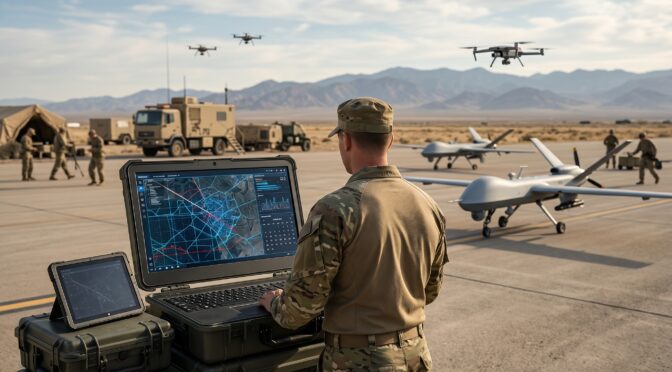
During the reporting period of April 24 to May 1, 2026, the global operational environment witnessed a profound acceleration in the integration, deployment, and kinetic application of unmanned systems across the air, land, sea, and space domains. Open-source intelligence from this trailing seven-day period indicates a definitive transition from the conceptual testing of autonomous platforms to their massed, algorithmic employment in active combat theaters and highly contested strategic zones. The rapid fusion of artificial intelligence with decentralized hardware platforms is fundamentally compressing operational depth, expanding the lethality of contested rear areas, and invalidating traditional cost-exchange ratios associated with legacy air and missile defense systems.
In the kinetic domain, the Russo-Ukrainian War and the expanding Middle Eastern conflicts continue to serve as the primary crucibles for unmanned warfare innovation. Ukrainian Unmanned Systems Forces executed a highly coordinated, asymmetric deep-strike campaign targeting Russian energy infrastructure and rear-echelon aviation assets. This sustained operational pressure resulted in severe degradation of Russia’s oil processing capacity, dropping it to levels not observed since 2009.1 Concurrently, the Middle East witnessed relentless deployments of unmanned aerial vehicles (UAVs) and unmanned surface vessels (USVs) by Hezbollah, Houthi rebels, and Iranian-aligned forces, demonstrating the strategic leverage that low-cost, expendable systems exert over global maritime chokepoints and sophisticated air defense networks.2
On the developmental front, the global defense industrial base revealed a new generation of heavily armed, highly autonomous platforms. The debut of heavy-payload Unmanned Ground Vehicles (UGVs) such as the Textron RIPSAW M1 and the Hypercraft Razorback signifies a critical pivot toward autonomous “last tactical mile” logistics, mobile electronic warfare relays, and unmanned casualty evacuation.4 Simultaneously, the People’s Republic of China unveiled the “Atlas” drone swarm system and deployed the Type 076 drone carrier to the South China Sea, highlighting the People’s Liberation Army’s rapid advancement toward “intelligentized” warfare relying on mesh networking and edge-computing to execute autonomous kill chains.6
Strategically, the events of this week have forced a global reassessment of the human-in-the-loop paradigm. As combat attrition rates for human drone operators escalate, and the velocity of swarm attacks exceeds human cognitive processing speeds, modern militaries are delegating lethal decision-making to algorithmic architectures.9 Furthermore, the prohibitive cost of neutralizing mass-produced drones with exquisite interceptors has catalyzed immediate investments in space-based interceptor layers, such as the United States Space Force’s Golden Dome initiative, alongside highly mobile, low-cost counter-UAS (C-UAS) systems.10 The following report details these events, product reveals, and strategic lessons learned, organized chronologically and by the primary nations involved.
2. Global Situation Log
April 24, 2026
China
The People’s Republic of China significantly advanced its territorial consolidation efforts in the South China Sea through the mass deployment of autonomous dredging vessels. Satellite imagery analysis revealed that a fleet of at least 22 giant cutter-suction dredgers arrived at Antelope Reef within the Crescent Group of the Paracel Islands, rapidly expanding the artificial landmass over the coral ecosystem.12 The operation demonstrates an extraction and reclamation capacity of approximately 50 acres per day.12 Operating without standard commercial Automatic Identification System (AIS) transponders, this fleet is autonomously carving out naval harbors, quay walls, and entrance channels.12 This activity provides the infrastructure necessary to support radar stations, missile batteries, and forward staging areas for naval and coast guard assets.13
Philippines
During the 41st iteration of the multinational Exercise Balikatan, United States and Philippine forces conducted a complex long-range maritime air assault on the northernmost Philippine islands. The operation featured a High Mobility Artillery Rocket System (HIMARS) Rapid Infiltration (HIRAIN) mission delivered via C-130J Super Hercules aircraft, designed to rapidly project precision fires into austere environments.15 Concurrently, U.S. Marines from the Marine Rotational Force – Darwin (MRF-D) simulated the defense of a beachhead against an invading amphibious force. The culminating phase of this defensive exercise prominently featured the deployment of an explosive-laden, first-person-view (FPV) drone, which delivered a precision kinetic strike to neutralize the repulsed simulated enemy forces.16
United States
The United States Navy publicly detailed plans to field thousands of unmanned surface vessels in the Indo-Pacific by 2030. Articulated during the Navy League’s Sea-Air-Space Symposium, the strategy aligns directly with the U.S. Indo-Pacific Command’s “Hellscape” concept.17 The initiative seeks to deploy swarms of autonomous systems—including over 30 medium unmanned surface vessels (MUSVs) and thousands of smaller, networked USVs alongside unmanned aerial systems—to overwhelm and deter Chinese military maneuvers across the Taiwan Strait and surrounding contested waters.17 Simultaneously, the ongoing Operation Epic Fury against Iran saw the heavy employment of autonomous platforms, including the deployment of LUCAS one-way attack drones to strike elements of the Iranian security apparatus, ballistic missile sites, and integrated air defense networks.18
April 25, 2026
Russia
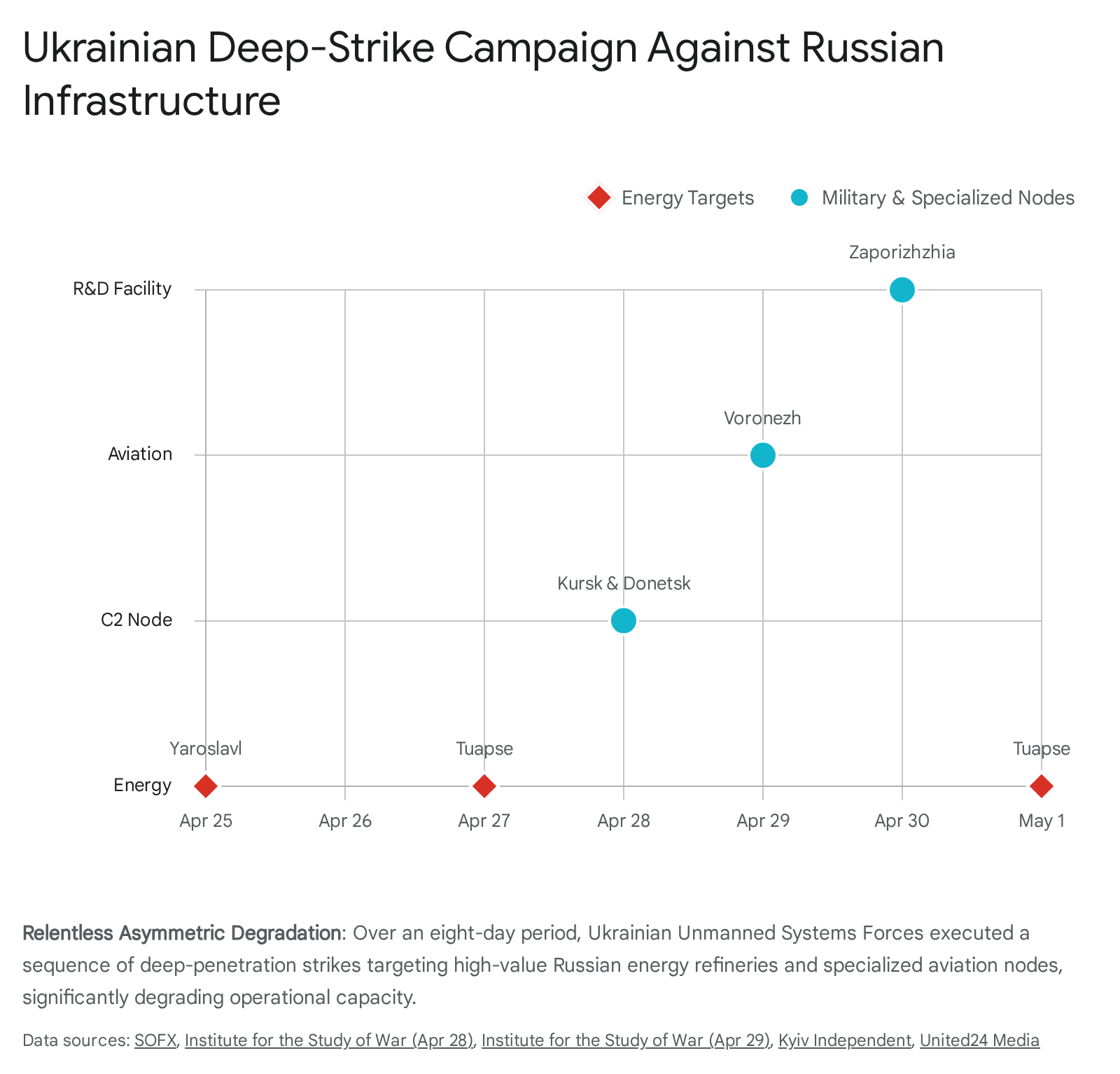
Overnight on April 25 to 26, Ukrainian Unmanned Systems Forces launched a coordinated deep-penetration drone strike against the Slavneft-YANOS oil refinery in Yaroslavl, located hundreds of kilometers from the Ukrainian border. The facility, recognized as one of the Russian Federation’s five largest refineries with an annual processing capacity of 15 million tons, suffered a direct hit.20 Open-source intelligence, supported by NASA FIRMS data, confirmed significant heat anomalies distinct from the facility’s standard flare towers, indicating a successful kinetic impact on a critical vacuum distillation unit.20
April 26, 2026
Philippines
In a direct response to the proliferation of hostile drone swarms, the U.S. Army executed the first operational deployment of the VAMPIRE (Vehicle-Agnostic Modular Palletized Intelligence, Surveillance, and Reconnaissance Rocket Equipment) counter-drone system in the Philippines.11 Mounted on Humvees and operated by Bravo Battery, 1st Battalion, 51st Air Defense Artillery Regiment, the VAMPIRE system provides a lightweight, rapidly deployable kinetic interceptor shield for forward-deployed forces.11 Simultaneously, Soldiers from Alpha Battery demonstrated the Integrated Fires Protection Capability (IFPC) system.21 Designed to serve as a vital middle-tier defense layer between short-range systems and high-end interceptors like Patriot and THAAD, the IFPC is intended to protect dispersed command posts and logistics hubs from cruise missiles and saturation drone attacks.21
April 27, 2026
Russia
Overnight on April 27 to 28, Ukrainian long-range drones struck the Rosneft-owned Tuapse Oil Refinery in Krasnodar Krai for the third time in the month of April. Geolocated satellite footage confirmed multiple active fires and smoke plumes, with battle damage assessments indicating the destruction or severe damage of at least four oil storage tanks in the northern sector of the facility.22 The strike exacerbated an ongoing environmental crisis stemming from earlier attacks on April 16 and 20, which had previously destroyed 24 storage tanks and caused substantial quantities of oil to leak into the Black Sea, creating a pollution slick stretching over 77 kilometers along the coastline.20
April 28, 2026
Philippines
At Naval Station Leovigildo Gantioqui, joint Filipino and American forces executed a comprehensive Integrated Air and Missile Defense (IAMD) exercise specifically focused on countering modern drone warfare tactics.24 The live-fire drills successfully demonstrated coordinated “sensor-to-shooter” operations, integrating the Philippine Air Force’s SPYDER Air Defense System with U.S. platforms such as the Avenger and the Marine Air Defense Integrated System (MADIS).24 The exercise directly simulated the interception of multiple unmanned aerial targets, reinforcing the critical necessity of layered, interoperable defense networks.
Russia
The Ukrainian General Staff reported successful mid-to-short-range precision strikes against key Russian drone infrastructure. Ukrainian forces eliminated a Russian drone control point near Tetkino in the Kursk Oblast, located near the international border.25 Concurrently, a deeper strike targeted a drone control point and a dedicated unmanned aerial vehicle workshop near occupied Bondarevske in the Donetsk Oblast, located approximately 85 kilometers behind the forward line of own troops.25
April 29, 2026
Israel
The northern Israeli border experienced severe ceasefire violations as Hezbollah deployed multiple explosive-laden drones.2 One Hezbollah drone successfully evaded interception and struck an Israel Defense Forces (IDF) artillery position in northern Israel, wounding 12 soldiers.2 In response, the Israeli Air Force and ground-based interceptors downed multiple subsequent Hezbollah aerial targets over southern Lebanon and the town of Misgav Am, triggering widespread air-raid sirens.2
Russia
In a highly sophisticated operation, elements of the Ukrainian 429th Separate Unmanned Systems Brigade “Achilles,” the 43rd Separate Artillery Brigade, and Special Operations Center “A” struck a Russian field airstrip in the Voronezh Oblast, located over 150 kilometers inside Russian territory.20 The drones explicitly targeted the engine compartments of a Mi-28 attack helicopter and a Mi-17 transport helicopter undergoing rapid refueling. The precision targeting bypassed the main rotor blades to ensure maximum kinetic transfer to the mechanical powerplants, destroying both airframes and eliminating at least one highly specialized Russian aviation technician.20
April 30, 2026
Israel
Hezbollah continued to violate the standing ceasefire, conducting at least 10 discrete attacks using unmanned systems targeting IDF troops in both southern Lebanon and northern Israel.2 The IDF executed multiple successful interceptions of hostile explosive drones across four separate incidents throughout the day.2 Concurrently, Hezbollah forces claimed to have successfully shot down an advanced IDF Hermes 900 surveillance drone using a surface-to-air missile, marking a significant escalation in the anti-access/area denial capabilities of the militant group.2
Russia
Operators of the Ukrainian 413th “Raid” Regiment struck the highly secretive BARS-Sarmat Special Purpose Center located on the coast of the Sea of Azov in occupied Zaporizhzhia.27 Established in early 2024, the BARS-Sarmat facility served as a premier structural node for the research, development, and manufacture of Russian ground-based robotic platforms, combat drones, and electronic warfare communication suites.27 The strike resulted in severe structural damage to multiple manufacturing workshops and the destruction of significant stockpiles of uncrewed ground vehicles and aerial systems.27
May 1, 2026
Israel
The IDF confirmed the interception of at least four drones launched by Hezbollah early in the morning. One unmanned aerial vehicle managed to cross into the Western Galilee, triggering alarms in the coastal kibbutz of Rosh Hanikra before being neutralized.26 Despite the interceptions, an explosive drone attack in southern Lebanon lightly wounded two IDF soldiers, highlighting the persistent lethality of low-altitude, radar-evading tactical drones even against heavily fortified positions.30
Russia
In a relentless continuation of its energy infrastructure degradation campaign, Ukraine launched a fourth drone strike against the marine terminal and oil refinery in Tuapse.23 The strike ignited at least two massive storage tanks, requiring 128 personnel and 41 pieces of heavy equipment to contain the blaze.31 Crucially, the precision strike de-energized the terminal’s main power grid, triggering a complete electrical blackout and internet disruption across the city center.23 The cumulative effect of these precision strikes has reduced Russia’s total oil processing volumes to 4.69 million barrels per day, the lowest level since 2009.1
Overnight, the Russian Federation launched a massive retaliatory swarm of 210 strike drones, including approximately 140 Iranian-designed Shahed loitering munitions, targeting critical infrastructure across Ukraine.32 The swarm severely damaged port infrastructure in the southern Odesa region, striking multiple high-rise residential buildings and sparking massive fires on the 11th and 12th floors of a tower block.32 In the Kharkiv region, the drone strikes systematically targeted traction substations and railway infrastructure, leaving thousands of civilians without electricity.32
3. Product Developments
April 24, 2026
United States
In a monumental step toward the militarization of space-based missile defense, the U.S. Space Force’s Space Systems Command finalized Other Transaction Authority (OTA) agreements with 12 defense and aerospace contractors.10 The contracts, valued at a combined $3.2 billion, mandate the development and orbital demonstration of space-based kinetic interceptors by 2028. Participating firms include Anduril, Lockheed Martin, SpaceX, Northrop Grumman, and True Anomaly.10 The interceptors form the foundational architecture for the $185 billion “Golden Dome” initiative, designed as a proliferated Low Earth Orbit (pLEO) constellation capable of autonomously tracking and destroying hypersonic glide vehicles, ballistic targets, and advanced cruise missiles during their boost, midcourse, and glide phases of flight.10
April 28, 2026
United States
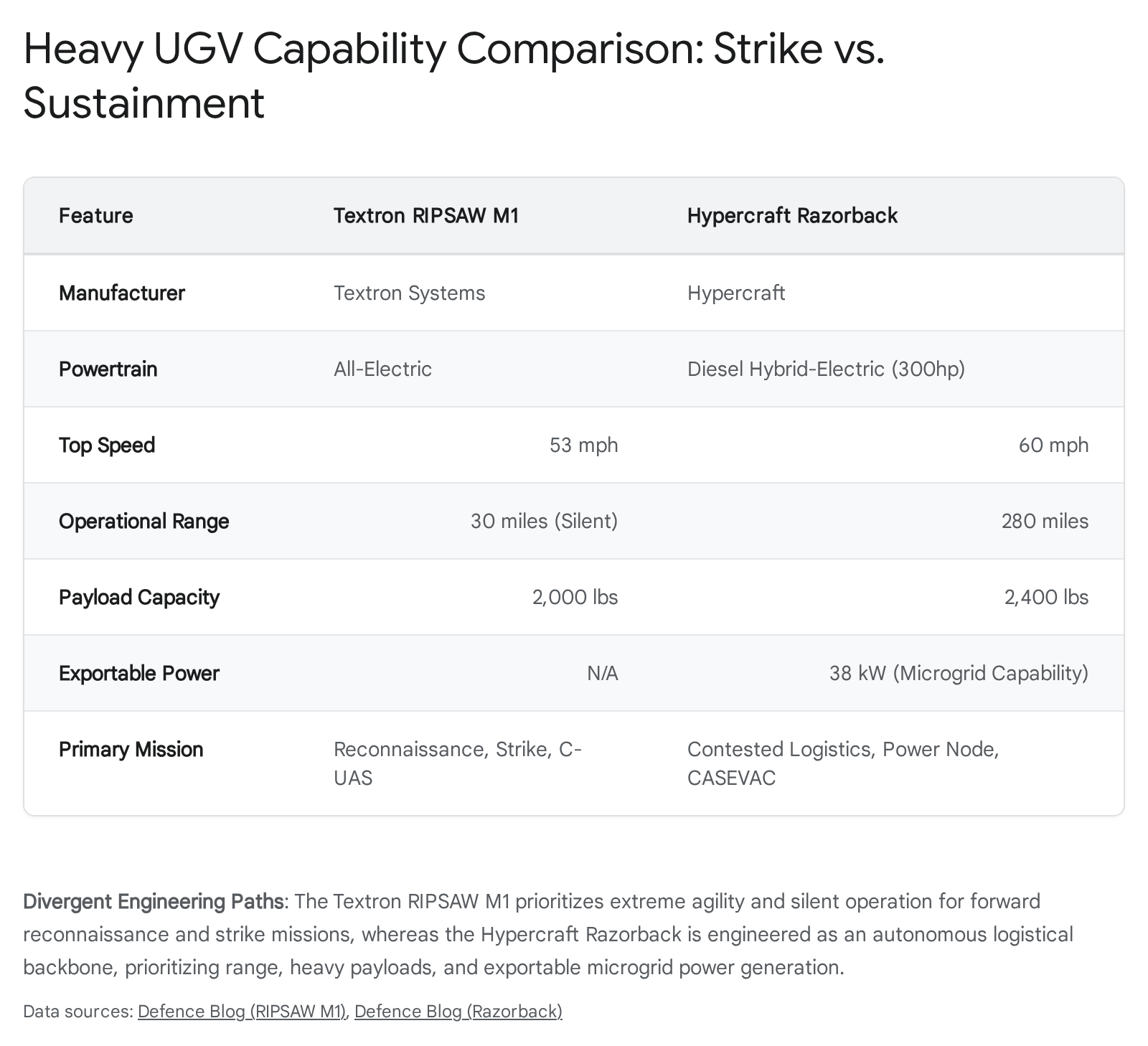
At the Modern Day Marine exposition, Textron Systems officially unveiled the RIPSAW M1, a highly agile, wheeled unmanned ground vehicle engineered to operate seamlessly alongside the Marine Corps’ Advanced Reconnaissance Vehicle.4 Weighing 4,300 pounds with a 2,000-pound flat-deck payload capacity, the all-electric platform boasts a top speed of 53 mph and a 30-mile silent movement range to minimize acoustic signatures.4 The vehicle operates on a strictly Modular Open Systems Approach (MOSA), allowing front-line units to rapidly swap payloads—ranging from counter-UAS hard-kill interceptors to loitering munition launchers—without depot-level maintenance.4
AeroVironment introduced the Halo_Shield, a distributed, tile-based counter-unmanned aircraft system designed to neutralize coordinated drone swarms and subsonic cruise missiles.34 The platform utilizes an open, domain-specific architecture that seamlessly integrates multi-spectral detection, targeting algorithms, and layered defeat mechanisms, aiming to provide area-wide protection for critical civilian infrastructure and deployed forward operating bases facing massed aerial threats.34
Oshkosh Defense exhibited the Remotely Operated Ground Unit for Expeditionary Fires (ROGUE-Fires).35 Built upon the chassis of the Joint Light Tactical Vehicle and stripped of its armored cab to reduce weight, the fully autonomous platform is integrated with the Navy/Marine Expeditionary Ship Interdiction System (NMESIS). The system allows the Marine Corps to autonomously deploy and fire anti-ship missiles from austere, temporary island bases in highly contested maritime chokepoints, enhancing survivability by removing human crews from the immediate launch site.35
April 29, 2026
South Korea / United Kingdom
London-based maritime AI firm Orca AI signed a sweeping Memorandum of Understanding with South Korean shipbuilding giant Samsung Heavy Industries.36 The partnership will integrate Orca’s AI-powered operations platform with Samsung’s Autonomous Ship technology. The collaboration is designed to scale fully autonomous, AI-assisted navigation, automated berthing, and speed optimization algorithms across a global fleet, directly transferring military-grade autonomous navigation techniques to the heavy commercial maritime sector.36
United States
Defense technology startup Overland AI successfully demonstrated the integration of its “OverDrive” autonomy stack into the Marine Corps’ ROGUE Fires platform.37 During the field test, the heavily armed autonomous vehicle navigated complex, mixed off-road terrain for several hours entirely without human intervention. The software allows the vehicle to operate independently in environments where GPS is spoofed and satellite communications are actively jammed, ensuring that autonomous missile launchers can maneuver to firing positions even in electronically degraded theaters.37
April 30, 2026
United Kingdom
Online Oceans, a defense technology company focused on autonomous maritime security, raised $5.4 million to scale production of its “Scout” autonomous surface vessel.38 The solar-powered USV is engineered for extreme persistence, capable of loitering in strategic maritime chokepoints for months at a time. Paired with a cloud-based command platform, the low-cost drones allow navies to transition from expensive, intermittent manned patrols to persistent, fleet-scale autonomous subsea and surface surveillance.38
United States
Utah-based Hypercraft launched the Razorback, a revolutionary autonomous UGV designed to replace vulnerable human logistics convoys in high-threat environments.5 The vehicle utilizes a diesel hybrid-electric drivetrain featuring a 300-horsepower, four-motor torque-vectoring system, granting it a 280-mile operational range and a 2,400-pound payload capacity.5 Crucially, the Razorback functions as a mobile tactical microgrid, capable of exporting 38 kilowatts of power to sustain forward command posts, charge smaller aerial drones, or directly power directed-energy weapons.5
May 1, 2026
China
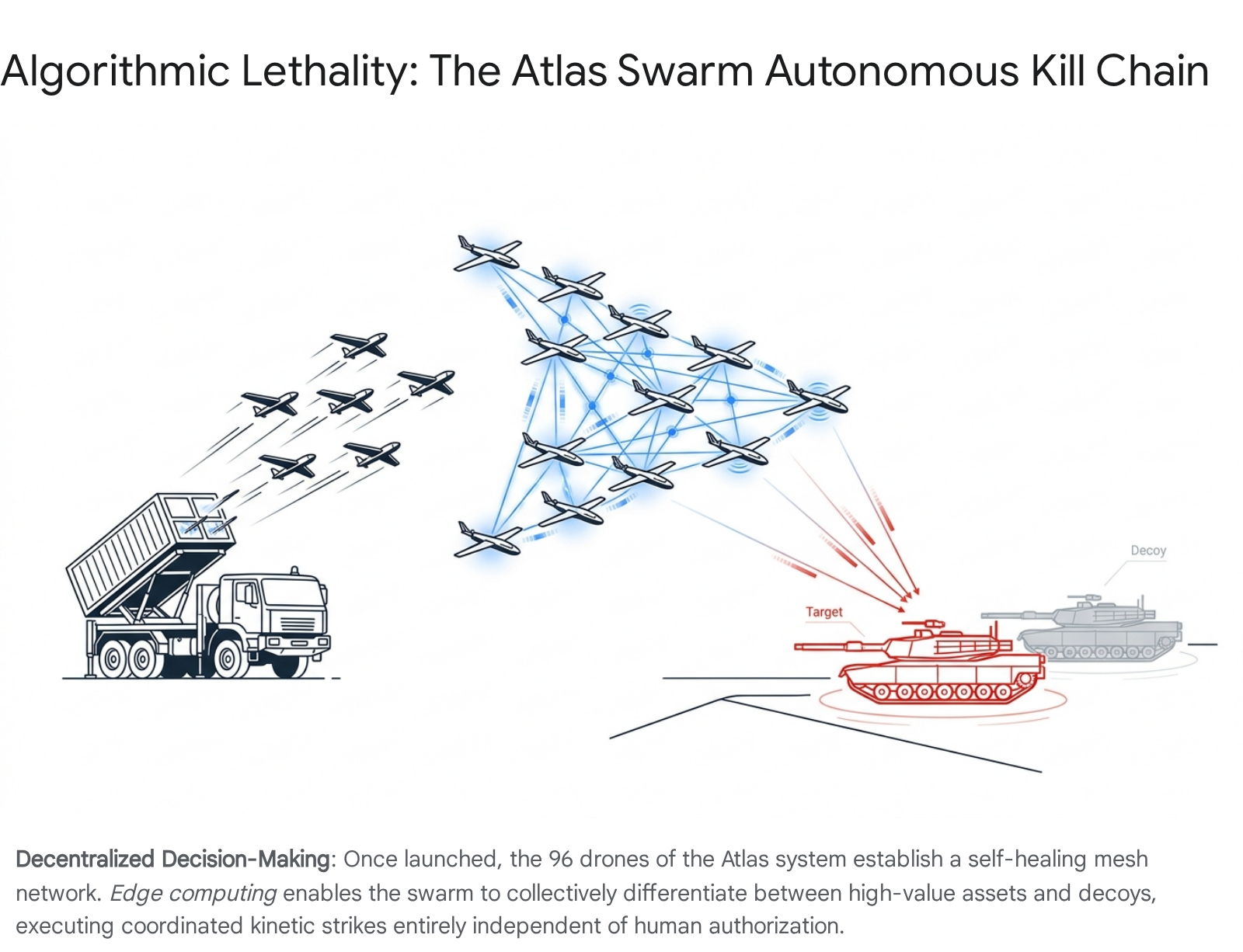
The Chinese People’s Liberation Army (PLA) formally detailed the operational capabilities of its groundbreaking “Atlas” drone swarm system, developed by the state-owned China Electronic Technology Group Corporation.6 The system represents a leap in autonomous lethality: a single operator utilizing the “Swarm-2” ground launcher can deploy 96 fixed-wing drones in precisely three seconds.6 Operating via a decentralized mesh network, the drones independently share data, adjust flight paths, and algorithmically differentiate between real targets and visually identical decoys without any human-in-the-loop targeting authorization.7 Traveling at speeds of up to 400 km/h with 30 kg kinetic payloads, the swarm is designed to overwhelm high-end radar systems and drain the limited interceptor magazines of U.S. and allied naval vessels.6
Simultaneously, the PLA Navy commenced sea trials in the contested South China Sea for its newest warship, the Type 076 amphibious assault ship, Sichuan.8 Widely classified by Western intelligence as a dedicated drone carrier, the massive vessel is engineered specifically to launch, recover, and coordinate large-scale unmanned aerial swarms in support of amphibious landing operations. Its deployment alongside the Liaoning carrier strike group coincides directly with the U.S.-led Balikatan exercises, signaling Beijing’s intent to project unmanned air dominance over contested island chains and the Taiwan Strait.8
Russia
The Russian military-industrial complex unveiled the Kh-UAV guided missile, specifically designed for integration with the “Orion” medium-altitude long-endurance drone.40 The munition is engineered to expand the kinetic capabilities of Russia’s heavy unmanned fleet, addressing a critical gap in precision, stand-off strike options for autonomous platforms that had previously relied on gravity bombs or unguided rockets.40
Ukraine
Ukrainian defense tech firm Skyfall announced the operational deployment of the “P1-Sun” interceptor drone.41 The system represents a paradigm shift in counter-swarm economics; the P1-Sun interceptors are launched directly from aircraft and can be remotely controlled from thousands of kilometers away to physically ram or shoot down Russian Shahed drones.41 Over 3,000 Shahed-type drones have already been destroyed by these interceptors in 2026, preserving highly expensive and scarce Patriot and NASAMS interceptor missiles.41 Furthermore, Ukraine’s Defense Ministry codified the Bizon-L, a 300-kilogram-payload logistics robot with a 50-kilometer range, under NATO cataloging standards.42 This codification supports the Ministry’s initiative to contract 25,000 UGVs in the first half of 2026, aiming to shift 100% of frontline logistics off human soldiers and onto robotic platforms.42
4. Strategic Lessons Learned
April 24, 2026
China
Autonomous Platforms as Tools of Strategic Anti-Access/Area Denial The deployment of vast fleets of unmanned, cutter-suction dredgers by China at Antelope Reef demonstrates that autonomous maritime technology is not solely for kinetic combat.12 By utilizing autonomous industrial systems to rapidly dredge and create massive artificial landmasses, China is weaponizing geography. This non-kinetic application of autonomous fleets allows Beijing to rapidly construct radar stations, missile batteries, and drone launchpads in the middle of crucial maritime trade corridors. This activity physically expands its anti-access/area denial (A2/AD) umbrella while U.S. naval assets are heavily concentrated in the ongoing conflict in the Middle East.13
April 28, 2026
United States
The Imperative of Open Architecture in Ground Robotics The unveiling of the RIPSAW M1 UGV highlights a profound shift in military procurement philosophy: the abandonment of closed, bespoke hardware ecosystems in favor of the Modular Open Systems Approach.4 By treating the UGV as a blank, flat-deck physical API, the military can integrate third-party sensors, electronic warfare jammers, or kinetic launchers at the unit level. This flexibility proves that future battlefield dominance relies not on the vehicle’s armor, but on the software-defined ability to hot-swap payloads in hours rather than shipping units back to domestic depots for retrofitting.4
April 30, 2026
Global
The Erosion of the “Human-in-the-Loop” Doctrine Extensive data emerging from the Ukrainian frontline has forced a global reckoning regarding the ethics and biology of drone warfare. The theoretical debate over requiring a “human-in-the-loop” to authorize lethal force is collapsing under the weight of battlefield realities.9 Analysis reveals that human operators simply cannot process the sheer volume of targets generated by persistent surveillance, nor can human reaction times match the engagement tempo of incoming algorithm-driven swarms like China’s Atlas system.7 Furthermore, with Russian electronic warfare units inflicting up to 70% casualty rates on human drone pilot brigades in single weeks, the biological vulnerability of operators is driving the unavoidable transition to fully autonomous, “human-out-of-the-loop” kill chains.9
United States
Elimination of Service-Level Stovepipes During the Modern Day Marine conference, Marine Corps Commandant Gen. Eric Smith and Chief of Naval Operations Adm. Daryl Caudle delivered a stark warning regarding the fragmented nature of the Pentagon’s drone procurement strategy.44 The historical tendency for each military branch to independently develop and silo its own unmanned systems and counter-drone technologies is fiscally and operationally unsustainable. The strategic lesson articulated is the absolute necessity of joint integration; converging requirements, aligning data standards, and establishing shared autonomous architecture to ensure that naval, marine, and ground units can seamlessly pass control of autonomous assets across domains in real-time.17
Space as Critical Infrastructure and Collision Mitigation The rapid proliferation of commercial and military satellite constellations in Low Earth Orbit (LEO) has fundamentally transformed space into critical infrastructure, underpinning autonomous navigation, GPS targeting, and mesh communications globally.45 However, this density presents unprecedented operational risks. The continuous autonomous collision avoidance maneuvers executed by massive constellations, such as SpaceX’s Starlink, to evade space debris significantly degrade orbital trajectory forecasting.46 This creates a volatile environment where the autonomous safety mechanisms of commercial satellites inadvertently complicate the collision predictions for critical military and early-warning space assets, necessitating a unified space domain awareness strategy.46
May 1, 2026
Ukraine / Russia
Cost-Imposition Dynamics and the Redefinition of Air Defense Economics The success of the Russian Shahed drone barrages and the reciprocal Ukrainian strikes on Russian oil infrastructure solidify the economic asymmetry of modern unmanned warfare. The calculus of utilizing $400,000 advanced interceptor missiles to shoot down $35,000 loitering munitions heavily favors the aggressor, rapidly draining the defender’s national treasury and finite missile magazines.7 Ukraine’s strategic pivot to deploying cheap, fixed-wing P1-Sun interceptor drones to physically ram inbound Shaheds represents a vital lesson in restoring economic parity to air defense.41 Furthermore, Ukraine’s strategic targeting of specific, hard-to-replace vacuum distillation towers within Russian refineries proves that low-cost drones, when intelligently targeted, can inflict massively disproportionate economic damage.1
Reform in Autonomous Systems Accounting and Tracking Ukraine’s Deputy Commander Pavlo Yelizarov publicly detailed a critical administrative lesson regarding the tracking of hostile drone swarms. Previously, regional defense commanders only accounted for drones that detonated within their specific sectors; if a Shahed drone transited through an airspace without striking, it was ignored.49 This bureaucratic siloing created perverse incentives that degraded national defense. The new strategic imperative mandates holistic, transit-based accounting: every drone entering a sector must be tracked until it is destroyed or exits the airspace. This ensures that algorithmic flight paths are mapped end-to-end, enabling deep-learning systems to predict routing behaviors and optimize the placement of mobile air defense units globally.49
Please share the link on Facebook, Forums, with colleagues, etc. Your support is much appreciated and if you have any feedback, please email us in**@*********ps.com. If you’d like to request a report or order a reprint, please click here for the corresponding page to open in new tab.
Sources Used
- Bloomberg: Ukrainian Drone Strikes Cut Russian Oil Processing to 7-Year Low, accessed May 1, 2026, https://www.kyivpost.com/post/75186
- Operations Epic Fury and Roaring Lion: 4/30/26 Update – JINSA, accessed May 1, 2026, https://jinsa.org/wp-content/uploads/2026/04/Operations-Epic-Fury-and-Roaring-Lion-04.30.26.pdf
- Houthi Maritime Drone and UAV Strike Hits US-linked Oil Tanker in Red Sea, accessed May 1, 2026, https://www.garoweonline.com/en/news/world/houthi-maritime-drone-and-uav-strike-hits-us-linked-oil-tanker-in-red-sea
- Textron debuts RIPSAW M1 combat robot at Marine Expo, accessed May 1, 2026, https://defence-blog.com/textron-debuts-ripsaw-m1-combat-robot-at-marine-expo/
- Utah-based firm develops Razorback autonomous combat vehicle, accessed May 1, 2026, https://defence-blog.com/utah-based-firm-develops-razorback-autonomous-combat-vehicle/
- Analysis – Decoding China’s Atlas Drone Swarm: Strategic Implications for India and Need for Accelerated Indigenous Autonomous Programs, accessed May 1, 2026, https://defence.in/threads/decoding-chinas-atlas-drone-swarm-strategic-implications-for-india-and-need-for-accelerated-indigenous-autonomous-programs.17578/
- China’s New Drone Swarm Attack System Is A Direct Threat To U.S. Defense – YouTube, accessed May 1, 2026, https://www.youtube.com/watch?v=QkUsKEgPdog
- China Deploys World’s FIRST DRONE CARRIER; FLEXES Power| Trump In PANIC, accessed May 1, 2026, https://www.youtube.com/watch?v=x6Mvs4BWDRc
- Human vs. Machine: Operational Realities from Ukraine’s Frontline – The Cipher Brief, accessed May 1, 2026, https://www.thecipherbrief.com/human-vs-machine-operational-realities-from-ukraines-frontline
- Space Force names 12 companies to develop Golden Dome’s …, accessed May 1, 2026, https://defensescoop.com/2026/04/24/golden-dome-space-based-interceptor-missile-defense-contractors/
- U.S. Army Deploys VAMPIRE Counter Drone System First Time at Balikatan 2026 Philippines, accessed May 1, 2026, https://www.armyrecognition.com/news/army-news/2026/u-s-army-deploys-vampire-counter-drone-system-first-time-at-balikatan-2026-philippines
- China is Dredging Out Another Island Outpost in the South China Sea – The Maritime Executive, accessed May 1, 2026, https://maritime-executive.com/article/china-is-dredging-out-another-island-outpost-in-the-south-china-sea
- China appears set on militarizing another reef in the South China Sea – Defense News, accessed May 1, 2026, https://www.defensenews.com/global/asia-pacific/2026/01/27/china-appears-set-on-militarizing-another-reef-in-the-south-china-sea/
- China cranks South China Sea buildup while Iran consumes US – Asia Times, accessed May 1, 2026, https://asiatimes.com/2026/04/china-cranks-south-china-sea-buildup-while-iran-consumes-us/
- US, Philippine, Australian armies conduct long-range maritime air assault, accessed May 1, 2026, https://www.army.mil/article/292109/us_philippine_australian_armies_conduct_long_range_maritime_air_assault
- US Marines help gun down beach invaders in simulated Philippines defense, accessed May 1, 2026, https://www.defensenews.com/global/asia-pacific/2026/04/29/us-marines-help-gun-down-beach-invaders-in-simulated-philippines-defense/
- US Navy’s audacious drone swarm bet against China – Asia Times, accessed May 1, 2026, https://asiatimes.com/2026/04/us-navys-audacious-drone-swarm-bet-against-china/
- Operation Epic Fury Fact Sheet: April 6, 2026, accessed May 1, 2026, https://media.defense.gov/2026/Apr/06/2003907108/-1/-1/1/OPERATION-EPIC-FURY-FACT-SHEET-APRIL-6-2026.PDF
- DARPA seeks deep-sea drones for autonomous warfare push – The Register, accessed May 1, 2026, https://www.theregister.com/2026/04/24/pentagons_deep_sea_drones/
- Air Force Special Warfare Tests Kinetic Drone Interceptor in Counter …, accessed May 1, 2026, https://www.sofx.com/air-force-special-warfare-tests-kinetic-drone-interceptor-in-counter-uas-exercise/
- U.S. Army IFPC Air Defense System Demonstration in the Philippines Highlights New Indo-Pacific Defense Layer, accessed May 1, 2026, https://www.armyrecognition.com/news/army-news/2026/u-s-army-ifpc-air-defense-system-demonstration-in-the-philippines-highlights-new-indo-pacific-defense-layer
- Russian Offensive Campaign Assessment, April 28, 2026, accessed May 1, 2026, https://understandingwar.org/research/russia-ukraine/russian-offensive-campaign-assessment-april-28-2026/
- Ukrainian Drone Strike Again Hits Tuapse Oil Terminal, accessed May 1, 2026, https://odessa-journal.com/ukraine-strikes-tuapse-refinery-for-the-fourth-time-in-two-weeks
- Balikatan air defense drills highlight drone threat as China expands island in South China Sea – Manila Bulletin, accessed May 1, 2026, https://mb.com.ph/2026/04/29/balikatan-air-defense-drills-highlight-drone-threat-as-china-expands-island-in-south-china-sea
- Russian Offensive Campaign Assessment, April 29, 2026 | ISW, accessed May 1, 2026, https://understandingwar.org/research/russia-ukraine/russian-offensive-campaign-assessment-april-29-2026/
- IDF downs Hezbollah drones, strikes dozens of terror targets in Lebanon, accessed May 1, 2026, https://www.jns.org/news/israel-news/idf-downs-hezbollah-drones-strikes-dozens-of-terror-targets-in-lebanon
- Military releases video of Ukrainian drones striking key Russian drone development complex, accessed May 1, 2026, https://kyivindependent.com/military-releases-video-of-ukrainian-drones-striking-key-russian-drone-development-facility/
- Russian Offensive Campaign Assessment, April 30, 2026, accessed May 1, 2026, https://understandingwar.org/research/russia-ukraine/russian-offensive-campaign-assessment-april-30-2026/
- Ukraine hits Russian drone center in Zaporizhzhia – VIDEO, accessed May 1, 2026, https://news.az/news/ukraine-hits-russian-drone-center-in-zaporizhzhia-video
- IDF says 2 soldiers lightly hurt in Hezbollah drone attack, accessed May 1, 2026, https://www.timesofisrael.com/liveblog_entry/idf-says-2-soldiers-lightly-hurt-in-hezbollah-drone-attack/
- Fourth Drone Strike On Tuapse Oil Refinery Sparks Massive Fire …, accessed May 1, 2026, https://united24media.com/war-in-ukraine/fourth-ukrainian-drone-strike-on-tuapse-oil-refinery-sparks-massive-fire-and-city-blackout-18392
- Russia hammers targets across Ukraine overnight, accessed May 1, 2026, https://www.aljazeera.com/news/2026/5/1/russia-hammers-targets-across-ukraine-overnight
- Russia Hits Odesa High-Rises, Kharkiv Fuel Stations in Mass Drone Attack – Kyiv Post, accessed May 1, 2026, https://www.kyivpost.com/post/75137
- AV Announces Halo_Shield™, Comprehensive Tile-Based C-UAS Solution, accessed May 1, 2026, https://lasvegassun.com/news/2026/apr/28/av-announces-halo_shield-comprehensive-tile-based-/
- Oshkosh Defense Shows Expeditionary Power and Modernized Mobility at Modern Day Marine 2026, accessed May 1, 2026, https://oshkoshdefense.com/oshkosh-defense-shows-expeditionary-power-and-modernized-mobility-at-modern-day-marine-2026/
- Orca AI and SHI team up on next-gen autonomous vessel tech – Marine Log, accessed May 1, 2026, https://www.marinelog.com/news/orca-ai-and-shi-team-up-on-next-gen-autonomous-vessel-tech/
- Overland AI Demonstrates Autonomous Ground Capability for USMC ROGUE Fires, accessed May 1, 2026, https://www.eejournal.com/industry_news/overland-ai-demonstrates-autonomous-ground-capability-for-usmc-rogue-fires-2/
- Online Oceans Raises $5m for Maritime Defense Autonomous Surface Fleets, accessed May 1, 2026, https://www.marinelink.com/news/online-oceans-raises-m-maritime-defense-538656
- China Deploys New Drone Carrier to South China Sea Amid Regional Drills – UNITED24 Media, accessed May 1, 2026, https://united24media.com/latest-news/china-deploys-new-drone-carrier-to-south-china-sea-amid-regional-drills-18148
- Army-2024 – Kh-UAV guided missile for UAVs unveiled in Moscow – EDR Magazine, accessed May 1, 2026, https://www.edrmagazine.eu/kh-uav-guided-missile-for-uavs-unveiled-in-moscow
- Ukraine’s “small” air defence downs over 2,100 Russian assets in one month | Ukrainska Pravda, accessed May 1, 2026, https://www.pravda.com.ua/eng/news/2026/04/29/8032403/
- Ukraine to field 25,000 ground robots in push to replace soldiers for frontline logistics, accessed May 1, 2026, https://www.defensenews.com/unmanned/2026/04/24/ukraine-to-field-25000-ground-robots-in-push-to-replace-soldiers-for-frontline-logistics/
- The United States Quietly Kick-Starts the Autonomous Weapons Era, accessed May 1, 2026, https://www.cigionline.org/articles/the-united-states-quietly-kick-starts-the-autonomous-weapons-era/
- Military leaders want a more integrated, joint approach to drone dominance, accessed May 1, 2026, https://defensescoop.com/2026/04/30/drone-dominance-military-leaders-integrated-approach/
- It’s Unanimous: Space Already Functions as Critical Infrastructure | April/May 2026, accessed May 1, 2026, https://interactive.satellitetoday.com/via/april-may-2026/its-unanimous-space-already-functions-as-critical-infrastructure
- SpaceX Starlink satellites made 50,000 collision-avoidance maneuvers in the past 6 months | Space, accessed May 1, 2026, https://www.space.com/spacex-starlink-50000-collision-avoidance-maneuvers-space-safety
- SpaceX Starlink satellites responsible for over half of close encounters in orbit, scientist says, accessed May 1, 2026, https://www.space.com/spacex-starlink-satellite-collision-alerts-on-the-rise
- Monthly Drone Report – April 2026 | SOF News, accessed May 1, 2026, https://sof.news/drones/20260430/
- Ukraine improves Shahed drone tracking to boost air defence effectiveness, accessed May 1, 2026, https://aerospaceglobalnews.com/news/ukraine-shahed-drone-tracking-reform/