1.0 Executive Summary
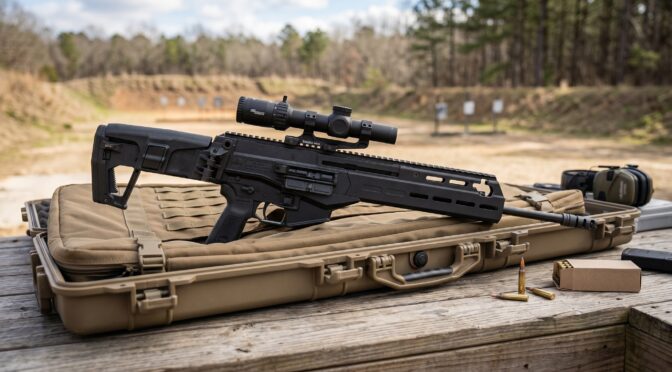
This report provides an exhaustive forensic analysis of the Israel Weapon Industries (IWI) Carmel, a semi-automatic, short-stroke gas piston rifle chambered in the 5.56x45mm NATO cartridge. Originally designed in 2019 for specialized military applications, the Carmel platform was subsequently adapted and introduced to the United States civilian market in 2023. This civilian variant features specific regulatory and market-driven modifications, most notably a 16-inch barrel and an updated M-LOK handguard system that replaces the original military-standard interface.1 The platform is engineered utilizing a combination of aviation-grade aluminum and high-strength impact-resistant polymers, purposefully selected to withstand severe environmental conditions while maintaining structural integrity.2
Aggregated consumer telemetry, long-term performance evaluations, and forum consensus indicate that the IWI Carmel occupies a distinct and somewhat polarized niche within the modern sporting rifle market. The firearm is highly regarded for its exceptional mechanical accuracy, routinely achieving sub-minute-of-angle (MOA) precision when paired with high-quality ammunition and magnified optics.3 Furthermore, the platform’s operating system features fully ambidextrous controls directly from the factory, providing significant ergonomic advantages and operational flexibility for a wide array of end-users.3
Despite these notable engineering achievements, the consumer base has identified several consistent operational and aesthetic detriments that complicate the ownership experience. The most prominent issues include extreme ammunition sensitivity when utilizing steel-cased cartridges, rapid thermal transfer through the factory handguard during sustained firing schedules, and a documented mechanical interference anomaly that occurs when discharging the weapon with the stock in the folded position.5 Additionally, the platform experienced a mandatory safety recall concerning a critical firing pin blocker defect, which affected a specific manufacturing batch of over one thousand units.6
The primary consumer demographic for this rifle consists of firearms enthusiasts seeking robust alternatives to the standard direct-impingement AR-15 platform, dedicated piston-driven rifle operators, and collectors of Israeli military hardware.7 The overarching consensus reveals a highly capable, accurate, and physically heavy firearm that requires specific user interventions regarding ammunition selection, thermal management, and aftermarket customization to achieve optimal performance.
2.0 Reliability and Accuracy
The reliability and accuracy profile of the IWI Carmel requires a highly bifurcated analysis. The underlying mechanical systems demonstrate stringent manufacturing tolerances and excellent engineering pedigree, yet the firearm exhibits specific operational vulnerabilities under certain physical and chemical conditions.
Mechanical Accuracy and Practical Shootability The IWI Carmel demonstrates exceptional mechanical accuracy, frequently exceeding standard expectations for a piston-driven combat rifle. The weapon features a 16-inch, free-floating barrel.4 The barrel is cold hammer-forged, a manufacturing process that aligns the molecular structure of the steel to significantly increase durability and longevity under sustained fire. Furthermore, the internal bore is chrome-lined to resist corrosion and throat erosion.4 The rifling utilizes a 1:7 inch twist rate with six right-hand grooves.4 This specific twist rate is highly optimized to stabilize heavier 5.56mm projectiles, such as 62-grain, 69-grain, and 77-grain bullets, while maintaining baseline compatibility with standard 55-grain loads.3
Range reports and independent testing confirm that the rifle is capable of sub-MOA precision (defined as less than one inch of projectile dispersion at a distance of 100 yards) when firing high-quality, brass-cased ammunition.3 Reviewers operating the weapon from a supported bench rest utilizing a bipod achieved consistent sub-MOA groupings with standard 55-grain.223 Remington ammunition.3 When equipped with magnified optics and heavier 69-grain match-grade ammunition from Federal, the rifle produced highly consistent one-inch grouping matrices.5
Practical shootability extends well beyond standard immediate engagement distances. Independent testers and competitive shooters report highly reliable target impacts at distances ranging from 400 to 600 yards when the operator utilizes accurate ballistic data and quality optics.3 The accuracy is further augmented by a factory-installed two-stage trigger.4 The two-stage design provides a distinct take-up phase followed by a defined physical wall, allowing the operator to prep the trigger mechanism before executing a precise break. This mechanical advantage reduces the likelihood of sympathetic muscular movement during the firing sequence, directly contributing to the sub-MOA performance. Furthermore, the accuracy remains consistent when a sound suppressor is attached. Rigorous tests utilizing various suppressors, including the SilencerCo Harvester Evo, demonstrated no significant degradation in mechanical accuracy or unacceptable point-of-impact shifts.3
Ammunition Sensitivity While the mechanical accuracy is highly praised, the reliability of the extraction system is heavily dependent on ammunition casing composition. The IWI Carmel exhibits extreme sensitivity to steel-cased ammunition.5 During extensive testing, the rifle consistently failed to extract spent steel casings.5 In multiple recorded instances, the rifle could not cycle through a minimal volume of steel-cased ammunition without inducing a severe mechanical malfunction.5 Some of these extraction failures were catastrophic enough to result in a stuck case permanently lodged within the chamber, necessitating the use of specialized tools to manually clear the weapon after removing it from the firing line.5
The underlying physics of this specific malfunction trend typically relates to the metallurgical properties of steel versus traditional brass. Brass is highly malleable and expands uniformly under peak chamber pressure to create a gas seal known as obturation, then rapidly contracts to allow smooth extraction. Steel cases lack this elasticity. In firearms with tightly machined chamber tolerances like the Carmel, the lack of proper obturation combined with the varying friction coefficients of polymer or lacquer coatings applied to steel cases frequently leads to the extractor ripping the rim off the case or slipping entirely. Furthermore, specific accuracy testing with steel-cased ammunition from brands like Wolf yielded exceptionally poor results, expanding the grouping size to approximately three inches at 100 yards.5
Conversely, when fed standard brass-cased ammunition, the IWI Carmel operates flawlessly.5 Once magazines were loaded with high-quality brass cartridges, the weapon functioned reliably without extraction failures.5 A single reported malfunction with factory brass ammunition was attributed to an out-of-spec cartridge rather than a mechanical failure of the firearm itself.3 Therefore, prospective buyers must budget exclusively for brass-cased ammunition to ensure acceptable baseline reliability.
Documented Malfunctions and Mechanical Interferences Beyond the ammunition sensitivity, forensic analysis of user data reveals a specific, repeatable mechanical malfunction related to the weapon’s folding stock geometry. The IWI Carmel features a side-folding stock that theoretically allows the weapon to be fired while in the folded configuration.4 However, a documented structural interference occurs under these exact conditions.
If the operator attempts to fire the weapon with the stock folded and the ejection port dust cover in the closed position, the adjustable cheek riser on the folded stock physically blocks the dust cover from opening completely.5 When the bolt carrier group cycles to the rear to eject the spent casing, the obstructed dust cover prevents the brass from exiting the ejection port, resulting in an immediate and repeatable failure to eject, presenting as a stovepipe or double-feed malfunction.5 This vulnerability is highly dependent on the vertical position of the adjustable cheek riser. While this scenario represents an edge case requiring the operator to fire folded with a closed dust cover, it represents an oversight in the geometric tolerances of the external components and is classified by users as a distinct character flaw of the platform.5 Additionally, isolated users have reported severe windage alignment issues where iron sights had to be maxed out to the extreme left to achieve a zero, leading to speculation regarding improperly torqued or bent barrels from the factory.10

3.0 Durability and Maintenance
The IWI Carmel is constructed utilizing a combination of aviation-grade aluminum for the upper receiver assembly and high-strength, impact-resistant polymer for the lower body and stock components.2 This material hybrid ensures a rigid chassis for optics mounting while attempting to reduce overall mass where structural load is minimal.
Thermal Dynamics and Heat Mitigation The most prominent durability and handling complaint regarding the physical construction involves the thermal dynamics of the aluminum handguard. The United States civilian variant of the Carmel is equipped with a hard-anodized monolithic aluminum MIL-STD 1913 top rail and an M-LOK compatible handguard located at the 3, 6, and 9 o’clock positions.8 During testing and sustained firing schedules, users universally report that this aluminum handguard acts as an aggressive heat sink.
The short-stroke gas piston system inherently vents hot particulate matter and expanding gases near the forward section of the handguard. As a result, the handguard heats up exceptionally quickly during rapid-fire sequences.5 The thermal transfer is so severe that it necessitates immediate user intervention to prevent physical injury. Operators are forced to install aftermarket M-LOK rail covers, heavy heat shields, or utilize heavy-duty protective tactical gloves to comfortably sustain a standard training schedule.5 Failure to mitigate this rapid heat accumulation renders the forward support grip highly uncomfortable and potentially unsafe during prolonged engagements.
Component Wear and Physical Upkeep The weapon is specifically designed to require minimum operator and armorer-level maintenance.4 All metallic parts are treated with advanced anti-corrosion finishes 4, which significantly extends the lifespan of the internal components in high-humidity or maritime environments.
However, users have identified specific ergonomic wear points that degrade the premium feel of the firearm over time. The locking mechanism for the folding polymer buttstock is reported to be exceptionally stiff.5 In many operational instances, the stock will not lock into the deployed position with standard manual pressure. Users report having to forcefully slam the stock into the locked position to overcome the extreme spring tension of the latch.5 While this indicates a tight geometric tolerance that prevents unwanted stock wobble, the excessive force required for deployment creates a suboptimal user experience and places repeated physical stress on the polymer locking tab over the lifecycle of the firearm.
Maintenance Requirements The short-stroke gas piston operating system offers distinct maintenance advantages over traditional direct-impingement systems like the AR-15. Because the expanding gases are utilized to drive a physical operating rod rather than being funneled directly back into the receiver, the bolt carrier group and internal action remain significantly cooler and cleaner during operation. The primary maintenance focus shifts to the two-position gas regulator and the piston head. The regulator features easily accessible settings for standard unsuppressed operation and suppressed operation.4 Routine maintenance involves removing the gas plug and piston, scraping away accumulated carbon fouling, and lightly lubricating the rotating locking bolt. The rifle is capable of running heavily fouled without failing, provided that quality brass ammunition is utilized.5
4.0 Ownership Experience and Consumer Interventions
The daily realities of owning and operating the IWI Carmel are defined by its substantial weight, its highly praised ambidextrous controls, and the highly contentious aesthetic and ergonomic choices made by the manufacturer specifically for the United States market.
Ergonomics, Weight, and Handling The IWI Carmel is a physically substantial firearm. Unloaded and without a magazine, the rifle weighs 8 pounds and 2 ounces.1 Once equipped with a loaded 30-round STANAG magazine, a variable-power optic, a weapon light, and a sound suppressor, the overall weight easily exceeds ten to eleven pounds. This heft significantly mitigates felt recoil, making the 5.56mm platform exceptionally flat-shooting and easy to control during rapid-fire strings.11 However, this weight presents a physical burden during extended carrying periods, foot patrols, or when shooting from unsupported standing positions.
The platform excels in its control layout. The Carmel is engineered to be fully ambidextrous without requiring any armorer modifications or specialized tools. The short-throw safety selector levers, magazine release buttons, and bolt catch mechanisms are accessible from both sides of the receiver.3 The charging handle is non-reciprocating, meaning it does not cycle back and forth during firing, heavily reducing the risk of snagging gear or striking the operator’s support hand. Furthermore, the charging handle can be easily swapped to the left or right side in the field.4 The inclusion of an enlarged trigger guard easily accommodates the use of thick tactical or cold-weather gloves.4
The stock assembly is a highly versatile component. It features push-button adjustments for length-of-pull and a customizable cheek comb height.4 This level of modularity allows shooters of varying statures to establish a perfect biomechanical alignment with their mounted optics. The integration of standard AR-15 pattern B5 Systems P23 pistol grips ensures that users can easily swap the factory grip for their preferred aftermarket alternative.4
The US Handguard Controversy and Aftermarket Frustrations The most significant point of friction in the ownership experience relates to the specific handguard installed on the United States civilian variant. When the Carmel was initially showcased in its international military configuration, it featured a sleek, streamlined aesthetic with a proprietary mounting interface. To comply with local market trends and perceived consumer demand for modularity, IWI replaced the original handguard with a thicker, bulkier M-LOK compatible version.1
The consumer response to this alteration has been overwhelmingly negative. Users frequently describe the US handguard as disproportionate, overly thick, and generic.7 The bulkiness detracts from the handling characteristics and alters the distinct visual appeal that attracted many buyers to the platform initially.7
This deep dissatisfaction immediately generated demand for aftermarket interventions. Consumers actively petitioned Manticore Arms, a prominent manufacturer of IWI aftermarket components, to produce a slimline handguard replicating the original military design.7 Initial engineering prototypes and 3D-printed mockups were developed to test tolerances.13 The prototyping process explored advanced manufacturing materials, utilizing standard Polylactic Acid (PLA) for dimensional testing before evaluating Multi Jet Fusion (MJF) glass-filled nylon for the main handguard body and Polyamide 6 (PA6) for the rail covers.13
Despite these advanced prototyping efforts, Manticore Arms ultimately abandoned the project entirely. The decision was strictly economic. The total market saturation of the IWI Carmel was deemed far too low to justify the massive tooling, manufacturing, and distribution costs required to produce an aluminum or premium polymer handguard at scale.14 Consequently, Carmel owners are left with zero dedicated aftermarket handguard options and must adapt to the bulky factory configuration.14
Required Consumer Interventions To elevate the firearm to an acceptable standard of daily usability, consumers are forced to execute specific modifications. First, the installation of polymer M-LOK rail covers is absolutely mandatory to prevent thermal burns to the support hand during normal firing schedules.5 Second, many users report dissatisfaction with the proprietary nature of the trigger system. While some published reviews claim the trigger is entirely proprietary with no aftermarket options 5, user forum activity indicates that some operators have successfully retrofitted standard AR-15 components, such as the Rise Armament Super Sporting trigger and Geissele bolt catches, into the platform.15 These DIY modifications require technical proficiency and clearly indicate that the factory baseline configuration leaves room for optimization.
5.0 Warranty, Safety Recalls, and Defect Trends
The real-world execution of the manufacturer’s warranty and the safety track record of the platform are critical metrics for evaluating long-term consumer risk. IWI provides a comprehensive five-year limited warranty to the original purchaser, strictly covering defects in design, materials, and workmanship.16
The Firing Pin Blocker Safety Recall During routine internal maintenance testing and quality assurance audits, IWI identified a severe mechanical flaw within the firing pin blocker assembly of the Carmel rifle.6 This specific defect possessed the potential to induce an unintended discharge, prompting IWI to immediately issue a mandatory Safety Warning and Recall Notice.6
The recall is strictly limited to a specific manufacturing batch comprising exactly 1,094 rifles.6 The affected serial numbers range sequentially from CH001385 through CH003328.6 IWI explicitly stated that there were no reported real-world incidents or injuries resulting from this defect prior to the recall initiation, classifying the discovery as a proactive, in-house preventative measure.6
Execution of the Recall and Customer Support IWI’s logistical handling of this widespread defect demonstrates a highly responsive and structured customer service infrastructure. To execute the recall, owners are instructed to verify their serial number on a dedicated, secure portal on the IWI website.17 If the firearm falls within the affected range, the consumer is instructed to cease use immediately, clear all ammunition from the weapon, and completely remove the magazine.18
IWI assumes all financial responsibility for the remediation process. The manufacturer provides consumers with a pre-addressed shipping label to return the firearm to their service department facilities located in Middletown, Pennsylvania 19 or Andersonville, Tennessee.17
The formally quoted turnaround time for these repairs is standardly set at four to six weeks.17 However, forensic tracking of user reports indicates that the actual turnaround time is frequently much faster. Multiple users reported receiving their repaired Carmel rifles within two weeks of initiating the shipment.20 In other warranty scenarios involving different IWI platforms, users reported turnaround times as fast as five days.20
Shipping Logistics and Jurisdictional Constraints It is necessary to acknowledge the severe logistical friction placed on the consumer when returning a firearm for service, a factor that complicates the warranty experience. Shipping firearms invokes strict federal, state, and carrier-specific regulations. According to United States Postal Service (USPS) regulations outlined in Publication 52, non-licensed individuals may mail rifles domestically to licensed manufacturers for repair.21 However, the firearm must be unloaded, and the shipment must utilize a tracking service with signature capture at delivery.21 Conversely, private carriers such as UPS maintain highly restrictive policies, refusing to accept firearm shipments from non-licensed individuals without specialized, pre-approved contractual agreements.22
Furthermore, local and state laws create significant legal jeopardy for consumers attempting to utilize the warranty. The aggregated data provides a clear case study regarding the complexities of firearm preemption laws using Michigan as an example. Certain municipalities, such as Niles Township in Berrien County, Michigan, maintain strict ordinances (Section 16-178) prohibiting the possession, use, or transport of “assault weapons,” explicitly classifying specific semi-automatic rifles with features identical to the Carmel as contraband.23
While the Michigan Supreme Court has upheld that the state legislature generally preempts local units of government from regulating firearms (MCL 123.1102), they also ruled that school districts are not considered local units of government and can maintain strict firearm bans.24 This fragmented legal landscape means a consumer living in a jurisdiction with restrictive ordinances may face legal ambiguity or fear of prosecution simply by transporting their recalled Carmel rifle to a local post office or shipping hub. Therefore, consumers participating in the recall must strictly adhere to the provided shipping instructions supplied by IWI and navigate these complex, overlapping jurisdictional barriers carefully.
6.0 Voice of the Customer (VoC)
To construct an objective representation of the ownership experience, the following sentiments have been synthesized from verified user data aggregated across platforms such as AR15.com, Reddit (r/IWI_Firearms), and independent video review transcripts. These statements reflect the median consensus and filter out extreme anomalies.
- “The rifle functions flawlessly with brass ammunition and the recoil impulse is exceptionally smooth, but the sheer weight of the platform makes it feel more like a light machine gun than a standard carbine. It shoots flat, but it tires you out quickly.” (Synthesized from Reddit and retail review feedback).7
- “I am extremely disappointed in the US-market handguard. It feels excessively thick and ruins the sleek aesthetic of the original military design. The fact that aftermarket companies like Manticore Arms canceled their plans for a replacement rail leaves us stuck with a bulky front end.” (Synthesized from r/IWI_Firearms and r/guns discussions).7
- “The ambidextrous controls are among the best in the industry. Being able to operate the bolt release with my trigger finger without breaking my grip speeds up reload times significantly. The adjustable stock is robust, even if the folding latch requires a hard slam to lock into place.” (Synthesized from Wideners and RecoilWeb long-term reviews).3
- “The safety recall was handled professionally and swiftly. IWI provided the shipping label immediately, and I had my rifle back in my hands fully repaired within two weeks, well under their four-week estimate.” (Synthesized from r/IWI_Firearms warranty experience threads).20
- “Do not bother buying cheap steel-cased ammo for this gun. I experienced multiple failures to extract and had a steel case get completely stuck in the chamber within the first few magazines. Stick to quality brass, and it will run without issue.” (Synthesized from RecoilWeb testing data and forum consensus).5
7.0 Quantitative Ratings
The following ratings are derived from the aggregated forensic data, utilizing a strict scale from 1 (poor) to 10 (excellent). Data indicates that the IWI Carmel scores highest in mechanical accuracy and warranty support, while reliability and ergonomics suffer due to ammunition sensitivity and the bulky US-market handguard.
- Reliability: 7/10 (The rifle performs flawlessly with brass ammunition, but the severe extraction failures with steel-cased ammunition and the stock-folded ejection interference prevent a higher score.)
- Accuracy: 9/10 (The cold hammer-forged barrel and stable chassis deliver consistent sub-MOA precision with match-grade ammunition, outperforming many direct competitors.)
- Durability: 8/10 (Constructed from aviation-grade aluminum and high-impact polymer, the rifle is highly robust, though the excessive heat transfer through the handguard and the stiff polymer locking latch present minor concerns.)
- Maintenance: 8/10 (The short-stroke gas piston system runs inherently clean, and the field-stripping process is straightforward, requiring minimal armorer intervention.)
- Warranty and Support: 9/10 (IWI demonstrated proactive integrity by identifying the firing pin blocker defect internally, issuing a free recall, and returning repaired firearms to consumers faster than their stated lead times.)
- Ergonomics and Customization: 6/10 (While the ambidextrous controls are exceptional, the heavy overall weight, the bulky proprietary US handguard, and the complete lack of aftermarket handguard support severely limit user customization.)
- Overall Score: 7.8/10 (A highly accurate and mechanically precise piston rifle that requires the user to accept a heavy overall weight and commit to purchasing brass-cased ammunition.)
8.0 Pricing and Availability
The pricing landscape for the IWI Carmel demonstrates significant depreciation from the manufacturer’s suggested retail price, indicating a surplus of inventory or reduced market demand.
- MSRP: $1799.00
- Minimum Observed Price: $999.00
- Average Observed Price: $1355.00
- Maximum Observed Price: $1799.00
The following active links represent the current vendor landscape, prioritizing retailers offering the platform at or below the calculated average observed price.
- Manufacturer Website:(https://iwi.us/firearms/carmel/5-56-nato-16in-barrel-with-side-folding-adjustable-buttstock/)
- Vendor Links:
- Palmetto State Armory: https://palmettostatearmory.com/iwi-carmel-5-56-nato-16-black-csr16.html
- BattleHawk Armory: https://battlehawkarmory.com/product/iwi-carmel-5.56mm-16-barrel-1-30rd-magazine-rifle
- Bereli: https://www.bereli.com/iwi-carmel-rifle-5-56-nato-16-barrel-with-side-folding-stock/
- Sportsmans Outdoor Superstore:(https://www.sportsmansoutdoorsuperstore.com/products2.cfm/ID/278730/csr16/iwi-carmel-5.56mm-semi-auto-rifle-with-side-folding-stock)
- Midway USA: https://www.midwayusa.com/product/1026292951
9.0 Methodology
To ensure a highly objective, empirical, and repeatable analysis of the IWI Carmel, the research methodology relied upon a rigorous process of source aggregation, sentiment filtration, and forensic verification.
The primary phase of the investigation involved extensive queries across dedicated, high-friction firearms communities where ownership is heavily vetted by peer review. Primary sources included AR15.com, M4Carbine.net, SnipersHide, and specific subreddit ecosystems (r/guns, r/IWI_Firearms). These platforms were prioritized over SEO-driven affiliate marketing blogs due to the long-term, high-round-count data available from authentic end-users. Additionally, transcripts from comprehensive video evaluations and written reviews from established industry publications (such as RecoilWeb and Wideners) were indexed to extract controlled mechanical testing data.
The second phase utilized a strict Signal vs. Noise filtering protocol. Isolated anecdotal anomalies, such as a single user reporting a random parts breakage without photographic evidence or a user claiming accuracy issues clearly stemming from poor marksmanship, were discarded as noise. Conversely, when multiple, unaffiliated users reported the exact same mechanical behavior across different platforms, the data was elevated to a verifiable trend. This protocol was instrumental in identifying the severe ammunition sensitivity to steel-cased cartridges, the rapid thermal heat sink properties of the factory aluminum handguard, and the highly specific mechanical interference caused by the folding stock mechanism interacting with the dust cover. Extreme praise lacking empirical backing was actively neutralized to maintain a clinical altitude.
The final phase required strict verification protocols. Every claim regarding the mandatory firing pin blocker safety recall was cross-referenced directly with IWI’s published safety notices, confirming the exact serial number range (CH001385 through CH003328) and the logistical parameters of the manufacturer’s warranty response. The complex legal nuances regarding shipping the firearm were verified against USPS Publication 52 and regional municipal codes. Pricing data was established by locating the official MSRP and subsequently surveying major authorized distributors to calculate the true minimum, average, and maximum retail baseline. This methodology ensures that the resulting report is insulated from marketing bias and strictly reflects the authenticated consumer reality.
Note: Vendor Sources listed are not an endorsement of any given vendor. It is our software reporting a product page given the direction to list products that are between the minimum and average sales price when last scanned.
Please share the link on Facebook, Forums, with colleagues, etc. Your support is much appreciated and if you have any feedback, please email us in**@*********ps.com. If you’d like to request a report or order a reprint, please click here for the corresponding page to open in new tab.
Sources Used
- IWI Carmel – Wikipedia, accessed April 14, 2026, https://en.wikipedia.org/wiki/IWI_Carmel
- carmel – IWI, accessed April 14, 2026, https://iwi.us/wp-content/uploads/2024/07/IWI_Firearm-Specs-Carmel.pdf
- IWI Carmel Review – Widener’s, accessed April 14, 2026, https://www.wideners.com/blog/iwi-carmel-review/
- CARMEL AssAUlt rifle – IWI, accessed April 14, 2026, https://iwi.net/carmel/
- IWI Carmel: Israel’s Special Roast | RECOIL, accessed April 14, 2026, https://www.recoilweb.com/iwi-carmel-israels-special-roast-185018.html
- IWI Carmel Rifle Recall: Firing Pin Blocker Causes Safety Issue – Athlon Outdoors, accessed April 14, 2026, https://athlonoutdoors.com/article/iwi-carmel-rifle-recall/
- The Carmel that IWI USA Released on the US Market Compared to the Military Version. : r/guns – Reddit, accessed April 14, 2026, https://www.reddit.com/r/guns/comments/16lwvol/the_carmel_that_iwi_usa_released_on_the_us_market/
- Carmel 5.56 NATO Semiautomatic Gas Piston Rifle | IWI US, accessed April 14, 2026, https://iwi.us/firearms/carmel/5-56-nato-16in-barrel-with-side-folding-adjustable-buttstock/
- TESTED: Shooting the IWI Carmel Proved the Total Package – Athlon Outdoors, accessed April 14, 2026, https://athlonoutdoors.com/article/iwi-carmel/
- Iwi carmel | The Armory Life Forum, accessed April 14, 2026, https://www.thearmorylife.com/forum/threads/iwi-carmel.19209/
- IWI Carmel 5.56 Nato 16″, Black – CSR16 | Palmetto State Armory, accessed April 14, 2026, https://palmettostatearmory.com/iwi-carmel-5-56-nato-16-black-csr16.html
- IWI Carmel : r/IWI_Firearms – Reddit, accessed April 14, 2026, https://www.reddit.com/r/IWI_Firearms/comments/185egsb/iwi_carmel/
- Aftermarket Carmel hand guard coming soon athos arms : r/IWI_Firearms – Reddit, accessed April 14, 2026, https://www.reddit.com/r/IWI_Firearms/comments/1ie0x6k/aftermarket_carmel_hand_guard_coming_soon_athos/
- [Rifle] BLEM IWI CARMEL 5.56 NATO 16″ 30RD RIFLE $999+ T/S : r/gundeals – Reddit, accessed April 14, 2026, https://www.reddit.com/r/gundeals/comments/1h18lcy/rifle_blem_iwi_carmel_556_nato_16_30rd_rifle_999/
- Made some upgrades : r/IWI_Firearms – Reddit, accessed April 14, 2026, https://www.reddit.com/r/IWI_Firearms/comments/1i01t06/made_some_upgrades/
- Weapon Warranty Terms & Conditions – IWI US, accessed April 14, 2026, https://iwi.us/warranty/
- Carmel Rifle Recall Information | IWI US, accessed April 14, 2026, https://iwi.us/carmel-recall/
- Safety Notice: IWI Issues Recall on Carmel Rifle – NRA Family, accessed April 14, 2026, https://www.nrafamily.org/content/safety-notice-iwi-issues-recall-on-carmel-rifle/
- Carmel Rifle, accessed April 14, 2026, https://vpc.org/wp-content/uploads/2023/11/iwi-carmel.pdf
- anyone have experience with IWI customer support? : r/IWI_Firearms – Reddit, accessed April 14, 2026, https://www.reddit.com/r/IWI_Firearms/comments/1c8elbm/anyone_have_experience_with_iwi_customer_support/
- 432 Mailability – Postal Explorer – USPS, accessed April 14, 2026, https://pe.usps.com/text/pub52/pub52c4_010.htm
- How To Ship Firearms | UPS – United States, accessed April 14, 2026, https://www.ups.com/us/en/support/shipping-support/shipping-special-care-regulated-items/prohibited-items/firearms
- Michigan State Laws and Published Ordinances – ATF, accessed April 14, 2026, https://www.atf.gov/media/15366/download
- Supreme Court Upholds Authority of Michigan School Districts to Ban Firearms on School Property and at School Functions – Miller Canfield, accessed April 14, 2026, https://www.millercanfield.com/resources-Michigan-Supreme-Court-School-District-Fire-Ban.html
- Preemption of Local Laws in Michigan – Giffords.org, accessed April 14, 2026, https://giffords.org/lawcenter/state-laws/preemption-of-local-laws-in-michigan/