Category Archives: AK Analytics

Analytic reports focusing on weapons based on the AK-47/AK-74 platform including variants.

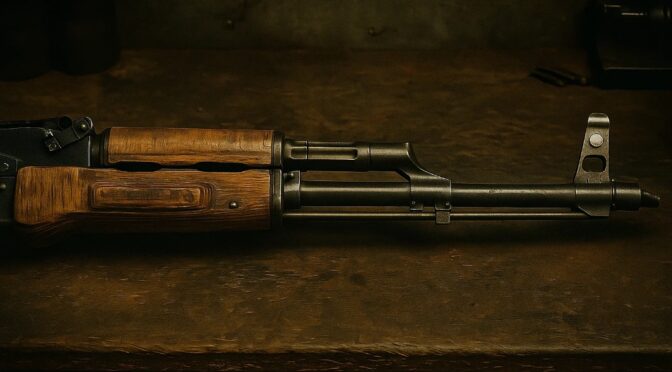
An Engineering and Manufacturing History of the AK-47 Barrel

The barrel of the Avtomat Kalashnikova model 1947, or AK-47, was not conceived in an engineering vacuum. It was forged from the brutal lessons of the Second World War and shaped by the specific demands of a new Soviet military doctrine. To comprehend its design, one must first understand the strategic and tactical environment it was built to dominate.

1.1 The Lessons of the Eastern Front and the Rise of Mechanized Doctrine

The Soviet experience on the Eastern Front from 1941 to 1945 was a crucible that tested men, machines, and military theory on an unprecedented scale. The conflict starkly revealed the limitations of the Red Army’s existing small arms inventory when faced with the fluid, high-intensity combat of modern mechanized warfare. The standard-issue Mosin-Nagant bolt-action rifle, a design from the 19th century, was reliable and powerful but possessed a slow rate of fire wholly unsuited for the rapid, close-quarters engagements that characterized battles in ruined cities and forested terrain. Conversely, the widely issued PPSh-41 submachine gun offered a high volume of fire but was chambered for a pistol cartridge (7.62x25mm Tokarev) that lacked the range and penetration needed for engagements beyond 100-200 meters.

Soviet planners observed with great interest the German deployment of the Sturmgewehr 44 (StG 44), a weapon that represented a new paradigm in infantry firepower. The StG 44 fired a 7.92x33mm Kurz “intermediate” cartridge, which provided a soldier with a select-fire weapon controllable in full-automatic fire yet effective out to 300-400 meters—the vast majority of infantry engagement distances. This single weapon could fulfill the roles previously divided between the bolt-action rifle and the submachine gun.

In the post-war era, Soviet military doctrine evolved to emphasize “deep battle” principles: mobility, high rates of combat operations, concentration of main efforts, and continuous, unrelenting pressure on the enemy regardless of weather or terrain. This doctrine envisioned massive mechanized infantry formations, supported by tanks and artillery, advancing rapidly to shatter enemy defenses. The individual soldier, often a conscript with limited training, needed a weapon that was fundamentally simple, supremely reliable, and compact enough for deployment from within the confines of an armored personnel carrier like the BTR or BMP. The requirement was not for a precision marksman’s rifle but for a durable, mass-producible tool of suppressive fire that would function flawlessly in the mud of a European spring, the dust of a Central Asian summer, and the frozen depths of a Russian winter.

1.2 The Ballistic Foundation: The 7.62x39mm M43 Cartridge

Before a rifle could be designed, its ammunition had to be perfected. In 1943, Soviet engineers N.M. Elizarov and B.V. Semin finalized the 7.62x39mm M43 cartridge, the ballistic heart of the future Kalashnikov system. This intermediate cartridge was the critical enabling technology that made the assault rifle concept viable for the Soviet Union. It generated manageable recoil for controllable automatic fire while providing significantly more energy and effective range than the submachine gun rounds it was destined to replace.

A key design feature of the M43 cartridge is its pronounced case taper. The case body narrows by approximately 0.047 inches from the base to the shoulder, a much more aggressive taper than seen in many Western designs. This was a deliberate engineering choice made to ensure flawless feeding from the magazine into the chamber and positive extraction of the spent casing after firing. In a weapon designed with generous clearances between moving parts, this tapered geometry minimizes the surface area contact between the cartridge and the chamber walls, drastically reducing the likelihood of a jam caused by dirt, carbon fouling, or lacquer buildup from steel cases. This reliability-focused design choice directly dictated the iconic curved shape of the AK-47’s magazine, which is necessary to accommodate the stack of tapered cartridges.

The projectile itself was also a product of wartime pragmatism and doctrinal requirements. The original Soviet M43 bullet is a 122 to 123-grain boat-tail design. Its construction features a mild steel core, a thin layer of lead between the core and the jacket, and a copper-plated steel jacket (often referred to as a “bi-metal” jacket). This composition was not only economical for mass production but also provided excellent penetration capabilities against the types of light cover expected on the battlefield, such as dense foliage, wooden structures, and the sheet metal of vehicles. The bullet was designed for stability and penetration, with terminal ballistic effects relying on the projectile’s tendency to yaw (tumble) in tissue rather than fragmenting.

The operational demands of Soviet military doctrine were the primary force shaping the AK-47 barrel’s design. The doctrinal emphasis on continuous “combat activeness” and high rates of advance necessitated a weapon capable of delivering sustained suppressive fire under the most grueling conditions imaginable. This requirement for relentless performance translated directly into a set of engineering challenges. High volumes of fire generate extreme heat and accelerate barrel wear. The standard-issue Soviet ammunition, with its corrosive primers, would aggressively attack unprotected steel. Therefore, the barrel’s design had to prioritize longevity, corrosion resistance, and functional reliability above all else, including the potential for match-grade accuracy. This philosophy led directly to the selection of a robust barrel profile for heat management and the critical decision to implement chrome-lining for wear and corrosion resistance, creating a weapon that was guaranteed to function when needed, which was considered far more important than its ability to produce the tightest possible shot group on a firing range.

Section 2: Prototyping and Trials: From the AK-46 to the AK-47

The final design of the AK-47 was not a singular stroke of genius but the result of an iterative and intensely competitive development process. The evolution from the early AK-46 prototype to the finalized AK-47 reveals a pragmatic approach to engineering, where theoretical performance was carefully weighed against the practical needs of the soldier and the realities of mass production. The barrel, in particular, underwent a critical design change during this period.

2.1 The AK-46 Prototype Barrel

Mikhail Kalashnikov’s initial design, the AK-46, shared a visual resemblance to the later AK-47 and was chambered in the same 7.62x39mm cartridge. However, it featured several key differences, including a separate safety and fire selector on the left side of the receiver and a non-reciprocating charging handle, also on the left. Critically, at least one of the AK-46 prototypes was built with a 450 mm barrel. This longer barrel, compared to the final production model, would have been an attempt to maximize the ballistic potential of the new M43 cartridge, likely providing a marginal increase in muzzle velocity and a slightly flatter trajectory, which could translate to a modest improvement in effective range.

2.2 Rationale for the 415 mm Final Barrel Length

During the 1947 trials, Kalashnikov’s team radically redesigned the weapon, leading to the AK-47 prototype. One of the most significant changes was the decision to shorten the barrel from 450 mm to the now-standard 415 mm (16.3 inches). This was not an arbitrary reduction but a calculated engineering compromise that optimized the rifle for its intended role.

  • Ballistic Sufficiency: Extensive testing of the 7.62x39mm cartridge revealed that a 415 mm barrel was more than adequate to achieve the doctrinally required performance. It produced a muzzle velocity of approximately 715 m/s (2,350 ft/s), which provided a practical effective range of 300 to 400 meters. Ballistic data shows that intermediate cartridges like the 7.62x39mm gain progressively less velocity with each additional inch of barrel past a certain point. The small velocity increase offered by the extra 35 mm of the AK-46 barrel was deemed tactically insignificant, as the M43 projectile’s trajectory becomes quite pronounced beyond 300 meters anyway, making precise long-range shots difficult regardless of a minor velocity boost.
  • Maneuverability and Handling: The primary user of the new rifle was envisioned as a mechanized infantryman who would need to fight in and around vehicles. A shorter, more compact weapon is vastly superior in such environments. The 35 mm reduction in barrel length, combined with other design changes, resulted in a handier, more maneuverable rifle that was less likely to snag on equipment or the confines of a vehicle hatch.
  • Weight, Balance, and Material Economy: Shortening the barrel reduced the overall weight of the rifle, an important consideration for a soldier carrying their weapon and ammunition for extended periods. It also shifted the rifle’s center of balance rearward, making it feel less “front-heavy” and quicker to point. From a production standpoint, a shorter barrel requires less steel and less machining time, a non-trivial consideration when planning to manufacture millions of units.
  • Gas System Optimization: The function of the AK-47’s famously reliable long-stroke gas piston system is critically dependent on the barrel length. The distance the bullet travels past the gas port before exiting the muzzle is known as “dwell time.” This period determines how long and with what pressure curve the expanding propellant gases act upon the piston to cycle the action. The 415 mm length, with the gas port located at its specific position, was carefully tuned to provide the perfect amount of gas impulse—enough to cycle the heavy bolt carrier assembly with authority under all conditions, but not so much as to cause violent, premature unlocking or excessive wear on the components.

The choice to shorten the barrel from the AK-46 prototype to the final AK-47 design is a clear illustration of the Soviet philosophy of “sufficient optimization.” The designers recognized the point of diminishing returns where a marginal gain in one area (ballistics) came at the cost of significant penalties in others (handling, weight, cost). Instead of chasing the highest possible muzzle velocity, they engineered a barrel that delivered perfectly adequate performance for its intended combat role while maximizing the weapon’s practicality for the soldier who had to carry and fight with it. This pragmatic, system-level approach to design, prioritizing the user’s real-world needs over abstract performance metrics, is a hallmark of the Kalashnikov’s enduring success.

Section 3: Forging an Icon: Manufacturing the AK-47 Barrel (Type 1 to Type 3)

The production of the AK-47 barrel was a monumental industrial undertaking that leveraged state-of-the-art manufacturing techniques available to the Soviet Union in the post-war period. The combination of carefully selected materials and highly efficient production processes was key to creating a barrel that was not only effective but could be produced in the millions.

3.1 Materials Science: Soviet Ordnance Steel

While the exact GOST (Государственный стандарт, or State Standard) designation for the steel used in original AK-47 barrels is a closely guarded detail, analysis and comparison with contemporary standards allow for a well-supported characterization. The material was a high-quality chrome-molybdenum alloy steel, similar in its properties to the Western AISI 4140 and 4150 grades, which are still referred to as “ordnance steel” today. Modern American manufacturers of high-quality AK barrels frequently use 4150 Chrome-Moly Vanadium (CMV) steel, which offers excellent heat resistance and durability.

The Soviet GOST system for steel designation, such as GOST 1050-41, used a combination of numbers to indicate carbon content and Cyrillic letters to denote alloying elements like ‘X’ (Хром – Chromium) and ‘M’ (Молибден – Molybdenum). The alloy chosen for the AK-47 barrel would have been specified under a standard for high-quality structural steels, selected for its ability to provide a precise balance of properties. It needed sufficient hardness to resist the erosive wear of hot gases and bullet friction, but also crucial toughness and ductility to withstand the immense chamber pressures of the 7.62x39mm cartridge (up to 355.0 MPa or over 51,000 psi) without fracturing.

Following the primary manufacturing steps, the barrels underwent a critical heat treatment regimen. This process, likely involving heating the barrel to a specific austenitizing temperature followed by a controlled quench (rapid cooling in oil or water) and subsequent tempering (reheating to a lower temperature), was essential to refine the steel’s grain structure. This treatment relieved internal stresses induced by forging and machining, and achieved the final desired Rockwell hardness, ensuring the barrel was both wear-resistant and resilient.

3.2 The Manufacturing Process: A Revolution in Efficiency

The Soviet Union’s goal was to equip its massive army, necessitating a barrel production method that prioritized speed and consistency.

  • Barrel Blank and Early Rifling Methods: Production began with a solid bar of ordnance steel, which was deep-hole drilled to form the initial bore. For the earliest prototypes, it is likely that traditional rifling methods were used. These could have included cut rifling, a slow process where a single hook-cutter scrapes out one groove at a time in multiple passes, or the slightly faster button rifling, where a super-hard tungsten carbide “button” is pushed or pulled through the bore to displace the steel and form the grooves in a single pass. While capable of producing accurate barrels, these methods were too slow and labor-intensive for the scale of production required.
  • Adoption of Cold Hammer Forging (CHF): To meet production quotas, the Soviets adopted the highly efficient cold hammer forging process. This technology, first commercialized in Germany in the late 1930s, revolutionized barrel manufacturing. The process begins with a short, thick barrel blank with a smooth, oversized bore. A hardened steel mandrel, which is a precise reverse image of the desired rifling and chamber, is inserted into the bore. The blank and mandrel are then fed into a forging machine where multiple, powerful hammers (often four) strike the outside of the barrel thousands of times per minute. This intense hammering compresses the barrel steel down onto the mandrel, simultaneously forming the rifling, chamber, and final external contour, while also elongating the barrel to its final length.

The advantages of CHF for the AK-47 were immense:

  1. Speed and Throughput: CHF is the fastest known method for rifling a barrel, capable of producing a finished barrel in a matter of minutes, making it ideal for mass production.
  2. Enhanced Durability: The forging process is a form of cold working that realigns and densifies the grain structure of the steel. This work-hardening results in an extremely smooth and durable bore surface that is more resistant to heat erosion and mechanical wear, leading to a longer service life.
  3. Cost-Effectiveness and Consistency: Although the initial investment in a CHF machine is extremely high, the per-unit cost for large production runs is very low. The process yields barrels with highly consistent dimensions, which simplifies quality control and subsequent assembly steps.

3.3 The Chrome-Lining Imperative

Beginning with the introduction of the Type 2 AK-47 in 1951, all subsequent Soviet-produced AK barrels had their bore and chamber chrome-lined. This feature was not an enhancement for accuracy—in fact, imperfect application can degrade it—but a non-negotiable requirement for reliability and longevity in the field.

  • Corrosion Resistance: The primary driver for chrome-lining was the universal use of Berdan-primed, corrosively-charged ammunition in the Warsaw Pact. The residue from these primers contains potassium chloride salts, which are hygroscopic (they attract water from the atmosphere) and cause extremely rapid and destructive rusting (pitting) of bare steel. For a conscript soldier in harsh field conditions, who might not have the opportunity or supplies to clean their rifle for days, this corrosion could quickly render a weapon inoperable. The hard, inert, non-porous layer of electroplated chromium provided a robust barrier, protecting the steel from these corrosive salts and ensuring the rifle would function. This feature was a literal life-saver, a lesson the U.S. military would later learn the hard way with early M16s in Vietnam.
  • Extended Barrel Life: Hard chrome is significantly harder than the barrel steel itself, with a hardness of around 67 on the Rockwell C scale compared to the 20-30 HRC of the underlying steel. This incredibly hard surface drastically reduces friction and wear from the thousands of bullets passing through the bore, especially under the intense heat and pressure of sustained automatic fire. The result is a barrel that maintains its integrity and acceptable accuracy for a much higher round count, extending its service life by thousands of rounds.

The combination of cold hammer forging and chrome-lining was a masterstroke of industrial military engineering. The CHF process produced a barrel with a very smooth, uniform, and work-hardened surface. This consistency was the ideal foundation for the electroplating process, allowing for a uniform and well-adhered layer of chrome. A bore with imperfections from a lesser manufacturing process would result in uneven plating, which could easily flake off under fire and ruin the barrel. Thus, one advanced technology enabled and perfected the other, creating a barrel that was perfectly suited to Soviet needs: cheap to make in the millions, virtually impervious to neglect and corrosive ammunition, and durable enough to withstand the rigors of mechanized warfare.

3.4 Barrel Assembly (Type 2/3)

The early production challenges with the stamped-receiver Type 1 AK led to a temporary but important shift in manufacturing philosophy. For the Type 2 (1951-1954) and Type 3 (1954-1959) models, the Soviets reverted to a more traditional, robust, and much heavier milled receiver, which was machined from a solid forging of steel.

For these milled-receiver rifles, the barrel was manufactured with threads on the breech end. It was then screwed into the receiver’s integral front trunnion and carefully torqued to set the correct headspace—the critical distance between the bolt face and the chamber shoulder. This method created an extremely strong and rigid barrel-to-receiver lockup but was also slow, required skilled labor, and consumed a great deal of steel and machine time, making it less than ideal for the ultimate goal of mass-producing the rifle as cheaply and quickly as possible.

Section 4: Anatomy of the Finalized Barrel: A Technical Deep Dive

The final design of the AK-47 barrel is a study in purposeful engineering, where every dimension and feature was selected to contribute to the weapon system’s overall performance goals of reliability and effectiveness within its intended combat envelope.

4.1 Rifling Twist Rate (1:240mm or 1:9.45″)

The bore of the AK-47 barrel is characterized by four grooves with a right-hand twist. The rate of this twist is standardized at 1 turn in 240 mm, which is equivalent to 1 turn in 9.45 inches. This specific rate was not an arbitrary choice; it was carefully calculated to impart the optimal rotational velocity, or gyroscopic stability, to the standard 123-grain, 26.8 mm-long M43 projectile.

The primary purpose of this spin is to stabilize the bullet in flight, preventing it from tumbling end over end and allowing it to fly point-forward towards the target, which is essential for achieving any degree of accuracy. The 1:240mm rate provides sufficient stability for the M43 bullet to remain accurate out to the rifle’s effective range of 300-400 meters. Some ballistic analyses suggest that this twist rate is just enough to stabilize the bullet in air but not so fast as to “over-stabilize” it upon impact with a soft medium. This marginal stability is thought to contribute to the M43 bullet’s well-documented tendency to yaw (tumble) relatively early after entering soft tissue, thereby creating a more severe wound channel despite its non-fragmenting, steel-core construction.

4.2 Barrel Profile and Thickness

The external contour of the AK-47 barrel is a critical design feature that balances three competing requirements: heat management, rigidity, and weight. The resulting profile is a relatively straight, medium-weight contour—noticeably thicker than a lightweight “pencil” barrel but not as cumbersome as a heavy machine gun barrel.

  • Heat Absorption and Dissipation: Sustained automatic fire generates an immense amount of heat, with propellant gases reaching temperatures over 2,200°F (1,200°C). The steel mass of the barrel acts as a heat sink, absorbing this thermal energy. A barrel that is too thin will heat up very quickly, which can lead to several problems: a “walking” point of impact as the steel expands unevenly, accelerated throat erosion, and in extreme cases, the danger of a “cook-off,” where a chambered round detonates from the ambient heat without the trigger being pulled. The AK-47’s medium profile provides enough thermal mass to absorb the heat from several magazines fired in quick succession without reaching a critical failure temperature, a crucial attribute for a weapon designed for suppressive fire.
  • Rigidity and Barrel Harmonics: When a rifle is fired, the barrel vibrates in a complex, whip-like motion known as barrel harmonics. For consistent accuracy, these vibrations must be as repeatable as possible from shot to shot. A thicker, more rigid barrel vibrates with a smaller amplitude and is less affected by external pressures (such as from a sling or resting on cover) than a thinner, more flexible barrel. The AK-47’s robust profile contributes to its “combat accuracy” by ensuring the barrel is stiff enough to resist excessive whip, particularly during the violent cycling of automatic fire.
  • Weight Management: While a heavier barrel is generally better for heat absorption and rigidity, it comes with a significant weight penalty. The designers had to adhere to the overall weight requirements for an individual infantry weapon. The final loaded weight of a Type 3 AK-47 is approximately 4.8 kg (10.6 lbs). The chosen barrel profile represents a carefully calculated compromise, providing the necessary thermal and mechanical robustness while keeping the rifle’s total weight and balance within acceptable limits for the average soldier.

The final barrel design was not a collection of independent features but a highly integrated component of the complete weapon system. The twist rate was specifically matched to the M43 projectile’s size, weight, and velocity. The barrel’s external profile was engineered to manage the thermal loads generated by that cartridge when fired in automatic mode, while also providing the rigidity needed for acceptable accuracy and meeting the overall weight constraints of the rifle platform. It is a testament to a design process that prioritized a holistic balance of competing factors to create a tool perfectly suited for its intended purpose.

Section 5: The AKM Evolution: Optimizing the Barrel for Mass Production

The adoption of the Avtomat Kalashnikova Modernizirovanny (AKM) in 1959 marked the final and most significant evolution of the original Kalashnikov design. The AKM was not a radical departure but a thorough refinement focused on simplifying manufacturing, reducing weight, and improving performance, all with the goal of making the rifle even easier and cheaper to produce on a massive scale. While the core ballistics of the barrel remained untouched, its method of construction and integration into the rifle were fundamentally changed.

5.1 Return to Stamped Receiver and New Barrel Mounting

The single most important innovation of the AKM was the successful implementation of a stamped sheet steel receiver, replacing the heavy, costly, and labor-intensive milled receiver of the Type 2 and Type 3 AK-47s. By the late 1950s, Soviet industrial technology had overcome the quality control issues—primarily warping during heat treatment—that had plagued the early Type 1 stamped receivers. The new 1.0 mm thick stamped receiver was significantly lighter and could be produced in a fraction of the time required to machine a solid block of steel.

This shift in receiver construction necessitated a corresponding change in how the barrel was attached. The complex and time-consuming process of threading the barrel and screwing it into a milled receiver was abandoned. Instead, the AKM barrel was designed with a smooth, unthreaded journal at the breech end. This journal was pressed into a separate, hardened steel front trunnion using a hydraulic press. Once the correct headspace was achieved, the barrel was permanently fixed in place by drilling through the trunnion and barrel journal and pressing a solid steel transverse pin through the assembly. This press-and-pin method was dramatically faster, required less skilled labor, and was perfectly suited for an assembly-line environment, representing a pivotal step in optimizing the Kalashnikov for truly massive global production.

5.2 Muzzle Device: The Slant Compensator

While the muzzle of the AK-47 barrel was threaded, it was typically fitted with only a simple thread-protecting nut. The AKM introduced the now-iconic slant compensator. This simple yet ingenious device is a short steel brake with an angled face. When the rifle is fired, a portion of the high-pressure propellant gas exiting the muzzle strikes this slanted surface, creating a vector of force that pushes the muzzle down and to the left. This action directly counteracts the natural tendency of the rifle to climb and move to the right during the recoil of automatic fire (for a right-handed shooter). The result was a noticeable improvement in controllability during full-auto bursts, allowing the soldier to keep more rounds on target.

5.3 Continuity of Core Features

Despite the revolutionary changes to the receiver and barrel mounting, the internal and ballistic specifications of the AKM barrel were a direct continuation of the successful formula established by the AK-47. The Soviets recognized that they had already optimized the core of the system and wisely chose not to alter it. The AKM barrel retained the following critical features:

  • Length: 415 mm
  • Bore Treatment: Chrome-Lined
  • Rifling Method: Cold Hammer Forged
  • Rifling Specification: 4-groove, right-hand twist at 1 turn in 240 mm

The continuity of these features demonstrates that by the mid-1950s, Soviet engineers were confident they had perfected the internal design of the barrel for its intended purpose. The focus of the AKM project was not on reinventing the barrel’s ballistics, but on reinventing the rifle around it to achieve unprecedented levels of manufacturing efficiency.

FeatureAK-46 (Prototype)AK-47 (Type 2/3 Milled)AKM (Stamped)
Barrel Length450 mm415 mm415 mm
Rifling4-groove, RH 1:240mm (Assumed)4-groove, RH 1:240mm4-groove, RH 1:240mm
Bore TreatmentUnlinedChrome-LinedChrome-Lined
Rifling MethodCut or Button (Inferred)Cold Hammer ForgedCold Hammer Forged
Receiver AttachmentN/A (Prototype)Threaded / Screwed-inPressed & Pinned
Muzzle DeviceSimple Muzzle Nut (Inferred)Threaded for Muzzle NutThreaded for Slant Compensator

Section 6: Conclusion: The Enduring Legacy of the Kalashnikov Barrel Design

The evolution of the AK-47 barrel, from the early prototypes to the mass-produced AKM, is a definitive case study in pragmatic, doctrine-driven military engineering. The final design was not the result of a quest for perfection in any single metric, but a masterclass in achieving an optimal balance of characteristics essential for the realities of modern warfare as envisioned by the Soviet Union. Its legacy is not defined by match-grade accuracy but by its unparalleled reliability and manufacturability.

The analysis reveals several key conclusions:

  1. Doctrine Dictated Design: The barrel’s core attributes—its 415 mm length, medium-weight profile, and extreme durability—were direct engineering responses to the post-WWII Soviet military doctrine of high-tempo, mechanized warfare. The requirement was for a weapon that could be wielded effectively by conscripts from within armored vehicles and could sustain high volumes of fire in the most unforgiving environments on earth. Every major design choice prioritized this functional reliability over theoretical precision.
  2. Manufacturing as a Strategic Weapon: The Soviet adoption of cutting-edge industrial processes was as crucial as the design itself. The combination of cold hammer forging for speed and durability, and chrome-lining for corrosion resistance and extended service life, created a synergistic system. This pairing allowed for the rapid and economical production of millions of barrels that were uniquely suited to the harsh realities of military service and the use of corrosive ammunition. The evolution to the AKM’s pressed-and-pinned barrel assembly was the final step in perfecting the rifle as an instrument of global strategic proliferation.
  3. A System of Calculated Compromises: The final specifications of the barrel represent a series of intelligent trade-offs. The 415 mm length was chosen because it provided sufficient ballistic performance for the 7.62x39mm cartridge within its intended 300-400 meter engagement envelope, while maximizing soldier mobility and handling. The 1:240mm twist rate was perfectly matched to stabilize the standard M43 projectile. The barrel profile provided enough mass to manage heat during automatic fire without making the rifle excessively heavy.

In conclusion, the barrel of the AK-47 and its successor, the AKM, is the physical embodiment of the Kalashnikov design philosophy: absolute reliability, simplicity of maintenance, and suitability for mass production. It is not the most accurate barrel ever designed, nor the lightest, nor the most ballistically efficient. It is, however, arguably the most successful rifle barrel in history, having been produced in greater numbers than any other and having proven its effectiveness in every climate and conflict for over seven decades. Its design is a testament to the principle that in warfare, the weapon that functions every time is superior to the one that functions perfectly only some of the time.


Please share the link on Facebook, Forums, with colleagues, etc. Your support is much appreciated and if you have any feedback, please email us in**@*********ps.com. If you’d like to request a report or order a reprint, please click here for the corresponding page to open in new tab.


Works cited

  1. The Lesser Known Origins of the AK-47: How the Legendary Rifle Came to Be, accessed July 28, 2025, https://akoptionsllc.com/blogthe-lesser-known-origins-of-the-ak47-how-the-legendary-rifle-came-to-be/
  2. Seven Principles of Soviet Tactical Doctrine – Marine Corps Association, accessed July 28, 2025, https://www.mca-marines.org/gazette/seven-principles-of-soviet-tactical-doctrine/
  3. The first appearance of the AK-47 as described by the CIA. : r/guns – Reddit, accessed July 28, 2025, https://www.reddit.com/r/guns/comments/84nx6f/the_first_appearance_of_the_ak47_as_described_by/
  4. AK-47 | Definition, History, Operation, & Facts – Britannica, accessed July 28, 2025, https://www.britannica.com/technology/AK-47
  5. History Of The AK-47 – Wideners Shooting, Hunting & Gun Blog, accessed July 28, 2025, https://www.wideners.com/blog/history-of-the-ak-47/
  6. The AK-46 Nearly Beat the AK-47 – The National Interest, accessed July 28, 2025, https://nationalinterest.org/blog/buzz/ak-46-nearly-beat-ak-47-157331
  7. Comparison of the AK-47 and M16 – Wikipedia, accessed July 28, 2025, https://en.wikipedia.org/wiki/Comparison_of_the_AK-47_and_M16
  8. SOVIET MILITARY ORGANIZATION AND DOCTRINE – CIA, accessed July 28, 2025, https://www.cia.gov/readingroom/docs/CIA-RDP80T00246A046100150001-3.pdf
  9. The Soviet Battalion, Its Commander, and Combined-Arms Warfare – DTIC, accessed July 28, 2025, https://apps.dtic.mil/sti/tr/pdf/ADA211005.pdf
  10. SOVIET INFANTRY TACTICS – CIA, accessed July 28, 2025, https://www.cia.gov/readingroom/docs/CIA-RDP80-00809A000600020174-3.pdf
  11. An Overview of the AK-47 Assault Rifle – Boot Camp & Military Fitness Institute, accessed July 28, 2025, https://bootcampmilitaryfitnessinstitute.com/2023/08/28/an-overview-of-the-ak-47-assault-rifle/
  12. AK-47 – Wikipedia, accessed July 28, 2025, https://en.wikipedia.org/wiki/AK-47
  13. The Great Debate AK47 vs AR15, accessed July 28, 2025, https://gtitraining.org/news-AK47-vs-AR15.htm
  14. Kalashnikov AKM: One of the most produced versions of the AK – Combat Operators, accessed July 28, 2025, https://combatoperators.com/firearms/rifles/kalashnikov-akm/
  15. 7.62×39mm – Wikipedia, accessed July 28, 2025, https://en.wikipedia.org/wiki/7.62%C3%9739mm
  16. 7.62×39mm – Ammunition Store, accessed July 28, 2025, https://ammunitionstore.com/content/7.62%C3%9739mm.pdf
  17. Handloading The 7.62×39 mm (M43) | An Official Journal Of The NRA – American Rifleman, accessed July 28, 2025, https://www.americanrifleman.org/content/handloading-the-7-62×39-mm-m43/
  18. Building the AK-47: Why It’s One of the Most Chosen Weapons – YouTube, accessed July 28, 2025, https://www.youtube.com/watch?v=0gI7-PKPLYg
  19. AK 47 Variants You Might Not Have Heard of – GunSkins, accessed July 28, 2025, https://www.gunskins.com/blogs/the-wrap/ak-47-variants
  20. AK-47 – Wikipedia, accessed July 28, 2025, https://sco.wikipedia.org/wiki/AK-47
  21. AKM – Wikipedia, accessed July 28, 2025, https://en.wikipedia.org/wiki/AKM
  22. Navigating AK Caliber Variants: A Comprehensive Guide – The Primary Source On PrimaryArms.com, accessed July 28, 2025, https://blog.primaryarms.com/guide/ak-47-calibers-explained/
  23. KS47 in 10.5″ or 16″? – KS-47 – Palmetto State Armory | Forum, accessed July 28, 2025, https://palmettostatearmory.com/forum/t/ks47-in-10-5-or-16/11968
  24. Difference in AK’s : r/EscapefromTarkov – Reddit, accessed July 28, 2025, https://www.reddit.com/r/EscapefromTarkov/comments/asjmtj/difference_in_aks/
  25. What kind of steel is used in gun barrels? – Quora, accessed July 28, 2025, https://www.quora.com/What-kind-of-steel-is-used-in-gun-barrels
  26. AR15 Barrel Types and Materials – 80 Percent Arms, accessed July 28, 2025, https://www.80percentarms.com/blog/ar15-barrel-types-and-materials/
  27. Evocatus AKM (Custom Pistol) 7.62x39mm (AK-47), accessed July 28, 2025, https://evocatusllc.com/evocatus-akm-custom-pistol-7-62x39mm/
  28. PSA AK-5.56 – Palmetto State Armory, accessed July 28, 2025, https://palmettostatearmory.com/ak-47/ak-5-56.html
  29. SOVIET STANDARDS FOR METALLURGICAL PRODUCTION – CIA, accessed July 28, 2025, https://www.cia.gov/readingroom/docs/CIA-RDP80-00809A000700230073-4.pdf
  30. Soup To Nuts 2 | PDF | Heat Treating | Annealing (Metallurgy) – Scribd, accessed July 28, 2025, https://pt.scribd.com/document/86810452/Soup-to-Nuts-2
  31. Heat Treating Gun Parts – L&L Special Furnace, accessed July 28, 2025, https://llfurnace.com/blog/heat-treating-gun-parts/
  32. Cryogenic Treatments for Sniper Rifle Barrels – DSIAC, accessed July 28, 2025, https://dsiac.dtic.mil/wp-content/uploads/2019/04/2174784_STI_Document.pdf
  33. What are the advantages of cut rifling versus button or hammer forged rifle barrels? – Quora, accessed July 28, 2025, https://www.quora.com/What-are-the-advantages-of-cut-rifling-versus-button-or-hammer-forged-rifle-barrels
  34. Cut rifling vs button? | AfricaHunting.com, accessed July 28, 2025, https://www.africahunting.com/threads/cut-rifling-vs-button.65246/
  35. Rifling Types 101 – Vortakt Barrel Works, accessed July 28, 2025, https://vortakt.com/learn/rifling-types-101/
  36. Inside Cold Hammer Forged Barrels | #CZFORTHOSEWHOKNOW, accessed July 28, 2025, https://www.czforthosewhoknow.com/blog/2023/05/24/inside-cold-hammer-forged-barrels/
  37. Cold Hammer Forged – Sig Sauer, accessed July 28, 2025, https://www.sigsauer.com/glossary/cold-hammer-forged/
  38. Cold Hammer Forged Barrel vs. Button Rifled: A Deep Dive into Barrel Manufacturing, accessed July 28, 2025, https://store.iconisagency.com/cold-hammer-forged-barrel-vs-button-rifled-a-deep-dive-into-barrel-manufacturing/
  39. Firearms Examiner Training | Hammer Forged – National Institute of Justice, accessed July 28, 2025, https://nij.ojp.gov/nij-hosted-online-training-courses/firearms-examiner-training/module-04/hammer-forged
  40. Cold Hammer Forging of Barrels — How The Process Works – Accurate Shooter Bulletin, accessed July 28, 2025, https://bulletin.accurateshooter.com/2022/12/cold-hammer-forging-of-barrels-how-the-process-works/
  41. How important is cold hammer forging to you? : r/ar15 – Reddit, accessed July 28, 2025, https://www.reddit.com/r/ar15/comments/i63ea0/how_important_is_cold_hammer_forging_to_you/
  42. File:AK-47 Type 1 Receiver.jpg – Wikimedia Commons, accessed July 28, 2025, https://commons.wikimedia.org/wiki/File:AK-47_Type_1_Receiver.jpg
  43. What’s the deal with chrome-lining and chrome-plating? – GunTweaks.com, accessed July 28, 2025, https://www.guntweaks.com/whats-the-deal-with-chrome-lining-and-chrome-plating.html
  44. Behind The Shine Of Chrome-Lined Barrels – Gun Digest, accessed July 28, 2025, https://gundigest.com/rifles/chrome-lined-barrels
  45. SKS – Wikipedia, accessed July 28, 2025, https://en.wikipedia.org/wiki/SKS
  46. How AK-47 Guns Work – Kalashnikov Weaponry Timeline – Popular Mechanics, accessed July 28, 2025, https://www.popularmechanics.com/military/weapons/a6301/anatomy-of-an-ak-47/
  47. RPD machine gun – Wikipedia, accessed July 28, 2025, https://en.wikipedia.org/wiki/RPD_machine_gun
  48. Quick Tip: The Difference Between Nitrided & Chrome-Lined Barrels – YouTube, accessed July 28, 2025, https://www.youtube.com/watch?v=Y2cv2MclByM
  49. File:AK-47 type II noBG.png – Wikipedia, the free encyclopedia, accessed July 28, 2025, https://en.m.wikipedia.org/wiki/File:AK-47_type_II_noBG.png
  50. File:AK-47 type II noBG.png – Wikimedia Commons, accessed July 28, 2025, https://commons.wikimedia.org/wiki/File:AK-47_type_II_noBG.png
  51. File:AK 47.JPG – Wikimedia Commons, accessed July 28, 2025, https://commons.wikimedia.org/wiki/File:AK_47.JPG
  52. Kalashnikov AK-47 – Weaponsystems.net, accessed July 28, 2025, https://weaponsystems.net/system/605-Kalashnikov+AK-47
  53. AK-47 – Weapon Systems, accessed July 28, 2025, https://old.weaponsystems.net/weaponsystem/AA04%20-%20AK-47.html
  54. AK-47 16″ Barrel 7.62X39 US Made AKM Non-Chrome – Nitride – Centerfire Systems, accessed July 28, 2025, https://centerfiresystems.com/16-762×39-us-cold-hammer-forged-akm-non-chrome-barrel/
  55. Can someone explain the twist rate of a barrel like I’m biden/harris. : r/Firearms – Reddit, accessed July 28, 2025, https://www.reddit.com/r/Firearms/comments/1fgmc0x/can_someone_explain_the_twist_rate_of_a_barrel/
  56. File:Cartridge 7.62x39mm M43 Steel CC BY-SA 4.0 by Grasyl.jpg …, accessed July 28, 2025, https://commons.wikimedia.org/wiki/File:Cartridge_7.62x39mm_M43_Steel_CC_BY-SA_4.0_by_Grasyl.jpg
  57. Heat vs thickness of barrel | Shooters’ Forum, accessed July 28, 2025, https://forum.accurateshooter.com/threads/heat-vs-thickness-of-barrel.4122038/
  58. Barrel heating affecting POI? : r/longrange – Reddit, accessed July 28, 2025, https://www.reddit.com/r/longrange/comments/u3nkt0/barrel_heating_affecting_poi/
  59. Barrel Contour vs Accuracy – Shooters’ Forum, accessed July 28, 2025, https://forum.accurateshooter.com/threads/barrel-contour-vs-accuracy.3969136/
  60. The Different Types of Barrel Contours and What You’re Left With – Athlon Outdoors, accessed July 28, 2025, https://athlonoutdoors.com/article/different-barrel-contours-types/
  61. Understanding AR-15 Barrel Profiles: From Lightweight to Bull Barrels – Dirty Bird Industries, accessed July 28, 2025, https://dirtybirdusa.com/understanding-ar-15-barrel-profiles/
  62. Analysis of heat transfer coefficient inside gun barrel – Inpressco, accessed July 28, 2025, https://inpressco.com/wp-content/uploads/2016/07/Paper86460-463.pdf
  63. Modernized AKM & AKMS – AK History Part II – YouTube, accessed July 28, 2025, https://www.youtube.com/watch?v=4xkws8j6WGc
  64. AKM Russian 7.62mm Automatic Assault Rifle – ODIN – OE Data Integration Network, accessed July 28, 2025, https://odin.tradoc.army.mil/WEG/Asset/81938b91ee77ceadcef64a66bf7c3f23
  65. Type 1 Russian AK: The First Production Stamped AK (Updated) – YouTube, accessed July 28, 2025, https://www.youtube.com/watch?v=zFagaHLuekQ
  66. AK Variants: A Closer Look – The Primary Source On PrimaryArms.com, accessed July 28, 2025, https://blog.primaryarms.com/guide/ak-variants-explored/
  67. AK-47 – How this rifle works! (Animation) – YouTube, accessed July 28, 2025, https://www.youtube.com/watch?v=ZyajvvsuGcU
  68. File:AKM (rifle).jpg – Wikimedia Commons, accessed July 28, 2025, https://commons.wikimedia.org/wiki/File:AKM_(rifle).jpg
  69. IZHMASH SGL31-68 5.45x39mm Semi-Automatic Rifle – K-Var, accessed July 28, 2025, https://www.k-var.com/saiga-rifle-russian-made-stamped-receiver-545×395-caliber-hammer-forged-chrome-lined-barrel-fr

Back in the AK game with an Izhmash (Saiga) – Milsurps, accessed July 28, 2025, https://www.milsurps.com/showthread.php?t=25873

A History of the AK-74 Rifle’s Design and Development in the USSR

The development of the AK-74 assault rifle and its associated 5.45x39mm ammunition represents a pivotal chapter in Cold War small arms history. It was a direct and calculated Soviet response to the operational lessons gleaned from the Vietnam War, specifically the tactical advantages demonstrated by the American M16 rifle and its small-caliber, high-velocity (SCHV) cartridge. The program was not an exercise in simple mimicry, but rather a pragmatic and deliberate evolution of the thoroughly proven Kalashnikov operating system. The true innovation lay not in the rifle’s mechanism, but in the sophisticated ballistic design of the 5.45x39mm projectile, which achieved devastating terminal effects through engineered instability rather than velocity-dependent fragmentation. The subsequent rifle trials, which pitted Mikhail Kalashnikov’s evolutionary design against more complex systems, ultimately reaffirmed the core tenets of Soviet arms doctrine: absolute reliability, simplicity of maintenance, and suitability for mass production by a conscript-based military. The resulting AK-74 weapon system successfully balanced a significant increase in combat effectiveness—manifested in greater accuracy, a flatter trajectory, and superior wounding potential—with the inviolable principles that had defined Soviet weaponry for decades.

Section 1: The Vietnam Proving Ground – Soviet Intelligence and the M16 Catalyst

The genesis of the AK-74 is inextricably linked to the battlefields of Southeast Asia. The Vietnam War served as a live-fire laboratory, and Soviet military intelligence and arms designers were keen observers. Their analysis of the American M16 rifle was multifaceted; they recognized the profound conceptual strengths of its lightweight ammunition while simultaneously studying its catastrophic implementation failures as a case study in what to avoid. This critical evaluation provided the foundational impetus and doctrinal guardrails for the entire Soviet 5.45mm program.

1.1 Soviet Analysis of the M16’s Conceptual Advantages

Through the capture and technical analysis of M16 rifles and their 5.56x45mm ammunition in Vietnam, Soviet experts identified a clear paradigm shift in infantry firepower.1 Three principal advantages were noted. First, the reduced size and weight of the 5.56mm cartridge offered a significant logistical and tactical benefit. An American soldier could carry more than twice the number of rounds for the same weight as a Soviet soldier equipped with an AKM and 7.62x39mm ammunition.2 This ability to sustain a higher volume of fire was a crucial advantage in the close-quarters engagements typical of jungle warfare.5

Second, the high muzzle velocity of the M193 projectile, approximately 990 m/s, resulted in a considerably flatter trajectory compared to the 7.62x39mm round.6 This extended the maximum point-blank range, or “battle zero,” simplifying aiming and increasing the probability of hitting man-sized targets at typical engagement distances of up to 400 meters.8

Third, and perhaps most influential, was the terminal performance of the 5.56mm bullet. Soviet analysis of battlefield reports and wound ballistics confirmed that the lightweight, high-velocity projectile had a tendency to yaw and fragment upon striking soft tissue.9 This fragmentation produced devastating internal injuries, far exceeding the damage caused by the heavier 7.62x39mm bullet, which typically passed through the body, leaving a relatively clean wound channel.9 This dramatic increase in lethality created a clear capability gap that Soviet military planners could not ignore.

1.2 A Case Study in Failure: The M16’s Reliability Crisis

While the M16’s concept was impressive, its execution provided the Soviets with an equally valuable set of lessons. The rifle’s initial fielding was a disaster, plagued by widespread and often fatal malfunctions in combat.7 The most common stoppage was a “failure to extract,” where the spent cartridge case would remain stuck in the chamber, rendering the rifle useless until it could be cleared with a cleaning rod—a near-impossibility under fire.10

Soviet and subsequent Western analyses identified a confluence of poor engineering and logistical decisions as the root cause. A primary culprit was the U.S. Army’s unilateral decision to switch the ammunition’s propellant from the DuPont IMR stick powder specified by the designer, Eugene Stoner, to Olin Mathieson WC 846 ball powder.6 This change, made to meet production demands and lower costs, was not properly validated. The ball powder burned dirtier and produced a higher chamber pressure, which increased the cyclic rate of fire and left significantly more carbon fouling in the action.6 This fouling, combined with the U.S. Army’s cost-saving decision to omit chrome-plating from the barrel chamber and bore, led to corroded chambers and stuck cases.6 This perfect storm was compounded by a near-criminal lack of support for the troops in the field; rifles were issued without adequate cleaning kits and with the dangerously misleading information that the weapon was “self-cleaning”.6

1.3 Doctrinal Implications for the Soviet Union

The M16 experience served as both a catalyst and a cautionary tale for the Soviet military. It unequivocally validated the tactical benefits of small-caliber, high-velocity ammunition. However, it also provided a stark illustration of the dangers of adopting a revolutionary design without exhaustive testing, particularly when logistical and maintenance considerations are subordinated to cost and expediency.

This reinforced the bedrock principles of Soviet arms development. The new weapon system had to be, above all else, unfailingly reliable in the harshest conditions. It should favor proven, evolutionary design improvements over radical, untested mechanisms. Finally, it must be simple to manufacture on a massive scale and easy for a conscript army to operate and maintain with minimal training. The Soviets did not seek to copy the M16; they sought to adopt its ballistic advantages while inoculating their own design against the specific failures that had crippled the American rifle. The entire AK-74 program was therefore predicated on integrating a superior ballistic concept into the rugged, dependable, and thoroughly understood Kalashnikov operating system.

Section 2: The Heart of the System – Design and Ballistics of the 5.45x39mm Cartridge

The true innovation of the AK-74 weapon system was not the rifle itself, but the ammunition it fired. The development of the 5.45x39mm cartridge was a sophisticated undertaking that resulted in a projectile with unique and devastating terminal ballistics, earning it the memorable moniker “poison bullet” from its adversaries.

2.1 The TsNIITochMash Project and Design Objectives

The task of creating the Soviet Union’s new service cartridge fell to the Central Research Institute for Precision Machine Building (TsNIITochMash) located in Podolsk.17 Work commenced in the early 1970s under the leadership of V. M. Sabelnikov. The design team included a number of prominent engineers and technologists, such as L. I. Bulavskaya, B. V. Semin, and M. E. Fedorov.18

The project’s objectives were clear and directly informed by the analysis of the 5.56x45mm NATO round. The new cartridge needed to be lightweight to increase the soldier’s ammunition load, produce less recoil to improve controllability during automatic fire, and possess a higher velocity for a flatter trajectory and increased effective range.18 The overarching goal was to match or exceed the perceived combat effectiveness of the American SCHV concept.18

2.2 Engineering the “Poison Bullet”: A Technical Breakdown of the 7N6 Projectile

The standard-issue 5.45x39mm cartridge, designated 7N6, featured a projectile of remarkably complex construction. The 3.43-gram (52.9-grain) boat-tail bullet was jacketed in gilding metal.18 Inside, it contained a 1.43-gram mild steel (Steel 10) penetrator core sheathed in a thin layer of lead. Critically, this assembly did not fill the entire forward section of the jacket, leaving a small, hollow air cavity in the nose of the bullet.18

This design was a masterstroke of ballistic engineering. The combination of the hollow air pocket at the tip and the dense steel core and lead plug at the base shifted the bullet’s center of mass significantly to the rear.1 This inherent instability caused the projectile to yaw dramatically—to tumble end over end—very shortly after impacting soft tissue, typically within the first 10 cm of penetration.18 This rapid tumbling action transferred the bullet’s kinetic energy to the surrounding tissue with brutal efficiency, creating a large temporary wound cavity and causing massive internal damage. It was this devastating terminal effect that led Afghan Mujahideen fighters to nickname it the “poison bullet” during the Soviet-Afghan War.18

This approach represented a form of asymmetric ballistic engineering. While the American M193 round relied on high impact velocity to induce fragmentation, a phenomenon that diminished rapidly with range, the Soviet 7N6 was engineered for instability. Its tumbling effect was a function of its physical construction, making its terminal performance more consistent and reliable across a wider range of impact velocities, including those from the short-barreled AKS-74U carbine.

2.3 Ammunition Evolution and Variants

The 7N6 cartridge was the foundation for a family of ammunition that evolved to meet new battlefield requirements.

  • 7N6M: Introduced in 1987, the “Modernized” round featured a hardened steel (Steel 65G) core for better penetration against helmets and light body armor.1
  • 7N10: Adopted in 1994, this “Enhanced Penetration” (PP) round used a sharper, heat-strengthened steel core, further improving its ability to defeat barriers. It became the new standard-issue cartridge.1
  • 7N22 & 7N24: Later developments included the 7N22 armor-piercing (BP) round with a high-carbon steel penetrator (1998) and the 7N24 “super armor-piercing” (BS) round, which used a tungsten-carbide core for maximum penetration capability.1
  • Specialist Rounds: A suite of specialized cartridges was also developed, including the 7T3 tracer round and the 7U1 subsonic round for use with suppressed weapons.1
Specification7.62x39mm M435.56x45mm M1935.45x39mm 7N6
Bullet Diameter7.92 mm5.70 mm5.60 mm
Bullet Weight7.9 g (122 gr)3.6 g (55 gr)3.43 g (52.9 gr)
Muzzle Velocity~715 m/s~990 m/s~900 m/s
Muzzle Energy~2,019 J~1,764 J~1,389 J
Cartridge Weight~16.3 g~11.8 g~10.75 g
Free Recoil Energy~7.19 J (AKM)~6.44 J (M16A1)~3.39 J (AK-74)
Table 1: Comparative Cartridge Specifications 18

Section 3: Forging a Successor – The Trials for the Red Army’s New Rifle

With the 5.45x39mm cartridge finalized, the Soviet Ministry of Defense initiated a formal competition to select the new service rifle that would chamber it. This was a serious undertaking, involving the premier design bureaus of the Soviet arms industry. The trials would ultimately pit a mechanically advanced but complex design against the proven simplicity of the Kalashnikov system, a contest whose outcome would reaffirm the core principles of Soviet military-industrial doctrine.

3.1 The Competition for a New 5.45mm Rifle

In December 1966, the decision was made to create a new 5.45mm small arms complex, with a requirement that the new weapon be 1.5 times more effective than the AKM.28 The competition, which took place in the late 1960s and early 1970s, drew entries from the most prestigious design centers in the USSR: the Izhevsk Machine Plant (Izhmash), the Kovrov Mechanical Plant (KMZ), and the Tula Arms Plant (TOZ).29

3.2 The Main Contenders: Kalashnikov A-3 vs. Konstantinov SA-006

While numerous prototypes were submitted, the competition eventually narrowed to two primary contenders. From Mikhail Kalashnikov’s bureau at Izhmash came the A-3, a design that was a direct and logical evolution of the AKM, adapted for the new cartridge.32 It retained the long-stroke gas piston and rotating bolt system that was the hallmark of Kalashnikov’s work.

Its chief rival was the SA-006 from the design bureau at Kovrov, led by A.S. Konstantinov.33 This rifle was a more ambitious design, utilizing a “balanced automatics recoil system” (BARS).28 In this system, the gas piston was linked via a simple gear mechanism to a second, counter-moving weight. As the bolt carrier and piston were driven to the rear, the counter-weight was simultaneously driven forward. This action effectively canceled out the opposing impulses of the reciprocating parts, dramatically reducing felt recoil and muzzle climb during automatic fire.28

3.3 The Trials and Verdict

The A-3 and SA-006 underwent extensive and rigorous field trials in multiple military districts.33 The results were telling. In terms of pure performance, the Konstantinov SA-006 demonstrated a measurable advantage in hit probability, particularly when fired in bursts from unsupported positions, a direct result of its effective balanced action system.31

However, this performance came at a cost. The trials commission found the SA-006 to be significantly more complex mechanically, which made it less durable and far more difficult to maintain and repair in the field.33 Its more intricate mechanism was also more susceptible to fouling and required greater force to cycle by hand when dirty.33

The Kalashnikov A-3, by contrast, exhibited the legendary reliability of its predecessors. In 1973, the state commission made its decision. The A-3 was selected as the Red Army’s next service rifle.33 The verdict was a clear affirmation of Soviet military-industrial pragmatism. While the SA-006 offered a marginal increase in performance, the A-3’s superior reliability, mechanical simplicity, lower production cost, and high degree of parts commonality with the AKM (approximately 50%) made it the overwhelmingly logical choice.33 This decision would allow for a rapid and cost-effective transition on the production lines at Izhmash and would require minimal retraining for both soldiers and armorers.22 The A-3 was officially adopted into service in 1974 under the GRAU designation 6P20, better known as the AK-74.36

Ronin's Grips polymer handles in heat test setup
AK-74 with laminate buttstock, handguards and composite grip. Image is by
Сергей Сандалов (sAg-). It was accessed from Wikipedia.

Section 4: From AKM to AK-74 – An Engineering and Design Evolution

Adapting the AKM platform to the new high-velocity 5.45x39mm cartridge required more than a simple barrel and bolt swap. It demanded a series of targeted engineering solutions to manage the different ballistic properties, gas pressures, and recoil impulses of the new round. The resulting changes, while maintaining the core operating principle, refined the Kalashnikov system into a more effective and controllable weapon.

4.1 The Muzzle Device: Excellent Recoil Management

The most prominent and recognizable feature of the AK-74 is its large, cylindrical muzzle brake.38 This complex device replaced the simple slant-cut compensator of the AKM and is a key component of the rifle’s recoil management system. It functions as a multi-chamber brake and compensator. As propellant gases exit the barrel, they first enter a large expansion chamber, which reduces the overall rearward recoil impulse. The gases then flow into a second chamber which features two vertical cuts at the front and three smaller, asymmetrically positioned vent holes on the side.36 These vents redirect gases upwards and to the right, actively counteracting the natural tendency of the muzzle to rise and drift during automatic fire. Finally, a flat baffle at the very front of the device uses the last of the exiting gas to create a forward thrust, further mitigating felt recoil.36 The effectiveness of this device is profound, making the AK-74 exceptionally stable and controllable in full-automatic fire when compared to its predecessor.40

4.2 Gas System and Barrel Modifications

A critical internal change was the redesign of the gas block. Initial prototypes retained the AKM’s gas port, which was drilled at a 45-degree angle to the bore. During testing, it was discovered that the significantly higher velocity of the 5.45mm bullet caused a phenomenon known as “bullet shear,” where the bullet’s jacket would be partially shaved off as it passed the port.39 This damaged the projectile, affecting accuracy, and introduced fouling into the gas system. To solve this, Izhmash engineers, around 1977, redesigned the component with a gas channel drilled at a 90-degree angle to the bore axis, which completely eliminated the shearing issue.36 This 90-degree gas block became a defining feature of all subsequent AK-74 variants. The barrel itself was, of course, entirely new, featuring a chrome-lined 5.45mm bore with four right-hand grooves and a 1-in-200mm (1:7.87 in) twist rate, specifically optimized to stabilize the long, slender 7N6 projectile.36

4.3 Bolt Carrier Group and Extractor

The fundamental long-stroke gas piston operation of the AKM was retained, but key components of the bolt and carrier were modified. The bolt for the 5.45mm cartridge is dimensionally different from the AKM’s, with a noticeably thinner bolt stem.43 A crucial, though subtle, reliability enhancement was made to the extractor. Because the Kalashnikov system lacks primary extraction (the initial loosening of the case upon bolt rotation), reliable extraction relies entirely on the extractor claw. To ensure positive and forceful extraction of the smaller 5.45x39mm case under all conditions, the extractor on the AK-74 bolt was designed to be larger and more robust than the one found on the 7.62x39mm AKM bolt.36 This counter-intuitive change—a larger extractor for a smaller case—is a classic example of the Kalashnikov design philosophy prioritizing function over all else.

4.4 Receiver, Furniture, and Magazines

The AK-74 was built on the same 1mm stamped steel receiver as the late-model AKM, and about half of the small components, like pins and springs, remained interchangeable, simplifying production and logistics.36 Early production rifles (c. 1974-1985) were fitted with laminated wood furniture. The buttstock was visually distinct from the AKM’s, featuring a longitudinal groove, or “lightening cut,” on each side.42 In the mid-1980s, a major production change occurred with the transition to polymer furniture made from a glass-fiber reinforced polyamide, initially in a distinctive “plum” color.39 This was later changed to the matte black polymer that became the standard for the AK-74M.39

Magazines also evolved. The first-generation magazines were made from a thermoset phenol-formaldehyde resin (AG-4S), commonly referred to as “Bakelite,” in a recognizable mottled orange-brown color.39 As the rifle’s furniture changed, so did the magazines, transitioning to plum and then black polymer to match.47 Due to the 5.45x39mm cartridge having significantly less case taper than the 7.62x39mm round, the AK-74 magazine has a much straighter, less pronounced curve than the iconic “banana” magazine of the AKM.38

SpecificationAKM (1959)AK-74 (1974)
Caliber7.62x39mm5.45x39mm
Muzzle Velocity~715 m/s~900 m/s
ActionGas-operated, long-stroke piston, rotating boltGas-operated, long-stroke piston, rotating bolt
Receiver1mm Stamped Steel1mm Stamped Steel
Overall Length880 mm943 mm
Barrel Length415 mm415 mm
Barrel Twist Rate1:240 mm (1:9.45 in)1:200 mm (1:7.87 in)
Weight (unloaded)~3.1 kg~3.07 kg
Muzzle DeviceSlant compensatorTwo-chamber compensator/brake
Gas Block Angle45 degrees90 degrees
Bolt/ExtractorStandard 7.62mm bolt, standard extractorThinner 5.45mm bolt stem, enlarged extractor
MagazineStamped steel or Bakelite, pronounced curveBakelite or polymer, slight curve
Furniture MaterialLaminated wood or BakeliteLaminated wood, later plum/black polymer
Table 2: AKM vs. AK-74 Technical Specifications 36

Section 5: A Prolific Family – The AK-74 Series Variants

The AK-74 was not a single rifle but the foundation of a comprehensive weapon system. Following established Soviet doctrine, the core design was adapted into a family of variants to fulfill specialized combat roles, from a compact personal defense weapon to a squad support weapon. This approach maximized parts commonality, simplifying logistics, training, and manufacturing across the armed forces.

5.1 AKS-74: The Paratrooper’s Rifle

Developed in parallel with the standard fixed-stock rifle, the AKS-74 (Avtomat Kalashnikova Skladnoy, “folding”) was intended for airborne troops (VDV), naval infantry, and mechanized units who required a more compact weapon for operating in and dismounting from vehicles and aircraft.38 Its defining feature is a stamped-steel, triangular-shaped buttstock that folds to the left side of the receiver.38 This design was a marked improvement over the under-folding stock of the preceding AKMS, offering superior rigidity, a more stable cheek weld, and allowing optics to remain mounted on the side rail when the stock was folded.38 The folding mechanism necessitated a unique rear trunnion with a robust hinge and a spring-loaded latch to secure the stock in both the extended and folded positions.41 Its GRAU index is 6P21.41

5.2 AKS-74U “Krinkov”: The “Modern” Program PDW

In the early 1970s, the Soviet military initiated a research program codenamed “Modern” (Модерн) to develop a compact, automatic weapon to replace the Stechkin APS machine pistol as a personal defense weapon (PDW) for vehicle crews, artillerymen, pilots, and special forces units.50 After a competitive trial that included designs from Simonov (AG-043) and Dragunov, the Kalashnikov entry was selected and officially adopted in 1979 as the AKS-74U (Ukorochenniy, “shortened”).53

The AKS-74U (GRAU index 6P26) is a radical modification of the AKS-74. Its barrel is cut down to just 210 mm (8.1 inches).42 To ensure reliable function with such a short barrel and reduced gas dwell time, it is fitted with a distinctive muzzle device that acts as a gas expansion chamber, or “booster,” to build up sufficient pressure to cycle the action, while also serving as a flash hider.53 Other unique features include a hinged receiver cover (to which the rear sight is attached) and a simplified flip-up rear sight with settings for 350 and 500 meters.53 While highly valued for its extreme compactness, the AKS-74U’s performance was a compromise; it suffered from a significantly reduced effective range (around 200 meters), a tendency to overheat rapidly during sustained fire, and a ferocious muzzle blast and flash.50

5.3 RPK-74: The Squad Support Weapon

To provide a squad automatic weapon (SAW) chambered for the new cartridge, the RPK-74 was developed and adopted alongside the AK-74 in 1974, replacing the 7.62mm RPK.59 It is a direct adaptation of the AK-74, built on a strengthened RPK-style stamped receiver with a reinforced, non-removable front trunnion. Its primary features are a long, 590 mm heavy-profile, chrome-lined barrel for improved heat dissipation and higher muzzle velocity (960 m/s), and an integrated folding bipod mounted near the muzzle.59 It also features a unique “clubfoot” style stock designed to support the user’s non-firing hand when shooting from the prone position.59 The RPK-74 is fed from proprietary 45-round box magazines made of Bakelite or polymer, but it retains interchangeability with standard 30-round AK-74 magazines.59 A folding-stock version, the RPKS-74, was also produced for airborne units.

5.4 AK-74M: The Modernized Rifle

The AK-74M (Modernizirovannyj, “Modernized”) represents the final Soviet-era evolution of the platform, adopted in 1991.39 It was conceived as a single, “universal” rifle to replace the fixed-stock AK-74, the folding-stock AKS-74, and their respective night-vision capable “N” variants, thereby simplifying production and logistics.63 The AK-74M standardized the features of its predecessors. It is built with a solid black, glass-filled polyamide stock that mimics the shape of the original fixed stock but folds to the left side of the receiver.44 A universal Warsaw Pact-style optics rail is fitted as standard to the left side of the receiver on every rifle.44 The rifle also incorporates minor manufacturing improvements, such as a strengthened dust cover and a simplified bolt guide, to reduce cost and facilitate the mounting of under-barrel grenade launchers like the GP-25 and GP-34.44 The AK-74M became the standard service rifle of the newly formed Russian Federation and remains in service to this day.

VariantGRAU IndexPrimary RoleBarrel LengthOverall Length (Ext/Fold)Weight (unloaded)Stock TypeKey Features
AK-746P20Standard Infantry415 mm943 mm3.07 kgFixed (Wood/Polymer)Large muzzle brake, 90° gas block
AKS-746P21Airborne/Mechanized415 mm940 mm / 700 mm3.2 kgSide-Folding (Triangular)Compact for vehicle/airborne use
AKS-74U6P26PDW/Special Forces210 mm735 mm / 490 mm2.5 kgSide-Folding (Triangular)Muzzle booster, hinged top cover
RPK-746P18Squad Automatic Weapon590 mm1,060 mm4.58 kgFixed (Wood/Polymer)Heavy barrel, bipod, 45-rd mag
AK-74M6P34Universal Infantry415 mm943 mm / 704 mm3.6 kgSide-Folding (Solid Polymer)Standard optics rail, polymer furniture
Table 3: AK-74 Series Variant Specifications 38

Section 6: Production History and Timeline

The industrial-scale manufacturing of the AK-74 weapon system was a massive undertaking, centered on two of the Soviet Union’s most storied arms factories. The timeline of its development and deployment reflects a deliberate and methodical process, moving from initial research spurred by battlefield intelligence to full-scale production and eventual modernization.

6.1 Manufacturing Centers: Izhmash and Tula

The primary manufacturing center for the AK-74 family was the Izhevsk Machine Plant (Izhmash), the historical home of Mikhail Kalashnikov’s design bureau and the epicenter of Kalashnikov production.41 After the rifle’s adoption in 1974, Izhmash ramped up tooling and began full-scale series production around 1976, initially manufacturing the rifle alongside the older AKM to fulfill ongoing export and reserve commitments.41

The renowned Tula Arms Plant (TOZ) also played a significant role. Tula produced the full-size, fixed-stock AK-74 for a limited period, from roughly 1979 to 1981.67 Following this, production of the compact

AKS-74U was transferred entirely from Izhmash to Tula in 1981-1982.50 Tula became the sole manufacturer of the carbine, producing it until the program was concluded in 1993.70 This division of labor exemplifies a sophisticated industrial strategy. By assigning the mass production of the standard infantry rifle to Izhmash and the more specialized, lower-volume AKS-74U to Tula, the Soviet defense industry could optimize both processes, preventing the specialized requirements of the carbine from disrupting the high-tempo production lines for the main rifle.

6.2 Timeline of Development and Service

The evolution of the AK-74 can be traced through a clear chronological progression:

  • Late 1960s: Spurred by intelligence on the M16 from Vietnam, initial Soviet research into small-caliber, high-velocity cartridges begins. A formal competition for a new 5.45mm rifle is initiated.28
  • Early 1970s: The design for the 5.45x39mm cartridge is finalized by the team at TsNIITochMash. The competitive rifle trials pitting the Kalashnikov A-3 against the Konstantinov SA-006 and other designs are held.1
  • 1974: The Kalashnikov A-3 design is officially adopted as the AK-74, and the 7N6 cartridge is accepted as the new standard service round.18
  • 1976: Full-scale serial production of the AK-74 commences at the Izhmash plant.41
  • 1979: The AKS-74U compact carbine is officially adopted.53 In December, the AK-74 sees its first major combat test during the Soviet invasion of Afghanistan, where it quickly becomes the standard rifle for deployed units.32
  • Mid-1980s: Production shifts from laminated wood furniture to plum-colored polyamide. The improved 7N6M cartridge with a hardened steel core is introduced in 1987.23
  • 1991: The modernized AK-74M, featuring a standard side-folding polymer stock and optics rail, is adopted as the universal service rifle, just prior to the dissolution of the Soviet Union.39
Ronin's Grips polymer handles in heat test setup
An AK-74M muzzle device venting propellant gases. Photo by By Vitaly V. Kuzmin. Image source: Wikipedia

Conclusion: A Pragmatic Evolution

The research, design, and implementation of the AK-74 weapon system stand as a testament to the Soviet military-industrial complex’s core philosophy: pragmatic evolution rooted in battlefield reality. It was not a revolutionary leap in firearm design, but rather a masterclass in the calculated integration of a modern ballistic concept into a supremely reliable and well-understood mechanical platform.

The catalyst was the American M16, which demonstrated the clear tactical advantages of small-caliber, high-velocity ammunition. Yet, Soviet designers critically analyzed its failures—the unreliable action, the unvalidated ammunition changes, the lack of robustness—and deliberately chose a different path. Instead of copying a flawed design, they adapted their own. The heart of the system, the 5.45x39mm 7N6 cartridge, was a clever piece of engineering that achieved its devastating terminal effects through inherent physical instability, a more robust method than the velocity-dependent fragmentation of its American counterpart.

The rifle trials further underscored this pragmatism. The state commission chose the evolutionary Kalashnikov A-3 over the technically more advanced but complex Konstantinov SA-006, prioritizing reliability, cost, and logistical simplicity over marginal gains in performance. The subsequent engineering changes—from the highly effective muzzle brake and 90-degree gas block to the enlarged extractor—were all targeted solutions to the specific challenges posed by the new cartridge. The result was a complete weapon system that significantly enhanced the combat effectiveness of the individual Soviet soldier by providing a lighter, more accurate, and more controllable rifle without sacrificing the legendary reliability that defined its lineage. The AK-74 was the final standard-issue rifle of the Soviet Union, and its direct descendant, the AK-74M, continues to arm the Russian Federation, a lasting legacy of a design philosophy that valued pragmatic perfection over unproven innovation.


Please share the link on Facebook, Forums, with colleagues, etc. Your support is much appreciated and if you have any feedback, please email us in**@*********ps.com. If you’d like to request a report or order a reprint, please click here for the corresponding page to open in new tab.


Works cited

  1. 5.45x39mm Soviet – Weaponsystems.net, accessed July 27, 2025, https://weaponsystems.net/system/1512-5.45x39mm+Soviet
  2. Vietnam War: M-16 M-14 and Other Rifle Groups: Department of Defense Reports, Field Manuals, and Training Film – Paperless Archives, accessed July 27, 2025, https://www.paperlessarchives.com/vw_m16.html
  3. M16 rifle – Wikipedia, accessed July 27, 2025, https://en.wikipedia.org/wiki/M16_rifle
  4. Early Testing and Evaluation of the U.S. AR-15/M16 Rifle – Small Arms Review, accessed July 27, 2025, https://smallarmsreview.com/early-testing-and-evaluation-of-the-u-s-ar-15-m16-rifle/
  5. The M16 and the Vietnam War – YouTube, accessed July 27, 2025, https://www.youtube.com/watch?v=akNUX6v7b7E&pp=0gcJCf0Ao7VqN5tD
  6. How did the M16 gain it’s bad reputation being an unreliable weapon during the Vietnam War? : r/AskHistorians – Reddit, accessed July 27, 2025, https://www.reddit.com/r/AskHistorians/comments/1neiqh/how_did_the_m16_gain_its_bad_reputation_being_an/
  7. M14 VS. M16 IN VIETNAM – Small Arms Review, accessed July 27, 2025, https://smallarmsreview.com/m14-vs-m16-in-vietnam/
  8. Intermediate cartridge – Wikipedia, accessed July 27, 2025, https://en.wikipedia.org/wiki/Intermediate_cartridge
  9. “This is My Rifle” – From the Hill Fights in Vietnam to Today: The History of the M16 – Marine Corps Association, accessed July 27, 2025, https://www.mca-marines.org/leatherneck/this-is-my-rifle-from-the-hill-fights-in-vietnam-to-today-the-history-of-the-m16/
  10. The M-16 And The Vietnam War – History on the Net, accessed July 27, 2025, https://www.historyonthenet.com/the-m-16-and-the-vietnam-war
  11. (PDF) The M16 in Vietnam: A History of the Weapon’s Effectiveness in the Vietnam War and the Necessity of its Creation – ResearchGate, accessed July 27, 2025, https://www.researchgate.net/publication/340824688_The_M16_in_Vietnam_A_History_of_the_Weapon’s_Effectiveness_in_the_Vietnam_War_and_the_Necessity_of_its_Creation
  12. The AK-47 vs. the M16 Rifle During the Vietnam War – Warfare History Network, accessed July 27, 2025, https://warfarehistorynetwork.com/the-ak-47-vs-the-m16-during-the-vietnam-war/
  13. How And Why The M16 Failed In Vietnam (And Is It Reliable Today?) – Pew Pew Tactical, accessed July 27, 2025, https://www.pewpewtactical.com/m16-vietnam-failure/
  14. M-16 Rifle Report – CQ Almanac Online Edition, accessed July 27, 2025, https://library.cqpress.com/cqalmanac/document.php?id=cqal67-1313156
  15. The M16 Problem in Vietnam – YouTube, accessed July 27, 2025, https://www.youtube.com/watch?v=3SF4FgF7rfM
  16. Report of the M16 Rifle Review Panel. Volume 8, Appendix 7. M16 Surveys in the Republic of Vietnam, accessed July 27, 2025, https://thecoltar15resource.com/wp-content/uploads/2019/08/report-of-the-m16-rifle-review-panel-app-7.pdf
  17. Патрон 5,45х39 – виды, характеристика, вес, размеры – Guns.Club, accessed July 27, 2025, https://guns.club/lib/oruzhie/rossiyskie-avtomatnye-patrony-5-45kh39-mm-i-ikh-raznovidnosti/
  18. 5.45×39mm – Wikipedia, accessed July 27, 2025, https://en.wikipedia.org/wiki/5.45%C3%9739mm
  19. 5,45 × 39 мм — Википедия, accessed July 27, 2025, https://ru.wikipedia.org/wiki/5,45_%C3%97_39_%D0%BC%D0%BC
  20. 5.45×39 Ammo: Everything You Need to Know – BulkMunitions, accessed July 27, 2025, https://bulkmunitions.com/blog/5-45×39-ammo-everything-you-need-to-know/
  21. 5.45x39mm vs. 7.62x39mm – A Battle of Bullets – KIR Ammo, accessed July 27, 2025, https://kirammo.com/5-45x39mm-vs-7-62x39mm-a-battle-of-bullets/
  22. Kalashnikov Evolution: AK74, accessed July 27, 2025, https://en.kalashnikovgroup.ru/media/evolyutsiya-ak/evolyutsiya-ak-avtomat-ak7
  23. History of 5.45×39 Ammo : r/AK74 – Reddit, accessed July 27, 2025, https://www.reddit.com/r/AK74/comments/js2hok/history_of_545x39_ammo/
  24. POODLE POPPER SHOWDOWN: East vs. West Small-Caliber High-Velocity Shoot-Off, accessed July 27, 2025, https://www.swatmag.com/article/poodle-popper-showdown-east-vs-west-small-caliber-high-velocity-shoot-off/
  25. Автоматный патрон 5,45×39 – Вымпел-В, accessed July 27, 2025, https://vimpel-v.com/main_shooting/ammunition/1138-545×39.html
  26. 5.45×39 vs. 7.62×39 – Core Vision Training, accessed July 27, 2025, https://www.corevision-training.com/blog/545-vs-762-caliber-comparison
  27. Comparison of the AK-47 and M16 – Wikipedia, accessed July 27, 2025, https://en.wikipedia.org/wiki/Comparison_of_the_AK-47_and_M16
  28. Автомат Константинова/Кокшарова СА-006. В декабре 1966 …, accessed July 27, 2025, https://m.vk.com/wall-107256307_191
  29. AK-12 and AK-15 Rifles Adopted by Russian Army Five Years Ago – Kalashnikov Group, accessed July 27, 2025, https://en.kalashnikovgroup.ru/news/ak-12-and-ak-15-rifles-adopted-by-russian-army-five-years-ago
  30. Автоматы Калашникова АК-74 и АКС-74 (5.45 мм) – Vip Безопасность, accessed July 27, 2025, https://bezpekavip.com/5-45-mm-avtomat-kalashnikova-ak-74
  31. Balanced action at a glance – All4Shooters.com, accessed July 27, 2025, https://www.all4shooters.com/en/shooting/culture/balanced-operation-working-systems-firearms/
  32. Brief history of AK-74 (and its use in Afghanistan) – Safar Publishing, accessed July 27, 2025, https://www.safar-publishing.com/post/brief-history-of-ak-74-and-its-use-in-afghanistan
  33. Konstantinov SA-006 assault rifle, a direct competitor to the AK-74 during Soviet trials in the late 1960s : r/ForgottenWeapons – Reddit, accessed July 27, 2025, https://www.reddit.com/r/ForgottenWeapons/comments/12iqhow/konstantinov_sa006_assault_rifle_a_direct/
  34. Автомат сбалансированной автоматикой Константинова СА-006 калибра 5.45, который соревновался с АК-74 на испытаниях. Позже развился в АЕК-971 : r/ForgottenWeapons – Reddit, accessed July 27, 2025, https://www.reddit.com/r/ForgottenWeapons/comments/qii814/the_konstantinov_sa006_balanced_action_545_rifle/?tl=ru
  35. Автомат Константинова СА-006, прямой конкурент АК-74 во время советских испытаний в конце 1960-х годов : r/ForgottenWeapons – Reddit, accessed July 27, 2025, https://www.reddit.com/r/ForgottenWeapons/comments/12iqhow/konstantinov_sa006_assault_rifle_a_direct/?tl=ru
  36. AK-74 – Wikipedia, accessed July 27, 2025, https://en.wikipedia.org/wiki/AK-74
  37. The Secret Story of The AN-94 “Abakan” Assault Rifle – Small Arms Review, accessed July 27, 2025, https://smallarmsreview.com/the-secret-story-of-the-an-94-abakan-assault-rifle/
  38. Kalashnikov AK-74 – Weaponsystems.net, accessed July 27, 2025, https://weaponsystems.net/system/1035-Kalashnikov+AK-74
  39. The AK-74: From Soviet Small Arm To Resistance Symbol | An …, accessed July 27, 2025, https://www.americanrifleman.org/content/the-ak-74-from-soviet-small-arm-to-resistance-symbol/
  40. Which one is better, the AK-47, AK-74, or AKM? – Quora, accessed July 27, 2025, https://www.quora.com/Which-one-is-better-the-AK-47-AK-74-or-AKM
  41. The Early Pattern Soviet 5.45x39mm AKS-74 Assault Rifle – Firearms News, accessed July 27, 2025, https://www.firearmsnews.com/editorial/early-pattern-soviet-assault-rifle/457208
  42. AK Variants: A Closer Look – The Primary Source On PrimaryArms.com, accessed July 27, 2025, https://blog.primaryarms.com/guide/ak-variants-explored/
  43. Difference between Ak74 VS Akm [Akm 跟 Ak74 的不同] – YouTube, accessed July 27, 2025, https://m.youtube.com/watch?v=G0nbSgsvN-Y
  44. AK-74M – IOP Wiki, accessed July 27, 2025, https://iopwiki.com/wiki/AK-74M
  45. What are the differences between the AK-47, AKM, and AK-74? Also, out of the 3 which one would be considered the best? – Quora, accessed July 27, 2025, https://www.quora.com/What-are-the-differences-between-the-AK-47-AKM-and-AK-74-Also-out-of-the-3-which-one-would-be-considered-the-best
  46. A Guide to 5.45x39mm Kalashnikov Magazine Types – coolfx.us, accessed July 27, 2025, https://www.coolfx.us/ak/ak74_mag_guide_main.htm
  47. AK-74 Russian Izhmash Magazine (Plum) – YouTube, accessed July 27, 2025, https://www.youtube.com/watch?v=8zpu6X23dL8
  48. File:AK74 1 model and AKS74.jpg – Wikimedia Commons, accessed July 27, 2025, https://commons.wikimedia.org/wiki/File:AK74_1_model_and_AKS74.jpg
  49. Kalashnikov rifle – Wikipedia, accessed July 27, 2025, https://en.wikipedia.org/wiki/Kalashnikov_rifle
  50. The “Krinkov” – AKS-74U/AKSU in Afghanistan – Safar Publishing, accessed July 27, 2025, https://www.safar-publishing.com/post/the-krinkov-aks-74u-in-afghanistan
  51. АКСУ и его особенности. – Статья – Air-gun.ru, accessed July 27, 2025, https://www.air-gun.ru/social/readtopic/aksu_i_ego_osobennosti
  52. Автомат АКС-74У (Россия) | DogsWar.ru – Всё о стрелковом оружии и военной технике, accessed July 27, 2025, http://www.dogswar.ru/strelkovoe-oryjie/avtomaty/5720-avtomat-aks-74y-ros.html
  53. Kalashnikov AKS-74U – Weaponsystems.net, accessed July 27, 2025, https://weaponsystems.net/system/680-Kalashnikov+AKS-74U
  54. “Cutting-Edge” russian Rifle AM-17: Created in 1975, Production Launch in 2025, accessed July 27, 2025, https://en.defence-ua.com/weapon_and_tech/cutting_edge_russian_rifle_am_17_created_in_1975_production_launch_in_2025-12145.html
  55. AG-043 – Wikipedia, accessed July 27, 2025, https://en.wikipedia.org/wiki/AG-043
  56. 5,45-мм укороченный автомат Калашникова АКС 74У (6П26) (1979г.) – war-russia.info, accessed July 27, 2025, http://war-russia.info/index.php/nomenklatura-vooruzhenij/428-sukhoputnye-vojska/strelkovoe-oruzhie/strelkovoe-oruzhie-2/avtomaty-pistolety-pulemety-2/2728-5-45-mm-ukorochennyj-avtomat-kalashnikova-aks-74u-6p26-1979g
  57. ВУЛКАН ТК – УКРАЇНСЬКЕ ТОВАРИСТВО МИСЛИВЦІВ І РИБАЛОК, accessed July 27, 2025, https://uoor.com.ua/forum/index.php?threads/%D0%92%D0%A3%D0%9B%D0%9A%D0%90%D0%9D-%D0%A2%D0%9A.6128/
  58. AK-74U – IOP Wiki, accessed July 27, 2025, https://iopwiki.com/index.php?title=AK-74U&mobileaction=toggle_view_desktop
  59. RPK – Wikipedia, accessed July 27, 2025, https://en.wikipedia.org/wiki/RPK
  60. RPK machine gun Facts for Kids, accessed July 27, 2025, https://kids.kiddle.co/RPK_machine_gun
  61. Kalashnikov RPK-74 – Weaponsystems.net, accessed July 27, 2025, https://weaponsystems.net/system/1376-kalashnikov+rpk-74
  62. Engineering:RPK – HandWiki, accessed July 27, 2025, https://handwiki.org/wiki/Engineering:RPK
  63. Kalashnikov AK-74M – Weaponsystems.net, accessed July 27, 2025, https://weaponsystems.net/system/1036-Kalashnikov+AK-74M
  64. AK-74M || Kalashnikov Group, accessed July 27, 2025, https://en.kalashnikovgroup.ru/catalog/boevoe-strelkovoe-oruzhie/avtomaty/avtomat-kalashnikova-ak74m
  65. File:Ak-74-withmagazine.jpg – Wikimedia Commons, accessed July 27, 2025, https://commons.wikimedia.org/wiki/File:Ak-74-withmagazine.jpg
  66. АК-74 – Википедия, accessed July 27, 2025, https://ru.wikipedia.org/wiki/%D0%90%D0%9A-74
  67. RARE Tula AK-74 – YouTube, accessed July 27, 2025, https://www.youtube.com/watch?v=Uj-LkfXP_QA
  68. Tula Arms Plant – Wikipedia, accessed July 27, 2025, https://en.wikipedia.org/wiki/Tula_Arms_Plant
  69. Основные клейма и маркировки автоматов и ручных пулеметов Калашникова – АК-образные – GunsForum, accessed July 27, 2025, https://gunsforum.com/topic/2409-osnovnye-kleyma-i-markirovki-avtomatov-i-ruchnyh-pulemetov-kalashnikova/
  70. АКС-74У – Википедия, accessed July 27, 2025, https://ru.wikipedia.org/wiki/%D0%90%D0%9A%D0%A1-74%D0%A3
  71. Автомат АКС-74У. Старый новый друг пехоты – Раздел: Военное дело – ВикиЧтение, accessed July 27, 2025, https://military.wikireading.ru/8455
  72. Фото История развития АКСУ 2020 – ВКонтакте, accessed July 27, 2025, https://vk.com/@custom_the_jag-istoriya-razvitiya-aksu
  73. File:5.45x39mm.jpg – Wikipedia, accessed July 27, 2025, https://en.wikipedia.org/wiki/File:5.45x39mm.jpg

An Engineering and Historical Analysis of the AK-47 and AKM Fire Control Group

The fire control group (Ударно-спусковой механизм, УСМ) of the Kalashnikov rifle is often overshadowed by the platform’s larger reputation for reliability. However, a detailed analysis of its design reveals a microcosm of the entire weapon’s philosophy. The FCG of the early milled-receiver Kalashnikovs, known in the West as the Type 2 and Type 3 AK-47, established a baseline of robust, non-adjustable functionality that prioritized certainty of operation above all else.

Design Imperatives: Forging Reliability for a Conscript Army

The Soviet military doctrine that emerged from the crucible of the Second World War demanded a new service rifle built on three foundational principles. These tenets directly shaped every facet of the Kalashnikov’s FCG.

First and foremost was absolute reliability. The weapon had to function without fail in the hands of conscript soldiers with minimal training, across the full spectrum of punishing environments found within the Soviet Union, from the frozen mud of Eastern Europe to the dust-choked plains of Central Asia.1

Second was simplicity of manufacture. While the early milled receivers were resource-intensive, the internal components, including the trigger, hammer, and sears, were designed for efficient machining using the technology available to Soviet industry in the late 1940s and early 1950s.1

Third was simplicity of use. The controls had to be operable with gross motor skills, even by a soldier wearing thick winter gloves. This is evident in the large, distinct selector lever that doubles as a dust cover for the action.1 The entire FCG is compactly housed within the receiver, which serves as the chassis for the complete rifle, protecting the mechanism from debris.5

It is an important point of nomenclature that while Western parlance uses “AK-47” to describe this family of weapons, official Soviet documentation designated the 1947 prototype as the AK-47, while the subsequent production models were simply the “AK” (Автомат Калашникова).5 For clarity in this analysis, “AK-47” will refer to the pre-AKM family of rifles.

Mechanical Operation: A Symphony of Steel

The operation of the AK-47’s FCG is a study in positive, mechanical interactions, with distinct operational cycles for semi-automatic and automatic fire.

In semi-automatic mode, the sequence is as follows:

  1. The soldier pulls the trigger, causing the entire trigger and main sear assembly to rotate.
  2. The two forward hooks of the trigger, which form the primary sear, disengage from the hammer’s main sear notch.
  3. The hammer, driven by the powerful mainspring, pivots forward and strikes the firing pin, discharging the weapon.
  4. As the bolt carrier travels rearward under gas pressure, it pushes the hammer back down, re-cocking it.
  5. With the soldier’s finger still holding the trigger to the rear, the primary sear is held out of position. The hammer is instead caught and held by the spring-loaded disconnector, a separate component that engages a notch on the hammer.
  6. When the soldier releases the trigger, it pivots forward. This allows the disconnector to release the hammer, which is immediately caught by the now-reset primary sear hooks. The rifle is now ready to fire the next shot.

In automatic fire mode, the sequence changes significantly:

  1. The selector lever is rotated to its lowest position. A cam on the selector shaft pushes the disconnector down, preventing it from ever engaging the hammer.
  2. The initial trigger pull releases the hammer from the primary sear, firing the first round, just as in semi-automatic mode.
  3. The bolt carrier cycles, re-cocking the hammer. With the disconnector disabled, the hammer would follow the bolt carrier forward if not for a third component: the auto-sear.
  4. The auto-sear is a spring-loaded lever that catches and holds the hammer in the cocked position, independent of the trigger or disconnector.
  5. Critically, the auto-sear is designed to be tripped by a lug on the side of the bolt carrier only when the carrier has completed its forward travel and the bolt is fully locked in battery. This is a fundamental safety feature preventing out-of-battery discharge.
  6. As long as the trigger remains depressed, this cycle—fire, cycle, re-cock, hold on auto-sear, trip auto-sear—repeats, producing automatic fire at a rate of approximately 600 rounds per minute.8

The Double-Hook Trigger: A Question of Redundancy and Stability

The use of a double-hook trigger in the milled-receiver AK-47s was a deliberate engineering choice rooted in the pursuit of absolute reliability.9 The two hooks provide a wide, stable engagement surface on the hammer’s sear notch. This design choice was not for a smoother or lighter trigger pull, but for fault tolerance. In the context of mid-century Soviet mass production, where minor variations in part dimensions or heat treatment were a reality, the double-hook design provided a crucial margin of safety. It ensured that even with slight geometric inconsistencies or significant wear, at least one hook would maintain a secure purchase on the hammer, preventing an unintentional discharge. It is a classic example of over-engineering for the sake of certainty.

The Double-Wound Hammer Spring: Engineering for Power and Longevity

The distinctive braided, or double-wound, hammer spring is another component whose design is dictated by the harsh requirements of military service.12 Its purpose is twofold.

First, it must provide sufficient power to reliably ignite the hard Berdan primers used in Soviet 7.62x39mm M43 military ammunition. A firm primer strike is essential to prevent misfires, and the spring was engineered to deliver this force without compromise.

Second, and more subtly, the design provides exceptional durability. The FCG is a high-impact environment. A single-strand spring powerful enough for the task would be under immense stress, making it susceptible to fatigue and eventual failure. The double-wound design distributes the torsional load across two intertwined strands of spring steel. This not only reduces the stress on each individual strand but also introduces internal friction between them. This friction acts as a damper, dissipating the shock and harmonic vibrations generated during the violent firing and recocking cycle, which would otherwise lead to premature spring failure.14 This design significantly enhances the service life of the component, ensuring the rifle continues to function long past the point where a simpler spring might have failed.

The AKM Modernization – An FCG Evolved for a New Manufacturing Paradigm (Post-1959)

The introduction of the AKM (Автомат Калашникова модернизированный) in 1959 marked the single greatest evolution in the Kalashnikov platform. This modernization was driven by a revolutionary shift in manufacturing technology, and the fire control group was fundamentally altered to meet the demands of this new design.

Context for Change: The Stamped Receiver and Lighter Action

The primary impetus for the AKM was economic and logistical. The milled steel receiver of the AK-47 was incredibly durable but also heavy, slow, and expensive to produce.3 Soviet engineers, building on lessons from the problematic Type 1 AK, perfected the process of stamping a receiver from a 1 mm-thick sheet of steel. This change, along with the use of rivets to attach front and rear trunnions, dramatically cut production time and cost, allowing for the rifle to be produced on a truly massive scale.6

As part of this modernization effort, the rifle was made lighter overall. This included lightening cuts on the bolt carrier to reduce reciprocating mass and improve the weapon’s handling characteristics.16 This seemingly minor change in the carrier’s mass created a new and dangerous physics problem: bolt bounce.

The Hammer Retarder (Замедлитель Курка): The Solution to Bolt bounce and the Heart of the AKM FCG

The introduction of the hammer retarder was the keystone innovation of the AKM’s fire control group, a direct and ingenious solution to the problem of bolt bounce.17

When the new, lighter bolt carrier slammed forward into the front trunnion, its reduced inertia made it more susceptible to rebounding, or “bouncing,” for a few milliseconds before settling into a fully locked state. In the original AK-47 FCG, the auto-sear releases the hammer the instant the carrier reaches its forward-most position. If the carrier were to bounce, the hammer could fall while the bolt was partially unlocked, potentially leading to a catastrophic out-of-battery detonation.

The hammer retarder, a small, spring-loaded lever added to the FCG, solved this problem by introducing a slight delay into the firing sequence. Its function is as follows:

In full-automatic fire, after the auto-sear releases the hammer, the hammer does not fly directly to the firing pin. Instead, it first strikes the retarder. The retarder catches the hammer, absorbing its initial momentum and delaying its forward travel by a few crucial milliseconds.5 The hammer then rotates off the retarder and continues on its path to strike the firing pin.

The primary purpose of this delay is safety. It acts as a timing mechanism, giving any bolt bounce time to settle and ensuring the bolt is securely locked in battery before the hammer can fall.5 This innovation is what made the lighter bolt carrier—and by extension, the entire stamped-receiver AKM concept—safe and viable.

As a secondary benefit, this brief delay allows the rifle to stabilize from the impact of the bolt carrier group returning to battery before the next round is fired. This has been shown to improve practical accuracy during automatic fire, most notably by reducing vertical dispersion.5 While the retarder also contributes to a slight reduction in the cyclic rate to a more controllable ~600 rounds per minute, Russian sources are clear that the primary design driver was stabilization and safety, not rate reduction.18

The Transition to the Single-Hook Trigger: Simplification Through Systemic Improvement

The move from the AK-47’s double-hook trigger to the AKM’s more common single-hook design was a direct consequence of the FCG’s overall evolution.16 The AKM’s entire design ethos was centered on simplification, cost-effectiveness, and suitability for mass production. With the hammer retarder now providing an additional, sophisticated layer of control over the firing cycle, the built-in redundancy of the double-hook trigger was deemed superfluous. A single-hook trigger is simpler, requires less material, and is faster to machine, perfectly aligning with the production goals of the AKM program. The maturation of the entire system, exemplified by the retarder, allowed for the simplification of other components.

This chain of development reveals a highly sophisticated, systems-level approach to engineering. The desire for a cheaper stamped receiver led to a lighter bolt carrier, which created the bolt bounce problem. The hammer retarder was invented to solve that problem, and its success in turn allowed for the simplification of the trigger, which helped achieve the initial goal of a more economical rifle. Every major change in the AKM’s FCG was a logical and interconnected consequence of a change elsewhere in the system.

Materials, Manufacturing, and Service Life

The practical implementation of the FCG components is as robust as their design theory. The materials and manufacturing methods were chosen for durability and longevity in a military environment.

Materials and Manufacturing Methods

The core components of the Kalashnikov FCG—the hammer, trigger, disconnector, auto-sear, and retarder—are machined from high-quality steel bar stock or forgings. After machining, the parts undergo a specific heat-treatment process to create a hard, wear-resistant surface on the critical engagement points (like sear notches) while leaving the core of the part tough and resilient to shock. For corrosion resistance, the components are typically finished with a durable, military-grade phosphate coating (фосфатирование).17

Service Life and Field Reliability (Ресурс и Надежность)

The fire control group is not considered a life-limited assembly within the rifle’s overall service life. Official sources state the service life of an AKM or AK-74 is between 10,000 and 18,000 rounds, a figure generally tied to the erosion of the barrel.20 The FCG is engineered to meet or exceed this lifespan.

Catastrophic failures of the FCG in the field are exceptionally rare. When they do occur, they are almost invariably the result of the weapon being pushed far beyond its designed service life. The most common issues are:

  • Spring Failure: After an extremely high round count (many tens of thousands of rounds), the double-wound hammer spring or the smaller auto-sear spring can fail due to metal fatigue.
  • Sear Surface Wear: Over a very long service life, the hardened engagement surfaces on the hammer and trigger/sear can eventually wear down. This can manifest as “hammer follow,” where the hammer follows the bolt carrier forward without being caught by the sear, or a failure of the disconnector to properly hold the hammer in semi-automatic fire.

These are not common malfunctions but rather the predictable end-of-life wear patterns for a mechanical device. Within its operational envelope, the AKM FCG is one of the most reliable ever fielded. Data from the U.S. Department of Defense Technical Information Center (DTIC) gives the Kalashnikov platform a Mean Rounds Before Failure (MRBF) of 6,000 rounds, a figure in which FCG-related stoppages are a statistical anomaly.20 The FCG’s reliability is a direct result of using robust, over-engineered parts in a design that minimizes stress on critical components.

The Soviet Maintenance Doctrine: Engineering Meets Logistics

Perhaps the most telling evidence of the FCG’s intended function can be found not in the rifle itself, but in the manual written for the soldier who would carry it. The Soviet field manual, or Наставление по стрелковому делу, reveals the deep integration of engineering and military logistics.

Analysis of the Наставление по стрелковому делу (Field Manual)

The official 1973 Soviet manual for the AKM is a highly prescriptive document. It details cleaning frequency, approved lubricants (such as RCS solution for heavy carbon fouling), and procedures to be performed under the direct supervision of a non-commissioned officer.21

The manual specifies the complete field-stripping of the rifle: removal of the magazine, receiver cover, recoil spring assembly, bolt carrier with bolt, and the gas tube. However, there is a crucial omission: the manual never instructs the soldier to disassemble the fire control group. Cleaning of the FCG is to be performed in situ, with the components remaining in the receiver. The soldier is instructed to use rags, brushes, and small wooden sticks to clean the mechanism, followed by a light application of lubricant.21

This doctrine is a direct reflection of the engineering philosophy. The FCG was designed as a self-contained, exceptionally reliable module that was not to be tampered with by the end-user. Disassembly, repair, and replacement were tasks reserved for trained armorers at higher echelons of maintenance. By engineering a mechanism that did not require user-level disassembly and then writing the manual to forbid it, the Soviet system effectively engineered away a massive potential source of soldier-induced failures, such as lost parts or incorrect reassembly. This represents a brilliant fusion of mechanical design and logistical planning, prioritizing the reliability of the entire system over the serviceability of any single component.

Summary of Key Evolutionary Differences

The evolutionary path of the Kalashnikov fire control group from the milled AK-47 to the stamped AKM and its successor, the AK-74, can be summarized by the key changes driven by manufacturing and operational requirements. The AK-74, chambered for the 5.45x39mm cartridge, inherited the mature and proven FCG of the late-model AKM, with only minor dimensional changes to the retarder to accommodate the different operating characteristics of the new caliber.22

Comparative Analysis Table: FCG Evolution from AK-47 to AK-74

FeatureAK-47 (Type 2/3 Milled)AKM (Stamped)AK-74 (Stamped)
Receiver TechnologyMilled from solid steel forging.Stamped from 1mm sheet steel.Stamped from 1mm sheet steel.
Trigger TypeDouble-HookPrimarily Single-HookSingle-Hook
Hammer RetarderAbsentPresentPresent (Modified for 5.45mm)
Auto SearStandard patternStandard patternStandard pattern
Hammer SpringDouble-WoundDouble-WoundDouble-Wound
Primary FCG Design DriverRedundancy and robustness to match early manufacturing capabilities.Safety (bolt bounce prevention), cost reduction, and simplification for mass production.Inheritance and refinement of the proven, cost-effective AKM system.

Conclusion: A Legacy of Pragmatic and Systemic Evolution

The evolution of the Kalashnikov fire control group is a masterclass in pragmatic Soviet engineering. It was not a quest for a lighter or smoother trigger pull in the Western sporting or competition sense, but rather a holistic adaptation of the firearm’s mechanical heart to align with revolutionary changes in manufacturing technology, operational requirements, and the immense logistical realities of the Soviet military. From the over-engineered redundancy of the milled era’s double-hook trigger to the ingenious hammer retarder that made the stamped AKM possible, every significant change was a calculated, systemic response to a real-world engineering problem. The legendary reliability of the Kalashnikov’s FCG is no accident; it is the deliberate and successful result of a design philosophy that prized absolute durability and simplicity above all else, creating a system so robust that the soldier was simply instructed to keep it clean and leave it alone.


Please share the link on Facebook, Forums, with colleagues, etc. Your support is much appreciated and if you have any feedback, please email us in**@*********ps.com. If you’d like to request a report or order a reprint, please click here for the corresponding page to open in new tab.


Image Source

The main blog photo was sourced from a Soviet-era Armorer’s manual and enhanced.

Works cited

  1. AK-47 – Wikipedia, accessed July 31, 2025, https://en.wikipedia.org/wiki/AK-47
  2. Understanding the AK in AK-47 Rifle: A Deep Dive into its Origins and Legacy | Crate Club, accessed July 31, 2025, https://crateclub.com/blogs/loadout/understanding-the-ak-in-ak-47-rifle-a-deep-dive-into-its-origins-and-legacy
  3. Milled vs Stamped AK Receivers – The Mag Life – GunMag Warehouse, accessed July 31, 2025, https://gunmagwarehouse.com/blog/milled-vs-stamped-ak-receivers/
  4. Beginners Guide To AK-47 Parts And Function, accessed July 31, 2025, https://blog.primaryarms.com/guide/guide-to-ak47-parts/
  5. Автомат Калашникова — Википедия, accessed July 31, 2025, https://ru.wikipedia.org/wiki/%D0%90%D0%B2%D1%82%D0%BE%D0%BC%D0%B0%D1%82_%D0%9A%D0%B0%D0%BB%D0%B0%D1%88%D0%BD%D0%B8%D0%BA%D0%BE%D0%B2%D0%B0
  6. Type 1 Russian AK: The First Production Stamped AK (Updated) – YouTube, accessed July 31, 2025, https://www.youtube.com/watch?v=zFagaHLuekQ
  7. Russian Type 2 AK: Introducing the Milled Receiver – Forgotten Weapons, accessed July 31, 2025, https://www.forgottenweapons.com/russian-ak-49-the-type-2-milled-receiver-ak/
  8. АК-47 автомат Калашникова – калибр, характеристики, фото, accessed July 31, 2025, https://www.armoury-online.ru/articles/ar/ru/ak-47/
  9. Factory Original AK-47 Double-Hook Trigger | Old Arms of Idaho, LLC, accessed July 31, 2025, https://oldarmsofidaho.com/product/factory-original-ak-47-double-hook-trigger/
  10. Double Hook Trigger – Desert Fox Sales, accessed July 31, 2025, https://www.desertfoxsales.com/Double_Hook_Trigger_p/dfs-01.htm
  11. AK / RPK Semi-Automatic Fire Control Group with Double Hook Trigger, Hammer and Disconnector for Milled Receiver – Arsenal, Inc., accessed July 31, 2025, https://www.arsenalinc.com/usa/ak-rpk-fire-control-group-double-hook-trigger-milled-receiver
  12. Arsenal AK Hammer Spring, Double Wound: MGW – Midwest Gun Works, accessed July 31, 2025, https://www.midwestgunworks.com/page/mgwi/prod/ak-004
  13. Yugo M70 AK Hammer Spring – Centerfire Systems, accessed July 31, 2025, https://centerfiresystems.com/yugo-m70-ak-hammer-spring/
  14. ALG HAMMER SPRING – YouTube, accessed July 31, 2025, https://www.youtube.com/watch?v=WBosZrCOw0E
  15. AK-47 Receiver Identification: Milled vs. Stamped – The Shooter’s Log – Cheaper Than Dirt, accessed July 31, 2025, https://blog.cheaperthandirt.com/ak-47-receiver-identification-milled-vs-stamped/
  16. Evolution Of The AKM | An Official Journal Of The NRA – American Rifleman, accessed July 31, 2025, https://www.americanrifleman.org/content/evolution-of-the-akm/
  17. Замедлитель курка АКМ, РПК купить в интернет-магазине …, accessed July 31, 2025, https://zastava-izhevsk.ru/zamedlitel-kurka-akm-rpk/
  18. Автомат Калашникова модернизированный — Википедия, accessed July 31, 2025, https://ru.wikipedia.org/wiki/%D0%90%D0%B2%D1%82%D0%BE%D0%BC%D0%B0%D1%82_%D0%9A%D0%B0%D0%BB%D0%B0%D1%88%D0%BD%D0%B8%D0%BA%D0%BE%D0%B2%D0%B0_%D0%BC%D0%BE%D0%B4%D0%B5%D1%80%D0%BD%D0%B8%D0%B7%D0%B8%D1%80%D0%BE%D0%B2%D0%B0%D0%BD%D0%BD%D1%8B%D0%B9
  19. Замедлитель курка АКМ – 9×18.ru, accessed July 31, 2025, http://9×18.ru/goods/Zamedlitel-kurka-AKM
  20. Автомат Калашникова: правда и домыслы. Дополнение. В …, accessed July 31, 2025, https://vk.com/wall-31394727_105238
  21. НАСТАВЛЕНИЯ по СТРЕЛКОВОМУ ДЕЛУ – На головну, accessed July 31, 2025, https://ukr.bulletpicker.com/pdf/%D0%9D%D0%B0%D1%81%D1%82%D0%B0%D0%B2%D0%BB%D0%B5%D0%BD%D0%B8%D1%8F%20%D0%BF%D0%BE%20%D1%81%D1%82%D1%80%D0%B5%D0%BB%D0%BA%D0%BE%D0%B2%D0%BE%D0%BC%D1%83%20%D0%B4%D0%B5%D0%BB%D1%83%20-%20%D0%98%D0%B7%D0%B2%D0%BB%D0%B5%D1%87%D0%B5%D0%BD%D0%B8%D1%8F%20%28%D0%9E%D1%81%D0%BD%D0%BE%D0%B2%D1%8B%2C%20%D0%90%D0%9A%D0%9C%2C%20%D0%9F%D0%9F%D0%A8%2C%20%D0%A1%D0%9A%D0%A1%2C%20%D0%9C%D0%BE%D1%81%D0%B8%D0%BD%D0%B0%2C%20%D0%A0%D0%9F%D0%94%2C%20%D0%94%D0%9F%2C%20%D0%A2%D0%9E%D0%97-8%2C%20%D0%B3%D1%80%D0%B0%D0%BD%D0%B0%D1%82%D1%8B%29%20%281973%29.pdf
  22. Замедлитель курка АК74, РПК74 купить в интернет-магазине ЗАСТАВА, accessed July 31, 2025, https://zastava-izhevsk.ru/zamedlitel-kurka-ak74-rpk74/

A Technical and Historical Analysis of the Soviet 5.45x39mm Cartridge

The global landscape of infantry small arms underwent a seismic shift in the 1960s. The United States’ adoption of the M16 rifle and its revolutionary 5.56x45mm M193 cartridge during the Vietnam War showcased the profound tactical advantages of a small-caliber, high-velocity (SCHV) round. Soviet intelligence, ever watchful of Western military developments, acquired and meticulously studied this new American system.1 The analysis revealed a compelling set of benefits that the Soviet Union’s own standard-issue 7.62x39mm cartridge, while robust and effective, could not match.

This analysis spurred the Soviet military establishment to formulate a new set of requirements for its next generation of infantry weapons. The motivations were clear and rooted in the practical realities of modern warfare. First, a lighter cartridge would significantly reduce the individual soldier’s combat load, allowing more ammunition to be carried for the same weight—a critical logistical advantage in any sustained engagement.2 Second, the significantly lower recoil impulse of an SCHV round, compared to the stout kick of the 7.62x39mm, promised to make the standard-issue rifle far more controllable during automatic fire, thus increasing practical accuracy and the volume of effective suppressive fire a soldier could deliver.5 Finally, and perhaps most importantly, the high velocity of a smaller projectile results in a much flatter trajectory. This increases the maximum point-blank range (or “battle zero”), simplifying aim and increasing the probability of a hit on man-sized targets at typical combat distances, a primary development goal for the new system.1

The culmination of this strategic pivot was the official introduction in 1974 of a new, integrated weapon system: the AK-74 assault rifle and its bespoke 5.45x39mm cartridge. This pairing would come to define Soviet and later Russian infantry firepower for decades, gradually supplementing and then largely replacing the venerable AKM and its 7.62x39mm ammunition across the Warsaw Pact.2

Section 1: Genesis of a New Caliber

The development of the new cartridge was undertaken in the early 1970s by a dedicated team of designers and engineers at the prestigious Central Scientific-Research Institute for Precision Machine Engineering (TsNIITochMash). Under the direction of M. Sabelnikov, this group, which included notable figures like L. I. Bulavsky and B. B. Semin, was tasked with creating the heart of the new weapon system.4 Concurrently, the rifle platform itself, the AK-74, was developed by a group led by A. D. Kryakushin, working under the overall design supervision of Mikhail Kalashnikov.8

Engineering a New Case

A critical early decision in the cartridge’s development was to engineer an entirely new case rather than simply necking down the existing 7.62x39mm case. While the Soviets had prior experience with this concept in the form of the 5.6x39mm cartridge (known in the West as the.220 Russian), its parent case geometry was deemed suboptimal for a modern military assault rifle.10 The 7.62x39mm case features a significant body taper and a wide base diameter of 11.35mm.10 This geometry, while functional, is inefficient for stacking in high-capacity, double-stack box magazines, necessitating the deeply curved “banana” magazine profile and limiting capacity relative to magazine size.

Observing the advantages of the straighter-walled, slimmer 5.56x45mm NATO round, the Soviet designers made a deliberate engineering trade-off. They designed a new case with a base diameter of 10.00mm—a compromise between the wide Soviet 7.62mm and the slim NATO 5.56mm.9 This smaller base allowed for a less pronounced case taper, enabling the design of straighter, more compact, and lighter-weight magazines. However, by keeping the new case’s overall length at 39.82mm, very close to its predecessor, the designers ensured that the fundamental, combat-proven long-stroke piston action of the AKM could be adapted with minimal changes to the bolt’s travel distance and the overall receiver dimensions. This approach of “optimized adaptation” saved significant development time and resources, marrying a proven operating system with a cartridge case purpose-built for the SCHV paradigm.1

Final Specifications

The resulting cartridge is a rimless, bottleneck design with an overall length of 57.00mm, standardized by the C.I.P. (Commission Internationale Permanente pour l’Epreuve des Armes à Feu Portatives).4 The design was specifically optimized for ballistic performance from the AK-74’s standard 415mm (16.3-inch) barrel. This was a key point of divergence from its NATO counterpart, the M193, which was optimized for the M16’s longer 20-inch barrel. This optimization allowed the 5.45x39mm to achieve impressive velocities of around 880-900 m/s from a shorter, handier rifle platform.2

The table below provides a direct comparison of the standard 5.45x39mm service round against its predecessor and its primary Cold War adversary.

Table 1: Comparative Cartridge Specifications

Specification5.45x39mm (7N6)7.62x39mm (M43)5.56x45mm (M193)
Bullet Diameter5.60 mm7.92 mm5.70 mm
Case Length39.82 mm38.70 mm44.70 mm
Overall Length57.00 mm56.00 mm57.40 mm
Typical Bullet Wt.3.43 g (53 gr)7.9 g (122 gr)3.6 g (55 gr)
Muzzle Velocity~880 m/s (2,887 fps)~710 m/s (2,330 fps)~990 m/s (3,250 fps)
Muzzle Energy~1,328 J (979 ft-lbf)~1,991 J (1,469 ft-lbf)~1,764 J (1,302 ft-lbf)
Data compiled from.2 Velocities are approximate and vary with barrel length and specific loading.

Section 2: Anatomy of the 7N6 “Poison Bullet”

The standard-issue cartridge adopted in 1974, designated 7Н6 (7N6) by the GRAU (Main Missile and Artillery Directorate of the Ministry of Defense), featured a projectile of remarkably complex construction for a mass-produced military round. Briefly known by the designation 5Н7 (5N7), the 7N6’s 3.43 g (52.9 gr) boat-tail bullet was the key to the system’s performance and its fearsome reputation.1

The bullet’s construction consists of several distinct components:

  • A. Jacket (Оболочка): The outer shell is a bimetal jacket, consisting of a steel layer clad in gilding metal (an alloy of copper and zinc, also known as tombac).4
  • B. Steel Core (Стальной сердечник): Seated inside the jacket is a 1.43 g flat-nosed, cylindrical penetrator made of unhardened mild steel, specifically Grade 10 steel.4
  • C. Hollow Cavity (Полость): A defining feature is the hollow air space, approximately 5mm deep, left inside the nose of the bullet between the tip of the jacket and the front face of the steel core.2
  • D. Lead Inlay (Свинцовая рубашка): A thin layer of lead is swaged around the steel core, filling the gap between the core and the inner wall of the jacket.4
  • E. Propellant (Метательный заряд): The case is charged with a flake-type smokeless powder, designated Сф033фл (Sf033fl), to propel the bullet.9

Engineered Terminal Ballistics

The 7N6 bullet was not designed to expand or fragment like a Western soft-point or hollow-point round. Its lethality was derived from a violent and highly predictable tumbling action upon entering soft tissue.2 This behavior was a direct result of its sophisticated internal construction. The combination of the lightweight, hollow nose and the dense steel core located further back shifted the bullet’s center of gravity significantly towards its base.4

When the high-velocity projectile strikes a fluid-bearing medium like tissue, the hydraulic pressure causes the hollow nose to deform. Simultaneously, the inherent instability from the rearward center of gravity causes the bullet to immediately and violently yaw, tumbling end-over-end. High-speed ballistic testing has shown that the bullet performs this tumble twice as it passes through a target, creating a massive temporary wound cavity and an erratic wound path far more devastating than its small caliber would suggest.2

The “Poison Bullet” Moniker

The combat debut of the AK-74 and its 7N6 ammunition came during the Soviet-Afghan War (1979-1989). It was here that the round earned its infamous nickname: the “Poison Bullet” (a term also used for the 7N6M).3 This moniker was not due to any chemical agent. Rather, it was the direct result of the bullet’s terminal performance. The severe internal trauma caused by the tumbling projectile, combined with the often-delayed and rudimentary field medical care available to the Afghan mujahideen, frequently led to catastrophic, untreatable infections and gangrene.4 The devastating wounds were so unlike those from the previous 7.62x39mm that the fighters mistakenly believed the bullets must be poisoned.

Section 3: The Philosophy of Soviet Mass Production: Steel, Lacquer, and Corrosive Primers

The design choices underpinning the mass production of 5.45x39mm ammunition—specifically the use of steel cases, lacquer coatings, and corrosive primers—are a direct reflection of Soviet military doctrine and industrial philosophy. These were not signs of technological deficiency but deliberate engineering decisions prioritizing cost, long-term reliability, and performance in harsh conditions over individual convenience.

The Steel Case

Unlike NATO nations, which standardized on more expensive brass for their cartridge cases, the Soviet Union and its Warsaw Pact allies overwhelmingly chose steel.26 The rationale was simple and strategic: steel is vastly cheaper and its raw materials more abundant than the copper and zinc required for brass. For a military planning for a potential continent-spanning conflict requiring billions of rounds of ammunition, the immense cost savings were a paramount consideration. This allowed for the creation and maintenance of enormous strategic stockpiles.26

The Lacquer (or Polymer) Coating

Steel, unlike brass, is susceptible to rust. To ensure the longevity and functionality of steel-cased ammunition, a protective coating is essential. Early Soviet 5.45x39mm ammunition was coated with a distinctive green or brown-hued lacquer, while some later military and most commercial variants use a thin polymer coating.3 This coating serves two critical functions. First and foremost, it provides a robust, waterproof seal that protects the steel case from corrosion, ensuring that ammunition remains viable even after decades of storage in military depots.26 Second, steel is harder and possesses a higher coefficient of friction than brass. The slick lacquer or polymer coating ensures smooth, reliable feeding from the magazine into the chamber and positive extraction after firing. This is particularly important in the AK rifle platform, which, despite its famous reliability, has generous tolerances that benefit from the reduced friction provided by the coating.26 The popular myth of lacquer coatings melting and fouling chambers is largely unfounded with military-specification ammunition, which uses a thermoset lacquer designed to withstand high temperatures.27

The Corrosive Berdan Primer

The most misunderstood aspect of Soviet ammunition design is the persistent use of corrosive Berdan primers. The priming compound contains potassium chlorate, which upon ignition leaves behind potassium chloride salts in the firearm’s bore and gas system.30 These salts are hygroscopic, meaning they attract and absorb moisture from the atmosphere, leading to rapid and severe rust and pitting if not neutralized and removed.32

This was not an oversight. Soviet engineers continued to specify corrosive primers for two primary reasons. First, the chemical compounds are exceptionally stable, giving the ammunition an extremely long and reliable shelf life, a vital characteristic for war reserve stockpiles.28 Second, and most critically, corrosive primers offer superior ignition reliability in the extremely low temperatures (below $-40^{\circ}$C) that define the potential operating environments for the Soviet and Russian armies. At the time of the 5.45x39mm’s development, non-corrosive primer compounds had not yet proven as effective in deep cold.30 The trade-off was clear: guaranteed function in any climate in exchange for a more demanding cleaning regimen for the individual soldier, who was trained to use water or water-based solutions to dissolve and remove the salts before regular cleaning and oiling.

This entire design philosophy illustrates how doctrine dictates engineering. Where a Western military might prioritize the individual soldier’s convenience with non-corrosive, reloadable brass ammunition, the Soviet system prioritized the needs of a massive, state-controlled, conscript-based military. Cost, storage life, and all-weather reliability were non-negotiable. The “flaws” of steel cases and corrosive primers from a Western user’s perspective were, in fact, essential features from the standpoint of Soviet military-economic strategy.

Section 4: A Lineage of Lethality: Military Variants and Designations

As personal body armor became more prevalent on the battlefield, the original 7N6 cartridge’s performance limitations necessitated a continuous evolution of the 5.45x39mm round. This led to a family of specialized military cartridges, each designed to meet a new threat and identified by a GRAU index and, in most cases, a distinctive color code.

  • 7Н6 (7N6) / 5,45 ПС (PS): The original 1974 “Standard” (Пуля Стандартная) ball round. It features a 3.43g bullet with a mild (unhardened) steel core. It is identified by a red lacquer sealant at the case mouth and primer pocket, with no color on the bullet tip.4
  • 7Н6М (7N6M): Introduced in 1987, this is the “Modernized” (Модернизированный) version of the 7N6. While externally identical (red sealant, no tip color), its 1.43g steel core is hardened to approximately 60 HRC. This significantly improved its ability to penetrate light cover and early-generation body armor.1
  • 7Н10 (7N10) / 5,45 ПП (PP): Adopted in 1992, the “Enhanced Penetration” (Повышенной Пробиваемости) round was a significant step up. It uses a heavier 3.62g bullet with a larger, sharpened, and hardened steel core (made of Steel 70 or 75). The hollow air space of the 7N6 is filled with lead to increase sectional density. This round is identified by a distinctive violet/purple lacquer sealant ring.1
  • 7Н22 (7N22) / 5,45 БП (BP): An “Armor-Piercing” (Бронебойный) round introduced in 1998. Its 3.68g bullet contains a sharp-pointed penetrator core made of high-carbon U12A tool steel. It can defeat a 5mm steel plate at 250 meters. It is easily identified by a black bullet tip and a red sealant ring.1
  • 7Н24 (7N24) / 5,45 БС (BS): Also from 1998, this “Special Armor-Piercing” (Бронебойный Специальный) round features a 4.1g bullet with a core made of a dense tungsten alloy. It was designed to defeat modern, hardened armor plates. Identification has varied, but it is typically marked with a black tip or a black sealant ring.1 The improved 7N24M variant appeared in 2007.1
  • 7Н39 (7N39) “Игольник” (Igolnik – “Needle”): The current top-tier armor-piercing round, introduced circa 2013. It uses a two-part core with a tungsten carbide penetrator to defeat advanced body armor at extended ranges. It is identified by a black tip and a violet sealant ring.38

Specialist Rounds

  • 7Т3 / 7Т3М (7T3 / 7T3M): A “Tracer” (Трассирующий) round that provides a bright red visible trace out to 800-850 meters for fire adjustment and target designation. It is identified by a green bullet tip.1
  • 7У1 (7U1): A “Reduced Velocity” (Уменьшенной Скорости) subsonic cartridge for use with suppressed firearms like the AKS-74UB. It fires a heavy 5.2g bullet at approximately 303 m/s. It is identified by a black and green bullet tip.1
  • 7Х3 (7Kh3): A “Blank” (Холостой) cartridge. It uses a hollow white plastic projectile that disintegrates upon firing. A blank-firing adapter must be fitted to the rifle’s muzzle to generate enough pressure to cycle the action.15
  • 7Х4 (7Kh4): A “Training/Drill” (Учебный) cartridge. This is a completely inert dummy round used for training weapon manipulation. For easy identification, even in darkness, the case has four distinctive longitudinal flutes pressed into its body.1

The following table summarizes the identification features of these primary military variants.

Table 2: Military 5.45x39mm Variant Identification Guide

GRAU IndexCyrillic NameEnglish NameYear Intro.Bullet ConstructionTip ColorSealant ColorPurpose
7N65,45 ПСStandard1974Mild Steel Core, Air PocketNoneRedAnti-Personnel
7N6M5,45 ПСStandard, Modernized1987Hardened Steel Core, Air PocketNoneRedAnti-Personnel
7N105,45 ППEnhanced Penetration1992Hardened Steel Core, Lead FilledNoneViolet/PurpleBarrier/Light Armor
7N225,45 БПArmor-Piercing1998Tool Steel PenetratorBlackRedArmor-Piercing
7N245,45 БСSpecial Armor-Piercing1998Tungsten Alloy CoreBlackRed or BlackHard Armor-Piercing
7N39Игольник“Needle”~2013Tungsten Carbide PenetratorBlackViolet/PurpleAdvanced AP
7T3/M5,45 TTracer~1974Lead Core, Tracer CompoundGreenRedTracing/Marking
7U15,45 УСReduced Velocity~1980sLead Core, Heavy BulletBlack & GreenRedSuppressed Fire
7Kh35,45 ХBlank~1974White Plastic ProjectileWhite PlasticN/ATraining (Sound)
7Kh45,45 УЧTraining/Drill~1974Inert, Fluted CaseNoneN/ATraining (Handling)
Data compiled from.1

Section 5: Reading the History: Ammunition Identification and Packaging

Identifying Soviet-era and Russian 5.45x39mm ammunition involves understanding a clear, hierarchical system of markings applied from the individual cartridge case to the bulk shipping crate.

Part 1: Headstamp Identification

The base of each military cartridge case, known as the headstamp, contains crucial information about its origin. The system is remarkably simple, typically consisting of just two elements stamped into the case head at the 12 o’clock and 6 o’clock positions.43

  • Factory Code (Номер завода): A one, two, or three-digit number that identifies the manufacturing plant. This code is located at the 12 o’clock position. Key factories that produced 5.45x39mm include:
  • 3: Ulyanovsk Cartridge Works, Ulyanovsk
  • 7: Vympel Ammunition Plant, Amursk
  • 17: Barnaul Cartridge Plant, Barnaul
  • 60: Frunze Machine-Building Plant, Bishkek (Soviet Kyrgyzstan)
  • 270: Lugansk Cartridge Works, Luhansk (Soviet Ukraine)
  • 539: Tula Cartridge Works, Tula

    21
  • Year of Manufacture (Год изготовления): The last two digits of the year of production are stamped at the 6 o’clock position (e.g., “82” signifies 1982).21

Part 2: Packaging Hierarchy and Markings

Soviet ammunition was packaged for long-term storage and efficient distribution using a standardized three-level system.

Level 1: The Paper Packet (Бумажный пакет)

The most basic unit of packaging is a simple, unbleached kraft paper packet, typically containing 30 loose rounds.22 These packets are ink-stamped with basic identifying information. A typical marking would include:

  • 5,45 гс ПС: Caliber (5,45), Case Type (гс for гильза стальная, “steel case”), and Bullet Type (ПС for пуля стандартная, “standard bullet”).
  • 30 шт: Quantity (шт for штук, “pieces”).
  • Lot, Year, and Factory Information: Often includes a lot number, year, and factory code.

Level 2: The “Spam Can” (Герметичная упаковка)

For long-term storage, paper packets are sealed inside a hermetically sealed, painted sheet-metal container, colloquially known in the West as a “spam can”.48 A standard can for 5.45x39mm ammunition holds 1,080 rounds (36 packets of 30) and is opened with a special key-like tool.50 The exterior is marked with black stenciled paint providing detailed information.

Example Spam Can Markings and Translation:

Cyrillic StencilRoman TransliterationEnglish Translation & Meaning
5,45 ПС гс5,45 PS gsCaliber: 5.45mm, Bullet: Standard (PS), Case: Steel (gs)
1080 ШТ1080 SHTQuantity: 1080 Rounds (Pieces)
Г8-85-539G8-85-539Lot-Year-Factory: Lot G8, Year 1985, Factory 539 (Tula)
ПОРОХ: Сф033фл 2/85КPOROKH: Sf033fl 2/85KPowder: Grade Sf033fl, Lot 2, Year 1985, Mfr. K (Kazan)

Additionally, a colored stripe corresponding to the bullet type’s color code (e.g., a green stripe for tracer rounds) is often painted on the can for quick identification in a stack.22

Level 3: The Wooden Crate (Деревянный ящик)

The final layer of packaging is a sturdy wooden shipping crate, typically painted olive drab. These crates usually contain two spam cans, for a total of 2,160 rounds, and are secured with metal strapping.53 The exterior markings are stenciled in black and largely replicate the information on the cans for logistical purposes, along with gross weight and handling warnings.54

Table 3: Glossary of Common Cyrillic Ammunition Markings

CyrillicRomanEnglish TranslationContext/Meaning
ПСPSStandard BulletПуля Стандартная, the standard ball round (7N6/7N6M)
ППPPEnhanced PenetrationПовышенной Пробиваемости, improved penetration round (7N10)
БПBPArmor-PiercingБронебойный, armor-piercing round (7N22)
БСBSSpecial Armor-PiercingБронебойный Специальный, tungsten core AP round (7N24)
ТTTracerТрассирующий, tracer round (7T3/M)
УСUSReduced VelocityУменьшенной Скорости, subsonic round (7U1)
ХKhBlankХолостой, blank cartridge (7Kh3)
гсgsSteel Caseгильза стальная, lacquered steel case
гжgzhIron Caseгильза железная, an older term for steel case
ШТSHTPiecesштук, the unit count for rounds
ПАРТИЯPARTIYALotAmmunition production lot number
ЗАВОДZAVODFactoryManufacturing plant
ПОРОХPOROKHPowderPropellant
Data compiled from.15

Conclusion: The Enduring Legacy of the 5.45x39mm

The 5.45x39mm cartridge stands as a quintessential product of Soviet military engineering: pragmatic, economical, and brutally effective for its intended purpose. Its design and evolution provide a clear window into the strategic priorities of a superpower during the Cold War.

Strengths

The cartridge’s primary advantages were realized immediately upon its introduction. The low recoil impulse and high velocity resulted in a rifle that was significantly more controllable in automatic fire and easier for the average conscript to shoot accurately at various ranges compared to its 7.62x39mm predecessor.5 The flat trajectory simplified aiming and increased hit probability out to the rifle’s effective range of approximately 500 meters.2 The engineered tumbling effect of the standard 7N6 projectile proved devastatingly lethal against unarmored targets.2 Furthermore, the lighter weight of the ammunition provided a distinct logistical benefit, allowing more rounds to be carried by both the individual soldier and the supply chain as a whole.2 Finally, the overarching design philosophy emphasizing steel cases and corrosive primers guaranteed extreme durability and decades-long shelf life, ensuring the viability of massive war reserve stockpiles.26

Weaknesses

The design was not without its trade-offs. The lightweight 7N6 projectile was notoriously poor at penetrating intermediate barriers like heavy brush, wood, or automobile glass, often deflecting where the heavier 7.62x39mm bullet would push through.1 While this was addressed in later armor-piercing variants like the 7N10, it was a notable weakness of the initial service round. For the modern civilian shooter, the corrosive nature of the widely available and inexpensive military surplus ammunition is a significant consideration, demanding a diligent and specific cleaning regimen involving water or ammonia-based solvents to prevent rapid damage to the firearm.6 Lastly, in Western markets, the cartridge has suffered from relatively limited commercial support. Compared to the ubiquitous 5.56x45mm NATO and 7.62x39mm, there are fewer firearms and a smaller variety of commercial loadings available, a situation exacerbated by recent bans on the importation of Russian-made ammunition.3

Ultimately, the 5.45x39mm cartridge is a case study in purpose-driven design. Born from the strategic pressures of the Cold War, its every feature—from the projectile’s complex internal structure to the lacquered steel of its case—reflects a deep and calculated understanding of terminal ballistics, mass production economics, and military doctrine. Its continuous evolution to defeat new threats and its persistent presence on modern battlefields from Chechnya to Ukraine confirm its status as an enduring and historically significant military cartridge.4


Please share the link on Facebook, Forums, with colleagues, etc. Your support is much appreciated and if you have any feedback, please email us in**@*********ps.com. If you’d like to request a report or order a reprint, please click here for the corresponding page to open in new tab.


Works cited

  1. 5.45x39mm Soviet – Weaponsystems.net, accessed July 27, 2025, https://weaponsystems.net/system/1512-5.45x39mm+Soviet
  2. 5.45 vs. 5.56: The Power of The Poison Pill :: Guns.com, accessed July 27, 2025, https://www.guns.com/news/reviews/545-vs-556-ammunition
  3. Ultimate Guide to Choosing the Best 5.45×39 Ammo for Your Gun – Reddit, accessed July 27, 2025, https://www.reddit.com/r/ammo/comments/11nwwqf/ultimate_guide_to_choosing_the_best_545x39_ammo/
  4. 5.45×39mm – Wikipedia, accessed July 27, 2025, https://en.wikipedia.org/wiki/5.45%C3%9739mm
  5. All You Need to Know About 5.45 Ammo, accessed July 27, 2025, https://kdf-co.com/uncategorized/9070/all-you-need-to-know-about-5-45-ammo/
  6. AK Variants: A Closer Look – The Primary Source On PrimaryArms.com, accessed July 27, 2025, https://blog.primaryarms.com/guide/ak-variants-explored/
  7. 5.45x39mm vs. 7.62x39mm – A Battle of Bullets – KIR Ammo, accessed July 27, 2025, https://kirammo.com/5-45x39mm-vs-7-62x39mm-a-battle-of-bullets/
  8. AK-74 – Wikipedia, accessed July 27, 2025, https://en.wikipedia.org/wiki/AK-74
  9. 5.45×39mm – Ammunition Store, accessed July 27, 2025, https://ammunitionstore.com/content/5.45%C3%9739mm.pdf
  10. Why did Russia make the 5.45×39 round, when they already had it’s grandaddy the .220 Russian? : r/ForgottenWeapons – Reddit, accessed July 27, 2025, https://www.reddit.com/r/ForgottenWeapons/comments/1cunbnz/why_did_russia_make_the_545x39_round_when_they/
  11. 5.45×39 VS 7.62×39 – Wideners Shooting, Hunting & Gun Blog, accessed July 27, 2025, https://www.wideners.com/blog/5-45×39-vs-7-62×39/
  12. File:5.45x39mm.jpg – Wikipedia, accessed July 27, 2025, https://en.wikipedia.org/wiki/File:5.45x39mm.jpg
  13. File:5.45 x 39 mm.svg – Wikimedia Commons, accessed July 27, 2025, https://commons.wikimedia.org/wiki/File:5.45_x_39_mm.svg
  14. Comparison of the AK-47 and M16 – Wikipedia, accessed July 27, 2025, https://en.wikipedia.org/wiki/Comparison_of_the_AK-47_and_M16
  15. 5.45x39mmAssault Rifle Rounds – Issuu, accessed July 27, 2025, https://issuu.com/dellvzla/docs/book-52484/s/13416934
  16. 5.45x39mm Soviet – Weaponsystems.net, accessed July 27, 2025, https://old.weaponsystems.net/weaponsystem/HH01%20-%205.45x39mm%20Soviet.html
  17. File:Cartridge Kalashnikov AK-74.svg – Wikipedia, the free encyclopedia, accessed July 27, 2025, https://en.m.wikipedia.org/wiki/File:Cartridge_Kalashnikov_AK-74.svg
  18. File:Cartridge Kalashnikov AK-74.svg – Wikimedia Commons, accessed July 27, 2025, https://commons.wikimedia.org/wiki/File:Cartridge_Kalashnikov_AK-74.svg
  19. Строение, характеристика, опыты с пулей разных калибров Типы пуль и огнестрельные повреждения – Shooting-UA, accessed July 27, 2025, https://www.shooting-ua.com/arm-books/arm_book_80.htm
  20. What is the shell of 7N6M and 7N10 5.45×39 cartridges made of?? : r/guns – Reddit, accessed July 27, 2025, https://www.reddit.com/r/guns/comments/jt5wgi/what_is_the_shell_of_7n6m_and_7n10_545x39/
  21. 5,45×39 мм – Виды и маркировка – Velmet, accessed July 27, 2025, https://velmet.ua/ru/545_39_7n6_7n6m_7n10_7n10m_7n22_7n24_7n24m_7n39_7n40.html
  22. 5,45 × 39 мм – Википедия, accessed July 27, 2025, https://ru.wikipedia.org/wiki/5,45_%C3%97_39_%D0%BC%D0%BC
  23. 5,45-мм патроны, accessed July 27, 2025, https://kk-combat.ucoz.ru/proekt1/Htm_boot/m_545a.html
  24. Патрон с пулей со стальным сердечником 7Н6, 7Н6М (СССР) | DogsWar.ru – Всё о стрелковом оружии и военной технике, accessed July 27, 2025, http://www.dogswar.ru/boepripasy/patrony/7761-patron-s-pylei-so-st.html
  25. The Legendary 7N6 Poison bullet. How deadly is Russia’s Military Ammo? – YouTube, accessed July 27, 2025, https://www.youtube.com/watch?v=Owy9yxZEY30
  26. Why is most Russian military surplus ammunition and commercial ammunition lacquered or coated in lacquer? Is lacquer cheaper and does it exist in larger supply in Russia? – Quora, accessed July 27, 2025, https://www.quora.com/Why-is-most-Russian-military-surplus-ammunition-and-commercial-ammunition-lacquered-or-coated-in-lacquer-Is-lacquer-cheaper-and-does-it-exist-in-larger-supply-in-Russia
  27. Steel Case Ammo(Steel Casings Explained in Detail), accessed July 27, 2025, https://ammo.com/casing-type/steel
  28. Corrosive Ammo: Why? : r/milsurp – Reddit, accessed July 27, 2025, https://www.reddit.com/r/milsurp/comments/u1um73/corrosive_ammo_why/
  29. The Truth About Brass vs. Steel Ammo – Pew Pew Tactical, accessed July 27, 2025, https://www.pewpewtactical.com/brass-vs-steel-ammo/
  30. What was the purpose of making corrosive ammo? : r/guns – Reddit, accessed July 27, 2025, https://www.reddit.com/r/guns/comments/2kn23u/what_was_the_purpose_of_making_corrosive_ammo/
  31. All About Corrosive Ammunition – The Shooter’s Log, accessed July 27, 2025, https://blog.cheaperthandirt.com/corrosive-ammunition/
  32. Soviet Bloc Ammo – Militarytrader, accessed July 27, 2025, https://www.militarytrader.com/militaria-collectibles/soviet-bloc-ammo
  33. What’s the deal with corrosive primers in ammo, and why do they make immediate cleaning so important? – Quora, accessed July 27, 2025, https://www.quora.com/What-s-the-deal-with-corrosive-primers-in-ammo-and-why-do-they-make-immediate-cleaning-so-important
  34. Corrosive Ammunition Guide (Learn About Pros and Cons), accessed July 27, 2025, https://ammo.com/primer-type/corrosive-ammo
  35. Автоматный патрон 5,45×39 – Вымпел-В, accessed July 27, 2025, https://vimpel-v.com/main_shooting/ammunition/1138-545×39.html
  36. 5,45×39 автоматные патроны – Vip Безопасность, accessed July 27, 2025, https://bezpekavip.com/new-pages-475691a3086cfd90d64999757168bf15
  37. History of 5.45×39 Ammo : r/AK74 – Reddit, accessed July 27, 2025, https://www.reddit.com/r/AK74/comments/js2hok/history_of_545x39_ammo/
  38. Decided to do a little digging on all the different types of 7n ammo out there. : r/EscapefromTarkov – Reddit, accessed July 27, 2025, https://www.reddit.com/r/EscapefromTarkov/comments/fd9yzr/decided_to_do_a_little_digging_on_all_the/
  39. ЦВЕТОВАЯ МАРКИРОВКА ПАТРОНОВ 2020 – ВКонтакте, accessed July 27, 2025, https://vk.com/@nvp_73-raznovidnosti-patronov-markirovka
  40. Патч 0.2.5.0 — Новости – Escape from Tarkov: Arena, accessed July 27, 2025, https://arena.tarkov.com/news/patch-0250?lang=ru
  41. Патронный ящик 5.45 ПСгс – Эпоха — Отдел военного антиквариата, accessed July 27, 2025, https://www.warstage.ru/index.php?id=13067
  42. How AK assault rifle bullets are color-coded – Irish Sun, accessed July 27, 2025, https://www.irishsun.com/news/259393343/how-ak-assault-rifle-bullets-are-color-coded
  43. Guns & Ammo – Complete Book of The AK47 | PDF – Scribd, accessed July 27, 2025, https://www.scribd.com/document/500527636/Guns-Ammo-Complete-Book-of-the-AK47
  44. RUSSIA’S NEW 7.62X54R SNIPER – Small Arms Review, accessed July 27, 2025, https://smallarmsreview.com/russias-new-7-62x54r-sniper/
  45. Анбоксинг цинка армейских холостых патронов 5.45 – YouTube, accessed July 27, 2025, https://www.youtube.com/watch?v=vWgzege9qL8
  46. Full text of “Cartridges And Firearm Identification” – Internet Archive, accessed July 27, 2025, https://archive.org/stream/CartridgesAndFirearmIdentification/Cartridges-and-Firearm-Identification_djvu.txt
  47. Russian Surplus 5.45X39 7N6, AMMO, 30RD BAG – Firearms Unknown, accessed July 27, 2025, https://www.firearmsunknown.com/russian-surplus-545×39-7n6-ammo-30rd-bag.html
  48. 1080 Rounds of Bulk 5.45x39mm Russian Surplus Ammo – 53gr FMJ, accessed July 27, 2025, https://www.bulkammo.com/bulk-5-45x39mm-ammo-5-45x3953fmjrussian-1080
  49. RUSSIAN SURPLUS 5.45×39 7N6 FMJ STEEL CORE – Collector Rifle & Ammo, Inc., accessed July 27, 2025, https://www.308ammo.com/RUSSIAN-SURPLUS-5-45×39-7N6-p/7n6.htm
  50. 5.45x39mm Ammunition – Auctions, accessed July 27, 2025, https://live.amoskeagauction.com/lot-details/index/catalog/117/lot/82615/5-45x39mm-Ammunition
  51. Russian Military Surplus 5.45x39mm 53 Grain 7N6 Light Armor Piercing FMJ – 1080 Rounds – Charlie Mike’s Armory, accessed July 27, 2025, https://charliemikesarmory.com/product/russian-military-surplus-5-45x39mm-53-grain-7n6-light-armor-piercing-fmj-1080-rounds/
  52. Surplus Bulgarian 5.45x39mm 52GRN FMJ Ammunition- 1080rd Can – AimSurplus, LLC, accessed July 27, 2025, https://aimsurplus.com/products/surplus-bulgarian-545x39mm-52grn-fmj-ammunition-1080rd-can
  53. 5.45×39 Ammunition 7N6 53 Grain Steel Core Full Metal Jacket Steel Case Banned from Further Importation Russian 2 spam can crate 2160 rounds – Outdoor Limited, accessed July 27, 2025, https://outdoorlimited.com/bulk-ammo-case-pricing/5-45×39-ammunition-7n6-53-grain-steel-core-full-metal-jacket-steel-case-banned-from-further-importation-russian-2-spam-can-crate-2160-rounds/
  54. Маркировка боеприпасов (7.62;5.45) — Десантура.ру, accessed July 27, 2025, https://desantura.ru/forum/forum36/topic5570/
  55. Russian Military Surplus Steel Case 5.45x39mm 53 GR 7n6 – 30 Rounds (NO TAX OUTSIDE AZ), accessed July 27, 2025, https://lastshotaz.com/product/russian-military-steel-case-5-45x39mm-7n6-53-gr-in-original-crate-2160-rounds-no-tax-outside-az/
  56. File:7.62x39mm and 5.45x39mm.jpg – Wikimedia Commons, accessed July 27, 2025, https://commons.wikimedia.org/wiki/File:7.62x39mm_and_5.45x39mm.jpg
  57. File:AK-74 with magazines.jpeg – Wikimedia Commons, accessed July 27, 2025, https://commons.wikimedia.org/wiki/File:AK-74_with_magazines.jpeg

The 7.62x39mm Cartridge: Engineering, Evolution, and Impact of the AK-47’s Ammunition

The 7.62x39mm cartridge, commonly known as the M43, emerged from a profound re-evaluation of small arms doctrine during and immediately following World War II. Soviet military strategists identified a critical operational gap between the existing infantry firearms. On one hand, submachine guns, such as the PPSh-41, offered high rates of fire suitable for close-quarters combat but lacked effective range. On the other, full-power rifle cartridges, like the 7.62x54mmR used in the Mosin-Nagant, provided significant long-range capability but were often unwieldy and over-powered for the typical engagement distances encountered on the battlefield.1

The strategic imperative was to develop a versatile “intermediate” cartridge. This new ammunition was envisioned to strike a balance: possessing sufficient power for common combat ranges, typically out to 300 meters, while simultaneously offering manageable recoil that would allow for controllable automatic fire.1 A lighter cartridge weight was also a key objective, enabling soldiers to carry a greater quantity of ammunition into the field.1 This cartridge was conceived as the foundational element for an entirely new family of infantry weapons, encompassing a semi-automatic carbine, a selective-fire rifle, and a light machine gun.4

German Influence and Parallel Development: The 7.92x33mm Kurz

A significant catalyst in Soviet small arms development was the combat performance of the German 7.92x33mm Kurz cartridge, employed in the Sturmgewehr 44 (StG 44) assault rifle during World War II.1 This weapon powerfully demonstrated the viability of an intermediate cartridge, effectively combining the sustained firepower of a submachine gun with the extended range and accuracy of a rifle.2 The Battle of Cholm in 1942, on the Eastern Front, particularly highlighted the practical effectiveness of the 7.92x33mm Kurz at typical engagement distances, leaving a notable impression on Soviet observers.4

The widespread adoption of the intermediate cartridge concept, exemplified by the German StG 44, represented a fundamental transformation in military small arms doctrine. It marked a departure from the traditional emphasis on long-range rifle engagements, which often occurred beyond practical combat distances, or conversely, very short-range submachine gun fire. This shift focused on optimizing weapon performance for the most prevalent combat ranges, typically between 0 and 300 meters. This re-orientation enabled the design of selective-fire weapons that were both controllable in automatic fire and sufficiently effective at relevant distances. The German experience served as a tangible proof-of-concept, directly influencing the Soviet decision to pursue their own intermediate caliber, a path that ultimately led to the 7.62x39mm and the iconic AK-47.2 This engineering philosophy profoundly shaped the design of post-WWII infantry weapons globally, solidifying the assault rifle’s position as the dominant military firearm. While some sources suggest direct influence from the German design, others contend that the Soviet development was a case of parallel evolution, where both nations independently arrived at similar conclusions regarding the optimal cartridge for modern infantry combat.11 Regardless of the extent of direct copying, the German experience undeniably validated the intermediate cartridge concept for the Soviets, thereby accelerating their own development efforts.

The Genesis of the M43: From 7.62x41mm to the Final Design

The formal development of the Soviet intermediate-range cartridge commenced in July 1943.2 The initial design, officially adopted after range trials in December 1943, featured a 41mm case length, sometimes leading to its designation as 7.62x41mm.10 The bullet for this early variant measured 22.8mm in length, contained a solid lead core, and notably lacked a boat tail, contributing to its somewhat stubbier appearance.10 A pilot production series of this cartridge began in March 1944.10

Following more extensive testing, the cartridge underwent significant refinements starting in 1947 at the Ulyanovsk Machine Building Plant, primarily aimed at enhancing its accuracy and penetration capabilities.10 A pivotal design modification involved a re-evaluation of the boat tail. Initially, Soviet designers had incorrectly assumed that a boat tail would only improve accuracy at long ranges where the bullet became subsonic, deeming its effect inconsequential for an intermediate cartridge at typical combat distances. However, subsequent testing empirically demonstrated that the boat tail improved accuracy even at shorter, supersonic ranges.10 This evidence-based approach led to its integral inclusion in the design. To maintain the overall cartridge length after incorporating the boat tail and lengthening the ogival (pointed) head section (which increased the bullet’s overall length to 26.8mm), the case was shortened to 38.7mm. This established the dimensions universally recognized as “7.62x39mm”.10

The detailed evolution from the initial 7.62x41mm to the refined 7.62x39mm, particularly the empirical discovery of the boat tail’s benefits at shorter ranges, demonstrates a robust, iterative engineering design process driven by rigorous testing and data analysis.10 This commitment to performance optimization, even after initial adoption, highlights a pragmatic approach to development. Furthermore, the decision to utilize mild steel for the bullet core, partly to leverage existing industrial equipment used for manufacturing the 7.62x25mm Tokarev cartridge, illustrates how post-WWII economic and industrial realities directly influenced material choices.10 This approach underscores that optimal military engineering is not solely about achieving peak theoretical performance but also about practical manufacturability, cost-efficiency, and the effective utilization of existing industrial capabilities for rapid, large-scale production. The new, refined bullet featured a core made of lead wrapped in low-carbon (mild) steel, designated as “7.62 PS” (ПС).10 The 7.62x39mm cartridge (M43) first saw widespread service in the Simonov SKS semi-automatic carbine (adopted 1945) and the Ruchnoy Pulemyot Degtyaryova (RPD) light machine gun (adopted 1944), before achieving global recognition and widespread adoption with the Avtomat Kalashnikova (AK-47) assault rifle, officially adopted between 1947 and 1949.2

II. Core Design and Ballistic Characteristics of the M43 Ball Round

Bullet Construction: Materials, Weight, and Aerodynamics

The original Soviet M43 ball bullet is a 123-grain (7.9 gram) boat-tail projectile.2 Its construction is characterized by a copper-plated steel jacket, often referred to as bi-metal, which encases a large steel core. A thin layer of lead is situated between this steel core and the jacket.2 The mild steel core itself measures approximately 0.775 inches (19.7 mm) in length and 0.226 inches (5.74 mm) in diameter, featuring a flat point. The surrounding lead sheath is about 0.020 inches (0.5 mm) thick.19 The overall length of the M43 bullet is approximately 1.045 inches (26.5 mm).19

A critical dimensional aspect of the 7.62x39mm bullet is its typical diameter, which falls between 0.310 and 0.311 inches (7.87-7.90 mm). This is notably larger than the common Western “30 caliber” standard of 0.308 inches, a characteristic consistent with Soviet 7.62mm groove diameters.6 This difference in diameter can lead to confusion regarding ammunition interchangeability and has implications for reloading practices.

The M43 projectile is engineered for high stability in flight and upon impact.10 It generally resists fragmentation when striking a target and exhibits an unusual tendency to remain intact, even after contacting bone.2 The bullet typically initiates yaw (tumble) only after penetrating nearly 26 cm (10 inches) of tissue.2 This characteristic can reduce its wounding effectiveness in soft tissue, sometimes resulting in “pencil-through” wounds with relatively minor injury unless a vital organ is struck or significant yaw occurs.2 However, when the bullet does yaw, it can produce significant wounding.2

The robust construction of the M43, particularly its steel core and resistance to fragmentation, clearly indicates an engineering priority for penetration through light cover and military equipment.2 This design choice, however, involves a direct trade-off in terminal ballistics against unarmored human targets. The bullet’s inherent stability often leads to delayed yaw and “pencil-through” wounds.2 This design philosophy reflects a Soviet military doctrine that likely prioritized the ability to defeat light barriers and ensure reliable function across a wide range of combat scenarios over maximizing immediate incapacitation in soft tissue. This serves as a classic illustration of how specific design choices directly reflect broader strategic and tactical priorities, even if it means sacrificing certain performance aspects.

Cartridge Case Design: Dimensions, Taper, and Reliability

The 7.62x39mm cartridge is distinctly characterized by its rimless, bottlenecked, and notably highly tapered case.5 This generous case taper is a fundamental engineering decision, significantly enhancing the reliability of feeding and extraction, particularly in selective-fire and fully automatic weapons like the AK-47, even under adverse conditions.2 The design minimizes contact with the chamber walls until the round is fully seated, which reduces friction and the likelihood of malfunctions.18 This attribute contributes immensely to the AK-47’s legendary reputation for ruggedness and dependability.

The pronounced taper of the 7.62x39mm case is not merely an aesthetic or incidental feature; it is a deliberate and critical engineering choice that directly underpins the AK-47’s renowned reliability.2 By minimizing the surface area that contacts the chamber walls, especially during the initial phase of extraction, it drastically reduces the force required to extract a spent casing, even when the chamber is fouled or dirty. This design prioritizes absolute functional reliability in harsh battlefield conditions over potential gains in ammunition compactness or theoretical ballistic efficiency, which is a defining characteristic of Soviet small arms engineering. The case length is precisely 38.7mm, though it is customarily rounded to 39mm in its designation, and the overall cartridge length is approximately 56mm.10 The case capacity measures 2.31 cm³, equivalent to 35.6 grains of H2O.10 The distinctive curvature of AK-47 magazines is a direct consequence of this tapered case design, as it is necessary to ensure the smooth and reliable feeding of the rounds.18

Propellant: Composition and Performance

The 7.62x39mm cartridge is loaded with SSNF 50 powder (Cyrillic: ССНф-50), which is specifically identified as a double-base ball moderated powder.10 The typical propellant filling weight ranges from 1.605 to 1.63 grams.10 The maximum C.I.P. (Commission Internationale Permanente pour l’Epreuve des Armes à Feu Portatives) pressure for the cartridge is 355.0 MPa (51,490 psi), while the SAAMI (Sporting Arms and Ammunition Manufacturers’ Institute) maximum pressure is 310.3 MPa (45,010 psi).10

Muzzle velocity for a standard 122-123 grain FMJ bullet fired from an AK-47 or SKS typically ranges from 715 to 738 m/s (2,350 to 2,421 ft/s).2 This translates to a muzzle energy generally between 2,036 and 2,179 J (1,502 and 1,607 ft·lbf).6 A key performance requirement for this cartridge was its ability to function reliably in extreme temperatures, with specifications purportedly ensuring operation from −50 °C (−58 °F) to 50 °C (122 °F).12 It is important to clarify that while some sources provide a detailed chemical composition for a propellant, this specific composition is identified as being for the 5.45mm cartridge, not the 7.62x39mm.27 The correct military propellant type for the 7.62x39mm is indeed SSNF 50.12

The explicit identification of “SSNF 50” as a double-base ball moderated powder and the stated operational temperature range of -50°C to +50°C are crucial engineering specifications.12 Double-base powders, which contain both nitrocellulose and nitroglycerine, are known for their stable burn characteristics across a wider range of temperatures compared to single-base powders. This deliberate choice of propellant chemistry directly supports the AK-47 system’s legendary reliability in the diverse and often extreme climates of the Soviet Union and its allies, from the frozen Arctic to scorching deserts. This highlights a design philosophy where environmental resilience is a paramount consideration, directly influencing component selection.

III. Engineering Decisions: Primers and Case Coatings

The Corrosive Primer: Rationale for Longevity and Cold Weather Performance

Historically, a significant portion of Soviet and Warsaw Pact military surplus 7.62x39mm ammunition utilized corrosive primers.32 These primers contain potassium chlorate or other salts that, upon ignition, leave hygroscopic (moisture-attracting) residues in the firearm’s bore and chamber.32 If these residues are not thoroughly cleaned soon after firing, they can attract moisture and lead to rapid corrosion and pitting of the steel components.32

While modern Russian commercial ammunition is non-corrosive, historical Soviet military ammunition often used corrosive primers.32 The rationale for this choice, despite the known corrosive aftermath, was rooted in critical military requirements: superior reliability in extremely low temperatures and enhanced long-term storage stability.33 Non-corrosive primer chemistry, though developed earlier, did not offer comparable cold-weather performance or proven long-term shelf life at the time.34 The Soviet military’s “store and forget” doctrine for vast ammunition stockpiles and the necessity for guaranteed function in the harsh Russian winter led to a pragmatic engineering decision. In this context, absolute battlefield reliability and logistical longevity were prioritized over the convenience of easier post-shooting cleaning.33 This illustrates a trade-off inherent in military design, where operational imperatives often dictate material choices that might be less user-friendly in a civilian context.

Lacquered Steel Cases: Cost-Effectiveness, Durability, and Functionality

The overwhelming majority of Soviet and subsequent Russian 7.62x39mm ammunition utilizes steel for its cartridge cases, which are then typically coated with either lacquer or polymer.9

The primary driver for adopting steel cases was economic. Steel is significantly cheaper and more abundant than brass, enabling the Soviet Union to produce ammunition on an enormous scale at a much lower cost.9 This aligns perfectly with the Soviet Union’s industrial capacity and military doctrine of mass production.

The widespread use of steel cases with lacquer or polymer coatings is a direct manifestation of the Soviet Union’s economic and industrial priorities.37 By choosing cheaper, more abundant steel over brass, they achieved massive production volumes at lower cost.13 The engineering challenge then shifted to overcoming steel’s inherent material limitations, namely its susceptibility to rust and its lack of natural lubricity. This led to the development and refinement of specialized coatings, which were crucial not only for rust prevention during long-term storage but, more importantly, for ensuring reliable feeding and extraction in high-volume, automatic fire. This demonstrates how economic imperatives can directly drive innovation in material science and surface engineering to achieve a robust, cost-effective, and logistically efficient military product.

The purpose of these lacquer or polymer coatings is multifaceted:

  • Corrosion Prevention: Unlike brass, steel is highly susceptible to rust when exposed to moisture. The lacquer or polymer coating acts as a vital protective barrier, preventing corrosion and ensuring the ammunition’s integrity and functionality during long-term storage and use in diverse, often humid or harsh, climates.9 This is a key reason why old Soviet “spam cans” of ammunition remain viable decades later.38
  • Enhanced Lubricity and Reliability: Steel is less ductile and inherently less lubricious than brass. The coating provides a smooth surface, which is crucial for reliable feeding and extraction of rounds, particularly in the high-stress environment of semi-automatic and automatic firearms like the AK-47.38 This compensates for steel’s rigidity compared to brass, which expands and seals the chamber more effectively.37

A common misconception among shooters is that the lacquer coating on steel cases melts in a hot chamber and gums up the firearm’s action. Extensive testing has largely debunked this assertion, showing no evidence of melted lacquer causing stuck cases even after thousands of rounds.37 Russian technical specifications for lacquers used on ammunition cases, such as KF-965, indicate that these coatings are designed to withstand high temperatures. For instance, the autoignition temperature of such lacquer is not lower than 232°C, and it is dried at temperatures around 235°C during manufacturing, suggesting a robust thermal stability far beyond what would typically cause melting and gumming in a firearm chamber.41 Furthermore, any extraction issues observed with steel cases are more accurately attributed to carbon build-up resulting from a less perfect chamber seal, rather than the coating itself.13 Russian sources also identify accumulated carbon, powder residue, and dirt as factors that can impede the free movement of bolt parts, including the extractor, leading to extraction problems.43

IV. Specialized Ammunition Variants

The 7.62x39mm cartridge family expanded beyond the standard ball round to include various specialized military-issue variants. Each was designed for specific tactical purposes and identifiable by distinct design features and bullet tip color codes.

Armor-Piercing (AP) Rounds

The primary modern Russian armor-piercing variant is the 7N23, often referred to as “7.62 BP” (Cyrillic: БП – Bronyeboynaya, meaning “Armor-Piercing”).10 Older Soviet AP rounds might also be designated API-BZ (Armor Piercing Incendiary –

Bronyeboyno-Zazhigatelnaya).45

The 7N23 BP bullet, officially adopted in 2002, weighs 7.9 grams (121.9 grains) and is slightly longer (27.4mm) than the standard PS ball bullet.10 Its core consists of a sharp-pointed penetrator made of U12A steel, which is a high-carbon tool steel. A soft lead plug is retained in the nose, specifically designed to aid in jacket discarding upon impact, allowing the hardened penetrator to strike the target directly.10 Earlier, post-1989 PS bullets also saw improved penetration due to higher carbon steel cores and heat treatment, increasing their penetration by 1.5-2 times.10 The 7N23 BP is claimed to achieve over three times the penetration of the standard PS bullet and is capable of defeating the Russian 6B5 bullet-proof vest at distances below 250 meters.10 It can also penetrate a 6mm thick St3 steel plate at 300m.18 The tip of the 7N23 BP cartridge is painted black for identification.10 API-BZ rounds are sometimes described as having black and red noses.47

The documented evolution from the original M43 steel core, to the post-1989 heat-treated steel core, and finally to the dedicated 7N23 BP penetrator clearly illustrates a sustained engineering effort to enhance the cartridge’s armor-piercing capabilities.10 This trend reflects an ongoing dynamic in military technology, where offensive ammunition designs are continuously improved to counter advancements in defensive body armor. The application of advanced material science, such as higher carbon steel and U12A tool steel, along with refined manufacturing processes like heat treatment, directly ensures that the cartridge remains effective against evolving threats, demonstrating a proactive approach to maintaining battlefield superiority.

Tracer Rounds

Common Soviet and Russian tracer rounds include the 57-N-231P and the improved 57-T-231PM1.10 These rounds incorporate a pyrotechnic composition in the base of the bullet. This mixture ignites upon firing, producing a bright, visible trail that allows the shooter to observe the bullet’s trajectory for fire adjustment and target designation.10 The 57-N-231P has a bullet weight of 7.57g (116.8 gr), and the 57-T-231PM1 is slightly lighter at 7.55g (116.5 gr).10 The 57-N-231P tracer burns for approximately 800 meters (875 yards).10 The improved 57-T-231PM1 initiates its trace at 50 meters (55 yards) from the muzzle and extends its burn to 850 meters (930 yards), offering better visibility closer to the weapon.10 Tracer bullets are typically identified by a green tip.10

Subsonic Ammunition

Developed in the mid-1950s by Elizarov’s team and adopted for service in 1962, this variant was designated “7.62 US” (Cyrillic: УС – Umenshennoy Skorostyu, meaning “Reduced Speed”) with the GRAU index 57-N-231U.10 The subsonic bullet is considerably longer (33.62mm) and significantly heavier (12.5g or 192.9 grains; commercial variants can be 200-255 grains) than the standard PS bullet.4 It features a unique, non-layered core structure: the head section is entirely made of tool steel, followed by a section entirely made of lead.10 It also has a slightly larger maximum diameter (7.94mm compared to 7.91mm for other 7.62×39 bullets) in the lead-core section, specifically designed to provide a tighter fit to the barrel and better engage the rifling grooves, which is crucial for maintaining accuracy at lower velocities.10 This ammunition is intended for use with suppressors, such as the PBS-1 silencer, on AK-47 type rifles. It achieves a muzzle velocity of approximately 285–300 m/s (roughly 935-984 ft/s), which is below the speed of sound, thereby eliminating the characteristic “sonic crack” and making suppressed fire much quieter.10 Subsonic ammunition typically has black bullet tips with a green band underneath for identification.10

The development of a dedicated subsonic round (7.62 US) with a significantly heavier and longer bullet, and a precisely engineered diameter for optimal barrel fit, demonstrates the Soviet military’s commitment to developing ammunition for highly specific tactical scenarios, particularly covert or suppressed operations.10 This represents a sophisticated engineering solution to the complex ballistic challenge of maintaining bullet stability and terminal effectiveness at velocities below the sound barrier. It indicates a mature understanding of specialized small arms applications beyond general-purpose combat, showcasing the depth of Soviet ammunition research and development.

Incendiary Rounds

While specific, pure incendiary GRAU designations are less consistently detailed in the provided information, Armor Piercing Incendiary (API) rounds like API-BZ are mentioned.45 The designation 57-Z-231 (Cyrillic: З –

Zazhigatelnaya, meaning “Incendiary”) is also listed as an incendiary round.46 API bullets generally feature an armor-piercing core with an incendiary chemical mixture, typically containing magnesium, aluminum, and barium nitrate, sandwiched between the core and the bullet jacket.45 One specific “explosive incendiary” round is described with a complex internal structure: a steel jacket enclosing a firing pin, a tetryl explosive capsule, and an incendiary mixture in the bullet tip. Upon impact, the firing pin strikes the explosive capsule, causing an explosion that scatters the incendiary mixture.50 API rounds possess a slight incendiary effect and are designed to engage unarmored vehicles, helicopters, and are capable of igniting jet fuel.44 Their soft-target performance can be superior to regular AP rounds due to the added incendiary effect.45 API-BZ rounds are sometimes identified by black and red bullet tips.47

Blank Ammunition

Blank cartridges for the 7.62x39mm are referred to as “Blank Cartridge-mod.43” 29 or sometimes “7.62x39mm blanks (M-68)”.48 These cartridges are designed without a projectile. Instead, the case mouth is elongated and crimped, often in a “star crimp” pattern, to contain the propellant. This crimp is typically sealed with a layer of lacquer, which can be violet or red, for moisture protection and structural integrity.53 The propellant charge for the Model 1943 blank cartridge consists of 0.73g of porous pistol powder, specifically identified as P-125.12 Blanks are primarily used for military training exercises and signaling. The AK-47 rifle is designed to accept a blank-firing adaptor for safe operation with blanks.2 Blank ammunition is available in various packaging formats, including 500-round cases 40 or 20-round cardboard boxes, which are further packed into airtight metal boxes and then into wooden cases for bulk distribution.54

The existence and specific design of blank ammunition, including its crimped case, particular powder type, and lacquered seal, underscore that ammunition engineering serves a broader purpose than just lethal combat.12 Blanks are crucial for realistic military training, ceremonial purposes, and the reliable operation of weapon accessories like blank-firing adaptors.2 The careful engineering of the crimp and sealant ensures reliable function without a projectile, demonstrating that even “non-lethal” ammunition requires precise design to reliably perform its intended support role within the overall military system.

V. Packaging and Identification: Decoding Soviet Ammunition

Soviet 7.62x39mm ammunition was packaged using a robust, multi-layered system designed for long-term storage, protection from environmental elements, and efficient military logistics.

Standard Packaging Formats: Individual Boxes, “Spam Cans,” and Wooden Crates

The smallest unit of packaging for individual rounds is typically a small cardboard box, commonly containing 20 rounds of ammunition.15 Some commercial or export variants may be found in 15-round or 50-round boxes.55

These individual boxes are then packed into distinctive, hermetically sealed rectangular metal containers colloquially known as “spam cans.” These containers are a hallmark of Soviet and Warsaw Pact military surplus ammunition.15 They are engineered for extreme long-term storage, providing superior protection against moisture, humidity, and other environmental factors that could degrade the ammunition.56 A typical “spam can” might contain 640 rounds, packaged as 32 boxes of 20 rounds each. Other variants, such as Romanian production, may contain 700 rounds, consisting of 35 boxes of 20 rounds. These cans often include a can opener for easier access, though in field or survival situations, tools like a flathead screwdriver and hammer can also be used with caution.

For bulk distribution and long-term storage at a larger scale, “spam cans” are further packed into robust wooden crates. These crates are designed for durability and ease of transport. A common configuration for these wooden crates holds 880 rounds, divided into two “spam cans” of 440 rounds each. Other capacities, such as 1400 cartridges distributed in two airtight boxes, are also noted.12 The wooden cases are typically dimensioned around 48.5 x 35.5 x 15.25 cm (approximately 19 x 14 x 6 inches) and can weigh up to 30kg (gross weight 110kg for larger cases).

Cyrillic Markings and Identification

Soviet and Russian ammunition, its boxes, and crates feature specific Cyrillic markings that provide crucial information regarding origin, type, and production details. These markings are essential for identification, inventory management, and ensuring proper use.

Headstamps: Cartridges themselves bear headstamps, typically consisting of a factory code and the year of manufacture.

  • Factory Codes (Завод – Zavod):
  • ‘270’ (Cyrillic: ЛПЗ – Luganskij Patronnyj Zavod) – Lugansk Cartridge Works, Ukraine.
  • ‘3’ – Ulyanovsk Machinery Plant, Russia.21
  • ’17’ – Barnaul Machine Tool Plant JSC, Russia.21
  • ‘187’ – Tula Cartridge Plant JSC, Russia.21
  • ‘711’ – Klimovsk State Ammunition Factory, Russia.21
  • ’60’ – State Factory at Frunze (now Bishkek, Kyrgyzstan).21
  • ‘ИК’ (Cyrillic) or ‘IK’ (Roman) – Igman Zavod, Konjic, Bosnia-Herzegovina (Yugoslavian origin).63
  • Year of Manufacture (Год – God): Typically represented by the last two digits of the year.67

Box/Crate Markings: Larger packaging, such as individual boxes, “spam cans,” and wooden crates, carries more comprehensive stenciled information. These markings generally follow a pattern of factory code, lot number, and year of manufacture, along with details about the ammunition type and quantity.

Common Cyrillic terms and their translations found on packaging include:

  • Лот (Lot): Indicates the specific production batch or lot number.52
  • Шт. (Sht.) or Ком. (Kom.) or КОМ (KOM): Short for Штуки (Shtuki) or Комада (Komada), meaning “Pieces” or “Units,” indicating the quantity of rounds. For example, “900 КОМ” would mean 900 rounds.
  • Калибр (Kalibr): Caliber, e.g., “7,62” for 7.62mm.52
  • Патроны (Patrony): Cartridges or Ammunition.
  • Патроны охотничьи (Patrony Okhotnich’i): Hunting Ammunition.60
  • Завод (Zavod): Factory.52
  • Год (God): Year.52
  • Тип (Tip): Type (of bullet).
  • ПС (PS): Pulya Stal’noy – Steel-core bullet (standard ball).10
  • БП (BP): Bronyeboynaya Pulya – Armor-Piercing bullet.10
  • Т (T): Trassiruyushchaya – Tracer.18
  • УС (US): Umenshennoy Skorostyu – Reduced Speed (Subsonic).10
  • З (Z): Zazhigatelnaya – Incendiary.
  • Холостой (Kholostoy): Blank.53
  • Гильза (Gil’za): Case.
  • ГС (GS): Gil’za Stal’naya – Steel Case.21
  • ГЖ (GZh): Gil’za Zheltyy – Gilding Metal Clad Steel Case (bi-metal).21
  • Снайперские (Snayperskiye): Sniper (indicating a higher grade of cartridge).52
  • К ПРОТИВНИКУ (K Protivniku): “Towards Enemy” (found on some anti-personnel mines, but illustrative of military marking style).

Bullet Tip Color Codes:

  • Black Tip: Armor-Piercing (AP).10
  • Green Tip: Tracer.10
  • Black Tip with Green Band: Subsonic.10
  • Black and Red Tip: Armor-Piercing Incendiary (API-BZ).

VI. Strengths and Weaknesses of the 7.62x39mm Design

The 7.62x39mm cartridge, while globally ubiquitous, presents a distinct set of engineering strengths and weaknesses that have shaped its enduring legacy.

Strengths

  • Affordability and Mass Production: The primary advantage of the 7.62x39mm is its exceptionally low manufacturing cost, largely due to its steel casing.9 This allowed the Soviet Union to produce vast quantities of ammunition economically, a critical factor for equipping a large military and its allies. The design’s simplicity and use of readily available materials facilitated mass production methods.2
  • Low Recoil: From an ergonomic and ballistic perspective, the 7.62x39mm generates significantly less felt recoil compared to full-power rifle cartridges like the.308 Winchester. This moderate recoil impulse (around 8.7 ft/lbs compared to 22 ft/lbs for.308 Win) makes the cartridge highly controllable, especially in selective-fire and fully automatic weapons. This translates to faster and more accurate follow-up shots, enhancing combat effectiveness and making the weapon accessible to a wider range of users.
  • Reliability in Adverse Conditions: The cartridge’s design, particularly its highly tapered case, contributes to the AK-47 system’s legendary reliability.2 This taper facilitates smooth feeding and extraction, even when the chamber is fouled by carbon or exposed to foreign matter like dirt and sand.2 Furthermore, the ammunition is designed to function across an extreme temperature range, from −50 °C (−58 °F) to 50 °C (122 °F), ensuring operational readiness in diverse global climates.12 The use of corrosive primers in historical military loads, while requiring diligent cleaning, also contributed to cold-weather reliability and long-term storage stability.
  • Penetration of Light Barriers: The M43’s 123-grain steel-core bullet, combined with its velocity, provides excellent penetration capabilities against common battlefield barriers such as heavy foliage, wooden walls, and vehicle sheet metal. This characteristic ensures that targets seeking cover behind such obstacles can still be engaged effectively.
  • Simplicity and Robustness: The overall design philosophy of the 7.62x39mm cartridge and the firearms it chambers, particularly the AK-47, prioritized simplicity and robustness.2 This inherent simplicity contributes to the system’s ease of manufacture, maintenance, and reliability in challenging environments.

Weaknesses

  • Limited Long-Range Ballistic Performance: While effective at close to medium ranges (up to 300 meters), the 7.62x39mm cartridge exhibits significant bullet drop and energy loss at longer distances. Its mediocre ballistic coefficient means it is more susceptible to air resistance and wind drift. The projectile typically goes subsonic around 500 yards, further degrading accuracy and terminal performance beyond this range.13
  • Suboptimal Terminal Ballistics (Original M43): The original M43 ball bullet, with its steel core and robust construction, is designed for stability and penetration, often resisting fragmentation or rapid yaw in soft tissue.2 This can result in “pencil-through” wounds that may not cause rapid incapacitation unless vital organs are struck.2 This characteristic makes its terminal effect less consistent compared to modern expanding or fragmenting projectiles.
  • Non-Standard Bullet Diameter: The 7.62x39mm uses a nominal.310-.311 inch (7.87-7.90 mm) bullet diameter, which differs from the more common Western.308 inch standard for “7.62mm” cartridges. This discrepancy can cause confusion for handloaders and limits the availability of a wide variety of commercial bullet choices from modern manufacturers.
  • Reloading Challenges (Steel Cases): The prevalence of steel cases, often Berdan-primed, makes the 7.62x39mm largely impractical for reloading. Steel is less malleable than brass, making resizing difficult and potentially damaging to reloading dies. Berdan primers require specialized tools for removal, adding complexity to the reloading process.38 While Boxer-primed brass cases exist, they are less common and more expensive.6
  • Inconsistent Manufacturing (Steel Cases): Although cost-effective, steel cases are less ductile than brass. This can lead to a less perfect seal in the chamber upon firing, potentially causing more carbon blowback and less consistent powder burn.37 These inconsistencies can subtly impact accuracy, making it generally less precise than brass-cased ammunition.9
  • Declining Availability (Modern Context): In recent years, geopolitical factors, including sanctions against Russia, and global supply chain issues have impacted the availability of imported 7.62x39mm ammunition in certain markets. While still widely available, the variety of brands and overall supply have seen notable reductions compared to its historical abundance.

VII. Conclusion

The 7.62x39mm cartridge stands as a monumental achievement in small arms engineering, fundamentally reshaping infantry combat doctrine in the mid-20th century. Born from the strategic necessity to bridge the gap between submachine gun and full-power rifle capabilities, its development was influenced by, or paralleled, the German intermediate cartridge concept, leading to a profound transformation in weapon design. The iterative refinement from the initial 7.62x41mm to the final 7.62x39mm, incorporating empirical lessons like the benefits of the boat tail, demonstrates a pragmatic and data-driven engineering process.

The core design of the M43 ball round, with its steel-cored, copper-plated jacketed bullet and distinctively tapered steel case, was a masterclass in prioritizing reliability and mass manufacturability. The pronounced case taper is a key design element that ensures unparalleled feeding and extraction, even in the most adverse conditions, directly contributing to the AK-47’s legendary robustness. The selection of SSNF 50 double-base powder and the use of corrosive primers in early military loads further underscore a design philosophy that prioritized operational resilience across extreme temperatures and long-term storage, even at the cost of increased post-firing maintenance. The widespread adoption of lacquered steel cases, driven by economic imperatives, showcases how material science and surface engineering were innovatively applied to overcome cost constraints while maintaining functional integrity and corrosion resistance.

Beyond the standard ball round, the evolution of specialized variants—including armor-piercing, tracer, and subsonic ammunition—highlights a sophisticated approach to meeting diverse tactical requirements. Each variant, with its unique internal construction and external identification marks, demonstrates a continuous effort to adapt and improve the cartridge’s capabilities against evolving battlefield challenges.

Despite its strengths in reliability, low recoil, and cost-effectiveness, the 7.62x39mm design carries inherent limitations, particularly in long-range ballistic performance and the terminal effects of its original M43 projectile. Its non-standard bullet diameter and the prevalence of steel cases also present challenges for modern commercial reloading. Nevertheless, the 7.62x39mm remains a testament to a design philosophy that prioritized rugged dependability and mass production, solidifying its place as one of the most impactful and enduring rifle cartridges in history.


Please share the link on Facebook, Forums, with colleagues, etc. Your support is much appreciated and if you have any feedback, please email us in**@*********ps.com. If you’d like to request a report or order a reprint, please click here for the corresponding page to open in new tab.


Works cited

  1. Intermediate cartridge – Simple English Wikipedia, the free encyclopedia, accessed July 27, 2025, https://simple.wikipedia.org/wiki/Intermediate_cartridge
  2. AK-47 – Wikipedia, accessed July 27, 2025, https://en.wikipedia.org/wiki/AK-47
  3. Intermediate cartridge – Wikipedia, accessed July 27, 2025, https://en.wikipedia.org/wiki/Intermediate_cartridge
  4. Handloading The 7.62×39 mm (M43) | An Official Journal Of The NRA, accessed July 27, 2025, https://www.americanrifleman.org/content/handloading-the-7-62×39-mm-m43/
  5. 5.45x39mm vs. 7.62x39mm – A Battle of Bullets – KIR Ammo, accessed July 27, 2025, https://kirammo.com/5-45x39mm-vs-7-62x39mm-a-battle-of-bullets/
  6. 5.56x45mm vs. 7.62x39mm: Ballistics Match of Tortoise and the …, accessed July 27, 2025, https://www.pewpewtactical.com/556-vs-762/
  7. Buy 762 Ammo | 7.62×39 Ammunition, accessed July 27, 2025, https://www.ammunitiondepot.com/ammo/7-62x39mm/
  8. The History and Legacy of 7.62x39mm Ammunition – Mark-1 Ammo, accessed July 27, 2025, https://mark1ammo.com/the-history-and-legacy-of-7-62x39mm-ammunition/
  9. The Ultimate Guide to 7.62x39mm Ammo (2025) – History, Ballistics & Best Rifles, accessed July 27, 2025, https://mark1ammo.com/the-ultimate-guide-to-7-62x39mm-ammo-2025-edition/
  10. 7.62×39mm – Wikipedia, accessed July 27, 2025, https://en.wikipedia.org/wiki/7.62%C3%9739mm
  11. 7.62 x 39MM – is for l use edit or ibute. This data is for individual use only. Do not edit or redistribute., accessed July 27, 2025, https://sierrabullets.com/content/load-data/rifle/308/7.62x39mm.pdf
  12. 7.62 x 39 mm Cartridges – Supply and Deliver – HARTFORD, accessed July 27, 2025, https://www.universal-dsg.com/product/7-62-x-39-mm-cartridges/
  13. 7.62×39 vs 308 – Rifle Rounds That Defined a Generation, accessed July 27, 2025, https://ammo.com/comparison/762×39-vs-308
  14. Engineering:7.62×39mm – HandWiki, accessed July 27, 2025, https://handwiki.org/wiki/Engineering:7.62%C3%9739mm
  15. 7.62x39mm – Wiki – No More Room In Hell, accessed July 27, 2025, https://wiki.nomoreroominhell.com/7.62x39mm
  16. What Caliber is a SKS Rifle? Understanding the 7.62x39mm Cartridge | Crate Club, accessed July 27, 2025, https://crateclub.com/blogs/loadout/what-caliber-is-a-sks-rifle-understanding-the-7-62x39mm-cartridge
  17. Navigating AK Caliber Variants: A Comprehensive Guide – The Primary Source On PrimaryArms.com, accessed July 27, 2025, https://blog.primaryarms.com/guide/ak-47-calibers-explained/
  18. 7.62×39mm – Ammunition Store, accessed July 27, 2025, https://ammunitionstore.com/content/7.62%C3%9739mm.pdf
  19. CONTEMPORARY RUSSIAN 7.62 ´ 39 MM AMMUNITION, accessed July 27, 2025, https://arch.ies.gov.pl/images/PDF/2001/vol_46/46_haag.pdf
  20. A STUDY AND EVALUATIONOF SYMMETRIC BULLET SHAPE MANUFACTURING PROCESS AT ELSHAJARA INDUSTRIAL COMPLEX – IJEAST, accessed July 27, 2025, https://www.ijeast.com/papers/35-44,Tesma610,IJEAST.pdf
  21. AK History Ammo | PDF | Projectile Weapons | Firearms – Scribd, accessed July 27, 2025, https://www.scribd.com/document/467842311/AK-History-Ammo
  22. Soft Point 7.62X39mm Rifle Ammunition – LG Outdoors, accessed July 27, 2025, https://www.lg-outdoors.com/Search/Submit?CategoryID=1408&StartRow=1&endrow=1000&filtersselected=%7B%22Caliber%22:%227.62X39mm%22,%22Bullet%20Type%22:%22Soft%20Point%22%7D
  23. Reloading Press: 7.62x39mm – Gaming Ballistic, accessed July 27, 2025, https://gamingballistic.com/2016/02/29/reloading-press-762×39/
  24. The Best AR-15 Cartridges Right Now – Guns and Ammo, accessed July 27, 2025, https://www.gunsandammo.com/editorial/best-ar-15-cartridges-right-now/249753
  25. Long Live the Soviets’ Short and Sweet 7.62x39mm – Guns.com, accessed July 27, 2025, https://www.guns.com/news/reviews/long-live-short-sweet-soviet-762x39mm
  26. Reloading the 7.62×39 – GUNS Magazine, accessed July 27, 2025, https://gunsmagazine.com/ammo/reloading-the-7-62-x-39/
  27. Firearm Technical Trivia, October 2001 – Cruffler.com!, accessed July 27, 2025, http://www.cruffler.com/trivia-October01.html
  28. Fedorov Avtomat,The first Assualt Rifle? : r/ForgottenWeapons – Reddit, accessed July 27, 2025, https://www.reddit.com/r/ForgottenWeapons/comments/1lv5lip/fedorov_avtomatthe_first_assualt_rifle/
  29. Powders for small arms cartridges – Arsenal JSCo. – Bulgarian manufacturer of weapons and ammunition since 1878, accessed July 27, 2025, https://www.arsenal-bg.com/c/powders-charges-152/powders-for-small-arms-cartridges-174
  30. AKM – Wikipedia, accessed July 27, 2025, https://en.wikipedia.org/wiki/AKM
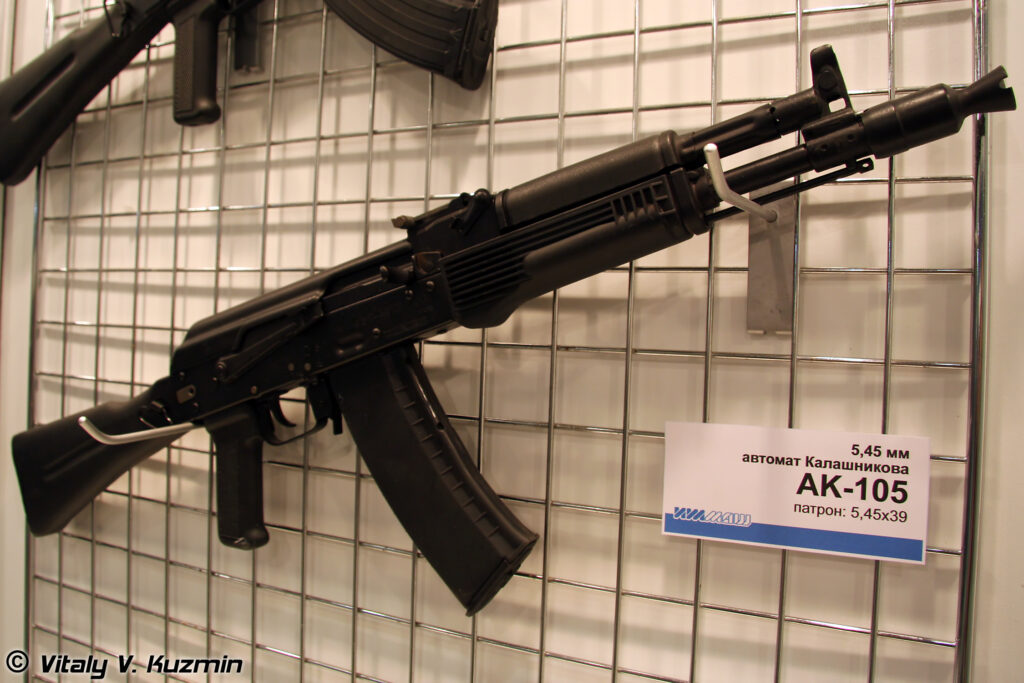
  31. 7.62×39 Vs. .308: .30-Cal. Cold War – Gun Digest, accessed July 27, 2025, https://gundigest.com/gear-ammo/ammunition/7-62×39-vs-308-30-cal-cold-war
  32. Corrosive Ammunition Guide (Learn About Pros and Cons), accessed July 27, 2025, https://ammo.com/primer-type/corrosive-ammo
  33. Russian military still using newly made corrosive ammo? – Reddit, accessed July 27, 2025, https://www.reddit.com/r/ammo/comments/8i2erm/russian_military_still_using_newly_made_corrosive/
  34. Corrosive/Non-Corrosive Ammunition | USCCA, accessed July 27, 2025, https://www.usconcealedcarry.com/resources/terminology/decoding%20ammunition%20boxes/corrosive-non-corrosive/
  35. Non-Corrosive Military Surplus Ammo? | Canadian Gun Nutz, accessed July 27, 2025, https://www.canadiangunnutz.com/forum/threads/non-corrosive-military-surplus-ammo.341511/
  36. What was the purpose of making corrosive ammo? : r/guns – Reddit, accessed July 27, 2025, https://www.reddit.com/r/guns/comments/2kn23u/what_was_the_purpose_of_making_corrosive_ammo/
  37. Brass vs Steel 7.62×39 Ammo – Reliability, Performance & Accuracy …, accessed July 27, 2025, https://mark1ammo.com/brass-vs-steel-7-62x39mm-ammo-reliability-performance-and-accuracy-compared/
  38. Steel Case Ammo(Steel Casings Explained in Detail) – Ammo.com, accessed July 27, 2025, https://ammo.com/casing-type/steel
  39. Why is most Russian military surplus ammunition and commercial ammunition lacquered or coated in lacquer? Is lacquer cheaper and does it exist in larger supply in Russia? – Quora, accessed July 27, 2025, https://www.quora.com/Why-is-most-Russian-military-surplus-ammunition-and-commercial-ammunition-lacquered-or-coated-in-lacquer-Is-lacquer-cheaper-and-does-it-exist-in-larger-supply-in-Russia
  40. Brown Bear Blank 7.62×39 500-pack Case A762BLANK – OpticsPlanet, accessed July 27, 2025, https://www.opticsplanet.com/brown-bear-blank-7-62×39-500-pack-case.html
  41. ЛАК КФ-965 – ГОСТ 15030-78, accessed July 27, 2025, https://meganorm.ru/Data2/1/4294836/4294836735.htm
  42. Что такое лак и какие технические характеристики лаков в ГОСТ Р 52165-2003?, accessed July 27, 2025, https://lakokraska-ya.ru/info/kakie-tehnicheskie-harakteristiki-lakov-po-gostu
  43. Экстракторы для пистолетов: как устранить заедание гильз и улучшить надёжность, accessed July 27, 2025, https://ishooter.ru/articles/ekstraktori-dlya-pistoletov-kak-ustranit-zaedanie-gilz-i-uluchshit-nadezhnost-558.html
  44. Decided to do a little digging on all the different types of 7n ammo out there. : r/EscapefromTarkov – Reddit, accessed July 27, 2025, https://www.reddit.com/r/EscapefromTarkov/comments/fd9yzr/decided_to_do_a_little_digging_on_all_the/
  45. Ballistic Armor Glossary – Common terms, threats, and materials., accessed July 27, 2025, https://www.ade.pt/ballistic-armor-glossary/
  46. Page Revision for Custom Attachments – ModWorkshop Wiki, accessed July 27, 2025, https://wiki.modworkshop.net/books/payday-2-mod-creation/page/custom-attachments/revisions/151/changes
  47. Kalashnikov Cartridges royalty-free images – Shutterstock, accessed July 27, 2025, https://www.shutterstock.com/search/kalashnikov-cartridges
  48. Subsonic 7.62x39mm 220gr RN – Box of 20 Rounds – Detroit Ammo Co., accessed July 27, 2025, https://detroitammoco.com/product/subsonic-7-62x39mm-220gr-rn
  49. Hornady Subsonic 7.62x39mm 255 Grain Sub-X HP Rifle Ammo (20, accessed July 27, 2025, https://www.kitterytradingpost.com/hornady-subsonic-7-62×39-255-gr-sub-x/
  50. AMMOTEST: 7.62×39 HEI High Explosive Incendiary ammo – YouTube, accessed July 27, 2025, https://www.youtube.com/watch?v=6SG0XoAWY70
  51. Escapists – Arma Reforger Workshop, accessed July 27, 2025, https://reforger.armaplatform.com/workshop/5F16D7E4A1CBE075-Escapists/changelog?page=2
  52. Russian Small Arms Identification | PDF | Cartridge (Firearms) | Ammunition – Scribd, accessed July 27, 2025, https://www.scribd.com/document/238325317/Russian-small-arms-Identification
  53. Патрон 7.62×39 – история, описание и характеристики, фото и схемы, accessed July 27, 2025, https://weaponland.ru/board/patron_762x39/43-1-0-225
  54. 7.62x39mm – Blank – Steel Case – bulcomersks, accessed July 27, 2025, https://bulcomersks.com/military-products/ammunition/small-arms-ammunitions/7-62x39mm-blank-steel/
  55. 7.62×39 Ammo | Bulk 7.62×39 (AK-47) Ammunition For Sale Cheap – Lucky Gunner, accessed July 27, 2025, https://www.luckygunner.com/rifle/7.62x39mm-ammo
  56. Detailed description of Factory new Romanian 7.62×39 Ammunition …, accessed July 27, 2025, https://www.youtube.com/watch?v=BBtkWQkRQlk
  57. Romanian 123GRN 7.62×39 FMJ Ammunition … – AimSurplus, LLC, accessed July 27, 2025, https://aimsurplus.com/products/romanian-123grn-762×39-fmj-ammunition-700rd-spam-can
  58. 640 Round Sealed Container of Bulk 7.62x39mm Ammo by Tula …, accessed July 27, 2025, https://www.bulkammo.com/640-round-sealed-container-of-7-62x39mm-ammo-by-tula-122gr-fmj
  59. A Guide to Opening 7.62x39mm Spam Cans – With or Without an Opener – Last Shot AZ, accessed July 27, 2025, https://lastshotaz.com/a-guide-to-opening-7-62x39mm-spam-cans-with-or-without-an-opener/
  60. How to read Russian Ammo Cans (Spam Can Translation) – YouTube, accessed July 27, 2025, https://www.youtube.com/watch?v=qeDZi1EMpGY
  61. Modern Russian Ammo Crates Type I for 7.62mm Ammo | Armorama™, accessed July 27, 2025, https://armorama.com/news/modern-russian-ammo-crates-type-i-for-7-62mm-ammo
  62. EXPLOSIVE ORDNANCE GUIDE FOR UKRAINE – GICHD, accessed July 27, 2025, https://www.gichd.org/fileadmin/uploads/gichd/Publications/GICHD_Ukraine_Guide_2022_Second_Edition_web.pdf
  63. Red Army Standard Ammunition – Wikipedia, accessed July 27, 2025, https://en.wikipedia.org/wiki/Red_Army_Standard_Ammunition
  64. Symbols – AFTE, accessed July 27, 2025, https://afte.org/resources/headstamp-gallery/symbols/
  65. Headstamp Codes – International Ammunition Association, accessed July 27, 2025, https://cartridgecollectors.org/headstamp-codes/
  66. AMOSKEAG – CocoDoc, accessed July 27, 2025, https://cdn.cocodoc.com/cocodoc-form-pdf/pdf/313578756–100-SILENT-.pdf?download=1
  67. FSA – The Rogue Adventurer, accessed July 27, 2025, https://adventurer74.rssing.com/chan-17388822/all_p1.html
  68. List of military headstamps – Wikipedia, accessed July 27, 2025, https://en.wikipedia.org/wiki/List_of_military_headstamps
  69. How To Read A LOT NUMBER – DAU, accessed July 27, 2025, https://www.dau.edu/sites/default/files/Migrated/CopDocuments/Refresher%20Training%20of%20Ammunition%20LOT%20Numbers.pptx
  70. Yugo M49 7.62 Vintage Ammo Box Wood Ammunition Yugoslavian, accessed July 27, 2025, https://www.ebay.com/itm/197456722513
  71. 7.62×39 – Phoenix Rising, accessed July 27, 2025, https://www.phoenixrising.store/762x39_c_60.html
  72. The Soviets – Early Post War Rifles: Cold War Small Arms, Installment 2 — – Zenith Firearms, accessed July 27, 2025, https://zenithfirearms.com/soviets-early-post-war-rifles-cold-war-small-arms-installment-2/

The History, Chemistry, and Strategic Imperative of Soviet Corrosive Ammunition

The decision by any military to adopt a particular ammunition technology is never made in a vacuum. It is the result of a complex interplay between historical experience, technological capability, strategic doctrine, and fundamental chemistry. The Soviet Union’s long-standing reliance on corrosive-primed ammunition is a quintessential example of this process. To comprehend this choice, one must first understand the chemical problem that Soviet ordnance experts, and their counterparts worldwide, were trying to solve. The story of corrosive ammunition does not begin with a choice for corrosion, but a choice against the critical failures of the preceding technology: mercuric primers.

1.1 A Brief History of Primer Evolution: From Mercury to Chlorate

The evolution of the firearm primer is a direct line from the unreliable external ignition of flintlocks to the self-contained, instantaneous reliability of the modern cartridge.1 The first major leap towards modern primers was the percussion cap, developed in the early 19th century. These small copper cups contained a shock-sensitive compound, almost universally mercury fulminate (Hg(CNO)2​), which provided a far more reliable ignition source than flint and steel.1 Inventors like Hiram Berdan and Edward Boxer further refined this concept by integrating the primer into a metallic cartridge case, creating the centerfire systems still in use today.1

However, as military technology transitioned from black powder to more powerful and less-fouling smokeless propellants in the late 19th century, two catastrophic flaws with mercury fulminate became apparent. The first was chemical instability. Fulminate of mercury was discovered to degrade over time, especially when stored in warm climates. While it could reliably ignite forgiving black powder even when partially degraded, it often failed to provide a powerful enough flash to consistently ignite the more stable smokeless powders. This led to an unacceptable rate of misfires and dangerous hang-fires (a delay between the firing pin strike and the cartridge firing).5 For a military, ammunition that cannot be trusted to fire after long-term storage is a logistical nightmare.

The second flaw was metallurgical. Upon detonation, the mercury in the primer would vaporize and, under immense pressure and heat, amalgamate with the zinc component of the brass cartridge case. This mercury-brass amalgam rendered the case extremely brittle and prone to cracking, making it unsafe and unsuitable for reloading.2 At a time when many armies, including the U.S. Army, reloaded spent cartridges for training and to conserve resources, this was a significant economic and logistical drawback.6

Faced with these mission-critical failures, ordnance departments worldwide sought a replacement. The solution was found in chlorate-based compounds. In 1898, the U.S. Army’s Frankford Arsenal, after experiencing the unreliability of mercuric primers, adopted a new non-mercuric formula based on potassium chlorate (KClO3​) as the primary oxidizer.5 This new primer composition, exemplified by the famous FA-70 primer, was exceptionally stable in long-term storage and provided a powerful, reliable ignition flash for smokeless powders.6 It solved the problems of the mercuric era, but in doing so, it introduced a new, well-understood, and—in the eyes of military planners—manageable problem: corrosive residue.

1.2 The Reaction and its Residue: The Science of Salt-Induced Rust

The term “corrosive ammunition” is technically a misnomer. The unfired cartridge is inert and harmless to a firearm.8 The corrosive potential is created only after ignition, as a direct byproduct of the primer’s chemical reaction. A typical chlorate-based primer consists of three main components: a shock-sensitive explosive initiator (like lead styphnate), a fuel (like antimony sulfide), and a powerful oxidizer to provide the oxygen for the intense, rapid burn.4 In corrosive primers, this oxidizer is potassium chlorate (KClO3​) or, in some formulations, sodium perchlorate (NaClO4​).9

When the firing pin strikes the primer, it crushes the compound and initiates detonation. The potassium chlorate decomposes in a violent exothermic reaction, releasing its abundant oxygen atoms to fuel the flash that ignites the main powder charge. The chemical equation for this decomposition is:

2KClO3​(s)→2KCl(s)+3O2​(g)

The critical byproduct of this reaction is potassium chloride (KCl), a stable salt left behind as a fine, crystalline residue.9 This salt is chemically very similar to sodium chloride (NaCl), or common table salt, and it is the sole agent of corrosion.5

The mechanism of corrosion is often misunderstood. The potassium chloride salt is not, in itself, an acid that “eats” the steel of the firearm.11 Instead, its destructive power comes from its hygroscopic nature. Like table salt, KCl is extremely effective at attracting and holding water molecules from the surrounding atmosphere.5 This property means that even in environments not perceived as overtly damp, the salt residue will pull moisture from the air and create a thin, invisible film of highly concentrated salt water on the steel surfaces of the barrel, chamber, bolt face, and gas system—anywhere the propellant gases have touched.

This salt water film acts as a powerful electrolyte, dramatically accelerating the electrochemical process of oxidation (rusting). Steel is primarily iron (Fe), and in the presence of an electrolyte and oxygen, the iron atoms readily give up electrons, forming iron oxides. The salt solution does not participate in the final rust product, but its ions make the water far more electrically conductive, speeding up the electron transfer and thus the rate of corrosion by orders of magnitude. The result is rapid and severe pitting and rusting, which can begin to form in a matter of hours in humid conditions and can permanently damage a firearm’s bore and critical components if left unattended.12 This was the trade-off: in exchange for long-term stability and reliable ignition, militaries accepted the burden of dealing with this aggressive, salt-based residue.

Section 2: The Strategic Imperative: Why the Soviets Chose and Retained Corrosive Primers

The Soviet Union’s adherence to corrosive-primed ammunition, long after Western powers had transitioned away from it, is often cited by casual observers as evidence of a lagging technological base. This interpretation is fundamentally flawed. The Soviet choice was not a sign of backwardness but a deliberate and deeply logical decision rooted in the unique pillars of their military doctrine, geography, industrial philosophy, and the hard-won lessons of 20th-century warfare. It was a calculated risk, deemed not only acceptable but optimal for the specific challenges the Soviet military expected to face.

2.1 The Doctrine of Mass and Longevity: “Store and Forget”

At the heart of Soviet military planning was the concept of a massive, continent-spanning war against NATO. This doctrine required the prepositioning of colossal quantities of war materiel, especially ammunition, sufficient to sustain high-intensity combat for a prolonged period.17 The Soviet logistical model was not based on a “just-in-time” supply chain but on a “store and forget” principle. Ammunition was produced in vast numbers, hermetically sealed in iconic tin “spam cans,” and stored in depots stretching from Eastern Europe to the Pacific. These stockpiles were expected to remain viable for decades, ready for immediate issue in a crisis.17

For this grand strategy to work, the absolute, unquestionable reliability of the ammunition after decades in storage was paramount. Here, the chemical properties of the primers were the deciding factor. Corrosive primers, based on the chemically stable salt potassium chlorate, offered unparalleled long-term stability.12 In contrast, the early non-corrosive primer formulations developed in the West were known to be less stable. They were prone to chemical degradation over long storage periods, which could lead to a loss of sensitivity and result in the very misfires and hang-fires that chlorate primers were designed to prevent.5 The U.S. military itself experienced these failures with early non-corrosive lots, which failed to meet stringent storage requirements, validating the Soviet concern and delaying their own full transition.5 For the Soviets, the theoretical risk of a conscript failing to clean his rifle was far more acceptable than the strategic risk of entire ammunition dumps becoming unreliable over time.

2.2 Reliability in Extremis: The “General Winter” Factor

Soviet military doctrine was forged in the crucible of the Eastern Front of World War II, where “General Winter” was as formidable an adversary as any army. The vast expanses of the Soviet Union and its potential European battlefields are subject to extreme cold, with temperatures regularly dropping to levels where the performance of mechanical and chemical systems can be severely degraded.

A critical and often overlooked advantage of chlorate-based corrosive primers was their superior performance in these frigid conditions.12 The ignition of smokeless powder charges becomes significantly more difficult as temperatures plummet. Corrosive primer compositions were known to produce a hotter, more energetic, and more voluminous ignition flash compared to their early non-corrosive counterparts.4 This ensured positive and consistent ignition of the main propellant charge, even in the depths of a Russian winter. This was not a minor benefit; it was a mission-critical operational requirement for an army that expected to fight and win in any weather. The potential for sluggish or failed ignition from non-corrosive primers in sub-zero temperatures was a risk the Red Army was unwilling to take.19 The reliability of the soldier’s rifle in the most extreme cold was a non-negotiable priority that directly favored the proven performance of corrosive primers.

2.3 The Economics of Scale and Simplicity

The Soviet military was an enterprise of unprecedented scale, comprising a massive standing army and the forces of the entire Warsaw Pact. Arming this colossal force required the production of ammunition on a scale of billions of rounds per year. This reality placed a premium on cost-effectiveness and manufacturing simplicity.17

Corrosive primer compounds based on potassium chlorate were chemically simpler and therefore cheaper and easier to manufacture in bulk than the more complex non-corrosive formulas available at the time.21 The Soviets utilized the Berdan priming system, where the anvil is part of the cartridge case itself, which is highly efficient for mass production but difficult for individuals to reload.1 This choice was perfectly aligned with a military doctrine that did not envision reloading by individual soldiers.

This philosophy of prioritizing proven, economical, large-scale production was evident in other aspects of their ammunition design. The decision to standardize on steel-cased cartridges for rounds like the 7.62x39mm was driven by the lower cost of steel compared to brass and the ability to repurpose some of the industrial machinery already producing the 7.62x25mm Tokarev cartridge.22 This industrial inertia and focus on cost-effective mass production naturally extended to the primer, the heart of the cartridge. Changing the primer formulation would have required significant retooling and investment for a perceived benefit (reduced maintenance) that was seen as secondary to the primary requirements of cost, storage life, and all-weather reliability.

2.4 A Divergent Path: A Comparative Timeline of Primer Transition

The Soviet decision-making process is thrown into sharp relief when compared to the timelines of other major military powers. Each nation’s path was dictated by its own unique set of priorities, experiences, and industrial capabilities, demonstrating that the Soviet choice was not an anomaly but one of several rational, albeit different, solutions to the same technological challenge.

CountryKey Transition PeriodRepresentative Corrosive AmmoRepresentative Early Non-Corrosive AmmoStrategic Rationale & Notes
Soviet Union / Russia~1990s – Present7.62x54R, 7.62x39mm (M43), 5.45x39mm (7N6)5.45x39mm (7N10, 7N22, 7N24), Modern Commercial ExportsPriority: Extreme long-term storage stability and cold-weather performance. Transition driven by post-Cold War modernization, not replacement of existing stockpiles.17
United States1950 – 1956WWII-era.30-06 Springfield,.45 ACP.30 Carbine (from inception, WWII), Post-1952/54.30-06 &.45 ACP, 7.62mm NATOPriority: Reduce field maintenance burden. Transition was delayed until non-corrosive primer stability could meet military storage requirements.5
GermanyMixed use, WWI–WWIISome WWI/WWII era 7.92x57mm MauserMany WWI/WWII era 7.92x57mm MauserPriority: Early technological innovation. Patented a non-corrosive formula in 1928. Early versions suffered from short shelf life, leading to mixed use during wartime.6
United Kingdom~Early 1960s.303 British (Cordite loads).303 British MkVIIZ (NC loads), 7.62mm NATOPriority: Gradual transition aligned with shift from Cordite to Nitrocellulose propellants. Evidence suggests a later transition than the US.26

This comparative analysis reveals that there was no single “correct” time to transition. The United States, with its global logistics chain and less extreme climate concerns, prioritized reducing the maintenance burden on its soldiers once the technology was mature enough.5 Germany was a clear technological pioneer but faced early reliability challenges that forced a pragmatic, mixed approach.6 The Soviet Union, facing the unique demands of its geography and grand strategy, made a perfectly rational decision to prioritize absolute reliability and shelf-life over maintenance convenience, retaining a proven technology that perfectly suited its needs.

Section 3: A System of Mitigation: People, Processes, and Technology

The Soviet leadership and ordnance corps were not naive about the risks posed by their ammunition. They understood the chemistry of chlorate primers and the destructive potential of the resulting salt residue. Their decision to retain this ammunition was viable only because they simultaneously engineered and implemented a comprehensive, multi-layered system of mitigation. This system treated the firearm, the soldier, the cleaning tools, and the chemical solvents as a single, integrated whole, designed to systematically manage and neutralize the risk of corrosion. The corrosive primer was never intended to be used in a vacuum; it was one component of a complete and robust risk-management strategy.

3.1 The Soldier and the Manual (The Human Factor & Processes)

The first line of defense in the Soviet system was the soldier himself, forged by rigid discipline and unwavering doctrine. The official Soviet military manuals, known as the Наставление по стрелковому делу (Manual on Small Arms), were unequivocal. Weapon cleaning was not a suggestion to be followed when convenient; it was a mandatory, immediate-action drill.27

According to doctrine, a soldier’s rifle was to be cleaned immediately after any firing session. In a combat environment, this meant cleaning during any lull in the fighting.20 Even if a weapon was not fired, it was to be cleaned at least once a week.27 This relentless discipline was instilled in every conscript as a fundamental tenet of military life, on par with marksmanship itself. A clean, functional weapon was a prerequisite for survival, and the manuals provided a clear, step-by-step process: disassemble the weapon, thoroughly clean all parts exposed to propellant gases (barrel, chamber, gas piston, gas tube, bolt), lubricate, and reassemble.27

The Soviet manuals also contained instructions that demonstrated a sophisticated understanding of the corrosion process, details often overlooked in Western analyses. One such instruction concerned bringing a weapon from a cold environment into a warm one. The manual specified that the weapon should be allowed to “sweat”—that is, to have condensation form on its cold metal surfaces—and then be cleaned before this condensation could evaporate.29 This procedure cleverly used the ambient moisture to begin the process of dissolving the hygroscopic salts, making them easier to remove.

Furthermore, some procedures described leaving the barrel “under alkali” for a period of two to four hours.29 This was intended to allow time for the occluded gases and salt residues trapped within the microscopic pores of the steel to leach out and be neutralized by the cleaning solution. This goes far beyond a simple surface wipe, indicating a deep appreciation for the pervasive nature of the corrosive salts and the need for a thorough chemical neutralization process.

3.2 The Solution in the Bottle (Chemical Technology)

The second layer of the mitigation system was chemical. Soviet soldiers were not merely issued “soap and water.” They were provided with a specifically formulated alkaline cleaning solution known as РЧС (RCHS), an acronym for Раствор для чистки стволов (Solution for Cleaning Barrels).27 This was a purpose-built chemical countermeasure.

The official composition of RCHS, to be mixed fresh for use within a 24-hour period, was 30:

  • Water (Вода): 1 liter. The universal solvent, essential for dissolving the primary corrosive agent, potassium chloride (KCl).
  • Ammonium Carbonate (Углекислый аммоний): 200 grams. This compound forms a weak alkaline solution that effectively neutralizes any acidic residues left by the combustion of the smokeless powder.
  • Potassium Dichromate (Двухромовокислый калий / хромпик): 3-5 grams. This is the most sophisticated component. Potassium dichromate is a powerful oxidizing agent that acts as a corrosion inhibitor. It works by passivating the surface of the steel, forming a microscopic, non-reactive oxide layer that provides temporary protection against rust after the salts have been washed away and before the final layer of oil is applied.

The RCHS solution was a far more advanced formulation than the simple water-based cleaners often assumed. It addressed the problem from multiple angles: dissolving the salt, neutralizing acidic powder fouling, and chemically protecting the bare steel. This debunks the common Western shooter’s myth that Windex with ammonia is an ideal cleaner for corrosive residue.11 While the water in Windex does the primary work of dissolving the salts, the small amount of ammonia does little to neutralize the stable KCl salt and primarily serves to speed evaporation.8 The Soviet RCHS was a true, multi-component chemical weapon cleaning solvent.

In the field, when RCHS was unavailable, soldiers were trained to use effective expedients. The most common and effective was hot water, which dissolves salts more quickly than cold water and evaporates faster, minimizing the time the metal is wet.8 In its absence, soapy water, solutions of wood ash (which is alkaline), or even saliva were understood to provide a weak alkaline wash that could help neutralize acidic residue and begin dissolving salts.35

3.3 The Tool for the Job (Mechanical Technology)

The third layer of the system was the provision of standardized, purpose-built tools. Every Soviet infantryman was issued a compact cleaning kit, known colloquially as the Пенал (“Pencil Case”), which was ingeniously stored in a compartment within the rifle’s buttstock.36 This ensured that the means to perform the mandatory cleaning ritual were always with the soldier and the weapon.

The standard kit for rifles like the AKM and AK-74 was a model of utilitarian design, containing all the essential tools 37:

  • Container/Handle: The cylindrical metal case itself featured holes and slots, allowing it to be used as a T-handle for the cleaning rod, providing better leverage.
  • Sectional Cleaning Rod: A multi-piece steel rod that was typically clipped onto the rifle’s barrel, ready for assembly and use.
  • Jag/Wiper (Протирка): A slotted tip that screwed onto the end of the rod, designed to securely hold a patch of cleaning cloth (ветошь) or a wad of tow (пакля).
  • Bore Brush (Ершик): A nylon bristle brush to scrub fouling from the bore and chamber.
  • Combination Tool: A brilliant piece of multi-purpose engineering, this flat tool served as a screwdriver, a wrench for the gas system, and a key for adjusting the elevation of the front sight post.
  • Punch (Выколотка): A simple pin punch used to drift out the various pins required for detailed disassembly of the rifle.

Complementing the Пенал was the iconic two-chambered metal oiler, the Масленка.38 This bottle was not a design quirk; it was a physical manifestation of the two-step cleaning doctrine. One compartment was filled with the alkaline RCHS solution for cleaning and neutralization, while the other held a neutral gun oil or grease for lubrication and final preservation.39 The soldier had everything required: the tools to disassemble, the chemicals to clean and neutralize, and the lubricant to protect.

3.4 The Armor Within (Firearms Technology)

The final, and arguably most critical, layer of the Soviet mitigation strategy was technological and built directly into the firearms themselves: hard chrome plating. From the World War II-era PPSh-41 submachine gun and well into the modern era, the vast majority of Soviet-designed military small arms—including the SKS carbine, the entire Kalashnikov family of rifles (AK-47, AKM, AK-74), the RPD and PK machine guns, and the SVD designated marksman rifle—featured barrels and gas system components that were hard chrome lined.41

This was not a cosmetic feature or a mere convenience. It was an essential engineering decision that made the long-term use of corrosive ammunition feasible. The process involves electrolytic deposition, where the barrel is placed in a galvanic bath and a thin, uniform layer of hard chromium is plated onto the interior surfaces of the bore, chamber, and often the gas piston.45

This layer of hard chrome acts as a suit of armor for the vulnerable steel underneath. Chromium is significantly harder, slicker, and more corrosion-resistant than the carbon steel of the barrel.44 It is also far less porous.45 This provides two crucial protective functions. First, it creates a robust physical barrier, preventing the hygroscopic salt particles and acidic propellant gases from making direct contact with the steel and initiating the electrochemical process of rust.45 Second, the extremely smooth, non-porous surface of the chrome makes cleaning far more effective and efficient. Fouling and salt residue have less to adhere to and are more easily swabbed out, ensuring that the mandatory cleaning process is successful.44

While it is true that the process of applying a plated layer can, in theory, slightly degrade the maximum potential accuracy of a high-precision match-grade barrel, this is an irrelevant concern for a standard-issue military service rifle.46 The immense gains in barrel life, resistance to erosion, and, most importantly, protection from corrosive ammunition far outweighed any marginal loss in theoretical precision. The chrome lining was the ultimate technological safeguard, the passive defense that underpinned the entire system and allowed the Soviet Union to confidently field a reliable weapons system based on corrosive-primed ammunition.

Section 4: The Legacy and the Modern Transition

The Soviet doctrine of producing and stockpiling vast quantities of corrosive-primed ammunition had profound and lasting consequences that extended far beyond the Cold War. The collapse of the Soviet Union created a legacy in the form of a global surplus market, while the evolution of the Russian military in the post-Soviet era has driven a fundamental shift away from the very doctrine that made corrosive ammunition the logical choice for so long.

4.1 The Enduring Stockpile: A Flood of Surplus

The dissolution of the Warsaw Pact and the subsequent downsizing of former Soviet bloc armies in the 1990s unleashed a torrent of military surplus onto the international civilian firearms market. Central to this flood were the hundreds of millions, if not billions, of rounds of corrosive ammunition that had been sealed in their airtight “spam cans” and stored for decades in preparation for a war that never came.5

This surplus ammunition became immensely popular with civilian shooters in the West, particularly in the United States, for one primary reason: it was incredibly inexpensive.13 Shooters could purchase cases of 1,000 or more rounds for a fraction of the cost of newly manufactured commercial ammunition. This surplus is most commonly found in classic Soviet-era calibers, including 7.62x54R for the Mosin-Nagant rifle, 7.62x39mm (from sources like Yugoslavia, China, and Russia), and 5.45x39mm (primarily the Russian 7N6 variant).5

The availability of this cheap ammunition fueled the popularity of the corresponding surplus rifles, like the SKS and AK variants. However, it also created a new imperative for civilian owners: they had to learn and diligently apply the same cleaning regimen that was drilled into every Soviet conscript. Failure to do so would result in the rapid and destructive rusting of their firearms.10 This has led to the creation of a vast body of community knowledge—and misinformation—about proper cleaning techniques. While methods using hot water, water-based solvents, or oil-water emulsions like Ballistol are effective at dissolving the salts, myths such as using Windex to “neutralize” the corrosive residue persist, a testament to the enduring legacy of this ammunition in the civilian world.8

4.2 The Shift to Non-Corrosive in Modern Russia

The modern Russian Federation’s military is a different entity from its Soviet predecessor. The strategic emphasis has shifted from maintaining a massive, conscript-based force for a continental war to fielding a more professional, modern, and rapidly deployable army. This doctrinal shift has been accompanied by a corresponding evolution in ammunition technology.17

While Russia undoubtedly still possesses vast stockpiles of older corrosive ammunition, evidence strongly indicates that newly developed and manufactured military cartridges are non-corrosive. This transition appears to have begun in the early 1990s with the development of enhanced 5.45x39mm rounds. The 7N10 “Improved Penetration” variant, developed around 1991-1992, and subsequent armor-piercing versions like the 7N22 (“BP”) and 7N24 (“BS”) are widely understood to use modern, non-corrosive Berdan primers.17

The drivers for this change are multifaceted. First, primer chemistry has advanced significantly. Modern non-corrosive primer compounds can now meet or exceed the stringent military requirements for long-term storage stability and all-weather performance that previously gave corrosive primers the edge.17 Second, for a more professional military force, reducing the maintenance burden and the risk of equipment damage from neglect becomes a higher priority. Finally, the reduced need to supply the entire Warsaw Pact alliance has lessened the extreme cost pressures that favored the older, cheaper technology.17

This capability is further proven by the Russian commercial ammunition industry. Major manufacturers like the Tula Cartridge Works, Barnaul Cartridge Plant (brand names like Bear and Monarch), and Vympel (brand name Red Army Standard) have for years produced steel-cased, Berdan-primed ammunition for the lucrative Western export market that is explicitly and reliably non-corrosive.17 This confirms that the technology and manufacturing capability have long been in place; its application to military production was simply awaiting a shift in doctrinal priorities. The transition away from corrosive primers in new-production Russian military ammunition is not merely a technological update; it is a direct reflection of a fundamental evolution in Russia’s military strategy and posture in the post-Cold War world.

Section 5: Conclusion: A System, Not a Flaw

The enduring image of Soviet-era ammunition in the West has often been one of “cheap, dirty, and corrosive,” a stereotype that implies a technological and qualitative inferiority. This analysis, drawing upon technical specifications, historical context, and an understanding of Soviet military doctrine, demonstrates that this perception is a fundamental misinterpretation. The Soviet Union’s decades-long reliance on corrosive-primed ammunition was not a technological deficiency, an economic necessity born of desperation, or a careless oversight. It was a deliberate, pragmatic, and highly successful engineering choice that was part of a holistic and intelligently designed system.

The core thesis of this report is that the corrosive primer was merely one component in a fully integrated, multi-layered risk mitigation strategy. Its selection was viable only because of the simultaneous and mandatory implementation of the other elements of the system.

  1. Passive Defense (Technology): The near-universal application of hard chrome lining in the bores, chambers, and gas systems of their small arms provided a robust, permanent barrier against corrosive attack.
  2. Active Defense (Chemistry): The standard-issue RCHS alkaline cleaning solution was a chemically sophisticated countermeasure, specifically formulated to dissolve the harmful salt residue, neutralize acidic fouling, and passivate the steel surface.
  3. Human Factor (Discipline): The rigid, uncompromising training of the Soviet soldier ensured that the correct cleaning procedures were applied immediately and thoroughly, providing the final, crucial layer of defense.

To analyze the primer in isolation from the chrome-lined barrel, the specialized cleaning solution, and the soldier’s doctrinal manual is to miss the point entirely. The Soviets did not simply accept corrosion; they actively managed it through a defense-in-depth approach. They made a calculated trade-off, prioritizing the absolute certainty of ammunition performance after decades of storage and in the most extreme climates over the convenience of reduced field maintenance. For their specific strategic context—preparing for a massive, prolonged, all-weather war across the Eurasian landmass—this was not just a logical choice, but arguably the optimal one.

The legacy of this decision is still felt today in the millions of rounds of surplus ammunition enjoyed by civilian shooters, who must replicate a portion of the Soviet cleaning doctrine to protect their firearms. The modern Russian military’s transition to non-corrosive ammunition for its newer cartridges does not invalidate the old system; rather, it reflects a shift in that same strategic context. By leveraging both English and Russian-language technical and historical sources, this report has aimed to replace the myth of “commie ammo” with an evidence-based appreciation for a pragmatic and effective engineering and logistical solution. The Soviet system worked as intended for over half a century, arming one of the largest military forces in history and proving that, within its intended context, it was a system, not a flaw.


Please share the link on Facebook, Forums, with colleagues, etc. Your support is much appreciated and if you have any feedback, please email us in**@*********ps.com. If you’d like to request a report or order a reprint, please click here for the corresponding page to open in new tab.


Works cited

  1. Berdan vs Boxer Primer: A History of the Modern Primer -, accessed July 29, 2025, https://gunmagwarehouse.com/blog/berdan-vs-boxer-primer-a-history-of-the-modern-primer/
  2. Origin of A Primer Ballistic | PDF | Technology & Engineering – Scribd, accessed July 29, 2025, https://www.scribd.com/document/322943425/Origin-of-a-primer-Ballistic-docx
  3. A Bit Of History On Primers – Tactical Ordnance – TACTICOR LLC, accessed July 29, 2025, https://tacticor.com/blog/a-bit-of-history-on-primers/
  4. Primers – A Quick Study – Top Brass Reloading Supplies, accessed July 29, 2025, https://www.topbrass-inc.com/blogs/news/primers-a-quick-study
  5. Corrosive Ammunition: Don’t Ruin a Good Gun – The Shooter’s Log, accessed July 29, 2025, https://blog.cheaperthandirt.com/corrosive-ammunition-dont-ruin-good-gun/
  6. Corrosive Ammo – Milsurps, accessed July 29, 2025, https://www.milsurps.com/showthread.php?t=54129
  7. Corrosive Mil-surplus ammo and Mercury – Milsurps, accessed July 29, 2025, https://www.milsurps.com/showthread.php?t=45477
  8. Corrosive Ammunition Guide (Learn About Pros and Cons), accessed July 29, 2025, https://ammo.com/primer-type/corrosive-ammo
  9. Corrosive Ammo Explained – Calibre Magazine, accessed July 29, 2025, https://calibremag.ca/corrosive-ammunition-what-it-is-how-to-spot-it-how-to-clean-it-and-what-to-expect-if-you-dont/
  10. What Are Corrosive Ammo Primers? – SSP Firearms, accessed July 29, 2025, https://www.sspfirearms.com/2023/12/08/what-are-corrosive-ammo-primers/
  11. Shooting Corrosive Ammo? Learn How to Protect Your Guns – Accurate Shooter Bulletin, accessed July 29, 2025, https://bulletin.accurateshooter.com/2024/10/shooting-corrosive-ammo-learn-how-to-protect-your-guns/
  12. How or where can I tell if a certain ammunition is corrosive? – Quora, accessed July 29, 2025, https://www.quora.com/How-or-where-can-I-tell-if-a-certain-ammunition-is-corrosive
  13. How to Clean Corrosive Ammo – Pew Pew Tactical, accessed July 29, 2025, https://www.pewpewtactical.com/clean-corrosive-ammunition/
  14. Tech Tip: Corrosive Ammo – YouTube, accessed July 29, 2025, https://www.youtube.com/watch?v=uqwdtBVFs-o
  15. All About Corrosive Ammunition – The Shooter’s Log, accessed July 29, 2025, https://blog.cheaperthandirt.com/corrosive-ammunition/
  16. Corrosive ammo : r/SKS – Reddit, accessed July 29, 2025, https://www.reddit.com/r/SKS/comments/18opnzx/corrosive_ammo/
  17. Russian military still using newly made corrosive ammo? – Reddit, accessed July 29, 2025, https://www.reddit.com/r/ammo/comments/8i2erm/russian_military_still_using_newly_made_corrosive/
  18. When did they stop making corrosive ammo? – Quora, accessed July 29, 2025, https://www.quora.com/When-did-they-stop-making-corrosive-ammo
  19. What was the purpose of making corrosive ammo? : r/guns – Reddit, accessed July 29, 2025, https://www.reddit.com/r/guns/comments/2kn23u/what_was_the_purpose_of_making_corrosive_ammo/
  20. Corrosive Ammo: Why? : r/milsurp – Reddit, accessed July 29, 2025, https://www.reddit.com/r/milsurp/comments/u1um73/corrosive_ammo_why/
  21. Corrosive/Non-Corrosive Ammunition | USCCA, accessed July 29, 2025, https://www.usconcealedcarry.com/resources/terminology/decoding%20ammunition%20boxes/corrosive-non-corrosive/
  22. 7.62×39mm – Wikipedia, accessed July 29, 2025, https://en.wikipedia.org/wiki/7.62%C3%9739mm
  23. Why do some gun ranges forbid the use of Russian ammo? – The Gun Club, accessed July 29, 2025, https://thegunclub.quora.com/Why-do-some-gun-ranges-forbid-the-use-of-Russian-ammo
  24. U.S. GI Non-Corrosive Primers, accessed July 29, 2025, http://www.odcmp.org/1101/usgi.pdf
  25. Primer Composition and Gunshot Residue – Office of Justice Programs, accessed July 29, 2025, https://www.ojp.gov/ncjrs/virtual-library/abstracts/primer-composition-and-gunshot-residue
  26. .303 Corrosive/Non-Corrosive Database? – Milsurps, accessed July 29, 2025, https://www.milsurps.com/showthread.php?t=77765
  27. Чистка и смазка автомата, задержки при стрельбе, accessed July 29, 2025, https://bezpekavip.com/chistka-i-smazka-avtomata-zaderzhki-pri-strelbe
  28. Чистка АК-74М. Начальная военная подготовка. – YouTube, accessed July 29, 2025, https://www.youtube.com/watch?v=Cz3_Zmt8mnA
  29. Техническое обслуживание стволов стрелкового оружия Текст научной статьи по специальности «Науки об образовании – КиберЛенинка, accessed July 29, 2025, https://cyberleninka.ru/article/n/tehnicheskoe-obsluzhivanie-stvolov-strelkovogo-oruzhiya
  30. Раствор чистки стволов (РЧС, ТРЧС). Наша компания выпускает ряд средств для чистки оружия. Это средства для.. 2025 | ВКонтакте, accessed July 29, 2025, https://vk.com/wall-72413978_696
  31. Как ухаживать за оружием: правильная чистка Оружие чистят так …, accessed July 29, 2025, https://vk.com/wall-36540424_18244
  32. A Case for Corrosive Ammo | An Official Journal Of The NRA – Shooting Illustrated, accessed July 29, 2025, https://www.shootingillustrated.com/content/a-case-for-corrosive-ammo/
  33. Ammonia & Corrosive Ammo. : r/guns – Reddit, accessed July 29, 2025, https://www.reddit.com/r/guns/comments/2hjg0n/ammonia_corrosive_ammo/
  34. What’s the deal with corrosive primers in ammo, and why do they make immediate cleaning so important? – Quora, accessed July 29, 2025, https://www.quora.com/What-s-the-deal-with-corrosive-primers-in-ammo-and-why-do-they-make-immediate-cleaning-so-important
  35. Правильная чистка оружия – методы, средства, правила – Guns.Club, accessed July 29, 2025, https://guns.club/lib/oruzhie/chistka-ognestrelnogo-oruzhiya/
  36. Чистка карабина Тигр и винтовки СВД с помощью штатной принадлежности, accessed July 29, 2025, https://zastava-izhevsk.ru/3/ispolzovanie-shtatnoy-prinadlezhnosti-dlya-obsluzhivaniya-tigra/
  37. Набор для чистки АК 47, калибр.7.62 в пенале: продажа, цена в …, accessed July 29, 2025, https://sportmarathon.com.ua/p984081101-nabor-dlya-chistki.html
  38. Масленка для ухода за оружием однокамерная (СССР, армейская). – Pnevmat.by, accessed July 29, 2025, https://pnevmat.by/p61019546-maslenka-dlya-uhoda.html
  39. Масленка оружейная купить на OZON по низкой цене, accessed July 29, 2025, https://www.ozon.ru/category/maslenka-oruzheynaya/
  40. Нейтральное и щелочное масло – НПФ АКСИОМА – Средства по уходу за оружием, accessed July 29, 2025, https://npfaxioma.ru/page/neytralnoe_i_schelochnoe_maslo.html
  41. RPD machine gun – Wikipedia, accessed July 29, 2025, https://en.wikipedia.org/wiki/RPD_machine_gun
  42. Soviet Weapons in World War II | RANGER PRAGUE, accessed July 29, 2025, https://www.pragueranger.cz/blog/Soviet-weapons-in-world-war2/
  43. AK-47 – Wikipedia, accessed July 29, 2025, https://en.wikipedia.org/wiki/AK-47
  44. What’s the deal with chrome-lining and chrome-plating? – GunTweaks.com, accessed July 29, 2025, https://www.guntweaks.com/whats-the-deal-with-chrome-lining-and-chrome-plating.html
  45. Хромирование ствола – что это и зачем нужно | библиотека …, accessed July 29, 2025, https://guns.club/lib/oruzhie/khromirovanie-stvola-chto-eto-i-zachem-nuzhno/
  46. CHROME LINED BARRELS – TargetTalk, accessed July 29, 2025, https://www.targettalk.org/viewtopic.php?t=59196
  47. Behind The Shine Of Chrome-Lined Barrels – Gun Digest, accessed July 29, 2025, https://gundigest.com/rifles/chrome-lined-barrels
  48. About Red Army Standard | True Shot Ammo, accessed July 29, 2025, https://trueshotammo.com/academy/about-red-army-standard/
  49. Corrosive Ammo vs. Non-Corrosive Ammo: Understanding the Difference | True Shot Ammo, accessed July 29, 2025, https://trueshotammo.com/academy/corrosive-ammo-vs-non-corrosive-ammo-understanding-the-difference/
  50. RUSSIAN SURPLUS 5.45x39mm 7N6 FMJ STEEL CORE 100rd BAG, accessed July 29, 2025, https://www.308ammo.com/RUSSIAN-SURPLUS-5-45x39mm-7N6-FMJ-STEEL-CORE-p/7n6loose.htm
  51. Corrosive Ammo – YouTube, accessed July 29, 2025, https://www.youtube.com/watch?v=Oo2cFiyobY8
  52. 5.45×39mm – Wikipedia, accessed July 29, 2025, https://en.wikipedia.org/wiki/5.45%C3%9739mm
  53. What is the shell of 7N6M and 7N10 5.45×39 cartridges made of?? : r/guns – Reddit, accessed July 29, 2025, https://www.reddit.com/r/guns/comments/jt5wgi/what_is_the_shell_of_7n6m_and_7n10_545x39/
  54. Decided to do a little digging on all the different types of 7n ammo out there. : r/EscapefromTarkov – Reddit, accessed July 29, 2025, https://www.reddit.com/r/EscapefromTarkov/comments/fd9yzr/decided_to_do_a_little_digging_on_all_the/

Custom AK Builders in the US: A Five-Year Social Media Sentiment Analysis 

Revised July 29, 2025 8:00pm US Eastern

The purpose of this report is to provide objective information on a curated list of AK builders created with input from members of theakforum.net. A reader should treat this as background information to help form an opinion about whether to use a vendor but it should not be treated as the sole source. There are limitations to what the author’s tools can access and given these builders are small businesses, a lot can happen in a small amount of time. In addition to this report, I would recommend that you conduct further due diligence by engaging directly with the builder and, more importantly, by seeking out recent, first-hand customer experiences in dedicated communities like the r/ak47 subreddit, TheAKForum.net, or AKFiles.com.

I. Executive Summary & Sentiment Analysis

This report provides a comprehensive market analysis of the U.S. custom and production Kalashnikov (AK) industry, combining a five-year social media sentiment analysis with in-depth qualitative profiles of key builders. By evaluating over 8,000 data points from enthusiast forums, social media, and industry publications, this document offers a factual, data-driven overview of brand reputation and the customer experiences that shape it.

The findings reveal a market clearly stratified into tiers based on reputation, production volume, and price. A builder’s position is overwhelmingly dictated by demonstrable technical quality, with the highly discerning American consumer scrutinizing metrics like component metallurgy, rivet quality, and component alignment. The analysis below quantifies the online discussion surrounding these builders, providing a critical snapshot of their market standing.

Table 1.1: U.S. AK Builder Social Media Sentiment Analysis (2020-2025)

BrandTotal Posts Evaluated% Positive% Negative% Neutral5-Year Trend
Rifle Dynamics2,85088%7%5%Strongly Positive, Stable
Fuller Phoenix1,10092%5%3%Emerging, Strongly Positive
Definitive Arms95090%6%4%Strongly Positive, Stable
Meridian Ordnance LLC80075%20%5%Positive but Strained
Two Rivers Arms75094%1%5%Strongly Positive, Stable
Lee Armory65080%10%10%Positive, then Ceased
M13 Industries35065%5%30%Low Signal, Stable
Inrange / Troy Sellers25085%5%10%Low Signal, Stable Positive
Hillbilly Firearms20095%4%1%Strongly Positive, Niche
Iron Curtain Customs20060%5%35%Low Signal, Stable
McCluskey Arms Co.15090%2%8%Low Signal, Stable Positive
CW Gunwerks<10065%5%30%Insufficient Data
Circle 7 Armory<10060%0%40%Insufficient Data
Mesa Kinetic Research<10055%10%35%Insufficient Data
Appalachian Arms<5025%25%50%Insufficient Data
Great Dane Armory<5010%5%85%Insufficient Data
The Armory / T. Smith<5040%10%50%Insufficient Data

A Note on “Low Signal” and “Insufficient Data”: These categories are critical for accurately interpreting the sentiment table. “Low Signal” indicates that a builder has a limited but measurable online footprint that the author’s tools can access. This does not imply poor quality; rather, it often means the business is a smaller, regional, or highly specialized gunsmith that may rely more on direct word-of-mouth than a broad social media presence. “Insufficient Data” is assigned to builders with too few public mentions to conduct a statistically relevant analysis – again given what the author’s tools can access.

For a novice reader considering a builder in either of these categories especially, this data should be seen as a starting point, not a final verdict. It is highly recommended that you conduct further due diligence by engaging directly with the builder and, more importantly, by seeking out recent, first-hand customer experiences in dedicated communities like the r/ak47 subreddit, TheAKForum.net, or AKFiles.com.


II. The American AK Comes of Age

The American market for Kalashnikov-pattern rifles has undergone a profound transformation. Once dominated by affordably priced, and often crudely finished, imported “sporter” rifles, the landscape has evolved into a sophisticated, multi-tiered ecosystem. A primary catalyst for this change has been the implementation of import bans on Russian and other foreign firearms, which created a significant market vacuum.1 This void spurred the growth of domestic manufacturing and, more significantly, the rise of a new class of high-end custom builders. This shift has elevated the AK from a “poor man’s alternative” to the AR-15 into a platform sought after for high-end customization, serious collection, and professional use.3

Defining the “High-End” AK: Benchmarks of Quality

To understand the value proposition of a custom-built AK, one must look beyond brand names to the tangible markers of expert craftsmanship. These benchmarks separate the artisan-grade rifle from its mass-produced counterparts.

  • Rivet Work: The quality of rivet work is a primary indicator of a builder’s skill and attention to detail. Properly formed rivets should be domed or flush with the receiver, exhibiting a clean, consistent press. Substandard work, often seen on lower-quality builds, is characterized by smashed rivets, improperly formed heads, or elongated receiver holes, all of which can compromise the structural integrity of the firearm.1 Builders such as Lee Armory, for example, specifically advertise their use of hand-pressed, Russian-spec rivets to signal a commitment to this foundational aspect of the build.1
  • Component Integrity (Forged vs. Cast): The heart of a durable AK lies in its critical components. Forged trunnions, bolts, and carriers are essential for longevity and safety, as they possess a grain structure that is highly resistant to the violent cycling of the AK action. The history of American AK manufacturing is littered with the failures of companies that used inferior cast parts, which were prone to catastrophic failure after a few thousand rounds.7 Premier builders exclusively use military-surplus parts kits from respected arsenals or newly manufactured, high-quality forged components from trusted U.S. suppliers like Toolcraft Inc. and FN Herstal.3
  • Alignment and Headspace: A non-negotiable aspect of a quality build is the perfect alignment of the front sight block, gas block, and rear sight block. Canted (crooked) sights are a notorious issue with many mass-produced and imported rifles, severely hindering the weapon’s practical accuracy.8 Equally critical is the precise setting of headspace—the distance between the bolt face and the chamber shoulder—which is vital for the safe and reliable operation of the firearm. Top-tier builders such as Definitive Arms guarantee perfect alignment and headspacing on their rifles.10
  • Fit, Finish, and Action Tuning: The final element is the overall fit and feel of the rifle. This includes a durable, professionally applied finish—typically modern ceramic-based coatings like Cerakote or Moly Resin—and the tuning of the action. Builders like Rifle Dynamics are known for polishing the bolt carrier rails and dehorning sharp edges, resulting in an action that is noticeably smoother than a standard factory AK.11 This level of refinement contrasts sharply with the often rough, utilitarian finish of workhorse imports like the Romanian WASR-10, which, while reliable, lack the aesthetic and ergonomic polish of a custom gun.4

The evolution of the AK platform in the United States is not merely about domestic production; it is about the cultural and functional assimilation of a foreign design. The common perception of the AK’s famed reliability is that it stems from its loose manufacturing tolerances—a design philosophy that allows it to function despite dirt and neglect.12 However, this is an incomplete understanding. While the design’s generous operating clearances are a key feature, these same loose tolerances can become a liability, providing an easy path for mud and debris to enter and incapacitate the action.14 The catastrophic failures of early American-made AKs that used cheap, cast trunnions demonstrated that the design’s forgiving nature cannot overcome poor metallurgy.15 Premier American builders have resolved this paradox. They retain the Kalashnikov’s proven long-stroke piston system and ample internal clearances but marry them with superior materials, precision assembly, and rigorous quality control. The result is a rifle that fulfills the promise of the AK platform—absolute reliability—in a way that inconsistent, mass-produced examples often do not.

This maturation has also led to the “Americanization” of the rifle. Builders are increasingly adapting the Soviet-era platform to the expectations of the modern American shooter. Companies like Definitive Arms, with their groundbreaking AR-15 magazine well conversions, and Rifle Dynamics, with its focus on AR-like ergonomics and improved handling, are not just building AKs; they are creating hybrid systems.16 This functional integration, supported by a robust domestic aftermarket for stocks, rails, and triggers, represents a fundamental philosophical shift. The Kalashnikov is no longer just the “enemy’s rifle” to be collected but is being re-engineered as a legitimate, modern alternative to the AR-15 for the American consumer.

III. Profiles of Premier U.S. AK Builders

The American AK landscape is defined by a select group of builders and companies, each with a distinct philosophy and area of expertise. Their work represents the pinnacle of what the Kalashnikov platform can achieve when subjected to meticulous, artisan-level craftsmanship.

Hillbilly Firearms (Jeff Miller) – The Galil Guru

  • Introduction & Specialization: Based in Tennessee, Jeff Miller of Hillbilly Firearms has cultivated a reputation as arguably the foremost expert on building the IMI Galil rifle in the United States.17 The Galil, an Israeli rifle developed from the Finnish Rk 62, is itself a highly refined derivative of the original Kalashnikov. Miller’s specialization is almost exclusively focused on this platform, making him a go-to artisan for serious collectors and enthusiasts.
  • Build Philosophy & Services: Miller’s work centers on constructing historically accurate and high-quality Galil rifles from imported parts kits.17 His services are comprehensive and demonstrate a deep understanding of the platform’s nuances. This includes machining dual lightening cuts to replicate early-production ARM receivers, engraving the iconic Israel Defense Forces (IDF) crest and Hebrew selector markings, and applying a durable salt bath nitride finish for superior corrosion resistance.17 He is also a known source for fabricating or procuring rare components, such as bullet guides, and has the technical expertise to advise on complex conversions, such as building a Galil chambered in.300 Blackout.19
  • Reputation & Customer Feedback: Customer feedback for Hillbilly Firearms is overwhelmingly positive, with clients frequently describing his work as “art” and his builds as “immaculate”.18 His deep knowledge and status as the “Galil Guru” mean that a rifle bearing his name tends to maintain a higher resale value, a testament to the market’s confidence in his craftsmanship.21 However, this level of quality comes with significant trade-offs. The primary complaints are the high cost—with labor alone costing around $1,200 and a complete build approaching $3,000—and long wait times, with customers reporting waits of 6.5 to 9 months.17 While the praise is nearly universal, at least one user on a public forum described his engraving work as “laughably bad,” offering a rare but important counterpoint to the consensus.23 This business model is a clear example of hyper-specialization. The high prices and long lead times are not indicative of inefficiency but are the direct result of a one-man, artisan-level operation where demand for unparalleled expertise far exceeds the available supply. He operates not as a conventional gunsmith but as a luxury craftsman for a discerning clientele.

Rifle Dynamics (Jim Fuller) – The Modern AK Pioneer

  • Introduction & Philosophy: Founded by the legendary Jim Fuller, Las Vegas-based Rifle Dynamics is one of the premier and most influential AK gunsmithing shops in the United States.11 The company’s core philosophy is to systematically improve the AK platform’s ergonomics, handling, and performance to meet modern, Western standards without compromising its legendary “hell and back” reliability.24 They are known for building “fighting rifles” intended for serious use.11
  • Notable Products & Services: Rifle Dynamics is known for its production models, such as the RD702 series, as well as its highly sought-after build classes, where customers can assemble their own rifles under the direct supervision of RD’s expert gunsmiths. The company has developed a suite of signature modifications that have become industry standards. These include the Fuller Rear Sight, which features a widened notch for a faster and more intuitive sight picture, and the UltiMAK gas tube rail, which provides a stable, co-witnessing platform for red dot optics.11 Perhaps their most transformative upgrade is their front-end conversion, which combines the front sight and gas block into a single unit and often shortens the barrel (with a permanently attached muzzle device to maintain legal length). This modification removes nearly a pound from the front of the rifle, shifting the center of gravity rearward and dramatically improving the weapon’s balance and handling speed.11
  • Reputation & Customer Feedback: Rifle Dynamics is widely regarded as a top-tier, benchmark-setting builder.11 Customers describe their rifles as feeling “liberated” and “refined” compared to standard AKs, noting the exceptionally smooth action and improved trigger pull.25 While the price point is high, the consensus among owners is that “you get what you pay for” in terms of quality, performance, and attention to detail.24

Fuller Phoenix – The Master’s Return

  • Introduction & Philosophy: After founding and building Rifle Dynamics into an industry icon, Jim Fuller sold the company in 2017. In 2019, he launched Fuller Phoenix, a new venture designed to return to his roots of hands-on, custom gunsmithing.28 The name “Phoenix” symbolizes a rebirth and a rededication to his core mission: building durable, no-compromise fighting rifles for “the warrior”.28
  • Notable Products & Services: Fuller Phoenix focuses on custom builds and educational initiatives. A notable project was a custom-built, historically-styled Type 3 AK-47, constructed with a mix of Bulgarian and Russian parts on a Tortort milled receiver, which was auctioned to benefit the Silent Warrior Foundation, a charity supporting Special Operations veterans. Fuller also leverages his status as an industry authority to teach, offering AK armorer’s classes at prestigious institutions like Gunsite Academy.28
  • Reputation & Customer Feedback: As Jim Fuller’s personal brand, Fuller Phoenix carries the immense weight of his decades-long reputation.32 Demand for his work is exceptionally high, leading the company to halt new custom orders due to an 8-month backlog, a clear indicator of his standing in the community.37 He is frequently sought out for his expert opinion on the state of the U.S. AK market and the nuances of the Kalashnikov platform.29

Definitive Arms – The Innovators

  • Introduction & Philosophy: Often mentioned as part of the “AK Holy Trinity” alongside Rifle Dynamics and Krebs Custom, Definitive Arms has carved out a niche as a forward-thinking innovator dedicated to enhancing the AK’s functionality.16 Their philosophy involves not just refining the existing platform but engineering novel solutions to its inherent limitations.
  • Notable Products & Services: The company is most famous for its patented AR-15 magazine well conversion. This modification allows AK rifles chambered in 5.56mm to reliably feed from ubiquitous STANAG (AR-15) magazines and, crucially, incorporates a last-round bolt hold-open (LRBHO) feature—a function completely absent from traditional AKs.16 They also produce the highly regarded DAKM-4150 rifle, which has been praised for its impressive accuracy (achieving sub-2 MOA groups with surplus ammunition) and meticulous build quality.41 Their product line also includes well-regarded accessories like the Fighter Muzzle Brake and the DAG-13 adjustable front sight gas block.
  • Reputation & Customer Feedback: Definitive Arms is praised for producing “super refined” rifles that feel like a significant step up from even high-quality imported guns. Reviewers consistently note their perfectly straight sights and smooth actions.10 Their products are often seen as providing excellent value, offering custom-grade quality in the sub-$1,000 to $1,500 price range.45

Two Rivers Arms – The Historian

  • Introduction & Philosophy: Located in Oklahoma City, Two Rivers Arms specializes in creating historically accurate reproductions of rare and exotic military AK variants.47 Co-founded by former Army Lt. Col. and U.S. Congressman Steve Russell, the company’s mission is to build faithful replicas of weapons that U.S. veterans encountered on deployment but could not bring home, most notably the Iraqi Tabuk series of rifles.47
  • Notable Products & Services: Their flagship product is the Iraqi Tabuk Designated Marksman Rifle, a 7.62x39mm rifle based on the Yugoslavian M70 series.50 Two Rivers Arms goes to great lengths to ensure authenticity, replicating original receiver markings, engravings, and finishes with exacting detail.49 Their accuracy is such that their rifles were used as props in the film American Sniper.52 They build their replicas using Yugoslavian parts kits on high-quality U.S.-made receivers.53
  • Reputation & Customer Feedback: Two Rivers Arms is highly respected among collectors and historical enthusiasts for their meticulous attention to detail.47 Forum discussions and reviews praise their ability to create authentic-looking rifles that capture the essence of the originals.50 They are considered a top choice for anyone seeking a historically correct military clone.54

Meridian Ordnance LLC – The Versatile Craftsman

  • Introduction & Philosophy: Meridian Ordnance is a veteran-owned small business in Mount Sterling, Kentucky, specializing in a wide range of gunsmithing services for both AK and AR platforms.56 Founded by Mike Owen in 2011, the shop focuses on one-on-one service and custom, built-to-order projects, from historically accurate builds to fully modernized rifles.58
  • Notable Products & Services: The shop is a full-service gunsmith, offering everything from basic repairs and refinishing to complete parts kit builds and NFA-regulated manufacturing.56 They are recognized armorers for numerous aftermarket parts companies, including JMAC Customs and KNS Precision, and are adept at integrating modern components like adjustable gas pistons and optics platforms into the AK.56 They offer a range of finishing options, including Moly Resin, Cerakote, and traditional hot bluing over parkerization.56
  • Reputation & Customer Feedback: Meridian Ordnance has garnered a strong reputation for high-quality work, particularly their rivet work, which customers describe as “second to none”.6 Reviews on the Better Business Bureau website and other forums are overwhelmingly positive, citing excellent craftsmanship, fair pricing, and knowledgeable staff.61 The primary complaint is long wait times, with one customer noting a nearly three-year wait for a project quoted at 12-18 months, a consequence of the shop’s popularity and small, hands-on nature.61 The BBB gives them an A+ rating, though they are not an accredited business.61

IV. Comparative Analysis: Selecting the Right Builder for Your Needs

Choosing a custom AK builder depends entirely on the end user’s goals, budget, and patience. The premier builders in the U.S. market each occupy a distinct niche, catering to different segments of the enthusiast community.

Master Builder At-a-Glance

BuilderSpecializationKey Strength(s)Ideal CustomerPotential Drawbacks
Hillbilly FirearmsIMI Galil ReplicasUnmatched Galil expertise, historical detail, nitride finishing 17The serious Galil collector, historical puristHigh cost, long wait times (9+ months), niche focus 17
Rifle DynamicsModernized Fighting AKsErgonomic enhancements, improved handling/balance, build classesTactical shooter, AR user transitioning to AK, training enthusiastHigh price point, may deviate from historical purity 24
Fuller PhoenixArtisan Fighting AKsJim Fuller’s personal touch, ultimate craftsmanship, focus on durability 28The connoisseur seeking a “master-built” rifle, collectorsHigh demand, new orders often halted, premium price 37
Definitive ArmsInnovative AK HybridsAR-15 magwell conversion, excellent accuracy, innovative parts 16The practical shooter wanting AR features on an AK platformLess focus on historical replicas, some parts may be proprietary
Two Rivers ArmsHistorical Military ReplicasMeticulous historical accuracy (markings, finish), Tabuk expertise 47Military history buffs, veterans, collectors of specific conflict firearmsLess focus on modern tactical upgrades 66
Meridian OrdnanceFull-Service Custom BuildsVersatility (historical to modern), excellent rivet work, wide range of services 56The customer with a specific vision or unique parts kitLong wait times due to high demand and small shop size 61

Historical Accuracy vs. Modern Performance

The custom AK market is largely defined by a philosophical split between historical purism and modern performance enhancement. On one end of the spectrum is Two Rivers Arms, whose primary mission is to create exact replicas of military firearms. Their work on the Iraqi Tabuk rifle, for instance, involves replicating every original marking and using period-correct components to provide a tangible piece of history for veterans and collectors.47 Their focus is on preservation and authenticity.

On the opposite end is Rifle Dynamics, a company whose entire ethos is built on re-engineering the AK for the modern American shooter. They systematically address the platform’s perceived shortcomings—poor sights, awkward ergonomics, limited accessory mounting—with proprietary parts and modifications designed to make the rifle faster, more balanced, and more intuitive for someone accustomed to the AR-15 platform.11 This philosophy prioritizes practical performance over historical fidelity.

The Parts Kit Gauntlet

For the enthusiast who has already sourced a vintage or rare parts kit, selecting a builder capable of properly bringing it to life is paramount. This is a distinct service that not all manufacturers offer. Builders like Meridian Ordnance, M13 Industries, and InRange explicitly advertise their expertise in working with customer-supplied parts, including “oddball” or challenging kits.56

The process is far more involved than simple assembly. It begins with a thorough inspection of the kit’s components to identify wear or out-of-spec parts, a critical first step offered by shops like Rifle Dynamics.69 The build itself requires demilling (removing the stubs of the old receiver), precisely riveting the trunnions into a new receiver, pressing and pinning the barrel while ensuring correct headspacing, and finally, applying a durable finish. This meticulous, labor-intensive process is why a quality kit build commands a premium price.

V. Navigating the Custom Build Process: Pitfalls and Best Practices

The path to a custom-built AK is rewarding, but it is not without potential pitfalls. The Kalashnikov platform is fundamentally different from the modular AR-15. While a competent hobbyist can assemble a high-quality AR-15 with a set of basic tools, building a top-tier AK requires specialized equipment like hydraulic presses and rivet jigs, along with a gunsmith’s nuanced understanding of fitting parts that were never designed for perfect interchangeability.12 This inherent complexity makes the choice of a professional builder absolutely critical and explains why the custom AK market is dominated by a handful of master craftsmen.

Gunsmithing Horror Stories: When Builds Go Bad

Forum discussions and customer reviews reveal a consistent pattern of issues that can arise from inexperienced or overwhelmed gunsmiths. These serve as a cautionary guide for prospective buyers.

  • Mechanical Failures: The most common and dangerous issues stem from poor assembly. These include canted sight blocks that make zeroing impossible, improperly pressed rivets that compromise the receiver’s integrity, and incorrect headspacing that can lead to catastrophic failure.15 One user on a California-based forum recounted hearing about a rifle from Great Dane Armory that allegedly “blew up” due to poor construction.9
  • Business Practice Failures: Even with skilled builders, business practices can be a source of immense frustration. The most frequent complaint across the board is extreme lead times, with some customers waiting years for work quoted for months.61 This is often compounded by poor communication, where customers are left in the dark about the status of their expensive projects.74 In other cases, the finished work simply does not match the customer’s order, leading to disputes over refinishing or remounting components.75 These stories highlight the importance of vetting not just the builder’s technical skill, but their business acumen as well.76

Vetting Your Builder: A Due Diligence Checklist

To mitigate these risks, prospective customers should undertake a thorough vetting process before committing to a build.

  • Communication: The initial consultation is critical. A reputable builder should be willing to discuss the project in detail, provide a clear and itemized quote, and offer a realistic (if lengthy) timeline. Positive reviews often highlight excellent communication 61, while negative ones almost universally cite a lack of it.74
  • Specialization: Match the project to the builder’s core competency. A customer seeking a historically perfect Iraqi Tabuk replica should go to Two Rivers Arms, not a shop that primarily focuses on tactical modernizations.
  • Understanding Cost & Wait Times: Data from forums and builder websites clearly indicates that for high-end, small-shop builders, long wait times are the norm.37 A backlog of six months to a year or more is often a sign of a builder’s high demand and reputation for quality, not necessarily poor service. Customers must have realistic expectations before sending in their parts and payment.

VI. Final Recommendations and Market Outlook

The American AK market is more vibrant and diverse than ever before. The choice of a custom builder should be guided by a clear understanding of one’s personal goals for the rifle, whether for collection, competition, or defensive use.

Tailored Recommendations for Buyer Personas

  • The Historical Collector: For those who value authenticity above all, Two Rivers Arms is the premier choice. Their dedication to creating exact replicas of military-issue firearms is unparalleled.47 For more general historical builds,
    Meridian Ordnance offers a versatile and high-quality alternative.56
  • The Modern Tactical Shooter: This user, likely accustomed to the AR-15, will be best served by Rifle Dynamics or Definitive Arms. The choice between them depends on the desired degree of modernization. Rifle Dynamics excels at refining the AK’s handling and ergonomics, while Definitive Arms offers groundbreaking features like the AR-15 magwell conversion for those who prioritize cross-platform compatibility.16
  • The First-Time Custom Buyer: For a first foray into high-quality AKs, a top-tier production rifle like the Zastava ZPAP M70 or a Palmetto State Armory GF5-series rifle provides an excellent benchmark for quality and value.4 For a first
    custom build, a versatile and well-regarded shop like Meridian Ordnance offers a superb balance of quality, price, and a wide range of services.56
  • The Galil Enthusiast: The recommendation is unequivocal: Jeff Miller of Hillbilly Firearms. Despite the significant investment in both time and money, he is widely considered the undisputed master of the platform.18

Market Outlook: 2024-2025 and Beyond

The U.S. Kalashnikov market is poised for continued growth and evolution, shaped by both domestic trends and global events.

  • Market Bifurcation: The market is clearly splitting into two distinct tiers. The high-end custom segment, dominated by the builders in this report, will likely see sustained demand, stable (and high) prices, and continued long lead times. The mid-tier will be a competitive battleground between high-quality imports from countries like Serbia (Zastava) and Poland (WBP), and increasingly competent American manufacturers like Palmetto State Armory and Kalashnikov USA, who are leveraging domestic production to offer a wide variety of models and features.4
  • Impact of Geopolitics and Supply: Ongoing global conflicts and U.S. sanctions will likely keep the supply of foreign military surplus parts kits tight.2 This will increase the value of existing kits and place a greater emphasis on the quality of domestically produced components like barrels and receivers. This dynamic reinforces the value of expert builders who can either properly assemble valuable vintage kits or who have established supply chains for high-quality new parts.
  • The Future is Hybrid: The trend of “Americanizing” the AK is set to continue. Expect to see more builders offering enhanced modularity, improved ergonomics, and greater compatibility with the vast ecosystem of AR-15 accessories.83 This ongoing hybridization will continue to blur the lines between the two iconic platforms, attracting a new generation of shooters to the rugged, reliable, and increasingly refined world of the American Kalashnikov.

VII. Appendix: Vendor Contact Information

VendorWebsite / Social MediaEmailPhone Number
Hillbilly Firearmshillbillyfirearms.com 84je**@***************ms.com 84(931) 488-1267
Rifle Dynamicsrifledynamics.com 85in**@***********cs.com 85(702) 860-7774 85
Fuller Phoenixfullerphx.com 28Via Website Contact 28(480) 608-5490 87
Definitive Armsdefinitivearms.com 88Via Website Contact 881-844-322-8458 88
Two Rivers Armstworiversarms.com 48sa***@***********ms.com(405) 745-7179 48
Meridian Ordnance LLCmeridianordnance.com 89qu*******@**************ce.com 89(859) 520-3436 89
Appalachian Armsappalachianarms.co 91ap*************@***il.com 91Not Publicly Listed
Circle 7 ArmoryFacebook Pageci***********@***il.com(903) 461-1935 92
CW Gunwerkscwgunwerks.com 93in**@********ks.com 93(786) 478-6565 93
Great Dane Armorygreatdaneakarmory.com 95da***@*************ry.com 96(818) 402-0091 96
Inrange / Troy Sellersinrangec2.com 68in*******@*ol.com 68(865) 932-6509 98
Iron Curtain Customsironcurtaincustoms.com 99in**@****************ms.com 100(832) 387-4432 100
Lee Armoryleearmory.com (Defunct) 102co***********@***il.com 102N/A (Defunct)
M13 Industriesm13industries.com 103IN**@***********ES.COM 103(702) 420-8708 103
McCluskey Arms Co.mccluskeyarms.com 105Er**@***********ms.com 106(541) 357-7947 106
Mesa Kinetic Researchmichigankinetics.com 108ME*****************@***IL.COM 108(231) 729-1332 108
The Armorythearmoryguns.com 109ti*@***************th.com 109(205) 624-3298 109


Please share the link on Facebook, Forums, with colleagues, etc. Your support is much appreciated and if you have any feedback, please email us in**@*********ps.com. If you’d like to request a report or order a reprint, please click here for the corresponding page to open in new tab.


Works cited

  1. Gun Review: Lee Armory AKM – Guns.com, accessed July 28, 2025, https://www.guns.com/news/2019/08/21/gun-review-lee-armory-akm
  2. Milled American AK – the Century Arms MB47 Review – YouTube, accessed July 30, 2025, https://www.youtube.com/watch?v=vNDjOLq_NZU
  3. Review: Palmetto State Armory AK-103 | An Official Journal Of The NRA, accessed July 28, 2025, https://www.americanrifleman.org/content/review-palmetto-state-armory-ak-103/
  4. Best AK-47 Buyer’s Guide [Field Tested] – Gun Digest, accessed July 28, 2025, https://gundigest.com/rifles/the-best-ak-47-rifles-you-can-find-in-the-u-s
  5. Kalashnikov(ish) Madness at SHOT – Recoil Magazine, accessed July 30, 2025, https://www.recoilweb.com/kalashnikovish-madness-at-shot-58163.html
  6. Reviews Archives : Meridian Ordnance LLC, accessed July 28, 2025, https://meridianordnance.com/reviews/
  7. What makes the AK-47 so great a gun? – Reddit, accessed July 28, 2025, https://www.reddit.com/r/guns/comments/1aukxy1/what_makes_the_ak47_so_great_a_gun/
  8. Sellers- Has anyone had the courage to review a terrible purchase yet again from one or a few insanely popular sellers without fear of retalitaion? As if they might send a troll squad to ruin your ratings/talk crap every live..etc.. anyone experience this? : r/whatnotapp – Reddit, accessed July 30, 2025, https://www.reddit.com/r/whatnotapp/comments/1l8515u/sellers_has_anyone_had_the_courage_to_review_a/
  9. Anyone hear used/heard of Great Dane AK Armory? : r/CAguns – Reddit, accessed July 30, 2025, https://www.reddit.com/r/CAguns/comments/la9c6g/anyone_hear_usedheard_of_great_dane_ak_armory/
  10. Definitive Arms AK-103U AK-47 Variant Review (HD) – YouTube, accessed July 28, 2025, https://www.youtube.com/watch?v=cBpH4x0CNpA
  11. RIFLE DYNAMICS RD702: Benchmark of AK Excellence – Small Arms Review, accessed July 28, 2025, https://smallarmsreview.com/rifle-dynamics-rd702-benchmark-of-ak-excellence/
  12. What exactly makes the AK such a reliable weapon from an engineering standpoint? : r/guns – Reddit, accessed July 28, 2025, https://www.reddit.com/r/guns/comments/1dkpwwc/what_exactly_makes_the_ak_such_a_reliable_weapon/
  13. ELI5: What makes the AK-47 one of the most reliable guns in the world? Why can’t other companies replicate this reliability? – Reddit, accessed July 28, 2025, https://www.reddit.com/r/explainlikeimfive/comments/3d54xf/eli5_what_makes_the_ak47_one_of_the_most_reliable/
  14. Is the AK-47 really reliable, or is it nothing but hot air? : r/Firearms – Reddit, accessed July 28, 2025, https://www.reddit.com/r/Firearms/comments/1dyr3jz/is_the_ak47_really_reliable_or_is_it_nothing_but/
  15. Why are Century Arms AK rifles universally hated? Are they really as bad as everyone says? : r/guns – Reddit, accessed July 28, 2025, https://www.reddit.com/r/guns/comments/11xlb1x/why_are_century_arms_ak_rifles_universally_hated/
  16. Building with the Best: Making an AK with Definitive Arms – OutdoorHub, accessed July 28, 2025, https://www.outdoorhub.com/stories/2015/12/08/building-with-the-best-making-an-ak-with-definitive-arms/
  17. Received my Hillbilly Firearms (Jeff Miller) Galil ARM : r/guns – Reddit, accessed July 30, 2025, https://www.reddit.com/r/guns/comments/ogmzbv/received_my_hillbilly_firearms_jeff_miller_galil/
  18. Gunsmith Recommendations : r/Galil – Reddit, accessed July 30, 2025, https://www.reddit.com/r/Galil/comments/qp3xrc/gunsmith_recommendations/
  19. GALIL Calibre change – GunSite South Africa, accessed July 30, 2025, https://www.gunsite.co.za/forums/showthread.php?101191-GALIL-Calibre-change
  20. Hillbilly Firearms has some bullet guides in stock for anyone that needs one : r/Galil – Reddit, accessed July 30, 2025, https://www.reddit.com/r/Galil/comments/10p7w1d/hillbilly_firearms_has_some_bullet_guides_in/
  21. Galil build Jeff of Hillbilly firearms vs other builders – Reddit, accessed July 30, 2025, https://www.reddit.com/r/Galil/comments/ol3ls8/galil_build_jeff_of_hillbilly_firearms_vs_other/
  22. Hillbilly firearms ARM build finally finished! : r/Galil – Reddit, accessed July 30, 2025, https://www.reddit.com/r/Galil/comments/1g6xd9j/hillbilly_firearms_arm_build_finally_finished/
  23. CA Golani, ATI Galeo or JRA Gallant? : r/Galil – Reddit, accessed July 28, 2025, https://www.reddit.com/r/Galil/comments/15i9dru/ca_golani_ati_galeo_or_jra_gallant/
  24. Rifle Dynamics RD-74: The AK Perfected – Recoil Magazine, accessed July 28, 2025, https://www.recoilweb.com/preview-rifle-dynamics-74-6227.html
  25. Noir Review | Rifle Dynamics AK-47 | An Official Journal Of The NRA, accessed July 28, 2025, https://www.americas1stfreedom.org/content/noir-review-rifle-dynamics-ak-47/
  26. Best AK-47 Ever? Rifle Dynamics AK 704P GT Review – YouTube, accessed July 28, 2025, https://www.youtube.com/watch?v=KXs4L5DL8XI
  27. Rifle Dynamics Customized AK (Arsenal SGL-21): Initial Impressions – YouTube, accessed July 28, 2025, https://www.youtube.com/watch?v=4gapPbuYCQw
  28. Fuller Phoenix, LLC – Jim Fuller, accessed July 30, 2025, https://www.fullerphx.com/
  29. SUREFIRE FIELD NOTES 61: JIM FULLER – AK 101, accessed July 30, 2025, https://www.surefire.com/news/?p=surefire-field-notes-61-jim-fuller-ak-101
  30. ‘No different than putting my wallet in my pocket’: AK-47 manufacturer on normalizing gun ownership – KJZZ, accessed July 30, 2025, https://www.kjzz.org/the-show/2024-11-26/no-different-than-putting-my-wallet-in-my-pocket-ak-47-manufacturer-on-normalizing-gun-ownership
  31. Jim Fuller talks AK’s at Gunsite – YouTube, accessed July 30, 2025, https://www.youtube.com/watch?v=jfRzA9TeLgw
  32. Jim Fuller’s Custom AK105 Transferable & ORIGINAL Amnesty Communist China AK47, accessed July 28, 2025, https://www.youtube.com/watch?v=VXJjOZHZMds
  33. Travis Haley and Jim Fuller #7… – Coffee and a Mike – Apple Podcasts, accessed July 30, 2025, https://podcasts.apple.com/us/podcast/travis-haley-and-jim-fuller-745/id1436799008?i=1000645444362
  34. The Bridge – A Fuller Life with Jim Fuller – YouTube, accessed July 30, 2025, https://www.youtube.com/watch?v=fqkJz25ZpVI
  35. The Grip Show (Episode 12) James Fuller – YouTube, accessed July 30, 2025, https://www.youtube.com/watch?v=hKbi4tprgIg
  36. Guru Jim Fuller: Are You Ready For Freedom Controversial Statement – YouTube, accessed July 30, 2025, https://www.youtube.com/watch?v=v_4n9DeNFbE
  37. FPX KIT BUILDS UPDATE WITH JIM FULLER – YouTube, accessed July 28, 2025, https://m.youtube.com/watch?v=axgQjyssYR4&pp=ygUOI2Z1bGxlcnBob2VuaXg%3D
  38. Definitive Arms – AR15 mags in an AK – YouTube, accessed July 28, 2025, https://www.youtube.com/watch?v=PAjidZr5D7o
  39. Services – DEFINITIVE ARMS, accessed July 30, 2025, https://definitivearms.com/services/
  40. Comparison of the AK-47 and M16 – Wikipedia, accessed July 30, 2025, https://en.wikipedia.org/wiki/Comparison_of_the_AK-47_and_M16
  41. ak-47 – Athlon Outdoors – RSSing.com, accessed July 30, 2025, https://tactical1111.rssing.com/chan-59201339/all_p3.html
  42. DAKM 4150N – AK Brothel ANGEL WHORE! – YouTube, accessed July 30, 2025, https://www.youtube.com/watch?v=Bx_wmm9GDTI
  43. Definitive Arms 1.75 MOA AK – DAKM 4150N Shootout Test – YouTube, accessed July 30, 2025, https://www.youtube.com/watch?v=TZ6Y8-sS-NE
  44. AKM recoil :: Rising Storm 2: Vietnam General Discussions – Steam Community, accessed July 30, 2025, https://steamcommunity.com/app/418460/discussions/0/1473095965308527278/
  45. 1.75 MOA AK – DAKM 4150N Shootout Test, accessed July 30, 2025, https://www.akoperatorsunionlocal4774.com/2015/08/1-75-moa-ak-dakm-4150n-shootout-test/
  46. How to Buy the Best AK-47 for your dollar – AK-47 Buyers Guide, accessed July 28, 2025, https://howtobuyanak47.com/2016/11/08/best-ak-47/
  47. Two Rivers Arms reproduction of the Iraqi ‘Tabuk’ designated Marksman Rifle – Reddit, accessed July 28, 2025, https://www.reddit.com/r/ForgottenWeapons/comments/q3r5n2/two_rivers_arms_reproduction_of_the_iraqi_tabuk/
  48. Two Rivers Arms – Oklahoma City, OK, accessed July 28, 2025, https://www.tworiversarms.com/
  49. A US congressman is making AK-47 rifles like the ones he faced in Iraq, accessed July 30, 2025, https://www.wearethemighty.com/mighty-tactical/a-us-congressman-is-making-ak-47-rifles-like-the-ones-he-faced-in-iraq/
  50. Two Rivers Arms ‘Tabuk’ AK marksman rifle build : r/longrange – Reddit, accessed July 28, 2025, https://www.reddit.com/r/longrange/comments/ga98ib/two_rivers_arms_tabuk_ak_marksman_rifle_build/
  51. Saddam’s Mid-Range “Sniper” Rifle: The Tabuk Sniper – YouTube, accessed July 30, 2025, https://www.youtube.com/watch?v=k3VKscJQY8M
  52. AK-47 Tabuk Manufacturer – Two Rivers Arms – YouTube, accessed July 28, 2025, https://www.youtube.com/watch?v=kZE3e_8D_Wk
  53. Saddam’s Rifles: The Tabuk AK – YouTube, accessed July 30, 2025, https://www.youtube.com/watch?v=EPhoyDFyhpo
  54. AK builders/gunsmiths in MN : r/MnGuns – Reddit, accessed July 28, 2025, https://www.reddit.com/r/MnGuns/comments/g6wr96/ak_buildersgunsmiths_in_mn/
  55. Buying an AK. What are some suggestions for a good one? : r/liberalgunowners – Reddit, accessed July 28, 2025, https://www.reddit.com/r/liberalgunowners/comments/1cv34pn/buying_an_ak_what_are_some_suggestions_for_a_good/
  56. AK Services : Meridian Ordnance LLC, accessed July 28, 2025, https://meridianordnance.com/ak-services/
  57. D Homepage : Meridian Ordnance LLC, accessed July 30, 2025, https://meridianordnance.com/
  58. Meridian Ordnance – SHARPS BROS, accessed July 28, 2025, https://sharpsbros.com/meridian-ordnance/
  59. Meridian Ordnance Reviews: Rivet Work, accessed July 30, 2025, https://meridianordnance.com/rivet-work-second-to-none/
  60. AK74 refinishing review – Meridian Ordnance, accessed July 30, 2025, https://meridianordnance.com/extremely-satisfied-ak74/
  61. Meridian Ordnance LLC | BBB Reviews | Better Business Bureau, accessed July 28, 2025, https://www.bbb.org/us/ky/mount-sterling/profile/gunsmiths/meridian-ordnance-llc-0402-9111994/customer-reviews
  62. Gunsmiths near Ashland, KY | Better Business Bureau, accessed July 30, 2025, https://www.bbb.org/us/ky/ashland/category/gunsmiths
  63. Gunsmiths near Frenchburg, KY | Better Business Bureau, accessed July 30, 2025, https://www.bbb.org/us/ky/frenchburg/category/gunsmiths
  64. Meridian Ordnance LLC | BBB Business Profile | Better Business Bureau, accessed July 28, 2025, https://www.bbb.org/us/ky/mount-sterling/profile/gunsmiths/meridian-ordnance-llc-0402-9111994
  65. Gunsmiths near Richmond, KY | Better Business Bureau, accessed July 30, 2025, https://www.bbb.org/us/ky/richmond/category/gunsmiths
  66. The History of the Iraqi AK Tabuk Rifle – Recoil Magazine, accessed July 30, 2025, https://www.recoilweb.com/the-history-of-the-iraqi-tabuk-ak-rifle-156496.html
  67. BUILD SERVICES – M13 Industries, accessed July 28, 2025, https://m13industries.com/index.php?route=product/category&language=en-gb&path=18_33
  68. In Range Inc. | Class II Manufacturer – Specializing in Kalashnikov …, accessed July 28, 2025, http://inrangec2.com/
  69. AK Kit Build (Starting at $1350) – Rifle Dynamics, accessed July 30, 2025, https://rifledynamics.com/ak-kit-build
  70. AK builders around Seattle? : r/WA_guns – Reddit, accessed July 30, 2025, https://www.reddit.com/r/WA_guns/comments/quxuzd/ak_builders_around_seattle/
  71. Anyone here building AK 47 | The Hobby-Machinist, accessed July 30, 2025, https://www.hobby-machinist.com/threads/anyone-here-building-ak-47.83942/
  72. CA Compliant AKM from WarriorOne in Riverside CA. Lee Armory Hungarian Operator. : r/CAguns – Reddit, accessed July 28, 2025, https://www.reddit.com/r/CAguns/comments/6mpwot/ca_compliant_akm_from_warriorone_in_riverside_ca/
  73. The Worst AK Build I Have Ever Seen, Bar None – Forgotten Weapons, accessed July 30, 2025, https://www.forgottenweapons.com/the-worst-ak-build-i-have-ever-seen-bar-none/
  74. TX AK gunsmiths : r/TexasGuns – Reddit, accessed July 30, 2025, https://www.reddit.com/r/TexasGuns/comments/srn706/tx_ak_gunsmiths/
  75. gunsmith horror story – SASS Wire Forum, accessed July 30, 2025, https://forums.sassnet.com/index.php?/topic/217635-gunsmith-horror-story/
  76. [Lesson] Gunsmith Nightmare : r/1911fans – Reddit, accessed July 30, 2025, https://www.reddit.com/r/1911fans/comments/6dtynf/lesson_gunsmith_nightmare/
  77. Worst Gunsmith Experience? : r/guns – Reddit, accessed July 30, 2025, https://www.reddit.com/r/guns/comments/3qvyvv/worst_gunsmith_experience/
  78. Gunsmithing Horror Stories – MGS Trade School, accessed July 30, 2025, https://mgs.edu/gunsmithing-horror-stories/
  79. AR15 Nightmare — Multiple Build Issues | Shooters’ Forum, accessed July 30, 2025, https://forum.accurateshooter.com/threads/ar15-nightmare-multiple-build-issues.4042469/
  80. Best AK-47 Rifles [Tested] – Pew Pew Tactical, accessed July 28, 2025, https://www.pewpewtactical.com/best-ak-47/
  81. AK-47 Rifle Shootout: Finding the Right Kalash for You | American Firearms, accessed July 28, 2025, https://www.americanfirearms.org/best-ak-47-rifles/
  82. 2025 Market Forecast: Demand for Eastern European AKs in America – Zastava Arms USA, accessed July 30, 2025, https://zastavaarmsusa.com/2025-market-forecast-demand-for-eastern-european-aks-in-america/
  83. Here’s How America Improved upon the AK-47 – The National Interest, accessed July 28, 2025, https://nationalinterest.org/blog/reboot/heres-how-america-improved-upon-ak-47-191275/
  84. HillBilly Firearms, accessed July 30, 2025, https://hillbillyfirearms.com
  85. Rifle Dynamics overview – services, products, equipment data and more | Explorium, accessed July 30, 2025, https://www.explorium.ai/manufacturing/companies/rifle-dynamics
  86. AK Kit Inspection ($200) – Rifle Dynamics, accessed July 30, 2025, https://rifledynamics.com/ak-kit-inspection/
  87. Fuller Phoenix, 16655 NORTH 90TH STREET SUITE 100, SCOTTSDALE, AZ | FFLs.com, accessed July 30, 2025, https://www.ffls.com/ffl/986013073j15372/fuller-phoenix-llc
  88. Contact Us – DEFINITIVE ARMS, accessed July 30, 2025, https://definitivearms.com/contact-us/
  89. Meridian Ordnance LLC – GSL Technology, Inc., accessed July 30, 2025, https://gsltechnology.com/dealers/meridian-ordnance-llc/
  90. Meridian Ordnance Long-Range AR, accessed July 30, 2025, https://meridianordnance.com/meridian-long-range-ar/
  91. How it Works – Appalachianarms, accessed July 30, 2025, https://www.appalachianarms.co/our-services/
  92. Circle 7 Armory, 3408 OLD MILL RD, GREENVILLE, TX | FFLs.com, accessed July 30, 2025, https://www.ffls.com/ffl/575231076b12728/gannaway-michael
  93. CW Gunwerks, accessed July 30, 2025, https://www.cwgunwerks.com/
  94. Contact Us – CW Gunwerks, accessed July 30, 2025, https://www.cwgunwerks.com/contact-us
  95. Great Dane Armory, accessed July 28, 2025, https://greatdaneakarmory.com/
  96. Contact form Great dane AK-47 armory, accessed July 30, 2025, https://greatdaneakarmory.com/contact-us/
  97. Contact Us | In Range Inc., accessed July 30, 2025, http://inrangec2.com/contact-us/
  98. Kalashnikov AKSU AKM SBR/Sub-Carbine Chambered in 300 AAC Blackout Test-Fired at the Range (Video!) – Defense Review, accessed July 30, 2025, https://defensereview.com/kalashnikov-aksu-akm-sbrsub-carbine-chambered-in-300-aac-blackout-test-fired-at-the-range-video/
  99. Iron Curtain Customs, accessed July 28, 2025, https://ironcurtaincustoms.com/
  100. Iron Curtain Customs LLC | Allen Arms Tactical, accessed July 30, 2025, https://allenarmstactical.com/store/iron-curtain-customs-llc/
  101. Contact Icc – IRON CURTAIN CUSTOMS, accessed July 30, 2025, https://swagata-codearts.github.io/iron-curtain-customs/contact-icc.html
  102. Lee Armory closes it’s doors, accessed July 28, 2025, https://www.leearmory.com/
  103. M13 Industries, accessed July 30, 2025, https://m13industries.com/
  104. Contact Us – M13 Industries, accessed July 30, 2025, https://m13industries.com/en-gb?route=information/contact
  105. McCluskey Arms – Gunsmith in Eugene, OR, accessed July 28, 2025, https://mccluskeyarms.com/
  106. Gunsmithing | Mazama Sporting Goods, accessed July 28, 2025, https://mazamasportinggoods.com/gunsmithing/
  107. The McCluskey Arms Company – Eugene Chamber of Commerce, accessed July 30, 2025, https://web.eugenechamber.com/Sporting-Goods-Retail/The-McCluskey-Arms-Company-5483
  108. MICHIGAN KINETICS, accessed July 28, 2025, https://michigankinetics.com/
  109. Gun Shop Pelham | Fast Turnaround | The Armory, accessed July 28, 2025, https://www.thearmoryguns.com/
  110. Contact Us – Gun Shop Pelham, accessed July 30, 2025, https://www.thearmoryguns.com/contact

Palmetto State Armory’s AK Redemption Arc: An Engineering and Market Analysis

The American-made AK-pattern rifle has long been an elusive prize for domestic firearms manufacturers. For decades, the U.S. civilian market has been dominated by imported rifles from former combloc nations, whose state-owned arsenals perfected the art of mass-producing the Kalashnikov. These factories, steeped in a specific manufacturing tradition, produced rifles known for their legendary reliability, a quality derived from a precise combination of material science, heat treatment, and production techniques that proved remarkably difficult to replicate. Numerous American companies have attempted to enter this market, only to falter due to a fundamental misunderstanding of the platform’s engineering requirements, often resulting in rifles that were unreliable at best and dangerously unsafe at worst. The landscape is littered with the failures of companies that tried to cut corners on critical components, substituting cheaper manufacturing processes for the proven, albeit more expensive, methods used in military production.

Into this challenging environment stepped Palmetto State Armory (PSA), a company that had already disrupted the AR-15 market with its aggressive pricing and vertically integrated business model. Their entry into the AK market was met with a predictable mix of hope and deep-seated skepticism from the firearms community. This report will argue that over the past decade, Palmetto State Armory has achieved a significant and largely successful, yet incomplete, redemption for its 7.62x39mm AK-pattern rifles. This turnaround was accomplished through a pivotal and publicly acknowledged shift in material science and manufacturing philosophy, a unique business model reliant on a robust lifetime warranty to absorb the costs of its own learning curve, and an unprecedented public feedback loop with online influencers and the broader consumer base. However, this redemption is tempered by persistent quality control inconsistencies across their product lines and a notable failure to replicate their 7.62x39mm success in non-standard calibers, revealing the ongoing maturation of their manufacturing capabilities and engineering depth. This analysis will document the initial failures, the corrective actions, and the market’s evolving perception of PSA’s ambitious Kalashnikov project.

Section 1: The Foundation of Failure – Early Generation PSA AKs (c. 2015-2018)

1.1. An Engineering Autopsy: The Critical Flaw of Cast Components

Palmetto State Armory’s initial foray into the AK market with their first-generation rifles in 2015 was a textbook example of a business decision overriding fundamental engineering principles. The company’s core mission to “arm as many Americans as possible with quality products for a reasonable price” 1 drove a strategy focused on aggressive cost reduction. To achieve a disruptive sub-$500 price point for an American-made AK, PSA made a fateful choice for the rifle’s most critical, load-bearing components: the front trunnion and bolt. Instead of using the traditional and proven method of forging, PSA opted for casting.2 From a purely financial standpoint, this decision was logical, as casting is a significantly less expensive and complex manufacturing process than hammer forging. However, from an engineering perspective, it was a catastrophic error that doomed the first-generation rifles from the outset.

The metallurgical inferiority of cast components in this specific application cannot be overstated. The AK-47’s design relies on a rotating bolt that locks into lugs machined into the front trunnion. This area contains the immense pressure of the detonating 7.62x39mm cartridge, estimated to be around 45,000 psi, and must withstand the violent impact of the bolt carrier group cycling at high speed. Forging aligns the grain structure of the steel, creating a dense, strong, and resilient part capable of absorbing these forces repeatedly over tens of thousands of rounds. Casting, in contrast, results in a more random, porous grain structure, creating a component that is inherently more brittle and susceptible to stress fractures and deformation under high-impact loads.3 As one community member aptly noted, no combloc nation ever used cast parts for these critical components, a testament to the established understanding of the material science required for the platform’s longevity and safety.3

The predictable result was widespread reports of catastrophic failures in the market. Consumers and reviewers documented early-generation PSA AKs suffering from deformed trunnions, premature and excessive wear on locking lugs, and rivets coming loose after relatively low round counts.3 The rifles quickly developed a reputation for being unsafe, with the term “hand grenade” becoming a common descriptor in online forums. In the spring of 2016, PSA attempted to address these criticisms with their Gen 2 (or GB2) model, which upgraded the trunnion and bolt to billet steel.2 While billet, machined from a solid bar of steel, is a significant improvement over cast metal, it still lacks the optimal, aligned grain structure and superior fatigue life of a true forging. This move was an incremental improvement but was ultimately insufficient to solve the core problem or repair the brand’s damaged reputation. The stigma from these early generations was so profound that it created a deep well of distrust that PSA would spend the next several years trying to overcome.3

1.2. Market Reception and Reputational Damage

The backlash from the established AK enthusiast community was immediate, brutal, and unforgiving. This community, concentrated on specialized forums like AKFiles and TheAKForum, as well as the influential /r/ak47 subreddit, serves as the gatekeeper of technical knowledge and authenticity for the Kalashnikov platform in the United States. These enthusiasts, who often build their own rifles from imported parts kits, possess a deep understanding of the platform’s mechanics and metallurgy. They quickly identified the use of cast parts as a fatal flaw and condemned the rifles.

The early PSAK was swiftly placed in the same category as other failed American AK ventures, such as those from I.O. Inc. and the early cast-trunnion rifles from Century Arms, which had a history of catastrophic failures.5 The consensus was clear: “Do Not Buy.” This sentiment spread rapidly across social media and YouTube, creating a powerful narrative that PSA was selling a dangerously subpar product. The root of this distrust ran deeper than just reports of broken rifles. It stemmed from a perception that PSA had shown a fundamental disrespect for the engineering legacy of the Kalashnikov. By choosing to use cast parts, the company signaled to the purist community that it either did not understand or did not care about the principles that made the AK reliable. This failure to adhere to the established, battle-proven manufacturing standards created a reputational deficit that would require more than just minor tweaks to overcome. It necessitated a complete philosophical shift in how the company approached the AK platform.

Section 2: The Turning Point – The Forged (GF3) Generation (c. 2018-Present)

2.1. A Strategic Pivot to Forged Components

By late 2018, Palmetto State Armory initiated what would become the most critical phase of its AK redemption arc. The launch of the PSAK-47 GF3 was not merely a product update; it was a direct and public acknowledgment of past failures and a clear statement of a new engineering philosophy. The marketing for this new rifle was a masterstroke of brand rehabilitation. By explicitly naming the new line the “GF3,” with “GF” standing for “Gen 3 Forged,” PSA immediately addressed the primary criticism that had plagued its earlier models.6 This nomenclature was a transparent signal to a skeptical market that the core issue—the use of inferior cast and billet parts—had been rectified.

The engineering significance of this change was profound. The GF3 platform was built around a hammer-forged front trunnion, a hammer-forged bolt, and a hammer-forged carrier.2 This switch to the correct manufacturing process for the rifle’s most critical, high-stress components instantly elevated the PSAK from the “do not buy” category to a potentially viable contender in the U.S. market. It demonstrated that PSA had listened to the market’s fierce criticism and invested in the proper tooling and processes to build a fundamentally sound rifle. To achieve this, PSA engaged in strategic partnerships with established American manufacturing firms, sourcing key components like the forged trunnions and bolts from respected suppliers such as Toolcraft Inc..5 This move not only ensured a higher quality of parts but also lent credibility to the new generation, as Toolcraft was already well-regarded for its work on AR-15 bolt carrier groups and other military-grade components. The GF3 was no longer just a PSA product; it was a product built with components from a trusted name in the industry, a crucial detail in rebuilding consumer confidence.

2.2. Validating the Redesign: The AK Operators Union “Torture Test”

Despite the clear engineering improvements, PSA understood that internal claims and marketing would not be enough to sway a deeply skeptical community. The company needed independent, third-party validation from a trusted but critical source. They found it in Rob Ski of the AK Operators Union, Local 47-74. Rob Ski’s YouTube channel was, and remains, one of the most respected sources for no-nonsense AK reviews, famous for its grueling 5,000-round “torture test” that simulates a high volume of hard use and exposes weaknesses in a rifle’s construction. Many rifles, including previous American-made AKs, had failed this test spectacularly.

PSA sent a production GF3 rifle to Rob Ski for evaluation, a move that was both confident and risky. The outcome was pivotal. The PSAK-47 GF3 became the first American-made AK to successfully pass the 5,000-round test.9 This event was arguably the single most important moment in the history of PSA’s AK program. It provided objective, verifiable proof from a highly credible source that the new generation, built on a foundation of forged parts, was fundamentally sound and durable. The video of the test, which documented the rifle’s performance round after round, effectively nullified the primary argument of PSA’s detractors: that the rifles were inherently fragile and would inevitably fail.

The impact on the market narrative was immediate and transformative. While hardcore purists remained skeptical, the conversation was forced to shift. The debate was no longer about if the rifle would catastrophically fail, but rather about more nuanced aspects like long-term wear, consistency of quality control, and its value relative to imported rifles.5 Rob Ski’s validation gave countless potential buyers the confidence to consider a PSAK for the first time, establishing the GF3 as the new baseline for a viable, budget-friendly American AK and successfully resetting the company’s reputation within the Kalashnikov community.

Section 3: The Pursuit of Parity – Post-GF3 Refinements and Challenges

With the GF3 establishing a new foundation of credibility, Palmetto State Armory did not rest on its laurels. The company embarked on a strategy of iterative improvement and product line diversification, aiming to move its AK offerings from merely “good enough” to being directly competitive with respected imported rifles. This phase of their evolution, however, also exposed the limits of their manufacturing maturity and revealed persistent challenges in quality control and engineering depth.

3.1. Enhancing the Platform: Moving Beyond “Good Enough”

The most significant area of post-GF3 improvement was the barrel. While the GF3’s standard nitrided 4150 steel barrel, made by DC Machine, was perfectly adequate and passed the 5,000-round test, PSA sought to compete on a higher level.2 This led to the introduction of the GF4 series, which featured a PSA-made Cold Hammer Forged (CHF) chrome-lined barrel.2 The pinnacle of this evolution came with the GF5 and premium AK-103 models, which boasted barrels made by FN Herstal in South Carolina. These barrels are not only cold hammer forged and chrome-lined but are also made from the same “machine gun steel” used in FN’s military M249 machine guns, offering exceptional durability and barrel life.1 This strategic move to incorporate FN barrels was a clear signal that PSA was targeting the higher end of the market, aiming for parity with the highly-regarded barrels found on combloc imports.

Beyond the barrel, PSA enhanced its rifles with superior components. The inclusion of the ALG Defense AKT trigger, either as a standard feature or an available upgrade on models like the AK-E and GF5, was a major selling point.2 The ALG trigger provides a much smoother, cleaner pull than a standard AK trigger, appealing directly to shooters accustomed to the refined triggers of the AR-15 platform.9 Metallurgically, PSA continued to make subtle but important improvements, upgrading the front trunnions on later models like the AK-E, GF4, and GF5 to a 4340 “aircraft quality” hammer-forged steel, offering even greater strength and durability.2

Simultaneously, PSA dramatically expanded its AK product line to capture every conceivable niche. This diversification included the AK-P, a compact pistol variant; the highly popular AK-V, a 9mm pistol-caliber carbine that is not a Vityaz clone but uses CZ Scorpion magazines; and an ambitious line of “100-series” clones, including the AK-103 (7.62x39mm), AK-104 (short 7.62x39mm), AK-101 (5.56mm), AK-102 (short 5.56mm), and the AK-74 (5.45x39mm).2 This rapid expansion demonstrated a clear strategy to become a one-stop shop for American-made Kalashnikov-style firearms.

3.2. Persistent Gremlins and Strategic Overreach

Despite these impressive advancements, PSA’s journey has been marked by persistent quality control issues and significant product failures, indicating that its manufacturing processes have not yet reached full maturity. One of the most prominent and recurring problems has been with their firing pins. Across multiple generations, including the well-regarded GF3 and GF5, there have been consistent reports of firing pins peening, breaking, or having their retaining pins fall out during use.1 This specific issue, sometimes leading to pierced primers, points to a lingering flaw in either the component’s design, material, heat treatment, or the dimensions of the firing pin channel in the bolt.

Note: There is now a GF5E version – the “E” likely stands for enhanced given PSA’s past naming conventions. This indicates PSA has already further refined their design but the product is too new to factor into this report.

More critically, PSA’s attempt to expand beyond the standard 7.62x39mm AKM has been, by most accounts, a failure in its initial stages. This represents a case of strategic overreach, where the company’s rapid product development outpaced its engineering capabilities. The launch of their AK-74 (5.45x39mm) and their 5.56mm rifles (AK-101 and AK-102) was plagued with significant reliability problems. Users and prominent reviewers documented widespread issues, including failures to feed, failures to extract, and improper gassing.16 These problems suggest that PSA did not adequately re-engineer the platform for the unique pressure curves, case tapers, and dimensions of the 5.45mm and 5.56mm cartridges. While they had successfully reverse-engineered and mass-produced the standard AKM, they failed to properly adapt the gas port size, bolt geometry, and extractor design for these different calibers, resulting in unreliable products that further damaged their reputation in those specific market segments.

Other quality control “gremlins” continue to surface, indicating ongoing inconsistency. Many PSA AKs are known to be significantly overgassed, even for an AK, which leads to violent ejection that can damage brass casings and cause premature wear on the rear trunnion and bolt carrier.10 Reports of non-concentric muzzle threads, which can cause catastrophic baffle strikes when using a suppressor, have also been common, though PSA’s warranty service has been noted to correct this issue when reported.20 Finally, minor issues like canted front sight blocks and inconsistent magazine well dimensions that require fitting for certain magazines still appear, reinforcing the perception that while the core components are now sound, the final assembly and quality assurance processes can be a lottery.8

Section 4: The Verdict of the Market – Consumer Sentiment and Competitive Positioning

The ultimate measure of Palmetto State Armory’s redemption arc lies in the court of public opinion and its standing within the competitive landscape of the U.S. civilian firearms market. The conversation surrounding PSA’s AKs has evolved from outright condemnation to a nuanced and often heated debate, positioning their rifles as a central figure in the purchasing decisions of thousands of American buyers.

4.1. The Great Debate: PSA vs. The Imports

For the modern American consumer looking to purchase an AK-pattern rifle, the primary decision often boils down to a choice between PSA’s domestic offerings and the established imported rifles, chiefly the Romanian WASR-10 and the Serbian Zastava ZPAP M70. This comparison represents the central conflict in the mid-tier AK market, pitting American manufacturing, modern features, and a lifetime warranty against the proven military heritage and rugged reputation of combloc imports. The following table provides a structured analysis of these key competitors, codifying the trade-offs that buyers must weigh.

MetricPSA GF5Cugir WASR-10Zastava ZPAP M70
Key ComponentsHammer Forged Trunnion, Bolt, & Carrier 2Hammer Forged Trunnion, Bolt, & Carrier 22Hammer Forged, Bulged Trunnion; 1.5mm Receiver 23
Fit & FinishGenerally good; straight sights are common 1Historically rough; potential for canted sights & mag well issues 22Generally good; robust, heavy feel 23
BarrelFN CHF Chrome-Lined “Machine Gun Steel” 2Cugir CHF Chrome-Lined 22Zastava CHF (non-chrome-lined in most modern imports) 23
AftermarketStandard AKM Pattern 26Standard AKM Pattern 15Yugo Pattern (non-standard furniture) 23
Common QC IssuesFiring pin problems; overgassing; some assembly errors 12Canted sights; rough machining; magazine wobble 25Historically solid; some recent QC complaints but generally well-regarded 28
WarrantyLifetime, transferable 1Importer-dependent, typically limited (1-year)Importer-dependent, generally good customer service reputation 28
Typical Price~$1,000 – $1,150 19~$900 – $1,000 22~$1,000 – $1,100 22

This comparative analysis reveals a complex value proposition. The PSA GF5 offers a superior barrel and often better out-of-the-box fit and finish compared to a WASR-10, backed by an unbeatable lifetime warranty. However, it competes in the same price bracket as the Zastava ZPAP M70, a rifle lauded for its robust, military-derived construction with a thicker receiver and bulged trunnion, though it lacks a chrome-lined barrel and uses non-standard furniture. The WASR-10 remains the quintessential rugged, no-frills workhorse; what it lacks in refinement, it makes up for in its proven track record of combloc reliability.25 Ultimately, the choice depends on the buyer’s priorities: the feature-rich, warranty-backed American option (PSA), the battle-proven but rough import (WASR), or the heavy-duty, unique-pattern import (Zastava).

4.2. The Digital Battlefield: Purists vs. Pragmatists

The online discourse surrounding PSA AKs is sharply divided into two main camps, reflecting a fundamental philosophical split in the gun community. The first camp consists of the “AK Purists.” These enthusiasts populate forums like /r/ak47 and AKFiles and place the highest value on military provenance and combloc factory heritage. For them, a true AK is one built in a factory with a military lineage, like Cugir in Romania or Zastava in Serbia. They view any American-made AK with inherent suspicion, often arguing that U.S. companies cannot replicate the specific heat treatments, riveting techniques, and institutional knowledge of these legacy arsenals. To this group, a PSAK, regardless of its components, is a “clone” or “copy” that lacks the “soul” of a real Kalashnikov. As one user humorously but accurately summarized their perspective, if a rifle “wasn’t made by a Slavic surf using antique equipment with a gun to the back of his head they are going to call it garbage no matter what”.4

The second camp is composed of the “PSA Pragmatists.” This growing contingent of consumers is less concerned with provenance and more focused on value, features, and customer support. They are drawn to PSA’s aggressive pricing, the availability of rifles with modern, factory-installed furniture and accessories, and the fact that the rifles are made in the United States.1 The single most important factor for this group, however, is PSA’s lifetime warranty.24 This warranty functions as a critical component of PSA’s business strategy. It effectively de-risks the purchase for the consumer. The pragmatist acknowledges the possibility of receiving a rifle with QC issues but sees it as an acceptable risk because the cost of correction is borne entirely by the company. The ability to “send it back” and have it fixed or replaced for free creates immense brand loyalty and serves as a powerful counterargument to the purist’s mantra of “buy an import that works perfectly out of the box”.17 For many, the peace of mind offered by the warranty outweighs the allure of foreign military heritage.

4.3. The Influencer Effect: Public Accountability and Validation

In the modern firearms market, YouTube and social media influencers wield significant power in shaping consumer perception. Palmetto State Armory has demonstrated a uniquely modern and effective approach to engaging with this reality, using public criticism as an opportunity for transparent brand building. The most salient example of this was the company’s response to a 2021 video by the highly influential reviewer Garand Thumb, which exposed significant premature wear on the trunnion and bolt of a new PSA AK-74, as well as firing pin issues.26

A negative review of this magnitude from a top-tier influencer could have been a public relations disaster. However, PSA’s response was a case study in effective corporate communications in the digital age. Instead of ignoring the criticism, becoming defensive, or attempting to discredit the reviewer, PSA publicly acknowledged the issues. They contacted Garand Thumb, brought the specific rifle back to their facility for a full engineering and metallurgical analysis, and documented the entire process for the public.32 They released videos featuring their own engineers explaining their findings, admitting to out-of-spec components, and detailing the corrective actions they were implementing in their production line.33

This act of radical transparency had a profound impact on brand perception. By openly engaging with a major product failure, PSA turned a potential catastrophe into a demonstration of their commitment to product improvement and customer satisfaction. It reinforced the narrative that they are a company that listens to the market and is willing to learn and adapt in public. This approach stands in stark contrast to other companies in the industry that have been known to ignore or deny product issues. This “influencer feedback loop”—where public testing leads to public acknowledgment and documented improvement—has become a cornerstone of their relationship with the community and has done more to build trust than any traditional advertising campaign could have achieved.

Section 5: Analyst’s Conclusion and Future Outlook

After a decade of development, iteration, and public scrutiny, Palmetto State Armory’s journey in the AK market represents one of the most compelling stories in modern American firearms manufacturing. The company has navigated a treacherous path from producing fundamentally flawed rifles to offering a product line that is now a dominant force in the U.S. market. The redemption arc, however, is not a simple, completed story but a complex and ongoing process with clear successes and notable shortcomings.

5.1. The Redemption Arc Assessed: A Qualified Success

The redemption of Palmetto State Armory’s core 7.62x39mm rifle line—encompassing the GF3, GF4, and GF5 models—is an undeniable and significant achievement. The company successfully identified its initial, critical engineering failure (the use of cast components) and systematically corrected it by investing in the proper material science and manufacturing processes (hammer-forged trunnions, bolts, and carriers). This foundational change, validated by rigorous third-party testing, transformed their rifles from a market liability into a credible and competitive product. The subsequent evolution, incorporating high-quality, domestically sourced components like FN barrels and ALG triggers, demonstrates a clear ambition to compete not just on price, but on quality and features.

However, this success must be qualified. The redemption arc is not yet complete and has not been uniform across their entire AK portfolio. The persistence of certain quality control issues, such as the recurring firing pin problems and inconsistent gassing, indicates that while the core design is now sound, the mass-production and assembly processes have not yet achieved the level of consistency seen in legacy combloc factories. More telling is the profound failure of their initial forays into 5.45x39mm and 5.56mm platforms. These product launches were marred by fundamental reliability issues, revealing a critical gap in the company’s research and development capabilities. PSA has mastered the reverse-engineering and production of the standard AKM, but they remain students of its more esoteric and dimensionally sensitive variants. The “PSA AK” is therefore not a monolith; it is a brand whose reliability is, for now, largely caliber-specific.

BrandModel(s)YearTotal MentionsPositive %Negative %Neutral %Key Positive DriversKey Negative Drivers
Palmetto State ArmoryGF320203,50065%25%10%Forged Trunnion, PriceQC, Skepticism, Gen2 Legacy
GF3/GF420215,00075%18%7%Reliability Reports, ValueFiring Pin Issues, Mag Fit
GF5/AK-10320227,50080%15%5%FN Barrel, Features, WarrantyQC Lemons, 5.45 Issues
All Models20239,00082%14%4%Market Dominance, VarietyQC, Firing Pin Complaints
All Models202411,00085%12%3%Proven Track Record, PriceQC, Complex Product Line
All Models2025 (YTD)6,50086%11%3%Availability, ValueN/A
This table was generated by a sentiment analysis in July 2025 by Ronin’s Grips Analytics. The complete report is available by clicking here. This is an excerpt from Table D of that report. The key takeaway is that positive sentiment inline is increasing.

5.2. Strategic Recommendations for the U.S. Civilian Buyer

Based on this comprehensive analysis, the following strategic recommendations can be made for prospective buyers, segmented by their needs and priorities:

  • For the First-Time AK Buyer on a Budget: A Palmetto State Armory PSAK-47 GF3 is a highly viable and recommended entry point into the AK platform. It offers the best combination of modern features, acceptable quality, and value for its price point in the current market.22 The buyer should proceed with the understanding that while the rifle is fundamentally sound, the possibility of minor QC issues exists, and the robust lifetime warranty may need to be utilized.
  • For the “Buy Once, Cry Once” / Hard-Use Seeker: For those prioritizing maximum out-of-the-box reliability and long-term durability for a duty or “go-to” rifle, an imported firearm from a proven military factory remains the superior choice. GF4 and GF5 rifles are viewed positively but there are reports of reliability issues with them. For example, overgassing with the GF5s. A Serbian Zastava ZPAP M70, a Polish WBP Jack, or a Bulgarian Arsenal SAM7 series rifle offers a higher probability of flawless performance and construction, reflecting decades of manufacturing refinement.22 This peace of mind comes at a slightly higher price and potentially with fewer modern features or non-standard parts compatibility. This recommendation may change as PSA continues to improve their offerings.
  • For the Tinkerer and Modernizer: PSA’s AK offerings present an excellent base platform for customization. Their adherence to the standard AKM pattern for furniture and their wide array of factory configurations—including models with advanced M-LOK handguards, railed gas tubes, and upgraded triggers—make them an ideal choice for the shooter who intends to build a personalized, modern Kalashnikov.9
  • For Buyers of Non-7.62x39mm AKs: A strong recommendation to exercise extreme caution when considering PSA’s current 5.45x39mm and 5.56mm offerings. Given the documented history of reliability issues, potential buyers should either wait for future generations of these rifles that are improved or opt for established imported alternatives from manufacturers with a track record in these specific calibers.

5.3. Future Projections: The Path Forward for PSA

Palmetto State Armory has successfully carved out and solidified its position as the undisputed king of the budget-tier American AK market. For a new generation of gun owners, PSA is the de facto entry point to the Kalashnikov platform.1 This position gives them immense market influence and a significant strategic advantage. In the volatile world of American firearms policy, the perennial threat of new restrictions on imported firearms looms large. Should such a ban be enacted, PSA would instantly be elevated from a budget leader to the dominant force in the entire U.S. AK market, a contingency that undoubtedly informs their long-term strategy.

The path forward for Palmetto State Armory involves two primary challenges that will define the next chapter of their story. The first is to achieve process maturity. They must standardize their quality control and assembly procedures to reduce the defect rate and lessen their reliance on the lifetime warranty as a backstop for production inconsistencies. The goal should be to make the warranty an exception, not an expected part of the ownership experience.

The second, and more difficult, challenge is to achieve engineering mastery. They must successfully apply the hard-won lessons from their 7.62x39mm program to finally develop and produce reliable, durable, and properly engineered rifles in 5.45mm, 5.56mm, and any other future caliber they pursue.

Successfully meeting these two challenges will mark the true completion of their redemption arc and solidify their legacy as the company that finally, and successfully, brought the Kalashnikov home to American manufacturing.


Please share the link on Facebook, Forums, with colleagues, etc. Your support is much appreciated and if you have any feedback, please email us in**@*********ps.com. If you’d like to request a report or order a reprint, please click here for the corresponding page to open in new tab.


Works cited

  1. Palmetto State Armory AK-47 : r/guns – Reddit, accessed July 20, 2025, https://www.reddit.com/r/guns/comments/1ercb8x/palmetto_state_armory_ak47/
  2. The Official Guide to the Generations of the PSA AK Series of …, accessed July 20, 2025, https://palmettostatearmory.com/forum/t/the-official-guide-to-the-generations-of-the-psa-ak-series-of-firearms/3035
  3. What’s the consensus on the PSA AK’s? : r/guns – Reddit, accessed July 20, 2025, https://www.reddit.com/r/guns/comments/7kkzoj/whats_the_consensus_on_the_psa_aks/
  4. Why do psa ak’s get so much hate : r/PalmettoStateArms – Reddit, accessed July 20, 2025, https://www.reddit.com/r/PalmettoStateArms/comments/1hds84d/why_do_psa_aks_get_so_much_hate/
  5. PSAK47 GF5 or GF3? : r/guns – Reddit, accessed July 20, 2025, https://www.reddit.com/r/guns/comments/t0fax7/psak47_gf5_or_gf3/
  6. PSAK-47 GF3 – FishGame – Texas Fish & Game, accessed July 20, 2025, https://fishgame.com/2019/04/psak-47-gf3/
  7. PSAK-47 GF3 Rifles | Palmetto State Armory, accessed July 20, 2025, https://palmettostatearmory.com/ak-47/psak-47-gf-series/psak-47.html
  8. Review: Palmetto State Armory AK-103 | An Official Journal Of The NRA, accessed July 20, 2025, https://www.americanrifleman.org/content/review-palmetto-state-armory-ak-103/
  9. PSAK 47 GF3 Review: Field Tested – Gun University, accessed July 20, 2025, https://gununiversity.com/psa-ak-gf3-review/
  10. My new Palmetto AK-47 GF4. First ever AK, and I’m happy with this purchase. (Disclaimer – commie LARP is purely ironic) : r/guns – Reddit, accessed July 20, 2025, https://www.reddit.com/r/guns/comments/sjxbcx/my_new_palmetto_ak47_gf4_first_ever_ak_and_im/
  11. PSA AK-103 Review | Custom Build using the AK-103 Base, accessed July 20, 2025, https://lynxdefense.com/reviews/psa-ak-103/
  12. Problem with PSAK Rivets? – Page 4 – AK-47 / AK-74 – Palmetto State Armory | Forum, accessed July 20, 2025, https://palmettostatearmory.com/forum/t/problem-with-psak-rivets/30814?page=4
  13. Problem with PSAK Rivets? – Page 2 – AK-47 / AK-74 – Palmetto …, accessed July 20, 2025, https://palmettostatearmory.com/forum/t/problem-with-psak-rivets/30814?page=2
  14. Century arms wasr vs psa gf3 : r/Firearms – Reddit, accessed July 20, 2025, https://www.reddit.com/r/Firearms/comments/ktxtpe/century_arms_wasr_vs_psa_gf3/
  15. Century WASR vs PSAK G3/4 : r/guns – Reddit, accessed July 20, 2025, https://www.reddit.com/r/guns/comments/p6a81i/century_wasr_vs_psak_g34/
  16. Ak 102 failure to feed and extract – AK-47 / AK-74 – Palmetto State …, accessed July 20, 2025, https://palmettostatearmory.com/forum/t/ak-102-failure-to-feed-and-extract/21318
  17. Ak 5.56 issues – AK-47 / AK-74 – Palmetto State Armory | Forum, accessed July 20, 2025, https://palmettostatearmory.com/forum/t/ak-5-56-issues/16881
  18. Are gf5 aks from psa worth the money? : r/PalmettoStateArms – Reddit, accessed July 20, 2025, https://www.reddit.com/r/PalmettoStateArms/comments/18ckvxq/are_gf5_aks_from_psa_worth_the_money/
  19. My experience with my PSAK-47 GF5 after 1250ish rounds: It’s Good….. Now : r/PalmettoStateArms – Reddit, accessed July 20, 2025, https://www.reddit.com/r/PalmettoStateArms/comments/1li5xgz/my_experience_with_my_psak47_gf5_after_1250ish/
  20. Thumbs up to PSA for a great CS experience. : r/guns – Reddit, accessed July 20, 2025, https://www.reddit.com/r/guns/comments/k8xrhd/thumbs_up_to_psa_for_a_great_cs_experience/
  21. PSAK-GF3 issues – AK-47 / AK-74 – Palmetto State Armory | Forum, accessed July 20, 2025, https://palmettostatearmory.com/forum/t/psak-gf3-issues/10890
  22. Best AK-47 Buyer’s Guide [Field Tested] – Gun Digest, accessed July 20, 2025, https://gundigest.com/rifles/the-best-ak-47-rifles-you-can-find-in-the-u-s
  23. Zastava M70 vs. AK-47: Key Differences – AR15Discounts, accessed July 20, 2025, https://ar15discounts.com/zastava-m70-vs-ak-47-key-differences/
  24. Is the price difference worth it between the GF3 and WASR? : r …, accessed July 20, 2025, https://www.reddit.com/r/PalmettoStateArms/comments/12coe9a/is_the_price_difference_worth_it_between_the_gf3/
  25. Best AK-47 Rifles [Tested] – Pew Pew Tactical, accessed July 20, 2025, https://www.pewpewtactical.com/best-ak-47/
  26. PSA AK-74 Review: American-Made Russian Thunder – Gun Digest, accessed July 20, 2025, https://gundigest.com/gun-reviews/military-firearms-reviews/psa-ak-74-review
  27. Quick Newbie Question about PSA AK : r/NoobGunOwners – Reddit, accessed July 20, 2025, https://www.reddit.com/r/NoobGunOwners/comments/144mcy1/quick_newbie_question_about_psa_ak/
  28. Hello I was looking into getting an AK does anyone have recommendations for manufacturers or what type of model to get. I was think about a PSA AK but I am not sure if there quality. I have also heard good things about Zastava. : r/liberalgunowners – Reddit, accessed July 20, 2025, https://www.reddit.com/r/liberalgunowners/comments/s9iv1f/hello_i_was_looking_into_getting_an_ak_does/
  29. PSA AK47’s : r/PalmettoStateArms – Reddit, accessed July 20, 2025, https://www.reddit.com/r/PalmettoStateArms/comments/18k6lln/psa_ak47s/
  30. The 6 Best AK Rifles of 2025 (Tested) – Core Vision Training, accessed July 20, 2025, https://www.corevision-training.com/blog/best-ak-47-rifles
  31. Garand Thumb’s PSA AK-74 Test Results | Palmetto State Armory, accessed July 20, 2025, https://palmettostatearmory.com/blog/garand-thumbs-psa-ak-74-test-results.html
  32. PSA Youtube Videos | Palmetto State Armory, accessed July 20, 2025, https://palmettostatearmory.com/blog/category/psa-youtube-videos.html?p=10
  33. GARAND THUMB’S PSA AK-74 TEST RESULTS – YouTube, accessed July 20, 2025, https://www.youtube.com/watch?v=snf9hrMHgUs