Executive Summary
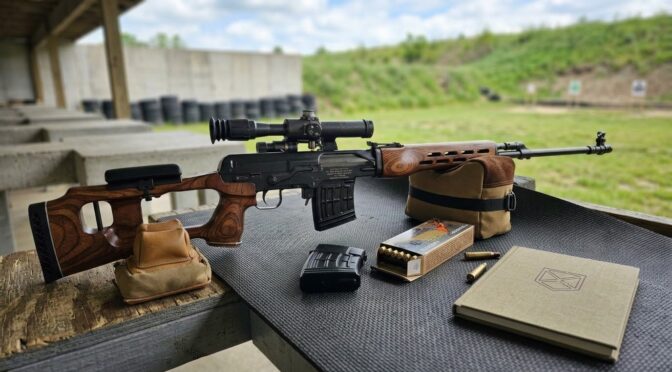
The FEG HD18 represents a highly significant, yet deeply polarizing, entry into the modern commercial small arms market. Functioning as a newly manufactured, authentic continuation of the Soviet SVD-63 Dragunov architecture, the HD18 is manufactured by FEG Defense (Fegyver- és Gépgyártó Részvénytársaság) in Hungary.1 Imported into the United States initially by Trident and subsequently by B&T USA, the HD18 was conceived to fill a profound, multi-decade void in the designated marksman rifle (DMR) collector space.2 Chambered in the venerable 7.62x54R rimmed cartridge, the rifle features a 24.41-inch cold-hammer-forged and chrome-lined barrel, a receiver milled from a solid block of alloyed steel, and a proprietary short-stroke gas piston system that is functionally and dimensionally compatible with original Russian military specifications.1
Despite its exceptional engineering pedigree and status as a highly accurate 1:1 functional reproduction of the original Dragunov action, the HD18 has been the subject of intense consumer scrutiny and market friction. With a Manufacturer’s Suggested Retail Price (MSRP) of $7,500—and secondary market retail prices frequently surging between $8,500 and $10,000 due to artificial scarcity and importer allocation models—expectations for flawless quality control and premium finishing are universally high.1 However, comprehensive market analysis and rigorous consumer sentiment tracking reveal a troubling pattern of mechanical, electrical, and cosmetic defects in early and secondary import batches.8 Documented anomalies include catastrophically failed handguard retainers, warped and caved-in dust covers, defective optic illumination modules that fail under the vibration of dry-firing, and profound fitment issues with the walnut furniture resulting in structural gouging.8 Furthermore, the product’s initial launch was marred by allocation controversies, wherein initial batches were aggressively acquired by industry insiders and resold at exorbitant markups on auction sites, generating significant and lasting market resentment.9
Performance testing indicates that the HD18 is fully capable of achieving approximately 2 Minute of Angle (MOA) accuracy with commercially available 182-grain match or standard full metal jacket ammunition, staying true to its Cold War-era designated marksman origins rather than attempting to compete with modern, sub-MOA precision platforms.11 Ultimately, the acquisition viability of the FEG HD18 is highly bifurcated. For the dedicated archivist or military historian, it presents an unparalleled opportunity to acquire a true, newly manufactured SVD clone at a fraction of the cost of a pristine Russian Tigr or a Chinese NDM-86. However, for the practical precision shooter or tactical end-user prioritizing performance-to-cost ratios, the HD18 is vastly outclassed by modern AR-10 platforms and significantly undercut by highly functional, heavy-barreled Combloc alternatives such as the Zastava M91.
1. Historical and Strategic Context of the SVD Architecture
To accurately evaluate the FEG HD18, one must deeply understand the geopolitical and strategic doctrines that necessitated the creation of its progenitor, the Snayperskaya Vintovka Dragunova (SVD). The genesis of the designated marksman rifle is deeply rooted in Warsaw Pact military doctrine, which diverged significantly from the sniper philosophies of Western militaries during the mid-20th century.
1.1 The Soviet Platoon-Level Marksman Concept
Unlike the United States military, which historically deployed highly trained sniper teams (utilizing platforms like the bolt-action M40 or the accurized M21) independent of standard infantry squads to conduct reconnaissance and surgical strikes, Soviet doctrine integrated a designated marksman directly at the motorized rifle platoon level.1 This operator required a specialized semi-automatic weapon capable of extending the squad’s effective engagement range from the 300-meter maximum effective limit of the standard-issue AK-47 and AKM assault rifles out to 800 meters.1 The objective was not necessarily to achieve one-shot, one-kill surgical precision on a point target, but rather to deliver rapid, highly lethal, and accurate suppressive fire against high-value targets such as enemy officers, machine-gun crews, and communication specialists operating just beyond the range of standard infantry weapons. The solution to this doctrinal requirement, officially adopted in 1963, was Yevgeny Dragunov’s SVD.
1.2 The American Market Vacuum and Hyper-Inflation
For decades, the American commercial market has been starved of authentic SVD rifles. Due to a complex web of geopolitical embargoes, the Voluntary Restraint Agreement of 1996 with the Russian Federation, and subsequent sweeping sanctions placed on Kalashnikov Concern and other Russian defense entities, genuine Russian SVDs or their civilian equivalent, the Tigr carbine, ceased flowing into the United States.2 Similarly, the importation of Chinese clones, such as the Norinco NDM-86, was halted by executive actions targeting Chinese defense imports.
This profound and permanent supply-demand imbalance created a hyper-inflated secondary market. Today, pristine authentic Russian SVD or Tigr rifles command immense premiums, frequently exceeding $25,000 at auction.2 Chinese NDM-86 models similarly routinely trade for upwards of $10,000.2 This scarcity left a massive void in the collector and shooting enthusiast market, creating a highly lucrative opportunity for any manufacturer capable of legally acquiring the original technical data packages for the SVD platform and producing it outside of sanctioned nations. The Hungarian HD18 was born directly into this volatile, high-demand market vacuum.
2. Manufacturing Pedigree and Geopolitical Sourcing
FEG Defense (Fegyver- és Gépgyártó Részvénytársaság), a historic Hungarian arms manufacturer with a legacy spanning decades of producing licensed Warsaw Pact weaponry, recognized this commercial opportunity. By utilizing original engineering schematics, legacy tooling, and modern manufacturing techniques, FEG initiated the HD18 project.
2.1 The Promise of 1:1 Authenticity
The fundamental value proposition of the HD18 is its structural and mechanical authenticity. It is not an approximation of an SVD built on an up-scaled Kalashnikov receiver; it is a literal, 1:1 reproduction that shares total parts commonality with the original Soviet SVD-63.1 FEG Hungary was responsible for the development, manufacturing, assembly, and quality assurance of the rifle.2 The HD18 was explicitly developed to conform to United States importation guidelines set forth by the Gun Control Act. By categorizing the platform as a “Dedicated Sporting Rifle,” FEG was able to bypass certain import restrictions that typically bar non-sporting military rifles from entering the commercial market.2 This compliance is physically manifested in the rifle’s configuration, notably the use of a thumbhole stock without a folding mechanism, the absence of a functional bayonet lug, and the installation of a linear compensator muzzle bushing in place of the original military flash hider.1
2.2 The Import Transition: Trident to B&T USA
The importation logistics of the HD18 have been complex. The rifle was initially brought into the United States under the banner of an importer known as Trident.3 The first batch consisted of a highly limited run of approximately 100 to 200 units, which immediately became the subject of intense speculation and controversy due to their distribution model.4 Recognizing the need for a more robust distribution and warranty network for subsequent, larger batches, the importation contract was transitioned to B&T USA.2 B&T USA is a highly respected entity historically known for importing and manufacturing premium Swiss firearms and suppressors for both military and commercial applications. The transition to B&T was intended to signal a stabilization of the supply chain, with projections indicating that hundreds, if not thousands, of additional units would eventually reach American shores.4 These later iterations featured minor physical differences, including updated importer markings and supplementary electro-penciled proof marks to comply with shifting ATF regulations and European testing standards.4
3. Mechanical Engineering and Architecture Analysis
The mechanical architecture of the FEG HD18 is a testament to the rugged, over-engineered philosophy of mid-century Soviet arms design, combined with select modern manufacturing enhancements to ensure longevity. A thorough component-level analysis reveals the specific engineering decisions that differentiate a true SVD clone from lower-tier, up-scaled Kalashnikov variants that merely mimic the Dragunov aesthetic.
3.1 Receiver Metallurgy and Structural Rigidity
The absolute foundation of the HD18’s accuracy potential is its receiver, which is machined entirely from a single, solid-piece steel block.2 In the realm of high-power, semi-automatic rifles chambered in full-power cartridges like the 7.62x54R, receiver rigidity is paramount. Stamped steel receivers, such as those utilized on the Romanian PSL, are inherently prone to microscopic flex and torsion under the violent rearward recoil impulse of heavy ball ammunition. Over time, this flex translates to harmonic inconsistency, bolt carrier tilt, accelerated wear on the trunnion rivets, and ultimately, a severe degradation in sustained accuracy.
By utilizing a milled steel billet, the HD18 ensures that the barrel trunnion, the internal bolt carrier guide rails, and the side-mounted optical rail are perfectly static relative to one another.5 This monolithic construction prevents the optical axis from shifting independently of the barrel axis during the firing cycle. All critical metal components throughout the rifle are crafted from high-quality alloyed steels, treated with a highly durable, aesthetic black finish that provides both superior corrosion resistance and a low-glare visual profile suitable for tactical environments.2
3.2 Kinematics: The Short-Stroke Gas Piston System
The most significant mechanical deviation between a true Dragunov action and a standard Warsaw Pact infantry rifle lies in the gas system. Unlike the Kalashnikov family (including the PSL and Zastava M91), which utilizes a massive long-stroke gas piston physically welded or pinned directly to the bolt carrier, the HD18 utilizes Yevgeny Dragunov’s short-stroke gas system.2
In this refined configuration, expanding propellant gases are bled through a precision-drilled port in the barrel into the gas block, where they strike a lightweight, independent piston. This piston travels backward only a short distance, delivering a sharp kinetic tap to an independent operating rod, which in turn throws the heavy bolt carrier rearward to cycle the action. This short-stroke design completely isolates the mass of the operating rod and piston from the bolt carrier. As a result, there is significantly less reciprocating mass shifting the weapon’s center of gravity backward and forward during the firing cycle. This reduction in kinetic violence is a primary reason why the Dragunov platform inherently produces less sympathetic barrel deflection and harmonic disruption than an AK-variant during sustained, rapid fire.
Furthermore, the HD18 is equipped with a military-correct, two-position adjustable gas regulator built into the gas block.1 This critical feature allows the end-user or armorer to precisely tune the rifle’s cyclic rate. The adjustment process involves loosening front set screws, manipulating the adjustment screw to regulate gas bleed, and test-firing until the bolt reliably locks open on an empty magazine.16 This allows the rifle to accommodate varying ammunition pressure curves (from light surplus ball to heavy commercial match loads) or to temporarily increase gas flow to overcome severe carbon fouling in adverse battlefield conditions.2
3.3 Barrel Dynamics and Twist Rate Geometry
The barrel of the HD18 is perhaps its most highly scrutinized component, representing the literal core of its accuracy potential. Measuring 24.41 inches (620mm) in length, the barrel is cold-hammer-forged—a manufacturing process that compresses the steel matrix over a mandrel, resulting in an exceptionally dense, durable grain structure.1 The internal bore is chrome-lined to ensure extreme longevity and resistance to the highly corrosive mercuric primers commonly found in surplus Warsaw Pact 7.62x54R ammunition.2 Notably, the raw barrel blanks are sourced from Lothar Walther, a premier German barrel manufacturer renowned for precision, and are subsequently finished by FEG machinists to match the exact original Russian military profile specifications.18
The internal geometry of the barrel reveals a critical nod to historical accuracy and precision prioritization. The HD18 utilizes a 320mm (approximately 1:12.6 inches) rifling twist rate.18 This specific dimension is a direct replication of the original 1963 Soviet SVD specification.18 In the early 1970s, the Soviet military altered the SVD’s twist rate to a much faster 240mm (1:9.4 inches) to adequately stabilize heavier, longer armor-piercing incendiary (API) and tracer projectiles.18 However, this faster twist rate famously over-stabilized the standard 148-grain 7N1 sniper-grade light ball ammunition, causing a measurable degradation in inherent accuracy. By intentionally reverting to the original 320mm twist rate, FEG Defense prioritized pure ballistic accuracy with standard 148-grain to 182-grain commercial and surplus projectiles over multi-munition military versatility, an ideal choice for the civilian marksman market.18
3.4 Fire Control Group and Trigger Dynamics
The fire control group of the HD18 is a distinct departure from the crude, single-stage triggers found in standard Warsaw Pact infantry rifles. The HD18 utilizes a dedicated, precision-machined two-stage trigger mechanism.16 Analysis of the trigger geometry reveals a smooth, frictionless initial take-up phase followed by a crisp, defined wall before the sear breaks.
The total pull weight is calibrated from the factory to just over 2.0 pounds.18 This exceedingly light trigger pull is a massive tactical advantage. In precision rifle marksmanship, minimizing the physical force required to break the sear engagement is critical; it directly reduces the likelihood of the shooter transmitting sympathetic muscle movement to the rifle chassis, thereby preventing the reticle from being pulled off-target during the final micro-seconds of the firing sequence.18 The lock time—the interval between the sear releasing and the hammer striking the firing pin—is also minimized by the geometry of the milled hammer components.16
3.5 Muzzle Geometry and Import Compliance Features
At the muzzle, the HD18 diverges slightly from the original SVD profile, a necessary concession for the aforementioned American importation laws. While the original military SVD featured an integral front sight tower that seamlessly transitioned into a long, five-prong flash hider and an under-slung bayonet lug, the HD18 utilizes a separate, bolt-on front sight tower.1
Attached to the barrel via driven steel set pins, the front sight block houses a threaded muzzle section utilizing a 5/8-24 UNEF 3A thread pitch.1 From the factory, a modular muzzle bushing—effectively acting as a linear compensator or thread protector—is installed and pinned to comply with restrictions against military flash hiders.1 While an SVD-style elongated flash hider is provided in the accessory package, legally installing it requires intervention by a competent gunsmith to drill out the factory pins, remove the bushing, and thread on the new device.1
4. Internal and External Ballistics Performance
The mechanical performance of the FEG HD18 cannot be evaluated in a vacuum; it is inextricably linked to the complex ballistic properties of the 7.62x54R cartridge it fires. Developed in 1891 for the bolt-action Mosin-Nagant rifle, the 7.62x54R remains one of the oldest standard-issue military cartridges still in active service across the globe.19
4.1 The 7.62x54R Cartridge Profile
In evaluating the external trajectory and raw energy delivery, the 7.62x54R is frequently compared to the premier Western intermediate-to-full-power cartridge, the.308 Winchester (7.62x51mm NATO). The two cartridges are functionally ballistic twins in terms of battlefield application, but feature distinct internal architectures. The Russian-designed 7.62x54R generally features a slightly higher internal case capacity (64.2 grains of H2O compared to the.308’s 56.0 grains of H2O) but is designed to operate at a slightly lower maximum internal pressure (56,565 psi versus the.308’s 62,000 psi).20 The 7.62x54R fires a true.311 to.312-inch diameter projectile, unlike the.308-inch projectile of its Western counterpart.20
4.2 Internal Ballistics and Rimmed Cartridge Feeding
The 7.62x54R is a distinctly rimmed cartridge, presenting unique and severe engineering challenges for a semi-automatic, magazine-fed weapon. When rimmed cartridges are stacked vertically in a traditional box magazine, there is a constant mechanical risk of “rim lock”—a catastrophic feeding malfunction where the rim of the top cartridge catches securely behind the rim of the cartridge directly beneath it as the bolt attempts to push it forward.
The HD18 mitigates this phenomenon via the highly specialized proprietary geometric curvature of its 10-round steel magazines. The magazines force the cartridges to stack at a precise, sweeping angle, ensuring that each subsequent rim remains safely and consistently ahead of the one below it.1 Upon primer ignition, the long 24.41-inch barrel of the HD18 provides an optimal, extended expansion chamber for the slow-burning powders typical of the 7.62x54R. Extensive chronograph data indicates that a standard 148-grain to 150-grain light ball military surplus projectile achieves a true, consistent muzzle velocity ranging between 2,600 and 2,800 feet per second (fps) when fired from a 24-inch barrel.21
4.3 External Ballistics, Terminal Effects, and Trajectory Dynamics
When firing high-quality commercial ammunition, such as the Serbian-manufactured Prvi Partizan (PPU) 182-grain Full Metal Jacket Boat Tail (FMJ-BT), or Hornady loads utilizing highly efficient secant ogive projectile designs to reduce aerodynamic drag, the HD18 is capable of achieving baseline accuracy in the realm of 2 Minute of Angle (MOA) at 100 yards.11
The original Soviet military specification for the SVD firing the specialized 7N1 sniper-grade light ball ammunition demanded an extreme spread of no more than 1.04 to 1.24 MOA. The HD18’s observed modern performance aligns perfectly with the platform’s historical and mechanical expectations. It is vital to contextualize this metric: the HD18 is a designated marksman rifle intended to deliver rapid, lethal suppressive fire at human-sized targets between 400 and 800 meters.1 It is not, and was never engineered to be, a sub-MOA precision sniper rifle by modern 21st-century standards.
At extended ranges, the external trajectory requires significant optical compensation. A heavy 180-grain soft point or FMJ projectile will experience approximately 375 inches of gravitational drop at 800 yards relative to a 100-yard zero.24 In terms of terminal ballistics, the 7.62x54R is highly devastating. Ordnance gelatin testing of the military 7N1 load reveals that the projectile penetrates deeply with a long neck before violently yawing and breaking in half at the cannelure, delivering massive hydrostatic shock comparable to or exceeding American M118 Match ammunition.25
4.4 Optical Integration: The PSzO-1M2 System
To harness this ballistic potential, the HD18 is factory-matched with the Hungarian-manufactured PSzO-1M2 Target Scope.2 This optical unit is a direct descendant and near-identical reproduction of the renowned Soviet PSO-1 optic. It is a fixed 4x magnification system featuring an integrated, side-mounting bracket perfectly tailored to the milled rail on the left side of the HD18 receiver.2
The optic is nitrogen-purged during manufacturing to completely displace oxygen and moisture, preventing internal fogging of the glass elements during extreme ambient temperature fluctuations.2 It features an illuminated reticle powered by standard commercial AA batteries.2 The fixed 4x magnification was strategically chosen by Soviet engineers, and retained by FEG, to provide sufficient optical zoom for target identification out to 800 meters while preserving an immensely wide field of view. This wide field allows the designated marksman to maintain critical situational awareness and rapidly track moving targets, a combat capability often lost in high-magnification (10x-25x) Western precision rifle scopes. The reticle inherently includes a stadiametric rangefinder, allowing the shooter to estimate the distance to a standard 1.7-meter-tall human target instantly without relying on battery-dependent external laser rangefinders.
5. Competitive Market Landscape and Platform Alternatives
To accurately and objectively evaluate the FEG HD18, it must be benchmarked against the other prominent Combloc 7.62x54R semi-automatic rifles currently available on the commercial market: primarily the Romanian PSL-54 and the Serbian Zastava M91. While visually similar to the untrained eye, these three platforms possess profound mechanical, metallurgical, and economic distinctions that define their utility.
5.1 The Romanian PSL-54: The Erroneous Dragunov
The Cugir-manufactured Romanian PSL (Pushka Snaiperska cu Lineta) is frequently, and entirely incorrectly, referred to by American consumers as a “Romanian Dragunov”.26 Mechanically, the PSL shares absolutely no lineage with the SVD architecture. It is essentially an oversized RPK light machine gun action, utilizing a thin stamped sheet-metal receiver with riveted trunnions and a massive long-stroke gas piston attached directly to the bolt carrier.26
The primary operational deficiency of the PSL lies in its barrel geometry. The barrel is exceptionally thin to reduce the overall weight of the weapon system. Under the intense thermal stress of sustained rapid fire, the thin barrel rapidly absorbs heat, causing the steel to warp and the internal barrel harmonics to shift wildly. This phenomenon results in severe “vertical stringing,” where the point of bullet impact literally walks several inches vertically up the target before the first 10-round magazine is even emptied.27 While historically inexpensive and abundant as surplus, recent newly manufactured imports by Century Arms have seen PSL prices rise to between $2,000 and $2,500, severely diminishing their value proposition given their inherent thermal and accuracy limitations.26
5.2 The Zastava M91: The Modernized Workhorse
Manufactured by Zastava Arms in Serbia, the M91 is a currently issued DMR for the active Serbian military.28 Like the PSL, the M91 utilizes a long-stroke Kalashnikov-style action rather than the Dragunov short-stroke system. However, the M91 systematically addresses and rectifies the critical structural flaws of the PSL.27
The M91 utilizes a significantly thicker, heavier barrel contour that is vastly superior at heat dissipation, effectively eliminating the vertical stringing issues seen in the Romanian platform.27 Furthermore, the M91 utilizes a much heavier receiver structure (originally milled on early models, now frequently featuring a heavy-gauge 1.5mm stamped shell with heavily reinforced trunnions), providing excellent chassis rigidity. Retailing commercially at approximately $3,000 to $3,500, the M91 offers significantly better out-of-the-box quality control, vastly superior sustained accuracy, and modern reliability, positioning it as the most practical “working” Combloc DMR on the American market today.28
5.3 Comparative Technical and Economic Matrix
The following table summarizes the key structural, mechanical, and economic differences between the three primary Combloc DMR platforms currently accessible to commercial consumers:
| Feature | FEG HD18 | Zastava M91 | Romanian PSL-54 |
| Origin | Hungary (FEG Defense) | Serbia (Zastava Arms) | Romania (Cugir / Century Arms) |
| Action Type | Short-Stroke Gas Piston | Long-Stroke Gas Piston | Long-Stroke Gas Piston |
| Receiver Material | Solid Milled Steel Block | Stamped Steel (1.5mm Heavy) | Stamped Steel (Standard) |
| Barrel Profile | Medium-Heavy, Chrome-Lined | Heavy, Chrome-Lined | Thin, Non-Chrome Lined (often) |
| Thermal Deflection | Minimal | Minimal | Severe (Vertical Stringing) |
| Twist Rate | 320mm (1:12.6″) | 240mm (1:9.4″) | 254mm (1:10″) |
| Base Price (Retail) | $7,500 – $10,000 | ~$3,000 – $3,500 | ~$2,000 – $2,500 |
| Authenticity Factor | True 1:1 SVD-63 Clone | Upsized AK / M76 evolution | Upsized RPK variant |
Note: Pricing and availability metrics reflect real-world secondary market conditions and documented MSRP data across various distributors.1
The fundamental distinction driving the massive price delta is authenticity and provenance. The Zastava M91 is arguably a superior modern battlefield implement due to its modernizations, heavy-duty construction, and robust supply chain, offering tremendous practical value. However, the FEG HD18 commands a premium well over double the cost of the M91 strictly due to its engineering lineage. It is the only true Dragunov action available in a newly manufactured state, directly addressing the archivist’s desire for pure mechanical replication over sheer battlefield pragmatism.
6. Consumer Sentiment, Market Friction, and Quality Control Deficiencies
For a niche platform commanding an MSRP of $7,500, and frequently trading closer to $9,500 or $10,000 due to artificial scarcity and collector speculation, the standard consumer expectation is absolute zero-tolerance for manufacturing defects or sloppy finishing.1 However, a comprehensive analysis of aggregate consumer sentiment, gathered through open-source forums and specialized arms communities, paints a highly contradictory and deeply concerning picture. The rollout of the HD18 has been beleaguered by profound quality control (QC) lapses and highly controversial supply chain dynamics that have poisoned market sentiment.
6.1 The Import Rollout Controversy and Market Friction
The initial entry of the HD18 into the United States market was handled by a small importer operating under the name Trident.3 The first batch consisted of a highly limited run of approximately 100 to 200 units.4 A significant and highly public relations crisis occurred almost immediately when a prominent firearms influencer (frequently associated with the Military Arms Channel brand) utilized immense financial leverage to purchase nearly the entire initial Trident allocation. Following this acquisition, the inventory was systematically liquidated on online auction platforms, specifically Gunbroker, at vastly inflated, scalper-level markups.9
This maneuver generated immense vitriol and outrage within the consumer base, establishing a deep-seated resentment toward the platform’s initial pricing models and the perceived unethical distribution tactics.9 Consumers felt exploited, viewing the $8,000 to $10,000 price tags not as a reflection of manufacturing cost, but of engineered scarcity.9 While subsequent batches—often referred to as the “second generation”—were managed by the more reputable B&T USA, mitigating the auction-house scalping dynamic, the high baseline MSRP remained a point of extreme contention in the community.3
6.2 Documented Mechanical and Metallurgical Deficiencies
A detailed, component-level analysis of individual user reports across multiple forums reveals a systemic lack of final fit-and-finish and critical quality control oversights in several units. These issues span both early “cosmetic blemished” models and brand-new, premium retail examples.8 The defects documented are not merely superficial annoyances; several fundamentally compromise the structural and mechanical integrity of the platform.8
The foremost mechanical failure reported by end-users involves the forward handguard retaining ring. The wooden front handguards on the SVD platform are held together under heavy, constant spring tension by a metal retainer. Users have documented instances where the cross-pin hole in this handguard retainer was drilled crookedly at the factory, or positioned dangerously close to the sheer edge of the metal material.8 From a metallurgical engineering perspective, this poor machining creates a severe stress concentration factor, known as a stress riser. Under the violent, rearward kinetic impulse generated by firing the heavy 7.62x54R cartridge, the mass of the handguards forcefully impacts this compromised retainer. In several units, this repeated kinetic shock has caused the thin sheet metal to yield, stretch, and eventually crack entirely, rendering the forward furniture completely unstable and unsafe.8
Furthermore, the wooden handguards themselves exhibit massive dimensional variance, pointing to poor CNC tolerances or lack of hand-fitting at the factory. Some units arrived with handguards so loose they rattled audibly, while others required severe physical impact via a hammer to manipulate into place, with the left and right clamshell halves failing to align cleanly along their seams.8
The receiver’s dust cover represents another prominent failure point. Multiple independent reports indicate that the stamped steel dust covers arrived from FEG visibly twisted, crooked, or with the side walls physically caved inward toward the action.8 This type of deformation typically indicates either improper clearance parameters in the stamping dies during manufacturing or a failure during the subsequent heat-treating process, causing the thin metal to warp uncontrollably as it cools. Given the microscopic precision required for the heavy bolt carrier to cycle freely and smoothly beneath the dust cover, such geometric anomalies are categorically unacceptable on a premium firearm.8
Beyond structural failures, optoelectronic instability has been widely reported. While the Hungarian PSzO-1M2 is generally celebrated for its optical clarity, users have reported systemic electrical failures within the battery-powered illumination module. Specifically, the relatively minor vibrations induced simply by dry-firing the rifle have caused the reticle illumination to dim erratically or shut off entirely, strongly suggesting fragile, poorly applied solder joints or insufficient battery terminal tension within the housing.8 Finally, the stock geometry has also proven problematic. Reports highlight walnut stocks that were milled excessively wide at the wrist, resulting in the sharp metal disassembly lever gouging deep, permanent channels into the wood during routine field stripping and maintenance.8
6.3 The B&T Warranty Support Architecture
To systematically address these pervasive manufacturing issues, B&T USA implements a comprehensive warranty guarantee for the batches they import. Their stated corporate policy publicly commits to correcting any manufacturing defects in material or mechanical function, promising to take the firearm into their Tampa, Florida facility and return it running to exact factory specifications.14
However, deep-dive consumer feedback regarding the actual execution and efficiency of this warranty process reveals severe logistical bottlenecks. End-users have reported extreme turnaround times—often spanning several months—for relatively simple repairs or parts replacements.31 Communication from the importer during the repair process has been described as highly sporadic. Pertinently, reports indicate that the B&T facility suffers from a severe lack of dedicated repair personnel relative to the vast volume of their high-end inventory, with customer service representatives allegedly confirming that only one individual was tasked with answering phones and performing firearm repairs concurrently.31 While the warranty theoretically exists and is legally honored, the lack of a robust, rapid-response support infrastructure detracts significantly from the premium, white-glove ownership experience implicitly expected at an $8,000 price tier.
7. Conclusion: Acquisition Viability and Operational Use Cases
Drawing a definitive and objective conclusion on the value proposition of the FEG HD18 requires rigidly bifurcating the consumer base into two distinct operational profiles: the Historical Archivist and the Practical Precision Operator. The rifle cannot be judged by a single, unified metric of utility.
For the Historical Archivist, Dedicated Collector, and Military Historian, the FEG HD18 is absolutely worth the high cost of acquisition. It represents a monumental achievement in modern small arms manufacturing, successfully resurrecting the complex milling processes and intricate short-stroke geometry of the original Soviet SVD-63. Considering that authentic Russian Tiger carbines or military SVDs regularly fetch between $20,000 and $30,000 at elite auction houses, and Chinese NDM-86 models reliably clear the $10,000 threshold, the HD18—even at inflated secondary market prices of $8,000 to $9,500—represents an extraordinary value within the closed, highly restricted ecosystem of Dragunov collecting.1 It serves as the undisputed crown jewel of any serious Combloc collection, offering an authentic mechanical experience that no PSL or Zastava M91 can ever truly replicate.1
Conversely, for the Practical Precision Operator, Tactical DMR Enthusiast, or Pragmatic Shooter, the FEG HD18 cannot be recommended in good faith. If the primary operational objective is placing rounds precisely on target at ranges spanning 400 to 800 meters, an $8,000 budget is vastly misallocated on this legacy platform. For a fraction of the cost, a modern American AR-10 platform (such as those manufactured by LMT or Knights Armament) will deliver sub-MOA precision, vastly superior ergonomics, infinite optical modularity, and a thriving aftermarket support network. Even within the strictly defined realm of Combloc utility, the Zastava M91 offers approximately 90% of the HD18’s ballistic capability at roughly 35% of the financial cost, backed by vastly superior out-of-the-box quality control and a heavy barrel optimized for sustained suppressive fire.27
Ultimately, the FEG HD18 is a masterpiece of historical resurrection, plagued heavily by the harsh realities of low-volume, high-margin international manufacturing. It is a highly volatile investment piece and a thrilling mechanical artifact, but it absolutely requires a buyer who possesses both vast financial capital and the patience to navigate potential, highly frustrating warranty hurdles resulting from systemic quality control oversights.1
Appendix: Analytical Framework and Research Protocol
The conclusions and mechanical analysis presented in this comprehensive report were derived utilizing a rigid open-source intelligence (OSINT) protocol, specifically structured to eliminate marketing bias and isolate empirical mechanical data. The methodology consisted of three core analytical phases, executed to simulate the rigor of a professional defense industry evaluation:
Phase I: Engineering and Technical Verification
Technical specifications regarding the FEG HD18, including precise barrel length (24.41 inches), overall length (48.6 inches), total system weight (8.95 lbs), and receiver metallurgy were aggregated directly from translated manufacturer literature and verified distributor manifests (specifically B&T USA and Atlantic Firearms). Mechanical variances between the HD18 and the original Soviet SVD-63 (such as the reversion to the 320mm twist rate, the implementation of the modular muzzle bushing, and the 5/8-24 threading) were isolated by carefully cross-referencing modern schematic data with historical Soviet armory technical data packages and recognized armorer manuals.
Phase II: Ballistic and Optical Performance Modeling
External ballistics, specifically the gravitational drop profile and velocity retention of the 7.62x54R cartridge, were synthesized using aggregate chronograph data from 24-inch barrels firing projectiles ranging from 148-grain to 182-grain. Terminal ballistics were verified via published ordnance gelatin testing data. Optical specifications for the PSzO-1M2 were evaluated based on the inherent physical limitations of a fixed 4x, nitrogen-purged system relying on commercial AA batteries for reticle illumination. Accuracy potentials (e.g., the ~2 MOA baseline) were derived from aggregate field-test reports utilizing commercial match-grade ammunition (such as Prvi Partizan).
Phase III: Consumer Sentiment and Quality Control Scraping
To successfully bypass curated media reviews and paid promotional content, raw consumer sentiment was scraped from niche, highly technical arms communities, specifically Reddit boards (r/ak47, r/Firearms, r/Dragunov) and dedicated long-range shooting forums (Sniper’s Hide). Data was strictly filtered for documented ownership, utilizing photographic evidence of component failures (e.g., the handguard retainer fractures and dust cover deformations) to build a qualitative matrix of manufacturing defects. Market pricing dynamics and the import controversies involving Trident and B&T USA were mapped chronologically to explain the extreme delta between the $7,500 MSRP and the $9,000+ secondary market clearing price. Warranty execution efficiency was modeled based on aggregated user reports detailing repair turnaround times and communication friction with the importer.
Please share the link on Facebook, Forums, with colleagues, etc. Your support is much appreciated and if you have any feedback, please email us in**@*********ps.com. If you’d like to request a report or order a reprint, please click here for the corresponding page to open in new tab.
Sources Used
- Hungarian Dragunov: As Close As You Can Get To The Real Thing – Recoil Magazine, accessed February 20, 2026, https://www.recoilweb.com/hungarian-dragunov-hd-18-review-182311.html
- FEG HD-18 Rifle – Atlantic Firearms, LLC – AtlanticFirearms.com, accessed February 20, 2026, https://atlanticfirearms.com/feg-hd-18-rifle
- We can’t get enough of the FEG HD18! Such a COOL collectors piece! – YouTube, accessed February 20, 2026, https://www.youtube.com/watch?v=ABYYRvcYVEc
- It seems that FEG HD-18 Dragunov clones are actually becoming available – Sniper’s Hide, accessed February 20, 2026, https://www.snipershide.com/shooting/threads/it-seems-that-feg-hd-18-dragunov-clones-are-actually-becoming-available.7163871/
- HD-18 – FEG, accessed February 20, 2026, https://feg-defense.com/products/hd-18/
- Feg Defense – EuroOptic.com, accessed February 20, 2026, https://www.eurooptic.com/feg-defense
- FEG HD 18 HUNGARIAN DRAGUNOV 18 | Piece of Mind Guns, accessed February 20, 2026, https://pomg.com/product/feg-hd-18-hungarian-dragunov-18
- FEG HD-18 Fuckery : r/ak47 – Reddit, accessed February 20, 2026, https://www.reddit.com/r/ak47/comments/1in970m/feg_hd18_fuckery/
- Was Lucky Enough To Pick Up The Controversial First 100 Batch FEG SVD : r/guns – Reddit, accessed February 20, 2026, https://www.reddit.com/r/guns/comments/1qaz9jy/was_lucky_enough_to_pick_up_the_controversial/
- B&T is Importing the FEG Dragunov yes they’re six grand. : r/Firearms – Reddit, accessed February 20, 2026, https://www.reddit.com/r/Firearms/comments/10fs9m8/bt_is_importing_the_feg_dragunov_yes_theyre_six/
- FEG HD-18 Opinions : r/Dragunov – Reddit, accessed February 20, 2026, https://www.reddit.com/r/Dragunov/comments/1g5opay/feg_hd18_opinions/
- Got Our Hands On Some FEG HD-18 Sniper Rifles! – YouTube, accessed February 20, 2026, https://www.youtube.com/watch?v=EBnC1LQY5tE
- NEW Hungarian FEG SVD rifle – it’s here! – YouTube, accessed February 20, 2026, https://www.youtube.com/watch?v=BmuNtq2DJfQ
- Warranty – B&T USA, accessed February 20, 2026, https://bt-usa.com/warranty/
- B&T is Importing the FEG Dragunov! – YouTube, accessed February 20, 2026, https://www.youtube.com/watch?v=1Xe-SClCfHU
- HD-18 Sporting Rifle Technical Description and Service Manual READ BEFORE USE! – FEG, accessed February 20, 2026, https://feg-defense.com/wp-content/uploads/2024/05/OWM_FEG_HD-18_Ver1.4.pdf
- Instruction Guide: Install and Tune an Adjustable Gas Block | AR Academy – AT3 Tactical, accessed February 20, 2026, https://www.at3tactical.com/blogs/news/instruction-guide-install-and-tune-an-adjustable-gas-block
- SECOND look at the FÉG HD-18 (SVD) Major update! Comparing the Hungarian SVD to the Russian Dragunov – YouTube, accessed February 20, 2026, https://www.youtube.com/watch?v=MZ87QuFAx00
- 7.62×54mmR – Wikipedia, accessed February 20, 2026, https://en.wikipedia.org/wiki/7.62%C3%9754mmR
- 7.62x54r vs. 308 Winchester: Are Old Calibers Still Relevant? – Ammo.com, accessed February 20, 2026, https://ammo.com/comparison/7.62x54r-vs-308
- 7.62x54R – Terminal Ballistics Research, accessed February 20, 2026, https://www.ballisticstudies.com/Knowledgebase/7.62x54R.html
- AMMOTEST: 7.62x54r Steel Core ammo penetration tests – YouTube, accessed February 20, 2026, https://www.youtube.com/watch?v=YBxqFjYXOGw
- 2013 PRODUCT CATALOG – Helmut Hofmann GmbH, accessed February 20, 2026, https://www.helmuthofmann.de/mediadaten/Hornady/2013/HOR_Catalog%20%26%20Price%20List/HOR_2013%20Product-Catalog_US.pdf
- 30-06 vs. 7.62x54R: The Iconic Rifle Cartridges of WWII – Ammo.com, accessed February 20, 2026, https://ammo.com/comparison/30-06-vs-7.62-x-54-r
- Testing 7.62x54R and 7.92x57mm Combloc Sniper Cartridges – Firearms News, accessed February 20, 2026, https://www.firearmsnews.com/editorial/testing-combloc-sniper-cartridges/454628
- PSL 7.62x54R: A Soviet Sniper’s View of the Famed Romanian Rifle – Guns and Ammo, accessed February 20, 2026, https://www.gunsandammo.com/editorial/psl-76254r-a-soviet-snipers-view-of-the-famed-romanian-rifle/331799
- PSL vs. M91 : r/ak47 – Reddit, accessed February 20, 2026, https://www.reddit.com/r/ak47/comments/13927fn/psl_vs_m91/
- M91and FEG HD-18 : r/Dragunov – Reddit, accessed February 20, 2026, https://www.reddit.com/r/Dragunov/comments/12b3jla/m91and_feg_hd18/
- HUNGARIAN FEG SVD HD-18 7.62x54R – Zero Whiskey Tactical Arms, accessed February 20, 2026, https://zerowhiskeytacticalarms.com/rifle/hungarian-feg-svd-hd-18-7-62x54r/
- Warranty | B&T USA, accessed February 20, 2026, https://bt-usa.com/support/warranty/
- B&T Warranty- What was your experience? : r/BT_APC – Reddit, accessed February 20, 2026, https://www.reddit.com/r/BT_APC/comments/xayp4t/bt_warranty_what_was_your_experience/