Here are our favorite pro Second Amendment shirts and now is a great time to show how you feel about protecting your right to bear arms. Click on any of the photos below to go to Amazon, learn more about a given shirt and order it.
“A well-regulated Militia, being necessary to the security of a free State, the right of the people to keep and bear Arms, shall not be infringed.“
“A well-regulated Militia, being necessary to the security of a free State, the right of the people to keep and bear Arms, shall not be infringed.”
Don’t tread on me
“A freepeople ought notonlybearmed and disciplined, but they should have sufficient arms and ammunition to maintain a status of independence from any who might attempt to abuse them which would include their own government.” — George Washington
Shall not be infringed
My rights don’t end where your feelings begin
“Americans have the right and advantages of being armed – unlike the citizens of other countries whose governments are afraid to trust the people with arms”
Second Amendment Come and Take It – In Defense of Freedom
We the people
2nd Amendment
United We Stand – Land of the free. Home of the brace.
Second Amendment
Don’t Tread on me
“America will never be destroyed from the outside. If we falter and lose our freedoms, it will be because we destroyed ourselves.” – Abraham Lincoln
2nd Amendment Brotherhood
2nd Amendment – If we can’t protect ourselves, who will?
Nobody needs an AR15? Nobody needs a whiny little bitch either, yet there you are.
“The beauty of the Second Amendment is that it will not be needed until they try to take it.” – Thomas Jefferson
We the people of the UnitedStates, in order to form a more perfect union, establish justice, insure domestic tranquility, provide for the common defense, promote the general welfare, and secure the blessings of liberty to ourselves and our posterity, do ordain and establish this Constitution for the UnitedStates of America.
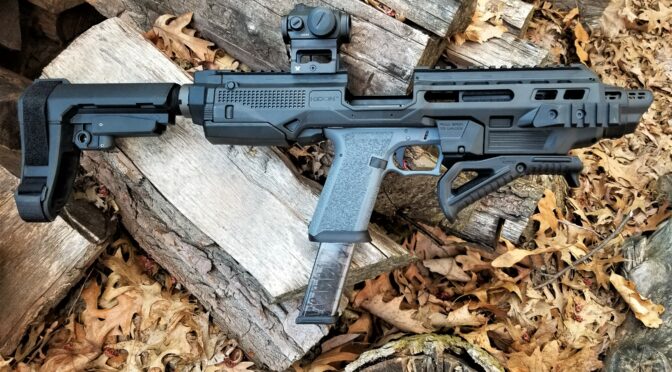
Folks, I have built a couple of Polymer80 pistols – A Glock 17 clone and a 34 clone and really like them. When I heard that Polymer80 was going to import the Israeli Military Industries (IMI) Kidon Pistol Conversion Kit I got pretty excited. My first real pistol was a .44 Magnum IMI Desert Eagle in 1990. The Desert Eagle was awesome so I had high expectations for the Kidon Pistol Conversion Kit. So far, I must admit that I am disappointed. This may change with more use but want to pass on my experiences to you. To be blunt, for me it is a range toy at best in its present incarnation.
The concept was cool – have a chassis readily available in a soft-case in the trunk of your car, or where ever, that you could slide a pistol into with no tools and instantly have a much more stable platform to work with that could also enable you to mount an optic and light. This would aid accuracy immensely and you could imagine a potential appeal to law enforcement or others who might need an impromptu pistol caliber carbine.
I could definitely benefit from something like this but for a completely different reason. I was born with a hereditary tremor, also sometimes called a “necessary tremor”, that causes my hands to shake a bit. I’ve had it my whole life and I can work around it most of the time except when holding a pistol at arms length. Andrew Zachary, my CPL instructor, gave me some great tips to improve my groups for self-defense but I will never be a great pistol shooter. However, if you give me carbine or rifle, I can do a heck of a lot better off hand and hold my own with most folks if I have a rest. So, I was really looking forward to using the Kidon – not just to review it.
When Polymer80 started selling them after the 2019 SHOT show, the price was $525 but it dropped down to $350 fairly quickly so I bought one. A plus was that they included a pre-installed adapter for the Polymer80 pistol frames that I am a fan of. If you like building firearms, you have to try one of their frames – it’s like a double-stack 1911 in terms of the angle and girth but it uses Glock parts. With that said, let’s get back to the Kidon.
What Pistol Did I Test With?
For testing, I only used my Polymer80 PF940V2 frame Glock 17 clone. I didn’t test any other models. So please bear in mind you might have different results with other pistols.
The test pistol is my personal Polymer80 PF940V2 Glock 17 build. Notice the slight bevel on the front of the slide. I don’t think that affected the fit in the frame any. When I inserted the pistol into main frame of the Kidon, it was the lower that could be pushed in too far. The slide did not move. The PF940V2 frame has not been altered in any way.
Opening the Box
I ordered the Kidon direct from Polymer80 and they were pretty quick to ship the unit. It arrived in a surprisingly large box. It turned out that the Kidon unit includes a soft case with a sling, adjustment tool and room for the M4 stock or brace.
The Kidon Pistol Conversion Kit includes an interesting custom soft case with carrying handle and shoulder strap. That is Molle webbing at the bottom. I wish it was higher or they had put more of the webbing on the bag so long magazines would not extend below the case.Pretty cool layout. I was starting to feel my inner James Bond unexpectedly. The Kidon was looking pretty cool so far.
So, I did a quick skim of the manual to find out how to install the pistol. I’d not seen anything quite like the Kidon before and couldn’t readily guess how it all worked.
Inserting the Pistol Into the Main Frame
Basically the pistol slides forward into the chassis and is secured in place by the front rail. It is length sensitive and this is why some pistols, such as my G34 will not fit it. My Polymer80 G17 went right in. Note, it uses the Polymer80 PF940V2 full size frame and it is what I used during my evaluation – you may have better success with other models of pistols.
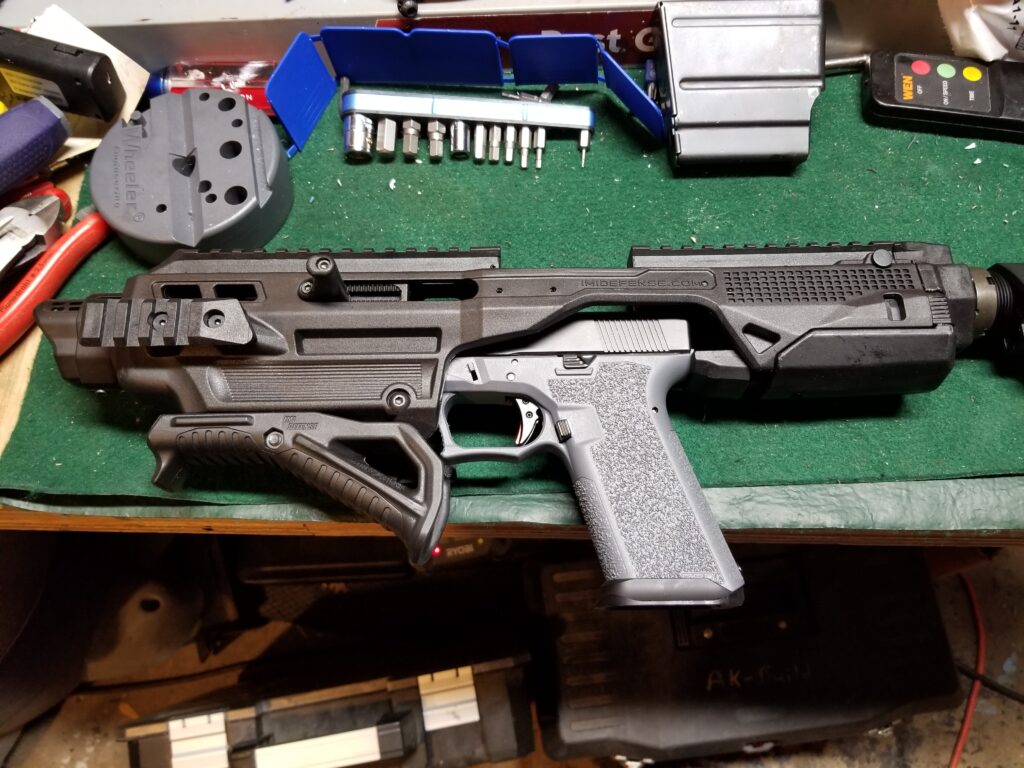
Okay, this is looking like something from Star Wars. The screw just above the rear of the angled fore grip (AFG), is for adjusting the clamp. Note, the AFG is included with the Kidon and is removable. Note, the main frame as IMI calls it, or the main part of the chassis as I would describe it, is a polymer. The part in front of the pistol’s barrel is a heat shield / blast shield and is made from aluminum – I think that was a good idea on their part.The big Front Lock Lever that says “Flip Up To Lock” is what clamps down on the rail of the Polymer80 frame.
Let me share some of my observations at this point:
P1: The pistol does not intuitively slide into the “main frame assembly” of the Kidon chassis. I have yet to pick the two pieces up (the pistol and the main frame) and get them to go together with the first try. I’ve got a trick that works better though – I hold the Kidon’s main frame vertically and settle the pistol into the clamp.
P2: The clamp is not as secure as I would like and it does not lock the pistol parallel to the top rail. This causes a problem when inserting the rear locking assembly and I’ll come back to this. It also means you can flex the Polymer80 in the chassis. When I sighted in my red dot, with a laser through the bore, I found I could change the impact point dramatically depending on how hard I pushed or pulled on the pistol’s grip.
P3: The pistol can go in too far. With a Glock, pushing the slide back just a bit will disable the trigger and that can easily happen if you are in a rush. I’m getting a better feel for this but it really needs a better way to insert the frame and have it stop and lock in the proper position. I install vertically per the above and stop when the frame comes to the initial rest and no further.
Some of the above I’ve gotten better at with practice and will likely improve further but am not keen on the fumbling around. Let’s continue with the review.
Installing The Rear Locking Assembly
The Rear Locking Assembly (RLA) pushes the pistol from the rear into the Main Frame and holds it at the proper angle relative to the bore. IMI made this modular by adding a Rear Adapter Clamp. This adapter enables the Kidon to support an absolute ton of different pistols. It comes with the adapter for the Polymer 80 frame pre-installed so I did not need to mess with that.
The Rear Locking Assembly (RLA) is the part just below the rear of the main frame in this photo. It is held in place by the takedown pin in the main frame (sticking out in this photo) and two tabs that are in the sides of the the RLA. Note the pistol you see is my full size Glock 17 clone built on a Polymer80 PF940V2 frame.Here’s a close up of the RLA. The forward part is the modular rear adapter clamp. You can just see the tabs in the middle that mate with the rectangular holes in the main frame as well.This is the modular rear adapter clamp that is specific for Polymer80 pistols. It actually slides over the beavertail part of the receiver just a tad and both pushes it forward and holds it in place vertically as well.You can see the rear locking adapter pushing the beaver tail area of the Polymer80 frame into position. It’s spring loaded to apply pressure.Here you can see the tabs better plus the rear nut. I don’t know what else to call it. If you remove this nut, you can install an M4 gas tube and then whatever stock or brace you want.
Installing A Brace
In other parts of the world without our crazy short barreled rifle (SBR) laws, the unit would have an IMI brand M4-style stock on it but in the US, it ships with a nut that has a sling swivel in it instead. It does give us options though and if we don’t go the SBR registration route, we can install a brace at least. I opted for the very well done SB Tactical SBA3. Hint – use a fixed wrench when removing the end nut on the chassis – I used an adjustable wrench and it rounded it over a bit. That was my fault – I knew better but was in a rush.
Be sure to back out the set screw that locks the nut or gas tube into position.Here’s the SB Tactical SBA3 brace – it has three adjustment positions (fully collapsed, middle and fully extended) and is very well made.The brace simply screws into the RLA. Note, I bought a basic castle nut and installed it just to lock things in place even further. I’m old school that way.This example shows that the adapter missed the beaver tail and went underneath it lifting the pistol up at an angle. If you grab the pistol now you can move it around and it can still fire.
It is a bit of a challenge to get that rear locking assembly to line up and go into the main frame. If you aren’t careful and purposefully watching the pistol, the rear adapter clamp may go under the rear of the pistol and cant it up at an angle. In other words, the bore of the pistol is now pointing down towards the front bottom of the Kidon’s front heat shield and the pistol can still fire.
I’ve dry fired it during testing when it was angled like that but not with a live round. I’m real, real careful now to inspect the system before I load ammo. I think the bullet may just miss the lower part of the heat shield but I say that by visually looking at the direction of the barrel’s bore when I push the back of the pistol up as high as it will go. At the very least your point of impact will be a lot lower than you expected due to the angle.
Sights, Optics and a Curiously Angled Top Rail
Let’s start with what I noticed very shortly after taking the Kidon’s main frame out of the case. The top rail is not flat. It angles upward just before the ejection port and just forward of it, it angles back down. I asked Polymer80 about this and they said they were all that way. Why? I have no idea. As it turns out I could still get my Vortex Crossfire Red Dot to zero so I’m not going to worry about even though the purist in me wishes it was flat.
Can you see the slope to the rail before and after the ejection port?This steel rule is sitting square on the rail on the left side of the photo. You can definitely see the angle here.
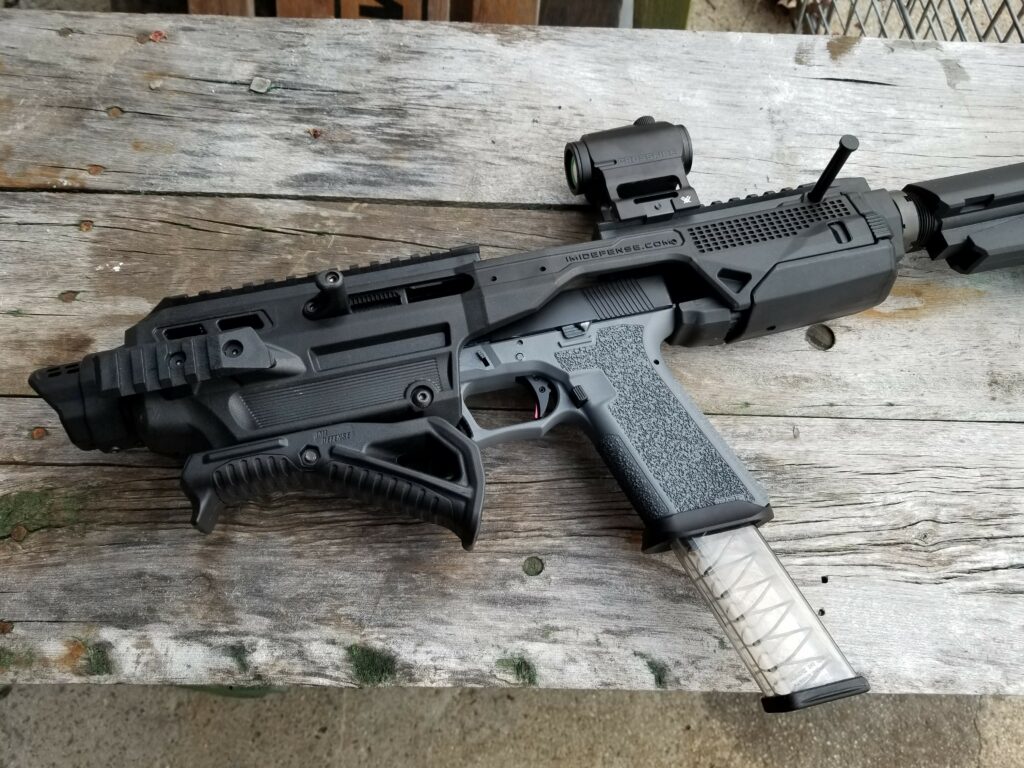
Well, I installed Magpul backup polymer sights and then a Vortex Crossfire Red Dot sitting up on a tall quick detach mount from American Defense – their model AD-T1-10. I did this to line up with the sights and couldn’t quite get it all to line up. I don’t think that misshapen top Picatinny rail was doing me any favors even though I could get the red dot to line up with the bore laser during sighting in. So, I left the sights as a backup but am no longer trying to co-witness.
Vortex Crossfire Red Dot on a tall AD-T1-10 Quick Detach mount with a Magpul rear sight behind it,Here’s what my Kidon case looks like as of my writing this post.
Do I have anything good to say about it?
It looks cool. The chassis is a cool concept along with the tool-less design. It does provide a lot more stability than the pistol alone – until you flex the pistol in the chassis and change the point of impact, which defeats the whole point of having the chassis – to improve accuracy. I like that they used aluminum for a heat shield and not just polymer. I like that they enabled the use of an M4 gas tube for braces and stocks. That’s about it.
The Verdict: Based on my experience, it’s a range toy
I really, really wanted to post a glowing report. At this point, it’s a range toy and not fit for any form of real defensive use. Could the problems be me or my particular Polymer80? They could be but I doubt all of them are.
At this point, it’s my opinion that it takes way too much care to assemble this thing and make sure it all goes together correctly. I do plan on taking it to the range but I don’t see its use evolving for me beyond that for the following reasons:
Imagine the adrenaline is pumping and you are in a rush – fine motor skills are going to greatly impaired — there is a real high risk that the pistol will be shoved in to far and push the slide back. That slight push on the slide is going to lock the Glock-style trigger safety and not fire after assembly. You would have to test after you insert the pistol that it can still fire.
Getting that rear locking assembly to mate up and go into the main frame is real hard for me. Maybe it will improve over time but I doubt I could do it in a rush with my heart pounding and hands shaking.
You may pull down, push up or otherwise shift the pistol in the frame and change the zero. The combination of the front and rear clamps does not hold the pistol securely enough – I did not try tightening the front screw down to the point that the front locking lever will not release – that defeats the purpose. If the whole intent was to improve accuracy but the pistol can shift inside of the frame when too much pressure is applied to the pistol grip, then what is the value?
Lastly, during the assembly process the user may fail to notice the pistol is canted downward in the frame and risk shooting the front bottom of the aluminum heat shield of the frame or at least way lower than you expected because of the angle. This happens maybe half the time unless I purposefully watch and make sure the rear adapter clamp properly engages the rear of the receiver.
Bottom line: I would carry a dedicated backup firearm before I would ever trust this thing in a defensive situation – at least based on my experience with my Polymer80. I did not test any other pistol models. Sorry I don’t have better news. If you try the Kidon and have better luck, that is great. As for me, I wish I had not spent $350. It’s a great concept but it needs significant refinement to improve ease of assembly, reliability and safety before being put in a defensive/combat/high-stress situation.
By the way, I hate posting something like this because it is a cool design but I want to give folks my honest opinion. Do your research and read other reviews and decide for yourself. I’m actually going to shoot more with it at the range and see if I can figure out techniques that work better. If I discover better ways or things that I was doing wrong, I’ll certainly post updates.
12/1/19 Update: I sold it. The design just did not work for me. I can’t recommend this for any use – not for the range and certainly not for defensive use.
4/26/20 Update: 478 page views up to now and not one person has emailed me to voice support of the Kidon. That ought to tell you something.
8/3/21 Update: Almost two years later and not one person has defended the system which has also largely disappeared other than popping up on Gunbroker from time to time or a few niche outlets.
3/14/24 Update: Almost five years and over 1,900 views, not one defender of the Kidon has ever contacted me. One fellow reached out and said he didn’t need to be politically correct and called it a “piece of shit.” This is the last update I’ll do to this post.
Okay, while researching what to do with my 2008 Toyota Highlander’s flaky alarm, I ran across some good videos you can watch on how to diagnose the switch and even how to replace the microswitch. As for me, I wrote up how I bypassed the sensor by creating a loopback plug from the old sensor’s wire. My approach still allows the rest of the alarm system to work just fine and can be done in less than an hour with little to no cost. With that said, let’s take a look at these really well done videos that helped me think out my approach – especially the first one on diagnosing the switch.
Diagnosing the Switch
The following is the best video I found on diagnosing the problem and he even disassembles the latch to show you what is going on in detail – it’s very well done. This video helped me figure out my approach and kudos to Ozzstar for making it:
If You Want To Replace the Microswitch
This next video is really well done and is specific to the 2008 Highlander. He ordered the same Panasonic automotive grade micro switch that Toyota used: ABS1413409 from Digikey.
We recently became the new owners of a 2008 Toyota Highlander. It was in great shape and I thought we got a pretty good deal on it. The previous owner disclosed to us that the hood alarm switch was flaky and the car alarm would go off randomly.
After we bought the Highlander and returned home I did some research that night. There is in integral microswitch in the hood latch assembly that detects if the hood is open or closed. The alarm system will not arm if it detects that the hood is open and it will sound an alarm if someone tries to open the hood. Uhm… ok. My first thought was “you can only open it from the inside lever that is protected by the door alarms so why have this one?”
Unfortunately, or fortunately depending on your perspective, the switch is a known problem. It’s also one of the rare times where I will say Toyota did a bad design. Putting a basic microswitch in the front of a car where it will get wet all the time and corrode, not to mention the impacts and grease/oil from the latch itself, is not really that good of an idea — at least not to me.
After reading and watching videos, it seemed like there were three options:
Replace the whole hood latch assembly that includes the sensor. Third party, these latch assemblies were about $56 on Amazon and $50-60 on eBay. Original Toyota would be higher, of course. Pro: It is pretty easy to remove the assembly and install this one. Con: It’s a relatively expensive and will fail sooner or later unless someone fixed the switch design and sealed it better.
Replace just the microswitch. You can get the unit real cheap from Digikey and other suppliers plus there are Youtube videos that show you what to do. The previous owner did this and it worked for about two years he said. Pro: Real cheap (under $10 including shipping). Cons: Takes time and will not last without figuring out some better way to seal the original design.
Simply bypass the switch. As mentioned earlier – you can’t open the hood from the outside so what are the odds that someone will successfully break into the car and then open the hood without setting off the alarm? The risk is real low – low enough for me to go with this option. Pro: Easiest of all and is a permanent solution. Con: The hood alarm sensor will no longer work. This is the one I went with.
I’d like to point out that just unplugging the sensor is not an option. Doing that will make the computer think the hood is open and the car alarm will not arm at all. This means you must pick one of the three options listed above. I opted for the last one – I bypassed the sensor by creating a loopback plug – a fancy term meaning I joined the input and output wires together thus making it look like the switch was always closed so the computer would think the hood was closed regardless of whether it was or not.
What I want to do next is walk you through what I did. If you are not comfortable with basic wiring, I’d recommend against your trying this just to be up front. Always ask yourself if you can reverse what you are about to do or can you recover if something goes wrong – if the answer is “no”, then don’t do it. For example, don’t cut wires off right next to a fitting – leave yourself some pigtails in case you need to reconnect them.
One last comment – these directions are just based on my 2008 Highlander. Different years and models may not be like this. Research your vehicle before doing anything like this.
Bypassing the Sensor
So, to bypass the sensor we just need to create a circuit that normally exists when the switch is closed. First, I needed to get a better look at the location of the wiring so the cover needed to come off.
The plastic cover between the grill and the frame needs to come off. It is held in place by Toyota push-type retaining clips and two 10mm screws. The screws are to the front on the left and right sides. Note that two of the clips on the right side are bigger than the others – this will help you with reassembly later.
I use a small flat screw driver to pop the middle part up. You then grab hold of that, lift up and the clip comes right out.
Just remove the clips and then the plastic cover simply lifts off. I found one more that anchors the grille in the middle of the grille vertically and I removed it. That gave me ample room to work and I did not need to remove the grille given what I planned to do.
I did not take as many photos as I should have so let me explain. With the plastic cover off and the middle anchor clip removed, I had plenty of access to the switch and wiring to see what to do. The wire assembly runs from the hood latch – and there is only one wire – do not pick the hood cable used to open the hood. The wire runs from a small switch in the latch assembly and then plugs into a connector shortly below it.
I inserted a small blade screw driver to release the plug from the socket. To be safe, make sure you confirm the wires that you plan to cut lead up to the sensor and are *not* the wires going to the harness / wiring loom.
Why care? Because if you cut the wires on the sensor side and connect them together, you can easily replace the hood latch assembly and go back to having a sensor if you want. However, if you cut the wiring loom, it’s gone. You can manually splice in but it simply is not an elegant approach.
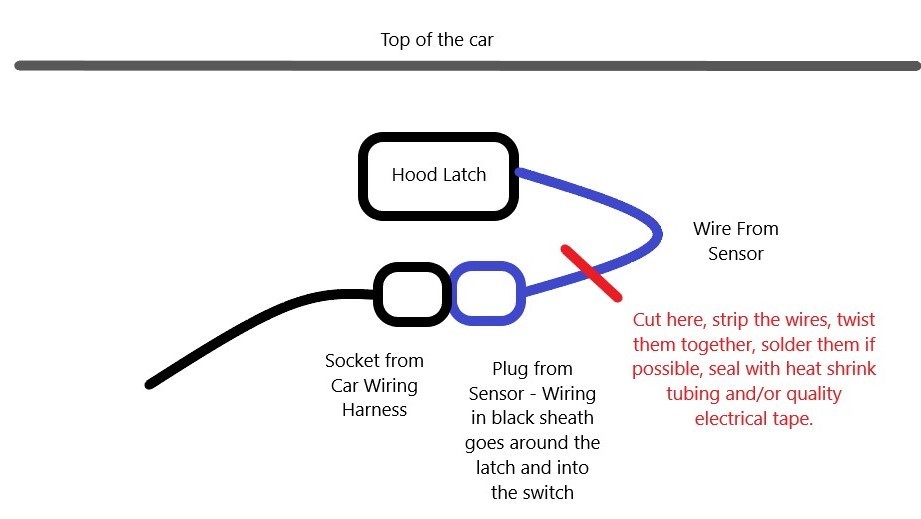
Note I am saying wires and when you look at the plug it looks like just one black wire. What you are seeing is the insulation tube that is black. Inside are two thin green wires that run from the plug to the sensor switch.
I’ll not get awards for artwork but hopefully this will give you an idea. When I faced the front of my Highlander, the wiring from the sensor was on the right hand side. You need to confirm this just in case. It is the wire to the sensor switch wire that you want to cut and not the wiring from the harness. On my 2008 Highlander, the harness wiring was on the left.
Once I was certain which wire to cut, I reached in with some snips and cut the wire leaving a couple of inches to work with. DO NOT CUT THE WIRES FLUSH TO THE PLUG!! You need a short length of the wires to connect together to make the circuit loop back.
To make work easier, I took the short wire with the plug on it and worked at a bench where everything was handy, I stripped a bit off the end of each wire, twisted the bare wires together, soldered them, bent them over the small wire pigtail and then used heat shrink tubing and electrical tape to secure everything. Total overkill but I never wanted to bother with this again.
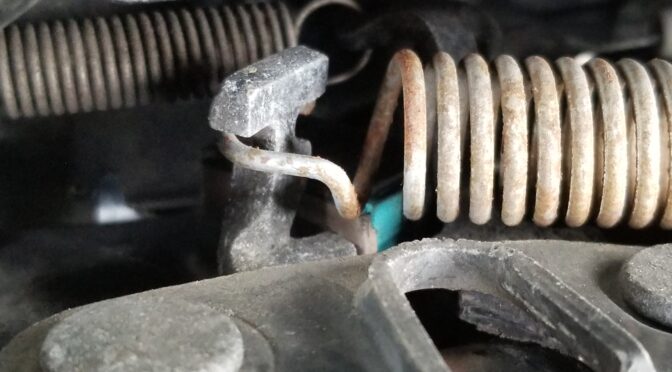
Here’s the finished result. The front of the car is to the left. Part of the hood latch spring is to the upper right and we are looking down at the newly made loopback plug. As far as the alarm system is concerned, the hood is closed. The red color is the heat shrink tube I had on hand. I folded the heat shrink tubing over at the end and then applied electrical tape to seal it.
I installed the newly created loopback plug back into the socket. I then tested the system by turning the alarm on with the key fob, putting the key fob out of signal range in the garage and waited for the system arm. Once the alarm indicator light went solid on the dash, I simply reached in through the open window and tried to open the door from the inside and the alarm went off. Yeah, I had to run back to that fob to shut it off 🙂
If the system thought the hood was open, it would never have armed by the way. That’s why you can’t just unplug the switch. I then reinstalled the plastic cover by installing the clips and then pushing the middle piece down to lock it in place. By the way, remember that the right two clips are bigger than the others. The two 10mm screws went back in with a dab of non-seize on each just in case they ever need to come out again.
That was it – the alarm is happily armed and protecting the Highlander as I write this and not one single false alarm since. I hope this helps you out.
5/23/2020 Update: This has worked great for me. Not one single problem since.
We’ve had a crazy amount of rain this year in Southwest Michigan. It seems we can’t go more than a day or two without rain. The photo at the top of our yard shows how everything is a lush green plus it shows the standing water that won’t go down because everything is so water logged due to all of the rain. We have friends and family complaining about the huge amount mosquitoes that are attacking them as a result – we don’t have that problem. I declared war on mosquitoes last year and upped my attack plan even further this year.
The ground is so wet and soft that my tractor got stuck and I had to pull it out. It’s sldo so wet that the mosquito population has just exploded and folks are saying that ticks are booming as well.
Last year, we started using Talstar Pro insecticide sprayed from an 18 volt two gallon Ryobi sprayer and I wrote a blog post about it because I was so happy with the results. It took me four batches (8 gallons in other words) of spray with 1 oz of Talstar per gallon to get control. It also took over an hour to apply. It definitely did the job but it took a long time and my arm ached from holding all the Ryobi sprayer unit as I walked around.
To be honest, the Ryobi far exceeded my expectations it was just too small, didn’t spray as far as I would like and holding it was killing my elbow, shoulder and back. I decided in April to buy a better sprayer and started researching on the Internet and reading reviews on Amazon. I happened across a vendor on Amazon called “My 4 Sons”, their features looked great and they got very good reviews so I decided to order one.
My 4 Sons Sprayers
First off, they really are a family owned business started by Lance and Lisa Ensign in 1998. Yes, they do have four sons. At any rate, they started with carpet cleaning and eventually branched into battery powered sprayers. I’m no expert but I think they fill a middle niche between little light use sprayers and the big dedicated units that you pull by a tractor or ATV.
It Arrived
In typical Amazon fashion, the unit showed up a few days later in a big box. What surprised me were parts everywhere and very limited instructions. The guide said to call Lance and listed his number. I left a message and he called me back a short while later and I got everything squared away. He and I then exchanged a few text messages also and they replaced a couple of accessory parts no hassle at all.
Here’s the tank, charger and caddy fresh out of the box. Some of the parts were in the tank to save space.
It just slides in and is retained by a velcro strap then there is a door that snaps in place to seal it.
Here’s the battery.
the battery has terminals on the top and simply slides into the compartment and makes contact at the end. A velcro strap allows you to snugly keep the battery in place.
Here’s the assembled unit with everything attached – the backpack straps and the extended hose. I removed the backpack straps shortly after.
Here’s how it looks now with just the tank assembly, extended hose, wand and caddy. Note how I had to tie the top bungee strap. I need to go over uneven ground and the tank can tumble off the caddy if the bungee can stretch too much. I’ll probably replace the bungee straps with just plain straps at some point. What you see above works for now – I just am not a huge fan of the looks.
Mosquito Control Results
When the mosquitoes first started this Spring, it was brutal. We were getting crazy amounts of rain and even at 1.5oz of Talstar per gallon of water and weekly applications, we couldn’t stay on top of them. I’m pretty sure the Talstar was getting washed off. Normally, Talstar is really good about leaving a residue that kills the mosquitoes but not when it is getting poured on almost every day. I tried to time my re-applications with at least one following dry day and the more the better. I like to apply at dusk when the mosquitoes are active by the way.
The sprayer and adjustable tipped wand worked wonders. With the My 4 Sons system I could really reach out with the spray -maybe 20-30 feet depending on how I adjusted the jet. Plus I could open up the spray and broadly apply it to the underbrush, leaves, grass by the house, bushes, eaves and so forth.
Instead of just 8 gallons, I’m applying about 12 and it takes me about 30-45 minutes to do so. This is because of the bigger tank and that I can spray a higher volume with the new system.
I’d say it took about three weeks to get on top of things and now I am spraying the normal 1 oz per gallon of water about every 4 weeks. We’ve just made it through one of these normal cycles and will spray again near the end of June – so we have another week to go as of my writing this and the mosquitoes are under control.
The Bottom Line
We can go outside safely now but we do hear of folks fighting tons of mosquitoes. I recommend Talstar Pro to anyone who will listen. If you have small urban property, you can start with a pump sprayer and move up from there.
Note, we have dogs and treat them for fleas and ticks. I hate ticks but they don’t bother me much unless I am in the woods. Talstar Pro is great if you need to get rid of ticks and a variety of other insects as well – read the label below.
I’d guess I’ve applied about four batches with the My 4 Sons unit now and am very happy with it. If you need a bigger sprayer for whatever it is that you are doing, I definitely recommend them.
Here are some links on Talstar P Pro if you want to learn more:
PS – The 18 volt Ryobi Sprayer is still going strong even after a ton of use last year and is now being used to hose down plants with fungicide. Since stuff isn’t drying out, we are seeing a lot of fungus development on our roses and vegetables. I’m experimenting between Immunox (which is not impressing me) and Daconil for fungus control. Point being for people with smaller areas, the little Ryobi is still a solid choice.
5/21/23 Update: My older sprayer is still working great. They have a new model that should be just as good or even better. Also, you are better off buying Talstar P Pro from eBay. Amazon has stopped carrying it or allowing sellers to list it.
2/25/20 Update: The My4Sons sprayer worked fine all last year. One of the wheels fell of the cart and they promptly sent me a replacement. I poured out all of the remaining liquid and ensured the pump was empty going into the winter. I’ll definitely be using the unit again this year.
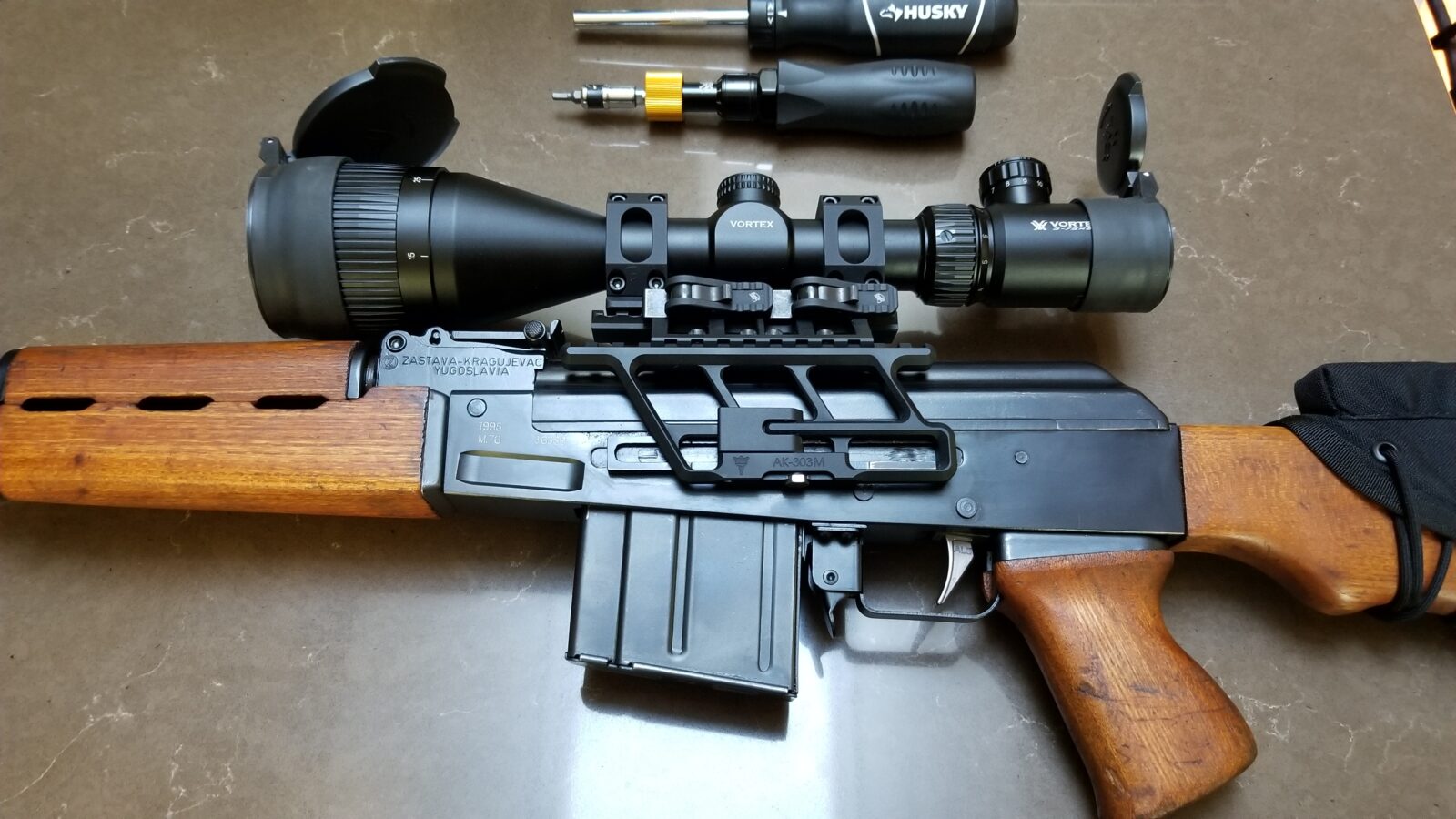
When I was adding the big Vortex Hog Hunter scope to my M76 with RS Regulate side mount optics rail, all I had to prototype with were UTG rings. While the UTG rings aren’t too bad, I have stopped using them with centerfire rifles because they have a rounded screw that passes through the Picatinny rail rail slot. It’s rounded shape and only partially filling the slot risks damaging the rail and the zero shifting because the ring(s) can move.
These are the UTG low profile rings. Note how the screw is round and not rectangular? Also, after 30 rounds of 8mm Mauser firing, the rear flip lever rattled loose.
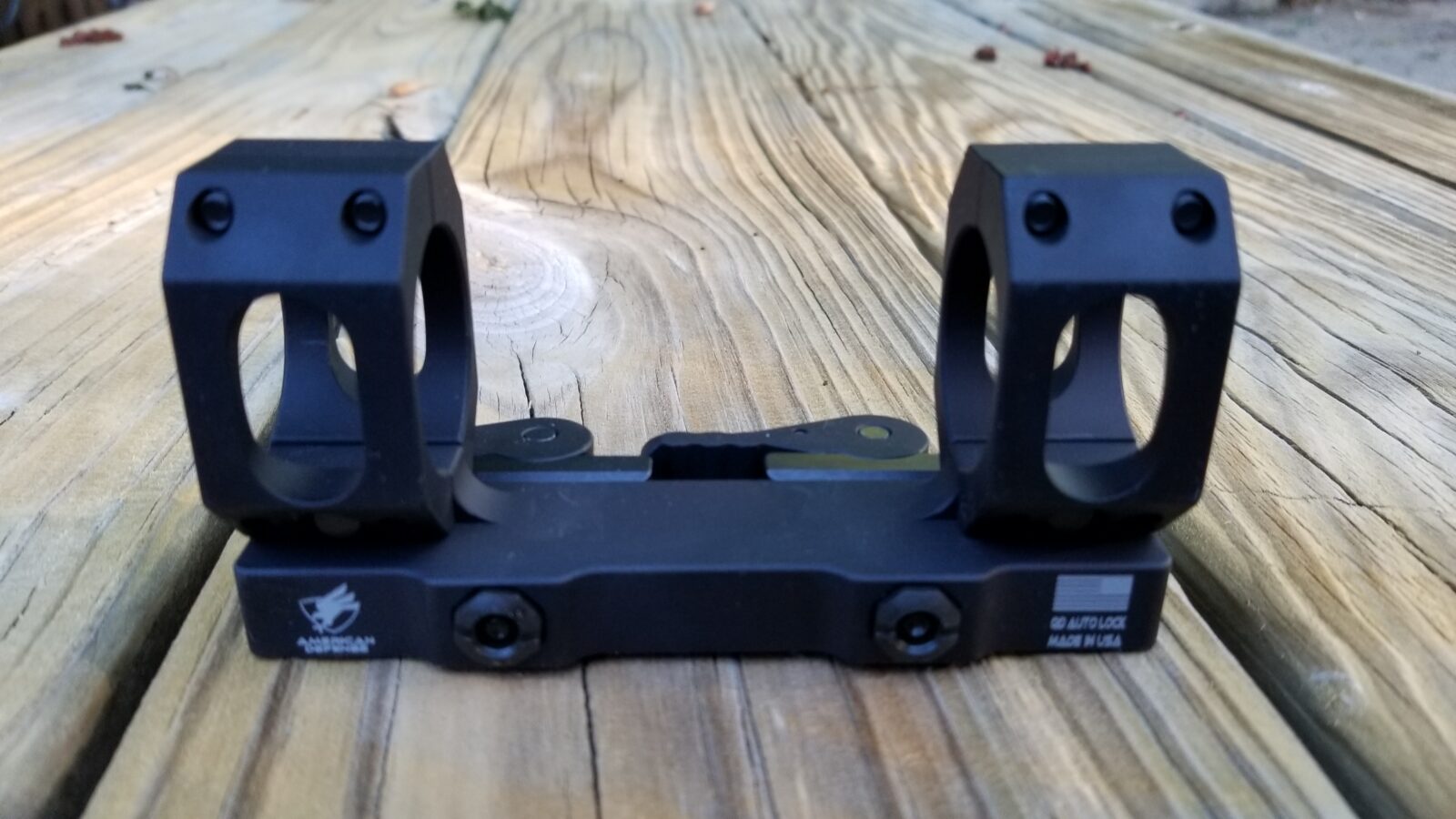
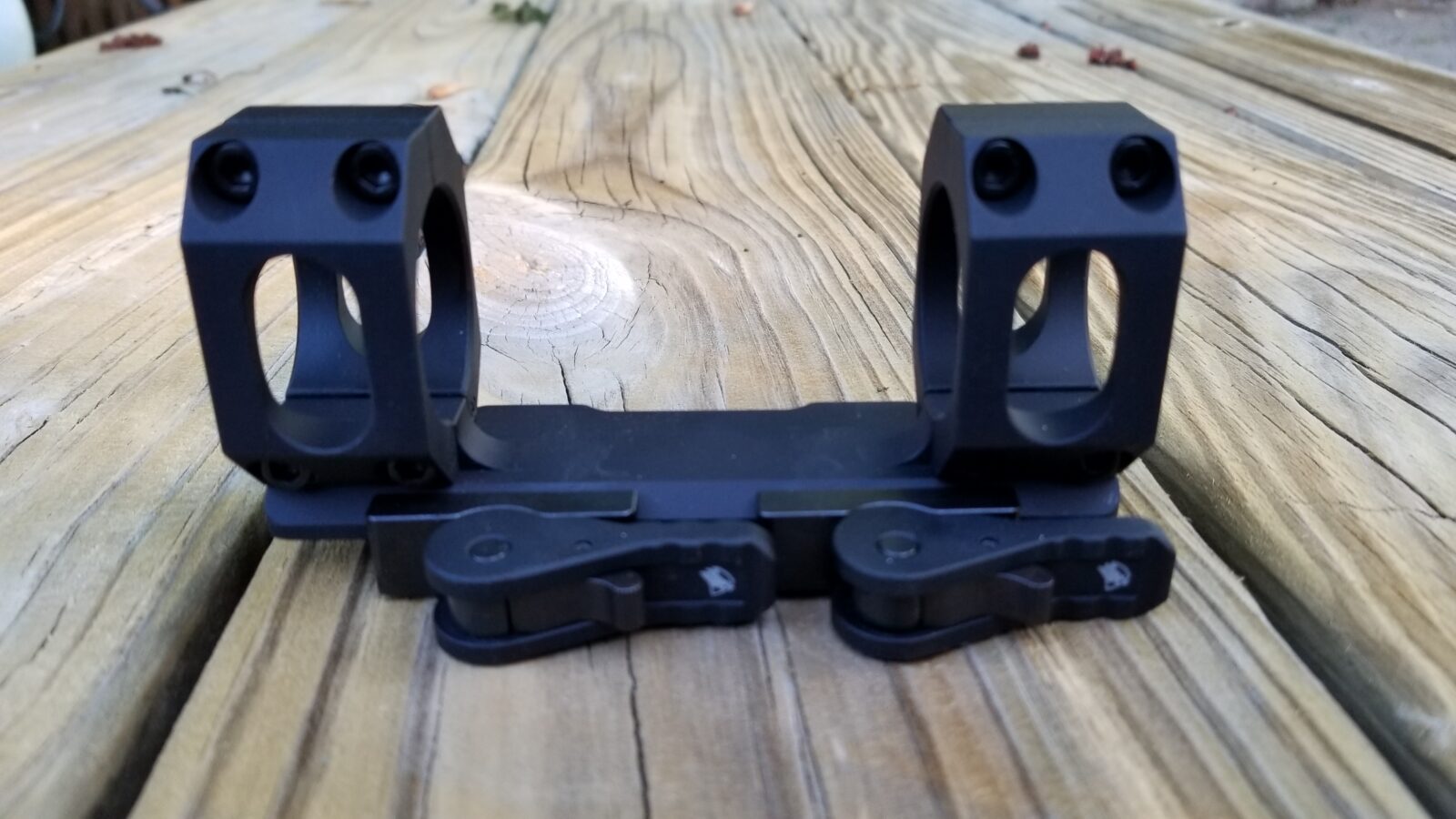
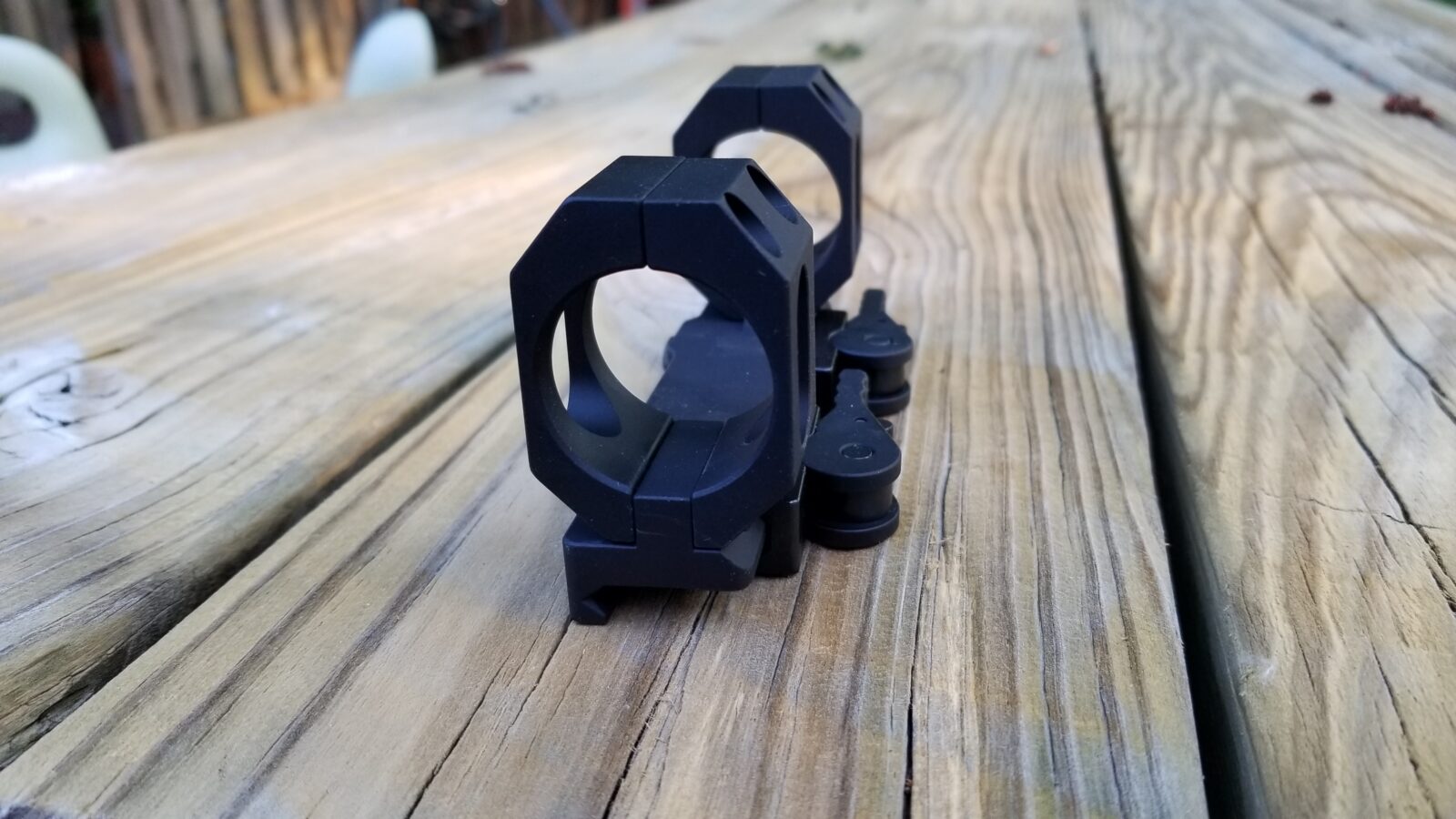
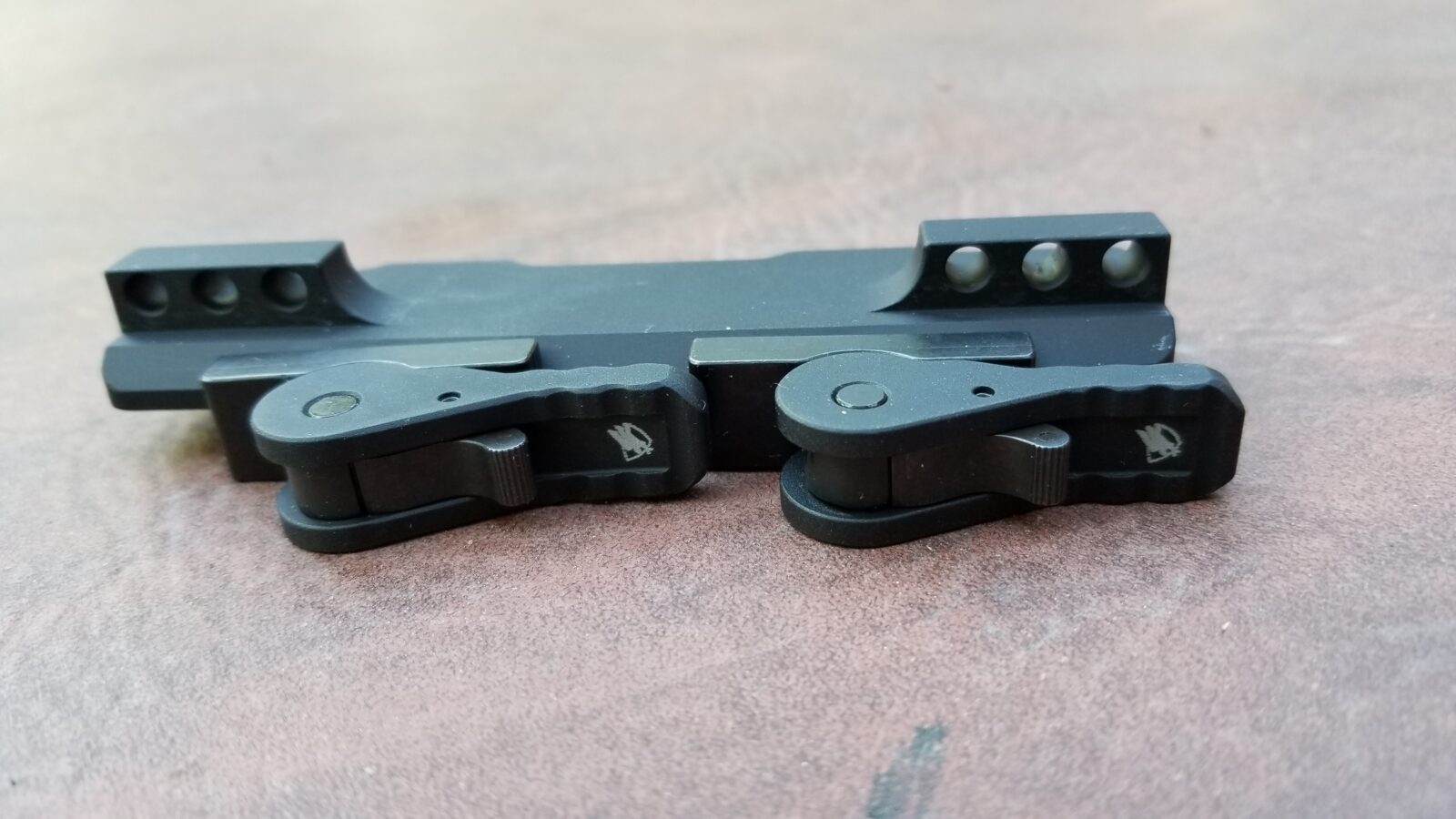
What is really needed is a quality ring or scope mount that uses a bar that properly fits into the Picatinny Rail slots and locks the optic securely and consistently into position. American Defense mounts are that way and they have an excellent locking lever.
I started using American Defense mounts for my Vortex Crossfire Red Dot optics a little over a year ago and was very satisfied with them and very impressed by their quick release lever design. So, when I needed a new mount for my M76 that was strong enough to hold the big Vortex Hog Hunter scope on my M76 and would clear rear sight block but also be close to the bore, the American Defense AD-RECON-SL immediately came to mind.
American Defense AD-RECON-SL
American Defense started with their QD Auto Lock System – the quick release lever system they developed. – and have branched into a variety of offerings from there including scope, bipod, light, laser and other mounts. In short, they are capitalizing on their really rugged QD levers.
So, the first thing I did was to measure the UTG mount from the top of the rail to the optic center, which I used the top of the lower half ring. That measure came to about 0.975″ and I knew any mount I bought had to be at least that or bigger. The front objective was all but touching the gas tube cover with those UTG low rings.
The AD Recon series has a variety of heights and offsets to select from and they publish specs for you to make an informed decision. In my case, because the RS!Regulate side mount already has front-to-back adjustment, I didn’t feel that I needed any offset but I did want to find as low of a scope mount as I could.
In looking at the specs, the AD-RECON-SL seemed to fit the bill. It had no offset and was their lowest mount with a 1.110″ center for scope with a 30mm tube. it was a tad higher but the slightly higher 0.135″ difference really didn’t worry me so I went ahead an ordered one.
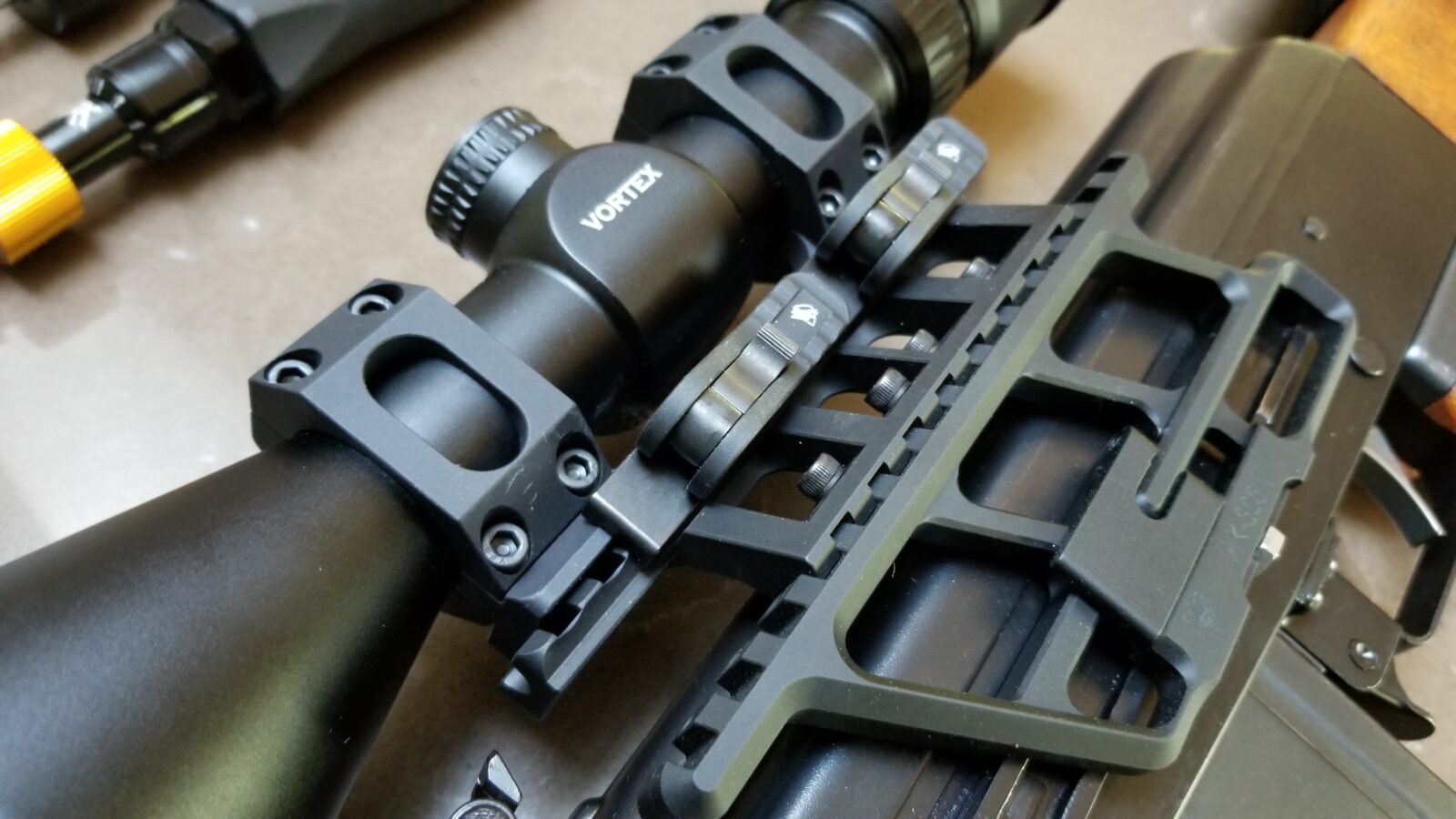
Folks, the AD-RECON-SL did not disappoint. It is really a gorgeous piece of engineering. The fitment is excellent and is finished in a black hard coat. Here are some photos:
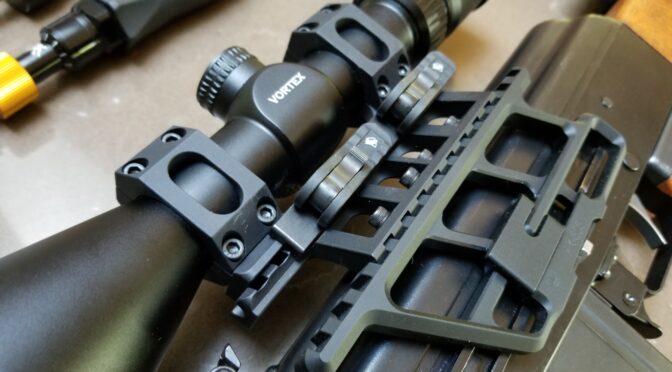
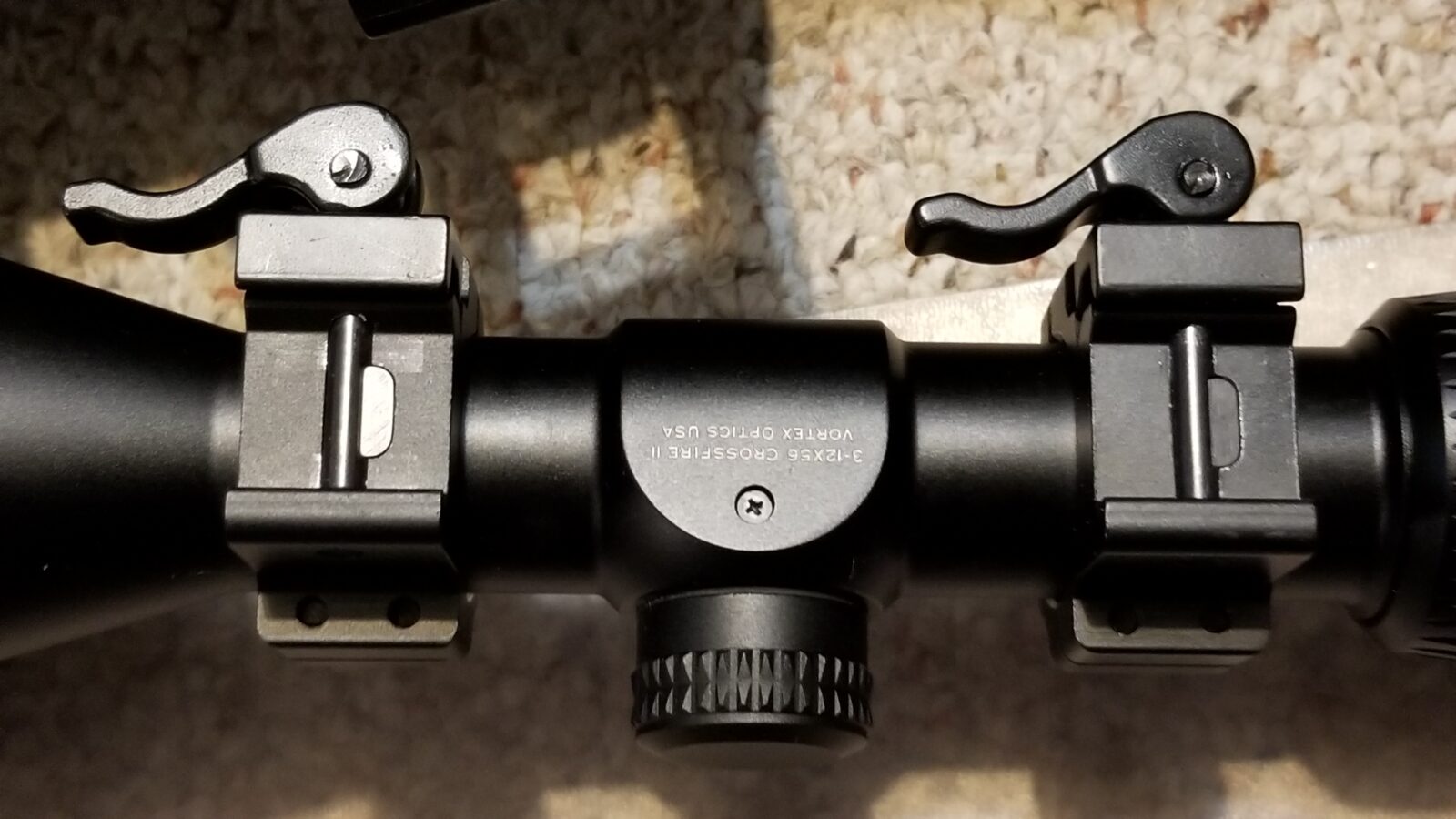
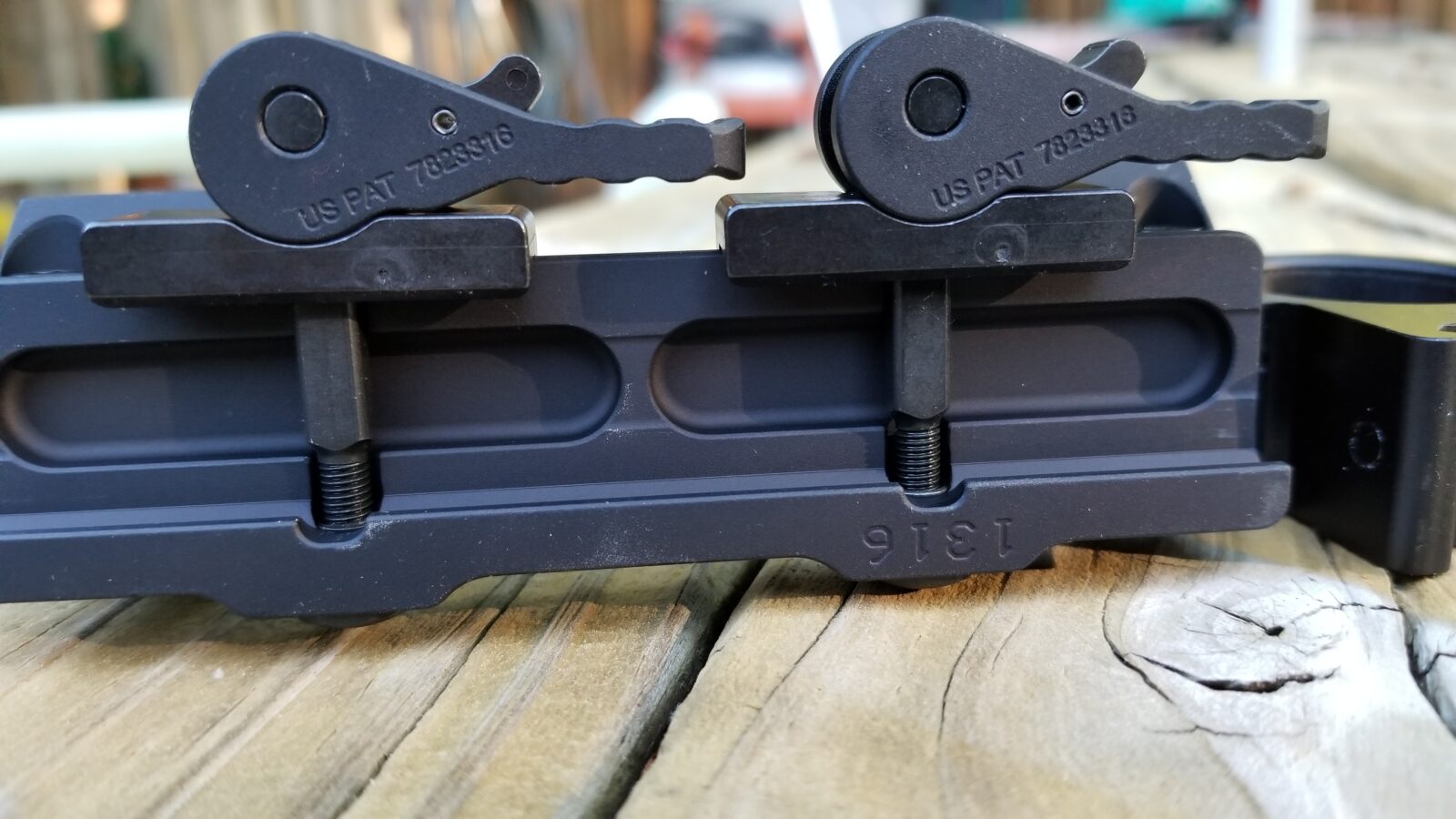
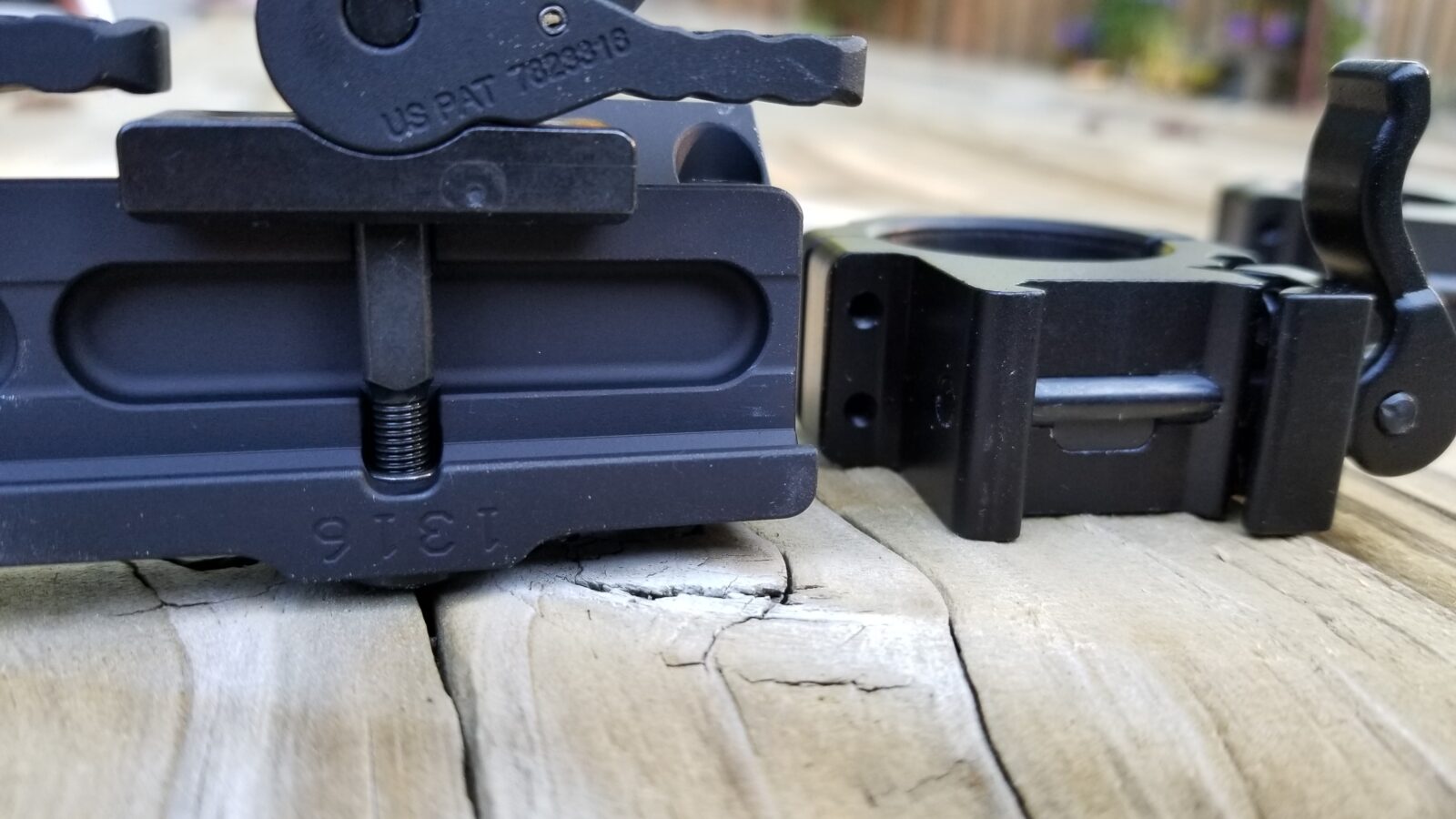
Here’s the side of the unit with the adjustment nuts. I love the flag on the side.Here it is with their patented QD levers. The small lever you see in the middle of the bigger lever is the locking mechanism that keeps the unit secure. The moment you flip those rings you know your dealing with quality.See how American Defense uses bars to lock the mount into the Picatinny rail? This is the way to go. It makes for a very secure and consistent engagement meaning your optic’s zero will not shift and the rail will not get damaged over time under heavy recoil with a simple round screw.Yeah… that’s the American Defense unit on the left and the little UTG ring on the right. I would have no hesitation recommending the UTG rings for a rimfire or light recoil applications but not for something where there is significant recoil and a heavy optic combined.Here’s another angle.
But Why Have QD Rings on a RS Regulate Mount?
I do need to explain this. I can bet that I will need to take the dust cover off for some reason and don’t want to rely on tools. If I am hunting, I may not have any tools with me and need to clear a jam or something. That means I need a way to remove the scope and rail to get access to the dust cover.
The RS Regulate’s lower rail does have a quick take down lever that solidly clamps on the M76 rail. That is not the issue and may make you wonder I need another quick release system. The challenge is that the Hog Hunter scope has a giant 56mm front objective for gathering as much light as possible in low-light situations such as dusk. It will hit the M76’s rear sight block if pulled straight back when mounted as low as I want. The solution is to use the AD-RECON-SL optic mount to enable me to lift the scope off the RS Regulate’s top rail and then I can slide the RS Regulate assembly off. The combination definitely works.
Installation
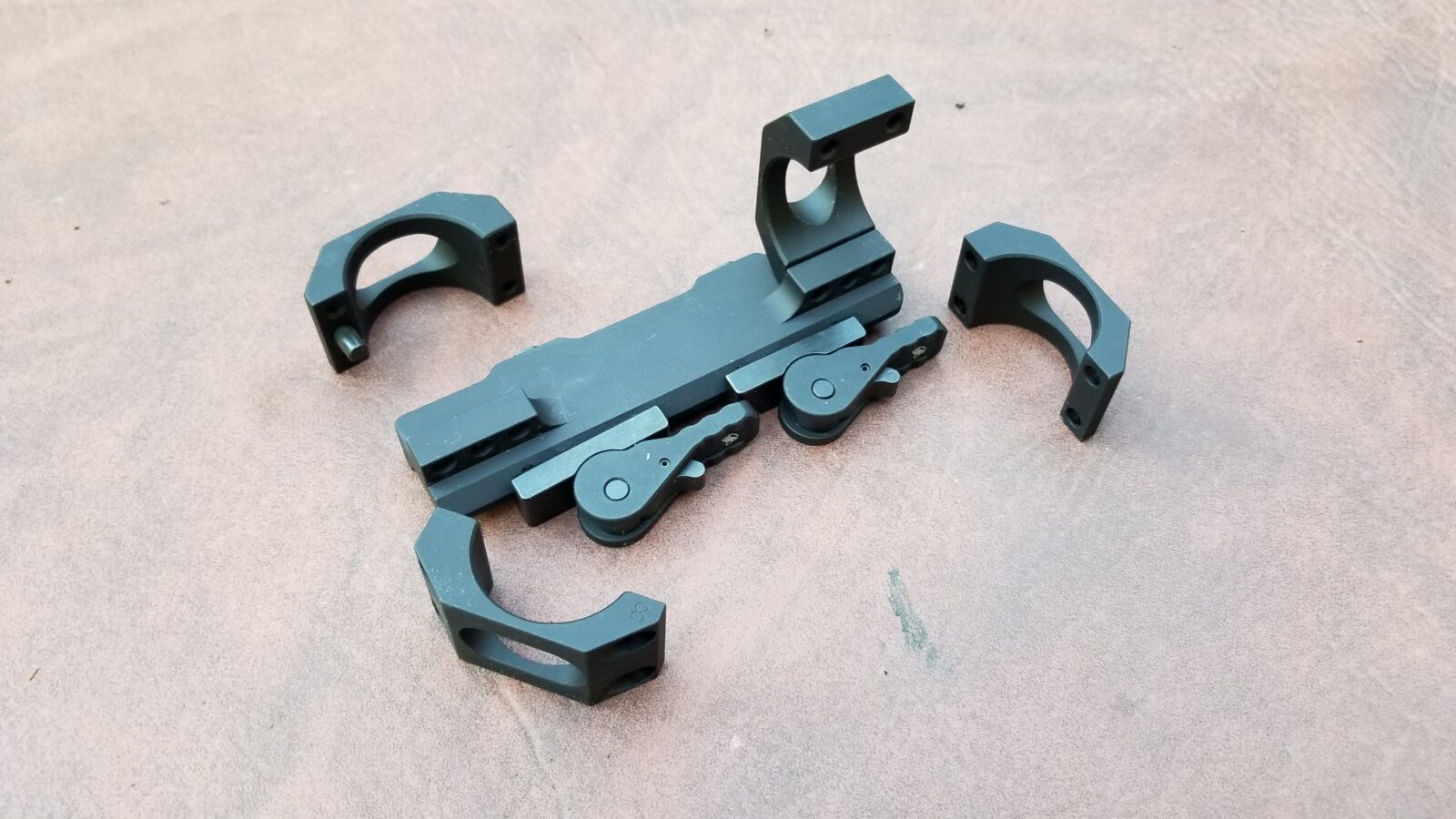
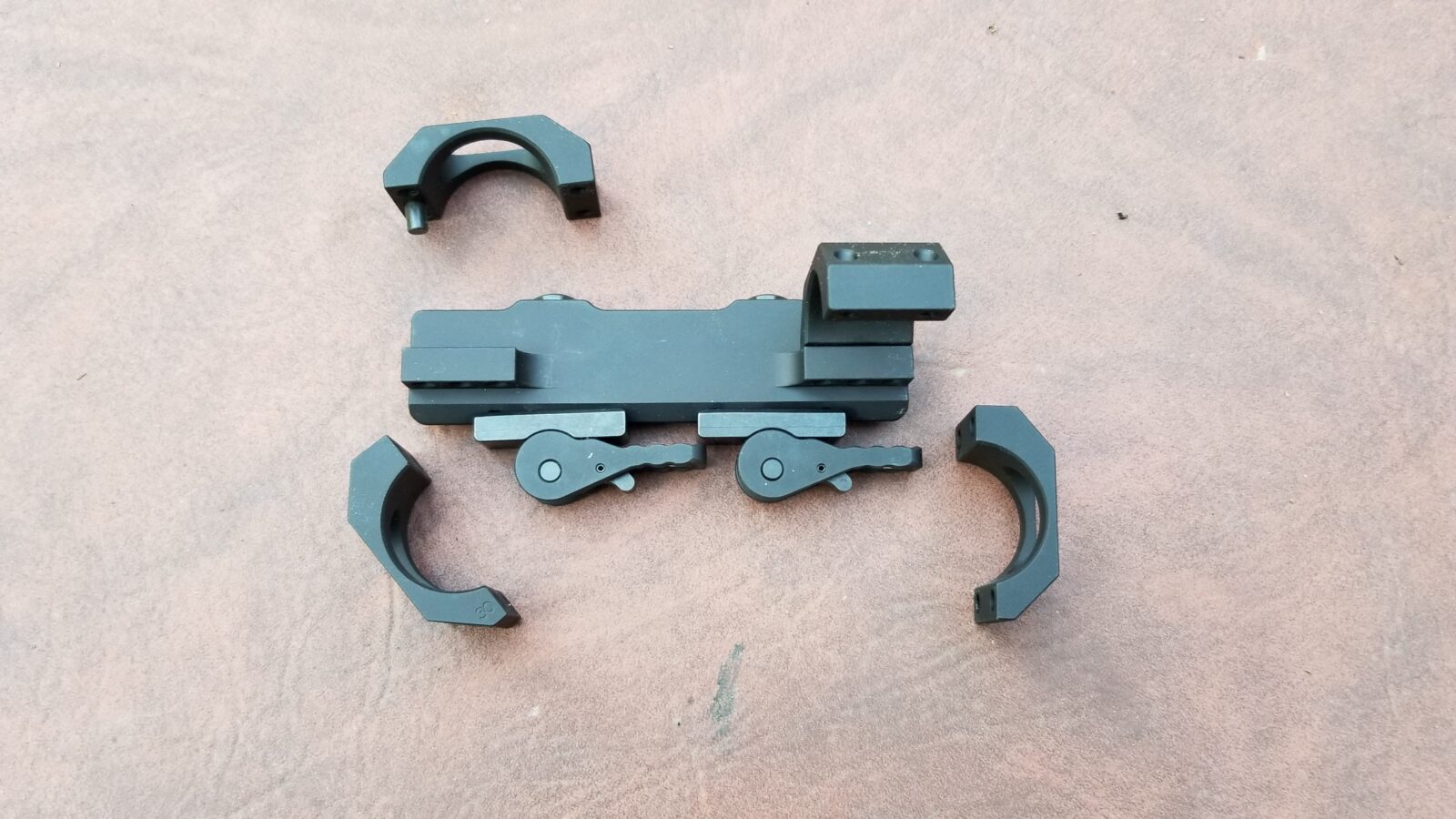
Taking the mount apart was easy – remove the four screws on each ring. I was pleasantly surprised that they used a precision pin to guide the rings into position and not just the screws. Again, this makes it stronger and more consistent.
Here’s a close up of the base. The middle hole is for the guide pin and the outer holes are for the screws.Here you can see the four halves of the rings. The half to the top left with the guide pin. Its counterpart is already installed in the back. An important design aspect to note is that the halves are not symmerical from top to bottom. The side with the pin is a no-brainer – that goes in the base. The other two halves without pins need to have the thinner section at the bottom for the pieces to mate up correctly. You can see in the top left half that the bottom part with the alignment pin is not as tall as the top. The lower-right is also a good angle for you to see the thinner bottom relative to the top.
There is an installation detail that you may not guess and they detail it in their installation instructions – you install the bottom screws first and tighten them down to the 20-25 in/lbs torque spec first. For folks not used to working with small fasteners, please note that is inch pounds and not foot pounds).
The bottom is torqued down first and then the top. There will be a small gap at the top. This method of bottom then top torquing centers the optic in their design. The only thread locker they will recommend is VC-3 Vibra-tite and the use of anything else will void the warranty. I’ve used a lot of Vibra-tite with Kydex holsters – it’s interesting in that you clean the fastener, apply the VC-3, let it dry and then assemble. It creates a rubbery surface that pretty much negates vibration. It also stays put when you unscrew and reinstall screws. It’s interesting stuff. They include a small packet of it with the mount but I also keep it around for working with Kydex fasteners and other situations where I expect there will be a need to uninstall and reinstall or adjust screws.
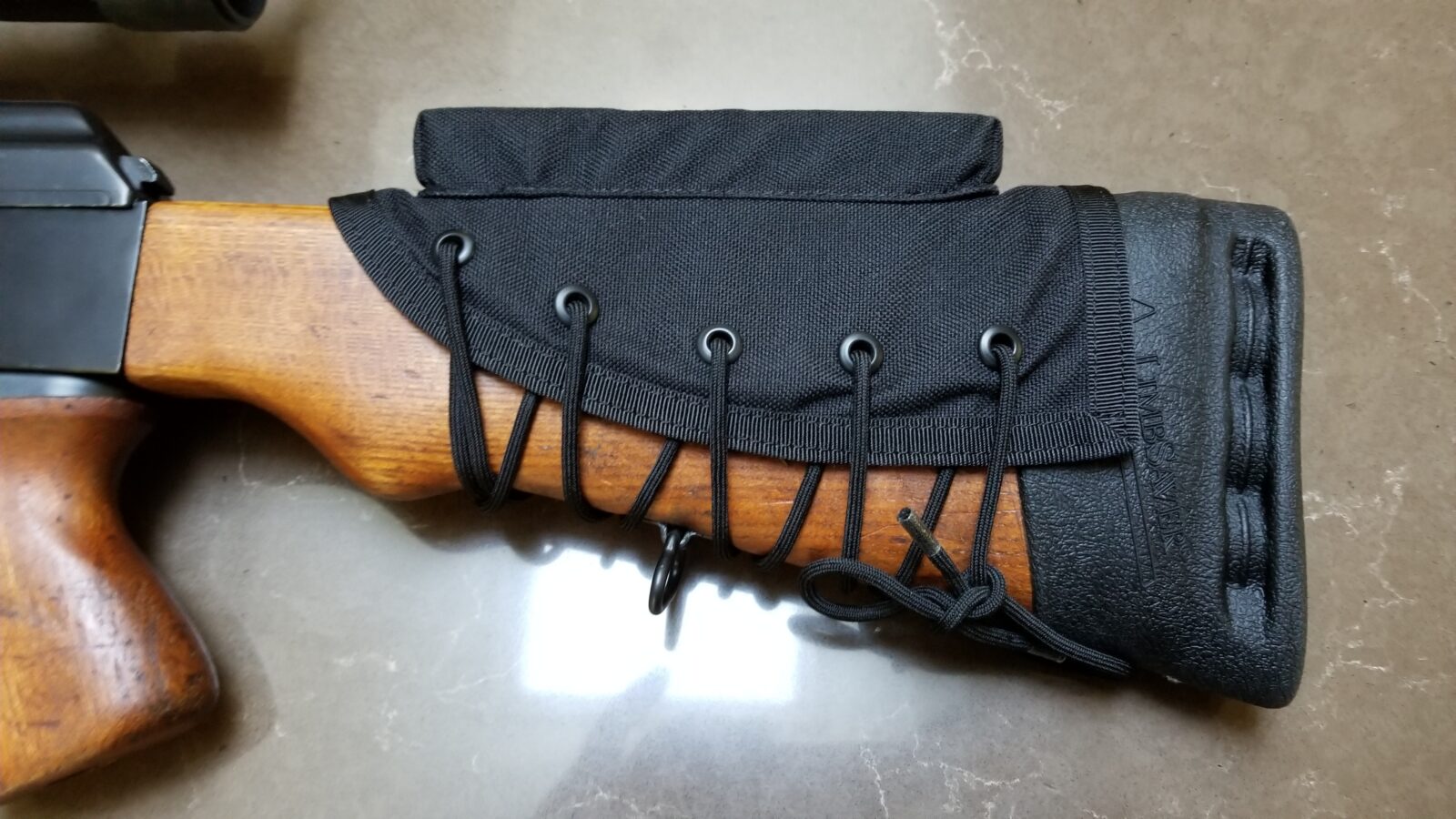
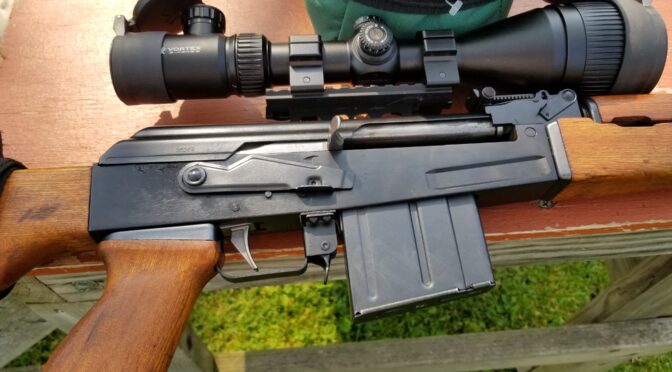
Here’s the M76 rifle with the American Defense mount installed. Note I used my Vortex torquing screwdriver to do the installation. It’s definitely a precision instrument and what I use for all optics work now. I take care to return it to zero after each use.Here it is from another angle. I changed cheek pieces to get a better cheek weld. This unit is nice and stable. I’m so-so about the cheek pad itself and wish it was a bit wider but it is better than the Voodoo cheek pad that was there. I’m still hunting for an even better cheek weld and have some options I want to try that I will report on at a later date after I have a chance to try them. To be clear- it is a solid cheek piece and the right height but personally I do not like the feel of that relatively narrow riser.
In Summary
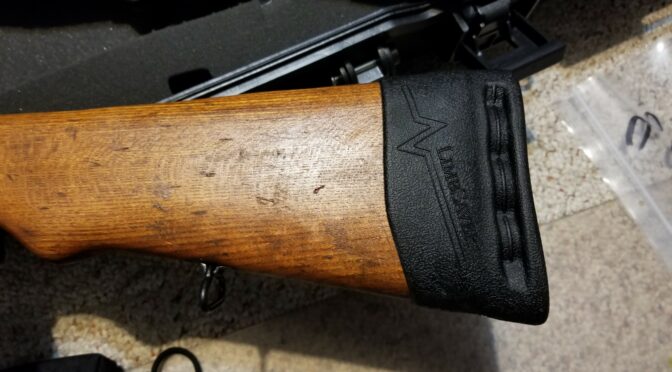
The combination of the RS Regulate side mount system and the AD-RECON-SL optic mount is absolutely rock solid as in zero flex at all. even with the big and heavy Vortex Hog Hunter scope. I really think I have the ideal optic solution now for the rifle. The length of pull is better thanks to the installation of a SVL slip-on Limbsaver pad. I still need to find a better cheek piece to get my eye just the way I want it comfortably behind the scope and have some options to try. Last thing to report is that I did do some work on the firing pin but haven’t had time to test the rifle again.
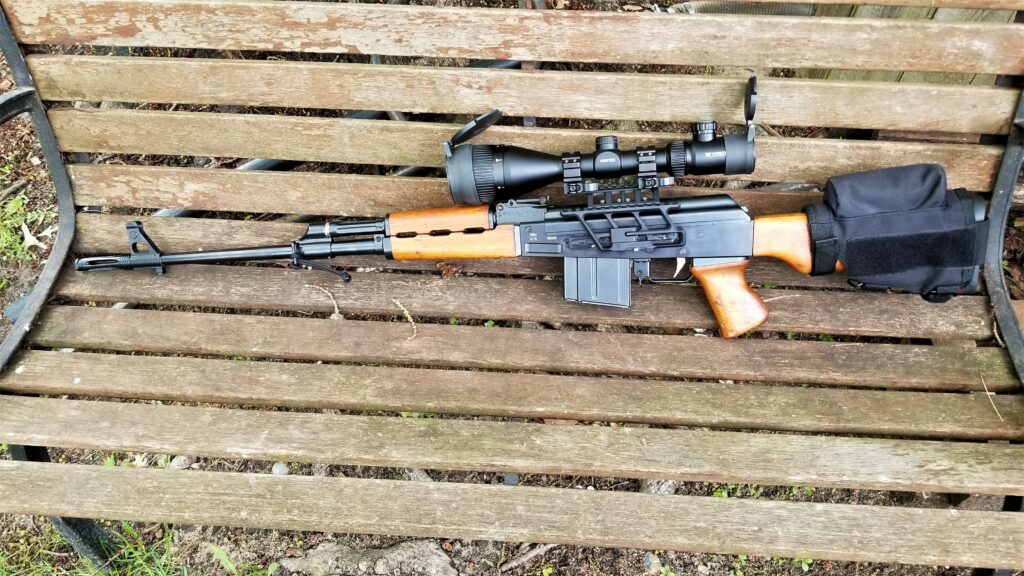
Normally, I like the length of the Yugo M70 and M72 buttstocks. They’re shorter than many Western fixed stock designs but I’ve just grown accustomed to the length of pull (LOP). Recently, I had Two Rivers Arms build me a M76 designated marksman’s rifle (DMR) and found the stock to be a tad shorter than what I wanted to get in position behind the big Vortex Hog Hunter scope I had bought for it.
Two Rivers Arms custom built Yugo M76 rifle with a RS!Regulate scope mount and Vortex Hog Hunter scope. The UTG rings have been replaced with an American Defense mount and the cheek piece will be replaced but you can get an idea that this is a big rifle and a big optic.
I realized that to make the LOP longer, I had two options. My normal route with an AK is to install a stock adapter and either go to some form of modular stock. In the case of the M76, I really wanted to stick with the original wood. The brought be to my second option – to add a recoil pad.
There are a ton of recoil pads on the market but as far as I know, nobody makes a direct replacement recoil pad for the Yugo military rifles other than me and my pad is a copy of the original. This gives you two options also – either cut the stock and install a “grind to fit” pad that would ruin the original stock or to go with a slip on pad.
Slip on recoil pads are designed to fit a certain range of buttstock sizes based on the height and width. They may not be the best looking of options but they get the job done and don’t require any modifications to the underlying stock — plus for folks who don’t like messing with tools – they can be slid on and off usually very easily.
End of Buttstock Size for Yugo M70B1, M72B1, and M76 Rifles
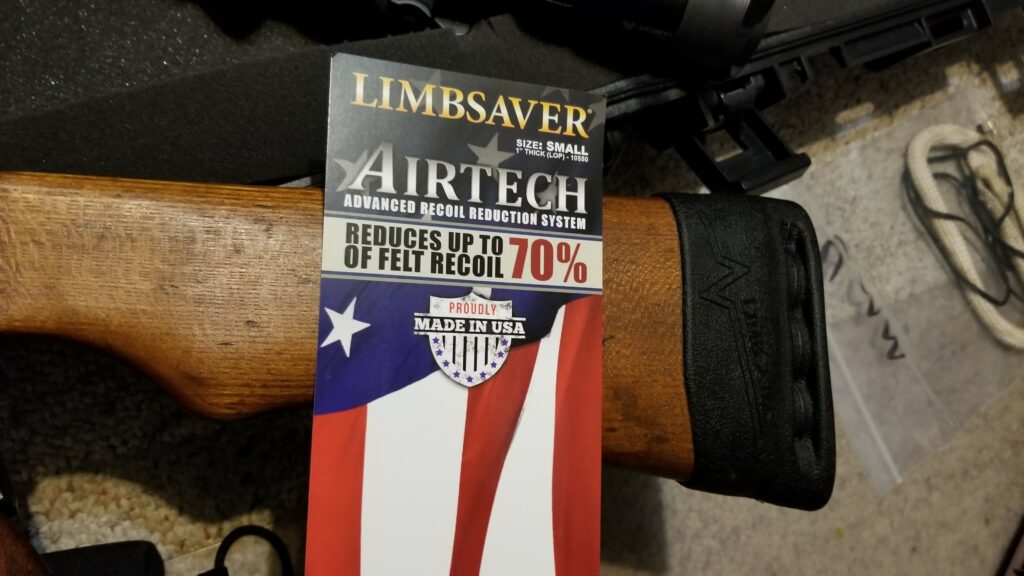
They have a new Air-Tech series that adds 1″ to the LOP and is also remarkably spongy to absorb the recoil. The M76 really doesn’t have a ton of recoil so my decision was more based on the 1″ LOP.
The AirTech slip on pad comes in four sizes:
“Small” fits stocks measuring 4-1/2 x 1-1/2 inches to 4-13/16 x 1-5/8 inches
“Small/Medium” fits stocks measuring 4-5/8 x 1-9/16 inches to 5-1/8 x 1-3/4 inches
“Medium” fits stocks measuring 4-13/16 x 1-5/8 inches to 5-1/8″ x 1-3/4 inches
“Large” fits stocks measuring 5-1/8 x 1-3/4 inches to 5-3/8 x 1-7/8 inches
The small-sized pad slid right on and fits nice and snug.
I actually wish they had a pad that added about 1/2-3/4″ of pull as that would be perfect. The end result is just a tad longer than what I would dial in with an adjustable Magpul PRS stock but it definitely feels better when I start lining up behind the scope. It’s staying on the rifle!
I had a fellow who was new to AK-47s/AKMs ask me the other day how the two pins work and if there was a published specification for them because his were floating in their holes. I learned a long time ago to try and help guys learn so I took a few photos and sent them to him.
Two Pins for Semi-Auto AKs
In a fully automatic AK, there are three pins and they are referred to collectively as the fire control group (FCG) pins – this includes the hammer pin, trigger pin, and sear pin – once in a while you’ll see the word “axis” thrown in there somewhere. For most civilians, we’ll just see semi-auto AKs so there are just two pins – one for the hammer and one for the trigger assembly which is made up of the trigger and disconnector. They are still called the FCG pins.
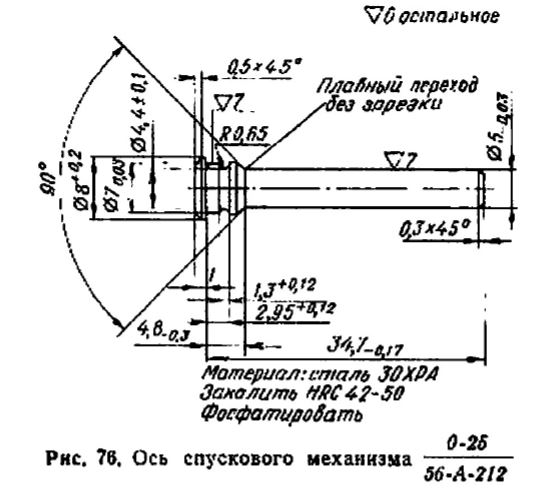
For anyone that is interested, a 1968 Soviet era armorer’s manual does have the pin specification:
This is from a Soviet era Armorer’s Guide that specs out the AKM fire control group pin. The shaft is 5mm and is where the trigger and hammer rotate. The same type of pin is used for both the trigger and the hammer – they are not unique.Here is a pile of pins from a mix of countries. I had them in one of my parts boxes. The diameters of the shafts vary from 4.921 to 4.988mm according to my micrometer. Based on the armorer diagram above, a diameter under 4.97 or over 5.03mm is out of spec. Three of those pins were under 4.97 interestingly enough.
Odds are that the heat treat is messed up on his receiver or someone drilled the holes out of spec. He has enough info now to decide his next steps and since I wrote most of this already, I decided to post it in case it helps someone else.
Accessing the 1968 AKM Armorer’s Manual
I am going to try hosting his huge armorer’s manual PDF file and see how it goes. If people have problems downloading it, I’ll just remove the link – click here for the 64MB PDF file. Note, I am not the owner or creator of that file. Someone did us a huge favor by taking the time to scan in all the pages and share it. It is in Russian and has a ton of diagrams.