The Absolute Best Shoe and Boot Glue That I have Found!

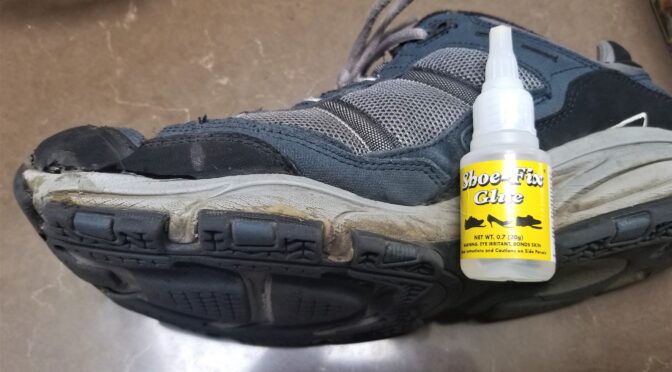
Folks, I’ve found what I think is the best glue for shoe and boot repair. Yeah, I really mean it. It’s called “Shoe-Fix Glue” and is marketed by a small firm called NJoy Distributors and only sold direct or via Amazon. Let me give you a bit of background first.

I’ve tried to fix tons of shoes and boots over the years with varying success using Goop and Shoe Goo amongst others. The two challenges were trying to clamp the shoe or boot while trying without making the profile change once dried and also not using so much glue that it altered the feeling of the shoe. Nothing happened fast either – you had to wait overnight while the stuff set up.

So, I did some digging on Amazon a few weeks back and found this stuff. What really caught my eye were the amazingly high number of positive reviews:

At the time of my writing this blog, there are 845 reviews with a score of 4.5 out of 5. 86% of reviewers give it either 4 or 5 stars. That’s pretty good and I figured I could afford to give it a shot.

I had both the sneakers I wear around home that had the bottom tread coming off and my daughter’s favorite boots had the sole separating from the upper that I could experiment with.

NJoy does have a nice tips page with some videos that I checked out [click here for that] and it largely comes down to making sure the surfaces are clean, dry and then holding them together for 30-45 seconds while the rubberized / flexible cyanoacrylate adhesive cures.

What they are using is the interesting part – they came up with a flexible cyanoacrylate adhesive – a flexible “super glue”. This surprised me more than anything else. Normally I find that the “super glue” class of adhesives as rigid and intolerant of shocks and flexing. This stuff smells as you’d expect when applying it with a medium viscosity meaning it appears to be a little thicker than water and this helps it attempt to balance the need to soak in and establish a bond with the need to not run everywhere.

On their website, they report that their Grandfather Ed started the shoe business after WWII and ran it for 20 years. He then had two sons Dean and John. John is the one who came up with the formula and started bottling the current formula in March 2015 [click here if you want to read more]. By the way, you’ll notice they sell stuff for boots and shoes and this is just marketing so that people searching for boot glue or shoe glue will find the item – it’s the same formula and they are very upfront in telling people this.

If you are wondering about how my tennis shoes and daughter’s boot turned out – the results were amazing. The stuff really is easy to apply and has held up now for two weeks with heavy use. My daughter is a college student and walks a ton every day in those boots in the Michigan winter.

Hand adjusting automatic drain valve on air compressor
This is her boot with the sole reattached – it was literally more than half the way off the upper. I ran a bead of Shoe-Fix glue around the perimeter of the rubber sole and held the two together with my hands. I let go after about a minute and the repair seemed solid. They’ve held up for her even with a ton of walking as a college student.
Hand adjusting automatic drain valve on air compressor
On my “work around the house” shoes, the dark tread was separating from the middle foam wedge in a number of places. I’d apply some glue in each spot and hold them for 45-60 seconds – done. All the discolored stuff is remnants of Shoe Goo that I did need to clear away in a few places. Shoe-Fix is clear.

I was so impressed by Shoe-Fix Glue that I figured I really needed to write a post and share the info. It really does what it claims and I am intrigued enough to want to try it on other projects that aren’t footwear related where I need a fast flexible bond. In the mean time, I will always have 1-2 tubes of this stuff available for impromptu shoe and boot repair.

2/17/2020 Update: I wrote the original post on 2/7/20 and probably started using this glue maybe 2-3 weeks prior. I’m very pleased to report that all the shoes and boots fixed thus far are still standing up to everyday use. None of the bonds have let go thus far.


Please share the link on Facebook, Forums, with colleagues, etc. Your support is much appreciated and if you have any feedback, please email us in**@*********ps.com. If you’d like to request a report or order a reprint, please click here for the corresponding page to open in new tab.
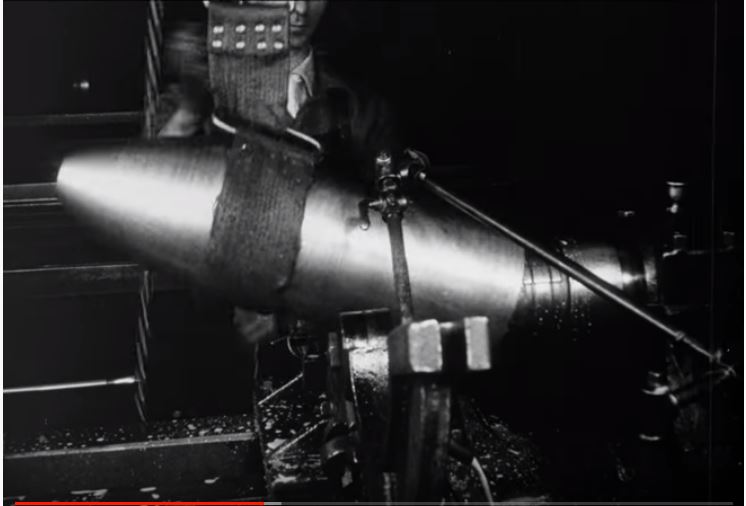
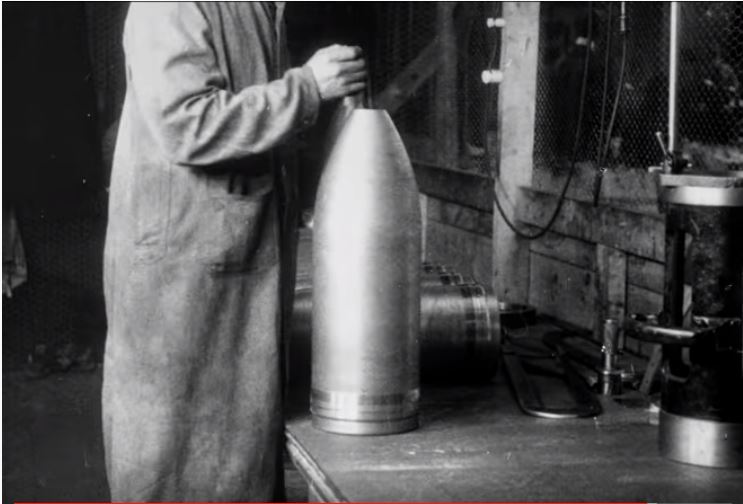
Video: Manufacturing an Eight Inch High Explosive Howitzer Shell Circa 1917 – Shows a Ton of Machining Operations

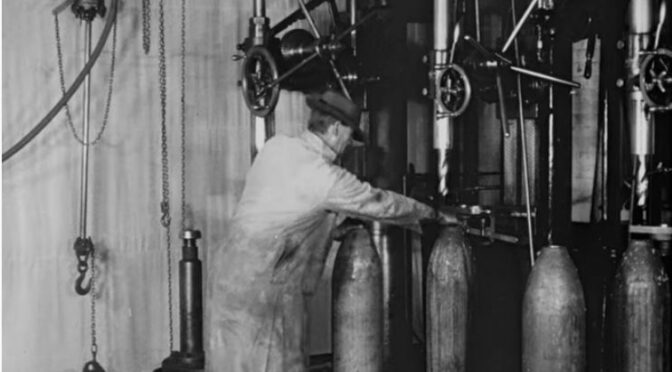
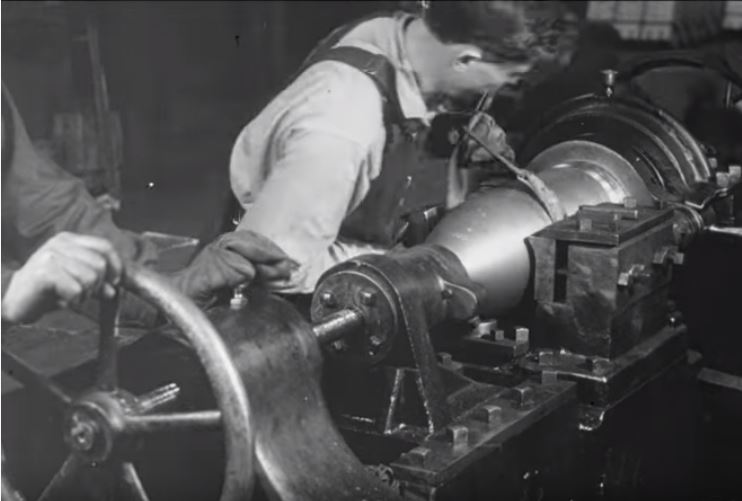
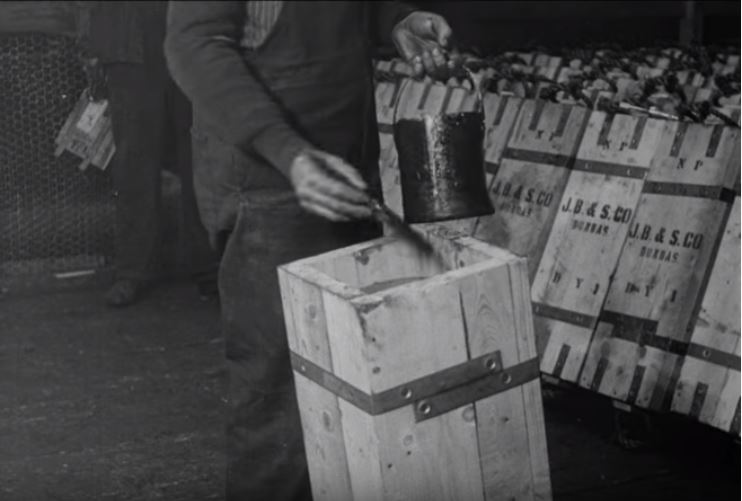
If you like to watch old school machining, this video from the Library and Archives Canada is pretty amazing. It’s a silent black and white video that is just shy of 54 minutes long. The title of the video is “Manufacturing an Eight Inch High Explosive Howitzer Shell At The Works Of The John Bertram & Sons Company, Ltd., Dundas, Ontario – Canada”.

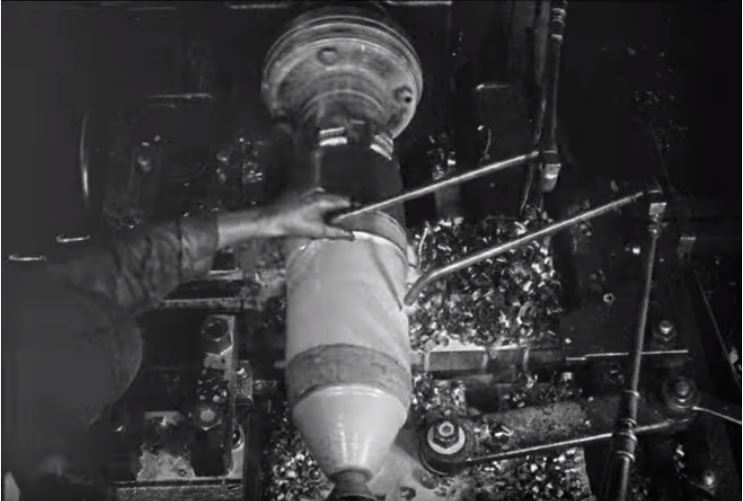
The video steps you through the process as well as general view of the shop. This shows you manufacturing in an era where a lot of artisan skill was required to turn out products. It’s really fascinating to watch. The following are some screen shots from the video:

Machining an 8-inch howitzer shell, circa 1917, showcasing industrial manufacturing.
Machining an 8-inch howitzer shell circa 1917
Worker inspects an eight-inch high explosive howitzer shell during manufacturing, circa 1917.
1917 howitzer shell manufacturing: worker machines an 8-inch explosive shell.
Worker applies sealant to wooden crate for 8-inch howitzer shell manufacturing, 1917

Here’s the Video:


I hope you enjoyed this bit of history!


Please note that all images were extracted from the video and are the property of their respective owner.


Please share the link on Facebook, Forums, with colleagues, etc. Your support is much appreciated and if you have any feedback, please email us in**@*********ps.com. If you’d like to request a report or order a reprint, please click here for the corresponding page to open in new tab.


Video: How to Make a Japanese Katana Sword: Exquisite Detail Of the Hamon and Engraving

I thoroughly enjoyed this Japanese video that covers the forging, engraving and heat treat of a Japanese Katana by a Master – Sadatosh Gassan. The video provides a great overview and while it is in Japanese, there are subtitles in English.

What I found most fascinating was the detail of the creation and application of the clay to create the hamon. Sadatoshi-san also is shown carefully engraving a dragon around a plum tree.

Close-up of clay being applied to a katana sword mold for hamon and engraving.
He evenly applied the clay and is now drawing the hamon pattern into it prior to the heat reat.
Japanese katana sword being quenched with clay, showing the hamon
Here it iss just prior to the firing.
Artisan engraving intricate details onto a katana sword blade
Carving the dragon into the blade.
Japanese katana sword with detailed hamon and engraving, showing exquisite craftsmanship.
The end result is beautiful.

The Video


I hope you found this video as interesting as I did!

Please note that all images were extracted from the video and are the property of their respective owner.


Please share the link on Facebook, Forums, with colleagues, etc. Your support is much appreciated and if you have any feedback, please email us in**@*********ps.com. If you’d like to request a report or order a reprint, please click here for the corresponding page to open in new tab.


Video: Forgotten Weapons Reviews Soviet AK Magazines

In this short video, Ian gives a brief overview of Soviet magazines – notably the slab side, ribbed, waffle and bakelite. As always, Ian does a great job and this is worth a watch!

Forgotten Weapons reviews a Soviet AK-47 curved metal magazine
The first generation was a heavily built (over-built) magazine known as the “slab side”.
Soviet AK magazines, one ribbed, one smooth, in Forgotten Weapons review.
After the slab side, they developed the ribbed magazine that was copied by many countries.

Two curved Soviet AK magazines shown in a Forgotten Weapons review.
To reduce weight they developed the aluminum waffle magazines- so named due to all the reinforcement ribs. It was relatively short-lived because it was not durable enough.
Two Soviet AK magazines: black metal and tan polymer
After the waffle mag, they moved to the Bakelite magazine that actually was a glass reinforced polymer. This gave them what they wanted – light weight and durability.
Two wooden AK-47 magazines, one with markings, on a green surface.
When the AK-74 was developed, they went straight to polymer and never developed steel mags. Note, other countries did build steel AK-74 magazines but the Soviets did not.

The Video


I hope you found that video useful. Ian is a wealth of information and you can learn more about his work at Forgotten Weapons.


Please note that all images were extracted from the video and are the property of their respective owner.


Please share the link on Facebook, Forums, with colleagues, etc. Your support is much appreciated and if you have any feedback, please email us in**@*********ps.com. If you’d like to request a report or order a reprint, please click here for the corresponding page to open in new tab.


Video: Apex Gun Parts’ Croatian AK-47 Magazines Being Manufactured

While digging for videos on AK magazines, I found this one posted by Apex Gun Parts in 2016. It shows their Croatian AK-47 magazines being manufactured. While they don’t come right out and say they are being made by Zastava, I have a hunch that they are.

I would like you to compare this video to the one I previously posted showing Matra Group’s process. Matra is using older general purpose machines and there isn’t much attention paid to worker ergonomics and lighting.

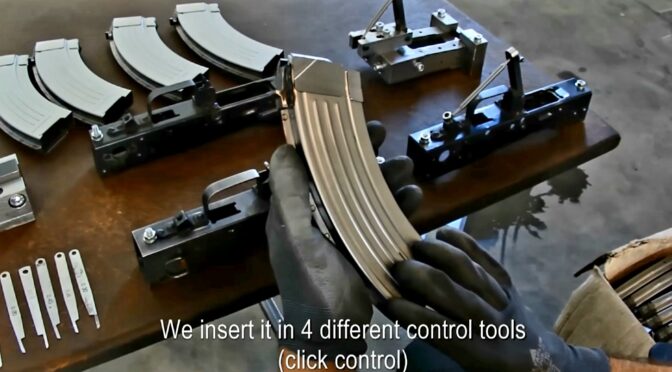
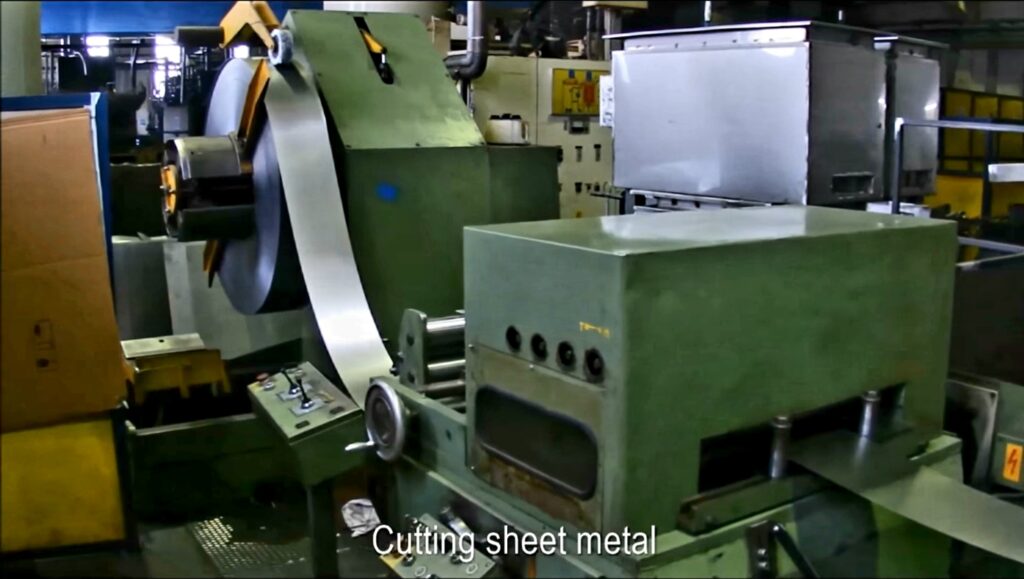
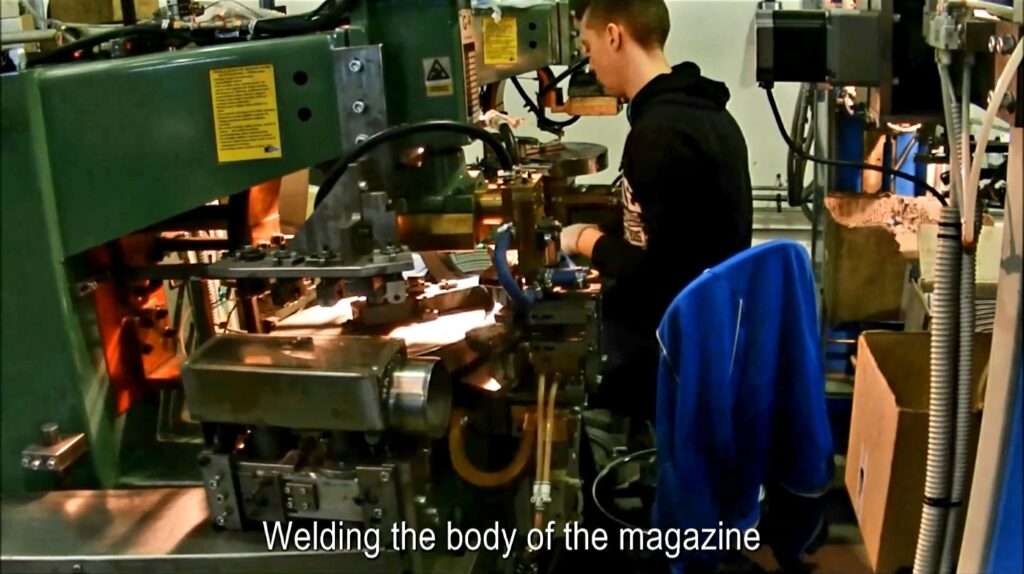
Now, watch this video and not the differences. This video is showing a much more modern plant where there is also detail provided on their quality control processes and they show the jigs that they use.

Sheet metal cutting machine in Apex Gun Parts factory manufacturing AK-47 magazines
Worker welds Croatian AK-47 magazine body at Apex Gun Parts manufacturing facility.
Welding rear lug on Croatian AK-47 magazine manufacturing
CNC machining of Croatian AK-47 magazine bodies at Apex Gun Parts.
Croatian AK-47 magazine bodies being cleaned and polished in a tumbler.
Apex Gun Parts: manufacturing Croatian AK-47 magazines, showing parts and assembly.
Checking Croatian AK-47 magazine bullet exit with go/no-go gauge

The Video


I hope you find the video interesting. Apex Gun Parts is definitely a group that I buy stuff from and have no problems recommending them. I don’t have any experience with these mags so this video is really to let you see the differences in manufacturing.


Please note that all images were extracted from the video and are the property of their respective owner.


Please share the link on Facebook, Forums, with colleagues, etc. Your support is much appreciated and if you have any feedback, please email us in**@*********ps.com. If you’d like to request a report or order a reprint, please click here for the corresponding page to open in new tab.


Video: Matra Group Manufacturing AK-47 and AK-74 Steel Magazines: From Sheet Metal To The Finished Products

The AK-47 rifle and it’s “banana” 30 round magazine are classics of rugged functional design. While I’ve posted many videos and how-to articles relating to various rifle and pistol variants, I’ve not really covered the steel magazines at all.

I was surfing around and found Matra Group located in Bosnia-Herzegovina. In 2015 this small manufacturer produced a video showcasing their small facility that makes a variety of steel magazines for AK-47, AK-74 and even Lee-Enfield rifles. The Lee-Enfield may be due to those rifles being supplied to the Yugoslav Partisans in WWII to fight th axis armies.

In the video, they show employees starting with sheet metal and stepping through various steps including stamping, machining and spot welding. For the most part, you will see a very labor intensie process using older general purpose machines. If you like videos that showcase how something is made in and old-school fashion, you will find this very interesting.

Smith's knife sharpener with coarse and fine sharpening slots
Here they are cutting the initial sheet down into usable blanks.
Smith's kitchen knife sharpener with chef and pocket knives
Making the front piecee that will lock onto the front trunnion.
Smith's kitchen knife sharpener with chef and pocket knives
Spot welding the two body halves together.
Smith's kitchen knife sharpener with chef and pocket knives
Gettingg ready for final assembly.

Here’s The Video


I hope you enjoyed the video! I definitely found it interesting and informative. Just to be clear, I am not endorsing the magazines – I’m just showing their manufacturing process so I can then compare it to the manufacturing used to produce the Croatian AK-47 magazines that Apex Gun Parts sells.


Please note that all images were extracted from the video and are the property of their respective owner.


Please share the link on Facebook, Forums, with colleagues, etc. Your support is much appreciated and if you have any feedback, please email us in**@*********ps.com. If you’d like to request a report or order a reprint, please click here for the corresponding page to open in new tab.


Motivational Video: US Navy Seals and SWCC – “Never Quit”

Many folks have heard of the US Navy’s Sea Air and Land (SEAL) teams. The SEALs have been in a ton of movies and books but they are supported by another critical special warfare group – the Special Warfare Combatant-craft Crewman (SWCC). These are the teams that man the small boats that deliver and pick up the SEALs.

I have a lot of respect for the SWCC crews and get a real kick out of their boats – wow. These things are packing some serious firepower.

Smith's kitchen knife sharpener with two sharpening slots

So, I ran across this cool motivational video this morning and thought I would share it:


Please note that all images are extracted from the video and remain the property of their respective owner(s).


Please share the link on Facebook, Forums, with colleagues, etc. Your support is much appreciated and if you have any feedback, please email us in**@*********ps.com. If you’d like to request a report or order a reprint, please click here for the corresponding page to open in new tab.


Motivational Video: Wolves || UkraInian SOF – Shots of the Malyuk Bullpup and UR-10 Sniper Rifle

Military Division makes some kick ass motivational videos of different special forces groups. They released this video entitled “Wolves || Ukrainian SOF” on December 6, 2019. It has some great videos and a wicked track.

What caught my eye is a number of shots of the Ukrainian Malyuk Bullpup Assault Rifle. I’m not sure what caliber they are running in the video but you can get it in 5.45×39, 7.62×39 and 5.56×45.

ZT 0350BW knife blade with Ken Onion Design and S30V steel markings
You can see a combination of AKs and also the Malyuk bull[pup.
ZT 0350BW knife blade with Ken Onion Design and S30V steel markings
Another view of two Malyuks
ZT 0350BW knife blade with Ken Onion Design and S30V steel markings
Pretty cool shot of a modern AK – note the EOTech and magnifier.
ZT 0350BW knife blade with Ken Onion Design and S30V steel markings
Another Malyuk shot
ZT 0350BW pocket knife with black handle on gray surface
This is another cool rifle to show itself. It’s an AR pattern sniper rifle – the 7.62×51 UR-10 – with a can. It was in trials in for a number of years and announced in February 2018.

The Really Cool Video

I hope you enjoyed it!


Please note that all photos were extracted from the video and remain the property of their respective owner(s).


Please share the link on Facebook, Forums, with colleagues, etc. Your support is much appreciated and if you have any feedback, please email us in**@*********ps.com. If you’d like to request a report or order a reprint, please click here for the corresponding page to open in new tab.


When Strength and Quality Matter Most