Executive Overview and the Modern Market Paradigm
For well over a century, the 1911 platform has been universally revered by defensive practitioners, competitive shooters, and military elements for its unparalleled trigger mechanics, natural pointing characteristics, and exceptionally robust steel construction. However, the evolution of modern defensive and duty firearms over the past three decades has increasingly marginalized single-stack capacities. The contemporary tactical doctrine heavily favors high-capacity architectures, typically embodied by polymer-framed, striker-fired platforms. The advent of the “2011” or double-stack 1911 sought to bridge this inherent technological gap, marrying the exquisite, straight-pull fire-control group of the traditional 1911 with the superior ammunition capacity of modern striker-fired duty pistols. Historically, this hybridization came at an exorbitant financial cost, demanding extensive hand-fitting by master gunsmiths, with entry-level double-stack models beginning well over $1,500 and professional-grade duty weapons frequently exceeding $2,500 to $4,000.1
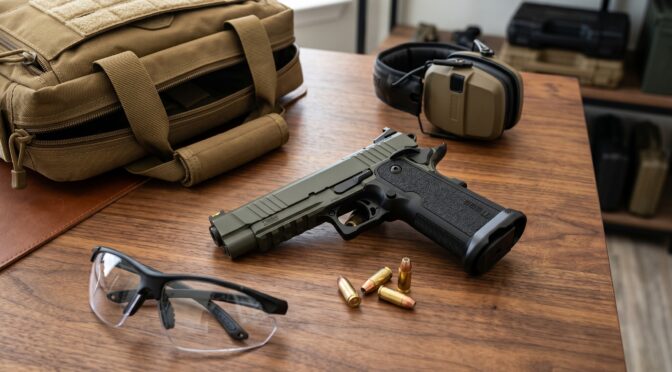
The introduction of the Tisas 1911 Carry Double Stack 9mm (internally and commercially designated as the B9R DS), specifically the Olive Drab Green (ODG) and Black Cerakote variant (SKU: 12500902, UPC: 711500176040), represents a structural and financial disruption in the global firearms market.3 Manufactured by TİSAŞ Trabzon Silah Sanayi in Turkey—a firm with three decades of global military and law enforcement manufacturing experience—and exclusively imported into the United States by SDS Imports, this firearm democratizes access to the high-capacity 1911 architecture.4 With a retail price frequently hovering around $649.99 against a standard Manufacturer’s Suggested Retail Price (MSRP) of $749.99, the Tisas platform offers a forged steel frame, a 17+1 or 18-round capacity, an optics-ready slide, and an accessory rail at a fraction of the historical cost of entry.3
However, it is a universally recognized engineering maxim that the transition from a highly hand-fitted, multi-thousand-dollar custom firearm to a mass-produced, sub-$700 equivalent inevitably involves necessary compromises. In the context of the Tisas 1911 Carry DS, these compromises manifest in manufacturing tolerances, quality assurance variability, and out-of-the-box reliability when cycling specific types of defensive ammunition.1 This comprehensive report exhaustively analyzes the Tisas 1911 Carry DS, evaluating its underlying structural engineering, kinematic performance, inherent feeding and extraction vulnerabilities, cross-platform magazine compatibility, and the precise gunsmithing pathways necessary to elevate this budget-friendly platform to rigorous professional duty standards.
Structural Engineering and Material Architecture
Frame and Slide Metallurgy
The foundation of any high-performance firearm lies unequivocally in its metallurgy and material science. The Tisas 1911 Carry DS deliberately abandons the cost-saving investment casting methods or inferior metal injection molding (MIM) processes frequently found in ultra-budget firearms. Instead, it utilizes a forged 4140 carbon steel frame and a forged 4140 carbon steel slide.5
In the domain of metallurgical engineering, 4140 is a chromium-molybdenum alloy highly regarded for its exceptional toughness, high fatigue strength, and excellent torsional resistance. By employing a forging process, Tisas subjects the raw steel to extreme compressive forces, which fundamentally aligns the internal grain structure of the metal to follow the contours of the firearm’s geometry. This structural alignment drastically mitigates the propagation of micro-fractures under the repetitive cyclical stress and impact forces generated by 9x19mm Luger ammunition, particularly high-pressure defensive loads (+P variants). Consequently, the core structural longevity of the Tisas Carry DS is theoretically on par with legacy platforms costing multitudes more, providing a robust skeleton capable of enduring tens of thousands of cycles without catastrophic structural degradation.5
Coating and Environmental Resistance
The specific 12500902 variant features a striking two-tone tactical aesthetic, defined as an Olive Drab Green (ODG) and Black configuration.3 The frame, the small parts, and the slide are enveloped in a highly durable Cerakote finish (specifically identified as H-146 for the black components).5 Cerakote is an advanced polymer-ceramic composite coating that is baked onto the metal substrate. It provides vastly superior corrosion resistance, chemical resistance, and surface lubricity compared to traditional carbon steel treatments such as bluing or standard manganese phosphate (parkerization).5
This ceramic coating is critical for a concealed carry firearm, which is routinely exposed to corrosive human perspiration, abrasive holster draw friction, and variable atmospheric moisture. The Cerakote formulation acts as an impenetrable barrier, drastically reducing the required frequency of external oiling and maintenance while simultaneously lowering the tribological friction coefficients between the moving parts of the slide and the frame rails. The unloaded weight of the pistol is approximately 2.33 lbs (or roughly 37.28 ounces), providing significant inert mass to absorb the recoil impulse.3 The dimensions are distinctly tailored for concealed carry and plainclothes duty use, featuring an overall length of 7.9 inches, a height of 5.77 inches, and a width of 1.47 inches.3
Barrel Dynamics, Geometry, and Kinematic Lockup
At the kinematic heart of the Carry B9R DS lies a 4.25-inch, 4140 hammer-forged steel barrel featuring a 1:10 right-hand twist rate.3 The hammer-forging process—where a steel blank is beaten around a precision mandrel—creates a rifling profile that is incredibly consistent and yields a barrel surface with enhanced hardness and prolonged operational life.
Crucially, the B9R Carry DS model abandons the traditional John Moses Browning barrel bushing design in favor of a modern, bushing-less “bull barrel” architecture featuring a precision-machined target crown.8 Traditional 1911s rely on a precisely fitted barrel bushing at the muzzle end of the slide to dictate front-end lockup and accuracy. A bull barrel, conversely, features an enlarged outer diameter at the muzzle that mates directly against the internal dimensions of the slide as the action returns to battery.9 This design yields several distinct mechanical advantages: it eliminates a potential point of failure (the bushing itself), simplifies the field-stripping process, and adds significant forward weight to the firearm, which directly counteracts muzzle flip during rapid firing sequences.9
Furthermore, the internal design incorporates a critical durability and lockup upgrade rarely seen in budget 1911s: the slide release lever pin rides directly on the barrel foot (lower lug) rather than relying exclusively on a traditional swinging barrel link.10 This modern adaptation is highly prized in expensive custom 2011 builds. By forcing the upper barrel lugs securely upward into the locking grooves of the slide during the firing cycle, this linkless-style lockup dramatically enhances shot-to-shot repeatability and mechanical accuracy. More importantly, it entirely eliminates the load-bearing shearing stress that often leads to internal link breakage in high-round-count, traditional 1911 platforms.10
Grip Module Architecture and Ergonomic Interface
The high-capacity double-stack architecture is facilitated by a reinforced, glass-filled polymer grip module.3 This module houses the widened magazine and serves as the primary tactile interface for the operator. The integration of glass fibers into the polymer matrix significantly increases the tensile strength and rigidity of the grip, preventing flex or warping under high temperatures or firm gripping pressure.5
The grip texture features aggressively machined 25 Lines Per Inch (LPI) checkering on both the front strap and the mainspring housing (rear strap), coupled with a molded, stippled-style texture on the side panels.3 Reviewers and analysts consistently note that the geometric profile of the Tisas grip is a “medium” size—noticeably less bulky, blocky, and chunky than some legacy American-made 2011 grips.10 This reduced circumference makes the double-stack platform accessible and comfortable to a significantly wider demographic of hand sizes.10 Additionally, the polymer module incorporates a subtle double undercut beneath the trigger guard.10 This ergonomic enhancement allows the shooter’s primary hand to achieve a much higher purchase on the frame, thereby lowering the bore axis relative to the shooter’s wrist. This mechanical advantage translates directly to reduced perceived recoil and faster sight-picture recovery between shots.10
Technical Specifications and Material Summary
| Component / Specification Dimension | Technical Detail / Material Science |
| Manufacturer / US Importer | TİSAŞ Trabzon Silah Sanayi (Turkey) / SDS Imports (Knoxville, TN, USA) 4 |
| Model Designation (SKU) | B9R Carry DS / 12500902 3 |
| Chambered Caliber | 9mm Luger (9x19mm Parabellum) 3 |
| Ammunition Capacity | 17+1 or 18 Rounds (Dependent upon specific magazine baseplate design) 3 |
| Fire Control Action Type | Single Action Only (SAO), Series 70 Internal Architecture 3 |
| Frame and Slide Metallurgy | Forged 4140 Carbon Steel, Cerakote H-146 Black / ODG finish 5 |
| Barrel Geometry and Construction | 4.25-inch length, Hammer-Forged Bull Barrel, Bushing-less, Target Crown, 1:10 RH Twist 3 |
| Factory Sighting Systems | High-visibility Fiber Optic Front Post, Serrated Blacked-out Rear 3 |
| Optic Integration Machining | Direct Mount cut for Holosun 507k / Shield RMSc Footprints (M3 x 0.05 threads) 3 |
| Trigger Mechanics | Skeletonized Aluminum Shoe, ~4.5 to 4.75 lbs measured pull weight 5 |
| Mass (Unloaded Weight) | 2.33 lbs (Approximately 37.3 ounces) 3 |
| Physical Dimensions (L x H x W) | 7.9 inches x 5.77 inches x 1.47 inches 3 |
Out-of-the-Box Handling, Fire Control, and Kinematics
Trigger Dynamics and Series 70 Fire Control
The fire control group of the 1911 is historically recognized as its greatest mechanical asset. The straight-pull trigger shoe travels linearly rearward, rather than pivoting on an axis like most modern handguns, resulting in a distinctly clean break. The Tisas Carry DS utilizes traditional Series 70 internals.12 In 1911 nomenclature, a Series 70 design denotes the absence of a drop-safety firing pin block mechanism, which was introduced later in the Series 80 iterations.
The omission of the Series 80 safety plunger and its associated actuating levers within the frame results in a markedly cleaner, crisper, and less gritty trigger pull, as the trigger bow does not have to overcome the friction of disengaging a secondary mechanical safety before releasing the sear.13 The factory skeletonized trigger on the B9R DS breaks consistently at approximately 4.5 to 4.75 pounds.5
From an analytical standpoint, a 4.5-pound break is considered an excellent, highly defensible weight for a standard striker-fired duty pistol. However, strict 1911 purists often argue that this pull weight is approximately one pound too heavy for a platform whose primary advantage is precision trigger manipulation.10 Nevertheless, the break is widely characterized as highly consistent, devoid of excessive creep, and the reset is exceptionally short and tactile.10 For users demanding peak performance, the Series 70 architecture is highly responsive to minor tuning. Many users report that with minimal hand-polishing of the sear spring leaves and internal contact points using high-grit stones, the trigger pull can easily and safely be reduced to a competition-ready 3 pounds without necessitating the replacement of any factory components.14
Recoil Character, Over-Springing, and Accuracy
Due to the substantial 37-ounce forged steel frame, the forward weight bias of the thick bull barrel, and the inherently low-recoiling nature of the 9mm Parabellum cartridge, the perceived recoil impulse of the Tisas Carry DS is practically absent when compared directly to polymer-framed, striker-fired counterparts.1 The firearm remains incredibly flat during rapid, strings of fire, facilitating extremely fast and accurate follow-up shots. Extensive testing has demonstrated the platform’s profound inherent mechanical accuracy; some analysts have noted that when stabilized from a bench rest, the pistol is entirely capable of firing consistent 1-inch, 10-round groups at a distance of 25 yards.15
It is critical to note, however, that some evaluators detect a surprising amount of sharp “snap” or excessive muzzle dip when firing standard 115-grain target/range ammunition.10 This kinematic anomaly is not a structural flaw in the firearm’s geometric design, but rather a symptom of the factory spring tuning: the pistol is generally considered to be significantly over-sprung.10
Manufacturers producing budget-tier 1911s in Turkey frequently install excessively heavy recoil springs at the factory. This is a preventative measure designed to ensure the slide has enough brute kinetic energy to strip rounds from potentially stiff new magazines and force the action into battery under adverse conditions or when severely fouled. However, this excess spring tension creates a secondary problem. While it slows the slide’s rearward travel, it vastly accelerates the slide’s forward return speed. As the heavy steel slide violently slams shut into battery, it transfers a massive forward momentum spike into the frame, driving the muzzle sharply downward and disrupting the shooter’s sight picture.10 Tuning the firearm with a lighter, optimized recoil spring (e.g., an 18.5 lb variable-rate spring) completely mitigates this issue, creating a vastly smoother, more balanced recoil impulse perfectly tuned to the energy curve of the 9mm cartridge.17
Sighting Systems, Optic Machining, and Tolerance Sensitivities
The factory analog sighting system features a high-visibility fiber optic front post paired with a black serrated rear sight.3 The blacked-out rear sight prevents ambient light reflection and minimizes visual clutter, forcing the shooter’s ocular focus entirely onto the bright front fiber optic dot. This configuration is widely considered the optimal setup for both tactical combat and high-speed competitive shooting environments.3
Modern duty handguns unequivocally demand red dot optic integration, and the B9R DS delivers an optic-ready slide. Rather than utilizing a complex, high-riding adapter plate system, the slide is precision machined specifically for the popular Shield RMSc and Holosun 507K direct-mount footprints, utilizing heavy-duty M3 x 0.05 threads.3 Direct mounting allows the electronic optic to sit extraordinarily low within the slide architecture. This deeply recessed profile enables a perfect “lower 1/3 co-witness” with the standard factory height iron sights. In this configuration, the iron sights remain visible in the bottom third of the optic’s glass window, providing an immediate, seamless aiming backup in the event of battery failure or electronic malfunction.9
Tolerances and Optic Fitment Vulnerabilities: While the concept of a direct-mount cut is theoretically and mechanically superior to an adapter plate, the physical implementation by Tisas reveals critical manufacturing tolerance issues. The slide cut on the Tisas Carry DS is notoriously, and sometimes detrimentally, tight.10 Multiple analytical reports indicate that the precision cut lacks the micro-clearances necessary for smooth optic installation, resulting in excessive metal-to-metal friction.10
In highly documented instances, operators attempting to force an optic (specifically the Holosun EPS Carry) into the slide cut have severely gouged the aluminum housing of the optic, physically shearing off substantial material before the optic could fully seat against the recoil lugs.10 Additionally, metallurgical analyses have reported that the optics cut is occasionally machined slightly off-level relative to the bore axis. This angular deviation requires the user to maximize the optic’s internal downward elevation adjustment merely to achieve a zero and align the red dot with the co-witnessed iron sights, leaving no further internal adjustment room for varying ammunition loads.19
Deep-Dive Reliability Vulnerabilities: Extraction and Feeding Dynamics
The most critical aspect of this comprehensive analysis centers squarely on the firearm’s operational reliability. The 1911 platform was originally engineered in 1911 specifically for the.45 ACP ball (Full Metal Jacket) cartridge. Adapting this 110-year-old architecture to accommodate the shorter, higher-pressure 9mm cartridge—and particularly modern Jacketed Hollow Point (JHP) defensive profiles—presents immense engineering challenges. The Tisas Carry DS exhibits two highly prevalent failure paradigms that prospective buyers must thoroughly understand and prepare to mitigate: Failure to Extract (FTE) and Failure to Feed (FTF).
The Internal Extraction Dilemma and Metallurgy
Failure to Extract—a malfunction where the spent brass casing remains lodged in the chamber, or is only partially removed as the slide cycles violently backward—is unequivocally the single most common and dangerous complaint regarding the Tisas 1911 9mm platform.20
Unlike modern striker-fired pistols that utilize an external, coil-spring-loaded extractor claw, the 1911 utilizes an internal extractor design. This component is essentially a long, solid piece of heat-treated spring steel housed entirely inside a channel within the slide. Its functional reliability is one hundred percent dependent on the precise physical tension it applies to the rim of the cartridge. Because the Tisas is a mass-produced firearm built to a strict budget constraint, these extractors are often not hand-fitted, deflected, or properly tensioned by a gunsmith at the factory.1
An over-tensioned internal extractor prevents the cartridge rim from sliding smoothly upward under the hook during the feeding cycle, halting the slide before it goes into battery. Conversely, an under-tensioned extractor fails to grip the casing securely during the violent rearward extraction cycle, resulting in unpredictable, erratic ejection patterns (brass to the face) or complete extraction failures where the hook slips entirely off the rim.1
Pathways for Remediation: Resolving the systemic FTE issue generally dictates one of two specific pathways. The first involves utilizing a specialized extractor adjustment tool (such as those manufactured by Weigand) to manually bend and tune the factory extractor, incrementally adjusting the deflection angle until correct tension is achieved.21
The second, vastly superior, and more permanent solution favored by professional gunsmiths is replacing the factory unit entirely. The Wilson Combat Bullet Proof 80 Series 9mm Extractor is universally regarded as the industry standard upgrade for this platform.20 Machined from extremely durable, fully forged PH 13-8 Stainless Steel tool steel (boasting a massive tensile strength of 215,000 PSI) and cryogenically treated to optimize molecular hardness, the Wilson Combat extractor holds its tension exponentially longer than the factory carbon steel part.23 Users overwhelmingly report that replacing the extractor almost universally cures the FTE issues. It should be noted that due to stacking manufacturing tolerances, the taller rear crown of the Wilson Combat part may occasionally require a few thousandths of an inch of filing so that it sits perfectly flush with the rear face of the Tisas slide.21
Feeding Geometry and the Hollow-Point Compatibility Matrix
The second critical reliability metric evaluates the feeding cycle. The Tisas Carry DS frame is built largely around the original 1911A1 feed ramp angle specifications.24 When firing standard full-metal jacket (ball) ammunition—which features a smooth, continuously curved ogive profile—the gun generally feeds flawlessly, as the bullet glides effortlessly up the ramp and into the chamber.25
However, when presented with modern 9mm Jacketed Hollow Points (JHP)—which feature wide, blunt, flat faces or aggressively sloped expansion cavities—the pistol is highly prone to nose-dives and the dreaded “Three-Point Jam”.24 A Three-Point Jam occurs when the geometry is mismatched, causing the cartridge to wedge simultaneously against three surfaces: the breech face pushing from behind, the top of the barrel chamber roof, and the feed ramp below.27 In the Tisas, this mechanical lockup is exacerbated by three specific factors:
- Sub-Optimal Feed Ramp Angles: The physical angle of the feed ramp may not be perfectly optimized to accommodate the shorter overall length and wider mouth of 9mm JHPs compared to the longer, sleeker.45 ACP.24
- Magazine Presentation Trajectory: The precise angle at which the magazine follower presents the top round into the action is critical. Sub-optimal factory magazines cause the nose of the round to dive downward into the ramp, digging in, rather than gliding upward at an acute angle into the chamber.28
- Ammunition Velocity and Spring Tension Conflict: Low-energy target ammunition (e.g., yielding merely ~375 ft. lbs muzzle energy at 850 fps) combined with the excessively heavy factory recoil spring can result in “short stroking.” Here, the slide lacks the requisite rearward momentum, and subsequently lacks the distance and kinetic energy to forcefully strip the next round and drive it over the high friction of the feed ramp.16
Pathways for Remediation: Correcting FTF issues on the Tisas platform demands a multi-tiered approach. Ammunition selection is the simplest variable to control; utilizing defensive JHPs with a more rounded, ball-like profile (such as specific Hornady Critical Defense or Federal configurations) physically reduces friction on the ramp.15 Mechanically, gunsmiths frequently polish the barrel feed ramp and chamber throat to a pristine, mirror-like finish to eliminate microscopic machining marks that cause drag.17 Finally, replacing the overly stiff factory recoil spring with an optimized 18.5 lb spring (ideally paired with the extractor upgrade mentioned previously) ensures the slide kinematics and timing are perfectly synchronized with the 9mm cartridge’s pressure curve.17
The Magazine Ecosystem: A Profound Cross-Platform Advantage
The operational viability and tactical utility of any double-stack 1911 are intrinsically, inextricably tied to the quality of its magazines. Historically, older 2011 magazines were notorious for atrocious reliability, frequently requiring hundreds of dollars in aftermarket tuning (custom springs, tuned followers, bent feed lips) to function correctly.
The Tisas 1911 Carry DS ships out of the box with two 17-round (or 18-round, depending upon the specific baseplate attached) magazines manufactured by Check-Mate Industries, branded specifically for Tisas.3 Check-Mate is a highly respected, premier OEM manufacturer that notably also produces the factory-supplied magazines for the ultra-premium Staccato line of 2011 pistols.29
Crucially, the Tisas grip module and magwell were intentionally designed around the universal, industry-standard STI/Staccato 2011 magazine geometry.10 This engineering decision means the B9R DS instantly enjoys massive aftermarket support and is fully compatible with standard 126mm (flush-fit) and 140mm (extended capacity) double-stack magazines from high-end manufacturers like Atlas Gunworks and MBX.30
The Springfield Prodigy and Duramag Synergies
Perhaps the greatest hidden financial and operational value of the Tisas Carry DS is its seamless, native compatibility with Springfield Armory Prodigy magazines.10 Developed in a highly publicized partnership with Duramag, Springfield Prodigy magazines were entirely re-engineered from the ground up to solve the historic 2011 feeding issues. They feature an improved internal wall geometry, “Advanced Geometry Followers,” and extremely specific presentation angles designed explicitly to present the cartridge higher, entirely eliminating the nose-dive malfunctions inherent in early 9mm 2011s.28 Furthermore, they utilize proprietary Everflex springs and T360 internal anti-friction coatings.28
While Staccato-branded magazines are undeniably high quality, they routinely retail for $70 to $110 each, making the accumulation of a basic duty loadout prohibitively expensive. In stark contrast, Springfield Prodigy magazines are widely available through major retailers for approximately $35 to $40 and are offered in an array of capacities including 17-round, 20-round, and extended 26-round configurations.10 The ability to seamlessly utilize cheap, highly reliable, technologically advanced Duramag 2011 magazines instantly elevates the Tisas platform’s duty readiness while drastically lowering the total cost of ownership.
Baseplate Fragility and Tactical Limitations
A minor but notable material flaw in the factory-supplied Tisas/Check-Mate magazines relates to the polymer baseplates. Users operating the firearm in high-tempo, dynamic training environments—where magazines are routinely allowed to drop freely onto hard concrete or gravel during emergency speed reloads—report that the factory baseplates are relatively brittle and highly prone to cracking or shattering upon impact.32 Upgrading these components to aftermarket machined aluminum or durable reinforced polymer basepads is considered highly recommended for any serious tactical, duty, or competition applications.32
Magazine Ecosystem Compatibility Matrix
| Magazine Manufacturer | Capacity Options | Estimated Retail Cost | Compatibility with Tisas B9R DS |
| Check-Mate (Tisas OEM) | 17-Round 10 | Included with firearm | Excellent (Factory Standard) 10 |
| Springfield / Duramag | 17, 20, 26-Round 28 | $35 – $45 29 | Exceptional (Fixes nose-dives) 10 |
| Staccato (Check-Mate) | 17, 20-Round (126mm/140mm) 30 | $70 – $110 29 | Excellent 30 |
| Atlas Gunworks / MBX | High-Capacity Competition 30 | $100+ | Excellent (Premium tier) 30 |
Ergonomics, Field Maintenance, and Tactical Accessory Integration
The Dustcover Accessory Rail Limitations
To remain relevant in the modern duty market, the forged steel frame of the B9R DS incorporates an integrated M1913 Picatinny accessory rail machined directly into the dustcover for the attachment of tactical weapon lights and aiming lasers.10 However, the geometric design of this rail on the 4.25-inch Carry model presents specific logistical and integration challenges.
The rail section is noticeably shorter than those found on standard full-size (5-inch) Government frames, and crucially, the transverse locking lug slot is positioned too far forward on the frame.10 Consequently, the firearm cannot natively accommodate industry-standard, high-candela, full-sized duty lights such as the SureFire X300 Ultra or the Streamlight TLR-1. The locking mechanism crossbars of these large lights simply will not align with the slot on the Tisas rail before the rear of the light impacts the trigger guard.10
While the platform easily accommodates compact, concealed-carry optimized weapon lights like the Streamlight TLR-7A, the mating geometry results in a noticeable, aesthetically displeasing, and ergonomically sub-optimal physical gap between the rear of the light’s activation switches and the front face of the trigger guard.10 Buyers intending to build a dedicated night-stand, SWAT, or primary duty weapon must carefully measure and research light fitment limitations before committing to the platform.
Field Stripping and Maintenance Mechanics
Unlike many custom, high-end 2011s that utilize complex, two-piece full-length guide rods requiring specialized hex tools, bent paperclips, or significant physical effort to compress heavy recoil assemblies, the Tisas 1911 Carry DS features a traditional, short guide rod system.34 This intentional, legacy engineering choice allows the firearm to be field-stripped rapidly and easily without the need for external tools.34 This is a massive tactical advantage for field maintenance, rapid diagnostic clearing, and routine cleaning in austere environments, ensuring the weapon can be serviced instantly by the operator without relying on an armorer’s toolkit.
Quality Assurance Infrastructure and Safety Recall Context
When systematically evaluating any budget-tier firearm produced overseas, manufacturing consistency and rigorous quality assurance (QA) are the primary, most volatile variables. As one veteran reviewer aptly summarized the platform, Tisas double-stacks are highly variable: one shooter might experience constant extraction malfunctions out of the box, another might find the identical model to be flawlessly competition-ready, and a third might face impossibly tight optic cuts.1 This “luck of the draw” dynamic is the inherent trade-off of mass-production pricing.
Furthermore, it is imperative for a rigorous analysis to note the broader quality assurance context of the manufacturer’s recent history. In late January 2024, Tisas USA, in conjunction with SDS Imports, was forced to issue a widespread voluntary safety recall for several highly popular 1911 models.35 The recall was initiated due to the discovery of a potentially catastrophic safety defect: the possibility of the hammer inadvertently following the slide forward when chambering a live round.35 This highly dangerous condition, known as “hammer follow,” typically results from out-of-spec, poorly machined disconnectors or shallow, insufficient sear engagement angles.37
While the specifically listed SKUs in the official recall data (e.g., Raider, Nightstalker 45, Duty Enhanced) primarily impacted the.45 ACP and 10mm lines rather than the 9mm B9R DS family, it starkly underscores the absolute necessity for end-users to rigorously test, vet, and individually inspect these Turkish imports.35 A firearm purchased at this price point must be subjected to a grueling break-in period and thorough mechanical safety checks before ever being designated for critical life-saving or professional duty applications.
Cost-to-Performance Synthesis and Professional Conclusions
The Tisas 1911 Carry Double Stack 4.25″ 9mm (SKU: 12500902) cannot and should not be evaluated purely on its out-of-the-box, factory-spec performance. If viewed strictly as a finished, flawless, deployment-ready duty weapon directly off the retail shelf, it demonstrably falls short of professional firearms costing three times as much. The documented extractor vulnerabilities, severe hollow-point feeding sensitivities, brittle magazine baseplates, and varying optic cut tolerances preclude it from achieving immediate “duty-grade” status.1
However, evaluating the firearm solely through that narrow lens fundamentally misunderstands its extraordinary value proposition within the modern tactical market. The Tisas Carry DS is best understood as a structurally immaculate, forged-steel blank canvas. For a highly accessible retail price of approximately $650 3, the consumer is purchasing a phenomenally robust forged 4140 steel frame, a forged Cerakote slide, a precise hammer-forged bull barrel, and the coveted STI 2011 magazine geometry.5 To replicate this foundational material quality via a custom gunsmith would cost thousands of dollars in parts alone.
The true analytical metric is the platform’s potential after a minimal, highly targeted secondary investment. Even when factoring in the required cost of mandatory gunsmithing and strategic aftermarket upgrades—specifically a Wilson Combat Bullet Proof Extractor ($35), a tuned 18.5 lb recoil spring ($10), polishing the feed ramp (a nominal gunsmith fee or DIY project), and the acquisition of three highly reliable Springfield Prodigy/Duramag 20-round magazines ($120)—the total financial investment remains comfortably under $850.
At that optimized price point, the user possesses a highly reliable, incredibly flat-shooting, high-capacity 1911 that directly rivals, and in some cases exceeds, the kinematic performance metrics of prestigious platforms starting well over $1,500. For the dedicated firearms enthusiast, the mechanical tinkerer, or the budget-conscious professional willing to thoroughly verify, polish, and strategically tune their equipment, the Tisas 1911 Carry DS represents an absolutely unprecedented gateway into the elite double-stack 1911 ecosystem. It strictly requires a foundational understanding of internal 1911 mechanics and tension geometries to reach its full operational potential, but it handsomely rewards that mechanical knowledge with tier-one performance metrics and formidable durability.
Please share the link on Facebook, Forums, with colleagues, etc. Your support is much appreciated and if you have any feedback, please email us in**@*********ps.com. If you’d like to request a report or order a reprint, please click here for the corresponding page to open in new tab.
Works cited
- Tisas 1911 Duty Double Stack | Shoot On, accessed May 23, 2026, https://shoot-on.com/tisas-1911-duty-double-stack/
- Talk me out of buying the Tisas 1911 DS : r/2011 – Reddit, accessed May 23, 2026, https://www.reddit.com/r/2011/comments/1c5xxna/talk_me_out_of_buying_the_tisas_1911_ds/
- Tisas 1911 Carry Double Stack 4.25″ 9mm 18rd Pistol, ODG/BLK – 12500902, accessed May 23, 2026, https://palmettostatearmory.com/tisas-1911-carry-double-stack-4-25-9mm-18rd-pistol-odg-blk-12500902.html
- Safety Recall on Certain Tisas 1911s | An Official Journal Of The NRA – Shooting Illustrated, accessed May 23, 2026, https://www.shootingillustrated.com/content/safety-recall-on-certain-tisas-1911s/
- Tisas 1911 Carry Double Stack 9MM Black 4.25″ Optic Ready – Sportsman Fulfillment, accessed May 23, 2026, https://www.sportsmanfulfillment.com/tisas-1911-carry-double-stack-9mm-black-4-25-optic-ready/
- Tisas 1911 Carry DS The Good and Bad – Watch Before You Buy! – YouTube, accessed May 23, 2026, https://www.youtube.com/watch?v=8c8Gqm7gWQ8
- Tisas 1911 Carry B9R 9mm 4.25″ Black Cerakote – Alexander’s Store, accessed May 23, 2026, https://alexandersstore.com/product/tisas-1911-carry-9mm-4-25-17rd-blk/
- Tisas Carry 1911 B9 RDS — Double-Stack 9mm Range Test & Review – YouTube, accessed May 23, 2026, https://www.youtube.com/watch?v=gVWXGJKSD2U
- TISAS 1911 CARRY B9R DS 9MM 5″ BLK – kygunco, accessed May 23, 2026, https://www.kygunco.com/product/tisas-1911-carry-b9r-ds-9mm-5-blk
- A Tale Of Two Turks: We Pit a Pair of Turkish 2011s Head-to-Head …, accessed May 23, 2026, https://www.recoilweb.com/tisas-1911-b9r-ds-carry-mac-1911-ds-review-184189.html
- Tisas 1911 Duty B9R Double Stack 9mm Optics Ready Pistol – BattleHawk Armory, accessed May 23, 2026, https://battlehawkarmory.com/product/tisas-1911-duty-b9r-double-stack-9mm-5-barrel-2-17rd-magazines-optics-ready-pistol
- Tisas 1911 Carry B9R 9mm Light Rail 4.25″ Pistol – BattleHawk Armory, accessed May 23, 2026, https://battlehawkarmory.com/product/tisas-usa-1911-b9r-w-rail-9mm-4.25-barrel-2-10rd-magazines-pistol
- TISAS 1911 Duty Double Stack 9mm 5″ 17rd Optics Ready Pistol w/ Front Serrations | Black, accessed May 23, 2026, https://www.kygunco.com/product/tisas-12500002-1911-duty-b9r-double-stack-9mm-5in-black-17rd-optics-ready
- Question About 2011s (AKA Double Stacked 1911) | The Armory Life Forum, accessed May 23, 2026, https://www.thearmorylife.com/forum/threads/question-about-2011s-aka-double-stacked-1911.22318/
- SHOT Show 2024 – Tisas 1911 Duty B9R DS, Tisas Night Stalker SF DS9, MAC 1911-9 DS, accessed May 23, 2026, https://www.reddit.com/r/Tisas/comments/19e0vhk/shot_show_2024_tisas_1911_duty_b9r_ds_tisas_night/
- Fixed my Tisas’s failure to feed issue. : r/1911 – Reddit, accessed May 23, 2026, https://www.reddit.com/r/1911/comments/ydmn1c/fixed_my_tisass_failure_to_feed_issue/
- Tisas is a Trash Company – Raider Failure POST WARRANTY FIX – YouTube, accessed May 23, 2026, https://www.youtube.com/watch?v=QAGBaxwslsI
- Tisas Duty 9mm Double Stack First Impressions – Reddit, accessed May 23, 2026, https://www.reddit.com/r/Tisas/comments/1c6i4p4/tisas_duty_9mm_double_stack_first_impressions/
- Tisas DS9 – optics cut not level, but cheap & easy fix for great budget 1911 double-stack, accessed May 23, 2026, https://www.reddit.com/r/Tisas/comments/1bfzr1u/tisas_ds9_optics_cut_not_level_but_cheap_easy_fix/
- Fail to extract : r/Tisas – Reddit, accessed May 23, 2026, https://www.reddit.com/r/Tisas/comments/1iy4vnm/fail_to_extract/
- Pleasantly surprised : r/Tisas – Reddit, accessed May 23, 2026, https://www.reddit.com/r/Tisas/comments/1d5rc1l/pleasantly_surprised/
- Tisas 1911 FTF troubleshooting – Guns & Gear – USCCA Community, accessed May 23, 2026, https://community.usconcealedcarry.com/t/tisas-1911-ftf-troubleshooting/78981
- EXTRACTOR, 80 SERIES, 1911, .45 ACP, BULLET PROOF, STAINLESS – Wilson Combat, accessed May 23, 2026, https://wilsoncombat.com/extractor-80-series-1911-45-acp-bullet-proof-stainless.html
- Failure to feed hollow points in tisas/sds 9mm, the “flat top” of the hollow point seems to grab the bottom of the feed ramp, is this a magazine issue or a feed ramp issue most likely? : r/1911 – Reddit, accessed May 23, 2026, https://www.reddit.com/r/1911/comments/wu3sav/failure_to_feed_hollow_points_in_tisassds_9mm_the/
- Customer Reviews for Tisas 1911 Carry DS 9mm Semi Auto Pistol – Buds Gun Shop, accessed May 23, 2026, https://www.budsgunshop.com/product_reviews.php/products_id/160448/reviews_id/296404
- Issues with feeding : r/Tisas – Reddit, accessed May 23, 2026, https://www.reddit.com/r/Tisas/comments/1gm8yp6/issues_with_feeding/
- 1911 Troubleshooting: Feed Failures – RangeHot, accessed May 23, 2026, https://rangehot.com/1911-troubleshooting-feed-failures/
- 1911 DS 9mm Mags – DuraMag, accessed May 23, 2026, https://dura-mag.com/1911-ds-9mm-mags/
- Magazine compatibility question : r/Tisas – Reddit, accessed May 23, 2026, https://www.reddit.com/r/Tisas/comments/1f7dqzm/magazine_compatibility_question/
- Magazine compatibility? : r/Tisas – Reddit, accessed May 23, 2026, https://www.reddit.com/r/Tisas/comments/1k0ockl/magazine_compatibility/
- Check-Mate Staccato Style 2011, Springfield Prodigy 1911 DS, LFA Apollo 11, Tisas Double Stack, Girsan Witness 2311, Jacob Grey TWC 9, Kimber 2K11 20 RD 9mm / .38 Super 140mm CM9-2011-140-S, accessed May 23, 2026, https://gregcotellc.com/cart/checkmate-mecgar-2011-2311-c-216/checkmate-staccato-style-2011-springfield-prodigy-1911-ds-lfa-apollo-11-tisas-double-stack-girsan-witness-2311-jacob-grey-twc-9-kimber-2k11-20-rd-9mm-38-super-140mm-cm92011140s-p-2481.html
- Here’s that Double Stack Tisas people have been wondering about : r/1911 – Reddit, accessed May 23, 2026, https://www.reddit.com/r/1911/comments/18zbl4m/heres_that_double_stack_tisas_people_have_been/
- {2 PACK} +3 Staccato/Prodigy DS/2011/Tisas DS Magazine Baseplate – Sanity Solutions, accessed May 23, 2026, https://sanitysolutions.com/qMz8OdCe
- Tisas B9R 1911 Carry DS – GBGuns Depot, accessed May 23, 2026, https://www.gbgunsdepot.com/post/tisas-1911-carry-ds
- Safety Recall For Tisas 1911 Pistols In .45ACP & 10mm – The Firearm Blog, accessed May 23, 2026, https://www.thefirearmblog.com/blog/2024/02/01/safety-recall-tisas-1911-pistols/
- SAFETY RECALL NOTICE REGARDING TISAS 1911 PISTOLS DEALER/DISTRIBUTOR NOTICE – RSR Group, accessed May 23, 2026, https://www.rsrgroup.com/Custom/Files/downloads/pdf/recall_notices/2024/SDS_Imports_Safety_Recall.pdf
- Tisas Safety Recall : r/1911 – Reddit, accessed May 23, 2026, https://www.reddit.com/r/1911/comments/1aesk62/tisas_safety_recall/