Category Archives: Small Arms Producer and Vendor Analytics

Live Free Armory: Their Rise and Restructuring

Live Free Armory (LFA), legally incorporated as Central Florida Firearms, LLC, represents a compelling case study in the maturation and volatility of the modern American firearms manufacturing sector. Established in 2014 on Florida’s “Space Coast”—a region densely populated with aerospace and defense infrastructure—the company evolved from a garage-based prototyping operation into a significant Original Equipment Manufacturer (OEM) and independent consumer brand. This transformation was driven by a distinct operational philosophy: the application of aerospace-grade engineering tolerances and quality management systems (AS9100) to the commoditized market of small arms.

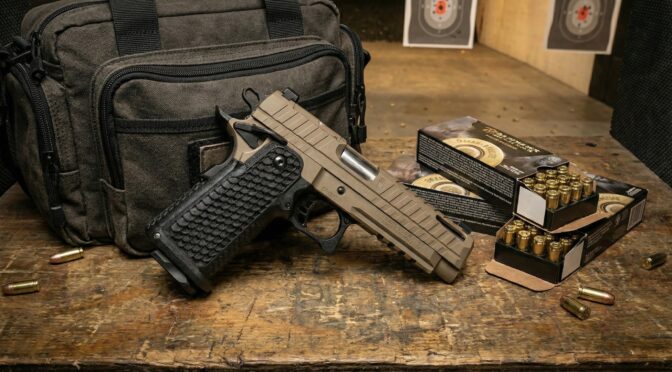
LFA’s market identity is defined by its aggressive disruption of price-to-performance ratios. Initially focusing on the AR-15 and AR-10 rifle platforms, the company pivoted in the early 2020s to address the “metal-framed” handgun segment. This strategic shift culminated in the release of the “AMP” (Aluminum Match Grade) pistol series and, most notably, the “Apollo 11” double-stack 1911 platform. The Apollo 11 challenged the established pricing hierarchy of the “2011” market, offering features traditionally reserved for boutique custom firearms—such as hand-fitted actions and match-grade bull barrels—at a sub-$1,000 price point. This move democratized a platform previously accessible only to affluent competitors, forcing legacy manufacturers to re-evaluate their value propositions.

However, the capital intensity required to sustain this high-precision, low-margin manufacturing model at scale precipitated significant financial headwinds. Despite achieving robust brand recognition and securing supply chain partnerships with over 100 industry labels, Live Free Armory faced a liquidity crisis in 2025. On September 26, 2025, the company filed for Chapter 11 bankruptcy protection, revealing a stark disparity between its asset base ($5.2 million) and its liabilities ($12.7 million).

This exhaustive report analyzes the complete corporate lifecycle of Live Free Armory. It dissects the company’s foundational years, its strategic pivot from rifles to handguns, the industrial advantages of its Floridian location, and the root causes of its recent financial restructuring. Furthermore, it provides a forward-looking assessment of LFA’s potential to emerge from reorganization, examining how its intellectual property and manufacturing capabilities position it for the future in a contracting and highly competitive marketplace.


1. The Industrial Context of the Mid-2010s

To fully appreciate the trajectory of Live Free Armory, one must first understand the industrial and cultural landscape of the American firearms market circa 2014. The industry was in a state of chaotic flux, driven by the “Panic Buying” era following the Sandy Hook Elementary School shooting in 2012 and the subsequent political climate.

1.1 The Post-Panic “Slump” and the AR-15 Commoditization

By 2014, the “Panic” demand bubble had largely burst, leaving the market awash in inventory. The AR-15 rifle, once a high-margin item produced by a select group of manufacturers (Colt, Bushmaster, Smith & Wesson), had become thoroughly commoditized. A cottage industry of small machine shops had sprung up, capable of milling aluminum receivers and sourcing barrels to assemble “Mil-Spec” rifles. This led to a “race to the bottom” in pricing, where the differentiation between brands began to blur.

For a new entrant like Live Free Armory, entering this saturated market required a differentiator beyond price. The “Barbie Doll for Men” phenomenon—where AR-15 owners treated their rifles as modular platforms for endless customization—was reaching its zenith. Consumers were becoming more sophisticated; they no longer just wanted a rifle that functioned; they wanted specific aesthetics, lighter weights, and tighter fitment between the upper and lower receivers. The “sloppy” fit of mass-produced forged receivers was becoming a point of contention for enthusiasts.

1.2 The “Gunshine State” Industrial Complex

Geographically, Florida was cementing its reputation as the “Gunshine State,” not just for its permissive laws but for its manufacturing density. The state aggressively courted firearms manufacturers with tax incentives and a friendly regulatory environment, leading companies like Kel-Tec, Knight’s Armament, and later reforms of others to establish deep roots there.

Live Free Armory’s founders chose to plant their flag in the heart of this ecosystem: The Space Coast. This region, centered around Melbourne, Palm Bay, and Titusville, is unique in the American industrial landscape. It is home to NASA’s Kennedy Space Center and major defense contractors like Lockheed Martin, L3Harris, and Northrop Grumman.1 This location provided two critical assets that would define LFA’s future: a supply chain accustomed to rigorous specifications (anodizing, heat treating, metallurgy) and a labor pool of machinists who spoke the language of microns rather than fractions of an inch.


2. Genesis: The Garage Phase (2014–2016)

2.1 The Convergence of Craftsmanship and Engineering

Live Free Armory was incorporated on April 28, 2014, in Florida.4 The company was the brainchild of Christopher Riedeman, an entrepreneur with a vision for a firearms brand deeply rooted in American patriotism and Second Amendment advocacy. However, passion alone does not machine steel. The catalyst for the company’s technical competence was the partnership with Colby Santaw, a young aerospace engineer.5

The partnership between Riedeman and Santaw represented a synthesis of two often-opposing cultures in the firearms world: the “Gunsmith” and the “Engineer.”

  • The Gunsmith Culture traditionally relies on hand-fitting, artisan skill, and “feel.” It is effective for custom work but difficult to scale.
  • The Engineer Culture, represented by Santaw, relies on Geometric Dimensioning and Tolerancing (GD&T), CNC programming, and repeatable processes. Santaw came from a lineage of manufacturing owners and had experience in aerospace contracting.6 He understood that to build a better firearm at scale, one didn’t need a file; one needed a better code for the HAAS machine.

2.2 The “Bootstrap” Operations

Like many disruptive entities in the American industrial narrative—from Apple to Hewlett-Packard—Live Free Armory began in a residential garage.6 In 2014 and 2015, the operation was defined by its constraints. Capital was limited, meaning every piece of aluminum bar stock had to be accounted for.

The initial product focus was on the AR platform—specifically, receiver sets (the structural framework of the rifle). In a market flooded with forged receivers (which are pounded into shape and then lightly machined), LFA focused on “Billet” receivers. Billet receivers are carved from a solid block of aluminum. They are more expensive and time-consuming to produce but allow for unique aesthetic designs and tighter tolerances that forging dies cannot achieve.

During this garage phase, Santaw’s role was critical. He had to optimize tool paths to reduce machine time, allowing a small setup to produce enough inventory to generate cash flow. This period established the company’s “lean” ethos. There was no middle management or marketing department; there were just the founders, the machines, and the raw material. This intimacy with the production process created a feedback loop where design changes could be implemented instantly—a marked advantage over larger competitors with bureaucratic engineering change orders.
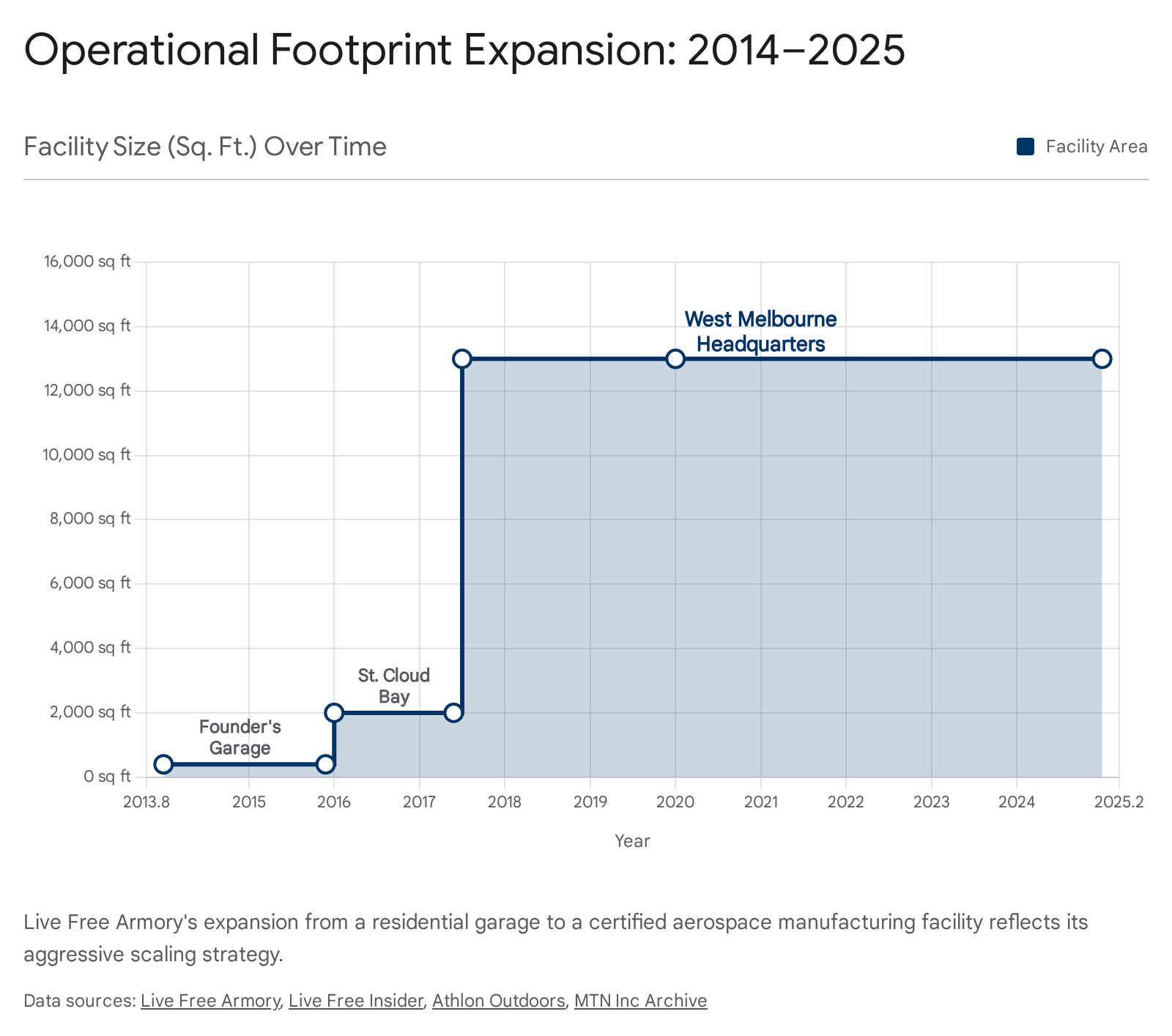
Live Free Armory's facility size growth, 2014-2025, from "Founder's Garage" to "West Melbourne Headquarters.

3. The AR Market Saturation and LFA’s Entry (2016–2019)

3.1 Scaling Up: The Move to St. Cloud

By 2016, the demand for LFA’s billet receiver sets had outgrown the residential zoning limits. The company executed its first major expansion, moving into a 2,000-square-foot industrial bay in St. Cloud, Florida.6 This move was not just about space; it was about power requirements for larger CNC machines and the ability to hire staff. The workforce grew to approximately six employees.6

This era marked the transition from “Parts Maker” to “Rifle Manufacturer.” LFA began assembling and selling complete rifles under its own brand, most notably the LF15 (5.56mm) and LF10 (7.62mm/.308 Win).8

3.2 The Challenge of the Large Frame AR (AR-10)

Entering the AR-10 market was a bold risk. Unlike the AR-15, which has a standardized “Mil-Spec” (Military Specification) technical data package that ensures parts from different manufacturers are compatible, the AR-10 world is fragmented. There is no single standard—there is the Armalite pattern, the DPMS pattern, and various proprietary hybrids.

Early reviews and user feedback from 2016–2017 highlight the teething issues LFA faced in this complex segment. Users on forums like Sniper’s Hide and Lone Star Boars reported reliability issues with the LF10, specifically regarding extraction failures and cycling issues with certain ammunition types.9 These are classic symptoms of an “over-gassed” or “under-buffered” system, a common pitfall for manufacturers trying to make a.308 rifle reliable across a wide spectrum of ammo pressures.

3.3 The Iterative Engineering Response

LFA’s response to these early stumbles revealed their corporate character. Instead of abandoning the platform or blaming the customer (a common tactic in the industry), they leveraged their engineering background to iterate. They began tuning gas port sizes, experimenting with buffer weights, and refining extractor geometries.

Crucially, they instituted a Lifetime Warranty.11 In the firearms industry, a warranty is a financial liability. For a small company to offer a lifetime guarantee on a mechanical device subject to explosions (gunfire) is a significant statement of confidence. It signaled to the market that LFA was willing to absorb the cost of its own learning curve. This built trust. Customers who had issues were taken care of, and the “Version 2.0” rifles benefited from the field data collected from the “Version 1.0” failures.


4. The Space Coast Advantage & Operational Maturation (2019–2022)

4.1 The West Melbourne Expansion

By 2020, the St. Cloud facility was bursting at the seams. LFA initiated a strategic relocation to a massive new facility in West Melbourne (Palm Bay area), Florida.1 This facility, eventually spanning over 13,000 square feet 7, was designed from the ground up for high-volume precision manufacturing.

This expansion coincided with major investments in infrastructure in the surrounding area by defense giants like L3Harris, which was expanding its satellite integration facilities nearby.2 The proximity to these high-tech neighbors allowed LFA to recruit top-tier talent—CNC operators and quality engineers who were looking for work outside the fluctuating cycles of defense contracts.

4.2 The “Aerospace Grade” Standard: AS9100

The most significant milestone of this period was LFA achieving ISO 9001:2015 and AS9100 compliance.14

  • ISO 9001:2015 is a general quality management standard.
  • AS9100 is the aerospace industry specific standard. It is rigorously difficult to attain. It requires a company to demonstrate complete material traceability (knowing exactly which mill in the USA produced the steel for a specific batch of firing pins), strict revision control, and validated processes for every manufacturing step.

Most firearms manufacturers do not bother with AS9100; it is considered “overkill” for consumer goods. However, LFA pursued it for two reasons:

  1. Marketing Differentiation: It allowed them to scientifically claim “Aerospace Precision” rather than using it as a buzzword.
  2. The OEM Pivot: LFA was no longer just making LFA guns. They were manufacturing slides, barrels, and small parts for over 100 other companies.6 Many of these clients were high-end boutique brands that required flawless machining. AS9100 certification gave these B2B clients the assurance that LFA could deliver consistent quality at scale.
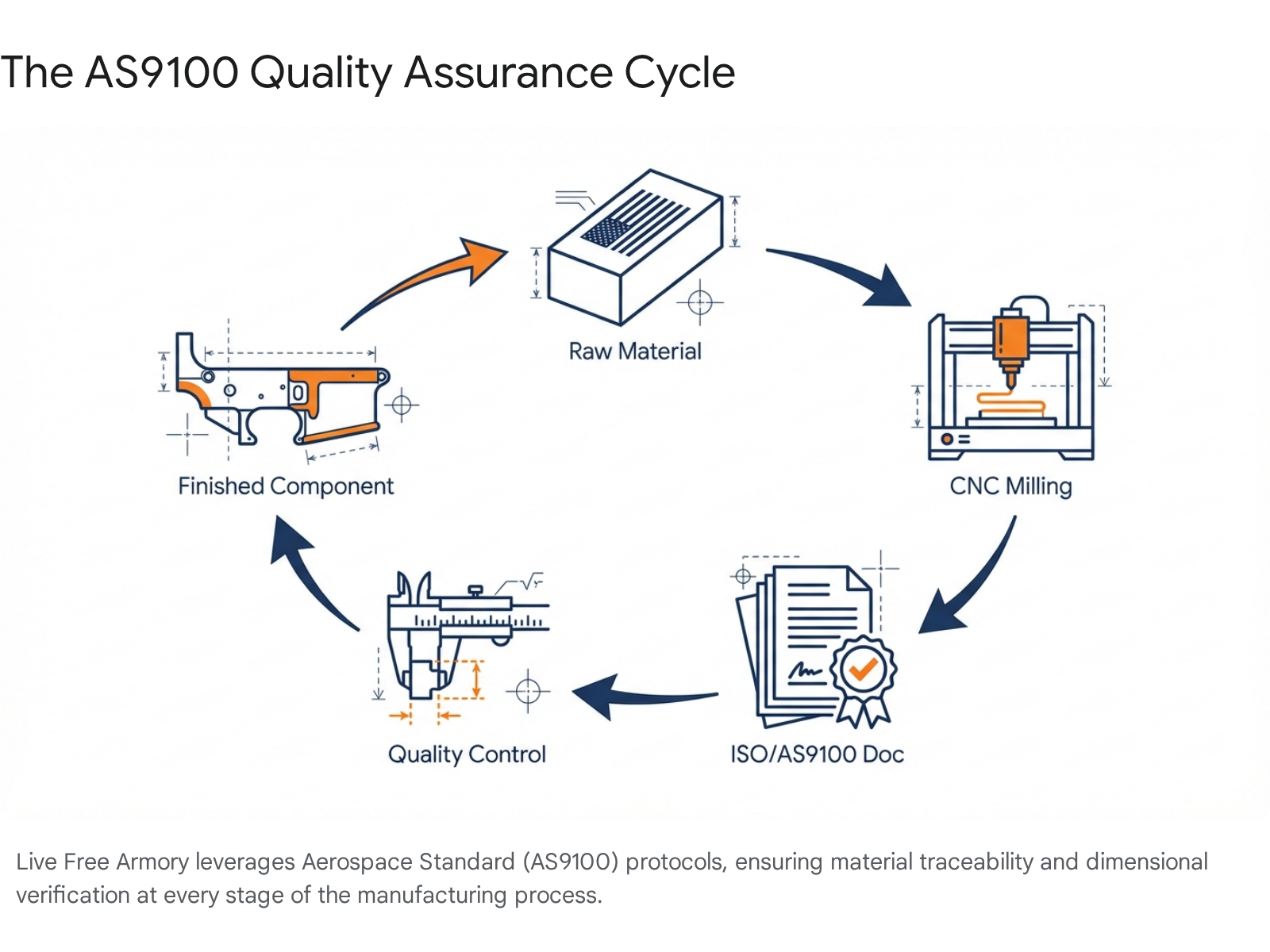
AS9100 Quality Assurance Cycle: Raw Material, CNC Milling, ISO/AS9100 Doc, Quality Control, Finished Component.

4.3 OEM: The Silent Revenue Engine

While the Live Free Armory brand was visible to consumers, the “Central Florida Firearms” entity was quietly becoming a powerhouse in the Original Equipment Manufacturer (OEM) space.16

In the firearms industry, “white labeling” is common. A brand known for its barrels might not own a single lathe; they contract the production to a shop like LFA. LFA produced thousands of slides for the Glock 19, Glock 43, and Sig P320 platforms.17 They offered these in various stages of completion—from “raw blanks” for other machine shops to finish, to fully coated and assembled slides ready for retail.

This diversification was a crucial hedge. If the demand for LFA-branded rifles dipped, the demand for Glock aftermarket parts (which is nearly constant) kept the machines running. It provided the cash flow necessary to fund R&D for their next big gamble: The Pistol Market.


5. The “AMP” Project & The Metal Frame Renaissance (2021–2022)

5.1 Market Trend: Polymer Fatigue

By 2021, the handgun market had been dominated by polymer-framed striker-fired pistols (Glocks, Sig P320s, S&W M&Ps) for decades. While polymer is light and cheap to manufacture, it lacks the rigidity and recoil-absorbing mass of metal. A segment of the market—competition shooters and tactical enthusiasts—began to yearn for the “feel” of metal, but they did not want to give up the reliability and simplicity of the striker-fired mechanism.

5.2 The AMP (Aluminum Match Grade) Design Philosophy

LFA identified this gap and launched the AMP (Aluminum Match Grade) pistol.6

The concept was disruptive in its simplicity: Take the internal geometry of the world’s most popular pistol (the Glock), which has an infinite supply of aftermarket parts, and house it in a precision-machined aluminum frame.

  • Architecture: The AMP featured a milled aluminum frame that accepted Glock magazines and mostly standard Glock internal parts.19
  • Ergonomics: Unlike the “blocky” feel of a Glock, the AMP’s metal frame allowed LFA to machine aggressive grip textures and a 1911-style grip angle, which many American shooters prefer.20
  • Price Point: Most metal-framed striker pistols (like the ZEV OZ9) cost upwards of $1,500. LFA launched the AMP at a sub-$700 price point.19

5.3 Reception and Reality

The AMP was a polarized release. Conceptually, it was a home run. Reviewers praised the “American Made” origins and the ambitious pricing.6 However, the transition from polymer to metal is not just a material swap; it changes the physics of the gun. Metal frames transfer energy differently than flexing polymer frames.

Early iterations of the AMP faced reliability criticism. Issues included light primer strikes (due to tolerance stacking in the striker channel) and extraction failures.9 The “Budget” price point also meant that some finishing details were scrutinized. LFA, true to form, used the AS9100 feedback loops to iterate. They tightened tolerances on the slide rails and refined the trigger bar geometry. The AMP proved that LFA could design a handgun, but it was merely the prelude to their true magnum opus.


6. The Apollo 11 and the Democratization of the 2011 (2023–2024)

6.1 The History of the 2011 Platform

To understand the impact of the Apollo 11, one must understand the “2011” platform. In the 1990s, the company STI (now Staccato) patented a modular frame for the 1911 that allowed it to use double-stack magazines, increasing capacity from 8 rounds to 20+. For decades, this “2011” platform was the exclusive domain of elite competition shooters. The guns were hand-built, finicky, and cost between $3,000 and $6,000.

When the STI patents expired, the market opened up. Staccato (STI re-branded) successfully pivoted to the “Duty” market, selling reliable 2011s to police, but their prices remained high ($2,500+).

6.2 The Apollo 11 Launch: July 2023

In July 2023, Live Free Armory dropped a bombshell on the market: The Apollo 11.22

It was a double-stack 1911, made in America, with a starting price of $979.20

This was a psychological price barrier. It was the first time a US-made 2011 competed directly with the price of a high-end Glock or Sig.

Key Features:

  • Construction: 416 Stainless Steel slide and 4140 Steel frame. No MIM (Metal Injection Molded) critical parts were advertised, a key selling point for purists.20
  • Barrel: A 4.9-inch bushingless bull barrel, rifle-cut and honed to an 8-micron finish.20 This type of barrel usually requires expensive hand-fitting.
  • Customization: It shipped optics-ready, acknowledging that the modern pistol is incomplete without a red dot sight.

6.3 The “Race to the Middle”

The Apollo 11 placed LFA in a brutal “sandwich” war.

  • Above them: Staccato ($2,500) and the Springfield Armory Prodigy ($1,500).
  • Below them: Turkish imports like the Girsan Witness 2311 ($900).

LFA’s value proposition was clear: “Don’t buy a Turkish import; buy American for $79 more. Don’t buy a Springfield Prodigy (which had a disastrous launch with reliability issues); buy our gun for $500 less.”

The market responded with fervor. Pre-orders surged, and the Apollo 11 became the topic of every major gun forum.23 However, this success brought a new danger: The “Osborne Effect” of demand outstripping the ability to manufacture complex mechanisms. A 2011 is not a Glock; it requires hand-tuning. Scaling hand-tuning is exponentially harder than scaling CNC machining.
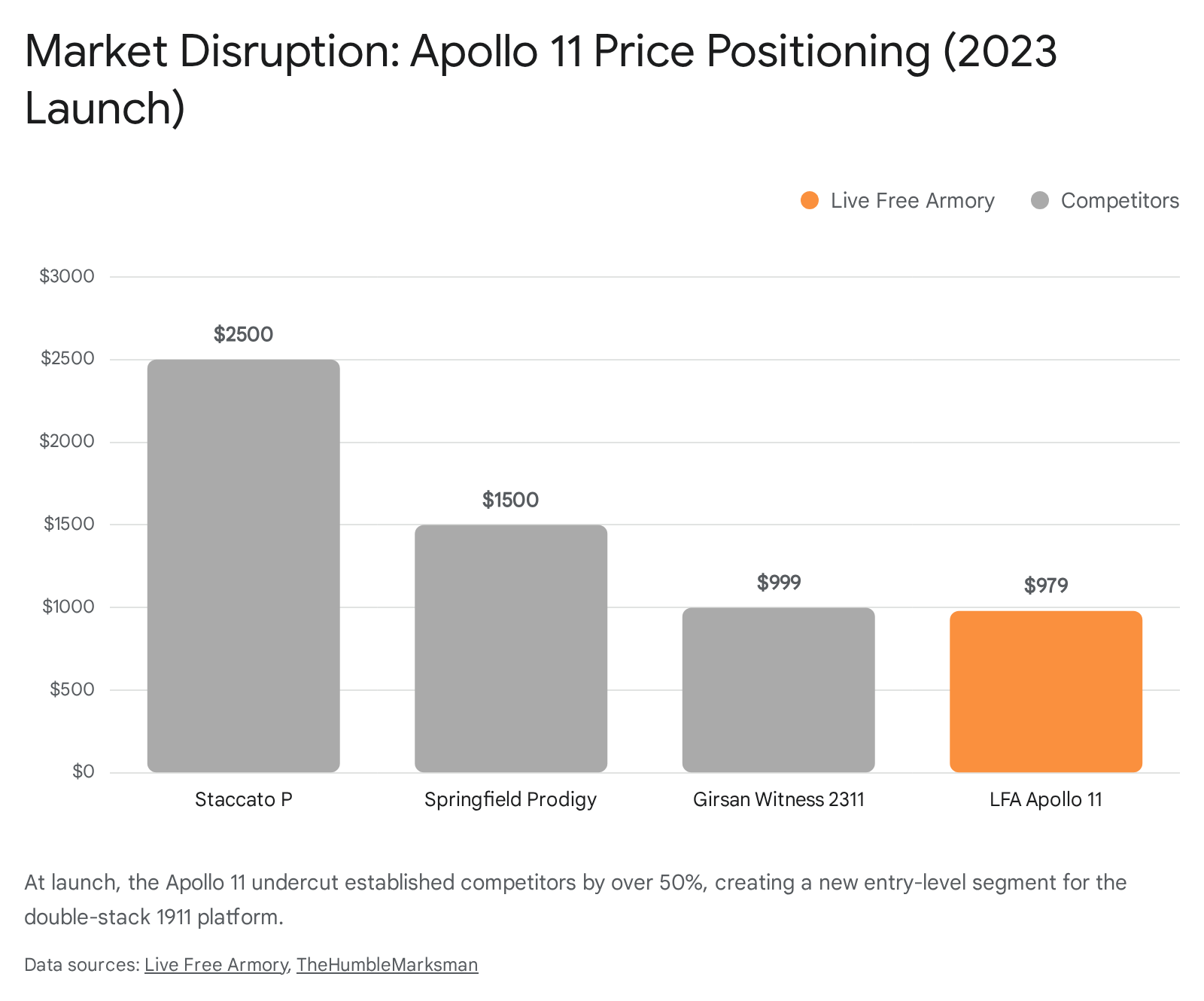
Apollo 11 price positioning chart comparing LFA to Staccato P, Springfield Prodigy, and Girsan Witness 2311.

7. Financial Strains and The Crisis of Growth (2024–2025)

7.1 The Capital Intensity Trap

The production of firearms, especially precision platforms like the Apollo 11, is incredibly capital intensive.

  1. Machinery: A 5-axis CNC mill costs hundreds of thousands of dollars.
  2. Materials: Sourcing American steel and aluminum 5 is significantly more expensive than importing from Asia.
  3. Inventory: To sell a gun today, you needed to buy the metal 6 months ago.

In 2024 and 2025, the macroeconomic environment turned hostile to this model. Interest rates remained elevated, making the cost of servicing debt on machinery expensive. Furthermore, the “race to the bottom” on pricing meant margins were razor-thin. To make money on a $979 Apollo 11, LFA had to sell thousands of them with zero defects. Any batch of scrapped parts due to a machine error was a direct hit to the bottom line.

7.2 The Chapter 11 Filing (September 2025)

On September 26, 2025, the strain became untenable. Central Florida Firearms, LLC (dba Live Free Armory) filed for Chapter 11 Bankruptcy in the Middle District of Florida (Case No. 6:25-bk-06150-GER).24

The filing revealed a precarious balance sheet:

  • Assets: ~$5.2 Million.24
  • Liabilities: ~$12.7 Million.24

This 2.5:1 debt-to-asset ratio indicates that LFA had leveraged itself heavily to fund its expansion and product development. The “Liabilities” likely consisted of machinery loans, raw material credit lines, and perhaps facility expansion costs associated with the West Melbourne site.2

7.3 Strategic Restructuring vs. Liquidation

It is vital to distinguish Chapter 11 (Reorganization) from Chapter 7 (Liquidation). LFA did not close its doors. It remained open, taking orders and manufacturing.26

The filing serves as a legal shield, pausing debt collection to allow the company to renegotiate terms. The presence of $5.2 million in assets—likely machinery, inventory, and intellectual property—suggests a viable core business. The filing explicitly noted that funds would be available for unsecured creditors, a positive signal that the business has cash flow.24
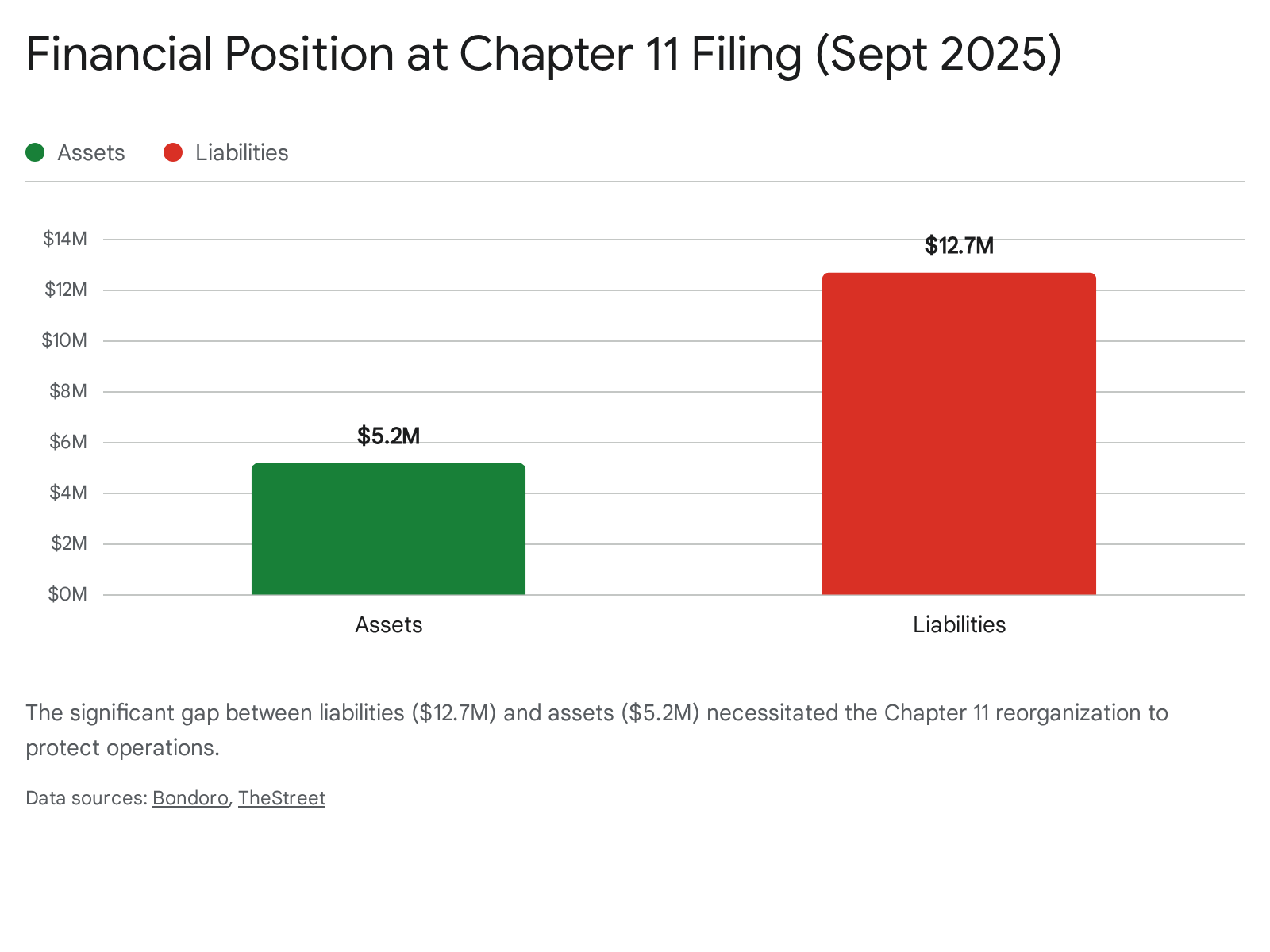
Chart showing Live Free Armory's assets ($5.2M) and liabilities ($12.7M) at Chapter 11 filing in Sept 2025.

8. Product Diversification & Future Roadmap

Despite the financial drama in the courtroom, the engineering floor at LFA remained active. The company continued to unveil new products, signaling to the market that they were planning for a future post-bankruptcy.

8.1 The Falcon 9X and Component Resilience

The Falcon 9X slide series for Glock pistols remains a critical product line.17 These slides offer aesthetic and functional upgrades (optic cuts, aggressive serrations) for the millions of Glock owners in the US. This “aftermarket” business is less volatile than selling complete firearms (which require FFL transfers and taxes). It provides high-margin, direct-to-consumer revenue that is essential for liquidity during restructuring.

8.2 Expanding the Apollo Line: 10mm and Subcompacts

At SHOT Show 2025, LFA demonstrated that it was not retreating. They unveiled two major expansions to the Apollo line:

  1. Apollo 10 (10mm Auto): The 10mm cartridge has seen a massive resurgence for “backcountry defense” (bear guns). By offering a high-capacity, double-stack 10mm at a reasonable price, LFA is targeting the hunting/outdoor demographic, moving beyond just “tactical” shooters.28
  2. Apollo 11 Subcompact: The trend in the 2011 world is “smaller.” Staccato released the CS; Wilson Combat has the SFX9. LFA’s subcompact Apollo aims to be the “Everyday Carry” (EDC) solution for the budget-conscious citizen.28 This puts them in direct competition with the high-end concealed carry market.

9. Strategic Outlook: 2026 and Beyond

9.1 The Restructuring Pathway

The immediate priority for 2026 is the successful confirmation of the Chapter 11 reorganization plan. LFA must convince its creditors—likely banks and material suppliers—that it is worth more alive than dead.

The arguments in their favor are strong:

  • Brand Equity: The “Apollo 11” is a known and desired commodity.
  • Manufacturing Capacity: The West Melbourne facility is a turnkey aerospace-grade factory.
  • Order Book: Demand for affordable metal-framed pistols remains high.

9.2 Risks and Opportunities

  • Risk: Quality Fade. The temptation during bankruptcy is to cut costs—cheaper tool heads, faster machine times, less QC. If the quality of the Apollo 11 slips, the brand will collapse. The 2011 platform is unforgiving of poor tolerances.
  • Opportunity: Consolidation. LFA could be an acquisition target. A larger holding company (like PSA or a private equity firm) might see the AS9100 facility and the Apollo brand as a perfect addition to a portfolio, injecting the capital needed to clear the debt while keeping the operations running.

9.3 Analyst Verdict

Live Free Armory is at a crossroads. It has successfully traversed the “Valley of Death” from a garage startup to a recognized national brand. It now faces the “Scale-Up Trap,” where the complexity of financing growth overwhelms the cash flow.

However, the company’s fundamentals—its engineering pedigree, its location in the Space Coast industrial hub, and its wildly popular product lines—suggest resilience. If LFA can navigate the legal and financial restructuring of 2025 without sacrificing the “Aerospace Quality” that defines its brand, it is poised to emerge as a leaner, more disciplined, and highly competitive force in the American firearms market for the next decade.


Summary of Key Milestones

YearMilestone EventStrategic SignificanceSource
2014Company FoundedEstablished by Chris Riedeman and Colby Santaw in a Florida garage. Mission: “American Made” precision.5
2016Expansion to St. CloudMoved to 2,000 sq ft industrial bay. Scaled LF15/LF10 rifle production. Transition from parts to full firearms.6
2017Product RefinementAddressed early AR-10 reliability issues using iterative engineering. Established “Lifetime Warranty” to build trust.9
2020West Melbourne RelocationRelocated to 13,000+ sq ft facility on the Space Coast. Major CAPEX investment in CNC infrastructure.7
2021AMP Pistol LaunchIntroduction of the AMP (Aluminum Match Grade), marking the pivot from rifles to proprietary handguns.6
2022AS9100 CertificationAchieved aerospace-grade quality certification, enabling high-tier OEM contracts and validating marketing claims.14
2023Apollo 11 Launch (July)Released the first American-made, double-stack 1911 under $1,000. Massive market disruption and viral demand.22
2025Apollo 10 & Subcompact DebutUnveiled 10mm and compact variants at SHOT Show 2025, demonstrating continued R&D despite financial strain.28
2025Chapter 11 Filing (Sep 26)Filed for bankruptcy protection to restructure $12.7M in liabilities. Operations continued uninterrupted.24

Please share the link on Facebook, Forums, with colleagues, etc. Your support is much appreciated and if you have any feedback, please email us in**@*********ps.com. If you’d like to request a report or order a reprint, please click here for the corresponding page to open in new tab.


Sources Used

  1. L3Harris Completes $100M Florida Facility Expansion – ExecutiveBiz, accessed December 29, 2025, https://www.executivebiz.com/articles/l3harris-100m-florida-facility-expansion
  2. L3Harris Expands Florida Facility to Support America’s Golden Dome, accessed December 29, 2025, https://www.l3harris.com/newsroom/press-release/2025/08/l3harris-expands-florida-facility-support-americas-golden-dome
  3. EDC Announces Strategic Expansion of Lockheed Martin on Florida’s Space Coast, accessed December 29, 2025, https://spacecoastedc.org/edc-announces-strategic-expansion-of-lockheed-martin-on-floridas-space-coast/
  4. Live Free Armory | BBB Business Profile | Better Business Bureau, accessed December 29, 2025, https://www.bbb.org/us/fl/melbourne/profile/firearm-manufacturer/live-free-armory-0733-90576101
  5. Live Free Armory at K-Var, accessed December 29, 2025, https://www.k-var.com/live-free-armory
  6. The Live Free Armory Aluminum Match-Grade Pistol (AMP) – Athlon Outdoors, accessed December 29, 2025, https://athlonoutdoors.com/article/live-free-armory-amp/
  7. Glock Aftermarket Replacement Slides – Live Free Insider, accessed December 29, 2025, http://www.livefreeinsider.com/2020/09/23/choosing-a-glock-replacement-slide/
  8. USER / TECHNICAL MANUAL – Live Free Armory, accessed December 29, 2025, https://livefreearmory.com/assets/manuals/OwnersManual_LF15_LF10.pdf
  9. Live Free Armory. Yay or Nay? : r/ar15 – Reddit, accessed December 29, 2025, https://www.reddit.com/r/ar15/comments/5tgkdw/live_free_armory_yay_or_nay/
  10. First 308 AR | Lone Star Boars, accessed December 29, 2025, http://lonestarboars.com/threads/first-308-ar.7638/
  11. How Live Free Armory Came To Be, accessed December 29, 2025, https://livefreearmory.com/our-story.php
  12. Firearms manufacturer Live Free Armory sets up in West Melbourne, accessed December 29, 2025, https://ftp.mtninc.com/ArchiveDocs/2017/2017-08-01/BBN-082817.pdf
  13. L3Harris Expands Florida Facility to Support America’s Golden Dome | Design and Development Today, accessed December 29, 2025, https://www.designdevelopmenttoday.com/industries/aerospace/news/22948533/l3harris-expands-florida-facility-to-support-americas-golden-dome
  14. Shop – Live Free Armory, accessed December 29, 2025, https://livefreearmory.com/shop.php
  15. USACE Database – Army.mil, accessed December 29, 2025, https://www.usace.army.mil/Portals/2/docs/Small%20Business/Database/USACE%20Contractor%20Database%20as%20of%2028%20FEB%202024%20Public.xls?ver=UpxB69x8XCzCvNo7C151UQ%3D%3D
  16. Dealer Locator – Live Free Armory, accessed December 29, 2025, https://livefreearmory.com/dealer-locator.php
  17. Components For Glock – Live Free Armory, accessed December 29, 2025, https://livefreearmory.com/product_gl.php
  18. Live Free Armory AMP Compact LFA-LFAMP19C084002 9MM Luger – Gun Tests, accessed December 29, 2025, https://www.gun-tests.com/handguns/live-free-armory-amp-compact-lfa-lfamp19c084002-9mm-luger/
  19. Live Free Armory AMP – Metal frame, Modular, optic cut Glock for $699 – Thoughts??, accessed December 29, 2025, https://www.reddit.com/r/Glocks/comments/rzhavz/live_free_armory_amp_metal_frame_modular_optic/
  20. Buy Your Next Pistol From Us – Live Free Armory, accessed December 29, 2025, https://livefreearmory.com/product_pstl.php?model=117
  21. AMP by LVA “Absolute GARBAGE!” with Range Review – YouTube, accessed December 29, 2025, https://www.youtube.com/watch?v=KRQGo7OF0Js
  22. Live Free Armory Apollo 11 Pistol – North American Outdoorsman, accessed December 29, 2025, https://northamerican-outdoorsman.com/live-free-armory-apollo-11-pistol/
  23. The Apollo has landed! : r/2011 – Reddit, accessed December 29, 2025, https://www.reddit.com/r/2011/comments/17a59em/the_apollo_has_landed/
  24. Filing Alert: Live Free Armory Chapter 11 – Bondoro, accessed December 29, 2025, https://bondoro.com/live-free-armory-filing-alert/
  25. Case number: 6:25-bk-06150 – Central Florida Firearms, LLC – Florida Middle Bankruptcy Court, accessed December 29, 2025, https://www.inforuptcy.com/browse-filings/florida-middle-bankruptcy-court/6:25-bk-06150/bankruptcy-case-central-florida-firearms-llc
  26. Franchise Group, Inc. – Restructuring Administration Cases, accessed December 29, 2025, https://cases.ra.kroll.com/FRG/
  27. Live Free Armory Falcon 9X – The Best American Made Glock Clone? – YouTube, accessed December 29, 2025, https://www.youtube.com/watch?v=e3gQ531e6QY
  28. [SHOT 2025] Live Free Armory Apollo 11 Subcompact & Apollo 10 Pistols | thefirearmblog.com, accessed December 29, 2025, https://www.thefirearmblog.com/blog/shot-2025-live-free-armory-apollo-11-subcompact-apollo-10-pistols-44818654
  29. Live Free Armory Apollo 10: The Future of Double Stack 10mm 1911s? Exclusive from SHOT Show 2025 – Dirty Bird Guns & Ammo, accessed December 29, 2025, https://dirtybirdusa.com/live-free-armory-apollo-10-the-future-of-double-stack-10mm-1911s/
  30. Another American gun, firearm company files Chapter 11 bankruptcy – TheStreet, accessed December 29, 2025, https://www.thestreet.com/retail/high-end-gun-firearm-manufacturer-files-chapter-11-bankruptcy
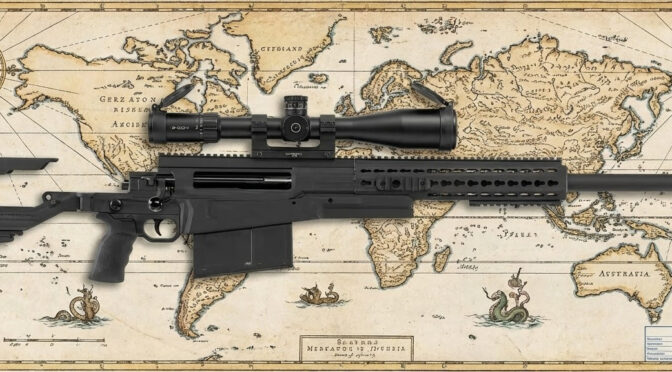
Accuracy International: A Legacy of Sniper Rifle Innovation

Accuracy International (AI) represents a singular entity in the defense industrial base, functioning as the progenitor of the modern tactical chassis system and the architect of the current sniper weapon system paradigm. Emerging from the United Kingdom’s competitive shooting community rather than its traditional military-industrial complex, the company fundamentally disrupted small arms design in the 1980s by decoupling the rifle action from the traditional stock, introducing the “Accuracy International Chassis System” (AICS). This innovation addressed the critical failure points of wooden-stocked legacy systems—environmental instability and lack of modularity—and established the Arctic Warfare (AW) series as the global benchmark for reliability in hostile environments.

Over four decades, AI has navigated a complex trajectory characterized by technical dominance, severe corporate instability, and strategic resurrection. The company’s history is bisected by a critical liquidation event in 2005, driven by ill-advised outsourcing strategies, which necessitated a management buyout (MBO) by the original founders. This restructuring returned the company to a vertically integrated manufacturing model, securing its quality control standards and enabling its survival. Today, AI operates a dual-hub strategy with manufacturing in Portsmouth, UK, and a significant subsidiary in Fredericksburg, Virginia, allowing it to navigate ITAR regulations and service the critical US market.

As of 2025, the company faces a rapidly evolving competitive landscape. While AI remains the incumbent choice for specialized tier-one units globally, it has faced significant setbacks in major procurement competitions, notably losing the US Special Operations Command (USSOCOM) Precision Sniper Rifle (PSR) and Advanced Sniper Rifle (ASR) contracts to Remington and Barrett, respectively. In response, AI has pivoted toward high-modularity platforms like the AXSR and the hybrid-use AT-XC, aiming to recapture market share by blending military ruggedness with the ergonomic demands of the burgeoning civilian Precision Rifle Series (PRS) market. The company’s immediate future hinges on the British Ministry of Defence’s “Project Shamer” and the continued integration of digital ballistics, as it defends its position as a premium provider against increasingly capable and lower-cost competitors.

1. Introduction: The Chassis Paradigm Shift

The history of the sniper rifle is divided into two distinct eras: the era of the “accurized” infantry rifle and the era of the purpose-built precision system. Prior to the 1980s, military doctrine largely relied on modifying standard service weapons or civilian hunting platforms for the sniping role. Rifles such as the US M40 or the British L42A1 were essentially wooden-stocked receivers, heavily reliant on traditional gunsmithing techniques like glass bedding to maintain accuracy. These platforms were susceptible to environmental shifts; moisture, temperature, and humidity caused wood to warp, exerting inconsistent pressure on the barrel and shifting the point of impact—a fatal flaw in precision engagement.1

Accuracy International was founded on the rejection of this legacy methodology. The company’s central innovation was the elimination of the stock as a structural component. Instead, AI introduced the chassis system: a rigid, machined metal backbone (initially aluminum) to which the steel action was bolted. This metal skeleton carried the mechanical loads, while the external “furniture”—the stock sides and grip—were merely polymer skins attached to the chassis. This design isolated the barrel and action from external torque and environmental stress, ensuring that the rifle retained its zero regardless of whether it was deployed in the humidity of a jungle or the freezing vacuum of the arctic.2 This engineering philosophy, born in a garden shed in West Sussex, would eventually force every major small arms manufacturer in the world to abandon traditional stocking methods in favor of the chassis capability that AI pioneered.

Dremel rotary tool and EZ Lock cutting kit for M92 upgrades

2. Genesis and Founding (1978–1985)

2.1 The “Three Men in a Shed”

The origins of Accuracy International are rooted in the discipline of International Sport Shooting Union (ISSU) competition rather than military logistics. The company was incorporated in 1978 by Malcolm Cooper, Dave Walls, and David Caig.1 This triad possessed a unique synergy of skills: Cooper was a world-renowned marksman, an Olympic legend who would secure back-to-back Gold Medals in the 50m Rifle 3 Positions event at the 1984 Los Angeles and 1988 Seoul Olympics.1 His partners, Walls and Caig, were expert toolmakers and fellow competitive shooters who operated out of a modest workshop—often mythologized as a garden shed—in West Sussex.2

The founders’ background in competitive shooting meant they approached rifle design with a focus on ergonomics and anatomical consistency that was absent in military hardware. In high-level competition, the interface between the shooter and the weapon is paramount. Walls and Caig began by creating replica pistols and modifying existing target rifles, but they quickly identified the limitations of converting commercial actions for high-precision work. Their dissatisfaction with existing bedding techniques led to the development of the prototype “Precision Marksman” (PM) system. This system utilized a flat-bottomed steel receiver bolted to a square-section aluminum alloy chassis, a radical departure from the cylindrical receivers and wood stocks of the era.2

2.2 The L96A1 Revolution and the 1985 Contract

In the early 1980s, the British Ministry of Defence (MoD) initiated a program to replace the L42A1, a sniper variant of the WWII-era Lee-Enfield No. 4. The L42A1 was chambered in 7.62x51mm NATO but was technologically obsolete, suffering from zero-shift due to its wooden furniture and lack of modern optical mounting solutions.6

The resulting competition was a David and Goliath scenario. The established favorite was Parker Hale, a historic British manufacturer offering the M85, a conventional, high-quality rifle that adhered to traditional design principles. Accuracy International submitted the PM. To military observers accustomed to wood and blued steel, the PM appeared alien; it featured a thumbhole stock made of green high-impact plastic, a massive boxy receiver, and a distinct lack of traditional aesthetics.3

However, the PM’s performance was undeniable. It achieved a first-round hit probability that vastly exceeded the M85. During the selection process, the MoD inspectors required a site visit to verify AI’s manufacturing capacity. Knowing their “shed” operation would disqualify them, the founders famously rented a larger workshop for a single day, populated it with all the prototype rifles they had built, and posed friends and family as staff. The ruse succeeded, demonstrating the necessary theoretical capacity.3 In 1985, AI won the contract, and the PM entered service as the L96A1.1

The L96A1 was the first “modern” sniper rifle. It featured a 60-degree bolt throw (allowing for faster cycling compared to the 90-degree Mauser standard), a 10-round detachable double-stack magazine (offering twice the capacity of most competitors), and a Schmidt & Bender 6×42 telescopic sight.4 This contract for over 1,000 rifles provided the capital and legitimacy that transformed AI from a boutique shop into a defense contractor.

3. The Arctic Warfare Era (1988–2000s)

3.1 The Swedish Contract and the Birth of “AW”

While the L96A1 was a domestic success, the company’s global reputation was forged in the frozen forests of Scandinavia. In the late 1980s, the Swedish Army sought a new sniper rifle capable of functioning in extreme cold. The L96A1, while rugged, was designed for the temperate climate of Central Europe; in deep freeze conditions, its grease could solidify, and tight clearances could bind with ice.1

AI responded by completely re-engineering the L96 platform to create the Arctic Warfare (AW). This development process introduced several critical engineering features that would define the brand:

  • De-icing Bolt Design: The bolt body was milled with spiral grooves. These flutes acted as ice scrapers, shearing off frozen debris inside the receiver and providing a space for the ice to be displaced, ensuring the bolt could close and lock even when the rifle was frozen solid.1
  • Enlarged Controls: The trigger guard and magazine release were significantly enlarged to allow operation by soldiers wearing thick arctic mittens.12
  • Chassis Evolution: The aluminum chassis was refined for weight reduction and greater rigidity, and the polymer stock material was changed to a compound that retained durability at sub-zero temperatures.1

Sweden adopted the rifle as the PSG 90 in 1991.1 This success was quickly followed by the German Bundeswehr, which adopted the.300 Winchester Magnum variant as the G22 in 1995.10 By the late 1990s, the AW series had become the de facto standard for NATO sniper systems, purchased by over 60 nations.

3.2 The Magnum Revolution: AWM and.338 Lapua

During the mid-1990s, military ballistic requirements began to outstrip the capabilities of the standard 7.62x51mm NATO cartridge. The effective range of the 7.62mm is generally cited as 800 meters; beyond this, the bullet becomes subsonic and unpredictable. Armies needed a cartridge that bridged the gap between the antipersonnel 7.62mm and the anti-material.50 BMG (12.7mm).

The solution was the.338 Lapua Magnum, a cartridge developed (with AI’s involvement) specifically for long-range sniping. AI scaled up the AW action to handle the higher pressures and longer case length of this new round, creating the Arctic Warfare Magnum (AWM).1 The introduction of the AWM in.338 Lapua (designated L115A1 and later L115A3 in British service) fundamentally altered the tactical landscape. It extended the effective engagement range of the infantry sniper from 800 meters to over 1,500 meters.4

This capability was graphically demonstrated during the War in Afghanistan. In November 2009, British Corporal of Horse Craig Harrison, using an L115A3, engaged and neutralized two Taliban machine gunners at a confirmed distance of 2,475 meters (2,707 yards)—a world record at the time.15 This event validated the AI system not just as a rifle, but as a strategic asset capable of area denial at ranges previously reserved for artillery or air support. The data from field operations indicates that the.338 Lapua Magnum system offers nearly double the effective kinetic reach of the legacy 7.62mm platforms, a capability gap that drove the wholesale replacement of the L96A1 with the L115A3 in UK service by 2008.4

4. Corporate Turbulence: The 2005 Liquidation and Resurrection

Despite the operational ubiquity of its products, Accuracy International suffered a near-fatal corporate collapse in the mid-2000s. By 2005, the company had entered administration (liquidation).5 This paradox—a company with a full order book and a legendary product facing bankruptcy—was the result of specific strategic errors.

4.1 The Failure of Outsourcing

In the years leading up to 2005, the company’s management attempted to scale production and reduce overhead by outsourcing the machining of key components to third-party vendors. The rationale was to transform AI into an assembly and design house rather than a heavy manufacturer. This strategy failed catastrophically. The third-party vendors could not consistently maintain the micron-level tolerances required for the AI actions, leading to quality control rejections, supply chain bottlenecks, and a halt in deliveries.5 Simultaneously, the financial burden of managing these disparate supply chains, combined with rising interest expenses on corporate debt, drained the company’s liquidity.5

4.2 The Management Buyout (MBO)

The company was rescued by a consortium led by its own internal leadership. Tom Irwin (then Sales and Marketing Manager) partnered with original founder Dave Walls and Paul Bagshaw to execute a Management Buyout (MBO).5 This pivotal moment defined the modern character of the company.

Upon regaining control, the new owners immediately reversed the outsourcing strategy. They re-acquired machinery and centralized manufacturing back to the UK facility. This return to vertical integration was not merely a sentimental decision but a quality assurance necessity; it ensured that every critical dimension of the rifle was under the direct control of AI’s engineers.16 This restructuring prevented the acquisition of AI by large defense conglomerates, allowing it to remain an independent entity focused solely on precision dominance.

5. The North American Expansion: AINA

While the engineering heart of AI beats in Portsmouth, its commercial lungs are located in the United States. Recognizing the sheer scale of the US market—both civilian and government—AI established Accuracy International of North America (AINA) in 1997.18

In 2010, AINA significantly expanded its footprint by opening a facility in Fredericksburg, Virginia.19 This facility is strategically critical for two reasons. First, it allows AI to service US federal contracts that require domestic support capabilities. AINA holds active contracts with the US Secret Service, US Coast Guard, and Customs and Border Protection, ensuring these agencies have direct access to maintenance and logistical support.18 Second, the Fredericksburg facility enables compliance with various “Buy American” provisions and allows the company to navigate the complex International Traffic in Arms Regulations (ITAR) by having a localized entity that can handle sensitive technology transfers and final assembly for the US market.

6. The Modular Era (2010–2020)

Following the stabilization of the company post-2005, the technical demands of the market shifted. The Global War on Terror (GWOT) experience led US Special Operations Command (USSOCOM) to demand a new capability: modularity. Snipers required a single chassis that could be reconfigured in the field to fire different calibers (e.g., training with.308, operating with.338 Lapua) by simply swapping the barrel and bolt face.

6.1 The AX Series

In response to the US Precision Sniper Rifle (PSR) solicitation, AI developed the AX series in 2010.21 The AX represented a departure from the permanently bonded chassis of the AW.

  • Multi-Caliber Architecture: The AXMC (Multi-Caliber) featured a quick-change barrel system released by a simple hex key, allowing caliber conversion in minutes.
  • Modernized Interface: The smooth skins of the AW were replaced by an octagonal fore-end tube featuring the “KeySlot” mounting system (a precursor to the now-standard M-LOK), allowing for the integration of thermal optics, night vision clip-ons, and laser rangefinders.22

6.2 The AT Series

In 2014, AI consolidated its law enforcement and lower-tier lines into the AT (Accuracy Tactical). This rifle replaced the legacy AW and AE models. It retained the battle-proven 10-round double-stack magazine of the AW but incorporated the quick-change barrel technology of the AX. This effectively democratized the modular capability, allowing police agencies to train with cheaper.308 ammunition and deploy with specialized loads using the same platform.24

7. Competitive Analysis and Contract Loss

Despite the technical excellence of the AX series, the last decade has seen AI lose its monopoly on elite contracts. The company’s “over-engineered” philosophy—prioritizing absolute durability over weight and cost—has clashed with procurement trends favoring lighter, more affordable systems.

7.1 The USSOCOM Defeats

AI suffered two high-profile defeats in the US market.

  • Precision Sniper Rifle (PSR): In 2013, the Remington MSR (Modular Sniper Rifle) beat the AI AX series for the PSR contract. Although the MSR later suffered from reliability and QC issues leading to its early retirement, the loss was a significant blow to AI’s prestige.26
  • Advanced Sniper Rifle (ASR): Following the failure of the Remington MSR, USSOCOM launched the ASR program. AI submitted the AXSR, but in 2019, the contract was awarded to the Barrett MRAD Mk22.28 The Barrett platform offered a similar multi-caliber capability but benefited from Barrett’s massive domestic manufacturing capacity and a price point that was generally more aggressive than the imported AI alternative.

7.2 The French FPSA Contract

In Europe, AI faced stiff competition from Sako (Finland). The French Army’s FPSA (Fusil de Précision Semi-Automatique) program aimed to replace the FR-F2. While the semi-automatic portion was won by FN Herstal (SCAR-H PR), the bolt-action requirements in Europe have increasingly been filled by the Sako TRG M10, which directly rivals the AXSR in modularity and price.30 The Sako TRG M10 is widely perceived as a comparable system to the AI AXSR but often comes in at a lower cost, making it attractive to European ministries of defense facing budget constraints.

8. Current Activities and Product Portfolio (2024–2025)

As of 2025, Accuracy International has streamlined its product offerings to address the dichotomy between “Professional” (Mil/LE) and “Sporting” (Civilian Competition) users.

8.1 The AXSR: The Flagship

Despite the ASR loss, the AXSR remains the company’s premier offering. It is a dedicated long-action system capable of managing the potent.300 and.338 Norma Magnum cartridges, which are rapidly replacing the.338 Lapua in special operations use due to their superior ballistic coefficients. The AXSR features an integrated ARCA rail (a standard borrowed from the photography world) for tripod stability, reflecting the influence of civilian competition techniques on military hardware.32

8.2 The AT-XC: Bridging the Gap

In 2024, AI launched the AT-XC, a “cross-over” rifle designed to replace both the AT and the AX308.34

  • Market Strategy: The AT-XC is explicitly designed to capitalize on the explosion of the Precision Rifle Series (PRS) in the United States. PRS competitions demand rifles that are heavy (to absorb recoil), perfectly balanced for barricade shooting, and capable of rapid fire.
  • Technical Features: The AT-XC features a redesigned action with a lower bore axis and a more vertical grip angle, optimizing it for the positional shooting style dominant in modern competition. By offering a “Pro” version for civilians and a “Mil” version for agencies, AI is attempting to regain the “Sunday win, Monday sale” dynamic.35

8.3 The AX50 ELR

For the anti-material role, the AX50 ELR continues the lineage of the AW50. Updated to share the ergonomics and chassis modularity of the AXSR, it provides.50 BMG capability for vehicle interdiction and explosive ordnance disposal (EOD) applications.21

9. Future Outlook

9.1 Project Shamer: The British Replacement

The most immediate strategic opportunity for AI is the British Army’s “Project Shamer” (formerly linked to Project Hunter/Grayburn initiatives), which seeks a replacement for the aging L115A3 fleet.38 As the incumbent, AI is well-positioned, but the requirements for this program will likely demand significant integration with next-generation digital optics and signature management (thermal/IR reduction). The outcome of this tender in the 2025–2027 timeframe will be a bellwether for AI’s standing in its home market.

9.2 The Digital Horizon

The future of sniping lies in the fusion of ballistics and optoelectronics. Programs like the US Army’s NGSW-FC (Next Generation Squad Weapon – Fire Control) are introducing smart scopes that calculate aim points automatically. AI’s future platform development must focus on ensuring their chassis systems can power and integrate these devices—turning the rifle from a mechanical projectile launcher into a networked data node. The presence of M-LOK and KeySlot on current models is the first step, but powered rails and integrated data ports may be the necessary evolution for the AXSR platform to remain relevant in the 2030s.

10. Summary of Major Milestones

YearMilestoneContext & Significance
1978Company FoundedEstablished by Malcolm Cooper, Dave Walls, and David Caig in Sussex, UK.1
1982PM PrototypeThe “Precision Marksman” is created, pioneering the chassis system.1
1985L96A1 AdoptionAI wins the UK MoD contract, beating Parker Hale and entering mass production.10
1988Arctic Warfare (AW)The L96 is redesigned for the Swedish Army, introducing de-icing features.1
1991PSG 90 AdoptionSweden adopts the AW as the PSG 90, securing AI’s first major export win.10
1995G22 AdoptionThe German Bundeswehr adopts the AWM-F (.300 Win Mag) as the G22.10
1996.338 AWM LaunchIntroduction of the.338 Lapua Magnum variant, revolutionizing long-range reach.14
1997AINA FoundedAccuracy International of North America established to service the US market.18
2005Liquidation & MBOCompany enters administration; saved by Walls, Irwin, and Bagshaw via management buyout.5
2008L115A3 AdoptionUK MoD fully transitions to the.338 AWM (L115A3) for all sniper roles.10
2010AX Series LaunchIntroduction of the modular AX chassis to compete for the US PSR contract.21
2013PSR LossAI loses the USSOCOM Precision Sniper Rifle contract to Remington.27
2014AT Series LaunchThe AT replaces the AW/AE, bringing quick-change barrels to the LE market.24
2019ASR LossAI loses the USSOCOM Advanced Sniper Rifle contract to the Barrett MRAD.28
2024AT-XC LaunchLaunch of the hybrid Sport/Mil AT-XC, replacing the AT and AX308.34
2025Project ShamerAI positions itself for the UK MoD’s next-generation sniper rifle competition.38

Please share the link on Facebook, Forums, with colleagues, etc. Your support is much appreciated and if you have any feedback, please email us in**@*********ps.com. If you’d like to request a report or order a reprint, please click here for the corresponding page to open in new tab.


Works cited

  1. Accuracy International Arctic Warfare – Wikipedia, accessed December 21, 2025, https://en.wikipedia.org/wiki/Accuracy_International_Arctic_Warfare
  2. Accuracy International Early History – Target and F-Class – UK Varminting, accessed December 21, 2025, https://ukvarminting.com/topic/62773-accuracy-international-early-history/
  3. How Three Men In A Shed Revolutionised Rifles – Bell Bros, accessed December 21, 2025, https://www.bellbrosguns.co.uk/how-three-men-in-a-shed-revolutionised-rifles/
  4. Accuracy International Arctic Warfare – Weapon Systems, accessed December 21, 2025, https://old.weaponsystems.net/weaponsystem/AA05%20-%20AW.html
  5. Accuracy International – Wikipedia, accessed December 21, 2025, https://en.wikipedia.org/wiki/Accuracy_International
  6. The man who fooled the army | The history and development of the L96A1 – YouTube, accessed December 21, 2025, https://www.youtube.com/watch?v=dzZE7JNI1ws
  7. Accuracy International Arctic Warfare – Gun Wiki | Fandom, accessed December 21, 2025, https://guns.fandom.com/wiki/Accuracy_International_Arctic_Warfare
  8. Viewpoint – British Army Contract for L96A1 Sniper Rifle (by Gil Boyd B.E.M) – Milsurps, accessed December 21, 2025, https://www.milsurps.com/showthread.php?t=47085
  9. How three guys in a shed sold thousands of L96A1 sniper rifles to the British Army – Reddit, accessed December 21, 2025, https://www.reddit.com/r/videos/comments/mai652/how_three_guys_in_a_shed_sold_thousands_of_l96a1/
  10. Over 40 years at the front – Accuracy International, accessed December 21, 2025, https://www.accuracyinternational.com/about-us
  11. POTD: Accuracy International Arctic Warfare | thefirearmblog.com, accessed December 21, 2025, https://www.thefirearmblog.com/blog/2020/07/08/potd-accuracy-international-arctic-warfare/
  12. Accuracy International Arctic Warfare – Grokipedia, accessed December 21, 2025, https://grokipedia.com/page/Accuracy_International_Arctic_Warfare
  13. New sniper rifles from the UK: Accuracy International AX MKIII and AX 50 ELR | all4shooters, accessed December 21, 2025, https://www.all4shooters.com/en/shooting/pro-zone/accuracy-international-ax-mkiii-and-ax-50-elr-sniper-features/
  14. Accuracy International AWM – Wikipedia, accessed December 21, 2025, https://en.wikipedia.org/wiki/Accuracy_International_AWM
  15. Arctic Warfare Magnum: Accuracy International L115A3 – YouTube, accessed December 21, 2025, https://www.youtube.com/watch?v=V3IylFIyZss
  16. Accuracy International – Small Arms Defense Journal, accessed December 21, 2025, https://sadefensejournal.com/accuracy-international/
  17. GAO-08-885, Private Equity: Recent Growth in Leveraged Buyouts Exposed Risks That Warrant Continued Attention, accessed December 21, 2025, https://www.gao.gov/assets/a280152.html
  18. Accuracy International Of North America – HigherGov, accessed December 21, 2025, https://www.highergov.com/awardee/accuracy-international-of-north-america-inc-10405556/
  19. Accuracy International Announcement: | Sniper’s Hide Forum, accessed December 21, 2025, https://www.snipershide.com/shooting/threads/accuracy-international-announcement.15600/
  20. ACCURACY INTERNATIONAL OF NORTH AMERICA, INC. | Federal Award Recipient Profile | USAspending, accessed December 21, 2025, https://www.usaspending.gov/recipient/c69d7bbe-1b74-ff86-6c97-c7c996616ffd-C/latest
  21. Accuracy International AX50 – Wikipedia, accessed December 21, 2025, https://en.wikipedia.org/wiki/Accuracy_International_AX50
  22. ACCURACY INTERNATIONAL – 365+ Tactical Equipment, accessed December 21, 2025, https://www.365-plus.com/data/file/free-catalogue/AI%20brochure-upf4.pdf
  23. Rifle Accuracy International LTD AXMC (338 Lap.mag.) – Memo-randum.net, accessed December 21, 2025, https://memo-randum.net/katalog/ognestrelnoe-oruzhie/karabiny/vintovka-accuracy-international-ltd-axmc-338-lap-mag-/
  24. accessed December 21, 2025, https://en.wikipedia.org/wiki/Accuracy_International_Arctic_Warfare#:~:text=In%202014%2C%20Accuracy%20International%20introduced,enforcement%20and%20civilian%20clients%20worldwide.
  25. Accuracy International models explained | Sniper’s Hide Forum, accessed December 21, 2025, https://www.snipershide.com/shooting/threads/accuracy-international-models-explained.7028851/
  26. Meet the World’s Top Five Sniper Rifles – The National Interest, accessed December 21, 2025, https://nationalinterest.org/blog/reboot/meet-worlds-top-five-sniper-rifles-199360
  27. Remington Wins USSOCOM PSR (Precision Sniper Rifle) Contact | thefirearmblog.com, accessed December 21, 2025, https://www.thefirearmblog.com/blog/2013/09/13/remington-wins-ussocom-psr-precision-sniper-rifle-contact/
  28. Barrett® Awarded USSOCOM ASR Contract, accessed December 21, 2025, https://barrett.net/2019/04/05/barrett-awarded-ussocom-asr-contract/
  29. Barrett To Deliver First Advanced Sniper Rifles to US SOCOM in Early 2021, accessed December 21, 2025, https://www.thefirearmblog.com/blog/2020/12/23/barrett-receives-first-mk22-delivery-order-from-ussocom/
  30. Accuracy International Vs TRG | Sniper’s Hide Forum, accessed December 21, 2025, https://www.snipershide.com/shooting/threads/accuracy-international-vs-trg.7132762/
  31. France Selects FN SCAR-H Precision Rifle | Joint Forces News, accessed December 21, 2025, https://www.joint-forces.com/defence-equipment-news/28702-france-selects-fn-scar-h-precision-rifle
  32. AXSR Mil long action professional multi cal. sniper rifle – Accuracy International, accessed December 21, 2025, https://www.accuracyinternational.com/axsr-mil
  33. Accuracy International AXSR precision bolt-action rifle in .338 Lapua Magnum – The upper class | all4shooters, accessed December 21, 2025, https://www.all4shooters.com/en/shooting/rifles/accuracy-international-axsr-multi-caliber-bolt-action-rifle-338-lm-test-report/
  34. Accuracy International New Product Information 2024 – EDR Magazine, accessed December 21, 2025, https://www.edrmagazine.eu/accuracy-international-new-product-information-2024
  35. AT-XC short action, low profile competition rifles – Accuracy International, accessed December 21, 2025, https://www.accuracyinternational.com/at-xc-sport
  36. Accuracy International Intros New AT-X Platform for 2024 – Small Arms Review, accessed December 21, 2025, https://smallarmsreview.com/accuracy-international-intros-new-at-x-platform-for-2024/
  37. Accuracy International Announce New Products for 2024 | Joint Forces News, accessed December 21, 2025, https://www.joint-forces.com/defence-equipment-news/70554-accuracy-international-announce-new-products-for-2024
  38. MISSILE, ARTILLERY, HYPERSONICS, BALLISTICS AND SOLDIER SYSTEMS UPDATE, accessed December 21, 2025, https://battle-updates.com/update/missile-artillery-hypersonics-ballistics-and-soldier-systems-update-125/
  39. UK minister cites “operational security” for sniper rifle query snub – Army Technology, accessed December 21, 2025, https://www.army-technology.com/news/uk-minister-cites-operational-security-for-sniper-rifle-query-snub/

Rost Martin: Navigating the U.S. Firearms Market

The entry of Rost Martin into the United States firearms market represents a sophisticated case study in strategic barrier navigation, heritage leverage, and demographic targeting within a mature, saturated industry. Founded in Dallas, Texas, in early 2020 by Chris and Stefany Toomer, the company emerged during a period of unprecedented volatility characterized by the COVID-19 pandemic, historic supply chain disruptions, and a surge in First-Time Gun Buyer (FTGB) participation. Unlike typical startups that often falter due to capitalization issues or lack of distribution channels, Rost Martin successfully circumvented these initial hurdles by capitalizing on a unique blend of institutional industry knowledge—derived from the founders’ familial ties to Springfield Armory—and a modern, agile manufacturing partnership with European defense contractor AREX Defense.

The company’s flagship product, the RM1C (Rost Martin 1 Compact), launched in January 2024, was deliberately positioned to disrupt the “Compact 9mm” segment—the most contested vertical in the handgun market—by offering a feature-rich, optic-ready platform at a “value-premium” price point (MSRP ~$459). This pricing strategy undercut legacy market leaders like Glock, Sig Sauer, and Smith & Wesson while offering superior tangible features compared to budget entrants.

Technically, Rost Martin employs a hybrid operational model. By utilizing the proven internal architecture of the AREX Delta Gen.2 as a foundation, the company significantly reduced technical risk and Research & Development (R&D) timelines. However, the RM1C is distinct from its Slovenian progenitor through extensive “Americanization” of the user interface, including proprietary texturing, altered grip geometry, and a tuned fire control group tailored to U.S. consumer preferences.

Financially and operationally, the company has demonstrated rapid maturation. From its stealth development phase (2020–2023), it transitioned to a national player with immediate placement in tier-one distribution networks (e.g., Davidson’s, RSR Group) upon launch. By late 2025, the company had diversified its portfolio to include subcompact models (RM1S), factory-compensated variants, and California-compliant SKUs, effectively unlocking the entirety of the civilian concealed carry market.

This report provides an exhaustive, analyst-grade examination of Rost Martin. It analyzes the company’s origins against the backdrop of the 2020 market conditions, dissects the technical engineering of its product portfolio, evaluates its commercial performance and consumer reception, and forecasts its strategic trajectory through 2030. The analysis suggests that Rost Martin is well-positioned to transition from a “new entrant” to a staple mid-tier manufacturer, provided it can maintain quality control standards while scaling production to meet duty-use demands.

1. Industry Context and the Genesis of Rost Martin

To understand the trajectory of Rost Martin, one must first analyze the volatile ecosystem into which it was born. The year 2020 was a watershed moment for the global firearms industry, creating a distinct set of risks and opportunities that defined the company’s foundational strategy.

1.1 The “Great Gun Run” of 2020: A Market in Flux

Rost Martin was incorporated in early 2020 1, coinciding with the onset of the COVID-19 pandemic and widespread social unrest in the United States. This period, often referred to by industry analysts as the “Great Gun Run,” saw National Instant Criminal Background Check System (NICS) checks reach record highs.

  • Demand Shock: The industry experienced an estimated 60% year-over-year increase in demand. Millions of Americans purchased their first firearm, fundamentally shifting the demographic profile of the gun-owning public. The National Shooting Sports Foundation (NSSF) reported a significant rise in ownership among women and minorities.
  • Supply Chain Collapse: Simultaneously, global logistics ground to a halt. Raw material shortages (steel, polymer resin) and labor restrictions prevented established manufacturers like Glock and Smith & Wesson from meeting demand. Inventory levels at the distributor and retail level hit historic lows.

For a new entrant, this environment was paradoxical. The demand for product was infinite, but the ability to manufacture and NPI (New Product Introduction) was severely constrained. Most startups during this period rushed products to market to capitalize on panic buying, often resulting in “vaporware” or quality control disasters. Rost Martin, however, adopted a contrarian strategy of strategic patience.

1.2 The “Stealth Mode” Philosophy (2020–2023)

Chris Toomer, CEO of Rost Martin, has explicitly stated that the company spent four years in development before releasing a single product.1 This period of “stealth mode” allowed the company to observe the shifting preferences of the new 2020 demographic without the pressure of filling backorders.

While competitors were stripping features to speed up production (e.g., shipping guns with one magazine, removing optic cuts), Rost Martin utilized this time to refine their platform. They conducted a multi-year study of market trends 3, identifying that the modern consumer—specifically the new, younger, and more diverse buyer—demanded “out-of-the-box” readiness. This meant optic cuts, ergonomic adaptability, and ambidextrous controls were no longer “premium” add-ons but baseline requirements.

This four-year incubation period 2 insulated the company from the initial supply chain chaos. By the time they were ready to launch in 2024, raw material availability had stabilized, and the market had transitioned from “panic buying” to “discerning consumption,” a shift that favored Rost Martin’s value-proposition model.

2. Corporate Structure and Leadership Heritage

A critical differentiator for Rost Martin is its leadership profile. Unlike many firearms startups founded by social media influencers or engineering hobbyists, Rost Martin is led by a team with deep, institutional ties to the “aristocracy” of the American firearms industry. This heritage provided the company with intangible assets—credibility, connections, and capital efficiency—that are typically unavailable to new ventures.

2.1 The Founders: A Synthesis of Service and Legacy

The company is led by the husband-and-wife team of Chris and Stefany Toomer. Their backgrounds provide a complementary mix of operational discipline and industry lineage.

Chris Toomer: The Operational Architect

Chris Toomer serves as the Chief Executive Officer.3 His professional formation is bifurcated between military service and high-level corporate finance.

  • Military Service: Toomer served as an infantry officer (Captain) in the United States Marine Corps, specifically with the 3rd Battalion, 3rd Marines.2 This infantry background provides the “end-user” credibility essential in the firearms market. It informs a design philosophy that prioritizes reliability and combat effectiveness over aesthetic novelty.
  • Corporate Experience: Following his service, Toomer obtained an MBA from the University of Michigan and worked in the finance and technology sectors at JPMorgan.3 This financial literacy is a critical asset. The firearms industry is capital-intensive, with long cash conversion cycles. Toomer’s background allows Rost Martin to navigate inventory management, vendor negotiations, and cash flow with a sophistication that rivals established corporations.

Stefany Toomer (née Reese): The Industry Connection

Stefany Toomer’s lineage is arguably the company’s most potent strategic asset. She is the daughter of Dennis Reese and the granddaughter of Bob Reese.2

  • The Reese Legacy: The Reese family is credited with saving Springfield Armory in 1974.3 Bob Reese acquired the rights to the name after the federal government closed the national armory, transforming it from a defunct government entity into one of the largest and most successful commercial firearms manufacturers in the world.
  • Institutional Knowledge: Growing up inside the Springfield Armory dynasty gave Stefany an intuitive understanding of the industry’s nuances—from distributor relationships to the cyclical nature of political demand spikes. This connection explains how a “startup” was able to secure partnerships with every major distributor (RSR, Davidson’s, etc.) immediately upon launch 4, a feat that usually takes years for new companies to achieve.

2.2 Brand Identity and Nomenclature

The name “Rost Martin” is a deliberate reflection of this dual heritage, designed to evoke a sense of permanence and history despite the brand’s youth.

  • “Rost”: Derived from Stefany’s grandfather, Robert Rost Reese.3 This pays homage to the man who built the modern Springfield Armory, subtly signaling to industry insiders that this new company shares DNA with one of the market’s giants.
  • “Martin”: Derived from the maiden name of Chris Toomer’s great-grandmother.3 Toomer describes her as a “powerful woman” and a “pistol in her own right,” grounding the brand in American resilience.

This naming convention avoids the “tactical” tropes of the 2010s (e.g., words like “Defense,” “Tactical,” “Black,” “Ops”). Instead, it sounds like a heritage brand—similar to “Smith & Wesson” or “Heckler & Koch”—positioning the company as a mature, serious manufacturer rather than a fleeting trend chaser.

2.3 Strategic Location: Dallas, Texas

The decision to headquarters the company at 1128 Longpoint Avenue, Dallas, Texas 5 was driven by both personal and strategic factors.

  • Personal: Stefany Toomer is an alumna of Southern Methodist University (SMU) in Dallas, and the couple identified the city as their preferred location to “plant roots” after living in multiple cities.3
  • Strategic: Texas offers a highly favorable regulatory environment for firearms manufacturing, shielding the company from the legislative risks present in traditional manufacturing hubs like the Northeast. Furthermore, Dallas is a central logistics hub, facilitating efficient distribution to both coasts. The “Made in Dallas, Texas” stamping on every RM1C frame is a significant marketing asset, appealing to the strong state-pride often found in the gun-owning community.1

2.4 The “Minority Veteran and Female-Owned” Differentiator

Rost Martin explicitly markets itself as a “minority Veteran, and female-owned company”.1 In the context of the 2020s, this is a powerful competitive advantage.

  • Demographic Alignment: The fastest-growing demographics in the firearms community are women and minorities. NSSF data from 2020–2024 consistently highlights the diversification of the gun owner.
  • Cultural Bridge: Legacy brands often struggle to connect authentically with these new cohorts. Rost Martin’s ownership structure allows it to bridge this gap naturally. They are not merely “marketing” to these groups; they are these groups. This authenticity is critical for brand loyalty among the “Gen 2.0” gun owners.

3. The Strategic Partnership: Rost Martin x AREX Defense

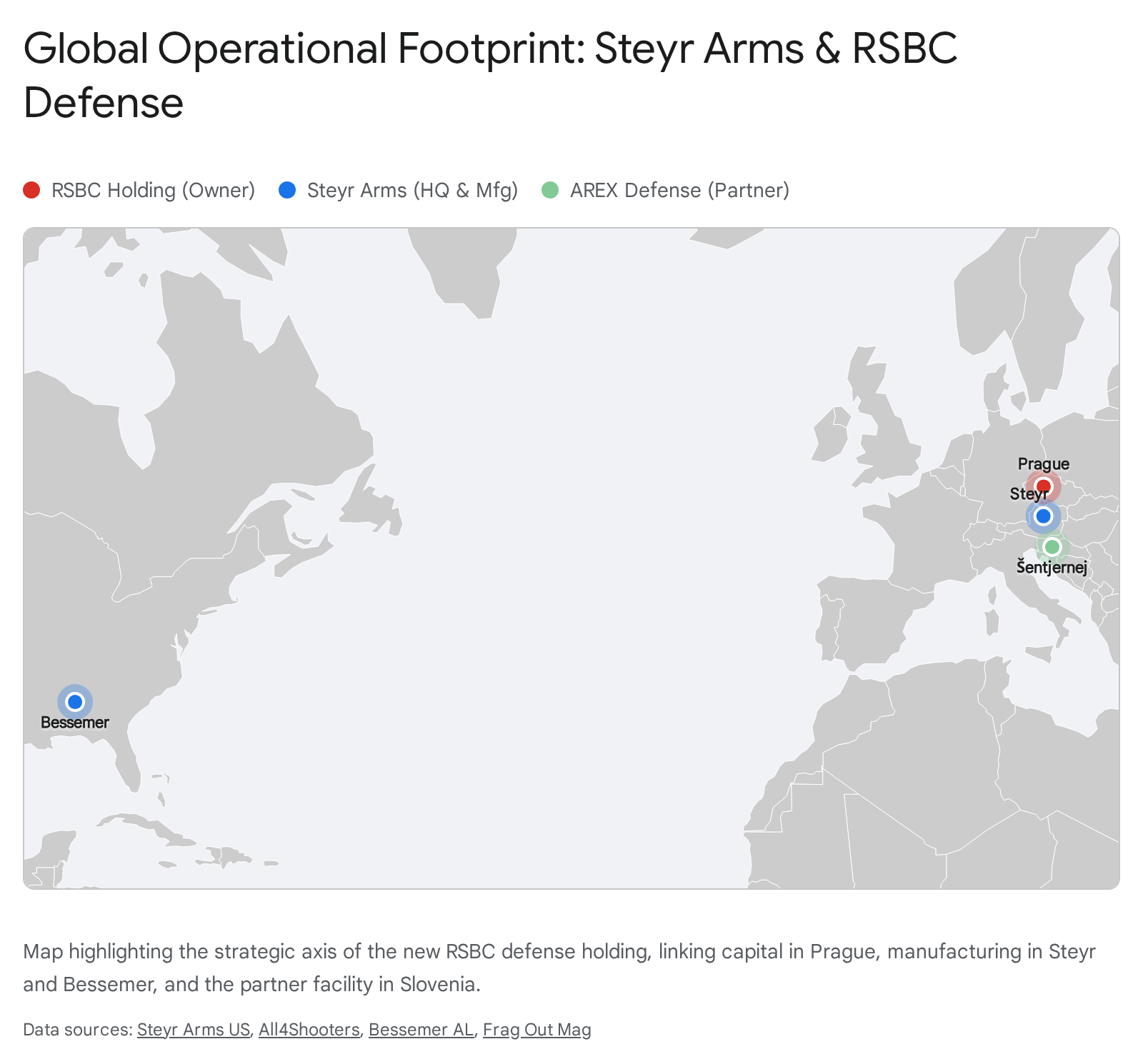
A pivotal element of Rost Martin’s business model is its refusal to “reinvent the wheel.” Instead of attempting to engineer a proprietary striker-fired action from scratch—a process that has bankrupted numerous startups due to R&D costs and inevitable reliability failures—Rost Martin forged a strategic partnership with AREX Defense of Slovenia.3

3.1 The AREX Delta Architecture

The Rost Martin RM1C is built upon the foundational architecture of the AREX Delta Gen.2 M.3

  • Proven Reliability: AREX is a NATO-certified defense contractor. The Delta platform had already passed rigorous military endurance testing and had been on the European market for years. By adopting this internal chassis system, Rost Martin essentially guaranteed that their “first” gun would have the reliability of a mature platform.
  • The Chassis System: Like the Sig Sauer P320, the Delta/RM1C uses a serialized internal steel chassis (Fire Control Unit). This is the “firearm” in the eyes of the ATF. This modularity simplifies manufacturing and allows for potential future modularity (e.g., swapping grip frame sizes), although Rost Martin has initially focused on fixed configurations.

3.2 The “Americanization” of a European Platform

While the “engine” of the RM1C is Slovenian, the “body” and “interface” are distinctly American. Rost Martin did not simply import the Delta and slap a logo on it (a practice known as “white labeling”). Instead, they engaged in a comprehensive re-engineering of the user interface points.3

  • Ergonomics and Texture: European pistols (like the original Delta) often feature slicker, less aggressive textures suitable for gloved use. American shooters, influenced by competition shooting and tactical training, prefer aggressive, sandpaper-like textures. Rost Martin developed the Responsive Grip Texture (RGT), a proprietary laser-stippling pattern that provides high traction without being abrasive against skin during concealed carry.8
  • Trigger Tuning: The AREX Delta trigger was functional but widely criticized for a long reset and “mushy” break. Rost Martin re-engineered the fire control group components to achieve a cleaner break and, crucially, a short, tactile reset.7 This “short reset” is a primary metric by which American enthusiasts judge striker-fired pistols.
  • Aesthetic Overhaul: The slide geometry was redesigned with “Tenifer” treatment (a ferritic nitrocarburizing process) and distinct aggressive serrations.7 This served two purposes: it improved manipulation (press checks) and visually differentiated the RM1C from the AREX Delta, giving it a unique visual identity on the shelf.

3.3 Economic Implications of the Partnership

This hybrid model—European core, American interface—provides Rost Martin with a massive economic advantage.

  • Reduced CapEx: They did not need to invest millions in tooling for barrels and slides initially, as they could leverage AREX’s existing production lines.
  • Focus on Assembly: The company imports the core components but performs final assembly, quality control (QC), and packaging in Dallas.3 This allows them to stamp the guns “Dallas, TX” (signifying the manufacturer’s location) while benefiting from lower-cost European component manufacturing.
  • Scalability: If demand spikes, AREX has the industrial capacity to ramp up production of parts far faster than a small Dallas machine shop could.

4. The Development Cycle (2020–2023)

The four-year period between incorporation and launch was characterized by intensive R&D and strategic supply chain alignment.

4.1 Iterative Prototyping

Chris Toomer emphasized that the development process involved “hundreds of flawless rounds” and multiple iterations.9 The goal was to reach a “Goldilocks” specification—a pistol that was not too small to shoot well, nor too big to carry.

The team utilized this time to benchmark against the market leaders: the Glock 19 Gen 5, the Smith & Wesson M&P 2.0 Compact, and the Sig Sauer P320 X-Compact.

  • The Benchmark: They identified that competitors were slowly moving toward “optic ready” as a standard. Rost Martin decided to make it universal. No iron-sight-only models were planned.
  • The “De-contenting” Trend: In 2021-2022, due to supply chain issues, some manufacturers stopped including multiple backstraps or optic plates. Rost Martin decided to go the other way, including a metal optic plate and multiple backstraps in the box to create a “complete” value package.10

4.2 Building the “Team RM”

Behind the scenes, the Toomers were recruiting talent. Snippet 3 mentions that “most (if not all) members of the Rost Martin team wear a few different hats.” This lean startup methodology is typical of the early stages, where the VP of Marketing might also be packing boxes or testing prototypes.

By late 2023, the team was ready. They had secured their Federal Firearms License (FFL), established their Dallas facility, and finalized the import/export protocols with AREX.

5. The Flagship: The RM1C Technical Architecture

Launched in January 2024, the RM1C is the cornerstone of the Rost Martin brand. A detailed technical analysis reveals how it was designed to check every box for the modern concealed carrier.

5.1 Dimensional Specs and Classification

  • Caliber: 9mm Luger (+P rated).
  • Barrel Length: 4.0 inches.8 This is the industry standard for “Compact,” matching the Glock 19 exactly. It offers a balance of ballistic velocity and concealability.
  • Capacity: 15+1 (Flush) / 17+1 (Extended). The RM1C ships with both magazines.6
  • Width: 1.1 inches. This is slightly slimmer than the Glock 19 (1.26 inches), making it more comfortable for Inside the Waistband (IWB) carry.
  • Weight: Approx. 21 oz (unloaded).

5.2 Key Features and Differentiators

  1. Full Ambidexterity: The RM1C features mirrored slide stop levers and magazine releases on both sides.8 This is superior to “reversible” controls (which require disassembly to switch) and appeals to left-handed shooters (approx. 10% of the market) and tactical shooters who train for off-hand manipulation.
  2. Optic System: The slide is cut for the Trijicon RMR footprint.10 Crucially, Rost Martin ships the gun with a metal optic plate. Many competitors (like Glock MOS) ship with plastic plates that are prone to warping or failure. Including a metal plate is a significant value-add (approx. $50 value).
  3. The “Gas Pedal”: The frame features distinct, textured index points on the dust cover (forward of the trigger guard).2 These allow the shooter to apply downward pressure with their support-hand thumb to mitigate recoil. This feature, popularized by custom frame modifications and competition shooting, is rarely found on factory polymer pistols at this price point.
  4. Sights: The RM1C uses the Springfield XD/XDM sight dovetail cut.10 This was a brilliant strategic move. Because the XD has been on the market for two decades, there is already a massive aftermarket of night sights and fiber optics available. Users did not have to wait for companies to make “Rost Martin” specific sights.
  5. Magazine Compatibility: The RM1C uses magazines manufactured by Mec-Gar (the industry gold standard). Interestingly, the RM1C can accept CZ P-10C magazines.10 While the baseplates may not fit flush, the functionality allows users to tap into an existing ecosystem of cheap and available magazines—a huge plus for a new platform.

5.3 Technical Performance

Independent testing has validated the platform’s reliability. Reviews from sources like Guns & Ammo and The Firearm Blog report 100% reliability with diverse ammunition types, including hollow points.12 The “low bore axis” (distance between the barrel and the shooter’s hand) is frequently cited as contributing to flat recoil impulse.2

6. Commercial Operations and Go-to-Market Strategy

Rost Martin’s commercial strategy is defined by aggressive pricing and immediate channel saturation.

6.1 The “Value-Premium” Pricing Model

The MSRP of the RM1C is approximately $459.12

  • The Competitors:
  • Tier 1 (Premium): Glock 19 Gen 5 MOS (~$620), Sig P365 XL (~$600), HK VP9 (~$700).
  • Tier 2 (Budget): PSA Dagger (~$300), Taurus G3 (~$300), Stoeger STR-9 (~$350).
  • The Gap: Rost Martin identified a gap in the $400–$500 range.
  • The Proposition: By pricing at $459, they offer a gun that feels like a Tier 1 product (metal plates, ambi controls, premium case) but is priced closer to the budget tier. This “Value-Premium” strategy is highly effective during periods of economic inflation, as seen in 2023–2024.

6.2 Distribution Saturation

Snippet 4 lists the launch partners: Davidson’s, Sports South, Primary Arms, Iron Valley Supply, and RSR Group.

  • Significance: These are the largest firearm wholesalers in the nation. RSR and Sports South alone cover the vast majority of independent gun stores (local gun shops or “LGS”).
  • Implication: A typical startup usually sells direct-to-consumer (like PSA) or through one niche distributor. Getting all major distributors on board for Day 1 implies significant pre-launch negotiation and capitalization. It meant that a customer could walk into a gun store in rural Ohio or downtown Miami and likely order an RM1C immediately.

6.3 Warranty and Support

Rost Martin offers a lifetime warranty 5, managed from their Dallas headquarters. This is a critical trust signal. In the firearms industry, “lifetime warranty” is the standard for reputable brands (Springfield, Ruger, Smith & Wesson). By matching this, Rost Martin signaled confidence in their product’s durability.

7. Performance Analysis: The First 18 Months (2024–2025)

Since its launch, the RM1C has faced the scrutiny of the open market. The reception has been generally positive, but not without specific technical criticisms.

7.1 Critical Reception

Professional media reviews (NRA American Rifleman, Guns & Ammo, TFB) have been uniformly positive, praising the feature-to-price ratio.13 The “shootability” of the gun—specifically the recoil impulse and trigger reset—is a recurring theme in positive reviews.2

7.2 Consumer Sentiment and Technical Issues

Analysis of user feedback on platforms like Reddit and YouTube reveals a more nuanced picture.16

  • Firing Pin Breakage: Several users reported firing pin failures around the 1,000-round count mark.17 This is a common issue with Metal-Injection-Molded (MIM) parts if the heat treatment is inconsistent. Rost Martin’s response—shipping replacement pins immediately and largely without question—has mitigated the PR damage, but it remains a point of concern for high-volume shooters.
  • Trigger “Grittiness”: Some users described the trigger as “gritty” out of the box, comparing it unfavorably to well-broken-in competitors.17 However, long-term reviews suggest the trigger smooths out significantly after 500 rounds.7
  • Optic Screws: A minor but annoying logistical issue surfaced regarding the length of the included optic screws. For certain Holosun optics (the most popular pairing), the provided screws were sometimes too long or the wrong thread pitch, forcing users to source aftermarket screws.17

Sentiment Synthesis: While professional reviews focus on the value, user reviews focus on the durability. The consensus is that the RM1C is an excellent carry gun for the average user, but potential “super-users” (who shoot 10k+ rounds a year) are testing the limits of the firing pin assembly.

8. Portfolio Expansion: The RM1S and Comp Series

Rost Martin’s roadmap demonstrates a clear understanding that a “one-gun company” cannot survive. In late 2024 and throughout 2025, they aggressively diversified.

8.1 The RM1S (Subcompact)

Launched to compete in the “Subcompact/Micro” category.

  • Dimensions: 3.6-inch barrel, shorter grip height.18
  • Capacity: 12+1 flush. It retains compatibility with the larger 15/17 round RM1C magazines via a grip sleeve.18
  • Market Role: This model directly challenges the Glock 26 Gen 5 and the Taurus GX4. It addresses the segment of the market that finds the RM1C slightly too large for deep concealment (e.g., summer carry).

8.2 The “Comp” Series (2025)

In 2025, Rost Martin introduced the RM1C Comp and RM1S Comp.19

  • The Trend: Since 2022, “compensated” pistols (which vent gas upwards to push the muzzle down) have become a dominant trend, driven by the Sig P365 X-Macro Comp.
  • The Implementation: Rost Martin’s solution is an integral port. A single port in the barrel aligns with a cut in the slide.
  • The Value: Factory compensated guns usually command a massive premium (often +$200–$400). Rost Martin introduced these models at an MSRP of $489 20, only a nominal increase over the base model. This is potentially the most accessible compensated striker-fired pistol on the market, democratizing a feature previously reserved for “Gucci Glocks” and high-end Sigs.

9. The California Strategy

Perhaps the most sophisticated strategic move by Rost Martin was its entry into the California market in late 2025.

9.1 The Barrier: The California Roster

California maintains a “Rost of Certified Handguns.” To get a new semi-automatic pistol on this roster, it must have:

  1. Magazine Disconnect Mechanism: The gun cannot fire if the magazine is removed.
  2. Loaded Chamber Indicator (LCI): A prominent mechanical flag that indicates a round is in the chamber.
  3. Drop Testing: Rigorous safety testing.
    For years, the “microstamping” requirement effectively banned all new pistols. However, recent legal challenges (Boland v. Bonta) loosened some restrictions, opening a narrow window for manufacturers who could engineer the Mag Disconnect and LCI quickly.

9.2 The Solution: RM1C-CA and RM1S-CA

Rost Martin engineered specific SKUs for California.19

  • Engineering Challenge: Adding a magazine disconnect requires redesigning the locking block and trigger bar interaction. It is not a simple “drop-in” part.
  • The Reward: By achieving Roster certification in November/December 2025 21, Rost Martin unlocked a market of nearly 40 million people where competition is artificially scarce. In California, a Glock Gen 5 is illegal to sell new. By offering a modern, optic-ready, ambidextrous pistol to Californians, Rost Martin is poised to capture massive market share from the stagnation of Gen 3 Glocks that currently dominate that state.

10. Strategic Future Outlook (2026–2030)

Based on the trajectory established in its first five years, Rost Martin is positioned for significant growth, provided it can manage the risks of scaling.

10.1 Forecasted Product Roadmap

  • Duty/Competition Size (RM1L): The logical gap in the lineup is a “Long Slide” (5-inch barrel) version for home defense and competition (USPSA Production/Carry Optics divisions).
  • Micro-Compact Architecture: The RM1S is a subcompact (thick), not a micro (thin like the P365). To compete in the hottest segment of the market, Rost Martin may need to develop a new, thinner chassis system, potentially “RM2.”
  • Metal Framed Variants: With the industry pivoting back to metal frames (e.g., Sig AXG, M&P Metal), an aluminum-framed RM1C would be a high-margin “halo” product.

10.2 Risks and Challenges

  • Supply Chain Sovereignty: The reliance on AREX is a double-edged sword. Geopolitical instability in Eastern Europe could threaten the supply of critical components. The company may need to invest in domestic CNC capabilities to bring slide and barrel production to Dallas, insulating them from import risks.
  • Brand Cementation: Rost Martin must transition from being “the new budget option” to “a proven brand.” This requires securing a high-profile agency contract (even a small police department) to validate the “duty grade” claims.
  • Inflationary Pressure: The $459 price point is their key differentiator. If inflation or import tariffs force that price above $550, they enter direct combat with the Glock 19 and Sig P320, a much harder fight to win.

Conclusion

Rost Martin has executed one of the most disciplined and successful market entries in recent firearms industry history. By resisting the urge to launch prematurely during the 2020 boom, they delivered a mature, reliable product in 2024 that met the specific demands of the post-pandemic consumer. Their strategy leverages the best of both worlds: European manufacturing efficiency via AREX and American market savvy via the Reese/Toomer heritage.

The company has successfully graduated from the “startup” phase. With a diversified product line that includes compensated models and California-compliant SKUs, Rost Martin has laid the infrastructure to become a dominant mid-market player. The next five years will define whether they remain a successful niche brand or scale to become a true challenger to the industry’s “Big Three.”

Summary Table: Rost Martin Milestones

YearMilestoneDescription
2020Corporate FoundationChris and Stefany Toomer incorporate Rost Martin in Dallas, TX, amidst the COVID-19 pandemic.
2020Strategic PartnershipPartnership established with AREX Defense (Slovenia) to utilize the Delta Gen.2 internal chassis architecture.
2021R&D PhaseDevelopment of “Responsive Grip Texture” (RGT) and ergonomic “Americanization” of the platform.
2022Supply Chain SetupEstablishment of the Dallas HQ (1128 Longpoint Ave) and negotiation with national distributors.
2023Final Prototyping“Stealth Mode” concludes; final validation of the RM1C design and rigorous endurance testing.
2024Launch (Jan)Official public debut of the RM1C at SHOT Show 2024. MSRP set at ~$459.
2024Commercial ScaleImmediate availability via major distributors (Davidson’s, RSR, Sports South).
2024Product ExpansionLate-year introduction of the RM1S (Subcompact) model.
2025Innovation (Comp)Launch of the RM1C Comp and RM1S Comp with integral barrel porting ($489 MSRP).
2025Regulatory VictorySuccessful addition of RM1C/RM1S Comp models to the California DOJ Roster (Nov/Dec).
2025Market ExpansionActive shipping of compliant models to California, significantly expanding Total Addressable Market (TAM).

Please share the link on Facebook, Forums, with colleagues, etc. Your support is much appreciated and if you have any feedback, please email us in**@*********ps.com. If you’d like to request a report or order a reprint, please click here for the corresponding page to open in new tab.


Sources Used

  1. About Rost Martin | Texas Firearms Manufacturer, accessed December 27, 2025, https://www.rostmartin.com/about-us/
  2. Rost Martin RM1C Pistol: Texas-Based Upstart’s Awesome Debut …, accessed December 27, 2025, https://www.handgunsmag.com/editorial/rost-martin-rm1c-pistol-review/506398
  3. Rost Martin: An Inside Look at the Texas-Based Firearms Company, accessed December 27, 2025, https://inside.safariland.com/blog/rost-martin-an-inside-look-at-the-texas-based-firearms-company/
  4. Rost Martin: Advancing The Next Generation Of Freedom – Shooting Industry Magazine, accessed December 27, 2025, https://shootingindustry.com/first-look/rost-martin-advancing-the-next-generation-of-freedom/
  5. Our Warranty – Rost Martin, accessed December 27, 2025, https://www.rostmartin.com/our-warranty/
  6. accessed December 27, 2025, https://www.rostmartin.com/
  7. Review: Rost Martin RM1C 9mm Compact Pistol After 18 Months …, accessed December 27, 2025, https://www.guns.com/news/reviews/review-rost-martin-rm1c-9mm-compact-pistol-after-18-months-and-1-500-rounds
  8. Rost Martin RM1 Firearms | Premium Handguns, accessed December 27, 2025, https://www.rostmartin.com/rm-firearms/
  9. New Pistol Made In Dallas TX | Rost Martin RM1C – YouTube, accessed December 27, 2025, https://www.youtube.com/watch?v=ybudJB1CTr4
  10. Helpful Links – Rost Martin, accessed December 27, 2025, https://www.rostmartin.com/helpful-links/
  11. Rost Martin Launches Two New Pistols, accessed December 27, 2025, https://www.rostmartin.com/rost-martin-launches-two-new-pistols/
  12. Rost Martin RM1C: A New Company And A New Gun – Shooting Times, accessed December 27, 2025, https://www.shootingtimes.com/editorial/rost-martin-rm1c-review/507737
  13. FIRST LOOK: The New Rost Martin RM1C: Affordable and American | thefirearmblog.com, accessed December 27, 2025, https://www.thefirearmblog.com/blog/2024/01/29/rost-martin-rm1c-first-look/
  14. Review: Rost Martin RM1C Pistol | An Official Journal Of The NRA – Shooting Illustrated, accessed December 27, 2025, https://www.shootingillustrated.com/content/review-rost-martin-rm1c-pistol/
  15. Rost Martin RM1C – American Handgunner, accessed December 27, 2025, https://americanhandgunner.com/handguns/rost-martin-rm1c/
  16. Rost Martin RM1C or Arex Delta Gen 2 M OR – YouTube, accessed December 27, 2025, https://www.youtube.com/watch?v=-zA3iRZxytw
  17. I really wanted to love this rm1c and Rost Martin : r/CAguns – Reddit, accessed December 27, 2025, https://www.reddit.com/r/CAguns/comments/1pk0350/i_really_wanted_to_love_this_rm1c_and_rost_martin/
  18. New For 2025: Rost Martin RM1S – YouTube, accessed December 27, 2025, https://www.youtube.com/watch?v=cEYJa52eAt0
  19. Rost Martin Introduces Comp-Equipped RM1S and Two New CA Models – The Firearm Blog, accessed December 27, 2025, https://www.thefirearmblog.com/blog/rost-martin-introduces-comp-equipped-rm1s-and-two-new-ca-models-44823940
  20. RM1C Comped 9 mm – Compensated, Optic‑Ready Power – Rost Martin, accessed December 27, 2025, https://www.rostmartin.com/product/rm1c-comped/
  21. Recently Added Handgun Models | State of California – Department of Justice – CA.gov, accessed December 27, 2025, https://oag.ca.gov/firearms/certified-handguns/recently-added

The Dragon’s Forge: A Strategic Assessment of China North Industries Corporation (Norinco)

The trajectory of the China North Industries Corporation (Norinco) serves as the most potent industrial barometer for the broader rise of the People’s Republic of China (PRC). Established in 1980, ostensibly as a trading interface for the sprawling Fifth Ministry of Machine Building, Norinco has metastasized from a purveyor of reverse-engineered Soviet small arms into a globally integrated conglomerate with commanding stakes in defense manufacturing, petroleum extraction, strategic mineral supply chains, and civil infrastructure.

For the firearms industry analyst, Norinco presents a case study in adaptability and survival. In the 1980s and early 1990s, the corporation functioned as a prolific supplier to the American consumer market, flooding gun shows and retail shelves with affordable SKS carbines, AK-pattern rifles, and ammunition. This “Gold Rush” era was abruptly terminated by executive action in 1993 and 1994, forcing a strategic decoupling that redirected Norinco’s focus toward state-to-state sales in the developing world.

Today, Norinco is the vanguard of China’s “Military-Civil Fusion” strategy. It no longer merely sells weapons; it sells sovereignty packages. By bundling advanced land warfare platforms—such as the VT-4 main battle tank—with infrastructure projects delivered by its engineering subsidiaries and energy deals secured by its oil arm, Norinco offers a comprehensive partnership model that Western competitors struggle to replicate.

However, the corporation currently faces its most significant existential test since the 1990s. As it pivots toward “intelligentized warfare” with the integration of AI and autonomous systems like the P60 combat vehicle, it is simultaneously being hollowed out by a ferocious domestic anti-corruption purge. The removal of its chairman in 2024 and a resultant 31% collapse in arms revenue signal deep structural fissures within China’s defense industrial base. This report provides an exhaustive operational history, technical analysis, and future forecast for one of the world’s most opaque and powerful defense entities.

1. Genesis and Institutional DNA (1949–1989)

1.1 The Legacy of the Fifth Ministry

To understand the current operations of Norinco, one must first dissect its institutional parentage. Following the establishment of the PRC in 1949, China’s defense industry was organized along Soviet lines—rigid, centralized, and compartmentalized into numbered ministries. The Fifth Ministry of Machine Building was the designated custodian of conventional land armaments.1 This vast bureaucracy controlled hundreds of factories, research institutes, and proving grounds, yet it operated with zero commercial awareness. Production was dictated by quotas, not demand, resulting in massive inefficiencies and a lack of innovation.

By the late 1970s, as Deng Xiaoping initiated the era of “Reform and Opening Up,” the incompatibility of this Stalinist industrial model with China’s modernization goals became glaring. The state needed hard currency to purchase foreign technology, and the Fifth Ministry sat on a mountain of excess industrial capacity.

1.2 The Corporatization Experiment (1980)

In 1980, the State Council approved the creation of the China North Industries Corporation (Norinco).1 This was a radical departure from previous doctrine. Norinco was not just a manufacturer; it was a corporate entity empowered to engage in foreign trade, retain a portion of its foreign exchange earnings, and negotiate directly with international clients. It served as the commercial interface for the Fifth Ministry’s assets, tasked with transforming “steel into gold.”

The timing was fortuitous. The outbreak of the Iran-Iraq War (1980–1988) provided Norinco with a near-insatiable market for its wares. Operating with a pragmatic neutrality, Norinco supplied both Tehran and Baghdad with Type 69 tanks, towed artillery, and millions of rounds of small arms ammunition. This conflict was the crucible that forged Norinco’s logistics chains and provided the capital necessary to begin upgrading its manufacturing base from 1950s Soviet tooling to more modern standards.

Dremel rotary tool and EZ Lock cutting kit for M92 upgrades

2. The American Era: A Market Captured and Lost (1984–1994)

For the firearms industry analyst, the decade spanning the mid-1980s to the mid-1990s represents a unique epoch where Norinco was a household name in American gun culture. This period is critical for understanding the corporation’s manufacturing scalability and its subsequent reputational baggage.

2.1 The “SKS” Phenomenon

Entering the U.S. market in the mid-1980s, Norinco identified a massive gap in the entry-level segment. American manufacturers were focused on high-quality hunting rifles and expensive sporting arms. Norinco introduced the Type 56 Carbine, a Chinese variant of the Simonov SKS. Rugged, reliable, and featuring a chrome-lined bore (a feature absent in many domestic rifles), the Norinco SKS was imported in vast quantities.

By the early 1990s, these rifles were retailing for as little as $79 to $99.3 This aggressive pricing strategy allowed Norinco to dominate the surplus and entry-level markets. The SKS became the “everyman’s rifle,” ubiquitous in pickup trucks and gun safes across the Midwest and South. While collectors initially scoffed at the “cheap Chinese” finish, the underlying metallurgy was sound, derived from military specifications intended for the PLA.

2.2 The AK Market Dominance

Simultaneously, Norinco exported semi-automatic variants of the Type 56 Assault Rifle (AK-47 clone). Known commercially as the Type 56S, these rifles were distinct from their European counterparts due to their stamped receivers (on later models) and hooded front sights. In 1993 alone, largely driven by fear of impending legislation, nearly one million Chinese-made rifles entered the United States.3 This volume is staggering even by modern standards and underscores the sheer industrial capacity Norinco had mobilized for the civilian market.

2.3 The “MAK-90” and Regulatory Evasion

Following the 1989 import ban on “assault weapons” by the Bush administration (which targeted features like bayonet lugs and pistol grips), Norinco demonstrated remarkable agility. They rapidly retooled production lines to create the MAK-90 (Modified AK-1990). This rifle featured a thumbhole stock and removed the restricted military features, technically complying with the “sporting purpose” clause of the import regulations.4 The MAK-90 became the single most common AK-variant in America during the 1990s, a testament to Norinco’s ability to navigate complex regulatory environments to maintain market share.

2.4 The Executive Order of 1993

The golden era ended abruptly on May 28, 1993. President Bill Clinton, while renewing China’s Most-Favored-Nation (MFN) trade status, issued an Executive Order (implemented via State Department determination) that specifically banned the importation of Chinese rifles and pistols and their ammunition.1

This action was ostensibly linked to human rights and proliferation concerns but also served as a concession to domestic gun control advocates who viewed the flood of cheap semi-automatic weapons as a public safety threat. The ban severed Norinco’s primary cash cow in the civilian sector. While shotguns (like the Norinco Hawk 982) remained importable for a time, the high-volume rifle trade was dead.

2.5 Operation Dragon Fire and the Total Embargo

The relationship hit its nadir in 1996 with Operation Dragon Fire. A federal sting operation targeted Norinco representatives who allegedly offered to sell fully automatic AK-47s and shoulder-fired missiles to undercover agents posing as gang suppliers.2 The fallout was immediate and severe. While Norinco Beijing claimed the individuals were rogue actors, the U.S. government imposed a comprehensive ban on all future imports from Norinco, extending to its subsidiaries. This event effectively ended Norinco’s direct commercial presence in the United States and cemented its status as a “bad actor” in Washington’s eyes.

3. The Pivot: Building a Geopolitical Conglomerate (1995–2015)

Expelled from the lucrative U.S. market, Norinco faced a strategic crisis. It could no longer rely on volume sales of small arms to Western civilians. The solution was a pivot toward a conglomerate model that integrated defense sales with energy extraction and infrastructure development—a strategy that would later become the blueprint for the Belt and Road Initiative.

3.1 The Energy-Defense Nexus: ZhenHua Oil

In 2003, Norinco founded China ZhenHua Oil Co., Ltd. as a wholly-owned subsidiary.8 This was a masterstroke of vertical integration. The rationale was simple: many of Norinco’s prospective arms clients (Iraq, Sudan, Angola, Venezuela) were cash-poor but resource-rich. By establishing its own oil company, Norinco could accept payment in crude or exploration rights, effectively bypassing the U.S. dollar-dominated financial system.

ZhenHua Oil grew rapidly. It secured rights to the East Baghdad Oil Field in Iraq, a project fraught with security risks that Western majors avoided.9 By 2024, ZhenHua Oil had evolved into a major global player, trading over 50 million tons of crude oil annually and operating exploration projects with recoverable reserves of 770 million tons.8 This subsidiary effectively transforms Norinco from a mere vendor into a strategic partner essential to the client nation’s economic survival.

Dremel rotary tool and EZ Lock cutting kit for M92 upgrades

3.2 Infrastructure as Diplomacy: Wanbao Engineering

Parallel to its energy expansion, Norinco elevated its construction subsidiary, China Wanbao Engineering Corporation. Originally tasked with building domestic factories, Wanbao began bidding on international civilian contracts.

A prime example of this synergy is the Kamoya Copper-Cobalt Project in the Democratic Republic of the Congo (DRC).11 Wanbao Engineering constructs the mining infrastructure, Norinco provides the heavy trucks (Beiben) and security equipment, and the mined cobalt feeds back into China’s strategic battery supply chain. This “minerals-for-security” model allows Norinco to extract value far exceeding the profit margins of simple arms sales. By 2016, the Kamoya project had reached an annual output of 55,000 tons of copper-cobalt concentrate, embedding Norinco deeply into the global tech supply chain.11

3.3 The Heavy Logistics Backbone: Beiben Truck

In 1988, Norinco signed a licensing agreement with Daimler-Benz to manufacture heavy-duty trucks in China, birthing Beiben Truck (North Benz).12 While the license eventually expired, Norinco retained the tooling and expertise. Beiben trucks, based on the legendary Mercedes NG80 chassis, became the standard logistical platform for the PLA and a key export item.

These trucks represent the perfect “dual-use” good. They are exported as civilian dump trucks and cargo haulers to construction firms (often Chinese-owned) in Africa and Central Asia. However, their rugged chassis is identical to the military variants used to mount rocket artillery or transport troops. This allows Norinco to maintain a “civilian” footprint in markets where overt military sales might be politically sensitive.

4. The Belt and Road Vanguard (2015–2023)

With the advent of the Belt and Road Initiative (BRI) under President Xi Jinping, Norinco’s role expanded from corporate opportunist to instrument of statecraft. The corporation rebranded itself as a “pioneer” of the BRI, leveraging its diversified portfolio to secure key nodes along the economic corridors.9

4.1 The Lahore Orange Line (Pakistan)

The Lahore Orange Line Metro Train stands as the crown jewel of Norinco’s civil engineering prowess. A flagship project of the China-Pakistan Economic Corridor (CPEC), this $1.62 billion mass transit system was constructed by a joint venture between Norinco International and China Railway Group.14

Why would a defense contractor build a subway? The project serves multiple strategic ends:

  1. Economic Stabilization: It stabilizes the economy of Pakistan, Norinco’s largest military client.
  2. Soft Power: It provides a highly visible public good to the citizens of Lahore, countering anti-Chinese sentiment.
  3. Operational Presence: The 8-year operation and maintenance contract gives Norinco a long-term, legitimate foothold in a key strategic city.14

4.2 Penetrating Europe: The Senj Wind Farm

In a move that surprised many observers, Norinco International acquired a 76% stake in the Senj Wind Power Project in Croatia in 2017.16 Investing over €160 million, Norinco built and now operates this 156MW facility, one of the largest in the region.

This project serves a vital branding function. It allows Norinco to present itself to European regulators not as a “merchant of death,” but as a provider of green energy solutions. It demonstrates compliance with stringent EU environmental and labor standards, creating a precedent for future investments in the bloc. The project entered full commercial operation in 2021, selling power into the Croatian grid—revenue that is diversified away from the volatile defense sector.16

5. Modern Arsenal: The Export Portfolio

Despite its diversification, Norinco remains the primary supplier of land armaments to the PLA and the developing world. Its modern product line has shed the “cheap clone” reputation of the 1980s, offering systems that compete directly with Russian and Western hardware on capability, if not yet on reliability.

5.1 The VT-4 Main Battle Tank

The VT-4 (MBT-3000) is the flagship of Norinco’s export catalog. It represents a generation leap over the T-54/55 derivatives that previously defined Chinese exports.

  • Technical Specifications: The VT-4 features a 1,200 hp diesel engine, a 125mm smoothbore gun capable of firing gun-launched missiles, and a digitized fire control system with hunter-killer capabilities.18 It is protected by composite armor and FY-4 explosive reactive armor (ERA).
  • Market Success – Thailand: In a major upset, the Royal Thai Army selected the VT-4 over the Ukrainian T-84 Oplot and various Western options. Thailand ordered 60 units, with deliveries completing in 2023.19 The deal was clinched by Norinco’s ability to deliver quickly—contrast to Ukraine’s production delays—and the inclusion of technology transfer packages.
  • Strategic Deployment – Pakistan: Pakistan deployed the VT-4 (locally branded as “Haider”) to counter India’s T-90S tanks. This sale ensures a balance of power in South Asia favorable to Beijing.21
  • Combat Debut – Nigeria: In April 2020, Nigeria received a batch of VT-4s specifically for the campaign against Boko Haram.22 This marked the first active combat deployment of the tank, serving as a critical marketing test for its durability in harsh African conditions.

However, the program has faced headwinds. Reports from Pakistan indicate reliability issues with the engine and transmission in extreme desert heat, leading to a reduction in the total procurement target from 468 to 258 units.23 This highlights a lingering weakness in Chinese heavy armor: the “heart disease” of engine reliability that still lags behind German and American powerpacks.

5.2 Precision Fires and Artillery

Norinco has achieved significant success with its PLZ-45 and PLZ-52 self-propelled howitzers. These 155mm systems utilize NATO-standard ammunition compatibility, allowing them to be sold to countries like Kuwait, Saudi Arabia, and Algeria that have mixed Western/Eastern inventories. The sale of these systems to wealthy Gulf states proves that Norinco can compete on quality, not just price, in the precision-fires domain.

6. The Technological Frontier: Intelligentized Warfare (2024–Present)

As of 2025, Norinco is undertaking its most ambitious transformation yet: the shift from mechanized warfare to “intelligentized” warfare. This involves the deep integration of Artificial Intelligence (AI) and autonomous behaviors into its weapons platforms.

6.1 The “Intelligent Precision Strike System”

At the Zhuhai Airshow in November 2024, Norinco unveiled a system-of-systems concept dubbed the “Intelligent Precision Strike System”.24 This is not a single weapon but a networked architecture. It envisions a battlefield where autonomous reconnaissance drones identify targets and automatically feed data to loitering munitions and rocket artillery batteries. The system utilizes edge computing to process targeting solutions locally, reducing the sensor-to-shooter loop to seconds.

Dremel rotary tool and EZ Lock cutting kit for M92 upgrades

6.2 The DeepSeek Integration and the P60

In early 2025, industry intelligence revealed a potentially paradigm-shifting development: the integration of the DeepSeek large language model (LLM) into Norinco’s military platforms. Specifically, the P60 autonomous combat support vehicle was highlighted as a testbed for this technology.26

The P60 is a robotic ground vehicle capable of navigating complex terrain at speeds up to 50 km/h. The integration of a “DeepSeek” derived AI suggests that these vehicles possess advanced cognitive capabilities—such as interpreting complex natural language commands from commanders, reasoning through tactical dilemmas, and autonomously recognizing disguised targets.26 While Western nations grapple with the ethics of Lethal Autonomous Weapons Systems (LAWS), Norinco’s aggressive push into this sector suggests a strategy to achieve “algorithmic superiority” by bypassing these ethical constraints. Procurement records reviewed by Reuters indicate that despite U.S. export controls on advanced chips (like the Nvidia H100), Norinco and its university partners are actively acquiring or finding workarounds to power these AI models.27

7. The Crisis Within: Corruption and Contraction (2023–2025)

Just as Norinco reaches for the technological cutting edge, its institutional foundations are crumbling. The corporation is currently ensnared in the widest-ranging anti-corruption purge to hit the Chinese military-industrial complex in decades.

7.1 The Purge of the Leadership

In 2024, Liu Shiquan, the chairman of Norinco, was unceremoniously stripped of his seat on the Chinese People’s Political Consultative Conference (CPPCC).29 In the opaque lexicon of Chinese politics, this is a clear precursor to criminal prosecution. His removal was not an isolated incident; it occurred alongside the decapitation of the PLA Rocket Force leadership and the removal of executives from CASC (aerospace) and CASIC (missiles).30

The allegations appear to center on the massive procurement contracts of the last decade. The rapid expansion of the PLA’s budget created opportunities for graft, bid-rigging, and the embezzlement of R&D funds. The “audit paralysis” resulting from these investigations has been severe. Decision-makers, fearful of attracting scrutiny, have frozen new contracts and delayed payments.

7.2 The 2024 Revenue Collapse

The financial impact of this political turmoil has been catastrophic. According to data released by the Stockholm International Peace Research Institute (SIPRI) in December 2025, Norinco’s arms revenue fell by 31% in 2024, dropping to approximately $14 billion.32

This contraction is even more stark when viewed against the global backdrop. In 2024, the top 100 global arms producers saw their revenues rise by nearly 6%, driven by the insatiable demands of the wars in Ukraine and Gaza.34 Norinco’s precipitous decline in a booming market indicates that the rot is internal. The corporation is effectively paralyzed, unable to finalize export deals or secure domestic orders while the political inquisition continues.

Dremel rotary tool and EZ Lock cutting kit for M92 upgrades

8. Future Outlook and Strategic Implications

Looking toward 2030, Norinco faces a dual reality. It possesses world-class technology and a diversified empire, yet it is hobbled by political distrust and leadership instability.

1. The “Supplier of Last Resort” Dividend:

As Western sanctions on Russia tighten, and as Russia’s own defense industry is consumed by the war in Ukraine, Norinco stands to gain. Countries that previously bought Russian gear (e.g., in Africa and Latin America) will increasingly turn to China. Norinco is positioned to capture this market share, provided it can resolve its internal production bottlenecks.

2. The AI Export Strategy:

Expect Norinco to aggressively market its AI capabilities. The P60 and similar systems will be marketed as cost-effective force multipliers for smaller militaries. Norinco will likely offer “Safe City” and “Smart Border” packages that integrate its surveillance tech with lethal autonomous response capabilities—a controversial but highly attractive proposition for authoritarian regimes.

3. The Reconstruction of Trust:

The immediate priority for the new leadership will be survival. We can expect a period of extreme conservatism in Norinco’s operations—strict adherence to budgets, a slowdown in risky foreign acquisitions, and a focus on delivering core PLA contracts to prove loyalty to Beijing. The days of the “freewheeling” commercial expansion of the 2000s are over; the Norinco of the future will be more tightly leashed to the Party’s immediate strategic needs.

9. Appendix: Chronology of Major Milestones

YearMilestone EventCategoryContext & Impact
1980Founding of NorincoCorporateApproved by State Council; evolved from Fifth Ministry of Machine Building to monetize defense capacity.1
1980sIran-Iraq War SalesExportSupplied tanks and artillery to both belligerents, generating initial foreign exchange reserves.
1988Beiben Truck EstablishedCorporateLicensing deal with Daimler-Benz to produce heavy trucks, creating a dual-use logistics backbone.12
1990US Import SurgeTradePeak imports of SKS and MAK-90 rifles to US civilian market; Norinco becomes a household brand.3
1993US Firearm Import BanSanctionsPresident Clinton issues EO blocking import of Norinco rifles/pistols, citing proliferation concerns.1
1994Federal Assault Weapons BanUS LawFurther restricts sale of military-style firearms, cementing the end of Norinco’s US civilian era.4
1996Operation Dragon FireScandalUS sting operation implicates Norinco officials in smuggling fully automatic weapons; total embargo follows.7
2003Founding of ZhenHua OilDiversificationCreation of oil subsidiary to secure global energy assets in exchange for defense contracts.8
2003US Missile SanctionsSanctionsSanctioned by Bush administration for alleged missile technology transfers to Iran.1
2010Wanbao Engineering ExpansionCorporateConstruction subsidiary expands into African mining and infrastructure, cementing the “conglomerate” model.37
2013BRI LaunchStrategyNorinco officially positions itself as a key contractor for the Belt and Road Initiative.9
2016Thailand VT-4 DealExportMajor contract to supply advanced VT-4 Main Battle Tanks to Thailand, beating Ukraine and Western rivals.19
2020Lahore Orange Line OpensInfrastructure$1.6B metro project in Pakistan enters operation, managed by Norinco International.14
2020Nigeria Tank DeliveryExportVT-4 tanks delivered and deployed in combat operations against Boko Haram.22
2021Senj Wind Farm OpsEnergy156MW wind project in Croatia begins commercial operation, marking entry into EU energy market.16
2021US Investment BanSanctionsEO 14032 bans US investment in Norinco Group, citing links to the PLA.38
2024P60 / DeepSeek IntegrationTechnologyUnveiling of AI-powered autonomous combat vehicle using advanced LLM capabilities.26
2024Corruption PurgeCrisisChairman Liu Shiquan removed from CPPCC; Norinco arms revenue drops 31% amid investigations.29
2024Zhuhai Airshow DebutTechnology“Intelligent Precision Strike System” unveiled, showcasing future networked warfare capabilities.24

Please share the link on Facebook, Forums, with colleagues, etc. Your support is much appreciated and if you have any feedback, please email us in**@*********ps.com. If you’d like to request a report or order a reprint, please click here for the corresponding page to open in new tab.


Sources Used

  1. Chinese Construction Equipment Manufacturers: Norinco 2025 – CAMAL Group, accessed December 21, 2025, https://camaltd.com/norinco/
  2. China North Industries Corporation (NORINCO) – Iran Watch, accessed December 21, 2025, https://www.iranwatch.org/suppliers/china-north-industries-corporation-norinco
  3. Ammunition Was Seized Under ’94 Chinese Arms Embargo – SFGATE, accessed December 21, 2025, https://www.sfgate.com/news/article/Ammunition-Was-Seized-Under-94-Chinese-Arms-3035071.php
  4. Semiautomatic Assault Weapons Ban – EveryCRSReport.com, accessed December 21, 2025, https://www.everycrsreport.com/reports/RL32585.html
  5. Executive Order 12850 – National Archives, accessed December 21, 2025, https://www.archives.gov/files/federal-register/executive-orders/pdf/12850.pdf
  6. China-U.S. Relations: Chronology of Developments During the Clinton Administration – EveryCRSReport.com, accessed December 21, 2025, https://www.everycrsreport.com/reports/97-484.html
  7. Norinco: This Company Has Cloned (and Sold) American Gun Designs for Decades, accessed December 21, 2025, https://nationalinterest.org/blog/reboot/norinco-company-has-cloned-and-sold-american-gun-designs-decades-178484
  8. 振华石油控股有限公司 Corporate Profile, accessed December 21, 2025, https://www.zhenhuaoil.com/col/col9246/index.html
  9. About NORINCO, accessed December 21, 2025, http://en.norinco.cn/col/col6486/index.html
  10. International Oil Companies: Zhenhua Oil (EBS Petroleum) | Iraq Business News, accessed December 21, 2025, https://www.iraq-businessnews.com/list-of-international-oil-companies-in-iraq/international-oil-companies-zhenhua-oil/
  11. Kamoya copper cobalt ore, DRC – NORINCO, accessed December 21, 2025, http://en.norinco.cn/col/col6553/index.html
  12. BeiBen Truck – Wikipedia, accessed December 21, 2025, https://en.wikipedia.org/wiki/BeiBen_Truck
  13. Ideanomics’ MEG Announces Strategic Agreement with Leading EV Heavy Truck and Bus Manufacturer, BeiBen Heavy Truck – PR Newswire, accessed December 21, 2025, https://www.prnewswire.com/news-releases/ideanomics-meg-announces-strategic-agreement-with-leading-ev-heavy-truck-and-bus-manufacturer-beiben-heavy-truck-301028158.html
  14. Orange Line (Lahore Metro) – Wikipedia, accessed December 21, 2025, https://en.wikipedia.org/wiki/Orange_Line_(Lahore_Metro)
  15. NORINCO To share, to care and to be together Orange Line Metro, A new Chapter in Lahore’s Urban Development:, accessed December 21, 2025, http://en.norinco.cn/art/2021/4/26/art_7412_274983.html
  16. Power plant profile: Senj Wind Power Project, Croatia – Power Technology, accessed December 21, 2025, https://www.power-technology.com/data-insights/power-plant-profile-senj-wind-power-project-croatia/
  17. Senj 156MW Wind Power Plant – Lisann Ltd, accessed December 21, 2025, https://lisannltd.com/senj-wind-power-plant/
  18. VT-4 – Wikipedia, accessed December 21, 2025, https://en.wikipedia.org/wiki/VT-4
  19. Thailand to buy more Chinese tanks, reportedly for $58M – Defense News, accessed December 21, 2025, https://www.defensenews.com/land/2017/04/04/thailand-to-buy-more-chinese-tanks-reportedly-for-58m/
  20. China’s NORINCO Completes Delivery of 60 VT-4 Main Battle Tanks To Thailand, accessed December 21, 2025, https://defencesecurityasia.com/en/chinas-norinco-completes-delivery-of-60-vt-4-main-battle-tanks-to-thailand/
  21. Pakistan’s Mass Production of VT4 Tanks Creates Chinese Tank Encirclement on India’s Eastern and Western Fronts – China-Arms, accessed December 21, 2025, https://www.china-arms.com/2024/03/pakistan-vt4-tanks-creates-chinese-tank-encirclement-on-india/
  22. China-made VT-4 MBT delivered to Nigeria – Ministry of National Defense, accessed December 21, 2025, http://eng.mod.gov.cn/xb/News_213114/TopStories/4863443.html
  23. From Nigerian Battlefields to Pakistani Trials, the Promised Capabilities of China’s VT-4 Tank Fall Short Amid Reliability Crises | Defence News India, accessed December 21, 2025, https://defence.in/threads/from-nigerian-battlefields-to-pakistani-trials-the-promised-capabilities-of-chinas-vt-4-tank-fall-short-amid-reliability-crises.13580/
  24. New products show China’s quest to automate battle – Defense One, accessed December 21, 2025, https://www.defenseone.com/threats/2025/03/new-products-show-chinas-quest-automate-battle/403387/
  25. Combat system ‘combining cluster loitering ammunition with multiple rocket launcher’ unveiled at Airshow China – Global Times, accessed December 21, 2025, https://www.globaltimes.cn/page/202411/1322985.shtml
  26. China Races Ahead With AI-Powered Military Technology – Evrim Ağacı, accessed December 21, 2025, https://evrimagaci.org/gpt/china-races-ahead-with-aipowered-military-technology-513910
  27. China’s autonomous military combat drone powered by DeepSeek highlights Nvidia reliance — investigation reveals People’s Liberation Army, supporting institutions continue to use restricted H100 chips | Tom’s Hardware, accessed December 21, 2025, https://www.tomshardware.com/tech-industry/artificial-intelligence/chinas-autonomous-military-combat-drone-powered-by-deepseek-highlights-nvidia-reliance-investigation-reveals-peoples-liberation-army-supporting-institutions-continue-to-use-restricted-h100-chips
  28. China’s next-generation weapons: AI, autonomy, and the race to outpace the U.S. | Ctech, accessed December 21, 2025, https://www.calcalistech.com/ctechnews/article/sktsoohcex
  29. Chinese defense firms saw mixed results, corruption fallout in 2023, accessed December 21, 2025, https://www.defensenews.com/top-100/2024/08/06/chinese-defense-firms-saw-mixed-results-corruption-fallout-in-2023/
  30. CHINA WATCH – TDI, accessed December 21, 2025, https://tdinternational.com/wp-content/uploads/2024/10/240103_PLA_personnel_final.pdf
  31. China’s military firms struggle as corruption purge bites, report says – bdnews24.com, accessed December 21, 2025, https://bdnews24.com/world/asia-pacific/bb034bf1088f
  32. The SIPRI Top 100 Arms-producing and Military Services Companies, 2024, accessed December 21, 2025, https://www.sipri.org/sites/default/files/2025-11/fs_2512_top_100_2024.pdf
  33. China’s Military Firms See Revenue Drop Amid Corruption Crackdown – Sri Lanka Guardian, accessed December 21, 2025, https://slguardian.org/chinas-military-firms-see-revenue-drop-amid-corruption-crackdown/
  34. SIPRI Top 100 arms producers see combined revenues surge as states rush to modernize and expand arsenals, accessed December 21, 2025, https://www.sipri.org/media/press-release/2025/sipri-top-100-arms-producers-see-combined-revenues-surge-states-rush-modernize-and-expand-arsenals
  35. Top 100 arms producers see combined revenues surge – APDR, accessed December 21, 2025, https://asiapacificdefencereporter.com/top-100-arms-producers-see-combined-revenues-surge/
  36. Change to nonproliferation listing | Office of Foreign Assets Control, accessed December 21, 2025, https://ofac.treasury.gov/recent-actions/20050527
  37. China North Industries Corporation – International Peace Information Service, accessed December 21, 2025, https://ipisresearch.be/wp-content/uploads/2017/04/201703_publicatie-Norinco.pdf
  38. Norinco – Wikipedia, accessed December 21, 2025, https://en.wikipedia.org/wiki/Norinco

Sako Ltd: A Century of Innovation in Firearms

Sako Ltd. (Suojeluskuntain Ase- ja Konepaja Osakeyhtiö) represents a unique case study in the global defense and firearms industry, embodying the transition from a nationalistic logistical necessity to a premier global luxury brand, and subsequently back to a strategic geopolitical asset. Founded in 1921 to service the heterogeneous arsenal of the Finnish Civil Guard, the company has navigated a century of existential threats, corporate consolidations, and shifting market paradigms to emerge as a dominant force in both the high-precision sporting rifle market and the modern military small arms sector.

This report provides an exhaustive analysis of Sako’s operational history, industrial philosophy, and future trajectory. The analysis indicates that Sako’s longevity is not merely a result of product quality but of strategic adaptability. The company successfully pivoted from wartime production to consumer goods in the 1940s, leveraged American import networks in the 1950s to achieve global scale, and survived the “conglomerate era” of Nokia and Valmet ownership in the late 20th century. The pivotal acquisition by Beretta Holding in 2000 is identified as the catalyst that unlocked Sako’s modern potential, marrying Finnish engineering rigor with Italian capital and global distribution channels.

Current industrial output at the Riihimäki facility has reached historic highs, surpassing 152,000 rifles annually as of 2023. This growth is driven by a dual-brand strategy: Tikka dominates the high-volume, mid-tier market with the T3x platform, while Sako retains the premium segment with the new 90 and 100 series. Simultaneously, the geopolitical realignment of the Nordics following the Russian invasion of Ukraine has catalyzed a renaissance in Sako’s defense division. The joint procurement of the Sako M23 and Arctic Rifle Generation (ARG) systems by Finland and Sweden marks a definitive shift away from Soviet-legacy weaponry toward NATO interoperability, securing Sako’s order book through the mid-21st century.

1. Strategic Origins: The Civil Guard and National Defense (1919–1944)

The genesis of Sako is inextricably linked to the turbulent formation of the independent Finnish state. The strategic imperative that drove its founding—the need for domestic self-sufficiency in small arms—remains a core tenet of its corporate identity today.

1.1 The Supreme Staff Gun Works: Necessity as the Mother of Invention

Following the Finnish Civil War of 1918, the newly independent nation faced a critical logistical crisis. The White Guard (Civil Guard), a voluntary militia that formed the backbone of national defense, possessed a vast but dilapidated arsenal of Russian Mosin-Nagant Model 1891 rifles captured during the conflict. These weapons, while robust, varied wildly in tolerance and condition. The young nation lacked the industrial base to manufacture new rifles from scratch, necessitating a strategy of refurbishment and standardization.

In 1919, the Civil Guard General Staff established a dedicated repair workshop in the granite casemates of the former Russian naval fortress in Helsinki.1 This facility was not initially a factory in the modern sense but an armory focused on repair and re-barreling. The operation was formalized as a separate financial entity on April 1, 1921, marking the company’s official founding date. The name Suojeluskuntain Ase- ja Konepaja Osakeyhtiö (Civil Guard Gun and Machining Works Ltd) was quickly abbreviated to the acronym Sako, a brand that would eventually outlive the organization that spawned it.2

The early industrial philosophy was defined by hybridization. Sako’s engineers, led by the legendary Oskar Päärnä, realized that while the Russian Mosin receiver was sound, the barrels and sights were inadequate for Finnish marksmanship standards. Sako began importing high-quality barrel blanks from Switzerland (SIG) and Germany, machining them to tighter tolerances, and mating them to the Russian actions. This process birthed the M/28-30 “Pystykorva” (Spitz), a rifle that achieved mythical status in Finnish military history.1 The M/28-30 was not merely a refurbished weapon; it was a re-engineered system featuring a heavier barrel, improved sights, and a tuned two-stage trigger. It was with a Sako M/28-30 that Simo Häyhä, the world’s deadliest sniper, recorded over 500 confirmed kills during the Winter War, cementing the brand’s reputation for extreme accuracy under arctic conditions.

1.2 Relocation to Riihimäki: Strategic Industrial Zoning

By the late 1920s, the strategic vulnerability of a munitions factory located in the capital city became apparent. In a move driven by defense logistics, the company relocated in 1927 to Riihimäki, a railway hub in southern Finland.4 This location offered excellent logistical connections to the rest of the country while being sufficiently removed from the immediate coast to offer some strategic depth. The Riihimäki facility remains Sako’s global headquarters and primary manufacturing site to this day, a testament to the foresight of that early decision.

The move to Riihimäki catalyzed vertical integration. The company ceased to be merely an assembly shop.

  • 1929: Ammunition manufacturing commenced. This was a critical development, as it allowed Sako to control the entire accuracy equation—rifle and cartridge—simultaneously.4
  • 1932: The manufacturing of rifle barrels began in-house, reducing reliance on foreign suppliers like SIG.4
  • 1938: Stock manufacturing capabilities were added, making Sako a fully independent firearms manufacturer.4
Ronin's polymer handle being cut with a plastic knife on foil

1.3 The Crucible of War (1939–1945)

During the Winter War (1939–1940) and the Continuation War (1941–1944), Sako operated at maximum capacity. The factory produced over 275 million machine gun cartridges and vast quantities of refurbished rifles for the Finnish Defence Forces.4 This period forged the company’s internal culture: a necessity-driven focus on absolute functional reliability. For Sako’s workforce, quality control was not an abstract concept; the end-users were their fathers, brothers, and sons on the Karelian Isthmus. This “survivalist quality” ethos persists in the company’s marketing and engineering narratives today.

2. The Post-War Pivot: Survival, Innovation, and the American Frontier (1945–1960)

The conclusion of World War II posed an existential threat to Sako. The Paris Peace Treaties demanded the disbandment of the Civil Guard, Sako’s owner and primary customer. Furthermore, the Soviet Union imposed heavy war reparations on Finland, threatening the seizure of industrial assets.

2.1 The Red Cross Anomaly and Emergency Production

In a brilliant maneuver of corporate obfuscation, ownership of Sako was transferred to the Finnish Red Cross in 1945.2 This transfer was designed to shield the company from Soviet appropriation—seizing the assets of a humanitarian organization would have been a diplomatic faux pas even for the USSR. Under Red Cross ownership, Sako entered a “survival mode.” With weapons production strictly curtailed, the factory utilized its precision metalworking machinery to produce consumer goods needed for national reconstruction: lipstick cases, weaving looms, and cigarette lighters.2 This period demonstrated the company’s industrial flexibility, a trait that would later allow it to adapt to shifting market trends.

2.2 The L46 and the “Mini-Mauser” Niche

While manufacturing lipstick cases kept the lights on, Sako’s engineers, led by Eino Mäkinen, were secretly developing the company’s future. They recognized that post-war Europe and America would see a boom in sport hunting. However, most sporting rifles of the era were sporterized military surplus (heavy, long actions) or expensive custom builds.

Sako identified a “Blue Ocean” strategy: a miniature bolt action scaled specifically for small cartridges. The result was the L46 (Luodikko 1946).5

  • Engineering Nuance: Unlike competitors who utilized a standard.30-06 length action for smaller rounds (resulting in unnecessary weight and bolt travel), the L46 was dimensionally scaled to the 7x33mm Sako cartridge.5 This cartridge itself was an innovation, developed from 9x19mm Parabellum brass to bypass restrictions on military calibers while providing a suitable round for Capercaillie and Black Grouse hunting—critical food sources in rationing-era Finland.
  • Market Impact: The L46 was petite, lightweight, and exquisitely finished. It didn’t just fill a gap; it created a new category of “Varmint” rifles.

2.3 The American Breakthrough: Firearms International and Garcia

The 1950s marked the era of globalization for Sako. The company secured distribution in the United States, initially through Firearms International and later the Garcia Corporation.6 The timing was fortuitous; the U.S. economy was booming, and a culture of “wildcatting” and precision varmint hunting was taking hold.

  • The Vixen (L461): Introduced in 1961, this refined small action became the gold standard for the.222 Remington and.223 Remington cartridges.5 Its “mythical status” among American shooters was driven by its adjustable trigger and integral scope mounting rails—features that were often expensive aftermarket additions on American domestic rifles.
  • The Forester (L579): Launched in 1957, this medium action catered to the burgeoning.308 Winchester and.243 Winchester market.5
  • The Finnbear (L61R): The 1961 introduction of the long-action Finnbear allowed Sako to compete in the heavy game sector with calibers like.30-06 and.375 H&H.5

By 1953, sales in the United States exceeded domestic sales in Finland.6 This was a pivotal moment: Sako had successfully transformed from a national arsenal into an export-driven commercial entity. The success in the U.S. insulated Sako from the limited size of the Nordic market and provided the capital necessary for continued R&D.

3. The Era of Conglomerates: Nokia, Tikkakoski, and Valmet (1960–1999)

The mid-20th century saw a wave of industrial consolidation in Finland. Sako ceased to be an independent entity and became a division within larger, multi-industry conglomerates. This era was characterized by a tension between financial stability and a lack of strategic focus from ownership.

3.1 The Nokia Ownership (1967–1999)

In 1962, Suojeluskuntain Ase- ja Konepaja Osakeyhtiö was acquired by Suomen Kaapelitehdas (Finnish Cable Works). When Cable Works merged with Finnish Rubber Works and Nokia Ab to form the Nokia Corporation in 1967, Sako became a division of the new industrial giant.1

Under Nokia, Sako experienced periods of benign neglect interspersed with strategic confusion. The 1960s were profitable due to Finnish Defence Force orders for assault rifles, but the 1970s brought financial strain as military contracts waned and the U.S. dollar fluctuated. Nokia, whose leadership was increasingly focused on electronics and telecommunications, viewed Sako as a non-core asset. Jorma Ollila, Nokia’s transformative CEO in the 1990s, famously described Sako as a “sideline” that distracted from the mobile phone mission.8

3.2 The Tikkakoski Merger (1983): Consolidating the Domestic Base

A definitive moment in Finnish firearms history occurred in 1983 when Nokia acquired Tikkakoski Oy, Sako’s primary domestic rival.4 Tikkakoski, famous for its sewing machines and the “Tikka” brand of firearms, was historically the “Ford” to Sako’s “BMW.”

  • Strategic Rationalization: The merger, finalized as Oy Sako-Tikka Ab, allowed for massive industrial rationalization. In 1989, production at the Tikkakoski factory was terminated, and all machinery and personnel were moved to Sako’s Riihimäki plant.4
  • Brand Stratification: This merger birthed the modern dual-brand strategy. Sako positioned the Tikka brand as a value-oriented, entry-level premium option. By utilizing simpler manufacturing techniques (like a polymer trigger guard and a non-integral recoil lug) for Tikka, Sako could capture the high-volume market without diluting the prestige of the main Sako line. This strategy would eventually result in the Tikka T3, one of the best-selling rifles in history.

3.3 The Valmet Merger and State Consolidation

In 1986, the Finnish state-owned Valmet (VKT) merged its firearms division with Sako, creating Sako-Valmet Oy, owned 50/50 by Nokia and Valmet.3 This was a “shotgun wedding” orchestrated to save the Finnish small arms industry. Valmet brought with it the production of the Rk 62 (the Finnish AK-47 variant), consolidating all domestic military production under one roof.

However, the marriage was short-lived. By 1999, Nokia divested its shares to focus entirely on mobile technology. Valmet (later Metso) briefly held 100% ownership but had no long-term interest in the firearms business.4 At the turn of the millennium, Sako was a profitable, high-quality manufacturer essentially “orphaned” by its corporate parents.

4. The Beretta Acquisition: Globalization and Modernization (2000–2010)

The year 2000 marked the most significant structural change in Sako’s recent history. Metso Oyj sold 100% of Sako shares to Beretta Holding B.V., the Italian dynasty that traces its firearms manufacturing lineage back to 1526.1

4.1 Strategic Synergy: Capital Meets Craft

Unlike Nokia or Metso, Beretta was a dedicated firearms company. The acquisition was highly synergistic:

  • Portfolio Complementarity: Beretta was a global leader in shotguns and handguns (Beretta 92, 686 Series) but lacked a world-class bolt-action rifle brand. Sako filled this gap perfectly.
  • Global Distribution: Sako gained immediate access to Beretta’s massive global distribution network, particularly the powerful Beretta USA subsidiary. This removed the need for third-party importers (like Garcia or Stoeger), allowing Sako to capture more margin and control its brand narrative in North America.8
  • Capital Injection: Beretta invested heavily in the Riihimäki facility. In 2001, a 2,000 m² expansion was initiated, followed by a multi-year investment program (2006–2010) to automate production using advanced CNC machinery.4 This investment transformed Sako from a large workshop into a modern industrial plant capable of high-volume precision manufacturing.
Ronin's polymer handle being cut with a plastic knife on foil

4.2 The “Single Factory” Advantage

Under Beretta, Sako’s unique operational model was preserved. Sako remains one of the only major manufacturers in the world to produce both rifles and ammunition in the same facility.2 This allows for a closed-loop quality control system. Rifle barrels are batch-tested using Sako ammunition, and new cartridge loads (like the Sako Hammerhead) are developed using Sako barrels. This synergy is a key marketing differentiator, allowing Sako to guarantee accuracy (typically 5-shot MOA) when using their own systems.

5. Modern Commercial Dominance: The Rifle Portfolio (2011–Present)

Sako’s current commercial strategy relies on a sophisticated segmentation of the market. The portfolio is divided into the high-volume/utility segment (Tikka) and the luxury/innovation segment (Sako).

5.1 Tikka: The Democratization of Precision

The Tikka T3 (2002) and its successor the T3x (2016) are arguably the most commercially important products in Sako’s history.10 The T3 broke the “quality costs money” paradigm. By designing the receiver for ease of manufacture (broached rather than milled, with a separate steel recoil lug), Sako could sell a rifle that shot sub-MOA out of the box for under $800.

The T3x addressed the few complaints of the original T3 (plastic bolt shroud, recoil lug deformation) and has become a dominant force in the U.S. market. It also serves as the base for the Tikka T1x rimfire, allowing Sako to dominate the growing NRL22 (precision.22LR competition) market.11 The selection of the Tikka T3 as the C19 Ranger Rifle for the Canadian Rangers further validated the platform’s reliability in extreme conditions.10

5.2 The Evolution of the Sako Flagship: 75, 85, and 90

While Tikka pays the bills, the Sako brand carries the prestige. The lineage of the flagship Sako bolt action demonstrates a consistent philosophy of refinement:

  • Sako 75 (1996): The first “modern” Sako, featuring a 3-lug bolt (allowing a short 60-degree throw) and a detachable magazine. This model saved the company during the difficult 1990s.4
  • Sako 85 (2006): Refined the 75 with “Controlled Round Feeding” (CRF) features and the “Total Control Latch” magazine system to prevent accidental loss. It became the benchmark for premium production rifles.4
  • Sako 90 (2023): The current flagship. It represents an engineering evolution focused on receiver rigidity and customization. The Sako 90 utilizes a broached receiver (improving torsional strength) and offers specialized carbon-fiber variants (Sako 90 Peak, Quest). It simplified the magazine latch system and introduced distinct action sizes for every caliber group—a manufacturing complexity most competitors avoid to save costs.12

5.3 The Sako 100: A Centennial Statement

To commemorate its 100th anniversary, Sako launched the Sako 100 in 2022/2023.13 This rifle targets the ultra-premium European market, competing directly with the Blaser R8.

  • Technical Innovation: The Sako 100 features a switch-caliber design where the optic mounts to the barrel, not the receiver. This allows a hunter to swap a.243 Win barrel for a.375 H&H barrel in minutes without losing zero.14 It is a statement product, showcasing that Sako can compete at the highest tier of gunsmithing.

5.4 The S20: The Hybrid Concept

In 2020, Sako released the S20, a “hybrid” rifle designed to bridge the gap between traditional hunting stocks and modern tactical chassis systems. It features an internal aluminum chassis covered by interchangeable polymer “skins” (Hunter or Precision).16 This design acknowledges the changing demographics of hunters, many of whom are now coming from a precision shooting background and demand ergonomic adjustability (vertical grips, adjustable cheek risers) previously absent on hunting rifles.

6. The Defense Renaissance: NATO and the Arctic (2020–Future)

While Sako is renowned for hunting rifles, its defense sector has seen a massive resurgence in the 2020s. This shift is driven by the Russian invasion of Ukraine, Finland’s accession to NATO, and the need to replace aging Cold War-era weaponry.

6.1 The TRG Sniper Lineage

The TRG series has long been the standard-bearer for Sako’s military capability.

  • TRG-22/42 (1999): These rifles became the standard sniper systems for nations ranging from Italy to Switzerland. Unlike modified hunting rifles (e.g., Remington 700), the TRG was designed from the ground up as a military tool, featuring a monolithic chassis and extreme durability.18
  • TRG M10 (2011): A response to the US SOCOM PSR solicitation, the M10 is a modular, multi-caliber system capable of switching between.308 Win,.300 Win Mag, and.338 Lapua Mag. It represents the pinnacle of Sako’s sniper technology.18

6.2 The M23 and ARG: A Geopolitical Pivot

The most significant recent development is the joint procurement agreement between the Finnish Defence Forces (FDF) and the Swedish Armed Forces. For decades, Finland relied on the Rk 62/95 (an AK-47 derivative) due to the availability of captured ammunition and the system’s reliability. However, NATO membership necessitates a shift to standard NATO calibers (5.56 and 7.62).

  • Sako M23: Adopted in 2022, this is a designated marksman rifle (DMR) based on the AR-10 platform (7.62 NATO). It replaces the aging Dragunov SVD and bolt-action Tkiv 85 in Finnish service.19 The choice of an AR-10 platform signals a definitive break from the “Eastern” doctrine of the past century.
  • Arctic Rifle Generation (ARG): Launched in August 2025, the ARG is the future of Nordic infantry small arms. It is an AR-15 based platform (5.56 NATO) designed to replace the Swedish Ak 5 and potentially the Finnish Rk 62.
  • The “Arctic” Differentiator: Standard AR-15s can struggle in extreme cold (gas tubes freezing, tight tolerances seizing). The ARG is engineered with specific metallurgy and gas system tuning (available in both Short Stroke Piston and Direct Impingement) to pass NATO D14 arctic standards.21
  • Strategic Significance: The joint framework agreement allows both Sweden and Finland to procure these weapons under a single contract through 2053.23 This creates a massive, long-term revenue stream for Sako that is independent of consumer market fluctuations.

7. Industrial & Financial Analysis

Sako’s transformation into an industrial powerhouse is quantified by its output and operational efficiency.

7.1 Production Metrics

From a modest output of 70,000 rifles in 2005, Sako has more than doubled its capacity, producing 152,000 rifles in 2023.24 This growth has been achieved without sacrificing the “Sako Standard.” The factory runs 24/7 in three shifts to meet global demand, particularly from the U.S. civilian market and the new military contracts. The workforce has grown to 435 specialized employees, making it a major employer in the Kanta-Häme region.24

7.2 Sustainability and “Green” Ammunition

As part of Beretta Holding, Sako is aggressive in its sustainability targets. A critical initiative is the transition to lead-free ammunition. The Sako Powerhead Blade (introduced 2020) is a monolithic copper bullet designed to perform like lead without the environmental toxicity.25 With the European Union tightening regulations on lead in wetlands and hunting, Sako’s early pivot to premium copper ammunition positions it ahead of competitors who are reacting slowly to the regulatory landscape. The Riihimäki factory itself is undergoing upgrades to reduce CO2 emissions, aligning with Beretta’s “BePlanet” sustainability roadmap.26

7.3 Financial Health

While Beretta Holding does not break out Sako’s individual profits in public reports, the conglomerate reported €1.4 billion in revenue in 2022, with Sako being a “key pillar” of this success.27 The integration of RUAG Ammotec (acquired by Beretta in 2022) provides further synergies, as Sako can now leverage a wider European supply chain for primer and powder components, insulating it from supply shocks.27

8. Future Outlook: 2025 and Beyond

The future for Sako appears exceptionally robust, anchored by three pillars:

  1. The U.S. Commercial Market: The launch of the Sako 90 Finnlight in 2025 targets the lucrative North American backcountry hunting market. Sako is aggressively positioning itself against high-end semi-custom makers (like Christensen Arms or Proof Research) by offering factory rifles with similar performance at a lower price point and higher reliability.28
  2. Long-Term Defense Contracts: The framework agreement with Sweden and Finland provides a guaranteed baseline of production for the next 30 years. The potential for the ARG platform to be adopted by other NATO allies operating in cold climates (e.g., Norway, Canada, Estonia) represents a significant growth vector.
  3. Technological Innovation: Sako continues to push the boundaries of materials science with carbon fiber stocks (Sako 90 Quest) and advanced metallurgy. The “digitalization” of the hunting experience—integrating rifles with ballistic apps and smart optics (via the Beretta alliance with Steiner)—is a likely future frontier.

9. Comprehensive Milestone Table

The following table summarizes the century-long evolution of Sako, highlighting the convergence of corporate strategy, product innovation, and geopolitical necessity.

YearEventSignificance
1919Civil Guard Workshop establishedPrecursor to Sako; repair of Mosin-Nagants.
1921Sako Founded (April 1)Independent financial entity established in Helsinki.
1927Relocation to RiihimäkiEstablishment of the current headquarters and main factory.
1929Ammunition & “Pystykorva” assemblyBeginning of rifle assembly and cartridge production.
1932Barrel Manufacturing BeginsVertical integration step; independence from foreign steel.
1939Wartime ProductionCritical supplier for Finnish forces during Winter War.
1945Ownership to Red CrossPost-war survival strategy; shift to civilian goods.
1946L46 Rifle LaunchedFirst civilian Sako rifle; entry into sporting market.
1950sEntry into U.S. MarketExports exceed domestic sales; brand globalizes.
1962Acquired by Cable WorksBeginning of corporate consolidation.
1967Acquired by NokiaSako becomes part of the Nokia industrial group.
1983Merger with TikkakoskiAcquisition of the “Tikka” brand; consolidation of domestic rivals.
1987Merger with ValmetFormation of Sako-Valmet; integration of RK assault rifle tech.
1989Tikka Production MovesRiihimäki becomes the sole manufacturing hub.
1996Sako 75 LaunchedFirst modern, ground-up Sako design; major success.
1999Nokia divestmentNokia sells shares; Valmet (Metso) takes temporary ownership.
2000Acquired by Beretta HoldingStrategic sale to Italian firearms giant; access to global capital.
2002Tikka T3 LaunchedRevolutionized the budget-performance rifle market.
2006Sako 85 LaunchedSuccessor to the 75; solidified premium market position.
2011TRG M10 LaunchedModular multi-caliber sniper system for special forces.
2020Sako S20 LaunchedFirst “Hybrid” rifle (chassis/stock modularity).
2022Finland/Sweden Joint ProcurementFramework agreement for Sako M23 and ARG military systems.
2023Sako 90 & 100 LaunchedNew flagship hunting rifles; Sako 100 features switch-barrel tech.
2025ARG Launch“Arctic Rifle Generation” enters service; Sako 90 Finnlight released.

Please share the link on Facebook, Forums, with colleagues, etc. Your support is much appreciated and if you have any feedback, please email us in**@*********ps.com. If you’d like to request a report or order a reprint, please click here for the corresponding page to open in new tab.


Works cited

  1. Sako Ltd’s History highlights by Decade, accessed December 21, 2025, https://www.sako.global/article/sako-history-highlights-by-decade
  2. Traditional Finnish firearms manufacturer Sako turns 100 – PR Newswire, accessed December 21, 2025, https://www.prnewswire.com/news-releases/traditional-finnish-firearms-manufacturer-sako-turns-100-301258456.html
  3. SAKO – Wikipedia, accessed December 21, 2025, https://en.wikipedia.org/wiki/SAKO
  4. Sako’s History highlights by Year, accessed December 21, 2025, https://www.sako.global/article/sako-history-highlights-by-year
  5. Sako Serial Number by Year and Chambering List – The Hunter’s Life Forums, accessed December 21, 2025, https://forum.thehunterslife.com/index.php?topic=14777.0
  6. Finnish Firearms Manufacturer Sako Turns 100 – Petersen’s Hunting, accessed December 21, 2025, https://www.petersenshunting.com/editorial/finnish-firearms-manufacturer-sako-turns-100-anniversary-/390372
  7. One hundred years of Sako rifles – All4Shooters.com, accessed December 21, 2025, https://www.all4shooters.com/en/shooting/culture/one-hundred-years-of-sako-rifles/
  8. Sako Importer History – Sako Collectors Club Discussion Forum, accessed December 21, 2025, https://sakocollectors.com/forum/threads/sako-importer-history.4115/
  9. Tikkakoski legacy – Sako Ltd company story, accessed December 21, 2025, https://www.sako.global/article/tikkakoski-legacy-company-story
  10. Tikkakoski (Tikka) History highlights by Year – Sako, accessed December 21, 2025, https://www.sako.global/article/tikkakoski-history-highlights-by-year
  11. Sako « Daily Bulletin, accessed December 21, 2025, https://bulletin.accurateshooter.com/tag/sako/
  12. Sako launches the new Sako 90 hunting rifle series, accessed December 21, 2025, https://www.sako.global/article/new-sako-90-hunting-rifle-series
  13. Sako 100, accessed December 21, 2025, https://www.sako.global/series/sako-100
  14. Sako 100 Explorer, accessed December 21, 2025, https://www.sako.global/rifle/sako-100-explorer
  15. Sako Model 100 Unboxing Review – YouTube, accessed December 21, 2025, https://www.youtube.com/watch?v=t3GLw3lud14
  16. Sako S20 – Wikipedia, accessed December 21, 2025, https://en.wikipedia.org/wiki/Sako_S20
  17. Review: Sako’s Modular S20 | An Official Journal Of The NRA – American Rifleman, accessed December 21, 2025, https://www.americanrifleman.org/content/review-sako-s-modular-s20/
  18. Sako TRG – Wikipedia, accessed December 21, 2025, https://en.wikipedia.org/wiki/Sako_TRG
  19. Defence Forces to procure new rifle systems and intensify cooperation with Sweden, accessed December 21, 2025, https://defmin.fi/en/-/defence-forces-to-procure-new-rifle-systems-and-intensify-cooperation-with-sweden
  20. Sako M23 – Wikipedia, accessed December 21, 2025, https://en.wikipedia.org/wiki/Sako_M23
  21. Sako ARG: Arctic Rifle Generation assault rifles based on the AR-15 platform for use in arctic conditions | all4shooters, accessed December 21, 2025, https://www.all4shooters.com/en/shooting/pro-zone/sako-arg-40-gp-arg-40-di-and-arg-50-gp-new-assault-rifle-details-backgrounds/
  22. SAKO Launches Arctic Rifle Generation (ARG): A New Era in Military Rifle Systems, accessed December 21, 2025, https://soldiersystems.net/2025/08/25/sako-launches-arctic-rifle-generation-arg-a-new-era-in-military-rifle-systems/
  23. Finnish and Swedish Defence Forces to acquire a joint range of firearms from Sako Ltd, accessed December 21, 2025, https://www.sako.global/article/finnish-and-swedish-defence-forces-to-acquire-a-joint-range-of-firearms
  24. Sako Company, accessed December 21, 2025, https://www.sako.global/company
  25. Information About Saudi Green Initiative, accessed December 21, 2025, https://www.sgi.gov.sa/about-sgi/
  26. Environmental Sustainability at Beretta | BePlanet Project, accessed December 21, 2025, https://www.beretta.com/en/company/sustainability/environment
  27. Beretta Holding: Strategic Investments Boost Financial Results, accessed December 21, 2025, https://berettaholding.com/beretta-holding-strategic-investments-boost-impressive-financial-results/
  28. We Review the New Sako Finnlight 90 – North American Outdoorsman, accessed December 21, 2025, https://northamerican-outdoorsman.com/sako-finnlight-90/

Angstadt Arms: Leading the PCC Market in 2025

The civilian small arms market, particularly the segment dedicated to Pistol Caliber Carbines (PCCs), has undergone a distinct maturation phase entering the first quarter of 2025. Once characterized by a novelty-driven “race to the bottom” on price, the sector has bifurcated into two distinct demand curves: an entry-level tier focused on recreational affordability, and a professional-grade tier demanding duty-level reliability, suppression optimization, and advanced operating systems. Angstadt Arms, a Charlotte, North Carolina-based manufacturer, has firmly entrenched itself as a bellwether for the latter category.

This comprehensive report provides an exhaustive analysis of Angstadt Arms’ market position through the lens of its top five highest-impact products: the UDP-9 Platform, the Vanquish Integrally Suppressed System, the MDP-9 Gen 2, the 0940 Receiver Set, and the 9mm Bolt Carrier Group (BCG). Our analysis synthesizes direct sales rankings, technical specifications, competitive benchmarking, and broad-spectrum customer sentiment data to provide actionable intelligence for industry stakeholders, investors, and consumers.

The research indicates that Angstadt Arms is successfully executing a high-risk strategic pivot. While the legacy UDP-9 remains the financial bedrock of the company—maintaining high sales velocity despite aggressive undercutting by budget competitors—the brand’s future equity is increasingly tied to the Vanquish ecosystem. The Vanquish line, particularly the expansion into the.22LR rimfire market in late 2024 and early 2025, represents a significant technical disruption. By moving away from traditional baffle stacks to a ported barrel architecture, Angstadt has addressed two primary consumer pain points: the cost of subsonic ammunition and the maintenance burden of dirty rimfire suppressors.

However, the analysis also reveals notable headwinds. The flagship MDP-9, a roller-delayed subgun designed to compete with the Heckler & Koch SP5, faces a challenging value proposition. While technically superior in ergonomics and modularity, it struggles to overcome the “heritage premium” of the HK brand and the established competition dominance of the JP Enterprises JP-5. Furthermore, the report identifies a growing price sensitivity in the “Builder” segment, where Angstadt’s premium receiver sets and components face stiff competition from high-volume manufacturers like Aero Precision, who offer forged alternatives at significantly lower price points.

Key Strategic Insights:

  • Operational Reliability as a Brand Moat: In a market segment (AR-9) historically plagued by feeding malfunctions and broken components, Angstadt Arms has successfully monetized reliability. The proprietary design of their Last Round Bolt Hold Open (LRBHO) mechanism and feed geometry allows them to command a 30-40% price premium over functional equivalents.
  • The “Integrally Suppressed” Growth Vector: The Vanquish system is not merely a product but a platform strategy. By licensing or adapting this technology across calibers (9mm,.22LR) and platforms (AR-9, Ruger 10/22), Angstadt is insulating itself from the commoditization of standard firearms.
  • NFA Regulatory Friction: A significant portion of Angstadt’s innovative portfolio (Vanquish, SBR variants of UDP/MDP) is tethered to the National Firearms Act (NFA) regulatory environment. While the current market trend favors suppressed shooting, the bureaucratic friction of tax stamps remains a throttle on potential mass-market volume.

1. Introduction: The Evolution of the Pistol Caliber Carbine Market

1.1 Market Maturity and Segmentation

The trajectory of the Pistol Caliber Carbine market in the United States has been defined by three distinct eras. The “Gen 1” era was dominated by Colt-pattern SMG adaptations, which were robust but plagued by magazine availability issues and antiquated ergonomics. The “Gen 2” era, emerging in the mid-2010s, was sparked by the widespread adoption of GLOCK® magazine compatibility. This democratized the platform, allowing users to share magazines between their primary sidearm and their carbine. Angstadt Arms entered the market during this phase and quickly established itself as the premium option for Glock-fed ARs.

We are now firmly in the “Gen 3” era. The market is no longer satisfied with simple blowback operation. Consumers in 2025 demand advanced recoil mitigation systems (roller-delay, radial-delay, hydraulic buffering) and systems designed from the ground up for suppression. The modern consumer is more educated regarding “dwell time,” “bolt velocity,” and “gas blowback,” forcing manufacturers to innovate beyond simple aesthetics.

1.2 Angstadt Arms: Brand Positioning

Angstadt Arms occupies a unique “Middle-High” market position. They are not a custom boutique shop producing hand-fitted firearms with year-long lead times, nor are they a mass-production facility churning out budget-tier rifles. They operate in the “Production Premium” space—offering billet construction, tight quality control (QC), and innovative engineering at a price point that is aspirational but attainable for the serious enthusiast or law enforcement professional.

1.3 Methodology and Ranking Criteria

To determine the top 5 products and evaluate their performance, this report utilizes a multi-channel data aggregation methodology:

  1. Sales Velocity Indicators: Analysis of “Top Seller” lists published by the manufacturer and major distributors.1
  2. Sentiment Analysis: Aggregation of verified owner reviews, forum discussions (Reddit r/AR9, r/NFA, r/1022), and long-term torture tests.3
  3. Technical Benchmarking: Comparative analysis of specifications (weight, materials, mechanism) against direct competitors.

The following table presents the ranked analysis of Angstadt Arms’ top performing products for Q1 2025.

Table 1: Angstadt Arms Top 5 Product Performance Matrix (Q1 2025)

RankProduct NameCategoryMarket Sentiment ScoreQuality / PerformanceAnalyst VerdictClosest Competitor
1UDP-9 PlatformFirearm (PCC)High (4.8/5)92/100Strong Buy for reliability-focused users.CMMG Banshee MkGs
2Vanquish SystemSuppressed SystemVery High (4.9/5)95/100Buy for dedicated suppressor owners.Ruger Silent-SR ISB
3MDP-9 Gen 2Firearm (Subgun)Mixed-Positive (4.2/5)88/100Conditional Buy (Niche use cases).HK SP5 / JP-5
40940 Receiver SetComponentHigh (4.7/5)90/100Buy for aesthetic/premium builds.Aero Precision EPC-9
59mm BCGComponentHigh (4.8/5)94/100Strong Buy for reliability upgrades.Faxon Firearms 9mm BCG

The competitive landscape is visually represented below, plotting the relationship between price point and technical innovation across the key products discussed in this report.

Ronin's polymer handle being cut with a plastic knife on foil

2. Market Leader Analysis: The UDP-9 Platform

2.1 Technical Architecture and Design Philosophy

The UDP-9 is the foundational product that established Angstadt Arms’ reputation. It is a dedicated 9mm AR-style platform optimized for GLOCK® magazines. Unlike many competitors who utilize modified AR-15 forgings, the UDP-9 is constructed from 7075-T6 billet aluminum.6 This manufacturing choice allows for a dedicated, smaller form factor that eliminates the bulk of the standard AR-15 magwell, resulting in a sleek, purpose-built aesthetic that consumers consistently cite as a primary purchase driver.8

Mechanically, the UDP-9 utilizes a direct blowback operating system. This system relies on the mass of the bolt carrier and the resistance of the buffer spring to keep the action closed during firing. While simpler than delayed systems, direct blowback requires precise tuning of mass and spring rates to ensure reliability and prevent “bolt bounce”—a dangerous phenomenon where the bolt rebounds slightly after closing, potentially causing an out-of-battery detonation. Angstadt mitigates this through the use of a specifically weighted 9mm bolt carrier group and a carefully selected buffer assembly, creating a system that is robust, if slightly recoil-heavy compared to modern alternatives.

2.2 Market Performance and Sales Velocity

Despite being a mature product line in a saturated market, the UDP-9 remains a top-selling SKU for Angstadt Arms in 2024 and 2025.1 Its sales durability can be attributed to its entrenched position as the “safe choice” for high-end buyers. In the law enforcement and executive protection sectors, where budget is secondary to reliability, the UDP-9 continues to see adoption as a compact Personal Defense Weapon (PDW). The transition to “pistol” configurations with stabilizing braces remains popular, although the SBR (Short Barreled Rifle) variants have seen a resurgence following clarification on NFA rules.

2.3 Comprehensive Customer Sentiment Analysis

Sentiment surrounding the UDP-9 is exceptionally resilient and overwhelmingly positive, with a distinct emphasis on “out-of-the-box” function.

  • Reliability as the Core Virtue: In the AR-9 world, reliability is not a given. The geometry of feeding a tapered 9mm round from a pistol magazine into a rifle chamber is fraught with issues. Customer reviews and independent torture tests (e.g., 1,000+ round burn-downs) consistently report zero malfunctions with the UDP-9.3 This stands in stark contrast to budget builds that often require “tuning” of buffer weights and ejectors.
  • The “Premium” Feel: Owners frequently praise the machining quality. The billet receivers lack the “slop” or rattle often found in forged competitors. The absence of a forward assist, which is functionally useless on a 9mm blowback gun, is appreciated for its cleaner lines.7
  • Critique of Recoil: The most common negative sentiment relates to the recoil impulse. As a direct blowback system, the UDP-9 transfers a significant amount of energy to the shooter’s shoulder. Users accustomed to gas-operated 5.56mm rifles or delayed-blowback systems often describe the recoil as “snappy” or “sharp”.10 While not unmanageable, it is a notable downside of the older technology.

2.4 Quality Assurance and Reliability Metrics

  • Build Quality (92/100): The machining tolerances are among the best in the industry. The anodizing is deep and consistent. The critical innovation is the Last Round Bolt Hold Open (LRBHO) mechanism. While most AR-9s struggle to reliably lock the bolt back after the last shot, Angstadt’s proprietary transfer bar linkage, housed in the lower receiver, is widely regarded as the most reliable design on the market, vastly outperforming upper-receiver-mounted solutions used by competitors like Aero Precision.11
  • Performance (88/100): Accuracy is typically excellent, with 1-inch groups at 25 yards reported with quality defensive ammunition.12 The feed ramps are optimized for hollow points (JHP), a critical requirement for a defensive firearm that many budget PCCs fail to meet.

2.5 Competitive Landscape: The Direct Blowback Sector

Closest Ranking Competitor: CMMG Banshee MkGs

While the UDP-9 dominates the direct blowback premium space, its primary market rival is the CMMG Banshee MkGs.

  • Mechanism: The Banshee utilizes a Radial Delayed Blowback (RDB) system. This mechanical advantage allows for a lighter bolt and buffer, resulting in significantly softer recoil and less gas blowback when suppressed compared to the UDP-9’s direct blowback system.
  • Price: The Banshee commands a higher price point, typically ranging from $1,600 to $1,750 13, compared to the UDP-9’s street price of ~$1,375 – $1,495.14
  • Trade-off: The UDP-9 offers superior mechanical simplicity (fewer parts to break) and a more robust extractor design, while the Banshee offers a superior shooting experience. For users prioritizing durability and simplicity, the UDP-9 wins; for those prioritizing shooting comfort and suppression, the Banshee is the superior, albeit more expensive, option.

Budget Competitor: Foxtrot Mike FM-9

For price-sensitive buyers, the Foxtrot Mike FM-9 is the primary alternative. Priced significantly lower, the FM-9 offers similar Glock compatibility and LRBHO function. However, the fit, finish, and material quality (forged vs. billet) of the Angstadt are noticeably superior, justifying the price gap for the “buy once, cry once” demographic.15

2.6 Verdict: The Duty-Grade Standard

  • Recommendation: STRONG BUY
  • Circumstances: The UDP-9 is the definitive choice for users who demand a turn-key, duty-grade PCC that shares magazines with their Glock sidearm. It is particularly recommended for home defense applications where reliability is paramount and the complexity of a delayed operating system is seen as a liability rather than an asset. It is not recommended for users solely seeking a soft-shooting range toy, where the CMMG Banshee or even the Angstadt MDP-9 would be better suited.
Ronin's polymer handle being cut with a plastic knife on foil

3. Innovation Catalyst: The Vanquish Integrally Suppressed System

3.1 The Physics of Baffleless Suppression

The Vanquish system represents the most significant technological divergence in Angstadt Arms’ history. Traditional suppressors work by trapping expanding gases in a series of chambers (baffles) to cool and decelerate them. While effective, this design has limitations: it traps fouling (carbon and lead), increases backpressure (gas in the shooter’s face), and generally requires subsonic ammunition to be truly quiet.

The Vanquish utilizes a baffleless design. It features a precision-ported barrel encased in an outer sleeve. When a round is fired, high-pressure gas bleeds from the barrel ports into the coaxial expansion chamber created by the sleeve before the bullet leaves the muzzle. This serves two critical functions:

  1. Velocity Reduction: By bleeding off pressure, the system can reduce the velocity of standard supersonic 115gr ammunition to subsonic speeds (below ~1,125 fps).16 This eliminates the “sonic crack”—the loud snap caused by a bullet breaking the sound barrier—without requiring the user to purchase expensive, specialized 147gr subsonic ammo.
  2. Sound Suppression: The gas is cooled and expanded in the large volume of the sleeve, exiting the muzzle at a significantly lower pressure and noise level.
  3. Zero Baffle Strikes: Because there are no baffles for the bullet to pass through, the risk of a “baffle strike” (where the bullet hits the suppressor internals, destroying the unit) is physically eliminated.17
Ronin's polymer handle being cut with a plastic knife on foil

3.2 Portfolio Expansion: From AR-9 to Rimfire

Initially launched for the AR-9 platform, Angstadt expanded the Vanquish line in late 2024 to include the Vanquish 22, an integrally suppressed barrel for the omnipresent Ruger 10/22 platform.2 This was a strategic masterstroke. The.22LR market is massive, and.22LR suppression is highly desirable but notoriously dirty. Lead and carbon buildup can fuse traditional baffles together, making cleaning a nightmare. The Vanquish 22’s design allows the user to simply unscrew the outer sleeve and wipe down the barrel, solving the primary maintenance pain point of rimfire suppression.

3.3 Consumer Adoption and NFA Friction

The Vanquish system has seen high sales velocity, particularly the standalone barrel upgrades for the Ruger 10/22, which appeared as a “Top Seller” in January 2025.2

  • The “No First Round Pop” Advantage: Users report a distinct lack of “First Round Pop” (FRP)—the loud noise caused by the combustion of oxygen in a cold suppressor. The ported design eliminates the environment that allows FRP to occur, providing consistent sound suppression from the first shot.19
  • Ammo Economy: The ability to shoot cheap “bulk pack” ammo while maintaining subsonic performance is a massive economic driver. High-volume shooters calculate that the barrel pays for itself in ammo savings over 5,000-10,000 rounds.

However, the requirement for an NFA tax stamp ($200 and a waiting period) remains a barrier. While eForms have sped up approvals, the regulatory hurdle limits the product’s total addressable market compared to non-NFA items.

3.4 Operational Analysis: Maintenance and Longevity

  • Maintenance: The system scores 10/10 for maintainability. The ability to access the entire blast chamber without special tools is superior to almost any monocore or baffle stack design.
  • Tunability: The Vanquish 9mm system includes adjustable ports. Users can open or close ports to tune the velocity drop based on their specific ammunition, a level of customization rarely seen in integral suppressors.20

3.5 Competitive Benchmarking: Angstadt vs. Ruger

Closest Ranking Competitor: Ruger Silent-SR ISB

For the.22LR Vanquish, the direct competitor is the Ruger Silent-SR Integrally Suppressed Barrel.

  • Architecture: The Ruger ISB uses a stack of stainless steel baffles inside the sleeve. While effective, it creates a complex cleaning ritual involving multiple small parts that must be scraped of lead.17
  • Price: The Ruger ISB carries an MSRP of ~$679 21, while the Angstadt Vanquish barrel is priced aggressively at ~$599.22
  • Performance: Independent testing suggests the Ruger ISB may be slightly quieter in absolute decibels with dedicated subsonic ammo, but the Vanquish offers superior tone and utility with standard velocity ammo.23

3.6 Verdict: A Paradigm Shift in Sound Signature

  • Recommendation: BUY
  • Circumstances: The Vanquish is the premier choice for the high-volume shooter who wants to suppress a Ruger 10/22 or AR-9 without the headache of cleaning baffles or the expense of boutique ammo. It is an “ecosystem investment” that rewards frequent use.
  • Caution: If the user’s primary goal is the absolute quietest possible shot for a bolt-action rifle and they are willing to use expensive subsonic ammo, a traditional high-volume can (like the Dead Air Mask or Rugged Oculus) may offer slightly better decibel reduction at the cost of higher maintenance.

4. The Premium Flagship: MDP-9 Gen 2

4.1 Engineering the Modern Roller-Delayed Action

The MDP-9 (Modern Defense Pistol) is Angstadt’s attempt to dethrone the HK MP5. It utilizes a roller-delayed blowback action, a system famously used by Heckler & Koch to delay the opening of the bolt until chamber pressure has dropped to safe levels. This is achieved via rollers on the bolt head that lock into the barrel extension, requiring significant force to unlock. The result is a recoil impulse that is drastically softer than the heavy, slamming mass of a direct blowback system like the UDP-9.

Crucially, Angstadt engineered this system to fit within a monolithic upper receiver that works with standard Glock-magazine lower receivers and does not require a buffer tube. This allows the MDP-9 to feature a vertical Picatinny rail on the rear for folding stocks, making it significantly more compact than a standard AR-9.24

4.2 The Generational Shift: Addressing Gen 1 Shortcomings

The Gen 1 MDP-9 faced a rocky launch. Early adopters reported sensitivity to ammunition types (particularly steel case and flat-nosed hollow points) and reliability issues that tarnished its “premium” reputation.25 The Gen 2, released mid-2024, directly addresses these issues:

  • Reliability Updates: Revised feed geometry and roller angles have improved the cycling reliability across a wider range of ammunition pressures.
  • Feature Updates: The Gen 2 includes a detachable 3-lug muzzle device (standard for suppressors), a new integrated handstop for safety on the short barrel, and upgraded fire controls including the Radian Talon safety selector.27

4.3 Ergonomics and Human Factors Engineering

Ergonomically, the MDP-9 is superior to the MP5. It features a last-round bolt hold open (which the MP5 lacks), an AR-style magazine release, and a non-reciprocating forward charging handle that can be swapped to either side. This makes the manual of arms familiar to anyone trained on an AR-15, reducing the training scar associated with switching to the idiosyncratic MP5 platform.

4.4 The “Subgun” Market War: Domestic vs. Import

Closest Ranking Competitor: HK SP5 / JP Enterprises JP-5

The MDP-9 occupies a difficult middle ground.

  • The Heritage Rival: The HK SP5 ($3,200+) is the civilian semi-auto MP5. It is iconic, historically significant, and incredibly reliable. Buyers often choose it for its collectibility and investment value, factors the Angstadt lacks.28
  • The Performance Rival: The JP Enterprises JP-5 ($3,200+) is widely considered the best competition PCC on the market. It also uses roller-delay but is built by JP, a company legendary for tuning. The JP-5 is generally seen as smoother and more tuneable than the MDP-9.30
  • Price: At ~$2,475 27, the MDP-9 Gen 2 undercuts both competitors by nearly $800. This is its primary competitive advantage: it offers roller-delayed performance at a price point significantly below the “reference” options.

4.5 Verdict: Specialized Excellence

  • Recommendation: CONDITIONAL BUY
  • Circumstances: The MDP-9 is recommended for the user who needs the absolute smallest footprint (bag gun) with soft recoil and AR ergonomics. It is an excellent choice for executive protection details or backpack carry where the buffer tube of the JP-5 or the bulk of the SP5 is a liability.
  • Caution: For pure competition use, the JP-5 remains the gold standard. For collectors, the HK SP5 is the only choice. The MDP-9 is a tool for the pragmatic professional who values compactness and modern features over heritage.

5. The Builder’s Foundation: 0940 Receiver Set

5.1 Metallurgy and Manufacturing Precision

The 0940 Receiver Set is the “Do It Yourself” component version of the UDP-9. It allows home builders to construct a firearm with the same aesthetic and functional core as the factory rifle. Manufactured from a solid block of 7075-T6 billet aluminum, these receivers are prized for their rigidity and finish. The “slick side” upper receiver (omitting the forward assist and dust cover) is specifically designed for 9mm/40S&W usage, reducing snag points and weight.7

5.2 The “Glock-Fed” Engineering Challenge

Designing an AR lower to accept Glock magazines is notoriously difficult due to the steep feed angle of the pistol magazine. Angstadt’s solution involves a proprietary feed ramp geometry and a magazine release that positions the mag slightly higher than some competitors, improving feed reliability.

The most significant engineering achievement is the LRBHO. Most competitors (like Aero Precision) place the linkage in the upper receiver, using a thin wire to transfer the signal from the magazine follower to the bolt catch. This wire is prone to bending and failure. Angstadt places the mechanism in the lower receiver using a robust transfer bar. This design is widely validated by the builder community as superior and more durable.15

5.3 The Home Builder Demographic Analysis

The “Builder” demographic is price-sensitive but quality-conscious. While the 0940 set is expensive (~$422-$469 for the set) 14, it retains a high sentiment score because it eliminates the “troubleshooting tax.” Builders know that mixing and matching cheap receivers often leads to hours of diagnosing feed failures. The Angstadt set is seen as a “guaranteed to run” foundation.

5.4 Comparative Analysis: Billet vs. Forged Competitors

Closest Ranking Competitor: Aero Precision EPC-9

The Aero Precision EPC-9 dominates the volume market.

  • Construction: Aero uses forged aluminum, which is stronger in theory but limits the aesthetic complexity. Angstadt uses billet, allowing for the proprietary styling and integrated trigger guard.
  • Reliability: The EPC-9 has suffered from widely reported issues with its feed cone design (causing feeding issues with hollow points) and its buffer system (over-travel leading to broken bolt catches).32
  • Price: Aero is significantly cheaper (~$335 for a set).34
  • Verdict: The Angstadt 0940 wins decisively on quality and reliability of the LRBHO. Aero wins on price.

5.5 Verdict: The Premium DIY Choice

  • Recommendation: BUY
  • Circumstances: This is the only choice for a “premium” home build. If the goal is to build a duty-grade weapon at home, start here.
  • Caution: If building a budget range toy, the cost premium ($100+) over an Aero or FM Products receiver set may not be justifiable.

6. The Critical Component: 9mm Bolt Carrier Group

6.1 Material Science and Tribology

The Angstadt 9mm BCG is the engine of the blowback system. It is machined from 8620 alloy steel, case-hardened, and finished with QPQ Black Nitride.35 The Nitride finish is critical: it hardens the surface and reduces the coefficient of friction, allowing the heavy bolt to cycle smoothly against the aluminum receiver and reducing wear on the hammer face.

6.2 The Mass-Velocity Equation in Direct Blowback

In a blowback system, bolt mass is the only thing keeping the action closed. If the bolt is too light, it opens too early, bulging cases or causing “out of battery” detonations. The Angstadt BCG is weighted correctly to ensure safe dwell time. A key feature is the removable weight at the rear. This hollow bore allows the user to remove the weight and install a Law Tactical Folding Stock adapter plug, a crucial compatibility feature for modern PDW builds.35

6.3 Supply Chain and OEM Dynamics

Industry analysis suggests that this bolt, like many on the market, is likely manufactured by a major OEM (potentially Outerwild/White Label Armory).36 It shares identical geometry and features with bolts from Faxon and Kaw Valley Precision. However, Angstadt’s strict QC protocols ensure that the specific units sold under their brand meet tighter tolerances than generic “white label” parts.

6.4 Verdict: The Safe Bet

Closest Ranking Competitor: Faxon Firearms 9mm BCG

  • Comparison: Both are Nitride, 8620 steel, and ramped for standard hammers.
  • Price: Angstadt ~$153 35; Faxon ~$140-$160.
  • Recommendation: STRONG BUY when paired with an Angstadt receiver to ensure tolerance stacking is favorable. If building on a different receiver, a cheaper generic bolt from a reputable brand (Kaw Valley) will likely perform identically.

7. Strategic Conclusions and Industry Outlook

7.1 Brand Equity and Pricing Power

Angstadt Arms has successfully navigated the commoditization of the AR-9 market. By refusing to engage in the “race to the bottom” on price, they have preserved a brand equity that equates “Angstadt” with “Reliability.” This allows them to maintain healthy margins on their legacy UDP-9 products while funding the R&D for the Vanquish and MDP-9 lines.

7.2 The Impact of Regulatory Shifts

The company’s heavy investment in SBRs (Short Barreled Rifles) and Suppressors (Vanquish) exposes them to regulatory risk. However, the 2024/2025 stability regarding pistol braces and the streamlining of the eForm 4 process for suppressors has created a tailwind. The Vanquish line is perfectly positioned to capture the growing demographic of shooters who view suppressors as mandatory safety equipment rather than tactical novelties.

7.3 Final Recommendations

  • For the Consumer: The Vanquish system is the standout innovation. It offers a capability (subsonic performance with cheap ammo) that no other competitor matches without significant trade-offs. The UDP-9 remains the gold standard for a defensive PCC.
  • For the Investor/Retailer: The expansion into the Ruger 10/22 ecosystem with the Vanquish 22 is a high-growth vector. This product taps into an installed base of millions of rifles, offering a far larger Total Addressable Market (TAM) than the niche AR-9 sector. Stocking Vanquish 22 barrels is recommended as a high-turnover item for Q2-Q4 2025.

Please share the link on Facebook, Forums, with colleagues, etc. Your support is much appreciated and if you have any feedback, please email us in**@*********ps.com. If you’d like to request a report or order a reprint, please click here for the corresponding page to open in new tab.


Works cited

  1. Top Selling Products: August 2024 | Angstadt Arms, accessed December 22, 2025, https://angstadtarms.com/top-selling-products-august-2024/
  2. Top Sellers: January 2025 – Angstadt Arms, accessed December 22, 2025, https://angstadtarms.com/top-sellers-january-2025/
  3. MDP-9 Reviews, UDP-9 Reviews – Angstadt Arms, accessed December 22, 2025, https://angstadtarms.com/reviews/
  4. Reliability info? : r/AR9 – Reddit, accessed December 22, 2025, https://www.reddit.com/r/AR9/comments/qoqkuw/reliability_info/
  5. Has anyone been able to get tech support from Angstadt Arms in the past month or so? : r/guns – Reddit, accessed December 22, 2025, https://www.reddit.com/r/guns/comments/1hh33ub/has_anyone_been_able_to_get_tech_support_from/
  6. Angstadt Arms: AR9 Pistols, 9mm Rifles, Pistol Caliber Carbines, accessed December 22, 2025, https://angstadtarms.com/
  7. 0940 Receiver Set for GLOCK – Angstadt Arms, accessed December 22, 2025, https://angstadtarms.com/product/0940-receiver-set/
  8. Angstadt Arms UDP-9. Might have to pick one up! : r/ar15 – Reddit, accessed December 22, 2025, https://www.reddit.com/r/ar15/comments/3n1v7u/angstadt_arms_udp9_might_have_to_pick_one_up/
  9. Let’s look at my Angstadt Arms UDP9 – YouTube, accessed December 22, 2025, https://www.youtube.com/watch?v=DfTXfxdw97M
  10. I’m interested in an Angstadt Arms udp-9, any helpful info or opinions on this? : r/AR9 – Reddit, accessed December 22, 2025, https://www.reddit.com/r/AR9/comments/10fe820/im_interested_in_an_angstadt_arms_udp9_any/
  11. Who has an Angstadt Arms UDP-9? | Canadian Gun Nutz, accessed December 22, 2025, https://www.canadiangunnutz.com/forum/threads/who-has-an-angstadt-arms-udp-9.1610289/
  12. ANGSTADT ARMS’ UDP-9 RIFLE, accessed December 22, 2025, https://angstadtarms.com/wp-content/uploads/2016/02/American-Survival-Guide-Angstadt-Arms-UDP-9-Review.pdf
  13. Pistol, BANSHEE, FE, MkGs, 9mm, 8″ | CMMG – AR 15 and AR 10 Builds and Parts, accessed December 22, 2025, https://cmmg.com/pistol-banshee-fe-mkgs-9mm-8
  14. 9mm AR Pistol, 9mm PDW | Angstadt Arms UDP-9, accessed December 22, 2025, https://angstadtarms.com/udp-9/
  15. Thoughts and opinions on a foxtrot mike vs aero epc build. : r/AR9 – Reddit, accessed December 22, 2025, https://www.reddit.com/r/AR9/comments/qdfxb7/thoughts_and_opinions_on_a_foxtrot_mike_vs_aero/
  16. New: Angstadt Arms Vanquish Suppressed AR9 System – Guns.com, accessed December 22, 2025, https://www.guns.com/news/2023/09/19/new-angstadt-arms-vanquish-suppressed-ar9-system
  17. Vanquish 22 Review | Best Barrel for the Ruger 10/22 – Lynx Defense, accessed December 22, 2025, https://lynxdefense.com/reviews/angstadt-arms-vanquish-22/
  18. The Integrally Suppressed Vanquish AR-22 from Angstadt Arms – The Firearm Blog, accessed December 22, 2025, https://www.thefirearmblog.com/blog/the-integrally-suppressed-vanquish-ar-22-from-angstadt-arms-44823349
  19. Angstadt Arms Vanquish .22LR Integrally Suppressed 18″ Barrel – Silencer Central, accessed December 22, 2025, https://www.silencercentral.com/products/angstadt-arms-vanquish-22lr-integrally-suppressed-18-barrel
  20. VANQUISH Integrally Suppressed AR9 10.5″ : r/NFA – Reddit, accessed December 22, 2025, https://www.reddit.com/r/NFA/comments/1dh6rej/vanquish_integrally_suppressed_ar9_105/
  21. Ruger Silent-SR ISB, 22LR, 16.12″ Integrally Suppressed Barrel, Black Cerakote – 736676190010 – Blackstone Shooting Sports, accessed December 22, 2025, https://blackstoneshooting.com/ruger-silent-sr-isb-22lr-16-12-integrally-suppressed-barrel-black-cerakote/
  22. Ruger 10/22 Suppressed Barrels | Angstadt Arms Vanquish 22, accessed December 22, 2025, https://angstadtarms.com/shop/vanquish22/
  23. Integrally suppressed barrel vs traditional suppressor? : r/1022 – Reddit, accessed December 22, 2025, https://www.reddit.com/r/1022/comments/1kbjrqh/integrally_suppressed_barrel_vs_traditional/
  24. MDP-9® GEN2 Pistol – Angstadt Arms, accessed December 22, 2025, https://angstadtarms.com/product/mdp-9-pistol/
  25. Angstadt Arms MDP-9 Roller Delayed AR-9 : r/pistolcalibercarbine – Reddit, accessed December 22, 2025, https://www.reddit.com/r/pistolcalibercarbine/comments/114dvuv/angstadt_arms_mdp9_roller_delayed_ar9/
  26. [Review] Angstadt Arms MDP-9: Better Than The MP5? – Recoil Magazine, accessed December 22, 2025, https://www.recoilweb.com/angstadt-arms-mdp-9-review-174926.html
  27. Angstadt Arms Updates its Roller-Locked AR-9: Meet the MDP-9 Gen 2 – Guns.com, accessed December 22, 2025, https://www.guns.com/news/2024/05/28/angstadt-arms-updates-its-roller-locked-ar-9-meet-the-mdp-9-gen-2
  28. HK SP5 Pistols – Shop A Classic today! | Palmetto State Armory, accessed December 22, 2025, https://palmettostatearmory.com/brands/heckler-and-koch/hk-pistols/hk-sp5.html
  29. SP5 – HK USA, accessed December 22, 2025, https://hk-usa.com/product/sp5/
  30. Review: JP Enterprises JP5 Rifle | An Official Journal Of The NRA – Shooting Illustrated, accessed December 22, 2025, https://www.shootingillustrated.com/content/review-jp-enterprises-jp5-rifle/
  31. Angstadt Arms 0940 Stripped Receiver Set | 9mm & .40 S&W | LRBHO – AT3 Tactical, accessed December 22, 2025, https://www.at3tactical.com/products/angstadt-arms-0940-stripped-upper-lower-receiver-set-accepts-9mm-40-sw-glock-magazines
  32. [67] Aero Precision EPC Receivers/Angstadt parts build: live fire testing – YouTube, accessed December 22, 2025, https://www.youtube.com/watch?v=G1-bHosLgco
  33. Aero or KAK or Faxon BCG? : r/AR9 – Reddit, accessed December 22, 2025, https://www.reddit.com/r/AR9/comments/1jwejr5/aero_or_kak_or_faxon_bcg/
  34. Aero Precision – Receiver Sets For Sale – Primary Arms, accessed December 22, 2025, https://www.primaryarms.com/brand/aero-precision/custitem_cc_2/Receiver-Sets
  35. 9mm BCG, AR9 Bolt Carrier Group – Angstadt Arms, accessed December 22, 2025, https://angstadtarms.com/product/9mm-bcg/
  36. Which 9mm Bolt Should I Get? – Blowback9.com – WordPress.com, accessed December 22, 2025, https://blowback9.wordpress.com/2023/11/09/9mm-bolts/

The Rise of Orsis: A Unique Story in Russian Defense

The trajectory of the Promtekhnologiya Group, trading globally under the brand Orsis, represents a singular anomaly within the contemporary Russian military-industrial complex. In a sector historically dominated by sprawling, state-owned conglomerates—such as Rostec and the Kalashnikov Group—Orsis emerged in the early 2010s as a privately capitalized, high-precision instrument manufacturer with the explicit strategic intent of surpassing Western engineering standards in small arms. This report provides an exhaustive, analyst-grade examination of the company’s corporate history, its unique technological methodology, and its increasingly critical role in the Russo-Ukrainian War.

Initially founded through a convergence of technical expertise and oligarchic capital, specifically that of transport tycoon Konstantin Nikolaev, Orsis sought to modernize Russian precision shooting capabilities which had stagnated in the post-Soviet era. The company’s flagship platform, the T-5000 sniper rifle, rapidly achieved iconic status, effectively bridging the gap between civilian sporting precision and military-grade ruggedness. By 2017, the rifle had secured official adoption by Russia’s premier state security services, including the Federal Security Service (FSB), the Federal Protective Service (FSO), and the National Guard (Rosgvardiya), fundamentally altering the tactical capabilities of Russian special operations forces.

However, the company’s corporate narrative is deeply and inextricably intertwined with the broader geopolitical isolation of the Russian Federation. Following the illegal annexation of Crimea in 2014 and the subsequent full-scale invasion of Ukraine in 2022, Orsis transitioned from a boutique exporter of sporting arms to a sanctioned entity integral to the Russian war effort. This analysis scrutinizes how the company has navigated the collapse of Western supply chains—critical for its initial high-grade steel and tooling needs—through aggressive import substitution and opaque procurement networks.

Furthermore, this report details the complex corporate governance maneuvers employed to evade international pressure, specifically examining the transfer of executive control to Svetlana Nikolayeva, wife of the original financier. This strategy was recently targeted by European Union and United States sanctions in 2025, aimed at piercing the corporate veil obscuring the ultimate beneficiaries of the firm’s wartime profits. The investigation highlights the friction between the company’s reliance on Western manufacturing technologies and its role in supplying forces hostile to Western interests.

The outlook for Orsis remains fraught with complexity. While the protracted conflict in Ukraine guarantees domestic demand and provides extensive field testing for its platforms, the firm faces existential challenges regarding advanced tooling acquisition and the loss of lucrative export markets, as exemplified by the diplomatic and commercial scandal in Armenia in 2019. This report concludes that while Orsis has successfully entrenched itself as the primary provider of precision bolt-action platforms for Russian special forces, its future technological evolution is severely constrained by the very geopolitical aggression its products now support.

1. Introduction: The Anomalous Rise of Private Defense in Russia

To understand the strategic significance of Orsis, one must first contextualize the environment of the Russian defense industry at the turn of the 2010s. The sector was, and largely remains, a state-centric monolith. The legacy of Soviet central planning meant that small arms development was concentrated in massive “Unitary Enterprises” like Izhmash (now Kalashnikov) and the KBP Instrument Design Bureau. These giants prioritized mass mobilization capabilities, reliability in extreme conditions, and ease of manufacture over high-precision tolerances.

1.1 The Precision Gap

By the late 2000s, specifically following the Russo-Georgian War of 2008, Russian military planners identified a critical capability gap. The standard-issue Dragunov SVD, while a robust designated marksman rifle, was incapable of matching the effective range and accuracy of Western bolt-action systems used by NATO forces.1 Russian elite units, particularly within the FSB Alpha Group and the FSO (Federal Protective Service), had begun procuring foreign systems—British Accuracy International AWMs, Finnish Sako TRGs, and Austrian Steyr SSGs—to fulfill their counter-terrorism and long-range interdiction requirements.1

This reliance on potential adversaries for critical weaponry was strategically untenable for the Kremlin. The Ministry of Defense, under the reformist agenda of Anatoly Serdyukov, sought to modernize the armed forces, but the state giants were slow to pivot from their mass-production ethos. This market failure created a unique opening for private capital to enter the strategic defense sector.

1.2 The Emergence of Promtekhnologiya

Promtekhnologiya LLC was established to fill this specific void. Unlike the privatization waves of the 1990s, which often involved the looting of state assets, Orsis was a “greenfield” project—built from scratch with private money.4 The company’s proposition was audacious: to build a factory in Moscow capable of producing barrels and actions that could rival the best custom shops in the United States and Europe, thereby recapturing the domestic special forces market and projecting Russian engineering prestige abroad.

The establishment of the Orsis facility in 2010-2011 was not merely a commercial venture; it was a statement of intent. It represented a departure from the “good enough” philosophy of the Kalashnikov era toward an aerospace-grade precision philosophy. This shift required not just new machinery, but a fundamentally different corporate culture—one driven by competitive shooting metrics rather than production quotas.

2. Genesis and Corporate Governance (2010–2015)

The corporate history of Orsis is defined by a coalition of technical brilliance and oligarchic financial backing. This partnership allowed the company to bypass the bureaucratic inertia that plagued state competitors.

2.1 The Founding Coalition

The technical vision was provided by Alexei Sorokin, a master of sport in shooting and a renowned firearms designer.5 Sorokin’s reputation within the shooting community was pivotal; he understood the nuances of ballistics, benchrest shooting, and the specific shortcomings of existing Russian hardware. His goal was to introduce “single-pass cut rifling” technology to Russia—a method renowned for producing superior barrel harmonics but historically considered too slow and expensive for Soviet mass production.6

The financial engine behind Sorokin was Konstantin Nikolaev, a billionaire entrepreneur with significant holdings in the transport sector (N-Trans, Globaltrans).5 Nikolaev, born in Ukraine and holding Maltese citizenship and Swiss residency, represented a new class of Russian investor—globally connected yet politically aligned with the Kremlin’s strategic imperatives. Investigative reports also identify Mikhail Abyzov, a former minister for “Open Government” and energy executive, as a co-investor in the early stages, highlighting the deep political patronage the project enjoyed.5

2.2 Political Patronage and High-Level Endorsements

The launch of Orsis was carefully choreographed to garnish high-level political support. In September 2011, the company showcased its rifles at the Sochi Investment Forum, where Prime Minister Vladimir Putin personally inspected the T-5000, engaging with investor Mikhail Abyzov.4 This signaled to the defense establishment that Orsis had the blessing of the highest echelons of power. Defense Minister Anatoly Serdyukov also visited the Moscow factory, a visit that presaged the eventual adoption of the rifles by state agencies.4

The fact that a private company was allowed to set up a weapons manufacturing plant in Moscow—a city with strict zoning and security regulations—further underscores the political capital of its backers. The facility was established at 14 Podyomnaya Street, leveraging an abandoned industrial site to create a modern, clean-room operational environment that contrasted sharply with the grime of older Soviet plants.8

2.3 The 2014 Pivot and Leadership Transition

The year 2014 marked a watershed moment for Orsis, coinciding with Russia’s annexation of Crimea and the onset of Western sanctions.

  • Sorokin’s Departure: Around 2014-2015, Alexei Sorokin departed the company. He eventually moved to head the TsKIB SOO (Central Design and Research Bureau of Sporting and Hunting Arms), a subsidiary of the state-owned KBP Instrument Design Bureau.5 This transfer of talent from the private to the state sector suggests a consolidation of expertise as the country moved to a war footing.
  • Nikolaev’s “Exit”: Concurrently, Konstantin Nikolaev ostensibly exited the business, likely to insulate his Western assets and residency status from burgeoning sanctions regimes. However, as later sanctions designations would reveal, this exit was largely nominal. Control was effectively transferred within the family structure to his wife, Svetlana Nikolayeva.7 This “spousal shield” allowed the family to maintain control over the defense asset while Konstantin continued his international business activities—a structure that held until Western regulators caught up in 2025.

3. Industrial Philosophy and Manufacturing Base

Orsis’s manufacturing philosophy is the antithesis of the Soviet model. Instead of relying on vast forges and stamped metal, the company invested heavily in precision CNC (Computer Numerical Control) machining and advanced metallurgy.

3.1 The “Single-Pass Cut Rifling” Advantage

The crown jewel of the Orsis production line is its barrel manufacturing process. The company utilizes CNC single-pass cut rifling, a technology they market as “Technology for Champions”.6

  • The Process: Unlike button rifling (where a hard button is pushed through the barrel to form grooves) or hammer forging (where the barrel is beaten around a mandrel), cut rifling involves a cutter removing microscopic amounts of metal in 60 to 80 passes per groove.2
  • Time Intensity: This process is incredibly time-consuming, taking up to 2.5 hours to rifle a single barrel.2
  • Performance Outcome: The result is a barrel with almost perfect internal geometry and minimal induced stress. This translates to superior thermal stability (the point of impact does not shift as the barrel heats up) and sub-MOA (Minute of Angle) accuracy, often cited as capable of 0.5 MOA or better with match-grade ammunition.6
  • Uniqueness: Orsis claims that its machinery complex for this specific process is unique in Europe, highlighting the rarity of such high-end tooling outside of custom gunsmiths in the United States.13

3.2 Advanced CNC Infrastructure

The Moscow factory is equipped with over 40 machining centers.8 These machines are used to mill receivers, bolts, and trigger mechanisms from solid billets of steel.

  • Tolerances: The reliance on CNC allows for tolerances measured in microns. For example, the bolt lugs are machined to ensure simultaneous contact with the receiver recesses, a critical factor for accuracy that mass-produced rifles often fail to achieve without hand-lapping.2
  • Western Dependency: Crucially, much of this tooling was imported from Western Europe and the United States during the 2010-2013 window, before strict dual-use export controls were imposed. The maintenance of this fleet of foreign machines represents a significant, albeit opaque, operational challenge for the company in the current sanctions environment.

3.3 Material Science: The Steel Crisis and Import Substitution

In its early years, Orsis relied heavily on imported stainless steel, specifically varying grades of 416R stainless steel, the gold standard for match-grade barrels in the West due to its machinability and hardenability.14

  • The Supply Shock: The imposition of sanctions following 2014 and 2022 severed access to American and European steel foundries.
  • Domestic Pivot: Orsis was forced to pivot to domestic suppliers. The company now asserts that it uses “special stainless high-strength steel grades of Russian production” for its actions and barrels.13
  • Metallurgical Risks: This transition is non-trivial. The consistency of the steel alloy is paramount for precision rifles. Any variance in the crystalline structure can lead to unpredictable harmonic vibrations or rapid throat erosion. While Orsis claims to have solved this with domestic “martensitic stainless steel” that is incredibly strong 13, independent verification of the long-term durability of these post-sanctions barrels compared to their pre-2014 counterparts remains a subject of debate among ballistic experts.

4. The Product Portfolio: Engineering Analysis

Orsis has developed a coherent product ecosystem that centers on the T-5000 but has expanded to include semi-automatic support weapons and civilian clones of Western designs.

4.1 The Flagship: Orsis T-5000

The T-5000 is the platform that put Orsis on the map. It is a manually operated bolt-action rifle designed from the ground up for the tactical environment.16

  • Chassis System: The rifle is built on an aluminum alloy chassis (D16T alloy, roughly equivalent to American 2024 aluminum).12 This chassis is glass-bedded to ensure a stress-free fit for the action, a critical detail for accuracy. It features a folding stock with adjustable length of pull and cheek weld, essential for operators wearing body armor.17
  • Action Design: The action features a two-lug bolt made from heat-treated stainless steel. The lugs are oversized to handle high-pressure cartridges.2
  • Calibers and Capabilities:
  • .308 Winchester (7.62x51mm): The standard variant for urban and medium-range engagements up to 800-1,000 meters.16
  • .338 Lapua Magnum: The long-range variant, capable of engaging targets effectively at 1,500 meters and beyond.16 This caliber provides the kinetic energy to penetrate body armor at distances where standard 7.62mm rounds would fail.
  • .375 CheyTac (Orsis-CT20): A later development for extreme long-range interdiction, claiming record hits beyond 2,000 meters.18

4.2 The “Tochnost” Project: Militarization

While the T-5000 was successful as a commercial product, its adoption by the Russian military required significant modification. This process was formalized under the “Tochnost” (Precision) R&D program.19

  • Modifications: Over 200 changes were made to the base T-5000 design to meet state acceptance standards.19 These likely included ruggedization of the folding stock mechanism, changes to the trigger group to ensure safety in drop tests, and standardization of the optical rail interfaces.
  • Adoption: The “Tochnost” complex was officially adopted by the FSB, FSO, and Rosgvardiya in 2017.16 This marked the transition of Orsis from a niche supplier to a primary contractor for the state’s most sensitive security organs.

4.3 The K-15 “Brother” (Brat)

Recognizing the tactical limitations of bolt-action rifles in dynamic firefights, Orsis developed the K-15, marketed as “Brother”.20

  • Hybrid Design: The K-15 is a semi-automatic rifle chambered in.308 Winchester. It represents a fascinating hybrid of engineering schools: it utilizes a two-lug rotating bolt reminiscent of the AK platform (for reliability) but integrated into a split receiver architecture (upper and lower) similar to the American AR-10.21
  • Role: While sold as a “hunting” rifle to navigate Russian civilian gun laws, its features—KeyMod handguards, quick-detach barrels, and high-capacity magazines—clearly identify it as a Designated Marksman Rifle (DMR) intended for military or paramilitary application.21

4.4 The F-17 Multicaliber System

The F-17 represents Orsis’s answer to the modularity trend popularized by the Barrett MRAD.

  • Field Swappability: The key innovation is the ability to change calibers (.338 LM,.300 WM,.308 Win) in the field by unscrewing three hex bolts and swapping the barrel and bolt face.22 This modularity simplifies logistics, allowing a single chassis to serve multiple mission profiles—from anti-personnel to anti-materiel.

4.5 The AR-15J: Import Substitution in Action

In 2019, Orsis launched the AR-15J, a domestic clone of the ubiquitous American AR-15.14

  • Strategic Intent: With sanctions cutting off the supply of genuine American AR-15s (which were popular among Russian civilian shooters and some specialized units), Orsis stepped in to fill the void. The company manufactures the barrels and receivers in-house, marketing them as “Russian ARs” with the superior accuracy of their cut-rifled barrels.14 This product exemplifies the broader Russian industrial strategy of import substitution—replicating Western designs using domestic supply chains.

5. Operational History and Doctrine

The true test of Orsis platforms has been their extensive deployment in Russia’s recent military conflicts. The shift from testing grounds to the battlefield has validated the company’s engineering but also implicated it deeply in the Kremlin’s aggressive foreign policy.

5.1 Syria and Iraq: The Proving Grounds

Before Ukraine, Orsis rifles were spotted in the Middle East. Snippets indicate their use by Iraqi Special Operations Forces (ISOF) and presence in the Syrian Civil War.2

  • Context: In Iraq, the T-5000 was likely supplied as part of Russian military aid packages to Baghdad for the fight against ISIS. The presence of these rifles in the hands of Iraqi “Golden Division” troops provided Orsis with valuable combat data in desert conditions, testing the rifle’s resistance to fine sand and heat—environments vastly different from the Russian winter.

5.2 Ukraine (2014–Present): The Sniper War

The conflict in Ukraine has been the primary theater for the T-5000. Since the initial hostilities in Donbas in 2014, and escalating significantly after the 2022 invasion, the rifle has become a signature weapon for Russian high-value units.

  • Users: The rifle is documented in the hands of the Spetsnaz (GRU special forces), FSB Alpha Group teams operating in the conflict zone, and the Wagner Group private military company.1
  • Tactical Doctrine: Reports from the Ukrainian theater describe a “layered” sniper doctrine employed by Russian forces. In this structure, platoons of snipers operate in three ranks:
  1. First Rank: Proxy forces or conscripts acting as bait or spotters.
  2. Second Rank: Designated marksmen with SVDs or K-15s.
  3. Third Rank: Elite snipers equipped with T-5000s (.338 LM) acting as the “executioners”.1
  • Overmatch Capability: The.338 Lapua Magnum T-5000 provides a significant range advantage over the standard 7.62x54R SVD used by many Ukrainian units. This “overmatch” allows Russian teams to engage Ukrainian positions from beyond the effective return-fire range of standard infantry weapons, forcing Ukrainian defenders to rely on heavy weapons (mortars, artillery) or FPV drones to dislodge them.24

5.3 The “Ratnik” Integration

The T-5000 was extensively tested as part of the “Ratnik” (Warrior) future infantry combat system trials.23 While Ratnik is a broad program covering everything from body armor to communications, the inclusion of the T-5000 signals a doctrinal shift. The Russian military is moving away from the Soviet doctrine of the sniper as merely a squad-level marksman (SVD equipped) toward a Western-style doctrine of specialized sniper teams equipped with precision bolt-action systems capable of extreme long-range elimination.

6. Geopolitical Friction and Export Strategy

While Orsis has found success domestically, its attempts to become a global exporter have been marred by diplomatic scandals and the stigma of Russian foreign policy.

6.1 The Armenia Tender Scandal (2019)

A defining moment in Orsis’s export history was the 2019 scandal in Armenia, which serves as a case study in how Russian private defense firms function as extensions of state power.

  • The Incident: The Armenian Ministry of Defense opened a tender for military equipment worth several million dollars. Orsis was the favored bidder and appeared set to win. However, in an abrupt reversal, the tender was cancelled, and Orsis was disqualified on allegations of submitting false documentation.8
  • The Blacklist: Armenia placed Orsis on a list of “unscrupulous suppliers,” effectively banning it from the market.27
  • The State Response: The reaction from Moscow was immediate and disproportionate for a mere commercial dispute. The Russian Ministry of Industry and Trade sent a threatening letter to the Armenian Defense Minister, calling the rejection “unmotivated” and demanding a reversal.28
  • Legal Warfare: A criminal case was subsequently launched in Armenia against high-ranking defense officials for “negligence”—a move widely interpreted as being instigated by Russian diplomatic pressure to punish Yerevan for rejecting the Russian firm.8
  • Outcome: By late 2019, an Armenian court suspended the blacklist decision, allowing Orsis to re-enter the market.27 This episode demonstrated that Orsis enjoys the full diplomatic protection of the Kremlin, blurring the line between private enterprise and state instrument.

6.2 Middle East Outreach

With Western markets closed, Orsis has pivoted to the Middle East. The company has maintained a presence at major arms expos like IDEX in Abu Dhabi.

  • Strategy: At IDEX 2025, Orsis and Rosoboronexport showcased their latest platforms, marketing them as “combat proven” in Ukraine.29 This marketing strategy aims to appeal to Gulf states and African nations that prioritize battlefield effectiveness over Western sanctions compliance. The narrative is simple: “These weapons are fighting NATO technology in Ukraine and winning.”

7. The Sanctions Regime and Corporate Evasion

As a key supplier to the Russian war machine, Orsis has been a primary target of Western economic warfare. The company’s survival depends on its ability to evade these restrictions.

7.1 The Sanctions Dragnet

Promtekhnologiya was designated by the U.S. Treasury (OFAC) in May 2022 pursuant to Executive Order 14024 for operating in the defense and related materiel sector.31 The European Union, Switzerland, and other allies followed suit.

  • Targeting: The sanctions lists identify multiple corporate addresses in Moscow (14 Podyomnaya St. and 19 Smirnovskaya St.) and explicitly link the company to the “Moscow Industrial Bank,” which likely facilitates its domestic transactions and payroll.31

7.2 The “Spousal Shield” Maneuver

A critical insight derived from 2025 research data is the Western effort to target the company’s beneficial ownership, which had been obscured behind a “spousal shield.”

  • The Mechanism: Konstantin Nikolaev, the billionaire founder, ostensibly “exited” the business in 2014. However, control was transferred to his wife, Svetlana Nikolayeva.
  • Piercing the Veil: In 2025, the European Council explicitly sanctioned Svetlana Nikolayeva. The designation text states that her position as CEO was a mechanism to “conceal her husband’s controlling influence over the company”.10 This move acknowledges that the 2014 divestment was likely a sham designed to protect the Nikolaev family’s European assets (including residency in Switzerland and Maltese citizenship) while maintaining control of the strategic defense asset.7

7.3 Ownership and Control Structure

The ownership structure of Promtekhnologiya is a complex web designed to obscure beneficiaries and evade sanctions.

  • Konstantin Nikolaev: The original financier and oligarch with deep ties to the transport sector (Globaltrans). His capital founded the company.
  • Svetlana Nikolayeva: The wife and registered CEO/Owner post-2014. Her role was to hold the asset to avoid direct sanctions on her husband, allowing him to continue international business.
  • Promtekhnologiya LLC: The operating entity manufacturing the rifles.
  • AO Promyshlennye Tekhnologii: The joint-stock parent company, offering another layer of corporate anonymity.5
  • End Users: The Russian Security Services (FSB, FSO, Spetsnaz) who provide the revenue stream.
  • Sanctions Bodies: The EU, US, and Swiss authorities attempting to sever these links.

This structure allowed the family to profit from the Russian defense budget while enjoying the lifestyle afforded by European residency—until the loophole was closed in 2025.

7.4 Supply Chain Vulnerabilities

Despite claims of 100% localization, Orsis remains vulnerable.

  • Tooling: The factory relies on Western CNC machines. Without official support from manufacturers (like Haas, Mazak, or DMG Mori), Orsis must rely on a grey market of smuggled spare parts and illicit software updates.
  • Intermediaries: The U.S. Department of Justice has indicted numerous networks (such as the Artur Petrov network) that smuggle microelectronics and industrial machinery to Russian defense firms.34 While Orsis is not always named as the specific final recipient in every indictment, the continued operation of its high-tech plant implies it is a beneficiary of this broader evasion ecosystem.

8. Future Outlook (2025–2030)

As of late 2025, Orsis occupies a precarious but essential position in the Russian military-industrial landscape. Its immediate survival is guaranteed by the war, but its long-term technological viability is in question.

8.1 The “Tooling Cliff”

The most significant threat to Orsis is the degradation of its manufacturing base. Precision CNC machines are consumables; they require regular replacement of cutting heads, spindles, and control boards.

  • Degradation: As the pre-2014 fleet of Western machines ages, maintaining sub-MOA tolerances will become increasingly difficult. Domestic Russian machine tool production is growing but lags behind the German and Japanese standards required for aerospace-grade machining. Orsis faces a “tooling cliff” where production quality may inevitably decline unless they can successfully source high-end Chinese alternatives or smuggle Western replacements at a premium.

8.2 The Drone Revolution

The tactical environment is shifting beneath the company’s feet. The proliferation of FPV (First Person View) drones in Ukraine challenges the traditional primacy of the sniper.

  • Range vs. Cost: A T-5000 rifle costs thousands of dollars and requires a highly trained operator to hit a target at 1,500 meters. An FPV drone costs $500 and can kill a target at 5,000 meters with greater terminal effect.
  • Adaptation: While snipers remain essential for reconnaissance and denial of area, Orsis may see its role diminish unless it can adapt. The company may need to pivot toward anti-drone kinetic solutions or integrate its platforms with electronic warfare suites to protect its operators.

8.3 Commercial Isolation

The loss of the Western civilian market is permanent. The brand “Orsis” is now toxic in Europe and North America. The company is effectively a captive supplier to the Russian Ministry of Defense and a handful of pariah states. This lack of commercial competition—which drove its early innovation—may lead to stagnation. Without the pressure to compete with Accuracy International or Barrett in the open market, the incentive for rapid innovation diminishes, risking a return to the complacency that plagued the Soviet industry it sought to replace.

9. Summary of Major Milestones

Ronin's polymer handle being cut with a plastic knife on foil

The following table summarizes the key events in the corporate and operational history of Promtekhnologiya.

YearMilestone EventContext / SignificanceSource
2010FoundingPromtekhnologiya established with private funding from K. Nikolaev.5
2011Production LaunchMoscow factory opens; T-5000 rifle unveiled; Putin inspects prototypes.4
2012TrialsT-5000 enters state trials for the “Ratnik” future soldier program.25
2014Leadership ChangeK. Nikolaev exits ownership (nominally); founder A. Sorokin leaves.5
2017State AdoptionMilitarized “Tochnost” T-5000 adopted by FSB, FSO, and Rosgvardiya.16
2017New ModelsIntroduction of K-15 “Brother” semi-auto rifle.20
2019Armenia ScandalOrsis disqualified from tender; blacklisted; diplomatic row ensues.8
2019Civilian ExpansionRelease of AR-15J (Domestic AR-15 clone) for civilian market.14
2022US SanctionsDesignated by US Treasury (OFAC) post-Ukraine invasion.31
2023Combat UsageWidespread documentation of T-5000 in use by Wagner/Spetsnaz in Ukraine.1
2024Trade ShowsParticipation in Army 2024; marketing “combat proven” status.35
2025EU SanctionsCEO Svetlana Nikolayeva sanctioned by EU to close evasion loopholes.10
2025Future TechMarketing push at IDEX 2025 (UAE) featuring upgraded platforms.29

10. Conclusion

Orsis represents a unique case study in the resilience and adaptability of the Russian defense industrial base. Born of Western technology and private oligarchic capital, it achieved a level of precision engineering that state factories struggled to match for decades. However, its success has become a double-edged sword.

The company is no longer the private, sporting-focused enterprise envisioned by Alexei Sorokin in 2011. It has been subsumed by the Russian state’s geopolitical ambitions, transformed into a critical node in the war against Ukraine. Its commercial future is now entirely dependent on the Kremlin’s protectionism and the continued conflict. While Orsis has successfully supplied Russian special forces with a world-class sniper system, its long-term viability is threatened by the very sanctions its products helped to provoke. The “tooling cliff” of aging Western machinery and the rise of drone warfare pose existential threats that the company must navigate in the coming half-decade. Whether Orsis can innovate its way out of isolation, or whether it will slowly degrade into a shadow of its former precision, remains the defining question of its next chapter.


Please share the link on Facebook, Forums, with colleagues, etc. Your support is much appreciated and if you have any feedback, please email us in**@*********ps.com. If you’d like to request a report or order a reprint, please click here for the corresponding page to open in new tab.


Sources Used

  1. Meet the Orsis T-5000: The Deadliest Russian Sniper Rifle You’ve Never Heard of, accessed December 21, 2025, https://nationalinterest.org/blog/buzz/meet-orsis-t-5000-deadliest-russian-sniper-rifle-youve-never-heard-135257/
  2. ORSIS T-5000: New Name in Precision Rifles – Small Arms Defense Journal, accessed December 21, 2025, https://sadefensejournal.com/orsis-t-5000-new-name-in-precision-rifles/
  3. A Visit to the ORSIS factory (Russia) – The Firearm Blog, accessed December 21, 2025, https://www.thefirearmblog.com/blog/2014/04/18/visit-orsis-factory-russia/
  4. Lone Private Gun Maker Targets Locals – The Moscow Times, accessed December 21, 2025, https://www.themoscowtimes.com/2011/11/01/lone-private-gun-maker-targets-locals-a10555
  5. Justice served? Swiss Attorney General’s Office turns blind eye to machinery supplies for Russian military plant – The Insider, accessed December 21, 2025, https://theins.ru/en/politics/265275
  6. Orsis Varmint – AmmoTerra, accessed December 21, 2025, https://ammoterra.com/product/orsis-varmint
  7. Konstantin Nikolaev – Wikipedia, accessed December 21, 2025, https://en.wikipedia.org/wiki/Konstantin_Nikolaev
  8. ORSIS – Wikipedia, accessed December 21, 2025, https://en.wikipedia.org/wiki/ORSIS
  9. The ORSIS T-5000 Sniper Rifle – UN12Magazine, accessed December 21, 2025, https://un12magazine.com/orsis-high-precision-hunting-sport-and-tactical-rifles/
  10. L_202501478EN.000101.fmx.xml – EUR-Lex – European Union, accessed December 21, 2025, https://eur-lex.europa.eu/legal-content/EN/TXT/HTML/?uri=OJ:L_202501478
  11. Behind The Scenes At The ORSIS Factory In Moscow – Athlon Outdoors, accessed December 21, 2025, https://athlonoutdoors.com/article/behind-scenes-orsis-factory-moscow/
  12. ORSIS T-5000 Rifle – Description, News and Rumors | thefirearmblog.com, accessed December 21, 2025, https://www.thefirearmblog.com/blog/2017/04/21/orsis-t-5000-rifle-description-news-rumors/
  13. ORSIS Russia – AmmoTerra, accessed December 21, 2025, https://ammoterra.com/company/orsis
  14. Russian ORSIS Starts Manufacturing AR-15 Rifles Called ORSIS-AR15J – The Firearm Blog, accessed December 21, 2025, https://www.thefirearmblog.com/blog/2019/10/02/russian-orsis-ar15j/
  15. 416R Stainless Steel – Gun Barrel, accessed December 21, 2025, https://www.stainlessshapes.net/416r-stainless-steel-gun-barrel/
  16. ORSIS T-5000 – Wikipedia, accessed December 21, 2025, https://en.wikipedia.org/wiki/ORSIS_T-5000
  17. ORSIS T-5000 – Weaponsystems.net, accessed December 21, 2025, https://weaponsystems.net/system/700-AA05%20-%20T-5000
  18. Russian rifle breaks a world record for shooting range – Al Sharqiya, accessed December 21, 2025, https://www.alsharqiya.com/en/news/russian-rifle-breaks-a-world-record-for-shooting-range
  19. Tochnost sniper rifle – MILMAG, accessed December 21, 2025, https://milmag.pl/en/tochnost-sniper-rifle/
  20. ORSIS-K15 “Bro” Semi-Auto Rifle Released in Russia | thefirearmblog.com, accessed December 21, 2025, https://www.thefirearmblog.com/blog/2018/02/13/orsis-k-15-semi-auto-rifle-released/
  21. New Russian Rifle: ORSIS K-151 | thefirearmblog.com, accessed December 21, 2025, https://www.thefirearmblog.com/blog/2017/05/30/new-russian-rifle-orsis-k-151/
  22. ORSIS F17 Multi-Caliber Bolt Action Rifle [Arms & Hunting 2017] | thefirearmblog.com, accessed December 21, 2025, https://www.thefirearmblog.com/blog/2017/10/17/orsis-f17-multi-caliber-bolt-action-rifle-arms-hunting-2017/
  23. These Russian Rifles Are So Deadly They Can Beat Body Armor, accessed December 21, 2025, https://www.bodyarmornews.com/youre-not-safe-these-russian-rifles-are-so-deadly-they-can-beat-body-armor/
  24. Why Ukraine Never Wants to See Russia’s T-5000 Sniper Rifle Again – The National Interest, accessed December 21, 2025, https://nationalinterest.org/blog/reboot/why-ukraine-never-wants-see-russias-t-5000-sniper-rifle-again-182982/
  25. ORSIS T-5000 – Gun Wiki | Fandom, accessed December 21, 2025, https://guns.fandom.com/wiki/ORSIS_T-5000
  26. Scandal erupts over Armenian defence ministry weapons tender – JAMnews, accessed December 21, 2025, https://jam-news.net/scandal-erupts-over-armenian-defence-ministry-weapons-tender/
  27. Armenia lifts ban on Russian arms manufacturer – Panorama.am, accessed December 21, 2025, https://www.panorama.am/en/news/2019/12/10/ORSIS/2208928
  28. Armenia, Russia argue over arms supplies – AzerNews, accessed December 21, 2025, https://www.azernews.az/region/157949.html
  29. At the IDEX-2025 exhibition, new weapons will be shown by more than 40 manufacturers from the Russian Federation – ВПК.name, accessed December 21, 2025, https://vpk.name/en/976377_at-the-idex-2025-exhibition-new-weapons-will-be-shown-by-more-than-40-manufacturers-from-the-russian-federation.html
  30. Rosoboronexport to exhibit a Record Number of new Russian Defense Products at IDEX, accessed December 21, 2025, https://www.arabiandefence.com/2025/02/13/rosoboronexport-to-exhibit-a-record-number-of-new-russian-defense-products-at-idex/
  31. BILLING CODE 4810-AL DEPARTMENT OF THE TREASURY Office of Foreign Assets Control Notice of OFAC Sanctions Actions AGENCY – Federal Register, accessed December 21, 2025, https://public-inspection.federalregister.gov/2022-10320.pdf
  32. Russia-related Designations and Designations Updates; Issuance of Russia-related General Licenses, Publication of Russia-related Frequently Asked Questions | Office of Foreign Assets Control, accessed December 21, 2025, https://ofac.treasury.gov/recent-actions/20220508
  33. U.S. Treasury Takes Sweeping Action Against Russia’s War Efforts, accessed December 21, 2025, https://home.treasury.gov/news/press-releases/jy0771
  34. Treasury Hardens Sanctions With 130 New Russian Evasion and Military-Industrial Targets, accessed December 21, 2025, https://home.treasury.gov/news/press-releases/jy1871
  35. ROSOBORONEXPORT Showcases Russian Arms at Army 2024 – Raksha Anirveda, accessed December 21, 2025, https://raksha-anirveda.com/rosoboronexport-showcases-russian-arms-at-army-2024/

The Legacy of Steyr Arms: From Empires to Innovation

Steyr Arms, historically renowned as Steyr Mannlicher, stands as a paragon of European industrial resilience and engineering precision. From its genesis in the iron-rich enclaves of Upper Austria in the mid-19th century to its current status as a key asset within a trans-European defense holding, the company has navigated the collapse of empires, the devastation of world wars, and the cyclical shifts of the global defense market.

The company’s evolution can be segmented into three distinct strategic epochs. The Imperial Era (1864–1918) was defined by the symbiotic relationship between industrialist Josef Werndl and engineer Ferdinand Ritter von Mannlicher, whose innovations in mass production and repeating rifle mechanisms armed the Austro-Hungarian Empire and numerous foreign powers. The Cold War Renaissance (1955–1989) saw the company re-emerge from the ashes of World War II to redefine modern infantry doctrines through the introduction of the StG 58 battle rifle, the SSG 69 sniper system, and the revolutionary bullpup Steyr AUG. These platforms established Steyr not merely as a manufacturer, but as a vanguard of polymer technologies and modular weapon design.

The current epoch, the Global Consolidation Era (1989–Present), is characterized by the company’s navigation of post-Cold War market contraction, its strategic expansion into the United States civilian sector to mitigate regulatory import barriers, and its recent acquisition by the Czech investment group RSBC in April 2024. This acquisition marks a pivotal transition from a privately held Austrian heritage brand (under SMH Holding) to a strategic component of a broader Central European defense portfolio, paired with Slovenian manufacturer AREX Defense.

Financially, Steyr Arms reported revenues exceeding €45 million in 2023, underpinned by a diverse mix of institutional contracts—most notably the 2024 grenade launcher agreement with the German Bundeswehr—and high-margin civilian sales in the hunting and sporting sectors. The company’s operational footprint now spans the Atlantic, with a critical manufacturing hub in Bessemer, Alabama, ensuring compliance with U.S. 18 U.S.C. § 922(r) regulations while serving the world’s largest firearms market.

This report offers an exhaustive analysis of Steyr Arms’ corporate lineage, technological contributions, and future strategic outlook. It examines the technical nuances of their flagship platforms, the geopolitical forces shaping their business decisions, and the implications of the RSBC takeover for the global small arms industry.

1. The Forge of Empire: Origins and Industrial Ascension (1864–1889)

The industrial identity of Steyr Arms is deeply rooted in the geological and metallurgical history of its home region. Located at the confluence of the Enns and Steyr rivers, the city of Steyr sits atop the historic “Iron Road” (Eisenstraße), a region that has supplied iron ore to Central Europe since the Roman Empire.1 By the 16th century, the city had already established itself as a premier hub for musket production for the Habsburg Imperial Army, creating a multigenerational workforce skilled in the arts of blacksmithing and metalworking.1 It was upon this foundation of artisanal heritage that the Werndl dynasty would build an industrial titan.

1.1 The Werndl Dynasty and the Shift to Mass Production

The transition from guild-based gunsmithing to industrial manufacturing began in earnest on April 16, 1864.2 Josef Werndl, a visionary 24-year-old blacksmith, partnered with his brother Franz to establish “Josef und Franz Werndl & Company, Waffenfabrik und Sägemühle in Oberletten” (Weapons Factory and Sawmill).2 Unlike his predecessors, Josef Werndl recognized that the future of armaments lay not in individual craftsmanship but in the standardization of parts and the utilization of hydraulic and electrical power.

The fledgling company’s pivotal moment arrived with the development of the “Tabernacle” breech-loading system. Designed by Werndl in collaboration with his technical director, Karl Holub, this mechanism represented a quantum leap over the muzzle-loading muskets of the era.4 The system utilized a rotating drum breech that was robust, simple to operate, and impervious to the fouling that plagued early breech-loaders.

1.2 The M1867 Contract: Scaling for the Empire

In 1867, the Austro-Hungarian Empire, reeling from its defeat in the Austro-Prussian War (where the Prussian breech-loading Dreyse needle gun had decimated Austrian muzzle-loaders), sought to modernize its arsenal. The Werndl-Holub rifle was adopted as the M1867.4

The scale of this contract was unprecedented for the region. The Imperial Army placed an initial order for 100,000 rifles, followed almost immediately by a supplemental order for 150,000 units.2 To fulfill this massive demand, the Werndl brothers could no longer operate as a family partnership. In 1869, the firm was incorporated as a joint-stock company, the Österreichische Waffenfabriks-Gesellschaft (OEWG) (Austrian Arms Manufacturing Company).2

This capitalization allowed for rapid industrial expansion. By 1872, OEWG had grown into an industrial behemoth employing 6,000 workers and achieving a production cadence of 8,000 rifles per week.2 This throughput was achieved through the implementation of advanced assembly line techniques and the utilization of the region’s hydroelectric potential.

Ronin's polymer handle being cut with a plastic knife on foil

1.3 Electrification and Social Infrastructure

Josef Werndl’s impact extended beyond the factory floor. He was a pioneer in the industrial application of electricity. In the 1880s, facing a downturn in weapons demand, Werndl leveraged the factory’s hydroelectric infrastructure to electrify the facility.5 He subsequently extended this innovation to the city itself, making Steyr the first city in Europe to feature electric street lighting.5

Werndl operated with a paternalistic industrial philosophy typical of the era but notable for its scale. The company built housing estates for workers, established social welfare programs, and integrated the factory into the civic fabric of Steyr.5 By the time of his death in 1889—contracted from pneumonia while personally supervising rescue operations during a catastrophic flood—OEWG employed over 10,000 workers and stood as the largest armory in Europe.4

2. The Mannlicher Revolution: Engineering Dominance (1886–1918)

If Josef Werndl provided the industrial muscle, Ferdinand Ritter von Mannlicher provided the intellectual capital that would define the company’s technological trajectory for decades. Born in 1848 to a prominent family, Mannlicher was a railway engineer by training, a background that informed his approach to firearms design: he viewed the rifle as a machine that required efficiency of motion and structural integrity.5

2.1 The Straight-Pull Paradigm

Mannlicher’s defining contribution to military small arms was the refinement of the straight-pull bolt action. In the late 19th century, most military rifles (like the Mauser) utilized a turn-bolt action, which required the soldier to perform four distinct movements to cycle the weapon: lift the bolt handle, pull it rearward, push it forward, and lock it down.

Mannlicher engineered a system that simplified this to two motions: a straight pull to the rear and a push forward. The bolt head rotated internally to lock and unlock, driven by camming grooves within the bolt body.7 This design theoretically offered a higher rate of fire, a critical advantage in the infantry doctrines of the time which emphasized volume of fire.

This mechanism was paired with the Mannlicher en-bloc clip system. Unlike stripper clips where rounds are stripped into the magazine and the clip is discarded, the Mannlicher system inserted the entire clip—holding five rounds—into the internal magazine. When the last round was chambered, the empty clip would drop out of a hole in the bottom of the magazine floorplate.8 This allowed for incredibly rapid reloading.

2.2 The M1895 and Global Exports

The culmination of this technology was the Mannlicher M1895 (Steyr-Mannlicher M95), adopted as the standard service rifle of the Austro-Hungarian Army.3 Known to Austrian troops as the “Ruck-Zuck” (Back-and-Forth) rifle due to its action speed, the M1895 was produced in the millions.

OEWG’s dominance was not limited to the Habsburg Empire. The factory became a premier exporter, supplying variants of Mannlicher’s designs to nations globally:

  • Romania: Adopted the Md.1893.8
  • Netherlands: Adopted the Dutch Mannlicher M.95.3
  • Portugal: The M1904 Mauser-Vergueiro, which hybridized Mauser and Mannlicher features.8
  • Export Restrictions: It is notable that while the German Empire utilized the Mauser system, Steyr held exclusive export rights for derivatives of the German Commission Rifle (Gewehr 88), which utilized Mannlicher’s magazine system.8

2.3 The Mannlicher-Schönauer: A Civilian Masterpiece

While Mannlicher focused on military efficiency, his collaboration with factory director Otto Schönauer produced what many consider the finest sporting rifle ever made: the Mannlicher-Schönauer.4

Patented in 1900, this system featured a revolutionary rotary magazine. Unlike the stacked box magazines of the time, the Schönauer magazine used a spring-loaded spool that separated each cartridge. This prevented the bullet tip of one round from resting against the primer of the next (a safety issue with pointed bullets) and ensured perfectly smooth feeding.11

The 1903 model was adopted by the Greek Army, but the rifle found its true calling in the hands of civilian hunters and explorers. Chambered in the efficient 6.5x54mm cartridge, the rifle became a favorite of writers like Ernest Hemingway and Robert Ruark, and elephant hunters like W.D.M. Bell, who prized its deep penetration and surgical precision.4 The “butter-knife” bolt handle and the seamless action became hallmarks of Steyr quality.

2.4 World War I and the Steyr-Hahn

The outbreak of World War I in 1914 pushed OEWG to its absolute limits. The factory operated around the clock to arm the Dual Monarchy. Beyond rifles, Steyr produced the Steyr M1912 (Steyr-Hahn), a robust, stripper-clip-fed semi-automatic pistol chambered in 9mm Steyr.4 This handgun was renowned for its durability in the harsh conditions of the Alpine and Eastern fronts.

However, the war’s end in 1918 brought catastrophe. The dissolution of the Austro-Hungarian Empire left OEWG without a domestic market, and the Treaty of Saint-Germain-en-Laye imposed draconian restrictions on Austrian arms production, effectively banning the manufacture of military weapons.8

3. The Interwar Metamorphosis and Dark Times (1918–1945)

The collapse of the monarchy and the treaty restrictions forced a radical pivot. The company that had armed an empire now had to survive in a truncated republic. This necessity birthed a diversified industrial conglomerate.

3.1 Diversification: Automobiles and the 1934 Merger

To survive the ban on arms production, OEWG turned to its manufacturing strengths: precision machining and assembly. The company began producing bicycles (Waffenrad), ball bearings, and automobiles.14

The economic pressures of the Great Depression forced consolidation across the Austrian industrial landscape. In 1934, Steyr-Werke AG merged with Austro-Daimler-Puchwerke A.G. to form Steyr-Daimler-Puch AG.14 This merger was a strategic accumulation of engineering talent:

  • Steyr: Mass production, metallurgy, arms heritage.
  • Austro-Daimler: Luxury automotive engineering (Ferdinand Porsche had served as technical director earlier in the century).
  • Puch: Motorcycles, bicycles, and small engines.

This new entity was the largest industrial firm in Austria, a diversified giant capable of producing everything from compact cars (Steyr 50 “Baby”) to heavy trucks.15

3.2 The Anschluss and Integration into the Reich War Machine

The annexation of Austria by Nazi Germany (Anschluss) in 1938 fundamentally altered the company’s trajectory. The Nazi regime, seeking to harness Austrian industrial capacity for rearmament, forced the previous owners (Creditanstalt) to relinquish control. Steyr-Daimler-Puch was dissolved as an independent entity and incorporated into the Reichswerke Hermann Göring, a state-controlled industrial conglomerate.13

Under German management, the Steyr facilities were converted to total war production. The output shifted to equip the Wehrmacht:

  • K98k Rifles: Steyr produced the standard German service rifle under the manufacturer code ‘bnz’.13
  • MG 42 and MG 34: Components and assembly of machine guns.
  • Vehicles: The Steyr RSO (Raupenschlepper Ost), a fully tracked prime mover designed for the muddy conditions of the Eastern Front.
  • Aircraft Engines: Bearings and components for the Luftwaffe.14

3.3 Forced Labor and the Gusen Connection

This era represents the darkest chapter in the corporate history. To meet the insatiable labor demands of the war economy, Steyr-Daimler-Puch utilized forced labor on a massive scale. The company operated production lines within the Mauthausen-Gusen concentration camp complex.

By the end of 1943, approximately 1,300 prisoners were forced to work for Steyr-Daimler-Puch. Following severe Allied bombing raids on the main Steyr plant in February 1944 (conducted by the U.S. 15th Air Force), the company relocated critical production, including barrel manufacturing, into the underground tunnels of Gusen to protect them from air strikes.5 By the war’s end, some 5,000 concentration camp prisoners were enslaved in the production of Karabiner rifles and aircraft engines for the firm.17

4. Reconstruction and the Cold War Arms Race (1945–1980)

In 1945, Steyr lay in ruins. The city was a point of contact between American airborne/tank units and the Soviet Red Army, eventually falling under U.S. occupation.5 The Allied High Commission initially banned all weapons production.

4.1 The StG 58: Rebuilding Military Capability

It was not until 1950, with the encouragement of American officers who fondly remembered the pre-war Mannlicher-Schönauer sporters, that the Allies permitted the resumption of sporting rifle production.5

The true military renaissance began with the establishment of the Second Republic’s Armed Forces (Bundesheer) in 1955. Austria, constitutionally neutral but situated on the Iron Curtain, needed a credible defense force. In 1958, Steyr secured the license to manufacture the Belgian FN FAL battle rifle.

Designated the StG 58 (Sturmgewehr 58), the Steyr-produced FAL is widely regarded by firearms historians as the finest iteration of the platform ever built.4 Steyr utilized superior steel and manufacturing tolerances, equipping the rifle with a distinctive cold-hammer-forged barrel and a high-quality bipod. This project re-established the factory’s military production lines and trained a new generation of engineers in modern automatic weapons technology.

4.2 The SSG 69: The Sniper Revolution

In the late 1960s, Steyr revolutionized the concept of the sniper rifle. Until this point, most sniper rifles were simply accurized versions of standard infantry rifles or modified sporting rifles with wooden stocks. Wood, however, is susceptible to warping in changing humidity, which shifts the rifle’s point of impact.

In 1969, Steyr released the Scharfschützengewehr 69 (SSG 69).3 This was the first mass-produced high-precision rifle to utilize a composite (polymer) stock.

  • Technological Leaps: The use of green “Cycolac” synthetic material provided absolute dimensional stability. The barrel was cold-hammer-forged, leaving the distinctive spiral mandrel marks on the exterior—a visual signature of Steyr barrels to this day.5
  • Locking Action: The bolt featured rear-locking lugs, allowing for a short 60-degree bolt throw and a massive receiver ring for rigidity.
  • Impact: The SSG 69 set world records for accuracy and became the standard issue for western military and police units, including the Austrian Army and the U.S. Border Patrol.5

4.3 The AUG: Birth of a Bullpup Icon

By the 1970s, the StG 58 was showing its age. The world was moving to intermediate cartridges (5.56x45mm). Under the leadership of Colonel Walter Stoll and Steyr engineers Horst Wesp, Karl Wagner, and Karl Möser, development began on a radical new weapon system.19

In 1977, the Austrian Army adopted the StG 77, commercially known as the Steyr AUG (Armee-Universal-Gewehr). The AUG shattered conventions:

  • Bullpup Configuration: By placing the action and magazine behind the trigger group, the rifle achieved a compact overall length while retaining a full 20-inch barrel for optimal ballistics.21
  • Polymer Construction: The receiver housing, hammer, and magazine were made of high-impact polymers, reducing weight and production cost.
  • Modularity: A quick-change barrel system allowed the rifle to transform from a carbine to a squad automatic weapon (HBAR) in seconds.20
  • Integrated Optics: The A1 model featured a built-in 1.5x Swarovski optic, making Austria the first nation to issue magnified optics as standard to general infantry.23

The AUG became a global export success, adopted by Australia, New Zealand, Ireland, Tunisia, Saudi Arabia, and many others, securing Steyr’s financial foundation for the next two decades.4

Ronin's polymer handle being cut with a plastic knife on foil

5. The Era of Independence and Innovation (1989–2018)

As the Cold War ended, the industrial landscape of Europe shifted. The era of the massive, diversified conglomerate was waning, giving way to specialization.

5.1 The Breakup of Steyr-Daimler-Puch

Between 1987 and 1998, the colossal Steyr-Daimler-Puch AG was dismantled and sold off in parts.24

  • Two-Wheelers: The Puch bicycle and moped division was sold to Piaggio (Italy) in 1987.
  • Automotive: The automotive technology division was acquired by Magna International in 1998, becoming Magna Steyr.24
  • Heavy Defense: The heavy vehicle division eventually became part of General Dynamics European Land Systems (GDELS-Steyr).

In 1989, the small arms division was spun off as an independent entity: Steyr Mannlicher AG.3 This separation allowed the company to focus exclusively on firearms without the bureaucratic overhead of the automotive giant.

5.2 The Scout Rifle and Jeff Cooper

In the late 1990s, Steyr collaborated with the legendary American firearms instructor Lt. Col. Jeff Cooper to realize his concept of the “Scout Rifle”—a general-purpose rifle capable of taking any game up to 400kg, yet light enough to be carried all day.26

Released in 1999, the Steyr Scout was a radical departure from traditional aesthetics. It featured:

  • An integrated bipod folded into the polymer stock.
  • A forward-mounted rail for a long-eye-relief scope.
  • Backup “ghost ring” iron sights.
  • A spare magazine stored in the stock.
    While controversial among traditionalists for its futuristic look, the Scout demonstrated Steyr’s willingness to innovate and established a cult following in the U.S. market.28

5.3 Modernization and Rebranding

Throughout the 2000s and 2010s, the company continued to refine its portfolio.

  • Pistols: The M-series pistols introduced unique trapezoidal sights and extremely low bore axes to mitigate recoil.29
  • Hunting: The Steyr Monobloc was introduced in 2018, featuring a barrel and action machined from a single piece of steel to maximize rigidity and accuracy.14
  • Rebranding: In 2019, to better align with its international identity, Steyr Mannlicher officially changed its name to Steyr Arms.24

6. The Transatlantic Bridge: Steyr Arms USA and 922(r) Compliance

A critical component of Steyr’s modern strategy is its robust presence in the United States, the world’s largest civilian firearms market.

6.1 The Bessemer Hub

Steyr Arms Inc., the U.S. subsidiary, is headquartered in Bessemer, Alabama. The company moved to this facility from Trussville in 2013 and announced a significant $2.9 million expansion in 2018/2019.30

This facility is not merely a sales office; it is a manufacturing hub essential for regulatory compliance. Under 18 U.S.C. § 922(r), it is unlawful to assemble a semi-automatic rifle from imported parts if the rifle is not generally recognized as suitable for sporting purposes.32 This law effectively bans the direct importation of military-configuration rifles like the AUG.

6.2 Domestic Manufacturing Strategy

To bypass these restrictions, Steyr Arms USA manufactures key components domestically.

  • Receivers & Barrels: The Bessemer facility machines receivers and utilizes cold-hammer-forging equipment to produce barrels locally.34
  • Compliance: By ensuring that a sufficient number of parts (such as the receiver, barrel, and trigger components) are U.S.-made, the company can legally sell the AUG A3 M1 to American civilians.35

This strategy, spearheaded by U.S. CEO Scott O’Brien, has allowed Steyr to double its workforce in Alabama and secure a steady revenue stream from the U.S. market, insulating it from fluctuations in European military procurement.30

7. Financials and Corporate Strategy: The RSBC Era

The most transformative event in recent history occurred in April 2024, signaling a shift from independence to strategic consolidation.

7.1 The Acquisition by RSBC

On April 23, 2024, the Czech investment group RSBC, founded by Robert Schönfeld, acquired 100% of Steyr Arms from its previous owner, SMH Holding GmbH.37 While the transaction price was undisclosed, the acquisition included both the Austrian headquarters and the U.S. subsidiary.

Financial Scale: Steyr Arms reported revenues exceeding €45 million in 2023, with a workforce of over 200 employees across Austria and the USA.38

7.2 The Strategic Logic: Synergy with AREX

RSBC is an active strategic investor in the defense sector. In 2017, the group acquired AREX Defense, a Slovenian manufacturer known for its high-quality pistols (Rex Zero 1, Delta) and ammunition links.38

The acquisition of Steyr Arms creates a powerful Central European defense holding. The two companies are highly complementary:

  • Steyr Arms: Specializes in long guns (Assault Rifles, Sniper Rifles, Hunting) and carries a premium heritage brand.
  • AREX Defense: Specializes in handguns and training ammunition, offering high value-for-money products.40

7.3 New Leadership

The combined holding is led by Tim Castagne, a seasoned executive with over three decades of experience at major industry players like SIG Sauer and Heckler & Koch.38 His appointment suggests a move towards aggressive international sales and a unified marketing strategy that leverages Steyr’s brand equity to elevate AREX products, while using AREX’s cost-efficiency to compete in markets where Steyr was previously too expensive.

Ronin's polymer handle being cut with a plastic knife on foil

8. Strategic Outlook: Products and Markets (2025–2030)

Looking ahead, Steyr Arms is positioned to leverage its new ownership structure to capture market share in both the defense and civilian sectors.

8.1 Recent Wins: The Bundeswehr Contract

A major validation of Steyr’s continued relevance occurred in April 2024, when the company won a contract to supply the GL-40 grenade launcher to the German Bundeswehr.41 This launcher will be mounted on the new HK416 (G95) assault rifles. Winning a contract with the German military—beating out domestic competitors—demonstrates that Steyr’s engineering remains top-tier.

8.2 Product Innovation

  • The Steyr GAMS: In the hunting sector, Steyr recently launched the GAMS (Chamois), a specialized ultra-lightweight rifle for mountain hunting featuring a carbon fiber stock.43 This targets the high-end European demographic and reinforces the brand’s Alpine heritage.
  • AUG Modernization: With the U.S. Army moving to the Next Generation Squad Weapon (NGSW), the era of the 5.56mm NATO round is evolving. Steyr will likely need to continue iterating the AUG (potentially exploring new calibers or “smart” rail integration) to keep the platform relevant for existing users like Australia and Austria.

The firearms industry is seeing a trend of consolidation, where mid-sized heritage brands are acquired by investment groups (e.g., Remington’s breakup, Colt’s acquisition by CZ). Steyr’s absorption into RSBC follows this pattern. The challenge for Steyr will be to maintain its reputation for uncompromising quality—often associated with higher costs—while operating under the financial imperatives of an investment group seeking growth and efficiency.

9. Summary of Major Milestones

YearEventSignificance
1864Founding of Josef und Franz Werndl & Co.Establishment of industrial arms manufacturing in Steyr.
1867Adoption of M1867 Werndl-Holub RifleFirst major military contract (Austro-Hungarian Army).
1869Establishment of OEWGTransformation into a joint-stock company (Österreichische Waffenfabriks-Gesellschaft).
1886Introduction of Mannlicher ActionFirst straight-pull bolt action service rifle.
1889Death of Josef WerndlEnd of the founding era; company employs 10,000+.
1895Adoption of Mannlicher M1895The definitive Austro-Hungarian service rifle of WWI.
1903Mannlicher-Schönauer LicensedStart of the legendary rotary-magazine sporting rifle lineage.
1912Steyr-Hahn M1912 PistolAdoption of a robust semi-automatic service pistol.
1918End of WWICollapse of Austro-Hungarian Empire; forced diversification into autos/cycles.
1934Merger to Steyr-Daimler-Puch AGConsolidation of Steyr, Austro-Daimler, and Puch.
1938AnschlussIncorporation into Reichswerke Hermann Göring; switch to Wehrmacht production.
1944Bombing of SteyrSevere damage to facilities by Allied air raids.
1950Production ResumesAllied permission granted to restart sporting rifle production.
1958StG 58 (FN FAL) ProductionLicensing of the FAL re-establishes military manufacturing capability.
1969Launch of SSG 69The first mass-produced synthetic-stocked sniper rifle.
1977Adoption of StG 77 (AUG)The first successful widespread adoption of a bullpup rifle.
1987Breakup of Conglomerate BeginsSteyr-Daimler-Puch begins selling off divisions (Puch sold to Piaggio).
1989Independence of Steyr MannlicherSmall arms division spun off as a separate company.
1998Magna Acquisition of Auto DivisionThe remaining automotive arm becomes Magna Steyr.
1999Launch of Steyr ScoutCollaboration with Jeff Cooper creates the Scout Rifle concept.
2004Headquarters MoveCompany moves to new modern facility in Kleinraming.
2013Expansion in Bessemer, ALSteyr Arms USA moves to larger facility to support US market.
2019Rebranding“Steyr Mannlicher” officially rebrands to “Steyr Arms”.
2024Acquisition by RSBCSteyr Arms acquired by Czech investment group RSBC; joins AREX Defense.

Please share the link on Facebook, Forums, with colleagues, etc. Your support is much appreciated and if you have any feedback, please email us in**@*********ps.com. If you’d like to request a report or order a reprint, please click here for the corresponding page to open in new tab.


Sources Used

  1. Where it Started | Steyr Arms USA, accessed December 21, 2025, https://steyr-arms.us/blog/where-it-started/
  2. Steyr-Mannlicher, accessed December 21, 2025, http://www.steyrscout.org/steyr.htm
  3. Steyr Arms – Wikipedia, accessed December 21, 2025, https://en.wikipedia.org/wiki/Steyr_Arms
  4. Our History, accessed December 21, 2025, https://static.secure.website/wscfus/9015682/uploads/Steyr_History.pdf
  5. About Us | Steyr Arms USA, accessed December 21, 2025, https://steyr-arms.us/about-us/
  6. Josef Werndl – Austro-Hungarian Army, accessed December 21, 2025, https://www.austro-hungarian-army.co.uk/biog/werndl.htm
  7. Ferdinand von Mannlicher | steyrerpioniere – WordPress.com, accessed December 21, 2025, https://steyrerpioniere.wordpress.com/2011/07/10/ferdinand-von-mannlicher/
  8. I saw we are Turn-Bolt-Mannlicher Posting – Md.1893, M. 95, Y:1903 and Y:1903/14 – Reddit, accessed December 21, 2025, https://www.reddit.com/r/milsurp/comments/1etr3v8/i_saw_we_are_turnboltmannlicher_posting_md1893_m/
  9. Last Of The Mannlicher Systems – GUNS Magazine, accessed December 21, 2025, https://gunsmagazine.com/guns/rifles/last-of-the-mannlicher-systems/
  10. Mannlicher M1895 – Wikipedia, accessed December 21, 2025, https://en.wikipedia.org/wiki/Mannlicher_M1895
  11. Mannlicher–Schönauer – Wikipedia, accessed December 21, 2025, https://en.wikipedia.org/wiki/Mannlicher%E2%80%93Sch%C3%B6nauer
  12. A Forgotten Giant: A Brief Look at Military Small Arms Production at Steyr, Austria 1864-1900, accessed December 21, 2025, https://americansocietyofarmscollectors.org/wp-content/uploads/2019/06/2002-B85-A-Forgotten-Giant-A-Brief-Look-at-Milita.pdf
  13. Steyr | laststandonzombieisland, accessed December 21, 2025, https://laststandonzombieisland.com/tag/steyr/
  14. History | STEYR ARMS, accessed December 21, 2025, https://www.steyr-arms.com/en/company/history/
  15. Steyr-Daimler-Puch AG – Archived 5/2001 – Forecast International, accessed December 21, 2025, https://www.forecastinternational.com/archive/disp_old_pdf.cfm?ARC_ID=399
  16. Steyr Daimler Puch, accessed December 21, 2025, https://www.allisons.org/ll/4/Steyr/
  17. Steyr-Daimler-Puch AG. – KZ-Gedenkstätte Gusen, accessed December 21, 2025, https://www.gusen-memorial.org/en/History/Forced-Labour/Steyr-Daimler-Puch-AG-
  18. The Steyr AUG: AUS-yeah (VIDEO) – Guns.com, accessed December 21, 2025, https://www.guns.com/news/2014/01/15/steyr-aug-bullpup-top-dog-video
  19. The Steyr AUG: A Revolutionary Bullpup in Military History – Bereli Inc., accessed December 21, 2025, https://www.bereli.com/blog/the-steyr-aug-a-revolutionary-bullpup-in-military-history/
  20. The Illustrious History of the AUG | Steyr Arms USA, accessed December 21, 2025, https://steyr-arms.us/blog/the-illustrious-history-of-the-aug/
  21. The Steyr AUG: A Legendary Bullpup Rifle Built for Performance | Heresy Design, accessed December 21, 2025, https://heresydesign.com/2025/07/18/steyr-aug-rifle-overview/
  22. steyr AUG | laststandonzombieisland, accessed December 21, 2025, https://laststandonzombieisland.com/tag/steyr-aug/
  23. Steyr AUG – Wikipedia, accessed December 21, 2025, https://en.wikipedia.org/wiki/Steyr_AUG
  24. Steyr-Daimler-Puch – Wikipedia, accessed December 21, 2025, https://en.wikipedia.org/wiki/Steyr-Daimler-Puch
  25. history of the company Steyr-Daimler-Puch – Haflinger Ersatzteile, accessed December 21, 2025, https://www.haflinger-ersatzteile.at/index.php/en/home/members-area/history-of-the-company-steyr-daimler-puch
  26. A History Of The Steyr Scout, accessed December 21, 2025, http://www.steyrscout.org/scouthis.htm
  27. Scout rifle – Grokipedia, accessed December 21, 2025, https://grokipedia.com/page/Scout_rifle
  28. Throwback Thursday: The Scout Rifle Realized | An Official Journal Of The NRA, accessed December 21, 2025, https://www.americanrifleman.org/content/throwback-thursday-the-scout-rifle-realized/
  29. Timeline Express Announcements Archive | Page 2 Of 4 | STEYR ARMS, accessed December 21, 2025, https://www.steyr-arms.com/en/announcement/page/2/
  30. Steyr Arms to expand facility in Bessemer, add manufacturing component, accessed December 21, 2025, https://www.bessemeral.org/steyr-arms-to-expand-facility-in-bessemer-add-manufacturing-component/
  31. Steyr Arms Hiring for Alabama Manufacturing Plant | An Official Journal Of The NRA, accessed December 21, 2025, https://www.shootingillustrated.com/content/steyr-arms-hiring-for-alabama-manufacturing-plant/
  32. 922(r) and You: A Breakdown : r/guns – Reddit, accessed December 21, 2025, https://www.reddit.com/r/guns/comments/1v8wyh/922r_and_you_a_breakdown/
  33. 922r Compliance: Everything You Need to Know – FastBound, accessed December 21, 2025, https://www.fastbound.com/ffl-blog/what-is-922r-compliance/
  34. OEM Manufacturing | Steyr Arms USA, accessed December 21, 2025, https://steyr-arms.us/oem-manufacturing/
  35. So new AUG rifles are USA made? – Reddit, accessed December 21, 2025, https://www.reddit.com/r/AUG/comments/1ebaiu8/so_new_aug_rifles_are_usa_made/
  36. Steyr Arms to add manufacturing at Alabama operation in $2.9M expansion, accessed December 21, 2025, https://www.madeinalabama.com/2017/06/steyr-arms/
  37. RSBC acquires leading European arms manufacturer, Austrian STEYR ARMS, accessed December 21, 2025, https://www.rsbcgroup.com/en/media/rsbc-acquires-leading-european-arms-manufacturer-austrian-steyr-arms
  38. Czech financial investor RSBC announces the takeover of Austrian firearm manufacturer STEYR ARMS | all4shooters, accessed December 21, 2025, https://www.all4shooters.com/en/shooting/culture/czech-rsbc-group-buys-arms-manufacturer-steyr-arms/
  39. RSBC Group acquires Steyr Arms | GUNSweek.com, accessed December 21, 2025, https://gunsweek.com/en/gun-industry/news/rsbc-group-acquires-steyr-arms
  40. AREX | RSBC, accessed December 21, 2025, https://www.rsbcgroup.com/en/activities/investment-funds/arex
  41. Future equipment of the German Army – Wikipedia, accessed December 21, 2025, https://en.wikipedia.org/wiki/Future_equipment_of_the_German_Army
  42. STEYR ARMS Secures Contract for New Grenade Launcher with the German Bundeswehr, accessed December 21, 2025, https://fragoutmag.com/steyr-arms-secures-contract-for-new-grenade-launcher-with-the-german-bundeswehr/
  43. Gams | STEYR ARMS, accessed December 21, 2025, https://www.steyr-arms.com/en/hunting-rifles/gams/