Tag Archives: lubrication

Chemical Compatibility of Ronin’s Grips High Reliability Oil (HRO) with Modern Firearm Polymers

Introduction

Over the last decade, the world of small arms has changed significantly. With the rise of short-barreled rifles (SBRs), high-intensity training, and the common use of suppressors, firearms now face much higher levels of heat and pressure than they used to1. At the same time, manufacturers have moved away from all-steel designs toward polymer-based systems. Today, glass-reinforced nylon is the foundation for everything from modern handgun frames to rifle furniture4.

In these punishing environments, old-fashioned mineral oils and legacy military lubricants are struggling to keep up, often failing both chemically and mechanically1. This has led to the development of advanced lubricants like Ronin’s Grips High Reliability Oil (HRO), which uses ultra-pure Gas-to-Liquid (GTL) synthetic fluids designed for maximum protection1.

This report explores a critical question for modern shooters: Is HRO safe to use on polymer frames and receivers? By looking at the chemistry of these materials, we can confirm that HRO is exceptionally safe for structural polyamides (like PA66-GF30) and avoids the health and safety risks found in older lubricants.

1. The Challenges of Modern Suppression

To understand how a lubricant affects a polymer frame, we first have to look at the environment inside the gun. Using a suppressor keeps gas in the system longer, forcing superheated gases, carbon, and unburned powder back into the action2.

1.1 Extreme Heat and Stress

In a direct-impingement AR-15, this extra pressure makes the bolt carrier group move faster, increasing wear on parts like the cam pin3. Temperatures also skyrocket. A suppressed rifle can reach over 500°F during rapid fire, with the gases entering the action reaching even higher peaks1.

1.2 Why Traditional Oils Fail

Standard military-grade lubricants (CLPs) are often too thin for these conditions. They are designed to act like cleaners, which means they have low flash points—sometimes as low as 149°F2. When things get hot, these oils simply evaporate or break down.

This breakdown creates a “sludge” when mixed with carbon, which acts like sandpaper inside your gun1. Worse, as the oil disappears, more heat and vibration are transferred directly into the polymer frame, which can lead to cracks and mechanical failure over time.

2. The Science Behind Ronin’s Grips HRO

To ensure polymer safety, Ronin’s Grips HRO was built differently. Instead of using refined crude oil, it uses a synthetic Gas-to-Liquid (GTL) base equivalent to a 10W-30 oil1.

2.1 Pure Molecules for Better Performance

Standard oils are refined from crude oil, meaning their molecules are all different sizes and shapes1. They also contain impurities like sulfur and nitrogen that cause the oil to oxidize and break down when it gets hot1.

HRO uses a revolutionary GTL process that builds the oil from scratch using natural gas1. This creates a synthetic fluid that is 99.5% pure1.

Because these molecules are uniform in size, they act like millions of perfect ball bearings1. This reduces friction, stays on vertical surfaces better, and creates a stronger protective layer for your firearm’s parts1.

2.2 Rheological and Thermal Superiority Metrics

The absolute molecular uniformity of HRO gives it extraordinary thermal stability and shear resistance, which means it can protect nearby polymer structures from heat transfer. While conventional mineral-based CLPs experience massive evaporative loss under thermal stress, HRO’s precise engineering offers profound burn-off resistance.

Ronin's HRO vs. Legacy CLP: Base Fluid Purity & Thermal Resistance
Technical MetricLegacy Crude-Derived CLP (MIL-SPEC Base)Ronin’s Grips HRO (GTL Synthetic Base)Operational Impact
Base Fluid Purity~85% (Contains Aromatics, sulfur, and Nitrogen)99.5% (Pure Isoparaffin)Eliminates chemical attack vectors on polymers; prevents sludge polymerization.
NOACK Volatility> 15% Mass Loss4.7% Mass LossEnsures 95% of fluid remains on hot components, maintaining a thermal boundary.
Flash Point149°F (65°C) Minimum>435°F (224°C)Prevents instant vaporization and toxic aerosolization under suppressed fire.
Pour PointVariable, sluggish due to crude wax-60°F (-48°C)Eliminates cold-weather failure-to-return-to-battery malfunctions.

The difference is clear. When a gun gets hot, HRO’s low volatility ensures it stays liquid and keeps working, while its -60°F pour point means it won’t get sluggish in the cold1.

3. Understanding Firearm Polymers

To evaluate compatibility, we have to look at what modern firearms are actually made of. Manufacturers today use advanced composites designed to handle heavy recoil and high temperatures, not generic plastics6.

Most pistol frames and lower receivers—from Glocks to the FN 509/510 and Springfield Echelon—are made from Polyamide 66, or Nylon 664. To make it strong enough for a firearm, it is reinforced with glass fibers (PA66-GF30)10.

This material has a very high melting point and can handle environments well over 300°F without losing its strength. It is even used for rifle furniture, such as the polymer stocks on a Zastava M70 or durable AK-74 magazines7.

Is HRO safe for these frames? The answer is a scientifically backed yes. Its safety comes down to how its molecules interact with the polymer.

Nylon 66 is famous for resisting chemicals like oils and hydraulic fluids10. Since Ronin’s Grips HRO is an ultra-pure GTL synthetic, it contains no aggressive impurities like toluene or benzene often found in harsh cleaners1, 14. This means it won’t dissolve, swell, or weaken your firearm’s frame, even if it stays on the surface for a long time27.

Polymer SubstrateGTL Isoparaffins (Ronin’s Grips HRO)Aromatic Solvents (Aggressive CLPs/Bore Cleaners)Mineral Oils (Crude-Derived)
PA66-GF30 (Standard Frames)Excellent (Inert) – No swelling or structural degradation.Fair to Good – General resistance, but susceptible to specific highly concentrated aromatics.Good – Resists breakdown, but impurities may cause long-term staining.
Polycarbonate (Clear Magazines)Good – Low solvency prevents rapid attack, though caution is advised with any surface-active fluid.Severe Risk – High probability of inducing crazing and Environmental Stress Cracking (ESC).Fair – Moderate risk depending on additive packages and impurities.
Elastomers (FKM / Viton O-Rings)Excellent – Maintains dimensional stability when properly balanced with ester seal swell agents.Severe Risk – Causes aggressive swelling, leading to seal shredding and binding.Variable – Often causes unpredictable swelling or shrinkage based on sulfur/aromatic content.

Whether you are using a Polymer80, a Glock, or an FN 510, HRO provides excellent protection without any risk of chemical damage1, 10.

HRO doesn’t just sit on the surface; it actively protects the polymer frame by managing heat and shock. Most polymer frames fail from physical stress long before they fail from chemical exposure.

Take the FN 510 in 10mm Auto. This powerful round creates huge pressure and slide velocity5, 8. That energy is transferred through the steel locking block into the polymer frame. If a thin oil evaporates, the metal runs dry, increasing friction and shock that can cause the frame to crack1.

HRO prevents this by creating a thick, clinging boundary layer that acts like a microscopic shock absorber1. It refuses to vaporize even under high heat, keeping the system lubricated and protecting your frame from the kinetic shock that leads to failure.

While HRO is safe for frames, we must be careful with clear or translucent magazines. These are often made of Polycarbonate (PC), which is more sensitive than the nylon used in frames16, 18.

Polycarbonate can suffer from “stress cracking” when exposed to certain fluids while under tension from a magazine spring19. Although HRO is much safer than aromatic solvents, as a general rule, you should avoid getting any liquid lubricant on clear magazines to prevent the risk of cracking over time.

HRO also includes advanced additives like ZDDP for extreme-pressure protection and cleansing agents to keep carbon from sticking1, 2. These stay dormant against polymer frames, only “activating” when they hit high-heat metal-on-metal areas where they are needed1, 34.

Diagram comparing steel-on-steel activation with zinc polyphosphate glass to steel-on-polymer inertia with ZDDP and PA66.

Finally, HRO is completely free of PTFE (Teflon)1. Older lubricants often used Teflon, but when it gets hot—as it does in suppressed firearms—it can break down into toxic gases40. By avoiding Teflon, HRO ensures a safer shooting experience for you and prevents corrosion inside your firearm1, 44.

Ronin’s Grips HRO is an advanced solution for modern shooters. It provides elite protection for metal parts while being completely safe for your polymer frame, helping your firearm last longer and run more reliably in any condition.

In conclusion, Ronin’s Grips HRO is a highly advanced tribological solution that matches the material parameters of modern polymer-framed firearms. By abandoning dirty crude-oil refining methodologies that introduce aggressive aromatic impurities, HRO delivers a bespoke, chemically inert, and thermally superior boundary layer that enhances both the reliability of the weapon and the structural longevity of its polymer substrates.


Please share the link on Facebook, Forums, with colleagues, etc. Your support is much appreciated and if you have any feedback, please email us in**@*********ps.com. If you’d like to request a report or order a reprint, please click here for the corresponding page to open in new tab.


Sources Used

  1. Ronin’s Grips High Reliability Oil (HRO): Technical Marketing Brief, https://blog.roninsgrips.com/ronins-grips-high-reliability-oil-hro-technical-marketing-brief/
  2. Revolutionizing Suppressed Firearm Lubrication with HRO – Ronin’s Grips, https://blog.roninsgrips.com/revolutionizing-suppressed-firearm-lubrication-with-hro/
  3. Comparing Firearm Lubricants: Ronin’s Grips HRO vs. Lucas Extreme Duty Gun Oil, https://blog.roninsgrips.com/comparing-firearm-lubricants-ronins-grips-hro-vs-lucas-extreme-duty-gun-oil/
  4. Removed
  5. FN 510 Series Technical Analysis and Market Evaluation Report – Ronin’s Grips, https://blog.roninsgrips.com/fn-510-series-technical-analysis-and-market-evaluation-report/
  6. Analysis of the Echelon: A Next-Gen Modular Pistol – Ronin’s Grips, https://blog.roninsgrips.com/analysis-of-the-springfield-armory-echelon-a-next-gen-modular-pistol/
  7. Looking at a ZPAP M70 With Polymer Furniture Out Of The Box – Ronin’s Grips, https://blog.roninsgrips.com/looking-at-a-zpap-m70-with-polymer-furniture-out-of-the-box/
  8. Revolutionizing Full Auto Machine Gun Lubrication with Ronin’s HRO, https://blog.roninsgrips.com/revolutionizing-full-auto-machine-gun-lubrication-with-ronins-hro/
  9. Unconventional base oils and their effects on the elastomer compatibility of lubricants, https://www.researchgate.net/publication/298221978_Unconventional_base_oils_and_their_effects_on_the_elastomer_compatibility_of_lubricants
  10. Nylon 66 Properties and Uses: A Technical Guide for Manufacturing Professionals, https://shanghaiyunshanplastics.goldsupplier.com/blog/37859.html
  11. Nylon Melting Point: Essential Guide for Manufacturers – Sales Plastics, https://salesplastics.com/nylon-melting-point/
  12. Types and Classification of Nylon – Hony Engineering Plastics Limited, https://www.honyplastic.com/news/types-and-classification-of-nylon-334244.html
  13. Glass filled polyamides (PA GF) – Ensinger, https://www.ensingerplastics.com/en-us/thermoplastic-materials/modified-plastics/glass-filled-polyamides
  14. Glass Fiber Carbon Fiber Nylon – Custom Plastic Manufacturing & Injection Molding, https://ru.nylonplastic.com/glass-fiber-vs-carbon-fiber-nylon-overview/
  15. Video: Forgotten Weapons Reviews Soviet AK Magazines – Ronin’s Grips, https://blog.roninsgrips.com/video-forgotten-weapons-reviews-soviet-ak-magazines/
  16. Several magazines cracked : r/Springfield_KUNA – Reddit, https://www.reddit.com/r/Springfield_KUNA/comments/1ruapyb/several_magazines_cracked/
  17. US10030923B1 – Ammunition magazine – Google Patents, https://patents.google.com/patent/US10030923B1/en
  18. Polycarbonate – Wikipedia, https://en.wikipedia.org/wiki/Polycarbonate
  19. Polycarbonate/Titania Composites Incorporating TiO2 with Different Nanoscale Morphologies for Enhanced Environmental Stress Cracking Resistance in Dioctyl Phthalate – PMC, https://pmc.ncbi.nlm.nih.gov/articles/PMC9460384/
  20. The degradation of mechanical properties in polymer nano-composites exposed to liquid media – a review – The Royal Society of Chemistry, https://pubs.rsc.org/en/content/articlehtml/2016/ra/c5ra22620a
  21. GLASS FILLED POLYAMIDE 66 – Inference Group, http://www.inference.org.uk/sustainable/LCA/elcd/external_docs/n66g_311147f9-fabd-11da-974d-0800200c9a66.pdf
  22. Nylon 66 vs PEI: Resistance to Organic Solvents – Patsnap Eureka, https://eureka.patsnap.com/report-comparative-analysis-of-nylon-66-and-pei-resistance-to-organic-solvents
  23. Polyamide (Nylon): Guide to PA6, PA66, PA11, PA12 Variants – SpecialChem, https://www.specialchem.com/plastics/guide/polyamide-pa-nylon
  24. Mineral, Silicone, Fluorinated Oils – Chemical Compatibility Chart, https://blog.darwin-microfluidics.com/mineral-silicone-fluorinated-oils-chemical-compatibility-chart/
  25. Nylon Chemical Compatibility: PA6, PA66, Oils & Solvents – 나일론 플라스틱, https://ko.nylonplastic.com/nylon-chemical-compatibility-chart-pa6-pa66-oils-fuels-solvents/
  26. GTL Isoparaffins – RenkertOil, https://renkertoil.com/products/gtl-oil-shell-isoparaffins/
  27. CA2993647A1 – Seal swell agents for lubricating compositions – Google Patents, https://patents.google.com/patent/CA2993647A1/en
  28. CN108026468B – Seal Swelling Agents for Lubricating Compositions – Google Patents, https://patents.google.com/patent/CN108026468B/en
  29. Elastomer O-Ring Seal Swell Measurements for Sustainable Aviation Fuel Material Compatibility – eCommons, https://ecommons.udayton.edu/cgi/viewcontent.cgi?article=1380&context=uhp_theses
  30. Chemical Compatibility Selection Guide- Material Selection, https://www.proautocon.com/media/download/Spartan_Scientific_Chemical_Compatibility_Chart.pdf
  31. DEVELOPMENT OF LUBRICATING OILS AND THEIR INFLUENCE ON THE SEALS, https://hrcak.srce.hr/file/188896
  32. Compatibility of Different Automotive Elastomers in Paraffinic Diesel Fuel – MDPI, https://www.mdpi.com/2076-3417/11/23/11312
  33. Why the Sig P211 Series Redefines Tactical and Competition 2011 Pistols – Ronin’s Grips, https://blog.roninsgrips.com/why-the-sig-p211seriies-redefines-tactical-and-competition-2011-pistols/
  34. (PDF) Applications of dry film lubricants for polymer gears – ResearchGate, https://www.researchgate.net/publication/256913559_Applications_of_dry_film_lubricants_for_polymer_gears
  35. Elastomer Fluid & Rubber Chemical Compatibility – Hallite Seals, https://hallite.com/us/knowledge-bank/fluid-compatibility-us/
  36. Elastomer compatibility in turbine engine oils – Shell Global, https://www.shell.com/business-customers/aviation/aeroshell/knowledge-centre/technical-talk/elastomer-compatibility.html
  37. Silmid – Elastomer Compatibility, https://www.silmid.com/Documents/SHELL_Aviation_TEO_Elastomer_Compatibility_Whitepaper.pdf
  38. Base Oil Groups I–V Explained — API 1509, PAO & Esters – Lubechem Consultant, https://lubechemconsultant.in/base-oil-groups-i-to-v/
  39. Synthetic Ester Base Oils – Zhengzhou Chorus Lubricant Additive Co., Ltd, https://www.cnlubricantadditive.com/synthetic-ester/
  40. Polytetrafluoroethylene (PTFE) – Wanplas, https://wanplas.com/industry-knowledge/plastic-materials/polytetrafluoroethylene-ptfe/
  41. Influence of heating temperature and time on mechanical-degradation, microstructures and corrosion performances of Teflon/granite coated aluminum alloys used for non-stick cookware – PMC, https://pmc.ncbi.nlm.nih.gov/articles/PMC11324993/
  42. PTFE-The Ultimate Guide for Beginner and Expert – Hansa, https://hansaplas.com/de/ptfe-the-ultimate-guide/
  43. Safety Assessment of Fluoropolymers as Used in Cosmetics, https://www.cir-safety.org/sites/default/files/fluoro032017slr.pdf
  44. Perfluoroelastomer and Fluoroelastomer Seals for Photovoltaic Cell Manufacturing Processes, https://daemar.com/wp-content/uploads/2019/05/Perfluoroelastomer-and-Fluoroelastomer-Seals-for-Photovoltaic-Cell-Manufacturing-Processes.pdf
  45. Fluorinated polymers in a low carbon, circular and toxic-free economy Technical report, https://www.eionet.europa.eu/etcs/etc-cm/products/etc-cme-and-etc-wmge-report-9-2021-fluorinated-polymers-in-a-low-carbon-circular-and-toxic-free-economy/@@download/file/EEA%20task%20on%20fluoropolymers_Full%20report_December%2014%202021%20(1).pdf
  46. Research and Regulatory Advancements on Remediation and Degradation of Fluorinated Polymer Compounds – MDPI, https://www.mdpi.com/2076-3417/10/19/6921

Understanding Firearm Lubrication: Why Petroleum Oil is Obsolete

The Science of Firearm Friction and Wear

The reliability of a firearm depends on its tribology, the study of interacting surfaces in motion, including friction, wear, and lubrication. Modern firearms, especially gas-operated systems, work in harsh environments defined by extreme heat, rapid cycling, and heavy carbon contamination1. When a cartridge fires, propellant gases create intense pressure and heat, driving the bolt carrier group or slide back at high speed3. Critical contact points, such as locking lugs and slide rails, face severe mechanical stress and rely on microscopic layers of lubricant to prevent mechanical failure1.

In these high-stress situations, lubrication must work across different stages. In ideal “hydrodynamic” lubrication, a continuous fluid film separates the metal surfaces to eliminate wear1. However, during rapid firing, immense pressure often squeezes this fluid out of the contact zone, forcing the system into “boundary” lubrication1. At this stage, the fluid alone cannot protect the metal; instead, the weapon relies on chemical additives, extreme pressure and anti-wear agents, to react with the steel and form a protective barrier1.

Firearm lubrication has evolved alongside industrial lubricants. Since the first commercial oil well in 1859, petroleum-based oils replaced animal fats to become the standard for weaponry8. While refined crude oil met needs for decades, modern tactical environments are more demanding. Sound suppressors, high-cadence automatic fire, and very hot or very cold weather have pushed traditional petroleum lubricants past their limits.

This evolution requires an analysis of whether petroleum-based oils are still sufficient and why advanced synthetic formulations, specifically Gas-to-Liquid-synthesized High Reliability Oils, are now seen as the superior solution for modern weapons.

The Chemistry and Utility of Petroleum-Based Lubricants

The American Petroleum Institute divides petroleum base oils into three groups: I, II, and III. Groups I and II are processed to remove basic impurities11. Group III oils undergo “hydrocracking,” where the oil is heated to roughly 1,000°F under high pressure and treated with hydrogen to break down impurities and improve molecular stability12.

Petroleum oils remain useful because of their strong natural solvency13. Since they are refined from a varied mixture of crude oil, their irregular molecular structure gives them an aggressive ability to dissolve and carry away carbon fouling and powder residue13.

Additionally, the industry has developed effective additive packages for petroleum stocks over the last century13. When mixed with corrosion inhibitors and anti-wear agents, petroleum oils provide reliable lubrication and rust protection at a low cost8. For casual shooting, range practice, or bolt-action hunting in moderate weather, a high-quality petroleum oil is a safe and cost-effective choice5.

Base Oil TypeSource OriginMolecular StructureNatural SolvencyCost Profile
Petroleum (Mineral)Refined Crude OilVaried, irregular shapes/sizesExceptionally HighLow / Economical
PAO (Group IV)Synthesized EthyleneUniform, consistentLow (Requires Esters)High / Premium
GTL (Group III+)Synthesized Natural GasHighly uniform iso-paraffinsModerate to HighPremium

Thermodynamic Limitations and Molecular Variance

Despite their history, petroleum oils struggle under the intense heat and mechanical stress of modern tactical firearms. This is due to their origin; crude oil is a complex mixture with irregular molecules and contaminants like sulfur, nitrogen, and natural waxes1. Even highly refined mineral oils contain molecules that vary widely in size and structure13.

This lack of uniformity is a vulnerability. Under extreme heat, such as the rapid temperature spikes in a receiver during fast firing, the varied molecular structure begins to break apart14. Smaller molecules evaporate quickly, a trait known as volatility15. As these molecules vanish, the remaining oil thickens uncontrollably, significantly changing its viscosity and effectiveness15.

At the same time, impurities in the oil react with oxygen to form corrosive acids, a process called oxidation18. This combination of evaporation and oxidation causes the oil to bake onto hot metal surfaces, leaving behind sticky sludge and varnish14. This residue attracts dust and carbon, forming an abrasive paste that slows down the action and leads to malfunctions like failure to feed or extract1.

Additionally, natural waxes in petroleum oils can congeal in freezing temperatures, hindering performance in cold climates. While some basic oils fail in the cold, modern, highly refined mineral oils, like GNP Defend, can remain reliable down to -35°C by using advanced refinement to prevent thickening13.

The Catalyst for Change: Suppressed Fire and Extreme Gas Dynamics

The limitations of petroleum oils became more apparent with the widespread use of sound suppressors. Adding a suppressor does not just reduce noise; it drastically changes the weapon’s internal pressure and heat2.

Suppressors work by trapping and cooling propellant gases before they exit the muzzle2. This creates intense backpressure, forcing superheated gas and abrasive carbon fouling back into the receiver2. In rifles like the AR-15, this fouling vents directly onto the bolt carrier group.

This environment is punishing. Internal temperatures can jump from 300°F to over 850°F in minutes, and sustained fire can exceed 1,200°F1. The weapon also cycles faster, increasing mechanical wear3. The combination of heat and fouling causes “carbon lock,” where hardened residue chokes the action until it stops functioning entirely21.

In suppressed weapons, petroleum lubricants often fail. Intense heat vaporizes the oil, creating clouds of toxic smoke that blow into the operator’s face1. The remaining oil turns into a varnish that traps carbon blowback1. Because of this, using standard petroleum oil in suppressed firearms harms reliability and longevity. Modern suppression requires fluids engineered for high thermal stability.

Petroleum vs. GTL synthetic oils: evaporative mass loss and structural/thermal profiles.

The Synthetic Evolution: From PAO to Gas-to-Liquid (GTL) Technology

To solve these issues, the industry developed synthetic lubricants. Unlike petroleum oils, which are cleaned-up crude, synthetics are built from the ground up13. Polyalphaolefins (PAOs) are the most common synthetics used in firearms8.

Since synthetics are lab-built, their molecular structure is uniform13. This makes them more stable: they thin out less in extreme heat, thicken less in arctic cold, and resist oxidation longer13. One downside of traditional PAOs is weak natural solvency; they struggle to dissolve carbon fouling on their own and often require extra additives to help13.

The Pinnacle of Tribology: Gas-to-Liquid Synthesis

Gas-to-Liquid (GTL) technology represents the latest leap in firearm lubrication. These ultra-pure fluids are a major upgrade over both petroleum and standard synthetics11.

The GTL process avoids liquid crude oil entirely, starting instead with pure natural gas26. Through chemical reactions, the gas is restructured into long-chain, ultra-pure liquid hydrocarbons26.

The resulting GTL fluid is crystal-clear and 99.5% pure1. It contains no sulfur, nitrogen, or waxes, the components that cause sludge and varnish in petroleum oils14. While petroleum oil is like a random pile of sticks, GTL oil is like a perfectly aligned stack of identical bricks1.

High Reliability Oil (HRO): A Comparative Engineering Analysis

For small arms, GTL technology creates High Reliability Oil (HRO). Comparing the metrics of HRO against petroleum oils shows why GTL chemistry is better for modern firearms.

Volatility and Evaporative Mass Loss (ASTM D5800)

The Noack Volatility Test (ASTM D5800) measures how well an oil survives heat15. A sample is held at 482°F for one hour to simulate extreme use17.

Petroleum oils often lose over 15% of their mass to evaporation in this test1. Even “extreme duty” oils like Lucas Extreme Duty can see their base molecules boil away, leaving thick residues that bind with carbon1.

In contrast, GTL-based HRO loses only 4.7% of its mass1. With a flash point often over 435°F, HRO stays where it is applied and produces very little smoke. This protects the operator from the toxic vapor clouds common with legacy lubricants1.

Low-Temperature Viscosity and Pour Point Dynamics

Lubricants must also work in freezing conditions. While mineral oils are generally reliable, heavy petroleum blends can freeze solid below -38°F1. Since GTL synthetics contain no wax, they stay liquid down to -60°F, ensuring the weapon cycles freely in the coldest environments1.

Advanced Additive Chemistry: Mechanochemical Shielding

The base oil provides stability, but the additive package provides real protection. GTL-based HROs use their high purity to make additives more efficient, outperforming petroleum oils that are often hindered by sludge.

Zinc Dialkyldithiophosphate (ZDDP) Activation

To protect metal under heavy pressure, like on an AR-15 cam pin, HRO uses Zinc Dialkyldithiophosphate (ZDDP)1. ZDDP stays dormant until it senses high friction and heat1.

When parts move rapidly, ZDDP reacts to form a microscopic, sacrificial barrier on the steel1. This shield absorbs wear so the steel stays pristine. In a pure GTL oil, ZDDP works at maximum efficiency, unhindered by the impurities found in petroleum1.

Modern HROs also avoid Polytetrafluoroethylene (PTFE), or Teflon. PTFE breaks down at temperatures over 500°F, easily reached in suppressed fire, releasing toxic gases that cause “polymer fume fever”1. HRO provides elite protection without these health risks1.

ZDDP barrier protects against carbon soot by suspending it with polar headgroups.

Carbon Fouling Management via PIBSI Dispersants

Managing carbon soot is also critical. HRO uses Polyisobutylene Succinimide (PIBSI) dispersants as “cleansing agents”1.

PIBSI molecules have a polar head that bonds to carbon particles and a tail that stays in the oil1. This process, called micellization, keeps carbon particles suspended in the fluid1.

Because soot is suspended, it cannot clump into gritty paste. This makes the firearm “self-cleaning,” as carbon can be easily wiped away without harsh scrubbing1. Petroleum oils lacking these dispersants trap carbon in a sticky sludge that accelerates wear2.

Validation Through Stringent Military Specifications

The benefits of GTL lubricants are proven by U.S. military testing. The governing specification is MIL-PRF-63460G, which sets requirements for Cleaner, Lubricant, and Preservative (CLP)30.

To qualify, a lubricant must pass extreme environmental and live-fire tests31.

The ASTM Tribology Suite

The Four-Ball Wear Test (ASTM D4172) evaluates protection under pressure. Steel balls are rotated under load in the lubricant at high heat for an hour7. The resulting wear scars are measured under a microscope; to pass, the scar must be smaller than 0.8 millimeters31.

ASTM D4172 Wear Scar DiameterLubricant Performance Interpretation
0.30 mm – 0.40 mmExcellent anti-wear protection
0.40 mm – 0.50 mmGood anti-wear protection
0.50 mm – 0.60 mmModerate protection
> 0.60 mm (Up to 0.8 mm max)Passing military threshold, indicating acceptable boundary film strength
> 0.80 mmComplete failure; poor wear protection leading to rapid part degradation

Extreme pressure limits are also tested. A qualifying lubricant must sustain a load of 500 pounds without the parts seizing or glowing from friction31.

Environmental and Kinetic Validation

Corrosion protection is tested using the Salt Spray Test (ASTM B117). Coated metal panels are exposed to salt fog for 100 hours35. To pass, there must be almost no visible corrosion35.

Finally, the lubricant is tested in live fire using the M249 Squad Automatic Weapon. It must maintain a firing rate of at least 650 rounds per minute after being frozen at -60°F or exposed to blowing dust31. Advanced GTL formulations easily meet these requirements across the full temperature range needed by the military30.

Strategic Maintenance Applications: The Oil vs. Grease Dichotomy

While GTL/HRO is superior, proper maintenance also requires using the right type of lubricant, oil or grease, on the right parts.

Military manuals once required specific oils for different temperatures40. Today, with synthetic fluids that work in broad temperature ranges, the choice is based on mechanical stress and part geometry.

Synthetic gun oil, like HRO, is best for large surfaces, complex mechanisms, and rust prevention5. Its fluid nature lets it penetrate tight spots and lift fouling away5.

Gun grease is thicker and designed for heavy loads. It should be used on sliding parts that experience high impact, such as locking lugs and slide rails13. Unlike oil, which can be squeezed out under pressure, grease stays in place to provide a cushion under recoil43.

The rule for maintenance is simple: if it slides or slams, use grease; if it spins or just needs rust protection, use oil13. Using HRO for general lubrication and synthetic grease on high-shear points ensures a weapon survives the toughest conditions5.

Conclusion

From an engineering perspective, crude-derived petroleum oils are largely obsolete for high-performance firearms. While they are cost-effective for casual use, their irregular structure makes them unfit for modern tactical environments2. Under the heat and pressure of suppressed fire, petroleum oils evaporate, produce toxic smoke, and degrade into sticky residue that causes malfunctions1.

The future of firearm lubrication is Gas-to-Liquid chemistry. By building a pure, uniform fluid from natural gas, High Reliability Oils offer superior stability and performance that exceeds military standards1. When paired with advanced additives to protect against wear and keep the action clean, the result is a lubricant that not only protects the weapon but actively improves its reliability. For professional operators, shifting to GTL synthetic lubrication is a mandatory step to ensure the longevity of modern weapons systems.


Please share the link on Facebook, Forums, with colleagues, etc. Your support is much appreciated and if you have any feedback, please email us in**@*********ps.com. If you’d like to request a report or order a reprint, please click here for the corresponding page to open in new tab.


Sources Used

  1. Comparing Firearm Lubricants: Ronin’s Grips HRO vs. Lucas Extreme Duty Gun Oil, https://blog.roninsgrips.com/comparing-firearm-lubricants-ronins-grips-hro-vs-lucas-extreme-duty-gun-oil/
  2. Best Gun Lube for Firearms with Suppressors – Silent AF, https://silentaf.us/blogs/best-gun-lube-for-firearms-with-suppressors
  3. Suppressed AR Gas Blowback: Why It Happens & How to Fix It – Redleg Company, https://www.redlegguns.com/post/my-eyes-are-burning-suppressed-ar-gas-blowback
  4. Direct Impingement vs. Gas Piston: Understanding How They Impact Recoi – Sightmark.com, https://www.sightmark.com/blogs/field-guide/direct-impingement-vs-gas-piston-understanding-how-they-impact-recoil
  5. Best Gun Lubricant: Oil, Grease & CLP Compared (2026) | GNP Defend, https://gnpdefend.com/blogs/news/best-gun-lubricant-for-everyday-firearm-owners-one-product-for-all-your-guns
  6. FALEX Four-Ball Extreme Pressure Test Machine, https://eu.falex.com/wp-content/uploads/sites/3/2016/12/FalexFourBallEP.pdf
  7. Standard Test Method For Wear Preventive Characteristics Of Lubricating Fluid-four-ball Method – Shanghai Minglan Chemical, https://minglanchem.com/standard-test-method-for-wear-preventive-characteristics-of-lubricating-fluid-four-ball-method/
  8. The Complete Guide to Petroleum-Based vs. Synthetic Lubricants, https://barnespetroleumproducts.com/petroleum-vs-synthetic-lubricants/
  9. (PDF) The History of Lubricants since Ancient Times – ResearchGate, https://www.researchgate.net/publication/372453408_The_History_of_Lubricants_since_Ancient_Times
  10. Do Suppressors Wear Out? – Silent AF, https://silentaf.us/blogs/do-suppressors-wear-out/
  11. Are All Oil Groups the Same? ‘Oil Differences 101’ for Service and Parts Professionals, https://www.motor.com/2022/03/are-all-oil-groups-the-same-oil-differences-101-for-service-and-parts-professionals/
  12. PAO Vs Hydrocracked both synthetic oil’s but very different, types of Synthetic Engine oil Explained – YouTube, https://www.youtube.com/watch?v=7T9rqkMISWY
  13. Synthetic vs Petroleum Gun Oil: What Really Matters – GNP Defend, https://gnpdefend.com/blogs/news/synthetic-vs-petroleum-gun-oil
  14. GTL Synthetic Oil Guide: Gas-to-Liquid Power vs. Crude – Ge for Trading, https://www.getradingeg.com/blog/master-blog-9/unlocking-the-future-of-lubrication-the-power-of-gtl-gas-to-liquid-synthetic-base-oils-287
  15. Noack volatility test – Wikipedia, https://en.wikipedia.org/wiki/Noack_volatility_test
  16. ASTM D5800: The Noack Volatility Test – Oil Standards – Vyscocity, https://vyscocity.com/oil-standards/astm-d5800/
  17. Lab Q&A: NOACK – BG Products, Inc., https://www.bgprod.com/blog/lab-qa-noack/
  18. Oxidation and thermal degradation: causes, effects and how to control them – Interflon, https://interflon.com/us/news/oxidation-and-thermal-degradation-causes-effects-and-how-to-control-them
  19. Varnish Formation and Removal in Lubrication Systems: A Review – PMC, https://pmc.ncbi.nlm.nih.gov/articles/PMC10222146/
  20. Vanquishing varnish | Mobil™, https://www.mobil.com/en/lubricants/for-businesses/industrial/lubricant-expertise/resources/vanquishing-varnish
  21. Suppressor Maintenance to Prevent Carbon Lock – Bang Butter, https://bangbutter.com/blogs/news/suppressor-maintenance-prevent-carbon-lock
  22. Do suppressors affect accuracy? – Creedmoor Sports, Inc., https://www.creedmoorsports.com/do-suppressors-affect-accuracy/
  23. US10458737B2 – Firearm suppressor including thermal energy absorbing elements manufactured from porous metal – Google Patents, https://patents.google.com/patent/US10458737B2/en
  24. GREVEN INSIGHTS LUBRICANTS: Sealing Compatibility, https://www.peter-greven.de/en/news-details/greven-insights-lubricants-sealing-compatibility
  25. Energy benefits from GTL base oils – Cerilon, https://www.cerilon.com/energy-transition-benefits-from-gtl-base-oils/
  26. What’s That: GTL Drilling Fluids – Mansfield Service Partners, https://msp.energy/whats-that-gtl-drilling-fluids/
  27. Gas To Liquids | Business – Shell, https://www.shell.us/business/fuels-and-lubricants/lubricants-for-business/sector-expertise/power-industry/natural-gas-compression-transmission/gas-to-liquids.html
  28. Why Shell’s Gas-To-Liquid base oils change the game | techtalk.ie, https://www.techtalk.ie/why-shells-gas-to-liquid-base-oils-change-the-game/
  29. 871274 : Relation Between Molecular Structure of Succinimide Dispersants and Dispersancy of Soot in a Carbon Black Dispersancy Test – SAE International, https://www.sae.org/papers/relation-molecular-structure-succinimide-dispersants-dispersancy-soot-a-carbon-black-dispersancy-test-871274
  30. ` MIL-PRF-63460G 30 November 2023 SUPERSEDING MIL-PRF-63460F 26 March 2017 PERFORMANCE SPECIFICATION CLEANER, LUBRICANT, AND PRE, https://img.antpedia.com/standard/files/pdfs_ora/20240203/MIL-PRF-63460G-2023.pdf
  31. MIL-PRF-63460G – ASSIST Quick Search, https://quicksearch.dla.mil/WMX/Default.aspx?token=5785528
  32. MIL-PRF-63460 – ASSIST-QuickSearch Document Details, https://quicksearch.dla.mil/qsDocDetails.aspx?ident_number=31359
  33. MIL-PRF-63460E 15 March 2006 SUPERSEDING MIL-PRF-63460D 5 August 1985 PERFORMANCE SPECIFICATION LUBRICANT, CLEANER AND PRESERVAT, https://img.antpedia.com/standard/files/pdfs_ora/20220402/MIL-PRF-63460E.PDF
  34. ASTM D4172 – Clark Testing, https://clarktesting.com/testing-standard/astm-d4172/
  35. MIL-PRF-63460E – ASSIST Quick Search, https://quicksearch.dla.mil/WMX/Default.aspx?token=907358
  36. Falex Pin & Vee Block, https://www.falex.com/product/falex-pin-vee-block/
  37. ASTM B-117 Salt Spray / Salt Fog Testing – Keystone Compliance, https://keystonecompliance.com/astm-b-117-salt-spray-salt-fog/
  38. MIL-PRF-63460 Test Specimens – Metaspec, https://www.metaspec.com/post/mil-prf-63460-test-specimens
  39. RADCOLUBE® CLP – Volber Pazarlama, https://www.volber.com.tr/product/radcolube-clp/
  40. M16 and M4 Maintenance Manual | PDF – Scribd, https://www.scribd.com/doc/100878267/TM-9-1005-319-23-p-M16-Organizational-Maint-With-Repair-Parts-and-Special-Tools
  41. Full text of “OPERATOR’S MANUAL FOR RIFLE, 5.56 MM, M16A2 (NSN 1005-01-128-9936), (EIC – Internet Archive, https://archive.org/stream/operators-manual-for-rifle-5.56-mm/TM_9-1005-319-10_djvu.txt
  42. M16 Maintenance Manual TM9-1005-319-23.pdf – CombatRifle.net, https://www.yumpu.com/en/document/view/54182473/m16-maintenance-manual-tm9-1005-319-23pdf-combatriflenet
  43. The Beginner’s Guide to Choosing the Right Gun Lubricant – GritrSports.com, https://gritrsports.com/guides-tutorials/the-beginners-guide-to-choosing-the-right-gun-lubricant/

Are You Looking For A Lubricant That Performs Better Than CLP? Check Out Kentuckiana Gun Works – Enhanced Reliability Oil

So I stopped in to talk to Scott Igert, my good friend who owns Michigan Gun Exchange, a few weeks back. Scott told me about a new gun oil that he had samples of that the maker had handed him directly and that I ought to take a look at it. I kind of groaned because everyone and their brother claims to have the best gun oil. Some have ok oil and some don’t (remember the canola oil mess some years back?) but nobody has THE best oil.

Many times the oils they are selling you are an existing product that has been put into tiny containers with some really splashy marketing and packaging. For example, if you find a red colored weapon oil that feels, smells and is colored red like ATF, then it is probably some variant of automatic transmission fluid – Dexron, ATF, etc. If it’s colored blue and smells and feels like hydraulic fluid then that might well be what it is. Now I am not saying all products are that way but a lot are.

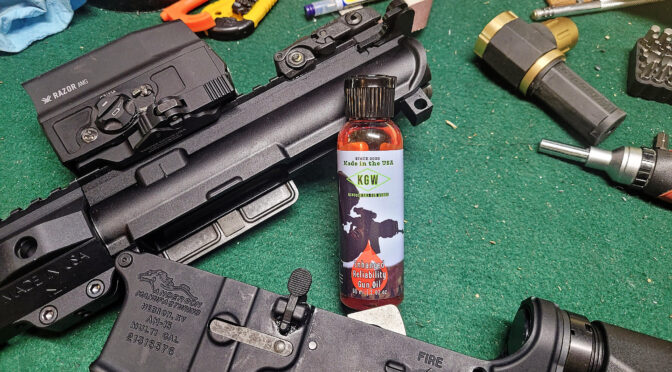
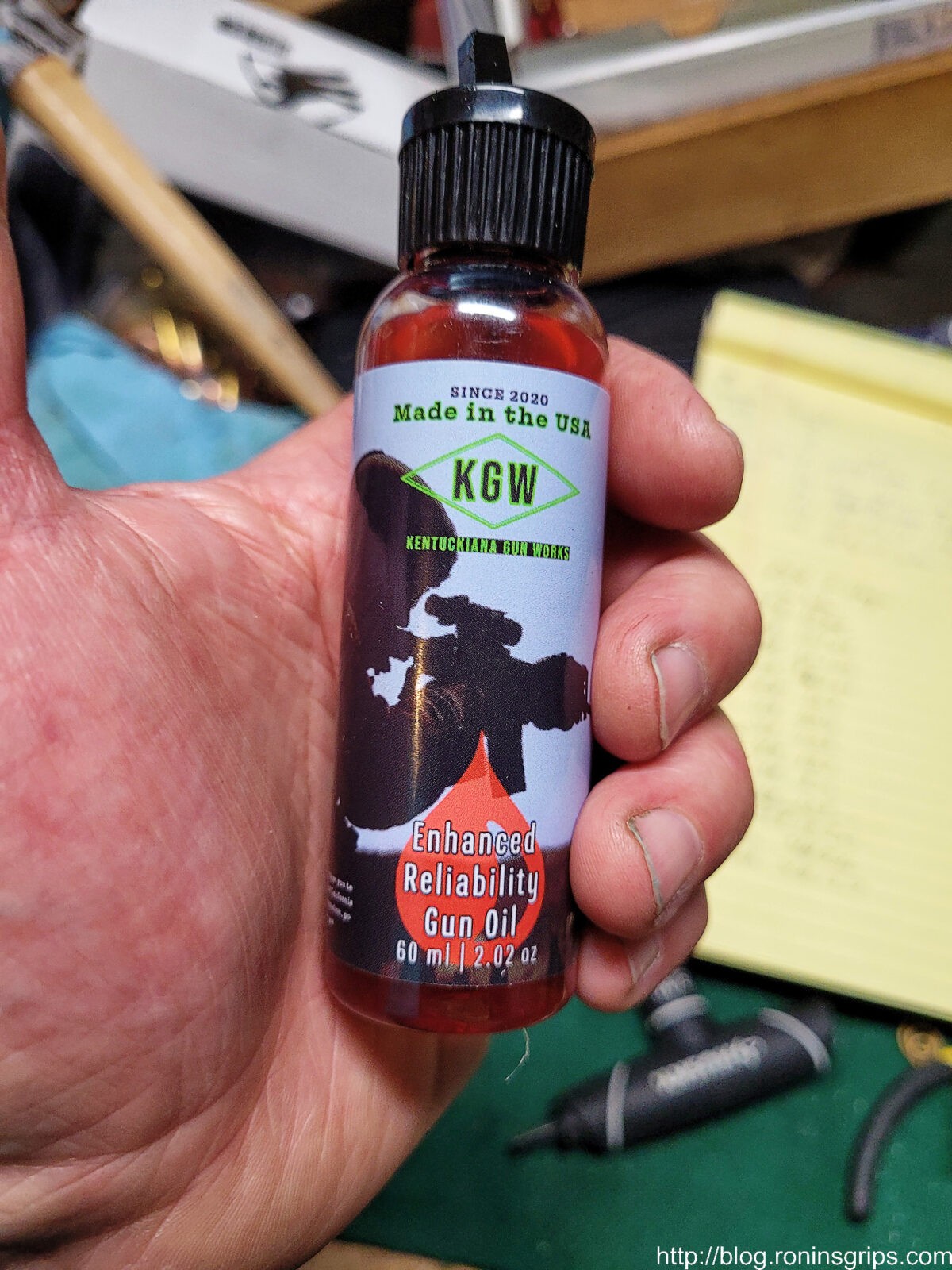
So, somewhat warily, I took the sample bottle home with me. It had to wait a bit until I could get around to focusing on it. The product is “Enhanced Reliability Oil” From Kentuckiana Gun Works (KGW).
Barrel components with a cartridge for bullet drop testing

In looking at the oil, it was yellow-ish with a hint of red. It’s a blend of something – but not something right out of a bottle. I felt it and it had a nice 30 weight-ish feel to it. It wasn’t really thin but it was slippery.

The smell was that of a petroleum oil but nothing uniquely stood out.

Did I taste it … no, I have standards to uphold at least while I am sober.

Okay, those quick observations may sound ridiculous to you – well, the taste part was a joke – but many products you can kind of group by color, feel and smell. This one I couldn’t because the color was unique plus it felt like a decent lubricant so I decided to dig a bit more.
Barrel components with a cartridge for bullet drop testing
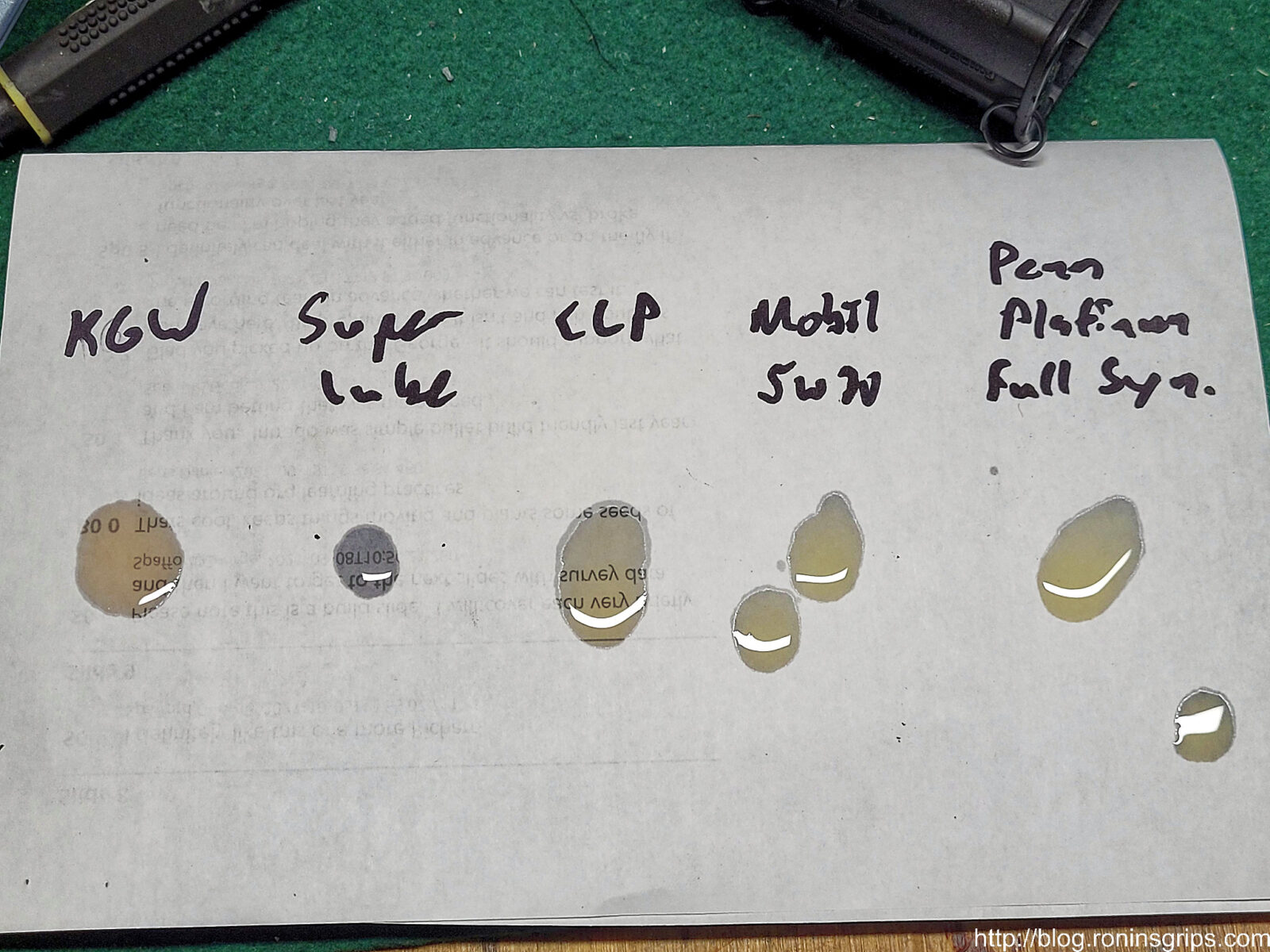
I took a few drops of some common lubricants and put them on a piece of white printer paper. Left is the KGW product, then Super Lube, them CLP, followed by Mobile 1 5w-30 synthetic engine oil and finally Pennzoil Platinum Full Synthetic 5w-30. Super lube is clear – it just turned the paper black. KGW has a slight red hue and then the others are different yellows. The CLP soaked in the fastest by the way reflecting how thin it is.

Did Some Digging

I visited their website and also did some searching. KGW is a new firm so there really isn’t much info out there which meant I needed to reach out to Kohl Oettle, the owner of KGW who developed the oil. Scott had his contact info so we traded some emails.

Kohl was a tanker in the Marine Corp Reserve for six years and had developed a dislike for CLP as a lubricant – CLP stands for Cleaner Lubricant Protector just in case you didn’t know. Kohl pointed out, “We used CLP on everything, m4, m16, 240, m2, m48 etc, and in every application it burned off and ran off so quickly that I developed a real hate for all types of CLP. I wanted something that was thicker, handled heat better, and just lasted longer. “

That resonated with me because CLP is just way too thin for me. When I have big clunking parts, I need a thicker lubricant such as as oil or a grease to have reliable lubrication especially during break in. I still use CLP as a cleaner once in a while but I haven’t used it as a lubricant for probably 16 years — tt dawned on me that I started working on AKs around 2006 and CLP was just too thin to use as an assembly lube on those rifles so it’s been more like 16 years.

So I asked Kohl what set his oil apart from the tons of other products on the market. He responded, “It’s not trying to do everything. It wasn’t designed to be a cleaner. It’s a damn good oil and protector, without all the cleaners that make so many others thin, and less heat tolerant. I do have a very small amount of carbon deposit reducers in my oil, but just enough help control the carbon buildup and thus make the bolt reciprocate much easier. It’s not nearly enough to be used as a cleaner, and that’s on purpose. “

For the last seven years, Kohl has worked in industrial maintenance working on a variety of machines ranging from food processing to automotive parts manufacturing. As part of this, he learned that one of the most effective means of keeping a machine running reliably was to use the proper oil and grease.

What I found especially interesting was that Kohl tinkered with the the blend until he achieved the viscosity and lubrication he wanted through trial and error. He primarily had the AR-15 and similar rifles in mind when he was designing it but it will work on other pistols, rifles and shotguns as well. By the way, I mentioned earlier I thought it was about 30 weight – Kohl told me it’s a tad thicker than that.

When he was ready, he took to shooting classes and and shot thousands of rounds through a variety of weapons. He also sent out samples to people and a local gun store helped him sell his oil and collect feedback for 18 months. He took this feedback and further refined his product.

I respected what he did. Both Scott and I started our respective businesses and learned over time the same way Kohl has done.

Assembly Lube Testing
Barrel components with a cartridge for bullet drop testing
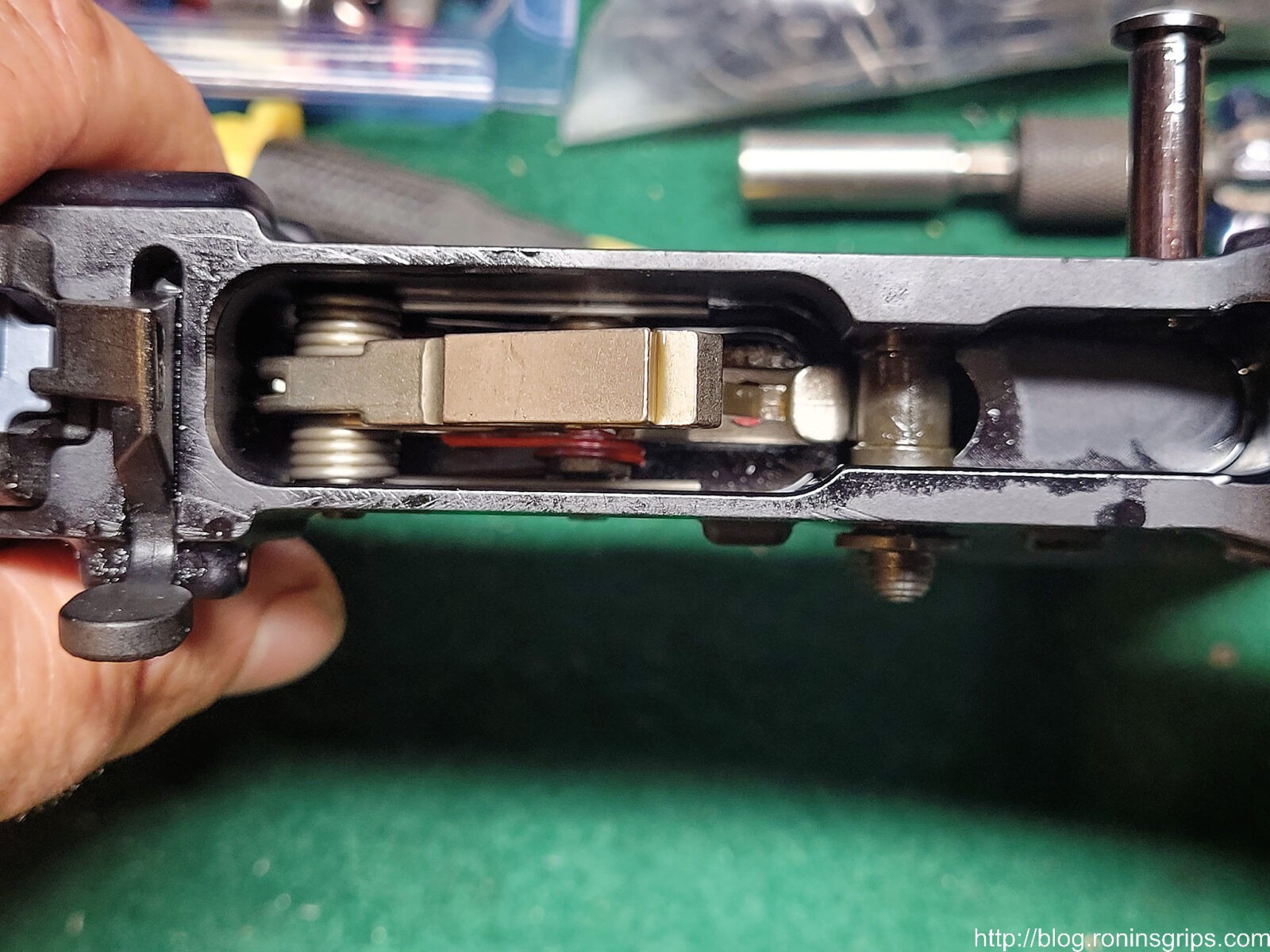
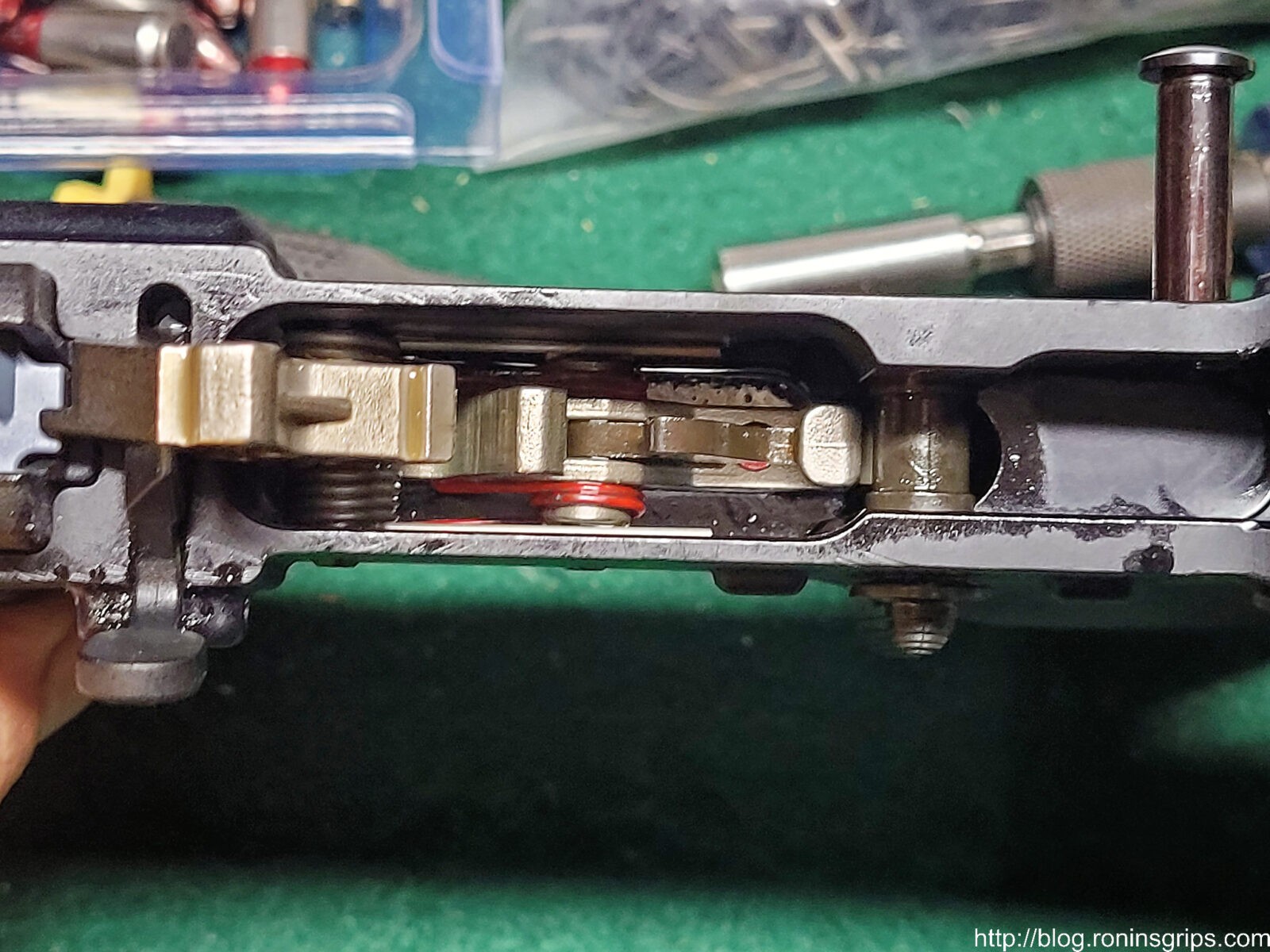
I used the KGW Enhanced Reliability Oil as an assembly lube for the fire control group, bolt catch, bolt, and bolt carrier. I grease the takedown pins so not there.
Barrel components with a cartridge for bullet drop testing
I ensured there was a thin film on both the top/front of the hammer as well as the bolt carrier.

My testing has been limited so far but I will update this post after my first range trip. I recently built two AR rifles and used Kohl’s oil as an assembly lube. I could tell everything was moving very easily. In this regard it worked great. Time is a challenge these days and I hope to get these rifles to the range in the next 3-4 weeks but didn’t want to hold up getting the word out there.

You can buy the oil direct from KGW’s website or you may find it at your local gun store as their business expands.

By the way, I don’t make any money off this post and Kohl didn’t ask me to. I just know what it’s like to be an entrepreneur trying to start a small business – I figured helping Kohl was the least I could do after all the folks who helped me.


Note, I have to buy all of my parts – nothing here was paid for by sponsors, etc. I do make a small amount if you click on an ad and buy something but that is it. You’re getting my real opinion on stuff.


Please share the link on Facebook, Forums, with colleagues, etc. Your support is much appreciated and if you have any feedback, please email us in**@*********ps.com. If you’d like to request a report or order a reprint, please click here for the corresponding page to open in new tab.


Assembling an AR Lower – Step 11 of 11: Other Resources To Leverage & Learn From

Close-up of a black AK Galil grip on a Romy G rifle with MI rails.

The cool thing about ARs is that there are a ton of them out there and people are sharing ideas on how to build, use and maintain them every day.  This series of blog posts I just wrote shows my current take on how to assemble lowers.  I will continue to improve my techniques over time and I do this both through trial and error as well as researching what others do.  In this post, I want to share some links with you that might just give you an “ah-ha” moment because of what these folks are sharing.

Please note that when you click on the below links a new tab or window will open and you may need to manually switch to that tab or window in your browser to see it.

Lower-Receiver Assembly Resources

First off, I’ve written a number of blog posts over the years on assembling lowers. Click here to see them listed in a new tab.

Upper-Receiver Assembly Resources

Cleaning and Lubrication Resources

Sources For AR Parts

The following are all vendors of AR parts including barrels, handguards, triggers, magaziness and what have you that I use and recommend:

Beware no-name knock off websites selling generic import stuff. Some of the parts are counterfeit and not rated for firearms use.


Please share the link on Facebook, Forums, with colleagues, etc. Your support is much appreciated and if you have any feedback, please email us in**@*********ps.com. If you’d like to request a report or order a reprint, please click here for the corresponding page to open in new tab.