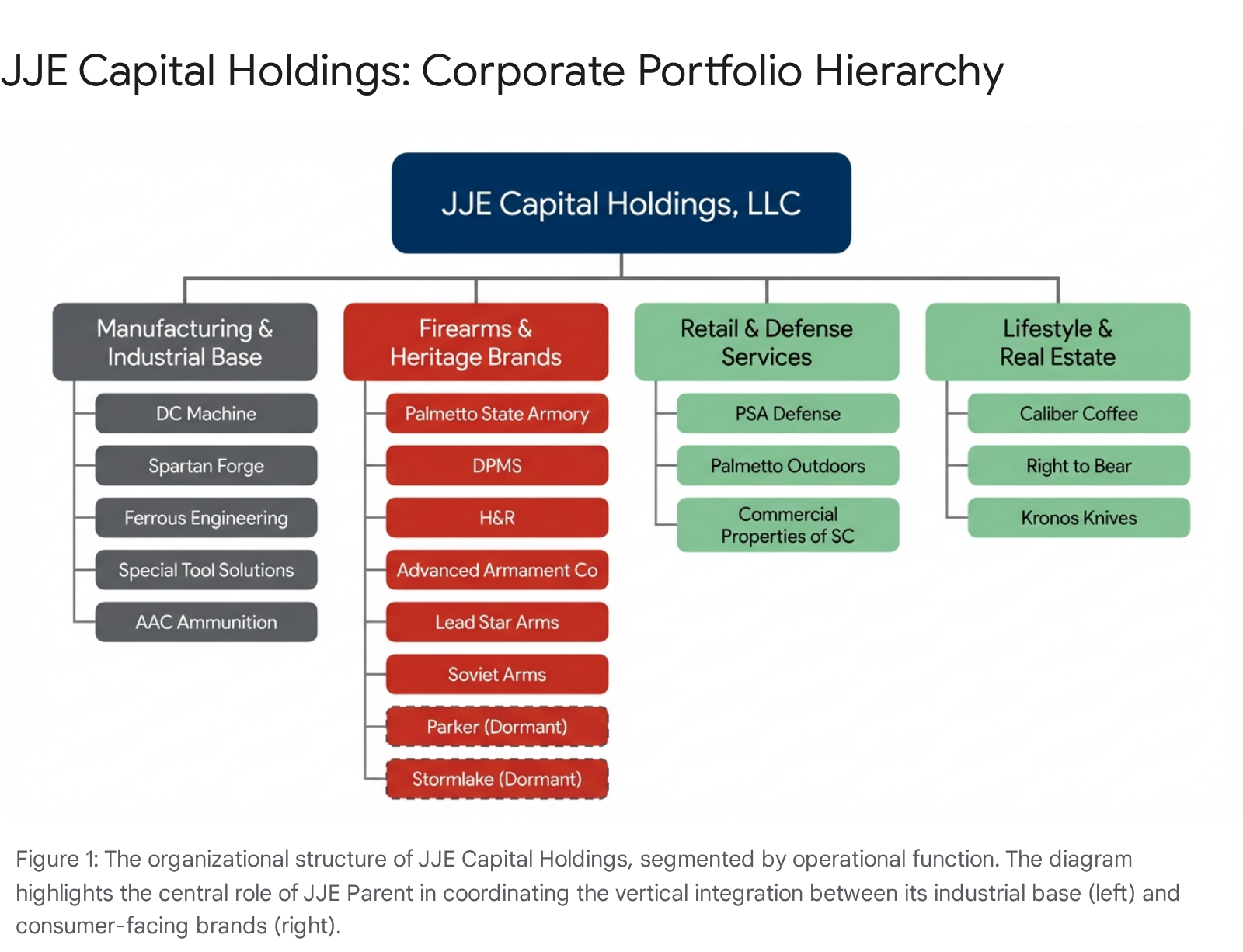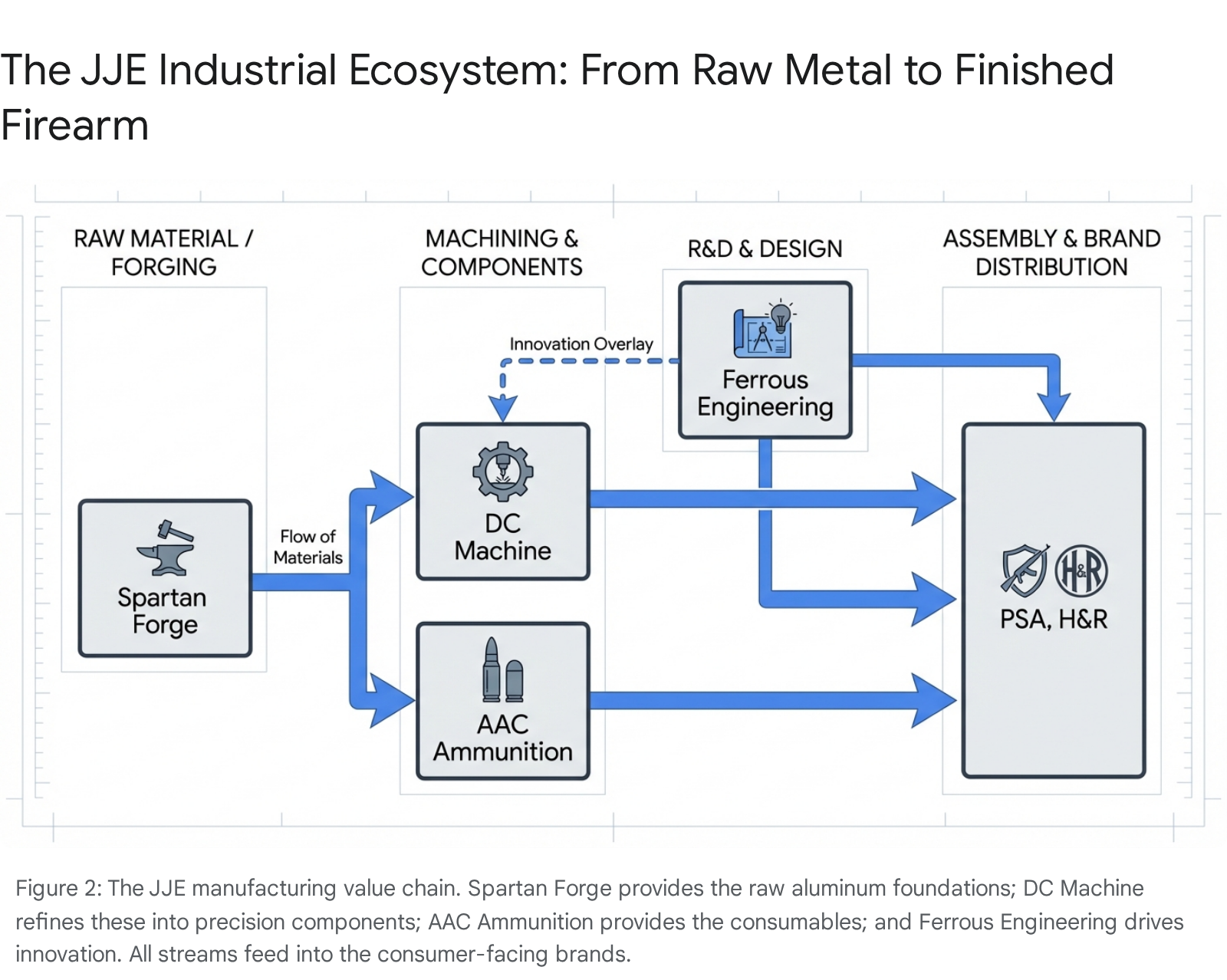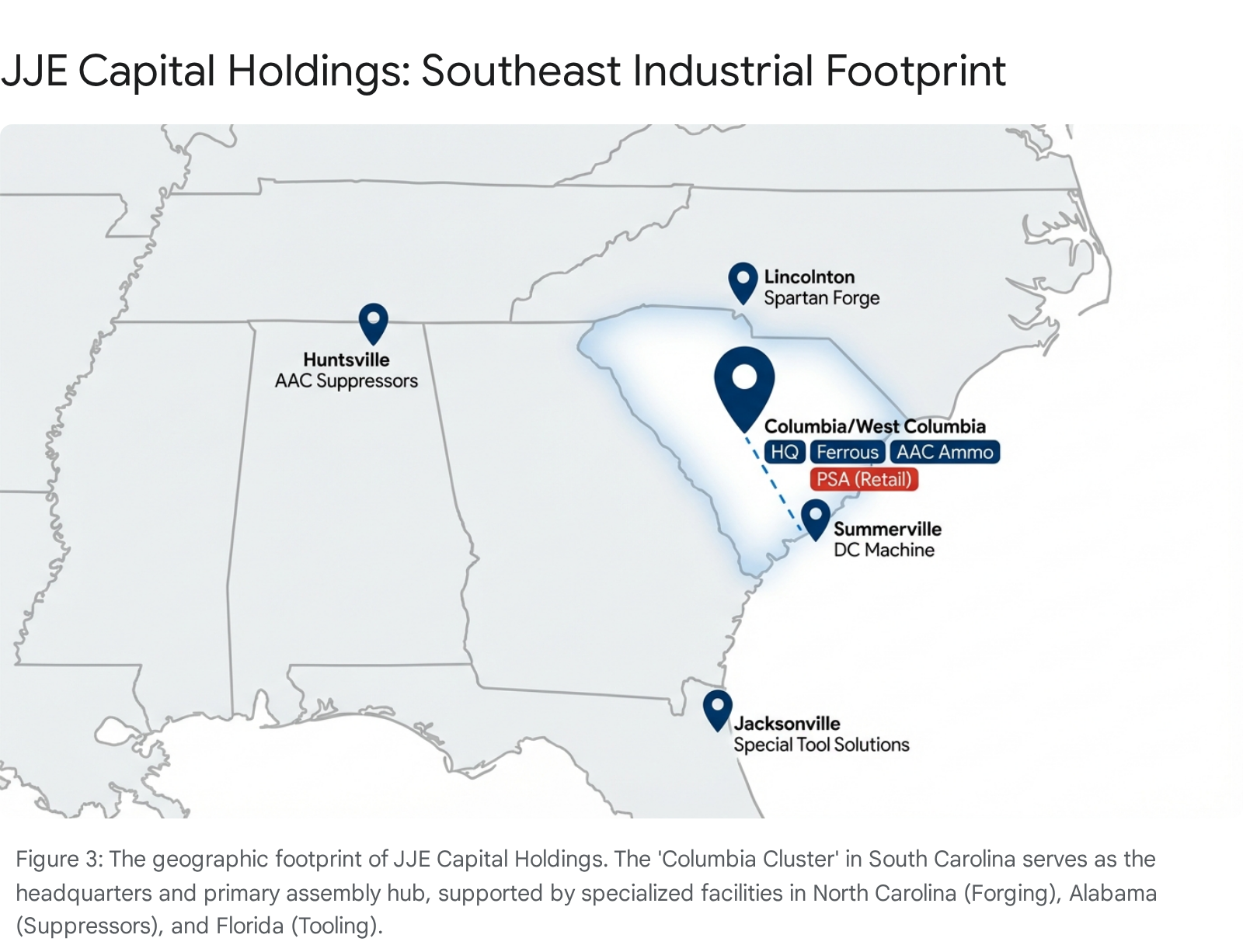
This report serves as a critical update regarding the operational instability observed at the Advanced Armament Company (AAC) ammunition manufacturing facility in West Columbia, South Carolina. As of January 10, 2026, the situation has evolved from a reported “temporary production pause” into a confirmed, systemic operational contraction with profound implications for the United States commercial small arms market. The developments observed over the last five weeks represent a fundamental structural shift—a “decoupling”—of the civilian ammunition sector from the National Defense Industrial Base (DIB).
The initial ambiguity surrounding the status of the AAC facility has been resolved through a combination of federal regulatory filings, definitive supply chain data, and forensic analysis of market behavior. We can now confirm that JJE Capital Holdings, the parent entity of Palmetto State Armory (PSA) and AAC, has initiated a formal wind-down of its current ammunition assembly operations, driven by a catastrophic unavailability of energetic precursors.
The Evolution of the Crisis: From Speculation to Confirmation
On December 4, 2025, industry observers noted early signals of distress within PSA’s vertical integration strategy. At that time, company representatives characterized the production halt as a short-term measure to address an “unforeseen powder shortage”.7 However, data emerging in early January 2026 has crystallized the severity of the situation. The confirmation of mass layoffs via the South Carolina Department of Employment and Workforce, effective January 30, 2026, indicates that the facility is entering a state of “cold idle” rather than a momentary pause.1
This operational freeze coincides with a significant pivot in JJE Capital Holdings’ long-term strategy. Recognizing that reliance on Tier 1 defense contractors for critical energetic components is no longer a viable business model for a high-volume civilian manufacturer, PSA leadership has announced an ambitious plan to construct a proprietary gunpowder manufacturing facility, potentially in partnership with another entity.7
Strategic Implications for the Market
The withdrawal of AAC from the manufacturing landscape has removed the primary deflationary force in the US commercial ammunition market. For the past three years, AAC acted as a “price anchor,” utilizing its vertical integration of brass and projectiles to undercut legacy manufacturers. With AAC’s volume removed, the market has seen an immediate reversion to inflationary pricing mechanics. Competitors have already capitalized on this vacuum, with Winchester implementing price increases of 3% to 8% effective January 1, 2026.3
Furthermore, the timing of this supply collapse creates a “perfect storm” of scarcity when juxtaposed against demand-side shocks. The recent legal victories in the Ninth Circuit Court of Appeals regarding the Second Amendment have reopened the California market to standard-capacity components and ammunition, creating a surge in demand precisely as the supply of affordable domestic ammunition hits zero.4
1. The Energetics Crisis: A Root Cause Engineering Analysis
To understand the paralysis of the AAC plant, one must look upstream to the raw material crisis affecting the entire US small arms ecosystem. The manufacture of modern smokeless propellant is a complex chemical engineering feat reliant on a narrow, fragile supply chain of nitrocellulose, nitroglycerin, and stabilizing agents.
1.1 The Fragility of the Domestic Energetics Base
The United States ammunition industry operates on a tiered system of dependency. At the top are the Tier 1 manufacturers—primarily Olin Winchester and BAE Systems. These entities control the domestic production of “ball powder,” which is the industry standard for 5.56 NATO and 9mm Luger loading. Historically, the commercial market has subsisted on the “spillover” capacity of these Tier 1 plants. However, in Q4 2025, two catastrophic factors converged to eliminate this spillover entirely.
1.2 The AES Facility Explosion: A Critical Node Failure
The primary catalyst for the current shortage was the catastrophic failure at the AES facility in Tennessee in late 2025. This facility was a critical node in the precursor supply chain, responsible for processing specific grades of nitrocellulose and other energetic inputs required for the final blending of smokeless powder,.
The destruction of this capacity sent a shockwave through the industry. Data suggests that nearly 85% of the remaining available propellant volume was immediately diverted to fulfill priority DoD contracts, which are protected by “DX” or “DO” ratings under the Defense Production Act. These ratings legally compel suppliers to prioritize government orders over all commercial obligations.
1.3 The “Tier 2” Vulnerability and the False Security of Partial Integration
AAC’s business model was predicated on Tier 2 vertical integration. JJE Capital Holdings invested millions into machinery to manufacture brass cases and projectiles in-house. However, they remained strictly assemblers regarding propellant (powder). This partial integration created a false sense of security. When St. Marks Powder redirected its allocation, AAC was left with commercially fatal options. Internal communications suggest that purchasing powder at inflated spot market rates would have necessitated raising the retail price of a standard 50-round box of 9mm ammunition from ~$19.99 to approximately ~$60.00.7
2. Operational Forensic Analysis: The Status of the West Columbia Facility
The most significant development since the initial December 4 report is the clarification of the “pause” through definitive regulatory filings. While forum representatives utilized the softer language of a “temporary pause,” federal labor data paints a definitive picture.
2.1 WARN Notice Verification and Labor Implications
The Worker Adjustment and Retraining Notification (WARN) Act data for South Carolina serves as the “smoking gun” that confirms the depth of the shutdown. The filings explicitly list “SC Industrial Holdings (dba Palmetto State Armory)” as filing for a “Temporary Closure” affecting 78 employees.
Key Regulatory Data Points:
Notice Date: December 1, 2025.
Layoff Effective Date: January 30, 2026.1
Location: 201 and 230 Metropolitan Dr., West Columbia, SC 29170.
Classification: Temporary Closure.
The magnitude of this layoff—78 employees—likely represents the entirety of the production line staff across multiple shifts, including machine operators and material handlers. Retaining only a skeleton crew indicates that the facility is entering a “cold idle” state.
2.2 Asset Utilization and Opportunity Cost
With the layoff date set for January 30, 2026, the facility is currently in a “wind-down” phase. The opportunity cost is massive. AAC was intended to be the volume engine for PSA’s firearm sales; without cheap AAC ammo, the value proposition of a budget AR-15 diminishes.
3. Quality Control Post-Mortem: The Engineering of Failure
Serious engineering failures in AAC’s product line—specifically the 5.56 NATO and.300 Blackout loads—have continued to surface in January 2026 reviews.
3.1 Jacket Separation Phenomena: A Manufacturing Defect
Multiple user reports describe a critical failure mode known as “jacket separation,” particularly affecting the Sabre Blade Black Tip and OTM projectiles.8 This failure mode typically points to a breakdown in the bonding process or inconsistencies in jacket thickness. If the copper jacket is too thin or brittle due to improper annealing, the centrifugal force of a 300,000 RPM spin can rip the jacket apart inside a suppressor.
3.2 Internal Ballistics: Primer Pocket Leaks and Overpressure
Reports of “popped primers” and blown case heads in 77gr OTM loads indicate severe overpressure events.9 It is highly probable that during the onset of the powder shortage, AAC engineers were forced to blend different lots of powder or utilize “non-standard” canister grade powders to keep production lines running.
3.3 Warranty Implications and Liability
Recent data indicates that PSA’s warranty policies are being strictly enforced to exclude damage resulting from “substandard, reloaded or defective ammunition” [12],. Consumers have reported being “ghosted” by customer service regarding ammo-related Return Merchandise Authorization (RMA) claims.10
PSA has announced that it will construct its own gunpowder facility to bypass the broken supply chain.7 This represents a move from Tier 2 Integration (Assembly) to Tier 1 Integration (Raw Material Synthesis).
4.1 Engineering Feasibility & Timeline Analysis
PSA representatives have cited a timeline of “about a year” for this new facility to come online.7 From an engineering perspective, this is highly optimistic for a “greenfield” project due to EPA permitting and explosive safety siting requirements. The forum mention of “working with another company” strongly supports a Joint Venture (JV) hypothesis, likely with an existing chemical entity.
5. Economic & Market Dynamics: Pricing and Inventory (Jan 2026)
5.1 The “Anchor” is Gone: Inflationary Mechanics
With AAC inventory drying up, the floor price for ammunition has risen.
Competitor Price Hikes: Effective January 1, 2026, Winchester implemented price increases of 3% to 8%.3
Current Spot Prices: 5.56 NATO is trending toward $0.50 – $0.60/round for basic ball ammo, and 9mm Luger is trending toward $0.28 – $0.32/round.11
6. The California Paradox: Legal Victory vs. Supply Failure
In a twist of irony, just as AAC halted production, the demand signal from one of the largest markets in the US—California—turned aggressively positive.
6.1 The Ninth Circuit Decision
On January 2, 2026, the Ninth Circuit Court of Appeals issued a ruling in Baird v. Bonta declaring California’s open carry bans unconstitutional.4
6.2 PSA’s Strategic Response
PSA CEO Jamin McCallum released a statement declaring the decision a “victory for the Second Amendment”.5 PSA has stated they will prioritize shipments to California once the decision is finalized.5 This likely means that the dwindling remaining stock of AAC ammunition will be diverted to the California market, accelerating scarcity for the rest of the nation.
Based on the engineering, regulatory, and economic data analyzed, we project the following scenarios for 2026.
7.1 Recommendations for Stakeholders
For Retailers: Diversify supply chains to European imports (Fiocchi, Norma, PPU) which are less affected by the US-specific AES/St. Marks bottleneck.
For Consumers: Verify the “Lot Number” of any AAC ammo purchased on the secondary market. Avoid lots from late 2025 to mitigate the risk of jacket separation.
For Investors: Monitor JJE Capital Holdings’ filings for “Joint Venture” announcements regarding the new propellant plant.
8. Conclusion
The developments of January 2026 confirm that the Advanced Armament Company (AAC) is effectively offline as a mass-producer of ammunition for the current calendar year. The “pause” has hardened into a strategic retreat, evidenced by the layoff of the production workforce scheduled for January 30, 2026.1 JJE Capital Holdings has correctly identified that vertical integration of energetics is the only way to survive, but the timeline for such a capability is measured in years, not quarters.
The trajectory of Avidity Arms serves as a compelling case study in the modern firearms industry, illustrating the complex, often perilous journey from theoretical doctrine to tangible manufacturing. Founded in the mid-2010s on the premise of creating a purpose-built defensive handgun derived directly from the instructional experiences of Rob Pincus, the company has navigated a turbulent decade characterized by initial fanfare, significant supply chain disruptions, the catastrophic collapse of a primary distribution partner, and a complete operational restructuring. Unlike major manufacturers that rely on iterative updates to established platforms, Avidity Arms attempted to introduce a “clean sheet” design focused on a specific, arguably underserved, niche: the “shootable” single-stack 9mm.
The company’s flagship product, the PD10, was conceived in 2013/2014 as a corrective measure to the prevailing market gaps in concealed carry handguns. However, the development timeline coincided with—and ultimately lagged behind—one of the most aggressive periods of innovation in the compact pistol segment. By the time the PD10 reached full retail maturity in 2023, the market had shifted decisively toward “micro-compact” double-stack designs. Despite this, Avidity Arms has successfully carved a sustainable niche by adhering strictly to a “defensive” rather than “tactical” or “competitive” design philosophy, prioritizing ergonomics and reliability over modularity and capacity trends.
The operational history of Avidity Arms is bifurcated into two distinct eras: the “Eagle Imports Era” (2014–2020), marked by importation partnerships and eventual stagnation due to the distributor’s insolvency; and the “AlphaTech Era” (2022–Present), characterized by domestic manufacturing autonomy in Fletcher, North Carolina. This pivot to a partnership with Joe Worley and AlphaTech has stabilized production, allowing for the expansion into new calibers like the.30 Super Carry and new platforms such as the A-SAR rifle.
Looking forward to 2025 and beyond, Avidity Arms appears poised to operate as a specialized boutique manufacturer rather than a mass-market competitor to industry giants. Their strategy relies on deep integration with the training community, leveraging the personal brand of its founder, and adopting emerging calibers that align with their capacity-maximization goals. While the company faces headwinds regarding brand momentum and market saturation, its lean manufacturing model and clear ideological identity provide a resilient foundation for future growth.
1. Introduction: The Intersection of Doctrine and Design
The concept of the “instructor-designed” firearm is not novel, but it is rare for such a project to transition from a customized version of an existing platform to a completely new manufacturing entity. Historically, figures like Jeff Cooper influenced the design of the Bren Ten or the Scout Rifle, but these were often collaborations with established major manufacturers. Avidity Arms represents a different path: the attempt to build a new firearms company from the ground up, centered entirely around the doctrinal preferences of a single instructional philosophy.
Avidity Arms was not established merely to manufacture guns, but to manufacture a specific kind of gun—one that hardware-codified the software (training) principles of its founder, Rob Pincus. This “Design & Engineering Focused on Defense” philosophy 1 distinguishes Avidity from competitors who often chase military contracts or competition glory. Avidity’s singular focus is the private citizen defender.
This report provides an exhaustive analysis of Avidity Arms, tracing its lineage from a conversation in a bar to a functioning manufacturer in North Carolina. It examines the technical and business challenges that nearly derailed the company, the strategic pivots that saved it, and the current product portfolio that seeks to redefine the “defensive pistol” category. Through this analysis, we gain insight not just into one company, but into the broader challenges of innovation, supply chain management, and brand survival in the highly competitive American firearms market.
2. The Strategic Context of 2013-2015: A Market in Transition
To understand the genesis of Avidity Arms, one must first understand the firearms market of 2013 and 2014. This period was characterized by a massive surge in concealed carry permits and a subsequent demand for smaller, lighter handguns. The era of the “Wonder Nine” double-stack service pistols (e.g., Glock 17, Beretta 92) had given way to a surging demand for concealable, single-stack 9mm handguns.
2.1 The “Single-Stack” Revolution and Its Limitations
In the early 2010s, the market for concealed carry was dominated by compromises. Shooters generally had two choices:
Sub-Compact Double Stacks: Guns like the Glock 26 offered capacity (10 rounds) and shootability but were thick (1.18+ inches), making them harder to conceal inside the waistband (IWB) for smaller-framed individuals.
Micro Single Stacks: Guns like the Kel-Tec PF9, Ruger LC9, and later the Smith & Wesson Shield and Glock 43, prioritized thinness and lightness. However, they achieved this by drastically shortening the grip and barrel.
This second category, while easy to carry, presented significant training issues. Professional instructors, including Rob Pincus, noted that students often struggled to shoot these “pocket pistols” effectively. The short grips left the pinky finger dangling, reducing recoil control. The short sight radiuses magnified aiming errors. The lightweight frames made the recoil impulse snappy and unpleasant, discouraging practice.
2.2 The “Shootability” Gap
It was in this gap that the concept for Avidity Arms was born. The market lacked a “Goldilocks” gun: a pistol that was thin enough to carry effortlessly (like a single stack) but large enough to shoot effectively (like a service pistol). Pincus observed that while sub-compacts were easy to carry, they were difficult to shoot well due to limited grip surface and short sight radiuses. The vision for what would become the PD10 was a pistol with a full-size grip (to accommodate all fingers), a slim profile (for concealment), and a 4-inch barrel (for ballistics and sight radius).2
This insight—that “concealability” and “shootability” were being treated as mutually exclusive trade-offs—formed the foundational thesis of Avidity Arms. The goal was to create a pistol that did not require the user to compromise on their ability to fight with the gun in exchange for the comfort of carrying it.
3. The Founders and the Vision
The identity of Avidity Arms is inextricably linked to the biographies and professional networks of its founders. Unlike a corporate spin-off, Avidity was a personality-driven enterprise from day one.
3.1 Rob Pincus: The Doctrinal Architect
Rob Pincus brought nearly two decades of professional experience to the table at the company’s founding. His background combined law enforcement service with a high-profile career as a private trainer.
Law Enforcement Roots: Pincus began his career in law enforcement and executive protection, later serving as a commissioned officer in the U.S. Army Reserve after graduating from Norwich University.3
The Valhalla Era: He gained significant prominence as the Director of Operations at the Valhalla Training Center in Colorado, where he developed the Combat Focus Shooting (CFS) program. This program emphasized working with the body’s natural reactions to stress (e.g., flinch responses) rather than fighting against them.3
Media Presence: By 2014, Pincus was a media fixture, hosting TV shows like The Best Defense on the Outdoor Channel and managing the Personal Defense Network.3 This gave him a massive, ready-made audience of students and followers who trusted his insights on defensive gear.
Pincus’s role at Avidity was effectively that of the “Chief Product Officer” and “Chief Marketing Officer.” He defined what the gun needed to do and why it needed to exist.
3.2 Michael Sodini: The Logistics Veteran
If Pincus was the “software,” Michael Sodini was the intended “hardware.” Sodini was a firearm industry veteran, having spent over two decades in sales and distribution.4 Most notably, he was the operating force behind Eagle Imports, the exclusive U.S. distributor for brands like Bersa, Metro Arms, and Grand Power.5
Eagle Imports: Based in New Jersey, Eagle Imports was a powerhouse in the budget-friendly import market. They had successfully established the Bersa Thunder.380 as a staple of the American concealed carry market.
Mental Health Advocacy: Later in his career, Sodini would found Walk The Talk America (WTTA), a non-profit bridging the gap between the firearms industry and mental health resources, further cementing his reputation as a progressive thinker in the industry.4
Sodini’s role was to provide the “rails” on which the company would run: the supply chain, the importation licenses, the distribution networks, and the capital.
3.3 The “Napkin” Moment
The company’s founding mythos centers on a conversation in a bar in 2013 between Pincus and Sodini.4 Pincus lamented the lack of a perfect defensive pistol, sketching out the dimensions of a gun that used a single-stack magazine (for thinness) but had a full grip and a 4-inch barrel. Sodini, recognizing the gap in Eagle Imports’ portfolio (which relied heavily on the smaller Bersa Thunder), agreed to back the project. Thus, Avidity Arms was born not as a manufacturer, but as a brand partnership leveraging Eagle’s infrastructure.
4. The Eagle Imports Era (2014–2020): Ambition vs. Infrastructure
The initial phase of Avidity Arms was defined by the “Eagle Imports Model.” The strategy was straightforward: design the gun in the U.S. (driven by Pincus), manufacture the components overseas (likely in the Philippines or Argentina, where Eagle had existing relationships), and import the finished product or major components for assembly.
4.1 The Prototype Debut and “Plan A”
The PD10 made its public debut at SHOT Show 2016 and again in 2017 at the Eagle Imports booth.6 These early prototypes were tangible proof of concept. They featured a polymer frame and were positioned as an affordable, high-capacity, single-stack option.
The Magazine Choice: A critical early decision was to design the gun around an existing, proven magazine: the 9mm 1911 single-stack magazine.2 This was a brilliant logistical move. It meant the magazine—the most common point of failure in new pistol designs—was already a solved problem. It also allowed the grip to be exceptionally thin.
The Price Point: Early marketing suggested a retail price that was “easy on the wallet,” implying a target MSRP in the $400 range, consistent with Eagle Imports’ other offerings.6
4.2 Engineering Reality Checks
However, the “Plan A” of utilizing Eagle Imports’ existing infrastructure encountered severe quality and engineering hurdles. Converting a sketch into a mass-producible firearm is exponentially more difficult than prototyping.
The Rail Failure: In a candid 2019 interview, Pincus admitted that the early prototypes, which utilized all-plastic rear frame rails (similar to some Ruger designs), failed durability testing. Around the 4,000–5,000 round count mark, the rails would degrade or crack.7
The Redesign: This failure necessitated a complete redesign of the mold to incorporate metal rail inserts. In the world of injection molding, changing a mold is not a quick fix; it is a capital-intensive, time-consuming process that involves re-tooling steel molds, testing flow rates, and re-validating the part. This pushed the timeline back by over a year.
4.3 The Collapse of Eagle Imports
While Avidity battled engineering delays, a “perfect storm” was brewing for their parent partner. Eagle Imports had been a staple of the industry since 1988, but by 2020, the company faced insurmountable challenges.
Supply Chain Crisis: The COVID-19 pandemic caused massive offshore shipping delays. For an importer, this was catastrophic. Inventory was stuck in containers, while overhead costs skyrocketed.5
Loss of Key IP: Eagle Imports lost the importation rights for its best-selling brand, Bersa, to a competitor, Talon Distributing.8 Without the revenue from Bersa sales to subsidize operations, Eagle’s financial foundation crumbled.
Insolvency: Eagle Imports closed its doors permanently in late 2020.5
For Avidity Arms, this was an existential threat. The entity responsible for funding, logistics, and distribution was gone. The PD10 project, which was inextricably linked to Sodini and Eagle Imports, was effectively orphaned in terms of manufacturing infrastructure. The company had a design and a brand, but no factory and no supply chain.
5. The Crisis of Stagnation: Navigating the “Vaporware” Label (2017–2021)
The period between the initial announcement and the eventual release was a dangerous time for the brand. In the firearms industry, products that are announced but fail to materialize for years are derisively labeled “vaporware.”
5.1 The Reputation Hazard
Pincus and Avidity faced significant skepticism. Online forums and social media comments from this era reflect a growing impatience and cynicism from the consumer base.9 The “coming soon” announcements at consecutive SHOT Shows (2016, 2017, 2018, 2019) began to lose their impact. The delay was particularly damaging because the market was not standing still.
2015: Glock 43 releases (6 rounds).
2018: Sig P365 releases (10 rounds, micro-compact).
2019: Glock 43X and 48 release (10 rounds, slimline).
2019: Springfield Hellcat releases (11 rounds).
By the time Avidity was dealing with the Eagle Imports collapse, the market gap they intended to fill—a slim 10-round 9mm—had been flooded by major competitors. The Sig P365, in particular, revolutionized the market by offering 10 rounds in a package smaller than the PD10.
5.2 Maintaining the Pulse
Despite the setbacks, Pincus maintained a steady stream of communication. He utilized his personal social media channels and the Personal Defense Network to explain the delays, often citing a refusal to release a sub-par product. “We are at the point where the (PD-10) people shot yesterday is really the production gun,” he stated in 2019, attempting to reassure the market that the finish line was near.7 This transparency helped retain a core group of loyalists, even as the broader market moved on.
6. The Renaissance: The AlphaTech Partnership and Relocation
Rob Pincus and Mike Sodini stood at a crossroads in 2020: dissolve the company or find a completely new way to manufacture the gun. They chose the latter, embarking on a search for a domestic manufacturing partner that would eliminate the reliance on volatile international supply chains.
6.1 Enter AlphaTech and Joe Worley
The solution lay in Fletcher, North Carolina. AlphaTech, a precision manufacturing company run by Joe Worley, was looking to expand its footprint in the firearms industry.
Legacy of Precision: AlphaTech was not a startup; it was a second-generation manufacturer founded in 1974. Joe Worley had modernized the family business, investing in state-of-the-art CNC machining and automation.4
Strategic Alignment: AlphaTech had already begun manufacturing firearms parts (likely OEM work for other brands) and ammunition components. They possessed the machinery and the engineering talent but lacked a proprietary brand. Avidity Arms had the brand and the design but lacked the machinery. It was a perfect symbiosis.
6.2 The New Structure (2022)
In 2022, the partnership was formalized. Avidity Arms relocated its headquarters from Florida (where it had briefly established a presence after leaving New Jersey/Eagle Imports) to Fletcher, North Carolina.10
Ownership Evolution: The ownership team expanded to include Joe Worley (overseeing engineering and manufacturing) and Chuck Usina, a gunsmith and range owner who had been involved in the prototyping phase since 2019.4 This created a balanced leadership triptych: Pincus (Design/Marketing), Sodini (Industry Relations), and Worley (Manufacturing).
Regulatory Reset: Moving a firearms manufacturer is not as simple as renting a new office. It involves obtaining new Federal Firearms Licenses (FFL) and setting up compliant manufacturing processes. This transition period accounted for much of the delay between the Eagle collapse and the 2023 launch.11
6.3 The “Florida” Collectibles
An interesting side effect of this relocation was the creation of an accidental collector’s item. Before the move to North Carolina was finalized, Avidity had produced a small batch of pistol frames stamped with their previous location in Florida. However, due to ATF regulations, once the license moved to NC, the manufacturing location markings had to change. This left a finite number of “Florida-marked” frames in existence, which the company has since marketed as pre-production collectibles for brand enthusiasts.11
7. The PD10 Platform: A Technical and Philosophical Analysis
The PD10 finally reached the commercial market in early 2023. The production model retained the core characteristics of the original vision but featured refined materials and manufacturing processes courtesy of the AlphaTech collaboration.
7.1 Technical Specifications
The PD10 is a striker-fired, polymer-framed pistol. Its dimensions place it in a unique “crossover” category that defies easy classification:
Caliber: 9mm Luger (initially).
Barrel Length: 4.0 inches.
Overall Length: 6.94 inches.
Width: ~1.0 inch (at the slide).
Weight: ~18.8 oz (unloaded).
Capacity: 10+1 rounds (using a proprietary modification of the 1911 9mm magazine geometry).
7.2 The “Active Shooter” Design Doctrine
The PD10 is perhaps the most “opinionated” pistol on the market. Every feature—and every omitted feature—is a deliberate reflection of Rob Pincus’s training doctrine. It is not designed to be modular; it is designed to be correct according to that doctrine.
1. The Slide Stop Philosophy:
Pincus teaches that fine motor skills degrade under stress. Therefore, relying on a small lever to release the slide during a reload is a liability. He advocates for the “overhand rack” method (grabbing the slide and ripping it back). Consequently, the PD10 features a slide stop that is essentially flush with the frame. It acts only as a stop to hold the slide open; it is intentionally difficult to use as a release.12 This forces the user to adopt the gross motor skill method.
2. Sights as Mechanical Tools:
The gun comes standard with “I.C.E. Claw” sights. The rear sight features a steep, concave front face. This is not an aesthetic choice; it is a mechanical one. It allows the user to rack the slide one-handed by hooking the sight against a belt, holster, or shoe heel—a critical capability if one arm is injured in a fight.12
3. The Rejection of Forward Serrations:
In 2023, almost every tactical pistol featured aggressive serrations on the front of the slide to facilitate “press checks” (checking if a round is chambered). The PD10 has a completely smooth front slide. Pincus argues that placing hands near the muzzle for administrative handling is unsafe for the average user. By removing the serrations, the design discourages this behavior and forces manipulation from the rear, which provides more leverage and keeps hands safe.12
4. The “Caveman” Ejector:
A notable feature of the PD10 is its robust extraction and ejection system. Reviews have noted the reliability of the system, often attributing it to the extensive testing and redesigns during the “wilderness years.” The gun utilizes a heavy-duty extractor designed to function even when the gun is dirty or dry, aligning with the “defensive tool” ethos.13
7.3 Market Reception: Validation and Critique
Upon its release, the PD10 faced a polarized reception.
The “Sneaky Good” Verdict: Experienced shooters and reviewers often found themselves surprised by the gun. Bucky Lawson from Safariland noted that while the gun missed the single-stack trend, it might be the “best of the bunch,” citing its slimness and full grip as a “sneaky good” combination for concealment and control.14 The ability to get a full firing grip on the draw—without the need for magazine extensions—was validated as a significant advantage over the Sig P365 or Hellcat.
The Trigger Critique: The trigger is often described as “Glock-like” or “utilitarian.” It has a distinct wall and some travel. In an era where Canik and Walther are producing match-grade triggers in carry guns, the PD10’s trigger was criticized by some as feeling dated. Pincus defends this, arguing that a defensive trigger should have travel to prevent negligent discharges under stress.14
The Capacity Issue: The most common criticism was the capacity. 10 rounds of 9mm in a gun the size of a Glock 19 (roughly) seemed inefficient when the Glock 19 holds 15 and the smaller P365 holds 10-12. This criticism highlighted the primary strategic vulnerability of the PD10: it was physically larger than its capacity suggested it should be, a trade-off made for the sake of ergonomics.
8. The.30 Super Carry Gamble: Innovation or Obscurity?
In 2024, Avidity Arms made a significant strategic move to address the capacity criticism without compromising the slim profile. They announced the adoption of the .30 Super Carry (30SC) cartridge.
8.1 The Logic of the Cartridge
Developed by Federal Premium, the.30 Super Carry was designed to fill the gap between.380 ACP and 9mm. It offers terminal ballistics (penetration and expansion) that effectively match 9mm Luger, but with a smaller case diameter. This allows for roughly 20% more capacity in the same magazine footprint.
For Avidity Arms, the 30SC was a “magic bullet” (figuratively). The PD10’s primary limitation was its single-stack geometry, which limited it to 10 rounds of 9mm. By switching to 30SC, Avidity could fit 12 rounds into the same magazine tube, instantly bringing the gun’s capacity into parity with double-stack micro-compacts like the Sig P365, while retaining the extreme slimness of the single-stack design.15
8.2 The Ballistic Advantage
Avidity touted the PD10 30SC as the “optimal host” for the new caliber. Most other 30SC pistols (like the Shield Plus) had short barrels (3.1 inches). The PD10’s 4-inch barrel allowed the high-pressure 30SC cartridge to achieve its full velocity potential, maximizing the hydrostatic shock and expansion reliability. Gel tests conducted by the company and independent reviewers supported this, showing impressive performance.16
8.3 Strategic Risk
Adopting 30SC is a high-risk strategy. The caliber has struggled to gain widespread traction due to the “chicken and egg” problem: people won’t buy guns for a caliber they can’t find ammo for, and ammo companies won’t make ammo for a caliber no one buys guns for.17 By betting on 30SC, Avidity tied a portion of its future to the success of Federal Premium’s marketing. However, this also positioned them as an innovator and a brand for the “thinking shooter” who prioritizes data over convention.
9. Expanding the Arsenal: The Avidity Semi-Automatic Rifle (A-SAR)
In 2024, Avidity Arms signaled its intent to move beyond being a “one-trick pony” by announcing the Avidity Semi-Automatic Rifle (A-SAR). This move into the saturated AR-15 market was surprising but strategically calculated.
9.1 The Collaborative Model: Avidity x NEMO
Building a high-quality AR-15 requires significant infrastructure. Rather than reinventing the wheel, Avidity collaborated with NEMO Arms, a premium manufacturer famous for their OMEN.300 Win Mag rifles and recoil reduction technologies.
The Division of Labor: The A-SAR utilizes a NEMO-produced upper receiver (the Battle-Light 2.0 Slim Upper), ensuring reliability and accuracy. The lower receiver, however, is designed and manufactured by Avidity Arms at the AlphaTech facility.18
The “Avidity Touch”: The lower receiver features distinct ergonomic enhancements. The most notable is the IF Mag Well™ (Internally Funneled Magazine Well). Unlike competition rifles that use massive external flares to guide the magazine, the IF Mag Well machines the funnel geometry inside the standard mag well dimensions. This allows for faster blind reloads without adding bulk that would snag on gear—a purely defensive design choice.18
9.2 Marketing to the Base
Avidity employed a clever loyalty strategy for the A-SAR launch. They offered a “Serial Number Matching” program, allowing existing PD10 owners to pre-order an A-SAR with a serial number that matched their pistol.19 This move accomplished two things:
Cash Flow: It generated immediate capital through pre-order deposits ($500).
Brand Loyalty: It solidified the bond with their early adopters, turning them into “Avidity collectors” rather than just customers.
10. Operational Realities in 2025: Manufacturing, Sales, and Logistics
As of 2025, Avidity Arms operates as a stabilized, albeit boutique, manufacturer. The chaos of the Eagle Imports years has been replaced by the steady rhythm of the AlphaTech production line.
10.1 The Boutique Business Model
The production capacity at the Fletcher, NC facility is precise but limited. Avidity is not set up to compete with the volume of Ruger or Smith & Wesson. Instead, they operate on a “batch” production model. This aligns with the boutique nature of their product. They are selling to a specific subset of the market: the student of defensive shooting.
10.2 Distribution Channels
Avidity has established a robust distribution network, primarily through Davidson’s, one of the industry’s largest distributors.20 This partnership is critical. It allows local gun stores (LGS) across the country to order the PD10 without Avidity needing to maintain a massive internal sales force. The “Optic Cut” models, for example, were initially exclusive to Davidson’s, ensuring that the distributor had a vested interest in promoting the brand.
10.3 Brand Engagement
The company continues to rely heavily on Rob Pincus’s personal brand for marketing. Pincus remains the primary face of the company, utilizing the Personal Defense Network and social media to drive awareness. While this is efficient, it also poses a risk: the brand is inextricably tied to one individual. However, the addition of Mike Sodini’s Walk The Talk America advocacy has helped broaden the brand’s appeal, associating Avidity with mental health awareness and responsible ownership, a unique angle in the industry.
11. Future Outlook and Strategic Roadmap
What does the future hold for Avidity Arms? The company has survived its infancy and adolescence, periods that kill most firearms startups. Now, it faces the challenge of maturity.
11.1 Product Expansion
Rob Pincus has publicly discussed plans for a 5-inch “Target/Duty” model of the PD10. Prototypes exist, and the longer slide would further enhance the “shootability” ethos, potentially making the gun viable for IDPA competition or home defense roles where concealment is less critical.16 While there is no official timeline, the modular nature of the design (especially with the metal rail inserts) makes this a logical next step.
11.2 The 30 Super Carry Factor
A significant portion of Avidity’s long-term growth potential is tied to the 30 Super Carry. If the caliber succeeds and gains widespread adoption by law enforcement or more civilians, Avidity will be remembered as a pioneer, and the PD10 30SC will be a highly desirable platform. If the caliber fades into obscurity, Avidity will have a niche variant that appeals only to reloaders and collectors.
11.3 Sustainability
The partnership with AlphaTech provides a high degree of sustainability. Because AlphaTech has other revenue streams (OEM manufacturing), Avidity does not need to sell hundreds of thousands of units a year to keep the lights on. They can afford to be a “slow growth” company, focusing on quality and margin rather than volume. This resilience suggests that Avidity Arms will remain a fixture in the industry, continuing to produce thoughtful, unorthodox tools for the dedicated defensive shooter.
12. Summary of Key Milestones
Year
Milestone Event
Strategic Significance
2013
Founding Concept
Rob Pincus and Michael Sodini conceive the idea for a “shootable” single-stack 9mm during a discussion.
2014
Project Initiation
The “PD10” design is officially established as the company’s first project; partnership with Eagle Imports begins.
2016
Prototype Debut
The PD10 prototype is unveiled at SHOT Show 2016. It features a polymer frame but encounters durability issues in testing.
2017
Design Setback
Durability testing reveals failure in polymer rear rails; design is overhauled to include metal rail inserts, delaying production.
2019
Team Expansion
Chuck Usina joins the ownership team, bringing gunsmithing and prototyping expertise.
2020
Eagle Imports Closure
Primary partner Eagle Imports shuts down due to financial/supply chain issues; Avidity loses its distribution and logistics arm.
2022
The AlphaTech Pivot
Joe Worley joins ownership; company relocates to Fletcher, NC. Manufacturing shifts to AlphaTech, securing domestic production capabilities.
2023
Commercial Launch
The production PD10 officially launches at SHOT Show 2023; first retail sale occurs in New Jersey in January.
2024
Expansion (30SC & Rifle)
Avidity announces the PD10 in.30 Super Carry and the A-SAR rifle (collab with NEMO Arms) at NRAAM.
2025
Market Maturation
PD10 establishes stable sales channels; continued promotion of A-SAR and 30SC models; “Florida” marked frames identified as collectibles.
The contemporary United States civilian small arms market is defined by a unique intersection of tactical practicality and historical nostalgia. Within this landscape, Palmetto State Armory (PSA) has established itself as a disruptor through a strategy of vertical integration and aggressive niche filling. The release of the “Stizon”—a portmanteau of its Original Equipment Manufacturer (OEM) partner “Stuff and Things Inc.” and the Russian “Bizon”—represents one of the most ambitious and technically complex product launches in the company’s history. Technically designated as a variant of the PSA AK-V, this firearm attempts to bridge the gap between practical blowback-operated pistol caliber carbines (PCCs) and the “cloner” market desiring the unobtainable Russian PP-19 Bizon.1
This report provides an exhaustive, engineer-level analysis of the Stizon platform. It evaluates the system not merely as a recreational firearm, but as a case study in domestic adaptation of foreign weapons technology. Our analysis, derived from technical specifications, consumer feedback loops, and comparative market data, indicates that the Stizon achieves a high degree of mechanical success in replicating the Bizon’s form factor while utilizing a simplified, torsion-based helical feed system.3 However, the platform occupies a precarious niche. While the base firearm (the AK-V) is widely regarded as a robust, albeit high-recoil, blowback system, the Stizon configuration introduces distinct logistical and ergonomic challenges—primarily related to the helical magazine’s loading complexity and cost.5
From a market positioning standpoint, the Stizon is an anomaly. It is priced at a premium (approximately $1,200) relative to the standard AK-V, positioning it against established European competitors like the CZ Scorpion and Asian imports like the Century Arms AP5. Its primary value proposition is not superior ballistics or weight savings, but rather unique mechanical operation and high capacity (55 rounds), offering a civilian legal approximation of a firearm that has achieved mythical status due to import bans.1
To understand the engineering compromises and achievements of the Stizon, one must first analyze the lineage of the weapon it attempts to emulate. The Stizon is not a direct copy of the PP-19 Bizon but rather a “convergent evolution” designed to arrive at a similar aesthetic utilizing available domestic components.
2.1 The Russian Origin: PP-19 Bizon
The original PP-19 Bizon was developed in the early 1990s by a team led by Victor Kalashnikov (son of Mikhail) and Alexei Dragunov (son of Yevgeny). The design intent was to create a compact, high-capacity submachine gun for counter-terror units that required volume of fire without the frequent reloads necessitated by 30-round stick magazines. The solution was a helical magazine acting as the forearm, holding 64 rounds of 9x18mm Makarov or 53 rounds of 9x19mm Luger.3
However, the Bizon suffered from reliability issues in the field. The complex magazine was sensitive to debris, difficult to load under stress, and shifted the weapon’s balance significantly as ammunition was expended. Consequently, the Russian military and police forces largely abandoned the Bizon in favor of the PP-19-01 “Vityaz,” a conventional submachine gun using simple 30-round stick magazines. This transition highlights the inherent engineering friction between high-capacity helical systems and field reliability.6
2.2 The American Adaptation: The Stizon Project
The US civilian market, restricted from importing Russian firearms, developed a demand for the Bizon precisely because of its rarity and distinct appearance in video games and media. PSA recognized this unfulfilled demand. Lacking the tooling to produce the complex original Bizon helical magazines, they partnered with “Stuff and Things Inc.” (S&T), a boutique manufacturer that had reverse-engineered a compatible helical system.9
The Stizon represents a hybrid approach:
Chassis: It utilizes the existing, mass-produced PSA AK-V receiver (itself a clone of the Vityaz).
Feed System: It grafts the S&T helical magazine system onto the Vityaz-style receiver.
This creates a fascinating technological divergence. While the Russians evolved away from the helical mag (Bizon) to the stick mag (Vityaz), the American market evolved from the stick mag (AK-V/Vityaz clone) back to the helical mag (Stizon) to satisfy consumer nostalgia.
3. Technical Anatomy: The Receiver Group
To evaluate the Stizon, one must dissociate the “firearm” (the receiver group) from the “feed system” (the magazine and handguard). The Stizon is essentially a modular marriage of a simplified AK blowback receiver and a highly complex polymer/aluminum feed device. The reliability of the weapon is bifurcated: the receiver is largely comprised of mature, proven components, while the feed system introduces novel failure modes.
3.1 Receiver Architecture and Metallurgy
The core of the Stizon is the PSA AK-V receiver. Unlike the gas-operated rotating bolt system of a standard AK-47 or AK-74, the AK-V utilizes a simple direct blowback operation.10
Receiver Material: The Stizon utilizes a standard 1mm stamped steel receiver. This is the industry standard for AKM-pattern rifles, providing a balance of weight and elasticity. Stamped receivers are designed to flex slightly under recoil, absorbing energy that might otherwise crack a more rigid cast component. While 1mm is thinner than the 1.5mm receivers found on RPK-style weapons, it is more than sufficient for the pressure curve of the 9x19mm cartridge.1
Trunnion Integrity: The front trunnion and bolt carrier are forged. This is a critical durability feature and a significant improvement over early generations of US-made AKs, which often utilized cast trunnions that suffered from premature cracking and headspace failure. Forging aligns the grain structure of the steel, providing superior resistance to the repetitive impact stress of the blowback action. PSA rates the system for +P+ 9mm ammunition, indicating a high confidence in the yield strength of these components.10
Finish: The metal components are nitrided. Nitriding is a case-hardening process that diffuses nitrogen into the surface of the steel, creating a hard, corrosion-resistant layer. While military AKs traditionally use chrome-lined barrels and phosphated externals, nitriding offers a smoother surface finish and uniform protection across the entire part, including the bore.
3.2 The Blowback Operating System
The Stizon employs a direct blowback system, meaning there is no locking mechanism to delay the opening of the breach. The bolt is held closed solely by its mass and the tension of the recoil spring.
Bolt Mass: In a 9mm blowback system, the bolt must be sufficiently heavy to delay opening until chamber pressure has dropped to safe levels. This necessitates a massive block of steel, often resulting in a distinct “clunky” recoil impulse.
Buffer Dynamics: To mitigate the violence of the bolt impacting the rear trunnion, the Stizon incorporates a high-density recoil buffer. This polymer or urethane component sits on the recoil spring assembly, shortening the bolt travel and preventing metal-on-metal impact. Users have noted that this buffer contributes to a quicker cyclic rate and a perceived “snappiness” in the recoil, although the overall impulse is dampened by the weapon’s weight.5
Ejection Reliability: The AK-V system utilizes a robust, oversized extractor and a fixed ejector rail welded into the receiver. This setup is known for aggressive ejection patterns, often flinging brass 15-20 feet away. While reliable, this violent extraction can occasionally cause stovepipe malfunctions if the cycle speed is retarded by a dirty chamber or weak ammunition.12
3.3 Fire Control Group (Trigger)
The Stizon ships with varying trigger configurations depending on the specific SKU and production run.
Standard Configuration: A single-stage, single-hook fire control group based on the standard AKM design. This trigger typically exhibits the characteristic “AK rolling break”—a smooth but long pull without a distinct wall.
ALG Defense Upgrade: Premium models often include (or are upgraded by users to) the ALG AKT Enhanced Trigger. This trigger is widely considered the gold standard for AKs, offering a very short, crisp break and a lightning-fast reset. The short reset is particularly advantageous for a PCC, allowing for rapid follow-up shots that mimic the cyclic rate of a submachine gun.5
4. The Helical Feed System: Engineering Analysis
The “Stuff and Things” magazine is the defining engineering feature of the Stizon. It is a fundamental departure from the compression-spring stack used in 99% of modern firearms and warrants a detailed mechanical analysis.
4.1 Torsion Mechanics vs. Linear Compression
Standard box magazines use a linear compression spring that exerts constant upward force on the follower. The helical magazine, conversely, uses a torsion spring system.
Drive Mechanism: Cartridges are stored in a spiral groove along the inner wall of the cylindrical body. A central rotating core, driven by a torsion spring, pushes the column of ammunition forward along this spiral path.
Potential Energy Management: Unlike a stick mag where the spring is always under tension, the Stizon mag relies on a “clutch” release or specific winding. The user must manually “wind” or “charge” the spring tension during loading. This introduces a variable of “user error” not present in linear systems. If the user fails to wind the spring sufficiently, the rotational force will be insufficient to push the heavy column of 55 rounds fast enough to keep up with the bolt, resulting in a failure to feed (FTF).4
4.2 Material Science: Polycarbonate vs. Aluminum
The magazine body serves as the outer race for the cartridges. S&T offers two materials: Anodized Aluminum and Clear Polycarbonate.
Friction Coefficients: Reliability reports suggest a divergence in performance based on material. The clear polycarbonate bodies are aesthetically popular because they allow the user to see the ammunition. However, polycarbonate typically has a higher coefficient of static friction compared to hard-coat anodized aluminum, especially when fouled with carbon or grit. Users have reported that the clear magazines are “harder to load” and more prone to feeding issues, likely due to this increased drag on the cartridge cases as they spiral through the tube.9
Structural Rigidity: The aluminum tube offers superior rigidity. In a helical design, any deformation of the outer tube can pinch the spiral track, causing a jam. The aluminum body is therefore the superior choice for functional reliability, while the polycarbonate body is strictly an aesthetic choice for range use.
4.3 Loading Procedure: The “Ritual”
The most significant operational drawback of the Stizon is the magazine loading process. It is not a simple “push and click” operation; it is a mechanical ritual that must be performed correctly to ensure function.
The Ratchet System: The user must insert cartridges, rotate the drive helical (ratchet), and often shake the magazine to ensure rounds settle into the spiral grooves correctly. The process is described as “wicked easy, if a bit odd” by some, but “headache-inducing” by others, particularly with the clear magazines.1
Debris Sensitivity: The helical track has a massive internal surface area compared to a box magazine. If sand, unburnt powder, or range debris enters the mechanism, it can cause catastrophic friction binding. Cleaning a helical magazine is a complex disassembly task compared to popping the floorplate off a Glock magazine.15
5. Ballistics and Suppressor Integration
The Stizon’s 10.5-inch barrel places it in the “sweet spot” for 9x19mm ballistics, balancing velocity potential with maneuverability.
5.1 Velocity and Terminal Performance
Standard 9mm ammunition is typically optimized for 4-5 inch barrels. However, a 10.5-inch barrel allows for complete powder burn for most commercial loads.
Velocity Gains: Expect a velocity increase of approximately 100-150 feet per second (fps) over a handgun barrel for standard 115gr loads. This flattens the trajectory slightly and increases muzzle energy, pushing the 9mm round closer to its ballistic maximum.
Twist Rate: The barrel utilizes a 1:10 twist rate. This is the industry standard for 9mm and is capable of stabilizing a wide range of projectile weights, from light 90gr defensive rounds to heavy 147gr subsonic loads.
5.2 Suppressor Host Suitability
The 9mm AK platform is a popular host for suppressors, but the Stizon presents specific integration details that owners must heed.
Thread Pitch: The barrel is threaded 1/2×28, the US standard for 9mm muzzle devices. This ensures compatibility with the vast majority of domestic suppressors (e.g., SilencerCo, Dead Air, Rugged). This is a distinct advantage over European imports that often use metric threads (13.5x1LH).11
Mounting Interface: PSA explicitly warns that there is no shoulder on the barrel for the suppressor to index against. Instead, the device must index off the muzzle face. PSA recommends using a “jam nut” to ensure proper alignment. Failure to do so can lead to concentricity issues, resulting in baffle strikes—a catastrophic failure where the bullet strikes the internal baffles of the suppressor.10
Gas Management: As a blowback host, the Stizon will exhibit “port pop”—noise escaping from the ejection port as the bolt opens. It will generally be louder at the shooter’s ear than a roller-delayed system (like an MP5) or a gas-operated system (like a SIG MPX). However, heavy subsonic ammunition (147gr or higher) combined with the heavy bolt mass keeps the action closed slightly longer, mitigating this effect to some degree.16
6. Operational Ergonomics and Human Factors
The user experience of the Stizon is a study in contrasts: excellent shooting dynamics are often marred by the logistical friction of the magazine system.
6.1 Weight Distribution and Handling
The most immediate physical characteristic of the Stizon is its front-heavy balance.
Center of Gravity (CoG): A fully loaded 55-round helical magazine adds over 2 pounds of mass directly under the handguard. This shifts the Center of Gravity significantly forward compared to a stick-mag AK-V.
Recoil Mitigation: This forward mass acts as a highly effective counterweight. During rapid fire, the muzzle rise is practically non-existent because the mass of the magazine anchors the front of the gun. Users frequently describe the recoil impulse as “soft” or “negligible,” despite the blowback action’s reputation for snappiness. It behaves less like a pistol and more like a muted carbine.3
6.2 Controls and Manipulations
Safety Selector: The Stizon features an “Enhanced Extended Safety Lever.” Traditional AK safeties require the shooter to take their hand off the pistol grip to actuate. The extended lever has a shelf that allows the shooter to toggle the safety using their trigger finger or thumb while maintaining a firing grip. This is a critical modernization that brings the manual of arms closer to AR-15 standards of efficiency.1
Magazine Release: The magazine release is a paddle style, but due to the helical mag’s unique geometry, the reload motion is different. The mag does not “drop free.” It must be rocked out. Furthermore, the magazine catch often requires hand-fitting (filing) by the user to ensure a perfect lock-up, a process that can be daunting for non-technical owners.13
Charging Handle: The charging handle is a standard reciprocating AK handle on the right side. This requires the user to reach over or under the receiver to charge the weapon with their support hand, a technique that is standard for AK operators but less ergonomic than the non-reciprocating forward charging handles found on the MP5 or MPX.
7. Manufacturing and Quality Assurance
The Stizon creates a unique supply chain dynamic involving two distinct entities: Palmetto State Armory (the gun maker) and Stuff and Things Inc. (the mag maker).
7.1 Kit vs. Factory Purchase
Consumers have two pathways to ownership, each with different quality assurance implications.
The Factory Option: Buying the complete “Soviet Arms AK-V Stizon” from PSA. Theoretically, this unit should be pre-tuned. The magazine catch should be fitted, and the system verified. However, reports of “lemon” units failing to feed out of the box suggest that the integration between the mass-produced receiver and the boutique magazine is not always seamless.6
The Kit Option: Buying the S&T Kit ($300) and installing it on an existing AK-V. This is economically efficient ($850 gun + $300 kit = $1,150 vs $1,200 factory) and allows the user to retain the original furniture. However, it shifts the burden of QC to the user. The user must be comfortable filing the magazine catch to fit their specific receiver tolerances. If the catch is left too high, the mag won’t lock; too low, and the feed angle causes jams. This “some fitting required” aspect is characteristic of the aftermarket AK world but may surprise casual consumers.13
7.2 Customer Sentiment Analysis
Analyzing user feedback from platforms like Reddit (r/PalmettoStateArms, r/ak47) and YouTube reveals a polarized sentiment landscape.
The “Cool Factor” Tribe: Positive sentiment is almost entirely driven by aesthetics and the unique experience. Users love the “Space Gun” look and the sheer absurdity of a 55-round mag dump without reloading. The phrase “Bizon at home” is used affectionately, acknowledging it’s a clone but celebrating its existence.9
The “Beta Tester” Tribe: Negative sentiment focuses on reliability and cost. Complaints cite failure to feed (FTF), wobbly handguards, and the high cost of failure (expensive mags). A recurring theme is the “finicky” nature of the helical mag compared to the “it just works” reliability of the standard AK-V stick mags. Some users feel like unpaid beta testers for a product that wasn’t quite ready for mass adoption.6
8. Competitive Landscape and Market Economics
The Stizon competes in the crowded “9mm PCC” sector. Its primary competitors are the Kalashnikov USA KP-9, the CZ Scorpion 3+, and the standard PSA AK-V.
8.1 Market Positioning Analysis
The Stizon sits in a pricing “no man’s land.” At ~$1,200, it is significantly more expensive than the highly capable CZ Scorpion (~$900) and the standard AK-V (~$850). It approaches the price point of the B&T GHM9 or a decent MP5 clone (Century AP5), both of which offer superior roller-delayed or hydraulic-buffered actions.
8.2 Total Cost of Ownership (TCO)
The base price is deceptive. The true cost of the Stizon platform lies in its magazines.
The Magazine Tax: A standard PSA AK-V / Scorpion magazine costs ~$15. The Stizon helical magazine costs ~$160.
Loadout Cost: To establish a standard “combat load” of 5 spare magazines:
AK-V: 5 x $15 = $75.
Stizon: 5 x $160 = $800.
Implication: The user commits nearly the price of a second firearm just to acquire a standard complement of magazines. This extreme cost disparity restricts the Stizon to a “range toy” role for most users, as few will invest $1,000 in magazines for a single platform.19
The following table synthesizes the engineering and market data to provide a direct comparison.
Feature
PSA Stizon
KUSA KP-9
CZ Scorpion 3+
PSA AK-V (Standard)
Operating System
Direct Blowback
Direct Blowback
Direct Blowback
Direct Blowback
Standard Capacity
55 Rounds
30 Rounds
20 Rounds
35 Rounds
Mag Compatibility
Prop. Helical
Vityaz Stick
Scorpion Evo
Scorpion Evo
Mag Price (Approx)
$160.00
$35.00 – $45.00
$25.00 – $35.00
$15.00 – $20.00
Barrel Length
10.5″
9.25″
4.2″ or 7.8″
10.5″
MSRP (Base Gun)
~$1,200
~$1,100 (Discontinued?)
~$900 – $1,000
~$850
Feed Reliability
Moderate (Maintenance Heavy)
High (Military Standard)
High
High
Primary Use Case
Collection / Range Toy
Clone / Defensive
Defensive / Backpack
Defensive / Value
Source Data: 1
Analyst Insight – The “KUSA” Factor: The Kalashnikov USA (KUSA) KP-9 is the most direct competitor as a “9mm AK.” However, KUSA has faced significant financial instability and potential bankruptcy rumors as of late 2024/2025. This has made the KP-9 difficult to source and raised concerns about long-term warranty support. This de facto cedes the “9mm AK” market leadership to PSA. The Stizon, therefore, becomes the only readily available option for a Bizon-style firearm supported by a solvent major manufacturer.18
9. Conclusion: Strategic Verdict
The PSA Stizon is a triumph of niche marketing and a “good enough” engineering solution to a complex problem. It successfully democratizes the aesthetic of the PP-19 Bizon, utilizing American manufacturing ingenuity to bypass geopolitical supply constraints. However, it is not a general-purpose firearm.
Verdict: Recommended for Enthusiasts, Cautioned for Professionals.
It is WORTH BUYING if:
You are a Collector: You desire the specific Bizon aesthetic and cannot legally or financially acquire a transferrable machine gun or rare parts kit. The Stizon is the only viable commercial option.
You are a Technical Operator: You are comfortable filing a mag catch, disassembling a helical magazine for cleaning, and tuning a firearm. The “kit” nature of the platform requires a user who is mechanically sympathetic.
You Prioritize “Fun Factor”: You prioritize the unique experience of a 55-round mag dump and soft recoil over defensive practicality.
It is NOT WORTH BUYING if:
Home Defense is the Primary Goal: The complexity of the magazine loading and the potential for debris-induced failure make it inferior to the standard AK-V or a Glock-pattern PCC. The “fidget factor” required to clear a jam in a helical mag is too high for life-safety applications.
You are on a Budget: The high entry price is compounded by the exorbitant cost of magazines ($160 each).
You Want “Grab and Go” Reliability: If the requirement is to load magazines in 30 seconds and toss the gun in a truck, the Stizon’s maintenance requirements will be a source of frustration.
In the final analysis, the Stizon is a luxury item in the world of PCCs—less practical than a sedan (the standard AK-V), but far more exciting to drive on the weekends.
Appendix A: Research Methodology
A.1 Objective
The objective of this report was to conduct a multi-faceted analysis of the PSA Stizon firearm to determine its market viability, technical performance, and consumer value. The study aimed to move beyond surface-level reviews to understand the engineering constraints and user experience drivers.
A.2 Data Collection Sources
Data was aggregated from a diverse set of inputs to minimize bias:
Manufacturer Technical Specifications (Primary): Palmetto State Armory and Stuff and Things Inc. product pages and manuals were parsed for dimensional data, material compositions (e.g., 4150 steel, glass-filled nylon), and compatibility warnings.1
Independent Media Reviews (Secondary): Expert reviews from Recoil Web, The Firearm Blog, and reputable YouTube channels (e.g., Garand Thumb, AK Operators Union) were analyzed for performance data (recoil impulse, failure rates).1
User-Generated Content (Tertiary): “Voice of the Customer” data was scraped from threaded discussions on Reddit (r/PalmettoStateArms, r/guns, r/ak47) and forums. This provided longitudinal data on durability that initial reviews often miss.6
A.3 Analytical Frameworks
Comparative Analysis: The Stizon was benchmarked against the KUSA KP-9 and CZ Scorpion using key performance indicators (KPIs) such as Price-Per-Round-Capacity and Weight-to-Length ratio.
Root Cause Analysis: Reported failures (FTF, Light Strikes) were cross-referenced with engineering diagrams to identify probable mechanical causes (e.g., OOB safety engagement vs. weak hammer springs).
Sentiment Analysis: Qualitative feedback was categorized into “Mechanical,” “Ergonomic,” and “Financial” buckets to determine the weight of consumer complaints.
Live Free Armory (LFA), legally incorporated as Central Florida Firearms, LLC, represents a compelling case study in the maturation and volatility of the modern American firearms manufacturing sector. Established in 2014 on Florida’s “Space Coast”—a region densely populated with aerospace and defense infrastructure—the company evolved from a garage-based prototyping operation into a significant Original Equipment Manufacturer (OEM) and independent consumer brand. This transformation was driven by a distinct operational philosophy: the application of aerospace-grade engineering tolerances and quality management systems (AS9100) to the commoditized market of small arms.
LFA’s market identity is defined by its aggressive disruption of price-to-performance ratios. Initially focusing on the AR-15 and AR-10 rifle platforms, the company pivoted in the early 2020s to address the “metal-framed” handgun segment. This strategic shift culminated in the release of the “AMP” (Aluminum Match Grade) pistol series and, most notably, the “Apollo 11” double-stack 1911 platform. The Apollo 11 challenged the established pricing hierarchy of the “2011” market, offering features traditionally reserved for boutique custom firearms—such as hand-fitted actions and match-grade bull barrels—at a sub-$1,000 price point. This move democratized a platform previously accessible only to affluent competitors, forcing legacy manufacturers to re-evaluate their value propositions.
However, the capital intensity required to sustain this high-precision, low-margin manufacturing model at scale precipitated significant financial headwinds. Despite achieving robust brand recognition and securing supply chain partnerships with over 100 industry labels, Live Free Armory faced a liquidity crisis in 2025. On September 26, 2025, the company filed for Chapter 11 bankruptcy protection, revealing a stark disparity between its asset base ($5.2 million) and its liabilities ($12.7 million).
This exhaustive report analyzes the complete corporate lifecycle of Live Free Armory. It dissects the company’s foundational years, its strategic pivot from rifles to handguns, the industrial advantages of its Floridian location, and the root causes of its recent financial restructuring. Furthermore, it provides a forward-looking assessment of LFA’s potential to emerge from reorganization, examining how its intellectual property and manufacturing capabilities position it for the future in a contracting and highly competitive marketplace.
1. The Industrial Context of the Mid-2010s
To fully appreciate the trajectory of Live Free Armory, one must first understand the industrial and cultural landscape of the American firearms market circa 2014. The industry was in a state of chaotic flux, driven by the “Panic Buying” era following the Sandy Hook Elementary School shooting in 2012 and the subsequent political climate.
1.1 The Post-Panic “Slump” and the AR-15 Commoditization
By 2014, the “Panic” demand bubble had largely burst, leaving the market awash in inventory. The AR-15 rifle, once a high-margin item produced by a select group of manufacturers (Colt, Bushmaster, Smith & Wesson), had become thoroughly commoditized. A cottage industry of small machine shops had sprung up, capable of milling aluminum receivers and sourcing barrels to assemble “Mil-Spec” rifles. This led to a “race to the bottom” in pricing, where the differentiation between brands began to blur.
For a new entrant like Live Free Armory, entering this saturated market required a differentiator beyond price. The “Barbie Doll for Men” phenomenon—where AR-15 owners treated their rifles as modular platforms for endless customization—was reaching its zenith. Consumers were becoming more sophisticated; they no longer just wanted a rifle that functioned; they wanted specific aesthetics, lighter weights, and tighter fitment between the upper and lower receivers. The “sloppy” fit of mass-produced forged receivers was becoming a point of contention for enthusiasts.
1.2 The “Gunshine State” Industrial Complex
Geographically, Florida was cementing its reputation as the “Gunshine State,” not just for its permissive laws but for its manufacturing density. The state aggressively courted firearms manufacturers with tax incentives and a friendly regulatory environment, leading companies like Kel-Tec, Knight’s Armament, and later reforms of others to establish deep roots there.
Live Free Armory’s founders chose to plant their flag in the heart of this ecosystem: The Space Coast. This region, centered around Melbourne, Palm Bay, and Titusville, is unique in the American industrial landscape. It is home to NASA’s Kennedy Space Center and major defense contractors like Lockheed Martin, L3Harris, and Northrop Grumman.1 This location provided two critical assets that would define LFA’s future: a supply chain accustomed to rigorous specifications (anodizing, heat treating, metallurgy) and a labor pool of machinists who spoke the language of microns rather than fractions of an inch.
2. Genesis: The Garage Phase (2014–2016)
2.1 The Convergence of Craftsmanship and Engineering
Live Free Armory was incorporated on April 28, 2014, in Florida.4 The company was the brainchild of Christopher Riedeman, an entrepreneur with a vision for a firearms brand deeply rooted in American patriotism and Second Amendment advocacy. However, passion alone does not machine steel. The catalyst for the company’s technical competence was the partnership with Colby Santaw, a young aerospace engineer.5
The partnership between Riedeman and Santaw represented a synthesis of two often-opposing cultures in the firearms world: the “Gunsmith” and the “Engineer.”
The Gunsmith Culture traditionally relies on hand-fitting, artisan skill, and “feel.” It is effective for custom work but difficult to scale.
The Engineer Culture, represented by Santaw, relies on Geometric Dimensioning and Tolerancing (GD&T), CNC programming, and repeatable processes. Santaw came from a lineage of manufacturing owners and had experience in aerospace contracting.6 He understood that to build a better firearm at scale, one didn’t need a file; one needed a better code for the HAAS machine.
2.2 The “Bootstrap” Operations
Like many disruptive entities in the American industrial narrative—from Apple to Hewlett-Packard—Live Free Armory began in a residential garage.6 In 2014 and 2015, the operation was defined by its constraints. Capital was limited, meaning every piece of aluminum bar stock had to be accounted for.
The initial product focus was on the AR platform—specifically, receiver sets (the structural framework of the rifle). In a market flooded with forged receivers (which are pounded into shape and then lightly machined), LFA focused on “Billet” receivers. Billet receivers are carved from a solid block of aluminum. They are more expensive and time-consuming to produce but allow for unique aesthetic designs and tighter tolerances that forging dies cannot achieve.
During this garage phase, Santaw’s role was critical. He had to optimize tool paths to reduce machine time, allowing a small setup to produce enough inventory to generate cash flow. This period established the company’s “lean” ethos. There was no middle management or marketing department; there were just the founders, the machines, and the raw material. This intimacy with the production process created a feedback loop where design changes could be implemented instantly—a marked advantage over larger competitors with bureaucratic engineering change orders.
3. The AR Market Saturation and LFA’s Entry (2016–2019)
3.1 Scaling Up: The Move to St. Cloud
By 2016, the demand for LFA’s billet receiver sets had outgrown the residential zoning limits. The company executed its first major expansion, moving into a 2,000-square-foot industrial bay in St. Cloud, Florida.6 This move was not just about space; it was about power requirements for larger CNC machines and the ability to hire staff. The workforce grew to approximately six employees.6
This era marked the transition from “Parts Maker” to “Rifle Manufacturer.” LFA began assembling and selling complete rifles under its own brand, most notably the LF15 (5.56mm) and LF10 (7.62mm/.308 Win).8
3.2 The Challenge of the Large Frame AR (AR-10)
Entering the AR-10 market was a bold risk. Unlike the AR-15, which has a standardized “Mil-Spec” (Military Specification) technical data package that ensures parts from different manufacturers are compatible, the AR-10 world is fragmented. There is no single standard—there is the Armalite pattern, the DPMS pattern, and various proprietary hybrids.
Early reviews and user feedback from 2016–2017 highlight the teething issues LFA faced in this complex segment. Users on forums like Sniper’s Hide and Lone Star Boars reported reliability issues with the LF10, specifically regarding extraction failures and cycling issues with certain ammunition types.9 These are classic symptoms of an “over-gassed” or “under-buffered” system, a common pitfall for manufacturers trying to make a.308 rifle reliable across a wide spectrum of ammo pressures.
3.3 The Iterative Engineering Response
LFA’s response to these early stumbles revealed their corporate character. Instead of abandoning the platform or blaming the customer (a common tactic in the industry), they leveraged their engineering background to iterate. They began tuning gas port sizes, experimenting with buffer weights, and refining extractor geometries.
Crucially, they instituted a Lifetime Warranty.11 In the firearms industry, a warranty is a financial liability. For a small company to offer a lifetime guarantee on a mechanical device subject to explosions (gunfire) is a significant statement of confidence. It signaled to the market that LFA was willing to absorb the cost of its own learning curve. This built trust. Customers who had issues were taken care of, and the “Version 2.0” rifles benefited from the field data collected from the “Version 1.0” failures.
4. The Space Coast Advantage & Operational Maturation (2019–2022)
4.1 The West Melbourne Expansion
By 2020, the St. Cloud facility was bursting at the seams. LFA initiated a strategic relocation to a massive new facility in West Melbourne (Palm Bay area), Florida.1 This facility, eventually spanning over 13,000 square feet 7, was designed from the ground up for high-volume precision manufacturing.
This expansion coincided with major investments in infrastructure in the surrounding area by defense giants like L3Harris, which was expanding its satellite integration facilities nearby.2 The proximity to these high-tech neighbors allowed LFA to recruit top-tier talent—CNC operators and quality engineers who were looking for work outside the fluctuating cycles of defense contracts.
4.2 The “Aerospace Grade” Standard: AS9100
The most significant milestone of this period was LFA achieving ISO 9001:2015 and AS9100 compliance.14
ISO 9001:2015 is a general quality management standard.
AS9100 is the aerospace industry specific standard. It is rigorously difficult to attain. It requires a company to demonstrate complete material traceability (knowing exactly which mill in the USA produced the steel for a specific batch of firing pins), strict revision control, and validated processes for every manufacturing step.
Most firearms manufacturers do not bother with AS9100; it is considered “overkill” for consumer goods. However, LFA pursued it for two reasons:
Marketing Differentiation: It allowed them to scientifically claim “Aerospace Precision” rather than using it as a buzzword.
The OEM Pivot: LFA was no longer just making LFA guns. They were manufacturing slides, barrels, and small parts for over 100 other companies.6 Many of these clients were high-end boutique brands that required flawless machining. AS9100 certification gave these B2B clients the assurance that LFA could deliver consistent quality at scale.
4.3 OEM: The Silent Revenue Engine
While the Live Free Armory brand was visible to consumers, the “Central Florida Firearms” entity was quietly becoming a powerhouse in the Original Equipment Manufacturer (OEM) space.16
In the firearms industry, “white labeling” is common. A brand known for its barrels might not own a single lathe; they contract the production to a shop like LFA. LFA produced thousands of slides for the Glock 19, Glock 43, and Sig P320 platforms.17 They offered these in various stages of completion—from “raw blanks” for other machine shops to finish, to fully coated and assembled slides ready for retail.
This diversification was a crucial hedge. If the demand for LFA-branded rifles dipped, the demand for Glock aftermarket parts (which is nearly constant) kept the machines running. It provided the cash flow necessary to fund R&D for their next big gamble: The Pistol Market.
5. The “AMP” Project & The Metal Frame Renaissance (2021–2022)
5.1 Market Trend: Polymer Fatigue
By 2021, the handgun market had been dominated by polymer-framed striker-fired pistols (Glocks, Sig P320s, S&W M&Ps) for decades. While polymer is light and cheap to manufacture, it lacks the rigidity and recoil-absorbing mass of metal. A segment of the market—competition shooters and tactical enthusiasts—began to yearn for the “feel” of metal, but they did not want to give up the reliability and simplicity of the striker-fired mechanism.
5.2 The AMP (Aluminum Match Grade) Design Philosophy
LFA identified this gap and launched the AMP (Aluminum Match Grade) pistol.6
The concept was disruptive in its simplicity: Take the internal geometry of the world’s most popular pistol (the Glock), which has an infinite supply of aftermarket parts, and house it in a precision-machined aluminum frame.
Architecture: The AMP featured a milled aluminum frame that accepted Glock magazines and mostly standard Glock internal parts.19
Ergonomics: Unlike the “blocky” feel of a Glock, the AMP’s metal frame allowed LFA to machine aggressive grip textures and a 1911-style grip angle, which many American shooters prefer.20
Price Point: Most metal-framed striker pistols (like the ZEV OZ9) cost upwards of $1,500. LFA launched the AMP at a sub-$700 price point.19
5.3 Reception and Reality
The AMP was a polarized release. Conceptually, it was a home run. Reviewers praised the “American Made” origins and the ambitious pricing.6 However, the transition from polymer to metal is not just a material swap; it changes the physics of the gun. Metal frames transfer energy differently than flexing polymer frames.
Early iterations of the AMP faced reliability criticism. Issues included light primer strikes (due to tolerance stacking in the striker channel) and extraction failures.9 The “Budget” price point also meant that some finishing details were scrutinized. LFA, true to form, used the AS9100 feedback loops to iterate. They tightened tolerances on the slide rails and refined the trigger bar geometry. The AMP proved that LFA could design a handgun, but it was merely the prelude to their true magnum opus.
6. The Apollo 11 and the Democratization of the 2011 (2023–2024)
6.1 The History of the 2011 Platform
To understand the impact of the Apollo 11, one must understand the “2011” platform. In the 1990s, the company STI (now Staccato) patented a modular frame for the 1911 that allowed it to use double-stack magazines, increasing capacity from 8 rounds to 20+. For decades, this “2011” platform was the exclusive domain of elite competition shooters. The guns were hand-built, finicky, and cost between $3,000 and $6,000.
When the STI patents expired, the market opened up. Staccato (STI re-branded) successfully pivoted to the “Duty” market, selling reliable 2011s to police, but their prices remained high ($2,500+).
6.2 The Apollo 11 Launch: July 2023
In July 2023, Live Free Armory dropped a bombshell on the market: The Apollo 11.22
It was a double-stack 1911, made in America, with a starting price of $979.20
This was a psychological price barrier. It was the first time a US-made 2011 competed directly with the price of a high-end Glock or Sig.
Key Features:
Construction: 416 Stainless Steel slide and 4140 Steel frame. No MIM (Metal Injection Molded) critical parts were advertised, a key selling point for purists.20
Barrel: A 4.9-inch bushingless bull barrel, rifle-cut and honed to an 8-micron finish.20 This type of barrel usually requires expensive hand-fitting.
Customization: It shipped optics-ready, acknowledging that the modern pistol is incomplete without a red dot sight.
6.3 The “Race to the Middle”
The Apollo 11 placed LFA in a brutal “sandwich” war.
Above them: Staccato ($2,500) and the Springfield Armory Prodigy ($1,500).
Below them: Turkish imports like the Girsan Witness 2311 ($900).
LFA’s value proposition was clear: “Don’t buy a Turkish import; buy American for $79 more. Don’t buy a Springfield Prodigy (which had a disastrous launch with reliability issues); buy our gun for $500 less.”
The market responded with fervor. Pre-orders surged, and the Apollo 11 became the topic of every major gun forum.23 However, this success brought a new danger: The “Osborne Effect” of demand outstripping the ability to manufacture complex mechanisms. A 2011 is not a Glock; it requires hand-tuning. Scaling hand-tuning is exponentially harder than scaling CNC machining.
7. Financial Strains and The Crisis of Growth (2024–2025)
7.1 The Capital Intensity Trap
The production of firearms, especially precision platforms like the Apollo 11, is incredibly capital intensive.
Machinery: A 5-axis CNC mill costs hundreds of thousands of dollars.
Materials: Sourcing American steel and aluminum 5 is significantly more expensive than importing from Asia.
Inventory: To sell a gun today, you needed to buy the metal 6 months ago.
In 2024 and 2025, the macroeconomic environment turned hostile to this model. Interest rates remained elevated, making the cost of servicing debt on machinery expensive. Furthermore, the “race to the bottom” on pricing meant margins were razor-thin. To make money on a $979 Apollo 11, LFA had to sell thousands of them with zero defects. Any batch of scrapped parts due to a machine error was a direct hit to the bottom line.
7.2 The Chapter 11 Filing (September 2025)
On September 26, 2025, the strain became untenable. Central Florida Firearms, LLC (dba Live Free Armory) filed for Chapter 11 Bankruptcy in the Middle District of Florida (Case No. 6:25-bk-06150-GER).24
The filing revealed a precarious balance sheet:
Assets: ~$5.2 Million.24
Liabilities: ~$12.7 Million.24
This 2.5:1 debt-to-asset ratio indicates that LFA had leveraged itself heavily to fund its expansion and product development. The “Liabilities” likely consisted of machinery loans, raw material credit lines, and perhaps facility expansion costs associated with the West Melbourne site.2
7.3 Strategic Restructuring vs. Liquidation
It is vital to distinguish Chapter 11 (Reorganization) from Chapter 7 (Liquidation). LFA did not close its doors. It remained open, taking orders and manufacturing.26
The filing serves as a legal shield, pausing debt collection to allow the company to renegotiate terms. The presence of $5.2 million in assets—likely machinery, inventory, and intellectual property—suggests a viable core business. The filing explicitly noted that funds would be available for unsecured creditors, a positive signal that the business has cash flow.24
8. Product Diversification & Future Roadmap
Despite the financial drama in the courtroom, the engineering floor at LFA remained active. The company continued to unveil new products, signaling to the market that they were planning for a future post-bankruptcy.
8.1 The Falcon 9X and Component Resilience
The Falcon 9X slide series for Glock pistols remains a critical product line.17 These slides offer aesthetic and functional upgrades (optic cuts, aggressive serrations) for the millions of Glock owners in the US. This “aftermarket” business is less volatile than selling complete firearms (which require FFL transfers and taxes). It provides high-margin, direct-to-consumer revenue that is essential for liquidity during restructuring.
8.2 Expanding the Apollo Line: 10mm and Subcompacts
At SHOT Show 2025, LFA demonstrated that it was not retreating. They unveiled two major expansions to the Apollo line:
Apollo 10 (10mm Auto): The 10mm cartridge has seen a massive resurgence for “backcountry defense” (bear guns). By offering a high-capacity, double-stack 10mm at a reasonable price, LFA is targeting the hunting/outdoor demographic, moving beyond just “tactical” shooters.28
Apollo 11 Subcompact: The trend in the 2011 world is “smaller.” Staccato released the CS; Wilson Combat has the SFX9. LFA’s subcompact Apollo aims to be the “Everyday Carry” (EDC) solution for the budget-conscious citizen.28 This puts them in direct competition with the high-end concealed carry market.
9. Strategic Outlook: 2026 and Beyond
9.1 The Restructuring Pathway
The immediate priority for 2026 is the successful confirmation of the Chapter 11 reorganization plan. LFA must convince its creditors—likely banks and material suppliers—that it is worth more alive than dead.
The arguments in their favor are strong:
Brand Equity: The “Apollo 11” is a known and desired commodity.
Manufacturing Capacity: The West Melbourne facility is a turnkey aerospace-grade factory.
Order Book: Demand for affordable metal-framed pistols remains high.
9.2 Risks and Opportunities
Risk:Quality Fade. The temptation during bankruptcy is to cut costs—cheaper tool heads, faster machine times, less QC. If the quality of the Apollo 11 slips, the brand will collapse. The 2011 platform is unforgiving of poor tolerances.
Opportunity:Consolidation. LFA could be an acquisition target. A larger holding company (like PSA or a private equity firm) might see the AS9100 facility and the Apollo brand as a perfect addition to a portfolio, injecting the capital needed to clear the debt while keeping the operations running.
9.3 Analyst Verdict
Live Free Armory is at a crossroads. It has successfully traversed the “Valley of Death” from a garage startup to a recognized national brand. It now faces the “Scale-Up Trap,” where the complexity of financing growth overwhelms the cash flow.
However, the company’s fundamentals—its engineering pedigree, its location in the Space Coast industrial hub, and its wildly popular product lines—suggest resilience. If LFA can navigate the legal and financial restructuring of 2025 without sacrificing the “Aerospace Quality” that defines its brand, it is poised to emerge as a leaner, more disciplined, and highly competitive force in the American firearms market for the next decade.
Summary of Key Milestones
Year
Milestone Event
Strategic Significance
Source
2014
Company Founded
Established by Chris Riedeman and Colby Santaw in a Florida garage. Mission: “American Made” precision.
5
2016
Expansion to St. Cloud
Moved to 2,000 sq ft industrial bay. Scaled LF15/LF10 rifle production. Transition from parts to full firearms.
6
2017
Product Refinement
Addressed early AR-10 reliability issues using iterative engineering. Established “Lifetime Warranty” to build trust.
9
2020
West Melbourne Relocation
Relocated to 13,000+ sq ft facility on the Space Coast. Major CAPEX investment in CNC infrastructure.
7
2021
AMP Pistol Launch
Introduction of the AMP (Aluminum Match Grade), marking the pivot from rifles to proprietary handguns.
The entry of Rost Martin into the United States firearms market represents a sophisticated case study in strategic barrier navigation, heritage leverage, and demographic targeting within a mature, saturated industry. Founded in Dallas, Texas, in early 2020 by Chris and Stefany Toomer, the company emerged during a period of unprecedented volatility characterized by the COVID-19 pandemic, historic supply chain disruptions, and a surge in First-Time Gun Buyer (FTGB) participation. Unlike typical startups that often falter due to capitalization issues or lack of distribution channels, Rost Martin successfully circumvented these initial hurdles by capitalizing on a unique blend of institutional industry knowledge—derived from the founders’ familial ties to Springfield Armory—and a modern, agile manufacturing partnership with European defense contractor AREX Defense.
The company’s flagship product, the RM1C (Rost Martin 1 Compact), launched in January 2024, was deliberately positioned to disrupt the “Compact 9mm” segment—the most contested vertical in the handgun market—by offering a feature-rich, optic-ready platform at a “value-premium” price point (MSRP ~$459). This pricing strategy undercut legacy market leaders like Glock, Sig Sauer, and Smith & Wesson while offering superior tangible features compared to budget entrants.
Technically, Rost Martin employs a hybrid operational model. By utilizing the proven internal architecture of the AREX Delta Gen.2 as a foundation, the company significantly reduced technical risk and Research & Development (R&D) timelines. However, the RM1C is distinct from its Slovenian progenitor through extensive “Americanization” of the user interface, including proprietary texturing, altered grip geometry, and a tuned fire control group tailored to U.S. consumer preferences.
Financially and operationally, the company has demonstrated rapid maturation. From its stealth development phase (2020–2023), it transitioned to a national player with immediate placement in tier-one distribution networks (e.g., Davidson’s, RSR Group) upon launch. By late 2025, the company had diversified its portfolio to include subcompact models (RM1S), factory-compensated variants, and California-compliant SKUs, effectively unlocking the entirety of the civilian concealed carry market.
This report provides an exhaustive, analyst-grade examination of Rost Martin. It analyzes the company’s origins against the backdrop of the 2020 market conditions, dissects the technical engineering of its product portfolio, evaluates its commercial performance and consumer reception, and forecasts its strategic trajectory through 2030. The analysis suggests that Rost Martin is well-positioned to transition from a “new entrant” to a staple mid-tier manufacturer, provided it can maintain quality control standards while scaling production to meet duty-use demands.
1. Industry Context and the Genesis of Rost Martin
To understand the trajectory of Rost Martin, one must first analyze the volatile ecosystem into which it was born. The year 2020 was a watershed moment for the global firearms industry, creating a distinct set of risks and opportunities that defined the company’s foundational strategy.
1.1 The “Great Gun Run” of 2020: A Market in Flux
Rost Martin was incorporated in early 2020 1, coinciding with the onset of the COVID-19 pandemic and widespread social unrest in the United States. This period, often referred to by industry analysts as the “Great Gun Run,” saw National Instant Criminal Background Check System (NICS) checks reach record highs.
Demand Shock: The industry experienced an estimated 60% year-over-year increase in demand. Millions of Americans purchased their first firearm, fundamentally shifting the demographic profile of the gun-owning public. The National Shooting Sports Foundation (NSSF) reported a significant rise in ownership among women and minorities.
Supply Chain Collapse: Simultaneously, global logistics ground to a halt. Raw material shortages (steel, polymer resin) and labor restrictions prevented established manufacturers like Glock and Smith & Wesson from meeting demand. Inventory levels at the distributor and retail level hit historic lows.
For a new entrant, this environment was paradoxical. The demand for product was infinite, but the ability to manufacture and NPI (New Product Introduction) was severely constrained. Most startups during this period rushed products to market to capitalize on panic buying, often resulting in “vaporware” or quality control disasters. Rost Martin, however, adopted a contrarian strategy of strategic patience.
1.2 The “Stealth Mode” Philosophy (2020–2023)
Chris Toomer, CEO of Rost Martin, has explicitly stated that the company spent four years in development before releasing a single product.1 This period of “stealth mode” allowed the company to observe the shifting preferences of the new 2020 demographic without the pressure of filling backorders.
While competitors were stripping features to speed up production (e.g., shipping guns with one magazine, removing optic cuts), Rost Martin utilized this time to refine their platform. They conducted a multi-year study of market trends 3, identifying that the modern consumer—specifically the new, younger, and more diverse buyer—demanded “out-of-the-box” readiness. This meant optic cuts, ergonomic adaptability, and ambidextrous controls were no longer “premium” add-ons but baseline requirements.
This four-year incubation period 2 insulated the company from the initial supply chain chaos. By the time they were ready to launch in 2024, raw material availability had stabilized, and the market had transitioned from “panic buying” to “discerning consumption,” a shift that favored Rost Martin’s value-proposition model.
2. Corporate Structure and Leadership Heritage
A critical differentiator for Rost Martin is its leadership profile. Unlike many firearms startups founded by social media influencers or engineering hobbyists, Rost Martin is led by a team with deep, institutional ties to the “aristocracy” of the American firearms industry. This heritage provided the company with intangible assets—credibility, connections, and capital efficiency—that are typically unavailable to new ventures.
2.1 The Founders: A Synthesis of Service and Legacy
The company is led by the husband-and-wife team of Chris and Stefany Toomer. Their backgrounds provide a complementary mix of operational discipline and industry lineage.
Chris Toomer: The Operational Architect
Chris Toomer serves as the Chief Executive Officer.3 His professional formation is bifurcated between military service and high-level corporate finance.
Military Service: Toomer served as an infantry officer (Captain) in the United States Marine Corps, specifically with the 3rd Battalion, 3rd Marines.2 This infantry background provides the “end-user” credibility essential in the firearms market. It informs a design philosophy that prioritizes reliability and combat effectiveness over aesthetic novelty.
Corporate Experience: Following his service, Toomer obtained an MBA from the University of Michigan and worked in the finance and technology sectors at JPMorgan.3 This financial literacy is a critical asset. The firearms industry is capital-intensive, with long cash conversion cycles. Toomer’s background allows Rost Martin to navigate inventory management, vendor negotiations, and cash flow with a sophistication that rivals established corporations.
Stefany Toomer (née Reese): The Industry Connection
Stefany Toomer’s lineage is arguably the company’s most potent strategic asset. She is the daughter of Dennis Reese and the granddaughter of Bob Reese.2
The Reese Legacy: The Reese family is credited with saving Springfield Armory in 1974.3 Bob Reese acquired the rights to the name after the federal government closed the national armory, transforming it from a defunct government entity into one of the largest and most successful commercial firearms manufacturers in the world.
Institutional Knowledge: Growing up inside the Springfield Armory dynasty gave Stefany an intuitive understanding of the industry’s nuances—from distributor relationships to the cyclical nature of political demand spikes. This connection explains how a “startup” was able to secure partnerships with every major distributor (RSR, Davidson’s, etc.) immediately upon launch 4, a feat that usually takes years for new companies to achieve.
2.2 Brand Identity and Nomenclature
The name “Rost Martin” is a deliberate reflection of this dual heritage, designed to evoke a sense of permanence and history despite the brand’s youth.
“Rost”: Derived from Stefany’s grandfather, Robert Rost Reese.3 This pays homage to the man who built the modern Springfield Armory, subtly signaling to industry insiders that this new company shares DNA with one of the market’s giants.
“Martin”: Derived from the maiden name of Chris Toomer’s great-grandmother.3 Toomer describes her as a “powerful woman” and a “pistol in her own right,” grounding the brand in American resilience.
This naming convention avoids the “tactical” tropes of the 2010s (e.g., words like “Defense,” “Tactical,” “Black,” “Ops”). Instead, it sounds like a heritage brand—similar to “Smith & Wesson” or “Heckler & Koch”—positioning the company as a mature, serious manufacturer rather than a fleeting trend chaser.
2.3 Strategic Location: Dallas, Texas
The decision to headquarters the company at 1128 Longpoint Avenue, Dallas, Texas5 was driven by both personal and strategic factors.
Personal: Stefany Toomer is an alumna of Southern Methodist University (SMU) in Dallas, and the couple identified the city as their preferred location to “plant roots” after living in multiple cities.3
Strategic: Texas offers a highly favorable regulatory environment for firearms manufacturing, shielding the company from the legislative risks present in traditional manufacturing hubs like the Northeast. Furthermore, Dallas is a central logistics hub, facilitating efficient distribution to both coasts. The “Made in Dallas, Texas” stamping on every RM1C frame is a significant marketing asset, appealing to the strong state-pride often found in the gun-owning community.1
2.4 The “Minority Veteran and Female-Owned” Differentiator
Rost Martin explicitly markets itself as a “minority Veteran, and female-owned company”.1 In the context of the 2020s, this is a powerful competitive advantage.
Demographic Alignment: The fastest-growing demographics in the firearms community are women and minorities. NSSF data from 2020–2024 consistently highlights the diversification of the gun owner.
Cultural Bridge: Legacy brands often struggle to connect authentically with these new cohorts. Rost Martin’s ownership structure allows it to bridge this gap naturally. They are not merely “marketing” to these groups; they are these groups. This authenticity is critical for brand loyalty among the “Gen 2.0” gun owners.
3. The Strategic Partnership: Rost Martin x AREX Defense
A pivotal element of Rost Martin’s business model is its refusal to “reinvent the wheel.” Instead of attempting to engineer a proprietary striker-fired action from scratch—a process that has bankrupted numerous startups due to R&D costs and inevitable reliability failures—Rost Martin forged a strategic partnership with AREX Defense of Slovenia.3
3.1 The AREX Delta Architecture
The Rost Martin RM1C is built upon the foundational architecture of the AREX Delta Gen.2 M.3
Proven Reliability: AREX is a NATO-certified defense contractor. The Delta platform had already passed rigorous military endurance testing and had been on the European market for years. By adopting this internal chassis system, Rost Martin essentially guaranteed that their “first” gun would have the reliability of a mature platform.
The Chassis System: Like the Sig Sauer P320, the Delta/RM1C uses a serialized internal steel chassis (Fire Control Unit). This is the “firearm” in the eyes of the ATF. This modularity simplifies manufacturing and allows for potential future modularity (e.g., swapping grip frame sizes), although Rost Martin has initially focused on fixed configurations.
3.2 The “Americanization” of a European Platform
While the “engine” of the RM1C is Slovenian, the “body” and “interface” are distinctly American. Rost Martin did not simply import the Delta and slap a logo on it (a practice known as “white labeling”). Instead, they engaged in a comprehensive re-engineering of the user interface points.3
Ergonomics and Texture: European pistols (like the original Delta) often feature slicker, less aggressive textures suitable for gloved use. American shooters, influenced by competition shooting and tactical training, prefer aggressive, sandpaper-like textures. Rost Martin developed the Responsive Grip Texture (RGT), a proprietary laser-stippling pattern that provides high traction without being abrasive against skin during concealed carry.8
Trigger Tuning: The AREX Delta trigger was functional but widely criticized for a long reset and “mushy” break. Rost Martin re-engineered the fire control group components to achieve a cleaner break and, crucially, a short, tactile reset.7 This “short reset” is a primary metric by which American enthusiasts judge striker-fired pistols.
Aesthetic Overhaul: The slide geometry was redesigned with “Tenifer” treatment (a ferritic nitrocarburizing process) and distinct aggressive serrations.7 This served two purposes: it improved manipulation (press checks) and visually differentiated the RM1C from the AREX Delta, giving it a unique visual identity on the shelf.
3.3 Economic Implications of the Partnership
This hybrid model—European core, American interface—provides Rost Martin with a massive economic advantage.
Reduced CapEx: They did not need to invest millions in tooling for barrels and slides initially, as they could leverage AREX’s existing production lines.
Focus on Assembly: The company imports the core components but performs final assembly, quality control (QC), and packaging in Dallas.3 This allows them to stamp the guns “Dallas, TX” (signifying the manufacturer’s location) while benefiting from lower-cost European component manufacturing.
Scalability: If demand spikes, AREX has the industrial capacity to ramp up production of parts far faster than a small Dallas machine shop could.
4. The Development Cycle (2020–2023)
The four-year period between incorporation and launch was characterized by intensive R&D and strategic supply chain alignment.
4.1 Iterative Prototyping
Chris Toomer emphasized that the development process involved “hundreds of flawless rounds” and multiple iterations.9 The goal was to reach a “Goldilocks” specification—a pistol that was not too small to shoot well, nor too big to carry.
The team utilized this time to benchmark against the market leaders: the Glock 19 Gen 5, the Smith & Wesson M&P 2.0 Compact, and the Sig Sauer P320 X-Compact.
The Benchmark: They identified that competitors were slowly moving toward “optic ready” as a standard. Rost Martin decided to make it universal. No iron-sight-only models were planned.
The “De-contenting” Trend: In 2021-2022, due to supply chain issues, some manufacturers stopped including multiple backstraps or optic plates. Rost Martin decided to go the other way, including a metal optic plate and multiple backstraps in the box to create a “complete” value package.10
4.2 Building the “Team RM”
Behind the scenes, the Toomers were recruiting talent. Snippet 3 mentions that “most (if not all) members of the Rost Martin team wear a few different hats.” This lean startup methodology is typical of the early stages, where the VP of Marketing might also be packing boxes or testing prototypes.
By late 2023, the team was ready. They had secured their Federal Firearms License (FFL), established their Dallas facility, and finalized the import/export protocols with AREX.
5. The Flagship: The RM1C Technical Architecture
Launched in January 2024, the RM1C is the cornerstone of the Rost Martin brand. A detailed technical analysis reveals how it was designed to check every box for the modern concealed carrier.
5.1 Dimensional Specs and Classification
Caliber: 9mm Luger (+P rated).
Barrel Length: 4.0 inches.8 This is the industry standard for “Compact,” matching the Glock 19 exactly. It offers a balance of ballistic velocity and concealability.
Capacity: 15+1 (Flush) / 17+1 (Extended). The RM1C ships with both magazines.6
Width: 1.1 inches. This is slightly slimmer than the Glock 19 (1.26 inches), making it more comfortable for Inside the Waistband (IWB) carry.
Weight: Approx. 21 oz (unloaded).
5.2 Key Features and Differentiators
Full Ambidexterity: The RM1C features mirrored slide stop levers and magazine releases on both sides.8 This is superior to “reversible” controls (which require disassembly to switch) and appeals to left-handed shooters (approx. 10% of the market) and tactical shooters who train for off-hand manipulation.
Optic System: The slide is cut for the Trijicon RMR footprint.10 Crucially, Rost Martin ships the gun with a metal optic plate. Many competitors (like Glock MOS) ship with plastic plates that are prone to warping or failure. Including a metal plate is a significant value-add (approx. $50 value).
The “Gas Pedal”: The frame features distinct, textured index points on the dust cover (forward of the trigger guard).2 These allow the shooter to apply downward pressure with their support-hand thumb to mitigate recoil. This feature, popularized by custom frame modifications and competition shooting, is rarely found on factory polymer pistols at this price point.
Sights: The RM1C uses the Springfield XD/XDM sight dovetail cut.10 This was a brilliant strategic move. Because the XD has been on the market for two decades, there is already a massive aftermarket of night sights and fiber optics available. Users did not have to wait for companies to make “Rost Martin” specific sights.
Magazine Compatibility: The RM1C uses magazines manufactured by Mec-Gar (the industry gold standard). Interestingly, the RM1C can accept CZ P-10C magazines.10 While the baseplates may not fit flush, the functionality allows users to tap into an existing ecosystem of cheap and available magazines—a huge plus for a new platform.
5.3 Technical Performance
Independent testing has validated the platform’s reliability. Reviews from sources like Guns & Ammo and The Firearm Blog report 100% reliability with diverse ammunition types, including hollow points.12 The “low bore axis” (distance between the barrel and the shooter’s hand) is frequently cited as contributing to flat recoil impulse.2
6. Commercial Operations and Go-to-Market Strategy
Rost Martin’s commercial strategy is defined by aggressive pricing and immediate channel saturation.
6.1 The “Value-Premium” Pricing Model
The MSRP of the RM1C is approximately $459.12
The Competitors:
Tier 1 (Premium): Glock 19 Gen 5 MOS (~$620), Sig P365 XL (~$600), HK VP9 (~$700).
The Gap: Rost Martin identified a gap in the $400–$500 range.
The Proposition: By pricing at $459, they offer a gun that feels like a Tier 1 product (metal plates, ambi controls, premium case) but is priced closer to the budget tier. This “Value-Premium” strategy is highly effective during periods of economic inflation, as seen in 2023–2024.
6.2 Distribution Saturation
Snippet 4 lists the launch partners: Davidson’s, Sports South, Primary Arms, Iron Valley Supply, and RSR Group.
Significance: These are the largest firearm wholesalers in the nation. RSR and Sports South alone cover the vast majority of independent gun stores (local gun shops or “LGS”).
Implication: A typical startup usually sells direct-to-consumer (like PSA) or through one niche distributor. Getting all major distributors on board for Day 1 implies significant pre-launch negotiation and capitalization. It meant that a customer could walk into a gun store in rural Ohio or downtown Miami and likely order an RM1C immediately.
6.3 Warranty and Support
Rost Martin offers a lifetime warranty 5, managed from their Dallas headquarters. This is a critical trust signal. In the firearms industry, “lifetime warranty” is the standard for reputable brands (Springfield, Ruger, Smith & Wesson). By matching this, Rost Martin signaled confidence in their product’s durability.
7. Performance Analysis: The First 18 Months (2024–2025)
Since its launch, the RM1C has faced the scrutiny of the open market. The reception has been generally positive, but not without specific technical criticisms.
7.1 Critical Reception
Professional media reviews (NRA American Rifleman, Guns & Ammo, TFB) have been uniformly positive, praising the feature-to-price ratio.13 The “shootability” of the gun—specifically the recoil impulse and trigger reset—is a recurring theme in positive reviews.2
7.2 Consumer Sentiment and Technical Issues
Analysis of user feedback on platforms like Reddit and YouTube reveals a more nuanced picture.16
Firing Pin Breakage: Several users reported firing pin failures around the 1,000-round count mark.17 This is a common issue with Metal-Injection-Molded (MIM) parts if the heat treatment is inconsistent. Rost Martin’s response—shipping replacement pins immediately and largely without question—has mitigated the PR damage, but it remains a point of concern for high-volume shooters.
Trigger “Grittiness”: Some users described the trigger as “gritty” out of the box, comparing it unfavorably to well-broken-in competitors.17 However, long-term reviews suggest the trigger smooths out significantly after 500 rounds.7
Optic Screws: A minor but annoying logistical issue surfaced regarding the length of the included optic screws. For certain Holosun optics (the most popular pairing), the provided screws were sometimes too long or the wrong thread pitch, forcing users to source aftermarket screws.17
Sentiment Synthesis: While professional reviews focus on the value, user reviews focus on the durability. The consensus is that the RM1C is an excellent carry gun for the average user, but potential “super-users” (who shoot 10k+ rounds a year) are testing the limits of the firing pin assembly.
8. Portfolio Expansion: The RM1S and Comp Series
Rost Martin’s roadmap demonstrates a clear understanding that a “one-gun company” cannot survive. In late 2024 and throughout 2025, they aggressively diversified.
8.1 The RM1S (Subcompact)
Launched to compete in the “Subcompact/Micro” category.
Capacity: 12+1 flush. It retains compatibility with the larger 15/17 round RM1C magazines via a grip sleeve.18
Market Role: This model directly challenges the Glock 26 Gen 5 and the Taurus GX4. It addresses the segment of the market that finds the RM1C slightly too large for deep concealment (e.g., summer carry).
8.2 The “Comp” Series (2025)
In 2025, Rost Martin introduced the RM1C Comp and RM1S Comp.19
The Trend: Since 2022, “compensated” pistols (which vent gas upwards to push the muzzle down) have become a dominant trend, driven by the Sig P365 X-Macro Comp.
The Implementation: Rost Martin’s solution is an integral port. A single port in the barrel aligns with a cut in the slide.
The Value: Factory compensated guns usually command a massive premium (often +$200–$400). Rost Martin introduced these models at an MSRP of $48920, only a nominal increase over the base model. This is potentially the most accessible compensated striker-fired pistol on the market, democratizing a feature previously reserved for “Gucci Glocks” and high-end Sigs.
9. The California Strategy
Perhaps the most sophisticated strategic move by Rost Martin was its entry into the California market in late 2025.
9.1 The Barrier: The California Roster
California maintains a “Rost of Certified Handguns.” To get a new semi-automatic pistol on this roster, it must have:
Magazine Disconnect Mechanism: The gun cannot fire if the magazine is removed.
Loaded Chamber Indicator (LCI): A prominent mechanical flag that indicates a round is in the chamber.
Drop Testing: Rigorous safety testing. For years, the “microstamping” requirement effectively banned all new pistols. However, recent legal challenges (Boland v. Bonta) loosened some restrictions, opening a narrow window for manufacturers who could engineer the Mag Disconnect and LCI quickly.
9.2 The Solution: RM1C-CA and RM1S-CA
Rost Martin engineered specific SKUs for California.19
Engineering Challenge: Adding a magazine disconnect requires redesigning the locking block and trigger bar interaction. It is not a simple “drop-in” part.
The Reward: By achieving Roster certification in November/December 2025 21, Rost Martin unlocked a market of nearly 40 million people where competition is artificially scarce. In California, a Glock Gen 5 is illegal to sell new. By offering a modern, optic-ready, ambidextrous pistol to Californians, Rost Martin is poised to capture massive market share from the stagnation of Gen 3 Glocks that currently dominate that state.
10. Strategic Future Outlook (2026–2030)
Based on the trajectory established in its first five years, Rost Martin is positioned for significant growth, provided it can manage the risks of scaling.
10.1 Forecasted Product Roadmap
Duty/Competition Size (RM1L): The logical gap in the lineup is a “Long Slide” (5-inch barrel) version for home defense and competition (USPSA Production/Carry Optics divisions).
Micro-Compact Architecture: The RM1S is a subcompact (thick), not a micro (thin like the P365). To compete in the hottest segment of the market, Rost Martin may need to develop a new, thinner chassis system, potentially “RM2.”
Metal Framed Variants: With the industry pivoting back to metal frames (e.g., Sig AXG, M&P Metal), an aluminum-framed RM1C would be a high-margin “halo” product.
10.2 Risks and Challenges
Supply Chain Sovereignty: The reliance on AREX is a double-edged sword. Geopolitical instability in Eastern Europe could threaten the supply of critical components. The company may need to invest in domestic CNC capabilities to bring slide and barrel production to Dallas, insulating them from import risks.
Brand Cementation: Rost Martin must transition from being “the new budget option” to “a proven brand.” This requires securing a high-profile agency contract (even a small police department) to validate the “duty grade” claims.
Inflationary Pressure: The $459 price point is their key differentiator. If inflation or import tariffs force that price above $550, they enter direct combat with the Glock 19 and Sig P320, a much harder fight to win.
Conclusion
Rost Martin has executed one of the most disciplined and successful market entries in recent firearms industry history. By resisting the urge to launch prematurely during the 2020 boom, they delivered a mature, reliable product in 2024 that met the specific demands of the post-pandemic consumer. Their strategy leverages the best of both worlds: European manufacturing efficiency via AREX and American market savvy via the Reese/Toomer heritage.
The company has successfully graduated from the “startup” phase. With a diversified product line that includes compensated models and California-compliant SKUs, Rost Martin has laid the infrastructure to become a dominant mid-market player. The next five years will define whether they remain a successful niche brand or scale to become a true challenger to the industry’s “Big Three.”
Summary Table: Rost Martin Milestones
Year
Milestone
Description
2020
Corporate Foundation
Chris and Stefany Toomer incorporate Rost Martin in Dallas, TX, amidst the COVID-19 pandemic.
2020
Strategic Partnership
Partnership established with AREX Defense (Slovenia) to utilize the Delta Gen.2 internal chassis architecture.
2021
R&D Phase
Development of “Responsive Grip Texture” (RGT) and ergonomic “Americanization” of the platform.
2022
Supply Chain Setup
Establishment of the Dallas HQ (1128 Longpoint Ave) and negotiation with national distributors.
2023
Final Prototyping
“Stealth Mode” concludes; final validation of the RM1C design and rigorous endurance testing.
2024
Launch (Jan)
Official public debut of the RM1C at SHOT Show 2024. MSRP set at ~$459.
2024
Commercial Scale
Immediate availability via major distributors (Davidson’s, RSR, Sports South).
2024
Product Expansion
Late-year introduction of the RM1S (Subcompact) model.
2025
Innovation (Comp)
Launch of the RM1C Comp and RM1S Comp with integral barrel porting ($489 MSRP).
2025
Regulatory Victory
Successful addition of RM1C/RM1S Comp models to the California DOJ Roster (Nov/Dec).
2025
Market Expansion
Active shipping of compliant models to California, significantly expanding Total Addressable Market (TAM).
The contemporary small arms market is defined by a relentless pursuit of convergence—a drive to merge the shootability of precision competition instruments with the rugged reliability and logistical simplicity of duty-grade service weapons. Within this volatile and highly competitive landscape, the emergence of OA Defense (originally founded as Oracle Arms) serves as a critical case study in disruptive innovation, strategic rebranding, and industrial adaptation.
Founded in the high-desert manufacturing hub of Dayton, Nevada, and later relocating to the defense-centric ecosystem of North Carolina, the company identified a specific, unaddressed inefficiency in the “double-stack 1911” market: the reliance on expensive, finicky legacy magazine architectures. By engineering a chassis system—the “2311”—that marries the legendary trigger characteristics of the John Browning 1911 with the ubiquity and reliability of the SIG SAUER P320 magazine, OA Defense effectively lowered the barrier to entry for the platform. This singular design choice signaled a departure from the “race gun” heritage of the 2011 platform, positioning the company to aggressively target law enforcement and military contracts alongside the civilian enthusiast market.
This report provides an exhaustive analysis of the company’s evolution from its 2021 inception to its current operational status in late 2025. It examines the technical architecture of the 2311 platform, specifically the shift to a linkless barrel system and the engineering required to achieve true ambidexterity. It details the corporate maturation process, including the necessary rebranding from “Oracle Arms” to “OA Defense” to avoid trademark conflict and harden its martial identity. Furthermore, it analyzes the strategic implications of the company’s relocation to Robbins, North Carolina—a move designed to embed the manufacturer within the special operations supply chain surrounding Fort Liberty.
As OA Defense stabilizes its production throughput in its new 30,000-square-foot facility, it stands at a pivotal inflection point. Having proven the viability of its hybrid concept, the company must now navigate the challenges of scaling manufacturing to meet backlog demand while defending its intellectual territory against legacy giants like Springfield Armory and Staccato. The future outlook suggests a trajectory focused on securing departmental adoption, expanding the product ecosystem into “integrally compensated” duty variants, and solidifying its reputation as a provider of professional-grade tools for the modern gunfighter.
1. Introduction: The Strategic Context of the Modern Sidearm
To fully appreciate the market entrance and trajectory of OA Defense, one must first deconstruct the technological and operational vacuum that existed in the handgun market prior to their arrival. The firearms industry is historically cyclical, often oscillating between periods of stagnation and rapid innovation driven by specific user requirements. The early 2020s represented one such period of rapid evolution, characterized by a renaissance of hammer-fired metal-framed pistols in a world previously dominated by polymer striker-fired systems.
1.1 The Legacy of the 1911 and the Capacity Conundrum
For over a century, the Colt 1911—designed by the legendary John Moses Browning and adopted by the U.S. Army in 1911—stood as the undisputed gold standard for handgun ergonomics and trigger characteristics.1 Its sliding single-action trigger, which travels straight back rather than pivoting on a pin, offers a crispness and predictability that hinges-based triggers (like those on modern polymer pistols) struggle to replicate. This mechanical advantage allows for greater precision and speed, making the 1911 the preferred platform for elite units and competitive shooters for decades.
However, as the nature of warfare and law enforcement evolved, the limitations of the original 1911 design became glaring liabilities. The most significant of these was capacity. The original design, built around a single-stack magazine for the.45 ACP cartridge, was limited to 7 or 8 rounds.1 In an era of increasing threat density, where law enforcement officers might face multiple adversaries armed with high-capacity weaponry, the 1911’s limited onboard ammunition supply became a tactical obsolescence.
Furthermore, the 1911 utilized a “swinging link” barrel system—a small, hinged piece of metal that pulls the barrel down to unlock the action during recoil.2 While revolutionary in 1911, the swinging link is a known wear part. It requires precise fitting to ensure correct timing; if the link is too long or too short, it can cause catastrophic binding or failure to feed. In the context of a modern service weapon, which demands “drop-in” parts interchangeability and extreme durability, the swinging link represented a maintenance liability that striker-fired guns like the Glock 17—which utilize a simpler camming surface—had largely eliminated.
1.2 The Rise of the “2011” and the Magazine Bottleneck
In the early 1990s, the market attempted to address the capacity issue through the invention of the “2011”.1 Pioneered by companies like Para-Ordnance and STI (now Staccato), the 2011 featured a modular frame with a wide grip capable of accepting double-stack magazines. This innovation revolutionized the practical shooting sports (USPSA/IPSC), allowing competitors to carry 20+ rounds of ammunition while retaining the superior 1911 trigger.
However, the 2011 platform introduced a new, critical flaw: the magazine itself. The original 2011 magazines were essentially upscaled.45 ACP tubes that had been “pinched” to hold smaller 9mm or.38 Super rounds. This geometric mismatch often resulted in reliability issues. The magazines were notorious for needing “tuning”—a process where the feed lips had to be meticulously bent and measured to ensure reliable feeding.2
For a competition shooter, a magazine jam is a frustrating procedural penalty. For a police officer or soldier, it is a potentially fatal failure. Consequently, despite its performance advantages, the legacy 2011 platform was largely deemed unsuitable for general duty use due to this fragility. Additionally, the cost was prohibitive; legacy 2011 magazines commanded prices of $70 to $100 per unit, and the pistols themselves often retailed between $2,500 and $5,000.4 This economic barrier relegated the double-stack 1911 to the realm of “race guns”—finely tuned, high-maintenance instruments for the sporting elite, rather than tools for the professional end-user.
1.3 The Market Vacuum: The Convergence of Duty and Performance
By the early 2020s, a convergence of market trends created a demand for a “Holy Grail” pistol. A new generation of shooters—influenced by social media, the proliferation of tactical training, and the modernization of police special units—began demanding the performance of a 2011 with the reliability and logistical simplicity of a Glock or SIG P320.
This demand curve was driven by the “Roland Special” phenomenon and the widespread adoption of pistol-mounted red dot optics. As shooters became faster and more precise, the limitations of striker-fired triggers became more apparent. The market was ripe for a hybrid: a pistol that offered the shootability of a race gun but fed from the reliable, inexpensive, and ubiquitous magazines of a service pistol.
It is specifically within this high-value intersection that Oracle Arms (now OA Defense) planted its flag. By conceptualizing a chassis system built entirely around the SIG SAUER P320 magazine—the most common magazine in the U.S. military inventory following the M17 adoption—they engineered a solution that solved the “Achilles’ heel” of the platform before a single metal chip was cut.5 This strategic decision to leverage an existing, proven logistical ecosystem rather than attempting to engineer a proprietary magazine was the foundational insight that defined the company’s trajectory.
2. Genesis of Oracle Arms: Founding and Philosophy (2020-2022)
The origins of OA Defense are rooted not in the garage-based tinkering common to the industry, but in a deliberate, capital-intensive effort by experienced industry veterans to disrupt the status quo. The company’s inception in 2021 was marked by a clear strategic vision: to industrialize the custom 1911.
2.1 The Nevada Origins and the Innovation Hub
Oracle Arms was established in Dayton, Nevada.7 This location was strategic; Nevada has long served as a sanctuary for the firearms industry, offering a tax-friendly environment and a regulatory framework that encourages defense manufacturing. Furthermore, the region is a logistical hub, providing easy access to the West Coast markets and the SHOT Show in Las Vegas while remaining politically insulated from the restrictive laws of neighboring California.
The choice of Dayton placed Oracle Arms in proximity to a growing cluster of advanced manufacturing and defense entities. This environment provided access to a specialized labor pool—machinists, engineers, and assembly technicians familiar with the tolerances required for aerospace and defense applications. This industrial DNA was evident in the company’s earliest prototypes, which utilized 7075 aluminum and advanced CNC machining techniques rather than the cast steel frames often found in budget 1911s.8
2.2 Leadership Profiles: The Intersection of Special Operations and Engineering
The executive leadership of Oracle Arms brought a diverse and potent mix of skills that directly influenced the product’s design philosophy.
David Wollman (Co-Founder & VP): Wollman’s background is particularly significant. Prior to and during the rise of Oracle Arms, Wollman served as the President of Laugo Arms USA.10 Laugo Arms is the Czech manufacturer responsible for the “Alien” pistol—a radically innovative firearm with the lowest bore axis in the world, priced at over $5,000. Wollman’s involvement with Laugo demonstrates a deep familiarity with exotic engineering, high-end manufacturing, and the marketing of premium firearms to a discerning clientele. His transition to OA Defense suggests a desire to apply that same innovative spirit to a more accessible, mass-market platform.12
Paul Ross (President): In contrast to Wollman’s industry-centric background, Paul Ross brought a military and defense contracting perspective. A veteran with a background in special operations support, Ross’s influence is clearly visible in the company’s pivot toward “duty-grade” reliability and its aggressive pursuit of the law enforcement sector.10 Ross has publicly emphasized the importance of “faith-based business practices” and “American craftsmanship,” aligning the company culturally with the values of the American defense community.10 His leadership has been instrumental in the company’s strategic relocation to North Carolina to be closer to the “tip of the spear” at Fort Liberty.
James J. Rofkahr (Inventor/Engineer): The technical soul of the company resides in the work of James J. Rofkahr. Patent filings explicitly link Rofkahr to the intellectual property that defines the OA 2311. His name appears on patents related to “firearm with various improvements” and trigger mechanisms assigned to Oracle Arms/OA Defense.14 Rofkahr’s work focused on solving the mechanical contradictions of the platform—specifically, how to make a 1911 trigger work in a chassis that accepts a striker-fired magazine.
2.3 The “Oracle” Identity: Branding Challenges and Initial Vision
Initially, the company operated under the name Oracle Arms, LLC. The choice of “Oracle” was likely intended to evoke wisdom, foresight, and a vision of the future. However, from a trademark perspective, it was a high-risk selection. The name “Oracle” is globally synonymous with Oracle Corporation, the Austin-based technology titan founded by Larry Ellison.15
While Oracle Corporation operates in software and cloud computing—a distinct sector from firearms—the sheer scale of their brand equity creates a “zone of expansion” that often precludes others from using the name, even in unrelated industries. Furthermore, the mystical connotations of “Oracle” (a priestess acting as a medium) stood in contrast to the tactical, utilitarian identity the company sought to build for its defense contracts.
By 2024, the company initiated a comprehensive rebranding to OA Defense.14 This shift was not merely a defensive legal maneuver but a strategic realignment. The “Defense” suffix explicitly targets government procurement officers, placing the company in the same linguistic category as industry primes like Daniel Defense, LMT Defense, or Knight’s Armament. It signaled that the company was no longer just selling pistols to hobbyists; it was building weapon systems for professionals.
3. Engineering the 2311: A Technical Deep Dive
The OA 2311 is not a clone; it is a re-architecture. While it retains the visual silhouette and manual of arms of a 1911, the internal mechanics have been radically altered to accommodate the modern requirement for reliability and modularity.
3.1 The Architecture of Hybridization: P320 Magazine Integration
The defining feature of the 2311 is its magazine compatibility. By standardizing on the SIG SAUER P320 magazine pattern, OA Defense achieved immediate logistical superiority over its competitors.5
Geometry Challenges: The P320 magazine is designed for a striker-fired pistol where the rounds are presented at a specific angle and height relative to the bore. The 1911, conversely, was designed for a steep, single-stack feed angle. Merging these two geometries required a complete redesign of the frame rails and the feed ramp. The grip module had to be sculpted to hold the P320 magazine at the correct angle to mimic the 1911 grip angle (approx. 18 degrees) while ensuring the rounds stripped reliably.17
Cost & Availability: This decision dramatically lowered the Total Cost of Ownership (TCO) for the end-user. A standard 17-round P320 magazine retails for approximately $35-$40 and is available at virtually every gun store in America. In contrast, a Staccato 2011 magazine costs $70-$100 and is often proprietary. For a police department contemplating a transition, the ability to reuse existing stockpiles of P320 magazines (from their previous duty weapons) is a massive financial incentive.
3.2 The Linkless Cam System: Mechanics and Reliability Advantages
To accommodate the feeding geometry of the 9mm P320 magazine, OA Defense abandoned the traditional 1911 “swinging link” system in favor of a Linkless Cam System, similar to the design found in the Browning Hi-Power or CZ 75.2
The Mechanism: In a traditional 1911, a link connects the barrel to the frame. As the slide moves back, the link pivots, pulling the barrel down out of the locking lugs. In the OA 2311, this link is replaced by a precision-machined “kidney bean” shaped cutout in the barrel lug itself. A solid steel pin in the frame (the slide stop pin) rides in this cutout. As the barrel recoils, the shape of the cutout forces the barrel to cam downward.
Reliability Impact: This system eliminates a critical point of failure. There is no link to stretch or break. More importantly, the linkless design allows for a different barrel movement path. This enabled OA Defense to optimize the feed ramp angle specifically for the shorter 9mm cartridge, rather than trying to adapt a system designed for the longer.45 ACP.18 This results in a “flatter” feed capability, reducing the likelihood of nose-diving rounds—a common failure in 9mm 1911s.
Maintenance: The linkless barrel is simpler to disassemble and clean, as there is no link to align during reassembly. This “soldier-proof” simplicity is a key selling point for the duty market.
3.3 Debris Clearance and “Austere Environment” Engineering
Recognizing that tight tolerances—while good for accuracy—are the enemy of reliability in dirty environments, OA Defense engineered “Debris Clearance Channels” into the frame and slide rails.4 These are essentially relief cuts or voids machined into non-critical contact surfaces.
When sand, mud, or unburnt powder accumulates in the action, these channels provide a space for the debris to migrate out of the way of the moving parts. This concept draws inspiration from the AK-47’s “over-gassed” philosophy and the fluted chambers of HK roller-delayed blowback systems—engineering the gun to run despite the presence of foreign matter. This feature explicitly addresses the criticism that “race guns” (like the 2011) are too finicky for combat conditions.
3.4 The Ambidextrous Challenge: Redefining the 1911 Manual of Arms
The 1911 was designed for a right-handed cavalryman. Adapting it for modern ambidextrous use is notoriously difficult because the internal trigger bow and sear mechanism occupy the space where a right-side slide stop would naturally interact.
OA Defense claims the 2311 is the “first completely ambidextrous double-stack 1911-style platform”.4 They achieved this not by simply adding a lever on the right side, but by re-engineering the slide stop shaft and the frame pass-through.
Right-Side Slide Stop: Unlike many “ambi” 1911s that just have an ambi safety, the 2311 features a functional slide stop on the right side. This allows a left-handed shooter (or a right-handed shooter using their off-hand) to lock the slide back or release it without breaking their firing grip.
Reversible Mag Release: The magazine release is fully reversible, a feature borrowed from the modularity of the P320 grip module design.
3.5 Manufacturing Materials: 7075 Aluminum and Polymer Hybridization
The 2311 utilizes a modular chassis system.6
The Grip: The grip module is injection-molded polymer. This provides a lightweight, textured surface that absorbs recoil and is warm to the touch in cold environments. It also allows for aggressive texturing and the integration of a flared magwell without adding significant weight.
The Frame: The structural frame (which houses the rails and fire control group) is machined from 7075-T6 Aluminum. This aerospace-grade alloy offers the strength of steel at a fraction of the weight. By using aluminum for the frame and polymer for the grip, OA Defense keeps the total weight of the pistol (approx. 29 oz unloaded) light enough for daily carry, whereas an all-steel 2011 can weigh upwards of 40 oz.9
4. Operational History and Milestones
4.1 The SHOT Show 2023 Debut: Disrupting the Narrative
Oracle Arms made its public debut at SHOT Show in January 2023.5 The launch was meticulously timed. The “2011 craze” was in full swing, with Springfield Armory having recently launched the Prodigy. However, the Prodigy was suffering from a disastrous launch plagued by reliability issues.
Into this turbulent market, Oracle Arms introduced the 2311. The booth was crowded with industry media and analysts who were immediately drawn to the “P320 Magazine” value proposition.21 The narrative was clear: “Here is a 2011 that works with the mags you already own.” This generated immense organic buzz, with outlets like The Firearm Blog and Recoil highlighting it as one of the “most intriguing new handguns” of the show.5
4.2 The “Beta” Phase: Early Adopter Feedback and Quality Control
Following the hype of the launch, the company faced the harsh reality of production. Throughout late 2023 and 2024, early adopters began receiving their units. Feedback on platforms like Reddit and YouTube was mixed.22
The Good: Users praised the ergonomics, the flat-shooting characteristics, and the concept itself. The magazines worked as promised.
The Bad: Reports of “gritty” triggers, spongy take-up, and shipping delays were common.24 Some users reported wait times extending months beyond the promised delivery windows. This is a classic “teething” phase for new manufacturers who often struggle to scale their quality control (QC) processes from prototype to mass production.
The Response: To their credit, OA Defense’s customer service was reported as responsive. They issued return shipping labels and fixed issues, often replacing trigger groups or tuning extractors.24 This responsiveness helped maintain community trust during the rocky initial rollout.
4.3 The Rebrand: Transitioning from Oracle Arms to OA Defense
In 2024, the company executed its rebranding to OA Defense.16 As noted in the genesis section, this was likely driven by a combination of trademark hygiene (distancing from Oracle Corp) and a desire to present a more “milspec” face to the world.
The rebrand was accompanied by a new website (oadefense.com) and updated engravings on the slide. The “Oracle Arms” roll mark was replaced by the stylized “OA” logo and “OA Defense.” This marked the end of the “startup” phase and the beginning of the “defense contractor” phase.
4.4 The North Carolina Pivot: Strategic Relocation to Moore County
In May 2025, OA Defense announced its most significant operational shift to date: relocating its headquarters and manufacturing from Nevada to Robbins, North Carolina.10
The Facility: The company acquired a 30,000-square-foot facility, a massive upgrade from their Nevada footprint. This space was designed to house expanded CNC machining centers, assembly lines, and an on-site test range.10
The “Fort Liberty” Connection: Robbins is located in Moore County, just a short drive from Fort Liberty (formerly Fort Bragg), the home of U.S. Army Special Operations Command (USASOC) and Delta Force. By moving here, OA Defense placed itself physically within the orbit of the world’s premier end-users. This proximity allows for:
Rapid R&D Iteration: Operators can test prototypes and provide feedback in real-time.
Recruiting: The ability to hire retiring master sergeants and armorers with decades of experience.
Contract Visibility: Being “local” matters for base commanders and procurement officers.
Capacity Targets: The company publicly stated a goal of producing 600 units per month by 2026.27 This volume is significant; it moves them out of the “boutique” category and into the realm of mid-tier manufacturers capable of sustaining departmental orders.
5. Product Ecosystem and Evolution
The OA Defense catalog has evolved from a single prototype into a structured ecosystem of pistols designed for specific use cases.
5.1 The Initial Launch: Compact, Combat, and Competition
The initial 2023 lineup featured three core models 3:
Compact: A shorter grip and barrel (4.25″) designed for concealed carry. This model utilizes the 15-round P320 Compact magazine.
Combat: The “duty” model with a full-size grip and 5-inch barrel, utilizing the 17-round or 21-round magazines. This was the flagship intended for police holsters.
Competition: A tuned version with lighter triggers, adjustable sights, and magwells, designed to compete in USPSA Limited Optics divisions.
5.2 The “Pro” Evolution: Porting and Performance Enhancements
By 2024/2025, the market trends shifted toward “integrally compensated” pistols. Shooters realized that porting (holes in the barrel and slide) could significantly reduce muzzle rise without adding length to the gun.
OA Defense responded with the Pro Elite series.8
V-Porting: The Pro Elite barrels feature V-shaped ports machined into the top. These ports vent expanding gases upward, pushing the muzzle down and keeping the sights on target during rapid fire.
Slide Cuts: Corresponding lightening cuts in the slide reduce reciprocating mass, further mitigating recoil impulse.
Enhanced Triggers: The “Pro-tuned” triggers addressed the early complaints of grittiness, offering a cleaner, lighter break tailored for high-performance shooting.8
5.3 The Compact Pro: Addressing the Concealed Carry Market
The Compact Pro28 represents the company’s bid for the high-end Every Day Carry (EDC) market. It combines the concealability of the Compact frame with the performance features of the Pro Elite (porting, optic cut).
Optics Ready: All modern OA pistols ship with multiple slide plates (RMR, DPP, RMSc), acknowledging that the red dot is now the primary sighting system.6
Night Sights: Partnering with Night Fision, the pistols ship with high-quality tritium sights that co-witness with the optic—a critical redundancy for defensive use.9
6. Market Analysis and Competitive Landscape
The “Double-Stack 1911” (or 2011) market is currently the most fiercely contested segment in the handgun industry. OA Defense must compete against established giants with deep pockets.
6.1 The “Duty-Grade” Niche: OA Defense vs. Staccato
Staccato (formerly STI) is the market leader. They own the trademark on the term “2011” and have successfully rebranded from a race-gun company to a duty-gun company, winning contracts with the U.S. Marshals and hundreds of police departments.3
OA Defense’s Advantage:Price and Logistics. A Staccato P costs ~$2,500, and its magazines are $70+. An OA 2311 Combat costs ~$2,000, and its magazines are $35. For a department armorer, the ability to buy cheap, reliable magazines is a massive factor.
OA Defense’s Disadvantage:Track Record. Staccato has millions of rounds of documented duty use. OA Defense is the new kid on the block and must prove it can survive the “torture tests” of police service.
6.2 The Entry-Level Battle: OA Defense vs. Springfield Prodigy
Springfield Armory launched the Prodigy at a disruptive price point of ~$1,500.1
OA Defense’s Advantage:Quality and Features. The Prodigy uses MIM (Metal Injection Molded) parts and had a rocky launch. The OA 2311 uses machined tool steel internals and offers the linkless barrel reliability. The OA is arguably a “mid-tier” gun competing against an “entry-level” gun.
OA Defense’s Disadvantage:Distribution. Springfield Armory is in every gun store in America. OA Defense is still building its dealer network.
6.3 The “Hybrid” Competitors: OA Defense vs. Dan Wesson DWX
The Dan Wesson DWX is the closest functional relative to the OA 2311. It also uses a linkless barrel (CZ 75 style) and cheap magazines (CZ P-09/P-10).
OA Defense’s Advantage:Duty Readiness. The DWX lacks a grip safety (a requirement for many police policies) and, critically, launched without an optic cut. The OA 2311 was designed from day one with optics and duty safety features in mind.6
6.4 Economic Analysis: The Total Cost of Ownership (Magazine Logistics)
The following analysis highlights the long-term economic advantage of the OA Defense ecosystem for an institutional user.
Metric
OA Defense 2311
Staccato P
Springfield Prodigy
Pistol MSRP
~$2,299
~$2,599
~$1,499
Mag Type
SIG P320 (Universal)
2011 (Proprietary)
2011 (Duramag)
Mag Cost (Retail)
$35 – $45
$70 – $100
$45 – $60
Duty Loadout (3 Mags)
~$120
~$240
~$150
Unit Reliability
High (Linkless)
High (Tuned)
Variable (MIM parts)
Optic System
Plate System (Included)
Dawson Plate (Extra)
Agency Plate (Extra)
7. Current Operations and Future Outlook (2025-2026)
As of late 2025, OA Defense is in the midst of its most critical growth phase. The move to North Carolina is complete, and the focus has shifted from “survival” to “dominance.”
7.1 The “Fort Liberty” Effect: Defense Contracting and Military Alignment
The strategic relocation to Robbins, NC, cannot be overstated. The U.S. military is currently exploring the limits of the Modular Handgun System (MHS/P320). While the P320 is the standard, special operations units often have the latitude to procure specialized tools. A pistol that uses the same magazine as the standard issue M17 but offers the precision of a 1911 is a compelling proposition for units like Delta Force or the Green Berets.
Paul Ross’s background and the new company name (“Defense”) suggest that OA Defense is actively preparing to bid on these types of specialized solicitations. The proximity to the user base means they can iterate designs rapidly to meet classified requirements.10
7.2 Production Scaling and Supply Chain Stabilization
The primary challenge for 2026 will be scaling. Producing 50 custom guns a month is an art; producing 600 is a science. The new facility’s success depends on the successful implementation of lean manufacturing principles.
Backlog Management: Reducing the 90-day lead time is essential to competing with Staccato, which often has guns in stock at dealers.
Dealer Network: OA Defense is actively recruiting “Authorized Dealers” to get the product into physical cases.29 The visual and tactile experience of the 2311 is its best sales pitch; customers need to feel the grip texture and the slide racking to be convinced.
7.3 Future Product Roadmap: Full-Size Duty and Caliber Expansion
Looking ahead, the product roadmap is likely to expand in two directions:
The “Government” Model: A true 5-inch or 6-inch “long slide” model for tactical teams and competition. The current “Combat” model is a 5-inch, but further optimization for duty holsters (Level 3 retention) is ongoing.30
Caliber Expansion: While 9mm is the focus, the P320 platform supports.40 S&W and.357 SIG. OA Defense could theoretically release caliber conversion kits or models in these calibers for highway patrol agencies that still cling to the.40 or.357. However,.45 ACP and 10mm are likely off the table due to the magazine dimensions of the P320 frame.17
7.4 The Verdict on Viability: Scaling from Boutique to Mainstream
The future of OA Defense appears robust. They have successfully navigated the “Valley of Death” that kills most firearms startups (the first 2 years). They have a unique product differentiator (the magazine/linkless combo) that no other competitor can easily copy without infringing on patents or redesigning their entire tooling.
If they can maintain quality control while ramping up volume in the North Carolina facility, OA Defense is poised to become the “third pillar” of the modern duty pistol market, offering a distinct alternative to the ubiquity of the striker-fired Glock/Sig and the high cost of the Staccato.
8. Chronological Milestone Summary
The following table provides a chronological summary of the key events that have defined the corporate trajectory of OA Defense.
Year
Milestone Event
Strategic Significance
2021
Company Founding
Founded in Dayton, NV by David Wollman, Paul Ross, and James Rofkahr.
2022
Proof of Concept
Development of the “2311” prototype; patent filings for linkless barrel and grip module.
2023
SHOT Show Debut
Public reveal of the Oracle Arms 2311. Industry acclaim for P320 mag compatibility.
2023
Initial Orders
Pre-orders open; “Compact,” “Combat,” and “Competition” tiers announced.
2024
Rebranding to OA Defense
Name change initiated to avoid trademark conflict and harden military branding.
2024
Product Refinement
Launch of “Compact Pro” and “Pro Elite” series with ported barrels and enhanced triggers.
2025
NC Relocation Announced
May 2025 announcement of HQ move to Robbins, NC (Moore County).
2025
Operational Expansion
Opening of 30,000 sq ft facility in NC; production target set to 600 units/month by 2026.
2025
Pro Elite Delivery
High-end “Pro Elite” models begin shipping in volume, targeting the $3k+ market segment.
Published December 30, 2025. Revised January 16, 2025
Watchtower Defense, operating initially as Watchtower Firearms, represents one of the most dynamic and volatile case studies in the post-pandemic American firearms industry. Established in 2022 by Jason Colosky, a former U.S. Marine and Raytheon executive, the company sought to disrupt the mid-market manufacturing sector by applying defense-industrial discipline to the commercial and law enforcement small arms markets. The company’s genesis was defined by the aggressive acquisition of F-1 Firearms in June 2023, a strategic move designed to secure immediate manufacturing capacity and precision machining infrastructure. However, the integration of a legacy “lifestyle” brand with a new “duty-focused” identity created significant operational and cultural friction.
The company rapidly gained visibility through a bifurcated market strategy: capitalizing on the booming “2011” double-stack pistol market through high-profile influencer collaborations—most notably with Demolition Ranch and PewView—while simultaneously pursuing institutional legitimacy through law enforcement contracts for its Type 15 rifle platform. This rapid expansion, however, collided with the harsh realities of capital-intensive manufacturing. By late 2024, the company faced a liquidity crisis exacerbated by supply chain bottlenecks, an escalating backlog of pre-orders, and severe legal disputes with landlords and minority shareholders. These pressures culminated in a Chapter 11 bankruptcy filing in February 2025, a move leadership characterized as a strategic reorganization but which bore the hallmarks of a necessary intervention to prevent insolvency.
Through a complex restructuring process supported by Debtor-in-Possession (DIP) financing, the company’s assets were acquired in a Section 363 sale by CK Strategic Partners in late 2025. Emerging as “Watchtower Defense,” the new entity has shed significant liabilities and legacy disputes, relocating to a new 24,000-square-foot facility in Spring, Texas. The reorganized company now faces the dual challenge of rehabilitating its reputation with the commercial consumer base while executing a strategic pivot toward defense and federal contracting. This report provides an exhaustive analysis of the company’s history, product evolution, financial restructuring, and strategic outlook as it enters the 2026 fiscal year.
1. Introduction: The Strategic Landscape of the Post-2020 Firearms Market
To fully appreciate the trajectory of Watchtower Defense, it is essential to first establish the macroeconomic and industry-specific context into which the company was born. The American firearms industry in 2022 was in a state of complex transition, recovering from the historic demand surge of 2020–2021 while facing new headwinds in supply chain management and consumer preference shifts.
1.1 The Post-Surge Normalization
The years 2020 and 2021 witnessed an unprecedented spike in firearms sales, driven by the COVID-19 pandemic, social unrest, and political uncertainty. During this period, manufacturers maximized throughput, often sacrificing product diversity for raw volume. By 2022, however, the market had entered a period of “normalization.” The entry-level AR-15 market, which had been the primary engine of growth, became saturated with inventory. Prices for standard “commodity” rifles plummeted, squeezing margins for manufacturers who competed solely on price.
In contrast, the market for premium, specialized firearms remained robust. The “high-end” consumer—often an enthusiast with multiple firearms—continued to spend discretionary income on differentiated products. This bifurcation created a specific opportunity: a manufacturer that could offer perceived bespoke quality at a scalable production volume could capture the high-margin segment that mass-market producers were neglecting.
1.2 The Rise of the “2011” Platform
Concurrently, 2022 marked the mainstream explosion of the “2011” platform—a modernized, double-stack variation of the classic 1911 pistol design. Historically the domain of custom gunsmiths and competitive shooters, the 2011 began to cross over into the tactical and duty markets, led by brands like Staccato (formerly STI). Law enforcement agencies began approving these platforms for duty use, signaling a paradigm shift away from the polymer-striker-fired dominance of Glock and Sig Sauer.
This trend created a vacuum for new entrants. While Staccato dominated the duty sector and Atlas Gunworks commanded the ultra-premium competition sector, there was a perceivable gap for a brand that could merge the “tactical” aesthetic with the “race gun” performance, marketed aggressively to a younger, digital-native demographic. This was the specific market environment Jason Colosky identified when formulating the business case for what would become Watchtower Firearms.1
1.3 The Defense-Industrial Thesis
Against this backdrop, the founding thesis of Watchtower was distinct. Most firearms companies are founded by gunsmiths, competitive shooters, or marketing professionals. Jason Colosky, however, brought a background from the “Defense Prime” sector. As a former executive at Raytheon overseeing strategic engagements with the Pentagon and the White House, Colosky possessed an understanding of the military-industrial complex that is rare in the small arms commercial market.3
His vision was to build a “Raytheon for small arms”—a company that utilized the rigorous systems engineering, quality assurance, and contracting discipline of a major defense contractor but applied it to a nimble manufacturing base. The goal was to bridge the divide between “commercial spec” (often focused on aesthetics and price) and “mil-spec” (focused on reliability and interchangeability), creating a product line that could seamlessly transition between a civilian’s range bag and a SWAT officer’s patrol rifle.4
2. The Genesis of Watchtower (2022–2023)
The corporate history of Watchtower is characterized by speed. Unlike legacy manufacturers that grew organically over decades, Watchtower was engineered for rapid scaling from day one.
2.1 Founding Philosophy and Branding
Watchtower Firearms was incorporated in 2022 in Spring, Texas.5 The name selection was deliberate and deeply rooted in military heritage. “Operation Watchtower” was the code name for the Guadalcanal campaign in World War II, a pivotal offensive where U.S. Marines fought under grueling conditions.3 By adopting this moniker, the company signaled its intended identity: American, expeditionary, and resilient.
This branding was not merely cosmetic; it was a core component of the company’s value proposition. In an industry saturated with “tactical” brands, establishing a credible lineage to military service—reinforced by Colosky’s own background as a Recon Marine—was essential for building trust with the law enforcement community.3 The marketing narrative emphasized that while competitors might “take shortcuts and outsource,” Watchtower would “command the high ground” through domestic manufacturing and precision engineering.3
2.2 The Acquisition of F-1 Firearms
The most critical strategic maneuver in the company’s early history was the acquisition of F-1 Firearms on June 12, 2023.7 F-1 Firearms was a well-known entity in the Texas firearms manufacturing hub. For a decade, F-1 had carved out a niche producing highly stylized, “skeletonized” AR-15s—rifles with material machined away from the receiver and handguard to reduce weight and reveal the internal components.5
For Colosky and his investors, F-1 represented a “turnkey” manufacturing solution. Building a firearms factory from the ground up requires navigating complex ITAR (International Traffic in Arms Regulations) compliance, ATF licensing, machine tool procurement, and skilled labor hiring—a process that can take years. F-1 already possessed:
Skilled Workforce: A team experienced in operating these machines and assembling AR-platform rifles.
Existing Distribution: A network of dealers and distributors already familiar with the entity.
However, the acquisition presented a substantial brand identity challenge. F-1 Firearms was known for “gamer guns”—flashy, colorful, and skeletonized rifles that were popular on Instagram but generally regarded as unsuitable for duty use due to the potential for debris ingress. Watchtower’s mission was to build serious tools for professionals. The challenge, therefore, was to utilize F-1’s precision capability (which Colosky noted had “miniscule waste” and high efficiency) to produce a completely different class of product.4
The acquisition was a classic “platform” play: buy the capability, retire the legacy brand identity over time, and pivot the output to a new, higher-value segment. This transition, however, would prove to be operationally difficult, as legacy orders for F-1 products had to be fulfilled even as the new Watchtower product lines were being developed.9
3. Product Architecture and Market Segmentation
Watchtower’s product strategy was designed to attack the “premium” segment of the market on two fronts: the emerging “2011” pistol market and the “duty-grade” rifle market. This dual-track approach allowed them to capture revenue from high-net-worth civilian enthusiasts while building the portfolio necessary for government contracting.
3.1 The Apache 1911 Double-Stack Program
The flagship of the Watchtower brand, and the primary driver of its 2024 visibility, was the Apache 1911 Double-Stack pistol. Launched at SHOT Show 2024, the Apache was an ambitious entry into a market dominated by entrenched players.1
3.1.1 Engineering and Design Philosophy
The Apache was not a clone; it was an engineered attempt to optimize the 2011 platform for manufacturing at scale.
Material Selection: The frame was constructed from pre-hardened 4140 stainless steel, while the slide utilized 416R stainless steel. This choice of materials prioritized durability and corrosion resistance, essential for the “duty” designation the company sought.10
Integrated Compensation: A key feature of the Apache line was the integration of recoil compensation systems. The “PewView” edition, for instance, featured a ported barrel and slide design that directed expanding gases upward to counteract muzzle rise.10 This is a feature highly prized in competitive shooting for reducing “split times” (the time between shots).
Surface Treatment: Watchtower utilized a proprietary PVD (Physical Vapor Deposition) coating. PVD offers superior lubricity and hardness compared to traditional Cerakote, reducing the need for lubrication and increasing the lifespan of moving parts. This was a direct selling point against competitors using standard finishes.12
3.1.2 The “Race Gun” for Duty Use
The marketing positioning of the Apache was unique. While engineered with the tolerances of a competition “race gun,” it was marketed as a tool for the “American warrior”.13 This hybrid positioning attempted to broaden the Total Addressable Market (TAM) to include both USPSA/IDPA competitors and tactical enthusiasts who wanted a “battle-ready” double-stack 1911. Pricing the unit in the $3,000 to $4,000 range placed it directly in competition with Staccato’s XC and Atlas Gunworks’ lower-tier offerings.11
3.2 The Type 15 Rifle Series: The F-1 Evolution
While the Apache captured the headlines, the Type 15 rifle series represented the company’s core manufacturing capability. The Type 15 was the direct evolution of the F-1 Firearms lineage, but “de-skeletonized” for professional use.
3.2.1 From Skeleton to Spec-Ops
The transition from F-1’s “skeletonized” receivers to Watchtower’s “Spec Ops” Type 15 was a critical branding pivot. Professional end-users (police and military) generally reject skeletonized rifles because open receivers allow dirt, mud, and debris to enter the action, inducing malfunctions. Watchtower’s Type 15 featured closed receivers with tight tolerances—so tight, according to Colosky, that “you could shake it and it wouldn’t make a sound”.4
The Durabolt BCG: The rifle featured a proprietary “Durabolt” Bolt Carrier Group (BCG) with a Tru-Black PVD coating. The BCG is the heart of the AR-15 platform; by focusing on the metallurgy and finish of this component, Watchtower emphasized reliability and ease of cleaning.14
Law Enforcement Validation: The most significant milestone for the Type 15 program was the contract with the Lafayette, Louisiana Police Department. The department purchased 118 Type 15M rifles in March 2025.5
Analyst Insight: For a new manufacturer, a departmental contract is worth far more than the revenue it generates. It serves as a “stamp of approval.” Police departments typically conduct distinct Testing & Evaluation (T&E) phases involving round counts, drop tests, and adverse condition tests. Winning this contract signaled to other agencies that the Type 15 was not just a rebranded hobbyist rifle but a validated duty weapon.
3.3 The Bridger Bolt-Action: Diversification
In January 2025, amidst its financial restructuring, Watchtower introduced the “Bridger” bolt-action rifle at SHOT Show.5 This marked a diversification into the precision hunting and long-range shooting market.
Strategic Rationale: The bolt-action market has seen a resurgence due to the popularity of the PRS (Precision Rifle Series) and long-range hunting. By entering this space, Watchtower attempted to reduce its reliance on the politically volatile AR-15 market and tap into the “crossover” hunter demographic. It also utilized the same precision machining capabilities required for the 1911 and AR platforms, maximizing machine utilization rates.
4. Market Strategy: The Influencer-Industrial Complex
Watchtower’s rapid ascent in brand awareness can be attributed to its aggressive use of what industry analysts term the “Influencer-Industrial Complex.” In the firearms industry, traditional advertising channels (Facebook, Google, TV) are largely restricted. Consequently, manufacturers rely heavily on YouTube personalities and social media influencers to drive sales. Watchtower did not just use influencers for marketing; it integrated them into product development.
4.1 The Demolition Ranch Partnership
The collaboration with Matt Carriker, creator of “Demolition Ranch” (one of the largest firearms channels on YouTube), was a defining moment for the brand. The partnership resulted in the “Demolitia” 1911, a limited-edition pistol built to Carriker’s specifications.17
The “Drop” Model: Watchtower utilized a “drop culture” sales model, similar to streetwear brands like Supreme. They offered limited VIP packages (the first 500 units) that included exclusive morale patches and hats. This created artificial scarcity and a sense of urgency, driving a massive influx of pre-orders.17
Direct-to-Consumer (DTC) Power: This strategy allowed Watchtower to capture high-margin direct sales, bypassing the thinner margins associated with distribution through wholesalers. However, it also created a direct accountability loop with the customer base.
4.2 The PewView Collaboration
Similarly, the partnership with Nick “PewView” Johnson targeted the “tactical performance” demographic. PewView is known for high-speed, trick-shooting content that emphasizes the visual aesthetic of shooting (e.g., muzzle flash, recoil control).
Product Fit: The “PewView Limited Edition” Apache was designed specifically for this style of shooting, featuring the integrated compensator to flatten recoil for video-worthy rapid fire.10
Validity by Association: By associating the brand with a shooter known for extreme skill, Watchtower implicitly validated the performance of the firearm. If PewView could run the gun fast, the implication was that the gun was capable of elite performance.
4.3 Risks of the Influencer Model
While highly effective for generating initial revenue, this model introduced significant risk.
Supply Chain Strain: The viral nature of influencer marketing can generate demand spikes that overwhelm manufacturing capacity. Watchtower faced precisely this issue, leading to backlogs and consumer frustration.16
Reputational Tying: The brand’s reputation became inextricably linked to the influencers. Any delay in shipping wasn’t just a Watchtower failure; it was perceived as a failure of the influencer’s promise, leading to distinct pressure from the partners to fulfill orders.
The “Pre-Order” Trap: Relying on pre-orders for cash flow can be dangerous. If the capital from pre-orders is used for operational expenses (OpEx) rather than materials (COGS), a company can find itself in a “Ponzi-like” fulfillment cycle where new sales are needed to fund the production of old orders. While there is no direct evidence of malfeasance, the liquidity crisis of late 2024 suggests the company struggled to balance the capital inflows from these drops with the high costs of scaling production.
5. Operational Distress and The Liquidity Crisis (2024–2025)
By late 2024, the disconnect between Watchtower’s aggressive marketing promises and its operational reality began to widen. The rapid scaling following the F-1 acquisition exposed fragility in the company’s capital structure and supply chain.
5.1 The Manufacturing Bottleneck
Transitioning a factory from making skeletonized AR-15 parts (which are relatively tolerant of dimensional variance) to fitting tight-tolerance double-stack 1911s is a non-trivial engineering challenge. The 2011 platform is notoriously difficult to manufacture; unlike polymer pistols, it requires significant hand-fitting or ultra-precise machining to function reliably.
The Backlog: Reports from consumer forums indicated that customers were experiencing significant delays in receiving their Apache and Demolitia pistols.16 In the era of social media, this negative sentiment spread quickly, countering the positive narrative driven by the influencers.
Quality Control (QC) Pressures: The pressure to clear the backlog created risks of QC slippage. Industry observers noted that rapid scaling of 2011 production often leads to reliability issues if the “tuning” process is rushed.
5.2 The Landlord and Shareholder Disputes
Behind the scenes, the corporate structure was fracturing. The acquisition of F-1 Firearms had involved retaining the original founders (the Podgurnys) as minority stakeholders and utilizing their existing facility. This arrangement collapsed into litigation.
Lease Disputes: Watchtower became embroiled in a conflict with the landlord of its Spring, Texas facility. While the landlord alleged ‘serious lease breaches’ and obtained an eviction order in December 2024, Watchtower remained in possession of the facility until November 2025. Notably, the company claimed ‘record production’ levels in July 2025, suggesting that internal liquidity constraints, rather than physical displacement by the landlord, were the primary driver of distress.
Shareholder Litigation: In July 2025, F-1 Firearms, LLC (the entity representing the sellers) filed a lawsuit against Jason Colosky and Watchtower in the U.S. District Court for the Southern District of Texas.20 The nature of the suit, involving securities statutes, suggests a breakdown in the post-acquisition agreement—likely related to earn-out payments, valuation adjustments, or allegations of how the new management was running the acquired assets.
5.3 Personnel Turnover
The internal turmoil was reflected in leadership changes. Ray Care, a former Navy SEAL who served as the “Chief Culture Officer” and a public face of the brand alongside Colosky, departed the company during this period.21 Community discussions suggest this departure was involuntary and acrimonious, further indicating a struggle for control over the company’s direction and resources.
6. The Collapse: Chapter 11 Reorganization (2025)
“The convergence of operational bottlenecks, mounting legal costs resulting from extensive self-initiated litigation against vendors and legacy stakeholders, and a tightening of liquidity forced Watchtower’s hand.
6.1 The “Strategic” Bankruptcy Narrative
CEO Jason Colosky publicly framed the filing as a “strategic move” designed to “streamline internal operations and finances” while the firm continued to grow.5
Interpretation: In corporate restructuring terms, this framing is standard for preserving customer confidence. A “strategic” bankruptcy implies the core business model is sound, but the balance sheet needs cleansing.
Defensive Utility: The Chapter 11 filing triggered an “automatic stay,” immediately halting the lawsuits from the landlord and the F-1 sellers. This bought the company crucial time to find a financial solution without the immediate threat of eviction or asset seizure.
6.2 Debtor-in-Possession (DIP) Financing
To survive the bankruptcy process, a company needs cash to pay employees and buy materials. In June 2025, the court approved Debtor-in-Possession (DIP) financing for Watchtower.15
The Lender: The financing was provided by CK Strategic Partners, an investment entity that would ultimately play the decisive role in the company’s future.
Operational Continuity: While financing allowed Watchtower to continue fulfilling orders during the bankruptcy proceedings, financial filings reveal the company incurred operating losses totaling approximately $4.6 million between March and August 2025. This indicates that while revenue streams existed, the company continued to struggle with significant burn rates throughout the restructuring.
7. The Restructuring Mechanism: Section 363 Sale
The resolution of Watchtower’s crisis was not a reorganization of the existing debt, but a sale of the underlying assets. This was executed via a Section 363 sale under the Bankruptcy Code, a powerful tool that allows assets to be sold “free and clear” of liens and liabilities.
7.1 The “Loan-to-Own” Strategy
The buyer was CK Strategic Partners, the same entity that provided the DIP financing.9 This transaction structure typically follows a specific pattern:
The lender provides emergency funding (DIP) secured by a super-priority lien on all assets.
When the company cannot repay the loan, the lender uses the debt they are owed to “credit bid” for the company’s assets at auction.
The lender acquires the business (assets, brand, IP) without taking on the toxic liabilities (lawsuits, unsecured debt, bad leases).
In August 2025, the court approved the sale. CK Strategic Partners acquired “substantially all assets” of Watchtower Firearms, LLC.9
7.2 The Result: Watchtower Defense
The closing of the transaction in September 2025 marked the end of “Watchtower Firearms, LLC” as the operating entity and the birth of Watchtower Defense.23
Liability Segregation: The old disputes—the lease arrears, the F-1 shareholder litigation—likely remained with the “old” corporate shell (the bankruptcy estate), which would be liquidated to pay creditors cents on the dollar.
The Clean Slate: The new entity, Watchtower Defense, emerged with the machinery, the intellectual property (IP) for the Apache and Type 15, the brand trademarks, and the key personnel, but with a cleansed balance sheet ready for capitalization.
8. The New Era: Watchtower Defense (Late 2025)
As of December 2025, Watchtower Defense operates as a reorganized entity with a refined strategic focus. The rebranding from “Firearms” to “Defense” is not accidental; it reflects a deliberate pivot toward the B2G (Business-to-Government) sector, aligning with Colosky’s original vision.
8.1 Infrastructure Relocation
One of the first major initiatives of the new ownership was to announce the development of a new 24,000-square-foot manufacturing facility in Spring, Texas.24
Operational Rationale: This facility allows the company to physically exit the site associated with the landlord dispute. More importantly, it provides the footprint to install modern manufacturing cells designed for “one-piece flow,” a lean manufacturing technique critical for reducing the work-in-progress (WIP) inventory that plagued the F-1 facility.
Capacity Expansion: The investment in “state-of-the-art production” machinery suggests that CK Strategic Partners is committed to capital expenditure (CapEx) to solve the throughput bottlenecks that led to the consumer backlog.22
8.2 Leadership Continuity and Governance
Despite the turmoil, Jason Colosky retained his position as CEO.3 This is notable; often in Section 363 sales, management is replaced. His retention suggests that the acquiring group—comprised of a prior insider investor acting as a stalking-horse bidder—opted to maintain continuity. The transaction, valued at a $900,000 bid, primarily altered vendor obligations rather than injecting material new operating capital, indicating a consolidation of control rather than an arm’s-length institutional bailout.
Professionalization: The departure of “culture” figures like Ray Care and the retention of operational veterans like Graham Kohlmeyer (COO, ex-Beretta) indicates a shift toward professional corporate governance.3 The company is moving away from a personality-driven culture toward an operations-driven culture.
Advisory Board: While former Sheriff Mark Lamb previously served on the advisory board, he was removed from the company website in early 2025, signaling a shift in the company’s governance structure.
8.3 The “Duty-Focused” Mandate
The press releases following the acquisition emphasize a “duty-focused product line”.23 While the company continues to sell the Apache and Demolitia to civilians (indeed, clearing the backlog is a priority), the strategic language has shifted. The future growth engine is viewed as defense and law enforcement sales.
Why Defense? Government contracts are “sticky.” Once a department adopts a platform, they buy spare parts, training, and replacements for years. This provides predictable, long-term revenue that balances the volatility of the consumer market.
9. Strategic Outlook (2026–2030)
Looking ahead to 2026 and beyond, Watchtower Defense faces a critical rehabilitation period. The brand possesses high-value IP and a strong aesthetic identity, but it must overcome the “trust deficit” created by the 2024 delays and bankruptcy news.
9.1 The Path to Recovery
Consumer Rehabilitation: The immediate priority is fulfilling all pre-bankruptcy backorders. The company has stated that production is now “running at its highest level”.13 Successfully delivering these units is the only way to silence the negative sentiment on enthusiast forums.
The “Bridger” Launch: Successfully bringing the bolt-action rifle to market will demonstrate that the company is capable of R&D and launching new products even while restructuring.
Tier 2 Contracts: Watchtower is likely to target “Tier 2” law enforcement agencies—mid-sized departments (like Lafayette PD) that are large enough to offer a valuable contract but small enough to be flexible in their procurement, unlike federal agencies that are locked into multi-year contracts with giants like Sig Sauer or Glock.
9.2 The GovCon Opportunity
With Colosky’s background, the long-term play is almost certainly Federal and Foreign Military Sales (FMS).
FMS Potential: The “Raytheon connection” is most valuable in the export market. U.S. allies in Eastern Europe and Southeast Asia are re-arming. A “Made in USA” rifle with a military lineage, marketed by a CEO who speaks the language of the State Department, has a distinct competitive advantage in these boutique export markets.
9.3 Risks and Challenges
Capital Requirements: Defense manufacturing is capital intensive. The new facility will require millions in tooling. CK Strategic Partners must have the patience to fund this ramp-up before the defense contracts start paying out.
Market Saturation: The 2011 market is becoming crowded. New entrants (Springfield Armory, Kimber, etc.) are entering the space at lower price points. Watchtower must defend its premium pricing through superior brand equity and performance.
10. Conclusion
Watchtower Defense is a company reborn. Its initial iteration—Watchtower Firearms—was a bold but structurally flawed attempt to merge a legacy “lifestyle” manufacturer with a “mil-spec” vision, fueled by the volatile propellant of influencer marketing. The resulting explosion generated massive visibility but shattered the company’s operational and financial containment vessels.
The restructuring of 2025 was a necessary evolution. By shedding the liabilities incurred following the 2023 asset acquisition through the Section 363 sale, and by utilizing the credit bid backing of CK Strategic Partners, Watchtower Defense has attempted to secure a second chance.”
The future of Watchtower depends on execution. If the new facility in Spring, Texas, can deliver the promised “Spec Ops” quality at scale, and if the leadership can leverage its defense-industrial DNA to secure government contracts, Watchtower Defense is well-positioned to become a significant player in the American small arms industry. The “Raytheon of small arms” vision remains viable, but the company has learned the hard way that in manufacturing, logistics eats strategy for breakfast.
Appendix: Summary of Key Milestones
Year
Milestone Event
Description
Strategic Impact
2022
Founding
Jason Colosky founds Watchtower Firearms in Spring, Texas.
Established the “Operation Watchtower” military heritage brand identity.
2023
F-1 Acquisition
Watchtower acquires F-1 Firearms (June 12).
Secured immediate manufacturing capacity but inherited legacy “lifestyle” brand baggage.
2024
Apache Launch
Launch of the Apache 1911 Double Stack at SHOT Show.
Marked entry into the premium “2011” market; utilized influencer partnerships (PewView).
2024
Demolition Ranch
Partnership with Matt Carriker for “Demolitia” pistol.
Generated massive pre-order volume but strained supply chain and fulfillment.
2024
Liquidity Crisis
Operational backlogs and landlord disputes intensify.
Consumer sentiment sours due to delays; legal pressure mounts from legacy stakeholders.
2025
Bankruptcy Filing
Filed Chapter 11 Bankruptcy (February).
“Strategic” filing to halt litigation and restructure debt; operations continued.
2025
LE Validation
Lafayette PD (LA) receives shipment of Type 15M rifles.
Critical “proof of life” during bankruptcy; validated the product for duty use.
2025
DIP Financing
Court approves financing from CK Strategic Partners (June).
Provided liquidity to maintain staff and production during the restructuring.
2025
Asset Sale
Section 363 sale to CK Strategic Partners closes (Aug/Sept).
Separated assets from toxic liabilities; ownership transferred to lender group.
2025
Rebranding
Re-launched as Watchtower Defense.
Corporate pivot to “Defense” identity; announcement of new 24k sq ft facility in Spring, TX.
Angstadt Arms, LLC stands as a unique case study within the United States firearms industrial base, representing a successful synthesis of heritage branding and high-technology manufacturing. Established in 2014 in Charlotte, North Carolina, the company differentiates itself through a strategic dual-narrative: it claims the lineage of the 18th-century Angstadt family of master gunsmiths—renowned for the Pennsylvania “Kentucky” Long Rifle—while simultaneously positioning itself at the vanguard of modern sub-compact weapon (SCW) innovation. This juxtaposition of colonial craftsmanship heritage with aerospace-grade engineering has allowed Angstadt Arms to secure a premium position in the competitive Pistol Caliber Carbine (PCC) market.
The company’s operational history is defined by three distinct technological epochs: the foundational era of direct blowback systems (UDP-9), the transition to delayed-blowback mechanisms (MDP-9), and the current strategic pivot toward integral suppression and acoustic signature management (Vanquish and Reticent lines). A critical inflection point in the company’s trajectory was its selection in 2018 as one of six finalists for the United States Army’s Sub Compact Weapon (SCW) program. Although the contract was ultimately awarded to B&T USA, Angstadt’s inclusion alongside global defense titans validated its engineering prowess and provided the “military-grade” provenance necessary to justify premium pricing in the civilian sector.
As of 2025, Angstadt Arms has evolved from a boutique rifle builder into a systems integrator. The current product portfolio is anchored by the MDP-9 Gen 2, a roller-delayed platform that addresses the inherent recoil limitations of traditional blowback designs, and the Vanquish system, a baffle-less, integrally suppressed barrel technology designed to eliminate the need for subsonic ammunition. The recent launch of the Reticent suppressor line, utilizing 3D-printed titanium and OptiWave™ technology, signals a clear strategic intent to dominate the “hearing safe” market segment by prioritizing tone optimization over raw decibel reduction.
Market analysis indicates that Angstadt Arms commands strong brand loyalty among enthusiasts who value aesthetics and component quality. However, the brand faces persistent scrutiny regarding price-to-performance ratios and historical reliability challenges with specific ammunition types in early-generation models. The future outlook suggests a continued upward trajectory, driven by the expansion of their proprietary suppression ecosystem and a potential re-engagement with law enforcement contracts, leveraging their matured manufacturing capabilities.
1. Introduction
1.1 The Renaissance of the Pistol Caliber Carbine
The emergence and subsequent success of Angstadt Arms cannot be understood without a deep examination of the market conditions that characterized the United States firearms industry between 2010 and 2015. This period witnessed the “Renaissance of the Pistol Caliber Carbine (PCC).” For decades prior, the PCC was largely viewed as a ballistic compromise—a weapon system that offered neither the concealability of a handgun nor the terminal efficacy of a rifle. However, a confluence of economic, logistical, and regulatory factors reshaped this landscape, creating a fertile ecosystem for a new entrant like Angstadt Arms.
Firstly, the cost of ammunition played a pivotal role. As the price of 5.56x45mm NATO ammunition fluctuated wildly due to geopolitical instability and military demand, the relatively stable and lower cost of 9x19mm Parabellum allowed high-volume shooters to maintain training schedules. Secondly, the urbanization of the shooting sport led to a proliferation of indoor ranges, many of which prohibited high-velocity rifle cartridges but welcomed pistol-caliber carbines. This shift in venue created a demand for rifle-like ergonomics platformed on pistol ballistics. Thirdly, the burgeoning suppressor market—driven by a cultural shift toward “hearing safe” shooting—favored the 9mm cartridge, which is easily suppressed, particularly in its subsonic loadings.
1.2 The Gap in the Market (2014)
In 2014, the PCC market was fragmented and technically immature. The segment was dominated by two extremes: low-cost, aesthetic modifications of standard AR-15s that utilized unreliable magazine block adapters, and extremely high-cost legacy systems like the Heckler & Koch MP5, which were scarce and lacked modern modularity. The middle market—specifically for a dedicated, purpose-built AR-9 that accepted ubiquitous GLOCK magazines—was underserved.
Existing solutions often suffered from significant engineering deficits. Conversions frequently lacked a functional Last Round Bolt Hold Open (LRBHO) mechanism, a critical feature for manual-of-arms consistency with standard rifles. Furthermore, the aesthetics of many early PCCs were disjointed, treating the magazine well as an afterthought rather than an integral design element. It was into this specific gap that Angstadt Arms launched, not merely as an assembler of parts, but as a design house focused on refining the AR-15 platform to seamlessly accommodate pistol cartridges without reliability compromises.
1.3 Scope of Analysis
This research report provides an exhaustive evaluation of Angstadt Arms, LLC. It traces the corporate and biological lineage from the colonial frontier to the modern CNC machine shop. It dissects the physics of their operating systems, contrasting the brute force of direct blowback with the mechanical elegance of roller-delays. It scrutinizes their performance in military trials, analyzes consumer sentiment regarding reliability and value, and projects their future standing in an increasingly crowded marketplace. The analysis relies on a synthesis of primary historical records, technical manuals, patent concepts, professional evaluations, and verified consumer feedback.
2. Corporate Lineage and Heritage
2.1 The Ancestral Foundation: The Angstadt Gunsmiths (1700s–1800s)
While Angstadt Arms is a modern corporate entity, its branding is inextricably linked to a profound historical narrative that predates the founding of the United States. The “Angstadt” surname is legendary within the community of antique arms collectors, specifically concerning the “Kentucky” or “Pennsylvania” Long Rifle—a weapon that is arguably the first truly American technological innovation.
Research into the Angstadt family tree reveals a dynasty of craftsmen operating primarily in the Berks and Lehigh counties of Pennsylvania.1 The lineage includes:
Peter Angstadt II (1763–1815): Often cited as a foundational figure, Peter Angstadt II’s work exemplifies the transition of the rifle from a European hunting implement to a specialized tool for the American frontier.
Joseph Angstadt (1765–?): A contemporary of Peter, contributing to the family’s distinct stylistic evolution.
Jacob Angstadt (1783–1843): Continued the tradition into the 19th century.
Later Generations: The tradition persisted through Joseph Angstadt II (1817–1872), Abraham Angstadt (1784–1868), Peter Angstadt III (1807–1870), and Adam Angstadt II (1821–1888).1
The “Dutchy” Aesthetic:
The rifles produced by the Angstadt family were not merely utilitarian; they were expressions of the distinct “Pennsylvania Dutch” culture. Historical analysis describes their work as possessing a “Dutchy” characteristic, blurring the line between firearm and folk art. These rifles frequently featured intricate brass patch boxes, silver inlays, and relief carvings depicting motifs such as unusual stars, flowers, lions, and even hex signs—symbols deeply rooted in the localized German-American folklore.1
This historical context serves a critical strategic function for the modern Angstadt Arms. In an industry often criticized for producing “soulless” black aluminum commodities, the Angstadt lineage provides a narrative of provenance. It allows the modern company to frame its high-tech sub-machine guns not as new inventions, but as the latest iteration of a centuries-old family tradition of defending the homestead.2 This “heritage marketing” creates an emotional connection with the consumer, suggesting that by purchasing a UDP-9, they are participating in a lineage of American craftsmanship.
2.2 The Modern Resurrection (2014)
The contemporary resurrection of the brand was orchestrated by Rich Angstadt in 2014. Unlike the founders of many firearms companies who transition directly from military service or mechanical engineering, Rich Angstadt’s background lies in high-level marketing and serial entrepreneurship.
Rich Angstadt’s Professional Background:
Prior to establishing Angstadt Arms, Rich Angstadt was the Founder of Radium LLC, an inbound digital marketing agency. He also held significant positions at Winsper and Dopkins System Consultants.3 He holds an MBA in Marketing from Northeastern University and a B.S. in Accounting/Finance from the University at Buffalo.4
Strategic Implication of Founder’s Background:
This background is pivotal to understanding the company’s rapid ascent. A common failure mode for firearms startups is excellent engineering coupled with poor branding and market positioning. Angstadt Arms avoided this trap. From day one, the company possessed a polished corporate identity, a coherent website, and a clear value proposition. The “UDP” (Ultra Compact Defense Pistol) and “MDP” (Modern Defense Pistol) naming conventions, the sleek logo, and the consistent messaging regarding “innovation and reliability” reflect a sophisticated understanding of brand management that is rare in the small arms sector. The company did not begin as a garage hobby shop but was structured as a scalable enterprise from its inception.
3. Strategic Milestones and Timeline
The growth of Angstadt Arms can be charted through a series of calculated product launches and high-profile industry engagements. The following timeline details the chronological progression of the company.
Table 1: Key Milestones and Corporate Evolution
Year
Milestone Event
Strategic Context & Impact
1763
Ancestral Origins
Peter Angstadt II begins the family tradition of gunsmithing in Pennsylvania, establishing the artistic and mechanical lineage.1
2014
Corporate Founding
Rich Angstadt establishes Angstadt Arms, LLC in Charlotte, NC, leveraging his marketing background to structure the brand.3
2015
Launch of UDP-9
The flagship UDP-9 is released. It is a direct blowback AR-9 utilizing dedicated billet receivers and GLOCK magazines. This product defines the brand’s entry into the premium sector.3
2018
US Army SCW Selection
Angstadt Arms is selected as one of six finalists for the US Army’s Sub Compact Weapon (SCW) program, competing against SIG SAUER, B&T, and Global Ordnance.5
2019
Debut of SCW-9
The select-fire SCW-9 is unveiled at SHOT Show. Although B&T wins the contract, the SCW-9’s presence in the trials validates Angstadt as a defense-grade manufacturer.6
2019
Roller-Delay Teaser
The company releases teasers for the MDP-9, signaling a technological pivot away from simple blowback actions toward more sophisticated delayed systems.8
2020
MDP-9 Announcement
The MDP-9 is officially announced. It features a roller-delayed action, monolithic upper, and compatibility with GLOCK magazines, positioning it as a modern successor to the MP5.3
2022
MDP-9 Production
Full-scale production and availability of the MDP-9 are confirmed at SHOT Show 2022, following delays typical of complex engineering projects.9
2024
Vanquish Launch
Introduction of the Vanquish system—an integrally suppressed barrel utilizing ported technology to eliminate the need for subsonic ammo. This marks the entry into the “Systems Integrator” phase.10
2025
MDP-9 Gen 2
Release of the second-generation MDP-9, featuring upgraded controls (Radian Talon), improved feed geometry, and enhanced reliability.12
2025
Reticent Suppressors
Launch of the Reticent line of suppressors, utilizing 3D-printed titanium and OptiWave technology to manipulate sound frequency/tone rather than just volume.14
4. Technical Evolution: Phase I – The Blowback Era (UDP-9)
4.1 Architecture of the UDP-9
The UDP-9 (Ultra Compact Defense Pistol) represents the foundational technology of Angstadt Arms. Launched in 2015, it was designed to address the reliability and ergonomic shortcomings of converted AR-15s.
Operating System: Direct Blowback
The UDP-9 utilizes a Simple Direct Blowback system. In this configuration, the breech is not mechanically locked at the moment of firing. Instead, the mass of the bolt carrier group (BCG) and the resistance of the buffer spring are the only forces keeping the cartridge case in the chamber. When the round is fired, the expanding gases push the bullet forward and the casing backward simultaneously. The heavy bolt’s inertia delays the opening of the breech long enough for pressures to drop to safe levels.
Engineering Trade-offs: The advantage of direct blowback is simplicity; there are few moving parts to break. However, the disadvantage is reciprocating mass. To contain the pressure of a 9mm round, the bolt must be heavy, and the spring stiff. This results in a distinct, sharp recoil impulse often described as “snappy,” and necessitates a heavy buffer (typically 5-8 ounces).16
Receiver Construction: Billet 7075-T6
Unlike mass-market competitors who use forged receivers (which are cheaper to produce in high volume), Angstadt Arms manufactures the UDP-9 receivers from 7075-T6 Billet Aluminum. Billet machining allows for more complex geometries and tighter tolerances. This enabled Angstadt to integrate a flared magwell, an integral trigger guard, and a specific aesthetic profile that forged receivers cannot easily replicate. The use of 7075-T6 ensures the receivers have the same strength-to-weight ratio as military-spec M4 carbines.16
4.2 The GLOCK Interface and Bolt Hold Open
A primary differentiator for the UDP-9 was its native compatibility with GLOCK magazines. In 2015, the market was flooded with “adapters” that inserted into a standard 5.56mm magwell to accept pistol mags. These were notoriously unreliable. Angstadt’s dedicated lower receiver was engineered specifically for the feed angle and dimensions of the double-stack, single-feed Glock magazine.18
The LRBHO Challenge:
One of the most difficult engineering challenges in 9mm ARs is the Last Round Bolt Hold Open (LRBHO). Standard AR-15s use a tab on the magazine follower to push up a bolt catch. Glock magazines generally lack a prominent tab positioned correctly for an AR bolt catch. Angstadt Arms engineered a proprietary linkage system—initially housed in the upper receiver and later refined—that reliably transfers the movement of the Glock follower to the AR bolt catch. This feature was a critical selling point for professionals who trained to standard AR-15 manual of arms.16
5. The Turning Point: US Army SCW Program (2018-2019)
5.1 The Strategic Imperative: Why the Army Wanted a Sub-Gun
In 2018, the United States Army identified a critical capability gap within its Personal Security Details (PSD). These units, tasked with protecting high-ranking officers and dignitaries in combat zones, required a weapon system that offered greater lethality and magazine capacity than a standard M17 pistol, but was more concealable and maneuverable than an M4 carbine. The program, designated the Sub Compact Weapon (SCW) system, sought a highly concealable firearm capable of engaging threats with a high volume of lethal force at close range with minimal collateral damage.5
5.2 The Angstadt Submission: The SCW-9
Angstadt Arms responded to the solicitation with the SCW-9. This weapon was a highly modified, select-fire evolution of the UDP-9 architecture.
Modularity: The SCW-9 was designed to accept standard Glock magazines, a logistical advantage as the Army had recently adopted the M17/M18 Modular Handgun System (though the M17 uses Sig magazines, the ubiquity of Glock mags in Special Operations was a factor in broad considerations).19
Compactness: The defining feature of the SCW-9 was its ultra-short telescoping stock and modified buffer system. This allowed the overall length of the weapon to collapse to just 14.7 inches, significantly shorter than a standard MK18 or M4.19
Rate of Fire: The weapon boasted a cyclic rate of approximately 1,110 rounds per minute, providing overwhelming suppression capability in close-quarters scenarios.8
5.3 The Competitive Field
The SCW program attracted a crowded field of competitors, which was eventually whittled down to six finalists for testing and evaluation (T&E):
Angstadt Arms (SCW-9)
B&T USA (APC9K)
SIG SAUER (MPX)
Global Ordnance (Stribog)
Shield Arms (SA-9)
Trident Rifles (B&T MP9)5
The Selection Outcome:
Ultimately, the US Army awarded the contract to B&T USA for the APC9K. Analysts suggest B&T won due to the APC9K’s hydraulic buffer system (which mitigates recoil better than direct blowback) and B&T’s established supply chain for similar weapons.7
Strategic Impact on Angstadt Arms:
While Angstadt did not win the contract, the “loss” was a marketing triumph. By surviving the down-selection process to the final six, Angstadt Arms proved that its manufacturing and engineering standards met the rigorous requirements of US Army testing. This allowed the company to pivot its marketing strategy, presenting its civilian firearms as “candidates for military service,” which significantly elevated the brand’s prestige above hobbyist-grade competitors.
6. Technical Evolution: Phase II – The Roller-Delayed Era (MDP-9)
6.1 The Physics of Delay
Following the SCW program, Angstadt Arms recognized that to compete with high-end platforms like the HK MP5 and Sig MPX, they needed to move beyond direct blowback. The result was the MDP-9 (Modern Defense Pistol), introduced in 2020.
Mechanism: Roller-Delayed Blowback
The MDP-9 utilizes a roller-delayed system, a technology most famously associated with the Heckler & Koch MP5.
Operation: In this system, the bolt head contains two rollers that protrude into recesses in the barrel extension. When the round is fired, the rearward force of the casing pushes against the bolt face. However, the rollers are mechanically disadvantaged; they must be squeezed inward against a locking piece (wedge) before the bolt can unlock and move rearward.
Mechanical Advantage: This mechanical disadvantage delays the opening of the breech until the bullet has left the barrel and pressures have dropped.
Result: Because the rollers do the work of holding the breech closed, the bolt carrier does not need to be as heavy as in a direct blowback gun. This creates a lighter firearm with a significantly softer recoil impulse and less “dot movement” during rapid fire.3
6.2 The Monolithic Advantage
Beyond the operating system, the MDP-9 introduced a monolithic upper receiver design. Unlike the AR-15, which requires a buffer tube extending behind the receiver to house the recoil spring, the MDP-9’s roller-delayed system uses a captured recoil spring assembly located within the upper receiver.
Picatinny End Cap: This architecture allows the rear of the firearm to feature a vertical Picatinny rail (1913 interface) instead of a buffer tube threads.
Folding Capability: Consequently, the MDP-9 can be equipped with a side-folding stock or brace, allowing it to fit into extremely small bags (backpacks, messenger bags), fulfilling the “PDW” (Personal Defense Weapon) doctrine more effectively than the UDP-9.3
In its most recent strategic pivot (2024-2025), Angstadt Arms has moved to capture the market for suppressed firearms, recognizing that the future of tactical shooting is “hearing safe.”
7.1 The Vanquish System: Integral Suppression
The Vanquish system represents a radical departure from traditional “screw-on” suppressors.
The Problem with Traditional Suppressors: Standard suppressors add 6-9 inches to the length of a rifle. Furthermore, to be quiet, the shooter must purchase expensive subsonic ammunition (147gr or heavier). Standard supersonic ammo (115gr) still creates a loud “sonic crack” even with a suppressor.
The Vanquish Solution (Ported Barrel): The Vanquish utilizes a precision-ported barrel. As the bullet travels down the barrel, gases are bled off through ports into a surrounding expansion chamber (the suppressor body) before the bullet exits the muzzle.
Velocity Reduction: This bleeding of gas reduces the velocity of standard, cheap 115-grain supersonic ammo to subsonic levels. This means the user can shoot bulk-pack training ammo and achieve “movie quiet” performance without the sonic crack.
Baffle-Less Design: The system uses no traditional baffles. This eliminates the risk of “baffle strikes” (where the bullet hits the internal fins) and makes cleaning extremely simple—a crucial feature for.22LR versions, as rimfire ammo is notoriously dirty and leads up conventional suppressors quickly.10
7.2 The Reticent Line: 3D Printed Acoustics
Launched in 2025, the Reticent line indicates Angstadt’s adoption of additive manufacturing (3D printing).
Material: The suppressors are printed from Grade 5 Titanium. This material offers an exceptional strength-to-weight ratio and heat resistance.
OptiWave™ Technology: Angstadt markets this as a flow-dynamic design optimized for tone. Rather than simply chasing the lowest decibel number, the internal geometry is designed to shift the frequency of the report to a lower pitch. Human hearing perceives low-frequency sounds as “quieter” and less abrasive than high-frequency cracks, improving the subjective shooting experience.14
8. Current Product Portfolio (2025)
As of early 2025, Angstadt Arms offers a diversified catalog catering to civilians, law enforcement, and competitive shooters.
8.1 Firearm Platforms
UDP-9 Series: The legacy line. Available as pistols (with braces) or Short Barreled Rifles (SBRs). It remains the “workhorse” option, valued for its proven reliability and lower price point compared to the MDP.16
MDP-9 Gen 2: The flagship. The Gen 2 iteration (released 2025) includes significant upgrades:
Controls: Standardized on Radian Talon ambidextrous safeties (45-degree throw).
Furniture: B5 Systems Type 23 pistol grips.
Magazines: Ships with OEM GLOCK magazines (2x 17rd) to ensure reliability.
Reliability: Re-engineered feed geometry to handle a wider variety of ammunition, including hollow points.12
Vanquish Rifles/Uppers: Available as complete firearms or as upper receiver groups. The Vanquish 9 (9mm) and Vanquish 22 (.22LR) are the primary models. The Vanquish 22 is specifically designed for the Ruger 10/22 platform, allowing users to upgrade their existing rifles.11
8.2 Components and Accessories
Bolt Carrier Groups (BCG): The UDP-9 BCG is a popular standalone product for home builders.
Handguards: The “Suppressor Series” handguards are designed with a larger internal diameter to tuck suppressors inside the rail, a popular aesthetic known as the “honey badger” look.25
SCW Stock: The ultra-compact stock developed for the Army trials is available to civilians, allowing any AR-15 to be shortened significantly.6
9. Market Performance and Consumer Sentiment
9.1 Reliability and Quality Control
Professional reviews and user feedback paint a picture of a brand that has matured significantly.
Fit and Finish: Across the board, Angstadt Arms is praised for the quality of its machining. The billet receivers are frequently described as “tight,” “clean,” and “premium,” with no visible tool marks or rattle between upper and lower.17
The “Hollow Point” Issue (Historical): Analysis of forums from the 2018-2021 period reveals a common complaint regarding the feeding of hollow-point (HP) defensive ammunition in the UDP-9. The original barrel feed cones were narrow (military style), causing the wide mouths of HP rounds to hang up. Users often resorted to sending barrels to third-party gunsmiths (e.g., Macon Armory) for re-profiling. However, recent data on the MDP-9 Gen 2 and newer UDP production suggests this geometry has been updated, with reviews citing high reliability with defensive loads.12
9.2 Value Proposition
There is a persistent debate within the community regarding value.
The Premium Argument: Supporters argue that the flawless Glock magazine integration (LRBHO), the billet construction, and the high-end components (Radian, B5) justify the $1,400+ price tag.
The Budget Counter-Argument: Critics point to budget competitors like Extar or Foxtrot Mike (FM-9), which offer similar functionality for half the price. The consensus is that Angstadt is a “Buy Once, Cry Once” brand—you pay for aesthetics and refined engineering, whereas budget brands offer raw utility.28
9.3 Customer Service Experience
Feedback on customer support is generally positive, with users reporting that the company is responsive to warranty claims. The “Lifetime Warranty” on suppressors and firearms is a key trust signal for buyers making a significant investment.29
10. Competitive Landscape
Angstadt Arms operates in the “Premium Boutique” stratum of the market. It is positioned above mass-market assemblers but slightly below the ultra-high-end military incumbents in terms of global volume.
10.1 Key Competitors
B&T (Brugger & Thomet): The primary rival in the high-end space. B&T holds the “Crown Jewel” of the US Army contract. Their APC9 is often seen as the gold standard. Angstadt competes by offering similar compactness (MDP-9) at a slightly lower price point and with better native ergonomics for US shooters familiar with the AR-15.
SIG SAUER: The SIG MPX is the dominant gas-operated competitor. While the MPX is softer shooting than the UDP-9, it is heavier and notoriously “gassy” when suppressed. The MDP-9 Gen 2 attacks the MPX’s market share by offering a cleaner, lighter suppressed shooting experience.
CMMG: The CMMG Banshee utilizes a “Radial Delayed Blowback” system. This is a direct technological competitor to the MDP-9’s roller delay. CMMG is often priced slightly lower, but Angstadt is generally perceived to have superior receiver finish and aesthetics.
11. Future Outlook (2025+)
11.1 The “Quiet Company” Strategy
The strategic trajectory of Angstadt Arms is clearly aimed at becoming a dominant player in the suppressed weapon system market. The introduction of the Reticent line and the expansion of the Vanquish system suggest a future where the “unsuppressed” rifle is a secondary product. With the Reticent line expanding to 5.56 and 7.62 calibers, Angstadt is moving to capture the rifle suppressor market, not just the PCC niche.14
11.2 Manufacturing Agility
As a smaller, private entity, Angstadt Arms possesses a speed-to-market advantage over giants like SIG or HK. They can iterate rapidly—as seen with the MDP-9 Gen 2 updates—based on consumer feedback. This agility will be crucial as they navigate the evolving regulatory landscape of pistol braces and NFA items.
11.3 Systems Integration
The future holds a shift from selling “parts” to selling “systems.” The MDP-9 with a dedicated Reticent suppressor or Vanquish barrel creates a proprietary ecosystem. By optimizing the gun and the suppressor to work together (tuning gas ports, buffer weights, and locking piece angles), Angstadt can offer a “turn-key” solution that outperforms mix-and-match builds.
12. Conclusion
Angstadt Arms has successfully transitioned from a marketing-led startup to a validated defense manufacturer. While the loss of the US Army SCW contract was a tactical defeat, it was a strategic victory that provided the brand with the pedigree necessary to command the premium civilian market.
The company’s strength lies in its ability to identify specific user pain points—the reliability of Glock mags, the recoil of 9mm blowback, the length of suppressed rifles—and engineer elegant, purpose-built solutions like the UDP, MDP, and Vanquish. As they move deeper into 2025, their focus on acoustic signature management and the refinement of the roller-delayed platform positions them as a leader in the evolution of the modern sub-machine gun. For the professional or discerning enthusiast, Angstadt Arms represents a synthesis of American frontier heritage and modern tactical innovation.
Appendix A: Methodology
This strategic analysis report was compiled using a robust, multi-source intelligence gathering framework designed to minimize bias and maximize factual accuracy. The methodology employed three primary pillars of verification:
1. Corporate & Historical Archive Analysis:
Objective: To establish the veracity of the “Angstadt” heritage claims and map the corporate structure.
Process: Primary sources including historical registries from the Kentucky Rifle Foundation were accessed to verify the existence and timeline of Peter, Joseph, and Jacob Angstadt. Corporate filings and executive biographies (e.g., Rich Angstadt’s background at Radium LLC) were cross-referenced to understand the leadership’s competency profile.
2. Technical Specification Triangulation:
Objective: To objectively evaluate the engineering claims (e.g., “softer shooting,” “lighter”).
Process: Technical data points from Angstadt Arms (weight, length, material specs) were compared directly against competitor datasheets (B&T APC9K, SIG MPX) and US Army solicitation requirements. This allowed for a factual comparison of “Power to Weight” and “Compactness” ratios, moving beyond marketing hyperbole.
3. Sentiment & Reliability Forensics:
Objective: To determine the real-world performance of the products.
Process: A wide net was cast over “uncontrolled” user feedback channels, specifically Reddit communities (r/AR9, r/NFA) and long-form YouTube reviews (e.g., Honest Outlaw). These were analyzed for recurring keywords (“failure to feed,” “hollow point,” “magazine drop”). This data was then contrasted with “controlled” professional reviews (Recoil, TFB) to identify discrepancies. For instance, where professional reviews praised reliability, user forums highlighted the hollow-point feed ramp issue, providing a more nuanced view of “reliability” that includes ammunition sensitivity.
Limitations:
Private Financial Data: As a private Limited Liability Company (LLC), Angstadt Arms does not disclose audited financial reports. Revenue and volume estimates are derived from industry aggregate data and comparative analysis of similar-sized competitors.
Sample Size: While user feedback is valuable, the volume of verified ownership reviews for high-end items (like the $2,000 MDP-9) is lower than for mass-market items, making the data sensitive to small clusters of negative or positive reports.