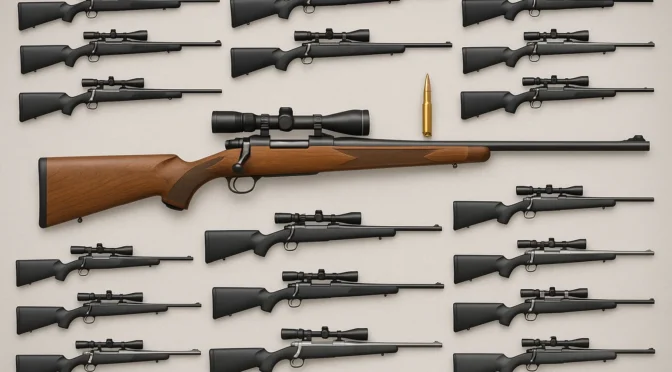
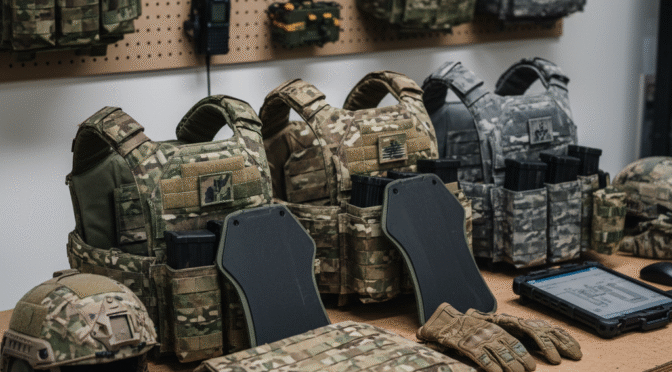
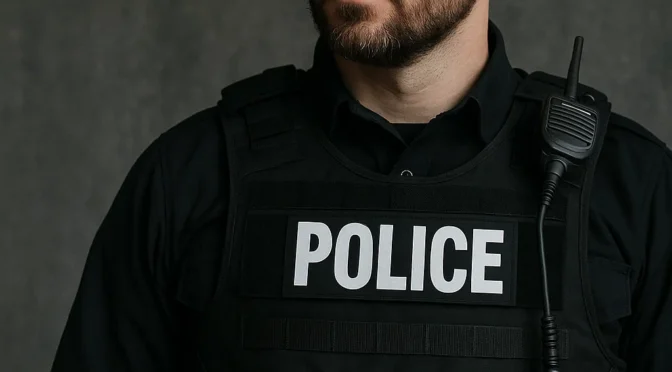
More than a century after its adoption, the .30-06 Springfield cartridge occupies a unique and revered position in the American firearms market. It is not a relic, but a permanent fixture—a legacy caliber that continues to rank among the best-selling chamberings for hunting rifles nationwide. Despite a relentless wave of innovation that has produced technically superior short-action, magnum, and high-ballistic-coefficient cartridges, the “thirty-aught-six” maintains a powerful grip on the American consumer. This report provides a data-driven analysis of the 25 most popular rifles chambered in this historic cartridge, identifying the key market segments, consumer drivers, and cultural forces that ensure its continued relevance.
The market for .30-06 rifles is sustained by three primary pillars:
Deep-Seated Tradition and Heritage: For millions of American hunters, the .30-06 is more than a caliber; it is a tradition passed down through generations. Its dual identity as the cartridge that armed the United States through two World Wars and the Korean War, and as the quintessential North American hunting round championed by legendary writers, creates a cultural inertia that is unmatched.1
Proven Versatility: The cartridge has an established and undisputed reputation as the consummate “do-it-all” tool for North American big game. With bullet weights ranging from 110 grains for varmints to 220 grains for the largest bears and moose, its effectiveness is a known quantity, making it a safe and reliable choice for a one-rifle hunter.3
Ubiquitous Ammunition Availability: The sheer volume, variety, and accessibility of factory-loaded.30-06 ammunition across the country make it one of the most practical choices for any hunter, regardless of location or budget.5
Current market trends reveal a distinct bifurcation. There remains a persistent and strong demand for classic, wood-stocked bolt-action rifles that evoke a sense of nostalgia, such as the Winchester Model 70 and Remington Model 700 BDL. Simultaneously, the market’s volume is dominated by modern, lightweight, and value-priced platforms like the Ruger American and Savage 110 series, which leverage contemporary manufacturing to deliver exceptional accuracy at accessible price points. This report will dissect these trends, providing a detailed analysis of the individual models that define the.30-06 landscape today.
Summary Table: Top 25 Most Popular.30-06 Springfield Rifles in the U.S. Market
The following table presents a ranked list of the 25 most popular rifles chambered in .30-06 Springfield. The ranking is derived from a composite score that synthesizes sales data, online discussion volume, consumer sentiment, and cultural significance to provide a holistic view of each model’s position in the U.S. market.
Benchmark for quality and smoothness, Finnish craftsmanship
48
98%
2%
19
CZ 600 Lux
CZ-USA
Bolt-Action
Sporter Rifle
European styling, smooth action, iron sights
45
93%
7%
20
CVA Cascade
CVA
Bolt-Action
Value Hunting Rifle
Feature-rich for the price (threaded barrel, Cerakote)
43
86%
14%
21
Christensen Arms Ridgeline
Christensen Arms
Bolt-Action
Lightweight Hunting Rifle
Carbon fiber barrel, lightweight, premium features
40
82%
18%
22
Browning BLR
Browning
Lever-Action
Sporter Rifle
Unique lever-action for pointed bullets, box magazine
38
90%
10%
23
Kimber 84L
Kimber
Bolt-Action
Lightweight Hunting Rifle
Ultralight design, controlled-round feed
35
80%
20%
24
Mauser M18
Mauser
Bolt-Action
Value Hunting Rifle
“The People’s Rifle,” German engineering, solid value
32
88%
12%
25
Benelli R1
Benelli
Semi-Automatic
Sporter Rifle
ARGO gas system, modern styling, low recoil
30
85%
15%
Detailed Market Analysis by Segment
The American Classics: The Bedrock of 20th-Century Hunting
This segment comprises the bolt-action rifles that defined the American hunting landscape for the better part of a century. Their enduring popularity is a testament to their proven designs and the powerful nostalgia they evoke, often being passed down as family heirlooms.
Winchester Model 70
Dubbed “The Rifleman’s Rifle,” the Winchester Model 70 holds a special place in American gun culture, cemented by its association with legendary hunters like Jack O’Connor.7 It consistently ranks among the top-selling bolt-action rifles.9 Its market position is that of an aspirational classic, valued for its pre-’64 controlled-round feed Mauser-style action, which many purists consider the most reliable design for a hunting rifle. The market is distinctly split between the highly coveted and valuable pre-1964 collector’s models and the modern production rifles made by FN in South Carolina and assembled in Portugal, which are widely praised for their high quality and finish. While the rifle is lauded for its handling and reliability, a common critique, particularly of lighter variants like the Featherweight, is the felt recoil without a modern recoil pad, a consequence of its classic stock design.10
Remington Model 700
The Remington Model 700 is the best-selling American bolt-action rifle in history, with millions produced since its introduction in 1962.11 Its market dominance is so profound that the “700 footprint” has become the de facto industry standard for aftermarket stocks, triggers, and scope bases, making it the most customizable rifle platform in the world.11 The core of its success lies in the “Three Rings of Steel” design—a cylindrical receiver encasing the bolt head, which in turn supports the cartridge case head—a simple, strong, and rigid design that contributed to its legendary out-of-the-box accuracy.11 However, no analysis of the Model 700 is complete without addressing the significant damage to its reputation caused by quality control issues during the post-2006 “Freedom Group” era.14 This period is a frequent source of negative consumer sentiment and has created a clear market preference for older, pre-2006 models or rifles from competitors.
Ruger M77 Hawkeye
The Ruger M77 series, particularly in its modern Hawkeye iteration, represents a durable, “working man’s rifle” that blends classic design with modern manufacturing.15 It features a non-rotating, Mauser-style full-length claw extractor for true controlled-round feeding, a feature that appeals to hunters who prioritize absolute reliability.17 Other key features that drive its popularity are its famously rugged integral scope mounts machined directly into the receiver and a reliable three-position safety.16 While early M77 models faced some criticism regarding inconsistent accuracy, the modern Hawkeye line is widely regarded as both accurate and dependable, offering a robust alternative to its classic competitors.16
The history of these classic rifles, particularly the Remington 700, reveals a crucial market dynamic. When a legacy brand with a dominant market position experiences a perceived decline in quality, it creates a significant and immediate opportunity for competitors. The 700’s design was so successful it spawned an entire ecosystem of aftermarket parts. When Remington’s manufacturing quality faltered, consumers sought the form and function of the 700 but with superior execution. Bergara, a Spanish barrel maker, expertly identified this void. They created the B-14 series, a rifle explicitly based on the Remington 700 footprint but built to higher modern standards, leveraging their reputation for excellent barrels.11 The market’s rapid and enthusiastic adoption of the Bergara B-14 is a direct consequence of Remington’s stumble, demonstrating that in today’s market, product quality can trump even the most established brand loyalty.
Modern & Value-Priced Hunting Rifles: Performance for the People
This segment is defined by the current volume leaders in the U.S. rifle market. These firearms leverage modern, cost-effective manufacturing to deliver a level of accuracy and a feature set that was, until recently, reserved for much more expensive rifles.
Savage 110 Series (including Axis)
The Savage 110 holds the distinction of being the oldest continuously manufactured bolt-action rifle in North America. Its modern reputation is built on a simple premise: unparalleled accuracy for the price.19 This performance is driven by a trifecta of key innovations: the user-adjustable AccuTrigger, which provides a crisp, safe, and light pull; a floating bolt head that ensures perfect alignment with the chamber; and a barrel nut system that allows for precise headspacing at the factory.20 The budget-friendly Axis line brought this accuracy to an even lower price point.21 While lauded for performance, the primary criticisms of Savage rifles consistently revolve around a rough-feeling action compared to competitors and the use of inexpensive, flexible synthetic stocks on base models.22
Ruger American Rifle
Since its introduction, the Ruger American has become the top-selling bolt-action rifle in the United States, a testament to its mastery of the value proposition.9 It combines solid features like the Power Bedding integral bedding block system and the Ruger Marksman Adjustable Trigger with highly efficient manufacturing to deliver reliable, sub-MOA accuracy at an industry-leading price.24 The rifle’s primary and most discussed weakness is its synthetic stock, which is widely criticized in user forums for being overly flexible, potentially contacting the free-floated barrel and affecting accuracy under field conditions.25 The recently introduced Gen 2 model directly addresses this and other criticisms with a stiffer stock and a three-position safety, indicating the manufacturer’s responsiveness to market feedback.25
Tikka T3x
The Tikka T3x occupies a “premium value” niche, priced above entry-level options but beloved by a fiercely loyal user base who consider it the best rifle for the money.28 The core of the T3x’s appeal is its exceptionally smooth bolt action, often described with terms like “legendary,” “silky,” or “butter smooth”—a tactile quality typically found on European rifles costing two to three times as much.24 This, combined with a crisp trigger and a factory guarantee of sub-MOA accuracy, creates a powerful draw. The most common criticism is directed at the lightweight stock and firm recoil pad, which can lead to significant felt recoil in a powerful, long-action cartridge like the.30-06.29
Bergara B-14 Series
As previously noted, the Bergara B-14 series successfully entered the market by offering a high-quality alternative for shooters who liked the Remington 700’s design but were disappointed with its modern execution. Leveraging their world-renowned reputation for barrel making, Bergara rifles come with a sub-MOA guarantee and are praised for their smooth actions and excellent fit and finish, providing near-custom performance at a production price.11
The evolution of this market segment illustrates a fundamental shift in consumer priorities. Decades ago, sub-MOA accuracy was a premium feature. Today, thanks to advances in manufacturing, it has been democratized and is now a baseline expectation for even the most affordable rifles.21 With accuracy largely commoditized, consumers willing to spend slightly more are now placing a higher value on intangible qualities like the smoothness and feel of the action. This is precisely why Tikka has carved out such a dominant position. The constant, effusive praise for the T3x’s action in countless user reviews demonstrates that when performance is a given, the user’s tactile experience becomes a powerful differentiator and a key driver of brand loyalty.29
Military Surplus & Historical Icons: The Rifles That Forged a Legacy
This segment is driven almost entirely by historical significance, collector interest, and a deep-seated sense of American heritage. These are not just firearms; they are tangible links to the nation’s past.
M1 Garand
No rifle on this list commands more cultural reverence than the M1 Garand. Its identity is inextricably linked to its service in World War II and General George S. Patton’s famous declaration that it was “the greatest battle implement ever devised”.11 As the first semi-automatic rifle to be issued as standard infantry armament, its revolutionary gas-operated action and eight-round en-bloc clip system gave the American G.I. a significant firepower advantage.33 Today, its popularity is sustained by the Civilian Marksmanship Program (CMP), a federally chartered organization that sells surplus Garands to qualified citizens, ensuring the rifle’s continued use in marksmanship competitions and preserving its legacy.35 A persistent topic of discussion among owners is the rifle’s gas system and its compatibility with modern commercial ammunition, with many users opting for specific “M1 Garand safe” loads to avoid damaging the operating rod.36
M1903 Springfield
The M1903 Springfield holds the distinction of being the rifle for which the.30-06 cartridge was created.1 A derivative of the Mauser 98 action, the M1903 was a robust and accurate bolt-action rifle that served the U.S. military from before World War I through World War II and beyond. While it is a highly desirable collector’s item in its original military configuration, a crucial part of its legacy is the post-war “sporterizing” trend. In the mid-20th century, countless surplus M1903s were purchased by civilians and converted by gunsmiths into elegant custom hunting rifles, often serving as the foundation for the rifles used by famous adventurers like Ernest Hemingway.38 These sporterized Springfields helped define the classic American bolt-action hunting rifle aesthetic.
Premium & European Rifles: A Synthesis of Craftsmanship and Performance
This segment caters to a discerning consumer who values refined engineering, superior fit and finish, and an enhanced user experience, and is willing to pay a premium for it.
Browning X-Bolt
The Browning X-Bolt is a consistent top-seller that successfully blends modern performance features with the traditional aesthetics and strong brand recognition associated with Browning.9 Its design is noted for several key features that enhance the user experience: a short 60-degree bolt lift that provides ample clearance for large scopes, the crisp and adjustable Feather Trigger (now the upgraded DLX Trigger on the X-Bolt 2), a tang-mounted safety with a bolt-unlock button, and a lightweight detachable rotary magazine that fits flush with the stock.40 The X-Bolt is positioned as a reliable, highly accurate, and aesthetically pleasing rifle that represents a clear step up from the value tier.
Sako 85 / 90 Series
Manufactured in Finland, Sako rifles are widely regarded as the benchmark for production rifle quality, renowned for their flawless machining, exceptional out-of-the-box accuracy, and arguably the smoothest actions on the market.43 The recent evolution from the controlled-round feed Sako 85 to the push-feed Sako 90 saw the introduction of a redesigned, more rigid receiver and twin plunger ejectors for positive ejection, while retaining premium features like a user-adjustable trigger and the innovative Total Control Latch system, which prevents accidental magazine release.43 A Sako is often the rifle by which other premium production guns are judged.
Weatherby Mark V
The Weatherby Mark V is an American icon, synonymous with high velocity, magnum power, and heirloom quality.44 Its most distinctive feature is its action, which utilizes nine interlocking locking lugs for magnum chamberings and a six-lug version for standard cartridges like the.30-06. This design provides immense strength and allows for a uniquely short 54-degree bolt throw for rapid cycling.46 The brand is historically associated with high-gloss, Monte Carlo-style walnut stocks, though modern variants offer advanced synthetic and carbon fiber options. The Mark V is distinct from the more affordable Weatherby Vanguard, which is built on the excellent Japanese-made Howa 1500 action and provides a lower-cost entry into the brand without the prestige of the American-made Mark V action.45
Semi-Automatic & Other Actions: Beyond the Bolt-Action Mainstream
While the bolt-action dominates the.30-06 market, several other action types have carved out significant and loyal followings, often dictated by regional hunting styles.
Browning BAR (Browning Automatic Rifle)
The Browning BAR is the undisputed market leader for semi-automatic big-game hunting rifles.11 Not to be confused with its military namesake, the sporting BAR is a reliable, gas-operated rifle with a strong multi-lug rotary bolt. Its gas system effectively mitigates the recoil of the.30-06, making for a soft-shooting rifle capable of very fast follow-up shots.50 It has earned a reputation for functioning reliably in harsh, cold conditions where other semi-automatics might fail.49 While not typically expected to match the precision of a high-quality bolt-action, a well-maintained BAR can be surprisingly accurate.51
Remington Model 7600 (and predecessors 760/Six)
The Remington 7600 is the quintessential pump-action centerfire rifle, affectionately known as the “Mennonite Machine Gun” or “Pennsylvania pump”.52 It commands a devoted following, particularly in the dense woods of the Northeast, where fast, close-range shots on moving game are common. Its appeal lies in offering a follow-up shot that is faster than a bolt-action while being mechanically simpler and arguably more reliable in adverse weather than a semi-automatic.52 While not a precision rifle, its accuracy is more than adequate for its intended role in woods hunting.54
Cultural Impact Analysis: The Cartridge of a Nation
The.30-06 Springfield has transcended its technical specifications to become a cultural icon in the United States. Its enduring popularity cannot be explained by ballistics alone; it is deeply woven into the fabric of American identity. This cultural dominance is built upon a trinity of influence that has solidified its legendary status.
First is its distinguished military service. By arming American soldiers through the defining conflicts of the 20th century—World War I, World War II, and the Korean War—the.30-06 established a baseline of power, reliability, and national pride.1 Veterans returning home were intimately familiar with the cartridge and the rifles that fired it, creating a massive and knowledgeable civilian market.
Second is the gospel spread by 20th-century gun writers. Figures like Jack O’Connor, Col. Townsend Whelen, and later, Craig Boddington, were the preeminent authorities for generations of hunters. Their prolific and unequivocal praise in the pages of magazines like Outdoor Life and Field & Stream translated the cartridge’s military prowess into sporting gospel. O’Connor, despite his famous love for the.270 Winchester, stated, “the.30/06 is never a mistake” and praised its unmatched versatility.4 Whelen helped develop the cartridge and used it extensively, cementing its reputation as the ultimate all-around choice.56 This created an unshakeable consensus that the.30-06 was the one rifle a man needed to hunt anything in North America.
Third is its association with larger-than-life American figures. Theodore Roosevelt used an early version of the cartridge on his famous African safari, and Ernest Hemingway’s use of his custom Griffin & Howe Springfield in.30-06 for hunting in Africa and the American West elevated the cartridge from a mere tool to a symbol of rugged adventure and masculinity.39
These three pillars have combined to make the.30-06 more than a product; it is cultural shorthand for the quintessential American hunting experience. When a person buys a.30-06, they are often buying into a story—the story of their grandfather’s rifle, the cartridge that defended freedom, and the round praised in the classic hunting literature they grew up reading.2 This powerful narrative often overrides purely technical arguments for newer cartridges, ensuring that the demand for rifles in this chambering is driven as much by emotion and heritage as by practical considerations.
Market Synthesis & Conclusion: A Venerable Cartridge in a Modern Market
The.30-06 Springfield has navigated the evolution of the firearms market with remarkable grace. It has transitioned from its former position as the undisputed performance leader to its current role as a venerable, heritage choice that still delivers formidable performance. The market has presented significant challenges, most notably from the.308 Winchester, which offers nearly identical performance on medium game in a more efficient short-action package with less recoil 61, and from a host of modern cartridges like the 6.5 Creedmoor and 7mm PRC, which offer superior long-range ballistics.63
Despite this intense competition, the core strengths of the.30-06 remain highly relevant to a large segment of the hunting population. Its power is undisputed for the largest North American game like elk, moose, and large bears, providing a margin of authority that lighter calibers cannot match. The vast and diverse selection of factory ammunition, from inexpensive hunting loads to premium, high-performance offerings, provides an unmatched level of practicality. Finally, its deep cultural resonance continues to be a powerful purchasing driver that newer cartridges simply cannot replicate.
In conclusion, the.30-06 Springfield is not in decline. It has achieved a permanent and unassailable position in the market. While it may no longer be the “hottest” or most technically advanced cartridge available, its unparalleled blend of proven power, practical versatility, and profound cultural heritage ensures that it will remain a top-tier choice for American hunters. Its legacy is secure, and its place in gun racks across the country is guaranteed for the foreseeable future.
Appendix: Methodology
The rankings and analysis presented in this report are based on a proprietary composite scoring system designed to provide a holistic and defensible measure of a rifle’s popularity in the U.S. market. This score is derived from four distinct, weighted data sources:
Social Media Sentiment & Volume (40% weight): This component involves the systematic collection and analysis of publicly available data from major online hunting and shooting communities (including AccurateShooter.com, Nosler Reloading Forums, Rokslide, and Reddit’s r/hunting and r/guns subreddits). Using natural language processing (NLP) algorithms, we quantify the total volume of discussion surrounding each rifle model to generate a normalized “Total Mention Index.” The same dataset is analyzed for positive, negative, and neutral sentiment to calculate the percentages presented in the summary table. This metric provides a powerful proxy for consumer mindshare and real-world reputation.
Sales Data & Rankings (30% weight): This metric incorporates publicly available sales data and rankings from major online firearms marketplaces, with a primary focus on GunBroker.com, the world’s largest. Analysis includes their published annual top-selling lists for new firearms by category 9 as well as a quantitative analysis of the volume of active and completed listings for both new and used rifles in.30-06. This provides a direct measure of market velocity and consumer demand.
Expert & Influencer Reviews (20% weight): A qualitative scoring system is used to aggregate and weigh the consensus from professional reviewers. This includes contemporary reviews from major industry publications (Outdoor Life, Field & Stream, Guns & Ammo, American Hunter) and influential online content creators. Crucially, it also incorporates the foundational opinions of legendary 20th-century gun writers (e.g., Jack O’Connor, Col. Townsend Whelen, Craig Boddington) whose work was instrumental in establishing the long-term reputations of the classic rifle models.4
Cultural Relevance (10% weight): This metric functions as a “popularity multiplier” to account for a firearm’s outsized historical and cultural significance, which directly influences collector demand, media presence, and market perception beyond simple sales figures or feature sets. Models with profound military history, such as the M1 Garand and M1903 Springfield, or those inextricably linked to the “golden era” of American hunting, like the pre-’64 Winchester Model 70, receive a weighted bonus to reflect their iconic status.1
Personal body armor is an indispensable component of the modern warfighter’s ensemble, a critical layer of technology standing between the soldier and the lethal threats of the battlefield. Its presence is so ubiquitous that it has become an icon of contemporary warfare. However, the story of military body armor is not one of simple technological triumph. It is a narrative defined by a perpetual and complex engineering conflict: the goal of absolute protection versus the non-negotiable demand for operational effectiveness. Every ounce of weight added in the name of survivability is paid for with a corresponding decrease in mobility, endurance, and, ultimately, lethality. This report provides an in-depth analysis of personal body armor systems used by the United States military. It traces the reactive evolution of these systems, delves into the materials science that makes them possible, details the capabilities and philosophies of current-issue equipment, and dissects the inescapable trade-offs that engineers and commanders must navigate. This is a story of constant adaptation, where technology races to counter evolving threats, always constrained by the physical limits of the human soldier.
The Evolution of Soldier Protection
The development of U.S. military body armor is not a proactive story of technological pursuit, but a reactive one, driven almost exclusively by the changing threat profile of the nation’s most recent major conflict. Each significant leap in armor technology can be directly mapped to a specific, dominant threat that emerged in the preceding war, demonstrating a consistent pattern of adaptation in response to battlefield realities.
From Flak to Fiber: Early Ballistic Protection in the 20th Century
While armor has been part of warfare for millennia, the modern era of personal ballistic protection for the U.S. military began in earnest during World War II. Earlier attempts during World War I to create armor from metal plates proved largely ineffective; the lightest models were still excessively heavy, impeding movement, and were too expensive to produce on a wide scale.1 The primary threats were not just small arms fire but, more pervasively, the deadly fragmentation from artillery shells.
The true genesis of modern U.S. military armor emerged from the skies over Europe. Under the direction of Colonel Malcolm C. Grow, the U.S. Army Eighth Air Force pioneered the development of the “flak jacket” in 1943 to protect bomber crews from shrapnel produced by exploding anti-aircraft shells.2 These early vests consisted of two-inch square manganese steel plates sewn into a canvas vest. The technology was rudimentary, but it proved the concept. A 1944 study of battle casualties reported that the use of this body armor led to a dramatic reduction in fatalities from chest wounds, from 36% down to 8%.2 This period established the initial purpose of modern military body armor: fragmentation protection, not stopping direct rifle fire. It was a crucial proof-of-concept that demonstrated armor could save lives, setting the stage for future investment and development.
The Nylon & Fiberglass Era: Korea and Vietnam
The lessons from WWII carried into the conflicts of the mid-20th century. The Korean War saw the introduction of two key designs that moved beyond simple steel plates. The first was the M-1951 “Marine Vest,” a joint Army-Marine Corps development that incorporated layers of nylon and Doron, a laminated fiberglass material developed during WWII.2 This was followed by the Army’s M-1952A Body Armor, an 8.5-pound vest made up of twelve layers of flexible, laminated nylon. The M-1952A and its successors, such as the M-69 Body Armor, Fragmentation Protective Vest, became standard issue through the Vietnam War.2
This era represents the maturation of the “soft armor” concept using early polymers. While still designed primarily to protect against fragmentation and low-velocity projectiles, these vests were significantly lighter and more flexible than their WWII predecessors. They marked a critical step in the ongoing negotiation between protection and mobility, solidifying the role of a fragmentation vest as a standard piece of a soldier’s equipment.
The Kevlar Revolution: The Personnel Armor System for Ground Troops (PASGT)
The 1970s witnessed a monumental leap in materials science that would redefine personal protection for decades. In 1965, chemist Stephanie Kwolek at DuPont accidentally discovered a para-aramid synthetic fiber with a molecular structure of incredibly strong, inter-chain bonds.3 The resulting material, Kevlar, possessed a tensile strength up to ten times that of steel on an equal weight basis.3
In the 1980s, the U.S. Army adopted this revolutionary material for its new armor system: the Personnel Armor System for Ground Troops (PASGT). The PASGT system included both a new helmet and a vest made of Kevlar. Although the vest weighed around 9 pounds, slightly more than the M-69 it replaced, it offered vastly superior protection against shell fragments.6 The adoption of Kevlar was a paradigm shift. It moved body armor from a specialized item to a standard-issue system that provided a meaningful level of protection without an unacceptable mobility penalty. The PASGT system became the iconic look of the American soldier for nearly two decades, defining personal protection through the end of the Cold War and into the 1990s.
A New Era of Warfare: The Interceptor Body Armor (IBA) and the Dawn of Modularity
The post-9/11 conflicts in Iraq and Afghanistan fundamentally changed the American way of war and the threats faced by its troops. The battlefield was no longer dominated by the threat of conventional artillery fragmentation but by high-velocity rifle fire from weapons like the AK-47 and the devastating effects of Improvised Explosive Devices (IEDs). The PASGT vest, a pure soft armor system, was dangerously insufficient against these threats.
In response, the military fielded the Interceptor Body Armor (IBA) system, which had been in development since the late 1990s.6 The IBA’s core was the Outer Tactical Vest (OTV), a carrier made of advanced Kevlar KM2 soft armor. Its truly revolutionary feature, however, was the integration of front and back pockets designed to hold rigid hard armor plates. These Small Arms Protective Inserts (SAPI) were made of ceramic composite and were capable of stopping 7.62mm rifle rounds, a level of protection previously unavailable to the average soldier.7
The IBA system also introduced the concept of modularity. The base vest could be augmented with attachable protectors for the groin, throat, and upper arms (deltoids).7 Furthermore, the exterior of the OTV was covered in Pouch Attachment Ladder System (PALS) webbing, allowing soldiers to customize the placement of ammunition pouches and equipment directly on their armor.7 The IBA represents the birth of modern military body armor philosophy. It was the first widely issued system designed from the ground up to be a scalable, multi-threat platform capable of defeating both fragmentation and rifle fire. This modularity was a fundamental acknowledgment that not all threats are equal and that protection could be tailored to the mission, marking a definitive break from the one-size-fits-all vests of the past.
System Name
Era / Conflict
Primary Material(s)
Key Innovation
Flak Jacket (M1/M2)
World War II
Manganese Steel Plates, Canvas
First widespread use of body armor for fragmentation protection.2
M-1952A Vest
Korean & Vietnam Wars
Laminated Nylon, Fiberglass (Doron)
Lighter, more flexible soft armor for fragmentation.2
PASGT Vest
Cold War / Gulf War
Kevlar (Para-Aramid Fiber)
Revolutionary material providing superior fragmentation protection.6
Interceptor Body Armor (IBA)
Global War on Terror
Kevlar KM2, Ceramic Plates (SAPI)
First integrated, modular system combining soft armor with hard plates for rifle protection.7
The Science of Defeating a Projectile
Modern body armor is a product of advanced materials science, employing distinct physical mechanisms to defeat different types of ballistic threats. The distinction between how soft armor “catches” a projectile and how hard armor “shatters” it is fundamental to understanding why military armor systems are designed the way they are. The unique capabilities and vulnerabilities of each type create a natural synergy, making a hybrid system the most effective solution for the varied threats of modern warfare.
Soft Armor Mechanics: The Woven Energy Web of Para-Aramids
Soft armor, made from tightly woven layers of para-aramid fibers like Kevlar, does not function by deflecting a bullet in the way a steel plate would. Instead, its mechanism is better described as “catching” the projectile in a multi-layered energy-absorbing web.11
Kevlar’s extraordinary strength originates at the molecular level. Its structure consists of long, rigid polymer chains that are highly aligned and cross-linked by powerful hydrogen bonds.3 When a relatively blunt projectile, such as a handgun bullet, strikes the vest, its tip cannot easily push aside the fibers. Instead, it engages a vast network of these incredibly strong fibers across multiple layers of fabric. The fibers are forced to stretch, a process that requires a tremendous amount of energy. This action absorbs the projectile’s kinetic energy and dissipates it radially outward from the point of impact through the “web” of the fabric.12 This rapid energy transfer slows the bullet to a complete stop, ideally before it can penetrate the vest and harm the wearer.
This mechanism, however, has a critical vulnerability. It is highly susceptible to pointed or sharp-edged threats like knives, ice picks, or arrows. A sharp point can find the microscopic gaps between the woven fibers and, with sufficient force, push the individual fibers aside rather than engaging the entire network. This allows the blade to slip through the weave, defeating the armor.14 This is why ballistic vests are not inherently “stab-proof” unless they are specifically designed and rated for that threat.
Hard Armor Mechanics: The Three-Phase Defeat of Ceramic Composites
To defeat the immense, focused energy of a high-velocity rifle round, a different mechanism is required. Hard armor plates, such as the military’s SAPI series, are sophisticated composite systems that defeat projectiles through a multi-stage, sacrificial process.15
Phase 1: Shatter and Erode. The outermost layer of the plate is an extremely hard “strike face,” typically made of a ceramic material like boron carbide or silicon carbide.8 When a rifle bullet impacts this surface, two things happen almost simultaneously. First, the hardness of the ceramic fractures and blunts the projectile, deforming its shape. Second, the ceramic itself shatters at the point of impact in a process known as comminution, absorbing a significant amount of the bullet’s initial kinetic energy.16 As the now-deformed projectile core attempts to push through this field of shattered ceramic fragments, it is effectively sandblasted—a process of erosion that further reduces its mass, velocity, and energy.15
Phase 2: Absorb and Catch. Bonded directly behind the ceramic strike face is a backing layer made of a ductile material with high tensile strength, most commonly Ultra-High-Molecular-Weight Polyethylene (UHMWPE), often marketed under trade names like Spectra or Dyneema.8 This backer has two critical jobs. It must first absorb the remaining kinetic energy of the slowed, eroded projectile. Second, it must “catch” the blunted projectile remnant and any ceramic fragments that were propelled inward by the impact, preventing them from becoming secondary projectiles that could injure the wearer.8
This composite, sacrificial system is the only known method to defeat high-energy rifle threats within the weight and thickness constraints of man-portable armor. It highlights that the plate is a system, not a single material; the ceramic strike face and the polymer backer are equally critical and must work in concert to successfully defeat the threat.
Contemporary U.S. Military Body Armor Systems
The modern body armor systems used by the U.S. Armed Forces are the result of decades of battlefield experience and technological advancement. While all branches share the same fundamental goal of protecting their personnel, the specific systems they field reveal differing institutional priorities and risk calculations. The Army’s equipment reflects a need for scalability across a vast force, the Marine Corps’ gear prioritizes the mobility of the expeditionary rifleman, and SOCOM’s kits are tailored for the peak performance of the elite operator.
U.S. Army Systems: The Path to Scalability
The U.S. Army, as the nation’s primary land force, requires armor systems that can be adapted for a wide variety of roles, from a vehicle driver to a dismounted infantryman. This has driven a clear evolution away from a single, heavy vest toward a highly modular and scalable philosophy.
Improved Outer Tactical Vest (IOTV): Fielded in 2007 to replace the OTV of the IBA system, the IOTV was a significant step forward. It provided a larger area of soft armor coverage, featured a single-pull quick-release system for emergency doffing, and incorporated an internal waistband that helped shift the armor’s weight from the shoulders to the waist and hips, improving comfort over long periods.19 The IOTV has gone through multiple generations (Gen I through IV), with successive versions improving ergonomics, reducing weight, and enhancing modularity.21 However, when fully configured with soft armor, ESAPI plates, side plates, and ancillary protectors (groin, collar, deltoid), a medium IOTV can weigh over 30 pounds, contributing significantly to the soldier’s overall load.20
Soldier Plate Carrier System (SPCS): The high weight of the IOTV in the mountainous terrain of Afghanistan led to a demand for a lighter option. The SPCS was adopted as a direct result. It is a minimalist plate carrier designed to hold front, back, and side hard armor plates but with significantly less integrated soft armor coverage than the IOTV.23 This prioritizes vital organ protection from rifle fire while sacrificing some fragmentation protection for a major gain in mobility and weight reduction. A medium SPCS with a full plate load weighs approximately 22 pounds, a substantial savings over a fully loaded IOTV.23
Modular Scalable Vest (MSV): Introduced in 2018, the MSV is the Army’s current-generation system and the centerpiece of the broader Soldier Protection System (SPS). The MSV is the culmination of lessons learned from both the IOTV and SPCS. It is approximately 26% lighter than the IOTV, with a fully loaded medium vest weighing around 25 pounds.24 Its defining feature is true scalability. The system can be configured in multiple ways depending on the mission: as a low-profile carrier with only soft armor, as a plate carrier with only hard plates, or as a full tactical vest combining both, along with all ancillary components.26 This allows commanders and individual soldiers to tailor their protection level precisely to the anticipated threat, balancing protection and mobility like never before.
U.S. Marine Corps Systems: Prioritizing Mobility
The Marine Corps, as an expeditionary force-in-readiness, has a doctrine that places a premium on speed, agility, and the effectiveness of the individual rifleman. This institutional bias is clearly reflected in their rapid adoption of lighter, more mobile armor systems.
Modular Tactical Vest (MTV): Adopted in 2006 to replace the IBA, the MTV offered better protection and a more effective weight distribution system. However, at 30 pounds, it was heavier than its predecessor and was often criticized by Marines in the field as being too bulky and restrictive, especially in the intense heat of Iraq.28
Plate Carrier (PC) Series: In response to the feedback on the MTV and the demands of combat in Afghanistan, the Marine Corps quickly pivoted to lighter systems. They fielded the Scalable Plate Carrier (SPC) and have continued to refine this concept.29 The current system is the Plate Carrier Generation III (PC Gen III), which began fielding in 2020. This system is a purpose-built, lightweight plate carrier that is nearly 25% lighter than the legacy PC it replaced. Key design improvements include removing excess material, cutting out the shoulder areas for a better rifle stock weld, and offering a much wider range of sizes to properly fit more Marines, including women.30 The PC Gen III represents the Marine Corps’ institutional choice to prioritize mobility and lethality, accepting a trade-off in the form of reduced soft armor coverage compared to a larger vest like the IOTV.
U.S. Special Operations Command (SOCOM) Systems: The Tip of the Spear
U.S. Special Operations Command units operate under unique mission sets with more flexible procurement authority. As such, they are often the early adopters of cutting-edge commercial designs that prioritize weight savings and ergonomics above all else. SOCOM operators frequently use plate carriers from companies like Crye Precision and First Spear, which are known for their innovative, lightweight designs that often influence the next generation of general-issue military gear.32 These carriers are paired with specialized, high-performance plates built to SOCOM standards, which often exceed the performance of general-issue plates in terms of weight and multi-hit capability against advanced threats.34 SOCOM effectively serves as a high-speed testbed for the future of body armor, with their equipment choices often foreshadowing broader trends across the conventional forces.
Service Branch
System Name
Full System Weight (Approx.)
Core Philosophy
U.S. Army
Modular Scalable Vest (MSV)
25 lbs
Scalability: Adaptable to a wide range of missions and roles.24
U.S. Marine Corps
Plate Carrier (PC) Gen III
< 22 lbs (est.)
Mobility: Lightweight design to maximize speed and agility for expeditionary forces.31
The Heart of the System: A Technical Review of SAPI, ESAPI, and XSAPI Plates
The hard armor plates are the core of every modern military body armor system, providing the essential protection against the most lethal battlefield threat: rifle fire. The evolution of these plates is a clear illustration of the arms race between protective equipment and ammunition technology.
SAPI (Small Arms Protective Insert): This was the original plate fielded with the IBA system. Made of a boron carbide or silicon carbide ceramic strike face with a UHMWPE backer, the SAPI plate is rated to stop up to three rounds of 7.62x51mm M80 Ball ammunition traveling at approximately 2,750 feet per second.8
ESAPI (Enhanced Small Arms Protective Insert): Introduced in 2005 in response to the growing threat of armor-piercing ammunition, the ESAPI plate offers a significantly higher level of protection. Made of boron carbide, it is thicker and heavier than the SAPI plate.37 ESAPI plates are tested to military specifications that require them to stop.30-06 M2 Armor-Piercing (AP) rounds, a performance level roughly equivalent to the civilian NIJ Level IV standard.8
XSAPI (X Threat Small Arms Protective Insert): Developed in response to intelligence about potential next-generation armor-piercing threats, the XSAPI represents the highest level of protection currently in the inventory. Heavier and thicker still than the ESAPI, these plates were designed to defeat even more potent projectiles, believed to be tungsten-core AP rounds like the 7.62mm M993.8 While over 120,000 sets were procured, the anticipated threat did not materialize on a large scale in Iraq or Afghanistan, and many of these plates were placed into storage.8
Defining Protection: Military vs. Law Enforcement Standards
A critical and often misunderstood aspect of body armor is the distinction between the standards used for civilian law enforcement and those used by the military. While the underlying science is the same, the testing protocols, threat profiles, and design philosophies are fundamentally different. The failure to appreciate this distinction can lead to flawed comparisons and incorrect assumptions about armor performance.
The NIJ Framework: A Standard for Domestic Threats
The National Institute of Justice (NIJ), an agency of the U.S. Department of Justice, has been setting voluntary performance standards for body armor since 1972.42 The NIJ standard is the only nationally accepted benchmark for body armor worn by U.S. law enforcement and corrections officers. Its primary purpose is to provide a reliable, consistent framework for agencies to purchase armor that protects against the most common threats faced in a domestic policing environment.44
The NIJ standard categorizes armor into distinct levels based on the specific handgun and rifle ammunition it can defeat in a controlled laboratory setting.
Soft Armor Levels (Handgun): Levels IIA, II, and IIIA are designed to stop progressively more powerful handgun rounds, from common 9mm and.40 S&W up to.357 SIG and.44 Magnum.46
Hard Armor Levels (Rifle): Level III is tested against 7.62mm M80 ball ammunition, while Level IV is tested against a single.30-06 M2 armor-piercing round.46
A crucial component of NIJ testing is the measurement of Back-Face Deformation (BFD), the indentation the armor makes into a block of ballistic clay upon impact. To pass certification, the BFD must not exceed 44mm.48 The new NIJ Standard 0101.07 refines these categories into more descriptive HG (Handgun) and RF (Rifle) levels, but the core philosophy remains the same: standardization against known, prevalent threats.47
Military-Specific Protocols: Why SAPI Plates Are Not “NIJ Rated”
Contrary to a common misconception, military armor plates like SAPI, ESAPI, and XSAPI are not certified to NIJ standards.8 The Department of Defense (DoD) employs its own set of specific, and often classified, testing protocols tailored to the unique threats of the battlefield. These military standards are not necessarily “better” or “worse” than the NIJ’s; they are simply different, designed for a different purpose.
Military testing calls for survivability against specific military-grade projectiles at specified velocities. For example, the SAPI standard requires defeating multiple hits of 7.62mm M80 ball, while the ESAPI standard requires defeating.30-06 M2 AP rounds.8 The multi-hit requirement, in particular, can be more rigorous than the single-shot test for NIJ Level IV. Furthermore, military procurement involves extensive durability and environmental testing that goes beyond the NIJ’s scope. A 2009 DoD Inspector General report even highlighted that there was no single standardized testing criteria across the department, with the Army and U.S. Special Operations Command (USSOCOM) having developed separate ballistic testing protocols.50
This distinction is not merely academic. It means that the terms are not interchangeable. A commercial “NIJ Level IV” plate is certified to a public, standardized test. A military “ESAPI” plate is built to meet a government contract with a specific, non-public set of requirements. This is why the term “Mil-Spec” can be misleading in the consumer market; it signifies adherence to a different set of rules, not necessarily a superior product in all metrics.
Rating / Name
Test Projectile(s)
Key Performance Standard
Primary User
NIJ Level III
7.62x51mm M80 Ball
Defeats common lead-core rifle rounds with BFD < 44mm.46
Law Enforcement / Civilian
SAPI
7.62x51mm M80 Ball
Defeats multiple hits of specific military ball ammunition.8
U.S. Military
NIJ Level IV
.30-06 M2 Armor Piercing (AP)
Defeats a single armor-piercing rifle round with BFD < 44mm.46
Law Enforcement / Civilian
ESAPI
.30-06 M2 Armor Piercing (AP)
Defeats specific military armor-piercing ammunition, often with multi-hit requirements.8
U.S. Military
Mission Drives Design: Contrasting Military and Law Enforcement Armor Philosophies
The differences in standards are a direct reflection of the vastly different operational environments and threat profiles of soldiers and police officers.
Law Enforcement: The primary ballistic threat faced by a patrol officer is from handguns.44 Armor is typically worn for an entire 8-12 hour shift, often under a uniform shirt. Therefore, the design priorities are comfort, flexibility, and concealability. This leads to the overwhelming preference for lightweight, soft armor vests rated at NIJ Level II or IIIA.46 Hard armor plates are generally reserved for tactical (SWAT) teams or are kept in patrol vehicles as part of “active shooter kits” to be donned over a soft vest in high-risk situations.52
Military: For a soldier in combat, the primary threats are high-velocity rifle fire and fragmentation from explosive devices.52 Armor is worn overtly and must serve as a platform for carrying a full combat load of ammunition, communications equipment, and supplies. Concealability is irrelevant. The design priorities are maximum practical protection against military-grade threats and robust load-bearing capability. This dictates the use of a system combining a soft armor carrier with hard armor plates equivalent to or exceeding NIJ Level IV protection.47
Ultimately, the equipment reflects the job. A police officer’s armor is designed for daily wear and protection against criminal threats. A soldier’s armor is designed for the acute, high-intensity violence of the battlefield.
The Hidden Dangers: Limitations and Vulnerabilities of Modern Armor
The term “bulletproof” is a dangerous misnomer. No body armor provides absolute protection. It is a piece of equipment with a specific performance envelope, a limited lifespan, and inherent vulnerabilities. Understanding these limitations is as crucial as understanding its capabilities. Body armor does not make a soldier invincible; it is a tool that favorably alters the statistics of survival by mitigating the most probable and most lethal threats to the torso.
Beyond Penetration: The Threat of Back-Face Deformation and Blunt Trauma
One of the most critical and least understood limitations of body armor is the danger that persists even when a bullet is stopped. When a projectile strikes armor, the armor material deforms inward toward the wearer’s body. This phenomenon is known as Back-Face Deformation (BFD), or back-face signature.48 The NIJ standard allows for up to 44mm (1.73 inches) of deformation into a clay backing that simulates the human torso.48
This rapid and violent inward deformation transfers a massive amount of the bullet’s kinetic energy directly to the wearer’s body, resulting in Behind Armor Blunt Trauma (BABT).60 The mechanism of injury is a combination of high-pressure stress waves and the gross deflection of the body wall, which can cause shear forces on internal organs.60 BABT can result in severe bruising, cracked or broken ribs, internal bleeding, and damage to vital organs like the heart, lungs, and liver. In extreme cases, particularly with high-energy rifle impacts, BABT can be lethal even though the projectile never penetrated the armor.59
This risk is why being shot while wearing armor is a significant medical event, not a minor inconvenience. To mitigate this danger, operators often wear trauma pads—non-ballistic pads made of energy-absorbing foam or other materials—inserted between the armor plate and the body. These pads help cushion the impact and dissipate the energy transfer, reducing the severity of BFD and the resulting blunt force trauma.62
Material Weaknesses and Threat Limitations
All armor materials have inherent weaknesses that define their limitations and proper use.
Degradation: The para-aramid fibers in soft armor, like Kevlar, are susceptible to long-term degradation from exposure to moisture and ultraviolet (UV) light. This is why most manufacturers specify a 5-year service life for their vests, after which the ballistic integrity can no longer be guaranteed.66
Brittleness and Multi-Hit Capability: Ceramic hard armor plates, while extremely effective at shattering projectiles, are inherently brittle. They can be cracked or damaged if dropped or subjected to rough handling, which can compromise their protective capability.66 This brittleness also affects their multi-hit performance. While a plate may be rated to stop multiple rounds, its ability to defeat subsequent impacts is severely degraded in the immediate area of a previous hit where the ceramic has been shattered and compromised. A tight grouping of shots can defeat a plate that would have stopped those same shots had they been spread out.68
Armor-Piercing (AP) Rounds: The constant arms race between armor and ammunition is most evident with AP rounds. These projectiles are specifically designed with hardened penetrators made of steel or tungsten carbide to defeat armor systems. Standard Level III plates, effective against lead-core ball ammunition, are generally ineffective against these threats. This necessitates the development and use of heavier, more advanced Level IV and ESAPI plates with ceramic strike faces hard enough to fracture these hardened cores.70
The Anatomy of Risk: Gaps in Coverage
Perhaps the most obvious limitation of body armor is that it only protects the areas it covers. While modern systems prioritize coverage of the vital organs in the thoracic cavity (the “cardiac box”), significant portions of the body remain vulnerable. The head, neck, shoulders, armpits (axillary region), lower abdomen, and groin are all areas where a wound can be fatal.54
Ancillary armor components exist to cover many of these areas, such as the Deltoid and Axillary Protector System (DAPS), throat protectors, and groin protectors.7 However, each additional piece adds weight and bulk, which directly restricts movement and increases fatigue. This creates an inescapable trade-off between total body coverage and the soldier’s mobility and combat effectiveness. The design of a body armor system is therefore a deliberate exercise in risk management, accepting vulnerability in some areas to maintain essential function in others.
The Engineer’s Dilemma: An Analysis of Inescapable Trade-Offs
The design of military body armor is a master class in engineering compromise. There is no single “best” solution, only a series of carefully calculated trade-offs aimed at optimizing a soldier’s survivability and effectiveness within the unforgiving constraints of physics and human physiology. Every design choice is governed by a complex interplay of competing priorities.
The Iron Triangle: Balancing Protection, Mobility, and Lethality
A foundational concept in military hardware design, from tanks to individual soldiers, is the “Iron Triangle.” The three vertices of this triangle are Protection, Mobility, and Lethality.75 For a dismounted soldier, who is limited by what they can physically carry, these three factors are inextricably linked in a zero-sum relationship.
Increasing Protection by adding heavier or more extensive armor directly adds weight.
This added weight inevitably reduces Mobility, making the soldier slower and more easily fatigued.
A slow, fatigued soldier has reduced Lethality; their reaction times are slower, their aim is less steady, and their ability to maneuver on the battlefield is compromised.
To regain mobility, a soldier must shed weight, but this typically comes at the cost of either protection (lighter armor) or lethality (less ammunition, water, or other mission-essential gear). The soldier is perpetually “trapped” within this triangle, and the goal of the armor designer is to find the optimal balance point for a given mission and doctrine.
The Human Factor: Quantifying the Cost of Weight, Bulk, and Thermal Load
Body armor is often described as “parasitic weight”—it contributes nothing to a soldier’s operational effectiveness until the precise moment it is struck by a projectile.75 Until that moment, it only imposes penalties. These penalties are not abstract; they are measurable degradations of combat performance.
Weight and Mobility: Dismounted ground troops in recent conflicts have carried combat loads ranging from 90 to 140 pounds, with body armor comprising a significant portion of that.75 Studies have quantified the impact of such loads, showing that for every 1 kilogram (2.2 lbs) of external weight, there is an average performance loss of 1% in military tasks like sprinting, jumping, and obstacle course completion.77 The weight and bulk of armor also demonstrably reduce a soldier’s range of motion and increase the time it takes to acquire and engage targets.75
Fatigue and Cognition: Heavy loads accelerate fatigue. A fatigued soldier suffers from diminished cognitive function, reduced situational awareness, and impaired decision-making capabilities.75
Thermal Load: Body armor is an excellent insulator. It traps body heat and severely impedes the body’s natural cooling mechanism: the evaporation of sweat. This creates a hot, humid microclimate between the vest and the torso, dramatically increasing the soldier’s thermal load and the risk of heat stress or heat stroke, particularly during strenuous activity in hot environments.79 This is not a new problem; studies from the Vietnam War on the M1955 vest showed that wearing armor was equivalent to a 5°F increase in the Wet-Bulb Globe Temperature (WBGT), a measure of environmental heat stress.81
This analysis reveals a critical, counter-intuitive truth: the pursuit of maximum protection can lead to a point of diminishing returns. An overloaded, overheated, and exhausted soldier is a less effective and more vulnerable soldier. This has led to the realization that optimal armor design may actually involve reducing passive protection (armor coverage) to increase active protection (mobility and endurance). A soldier who can move more quickly from cover to cover is less likely to be hit in the first place. The military-wide shift from heavy, full-coverage vests like the IOTV toward lighter plate carriers is an institutional acknowledgment of this principle, a calculated trade-off designed to enhance overall survivability.
The Pentagon of Priorities: A Deeper Look at Weight, Performance, Thickness, Comfort, and Cost
The Iron Triangle provides a useful strategic framework, but the tactical, day-to-day decisions of an armor engineer involve a more complex, five-point trade-space.82
Weight vs. Performance: The classic trade-off, balancing the mass of the armor against its ability to stop threats.
Thickness vs. Performance: Thinner armor is less bulky, which improves mobility in confined spaces like vehicles and doorways and allows for a better-shouldered rifle. Advanced materials like UHMWPE have enabled thinner profiles without sacrificing performance.82
Comfort vs. Performance: An uncomfortable armor system that creates painful hot spots, chafes, or improperly distributes weight will be worn incorrectly or even discarded by troops in the field, completely negating its protective value. Ergonomics, fit, and ventilation are critical design factors.78
Cost vs. Performance: The highest-performing materials are often exponentially more expensive. Boron carbide ceramics and advanced composites offer incredible protection at a low weight, but their cost can be prohibitive for equipping a force of hundreds of thousands. Procurement officials must balance per-unit capability against the total cost of fielding a system at scale.82
This pentagon provides a more complete picture of the engineering process. A technically brilliant armor solution is a failure if it is too expensive to buy, too thick to wear inside a vehicle, or too uncomfortable for a soldier to tolerate on a 12-hour patrol.
The Future of Personal Protection
The future of body armor is being shaped by a relentless pursuit of materials and technologies that can break the constraints of the engineer’s dilemma. The ultimate goal of this research is to make protection effectively “disappear” from the soldier’s perspective—either by making it so lightweight and flexible that its presence is unnoticeable, or by making its weight “earn its keep” through the integration of active technologies that enhance, rather than degrade, combat effectiveness.
Next-Generation Materials: Advanced Composites, Graphene, and Nanotechnology
The most direct path to solving the weight-versus-performance problem is through revolutionary materials science.
Advanced Composites: Research is ongoing into hybrid composites that combine existing materials in novel ways. This includes layering aramid and UHMWPE fibers to optimize their respective strengths, or embedding rubber particles within polymer composites to improve energy absorption and reduce the effects of blunt force trauma.84
Graphene and Carbon Nanotubes: Graphene, a single-atom-thick sheet of carbon arranged in a hexagonal lattice, possesses extraordinary tensile strength for its weight. The primary challenge and focus of research is on how to effectively integrate these nanomaterials into macro-scale composite structures to create armor that is dramatically lighter and stronger than current systems.87
Novel Polymers: In a significant breakthrough, researchers have created a 2D mechanically interlocked polymer. This material functions like chainmail at a nanoscale, where interlocked molecular rings can slide and shift to dissipate force, offering a unique combination of strength and flexibility that could be a blueprint for future soft armor.89
Emerging Concepts: Liquid Armor and Smart Systems
Beyond passive materials, a philosophical shift is underway to create adaptive and active protection systems.
Liquid Armor: This promising field of research involves impregnating a fabric like Kevlar with a non-Newtonian Shear Thickening Fluid (STF).90 An STF, typically a colloid of silica nanoparticles suspended in polyethylene glycol, behaves like a liquid under normal movement but becomes nearly solid for a few milliseconds when subjected to the high shear force of a ballistic impact.92 This instantaneous hardening dramatically increases the armor’s resistance to penetration, after which it immediately returns to a flexible state. The technology could enable armor that is significantly thinner, lighter, and more flexible than what is possible today.94
Smart Armor: This concept involves transforming the vest from a piece of passive, parasitic weight into an active, data-providing component of the soldier’s combat system. This is achieved by integrating wearable technology directly into the armor, including embedded sensors for real-time health monitoring (heart rate, core temperature, impact detection), integrated communication systems that eliminate the need for separate radios, and even connections to augmented reality displays for enhanced situational awareness.74
The Path Forward: The Quest for Lighter, Stronger, and More Integrated Protection
The overarching goals for the future of body armor are clear and consistent with the lessons of the past. The primary drivers of research and development will continue to be the reduction of weight, the improvement of comfort and ergonomics (particularly through better thermal management), the enhancement of multi-hit capabilities, and the quest to provide better coverage for currently vulnerable areas without imposing unacceptable mobility penalties.74 The future of personal protection is not just a better vest, but a holistic “Soldier Protection System” where armor is one seamlessly integrated part of a network of sensors, communications, and life-support technologies designed to maximize both survivability and lethality.
Conclusion
The development of personal body armor for the U.S. military is a dynamic and unending process, a microcosm of the larger defense innovation cycle. It is a story of action and reaction, where the threats of the last war dictate the protective solutions for the next. From the simple steel plates of the flak jacket to the scalable, multi-threat modular vests of today, the evolution has been one of increasing complexity, capability, and an ever-deepening understanding of the human cost of protection.
The analysis reveals that body armor is defined by a series of inescapable trade-offs—a constant negotiation between weight, protection, mobility, comfort, and cost. There is no perfect solution, only an optimized compromise tailored to the specific doctrines and anticipated battlefields of the different service branches. The science of stopping a bullet is now well understood, but the science of doing so without overburdening the soldier remains the central challenge. Even the most advanced armor has limitations; it degrades, it can be defeated, and it cannot protect the entire body. Its true function is not to grant invincibility, but to favorably alter the grim probabilities of the battlefield.
Looking forward, the pursuit continues for materials and technologies that can transcend these traditional trade-offs. The promise of nanotechnology, liquid armor, and integrated smart systems points toward a future where protection is lighter, more adaptive, and contributes actively to a soldier’s mission effectiveness. The ideal of a perfectly protected yet completely unburdened soldier remains the “holy grail” of this field of military engineering—a distant but essential goal that drives continuous advancement in a domain where the stakes are, quite literally, life and death.
A severe, planet-scale geomagnetic storm, colloquially known as a solar storm, represents one of the most significant and least understood threats to the national security and economic stability of the United States. While the probability of such an event in any given year is low, historical and paleoclimatological records indicate that its eventual occurrence is a matter of statistical certainty.1 An event on the scale of the 1859 Carrington Event, or potentially even stronger, would have catastrophic consequences for the modern, technology-dependent world.
The primary vulnerability of the United States is its national electric power grid. A powerful Coronal Mass Ejection (CME) from the Sun would induce quasi-DC currents into the high-voltage transmission system, causing hundreds of critical extra-high voltage (EHV) transformers to overheat and fail simultaneously. Given that these transformers are custom-built with replacement lead times of one to two years or more, such an event could trigger a widespread, long-duration blackout lasting months or even years.1
This initial failure of the power grid would initiate a cascading collapse across all other critical infrastructure sectors. The loss of electricity would paralyze fuel distribution, water and wastewater systems, communications networks, transportation, healthcare, and the financial system. The nation’s heavy reliance on the Global Positioning System (GPS) for precise timing—a service essential for synchronizing everything from cellular networks to financial transactions—constitutes a second, equally critical single point of failure that would be severely degraded or denied during a major solar storm.
Current national preparedness, guided by the National Space Weather Strategy and Action Plan, has established a framework for monitoring and operational response. However, a significant gap exists between policy and operational reality. Regulatory standards for the power industry focus on assessing vulnerability to a 1-in-100-year event, a benchmark that may be dangerously insufficient. Furthermore, there is no mandate for the widespread physical hardening of the grid, and a recent national-level exercise revealed significant weaknesses in coordinated response capabilities.3
This report provides a comprehensive analysis of the threat, from its solar origins to its terrestrial impacts. It concludes with a set of strategic recommendations aimed at transforming U.S. preparedness from a reactive and procedural posture to a proactive and resilient one. The top-line recommendations are:
Elevate Extreme Space Weather to a Tier 1 National Security Threat to mobilize the necessary political will and resources.
Mandate and Fund the Physical Hardening of the Grid, focusing on the installation of GIC-blocking technologies on critical EHV transformers.
Establish a National Strategic Transformer Reserve to reduce replacement timelines from years to weeks.
Accelerate the Development and Deployment of GPS-Independent Timing Solutions to mitigate the nation’s critical dependency on a vulnerable space-based system.
The cost of inaction is unacceptably high. A Carrington-class event is a high-impact, low-frequency threat that has the potential to undermine the foundations of modern American society. Proactive investment in resilience is not merely a prudent measure; it is a strategic imperative for preserving national security in the 21st century.
I. The Nature of the Threat: Solar Flares and Geomagnetic Storms
To comprehend the national security implications of extreme space weather, it is essential to first understand the underlying heliophysical phenomena. These events originate from the dynamic and often violent magnetic activity of the Sun and propagate across 93 million miles of space to interact with Earth’s planetary systems.
Solar Dynamics: Flares, Coronal Mass Ejections (CMEs), and the 11-Year Solar Cycle
The Sun is a magnetically active star. Its rotation, which is faster at its equator than at its poles, causes its magnetic field lines to become twisted and tangled over time.4 When these stressed magnetic fields suddenly reconfigure or “reconnect” to a lower-energy state, they release enormous amounts of energy in the form of solar eruptions.5 These eruptions manifest primarily in two forms: solar flares and coronal mass ejections.
A Solar Flare is a giant explosion on the Sun’s surface that releases an intense burst of electromagnetic radiation, including radio waves, extreme ultraviolet (EUV) light, and X-rays.4 This radiation travels at the speed of light, reaching Earth in approximately 8.3 minutes. Consequently, the effects of a flare on Earth’s sunlit side are experienced at the same moment the flare is observed by our space-based instruments.8
A Coronal Mass Ejection (CME) is a distinct but often associated phenomenon. It is a massive expulsion of plasma—a superheated gas of charged particles (primarily protons and electrons)—and its embedded magnetic field from the Sun’s outer atmosphere, the corona.5 A single CME can eject billions of tons of solar material into space at speeds ranging from under 250 km/s to over 3000 km/s.11 While a flare is a flash of light, a CME is a tangible cloud of matter. The fastest, most energetic CMEs can traverse the distance to Earth in as little as 15-18 hours, while slower ones may take several days.10 It is the interaction of an Earth-directed CME with our planet’s magnetic field that produces the most severe and damaging space weather, known as a geomagnetic storm.9
This distinction is fundamental to threat assessment. The flare is the “flash,” causing immediate but often temporary disruptions to radio communications. The CME is the “cannonball,” arriving later but carrying the kinetic energy and magnetic fields that can cripple terrestrial power grids. This phased nature of the threat, with the flare’s arrival serving as a potential harbinger for the more destructive CME impact, provides a critical, albeit short, window for mitigation actions.
Solar activity is not constant; it follows a well-documented 11-year cycle, characterized by periods of high activity (solar maximum) and low activity (solar minimum).7 During solar maximum, the frequency of sunspots, solar flares, and CMEs increases significantly. The current cycle, Solar Cycle 25, is progressing toward its maximum, and has already shown activity exceeding initial predictions, indicating a heightened period of risk for severe space weather in the near term.13
Classification and Severity: Understanding the Threat Scales
To quantify and communicate the severity of space weather events, scientists and forecasters use a set of standardized scales.
Solar Flare Classification (A, B, C, M, X-Class)
Solar flares are classified according to their peak X-ray brightness, measured in the 1 to 8 Angstrom wavelength range.14 The classification system is logarithmic, similar to the Richter scale for earthquakes, with each letter representing a 10-fold increase in energy output.6
A, B, & C-Class: These are the smallest flares and are generally too weak to have any noticeable effect on Earth.7
M-Class: These are medium-sized flares that can cause brief radio blackouts affecting Earth’s polar regions and minor radiation storms that could endanger astronauts.7
X-Class: These are the largest and most intense flares. They can trigger planet-wide radio blackouts and long-lasting radiation storms that pose a significant threat to satellites and high-altitude aircraft.7 Within each class, a finer scale from 1 to 9 is used (e.g., M1, M5, X1, X9). The X-class is open-ended; the most powerful flare measured with modern instruments, in 2003, overloaded sensors that cut out at X28 and was later estimated to be as powerful as X45.6
NOAA Space Weather Scales
The National Oceanic and Atmospheric Administration (NOAA) Space Weather Prediction Center (SWPC) translates the physical measurements of solar events into a set of user-friendly scales that describe their potential impacts on technology and infrastructure.18
R-Scale (Radio Blackouts): This scale is directly correlated with the intensity of a solar flare’s X-ray output. An R1 (Minor) event corresponds to an M1-class flare, while an R5 (Extreme) event corresponds to an X20 flare or greater. These events cause degradation or complete absorption of high-frequency (HF) radio signals on the sunlit side of the Earth.18
S-Scale (Solar Radiation Storms): This scale measures the intensity of energetic particle flux near Earth. An S1 (Minor) storm can have small effects on HF radio at the poles, while an S5 (Extreme) storm poses a significant radiation hazard to astronauts, can cause permanent damage to satellites, and can make polar HF radio and navigation operations impossible.18
G-Scale (Geomagnetic Storms): This is the most critical scale for assessing the threat to the electric power grid. It measures the level of disturbance to Earth’s magnetic field, quantified by an index known as the Planetary K-index, or Kp.20 The scale ranges from G1 (Minor), which can cause weak power grid fluctuations, to G5 (Extreme), which can lead to widespread voltage control problems, protective system failures, and potentially complete grid collapse and permanent transformer damage.18 A Carrington-level event would be classified as a G5 storm.
From Sun to Earth: The Journey of a Geomagnetic Disturbance
The journey of a CME from the Sun to Earth is a complex process. As the massive cloud of plasma and magnetic field travels through interplanetary space, it interacts with the ambient solar wind—the continuous stream of particles flowing outward from the Sun.12 A fast-moving CME will generate a shock wave ahead of it, much like a supersonic jet creates a sonic boom.10 This shock wave can accelerate solar wind particles to very high energies, contributing to the intensity of a solar radiation storm (S-Scale event) that can arrive at Earth even before the CME itself.10
The ultimate impact of a CME on Earth is determined by the characteristics of its embedded magnetic field. Earth is protected by its own magnetic field, the magnetosphere. This shield deflects most of the solar wind. However, a CME’s magnetic field can effectively unlock this shield. If the CME’s magnetic field is oriented southward—that is, opposite to the northward direction of Earth’s magnetic field at the point of impact—a process called magnetic reconnection occurs. This allows a massive and efficient transfer of energy from the CME into Earth’s magnetosphere, driving the intense geomagnetic currents that cause a severe storm.10
A critical factor in the severity of an event is the potential for a “cleared path” multiplier effect. The record-breaking 17.6-hour transit time of the 1859 Carrington Event CME is believed to have been possible because a preceding, smaller CME had already swept through the interplanetary space between the Sun and Earth, clearing away the ambient solar wind plasma.23 This created a low-density “superhighway” that allowed the main CME to travel at an exceptionally high speed. This implies that threat assessment cannot be based solely on the analysis of a single eruption. A sequence of CMEs originating from the same active region and traveling along the same trajectory poses a geometrically higher risk, as the first eruption can precondition the interplanetary environment to allow a subsequent eruption to arrive faster and with greater force than it would have otherwise. This necessitates a shift in forecasting methodology from a purely event-based analysis to a sequence-based risk assessment.
Our only direct warning of an impending CME impact comes from satellites positioned at the Earth-Sun Lagrange Point 1 (L1), approximately one million miles from Earth. Spacecraft like NOAA’s Deep Space Climate Observatory (DSCOVR) can directly measure the speed, density, and magnetic field orientation of the incoming CME plasma.11 This provides a final, definitive warning, but the lead time is extremely short—typically only 15 to 60 minutes before the shock wave hits Earth’s magnetosphere.11
Table 1: Unified Space Weather Threat Matrix
Solar Event
Flare Class (X-Ray)
R-Scale (Radio Blackout)
S-Scale (Radiation Storm)
G-Scale (Geomagnetic Storm)
Primary Impact & Warning Time
Moderate
M1
R1 (Minor)
S1 (Minor) Possible
G1 (Minor) Possible
Immediate: Minor HF radio degradation on sunlit side. Delayed: Weak power grid fluctuations. Warning: 8 min (flare); 1-4 days (CME).
Strong
X1
R3 (Strong)
S1-S2 (Minor-Moderate)
G2-G3 (Moderate-Strong)
Immediate: Wide-area HF radio blackout for ~1 hour. Delayed: Voltage alarms, potential transformer damage at high latitudes. Warning: 8 min (flare); 1-3 days (CME).
Severe
X10
R4 (Severe)
S3 (Strong)
G4 (Severe)
Immediate: HF blackout on most of sunlit side for hours. Delayed: Widespread voltage control problems, satellite navigation degraded for hours. Warning: 8 min (flare); 1-2 days (CME).
Extreme
X20+
R5 (Extreme)
S4-S5 (Severe-Extreme)
G5 (Extreme)
Immediate: Complete HF blackout on sunlit side for hours. Delayed: Grid collapse, blackouts, transformer damage. Warning: 8 min (flare); 15-18 hours (fast CME).
II. Mechanisms of Disruption: The Physics of Impact on Modern Technology
A severe geomagnetic storm disrupts modern technology through several distinct physical mechanisms. These impacts can be broadly categorized into three domains: currents induced on the ground, disturbances in the upper atmosphere, and direct particle effects in space. Understanding these mechanisms is crucial for developing effective mitigation strategies.
Geomagnetically Induced Currents (GICs): The Primary Threat to Terrestrial Grids
The most catastrophic threat to national infrastructure from a solar storm comes from Geomagnetically Induced Currents (GICs). The process is a direct application of Faraday’s law of induction, which states that a time-varying magnetic field will induce an electric field, which in turn drives an electrical current in any available conductor.24
During a geomagnetic storm, the interaction between the CME and Earth’s magnetosphere creates intense, fluctuating electrical currents in the ionosphere and magnetosphere. These currents generate their own powerful magnetic fields, which cause rapid and large-scale variations in the geomagnetic field at the Earth’s surface.27 This planetary-scale changing magnetic field induces a powerful, low-frequency electric field across the Earth’s crust, with magnitudes that can reach several volts per kilometer (V/km) during a severe storm.25
The modern electric power grid, with its thousands of miles of long, interconnected high-voltage transmission lines, acts as a vast continental-scale antenna, perfectly designed to collect the energy from this induced geoelectric field.24 This creates a quasi-direct current (quasi-DC) that flows along the transmission lines. This GIC seeks the path of least resistance to ground, which it finds through the grounding connections of large power transformers at electrical substations.28
This is the critical point of failure. Power transformers are the workhorses of the grid, designed to operate with high-voltage alternating current (AC) at a frequency of 60 Hz. They are not designed to handle the influx of quasi-DC from a GIC.24 The DC-like current effectively pushes the transformer’s magnetic core into a state known as half-cycle saturation.25
The consequences of core saturation are severe and multifaceted:
Extreme Overheating: The saturated core can no longer contain the magnetic flux, which leaks into the transformer’s structural components. This creates powerful “eddy currents” that can rapidly heat steel supports and windings to the point of melting, causing permanent and catastrophic damage to the transformer.26
Harmonic Generation: The distorted magnetic field in the saturated core injects strong harmonic frequencies into the AC power waveform. These harmonics can confuse and trigger protective relays elsewhere in the grid, causing them to trip and disconnect healthy lines or generators, potentially leading to a cascading system collapse.26
Increased Reactive Power Demand: Saturated transformers draw a large amount of reactive power from the grid to support their magnetic fields. This sudden, massive demand for reactive power can destabilize grid voltage over a wide area, leading to a voltage collapse and a regional blackout.25
Ionospheric Disturbance: The Crippling of GPS and High-Frequency (HF) Communications
While GICs attack the grid from the ground up, solar storms also attack critical systems from the sky down by disrupting the ionosphere, the layer of charged particles in the upper atmosphere from roughly 90 to 1000 km in altitude.32
Radio Blackouts: The initial flash of X-ray and EUV radiation from a solar flare arrives at Earth in just over eight minutes. This intense energy is absorbed by the lowest layer of the ionosphere, the D-region, causing a sudden and dramatic increase in its ionization and density. Under normal conditions, HF radio waves (3-30 MHz) used for long-distance communication (e.g., by aircraft on transoceanic routes, emergency services, and military) are refracted off the upper layers of the ionosphere to travel beyond the horizon. However, the newly densified D-layer acts like a sponge, absorbing the HF radio waves instead of reflecting them. This results in a complete loss of HF communications—a radio blackout—on the entire sunlit side of the Earth, lasting from minutes to hours depending on the flare’s intensity.8
GPS Signal Degradation: The Global Positioning System (GPS) is fundamentally dependent on the stable and predictable travel of radio signals from satellites to ground receivers. These signals must pass through the ionosphere. A geomagnetic storm injects enormous energy into the upper atmosphere, heating and disturbing the ionosphere and dramatically increasing its Total Electron Content (TEC)—the total number of electrons in a column between the satellite and the receiver.34 This super-charged ionosphere acts like a distorted lens, bending and slowing the GPS signal in unpredictable ways. GPS receivers contain models to correct for the average ionospheric delay, but these models are overwhelmed by storm-time conditions. The result is a significant degradation in positioning accuracy, with errors increasing from a baseline of a few meters to tens of meters or more.32
In the most severe cases, particularly in equatorial and polar regions, the storm creates small-scale, intense irregularities in the ionospheric plasma. These irregularities cause the GPS signal to fluctuate rapidly in amplitude and phase, a phenomenon known as “scintillation”.32 This is analogous to the twinkling of starlight as it passes through atmospheric turbulence. For a GPS receiver, this scintillation can make it impossible to maintain a lock on the satellite’s signal, resulting in a total loss of service. This affects even advanced dual-frequency military and civilian receivers that are designed to correct for ionospheric delay.34
Direct Particle Effects: The Danger to Satellites and High-Altitude Aviation
The third major disruption mechanism involves the direct impact of high-energy particles, primarily from solar radiation storms (S-Scale events), on space-based assets and high-altitude vehicles.
Radiation Damage to Satellites: Satellites operating outside the protection of Earth’s atmosphere are directly exposed to streams of energetic protons and electrons. These particles can penetrate deep into the satellite’s interior, wreaking havoc on sensitive microelectronics.38 The damage occurs in several ways:
Total Ionizing Dose (TID): This is the cumulative effect of radiation over the lifetime of a mission, gradually degrading the performance of electronic components until they fail.40
Displacement Damage: Energetic particles can physically knock atoms out of their crystal lattice structure in semiconductors, causing cumulative damage that degrades device performance.40
Single Event Effects (SEEs): This is an immediate effect caused by a single high-energy particle striking a critical node in a microchip. An SEE can cause a non-destructive “bit flip” in memory (a Single Event Upset, or SEU), which can lead to software glitches or phantom commands. More seriously, it can trigger a high-current state known as a “latch-up” that can require a full power cycle to clear, or it can cause a catastrophic failure like a burnout or gate rupture.40
Satellite Charging: The flux of charged particles can also cause different parts of a satellite’s surface to build up a static charge at different rates. When the voltage potential between these surfaces becomes too great, an electrostatic discharge—essentially a miniature lightning strike—can occur. This arc can damage surface materials or induce a current that destroys sensitive internal electronics.24
Atmospheric Drag: For satellites in Low-Earth Orbit (LEO), such as the International Space Station and many imaging and communications constellations, a geomagnetic storm poses an additional threat. The energy deposited in the upper atmosphere causes the thermosphere to heat up and expand dramatically. This increases the atmospheric density at orbital altitudes, which in turn increases the frictional drag on satellites. This increased drag slows the satellite down, causing its orbit to decay faster than predicted. This can make tracking satellites difficult, complicates collision avoidance maneuvers, and can shorten the operational lifetime of the satellite.2
Aviation and Astronaut Risk: The same energetic particles that damage satellites pose a radiation risk to humans in space and at high altitudes. During a severe solar radiation storm, astronauts on an extravehicular activity (EVA) would be exposed to potentially lethal doses of radiation.18 Passengers and crew on commercial aircraft flying polar routes, which are less protected by Earth’s magnetic field, are also exposed to elevated radiation levels, often forcing airlines to reroute these flights at significant cost.13
The mechanisms of disruption highlight a critical duality in the space weather threat. The danger to ground-based infrastructure, primarily the electric grid, is a conducted threat, where GICs physically flow through wires. Mitigation, therefore, involves physical hardware solutions like blocking devices and operational procedures to manage current flows. In contrast, the danger to space-based assets and communications is a radiated threat, involving the propagation of electromagnetic waves and energetic particles through space and the atmosphere. Mitigation for these systems relies on component hardening, shielding, software redundancy, and advanced signal processing. A comprehensive national resilience strategy must therefore be bifurcated, addressing these two fundamentally different physical threat vectors with distinct and tailored sets of countermeasures.
Furthermore, the widespread disruption of GPS reveals a deeper, more systemic vulnerability. The public largely perceives GPS as a navigation utility for getting directions. In reality, its most critical function for modern infrastructure is as a source of Positioning, Navigation, and Timing (PNT).43 The precise timing signals from GPS satellites act as a global master clock, synchronizing the world’s digital infrastructure. The loss of this timing signal would desynchronize cellular networks, preventing call handoffs; halt high-frequency trading and invalidate financial transactions; and disrupt the sequencing of industrial control systems in power plants, pipelines, and manufacturing facilities.44 This transforms the impact of a GPS outage from a navigational inconvenience into a foundational failure of the entire digital economy, a far more catastrophic outcome than is commonly understood.
III. Global Vulnerabilities and Systemic Risks
While the physical mechanisms of disruption are universal, their impact is magnified by the structure of modern global society. The high degree of technological dependency and interconnectedness that powers the global economy also makes it exceptionally vulnerable to a systemic shock like a severe geomagnetic storm. Historical events provide a stark benchmark for the potential consequences.
A World Wired for Failure: Interconnectedness of Global Infrastructure
Modern civilization is a complex, tightly coupled “system of systems.” Critical infrastructures such as energy, communications, finance, transportation, and water are no longer independent sectors but are deeply intertwined and mutually dependent.48 At the base of this pyramid lies the electric power grid. The loss of electrical power for a prolonged period does not simply remove one service; it triggers a cascading failure that brings all other critical functions to a halt.9
This interconnectedness globalizes the risk. A severe space weather event is one of the few natural disasters capable of simultaneously impacting multiple continents.50 Even nations not in the direct path of the storm’s most intense effects would suffer profound economic consequences. The global supply chain is a finely tuned network that relies on the constant functioning of manufacturing, shipping, and finance. A major disruption in one key economic region, such as North America or Europe, would propagate through this network, causing production halts, shipping delays, and financial turmoil worldwide.51 A study led by the University of Cambridge found that in a scenario where a blackout affects two-thirds of the U.S. population, the daily domestic economic loss could total $41.5 billion, with an additional $7 billion in daily losses occurring through disruptions to the international supply chain.53
Historical Precedents: Benchmarking the Threat
To understand the potential impact of a future event, it is essential to analyze past occurrences. Two events in particular serve as critical benchmarks: the 1859 Carrington Event, representing the worst-case scenario in recorded history, and the 1989 Quebec Blackout, representing a modern, tangible example of grid failure.
The 1859 Carrington Event
The geomagnetic storm of September 1-2, 1859, remains the most intense on record and is the definitive benchmark for an extreme space weather event.1 It was caused by a major solar flare and an exceptionally fast CME that reached Earth in just 17.6 hours.
The event produced stunning auroral displays that were seen across the globe, from the poles to equatorial regions like Cuba, Hawaii, and Colombia.23 The light was so brilliant that people in the northeastern United States could read newspapers at night, and gold miners in the Rocky Mountains were woken up, believing it was morning.23
The most significant impact was on the high technology of the era: the global telegraph network. The GICs induced by the storm were so powerful that they wreaked havoc on the system.1 Telegraph pylons threw sparks, operators received electric shocks, and in some cases, the surges set telegraph paper on fire.23 In a now-famous exchange, operators between Boston and Portland found that the induced current was so strong and stable that they could disconnect their batteries and continue to send and receive messages for two hours, powered solely by the storm itself.23 While a curiosity in 1859, this event demonstrated the immense power that a geomagnetic storm could inject into a continental-scale electrical conductor. A storm of this magnitude today would have a devastating impact, with a 2013 Lloyd’s of London report estimating the potential economic cost to the U.S. alone at $0.6 to $2.6 trillion.1
The 1989 Quebec Blackout
On March 13, 1989, a severe geomagnetic storm, though significantly weaker than the Carrington Event, provided a stark wake-up call to the modern power industry.2 The storm induced powerful GICs in the long transmission lines of the Hydro-Québec power grid.55
The influx of GICs caused a cascade of protective relays to trip across the system. In less than 90 seconds, the entire Quebec grid collapsed, plunging six million people into darkness for more than nine hours.27 The event was not isolated to Canada. Across the United States, the storm caused over 200 power grid anomalies from coast to coast and led to the permanent destruction of a large GSU (Generator Step-Up) transformer at the Salem Nuclear Power Plant in New Jersey.2 The 1989 storm was a clear demonstration of the modern grid’s vulnerability to space weather and became the archetypal event driving much of the subsequent research and mitigation efforts.56
While the Carrington Event is the accepted benchmark for a 1-in-150-year storm, it is crucial to recognize that it may not represent the true worst-case scenario. Analysis of cosmogenic isotopes like Carbon-14 in tree rings and Beryllium-10 in ice cores has revealed evidence of past solar energetic particle events that dwarf Carrington in magnitude. The event of 774–775 AD, for example, is estimated to have been an order of magnitude more powerful.23 This paleoclimatological evidence suggests that the Sun is capable of producing “superflares” far beyond what has been observed in the modern instrumental era.
Basing national resilience standards solely on surviving a Carrington-level event may, therefore, be dangerously insufficient. Strategic planning must account for the low-probability but catastrophic possibility of a “Miyake-class” event, which could overwhelm even hardened systems and would require a fundamentally different level of societal preparedness.
One area of surprising resilience appears to be the physical backbone of the global internet: the network of undersea fiber-optic cables. Initial concerns focused on the vulnerability of the electrically powered repeaters—devices spaced along the cables to boost the optical signal—to GICs.58 However, recent empirical studies, including analysis by Google of its own transoceanic cables, have shown that these systems are robustly engineered.60 The power feeding equipment at the cable landing stations has significant voltage headroom, and the dual-ended power design allows the system to compensate for induced voltage fluctuations.59 An extrapolation from observed data suggests that a Carrington-level storm would induce a voltage increase of around 800 Volts, well within the typical 6,000-Volt tolerance of modern systems.60 Furthermore, the low electrical resistivity of seawater effectively shields the deeply submerged portions of the cables from the geoelectric field.59
This finding fundamentally shifts the threat model for the internet. The primary risk is not the simultaneous destruction of the undersea cables, which would take years to replace. Instead, the threat is the widespread, long-duration failure of the terrestrial power grids that supply electricity to the cable landing stations, data centers, and end-users.59 This would lead to a scenario of “internet partitioning,” where the global backbone remains largely intact but continents and regions become digital islands, unable to connect to it. The recovery challenge is thus transformed from a multi-year global cable-laying effort to a regional power restoration effort—a problem that is still immense, but fundamentally different in nature.
IV. A Nation at Risk: Detailed Impact Analysis for the United States
The United States, with its vast, technologically advanced, and highly interconnected economy, is uniquely vulnerable to the effects of a severe geomagnetic storm. The impact would not be a single, isolated disaster but a cascading systemic failure, originating with the electric grid and propagating through every sector of society.
The Electric Grid: The Nation’s Achilles’ Heel
The U.S. electric grid is the foundational infrastructure upon which all other critical functions depend. Its inherent design and specific geographic vulnerabilities make it the nation’s primary point of failure in a severe space weather event.
Structure and Susceptibility: The bulk power system in the contiguous United States is composed of three large, asynchronous interconnections: the Eastern Interconnection, the Western Interconnection, and the Texas Interconnection.28 This network includes over 180,000 miles of high-voltage transmission lines, with a growing number of extra-high voltage (EHV) lines (345 kV and above) spanning great distances.28 These long conductors are exceptionally efficient at collecting geomagnetically induced currents, making the grid highly susceptible to large-scale induction during a storm.28
Transformer Vulnerability and Replacement Crisis: The most acute vulnerability lies with the large EHV power transformers that are the backbone of the transmission system. As detailed previously, GICs can cause these transformers to suffer from rapid, intense internal heating and damaging harmonics, leading to mis-operation, tripping, or permanent physical destruction.26 A severe storm could damage or destroy a significant number of these critical assets across a wide geographic area simultaneously.1 This presents an unprecedented recovery challenge. EHV transformers are not off-the-shelf products; they are massive, custom-built pieces of equipment that cost millions of dollars each. Crucially, they have manufacturing and delivery lead times of 1 to 2 years or longer under normal conditions.1
In a post-storm scenario with dozens or hundreds of transformers needing replacement, global manufacturing capacity would be overwhelmed, extending these timelines even further. The United States currently maintains a very small inventory of spare EHV transformers, sufficient to cover less than 10% of the installed base, making rapid replacement impossible.2A Lloyd’s of London study projected that a Carrington-level event could leave 20-40 million Americans without power for a period ranging from 16 days to 1-2 years, with the duration dictated almost entirely by transformer availability.1
Geological High-Risk Zones: The vulnerability of the grid is not uniform across the country. It is significantly amplified by the underlying geology. The magnitude of the geoelectric field induced at the surface is inversely proportional to the conductivity of the Earth’s crust. In regions with highly conductive geology (e.g., sedimentary basins), the induced currents can flow easily through the ground. However, in areas with electrically resistive geology, such as ancient igneous rock formations, the ground impedes the flow of these currents. As a result, the currents are shunted into the man-made conductors of the power grid, which offer a path of lower resistance.46
The U.S. Geological Survey (USGS) has produced geoelectric hazard maps that identify these high-risk areas.62 The maps show elevated hazard levels across the northern Midwest and, most critically, along the Piedmont geologic formation, which runs east of the Appalachian Mountains. This region of high geological risk is directly adjacent to some of the nation’s most densely populated and economically vital areas, including the metropolitan corridors of Atlanta, Washington D.C., Philadelphia, New York City, and Boston.62 This creates a dangerous strategic vulnerability: the nation’s primary centers of finance, government, and commerce are situated in a zone that is geologically predisposed to experiencing the most severe impacts from a geomagnetic storm.
The PNT Dependency Crisis: Life Without GPS
The second foundational vulnerability, equal in systemic importance to the grid, is the nation’s overwhelming dependence on the Global Positioning System (GPS) for Positioning, Navigation, and Timing (PNT) services. The Cybersecurity and Infrastructure Security Agency (CISA) has identified this dependency as a critical national risk, as nearly all 16 critical infrastructure sectors rely on GPS as a primary, and in many cases sole, source of PNT.43
A severe solar storm would degrade or deny GPS service through intense ionospheric disturbances, as previously described. The consequences would extend far beyond the loss of navigation:
Communications Collapse: Modern digital communications networks, especially cellular systems, depend on GPS timing signals with microsecond accuracy to synchronize the operation of base stations and manage the handoff of calls and data packets between cells. Without this timing reference, the networks would quickly become desynchronized and collapse.44
Financial Market Freeze: The financial services sector requires precise, verifiable timestamps for all transactions, a function provided by GPS. High-frequency trading algorithms, which execute millions of trades per second, are entirely dependent on this timing. The loss of PNT would halt the functioning of modern stock exchanges, banking systems, and all forms of electronic commerce.44
Industrial Control System Failure: Supervisory Control and Data Acquisition (SCADA) systems and other industrial controls across the energy, water, and manufacturing sectors use GPS timing to synchronize operations and monitor system states. For example, synchrophasors on the electric grid use GPS timing to provide a real-time snapshot of grid stability. The loss of this timing source would cripple the ability to monitor and control these complex systems.46
Paralysis of Emergency and Military Operations: The U.S. military is heavily dependent on GPS for virtually all aspects of modern warfare, including navigation, targeting, and communications.2 Civilian emergency responders would likewise lose a primary tool for navigation and asset tracking at the very moment a widespread disaster unfolds.63
Cascading Infrastructure Collapse
The failure of the electric grid and the loss of PNT services would not be isolated events. They would be the twin triggers for a rapid, cascading collapse of all other interdependent infrastructures, leading to a societal breakdown on a scale difficult to comprehend.
Table 2: Cascading Failure Matrix for U.S. Critical Infrastructure
Sector
T+1 Hour
T+24 Hours
T+72 Hours
T+1 Week
Energy (Grid)
Widespread blackouts; voltage instability; potential transformer damage.
Blackout area stabilizes; damage assessment begins; GIC threat subsides.
Grid remains down in affected areas; initial repair efforts hampered by fuel/transport loss.
No significant restoration; awaiting transformer replacements.
PNT (GPS)
Severe degradation/loss of lock in affected regions due to ionospheric storm.
Signal accuracy slowly improves as ionosphere stabilizes.
PNT services largely restored, but ground-based user equipment lacks power.
PNT network functional, but useless for a population without power.
Communications
Cellular networks fail due to loss of power and timing; landlines fail.
Backup power at cell towers begins to fail; emergency radio overloaded.
Most backup generators at comms hubs run out of fuel; widespread silence.
Complete communication blackout in affected regions.
Water
Water pumps fail; loss of water pressure in many areas.
Water towers empty; water supply ceases for millions.
Wastewater treatment plants fail; risk of sewage contamination of water sources.
Severe public health crisis from lack of sanitation and potable water.
Fuel
Gas station pumps inoperable; pipeline pumps shut down.
Fuel distribution halts completely.
Backup generators at critical facilities begin to run out of fuel.
No fuel available for transportation, emergency services, or generators.
Transportation
Traffic light failures cause gridlock; loss of GPS disrupts aviation/shipping.
Airports close; public transit stops; roads become impassable with stalled vehicles.
Inability to refuel paralyzes all transportation, including emergency and repair vehicles.
Affected region is isolated; no movement of goods or people.
Healthcare
Hospitals switch to backup generators.
Hospitals operate on limited power; begin to face supply shortages.
Hospital backup generators fail as fuel runs out; patient care collapses.
Catastrophic failure of healthcare system; mass casualties.
Finance
Electronic transactions halt; ATMs inoperable.
Financial markets closed; banking system frozen.
Inability to access money leads to breakdown of commerce.
Barter economy may emerge; loss of confidence in financial system.
Food
Refrigerated supply chain begins to fail.
Widespread food spoilage in stores and warehouses.
Household food supplies begin to run out; grocery stores empty and unsupplied.
Severe food shortages and starvation become a major threat.
This timeline reveals a critical insight: the most dangerous feedback loop is the “refueling crisis.” The failure of the electric grid immediately halts the liquid fuel distribution system.66 This, in turn, prevents the refueling of backup generators at essential facilities like hospitals, communication hubs, and water treatment plants, which typically have only 24-72 hours of fuel on-site.66 It also paralyzes the transportation network, making it impossible for repair crews to reach damaged grid components or for new equipment, like transformers, to be delivered. This circular dependency—grid restoration requires fuel, but fuel distribution requires the grid—is the mechanism that could lock a region into a multi-month or multi-year blackout, transforming a manageable disaster into a societal catastrophe.
V. National Preparedness Assessment: Capabilities and Deficiencies
The United States has formally recognized the threat of extreme space weather and has established a national policy framework to address it. However, a critical examination reveals a significant gap between these strategic plans and the nation’s actual operational readiness and infrastructure resilience.
Current Framework: The National Space Weather Strategy and Action Plan
The primary policy document guiding U.S. efforts is the National Space Weather Strategy and Action Plan, most recently updated in 2019.67 This strategy is coordinated by the Space Weather Operations, Research, and Mitigation (SWORM) Working Group under the White House Office of Science and Technology Policy (OSTP).67 The plan sets forth three key objectives:
Enhance the protection of national assets and operations against the effects of space weather.
Develop and disseminate accurate and timely space weather characterization and forecasts.
Establish plans and procedures for responding to and recovering from space weather events.68
This framework is supported by legislation, such as the Promoting Research and Observations of Space Weather to Improve the Forecasting of Tomorrow (PROSWIFT) Act, and by Presidential Executive Orders, which codify the roles and responsibilities of federal agencies like NOAA, NASA, DHS, and DOE.69 This indicates that, at the highest levels of government, the threat is acknowledged and a formal structure for addressing it is in place.
Monitoring and Forecasting: The Role and Limitations of NOAA’s SWPC
The operational heart of the nation’s space weather readiness is NOAA’s Space Weather Prediction Center (SWPC) in Boulder, Colorado.71 The SWPC serves as the official national and international warning center, operating 24/7 to monitor the Sun and forecast its activity.71
Capabilities: The SWPC utilizes a vast array of data from ground-based observatories and a fleet of space-based satellites, including the GOES series and the DSCOVR spacecraft at the L1 point.72 Its forecasters use this data to run sophisticated models, such as the WSA-Enlil model, which simulates the propagation of CMEs through the heliosphere to predict their arrival time and potential impact at Earth.74 The SWPC issues a continuous stream of products, including alerts, watches, and warnings based on the NOAA Space Weather Scales, which are disseminated to government agencies, critical infrastructure operators, and the public.72
Limitations: Despite these advanced capabilities, space weather forecasting remains an inexact science. The most significant limitations are the short warning times and the uncertainty in predicting the precise characteristics of an Earth-directed CME. While the launch of a CME can be observed, providing a one to three-day heads-up, the most critical parameter—the orientation of its magnetic field (Bz)—cannot be accurately determined until it is directly measured by a satellite at the L1 point.11 This provides a final, high-confidence warning of only 15 to 60 minutes before the storm’s impact on the magnetosphere.11 This extremely short window for final confirmation places immense pressure on decision-makers and infrastructure operators to act on forecasts that carry a significant degree of uncertainty.
Regulatory Landscape: NERC Standards and Grid Operator Requirements
To translate federal policy into action for the electric power industry, the Federal Energy Regulatory Commission (FERC) has directed the North American Electric Reliability Corporation (NERC) to develop and enforce mandatory reliability standards related to geomagnetic disturbances.55
EOP-010-1 (Geomagnetic Disturbance Operations): This standard requires Reliability Coordinators and Transmission Operators to have formal GMD operating plans.78 These plans detail the procedures for receiving space weather information from the SWPC and taking operational actions to posture the system for a storm, such as canceling planned maintenance, reducing power transfers on vulnerable lines, and ensuring sufficient reactive power reserves are online.79 This standard focuses on real-time operational mitigation.
TPL-007-4 (Transmission System Planned Performance for GMD Events): This standard addresses long-term planning. It requires applicable utilities to perform a GMD Vulnerability Assessment of their systems at least once every five years.79 This assessment involves modeling the impact of a defined “benchmark” GMD event to calculate the expected GIC flows. If the assessment reveals that the system would experience voltage collapse or cascading failures, or that specific transformers would be subject to thermal damage (triggered by a calculated GIC of 75 Amperes per phase or greater), the utility must develop a Corrective Action Plan.81
Identified Gaps: Insights from National Exercises and GAO Reports
Despite the existence of a national strategy and regulatory standards, significant deficiencies in U.S. preparedness remain. The core issue appears to be a disconnect between policy and planning on one hand, and investment and operational reality on the other.
This gap is best described as a “preparedness paradox.” The formal existence of strategies like the SWORM Action Plan and regulations like NERC’s TPL-007 creates a veneer of preparedness, suggesting the threat is being managed. However, other evidence points to a lack of deep institutional conviction in the probability and severity of a Carrington-class event. A 2018 Government Accountability Office (GAO) report highlighted that there are still “differing views on the scale and extent” of the risk within the industry and government.82 This uncertainty, coupled with the high upfront cost of physical mitigation, leads to a preference for procedural solutions over infrastructure hardening, and a general institutional inertia.83 The problem is often treated as a matter of regulatory compliance rather than a response to an existential threat.
This paradox was starkly illustrated by the first-ever national end-to-end space weather exercise held in May 2024. The exercise, which simulated a severe storm scenario, revealed “significant gaps in preparedness” and “significant weaknesses” in the nation’s ability to mount a coordinated response.3 Key deficiencies identified included the need for faster decision-making frameworks to cope with short warning times and a lack of effective information sharing and public messaging protocols.3 The exercise demonstrated that the plans on paper did not translate into effective, coordinated action under pressure.
Furthermore, the regulatory framework itself may be creating a false sense of security. The NERC TPL-007 standard requires utilities to assess their systems against a benchmark GMD event that represents a 1-in-100-year storm.77 However, the 1859 Carrington Event is considered a 1-in-150-year storm, and as noted previously, paleoclimatological data points to the existence of “Miyake-class” superflares that were an order of magnitude more powerful.23 Therefore, a utility that is fully compliant with the current NERC standard may still be vulnerable to a true worst-case event. The standard may be preparing the grid to withstand a Category 3 hurricane while the credible threat includes a Category 5 or even a meteor strike. This suggests the regulatory benchmark itself is insufficient and needs to be re-evaluated based on a more complete understanding of the long-term solar record.
Finally, the deployment of proven GIC mitigation technologies remains minimal. While the GAO report acknowledged the existence of technologies like neutral blocking devices and GIC-resistant transformer designs, it noted that they have not been widely deployed.82 The first installation of a neutral blocking device on the U.S. bulk power system by the Western Area Power Administration (WAPA) was a pilot program that only went online in late 2022.84 The nation’s grid remains, for the most part, physically unhardened against the GIC threat.
VI. Strategic Recommendations for National Resilience
The analysis of the space weather threat and the current state of U.S. preparedness indicates an urgent need for a more robust and proactive national strategy. The following recommendations are organized by domain—Policy, Technology, and Response—and are designed to transform the nation’s posture from one of procedural compliance to one of genuine resilience.
Policy and Governance
Elevate Extreme Space Weather to a Tier 1 National Security Threat: The White House National Security Council should formally designate a Carrington-class geomagnetic storm as a Tier 1 national security threat, placing it on par with threats such as a major cyberattack, a large-scale pandemic, or the use of a weapon of mass destruction. This designation is critical to overcome institutional inertia and unlock the sustained political will and federal funding necessary for a whole-of-government and national effort.
Mandate and Fund Hardening of Critical Grid Infrastructure: Congress should grant the Federal Energy Regulatory Commission (FERC) explicit authority to mandate the physical hardening of the bulk electric system against a severe GMD event. This should move beyond the current assessment-based NERC standards to require the installation of proven GIC mitigation hardware (e.g., neutral blocking devices, series capacitors) on all EHV transformers, particularly those located in the geologically high-risk zones identified by the USGS. To facilitate this, a federal cost-sharing program or significant tax incentives should be established to offset the capital investment for utility companies.
Update NERC Reliability Standards to a More Realistic Threat Benchmark: FERC should direct NERC to immediately begin the process of revising Reliability Standard TPL-007. The new standard’s benchmark GMD event should not be based on a 1-in-100-year model but on a more extreme, Carrington-plus scenario that incorporates the best available scientific evidence, including data from paleoclimatological studies of past superflares. The standard must drive the industry to prepare for the plausible worst-case, not a median severe event.
Technology and Infrastructure
Establish a Strategic Transformer Reserve (STR): Congress should authorize and fund the Department of Energy (DOE) to establish a national strategic reserve of EHV transformers and other critical long-lead-time grid components. This is the single most important action to mitigate the risk of a multi-year blackout. The STR would act as a national insurance policy, ensuring that replacement transformers could be delivered to affected regions in a matter of weeks, not years. The program should include standardized designs to improve interoperability and a logistics plan for transporting and installing these massive components under crisis conditions.
Accelerate Deployment and Manufacturing of GIC Mitigation Technologies: The DOE, in partnership with the private sector, should launch a national program to scale up the domestic manufacturing and accelerate the deployment of GIC mitigation technologies. This initiative would reduce reliance on foreign supply chains for critical components and create a streamlined process for utilities to procure and install protective hardware like neutral blocking devices.83
Build Redundancy into National PNT Services: The Department of Transportation, DHS, and Department of Commerce must lead an aggressive national effort to develop and deploy systems that can provide alternative PNT services, breaking the nation’s critical dependency on GPS. This should include expanding access to NIST’s high-accuracy fiber-optic time service for critical infrastructure sectors like finance and energy, promoting the development of terrestrial broadcast systems (such as enhanced Loran), and exploring the utility of commercial LEO satellite constellations for resilient PNT.45
Forecasting and Response
Invest in Next-Generation Space Weather Observation Assets: Congress should fully fund NASA and NOAA’s next-generation space weather satellite programs, including missions that would place observational assets at locations other than the L1 point (e.g., a “side-looking” observatory). Multiple vantage points would provide a more three-dimensional view of CMEs as they leave the Sun, dramatically improving the accuracy of trajectory and impact forecasts and potentially extending reliable warning times.
Overhaul National Response Protocols and Conduct Mandatory Exercises: DHS and FEMA, using the critical lessons learned from the May 2024 tabletop exercise, must lead a comprehensive overhaul of the national space weather response plan.3 The new plan must establish clear, streamlined command-and-control structures and decision-making authorities that can function effectively within the short warning windows. Regular, mandatory, and realistic national-level exercises involving all relevant federal, state, local, and private sector entities must be conducted to test and refine these protocols.
Launch a National Public Awareness and Preparedness Campaign: FEMA and Ready.gov should develop and launch a sustained public education campaign focused on the specific threat of a long-duration blackout from a solar storm. This campaign, modeled on successful programs like “The Great ShakeOut” for earthquakes, should inform citizens about the unique challenges of such an event and provide clear, actionable guidance on how to prepare for extended self-sufficiency.
Table 3: Multi-Layered Resilience Strategy
Actor
Pre-Event Hardening & Planning
During-Event Operations
Federal Government
Mandate and fund grid hardening. Establish Strategic Transformer Reserve. Fund GPS-alternative PNT. Update NERC benchmark. Invest in forecasting assets.
Disseminate clear, actionable warnings via SWPC. Activate national response plans (FEMA). Coordinate federal agency actions. Provide situational awareness to states.
State/Local Government
Integrate long-duration blackout scenarios into state emergency plans. Identify critical facilities for priority power restoration. Promote community resilience programs.
Activate Emergency Operations Centers. Disseminate federal warnings to the public. Manage local first responder resources. Establish warming/cooling centers.
Implement GMD Operating Procedures (e.g., reduce grid load). Disconnect sensitive equipment. Switch to backup power and timing systems. Communicate status to government partners.
Individuals / Communities
Build a 2-week+ emergency kit (water, food, medicine). Create a non-electric communication plan. Maintain a supply of cash. Keep vehicles fueled. Develop community-level resource plans.
Follow official instructions (EAS, NOAA radio). Conserve power and water. Check on neighbors. Implement family communication plan. Avoid non-essential travel.
VII. Citizen and Community Preparedness
While national and industry-level strategies are essential for mitigating the impact of a severe solar storm, individual and community preparedness forms the ultimate foundation of societal resilience. A Carrington-class event would not be a typical power outage lasting a few hours or days; it could result in a prolonged grid-down scenario where essential services—water, fuel, communications, banking, and emergency response—are unavailable for weeks or even months.66 In such a scenario, self-sufficiency and community cooperation will be paramount.
Understanding the Personal Risk: Beyond a Typical Power Outage
The primary challenge for citizen preparedness is a conceptual one: understanding that the failure of the electric grid means the failure of nearly everything else. The immediate consequences include:
No Water: Municipal water pumps will stop, and water pressure will be lost. Clean drinking water will not be available from the tap.66
No Fuel: Gas stations cannot pump fuel without electricity. The ability to travel or run personal generators will be severely limited.66
No Communications: Cell phones, landlines, and the internet will fail. Access to information and the ability to call for help will be restricted to battery-powered radios.66
No Money: ATMs and credit card systems will be inoperable. Commerce will revert to cash or barter.66
No Food Resupply: The “just-in-time” food supply chain will break down. Grocery stores will be unable to restock, and existing perishable food will spoil quickly.66
Actionable Steps for Individuals and Families
Guidance from federal agencies like FEMA (Ready.gov) and organizations like the American Red Cross provides a solid foundation for preparedness, but it must be adapted for the scale and duration of a severe space weather event.87 The goal should be to achieve self-sufficiency for a minimum of two weeks.
Build an Extended-Duration Emergency Kit: A standard 72-hour kit is insufficient. A household kit should contain:
Water: A minimum of one gallon of water per person, per day, for at least 14 days. This is for both drinking and basic sanitation.87
Food: At least a 14-day supply of non-perishable food that requires no cooking or refrigeration. Include a manual can opener.87
Lighting and Communications: Multiple flashlights and/or lanterns with a large supply of extra batteries. A hand-crank or battery-powered NOAA Weather Radio is essential for receiving official information.86
Medical Supplies: A one-month supply of all necessary prescription medications, as well as a fully stocked first-aid kit and any required medical equipment with backup power options.85
Sanitation: Moist towelettes, garbage bags, plastic ties, and other supplies for emergency sanitation.87
Establish a Grid-Independent Communication Plan:
Assume that phones will not work. Create a family plan that designates a physical meeting place and an out-of-state contact person who can act as a central point of communication for separated family members.86
Keep hard copies of important phone numbers and documents (e.g., insurance policies, identification) in a waterproof container.87
Secure Financial and Data Resilience:
Keep a supply of cash in small denominations. In a world without electronic payments, cash will be the only means of transaction.87
Make offline, non-electric backups of critical personal and financial data, photos, and documents.86
Prepare Your Home and Vehicle:
Fuel: Keep the gas tanks of all personal vehicles at least half-full at all times.86
Heating/Cooking: Have a safe, non-electric method for cooking, such as a camp stove or barbecue grill, and a supply of fuel. NEVER use these devices indoors due to the risk of fire and fatal carbon monoxide poisoning.88
Power: Consider investing in a small solar-powered charger for recharging small essential devices like a radio or flashlight.86 If using a portable generator, ensure it is installed and operated safely outdoors, far from windows.88
Building Community Resilience
In a prolonged, large-scale disaster, the most effective response unit is often the local community. Individuals should be encouraged to work with their neighbors to develop community-level resilience plans. This can include:
Mapping Local Resources: Identifying neighbors with specific skills (e.g., medical training, mechanical expertise) and local resources (e.g., natural water sources, community gardens).
Establishing Communication Networks: Creating a plan for sharing information within the neighborhood when official channels are down.
Cooperative Planning: Working together to check on vulnerable neighbors, such as the elderly or those with disabilities, and pooling resources for common needs.
A severe solar storm is a unique threat that challenges the very fabric of modern life. While the government and industry have the primary responsibility for hardening critical infrastructure, the resilience of the nation will ultimately depend on the preparedness and resourcefulness of its citizens and communities.
Space Weather: An Overview of Policy and Select U.S. Government Roles and Responsibilities | Congress.gov, accessed September 28, 2025, https://www.congress.gov/crs-product/R46049
Section 1: Strategic Overview of Patrol-Level Technology Gaps and Officer Priorities
Executive Briefing
This report provides a comprehensive analysis of the top 25 high-technology capabilities and resources desired by United States-based patrol officers to enhance their effectiveness, efficiency, and safety. Based on a rigorous open-source intelligence methodology, the findings reveal a widespread and urgent demand for advanced technology, which officers view not as a luxury but as a mission-critical enabler for modern policing. The central conclusion of this assessment is the existence of a significant divergence in technological priorities between officers operating in metropolitan versus rural environments. This dichotomy is not merely a matter of preference but is dictated by the fundamentally different operational landscapes they face. For urban officers, technology is a tool to manage complexity, data overload, and high-density threats. For rural officers, technology is a lifeline to overcome geographic isolation, resource scarcity, and delayed backup. Understanding this distinction is paramount for developing effective national-level policy, procurement strategies, and grant allocation to address the most critical capability gaps facing American law enforcement at the patrol level.
The Core Tension
The analysis of officer discourse across professional forums and social media platforms reveals a core tension that defines the technological needs of modern patrol operations. Metropolitan officers consistently seek tools that can help them filter signal from noise in dense, data-rich environments. Their needs are oriented toward large-scale data integration, real-time intelligence analysis, and capabilities to counter technologically sophisticated urban crime.1 They are inundated with information and require technology to process it effectively.
Conversely, rural officers confront the “tyranny of distance”.3 Their primary technological needs revolve around fundamental connectivity, situational awareness, and force multiplication. Where an urban officer may need AI to analyze city-wide camera feeds, a rural deputy needs a radio that works reliably across hundreds of square miles of varied terrain and a mobile computer that prevents a two-hour round trip to the station to run a license plate.5 Their challenge is not an excess of data, but a deficit of resources and an abundance of isolation.
Key Strategic Finding
The strategic implication of this analysis is that technology serves a different fundamental purpose in these two environments. For rural law enforcement, specific technologies—most notably reliable communications, mobile data terminals, and aerial surveillance drones—function as essential “force multipliers.” They directly compensate for limited personnel, vast patrol areas, and the inherent danger of working alone with backup potentially an hour or more away.4 In this context, technology is a direct substitute for manpower and a critical safety buffer.
For metropolitan agencies, technology is an indispensable tool for executing intelligence-led and predictive policing strategies in complex urban settings.2 Capabilities like gunshot detection, integrated video surveillance networks, and automated license plate reader (ALPR) systems are not merely enhancements but foundational components of a proactive public safety posture. They enable agencies to move from a reactive to a preemptive model, a strategic necessity in areas with high crime rates and population density. A one-size-fits-all approach to technology procurement and policy will fail to address these divergent, yet equally critical, operational imperatives.
Section 2: Summary of Ranked Capabilities
The following table summarizes the 25 most desired high-technology capabilities for patrol officers, ranked according to their Patrol Technology Demand Index (PTDI) score.
Table 1: Patrol Technology Demand Index (PTDI) – Top 25 Ranked Capabilities
Rank
Capability/Resource
Primary Driver
Metropolitan Priority
Rural Priority
Key Provisioning Challenge
1
Reliable, Interoperable Communication Systems
Officer Safety
High
High
High Cost of Infrastructure
2
High-Quality Body Armor & Exterior Vests
Officer Safety
High
High
Budgetary Constraints for Replacement
3
Ruggedized In-Car Computers / MDTs
Efficiency/Safety
High
High
High Unit Cost / Poor Quality of Alternatives
4
Advanced Less-Lethal Options (e.g., TASERs)
Officer Safety
High
High
Cost of Devices and Consumables
5
Patrol Drones / Unmanned Aerial Systems (UAS)
Force Multiplier
High
High
Cost, Training, and FAA Regulations
6
Automated License Plate Readers (ALPRs)
Investigative
High
Medium
Cost, Data Policy, Privacy Concerns
7
Advanced BWC & In-Car Camera Systems
Investigative
High
High
Cost of Data Storage and Management
8
Gunshot Detection Technology
Efficiency/Safety
High
Low
High Subscription Cost
9
Night Vision & Thermal Imaging Optics
Officer Safety
High
High
High Unit Cost for Patrol Issuance
10
Armored Patrol Vehicles
Officer Safety
High
Medium
High Per-Vehicle Cost
11
Integrated Records Management Systems (RMS) / CAD
Efficiency
High
High
Cost and Complexity of System Migration
12
AI-Powered Crime Analysis/Predictive Policing
Investigative
High
Low
Cost, Data Requirements, Bias Concerns
13
Mobile Digital Forensics Tools
Investigative
High
Medium
Cost, Training, Legal Complexity
14
Officer Wellness & Ergonomic Gear
Officer Safety
High
High
Budgetary Prioritization
15
High-Lumen Weapon-Mounted Lights
Officer Safety
High
High
Lack of Universal Department Issuance
16
Patrol Rifles (AR-15/M4 Platform)
Officer Safety
High
High
Cost of Universal Issuance and Training
17
Resilient GPS & Navigation Systems
Efficiency/Safety
Medium
High
Lack of Non-GPS Dependent Options
18
“See-Through-Wall” Surveillance
Officer Safety
Medium
Low
Extreme Cost and Limited Availability
19
Rapid DNA Field Testing
Investigative
High
Medium
Cost, Legal/Policy Framework
20
Facial Recognition Technology
Investigative
High
Low
Privacy Concerns and Legal Restrictions
21
Cybersecurity Defense for Agency IT
Efficiency
High
High
Lack of Specialized Staff and Budget
22
Advanced Training Simulators (VR/AR)
Officer Safety
High
Medium
Cost and Lack of Local Accessibility
23
Mobile Reporting Tools (Voice-to-Text)
Efficiency
Medium
High
Lack of Integration with RMS Platforms
24
Patrol-Level Robotics
Officer Safety
Medium
Medium
High Unit Cost and Training
25
Biometric Field Identification Systems
Investigative
High
Medium
Cost and Network Reliability
Click on the following to download an Excel file copy of the above table.
Section 3: The National Perspective: Top 25 High-Technology Capabilities for Patrol Operations
The following section details the 25 most desired high-technology capabilities for patrol officers, ranked according to their Patrol Technology Demand Index (PTDI) score. Each entry provides a description of the technology, an analysis of the rationale behind officer demand, an assessment of the current provisioning gap, and representative officer commentary.
1. Reliable, Interoperable Communication Systems
Capability Description: Digital, multi-band radio systems that provide clear, consistent voice and data transmission across expansive and varied geographic terrains, including urban canyons and remote rural areas. Critically, this includes the capability for seamless interoperability, allowing officers from one agency to communicate directly with units from neighboring jurisdictions, as well as with other first responders like fire departments and EMS.
Officer Rationale & Discourse Analysis: This capability is the bedrock of officer safety and effective tactical response. The analysis of officer discourse reveals profound frustration and safety concerns stemming from inadequate radio systems. One officer lamented having “a portable radio that worked for more than 60% of the time and provides clear transmissions”.8 In rural settings, where backup can be geographically distant, a radio failure is a life-threatening event.4 In metropolitan areas, the inability to communicate with mutual aid units during a large-scale critical incident (e.g., active shooter, civil unrest) represents a catastrophic system failure. The demand is driven almost exclusively by Officer Safety.
Current Provisioning Gap Assessment: The gap is significant and widespread, particularly affecting smaller and rural agencies. While larger metropolitan departments have often invested in modern P25-compliant systems, many smaller agencies are still using aging VHF or UHF analog systems with known dead zones.9 The primary barriers are the immense cost of infrastructure upgrades (towers, repeaters) and the political and technical challenges of achieving true regional interoperability across dozens of independent agencies.
Representative Officer Commentary (Anonymized): “A portable radio that worked for more than 60% of the time and provides clear transmissions. Ugh.”.8
2. High-Quality, Department-Issued Body Armor & Exterior Vest Carriers
Capability Description: Modern, lightweight, NIJ-rated ballistic-resistant body armor. This category also includes a strong demand for exterior vest carriers (load-bearing vests), which allow officers to move essential equipment (magazines, radio, TASER, etc.) from their duty belt to the vest, distributing the weight more ergonomically.
Officer Rationale & Discourse Analysis: The demand for body armor is a fundamental Officer Safety issue. The fact that officers in any US agency report not being issued this basic piece of protective equipment represents a critical and alarming provisioning gap.8 The desire for exterior vests is driven by both long-term wellness and immediate operational comfort. Officers cite the need to “save my back” from career-ending injuries caused by overloaded duty belts and the practical benefit of being able to “cool off once in a 12-hour shift” in hot climates by temporarily unzipping the carrier.8
Current Provisioning Gap Assessment: While most medium-to-large agencies issue body armor, the gap persists in smaller, underfunded departments. The cost of vests and their mandatory replacement every five years is a significant budgetary challenge. Exterior vest carriers are gaining popularity but are still not standard issue in many agencies, often due to traditional uniform appearance standards or cost. Federal grant programs have helped, but have not closed the gap entirely.
Representative Officer Commentary (Anonymized): “Body armor. Seriously. They still haven’t provided any.” 8; “Exterior Vest because of the heat… would be nice to cool off once in a 12-hour shift”.8
3. Ruggedized In-Car Computers / Mobile Data Terminals (MDTs)
Capability Description: Durable, vehicle-mounted laptops or tablets specifically designed to withstand the temperature extremes, vibrations, and rough handling inherent in patrol operations. These systems provide reliable, in-field access to Computer-Aided Dispatch (CAD), Records Management Systems (RMS), and critical state and federal databases (NCIC, N-DEx).
Officer Rationale & Discourse Analysis: MDTs are a cornerstone of both Operational Efficiency and Officer Safety. Access to real-time information—such as a subject’s warrant status, criminal history, or a vehicle’s stolen status—before making an approach is a critical safety function. In rural areas, the MDT is a lifeline, eliminating the need for long drives back to the station to file reports or access information.5 Officer discourse shows immense frustration with agencies that provide cheap, consumer-grade laptops that fail frequently, contrasting them with the desired standard of purpose-built devices like Panasonic Toughbooks.10
Current Provisioning Gap Assessment: The gap is one of quality more than complete absence. Many agencies have MDTs, but underfunded departments often opt for less durable, non-ruggedized models that have high failure rates, leading to significant downtime and officer frustration.10 The Department of Justice has identified in-car computer systems as a funding priority for rural agencies, acknowledging this persistent gap.9
Representative Officer Commentary (Anonymized): “My dept is cheap though, so.. we got Lenovo laptops that have broke so often it isn’t funny… Really, toughbooks are the way to go”.10
4. Advanced Less-Lethal Options
Capability Description: A wider and more effective array of less-lethal technologies to de-escalate violent encounters without resorting to firearms. This includes next-generation Conducted Energy Weapons (CEWs) like the TASER, as well as other tools such as high-effectiveness impact munitions (e.g., RCB batons) and emerging technologies.
Officer Rationale & Discourse Analysis: The demand is driven by a dual desire for Officer Safety and for achieving better public interaction outcomes. Officers view tools like the TASER as “the best option to have in a variety of situations”.8 There is a clear call for more and better tools to fill the gap between verbal commands and lethal force. This is strongly echoed at the command level, with PERF surveys showing significant interest in federal investment for the research and development of new less-lethal technologies.11
Current Provisioning Gap Assessment: While TASERs are now common, they are not universally issued to every patrol officer, often due to cost of the device and recurring cartridge expenses. Furthermore, there is a perception that the innovation in this space has been slow, and officers are seeking a new generation of tools that are more effective against a wider range of subjects. The gap is not just in issuance, but in the variety and reliability of the options available.
Representative Officer Commentary (Anonymized): “TASER, it simply is the best option to have in a variety of situations.”.8
5. Patrol Drones / Unmanned Aerial Systems (UAS)
Capability Description: Small, rapidly deployable drones, often with thermal imaging capabilities, for use by patrol officers in day-to-day situations. Applications include searching for missing persons in large areas, maintaining overwatch on a critical incident scene (e.g., a barricaded subject) before SWAT arrives, and documenting large-scale accident or crime scenes.
Officer Rationale & Discourse Analysis: Drones are seen as a massive force multiplier that enhances both Officer Safety and Operational Efficiency. They provide an immediate aerial perspective that was previously only available via expensive helicopter units, if at all.13 For rural agencies, a drone can search a square mile of woods for a lost child far faster than officers on foot. For urban agencies, it can provide critical intelligence on a suspect’s location without exposing officers to gunfire.14 This is a high-priority technology at both the patrol and command levels.15
Current Provisioning Gap Assessment: The adoption of drones is growing rapidly but is far from universal. Key barriers include cost (especially for thermal-capable models), FAA regulations, training and certification requirements for pilots, and public privacy concerns. Many agencies have a drone program, but the devices are often held by specialized units (SWAT, CSI) rather than being available for immediate deployment by patrol.13
Representative Officer Commentary (Anonymized): “If it was financially feasible, I think every patrol officer should have one.”.14
6. Automated License Plate Readers (ALPRs)
Capability Description: Mobile or fixed camera systems that automatically capture and cross-reference license plate numbers against law enforcement databases (e.g., “hot lists” of stolen vehicles, wanted persons, AMBER alerts).
Officer Rationale & Discourse Analysis: ALPRs are a powerful tool for Investigative Effectiveness and proactive policing. They automate the tedious and often unsafe process of manually running plates, allowing a single patrol car to check thousands of vehicles per shift.16 This technology transforms routine patrol into a continuous intelligence-gathering operation, generating leads and recovering stolen property with high efficiency.
Current Provisioning Gap Assessment: ALPRs are widely used in major metropolitan areas but are less common in smaller and rural departments due to cost and a lower return on investment in low-traffic environments.17 Data sharing and retention policies are also significant challenges, with public debate over privacy concerns impacting deployment.18
7. Advanced In-Car and Body-Worn Camera (BWC) Systems
Capability Description: High-definition video recording systems for both the vehicle (dashcam) and the officer’s person. Advanced features include automatic activation (e.g., when the patrol car’s emergency lights are turned on), pre-event recording buffers, and integration with cloud-based evidence management platforms that can use AI for redaction and analysis.
Officer Rationale & Discourse Analysis: The primary driver from the patrol perspective is Investigative Effectiveness and personal protection from false complaints. Officers want a “personal video recorder… for evidentiary purposes” and to have an objective record of events.8 While often framed as a public accountability tool, officers see high-quality video as a way to accurately document evidence, capture confessions, and defend their actions during use-of-force reviews. In rural areas, the BWC is often the only impartial witness to an encounter.19
Current Provisioning Gap Assessment: BWC adoption has accelerated dramatically due to federal funding and public demand.20 However, significant challenges remain. The cost of video storage and data management is a massive, ongoing financial burden for agencies.21 Furthermore, many agencies are using older systems that lack advanced features, and policies around footage access and release are still highly contentious.22
8. Gunshot Detection Technology
Capability Description: A network of acoustic sensors deployed in a specific geographic area (typically a high-crime urban neighborhood) that can detect, verify, and pinpoint the location of gunfire in real-time, automatically alerting the police department.
Officer Rationale & Discourse Analysis: This technology is primarily desired for Operational Efficiency and Officer Safety in high-crime urban areas. It allows for a much faster police response to shootings, which are often not reported to 911 for several minutes, if at all. This speed can lead to locating victims more quickly, apprehending suspects, and collecting evidence. PERF surveys indicate strong interest from chiefs in jurisdictions with high rates of gun violence.11
Current Provisioning Gap Assessment: This is an expensive, subscription-based service, which limits its deployment almost exclusively to larger, well-funded metropolitan agencies covering specific high-crime districts.23 The cost makes it largely inaccessible for smaller and rural departments, where its utility would also be lower due to the dispersed nature of incidents.
9. Night Vision and Thermal Imaging Optics
Capability Description: Handheld or weapon-mounted optical devices that allow officers to see in low-light or no-light conditions. Night vision (image intensification) amplifies ambient light, while thermal imaging detects heat signatures.
Officer Rationale & Discourse Analysis: This is a critical Officer Safety and Investigative Effectiveness capability. These tools allow officers to search for a hidden suspect in a dark building, locate a missing person in a field at night, or identify a recently discarded weapon by its heat signature. The demand is high and direct, with officers simply stating they want “Night Vision glasses” or a “Thermal imaging camera”.8
Current Provisioning Gap Assessment: High-quality thermal and night vision devices are expensive. While commonly issued to specialized units like SWAT and K9, they are rarely available to the average patrol officer. The gap is significant at the patrol level, leaving officers to rely on flashlights in many dangerous, low-light situations.
10. Armored Patrol Vehicles
Capability Description: Standard patrol vehicles (e.g., sedans, SUVs) that are factory-equipped or retrofitted with ballistic panels in the doors and bullet-resistant glass, providing officers with a higher level of protection against gunfire.
Officer Rationale & Discourse Analysis: The demand is driven purely by Officer Safety. With the increasing prevalence of rifle threats, officers recognize that a standard vehicle door offers no ballistic protection. The rationale is simple and stark: “Armored patrol cars since most of the time we use them for cover”.8 Officers desire a mobile form of cover that can protect them during traffic stops that turn violent or when responding to active shooter events.
Current Provisioning Gap Assessment: While many agencies have large, armored rescue vehicles (e.g., MRAPs) for SWAT, the provision of ballistically protected patrol cars is still relatively rare. The additional cost per vehicle is a major barrier for most departments, creating a significant gap between the perceived threat and the level of protection provided.
11. Integrated Records Management Systems (RMS) & CAD
Capability Description: A centralized digital platform that seamlessly integrates Computer-Aided Dispatch (CAD) data with the agency’s Records Management System (RMS). A modern, integrated system allows for efficient data entry, powerful searching across all agency records (incident reports, field interviews, citations), and data sharing with neighboring jurisdictions.
Officer Rationale & Discourse Analysis: This is a foundational tool for Operational Efficiency and Investigative Effectiveness. Officers desire an RMS that is fast, intuitive, and allows them to “quickly find historical information about a location, person, or event”.11 Clunky, outdated, and non-integrated systems create massive administrative burdens, keeping officers at their desks writing reports instead of on patrol.
Current Provisioning Gap Assessment: Many agencies, especially smaller ones, are hampered by legacy RMS platforms that are decades old, difficult to use, and exist as information silos.5 The cost and complexity of migrating to a new, modern RMS is one of the largest technology challenges an agency can undertake, creating a major gap between needed and existing capabilities.11
Capability Description: Software that uses artificial intelligence and machine learning algorithms to analyze vast amounts of historical crime data (CAD logs, arrest records, etc.) to identify patterns, link cases, and forecast potential crime hotspots.7 This technology can act as a “force multiplier” for detectives and crime analysts.5
Officer Rationale & Discourse Analysis: The demand is primarily from an Investigative Effectiveness standpoint. Patrol officers and detectives see this as a way to make sense of overwhelming amounts of data and generate actionable leads. For example, an AI system might suggest a link between burglaries in different precincts based on a common M.O. that a human analyst might miss.5
Current Provisioning Gap Assessment: This is an emerging technology, primarily adopted by large, technologically advanced metropolitan departments (like the LAPD) with the data volume and analytical staff to support it.7 The technology is largely aspirational for the vast majority of small and mid-sized agencies due to cost, complexity, and concerns about potential algorithmic bias.7
13. Mobile Digital Forensics Tools
Capability Description: Portable devices and software that allow patrol officers or detectives in the field to perform initial, triage-level forensic examinations of digital devices like smartphones. This can involve quickly extracting key data (e.g., recent calls, GPS locations) with proper legal authority.
Officer Rationale & Discourse Analysis: This capability is about Investigative Effectiveness and speed. In a fast-moving investigation (e.g., a kidnapping), the ability to extract critical information from a suspect’s or victim’s phone immediately, rather than waiting days or weeks for a digital forensics lab to process it, can be the difference in solving the case.1
Current Provisioning Gap Assessment: This is a highly specialized and legally sensitive capability. While some detectives may have access to these tools, they are almost never in the hands of patrol officers. The gap is significant, as most agencies have a deep backlog in their digital forensics labs, creating long delays in investigations.24
14. Officer Wellness & Ergonomic Gear
Capability Description: Technology and equipment designed to mitigate the long-term physical and mental strain of policing. This includes ergonomic equipment like load-bearing vests and duty belt suspenders, as well as emerging technologies like biometric sensors to monitor stress and fatigue.
Officer Rationale & Discourse Analysis: The driver is Officer Safety and long-term wellness. Officers recognize that chronic injuries and stress are a major threat to their careers. The desire for “hidden suspenders for my duty belt, to save my back” reflects a deep concern that “Injured backs kill more careers than bullets or crashes”.8 This is complemented by command-level interest in “officer wellness systems”.11
Current Provisioning Gap Assessment: The focus on wellness technology is a relatively new but growing trend. While ergonomic gear is becoming more common, advanced biometric monitoring is still in the experimental phase. The primary gap is a cultural and budgetary one, where traditional tactical gear is often prioritized over equipment designed for long-term health.
15. High-Lumen Weapon-Mounted Lights
Capability Description: Powerful, compact, and durable LED lights that mount directly to an officer’s handgun or patrol rifle. These lights allow for positive threat identification in low-light conditions while keeping both hands on the weapon.
Officer Rationale & Discourse Analysis: This is a fundamental Officer Safety tool. The ability to identify a threat and what is in their hands before making a use-of-force decision is critical. The rationale is self-evident to officers: “A Surefire weapon light. For obvious reasons”.8 It eliminates the need for cumbersome and less safe handheld flashlight techniques.
Current Provisioning Gap Assessment: While very common, they are not universally department-issued. Many officers must purchase their own, creating inconsistencies in quality and performance. The gap exists in making a high-quality, reliable weapon light a standard-issue item for every officer.
16. Patrol Rifles (AR-15/M4 Platform)
Capability Description: Lightweight, semi-automatic, magazine-fed rifles (typically in 5.56mm caliber) that provide officers with significantly greater accuracy, range, and effectiveness against body armor compared to standard-issue handguns or shotguns.
Officer Rationale & Discourse Analysis: This is an Officer Safety capability, driven by the need to effectively respond to active shooters or suspects armed with similar rifles. Officers want a patrol rifle to “give officers an almost fare [sic] chance in a gun fight”.8 It is seen as a necessary tool to match the threats they may face.
Current Provisioning Gap Assessment: The issuance of patrol rifles has become much more common over the past two decades. However, many agencies still do not issue a rifle to every officer, instead keeping them in a pool or only issuing them to supervisors. The gap is in achieving one-to-one issuance for all patrol units.
17. Resilient GPS & Navigation Systems
Capability Description: In-vehicle and handheld navigation systems that are reliable and can function even in the event of GPS signal disruption or outage. This includes systems that can operate on offline maps or alternative positioning technologies.
Officer Rationale & Discourse Analysis: This is a tool for Operational Efficiency and Officer Safety, particularly in rural areas. While urban officers are expected to know their sectors, rural deputies covering vast counties rely on GPS to find remote addresses.25 The concern over potential GPS outages, while seemingly low-probability, highlights a desire for resilient systems that do not have a single point of failure.12
Current Provisioning Gap Assessment: Most officers rely on commercial GPS or the navigation functions in their MDT/CAD systems, which are wholly dependent on the public GPS satellite network. There is a near-total gap in the provision of GPS-independent navigation systems at the patrol level.
18. “See-Through-Wall” Surveillance
Capability Description: Advanced sensor technology (e.g., millimeter-wave radar) that can provide a tactical team with information about the presence and movement of individuals inside a structure before making entry.
Officer Rationale & Discourse Analysis: This is a highly specialized Officer Safety tool for tactical situations like hostage rescue or serving high-risk warrants. The ability to “see through the wall” provides immense tactical advantage and can prevent ambushes.26
Current Provisioning Gap Assessment: This is extremely advanced, expensive technology that is almost exclusively the domain of top-tier federal and military tactical teams. It is a purely aspirational capability for state and local law enforcement at this time, representing a 100% provisioning gap at the patrol level.
19. Rapid DNA Field Testing
Capability Description: Portable devices that can perform a DNA analysis on a sample (e.g., from a buccal swab or crime scene evidence) in the field in under two hours, providing a probabilistic match against a database.
Officer Rationale & Discourse Analysis: This is a game-changing tool for Investigative Effectiveness. It could allow officers to quickly identify or eliminate a suspect while still on scene, or link a suspect in custody to other crimes. Command staff have expressed a desire for federal funding for “DNA evidence review,” indicating interest in speeding up the process.27
Current Provisioning Gap Assessment: While the technology exists and is being piloted, it is not deployed for general patrol use. The cost of the devices and consumables, along with significant legal and policy questions, means there is a near-total gap for this capability at the patrol level.
20. Facial Recognition Technology
Capability Description: Software that can analyze an image or video of a person’s face and compare it against a database of known individuals (e.g., mugshots, driver’s license photos) to find a potential match.
Officer Rationale & Discourse Analysis: From a law enforcement perspective, this is a powerful tool for Investigative Effectiveness. It can be used to identify an uncooperative suspect in the field, find a person of interest from surveillance footage, or locate a missing person.7
Current Provisioning Gap Assessment: This technology is highly controversial due to privacy and accuracy concerns. While some large agencies use it in an investigative capacity, it is not a tool generally available to patrol officers for real-time field identification. The gap is significant and is defined as much by policy and legal restrictions as by technology or cost.11
21. Cybersecurity Defense for Agency IT
Capability Description: Robust hardware, software, and policies to protect an agency’s internal IT infrastructure (servers, networks, databases) from cyberattacks like ransomware.
Officer Rationale & Discourse Analysis: This is a foundational need for Operational Efficiency and agency integrity. While not a “patrol” tool per se, a successful cyberattack can cripple an agency’s ability to function, shutting down CAD, RMS, and 911 systems. The need for “Cyber Defense for Agency IT Assets” is a command-level priority.28
Current Provisioning Gap Assessment: Police departments, especially smaller ones, are often “soft targets” for cybercriminals. They may lack the budget and specialized IT staff to implement and maintain adequate cybersecurity measures, creating a significant and dangerous vulnerability.
22. Advanced Training Simulators (VR/AR)
Capability Description: Immersive, interactive training systems that use virtual reality (VR) or augmented reality (AR) to place officers in realistic, high-stress scenarios (e.g., use-of-force decisions, de-escalation).
Officer Rationale & Discourse Analysis: This is a tool for improving Officer Safety and performance. Simulators provide a safe environment to practice critical decision-making skills in a way that traditional range or classroom training cannot.29 There is a recognized need for better training, especially in use of force, and simulation is seen as a key technological enabler.26
Current Provisioning Gap Assessment: High-fidelity simulators are expensive and are typically located at regional training academies rather than being available for regular use at the department level. The gap is in the accessibility and frequency of this type of high-quality training.
23. Mobile Reporting Tools (Voice-to-Text)
Capability Description: Software on MDTs or smartphones that allows officers to dictate their incident reports using voice-to-text technology, rather than typing them.
Officer Rationale & Discourse Analysis: This is a major Operational Efficiency tool, particularly for rural officers who spend a significant amount of time driving. The ability to complete reports from the field without extensive typing frees up immense amounts of time, keeping officers on patrol and available for calls.5
Current Provisioning Gap Assessment: While the underlying technology is common in the consumer world, it is not yet widely integrated into law enforcement RMS platforms. The gap is primarily one of software integration and adoption by RMS vendors.
24. Patrol-Level Robotics
Capability Description: Small, durable, remotely operated robots that can be deployed by patrol officers to provide visual and audio surveillance in dangerous situations, such as checking on a barricaded subject or inspecting a suspicious package before specialized units arrive.
Officer Rationale & Discourse Analysis: This is an Officer Safety capability. It allows an officer to gain information and situational awareness without physically exposing themselves to a potential threat. While large EOD robots are common for bomb squads, the desire is for smaller, more portable “throwable” robots for patrol use.23
Current Provisioning Gap Assessment: This is largely an aspirational technology for patrol. While some agencies are acquiring such devices, they are far from standard issue. The cost and training requirements create a major provisioning gap.
25. Biometric Field Identification Systems
Capability Description: Portable devices that can capture a person’s fingerprints or other biometric data (e.g., iris scan) in the field and rapidly compare it against state or federal databases to confirm their identity.
Officer Rationale & Discourse Analysis: This is a tool for Investigative Effectiveness and Officer Safety. It allows for the positive identification of subjects who are uncooperative, have no identification, or are providing false information. This can quickly reveal if a person is wanted or has a dangerous history.
Current Provisioning Gap Assessment: Mobile fingerprint scanners exist and are used by some agencies, but they are not universally issued. The primary gaps are the cost of the devices and, more importantly, the speed and reliability of the network connection required to query the databases from the field, especially in rural areas.12
Section 4: The Urban-Rural Dichotomy: Divergent Technological Imperatives in Modern Policing
While the ranked list provides a national overview, a deeper analysis reveals that the value and priority of these technologies diverge sharply based on the operational environment. The technological needs of a dense metropolitan center are fundamentally different from those of a sprawling rural county. This section provides a comparative analysis of these distinct technological ecosystems.
4.1 Metropolitan Imperatives: Managing Density, Data, and High-Tech Crime
Urban policing is defined by high call volumes, population density, complex social dynamics, and the prevalence of technologically sophisticated crime. The technological needs of metropolitan officers are therefore geared towards processing massive amounts of data to generate actionable, real-time intelligence and respond to threats in a complex environment.
Large-Scale Surveillance Networks: In a city, the ability to monitor public spaces is paramount. Technologies like gunshot detection systems (e.g., ShotSpotter), extensive networks of public and private CCTV cameras, and widespread deployment of ALPRs are integrated to create a real-time operational picture.2 These systems are designed to detect incidents as they happen and track suspects moving through the urban landscape.
Predictive Policing & AI Analytics: The sheer volume of crime data in a large city makes it a prime environment for AI-driven analytics. Predictive policing algorithms analyze historical data to forecast crime hotspots, allowing commanders to allocate patrol resources proactively rather than reactively.2 This data-intensive approach is a distinctly urban concept.
Advanced Digital Forensics: Metropolitan areas are epicenters of cyber-enabled crime. Urban agencies require robust in-house digital forensics capabilities to process a high volume of evidence from smartphones, computers, and IoT devices. The use of facial recognition software to identify suspects from the sea of faces captured by surveillance systems is another key urban technology.1
4.2 Rural Imperatives: Overcoming Isolation, Distance, and Resource Gaps
Rural policing is characterized by geographic isolation, limited personnel, vast patrol areas, long response times, and unreliable communications.3 For rural officers, technology is not a tool for big data analysis; it is a lifeline for basic connectivity, safety, and efficiency in an environment where they are often alone and self-reliant.
Connectivity as a Lifeline: The absolute, non-negotiable priority for rural law enforcement is reliable communications. This includes radios that can transmit from remote valleys and mobile data terminals with cellular or satellite connections that allow an officer to access critical information without being in proximity to a station.5 The concern over GPS outages further underscores the need for resilient, fundamental capabilities.25
Mobile Reporting Tools: For a deputy who may patrol an area of several hundred square miles, time spent driving back to a physical station to file a report is time they are not on patrol. Mobile reporting tools, especially those with voice-to-text, are a transformative efficiency gain, maximizing an officer’s presence in the community.5
Drones for Search and Overwatch: Lacking the budget for manned helicopters, rural agencies see drones as a cost-effective substitute for aerial support. A drone can be deployed in minutes by a single officer to search a large, wooded area for a missing hunter or provide overwatch on a barricaded subject, providing a critical capability where none existed before.13
4.3 Shared Technologies, Divergent Applications: A Comparative Analysis
The value of a given technology is determined by its operational context. A tool desired by both urban and rural officers may be valued for entirely different reasons, a critical distinction for policymakers and grant providers.
Body-Worn Cameras (BWCs): In an urban setting, a BWC is often seen as a tool of accountability and evidence collection during frequent, complex interactions, such as protests or arrests in crowded public spaces. For a rural officer who works alone, the BWC is often the only corroborating witness to an event that may occur miles from any other person. It serves less as a check on their behavior and more as their sole source of objective evidence and protection against false accusations in an isolated encounter.19
Automated License Plate Readers (ALPRs): In a dense urban environment with heavy traffic flow, a patrol car equipped with an ALPR can scan thousands of plates in a single shift, making it a highly efficient intelligence-gathering tool.17 In a rural county, where a deputy may only pass a few dozen cars an hour, the same system offers a dramatically lower return on investment. Its most effective rural application is often as a fixed system on a key highway entering the county, rather than in a mobile patrol capacity.
Drones (UAS): An urban agency may deploy a drone to gain a tactical advantage in a dense environment, such as looking over a rooftop where a suspect is hiding. A rural agency is more likely to use that same drone to cover vast open spaces, searching for a lost person or tracking a suspect across fields and forests. The core capability is the same, but the application is dictated entirely by the geography.
This analysis demonstrates that a “one-size-fits-all” approach to law enforcement technology is strategically flawed. Procurement and funding must be flexible enough to account for the different value propositions and use cases of the same technology in vastly different operational environments.
Section 5: Cross-Cutting Themes and Strategic Implications for National Security
The analysis of officer-expressed needs reveals several overarching themes that have significant implications for law enforcement policy and national security. These cross-cutting issues transcend specific technologies and point to systemic challenges that must be addressed.
5.1 The Interoperability Imperative
A persistent theme across the data is the critical failure of interoperability. Even when agencies possess advanced technology, these systems often exist in isolated silos. The inability of a patrol officer’s radio to communicate with a deputy from an adjacent county, or the lack of data sharing between a municipal police department’s RMS and a state-level fusion center, is not merely an inefficiency—it is a national security vulnerability.5 In the event of a large-scale, multi-jurisdictional incident, this lack of communication and data sharing can lead to catastrophic failures in command, control, and response. Addressing this requires the development and enforcement of national standards for interoperability and federal funding initiatives specifically targeted at building integrated regional data and communication platforms.
5.2 The Funding and Sustainment Crisis
The single greatest barrier to the adoption and effective use of modern technology is cost.11 This includes not only the initial acquisition price but also the significant, ongoing costs of training, maintenance, data storage, and eventual replacement. This financial reality has created a dangerous patchwork of technological capability across the nation, where well-funded suburban agencies may have state-of-the-art equipment while neighboring rural or economically disadvantaged urban departments operate with antiquated, failing systems. This “technology gap” between the haves and have-nots represents a systemic risk, creating vulnerabilities that can be exploited by criminal and terrorist elements. A more strategic approach to federal grants is needed, prioritizing foundational capabilities (like communications) and considering the total lifecycle cost of technology, not just the initial purchase.
5.3 The “Human-in-the-Loop”: Training, Policy, and Officer Buy-In
Technology is only a tool; its effectiveness is entirely dependent on the human using it. The data highlights that successful implementation requires more than just purchasing equipment. It demands robust, continuous training to ensure proficiency; clear, legally sound policies to govern its use (especially concerning privacy and data retention); and a concerted effort to achieve officer buy-in.7 Without these human factors, expensive technology can become ineffective “shelfware” or, worse, can be used improperly, leading to negative operational outcomes and legal liability.
5.4 The Emergence of Officer Wellness Technology
A subtle but significant trend observed in the data is the growing desire for technologies that support officer health and well-being. This is most evident in the strong demand for ergonomic equipment like exterior vests and duty belt suspenders, which are explicitly linked to preventing career-ending back injuries.8 This is complemented by command-level interest in broader “officer wellness systems”.11 This signifies a crucial evolution in law enforcement thinking: a recognition that the physical and mental resilience of the officer is a critical component of operational readiness and, by extension, national security. Investing in the health of the human operator is as important as investing in their tactical tools.
Section 6: Concluding Analysis and Forward Outlook
Synthesis of Findings
The demand for high-technology capabilities among U.S. patrol officers is both urgent and nuanced. The analysis confirms that officers view technology as a critical enabler to perform their duties more safely and effectively. The highest-priority needs are foundational: reliable communications, protective armor, and in-field access to information. These are not aspirational wants but fundamental requirements for 21st-century policing.
Crucially, this report establishes that a monolithic view of police technology is inadequate. The operational realities of metropolitan and rural policing create two distinct sets of technological imperatives. Urban agencies require tools to manage data and density, while rural agencies need technology to conquer distance and isolation. Any effective national strategy for equipping law enforcement must be built upon this foundational understanding, ensuring that funding and policy are flexible enough to address the specific, context-driven needs of agencies, regardless of their size or location. The primary barriers to progress remain the prohibitive cost of acquiring and sustaining modern technology and the systemic challenge of achieving true interoperability.
Forward Outlook: The Next Generation of Patrol Technology
Looking ahead, the discourse among law enforcement professionals indicates a growing awareness of and desire for the next wave of technological innovation. While still largely on the horizon for patrol operations, several key areas are emerging in discussions:
Advanced AI and Real-Time Analytics: The application of artificial intelligence will move beyond historical crime analysis to real-time functions, such as automatically analyzing live video feeds from BWCs or drones to identify threats or persons of interest.7
Patrol-Level Robotics and Autonomous Systems: The use of small, ground-based robots for scouting and surveillance will likely become more common, and the concept of autonomous police vehicles for routine tasks is already being explored.23
Augmented Reality (AR): Future systems may provide officers with AR overlays in their patrol vehicles or eyewear, displaying critical information like building layouts, suspect locations, or the position of other officers during a critical incident.
Advanced Biometrics: The ability to rapidly and accurately identify individuals in the field will continue to evolve, moving beyond fingerprints to include technologies like iris scanning and real-time voice recognition.30
These future capabilities promise to further transform policing, but they will also amplify the challenges identified in this report regarding cost, training, policy, and public trust. Proactive engagement with these issues now is essential to ensure that the next generation of police technology is implemented in a manner that is effective, equitable, and constitutionally sound.
Appendix A: An Open-Source Intelligence Framework for Assessing Officer Needs
Methodological Approach
To ensure a rigorous and evidence-based assessment, this report utilizes a structured Open-Source Intelligence (OSINT) methodology. This approach moves beyond anecdotal evidence to systematically collect, analyze, and score the expressed technological needs of patrol officers. The credibility of the findings is grounded in the transparency of this framework and the breadth of the sources monitored.
Data Source Identification
The analysis draws upon a curated set of publicly available sources, categorized to provide a multi-layered view of officer needs, from institutional priorities to individual frustrations. The monitored sources include:
Professional Law Enforcement Portals and Forums: Websites such as Police1.com and Officer.com serve as primary sources. These platforms host a wide range of content, including industry news, product reviews, training webinars, and moderated discussion forums where verified law enforcement officers (LEOs) discuss equipment and tactical issues. This provides a blend of official industry perspectives and candid user feedback.32
Specialized Research and Policy Organizations: The publications, surveys, and critical issue reports from the Police Executive Research Forum (PERF) are a key source of structured data. PERF’s work reflects the aggregated priorities and challenges identified by law enforcement executives and command staff across the country, offering a valuable top-down perspective on agency-level needs.35
Informal Social Media Communities: Anonymized analysis of discussions within law enforcement-centric subreddits, such as r/ProtectAndServe and r/AskLEO, provides an unfiltered view of patrol-level concerns. The anonymity of these platforms often encourages a level of candor not found in official channels, revealing highly specific and deeply felt needs and frustrations regarding issued equipment.37
This blended methodology is crucial. While institutional reports from organizations like PERF identify command-level priorities, the informal forums reveal the lived reality of the patrol officer on a midnight shift. The alignment or divergence between these data streams provides a more nuanced and accurate assessment of true operational gaps, highlighting potential disconnects between administrative procurement and end-user requirements.
The Patrol Technology Demand Index (PTDI): A Proprietary Scoring Model
To move from qualitative analysis to a quantitative ranking, this report employs the Patrol Technology Demand Index (PTDI). This scoring model is designed to systematically evaluate and rank each identified technological need based on a consistent set of criteria derived from the source data.
Model Components
The PTDI score for each capability is a composite of four key metrics:
Volume Score (V): A quantitative measure of the frequency of mentions for a specific technology across all monitored platforms. A higher volume indicates a more widespread and persistent topic of discussion.
Sentiment Score (S): A qualitative score assigned on a scale from -5 (highly negative) to +5 (highly positive). This score captures the emotional intensity and tone of the discourse. A high positive score reflects strong desire and perceived value (e.g., “This would be a game-changer”). A strong negative score indicates deep frustration with the absence or poor performance of existing equipment (e.g., “Our current radios are garbage and a safety risk”).8
Urgency Score (U): A weighted multiplier (U>1) applied to any discussion that explicitly links a technology to immediate officer safety. Mentions of body armor, reliable communications in critical incidents, armored vehicles, or effective less-lethal options receive this multiplier, reflecting their life-or-death importance.
Gap Score (G): A weighted multiplier (G>1) applied to comments that explicitly state a critical capability is not issued by the officer’s agency but is desperately needed. This metric quantifies the provisioning gap. A statement like, “Body armor. Seriously. They still haven’t provided any,” receives a high Gap Score, indicating a fundamental failure in provisioning.8
Scoring Formula
The final PTDI score for each capability is calculated using a weighted formula designed to prioritize officer safety and critical provisioning gaps. The formula is expressed as:
PTDI=(V⋅w1)+(S⋅w2)+(U⋅w3)+(G⋅w4)
Where the weights (w1,w2,w3,w4) are assigned to reflect the strategic importance of each component, with Urgency (w3) and Gap (w4) receiving the highest values. This ensures that a technology mentioned less frequently but consistently linked to officer survival will rank higher than a more commonly discussed but less critical “nice-to-have” item. This data-driven model provides an objective basis for the ranked list presented in the following section.
Office of Community Oriented Policing Services (COPS) – Rural and Tribal Law Enforcement 9.23.2020 (002) – Department of Justice, accessed September 13, 2025, https://www.justice.gov/file/1114641/dl?inline
Law Enforcement Technology–Are Small and Rural Agencies Equipped and Trained – Office of Justice Programs, accessed September 13, 2025, https://www.ojp.gov/pdffiles1/nij/204609.pdf
LICENSE PLATE RECOGNITION (LPR) SYSTEMS: Function, Performance, and Considerations for Law Enforcement Agencies – Office of Justice Programs, accessed September 13, 2025, https://www.ojp.gov/pdffiles1/nij/nlectc/238827.pdf
ICE Agents in DC: Some wear plain clothes & masks. Many lack an agency badge and wear tactical vests with only one word: Police. They often drive unmarked vehicles with plates from many states. And they work with ERO, HSI, US Park Police, FBI, DEA, ATF, and even DSS – Evident Media – Reddit, accessed September 13, 2025, https://www.reddit.com/r/washingtondc/comments/1neh7xt/ice_agents_in_dc_some_wear_plain_clothes_masks/
Professional Association of Law Enforcement Officers – Professional Association of Law Enforcement Officers, accessed September 13, 2025, https://lawenforcement.pro/
This report provides a comprehensive analysis of personal body armor for U.S. law enforcement, examining its historical development, material science, performance standards, operational use, and future trajectory from the combined perspective of an industry analyst and engineer. The narrative of modern police body armor is not one of passive technological evolution but of a reactive, life-saving imperative. It was born directly from a crisis: a dramatic and unacceptable increase in officer line-of-duty deaths from firearms during the 1960s and early 1970s.1 This surge in fatalities spurred the U.S. Department of Justice to task its newly formed National Institute of Law Enforcement and Criminal Justice (NILECJ)—the predecessor to the National Institute of Justice (NIJ)—with a clear and urgent mission: develop a practical, effective solution to protect officers on the street.2
The core thesis of this report is that the story of law enforcement body armor is a continuous cycle of threat assessment, material innovation, and standards development, driven by the singular goal of saving lives. The success of this endeavor is not anecdotal; it is quantifiable. To date, the use of ballistic-resistant body armor is credited with saving the lives of more than 3,000 law enforcement officers in the United States alone, a figure that stands as a powerful testament to the program’s profound effectiveness.2
The establishment of the NIJ standards in 1972 was more than a technical benchmarking exercise; it was a crucial market-shaping event that brought order and reliability to a nascent industry.1 Prior to the NIJ’s involvement, law enforcement agencies lacked the budget and in-house expertise to independently test and verify manufacturers’ claims about their products.1 This created a chaotic and dangerous procurement environment. The NIJ’s Compliance Testing Program (CTP) established a trusted, independent verification system that stabilized the industry, gave agencies confidence in their purchasing decisions, and fostered a competitive landscape where performance against a common standard—not just marketing—became the key differentiator.1
However, creating a standard for what to buy was only half of the solution. The federal government recognized that many local agencies, operating on constrained budgets, could not universally afford this critical life-saving equipment. This led to the creation of vital funding mechanisms, most notably the Bulletproof Vest Partnership (BVP) Grant Act of 1998, which provides federal matching funds to help state, local, and tribal agencies purchase NIJ-compliant vests.1 These two federal actions—standardization and funding—were not independent but deeply interconnected. The standard defined a reliable product, while the funding provided the financial means to acquire it. One without the other would have been largely ineffective. An agency with funds but no standard might procure substandard armor, while an agency aware of the standard but lacking funds could not act. This reveals a foundational principle of the U.S. law enforcement equipment market: it is a highly fragmented ecosystem of thousands of departments with vastly different financial capabilities. Federal intervention was essential to create both a
common language of safety via the NIJ standard and a mechanism for equitable access via the BVP grants. This dual-pronged strategy was the primary driver of the widespread adoption of body armor and the subsequent saving of thousands of lives.
Section 2: From Flak Jackets to Fiber – A History of Law Enforcement Armor
2.1 The Pre-NIJ Era: Military Surplus and Its Inadequacies
The concept of personal protection is ancient, evolving from the leather, wood, and metal armor of antiquity to early, often crude, attempts at bullet resistance in the modern era.7 Experiments in the late 19th and early 20th centuries with materials like layered silk showed promise against the low-velocity black powder rounds of the time but were prohibitively expensive and offered limited protection.9 For most of the 20th century, law enforcement officers had no viable, daily-wear protective options.
In the years leading up to 1972, the only form of body armor available to police was typically military-surplus “flak jackets”.1 These garments were a product of World War II, engineered to protect soldiers from the low-velocity, irregular-shaped fragments of exploding artillery shells, grenades, and bombs—a threat defined by fragmentation, not direct fire.1 This created a fundamental and dangerous mismatch in threat profiles. The primary threat to a domestic law enforcement officer was, and remains, a bullet fired from a handgun. Flak jackets, made from materials like manganese steel plates or ballistic nylon, were simply not designed to stop the direct, focused impact of a bullet and offered little to no protection against this common danger.1 Furthermore, these military vests were notoriously heavy, hot, and cumbersome, severely restricting an officer’s mobility and making them entirely impractical for the long hours and varied physical demands of daily patrol duty.12
2.2 The 1972 Turning Point: The NIJ, Kevlar®, and the First Generation of Concealable Vests
The pivotal moment in the history of law enforcement armor arrived in 1972 with the NIJ’s initiative to fund and develop lightweight body armor specifically for police use.1 This effort coincided with a revolutionary breakthrough in material science: the 1965 invention of para-aramid synthetic fiber, trademarked as Kevlar®, by chemist Stephanie Kwolek at DuPont.8 While originally intended for vehicle tires, Kevlar’s extraordinary tensile strength and lightweight properties made it the ideal candidate for a new generation of armor.
The NIJ funded the production of an initial run of 5,000 vests made from this new ballistic fabric. These first-generation vests were simple in design, consisting of front and back panels with nylon straps, but their impact was immediate and profound.1 On December 23, 1975, a Seattle Police Department officer was shot during an armed robbery; his NIJ-developed vest stopped the bullet, marking the first officially recorded “save” and providing irrefutable validation of the concept.1 This event marked the birth of modern concealable soft body armor, a paradigm shift in officer safety. For the first time, it was feasible for a patrol officer to wear effective ballistic protection full-time, discreetly under a uniform shirt, without unacceptable penalties to mobility or comfort.2
2.3 The Arms Race: How Threats Have Driven Armor Innovation
The development of body armor has never been a static process. It exists in a state of perpetual reaction, a technological “arms race” between protective capabilities and the ever-evolving threats posed by advancements in weaponry and ammunition.1 Each revision of the NIJ standard and every new generation of armor material has been a direct response to a more dangerous environment on the streets.
As criminals and assailants gained access to more powerful handguns firing higher-velocity ammunition, the NIJ standards were updated to ensure armor could meet these new challenges.1 More recently, a disturbing trend has emerged: the increasing use of high-powered rifles in attacks on law enforcement and in active shooter incidents.12 This has been a major catalyst for a tactical shift within policing. The concealable soft armor that is effective against handguns is insufficient against rifle fire. Consequently, departments across the country have been forced to supplement their officers’ daily-wear soft armor with tactical plate carriers equipped with hard armor plates, typically stored in patrol vehicles for rapid deployment.12 This operational reality is now being formally acknowledged in the latest NIJ standards, which have been expanded to include more comprehensive testing against common rifle threats.6
This history reveals a fascinating trajectory of specialization and re-convergence. Modern police armor was born when it diverged from the military’s path (which remained focused on fragmentation) to create a specialized solution for a specific domestic threat (handguns). This specialization was the key to its initial success and widespread adoption. However, the recent escalation of rifle threats is forcing a partial re-convergence with military-style protection in the form of hard armor plates. This creates new and complex challenges for law enforcement agencies, forcing them to balance the need for rifle protection against the significant costs, added weight, and the complex public and political perceptions surrounding the perceived “militarization” of police.12
The adoption of this equipment was also accelerated by a powerful social and cultural feedback loop. Every life saved became a potent testimonial, amplified by organizations like the IACP/DuPont™ Kevlar® Survivors’ Club®, which provided undeniable proof of the armor’s value. These stories created crucial cultural buy-in among rank-and-file officers, convincing skeptics and justifying the significant financial investment to agency leadership and local governments.16
Section 3: The Science of Stopping a Bullet – Materials and Mechanics
3.1 Soft Armor Demystified: The Mechanics of Aramid and UHMWPE Fibers
Soft body armor is the cornerstone of daily protection for law enforcement, designed to defeat the vast majority of handgun threats. Its effectiveness lies in the remarkable properties of high-strength synthetic fibers, primarily aramids and Ultra-High-Molecular-Weight Polyethylene (UHMWPE).
Aramid Fibers (e.g., Kevlar®, Twaron®): Aramid fabrics function as a high-tensile, multi-layered net. When a bullet strikes the vest, the tightly woven fibers “catch” the projectile. The incredibly strong and rigid molecular chains of the aramid polymer absorb the bullet’s kinetic energy and dissipate it radially across a wide area of the vest panel.8 The bullet’s forward momentum is converted into the work of stretching and ultimately breaking thousands of these high-strength fibers, bringing it to a stop before it can penetrate the officer’s body.19
Ultra-High-Molecular-Weight Polyethylene (UHMWPE) (e.g., Dyneema®, Spectra®): While also a polymer-based fiber, UHMWPE operates through a slightly different mechanism. Instead of a traditional weave, layers of unidirectional UHMWPE fiber sheets are laid in a crisscross pattern (e.g., ) and laminated together under heat and pressure.20 The long, slick polymer chains are exceptionally strong and lightweight. When a spinning bullet impacts the material, the friction generates intense localized heat, which can partially melt the polyethylene matrix. This creates a sticky, tough surface that helps to trap the bullet. The primary stopping power, however, comes from the immense tensile strength of the fibers, which absorb and distribute the impact energy along their length with incredible efficiency.8
Over the past two decades, the body armor industry has seen a significant market shift away from purely aramid-based solutions toward hybrid or pure UHMWPE composites. This transition is driven by the superior strength-to-weight ratio of UHMWPE, which allows manufacturers to create ballistic panels that are thinner, lighter, and more flexible for a given level of protection.20 The latest generations of UHMWPE, such as Dyneema’s SB301 fiber, offer further performance gains, allowing for weight savings of 10-20% as a “drop-in” replacement for older materials in the manufacturing process.20
3.2 Hard Armor Explained: Ceramic, Steel, and Polyethylene Plates
When the threat escalates from handguns to high-velocity rifles, soft armor is no longer sufficient. Hard armor plates, designed to be inserted into external carriers, are required to defeat these more powerful projectiles.22
Ceramic Plates: Composed of materials like aluminum oxide, silicon carbide, or boron carbide, ceramic plates work on a simple principle: they are harder than the bullet’s core. Upon impact, the ceramic strike face does not deform; it shatters the projectile, breaking it into smaller, less energetic fragments.8 This process absorbs and distributes a massive amount of the initial impact energy. A composite backing material, typically made of laminated aramid or UHMWPE, is bonded to the rear of the ceramic tile to act as a “catcher’s mitt,” trapping the fragments of both the bullet and the fractured ceramic, preventing them from injuring the wearer.26
Steel Plates: Steel armor defeats rifle threats by being hard enough to shatter or deform the incoming bullet upon impact. Steel plates are exceptionally durable, can often withstand multiple impacts in close proximity, and are generally less expensive than ceramic alternatives. However, they are significantly heavier. A critical engineering challenge with steel armor is managing spall (fragments of the bullet’s copper jacket and lead core that spray outward from the impact point) and ricochet. To be safe for use, steel plates must be coated with a special anti-spall layer, often a spray-on polymer, to capture these hazardous fragments.27
UHMWPE Plates (Standalone): By pressing many layers of UHMWPE under immense heat and pressure, it is possible to create a thick, rigid monolithic plate. These plates are capable of stopping common lead-core rifle rounds (like the 7.62x51mm M80) and are remarkably lightweight—often half the weight of steel or ceramic plates of the same size. Their primary vulnerability is to projectiles with a hardened steel core, such as the common 5.56mm M855 “green tip” round, which can penetrate the material more easily than a deforming lead-core bullet. They also tend to exhibit higher levels of back-face deformation compared to other hard armor types.25
3.3 It’s Not “Bulletproof”: Understanding Limitations
The term “bulletproof” is a misnomer; all armor is merely bullet-resistant and has critical limitations that must be understood by the end-user.
Back-Face Deformation (BFD): This is arguably the most critical concept in armor performance beyond stopping penetration. Even when a vest successfully stops a bullet, the laws of physics dictate that the projectile’s kinetic energy must be conserved. This energy is transferred through the armor, causing a temporary, and often violent, indentation into the wearer’s body. This phenomenon is known as back-face deformation.25 During certification testing, the armor is placed on a block of oil-based modeling clay, and the depth of the indentation after impact is measured. The NIJ standard allows for a maximum BFD of 44 mm (approximately 1.7 inches).25 An impact that produces this level of deformation, while considered a “pass,” can inflict severe blunt force trauma, potentially causing deep bruising, broken ribs, or life-threatening internal organ damage.29 This reality underscores that even a successful “save” is a violent, traumatic event. The industry’s increasing focus on developing and marketing trauma pads and armor systems with lower BFD values is a direct acknowledgment that simply stopping penetration is not enough; mitigating the transmitted energy is the next frontier in officer safety.25
Vulnerability to Armor-Piercing (AP) Rounds: Most body armor is not designed to defeat ammunition specifically engineered to be armor-piercing. These projectiles contain a core of hardened steel or tungsten carbide that does not deform on impact and is designed to punch through protective materials.32 Only the highest NIJ protection level (legacy Level IV, new RF3) is specifically tested against a designated armor-piercing rifle threat.22
Material Degradation: The advanced fibers in body armor are not immune to the effects of time and use. The manufacturer’s warranty, typically five years for soft armor, is not an arbitrary date but a reflection of the material’s expected service life under conditions of daily wear.4 Over time, the ballistic fibers can be broken down by a combination of factors: physical flexing and abrasion from movement, moisture from sweat or rain, excessive heat, and exposure to UV light. This degradation can compromise the armor’s ballistic performance.34 Therefore, proper care, cleaning, and storage—such as laying the vest flat in a cool, dry place away from direct sunlight—are critical to maximizing its protective lifespan.26
3.4 Beyond Ballistics: Stab and Spike Resistance (NIJ Standard 0115.00)
A common and dangerous misconception is that armor designed to stop a bullet can also stop a knife or a spike. The mechanics of these threats are fundamentally different. A bullet is a high-energy, blunt impact that is defeated by the tensile strength of fibers. A pointed weapon is a low-energy, focused-force attack designed to cut or push fibers aside rather than break them.2
Recognizing this distinction, the NIJ, in collaboration with researchers in the United Kingdom, developed a separate standard—NIJ Standard 0115.00—specifically for stab- and spike-resistant body armor.2 This type of armor is particularly relevant for correctional officers and law enforcement in environments where edged weapons are a prevalent threat. The standard defines two threat classes (“Edged Blade” and “Spike”) and three protection levels. These levels are not based on caliber, but on the amount of impact energy (measured in joules) the armor can withstand from an engineered test blade or spike dropped from a specific height. The standard sets strict limits on the maximum penetration depth allowed (7 mm for a standard test, 20 mm for a high-energy “overtest”) to prevent injury to internal organs.39
Section 4: The NIJ Standard – The Benchmark for Performance and Safety
4.1 Understanding the NIJ Protection Levels
The National Institute of Justice establishes the voluntary minimum performance standards that have become the universally recognized benchmark for law enforcement body armor, not only in the United States but across the globe.1 For decades, the guiding document was
NIJ Standard 0101.06, published in 2008. This standard utilized a Roman numeral system to classify armor based on its ability to defeat specific handgun or rifle projectiles at specified velocities.22
Level IIA, II, & IIIA: These levels apply to concealable soft body armor and are rated against common handgun threats of increasing power. Level IIA protects against lower-velocity 9mm and.40 S&W rounds. Level II stops higher-velocity 9mm and.357 Magnum rounds. Level IIIA, the most common standard for patrol officers, is tested against.357 SIG and.44 Magnum rounds.22 None of these levels offer protection against rifle ammunition.
Level III: This level applies to hard armor plates. It is tested to stop multiple hits of 7.62x51mm M80 NATO ball ammunition (a common lead-core rifle round).22
Level IV: This is the highest legacy protection level, also for hard armor plates. It is tested to stop a single hit from a.30-06 M2 armor-piercing (AP) rifle round.22
4.2 The New Frontier: A Deep Dive into NIJ Standard 0101.07 and 0123.00
In late 2023, after more than a decade of research and collaboration with manufacturers, scientists, and law enforcement stakeholders, the NIJ released its landmark updated body armor standard. Acknowledging the need for greater agility in a rapidly evolving threat landscape, the NIJ made a crucial structural change: it split the standard into two separate documents.15
NIJ Standard 0101.07: This document specifies the test methods, laboratory practices, and minimum performance requirements for ballistic-resistant body armor.15
NIJ Standard 0123.00: This new, separate standard specifies the official NIJ ballistic protection levels and their associated test threats, including the specific ammunition and velocities to be used.15
This decoupling is the single most important strategic change in the standard’s history. It transforms the NIJ’s approach from issuing monolithic, static documents to managing a dynamic, adaptable system. In the past, adding a new ammunition threat required a complete, multi-year revision of the entire standard. Now, the NIJ can respond to emerging threats by simply updating the more agile NIJ Standard 0123.00, a process that can be accomplished in months rather than years. This structural innovation future-proofs the standard itself, ensuring it can remain relevant in a world where ammunition technology and criminal threats change quickly.
The new suite of standards introduces several key improvements:
New Naming Convention: The often-confusing Roman numerals have been replaced with a more descriptive and intuitive system: “HG” for handgun-rated armor and “RF” for rifle-rated armor.15
Updated Protection Levels: The legacy levels have been mapped to the new system. Level II is now NIJ HG1. Level IIIA is now NIJ HG2. Level III is now NIJ RF1. Level IV is now NIJ RF3.15
Introduction of NIJ RF2: This is a critical new intermediate rifle protection level. The NIJ, using data from the FBI and other law enforcement sources, identified a significant threat gap in the old system.15 Many Level III plates were unable to reliably defeat the 5.56x45mm M855 “green tip” projectile, a round with a partial steel core penetrator that is extremely common in the United States. The new NIJ RF2 level is specifically tested against the M855 round, in addition to the threats covered by RF1. This level is poised to become the new gold standard for rifle plates carried by patrol officers for active shooter response.15
Improved Testing for Female Armor: For years, armor designed for female officers was tested on flat clay blocks, failing to account for the armor’s curvature and shaping. This created potential vulnerabilities that went untested. NIJ Standard 0101.07 introduces improved test methods, including the use of clay appliques (molded buildups on the clay block) to ensure proper contact and new shot placement requirements to specifically assess the ballistic integrity of shaped features. This is a long-overdue and critical advancement in ensuring equitable protection for all officers.14
More Rigorous Test Protocols: The new standard incorporates more realistic testing scenarios. Soft armor now faces an additional test shot at a 45-degree angle to the top center of the panel to test for vulnerabilities at the edge where a vest might angle away from the body in a carrier.43 Hard armor plates are now tested with shots placed closer to the edges to better assess their structural integrity under high stress.15
Table 1: Comparison of NIJ Ballistic Resistance Standards
Legacy Level (NIJ 0101.06)
New Level (NIJ 0123.00)
Armor Type
Key Test Threats & Velocities
Summary of Key Changes & Significance
Level II
NIJ HG1
Soft Armor
9mm FMJ RN (124 gr) @ 1305 ft/s;.357 Mag JSP (158 gr) @ 1430 ft/s
Replaces Level II. Establishes the baseline for modern concealable handgun armor.
Level IIIA
NIJ HG2
Soft Armor
9mm FMJ RN (124 gr) @ 1470 ft/s;.44 Mag JHP (240 gr) @ 1430 ft/s
Replaces Level IIIA. Represents the highest level of handgun protection and is the most common choice for patrol officers. Velocities are increased for a higher safety margin.
Level III
NIJ RF1
Hard Armor
7.62x51mm M80 (149 gr) @ 2780 ft/s; 7.62x39mm MSC (123 gr) @ 2400 ft/s; 5.56mm M193 (56 gr) @ 3250 ft/s
Replaces Level III. Formally adds common 7.62x39mm (AK-47) and high-velocity 5.56mm M193 threats, providing a more comprehensive baseline for rifle protection.
N/A
NIJ RF2
Hard Armor
All RF1 threats PLUS 5.56mm M855 (61.8 gr) @ 3115 ft/s
New Level. Fills a critical gap by specifically testing against the common M855 “green tip” steel-core penetrator round. Expected to become the new standard for patrol rifle plates.
Level IV
NIJ RF3
Hard Armor
.30-06 M2 AP (165.7 gr) @ 2880 ft/s
Replaces Level IV. Remains the highest protection level, specifically rated to stop a single high-powered, armor-piercing rifle round. Intended for tactical teams facing extreme threats.
Note: Velocities are reference velocities and subject to a tolerance range during testing. Ammunition identifiers are specified in NIJ Standard 0123.00. 43
Section 5: Operational Armor – Concealable Vests vs. Plate Carriers
The modern law enforcement officer is often equipped with two distinct body armor systems, each tailored to a specific operational context. This two-tier approach reflects a tactical adaptation to a threat environment that ranges from routine encounters to high-intensity, military-style engagements.
5.1 The Daily Uniform: Concealable Soft Armor
The foundational layer of protection for the vast majority of American law enforcement—from patrol officers and detectives to court officers and federal agents—is the concealable soft armor vest.22 This system consists of flexible ballistic panels, typically rated to NIJ Level II or IIIA (new HG1 or HG2), housed within a carrier that is worn discreetly under the uniform shirt.22
The primary design driver for this type of armor is all-day wearability. Its purpose is to provide continuous, unobtrusive protection against the most statistically probable threats an officer will face: handguns.48 The concealable nature of the vest is a critical feature for community policing, as it allows officers to maintain a less militaristic and more approachable public appearance. It is also essential for undercover and plainclothes assignments where maintaining a low profile is paramount to officer safety and operational success.49
5.2 Escalation of Force: External Plate Carriers
The second component of this dual system is the external plate carrier. This is an overt, tactical vest worn over the uniform and designed specifically to hold rigid hard armor plates.13 These plates, rated at NIJ Level III or IV (new RF1, RF2, or RF3), provide protection against high-velocity rifle rounds that would easily defeat concealable soft armor.13
The deployment of a plate carrier is situational and threat-dependent. It is not intended for daily patrol. Instead, these systems are typically stored in an officer’s patrol vehicle and are donned only when the threat level is known or anticipated to be elevated. Common scenarios for deploying a plate carrier include responding to active shooter incidents, serving high-risk arrest or search warrants, establishing a perimeter on a barricaded suspect, or any call where rifle fire is a credible threat.13 The Chicago Police Department’s policy of issuing both types of armor is a clear example of this widely adopted tactical model, allowing officers to scale their protection to match the specific situation they are facing.13
This “plate carrier in the trunk” model is a direct tactical adaptation to the post-Columbine and post-North Hollywood shootout reality of American law enforcement. It represents a formal acknowledgment that the first officers arriving at a critical incident are now expected to be the initial responders to military-grade threats. This necessitates a rapid “up-armoring” capability that was not part of the standard patrol officer’s equipment or training paradigm 30 years ago.
5.3 The System Approach: Carriers, Modularity, and Load-Bearing
Modern external carriers have evolved far beyond being simple holders for armor plates. They function as integrated, modular load-bearing platforms that are central to an officer’s tactical capability.49 The key to this functionality is the near-universal adoption of the MOLLE (Modular Lightweight Load-carrying Equipment) system. This system consists of a grid of heavy-duty nylon webbing stitched onto the carrier, which allows the officer to attach a wide array of PALS (Pouch Attachment Ladder System) compatible gear.8
This modularity allows for immense customization. An officer can configure their carrier with pouches for spare rifle and pistol magazines, a tourniquet and individual first aid kit (IFAK), a radio, handcuffs, and other mission-essential equipment. This transfers the weight of this gear from a traditional duty belt to the torso, which can improve ergonomics and weight distribution. However, this versatility comes with trade-offs. A fully loaded plate carrier is heavy, bulky, and significantly restricts movement compared to a streamlined concealable vest.18 The decision to deploy a plate carrier is therefore not just a choice about ballistic protection; it is a tactical decision about load carriage, mobility, and mission requirements. This two-vest system, while providing critical flexibility, also creates a significant training and policy burden for agencies. It is not enough to simply issue the equipment; departments must invest in realistic training that teaches officers when and how to deploy the carrier quickly, how to effectively operate with the added weight and restricted mobility, and how to properly configure their individual loadout for maximum efficiency.
Section 6: A Tale of Two Missions – Differentiating Law enforcement and Military Armor
While both law enforcement and military personnel rely on body armor for survival, their operational environments, threat profiles, and mission objectives are fundamentally different. These differences drive distinct design philosophies, resulting in armor systems that are highly specialized and generally not interchangeable.
6.1 Threat Assessment: Handgun Dominance vs. Rifle and Fragmentation
Law Enforcement: The statistical reality for domestic law enforcement is that the predominant firearm threat comes from handguns. As noted in multiple analyses, a significant majority of firearm-related homicides are committed with pistols.51 Consequently, the baseline for law enforcement armor (the concealable vest) is optimized for defeating common handgun calibers.52 While rifle threats are a growing and critical concern addressed by tactical armor, they remain the exception rather than the daily norm. Stab and spike attacks also represent a significant threat, particularly for corrections officers, requiring specialized armor not typically issued to soldiers.2
Military: In a theater of war, the threat landscape is inverted. The primary ballistic threats are high-velocity rifle rounds from enemy small arms (e.g., 5.56mm, 7.62mm) and, perhaps more significantly, the fragmentation from explosive devices such as improvised explosive devices (IEDs), artillery, and mortars.52 Therefore, military body armor is designed from the ground up with rifle-plate protection and extensive fragmentation coverage as the non-negotiable baseline requirements.10
6.2 Design Philosophy: Mobility and Discretion vs. Maximum Coverage
Law Enforcement: A patrol officer’s duties require a high degree of mobility, comfort for extended 8- to 12-hour shifts, and the ability to interact with the public in a non-threatening manner. This drives the design of their daily-wear armor toward lightweight, flexible, and concealable solutions.52 The ability to drive a vehicle, sit at a desk, or pursue a suspect on foot without undue encumbrance is paramount.
Military: For a soldier in combat, maximizing the protected surface area of the body is the primary goal, even if it comes at the cost of some comfort and mobility.53 Military armor systems, such as the U.S. Army’s Improved Outer Tactical Vest (IOTV) or the Modular Scalable Vest (MSV), are designed to provide comprehensive coverage of the torso. They often include additional modular components to protect the neck, shoulders, groin, and lower back, primarily from fragmentation.10 A comparative study on the physical impact of military body armor (MBA) versus law enforcement body armor (LEBA) found that the lighter, less cumbersome LEBA resulted in statistically significant improvements in agility tests and functional movement screens, underscoring the ergonomic differences driven by mission requirements.54
6.3 Weight, Bulk, and Ergonomics
Law Enforcement: The constant industry push is toward developing thinner and lighter materials to reduce the cumulative fatigue and long-term musculoskeletal strain on officers.55 A typical concealable soft armor vest may weigh less than 4 pounds, whereas a tactical plate carrier with Level IV ceramic plates can easily exceed 20 pounds when fully loaded with gear.27
Military: Military armor systems are inherently heavier and bulkier due to the necessity of carrying front, back, and often side hard armor plates, in addition to the extensive soft armor coverage for fragmentation.53 While significant engineering efforts are dedicated to weight reduction through advanced materials, the fundamental protection requirements set a much higher floor for the overall system weight.
The layperson’s question, “Why don’t police officers just wear the best military armor?” is answered by this analysis. It is not a question of which armor is “better,” but which is the correct, specialized tool for the mission. A soldier’s IOTV would be prohibitively heavy, hot, and restrictive for a police officer on a 12-hour patrol, while that same officer’s concealable vest would be dangerously inadequate on a battlefield. The equipment is a direct reflection of the mission.
Table 2: Law Enforcement vs. Military Body Armor Characteristics
Characteristic
Law Enforcement (Patrol)
Law Enforcement (Tactical)
Military (Combat)
Primary Threat
Handguns, Edged Weapons
Rifles, Handguns
Rifles, Fragmentation (IEDs, Artillery)
Typical Protection
NIJ HG1 / HG2 (Soft Armor)
NIJ RF1 / RF2 / RF3 (Hard Plates)
ESAPI/XSAPI Plates + Soft Armor Frag Protection
Design Philosophy
Concealment, Mobility, All-Day Comfort
Scalable Protection, Load Carriage
Maximum Coverage, Multi-Hit Durability
Coverage Area
Front, Back, Side Torso (Vitals)
Front & Back Torso (Plates over Vitals)
Full Torso, Shoulders, Groin, Neck
Primary Materials
UHMWPE, Aramid
Ceramic/PE Plates, Steel Plates
Ceramic/PE Plates, Aramid/UHMWPE Soft Armor
Typical System Weight
3-5 lbs
15-25 lbs (loaded)
25-35+ lbs (loaded)
Modularity
Minimal (Carrier only)
High (MOLLE/PALS for mission-specific gear)
Very High (Integrated system for ammo, comms, medical)
Section 7: The Officer’s Perspective – The Pros and Cons of Daily Wear
While body armor is an indispensable piece of life-saving technology, its daily use imposes a significant physical and psychological burden on the officer. Understanding this balance is crucial for agencies when developing policies, selecting equipment, and training personnel.
7.1 The Ultimate Pro: Quantifying the Life-Saving Impact
The single, overwhelming advantage of wearing body armor is its proven ability to save lives. The statistical evidence is conclusive and compelling. Over the past three decades, ballistic-resistant vests are credited with preventing the deaths of more than 3,000 officers.4
Multiple studies have quantified the risk reduction. A Federal Bureau of Investigation (FBI) analysis concluded that an officer not wearing armor is 14 times more likely to suffer a fatal injury from a gunshot than an officer who is wearing it.16 Another comprehensive study found the relative risk of dying from a torso shot without armor to be 3.4 times greater.57 Put another way, officers who were shot in the torso while wearing body armor were 76% to 77% less likely to be killed than their unprotected counterparts, even after controlling for other variables.6 This data transforms the decision to wear a vest from a personal choice into a statistically validated best practice for survival.
7.2 The Daily Cons: The Physical Burden
Despite its life-saving benefits, wearing body armor every day takes a toll. Officers consistently report a number of significant drawbacks that affect their health, comfort, and performance.
Heat and Fatigue: Ballistic vests are excellent insulators. While this can be an advantage in cold weather, it is a major liability in neutral or hot climates. The vest traps a significant amount of body heat and moisture against the torso, inhibiting the body’s natural cooling mechanisms.59 This can lead to profuse sweating, discomfort, dehydration, and increased physical fatigue over the course of a long and demanding shift.55 Research has shown that the increased mass and thermal load of personal protective equipment (PPE), including body armor, measurably increases an officer’s heart rate, metabolic energy expenditure, and their own perceived level of exertion during physical tasks.60
Mobility Restriction: By its very nature, armor is stiff and can restrict an officer’s range of motion. This can make routine tasks like bending over to speak with someone in a car, reaching for equipment on a duty belt, or turning to look over a shoulder more difficult.59 During a physical struggle or a foot pursuit, this reduced agility and flexibility can become a tactical disadvantage.60
Long-Term Health Concerns: The cumulative effect of wearing an additional 3-5 pounds of armor, combined with a 15-20 pound duty belt, day after day for a 20- to 30-year career can contribute to chronic musculoskeletal issues, particularly in the lower back and hips.
7.3 The Critical Importance of Fit
The effectiveness of body armor—both in terms of protection and wearability—is critically dependent on a proper fit. A vest that is sized and adjusted correctly provides optimal coverage of the vital organs and stays in place during dynamic movement. Conversely, poorly fitting armor is a significant liability.
A vest that is too loose can shift or ride up, exposing vulnerable areas around the armholes or at the bottom of the torso. A vest that is too tight is not only uncomfortable but can dangerously restrict an officer’s ability to breathe deeply during a moment of high exertion, such as a sprint or a fight for their life. This can severely hinder physical performance when it is needed most.16 Data from surveys of law enforcement officers reveals that comfort and fit are among the most important factors influencing an officer’s decision to consistently wear their armor. Poorly fitting armor is a primary driver of non-compliance with mandatory wear policies.55
This issue is particularly acute for female officers. For many years, they were often issued armor based on male sizing patterns or so-called “unisex” designs that failed to accommodate the female form. This resulted in armor that was not only uncomfortable but also created dangerous gaps in protection around the bust and under the arms. The NIJ’s new focus in Standard 0101.07 on developing specific test methodologies for armor designed for women is a critical and long-overdue step toward addressing this safety and equity issue.6
7.4 The Psychological Factor: Confidence vs. Perceived Invulnerability
The psychological impact of wearing body armor is a double-edged sword. On one hand, it provides a significant mental benefit, giving an officer a greater sense of security and the confidence needed to confront dangerous and uncertain situations.
On the other hand, there is a potential for a “Superman effect,” a cognitive bias where an officer may feel overly protected or invincible, leading them to take unnecessary tactical risks.58 This could manifest as poor use of cover and concealment or a delayed transition to a higher level of force. It is imperative that agency training constantly reinforces the realities of armor’s limitations: it is not “bulletproof,” it only protects the torso, and it does not eliminate the need for sound tactics.
Ultimately, the daily experience of wearing body armor highlights a crucial industry principle: comfort is not a luxury, it is a critical safety feature. The life-saving potential of a vest is only realized if the officer is actually wearing it. Therefore, any factor that discourages compliance, such as heat, weight, or poor fit, is a direct threat to officer safety. The industry’s relentless pursuit of lighter, thinner, more breathable, and better-fitting materials is not merely a marketing effort; it is a direct contribution to saving lives by increasing the rate of daily wear.
Section 8: The Future of Personal Protection
The evolution of body armor is far from over. As threats continue to advance, so too will the science of protection. The future of this technology will be defined by the pursuit of a seemingly impossible goal: providing more protection against more formidable threats while simultaneously reducing the physical penalty of weight, bulk, and heat for the wearer.
8.1 Lighter and Stronger: Next-Generation Materials
The core of armor innovation will always be material science. The historical progression from steel to aramid to UHMWPE will continue with new classes of materials that push the boundaries of the strength-to-weight ratio.
Advanced Composites and Nanomaterials: Researchers are actively exploring the integration of nanomaterials like graphene and carbon nanotubes into fiber composites.24 These materials possess extraordinary strength at a microscopic level and could be used to create hybrid fabrics that are significantly stronger and lighter than current options. There is also research into using natural fibers, such as kenaf and jute, in polymer composites as a lightweight and cost-effective component of a multi-layered armor system.19
Advanced Manufacturing: Technologies like 3D printing (additive manufacturing) hold the potential to create armor that is perfectly custom-fitted to an individual’s body. This could eliminate issues of poor fit and allow for the creation of complex internal geometric structures designed to optimize the absorption and dissipation of impact energy in ways that traditional layered fabrics cannot.19 However, significant challenges related to production cost, material durability, and quality control at scale must be overcome before this technology becomes mainstream.63
8.2 Smarter Armor: Shear-Thickening Fluids and Integrated Electronics
The most revolutionary changes on the horizon may come from the development of “smart” or adaptive armor systems that can change their properties in real-time.
Shear-Thickening Fluids (STF) / “Liquid Armor”: This is one of the most promising technologies in development. STF is a non-Newtonian fluid composed of hard nanoparticles, such as silica, suspended in a liquid polymer like polyethylene glycol.11 This fluid is impregnated into conventional ballistic fabrics like Kevlar. Under normal conditions of movement, the fluid remains liquid and the fabric stays flexible. However, upon sudden, high-energy impact from a bullet or blade, the nanoparticles instantly lock together, causing the fluid to transition to a rigid, solid-like state in milliseconds.24 This “shear thickening” effect dramatically increases the fabric’s resistance to penetration. The potential of STF is transformative. Laboratory tests have shown that as few as four layers of STF-treated Kevlar can provide the same ballistic resistance as ten layers of untreated Kevlar.65 This could lead to a reduction in armor thickness and weight of up to 45%, resulting in vests that are radically more flexible and comfortable.64 This technology could finally make effective ballistic protection for the extremities—arms and legs—a practical reality for military and tactical police units.65 The global liquid armor materials market is projected to grow from approximately $82.8 million in 2025 to over $222.7 million by 2035, indicating strong commercial and government investment in this technology’s future.67
Integrated Electronics and Smart Textiles: The future of armor likely involves its fusion with information technology. Vests could be constructed from “smart textiles” with integrated micro-sensors to monitor an officer’s vital signs (heart rate, respiration) and body temperature.11 These systems could also detect the location and severity of a ballistic impact, determine if the armor was penetrated, and automatically transmit an officer-down alert with GPS coordinates to dispatch and nearby units. Another futuristic concept involves the use of magnetorheological fluids, which can transition from liquid to solid when exposed to a magnetic field. Armor using this technology could remain soft and flexible until an officer activates an electrical current running through the vest, causing it to instantly stiffen for anticipated high-threat situations.66
8.3 Concluding Analysis: The Unending Cycle
The future of body armor points toward a paradigm shift, moving from a passive piece of personal protective equipment to an active, integrated personal survivability platform. This evolution will fundamentally alter how armor is evaluated. In the future, an agency’s procurement decision may be based not only on an armor’s NIJ rating but also on its data output, power consumption, network security, and ergonomic impact.
This integration of materials science and information technology will create new capabilities but also new complexities and potential points of failure, such as batteries, wiring, and software vulnerabilities. It will necessitate the development of entirely new testing standards and a closer collaboration between textile engineers, electronics specialists, and software developers.
Ultimately, the core mission that began in 1972 remains unchanged. The cycle of innovation in body armor is unending because the evolution of threats is unending. As protective technology advances, so too will the offensive technology designed to defeat it. The enduring challenge for the industry, for scientists, and for agencies like the NIJ will be to continue leveraging science and engineering to provide the men and women of law enforcement with the best possible protection, ensuring they can continue to protect their communities and return home safely at the end of their watch.
Ballistic Performance of Lightweight Armor Aramid Fabric with Different Bounding Technologies – MDPI, accessed September 30, 2025, https://www.mdpi.com/2079-6439/13/8/106
The Mobile Security Deployments (MSD) unit represents the U.S. Department of State’s most elite tactical crisis response element, operating at the critical intersection of high-risk diplomacy and national security. As a component of the Diplomatic Security Service (DSS), MSD is uniquely mandated to project security into the world’s most unstable, non-permissive, and hostile environments, thereby enabling the execution of U.S. foreign policy where traditional security measures are insufficient. The unit’s core missions are threefold: to provide rapid crisis response to U.S. diplomatic posts under threat, to deliver a robust counter-assault capability for the Secretary of State and other high-risk dignitaries, and to augment the security posture of missions facing imminent danger.
Forged in the crucible of catastrophic attacks on U.S. diplomatic facilities, MSD’s evolution has been a direct, threat-driven adaptation to an increasingly dangerous world. From its origins as a training cadre, it has transformed into a globally deployable, self-sufficient tactical force, recognized as one of the U.S. government’s nine full-time federal tactical teams. Its operators, selected from the most experienced DSS Special Agents, undergo one of the most arduous selection and training pipelines in federal law enforcement, equipping them with a skill set that blurs the line between law enforcement and military special operations. Armed with military-grade weaponry and state-of-the-art technology, MSD teams provide the U.S. government with a flexible, low-visibility, and highly effective tool to protect its people, project its power, and advance its interests in an era of persistent conflict and strategic competition. This report provides a comprehensive analysis of the unit’s history, mission, organization, capabilities, and strategic context, concluding that MSD is not merely a security asset but an indispensable enabler of American diplomacy.
Section I: Genesis and Strategic Evolution
The history of the Mobile Security Deployments unit is not one of proactive design but of reactive, necessary adaptation to a series of strategic shocks that fundamentally altered the landscape of diplomatic security. Its development from a small training entity into a premier counter-terrorism and crisis response force is a direct reflection of the lessons learned from the most significant attacks on U.S. diplomatic missions. The unit’s structure, mission, and capabilities have been forged in the fire of real-world security failures, creating a “living” entity that metabolizes failure to become stronger and more resilient.
1.1 From Training Cadre to Tactical Unit: The Early Years (1985-1998)
The conceptual roots of MSD trace back to the 1970s and 1980s, when the Diplomatic Security Service (DSS) began providing refresher training focused on crisis response for its Special Agents before they deployed overseas as Regional Security Officers (RSOs).1 This early recognition that standard security postures were insufficient for emerging global threats culminated in the formal establishment of the unit in 1985, initially named the Mobile Security Division.2
During this foundational period, the unit’s primary function was to serve as a mobile training and security support element for overseas posts.2 Its mandate was largely preventative. By 1988, this mission had officially expanded to include specialized training in surveillance detection and counter-surveillance for personnel serving at high-threat posts, a critical skill in an era of state-sponsored intelligence threats and burgeoning terrorism.1 This initial phase established the core concept of a mobile, expert security element within DSS, capable of disseminating advanced skills and hardening defenses across the globe. It was a proactive model designed to raise the baseline security competency of the entire Foreign Service.
1.2 The Post-Embassy Bombing Pivot: A New Focus on Counter-Terrorism (1998-2012)
The coordinated truck bombings of the U.S. embassies in Nairobi, Kenya, and Dar es Salaam, Tanzania, on August 7, 1998, represented a watershed moment for the Diplomatic Security Service and a catastrophic catalyst for the evolution of the Mobile Security Division.1 The attacks, which killed several hundred people, demonstrated a new level of sophistication and lethality from transnational terrorist groups and exposed the vulnerability of U.S. diplomatic facilities to large-scale, conventional attacks.
This event forced a fundamental and immediate shift in the unit’s primary focus back to counter-terrorism.1 The threat was no longer just espionage or low-level instability; it was high-impact, mass-casualty terrorism. In the wake of the attacks, DSS implemented a new strategy of threat identification and mitigation, and the role of the mobile unit was significantly expanded.1 The subsequent terrorist attacks of September 11, 2001, accelerated this transformation. In 2002, the unit’s mission was formally broadened, and it was renamed from the Mobile Security Division to Mobile Security Deployments.2 This name change was symbolic, reflecting a deliberate shift in identity from a static organizational body (“Division”) to a dynamic, operational-first entity (“Deployments”) built for rapid global action. This expansion also codified the creation of distinct operational arms: Security Support Teams (SSTs) for reinforcing posts during crises and Tactical Support Teams (TSTs) to provide a heavy counter-assault capability for high-risk protective details.3 The unit was no longer just a training cadre; it was now a reactive, hard-capability counter-terrorism force.
1.3 Lessons from Benghazi: Expansion and Enhanced Capabilities (2012-Present)
The complex attack on two U.S. government facilities in Benghazi, Libya, on September 11-12, 2012, served as the second major inflection point in MSD’s history. The assault, which overran existing defenses and resulted in the deaths of four Americans, including the U.S. Ambassador, exposed critical gaps in the security posture of diplomatic posts in non-permissive and actively hostile environments.
In the direct aftermath, DSS implemented a new initiative to significantly increase the number of qualified personnel and security assets for locations rated as critical and high-threat.1 A central component of this initiative was a tangible expansion in the number of MSD teams, positioning the State Department to better strengthen security at its most vulnerable outposts.1 Underscoring their indispensable role in the aftermath of a crisis, MSD team members were the first U.S. Department of State employees to return to the ruins of the diplomatic facilities in Benghazi following the attack.1
Benghazi validated the absolute necessity of a rapid-deployment force that could not only respond to a complex attack but also operate effectively within its immediate, chaotic aftermath. This event solidified and deepened MSD’s mandate to facilitate the re-entry of U.S. diplomats into failed or failing states, a capability that would prove essential in the years to come. This evolution reveals a broader shift in U.S. foreign policy. As diplomacy is increasingly pushed into unstable regions, MSD has become the essential “insurance policy” that underwrites the inherent risk. Without a unit capable of rapid intervention and of creating a secure bubble in a non-permissive environment, high-risk diplomatic engagements in places like post-Gaddafi Libya, war-torn Ukraine, or gang-controlled Haiti would be functionally impossible, effectively ceding U.S. influence in regions of critical national interest.1 In this context, MSD is not just a security unit; it is a fundamental enabler of modern American statecraft.
Section II: Mission Mandate and Core Capabilities
The mission set of Mobile Security Deployments is a multifaceted and dynamic reflection of the complex threats facing U.S. diplomacy. The unit’s capabilities are not monolithic but span a spectrum from proactive risk mitigation to highly reactive crisis intervention. This demonstrates a mature, multi-layered security doctrine designed to manage threats at all stages of a developing crisis. MSD is not simply a “fire brigade” to be called when an embassy is already burning, but a comprehensive risk management tool for the State Department, capable of intervening at any point in the threat cycle.
2.1 Crisis Response and Contingency Operations
This is MSD’s paramount and most time-sensitive function. The unit is the U.S. Department of State’s 24-hour, on-call crisis response element.1 Operational teams and support personnel are maintained on a 12- and 24-hour emergency recall status, ready to deploy anywhere in the world to defend U.S. embassies, facilities, and personnel in critical situations.5
Upon deployment, their role is to augment an embassy or consulate’s existing security infrastructure during times of heightened threats, terrorist attacks, political unrest, civil strife, or natural disasters.5 This is a comprehensive security mission that includes hardening the physical defenses of the diplomatic compound, providing tactical coordination for the local guard force and the ambassador’s personal security detail, surveying and securing the safest routes for diplomatic travel, and, if necessary, planning and assisting in the evacuation of U.S. citizens and non-essential personnel.7 This capability positions MSD as the Diplomatic Security Service’s “911 force,” designed to bridge the critical time gap between the eruption of a crisis and the potential arrival of larger, military-level assets.
2.2 High-Threat Protection and Counter-Assault
MSD provides a specialized and heavily armed counter-assault capability, a function performed by its Tactical Support Teams (TSTs).5 Formally established in the 1990s, TSTs are tasked with augmenting the U.S. Secretary of State’s standard DSS protective security detail during travel to the most dangerous overseas locations.2 In this role, the TST does not provide the “close protection” of the primary detail; instead, it acts as a heavily armed reaction force that shadows the motorcade or pre-positions at key tactical points.2
This function is analogous to the U.S. Secret Service’s Counter Assault Team (CAT).12 The core tactical principle is to separate the defensive “shield” function (the close protection detail, whose job is to cover and evacuate the principal) from the offensive “sword” function (the TST). In the event of a complex, coordinated attack such as a multi-point ambush, the TST’s mission is to immediately and aggressively engage, suppress, and neutralize the attacking force, thereby creating the time and space for the close protection detail to extract the principal to a safe location.14 This mission extends to protecting high-threat foreign dignitaries visiting the United States, a role MSD frequently performs during the annual United Nations General Assembly in New York City.5 This aggressive tactical doctrine requires a different mindset and, critically, heavier weaponry than standard protective security.
2.3 Security Augmentation and Training
Harkening back to its origins, MSD continues to perform a proactive mission of security augmentation and training. In this capacity, teams deploy as Mobile Training Teams (MTTs) to provide tailored, advanced security training to personnel at U.S. posts around the world.9 The recipients of this training include an embassy’s RSO staff, the U.S. Marine Security Guards (MSGs) responsible for internal embassy security, and, in some cases, select host-nation law enforcement and security personnel who work with the embassy.2
In a related function, MSD deploys as Security Support Teams (SSTs) to U.S. embassies and consulates where there is a reasonable expectation of a future crisis.5 These teams work with the post’s existing security personnel to conduct comprehensive vulnerability assessments, develop threat mitigation strategies, and prepare contingency plans for a fluid and unstable security environment.5 This proactive function is crucial for “shaping the battlefield.” By training local forces, hardening defenses, and wargaming crisis scenarios
before a situation deteriorates, MSD can significantly mitigate threats and improve the survivability of a diplomatic post, potentially preventing the need for a large-scale and dangerous crisis response later.
2.4 Enabling Diplomatic Engagement in Non-Permissive Environments
Arguably MSD’s most strategically significant and unique capability is its role in enabling diplomatic engagement where no formal diplomatic presence exists. Following the suspension of operations at an embassy due to extreme instability, MSD teams are able to help the State Department re-establish an official U.S. presence long before a normal diplomatic mission would be possible.5 This allows senior U.S. officials to remain engaged on the ground during critical periods of transition or conflict.5
This mandate places MSD operators in a complex gray zone that blurs the traditional lines between a federal law enforcement tactical unit and a military special operations force. They are sworn federal Special Agents with law enforcement authorities, yet they conduct missions with quasi-military objectives under the diplomatic umbrella of the State Department.16 This hybrid status provides the U.S. government with a flexible, low-visibility option to project power and secure interests in environments where a formal military deployment would be politically inflammatory or legally complex. The multiple missions conducted into Tripoli and Benghazi in 2022 and 2023—years after the U.S. Embassy in Tripoli was closed—are prime examples of this capability in action, allowing U.S. diplomats to engage with Libyan leaders in a country with no permanent U.S. security infrastructure.1 This function prevents a diplomatic vacuum from forming that could be filled by strategic rivals, making it a critical instrument of national power.17
Section III: Organization, Staffing, and Resources
The organizational structure of Mobile Security Deployments is designed for rapid response, global reach, and operational self-sufficiency. It is a lean and highly specialized entity within the larger Diplomatic Security Service, prioritizing its “tooth-to-tail” ratio to maximize the number of deployable operators while maintaining the robust logistical and intelligence support necessary to function in austere environments.
3.1 Command and Control
MSD is officially designated as the Office of Mobile Security Deployments and is based in Dunn Loring, Virginia, within the Washington, D.C. metropolitan area.1 It operates under the command structure of the Diplomatic Security Service (DSS), which is the principal law enforcement and security agency of the U.S. Department of State.2 This placement within DSS is critical, as it allows for seamless integration with the broader diplomatic security apparatus, particularly the Regional Security Officers who manage security at every U.S. diplomatic post worldwide.
A 2017 report from the State Department’s Office of Inspector General (OIG) provides the clearest public view of the unit’s internal structure. At that time, the office was divided into two primary divisions: an Operations Division and a Training and Logistics Division, each led by a division chief.3 This two-division framework is a standard and efficient model for elite tactical units, ensuring that the operational teams are fully and directly supported by a dedicated cadre responsible for training, procurement, logistics, communications, and administrative functions.
3.2 The Operators: Team Composition and Support
The operational core of MSD consists of 13 teams.2 Each team is typically composed of six highly trained Special Agents, creating a small, cohesive unit that emphasizes individual skill, flexibility, and deep intra-team trust.2 These teams are task-organized based on their assigned mission profile, which can be designated as a Tactical Support Team (TST) for counter-assault, a Security Support Team (SST) for embassy augmentation, or a Mobile Training Team (MTT) for instruction.2
A key tenet of MSD’s design is self-sufficiency. The teams are structured to operate in high-threat environments with little or no outside support.2 This is made possible by an integrated fusion and support element that provides each deploying team with dedicated expertise in tactical communications, intelligence analysis, operational planning, and logistics.5 These support elements are critical force multipliers, enabling small six-agent teams to project power and operate effectively in remote and unstable regions where infrastructure is limited or non-existent. However, this self-sufficiency has limits. The unit’s structure reveals a critical reliance on external agencies for strategic lift. MSD does not possess its own dedicated air assets and must rely on State Department contract aircraft or, more significantly, U.S. military air transport to deploy globally.2 This creates an operational dependency that could become a point of failure in a major crisis where military assets are prioritized for other missions, potentially hampering MSD’s ability to respond.
3.3 Staffing and Funding
Specific, current data on MSD’s budget and staffing levels are not publicly available, which is typical for sensitive tactical units. Funding is allocated within the broader budgets of the Diplomatic Security Service and the Department of State.6 The most concrete staffing figures come from the 2017 OIG report, which detailed the unit’s authorized strength at that time as 154 total positions. This comprised 104 Foreign Service positions (the Special Agent operators), 24 Civil Service positions, and 26 contractor positions.3
Crucially, the 2017 report also found that 25 percent of the unit’s authorized Foreign Service positions were vacant.3 For a unit with an extremely high operational tempo—agents spend, on average, half of their time on deployment—and a demanding, lengthy training pipeline, such a significant personnel shortfall in its core operational ranks represents a critical vulnerability.5 This level of vacancies would directly impact the unit’s ability to maintain its high readiness posture, rotate teams effectively to prevent burnout, and meet its global commitments. This suggests that human capital—specifically, recruiting and retaining a sufficient number of highly qualified agents willing and able to meet the unit’s demanding standards—is likely MSD’s most significant and persistent logistical challenge.
Table 1: MSD Key Facts and Figures
Attribute
Detail
Source(s)
Official Name
Office of Mobile Security Deployments
1
Abbreviation
MSD
2
Formation Date
1985
2
Parent Agency
Diplomatic Security Service (DSS), U.S. Department of State
Crisis Response, High-Threat Protection (Counter-Assault), Security Augmentation & Training
5
Section IV: The Making of an MSD Agent: Selection and Training
The process of becoming a Mobile Security Deployments operator is one of the most demanding in U.S. federal law enforcement, designed to identify and forge individuals capable of operating with skill, judgment, and resilience under extreme stress. The selection and training pipeline is a multi-stage crucible that ensures only the most suitable candidates join the unit’s ranks. This process is not merely about teaching tactics; it is about creating a unique organizational culture built on shared hardship, absolute trust, and the highest standards of performance.
4.1 The Pipeline: From DSS Special Agent to MSD Candidate
The journey to MSD begins long before selection. All candidates must be serving Special Agents within the Diplomatic Security Service, and entry into the unit is strictly voluntary.2 Before they can even be considered for MSD, these agents must first successfully complete the standard seven-month basic special agent course, followed by years of experience in the field, often including assignments at high-threat overseas posts that require an additional three-month high-threat security training course.1
This prerequisite experience is critical. It ensures that every MSD candidate already possesses a foundational understanding of diplomatic security, protective operations, international law, and criminal investigations.11 They are not raw recruits. This allows the MSD selection course to dispense with basics and focus exclusively on the advanced tactical skills required for its unique mission set. Even before applying, prospective candidates are expected to maintain more stringent shooting standards than their DSS peers, signaling the high premium the unit places on core warfighting skills.2
4.2 “Green Team”: The Six-Month Selection Crucible
The centerpiece of the MSD selection process is a grueling six-month assessment and selection course known officially as the “Green Team”.1 This intensive program is held at the Diplomatic Security Training Center (DSTC) and other facilities in Northern Virginia and West Virginia.2 It is designed to prepare agents for the unit’s core mission: conducting small-unit operations in high-threat, limited-resource environments with little or no outside support.2 The course has a significant physical and mental toll, with an average attrition rate of 16 percent, ensuring that only the most capable and resilient candidates succeed.7
The Green Team curriculum is a direct reflection of the operational realities and threats that MSD is designed to confront. Every training module can be mapped to a specific mission requirement or a lesson learned from a past diplomatic security incident. The key training modules include:
Advanced Tactical Firearms: Extensive training in advanced weapon handling, marksmanship, and precision shooting far beyond standard law enforcement qualifications.1
Close Quarters Battle (CQB): Drills in dynamic, live-fire room entry and building clearing, essential for securing breached embassy compounds or conducting hostage rescue operations.1
Defensive Tactics: Advanced hand-to-hand combat and less-lethal force options.5
Counter-Terrorist Driving: High-speed and off-road driving techniques for protective details operating in high-risk environments.1
Helicopter Operations: Training in fast-roping, rappelling, and coordinating with air assets for insertion and extraction from hostile areas.2
Tactical Medicine: Advanced first-responder and tactical combat casualty care training, reflecting the reality of operating far from advanced medical facilities.1
Land Navigation and Survival: Skills for operating in austere, rural, or remote environments, including high-risk survival training.2
Specialized Threats: Familiarization with explosives countermeasures and protocols for operating in chemical and biological agent environments.5
4.3 Advanced Skills and Sustained Readiness
Graduation from Green Team marks the beginning, not the end, of an MSD operator’s training. Throughout their standard three-year tour with the unit, agents engage in a continuous cycle of advanced training and skill sustainment.2 This includes attending courses at other DS schools as well as highly specialized tactics schools across the United States.2
A critical component of this sustained readiness is interoperability. MSD frequently participates in joint training exercises with specialized units from the U.S. military.2 This is essential for refining tactics, techniques, and procedures (TTPs) and ensuring seamless coordination in a crisis, particularly given MSD’s reliance on the military for strategic transport. Furthermore, physical readiness is treated as a core competency. The unit employs dedicated strength coaches and nutrition experts, and its physical fitness facilities are described as “unmatched,” underscoring the extreme physical demands of the job.19 This shared crucible of Green Team, followed by a relentless cycle of advanced training and high-stakes deployments, forges a small, cohesive, and insular culture within MSD. The intense bonding and implicit trust built through this process are essential force multipliers, enabling small teams to function effectively under the immense pressure of life-or-death situations.19
Table 2: MSD Operator Training Pipeline
Stage
Description
Duration
Key Components
1. Prerequisite
Basic DSS Special Agent Training & Field Experience
7 Months + Several Years
Basic law enforcement, investigations, protective security, high-threat post assignments.
Assignment to a TST, SST, or MTT; begins deployment cycle.
5. Sustainment
Continuous Advanced Training
Ongoing
Joint exercises with U.S. Military, specialized external tactics schools, skill sustainment.
Section V: Tools of the Trade: Weaponry and Equipment
The effectiveness of a Mobile Security Deployments operator is a function of the synergy between their elite training and the state-of-the-art equipment they employ. The unit’s arsenal and individual loadout are not configured for typical law enforcement encounters; they are provisioned for sustained, medium-intensity combat against well-organized and heavily armed adversaries. The specific inclusion of military-grade, crew-served weapon systems is the clearest indicator that MSD’s tactical planning is based on defending against the worst-case scenario, mirroring the threat profile of incidents like the 2012 Benghazi attack.
5.1 Operator Loadout: Individual Kit and Protection
An MSD operator’s individual equipment is tailored to the specific mission and environment, prioritizing flexibility, protection, and situational awareness. Uniforms can range from low-profile civilian clothing for discreet protective security missions to advanced battle dress uniforms (BDUs), such as those made by Crye Precision, for overt tactical operations.2
Regardless of attire, the personal protective equipment is state-of-the-art. This includes advanced combat helmets, ballistic body armor and vests, and protective glasses such as those from Oakley.2 For specialized threats, operators are equipped with gas masks and individual tactical first aid kits.2 Communication and navigation are managed through advanced radio transceivers with tactical headsets, handheld GPS devices like the Garmin 60cx, and current-generation night vision goggles.2 This comprehensive loadout is consistent with that of top-tier military special operations forces, ensuring each operator can communicate, navigate, and protect themselves effectively in any environment.
5.2 Small Arms and Support Weapons Arsenal
The weaponry deployed by MSD unequivocally distinguishes it from a standard law enforcement tactical unit. Agents are trained to use and deploy with a range of U.S. military weapon systems, including not only individual rifles and pistols but also heavy, crew-served support weapons designed to deliver overwhelming suppressive fire.2 These are infantry weapons intended to fight and win a pitched battle, not just resolve a police action.
The known arsenal provides a clear picture of the unit’s intended combat role:
Machine Guns: Operators are trained on and deploy with belt-fed machine guns, including the M249 Squad Automatic Weapon (SAW), the M240 medium machine gun, and the M2.50 caliber heavy machine gun. These weapons provide immense fire superiority against massed infantry and light vehicles.2
Grenade Launchers: The unit’s arsenal includes the M203 40mm grenade launcher, which is typically mounted under a rifle, and the Mk 19, an automatic 40mm grenade launcher capable of engaging area targets and light armored vehicles at significant distances.2
Precision Rifles: For long-range engagements and counter-sniper roles, MSD agents use precision rifles such as the Mk11 Mod 1 (a variant of the SR-25) and the Mk 12 Special Purpose Rifle (SPR).2
Less-than-Lethal Options: To provide a full spectrum of force options, operators are also trained to use pepper spray (OC), extendable batons, and stun grenades.2
5.3 Mobility and Technical Platforms
While MSD does not possess its own organic aviation wing, operators train extensively in helicopter operations, a core skill for rapid insertion into and extraction from crisis zones.2 To execute these missions, they rely on globally deployed U.S. Department of State contract air assets or, more frequently, aircraft provided by the U.S. military.2 On the ground, operators are highly skilled in counter-terrorist and advanced off-road driving techniques, essential for navigating dangerous environments during protective security missions.5
The “hard gear” is supported by a robust technical and intellectual infrastructure. Each deployment is enabled by advanced, secure communications platforms and an embedded intelligence analysis capability that provides teams with the critical information needed to plan and execute their missions safely and effectively.5 It is this combination of state-of-the-art equipment with a highly trained operator that creates the unit’s decisive tactical edge. The technology is a tool, but the trained and vetted operator is the true weapon system.
Table 3: MSD Small Arms and Weapon Systems
Category
Weapon System
Description
Primary Role
Precision Rifles
Mk11 Mod 1, Mk 12 SPR
Semi-automatic, high-accuracy rifles chambered in 7.62mm and 5.56mm respectively.
Sustained, high-volume suppressive fire against infantry and light vehicles.
M2
.50 caliber heavy machine gun.
Anti-materiel, anti-vehicle, heavy fire support.
Grenade Launchers
M203
Single-shot 40mm under-barrel grenade launcher.
Point targets, illumination, signaling.
Mk 19
Belt-fed 40mm automatic grenade launcher.
Area suppression, engagement of light armored vehicles and enemy positions.
Less-Lethal
Stun Grenades, OC Spray, Batons
Non-lethal tools for crowd control and de-escalation.
Force-escalation management, subject control.
Section VI: Doctrine and Tactics in Practice
The tactics employed by Mobile Security Deployments are a direct application of their rigorous training and specialized equipment, tailored to the unique challenges of operating in diplomatic environments. Their doctrine requires a rare blend of tactical lethality and diplomatic acumen, creating a unique type of operator who must be as adept at fighting as they are at communicating and negotiating under pressure.
6.1 Principles of High-Threat Protective Operations
When tasked with protecting the Secretary of State or another high-risk principal, MSD’s doctrine goes far beyond the traditional “ring of steel” concept of close protection. Their involvement signifies that the threat level is exceptionally high, requiring a multi-layered, intelligence-driven approach.2 This begins with meticulous advance planning, where teams survey primary and alternate travel routes, identify potential ambush sites and safe havens, and conduct comprehensive vulnerability assessments of all venues.5 On the ground, their presence serves as a visible deterrent, but their primary function is to provide a credible, overwhelming lethal response capability to any attack.
6.2 Counter-Assault Team (CAT) Methodologies
As a Tactical Support Team (TST), MSD executes a highly specialized counter-assault mission. The core doctrine, borrowed from elite units like the Secret Service CAT, is to decisively separate the offensive and defensive elements of the protective detail.13 The close protection detail (the “shield”) has one mission: cover the principal and evacuate them from the “kill zone” at the first sign of an attack.
The MSD TST (the “shadow” or “sword”) has the opposite mission: to be purely offensive and move directly toward the threat to suppress, neutralize, and destroy it.2 TSTs will typically travel in a follow vehicle in the motorcade or pre-position their heavily armed teams at known choke points along a route. In the event of an ambush, their heavy weapons—the M240 machine guns and Mk 19 grenade launchers—are key to this doctrine, allowing a small team to overwhelm a larger attacking force with devastating fire superiority.2 This requires seamless communication and split-second coordination between the TST and the close protection detail, and the ability to transition from a standby posture to extreme violence instantly.
6.3 Embassy Reinforcement and Evacuation Protocols
When deployed to a diplomatic post in crisis, MSD operators must blend tactical skill with diplomatic tact. Their first priority is to augment the physical security of the compound, reinforcing defenses and establishing interlocking fields of fire to repel any assault.7 This involves tactically coordinating with a diverse group of security elements, including the post’s RSO, the Marine Security Guards, the ambassador’s personal bodyguards, and often a local guard force composed of host-nation citizens.7
If the situation deteriorates, MSD teams are central to planning and executing the evacuation of American citizens and non-essential diplomatic personnel.10 This is a complex operation that requires securing evacuation routes, managing panicked civilians, and potentially negotiating passage through checkpoints manned by nervous government forces or hostile militias, as was demonstrated during their deployment to Kazakhstan in 2022.1 This mission requires an operator who can transition instantly from a lethal engagement with attackers to reassuring terrified embassy staff, a combination of “hard” and “soft” skills that is exceptionally rare.
6.4 Close Quarters Battle (CQB) and Small-Unit Tactics
Close Quarters Battle is a core competency drilled relentlessly during Green Team training.1 For MSD, this is not a generic skill but one highly tailored to the unique architectural and human environment of a diplomatic facility. Should an embassy compound be breached by hostile forces, MSD teams would be responsible for systematically clearing and securing the structure to rescue staff, eliminate threats, and re-establish control.
Unlike a typical military or law enforcement target, a diplomatic mission is a complex mix of office spaces, secure communications facilities, public reception areas, and often residential quarters, all populated by a mix of U.S. diplomats, local staff, and their families who are non-combatants. MSD’s CQB doctrine must therefore place a premium on surgical precision, target discrimination, and the ability to operate amidst chaos while minimizing risk to innocent life. This requires a level of judgment and restraint that is a hallmark of an elite tactical unit.
Section VII: Operational Profile: A Record of Deployments
The diverse operational history of Mobile Security Deployments provides the clearest illustration of the unit’s tactical flexibility and strategic value. An examination of their deployments reveals a unit capable of adapting its tactics, techniques, and procedures to vastly different threats and environments. These case studies are not just a record of past actions; they serve as a reliable, real-time indicator of the U.S. government’s top geopolitical priorities and perceived crisis points. Where MSD goes, the stakes are highest for U.S. foreign policy.
7.1 Domestic Operations: The UN General Assembly (UNGA)
Mission Profile: High-Threat Protection / Tactical Support Team (TST)
Each year, the UN General Assembly convenes in New York City, creating one of the most complex security challenges in the world. For this event, MSD deploys its TSTs to provide the highest level of protection for visiting foreign dignitaries deemed to be at extreme risk of terrorist attack or assassination.5 In the past, this has included providing the counter-assault element for the protective details of the Palestinian president, the Iranian foreign minister, and the Israeli defense minister.5 Operating in the dense urban environment of Manhattan, the teams secure multiple locations and provide the heavily armed overwatch and reaction force for motorcades and venues.15 This recurring domestic mission highlights MSD’s role as a key federal counter-terrorism asset and demonstrates its ability to seamlessly interoperate with other agencies like the U.S. Secret Service, the FBI, and the New York City Police Department.
7.2 Crisis in Haiti (Early 2024)
Mission Profile: Crisis Response / Embassy Reinforcement / Evacuation Support
In early 2024, as heavily armed gangs launched a coordinated assault on government institutions in Port-au-Prince, plunging the Haitian capital into chaos, the U.S. Embassy faced a direct and sustained threat. In response, DSS deployed MSD units to augment the embassy’s security.1 This was a classic MSD crisis response mission. The teams were instrumental in hardening the embassy’s defenses against the unconventional threat of widespread, disorganized but lethal gang violence. They assisted in securing the mission and played a key role in facilitating the evacuation of non-essential personnel and American citizens from the country.1 This deployment showcased the unit’s ability to rapidly project security into a failing state and protect diplomatic assets amidst a near-total collapse of local order.
7.3 Re-establishing Presence in Ukraine (2022)
Mission Profile: Enabling Diplomatic Engagement in a Conflict Zone
The February 2022 full-scale Russian invasion of Ukraine prompted the State Department to suspend operations at the U.S. Embassy in Kyiv. An MSD team was part of the whole-of-mission effort to shut down operations, secure the embassy, and evacuate officials.1 This, however, was only the first phase of their mission. Immediately after, MSD began planning for the return of U.S. diplomats to the war-torn country. They first established a temporary diplomatic mission in the western city of Lviv, providing daily protection for the U.S. chargé d’affaires.1 In May 2022, as Russian forces were pushed back from the capital, MSD planned and led the security element for the return to Kyiv. Amid ongoing Russian missile bombardments, they secured Embassy Kyiv, facilitated the return of the chargé d’affaires, provided security during the official reopening ceremony, and conducted daily protective security operations.1 This operation, which involved 15 separate deployments over the course of a year, is a prime example of MSD’s most strategic function: enabling U.S. diplomacy to continue on the ground in an active, high-intensity warzone, a mission of immense symbolic and strategic importance.
7.4 Operating in Non-Permissive Environments: The Libya Missions (2022-2023)
Mission Profile: Enabling Diplomatic Engagement in a Post-Conflict/Failed State
Since the evacuation and closure of the U.S. Embassy in Tripoli in 2014, Libya has remained one of the world’s most dangerous and unstable countries, with no permanent U.S. security infrastructure on the ground. Despite this, MSD’s unique capabilities have allowed U.S. diplomacy to continue. In 2022 alone, MSD planned and successfully completed nine separate missions into both Tripoli and Benghazi.1 These deployments created a secure, mobile bubble that enabled high-level diplomatic engagements and even visits from key Department of Defense leadership.1 In 2023, MSD also provided security for a USAID disaster response team traveling into the flood-ravaged city of Derna.1 These missions underscore MSD’s unparalleled ability to facilitate U.S. government operations in environments that would otherwise be completely inaccessible, preventing a diplomatic vacuum and allowing the U.S. to maintain influence and gather vital information.
Section VIII: Future Outlook and Evolving Threats
As the global security environment continues to evolve at an unprecedented pace, Mobile Security Deployments will face a new and complex array of challenges that will test its adaptability, technological prowess, and core tactical doctrines. The unit’s future will be defined less by the post-9/11 counter-terrorism paradigm and more by its role in an era of renewed great power competition and rapidly advancing disruptive technologies.
8.1 The Changing Geopolitical Landscape
The primary strategic challenge facing the United States is shifting from a focus on non-state terrorist actors to an era of long-term strategic competition with peer and near-peer adversaries, namely China and Russia.22 This shift has profound implications for MSD. The unit will increasingly be called upon to operate in complex “gray zone” environments where threats may emanate not from insurgents or terrorists, but from the sophisticated intelligence services, special forces, and private military contractors of a rival nation-state.22 This requires a significant evolution in tactics and intelligence support, moving beyond countering overt attacks to mitigating covert surveillance, subversion, and sabotage. At the same time, the threats of regional instability, failed states, and the proliferation of violent extremist organizations will persist, demanding that MSD maintain its core crisis response capabilities.23
8.2 Emerging Technological Threats
A host of emerging technologies threatens to erode MSD’s traditional operational advantages of small-team mobility and tactical superiority. The most significant of these technological challenges include:
Ubiquitous Intelligence, Surveillance, and Reconnaissance (ISR): Advances in artificial intelligence, persistent satellite and aerial sensors, and big data analytics are creating an environment of “ubiquitous ISR,” where adversaries can track people and equipment across the globe in near-real time.23 This poses an existential threat to MSD’s small-team, often low-profile operational model. In the future, it will be nearly impossible for a team to operate in a contested area without being detected and tracked by a sophisticated state adversary. This will force a doctrinal shift from “avoiding detection” to “operating while detected,” emphasizing speed, deception, and robust counter-targeting measures.
Cyber and Electronic Warfare: Peer adversaries possess sophisticated capabilities to launch cyber and electronic attacks against MSD’s critical systems.22 These attacks can jam communications, spoof GPS signals, disable electronic equipment, and compromise sensitive operational data, degrading the unit’s command and control and ability to function effectively.23
Autonomous and Unmanned Systems: The proliferation of inexpensive yet capable unmanned aerial systems (UAS), or drones, creates a three-dimensional threat environment. Adversaries will increasingly use drones for both persistent surveillance and direct kinetic attack, forcing MSD teams to develop robust counter-UAS defenses for themselves and the facilities they protect.23
Information Operations: Adversaries will leverage social media and other platforms to conduct advanced information operations and disinformation campaigns designed to undermine MSD’s mission, turn local populations against them, create political friction with the host nation, and erode morale.17
8.3 Adapting for Tomorrow: Expected Evolution in MSD Capabilities
To remain effective in this challenging future environment, MSD must continue to evolve. The Department of State and the broader national security community recognize the need to adapt to these new challenges.6 The expected evolution in MSD’s capabilities will likely focus on several key areas:
Enhanced Technical Capabilities: The unit will need to integrate advanced technical solutions directly into its teams. This includes portable counter-UAS systems, sophisticated electronic countermeasures to defeat enemy surveillance and jamming, and more resilient, low-probability-of-intercept communication systems.
Advanced Intelligence Integration: To counter the sophisticated intelligence capabilities of state actors, MSD teams will require more robust, real-time intelligence support. This may involve embedding more specialized intelligence analysts and technical surveillance countermeasures specialists directly within the unit’s operational structure.
Evolving Training: The Green Team curriculum and ongoing sustainment training will need to incorporate modules focused on countering peer-adversary TTPs. This will include extensive training on operating in a GPS-denied or communications-jammed environment, defending against sophisticated drone swarms, and recognizing and mitigating cyber threats.
Human Capital: As technology becomes more central to operations, the focus on recruiting and retaining operators with high levels of technical aptitude, in addition to physical and psychological resilience, will become even more critical. Addressing the personnel vacancy rates noted in past reports will be a top priority to ensure the unit has the manpower to meet the increasing demands placed upon it.3 As the U.S. seeks to compete with China and Russia below the threshold of armed conflict, MSD is perfectly positioned to be a key asset in this “gray zone.” Its unique legal status and capabilities allow it to provide security for diplomats in contested regions and counter the activities of malign actors without the political baggage of a formal military deployment.
Conclusion
The Mobile Security Deployments unit stands as a testament to the Diplomatic Security Service’s ability to adapt and innovate in the face of evolving global threats. Born from a need for specialized training and forged into an elite tactical force by the fires of terrorism and conflict, MSD has become an indispensable strategic asset for the United States. Its history is a clear narrative of a threat-driven evolution, where each major security failure has been metabolized into a new layer of capability, resilience, and resolve.
The unit’s multifaceted mission—spanning proactive training, high-threat protection, and reactive crisis response—makes it one of the most versatile tactical elements in the U.S. government. However, its most profound strategic importance lies in its unique ability to enable diplomacy in the world’s most dangerous and inaccessible locations. By creating a secure platform for engagement in non-permissive environments, MSD allows the United States to project influence, gather intelligence, and protect its interests in areas that would otherwise be ceded to strategic competitors. It is, in the truest sense, a foreign policy enabler.
The operators who fill its ranks represent the pinnacle of the law enforcement tactical profession, embodying a rare combination of lethal skill, intellectual agility, and diplomatic sensibility. The arduous selection and training they endure ensures they are prepared for the immense pressures of their mission, while the advanced weaponry and technology they wield provide them with a decisive edge.
Looking ahead, the challenges facing MSD are formidable. The shift to great power competition and the proliferation of disruptive technologies like ubiquitous surveillance and autonomous systems will test the unit’s doctrines and demand continuous innovation. Yet, it is precisely this complex and dangerous future that will make MSD more critical than ever. In an increasingly volatile world where the lines between peace and conflict are blurred, the demand for a rapid, precise, and flexible instrument to protect American diplomacy at the tip of the spear will only continue to grow.
The tactical shotgun occupies a unique and formidable position within the small arms ecosystem. Historically viewed as a simple, close-range “scattergun,” its role has been fundamentally redefined by advancements in both firearm and ammunition technology. The modern tactical shotgun, when paired with purpose-built ammunition, is a versatile weapon system capable of precision engagement, significant terminal effect, and adaptable performance across a range of operational scenarios. This section provides a technical framework for understanding the engineering principles and market forces that shape the current tactical shotshell landscape, establishing the context for the detailed product analysis that follows.
Defining the Tactical Load: A Paradigm Shift from Scattergun to Precision Delivery System
The core distinction between a modern tactical shotshell and its sporting or hunting counterparts lies in a design philosophy that prioritizes performance within the specific constraints of defensive and law enforcement applications.1 These applications impose a unique set of engineering requirements that have driven significant innovation in ammunition design, transforming the shotgun from a weapon of broad dispersion to one of controlled, precise delivery.
The primary engineering priorities for a tactical load are dictated by its intended use. First, tactical shotguns overwhelmingly feature shorter barrels, typically in the 18- to 20-inch range, to maximize maneuverability in confined spaces such as building interiors and vehicles.2 This physical constraint presents a significant ballistic challenge, as shorter barrels provide less time for powder to burn and offer no platform for the restrictive chokes often used on longer sporting barrels to shape the shot pattern. Consequently, tactical ammunition must be engineered to produce consistent, dense, and predictable patterns from these short, cylinder-bore barrels.
Second, the terminal ballistics of a tactical load are paramount. The ammunition is designed to engage human targets, necessitating a careful balance between incapacitation potential and collateral risk.2 The accepted performance standard, largely driven by FBI testing protocols, is the ability to penetrate a minimum of 12 inches into calibrated ballistic gelatin, ensuring the projectiles can reach vital organs from various angles.7 Simultaneously, a critical design concern, especially for the civilian home defense market, is mitigating the risk of over-penetration. Projectiles that pass completely through a target or miss and penetrate multiple interior walls pose a significant danger to non-combatants.8 This has led to the development of specialized projectiles designed to maximize energy transfer within the target while limiting their exit potential.
Third, recoil management is a critical factor for tactical effectiveness. The ability to deliver rapid and accurate follow-up shots can be decisive in a dynamic engagement. The significant recoil of traditional 12-gauge loads can impede this, leading to slower target reacquisition and shooter fatigue. In response, the market has seen a pronounced shift toward “reduced recoil” or “managed recoil” loads.2 These rounds use carefully formulated propellants to achieve effective ballistic performance with noticeably less felt recoil, improving shooter control and making the platform more accessible to a wider range of users.10
Finally, functional reliability across diverse platforms is non-negotiable. The tactical shotgun market includes both venerable pump-action designs, known for their robustness, and increasingly popular semi-automatic actions.1 Semi-automatic shotguns, which can be gas- or inertia-operated, can be sensitive to ammunition power levels. A load that is too light may fail to provide enough energy to cycle the action, resulting in a critical malfunction.12 Therefore, tactical ammunition must be engineered with high-quality components, rigid hull construction, and consistent propellant charges to ensure flawless cycling in the widest possible array of firearm actions.
The culmination of these design priorities means that a modern tactical shotshell cannot be evaluated as a standalone commodity. It must be viewed as an integral component of a complete weapon system. The performance of the ammunition is inextricably linked to the firearm’s configuration—barrel length, action type, and choke system—and its sighting apparatus.1 The evolution from a simple bead sight, effective for pointing at moving targets, to ghost ring or red dot sights, which allow for precise aiming, was driven by the development of ammunition capable of rifle-like accuracy.2 This symbiotic relationship between the firearm, its sights, and its ammunition is what enables the modern tactical shotgun to function as a precision delivery system.
Dominant Technologies in Wad and Projectile Design
The performance leap seen in modern tactical shotshells is primarily attributable to two key areas of innovation: the wad system that carries the payload, and the design of the projectiles themselves. These technologies directly address the engineering challenges of achieving tight patterns from short barrels and optimizing terminal effects on the target.
The most significant innovation in recent years has been the development of specialized wad systems designed to control shot dispersion. The leader in this field is Federal’s FliteControl wad, a technology that has fundamentally altered the performance expectations for tactical buckshot. A traditional shot cup is designed with forward-facing petals that are forced open by air resistance immediately upon exiting the muzzle, releasing the shot column to disperse. The FliteControl wad inverts this concept, featuring a solid front cup and rear-braking fins.15 This design functions like a shuttlecock, staying with the shot column for several feet after leaving the barrel. Air resistance acts on the rear fins, eventually slowing the wad and allowing it to separate cleanly from the payload. By delaying this separation, the wad holds the pellets together for a longer duration, resulting in exceptionally tight and consistent patterns even from cylinder-bore barrels.14 This technology effectively doubles the practical engagement range of buckshot, allowing for precise shot placement at distances previously considered untenable.15 This design is so effective that it is consistently referred to as the “gold standard” in user discussions.18 However, this performance comes with a critical caveat: the FliteControl wad is optimized for cylinder or improved cylinder bores and often produces erratic, wider patterns when fired through more restrictive chokes, which can strip the wad from the shot column prematurely and disrupt its stabilizing flight.15
Hornady developed a competing technology with its Versatite wad, which is featured in their Critical Defense and American Gunner lines. Like the FliteControl wad, the Versatite wad is designed to control the shot string and produce tight patterns without requiring firearm modifications.10 Analysis of the product line’s evolution suggests the Versatite wad may have been redesigned to ensure functionality with a wider range of chokes, a feature that enhances its versatility at the potential cost of the absolute tightest possible patterns seen in some dedicated cylinder-bore loads.20
Beyond the wad, enhancements to the projectiles themselves play a crucial role. Premium buckshot loads almost universally feature copper-plated lead shot and a granulated polymer buffer material.21 During the violent acceleration of firing, soft lead pellets can deform, flattening against each other and the barrel wall. These deformed pellets become aerodynamically unstable, leading to wider, less consistent patterns. Copper plating provides a harder outer surface, and the buffer material fills the voids between pellets, cushioning them and preventing this deformation.15 The result is a payload of more perfectly spherical pellets, which fly truer and maintain a denser pattern downrange.
Another significant area of projectile innovation is the development of segmenting or fragmenting designs. Loads like the Federal Force X2 buckshot and the Winchester PDX1 Defender slug are engineered to break apart upon impact.7 The Force X2 features nine 00 buckshot pellets designed to split into two equal-sized pieces, creating up to 18 separate wound channels.26 Similarly, the PDX1 Defender slug is designed to break into three segments.25 The engineering objective behind these designs is twofold: to maximize energy transfer within the target by creating multiple wound paths, and to reduce the risk of over-penetration, as the smaller, lighter fragments have less momentum to exit the target and endanger bystanders. These loads represent a direct attempt to solve the central dilemma of tactical ammunition design: maximizing terminal effectiveness while ensuring projectile accountability.
The Buckshot Trade-Off Analysis: #00 vs. #1 vs. #4
Within the tactical community, there is a vigorous and data-driven debate regarding the optimal size of buckshot for defensive use. This discussion, prominent across user forums and expert reviews, reflects a sophisticated understanding of terminal ballistics and highlights the trade-offs between projectile energy, pellet count, and penetration depth.9 The choice is not merely academic; it reflects the end-user’s assessment of their likely engagement scenario and their tolerance for collateral risk.
The traditional standard for tactical and law enforcement use has long been #00 (“double-ought”) buckshot. Each.33 caliber lead pellet weighs approximately 53.8 grains and delivers kinetic energy comparable to a 9mm or.380 ACP handgun bullet.27 A standard 2.75-inch shell containing nine such pellets delivers a massive amount of energy to the target, and its performance in terms of stopping power and defeating intermediate barriers is well-documented. However, the primary drawback of #00 buckshot, and the central point of contention in the debate, is its high potential for over-penetration.9 In a typical home defense scenario involving unarmored threats and standard drywall construction, #00 pellets are highly likely to pass completely through a target and multiple interior walls, posing a grave risk to others in the dwelling.9
For users whose primary concern is mitigating this risk, #4 buckshot has become a popular alternative. The pellets are significantly smaller at.24 caliber and roughly 20.7 grains each, but a standard shell contains a much higher count—typically 27 pellets.24 This creates a dense pattern at close range, increasing the probability of multiple hits. While each individual pellet carries less energy, they collectively meet the minimum FBI penetration standards in bare gelatin, and their lower sectional density means they lose velocity more quickly when passing through building materials.9 Users in apartments, townhomes, or other high-density environments often select #4 buckshot, consciously trading the maximum power and barrier penetration of #00 for a greater margin of safety against over-penetration.27
Positioned between these two options is #1 buckshot, which is increasingly viewed by knowledgeable users as the ideal compromise.7 At.30 caliber and approximately 40 grains, #1 buckshot pellets are considered the smallest size that can
consistently and reliably meet the 12-inch FBI penetration minimum through various barriers, such as heavy clothing.7 A standard shell typically contains 9 to 16 pellets, offering a higher pellet count and denser pattern than #00 buckshot, while each pellet retains significantly more energy and penetration potential than #4 buckshot.12 This balanced performance profile—offering robust terminal effect with more manageable penetration characteristics than #00—has made it a favored choice for those seeking a data-driven, optimized solution.13
This divergence in preference reveals that the market for tactical buckshot is not monolithic. It is segmented into at least three distinct user profiles, each defined by a different risk-reward calculation. The first segment, often in rural settings or unconcerned with over-penetration, prioritizes maximum power and selects #00 buckshot.18 The second, operating in high-density urban or suburban environments, prioritizes safety and collateral risk mitigation, leading them to #4 buckshot.9 The third segment represents a sophisticated, data-conscious user who analyzes the ballistic trade-offs and concludes that #1 buckshot offers the most optimized balance of performance attributes. For an ammunition engineer or market analyst, this demonstrates that a single “best” solution is unlikely to satisfy the entire market; successful products must be developed and marketed to the specific needs and psychographics of these distinct consumer segments.
The Evolving Role of the Tactical Slug
While buckshot dominates discussions of close-quarters shotgun use, the slug maintains a critical and evolving role in the tactical ecosystem. A slug is a single, heavy projectile that transforms the shotgun from a pattern-throwing weapon into a short-range rifle, offering capabilities that buckshot cannot match.1 Its tactical utility is centered on three key applications: extended range, precision engagement, and barrier penetration.
The most obvious advantage of a slug is its effective range. While even the most advanced buckshot loads are generally limited to under 50 yards, a properly aimed slug can be effective out to 100 yards and beyond, significantly extending the shotgun’s operational envelope.1 This allows a shotgun-equipped officer or civilian to engage targets at distances where buckshot would be ineffective and a handgun would be difficult to employ accurately.
This extended range is coupled with the ability to conduct precision engagements. In scenarios where a target is near a non-combatant or partially obscured by cover, the wide pattern of buckshot presents an unacceptable risk of stray pellets causing unintended harm. A slug, being a single projectile, allows for a precise shot, akin to a rifle, making it the required choice for any situation demanding surgical accuracy.31
Finally, slugs offer formidable performance against hard barriers. The mass and momentum of a one-ounce lead slug allow it to penetrate materials like vehicle doors, cinder blocks, and other forms of cover that would easily defeat buckshot pellets.31 This makes slugs an essential tool for law enforcement officers in vehicle-based engagements and for breaching operations.
Several slug designs are prevalent in the tactical market. The most common is the Foster-type, or “American,” slug, characterized by its hollow base and external rifling fins.33 The fins are intended to allow the slug to swage down safely through a choke, while the hollow base ensures the center of gravity is forward, providing some aerodynamic stability. Foster slugs are designed for smoothbore barrels and are known for delivering massive expansion upon impact, though their accuracy can be variable.31 A more advanced design is the Brenneke slug, which features a solid projectile with angled ribs and an attached wad that remains with the slug in flight, acting as a tail for stabilization.36 Brenneke slugs are renowned for their superior accuracy and deeper penetration compared to Foster slugs.31 For users with fully rifled shotgun barrels, saboted slugs offer the highest level of accuracy. These are sub-caliber projectiles, often resembling a large pistol bullet, encased in a plastic sabot that separates after leaving the muzzle.32 While capable of exceptional long-range performance, their requirement for a specialized rifled barrel limits their tactical versatility, as a rifled barrel is unsuitable for firing buckshot. The market also includes specialty slugs, such as reduced-recoil loads for training and improved control, and fragmenting slugs designed for controlled penetration.8
Top 25 Tactical Shotgun Rounds: A Data-Driven Ranking
The following section presents a comprehensive analysis and ranking of the top 25 tactical shotgun rounds currently influencing the market. This ranking is the result of a composite analysis, integrating technical specifications, market pricing data, and a thorough assessment of user sentiment derived from expert reviews, public forums, and social media discussions.
Methodology Note
The ranking and data presented in this report are based on a proprietary analytical model. Each round was scored and ranked based on a combination of quantitative and qualitative metrics designed to provide a holistic view of its market position and performance characteristics.
Total Mentions Index (TMI): This is a qualitative score, on a scale of 1 to 100, assigned to each ammunition type. It reflects the frequency, prominence, and context of its mention across the full spectrum of analyzed sources.1 A high TMI score indicates that a round is a significant part of the market conversation, frequently cited in “best of” lists, recommended in defensive scenarios, or used as a benchmark against which other rounds are compared. For example, a round like Federal’s FliteControl, which is consistently and overwhelmingly mentioned as a top-tier performer, receives a TMI score approaching 100.
Sentiment Analysis (% Positive / % Negative): This metric quantifies user perception. It is calculated primarily from direct user reviews that provide a star rating or explicit recommendation.40 A 5-star rating is treated as 100% positive, a 4-star rating as 80% positive, and so on. These quantitative scores are then weighted by the number of reviews. For products with limited formal reviews, sentiment is qualitatively assessed based on the prevailing tone and specific commentary within forum discussions, such as those found on Reddit.9 The final percentage reflects the overall balance of positive versus negative feedback, with negative commentary often linked to specific issues like feeding reliability or excessive recoil.
Table 1: Master Data Table of Top 25 Tactical Shotgun Rounds
The following table provides a consolidated view of the key technical, pricing, and market sentiment data for each of the 25 ranked rounds. This table serves as the central data repository for the report, allowing for rapid comparison and benchmarking across multiple performance and market vectors.
Rank
Brand & Load Name
Gauge
Length (in)
Load Type
Projectile Count
Projectile Details
Avg Price/Rnd
TMI
% Positive
% Negative
1
Federal LE Tactical 00 Buckshot (8-Pellet)
12
2.75
Buckshot
8
#00, Copper Plated Lead, FliteControl Wad
$1.43
100
98%
2%
2
Federal LE Tactical 00 Buckshot (9-Pellet)
12
2.75
Buckshot
9
#00, Copper Plated Lead, FliteControl Wad
$1.40
98
95%
5%
3
Hornady Critical Defense 00 Buckshot
12
2.75
Buckshot
8
#00, Lead, Versatite Wad
$1.52
95
92%
8%
4
Fiocchi Defense Dynamics #1 Buckshot
12
2.75
Buckshot
9
#1, Lead
$0.54
85
90%
10%
5
Federal Power-Shok #4 Buckshot
12
2.75
Buckshot
27
#4, Lead, Triple Plus Wad
$1.55
80
94%
6%
6
Winchester Defender PDX1 (Slug & Buck)
12
2.75
Slug/Buckshot
4 (1 Slug, 3 Pellets)
1 oz Slug, #00 Plated Buck
$2.10
78
100%
0%
7
Federal Premium TruBall Rifled Slug (1 oz)
12
2.75
Slug
1
1 oz (438 gr), Lead, Hollow Point, TruBall Wad
$1.70
88
97%
3%
8
Remington Slugger Rifled Slug (1 oz)
12
2.75
Slug
1
1 oz (438 gr), Lead, Foster
$1.75
82
91%
9%
9
Hornady American Gunner Reduced Recoil 00 Buckshot
12
2.75
Buckshot
8
#00, Lead, Versatite Wad
$1.35
75
95%
5%
10
Winchester Super-X 00 Buckshot
12
2.75
Buckshot
9
#00, Lead, Buffered
$1.25
72
96%
4%
11
Federal Premium Personal Defense #1 Buckshot
12
2.75
Buckshot
16
#1, Copper Plated Lead
$2.90
70
92%
8%
12
Remington Express 00 Buckshot
12
2.75
Buckshot
9
#00, Lead, Buffered
$1.93
68
88%
12%
13
Fiocchi Defense Dynamics 00 Buckshot (8-Pellet)
12
2.75
Buckshot
8
#00, Lead
$0.61
65
74%
26%
14
Brenneke Tactical Home Defense Slug (1 oz)
12
2.75
Slug
1
1 oz (438 gr), Lead, Brenneke
$1.72
77
97%
3%
15
Federal Power-Shok Rifled Slug (1 oz)
12
2.75
Slug
1
1 oz (438 gr), Lead, Hollow Point, Foster
$1.70
74
87%
13%
16
Winchester Super-X Rifled Slug (1 oz)
12
2.75
Slug
1
1 oz (438 gr), Lead, Hollow Point, Foster
$1.34
70
98%
2%
17
Rio Royal Buck 00 Buckshot
12
2.75
Buckshot
9
#00, Lead
$0.80
55
85%
15%
18
Sellier & Bellot 00 Buckshot
12
2.75
Buckshot
9
#00, Lead
$0.53
58
89%
11%
19
Nobel Sport Law Enforcement 00 Buckshot
12
2.75
Buckshot
9
#00, Lead
$0.84
52
82%
18%
20
Estate Cartridge 00 Buckshot
12
2.75
Buckshot
9
#00, Lead
$1.16
50
84%
16%
21
Federal Premium Personal Defense 20-Gauge #2 Buckshot
20
2.75
Buckshot
18
#2, Copper Plated Lead, FliteControl Wad
$2.03
45
96%
4%
22
Aguila Minishell Slug
12
1.75
Slug
1
7/8 oz (383 gr), Lead, Sabot
$0.92
60
75%
25%
23
Winchester Defender Segmenting Slug (1 oz)
12
2.75
Slug
1 (segments to 3)
1 oz (438 gr), Lead, Segmenting
$2.15
62
90%
10%
24
Sterling 00 Buckshot
12
2.75
Buckshot
9
#00, Lead
$0.71
40
85%
15%
25
Lightfield Home Defender Less Lethal Rubber Slug
12
2.75
Less Lethal Slug
1
130 gr, Rubber
$2.70
35
65%
35%
Note: Muzzle energy is calculated based on total payload weight and stated muzzle velocity. Pricing data is aggregated from multiple online retailers and is subject to market fluctuation. TMI and Sentiment scores are derived from analysis of all research sources.
Click on the below to download an Excel file with the above data and more including muzzle velocity, energy, minimum and maximum price.
The rounds in this tier represent the pinnacle of the current tactical shotgun ammunition market. They are the most frequently discussed, most highly recommended, and serve as the benchmarks for performance and innovation against which all other products are measured.
1. Federal LE Tactical 00 Buckshot (8-Pellet FliteControl Wad, LE13300)
This specific load is widely regarded by law enforcement professionals, firearms trainers, and knowledgeable civilians as the single best defensive buckshot load available. Its market dominance is built upon the revolutionary FliteControl wad, which produces exceptionally tight and consistent patterns, effectively extending the precision range of a typical 18.5-inch cylinder-bore shotgun to 25 yards and beyond.15 The choice of an 8-pellet payload over the more common 9-pellet configuration is deliberate; it is believed to create a more stable stack within the shot cup, reducing the potential for a “flier”—a single pellet that deviates significantly from the main pattern.7 This enhances projectile accountability, a critical factor in any defensive shooting scenario.
The load is engineered for manageable recoil, with a muzzle velocity of 1145 fps, which is significantly softer shooting than full-power buckshot loads. This allows for faster follow-up shots and makes the shotgun more controllable for a wider array of users.7 User sentiment is overwhelmingly positive, with the primary points of praise being its “unmatched” and “phenomenal” patterning performance.15 The only significant negative sentiment revolves around its high cost and persistent scarcity, particularly for this law enforcement-designated 8-pellet version, which can be difficult for civilians to source.7 Strategically, the LE13300 defines the premium, “performance-at-any-cost” segment of the market and has single-handedly created the expectation for pattern-control technology in high-end tactical loads.
2. Federal LE Tactical 00 Buckshot (9-Pellet FliteControl Wad, LE13200)
Nearly identical in performance to its 8-pellet sibling, this 9-pellet version of the FliteControl load is far more common and accessible on the commercial market.44 It utilizes the same rear-braking wad technology and low-recoil velocity (1145 fps) to deliver market-leading pattern density and consistency.22 The addition of a ninth pellet increases the total payload weight and muzzle energy, offering a marginal increase in terminal effect.
The primary debate between the 8- and 9-pellet versions centers on the “9th pellet flier” phenomenon.43 While some users report that the 9-pellet load can occasionally throw one pellet outside the main group at extended ranges, many others find the performance to be indistinguishable from the 8-pellet version inside of 40 yards, especially out of certain shotguns.43 User sentiment remains extremely high, though it is slightly tempered by this debate. For most practical defensive applications inside 25 yards, the performance difference is likely academic. This round’s strategic position is that of the high-performance standard for users who want the benefits of FliteControl technology but cannot source or justify the cost of the 8-pellet LE load.
3. Hornady Critical Defense 00 Buckshot
Hornady’s entry into the premium tactical buckshot market is a direct competitor to Federal’s FliteControl offerings. The Critical Defense load features Hornady’s proprietary Versatite wad, which, like its competitor, is designed to keep the shot column together longer for tighter downrange patterns.19 This allows it to achieve excellent pattern density from common tactical shotguns without any special chokes or modifications. Where this load dramatically differs is in its power level. With a blistering muzzle velocity of 1600 fps, it is a full-power load that delivers substantially more energy on target than the reduced-recoil Federal options.20
This high velocity ensures reliable cycling in even the most finicky semi-automatic shotguns but comes at the cost of significant felt recoil, a point frequently noted in user reviews.13 While some users appreciate the maximum power, others find the recoil punishing and detrimental to fast follow-up shots. The sentiment is broadly positive, with praise for its tight patterns and reliability.19 However, the negative sentiment is almost exclusively focused on the harsh recoil and bright muzzle flash.47 The Hornady Critical Defense load carves out a specific market niche for users who prioritize maximum power and semi-auto reliability over the benefits of managed recoil. It is often considered interchangeable with the Hornady BLACK line, which appears to be the same load under different branding.7
4. Fiocchi Defense Dynamics #1 Buckshot
This round has rapidly gained a significant following among well-informed shooters and represents the “best-in-class value” proposition in the tactical market. Its primary distinction is the use of #1 buckshot, which, as previously discussed, is often considered the optimal compromise between the power of #00 and the lower penetration of #4 buck.7 The load delivers a 9-pellet payload of.30 caliber shot at a moderate 1250 fps, providing excellent terminal performance that meets FBI penetration standards while presenting a lower risk of over-penetration than #00.30
What elevates this load is its combination of effective ballistics, surprisingly good patterning for a standard wad design, and extremely low recoil, which many users report is comparable to or even softer than light target loads.12 This makes it an outstanding choice for training and for recoil-sensitive shooters. The most significant driver of its popularity, however, is its price point, which is often less than half that of premium offerings from Federal or Hornady.49 User sentiment is overwhelmingly positive, with shooters praising its excellent price-to-performance ratio.49 The primary negative feedback concerns its low-power charge, which may not reliably cycle all semi-automatic shotguns.12 For users of pump-action shotguns, this load represents an almost ideal combination of effectiveness, controllability, and affordability.
5. Federal Power-Shok #4 Buckshot
Representing the “reduced over-penetration” segment of the market, Federal’s Power-Shok #4 Buckshot is a go-to choice for home defense in environments where stray pellets are a primary concern, such as apartments or suburban homes.9 This load delivers a heavy payload of 27 lead pellets of.24 caliber shot at a full-power velocity of 1325 fps.24 The sheer number of projectiles creates a dense, devastating pattern at close range, maximizing the probability of hitting a target under stress.
The engineering behind this load includes Federal’s Triple Plus wad system and granulated plastic buffering, which help to keep the small pellets uniform and produce tight, consistent patterns.24 While each individual pellet has less energy than larger buckshot sizes, the cumulative effect is substantial, and the load is more than capable of stopping a threat while being less likely to penetrate multiple interior walls.9 User sentiment is very positive among those who have specifically chosen it for its reduced penetration characteristics. It is a specialized but highly effective tool for a specific defensive context, and its popularity underscores the market’s growing sophistication regarding ammunition selection based on environment.
Tier 2 Analysis (Rounds 6-15): High-Performance Contenders and Niche Specialists
The rounds in this tier are strong market performers, either offering competitive all-around performance or excelling in a particular niche. They represent viable alternatives to the market leaders and cater to specific user requirements and preferences.
6. Winchester Defender PDX1 (Slug & Buck)
This is one of the most innovative hybrid loads on the market, attempting to combine the strengths of both a slug and buckshot into a single shell. The round contains a 1-ounce rifled slug backed by three pellets of plated #00 buckshot.51 The concept is to provide the precision and barrier-penetrating power of a slug while the accompanying buckshot pellets increase hit probability and create additional wound channels at close range. User reviews are universally positive, praising the concept for home defense.51 It patterns well and offers a unique solution for users who want a “do-it-all” defensive load without having to mix ammunition types in their magazine tube.51 Its market position is that of a premium, specialized defensive round for those who value its unique hybrid capabilities.
7. Federal Premium TruBall Rifled Slug (1 oz)
The Federal TruBall is the market leader in high-performance slugs for smoothbore shotguns. Its innovative design features a plastic ball captured in the hollow base of the slug, which centers the projectile perfectly in the bore before it exits the muzzle.54 This system dramatically improves accuracy over traditional Foster-type slugs, with Federal claiming the ability to produce 1.4-inch groups at 50 yards.54 Firing a 1-ounce (438-grain) hollow point slug at 1600 fps, it delivers immense energy and is a top choice for both hunting and tactical applications requiring precision at range.55 User sentiment is extremely high, with many confirming its superior accuracy.57
8. Remington Slugger Rifled Slug (1 oz)
The Remington Slugger is the quintessential, classic American Foster slug and has been a standard for deer hunting and defensive use for decades. This 1-ounce slug is known for its powerful performance and significant expansion on target.34 While it may not offer the surgical precision of the TruBall system, it is a proven, reliable, and widely available option that provides formidable stopping power.34 It is available in multiple power levels, including a high-velocity 1760 fps magnum load for flatter trajectory and a managed-recoil version for improved controllability.59 Its strong market position is built on a long history of effective performance and brand recognition.
9. Hornady American Gunner Reduced Recoil 00 Buckshot
This load is Hornady’s answer to the demand for a more controllable tactical buckshot round. Like the Critical Defense line, it uses the Versatite wad to produce tight patterns, but at a more moderate velocity of 1350 fps.10 This significantly reduces felt recoil compared to the 1600 fps Critical Defense load, making it more comfortable for training and allowing for quicker follow-up shots, while still providing ample power for reliable semi-auto function and terminal effect.10 It represents a well-balanced option for users who want the benefits of Hornady’s wad technology in a softer-shooting package.
10. Winchester Super-X 00 Buckshot
A long-standing market staple, the Winchester Super-X 00 buckshot is a reliable, no-frills defensive and hunting load. It features a standard 9-pellet payload with buffering to improve pattern consistency and is loaded to a full-power velocity of 1325 fps.63 While it lacks the advanced pattern-control wads of premium offerings, it is a proven performer that functions reliably in a wide range of shotguns.63 It is often available at a more accessible price point, making it a popular choice for both duty use and for stockpiling.65 Its market position is that of a trusted, foundational workhorse load.
11. Federal Premium Personal Defense #1 Buckshot
This load from Federal is a premium offering for the #1 buckshot market segment. It features a heavy 16-pellet payload of copper-plated lead shot, providing a very dense pattern.7 Loaded to a reduced-recoil velocity of 1100 fps, it is designed for maximum control and effectiveness in close-quarters home defense scenarios. While it does not feature the FliteControl wad, the use of high-quality plated and buffered shot ensures consistent performance. It is a premium, specialized load for users who have specifically chosen #1 buck for its balanced ballistic properties.
12. Remington Express 00 Buckshot
Similar to the Winchester Super-X, the Remington Express 00 buckshot is another one of the market’s foundational loads. It delivers a 9-pellet payload at 1325 fps and utilizes a cushioned wad and polymer buffering to maintain pellet shape and deliver consistent patterns.67 It is a versatile, all-purpose load suitable for hunting, competition, or home defense.67 Its enduring market presence is a testament to its long track record of reliability and effectiveness at a reasonable price point.68
This is Fiocchi’s more traditional 00 buckshot offering, competing in the value-oriented segment of the market. It features an 8-pellet payload loaded to a full-power velocity of 1325 fps, ensuring reliable function in semi-automatic shotguns.69 While a solid performer for the price, user sentiment indicates that its primary drawback is inconsistent cycling in some semi-auto platforms, a common issue with budget-friendly ammunition.49 It is a viable training and defensive round, particularly for pump-action users, but its lower sentiment score reflects these reliability concerns.
14. Brenneke Tactical Home Defense Slug (1 oz)
Brenneke slugs are legendary for their accuracy and penetration, and the Tactical Home Defense (THD) model is optimized for defensive use. It features the classic Brenneke design with an attached wad for flight stability and a reduced-recoil loading at 1378 fps.70 This makes the powerful slug much more controllable than full-power offerings while still delivering over 1800 ft-lbs of energy. User sentiment is exceptionally high, praising its accuracy and manageable recoil, making it a top choice for a precision defensive slug.70
15. Federal Power-Shok Rifled Slug (1 oz)
The Federal Power-Shok is a workhorse Foster-type slug that offers excellent performance at a very competitive price. It fires a 1-ounce hollow point slug at a potent 1610 fps, delivering over 2500 ft-lbs of muzzle energy.72 It is designed for smoothbore shotguns and is a highly popular choice for deer hunting in shotgun-only zones, a role in which its effectiveness translates directly to defensive applications.33 User reviews are overwhelmingly positive, citing good accuracy and tremendous stopping power for the cost.73
Tier 3 Analysis (Rounds 16-25): Standard Bearers and Specialty Options
This tier includes reliable, standard-issue loads that form the backbone of the market, as well as unique specialty rounds that serve important niche roles.
16. Winchester Super-X Rifled Slug (1 oz)
Another market staple, the Winchester Super-X slug is a direct competitor to the Remington Slugger and Federal Power-Shok. It is a 1-ounce Foster-type hollow point slug loaded to a high velocity of 1600 fps.75 It is a proven, hard-hitting, and accurate round for smoothbore shotguns, widely used for hunting and defense.76 With exceptionally high positive user sentiment, it is a trusted and reliable choice.78
17. Rio Royal Buck 00 Buckshot
Rio is known for producing high-quality, affordable ammunition, and their Royal Buck load is a popular choice for high-volume training and as a budget-friendly defensive option. It is a standard 9-pellet, 1345 fps load that offers reliable performance.80 While it lacks a specialized wad, user reviews note that it functions well, though patterns can be wider than premium loads.82 Some users have noted that the shells can be slightly longer than other brands, which can reduce magazine capacity by one round in some shotguns.83
18. Sellier & Bellot 00 Buckshot
This Czech-made ammunition is another leader in the value category. It is a 9-pellet 00 buckshot load with a moderate velocity of around 1214 fps.84 It is known for its reliability and clean-burning powder.86 User reviews are very positive, citing its excellent performance for the price, making it a go-to for practice and a confident choice for defense.88 Like the Rio shells, some users note the roll crimp makes the shells slightly longer than star-crimped alternatives.88
19. Nobel Sport Law Enforcement 00 Buckshot
This Italian-made load is marketed for law enforcement and defensive use. It is a 9-pellet 00 buckshot load at a reduced velocity of 1200 fps, making it a low-recoil option.90 User sentiment is generally positive, with praise for its reliability and soft recoil.90 However, a notable percentage of negative reviews mention cycling issues in semi-automatic shotguns, a common theme for lower-powered, value-priced ammunition.91
20. Estate Cartridge 00 Buckshot
Owned by the same parent company as Federal, Estate offers a budget-friendly line of ammunition. Their 00 buckshot is a standard 9-pellet, 1325 fps load that provides reliable performance at an accessible price.94 It is a popular choice for range use and stockpiling.96 User reviews are largely positive, confirming it as a solid, functional load for the money, though it lacks the refinements of premium offerings.98
21. Federal Premium Personal Defense 20-Gauge #2 Buckshot
While 12-gauge dominates the tactical market, 20-gauge is a viable option for smaller-statured or recoil-sensitive shooters.100 This premium load from Federal brings FliteControl wad technology to the 20-gauge platform, offering superior patterning with its 18-pellet payload of #2 buckshot.102 It provides a significant increase in terminal performance over standard 20-gauge loads, making it the top choice for a defensive 20-gauge shotgun.103
22. Aguila Minishell Slug
The Aguila Minishell is a highly specialized round designed to dramatically increase the magazine capacity of a shotgun. At only 1.75 inches in length, nearly twice as many can fit in a standard magazine tube.105 This slug version fires a 7/8-ounce projectile at 1300 fps, offering substantial power in a tiny package with very low recoil.107 However, its utility is hampered by reliability issues; minishells often fail to cycle reliably in pump-action shotguns without a special adapter and will not cycle in most semi-automatics at all.106 It is a fun range novelty and a niche defensive option for those who have modified their guns to run it reliably.
23. Winchester Defender Segmenting Slug (1 oz)
This specialty slug is designed for controlled penetration in a defensive scenario. The 1-ounce projectile is engineered to break into three large pieces upon impact, creating multiple wound channels and dumping all of its energy in the target rather than over-penetrating.25 Loaded to a high velocity of 1600 fps, it delivers devastating terminal performance. It is a premium defensive slug for users who are concerned about over-penetration but still want more precision and power than buckshot can offer.25
24. Sterling 00 Buckshot
A Turkish import, Sterling ammunition offers another option in the budget buckshot category. Their 9-pellet 00 buckshot load runs at a standard velocity of around 1300 fps.109 User reviews are generally positive for a budget brand, citing reliable function and good value.111 However, as with other imported, value-priced ammunition, some users report malfunctions and dirtier-burning powder compared to domestic premium brands.113
25. Lightfield Home Defender Less Lethal Rubber Slug
This round occupies the “less lethal” niche. It fires a 130-grain hard rubber slug at a very low velocity of 600 fps.115 It is intended to be a painful, incapacitating deterrent rather than a lethal round. However, the manufacturer and users alike warn that it can still cause serious injury or death, especially at close range.42 User sentiment is mixed; while some appreciate having a less-lethal option, many question its tactical and legal viability for civilian self-defense, arguing that if a situation warrants presenting a firearm, it warrants the use of lethal force.42
Strategic Insights and Forward Outlook
A comprehensive analysis of the top tactical shotgun rounds reveals several key market trends, highlights existing performance gaps, and points toward future trajectories for ammunition development. The market is no longer a simple commodity space but a sophisticated ecosystem where technological innovation directly addresses the nuanced requirements of tactical users.
Key Market Trends and Performance Gaps
The data from this report unequivocally identifies three dominant trends shaping the tactical shotgun ammunition market. First is the primacy of pattern control. The commercial and critical success of Federal’s FliteControl wad has fundamentally shifted market expectations. Users now demand and are willing to pay a premium for buckshot loads that deliver tight, consistent, and predictable patterns from standard tactical shotguns.15 This technology has become the primary driver of value and performance in the high-end buckshot segment, forcing all major competitors to develop and market their own pattern-control solutions.
Second is the ascendancy of managed recoil. A substantial and growing segment of the market, encompassing both law enforcement agencies and civilian defenders, is prioritizing loads that offer reduced recoil.7 The benefits—faster and more accurate follow-up shots, reduced shooter fatigue, and broader usability for individuals of all sizes and strengths—are compelling. This trend is not confined to buckshot; the popularity of reduced-recoil slugs for training and defensive use further confirms its market-wide significance.11
Third is the emergence of data-informed projectile selection. The robust online discourse surrounding the ballistic merits of #00, #1, and #4 buckshot signals a more sophisticated consumer base.9 End-users are moving beyond the traditional “bigger is better” mindset and are actively analyzing terminal ballistics data, penetration test results, and environmental factors to select the optimal load for their specific context. This indicates a market that is receptive to specialized products that offer a clear, data-backed performance advantage for a given application.
These trends also illuminate a significant performance gap in the current market. The tactical user is often forced to make a binary choice between buckshot, which offers a high probability of hitting at close range but has limited range and barrier penetration, and slugs, which offer precision, range, and penetration but sacrifice hit probability.1 While some users attempt to bridge this gap by mixing loads in their magazine tube, this is a cumbersome tactical compromise.18 Winchester’s PDX1, which combines a slug and buckshot, is a notable attempt to create a hybrid solution, but it is still largely perceived as a compromise rather than a definitive “do-it-all” round.51 A load that could deliver a cohesive group of heavy projectiles with the accuracy and barrier performance of a slug at 25 to 50 yards would represent a major technological breakthrough and would likely command a significant market share.
Application-Specific Loadout Recommendations
Translating the report’s data into actionable recommendations requires matching ammunition characteristics to the specific demands of different tactical scenarios. The optimal loadout is not universal but is instead highly dependent on the operational environment.
Table 2: Tactical Scenario Ammunition Matrix
Tactical Scenario
Primary Recommendation
Secondary Recommendation
Rationale
Urban Home Defense
Fiocchi Defense Dynamics #1 Buckshot
Federal Power-Shok #4 Buckshot
Prioritizes controlled penetration to minimize risk to non-combatants in adjacent rooms of apartments or homes with drywall construction. #1 and #4 buckshot offer an optimized balance of stopping power and reduced over-penetration risk.9
Rural Property Defense
Federal LE Tactical 00 Buckshot (8 or 9-Pellet)
Brenneke Tactical Home Defense Slug
Over-penetration is a minimal concern, allowing for prioritization of maximum power and range. FliteControl buckshot provides precision at distance, while the Brenneke slug offers superior performance against barriers and at ranges beyond 50 yards.18
Law Enforcement Patrol
Federal Premium TruBall Rifled Slug
Federal LE Tactical 00 Buckshot (8-Pellet)
The patrol environment demands versatility. The TruBall slug is the primary choice for its precision, extended range, and ability to defeat common cover like vehicle bodies. FliteControl buckshot provides a superior option for close-quarters or multi-threat scenarios.1
Breaching requires specialized frangible rounds designed to disintegrate after penetrating a door to prevent harm to occupants. In their absence, a basic, unbonded Foster slug provides the necessary mass to defeat locks and hinges effectively.3
3-Gun Competition
Fiocchi Defense Dynamics Low Recoil Slug
Winchester Super-X 00 Buckshot
Competition prioritizes speed and control. A low-recoil slug allows for fast, accurate engagement of steel targets, while a reliable, affordable buckshot load is ideal for close-range arrays where pattern control is less critical than speed.3
Future Development Trajectories: Engineering the Next Generation
Looking forward, the identified market trends and performance gaps suggest several promising avenues for future ammunition development. The next generation of tactical shotshells will likely emerge from innovations in wad systems, material science, and hybrid projectile design.
The continued evolution of advanced wad and sabot systems holds the most immediate potential. The market has demonstrated a clear appetite for technologies that improve downrange precision. An engineering focus on creating a system capable of delivering a cluster of multiple, heavy projectiles—such as three or four large, aerodynamically stabilized flechettes or non-spherical pellets—in a sabot that provides rifle-like accuracy out to 75 yards would directly address the “do-it-all” performance gap. This would effectively merge the best attributes of buckshot and slugs into a single, revolutionary cartridge.
Material science offers another path to innovation. The use of alternative projectile materials, such as tungsten or bismuth alloys, is already common in non-toxic waterfowl loads.32 These materials are denser than lead, allowing for smaller projectiles that retain more downrange energy. Applying this technology to buckshot could allow for the creation of #4-sized pellets with the penetration of #1 buckshot, or #1-sized pellets with the energy of #00, further optimizing the balance between pellet count, penetration, and terminal effect.
The concept of hybrid projectiles, as seen in the Winchester PDX1, is still in its infancy. Future development could explore more complex arrangements, such as shells containing projectiles of varied masses to create a “stacked” terminal effect, with lighter, faster pellets for initial impact followed by heavier, deeper-penetrating ones. While highly speculative, the miniaturization of technologies from larger ordnance could one day lead to “smart” shotgun rounds, perhaps with a rudimentary airburst function for specialized applications like countering small unmanned aerial systems (drones), a nascent but growing tactical concern.121
Finally, the evolution of the minishell platform presents a clear engineering challenge with a potentially high reward. Currently, its unreliability in most repeating shotguns relegates it to a niche role.106 However, if these cycling issues could be solved through ammunition engineering—for example, by developing a stronger hull material that resists deformation, or by using more energetic, faster-burning propellants to generate sufficient force to cycle semi-automatic actions—the minishell could become a disruptive force. The tactical advantage of a 50-100% increase in magazine capacity is too significant to ignore. Overcoming the engineering hurdles to make the minishell a reliable, “drop-in” solution for standard shotguns would unlock a vast new market.
Appendix: Methodology
This appendix details the analytical framework used to generate the rankings and data presented in this report. The methodology is a multi-faceted approach combining quantitative data collection, qualitative analysis of online discourse, and standardized ballistic calculations to provide a holistic and data-driven assessment of the tactical shotgun ammunition market.
Data Collection and Aggregation
The foundation of this report is a comprehensive data collection process targeting a wide array of publicly available information.
Technical Specifications: Key performance data such as gauge, shell length, load type, projectile count, and muzzle velocity were sourced directly from manufacturer websites and official product specification sheets. This data was cross-referenced with major online ammunition retailers to confirm consistency and identify any variations in reported figures.
Pricing Data: Minimum, maximum, and average price-per-round figures were compiled by surveying a representative sample of over a dozen online ammunition retailers. This approach captures market fluctuations and provides a realistic view of consumer costs, excluding temporary sales or bulk discounts.
User-Generated Content: A wide net was cast to gather qualitative data from sources where experienced users discuss firearm and ammunition performance. This included dedicated firearms forums (e.g., ShotgunWorld, AR15.com), social media platforms (primarily Reddit communities like r/guns, r/shotguns, and r/homedefense), and the user review sections of major e-commerce sites.122 This process involved collecting discussions, reviews, and recommendations related to the identified ammunition types.
Quantitative and Qualitative Analysis
The collected data was processed through a proprietary model that integrates several analytical techniques to generate the final rankings and metrics.125
Total Mentions Index (TMI) Methodology: The TMI is a qualitative score designed to measure a product’s “share of voice” within the tactical shotgun community.122 It is not a simple count of mentions. Instead, it is a weighted index that considers:
Frequency: How often a specific load is mentioned.
Prominence: Whether a mention occurs in a “best of” list, a direct recommendation, or a passing comment.
Context: The authority and expertise level of the source (e.g., a review from a known firearms instructor is weighted more heavily than an anonymous forum post).
Benchmarking: How often a load is used as the standard against which other products are compared (e.g., “patterns almost as good as Federal FliteControl”). Each product is scored on these factors, and the final score is normalized to a 100-point scale, providing an at-a-glance measure of its market relevance and reputation.123
Sentiment Analysis Methodology: User sentiment was quantified using a combination of automated and manual analysis techniques.124
Quantitative Sentiment: For sources with explicit star ratings (e.g., retailer websites), a direct conversion was used: 5 stars = 100% positive, 4 stars = 80% positive, 3 stars = 60% positive, and so on. These scores were then weighted by the total number of reviews to create a composite score.123
Qualitative Sentiment: For text-based sources like forums and social media, Natural Language Processing (NLP) principles were applied to classify comments as positive, negative, or neutral.128 This involved identifying keywords, phrases, and the overall tone of the discussion to determine the author’s sentiment toward the product.130 The balance of positive versus negative commentary was then used to calculate the final percentage scores.
Ballistic and Statistical Confirmation
All numerical data presented in the report underwent a rigorous confirmation and calculation process.
Confirmation of Manufacturer Specifications: All listed technical specifications were confirmed against at least two independent sources (e.g., manufacturer site and a major retailer) to ensure accuracy. Discrepancies were resolved by defaulting to the manufacturer’s official data.
Muzzle Energy Calculation and Confirmation: The muzzle energy for each round, reported in foot-pounds (ft-lbs), was independently calculated and confirmed using the standard kinetic energy formula.134 The formula used is:
E=(W×V2)/450436.686 Where:
E is the kinetic energy in foot-pounds.
W is the total projectile weight in grains (1 ounce = 437.5 grains). For buckshot, this is the weight of a single pellet multiplied by the number of pellets.137
V is the muzzle velocity in feet per second (fps).
450436.686 is the conversion constant to reconcile the units.134
This calculation was performed for every round in the table to verify or correct the muzzle energy figures, ensuring a consistent and accurate basis for comparison across all products.
Investigating Semantic Differences in User-Generated Content by Cross-Domain Sentiment Analysis Means – MDPI, accessed September 27, 2025, https://www.mdpi.com/2076-3417/14/6/2421
The Military Armament Corporation (MAC) 1014 is a 12-gauge, semi-automatic shotgun imported into the United States by SDS Imports of Knoxville, Tennessee. The firearm is manufactured in Turkey by Özerbas, a firm located in the Konya region, which has become a significant hub for Turkish firearms production. The MAC-1014 is an overt and faithful clone of the renowned Benelli M4/M1014 combat shotgun, a platform that has served with the U.S. Marine Corps since 1999 and remains a benchmark for tactical semi-automatic shotguns.
The core value proposition of the MAC-1014 is its ability to deliver the operational system, aesthetic, and a high degree of parts compatibility of the premium Benelli M4 at a dramatically lower price point. While an authentic Benelli M4 typically retails for over $2,000, the MAC-1014 is offered in various configurations—including polymer pistol-grip, wood furniture, and marine-coated versions—with Manufacturer’s Suggested Retail Prices (MSRPs) generally ranging from approximately $375 to $600. This positions the shotgun as a direct market response to the significant demand for the M4 platform among consumers for whom the original is cost-prohibitive. The MAC-1014 is a prominent example of a broader industry trend wherein Turkish manufacturers are producing functional, increasingly reliable firearms that challenge the market dominance of established European and American brands, particularly in the value segment.
The choice to market this firearm under the revived “Military Armament Corporation” brand is a significant strategic decision. The original MAC was an American company famous for the Ingram MAC-10 submachine gun, a firearm with a distinct place in 20th-century small arms history. By adopting this legacy name, SDS Imports is able to associate its Turkish-made products with a sense of American martial heritage and proven combat design. This branding strategy serves to build consumer trust and lend an air of credibility that a new or unfamiliar Turkish brand name might struggle to achieve. It directly counters the prevalent negative stigma associated with Turkish firearms, often pejoratively labeled “Turknellis,” which are frequently perceived by segments of the market as products from “no-name fly-by-night brands” with questionable quality and nonexistent customer support. The MAC branding, therefore, is an intentional effort to differentiate the product and mitigate a primary barrier to purchase for many consumers.
1.2. Summary of Key Findings
This report provides a comprehensive technical and market analysis of the MAC-1014 shotgun. The key findings are summarized as follows:
Strengths: The shotgun’s principal strengths are its exceptional affordability, the inherent reliability of its gas-piston operating system when paired with appropriate high-velocity ammunition, and its extensive parts compatibility with the Benelli M4 aftermarket ecosystem. This final point is arguably its most significant competitive advantage, as it de-risks the purchase and provides a clear path for customization and repair.
Weaknesses: The most critical and widely documented weakness is a systemic sensitivity to low-velocity, low-dram equivalent ammunition, which results in frequent cycling malfunctions such as failure to eject. Additional weaknesses include ergonomic deficiencies in the stock configuration, specifically a small bolt release, a small charging handle, and a long length of pull on fixed-stock models. Minor quality control inconsistencies, such as cracked wood furniture on certain models, have also been reported.
Consumer Behavior: Market analysis reveals a dominant and predictable consumer trend: the MAC-1014 is frequently purchased not as a finished product, but as a base platform or “chassis” for a custom build. Owners systematically upgrade the shotgun using Benelli-compatible aftermarket parts to address its inherent weaknesses in ergonomics and capacity, effectively transforming a budget firearm into a highly customized and functional weapon that mirrors the performance of a much more expensive shotgun.
Section 2: Engineering and Design Assessment
2.1. Analysis of the A.R.G.O. Clone Gas System
The heart of the MAC-1014 is its operating system, a direct copy of the Benelli “Auto-Regulating Gas-Operated” (A.R.G.O.) system. This is a dual short-stroke gas piston design located just forward of the chamber. Two stainless steel pistons, positioned on the left and right sides of the barrel, are driven by gas tapped from the bore upon firing. These pistons act directly against the bolt carrier, eliminating the need for complex linkages or long action bars found in other gas-operated designs. The bolt itself is a rotary design that locks securely into the barrel extension.
The engineering benefits of this system are significant. First, the design is inherently self-cleaning and self-regulating. Gas pressure in excess of what is required to cycle the action is vented forward, out of the system. This auto-regulation provides two key advantages: it allows the shotgun to function reliably with a range of powerful loads, from standard 2 ¾-inch buckshot to 3-inch magnum shells, and it mitigates felt recoil by not transferring superfluous energy into the action. Second, the direct-impingement nature of the pistons on the bolt carrier results in a fast, reliable cycle time. Compared to inertia-driven systems, this gas operation is less dependent on the shooter firmly shouldering the weapon, reducing the likelihood of malfunctions when firing from unconventional positions.
However, this design carries an inherent trade-off that is central to understanding the MAC-1014’s performance characteristics. The Benelli M4 was developed in response to a 1998 U.S. Army solicitation for a semi-automatic combat shotgun. The primary design requirement was absolute reliability with full-power military loads, such as 00 buckshot and 1-ounce slugs. The A.R.G.O. system was therefore engineered and tuned specifically for the gas pressure and impulse generated by this type of ammunition. The MAC-1014, being a “one-for-one clone” as described by SDS Arms’ marketing vice president, faithfully replicates this military-spec tuning. Consequently, the widely reported “ammunition sensitivity” of the MAC-1014 is not a manufacturing defect or a flaw in quality control. Rather, it is a predictable design characteristic. The system is not optimized for, and often lacks sufficient energy to cycle reliably with, the low-cost, low-velocity birdshot and target loads common in the civilian market. This understanding reframes the most common user complaint from a “QC problem” to a matter of user education and adherence to the manufacturer’s break-in procedure, which specifies the use of at least 100 rounds of high-velocity (>1350 fps) ammunition to smooth the action’s bearing surfaces.
2.2. Materials, Fit, and Finish
The MAC-1014 is constructed with materials appropriate for its price point and intended function. The receiver is machined from aluminum with a black anodized finish, and the 18.5-inch barrel is chromate-lined for corrosion resistance and longevity. User and reviewer feedback on the overall fit and finish presents a spectrum of experiences, which points toward a specific manufacturing and cost-control strategy.
On one hand, many users report being impressed with the quality out of the box, describing the fit and finish as “perfect” and the firearm as “well-built”. On the other hand, it is not uncommon for users to report a “gritty” feel to the action before an initial cleaning and lubrication, the presence of minor metal shavings from the manufacturing process, or components that are not fully tightened from the factory, such as the choke tube or magazine tube extension.
A more specific and documented quality control issue is the cracking of the Turkish walnut handguard on the “Wood” variant of the shotgun. In a review by Outdoor Life, the handguard developed a long crack after the first magazine of high-brass shells was fired. While the importer’s customer service was reportedly responsive and provided a replacement part, this incident suggests potential weaknesses in the material selection or curing process for non-critical components.
The variance in fit-and-finish reports, from “perfect” to “gritty,” combined with specific material failures in cosmetic parts, is indicative of a value-engineered production philosophy. This approach prioritizes manufacturing resources, tight tolerances, and higher-quality materials for the core functional components of the firearm—namely the bolt, barrel, receiver, and gas system assembly. To achieve the highly competitive sub-$500 price point, costs are controlled by reducing or eliminating final polishing and deburring steps (leading to the “gritty” feel) and by using lower-grade materials for less critical parts like furniture and some small pins. This is a logical and common cost-reduction strategy. It allows the heart of the firearm to remain functional and reliable by closely adhering to the proven Benelli design, while accepting lower cosmetic standards in areas that do not compromise safety or core function. This trade-off is particularly viable because many of these non-critical components, such as the stock and handguard, are among the first items that the target consumer base intends to replace with aftermarket upgrades. The manufacturer can, therefore, afford to use less expensive stock components with the implicit understanding that a significant portion of the user base will discard them in favor of customized parts.
Section 3: Performance Evaluation: Strengths and Competitive Advantages
3.1. Reliability Under Optimal Conditions
When operated within its designed parameters—specifically, with ammunition that generates sufficient gas pressure—the MAC-1014 demonstrates a high degree of reliability that belies its low cost. Multiple independent tests and a large volume of user reports confirm that the shotgun functions flawlessly with the types of ammunition it was designed for: high-velocity buckshot, slugs, and heavy birdshot loads with velocities typically exceeding 1250-1350 feet per second (fps).
For instance, a 500-round test conducted by Outdoor Life using a wide variety of shell types resulted in only a single stoppage, a stovepipe malfunction that occurred near the end of the test at round 486. Similarly, a review in American Rifleman noted that their sample MAC-1014 exhibited zero malfunctions during an aggressive 100-round “load-and-dump fest,” even when forgoing the manufacturer’s recommended break-in period. These results are consistent with user testimonials that describe the shotgun as “flawless” and “perfect” after firing hundreds of rounds of appropriate ammunition.
A key performance strength directly related to its gas system is the shotgun’s recoil impulse. The A.R.G.O. clone system effectively vents excess gas, resulting in a recoil that is described as a “push” rather than a sharp kick. This makes the shotgun significantly more comfortable to shoot with heavy buckshot and slug loads compared to many inertia-driven or pump-action shotguns. This manageable recoil allows for faster and more accurate follow-up shots, a critical advantage in defensive or competitive shooting scenarios.
3.2. The Strategic Advantage of M4 Parts Compatibility
While its reliability with proper loads is a core strength, the MAC-1014’s single greatest competitive advantage and strategic asset is its high degree of parts interchangeability with the Benelli M4. This compatibility is a central pillar of the product’s marketing and is consistently highlighted in reviews, with some sources claiming up to 98% of parts are fully interchangeable.
This feature fundamentally de-risks the purchase for the consumer and overcomes the primary anxieties associated with buying a Turkish-made firearm. The fear of being left with an unsupported product should the importer change or cease operations is rendered moot. If a component on the MAC-1014 breaks or wears out, the owner is not dependent on SDS Imports for a proprietary replacement. Instead, they have immediate access to the entire mature and robust ecosystem of OEM Benelli M4 parts and a vast array of third-party aftermarket components from reputable manufacturers like Mesa Tactical, Midwest Industries, RX Arms, and Taran Tactical. This ensures the long-term viability and serviceability of the firearm.
This high degree of compatibility creates a symbiotic relationship between the budget MAC-1014 and the premium Benelli M4 aftermarket. The introduction of a popular, low-cost M4 clone dramatically expands the Total Addressable Market (TAM) for companies that manufacture M4 accessories. A company developing a new M-LOK handguard or an improved trigger group is no longer designing for a relatively small pool of Benelli owners, but for a much larger and faster-growing combined market of Benelli and MAC-1014 users. This larger market provides a stronger business case for research and development, incentivizing continued innovation for the M4 platform as a whole. The result is a wider variety of available accessories, potentially at more competitive prices due to higher production volumes. In this dynamic, the MAC-1014 acts as a “gateway” to the M4 aftermarket, drawing in a new, more price-sensitive demographic. The success of the MAC-1014, therefore, does not simply cannibalize Benelli’s sales; it actively enriches and expands the accessory ecosystem that supports the entire M4 platform, ultimately benefiting owners of both the premium original and the budget-friendly clone.
Section 4: Documented Deficiencies and Common Failure Points
4.1. Critical Weakness: Ammunition Sensitivity and Cycling Failures
The most prevalent and consistently documented complaint regarding the MAC-1014 is its failure to reliably cycle low-velocity ammunition. This manifests as a Failure to Eject (FTE), where the spent hull is not fully extracted from the chamber, or as “short-stroking,” where the bolt does not travel far enough to the rear to eject the spent hull and pick up a fresh round from the magazine.
These malfunctions are directly linked to the shotgun’s military-derived gas system, which is tuned for high-pressure loads. Specific ammunition types cited as problematic include Fiocchi “low recoil” 1250 fps buckshot, which caused an FTE with nearly every shot in one user’s test, and various brands of Winchester target and birdshot loads with velocities around 1150 fps, which also failed to cycle consistently. Conversely, these same shotguns run perfectly with higher-velocity ammunition, typically anything rated at or above 1300-1350 fps.
The manufacturer addresses this issue directly in the owner’s manual by recommending a break-in period of at least 100 rounds of ammunition with a velocity of 1350 fps or higher. The technical rationale behind this procedure is that the friction between the bolt, bolt carrier, and receiver rails is highest on a new firearm. Firing a series of high-power shells generates maximum force in the action, which helps to lap or polish these mating surfaces, reducing overall friction. Once the action is “broken in,” the energy required to fully cycle the bolt is slightly reduced, which can improve reliability with some lighter loads. However, reviews and user reports suggest that even after a break-in period, the shotgun remains unreliable with the cheapest and lowest-velocity target shells. From an engineering perspective, these cycling failures are caused by insufficient gas pressure to drive the pistons and bolt carrier rearward with enough velocity and momentum to overcome the inertia of the components and the tension of the recoil spring.
4.2. Analysis of Component Failures and Ergonomic Complaints
Beyond the systemic issue of ammunition sensitivity, analysis of user feedback reveals a pattern of specific component complaints and ergonomic deficiencies.
Component Failures: While catastrophic failures of major components appear to be rare, several specific, lower-level issues have been documented:
Cracked Wood Handguard: As noted previously, the Turkish walnut handguard on the “Wood” model has been reported to crack under recoil, indicating a potential weakness in the material or its preparation.
Broken Gas Plug: One user reported breaking the gas plug while attempting to remove it for cleaning, which, while likely user-induced, may suggest that the part is brittle or that the factory thread locker is excessively strong.
Weak Magazine Extension Spring: A user review for the MAC-branded 7-round magazine extension noted that the included spring was too weak, leading to feeding issues. This suggests a potential quality control problem with accessory components.
Ergonomic Deficiencies: A more common category of complaint relates to the ergonomics of the shotgun in its factory configuration. These issues are not failures in the sense of breakage, but rather design elements that users find suboptimal for modern tactical use:
Small Bolt Release: The factory bolt release button is frequently described as “tiny” and “annoying to press,” hindering the speed and efficiency of administrative loading and emergency reloads.
Small Charging Handle: The stock charging handle is also criticized for being too small, making it difficult to manipulate quickly, especially while wearing gloves.
Long Length of Pull (LOP): The fixed polymer and wood stocks have a standard LOP that many users find too long for a comfortable, squared-up tactical stance, particularly when wearing body armor or bulky clothing.
Limited Sling Mounting Options: The base models often lack sufficient or well-placed attachment points for modern tactical slings, a notable drawback for a firearm intended for defensive use.
It is critical to recognize that this pattern of ergonomic complaints is not unique to the MAC-1014. The small controls and long LOP are faithful reproductions of the original Benelli M4’s design, which dates to the late 1990s. The Benelli itself has been subject to these same criticisms for years. The evolution of tactical shooting doctrine and equipment (e.g., the widespread use of body armor and the emphasis on ambidextrous controls) has created a demand for features like larger controls and adjustable stocks that were not priorities in the original design. Therefore, when consumers purchase aftermarket parts to “fix” these issues on their MAC-1014, they are not just correcting flaws in a Turkish clone; they are participating in the broader, user-driven evolution of the M4 platform’s ergonomics, addressing perceived shortcomings in the original design that the clone has inherited.
Section 5: Consumer Intelligence: A Data-Driven Analysis of Aftermarket Modifications
5.1. Methodology for Social Media and Forum Analysis
To provide a quantitative analysis of consumer behavior and identify the most common aftermarket modifications for the MAC-1014, a formal methodology was developed for mining and analyzing publicly available data from online sources.
Source Identification: A curated list of high-value data sources was compiled to capture a broad cross-section of owner experiences and discussions. These sources included:
Social Media Platforms (Subreddits): r/Shotguns, r/Tacticalshotguns, r/Guns_Guns_Guns.
Video Platforms: Comment sections of YouTube videos featuring reviews, tests, and modifications of the MAC-1014 and similar Turkish M4 clones (e.g., Panzer M4).
Specialist Online Forums: The Benelli USA Forums, particularly threads discussing clone compatibility and performance.
E-commerce and Manufacturer Websites: Customer review sections on the product pages for the MAC-1014 and its compatible accessories on sites such as sdsarms.com, milarmamentcorp.com, midwayusa.com, and others.
Data Mining and Keyword Strategy: A systematic search was conducted across these platforms using a variety of keyword strings to identify relevant content. Search terms included: “MAC 1014 upgrade,” “MAC 1014 parts,” “MAC 1014 mods,” “MAC 1014 problems,” “Benelli parts on MAC 1014,” and specific queries like “MAC 1014 stock” or “MAC 1014 handguard.”
Data Point Extraction: Each relevant post, comment, or review that mentioned a specific part purchase or modification was logged. The following data points were extracted for each instance: (1) Component/Part Name, (2) Brand of the component (if mentioned), (3) The user’s stated motivation or reason for the purchase, and (4) The source of the data point (URL/thread ID).
Motivation Categorization: To analyze the “why” behind each purchase, the stated motivations were classified into one of five primary categories:
Capacity Enhancement: To increase the shotgun’s shell capacity.
Ergonomic Improvement: To improve handling, control manipulation, shooter comfort, or length of pull.
Accessory Mounting: To add capabilities for mounting lights, lasers, optics, or slings.
Durability/Repair: To replace a broken, worn, or perceived low-quality factory part with a more robust alternative.
Aesthetic Customization: To alter the visual appearance of the firearm.
Quantification and Ranking: The frequency of mentions for each distinct component was tallied. The ten components with the highest frequency of mentions were identified and ranked to form the basis of the following analysis. This ranking provides a data-driven snapshot of consumer priorities and spending habits related to the MAC-1014 platform.
5.2. The Top 10 Aftermarket Components for the MAC-1014
The analysis of consumer data yielded a clear and consistent hierarchy of aftermarket modifications. The following table details the top ten most frequently purchased components for the MAC-1014, ranked by frequency of mention, along with the primary motivations and common brands associated with each upgrade.
The stock 5+1 capacity is seen as a primary limitation. Owners overwhelmingly seek to upgrade to the 7+1 capacity of the military M1014 configuration. This is often the first modification performed.
2
Collapsible / Adjustable Stock
Ergonomic Improvement
MAC/SDS, Mesa Tactical, Panzer, Benelli OEM
The long length of pull on the factory fixed stock is a major ergonomic complaint. An adjustable stock allows for a customized fit, especially for users with body armor, and provides the desired military aesthetic.
3
M-LOK Handguard
Accessory Mounting
Midwest Industries, Strike Industries, RX Arms
The factory polymer handguards lack modern mounting solutions. An M-LOK handguard is essential for users wanting to mount weapon lights, lasers, and forward grips, significantly enhancing the shotgun’s tactical utility.
4
Oversized Charging Handle
Ergonomic Improvement
Midwest Industries, GG&G Tactical
The small factory charging handle is difficult to operate under stress or with gloves. An oversized handle provides a larger, more positive gripping surface for faster and more reliable manipulation of the bolt.
The factory bolt release is widely criticized as being too small and difficult to depress. An oversized or extended release makes reloading procedures significantly faster and easier.
6
Upgraded Magazine Spring
Durability/Repair
Wolff Gunsprings
Often purchased concurrently with a magazine extension to ensure reliable feeding with the increased capacity and spring compression. Some extension kits are reported to have weak springs, making a premium spring a necessary supporting upgrade.
7
Barrel Clamp with Picatinny / QD Socket
Accessory Mounting
MAC/SDS Imports
Provides a forward mounting point for both a sling (via a Quick Detach socket) and a weapon light (via a small Picatinny rail section), addressing two accessory needs with a single component.
8
Upgraded Magazine Follower
Durability/Repair
Freedom Fighter Tactical
The stock follower is replaced with a higher-quality aluminum or steel follower to improve feeding reliability, prevent binding, and, in some cases, contribute a part for 922(r) compliance.
9
Side Saddle Shell Holder
Capacity Enhancement
Mesa Tactical
Allows the user to carry additional shells directly on the receiver for faster reloads. This is a common upgrade for any shotgun intended for defensive or tactical use.
10
Trigger Group Components / Springs
Ergonomic Improvement / Durability
Taran Tactical Innovations, Wolff Gunsprings
The factory trigger is reported to be heavy, with one measurement at 9 pounds, 10 ounces. Upgraded springs or trigger components are installed to reduce the pull weight and create a smoother, more crisp trigger action.
5.3. Deconstructing the “Why”: An Analysis of Purchase Motivation
The data presented in the preceding table reveals a highly predictable and logical upgrade path that MAC-1014 owners follow. This path is not random but adheres to a clear hierarchy of needs, aimed at systematically transforming the budget-oriented base gun into a fully featured tactical shotgun. The progression typically follows these stages:
Rectify Core Limitations (Capacity): The first and most urgent modification for the majority of users is increasing the magazine capacity from 5 to 7 rounds. This brings the clone in line with the standard military configuration of the Benelli M1014 and is seen as a fundamental requirement.
Optimize Core Ergonomics (Handling): The next priority is to address the primary points of physical interaction with the firearm. The long stock is replaced with an adjustable one, and the small, inefficient bolt release and charging handle are swapped for larger, more effective controls.
Modernize for Accessories (Utility): Once the core function and handling are optimized, the focus shifts to adding modern accessories. This is primarily achieved by replacing the stock handguard with an M-LOK version and adding a barrel clamp, which together provide mounting points for weapon lights and slings.
This clear, multi-stage upgrade path supports a larger conclusion about the product’s market position and the consumer mindset. The MAC-1014 is not typically purchased with the intention of being used as a finished firearm in its stock configuration. Instead, it is acquired as a functional “receiver and barrel kit” or a “base chassis” upon which a custom build will be completed. The low initial purchase price of ~$400-$500 is psychologically re-framed by the consumer not as the total cost of the weapon, but as a “down payment.” There is an implicit understanding and expectation that an additional $300 to $800 will be invested in aftermarket parts to bring the shotgun up to the user’s desired specification.
For example, a user might spend $450 on the base shotgun, then immediately add a $50 MAC magazine extension and a $75 MAC adjustable stock. With a total investment of $575, they have already addressed the two most significant shortcomings. Over time, they might add a $30 oversized charging handle and a $195 Midwest Industries handguard , bringing their total investment to $800. For this price, they have assembled a shotgun that is ergonomically and functionally very similar to a Benelli M4 that would have cost over $2,000 before any of the same upgrades were added. This modular, gradual investment model is the core of the MAC-1014’s appeal. It makes a high-performance, highly customizable platform accessible to a much broader market segment that is willing to trade out-of-the-box perfection for affordability and the opportunity to build a personalized firearm over time.
Section 6: Concluding Analysis and Strategic Outlook
6.1. Synthesized Assessment
The Military Armament Corporation MAC-1014 is a strategically successful product that effectively leverages a proven, high-performance design and a robust aftermarket ecosystem to overcome the limitations of its value-engineered manufacturing. Its market success is not predicated on being a perfect replica of the Benelli M4, but on being a functionally sufficient one at a price point that opens the platform to a new class of consumer.
The analysis concludes that the MAC-1014 is a viable and reliable firearm under a specific set of conditions. The primary condition is that the owner must understand and respect the operational parameters of its military-derived gas system, namely its requirement for high-velocity ammunition for reliable cycling, especially during the initial break-in period. The secondary condition is the owner’s willingness to invest in aftermarket components to correct the platform’s inherent ergonomic shortcomings.
For the informed consumer who fits this profile—one who is willing to use appropriate ammunition and views the initial purchase as the start of a building project—the MAC-1014 represents an exceptional value. It is not a “perfect gun out of the box,” but it is an excellent platform. It provides the reliable core of a world-class combat shotgun, allowing the user to customize the interface and accessories to their exact specifications at a total cost that remains a fraction of the original.
6.2. Future Considerations
The long-term market trajectory and reputation of the MAC-1014 will depend on two critical factors. The first is the ability of the Turkish manufacturer, Özerbas, to maintain a consistent level of quality control on the core components of the firearm. Any significant decline in the quality of bolts, barrels, or gas system components could quickly erode consumer confidence and undermine the product’s reputation for reliability. The second factor is the continued strength and commitment of the U.S. importer, SDS Imports/MAC. Consistent availability, responsive customer service for warranty issues (such as the reported handguard replacement), and a steady supply of branded accessories are crucial for maintaining market momentum.
There is a clear opportunity for SDS/MAC to further solidify the MAC-1014’s market position by incorporating solutions to the most common complaints into future production runs. User feedback suggests that the importer is aware of these issues and may be planning changes. Shipping future models with an improved, larger bolt release, a stock with a shorter length of pull, or even offering a “factory upgraded” package with these features pre-installed could significantly enhance the out-of-the-box experience. Such improvements would not only address the primary consumer pain points but would also position the MAC-1014 to more effectively compete against and challenge firearms in the established mid-tier market segment.
MAC-1014 & MAC-2 Shotguns, 1911 JSOC, MAC 9 DS, and MAC-5 Series – Military Armament Corporation, accessed September 29, 2025, https://milarmamentcorp.com/mac-firearms/