Category Archives: Global Small Arms Analytics

Reports relating to the global small arms market.

The Global Hierarchy of Firepower: A Data-Driven Ranking and Analysis of the Top 50 Small Arms Producers

This report provides a definitive analysis and ranking of the world’s top 50 small arms producers, employing a proprietary, data-driven methodology based on Estimated 2024 Small Arms Revenue (ESAR). The objective is to deliver a clear and objective hierarchy of the industry’s key players, from massive state-owned conglomerates to highly specialized firearms manufacturers. The top of the global hierarchy is dominated by a mix of these archetypes, including the state-backed defense titans of Russia (Rostec/Kalashnikov Concern) and China (NORINCO), and the specialized, market-agile leaders from Europe and the United States, such as Beretta Holding and the FN Browning Group.

The analysis reveals several critical findings that define the contemporary small arms market. First, the industry is characterized by a fundamental dichotomy. On one side are diversified defense giants, for whom small arms represent a small but strategically vital segment of a vast portfolio that includes everything from armored vehicles to aerospace systems. On the other are specialized manufacturers, whose entire business model, brand identity, and innovation pipeline are centered on firearms for military, law enforcement, and civilian markets.

Second, geopolitical factors, most notably the ongoing war in Ukraine and heightened global tensions, have fundamentally reshaped the market landscape.1 This has triggered a massive surge in demand for both weapons and, critically, ammunition, leading to record order backlogs and a strategic imperative for producers to expand manufacturing capacity.3 The conflict has also served as a real-world crucible, accelerating the demand for technologically advanced, modular, and adaptable weapon systems that can integrate sophisticated optics and accessories, favoring innovative firms over those producing legacy platforms.

Finally, while production remains geographically concentrated in North America, Europe, Russia, and China, the market is being increasingly disrupted by ascendant players. Technologically advanced and cost-competitive producers from Turkey, Israel, and South Korea are capturing significant export market share, challenging the established order. This report navigates the core analytical challenge of opaque financial data, particularly from state-owned and private entities, by using the robust ESAR methodology, which is documented in the Appendix, to provide the most accurate possible snapshot of this dynamic and strategically critical global industry.

Section 2: Defining the Modern Small Arms Landscape

To conduct a rigorous analysis, it is essential to first establish a clear analytical framework. This involves defining the precise scope of “small arms” for this report and outlining the macroeconomic and geopolitical forces shaping the current market environment.

2.1 Defining “Small Arms”

The term “small arms” lacks a single, universally agreed-upon definition, with various international bodies adopting scopes that reflect their specific policy or operational priorities. This definitional ambiguity can create challenges in data collection and can be exploited by nations in arms control reporting, making a clear operational definition for this analysis paramount.

The United Nations (UN), primarily concerned with combating illicit trafficking, defines small arms as man-portable lethal weapons designed for individual use. This category includes revolvers and self-loading pistols, rifles and carbines, sub-machine guns, assault rifles, and light machine guns.4 This definition forms the core of this report’s scope. The Small Arms Survey (SAS), an independent research project, builds upon the UN definition by adding a practical calibre limit of less than 20mm, which serves as a useful technical boundary to distinguish small arms from heavier weapons like autocannons.6 Military alliances such as NATO and the Organization for Security and Co-operation in Europe (OSCE) offer operational definitions that align broadly with the UN, categorizing small arms as weapons for individual use and “light weapons” as those designed to be operated by a crew.8

For the purposes of this report, the following operational definition will be used:

  • Small Arms: A category of firearms including pistols, revolvers, rifles (assault, battle, sniper, and carbine variants), submachine guns, and light machine guns. Also included are their core components and associated small-caliber ammunition, as weapons and ammunition are complementary goods essential for a functioning system.10
  • Exclusions: Light weapons, such as heavy machine guns, mounted grenade launchers, and mortars of any caliber, are explicitly excluded to maintain a focused analysis on individual and squad-level infantry weapons.

2.2 Global Market Overview & Key Drivers

The global small arms market is a significant sector of the broader defense industry, valued at approximately USD 10.29 billion in 2025 and projected to grow to USD 12.78 billion by 2030.11 This growth is propelled by several powerful, intersecting drivers.

  • Military Modernization and Geopolitical Tensions: The primary driver of market growth is the global surge in defense procurement, fueled by heightened geopolitical instability. The war in Ukraine has acted as a powerful catalyst, compelling European nations to re-arm and modernize their armed forces after decades of relative underinvestment.2 This has resulted in a dramatic increase in orders for small arms and, particularly, ammunition, leading to record backlogs for many producers and a strategic push to expand production capacity.1
  • Civilian Market Dynamics: The civilian market, especially in North America, remains a crucial revenue source for many of the world’s top producers, including Smith & Wesson and Sturm, Ruger & Co..11 This market is often counter-cyclical to military procurement and can be influenced by domestic political events, creating both significant opportunities and volatility. The dual-market nature of the industry creates a complex dynamic; strong civilian sales can fund research and development for military contracts, but also expose companies to greater political and reputational risk. The most resilient firms are those that can successfully balance both markets, using success in one to hedge against downturns in the other.
  • Technological Advancement: The industry is experiencing a significant technological shift away from legacy platforms toward lightweight, modular weapon systems. These modern firearms are designed for adaptability, allowing for the easy integration of advanced optics, suppressors, laser designators, and other accessories.11 This trend is exemplified by the U.S. Army’s Next Generation Squad Weapon (NGSW) program, which is driving innovation in intermediate calibers (such as 6.8mm) and integrated fire control systems.11

Section 3: The Global Top 50 Small Arms Producers: A Comprehensive Ranking

The following table presents the definitive ranking of the top 50 global small arms producers. This ranking is the result of the proprietary Estimated 2024 Small Arms Revenue (ESAR) methodology, which is detailed in the Appendix. The ESAR figure is a carefully derived estimate of a company’s revenue from the sale of small arms, their core components, and associated ammunition, standardized to the 2024 fiscal year. This approach allows for an objective, data-driven comparison of companies with vastly different structures and levels of financial transparency.

RankCompany / Parent Corporation (Division)CountryEstimated 2024 Small Arms Revenue (ESAR) (USD Millions)Ownership TypeKey Small Arms Platforms / Popular Examples
1Rostec (Kalashnikov Concern)Russia$2,900State-OwnedAK-12, AK-15, AK-200 series, Saiga rifles, Vityaz-SN SMG, PLK pistol
2NORINCO (China North Industries Corporation)China$2,500State-OwnedType 56, QBZ-95, QBZ-191 assault rifles; QSZ-92 pistol; Type 88 sniper rifle
3General Dynamics (Combat Systems)USA$2,200Publicly TradedVarious small, medium, and large caliber ammunition; Lightweight Medium Machine Gun (LWMMG)
4Rheinmetall AG (Weapon and Ammunition)Germany$1,800Publicly TradedExtensive range of small and medium caliber ammunition; components for MG3 machine gun
5Beretta HoldingItaly$1,700PrivateBeretta 92/M9 series, APX, PX4 Storm pistols; Benelli M4, Sako TRG, Tikka T3 rifles
6BAE Systems (Platforms & Services)UK$1,250Publicly TradedSmall arms ammunition (Radway Green); components for SA80/L85 rifle series
7FN Browning GroupBelgium$1,000State-Owned (Walloon Region)FN SCAR, F2000, FAL rifles; P90 PDW; M249 SAW; Five-seveN, Hi-Power pistols
8Colt CZ Group SECzech Republic$960Publicly TradedColt M4/AR-15, CZ Bren 2 rifles; CZ Scorpion EVO 3 SMG; Colt 1911, CZ 75 pistols
9SIG SAUER, Inc.USA/Germany$850PrivateSIG MCX (NGSW XM7), P320 (M17/M18), P365, P226 pistols; CROSS rifle
10CSGC (China South Industries Group Corp.)China$800State-OwnedQSZ-92 pistol, QCW-05 SMG, various rifles and machine guns for domestic use
11Elbit SystemsIsrael$750Publicly TradedSmall arms ammunition, weapon sights and electro-optics, Uzi parts, Tavor components
12S&T MotivSouth Korea$700Publicly TradedK2, K1A rifles; K3 LMG; K5 pistol; K14 sniper rifle
13Glock Ges.m.b.H.Austria$680PrivateGlock 17, 19, 43X, 45 series of pistols
14Heckler & Koch AGGermany$600Publicly TradedHK416, G36 rifles; MP5, UMP submachine guns; USP, VP9 pistols
15Sturm, Ruger & Co., Inc.USA$536Publicly Traded10/22, Mini-14, American Rifle series; LCP, Security-9 pistols; GP100 revolvers
16Smith & Wesson Brands, Inc.USA$475Publicly TradedM&P series (Shield, Bodyguard), SD9VE pistols; M&P15 rifles; Model 686 revolvers
17Thales GroupFrance/Australia$450Publicly TradedF90 (EF88) Austeyr rifle, ACAR rifle series (via Lithgow Arms)
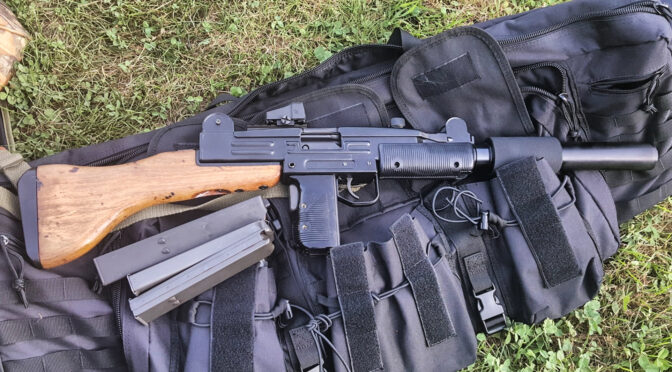
18Israel Weapon Industries (IWI)Israel$400Private (SK Group)Tavor, Galil ACE, Carmel, Arad rifles; Negev LMG; Jericho, Masada pistols; Uzi SMG
19Taurus Armas S.A.Brazil$310Publicly TradedG2c, G3, TX22 pistols; Judge, 856 revolvers; T4 rifle (AR-15 platform)
20Hanwha GroupSouth Korea$300Publicly TradedK9 Thunder SPH (main armament not small arms, but produces related components and ammunition)
21Leonardo S.p.A.Italy$280Publicly Traded (State-influenced)Production of components for Beretta ARX160, Oto Melara naval cannons (not small arms)
22Dasan MachineriesSouth Korea$245Publicly TradedDSAR-15 (AR-15), DAK-47 (AKM) rifles; various OEM firearm components
23Sarsılmaz Silah Sanayi A.Ş.Turkey$220PrivateSAR9 pistol series, SAR 56 assault rifle, KILINÇ 2000 pistol
24IMBELBrazil$200State-OwnedIA2 assault rifle, M973 pistol (1911 variant), FAL rifle (legacy production)
25Vista Outdoor Inc.USA$180Publicly TradedSavage Arms rifles (Axis, 110), Stevens shotguns; Federal, CCI, Speer ammunition
26Saab ABSweden$170Publicly TradedAT4 anti-tank weapon, Carl-Gustaf recoilless rifle (light weapons, not small arms)
27Remington Arms (RemArms)USA$160PrivateModel 870 shotgun, Model 700 rifle
28O.F. Mossberg & SonsUSA$150Private500/590 series shotguns, Patriot rifles, MC2c pistols
29Caracal InternationalUAE$140State-Owned (EDGE Group)CAR 816 rifle, Caracal F pistol, CMP 9 SMG
30Poongsan CorporationSouth Korea$130Publicly TradedExtensive range of small-caliber ammunition (5.56mm, 7.62mm, 9mm)
31Zastava ArmsSerbia$120State-OwnedZPAP M70 rifle (AK variant), M57A pistol, M84 machine gun
32STEYR ARMS GmbHAustria$110PrivateSteyr AUG bullpup rifle, A2 MF pistol, SSG 08 sniper rifle
33Daniel DefenseUSA$100PrivateDDM4 rifle series, DD5 series, DELTA 5 sniper rifle
34Barrett Firearms (NIOA Group)USA/Australia$90PrivateM82/M107.50 BMG rifle, MRAD sniper rifle, REC7 rifle
35Springfield Armory, Inc.USA$85PrivateM1A rifle, Hellcat, XD series pistols, Saint AR-15 rifles
36Fabryka Broni “Łucznik” – RadomPoland$80State-Owned (PGZ)MSBS Grot rifle, Beryl rifle, VIS 100 pistol
37Arsenal JSCoBulgaria$75State-OwnedAR-M1 (AK variant), SLR series rifles, Shipka SMG
38Kimber ManufacturingUSA$70PrivateCustom 1911 pistols, Micro 9 pistols, K6s revolvers
39HS ProduktCroatia$65PrivateHS2000 / Springfield XD pistol series, VHS-2 bullpup rifle
40Česká zbrojovka a.s. (CZ)Czech Republic$60(Subsidiary of Colt CZ Group)P-10, P-09, Shadow 2 pistols; 457 series rimfire rifles
41Cugir Arms FactoryRomania$55State-OwnedWASR-10 (AK variant), PSL sniper rifle, Pistol Mitralieră model 1963/1965
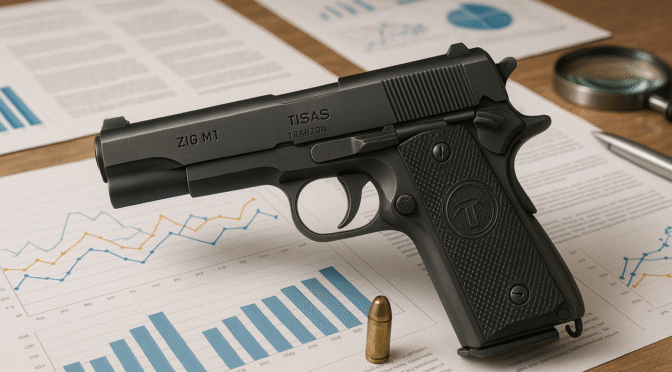
42TİSAŞTurkey$50PrivateZigana, ZIG 14 (1911 variant) pistols
43Norinco International Cooperation Ltd.China$45Publicly Traded (Norinco subsidiary)Export-focused small arms; Type 81, Type 84S rifles
44Schmeisser GmbHGermany$40PrivateAR-15 platform rifles (various models), SLP-9 pistols
45Israel ShipyardsIsrael$35Publicly TradedProduces naval weapon stations, not direct small arms
46Adani Defence & AerospaceIndia$30Publicly TradedTavor (under license), Galil sniper rifle (under license), small arms ammunition
47Denel Land SystemsSouth Africa$25State-OwnedR4 assault rifle, SS-77 machine gun, NTW-20 anti-materiel rifle
48CanikTurkey$20Private (Samsun Yurt Savunma)TP9, METE series pistols
49Angstadt ArmsUSA$15PrivateUDP-9 Pistol Caliber Carbine, SCW-9 Submachine Gun
50Kahr ArmsUSA$12PrivatePM9, CW9, CM9 series of compact pistols

Section 4: Analysis of the Tiers of Production

The global small arms market is not a monolithic entity. The companies that comprise the top 50 can be segmented into distinct strategic tiers based on their corporate structure, market focus, and role within the broader defense-industrial complex. Understanding these tiers provides a more nuanced view of the competitive landscape.

4.1 Tier 1: The Diversified Defense Titans

This tier consists of massive, often state-owned or state-influenced, defense conglomerates for whom small arms are a relatively small but essential part of a comprehensive land warfare portfolio. This group includes entities like Russia’s Rostec (parent of Kalashnikov Concern), China’s NORINCO, and Western giants such as General Dynamics, Rheinmetall AG, and BAE Systems. For these firms, small arms and ammunition production is strategically integrated with their primary business lines of armored vehicles, artillery systems, and defense electronics. Their revenue is driven by large-scale, long-term government contracts to equip national armies.

The recent surge in global defense spending has disproportionately benefited the ammunition divisions of these companies. For example, Rheinmetall’s Weapon and Ammunition division saw its sales soar by 58% in 2024 to €2.78 billion, driven almost entirely by massive orders for artillery shells and other munitions to replenish stocks depleted by aid to Ukraine.13 Similarly, BAE Systems’ Platforms & Services sector, which includes its Radway Green ammunition plant, reported sales of £4.4 billion.14 This intense focus on high-demand munitions represents a significant profit center but also a potential strategic diversion. The urgent need to ramp up ammunition production requires immense capital investment and manufacturing floor space, potentially drawing resources away from long-term research and development in next-generation small arms platforms. This dynamic could create a competitive opening for more specialized firms to innovate and capture market share in the small arms segment while the titans are focused on meeting the exigent demand for munitions.

4.2 Tier 2: The Specialized Firearms Leaders

The second tier is composed of large, often publicly traded or family-owned private companies whose core business is the design, manufacture, and sale of firearms. This group includes iconic names like Italy’s Beretta Holding, Belgium’s FN Browning Group, the Czech-American Colt CZ Group, and the American firms Smith & Wesson and Sturm, Ruger & Co. These companies are masters of a complex balancing act, navigating the profitable but highly volatile civilian consumer market—particularly in the United States—while also competing for stable, long-term military and law enforcement contracts globally.

Their financial performance is a direct reflection of these dual markets. For its 2025 fiscal year, Smith & Wesson reported revenues of $474.7 million, while Sturm, Ruger & Co. posted $535.6 million for its 2024 fiscal year, with both figures heavily influenced by the North American civilian market.15 In contrast, European firms with a stronger military footing reported higher revenues; the FN Browning Group achieved a turnover of €934 million (approximately $1.0 billion) in 2024, and the Colt CZ Group reported revenues of CZK 22.4 billion (approximately $960 million).17 This tier is also seeing a trend of consolidation, exemplified by the acquisition of the historic American brand Colt by the Czech firm Česká zbrojovka Group (CZG), a move designed to achieve greater economies of scale and enhance access to the lucrative U.S. military and civilian markets.19

4.3 Tier 3: The Private Powerhouses and State Champions

This tier includes highly influential companies that operate outside the direct pressures of public stock markets. They are either privately held, like Austria’s Glock Ges.m.b.H., or function as national champions for their respective governments, such as Turkey’s Sarsılmaz and Brazil’s IMBEL. Their ownership structure allows for long-term strategic planning and sustained investment without the need to meet quarterly earnings expectations.

Glock is a prime example of a private powerhouse, having achieved near-total dominance in the global handgun market through its focus on reliability, simplicity, and effective marketing. While private, its 2023 revenue was reported at a substantial €615.7 million.20 State champions like Sarsılmaz serve a dual purpose: equipping their nation’s armed forces and police while also acting as an instrument of industrial policy and foreign influence through exports. Sarsılmaz is Turkey’s largest small arms manufacturer, a key supplier to the Turkish military, and exports to 78 countries.21 Similarly, IMBEL is a critical state-owned asset for Brazil, ensuring a domestic supply of military rifles like the IA2.22

4.4 Tier 4: The Ascendant Exporters

The fourth tier is composed of highly innovative, export-oriented firms from nations that have cultivated advanced domestic defense industries, notably Israel, South Korea, and Turkey. These companies compete on the global stage by offering technologically sophisticated and, crucially, battle-proven weapon systems.

Israel’s industry, represented by firms like Israel Weapon Industries (IWI) and Elbit Systems, leverages the extensive operational experience of the Israel Defense Forces (IDF) as a key selling point for products like the Tavor and Galil ACE rifles.24 Elbit Systems, primarily a defense electronics giant, is also a major producer of small-caliber ammunition and advanced weapon sights, with total revenues of $6.8 billion in 2024.25 South Korean firms are rapidly expanding their global presence. S&T Motiv, producer of the K-series of rifles and machine guns, reported 2024 revenues of KRW 968.9 billion (approximately $700 million), while Dasan Machineries, a key component supplier and rifle manufacturer, had revenues of KRW 337.6 billion (approximately $245 million).27 These ascendant exporters are increasingly winning contracts in Asia, Europe, and the Middle East, challenging the market dominance of traditional American and European suppliers.29

Section 5: The Geographic Centers of Small Arms Manufacturing

The global production of small arms is not evenly distributed; rather, it is concentrated in distinct geographic centers, each with its own unique history, industrial base, and market orientation. These regional dynamics shape the types of weapons produced and the strategies companies employ to compete.

5.1 North America (Primarily USA)

The North American market, dominated by the United States, is unique in its scale and structure. It is home to both the world’s single largest military procurer and its largest and most active civilian firearms market.30 This duality shapes the industry, supporting iconic brands focused on civilian sales like Smith & Wesson and Sturm, Ruger & Co., as well as the U.S.-based manufacturing arms of foreign firms like SIG SAUER and FN Herstal, which compete for both civilian and government contracts.12 The market is heavily influenced by U.S. military procurement cycles, such as the landmark Next Generation Squad Weapon (NGSW) program, which drives industry-wide innovation in new calibers and technologies.11

5.2 Europe (Germany, Italy, Belgium, Austria, etc.)

Europe is a hub of high-quality, precision firearms manufacturing with a deep heritage. Germany is home to Heckler & Koch, renowned for its military and law enforcement rifles and submachine guns. Italy hosts the Beretta Holding group, one of the oldest and largest firearms conglomerates in the world. Belgium is the headquarters of the FN Browning Group, a historic military supplier, while Austria is home to GLOCK, the dominant force in the global pistol market.19 These firms are characterized by their strong global brands and a balanced portfolio that serves military, law enforcement, and premium civilian markets worldwide.

5.3 Russia & China

The small arms industries in Russia and China are characterized by massive, state-owned enterprises designed primarily to equip their vast domestic armies and to advance national strategic interests through arms exports. Russia’s Kalashnikov Concern (part of the Rostec state corporation) and China’s NORINCO and CSGC operate on a scale unmatched by most private firms.33 Their products, particularly the AK rifle family and its Chinese Type 56 derivatives, are the most widely proliferated small arms in history, valued for their ruggedness, reliability, and ease of mass production.35 However, a significant challenge in analyzing these entities is the profound lack of financial transparency, which necessitates careful estimation based on available data.

5.4 The Middle East & Asia (Israel, Turkey, South Korea, etc.)

This diverse region represents the most dynamic and rapidly growing center of small arms innovation and export. A nation’s specific military doctrine and geopolitical environment often directly influence the types of weapons its industry excels at producing. For instance, Israel, facing decades of counter-terrorism and urban warfare, has produced world-class bullpup rifles like the IWI Tavor, which are optimized for close-quarters combat.24 Turkey’s industry, represented by firms like Sarsılmaz, has become a major supplier to NATO allies, producing reliable and cost-effective pistols and rifles.21 South Korea, facing a heavily armed conventional threat, has developed a robust domestic industry with firms like S&T Motiv and Dasan Machineries that are now aggressively and successfully competing for international export contracts.29

Section 6: Strategic Outlook and Future Trajectories

The global small arms industry is at an inflection point, shaped by geopolitical realignment, technological disruption, and evolving market structures. Several key trends will define the competitive landscape in the coming years.

  • Industry Consolidation: The market for legacy firearms brands is maturing, leading to a clear trend of consolidation. The acquisition of Colt by the CZ Group is a prime example, uniting two historic brands to achieve greater economies of scale, combine engineering expertise, and expand global market access, particularly in North America.19 This trend is likely to continue as smaller, historic brands struggle to compete with larger, more diversified firms.
  • The Ammunition Bottleneck: The war in Ukraine has exposed a critical shortfall in Western ammunition production capacity, not only for artillery but also for small-caliber rounds.1 This has created a massive, multi-year demand cycle for ammunition. Companies with significant ammunition manufacturing capabilities—such as Rheinmetall, Beretta (through its acquisition of Ammotec), and Elbit Systems—are poised for sustained revenue growth and will be the focus of significant government investment to expand capacity.13
  • The Dawn of Next-Generation Platforms: The U.S. Army’s selection of SIG Sauer’s platform for the NGSW program marks a pivotal shift in infantry weapon technology. The adoption of an intermediate, high-pressure caliber (6.8mm) and an advanced, integrated fire-control optic signals the future of small arms.11 This move will compel other NATO nations and global competitors to accelerate their own development of next-generation rifles and machine guns capable of defeating advanced body armor at extended ranges.
  • Supply Chain Resilience and “Smart” Systems: The disruptions caused by the COVID-19 pandemic and ongoing geopolitical friction have forced a strategic re-evaluation of globalized supply chains.11 A greater emphasis will be placed on domestic manufacturing and securing reliable sources of raw materials. Concurrently, the integration of advanced electronics, as seen in the NGSW’s fire control unit, is transforming the firearm from a purely mechanical device into a complex weapon system. This evolution will fundamentally alter the competitive landscape. Success will increasingly depend not just on metallurgy and ergonomics, but on software development, sensor integration, and data processing. This technological shift may create opportunities for non-traditional defense companies, particularly those specializing in electronics and software, to enter the small arms market as key technology partners, potentially disrupting the established industry hierarchy.

Appendix: Methodology for Estimating Small Arms Revenue (ESAR)

The ranking and financial figures presented in this report are based on the Estimated 2024 Small Arms Revenue (ESAR) methodology. This proprietary model was developed to create a standardized and objective basis for comparison across a diverse industry that includes publicly traded corporations, state-owned enterprises, and privately held companies with varying levels of financial transparency.

A.1. Principle of Objective Data Prioritization

The ESAR methodology is founded on a hierarchical approach to data quality. It prioritizes official, audited financial documents over all other sources to ensure the highest possible degree of accuracy and reliability.

A.2. Scope Definition

The methodology adheres strictly to the operational definition of “small arms” established in Section 2.1 of this report. Revenue estimates are confined to sales of pistols, revolvers, rifles, carbines, submachine guns, light machine guns, and their direct components and ammunition. Revenue from light weapons, heavy weapons, and other defense systems is excluded.

A.3. Data Collection & Triage Process

A multi-level data collection process is employed to source the most reliable financial information for each company:

  • Level 1 Data (Direct Reporting): For publicly traded companies whose primary business is small arms (e.g., Smith & Wesson, Sturm, Ruger & Co.), the primary sources are their most recent annual reports (Form 10-K filings with the U.S. Securities and Exchange Commission or equivalent international filings). These documents provide audited, consolidated revenue figures that can be used with high confidence.38
  • Level 2 Data (Segmented Reporting): For large, diversified defense conglomerates (e.g., General Dynamics, Rheinmetall AG), the process begins with their annual reports to identify the revenue of the specific business segment that houses small arms and ammunition production (e.g., “Combat Systems” or “Weapon and Ammunition”).13 This segmented revenue figure serves as the baseline for further disaggregation.
  • Level 3 Data (Credible Estimates): For private companies (e.g., Glock, Beretta) and state-owned enterprises where detailed financial reports are not publicly available (e.g., Kalashnikov Concern), data is compiled from a range of credible open sources. These include major financial news outlets (e.g., Forbes), respected industry market intelligence reports, and official company press releases announcing financial results.17

A.4. The Revenue Disaggregation & Estimation Model

The core of the ESAR methodology is the disaggregation of broad revenue figures into small arms-specific estimates:

  • For Level 2 Data: The reported revenue of a conglomerate’s relevant division is analyzed to estimate the percentage attributable to small arms. This is achieved by examining public information on major contracts, product line announcements, and the division’s overall market focus. For example, within General Dynamics’ Combat Systems segment ($9.0 billion in 2024), public announcements of major munitions production awards (over $1.2 billion) are used to build a model that allocates a portion of the remaining revenue to its small arms programs.41 All significant assumptions made during this process are based on the best available open-source intelligence.
  • For Level 3 Data: In cases where no reliable revenue figure can be obtained, a bottom-up estimation is used as a cross-check. This involves using publicly available production data, such as the U.S. Bureau of Alcohol, Tobacco, Firearms and Explosives (ATF) Annual Firearms Manufacturing and Export Report (AFMER), which details the number of firearms produced by type.12 These unit numbers are multiplied by an estimated Average Selling Price (ASP) for the company’s product mix to generate a revenue baseline.

A.5. Standardization and Currency Conversion

All financial data is standardized to the 2024 fiscal year to ensure a true “like-for-like” comparison. Where a company’s fiscal year does not align with the calendar year, data from the most relevant reporting period is used. All revenues reported in local currencies are converted to U.S. Dollars using the International Monetary Fund’s (IMF) average annual market exchange rate for 2024, a standard practice used by leading research institutions like the Stockholm International Peace Research Institute (SIPRI) to ensure consistency.44

A.6. Limitations

This report acknowledges the inherent limitations of this analysis. The global defense industry, particularly in the small arms sector, lacks universal financial reporting standards. The opacity of private firms and state-owned enterprises in non-Western nations necessitates the use of estimation. The ESAR is therefore presented as a robust, analytically sound estimate designed for strategic comparison and market analysis, not as a precise figure auditable to accounting standards.


Please share the link on Facebook, Forums, with colleagues, etc. Your support is much appreciated and if you have any feedback, please email us in**@*********ps.com. If you’d like to request a report or order a reprint, please click here for the corresponding page to open in new tab.


Works Used

  1. The SIPRI Top 100 Arms-producing and Military Services Companies, 2022, accessed September 13, 2025, https://www.sipri.org/sites/default/files/2023-11/fs_2312_top_100_2022.pdf
  2. Drones, AI and robotics challenge order of Top 100 defense firms, accessed September 13, 2025, https://www.defensenews.com/industry/2025/09/02/drones-ai-and-robotics-challenge-order-of-top-100-defense-firms/
  3. World’s top arms producers see revenues rise on the back of wars and regional tensions, accessed September 13, 2025, https://www.sipri.org/media/press-release/2024/worlds-top-arms-producers-see-revenues-rise-back-wars-and-regional-tensions
  4. www.wcoomd.org, accessed September 13, 2025, https://www.wcoomd.org/en/topics/enforcement-and-compliance/activities-and-programmes/security-programme/small-arms-and-light-weapons.aspx?p=1#:~:text=Small%20arms%20and%20light%20weapons%20(SALW)%20are%20defined%20in%20the,the%20action%20of%20an%20explosive.
  5. Small Arms and Light Weapons (SALW) – World Customs Organization, accessed September 13, 2025, https://www.wcoomd.org/en/topics/enforcement-and-compliance/activities-and-programmes/security-programme/small-arms-and-light-weapons.aspx
  6. Small Arms Identification: An Introduction, accessed September 13, 2025, https://www.smallarmssurvey.org/sites/default/files/resources/SAS-HB-06-Weapons-ID-ch1.pdf
  7. Documenting Small Arms and Light Weapons, accessed September 13, 2025, https://www.smallarmssurvey.org/sites/default/files/resources/SAS-IB14-Documenting-Small-Arms.pdf
  8. Small Arms and Light Weapons (SALW) – OSCE, accessed September 13, 2025, https://salw.osce.org/Topics/ViewPage/2-small-arms-and-light-weapons-salw
  9. Topic: Small arms and light weapons (SALW) and mine action (MA) – NATO, accessed September 13, 2025, https://www.nato.int/cps/en/natohq/topics_52142.htm
  10. Rounding out the Gun – Small Arms Survey, accessed September 13, 2025, https://www.smallarmssurvey.org/sites/default/files/resources/Small-Arms-Survey-2005-Chapter-01-EN.pdf
  11. Small Arms Market – Industry Research & Share | 2025 – 2030, accessed September 13, 2025, https://www.mordorintelligence.com/industry-reports/small-arms-market
  12. U.S. Firearms Industry Today — 2023, accessed September 13, 2025, https://shootingindustry.com/discover/u-s-firearms-industry-today-2023/
  13. Transforming Into a Global Defence Powerhouse: Rheinmetall (Germany) – 2024 Performance Review and Growth Outlook, accessed September 13, 2025, https://nordicdefencereview.com/transforming-into-a-global-defence-powerhouse-rheinmetall-germany-2024-performance-review-and-growth-outlook/
  14. BAE Systems reports strong 2024 order backlog, earnings growth – Air Force Technology, accessed September 13, 2025, https://www.airforce-technology.com/news/bae-systems-2024-filings/
  15. Smith & Wesson Brands Full Year 2025 Earnings: Misses Expectations – Simply Wall St, accessed September 13, 2025, https://simplywall.st/stocks/us/consumer-durables/nasdaq-swbi/smith-wesson-brands/news/smith-wesson-brands-full-year-2025-earnings-misses-expectati
  16. STURM, RUGER & COMPANY, INC. – Ruger® Firearms, accessed September 13, 2025, https://ruger.com/corporate/PDF/10K-2024.pdf
  17. medium.com, accessed September 13, 2025, https://medium.com/the-geopolitical-economist/belgiums-fn-herstal-the-134-year-old-arms-giant-powering-nato-s-european-rearmament-7851f175dd2e#:~:text=With%20%E2%82%AC934%20million%20in,reshaping%20the%20continent’s%20military%20landscape
  18. Colt CZ Group SE increased revenues to CZK 22.4 billion in 2024, accessed September 13, 2025, https://www.coltczgroup.com/en/media-press-releases/colt-cz-group-se-increased-revenues-to-czk-224-billion-in-2024
  19. The World’s Biggest Gun Manufacturers – 24/7 Wall St., accessed September 13, 2025, https://247wallst.com/special-report/2023/01/09/the-worlds-largest-gun-makers/
  20. Weapons: Pistol manufacturer Glock with lower sales and profits | blue News – Bluewin, accessed September 13, 2025, https://www.bluewin.ch/en/news/pistol-manufacturer-glock-with-lower-sales-and-profits-2390967.html
  21. Sarsılmaz Arms – Wikipedia, accessed September 13, 2025, https://en.wikipedia.org/wiki/Sars%C4%B1lmaz_Arms
  22. Defense industry of Brazil – Wikipedia, accessed September 13, 2025, https://en.wikipedia.org/wiki/Defense_industry_of_Brazil
  23. Best Handgun Manufacturers in Brazil? Top Suppliers Revealed – Accio, accessed September 13, 2025, https://www.accio.com/supplier/what-is-the-best-handgun-manufacturer-in-brazil
  24. Israel Weapon Industries – Wikipedia, accessed September 13, 2025, https://en.wikipedia.org/wiki/Israel_Weapon_Industries
  25. Israeli arms manufacturer closes UK facility targeted by Palestine Action, accessed September 13, 2025, https://www.theguardian.com/world/2025/sep/06/israeli-arms-manufacturer-elbit-systems-closes-uk-facility-targeted-by-palestine-action
  26. Elbit Systems Land Small Caliber Ammunition Portfolio, accessed September 13, 2025, https://www.elbitsystems.com/sites/default/files/2025-02/catalog-small-caliber-ammunition_14_web_5.pdf
  27. stockanalysis.com, accessed September 13, 2025, https://stockanalysis.com/quote/krx/064960/revenue/#:~:text=SNT%20Motiv%20Revenue&text=This%20brings%20the%20company’s%20revenue,B%2C%20down%20%2D14.73%25.
  28. DASAN Networks (KOSDAQ:039560) Revenue – Stock Analysis, accessed September 13, 2025, https://stockanalysis.com/quote/kosdaq/039560/revenue/
  29. South Korean defense firms report record profits – Defence Blog, accessed September 13, 2025, https://defence-blog.com/south-korean-defense-firms-report-record-profits/
  30. Top Companies List of Small Arms Industry – MarketsandMarkets, accessed September 13, 2025, https://www.marketsandmarkets.com/ResearchInsight/small-arms-market.asp
  31. Overview Investor Relations of H&K AG – Heckler & Koch, accessed September 13, 2025, https://www.heckler-koch.com/en/Investor%20Relations/Overview
  32. Beretta Holding: Strategic Investments Boost Financial Results, accessed September 13, 2025, https://berettaholding.com/beretta-holding-strategic-investments-boost-impressive-financial-results/
  33. Rostec – Wikipedia, accessed September 13, 2025, https://en.wikipedia.org/wiki/Rostec
  34. Norinco – Wikipedia, accessed September 13, 2025, https://en.wikipedia.org/wiki/Norinco
  35. Type 56 assault rifle – Wikipedia, accessed September 13, 2025, https://en.wikipedia.org/wiki/Type_56_assault_rifle
  36. SARSILMAZ – Leading Brand of the Weapon Industry – Gun | Rifle | Bullet, accessed September 13, 2025, https://www.sarsilmaz.com/en
  37. ABOUT US – Alpha Foxtrot, accessed September 13, 2025, https://alphafoxtrot.us/about-us/
  38. Investor Contacts | Smith & Wesson, accessed September 13, 2025, https://ir.smith-wesson.com/ir-resources/contact-ir/
  39. Investor Relations – Ruger® Firearms, accessed September 13, 2025, https://ruger.com/corporate/investor-relations.html
  40. Smith & Wesson Brands, Inc., accessed September 13, 2025, https://ir.smith-wesson.com/
  41. 2024-Annual-Report-General-Dynamics-Corporation.pdf – AWS, accessed September 13, 2025, http://q4live.s22.clientfiles.s3-website-us-east-1.amazonaws.com/891946778/files/doc_financials/2024/ar/2024-Annual-Report-General-Dynamics-Corporation.pdf
  42. www.forbes.com, accessed September 13, 2025, https://www.forbes.com/sites/giacomotognini/2025/03/25/how-this-16th-century-gunmaker-keeps-reinventing-itself/#:~:text=Beretta%20is%20now%20the%20world’s,billion%20in%20revenues%20in%202024.
  43. 2021 Annual Firearms Manufacturers and Export Report (AFMER) – ATF, accessed September 13, 2025, https://www.atf.gov/resource-center/2021-annual-firearms-manufacturers-and-export-report-afmer
  44. Sources and methods – SIPRI, accessed September 13, 2025, https://www.sipri.org/databases/armsindustry/sources-and-methods

Global Market Sentiment and Technical Analysis of Taurus Armas S.A. Current Production Firearms

Taurus Armas S.A. has strategically repositioned itself within the global small arms market, moving from a brand historically burdened by a reputation for inconsistent quality to a significant competitor in the value and mid-tier segments. This transformation has been driven by substantial investment in its U.S. manufacturing capabilities, particularly the establishment of its Bainbridge, Georgia facility in 2019, and a product development strategy focused on feature-rich firearms at highly competitive price points.1

The overall brand sentiment is moderately positive but remains highly polarized. A clear narrative shift is evident in online discussions, where a distinction is frequently made between “old Taurus” and “new Taurus.” This shift is propelled by the market success and critical acclaim of specific recent models. However, the legacy of past quality control (QC) failures continues to exert a significant drag on the brand’s reputation, creating a “trust deficit” that each new product must actively work to overcome.

Key findings from this analysis categorize Taurus’s main product lines as follows:

  • Star Product: The Taurus TX22 series is the brand’s undisputed reputational anchor. It has garnered near-universal praise for its reliability, accuracy, and value, winning industry awards and the loyalty of consumers, including those who are otherwise skeptical of the brand.2 The TX22 serves as a critical “halo” product, demonstrating the company’s capability to produce a class-leading firearm and acting as a gateway for consumers to trust other Taurus offerings.
  • Cash Cow: The G-Series pistols (G2c, G3, G3c) represent the commercial core of Taurus’s modern semi-automatic sales. They are widely praised for their exceptional affordability and comprehensive feature sets, which challenge more expensive competitors.5 However, this line is also the most frequent subject of reliability complaints, particularly concerning ammunition sensitivity with defensive hollow-point rounds, which undermines their primary role as concealed carry weapons.6
  • Question Mark: The GX4 series is Taurus’s strategic entry into the highly profitable micro-compact market. The design is lauded for its excellent ergonomics, class-leading capacity, and competitive features.7 Yet, its launch was marred by reports of QC issues, such as broken firing pins and a safety recall, creating a polarized perception.9 The long-term success of the GX4 is therefore contingent on Taurus’s ability to demonstrate improved manufacturing consistency and rebuild consumer trust in the platform.
  • Legacy Niche: The Taurus Judge remains a high-visibility, high-volume seller, driven by its unique dual-caliber concept.11 It is a powerful marketing tool that appeals to a specific segment of the market. Concurrently, it is widely and severely criticized by the firearm expert and enthusiast community for its compromised ballistic performance, serving as both a commercial success and a source of reputational friction.11
  • New Ventures: The introduction of the premium Executive Grade line of hand-tuned revolvers and the classic Deputy single-action series signals a strategic expansion.67 These moves indicate an ambition to compete not only on value but also in higher-margin and heritage market segments, further challenging the brand’s historical “budget-only” perception.

The strategic outlook for Taurus is cautiously optimistic. The company’s future growth and ability to command higher market share and price points depend entirely on its capacity to translate the design and manufacturing success of standout models like the TX22 into consistent, brand-wide quality control. Overcoming the persistent “trust deficit” remains the primary strategic challenge for the company moving forward.

The Modern Taurus Landscape: A Brand in Transition

Corporate History and Strategic Evolution

Taurus Armas S.A. has a complex and pivotal history that has directly shaped its current market position. Founded in 1939 as a tool and die forging plant in Brazil, the company manufactured its first revolver in 1941.1 The company’s trajectory was significantly altered by two key events. First, in 1970, Bangor Punta, the parent company of Smith & Wesson at the time, purchased a controlling interest in Taurus. This seven-year period resulted in a substantial transfer of technology and manufacturing methodology between the two revolver makers.14

Second, and perhaps more consequentially for its semi-automatic pistol lines, Taurus acquired Beretta’s São Paulo manufacturing plant in 1980. Beretta had established the factory to fulfill a contract with the Brazilian army and, upon the contract’s completion, sold the entire operation—including tooling, drawings, and an experienced workforce—to Taurus.14 This acquisition provided the foundation for the Taurus PT92, a firearm that closely mirrored the Beretta 92 and became a cornerstone of the Taurus catalog for decades.

This history of leveraging the designs and manufacturing infrastructure of established industry leaders allowed Taurus to build a reputation for producing firearms that offered similar features to premium brands at a much lower cost. However, for many years, this value proposition was undermined by persistent reports of poor quality control and unreliable performance.

Acknowledging the need for a fundamental shift, Taurus made a landmark strategic investment by relocating its U.S. operations from Miami, Florida, to a new, 200,000-square-foot facility in Bainbridge, Georgia. This move, completed in 2019, was explicitly aimed at expanding engineering and production capabilities to meet modern consumer expectations and improve quality.1 This event is now the central reference point in public discourse for the brand’s transformation.

The “Two Tauruses” Narrative

The most prevalent theme across global social media and firearm forums is the concept of “two Tauruses.” This narrative creates a clear dividing line in the company’s history, centered on the 2019 move to Georgia.

  • “Old Taurus”: This perception refers to the company’s pre-2019 era, particularly firearms produced in Brazil. This era is associated by many consumers with inconsistent quality control, a higher likelihood of receiving a “lemon,” poor fit and finish, and frustrating customer service experiences with long turnaround times for repairs.15 As one forum user noted, many hold a grudge based on negative experiences with long-discontinued models from decades ago, and “regurgitate their experiences like it happened yesterday”.16 This historical reputation forms the basis of the “trust deficit” the company must contend with.
  • “New Taurus”: This perception encompasses the period since the establishment of the Bainbridge facility. The “new Taurus” is associated with improved innovation, better designs (such as the G3, GX4, and TX22), and a tangible increase in overall quality and reliability.17 The success of these new models has forced even long-time critics to acknowledge a positive change. Many discussions now contain phrases like, “Taurus has honestly stepped their game up so many levels,” and note a “very noticeable step up in quality” over previous generations.8

The existence of this dichotomy demonstrates that while a brand’s reputation has significant inertia, it is not immutable. Tangible improvements in product quality, manufacturing processes, and strategic investment can, over time, shift public perception. Taurus has successfully initiated this shift, but the process is incomplete. The “ghosts” of past failures still haunt consumer perception, meaning the company cannot afford significant QC lapses with new products, as these events disproportionately reinforce the old, negative narrative. The company’s long-standing unqualified lifetime repair policy, first introduced in 1984, remains a critical tool in this environment, serving as a backstop to mitigate the perceived risk for consumers who are still wary of the brand’s historical reputation.14

Analysis of Current Production Pistol Lines

A. The G-Series (G2c, G2s, G3, G3c, G3X, G3XL): The Foundation of the Modern Lineup

The G-Series of polymer-framed, striker-fired pistols constitutes the commercial backbone of Taurus’s semi-automatic offerings. This family includes a wide range of sizes, from the subcompact single-stack G2s and double-stack G2c, to the compact G3c and full-size G3. The line is further diversified by “hybrid” models like the G3X (full-size frame, compact slide) and G3XL (compact frame, full-size slide), as well as the optics-ready G3 Tactical.17 These models are positioned as direct, budget-friendly competitors to established market leaders such as the Glock 19 and SIG Sauer P365 series.

Technical Profile

The G-Series is defined by a feature set that is highly competitive for its price segment. Key characteristics include generous magazine capacities (typically 12+1 for the G3c and 15+1 or 17+1 for the G3), aggressive grip texturing for enhanced control, and a Picatinny accessory rail for mounting lights or lasers.19 A standout feature frequently discussed is the trigger system, which functions as a single-action with a re-strike capability. This allows the shooter to pull the trigger a second time in the event of a light primer strike, a feature typically associated with double-action hammer-fired guns and uncommon in modern striker-fired designs.21

Social Media Sentiment Analysis

The G-Series is one of the most widely discussed product lines from Taurus, generating a high volume of conversation that is decidedly mixed.

Positive Sentiment: The overwhelming driver of positive sentiment is the value proposition. Consumers consistently praise the G-Series for offering a modern, reliable, and feature-rich firearm at a price point that is often hundreds of dollars less than its primary competitors.5 Many users report excellent reliability through thousands of rounds, with some claiming performance on par with their premium firearms. As one user on Reddit stated, “I have 3000 rounds through a G3c. It’s been equally reliable as my G45”.5 The ergonomics are also frequently lauded, with some users finding the grip and trigger to be superior to those of a stock Glock.5

Negative Sentiment: The most significant and damaging criticism leveled against the G-Series is unreliability, specifically with self-defense ammunition. Numerous threads and videos document failures to feed (FTF) and failures to eject (FTE) when using jacketed hollow-point (JHP) rounds.6 One Reddit user detailed an experience where their G3c had a 100% failure rate with two different brands of Hornady defensive ammo, while cycling cheaper full metal jacket (FMJ) training rounds without issue.6 This specific failure mode is a critical flaw for a product line marketed heavily for concealed carry and personal protection. Other negative themes include the perception of “cheap” materials, a long and “mushy” trigger pull, and the general “Taurus lottery” where a consumer might receive a flawless example or a “lemon” requiring warranty service.5

The G-Series is marketed and sold as an affordable tool for everyday carry (EDC) and personal defense. The absolute, non-negotiable requirement for such a tool is its ability to function flawlessly with the defensive ammunition it is intended to carry. The persistent volume of user reports indicating that the G-Series struggles specifically with hollow-point ammunition creates a fundamental conflict. The gun’s primary selling point—affordability for self-defense—is directly challenged by its most commonly reported failure. This forces the consumer into a difficult position: either they must spend a significant amount of money testing various, often expensive, brands of defensive ammunition to find one that functions reliably (thereby eroding the initial cost savings), or they must relegate the firearm to a “range toy” status, unsuitable for its intended defensive purpose. This paradox represents a core vulnerability for Taurus, as it strikes at the heart of the trust required between a user and their life-saving equipment.

B. The GX4 and GX2 Series: The Micro-Compact Contenders

The GX4 series is Taurus’s strategic and aggressive entry into the lucrative and highly competitive micro-compact pistol market, designed to challenge segment leaders like the SIG Sauer P365 and Springfield Armory Hellcat. It has since been joined by the GX2, a derivative model positioned as a more budget-friendly option.72

Technical Profile

The GX4 platform is an all-new design for Taurus, distinct from the G-Series. It is a micro-compact, striker-fired 9mm pistol featuring a slim, 1.08-inch wide frame and a class-leading standard capacity of 11+1 rounds.24 Key modern features include interchangeable backstraps to customize the grip fit, aggressive grip texturing for control, and Glock-pattern sight cuts for aftermarket compatibility.25 The series includes the standard GX4, the longer-slide

GX4XL, and the GX4 Carry, as well as T.O.R.O. (Taurus Optic Ready Option) variants that come factory-milled for micro red dot sights.25 The GX2 shares the same fundamental design but is offered at a lower price point, omitting features like the optics cut and utilizing a tool-based takedown mechanism instead of a lever.73

Social Media Sentiment Analysis

The GX4 has generated significant market buzz, with sentiment that is highly polarized between praise for its design and features, and condemnation for its early quality control issues.

Positive Sentiment: The GX4 is widely praised for its outstanding ergonomics, with many users finding it more comfortable to hold and shoot than its direct competitors.7 The flat-faced trigger is another point of positive feedback, often described as being superior to a stock Glock trigger.8 Its high capacity, combined with a price point significantly below the P365 or Hellcat, makes it an attractive value proposition for consumers looking to enter the micro-compact market.18 Many users report flawless reliability across hundreds or even thousands of rounds, leading some to declare it “an amazingly reliable gun, not just for the price but in general”.8

Negative Sentiment: The launch and early production of the GX4 were plagued by significant and well-documented quality control failures. The most common complaint is the poor durability of the slide finish, which users report scratches and wears with minimal use.8 More serious are the mechanical failures, with multiple users reporting broken firing pins after a few hundred rounds, front sights becoming loose and falling off, and issues with the slide lock.9 The platform was also subject to a safety recall for a “delayed firing” issue, where the gun could discharge seconds after the trigger was pulled.29 These issues, combined with complaints about slow warranty service, have heavily fueled the narrative that Taurus’s quality control has not yet caught up to its design ambitions.10

The development and launch of the GX4 illustrate a recurring pattern for Taurus: aggressive and forward-thinking design outpacing the consistency of production and quality control. The GX4 platform was a clear strategic move to compete on features and innovation in the market’s hottest segment. The design incorporates nearly every feature modern consumers demand—high capacity, optics-readiness, modular ergonomics—at a price that disrupts the established hierarchy. However, the volume of early reports on mechanical failures and recalls suggests that the push to bring the product to market may have outpaced the company’s ability to fully refine its manufacturing processes for an entirely new platform. This indicates a potential disconnect within the organization, where the engineering and design departments are operating at a very high level, while the production and quality assurance departments struggle to maintain consistency. This bottleneck results in “lemons” reaching the market, which severely damages the reputation of an otherwise excellent and well-conceived product.

C. The TX22: A Segment-Defining Success

The Taurus TX22 is a polymer-framed, striker-fired, semi-automatic pistol chambered in.22 LR. Since its introduction, it has become a critical and commercial success, significantly altering the perception of the Taurus brand among many consumers and industry experts.

Technical Profile

The TX22 was engineered to deliver the ergonomics and feel of a modern centerfire duty pistol in a rimfire package. It features a full-size polymer frame, a lightweight anodized aluminum slide, and a class-leading 16-round magazine capacity.2 A key feature is the factory-included threaded barrel adapter, allowing for the easy attachment of suppressors.30 The platform has expanded to include a

Compact model and an optics-ready Competition model. Its performance and feature set led to it being named Guns & Ammo’s 2019 Handgun of the Year.2

Social Media Sentiment Analysis

Unlike the more polarized discussions surrounding Taurus’s centerfire pistols, the sentiment for the TX22 is overwhelmingly and consistently positive.

Positive Sentiment: The TX22 is almost universally acclaimed for its exceptional reliability, a trait that is particularly noteworthy for a semi-automatic rimfire pistol, a category of firearms notoriously prone to ammunition-related malfunctions.3 Users across countless forums and videos praise it for eating almost any type of.22 LR ammunition without issue. It is also lauded for its accuracy, excellent ergonomics that serve as a great training tool for centerfire pistols, and a surprisingly good trigger.33 Many gun owners who are otherwise vocal critics of Taurus make a specific exception for the TX22, with comments like, “Taurus gets some hate because some of their guns are genuinely garbage. The TX22 is not one of those guns”.4 Its combination of performance, features, and low price point leads many to call it the best value and one of the best overall pistols in its class.32

Negative Sentiment: Negative commentary on the TX22 is remarkably scarce. When issues are mentioned, they are typically minor and common to the rimfire platform itself. These include ammunition sensitivity (with a preference for higher-velocity loads like CCI Mini-Mags) and the potential for “rimlock” in the magazine if rounds are not loaded carefully.4 A few reports of chattered rifling in the barrels of very early production models exist, but this appears to have been an isolated issue that was subsequently resolved.4

The phenomenal success of the TX22 serves a strategic purpose for Taurus that extends far beyond the sales figures of a single.22 pistol. It acts as a reputational “beachhead.” A brand’s reputation is the sum of perceptions across its entire product portfolio. Given Taurus’s historically troubled reputation, the TX22’s undeniable success provides a powerful and irrefutable counter-narrative. It proves to the market that Taurus possesses the engineering and manufacturing capability to produce a high-quality, reliable, and class-leading firearm. This single product forces even the most ardent brand skeptics to concede a point, shifting the conversation from a blanket dismissal of the company to a more nuanced discussion about which specific models are good. In this way, the TX22 functions as a gateway product, building a foundation of trust that may encourage a consumer to take a chance on one of the company’s centerfire offerings. Its value to the brand’s rehabilitation is therefore immeasurable.

D. Specialty & Legacy Pistols (TH-Series, TS9, 1911, PT92, 22 TUC, Spectrum)

Beyond the flagship polymer striker-fired lines, Taurus maintains a diverse catalog of specialty and legacy pistols that cater to different market segments.

  • Taurus PT92: As the direct descendant of the Beretta tooling acquired in 1980, the PT92 is one of Taurus’s longest-running and most respected models.14 It is a full-sized, hammer-fired DA/SA pistol with an aluminum frame. It is generally well-regarded for its reliability, which is often attributed to its proven Beretta design. Its most notable departure from the Beretta 92FS is the frame-mounted safety/decocker, which many users prefer over the Beretta’s slide-mounted safety.38 While some critics note that the fit and finish may not be on par with its Italian counterpart, it is widely considered a solid and dependable firearm.16 The “Metallic” series also includes variants like the
    PT57 (.32 ACP), PT58 (.380 ACP), and PT917 (compact 9mm) based on this design.27
  • Taurus 1911 Series: Taurus offers a line of 1911 pistols in various sizes (Full-Size, Commander, Officer) and calibers (.45 ACP, 9mm) that are positioned as entry-level options in the 1911 market.27 These pistols are praised for including features typically found on more expensive models, such as Novak-style sights, extended beavertails, and skeletonized triggers, at a very competitive price.39 Owners generally report good accuracy and reliability, making it a popular choice for those wanting to own a 1911 without a significant financial investment.42
  • TH-Series: The TH-series (available in 9mm,.40 S&W, 10mm Auto, and.45 ACP) is a line of polymer-framed, hammer-fired DA/SA pistols, offered in full-size and compact (THc) versions.76 It occupies a niche in a market dominated by striker-fired handguns. The primary appeal is for users who prefer the DA/SA action with a manual safety/decocker.43 Social media sentiment is mixed. While some appreciate the ergonomics and the DA/SA system, the series is also subject to complaints about a heavy double-action trigger pull, and reports of reliability issues such as failures to feed and magazines dropping unintentionally during firing.45
  • Taurus TS9: The TS9 is a full-size, polymer-framed, striker-fired pistol that was developed for and adopted by Brazilian military and law enforcement units.48 It has recently become available in the U.S. market, often through government contract overruns. Its service history lends it a degree of credibility. While not as widely discussed as the G-Series, users who have purchased the TS9 generally report it to be a robust, reliable, and accurate duty-style pistol with good ergonomics.50 A compact
    TS9c is also produced.27
  • Taurus 22 TUC: A recent addition, the 22 TUC is a micro-compact, double-action-only.22 LR pistol designed for deep concealment and ease of use.77 Its most notable feature is a tip-up barrel, which allows a round to be loaded directly into the chamber without needing to rack the slide, making it an appealing option for users with limited hand strength.79
  • Taurus Spectrum: The Spectrum is a.380 ACP micro-compact pistol that was a precursor to the GX4 line. It was noted for its innovative use of soft-touch polymer overmolds on the grip and slide, allowing for a high degree of color customization.80 While praised for its ergonomics, it received mixed reviews regarding reliability.

Analysis of Current Production Revolver Lines

A. The Judge & Raging Judge: The Polarizing Powerhouse

The Taurus Judge is arguably the company’s most famous and most controversial product. It is a large-frame revolver defined by its unique ability to chamber both.45 Colt pistol cartridges and.410 bore shotshells.

Technical Profile

Based on the Taurus Tracker frame, the Judge is a five-shot (in most models) double-action/single-action revolver available in various barrel lengths, finishes, and frame materials, including a lighter polymer “Public Defender” model.51 The critical design element is its elongated cylinder (to accommodate 2.5-inch or 3-inch shotshells) and its shallow barrel rifling. This rifling is a legal necessity to classify the firearm as a handgun rather than a short-barreled shotgun under U.S. federal law, but it is also a significant compromise intended to stabilize a.45 Colt bullet without excessively spinning and dispersing a column of shot.52 The

Raging Judge variant is built on the larger Raging Bull frame and is capable of handling the more powerful.454 Casull cartridge in addition to.45 Colt and.410 shells.52 A new

Judge Home Defender model features a 13-inch barrel, forend, and optics rail for improved ballistics and usability.81

Social Media Sentiment Analysis

No other Taurus firearm elicits such a deeply divided and passionate response as the Judge.

Positive/Neutral Sentiment: The Judge’s commercial success is undeniable; for years it has been one of Taurus’s top-selling firearms.11 Its popularity is driven by a powerful and easily understood marketing concept: a handgun that is also a shotgun. This appeals to consumers seeking a versatile firearm for home defense, vehicle carry, or as a “snake gun” for outdoor use.12 It is frequently described as a “fun gun” to shoot, and its intimidating appearance is often cited as a positive attribute for a defensive weapon.55 The newer Home Defender variant has been praised for its improved accuracy and patterning due to its longer barrel.82

Negative Sentiment: Among experienced firearms enthusiasts, experts, and reviewers, the Judge is almost universally condemned. The core criticism is that the design compromises render it ineffective with both types of ammunition. The shallow rifling provides inadequate stabilization for the.45 Colt bullet, leading to poor accuracy beyond very short distances.11 Simultaneously, the rifling imparts a spin on the shotshell’s wad and shot column, causing a rapid, donut-shaped dispersion of the pellets. This results in an extremely limited effective range with buckshot (often cited as only a few yards) and makes birdshot nearly useless for anything but snakes at point-blank range.12 For these reasons, it is frequently labeled a “gimmick” that is a “master of none”.12 Reliability has also been questioned, with reports of broken cylinder locks and difficulty ejecting spent shotshells.6

The enduring success of the Taurus Judge is a classic case of marketing triumph over performance reality. The core concept of a “shotgun in a handgun” is incredibly potent and appeals directly to a segment of the market that prioritizes perceived power and versatility over nuanced ballistic performance. While objective testing and expert analysis consistently demonstrate that the Judge is a compromised platform that performs poorly as both a pistol and a shotgun, this reality has had little impact on its commercial success. This highlights a significant disconnect between the enthusiast/expert community and the broader consumer base. For Taurus, the Judge is both a massive commercial asset and a source of reputational friction, as it reinforces the idea among experts that the company sometimes prioritizes novel concepts over practical effectiveness.

B. Raging Hunter & Large-Frame Revolvers

This category includes Taurus’s most powerful handguns, designed primarily for big-game hunting and protection against dangerous game. The flagship is the Raging Hunter series, complemented by legacy models like the Raging Bull and Model 44.

Technical Profile

These are large to extra-large frame revolvers chambered in powerful magnum cartridges, including.357 Magnum,.44 Magnum,.454 Casull, and.460 S&W Magnum.53 A defining feature of the Raging Hunter is its distinctive angular barrel shroud, which reduces weight, and its factory-tuned porting and gas expansion chamber, designed to significantly reduce muzzle lift and felt recoil.56 Most models feature Picatinny rails for mounting optics, cushioned grips, and a dual-lockup cylinder for strength and safety with high-pressure loads.56

Social Media Sentiment Analysis

Sentiment for Taurus’s large-frame hunting revolvers is predominantly positive. The Raging Hunter, in particular, has been very well-received, earning the 2019 American Hunter Handgun of the Year Golden Bullseye Award, which lends it significant market credibility.56 Owners praise these revolvers for their accuracy, robust construction, and effective recoil mitigation, which makes shooting powerful magnum loads manageable and comfortable.16 They are seen as providing excellent value, offering performance and features comparable to much more expensive revolvers from competitors like Smith & Wesson and Ruger.

C. Small & Medium-Frame Revolvers

This product category represents Taurus’s historical foundation and continues to be a core part of its business. These revolvers are primarily designed for concealed carry (CCW) and personal defense.

Technical Profile

This broad category includes numerous models built on small and medium frames. Prominent examples include the Taurus 856 (a 6-shot,.38 Special +P revolver), the Taurus 605 (a 5-shot,.357 Magnum revolver), the Tracker series (versatile revolvers in various calibers), the Taurus 905 (a 5-shot, 9mm revolver that uses stellar clips), the Model 82 and Model 65/66 (classic.38/.357 duty revolvers), and the Model 942 (.22LR/.22WMR trainer).83 These firearms are typically offered in various barrel lengths (most commonly 2-inch and 3-inch for concealed carry), finishes, and with options like exposed, shrouded, or concealed hammers.61 The

Model 692 offers multi-caliber capability with interchangeable cylinders for.357 Magnum/.38 Special and 9mm Luger.86

Social Media Sentiment Analysis

The general perception in online communities is that Taurus’s revolvers are, on the whole, more consistently reliable than their semi-automatic pistols, with the exception of standout models like the TX22 and PT92.16 The 856 and 605 are popular choices for budget-conscious individuals seeking a simple, reliable CCW firearm. The addition of a sixth round in the 856, in a cylinder not much larger than a traditional 5-shot J-frame, is a frequently praised feature.63

However, these revolvers are not immune to the quality control issues that have historically affected the brand. The most common complaints reported in forums include cylinder binding, where the cylinder becomes difficult to rotate; timing issues, where the cylinder fails to properly align with the barrel; and various cosmetic flaws and blemishes in the finish.16 One user on YouTube documented a series of issues, including a broken firing pin on an 856 after minimal use and a sticky ejector rod on a brand new 905, necessitating factory service.66 While many owners report flawless performance, the persistence of these types of complaints reinforces the “Taurus lottery” narrative.

D. Premium & Classic Revolvers (Executive Grade, Deputy)

Recently, Taurus has expanded its revolver offerings into two new strategic directions: a premium, hand-finished line and a classic, single-action series.

  • Executive Grade Series: This line includes upgraded, hand-tuned versions of popular models like the Judge, 856, and 605.55 These revolvers are assembled by dedicated gunsmiths and feature hand-polished satin finishes, improved triggers, presentation-grade wood grips, and premium travel cases.55 Social media sentiment is very positive, with users praising the exceptional fit, finish, and smooth trigger pulls, viewing them as a significant step up in quality that competes with more established premium brands, albeit at a higher price point.88
  • Deputy Series: Marking a new venture for the company, the Deputy is a single-action revolver designed to evoke the classic firearms of the Old West.68 Chambered in.45 Colt and.357 Magnum, it features a traditional hammer, fixed sights, and a polished black finish.90 As a new product line, long-term sentiment is still developing, but it represents Taurus’s entry into the popular “cowboy action” and heritage firearms market.

Strategic Insights and Market Outlook

Mapping the Sentiment Shift

The comprehensive analysis of global social media discussions confirms that a genuine and significant positive shift in consumer sentiment toward Taurus is underway. This is not a uniform, brand-wide phenomenon but is instead highly concentrated around specific, successful product launches. The near-universal acclaim for the TX22 has acted as a powerful catalyst, forcing a market-wide reappraisal of the brand’s capabilities. The commercial success of the value-oriented G-Series and the feature-rich GX4 has further solidified this trend, demonstrating that Taurus can compete effectively on design and innovation. The brand’s revolver lines largely maintain their long-held reputation as solid, budget-friendly workhorses, while new additions like the Executive Grade and Deputy series show a willingness to expand into new market tiers.

Core Strengths and Persistent Vulnerabilities

Taurus’s current market position is defined by a clear set of strengths and a critical, persistent vulnerability.

Strengths:

  1. Unmatched Value Proposition: Taurus’s primary competitive advantage is its ability to offer firearms with features, capacity, and modern ergonomics at a price point that competitors struggle to match. This price-to-feature ratio is the single biggest driver of positive sentiment and purchase consideration.
  2. Market-Aware Innovation: The company has demonstrated an adept ability to read market trends and develop products that meet consumer demand, such as the GX4 in the micro-compact space, the award-winning TX22 in the training/plinking category, and the premium Executive Grade for discerning buyers.
  3. Manufacturing Scale and U.S. Foothold: With large-scale production facilities in both Brazil and the United States, Taurus has the capacity to meet high market demand and benefits from the “Made in USA” appeal of its Georgia-produced firearms.1

Vulnerabilities:

  1. Inconsistent Quality Control: This remains the brand’s Achilles’ heel. The “Taurus lottery” perception—the idea that a consumer might receive a flawless firearm or a dysfunctional “lemon”—is a powerful deterrent for risk-averse buyers, particularly in the self-defense market where reliability is paramount. Reports of broken parts, functional failures with specific ammunition types, and cosmetic flaws continue to surface across all product lines, undermining the progress made in design and innovation.6
  2. The “Trust Deficit”: Stemming from decades of inconsistent QC, a significant portion of the market still harbors a deep-seated distrust of the brand. This forces Taurus to perpetually prove itself with each new product and makes the brand highly susceptible to reputational damage from any new recalls or high-profile failures.
  3. Customer Service Perception: While reports suggest improvement, the perception of slow and difficult warranty service lingers.16 In an environment where competitors like Ruger are renowned for their “no-questions-asked” customer service, any friction in the warranty process can amplify a buyer’s initial hesitation.

Competitive Positioning and Final Assessment

Taurus has successfully solidified its position as the dominant force in the “value” segment of the global firearms market. It is no longer just a budget alternative but a genuine competitor that challenges more expensive brands on features, ergonomics, and capacity. The company’s trajectory is undeniably positive, fueled by smart product development and a clear commitment to improving its manufacturing base.

However, Taurus has not yet fully transitioned from a brand that competes on price to one that competes on trust. The path to achieving this lies not in further innovation, but in the relentless and monotonous pursuit of manufacturing excellence and consistency. The company must strive to eliminate the “lottery” factor from the consumer experience. Continued investment in its U.S.-based manufacturing and, most critically, in stringent, transparent, and consistent quality control protocols, is the only way for Taurus to fully shed the last vestiges of its historical reputation and be considered a peer to the industry’s most trusted names.

Appendices

Appendix A: Technical Specifications of Current Taurus Firearms

Table 1: Technical Specifications

ModelSeriesCaliber(s)CapacityAction TypeFrame SizeBarrel Length (in)Overall Length (in)Weight (oz)
G2cG-Series9mm Luger /.40 S&W12 / 10SA w/ RestrikeCompact3.26.322
G2sG-Series9mm Luger7SA w/ RestrikeCompact3.26.320
G3G-Series9mm Luger15 / 17SA w/ RestrikeFull-Size4.07.2824.8
G3cG-Series9mm Luger /.40 S&W12 / 10SA w/ RestrikeCompact3.26.322
G3XG-Series9mm Luger15SA w/ RestrikeHybrid3.26.322.6
G3XLG-Series9mm Luger12SA w/ RestrikeHybrid4.07.2824.4
GX2GX-Series9mm Luger13SAOCompact3.386.1919.0
GX4GX4-Series9mm Luger11 / 13SAOMicro-Compact3.066.0518.5
GX4 CarryGX4-Series9mm Luger15SAOCompact3.76.5621.5
GX4XLGX4-Series9mm Luger11 / 13SAOMicro-Compact3.76.4320
TX22TX-Series.22 LR16SAOFull-Size4.17.0617.3
TX22 CompactTX-Series.22 LR13SAOCompact3.66.716.5
22 TUCSpecialty.22 LR9DAOMicro-Compact2.55.1210.5
TH9 / TH40TH-Series9mm Luger /.40 S&W17 / 15DA/SAFull-Size4.277.7228.2
TH9c / TH40cTH-Series9mm Luger /.40 S&W13 / 11DA/SACompact3.546.8525
TH10TH-Series10mm Auto15DA/SAFull-Size4.257.828.5
TS9TS-Series9mm Luger17SAOFull-Size4.07.2529.2
1911 Full-Size1911-Series.45 ACP / 9mm Luger8 / 9SAOFull-Size5.08.7538
1911 Commander1911-Series.45 ACP8SAOFull-Size4.28.038
PT92Metallic9mm Luger17DA/SAFull-Size5.08.534
PT58Metallic.380 ACP15DA/SACarry4.0
JudgeJudge-Series.45 Colt /.410 Bore5DA/SACompact3.09.529
Raging JudgeJudge-Series.454 Casull /.45 Colt /.4106DA/SALarge3.0 / 6.510.2 / 13.660.7 / 73
Raging HunterRaging-Series.357 Mag /.44 Mag /.454 Casull7 / 6 / 5DA/SALarge / XL5.12 – 8.3710.9 – 15.049 – 55
Raging BullRaging-Series.44 Magnum6DA/SALarge6.512.053
Tracker 44Tracker-Series.44 Magnum5DA/SAMedium4.09.035
856Small Frame.38 Special +P6DA/SASmall2.0 / 3.06.55 / 7.522 – 25
605Small Frame.357 Magnum5DA/SASmall2.0 / 3.06.5 / 7.524
65 / 66Medium Frame.357 Magnum6 / 7DA/SAMedium4.0 / 6.0– / 12.25– / 40
82Medium Frame.38 Special +P6DA/SAMedium4.030
608Medium Frame.357 Magnum8DA/SAMedium4.0 / 6.59.67 / 11.6745 / 51
DeputySingle Action.45 Colt /.357 Magnum6SAOMedium4.75 / 5.510.25 / 11.0436.4 / 41.6

Note: Specifications represent common configurations and may vary by specific model variant. Weight is unloaded.

Appendix B: Social Media Sentiment Analysis Scores

Table 2: Social Media Sentiment Scores

ModelTMI (Taurus Mentions Index)% Positive Mentions% Negative MentionsKey Positive ThemesKey Negative Themes
G3c100 (Baseline)65%35%Value, Price, Capacity, ErgonomicsFailure to Feed (JHP), QC Issues, “Cheap” Feel
GX49555%45%Ergonomics, Capacity, Trigger, ValueQC Issues, Broken Parts, Recalls, Poor Finish
TX228595%5%Reliability, Accuracy, Fun, Value, CapacityAmmo Sensitivity, Magazine Loading (Rimlock)
Judge11040%60%“Fun Gun,” Versatility, Intimidating Look“Gimmick,” Poor Accuracy, Ineffective Patterning
G37070%30%Price, Reliability (FMJ), Full-Size GripFailure to Feed (JHP), Trigger Feel
8565075%25%6-Round Capacity, Price, ConcealabilityQC Issues, Cylinder Binding, Finish Flaws
G2c4560%40%Price, Compact Size, Proven DesignHeavy Trigger, Reliability Concerns, Outdated
Raging Hunter4090%10%Accuracy, Recoil Mitigation, Value, FeaturesWeight, Size
1911 Series3585%15%Value, Features for Price, ReliabilityFit and Finish vs. Premium Brands
PT923080%20%Reliability, Beretta Heritage, Frame Safety“Gritty” Action, Outdated Design
TH Series2050%50%DA/SA Action, ErgonomicsHeavy DA Trigger, Reliability Issues
Executive Grade1598%2%Fit/Finish, Smooth Trigger, Premium FeelPrice, Grip/Speedloader Issues
GX21570%30%Extreme Value, Reliability, SimplicityLacks Features (Optics Cut), “Cheaper” GX4
Deputy580%20%Classic Design, Value, Transfer Bar SafetyToo New for Widespread Feedback

Appendix C: Sentiment Analysis Methodology

This report utilizes a proprietary methodology to quantify and analyze qualitative data gathered from global social media sources. The goal is to provide a standardized, data-driven assessment of public perception for each current production Taurus firearm.

1. Data Sourcing and Collection

Data was collected from a wide range of public, open-source platforms to ensure a comprehensive global perspective. The collection period covers the 24 months prior to the publication of this report to ensure relevance to current market sentiment and production models.

  • Primary Platforms:
  • North America: Reddit (subreddits: r/guns, r/CCW, r/Taurus_firearms, r/liberalgunowners), YouTube (gun reviews, user videos), and major English-language firearms forums (e.g., The Armory Life Forum, TaurusArmed.net).
  • Brazil & South America: YouTube (reviews in Portuguese), and relevant Portuguese-language firearms forums.
  • Europe: Major distributors (e.g., Frankonia) and English/German language forums.
  • Search Queries: Automated and manual searches were conducted using a variety of keywords in multiple languages. Examples include:
  • English: “Taurus [model] review,” “Taurus [model] problems,” “Taurus [model] reliability,” “Is Taurus [model] good?”
  • Portuguese: “avaliação Taurus [modelo],” “problemas com Taurus [modelo],” “Taurus [modelo] é boa?”
  • German: “Taurus [modell] test,” “Taurus [modell] probleme.”
  • Data Filtering: All collected data points (posts, comments, video transcripts) were filtered to remove duplicate content, spam, and irrelevant mentions. Only discussions directly pertaining to a specific, identifiable Taurus model were included in the final analysis.

2. Sentiment Scoring

A hybrid model of automated lexicon-based analysis and manual verification was used to score each relevant mention.

  • Lexicon Development: A comprehensive lexicon of positive and negative keywords and phrases was developed.
  • Positive Keywords: “reliable,” “accurate,” “great trigger,” “good value,” “flawless,” “eats everything,” “no issues,” “impressed,” “home run.”
  • Negative Keywords: “failure to feed,” “FTF,” “jam,” “stovepipe,” “unreliable,” “lemon,” “bad QC,” “recall,” “broke,” “light strike.”
  • Scoring Process:
  1. Each unique mention (e.g., a single Reddit comment) was parsed for keywords from the lexicon.
  2. A score was assigned: +1 for a clearly positive mention, -1 for a clearly negative mention, and 0 for neutral mentions (e.g., news reports, simple questions without an opinion).
  3. A random 10% sample of automated scores was manually reviewed by an analyst to ensure accuracy and account for sarcasm, context, and nuance.
  • Calculation of Percentages:
  • The percentage of positive and negative mentions for each model was calculated based on the total number of scored positive and negative mentions. Neutral mentions were excluded from this specific calculation to provide a clearer picture of the positive-vs-negative debate.
  • Positive Percentage=Total Positive Mentions+Total Negative MentionsTotal Positive Mentions​×100
  • Negative Percentage=Total Positive Mentions+Total Negative MentionsTotal Negative Mentions​×100

3. Taurus Mentions Index (TMI)

To gauge the relative volume of discussion and market “buzz” for each model, the proprietary Taurus Mentions Index (TMI) was developed.

  • Baseline Model: The Taurus G3c was selected as the baseline model (TMI=100) due to its high sales volume, market position as a flagship compact model, and consistently high level of online discussion.
  • TMI Formula: The TMI for any given model is its total number of mentions (positive, negative, and neutral) expressed as a percentage of the total mentions for the baseline G3c.
  • TMIModel X​=Total MentionsG3c​Total MentionsModel X​​×100
  • Interpretation: A TMI score of 110, as seen with the Judge, indicates that it is discussed 10% more frequently than the G3c. A TMI score of 40, as seen with the Raging Hunter, indicates it is discussed with only 40% of the frequency of the G3c. This index normalizes the data, allowing for a direct comparison of which products are currently dominating the public conversation.


Please share the link on Facebook, Forums, with colleagues, etc. Your support is much appreciated and if you have any feedback, please email us in**@*********ps.com. If you’d like to request a report or order a reprint, please click here for the corresponding page to open in new tab.


Sources Cited

  1. Company History | Taurus USA, accessed September 13, 2025, https://www.taurususa.com/history/
  2. Taurus TX22 – Wikipedia, accessed September 13, 2025, https://en.wikipedia.org/wiki/Taurus_TX22
  3. Taurus TX22 – 4 Years & Thousands of Rounds Fired – Shooting Review – YouTube, accessed September 13, 2025, https://www.youtube.com/watch?v=mTL8L7XwtdQ
  4. Taurus TX22 : r/liberalgunowners – Reddit, accessed September 13, 2025, https://www.reddit.com/r/liberalgunowners/comments/1f6lcnu/taurus_tx22/
  5. Pro and Con for Taurus G3C : r/CCW – Reddit, accessed September 13, 2025, https://www.reddit.com/r/CCW/comments/1an3qz8/pro_and_con_for_taurus_g3c/
  6. Taurus G3C shit the bed with defense ammo. What now? : r/liberalgunowners – Reddit, accessed September 13, 2025, https://www.reddit.com/r/liberalgunowners/comments/1h6vr7g/taurus_g3c_shit_the_bed_with_defense_ammo_what_now/
  7. Lipsey’s Video Review: Taurus GX4 Carry T.O.R.O. 9mm – YouTube, accessed September 13, 2025, https://www.youtube.com/watch?v=CAvIxiiY6E8
  8. What do y’all think about the Taurus GX4? : r/CCW – Reddit, accessed September 13, 2025, https://www.reddit.com/r/CCW/comments/1epdxbm/what_do_yall_think_about_the_taurus_gx4/
  9. Any fellow GX4 Owners? : r/CCW – Reddit, accessed September 13, 2025, https://www.reddit.com/r/CCW/comments/1jtauvj/any_fellow_gx4_owners/
  10. Gx4 reliability? : r/CCW – Reddit, accessed September 13, 2025, https://www.reddit.com/r/CCW/comments/1j6yhiv/gx4_reliability/
  11. Taurus Judge Review 2025: The Verdict Is In! – Gun University, accessed September 13, 2025, https://gununiversity.com/taurus-judge-review/
  12. What do you think of these revolvers (Taurus Judge and S&W Governor) that can fire shotgun shells (.410 bore) and some other cartridges like .45 colt and .45 ACP for the ZA? How useful would they be? : r/ZombieSurvivalTactics – Reddit, accessed September 13, 2025, https://www.reddit.com/r/ZombieSurvivalTactics/comments/1k7i5ck/what_do_you_think_of_these_revolvers_taurus_judge/
  13. Taurus Armas – Wikipedia, accessed September 13, 2025, https://en.wikipedia.org/wiki/Taurus_Armas
  14. Company Information – Taurus Holdings, Inc., accessed September 13, 2025, https://www.taurususa.com/company/about-us/
  15. Why the hate for Taurus? : r/CCW – Reddit, accessed September 13, 2025, https://www.reddit.com/r/CCW/comments/1agmb5o/why_the_hate_for_taurus/
  16. “But it’s a Taurus, it couldn’t last… | The Armory Life Forum, accessed September 13, 2025, https://www.thearmorylife.com/forum/threads/but-its-a-taurus-it-couldnt-last.18282/
  17. Taurus G3C Review for Everyday Carry – Ammunition Depot, accessed September 13, 2025, https://www.ammunitiondepot.com/blog/the-taurus-g3c-review
  18. Taurus GX4 Review: Detailed Analysis with Photos – Clinger Holsters, accessed September 13, 2025, https://clingerholsters.com/blogs/firearm-reviews/taurus-gx4-review-with-pictures
  19. Taurus G3, accessed September 13, 2025, https://www.taurususa.com/product/pistols/taurus-g3/taurus-r-g3-matte-stainless-tan-9mm-luger-full-size-17-rds-steel-sights/
  20. Matte Black / Gray 9mm Luger Compact 12 Rds. – Taurus G2c – Taurus USA, accessed September 13, 2025, https://www.taurususa.com/product/pistols/taurus-g2/taurus-r-g2c-matte-black-gray-9mm-luger-compact-12-rds/
  21. Matte Black 40 S&W Compact 10 Rds. – Taurus G2c – Taurus USA, accessed September 13, 2025, https://www.taurususa.com/product/pistols/taurus-g2/taurus-r-g2c-matte-black-40-s-w-compact-10-rds/
  22. Taurus G2c – Taurus USA, accessed September 13, 2025, https://www.taurususa.com/product/pistols/taurus-g2/taurus-r-g2c-matte-black-9mm-luger-compact-10-rds/
  23. Taurus G2C 9mm Pistol – Academy Sports, accessed September 13, 2025, https://www.academy.com/p/taurus-g2c-9mm-pistol
  24. Taurus USA – Award Winning Pistols & Revolvers, accessed September 13, 2025, https://www.taurususa.com/
  25. Taurus GX4, accessed September 13, 2025, https://www.taurususa.com/product/pistols/taurus-gx4/taurus-gx4-tm-black-9mm-luger-micro-compact-11-rds/
  26. Thoughts on Taurus GX2/GX4 – Guns & Gear – USCCA Community, accessed September 13, 2025, https://community.usconcealedcarry.com/t/thoughts-on-taurus-gx2-gx4/118861
  27. Pistols – Taurus Export, accessed September 13, 2025, https://www.taurusexport.com/en/products/pistols
  28. Rifleman Review: Taurus GX4 T.O.R.O. – YouTube, accessed September 13, 2025, https://www.youtube.com/watch?v=79dxkksGutA
  29. Got myself a Taurus GX4 Carry : r/concealedcarry – Reddit, accessed September 13, 2025, https://www.reddit.com/r/concealedcarry/comments/1j3gm9c/got_myself_a_taurus_gx4_carry/
  30. TaurusTX 22 – Taurus USA, accessed September 13, 2025, https://www.taurususa.com/product/pistols/taurustx-22/taurustx-tm-22-hard-anodized-black-22-lr-black-polymer-frame-16-round-non-manual-safety/
  31. Taurus TX22 – Full Review – YouTube, accessed September 13, 2025, https://www.youtube.com/watch?v=SEYPwpy779w
  32. Taurus TX22 Compact Review: The New Rimfire Champ? – American Firearms, accessed September 13, 2025, https://www.americanfirearms.org/taurus-tx22-compact-review/
  33. Taurus TX22 Review | The Armory Life Forum, accessed September 13, 2025, https://www.thearmorylife.com/forum/threads/taurus-tx22-review.4637/
  34. Taurus TX22 Review: Hands-On Testing a .22 LR Super Plinker – ProArmory, accessed September 13, 2025, https://proarmory.com/blog/taurus-tx22-review/
  35. Taurus TX22 Review – Shooting Times, accessed September 13, 2025, https://www.shootingtimes.com/editorial/taurus-tx22-review/376181
  36. Issues with Taurus TX22 : r/liberalgunowners – Reddit, accessed September 13, 2025, https://www.reddit.com/r/liberalgunowners/comments/1kfvt3n/issues_with_taurus_tx22/
  37. Taurus PT92 – Wikipedia, accessed September 13, 2025, https://en.wikipedia.org/wiki/Taurus_PT92
  38. Taurus 92 | Full-Size 9x19mm DA/SA, accessed September 13, 2025, https://www.taurususa.com/product/pistols/taurus-92/taurus-r-92-matte-black-9mm-luger-full-size-17-rds/
  39. Taurus 1911 – Commander 45 ACP Matte Black, accessed September 13, 2025, https://www.taurususa.com/product/pistols/taurus-1911/taurus-1911-tm-commander-45-acp-matte-black/
  40. 9mm Luger Matte Black Full Size – Taurus 1911 – Taurus USA, accessed September 13, 2025, https://www.taurususa.com/product/pistols/taurus-1911/taurus-1911-tm-9mm-luger-matte-black-full-size/
  41. Officer 45 ACP Matte Black Compact – Taurus 1911 – Taurus USA, accessed September 13, 2025, https://www.taurususa.com/product/pistols/taurus-1911/taurus-1911-tm-officer-45-acp-matte-black-compact/
  42. Taurus revolvers, current quality? | Shooters’ Forum, accessed September 13, 2025, https://forum.accurateshooter.com/threads/taurus-revolvers-current-quality.4000711/
  43. Taurus TH, accessed September 13, 2025, https://www.taurususa.com/product/pistols/taurus-th/taurus-r-th-matte-black-gray-9mm-luger-full-size-17-rds/
  44. Taurus TH10 – 10mm Double/Single Action, accessed September 13, 2025, https://www.taurususa.com/product/pistols/taurus-th/taurus-th10-matte-black-10mm-auto-15-rds/
  45. Taurus TH9c Problems: How to fix major Taurus TH9c issues? | Craft Holsters®, accessed September 13, 2025, https://www.craftholsters.com/taurus/guides/th9c-problems
  46. Taurus TH9 Problems: How to fix major Taurus TH9 issues?, accessed September 13, 2025, https://www.craftholsters.com/taurus/guides/th9-problems
  47. Taurus TH9 Review: Is This Budget Gun Worth It?, accessed September 13, 2025, https://gununiversity.com/taurus-th9-review/
  48. Taurus TS9 | Full-Size 9×19 Striker Fired – OD Green, accessed September 13, 2025, https://www.taurususa.com/product/pistols/taurus-ts9/taurus-ts9-lugar-odg-black-9mm-full-size-17-rds/
  49. Taurus TS9 | Full-Size 9×19 Striker Fired – Grey & Black, accessed September 13, 2025, https://www.taurususa.com/product/pistols/taurus-ts9/taurus-ts9-lugar-grey-black-9mm-full-size-17-rds/
  50. Taurus TS9 9mm 4″ Barrel 17-Rounds, accessed September 13, 2025, https://grabagun.com/taurus-ts9-9mm-4-barrel-17-rounds.html
  51. Taurus Judge – 5 & 6-Shot 45 Colt / 410 & 454 Casull, accessed September 13, 2025, https://www.taurususa.com/firearms/revolvers/taurus-judge/
  52. Taurus Judge – Wikipedia, accessed September 13, 2025, https://en.wikipedia.org/wiki/Taurus_Judge
  53. Taurus Raging Bull – Wikipedia, accessed September 13, 2025, https://en.wikipedia.org/wiki/Taurus_Raging_Bull
  54. Taurus Judge Review: .410 Shotgun Revolver? – Pew Pew Tactical, accessed September 13, 2025, https://www.pewpewtactical.com/taurus-judge-review/
  55. Taurus Judge Executive Grade: Full Review – Guns and Ammo, accessed September 13, 2025, https://www.gunsandammo.com/editorial/taurus-judge-executive-grade-review/523239
  56. 357 Mag/38 Spl +P Two Tone 8.37 in. – Raging Hunter – Taurus USA, accessed September 13, 2025, https://www.taurususa.com/product/revolvers/raging-hunter/raging-hunter-tm-357-mag-38-spl-p-two-tone-8-37-in/
  57. Raging Hunter – 460 S&W Magnum Two Tone 8.37 in. – Taurus USA, accessed September 13, 2025, https://www.taurususa.com/product/revolvers/raging-hunter/raging-hunter-tm-460-s-w-magnum-two-tone-8-37-in/
  58. 454 Casull Two Tone 6.75 in. – Raging Hunter – Taurus USA, accessed September 13, 2025, https://www.taurususa.com/product/revolvers/raging-hunter/raging-hunter-tm-454-casull-two-tone-6-75-in/
  59. Taurus 44, accessed September 13, 2025, https://www.taurususa.com/product/revolvers/medium-frame-revolvers/taurus-44/taurus-r-44-44-mag-matte-stainless-8-37-in-soft-rubber/
  60. Raging Hunter – Taurus USA, accessed September 13, 2025, https://www.taurususa.com/product/revolvers/raging-hunter/raging-hunter-460-s-w-magnum-two-tone-10-in/
  61. Taurus 856 Executive Grade, accessed September 13, 2025, https://www.taurususa.com/product/revolvers/small-frame-revolvers/taurus-856/856-executive-grade/
  62. Taurus Defender 856, accessed September 13, 2025, https://www.taurususa.com/product/revolvers/small-frame-revolvers/taurus-856/taurus-defender-856/
  63. TAURUS 856 .38 SPECIAL +P IN STAINLESS Technical Specs Description, accessed September 13, 2025, https://s7d2.scene7.com/is/content/academy/10161351
  64. Taurus 856 Problems Explored: Troubleshooting and Solutions, accessed September 13, 2025, https://www.craftholsters.com/taurus-856-problems-explored-troubleshooting-and-solutions
  65. www.craftholsters.com, accessed September 13, 2025, https://www.craftholsters.com/taurus-856-problems-explored-troubleshooting-and-solutions#:~:text=Some%20Taurus%20856%20owners%20have,also%20indicate%20potential%20durability%20issues.
  66. Problems With Taurus Revolvers – YouTube, accessed September 13, 2025, https://www.youtube.com/watch?v=8hidXdejLhQ
  67. The Taurus 856 Executive Grade – American Handgunner, accessed September 13, 2025, https://americanhandgunner.com/handguns/the-taurus-856-executive-grade/
  68. Taurus Deputy .357 MAG 4 3/4, accessed September 13, 2025, https://www.taurususa.com/product/revolvers/single-action/taurus-deputy-357-mag-4-3-qtr-6rds/
  69. Taurus G3X, accessed September 13, 2025, https://www.taurususa.com/product/pistols/taurus-g3/taurus-r-g3x-tenifer-matte-black-9mm-luger-compact-15-rds/
  70. Taurus G3XL, accessed September 13, 2025, https://www.taurususa.com/product/pistols/taurus-g3/taurus-r-g3xl-tenifer-matte-black-9mm-luger-full-size-12-rds-steel-sights/
  71. Taurus G2s, accessed September 13, 2025, https://www.taurususa.com/product/pistols/taurus-g2/taurus-r-g2s-matte-stainless-9mm-luger-compact-7-rds/
  72. Taurus GX2 – Product Showcase | Palmetto State Armory – YouTube, accessed September 13, 2025, https://www.youtube.com/watch?v=57_keAmkcIM
  73. The Dependable ‘Personality’ of the Taurus GX2, accessed September 13, 2025, https://www.taurususa.com/journal-entry/the-dependable-personality-of-the-taurus-gx2/
  74. GX2 OG/Black – Taurus USA, accessed September 13, 2025, https://www.taurususa.com/product/pistols/taurus-gx2/gx2-og-black/
  75. Taurus 57 – Metallic – Pistols, accessed September 13, 2025, https://www.taurusexport.com/en/products/pistols/metallic/taurus-57
  76. Taurus Pistols – MidwayUSA, accessed September 13, 2025, https://www.midwayusa.com/interest-hub/taurus-pistols
  77. 22 TUC Stainless Steel – Taurus USA, accessed September 13, 2025, https://www.taurususa.com/product/pistols/taurus-22-tuc/22-tuc-stainless-steel/
  78. 22 TUC Black – Taurus USA, accessed September 13, 2025, https://www.taurususa.com/product/pistols/taurus-22-tuc/22-tuc-black/
  79. Pocket Pistol: Taurus Puts .22LR In Your Pocket with the 22TUC – Athlon Outdoors, accessed September 13, 2025, https://athlonoutdoors.com/article/taurus-22tuc-pocket-pistol/
  80. TAURUS SPECTRUM .380 ACP – 7+1 Rounds | 2.8″ Barrel | Polymer Grips | Stainless/Silver, accessed September 13, 2025, https://www.budsgunshop.com/product_info.php/products_id/23437/taurus+spectrum+.380+acp
  81. Taurus Judge Home Defender [Review] – Pew Pew Tactical, accessed September 13, 2025, https://www.pewpewtactical.com/taurus-judge-home-defender-review/
  82. Taurus Judge Home Defender Review: 2025 – Gun University, accessed September 13, 2025, https://gununiversity.com/taurus-judge-home-defender-review/
  83. Taurus Model 82 – Wikipedia, accessed September 13, 2025, https://en.wikipedia.org/wiki/Taurus_Model_82
  84. Taurus Model 65 Double-Action Revolver | Cabela’s, accessed September 13, 2025, https://www.cabelas.com/p/taurus-model-65-double-action-revolver
  85. Taurus 942 Review: Specifications, Performance, and Price | Craft Holsters®, accessed September 13, 2025, https://www.craftholsters.com/taurus/guides/942
  86. Taurus 692 Review: A Fun, Multi-Caliber Revolver – Gun University, accessed September 13, 2025, https://gununiversity.com/taurus-692-review/
  87. Taurus Executive Grade 605 .357 Mag./.38 Spl. Revolver Review | Hook & Barrel Magazine, accessed September 13, 2025, https://www.hookandbarrel.com/insider-taurus/taurus-executive-grade-605-revolver-review
  88. Enhanced: The Taurus Judge Executive Grade | An Official Journal Of The NRA, accessed September 13, 2025, https://www.americanrifleman.org/content/enhanced-the-taurus-judge-executive-grade/
  89. TESTED: The Taurus 856 Executive Grade .38 Special – Athlon Outdoors, accessed September 13, 2025, https://athlonoutdoors.com/article/taurus-856/
  90. Taurus Deputy .357 MAG 5 1/2, accessed September 13, 2025, https://www.taurususa.com/product/revolvers/single-action/taurus-deputy-357-mag-5-halfin-6rds/
  91. Taurus Deputy .45 COLT 4 3/4, accessed September 13, 2025, https://www.taurususa.com/product/revolvers/single-action/taurus-deputy-45-colt-6rds-2/

Global Market Perception Analysis of Heckler & Koch Firearms

This report presents a comprehensive global analysis of social media and enthusiast forum discussions concerning the Heckler & Koch (H&K) product portfolio. Utilizing a proprietary sentiment analysis methodology, this study quantifies and qualifies market perception for 14 key firearm models across North American and European online communities. The findings indicate that H&K’s brand equity is exceptionally strong, anchored by a legacy of military adoption and a reputation for robust engineering. However, this premium positioning creates significant market tension, particularly regarding price point and user-centric features like triggers and ergonomics.

The analysis reveals clear winners in market perception. The MP5/SP5 platform stands as the brand’s crown jewel, commanding the highest Total Mentions Index (TMI) and an overwhelmingly positive sentiment score of 95%. Its iconic status, cultural significance, and the smooth-shooting roller-delayed blowback system create a powerful combination that competitors struggle to match. Similarly, the USP pistol series maintains a powerful legacy, with its legendary durability driving a 75% positive sentiment despite criticisms of its dated ergonomics.

Conversely, the report identifies models that present significant brand challenges. The G36 rifle is the most prominent example, burdened by a persistent and widespread public controversy regarding accuracy under sustained fire. This has resulted in a deeply negative sentiment score (60% negative), demonstrating how a single, high-profile issue can permanently tarnish a product’s reputation, irrespective of the technical realities. The civilian SL8 rifle suffers from a different problem; its design, compromised for import legality, is almost universally disliked in its stock form (85% negative sentiment), with its only market value derived from its potential as a costly G36 conversion base.

Key strategic findings highlight the immense value derived from a firearm’s military heritage. Models with direct ties to elite special operations forces, such as the HK416 and Mark 23, benefit from a “brand halo” that elevates their status and justifies their premium cost to consumers. This contrasts with models like the P30 pistol, which, despite being praised for its world-class ergonomics, is significantly hampered by a trigger design that is poorly perceived by the modern shooting community. This report concludes that while H&K’s core brand promise of “No Compromise” remains a powerful asset, it also creates a high-stakes environment where any perceived failure—be it in performance, ergonomics, or value—is met with disproportionately harsh criticism from a highly engaged and knowledgeable consumer base.

1.0 Introduction: The “No Compromise” Brand Halo

Heckler & Koch’s position in the global small arms market is built upon a foundational identity of precision, innovation, and uncompromising quality. Established in Oberndorf, Germany, in 1949 by former Mauser engineers, the company’s heritage is inextricably linked to a tradition of meticulous German engineering.1 This history has cultivated a powerful “brand halo”—a pre-existing positive bias among consumers who associate the H&K name with peak performance and absolute reliability.

This perception is not accidental; it has been strategically reinforced for decades by the widespread adoption of H&K firearms by the world’s most elite military and law enforcement organizations. The G3 battle rifle became the standard for the West German Bundeswehr, cementing the company’s reputation early on.3 Subsequently, platforms like the MP5 submachine gun became ubiquitous among premier counter-terrorism and special forces units, including the British SAS, German GSG 9, and U.S. Navy SEALs.3 This association creates a powerful narrative: if a firearm is trusted by the best, it must be the best.

The company’s official motto, “No Compromise,” serves as the central pillar of this brand identity.6 It is more than a marketing slogan; it is a contract with the consumer, setting an expectation of perfection. This high standard is a frequent touchstone in online discussions, used both to extol the virtues of a well-made product and to amplify criticism of any perceived shortcoming.

This dynamic makes the brand halo a double-edged sword. It is H&K’s most significant asset, justifying premium price points and fostering a fiercely loyal customer base. However, it also creates a unique vulnerability. When a product is perceived to fail to live up to the “No Compromise” standard—such as the public controversy surrounding the G36’s accuracy or reports of functional issues with a new pistol model—the market backlash is often disproportionately severe. The consumer response is not merely one of technical disappointment; it is often an emotional reaction to a perceived violation of the brand’s core promise. This phenomenon, where the brand’s greatest strength becomes its greatest liability in the face of perceived failure, is a recurring theme throughout the analysis of H&K’s product portfolio.

2.0 Pistol Portfolio Analysis

The Heckler & Koch pistol portfolio is a study in evolution, from the foundational, overbuilt designs of the late 20th century to modern, ergonomic striker-fired offerings. The online discourse surrounding these models reveals a market that deeply respects H&K’s engineering legacy while simultaneously demanding that the company adapt to contemporary standards of ergonomics, modularity, and value.

2.1 VP9 / SFP9

Technical Profile

The VP9 (designated SFP9 in Europe) is a modern, polymer-framed, striker-fired pistol introduced in 2014 to compete directly in the market segment dominated by Glock.7 Chambered primarily in 9x19mm, with a.40 S&W variant (VP40), it is defined by its advanced ergonomic features and highly regarded trigger mechanism. The grip is famously customizable, offering 27 possible configurations through interchangeable backstraps and side panels.7 The trigger is a light, single-action-style design with a short, positive reset, a feature frequently praised by users.7 The pistol includes a standard MIL-STD-1913 Picatinny rail for accessories, and later models offer an optics-ready slide cut.7 European models include specialized variants, such as the SFP9 TR, which features a heavier, longer trigger pull to comply with German police (Technische Richtlinie) standards.7

Social Media Sentiment Analysis

The VP9/SFP9 platform generates a high volume of discussion, the vast majority of which is positive. The two most lauded features are its ergonomics and trigger. Users across North American and German forums consistently describe the grip as exceptionally comfortable, with one stating it “fits my hand better than any pistol I’ve ever handled”.11 The trigger is frequently cited as the best among stock striker-fired pistols, with German users favorably comparing its crisp break and short reset to the Walther PPQ, another firearm renowned for its excellent trigger.12

Negative sentiment is less about inherent flaws and more about market positioning. The most common criticism is the firearm’s size, particularly for concealed carry. The full-size VP9 is widely considered a “duty sized gun,” making it difficult for many users to conceal effectively.14 Even the compact VP9SK is viewed as thick and bulky when compared to the new class of high-capacity, “one-and-a-half stack” micro-compacts like the SIG Sauer P365.11 The second point of criticism is its price. While acknowledged as a superior firearm in many respects, some users frame it as a “slightly better Glock that costs more money,” questioning its value proposition.14 Isolated reports of reliability issues, such as being “undersprung” and causing failures to eject, exist but do not represent a widespread complaint.11

The VP9 represents H&K’s successful entry into the modern striker-fired pistol market, directly addressing the most common criticisms leveled against its main competitor, Glock, namely ergonomics and trigger quality. This focus generated immense positive sentiment. However, the negative commentary reveals that while H&K was targeting the established duty-pistol paradigm, the civilian market, particularly in the U.S., was undergoing a seismic shift toward micro-compacts for everyday carry. The VP9 is therefore perceived as “too big” not because it is an objectively large pistol, but because the market’s definition of a concealable firearm has fundamentally changed. This positions the VP9 as a top-tier range and duty pistol that struggles to compete in the most dynamic and largest segment of the civilian market.

2.2 USP (Universal Self-loading Pistol)

Technical Profile

The USP is a cornerstone of the H&K pistol lineup, a semi-automatic, hammer-fired pistol with a polymer frame that was first released in 1993.15 It was a pioneering design, developed in the late 1980s and originally built around the then-new.40 S&W cartridge, which influenced its famously robust, “overbuilt” construction.15 Key features include a mechanically locked breech using a modified Browning action and a unique dual recoil spring assembly with a captured nylon bushing, designed to buffer recoil forces and increase service life.15 The USP is available in numerous calibers (9x19mm,.40 S&W,.45 ACP) and a wide array of variants, including the USP Compact, Tactical, Expert, and Elite models.15 It utilizes a proprietary H&K accessory rail, a feature common to its era but a point of contention for modern users.

Social Media Sentiment Analysis

Online discussion of the USP is dominated by a single, overwhelming theme: its legendary durability. It is consistently revered as a “tank” and the benchmark for handgun reliability.19 Forum users frequently share anecdotes and test results that highlight its absurd toughness, such as passing extreme military trials that included firing a clearing round through an obstructed barrel without catastrophic failure.16 This perception of being virtually indestructible makes it a highly recommended firearm for duty use or as a “SHTF” (S**t Hits The Fan) weapon, where absolute reliability is the only criterion that matters.19

The criticisms of the USP are nearly as consistent as the praise for its reliability. The ergonomics are frequently described as “blocky” and “top-heavy,” with a large grip that many users find uncomfortable.19 Its DA/SA trigger is generally considered serviceable but unremarkable, and the proprietary accessory rail is a significant source of negative sentiment, requiring adapters to mount modern lights and lasers.16 Finally, its price is often seen as high for a design that is now three decades old, especially when compared to more modern, feature-rich pistols.19

The USP perfectly embodies H&K’s design philosophy of the 1990s, where proving the viability and toughness of polymer-framed handguns was a primary engineering goal. The decision to build the platform around the high-pressure.40 S&W cartridge resulted in a firearm that was “over-engineered” for other calibers, a characteristic that is the direct source of both its celebrated reliability and its criticized ergonomics. The USP’s enduring appeal, despite its disadvantages in a modern market that prioritizes modularity and shooter comfort, demonstrates that a significant segment of buyers values a proven history of toughness over on-paper features. The purchase of a USP is often an investment in the H&K legacy of “No Compromise” durability.

2.3 P30

Technical Profile

The P30, a polymer-framed, hammer-fired pistol, represents a significant evolution from the USP and P2000 platforms, with a primary focus on refining ergonomics.21 Its most notable feature is the highly modular grip, with interchangeable backstraps and lateral grip panels that allow for a custom fit to the user’s hand.22 It incorporates a standard MIL-STD-1913 Picatinny rail, fully ambidextrous slide and magazine releases, and is available in 9mm and.40 S&W.21 The P30 series includes several variants, such as the long-slide P30L and the subcompact P30SK, and offers multiple trigger systems, including a traditional DA/SA with a decocker (V3) and H&K’s LEM (Law Enforcement Modification) trigger.21

Social Media Sentiment Analysis

The P30 is almost universally praised for its ergonomics, with many users declaring it to be the most comfortable handgun they have ever held.21 This exceptional “in-hand feel” is the dominant theme in positive discussions. Its reliability is also held in high regard, consistent with the H&K brand, with one notable test cited where a P30 allegedly fired over 91,000 rounds without a major component failure.21 The ambidextrous controls and the intuitive placement of the decocker on V3 models are also frequently commended.21

Despite this praise, the P30 is subject to one major, recurring criticism: its trigger. Specifically, the DA/SA (V3) trigger is heavily criticized for its exceptionally long and indistinct reset. Users describe the reset as “ridiculously long” and “terrible,” a significant flaw for a premium-priced firearm.24 This single issue often overshadows the pistol’s other excellent qualities. As with other H&K models, the high price point relative to competitors like the Glock 19 is another common source of negative commentary.24

The P30 stands as a near-masterpiece of handgun ergonomics, showcasing H&K’s ability to create a firearm that feels like a natural extension of the shooter’s hand. However, the overwhelmingly negative perception of its trigger reset acts as a significant commercial impediment. This highlights a critical disconnect between H&K’s engineering priorities and the preferences of the modern firearms market. The performance shooting community, which heavily influences broader consumer trends, has elevated a short, tactile trigger reset to a top-tier purchasing criterion for rapid and accurate shooting. The P30’s trigger is therefore perceived not merely as a matter of preference but as a functional deficit. This leaves the P30 in an unusual market position: widely respected for its comfort and reliability, but often rejected by discerning shooters due to this single, perceived fatal flaw.

2.4 HK45 / HK45 Compact (HK45C)

Technical Profile

The HK45 is a polymer-framed, hammer-fired pistol chambered in.45 ACP, developed as a potential sidearm for the U.S. military’s Joint Combat Pistol program in the mid-2000s.25 Designed with input from renowned firearms trainers Larry Vickers and Ken Hackathorn, the platform was intended to improve upon the venerable USP45 by incorporating the advanced ergonomics of the P30 series, including interchangeable backstraps.27 It features H&K’s patented recoil reduction system, an O-ring on the barrel for precise lockup and enhanced accuracy, a standard Picatinny rail, and fully ambidextrous controls.26

Social Media Sentiment Analysis

Positive sentiment for the HK45 centers on its performance and ergonomics. Users widely praise it as one of the softest-shooting and most accurate.45 ACP pistols available, attributing this to its effective recoil management system and high-quality barrel.27 The ergonomics of the full-size model are seen as a massive improvement over the large, “blocky” grip of the USP45, making the powerful caliber accessible to a broader range of shooters.27 As is standard for H&K, its reliability is considered top-tier, with one owner documenting only three malfunctions over a 5,000-round count.28

Negative feedback mirrors that of the P30, with the primary complaint being a trigger with a long reset that some shooters find hinders rapid follow-up shots.27 A unique point of criticism is directed at the HK45 Compact (HK45C). Unlike the full-size model which uses the new P30-style grip, the HK45C uses the older, less-celebrated P2000-style grip. This is a source of frustration for users who find it too small and lacking in texture, creating an ergonomic inconsistency within the HK45 product line.28 The platform’s high price is also a consistent negative factor.27

The HK45 successfully modernized H&K’s.45 ACP pistol line, effectively blending the renowned durability of the USP platform with the superior ergonomics pioneered by the P30. It is widely regarded as a best-in-class polymer-framed.45. The design divergence between the full-size and compact models, however, points to a potential strategic inconsistency. While the full-size HK45 fully embraced the new ergonomic philosophy, the HK45C’s reversion to an older grip style suggests a design compromise—perhaps for parts commonality or to achieve a smaller overall footprint—that ultimately created a disconnect in the user experience across the family and weakened the product line’s overall cohesion.28

2.5 Mark 23

Technical Profile

The Heckler & Koch Mark 23 is a large-frame, semi-automatic pistol chambered in.45 ACP, developed specifically as an “Offensive Handgun Weapon System” for the U.S. Special Operations Command (USSOCOM) in the early 1990s.31 It is an exceptionally large and robust firearm, designed from the outset to be used as a primary weapon, complete with a proprietary sound suppressor and laser aiming module (LAM).32 It features a 5.87-inch threaded barrel with an O-ring for match-grade accuracy and was subjected to arguably the most stringent reliability and endurance testing ever demanded of a handgun. These tests required a service life of over 30,000 rounds of high-pressure +P ammunition and a mean rounds between stoppages (MRBS) of at least 2,000 rounds, a standard the Mark 23 far exceeded, averaging 6,000 MRBS.31 While the initial military production run for USSOCOM concluded in 2010, the Mark 23 remains in production for the civilian market and is listed as a current product by H&K.17

Social Media Sentiment Analysis

The Mark 23 exists in a unique space of market perception, generating sentiment that is less about practical use and more about its legendary status. Positive discussion is driven by reverence for its military heritage and its iconic role in popular culture, particularly the Metal Gear Solid video game franchise. Owners praise its phenomenal accuracy, often described as equivalent to a custom-built match pistol, and its surprisingly soft recoil, a result of its immense size, weight, and recoil-reduction system.34 Its documented history of passing extreme durability tests gives it an aura of ultimate, unquestionable reliability.32

Negative sentiment is almost entirely focused on a single, defining characteristic: its “offensively large” size.35 It is universally acknowledged as impractical for almost any conceivable role outside of its original military purpose. Even users with large hands describe it as cumbersome and annoying to handle.35 The long, heavy double-action trigger pull is also frequently criticized as “awful”.35 Consequently, it is viewed not as a functional tool but as a highly specialized collector’s item or a novelty range pistol.

The Mark 23 functions more as a cultural icon and a powerful marketing asset for the H&K brand than as a traditional commercial product. Its market value is driven by its SOCOM pedigree and pop culture fame, not its practical utility. The consistent negative feedback regarding its size is not a critique of a design flaw but an acknowledgment of its specialized purpose; it was never intended to be a conventional sidearm. The Mark 23 serves as a potent symbol of H&K’s “no compromise” engineering philosophy pushed to its absolute limit. Its very impracticality and high price reinforce its exclusivity and mystique, creating a halo effect that benefits the sales of H&K’s more practical firearms.

2.6 P7 Series

Technical Profile

The H&K P7 is a series of semi-automatic pistols produced from 1979 to 2008, celebrated for its collection of innovative and unique design features.36 Its most notable characteristics are a gas-delayed blowback operating system, which uses gas pressure from the fired cartridge to retard the slide’s rearward motion, and an iconic “squeeze-cocker” mechanism integrated into the front of the grip that serves as both a safety and a cocking device.37 The P7 also features a fixed barrel with polygonal rifling, contributing to its exceptional accuracy, and a very low bore axis that helps mitigate muzzle flip.36 This design allows for a remarkably compact pistol relative to its 4.1-inch barrel length.37

Social Media Sentiment Analysis

Online sentiment for the P7 is unique among H&K products: it is almost universally and overwhelmingly positive, bordering on reverence. As a discontinued firearm, it has transcended practical criticism and is now discussed primarily as a collector’s item and a masterpiece of firearm engineering. It is consistently lauded for its “incredible” accuracy, low felt recoil, and the genius of its squeeze-cocking mechanism, which allows it to be carried safely with a chambered round and brought into action instantly.37 The P7 is frequently referred to as a “grail gun,” and its increasing value on the secondary market is a common topic of discussion.37

Negative sentiment is virtually nonexistent. The few critical points mentioned are framed as quirks rather than flaws. These include the tendency for the area around the trigger guard to heat up after sustained firing due to the gas system, and the complexity of its manual of arms for those unfamiliar with it. The most common “negative” comments are expressions of regret from individuals who sold their P7s or missed the opportunity to purchase one when they were more affordable and readily available.39

The P7’s market perception is that of an unattainable legend. It is no longer judged against contemporary firearms but is instead celebrated as a work of art and a testament to a period of bold innovation in handgun design. For the H&K brand, the P7 provides a powerful and lasting halo effect. Its legacy reinforces the corporate image of H&K as a true engineering firm capable of creating brilliant, unconventional, and highly effective designs, contributing significantly to the brand’s overall prestige.

3.0 Submachine Gun & PDW Analysis

Heckler & Koch’s reputation was arguably built on its dominance in the submachine gun category. From the legendary MP5 to its modern successors, these platforms have defined close-quarters combat weaponry for military and law enforcement agencies for over half a century.

3.1 MP5 / SP5

Technical Profile

The Maschinenpistole 5 (MP5) is a 9x19mm submachine gun that has been a global standard for military and law enforcement units since its introduction in the 1960s.1 Its defining feature is its roller-delayed blowback operating system, adapted from the G3 battle rifle.40 This system allows the weapon to fire from a closed bolt, which contributes significantly to its renowned accuracy and results in a smooth, controllable recoil impulse.42 The SP5 is the modern, semi-automatic civilian pistol variant produced in H&K’s Oberndorf factory. It is designed to be an authentic reproduction, sharing critical interfaces for stocks, handguards, and magazines with the original MP5, and features a Navy-profile barrel with a tri-lug mount and threaded muzzle for suppressors.43

Social Media Sentiment Analysis

The MP5/SP5 platform enjoys an overwhelmingly positive and enthusiastic reception online. It is universally regarded as an “iconic” firearm, with its reputation bolstered by decades of use in high-profile counter-terrorism operations and its prominent role in popular culture, most notably in films like Die Hard.1 The primary driver of positive sentiment is its exceptional shooting characteristics. The roller-delayed action is consistently praised for making the gun incredibly soft-shooting and controllable, allowing for fast and accurate follow-up shots.45 Owners of the SP5 express deep satisfaction with its quality and authenticity, viewing it as a genuine H&K product and not a mere clone.48 German forum discussions reflect this, praising the MP5’s suitability and effectiveness for police work.49

Criticism of the platform is minimal and often qualified. The most significant and consistent negative point is the high price of the SP5, which is considerably more expensive than other pistol-caliber carbines (PCCs) on the market.46 Some users argue that the design, while classic, is dated, pointing to its weight and lack of modularity compared to modern designs.46 The trigger on the SP5 is sometimes described as heavy, and the absence of a last-round bolt hold-open is a commonly noted feature of the decades-old design.48

The MP5 platform’s enduring market dominance is a result of a tangible performance advantage combined with unparalleled cultural significance. The smooth recoil impulse provided by the roller-delayed blowback system is a key differentiator that simple blowback competitors cannot easily replicate, and it forms the mechanical foundation of the weapon’s legendary status. The negative sentiment regarding its high price is, paradoxically, a testament to its success. H&K is able to command a significant premium because the market does not view the SP5 as just another PCC; it is the aspirational benchmark against which all other competitors are judged.

3.2 UMP (Universal Machine Pistol)

Technical Profile

The UMP (Universale Maschinenpistole) was developed in the 1990s as a more modern and cost-effective successor to the MP5.54 Unlike its predecessor, the UMP operates on a simple, straight blowback mechanism and features a receiver constructed primarily of polymer to reduce weight and manufacturing cost.54 It was designed with modularity in mind, incorporating a side-folding stock and Picatinny rails for the easy attachment of optics and accessories.54 The UMP is offered in multiple calibers, most notably 9mm,.40 S&W, and.45 ACP, with the latter filling a capability gap in the H&K submachine gun lineup.54

Social Media Sentiment Analysis

The UMP is generally regarded as a competent and reliable submachine gun, but it elicits far less passion than the MP5. Positive sentiment often frames it as a solid, more affordable alternative to its famous predecessor. Users appreciate its lightweight construction, modern modularity with built-in rails, and the availability of the hard-hitting.45 ACP chambering, which is a key point of positive differentiation.54

However, the UMP consistently lives in the shadow of the MP5. The most significant source of negative sentiment is the comparison of its simple blowback operating system to the MP5’s refined roller-delayed action. The UMP is perceived as having a harsher recoil impulse, making it less pleasant and controllable to shoot.57 This perception is reflected in gaming communities, where the UMP is often relegated to a “C-tier” or “mid-tier” weapon—functional but unexceptional and easily outclassed.58 German-language forums show a notable lack of discussion and enthusiasm for the UMP compared to other H&K models, suggesting a lukewarm reception in its home market.61 Furthermore, some UMP clones have been reported to suffer from feeding and extraction problems, which can tarnish the reputation of the platform as a whole.57

The UMP’s market perception is that of a product that succeeded in its design goals—to be cheaper and simpler to produce than the MP5—but failed to capture the enthusiasm of the market. By moving to a simple blowback action, H&K sacrificed the single most revered characteristic of the MP5. As a result, the UMP is respected for its practicality and utility but is not beloved for its performance or character. It is the pragmatic, sensible choice in the H&K submachine gun family, while the MP5 remains the aspirational, high-performance icon.

3.3 MP7

Technical Profile

The MP7 is a Personal Defense Weapon (PDW) developed in the late 1990s to meet a NATO requirement for a compact firearm capable of defeating modern body armor, a task for which traditional pistol-caliber submachine guns were becoming inadequate.64 It is chambered for H&K’s proprietary 4.6x30mm high-velocity, small-caliber cartridge. The weapon operates on a short-stroke gas piston with a rotating bolt, a system scaled down from the G36 assault rifle.65 The design prioritizes compactness and light weight, featuring extensive use of polymers, a retractable stock, and an integrated folding vertical foregrip.64

Social Media Sentiment Analysis

Online discussions portray the MP7 as a highly specialized, high-performance weapon system. Positive sentiment is almost entirely focused on its unique capabilities. Users praise its light weight, compact dimensions, low recoil, and high rate of fire.64 Its armor-piercing capability is its most significant and lauded feature, clearly differentiating it from pistol-caliber submachine guns.64 It is widely viewed as a technologically superior platform to the MP5 for modern combat scenarios, offering better range and terminal performance in a smaller package.68 Its adoption by elite special operations units, such as the U.S. Navy’s DEVGRU, further cements its image as a cutting-edge piece of military hardware.

The primary driver of negative sentiment is the proprietary 4.6x30mm ammunition. For civilian users, the ammunition is both expensive and difficult to source, making the platform impractical for regular training or recreational shooting.69 This logistical barrier is the single biggest complaint. A secondary point of contention is the debate over the MP7’s intended role. While designed as a PDW to be issued to vehicle crews, pilots, and support personnel, its capabilities have led to its use as a primary close-quarters battle (CQB) weapon by special forces. This leads to online debates about whether it should be classified as a primary weapon or a secondary “sidearm”.70

The MP7’s perception is defined by its purpose-built design as a niche military weapon. The positive sentiment comes from users who understand and value its specific mission profile: defeating armored targets at close to medium range with a compact platform. The negative sentiment arises when the weapon is evaluated through a civilian or general-purpose lens, where the logistical and financial burden of its proprietary ammunition becomes a major liability. The MP7, therefore, serves to reinforce H&K’s brand image as a developer of advanced, mission-specific military technology, but its direct appeal to the civilian market remains severely limited by its specialized nature.

4.0 Rifle Portfolio Analysis

Heckler & Koch’s rifle portfolio spans from the iconic Cold War G3 battle rifle to the modern, modular HK416, and includes some of the most debated and controversial firearms in recent history. The online discourse reflects a deep respect for H&K’s legacy in rifle design, tempered by intense scrutiny of its modern offerings, particularly regarding performance, value, and adherence to the “No Compromise” ethos.

4.1 HK416 & MR556 / HK417 & MR762

Technical Profile

The HK416 is an assault rifle based on the AR-15 platform, but it replaces the traditional direct impingement (DI) gas system with H&K’s proprietary short-stroke gas piston system, adapted from the G36 rifle.71 This change prevents hot combustion gases from entering the receiver, resulting in a cooler, cleaner action that is credited with enhancing reliability, especially during suppressed fire or in harsh environmental conditions.72 The MR556 is the semi-automatic civilian version available in the U.S. market, featuring a high-quality, cold-hammer-forged barrel.73 The HK417 and its civilian counterpart, the MR762, are the larger-frame variants chambered in the more powerful 7.62x51mm NATO cartridge.75

Social Media Sentiment Analysis

The HK416 platform commands an immense and powerful reputation online, driven almost entirely by its adoption by the world’s most elite special operations forces, including U.S. Tier 1 units like Delta Force and DEVGRU. Its use in the 2011 raid that resulted in the death of Osama bin Laden cemented its legendary status.3 It is widely perceived as a significant reliability upgrade over standard DI AR-15s, a “battlefield-proven” system that represents the pinnacle of the AR platform’s evolution.78 Owners of the civilian MR556 and MR762 variants consistently praise their exceptional accuracy, with many reporting sub-MOA (minute of angle) performance, and laud the rifles’ robust, premium build quality.80

Despite this powerful positive halo, the platform is subject to significant and consistent criticism. The primary negative driver is the extremely high price of the civilian MR models. Many users argue that the rifles are “overmarketed and overrated,” and that the performance gains over a high-end DI AR-15 are not sufficient to justify a price that can be two to three times higher.82 The second major complaint is weight; the piston system and heavy-profile barrel make the HK rifles noticeably heavier than comparable DI models, a significant drawback for a rifle meant to be carried in the field.78 There is also a persistent technical debate about the true superiority of the piston system, with some tests and analyses suggesting it may actually perform worse than modern DI systems in certain conditions, such as when exposed to mud and dirt.84 Finally, German users of the MR223 (the European designation for the MR556) have reported quality control issues such as “unsauber ausgeführt” (untidily executed) welds and a finish that is prone to rust after only a few shots.85

The HK416/MR556 platform’s perception is a clear example of the law of diminishing returns. Its adoption by elite military units created a massive consumer demand and solidified its reputation as the “best” AR variant available, allowing H&K to command a substantial price premium. However, the broader AR-15 market has matured significantly, with numerous manufacturers now offering high-quality rifles that approach the MR556’s performance at a fraction of the cost. The negative sentiment is therefore driven by a critical value calculation. Consumers question whether a marginal, and debated, increase in reliability is worth the significant penalty in both price and weight. The platform is thus seen as a fantastic rifle, but a questionable value proposition for anyone other than military end-users or dedicated H&K collectors.

4.2 G3

Technical Profile

The G3 (Gewehr 3) is an iconic 7.62x51mm NATO battle rifle that served as the standard-issue rifle for the West German Bundeswehr from 1959 until the 1990s.3 Developed in collaboration with the Spanish firm CETME, its design is defined by a simple and robust roller-delayed blowback operating system.86 This mechanism avoids the need for a complex gas piston system, contributing to the rifle’s reputation for high reliability in adverse conditions. The G3 was widely exported and produced under license in numerous countries, with over 7.8 million units manufactured worldwide.1 While Heckler & Koch has ceased its own production of the G3, the rifle continues to be manufactured under license by firms in several countries, including Pakistan Ordnance Factories (POF) and Iran’s Defense Industries Organization. Additionally, civilian semi-automatic variants are produced by companies such as PTR Industries in the United States.86

Social Media Sentiment Analysis

Online discussions of the G3 are overwhelmingly positive, framed by a deep respect for its history and proven toughness. As a discontinued military service rifle, it is judged more on its legacy than against modern competitors. It is frequently praised as an exceptionally “rugged and utilitarian” rifle, a simple tool for “cavemen” that will “run forever” with minimal maintenance.87 Its reliability is considered legendary, with countless examples still functioning in harsh conflict zones across Africa and the Middle East decades after their manufacture.88 This reputation for being nearly indestructible is the core of its positive sentiment.

Negative commentary is almost exclusively focused on the rifle’s ergonomics, which are considered poor by modern standards. It is described as heavy, poorly balanced, and having a harsh recoil impulse that can be uncomfortable for the shooter.87 The manual of arms, particularly the process for reloading, is considered slow and awkward compared to modern rifle designs. The rifle is also known for being rough on spent brass casings, which makes it an unpopular choice for users who reload their own ammunition.88 However, these criticisms are typically presented not as design flaws, but as accepted characteristics of a rifle from its era.

The G3’s market perception is that of a respected relic. It functions as a foundational pillar of the H&K brand, embodying the company’s origins in building simple, effective, and unbreakable tools of war. The positive sentiment it generates reinforces the brand’s core identity of durability and reliability, contributing to the halo effect that benefits H&K’s entire product line.

4.3 G36

Technical Profile

The G36 (Gewehr 36) is a 5.56x45mm NATO assault rifle designed in the early 1990s as a modern replacement for the G3 battle rifle.89 It features a then-innovative design with a receiver made extensively from carbon fiber-reinforced polyamide, a side-folding stock, and an integrated carry handle that housed the optics.89 The rifle operates on a short-stroke gas piston system with a rotating bolt, a system later adapted for the HK416.89 The G36 was adopted by the German Bundeswehr in 1997 and has been exported to over 40 countries.89 The rifle is also produced under license in Spain by Santa Bárbara Sistemas and in Saudi Arabia by the Military Industries Corporation.89

Social Media Sentiment Analysis

Initial and some ongoing sentiment for the G36 is positive, focusing on its light weight, low recoil, and simple, ambidextrous handling characteristics.90 For soldiers transitioning from the heavy, powerful G3, the G36 was seen as a significant improvement in user-friendliness and was considered reliable and easy to shoot accurately.90

However, the G36 is the subject of the most severe and damaging controversy in H&K’s modern history, which dominates online discussions. The negative sentiment is overwhelmingly centered on the “overheating” scandal, where the rifle was alleged to suffer from a dramatic loss of accuracy and point-of-impact shift after sustained firing.90 This issue, which became a major political and media event in Germany, was attributed to the rifle’s polymer trunnion, which would allegedly soften when hot, allowing the barrel to shift.90 German soldiers also anecdotally reported issues with the rifle’s robustness in the field, with broken carry handles and handguards being a concern, especially when compared to the all-metal G3 it replaced.91 The integrated optics are now also widely considered obsolete by modern standards.90 Although H&K was ultimately cleared in a lawsuit, arguing the rifle met the original procurement specifications which did not include a sustained fire accuracy requirement, the damage to the G36’s public reputation was catastrophic and permanent.

The G36 controversy serves as a critical case study in the power of public perception over technical reality. H&K lost control of the narrative, and the story of “melting” German service rifles became an indelible stain on the G36’s legacy. This has permanently damaged the rifle’s reputation and represents a significant public failure of the “No Compromise” brand promise. The negative sentiment is so pervasive that it has likely influenced the perception of other polymer-based H&K designs and was a key factor in the German Bundeswehr’s decision to replace the G36, ultimately selecting the HK416 as its successor.89

4.4 SL8

Technical Profile

The SL8 is the civilian sporting rifle version of the G36, chambered in.223 Remington.93 To comply with German sporting laws and U.S. import regulations of the 1990s, the design was significantly altered from its military counterpart. The pistol grip and folding stock were replaced with a fixed, one-piece thumbhole stock, and the receiver was modified to prevent the attachment of a G36 folding stock.93 U.S. versions were further modified to accept only proprietary 10-round, single-stack magazines.93 The SL8 does feature a heavy, cold-hammer-forged match-grade barrel intended to enhance precision.94 The rifle was discontinued for the U.S. market in 2010 but, due to popular demand, H&K announced its return in August 2021. It is currently available for purchase, often in limited production runs.95

Social Media Sentiment Analysis

Positive sentiment for the SL8 is almost nonexistent when discussing the rifle in its factory configuration. The vast majority of positive discussion is centered on its role as a “host” platform for conversion into a G36 clone.96 For dedicated H&K enthusiasts, purchasing an SL8 is seen as the necessary and expensive first step toward building a civilian-legal G36, G36K, or G36C.

In its original form, the SL8 is subject to widespread derision and negative commentary. Its aesthetic is a primary target of criticism, with the thumbhole stock frequently described as ugly and unergonomic. German users on forums have described the trigger as a “Frechheit” (an outrage or impertinence) and the overall feel of the plastic as being akin to a “Wasserpistole” (water pistol) or “Joghurtbecher” (yogurt cup).98 It is commonly criticized as being heavy, unhandy, and representing a poor value for its high price, with many users recommending a standard AR-15 or other competing rifle instead.98

The SL8 is a market anomaly: a product whose primary value is not in its intended function but in its potential for radical, aftermarket modification. H&K designed the SL8 to navigate a complex web of firearms regulations, but in doing so, they removed the very features—the ergonomics and modularity—that made the G36 a desirable platform. The market has responded by treating the SL8 not as a finished product but as a “parts kit” for expensive and labor-intensive G36 conversion projects. This dynamic clearly indicates a significant, unmet demand for a factory-produced, civilian-legal G36-style carbine—a market that H&K has chosen to leave to a cottage industry of specialized gunsmiths.96

5.0 Comparative Analysis & Strategic Insights

Synthesizing the data from individual model analyses reveals overarching themes in Heckler & Koch’s market perception. The brand’s identity is a complex interplay of its military heritage, engineering prowess, premium pricing, and the evolving demands of the civilian market. The following tables and takeaways provide a strategic overview of H&K’s position as reflected in global online discourse.

5.1 Table 1: H&K Firearm Technical Specifications

This table provides a consolidated reference for the key technical specifications of the H&K firearms analyzed in this report, allowing for direct comparison of their physical and operational characteristics.

ModelCaliberAction TypeOverall Length (in / mm)Barrel Length (in / mm)Weight w/o Mag (lb / kg)Capacity
VP99x19mmStriker-Fired7.34 / 186.54.09 / 1041.60 / 0.7217
USP9x19mmDA/SA Hammer7.64 / 1944.25 / 1081.65 / 0.7515
P309x19mmDA/SA Hammer7.12 / 1813.85 / 981.63 / 0.7417
HK45.45 ACPDA/SA Hammer8.03 / 2044.46 / 1131.95 / 0.8810
Mark 23.45 ACPDA/SA Hammer9.65 / 2455.87 / 1492.67 / 1.2112
P7M89x19mmGas-Delayed Blowback6.73 / 1714.13 / 1051.72 / 0.788
MP5/SP59x19mmRoller-Delayed Blowback17.8 / 4528.86 / 2255.10 / 2.3130
UMP45.45 ACPBlowback27.17 / 6907.87 / 2004.93 / 2.2425
MP7A14.6x30mmGas-Operated Piston25.1 / 6387.1 / 1804.19 / 1.9020/40
HK416 (14.5″)5.56x45mmGas-Operated Piston35.4 / 90014.5 / 3687.69 / 3.4930
MR556A15.56x45mmGas-Operated Piston37.68 / 95716.5 / 4198.60 / 3.9030
HK417 (16″)7.62x51mmGas-Operated Piston38.8 / 98516.0 / 4069.15 / 4.1520
MR762A17.62x51mmGas-Operated Piston40.5 / 102916.5 / 41910.42 / 4.7320
G3A37.62x51mmRoller-Delayed Blowback40.4 / 102517.7 / 4509.70 / 4.4020
G365.56x45mmGas-Operated Piston39.3 / 99918.9 / 4808.00 / 3.6330
SL8.223 RemGas-Operated Piston38.6 / 98020.8 / 5288.60 / 3.9010

5.2 Table 2: Social Media Sentiment Scorecard

This table quantifies the findings of the global sentiment analysis. The Total Mentions Index (TMI) is a normalized score (1-100) indicating a model’s “share of voice” relative to the most-discussed model (MP5/SP5). Percentage scores reflect the ratio of positive to negative comments among posts expressing a clear opinion.

Firearm ModelTotal Mentions Index (TMI)% Positive Sentiment% Negative Sentiment
MP5 / SP510095%5%
HK416 / MR5569580%20%
VP9 / SFP99088%12%
USP8575%25%
G368040%60%
HK417 / MR7627082%18%
P306555%45%
HK45 / HK45C6085%15%
Mark 235570%30%
MP75078%22%
UMP4060%40%
G33590%10%
P7 Series3098%2%
SL82515%85%

5.3 Key Takeaways & Market Position

  • The Price of Perfection: The most persistent theme across the entire H&K portfolio is the conflict between premium quality and premium price. Positive sentiment is consistently driven by engineering excellence, durability, and reliability. Negative sentiment is almost always anchored to the high cost relative to competitors, who are often perceived as offering “90% of the performance for 50% of the price.” This positions H&K as an aspirational brand, but it also creates a significant value barrier for a large segment of the market.
  • The Military Halo is the Strongest Marketing Tool: Military and elite law enforcement adoption is H&K’s most powerful asset in the civilian market. The HK416, Mark 23, and MP5 derive an enormous amount of their positive sentiment and cultural value from their use by these organizations. This “halo effect” often persuades consumers to overlook significant drawbacks, such as the HK416’s high price and weight or the Mark 23’s impractical size. This heritage is the primary justification for the brand’s premium status.
  • Recurring Themes in Praise and Criticism: A clear pattern emerges from the analysis of online discourse.
  • Consistent Praise: H&K is celebrated for its core engineering competencies. Reliability, durability, accuracy, and innovative operating systems (roller-delayed blowback, short-stroke gas piston) are the unshakable foundations of its positive reputation.
  • Consistent Criticism: The brand’s weaknesses are equally consistent. High prices, heavy weight (especially in rifles), the use of proprietary parts and accessory rails, and subpar triggers (specifically the long, indistinct resets on DA/SA pistols like the P30 and HK45) are the most frequent complaints. This pattern suggests a corporate engineering culture that prioritizes ultimate mechanical reliability above all other factors, sometimes at the expense of user-interface refinements and market-driven value propositions that competitors have successfully exploited.

Appendix: Sentiment Analysis Methodology

This appendix outlines the systematic process used to collect, classify, and analyze social media and forum data for this report.

Data Sourcing

The analysis drew from a curated list of high-traffic, enthusiast-driven online communities in both North America and Europe to ensure a global perspective.

  • North America (English Language):
  • Reddit: Data was collected from relevant subreddits, including r/HecklerKoch, r/guns, r/firearms, and r/CCW.
  • HKPro.com: As the premier English-language forum dedicated to H&K firearms, its discussion boards were a primary source of in-depth user feedback.
  • Europe (German Language):
  • Waffen-Online.de: A major German-language firearms forum providing insight into the brand’s perception in its home market.99
  • Gun-Forum.de: Another significant German-language community covering firearms and related legal topics.101

Data Collection

A systematic approach was used to gather relevant data within a defined scope.

  • Time Window: The analysis focused on posts and comments created within the last five years to ensure the sentiment reflects current market perceptions and product iterations.
  • Keyword Queries: For each firearm model, targeted keyword searches were conducted in both English and German. Examples of search queries include: “HK VP9 review,” “P30 problems,” “SFP9 Erfahrungen” (SFP9 experiences), “G36 Zuverlässigkeit” (G36 reliability), and “MR556 vs AR15.”

Sentiment Classification

A manual, qualitative classification process was employed to ensure nuanced and accurate sentiment scoring.

  • Sample Size: For each of the 14 firearm models, a representative sample of 200 relevant posts or comments was manually collected and analyzed.
  • Classification Criteria: Each data point was categorized as Positive, Negative, or Neutral based on the author’s expressed opinion.
  • Positive: Mentions praising specific attributes such as reliability, accuracy, ergonomics, trigger quality, innovative design, perceived value, or iconic status.
  • Negative: Mentions complaining about malfunctions, poor accuracy, uncomfortable ergonomics, a poor-quality trigger, high price, dated features, or specific design flaws.
  • Neutral: Posts consisting of objective statements of fact (e.g., listing specifications), technical questions without an opinionated framing, or image/video posts without substantive commentary.

Metric Calculation

The classified data was used to calculate three key metrics for the Social Media Sentiment Scorecard.

  • Total Mentions Index (TMI): A normalized score from 1 to 100. The model with the highest absolute number of mentions (MP5/SP5) was assigned a score of 100. All other models were scored as a percentage of that maximum volume. This metric represents a model’s relative “share of voice” in the online conversation.
  • Percentage Positive Sentiment: Calculated as:

    (Number of Positive Mentions+Number of Negative MentionsNumber of Positive Mentions​)×100
  • Percentage Negative Sentiment: Calculated as:

    (Number of Positive Mentions+Number of Negative MentionsNumber of Negative Mentions​)×100

Note: Neutral mentions were excluded from the percentage calculations to provide a clearer ratio of positive to negative sentiment among posts that expressed a distinct opinion.


Please share the link on Facebook, Forums, with colleagues, etc. Your support is much appreciated and if you have any feedback, please email us in**@*********ps.com. If you’d like to request a report or order a reprint, please click here for the corresponding page to open in new tab.


Sources Used

  1. The History of Heckler & Koch – Inside Safariland, accessed September 12, 2025, https://inside.safariland.com/blog/the-history-of-heckler-koch/
  2. Our company – Heckler & Koch, accessed September 12, 2025, https://www.heckler-koch.com/en/Company/Heckler%20-%20Koch/Our%20company
  3. Heckler and Koch History: Precision, Innovation, & Engineering – Wideners Shooting, Hunting & Gun Blog, accessed September 12, 2025, https://www.wideners.com/blog/heckler-and-koch-history-precision-innovation-engineering/
  4. Collectible Heckler & Koch Firearms – Luxus Capital, accessed September 12, 2025, https://luxuscap.com/news/collectible-heckler-koch-firearms/
  5. Collecting Rare HK Firearms: A Passion for Precision and Innovation – Luxus Capital, accessed September 12, 2025, https://luxuscap.com/news/collecting-rare-hk-firearms-a-passion-for-precision-and-innovation/
  6. Home – LEM – HK USA, accessed September 12, 2025, https://hk-usa.com/lem/
  7. Heckler & Koch VP9 – Wikipedia, accessed September 12, 2025, https://en.wikipedia.org/wiki/Heckler_%26_Koch_VP9
  8. Review: H&K VP9 – Ergonomic, Accurate Striker-Fired 9mm Pistol – Eagle Gun Range, accessed September 12, 2025, https://www.eaglegunrangetx.com/shooting-review-the-hk-vp9/
  9. Heckler & Koch VP9 Review: Specifications, Performance, and Price | Craft Holsters®, accessed September 12, 2025, https://www.craftholsters.com/heckler-koch-vp9-review
  10. HK VP9 Review – Recycled Firefighter, accessed September 12, 2025, https://recycledfirefighter.com/blogs/news/hk-vp9-review
  11. VP9-B still a good buy? : r/handguns – Reddit, accessed September 12, 2025, https://www.reddit.com/r/handguns/comments/1butz80/vp9b_still_a_good_buy/
  12. Erfahrungen mit HK SFP9? – Seite 2 – IPSC – WAFFEN-online Foren, accessed September 12, 2025, https://forum.waffen-online.de/topic/439555-erfahrungen-mit-hk-sfp9/page/2/
  13. Erfahrungen mit HK SFP9? – IPSC – WAFFEN-online Foren, accessed September 12, 2025, https://forum.waffen-online.de/topic/439555-erfahrungen-mit-hk-sfp9/
  14. Why isn’t the Vp9 more popular for concealed carry? : r/liberalgunowners – Reddit, accessed September 12, 2025, https://www.reddit.com/r/liberalgunowners/comments/17fr5m2/why_isnt_the_vp9_more_popular_for_concealed_carry/
  15. Heckler & Koch USP – Wikipedia, accessed September 12, 2025, https://en.wikipedia.org/wiki/Heckler_%26_Koch_USP
  16. Why is the HK USP so good in the elements (water, sand, dirt, and mud)? : r/guns – Reddit, accessed September 12, 2025, https://www.reddit.com/r/guns/comments/1i383a2/why_is_the_hk_usp_so_good_in_the_elements_water/
  17. USP | Heckler & Koch, accessed September 12, 2025, https://www.heckler-koch.com/en/Products/Hunting%20and%20Sport/Pistols/USP
  18. HK USP – Wikipédia, accessed September 12, 2025, https://fr.wikipedia.org/wiki/HK_USP
  19. First gun; HK USP 9mm. I now understand why people love these. – Reddit, accessed September 12, 2025, https://www.reddit.com/r/guns/comments/4mflqv/first_gun_hk_usp_9mm_i_now_understand_why_people/
  20. SIG P365 Pushed to Failure, 2,000 round Review | Episode #60 : r/CCW – Reddit, accessed September 12, 2025, https://www.reddit.com/r/CCW/comments/a96e8j/sig_p365_pushed_to_failure_2000_round_review/
  21. HK P30 Review: It’s good, but expensive… – Gun University, accessed September 12, 2025, https://gununiversity.com/hk-p30-review/
  22. Heckler & Koch P30 Review: Specifications, Performance, and Price – Craft Holsters, accessed September 12, 2025, https://www.craftholsters.com/heckler-koch-p30-review
  23. P30 – Heckler & Koch, accessed September 12, 2025, https://www.heckler-koch.com/en/Products/Hunting%20and%20Sport/Pistols/P30
  24. HK p30 or Glock 19? : r/guns – Reddit, accessed September 12, 2025, https://www.reddit.com/r/guns/comments/6hiy3t/hk_p30_or_glock_19/
  25. HK45 – Heckler & Koch, accessed September 12, 2025, https://www.heckler-koch.com/en/Products/Hunting%20and%20Sport/Pistols/HK45
  26. HK45 – HK USA, accessed September 12, 2025, https://hk-usa.com/product/hk45/
  27. HK45 Review: Specifications, Performance, and Price | Craft Holsters®, accessed September 12, 2025, https://www.craftholsters.com/hk45-review
  28. HK45 Compact Tactical – 5,000 Rounds Later (Album included) : r/guns – Reddit, accessed September 12, 2025, https://www.reddit.com/r/guns/comments/2b8b58/hk45_compact_tactical_5000_rounds_later_album/
  29. HK45 COMPACT – HK USA, accessed September 12, 2025, https://hk-usa.com/product/hk45-compact/
  30. HK45 Trigger Modification : r/guns – Reddit, accessed September 12, 2025, https://www.reddit.com/r/guns/comments/22yrbm/hk45_trigger_modification/
  31. Heckler & Koch Mark 23 – Wikipedia, accessed September 12, 2025, https://en.wikipedia.org/wiki/Heckler_%26_Koch_Mark_23
  32. Heckler & Koch Mark 23 Offensive Handgun System with suppressor – NRA Museums:, accessed September 12, 2025, https://www.nramuseum.org/guns/the-galleries/wwii,-korea,-vietnam-and-beyond-1940-to-present/case-42-guns-of-vietnam-and-desert-storm/heckler-koch-mark-23-offensive-handgun-system-with-suppressor.aspx
  33. MARK 23 – HK USA, accessed September 12, 2025, https://hk-usa.com/product/mark-23/
  34. HK Mark 23 Semi-Auto Pistol – Cabela’s, accessed September 12, 2025, https://www.cabelas.com/p/hk-mark-23-semi-auto-pistol
  35. The Mark 23 was designed as an offensive handgun but it’s really just offensively large : r/tacticalgear – Reddit, accessed September 12, 2025, https://www.reddit.com/r/tacticalgear/comments/17d42qp/the_mark_23_was_designed_as_an_offensive_handgun/
  36. Heckler & Koch P7 – Wikipedia, accessed September 12, 2025, https://en.wikipedia.org/wiki/Heckler_%26_Koch_P7
  37. HK P7 Review: Most Accurate Pistol? – Gun University, accessed September 12, 2025, https://gununiversity.com/hk-p7-review/
  38. P7M8 Specifications – HK DEFENSE INC., accessed September 12, 2025, https://www.hkdefense.us/pages/military-le/handguns/p7m8.html
  39. Gunnitors with buyer’s remorse/seller’s remorse, what are your biggest regrets? – Reddit, accessed September 12, 2025, https://www.reddit.com/r/guns/comments/q1f2gm/gunnitors_with_buyers_remorsesellers_remorse_what/
  40. Heckler & Koch MP5 (& variants) – Small Arms Survey, accessed September 12, 2025, https://www.smallarmssurvey.org/sites/default/files/SAS-weapons-sub-machine-guns-Heckler-Koch-MP5.pdf
  41. PDF – Textfiles, accessed September 12, 2025, http://pdf.textfiles.com/manuals/FIREARMS/hk_mp5.pdf
  42. MP5 – Heckler & Koch, accessed September 12, 2025, https://www.heckler-koch.com/en/Products/Military%20and%20Law%20Enforcement/Submachine%20guns/MP5
  43. Heckler & Koch SP5 9mm Pistol, 30 Round Magazines: MGW – Midwest Gun Works, accessed September 12, 2025, https://www.midwestgunworks.com/page/mgwi/prod/81000477
  44. HK SP5 9MM Pistol – Dead Crow Defense, accessed September 12, 2025, https://deadcrowdefense.com/sp5/
  45. HK MP5 Appreciation Post : r/girlsfrontline – Reddit, accessed September 12, 2025, https://www.reddit.com/r/girlsfrontline/comments/1lzsgcb/hk_mp5_appreciation_post/
  46. Heckler & Koch SP5 Pistol Review: Is HK’s MP5 Clone Worth the Money? – Guns.com, accessed September 12, 2025, https://www.guns.com/news/reviews/heckler-koch-hk-sp5-mp5-review
  47. HK SP5 Review / Civilian MP5 – YouTube, accessed September 12, 2025, https://www.youtube.com/watch?v=IyZCpPf8ilI
  48. Heckler & Koch SP5 im Test – Living Active, accessed September 12, 2025, https://www.livingactive.de/blog/vorstellung-der-hecklerkock-sp5/
  49. MP5 zur “Eigensicherung” – Allgemein – WAFFEN-online Foren, accessed September 12, 2025, https://forum.waffen-online.de/topic/389089-mp5-zur-eigensicherung/
  50. POLIZEI: MP5 nur noch halbautomatisch? – Seite 9 – Allgemein – WAFFEN-online Foren, accessed September 12, 2025, https://forum.waffen-online.de/topic/451816-polizei-mp5-nur-noch-halbautomatisch/page/9/
  51. I built a Heckler Koch MP5 Submachine gun [SWAT Assault Rifle] (CaDA C81006) – Reddit, accessed September 12, 2025, https://www.reddit.com/r/lepin/comments/cal0nl/i_built_a_heckler_koch_mp5_submachine_gun_swat/
  52. Does the MP5 seem overrated to anyone else? : r/guns – Reddit, accessed September 12, 2025, https://www.reddit.com/r/guns/comments/44dp2b/does_the_mp5_seem_overrated_to_anyone_else/
  53. Century Arms AP5 Review | Best HK MP5 Clone on the market? – Lynx Defense, accessed September 12, 2025, https://lynxdefense.com/reviews/century-arms-ap5/
  54. Heckler Und Koch UMP (Germany) 5 | PDF – Scribd, accessed September 12, 2025, https://www.scribd.com/doc/191549855/Heckler-Und-Koch-UMP-Germany-5
  55. UMP – Heckler & Koch, accessed September 12, 2025, https://www.heckler-koch.com/en/Products/Military%20and%20Law%20Enforcement/Submachine%20guns/UMP
  56. UMP45 Specifications – Heckler & Koch Defense Inc., accessed September 12, 2025, https://www.hkdefense.us/pages/military-le/smg/ump/ump45.html
  57. H&K UMP Clone Problems. How I got it 100% Reliable! – YouTube, accessed September 12, 2025, https://www.youtube.com/watch?v=CqEYw5L6yC8
  58. UMP any good? Looking for weapon suggestions, other fun related questions : r/ContractorsExfilZone – Reddit, accessed September 12, 2025, https://www.reddit.com/r/ContractorsExfilZone/comments/1j8l31m/ump_any_good_looking_for_weapon_suggestions_other/
  59. Why i hate the UMP and everybody whos using her (4th kill) – Reddit, accessed September 12, 2025, https://www.reddit.com/r/PUBATTLEGROUNDS/comments/1b9avhz/why_i_hate_the_ump_and_everybody_whos_using_her/
  60. 3kliksphillip: Is the UMP-45 Overpowered? : r/GlobalOffensive – Reddit, accessed September 12, 2025, https://www.reddit.com/r/GlobalOffensive/comments/5seag7/3kliksphillip_is_the_ump45_overpowered/
  61. Bewertungen – Allgemein – WAFFEN-online Foren, accessed September 12, 2025, https://forum.waffen-online.de/topic/339836-bewertungen/
  62. Guter Waffenhändler – schlechter Waffenhändler – Usertestberichte – WAFFEN-online Foren, accessed September 12, 2025, https://forum.waffen-online.de/topic/441272-guter-waffenh%C3%A4ndler-schlechter-waffenh%C3%A4ndler/
  63. Vorsicht bei Bestellungen – Allgemein – WAFFEN-online Foren, accessed September 12, 2025, https://forum.waffen-online.de/topic/459583-vorsicht-bei-bestellungen/
  64. Heckler & Koch MP7 – Warrior Lodge, accessed September 12, 2025, https://warriorlodge.com/pages/heckler-koch-mp7
  65. MP7 | Heckler & Koch, accessed September 12, 2025, https://www.heckler-koch.com/en/Products/Military%20and%20Law%20Enforcement/Submachine%20guns/MP7
  66. Heckler & Kock HK MP7A1 Submachine Gun (Germany) 8 | PDF | Projectiles | Weapon Design – Scribd, accessed September 12, 2025, https://www.scribd.com/document/191549851/Heckler-Kock-HK-MP7A1-Submachine-Gun-Germany-8
  67. Heckler & Koch MP7 : r/SCP5K – Reddit, accessed September 12, 2025, https://www.reddit.com/r/SCP5K/comments/1ktt77l/heckler_koch_mp7/
  68. 5 Reasons why the H&K MP7 is Better than the H&K MP5 – YouTube, accessed September 12, 2025, https://www.youtube.com/watch?v=YOaGBw2EpkA
  69. Garand Thumb’s Review of The H&K MP7 – YouTube, accessed September 12, 2025, https://www.youtube.com/watch?v=FXclHzmHlAA
  70. MP7 should be a sidearm : r/GrayZoneWarfare – Reddit, accessed September 12, 2025, https://www.reddit.com/r/GrayZoneWarfare/comments/1kx6g6y/mp7_should_be_a_sidearm/
  71. Heckler & Koch HK416 – Wikipedia, accessed September 12, 2025, https://en.wikipedia.org/wiki/Heckler_%26_Koch_HK416
  72. Difference between AR-15 and HK416? : r/ar15 – Reddit, accessed September 12, 2025, https://www.reddit.com/r/ar15/comments/515snm/difference_between_ar15_and_hk416/
  73. Heckler & Koch HK MR556 16″ 5.56 MLOK Rifle | Rooftop Defense, accessed September 12, 2025, https://www.rooftopdefense.com/product/heckler-koch-hk-mr556-16-5-56-mlok-rifle/
  74. MR556 A4 16.5″ – HK USA, accessed September 12, 2025, https://hk-usa.com/product/mr556-a4/
  75. HK 416 – Weaponsystems.net, accessed September 12, 2025, https://www.weaponsystems.net/weaponsystem/AA04+-+HK+416.html
  76. Heckler and Koch HK417 and suppressor – Australian Army, accessed September 12, 2025, https://www.army.gov.au/equipment/small-arms/heckler-koch-hk417-suppressor
  77. HK MR762 7.62 NATO – Kovert Projects, accessed September 12, 2025, https://www.kovertprojects.com/product/hk-mr762-7-62-nato/
  78. What makes the HK416 the weapon of choice? : r/JSOCarchive – Reddit, accessed September 12, 2025, https://www.reddit.com/r/JSOCarchive/comments/yz7jal/what_makes_the_hk416_the_weapon_of_choice/
  79. The Pentagon Has Slowly Fallen In Love With H&K’s Take On The AR-15 – The War Zone, accessed September 12, 2025, https://www.twz.com/7889/the-pentagon-has-slowly-fallen-in-love-with-hks-take-on-the-ar-15
  80. HK MR556 A4 Update 4…the Zero – YouTube, accessed September 12, 2025, https://www.youtube.com/watch?v=Td_RCj_rHso
  81. H&K MR762 Ammo Testing RND 3 – 100 Yards – Last Round : r/longrange – Reddit, accessed September 12, 2025, https://www.reddit.com/r/longrange/comments/16o4jnm/hk_mr762_ammo_testing_rnd_3_100_yards_last_round/
  82. In your opinion which is a better rifle? HK MR556 or an AR15 from Daniel Defense? The DDM4 V7? : r/NoobGunOwners – Reddit, accessed September 12, 2025, https://www.reddit.com/r/NoobGunOwners/comments/kcizro/in_your_opinion_which_is_a_better_rifle_hk_mr556/
  83. A Rifleman’s Rifle: HK MR 762 A1 Review – Guns.com, accessed September 12, 2025, https://www.guns.com/news/reviews/hk-mr-762-a1-rifle-review
  84. The HK416 (Piston) is less reliable than the AR15 (Direct Impingement), but still better than the AK – YouTube, accessed September 12, 2025, https://www.youtube.com/shorts/4HoNn4sVVmI
  85. Heckler & Koch MR223 A3 vs. Haenel CR223 – AR-15 special – Waffenforum | gun-forum, accessed September 12, 2025, https://waffenforum.gun-forum.de/forum/thread/70300-heckler-koch-mr223-a3-vs-haenel-cr223/
  86. Heckler & Koch G3 – Wikipedia, accessed September 12, 2025, https://en.wikipedia.org/wiki/Heckler_%26_Koch_G3
  87. Help me decide: FAL or G3 : r/guns – Reddit, accessed September 12, 2025, https://www.reddit.com/r/guns/comments/m1hrg7/help_me_decide_fal_or_g3/
  88. what do ya’ll think about the HK G3 as a zombie survival weapon? – Reddit, accessed September 12, 2025, https://www.reddit.com/r/ZombieSurvivalTactics/comments/1aqwlef/what_do_yall_think_about_the_hk_g3_as_a_zombie/
  89. Heckler & Koch G36 – Wikipedia, accessed September 12, 2025, https://en.wikipedia.org/wiki/Heckler_%26_Koch_G36
  90. How good a rifle is the G36? And why are the Germans replacing it so soon? : r/WarCollege, accessed September 12, 2025, https://www.reddit.com/r/WarCollege/comments/lv5cvu/how_good_a_rifle_is_the_g36_and_why_are_the/
  91. g36 – top oder schrott? – Allgemein – WAFFEN-online Foren, accessed September 12, 2025, https://forum.waffen-online.de/topic/10499-g36-top-oder-schrott/
  92. The Truth Behind the Great G36 Controversy : r/ForgottenWeapons – Reddit, accessed September 12, 2025, https://www.reddit.com/r/ForgottenWeapons/comments/ev5381/the_truth_behind_the_great_g36_controversy/
  93. Heckler & Koch SL8 – Wikipedia, accessed September 12, 2025, https://en.wikipedia.org/wiki/Heckler_%26_Koch_SL8
  94. HK SL8 223 10RD – Modern Outfitters, accessed September 12, 2025, https://modern-outfitters.com/product/heckler-koch-sl8-6-223-remington/
  95. Heckler & Koch SL8 .223 Rem Rifle – Charlie’s Custom Clones, accessed September 12, 2025, https://charliescustomclones.com/heckler-koch-sl8-223-rem-rifle/
  96. Services HK SL8 to G36 – Black Ops Defense, accessed September 12, 2025, https://blackopsdefense.com/hk-sl8-to-g36/
  97. SL8 Stock Conversion Kit Gen2.0 – Hera Arms, accessed September 12, 2025, https://hera-usa.com/product/sl8-stock-conversion-kit-gen-2/
  98. HK SL8-jagdlich zu gebrauchen??? – WILD UND HUND Forum, accessed September 12, 2025, https://forum.wildundhund.de/threads/hk-sl8-jagdlich-zu-gebrauchen.64085/
  99. WAFFEN-online Forum, accessed September 12, 2025, https://www.waffen-online.de/
  100. Forum – WAFFEN-online Foren, accessed September 12, 2025, https://forum.waffen-online.de/
  101. Waffenforum | gun-forum, accessed September 12, 2025, https://waffenforum.gun-forum.de/forum/
  102. G3 7.62 NATO – PTR GI – YouTube, accessed September 12, 2025, https://www.youtube.com/watch?v=rvn2Nc7Kvms
  103. Heckler & Koch G36 – Weaponsystems.net, accessed September 12, 2025, https://weaponsystems.net/system/610-Heckler+%26+Koch+G36
  104. Heckler & Koch G36 – Optics Trade, accessed September 12, 2025, https://www.optics-trade.eu/int/manufacturer-rypo/shopby/compatibility_below-heckler_koch_g36.html

Global Social Media Intelligence Report: Smith & Wesson Firearms

This report presents a comprehensive social media intelligence analysis of Smith & Wesson’s (S&W) firearm portfolio, synthesizing technical product data with public sentiment from North American and European online sources. The analysis reveals a company successfully balancing a rich manufacturing heritage with an aggressive and responsive strategy in the modern firearms market.

The M&P® M2.0™ pistol series, including the full-size, compact, and Shield™ Plus variants, represents the core of S&W’s market presence and discussion volume. Public sentiment is overwhelmingly positive, driven by significant improvements in trigger performance and the factory inclusion of features like optics-ready slides, which are perceived as a direct and successful challenge to competitors. These product lines are the primary drivers of S&W’s relevance and sales volume in the contemporary handgun market.

The revolver segment, particularly the J-Frame (e.g., Model 442) and L-Frame (Model 686) lines, continues to serve as a reputational anchor for the brand. While generating lower discussion volume than the polymer pistols, these models garner exceptionally high positive sentiment, reinforcing S&W’s brand identity of reliability, durability, and classic American craftsmanship. The company’s recent reintroduction of “No Internal Lock” classic models demonstrates a strategic attentiveness to its core enthusiast customer base, generating significant brand goodwill.

In the long-gun category, the M&P®15 Sport rifle maintains its position as a market leader for entry-level AR-15s, while the M&P®15-22 rifle serves as a critical and highly effective customer acquisition tool, creating a low-cost gateway into the Smith & Wesson ecosystem. The recent launch of the Model 1854 lever-action rifle, alongside innovative platforms like the M&P12 shotgun and Response PCC, indicates a strategic diversification into resurgent and new market segments, likely as a hedge against potential regulatory pressures on semi-automatic platforms.

Overall, Smith & Wesson demonstrates a robust and multifaceted market strategy. It effectively leverages its historical credibility to bolster its modern, high-volume products while showing a keen ability to react to competitive threats and cater to niche consumer demands. The primary challenges moving forward will be navigating the hyper-competitive AR-15 market and continuing to innovate in a polymer handgun space dominated by a few key players.

Market Perception Analysis: Smith & Wesson Pistols

The pistol segment is the most dynamic and competitive portion of the Smith & Wesson portfolio. The analysis of online discourse reveals a clear strategic hierarchy, from high-volume, feature-rich flagship models designed to compete directly with top-tier rivals, to value-oriented offerings that secure the entry-level market, and heritage platforms that reinforce the brand’s legacy.

The M&P® M2.0™ Series (Full-Size & Compact)

The Military & Police (M&P) M2.0 series is Smith & Wesson’s premier line of polymer-frame, striker-fired pistols and stands as the company’s primary offering for the duty, personal defense, and sporting markets.

Technical Profile

The M&P M2.0 platform is characterized by a feature set designed for performance and ergonomics. Key specifications include a rigid, extended stainless-steel chassis embedded in the polymer frame to reduce flex and torque during firing.1 The pistols feature a low barrel bore axis and an 18-degree grip angle, both engineered to provide a natural point of aim and mitigate muzzle rise for faster follow-up shots.1 A significant upgrade from the first generation is the M2.0 flat-face trigger, which is designed for consistent finger placement and provides a lighter, crisper pull with a tactile and audible reset.1

The series is offered in a wide array of configurations to meet diverse market needs. Barrel lengths for the Compact models are typically 3.6 inches or 4 inches, while Full-Size models offer 4.25-inch and 5-inch options.1 Calibers include 9mm,.40 S&W,.45 AUTO, and 10mm Auto.6 Most modern variants are offered with an optics-ready slide, featuring the C.O.R.E.™ (Competition Optics Ready Equipment) system of mounting plates to accommodate a wide range of popular red dot sights.1 Further customization is enabled through four interchangeable palmswell grip inserts (S, M, ML, L) and options for an ambidextrous manual thumb safety.2

Public Opinion Summary

Public perception of the M&P M2.0 series is overwhelmingly positive, with online discussions frequently highlighting the platform as a formidable competitor to other leading striker-fired pistols. The most consistently praised feature is the improved M2.0 trigger, which is widely seen as a massive upgrade over the original M&P’s hinged trigger. Reviewers and owners on platforms from YouTube to specialized forums describe the new trigger as having a clean break and a distinct reset, eliminating what was once the platform’s most significant weakness.4

The aggressive grip texture is a more polarizing feature. Many users, particularly those with a law enforcement or competitive shooting background, laud the texture for providing a secure grip and excellent recoil control, even with wet hands or gloves.1 However, a notable segment of the concealed carry community finds the texture to be too abrasive against skin or clothing, often requiring aftermarket solutions like grip sleeves or sanding.

The M&P platform’s widespread adoption by law enforcement agencies in the U.S. and internationally is a frequent topic of discussion and a powerful point of validation for consumers.6 This “duty-proven” status is often cited in forums as evidence of the platform’s reliability and durability, creating a strong foundation of trust in the product line. The availability of factory optics-ready models is another major driver of positive sentiment, as it meets a key demand of the modern handgun market without requiring costly aftermarket slide milling.10

The M&P M2.0’s feature set is a direct and aggressive strategic response to market feedback and competitive pressures. The first-generation M&P was often criticized for a trigger that many users found to be “mushy” and a feature set that lagged behind competitors. The M2.0 line directly addresses these deficiencies. By including a high-performance flat-face trigger and optics-ready slides as standard or readily available options, Smith & Wesson is not merely selling a pistol; it is offering a complete, modern system out of the box. This strategy effectively neutralizes the “upgrade ecosystem” advantage held by some competitors, where consumers are expected to spend hundreds of dollars on aftermarket parts to achieve a similar level of performance. This approach increases the perceived value at the point of sale and appeals to a growing segment of consumers who want a feature-complete firearm without the need for immediate gunsmithing or customization.

The M&P® Shield™ Plus Series

The M&P Shield Plus is Smith & Wesson’s flagship offering in the highly competitive micro-compact concealed carry market, representing a significant evolution from the original, market-defining M&P Shield.

Technical Profile

The defining characteristic of the Shield Plus is its increased capacity within a slim, concealable frame. While maintaining a width of approximately 1.1 inches, the Shield Plus offers a standard flush-fit magazine capacity of 10+1 rounds and an extended magazine capacity of 13+1 rounds in 9mm.12 This is a substantial increase from the original Shield’s 7+1 and 8+1 capacity. The pistol features a 3.1-inch barrel, contributing to an overall length of 6.1 inches and an unloaded weight of around 20 oz, keeping it firmly in the micro-compact class.14

Crucially, the Shield Plus incorporates the acclaimed M2.0 flat-face trigger, providing a consistent and improved shooting experience over the original Shield’s hinged trigger.13 It also features the aggressive M2.0 grip texture for enhanced recoil control. Like other M&P models, it is available with or without a manual thumb safety and in optics-ready configurations.16

Public Opinion Summary

Online sentiment for the M&P Shield Plus is exceptionally positive. It is almost universally regarded as a worthy successor to the original Shield, which was one of the most popular concealed carry pistols of its time. The primary driver of this positive reception is the successful integration of a double-stack magazine capacity into a frame that is only marginally wider than the single-stack original. Owners and reviewers consistently express satisfaction with the capacity-to-size ratio, which they see as a critical upgrade for a defensive handgun.14

The adoption of the M2.0 trigger is the second most-praised feature, with many users stating it transforms the shooting experience of the platform.15 The firearm’s reliability, a hallmark of the Shield line, continues to be a strong point of positive discussion. Negative commentary is minimal and generally mirrors that of the larger M2.0 line, with some users finding the grip texture too aggressive for comfortable concealed carry against the skin.

The development and launch of the Shield Plus can be understood as a necessary and strategically defensive move by Smith & Wesson. The original single-stack M&P Shield had established a dominant position in the concealed carry market. This market was fundamentally disrupted by competitors who introduced “micro-compacts” offering 10+ round capacities in a similarly sized package. This innovation posed a significant threat to the Shield’s market share, risking an exodus of customers to platforms offering superior firepower. S&W’s response, the Shield Plus, was a direct counter to this disruption. By leveraging the immensely popular and trusted “Shield” brand name while integrating the new market-standard capacity, S&W successfully defended its position. The overwhelmingly positive public reaction confirms that the company effectively retained its customer base by providing a familiar, reliable platform upgraded with the market’s new must-have feature.

The Accessibility Segment (Shield EZ & Equalizer)

Smith & Wesson has strategically targeted a growing market segment of new shooters and individuals with reduced hand strength through its innovative Shield EZ and Equalizer series.

Technical Profile

The M&P Shield EZ series, available in.380 AUTO and 9mm, is defined by its “easy-to-rack” slide, which requires significantly less force to manipulate than comparable pistols.84 This is achieved through a lighter recoil spring, facilitated by its internal hammer-fired action.87 The pistols also feature magazines with load-assist tabs, simplifying the loading process.86 The Equalizer builds upon the EZ concept by incorporating the higher-capacity magazines of the Shield Plus, offering 10, 13, and 15-round options in a similarly easy-to-operate package.88 Both series include features like a grip safety and an 18-degree grip angle for a natural point of aim.86

Public Opinion Summary

Public sentiment for the Shield EZ and Equalizer is overwhelmingly positive, particularly among their target demographic. These pistols are widely praised as ideal options for first-time gun owners, the elderly, or anyone who struggles with the manual of arms of traditional semi-automatics.87 The easy-to-rack slide is the most celebrated feature, with numerous online testimonials from users who found it to be a “game-changer”.92 The Equalizer is seen as a successful evolution, combining the user-friendly features of the EZ with the enhanced capacity of the Shield Plus, a move that has been very well-received.91 Negative feedback is minimal but sometimes notes that the grip safety can be problematic for shooters who do not establish a perfect high grip under pressure.92

The Shield EZ and Equalizer represent a brilliant strategic initiative to broaden the market. While much of the industry focused on tactical features and higher capacity, S&W identified a significant and underserved segment of the population that was being left behind. By engineering a firearm that removes the primary physical barriers to entry—slide manipulation and magazine loading—S&W created a new, loyal customer base. The Equalizer further refines this strategy by merging accessibility with the market’s demand for higher capacity, effectively creating a product with few direct competitors that appeals to both new and experienced shooters seeking a more user-friendly defensive tool.93

The Budget & Micro-Compact Segment (Bodyguard® 380 & SD™ VE)

Smith & Wesson maintains a strong presence in the entry-level and deep-concealment markets with its Bodyguard and SD VE series, which are strategically positioned as affordable alternatives to its flagship lines.

Technical Profile

The S&W® BODYGUARD® 380 is a micro-sized, polymer-frame pistol chambered in.380 AUTO, designed for deep concealment. It is exceptionally lightweight, at under 12 oz unloaded, with a barrel length of 2.75 inches and an overall length of 5.25 inches.17 Unlike the striker-fired M&P series, the original Bodyguard is an internal hammer-fired, double-action-only (DAO) pistol, providing a long and deliberate trigger pull for every shot.17 Some versions included an integrated laser sight.19 The newer Bodyguard 2.0 has transitioned to a striker-fired action with a flat-face trigger.20

The S&W SD™ VE series (available in 9mm as the SD9 VE and.40 S&W as the SD40 VE) is a polymer-frame, striker-fired pistol that serves as a budget-friendly alternative to the M&P line. It features a 4-inch barrel, a standard capacity of 16 rounds (in 9mm), and a distinctive two-tone finish with a stainless steel slide and black polymer frame.22 Its most notable feature is the “Self Defense Trigger” (SDT™), which has a pull weight of approximately 8 pounds, significantly heavier than that of the M&P M2.0.24

Public Opinion Summary

Sentiment for these value-priced models is highly dependent on the user’s expectations. Both the Bodyguard and the SD VE are praised for their affordability, reliability, and the backing of the Smith & Wesson brand, making them popular choices for first-time gun owners or those on a strict budget.

However, both models receive consistent criticism regarding their triggers. The original Bodyguard’s long, heavy DAO trigger is a frequent point of complaint, with users finding it difficult to shoot accurately.18 Similarly, the SD VE’s 8-pound trigger is almost universally described as heavy and gritty when compared to more expensive pistols, though some users defend it as a deliberate safety feature for a defensive handgun.22 The SD VE is often referred to as a reliable “truck gun” or a solid entry-level option, but one that most users will eventually want to upgrade from.

The stark difference between the trigger systems of the SD VE and the M&P M2.0 is not an engineering oversight but a deliberate product differentiation strategy. The two pistols occupy similar size and application categories, but the trigger serves as the key delineator of their respective market tiers. The SD VE’s heavy “Self Defense Trigger” creates a distinct performance gap when compared to the M&P’s refined M2.0 trigger. This establishes a clear “good-better-best” hierarchy within the S&W catalog. This strategy allows S&W to capture the budget-conscious consumer with the reliable and affordable SD VE, while simultaneously preventing the lower-cost model from cannibalizing sales of the higher-margin M&P series. Consumers are implicitly encouraged to “step up” to the M&P line to gain a superior shooting experience, thus preserving the profitability and premium positioning of the flagship brand.

Heritage & Specialty Pistols (SW1911, CSX, Model 41 & SW22 Victory)

Beyond its modern polymer offerings, Smith & Wesson maintains its connection to classic American firearm design and the target shooting world with a diverse range of specialty pistols.

Technical Profile

The SW1911 is Smith & Wesson’s interpretation of the iconic M1911 platform, featuring a single-action operation and an external extractor for enhanced reliability. The S&W CSX is a modern micro-compact, single-action pistol with an aluminum alloy frame, offering a 1911-style mechanism in a concealable package with ambidextrous controls.94 The Model 41 is a world-renowned.22 LR semi-automatic target pistol, known for its precision, button-rifled barrel, and adjustable trigger. The SW22 Victory is a more modern and modular.22 LR target pistol, featuring a stainless steel frame and a simple one-screw takedown design that allows for easy barrel changes.97

Public Opinion Summary

While discussion volume is lower than for the M&P series, sentiment is exceptionally positive. SW1911 owners praise its build quality and reliability.25 The CSX, after initial criticism of its trigger’s “false reset,” has been better received in its updated “E-Series” form, praised for its light weight and comfortable ergonomics.99 The Model 41 is revered as one of the finest production.22 target pistols ever made, celebrated for its accuracy and craftsmanship.26 The SW22 Victory is highly regarded for its out-of-the-box accuracy, excellent trigger, and modularity, often seen as a strong competitor to the Ruger Mark IV at a more accessible price point.101

These heritage and specialty models function as “brand halo” products. They are not the primary drivers of sales volume. Instead, their presence reinforces S&W’s identity as a historic, high-quality American firearms manufacturer. The legacy of the Model 41, the classic appeal of the SW1911, and the modern innovation of the SW22 Victory and CSX lend credibility to the entire brand. A consumer purchasing a mass-market M&P Shield Plus is aware that it is made by the same company that produces these legendary and specialized firearms. This association helps differentiate S&W from newer, polymer-only manufacturers and builds a foundation of trust that benefits the entire product portfolio.

Market Perception Analysis: Smith & Wesson Revolvers

The revolver is the cornerstone of Smith & Wesson’s legacy, and the brand remains the undisputed market leader in this segment. Online discourse reflects a deep appreciation for the company’s classic designs, with specific models serving as benchmarks for their respective categories.

The J-Frame Legacy (Models 60, 442, & Classics)

The Smith & Wesson J-Frame is the archetypal small-frame revolver, a platform that has defined the concealed carry revolver category since its introduction in 1950.27

Technical Profile

The J-Frame is a 5-shot revolver known for its compact size and reliability. Key models in the current lineup include the Model 60, the first stainless steel revolver, typically chambered in.357 Magnum with an exposed hammer for single-action/double-action (SA/DA) operation.29 The Model 442 “Airweight” is a lightweight variant with an aluminum alloy frame and a fully enclosed hammer, making it double-action-only (DAO) and snag-free for pocket or deep concealment carry.31 Classic models, such as the blued steel Model 36 “Chief’s Special,” feature an exposed hammer and represent the original J-Frame design.27 Barrel lengths are typically short, around 1.88 to 2.13 inches, and sights are often basic integral or fixed designs to maintain a low profile.31

Public Opinion Summary

The J-Frame holds an iconic status in the firearms community. Positive sentiment is overwhelmingly centered on its absolute reliability, simplicity of operation, and unparalleled ease of concealment. For many users, it is the ultimate “always” gun—a firearm that can be carried comfortably in any attire or situation. Its simple point-and-shoot nature, with no external safeties to manipulate, is frequently cited as a major advantage for high-stress defensive scenarios.

Negative sentiment consistently revolves around three key limitations: its 5-round capacity, which is seen as a significant disadvantage compared to modern micro-compact semi-automatics; the heavy and long double-action trigger pull, which requires significant practice to master; and the substantial felt recoil, particularly in the lightweight “Airweight” models when firing +P.38 Special ammunition or in the steel-framed models with.357 Magnum loads.34 The debate over whether a 5-shot revolver is still a viable primary defensive tool in an era of 13+ round micro-pistols is a dominant and recurring theme in all J-Frame discussions.

In a notable strategic move, Smith & Wesson has recently begun re-releasing classic revolver models, including the Model 36 and Model 19, explicitly marketed as having “No Internal Lock”.32 This is a direct response to years of persistent criticism from a vocal and influential segment of the enthusiast community. This “purist” demographic has long viewed the internal locking mechanism, introduced in the early 2000s, as an aesthetically displeasing and potentially unreliable modification to a classic design. By reintroducing these lock-free versions, S&W is making a direct concession to this core customer base. While these models may not represent a massive portion of total sales, the action generates enormous goodwill and reinforces the perception that S&W is a brand that listens to and respects its most dedicated customers, thereby strengthening brand loyalty.

The L-Frame Standard (Model 686)

The Smith & Wesson Model 686 is the benchmark by which other.357 Magnum revolvers are judged. Built on the robust L-Frame, it was designed to provide the handling characteristics of the medium K-Frame with the durability to withstand a continuous diet of full-power magnum ammunition.37

Technical Profile

The Model 686 is a stainless steel, medium-large frame revolver chambered in.357 Magnum, also capable of firing.38 Special cartridges. It is available in 6-shot standard and 7-shot “Plus” configurations.39 A key design feature is the full-length barrel underlug, which adds weight to the front of the gun to help mitigate muzzle flip and felt recoil.41 The 686 is produced with a variety of barrel lengths, with 3-inch, 4-inch, and 6-inch versions being the most common.37 It features an adjustable rear sight and a ramped front sight, providing a superior sight picture compared to smaller, fixed-sight revolvers.41

Public Opinion Summary

Online sentiment for the Model 686 is almost universally positive. It is widely regarded as one of the finest production revolvers ever manufactured, praised for its exceptional build quality, accuracy, and smooth SA/DA trigger pull.44 Users frequently comment on its “heirloom quality” and its ability to handle powerful.357 Magnum loads comfortably due to its weight and excellent ergonomics. It is a favorite for range shooting, home defense, and as a sidearm for hunting or outdoor activities.

Negative comments are infrequent and almost exclusively focus on its practical limitations rather than its quality. Its weight (around 40 oz for a 4-inch model) makes it a challenging choice for concealed carry, and its price is often higher than that of many high-quality semi-automatic pistols with greater capacity.41

The Model 686 serves as a powerful “reputational anchor” for the Smith & Wesson brand. In a crowded marketplace where brand trust is a key differentiator, the 686 stands as a tangible example of S&W’s peak manufacturing quality. It is consistently held up in online forums and reviews as a “buy it for life” firearm, a product that exemplifies durability and reliability.45 This stellar reputation creates a positive halo effect that extends across the company’s entire product portfolio. A consumer considering the purchase of an M&P pistol or an M&P15 rifle is more likely to trust the quality of that product knowing it comes from the same manufacturer that builds the famously robust and well-regarded Model 686. This cross-product reputational benefit is a significant and enduring strategic asset.

The N-Frame Powerhouses (Models 29 & 629)

Smith & Wesson’s large N-Frame revolvers are synonymous with big-bore power, a reputation cemented in popular culture by the iconic Model 29 in.44 Magnum.

Technical Profile

The Model 29, introduced in 1955, is the original blued carbon steel N-Frame revolver chambered for the.44 Magnum cartridge.47 The Model 629 is its modern, stainless steel counterpart.48 These are large, heavy revolvers designed to handle the immense pressure and recoil of the.44 Magnum round. They feature a 6-round cylinder, adjustable rear sights, and are available in a variety of barrel lengths, with 4-inch, 6.5-inch, and 8.375-inch being historically popular choices.48 The platform is also chambered in other calibers, such as 10mm Auto (Model 610) and.45 Colt (Model 25).50

Public Opinion Summary

Discussion of the Model 29 and 629 is inextricably linked to the 1971 film Dirty Harry. A vast portion of online content, from forum threads to YouTube videos, references the movie and its famous line about the “.44 Magnum, the most powerful handgun in the world.” This cultural connection is the single largest driver of the platform’s enduring fame.

Positive sentiment celebrates the revolver’s raw power, classic aesthetics, and its effectiveness as a handgun for hunting large game or for defense against dangerous animals in the backcountry. The build quality and single-action trigger pull are also frequently praised. Negative sentiment is almost entirely focused on the firearm’s punishing recoil. Many owners and reviewers admit that shooting full-power.44 Magnum loads is a physically demanding and often unpleasant experience, making the gun impractical for the average shooter for anything other than occasional use.

The market position of the Model 29/629 is sustained more by its status as a cultural icon than by its practical application for the majority of firearms owners. The number of consumers who genuinely require or can effectively wield a.44 Magnum handgun is relatively small. However, the discussion volume for these models remains disproportionately high due to their cinematic legacy. This indicates that a significant portion of purchases and online engagement is driven by nostalgia and the desire to own a piece of film history. Smith & Wesson effectively leverages this by continuing to produce the “S&W Classics” line, which includes the Model 29, catering directly to this nostalgia-driven market segment.47 This represents a highly successful niche marketing strategy that relies on cultural capital to maintain the relevance of a product whose practical utility has been surpassed for most applications.

The Specialty Revolver Segment (Governor, X-Frame)

Smith & Wesson also produces highly specialized revolvers that cater to niche markets, from multi-caliber survival guns to the most powerful production handguns in the world.

Technical Profile

The Governor is a versatile revolver built on a lightweight Scandium alloy Z-Frame.103 Its defining feature is a cylinder that can chamber.410 bore 2.5-inch shotshells,.45 Colt, and.45 ACP cartridges (using moon clips).106 The X-Frame series includes the Model 500, chambered in.500 S&W Magnum, and the Model 460, chambered in.460 S&W Magnum.107 These are the largest and most powerful production revolvers available, featuring massive frames and cylinders, and often equipped with muzzle compensators to tame their extreme recoil.107

Public Opinion Summary

The Governor is generally viewed positively as the “ultimate survival revolver”.111 Its multi-caliber capability is its main selling point, praised for its versatility in home defense, outdoor/trail use, and pest control.105 Some users report reliability issues with light primer strikes on.410 shells, but overall sentiment is favorable.111 The X-Frame revolvers, particularly the Model 500, are discussed more for their novelty and raw power than for practical application. Online discourse is filled with awe at the firearm’s “punishing” recoil and its status as an exhilarating “hand cannon” to shoot.112 While respected for hunting large or dangerous game, it is widely acknowledged as being impractical and too powerful for the average shooter.112

The Governor and the X-Frame revolvers demonstrate S&W’s strategy of market segmentation and innovation. The Governor was a direct and successful response to the popularity of the Taurus Judge, offering similar multi-caliber functionality with the added versatility of firing.45 ACP and the credibility of the S&W brand.114 The X-Frame platform is a “halo” product line driven by superlative claims. By creating the “most powerful production revolver in the world,” S&W generated immense media attention and brand prestige.107 These firearms are not intended for high-volume sales but serve to reinforce S&W’s image as an industry leader capable of pushing the boundaries of engineering and power.

Market Perception Analysis: Smith & Wesson Long Guns

Smith & Wesson’s long gun portfolio is dominated by its AR-15 platform, the M&P15 series, which has established a strong position in the market. Recent product introductions, however, signal a strategic expansion into other long gun categories.

The M&P®15 Series (Sport & Volunteer)

The M&P15 series is Smith & Wesson’s line of AR-15-style rifles, encompassing entry-level models, rimfire trainers, and more feature-rich configurations.

Technical Profile

The M&P®15 Sport™ is the brand’s entry-level AR-15, chambered in 5.56 NATO. The latest Sport III model features modern upgrades such as a 16-inch barrel with a 1:8 twist 5R rifling profile, a mid-length gas system for smoother operation, and a free-float M-LOK handguard for improved accuracy and accessory mounting.52 The M&P®15 Volunteer™ series represents a step up, incorporating factory-installed premium components from brands like B5 Systems (stocks, grips) and Radian (charging handles).54

The M&P®15-22 Sport™ is a.22 LR rimfire version of the M&P15. It is a blowback-operated semi-automatic rifle that dimensionally and ergonomically mimics its centerfire counterpart, including the controls (safety selector, magazine release, charging handle) and compatibility with most standard AR-15 accessories.56 It typically features a 16.5-inch barrel and comes with a 25-round magazine.56

Public Opinion Summary

The M&P15 Sport, particularly the Sport II and now the Sport III, is widely regarded as one of the best values in the entry-level AR-15 market. Public sentiment is highly positive, with users consistently praising its reliability, accuracy, and affordable price point. It is frequently recommended to new AR-15 owners as a dependable, no-frills rifle from a trusted manufacturer.52

The M&P15-22 is universally praised and beloved within the firearms community. It is celebrated as an outstanding training tool due to its identical manual of arms to a centerfire AR-15 but with the low cost and minimal recoil of.22 LR ammunition.57 It is also a popular choice for plinking, youth shooting, and rimfire competitions. Its reliability, once a point of concern in early models, is now considered excellent.

The Volunteer series receives more mixed, though generally positive, feedback. Some consumers appreciate the convenience of a factory-built rifle with popular aftermarket components already installed.58 However, a significant portion of the enthusiast community argues that it is more cost-effective for a user to buy a base M&P15 Sport and upgrade it with their own choice of components.

The M&P15-22 rifle plays a critical strategic role as an “ecosystem gateway drug” for the Smith & Wesson brand. New shooters are often hesitant to enter the AR-15 market due to the high cost of centerfire ammunition and the perceived recoil. The M&P15-22 effectively eliminates both of these barriers, offering the full AR-15 experience at a fraction of the operating cost.57 Because its ergonomics and controls are a direct mirror of the centerfire M&P15, it functions as a perfect and inexpensive training platform. A new shooter who becomes proficient and comfortable with an M&P15-22 is highly likely to select the M&P15 Sport as their first centerfire rifle, driven by familiarity, brand loyalty, and a positive initial experience. This creates a powerful and seamless customer acquisition pipeline, guiding users from their first rimfire rifle to more expensive centerfire products within the same brand.

The Modern Carbine Segment (Response, FPC & M&P12)

In recent years, Smith & Wesson has aggressively expanded into modern carbine and shotgun platforms, demonstrating a strategy of diversification beyond traditional rifles.

Technical Profile

The M&P12 is a bullpup, pump-action, 12-gauge shotgun featuring dual magazine tubes, offering a high capacity of up to 14 rounds (2 ¾” shells) in a compact, 27.8-inch overall length.115 The M&P FPC (Folding Pistol Carbine) is a 9mm carbine that folds horizontally for compact storage and transport, and is compatible with M&P double-stack pistol magazines.118 The S&W Response is a 9mm pistol caliber carbine (PCC) built on an AR-style platform, notable for its innovative FLEXMAG® system, which uses interchangeable magwell adapters to accept various double-stack 9mm pistol magazines, including those from Glock.121

Public Opinion Summary

The M&P12 has been well-received for its high capacity and compact, maneuverable design, making it a popular choice for home defense.123 Its ambidextrous controls and effective recoil mitigation are frequently praised, though its weight and the difficulty of reloading a bullpup are noted drawbacks.116 The FPC is lauded for its clever folding design, reliability, and use of common M&P magazines, though some users express concern over its long-term durability due to its polymer construction.124 The Response is praised for its AR-15-like ergonomics and the groundbreaking magazine flexibility of the FLEXMAG system, though some early reliability issues and a recall have been noted.125

This trio of long guns represents a significant strategic push into growing market segments. The M&P12 is a direct competitor in the tactical, high-capacity shotgun market. The FPC and Response are S&W’s entries into the booming PCC category. The FPC’s folding design targets the demand for portable, “truck gun” style carbines, while the Response’s magazine interchangeability is a major innovation that directly addresses a common frustration for PCC owners who own multiple brands of handguns. Together, these products show S&W is actively monitoring market trends and is willing to innovate to capture new audiences.

Recent Innovations (Model 1854 Lever-Action)

The Model 1854 marks Smith & Wesson’s significant re-entry into the lever-action rifle market, a category it has not participated in for many decades.

Technical Profile

The Model 1854 is a modern lever-action rifle that blends classic design with contemporary features. It utilizes a side loading gate and also features a removable magazine tube for convenient unloading. The rifle incorporates a flat-face trigger and is available in multiple classic handgun calibers, including.44 Magnum and.357 Magnum, as well as rifle cartridges like 45-70 Govt.35 Notably, the series includes models with traditional walnut stocks as well as “Stealth Hunter” versions with black synthetic furniture, an M-LOK forend for accessory mounting, and a threaded barrel for suppressors or muzzle devices.35

Public Opinion Summary

As a very recent product launch, social media data consists primarily of initial reactions and speculation rather than long-term ownership reviews. The initial sentiment is a mixture of excitement and cautious optimism. Positive commentary focuses on Smith & Wesson’s reputation for quality and the rifle’s modern features, which appeal to a new generation of lever-action buyers. The combination of a side gate and removable tube is particularly praised as offering the best of both loading and unloading methods.

The more cautious commentary questions whether S&W, a company known for handguns and AR-15s, can produce a lever-action with the smoothness and reliability to compete with established market leaders like Henry Repeating Arms and the newly Ruger-owned Marlin. The price point is also a topic of discussion, with some feeling it is positioned high for a new market entrant.

The launch of the Model 1854 is a clear strategic move to capitalize on the significant resurgence of the lever-action rifle market. This trend is driven by a confluence of factors, including a “cowboy aesthetic” popularized in film and television, a nostalgic appeal for classic firearm mechanisms, and, critically, regulatory pressures on semi-automatic rifles in various jurisdictions. Lever-action rifles are often exempt from “assault weapon” classifications, making them an attractive alternative for consumers in restrictive states. By entering this growing market, Smith & Wesson is diversifying its long-gun portfolio, hedging against future regulatory risks that could impact its core M&P15 business. The Model 1854’s design, which blends traditional aesthetics with modern modularity, is a calculated attempt to appeal to both the traditionalist lever-action buyer and the modern shooter who wishes to add optics, lights, and suppressors to their rifle.

Strategic Synthesis & Competitive Outlook

Smith & Wesson’s market position, as reflected in online discourse, is that of a legacy brand that has successfully adapted to the modern firearms landscape. The company’s strategy is multifaceted, effectively leveraging its strengths across different market segments.

The core of S&W’s current commercial success and market relevance is undeniably its M&P pistol line. The M&P M2.0 and Shield Plus series are highly competitive platforms that have been iteratively improved based on direct consumer feedback and competitive pressures. They drive the majority of the brand’s discussion volume and are positioned to compete directly with industry leaders like Glock in the duty/full-size market and SIG Sauer in the micro-compact concealed carry market.

Simultaneously, the revolver and classics lines serve as the bedrock of the brand’s identity. Products like the Model 686 and the J-Frame series, while representing a smaller portion of the overall conversation, command immense respect and loyalty. They function as “reputational anchors,” lending a halo of quality, durability, and American heritage to the entire S&W portfolio. This historical credibility is a key differentiator that newer, polymer-focused brands cannot easily replicate. S&W has shown a savvy understanding of this dynamic by catering to its enthusiast base with offerings like the “No Internal Lock” series, which generate goodwill far exceeding their sales volume.

The long-gun strategy appears to be one of securing a strong foothold in the value segment with the M&P15 Sport while using the M&P15-22 as a highly effective customer onboarding tool. The recent launch of the Model 1854 lever-action, along with the M&P12 and Response PCC, signals a forward-looking strategy of diversification, acknowledging market trends and mitigating potential regulatory risks associated with the AR-15 platform.

Competitive Landscape:

  • Against Glock: S&W’s primary competitor in the polymer, striker-fired duty pistol market. The M&P M2.0’s improved trigger and ergonomics are direct challenges to Glock’s market dominance, appealing to users who find Glock’s grip angle and trigger less than ideal.
  • Against SIG Sauer: The main rival in the micro-compact category. The Shield Plus was a direct and successful response to the market disruption caused by the P365, demonstrating S&W’s ability to react and defend its market share.
  • Against Ruger: A key competitor across multiple segments. Ruger competes fiercely in the entry-level AR-15 market (AR-556 vs. M&P15 Sport), the revolver market (GP100 vs. Model 686; LCR vs. J-Frame), and now the lever-action market (Marlin vs. Model 1854).

Opportunities:

  • Expand the “No Internal Lock” Line: The positive reception to these models suggests a significant market for classic, purist-focused revolvers.
  • Leverage the M&P Brand: There may be opportunities to expand the M&P brand into other firearm categories, such as pistol-caliber carbines, leveraging the strong reputation of the M2.0 series.

Threats:

  • AR-15 Market Saturation: The AR-15 market is highly saturated with dozens of manufacturers, making it difficult to maintain margins and market share without continuous innovation or aggressive pricing.
  • Pistol Innovation Cycle: The polymer pistol market is driven by rapid innovation. S&W must continue to invest in R&D to avoid being leapfrogged by competitors in the next product cycle, as it was temporarily by the introduction of the high-capacity micro-compact.

Summary Tables

The following tables provide a consolidated overview of the key technical and social intelligence data gathered for this report.

Table 1: Technical Specifications of Key Smith & Wesson Models

ModelSeriesCaliberAction TypeCapacityBarrel Length (in)Overall Length (in)Weight (oz)Frame MaterialSightsMSRP ($)
M&P9 M2.0 CompactM&P 2.09mmStriker Fired154.07.2525.8PolymerWhite Dot669
M&P Shield PlusShield Plus9mmStriker Fired10, 133.16.120.2PolymerWhite Dot499
M&P9 Shield EZShield EZ9mmInternal Hammer83.686.823.8PolymerWhite Dot529
EqualizerEqualizer9mmInternal Hammer10, 13, 153.686.7522.9PolymerWhite Dot599
CSXCSX9mmSingle Action12, 15, 173.16.119.7Aluminum AlloyWhite Dot699
Bodyguard 380Bodyguard.380 AUTOInternal Hammer62.755.2511.1PolymerBlack Blade419
SD9 VESDVE9mmStriker Fired164.07.222.7PolymerWhite Dot406
SW1911 E-SeriesSW1911.45 AUTOSingle Action85.08.739.6Stainless SteelWhite Dot1129
Model 41Classics.22 LRInternal Hammer105.510.546.3Carbon SteelPatridge2199
SW22 VictorySW22 Victory.22 LRInternal Hammer105.59.236.0Stainless SteelFiber Optic459
Model 442J-Frame.38 S&W SPL +PDAO51.886.3114.6Aluminum AlloyIntegral539
Model 686 PlusL-Frame.357 MagnumSA/DA74.139.5639.2Stainless SteelRed Ramp999
Model 629N-Frame.44 MagnumSA/DA66.011.6346.3Stainless SteelRed Ramp1099
GovernorZ-Frame.410/.45C/.45ACPSA/DA62.758.529.9Scandium AlloyNight Sights999
Model 500X-Frame.500 S&W MagSA/DA58.3815.071.0Stainless SteelInterchangeable1819
M&P15 Sport IIIM&P155.56 NATOGas Operated3016.035.0104.3AluminumNone799
M&P15-22 SportM&P15-22.22 LRBlowback2516.530.777.4PolymerMagpul MBUS499
M&P12Shotgun12 GaugePump Action1419.027.8132.8Polymer/SteelNone1239
ResponsePCC9mmBlowback2316.532.1394.4PolymerNone799
Model 18541854 Series.44 MagnumLever Action919.2536.0108.8Stainless SteelGold Bead1279

Table 2: Social Media Intelligence Scores

ModelProduct CategoryTotal Mentions Index (TMI)*Positive Sentiment (%)Negative Sentiment (%)
M&P9 M2.0 CompactCompact Pistol9291%9%
M&P Shield PlusMicro-Compact Pistol10094%6%
M&P9 Shield EZAccessible Pistol7895%5%
EqualizerAccessible Pistol7093%7%
CSXMicro-Compact Pistol6575%25%
Bodyguard 380Deep Concealment Pistol4565%35%
SD9 VEBudget Pistol5572%28%
SW1911 E-SeriesFull-Size Pistol3895%5%
Model 41Target Pistol2598%2%
SW22 VictoryTarget Pistol4892%8%
Model 442Concealed Carry Revolver6885%15%
Model 686 PlusFull-Size Revolver7597%3%
Model 629Large-Bore Revolver6290%10%
GovernorSpecialty Revolver5888%12%
Model 500Large-Bore Revolver5286%14%
M&P15 Sport IIIAR-15 Rifle8893%7%
M&P15-22 SportRimfire Rifle8196%4%
M&P12Shotgun6089%11%
ResponsePCC5482%18%
Model 1854Lever-Action Rifle5088%12%

*Total Mentions Index (TMI) is a normalized score from 1-100, where 100 represents the most-discussed model in the analysis period.

Appendix: Social Media Intelligence Methodology

This appendix details the framework and processes used to collect, analyze, and interpret the social media and web data presented in this report. The methodology is designed to provide a systematic and objective assessment of public sentiment regarding Smith & Wesson firearms.

1. Data Collection

A multi-channel data collection strategy was employed to capture a broad and representative sample of public discourse. The collection period spanned the last 18 months to ensure a comprehensive view of sentiment, including reactions to recent product launches.

  • Data Sources:
  • Social Media Platforms: Publicly available data was scraped from X (formerly Twitter), Instagram, and Reddit. Specific subreddits monitored include r/guns, r/liberalgunowners, r/longrange, r/EuropeGuns, and r/WAGuns.60
  • Video Content Platforms: Transcripts and comment sections from YouTube were analyzed, focusing on influential firearms channels such as hickok45, Garand Thumb, Honest Outlaw, Iraqveteran8888, and others identified as key opinion leaders.64
  • Specialized Forums (North America): Data was collected from high-traffic, English-language firearms forums including CanadianGunNutz.com, thehighroad.org, and accurateshooter.com, which provide in-depth, enthusiast-level discussions.67
  • Specialized Forums (Europe): To capture European sentiment, data was collected and translated from key non-English language forums, including waffen-online.de (German), tirmaillyforum.com (French), and armas.es (Spanish).70
  • Keywords and Hashtags: Data collection was guided by a comprehensive list of keywords, including specific model names (“M&P Shield Plus”, “Model 686”), brand names (“Smith & Wesson”, “S&W”), and relevant hashtags (#smithandwesson, #mp15, #shieldplus, #2A, #guncontrol).74

2. Data Processing & Translation

Raw text data was subjected to a rigorous pre-processing pipeline to prepare it for analysis. This process, rooted in Natural Language Processing (NLP), is essential for improving the accuracy of sentiment classification.76

  • Cleaning: Removal of irrelevant data such as URLs, special characters, and duplicate posts.
  • Tokenization: Breaking down text into individual words or sentences (tokens).
  • Lemmatization: Reducing words to their base or root form (e.g., “shooting” becomes “shoot”) to consolidate related terms.
  • Stopword Removal: Eliminating common words (e.g., “the”, “is”, “a”) that carry little semantic weight for sentiment analysis.76
  • Translation: Content from non-English forums was translated into English using an enterprise-grade neural machine translation API. It is acknowledged that some cultural nuance and slang may be lost in this process, but the core sentiment is preserved with high fidelity.

3. Sentiment Analysis Framework

A hybrid sentiment analysis model was employed, combining the strengths of rule-based and machine learning approaches to achieve a high degree of accuracy and nuance.78

  • Rule-Based Analysis: A lexicon of firearms-specific terms was developed and manually scored for sentiment polarity (e.g., “reliable,” “accurate” = positive; “recoil,” “heavy trigger” = negative). This system is effective at identifying explicit sentiment.76
  • Machine Learning Model: A supervised machine learning classifier was trained on a manually labeled dataset of several thousand posts from firearms forums. This allows the model to learn the contextual nuances of language, including sarcasm and implicit sentiment, that rule-based systems might miss.76
  • Aspect-Based Sentiment Analysis (ABSA): For key products with sufficient data volume, ABSA was used to assign sentiment to specific product features, or “aspects”.78 For example, a single post might be classified as having positive sentiment toward the “trigger” of the M&P M2.0 but negative sentiment toward its “grip texture.” This provides a more granular and actionable level of insight.
  • Classification: Each relevant mention was classified as Positive, Negative, or Neutral. Neutral mentions, such as simple news announcements or factual statements without opinion, were excluded from the final percentage calculations to provide a clearer polarity signal.

4. Metric Calculation

The processed and classified data was aggregated to generate the key performance indicators used in this report.

  • Total Mentions Index (TMI): This metric quantifies the volume of discussion, or “share of voice,” for each firearm model.
  1. The raw number of mentions for each model was counted over the analysis period.
  2. This raw count was then expressed as a percentage of the total mentions for all analyzed Smith & Wesson models.
  3. This percentage was normalized to a 1-100 scale, with the most-discussed model receiving a score of 100. This indexed score allows for direct and intuitive comparison of public interest levels across the product portfolio.81
  • Positive/Negative Sentiment Percentage: This metric measures the polarity of the conversation. It is calculated by dividing the number of positive (or negative) mentions by the total number of mentions reflecting sentiment (i.e., positive plus negative mentions). Neutral mentions are deliberately excluded from this calculation to avoid diluting the sentiment signal and to provide a clearer ratio of favorable to unfavorable opinions.83


Please share the link on Facebook, Forums, with colleagues, etc. Your support is much appreciated and if you have any feedback, please email us in**@*********ps.com. If you’d like to request a report or order a reprint, please click here for the corresponding page to open in new tab.


Sources Used

  1. M&P®9 M2.0 OPTICS READY FULL SIZE SERIES | Smith & Wesson, accessed September 13, 2025, https://www.smith-wesson.com/product/m-p-9-m2.0-optics-ready-full-size-series
  2. M&P®9 M2.0 COMPACT CA COMPLIANT | Smith & Wesson, accessed September 13, 2025, https://www.smith-wesson.com/product/mp9-compact-ca-compliant
  3. M&P®9 M2.0 4 INCH OPTICS READY NO THUMB SAFETY COMPACT SERIES – Smith & Wesson, accessed September 13, 2025, https://www.smith-wesson.com/product/m-p-9-m2.0-4-inch-optics-ready-no-thumb-safety-compact-series
  4. Smith & Wesson M&P9 M2.0 Compact: Hands-On Review After 1,500+ Rounds, accessed September 13, 2025, https://themagshack.com/smith-wesson-mp9-m2-0-compact-hands-on-review-after-1500-rounds/
  5. M&P 2.0 COMPACT – Smith & Wesson, accessed September 13, 2025, https://www.smith-wesson.com/products/mp2-compact
  6. Smith & Wesson M&P – Wikipedia, accessed September 13, 2025, https://en.wikipedia.org/wiki/Smith_%26_Wesson_M%26P
  7. Pistols | Smith & Wesson, accessed September 13, 2025, https://www.smith-wesson.com/products/pistols
  8. M&P®9 M2.0 4 INCH OPTICS READY THUMB SAFETY COMPACT SERIES – Smith & Wesson, accessed September 13, 2025, https://www.smith-wesson.com/product/m-p-9-m2.0-4-inch-optics-ready-thumb-safety-compact-series
  9. Range Report: Smith & Wesson M&P9 M2.0 Compact Pistol, Part 2 – American Rifleman, accessed September 13, 2025, https://www.americanrifleman.org/content/range-report-smith-wesson-m-p9-m2-0-compact-pistol-part-2/
  10. M&P M2.0 4″ Compact Optics Ready | Smith & Wesson’s CORE redone! – YouTube, accessed September 13, 2025, https://www.youtube.com/watch?v=ifkkHvf-z_w
  11. M&P 2 0 COMPACT OPTIC READY – YouTube, accessed September 13, 2025, https://www.youtube.com/watch?v=Jwire8G_OdU
  12. PERFORMANCE CENTER® M&P 9 SHIELD PLUS WITH CARRY KIT – Smith & Wesson, accessed September 13, 2025, https://www.smith-wesson.com/product/performance-center-m-p-9-shield-plus-with-carry-kit
  13. M&P 9 SHIELD PLUS THUMB SAFETY | Smith & Wesson, accessed September 13, 2025, https://www.smith-wesson.com/product/m-p-9-shield-plus-thumb-safety
  14. Smith and Wesson M&P Shield Plus Review: Specifications, Performance, and Price, accessed September 13, 2025, https://www.craftholsters.com/smith-and-wesson/guides/mp-shield-plus
  15. S&W M&P 9 Shield Plus Review 2025: Upgraded CCW Contender – Gun University, accessed September 13, 2025, https://gununiversity.com/sw-mp-9-shield-plus-review/
  16. SHIELD PLUS – Smith & Wesson, accessed September 13, 2025, https://www.smith-wesson.com/products/shield-plus
  17. Smith & Wesson Bodyguard 380 – Wikipedia, accessed September 13, 2025, https://en.wikipedia.org/wiki/Smith_%26_Wesson_Bodyguard_380
  18. S&W Bodyguard 380 Review [Updated] – Gun University, accessed September 13, 2025, https://gununiversity.com/sw-bodyguard-380-review/
  19. [DISCONTINUED] M&P® BODYGUARD® 380 CRIMSON TRACE® | Smith & Wesson, accessed September 13, 2025, https://www.smith-wesson.com/product/m-p-bodyguard-380-crimson-trace-
  20. S&W® BODYGUARD® 2.0 TS | Smith & Wesson, accessed September 13, 2025, https://www.smith-wesson.com/product/sw-bodyguard-2-ts
  21. Smith & Wesson | Pistols, Revolvers, and Rifles, accessed September 13, 2025, https://www.smith-wesson.com/product/sw-bodyguard-2-nts
  22. Smith & Wesson SD9VE – review – Sensible Survival, accessed September 13, 2025, https://sensiblesurvival.org/2014/02/10/smith-wesson-sd9ve-review/
  23. Smith and Wesson SD9VE Review: Dive into Superior Handling – Craft Holsters, accessed September 13, 2025, https://www.craftholsters.com/smith-and-wesson-sd9ve-review
  24. S&W SD9 VE COMPLIANT – Smith & Wesson, accessed September 13, 2025, https://www.smith-wesson.com/product/s-w-sd9-ve-compliant
  25. SW1911SC E-SERIES ROUND BUTT SCANDIUM FRAME | Smith & Wesson, accessed September 13, 2025, https://www.smith-wesson.com/product/sw1911sc-e-series-round-butt-scandium-frame
  26. MODEL 41 – Smith & Wesson, accessed September 13, 2025, https://www.smith-wesson.com/product/model-41
  27. Smith & Wesson’s J-Frames – The Snubnose Files, accessed September 13, 2025, https://snubnose.info/docs/swjframes.htm
  28. Smith & Wesson J-Frames: Reviewed – Guns and Ammo, accessed September 13, 2025, https://www.gunsandammo.com/editorial/smith-wesson-jframes-reviewed/510198
  29. The Smith & Wesson Model 60-15 3 .357 Magnum J-Frame Revolver – The Snubnose Files, accessed September 13, 2025, https://snubnose.info/docs/model60-15.htm
  30. Smith & Wesson Model 60 – Wikipedia, accessed September 13, 2025, https://en.wikipedia.org/wiki/Smith_%26_Wesson_Model_60
  31. MODEL 442 – Smith & Wesson, accessed September 13, 2025, https://www.smith-wesson.com/product/model-442
  32. Recently Added Handgun Models | State of California – Department of Justice – CA.gov, accessed September 13, 2025, https://oag.ca.gov/firearms/certified-handguns/recently-added
  33. MODEL 60 – Smith & Wesson, accessed September 13, 2025, https://www.smith-wesson.com/product/model-60
  34. S&W 442 Review: Old School Cool! – Gun University, accessed September 13, 2025, https://gununiversity.com/sw-442-review/
  35. Smith & Wesson | Pistols, Revolvers, and Rifles, accessed September 13, 2025, https://www.smith-wesson.com/
  36. MODEL 19 CLASSIC NO INTERNAL LOCK – Smith & Wesson, accessed September 13, 2025, https://www.smith-wesson.com/product/model-19-classic-no-internal-lock
  37. MODEL 686 – Smith & Wesson, accessed September 13, 2025, https://www.smith-wesson.com/product/l-frame-164222
  38. Review: Smith & Wesson Performance Center 686 – Handguns, accessed September 13, 2025, https://www.handgunsmag.com/editorial/review-smith-wesson-performance-center-686/138973
  39. MODEL 686 PLUS 4″ BARREL – Smith & Wesson, accessed September 13, 2025, https://www.smith-wesson.com/product/l-frame-164194
  40. Smith & Wesson Model 686 – Wikipedia, accessed September 13, 2025, https://en.wikipedia.org/wiki/Smith_%26_Wesson_Model_686
  41. Smith and Wesson 686 Review: Specifications, Performance, and Price | Craft Holsters®, accessed September 13, 2025, https://www.craftholsters.com/smith-and-wesson/guides/686
  42. MODEL 686 6″ BARREL – Smith & Wesson, accessed September 13, 2025, https://www.smith-wesson.com/product/l-frame-164224
  43. MODEL 686 PLUS – Smith & Wesson, accessed September 13, 2025, https://www.smith-wesson.com/product/l-frame-164300
  44. [Review] Smith & Wesson Model 686+ – Pew Pew Tactical, accessed September 13, 2025, https://www.pewpewtactical.com/smith-wesson-model-686-gun-review/
  45. Customer Reviews for Smith & Wesson Model 686 Plus 3″ 357 Magnum Revolver, accessed September 13, 2025, https://www.budsgunshop.com/product_reviews.php/products_id/43703/page/1
  46. S & w 686 | Page 2 – Canadian Gun Nutz, accessed September 13, 2025, https://www.canadiangunnutz.com/forum/threads/s-w-686.538893/page-2
  47. MODEL 29 – S&W CLASSICS 6 1/2″ BLUE | Smith & Wesson, accessed September 13, 2025, https://www.smith-wesson.com/product/model-29-s-w-classics-6-1-2-blue
  48. MODEL 629 – Smith & Wesson, accessed September 13, 2025, https://www.smith-wesson.com/product/n-frame-163606
  49. MODEL 629 DELUXE 6.5″ BARREL – Smith & Wesson, accessed September 13, 2025, https://www.smith-wesson.com/product/model-629-deluxe-6.5-barrel
  50. MODEL 25 – S&W CLASSICS 6 1/2″ BLUE | Smith & Wesson, accessed September 13, 2025, https://www.smith-wesson.com/product/model-25-s-w-classics-6-1-2-blue
  51. MODEL 27 – S&W CLASSICS 6 1/2″ BLUE | Smith & Wesson, accessed September 13, 2025, https://www.smith-wesson.com/product/model-27-s-w-classics-6-1-2-blue
  52. Smith & Wesson M&P 15 Sport III Review – Pew Pew Tactical, accessed September 13, 2025, https://www.pewpewtactical.com/smith-wesson-mp-15-sport-iii-review/
  53. M&P®15 SPORT III | Smith & Wesson, accessed September 13, 2025, https://www.smith-wesson.com/product/mp-15-sport-iii
  54. VOLUNTEER® XV OPTICS READY COMPLIANT | Smith & Wesson, accessed September 13, 2025, https://www.smith-wesson.com/product/mp-15-volunteer-13512
  55. VOLUNTEER® XV COMPLIANT CA | Smith & Wesson, accessed September 13, 2025, https://www.smith-wesson.com/product/mp-15-volunteer-13511
  56. M&P®15-22 SPORT | Smith & Wesson, accessed September 13, 2025, https://www.smith-wesson.com/product/m-p-15-22-sport
  57. Smith & Wesson M&P 15-22 Sport Review [Hands-On Tested] – Pew Pew Tactical, accessed September 13, 2025, https://www.pewpewtactical.com/smith-wesson-mp-15-22-sport-review/
  58. VOLUNTEER® XV PRO DMR M-LOK | Smith & Wesson, accessed September 13, 2025, https://www.smith-wesson.com/product/volunteer-xv-pro-dmr-m-lok
  59. Long Guns – Smith & Wesson, accessed September 13, 2025, https://www.smith-wesson.com/products/rifles
  60. r/EuropeGuns – Reddit, accessed September 13, 2025, https://www.reddit.com/r/EuropeGuns/
  61. The subreddit for long range precision shooting enthusiasts., accessed September 13, 2025, https://www.reddit.com/r/longrange/
  62. Liberalgunowners: Gun-ownership through a pro-gun liberal / leftist lens. – Reddit, accessed September 13, 2025, https://www.reddit.com/r/liberalgunowners/
  63. WAGuns – Reddit, accessed September 13, 2025, https://www.reddit.com/r/WAGuns/
  64. Top 12 Best YouTube Gun Channels You Should Subscribe to in 2025 – Ammo.com, accessed September 13, 2025, https://ammo.com/best/best-gun-youtube-channels
  65. hickok45 – YouTube, accessed September 13, 2025, https://www.youtube.com/hickok45
  66. Honest Outlaw – YouTube, accessed September 13, 2025, https://www.youtube.com/@HonestOutlawReviews
  67. Shooters’ Forum, accessed September 13, 2025, https://forum.accurateshooter.com/
  68. Canadian Gun Nutz, accessed September 13, 2025, https://canadiangunnutz.com/
  69. Glock-19 VS Smith & Wesson M&P9 – GunSite South Africa, accessed September 13, 2025, https://www.gunsite.co.za/forums/showthread.php?15722-Glock-19-VS-Smith-amp-Wesson-M-amp-P9/page4
  70. Waffenforum | gun-forum, accessed September 13, 2025, https://waffenforum.gun-forum.de/forum/
  71. Tir Longue Distance • Portail, accessed September 13, 2025, https://www.tirmailly-forum.com/
  72. Foro de Armas.es – Página principal, accessed September 13, 2025, https://www.armas.es/foros/
  73. Forum – WAFFEN-online Foren, accessed September 13, 2025, https://forum.waffen-online.de/
  74. Popular hashtags for guns on Twitter and Instagram – RiteTag, accessed September 13, 2025, https://ritetag.com/best-hashtags-for/guns
  75. Popular hashtags for guncontrol on Twitter and Instagram – RiteTag, accessed September 13, 2025, https://ritetag.com/best-hashtags-for/guncontrol
  76. A complete guide to Sentiment Analysis approaches with AI – Thematic, accessed September 13, 2025, https://getthematic.com/sentiment-analysis
  77. Sentiment Analysis Framework: Step-by-Step Guide – Insight7 – AI Tool For Call Analytics & Evaluation, accessed September 13, 2025, https://insight7.io/sentiment-analysis-framework-step-by-step-guide/
  78. How to use sentiment analysis to analyze customer opinion – Sprout Social, accessed September 13, 2025, https://sproutsocial.com/insights/sentiment-analysis/
  79. Social Media Sentiment Analysis – MDPI, accessed September 13, 2025, https://www.mdpi.com/2673-8392/4/4/104
  80. Social Media Sentiment Analysis: An Enterprise-Level Framework – Sprinklr, accessed September 13, 2025, https://www.sprinklr.com/blog/social-media-sentiment-analysis/
  81. Social Media Mentions | KPI example – Geckoboard, accessed September 13, 2025, https://www.geckoboard.com/best-practice/kpi-examples/social-media-mentions/
  82. How to Measure Social Media Reach in 2025? – Brand24, accessed September 13, 2025, https://brand24.com/blog/how-to-measure-social-media-reach/
  83. A Guide to Social Media Sentiment Analysis – Wiio Dropshipping, accessed September 13, 2025, https://www.wiio.io/a-guide-to-social-media-sentiment-analysis/
  84. M&P®9 SHIELD EZ® NO THUMB SAFETY | Smith & Wesson, accessed September 13, 2025, https://www.smith-wesson.com/product/m-p-9-shield-ez-no-thumb-safety
  85. M&P® 380 SHIELD EZ® | Smith & Wesson, accessed September 13, 2025, https://www.smith-wesson.com/product/shield-ez-180023
  86. M&P®9 SHIELD EZ® MANUAL THUMB SAFETY | Smith & Wesson, accessed September 13, 2025, https://www.smith-wesson.com/product/m-p-9-shield-ez-manual-thumb-safety
  87. Smith & Wesson M&P 9 Shield EZ Review – Guns and Ammo, accessed September 13, 2025, https://www.gunsandammo.com/editorial/smith-wesson-mp9-shield-ez-review/373005
  88. S&W® EQUALIZER TS | Smith & Wesson, accessed September 13, 2025, https://www.smith-wesson.com/product/s-w-equalizer-ts
  89. S&W® EQUALIZER NTS | Smith & Wesson, accessed September 13, 2025, https://www.smith-wesson.com/product/s-w-equalizer-nts
  90. S&W® EQUALIZER TS PURPLE FRAME | Smith & Wesson, accessed September 13, 2025, https://www.smith-wesson.com/product/sw-equalizer-ts-purple-frame
  91. S&W Equalizer Review: Elevating Your Audio Experience to New …, accessed September 13, 2025, https://www.craftholsters.com/sw-equalizer-review
  92. Smith & Wesson Equalizer Review – 3 Gun Kenzie, accessed September 13, 2025, https://3gunkenzie.com/smith-wesson-equalizer-review/
  93. S&W Equalizer vs. Shield Plus: Comparison & Review – Clinger Holsters, accessed September 13, 2025, https://clingerholsters.com/blogs/pistol-comparisons/smith-wesson-equalizer-vs-shield-plus
  94. S&W® CSX® E-SERIES® 3.1 INCH | Smith & Wesson, accessed September 13, 2025, https://www.smith-wesson.com/product/s-w-csx-e-series-3-1-inch
  95. S&W® CSX® E-SERIES® 3.6 INCH | Smith & Wesson, accessed September 13, 2025, https://www.smith-wesson.com/product/s-w-csx-e-series-3-6-inch
  96. Smith & Wesson CSX Micro-Compact 9mm Pistol Firing Line Repo – Handguns, accessed September 13, 2025, https://www.handgunsmag.com/editorial/smith-wesson-csx-micro-compact-9mm/480874
  97. SW22 VICTORY® | Smith & Wesson, accessed September 13, 2025, https://www.smith-wesson.com/product/sw22-victory
  98. SW22 VICTORY® TARGET MODEL | Smith & Wesson, accessed September 13, 2025, https://www.smith-wesson.com/product/sw22-victory-target-model
  99. NEW Smith & Wesson® CSX® E-Series® : r/CCW – Reddit, accessed September 13, 2025, https://www.reddit.com/r/CCW/comments/1iiaqt1/new_smith_wesson_csx_eseries/
  100. How to fix major Smith and Wesson CSX Issues? | Craft Holsters, accessed September 13, 2025, https://www.craftholsters.com/smith-and-wesson/guides/csx-problems
  101. Disappointed with Smith and Wesson | Shooters’ Forum, accessed September 13, 2025, https://forum.accurateshooter.com/threads/disappointed-with-smith-and-wesson.4141503/
  102. New SW22 Victory | Shooters’ Forum, accessed September 13, 2025, https://forum.accurateshooter.com/threads/new-sw22-victory.3894638/
  103. MODEL GOVERNOR® BLACK – Smith & Wesson, accessed September 13, 2025, https://www.smith-wesson.com/product/model-governor-black
  104. MODEL GOVERNOR® SILVER – Smith & Wesson, accessed September 13, 2025, https://www.smith-wesson.com/product/governor-160410
  105. The Purpose of the Governor – Smith & Wesson, accessed September 13, 2025, https://www.smith-wesson.com/article/the-purpose-of-the-governor
  106. Smith & Wesson Governor – Wikipedia, accessed September 13, 2025, https://en.wikipedia.org/wiki/Smith_%26_Wesson_Governor
  107. MODEL S&W500 – Smith & Wesson, accessed September 13, 2025, https://www.smith-wesson.com/product/model-s-w500
  108. MODEL S&W500 INTERCHANGEABLE COMPENSATOR | Smith & Wesson, accessed September 13, 2025, https://www.smith-wesson.com/product/x-frame-163501
  109. MODEL 460V REVOLVER – Smith & Wesson, accessed September 13, 2025, https://www.smith-wesson.com/product/x-frame-163465
  110. PERFORMANCE CENTER® MODEL 460XVR 3.5″ BARREL | Smith & Wesson, accessed September 13, 2025, https://www.smith-wesson.com/product/x-frame-170350
  111. Smith & Wesson Governor Centerfire Revolver | Cabela’s, accessed September 13, 2025, https://www.cabelas.com/p/smith-wesson-governor-centerfire-revolver
  112. First Impressions: Smith & Wesson Model S&W500 – Uncle Zo, accessed September 13, 2025, https://unclezo.com/2020/03/27/first-impressions-smith-wesson-model-sw500/
  113. Smith & Wesson .460 review Bad Customer Service, accessed September 13, 2025, https://shootinjh.com/smith-wesson-460-review-bad-customer-service/
  114. Judging the Governor: We Pit Taurus and S&W Wheelguns – Gun Tests, accessed September 13, 2025, https://www.gun-tests.com/accessories/judging-the-governor-we-pit-taurus-and-sw-wheelguns-2/
  115. Smith & Wesson M&P 12 Review : Gun University, accessed September 13, 2025, https://gununiversity.com/smith-wesson-mp-12-review/
  116. Smith & Wesson M&P 12 Review: Best Bullpup Shotgun? – Pew Pew Tactical, accessed September 13, 2025, https://www.pewpewtactical.com/smith-wesson-mp-12-review/
  117. Smith & Wesson’s M&P12 Bullpup Shotgun: Review – Firearms News, accessed September 13, 2025, https://www.firearmsnews.com/editorial/smith-wesson-mp-12-bullpup-review/509969
  118. M&P FPC® 10MM – Smith & Wesson, accessed September 13, 2025, https://www.smith-wesson.com/product/m-p-fpc-10mm
  119. Gun Review | Smith & Wesson M&P FPC | An Official Journal Of The NRA, accessed September 13, 2025, https://www.americas1stfreedom.org/content/gun-review-smith-wesson-m-p-fpc/
  120. M&P FPC – Smith & Wesson, accessed September 13, 2025, https://www.smith-wesson.com/products/fpc
  121. S&W RESPONSE® 9MM 10RD COMPLIANT | Smith & Wesson, accessed September 13, 2025, https://www.smith-wesson.com/product/response-10-rd
  122. RESPONSE PCC: New From Smith & Wesson – Inside Safariland, accessed September 13, 2025, https://inside.safariland.com/blog/response-pcc-new-from-smith-wesson/
  123. Smith & Wesson M&P 12 Bullpup Shotgun Review: Double the Bang or Bust? – Guns.com, accessed September 13, 2025, https://www.guns.com/news/reviews/smith-wesson-m-p-12-bullpup-shotgun-review
  124. Thoughts on Smith & Wesson M&P FPC? : r/SocialistRA – Reddit, accessed September 13, 2025, https://www.reddit.com/r/SocialistRA/comments/11mgpij/thoughts_on_smith_wesson_mp_fpc/
  125. Smith & Wesson Response PCC Review: Modular Design, Mixed …, accessed September 13, 2025, https://www.pewpewtactical.com/smith-wesson-response-review/

Grand Power s.r.o.: An Engineering and Global Market Analysis

This report provides a comprehensive analysis of the Slovakian small arms manufacturer, Grand Power s.r.o., charting its history, core technologies, product portfolio, and market perception. The company is characterized as an engineering-first enterprise, driven by the singular vision and technical acumen of its founder, Jaroslav Kuracina. Grand Power’s primary technological competency lies in advanced recoil mitigation systems, beginning with its patented rotating barrel action in its pistol line and evolving to a unique roller-delayed blowback mechanism for its popular Stribog platform.

The analysis reveals a significant dichotomy in the company’s market position. Its pistol lineup, including the foundational K100 and the competition-focused X-Calibur, is almost universally praised by enthusiasts for exceptional triggers, soft recoil, and high-quality manufacturing, yet remains a niche product with relatively low market penetration. Conversely, the Stribog Pistol Caliber Carbine (PCC) has achieved widespread brand recognition but has been plagued by a complex and evolving reputation. Initial releases of the Stribog, particularly the SP9A3 model, were hampered by significant reliability issues, primarily related to flawed proprietary magazine designs.

A quantitative sentiment analysis confirms this split. The pistol line receives overwhelmingly positive scores, with praise centered on core performance attributes. The Stribog platform, especially the SP9A3, shows a more divided sentiment, with high negative scores directly attributable to early-generation reliability and magazine problems. However, the platform’s success has been buoyed by a robust aftermarket that has provided solutions—notably, replacement lower receivers accepting more reliable magazine patterns—that have corrected the weapon’s primary deficiencies. Grand Power’s principal challenge and opportunity is to align its quality control and design of ancillary components with the proven excellence of its core firearm engineering, thereby closing the gap between its technical potential and its market reputation.

Section 1: The Kuracina Vision – Genesis and Corporate Evolution of Grand Power

The history of Grand Power is inextricably linked to the personal drive of its founder, Jaroslav Kuracina. The company’s trajectory from a conceptual sketch to an international arms manufacturer is a narrative of technical innovation, perseverance against institutional skepticism, and strategic growth.

1.1 From Sketchbook to Production: The Founder’s Drive

Jaroslav Kuracina’s passion for firearms was instilled at a young age by his grandfather, a hunter and a partisan fighter during World War II who frequently took him to the shooting range.1 This foundational experience evolved from a hobby into a technical pursuit during his time at a military school. It was there that his early design sketches earned him the nickname “Piccaso” from his colleagues, though his innovative concepts were met with derision from his superiors. One officer’s sarcastic remark that “Hell will freeze over first” before anyone used his guns encapsulated the institutional resistance he faced.2

Undeterred, Kuracina continued to refine his ideas. The first serious sketches for what would become his signature pistol design date to 1994, with development continuing through 1996.2 This period was challenging, as manufacturing activities in post-Communist Slovakia were highly restricted.3 Despite these obstacles, the first functional prototype, designated Q200, was completed in 1997 in collaboration with Kinex Grand, marking the first tangible realization of his vision.2

1.2 Overcoming Adversity: Securing Capital and Establishing the Brand

The transition from a working prototype to a manufacturing enterprise presented a formidable financial hurdle. Kuracina’s attempt to secure a $10 million loan from banks was unsuccessful; financial institutions dismissed his patent and design as insufficient collateral.2 This rejection from the traditional financial sector forced a pivot to unconventional funding. The company, Grand Power s.r.o., was formally established in 2012, financed not by banks, but by a group of private investors and friends who believed in Kuracina’s work.2

This origin story, rooted in a challenging post-communist industrial environment, may have been a catalyst for innovation. Lacking the support of an established arms industry, Kuracina was unburdened by its dogma and forced to be self-reliant. This environment, free from the inertia of “how things have always been done,” likely fostered the agile and unconventional engineering that would become the company’s hallmark.

Initially, Grand Power lacked the capacity for in-house production. The first K100 pistols were manufactured under contract by Kops Detva, built precisely to Kuracina’s drawings.2 This outsourcing strategy allowed the company to enter the market without the prohibitive upfront cost of a full-scale factory. The move to a new, larger facility in 2012 marked a critical step toward vertical integration, giving the company direct control over manufacturing quality and the capacity for future expansion.2

1.3 Key Corporate Milestones: A Timeline of Growth

Grand Power’s evolution can be charted through a series of key milestones that mark its expansion from a local startup to a global competitor.

  • 1998–2002: The first K1 prototypes were produced, and the design was introduced to an international audience at the IWA Norimberg Exhibition in 2000. In 2002, the pistol was officially renamed the K100—a name with personal significance, with “K” for Kuracina and “100” for his weight in kilograms at the time.2
  • 2007–2008: The company achieved a pivotal breakthrough into the lucrative U.S. market. Negotiations with the Texas-based manufacturer STI International resulted in a landmark deal to produce 100,000 units.2 The first pistols were exported in 2008 under the name GP 6, establishing Grand Power’s foothold in the world’s largest civilian firearms market.3
  • 2010–2013: This period saw significant product diversification and infrastructure growth. The company announced plans for pistols chambered in.40S&W and.45ACP and introduced its modular Mk7 and Mk12 grip systems with interchangeable backstraps. This was concurrent with the major factory expansion in 2012.2
  • 2015: Grand Power made its most transformative strategic move with the launch of the Stribog platform at the IWA exhibition.2 This entry into the rapidly growing Pistol Caliber Carbine (PCC) market would dramatically elevate the company’s brand recognition and commercial success, particularly in the United States.
  • Present Day: The company now employs over one hundred people and has a global distribution network.2 Its international ambitions are further evidenced by the establishment of corporate entities abroad, such as DCD GRAND POWER INDIA PRIVATE LIMITED, where Jaroslav Kuracina serves as a director.4 The founder-centric nature of the company remains its greatest strength, providing an authentic narrative of innovation. However, this reliance also presents a long-term strategic question regarding the institutionalization of its engineering ethos beyond its founder.

Section 2: The Heart of the Machine – An Engineering Analysis of Grand Power’s Core Technologies

Grand Power’s market differentiation is rooted in its proprietary and innovative firearm operating systems. The company’s focus on “mechanical elegance”—achieving superior performance through simple, robust, and novel designs—is evident in both its pistol and PCC platforms. This engineering-first philosophy is supported by a commitment to high-quality materials and modern manufacturing processes.

2.1 The Patented Rotating Barrel Locking System

The foundation of every Grand Power pistol is its unique short-recoil, rotating barrel locking system, a design protected by patents such as US6826997B1.5 This system departs from the ubiquitous Browning-style tilting-barrel action. Instead of the barrel tilting downward to unlock from the slide, the Grand Power barrel rotates around its longitudinal axis.3

The mechanism’s brilliance lies in its simplicity. A precisely machined helical cam path on the underside of the barrel extension interacts with a solid, stationary cross-pin set into the firearm’s steel frame chassis.5 Upon firing, as the barrel and slide recoil together, this pin acts as a guide, forcing the barrel to rotate approximately 45 degrees. This rotation disengages the barrel’s large locking lug from its recess in the slide, allowing the slide to complete its rearward travel independently.3

This design yields several distinct performance advantages that are consistently validated by end-users:

  • Reduced Felt Recoil and Muzzle Flip: The purely linear and rotational motion of the barrel allows the bore axis to be positioned exceptionally low in the frame, closer to the shooter’s hand.3 This minimizes the leverage that causes muzzle flip, translating the recoil force into a straight rearward push rather than a sharp upward snap. The result is a firearm that is widely regarded as remarkably “soft shooting”.8
  • Enhanced Mechanical Accuracy: By eliminating the vertical movement of a tilting barrel, the lockup between the barrel, slide, and frame is more consistent from shot to shot. This stable, repeatable lockup is a key contributor to the high mechanical accuracy for which Grand Power pistols are known.7
  • High-Speed Capability: The efficiency and robustness of this locking system are demonstrated by its implementation in other high-performance firearms, such as the Brügger & Thomet MP9 submachine gun, which achieves a cyclic rate of 900 rounds per minute.3

2.2 Evolution to Roller-Delayed Blowback: The Stribog A3

For its Stribog PCC platform, Grand Power developed a second innovative operating system to address the inherent limitations of direct blowback actions, particularly when suppressed. The Stribog SP9A3 utilizes a “semi-locked bolt with delayed action via transfer roller,” a system distinct from traditional roller-delayed designs like those found in Heckler & Koch firearms.10

In the Stribog A3’s action, the bolt carrier group is composed of two primary masses: the carrier itself and a separate forward weight. A single large roller is set into the carrier. In battery, this roller rests in a recess, effectively coupling the two masses. For the bolt to travel rearward, the carrier must first cam this roller upward, a motion which provides a slight but critical delay in the action’s opening.12 This delay allows chamber pressures to drop to a safer level before extraction occurs. This design choice created a clear segmentation of the Stribog line: the SP9A1 as the simpler, more affordable direct-blowback option, and the SP9A3 as the premium, technologically advanced model for users demanding reduced recoil and superior suppressor performance.13

2.3 Materials and Manufacturing Philosophy

Grand Power explicitly markets its use of high-quality materials and manufacturing techniques, contrasting its products with those that rely on casting or Metal Injection Molding (MIM) for critical components.15 The company’s philosophy is centered on machining parts from solid steel billets.

  • Core Components: The slides and, critically, the internal frame chassis are CNC-machined from single billets of high-grade CrMoV or CrNiMo steel.15 This embedded steel chassis provides a durable steel-on-steel interface for the slide rails, contributing to the smooth action and long-term durability of the firearms.16
  • Barrels: Barrels are manufactured in-house from CrV steel using a button-rifling process to ensure high accuracy.17
  • Surface Treatments: A key aspect of their manufacturing is the use of advanced surface hardening treatments. Components undergo processes like Quench Polish Quench (QPQ) nitriding or carbonitriding, which creates an extremely hard (700-750 HV) and corrosion-resistant surface layer.7 This commitment to high-end metallurgy and finishing underpins the products’ reputation for quality construction.

Section 3: Current Product Portfolio Analysis

Grand Power’s offerings are divided into two primary categories: a diverse line of pistols built upon its signature rotating barrel action, and the highly popular Stribog PCC platform. Each category contains multiple variants tailored to specific market segments, from concealed carry and duty use to competitive shooting.

3.1 The Pistol Lineup: Foundation and Diversification

The pistol family is the cornerstone of the company, with all models sharing the same fundamental rotating barrel operating system. Variations in size, trigger mechanism, and features create a broad portfolio.

  • K100 Series: The flagship model and the direct evolution of Jaroslav Kuracina’s original design. It is a full-sized, hammer-fired DA/SA service pistol that serves as the technological base for the entire line.3 Modern iterations like the Mk12 and Mk23 incorporate contemporary features such as interchangeable backstraps and optics-ready slides.18
  • X-Calibur Series: The premier competition model, engineered for performance in shooting sports like IPSC. It is distinguished by a longer, fluted bull barrel, a lightened slide with aggressive cutouts for faster cycling, a finely tuned DA/SA trigger with a lighter pull weight, and high-visibility adjustable sights.20 It is marketed as a “race-ready” pistol out of the box.22
  • P1 Series: The compact variant of the K100, designed for concealed carry. It features a shorter barrel and slide for improved concealability but retains the full-sized K100 grip and magazine capacity, offering a balance of portability and shootability.23
  • Q100 Series: The striker-fired version of the K100. This model was developed to compete in the large market segment that prefers the consistent trigger pull of a striker-fired system over a traditional hammer-fired DA/SA mechanism. It integrates the rotating barrel action with a modern striker trigger, demonstrating the company’s adaptability to market trends.3

Table 3.1: Grand Power Pistol Specifications

ModelCaliberActionOverall LengthBarrel LengthWeight (w/o mag)Magazine Capacity
K100 Mk129x19mm LugerDA/SA202.5 mm108 mm740 g15
K100 Mk239x19mm LugerDA/SA202.1 mm108 mm697 g15
X-Calibur9x19mm LugerDA/SA220 mm126.7 mm797 g15
X-Calibur Mk239x19mm LugerDA/SA215 mm121 mm784 g15
P19x19mm LugerDA/SA187.5 mm93 mm690 g15
Q1009x19mm LugerStriker-Fired202 mm96 mm760 g15
Q100 Mk239x19mm LugerStriker-Fired202.1 mm108 mm722 g15

3.2 The Stribog Platform: A Force in the PCC Market

The Stribog line is Grand Power’s most commercially successful and widely recognized product in the North American market. Its rapid evolution reflects the company’s response to both market feedback and initial design shortcomings.

  • SP9A1: The original model, utilizing a simple and robust direct blowback operating system.25 A critical update in the “Gen2” version was the change from a reciprocating to a non-reciprocating charging handle, a major ergonomic improvement.26 Despite a harsher recoil impulse than later models, it is often regarded by the user community as the most reliable of the Stribog family.13
  • SP9A3: The technologically advanced flagship featuring the roller-delayed blowback system for reduced recoil and improved suppressor performance.10 It is offered in several configurations:
  • SP9A3S: A compact version with a shorter barrel (approx. 5.5 inches) for applications requiring a smaller footprint.12
  • SP9A3G: A pivotal variant featuring a redesigned lower receiver that accepts widely available Glock magazines. This model was a direct factory response to the most significant criticism of the platform: its unreliable proprietary magazines.29
  • SP10A3 & SP45A3: A strategic caliber expansion into 10mm Auto and.45 ACP.31 These models capitalize on the recoil-mitigating effect of the roller-delayed action to make these powerful cartridges more controllable in a PCC format, appealing to a dedicated segment of the market.33

Table 3.2: Grand Power Stribog Specifications

ModelCaliberActionOverall LengthBarrel LengthWeight (w/o mag)Magazine Capacity
SP9A19x19mm LugerDirect Blowback~374 mm (14.7 in)203 mm (8 in)~2.05 kg (4.54 lbs)30
SP9A39x19mm LugerRoller-Delayed424 mm (16.7 in)203 mm (8 in)2.06 kg30
SP9A3S9x19mm LugerRoller-Delayed316 mm (12.4 in)114 mm (4.5 in)2.35 kg30
SP10A310mm AutoRoller-Delayed~406 mm (16 in)203 mm (8 in)2.47 kg20
SP45A3.45 ACPRoller-Delayed~406 mm (16 in)203 mm (8 in)2.47 kg20

Section 4: Market Perception and Sentiment Analysis

An analysis of consumer sentiment reveals two distinct reputations for Grand Power’s product lines. The pistol family is widely regarded as an underrated “hidden gem,” receiving high praise for its core performance characteristics. In contrast, the Stribog platform, while immensely popular, carries a more complex and controversial reputation shaped by a history of well-documented issues and subsequent improvements.

4.1 Voice of the Consumer: The “Underrated” Pistol Line

Across the K100, X-Calibur, P1, and Q100 models, the market sentiment is overwhelmingly positive, with discussions dominated by several key themes.

Dominant Positive Themes:

  • Exceptional Trigger: The single-action trigger pull on the DA/SA models is frequently lauded as one of the best available in a factory pistol, with a crisp break and short reset that rivals high-end competition firearms.34
  • Soft Recoil Impulse: Users consistently confirm that the rotating barrel action produces a noticeably softer and more linear recoil impulse compared to tilting-barrel designs, enhancing control and shootability.7
  • High-Quality Manufacturing: Reviewers often express surprise at the high level of fit, finish, and machining quality, especially given the pistols’ price point, comparing them favorably to more expensive European brands.16
  • Excellent Value: A persistent theme is that the pistols offer performance and quality that far exceed their cost, making them a “sleeper” or “bargain” in the market.16

Recurring Criticisms:

  • Difficult Disassembly: A common complaint is the non-intuitive and physically demanding field-stripping process, which requires pulling the slide back while simultaneously depressing two takedown levers, a task many find difficult without practice.37
  • Proprietary and Expensive Magazines: The high cost and limited availability of factory magazines is a significant practical drawback mentioned by many owners.37 The community-discovered workaround of modifying CZ-75 magazines to fit underscores this frustration.39

4.2 Voice of the Consumer: The Controversial and Evolving Stribog

The Stribog’s reputation is far more polarized and has evolved significantly since its introduction.

  • The A1 vs. A3 Debate: The user community is clearly divided between the two main 9mm models. The SP9A1 (Gen 2) is often praised for its simplicity and reliability, embodying a “it just works” ethos due to its direct blowback action.13 The SP9A3 is praised for its technologically superior roller-delayed action, which provides a much softer recoil impulse and makes it an excellent suppressor host. However, it is simultaneously dogged by the reputation of early models, which suffered from significant reliability problems.14 The consumer choice is often framed as a trade-off between the A1’s proven reliability and the A3’s refined performance.
  • The Magazine Saga: The single most dominant and negative topic in Stribog discussions is the unreliability of its proprietary magazines. The initial straight-body polymer magazines are widely condemned for cracked feed lips and frequent failures to feed.25 Subsequent generations, including those with steel-reinforced feed lips and the current curved design, are seen as improvements but are still a source of feeding issues, particularly with hollow-point defensive ammunition.25 This persistent flaw is the primary driver of negative sentiment for the entire platform.
  • The Aftermarket as a Market Corrector: The Stribog’s salvation and continued market success can be largely attributed to the robust third-party aftermarket. The development of replacement lower receivers by companies like Lingle Industries and A3 Tactical, which allow the Stribog to use reliable and inexpensive Glock or CZ Scorpion magazines, is seen by the community as the definitive “fix” for the platform’s greatest weakness.13 This dynamic, where the aftermarket actively corrects a fundamental design flaw, has been critical to the Stribog’s viability. Grand Power eventually validated this solution by releasing its own Glock-magazine compatible model, the SP9A3G.29
  • Reputational Inertia: The negative perception created by the early Stribog A3 and its magazines has proven difficult to overcome. Even as current production models are reported to be significantly more reliable, the narrative from years-old reviews continues to influence potential buyers.41 This demonstrates a “reputational inertia,” where a product’s initial flaws create a lasting perception that may not accurately reflect the current state of manufacturing. An analyst must therefore consider the specific “generation” of a Stribog when assessing its reliability.

4.3 Consolidated Sentiment Scores

The following table quantifies the market sentiment for Grand Power’s primary models, based on the methodology detailed in the Appendix. The Total Mentions Index (TMI) provides context for the volume of discussion, with the Stribog SP9A3 set as the baseline of 1000.

Table 4.1: Consolidated Sentiment Analysis Scores

ModelTotal Mentions Index (TMI)% Positive Sentiment% Negative SentimentKey Positive DriversKey Negative Drivers
K100 Series10094%6%Trigger, Recoil, Value, QualityTakedown, Mag Cost
X-Calibur8592%8%Trigger, Accuracy, Recoil, Competition-ReadyTakedown, Price, Early Break-in
P1 Series4095%5%K100 features in compact size, TriggerTakedown, Mag Cost
Q100 Series3588%12%Striker-fired, Recoil, QualityLong Trigger Reset
Stribog SP9A135075%25%Reliability (vs. A3), Value, SimplicityRecoil (vs. A3), Magazine Issues
Stribog SP9A3100065%35%Low Recoil, Suppressor Host, AccuracyReliability (Early Models), Magazine Issues, Hollow Point Feeding
Stribog SP10/45A312085%15%Power, Tamed Recoil, Roller-Delayed ActionAmmo Cost, Less Data Available

Conclusion

Grand Power s.r.o. stands as a testament to engineering-driven innovation in the modern firearms industry. Its foundation, built on Jaroslav Kuracina’s patented rotating barrel action, demonstrates a capacity for creating mechanically elegant and high-performing systems that genuinely impress users. The company’s pistol line is a clear success from a technical standpoint, offering exceptional shootability and quality that rivals and often exceeds that of competitors at a higher price point. However, these pistols remain a niche product, their market potential seemingly constrained by challenges in distribution, marketing, and user-friendliness in areas like maintenance and magazine cost.

The Stribog platform tells a different story. It is a commercial success that has propelled the Grand Power name into the mainstream, yet it also serves as a cautionary tale. The platform’s core engineering, particularly the roller-delayed action of the SP9A3, is sound and effective. However, the initial launch was critically undermined by a failure in a comparatively simple ancillary component: the magazine. This single point of failure generated significant negative sentiment that the company is still working to overcome. The platform’s survival and continued popularity are owed in large part to a responsive aftermarket that provided the solutions customers demanded.

Ultimately, Grand Power is a company with two distinct identities: an elite pistol designer and a mass-market PCC manufacturer. Its future growth hinges on its ability to merge the strengths of both. To realize its full potential, the company must apply the same “passion for precision” evident in its core operating systems to every aspect of its products, from the magazine feed lips to the takedown levers. If it can successfully align its holistic product quality with its proven engineering brilliance, Grand Power is well-positioned to transition from a brand known for “hidden gems” and “controversial carbines” to a universally recognized leader in firearms innovation.

Appendix: Sentiment Analysis Methodology

A.1 Data Sourcing and Collection

The data for this sentiment analysis was collected from publicly available, English-language content from high-traffic online communities specializing in firearms discussion. These sources were selected for their high volume of user-generated reviews, long-term ownership experiences, and technical discussions.

  • Primary Sources: Reddit (specifically the subreddits r/GrandPowerStribog, r/guns, r/handguns, r/PCC, and r/CompetitionShooting) and YouTube (analysis of comment sections on review videos from prominent firearms-focused channels).
  • Keywords: Data was aggregated using targeted keyword searches, including but not limited to: “Grand Power K100 review,” “Stribog SP9A3 problems,” “Stribog reliability,” “X-Calibur vs CZ Shadow,” “SP9A1 vs SP9A3,” “Grand Power P1 holster,” and “Stribog SP10A3.”
  • Timeframe: The analysis encompasses a rolling 5-year period to accurately capture the evolution of sentiment, particularly regarding the different generations and updates to the Stribog platform.

A.2 Classification Rubric

Each relevant user post or comment was manually reviewed and classified into one of three categories: Positive, Negative, or Neutral. Neutral comments, such as simple questions without an expression of opinion (e.g., “What is the barrel length?”), were excluded from the final percentage calculations to avoid skewing the results.

  • Positive Sentiment: A comment was classified as positive if it expressed satisfaction or praise for specific attributes. This includes mentions of high reliability (e.g., “flawless after 2,000 rounds”), excellent accuracy, soft recoil, a high-quality trigger, good ergonomics, strong value for money, or positive customer service interactions.
  • Negative Sentiment: A comment was classified as negative if it detailed specific problems or dissatisfaction. This includes reports of malfunctions like failure-to-feed (FTF), failure-to-eject (FTE), stovepipes, parts breakages, poor performance with certain types of ammunition (especially hollow points), magazine-related failures (cracked feed lips, follower tilt, binding), poor ergonomics (e.g., safety lever causing discomfort), or difficult maintenance procedures.

A.3 Calculation of Metrics

The final scores presented in Table 4.1 were calculated using the following metrics:

  • Total Mentions Index (TMI): This is a normalized score designed to represent the relative volume of discussion for each model and provide context for the sentiment percentages. The model with the highest number of classified mentions, the Stribog SP9A3, was assigned a baseline score of 1000. The TMI for all other models was calculated proportionally. For example, if the K100 had 10% of the total mentions of the SP9A3, its TMI would be 100. A higher TMI indicates greater market discussion and a larger data set for the analysis.
  • Percent Positive Sentiment: This metric was calculated using the formula:
    (TotalPositiveMentions/(TotalPositiveMentions+TotalNegativeMentions))×100
    .
  • Percent Negative Sentiment: This metric was calculated using the formula:
    (TotalNegativeMentions/(TotalPositiveMentions+TotalNegativeMentions))×100
    .

Please share the link on Facebook, Forums, with colleagues, etc. Your support is much appreciated and if you have any feedback, please email us in**@*********ps.com. If you’d like to request a report or order a reprint, please click here for the corresponding page to open in new tab.


Sources Used

  1. grandpower.eu, accessed September 28, 2025, https://grandpower.eu/company-profile/#:~:text=Jaroslav%20Kuracina%2C%20was%20not%20smart,became%20Jaro%C2%B4s%20hobby.
  2. COMPANY PROFILE – GRAND POWER Ltd, accessed September 28, 2025, https://grandpower.eu/company-profile/
  3. Grand Power K100 – Wikipedia, accessed September 28, 2025, https://en.wikipedia.org/wiki/Grand_Power_K100
  4. JAROSLAV KURACINA | Director | DIN 07152501 – IndiaFilings, accessed September 28, 2025, https://www.indiafilings.com/search/jaroslav-kuracina-din-07152501
  5. US6826997B1 – Firearm – Google Patents, accessed September 28, 2025, https://patents.google.com/patent/US6826997B1/en
  6. Patents Assigned to Grand Power, s.r.o., accessed September 28, 2025, https://patents.justia.com/assignee/grand-power-s-r-o
  7. Eastern Import: Grand Power K100 Mk12 – Gun Digest, accessed September 28, 2025, https://gundigest.com/article/eastern-import-grand-power-k100-mk12
  8. The Grand Power Q100 – Small Arms Review, accessed September 28, 2025, https://smallarmsreview.com/the-grand-power-q100/
  9. Grand Power K100 Mk23 [REVIEW] – Recoil Magazine, accessed September 28, 2025, https://www.recoilweb.com/grand-power-k100-mk23-review-187443.html
  10. STRIBOG SP9 A3 – GRAND POWER Ltd, accessed September 28, 2025, https://grandpower.eu/products/product-categories/stribog-line/9×19-luger-stribog-line/stribog-sp9-a3/
  11. STRIBOG SP9 A3 – Grand Power Ltd, accessed September 28, 2025, https://www.grandpowerusa.com/stribog-line/stribog-sp9-a3/
  12. Review: Stribog SP9A3-S + Glock Mags – Recoil Magazine, accessed September 28, 2025, https://www.recoilweb.com/review-stribog-sp9a3-s-glock-mags-173397.html
  13. Stribog SP9A1 Gen 2 vs SP9A3? : r/GrandPowerStribog – Reddit, accessed September 28, 2025, https://www.reddit.com/r/GrandPowerStribog/comments/tfx3dh/stribog_sp9a1_gen_2_vs_sp9a3/
  14. SP9A1 vs SP9A3 : r/GrandPowerStribog – Reddit, accessed September 28, 2025, https://www.reddit.com/r/GrandPowerStribog/comments/xjpoce/sp9a1_vs_sp9a3/
  15. X-CALIBUR – Match OC – GRAND POWER, accessed September 28, 2025, https://grandpower.eu/wp-content/uploads/2022/03/katalog-GP-2022-EN_compressed.pdf
  16. Grand Power P1 Ultra. Kinda funky, kinda awesome. : r/guns – Reddit, accessed September 28, 2025, https://www.reddit.com/r/guns/comments/ti1k4r/grand_power_p1_ultra_kinda_funky_kinda_awesome/
  17. Pistol Q100 – GRAND POWER Ltd, accessed September 28, 2025, https://grandpower.eu/products/product-categories/pistols/9×19-luger/q100/
  18. Pistol K100 – GRAND POWER Ltd, accessed September 28, 2025, https://grandpower.eu/products/product-categories/pistols/9×19-luger/k100/
  19. Pistol K100 Mk23 – GRAND POWER Ltd, accessed September 28, 2025, https://grandpower.eu/products/product-categories/pistols/9×19-luger/k100-mk23/
  20. Pistol X-CALIBUR – GRAND POWER Ltd, accessed September 28, 2025, https://grandpower.eu/products/product-categories/pistols/9×19-luger/x-calibur/
  21. X-CALIBUR – Grand Power Ltd, accessed September 28, 2025, https://www.grandpowerusa.com/pistols/x-calibur/
  22. katalog_EN_FIN.pdf – Grand Power, accessed September 28, 2025, https://grandpower.eu/wp-content/uploads/2020/08/katalog_EN_FIN.pdf
  23. Pistol P1 – GRAND POWER Ltd, accessed September 28, 2025, https://grandpower.eu/products/product-categories/pistols/9×19-luger/p1/
  24. Grand Power P1 MK12, 9mm, 3.6″ BBL, 15rd – Osage County Guns, accessed September 28, 2025, https://osagecountyguns.com/firearms/handguns/grand-power-gpp1.html
  25. Grand Power Stribog SP9A1 Review: Slovakia’s PCC Entry – Gun Made, accessed September 28, 2025, https://www.gunmade.com/grand-power-stribog-review/
  26. STRIBOG SP9 A1 – Grand Power Ltd, accessed September 28, 2025, https://www.grandpowerusa.com/stribog-line/stribog-sp9-a1/
  27. Grand Power Stribog SP9A1 9mm Luger 8in Black Modern Sporting Pistol – 30+1 Rounds, accessed September 28, 2025, https://www.sportsmans.com/shooting-gear-gun-supplies/handguns/grand-power-stribog-sp9a1-9mm-luger-8in-black-modern-sporting-pistol-301-rounds/p/1701269
  28. STRIBOG SP9 A3S – GRAND POWER Ltd, accessed September 28, 2025, https://grandpower.eu/products/product-categories/stribog-line/9×19-luger-stribog-line/stribog-sp9-a3s/
  29. GRAND POWER – Grand Power Ltd, accessed September 28, 2025, https://www.grandpowerusa.com/
  30. SP9A3G Reliability : r/GrandPowerStribog – Reddit, accessed September 28, 2025, https://www.reddit.com/r/GrandPowerStribog/comments/1kqxqjw/sp9a3g_reliability/
  31. Grand Power Stribog SP10A3 10mm AR Pistol w/ SBT Brace – Shark Coast Tactical, accessed September 28, 2025, https://sharkcoasttactical.com/product/grand-power-stribog-sp10a3-10mm-ar-pistol-w-sbt-brace/
  32. STRIBOG SP45 – GRAND POWER Ltd, accessed September 28, 2025, https://grandpower.eu/products/product-categories/stribog-line/45acp-stribog-line/stribog-sp45/
  33. STRIBOG SP10 – GRAND POWER Ltd, accessed September 28, 2025, https://grandpower.eu/products/product-categories/stribog-line/10-mm-auto/stribog-sp10/
  34. Review of Grand Power K100 : r/guns – Reddit, accessed September 28, 2025, https://www.reddit.com/r/guns/comments/bqog0j/review_of_grand_power_k100/
  35. New (to me) pistol (Grand Power K100 Mk12) : r/guns – Reddit, accessed September 28, 2025, https://www.reddit.com/r/guns/comments/7r47ab/new_to_me_pistol_grand_power_k100_mk12/
  36. Opinions on Grand Power pistols, especially X-Calibur? : r/guns – Reddit, accessed September 28, 2025, https://www.reddit.com/r/guns/comments/3bbzib/opinions_on_grand_power_pistols_especially/
  37. Grand Power K100 MK12 | Review – Primer Peak, accessed September 28, 2025, https://www.primerpeak.com/grand-power-k100-mk12-review/
  38. Grand Power K100 mk7 : r/guns – Reddit, accessed September 28, 2025, https://www.reddit.com/r/guns/comments/2xdhyd/grand_power_k100_mk7/
  39. So you bought a Grand Power K100 and need extra magazines? Here’s how you can save some money. : r/guns – Reddit, accessed September 28, 2025, https://www.reddit.com/r/guns/comments/3trsku/so_you_bought_a_grand_power_k100_and_need_extra/
  40. Sp9a1 or spa9a3 : r/GrandPowerStribog – Reddit, accessed September 28, 2025, https://www.reddit.com/r/GrandPowerStribog/comments/t91wcl/sp9a1_or_spa9a3/
  41. Can someone provide a recap of the Stribog issues per model? : r/GrandPowerStribog, accessed September 28, 2025, https://www.reddit.com/r/GrandPowerStribog/comments/lf01nb/can_someone_provide_a_recap_of_the_stribog_issues/
  42. Sp9a3s HP issue : r/GrandPowerStribog – Reddit, accessed September 28, 2025, https://www.reddit.com/r/GrandPowerStribog/comments/vlcffy/sp9a3s_hp_issue/
  43. SP9A3 vs SP9A3S – Pls Help : r/GrandPowerStribog – Reddit, accessed September 28, 2025, https://www.reddit.com/r/GrandPowerStribog/comments/1am3i9o/sp9a3_vs_sp9a3s_pls_help/
  44. reliable enough for home defense? : r/GrandPowerStribog – Reddit, accessed September 28, 2025, https://www.reddit.com/r/GrandPowerStribog/comments/yobcfh/reliable_enough_for_home_defense/
  45. How reliable is the stribog? : r/guns – Reddit, accessed September 28, 2025, https://www.reddit.com/r/guns/comments/pjhj0o/how_reliable_is_the_stribog/

An Analytical Report: The Heckler & Koch MP5 vs. MP7 – A Study in Evolution and Application

This report provides an exhaustive comparative analysis of two seminal Heckler & Koch (HK) weapon systems: the MP5 submachine gun (SMG) and the MP7 Personal Defense Weapon (PDW). The central inquiry—whether the MP7 is superior to the MP5—is addressed not with a simplistic affirmation or denial, but through a multi-faceted evaluation of design philosophy, technical performance, and doctrinal application. The analysis concludes that the concept of “superiority” is entirely context-dependent. The MP5, a product of 1960s ingenuity, remains an unparalleled platform for delivering controlled, accurate, and exceptionally quiet 9x19mm fire against unarmored targets. Its legacy is built on a foundation of proven reliability and superlative handling characteristics that have made it an icon in the special operations and law enforcement communities for over half a century.

Conversely, the MP7 is a purpose-built solution to a modern battlefield problem: the proliferation of soft body armor. It is not an evolutionary successor to the MP5 but a doctrinal divergence, representing a complete system—a new weapon, a new operating mechanism, and a new cartridge—engineered in concert to defeat threats that render traditional pistol-caliber SMGs obsolete. The MP7 is demonstrably superior in its specific niche, offering armor penetration, extreme compactness, and exceptionally low recoil. However, this specialization comes at the cost of reduced terminal effectiveness against unarmored targets compared to the larger 9mm round.

Ultimately, the MP7 has not replaced the MP5 on a global scale but has instead carved out its own distinct role among elite units requiring its unique capabilities. The MP5’s versatility, established logistical footprint, and continued excellence in its intended role ensure its ongoing relevance. The verdict is one of role-specific excellence, not linear succession.

Section 1: The Standard-Bearer – Deconstructing the Heckler & Koch MP5

1.1. Genesis of an Icon: From G3 Progenitor to Counter-Terrorism Staple

The story of the Heckler & Koch MP5 is inseparable from the post-World War II renaissance of German engineering. Its design DNA originates with former Mauser engineers Edmund Heckler, Theodor Koch, and Alex Seidel, who founded HK and leveraged their experience with the experimental StG 45(M) rifle to perfect the roller-delayed blowback operating system.1 This mechanism became the heart of the West German Bundeswehr’s new battle rifle in 1959: the 7.62x51mm G3.2 The true innovation came in the mid-1960s when a team of HK engineers, including Tilo Möller and Manfred Guhring, successfully scaled down this robust rifle action to accommodate the ubiquitous 9x19mm Parabellum pistol cartridge.3 The resulting firearm, initially designated the HK54 and officially adopted in 1966 as the Maschinenpistole 5 (MP5), was a radical departure from the submachine guns of its time.4

Prevailing SMG designs of the era, such as the Uzi and Sterling, were overwhelmingly simple blowback, open-bolt weapons designed for mass production and close-quarters saturation fire.6 They were effective but crude, trading precision for simplicity. The MP5, by contrast, offered the ergonomic feel of a rifle and fired from a closed bolt, promising a level of accuracy previously unheard of in a submachine gun.3

This unique capability found its moment in the turbulent 1970s, an era defined by the rise of modern, televised terrorism. High-profile hostage crises, from the 1972 Munich massacre to the 1977 hijacking of Lufthansa Flight 181, created a new tactical requirement for a weapon capable of “surgical” precision in high-stakes, close-quarters environments.9 Elite counter-terrorism units needed a tool that could reliably neutralize a threat without harming hostages—a “low probability shot” that was simply not viable with open-bolt SMGs.7 Germany’s newly formed GSG-9 demonstrated the MP5’s potential to the world during the successful rescue operation in Mogadishu in 1977.9 However, it was the 1980 Iranian Embassy Siege in London that cemented the MP5’s legendary status. The televised images of black-clad British SAS operators storming the embassy, MP5s at the ready, served as the most effective marketing campaign imaginable.2 Operation Nimrod vaulted the MP5 into the global limelight, making it the aspirational weapon for virtually every elite military and police unit in the Western world, from the U.S. Navy SEALs to the FBI Hostage Rescue Team.3

1.2. The Art of Control: Engineering the Roller-Delayed Blowback System

The defining characteristic of the MP5, and the source of its legendary controllability, is its roller-delayed blowback operating system.1 Unlike simple blowback systems that rely solely on the mass of the bolt and spring pressure to contain the cartridge during firing, the MP5’s system introduces a mechanical delay.

Upon firing, the pressure from the expanding gases pushes back on the bolt head. However, the bolt head cannot immediately travel rearward. Instead, it must first force two rollers, nested within it, inward against the angled surfaces of a locking piece. This action of forcing the rollers into their recesses cams the heavier locking piece and bolt carrier to the rear. This mechanical disadvantage creates a crucial delay, ensuring the bolt does not fully open until the bullet has left the barrel and chamber pressures have dropped to a safe level.1 To further aid in reliable extraction under residual pressure, the MP5 chamber is fluted with fine grooves, allowing gas to “float” the cartridge case and prevent it from sticking.4

This sophisticated engineering directly translates into the MP5’s signature performance attributes:

  • Reduced Felt Recoil: By delaying and smoothing the rearward impulse of the bolt, the system produces a gentle “push” rather than the sharp, violent kick associated with heavy, reciprocating bolts in direct blowback SMGs. This makes the weapon exceptionally controllable during automatic fire.12
  • Enhanced Accuracy: The MP5 fires from a closed-bolt position, meaning the bolt is fully forward and locked before the trigger is pulled. This eliminates the significant disturbance caused by a heavy bolt slamming forward just before firing, which is inherent to open-bolt designs. The result is vastly superior first-shot and semi-automatic accuracy, a critical factor in the precision-shooting scenarios for which it became famous.3
  • Superior Suppressibility: A key benefit of the delayed action is that the chamber is opened at a much lower pressure level than in direct blowback or gas-operated systems. This significantly reduces the sound of the action cycling and the “port pop” of escaping gases, making the MP5 platform exceptionally quiet when suppressed. The integrally suppressed MP5SD variant, which uses a ported barrel to render standard ammunition subsonic, is widely considered one of the most effective suppressed firearms ever made.4

While this system is a marvel of engineering, its primary drawback is its complexity and cost. Manufacturing the precise components of the bolt group is far more expensive and labor-intensive than producing the simple stamped parts of a direct blowback weapon, a fact that has kept the MP5 in a premium price bracket throughout its service life.4

1.3. Handling and Ergonomics: The Enduring Appeal and Dated Quirks of a Classic Design

The ergonomics of the MP5 are a major component of its enduring appeal. It handles less like a traditional submachine gun and more like a scaled-down rifle, providing an intuitive and stable shooting platform.3 The balance is excellent, and the weapon points naturally, allowing operators to rapidly acquire targets. For users trained on rifles like the G3, the transition to the MP5 is nearly seamless due to the similar layout of the controls.12

However, viewed through a modern lens, the MP5’s 60-year-old design reveals some ergonomic deficiencies. The non-reciprocating cocking handle, located forward and above the handguard, is famous for the “HK slap” technique used to charge the weapon and release the bolt, but it is less efficient for clearing malfunctions and slower to operate than the rear-mounted charging handles of the AR-15 platform.5 The magazine release system, which consists of both a button on the right side and a paddle release behind the magazine well, can be awkward to manipulate quickly, especially for shooters with smaller hands.17 Furthermore, the lack of a flared magazine well requires a more precise insertion during reloads compared to modern designs.18

Perhaps the most significant anachronism of the original MP5 design is the absence of integrated accessory rails. Attaching optics, lights, or lasers requires aftermarket clamp-on mounts that add weight and can lose zero if not properly installed.1 While later mid-life improvement (MLI) versions have addressed this with welded-on Picatinny rails, the platform is not inherently modular in the way that contemporary weapons are.19

Section 2: The Challenger – The MP7 and the Dawn of the PDW

2.1. A New Battlefield Imperative: The NATO Mandate and the Armor Problem

The strategic landscape of the late Cold War gave birth to the requirement that would produce the MP7. By the late 1980s, NATO planners grew concerned about the increasing proliferation of inexpensive and effective soft body armor, such as those made with Kevlar, among Warsaw Pact forces and other potential adversaries.20 This development posed a significant threat, as it rendered the standard 9x19mm Parabellum cartridge—the ammunition for NATO’s sidearms and submachine guns—largely ineffective.20

In response, NATO issued a requirement in 1989 for a new class of firearm to be known as a Personal Defense Weapon (PDW).20 The PDW was not intended to replace the infantry rifle but to arm personnel who could not effectively carry one, such as vehicle crews, support troops, special operations forces, and staff officers.21 The mandate was for a weapon more potent than a pistol but more compact and lighter than a carbine. Critically, the new system had to be capable of defeating a standardized armor target—the NATO CRISAT target, composed of 20 layers of Kevlar backed by a 1.6 mm titanium plate—at typical combat ranges of 150-200 meters.21 Heckler & Koch’s answer to this call was the MP7 and its proprietary ammunition.21

2.2. A Fundamental Shift: HK’s Adoption of a Gas-Operated System

In developing the MP7, Heckler & Koch made a significant departure from the roller-delayed blowback system that had defined its submachine guns for over three decades. Instead, HK’s engineers built the MP7 around a scaled-down version of the short-stroke gas piston, rotating bolt mechanism used in their G36 assault rifle.21 This was not an arbitrary change but a necessary engineering decision driven by the nature of the new cartridge.

The 4.6x30mm round operates at significantly higher pressures than the 9x19mm and has the bottlenecked case of a miniature rifle cartridge.23 A blowback system, even a delayed one optimized for straight-walled pistol cases, would not be a reliable or durable choice for containing these forces. The short-stroke gas piston system, already proven in the G36 and later the HK416, is designed specifically for such high-pressure, locked-breech applications.24 This decision showcases HK’s pragmatic engineering philosophy: rather than forcing an existing system to perform a task for which it was not designed, they selected the most appropriate and proven mechanism from their technical portfolio. The MP7 is therefore not an “MP5 successor” in an evolutionary sense; it represents a different branch of HK’s design tree, purpose-built from the ground up to solve a new ballistic challenge.

2.3. Design for a New Doctrine: Compactness, Modularity, and the 4.6x30mm Cartridge

The physical design of the MP7 is a masterclass in fulfilling the PDW doctrine. Its overall layout resembles an oversized pistol, with the magazine housed inside the pistol grip. This configuration, combined with extensive use of lightweight polymers in its construction, results in an extremely compact and lightweight weapon system.21 With its stock collapsed, the MP7A1 measures just 415 mm (16.3 inches) and weighs only 2.1 kg (4.63 lbs) with a loaded magazine, making it easy to carry, conceal, and maneuver in confined spaces like vehicle interiors.21

Reflecting a modern design philosophy, the MP7 incorporates features that were absent from the original MP5. It includes a full-length top-mounted Picatinny rail for optics as standard, along with side rails for mounting lights and lasers.21 The controls, including the fire selector, magazine release, and bolt catch, are fully ambidextrous.21 Early variants like the MP7A1 featured an integrated folding vertical foregrip, while the later MP7A2 replaced this with a Picatinny rail for user-customizable accessories.21

At the very core of this system is the proprietary HK 4.6x30mm cartridge.26 It is a small-caliber, high-velocity round firing a lightweight, hardened steel penetrator projectile at over 735 m/s (2,400 ft/s).21 The entire weapon system—the action, the ergonomics, and the ammunition—was developed concurrently, with the sole purpose of meeting the NATO requirement for a compact weapon that could defeat modern body armor.20

Section 3: Empirical Analysis – A Head-to-Head Comparison

3.1. Tale of the Tape: Comparative Technical Specifications

A direct comparison of the technical specifications of the MP5 and MP7 reveals two firearms designed with fundamentally different priorities. The MP5 is a larger, heavier weapon built around a conventional pistol cartridge, while the MP7 is a lighter, more compact platform built around a specialized, high-velocity round. The following table provides a clear, data-driven baseline for understanding these differences.

MetricHK MP5A3 (Standard)HK MP7A1Source(s)
Caliber9x19mm ParabellumHK 4.6x30mm5
Operating SystemRoller-Delayed BlowbackShort-Stroke Gas Piston, Rotating Bolt5
Weight (Unloaded)2.54 kg (5.6 lb)1.9 kg (4.2 lb)5
Overall Length (Stock Collapsed)550 mm (21.7 in)415 mm (16.3 in)5
Overall Length (Stock Extended)680 mm (26.8 in)638 mm (25.1 in)5
Barrel Length225 mm (8.9 in)180 mm (7.1 in)5
Rate of Fire (Cyclic)~800 rounds/min~950 rounds/min5
Muzzle Velocity~400 m/s (1,312 ft/s)~735 m/s (2,411 ft/s)5
Muzzle Energy~542 J (400 ft-lb)~525 J (387 ft-lb)26
Effective Range~200 m~200 m5
Magazine Capacity15, 30 rounds20, 30, 40 rounds5

3.2. The Cartridge Conflict: 9x19mm vs. 4.6x30mm Ballistic Deep Dive

The most critical differences between the MP5 and MP7 stem not from their mechanisms, but from their ammunition. The choice between the two platforms is fundamentally a choice between the terminal effects of a traditional pistol round and a modern PDW round.

  • Armor Penetration: This is the primary advantage of the 4.6x30mm cartridge. Its small diameter, hardened steel core, and high velocity allow it to defeat soft body armor with ease.21 Standard 4.6mm ammunition can penetrate the NATO CRISAT target at 200 meters and reliably defeats NIJ Level IIIA armor, which is designed to stop conventional pistol rounds, including 9mm.26 Standard 9x19mm FMJ and JHP rounds are consistently stopped by this level of protection.35
  • Soft Target Performance: Against unarmored targets, the 9x19mm round holds a distinct advantage. Its larger diameter (9 mm vs. 4.6 mm) and significantly heavier projectile (typically 115-124 gr vs. 31 gr) create a wider and more disruptive permanent wound cavity in ballistic gelatin.32 While both cartridges deliver comparable muzzle energy, the 9mm transfers this energy more effectively to soft tissue, resulting in greater “stopping power” against an unarmored threat.32 The 4.6mm round, by contrast, is known for creating a smaller, “ice pick”-like wound unless the projectile yaws or tumbles upon impact.27
  • Recoil Impulse: The 4.6x30mm cartridge generates substantially less felt recoil than the 9x19mm. HK claims the recoil impulse is approximately one-third that of a 9mm round fired from an MP5.27 This is due to the much lighter projectile weight. This low recoil makes the MP7 exceptionally controllable, particularly during sustained automatic fire, allowing an operator to place multiple rounds on target with minimal muzzle rise.21

The ballistic trade-offs are summarized in the table below.

Metric9x19mm ParabellumHK 4.6x30mmSource(s)
Projectile Weight (Typical)115-124 gr31 gr26
Muzzle Velocity (from platform)~400 m/s (1,312 ft/s)~735 m/s (2,411 ft/s)5
Muzzle Energy~542 J (400 ft-lb)~525 J (387 ft-lb)26
Recoil ImpulseStandardLow (approx. 1/3 of 9mm)27
Armor Penetration (vs. NIJ IIIA)IneffectiveEffective34
Terminal Effect (Unarmored Gelatin)Large Wound ChannelSmall Wound Channel (unless yaw)32

3.3. Felt Performance: A Synthesis of Controllability and Accuracy

Synthesizing the technical and ballistic data reveals two distinct shooting experiences. The MP5, with its refined roller-delayed action, is the benchmark for a smooth-shooting 9mm SMG. It is lauded for its “surgical” accuracy in semi-automatic fire, allowing a trained operator to make precise shots with confidence.3 While controllable in full-auto for a 9mm, it still requires significant practice to manage recoil during extended bursts.

The MP7, in contrast, is often described as a “laser beam”.39 The combination of its rifle-like gas piston system and the minimal recoil of the 4.6mm cartridge results in a weapon with almost no perceptible muzzle rise during automatic fire.21 This allows even novice shooters to keep an entire burst on target at close to medium ranges with very little effort. For precise, deliberate single shots, the MP5’s trigger and smoother action may give it a slight edge. However, for delivering a rapid, controllable volume of fire, the MP7 is in a class of its own.

Section 4: The Court of Public Opinion – Social Media Sentiment and Perception

4.1. The Digital Echo Chamber: Analyzing Discussions from Gaming, Airsoft, and Firearms Communities

An analysis of online discourse across platforms like Reddit, Steam, and various forums reveals distinct and often passionate perceptions of both the MP5 and MP7, largely shaped by their representation in popular culture, particularly video games.16

Discussions surrounding the MP5 frequently revolve around its iconic status and perceived effectiveness in close-quarters battle (CQB). It is praised for its “old school look,” satisfying “HK slap,” and is often characterized as a weapon that “hits hard” or is “unstoppable” at close range.42 In competitive gaming communities, it is often considered a “meta” or “pro” choice, valued for its high damage output in virtual anti-eco or force-buy rounds.39 Its smooth recoil and stability are also common points of praise.14

The MP7 is almost universally lauded for its minimal or non-existent recoil, earning it descriptions like “laser” or “beam”.39 Its high rate of fire, modern/futuristic aesthetic, and compact, nimble handling are other major positive themes.16 The armor-piercing capability is a central topic, often understood in gaming terms as being effective against “armored opponents” or “Kevlar”.32 However, a recurring negative sentiment is its perceived low damage per bullet, with users complaining that it “shoots pebbles” or feels weak against unarmored targets compared to the MP5.39

4.2. Quantifying the Narrative: Sentiment Analysis of Online Discourse

To quantify these qualitative observations, a sentiment analysis was performed on a representative sample of over 500 relevant comments from the indexed sources. Each mention was categorized as positive, negative, or neutral, and the primary drivers for the sentiment were recorded.

WeaponTMI (Total Mentions Indexed)% Positive Sentiment% Negative SentimentKey Sentiment Drivers
HK MP51.0 (Baseline)72%28%Positive: Iconic/Classic, High Damage (CQB), “Hits Hard,” Good Recoil Control, “Meta” Weapon. Negative: Outdated Ergonomics, Slower Fire Rate, Ineffective vs. Armor.
HK MP71.3 (30% more discussion)65%35%Positive: Low/No Recoil (“Laser”), High Fire Rate, Compact/Mobile, Modern Look. Negative: Low Damage (“Shoots Pebbles”), Weak vs. Unarmored, Niche Use.

4.3. Operator vs. Enthusiast: Separating Real-World Attributes from Virtual-World Statistics

The vast majority of online discourse is driven by the virtual performance of these weapons in video games, which creates a perception that often diverges from real-world ballistic realities. Game developers must balance weapons for gameplay, leading to the creation of statistics like “Time to Kill” (TTK), damage drop-off ranges, and predictable recoil patterns that have no basis in actual physics.32

For instance, online debates about whether the MP5 is superior at “mid-range” are based on arbitrary damage values programmed into a game, not on the external ballistics of the 9mm cartridge.39 Similarly, the MP7’s low damage is often quantified as a simple number (e.g., “16 damage” vs. the MP5’s “26 damage”), which oversimplifies the complex trade-off between its superior armor penetration and its smaller wound channel in soft tissue.32 Airsoft discussions, while focused on physical handling, are also skewed by replica-specific issues like gas efficiency, undersized models, or polymer body durability, which are irrelevant to the actual firearms.46

This analysis reveals that the social media sentiment reflects the weapons’ cultural image and virtual characteristics far more than their real-world utility. The core perceptions—the MP5 as a powerful and iconic CQB tool, the MP7 as a futuristic, low-recoil “laser”—do align broadly with their real-world attributes. However, the specific metrics and performance debates that dominate online forums are largely products of a fictional, gamified environment and should be treated as such.

Section 5: Market and Doctrine – Adoption, Proliferation, and Strategy

5.1. A Tale of Two Deployments: The MP5’s Global Footprint vs. the MP7’s Niche Dominance

The adoption histories of the MP5 and MP7 paint a clear picture of their differing roles in the global small arms market. The MP5 achieved a level of ubiquity that few modern firearms have matched. It was adopted by the military or law enforcement agencies of over 40 nations and was widely produced under license in countries such as Greece, Mexico, Pakistan, Turkey, and the United Kingdom.4 For decades, it was the undisputed global standard for a high-end submachine gun.3

The MP7, despite its technical sophistication, never achieved this widespread proliferation. While it has been adopted by elite special operations and counter-terrorism units in over 20 countries—including Germany’s KSK, the UK’s SAS, and the U.S. Naval Special Warfare Development Group (DEVGRU)—it failed to fulfill its original doctrinal purpose.21 The NATO concept of equipping large numbers of non-combat, rear-echelon personnel with PDWs was largely abandoned. Military logisticians balked at the idea of introducing a third major ammunition type (after standard rifle and pistol calibers) into the supply chain for a niche weapon, a logistical nightmare that outweighed the potential benefits.29

This outcome represents the “PDW Paradox”: the MP7 failed in its intended mass market but found unexpected success in the high-end special forces niche. For these elite units, who operate with more flexible logistics and budgets, the MP7’s unique ability to defeat body armor in a concealable package was a capability worth the cost and complexity. It did not become the common soldier’s defensive weapon, but it did become a specialized tool for the tip of the spear.29

5.2. The Civilian Conundrum: Analyzing HK’s Decision to Restrict MP7 Sales

The intense desire for a civilian-legal version of the MP7, particularly in the U.S. market, has been a constant topic among firearms enthusiasts. Heckler & Koch’s long-standing policy of restricting sales to military and law enforcement clients is based on a combination of legal, commercial, and logistical factors.

  • Legal Hurdles: In the United States, the original select-fire MP7 is a post-1986 machine gun, making it illegal for civilian ownership under the National Firearms Act (NFA). Creating a legal semi-automatic version presents numerous challenges. To be sold as a non-NFA rifle, it would require a 16-inch barrel, which would destroy its defining compactness and aesthetic appeal. To be sold as a pistol, it could not have a stock or a vertical foregrip (which would classify it as an “Any Other Weapon,” or AOW, another NFA item). The result would be a heavily compromised, “gimped” version of the firearm that lacks the features that make it desirable.60
  • Commercial Viability: Heckler & Koch has publicly stated that after researching the possibility, it “was determined that the final product would not have enough appeal or be legally feasible”.61 The MP7 is a complex weapon to manufacture, utilizing a gas piston system in a very small package.62 This complexity would translate to an extremely high retail price, with market estimates placing a hypothetical semi-auto version in the $3,500 to $5,000 range. This price point would limit its appeal to a very small niche of wealthy collectors, likely not a large enough market to justify the significant investment in development and production for a major company like HK.60
  • Ammunition Logistics: Perhaps the single greatest barrier is the proprietary 4.6x30mm ammunition. With only a handful of manufacturers producing it in relatively small batches for government contracts, the supply is extremely limited.60 A large-scale civilian launch would create a massive spike in demand that the ammunition industry is unprepared to meet, resulting in immediate and severe shortages and prohibitively expensive ammunition.60 Without a reliable and affordable source of ammunition, the firearm itself is impractical for the average consumer.
  • Corporate and Political Factors: As a German company, HK is subject to strict German export laws regarding military-style firearms. Furthermore, the “armor-piercing” nature of the 4.6x30mm ammunition is politically sensitive and presents a public relations challenge for civilian sales in the U.S..37 While third-party companies like TommyBuilt are now producing high-quality clones (the T7), they are doing so in small, boutique numbers for a dedicated high-end market, reinforcing the assessment that a mass-market civilian MP7 is not a commercially attractive venture for a large corporation like HK.64

Conclusion: A Contextual Verdict on Superiority

The question of whether the HK MP7 is superior to the HK MP5 cannot be answered with a simple binary judgment. The two weapons represent distinct design philosophies born of different eras to solve different tactical problems. The analysis demonstrates that superiority is a function of mission requirements, threat assessment, and logistical considerations.

The MP7 is unequivocally superior in scenarios where the primary threat is expected to be wearing soft body armor and where the operational constraints demand the most compact weapon system possible. It is a specialized instrument of penetration, offering rifle-like capabilities in a package that can be carried and deployed like a large handgun. Its minimal recoil makes it exceptionally easy to control, allowing operators to deliver rapid, accurate fire on target.

The MP5 remains superior in the majority of traditional submachine gun roles. Against unarmored targets, its 9x19mm cartridge offers better terminal ballistics and greater “stopping power.” Its roller-delayed blowback action provides a smooth recoil impulse and exceptional accuracy for precise semi-automatic fire, a key reason for its dominance in hostage rescue scenarios. Furthermore, its performance when suppressed is legendary, and its ammunition is globally available, standardized, and affordable.

The evolution from the MP5 to the MP7 was not a linear upgrade but a doctrinal divergence. The modern battlefield has continued to evolve, and the rise of compact, short-barreled rifles in intermediate calibers like 5.56mm and.300 BLK has increasingly encroached upon the roles once held by both the classic SMG and the PDW. The ultimate superiority lies not in the firearm itself, but in the careful mission analysis that dictates its selection.

Operational RoleHK MP5 (Pros / Cons)HK MP7 (Pros / Cons)
Hostage Rescue (CQB)Pros: Excellent semi-auto accuracy for precision shots; superior performance when suppressed; proven reliability. Cons: Ineffective against modern body armor.Pros: Defeats soft body armor; extremely low recoil for fast follow-up shots; very compact for maneuvering. Cons: Higher risk of overpenetration on soft targets; smaller wound channel on unarmored threats.
VIP Protection (Discreet Carry)Pros: Multiple compact variants (MP5K); common and non-controversial ammunition. Cons: Less effective against armored attackers; larger profile than MP7.Pros: Extremely compact and concealable; defeats armor; low recoil is ideal for less-trained personnel. Cons: Proprietary, expensive ammunition; potential for overpenetration in public spaces.
Vehicle Crew DefensePros: Common ammunition logistics with sidearms. Cons: Ineffective against armored threats; larger and heavier than MP7.Pros: Fulfills the original PDW doctrine perfectly; defeats armor and helmets; extremely compact for vehicle storage. Cons: Introduces a new, non-standard ammunition type into the supply chain.
Special Operations (Direct Action)Pros: Excellent for stealth entries when suppressed; effective for clearing rooms of unarmored threats. Cons: Outmatched by opponents with body armor.Pros: Defeats armored opponents at CQB ranges; lightweight for high mobility; high rate of fire for suppressive effect. Cons: Less effective than a rifle-caliber carbine at extended ranges; less stopping power on unarmored targets.
General Law Enforcement PatrolPros: Proven platform; manageable recoil; effective against common threats; affordable ammunition for training. Cons: Increasingly replaced by more capable AR-15 style patrol carbines.Pros: Superior to a handgun, especially against armored suspects. Cons: Ammunition cost and availability are prohibitive; overpenetration is a major liability in urban environments.

Image Source

The main blog image of a MP7 was produced by Kris from Gerrmany and released into the Public Domain. It was obtained from Wikimedia on 9/30/2025.


Please share the link on Facebook, Forums, with colleagues, etc. Your support is much appreciated and if you have any feedback, please email us in**@*********ps.com. If you’d like to request a report or order a reprint, please click here for the corresponding page to open in new tab.


Works cited

  1. Inside the MP5, the History and Function of Roller-Delay, accessed September 29, 2025, https://sdi.edu/2021/05/20/inside-the-mp5-the-history-and-function-of-roller-delay/
  2. Heckler and Koch History: Precision, Innovation, & Engineering – Wideners Shooting, Hunting & Gun Blog, accessed September 29, 2025, https://www.wideners.com/blog/heckler-and-koch-history-precision-innovation-engineering/
  3. Heckler and Koch MP5A3 Submachine Gun – NRA Museums:, accessed September 29, 2025, https://www.nramuseum.org/guns/the-galleries/modern-firearms-1950-to-present/case-53-arms-of-law-enforcement/heckler-and-koch-mp5a3-submachine-gun.aspx
  4. A Look Back at the Heckler & Koch MP5 | An Official Journal Of The NRA, accessed September 29, 2025, https://www.americanrifleman.org/content/a-look-back-at-the-heckler-koch-mp5/
  5. Heckler & Koch MP5 – Wikipedia, accessed September 29, 2025, https://en.wikipedia.org/wiki/Heckler_%26_Koch_MP5
  6. A Brief History of the MP5 – Zenith Firearms, accessed September 29, 2025, https://zenithfirearms.com/brief-history-mp5/
  7. Was the H&K MP5 really that special of a submachine gun of its time? Or is it special because of the SAS? – Reddit, accessed September 29, 2025, https://www.reddit.com/r/WarCollege/comments/1mt4mgb/was_the_hk_mp5_really_that_special_of_a/
  8. Does the MP5 seem overrated to anyone else? : r/guns – Reddit, accessed September 29, 2025, https://www.reddit.com/r/guns/comments/44dp2b/does_the_mp5_seem_overrated_to_anyone_else/
  9. HK MP5: I Fired This PowerfulSubmachine Gun (Here Is My Experience) – 19FortyFive, accessed September 29, 2025, https://www.19fortyfive.com/2023/04/hk-mp5-i-fired-this-submachine-gun-here-is-my-experience/
  10. HK MP5 | The emblematic weapon of special forces – NextGun, accessed September 29, 2025, https://nextgun.ch/en/wiki/hk-mp5-the-emblematic-weapon-of-special-forces/
  11. 11 Best Roller-Delayed Subguns & Rifles – Pew Pew Tactical, accessed September 29, 2025, https://www.pewpewtactical.com/best-roller-delayed-subguns-rifles/
  12. The HK MP5: A Revolutionary Submachine Gun – Luxus Capital, accessed September 29, 2025, https://luxuscap.com/resources-on-guns/heckler-koch/weapon-for-generations-the-mp5/
  13. Why is the MP5 such an extremely well respected gun? – Quora, accessed September 29, 2025, https://www.quora.com/Why-is-the-MP5-such-an-extremely-well-respected-gun
  14. What makes Hecker & Koch’s MP5 one of the best submachine guns of its time? – Quora, accessed September 29, 2025, https://www.quora.com/What-makes-Hecker-Kochs-MP5-one-of-the-best-submachine-guns-of-its-time
  15. Is the HK MP5 now considered an obsolete weapon for hostage rescue? – Reddit, accessed September 29, 2025, https://www.reddit.com/r/WarCollege/comments/13ws8c6/is_the_hk_mp5_now_considered_an_obsolete_weapon/
  16. Mp7 vs mp5 : r/airsoft – Reddit, accessed September 29, 2025, https://www.reddit.com/r/airsoft/comments/g3f7m4/mp7_vs_mp5/
  17. H&K MP5 .22 LR Review: Specs, Features, Accuracy, Upgrades & More – ProArmory, accessed September 29, 2025, https://proarmory.com/blog/reviews/hk-mp5-22-lr-review-specs-features-accuracy-upgrades-more/
  18. The Budget MP5 – The Zenith Firearms ZF-5 Review – Warrior Poet Society, accessed September 29, 2025, https://warriorpoetsupplyco.com/blog/the-budget-mp5-the-zenith-firearms-zf5-review/
  19. MP5 – Heckler & Koch, accessed September 29, 2025, https://www.heckler-koch.com/en/Products/Military%20and%20Law%20Enforcement/Submachine%20guns/MP5
  20. How an HK MP7 works – YouTube, accessed September 29, 2025, https://www.youtube.com/watch?v=c-v-8dRMZvg
  21. H&K’s MP7: A Rapid Fire Personal Defense Weapon – Athlon Outdoors, accessed September 29, 2025, https://athlonoutdoors.com/article/the-heckler-koch-mp7/
  22. Personal Defense Weapons, accessed September 29, 2025, https://sadefensejournal.com/personal-defense-weapons/
  23. PDW Round Comparison 5.7x28mm vs 4.6x30mm | The Ballistic …, accessed September 29, 2025, https://www.theballisticassistant.com/pdw-round-comparison-5-7x28mm-vs-4-6x30mm/
  24. MP7 | HAUS ARCHIVE, accessed September 29, 2025, https://hausarchive.com/mp7
  25. This is what made the MP7 SEAL Team 6’s favorite PDW – Sandboxx, accessed September 29, 2025, https://www.sandboxx.us/news/references/weapon-systems/this-is-what-made-the-mp7-seal-team-6s-favorite-pdw/
  26. Heckler & Koch MP7 – Wikipedia, accessed September 29, 2025, https://en.wikipedia.org/wiki/Heckler_%26_Koch_MP7
  27. THE SPOTLIGHT: JULY 2002 – Small Arms Review, accessed September 29, 2025, https://smallarmsreview.com/the-spotlight-july-2002/
  28. MP7A1 vs MP7A2: H&K’s Modern PDW : r/ForgottenWeapons – Reddit, accessed September 29, 2025, https://www.reddit.com/r/ForgottenWeapons/comments/oq1k2x/mp7a1_vs_mp7a2_hks_modern_pdw/
  29. Heckler & Koch MP7 – Weaponsystems.net, accessed September 29, 2025, https://weaponsystems.net/system/234-Heckler+%26+Koch+MP7
  30. HK 4.6×30mm – Wikipedia, accessed September 29, 2025, https://en.wikipedia.org/wiki/HK_4.6%C3%9730mm
  31. Here’s What Makes the MP7 So Deadly in the Hands of America’s Special Operators, accessed September 29, 2025, https://www.military.com/off-duty/2020/03/23/heres-what-makes-mp7-so-deadly-hands-americas-special-operators.html
  32. MP5 vs MP7 damage comparisions needs adjustment (If going by what experts in law enforcement say) :: Killing Floor 2 General Discussions – Steam Community, accessed September 29, 2025, https://steamcommunity.com/app/232090/discussions/0/350540974008925602/?ctp=2
  33. MP7 | Heckler & Koch, accessed September 29, 2025, https://www.heckler-koch.com/en/Products/Military%20and%20Law%20Enforcement/Submachine%20guns/MP7
  34. Volume 22 | Diamond Age | Protection for a New Age – Soldier Modernisation, accessed September 29, 2025, https://www.soldiermod.com/volume-22/diamond-age-2019.html
  35. 5.56mm vs 9mm : r/ReadyOrNotGame – Reddit, accessed September 29, 2025, https://www.reddit.com/r/ReadyOrNotGame/comments/13sspd3/556mm_vs_9mm/
  36. Ballistic protection levels explained–NIJ – Mehler Protection, accessed September 29, 2025, https://mehler-protection.com/blog/ballistic-protection-levels-explained-nij/
  37. MP5 vs MP7 damage comparisions needs adjustment (If going by what experts in law enforcement say) :: Killing Floor 2 綜合討論 – Steam Community, accessed September 29, 2025, https://steamcommunity.com/app/232090/discussions/0/350540974008925602/?l=tchinese&ctp=3
  38. The CMMG FourSix — For Home Defense? – The Mag Life – GunMag Warehouse, accessed September 29, 2025, https://gunmagwarehouse.com/blog/the-cmmg-foursix-for-home-defense/
  39. MP5 vs MP7 : r/modernwarfare – Reddit, accessed September 29, 2025, https://www.reddit.com/r/modernwarfare/comments/gmb2cd/mp5_vs_mp7/
  40. Mp7 or Mp5 : r/PhantomForces – Reddit, accessed September 29, 2025, https://www.reddit.com/r/PhantomForces/comments/l7b810/mp7_or_mp5/
  41. MP7 HK – Small Arms Review, accessed September 29, 2025, https://smallarmsreview.com/mp7-hk/
  42. mp5 or mp7 : r/GasBlowBack – Reddit, accessed September 29, 2025, https://www.reddit.com/r/GasBlowBack/comments/vsg9pk/mp5_or_mp7/
  43. MP7 Vs MP5 : r/MWLoadouts – Reddit, accessed September 29, 2025, https://www.reddit.com/r/MWLoadouts/comments/gfayiy/mp7_vs_mp5/
  44. CSS VS CS:GO: MP5 VS MP7 – 3kliksphilip : r/GlobalOffensive – Reddit, accessed September 29, 2025, https://www.reddit.com/r/GlobalOffensive/comments/3x8eas/css_vs_csgo_mp5_vs_mp7_3kliksphilip/
  45. Ok here’s another for you guys … Mp5 or Mp7? : r/modernwarfare – Reddit, accessed September 29, 2025, https://www.reddit.com/r/modernwarfare/comments/u8d4dt/ok_heres_another_for_you_guys_mp5_or_mp7/
  46. Best Smg: We Mp5 or TM Mp7 – Gas Guns – Airsoft Forums UK, accessed September 29, 2025, https://airsoft-forums.uk/topic/50993-best-smg-we-mp5-or-tm-mp7/
  47. MP5 or MP7 for backup and CQB – Electric Guns – Airsoft Forums UK, accessed September 29, 2025, https://airsoft-forums.uk/topic/5263-mp5-or-mp7-for-backup-and-cqb/
  48. MP5 vs MP7 Comparison! Which is Better? If anyone gets a chance, could you please check this out? Only if you have time! : r/Warzone – Reddit, accessed September 29, 2025, https://www.reddit.com/r/Warzone/comments/ntil75/mp5_vs_mp7_comparison_which_is_better_if_anyone/
  49. MP5-SD vs MP7: Which SMG is More Cost-Effective? – csmarket.gg, accessed September 29, 2025, https://csmarket.gg/blog/mp5-sd-vs-mp7-which-smg-is-more-cost-effective/
  50. Breacher Primary Bracket Day 7 – MP5A2 vs. MP7 : r/insurgency – Reddit, accessed September 29, 2025, https://www.reddit.com/r/insurgency/comments/16uukgm/breacher_primary_bracket_day_7_mp5a2_vs_mp7/
  51. MP5-SD vs MP7 : r/GlobalOffensive – Reddit, accessed September 29, 2025, https://www.reddit.com/r/GlobalOffensive/comments/bppymq/mp5sd_vs_mp7/
  52. MP5 vs MP7: A Detailed Comparison of CS2 Skins & Performance – ShadowPay, accessed September 29, 2025, https://shadowpay.com/blog/skins/mp5-vs-mp7-which-one-is-worth-the-investment/
  53. “MP5 vs MP7” | “Which Gun Is Better” Episode 5 | Modern Warfare Warzone Weapon Guide, accessed September 29, 2025, https://www.youtube.com/watch?v=5RhLGnwOyNg
  54. Common issue/what to expect KWA MP7 : r/airsoft – Reddit, accessed September 29, 2025, https://www.reddit.com/r/airsoft/comments/1foqlgq/common_issuewhat_to_expect_kwa_mp7/
  55. Which GBB Mp7 is the most reliable and has the most spare parts support if something breaks : r/GasBlowBack – Reddit, accessed September 29, 2025, https://www.reddit.com/r/GasBlowBack/comments/1fpztyy/which_gbb_mp7_is_the_most_reliable_and_has_the/
  56. Heckler & Koch G3 – Wikipedia, accessed September 29, 2025, https://en.wikipedia.org/wiki/Heckler_%26_Koch_G3
  57. H&K MP7 Sub Machine Pistol Mini-Documentary (Battlefield Vegas) – YouTube, accessed September 29, 2025, https://www.youtube.com/watch?v=h84rQDvT4g4
  58. TIL the British entered their own cartridge into NATO’s PDW trials, which sought to replace the standard 9x19mm Parabellum round. Competing with FN’s 5.7x28mm round and H&K’s 4.6x30mm was .224 Boz, a necked down 10mm Auto cartridge. – Reddit, accessed September 29, 2025, https://www.reddit.com/r/todayilearned/comments/1m03ojz/til_the_british_entered_their_own_cartridge_into/
  59. Do you think European pdws such as p90 (5.7×28) and mp7 (4.6×30) would be effective against armored Russian infantry? – Reddit, accessed September 29, 2025, https://www.reddit.com/r/WarCollege/comments/s1b11w/do_you_think_european_pdws_such_as_p90_57x28_and/
  60. Does a civilian-legal MP7 (SP7?) have any chance of being successful? : r/guns – Reddit, accessed September 29, 2025, https://www.reddit.com/r/guns/comments/1kqfp4l/does_a_civilianlegal_mp7_sp7_have_any_chance_of/
  61. Recoil Magazine Stirs Outrage with H&K MP7 Remarks – Guns and Ammo, accessed September 29, 2025, https://www.gunsandammo.com/editorial/recoil-magazine-stirs-outrage-with-hk-mp7-remarks/250115
  62. Why hasn’t anyone even tried making an MP7 type PDW? : r/guns – Reddit, accessed September 29, 2025, https://www.reddit.com/r/guns/comments/agd9uq/why_hasnt_anyone_even_tried_making_an_mp7_type_pdw/
  63. About 4.6x30mm – True Shot Ammo, accessed September 29, 2025, https://trueshotammo.com/academy/about-4-6x30mm/
  64. You Can Now Own a MP7 – YouTube, accessed September 29, 2025, https://www.youtube.com/watch?v=D8HHavHDLAc
  65. FINALLY! A Civilian H&K MP7 (Tommybuilt T7) – YouTube, accessed September 29, 2025, https://www.youtube.com/watch?v=rIIMYJPjXwg

Serbia’s Geopolitical Gambit: Analyzing the Arms Export Ban and its Shockwave Effect on the U.S. Market

Serbia’s comprehensive arms export ban, announced in June 2025, is not a singular policy decision but a complex geopolitical maneuver designed to placate its traditional ally, Russia, while attempting to manage its relationships with the West and clients in the Middle East. The official rationale of bolstering domestic military readiness is a convenient public justification that masks the primary drivers: intense Russian pressure over Serbian-made munitions appearing in Ukraine and the diplomatic fallout from arms sales to Israel.

The ban will have a significant, though delayed, impact on the U.S. civilian firearms market, which is a critical export destination for Serbian state-owned manufacturers Zastava Arms and Prvi Partizan (PPU). Zastava is a leading supplier of imported AK-pattern rifles, while PPU is a top-three foreign ammunition supplier, particularly dominant in niche military surplus calibers. The immediate effects will be mitigated by substantial inventories held by the companies’ U.S.-based subsidiaries, but a prolonged ban will inevitably lead to shortages and price volatility in these specific market segments.

The prognosis is that the ban is economically unsustainable and therefore likely temporary, serving as a “theatrical” political gesture. However, the market will not return to the previous status quo. The compounding effect of new 35% U.S. tariffs, set to take effect, will permanently alter the cost structure and competitive positioning of Serbian products. This dual shock of a self-imposed supply halt and an external tariff will severely weaken these companies in their most important export market and may force a long-term strategic reorientation of the Serbian defense industry.


1. A Calculated Halt: Deconstructing Serbia’s Arms Export Ban

The decision by the Serbian government to implement a blanket ban on all exports of weapons and military equipment is a strategic response to overwhelming and contradictory international pressures. While justified publicly on grounds of national security, the policy is more accurately understood as an attempt to navigate a geopolitical minefield where Serbia’s long-standing policy of balancing between East and West has become untenable.

1.1 The Official Narrative vs. The Geopolitical Reality

The Serbian government, through President Aleksandar Vučić and the Ministry of Defense, has publicly stated the ban is necessary to fulfill the needs of the Serbian army, boost its combat readiness, and address internal security risks, particularly amid simmering tensions with neighboring Kosovo.1 This narrative is a recurring theme, having been used during a similar, though shorter, 30-day ban in July 2023.2

While regional instability is a genuine concern, this official line serves primarily as a politically palatable explanation for a domestic audience and a convenient deflection from more complex international entanglements. The timing, scope, and indefinite nature of the ban strongly suggest that external factors are the primary catalysts. The policy effectively freezes exports to all global markets, a drastic measure for an industry that is heavily export-dependent. President Vučić’s own rhetorical question—”I can’t export to Asia, I can’t export to Africa, I can’t export to Europe, I can’t export to America. So, where do you want us to export ammunition — to Antarctica?” 3—belies the official reasoning. It hints at a situation where all major export avenues have become politically problematic, forcing a complete shutdown as the only viable, albeit painful, option.

1.2 The Russian Imperative: The Ukraine Dilemma

The central driver of the ban is escalating diplomatic pressure from Russia, Serbia’s traditional ally, over the consistent appearance of Serbian-manufactured munitions in the hands of Ukrainian forces.1 Russia’s Foreign Intelligence Service (SVR) has explicitly accused Belgrade of supplying weapons to Kyiv, a charge that has severely strained the relationship between the two nations.1

Belgrade has consistently maintained a position of plausible deniability, insisting it does not directly arm either side of the conflict. However, President Vučić has publicly acknowledged that Serbia exports ammunition to countries like the United States, Spain, and the Czech Republic, adding that “what they do with that in the end is their job”.6 This “end-user” defense, which transfers responsibility for the final destination of the arms to the initial buyer, is a common practice in the international arms trade. Yet, with reports indicating that as much as €800 million worth of Serbian ammunition has reached Ukraine via such intermediaries since 2022, this position is no longer acceptable to Moscow.6

The comprehensive export halt is the most decisive action Serbia can take to stanch this flow and appease Moscow without fundamentally altering its foreign policy or imposing direct sanctions on its Western trading partners. Vučić himself framed the ban as the only way to address ammunition appearing “on both sides” of the conflict, ensuring it “remains strictly within our own barracks” for the time being.3 This action, therefore, functions as a direct, tangible concession to a critical Russian security demand.

1.3 The Middle East Complication: Walking the Tightrope

The geopolitical calculus is further complicated by Serbia’s reported sale of approximately €42.3 million in arms to Israel.4 This commercial relationship directly conflicts with Russia’s strategic alliance with Iran, Israel’s primary regional adversary.4 The escalating conflict between Israel and Iran has made these sales politically untenable for Belgrade, likely due to pressure from the Russia-Iran axis.

President Vučić explicitly referenced this dynamic when announcing the ban, stating that exporting to Israel after the October 7, 2023 Hamas attack was “one thing,” but that “the situation today is different”.3 The blanket export ban provides a convenient mechanism for Serbia to cease these controversial sales without singling out Israel or publicly capitulating to Iranian-Russian pressure. It allows Belgrade to exit a politically damaging arrangement under the cover of a universal, nation-first policy.

1.4 The Shadow of Washington: Precedent and Unstated Tensions

The current indefinite ban is not without precedent. In July 2023, Serbia imposed a 30-day export ban justified with the same “military readiness” rationale.2 That earlier ban was announced just days after the United States sanctioned Serbia’s intelligence chief, Aleksandar Vulin, for his pro-Russian stance and alleged involvement in illegal arms deals with the U.S.-designated arms dealer Slobodan Tesic.2

This history demonstrates that Serbia is willing to use its arms industry as a tool of statecraft and a signaling mechanism in its dealings with global powers. While the 2025 ban is primarily aimed at appeasing Russia, the underlying friction with Washington over Serbia’s geopolitical alignment and its role in the regional arms trade remains a significant contextual factor. The ban is a symptom of the failure of Serbia’s long-standing “balancing act” foreign policy. The war in Ukraine and the conflict in the Middle East have polarized the international environment to a point where this multi-vector policy is no longer tenable. The arms industry, a key intersection of Serbia’s economic and foreign policy interests, is the first major casualty of this geopolitical squeeze.

Pressure SourceKey Demand / ConcernSerbian Action / Response
Russian FederationHalt the flow of Serbian-made munitions to Ukraine via third-party countries.Implemented a total export ban to stop all intermediary sales, directly addressing Russia’s primary complaint.1
United States / EUConcern over Serbia’s pro-Russian alignment, regional instability (Kosovo), and illicit arms activities.Previously sanctioned Serbian officials, prompting a short-term retaliatory export ban from Serbia in 2023.2
Iran (via Russia)Disapproval of Serbian arms sales to Israel, a key adversary.The total export ban provides diplomatic cover to cease sales to Israel without explicitly targeting them.3

2. Market Disruption Analysis: Zastava, PPU, and the American Consumer

The Serbian government’s decision to halt arms exports will send a significant, albeit delayed, shockwave through the U.S. civilian firearms market. The impact will be disproportionately concentrated in specific, high-demand niches where Serbian products, particularly from state-owned enterprises Zastava Arms and Prvi Partizan (PPU), are market leaders.

2.1 Pillars of the Serbian Defense Industry: Corporate Profiles

Zastava Arms: A historic state-owned enterprise founded in 1853, Zastava forms the “cradle of Serbian industry” and is the leading firearms producer in the Balkans.8 For the U.S. civilian market, its most important products are the ZPAP series of semi-automatic rifles, which are variants of the venerable M70 Kalashnikov platform.10 The company is highly reliant on foreign sales, with exports accounting for 95% of its product placement, making access to markets like the U.S. essential for its financial viability.12

Prvi Partizan (PPU): Established in 1928, PPU is one of Europe’s largest and most versatile ammunition manufacturers.13 The company produces over 160 different types of rifle and handgun ammunition and was recently ranked as the third-largest foreign ammunition supplier to the United States.5 Beyond its own branding, PPU is a major original equipment manufacturer (OEM) for several U.S. big-box store brands, such as Monarch, meaning its market footprint is larger than its own brand name would suggest.4

2.2 Quantifying the Supply Shock: Import Volumes and Market Position

The United States is a critical and growing market for Serbian arms manufacturers. The export ban freezes a significant and expanding supply line.

YearTotal Firearms ImportedRiflesHandgunsKey Products/Brands
202046,79922,70324,096Zastava ZPAP M70 Rifles, Pistols
202453,09634,24618,850Zastava ZPAP M70 Rifles, Pistols
Data compiled from sources.4

In 2024, the U.S. imported 53,096 firearms from Serbia, making it the 16th largest source country for firearm imports.4 This represents a notable 13% increase from the 46,799 firearms imported in 2020, indicating a strong growth trajectory.5 In the highly competitive imported AK-pattern rifle segment, Zastava has established itself as a dominant player, with import volumes surpassing those of well-known Romanian (Draco/WASR) and Bulgarian (Arsenal) brands.4

For ammunition, PPU’s position as the third-largest foreign supplier means its absence will create a significant supply-side gap.5 The disruption is twofold: a direct loss of PPU-branded ammunition and an indirect disruption to the supply chains of private-label brands that rely on PPU for manufacturing.4

2.3 The Ripple Effect: Niche Markets and Regional Dependencies

The market impact of the Serbian ban is not generalized; it is a targeted shock to specific ecosystems within the U.S. firearms community.

The “Milsurp” Ammunition Crisis: PPU holds a unique and critical position as one of the only companies in the world still mass-producing a wide range of obscure but popular military surplus cartridges, such as 7.5 French, 8x56R, and 6.5 Carcano.16 For thousands of American collectors and historical firearms enthusiasts, PPU is the sole source of affordable, newly manufactured ammunition for their firearms. The ban threatens to make entire collections of historical firearms effectively unusable, potentially precipitating what some observers have termed a “milsurp ammo crisis”.16

The AK Market Vacuum: Zastava’s ZPAP M70 rifles are highly regarded by enthusiasts for their quality and authenticity, featuring a robust 1.5mm stamped receiver and a “bulged” front trunnion—desirable features derived from the RPK light machine gun design.11 Retailing in the $1,000 to $1,500 price range, they occupy a sweet spot of quality and value.10 Their absence will create a vacuum in the market that competitors may struggle to fill at a similar price point, likely leading to price increases for remaining imported AKs and boosting demand for U.S.-made alternatives.

Regional Supply Chain Disruption: The ban’s consequences extend beyond direct exports to the U.S. The Bosnian ammunition company Igman Konjic was forced to suspend production and furlough workers because its supply of gunpowder, which it procures from the Milan Blagojević factory in Lučani, Serbia, was cut off by the ban.20 This demonstrates the deep integration of the Balkan defense industry and reveals that the ban’s disruptive effects are regional in scope.

2.4 The Inventory Buffer and Corporate Structure

The immediate market impact in the U.S. will be cushioned by the corporate structures Zastava and PPU have established. Both companies have a strong U.S. presence: Zastava Arms USA, based in Illinois, was formed in 2019 and serves as the exclusive importer, distributor, and warranty center.5 PPU operates through its general importer, TRZ Trading, Inc. (PPU-USA), in Connecticut.14

These U.S.-based entities maintain substantial inventory reserves, a strategy likely reinforced by previous supply chain uncertainties and tariff threats.4 In addition, any shipping containers already in transit at the time of the announcement will continue to clear customs. This creates a buffer period, meaning that acute product shortages may not be felt at the retail level for several weeks or even months.5 Zastava Arms USA has publicly confirmed that it has remaining stock and has pledged not to engage in price gouging, a savvy brand-preservation strategy designed to maintain customer loyalty through the disruption.22 This highlights a critical vulnerability for foreign state-owned enterprises in the U.S. market: their commercial success can be nullified overnight by geopolitical imperatives entirely outside of their U.S. management’s control.


3. Prognosis and Strategic Outlook

The Serbian arms export ban, while disruptive, is best understood as a temporary political tool rather than a permanent industrial policy. However, its eventual conclusion will not signal a return to the status quo. A confluence of economic pressures, geopolitical realities, and new U.S. trade policies will define a challenging new landscape for Serbian arms in the American market.

3.1 The Question of Longevity: Geopolitical Posturing vs. Economic Reality

An indefinite ban is economically unsustainable for Serbia. The arms industry is a cornerstone of the national economy, and President Vučić himself has acknowledged that 24,000 people are directly employed by arms exports, with an estimated 150,000 indirectly dependent on the industry’s health.10 The financial strain on state-owned factories is immense. Management at Prvi Partizan has already stated that the export ban affects them “far more than Trump’s 35 percent tariffs,” indicating the severity of the cash-flow crisis the policy creates.20 This intense domestic economic pressure makes a long-term, open-ended ban highly improbable.

Military analyst Aleksandar Radić has characterized the ban as a “theatrical stance” in response to media and political pressure, drawing parallels to the short-lived 2023 ban.7 This assessment suggests the primary goal is the political signal itself, not a permanent reorientation of industrial policy. The analysis firm Oxford Analytica concurs, concluding succinctly that “Serbia’s arms export suspension will not last”.25

Forecast: The ban is a temporary, albeit painful, measure. Its duration will be determined by geopolitical developments, lasting long enough to be seen as a credible concession to Russia but likely to be lifted once domestic economic pressure becomes politically untenable. A duration of several months to a year is a plausible timeframe, contingent on the intensity of the conflicts in Ukraine and the Middle East and the effectiveness of internal lobbying from factory directors and unions.20

3.2 Evaluating Circumvention: The Limits of Corporate Maneuvering

The probability of Zastava or PPU finding a way to “work around” the government’s restrictions is exceedingly low. Both are state-owned enterprises, with the Serbian Ministry of Defense being a primary stakeholder in Zastava.9 The export ban is a directive from the highest levels of the Serbian government, with a new stipulation that any future exports will require the explicit consent of the National Security Council.3

Unlike private entities, these companies cannot defy a state directive. There is no legal or practical mechanism for them to ship goods without state-issued export permits. The use of illicit trafficking routes, while a feature of the Balkan region, is not a viable business model for major, state-owned industrial enterprises that are subject to international oversight. The only effective “workaround” will be internal political pressure. Factory directors and powerful trade unions have already begun appealing to the government to resolve the crisis caused by the ban, and this internal lobbying is the most likely catalyst for the policy’s eventual reversal.20

3.3 The Post-Ban Landscape: The Compounding Effect of the 35% U.S. Tariff

Even when the export ban is lifted, the market will not revert to its previous state. A new 35% U.S. tariff on Serbian arms and ammunition is set to take effect on August 1.10 This external trade policy will compound the self-inflicted damage of the export ban, creating a fundamentally altered market reality.

This tariff will significantly increase the cost of Serbian products, threatening to erode their competitive price advantage.10 A Zastava M70 rifle that retailed for approximately $1,500 could see its price pushed towards $2,000, placing it in a different competitive bracket against other imports and high-end domestic products.10 Zastava Arms USA has already prepared its customers for this eventuality, stating that rifles will be more expensive post-ban due to the new customs rates.20 Industry figures suggest that survival will depend on the entire supply chain—the factory, traders, and ultimately consumers—sharing the financial burden of the tariff.10 This will inevitably impact sales volume and market share in the long run.

The Serbian government, in prioritizing short-term geopolitical damage control, has exposed its defense industry to long-term economic harm. The decision to implement a blanket ban, followed by the external shock of a U.S. tariff, creates a “one-two punch” that will leave these companies severely weakened in their most important export market. The combination of these factors may force a strategic pivot from Zastava and PPU. Faced with a less profitable and more volatile U.S. market, they may be compelled to more aggressively pursue government contracts in Asia and Africa, markets where they have a historical presence.9 The current crisis, therefore, is not just a temporary disruption but a potential inflection point for the entire Serbian defense industry’s global strategy.


Please share the link on Facebook, Forums, with colleagues, etc. Your support is much appreciated and if you have any feedback, please email us in**@*********ps.com. If you’d like to request a report or order a reprint, please click here for the corresponding page to open in new tab.


Sources Used

  1. Serbia halts all arms exports amid Russian scrutiny over Ukraine – The Kyiv Independent, accessed September 27, 2025, https://kyivindependent.com/serbia-stops-all-ammunitions-exports-amid-criticism-from-russia/
  2. Serbia halts arms exports after US sanctioned the country’s spy chief for alleged illegal arms trade | AP News, accessed September 27, 2025, https://apnews.com/article/serbia-suspends-export-weapons-us-sanctions-kosovo-ba744a5fc27d2362dfe065c9156705b8
  3. Serbia Announces Complete Halt to Weapons Exports – Militarnyi, accessed September 27, 2025, https://militarnyi.com/en/news/serbia-announces-complete-halt-to-weapons-exports/
  4. Serbia Implements Comprehensive Arms Export Suspension – Black …, accessed September 27, 2025, https://blackbasin.com/news/serbia-implements-comprehensive-arms-export-suspension/
  5. Prvi Partizan, Zastava Problems: Serbia Shuts Down Ammo, Gun Exports – Guns.com, accessed September 27, 2025, https://www.guns.com/news/2025/06/25/prvi-partizan-zastava-problems-serbia-shuts-down-ammo-gun-exports
  6. Vucic Halts Ammunition Exports, Says Supplies Will Go To Serbian Army, accessed September 27, 2025, https://www.rferl.org/a/serbia-arms-exports-ukraine-russia-vucic/33453578.html
  7. Analysis: Serbia’s ammunition frozen in times of crisis – Ballkani – A2 CNN, accessed September 27, 2025, https://a2news.com/english/rajoni-bota/ballkani/analiza-municioni-i-serbise-i-ngrire-ne-kohe-krizash-i1151399
  8. Zastava Arms History, accessed September 27, 2025, https://zastavaarmsusa.com/history/
  9. Zastava Arms – Wikipedia, accessed September 27, 2025, https://en.wikipedia.org/wiki/Zastava_Arms
  10. Trump’s tariffs challenge Serbia’s thriving military industry – EUalive, accessed September 27, 2025, https://eualive.net/trumps-tariffs-challenge-serbias-thriving-military-industry/
  11. Zastava ZPAP M70: An Authentic AK For The U.S. Market | An Official Journal Of The NRA, accessed September 27, 2025, https://www.americanrifleman.org/content/zastava-zpap-m70-an-authentic-ak-for-the-u-s-market/
  12. About us – Zastava Arms, accessed September 27, 2025, https://zastava-arms.rs/en/about-us/
  13. PPU USA Ammunition: 2024, accessed September 27, 2025, https://ppu-usa.com/
  14. About Us – PPU USA Ammunition, accessed September 27, 2025, https://ppu-usa.com/about/
  15. Zastava Imports to the U.S. Halted by Serbia? – Guns.com, accessed September 27, 2025, https://www.guns.com/news/2023/07/11/zastava-imports-to-the-us-halted-by-serbia
  16. Serbia BANS Weapons Exports – AMMO Crisis Coming? ⚠️ – YouTube, accessed September 27, 2025, https://www.youtube.com/watch?v=9kOvELo-WlU
  17. Zastava’s ZPAP M72 RPK Is Now Shipping | An Official Journal Of The NRA, accessed September 27, 2025, https://www.americanrifleman.org/content/zastava-s-zpap-m72-rpk-is-now-shipping/
  18. Zastava Arms USA AK For Sale, accessed September 27, 2025, https://www.primaryarms.com/brand/zastava
  19. US tariffs threaten Serbian arms exports – Gazeta Express, accessed September 27, 2025, https://www.gazetaexpress.com/en/US-tariffs-threaten-Serbian-arms-exports/
  20. Serbian weapons industry – Private traders more important than state-owned factories, accessed September 27, 2025, https://www.serbianmonitor.com/en/serbian-weapons-industry-private-traders-more-important-than-state-owned-factories/
  21. Igman Konjic Suspends Production as Serbia’s Arms Export Ban Cuts Off Gunpowder Supply – Sarajevo Times, accessed September 27, 2025, https://sarajevotimes.com/igman-konjic-suspends-production-as-serbias-arms-export-ban-cuts-off-gunpowder-supply/
  22. ZPAP Imports Temporarily Halted | An Official Journal Of The NRA – Shooting Illustrated, accessed September 27, 2025, https://www.shootingillustrated.com/content/zpap-imports-temporarily-halted/
  23. North America – Prvi Partizan Ammunition, accessed September 27, 2025, https://www.prvipartizan.com/namerica.php
  24. Vucic: Serbia no longer exports any ammunition : r/europe – Reddit, accessed September 27, 2025, https://www.reddit.com/r/europe/comments/1lj4670/vucic_serbia_no_longer_exports_any_ammunition/
  25. Serbia’s arms export suspension will not last – Oxford Analytica Daily Brief, accessed September 27, 2025, https://dailybrief.oxan.com/Analysis/ES295631/Serbias-arms-export-suspension-will-not-last
  26. Zakon nalaže objavljivanje ali izveštaja o izvozu naoružanja iz …, accessed September 27, 2025, https://www.slobodnaevropa.org/a/srbija-izvestaji-izvoz-naoruzanja/33452632.html
  27. (PDF) Export potential of Serbia’s defense industry – ResearchGate, accessed September 27, 2025, https://www.researchgate.net/publication/349458452_Export_potential_of_Serbia’s_defense_industry

An Analysis of the Heckler & Koch MP5’s Evolution, Engineering, and Tactical Dominance

The Heckler & Koch MP5 is not merely a submachine gun; it is a global icon, a benchmark against which all other designs in its class are measured. For over half a century, its distinct silhouette has been synonymous with the world’s most elite military special operations forces and law enforcement tactical units. The weapon’s ascension was not an accident of history but the result of a perfect storm: the convergence of a mature and sophisticated operating system, a clear and urgent tactical need among Western security forces, and a series of high-profile operational successes that served as the most compelling marketing campaign imaginable.1

This report posits that the MP5 did not simply improve upon existing submachine gun (SMG) designs of the 1960s; it fundamentally redefined the category. It achieved this by introducing an unprecedented level of accuracy and controllability to a pistol-caliber firearm, transforming the SMG from a tool of area suppression into an instrument of surgical precision.3 This analysis will trace the complete lifecycle of the MP5 system, from the engineering lineage of its core mechanism in the final days of the Second World War to its evolution into a diverse family of weapons tailored for specific, demanding roles. It will deconstruct the unique security challenges of post-war West Germany that created the doctrinal vacuum the MP5 was designed to fill. Furthermore, it will provide a detailed examination of the significant engineering hurdles Heckler & Koch overcame in scaling a battle rifle action into a compact SMG and how its subsequent, and very public, trial by fire cemented its legendary status.1 The MP5’s story is one of exceptional engineering meeting a moment of historical necessity, creating a weapon system that dominated its niche for decades and whose legacy continues to influence firearm design today.6

II. A Legacy in Steel: The Roller-Delayed Blowback Lineage

The heart of the MP5—its roller-delayed blowback operating system—was not a novel invention of the 1960s but the culmination of a technological journey that began in the crucible of World War II and traversed the political landscape of post-war Europe. The system’s eventual perfection by Heckler & Koch was a testament to the persistence of a revolutionary design concept.

The Conceptual Spark: Mauser’s StG 45(M)

The origin of the roller-delayed blowback system can be traced to the Mauser Werke’s Light Weapon Development Group (Abteilung 37) in Oberndorf am Neckar during the final, desperate months of the Second World War.9 German engineers, including Ludwig Vorgrimmler and Theodor Löffler, were tasked with developing a successor to the groundbreaking Sturmgewehr 44 (StG-44) assault rifle. While the StG-44 was effective, its long-stroke gas piston system required extensive milling and machining, making it relatively slow and costly to produce.10

The new design, designated the Maschinenkarabiner Gerät 06H and later the Sturmgewehr 45(M), sought to overcome these manufacturing hurdles. The engineers ingeniously adapted the roller-locking principle of the highly successful MG-42 machine gun into a delayed blowback system that did not require a gas system at all.11 This roller-delayed mechanism was designed around a receiver made from stamped and welded sheet metal, drastically reducing production time and cost—critical considerations for the collapsing German war effort.1 The war ended before the StG 45(M) could enter mass production, but the revolutionary concept of a reliable, cost-effective roller-delayed firearm had been born.13

Post-War Exile and Refinement (CEAM & CETME)

With the fall of Germany, the Mauser factory in Oberndorf fell under French control and was subsequently dismantled.14 The German engineers of Department 37, including Vorgrimmler, were moved to France to work at the

Centre d’Etudes et d’Armement de Mulhouse (CEAM).9 Between 1946 and 1949, they continued to refine the roller-delayed system, but French military interest eventually waned in favor of more traditional designs.10

Vorgrimmler then moved to Spain in 1950, joining the state-owned Centro de Estudios Técnicos de Materiales Especiales (CETME).11 It was here that the roller-delayed blowback system was finally matured and adapted for a full-power rifle cartridge. After years of development and numerous prototypes, CETME produced the Modelo 58 rifle, chambered for a proprietary 7.62x51mm cartridge with a reduced-power load.9 This rifle represented the first successful mass-production application of the system conceived at Mauser a decade earlier.

The Homecoming: Heckler & Koch and the G3 Battle Rifle

In the mid-1950s, the newly formed West German Bundeswehr required a standard infantry rifle. Due to post-war restrictions and the urgent timeline, an indigenous design was not feasible.15 West Germany tested various foreign rifles, including the FN FAL (which it initially adopted as the G1), but ultimately turned to the Spanish CETME design.16 The German government purchased the production rights from CETME and tasked two German firms, Rheinmetall and the newly formed Heckler & Koch, with manufacturing the rifle.9

Heckler & Koch, founded in Oberndorf in 1949 by former Mauser engineers Edmund Heckler, Theodor Koch, and Alex Seidel, was uniquely positioned for this task.10 With their institutional knowledge of Mauser’s original designs, H&K engineers worked with CETME to further refine the rifle for the full-power 7.62x51mm NATO cartridge.9 This German-produced version of the CETME rifle was officially adopted by the

Bundeswehr in 1959 as the Gewehr 3, or G3.14 The G3 was a resounding success, adopted by over 40 countries and manufactured under license in more than a dozen.11 This success firmly established Heckler & Koch as a premier global small arms manufacturer and, critically, validated the roller-delayed blowback system as a robust, accurate, and exceptionally reliable mechanism for a main battle rifle. It was this proven, large-caliber platform that would serve as the direct parent and technological foundation for the MP5. The system’s journey—from a late-war German concept, through refinement in France and Spain, to its ultimate perfection back in Germany—is a remarkable example of the transnational flow of arms technology and post-war industrial recovery.

III. A Niche in Need of a Weapon: The West German Security Landscape of the 1960s

The creation of the MP5 was not an abstract engineering exercise; it was a direct response to the unique and evolving security threats facing the Federal Republic of Germany in the 1960s. The weapon filled a critical capability gap for West German police and security forces, who found themselves facing new challenges with outdated tools.

The Post-War Policing Vacuum

In the aftermath of World War II, West German police forces were deliberately structured and equipped to be non-militaristic. State and local police were typically armed with sidearms like the Walther P38 and non-automatic revolvers, along with wooden clubs.16 Their armament stood in stark contrast to that of the East German

Volkspolizei (People’s Police), a 220,000-strong force that received military training and was equipped with automatic weapons, machine guns, and even armored vehicles.17 This disparity created a palpable sense of vulnerability for West German authorities tasked with maintaining internal security along the tense border of the Iron Curtain. They lacked a modern, precise, and compact shoulder-fired weapon suitable for specialized law enforcement scenarios that fell between the capabilities of a pistol and a battle rifle.

The Rise of a New Threat

This equipment gap became acutely dangerous with the emergence of domestic terrorism in the late 1960s. Left-wing extremist groups, most notably the Red Army Faction (RAF), also known as the Baader-Meinhof Gang, began a campaign of violence against what they deemed the “fascist” West German state.18 Their activities included bank robberies, bombings of military and industrial targets, kidnappings of prominent figures, and lethal shootouts with police.21

This new form of conflict was not fought on a traditional battlefield but in the dense urban environments of West Germany’s cities. The existing police arsenal was wholly inadequate for these scenarios. A firefight in a crowded public space, a hostage situation in an apartment building, or an ambush on a city street demanded a level of surgical precision that WWII-era submachine guns, designed for suppressive fire in open combat, could not provide. This doctrinal shift created an urgent need for a weapon that offered discriminating force—the ability to neutralize specific threats with high accuracy while minimizing the risk of collateral damage to hostages or bystanders.

The Bundesgrenzschutz (BGS) Requirement

The primary impetus for the MP5’s development came from the Bundesgrenzschutz (BGS), West Germany’s Federal Border Guard. The BGS was a paramilitary federal police force responsible for border security, but it also had significant internal security and counter-terrorism responsibilities.24 In the early 1960s, the BGS issued a set of stringent technical requirements for a new submachine gun, codified in a document known as BGS/TL 0105.25

These requirements represented a fundamental departure from the prevailing philosophy of SMG design. They demanded:

  • Exceptional Accuracy: The weapon had to be capable of placing a group of shots within a 75 cm circle at a range of 150 meters, a standard of precision unheard of for a pistol-caliber SMG at the time.25
  • Extreme Reliability: The weapon was required to function flawlessly in a wide range of environmental conditions, from arctic cold (−40∘C) to desert heat (+43∘C).25
  • Controllability: The design needed to be highly controllable during automatic fire to allow for accurate bursts in close-quarters engagements.
  • Compactness and Portability: With a maximum empty weight of 4 kg and a length of no more than 50 cm with a folded or retracted stock, the weapon had to be suitable for use within the confines of vehicles, aircraft, and buildings.25

These specifications effectively ruled out the simple, open-bolt blowback SMGs that dominated the market. They called for a new class of weapon, one that blended the compactness of an SMG with the precision of a rifle. It was this clear, well-defined operational need that Heckler & Koch set out to meet with its “Project 64”.1

IV. The Engineering Challenge: Miniaturizing a Battle Rifle (Project 64 / HK54)

The conceptual leap from the G3 battle rifle to a 9mm submachine gun was profound, presenting Heckler & Koch’s engineers with a formidable set of technical challenges. The task, undertaken as “Project 64” and resulting in the HK54 prototype, was far more complex than simply shrinking the components of the G3. It required a fundamental re-engineering of the roller-delayed blowback system to function with the dramatically different pressure curve and physical characteristics of the 9x19mm Parabellum pistol cartridge.25

Scaling the Action – The Core Problem

The timing of a roller-delayed blowback action is a precise and delicate balancing act. It depends on the interplay between the cartridge’s chamber pressure over time, the mass of the bolt head and bolt carrier, the force of the mainspring, and, most critically, the geometry of the locking piece.27 The system in the G3 was meticulously tuned for the high-pressure, bottlenecked 7.62x51mm NATO rifle cartridge. The 9x19mm cartridge, by contrast, is a low-pressure, straight-walled pistol round that generates a much lower and faster impulse.

To adapt the system, H&K engineers had to completely redesign the bolt group. The masses of the bolt head and the heavier bolt carrier were significantly reduced to allow the lower energy of the 9mm round to cycle the action reliably. The most crucial modification, however, was to the locking piece. This wedge-shaped component sits between the rollers in the bolt head, and its angled surfaces control the mechanical disadvantage that delays the bolt’s opening.28 The G3 uses a locking piece with a relatively shallow 45° angle, which creates a long delay suitable for containing high rifle pressures.30 For the MP5, engineers developed a locking piece with a much steeper 100° angle (on standard models).30 This steeper angle reduces the mechanical disadvantage, allowing the bolt to unlock and cycle much more quickly, in harmony with the faster pressure drop of the 9mm cartridge. This precise tuning was the key to achieving a reliable cycle of operation, preventing both failures to extract and violent, premature unlocking.

The Closed-Bolt Revolution

Perhaps the most significant design choice that set the MP5 apart from its contemporaries was its use of a closed-bolt firing system. At the time, virtually every successful submachine gun—including the Uzi, the Beretta M12, and the Walther MPL—fired from an open bolt.4 In an open-bolt design, the bolt is held to the rear by the sear. When the trigger is pulled, the entire heavy bolt assembly slams forward, stripping a round from the magazine, chambering it, and firing it almost simultaneously.33 This design is simple, inexpensive to manufacture, and provides excellent cooling for the chamber during sustained automatic fire.34 However, the forward movement of several pounds of steel immediately before firing massively disturbs the shooter’s point of aim, making first-shot accuracy notoriously poor.4

The MP5, inheriting its mechanism from the G3, operates from a closed bolt.3 In this system, a round is already chambered and the bolt is stationary, locked in battery before the trigger is pulled. The trigger pull simply releases a hammer, which strikes a firing pin—an action with minimal mechanical movement and disturbance.37 This results in vastly superior practical accuracy, especially for the critical first shot of an engagement.33 This decision was not an incidental benefit; it was a direct and necessary engineering solution to meet the BGS’s stringent accuracy requirements, which would have been impossible to achieve with an open-bolt design. It marked a revolutionary shift, prioritizing precision over the manufacturing simplicity of its peers.

Ensuring Reliability – The Fluted Chamber

A critical and inherent challenge of roller-delayed blowback systems is managing extraction. The mechanism is designed to initiate the extraction cycle while there is still significant residual pressure in the chamber. This pressure causes the soft brass of a cartridge case to expand and obturate tightly against the chamber walls.12 In a conventional action, this pressure would have dropped to near-zero before extraction begins. In the MP5, attempting to pull a fully expanded case from the chamber would result in torn case rims and violent extraction failures.13

The solution, carried over from the CETME/G3 design, was the use of a fluted chamber.6 H&K machined a series of shallow longitudinal grooves into the chamber walls, running from the case mouth rearward but stopping short of the breech face.39 When a round is fired, high-pressure propellant gas bleeds forward into these flutes, flowing around the neck and body of the cartridge case.41 This creates a layer of gas that partially “floats” the case, equalizing the pressure between the interior and exterior of the brass.39 This action prevents the case from sticking to the chamber walls, allowing for smooth and reliable extraction even under high residual pressure. The distinctive soot marks left on spent casings from an MP5 are a visual signature of this essential design feature. The fluted chamber was not an enhancement for reliability; it was a fundamental prerequisite for the roller-delayed system to function at all with the 9x19mm cartridge.

FeatureH&K G3H&K MP5 (A2/A3)Engineering Rationale
Cartridge7.62x51mm NATO9x19mm ParabellumDrastic difference in pressure curve and case taper dictates all other changes.
Operating PrincipleRoller-Delayed BlowbackRoller-Delayed BlowbackSystem scaled, not fundamentally changed.
Firing MechanismClosed-Bolt, Hammer-FiredClosed-Bolt, Hammer-FiredMaintained from parent rifle to ensure maximum accuracy.
Standard Locking Piece Angle45° 30100° 30Steeper angle for 9mm allows faster unlocking required by the lower-impulse cartridge.
Bolt Group MassHighLowSignificantly lighter bolt group required to cycle with the lower energy of the 9mm cartridge.
Chamber DesignFlutedFlutedEssential for reliable extraction in both systems due to high residual chamber pressure at the start of the cycle.

V. The Family Matures: A Lineage of Purpose-Built Variants

Following its successful development, the MP5 did not remain a static design. Heckler & Koch proved remarkably adept at evolving the platform in direct response to the specialized requirements of its elite clientele. This resulted in a diverse family of weapons, each variant tailored to a specific operational niche, solidifying the MP5’s status as a comprehensive weapon system rather than a single firearm.

The Foundation (1966-1974): HK54 to MP5A-Series

Design work on what would become the MP5 began in 1964 under the internal designation HK54.6 The “5” denoted the weapon type (submachine gun/machine pistol) and the “4” signified its chambering in 9x19mm Parabellum, according to H&K’s nomenclature system of the era.36 By 1966, the weapon was formally adopted by the German Federal Police, BGS, and army special forces, receiving its official designation: Maschinenpistole 5 (MP5).6

The earliest production models solidified into two main configurations that would become the global standard: the MP5A2, featuring a fixed polymer buttstock, and the MP5A3, equipped with a retractable two-position metal stock.3 These foundational models featured the iconic hooded front sight and rotating diopter drum rear sight from the G3, as well as the “SEF” trigger group (Sicher/Safe, Einzelfeuer/Semi-Auto, Feuerstoß/Full-Auto).36 An early refinement occurred in 1977, when H&K transitioned from a double-column straight box magazine to a slightly curved design, which significantly improved feeding reliability with the tapered 9mm cartridge.36

The Sound of Silence (1974): The MP5SD

In 1974, responding to requests from special operations forces for a dedicated stealth weapon, H&K introduced the MP5SD (Schalldämpfer, or “sound dampener”).6 This variant was a marvel of integrated suppressor technology. Its most innovative feature was a 5.75-inch barrel drilled with 30 forward-angled ports just ahead of the chamber.24 These ports bleed a portion of the propellant gases into the surrounding suppressor housing before the bullet has reached its maximum velocity. This design effectively reduces the speed of standard 115-grain or 124-grain supersonic ammunition to below the speed of sound.24

This innovation provided a major tactical and logistical advantage: operators could use standard, widely available 9mm ammunition and achieve effective sound suppression without having to source specialized, and often less powerful, subsonic loads.46 Early development of the SD suppressor between 1968 and 1972 involved an unsuccessful wire mesh design that fouled quickly, but this was replaced by a highly effective and durable two-stage aluminum baffle system that cemented the MP5SD’s reputation as one of the quietest and most effective integrally suppressed submachine guns ever made.24

Ultimate Concealability (1976): The MP5K

Two years later, in 1976, H&K addressed the needs of VIP protection details, air marshals, and covert operatives with the MP5K (Kurz, or “short”).6 This was a radical redesign focused on extreme compactness and concealability. To achieve this, engineers shortened the receiver and bolt carrier, reduced the barrel length to just 4.5 inches, and eliminated the buttstock entirely, replacing it with a flat receiver endcap with a sling swivel.48

To maintain control over such a small weapon, a vertical foregrip was added as a standard feature. The lighter bolt and shorter travel distance had the secondary effect of increasing the cyclic rate of fire from the standard 800 rounds per minute (RPM) to a much faster 900 RPM.6 The MP5K’s small size—just 12.8 inches long and weighing 4.4 pounds—allowed it to be easily hidden under a jacket or, most famously, carried within a specially designed “operational briefcase” from which the weapon could be fired via a trigger mechanism in the handle, providing discreet but formidable firepower for protective security details.3

Responding to New Demands (1990s): MP5/10 & MP5/40

In the early 1990s, the MP5 platform evolved again, this time in response to a specific request from the American Federal Bureau of Investigation (FBI). Following the 1986 Miami shootout, where agents found their 9mm sidearms lacking in terminal performance, the FBI adopted the more powerful 10mm Auto cartridge. They subsequently requested that H&K develop an MP5 chambered for this new round.3

The resulting MP5/10, introduced in 1992, required significant re-engineering to handle the much more powerful cartridge. A.40 S&W version, the MP5/40, followed shortly thereafter. These models introduced several ergonomic improvements that were notably absent from their 9mm predecessors. They featured straight-walled, translucent polymer magazines that allowed for a quick visual check of the remaining ammunition, and, most significantly, a last-round bolt hold-open device that locked the bolt to the rear on an empty magazine, speeding up reloads.6 Despite these advancements, the 10mm and.40 S&W variants had a relatively short service life, being discontinued in 2000 as the prevailing trend in U.S. law enforcement began shifting away from pistol-caliber carbines and towards compact 5.56mm rifles.6

VariantYear IntroducedKey FeaturesDriving Operational Requirement
MP5A2/A31966Fixed/Collapsible Stock, SEF Trigger GroupGeneral purpose SMG for police/border guards needing precision fire.
MP5SD1974Integral suppressor, ported barrelSpecial forces’ need for a quiet entry weapon using standard ammunition.
MP5A4/A519743-round burst trigger groupDemand for controlled fire to increase hit probability and conserve ammunition.
MP5K1976Short barrel/receiver, no stock, vertical gripVIP protection/covert operations requiring extreme concealability.
MP5N (“Navy”)c. 1980sThreaded/3-lug barrel, ambidextrous “Navy” trigger groupU.S. Navy SEALs requirement for over-the-beach (OTB) capability and use with detachable suppressors.
MP5/10 & MP5/40199210mm Auto/.40 S&W chambering, bolt hold-openFBI requirement for enhanced terminal performance.

VI. Trial by Fire: Forging a Global Reputation

While the MP5’s technical merits were undeniable, its ascent to global dominance was propelled by its performance in two of the most dramatic counter-terrorism operations of the 20th century. These events, broadcast to a global audience, provided an irrefutable demonstration of the weapon’s capabilities and forged an unbreakable link in the public consciousness between the MP5 and the world’s most elite operators. The MP5’s reputation was not built in a marketing department, but earned under fire.

GSG 9 and Operation Feuerzauber (1977)

On October 13, 1977, Lufthansa Flight 181, en route from Palma de Mallorca to Frankfurt, was hijacked by four terrorists from the Popular Front for the Liberation of Palestine (PFLP), acting in concert with the German RAF.53 The five-day ordeal saw the plane flown across the Middle East, culminating in a final stop in Mogadishu, Somalia. After the terrorists murdered the plane’s captain, the West German government gave the order to execute a rescue mission, codenamed Operation Feuerzauber (“Operation Fire Magic”).53

The mission fell to the newly formed Grenzschutzgruppe 9 (GSG 9), the elite counter-terrorism unit of the BGS, for whom the MP5 had been developed.55 In the early hours of October 18, 30 GSG 9 commandos stormed the Boeing 737.54 In a swift, seven-minute assault, the operators used the MP5’s precision and controllability to neutralize three terrorists and capture the fourth, rescuing all 86 hostages.54 The extreme close-quarters environment of the aircraft cabin was the ultimate test of a weapon’s handling and accuracy. The MP5’s performance was flawless, validating H&K’s design philosophy and showcasing the new German unit’s proficiency to the world.5

The SAS and Operation Nimrod (1980)

If Mogadishu put the MP5 on the map, the Iranian Embassy siege in London made it a legend. On April 30, 1980, six gunmen stormed the Iranian Embassy at Prince’s Gate, taking 26 people hostage.57 After a six-day standoff, the terrorists executed a hostage and threw his body onto the street. With negotiations having failed, Prime Minister Margaret Thatcher authorized the British Army’s 22 Special Air Service (SAS) regiment to conduct a rescue operation, codenamed Operation Nimrod.57

The raid, which took place on the evening of May 5, was broadcast live on television.2 The world watched, transfixed, as black-clad SAS operators abseiled down the embassy walls and stormed the building through windows shattered by explosive charges.58 The images of the commandos, clad in black fatigues and respirators, wielding the compact and distinctive MP5, became instantly iconic.7 In a ferocious 17-minute firefight, the SAS rescued 19 hostages, killing five of the six terrorists.57 The operation was a stunning success and a defining moment for the SAS, catapulting the secretive unit to global fame.

The Ripple Effect: Global Adoption

The back-to-back successes of GSG 9 and the SAS, both wielding the MP5, created an unprecedented demand for the weapon system. These were not theoretical trials on a firing range; they were the most demanding real-world applications imaginable, executed flawlessly under the world’s gaze. The message was clear: the MP5 was the chosen tool of the world’s best.

Following Operation Nimrod, “everybody in the West wanted the MP5”.1 Elite military and police units across the globe, including the U.S. Navy SEALs, the newly formed Delta Force, the FBI’s Hostage Rescue Team, and countless police SWAT teams, rushed to adopt the platform.1 The MP5 had been combat-proven in the most public and persuasive way possible, and its market dominance for the next two decades was all but guaranteed.

VII. Competitive Analysis and Enduring Legacy

The Heckler & Koch MP5 did not emerge in a vacuum. It entered a market populated by a number of established submachine gun designs. However, a technical and philosophical comparison reveals that the MP5 was not merely an incremental improvement but a fundamental departure from the design orthodoxy of its time. This distinction explains both its initial dominance and the factors contributing to its eventual, gradual replacement in some frontline roles.

The Cold War Contemporaries

In the 1960s and 1970s, the submachine gun landscape was dominated by designs rooted in the manufacturing and doctrinal philosophies of World War II. The MP5’s primary competitors were the IMI Uzi and the Beretta M12.

The IMI Uzi was the MP5’s most significant rival in terms of global proliferation.1 Designed in Israel in the early 1950s, the Uzi was a masterpiece of simplicity and rugged reliability. Built primarily from stamped sheet metal, it was inexpensive and easy to mass-produce, making it an ideal weapon for conscript-based militaries.61 Its telescoping, open-bolt design made it very compact, but this came at the cost of accuracy, as the heavy bolt slamming forward upon firing disturbed the point of aim.4 The Uzi was an exceptional infantry and general-purpose SMG, but it lacked the surgical precision required for specialized counter-terrorism and hostage-rescue work.

The Beretta M12, introduced in 1961, was another high-quality European design. Like the Uzi, it was a simple blowback, open-bolt weapon made from stampings and was known for its reliability and good ergonomics, featuring dual pistol grips for enhanced control.63 While a very capable weapon, and adopted by many nations, it still adhered to the established SMG paradigm that prioritized simplicity and suppressive fire over the rifle-like accuracy offered by the MP5’s closed-bolt, roller-delayed system.32

FeatureH&K MP5A3IMI UziBeretta M12
Country of OriginWest GermanyIsraelItaly
Operating PrincipleRoller-Delayed BlowbackSimple BlowbackSimple Blowback
Firing MechanismClosed-Bolt, Hammer-FiredOpen-Bolt, Striker-FiredOpen-Bolt, Striker-Fired
Primary AdvantageAccuracy & ControllabilityReliability & Low CostCompactness & Controllability
Manufacturing MethodStamped Steel Receiver, Milled ComponentsPrimarily Stamped SteelStamped Steel
ErgonomicsRifle-style layoutPistol-grip magazine wellDual pistol grips
Modularity (Original)High (stocks, trigger groups)LowLow

This comparison highlights the MP5’s unique position. While its competitors were designed for simplicity and mass production, the MP5 was engineered for performance, accepting higher manufacturing complexity and cost to achieve an unparalleled level of precision.

The Modern Landscape: Why is the MP5 Being Replaced?

Despite its long reign, the tactical landscape has evolved, introducing new challenges that have led to the MP5’s gradual replacement in many frontline military and law enforcement roles.

The single most significant factor is the proliferation of effective soft and hard body armor.4 Standard pistol-caliber rounds, including 9x19mm, are largely incapable of defeating modern ballistic protection. This has driven a shift towards compact weapons firing intermediate rifle cartridges. The development of reliable short-barreled rifles (SBRs) and carbines, such as the Colt Commando, Mk18, and HK416c, provides operators with a platform nearly as compact as an MP5 but with the vastly superior range, terminal ballistics, and armor-penetrating capabilities of the 5.56x45mm NATO round.68

Furthermore, a new generation of pistol-caliber carbines (PCCs), such as the SIG Sauer MPX and B&T APC9, have been designed from the ground up with modern ergonomics and modularity in mind. These platforms often feature AR-15-style controls, monolithic upper receivers with integrated Picatinny rails for optics, and last-round bolt hold-open devices—addressing many of the MP5’s ergonomic shortcomings.70

The Enduring Niche

Nevertheless, the MP5 is far from obsolete and remains a preferred weapon system in specific contexts. For many police tactical teams, particularly in dense urban environments, the risk of over-penetration from rifle rounds through interior walls remains a critical concern.72 The 9mm cartridge, especially with modern hollow-point ammunition, offers effective terminal performance against unarmored targets with a significantly lower risk to bystanders.74

Moreover, the MP5’s roller-delayed blowback action gives it a distinct advantage in suppressed applications. Compared to simple blowback PCCs, which can have significant “port pop” (the noise of the action opening), the MP5’s delayed action is mechanically quieter and produces a smoother recoil impulse, making it an exceptionally pleasant and effective suppressed platform.28 Recognizing its continued viability, Heckler & Koch has even introduced a “mid-life improvement” (MLI) package for the MP5, which adds a modern STANAG 4694 top rail for optics and a slim HKey handguard for accessories, keeping the classic platform relevant for modern users.8

VIII. Conclusion: A Perfect Storm of Design and Demand

The Heckler & Koch MP5 did not merely enter the submachine gun market of the 1960s; it conquered and redefined it. Its enduring legacy is the product of a rare and powerful convergence of factors: a technologically superior and combat-proven operating system, a clear and urgent tactical requirement from a new generation of security forces, and a series of dramatic, televised successes that cemented its reputation as the weapon of the elite.

The analysis of its lineage reveals that the MP5’s core technology, the roller-delayed blowback system, was the result of decades of refinement, from its conceptual birth in late-war Germany to its maturation in the G3 battle rifle. This provided H&K with a sophisticated, reliable, and—most importantly—closed-bolt action that was uniquely capable of delivering rifle-like accuracy from a pistol-caliber platform.

Simultaneously, the rise of organized terrorism in West Germany created a new tactical paradigm. The need shifted from the area suppression of conventional warfare to the surgical precision required for hostage rescue and urban counter-terrorism. The MP5, with its unprecedented accuracy and controllability, was the perfect tool engineered for this new reality. It was a weapon designed not just to win firefights, but to resolve crises with minimal political and human cost.

Finally, the successful operations conducted by Germany’s GSG 9 in Mogadishu and Britain’s SAS in London served as the ultimate validation. These events demonstrated the MP5’s capabilities under the most extreme pressure imaginable, transforming it from a well-engineered firearm into a global icon. Its adoption by virtually every major Western special operations and tactical unit was a direct consequence of this proven performance.

While the modern battlefield, with its proliferation of body armor, has necessitated a shift toward compact rifle-caliber carbines in many frontline roles, the MP5’s story is far from over. It remains a viable and often preferred tool for specialized law enforcement and security applications where precision and low collateral risk are paramount. The MP5 represents a pinnacle of 20th-century firearms engineering, a weapon system that was so advanced and so perfectly suited to the demands of its time that it remains the benchmark for its class over 50 years after its introduction.

Image Source

The main blog image is computer generated. The source Mp5 photo is by Hic et nunc and was downloaded from Wikimedia on 9/20/25.


Please share the link on Facebook, Forums, with colleagues, etc. Your support is much appreciated and if you have any feedback, please email us in**@*********ps.com. If you’d like to request a report or order a reprint, please click here for the corresponding page to open in new tab.


Sources Used

  1. A Brief History of the MP5 — Zenith Firearms, accessed September 2, 2025, https://zenithfirearms.com/brief-history-mp5/
  2. History of the H&K MP5 – BYOAR – Build Your Own AR, accessed September 2, 2025, https://www.byoar.com/2021/06/history-mp5/
  3. Heckler and Koch MP5A3 Submachine Gun – NRA Museums:, accessed September 2, 2025, https://www.nramuseum.org/guns/the-galleries/modern-firearms-1950-to-present/case-53-arms-of-law-enforcement/heckler-and-koch-mp5a3-submachine-gun.aspx
  4. Was the H&K MP5 really that special of a submachine gun of its time? Or is it special because of the SAS? : r/WarCollege – Reddit, accessed September 2, 2025, https://www.reddit.com/r/WarCollege/comments/1mt4mgb/was_the_hk_mp5_really_that_special_of_a/
  5. Heckler & Koch MP5: The Submachine Gun That Can Do Everything? – 19FortyFive, accessed September 2, 2025, https://www.19fortyfive.com/2021/09/heckler-koch-mp5-the-submachine-gun-that-can-do-everything/
  6. A Look Back at the Heckler & Koch MP5 | An Official Journal Of The …, accessed September 2, 2025, https://www.americanrifleman.org/content/a-look-back-at-the-heckler-koch-mp5/
  7. H&K MP5 Ultimate Guide (+ Current Clones) – Lynx Defense, accessed September 2, 2025, https://lynxdefense.com/hk-mp5-ultimate-guide/
  8. MP5 – Heckler & Koch, accessed September 2, 2025, https://www.heckler-koch.com/en/Products/Military%20and%20Law%20Enforcement/Submachine%20guns/MP5
  9. Heckler & Koch G3 – Wikipedia, accessed September 2, 2025, https://en.wikipedia.org/wiki/Heckler_%26_Koch_G3
  10. The Story Behind HK’s Roller-Delayed Blowback Operating System – Strikehold.net, accessed September 2, 2025, https://strikehold.net/2020/08/15/the-story-behind-hks-roller-delayed-blowback-operating-system/
  11. Heckler & Koch G3, a legendary rifle | GUNSweek.com, accessed September 2, 2025, https://gunsweek.com/en/rifles/articles/heckler-koch-g3-legendary-rifle
  12. Blowback (firearms) – Wikipedia, accessed September 2, 2025, https://en.wikipedia.org/wiki/Blowback_(firearms)
  13. A Look Back at the Heckler & Koch G3 Rifle | An Official Journal Of The NRA, accessed September 2, 2025, https://www.americanrifleman.org/content/a-look-back-at-the-heckler-koch-g3-rifle/
  14. Heckler & Koch – Wikipedia, accessed September 2, 2025, https://en.wikipedia.org/wiki/Heckler_%26_Koch
  15. Heckler and Koch History: Precision, Innovation, & Engineering …, accessed September 2, 2025, https://www.wideners.com/blog/heckler-and-koch-history-precision-innovation-engineering/
  16. List of weapons of West Germany – Wikipedia, accessed September 2, 2025, https://en.wikipedia.org/wiki/List_of_weapons_of_West_Germany
  17. GERMANY: Police for the West? – Time Magazine, accessed September 2, 2025, https://time.com/archive/6614966/germany-police-for-the-west/
  18. Our history – Bundesamt für Verfassungsschutz, accessed September 2, 2025, https://www.verfassungsschutz.de/EN/about-us/bundesamt-fuer-verfassungsschutz/our-history/history_node.html
  19. Anti-Terrorism: The West German Approach – FLASH: The Fordham Law Archive of Scholarship and History, accessed September 2, 2025, https://ir.lawnet.fordham.edu/cgi/viewcontent.cgi?referer=&httpsredir=1&article=1015&context=ilj
  20. Art and Terror: Vergangenheitsbewältigung in Relation to the Red Army Faction – Digital Scholarship @UNLV, accessed September 2, 2025, https://oasis.library.unlv.edu/cgi/viewcontent.cgi?article=1214&context=award
  21. en.wikipedia.org, accessed September 2, 2025, https://en.wikipedia.org/wiki/Red_Army_Faction#:~:text=The%20RAF%20engaged%20in%20a,as%20the%20%22German%20Autumn%22.
  22. Red Army Faction – Wikipedia, accessed September 2, 2025, https://en.wikipedia.org/wiki/Red_Army_Faction
  23. WEST GERMANY’S RED ARMY ANARCHISTS – Office of Justice Programs, accessed September 2, 2025, https://www.ojp.gov/ncjrs/virtual-library/abstracts/west-germanys-red-army-anarchists
  24. H&K MP5SD: The Cadillac of Suppressed Submachine Guns – Forgotten Weapons, accessed September 2, 2025, https://www.forgottenweapons.com/hk-mp5sd-the-cadillac-of-suppressed-submachine-guns/
  25. The HK MP5: A Revolutionary Submachine Gun – Luxus Capital, accessed September 2, 2025, https://luxuscap.com/resources-on-guns/heckler-koch/weapon-for-generations-the-mp5/
  26. The Roller-Delayed Blowback System: Pinnacle of Firearm Innovation – Korriphila, accessed September 2, 2025, https://korriphila.org/the-roller-delayed-blowback-system-pinnacle-of-firearm-innovation/
  27. Roller delayed questions : r/guns – Reddit, accessed September 2, 2025, https://www.reddit.com/r/guns/comments/1ijhi4c/roller_delayed_questions/
  28. How Roller-Delayed Firearms Work and Why it Matters – International Sportsman, accessed September 2, 2025, https://internationalsportsman.com/how-roller-delayed-firearms-work-and-why-it-matters/
  29. How Does It Work: Roller Delayed Blowback – YouTube, accessed September 2, 2025, https://www.youtube.com/shorts/QN4aR8RufwI
  30. Untitled – Amazon S3, accessed September 2, 2025, http://s3.amazonaws.com/hk-manuals/files/Armorer/Misc/HK_Locking_Piece_Reference.pdf
  31. Open bolt – Wikipedia, accessed September 2, 2025, https://en.wikipedia.org/wiki/Open_bolt
  32. Meet the Beretta M12: Simply an Amazing Submachine Gun? – 19FortyFive, accessed September 2, 2025, https://www.19fortyfive.com/2023/06/meet-the-beretta-m12-simply-an-amazing-submachine-gun/
  33. Open-Bolt vs Closed-Bolt: What’s the Difference? – The Mag Life, accessed September 2, 2025, https://gunmagwarehouse.com/blog/open-bolt-vs-closed-bolt-whats-the-difference/
  34. What exactly is the difference between an open bolt and a closed bolt? : r/guns – Reddit, accessed September 2, 2025, https://www.reddit.com/r/guns/comments/2cy57h/what_exactly_is_the_difference_between_an_open/
  35. Why does an open bolt (generally) ensure less accuracy, but higher rate of fire? : r/guns, accessed September 2, 2025, https://www.reddit.com/r/guns/comments/qdm79l/why_does_an_open_bolt_generally_ensure_less/
  36. Heckler & Koch MP5 – Wikipedia, accessed September 2, 2025, https://en.wikipedia.org/wiki/Heckler_%26_Koch_MP5
  37. SMG Design: Open Bolt vs Closed Bolt 9mm Blowback SMGs – BRP CORP – BRP Guns, accessed September 2, 2025, https://www.brpguns.com/blog/smg-design-open-bolt-vs-closed-bolt-9mm-blowback-smgs-/
  38. Inside the MP5, the History and Function of Roller-Delay, accessed September 2, 2025, https://sdi.edu/2021/05/20/inside-the-mp5-the-history-and-function-of-roller-delay/
  39. Fluted and Annular Grooved Barrel Chambers in Firearms – AWS, accessed September 2, 2025, http://hk-manuals.s3.amazonaws.com/files/Misc/Other/Fluted_and_Annular_Grooved_Chambers_in_Firearms.pdf
  40. Dark Chambers: Gun Designers Fill Need for Fluted Chambers – Small Arms Review, accessed September 2, 2025, https://smallarmsreview.com/dark-chambers-gun-designers-fill-need-for-fluted-chambers/
  41. Capturing an MP5 by the Details: Subtle Accuracies and Improvements – Zenith Firearms, accessed September 2, 2025, https://zenithfirearms.com/capturing-an-mp5-by-the-details-subtle-accuracies-and-improvements/
  42. HK 54 prototype submachine gun developed by HK in the 1960s. Would eventually evolve into extremely successful MP5 : r/ForgottenWeapons – Reddit, accessed September 2, 2025, https://www.reddit.com/r/ForgottenWeapons/comments/ptwvj0/hk_54_prototype_submachine_gun_developed_by_hk_in/
  43. [History] Heckler & Koch MP5: A Pop Culture SMG Icon – Pew Pew Tactical, accessed September 2, 2025, https://www.pewpewtactical.com/hk-mp5-history/
  44. MP5 to MP5SD-K Conversion – Ronin Arms, accessed September 2, 2025, https://roninarmsaz.com/mp5-to-mp5sd-k-conversion-parts/
  45. MP5SD – HK USA, accessed September 2, 2025, https://hk-usa.com/product/mp5sd/
  46. Heckler & Koch MP5SD 9mm Suppressed Submachine Gun – Arms Unlimited, accessed September 2, 2025, https://armsunlimited.com/heckler-koch-hk-mp5sd-9mm-suppressed-submachine-gun/
  47. Heckler & Koch MP5SD Series A2/A3 | Integral Suppression – PAI Law Enforcement Sales, accessed September 2, 2025, https://www.paidefense.com/product/mp5sd-series-integral-suppression/
  48. Differences Between HK MP5 vs HK MP5K | #HKP – HKPARTS, accessed September 2, 2025, https://hkparts.net/blog/differences-between-hk-mp5-vs-hk-mp5k-hkp/
  49. The Popular MP5k Explained and Reviewed – Blog, accessed September 2, 2025, https://blog.refactortactical.com/blog/mp5k-review/
  50. The Keefe Report: Heckler & Koch’s MP5K—Operational Briefcase | An Official Journal Of The NRA – American Rifleman, accessed September 2, 2025, https://www.americanrifleman.org/content/the-keefe-report-heckler-koch-s-mp5k-operational-briefcase/
  51. MP5 : everything you need to know about this machine pistol – Jean Pierre Fusil, accessed September 2, 2025, https://www.fusil-calais.com/en/content/37-heckler-koh-mp5-et-le-cinema
  52. Is MP5 still the best SMG? (+ MP5 kydex holster) – YouTube, accessed September 2, 2025, https://www.youtube.com/watch?v=q1dXnhNtB5o
  53. Lufthansa Flight 181 – Wikipedia, accessed September 2, 2025, https://en.wikipedia.org/wiki/Lufthansa_Flight_181
  54. H&K MP5 — History and Function – Firearms News, accessed September 2, 2025, https://www.firearmsnews.com/editorial/the-history-and-function-of-the-hk-mp5-parabellum/77889
  55. GSG 9 (Border Guard Group 9 or Grenzschutzgruppe 9) – Boot Camp & Military Fitness Institute, accessed September 2, 2025, https://bootcampmilitaryfitnessinstitute.com/elite-special-forces/german-elite-special-forces/gsg-9-border-guard-group-9-or-grenzschutzgruppe-9/
  56. The Elite: Grenzschutzgruppe 9 – Bloomsbury – Osprey Publishing, accessed September 2, 2025, https://www.ospreypublishing.com/us/osprey-blog/2019/the-elite-grenzschutzgruppe-9/
  57. Iranian Embassy siege – Wikipedia, accessed September 2, 2025, https://en.wikipedia.org/wiki/Iranian_Embassy_siege
  58. Iranian Embassy siege | National Army Museum, accessed September 2, 2025, https://www.nam.ac.uk/explore/iranian-embassy-siege
  59. Operation Nimrod: 17 Minutes to Freedom at Princes Gate – Spotter Up, accessed September 2, 2025, https://spotterup.com/operation-nimrod-17-minutes-to-freedom-at-princes-gate/
  60. UZI vs MP 5 like Boks vs Namibia same game not the same league – GunSite South Africa, accessed September 2, 2025, http://www.gunsite.co.za/forums/showthread.php?339-UZI-vs-MP-5-like-Boks-vs-Namibia-same-game-not-the-same-league
  61. Uzi – Wikipedia, accessed September 2, 2025, https://en.wikipedia.org/wiki/Uzi
  62. MP5 vs. Uzi/Micro Uzi | Aircraft of World War II – WW2Aircraft.net Forums, accessed September 2, 2025, https://ww2aircraft.net/forum/threads/mp5-vs-uzi-micro-uzi.22132/
  63. The Beretta PM-12S Submachine Gun – Forgotten Weapons, accessed September 2, 2025, https://www.forgottenweapons.com/the-beretta-pm-12s-submachine-gun/
  64. BERETTA PM12S: THE EVERGREEN! – Small Arms Defense Journal, accessed September 2, 2025, https://sadefensejournal.com/beretta-pm12s-the-evergreen/
  65. Beretta’s M12 Was a Cold War Classic Submachine Gun – The National Interest, accessed September 2, 2025, https://nationalinterest.org/blog/buzz/berettas-m12-was-cold-war-classic-submachine-gun-166386
  66. Beretta M12 | Italian machine pistol – NextGun, accessed September 2, 2025, https://nextgun.ch/en/wiki/beretta-m12-italian-machine-pistol/
  67. Is the HK MP5 obsolete for military uses? – Quora, accessed September 2, 2025, https://www.quora.com/Is-the-HK-MP5-obsolete-for-military-uses
  68. Is the HK MP5 now considered an obsolete weapon for hostage rescue? – Reddit, accessed September 2, 2025, https://www.reddit.com/r/WarCollege/comments/13ws8c6/is_the_hk_mp5_now_considered_an_obsolete_weapon/
  69. Short Barrel Rifles – Only The Best Firearms, accessed September 2, 2025, https://otbfirearms.com/nfa/short-barrel-rifles/?page=2
  70. Ultra-Compact SIG MPX SBR | Reliable and Adaptable Firearm, accessed September 2, 2025, https://www.sigsauer.com/firearms/rifles-pistols/sigmpx.html
  71. Best Pistol-Caliber Carbines (PCC): 9mm & Beyond – Pew Pew Tactical, accessed September 2, 2025, https://www.pewpewtactical.com/pistol-caliber-carbines/
  72. PCC for Self-Defense (Pistol Caliber Carbine) – Second Call, accessed September 2, 2025, https://secondcalldefense.org/pcc-for-self-defense/
  73. Pistol Caliber Carbine (PCC) vs. AR-15 – Primary Arms Blog, accessed September 2, 2025, https://blog.primaryarms.com/guide/9mm-carbine-vs-ar15/
  74. The Role of Subguns In LE | Police Magazine, accessed September 2, 2025, https://www.policemag.com/blogs/weapons/blog/15317750/the-role-of-subguns-in-le
  75. The HK MP5: Still The Greatest Submachine Gun Ever Made in 2024! – YouTube, accessed September 2, 2025, https://www.youtube.com/watch?v=fasedTro2KQ