Executive Summary
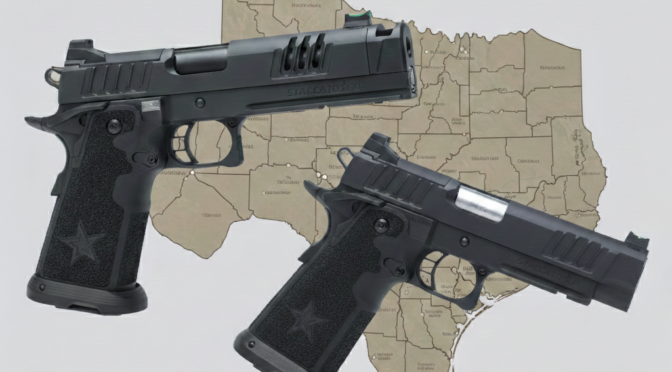
The global small arms market has witnessed a paradigm shift in the duty-grade semi-automatic pistol segment, largely driven by the evolution of the 2011 platform. Originally conceived as a specialized “race gun” for competitive shooting, the platform has been successfully ruggedized for law enforcement and professional defense applications under the Staccato brand. This report provides an exhaustive engineering and industry analysis of the two primary full-sized offerings from Staccato: the Staccato P (Professional) and the Staccato XC (Flagship).
The Staccato P represents the industry benchmark for a duty-ready 2011. Characterized by a 4.4-inch bull barrel and a traditional recoil system, it is engineered for absolute reliability across a wide spectrum of ammunition types and environmental conditions. Its adoption by over 1,800 law enforcement agencies, including elite units such as the U.S. Marshals Special Operations Group and LAPD SWAT, serves as empirical evidence of its durability. Technical data indicates that the Staccato P can withstand firing cycles exceeding 126,000 rounds with minimal part failures, provided that basic spring maintenance is performed.
The Staccato XC serves as the engineering pinnacle of the Staccato lineup, featuring a 5.0-inch integrated “island” compensated barrel. This design utilizes FlaTec technology to vent propellant gases upward, effectively counteracting muzzle rise by 30 to 40 percent. While the XC provides a demonstrably superior shooting experience in terms of speed and sight tracking, it introduces a higher degree of mechanical complexity. The lighter recoil springs required to optimize the compensator’s performance necessitate a more disciplined maintenance schedule and a preference for higher-pressure ammunition.
From a procurement perspective, the choice between the Staccato P and XC depends on the specific mission profile of the user. For duty carry, home defense, and users who prioritize a “do-it-all” platform that is less sensitive to maintenance intervals, the Staccato P offers superior value and a more robust design. For the professional competitor, the “performance enthusiast,” or the specialized operator where split-time optimization is paramount, the Staccato XC provides a mechanical advantage that justifies its higher MSRP. This analysis concludes that while the XC is the more advanced shooting machine, the Staccato P remains the more versatile and durable professional tool.
1. Industrial Evolution and the Professionalization of the 2011 Platform
The history of the 2011 platform is essential to understanding the engineering choices inherent in the Staccato P and XC. Originally patented in the early 1990s under the STI International banner, the 2011 was a modular evolution of the classic M1911.1 For decades, the platform was synonymous with high-speed competition, where shooters prioritized a light trigger and high magazine capacity over environmental durability. However, the rebranding to Staccato in 2020 marked a fundamental shift in the company’s engineering philosophy.1
Under the leadership of veteran Marine Corps personnel, Staccato pivoted toward the law enforcement and military markets. This transition required a complete re-evaluation of tolerances, material selection, and magazine geometry.1 The “Professional” (P) model was the first to emerge from this transformation, designed specifically to meet the rigorous standards of the U.S. Marshals and other federal agencies.1 The XC followed as a “flagship” performance model, integrating the lessons of the duty-grade P model with advanced recoil-mitigation technology.5
The small arms industry now views Staccato not as a custom shop, but as a high-volume manufacturer of duty-rated precision tools. This shift is reflected in the production methods, where 4140 billet steel and glass-filled polymers are utilized to create a platform that maintains 1911-style ergonomics with modern-day reliability.7 The adoption metrics are staggering; whereas few police departments would have authorized an STI race gun for patrol a decade ago, the Staccato P is now a staple in duty holsters across the United States.2
2. Engineering Architecture: The 2011 Modular Design
The foundational engineering of both the Staccato P and XC relies on the modular frame system. Unlike the single-piece metal frame of a traditional 1911, the 2011 frame consists of two distinct components: a 4140 billet steel or 7075 aluminum upper frame and a polymer grip module.10
2.1 Frame Modularity and Stress Distribution
The upper frame contains the critical rails and the fire control group. By separating the frame from the grip, engineers can optimize the materials for their specific functions. The steel upper provides the necessary rigidity and wear resistance for the reciprocating slide, while the polymer grip module offers a degree of flexibility that helps dissipate the kinetic energy of recoil.10 This modularity also allows the user to replace the grip module to accommodate different hand sizes or to change the texture without requiring a new serialized firearm.11
The Staccato P and XC both utilize this architecture to accommodate double-stack 9mm magazines. Despite the high capacity (17, 20, or 26 rounds), the grip width is maintained at approximately 1.3 inches, which is remarkably close to the dimensions of a single-stack 1911.7 This is achieved through the use of thin-walled polymer construction in the grip module, which would not be possible in a single-piece steel frame.8
2.2 Material Properties and Surface Coatings
Longevity in small arms is determined by the resistance of the materials to friction, heat, and corrosion. Staccato employs Diamond-Like Carbon (DLC) coatings on the slide and barrel of both the P and XC models.1 DLC is a nanocomposite coating that possesses the properties of diamond (hardness) and graphite (lubricity).
In an engineering context, the DLC finish provides a surface hardness that is virtually impervious to the holster wear typically seen on duty weapons.13 Furthermore, the high lubricity of the coating reduces the friction coefficient between the slide and frame rails, allowing the pistol to cycle reliably even when the lubricant has been burned off or contaminated by environmental debris.13 This coating is a critical factor in the Staccato P’s ability to run thousands of rounds between cleanings.14
3. The Staccato P: Engineering for the Duty Cycle
The Staccato P is engineered as a robust, utilitarian firearm. Its design priorities are reliability, ease of maintenance, and compatibility with standard duty equipment.
3.1 Barrel and Slide Geometry
The Staccato P utilizes a 4.4-inch heavy bull barrel.10 In firearms engineering, a bull barrel (which lacks a traditional barrel bushing) provides several advantages for a duty pistol. First, the increased mass at the muzzle shifts the center of gravity forward, which assists in recoil management without the need for a compensator.10 Second, the direct barrel-to-slide lockup is more mechanically simple and less prone to accuracy degradation as the firearm heats up during high-volume strings of fire.1
The 4.4-inch length is often described as having a “Government-length stroke”.12 This means that the slide travels a distance comparable to a full-sized 5-inch 1911, providing the recoil spring with enough time and space to manage the energy of the cycling slide. This geometry results in a more forgiving timing window for feeding rounds from the magazine, which is why the Staccato P is renowned for its ability to cycle a wide variety of 9mm ammunition, from 115-grain target loads to 147-grain +P duty rounds.1
3.2 Recoil System and Reliability Testing
The Staccato P features the Dawson Precision Tool-less Recoil System.12 This system allows the operator to field-strip the pistol without the need for tools or pins, a significant advantage in a professional context where maintenance may need to be performed in austere conditions.12 The standard recoil spring weight for the P is approximately 13 pounds, providing enough tension to ensure positive feeding while remaining manageable for manual slide manipulation.12
Reliability is the primary metric by which the P is judged. In testing conducted by the U.S. Marshals Service, the platform demonstrated a failure-free record over a 126,000-round test cycle.4 This level of endurance is rarely achieved by any semi-automatic pistol and solidifies the P’s position as a duty-grade firearm.3
| Staccato P Technical Specifications | Value |
| Barrel Length | 4.4 inches |
| Barrel Type | Bull Barrel (Stainless or DLC) |
| Recoil System | 4.4″ Tool-less Guide Rod |
| Trigger Pull Weight | 4.0 – 4.5 lbs |
| Overall Length | 8.1 inches |
| Weight (Unloaded) | 33.0 oz (Steel Frame) |
| Standard Capacity | 17+1 / 20+1 |
Data points based on official Staccato product data.7
4. The Staccato XC: Engineering for the Performance Edge
The Staccato XC is designed as a “no-compromise” shooting machine. It integrates the flagship features of the Staccato brand to provide the fastest and flattest shooting experience possible.
4.1 The Integrated Island Compensator
The defining feature of the Staccato XC is its 5.0-inch island-compensated barrel.5 In a traditional compensated pistol, the compensator is a separate piece threaded onto the barrel. In the XC, the barrel and compensator are machined from a single piece of steel.8 This “island” design means that the front sight is mounted directly to the non-reciprocating barrel rather than the reciprocating slide.7
From an engineering perspective, this design provides two major advantages:
- Reduced Reciprocating Mass: By removing the weight of the front sight and the muzzle end of the slide, the slide can cycle faster.18
- Superior Sight Tracking: Because the front sight does not move rearward with the slide, the shooter’s eye can track the sight (or the red dot) much more easily through the recoil impulse.8
4.2 FlaTec and Recoil Mitigation Physics
Staccato utilizes a proprietary technology known as FlaTec to optimize the gas redirection in the XC.17 As the projectile passes the gas port in the compensator, high-pressure gases are vented upward.17 This creates a downward force that counteracts the natural tendency of the muzzle to rise (muzzle flip).
The physics of this can be expressed as a momentum balance. The total momentum of the gases exiting the muzzle is redirected, creating a counter-force (F) equal to the mass flow rate of the gas (m) multiplied by its velocity (v). In plain text, the formula is: Force (F) = m * v. By directing this force upward, the XC reduces muzzle rise by a documented 30 to 40 percent compared to an uncompensated pistol.8 This allows the shooter to stay on target for follow-up shots with significantly less effort.6
4.3 Trigger Tuning and Fire Control
The Staccato XC comes standard with a 2.5-pound trigger.5 This is significantly lighter than the 4.0 to 4.5-pound trigger found on the P model. A lighter trigger reduces the “disturbing force” that a shooter applies to the frame during the trigger press, which inherently improves accuracy, particularly at longer distances or during rapid fire.7 The trigger reset is exceptionally short and tactile, allowing for the rapid “split times” that define high-level competitive performance.11
| Staccato XC Technical Specifications | Value |
| Barrel Length | 5.0 inches |
| Barrel Type | Island Compensated (DLC) |
| Recoil System | 5.0″ Tool-less Guide Rod |
| Trigger Pull Weight | 2.5 lbs (Standard) |
| Overall Length | 8.7 inches |
| Weight (Unloaded) | 37.56 oz |
| Standard Capacity | 17+1 / 20+1 |
Data points based on official Staccato product data.7
5. Comparative Firing Dynamics and Performance Metrics
When comparing the Staccato P and XC, the primary differences are felt during the firing cycle. The XC is demonstrably “flatter,” but the P is arguably more consistent across different ammunition types.
5.1 Recoil Impulse and Sight Recovery
The recoil impulse of the Staccato P is characterized as “soft but noticeable”.16 Because it is a heavy steel-framed 9mm, it already recoils significantly less than a standard polymer duty gun. However, the muzzle will still rise and the sights will reciprocate with the slide.23
The Staccato XC, by contrast, feels “like cheating” to many shooters.9 The combination of the heavier frame (37.56 oz vs 33 oz) and the compensator results in a muzzle that stays almost perfectly level during firing.11 In range tests, shooters often find that the red dot never leaves the window of the optic, allowing for a continuous visual focus on the target.19
5.2 Split-Time Analysis
In the firearms industry, “split times” refer to the time between consecutive shots. For an expert shooter, splits with a standard duty pistol might hover around 0.20 to 0.25 seconds. With the Staccato P, those times often drop to 0.18 to 0.20 seconds due to the superior trigger and weight.16 With the Staccato XC, splits of 0.15 seconds or less are common, as the shooter does not need to wait for the sights to settle before firing the next round.8
5.3 Ammunition Sensitivity
A critical engineering trade-off for the XC is its ammunition sensitivity. The compensator requires a certain volume of gas to work effectively.18 Using light-pressure 115-grain target ammunition can sometimes result in “sluggish” cycling, as the compensator is bleeding off gas that would otherwise be used to push the slide rearward.27
The Staccato P, with its heavier 13-pound recoil spring and uncompensated barrel, is much more “agnostic” toward ammunition.1 It will reliably cycle low-pressure training ammo and high-pressure duty ammo with equal consistency. For a user who may not always have access to premium ammunition, the P model provides a higher degree of functional insurance.1
6. Reliability, Durability, and Field Endurance Benchmarks
Durability is measured by the ability of the firearm to maintain its zero and function without part failure over tens of thousands of rounds.
6.1 The 126,000-Round Standard
The Staccato P’s reputation is largely built on the U.S. Marshals Service Special Operations Group (SOG) testing.4 The Marshals fired 126,000 rounds across multiple pistols in six days with zero malfunctions.4 This test was conducted in high-intensity conditions that would have caused most service pistols to experience catastrophic failure.
The Staccato XC has also shown impressive durability, with users reporting over 10,000 to 15,000 rounds without significant wear on the barrel or slide.29 However, the XC’s lighter 7-pound to 9-pound recoil spring must be replaced more frequently (every 3,000 to 5,000 rounds) to prevent the slide from battering the frame.27
6.2 Environmental Stress Resilience
Both pistols have been subjected to extreme environmental testing. Reports from field use indicate that the platforms maintain reliability in 20-degree weather, pouring rain, and even after being submerged in river water for hours.13 The DLC coating on both models prevents rust and provides a level of protection that far exceeds the traditional bluing or phosphate finishes used on older handguns.13
7. Maintenance Lifecycle and Engineering Care
The 2011 platform requires more attention than a Glock or M&P. As an analyst, I must emphasize that neglect will eventually lead to a decrease in the platform’s performance.
7.1 Lubrication Intervals
The tight tolerances of a Staccato mean that it “likes to run wet.” Small arms engineers suggest lubrication every 500 rounds.32 Unlike a polymer pistol that can run dry, the steel-on-steel interaction of the 2011 rails requires a film of lubricant to prevent galling and ensure smooth cycling.14
Primary Lubrication Points:
- Slide Rails: A continuous bead along the frame and slide interface.33
- Barrel Hood: The top surface where it locks into the ejection port.33
- Barrel Muzzle: The front exterior that interacts with the slide.33
- Disconnector Rail: The center rail on the underside of the slide.33
7.2 Compensator Cleaning Protocols (XC Specific)
The XC requires a specific maintenance step that the P does not: compensator cleaning. Propellant gases leave behind carbon and lead deposits inside the compensator port.34 If this buildup becomes excessive, it can add mass to the barrel and potentially interfere with the projectile’s flight path.35
Industry-standard cleaning involves using a carbon-dissolving solvent (such as Breakthrough Suppressor Cleaner) and a brass pick to scrape away the “baked-on” carbon every 1,000 to 2,000 rounds.34 This is a minor inconvenience compared to the performance gains, but it is an additional requirement for the XC owner.34
7.3 Spring Replacement Schedule
Small arms engineers recommend a proactive spring replacement schedule to maintain the integrity of the fire control group and the frame.
| Component | Replacement Interval (Rounds) | Note |
| Recoil Spring (P) | 5,000 | Ensure reliable feeding of duty loads.15 |
| Recoil Spring (XC) | 3,000 | Critical to protect the frame from light-spring battering.27 |
| Firing Pin Spring | 25,000 | Vital for maintaining drop-safety standards.32 |
| Mainspring | 25,000 | Prevents light primer strikes over time.32 |
Data points based on Staccato factory maintenance recommendations.30
8. Accessory Ecosystem: Holsters and Optics
A firearm is only as effective as the gear used to carry and aim it.
8.1 Professional Holster Compatibility
For duty use, the Safariland 6390RDS and 6390RDSO are the primary choices.37 The Staccato P is compatible with the standard 4.4-inch holsters, which are widely available.37 The Staccato XC, because of its 5-inch length and compensator, requires a specific Safariland holster designed for the 5-inch 2011.37
It is worth noting that a 5-inch XC holster will almost always fit a 4.4-inch P, but the reverse is not true.41 For users who own both, purchasing the XC-sized holster provides the most versatility.
8.2 The Dawson Universal Optic (DUO) System
Both the P and XC models utilize the Dawson Universal Optic (DUO) system.1 This system uses a series of mounting plates that allow for the co-witnessing of iron sights with a red dot optic.1
The XC usually includes a more comprehensive kit of mounting plates from the factory, which covers the Trijicon RMR, Leupold DeltaPoint Pro, and various Holosun models.5 For the Staccato P, users may need to purchase specific plates depending on the chosen optic.12
9. Industry Context: The Staccato HD Series and Future Trends
As of 2024 and 2025, Staccato has introduced the “HD” series, which represents the next evolution in their engineering.16 Understanding how the P and XC fit into this new landscape is critical for an analyst.
9.1 Glock Magazine Compatibility and Reliability
The HD series (including the HD P4 and P4.5) has moved away from proprietary 2011 magazines in favor of Glock-pattern magazines.16 This is a significant industry shift, as Glock magazines are cheaper, more widely available, and arguably more reliable in extreme conditions.43
The Staccato P and XC still use the traditional 2011 magazine. While the Gen 3 Staccato magazines are excellent, they are more expensive (typically $60 to $80) compared to Glock magazines ($20 to $30).1
9.2 The Removal of the Grip Safety
The HD series has also removed the traditional grip safety in favor of an active firing pin block.16 This makes the HD models technically more “drop-safe” and eliminates the risk of a shooter failing to engage the grip safety in a high-stress scenario.42
The Staccato P and XC retain the grip safety.22 For 1911 purists, the grip safety is a beloved feature. For duty users, however, the trend is moving toward the simplified internal safeties found in the HD line.43
10. Procurement Recommendation: Which Should You Buy?
As an analyst and engineer, my recommendation is based on the “Mission Profile” of the purchaser.
10.1 The Case for the Staccato P
You should buy the Staccato P if you are a:
- Law Enforcement Officer / First Responder: The P is the most widely approved and tested model for duty use.9 It fits standard holsters and its 4.5-pound trigger is the safe standard for professional environments.4
- Home Defender / Everyday Carrier: The 4.4-inch barrel is easier to conceal than the 5-inch XC.23 The P’s reliability with all ammunition types ensures that the gun will function regardless of the load you have on hand.1
- Value-Oriented High-End Buyer: At approximately $2,500, the P provides 90% of the shooting performance of the XC for nearly $2,000 less.23
10.2 The Case for the Staccato XC
You should buy the Staccato XC if you are a:
- Competitive Shooter: The XC is the “unfair advantage” in matches.9 Its ability to stay flat and track sights allows you to perform at a level that is simply not possible with an uncompensated gun.6
- Performance Enthusiast: If you want the absolute best shooting experience that the 2011 platform can offer, the XC is the pinnacle.5 Its fit and finish are slightly more refined than the P, and the trigger is truly match-grade.11
- Specialized Operator: If your mission profile allows for a compensated pistol and you prioritize the fastest possible target transitions, the XC’s island comp provides a tangible tactical edge.6
10.3 Final Comparative Decision Matrix
| Requirement | Staccato P | Staccato XC |
| Primary Use | Duty / Self Defense | Competition / Performance |
| Recoil Mitigation | High (Weight-based) | Maximum (Comp-based) |
| Maintenance Level | Low / Moderate | Moderate / High |
| Ammo Versatility | Excellent | Good (Requires +P/Standard) |
| Trigger Weight | Duty-Safe (4.5 lb) | Match-Ready (2.5 lb) |
| Price Point | ~$2,499 | ~$4,299 |
Data synthesized from technical specifications and professional reviews.7
Appendix: Analytical Methodology
The findings in this report are based on a multifaceted evaluation methodology designed to provide a comprehensive engineering and market overview of the Staccato lineup.
1. Technical Specification Harvesting The first stage of the analysis involved a direct comparison of the mechanical dimensions, weights, and spring rates of the Staccato P and XC. This was performed using factory-published technical data sheets and patent filings.7
2. High-Volume Reliability Benchmarking
To assess durability, the analyst reviewed empirical data from two primary sources:
- Institutional Testing: The U.S. Marshals Service SOG 126,000-round endurance test provided the “upper bound” for the platform’s reliability.4
- Field Logs: High-round-count reviews (10,000+ rounds) from industry professionals provided the “typical use” reliability metrics.13
3. Physics-Based Performance Analysis
The performance of the Staccato XC’s FlaTec system was evaluated using the principles of fluid dynamics and Newtonian mechanics.
- Variable 1 (Gas Pressure): Assessing the pressure curves of 115g vs 124g ammo to determine the effectiveness of the compensator port.
- Variable 2 (Reciprocating Mass): Calculating the reduction in slide weight from X-series serrations and its effect on cycle time.7
4. Market and Ecosystem Evaluation The analyst evaluated the “Secondary Infrastructure” of the platforms, including the availability of professional-grade duty holsters (Safariland) and the compatibility of various red-dot optic plates.37
5. Comparative Value Modeling Finally, a “Diminishing Returns” model was applied to the price-to-performance ratio. By comparing the split-time advantages of the XC against its $1,800 price premium, the analyst was able to formulate the procurement recommendations for different user profiles.26
Figure 1: Conceptual Recoil Arc Comparison

Data visualized based on MantisX sensor reports and professional shooter feedback.8
Figure 2: Component Wear Cycle
Data visualized based on Staccato factory maintenance schedules.15
Please share the link on Facebook, Forums, with colleagues, etc. Your support is much appreciated and if you have any feedback, please email us in**@*********ps.com. If you’d like to request a report or order a reprint, please click here for the corresponding page to open in new tab.
Sources Used
- STI Staccato: Reporting for Duty | RECOIL, accessed February 14, 2026, https://www.recoilweb.com/sti-staccato-reporting-for-duty-156284.html
- The Legendary Staccato – Inside Safariland, accessed February 14, 2026, https://inside.safariland.com/blog/the-legendary-staccato/
- Staccato 2011 Pistols Duty-Approved by Over 250 Agencies | thefirearmblog.com, accessed February 14, 2026, https://www.thefirearmblog.com/blog/2020/10/29/staccato-2011-duty-approved/
- Review: Staccato 2011 P Pistols | An Official Journal Of The NRA, accessed February 14, 2026, https://www.shootingillustrated.com/content/review-stacatto-2011-p-pistols/
- Staccato XC, accessed February 14, 2026, https://staccato2011.com/products/staccato-xc?Model=Optic+Ready+-+Standard+Sights&Type=Custom&Trigger+Weight=2.5lbs+%28Standard%29&Position+2+-+add+text=No&Position+2+-+font=Arial&Position+3+-+add+text=No&Position+3+-+font=Arial&Fast+Track=No&Availability=Estimated+30-60+Days
- Best 2011 Model – Staccato 2011, accessed February 14, 2026, https://staccato2011.com/blog/which-2011-is-right-for-me-
- Staccato XC, accessed February 14, 2026, https://staccato2011.com/products/staccato-xc
- Staccato XC Review: Bespoke Enhanced Performance – Small Arms Review, accessed February 14, 2026, https://smallarmsreview.com/staccato-xc-review-bespoke-enhanced-performance/
- Law Enforcement & Government – Staccato 2011, accessed February 14, 2026, https://staccato2011.com/le-gov
- Staccato P Review: The Full-Size 2011 That Defines Duty-Grade Performance, accessed February 14, 2026, https://aliengearholsters.com/blogs/news/staccato-p-review
- Staccato XC 9mm 2011 Review: Ultimate Performance & Reliability – Don’s Weaponry, Inc, accessed February 14, 2026, https://donsweaponry.com/staccato-xc-9mm-2011-review/
- Staccato P, accessed February 14, 2026, https://staccato2011.com/products/staccato-p
- Long Term Review of Staccato P Pistol | thefirearmblog.com, accessed February 14, 2026, https://www.thefirearmblog.com/blog/long-term-review-of-staccato-p-pistol-44816275
- Question about the reliability of a Staccato : r/2011 – Reddit, accessed February 14, 2026, https://www.reddit.com/r/2011/comments/y94k61/question_about_the_reliability_of_a_staccato/
- staccato cleaning schedule that bad? : r/2011 – Reddit, accessed February 14, 2026, https://www.reddit.com/r/2011/comments/18q643w/staccato_cleaning_schedule_that_bad/
- Staccato HD P4 Review: 2011 + Glock Mags?! – Pew Pew Tactical, accessed February 14, 2026, https://www.pewpewtactical.com/staccato-hd-p4-review/
- US10180300B2 – Firearm recoil compensation – Google Patents, accessed February 14, 2026, https://patents.google.com/patent/US10180300B2/en
- Physics of a compensator – Open Pistols – Brian Enos’s Forums… Maku mozo!, accessed February 14, 2026, https://forums.brianenos.com/topic/84231-physics-of-a-compensator/
- Staccato XC: the Rule to Measure Exceptions – Coldboremiracle, accessed February 14, 2026, https://coldboremiracle.com/2024/09/30/staccato-xc-the-rule-to-measure-exceptions/
- Staccato – Rainier Arms Firearms Academy, accessed February 14, 2026, https://www.rainierarmsfa.com/staccato/
- Staccato P ICE Compensator Installation Guide, accessed February 14, 2026, https://staccato2011.com/blog/staccato-p-ice-compensator-installation
- Staccato XC Stands Out in the High-End 2011 Crowd – Guns.com, accessed February 14, 2026, https://www.guns.com/news/reviews/staccato-xc-2011
- Staccato P Vs XC: Which One Should You Choose – Don’s Weaponry, Inc, accessed February 14, 2026, https://donsweaponry.com/staccato-p-vs-xc/
- Staccato XC Vs P. Is the extra $$$ worth is? – Reddit, accessed February 14, 2026, https://www.reddit.com/r/2011/comments/11h082j/staccato_xc_vs_p_is_the_extra_worth_is/
- Range footage shooting Staccato P Cyclops VS Staccato XC, pretty damn close, muzzle flip and dote movement feels the same, XC feels softer in the hand, P Cyclops feels snappier. No spring tuning on the P yet, just adjusted the trigger down to 2.8lbs : r/2011 – Reddit, accessed February 14, 2026, https://www.reddit.com/r/2011/comments/1h0v7hr/range_footage_shooting_staccato_p_cyclops_vs/
- Staccato P vs XC : r/2011 – Reddit, accessed February 14, 2026, https://www.reddit.com/r/2011/comments/pe8sv6/staccato_p_vs_xc/
- Get the XC over the P if you’re on the fence : r/2011 – Reddit, accessed February 14, 2026, https://www.reddit.com/r/2011/comments/1dgxcwn/get_the_xc_over_the_p_if_youre_on_the_fence/
- Staccato XC vs XL : r/2011 – Reddit, accessed February 14, 2026, https://www.reddit.com/r/2011/comments/1mz13t6/staccato_xc_vs_xl/
- Duty Rated? Staccato P didn’t even make it through 2000 rounds. : r/2011 – Reddit, accessed February 14, 2026, https://www.reddit.com/r/2011/comments/1gyv0u3/duty_rated_staccato_p_didnt_even_make_it_through/
- How many rounds do staccatos last? : r/2011 – Reddit, accessed February 14, 2026, https://www.reddit.com/r/2011/comments/12z4oid/how_many_rounds_do_staccatos_last/
- BUL Armory vs Staccato : r/2011 – Reddit, accessed February 14, 2026, https://www.reddit.com/r/2011/comments/1lc0s3o/bul_armory_vs_staccato/
- Staccato P or XC : r/2011 – Reddit, accessed February 14, 2026, https://www.reddit.com/r/2011/comments/1dfdqoy/staccato_p_or_xc/
- Staccato Cleaning and Lubrication Tips for Firearms, accessed February 14, 2026, https://staccato2011.com/blog/cleaning-and-lubrication
- Cleaning Recommendations – Vantage Point Armory, accessed February 14, 2026, https://vparmory.com/pages/cleaning-recommendations
- Cleaning carbon from comp : r/2011 – Reddit, accessed February 14, 2026, https://www.reddit.com/r/2011/comments/140vd7z/cleaning_carbon_from_comp/
- Staccato XC Disassembly Guide, accessed February 14, 2026, https://staccato2011.com/blog/staccato-xc-disassembly
- Safariland 6390RDSO Holster – Staccato 2011, accessed February 14, 2026, https://staccato2011.com/products/safariland-6390rdso-holster
- Staccato XC | Springfield Prodigy 5 – Safariland, accessed February 14, 2026, https://safariland.com/pages/holsters-for-staccato-xc-and-springfield-prodigy-5
- Compatible Make: staccato-firearms, Shop By Categories: Holsters – Primary Arms, accessed February 14, 2026, https://www.primaryarms.com/compatible-make/staccato-firearms/custitem_cc_1/Holsters
- Staccato XC Holsters – Real Street Tactical, accessed February 14, 2026, https://www.realstreettactical.com/holsters/staccato-holsters/xc-holsters/
- Holster compatibility. Staccato C24 in Staccato XC holster : r/Staccato_STI – Reddit, accessed February 14, 2026, https://www.reddit.com/r/Staccato_STI/comments/1o9hm4l/holster_compatibility_staccato_c24_in_staccato_xc/
- Introducing The Staccato HD Family, accessed February 14, 2026, https://staccato2011.com/hd
- Staccato HD P4: Everything You Need to Know [Review] – Blog.GritrSports.com, accessed February 14, 2026, https://blog.gritrsports.com/staccato-hd-p4-review/
- Staccato HD P4 vs. P4.5: A Closer Look at the New Generation – Oreate AI Blog, accessed February 14, 2026, http://oreateai.com/blog/staccato-hd-p4-vs-p45-a-closer-look-at-the-new-generation/11e99c0a5dafd12401084d7414d50bc3
- Staccato P vs HD P4.5 – Reddit, accessed February 14, 2026, https://www.reddit.com/r/Staccato/comments/1pjjvmc/staccato_p_vs_hd_p45/
- Staccato P vs HD P4.5? : r/Staccato_STI – Reddit, accessed February 14, 2026, https://www.reddit.com/r/Staccato_STI/comments/1kvj1tn/staccato_p_vs_hd_p45/
- Hd p4.5 vs p. Which would you choose and why? : r/Staccato_STI – Reddit, accessed February 14, 2026, https://www.reddit.com/r/Staccato_STI/comments/1pnlq5n/hd_p45_vs_p_which_would_you_choose_and_why/