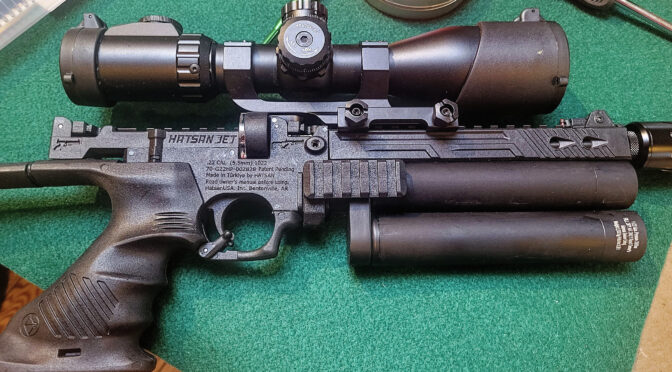
It comes with a threaded shroud that stabilizes and protects the barrel plus provides a 1/2″-20 threaded end. It does not come with any sound suppression out of the box. For those of you are familiar with sound suppression in airguns, they go by a number of names – moderators, air strippers, suppressors and sometimes silencers. Personally, I use the term moderator to make it very different from firearms and avoid confusion.
Next, airgun moderators are not regulated like firearm suppressors are plus the designers take great care for them to not work on firearms – the threading is different and the internals are made from plastics or fibers that will melt or blow apart if put on a firearm. The moderator market is competitive and different vendors have different designs with varying degrees of effectiveness,
In short, airgun suppressors are made for use only on airguns and they do serve real purposes – they make the gun backyard friendly to avoid worrying neighbors, they reduce the sound signature to not scare away whatever pest or game you are trying to shoot plus if you have a big bore airgun the reduced sound levels protect your ears.
Now, when t comes to a .22, there isn’t a very loud retort when the airgun fires but you definitely can hear it. By using a moderator, the airgun becomes very quiet. It’s not perfectly silent – that’s largely a myth just like firearms – but it sure does quiet them down.
Last comment – many airguns come with moderators built in such as the Hatsan Quiet Energy line plus many of the more expensive PCP airguns either come with a moderator built into the shroud or have a threaded barrel to allow one to be screwed on.
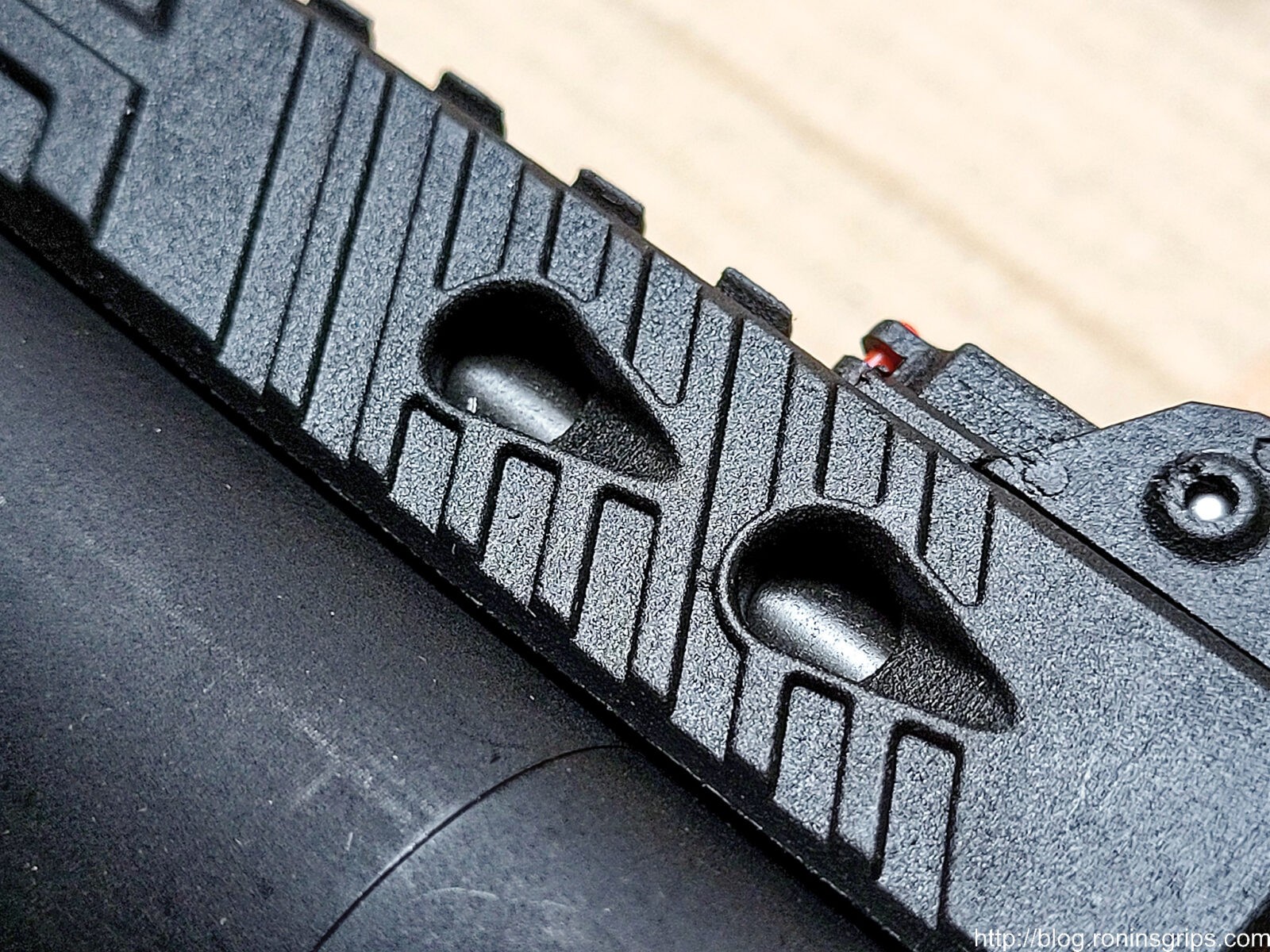
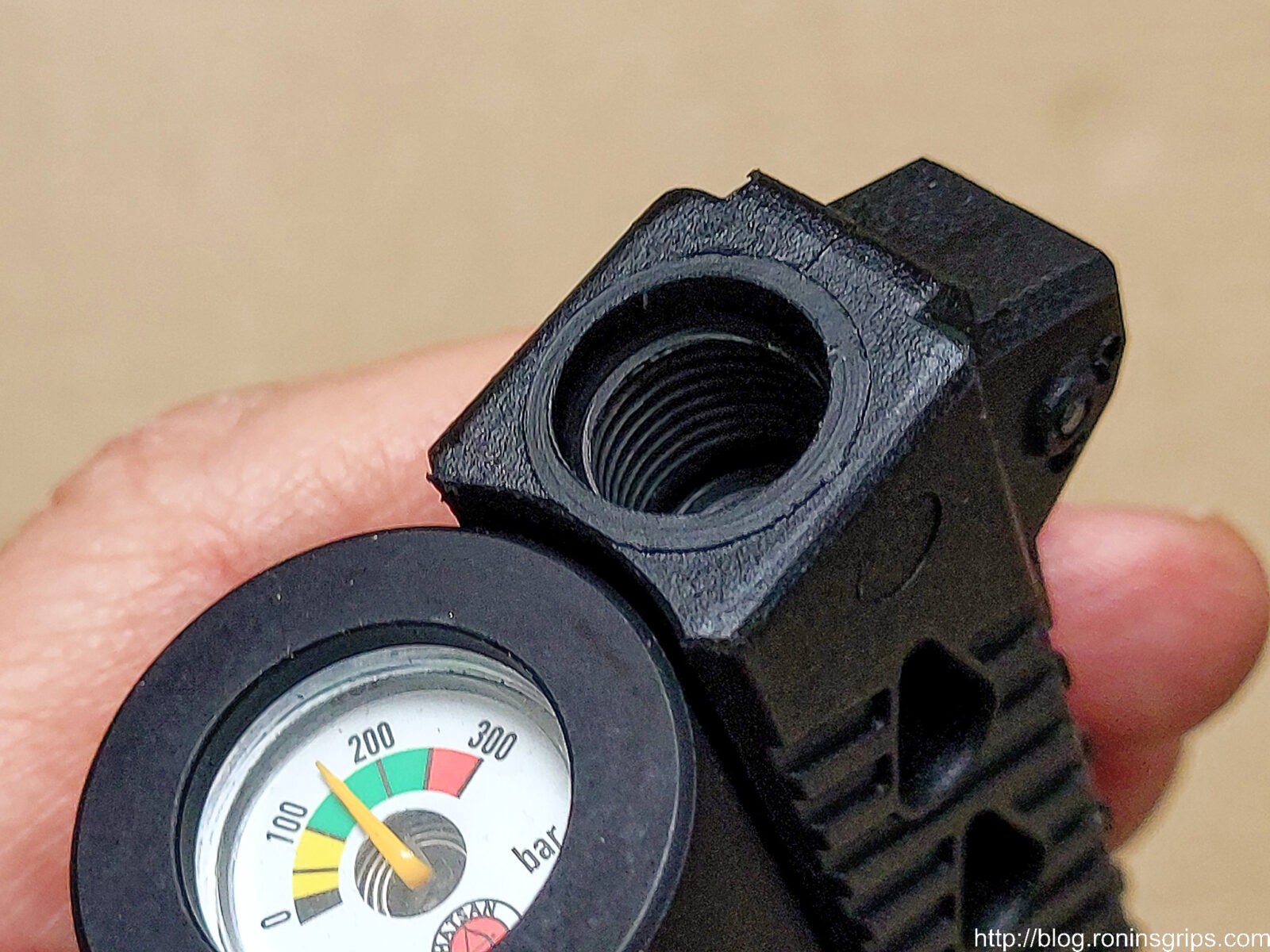
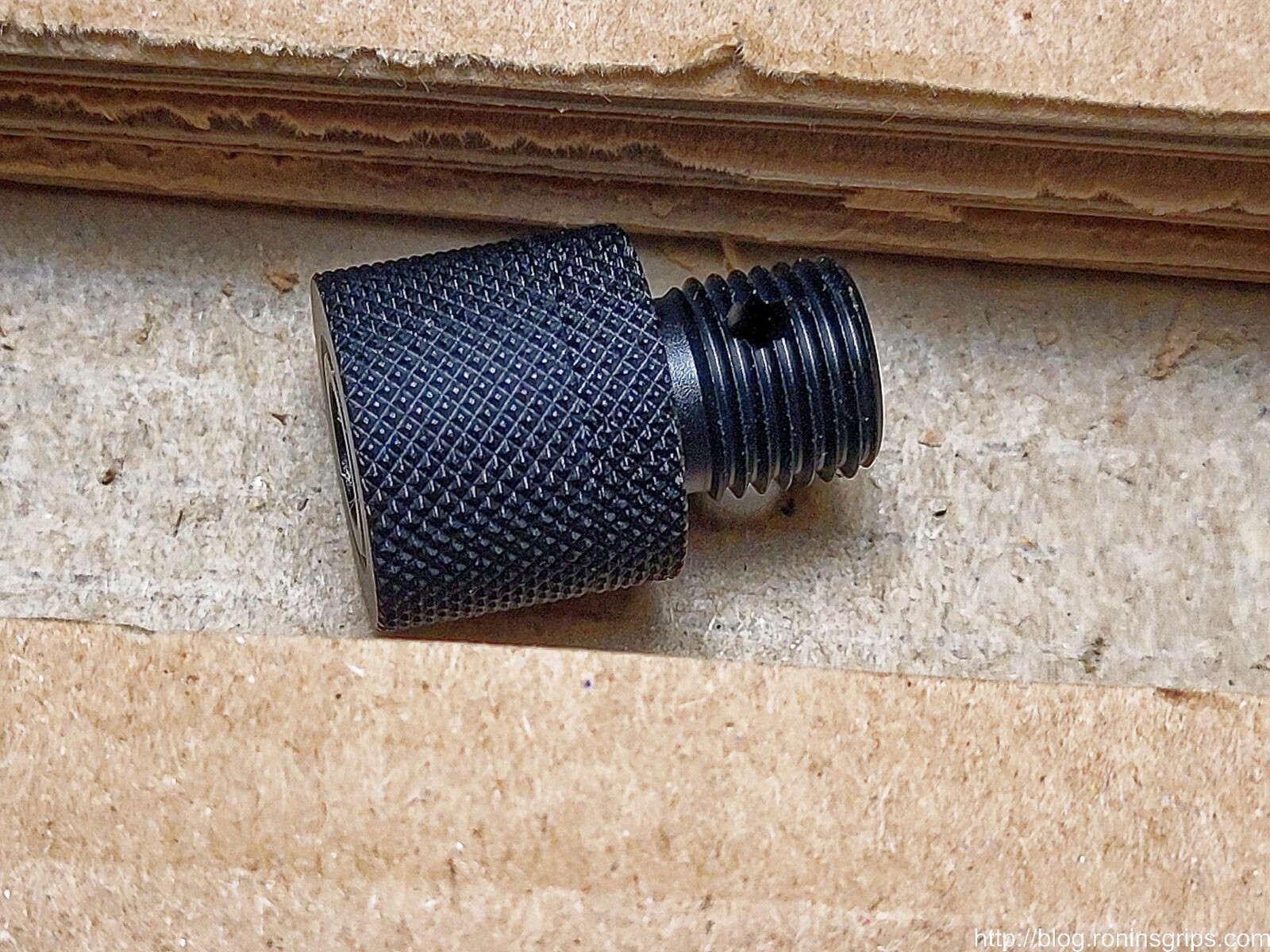
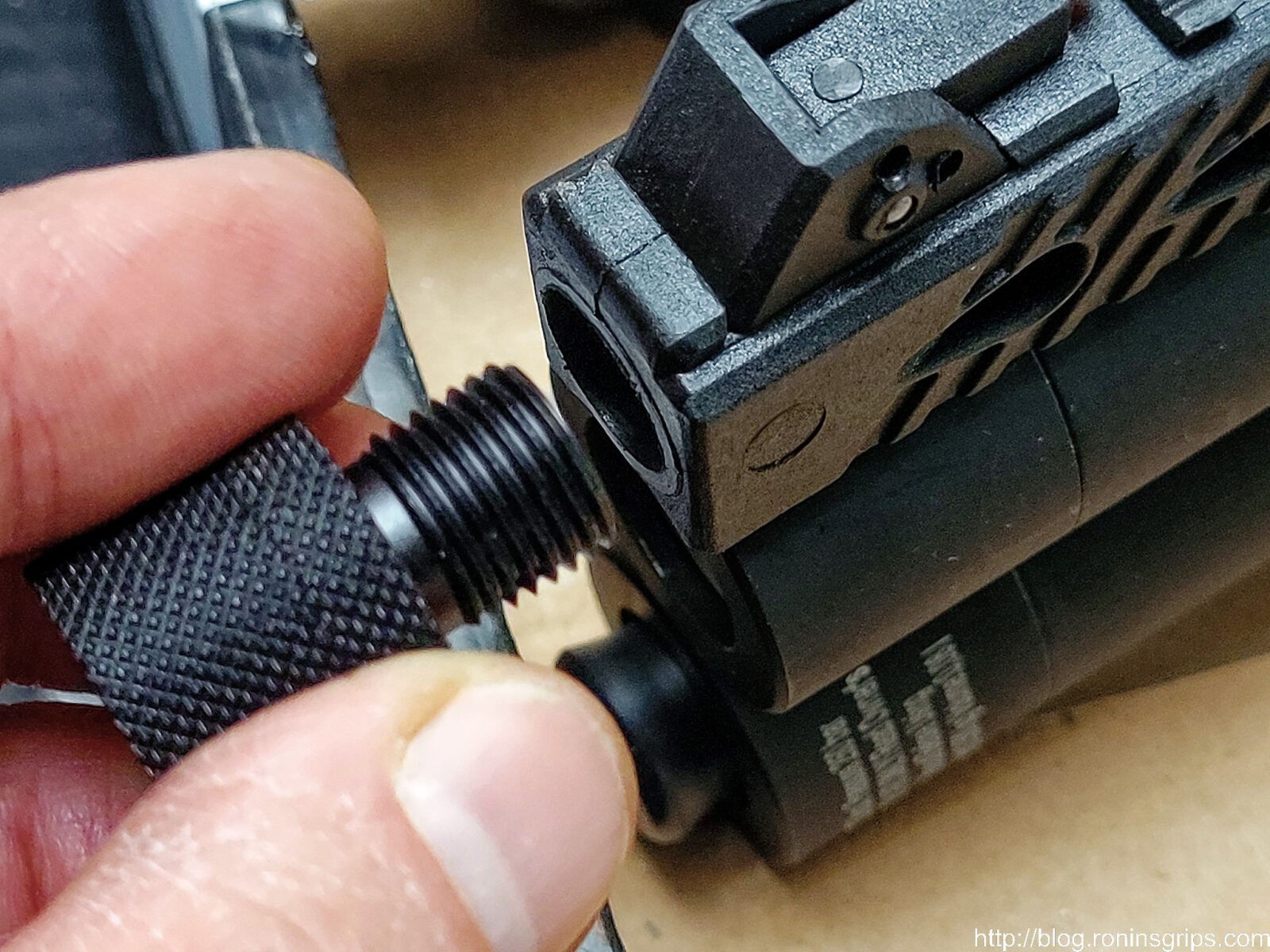
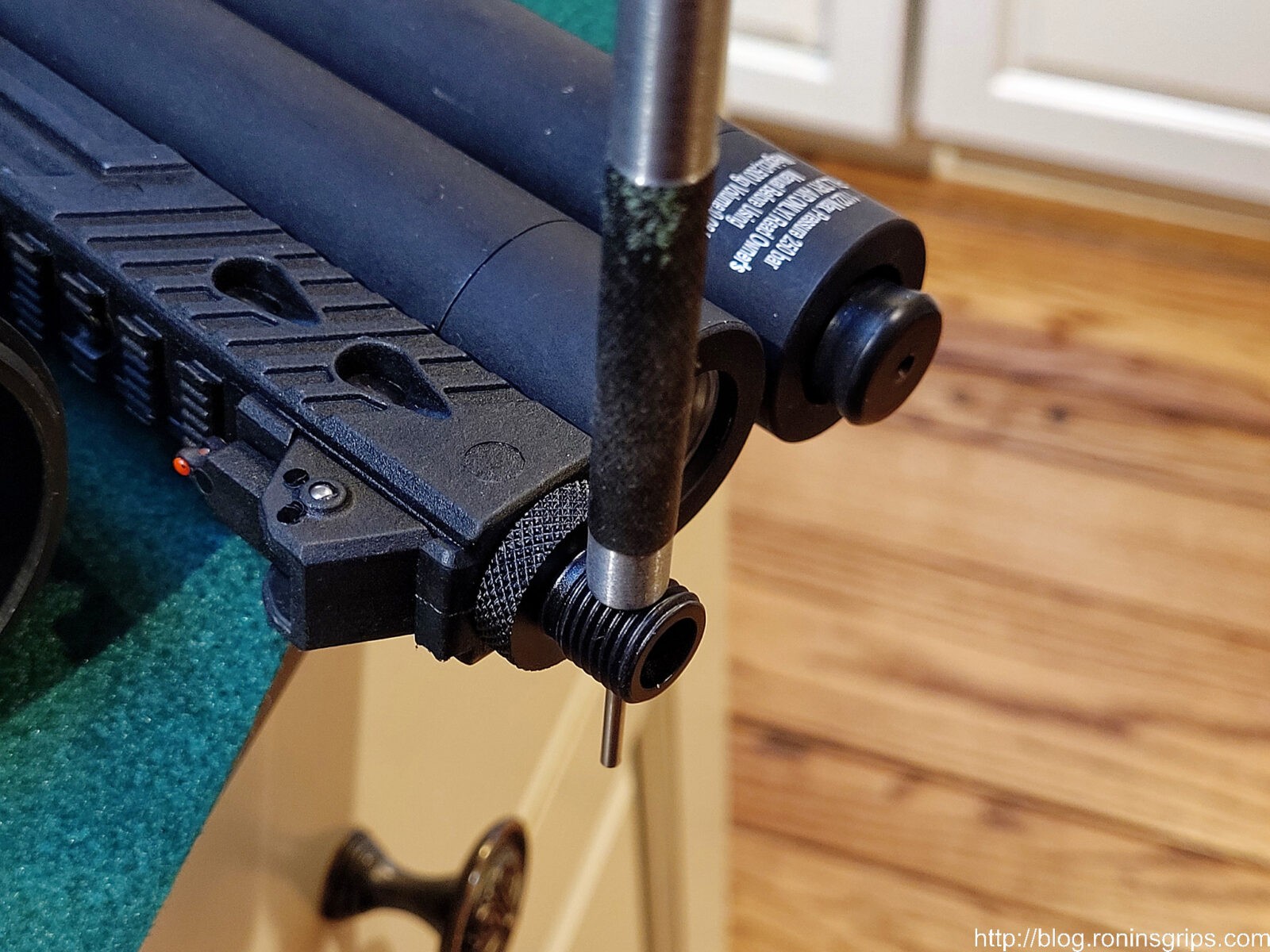
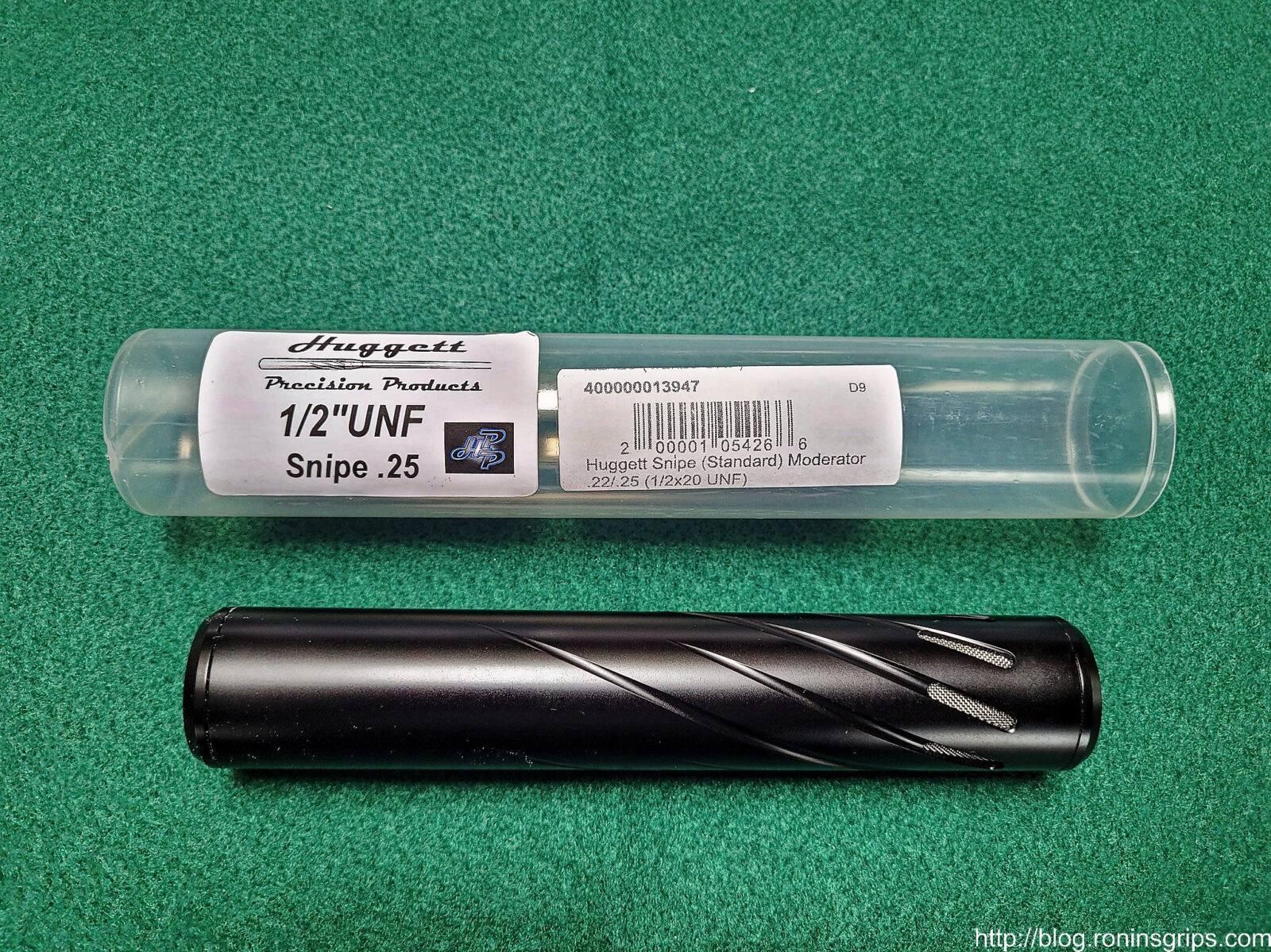
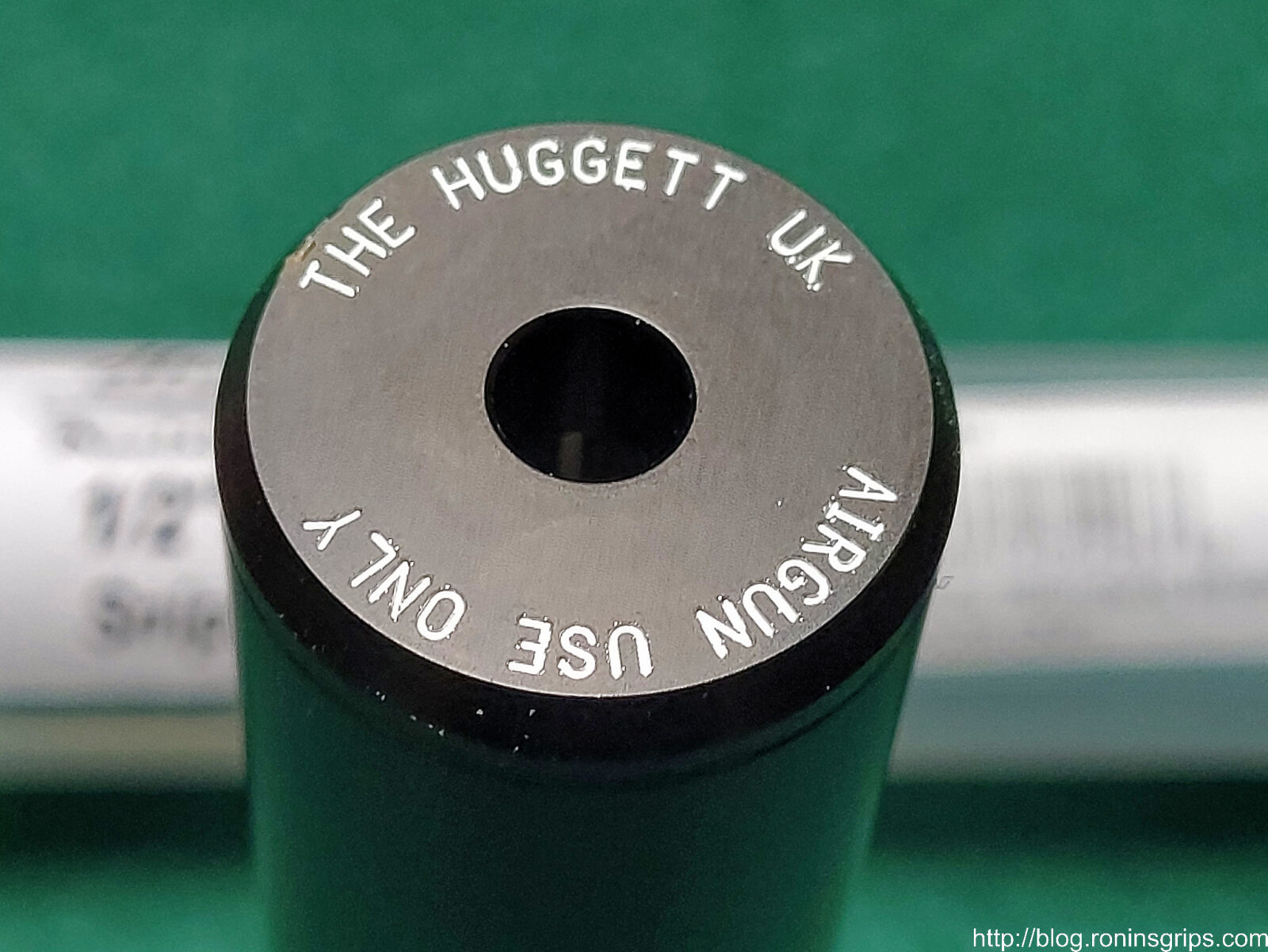
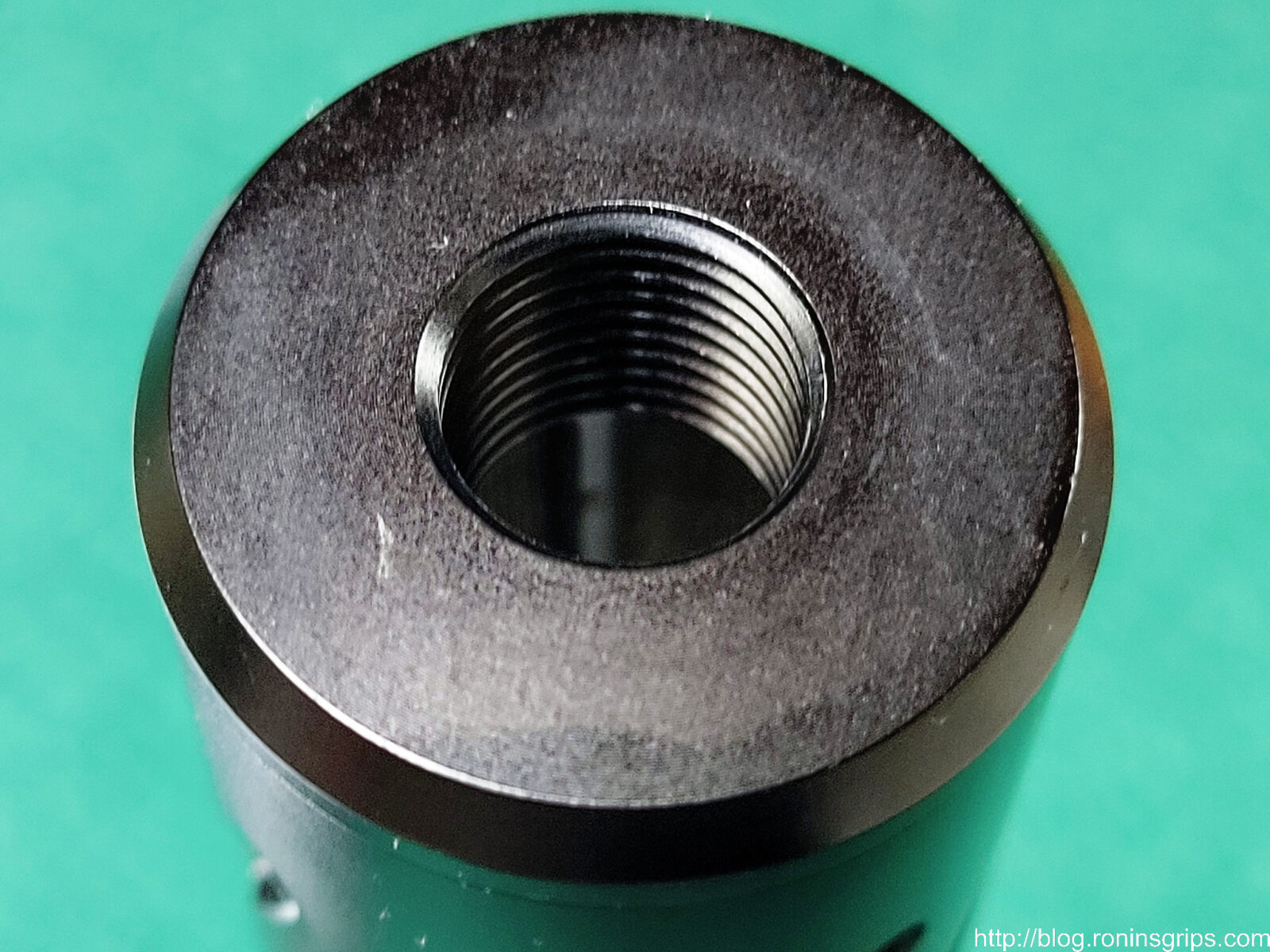
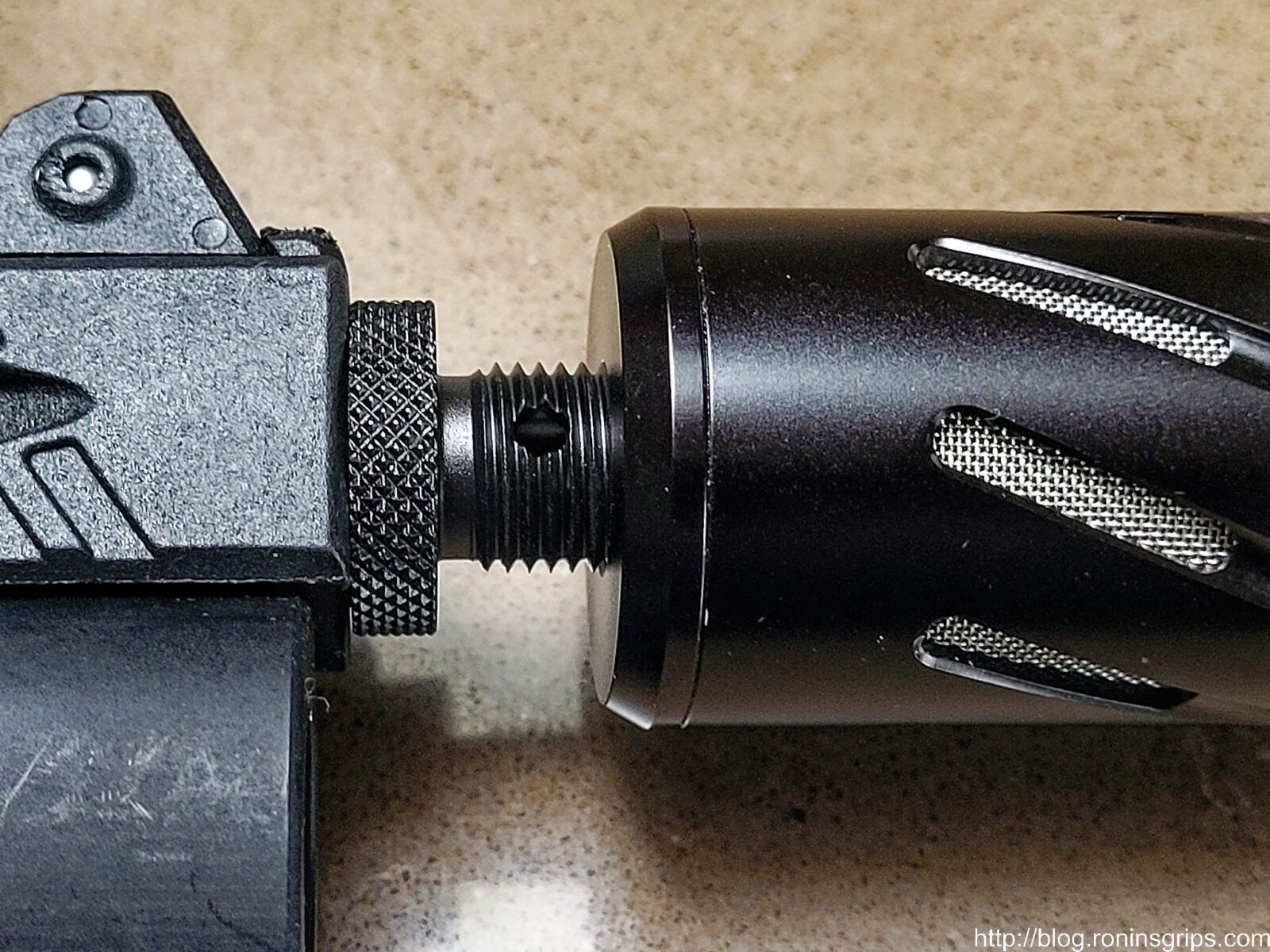
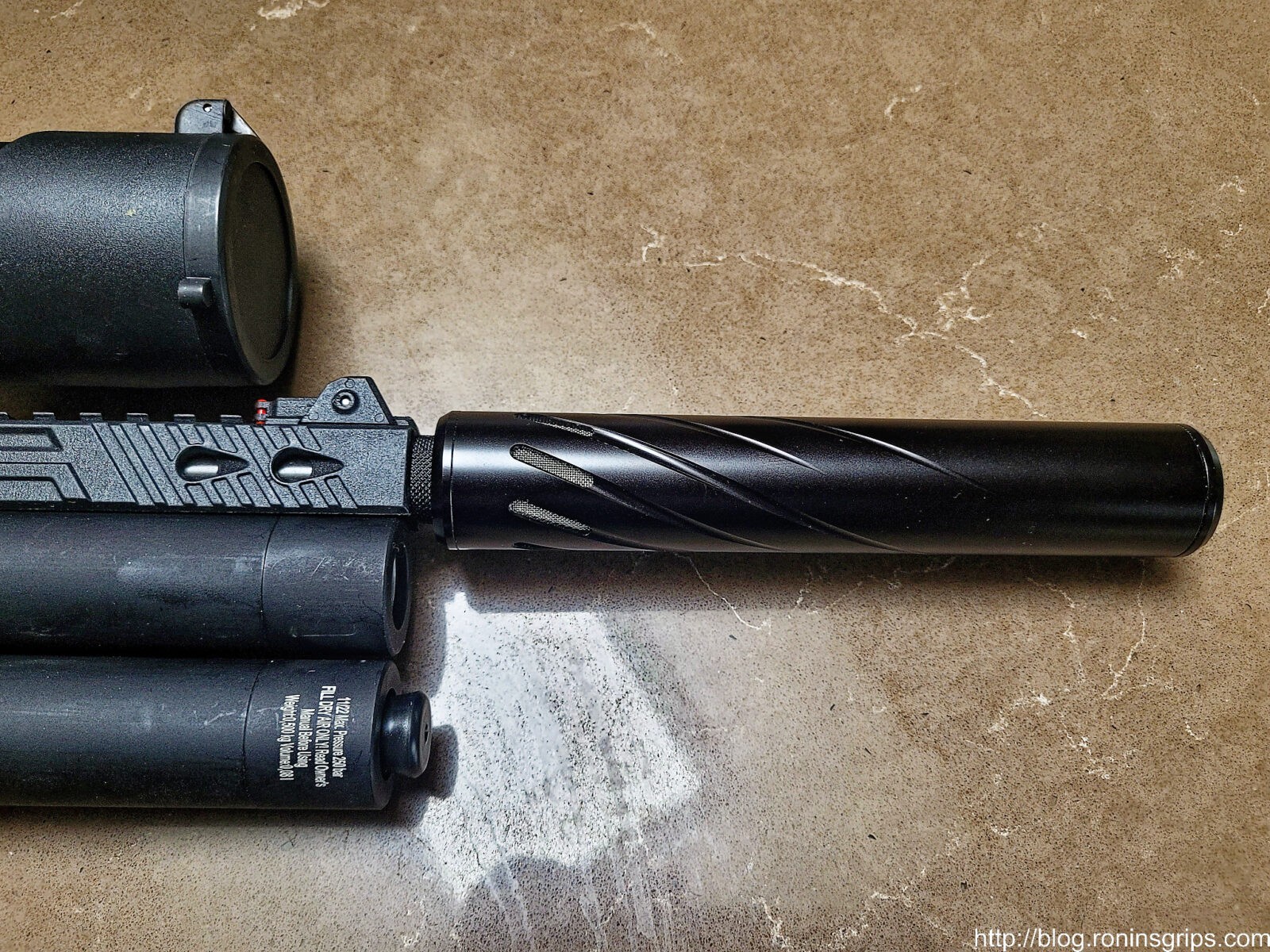
These holes that look like ports in the shroud are just for looks – the same way that having the serrations in a shroud are for looks. The shroud stabilizes and protects the barrel plus has threading for adding a moderator but that’s it. There is no integral moderator. You’ll need to add that but that’s ok and I’ll tell you why and how in another post.Inside the muzzle end of the shroud are 1/2-20 threads for adding a moderator. So, if you get a 1/2-20 male to male fitting, you can add your favorite brand of moderator. I’ll cover more about this later.This is the DonnyFL A21 adapter with the tread protector screwed on. Note, there are other male-to-male 1/2-20 adapters out there. I went with DonnyFL as they are a good business work with and their machining is always top notch.This is the DonnyFL A21 adapter and it simply screws into the end of the shroud. I am happy to report that the barrel does appear to be properly centered. I was not so luck with my Gladius and could not mount an external adapter. For my Jet II though, it lines up great. Note, it comes with a threaded muzzle protector / thread protector that screws off. It’s very nicely made and finished by the way.One nice feature is that both ends of the adapter have holes in them so you can insert something round, like my punch here, and snug down the adapter. Bear in mind that the threaded adapter is screwing into polymer. You just want to snug it down or else you are liable to strip out the shroud’s polymer threads. You do want to do this because when you screw the moderator on or off, you want the adapter to stay put and it will. Just don’t go crazy with the torque is my warning.This is a Snipe made by Huggett Precision Products in the UK. It is threaded for 1/2 UNF which means Unified Fine which is also is written as 1/2-20 meaning 20 threads per inch. The business end This is the 1/2-20 threaded base. The moderator is lightly screwed onto the DonnyFL adapter. Again, it all lines up and shoots great.
So let’s wrap up this post
Okay – the combination of Hatsan Jet II, DonnyFL A21 adapter and Huggett Snipe moderator work really well. I bet you’re wondering about the scope and that will be the next post.
Note, I have to buy all of my parts – nothing here was paid for by sponsors, etc. I do make a small amount if you click on an ad and buy something but that is it. You’re getting my real opinion on stuff.
I first saw a photo of the forthcoming Hatsan Jet I and II airguns in November of 2022 and was very interested in them. As more info started coming out, I really focused on the Jet II as it has twin air tanks. You see, I like short airguns for handling pests so I needed something to authoritatively deal with ground squirrels, tree squirrels and the occasional rabbit.
I have an amazing FX Impact Compact Mk II in .25 but wanted something even smaller but with less over penetration. I used to include having less of a report but switched from a DonnyFL Emperor to one of the new EdGun Behemoth moderators with an additional module and wow is that thing quiet now but that is a story for another day.
So, back to the point – I wanted something even smaller than the Impact Compact with less energy but didn’t want to spend a fortune either – sure, I’d love a Leishy II, Layla or something similar but don’t have that kind of money. As the just-before-Christmas release date drew near, the pricing came out and the suggested pricing was very affordable at $289.99 for the Jet I and $339.99 for the Jet II plus vendors were planning to come in lower. Ok, I had some thinking to do and very quickly decided to order the Jet II in .22 from Pyramyd Air and added their 10 for 10 test to try and guard against getting a defective unit.,
Specifications
It’s a side lever operated repeater
Available in .177, .22 and .25 – I opted for the .22 model
Magazine capacity: .177 is 8 rounds, .22 is 7 rounds and .25 is 6 rounds – these are small magazines for a small airgun
Barrel length: 7.9″
Each air cylinder holds 40cc so the Jet II holds 80cc of air
Pressure is 250 bar (3,626 psi)
There is a built in pressure gauge
Power is not regulated (the more expensive airguns tend to have regulators that step the pressure down from the tank to a lower more o consistent level that is then sent to the pellet upon firing. Higher end air guns may even have two regulators. For the price point, the Jets do not have a regulator and you’ll be just fine though I will tell you this is why I bought the Jet II – I wanted a larger air volume and a slower corresponding drop in pressure compared to the Jet I.
The barrel has a shroud to protect and stabilize it but nothing more. There is no integral moderator/suppression in the shroud.
Hatsan reports the barrel is rifle and made in Germany but they don’t mention the manufacturer – not sure if it is made Walthar or just who and will update this if I find out
Split length 11mm dovetail and Picatinny rail – it runs over the entire barrel and for a short amount behind the breach. Note: This combination rail design was also on my Gladius and hasn’t been reported in the press for some reason. You do not need to be limited to just 11mm.
Has three flip up sights – one front and then two at the rear depending on whether you are shooting it as a pistol or a carbine
The stock can be easily installed or removed with a push button
It is adjustable for length with a rubber recoil pad and a vertically adjustable cheek piece
Overall length of just the pistol: 15″
Overall length with the stock collapsed is about 23-3/16″ and fully extended it is just over 24-3/4″.
If I use the back of the rear sight as a starting point, length of pull collapsed is about 9-5/8″ and fully extended it is about 11-9/16″.
1.4 pounds without the stock and 3.4 pounds with the stock
Now the next stats are reported by Hatsan and I want to take a moment and recognize them for conservative reporting. Whereas some vendors inflate their numbers (meaning they exaggerate), Hatsan tends to be truthful and if anything their airguns perform better than they report:
Max Velocity – Lead Free Pellets – 810 FPS – .177; 700 FPS – .22; 600 FPS – .25 (depends on the type of pellet and other factors)
Max Velocity – Lead Pellets – 788 FPS – .177; 700 FPS – .22; 600 FPS – .25(depends on the type of pellet and other factors)
Max Muzzle Energy – 9.7 FPE – .177; 15.6 FPE – .22; 16.5 FPE – .25 (depends on the type of pellet and other factors)
Notice the muzzle energy reported in Foot Pounds of Energy (FPE). I want to use this to eliminate squirrels and the .177 with 9.7 FPE is on the lighter side. There are guys who hunt squirrels with .177 but I tend to think they are pushing heavy pellets faster and delivering more FPE. My first choice would have been .177 but given the numbers I decided to go with a .22 and the 15.6 FPE.
On December 28th, the carbine arrived from Pyramyd Air and it did not disappoint.
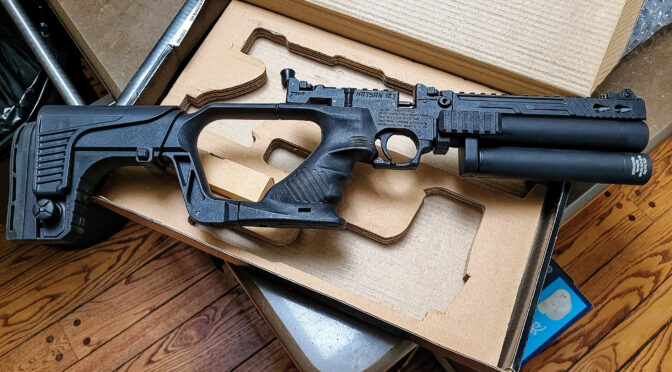
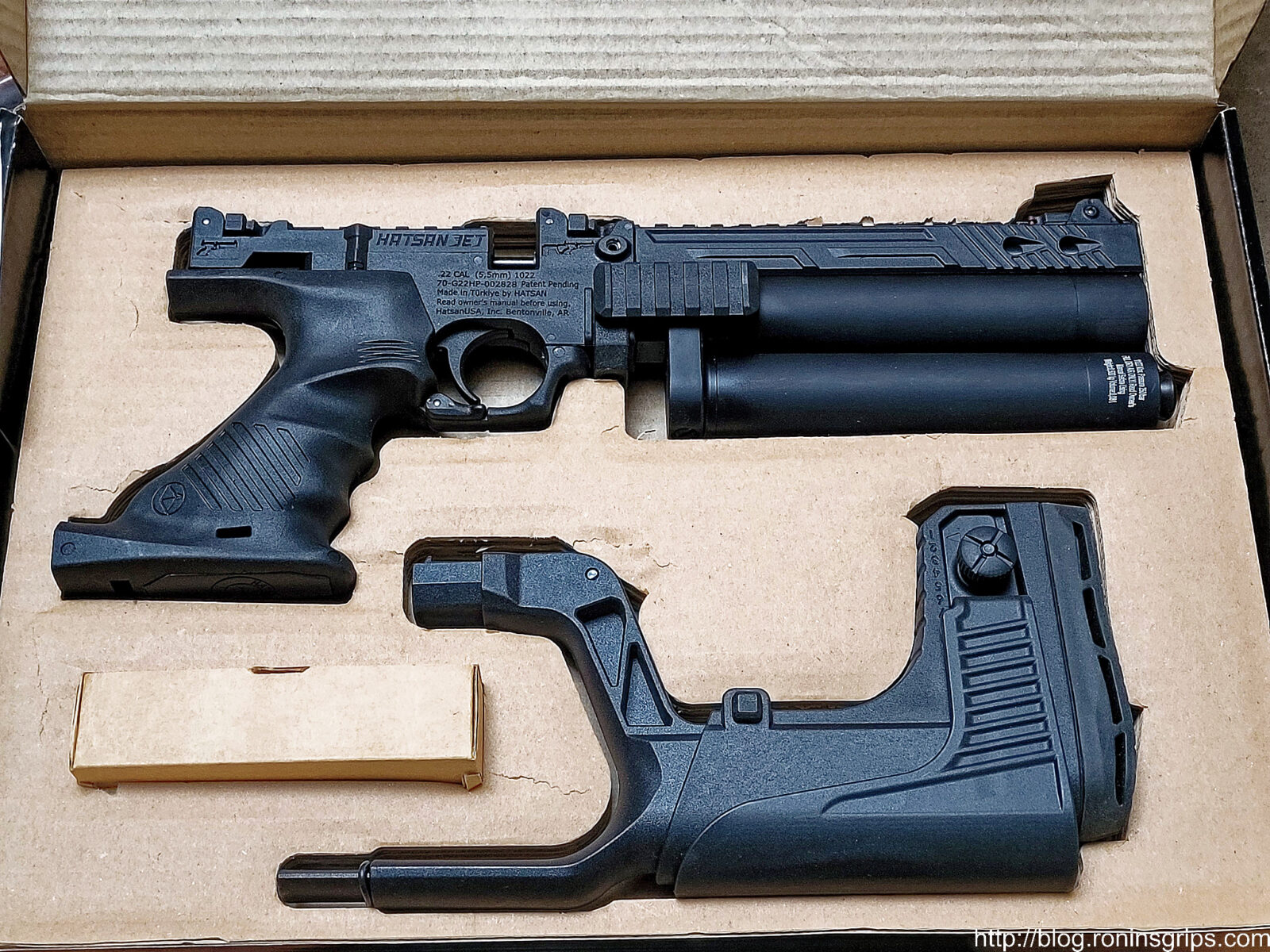
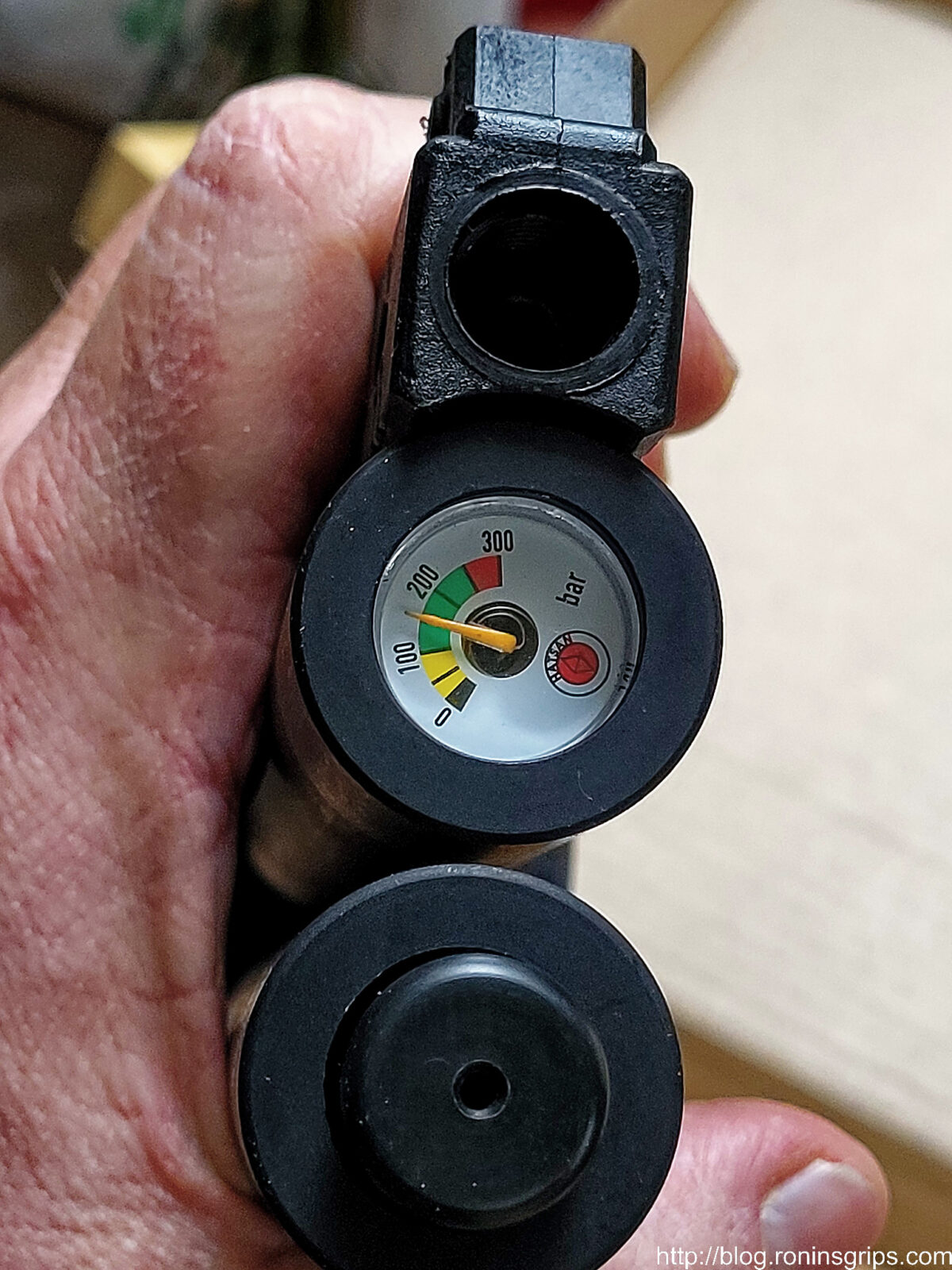
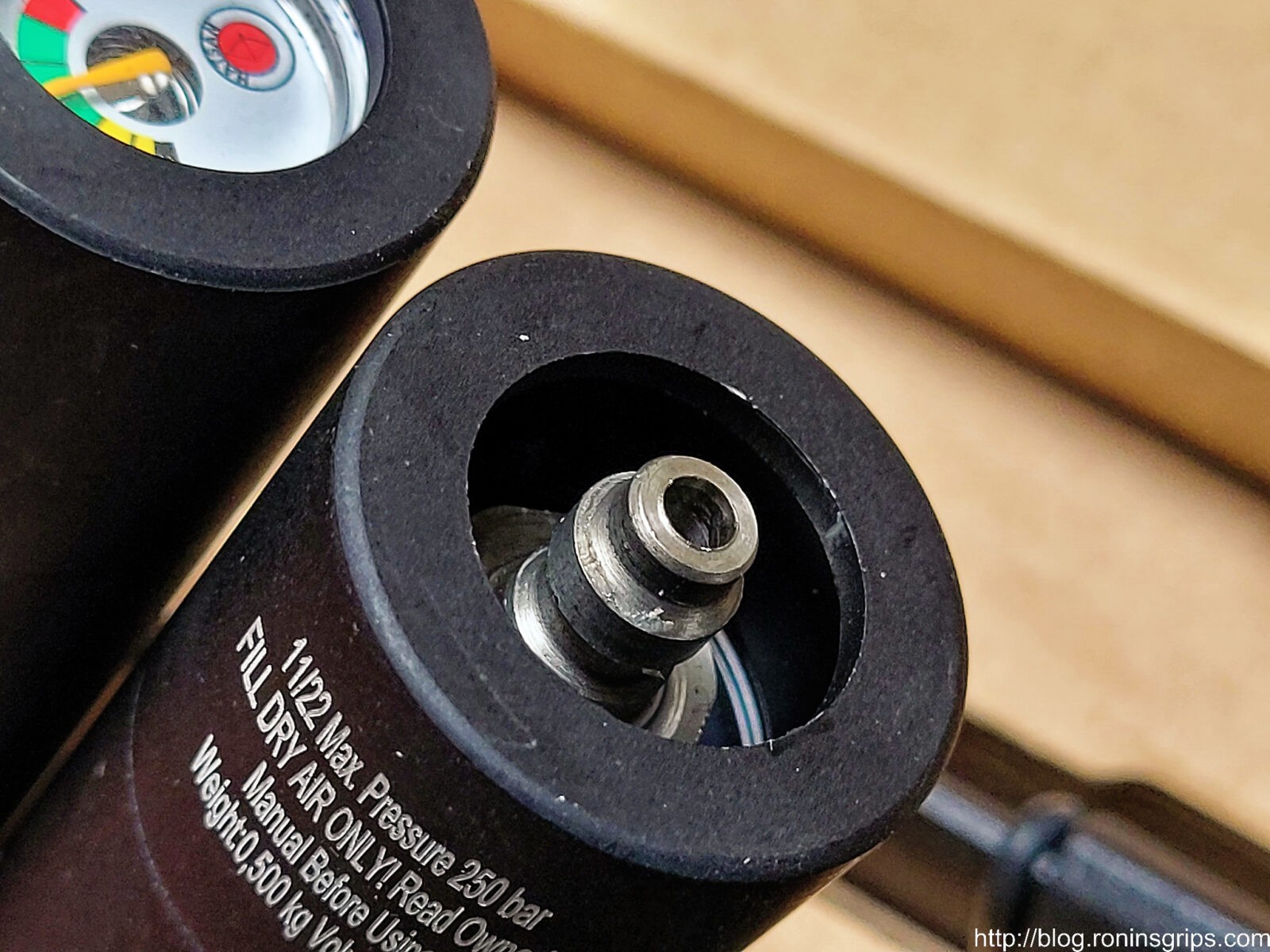
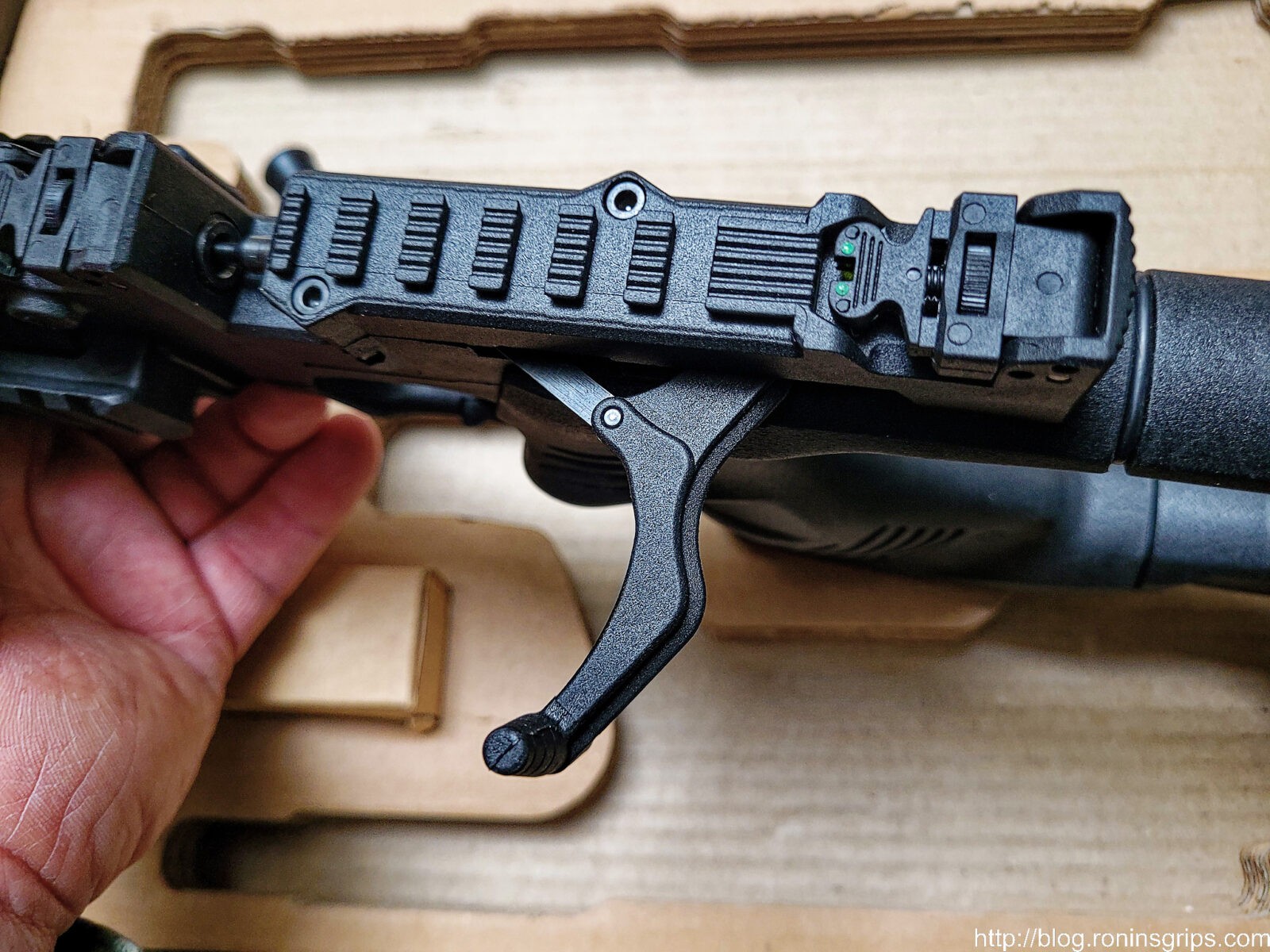
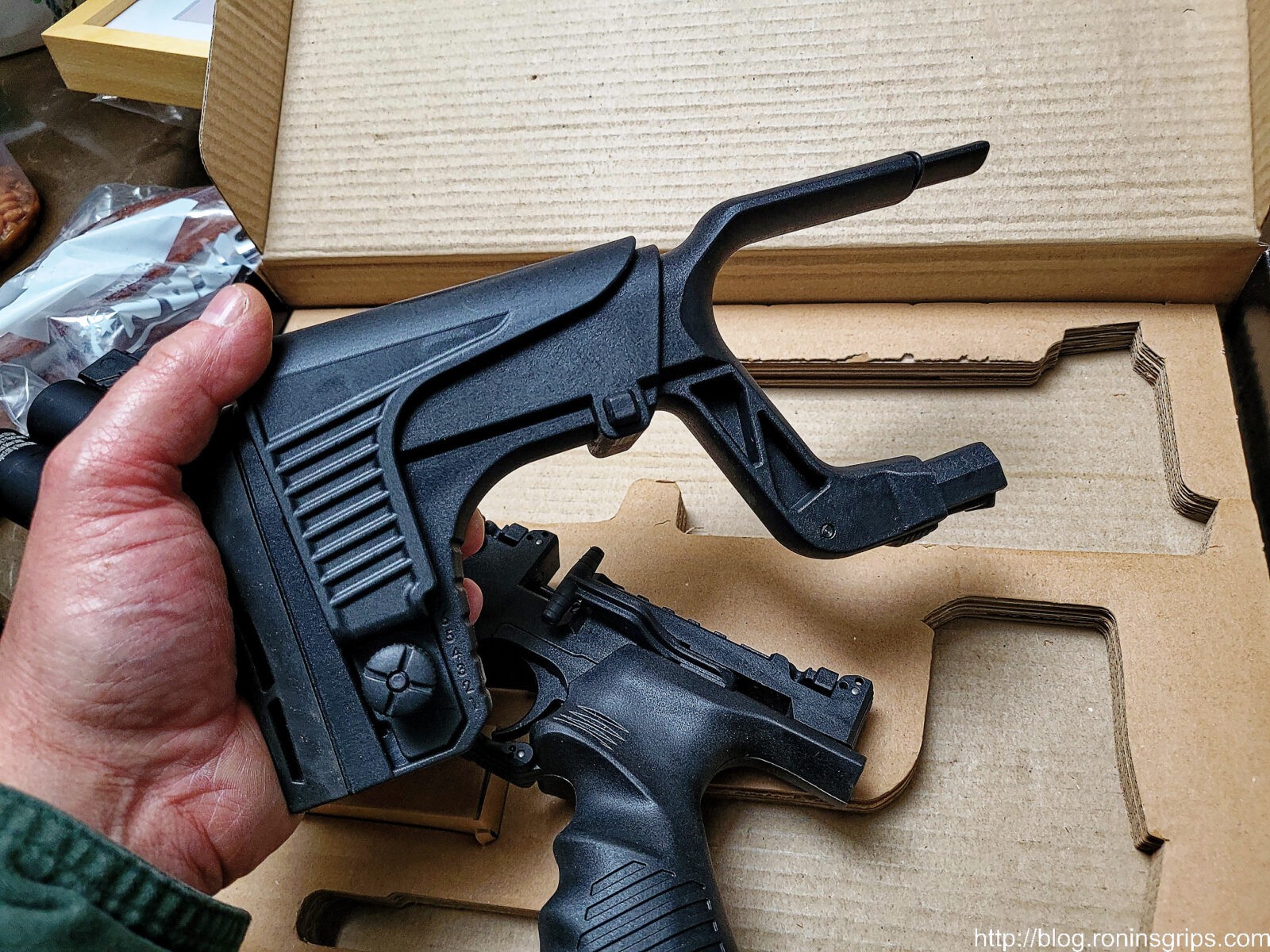
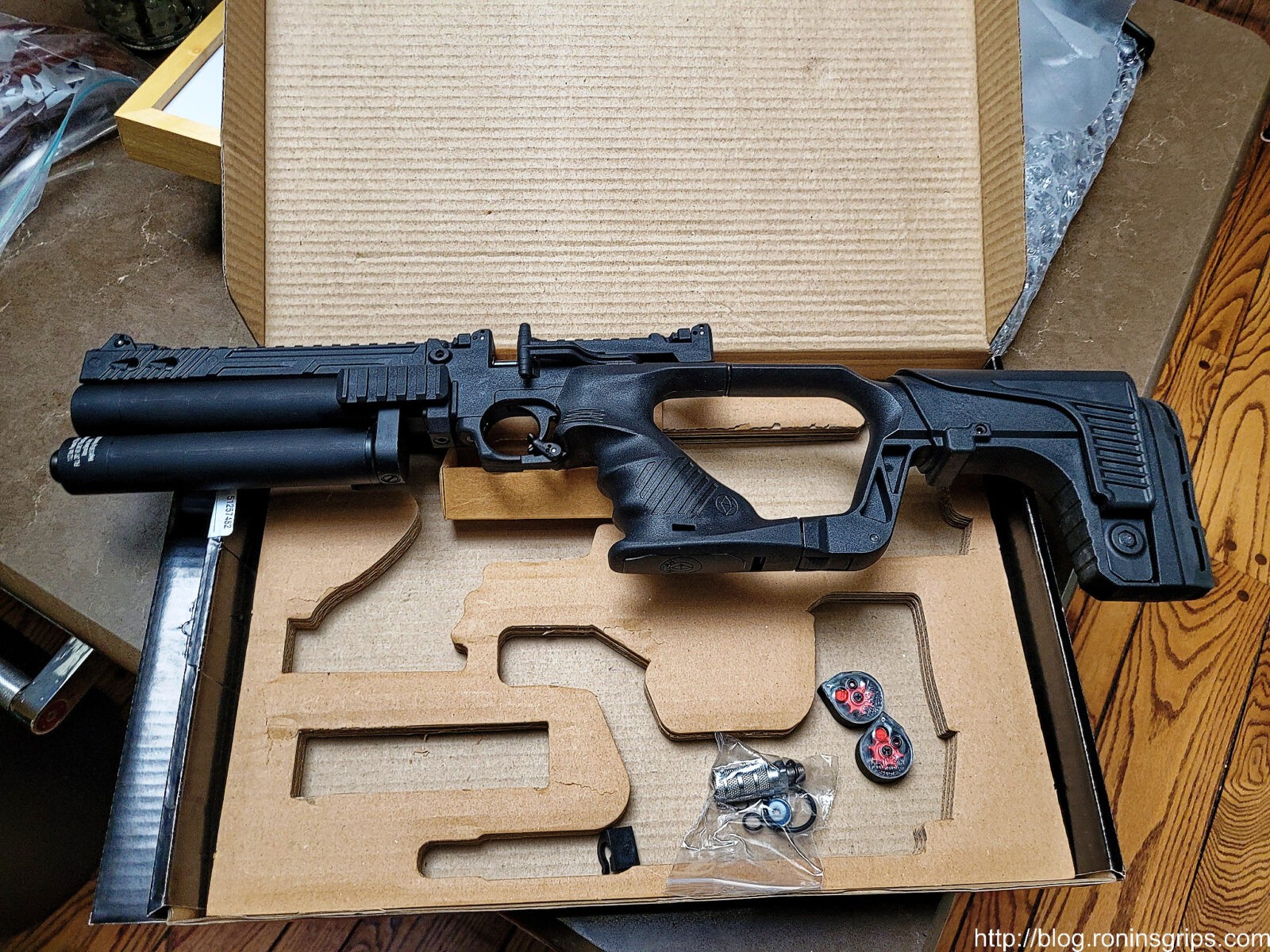
The Jet II arrived in a flat box and inside was the pistol, the stock and in the box are two mags, a female quick connect fitting and some o-rings. Is this a pistol or a carbine? The answer is yes. I have found Hatsan’s designs to be novel and forward looking – this is no exception.This is looking straight on at manometer (the pressure gauge). It looks like Pyramyd Arms did their 10 for $10 test but didn’t bother refilling the tank. So the gauge is in the top cylinder. The bottom cylinder has a cap on and under it is the male quick connect fitting for filling the airgun.Inside the muzzle end of the shroud are 1/2-20 threads for adding a moderator. So, if you get a 1/2-20 male to male fitting, you can add your favorite brand of moderator. I’ll cover more about this later.The quick connect foster fitting is protected by a black plastic cover. Note the 250 bar limit printed on the cylinder.The cocking lever is polymer. I’d rather it were aluminum but let’s see how it holds up, Injection molded composites these days are amazing so this may do ok. Time will tell. Also, that optic rail also runs forward of the breach the whole length of the barrel and supports both 11mm and Picatinny. Most reviewers and listings have overlooked that. I will do a blog post showing a scope mounted with Picatinny rings directly.These holes that look like ports in the shroud are just for looks – the same way that having the serrations in a shroud are for looks. The shroud stabilizes and protects the barrel plus has threading for adding a moderator but that’s it. There is no integral moderator. You’ll need to add that but that’s ok and I’ll tell you why and how in another post.
Now, let’s look at the stock
Let’s next turn our attention to the attachable stock that is very slick and can be easily attached or removed.
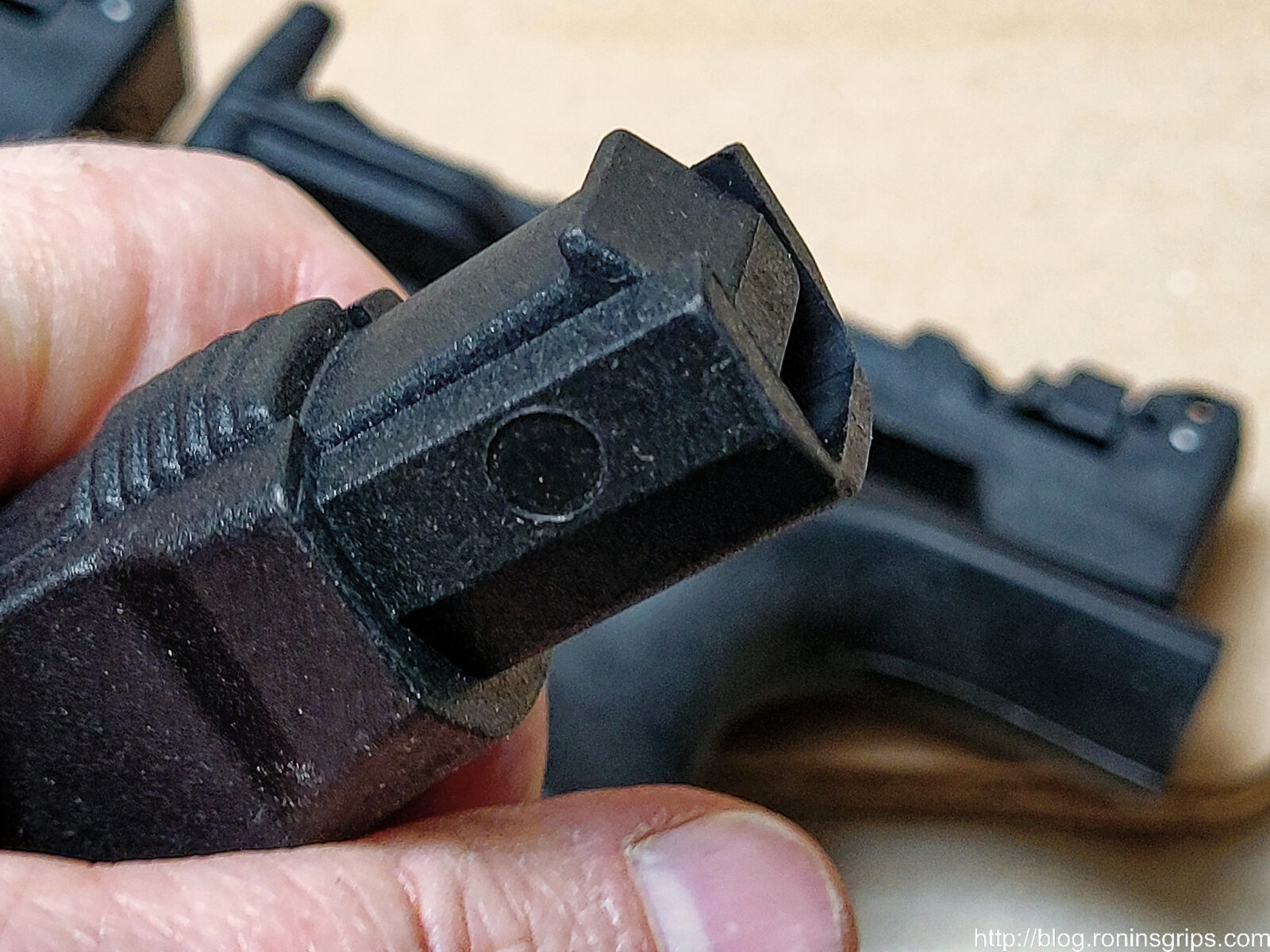
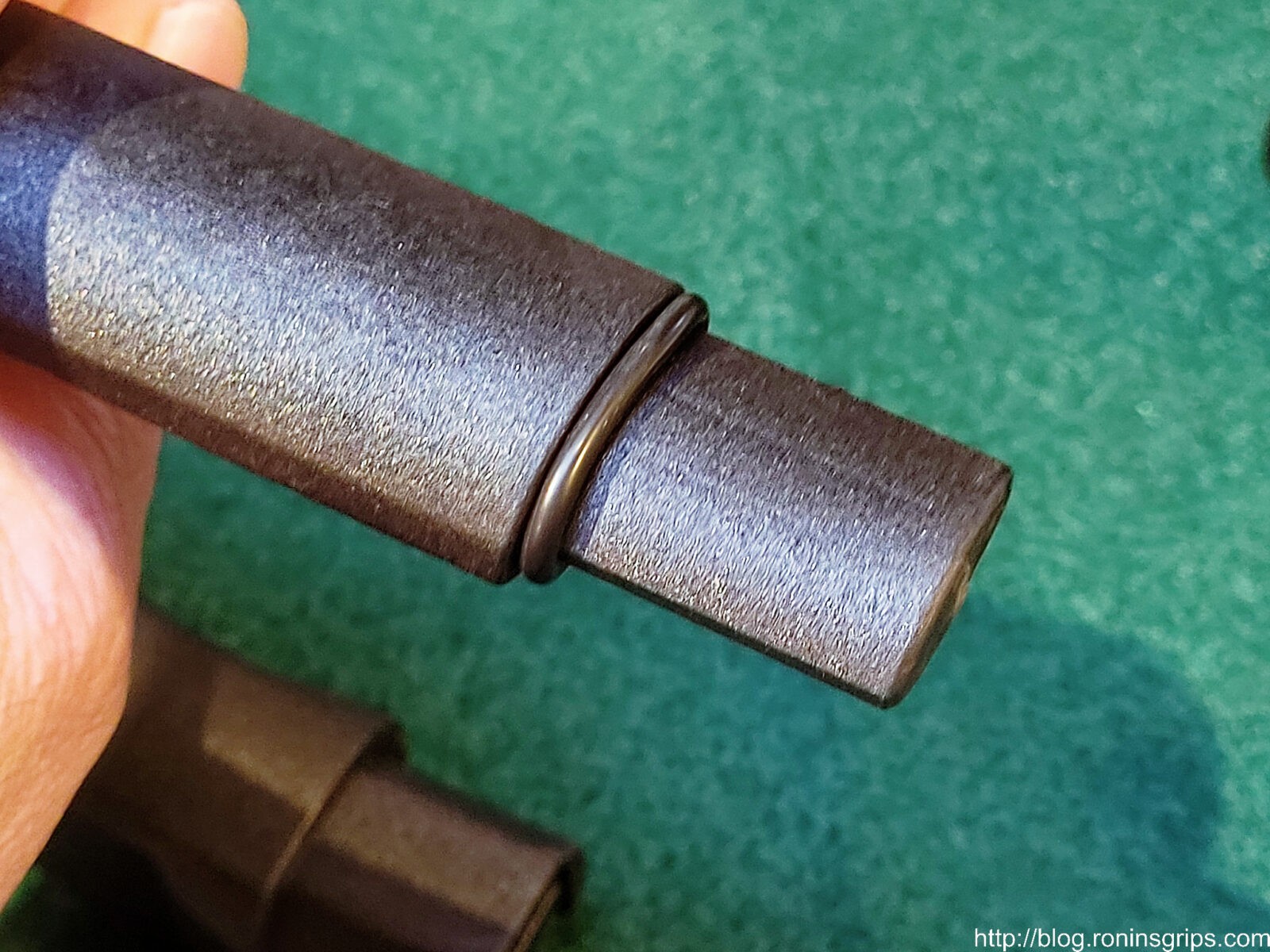
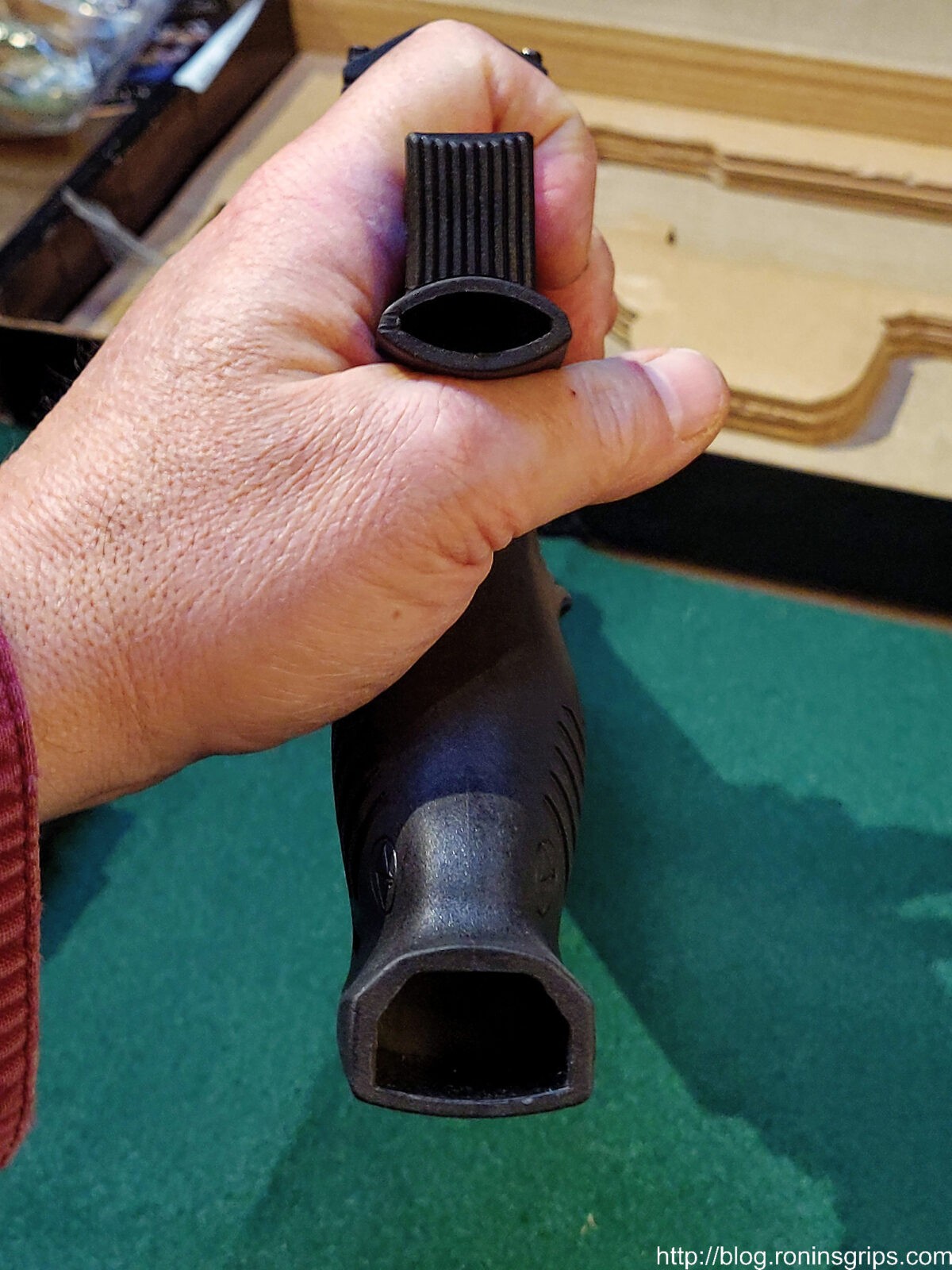
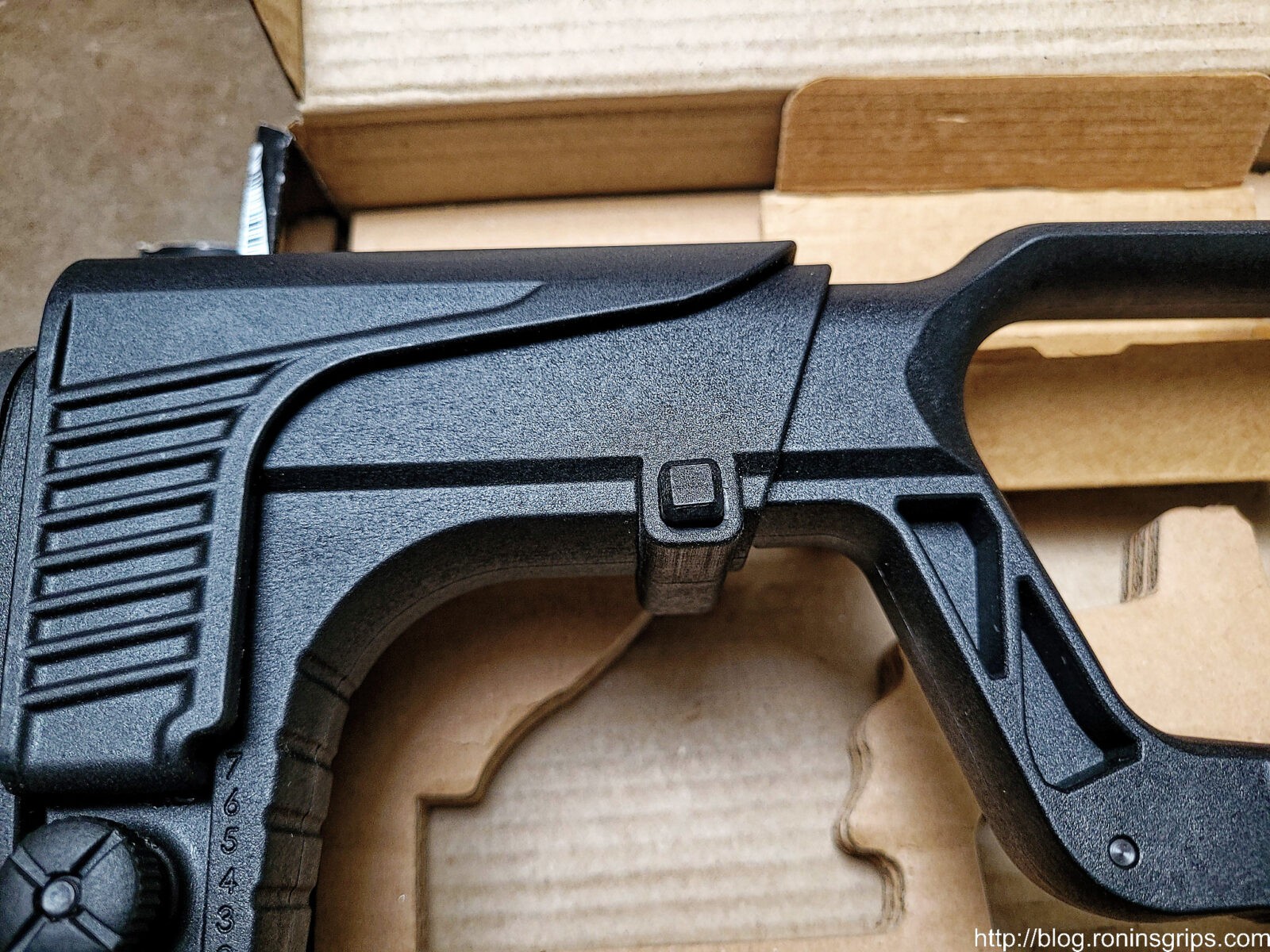
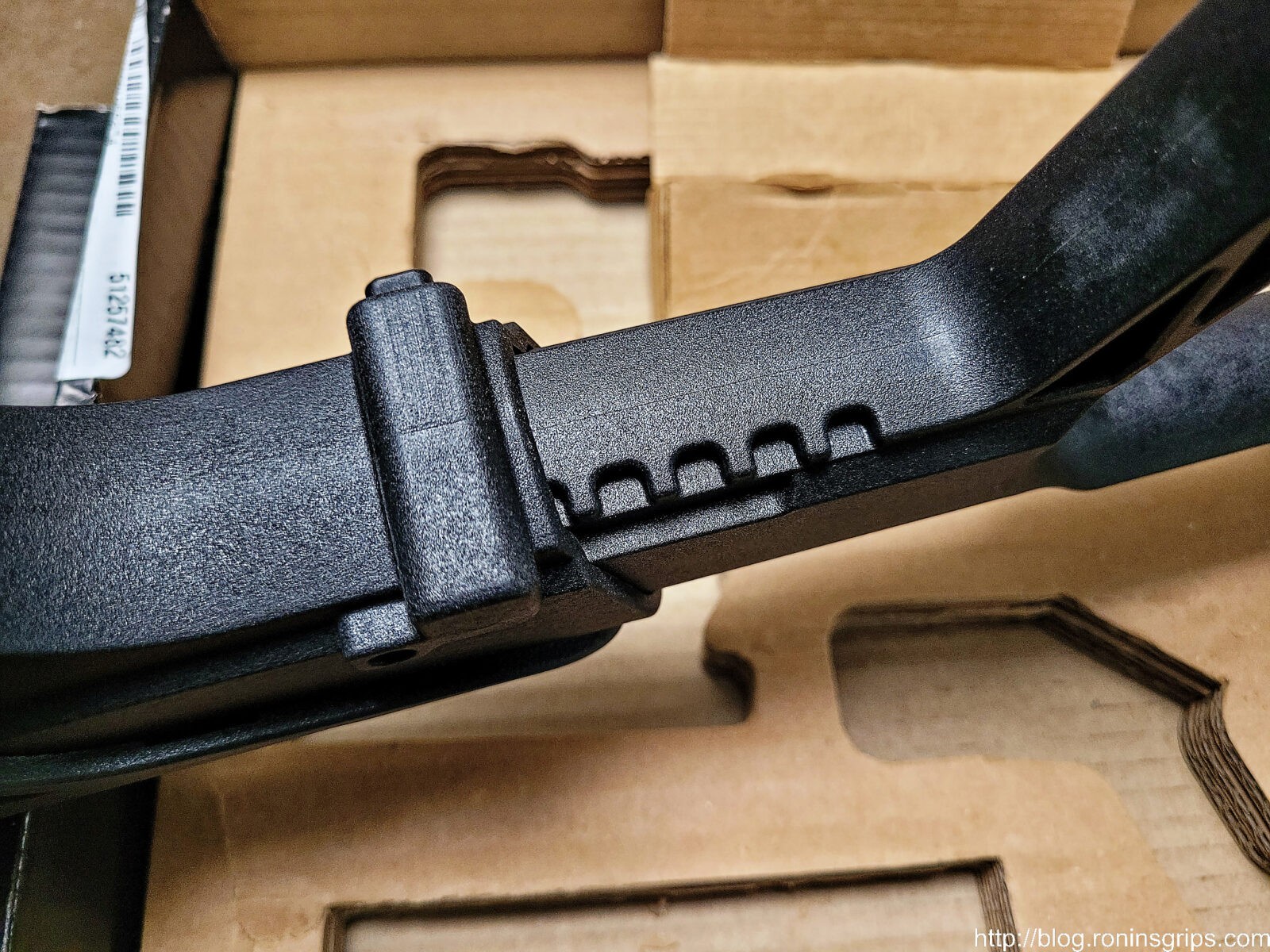
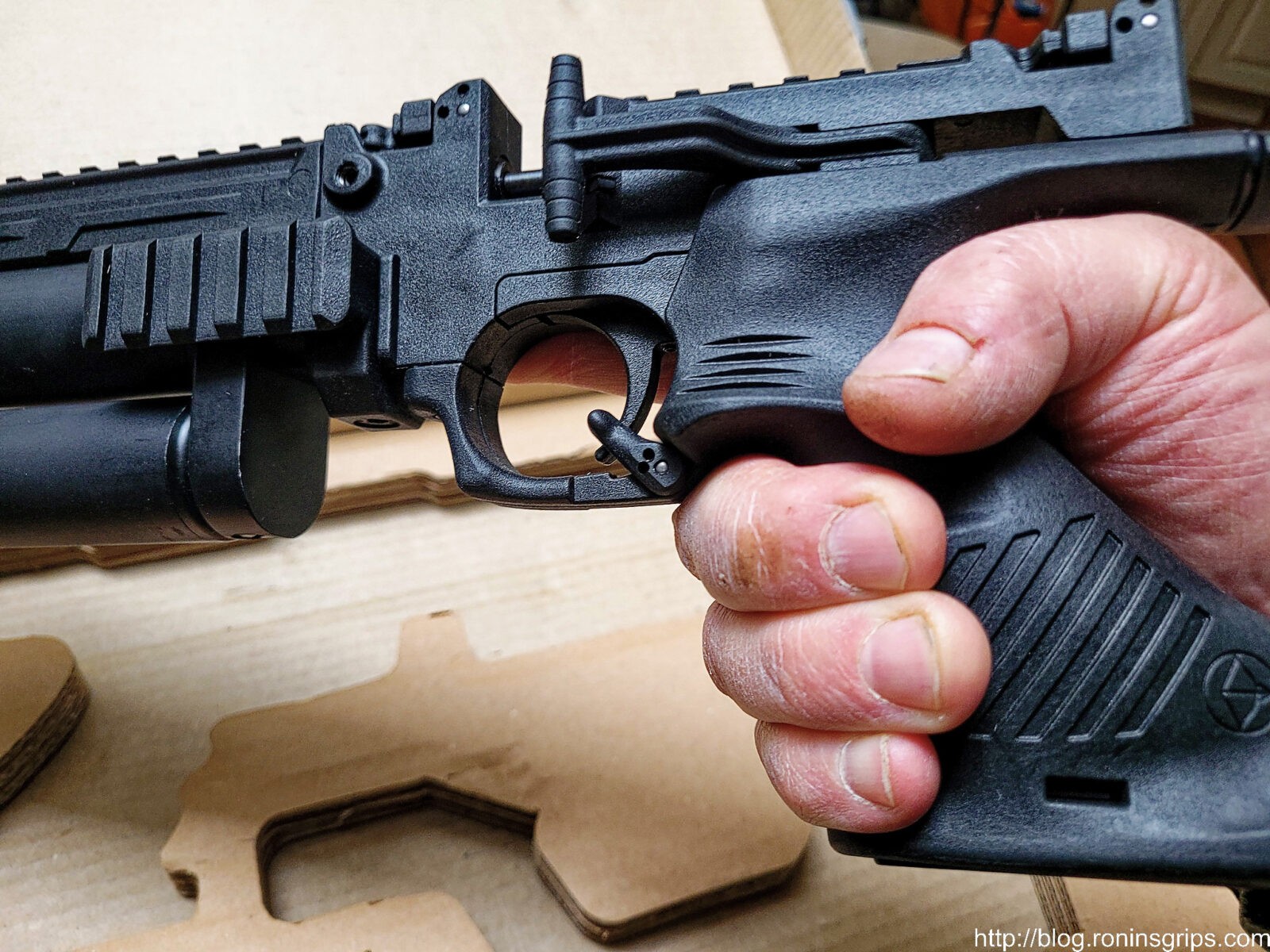
The stock is really interesting. The male plugs go into the female receptacles in the pistol. The knob on the lower left adjusts the height of the cheekpiece and the the square button just forward of the middle lower part of the stock moves a detent and allows you to make the stock longer or shorter.The lower plug has a locking mechanism to keep it secured in the pistol.The top plug has an O-ring installed. What this does is provide resistance/springiness for a firm lock-up. When you push the stock into the pistol the O-ring compresses to create a solid feeling connection.This is looking at the female receptacles on the pistol that the stock’s plugs will go into.That square button allows enables the stock to telescope in or out.There are a total of six adjustments in the stock. Overall length with the stock collapsed is about 23-3/16″ and fully extended it is just over 24-3/4″. If I use the back of the rear sight as a starting point, length of pull collapsed is about 9-5/8″ and fully extended it is about 11-9/16″. There is a slight amount of play, or wiggle, in the lock up of the stock but it’s really not much and thus acceptableIt looks slick and goes to the shoulder very easily. The balance is good too. You can see the two magazines and bag of goodies that were in the accessory box.I wear XL-sized gloves and my hand fits the grip but just barely. Oddly it’s my middle finger’s middle knuckle that feels the tight fit. I wish there was just a tad more room before the start of the trigger guard but I can live with it. I do want to point out one thing I really like – the safety flips up from the bottom of the trigger guard. I really like designs that put the safety where it can be readily turned off without moving your head or your hand to find the safety leverl. Big kudos to Hatsan for that. My Gladius had one at the front of the trigger guard and I could very easily feel it’s status or turn it off without moving my head.
So let’s wrap this first blog post
I will do more posts about adding a moderator and the optic. I’ve already done some test firing at targets and really like the little “carbine” – I think that’s what I’ll call it. So, if you are looking for something new and compact, check out the Jet I or Jet II in the caliber of your choice.
Note, I have to buy all of my parts – nothing here was paid for by sponsors, etc. I do make a small amount if you click on an ad and buy something but that is it. You’re getting my real opinion on stuff.
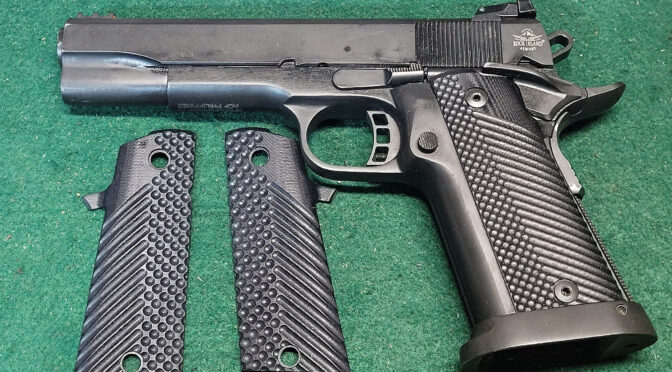
In the first post, I told you about Stoner CNC for grips made from G10 composite, in the second I told you about a great option for wood – Browne Works and in this third post, we’ll cover a firm with a unique name and good grips.
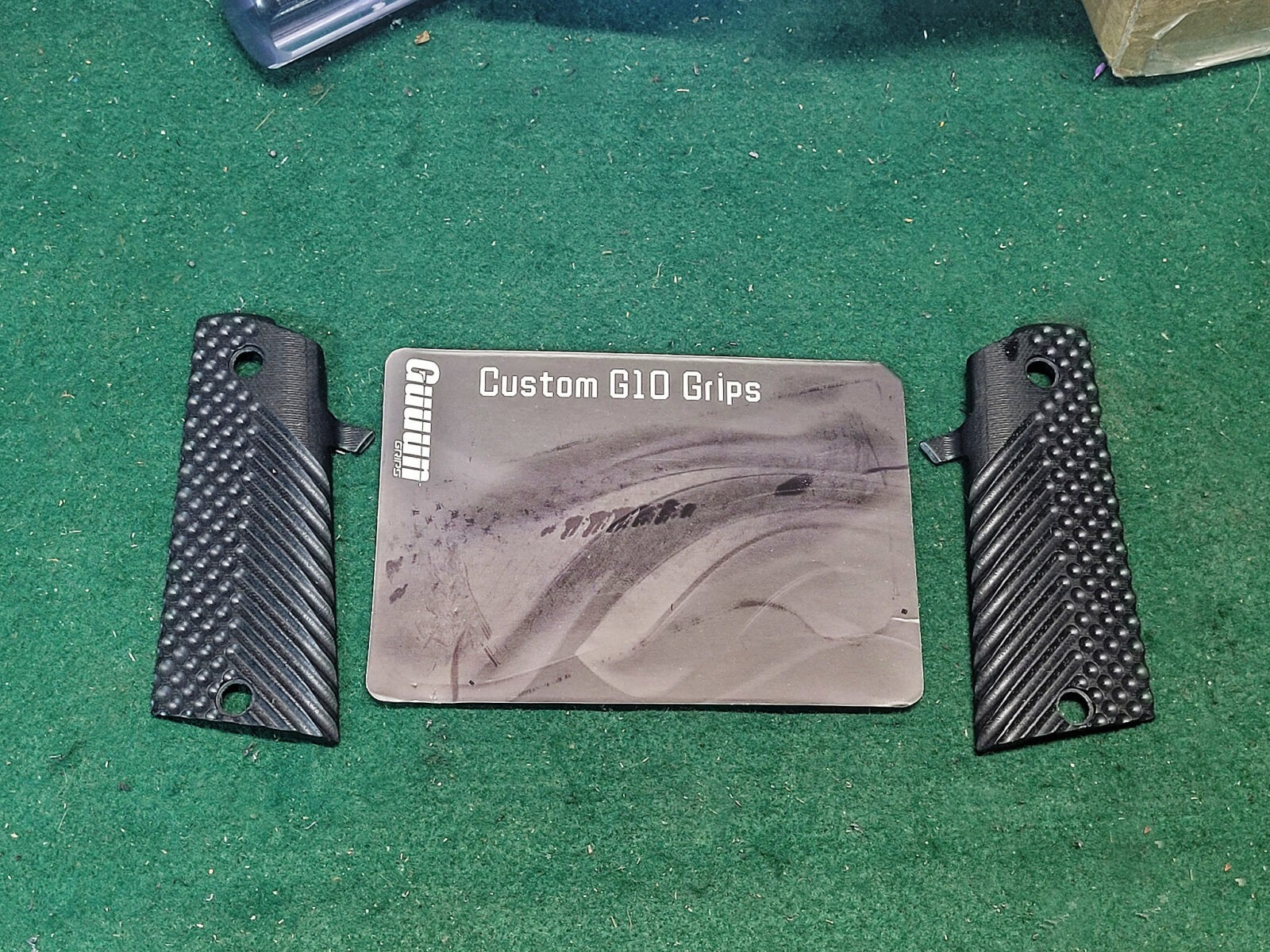
The firm is called Guun Grips and they make custom G10 grips for bunch of pistol models and different styles of grips. You can find their offerings on their own website as well as tons of listings on eBay and Amazon. It’s my understanding that the grips are made in China and then sold in the US via Aurora, Colorado. So much is made in China these days that I’m not very surprised – it is interesting to note that when you search on them there are lots of satisfied 1911 and CZ.75 owners running their grip plates.
The grip plates are machined from G10 composite and available in either black or grey.
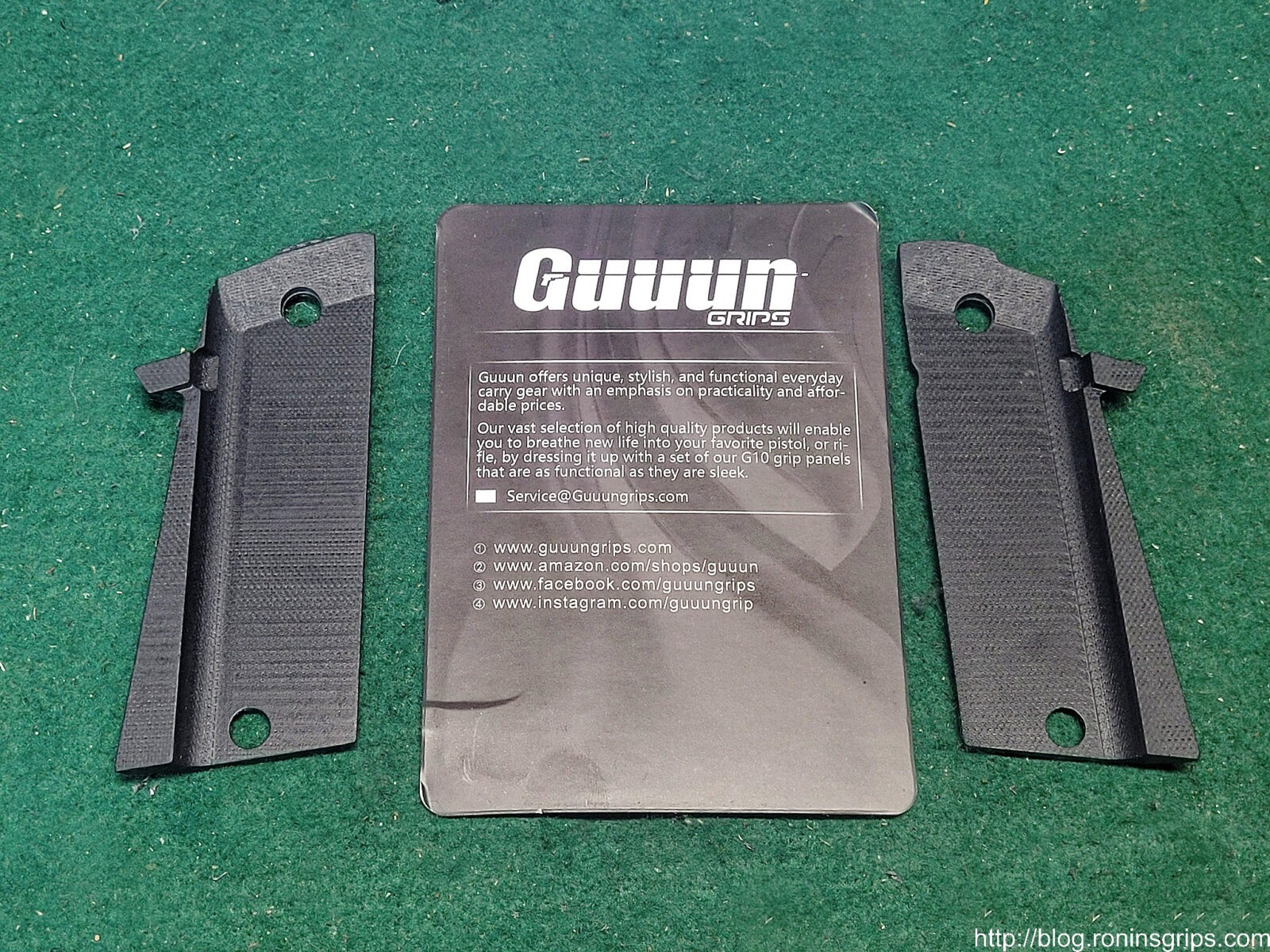
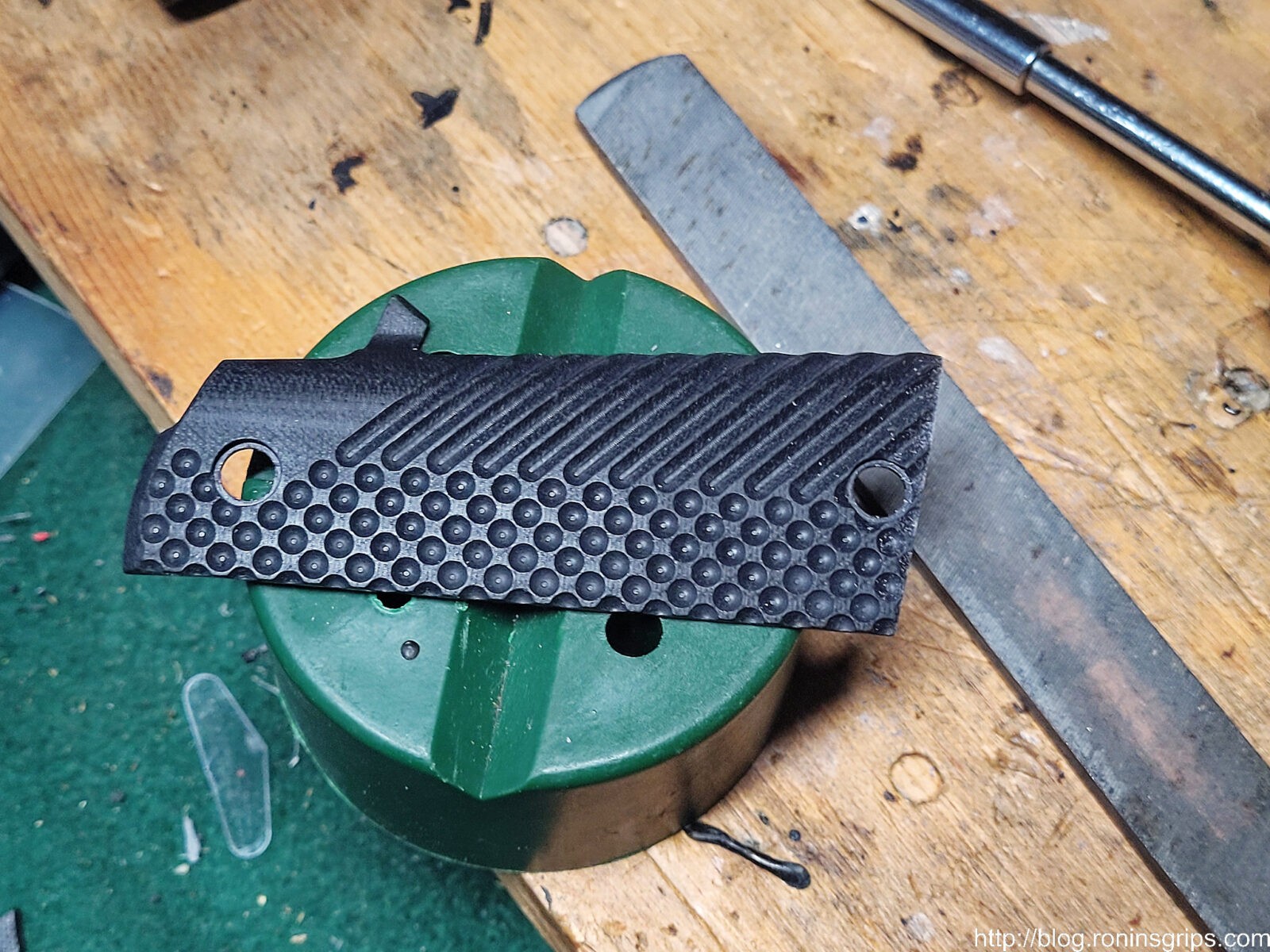
The back of the plates show good attention to detail. All edges are well formed and smooth.
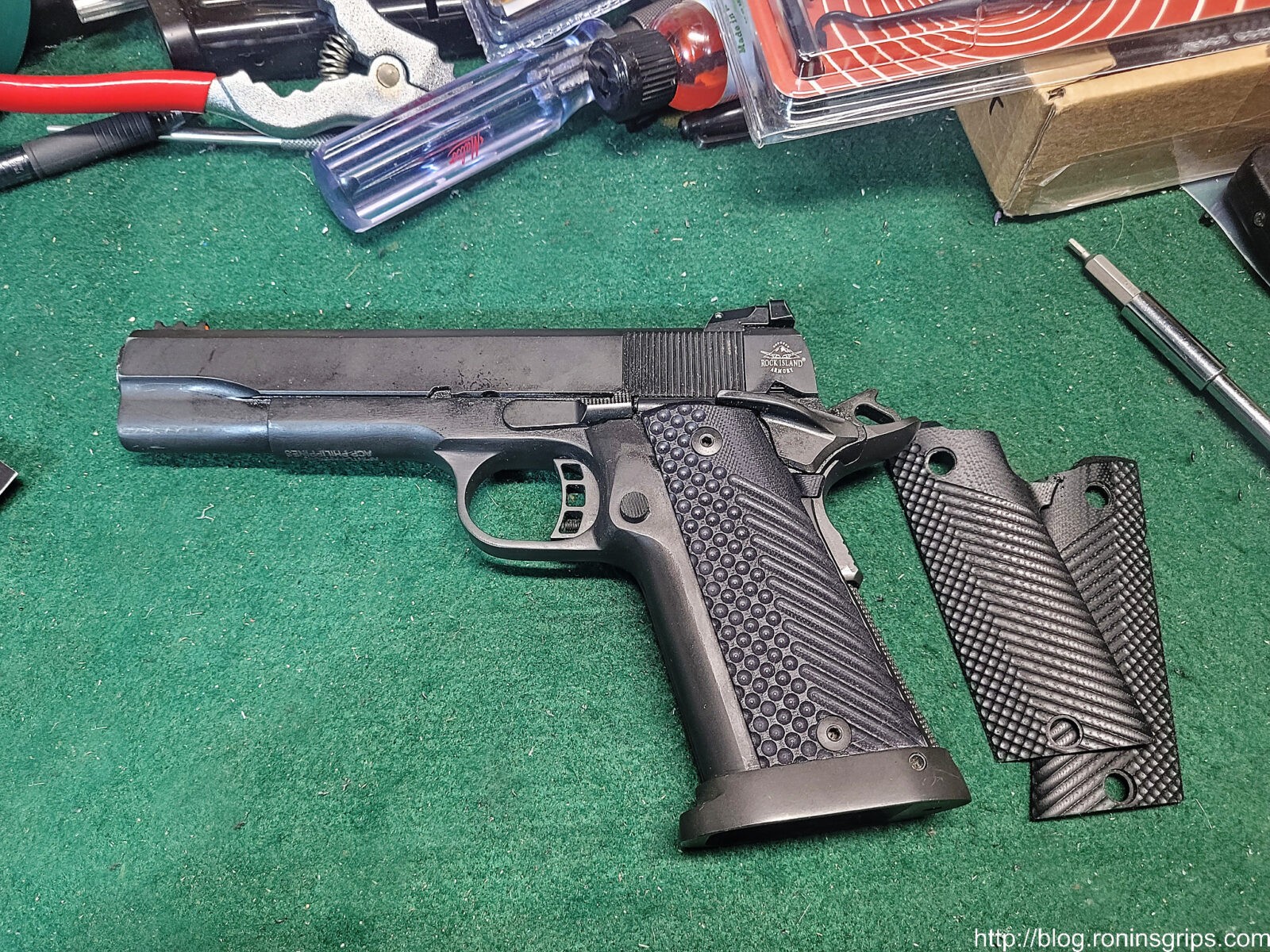
Installation was very straight forward – unscrew the pair of grip screws and put on the new panel. I did need to do some light filing on the right side to get the G10 panels to sit flat and the holes to line up accordingly. Oddly enough, the left side went right on.
The plate does not want to sit flat or line up with the holes in the frame. These are indications that fitting is needed. It doesn’t take much filing to get them to fit.
The G10 files easily – use a dust mask as you really shouldn’t be breathing composite dust. Go slow and take your time – file, test fit and repeat until the plates sit flush.
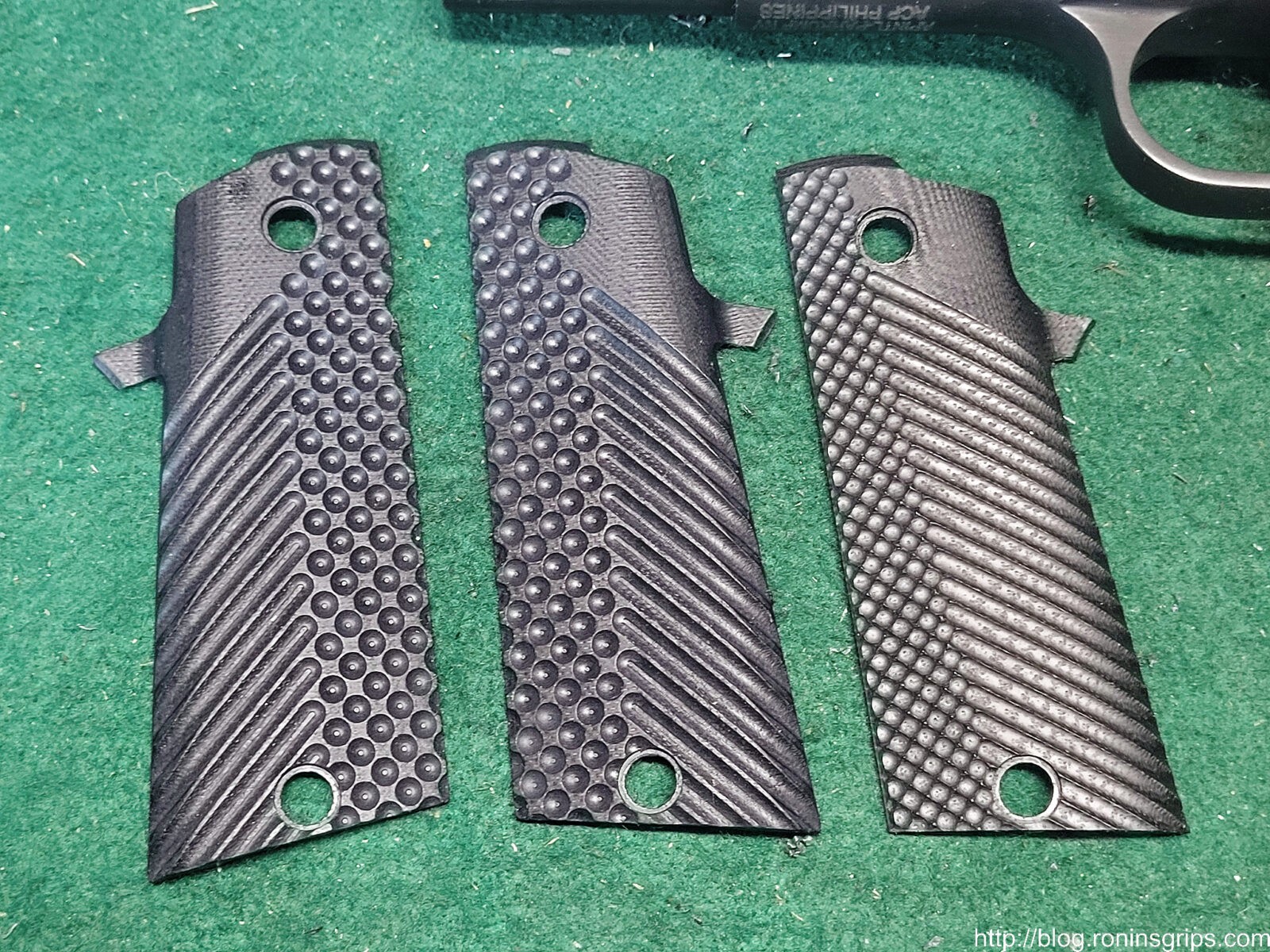
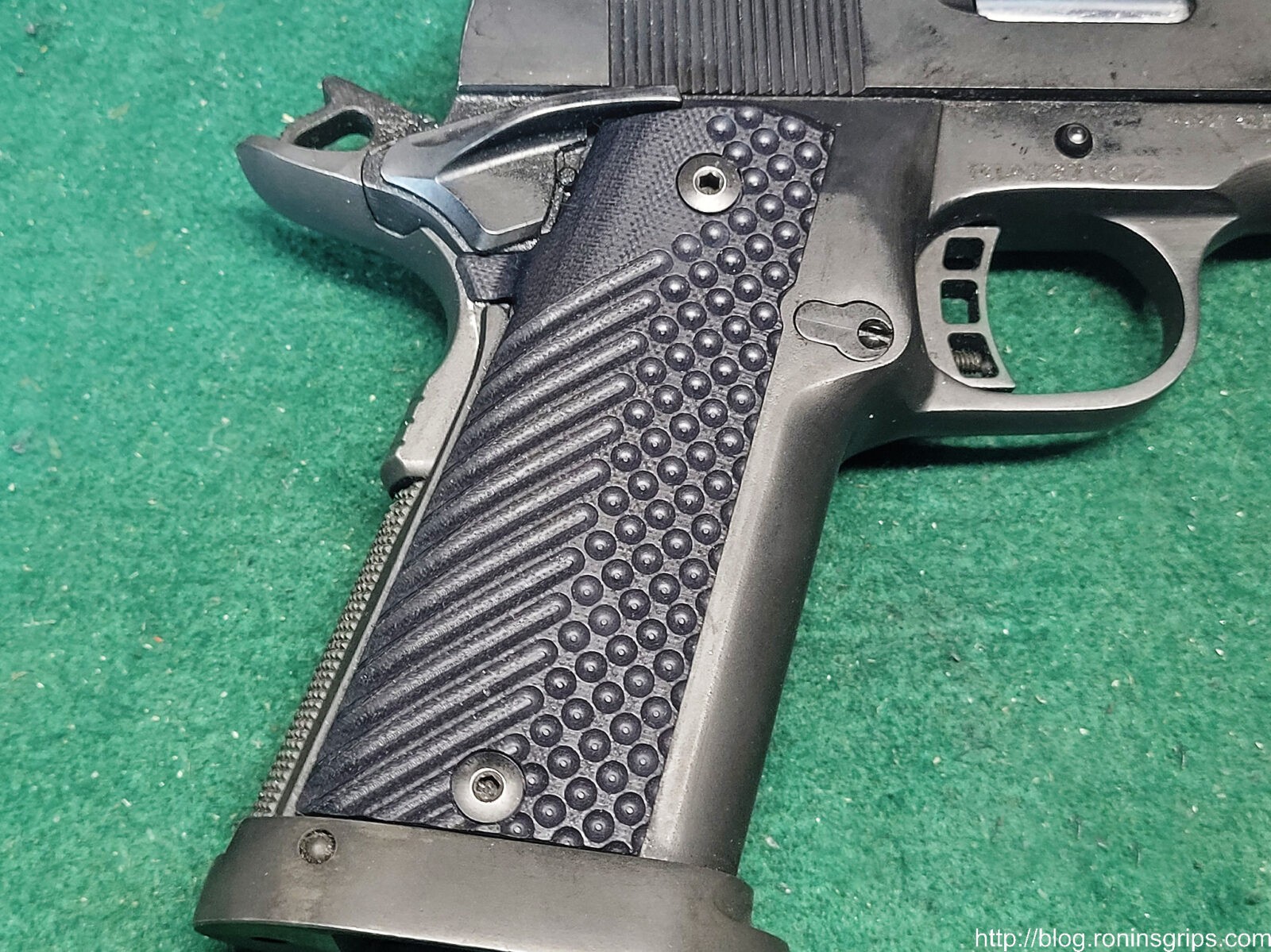
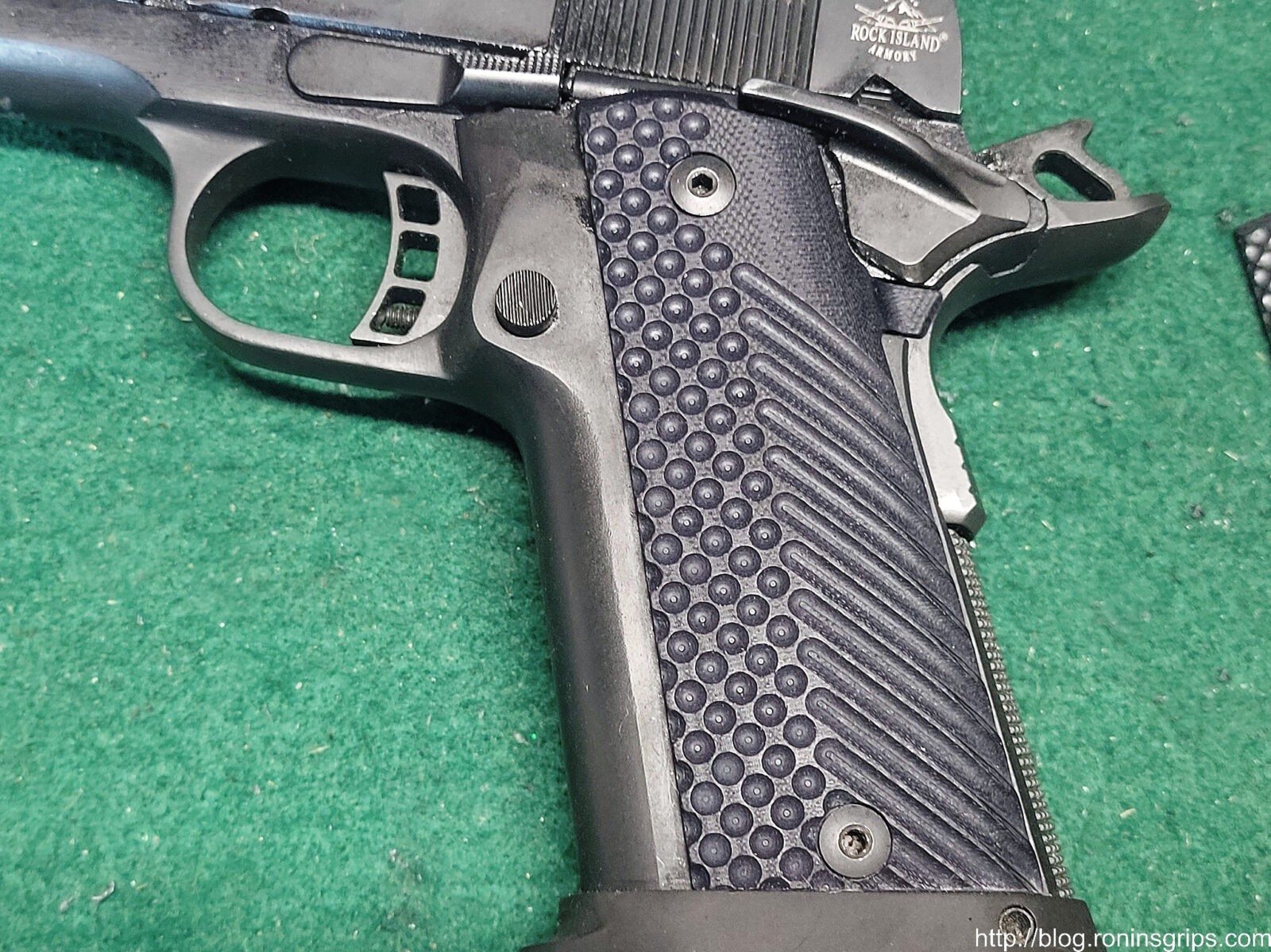
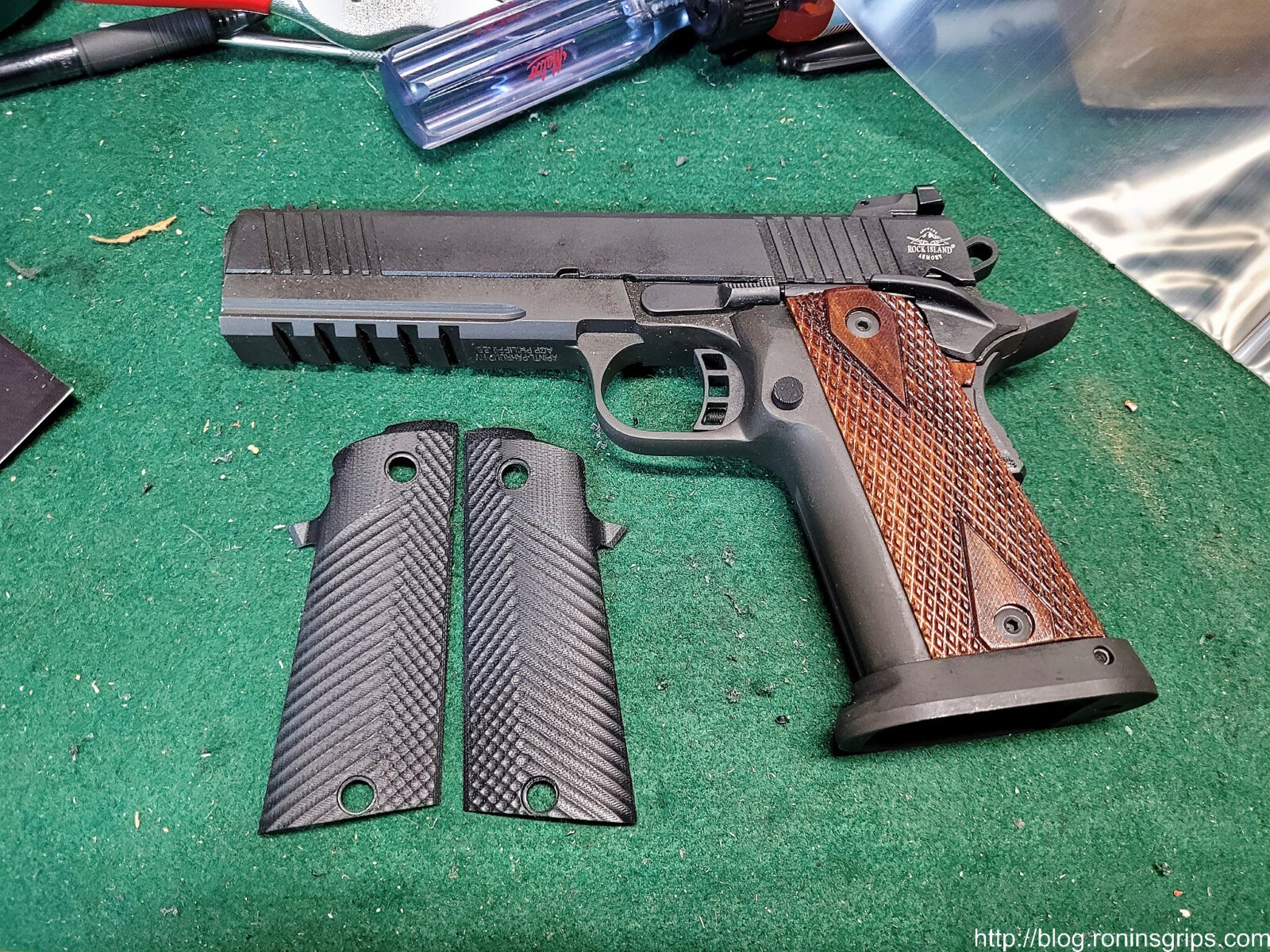
The left two plates are the Guuun models and the right is the original RIA. You can see the slight differences in the number of divots and grooves as well as the depth of them. The Guuun grips actually feel quite good.
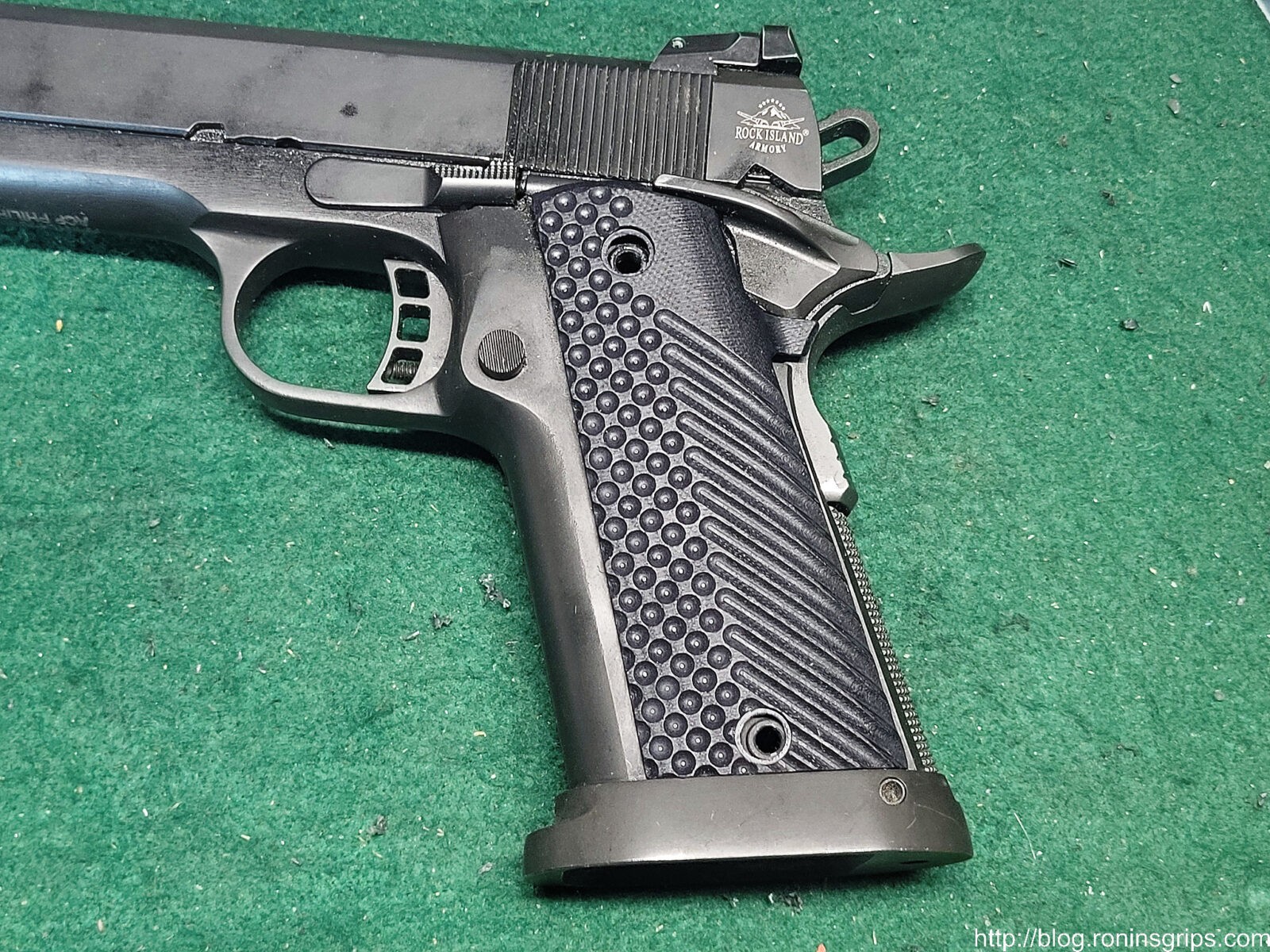
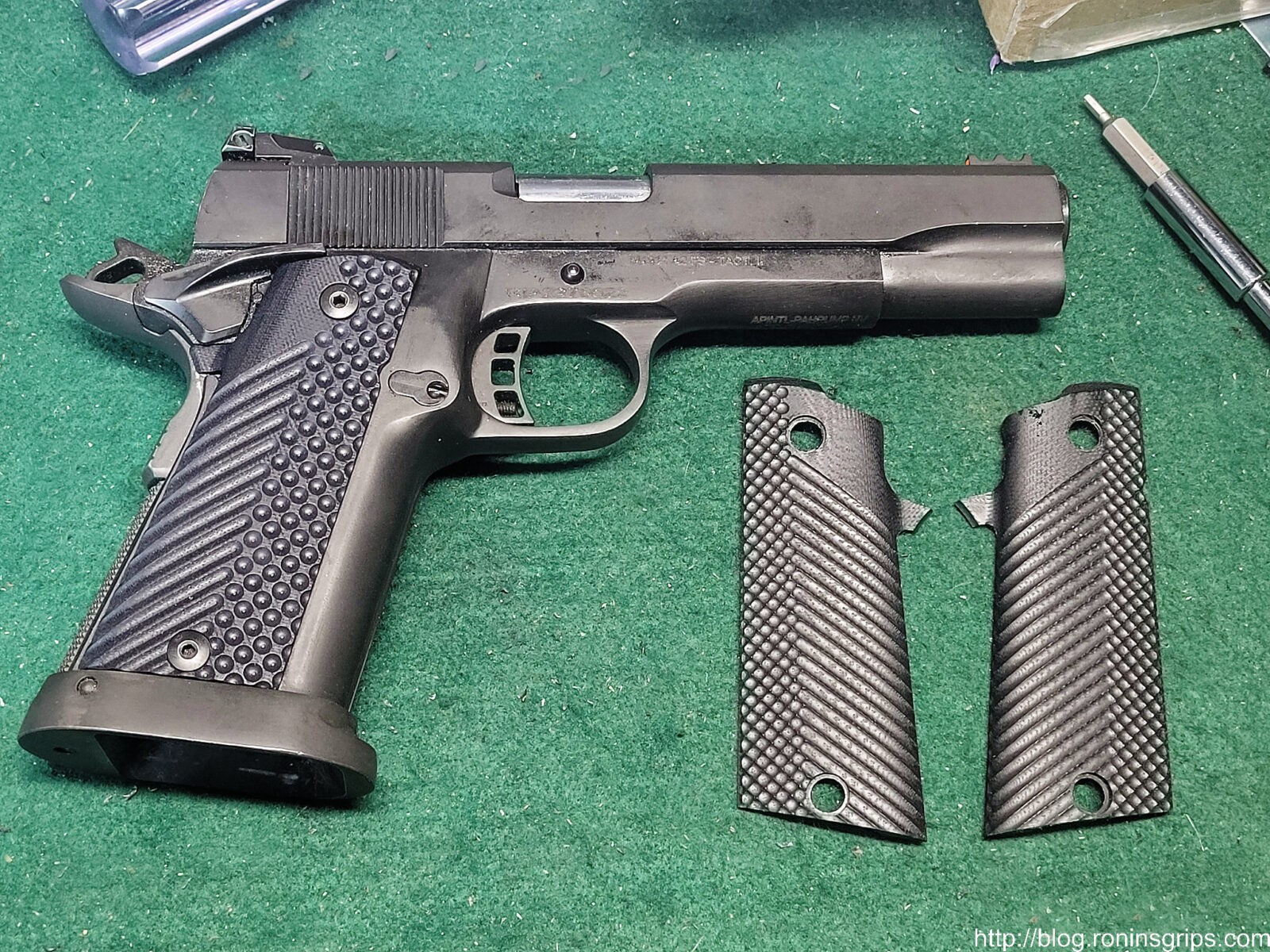
Once the plate is seated nicely flat on the frame the grip screws are reinstalled.
You know, I like the feel better than the original RIA plates. “Feel” is a subjective thing – but I do like the way the plate feels in my hand.
A closer view
And of the other side.
Summary
The Guuun grip plates are nicely made. To be honest, I didn’t expect them to be made very well but they are – the material, machining and finishing are all very good.
So, here’s another option for you whether you want to stick with black and have a different feel or opt for their grey color.
Note, I have to buy all of my parts – nothing here was paid for by sponsors, etc. I do make a small amount if you click on an ad and buy something but that is it. You’re getting my real opinion on stuff.
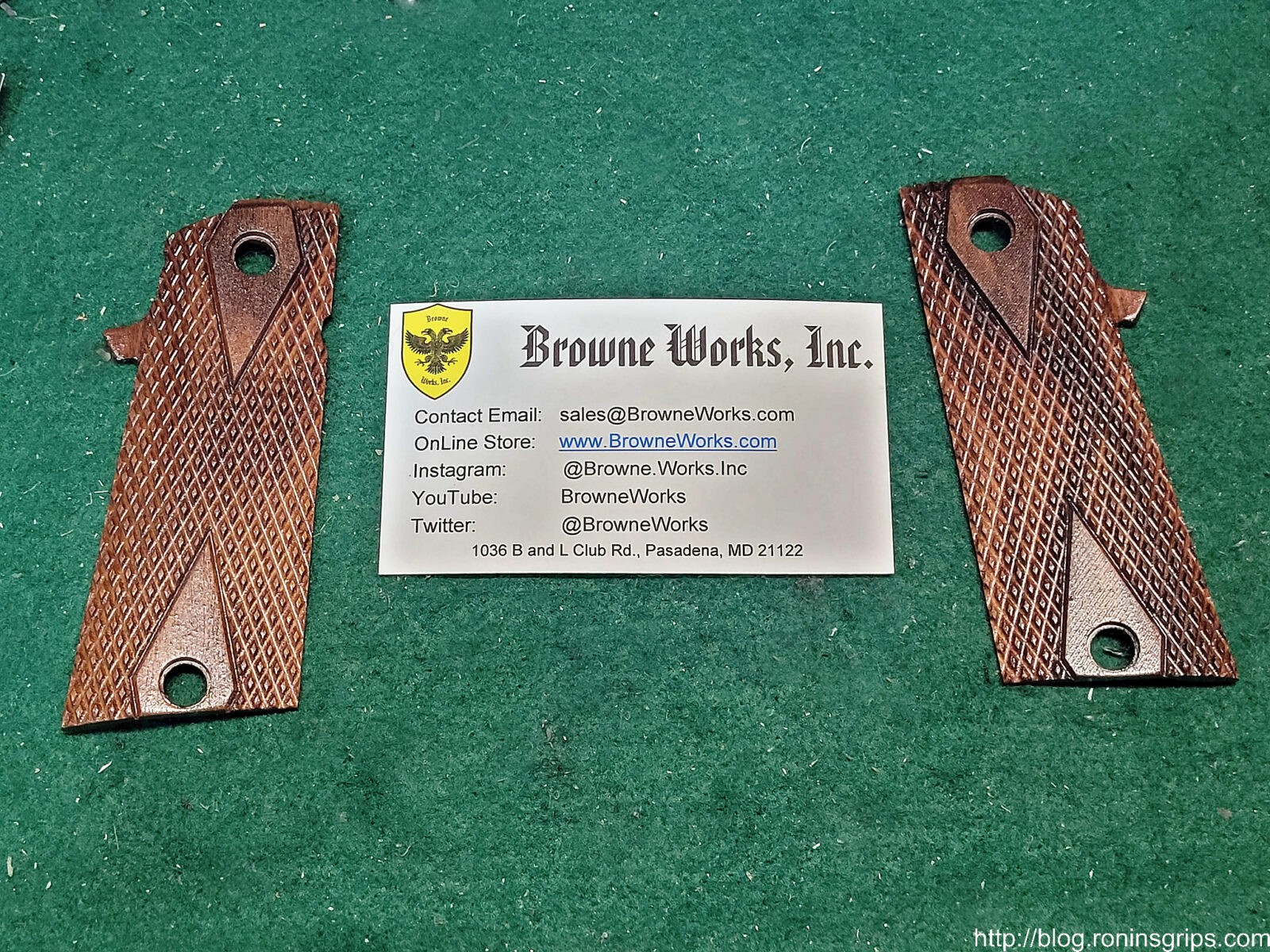
Mark Browne is the owner of Browne Works, Inc., located in Pasadena, MD, southeast of Baltimore. He is a true custom grip maker and sands and finishes them by hand with a very wide offering for pistol models including the 1911, Beretta 92, Hudson G9, Llama, SIg Sauer and, of course, the Rock Island single and double stack pistols.
For Rock Island pistols he has a wide variety of offerings for the Ultra and Tac Ultra both FS and MS models. He also has them for the A2 HC (like I needed) plus the BBR. The pricing is very reasonable also and he has a variety of materials you can choose from – click here for his website.
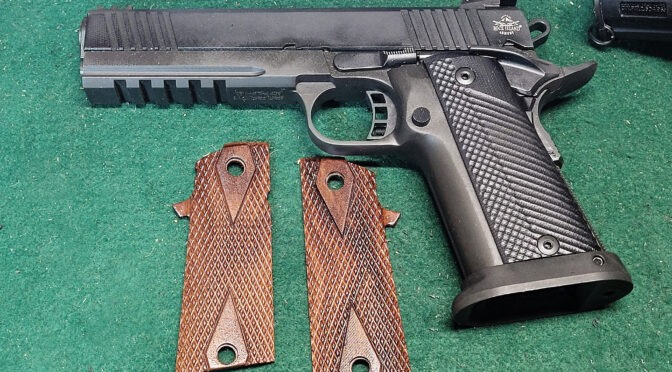
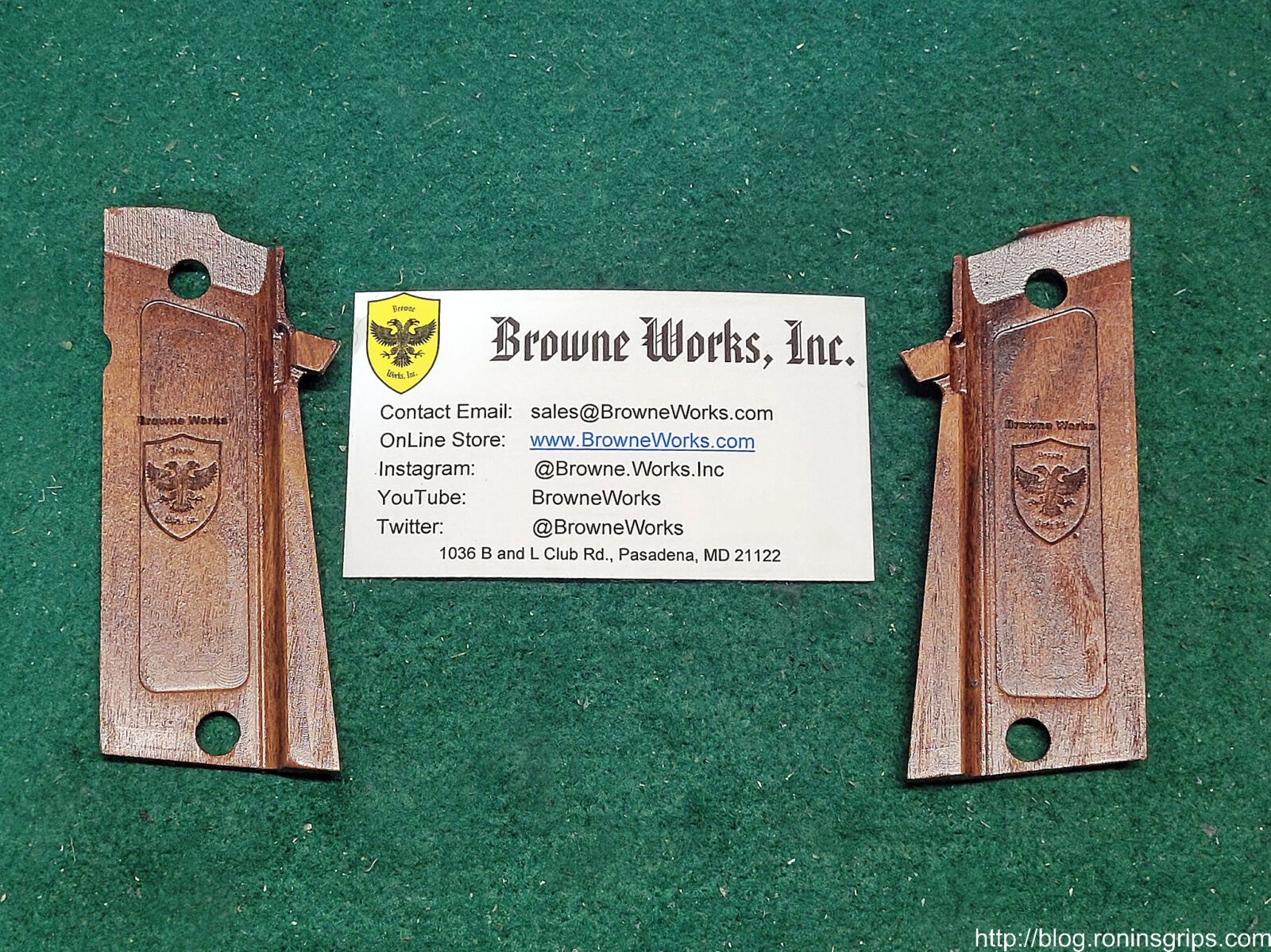
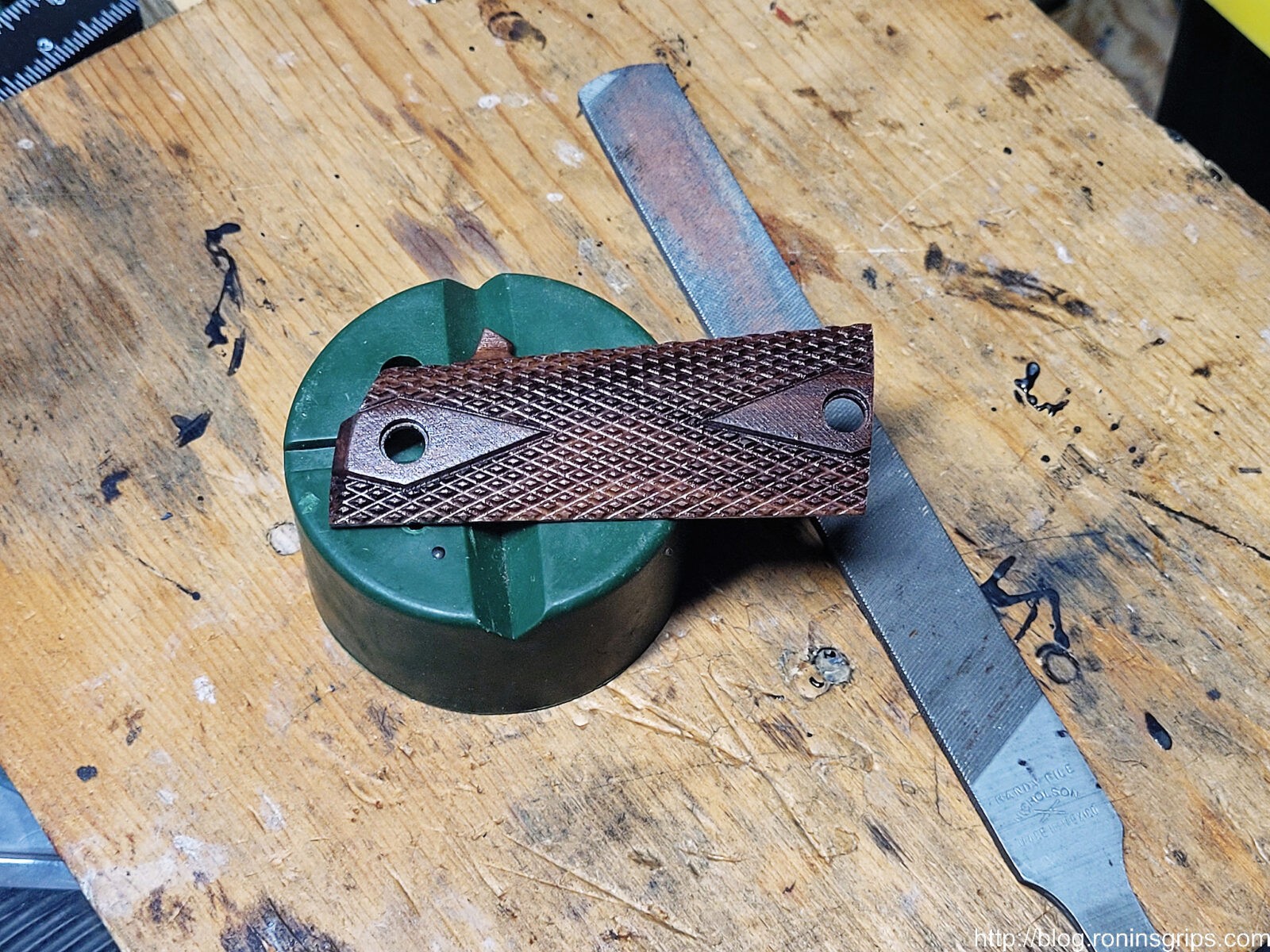
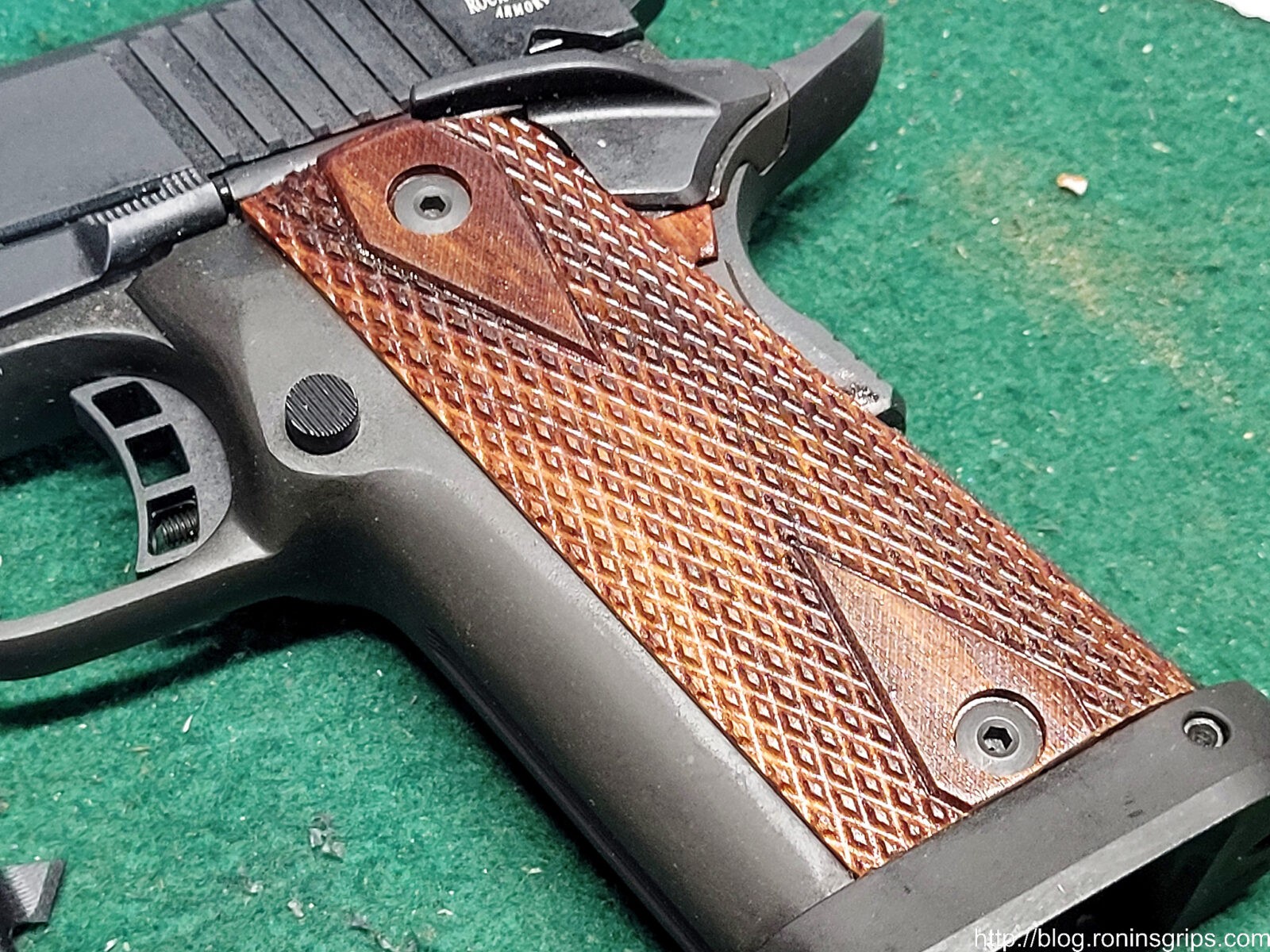
The wood is Brazilian Rosewood. Mark added hardener and did a double diamond pattern on it. There is a satin finish sealant on them as well. I think they look amazing – the photos don’t do them justice.
Mark can do laser engraving if you want. He does engrave his logo on the back of each panel plus it shows you the attention to detail in terms of the finishing he does.
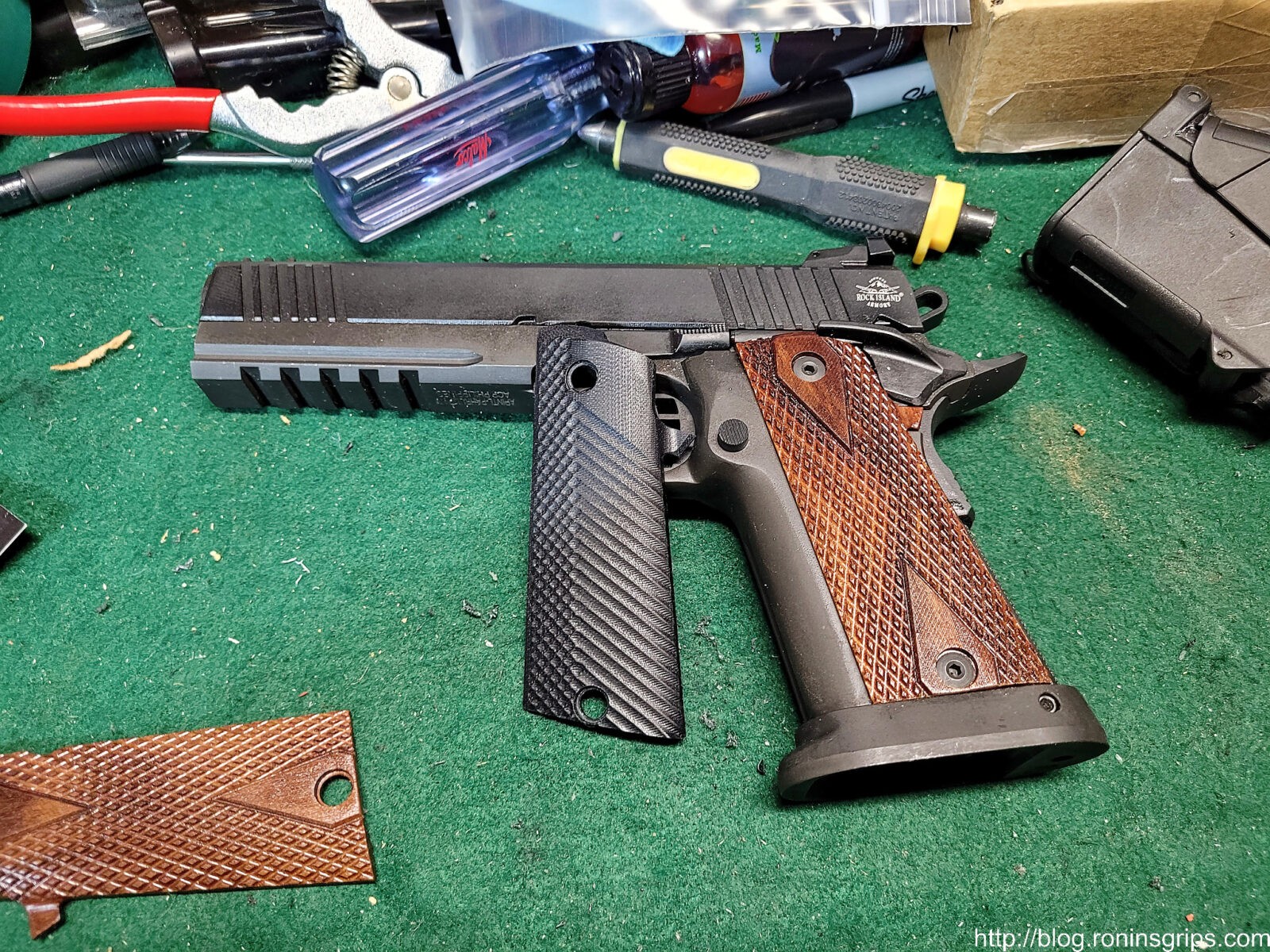
Installation was very straight forward – unscrew the pair of grip screws and put on the new panel. I did need to do some light filing to get the wood panels to sit flat and the holes to line up accordingly.
I did need to remove some off the bottom. I used a smooth file and would take a tad off in a straight line along the bottom and test repeatedly until the panel fit nice and snug.
Now I need to insert something here that Mark did that really helped me out. The photos in this post are actually of my second set. On the rear of the grip is a tab that covers a slot. I don’t know what happened but it cracked on my original right side plate. I contacted Mark and he told me he would make a new one and add hardener and use the cool double diamond pattern and he didn’t charge me! He had no idea who I was or that I planned a blog post – I never said anything. He took care of me and that speaks a lot about him and his customer service right there.
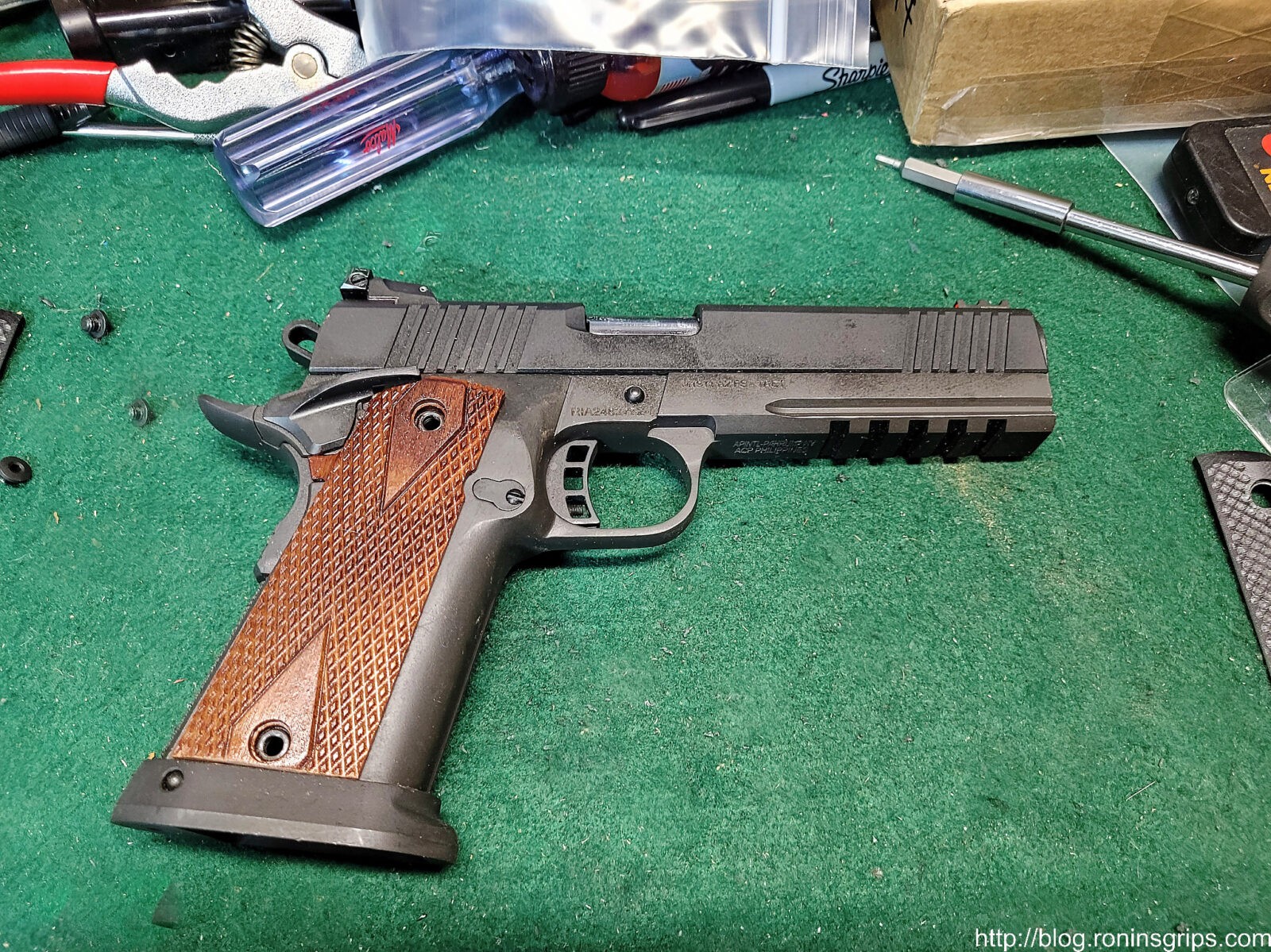
The grips look great!
And the other plate is fitted – the screws were next on the to-do list.
These grips are really nice. I never thought I would go with wood but I am leaving these plates on my pistol.
Both in terms of looks and how they feel, these
Summary
I’m not always a wood fan but to be perfectly honest, I like these – a lot. The checkering really gives you a nice grip without biting into your hand. They are staying on the pistol!
When it comes to Browne Works for RIA A2 HC pistols – I definitely recommend them based on my experience.
Note, I have to buy all of my parts – nothing here was paid for by sponsors, etc. I do make a small amount if you click on an ad and buy something but that is it. You’re getting my real opinion on stuff.
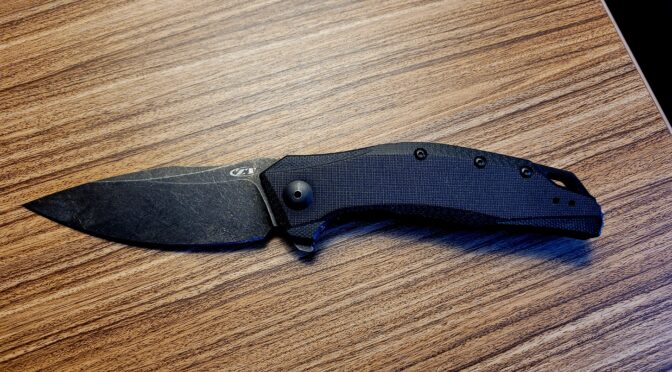
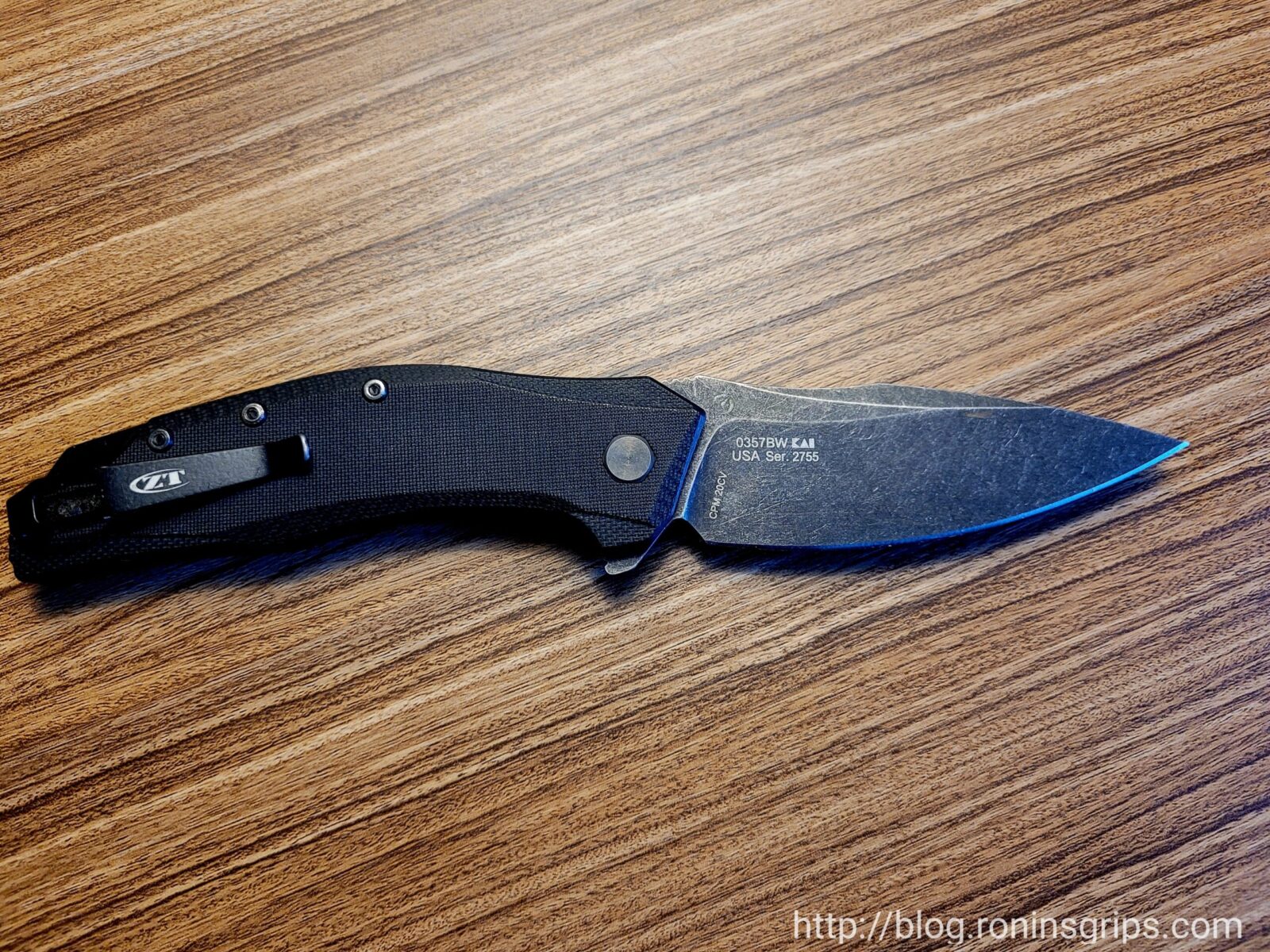
I have a collection of good pocket knives including some I will not lose sleep over if I lose one. On the good scale that I would hate to lose are a few Zero Tolerance, Hinderer and US made Kershaws (they and ZT are both owned by KAI). At any rate, when I look back on this past year and think about what folding knife did I carry the most and the answer would be the ZT 0357BW.
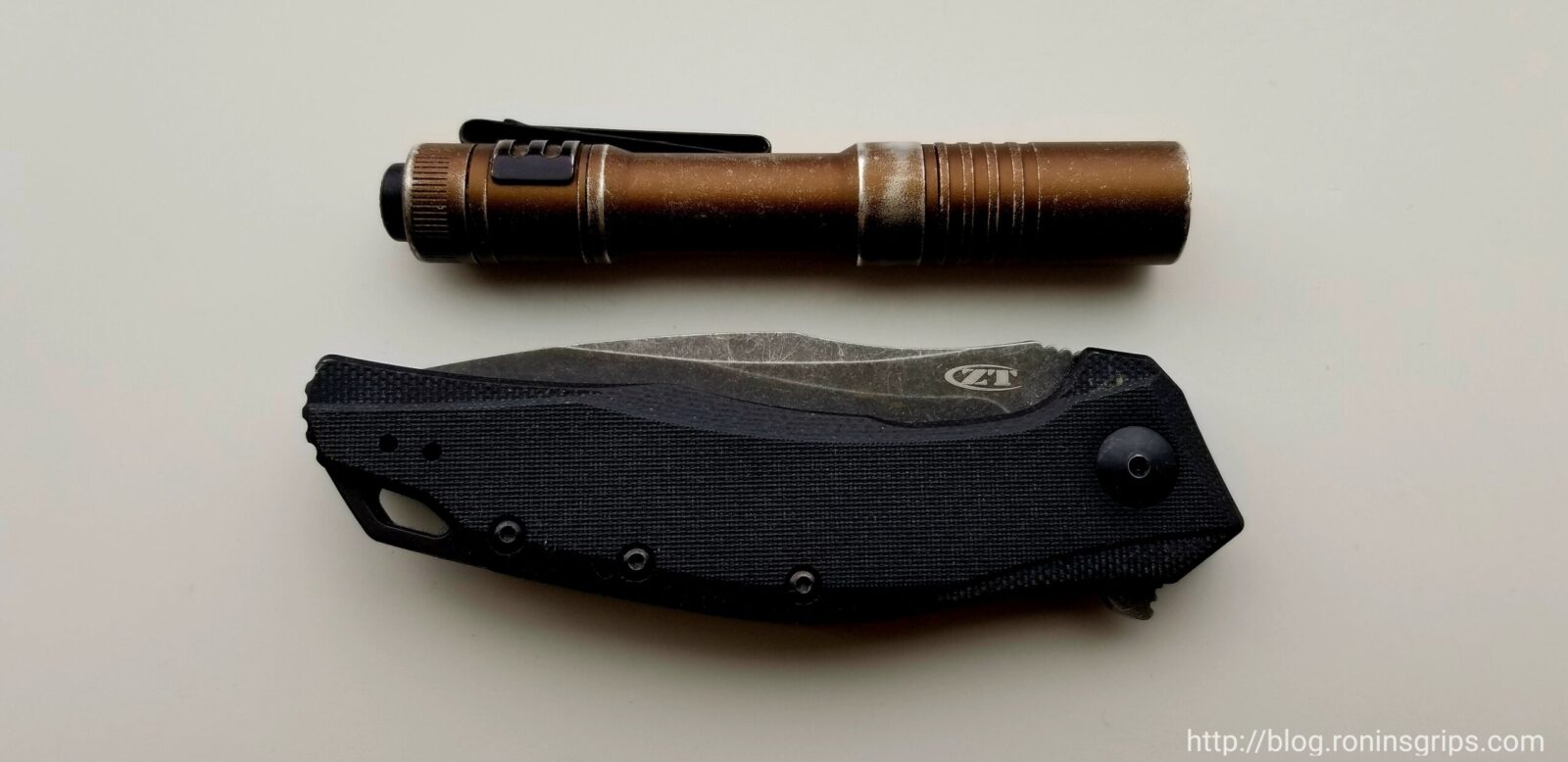
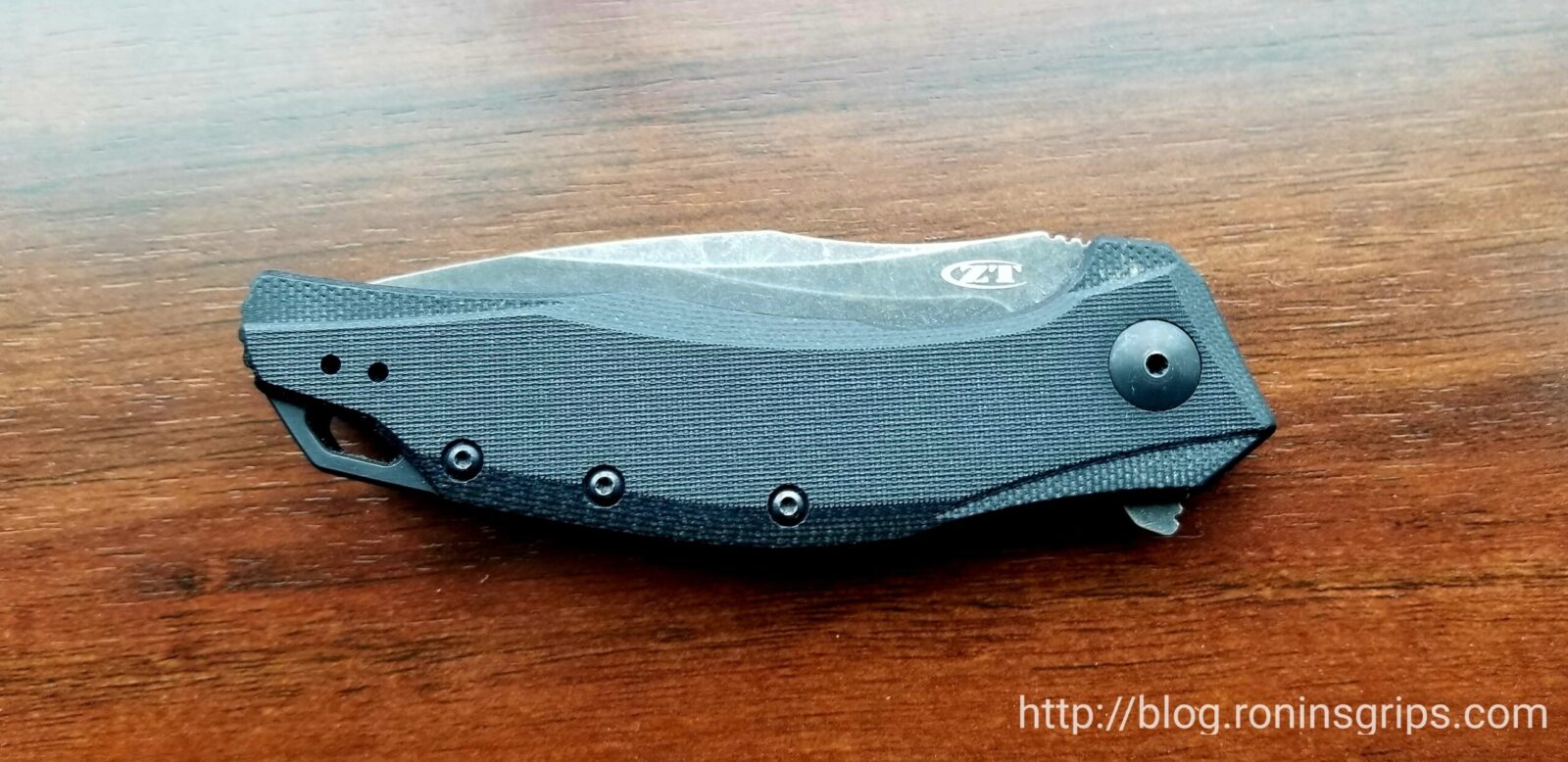
You will find these in my pocket a lot – my ZT 0357BW and one of my Streamlight USB rechargeable 66608 Microstream LED flashlights.
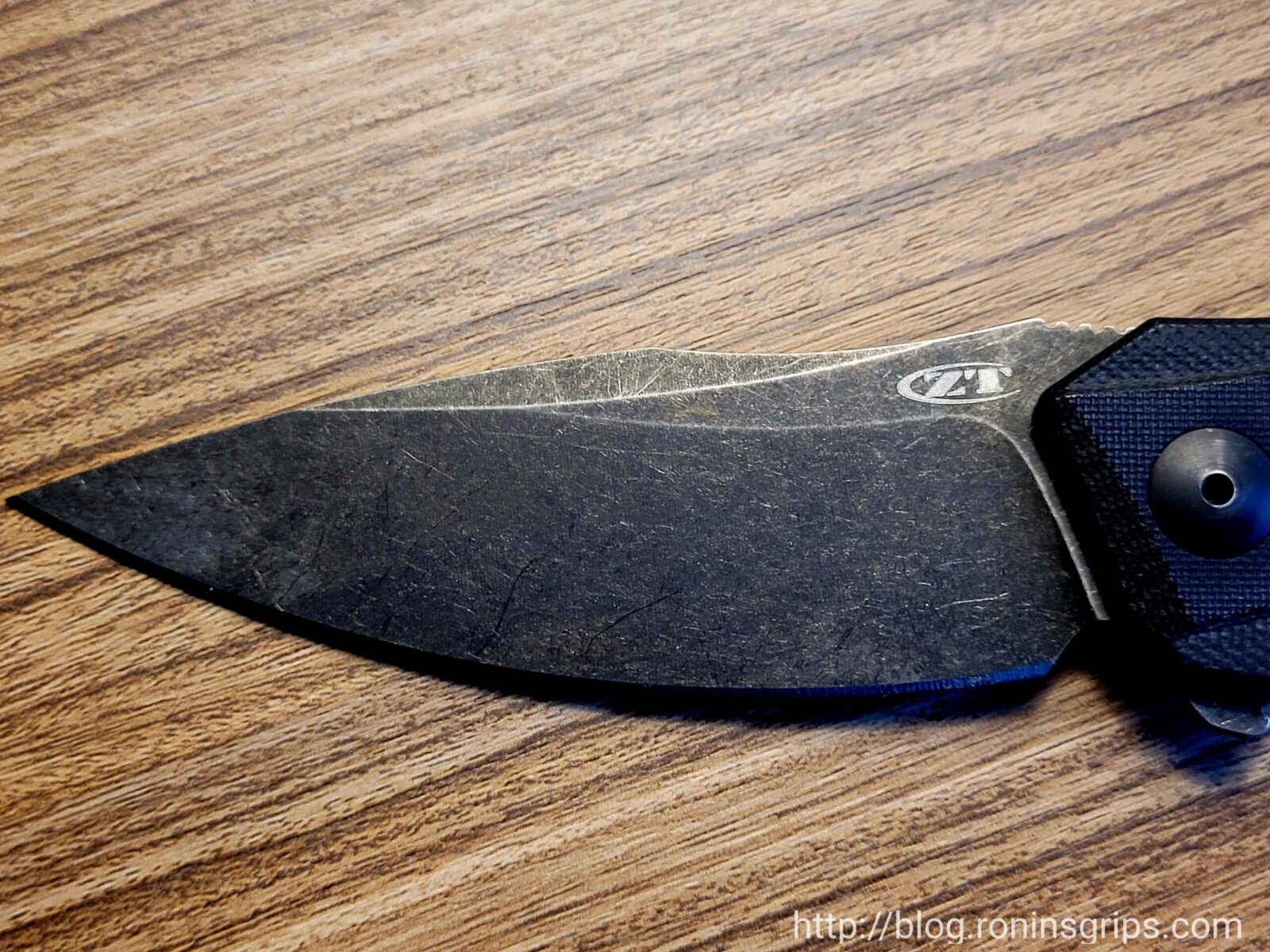
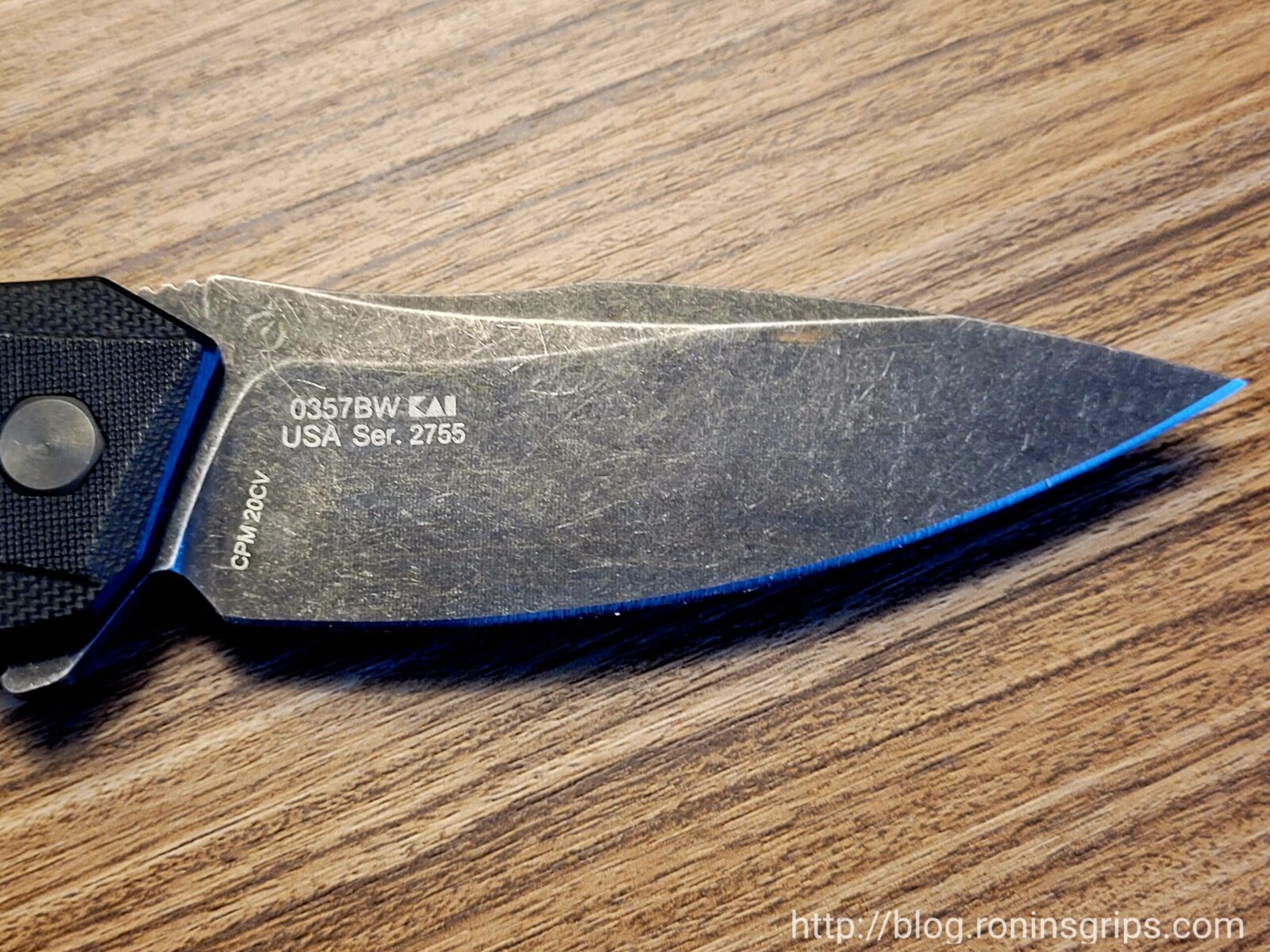
The ZT0357 was a 2020 model year release from Zero Tolerance and became popular right away due to its ergonomics and the CPM20CV steel. In regards to that alloy, it was designed by Crucible Industries to have excellet edge retention, corrosion resistance and toughness. By the way, those first two terms are self explanatory but toughness refers to a steel’s ability to absorb energy and deform without breaking/rupturing. My experience is that the 0357 holds an edge amazingly well based on my cutting open tubs of plastic, tape, boxes, and wire insulation.
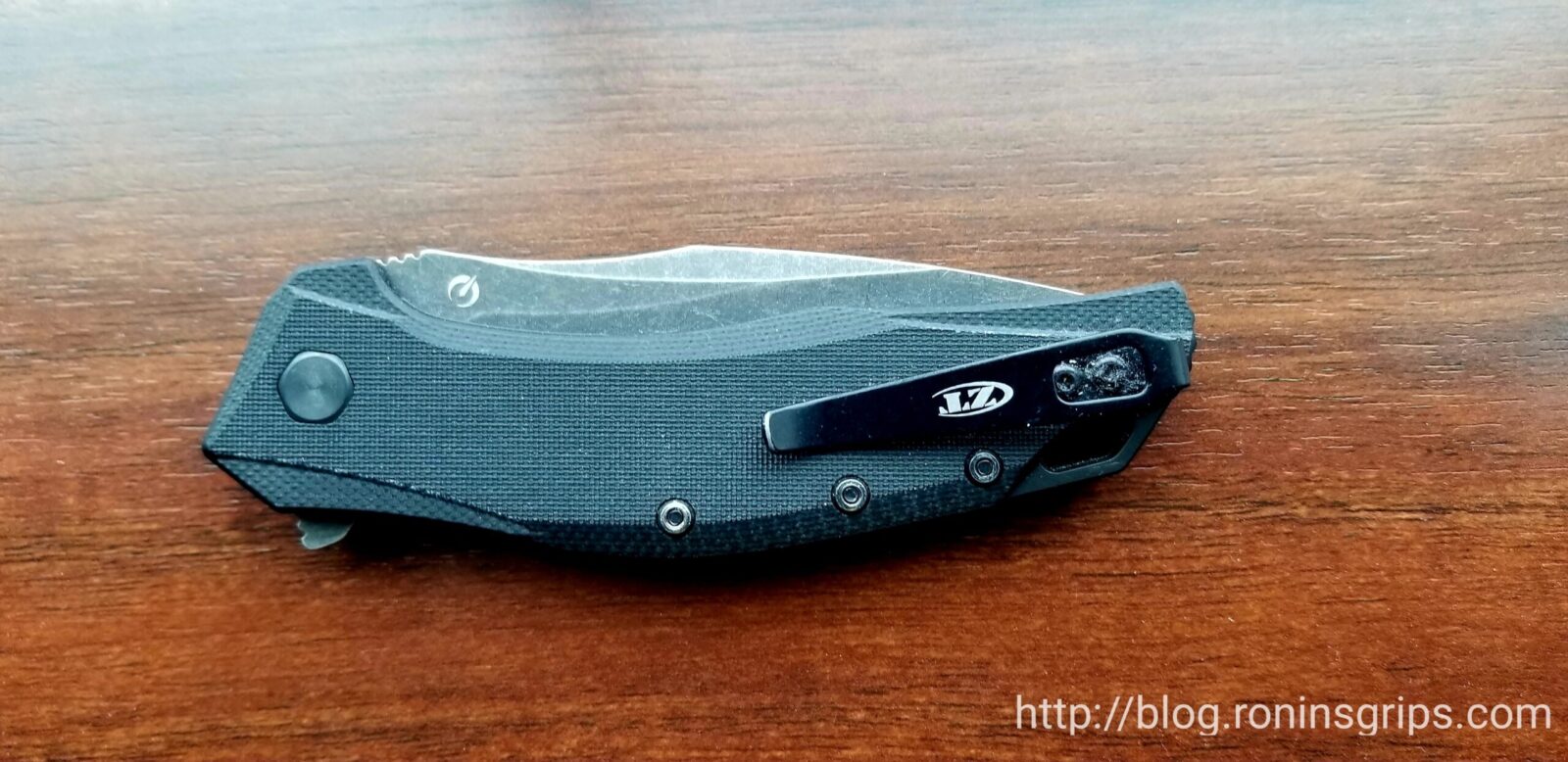
Here’s the other size of my my 0357BW. You can move the clip to either side if you want. Personally, I don’t use the pocket clips but a lot of guys do.
Specifications
This is a very pocket friendly knife in terms of size, weight and shape plus the blade is amazing. Here are the details for you:
Overall Length Open: 7.625″
Overall Length Closed: 4.4″
Weight: 4.3oz
Blade Length: 3.25″
Blade Thickness: 0.121″
Blade Style: Drop Point, no serrations
Blade Alloy: CPM20CV
Blade Hardness: 60-62
Blade Grind: Flat
Blade Finish: Black Wash (they also make a plain version)
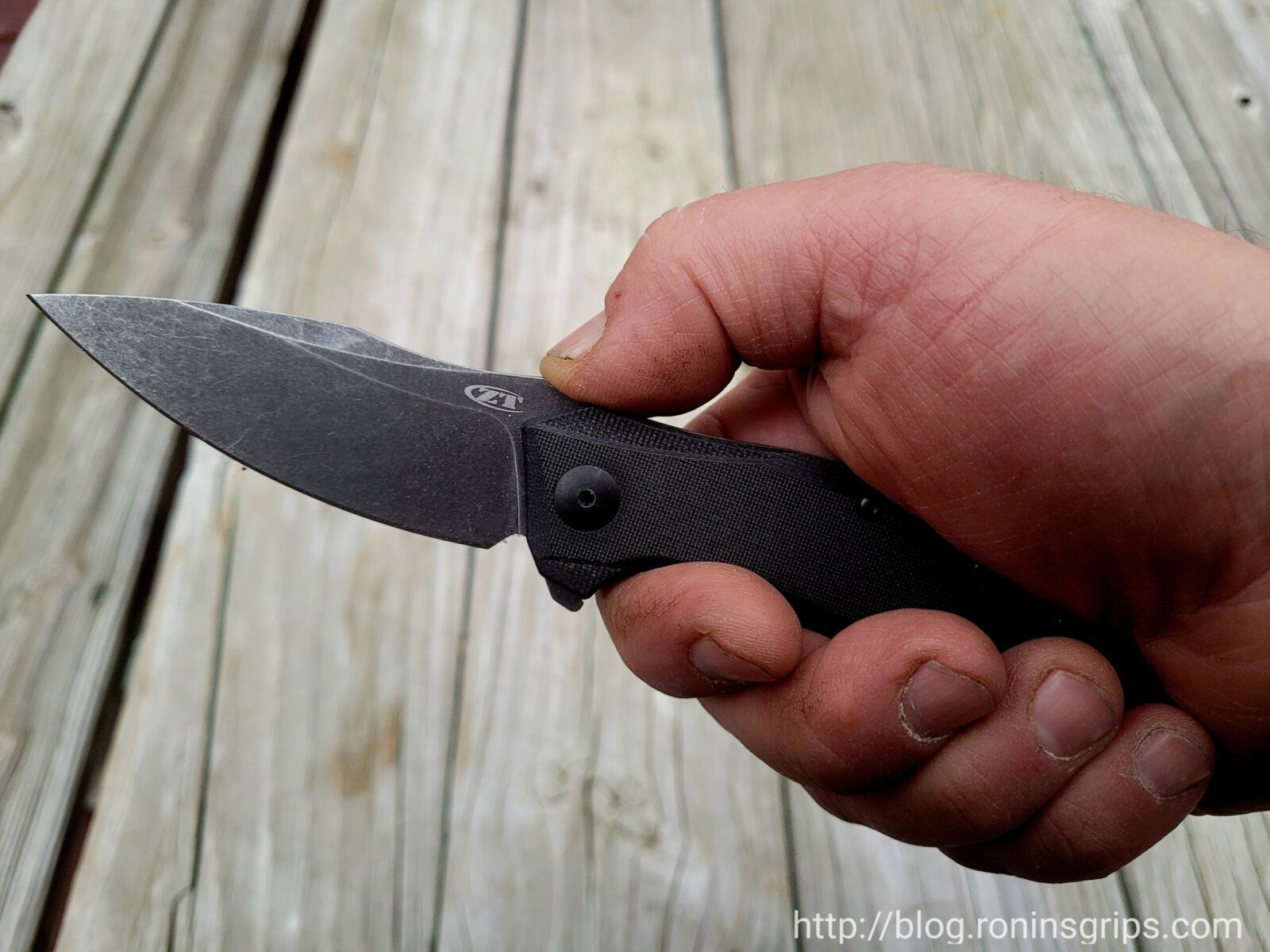
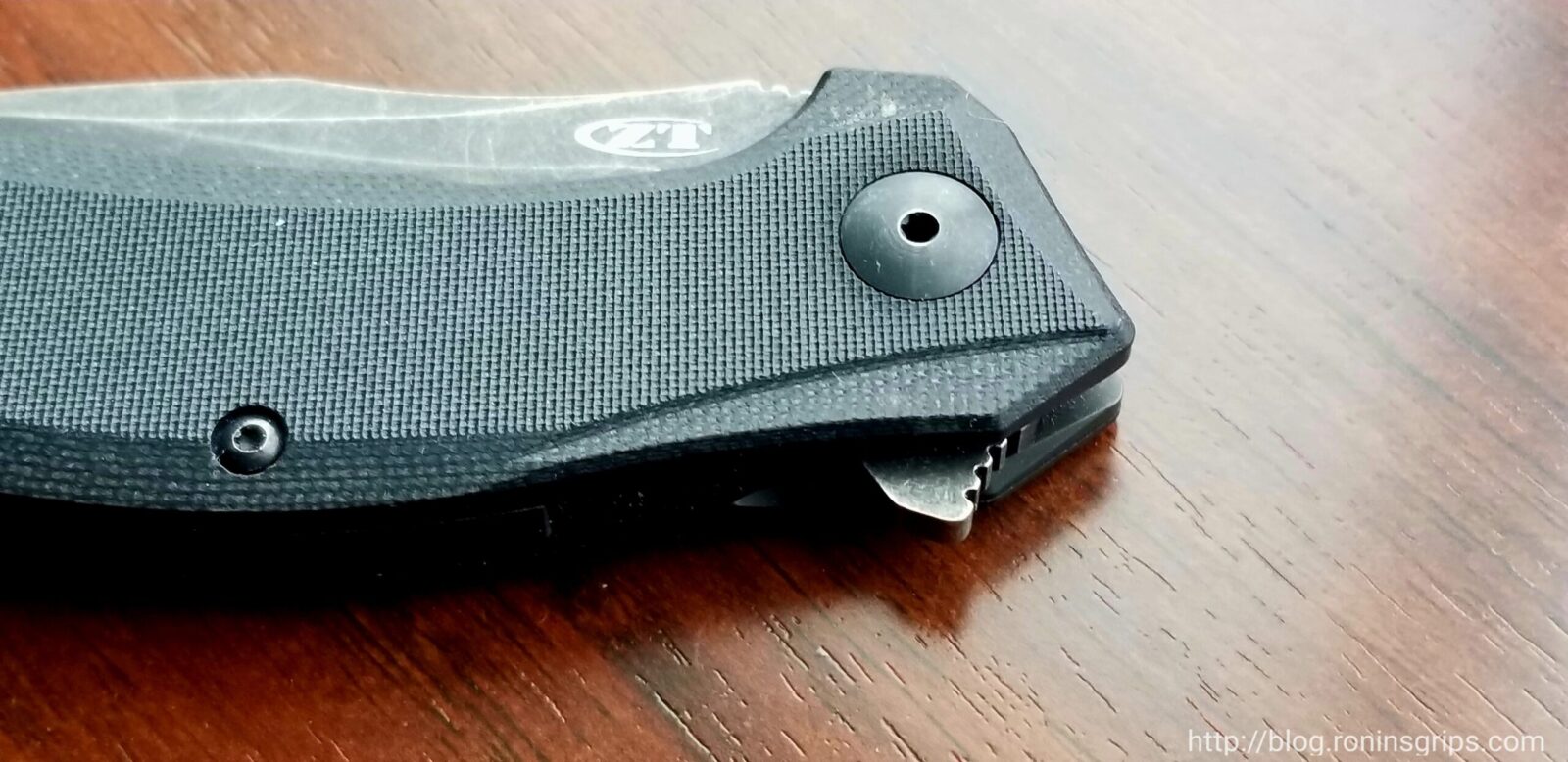
The knife shapes your hand and has a very handy thumbrest on top to give you more leverage if you need it.
What you wind up with is a very eronomic knife with an amazing edge. Now I don’t try and use a knife for something it’s not like being a substitute for a big crowbar but I did use it real world and found it to be great – that’s why it kept winding up in my pocket.
It’s both thin and light without sacrificing strength when it comes to using the knife as a knife and not a crowbar – it’s not mean to be a crowbar!
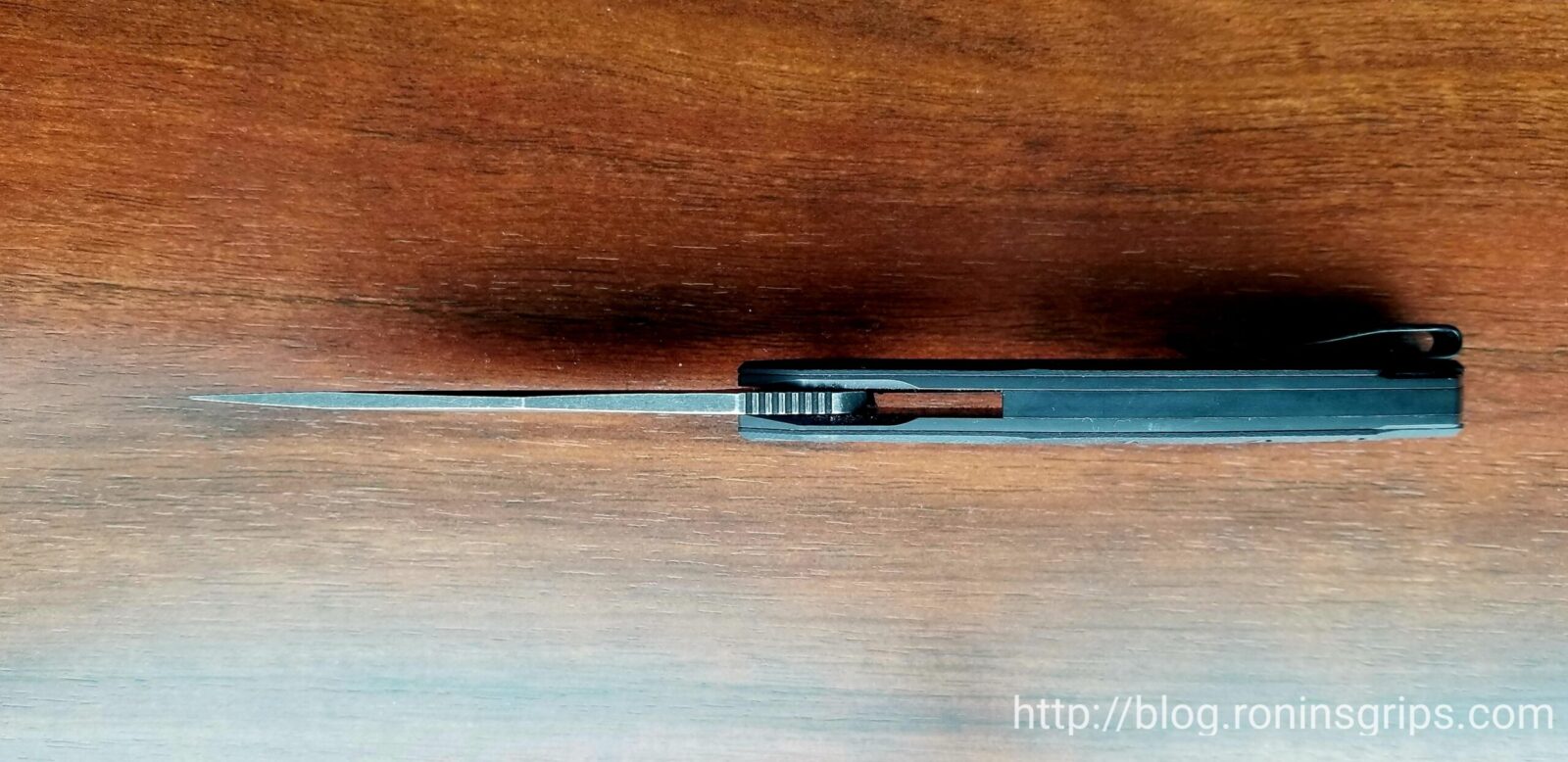
Here’s a view from the top and you can see the thumbrest with serrations called “jimping” designed to keep your thumb from slipping.
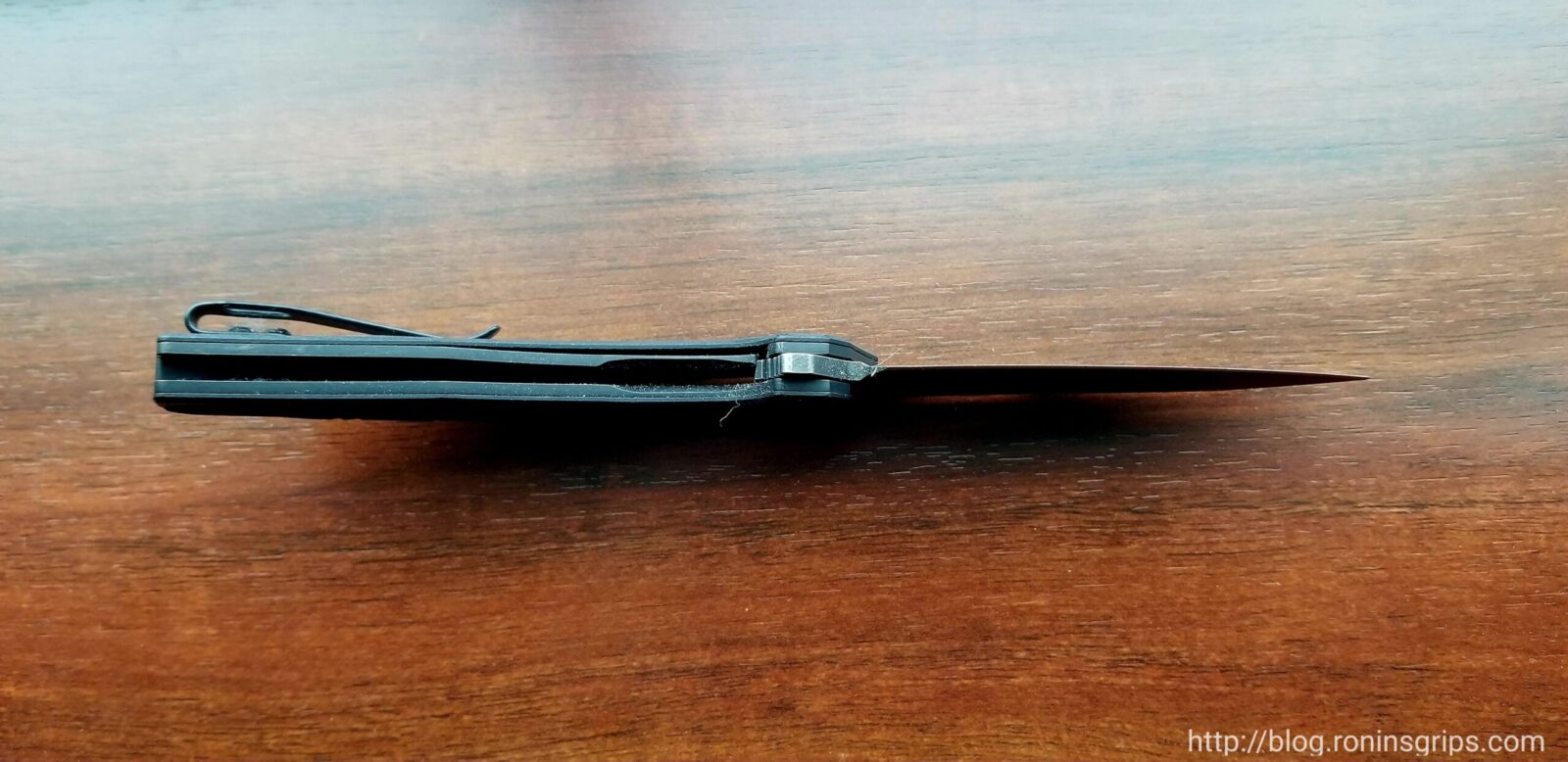
I really like the SpeedSafe flipper mechanism that Kershaw and ZT use. It allows you to open the knife with one hand very easily but I have never had one open accidentally in my pocket. Years ago, I had a Gerber and that thing sprung open a few times in my pocket and I have no idea where it is now – the trash maybe.
I don’t know what the Blackwash process is but I can tell you it holds up remarkably well.
Now, I do have one not-so-happy moment to share. We were headed down to the Smokies this past fall and somewhere between Michigan and Tenessee the knife fell out of my pocket. It could have been when I used to to cut open a package of CR2023 batteries for my van’s tire pressure sensors or even some time when I was getting gas … I don’t know but I hope it found a new owner who realizes that he found an excellent knife.
So, what did I do? I actually bought another I liked it so much and it is still what lands in my pocket the most in terms of seeing actual real world use.
Conclusion
The ZT 0357 series are great knives. My blackwash knifes – the first one I lost and the new one are great. I can carry it without feeling like I have an anchor in my pocket and the blade length is great. If you are looking for a new folder, I’d highly recommend it – Like I said, I went so far as to buy a second when I lost the first – that’s how much I like mine.
I hope this helps you out!
Note, I have to buy all of my parts – nothing here was paid for by sponsors, etc. I do make a small amount if you click on an ad and buy something but that is it. You’re getting my real opinion on stuff.