Category Archives: AK Analytics

Analytic reports focusing on weapons based on the AK-47/AK-74 platform including variants.

A Product of Doctrine and Necessity: An Analysis of the Zastava M92 Carbine

The Zastava M92 compact assault rifle, a weapon that entered production at the precise moment its parent nation was violently disintegrating, cannot be understood merely as a shortened Kalashnikov variant. Its existence is a direct and tangible consequence of the unique geopolitical and military-strategic environment of the Socialist Federal Republic of Yugoslavia (SFRY). To comprehend the M92’s design, purpose, and legacy, one must first analyze the decades of strategic thought that created the specific operational requirement it was built to fulfill. The weapon was not an imitation of a foreign trend but a bespoke solution to a long-standing Yugoslav military problem, forged by a doctrine of national survival that was unique in Cold War Europe.

Yugoslavia’s Unique Strategic Posture: The “All-People’s Defense” Doctrine

Unlike the clearly defined blocs of NATO and the Warsaw Pact, Yugoslavia under Marshal Josip Broz Tito charted a fiercely independent, non-aligned course. This strategic independence, however, came at the cost of strategic isolation. Yugoslav military planners had to prepare for a potential invasion from either the West or the East, often against a technologically and numerically superior aggressor.1 The national memory of the successful, yet brutal, partisan struggle against Axis occupation during the Second World War provided the foundational blueprint for the nation’s defense strategy.2 This experience was codified into the doctrine of “Total National Defense” or “All-People’s Defense” (Opštenarodna odbrana, or ONO).3

The core concept of ONO was to make the price of occupying Yugoslavia unacceptably high for any invader. It was a strategy of deterrence through attrition, envisioning a whole-of-society resistance where, as the doctrine stated, any citizen resisting an aggressor was considered a member of the armed forces.1 This philosophy created a unique dual-force structure. The first tier was the Yugoslav People’s Army (Jugoslovenska Narodna Armija, or JNA), a professional, conventional military force tasked with meeting an invasion with a short, sharp conventional defense. Its role was not to defeat a superpower but to blunt the initial assault, inflict heavy casualties, and buy time for the second tier to mobilize.4

The second, and arguably more critical, tier was the Territorial Defense (Teritorijalna odbrana, or TO). The TO was a massive, decentralized, partisan-style force composed of reservists and citizen-soldiers organized at the republic, municipal, and even factory level.1 Similar in concept to a national guard, each of Yugoslavia’s constituent republics maintained its own TO formations, with caches of weapons and equipment distributed locally.1 In the event of an occupation, the TO was designed to melt away into the familiar local terrain and wage a protracted guerrilla war, harassing enemy supply lines, conducting sabotage, and bleeding the occupying force dry.2 This two-tiered system, with the JNA as the “solid core” and the TO as the vast, irregular mass, was the bedrock of Yugoslav defense planning.2

This doctrine had profound implications for armament. The JNA required modern, sophisticated weapon systems for its conventional role, but the overall system demanded simplicity, ruggedness, and logistical commonality. The weapons of the TO needed to be robust, easy to maintain, and chambered in calibers that were already stockpiled in vast quantities across the country. This created an institutional preference for standardized platforms that could be used effectively by both a professional JNA soldier and a hastily mobilized TO reservist with minimal cross-training.1

The Zastava M70, chambered in the ubiquitous 7.62x39mm cartridge, was the perfect embodiment of this philosophy for the standard infantry rifle. However, as the JNA evolved, it became clear that the full-length M70 could not meet the needs of all its soldiers.

The Evolving Needs of the JNA and the “Jedinstvo” Reforms

By the mid-1980s, the JNA was undergoing a significant modernization effort under a top-secret strategic plan named “Jedinstvo” (Unity).4 Spanning from 1987 with a planned completion in 1995, the Jedinstvo reforms aimed to transform the JNA from a large, somewhat rigid force based on infantry divisions into a more modern, flexible, and hard-hitting military structured around combined-arms brigades.4 Ten of the twelve existing infantry divisions were to be converted into twenty-nine tank, mechanized, and mountain infantry brigades, each with integral artillery, air defense, and anti-tank assets.4 This shift was designed to increase operational flexibility, maneuverability, and tactical initiative, moving away from a model that risked large units being destroyed in set-piece battles.4

This doctrinal evolution created and amplified a significant capability gap in the JNA’s small arms inventory. The standard-issue Zastava M70, while an excellent and robust assault rifle, was too long and unwieldy for the increasingly specialized roles within these new brigade structures. Several key units were particularly affected:

  • Armored and Mechanized Vehicle Crews: The JNA’s mechanized brigades were built around infantry fighting vehicles like the domestically produced BVP M-80.9 The crews of these vehicles—drivers, gunners, and commanders—required a compact personal defense weapon for self-defense in the event of a bailout and for operating in the cramped confines of their vehicles. A full-length M70 was simply impractical. The need for a compact, rifle-caliber weapon for vehicle crews was a recognized issue in armies worldwide, and Yugoslavia was no exception.11
  • Airborne Forces: The JNA’s premier special operations unit was the 63rd Parachute Brigade, based in Niš.12 As an elite airborne force, its primary mission involved vertical envelopment, reconnaissance, and sabotage deep in the enemy’s rear.12 For these soldiers, a compact, lightweight weapon with a folding stock was not a luxury but an operational necessity. The standard M70, particularly the fixed-stock M70B1, was ill-suited for parachute operations. Definitive evidence of this long-standing requirement gap is the fact that the 63rd Parachute Brigade continued to use WWII-era German Sturmgewehr 44 (StG 44) assault rifles for training and potentially as a reserve weapon well into the 1980s.13 While some of this may have been for distinctiveness or to save wear on primary rifles during training, the StG 44’s continued presence points to a clear and unfulfilled need for a modern, intermediate-caliber compact assault rifle that did not yet exist in the JNA’s arsenal.13
  • Special Forces and Security Units: Mirroring global trends in the 1970s and 1980s, the JNA and Yugoslav security services developed specialized counter-terrorist and special operations units, such as the precursor to the modern “Cobras”.16 These units required weapons optimized for Close Quarters Battle (CQB), where a shorter barrel and overall length provide a decisive advantage in maneuverability inside buildings, aircraft, and vehicles.11

The “Jedinstvo” reforms, by creating more of these specialized units and emphasizing mobility and maneuver, brought this capability gap into sharp focus. The JNA needed a domestic equivalent to the types of compact carbines that were becoming increasingly prevalent in other modern armies.

The Global Context: The Rise of the Compact Carbine and PDW

The JNA’s search for a compact assault rifle did not occur in a strategic vacuum. The 1970s and 1980s saw a global trend towards shortening the standard infantry rifle to create more specialized carbine variants. This trend was driven by the changing nature of warfare, which increasingly involved mechanized infantry, urban combat, and special operations.

The most direct conceptual parallel to the future M92 was the Soviet AKS-74U, colloquially known as the “Krinkov.” Developed in the late 1970s, the AKS-74U was a drastically shortened version of the AK-74, designed specifically for vehicle crews, artillerymen, and Spetsnaz special forces who needed more firepower than a pistol but could not be encumbered by a full-length rifle.17 Its development established a clear precedent within the Warsaw Pact for a rifle-caliber sub-compact weapon.

Simultaneously, in the United States, the experiences of the Vietnam War and the needs of special operations forces led to the development of carbine versions of the M16, starting with the CAR-15 family and culminating in the M4 Carbine program in the 1980s.19 The U.S. military recognized that for many soldiers, particularly those operating in and out of vehicles or in close quarters, a shorter, handier weapon was more effective than a long infantry rifle.19

This era also saw the birth of the Personal Defense Weapon (PDW) concept, formalized by a NATO request in the late 1980s.20 The goal was to develop a new class of firearm for rear-echelon and support troops that was compact like a submachine gun but could defeat Soviet body armor, a capability standard pistol-caliber submachine guns lacked.22 This effort would eventually lead to weapons like the FN P90 and H&K MP7.21

While the Yugoslavs were undoubtedly aware of these international developments, their motivation for creating the M92 was primarily rooted in their own established doctrine. The need for a compact weapon for paratroopers, vehicle crews, and special forces was a direct result of the “All-People’s Defense” concept and the JNA’s “Jedinstvo” modernization. The global trend simply confirmed the validity of their requirement and provided conceptual models, like the AKS-74U, for a potential solution. The development of the Zastava M92 was Yugoslavia’s indigenous, pragmatic answer to a question that modern militaries around the world were asking at the same time.

Engineering and Evolution: The Path to the M92

The Zastava M92 was not a revolutionary design created from a blank slate. Instead, it was the culmination of an evolutionary process, a logical and pragmatic adaptation of Zastava Arms’ existing, well-proven Kalashnikov-pattern rifle family. Its development history reveals a characteristically Yugoslav approach to arms manufacturing: leveraging a robust domestic design base, prioritizing logistical simplicity, and making deliberate engineering choices based on ballistic realities. The path to the M92 began with its full-sized progenitor, the M70, and took a crucial detour through a NATO-caliber variant before arriving at its final, domestically-optimized form.

The Foundation: The Zastava M70 Family

The bedrock of Yugoslav small arms production from 1970 onward was the Zastava M70 assault rifle.24 While externally resembling the Soviet AKM, the M70 was not a licensed copy. Due to the political split between Tito and Stalin in 1948, Yugoslavia was outside the Soviet sphere of influence and did not receive technical data packages for Soviet weaponry.24 Zastava’s engineers developed the M70 by reverse-engineering early pattern, milled-receiver AK-47s that had been acquired covertly.24 This independent development process resulted in a rifle with several distinct features that set it apart from its Warsaw Pact counterparts and established a unique “Yugo” design philosophy.

Key among these features was an emphasis on ruggedness and multi-functionality. Later stamped-receiver versions of the M70, such as the M70B1, utilized a receiver made from 1.5mm thick steel, compared to the standard 1.0mm receiver of the Soviet AKM.26 This was complemented by the use of a bulged front trunnion, similar to that found on the RPK light machine gun, which provided a more robust lockup for the barrel and enhanced the weapon’s overall durability.24 This “overbuilt” construction was a hallmark of Zastava’s military rifles, designed to withstand the rigors of sustained combat and, crucially, the stress of launching rifle grenades.26

The M70’s integrated rifle grenade capability was its most unique feature. It included a flip-up ladder sight mounted on the gas block. When raised into the firing position, the sight arm also functioned as a gas cut-off, blocking the gas port to prevent the action from cycling when firing a grenade.24 This allowed the rifle to safely project anti-personnel and anti-tank grenades without a separate launcher, a capability deeply aligned with the self-sufficient, partisan-style warfare envisioned by the ONO doctrine. Other distinctive features included a non-chrome-lined, cold-hammer-forged barrel, which some analysts suggest may offer a slight accuracy advantage over chrome-lined barrels at the cost of requiring more diligent cleaning, and proprietary magazines with a follower that held the bolt open after the last round was fired.24 This family of robust, multi-functional rifles, with its emphasis on durability, formed the engineering and manufacturing foundation from which the M92 would spring.

The M85 Carbine: A Flirtation with 5.56mm

Before the M92 was finalized, Zastava first developed its direct predecessor: the M85 carbine.15 The M85 is, for all practical purposes, an M92 chambered for the 5.56x45mm NATO cartridge.28 It shares the same compact layout, 10-inch barrel, underfolding stock, and distinctive three-vent handguard.28 The development of a NATO-caliber carbine first might seem counterintuitive for a military that exclusively used Warsaw Pact-style ammunition, but it reveals a key aspect of Yugoslavia’s strategy: arms exports.

As a non-aligned nation, Yugoslavia was not restricted to supplying only one side of the Cold War. Zastava Arms actively sought to export its products to a global market to generate hard currency for the state.30 The 5.56x45mm cartridge was the standard for NATO and a popular choice for many non-aligned nations worldwide. Developing the M85 provided Zastava with a modern, compact carbine that was highly attractive on the international arms market.28 It was an outward-facing product, designed for geopolitical and commercial flexibility. This development also gave Zastava’s engineers valuable experience in adapting the Kalashnikov operating system to a smaller, higher-pressure cartridge, and it provided the JNA with a potential pathway to NATO ammunition interoperability should the strategic situation ever demand it. The M85 was thus a logical first step, establishing the core design of the compact carbine platform while targeting the lucrative export market.

The M92: A Pragmatic Return to 7.62x39mm

While the M85 was a sensible export product, it was a logistical non-starter for domestic use by the JNA. The Yugoslav military’s entire small arms ecosystem—from ammunition factories in places like Igman to the vast, distributed stockpiles for the TO—was built around the 7.62x39mm M43 cartridge.25 Introducing a new caliber, 5.56x45mm, solely for specialized units would have created an immense and unnecessary logistical burden. It would have required separate supply chains, separate magazines, and separate training, all of which ran counter to the ONO doctrine’s emphasis on simplicity and interoperability between JNA and TO forces.

Furthermore, as will be explored in the next section, there were compelling ballistic reasons to prefer the $7.62x39mm round for a short-barreled weapon. The cartridge’s design allows it to retain a significantly higher percentage of its velocity and energy when fired from a short barrel compared to high-velocity small-caliber rounds.11 For the intended role of a compact carbine with an effective range of 200-400 meters, the older cartridge was, in fact, the technically superior choice.

Consequently, Zastava adapted the existing M85 design to the JNA’s standard rifle cartridge, creating the M92. Development and testing were completed, and batch production began in 1992.11 The M92 was the final, pragmatic synthesis of this development process. It combined the compact form factor inspired by global trends and pioneered in the M85 with the robust, overbuilt mechanics of the M70 family, all chambered in the JNA’s logistically sound and ballistically optimal cartridge. This dual-track development of the M85 for export and the M92 for domestic use demonstrates the efficiency of a state-run arms industry. Zastava designed the platform once and then chambered it for two distinct strategic purposes, maximizing their engineering investment while perfectly tailoring the final products to their intended end-users.

Technical and Ballistic Analysis

A detailed technical examination of the Zastava M92 reveals a weapon that is more than a simple copy of the Soviet AKS-74U. It is a distinct design that reflects a different set of engineering priorities, heavily influenced by the manufacturing traditions of Zastava Arms and the specific performance requirements of the JNA. The M92’s features, particularly its sighting system and its choice of caliber, represent deliberate improvements and pragmatic choices that distinguish it from its conceptual counterparts and contribute to its reputation for robustness and effectiveness.

Zastava M92: A Detailed Examination

The Zastava M92 is a gas-operated, selective-fire carbine utilizing the long-stroke piston and rotating bolt action of the Kalashnikov family.11 While it shares this fundamental operating principle, several of its components and design features are uniquely Yugoslav.

  • Receiver and Trunnion: The original military-issue M92 carbines were built on a stamped receiver derived from the standard Zastava M70, typically using 1.0mm sheet steel. This differs from the later civilian export models (ZPAP92) which often feature the heavier 1.5mm receiver and bulged RPK-style front trunnion that have become a trademark of modern Zastava AKs.26 Even without the heavier construction of the civilian models, the military M92 was built to Zastava’s high standards of durability.
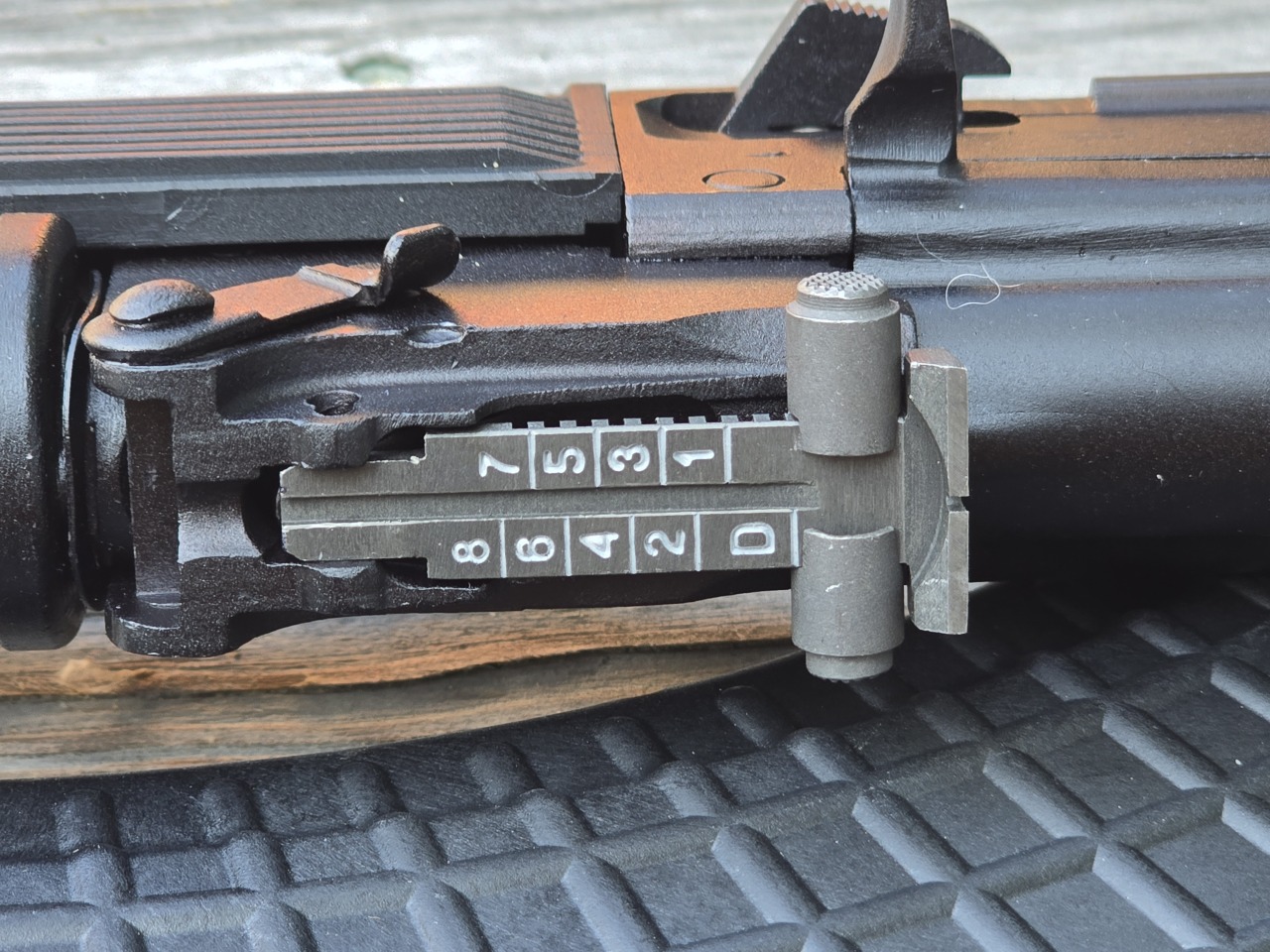
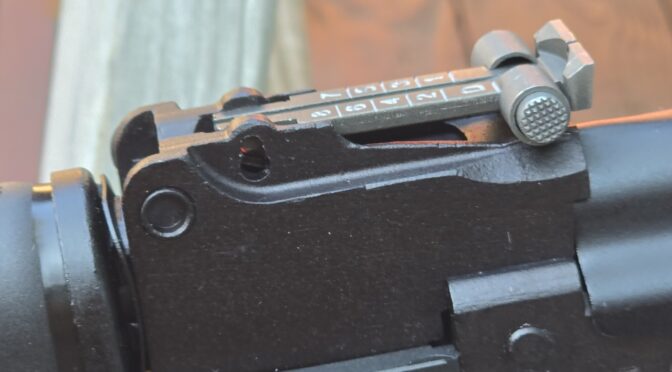
  • Hinged Dust Cover and Sights: Perhaps the most significant design departure from the Soviet AKS-74U is the M92’s sighting system. The rear sight is not located on the rear sight block in the traditional Kalashnikov position. Instead, it is mounted on the rear of the dust cover.37 To make this viable, the M92 employs a sturdy hinged dust cover that locks securely to the rear sight block, providing a stable platform that is capable of retaining zero.36 This design accomplishes two things: it moves the rear aperture closer to the shooter’s eye for a more intuitive sight picture, and it dramatically increases the sight radius compared to the AKS-74U. A longer sight radius inherently allows for greater practical accuracy. The sight itself is a simple, robust L-shaped flip sight with two apertures, typically set for 200 and 400 meters.38 Many military versions were also fitted with flip-up tritium inserts for low-light aiming.
  • Handguard: The M92 features the longer, three-vent wooden handguard that is a signature of the Zastava M70 family.11 This provides the user with more surface area for a secure grip compared to the very short handguard of the AKS-74U and is believed to offer superior heat dissipation during sustained automatic fire.40
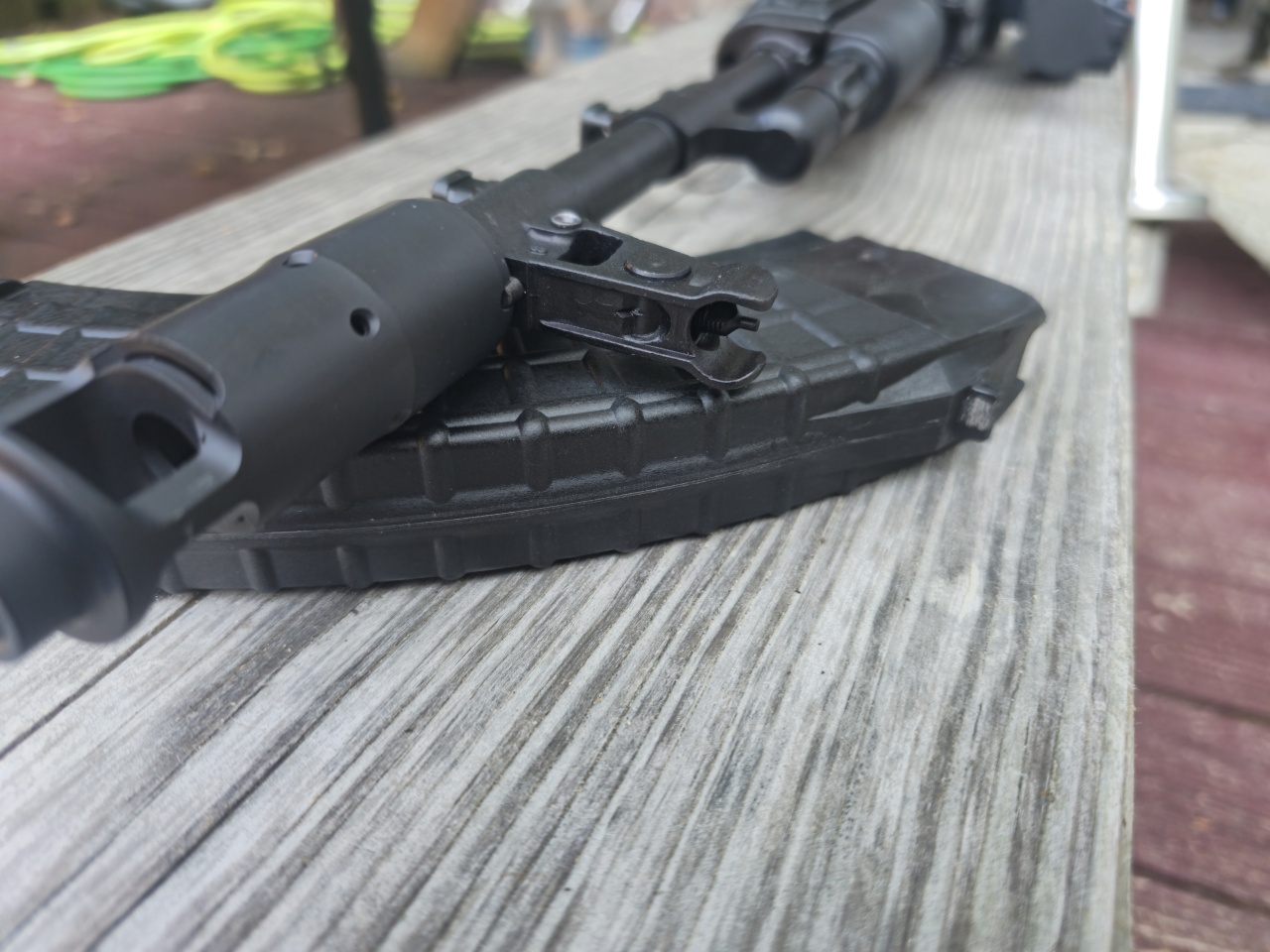
  • Muzzle Device: The barrel is capped with a distinctive conical muzzle device. This device functions both as a flash hider, reducing the significant muzzle flash from the short barrel, and as a gas booster.39 By trapping a portion of the expanding gases at the muzzle, it creates a small expansion chamber that increases the pressure acting on the gas piston, ensuring reliable cycling of the action despite the short dwell time of the 10-inch barrel.
  • Stock: The M92 utilizes the same robust and proven underfolding steel stock found on the M70AB2 variant of the standard assault rifle.11 While perhaps less comfortable than some side-folding designs, it is exceptionally durable and creates a very compact package when folded.
FeatureSpecificationSource(s)
Caliber7.62x39mm11
ActionGas-operated, long-stroke piston, rotating bolt11
Mass3.57 kg (with empty magazine)11
Length (Extended)795 mm11
Length (Folded)550 mm11
Barrel Length254 mm (10.0 in)11
Rate of Fire (Cyclic)620 rounds/min11
Muzzle Velocity678 m/s11
Effective Range200 – 400 m11
Feed SystemStandard AK-pattern 30-round box magazines; also compatible with 5, 10, 40-round box and 75, 100-round drum magazines11
SightsHinged top cover with flip-up rear aperture (200/400m), post front sight39

Comparative Analysis: M92 vs. AKS-74U

When placed alongside its Soviet conceptual equivalent, the AKS-74U, the differing design philosophies of the Yugoslav and Soviet arms industries become apparent. While both weapons were created to fill the same tactical niche, they arrived at different solutions with distinct trade-offs. The M92 prioritizes shooter ergonomics and practical accuracy, while the AKS-74U prioritizes absolute compactness and light weight.

The most fundamental difference is the caliber. The M92’s use of 7.62x39mm results in a heavier weapon with more felt recoil, but it offers superior performance from a short barrel, as will be discussed below. The AKS-74U’s 5.45x39mm round provides a flatter trajectory and lighter recoil, but its effectiveness is more sensitive to velocity loss from its short barrel.17

The sighting systems represent a major philosophical divergence. The M92’s hinged top cover and rear-mounted sight provide a sight radius of approximately 14 inches, comparable to some full-size rifles. The AKS-74U, with its rear sight in the standard position, has a sight radius of only about 9.5 inches. This nearly 50% increase in sight radius gives the M92 a significant advantage in potential precision.

Ergonomically, the M92’s longer handguard offers a more comfortable and stable grip for the support hand, while the AKS-74U’s extremely short handguard can be awkward for many shooters. The M92’s underfolding stock is famously durable, whereas the AKS-74U’s triangular side-folder is lighter and arguably more comfortable against the shoulder. These differences illustrate that Yugoslav engineers were willing to accept a slight increase in weight and folded length to deliver a weapon that was more user-friendly and arguably more effective as a fighting tool.

FeatureZastava M92Kalashnikov AKS-74U
Caliber7.62x39mm5.45x39mm
Muzzle Velocity678 m/s735 m/s
Barrel Length254 mm (10.0 in)210 mm (8.3 in)
Length (Extended)795 mm735 mm
Length (Folded)550 mm490 mm
Weight (Empty)3.2 kg2.5 kg
Sighting SystemHinged top cover, flip-up rearStandard rear sight block, flip-up rear
Stock TypeUnderfolding, steelSide-folding, steel (triangular)
Handguard DesignLong, 3-vent woodShort, 2-vent wood
Sources: 11

The Caliber Question: The Merits of 7.62x39mm in a Short Barrel

The decision to chamber the M92 in 7.62x39mm was not merely one of logistical convenience; it was a sound ballistic choice. The performance of a rifle cartridge is directly related to barrel length, but not all cartridges are affected equally. High-velocity, small-caliber (SCHV) rounds like 5.56x45mm NATO and 5.45x39mm depend on high velocity for their terminal effectiveness, which is primarily achieved through the fragmentation or rapid yawing of the projectile upon impact.43 This effect is highly velocity-dependent. When fired from a very short barrel, these rounds suffer a significant loss in velocity, which can drop them below the threshold required for reliable fragmentation or yaw, drastically reducing their lethality.45

The 7.62x39mm cartridge, by contrast, is ballistically more efficient in shorter barrels.11 It uses a heavier projectile at a more moderate velocity, and its powder is designed to burn effectively in a shorter length. While it does lose velocity when moving from a 16-inch barrel to a 10-inch barrel, the percentage of loss is less dramatic, and its terminal effectiveness is less dependent on achieving a specific velocity threshold.45 The M92’s muzzle velocity of approximately 678 m/s is only about 10% less than the 735 m/s of a full-length M70, a negligible difference at the carbine’s intended engagement ranges.11

Furthermore, the heavier 7.62mm projectile retains more kinetic energy at close to medium ranges and offers substantially better performance against intermediate barriers.42 In the urban and complex terrain where a compact carbine is most likely to be used, the ability to effectively penetrate car doors, wooden structures, and masonry is a significant tactical advantage.33 Tests have shown that the M92’s 7.62x39mm round penetrates barriers like cinder blocks much more effectively than the 5.45x39mm round from an AKS-74U.47 Therefore, for the specific roles envisioned for the M92—arming paratroopers, vehicle crews, and special forces operating in potentially dense environments—the choice of the 7.62x39mm cartridge was not a compromise but an optimization, providing reliable terminal performance and superior barrier penetration in a compact platform.

Operational History and Assessment of Success

The success of a military firearm can be measured by several metrics: its effectiveness in fulfilling its intended doctrinal role, its longevity in service, its commercial success on the export market, and its enduring reputation. By these measures, the Zastava M92 has proven to be a resounding, albeit paradoxical, success. It was a weapon designed for a specific army and a specific national defense scenario that ceased to exist almost at the moment of its birth. Yet, the M92’s inherent qualities allowed it to thrive in the brutal conflict that followed its introduction, become a valuable export for the Serbian state, and achieve an iconic status in the world’s largest civilian firearms market.

Trial by Fire: The M92 in the Yugoslav Wars

The Zastava M92 entered batch production in 1992, a year after the outbreak of the Yugoslav Wars.11 This timing is critical to understanding its operational history. The M92 was never fielded by the unified, multi-ethnic JNA for which it was designed. Instead, its first combat use was with the successor armies that emerged from the JNA’s dissolution, most notably the armed forces of the new Federal Republic of Yugoslavia (Serbia and Montenegro) and the Army of Republika Srpska (VRS) in Bosnia.40

Despite this chaotic introduction, the M92 was issued precisely to the types of units for which it was originally intended: special forces, airborne units, military police, and the crews of armored vehicles.11 The nature of the Yugoslav Wars, characterized by brutal urban combat, ambushes in complex terrain, and close-quarters fighting, created an environment where the M92’s attributes were highly valued. Its compact size and folding stock made it far more maneuverable inside buildings and vehicles than the full-length M70.40 The potent 7.62x39mm cartridge provided excellent firepower and the ability to penetrate the light cover—walls, vehicles, and barricades—that defined these engagements.33

While detailed, official after-action reports from the conflict are not readily available in open-source materials, anecdotal accounts from veterans and the weapon’s continued use by all sides attest to its effectiveness.49 The M92 was built on the legendarily reliable Kalashnikov action and manufactured to Zastava’s robust standards, ensuring it functioned dependably in the harsh conditions of the war.49 In this sense, the M92 was a tactical success. It effectively filled the doctrinal niche for a compact carbine and proved to be a formidable weapon in the very types of close-range, high-intensity conflicts it was designed for, even if the conflict itself was a civil war rather than the national defense scenario originally envisioned.

A Global Footprint: Export and Proliferation

In the aftermath of the Yugoslav Wars, the Zastava Arms factory, a cornerstone of the Serbian defense industry, resumed its role as a major global arms exporter.34 The M92 carbine, having been proven in combat, became a key product in its portfolio. Its appeal was straightforward: it was a robust, reliable, and relatively inexpensive compact assault rifle chambered in one of the most common and widely available military cartridges in the world.

The M92 has been officially exported to numerous countries, finding favor with military and security forces, particularly in the Middle East and Africa.39 Notable state users include Iraq, which also produced copies under license, Jordan, North Macedonia, and the Democratic Republic of the Congo.11 One of the largest single export deals was a sale of 80,000 M92 carbines to Libya in the 2008-2009 timeframe, prior to the country’s civil war.11 The production numbers are substantial, with well over 100,000 units manufactured since 1992, making it a significant commercial success for Zastava.39

However, this success has a darker side. The immense quantity of weapons present in the former Yugoslavia at the end of the wars, including countless M70s and M92s, fueled a thriving black market.52 These military-grade weapons flowed out of the Balkans and into the hands of organized crime groups and terrorist cells across Europe. Tragically, Zastava rifles originating from these stockpiles were used in the horrific 2015 terrorist attacks in Paris, including the attack on the Charlie Hebdo offices and the Bataclan theatre massacre.52 This illicit proliferation, while not a reflection on the weapon’s design, is an undeniable part of its complex legacy.

The American Enthusiast: The ZPAP92’s Civilian Legacy

Perhaps the most remarkable chapter in the M92’s history is its second life in the United States civilian market. To comply with U.S. firearms laws, which regulate barrel length and forbid the importation of certain semi-automatic rifles, the M92 was imported as a “pistol” variant, lacking a shoulder stock.36 Initially brought in by importers like Century Arms under the name “PAP M92,” the platform later became a flagship product for Zastava Arms USA, the company’s own American subsidiary, under the “ZPAP92” designation.30

The ZPAP92 quickly earned an exceptional reputation among American firearms enthusiasts, collectors, and shooters.35 It is widely praised for its high-quality construction, durability, and reliability—attributes directly inherited from its military-grade origins.26 Civilian reviewers consistently note the “overbuilt” nature of the modern ZPAP92, which often includes the heavy-duty 1.5mm receiver and bulged RPK trunnion, making it one of the most robust AK-pattern firearms available on the market.26

Its configuration as a pistol has made it an extremely popular host for conversion into a legal Short-Barreled Rifle (SBR) through the addition of a stock, a process regulated by the National Firearms Act.50 This allows civilian owners to create a firearm that closely replicates the handling and performance of the original military M92 carbine. The platform’s reliability, robust build, and authentic military heritage have made the ZPAP92 a perennial favorite and a benchmark for quality in the imported AK market.56

Final Verdict: A Multi-Faceted Success

Assessing the Zastava M92 requires a nuanced perspective.

  • Military Success: From a purely tactical and doctrinal standpoint, the M92 was a success. It successfully addressed a clear capability gap within the JNA’s force structure, providing a powerful and compact weapon for specialized units. It performed reliably and effectively in the brutal conflicts in which it was used, validating its core design principles. However, its strategic purpose—to help defend a unified Yugoslavia—was rendered moot by history.
  • Commercial Success: As an export product, the M92 has been an undeniable success for Zastava and the Serbian state. It has been sold in large quantities to state actors around the world and remains in production decades after its introduction, a testament to the enduring appeal of its design.34
  • Civilian Success: In the highly competitive U.S. civilian market, the semi-automatic ZPAP92 is not just successful; it is an icon. It is regarded as one of the highest-quality and most desirable AK-pattern firearms available, cementing the M92’s legacy far beyond its Balkan origins.56

The M92’s journey is a paradox. It was a weapon conceived for a country that vanished as it was being born. Its greatest legacy was not in the defense of that nation, but in its performance during the nation’s violent demise, and more profoundly, in its subsequent, long-lasting career as a sought-after commodity on both state-sponsored and civilian arms markets.

Conclusion: The M92 as a Symbol of Yugoslav Pragmatism

The Zastava M92 carbine stands as a powerful testament to the unique military-industrial philosophy of the former Yugoslavia. It is a weapon born not of imitation, but of a deeply considered and long-standing doctrinal need. Its development was a direct response to the requirements of the “Total National Defense” strategy and the late-stage modernization of the Yugoslav People’s Army, which demanded a compact yet powerful firearm for its increasingly specialized mechanized, airborne, and special forces units. The anachronistic use of German StG 44s by elite paratroopers into the 1980s serves as the most compelling evidence of this long-unfilled capability gap.

The engineering path to the M92 showcases a remarkable pragmatism. Zastava’s engineers did not reinvent the wheel; they refined and adapted their existing, combat-proven M70 platform. The decision to chamber the domestic-use M92 in 7.62x39mm, despite having already developed the 5.56x45mm M85 for export, was a masterstroke of logistical and ballistic reasoning. It maintained absolute ammunition commonality within the Yugoslav armed forces, a critical consideration for a doctrine reliant on a mobilized citizenry, while simultaneously leveraging the superior performance of the 7.62x39mm cartridge in a short-barreled platform. Design choices, such as the robust hinged top cover that allowed for a longer sight radius, demonstrate a clear focus on creating a more practical and effective fighting weapon, even at the cost of slightly more weight and size compared to its Soviet counterpart.

The M92’s legacy is one of ironic and multifaceted success. Conceived to defend a unified nation, it was instead baptized in the fires of that nation’s collapse, where it proved its tactical worth in the brutal close-quarters combat of the Yugoslav Wars. In the decades since, the carbine’s inherent qualities of ruggedness, reliability, and potent firepower have made it a highly successful export for the Serbian defense industry and, most remarkably, an esteemed icon in the American civilian firearms market. It has outlived the country, the army, and the doctrine that created it. The Zastava M92 is, therefore, more than just a shortened AK. It is a symbol of Yugoslav independence and pragmatism, a thoughtfully designed tool of war whose robust construction and sound engineering have earned it a deserved and enduring place as one of the most effective compact Kalashnikov-pattern carbines ever produced.

Image Source

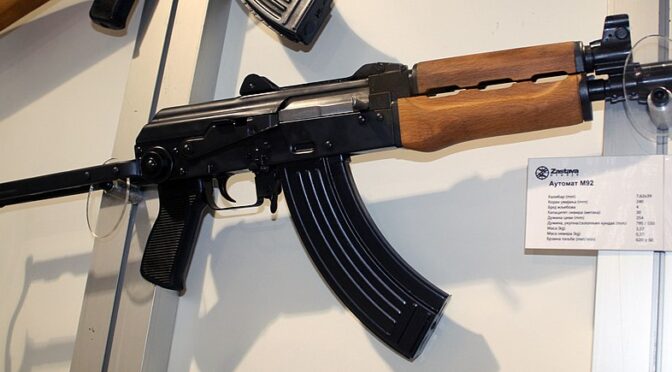
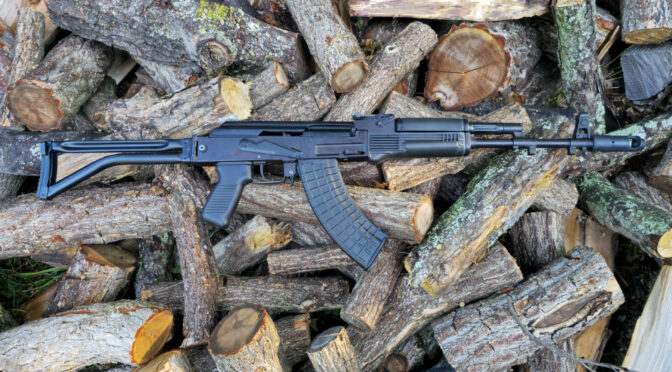
The main blog photo of a M92 was obtained from Wikimedia on October 12, 2025. The original photo was taken by Srđan Popović in 2015.


If you find this post useful, please share the link on Facebook, with your friends, etc. Your support is much appreciated and if you have any feedback, please email me at in**@*********ps.com. Please note that for links to other websites, we are only paid if there is an affiliate program such as Avantlink, Impact, Amazon and eBay and only if you purchase something. If you’d like to directly contribute towards our continued reporting, please visit our funding page.


Sources Used

  1. Territorial Defense (Yugoslavia) – Wikipedia, accessed August 4, 2025, https://en.wikipedia.org/wiki/Territorial_Defense_(Yugoslavia)
  2. The Yugoslav People’s Army: Its Military and Political Mission – DTIC, accessed August 4, 2025, https://apps.dtic.mil/sti/tr/pdf/ADA092586.pdf
  3. THE YUGOSLAV CONCEPT OF “ALL-NATIONAL DEFENSE”, accessed August 4, 2025, http://www.icwa.org/wp-content/uploads/2015/09/DR-50.pdf
  4. Yugoslav People’s Army – Wikipedia, accessed August 4, 2025, https://en.wikipedia.org/wiki/Yugoslav_People%27s_Army
  5. (EST PUB DATE) YUGOSLAVIA: MILITARY DYNAMICS OF A … – CIA, accessed August 4, 2025, https://www.cia.gov/readingroom/docs/DOC_0000372340.pdf
  6. COMBATANT FORCES IN THE FORMER YUGOSLAVIA – CIA, accessed August 4, 2025, https://www.cia.gov/readingroom/docs/DOC_0005621706.pdf
  7. The Yugoslav People’s Army: Its Military and Political Mission – DTIC, accessed August 4, 2025, https://apps.dtic.mil/sti/citations/ADA092586
  8. Slovenian Territorial Defense in the Ten-Day War – Scientific Journal of the Military University of Land Forces, accessed August 4, 2025, https://zeszyty-naukowe.awl.edu.pl/article/01.3001.0015.3411/en
  9. Yugoslavia’s BVP M-80 Infantry Fighting Vehicle Explained | SOVIET BMP COUSIN, accessed August 4, 2025, https://www.youtube.com/watch?v=lDV0PobvIQA
  10. Yugoslav Ground Forces – Wikipedia, accessed August 4, 2025, https://en.wikipedia.org/wiki/Yugoslav_Ground_Forces
  11. Zastava M92 – Wikipedia, accessed August 4, 2025, https://en.wikipedia.org/wiki/Zastava_M92
  12. 63. padobranska brigada | Vojska Srbije, accessed August 4, 2025, https://www.vs.rs/sr_lat/jedinice/vojska-srbije/63padobranska-brigada
  13. Yugoslav paratroopers with STG-44s during the 1980s, they were the last modern military with the gun widely in use. – Reddit, accessed August 4, 2025, https://www.reddit.com/r/ForgottenWeapons/comments/q5iv36/yugoslav_paratroopers_with_stg44s_during_the/
  14. I love the 70s/80s Yugoslav paratrooper look. Weird Combloc gear and S… – TikTok, accessed August 4, 2025, https://www.tiktok.com/@americana.pipedream/video/7140697909997112619
  15. Jugoslav Army Weapons – Small Arms Review, accessed August 4, 2025, https://smallarmsreview.com/jugoslav-army-weapons/
  16. Положај и делатност специјалних безбедносних јединица Републике Србије – prafak, accessed August 4, 2025, https://www.prafak.ni.ac.rs/files/master/ZMR_StefanMacicM007_22_UP.pdf
  17. Kalashnikov AKS-74U – Weaponsystems.net, accessed August 4, 2025, https://weaponsystems.net/system/680-Kalashnikov+AKS-74U
  18. Personal Defense Weapons, accessed August 4, 2025, https://sadefensejournal.com/personal-defense-weapons/
  19. M4 carbine – Wikipedia, accessed August 4, 2025, https://en.wikipedia.org/wiki/M4_carbine
  20. THE PDW CONCEPT APPLIED TO CCW PISTOLS – GABE SUAREZ BLOG – TypePad, accessed August 4, 2025, https://warriortalknews.typepad.com/the-gabe-suarez-blog/2016/02/the-pdw-concept-applied-to-ccw-pistols.html
  21. Heckler & Koch MP7 – Wikipedia, accessed August 4, 2025, https://en.wikipedia.org/wiki/Heckler_%26_Koch_MP7
  22. PDWs: A revolution that never quite happened – European Security & Defence, accessed August 4, 2025, https://euro-sd.com/2025/02/articles/42600/pdws-a-revolution-that-never-quite-happened/
  23. Personal defense weapon – Wikipedia, accessed August 4, 2025, https://en.wikipedia.org/wiki/Personal_defense_weapon
  24. Zastava M70 assault rifle – Wikipedia, accessed August 4, 2025, https://en.wikipedia.org/wiki/Zastava_M70_assault_rifle
  25. What weapons were used in the Yugoslav War? – Quora, accessed August 4, 2025, https://www.quora.com/What-weapons-were-used-in-the-Yugoslav-War
  26. In your opinion, is the Zavasta M70 (AK) a good rifle? How would you rate its accuracy, reliability, and over all quality? Is it better than other AK’s in the same price range (PSAK, Century Arms, etc.)? – Quora, accessed August 4, 2025, https://www.quora.com/In-your-opinion-is-the-Zavasta-M70-AK-a-good-rifle-How-would-you-rate-its-accuracy-reliability-and-over-all-quality-Is-it-better-than-other-AK-s-in-the-same-price-range-PSAK-Century-Arms-etc
  27. What’s your opinion on the M70 Zastava rifle? – Quora, accessed August 4, 2025, https://www.quora.com/Whats-your-opinion-on-the-M70-Zastava-rifle
  28. Zastava M85 – Wikipedia, accessed August 4, 2025, https://en.wikipedia.org/wiki/Zastava_M85
  29. en.wikipedia.org, accessed August 4, 2025, https://en.wikipedia.org/wiki/Zastava_M92#:~:text=The%20M92%20is%20a%20carbine,and%2C%20correspondingly%2C%20magazine%20design.
  30. History – Zastava Arms USA, accessed August 4, 2025, https://zastavaarmsusa.com/history/
  31. About us – Zastava oružje ad, accessed August 4, 2025, https://www.zastava-arms.rs/en/about-us/
  32. Обзор МПК Застава М92 7.62х39мм / SEMI Zastava M92 7.62x39mm Review – YouTube, accessed August 4, 2025, https://www.youtube.com/watch?v=xjDj89GvgkY
  33. The King Of Intermediate Cartridges: 7.62x39mm – Gun Digest, accessed August 4, 2025, https://gundigest.com/gear-ammo/ammunition/ammo-brief-7-62×39
  34. Zastava Arms – Wikipedia, accessed August 4, 2025, https://en.wikipedia.org/wiki/Zastava_Arms
  35. M92 PAP AK Pistol Review | Day At The Range, accessed August 4, 2025, https://dayattherange.com/m92-pap-ak-pistol-review/
  36. Zastava ZPAP92: The Serbian Krinkov – Gun Digest, accessed August 4, 2025, https://gundigest.com/gun-reviews/military-firearms-reviews/zastava-zpap92-the-serbian-krinkov
  37. Zastava M85 AK Pistol – Precise Shooter, accessed August 4, 2025, https://www.preciseshooter.com/blog/M85.aspx
  38. Century Arms Zastava PAP M92 PV Review – International Sportsman, accessed August 4, 2025, https://internationalsportsman.com/century-arms-zastava-pap-m92-pv-review/
  39. Zastava M92 – Weaponsystems.net, accessed August 4, 2025, https://weaponsystems.net/system/375-Zastava+M92
  40. Zastava M92 – Wikiwand, accessed August 4, 2025, https://www.wikiwand.com/en/articles/Zastava_M92
  41. Zastava M92 – AmmoTerra, accessed August 4, 2025, https://ammoterra.com/product/zastava-m92-1
  42. What round is better, 5.45×39 or 7.62×39? – Quora, accessed August 4, 2025, https://www.quora.com/What-round-is-better-5-45×39-or-7-62×39
  43. 5 Reasons Why 7.62x39mm Beats 5.45x39mm – Firearms News, accessed August 4, 2025, https://www.firearmsnews.com/editorial/5-reasons-why-762x39mm-beats-545x39mm/376952
  44. Reloading Press: 5.45x39mm – Gaming Ballistic, accessed August 4, 2025, https://gamingballistic.com/2016/03/07/reloading-press-545×39/
  45. Gen 1 8” 7.62×39 vs Gen 2 13” 5.45×39? : r/Galil – Reddit, accessed August 4, 2025, https://www.reddit.com/r/Galil/comments/zvopx3/gen_1_8_762x39_vs_gen_2_13_545x39/
  46. 5.56 vs 7.62: A Comparison | American Firearms, accessed August 4, 2025, https://www.americanfirearms.org/5-56-vs-7-62-a-comparison/
  47. AKS-74U vs.Yugo M92 – Block Penetration – YouTube, accessed August 4, 2025, https://www.youtube.com/watch?v=IMXDRix2KKM
  48. Army of Republika Srpska – Wikipedia, accessed August 4, 2025, https://en.wikipedia.org/wiki/Army_of_Republika_Srpska
  49. What is the most reliable weapon you have used during the Yugoslav Wars? – Quora, accessed August 4, 2025, https://www.quora.com/What-is-the-most-reliable-weapon-you-have-used-during-the-Yugoslav-Wars
  50. Zastava ZPAP92 Review [Extended use AAR] – Gun University, accessed August 4, 2025, https://gununiversity.com/zastava-zpap92-review/
  51. Zastava M92 | Weaponsystems.net, accessed August 4, 2025, https://development.weaponsystems.net/system/375-Zastava%20M92
  52. How Yugoslavia’s Military-Grade Weapons Haunt Western Europe – The Defense Post, accessed August 4, 2025, https://thedefensepost.com/2020/07/30/weapons-yugoslavia-europe/
  53. Yugoslavian Serbia AK-47 History – Zastava – Faktory 47, accessed August 4, 2025, https://www.faktory47.com/blogs/kalashnikov/yugoslavian-serbia-ak-history
  54. ZPAP92: 7.62×39 AK Pistol Review – Sniper Country, accessed August 4, 2025, https://snipercountry.com/zastava-pap-m92-review/
  55. Century Arms PAP M92: A Range Review – The Mag Life – GunMag Warehouse, accessed August 4, 2025, https://gunmagwarehouse.com/blog/century-arms-pap-m92-a-range-review/
  56. 2025 Market Forecast: Demand for Eastern European AKs in America – Zastava Arms USA, accessed August 4, 2025, https://zastavaarmsusa.com/2025-market-forecast-demand-for-eastern-european-aks-in-america/
  57. M92 PAP: You Must Own One – YouTube, accessed August 4, 2025, https://www.youtube.com/watch?v=LmRD_34AOLE

How This Blog Is Being Threatened

For over a decade, the internet held a simple promise for creators: if you make good, helpful, or entertaining stuff, people will find it, and you can earn a living. Bloggers, independent writers, and small publishers invested thousands of hours researching, writing, and sharing their passion and expertise. The deal was straightforward: we provide quality content, search engines help people find us, and the resulting visitor traffic allows us to earn a small amount from advertising or affiliate links.

That deal is now broken. Two massive technological shifts, search engine features and artificial intelligence, are quietly siphoning the lifeblood from independent creators, threatening to turn the vibrant, diverse web into a bland echo chamber.

Think about the last time you Googled a simple question, like “how many ounces in a cup?” or “who was the 16th U.S. President?” The answer likely appeared in a neat box right at the top of the search results. Convenient, right?

For the user, yes. For the creator who wrote the article that Google pulled that answer from, it’s a disaster. This is called a “zero-click search.” You get the information you need without ever having to click on a link and visit a website.

Every time this happens, the creator of that information is cut out of the loop. We don’t get the page view, which means the ads on our site aren’t seen, and we earn nothing for our work. We did the research and wrote the article, only for a tech giant to skim the answer off the top and present it as their own, depriving us of the traffic that keeps our sites running. It’s like a library that reads you a single paragraph from a book, so you never have to check it out and the author never gets credit.

AI: The New Content Machine Built on Our Work

The second, and perhaps bigger, threat is the rise of generative AI like ChatGPT. These programs are incredibly powerful. You can ask them to write an essay, plan a vacation, or summarize a complex topic, and they’ll generate a surprisingly coherent answer in seconds.

But where does this AI get its information? It learns by reading, or “training on,” a massive snapshot of the internet. It reads our blog posts, our news articles, our how-to guides, and our reviews. It digitally digests the sum of human knowledge that people like us have painstakingly put online.

When you ask an AI for information, it doesn’t send you to the original sources. It combines what it has learned from thousands of creators and presents a brand-new piece of text. The original writers, the ones who did the actual work, become invisible. We are not credited, we are not compensated, and we are certainly not sent any traffic. Our content is being used as free raw material to build a product that directly competes with us, and it’s happening on an industrial scale.

Why This Matters to You

You might think this is just a problem for a few bloggers. But the long-term consequences will affect everyone who uses the internet. If independent creators can no longer afford to produce high-quality, niche content, they will simply stop.

The passionate hobbyists who review products with brutal honesty, the independent journalists who uncover local stories, and the experts who write detailed guides will disappear. What will be left? A web dominated by mega-corporations and AI-generated articles that are often bland, repetitive, and sometimes just plain wrong. The internet will lose its human touch, its diverse voices, and its soul.

We are at a critical point where the very architecture of how we find information online is undermining the people who create it.


A Direct Appeal

If you found this article helpful, or if you value the kind of independent content we strive to create, please consider supporting our work. The traditional models of funding online content are failing, and direct support from readers like you is becoming the only way for many of us to survive. Your contribution, no matter the size, is a lifeline that allows us to continue researching and writing.

Please help us keep the lights on and our voice alive by making a contribution through our donations page – click here. Thank you for your support.

Global Proliferation of the AK-74: A Technical and Historical Analysis of Licensed Foreign Production

The development of the AK-74 assault rifle and its associated 5.45x39mm M74 cartridge represents a pivotal moment in Soviet small arms doctrine, a direct strategic response to the United States’ adoption of the 5.56x45mm M193 round and the M16 rifle platform. The combat experience in Vietnam had demonstrated the effectiveness of a small-caliber, high-velocity projectile, which offered a flatter trajectory, reduced recoil for better control in automatic fire, and allowed an individual soldier to carry a greater ammunition load.1 In 1974, the Soviet Union formally adopted the AK-74, an evolutionary step from the venerable AKM platform, but chambered for this new intermediate cartridge.3

The AK-74 was not merely a re-chambered AKM. It incorporated specific design improvements aimed at enhancing accuracy and user control, most notably a complex and highly effective muzzle brake that dramatically reduced recoil and muzzle rise.3 While this came at the cost of the 7.62x39mm round’s superior performance against intermediate barriers, the trade-off was deemed acceptable for the gains in hit probability at typical engagement ranges.

Following its adoption, the USSR initiated a program to standardize this new weapon system across the Warsaw Pact. This was not simply a matter of arming allies; it was a complex geopolitical strategy. Licensing the design to key allied nations like Bulgaria, East Germany, Poland, and Romania served multiple purposes. It ensured logistical and tactical interoperability in the event of a conflict with NATO, bolstered the industrial capacity of allied states, and solidified the Soviet sphere of influence.3 However, the terms of these licenses, particularly the restrictions placed on exports, also reveal a calculated effort by Moscow to control the global arms market and prevent its own allies from becoming commercial competitors.8 This report provides a detailed technical and historical analysis of the military-issue AK-74 variants produced outside of the Soviet Union/Russia, examining how each nation adapted the core design to its own industrial capabilities, tactical doctrines, and political realities.

Section 1: The Soviet and Russian Foundation – The Izhmash and Tula Lineage

To properly assess the foreign-produced variants, it is essential to first establish a technical and historical baseline with the original Soviet and subsequent Russian models. These rifles, produced primarily at the Izhmash (now Kalashnikov Concern) and Tula Arms Plant facilities, are the archetypes from which all others were derived or copied.3

1.1 AK-74 (GRAU Index 6P20)

Introduced in 1974, the AK-74 was the foundational model of the new series, designed to replace the AKM as the standard service rifle of the Soviet Armed Forces.3 It was an adaptation of the AKM, sharing approximately 50% parts commonality, but featured significant improvements centered around the new 5.45x39mm cartridge.3 Key design changes included a chrome-lined barrel with a faster rifling twist rate of 1:196 mm to stabilize the new projectile, a lightened bolt and carrier assembly, and a large, distinctive two-chamber muzzle brake that was highly effective at mitigating recoil and muzzle climb.3 Early models featured laminated wood furniture, with the buttstock having characteristic lightening cuts to reduce weight. Production was centered at the Izhmash factory, with over 5 million units estimated to have been produced between 1974 and 1991.3

1.2 AKS-74 (GRAU Index 6P21)

Developed concurrently with the fixed-stock model, the AKS-74 was designed for airborne, naval infantry, and mechanized units that required a more compact weapon for operations in and around vehicles and aircraft.3 Its defining feature is a stamped sheet metal, triangular-shaped buttstock that folds to the left side of the receiver.3 This design was a significant improvement over the under-folding stock of the preceding AKMS, offering greater stability when extended and not interfering with the magazine or fire controls when folded. A spring-loaded latch at the rear of the receiver locks the stock in the extended position, while a hook at the front of the receiver secures it when folded.11 Apart from the stock and its associated mounting hardware, the AKS-74 is mechanically identical to the standard AK-74.

1.3 AKS-74U (GRAU Index 6P26)

Adopted in 1979, the AKS-74U is a compact carbine variant developed at the Tula Arms Plant to fill the tactical gap between a submachine gun and a full-sized assault rifle.3 Popularly known in the West as the “Krinkov,” it was intended for special forces, vehicle crews, and rear-echelon personnel.3 Its compact dimensions were achieved by a drastically shortened 206.5 mm barrel.3 This required several critical engineering changes for reliable function: a redesigned gas block, an even faster rifling twist of 1:160 mm, and a special muzzle device that acts as a gas expansion chamber, or “booster,” to increase back-pressure and ensure the gas system cycles correctly.3 The rear sight was moved from its traditional position to a flip-up sight on the hinged receiver cover, and the front sight was integrated into the gas block.3 Its reduced size came with the trade-offs of a lower muzzle velocity (735 m/s), a shorter effective range (300-400 m), and the inability to mount a standard bayonet or under-barrel grenade launcher.3

1.4 AK-74M (GRAU Index 6P34)

The AK-74M, which entered full-scale production in 1991, represents the modernization and universalization of the AK-74 family, becoming the standard-issue rifle for the newly formed Russian Federation.3 It consolidated the fixed-stock AK-74 and folding-stock AKS-74 into a single model. Its key upgrades include the replacement of all wood furniture with a rugged, black, glass-filled polyamide.3 The buttstock, while retaining the shape of the fixed stock, folds to the left side of the receiver, making it universally applicable.14 A scope mounting rail on the left side of the receiver became a standard feature, allowing for the easy attachment of various optics.14 The AK-74M also incorporated minor manufacturing simplifications, such as dimple-pressing barrel components instead of pinning them, to reduce cost and production time.3 This model served as the direct basis for the subsequent AK-100 series of export rifles.4

Section 2: Licensed and Derivative Global Production of the AK-74

The Soviet Union’s decision to license the AK-74 design led to its production in several Warsaw Pact and allied nations. Each country, however, approached the task differently, resulting in a fascinating array of variants that reflect their unique industrial, economic, and political circumstances.

2.1 Azerbaijan

Licensing and Production Context

Following the dissolution of the Soviet Union, Azerbaijan sought to modernize its armed forces. In October 2010, a formal agreement was signed between the Azerbaijani Ministry of Defense Industry and Russia’s Rosoboronexport for the licensed assembly of the AK-74M.17 This arrangement represents a model of modern Russian arms diplomacy. Rather than transferring the complete and costly technology for full-scale manufacturing, Russia provides component kits for local assembly. This allows the client nation to claim domestic production and create local jobs, while Russia maintains control over the most critical components, ensures a long-term revenue stream, and contractually prevents the client from becoming an export competitor.17

Model: Khazri

  • Timeline and Production Volume: Assembly of the rifle, designated “Khazri” (Xəzri), began at the “Iglim” enterprise in Baku around 2013.17 The ten-year contract stipulated an annual assembly rate of 12,000 units, for a planned total of 120,000 rifles.17 By May 2019, it was reported that over 100,000 units had been completed and delivered to the Azerbaijani military.17
  • Technical Specifications and Features: The Khazri is a direct licensed copy of the Russian AK-74M, assembled from Russian-supplied components.17 It retains the 5.45x39mm caliber, side-folding black polymer stock, and overall specifications of its Russian progenitor. The primary distinguishing feature noted is a modified interface for mounting accessories, such as Picatinny rails for optics, laser designators, and lights, reflecting a local desire for enhanced modularity over the standard Russian design.18
  • Quality and Reliability Assessment: As the rifle is assembled from genuine Izhmash parts, its quality, reliability, and performance are considered identical to the Russian-issue AK-74M. It is a product of industrial cooperation rather than indigenous development.

2.2 Bulgaria

Licensing and Production Context

Bulgaria’s Arsenal AD, located in Kazanlak (formerly the state-run Factory 10), has a long and storied history as one of the premier arms manufacturers within the Warsaw Pact.19 Known for producing exceptionally high-quality Kalashnikovs, Bulgaria not only manufactured faithful copies for its own military but also successfully transitioned after the Cold War into a major independent exporter.19 This success was built on a reputation for quality and a savvy adaptation to market demands, including offering variants in NATO calibers.20

Models: AK-74, AKS-74, AKS-74U (and modern AR-M derivatives)

  • Timeline and Production Volume: Bulgaria began licensed production of the AK-74 family in the 1980s for the Bulgarian People’s Army.9 While exact Cold War production figures are not public, output was substantial. Arsenal AD continues to produce and export modernized versions today.19
  • Technical Specifications and Features: The initial Bulgarian AK-74, AKS-74, and AKS-74U were near-perfect clones of their Soviet counterparts, distinguished primarily by the Bulgarian factory markings, most notably the “((10))” proof mark on the trunnion.9 They followed the Soviet evolution from wood to polymer furniture.
  • Modern Derivatives: Post-Cold War, Arsenal evolved the basic design into its “AR-M” export series. While many of these are chambered in 7.62x39mm or 5.56x45mm NATO for the global market, the 5.45mm versions represent a direct continuation of the AK-74 lineage.20 Models like the AR-M1 (fixed stock) and AR-M1F (folding stock) often feature high-quality milled receivers—a feature largely abandoned by other producers in favor of less expensive stamped receivers—and modern black polymer furniture.23
  • Quality and Reliability Assessment: The consensus among analysts and end-users is overwhelmingly positive. Bulgarian Kalashnikovs are renowned for their superior manufacturing quality, excellent fit and finish, and unwavering reliability. They are widely considered to be equal to, and in some cases even superior to, Soviet-era production rifles in terms of craftsmanship.9

2.3 German Democratic Republic (GDR)

Licensing and Production Context

East Germany’s reputation for precision engineering was a known quantity, and this created a unique dynamic with the USSR. The GDR received a license to produce the AK-74 in 1981, but it came with a critical stipulation: the rifles were for domestic use only and could not be exported.8 This restriction strongly suggests that Moscow was wary of a high-quality, German-made Kalashnikov undercutting its own sales on the lucrative global arms market. Production was undertaken by VEB Geräte- und Werkzeugbau Wiesa from 1983 until the fall of the Berlin Wall and German reunification in 1990, which abruptly ended this unique chapter of AK history.8

Model: MPi-AK-74N

  • Timeline and Production Volume: Produced from 1983 to 1990. After reunification, the existing inventory was either absorbed by the Bundeswehr for limited use, sold as surplus, or destroyed.
  • Technical Specifications and Features: The MPi-AK-74N (Maschinenpistole Kalaschnikow-74, Nachtsicht) was based on the Soviet AK-74 but possessed distinct East German features. These included a unique “pebble grain” textured plastic buttstock and handguards, a Bakelite pistol grip, and a side-folding wire stock that was a copy of their earlier MPi-KMS-72 design.8 This folding stock became the de facto standard, even on full-length rifles (designated MPi-AKS-74N). The ‘N’ suffix indicates the standard inclusion of a side-rail for mounting optics, such as the Zeiss ZFK 4×25 scope.8 Early models featured a rare “zig-zag” style muzzle brake identical to the first-pattern Soviet brakes.8

Model: MPi-AKS-74NK

  • Timeline and Production Volume: Introduced in 1987 for airborne troops, tank crews, and special forces. Production was limited due to the short time before reunification.8
  • Technical Specifications and Features: This was the East German take on the AKS-74U carbine. It differed significantly from the Soviet model, featuring a longer 344 mm barrel (compared to the Soviet 206.5 mm) and utilizing the standard GDR wire folding stock instead of the Soviet triangular design. It also employed a simpler muzzle brake rather than the complex muzzle booster of the Soviet “U” model, likely due to the longer barrel providing sufficient gas pressure for reliable cycling.8
  • Quality and Reliability Assessment: East German Kalashnikovs are universally regarded by collectors and experts as the highest quality AK-pattern rifles ever produced.27 The precision of the manufacturing, the quality of the materials, and the overall fit and finish were exceptional, reflecting Germany’s long tradition of excellence in industrial production.

2.4 North Korea

Licensing and Production Context

There is no evidence of a formal license transfer from the USSR to North Korea for the AK-74. The North Korean Type 88 is widely understood to be a reverse-engineered copy, developed in line with the state’s “Juche” ideology of self-reliance in all matters, including defense production.31 Production is handled by clandestine state arsenals, and the weapon is a prominent feature in military parades and in the hands of elite units.

Model: Type 88

  • Timeline and Production Volume: The designation suggests adoption around 1988.33 Production numbers are unknown, but distribution appears prioritized for the KPA’s approximately 200,000 special operations forces and Kim Jong Un’s personal bodyguards, with older Type 58 (AK-47) and Type 68 (AKM) rifles arming reservist and rear-echelon troops.33
  • Technical Specifications and Features: The Type 88 is a copy of the AK-74, chambered in 5.45x39mm. It has been observed in several configurations: with a fixed stock, a side-folding stock copied from the AKS-74, and a unique top-folding stock designed to accommodate its most infamous accessory.31 This accessory is a massive, locally designed helical magazine with an estimated capacity of 100 to 150 rounds, which attaches under the barrel.33 The rifles typically feature an all-black painted finish, likely a cosmetic attempt at modernization.33
  • Quality and Reliability Assessment: The quality of North Korean arms is largely unknown to the outside world. Production is likely functional and sufficient for their needs, but unlikely to match the refinement of European producers. The helical magazine, in particular, is viewed with deep skepticism by Western analysts. Its extreme weight and complexity are seen as antithetical to the AK’s design philosophy of simplicity and reliability. Many believe it is an impractical weapon, intended more for propaganda and intimidation—projecting an image of overwhelming firepower—than for effective, sustained combat use.31

2.5 Poland

Licensing and Production Context

Poland, possessing a robust and independent arms industry centered at the Fabryka Broni “Łucznik” in Radom (identified by a “Circle 11” proof mark), chose a different path.28 Rather than pay for a license to produce a direct clone of the AK-74, Poland developed its own indigenous 5.45mm rifle. This decision was likely driven by a desire to avoid licensing fees, assert design autonomy, and incorporate features specific to Polish military doctrine.36

Model: Karabinèk wzór 1988 (Wz. 88 Tantal)

  • Timeline and Production Volume: Designed in the mid-1980s, the Tantal was formally adopted in 1991.36 Its service life was remarkably short; with Poland’s political pivot towards the West and eventual entry into NATO, the Tantal was quickly deemed obsolete. An estimated 25,000 rifles were produced before being phased out in favor of the 5.56mm NATO-chambered Wz. 96 Beryl rifle starting in the late 1990s and ending by 2005.28 The Tantal stands as a bridge between two distinct geopolitical eras. It represents the apex of Warsaw Pact national rifle design, a highly customized weapon that was almost immediately rendered obsolete by the very political changes that allowed for its adoption.
  • Technical Specifications and Features: The Tantal is a highly distinct AK-74 derivative. Its key features include a complex and unique fire control group with the standard safety/dust cover on the right side and a separate, three-position fire selector switch (safe, semi-auto, 3-round burst) on the left side of the receiver.9 It features a long, multi-function muzzle device that serves as a brake, compensator, and a spigot for launching rifle grenades.28 To handle the stress of grenade launching, it was fitted with a very robust side-folding wire stock copied from the East German design.28
  • Quality and Reliability Assessment: The Wz. 88 Tantal is generally well-regarded as a high-quality, robustly built rifle. The unique fire control mechanism, while more complex than a standard AK, is effective. It is considered an innovative, if short-lived, national variant of the Kalashnikov platform.26

2.6 Romania

Licensing and Production Context

Similar to Poland, Romania, under the fiercely independent leadership of Nicolae Ceaușescu, opted to develop its own 5.45mm rifle rather than produce a Soviet clone. This decision was a clear manifestation of Romania’s foreign policy, which complied with the letter of Warsaw Pact standardization (adopting the 5.45mm cartridge) while simultaneously asserting its political and industrial independence from Moscow. The resulting rifle, produced at the state arsenal in Cugir, was a pragmatic and unique hybrid.37

Model: Pușcă Automată model 1986 (PA md. 86 / AIMS-74)

  • Timeline and Production Volume: Adopted in 1986, the PA md. 86 (with the export designation AIMS-74) remains the standard service rifle of the Romanian Armed Forces. It has been produced in large quantities since its introduction.37
  • Technical Specifications and Features: The PA md. 86 is a fascinating hybrid, designed to minimize retooling costs by incorporating a significant number of parts from the older 7.62mm PM md. 63/65 (AKM) production line.40 Its most distinct features include: an AKM-style 45-degree gas block (though the gas port itself is 90 degrees); a distinctive laminated wood lower handguard with an integrated vertical foregrip, known colloquially to collectors as the “dong”; a unique upward-swept charging handle to provide clearance for the folding stock; and a left-side folding wire stock based on the East German pattern.2 Military versions also feature a 3-round burst capability, similar to the Polish Tantal.37 A notable quirk is its non-standard 22mm muzzle thread diameter, which makes finding compatible replacement muzzle devices difficult.2
  • Quality and Reliability Assessment: Romanian Kalashnikovs are generally considered to be reliable, serviceable workhorse rifles. However, they often lack the cosmetic refinement and tight tolerances of Bulgarian or East German production. On civilian export models in particular, minor quality control issues such as canted front sight blocks or gas blocks are more common than with other producers.27 Despite this, they are robust and functional firearms.

To prevent common misconceptions, it is important to briefly address several influential rifle systems that are often associated with the AK-74 but are not true variants, typically due to differences in caliber or developmental lineage.

3.1 East Germany: Wieger STG-940

Developed in the late 1980s, the Wieger STG-940 was not an AK-74 variant but rather an export-focused rifle based on the MPi-AK-74N’s action.45 Its purpose was to generate hard currency for the GDR by entering the lucrative 5.56x45mm NATO rifle market, thus bypassing the Soviet prohibition on exporting their 5.45mm rifles.8 Despite securing contracts with India and Peru, the project was terminated following German reunification in 1990.45

3.2 Yugoslavia/Serbia: Zastava M85

The Zastava M85 is frequently misidentified as a Yugoslavian copy of the AKS-74U.12 This is incorrect. Yugoslavia was a non-aligned state, not a member of the Warsaw Pact, and pursued its own independent path of Kalashnikov development. The M85 is a compact carbine heavily inspired by the AKS-74U’s form factor, but it is chambered in 5.56x45mm NATO and features distinctly Yugoslavian characteristics, such as a thicker 1.5mm stamped receiver, a three-vent handguard, and a different stock design.46 It is a derivative of the Zastava M80/M90 family, not the AK-74.

Section 4: Comparative Analysis and Conclusion

The global proliferation of the AK-74 is a case study in how a single weapon design can be interpreted and modified through the unique lens of national priorities. The analysis reveals distinct manufacturing and design philosophies among the licensed producers:

  • The Cloners (Bulgaria): Arsenal AD focused on creating faithful, high-quality reproductions of the Soviet design. Their post-Cold War success demonstrates a mastery of manufacturing that allowed them to pivot to the global market, adapting their product line with new calibers and features while maintaining a reputation for excellence.
  • The Perfectionists (East Germany): The GDR produced what many consider the pinnacle of the AK-74 in terms of pure manufacturing quality. Their work was a testament to German engineering, but they were ultimately a captive producer, constrained by Soviet geopolitical strategy and their story cut short by history.
  • The Innovators (Poland): The Tantal represents a nation using a base design as a launchpad for significant mechanical innovation. The addition of a complex burst-fire mechanism and an integrated grenade-launching capability shows a unique tactical doctrine and a desire for design sovereignty.
  • The Pragmatists (Romania): The PA md. 86 is a physical embodiment of political and economic pragmatism. By creating a hybrid of old and new parts, Romania met its alliance obligations while minimizing costs and asserting its industrial independence, even at the expense of logistical simplicity.
  • The Isolationists (North Korea & Azerbaijan): These two nations represent different models of proliferation outside the Warsaw Pact framework. Azerbaijan’s Khazri is a modern example of licensed assembly—a transfer of capability but not core technology. North Korea’s Type 88 is a product of reverse-engineering driven by an ideology of self-reliance, resulting in a weapon that serves as a tool of propaganda as much as a tool of war.

Ultimately, the AK-74 is not a monolithic design. It is a versatile and adaptable platform that was fundamentally shaped by the technical capabilities, tactical requirements, and overarching political realities of each nation that chose to produce it. Its legacy is written not just in the armories of Russia, but in the factories of Kazanlak, Radom, Cugir, and beyond.

Appendix A: Summary Table of AK-74 Military Variants (Sorted by Country/Model)

Country of OriginManufacturerModel DesignationYear IntroducedCaliberAction TypeRate of Fire (RPM)Weight (kg, empty)Length (mm, Ext.)Length (mm, Fold.)Barrel Length (mm)Key Distinguishing Features
AzerbaijanIglim NPPKhazri20135.45×39mmGas-operated, rotating bolt~6503.6943705415Licensed AK-74M copy, assembled from Russian parts, modified accessory interface. 17
BulgariaArsenal ADAK-74c. 1980s5.45×39mmGas-operated, rotating bolt~6503.3943N/A415High-quality clone of Soviet AK-74 with fixed wood/polymer stock. 9
BulgariaArsenal ADAKS-74c. 1980s5.45×39mmGas-operated, rotating bolt~6503.2943695415High-quality clone of Soviet AKS-74 with triangular side-folding stock. 9
BulgariaArsenal ADAKS-74Uc. 1980s5.45×39mmGas-operated, rotating bolt~7002.7735490210High-quality clone of Soviet AKS-74U with conical muzzle booster. 9
German Dem. Rep.VEB WiesaMPi-AK-74N19835.45×39mmGas-operated, rotating bolt~600~3.5920N/A415Fixed pebble-texture plastic stock, side rail for optics. 8
German Dem. Rep.VEB WiesaMPi-AKS-74N19835.45×39mmGas-operated, rotating bolt~600~3.4920720415Side-folding wire stock, pebble-texture plastic handguards, side rail. 8
German Dem. Rep.VEB WiesaMPi-AKS-74NK19875.45×39mmGas-operated, rotating bolt~600~3.2845645344Carbine with shorter barrel, wire folding stock, simple muzzle device. 8
North KoreaState ArsenalsType 88c. 19885.45×39mmGas-operated, rotating bolt~650~3.0~943Var.415Reverse-engineered AK-74 copy. Variants with fixed, side-folding, and top-folding stocks. Can use helical magazine. 31
PolandFB RadomWz. 88 Tantal19915.45×39mmGas-operated, rotating bolt~6503.69943748423Left-side fire selector (semi/burst/auto), grenade launching muzzle device, wire folding stock. 28
RomaniaROMARM/CugirPA md. 86 (AIMS-74)19865.45×39mmGas-operated, rotating bolt~7003.69943748432AKM-style 45° gas block, wood “dong” vertical grip, upswept charging handle, wire folding stock, 3-round burst. 2
Soviet UnionIzhmashAK-7419745.45×39mmGas-operated, rotating bolt~6503.07943N/A415Original model. Fixed laminated wood stock, large muzzle brake. 3
Soviet UnionIzhmashAKS-7419745.45×39mmGas-operated, rotating bolt~6502.97943690415Triangular metal side-folding stock for airborne/mechanized troops. 3
Soviet UnionTula Arms PlantAKS-74U19795.45×39mmGas-operated, rotating bolt~7002.7730490206.5Compact carbine with short barrel and conical muzzle booster. 3
RussiaKalashnikov ConcernAK-74M1991$5.45 \times 39\mm}$Gas-operated, rotating bolt~6503.4943700415Modernized version with folding polymer stock, side optics rail standard. 3

Appendix B: Summary Table of AK-74 Military Variants (Sorted by Date/Country/Model)

Year IntroducedCountry of OriginManufacturerModel DesignationCaliberAction TypeRate of Fire (RPM)Weight (kg, empty)Length (mm, Ext.)Length (mm, Fold.)Barrel Length (mm)Key Distinguishing Features
1974Soviet UnionIzhmashAK-745.45×39mmGas-operated, rotating bolt~6503.07943N/A415Original model. Fixed laminated wood stock, large muzzle brake. 3
1974Soviet UnionIzhmashAKS-745.45×39mmGas-operated, rotating bolt~6502.97943690415Triangular metal side-folding stock for airborne/mechanized troops. 3
1979Soviet UnionTula Arms PlantAKS-74U5.45×39mmGas-operated, rotating bolt~7002.7730490206.5Compact carbine with short barrel and conical muzzle booster. 3
c. 1980sBulgariaArsenal ADAK-745.45×39mmGas-operated, rotating bolt~6503.3943N/A415High-quality clone of Soviet AK-74 with fixed wood/polymer stock. 9
c. 1980sBulgariaArsenal ADAKS-745.45×39mmGas-operated, rotating bolt~6503.2943695415High-quality clone of Soviet AKS-74 with triangular side-folding stock. 9
c. 1980sBulgariaArsenal ADAKS-74U5.45×39mmGas-operated, rotating bolt~7002.7735490210High-quality clone of Soviet AKS-74U with conical muzzle booster. 9
1983German Dem. Rep.VEB WiesaMPi-AK-74N5.45×39mmGas-operated, rotating bolt~600~3.5920N/A415Fixed pebble-texture plastic stock, side rail for optics. 8
1983German Dem. Rep.VEB WiesaMPi-AKS-74N5.45×39mmGas-operated, rotating bolt~600~3.4920720415Side-folding wire stock, pebble-texture plastic handguards, side rail. 8
1986RomaniaROMARM/CugirPA md. 86 (AIMS-74)5.45×39mmGas-operated, rotating bolt~7003.69943748432AKM-style 45° gas block, wood “dong” vertical grip, upswept charging handle, wire folding stock, 3-round burst. 2
1987German Dem. Rep.VEB WiesaMPi-AKS-74NK5.45×39mmGas-operated, rotating bolt~600~3.2845645344Carbine with shorter barrel, wire folding stock, simple muzzle device. 8
c. 1988North KoreaState ArsenalsType 885.45×39mmGas-operated, rotating bolt~650~3.0~943Var.415Reverse-engineered AK-74 copy. Variants with fixed, side-folding, and top-folding stocks. Can use helical magazine. 31
1991PolandFB RadomWz. 88 Tantal5.45×39mmGas-operated, rotating bolt~6503.69943748423Left-side fire selector (semi/burst/auto), grenade launching muzzle device, wire folding stock. 28
1991RussiaKalashnikov ConcernAK-74M5.45×39mmGas-operated, rotating bolt~6503.4943700415Modernized version with folding polymer stock, side optics rail standard. 3
2013AzerbaijanIglim NPPKhazri5.45×39mmGas-operated, rotating bolt~6503.6943705415Licensed AK-74M copy, assembled from Russian parts, modified accessory interface. 17


If you find this post useful, please share the link on Facebook, with your friends, etc. Your support is much appreciated and if you have any feedback, please email me at in**@*********ps.com. Please note that for links to other websites, we are only paid if there is an affiliate program such as Avantlink, Impact, Amazon and eBay and only if you purchase something. If you’d like to directly contribute towards our continued reporting, please visit our funding page.


Works cited

  1. AK-74 Rifles – Shop Now | Palmetto State Armory, accessed August 3, 2025, https://palmettostatearmory.com/ak-47/ak-74-gf3.html
  2. Best AK Variants: the AIMS-74 – Sonoran Desert Institute, accessed August 3, 2025, https://sdi.edu/2024/03/25/best-ak-variants-the-aims-74/
  3. AK-74 – Wikipedia, accessed August 3, 2025, https://en.wikipedia.org/wiki/AK-74
  4. What Are the Different Types of AKs? – Guns.com, accessed August 3, 2025, https://www.guns.com/news/what-are-ak-variants
  5. AK Variants: A Closer Look – The Primary Source On PrimaryArms.com, accessed August 3, 2025, https://blog.primaryarms.com/guide/ak-variants-explored/
  6. 5.45×39 mm – AK 74 Assault Rifles – Armatec, accessed August 3, 2025, https://www.armatec.bg/products/5-45×39-mm-ak-74-assault-rifles
  7. U.S. Army Is Looking To Buy AK-74 Assault Rifles (Updated) – The War Zone, accessed August 3, 2025, https://www.twz.com/u-s-army-is-looking-to-buy-ak-74-assault-rifles
  8. East German AK History – Faktory 47, accessed August 3, 2025, https://www.faktory47.com/blogs/kalashnikov/east-german-ak-history
  9. Regional Differences and Design Evolution in AK Variants Explained, accessed August 3, 2025, https://blog.primaryarms.com/guide/ak-variants-by-region-explained/
  10. AK Models: Ultimate Guide to Kalashnikov Rifles – Pew Pew Tactical, accessed August 3, 2025, https://www.pewpewtactical.com/ak-models/
  11. AKS-74 “Kalashnikov” Assault Rifle with folding butt | Armaco JSC …, accessed August 3, 2025, http://www.armaco.bg/en/product/assault-rifles-c2/aks-74-kalashnikov-assault-rifle-with-folding-butt-p495
  12. AKS-74U – Wikipedia, accessed August 3, 2025, https://de.wikipedia.org/wiki/AKS-74U
  13. AK-74 | Weaponsystems.net, accessed August 3, 2025, https://old.weaponsystems.net/weaponsystem/AA04%20-%20AK-74.html
  14. AK-74M – Kalashnikov Group, accessed August 3, 2025, https://en.kalashnikovgroup.ru/catalog/boevoe-strelkovoe-oruzhie/avtomaty/avtomat-kalashnikova-ak74m
  15. AK-74M || Kalashnikov Group, accessed August 3, 2025, https://en.kalashnikovgroup.ru/catalog/boevoe-strelkovoe-oruzhie/avtomaty/avtomat-kalashnikova-ak74m?ysclid=mbgcb4vixt875391240
  16. Kalashnikov rifle – Wikipedia, accessed August 3, 2025, https://en.wikipedia.org/wiki/Kalashnikov_rifle
  17. В Азербайджане собрано уже более 100 тысяч автоматов АК …, accessed August 3, 2025, https://bmpd.livejournal.com/3646627.html
  18. Азербайджан начал лицензионное производство автоматов АК-74М, accessed August 3, 2025, https://weaponland.ru/news/azerbajdzhan_nachal_licenzionnoe_proizvodstvo_avtomatov_ak_74m/2011-07-08-652
  19. Bulgarian AK-47 History – Arsenal – Faktory 47, accessed August 3, 2025, https://www.faktory47.com/blogs/kalashnikov/bulgarian-ak-history
  20. AR-M1 – Wikipedia, accessed August 3, 2025, https://en.wikipedia.org/wiki/AR-M1
  21. 5.56×45 mm and 7.62×39 mm AR-M1 – Assault Rifles – Arsenal JSCo., accessed August 3, 2025, https://www.arsenal-bg.com/c/556×45-762×39-mm-assault-rifles-barrel-length-415-mm-44/556×45-mm-and-762×39-mm-ar-m1-30
  22. Bulgaria’s 5.45 Kalashnikov variants; AK-74, AKS-74, AKS-74U, RPK-74 and modern AR series. – YouTube, accessed August 3, 2025, https://www.youtube.com/watch?v=1KGWXG2SNoU
  23. Kalashnikov AK-74 – Small Arms Survey, accessed August 3, 2025, https://www.smallarmssurvey.org/sites/default/files/SAS-weapons-assault-rifles-Kalashnikov-AK-74.pdf
  24. Arsenal Barr-M1 | Rifle Reviews – Gun Mart, accessed August 3, 2025, https://www.gunmart.net/gun-reviews/firearms/rifles/arsenal-barr-m1
  25. Dusting Off Review Of The ORF Bulgarian AK74 – YouTube, accessed August 3, 2025, https://www.youtube.com/watch?v=lo5I7tbEylc
  26. AK-74 Showdown: Polish and Bulgarian Rifles Beat a WASR-2 – Gun Tests, accessed August 3, 2025, https://www.gun-tests.com/rifles/rifles9/ak-74-showdown-polish-and-bulgarian-rifles-beat-a-wasr-2-2/
  27. East German/DDR AKs – The Best In The World? | The Armory Life Forum, accessed August 3, 2025, https://www.thearmorylife.com/forum/threads/east-german-ddr-aks-the-best-in-the-world.17677/
  28. Polish AK-47 History – Circle 11 – Faktory 47, accessed August 3, 2025, https://www.faktory47.com/blogs/kalashnikov/polish-ak-history
  29. AK-74N – Gray Zone Warfare Wiki, accessed August 3, 2025, https://grayzonewarfare.miraheze.org/wiki/AK-74N
  30. East German MPi-AKS-74NK – YouTube, accessed August 3, 2025, https://www.youtube.com/watch?v=lpPgg64PUbE
  31. North Korea’s Huge Type 88 Helical Drum AK Magazine – Forgotten …, accessed August 3, 2025, https://www.forgottenweapons.com/north-koreas-huge-type-88-helical-drum-ak-magazine/
  32. Defense industry of North Korea – Wikipedia, accessed August 3, 2025, https://en.wikipedia.org/wiki/Defense_industry_of_North_Korea
  33. Type 88: The North Korean Army’s AK-74 Alternative – The National …, accessed August 3, 2025, https://nationalinterest.org/blog/reboot/type-88-north-korean-armys-ak-74-alternative-196419
  34. List of equipment of the Korean People’s Army Ground Force – Wikipedia, accessed August 3, 2025, https://en.wikipedia.org/wiki/List_of_equipment_of_the_Korean_People%27s_Army_Ground_Force
  35. North Korean Helical AK Magazines – Oryx, accessed August 3, 2025, https://www.oryxspioenkop.com/2014/02/north-korean-helical-ak-magazines.html
  36. The History & Specs Of The Tantal AK-74 Style … – Athlon Outdoors, accessed August 3, 2025, https://athlonoutdoors.com/article/polish-tantal-wz-88-rifle/
  37. Pușcă Automată model 1986 – Wikipedia, accessed August 3, 2025, https://en.wikipedia.org/wiki/Pu%C8%99c%C4%83_Automat%C4%83_model_1986
  38. Cugir PA 86 – AmmoTerra, accessed August 3, 2025, https://ammoterra.com/product/cugir-pa-86
  39. Cugir Arms Factory – Wikipedia, accessed August 3, 2025, https://en.wikipedia.org/wiki/Cugir_Arms_Factory
  40. www.northwestgunsupply.com, accessed August 3, 2025, https://www.northwestgunsupply.com/product-page/1990-romanian-md-86-aims74-1#:~:text=In%201986%2C%20the%20Romanian%20military,features%20of%20the%20older%20md.
  41. Foc!: A Brief Intro to the Cold War Era Romanian AKs Appearing in America, accessed August 3, 2025, https://www.gatewoodsupplyco.com/Foc-A-Brief-Intro-to-the-Cold-War-Era-Romanian-AKs-Appearing-in-America-_b_14.html
  42. A Collectors FAVORITE! The AK 74 Rifle – YouTube, accessed August 3, 2025, https://www.youtube.com/watch?v=vXE8Qpf39jQ
  43. Let’s take a Look at the Romanian take on the AK-74 : r/guns – Reddit, accessed August 3, 2025, https://www.reddit.com/r/guns/comments/65ws79/lets_take_a_look_at_the_romanian_take_on_the_ak74/
  44. SAR-2 / AIMS-74 Clone: The other AK-74 :: Guns.com, accessed August 3, 2025, https://www.guns.com/news/review/sar-2-aims-74-clone-the-other-ak-74
  45. Wieger StG-940 – Wikipedia, accessed August 3, 2025, https://en.wikipedia.org/wiki/Wieger_StG-940
  46. Zastava ZPAP M85 223 Rem | 5.56 NATO Semi Auto Pistol – 30+1 Rounds – Buds Gun Shop, accessed August 3, 2025, https://www.budsgunshop.com/product_info.php/products_id/730006418/zastava+zpap+m85+223+rem+5.56+nato+semi+auto+pistol
  47. Zastava M85 – Wikipedia, accessed August 3, 2025, https://en.wikipedia.org/wiki/Zastava_M85
  48. Zastava ZPAP M85 AK-47 Pistol .223/5.56 – 10″ – Blued – Primary Arms, accessed August 3, 2025, https://www.primaryarms.com/zastava-zpap-m85-ak-47-pistol-223-5-56-10-blued

The AKS-74U “Ukorochenniy”: A Technical and Historical Analysis of the Soviet Compact Carbine and Its Successors

The genesis of the AKS-74U is rooted in the evolving tactical doctrines of the Soviet military in the early 1970s. Following the adoption of the AK-74 and its revolutionary 5.45x39mm small-caliber, high-velocity cartridge, a distinct capability gap was identified. While the new rifle provided a significant advantage in accuracy and effective range for front-line infantry, its full-length barrel and fixed stock were cumbersome for a large contingent of military personnel. This created a doctrinal requirement for a highly compact, select-fire weapon chambered in the new service cartridge, intended to arm “second-echelon” troops who operated in confined spaces and for whom a full-size rifle was a hindrance rather than a primary tool.1

The Doctrinal Need

The demand was for a weapon that bridged the gap between a submachine gun and an assault rifle, a concept that would later be defined in the West as a Personal Defense Weapon (PDW). The intended users included armored vehicle crews, artillerymen, helicopter pilots, combat engineers, radio operators, and rear-echelon support units.4 For these soldiers, the primary need was for a self-defense firearm that was more potent and had a greater effective range than a standard service pistol but was compact enough to be stowed and deployed within the tight confines of a vehicle cabin or cockpit. Existing solutions, such as the 9x18mm Stechkin APS machine pistol, had proven inadequate for the modern battlefield, lacking the range and armor-penetrating capability of a rifle cartridge.8 The goal was to equip these personnel with a weapon that shared ammunition and training commonality with the standard-issue AK-74, thereby simplifying logistics and supply chains across the armed forces.

The “Modern” (Модерн) Competition (1973-1979)

To address this requirement, the Soviet Ministry of Defense initiated a formal research and development program in 1973, codenamed “Modern” (Модерн).3 This competition brought together the premier small arms design bureaus of the Soviet Union—from Izhevsk, Tula, and Kovrov—to develop a weapon that met a stringent set of Technical-Tactical Requirements (TTT).3 The TTT specified a weapon with a maximum weight of 2.2 kg (approximately 4.9 lbs), a maximum length of 75 cm with the stock extended and 45 cm with the stock folded, and an effective firing range of 500 meters.5

The competition saw entries from the most prominent Soviet designers of the era:

  • Mikhail T. Kalashnikov (Izhmash): Kalashnikov’s team submitted a design, designated PP1, that was fundamentally a radically shortened version of the recently adopted AKS-74 paratrooper rifle.3 This approach prioritized reliability and manufacturability by leveraging an existing, proven platform. A second prototype, the A1-75, was also presented, featuring an experimental muzzle device for enhanced flash and sound suppression.5
  • Yevgeny F. Dragunov (Izhmash): The famed designer of the SVD sniper rifle presented a highly innovative and forward-thinking design known as the MA (Малогабаритный Автомат, or “small-sized automatic rifle”).5 The MA was a departure from traditional Kalashnikov architecture, featuring extensive use of polymers, a unique hinged upper and lower receiver, and a folding stock that collapsed over the top of the receiver.11
  • Igor Y. Stechkin (Tula): Stechkin, creator of the APS pistol, submitted the TKB-0116, another unconventional design that explored alternative operating principles.5
  • Sergei G. Simonov (Klimovsk): The veteran designer entered the AG-043 prototype.3
  • A.S. Konstantinov: Submitted the AEK-958 design.5

The Verdict – Pragmatism Over Innovation

Following extensive trials, the GRAU (Main Missile and Artillery Directorate) selected Kalashnikov’s design in 1977.5 The decision was not based on overwhelming performance superiority; in fact, the weapon’s performance was judged to be “no worse than the competition”.5 The decisive factor was industrial and logistical pragmatism. The Kalashnikov entry shared approximately 50% of its components—including pins, springs, and screws—with the full-size AK-74 already in mass production.14 This high degree of commonality promised immense cost savings, as it could be manufactured on existing tooling and machinery. Furthermore, it simplified armorers’ training, maintenance procedures, and the supply of spare parts in the field.3

This outcome highlights a core tenet of Soviet military procurement: a “good enough” solution that can be mass-produced efficiently and maintained easily is strategically superior to a technically more advanced or innovative solution that would require retooling factories and disrupting the established industrial base. The Dragunov MA, while lighter and more ergonomic, represented a completely new system.11 The adoption of Kalashnikov’s design was a low-risk, economically sound decision that provided the required capability with minimal disruption.

Interestingly, the final adopted weapon failed to meet the original TTT specifications. The AKS-74U, with an empty weight of 2.7 kg and a folded length of 490 mm, was both heavier and longer than the program’s initial targets of 2.2 kg and 450 mm.5 This discrepancy suggests that during the trial phase, the emphasis shifted from adhering to the ambitious physical parameters to achieving acceptable ballistic performance while ensuring maximum manufacturability. A functional compromise was ultimately deemed the only achievable and practical outcome. The weapon was officially adopted into service in 1979 under the GRAU designation 6P26, though its formal name, AKS-74U, tied it to the 1974 rifle family.6

Section 2: Engineering the “Ukorochenniy” – A Technical Deep Dive

The transformation of the AKS-74 into the AKS-74U was not a simple matter of shortening components. It was a complex engineering challenge that required a series of interconnected solutions and compromises to maintain reliable function in a drastically smaller package. Each modification had a cascading effect on other aspects of the weapon’s design and performance.

The Barrel and Ballistics

The most defining feature of the AKS-74U is its extremely short barrel. Reduced from the AK-74’s 415 mm (16.3 inches) to just 206.5 mm (8.1 inches), this change was the source of most of the weapon’s subsequent engineering hurdles.2

  • Muzzle Velocity and Range: This nearly 50% reduction in barrel length resulted in a significant loss of muzzle velocity. The 5.45x39mm projectile, which exits an AK-74 at approximately 900 m/s, leaves the AKS-74U at a much-reduced 735 m/s.6 This drop in velocity directly impacted the weapon’s ballistic performance, reducing its effective range and the terminal effectiveness of the projectile, which relies on high velocity to yaw and fragment upon impact.2
  • Rifling Twist Rate: To ensure the projectile remained stable in flight after leaving such a short barrel, the rifling twist rate had to be dramatically increased. The standard AK-74 barrel features a 1:200 mm (1:7.87 inches) twist. The AKS-74U barrel was given a much faster 1:160 mm (1:6.3 inches) twist rate.5 This was a critical modification to impart sufficient rotational velocity on the bullet to prevent it from tumbling or “keyholing” after exiting the muzzle, which would have rendered the weapon uselessly inaccurate.4

The Gas System and Muzzle Device

Shortening the barrel had a profound effect on the Kalashnikov’s long-stroke gas piston operating system. The gas port had to be moved rearward, necessitating a proportionally shortened gas piston and operating rod.5 This created a new problem: the “dwell time”—the brief period the bullet travels in the barrel after passing the gas port but before exiting the muzzle—was drastically reduced. In a standard AK, this dwell time ensures the system is pressurized long enough to reliably cycle the heavy bolt carrier group. In the shortened system, there was insufficient pressure for reliable operation.

The solution was the single most visually distinctive feature of the AKS-74U: its large, cylindrical muzzle device. This is not merely a flash hider but a purpose-built muzzle booster.1 This device is a non-optional, critical component of the operating system. It functions by creating a large internal expansion chamber. As the bullet exits the barrel, this chamber momentarily traps the rapidly expanding propellant gases, creating a pocket of high back-pressure at the muzzle.2 This pressure surge provides the necessary impulse to the gas piston, ensuring a robust and complete cycle of the action. Without this device, the weapon would fail to cycle reliably.19

The booster has secondary effects as well. The expansion chamber allows more complete combustion of unburned powder, which helps to mitigate what would otherwise be a blinding muzzle flash from the short barrel. Despite this, the weapon is notorious for its concussive and highly visible muzzle blast.2 The device attaches via standard M24x1.5 right-hand threads to the integrated gas block and front sight base.20 The entire functionality of the AKS-74U, therefore, hinges on this clever but brute-force engineering workaround.

Receiver, Sights, and Furniture

The radical shortening of the weapon necessitated a complete redesign of the sighting system and receiver cover.

  • Sights and Top Cover: With the gas block moved so far back, there was no room for the standard AK rear sight leaf on the receiver. The solution was to create a new, hinged receiver top cover that pivots forward from the rear sight block trunnion.5 A simple, L-shaped flip aperture sight was integrated directly onto the rear of this cover.1 This sight is rudimentary, featuring just two settings: a “П” (Постоянная, or “constant”) battle sight zero set for 350 meters, and a “4-5” setting for engaging targets between 400 and 500 meters.5 These ranges were highly optimistic, as the sight radius was dramatically shortened, severely limiting practical accuracy.
  • Stock and Furniture: The “S” in the weapon’s designation stands for “Skladnoy” (Складной), meaning “folding”.21 It was fitted with the same stamped-metal, triangular, side-folding stock developed for the AKS-74 paratrooper rifle, which locks securely to the left side of the receiver.4 The handguards were shortened versions of the standard AK-74 pattern, initially produced from laminated wood and later from polymer.4

The final design of the AKS-74U is a masterclass in interdependent compromises. The primary requirement for extreme compactness dictated the short barrel. The short barrel, in turn, necessitated the specialized muzzle booster for reliability and the faster rifling twist for stability. This combination produced a violent muzzle blast. The shortened action forced the relocation of the rear sight onto a new hinged top cover, which reduced the sight radius and limited precision. Each engineering solution created a new challenge, resulting in a weapon that was functionally reliable but deeply compromised in terms of accuracy, effective range, and user comfort.

Section 3: Production, Refinement, and Specialization (1979-1993)

The production life of the AKS-74U spanned approximately 14 years, during which it was manufactured at two of the Soviet Union’s primary small arms facilities. Over this period, the weapon underwent material refinements and was adapted into specialized variants to meet emerging operational needs.

Manufacturing History

Initial production of the AKS-74U commenced in 1979 at the Izhevsk Machine-Building Plant (Ижмаш), or Izhmash, the same facility responsible for the full-size AK-74.8 However, this was a relatively short-lived arrangement. In 1981, the entire production line, including all tooling and documentation, was transferred to the Tula Arms Plant (Тульский Oружейный Завод), or TOZ.8 From 1981 onwards, TOZ became the sole manufacturer of the AKS-74U for the Soviet military. Production continued at Tula until it was officially ceased around 1993, following the dissolution of the Soviet Union.5

Evolution of Furniture

Like its full-sized sibling, the AKS-74U’s furniture—the handguards and pistol grip—evolved with Soviet polymer technology. These material changes are key identifiers for dating a particular rifle.

  • Laminated Wood (1979 – mid-1980s): The earliest production models, from both Izhmash and early Tula, were fitted with distinctive reddish-brown laminated wood handguards.14 These are often considered the most iconic version of the weapon.
  • “Plum” Polymer (mid-1980s): Around 1985, in a military-wide transition, production shifted away from wood. The new furniture was made from a glass-fiber reinforced polyamide (PA-6) in a distinctive plum color.23
  • Black Polymer (late 1980s – 1993): The final production runs of the AKS-74U saw a transition to the true black polymer that would become standard on the modernized AK-74M and the subsequent AK-100 series of rifles.23

Specialized Variants

As the AKS-74U saw wider service, particularly during the Soviet-Afghan War, the need for specialized versions became apparent. This development was largely reactive, adapting the base design to accommodate new technologies and tactical requirements rather than being part of an initial modular concept.

  • AKS-74UN (“Night”): The “N” suffix (from Ночной, or “Night”) designates the variant equipped with a standard Warsaw Pact dovetail optics rail.6 This rail was riveted to the left side of the stamped steel receiver and allowed for the mounting of Soviet night vision scopes, such as the 1PN51 or 1PN58 (NSPUM), as well as various daytime optics.28 While this provided enhanced low-light capability, the weapon’s inherent ballistic limitations and short sight radius meant it was never a true precision platform.
  • AKS-74UB (“Silent”): The “B” suffix (from Бесшумный, or “Silent”) denotes the variant optimized for suppressed fire.26 This model was designed for use by Spetsnaz and other special operations units. It retained the side optics rail of the UN model but was intended to be paired with the PBS-4 suppressor and specialized 7U1 subsonic 5.45x39mm ammunition.29 To account for the drastically different trajectory of the subsonic round, the AKS-74UB was often fitted with a unique rear sight leaf calibrated specifically for its use.26

The following table provides a clear chronological overview of the weapon’s manufacturing and design milestones.

Year(s)EventManufacturerKey Features / Changes
1973“Modern” Competition BeginsN/ADevelopment of a compact 5.45mm weapon initiated.
1979Official Adoption (GRAU Index 6P26)IzhmashInitial production begins with laminated wood furniture.
1981Production Transferred to TulaTula Arms Plant (TOZ)TOZ becomes the sole manufacturer.
Mid-1980sFurniture Material ChangeTula Arms Plant (TOZ)Transition from laminated wood to plum-colored polymer.
Late-1980sFurniture Material ChangeTula Arms Plant (TOZ)Transition from plum polymer to black polymer.
~1980sIntroduction of VariantsTula Arms Plant (TOZ)Development of AKS-74UN (optics rail) and AKS-74UB (suppressor-ready) models.
1993Production CeasesTula Arms Plant (TOZ)End of the weapon’s official production run.

Section 4: A Complicated Legacy – Service History and Combat Performance

The operational history of the AKS-74U is one of stark contrasts. It is simultaneously an iconic symbol of Soviet special forces and a weapon frequently criticized by the very soldiers who carried it. This complicated legacy is a direct result of a fundamental mismatch between its intended design role and its actual tactical deployment, a disparity that was laid bare in the mountains of Afghanistan and the urban ruins of Chechnya.

Intended Role vs. Actual Deployment

As conceived under the “Modern” program, the AKS-74U was a PDW, a defensive weapon for personnel whose primary duties were not infantry combat.1 Its design prioritized extreme compactness for storage and maneuverability inside vehicles.2 However, in the field, its small size and light weight proved irresistibly appealing for offensive roles.

The weapon saw its first major combat use during the Soviet-Afghan War, where it began appearing in significant numbers around the summer of 1981.8 It was issued not only to its intended users but also widely to airborne (VDV) troops, Spetsnaz units, and even some motor rifle infantry squads who valued its handiness in the mountainous terrain and during helicopter insertions.8 This widespread issuance as a primary combat carbine pushed the weapon far beyond its design parameters, exposing its inherent flaws.

Combat Performance Analysis

When evaluated against its intended role, the AKS-74U performed adequately. It was exceptionally compact, with a folded length of just 490 mm (19.3 inches), making it far more practical than a full-length rifle inside a cramped BMP fighting vehicle or a Mi-24 Hind helicopter cockpit.14 In a last-ditch defensive scenario at close range, it provided a formidable volume of fire.

However, when pressed into service as a frontline infantry weapon, its performance was deeply problematic:

  • Severe Overheating: The combination of a high cyclic rate of fire (around 700 rounds per minute) and a short, thin barrel caused the weapon to overheat with alarming speed.5 Soldiers reported that after firing just two or three 30-round magazines in quick succession (60-90 rounds), the handguards would become too hot to hold, and accuracy would degrade precipitously as the barrel heated up.8 This made it unsuitable for providing the sustained suppressive fire crucial in infantry engagements.
  • Limited Effective Range: While the rear sight was optimistically marked for 500 meters, the reality of the weapon’s ballistics and ergonomics rendered such ranges purely theoretical. The significant loss in muzzle velocity, combined with the extremely short sight radius and a sharp, concussive recoil impulse, limited its practical effective range to approximately 200 meters under ideal conditions.2 In the heat of combat, many veterans considered its effective range to be as little as 50 to 100 meters.8
  • Reduced Terminal Effectiveness: The 5.45x39mm 7N6 cartridge’s lethality is largely dependent on its high velocity, which causes the bullet to yaw and fragment upon impact. The AKS-74U’s lower muzzle velocity reduced this effect, leading to reports from soldiers in both Afghanistan and later in Chechnya of the round lacking “stopping power” and failing to incapacitate targets as effectively as the full-size AK-74.2
  • Inability to Mount Grenade Launchers: A major tactical drawback was its incompatibility with the standard GP-25 under-barrel grenade launcher. The GP-25 was a vital tool for Soviet infantry in Afghanistan, providing organic, indirect fire capability. Soldiers issued the AKS-74U were deprived of this critical asset, placing them at a significant disadvantage.8

Reputation and the “Krinkov” Myth

This doctrinal mismatch created a dual reputation for the weapon. Among the Soviet troops who were forced to use it as a primary assault rifle, it was often disliked and viewed as a poor substitute for the AKS-74.8 Conversely, among their adversaries, the Afghan Mujahideen, the weapon became a highly coveted status symbol. They gave it the nickname “Krinkov,” a name of Pashtun origin with no Russian etymology.4 To the Mujahideen, possessing a “Krinkov” was a sign of prestige, as it was most often carried by high-value targets like vehicle commanders, pilots, and Spetsnaz officers. Capturing one implied a successful ambush against elite Soviet forces.16 This mystique, born from its use by adversaries, cemented its iconic status in the West, often overshadowing its well-documented shortcomings.

Section 5: The Line of Succession – Post-Soviet Replacements

The operational shortcomings of the AKS-74U, particularly when used outside its intended PDW role, created a clear impetus for its replacement. The post-Soviet Russian arms industry did not seek a single, direct successor. Instead, the tactical roles the AKS-74U had been forced to fill were bifurcated and addressed by two distinct, specialized weapon systems: a true compact carbine and a dedicated submachine gun. More recently, a third, technologically advanced platform has emerged, aiming to finally fulfill the original “Modern” program’s goals in a single package.

5.1 The Carbine Successor: The AK-105

Developed in 1994 as part of the AK-100 series, the AK-105 is a direct engineering correction of the AKS-74U’s ballistic failures.21 It represents the perfection of the compact carbine concept within the Kalashnikov lineage.

  • Design and Improvements: The AK-105 is essentially a shortened version of the modernized AK-74M. Its most critical improvement is a longer barrel, measuring 314 mm (12.4 inches).35 This intermediate length strikes a balance, restoring much of the muzzle velocity lost by the AKS-74U (up to ~840 m/s) while remaining significantly more compact than a full-length rifle.15 This enhanced ballistic performance extends its practical effective range and improves terminal effectiveness. The longer barrel also allows for a more conventional gas system placement, eliminating the need for the AKS-74U’s oversized muzzle booster in favor of a smaller, more efficient design derived from it.35 It incorporates all the modern features of the AK-74M, including the more robust, solid polymer side-folding stock and a standard dovetail side rail for mounting optics.21
  • Role and Users: The AK-105 is a true carbine, effective in CQB but far more capable at the intermediate ranges where the AKS-74U struggled. It has been adopted in limited numbers by the Russian Army and is a favored weapon for various law enforcement and special forces units, including the Federal Security Service (FSB) and Ministry of Internal Affairs (MVD) teams.35

5.2 The Submachine Gun Descendant: The PP-19-01 Vityaz

Where the AK-105 addressed the carbine role, the PP-19-01 Vityaz was developed to perfect the submachine gun/PDW role. Developed in 2004 by Izhmash (now Kalashnikov Concern), the Vityaz was a direct response to a request from the elite MVD “Vityaz” special forces unit.39 They required a weapon with the familiar ergonomics and manual of arms of the Kalashnikov platform but chambered in the 9x19mm Parabellum pistol cartridge, which is better suited for law enforcement and CQB scenarios where over-penetration is a critical concern.41

  • Design and Heritage: The Vityaz is a masterful example of platform commonality. It utilizes the receiver, trigger group, safety selector, and folding stock of the AKS-74U and AK-100 series.39 However, its internal mechanism is a simple, reliable straight blowback system, with the gas piston and rotating bolt of the rifle design removed.43 This fusion of proven ergonomics with a more appropriate operating mechanism and caliber resulted in a highly effective and easily adopted submachine gun.
  • Role and Users: The Vityaz has become the standard submachine gun for a wide array of Russian special units, including the FSB, the Federal Protective Service (FSO), and various Spetsnaz elements of the MVD and National Guard.44 It has effectively replaced the AKS-74U in the close-quarters, urban law enforcement role for which the rifle-caliber weapon was ill-suited.

5.3 The Future Replacement: The AM-17

The most recent development in this lineage is the AM-17 (Автомат Малогабаритный, or Small-sized Automatic Rifle), a 21st-century weapon designed as the ultimate replacement for the entire AKS-74U fleet.45 In a remarkable historical turn, the AM-17 is a direct descendant of the Yevgeny Dragunov MA prototype—the very rifle that lost to the Kalashnikov design in the original “Modern” competition nearly 50 years prior.10

  • Design and Improvements: The AM-17 abandons the traditional stamped steel Kalashnikov receiver in favor of the MA’s innovative layout: a hinged upper and lower receiver assembly made extensively from high-strength polymers with steel reinforcements.45 This modern construction makes it lighter than the AKS-74U, weighing only 2.5 kg (5.5 lbs).49 It incorporates features now standard on modern carbines, including a full-length, monolithic Picatinny rail on the upper receiver for stable optics mounting, a side-folding and adjustable telescopic stock, fully ambidextrous controls, and a reversible charging handle.45 Its 230 mm barrel offers a ballistic improvement over the AKS-74U in a lighter, more ergonomic, and vastly more modular package.45
  • Status: The AM-17 has completed state trials, with design modifications made based on feedback from operational testing in Ukraine. Kalashnikov Concern has announced that serial production is scheduled to begin in 2025.10 The AM-17 represents a re-convergence, leveraging five decades of advancements in materials and design to finally create a single weapon that is as compact as a submachine gun while firing a true intermediate rifle cartridge, resolving the compromises that defined its predecessor.

The technical evolution from the AKS-74U to its successors is summarized in the table below.

SpecificationAKS-74UAK-105PP-19-01 VityazAM-17
Caliber5.45x39mm5.45x39mm9x19mm Parabellum5.45x39mm
ActionGas-operated, long-stroke pistonGas-operated, long-stroke pistonSimple BlowbackGas-operated, short-stroke piston
Barrel Length206.5 mm (8.1 in)314 mm (12.4 in)237.5 mm (9.4 in)230 mm (9.1 in)
Muzzle Velocity~735 m/s~840 m/s~380 m/s~750 m/s
Cyclic Rate~650-735 RPM~600 RPM~800 RPM~850 RPM
Weight (Empty)2.7 kg (6.0 lbs)3.2 kg (7.1 lbs)2.9 kg (6.4 lbs)2.5 kg (5.5 lbs)
Length (Folded)490 mm (19.3 in)586 mm (23.1 in)480 mm (18.9 in)490 mm (19.3 in)
Length (Extended)730 mm (28.7 in)824 mm (32.4 in)705 mm (27.8 in)750 mm (29.5 in)
Optics MountingDovetail Side Rail (UN model)Standard Dovetail Side RailPicatinny Rail / Dovetail Side RailIntegrated Full-Length Picatinny Rail

Conclusion

The AKS-74U occupies a unique and paradoxical position in the history of Soviet small arms. Born from the pragmatic, cost-conscious “Modern” program, it was an exercise in compromise—a weapon that met the immediate need for a compact 5.45mm firearm by leveraging an existing production base, even at the cost of failing to meet its own initial design specifications. Its engineering is a testament to the ingenuity required to make a fundamentally unsuitable platform function reliably under extreme modification, with the muzzle booster standing as the lynchpin of a system of cascading trade-offs.

In service, its legacy is bifurcated. For its intended users—vehicle crews and support personnel—it was a functional PDW. However, its widespread deployment as a primary infantry carbine in Afghanistan and Chechnya exposed its profound limitations in range, thermal endurance, and terminal ballistics. This doctrinal mismatch cemented its controversial reputation: an iconic “Krinkov” to its adversaries and a flawed tool to many of its users.

Ultimately, the most enduring legacy of the AKS-74U is not the weapon itself, but the clear lessons it provided. Its shortcomings in the field directly informed the development of a new generation of Russian firearms. Its dual roles were logically separated and perfected in two successor platforms: the AK-105, which corrected its ballistic flaws to become a true compact carbine, and the PP-19-01 Vityaz, which adopted its ergonomics for a more suitable submachine gun role. The recent emergence of the AM-17, a direct descendant of the design that lost to the AKS-74U fifty years ago, marks the completion of this evolutionary cycle. By utilizing modern materials and design principles, the AM-17 promises to finally deliver what the “Modern” program originally sought: a weapon that successfully merges the power of a rifle cartridge with the compact dimensions of a submachine gun, closing a chapter that the AKS-74U opened but could never fully write.


If you find this post useful, please share the link on Facebook, with your friends, etc. Your support is much appreciated and if you have any feedback, please email me at in**@*********ps.com. Please note that for links to other websites, we are only paid if there is an affiliate program such as Avantlink, Impact, Amazon and eBay and only if you purchase something. If you’d like to directly contribute towards our continued reporting, please visit our funding page.


Works cited

  1. AK-47: A Pop Cultural Icon. – Grey Dynamics, accessed August 2, 2025, https://greydynamics.com/ak-47-a-pop-cultural-icon/
  2. The Littlest AK – RifleShooter, accessed August 2, 2025, https://www.rifleshootermag.com/editorial/featured_rifles_rs_thelittlestak_200902/84272
  3. Автомат АКС-74У – характеристика, дальность, ттх, устройство, accessed August 2, 2025, https://guns.club/lib/oruzhie/kompaktnyy-avtomat-aks-74u/
  4. What is a Krinkov?: A Guide to the AKS-74U – Pew Pew Tactical, accessed August 2, 2025, https://www.pewpewtactical.com/krinkov-aks-74u/
  5. How a AK-74u Works – YouTube, accessed August 2, 2025, https://www.youtube.com/watch?v=PYZaUldEwwU
  6. Kalashnikov AKS-74U – Weaponsystems.net, accessed August 2, 2025, https://weaponsystems.net/system/680-Kalashnikov+AKS-74U
  7. Конкурс “Модерн” на 5,45 мм малогабаритный автомат (1973-78гг.) – war-russia.info, accessed August 2, 2025, http://war-russia.info/index.php/nomenklatura-vooruzhenij/428-sukhoputnye-vojska/strelkovoe-oruzhie/strelkovoe-oruzhie-2/avtomaty-pistolety-pulemety-2/2727-5-45-mm-opytnye-malogabaritnye-avtomaty-1973-78gg
  8. The “Krinkov” – AKS-74U/AKSU in Afghanistan – Safar Publishing, accessed August 2, 2025, https://www.safar-publishing.com/post/the-krinkov-aks-74u-in-afghanistan
  9. Эволюция АК: Автомат АКС-74У || Калашников Медиа, accessed August 2, 2025, https://kalashnikovgroup.ru/media/evolyutsiya-ak/evolyutsiya-ak-avtomat-aks
  10. “Cutting-Edge” russian Rifle AM-17: Created in 1975, Production Launch in 2025, accessed August 2, 2025, https://en.defence-ua.com/weapon_and_tech/cutting_edge_russian_rifle_am_17_created_in_1975_production_launch_in_2025-12145.html
  11. Can anybody translate these. I found them on a weird russian site. It seems to be a magazine about the Dragunov MA : r/ForgottenWeapons – Reddit, accessed August 2, 2025, https://www.reddit.com/r/ForgottenWeapons/comments/rzutns/can_anybody_translate_these_i_found_them_on_a/
  12. Малогабаритный автомат Драгунова – Военное обозрение, accessed August 2, 2025, https://topwar.ru/94641-malogabaritnyy-avtomat-dragunova.html
  13. AK Dominance: A History of the World’s Most Popular Rifle Platform – Athlon Outdoors, accessed August 2, 2025, https://athlonoutdoors.com/article/ak-rifle-platform-development/
  14. AK-74 – Wikipedia, accessed August 2, 2025, https://en.wikipedia.org/wiki/AK-74
  15. АКС-74У – Википедия, accessed August 2, 2025, https://ru.wikipedia.org/wiki/%D0%90%D0%9A%D0%A1-74%D0%A3
  16. 1986 Soviet Tula AKS-74U : r/guns – Reddit, accessed August 2, 2025, https://www.reddit.com/r/guns/comments/8q1765/1986_soviet_tula_aks74u/
  17. Автомат АКС-74У. Старый новый друг пехоты – Раздел: Военное дело – ВикиЧтение, accessed August 2, 2025, https://military.wikireading.ru/8455
  18. Muzzle booster – Wikipedia, accessed August 2, 2025, https://en.wikipedia.org/wiki/Muzzle_booster
  19. Ian’s Customs: The Terrible Krinkov – Forgotten Weapons, accessed August 2, 2025, https://www.forgottenweapons.com/ians-customs-the-terrible-krinkov/
  20. 12 камерный ДТК закрытого типа на АКС-74У(5,45х39, М24х1.5), accessed August 2, 2025, https://zemlyak.pro/spravochnik/12-kamernyy-dtk-zakrytogo-tipa-na-aks-74u-kalibr-545-geksagon
  21. Does AK-74U (not AKS-74U) exist? – Quora, accessed August 2, 2025, https://www.quora.com/Does-AK-74U-not-AKS-74U-exist
  22. AK Variants: A Closer Look – The Primary Source On PrimaryArms.com, accessed August 2, 2025, https://blog.primaryarms.com/guide/ak-variants-explored/
  23. The AK-74: From Soviet Small Arm To Resistance Symbol | An Official Journal Of The NRA, accessed August 2, 2025, https://www.americanrifleman.org/content/the-ak-74-from-soviet-small-arm-to-resistance-symbol/
  24. store.steampowered.com, accessed August 2, 2025, https://store.steampowered.com/news/posts/?feed=steam_community_announcements&appids=1030780&appgroupname=Afterconflict&enddate=1606683295
  25. 维基百科:AK-74(组图) | www.wenxuecity.com, accessed August 2, 2025, https://www.wenxuecity.com/blog/201208/26128/11877.html
  26. Whats the difference between the AK-74Us? : r/EscapefromTarkov – Reddit, accessed August 2, 2025, https://www.reddit.com/r/EscapefromTarkov/comments/nm31yf/whats_the_difference_between_the_ak74us/
  27. Автомат Калашникова укороченный АКС-74у – Vip Безопасность, accessed August 2, 2025, https://bezpekavip.com/avtomat-kalashnikova-ukorochenniy-aks-74u
  28. AK74 Side Mount Scope Rail – AK-Builder.com, accessed August 2, 2025, https://ak-builder.com/index1.php?dispatch=products.view&product_id=30259
  29. Редкое фото советского спецназа в Афганистане с AKS-74У и ПБС-4 : r/MilitaryPorn, accessed August 2, 2025, https://www.reddit.com/r/MilitaryPorn/comments/dbcugw/rare_photo_of_soviet_spetsnaz_in_afghanistan_with/?tl=ru
  30. Why AKS-74 Was the Soviet Soldier’s Top Pick in War – Safar Publishing, accessed August 2, 2025, https://www.safar-publishing.com/post/aks-74-the-true-choice-of-the-soviet-soldier-in-afghanistan
  31. Why did Russian Soldiers in Afghanistan Use AK-74, but the Spetsnaz Prefer Old AKMs, accessed August 2, 2025, https://www.youtube.com/watch?v=vIlgTVI4IsM&pp=0gcJCdgAo7VqN5tD
  32. Why did Russian Soldiers in Chechnya Hate AKS-74U – YouTube, accessed August 2, 2025, https://www.youtube.com/watch?v=oadU4D6hbAY
  33. The AKS-74U Krinkov Short Barrel AK History & Review – YouTube, accessed August 2, 2025, https://www.youtube.com/watch?v=yoPbUPHU5Go&pp=0gcJCfwAo7VqN5tD
  34. en.wikipedia.org, accessed August 2, 2025, https://en.wikipedia.org/wiki/AK-105#:~:text=The%20AK%2D105%20has%20matching,in%20(210%20mm)%20barrel.
  35. AK-105 – Wikipedia, accessed August 2, 2025, https://en.wikipedia.org/wiki/AK-105
  36. AK-105 – Kalashnikov Group, accessed August 2, 2025, https://en.kalashnikovgroup.ru/catalog/boevoe-strelkovoe-oruzhie/avtomaty/avtomat-kalashnikova-ak105
  37. AK-105 | RHS: Status Quo – Red Hammer Studios, accessed August 2, 2025, https://docs.rhsmods.org/rhs-status-quo-user-documentation/arma-reforger/rhs-status-quo/redfor/weapons/ak-105
  38. The AK-105. The Russian Alpha AK. – YouTube, accessed August 2, 2025, https://www.youtube.com/watch?v=ki_uE34Akl0
  39. Steam Workshop::PP-19-01 Vityaz-SN (MP5), accessed August 2, 2025, https://steamcommunity.com/sharedfiles/filedetails/?id=3306961648
  40. Пистолет-пулемет ПП-19-01 «Витязь» и «Витязь-СН» (Россия) | DogsWar.ru – Всё о стрелковом оружии и военной технике, accessed August 2, 2025, http://www.dogswar.ru/strelkovoe-oryjie/pistolety-pylemety/2356-pistolet-pylemet-pp-.html
  41. From special forces for special forces! Best RUSSIAN SMG – Vityaz-SN!!! All terrorist aware of it! – YouTube, accessed August 2, 2025, https://www.youtube.com/watch?v=GbpkHm_Juo0
  42. PP-19 Submachine Gun – Kalashnikov Group, accessed August 2, 2025, https://en.kalashnikovgroup.ru/catalog/boevoe-strelkovoe-oruzhie/pistolety-pulemyety/pistolet-pulemet-pp-19-vityaz
  43. PP-19-01 Vityaz – Wikipedia, accessed August 2, 2025, https://en.wikipedia.org/wiki/PP-19-01_Vityaz
  44. Vityaz | Weaponsystems.net, accessed August 2, 2025, https://weaponsystems.net/system/195-Vityaz
  45. Kalashnikov Concern AM-17 – Wikipedia, accessed August 2, 2025, https://en.wikipedia.org/wiki/Kalashnikov_Concern_AM-17
  46. Новинка! АМ-17 и АМБ-17 – новый малогабаритный автомат Концерна Калашников на форуме Армия-2018. – YouTube, accessed August 2, 2025, https://www.youtube.com/watch?v=9fRTK9BgcTo
  47. АМ-17 – Википедия, accessed August 2, 2025, https://ru.wikipedia.org/wiki/%D0%90%D0%9C-17
  48. АМБ-17 – Википедия, accessed August 2, 2025, https://ru.wikipedia.org/wiki/%D0%90%D0%9C%D0%91-17
  49. AM-17: Specs || Kalashnikov Media, accessed August 2, 2025, https://en.kalashnikovgroup.ru/media/ttkh-2019/am-17-ttkh
  50. Kalashnikov: AM-17 State Trials Completed, accessed August 2, 2025, https://en.kalashnikovgroup.ru/news/kalashnikov-am-17-state-trials-completed
  51. Автомат АМ-17 прошел государственные испытания – Калашников Клуб, accessed August 2, 2025, https://kalashnikov.club/a/avtomat-am-17-proshel-gosudarstvennye-ispytaniya
  52. Малогабаритный автомат АМ-17 – Военное обозрение, accessed August 2, 2025, https://topwar.ru/174528-malogabaritnyj-avtomat-am-17.html

Why Data-Driven Insights and Social Media Analytics are Reshaping the Small Arms Market

In the rapidly evolving world of small arms, relying on “gut feelings,” manually browsing a handful of websites, or simply asking a few friends for their opinions is no longer enough. This isn’t your grandfather’s gun market. Today, a sophisticated and demanding consumer base, coupled with relentless technological innovation, has transformed the landscape. If you’re looking to make truly informed purchasing decisions, understand market trajectory, or strategically position your brand, it’s time to move beyond anecdotal evidence and embrace data-driven decision making powered by comprehensive social media analytics.

The Limitations of “Traditional Wisdom”

Imagine trying to understand the nuances of a complex ecosystem by observing a single tree. That’s akin to how traditional market research often operates. Manually checking product pages or polling a small group of enthusiasts offers a narrow, often biased, view. It misses the subtle shifts in consumer priorities, the emergence of niche but influential segments, and the early warning signs of an authenticity crisis or a disruptive innovation. Legacy brands, for instance, have historically faced challenges reclaiming market share from agile, boutique manufacturers precisely because they were slow to recognize and cater to enthusiast demand for full-power loads in cartridges like the 10mm Auto, often sticking to underpowered “FBI Lite” offerings. This reluctance, likely stemming from traditional, less dynamic market insights, allowed competitors to capitalize effectively.

The Power of Data-Driven Insights

Our reports leverage a comprehensive sentiment analysis that synthesizes vast amounts of data—from major online retailers, specialized forums like Reddit’s r/10mm and r/longrange, independent review channels, and even professional law enforcement sources. This isn’t just counting mentions; our Total Mentions Index is a weighted metric, prioritizing substantive discussions, detailed performance reviews, and recurring expert recommendations. This rigorous approach allows us to:

  • Uncover True Consumer Sentiment: We quantify the overall market perception, categorizing comments as Positive, Negative, or Neutral, and even factor in Price-Per-Round (PPR) as a value modifier to understand what truly constitutes “good value” to different buyers. We filter out low-information, high-bias content to focus on verifiable details about performance, round counts, and customer service experiences.
  • Identify Disruptive Trends Before They Dominate – For Example:
    • 10mm Auto’s Resurgence: We’ve seen how a passionate online following, driven by a demand for genuine Norma-level performance, revitalized the 10mm Auto. Consumers are “power users” who own chronographs and rigorously scrutinize advertised ballistics, rewarding transparent brands and penalizing underperformers. This “authenticity factor” is a primary purchasing driver uncovered through deep analysis.
    • 12 Gauge Buckshot Innovation: The market is overwhelmingly positive for loads featuring flight-control wads, which are considered the “gold standard” for defensive applications due to their elite patterning. This technology was a disruptive innovation that fundamentally shifted the defensive shotgun paradigm.
    • 5.56/.223 Defensive Shifts: Our analysis highlights the “LE Halo Effect,” where law enforcement contracts (like DHS’s choice of Federal’s 64-grain Tactical Bonded ammunition) significantly influence civilian trust. We also track the “SBR Arms Race,” as manufacturers develop specialized ammunition for short-barreled rifles, and the growing importance of flash suppression imperative for low-light conditions.
    • 9mm Pistol Market Maturation: Beyond basic reliability, consumers now prioritize ergonomics, trigger quality, and advanced features. The rise of chassis systems (like SIG’s FCU and Springfield’s COG) and the “Glock Magazine Ecosystem” are defining new strategic directions for the industry, even influencing premium brands like Staccato to adopt Glock-pattern magazines.
    • Defensive Shotgun Evolution: The market momentum is clearly shifting towards reliable semi-automatic shotguns, driven by reduced recoil and increased user-friendliness. Models like the Beretta A300 Ultima Patrol have redefined the value-premium segment by offering modern features and reliability at an accessible price.
    • Firearm Suppressor Innovation: The market is moving beyond just “quietness” to prioritize low back-pressure systems for semi-automatic hosts. The adoption of the 1.375×24 “HUB” standard for mounting is empowering consumers, and additive manufacturing (3D printing) is revolutionizing suppressor design.
    • PCC Advancements: The Pistol Caliber Carbine market is seeing the mainstreaming of delayed blowback systems to mitigate harsh recoil, the rise of factory SBRs due to regulatory changes, and the emergence of a PCC-specific optic ecosystem with tailored reticles and taller mounts.
  • Understand Accelerated Adoption Cycles: Digital platforms have become the primary proving ground and marketing channel for new cartridges. This leads to an Accelerated Adoption Cycle, where cartridges with demonstrable performance advantages, such as the Hornady Precision Rifle Cartridges (PRC) line (7mm PRC, 6.5 PRC, .300 PRC), achieve widespread acceptance in a fraction of the time their predecessors did. Missing this “discussion velocity” means missing future market leaders.

Why YOU Need These Data-Driven Reports

For manufacturers, these insights are crucial for guiding product development, identifying market gaps (like the underserved value-premium segment in shotguns), integrating essential features (like optics mounting as standard), and leveraging aftermarket partnerships. For the Remington 870 Tactical (Express), for example, analysis showed a widespread negative reputation for quality control during a specific era, highlighting the need for transparent campaigns to rebuild trust.

For consumers and enthusiasts, these reports provide the strategic intelligence and data-backed ranking necessary to navigate a complex market with confidence. Whether you’re a “Proven Reliability First” user who prioritizes OEM Glock-level dependability, a “Best Value & Features” seeker looking for optimal performance without breaking the bank (like the Ruger RXM or Lone Wolf Dusk 19, which offer significant upgrades over a stock Glock), or a “Performance-Focused Enthusiast” aiming for the pinnacle of offerings like the Beretta 1301 Tactical Mod 2, our insights are tailored to your needs.

Don’t let outdated information or limited perspectives guide your decisions in the small arms market. The future is here, and it’s data-driven. Invest in understanding these nuanced trends to make superior choices, whether you’re buying, selling, or building the next great firearm.


If you find this post useful, please share the link on Facebook, with your friends, etc. Your support is much appreciated and if you have any feedback, please email me at in**@*********ps.com. Please note that for links to other websites, we are only paid if there is an affiliate program such as Avantlink, Impact, Amazon and eBay and only if you purchase something. If you’d like to directly contribute towards our continued reporting, please visit our funding page.


The Bulgarian Giant: An Analysis of Arsenal and Its Dominance in the U.S. AK Market

The story of Arsenal is a 147-year saga of industrial evolution, mirroring the geopolitical shifts of its native Bulgaria. From its inception as a state-run armory dedicated to national defense to its modern incarnation as a privatized, global defense exporter, each chapter of its history has forged the core competencies that define its market position today.

1.1 The Foundation Era (1878-1948): Forging a Nation’s Sword

The company’s origins are inextricably linked to the birth of modern Bulgaria. Following the nation’s liberation, the “Artillery Arsenal of Rousse” was established by decree in 1878, tasked with the critical mission of equipping the newly formed Bulgarian army.1 This founding narrative—a legacy intertwined with national sovereignty—remains a cornerstone of the company’s identity. Initially managed by Russian officers, the factory came under Bulgarian leadership in 1884.1

Recognizing the strategic vulnerabilities of a border city, the arsenal was relocated to the capital, Sofia, in 1891.1 A more significant move occurred in 1924 when, for strategic considerations, the entire operation was transferred to the centrally located city of Kazanlak in the “Valley of the Roses”.1 Renamed the “State Military Factory,” this Kazanlak facility, which celebrated its centennial in 2024, became the heart of Bulgaria’s defense industry.1 During this period, the factory’s mandate expanded significantly. Beyond producing rifles and ammunition, it developed a broad industrial base by manufacturing complex materiel such as gas masks, various artillery powders, and even its first lathes and milling machines, laying the groundwork for future diversification.1

1.2 The Warsaw Pact Years (1948-1989): Mastering the Kalashnikov

The onset of the Cold War brought the most transformative period in the company’s history. In 1948, the factory was fully nationalized, placed under the Ministry of Industry, and designated with the sterile, numeric title “Factory 10”.1 This marked its formal integration into the vast industrial complex of the Soviet-led Warsaw Pact.

The pivotal moment arrived between 1956 and 1958 when Factory 10 commenced production of the Kalashnikov assault rifle, with the first complete unit manufactured in 1958.1 Initially, these rifles were assembled from parts kits imported from the Soviet Union. However, leveraging its established industrial expertise, the factory quickly mastered the intricate manufacturing processes. By the mid-1960s, Factory 10 was engaged in the full, licensed production of its own Kalashnikovs, including the fixed-stock AKK and the folding-stock AKKS, built to Soviet technical specifications.2

To conceal the scale of its military activities, the enterprise was renamed the “Friedrich Engels Machine Building Plant” in 1964, a deliberately civilian-sounding moniker.1 Under this guise, the facility expanded into a massive conglomerate of seven independent factories. In a remarkable display of its diverse manufacturing capabilities, it even undertook the assembly of “Bulgar Renault-8” automobiles in 1966.1 This era of immense growth saw the production of the one-millionth Kalashnikov in 1982 and the successful transition to manufacturing the next-generation 5.45x39mm AK-74 platform and its associated ammunition.1

1.3 The Post-Soviet Pivot (1990-Present): A Capitalist Arsenal

The collapse of the Soviet Union and the dissolution of the People’s Republic of Bulgaria necessitated a radical reinvention. In 1991, the sprawling state-owned enterprise underwent its most critical business transition, privatizing as a joint-stock company and adopting its modern name: “Arsenal JSCo”.1

With diminished domestic military requirements, the newly independent company aggressively pivoted toward the global export market. Management recognized the immense commercial potential of its products and began a strategic modernization of its portfolio. The military-grade AKs were updated and rebranded as the “AR” series for export, while new semi-automatic lines, designated “SA” and “SLR,” were developed specifically for the lucrative Western civilian markets.2

Demonstrating remarkable strategic agility, Arsenal quickly adapted to new market demands. It began producing firearms in popular NATO calibers, such as 5.56x45mm and 7.62x51mm, and secured crucial NATO AQAP 2110 and ISO 9001 quality certifications.1 This move was essential to position Arsenal not as a mere surplus dealer, but as a reliable, modern supplier to Western nations and consumers. Furthermore, the company leveraged its deep institutional knowledge by establishing an engineering division dedicated to “know-how” transfers, helping other countries establish their own arms manufacturing capabilities.1

The premium market position that Arsenal enjoys today is not a recent marketing invention but the direct commercialization of its historical trajectory. The company’s identity was forged over a century of operating under stringent state and military-alliance standards, where absolute reliability and adherence to technical data packages were paramount, far outweighing concerns of commercial cost-cutting. This history cultivated a deep reservoir of institutional knowledge in metallurgy and the complex, capital-intensive processes of forging and milling steel. When Arsenal privatized, it did not need to create a reputation for quality from scratch; it simply had to leverage its existing, proven military-grade capabilities. The marketing of “hot-die hammer forged” receivers is not just branding jargon; it is the commercial expression of the company’s core historical identity. This allows Arsenal to command a premium price because it is selling a civilian-legal version of a product built to a military standard that most commercial-first competitors cannot easily or economically replicate. This legacy is its single greatest strategic asset.

Section II: Penetrating the American Market: Strategy, Execution, and Branding

Arsenal’s success in the United States is a case study in strategic vertical integration, savvy navigation of complex regulations, and masterful brand positioning. The company built a formidable presence by controlling its supply chain and cultivating a narrative of uncompromising quality that resonates with the most discerning segment of the firearms market.

2.1 The U.S. Bridgehead: The Arsenal, Inc. / K-Var Corporate Symbiosis

The architecture of Arsenal’s U.S. operations is a tightly integrated triumvirate. At the top is Arsenal AD in Kazanlak, Bulgaria, the primary manufacturer of the core components and firearms.3 The critical link is Arsenal, Inc., based in Las Vegas, Nevada, which serves as the exclusive licensed U.S. importer and, crucially, a manufacturer in its own right.7 The third pillar is K-Var Corp., the premier online retailer and distributor for Arsenal products.10

This is not a conventional, arms-length business relationship. Public records indicate that Arsenal, Inc. and K-Var Corp. share a physical address in Las Vegas and key leadership, with Vartan Barsoumian identified as the CEO of both entities.7 This vertically integrated structure provides immense strategic advantages. It ensures absolute control over branding and messaging from the factory floor to the final point of sale. It also allows for the careful management of product flow and pricing, minimizing channel conflict and reinforcing the brand’s premium status. This tight control over the supply chain has led to a market reputation, and some consumer complaints, of creating artificial scarcity to drive demand and prices higher.14

2.2 Navigating the Regulatory Gauntlet: Turning Law into Opportunity

Arsenal’s entry into the U.S. market coincided with a period of intense regulation, namely the 1994 Federal Assault Weapons Ban. The company’s initial imports, such as the SA-93 rifle and the SLR-95, were “sporterized” to comply with the law, featuring thumbhole stocks, no bayonet lugs, and unthreaded barrels.2

The true key to their long-term success, however, was mastering U.S. Code 922(r). This regulation restricts the assembly of a semi-automatic rifle from more than 10 specified imported parts. Here, Arsenal, Inc.’s legal status as a U.S. manufacturer became its most powerful tool.8 The business model involves importing rifles from Bulgaria in a compliant, “sporter” configuration. Then, at the Las Vegas facility, these rifles are remanufactured using high-quality, U.S.-made components—such as trigger groups, pistol grips, and buttstocks—to legally reconfigure them into the military-style firearms that American consumers demand.9 This process transformed a regulatory burden into a core part of their value proposition. They are not merely importing a finished good; they are performing the final, critical manufacturing and quality control steps on U.S. soil, a fact they leverage to assure customers of both compliance and quality.9

2.3 Forging a Premium Brand: The “Gold Standard” Narrative

Arsenal’s marketing strategy deliberately focuses on its superior and historically proven manufacturing processes. The brand’s messaging heavily emphasizes the hot-die hammer forging and subsequent multi-hour milling of its SAM series receivers from solid steel billets.9 This is relentlessly positioned as a significant upgrade over the more common, faster, and less expensive method of using stamped sheet steel receivers. This narrative directly connects Arsenal’s products to the legendary durability of early milled Soviet AK-47s, reinforcing claims of “unequalled strength, precision and durability”.17

The brand consistently and effectively links its civilian products to their authentic Bulgarian military counterparts, such as noting that the civilian SAM5 is based on the military’s AR-M1 rifle.19 This narrative of possessing an “authentic battle rifle” built to last for generations justifies the high price point and strongly appeals to serious enthusiasts and collectors.9 By consciously targeting the high end of the market—the “die-hard enthusiasts and collectors” who want “the absolute best” 20—Arsenal has largely ceded the budget segment to competitors. This focused strategy has been instrumental in cementing its widespread reputation as the “gold standard” for production AK-style rifles in the U.S..21

2.4 The “Circle 10” Ecosystem: A Case Study in Component Branding

A prime example of Arsenal’s marketing acumen is the branding of its “Circle 10” magazines. The “Circle 10” stamp is the factory marking of Arsenal AD in Bulgaria, and it adorns their iconic polymer “waffle” pattern magazines.23 These magazines are marketed unequivocally as “inarguably the finest AK magazines in the world”.23 This claim is substantiated with references to their military-grade bona fides, such as passing 100% of military drop tests and featuring steel reinforcements in the feed lips, locking lugs, and front and back straps of the magazine body.23

By successfully branding a single, critical component as the undisputed best-in-class, Arsenal creates a powerful “halo effect” for its entire product line. A consumer who is convinced that the Circle 10 is the most reliable magazine available is logically predisposed to trust the quality and reliability of the rifle it is designed for. The magazine becomes a tangible, affordable symbol of the entire brand’s commitment to military-grade durability, reinforcing the premium narrative and justifying the higher cost of the complete firearm system.

Section III: U.S. Civilian Product Portfolio Analysis

Arsenal’s product portfolio in the United States is a masterclass in strategic market segmentation. The offerings are clearly delineated to capture distinct consumer profiles within the premium segment of the AK market. The company effectively uses its milled receiver (SAM series) and stamped receiver (SLR series) lines to bracket the high-end, forcing competitors to either compete on price at the low end or attempt to match Arsenal’s unique heritage and manufacturing claims.

A note for media professionals: Arsenal, Inc. maintains a media kit available via a Dropbox link on its official website.25 This resource contains high-resolution product images, detailed specification sheets, and corporate logos. This entity should not be confused with “Frankford Arsenal,” an unrelated American company that specializes in ammunition reloading equipment and accessories.26

3.1 The Milled Receiver Line (SAM Series): The Bedrock of Quality

The SAM (Semi-Automatic Milled) series represents Arsenal’s flagship offering, built around the heavily marketed hot-die hammer-forged and milled receivers. These firearms are the embodiment of the brand’s “built-to-last” philosophy and target the most discerning buyers.

A closer view of the milled receiver and the Arsenal SM-13 side rail optics mount that does center over the bore.

3.1.1 Arsenal SAM7R (7.62x39mm Rifle)

The SAM7R is the quintessential Arsenal rifle and the bedrock of its reputation in the U.S. It features a 16.3-inch cold hammer-forged, chrome-lined barrel and the signature milled receiver, both produced in Bulgaria. Imported by Arsenal, Inc. in Las Vegas, it is configured for 922(r) compliance with high-quality U.S. parts. It is often equipped with the FIME Group Enhanced Fire Control Group, which provides a smoother, lighter trigger pull than standard AK triggers.9 The platform is available in numerous configurations, including the classic fixed stock (SAM7R) and a robust side-folding stock variant (SAM7SF).17

Table 1: Arsenal SAM7R At-a-Glance

FeatureSpecification
Caliber7.62x39mm
ReceiverHot-Die Hammer-Forged Milled
Barrel16.3″ Cold Hammer-Forged, Chrome-Lined
WeightApprox. 8.0 lbs
Price Range (USD)$1,600 – $2,400 (Varies by configuration and market conditions) 17
Customer SentimentPros: Widely praised for phenomenal durability, with users describing it as “indestructible” and able to “last two lifetimes.” The action is exceptionally smooth, and the rifle is noted for being soft-shooting for its caliber. Reliability is a key selling point, with reports of thousands of rounds fired with zero failures. It is frequently cited by reviewers and owners as the “best AK ever built” or the “gold standard”.9
Cons: The most common complaints are its very high price point and significant weight compared to stamped-receiver AKs. The factory paint finish is a frequent point of criticism, often described as “Weber grill paint” that is prone to flaking and not up to the standard of a rifle in its price class. The milled receiver design also limits compatibility with the vast aftermarket of stocks and handguards designed for stamped AKMs.21
This is the author’s SAM7SF (Side Folder) with a Vortex AMG UH-1 Holographic Sight. The rifle came in the SAM7SF-86 package with a hard case, optics mount, 1-10 round mag, 1-30 round mag and a few accessories – sling, oil bottle and cleaning kit.

3.1.2 Arsenal SAM5 (5.56x45mm Rifle)

The SAM5 is Arsenal’s answer for the U.S. consumer who desires the premium milled receiver construction but prefers the ballistics, lower recoil, and widespread availability of the 5.56x45mm NATO cartridge. It shares the same robust forged and milled build quality as the SAM7R but is specifically engineered for the 5.56mm round, featuring a 1:7″ barrel twist rate ideal for stabilizing a wide range of modern.223 and 5.56mm projectiles.33

Table 2: Arsenal SAM5 At-a-Glance

FeatureSpecification
Caliber5.56x45mm NATO (.223 Rem)
ReceiverHot-Die Hammer-Forged Milled
Barrel16.3″ Cold Hammer-Forged, Chrome-Lined (1:7″ Twist)
WeightApprox. 8.0 lbs
Price Range (USD)$1,850 – $2,100+ 33
Customer SentimentPros: Successfully combines the revered SAM7 build quality with a caliber that is immensely popular in the U.S. market. It is often described as a “go-to rifle” and is highly collectible. Owners praise its simple, streamlined design and high reliability.19Cons: It shares the same primary drawbacks as the SAM7R: a high price tag, heavy weight, and the potential for finish complaints. As with many 5.56mm AK variants, magazine compatibility and availability can be more of a concern compared to the ubiquitous AR-15 platform.

3.1.3 Arsenal SAM7K (7.62x39mm Pistol)

The SAM7K is a compact pistol variant built on the same formidable milled receiver as the SAM7 rifle, but with a much shorter barrel, typically 8.5 inches. It is marketed as a premium, high-end personal defense weapon.38 A critical point of differentiation for consumers is the configuration of the rear trunnion, which dictates how a pistol brace or, if registered as a Short-Barreled Rifle (SBR), a stock can be attached. For example, the SAM7K-44 model features a rear Picatinny rail for easy mounting, while the SAM7K-34 model has a quick-detach sling port, which presents more of a challenge for accessory attachment.14

Table 3: Arsenal SAM7K At-a-Glance

FeatureSpecification
Caliber7.62x39mm
ReceiverHot-Die Hammer-Forged Milled
Barrel8.5″ Cold Hammer-Forged, Chrome-Lined
WeightApprox. 5.9 lbs
Price Range (USD)$1,700 – $2,100+ 14
Customer SentimentPros: Heralded for its extreme durability, with some users claiming it is the “most durable AK made.” It is considered a top-tier AK pistol with a very smooth action.14
Cons: The price is considered exceptionally high, even for a premium AK pistol. It is very heavy and noticeably front-heavy, making it unwieldy to shoot without a stabilizing brace or stock. The variation in rear trunnion designs between models has been a source of frustration for consumers seeking to customize their firearm.14

3.2 The Stamped Receiver Line (SLR Series): The Accessible Workhorse

The SLR (Self-Loading Rifle) series utilizes a more conventional, high-quality stamped steel receiver. This construction method is less expensive and results in a lighter firearm, offering a more accessible entry point into the Arsenal ecosystem without sacrificing core quality features like the hammer-forged, chrome-lined barrel.

3.2.1 Arsenal SLR-107R (7.62x39mm Rifle)

The SLR-107R is Arsenal’s most prominent stamped receiver offering. It is built around a 1mm stamped Bulgarian receiver and features the same 16.25-inch cold hammer-forged, chrome-lined barrel found in its premium cousins.16 In the U.S. market, it is positioned as a significant quality upgrade from entry-level imported AKs (like the Romanian WASR-10) and represents a top-tier “workhorse” option for serious shooters.42

Table 4: Arsenal SLR-107R At-a-Glance

FeatureSpecification
Caliber7.62x39mm
Receiver1mm Stamped Steel
Barrel16.25″ Cold Hammer-Forged, Chrome-Lined
WeightApprox. 7.3 lbs
Price Range (USD)$1,500 – $2,000 (Historically available for less, but market prices have risen) 42
Customer SentimentPros: Praised for its excellent quality for a stamped rifle, offering a lighter and more affordable alternative to the SAM7R. Fit and finish are generally very good, with straight sights being a common positive note compared to lower-tier imports. Owners often feel it is “worth the extra money” over cheaper options due to its smooth shooting characteristics and overall reliability.16
Cons: It still carries a premium price for a stamped AK. The paint finish can suffer from cosmetic scratches and imperfections out of the box. Some users have reported that the magazine wells can be excessively tight, requiring minor fitting to accept certain types of surplus or polymer magazines.16

Historically, Arsenal has also imported other highly regarded SLR models, such as the SLR-104 in 5.45x39mm (an AK-74 pattern rifle) and the SLR-106 in 5.56x45mm. Though often discontinued or released in limited batches, these rifles are highly sought after on the secondary market and have significantly contributed to the brand’s reputation for quality across multiple calibers.7

Conclusion

The transformation of Arsenal from a Bulgarian state armory into a dominant force in the premium segment of the U.S. civilian firearms market is a testament to a multifaceted and expertly executed long-term strategy. The analysis reveals that the company’s success is not attributable to a single factor but to the synergistic interplay of historical legacy, vertical business integration, astute regulatory navigation, and disciplined brand management.

Key Findings Synthesized:

  1. Legacy as a Strategic Asset: Arsenal’s century-plus history as a military manufacturer under strict state and Warsaw Pact standards endowed it with an institutional mastery of robust, high-cost manufacturing processes like hammer-forging and milling. This history is not merely a talking point; it is the fundamental basis of its value proposition, allowing the company to market a level of authenticity and durability that is difficult and costly for commercially-focused competitors to replicate.
  2. Vertically Integrated Market Control: The symbiotic relationship between Arsenal AD in Bulgaria, the importer/manufacturer Arsenal, Inc. in Las Vegas, and the primary retailer K-Var Corp. creates a tightly controlled channel from factory to consumer. This structure enables precise control over branding, pricing, and supply, which has been instrumental in establishing and maintaining the brand’s premium status.
  3. Branding Discipline and Market Segmentation: Arsenal has successfully cultivated a “gold standard” reputation by relentlessly focusing its marketing on its superior manufacturing methods and military heritage. It has deliberately avoided the high-volume, low-margin budget market, instead segmenting the premium niche with its “super-premium” milled SAM series for collectors and its “premium workhorse” stamped SLR series for serious enthusiasts. This strategy maximizes its addressable market within its chosen high-margin space.
  4. Turning Regulation into Opportunity: The company demonstrated exceptional business acumen by turning the complex requirements of U.S. firearms law, particularly 922(r), into a core part of its business model. By performing final manufacturing and quality control in the U.S., Arsenal, Inc. not only ensures compliance but also adds tangible value and reinforces its commitment to the American market.

In conclusion, Arsenal’s formula for success is clear: it sells a product whose quality is rooted in a genuine military-industrial past, controls the narrative and supply through a vertically integrated U.S. operation, and targets a specific, high-value consumer willing to pay a premium for perceived authenticity and durability. This disciplined approach has allowed the Kazanlak colossus to not only survive the fall of the Iron Curtain but to thrive, establishing itself as a benchmark for quality in the world’s most competitive civilian firearms market.


If you find this post useful, please share the link on Facebook, with your friends, etc. Your support is much appreciated and if you have any feedback, please email me at in**@*********ps.com. Please note that for links to other websites, we are only paid if there is an affiliate program such as Avantlink, Impact, Amazon and eBay and only if you purchase something. If you’d like to directly contribute towards our continued reporting, please visit our funding page.


Works cited

  1. Our history – Arsenal JSCo. – Bulgarian manufacturer of weapons …, accessed July 23, 2025, https://www.arsenal-bg.com/about/history
  2. Bulgarian AK History, Arsenal Factory 10 – Faktory 47, accessed July 23, 2025, https://www.faktory47.com/blogs/kalashnikov/bulgarian-ak-history
  3. Company Profile – Arsenal JSCo. – Bulgarian manufacturer of weapons and ammunition since 1878, accessed July 23, 2025, https://www.arsenal-bg.com/company-profile-12
  4. Arsenal JSCo. – Bulgarian manufacturer of weapons and ammunition since 1878, accessed July 23, 2025, https://www.arsenal-bg.com/
  5. Arsenal AD – Wikipedia, accessed July 23, 2025, https://en.wikipedia.org/wiki/Arsenal_AD
  6. AR-M1 – Wikipedia, accessed July 23, 2025, https://en.wikipedia.org/wiki/AR-M1
  7. Arsenal, Inc. > Arsenal, US manufacturer and importer of SAM7, SLR Series, Circle 10 magazines, parts, and accessories for AK-47/74 type Rifles., accessed July 23, 2025, https://www.arsenalinc.com/
  8. Arsenal, Inc. > Firearms > AK Rifles, accessed July 23, 2025, https://www.arsenalinc.com/usa/firearms/rifles/
  9. Review: Arsenal Inc. SAM7R-67T | An Official Journal Of The NRA, accessed July 23, 2025, https://www.americanrifleman.org/content/review-arsenal-inc-sam7r-67t/
  10. One of the largest suppliers of Brand new Quality AK-47 and AK-74 …, accessed July 23, 2025, https://www.k-var.com/about-us
  11. Firearms | Browse an Expansive Collection of K-VAR Firearms & Weapons at K-Var, accessed July 23, 2025, https://www.k-var.com/firearms
  12. The K-Var Podcast With 221B Tactical That Shook the Law Enforcement and Firearms Community, accessed July 23, 2025, https://blog.k-var.com/op-ed/221b-tactical-podcast-law-enforcement-kvar/
  13. Contact Us at K-Var, accessed July 23, 2025, https://www.k-var.com/contactus
  14. [Handgun] ARSENAL SAM7K MILLED AK47 PISTOL- SAM7K-34 PRICE – Reddit, accessed July 23, 2025, https://www.reddit.com/r/gundeals/comments/lqzqvy/handgun_arsenal_sam7k_milled_ak47_pistol_sam7k34/
  15. K-Var & Arsenal’s Dishonest Business Practices, What’s Really Going On? – YouTube, accessed July 23, 2025, https://www.youtube.com/watch?v=nOVdS-Jm1Uk
  16. Arsenal SLR107R-11 7.62x39mm Black Semi-Automatic Rifle – K-Var, accessed July 23, 2025, https://www.k-var.com/arsenal-slr-107r-762×39-semi-auto-rifle-with-1625-inch-threaded-barrel-stamped-receiver
  17. SAM7R 7.62x39mm Semi-Auto Rifle Muzzle Brake … – Arsenal, Inc., accessed July 23, 2025, https://www.arsenalinc.com/usa/sam7r-7-62x39mm-semi-auto-rifle-muzzle-brake-and-enhanced-fcg
  18. AK-47 – Wikipedia, accessed July 23, 2025, https://en.wikipedia.org/wiki/AK-47
  19. Arsenal SAM5 Rifle: My 6 Reasons For Buying This 5.56 Milled AK Import – YouTube, accessed July 23, 2025, https://www.youtube.com/watch?v=PT3I3mFsJtE
  20. Gun Review: The Bulgarian-Made Arsenal SAM7R 7.62x39mm AK – Athlon Outdoors, accessed July 23, 2025, https://athlonoutdoors.com/article/arsenal-sam7r-ak-rifle/
  21. Best AK-47 Buyer’s Guide [Field Tested] – Gun Digest, accessed July 23, 2025, https://gundigest.com/rifles/the-best-ak-47-rifles-you-can-find-in-the-u-s
  22. Which brands of AK type rifles should be pursued and which to be avoided? | Primary & Secondary Forum, accessed July 23, 2025, https://primaryandsecondary.com/forum/index.php?threads/which-brands-of-ak-type-rifles-should-be-pursued-and-which-to-be-avoided.445/
  23. Circle 10 Magazines – K-Var, accessed July 23, 2025, https://www.k-var.com/circle-10-mags
  24. Arsenal Circle 10 AK Mag — Quality You Can Trust – GunMag Warehouse, accessed July 23, 2025, https://gunmagwarehouse.com/blog/arsenal-circle-10-ak-mag-quality-you-can-trust/
  25. Arsenal, Inc. > Media Kit, accessed July 23, 2025, https://www.arsenalinc.com/usa/media-kit
  26. ESSENTIALS RELOADING KIT – Frankford Arsenal, accessed July 23, 2025, https://www.frankfordarsenal.com/new/essentials-reloading-kit/1198151.html
  27. Frankford Arsenal Essentials Reloading Kit with F-1 Single Stage Reloading Press – Scheels, accessed July 23, 2025, https://www.scheels.com/p/frankford-arsenal-essentials-reloading-kit-with-f-1-single-stage-reloading-press/4196-1198151/
  28. Frankford Arsenal® Essentials Reloading Kit with F-1 Single Stage Reloading Press, accessed July 23, 2025, https://www.cabelas.ca/product/170637/frankford-arsenal-essentials-reloading-kit-with-f-1-single-stage-reloading-press
  29. Buy arsenal firearms sam7r Online at GunBroker.com, accessed July 23, 2025, https://www.gunbroker.com/semi%20auto%20rifles/search?keywords=arsenal+firearms+sam7r
  30. Arsenal SAM7 3000 Round Review : r/guns – Reddit, accessed July 23, 2025, https://www.reddit.com/r/guns/comments/saoifk/arsenal_sam7_3000_round_review/
  31. THE BEST AK 47 ARSENAL SAM7SF REVIEW – YouTube, accessed July 23, 2025, https://www.youtube.com/watch?v=6Wjuc4pO1y0
  32. Range Report: Arsenal SAM7SF AK-47 (7.62x39mm) – YouTube, accessed July 23, 2025, https://www.youtube.com/watch?v=H8-a958X1tI
  33. Arsenal SAM5 5.56X45MM NATO Semi-Auto 16.3″ 30+1 RD SAM567 – RK Guns, accessed July 23, 2025, https://www.rkguns.com/arsenal-sam5-556x45mm-nato-semi-auto-163-30-1-rd-sam567.html
  34. Arsenal SAM5-62 5.56X45 16.3 Milled Receiver AK47 Rifle 20rd – Prepper Gun Shop, accessed July 23, 2025, https://www.preppergunshop.com/arsenal-sam5-62-5-56×45-16-3-milled-receiver-ak47-rifle-20rd
  35. Arsenal SAM5 5.56x45mm Semi-Auto Milled Receiver AK47 Rifle Black 30rd – K-Var, accessed July 23, 2025, https://www.k-var.com/arsenal-sam5-556x45mm-semi-auto-milled-receiver-ak47-rifle-black-30rd
  36. Arsenal, Inc. > Rifles > SAM5 SERIES, accessed July 23, 2025, https://www.arsenalinc.com/usa/firearms/rifles/sam5-series/
  37. SAM5-83 Limited Edition. A SIDE-FOLDING SAM5?! YES PLEASE! – YouTube, accessed July 23, 2025, https://www.youtube.com/watch?v=apRGSsE21Is
  38. sam7k series – Pistols – Arsenal, Inc., accessed July 23, 2025, https://www.arsenalinc.com/usa/firearms/pistols/sam7k-series/
  39. Arsenal SAM7K-44: The Ultimate Defensive Pistol – K-Var, accessed July 23, 2025, https://www.k-var.com/arsenal-sam7k-44-the-ultimate-defensive-pistol
  40. Arsenal Firearms SAM7K for Sale | Buy Online at GunBroker, accessed July 23, 2025, https://www.gunbroker.com/arsenal-firearms-sam7k/search?keywords=arsenal%20firearms%20sam7k&s=f
  41. SAM7K-44 SBR : r/NFA – Reddit, accessed July 23, 2025, https://www.reddit.com/r/NFA/comments/13ifftp/sam7k44_sbr/
  42. How Much is an SLR-107 Worth? Sell Your Arsenal Firearm Now! – Cash for Arms, accessed July 23, 2025, https://www.cashforarms.com/blogs/how-much-is-an-arsenal-slr-107-currently-worth
  43. Product reviews for Arsenal SLR107R-11 7.62x39mm Black Semi-Automatic Rifle – K-Var, accessed July 23, 2025, https://www.k-var.com/productreviews/26913
  44. $1300 Arsenal SLR107r basic model or $800-$1000 AR 15? : r …, accessed July 23, 2025, https://www.reddit.com/r/liberalgunowners/comments/iy2htk/1300_arsenal_slr107r_basic_model_or_8001000_ar_15/
  45. The Definitive History of The Arsenal Bulgaria AK47 (Episode I: 1993-2006) – YouTube, accessed July 23, 2025, https://www.youtube.com/watch?v=7QxCWWnJ6Ec

The AK-200 Series: A Pragmatic Evolution of the Kalashnikov Platform

The Kalashnikov AK-200 series of assault rifles represents not a revolutionary leap in small arms design, but rather a critical and pragmatic evolution of one of the world’s most iconic firearm platforms. In the landscape of 21st-century warfare, the core principles of the original Kalashnikov design—unflinching reliability, simplicity of operation, and ease of mass production—remain as relevant as ever.1 However, the modern battlefield imposes new demands: seamless integration of advanced optics, enhanced modularity for mission-specific accessories, and improved ergonomics to maximize operator effectiveness, particularly when encumbered by body armor and modern load-bearing equipment.3 The AK-200 series is Kalashnikov Concern’s direct and comprehensive answer to these requirements, a factory-produced modernization that brings the venerable AK-74M and AK-100 platforms firmly into the contemporary era.5

The development of this series was driven by a clear strategic necessity. For years, elite units within Russia’s military and law enforcement, particularly special forces, had been addressing the ergonomic and modular shortcomings of their service rifles through the use of aftermarket components.8 The AK-200 series effectively institutionalizes these upgrades, offering a standardized, factory-warranted Original Equipment Manufacturer (OEM) solution. This initiative was also deeply intertwined with Russia’s ambitious “Ratnik” (Warrior) future soldier program, which sought to modernize every aspect of the infantryman’s gear, from body armor to communications and weaponry.3

Furthermore, the story of the AK-200 cannot be told without acknowledging its complex relationship with the more radical AK-12 program. While the AK-12 was initially conceived as a next-generation replacement, the AK-200 emerged as a more conservative, cost-effective, and ultimately more commercially focused alternative.9 It represents a deliberate choice to enhance a proven system rather than replace it, a decision that has defined its engineering philosophy and its strategic position in the global arms market. This report will provide an exhaustive engineering and historical analysis of the AK-200 series, tracing its convoluted path from initial concept to final production, examining its core design features, and evaluating the critical compromises and successes that have shaped the definitive modern Kalashnikov.

Section 1: A Convoluted Genesis – From AK-100M to the Modern AK-200

The development path of the AK-200 series was not a linear progression but a circuitous journey marked by shifting priorities, internal competition, and pragmatic adaptation. Its origins lie in the clear and growing demand from end-users for a modernized Kalashnikov platform, a demand that initially went unheeded by formal military procurement channels.

Initial Conception (c. 2007-2010)

The genesis of what would become the AK-200 series can be traced to circa 2007, within the research and development facilities of the Izhmash factory (now Kalashnikov Concern). The project was not initiated by a top-down directive from the Russian Ministry of Defense but was instead a proactive response to the persistent requests from Russian special forces operators who found their standard-issue AK-74M rifles lacking in modern capabilities.8 The primary requirement was the ability to mount contemporary optics and accessories, a feature standard on most Western rifles but absent on the legacy AK platform. This led to an internal modernization project, initially designated AK-200 and sometimes referred to as the AK-100M series, which aimed to integrate MIL-STD-1913 Picatinny rails and improved ergonomic furniture onto the proven AK-74M/AK-100 chassis.10

The first public demonstration of this prototype occurred in 2010.8 This early model already showcased the core concepts of the future series: a railed top cover and handguard. A notable characteristic of this prototype was its increased weight; reports from the time indicated a mass of 3.8 kg, a significant increase from the 3.3 kg of the standard AK-74M, reflecting the added mass of the new mounting hardware and reinforced components.11

The Hiatus and the Rise of the AK-12 (2011-2015)

Just as the AK-200 concept was gaining traction, its development was abruptly halted around 2011.10 This pause coincided with a significant shift in leadership at Izhmash. The arrival of a new chief designer, Vladimir Zlobin, heralded a change in direction, prioritizing a far more ambitious and radical redesign of the Kalashnikov platform: the original AK-12.8 This new rifle was intended to be a clean-sheet design submitted for the highly competitive “Ratnik” program trials, which sought a true next-generation weapon for the Russian military.15

Zlobin’s AK-12 prototype departed significantly from the traditional Kalashnikov formula. It featured a host of new ergonomic features, a redesigned fire control group with a three-round burst mode, and a different approach to modularity.15 However, this high-risk approach encountered significant obstacles. During the rigorous Ratnik testing phase, the initial AK-12 prototypes were plagued by issues. They proved to be excessively expensive to manufacture and suffered from reliability and durability problems under stress, reportedly failing critical drop tests that resulted in bent receivers and broken charging handles.17

Revival and Rebranding (2016-Present)

The struggles of the ambitious Zlobin-era AK-12 created a strategic vacuum. The Russian military still required a modernized, reliable, and cost-effective assault rifle, and the high-risk AK-12 project was failing to deliver. This environment prompted a re-evaluation of the more conservative AK-200 concept. Around 2016, the project was officially revived.10 The underlying logic of the AK-200—modernizing a proven, mass-produced platform—was now seen not as a lack of ambition, but as a pragmatic strength.

The revived concept was so viable that an updated version of the original AK-200, chambered in 7.62x39mm, was submitted to the Ratnik trials under the designation “AK-103-3” because the 7.62mm variant of Zlobin’s AK-12 was not yet ready.8 While the ultimate winner of the Ratnik trials would be a simplified, more reliable, and less costly version of the AK-12 (based on a new prototype known as the AK-400), the AK-200 project continued to move forward.19

The final production version of the AK-200 series represents a synthesis of the best available ideas. It combines the rock-solid, combat-proven internals of the AK-100 series with ergonomic and modular features derived from multiple sources, including the original AK-200 concept, the successful “Obves” (KM-AK) modernization kit developed by Kalashnikov Concern, and lessons learned from the successful, simplified AK-12 program.8 The official nomenclature was finally solidified in June 2018, when Kalashnikov Concern formally rebranded the “100M-Series” as the “200-Series,” designating it for export sales and for domestic law enforcement users.10

This convoluted history reveals the AK-200’s true identity. It is not merely the next rifle in a linear developmental sequence. Its final form is the direct beneficiary of the initial failures of the more ambitious AK-12 program. The decision to halt the AK-200 in favor of a revolutionary design was a high-risk gamble. When that gamble failed to pay off due to issues of cost and durability, the logical recourse was to return to the lower-risk, evolutionary path. The AK-200, therefore, represents a strategic retreat to a proven foundation, resulting in a more reliable, easily manufacturable, and commercially viable product. It is, in essence, Kalashnikov Concern’s successful and pragmatic “Plan B” for bringing its legendary platform into the 21st century.

Section 2: Engineering Analysis – The Core of the AK-200

The engineering philosophy of the AK-200 series is one of targeted modernization. Rather than redesigning the entire system, Kalashnikov Concern’s engineers focused on upgrading specific areas—primarily the human-machine interface and accessory integration—while deliberately retaining the core mechanical elements that have defined the platform’s unparalleled reputation for reliability.

Subsection 2.1: The Unchanged Heart – The Long-Stroke Gas Piston System

At the core of every AK-200 series rifle lies the classic Kalashnikov long-stroke gas piston and rotating bolt mechanism, a system fundamentally unchanged from its inception in the late 1940s.13 The decision to retain this system is the cornerstone of the AK-200’s design. This operating principle is renowned for its operational robustness, a product of its simple design and generous internal tolerances. When a round is fired, propellant gases are bled from the barrel into a gas tube, where they act upon a long piston that is permanently affixed to the bolt carrier. This entire assembly moves rearward as a single unit, providing a powerful and decisive impulse that ensures the action will cycle even when fouled with dirt, sand, or carbon buildup.2

A key engineering feature of this system is the significant “free travel” of the bolt carrier assembly. After the initial impulse from the gas piston, the carrier moves rearward for approximately 5.5 mm before a cam track begins to rotate and unlock the bolt.20 This slight delay allows chamber pressures to drop to a safe level before extraction begins, reducing stress on the extractor and contributing to the system’s legendary reliability. By preserving this mechanism, Kalashnikov Concern consciously prioritized proven, combat-ready performance over experimental enhancements. This stands in stark contrast to more complex designs like the balanced-recoil systems of the AK-107 and AN-94, which, while offering theoretical advantages in recoil control, were ultimately deemed too complex, heavy, costly, and fragile for general military adoption.18

Subsection 2.2: The Human Interface – Ergonomics and Adaptability

The most apparent upgrades to the AK-200 series are focused on ergonomics, addressing long-standing criticisms of the legacy platform and adapting it to the modern soldier.

  • Buttstock: The fixed or simple folding stock of the AK-74M is replaced with a modern, multi-position telescopic buttstock. This stock can be adjusted to four different lengths of pull, allowing the individual user to customize the rifle’s fit, a crucial feature for accommodating operators of different sizes or those wearing bulky body armor.5 Critically, the stock retains the ability to fold to the left side of the receiver, a non-negotiable requirement for Russian airborne troops and vehicle crews who need a compact weapon for transport and deployment.5 In keeping with traditional AK design, the stock also contains a compartment for the rifle’s cleaning kit.13
  • Pistol Grip: The rudimentary, straight-angled pistol grip of older models has been replaced with a newly designed, ergonomic polymer grip. This grip features improved contours and finger grooves for a more secure and comfortable hold.24 It is also hollow, providing a convenient storage space for small essential items, such as spare batteries for mounted optics or lasers.23
  • Fire Selector/Safety Lever: The iconic, and often notoriously stiff, Kalashnikov safety lever has been significantly improved. The new design incorporates an extended shelf, or “tang,” positioned within easy reach of the trigger finger.5 This allows the operator to move the selector from “safe” to a firing mode without having to break their grip on the pistol grip. This seemingly small modification represents a major enhancement in weapon handling speed and readiness, shaving critical moments off the time required to bring the rifle into action.

Subsection 2.3: Modularity and Sighting Systems – The Picatinny Rail Integration

The single most significant modernization of the AK-200 series is the native integration of MIL-STD-1913 Picatinny rails, finally solving the platform’s historical inability to easily and reliably mount modern accessories.5 The polymer handguard features rails at the 6 and 12 o’clock positions, with the option for additional side rails, allowing for the attachment of foregrips, lights, and lasers.7

However, the most critical element is the full-length Picatinny rail on the receiver cover. The traditional AK receiver cover is a simple piece of stamped sheet metal, held in place only by the pressure of the recoil spring guide rod, making it far too unstable to serve as a reliable optics mount. The AK-200 solves this with a completely redesigned cover. It is hinged at the front to the rear sight block and is secured at the rear of the receiver by a robust, adjustable cam-lock lever.8 This two-point system creates a rigid, stable platform that is designed to maintain zero for mounted optics even after being opened and closed for field stripping and maintenance. This feature alone elevates the AK-200 to the standard of modern assault rifles.

Subsection 2.4: Barrel and Muzzle Devices – Enhancing Controllability

The AK-200 series incorporates refinements to the barrel and muzzle to improve accuracy and control. The rifles are fitted with a slotted, “birdcage”-style flash hider that also functions as a compensator.5 The design features multiple slots to dissipate muzzle flash, and the bottom of the device is closed. This prevents the muzzle blast from kicking up dust and debris when firing from the prone position, while also directing gases upward to counteract muzzle rise and reduce felt recoil.8

While the rifles retain the standard barrel lengths of their AK-100 series predecessors (415 mm for full-size rifles and 314 mm for carbines), Kalashnikov Concern states that the series uses an “accurized barrel”.5 Independent analysis and testing reports suggest this is achieved through the implementation of tighter manufacturing tolerances for the bore and chamber.8 These improvements aim to enhance the platform’s intrinsic mechanical accuracy, with the goal of achieving performance better than the typical 3-4 Minutes of Angle (MOA) accuracy often associated with older, mass-produced AK variants.

Section 3: Trials, Tribulations, and Design Compromises

The development of any military weapon is a process of balancing ideal performance with practical constraints. The AK-200 series is no exception, and its final form reflects a series of engineering trade-offs, challenges overcome, and compromises dictated by doctrine and logistics.

Subsection 3.1: The Weight Penalty of Modernization

A direct and unavoidable consequence of the AK-200’s modernization is a significant increase in weight compared to its predecessors. The baseline AK-200, with an empty magazine, has a specified mass of 4.1 kg.7 This is a substantial increase of approximately 0.7 kg (over 1.5 lbs) compared to the AK-74M, which weighs around 3.4 kg.1 Early reports on the initial AK-200 prototype from 2010 already noted this weight gain, with its mass increasing from the AK-74M’s 3.3 kg to 3.8 kg.11

This added mass is not superfluous; it is a direct result of the components required for modernization. The robust, hinged receiver cover with its locking mechanism, the integrated Picatinny rail system on the handguard and receiver, and the adjustable telescopic stock assembly are all inherently heavier than the simple stamped steel and polymer parts they replace. This presents a classic engineering trade-off: the enhanced capability, modularity, and ergonomic flexibility of the AK-200 come at the direct cost of an increased load for the individual soldier, a critical consideration in infantry operations where every ounce must be justified.

Subsection 3.2: The Top Cover Conundrum – Achieving a Stable Optics Platform

The successful engineering of a zero-holding optics platform on the AK-200 is not merely one feature among many; it is the central, enabling achievement of the entire program. Without it, the rifle would be little more than an AK-100 with improved furniture. The primary flaw of the legacy Kalashnikov platform in the context of modern warfare has always been its inability to securely mount optics over the receiver.26 The standard, removable stamped-steel dust cover is too flimsy and lacks a repeatable lockup mechanism, making it fundamentally incapable of holding a consistent zero for any mounted sight.18

The engineering challenge was therefore immense: to design a receiver cover that could be easily opened for field stripping and maintenance, yet lock down with absolute, repeatable rigidity to serve as a stable sighting plane. The AK-200’s solution—a cover hinged at the front and secured with a cam-lock at the rear—was the proposed answer. The critical question was whether this design could withstand the violent forces of firing and the general abuse of combat without shifting.

Validation of this design was a paramount concern for the engineers. According to detailed reports from the testing phase, the system proved to be remarkably robust. The design was subjected to and passed standard drop tests. More impressively, it was tested by firing the GP-34 under-barrel grenade launcher while optics were mounted. The GP-34 is known for its “brutal recoil,” a force so violent that it is notorious for “beating weapons to death.” Even under these extreme conditions, testers found no discernible shift in the optical zero at a range of 100 meters.8 This successful validation is the single most important engineering success of the AK-200 project. It solves the platform’s most significant historical deficiency and elevates it to a modern standard, making it a truly optics-ready combat rifle out of the box.

Subsection 3.3: Doctrine Over Performance – The Muzzle Device and Bayonet Lug

The final design of the AK-200’s muzzle device provides a powerful illustration of how established military doctrine can act as a direct constraint on pure engineering optimization. During the development and trials process, the AK-203 prototype was equipped with a highly effective open-prong flash hider. Its design was reportedly similar to modern Western devices, such as the B.E. Meyers 249F, which are engineered for maximum flash suppression.8 From a purely technical standpoint, this was likely the superior solution for reducing the rifle’s visual signature during firing, a critical tactical advantage, especially in low-light conditions.

However, this design presented a conflict with long-standing Russian military doctrine. During trials, military officials identified a critical “flaw”: the open-prong design was incompatible with the standard-issue bayonet and lacked the necessary mounting lug.8 The continued requirement for bayonet compatibility, a feature whose tactical utility is often debated in the context of modern combined arms warfare, is a deeply ingrained doctrinal holdover.

Faced with this requirement, the design engineers were compelled to compromise. The more effective open-prong flash hider was abandoned. It was replaced with the current “birdcage” style muzzle device, which, while still offering good compensation and flash reduction, was specifically designed to incorporate the lug needed for bayonet attachment. This decision is a clear example of a legacy doctrinal requirement taking precedence over a potential performance enhancement. It demonstrates that a military weapon system is not developed in a vacuum; it must integrate into a larger military ecosystem with established traditions, training protocols, and logistical requirements. The AK-200’s muzzle device is a physical manifestation of this reality, proving that even in the most modern designs, legacy doctrine can be a powerful and sometimes counter-intuitive design constraint.

Section 4: The AK-200 Family of Rifles – Variants and Specifications

The AK-200 series was designed as a comprehensive family of firearms, intended to cover the three most prevalent intermediate rifle calibers in global use. The family is logically structured, comprising six distinct models that are divided into two primary configurations: full-length assault rifles and compact carbines. The core operating system, ergonomic features, and modular capabilities are standardized across the entire series; the only significant variables between models are caliber, barrel length, magazine type, and the resulting ballistic performance.7

Full-Length Rifles (415mm Barrel)

These models feature a standard 415 mm (16.3-inch) barrel, providing a balance of effective range, muzzle velocity, and handling characteristics suitable for general infantry use.

  • AK-200: This is the baseline model of the series, chambered in the Russian standard 5.45x39mm cartridge. It is designed as a direct modernization of the venerable AK-74M and is intended for Russian domestic military and law enforcement users, as well as for export to nations that have adopted this caliber.5
  • AK-201: This is the primary export variant chambered for the NATO standard 5.56x45mm cartridge. It serves as a modernized successor to the AK-101, offering a familiar platform to international clients who utilize NATO ammunition stockpiles.7
  • AK-203: Chambered in the classic 7.62x39mm cartridge, the AK-203 modernizes the AK-103. This model has garnered significant international attention, most notably from the Indian Armed Forces, which selected it to replace their indigenous INSAS rifle, highlighting the enduring global appeal of the original Kalashnikov cartridge.21

Carbines (314mm Barrel)

These compact models feature a shortened 314 mm (12.4-inch) barrel, making them better suited for close-quarters combat, vehicle crews, and special operations units where maneuverability is prioritized over maximum effective range.

  • AK-205: This is the carbine variant of the AK-200, chambered in 5.45x39mm. It is a modernized version of the AK-105 and has been adopted by elements of the Russian National Guard (Rosgvardia).7
  • AK-202: The compact carbine chambered in 5.56x45mm NATO, this model is a modernization of the AK-102 and is offered primarily for the export market.7
  • AK-204: This is the 7.62x39mm carbine, serving as a modernized replacement for the AK-104. It offers the hard-hitting ballistics of the 7.62mm round in a more compact package.7

Table: AK-200 Series Specifications

The following table provides a comparative overview of the key technical specifications for all six variants within the AK-200 family, compiled from manufacturer data and technical analyses.1

SpecificationAK-200AK-201AK-203AK-205AK-202AK-204
Caliber5.45x39mm5.56x45mm NATO7.62x39mm5.45x39mm5.56x45mm NATO7.62x39mm
ActionGas-actuated, long-stroke piston, rotating boltGas-actuated, long-stroke piston, rotating boltGas-actuated, long-stroke piston, rotating boltGas-actuated, long-stroke piston, rotating boltGas-actuated, long-stroke piston, rotating boltGas-actuated, long-stroke piston, rotating bolt
Weight (empty)4.1 kg4.1 kg4.1 kg3.7 kg3.8 kg3.7 kg
Barrel Length415 mm (16.3 in)415 mm (16.3 in)415 mm (16.3 in)314 mm (12.4 in)314 mm (12.4 in)314 mm (12.4 in)
Overall Length (extended)890–950 mm890–950 mm890–950 mm790–850 mm775–835 mm790–850 mm
Overall Length (folded)700 mm700 mm700 mm605 mm590 mm605 mm
Magazine Capacity30 rounds30 rounds30 rounds30 rounds30 rounds30 rounds
Rate of Fire (cyclic)~700 rounds/min~700 rounds/min~700 rounds/min~700 rounds/min~700 rounds/min~700 rounds/min
Muzzle Velocity~900 m/s~910 m/s~715 m/s~840 m/s~850 m/s~670 m/s
Sighting Range800 m1,000 m800 m500 m500 m500 m

Section 5: Strategic Positioning and Conclusion

The Kalashnikov AK-200 series, when analyzed in its entirety, should not be viewed as a “next-generation” weapon system, but rather as the ultimate factory-produced OEM upgrade to the modern Kalashnikov design.8 Its development and final form are the result of a pragmatic engineering philosophy that prioritized reliability and manufacturability over radical innovation. The series successfully addresses the most significant, long-standing deficiencies of the platform—namely, its poor ergonomics and the lack of a native, reliable optics mounting capability—while meticulously preserving the core mechanical strengths of reliability, durability, and ease of maintenance that are the hallmarks of the Kalashnikov system.32

The critical engineering success of the AK-200 is the robust, zero-holding hinged receiver cover. This single feature transforms the rifle from a Cold War icon into a viable 21st-century combat tool, capable of effectively employing the full spectrum of modern electro-optics. This is complemented by a suite of well-executed ergonomic enhancements, such as the adjustable folding stock and improved fire selector, which significantly improve the weapon’s handling and adaptability to the modern soldier.

Strategically, the AK-200 series is positioned as a highly intelligent and cost-effective modernization solution for the vast number of military and law enforcement agencies around the world that already operate the AK platform.10 It offers a direct path to contemporary small arms capability without the immense logistical, training, and financial burdens associated with adopting an entirely new rifle system and ammunition type. For a nation currently fielding the AK-74M or AK-103, transitioning to the AK-200 or AK-203 is an incremental step that requires minimal retraining on the core manual of arms and leverages existing ammunition stockpiles and institutional knowledge.

In conclusion, the convoluted development history of the AK-200 series, with its pauses, revivals, and doctrinal compromises, perfectly mirrors its final form. It is a conservative, reliable, and commercially astute evolution of a legendary design. By choosing to refine rather than reinvent, Kalashnikov Concern has created a “solid, honest, reliable workhorse” that effectively bridges the gap between the legacy AK and the demands of the modern battlefield, ensuring the Kalashnikov rifle remains a relevant and formidable presence in global arsenals for the foreseeable future.8


If you find this post useful, please share the link on Facebook, with your friends, etc. Your support is much appreciated and if you have any feedback, please email me at in**@*********ps.com. Please note that for links to other websites, we are only paid if there is an affiliate program such as Avantlink, Impact, Amazon and eBay and only if you purchase something. If you’d like to directly contribute towards our continued reporting, please visit our funding page.


Works cited

  1. Kalashnikov rifle – Wikipedia, accessed August 15, 2025, https://en.wikipedia.org/wiki/Kalashnikov_rifle
  2. Understanding the AK in AK-47 Rifle: A Deep Dive into its Origins and Legacy | Crate Club, accessed August 15, 2025, https://crateclub.com/blogs/loadout/understanding-the-ak-in-ak-47-rifle-a-deep-dive-into-its-origins-and-legacy
  3. Ratnik (program) – Wikipedia, accessed August 15, 2025, https://en.wikipedia.org/wiki/Ratnik_(program)
  4. Ratnik: Russia’s Modern Warrior Program – Grey Dynamics, accessed August 15, 2025, https://greydynamics.com/ratnik-russias-modern-warrior-program/
  5. AK-200 – Kalashnikov Group, accessed August 15, 2025, https://en.kalashnikovgroup.ru/catalog/boevoe-strelkovoe-oruzhie/avtomaty/avtomat-kalashnikova-ak200
  6. Here’s all about the AK rifles which India will now make with Russian help – ThePrint, accessed August 15, 2025, https://theprint.in/defence/evolution-of-the-worlds-favourite-killing-machine-ak-47-and-its-many-variants/195198/
  7. IDEX 2019: Kalashnikov unveils AK-200 family of assault rifles – EDR Magazine, accessed August 15, 2025, https://www.edrmagazine.eu/idex-2019-kalashnikov-unveils-ak-200-family-of-assault-rifles
  8. Kalashnikov AK-203: The New Assault Rifle of the Indian Army …, accessed August 15, 2025, https://sadefensejournal.com/kalashnikov-ak-203-the-new-assault-rifle-of-the-indian-army/
  9. Evolution of Kalashnikov AK Assault Rifle (AK47 -AK200) – YouTube, accessed August 15, 2025, https://www.youtube.com/watch?v=b9rf-iuwOOg
  10. AK-100 (rifle family) – Wikipedia, accessed August 15, 2025, https://en.wikipedia.org/wiki/AK-100_(rifle_family)
  11. AK-200 rifle: The 21st Century AK – Indians For Guns, accessed August 15, 2025, https://indiansforguns.com/viewtopic.php?t=9776
  12. Войска.ру > АК – 200, accessed August 15, 2025, http://voiska.ru/forum/lofiversion/index.php/t7400.html
  13. AK-205 – Wikipedia, accessed August 15, 2025, https://en.wikipedia.org/wiki/AK-205
  14. Evolution of KALASHNIKOV Assault Riffle AK 47 || 1948- 2022 – YouTube, accessed August 15, 2025, https://www.youtube.com/watch?v=3JvnBmxOKo8
  15. AK-12 – Wikipedia, accessed August 15, 2025, https://en.wikipedia.org/wiki/AK-12
  16. Kalashnikov AK-12 Assault Rifle Passes Field Trials – Defense Mirror, accessed August 15, 2025, https://www.defensemirror.com/news/19772/Kalashnikov_AK_12_Assault_Rifle_Passes_Field_Trials
  17. A look at the basis of the AK-12 family, and why it’s not entirely correct : r/PhantomForces, accessed August 15, 2025, https://www.reddit.com/r/PhantomForces/comments/79dex7/a_look_at_the_basis_of_the_ak12_family_and_why/
  18. AK-12: Or as Close as We Can Get to the Real Thing… [REVIEW] – Recoil Magazine, accessed August 15, 2025, https://www.recoilweb.com/ak-12-review-184542.html
  19. The Strange Origins of Russia’s AK-12 Super Rifle – The National Interest, accessed August 15, 2025, https://nationalinterest.org/blog/reboot/strange-origins-russias-ak-12-super-rifle-187672
  20. AK-47 – Wikipedia, accessed August 15, 2025, https://en.wikipedia.org/wiki/AK-47
  21. AK-203 – Kalashnikov Group, accessed August 15, 2025, https://en.kalashnikovgroup.ru/catalog/boevoe-strelkovoe-oruzhie/avtomaty/avtomat-kalashnikova-ak203
  22. AK-74 – Wikipedia, accessed August 15, 2025, https://en.wikipedia.org/wiki/AK-74
  23. Автомат Калашникова АК200 || Группа компаний – Концерн «Калашников, accessed August 15, 2025, https://kalashnikovgroup.ru/catalog/boevoe-strelkovoe-oruzhie/avtomaty/avtomat-kalashnikova-ak200
  24. AK 203 vs AK 47: Why Is AK 203 Nearly 5 Times More Expensive Than AK 47 Rifle? – DefenceXP, accessed August 15, 2025, https://www.defencexp.com/ak-203-vs-ak-47-why-is-ak-203-nearly-5-times-more-expensive-than-ak-47-rifle/
  25. AK200: Specs || Kalashnikov Media, accessed August 15, 2025, https://en.kalashnikovgroup.ru/media/ttkh-2018/ak-200-ttkh
  26. AK Dust Cover Rail Hold Zero – Mounting Solutions Plus, accessed August 15, 2025, https://www.mountsplus.com/ak-dust-cover-rail-hold-zero.html
  27. Dog Leg Rail, Gen-3 – AKM, AK-47 / 74 – Texas Weapon Systems, accessed August 15, 2025, https://texasweaponsystems.com/dog-leg-rail-gen-3-akm-ak-47-74/
  28. Does the Original Alpha AK Rail Actually Hold Zero?? Texas Weapon Systems Dog Leg, accessed August 15, 2025, https://www.youtube.com/watch?v=2y7dH8OzkLA
  29. Automatic Rifles || Kalashnikov Group, accessed August 15, 2025, https://en.kalashnikovgroup.ru/catalog/boevoe-strelkovoe-oruzhie/avtomaty
  30. AK-200, accessed August 15, 2025, https://www.deagel.com/Components/AK-200/a003853
  31. AK-203 Rifle: Indo-Russian Collaboration and India’s Defense Self-Reliance | UPSC, accessed August 15, 2025, https://www.iasgyan.in/daily-current-affairs/ak-203-12
  32. Rosoboronexport Starts Promoting a New Series of Kalashnikov Assault Rifles, accessed August 15, 2025, https://rostec.ru/en/media/pressrelease/rosoboronexport-starts-promoting-a-new-series-of-kalashnikov-assault-rifles/
  33. Rosoboronexport starts promoting a new series of Kalashnikov assault rifles – menadefense, accessed August 15, 2025, https://www.menadefense.net/rosoboronexport-starts-promoting-a-new-series-of-kalashnikov-assault-rifles/

Forged in the Bloc: An Analysis of the Adoption and Evolution of the Bulgarian Kalashnikov

The Kalashnikov assault rifle, more commonly known as the AK-47, represents one of the most significant and prolific small arms designs of the 20th century. Its global proliferation is a testament to its rugged simplicity, reliability, and ease of manufacture. While its origins are Soviet, the story of the Kalashnikov is incomplete without examining the contributions of the nations that produced it under license. Among these, the People’s Republic of Bulgaria stands out. Bulgaria was not merely another licensed producer; its unique geopolitical position and deep-rooted industrial capabilities allowed it to become a manufacturer whose products earned a distinct reputation for quality and durability. This reputation was built upon a foundational manufacturing decision: the mastery and continued use of the robust, hot-die hammer-forged milled receiver, a method that set Bulgarian-made Kalashnikovs apart from many of their contemporaries. This report provides a comprehensive analysis of the adoption and evolution of the Kalashnikov platform in Bulgaria. It will trace the nation’s journey from its post-war political realignment and integration into the Warsaw Pact, through the establishment of its domestic arms production, to its current status as an innovative and respected competitor in the international arms market. The analysis will provide a detailed engineering breakdown of each major rifle model, exploring the strategic, economic, and technical imperatives that drove their development and cemented Bulgaria’s lasting legacy in the world of small arms.

The Southern Flank: Geopolitical Imperatives and Warsaw Pact Standardization

The decision for Bulgaria to adopt and manufacture the Kalashnikov rifle was not made in an industrial vacuum. It was the direct result of the immense geopolitical pressures that shaped post-war Europe, placing Bulgaria in a critical, high-stakes position on the front lines of the Cold War.

Post-WWII Realignment and Soviet Hegemony

Bulgaria’s path into the Soviet sphere of influence was forged during the final, tumultuous years of World War II. After initially aligning with the Axis powers in March 1941, a decision driven by the desire for territorial expansion, Bulgaria found itself on the losing side of the conflict.1 In September 1944, with German fortunes collapsing on the Eastern Front, the Soviet Red Army entered Bulgaria, meeting little resistance.1 This military occupation precipitated a coup d’état on September 9, 1944, led by the communist-dominated Fatherland Front, which effectively ended the monarchy and brought a pro-Soviet government to power.2

In the years that followed, the Bulgarian Communist Party (BCP), with direct Soviet backing, systematically consolidated its power. Political opponents were purged through a series of “people’s courts,” which resulted in thousands of executions and imprisonments.1 By 1946, a referendum abolished the monarchy, proclaiming the People’s Republic of Bulgaria and fully cementing the nation’s status as a Soviet satellite state.1 This political transformation was absolute, creating a state apparatus that was deeply and ideologically aligned with Moscow. Bulgaria’s loyalty to the Soviet Union was exceptional, even among Eastern Bloc nations. It was often referred to colloquially as the “16th Soviet Republic,” a reflection of its unwavering political and military allegiance.3 This profound loyalty was a cornerstone of state policy under leader Todor Zhivkov, who on multiple occasions formally proposed that Bulgaria be fully incorporated into the USSR, a testament to the depth of the Soviet-Bulgarian relationship.4

The Warsaw Pact and the Doctrine of Standardization

The formalization of this alliance came on May 14, 1955, with the creation of the Warsaw Pact. Established as a direct military and ideological counterweight to the North Atlantic Treaty Organization (NATO), which had just admitted West Germany, the Pact unified the armed forces of the Soviet Union and its Eastern European satellites, including Bulgaria, under a single command structure headquartered in Moscow.6

Within this new security architecture, Bulgaria held a position of immense strategic importance. It formed the “southern flank” of the Warsaw Pact, sharing contentious borders with two NATO members: Greece and Turkey.10 This geography placed the Bulgarian People’s Army (BPA) in the position of a frontline force, expected to bear the initial brunt of any potential conflict erupting in the Balkans or the Black Sea region. The military doctrine of the Warsaw Pact was predicated on the principles of unified command, operational interoperability, and logistical simplicity, all designed to facilitate massive, coordinated military action.6 This doctrine demanded absolute standardization of military equipment. From tanks and aircraft to ammunition and field gear, every piece of materiel needed to be interchangeable across the armies of the member states. For the individual soldier, this meant the universal adoption of the Kalashnikov assault rifle.

The pressure on Bulgaria was therefore twofold: an intense political imperative to conform to Soviet doctrine and an equally intense military imperative to be capable of independently defending a critical NATO border. This dual pressure created the political will and, crucially, secured the necessary Soviet assistance to build a first-rate domestic arms industry. The Soviet Union provided extensive technical and financial support, including military aid valued at $16.7 billion between 1946 and 1990, to ensure its allies could meet these standardization and modernization goals.13 The establishment of a sophisticated domestic arms production capability in Bulgaria was not merely about enforcing conformity; it was a strategic calculation by Moscow to fortify a critical and exceptionally reliable partner. This foundation, built out of Cold War necessity, would become Bulgaria’s most valuable industrial asset after the Pact’s dissolution.

From State Arsenal to “Factory 10”: The Genesis of Bulgarian Arms Production

The successful implementation of the Kalashnikov platform in Bulgaria was dependent on an industrial base capable of producing the weapon to exacting Soviet standards. Fortunately, Bulgaria possessed a long, if modest, history of arms manufacturing that provided a solid foundation for this new endeavor.

A Legacy of Arms Making: The Arsenal Factory

The origins of Bulgaria’s primary arms manufacturer, Arsenal AD, date back to 1878 with the establishment of the Rousse Artillery Arsenal to supply the newly formed Bulgarian army following the country’s independence from the Ottoman Empire.14 For strategic reasons, the facility was relocated to the capital, Sofia, in 1891. After Bulgaria’s defeats in the Second Balkan War and World War I, the arsenal was moved once more in 1924 to the centrally located town of Kazanlak, where it was officially named the State Military Factory.14 Its state-sanctioned mandate was clear: “to produce and repair all military equipment necessary for the army, the police, the border troops and all state security organs”.14

Following the communist takeover and the creation of the People’s Republic, the factory was fully integrated into the new centralized state economy. In 1948, it was absorbed into a state holding company called “Metalchim” and its oversight was transferred from the Ministry of Defence to the Ministry of Industry and Crafts.14 It was at this point that it was given the nondescript designation “Factory 10”.14 This renaming was part of a deliberate Warsaw Pact strategy of obfuscation. By masking military production under civilian-sounding industrial names and co-producing civilian goods—such as machine tools and even automobiles like the Bulgarrenault-8—the state could conceal the true scale and nature of its military-industrial capacity from Western intelligence.14 This industrial camouflage was a key element of Cold War-era strategic deception.

The Technology Transfer: From Assembly to Licensed Production

In the late 1950s, the Bulgarian People’s Army was initially equipped with standard-issue AK-47 rifles imported directly from Soviet arsenals.17 However, in line with the goal of creating self-sufficient defense industries within the Warsaw Pact, the process of technology transfer soon began. This followed a classic Soviet model used throughout the Eastern Bloc, progressing in distinct phases.

The first phase began around 1956-1958, when “Factory 10” started assembling complete Kalashnikov rifles using parts kits manufactured in and imported from the Soviet Union.14 This crucial step allowed Bulgarian engineers, machinists, and assembly line workers to gain intimate, hands-on familiarity with the weapon’s design, components, and manufacturing tolerances without yet needing the full industrial capacity to produce every part themselves.

Bulgaria’s pre-existing, century-long history of arms manufacturing provided a significant advantage, likely accelerating this transition. Unlike some satellite states that had to build a defense industry from the ground up, Bulgaria possessed an institutional knowledge base in metallurgy, precision machining, and ordnance production. The Soviets were not seeding an industry in barren ground; they were upgrading and re-tasking an existing, experienced one. This pre-existing industrial culture was a vital, often overlooked, factor in explaining the subsequent high quality of Bulgarian manufacturing.

By the mid-1960s, having mastered the assembly process and with continued Soviet investment in tooling and machinery, the Kazanlak facility was equipped to begin the final phase: full, licensed domestic production of the Kalashnikov rifle and all of its component parts.16 The first assault rifle produced entirely with Bulgarian-made parts rolled off the assembly line in 1958, marking Bulgaria’s emergence as a self-sufficient and highly capable arms producer within the Soviet bloc.15

The Milled Masterpiece: A Detailed Analysis of the AKK and AKKS

The first generation of domestically produced Bulgarian Kalashnikovs set a standard for quality that would come to define the nation’s reputation in the small arms world. This was largely due to a pivotal engineering decision to base their production on the most robust, albeit most complex, version of the original AK-47.

The AKK: A Near-Identical Copy of the Soviet Type 3

The first standard-issue Kalashnikov rifle produced entirely in Bulgaria was designated the AKK. It was a direct, licensed copy of the third and final iteration of the original Soviet AK-47, a model widely known among collectors and historians as the “Type 3”.17

The keystone of the AKK’s design, and the feature that would become its hallmark, was its milled receiver. Unlike the later, more common AKM, which used a receiver made from a stamped sheet of steel, the AKK’s receiver was machined from a single, solid block of steel. This manufacturing process is significantly more time-consuming and expensive, but it results in a receiver that is heavier, more rigid, and exceptionally durable.

Critically, the Bulgarian approach to the milled receiver was more advanced than simply machining from bar stock. Arsenal perfected a process known as hot-die hammer forging. In this method, a solid steel blank is heated and then struck with a 5-ton hammer into a die, roughly forming the shape of the receiver.20 This forging process aligns the grain structure of the steel, eliminates microscopic internal voids, and produces a final component of unparalleled strength and resistance to stress and fatigue.20 After forging, each receiver blank still required over 5.5 hours of precision milling to bring it to its final dimensions.20 This meticulous, multi-stage process resulted in what many experts consider to be the most durable Kalashnikov receivers ever produced.

Other than the manufacturing process of the receiver, the AKK was a faithful reproduction of the Soviet Type 3. It featured a 415 mm chrome-lined barrel for corrosion resistance, the famously reliable long-stroke gas piston operating system, and was chambered for the 7.62x39mm M43 intermediate cartridge.24

The AKKS: Compact Firepower for Specialized Roles

To meet the needs of specialized military units, Bulgaria also produced the AKKS, a direct copy of the Soviet AKS-47.17 The primary engineering difference from the standard AKK was the substitution of the fixed wooden stock for a stamped steel, double-strutted under-folding stock.27 When folded, this stock dramatically reduced the rifle’s overall length, making it a far more compact weapon. This was a critical feature for units such as paratroopers, who needed to jump with their weapon, and for armored vehicle crews, who operated in the confined spaces of tanks and armored personnel carriers.27 Apart from the stock and its mounting mechanism, the AKKS was mechanically and ballistically identical to the AKK, retaining the same robust hot-die forged and milled receiver and all internal operating components.

The decision to retain the milled receiver, even as the Soviet Union was transitioning to and popularizing the cheaper and lighter stamped-steel AKM in 1959, was a pivotal moment for the Bulgarian arms industry. This choice was likely driven by a pragmatic assessment of their specific industrial strengths and strategic reality. Re-tooling an entire factory for high-quality stamping is a massive capital and technical undertaking. It was more efficient and produced a superior, if heavier, product to continue with and perfect their existing forging and milling techniques, which were already a part of Arsenal’s industrial heritage.14 This decision inadvertently created the “Bulgarian AK” brand identity. In the global firearms market that emerged decades later, Bulgarian milled receivers came to be regarded as the “gold standard” of Kalashnikov production, prized for their durability and craftsmanship.23 This reputation for producing rifles of arguably “better than Soviet” quality is a direct, long-term consequence of an industrial decision made out of necessity during the Cold War.

Table 1: Specifications of Early Bulgarian Milled-Receiver Rifles

SpecificationAKK (Type 3)AKKS
Cartridge7.62×39mm M437.62×39mm M43
ActionGas-operated, rotating boltGas-operated, rotating bolt
ReceiverHot-die hammer-forged, milled steelHot-die hammer-forged, milled steel
Overall Length880 mm880 mm (stock extended)
Folded LengthN/A645 mm
Barrel Length415 mm415 mm
Weight (unloaded)approx. 3.7 kgapprox. 3.9 kg
Magazine Capacity30 rounds30 rounds
Muzzle Velocityapprox. 715 m/sapprox. 715 m/s
Rate of Fire (Cyclic)approx. 600 rounds/minapprox. 600 rounds/min
StockFixed woodUnder-folding steel
FurnitureWoodWood

Data compiled from.17

Caliber and Cost: Adoption of the AKM and AK-74 Platforms

Despite its expertise with milled receivers, Bulgaria’s position within the Warsaw Pact necessitated alignment with broader Soviet-led modernization efforts. This led to the adoption of two new platforms: the cost-effective, stamped-receiver AKM and the revolutionary small-caliber AK-74.

The AKKM: The Stamped Steel Solution

While production of milled rifles continued, Bulgaria also adopted the Avtomat Kalashnikova Modernizirovanniy, or AKM. The Bulgarian-produced version is designated AKKM.18 The introduction of this model represented a significant shift in manufacturing philosophy, driven by the need for faster and more economical mass production.

The primary engineering change was the move from the heavy, time-intensive milled receiver to one formed from a 1.0 mm thick U-shaped sheet of steel.31 Forged front and rear trunnions, which house the barrel and stock respectively, were then riveted into this stamped shell to provide structural integrity. This method drastically reduced machining time, material waste, and overall cost, while also making the rifle approximately 1 kg lighter than its milled predecessor, the AKK.31

The Bulgarian AKKM also incorporated other standard AKM improvements. A distinctive slanted muzzle compensator was threaded onto the barrel, which redirected propellant gases upward and to the right to counteract the natural tendency of the rifle to climb during automatic fire.31 The smooth receiver cover of the AKK was replaced with a ribbed, stamped steel cover for added strength, and a rate reducer (often called a “hammer retarder”) was added to the trigger group to improve reliability and control during automatic fire.31 The co-existence of both milled AKK and stamped AKKM production lines suggests a dual-track procurement strategy. The less expensive stamped rifles were likely intended for mass issuance to the conscript-heavy Bulgarian People’s Army, allowing for rapid mobilization and logistical alignment with the rest of the Warsaw Pact at a sustainable cost. The premium milled receiver line was likely maintained for export contracts or to equip elite units where absolute durability was prioritized over cost.

The AK-74 and AKS-74: The 5.45mm Revolution

The next major evolution came in the 1970s, following the Soviet Union’s response to the American M16 and its 5.56mm cartridge. The Soviets developed their own small-caliber, high-velocity round, the 5.45x39mm, and a new rifle to fire it: the AK-74.34 To maintain interoperability, Bulgaria licensed and began domestic production of this new platform.35

The adoption of the AK-74 was driven by a ballistic imperative. The lighter 5.45mm projectile traveled at a much higher muzzle velocity (approx. 900 m/s) than the 7.62mm round. This resulted in a significantly flatter trajectory, which simplified aiming and increased the effective range at which a soldier could engage a target.37 The new cartridge also produced noticeably less recoil, making the rifle more controllable during automatic fire and allowing soldiers to carry more ammunition for the same weight.38

Several key engineering features distinguished the Bulgarian AK-74 from its predecessors:

  • Muzzle Brake: The most prominent feature was a large, cylindrical, multi-chamber muzzle brake. This highly effective device was essential for taming the high-pressure 5.45mm cartridge, dramatically reducing felt recoil and muzzle climb.34
  • Gas Block and Front Sight: The gas block was redesigned with a 90-degree port relative to the barrel, and the front sight base was also modified. These are subtle but key identifiers of the AK-74 platform.34
  • Magazines: The steel magazines of the AKK/AKKM were replaced with new, lighter magazines made initially from a distinctive reddish-orange “Bakelite” (an early polymer composite) and later from plum or black polymers.38

Bulgaria also produced the AKS-74, the folding-stock variant for airborne and special forces. This model marked a significant design improvement over the old under-folding AKKS. The AKS-74 adopted a much more robust, triangular-shaped steel stock that folded to the left side of the receiver.40 This design provided a more stable shooting platform, was more comfortable for the user, and did not interfere with the magazine or charging handle when folded.

The Bulgarian AK-74 represents the zenith of the country’s small arms development within the Warsaw Pact system. However, with the fall of the Berlin Wall in 1989 and the subsequent dissolution of the Soviet Union, this advanced platform became a potential evolutionary dead end. Its 5.45mm chambering had limited commercial appeal outside the former Soviet sphere. This new reality forced Arsenal to innovate, leading directly to the hybrid export designs of the post-Soviet era. The AK-74 was thus both the peak of one era and the catalyst for the next.

Table 2: Comparative Specifications of Bulgarian Stamped-Receiver Rifles

SpecificationAKKMAK-74AKS-74
Cartridge7.62×39mm5.45×39mm5.45×39mm
ActionGas-operated, rotating boltGas-operated, rotating boltGas-operated, rotating bolt
ReceiverStamped steelStamped steelStamped steel
Overall Length880 mm943 mm940 mm (extended)
Folded LengthN/AN/A700 mm
Barrel Length415 mm415 mm415 mm
Weight (unloaded)approx. 3.1 kgapprox. 3.07 kgapprox. 2.97 kg
Muzzle Velocityapprox. 715 m/sapprox. 900 m/sapprox. 900 m/s
Sighting Range1000 m1000 m1000 m
StockFixed wood/polymerFixed wood/polymerLeft-side folding steel triangle
Muzzle DeviceSlant compensatorLarge multi-chamber brakeLarge multi-chamber brake

Data compiled from.31

A New Marketplace: Post-Soviet Innovation and the AR-M Export Series

The collapse of communism in Eastern Europe and the formal dissolution of the Warsaw Pact on July 1, 1991, created an existential crisis for Bulgaria’s defense industry.6 The vast, state-guaranteed procurement system vanished overnight, forcing a radical transformation from a state-controlled arsenal into a competitive, market-driven enterprise.

The Collapse of the Bloc and the Pivot to Export

With the end of the Cold War, the former “Factory 10” was privatized, becoming Arsenal JSCo and later Arsenal AD.14 To survive, the company had to pivot aggressively from supplying the Bulgarian People’s Army to competing in the fierce international arms market.16 This required a fundamental shift in design philosophy. No longer bound by Soviet standardization, Arsenal was free to innovate and adapt the Kalashnikov platform for a new global clientele, one that increasingly demanded compatibility with NATO standards and modern accessories.

Arsenal’s leadership made a brilliant strategic decision. They recognized that their most valuable asset was not their newest design (the 5.45mm AK-74), but their oldest and most respected manufacturing process: the hot-die hammer forging of milled receivers. In a world market about to be flooded with inexpensive stamped-receiver AKs from former Soviet stockpiles, Arsenal chose to compete on quality, not price. They built their modern export brand on this foundation of “old-world” craftsmanship, effectively repurposing a legacy technology for a new era.

The AR-M Series: A Synthesis of Old and New

The flagship of Arsenal’s post-Soviet production is the AR-M series of assault rifles.17 The core engineering philosophy behind this family is a synthesis of the best elements of Bulgarian Kalashnikov history. Every rifle in the series is built on their signature hot-die forged and milled receiver, immediately signaling a premium product and capitalizing on their hard-won reputation for durability.17

However, these are not simply re-branded AKKs. The AR-M series rifles are sophisticated hybrids, integrating the robust milled receiver of the past with the more advanced features of the AK-74 and Russian AK-100 series rifles.17 Key modernizations include:

  • AK-74 Components: The rifles incorporate the superior 90-degree gas block and the more effective multi-port muzzle brake designs from the AK-74 platform.17
  • Modern Polymer Furniture: The traditional wood stocks and handguards were replaced with durable, lightweight, and weather-resistant black polymer furniture, bringing the rifle’s ergonomics and appearance into the modern era.17
  • Integrated Optics Rails: Recognizing the importance of modern optics, a standard Warsaw Pact-style side-mount rail was integrated onto the left side of the receiver, allowing for the secure and repeatable attachment of a wide variety of optical and red-dot sights.17
  • Caliber Diversification: In the most significant departure from their Warsaw Pact past, Arsenal began offering the AR-M platform chambered not only in the traditional 7.62x39mm but also in the NATO-standard 5.56x45mm cartridge. This decision opened up a vast new market of nations and civilian consumers aligned with Western ammunition standards.17

Key Export Models and Engineering Details

The AR-M series has evolved into a wide range of models tailored to different tactical roles and customer requirements:

  • AR-M1: This is the foundational model of the export series, essentially a modernized AKK. It features the milled receiver, a standard 415 mm barrel, black polymer furniture, an AK-74 style muzzle brake, and is offered in both 7.62x39mm and 5.56x45mm NATO.17 Variants with folding stocks are designated AR-M1F.17
  • AR-M9: A direct evolution of the AR-M1, the AR-M9 incorporates significant ergonomic upgrades. The most notable is an ambidextrous, thumb-operable fire selector lever located on the pistol grip, allowing the shooter to change fire modes without removing their hand from its firing position—a major improvement over the traditional long-throw Kalashnikov safety lever.17 It also features a different style of polymer furniture and is available in fixed (
    AR-M9) and folding stock (AR-M9F) versions.
  • Specialized Variants: Leveraging the modularity of the platform, Arsenal has developed an extensive catalog of specialized rifles. These include short-barreled carbines like the AR-M4SF with a 215 mm barrel for close-quarters combat, and tactical models that come factory-equipped with Picatinny rail systems on the handguards for mounting lights, lasers, and vertical grips.17

The commercial success of these export models, particularly in the demanding US civilian market, has established the “Bulgarian pattern” as a distinct and highly desirable category of Kalashnikov rifle.16 The specific combination of a hot-die forged milled receiver, a 90-degree gas block, and an AK-74 style front sight/muzzle device is now recognized globally by enthusiasts and other manufacturers as a specific, premium configuration. Arsenal did not just evolve the AK for its own needs; it created a new benchmark that has influenced the perceptions of the entire international market.

Table 3: Specifications of Modern Bulgarian Export Rifles (AR-M1 & AR-M9 Series)

SpecificationAR-M1 (7.62mm)AR-M1 (5.56mm)AR-M9F (7.62mm)AR-M9F (5.56mm)
Cartridge7.62×39mm5.56×45mm NATO7.62×39mm5.56×45mm NATO
ReceiverMilled (Hot-die forged)Milled (Hot-die forged)Milled (Hot-die forged)Milled (Hot-die forged)
Overall Length940 mm940 mm970 mm (extended)970 mm (extended)
Folded LengthN/A (Fixed Stock)N/A (Fixed Stock)720 mm720 mm
Barrel Length415 mm415 mm415 mm415 mm
Weight (unloaded)3.65 kg3.65 kg3.85 kg3.85 kg
Muzzle Velocityapprox. 710 m/sapprox. 910 m/s (M193)approx. 710 m/sapprox. 910 m/s (M193)
Key FeaturesPolymer furniture, AK-74 brake, side railPolymer furniture, AK-74 brake, side railRight-side folding stock, thumb safetyRight-side folding stock, thumb safety

Data compiled from.17

Concluding Analysis: The Enduring Legacy and Global Reputation

The history of the Kalashnikov rifle in Bulgaria is a compelling narrative of adaptation, industrial excellence, and strategic reinvention. From its origins as a mandated piece of military hardware for a loyal Soviet satellite, the Bulgarian AK has evolved into a globally respected benchmark for quality and durability. This journey can be understood through three distinct eras.

First was the Warsaw Pact Foundation of the 1950s and 60s. Driven by the geopolitical imperative to defend the Pact’s southern flank, Bulgaria adopted the Soviet Type 3 design. In doing so, it established a reputation for superior manufacturing through its mastery of the hot-die hammer-forged milled receiver, resulting in the highly durable AKK and AKKS rifles.

The second era was one of Soviet Modernization during the 1970s and 80s. To maintain logistical and doctrinal alignment with the rest of the Eastern Bloc, Bulgaria adopted stamped-receiver manufacturing for the AKKM and transitioned to the small-caliber, high-velocity 5.45x39mm cartridge with the AK-74. This period represented the peak of its development within the Soviet military-industrial complex.

The final and current era is one of Post-Soviet Innovation. The collapse of communism forced the newly privatized Arsenal AD to pivot to the global market. The company made the astute decision to build its new brand on its old reputation, creating the AR-M series. These rifles ingeniously combined the legacy strength of the milled receiver with the modern features of the AK-74 and the market-driven necessity of NATO caliber compatibility.

Bulgaria’s enduring success in the small arms industry is not accidental. It is the direct result of leveraging a historical manufacturing competency, born from the specific industrial and strategic pressures of the Cold War, and intelligently adapting it to meet the demands of a new geopolitical and commercial landscape. The nation transformed a Warsaw Pact obligation into a globally recognized symbol of premium Kalashnikov craftsmanship. Today, as a member of NATO, Bulgaria and its domestic arms industry are in the unique position of bridging two worlds, capable of supplying both legacy Eastern-bloc clients and contributing to Western-aligned defense needs.11 The Bulgarian Kalashnikov, forged in the Bloc, has successfully transcended its origins to secure a lasting and respected place in the world of modern small arms.


If you find this post useful, please share the link on Facebook, with your friends, etc. Your support is much appreciated and if you have any feedback, please email me at in**@*********ps.com. Please note that for links to other websites, we are only paid if there is an affiliate program such as Avantlink, Impact, Amazon and eBay and only if you purchase something. If you’d like to directly contribute towards our continued reporting, please visit our funding page.


Works cited

  1. Bulgaria – WWII, Axis, Allies – Britannica, accessed July 24, 2025, https://www.britannica.com/place/Bulgaria/World-War-II
  2. History of Bulgaria – World War II – Britannica, accessed July 24, 2025, https://www.britannica.com/topic/history-of-Bulgaria/World-War-II
  3. People’s Republic of Bulgaria – Wikipedia, accessed July 24, 2025, https://en.wikipedia.org/wiki/People%27s_Republic_of_Bulgaria
  4. Active and Sharp Measures: Cooperation between the Soviet KGB and Bulgarian State Security – MIT Press Direct, accessed July 24, 2025, https://direct.mit.edu/jcws/article/23/4/3/107902/Active-and-Sharp-MeasuresCooperation-between-the
  5. The day before the crash – Bulgarian‑Soviet relations in the nineteen eighties, accessed July 24, 2025, https://sdr-ihpan.edu.pl/images/volume47SI/Baewa.pdf
  6. Declassified: What was the Warsaw Pact? – NATO, accessed July 24, 2025, https://www.nato.int/cps/en/natohq/declassified_138294.htm
  7. The Warsaw Pact is formed | May 14, 1955 – History.com, accessed July 24, 2025, https://www.history.com/this-day-in-history/may-14/the-warsaw-pact-is-formed
  8. Warsaw Pact | Summary, History, Countries, Map, Significance, & Facts | Britannica, accessed July 24, 2025, https://www.britannica.com/event/Warsaw-Pact
  9. Warsaw Treaty Organization – UNTERM, accessed July 24, 2025, https://unterm.un.org/unterm2/view/UNHQ/7F7F481093AF0154852569FA0000E31E
  10. Bulgaria Turkey Cold War – Balkan Military History, accessed July 24, 2025, https://www.balkanhistory.org/bulgaria-turkey-cold-war.html
  11. The Bulgarian Armyafter World War Two | National Museum of Military History, accessed July 24, 2025, https://militarymuseum.bg/en/exhibitions/chronological-exhibition/development-of-the-bulgarian-army-after-the-world-war-ii/
  12. Development of the Bulgarian Army after the World War II – Meer, accessed July 24, 2025, https://www.meer.com/en/43149-development-of-the-bulgarian-army-after-the-world-war-ii
  13. Bulgaria–Russia relations – Wikipedia, accessed July 24, 2025, https://en.wikipedia.org/wiki/Bulgaria%E2%80%93Russia_relations
  14. Our history – Arsenal JSCo. – Bulgarian manufacturer of weapons and ammunition since 1878, accessed July 24, 2025, https://www.arsenal-bg.com/about/history
  15. Arsenal AD – Wikipedia, accessed July 24, 2025, https://en.wikipedia.org/wiki/Arsenal_AD
  16. Bulgarian AK History, Arsenal Factory 10 – Faktory 47, accessed July 24, 2025, https://www.faktory47.com/blogs/kalashnikov/bulgarian-ak-history
  17. AR-M1 – Wikipedia, accessed July 24, 2025, https://en.wikipedia.org/wiki/AR-M1
  18. Kalashnikov rifle – Wikipedia, accessed July 24, 2025, https://en.wikipedia.org/wiki/Kalashnikov_rifle
  19. Milled receiver Bulgarian AKK rifle. Identical to the Russian AK47 but with plastic furniture Stock Photo – Alamy, accessed July 24, 2025, https://www.alamy.com/stock-photo-milled-receiver-bulgarian-akk-rifle-identical-to-the-russian-ak47-43761019.html
  20. Arsenal, Inc. > Rifles > SAM7 Series 7.62x39mm caliber Bulgarian milled rifle, accessed July 24, 2025, https://www.arsenalinc.com/usa/firearms/rifles/sam7-series/
  21. Tested: Arsenal Inc. SAM7SF-84G Bulgarian AK-47 | An Official Journal Of The NRA, accessed July 24, 2025, https://www.americanrifleman.org/content/tested-arsenal-inc-sam7sf-84g-bulgarian-ak-47/
  22. Arsenal SAM5 5.56x45mm Semi-Auto AK-47 Rifle with AK-74 FSB AK-133S, accessed July 24, 2025, https://armedinmichigan.com/product/arsenal-sam5-5-56x45mm-semi-auto-ak-47-rifle-with-ak-74-fsb-ak-133s-flash-hider-and-30rd-mag/
  23. ARSENAL SAM7 R BULGARIAN MILLED AK-47 – YouTube, accessed July 24, 2025, https://www.youtube.com/watch?v=Fb2SO8zWJJ4
  24. Kalashnikov AK-47 (& close derivatives) – Small Arms Survey, accessed July 24, 2025, https://www.smallarmssurvey.org/sites/default/files/SAS-weapons-assault-rifles-Kalashnikov-AK-47.pdf
  25. AK-47 – Wikipedia, accessed July 24, 2025, https://en.wikipedia.org/wiki/AK-47
  26. AK 47 “Kalashnikov” Assault Rifle | Armaco JSC. Bulgaria, accessed July 24, 2025, http://www.armaco.bg/en/product/assault-rifles-c2/ak-47-kalashnikov-assault-rifle-p493
  27. Kalashnikov AKS 47 – Capital Shooting Range Budapest, accessed July 24, 2025, https://capitalshooting.eu/kalashnikov-aks-47/
  28. Shotgun news, accessed July 24, 2025, https://www.arsenal-bg.com/uploads/2016/06/583abffafca0f9dd4ae3c8ba685a074c.pdf
  29. AK47 Arsenal – Milled Bulgarian – YouTube, accessed July 24, 2025, https://www.youtube.com/watch?v=HQ_tFtbHiDU
  30. AK-47 – Weapon Systems, accessed July 24, 2025, https://old.weaponsystems.net/weaponsystem/AA04%20-%20AK-47.html
  31. AKM Russian 7.62mm Automatic Assault Rifle – ODIN, accessed July 24, 2025, https://odin.tradoc.army.mil/WEG/Asset/81938b91ee77ceadcef64a66bf7c3f23
  32. AKM – Wikipedia, accessed July 24, 2025, https://en.wikipedia.org/wiki/AKM
  33. AKM Assault Rifle | Armaco JSC. Bulgaria, accessed July 24, 2025, http://www.armaco.bg/en/product/assault-rifles-c2/akm-assault-rifle-p492
  34. AK-74 – Wikipedia, accessed July 24, 2025, https://en.wikipedia.org/wiki/AK-74
  35. 5.45×39 mm – AK 74 Assault Rifles – Armatec, accessed July 24, 2025, https://www.armatec.bg/products/5-45×39-mm-ak-74-assault-rifles
  36. AK-74 – Simple English Wikipedia, the free encyclopedia, accessed July 24, 2025, https://simple.wikipedia.org/wiki/AK-74
  37. AK-47 | Definition, History, Operation, & Facts – Britannica, accessed July 24, 2025, https://www.britannica.com/technology/AK-47
  38. Bulgarian AK-74 5.45x39mm – Athlon Outdoors, accessed July 24, 2025, https://athlonoutdoors.com/article/bulgarian-ak-74-5-45x39mm/
  39. Kalashnikov AK-74 – Small Arms Survey, accessed July 24, 2025, https://www.smallarmssurvey.org/sites/default/files/SAS-weapons-assault-rifles-Kalashnikov-AK-74.pdf
  40. AK74 Rifles for Sale | Nampa Idaho – Northwest Gun Supply, accessed July 24, 2025, https://www.northwestgunsupply.com/ak-74
  41. AKS-74 “Kalashnikov” Assault Rifle with folding butt | Armaco JSC …, accessed July 24, 2025, http://www.armaco.bg/en/product/assault-rifles-c2/aks-74-kalashnikov-assault-rifle-with-folding-butt-p495
  42. AK-74 “Kalashnikov” Assault Rifle | Armaco JSC. Bulgaria, accessed July 24, 2025, http://www.armaco.bg/en/product/assault-rifles-c2/ak-74-kalashnikov-assault-rifle-p494
  43. Warsaw Pact Countries 2025 – World Population Review, accessed July 24, 2025, https://worldpopulationreview.com/country-rankings/warsaw-pact-countries
  44. Assault Rifles – Arsenal JSCo. – Bulgarian manufacturer of weapons and ammunition since 1878, accessed July 24, 2025, https://www.arsenal-bg.com/c/assault-rifles-24
  45. AR-M1, accessed July 24, 2025, https://wikipedia.nucleos.com/viewer/wikipedia_en_all/A/AR-M1
  46. Arsenal AR-M1 Assault Rifle, accessed July 24, 2025, https://arsenal-defense.com/product/firearms/rifles/arsenal-ar-m1-assault-rifle/
  47. 5.56×45 & 7.62×39 mm ARSENAL Assault Rifles AR-M9, accessed July 24, 2025, https://arsenal-defense.com/wp-content/uploads/spec-sheets/AR-M9.pdf
  48. 5.56×45 mm and 7.62×39 mm AR-M9 – Assault Rifles – Arsenal JSCo., accessed July 24, 2025, https://www.arsenal-bg.com/c/556×45-762×39-mm-assault-rifles-barrel-length-415-mm-44/556×45-mm-and-762×39-mm-ar-m9-43
  49. Arsenal, Inc. > Rifles > SAM5 SERIES, accessed July 24, 2025, https://www.arsenalinc.com/usa/firearms/rifles/sam5-series/
  50. 7.62×39 mm AR-M1 – Assault Rifles – Arsenal JSCo., accessed July 24, 2025, https://www.arsenal-bg.com/c/556×45-762×39-mm-assault-rifles-barrel-length-415-mm-44/762×39-mm-ar-m1-49
  51. 5.56×45 mm and 7.62×39 mm AR-M1 – Assault Rifles – Arsenal JSCo., accessed July 24, 2025, https://www.arsenal-bg.com/c/556×45-762×39-mm-assault-rifles-barrel-length-415-mm-44/556×45-mm-and-762×39-mm-ar-m1-30
  52. AR-M1F Assault Rifle – 7.62x39mm with Folding Butt – bulcomersks, accessed July 24, 2025, https://bulcomersks.com/military-products/weapons/assault-rifles/ar-m1f-assault-rifle-7-62/
  53. Arsenal AR-M9 Assault Rifle 5.56 and 7.62 Fixed Polymer Buttstock, accessed July 24, 2025, https://arsenal-defense.com/product/firearms/rifles/arsenal-ar-m9-assault-rifle-556-762-fixed-polymer-buttstock/
  54. 5.56×45 mm and 7.62×39 mm AR-M9F – Assault Rifles – Arsenal JSCo., accessed July 24, 2025, https://www.arsenal-bg.com/c/556×45-762×39-mm-assault-rifles-barrel-length-415-mm-44/556×45-mm-and-762×39-mm-ar-m9f-44
  55. The Definitive History of The Arsenal Bulgaria AK47 (Episode I: 1993-2006) – YouTube, accessed July 24, 2025, https://m.youtube.com/watch?v=7QxCWWnJ6Ec
  56. File:AK-47.png – Wikimedia Commons, accessed July 24, 2025, https://commons.wikimedia.org/wiki/File:AK-47.png
  57. File:Ak-74mpdomain.JPG – Wikimedia Commons, accessed July 24, 2025, https://commons.wikimedia.org/wiki/File:Ak-74mpdomain.JPG
  58. File:BulgAR.jpg – Wikimedia Commons, accessed July 24, 2025, https://commons.wikimedia.org/wiki/File:BulgAR.jpg