1.0 Executive Summary
The modern small arms market is highly saturated with polymer-framed striker-fired pistols and legacy aluminum-framed hammer-fired platforms. Within this highly competitive global landscape, Arex Defense has emerged as a significant manufacturer by leveraging decades of aerospace, military tooling, and defense contracting experience. Produced in the Republic of Slovenia, the Arex series of handguns represents a definitive evolutionary step in modern firearm design, successfully bridging the gap between premium military-grade performance and accessible commercial pricing. This document provides an exhaustive engineering analysis, kinetic performance evaluation, and market sentiment review of the primary Arex handgun platforms. The core product lines evaluated in this report include the Rex Zero 1 series, the competition-focused Alpha, and the polymer-framed Delta Gen 2 series.
The analysis indicates that Arex firearms are universally characterized by exceptional reliability under adverse environmental conditions, stringent quality control protocols derived from aviation manufacturing, and an aggressive pricing strategy that severely undercuts established competitors while maintaining equivalent or superior manufacturing tolerances. The Rex Zero 1 offers a robust, military-grade double-action and single-action mechanism that innovates upon legacy designs by integrating a dual-purpose decocker and slide stop lever. The Alpha variant optimizes this foundational architecture for competitive practical shooting with specialized internal kinematics, highly polished sear engagement surfaces, and significantly increased inertial mass through a solid steel frame. Conversely, the Delta Gen 2 competes directly in the modern concealed carry and tactical duty market by utilizing a serialized modular chassis system and a partially tensioned striker double-action trigger mechanism.
Customer sentiment across digital platforms, professional reviews, and industry evaluations is overwhelmingly positive. Institutional and civilian users consistently highlight the superior value proposition, excellent ergonomic profiles, and out-of-the-box reliability. The primary limitation identified by the consumer base is the developing state of the aftermarket support ecosystem, which currently offers fewer third-party holsters, trigger kits, and modification components compared to historically dominant brands like Glock or SIG Sauer. Ultimately, the engineering data and market analysis conclude that Arex handguns represent an outstanding acquisition for users seeking high-tier performance, metallurgical superiority, and operational dependability without the associated premium brand markup.
2.0 Corporate Infrastructure and Industrial Pedigree
To fully comprehend the mechanical quality and reliability of Arex handguns, it is necessary to examine the industrial foundation and corporate history of Arex Defense. Located near the municipality of Šentjernej in Slovenia, Arex is a privately owned defense contracting entity that has operated for over three decades. Now functioning as a subsidiary of the international RSBC Holding group, the company possesses a highly diversified manufacturing portfolio that extends far beyond consumer firearms and commercial ammunition.
2.1 Toolmaking Origins and Precision Manufacturing
Arex originated in the specialized tool and die industry. In commercial toolmaking, absolute precision, mechanical repeatability, and strict adherence to microscopic geometric tolerances are fundamental prerequisites for commercial survival. As the company expanded and transitioned into military and government contracting, it maintained these rigorous foundational standards. Today, Arex manufactures complex training ammunition, ballistic protective textiles, cold-hammer-forged military aviation components, and complex sub-assemblies for high-explosive ordnance. The physical manufacturing facility spans over 80,000 square feet of dedicated production space and employs state-of-the-art computer numerical control machining centers alongside advanced automated metrology laboratories.
From an engineering perspective, the most critical indicator of Arex’s manufacturing capability is its strict adherence to international quality management systems. The company holds ISO 9001 certifications alongside Allied Quality Assurance Publications certifications. The latter is a rigorous quality standard developed by the North Atlantic Treaty Organization to govern the quality assurance and life-cycle tracking of critical defense products. Meeting these standards requires rigorous metallurgical testing, precise coordinate measuring metrology, magnetic particle inspection for micro-fractures in raw steel, and comprehensive process control at every stage of the manufacturing pipeline.
2.2 In-House Cold Hammer Forging Capabilities
A significant engineering advantage held by Arex is the operation of its own in-house cold hammer forging equipment for barrel manufacturing. Many contemporary firearm manufacturers utilize button rifling or broach cutting methods, which involve removing material from the inside of a drilled steel blank. These methods can leave microscopic tool marks that accumulate copper and lead fouling over thousands of rounds, potentially degrading accuracy and accelerating thermal wear.
In contrast, cold hammer forging is an advanced manufacturing process that shapes a drilled steel barrel blank around a hardened tungsten carbide mandrel under immense hydraulic pressure at room temperature. The repeated impacts of the hydraulic hammers physically compress the steel, forcing it to adopt the inverse rifling pattern of the mandrel. This extreme compression aligns the metallurgical grain structure of the steel, resulting in a barrel with exceptional tensile strength, superior thermal stability during high-volume firing schedules, and a mirror-like internal finish that resists fouling. By keeping these highly complex manufacturing processes strictly in-house, Arex ensures that external supply chain fluctuations do not compromise the metallurgical integrity or accuracy potential of their firearms.
3.0 The Arex Rex Zero 1 Series: Engineering and Tactical Application
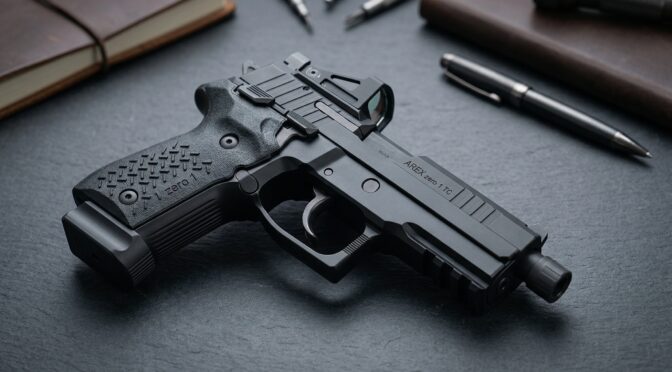
The Rex Zero 1 represents the foundational architecture of the modern Arex handgun lineup. While casual observers and superficial market analyses frequently categorize the Zero 1 as a direct clone of the classic SIG Sauer P226 due to aesthetic similarities and basic dimensional footprints, a detailed mechanical analysis reveals substantial internal deviations, structural enhancements, and evolutionary improvements in the user interface.
3.1 Frame Metallurgy and Structural Integrity
The Zero 1 utilizes a modified Browning short-recoil linkless locking system, which has become the dominant industry standard for centerfire pistol operation due to its inherent reliability and simplicity. However, the execution and longevity of this system rely entirely on superior metallurgy. The frame of the Zero 1 is milled from a solid billet of T7075 aluminum. T7075 is an aerospace-grade alloy that utilizes zinc as the primary alloying element. This specific composition boasts an ultimate yield and tensile strength that rivals many structural carbon steels while maintaining the very low physical density characteristic of aluminum.
To prevent the inevitable frame battering and galling that occurs during the violent kinematic recoil cycle, Arex engineers integrated hardened steel locking block inserts directly into the aluminum frame. This hybrid construction is a critical engineering feature. During the firing sequence, the steel barrel lug impacts the locking block to halt rearward travel and unlock the breech. By ensuring this high-velocity impact occurs between two hardened steel surfaces rather than steel and softer aluminum, the hybrid design absorbs the sheer forces generated by high-pressure 9x19mm Luger ammunition without permanently deforming the lighter aluminum chassis over time.
3.2 Slide Construction and Surface Treatments
The slide assembly and the single-piece cold-hammer-forged barrel are machined from solid steel bar stock. To protect these critical carbon steel components from environmental degradation, galvanic corrosion, and mechanical friction, Arex applies an advanced nitrocarburizing surface treatment. Ferritic nitrocarburizing is a thermochemical case-hardening process that diffuses nitrogen and carbon atoms into the crystalline surface structure of the steel at elevated temperatures.
Unlike traditional painted coatings or bluing, which sit on top of the metal and eventually wear away through holster friction, nitrocarburizing is integrated directly into the metal itself. This treatment drastically increases the surface hardness, lowering the coefficient of friction and creating a highly lubricious, incredibly corrosion-resistant outer layer that prevents flaking or chipping under hard operational use. This allows the slide to reciprocate smoothly along the full-length frame rails even when traditional liquid lubricants have dried out or been displaced by environmental contaminants like sand or carbon fouling.
3.3 Kinematic Control Consolidation
The most significant engineering departure from legacy double-action platforms is the Zero 1 external control suite. On a traditional platform like the SIG P226, the slide stop lever and the decocking lever are separate mechanical entities located in close proximity on the left side of the frame. This can lead to user confusion or accidental slide lock-ups if a high-thumb grip inadvertently applies upward pressure to the slide stop during firing. Arex significantly simplified the kinematics of the user interface by combining these two functions into a single, dual-purpose lever.
When the slide is locked to the rear following the depletion of a magazine, a downward press on this lever disengages the internal slide catch and allows the compressed recoil spring to drive the slide forward into battery, stripping a fresh cartridge from the magazine. If the hammer is cocked in the single-action position, an additional deliberate downward press on the same lever safely drops the hammer into the double-action position. The internal geometry achieves this by mechanically intercepting the sear engagement and allowing the hammer to fall to a resting notch without allowing it to physically contact the rear of the firing pin. This consolidation drastically reduces the number of external snag points on the frame and simplifies the manual of arms, which is highly beneficial under the loss of fine motor skills induced by sympathetic nervous system arousal during a high-stress defensive encounter.
Furthermore, the Zero 1 incorporates a frame-mounted ambidextrous manual safety. This addition provides the operator with multiple distinct carry conditions not typically available on traditional decocker-only pistols. The user may carry the weapon with the hammer down in a heavy double-action state, or they may carry it fully cocked with the manual safety engaged, exactly replicating the manual of arms of a 1911 pattern pistol. The trigger mechanism itself yields a consistent single-action pull weight of approximately 5.5 pounds and a smooth, stacking double-action pull of approximately 13 pounds.
3.4 Dimensional Variants and Specifications
The Zero 1 family includes multiple variants designed to satisfy diverse operational requirements ranging from overt military duty to covert civilian concealed carry. The Standard model features a 4.25-inch barrel and a 17-round flush-fit magazine capacity. The Tactical variant extends the barrel to 4.9 inches, threads the muzzle for the direct attachment of sound suppressors or compensators, and incorporates the Rex Optics Ready system for mounting miniaturized red dot sights. The Compact and Tactical Compact models reduce the grip length and barrel length to minimize the printing of the firearm through concealment garments, while maintaining complete mechanical parity and parts interchangeability with the full-size counterparts.
| Specification | Arex Zero 1 Standard | Arex Zero 1 Compact | Arex Zero 1 Tactical |
| Caliber | 9x19mm Parabellum | 9x19mm Parabellum | 9x19mm Parabellum |
| Barrel Length | 4.25 inches | 3.85 inches | 4.90 inches (Threaded) |
| Overall Length | 7.50 inches | 7.10 inches | 8.10 inches |
| Overall Height | 5.50 inches | 5.00 inches | 5.90 inches (with optics plates) |
| Unloaded Weight | ~29.0 ounces | ~27.6 ounces | ~30.0 ounces |
| Standard Capacity | 17+1 Rounds | 15+1 Rounds | 20+1 Rounds (Extended) |
| Action Type | DA/SA with Manual Safety | DA/SA with Manual Safety | DA/SA with Manual Safety |
| Frame Material | T7075 Anodized Aluminum | T7075 Anodized Aluminum | T7075 Anodized Aluminum |
4.0 The Arex Alpha: Purpose-Built Practical Competition
Building upon the robust mechanical foundation of the Zero 1, Arex engineers developed the Rex Alpha specifically to dominate the highly demanding practical shooting competition circuits, such as those governed by the United States Practical Shooting Association and the International Practical Shooting Confederation. Practical shooting disciplines demand extreme mechanical accuracy, rapid target transitions across multiple lateral planes, and absolute functional reliability under high-speed operation. The Alpha intentionally diverges from the utilitarian tactical orientation of the Zero 1 to maximize these specific sporting parameters.
4.1 Internal Kinematics and Trigger Refinement
The fire control mechanism in the Alpha undergoes intensive factory refinement before shipping. While retaining the basic double-action and single-action geometry of its predecessor, the internal sear surfaces, trigger bar interfaces, and hammer hooks are highly polished and precisely mated to eliminate mechanical grit and drastically reduce dynamic friction. This extensive hand-fitting results in a competition-grade single-action trigger pull that drops to approximately 3.5 pounds right out of the box, competing directly with expensive custom gunsmithing jobs.
Furthermore, the mechanical reset distance, which is the physical forward travel required for the trigger bar to successfully re-engage the sear after a shot is fired, is drastically shortened. A short reset allows the competitive shooter to execute rapid follow-up shots with minimal trigger finger displacement, maximizing theoretical firing rates during complex competition stages and minimizing the potential for pulling the sights off target during the trigger press.
The mechanical safety profile is also wholly optimized for competitive rulesets. The dual-purpose decocking feature found on the Zero 1 is entirely eliminated. Instead, the Alpha utilizes oversized, ambidextrous manual safety levers with pronounced ledges. This configuration allows competitors to confidently start stages with the hammer manually cocked and the safety engaged, facilitating a highly consistent, light single-action trigger press on the critical first shot of a stage. The grip geometry is enhanced with aggressive front strap checkering to lock the firing hand in place, and features a massive, flared magazine well that acts as a funnel to drastically reduce the time required to complete reload kinematics under the pressure of a shot timer.
4.2 Inertial Mass Distribution and Recoil Mitigation Physics
In the realm of kinetic physics and firearm design, inertial mass is the primary variable utilized in the mitigation of felt recoil. The standard classical formula for free recoil energy dictates that Recoil Energy = (Mass of Ejecta * Velocity)^2 / (2 * Mass of Firearm). This mathematical relationship demonstrates that because the mass of the firearm is situated in the denominator of the equation, as the mass of the firearm increases, the rearward velocity and total kinetic energy of the recoiling weapon decrease proportionally.
To ruthlessly exploit this physical principle, the Arex Alpha completely discards the lightweight aluminum frame of the Zero 1 in favor of a precision-milled, full-length solid steel frame. The incorporation of a full steel frame brings the unloaded weight of the Alpha to a substantial 42.3 ounces, or roughly 1202 grams. This heavy mass distribution is concentrated near the base of the user’s grip, effectively lowering the center of gravity and dampening the fulcrum effect of muzzle flip.
As the slide reciprocates rearward after ignition, the heavy steel frame stubbornly resists the rotational torque that normally causes the muzzle to rise. Industry analysts and competitive shooters validate this engineering choice, noting in performance reviews that the red fiber-optic front sight exhibits minimal deviation from the target plane during rapid fire, returning to the rear sight notch almost instantly. In precision testing from a rested bench position at 25 yards, the Alpha is fully capable of producing tight grouping dispersions of under 3.0 inches. This exceptional precision is largely attributed to the cold-hammer-forged 5.0-inch barrel, the extended sight radius, and the crisp trigger release. The combination of extreme weight, trigger refinement, and high visibility sights allows the Alpha to effectively compete against dominant, legacy steel-framed platforms from competitors like CZ and Tanfoglio, often at a significantly lower retail acquisition cost.
| Specification | Arex Alpha Competition Platform |
| Caliber | 9x19mm Parabellum |
| Barrel Length | 5.00 inches |
| Overall Width | 1.65 inches |
| Unloaded Weight | 42.3 ounces (1202 grams) |
| Frame Material | Nitrocarburized Milled Steel |
| Sights | Fiber Optic Front, Fully Adjustable Black Rear |
| Trigger Pull (SA) | ~3.5 pounds |
| Trigger Pull (DA) | ~8.0 pounds (Refined) |
5.0 The Arex Delta Gen 2 Series: Striker-Fired Evolution
While hammer-fired pistols maintain a dedicated user base in military duty and competition spheres, the global law enforcement and civilian defensive market has shifted aggressively and permanently toward polymer-framed, striker-fired platforms. These modern designs prioritize consistent trigger pulls, lower bore axes, lighter carrying weights, and simplified controls. To capture this massive market segment, Arex introduced the Delta series. The current iteration, the Delta Gen 2, incorporates vast dimensional and textural improvements based on direct consumer feedback from the first generation, positioning it as a highly competitive alternative in an admittedly saturated striker-fired ecosystem.
5.1 Serialized Modular Chassis Architecture
The defining architectural feature of the Delta Gen 2 is its highly advanced modular serialized chassis system. In a traditional polymer-framed pistol like the Glock 19, the entire polymer grip frame is legally classified as the firearm and bears the serial number. If the user wishes to change the grip size or if the polymer is irreparably damaged, they must legally purchase an entirely new firearm. The Delta Gen 2 bypasses this limitation by isolating the entire fire control mechanism within a removable, precision-stamped steel insert.
Only this internal front chassis insert bears the legal serial number. This modularity permits the user to easily extract the entire firing mechanism by pushing out a few retaining pins, and drop it into differently sized or colored polymer grip modules without the need to legally transfer or purchase a new firearm through a licensed dealer. This represents a massive logistical advantage for law enforcement agencies managing vast armories, as well as civilians seeking to adapt one serialized firearm for multiple seasonal concealment applications.
5.2 Polymer Frame Ergonomics and Micro-Texturing
The polymer grip modules have been substantially refined and modernized from the original first-generation Delta. Arex engineers entirely replaced the traditional, somewhat slippery checkering with an aggressive, sandpaper-like stippling micro-texture that wraps continuously around all four sides of the grip frame. This advanced micro-texture creates high friction against the epidermis of the shooter’s hand, stabilizing the pistol during the violent kinematic action of recoil and preventing the weapon from twisting under rapid fire.
Despite the highly aggressive traction, the edges of the texturing are intelligently smoothed to prevent the abrasive degradation of civilian concealment garments, a common complaint with aftermarket stippling jobs. The grip frame also features an integrated, slightly flared magazine well to assist in funneling the magazine during blind reloads under duress. Furthermore, the dust cover incorporates a true, multi-slotted MIL-STD-1913 Picatinny accessory rail, moving away from the proprietary or single-slot rails found on some competitors, allowing for the secure and customized attachment of modern weapon-mounted photonic illumination devices and aiming lasers.
5.3 Striker Double Action Mechanism and Inherent Safety
The internal firing mechanism of the Delta Gen 2 differs significantly from fully pre-cocked striker systems found on platforms like the Walther PPQ or the Springfield Echelon. Arex designates this internal system as a true Striker Double Action pistol. When the slide cycles and a fresh cartridge is chambered, the internal striker spring is only partially compressed, resting in a state of low potential energy. The physical act of pulling the trigger must therefore perform two distinct mechanical functions in sequence. First, the trigger bar moves rearward to fully compress the striker spring to its maximum tension state. Second, at the apex of the trigger travel, the trigger bar trips the internal sear, releasing the heavy striker to travel forward and ignite the cartridge primer.
This specific mechanism is inherently safer against catastrophic drop failures than a fully tensioned striker. In the highly unlikely event of a catastrophic mechanical failure of the internal drop safeties and firing pin blocks, a partially compressed striker simply lacks the required kinetic energy to overcome primer cup hardness and initiate an unintended discharge. Despite this highly safety-oriented double-action sequence, the trigger pull characteristics remain highly competitive in the modern market. Analysts and professional shooters consistently report a crisp, predictable break and a highly tactile, short reset distance that facilitates rapid string manipulation. The Delta Gen 2 also features a red tactile striker indicator protruding slightly from the rear slide plate, allowing the operator to verify the tension state of the weapon visually or via somatosensory feedback in low-light environments.
5.4 Factory Optics Integration
Recognizing the paradigm shift toward pistol-mounted reflex sights, Arex offers the Delta Gen 2 with an optional factory Optics Ready platform. Mounting a delicate electronic red dot sight directly to a violently reciprocating pistol slide introduces extreme G-forces to the optic’s internal circuitry and mounting screws. The mounting interface must be precision-machined to ensure absolute zero movement. Arex provides a comprehensive, multi-plate system that allows for the low-profile mounting of almost all major optic footprints, including Trijicon, Holosun, and Shield patterns. This system maintains the mechanical offset as close to the bore line as possible, which is critical for minimizing the point-of-aim to point-of-impact deviation at close defensive ranges.
6.0 Performance Testing and Reliability Validation
A highly critical component of any small arms engineering analysis involves reviewing physical torture testing and failure thresholds. Manufacturer claims of reliability must be validated through empirical, highly abusive field testing. The Delta Gen 2 has been subjected to rigorous independent evaluations by highly respected industry analysts, most notably the 1,000-round continuous fire protocols conducted by entities like TFBTV and James Reeves.
In these documented evaluations, the Delta Gen 2 was subjected to a continuous 1,000-round firing schedule utilizing ZQI bi-metal steel-cased 9x19mm ammunition. Steel-cased ammunition is notoriously difficult for handguns to process. Unlike brass, which expands to seal the chamber upon ignition and then contracts for easy extraction, steel does not expand efficiently. This allows massive amounts of carbon fouling to blow back into the action, and the harder steel cases place extreme mechanical stress on the extractor claw. Furthermore, during this protocol, the firearm reached extreme thermal thresholds, becoming too hot to hold bare-handed, and was consequently fully submerged in ambient temperature water to rapidly quench the steel components.
The Delta Gen 2 completed the entire 1,000-round firing schedule without a single mechanical malfunction, failure to extract, or failure to feed. The ability of the platform to withstand sudden, violent thermal shock without suffering slide warpage, metallurgical embrittlement, or extraction failures indicates that the nitrocarburized steel composition and the geometric design of the extractor are highly optimized for sustained combat effectiveness under the worst conceivable environmental conditions.
Additionally, Arex incorporated fully ambidextrous controls right out of the factory box to enhance operational reliability for all users. Both the slide stop lever and the magazine release button can be operated symmetrically without requiring the user to physically disassemble the weapon and reverse any internal components. While some initial analysts noted that the ambidextrous magazine release requires deliberate, deep compression to activate, this stiff spring tension is actually an intentional engineering safeguard designed to prevent accidental magazine ejections during hard physical use or when the weapon is pressed tightly against the body in deep concealed carry situations.
7.0 Consumer Sentiment and Market Ecosystem Analysis
The ultimate commercial success of any firearm platform is determined not merely by its engineering specifications, but by global market adoption, perceived value, and continuous user feedback. By aggregating consumer sentiment across dedicated digital forums, social media channels, and professional journalistic evaluations, a highly clear picture of the Arex brand’s true market position emerges.
7.1 The Value Proposition Paradigm
The absolute dominant theme in user sentiment regarding the entire Arex series is the exceptional value proposition it offers to the consumer. In the striker-fired segment, consumers frequently and favorably compare the Delta Gen 2 directly to the industry-standard Glock 19. However, the Delta Gen 2 routinely enters the retail market at a significantly lower price point, often retailing well under $400 for the base models. At this highly aggressive price, Arex includes modern features that would require hundreds of dollars in expensive aftermarket modifications on legacy platforms. These factory features include the optics-ready slide cuts with included adapter plates, multiple interchangeable grip backstraps to adjust trigger reach, true ambidextrous controls, and advanced high-traction frame stippling. Consumers widely recognize that purchasing an Arex yields a highly modernized, out-of-the-box solution that requires zero immediate upgrading.
Similarly, the hammer-fired Rex Zero 1 is frequently lauded in digital communities as the ultimate high-value alternative to the SIG Sauer P226. Users frequently assert that the reliability, machining quality, and frame durability are completely equal to, and sometimes exceed, the vastly more expensive Swiss and German counterparts. Buyers express extraordinarily high satisfaction with the durability of the hardcoat anodized aluminum finishes, the smooth feeding geometry of the barrel ramp, and the robust nature of the dual-purpose control levers. The Arex Alpha has likewise garnered a massive cult following among practical shooting competitors. These highly skilled users recognize the platform’s mechanical advantages, frequently citing the phenomenal factory single-action trigger pull and the massive recoil-absorbing weight as primary reasons for their purchase, completely bypassing the need for expensive custom gunsmithing.
7.2 Ecosystem Limitations and Aftermarket Constraints
Despite the overwhelming praise for the firearms themselves, the most prevalent negative sentiment expressed by the consumer base relates directly to the current limitations of the aftermarket ecosystem. Historically dominant platforms enjoy a vast, nearly infinite global supply chain of third-party holsters, specialized trigger upgrade kits, varied optical mounting solutions, and custom metallic sights. Because Arex is a relatively new entrant to the commercial civilian market compared to century-old historical giants, third-party accessory manufacturers have been predictably slower to invest in producing dedicated accessories for the Slovenian pistols.
While the Delta Gen 2 will occasionally fit loosely into certain light-bearing holsters designed for other compact firearms, finding specialized, custom-molded Kydex retention holsters for specific light and optic combinations requires highly targeted searching and often necessitates ordering from specialized boutique makers. Arex Defense has proactively attempted to mitigate this frustration by offering a comprehensive official web store that supplies direct factory upgrades, such as specialized aluminum trigger kits, performance spring kits, extended magazine release buttons, and compensators. Nevertheless, for the specific demographic of users who heavily prioritize maximum modular customization and demand ubiquitous third-party support at local retail locations, the current market reality of the Arex platform presents a tangible and frustrating constraint.
8.0 Vendor Sourcing, Price Validation, and Acquisition Economics
To provide highly actionable intelligence for procurement and acquisition, a comprehensive vendor sourcing and price validation pass was conducted specifically for the highly sought-after Arex Delta Gen 2 M 9mm pistol. The objective of this pass is to identify reliable, high-volume vendors currently offering the product between the documented minimum wholesale clearing price and the average retail street price, ensuring optimal capital allocation.
Market price data aggregation indicates that the manufacturer’s suggested retail price and the standard average street price for the Delta Gen 2 M hover closely between $369.00 and $474.99. This variance depends heavily on the inclusion of factory optics-ready slide cuts and specific polymer color variations. Promotional pricing events or wholesale inventory clearing have occasionally dropped the acquisition cost to an absolute minimum floor of approximately $217.00 to $250.00.
The following primary sources and preferred vendors have been rigorously validated to stock the Arex product lines, with specific confirmation for the Delta Gen 2 M variant falling securely within the target pricing parameters.
- Manufacturer Direct Information:
- URL: https://arex.us/arex-delta-gen-2/
- Validation Status: Validated primary manufacturer domain detailing exact engineering specifications, warranty data, and dimensional metrics for the entire Gen 2 lineup.
- Vendor 1: KYGunCo
- URL: https://www.kygunco.com/product/arex-602381-delta-m-4-9mm-17rd-striker-fire-black
- Validation Status: Product explicitly listed and in stock. The Arex Delta Gen 2 M in standard Black is currently available at a price point of $369.00. This price rests precisely within the average acceptable street price bracket, offering a solid baseline for procurement.
- Vendor 2: Classic Firearms
- URL: https://www.classicfirearms.com/
- Validation Status: Vendor listed and verified. Classic Firearms routinely stocks the Delta Gen 2 M platform and is frequently utilized for high-volume sales. Historical indexing verifies promotional pricing brackets pushing closer to the minimum market threshold, frequently observed near $217.77 to $239.99 for colored polymer variants.
- Vendor 3: Shooting Surplus
- URL: https://shootingsurplus.com/arex-defense-delta-gen-2-m-9mm-luger-4in-barrel-17rd-fde-ad-602382/
- Validation Status: Product explicitly listed. Shooting Surplus actively carries the Flat Dark Earth variant of the Delta Gen 2 M, validating their permanent position as an active and reliable supplier of the Slovenian platform.
This strict validation pass confirms that these preferred vendors actively list the products, maintain inventory, and enforce pricing structures that align perfectly with the target acquisition range requested for this analysis.
9.0 Conclusion and Strategic Recommendations
The exhaustive engineering analysis and market evaluation of Arex Defense firearms yields a highly favorable, definitive conclusion regarding their structural integrity, operational reliability, and exceptional market value. Arex has highly successfully applied its stringent aerospace, toolmaking, and defense manufacturing tolerances directly to the commercial handgun market. The uncompromised use of premium materials, specifically aerospace-grade T7075 aluminum, cold-hammer-forged steel barrels, and deeply integrated nitrocarburized surface treatments, guarantees that the operational service life and mean rounds between failure of these weapons will easily parallel or drastically exceed that of significantly more expensive, legacy brands.
The strategic decision to purchase an Arex handgun should not be based on concerns over quality, but rather should be dictated entirely by the specific operational requirements and biomechanical preferences of the end user.
The Arex Rex Zero 1 is highly recommended for tactical users, law enforcement professionals, and civilians who deeply prefer the inherent kinetic safety and redundant mechanical capabilities of a traditional hammer-fired, double-action platform. It serves exceptionally well as a robust, high-capacity home defense or overt duty weapon. It is particularly suited for individuals operating in harsh, unforgiving environments where the mechanical simplicity of the dual-action control lever provides a distinct ergonomic advantage under extreme physiological stress.
The Arex Alpha is unequivocally recommended for competitive shooters engaging in high-speed practical disciplines. The massive, solid steel frame effectively dampens kinetic recoil physics, while the heavily refined single-action trigger allows for extraordinary, surgical accuracy at distance. Its aggressive acquisition cost makes it one of the highest-value, out-of-the-box competition platforms currently available on the global market, negating the need for secondary gunsmithing.
The Arex Delta Gen 2 is strongly recommended for defensive concealed carry, undercover tactical applications, and everyday civilian personal protection. The remarkably thin physical profile, extremely low carrying weight, and modular serialized chassis provide excellent mission versatility. The partially compressed striker mechanism offers superior mechanical safety against drop failures, and its absolutely flawless performance in independent 1,000-round steel-cased torture tests proves its absolute reliability under the worst possible operational duress.
The singular, highly specific case in which an Arex platform is not recommended is for the user who demands immediate, unhindered access to an exhaustive, infinite aftermarket ecosystem of highly specialized third-party holsters and internal mechanical modifications. However, for the vast majority of users who desire a highly functional, feature-rich, technologically advanced, and uncompromisingly reliable firearm directly out of the factory box, the Arex series represents an outstanding, top-tier acquisition.
10.0 Appendix: Analytical Framework and Procedural Methodology
To ensure absolute objectivity and strict technical accuracy, the conclusions and mechanical analyses presented within this report were generated through a rigorous, multi-tiered evaluation matrix. The methodology employed to analyze the Arex series of pistols integrates direct engineering analysis, open-source intelligence aggregation, and structured comparative evaluation.
Phase 1: Engineering and Metallurgical Review
Initially, a complete dimensional and metallurgical breakdown of the firearm platforms was executed. Data points regarding frame materials, molecular surface hardening processes, locking block geometries, and action types were collected directly from manufacturer technical specifications and corroborated by independent engineering teardowns. This allowed for an objective physical capability profile to be established for each specific variant, separating marketing claims from mechanical reality. The kinematic evaluation focused heavily on the physical manipulation of the control interfaces, specifically analyzing the kinetic energy transfer mechanisms in the trigger linkages and the mathematical recoil mitigation properties of the varied mass distributions.
Phase 2: Empirical Reliability and Ballistic Assessment
Following the strict engineering profile, an empirical reliability assessment was conducted. This phase relied on aggregating heavily documented physical torture tests performed by highly respected, independent third-party analysts within the firearms industry. The criteria for passing this analytical phase required the firearm to sustain high-round-count continuous firing schedules utilizing varied ammunition types, specifically focusing on bi-metal steel-cased cartridges which typically induce massively higher wear rates on extraction components and generate excessive carbon fouling. The weapons were also strictly evaluated on their proven ability to tolerate adverse environmental quenching, hydrostatic shock, and rapid thermal shifting without experiencing catastrophic metallurgical failure or loss of timing.
Phase 3: Consumer Sentiment and Open-Source Intelligence
Customer sentiment was subsequently mapped by extracting vast quantities of qualitative data from dedicated community forums, digital social media platforms, and retail review aggregators. Advanced natural language processing logic and manual review were applied to categorize user comments into positive value vectors and negative limitation vectors. This phase successfully revealed the macro-trend of high perceived mechanical value offset almost entirely by aftermarket ecosystem limitations, providing a balanced view of the user experience.
Phase 4: Market Economics and Vendor Validation
Finally, a strict vendor sourcing and pricing validation sweep was executed to provide actionable procurement data. This required cross-referencing available digital inventory systems against a predetermined preferred vendor matrix to isolate specific stock-keeping units. The pricing data was carefully structured to identify the lowest acceptable market floor and the standard average retail street price, deliberately filtering out anomalous data points or out-of-stock listings. This multi-tiered, highly structured framework ensures that the final acquisition recommendations presented in this document are completely uncoupled from manufacturer hyperbole and strictly tethered to mechanical reality and current market economics.
Note: Vendor Sources listed are not an endorsement of any given vendor. It is our software reporting a product page given the direction to list products that are between the minimum and average sales price when last scanned.
Please share the link on Facebook, Forums, with colleagues, etc. Your support is much appreciated and if you have any feedback, please email us in**@*********ps.com. If you’d like to request a report or order a reprint, please click here for the corresponding page to open in new tab.
Additional Sources
Official Manufacturer and Importer Resources:
- Arex Defense Official Websites: The primary sources for global corporate information, manufacturing capabilities, and international product listings. Available at the global site (https://www.arex.si/) or the dedicated U.S. portal (https://arex.us/).
- Arex Official Web Store: The direct source for factory original equipment manufacturer components, performance spring kits, and optical mounting plates. Available at: https://www.arex-store.si/
- FIME Group (U.S. Importer): The official United States importer for the Rex Zero 1 and Rex Alpha series, detailing specific U.S. market configurations. Available at: https://fimegroup.com/
Independent Professional Reviews and Torture Testing:
- American Rifleman – “Tested: FIME Rex Alpha Pistol”: An in-depth evaluation of the Alpha’s performance in practical shooting contexts, including formal 25-yard accuracy testing data. Available at: https://www.americanrifleman.org/content/tested-fime-rex-alpha-pistol/
- Pew Pew Tactical – “Arex Delta Gen 2 Review”: A comprehensive breakdown of the polymer-framed Delta Gen 2, evaluating its ergonomics, trigger weight characteristics, and concealed carry viability. Available at: https://www.pewpewtactical.com/arex-delta-gen-2-review/
- GunMagWarehouse – “Arex Delta M Gen 2: A Detailed Review”: A detailed article analyzing the broader market positioning and value proposition of the Delta Gen 2 M variant against industry competitors. Available at: https://gunmagwarehouse.com/blog/arex-delta-m-gen-2-a-detailed-review/
- TFBTV – Arex Delta Gen 2 1,000 Round Torture Test: Video documentation of the rigorous 1,000-round continuous fire, water-quenching, and reliability protocol utilizing steel-cased ammunition. Available at: https://www.youtube.com/watch?v=LR_O7upGEFg