Tag Archives: 10mm

Why Our Tuned 10mm / .40S&W 16-Round High Cap Magazines for Rock Island Armory Pistols Are The Best

If you’re reading this, I’m going to assume you are either the owner of a Rock Island Armory (RIA) high capacity 10mm or .40 S&W 1911 pistol – sometimes called a 2011 – or you are thinking about buying one. The RIA pistols are workhorses and I honestly have no reservation recommending them. What I really want to cover in this is post is to tell you about our magazines for these pistols and why I think they are the best.

Yes, I Really Own And Shoot Them

I currently own two of the high cap 2011s, a 52009 Rock Ultra FS HC in 10mm and a 51679 Tac Ultra FS HC also in 10mm. My point is that I actually own and shoot the pistols – I’m not just some guy designing to specification who doesn’t actually shoot — I actually do shoot them and I’ve developed some insights as to what makes a good reliable magazine for the RIA FS A2 series of pistols.

What Got Me Started?

What got me into the mags originally was that I bought my current 52009 during the pandemic panic and there weren’t magazines to be found anywhere. Tons of websites said they were out of stock and then ones that did claim to have them turned out to be scams or backordered them. This drove me to do some research, that I’ve documented in the past, and resulted in a series of generations of magazines starting with base Para P16 magazines and evolving to our current third generation.
Custom Yugo M72B1 carbine from Two Rivers Arms with drum magazine and Vortex scope.
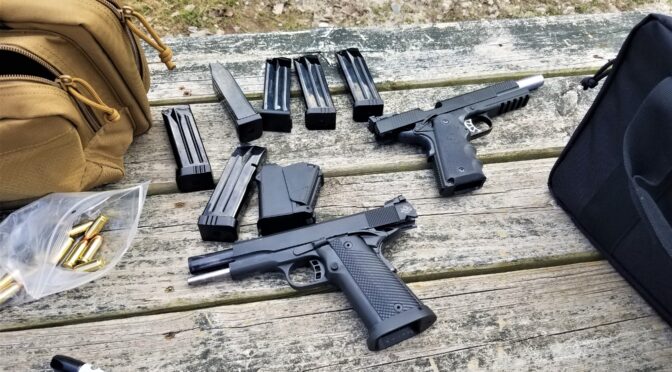
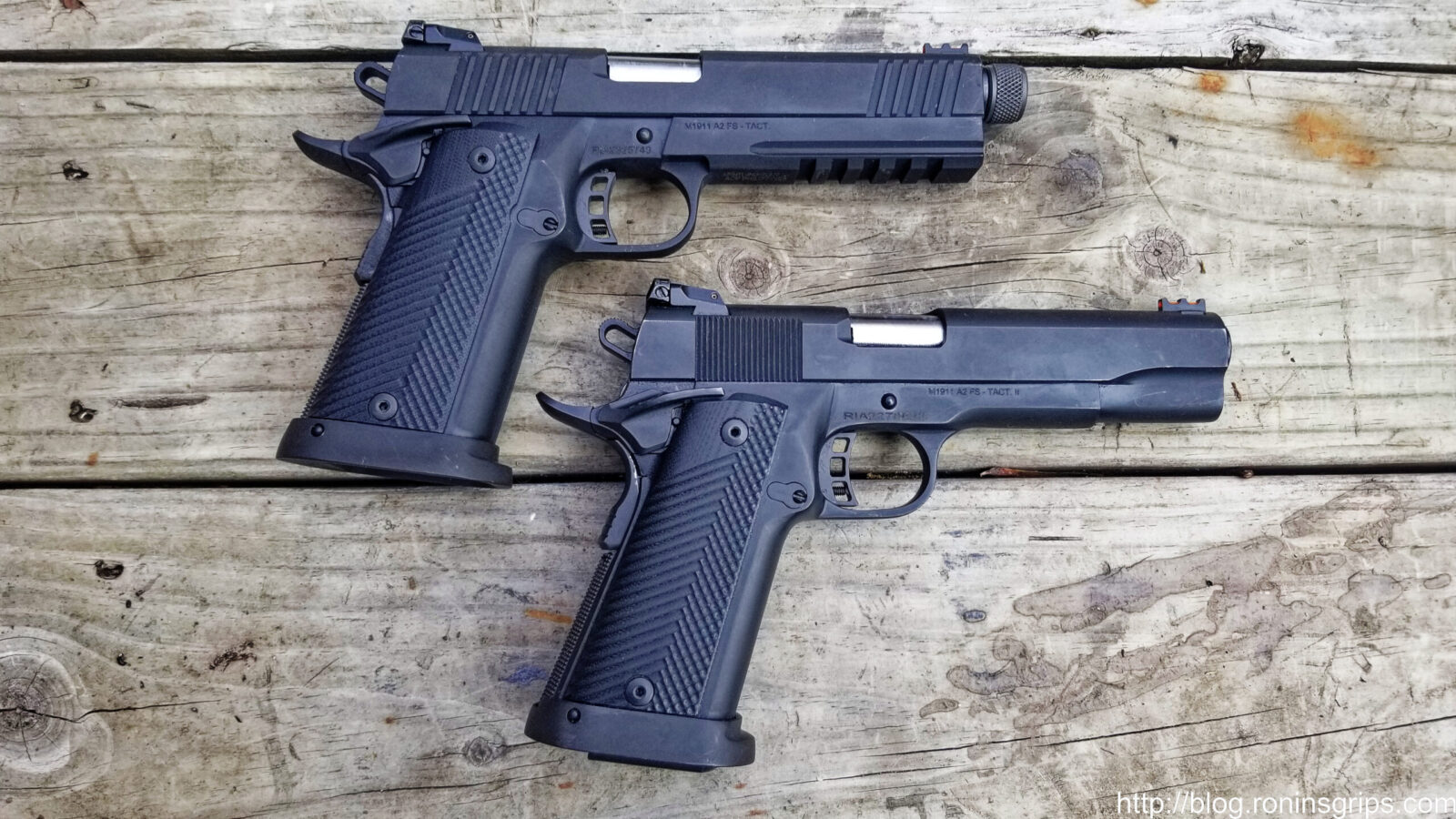
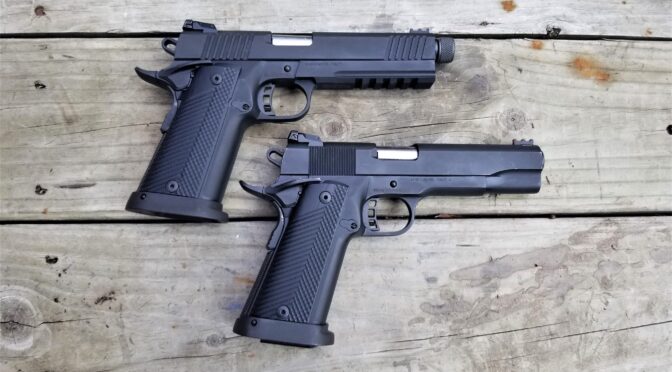
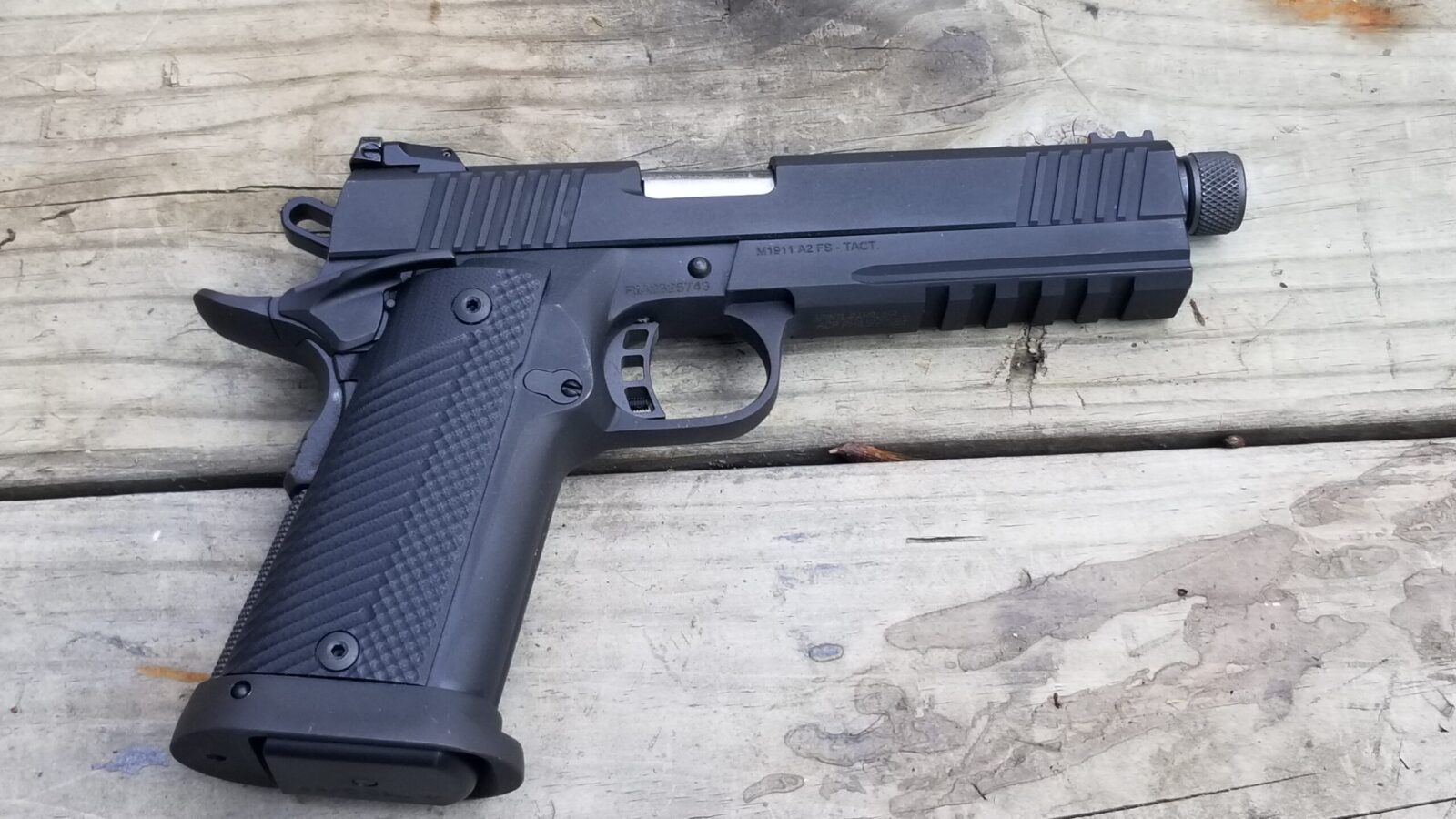
Here’s a sibling photo: The 51679 Tac Ultra FS HC is on the top and the 52009 Rock Ultra FS HC is on the bottom. The only two differences I have noticed is that the 51679 has a threaded barrel, serrated slide and a Picatinny rail on the bottom of the frame. Otherwise, they seem to be the same pistol.

Two Questions I Get Over And Over In Email

There are two things I constantly have to answer in emails – are we a real business or another scam? Yes, we are a real business and got our start making AK grips and handguards back around 2006-ish. We’ve since slowly grown our small family owned business since. Yes, if the website says we have them in stock then we have them in stock.

Second, people ask why they should buy our magazines and not the ACT-Mags sold by RIA (they are the OEM supplier to RIA by the way) and other resellers? For months we were the only supplier actually shipping magazines and people bought about 500-600 mags without ever asking “why you folks?” Well, now that there are options again between us and the ACT-Mag and tons of sellers selling them, that’s an honest question that I need to try and answer because I really do think we offer the best magazine for these specific pistols.
Custom Yugo M72B1 carbine with Vortex scope and drum magazine
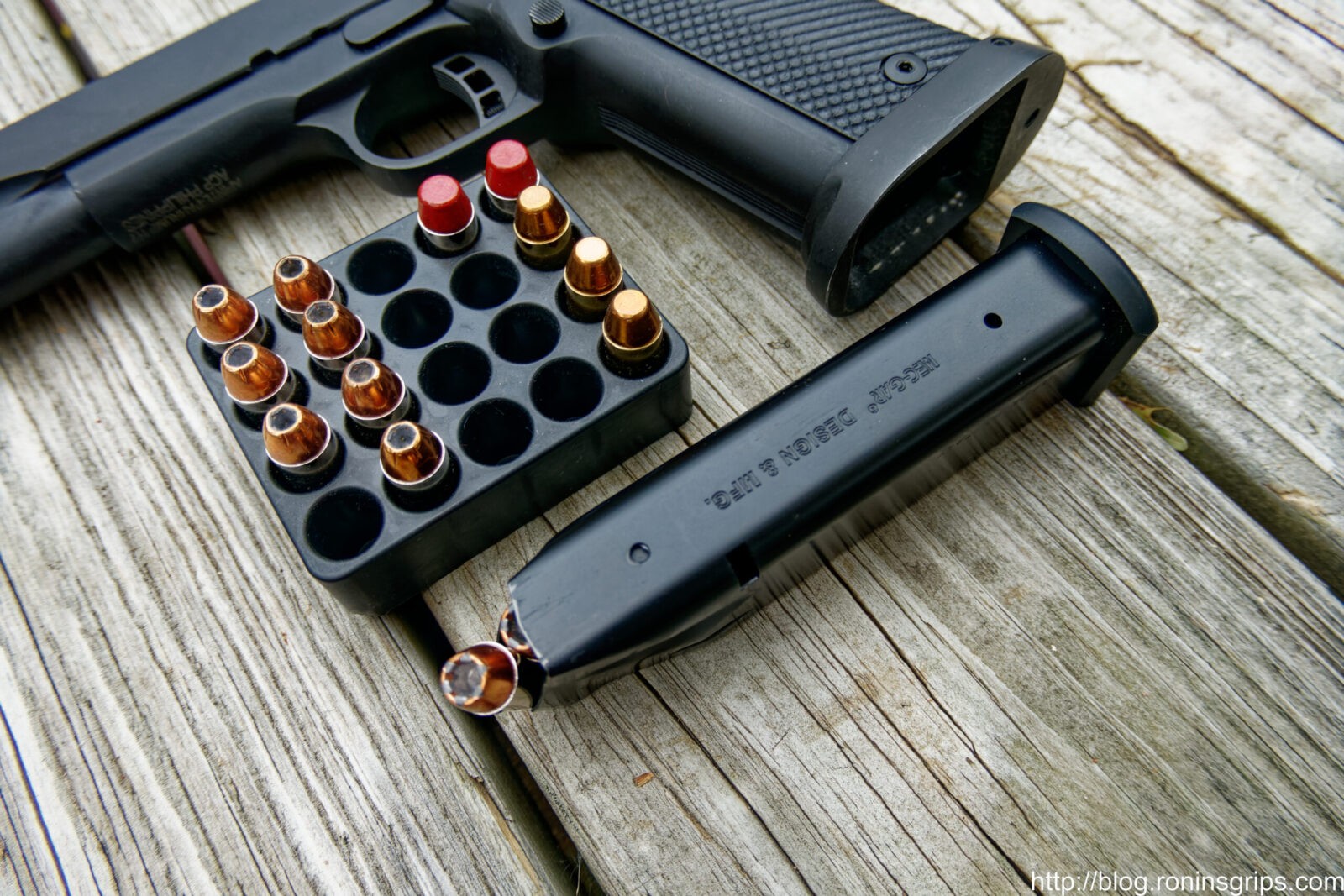
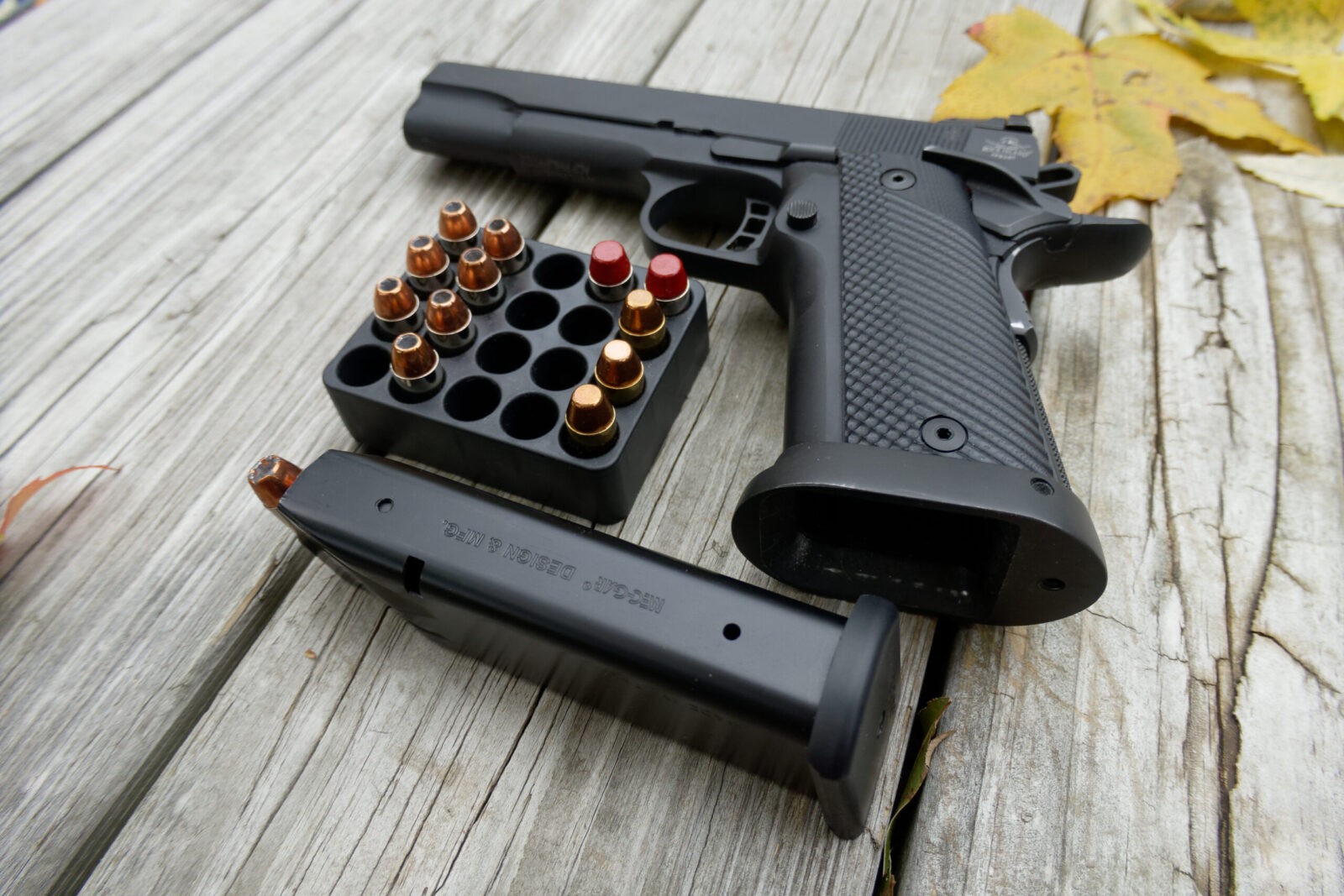
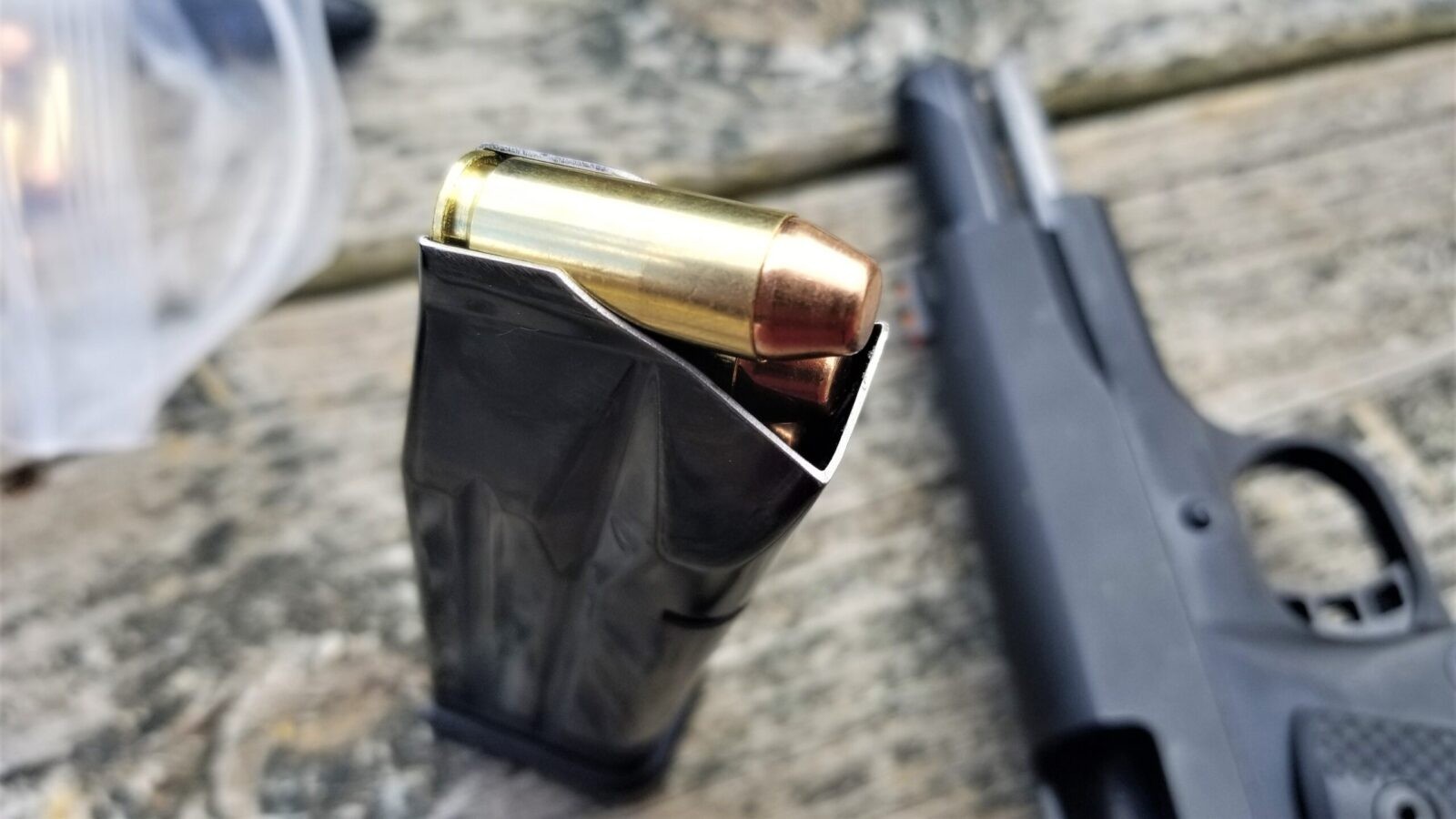
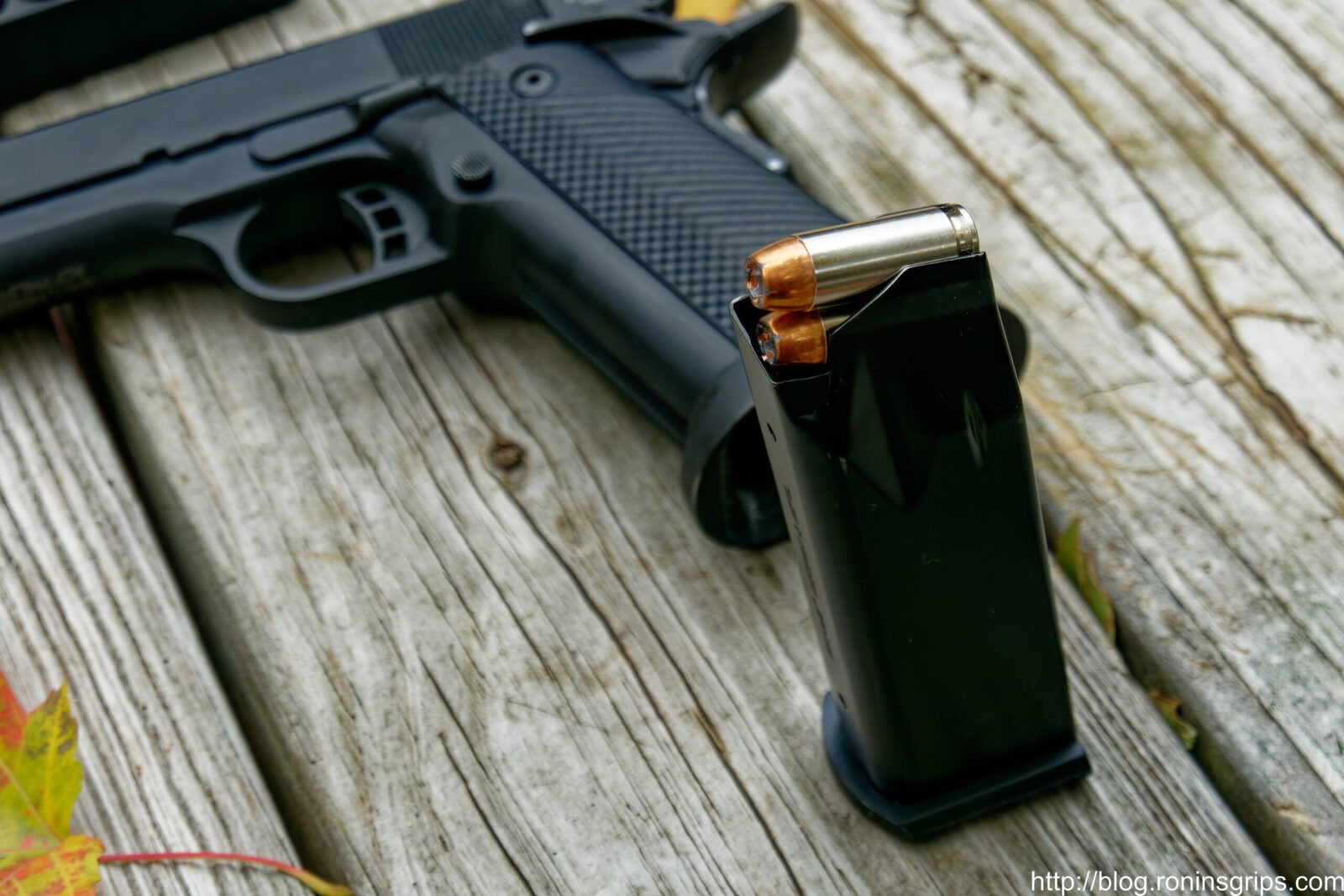
Here’s one of my personal magazines loaded with Underwood 200gr bonded hollow points. They function great in the pistol. I actually have not found a round yet that the 52009 pistol in the background can’t feed or eject properly.

Why Our Magazine’s Are The Best

First, we start with an Italian Mec-Gar P14-45 magazine. Mec-Gar makes tons of magazines and they know their stuff. In fact, they are a family owned business founded by Mr. Edoardo Racheli in 1965 in Italy for the sole purpose of making firearms magazines.

Rather than reinvent the wheel and learning from scratch, the base magazine I start with is Mec-Gar’s P14-45. That magazine reflects a ton of lessons learned that Mec-Gar has incorporated over the years and let me give you the big ones:

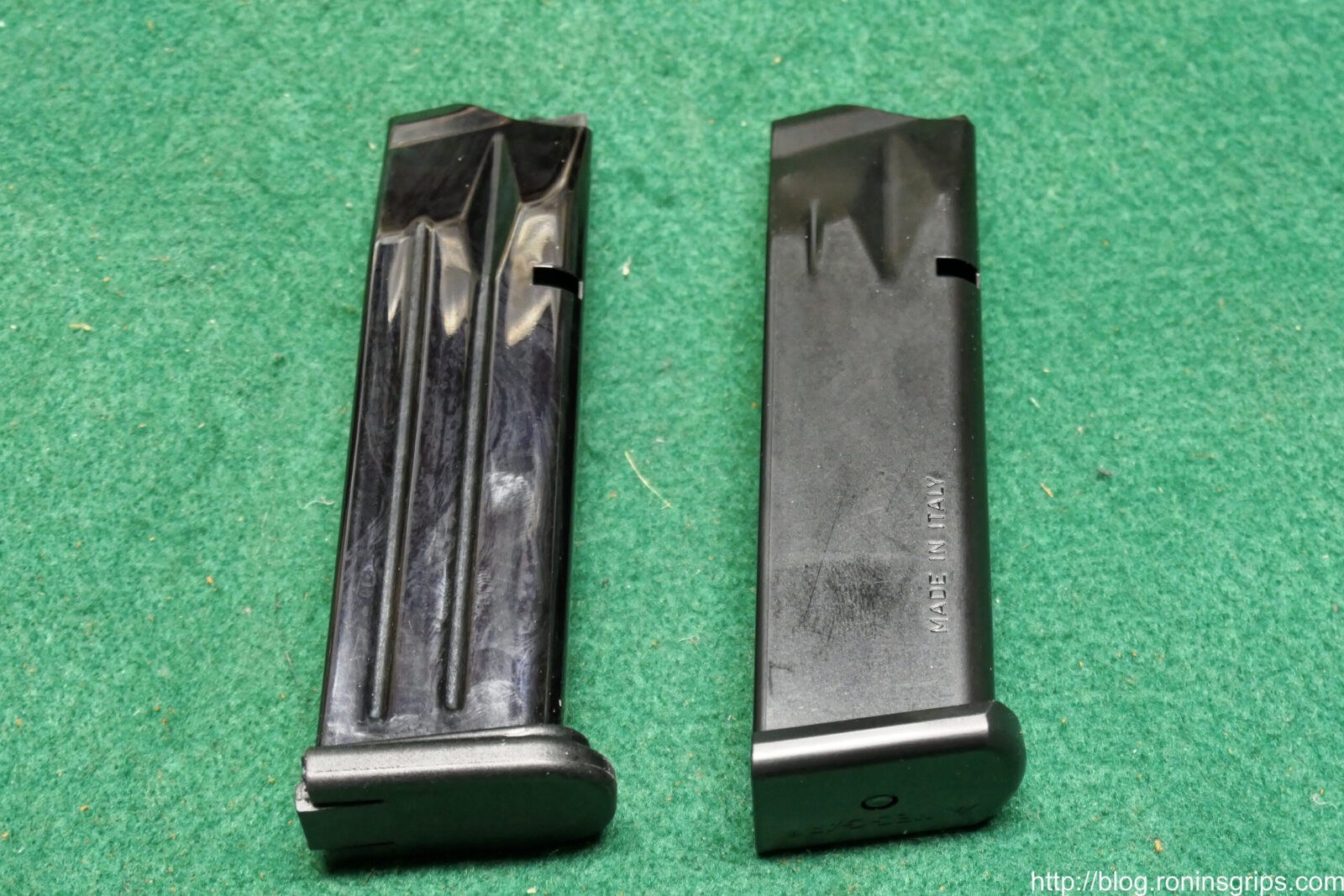
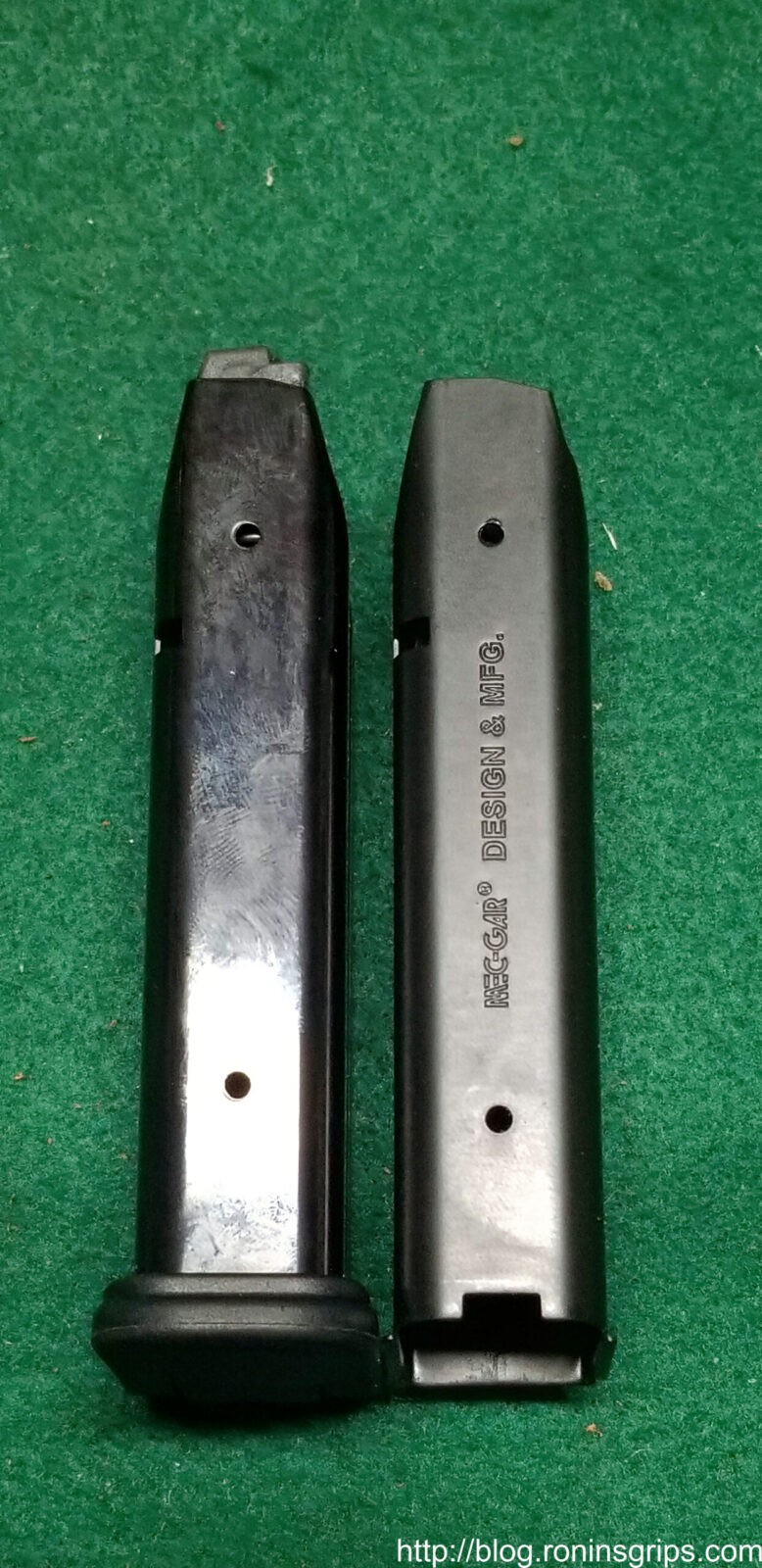
Second, unlike some mags that just have a blued finish on the steel, our Mec-Gar mags have a very cool advanced anti-friction coating that makes loading easier and far smoother feeding. The coating also reduces the risk of corrosion and does not require a lubricant – some magazines use a liquid lubricant that can attract dirt and lead to feeding problems.
Custom Yugo M72B1 carbine with Vortex scope and drum magazine
The left magazine is made by ACT-Mag and it is what comes with RIA pistols. The right magazine is one of our’s – note the anti-friction coating on it vs. regular bluing on the OEM mag.

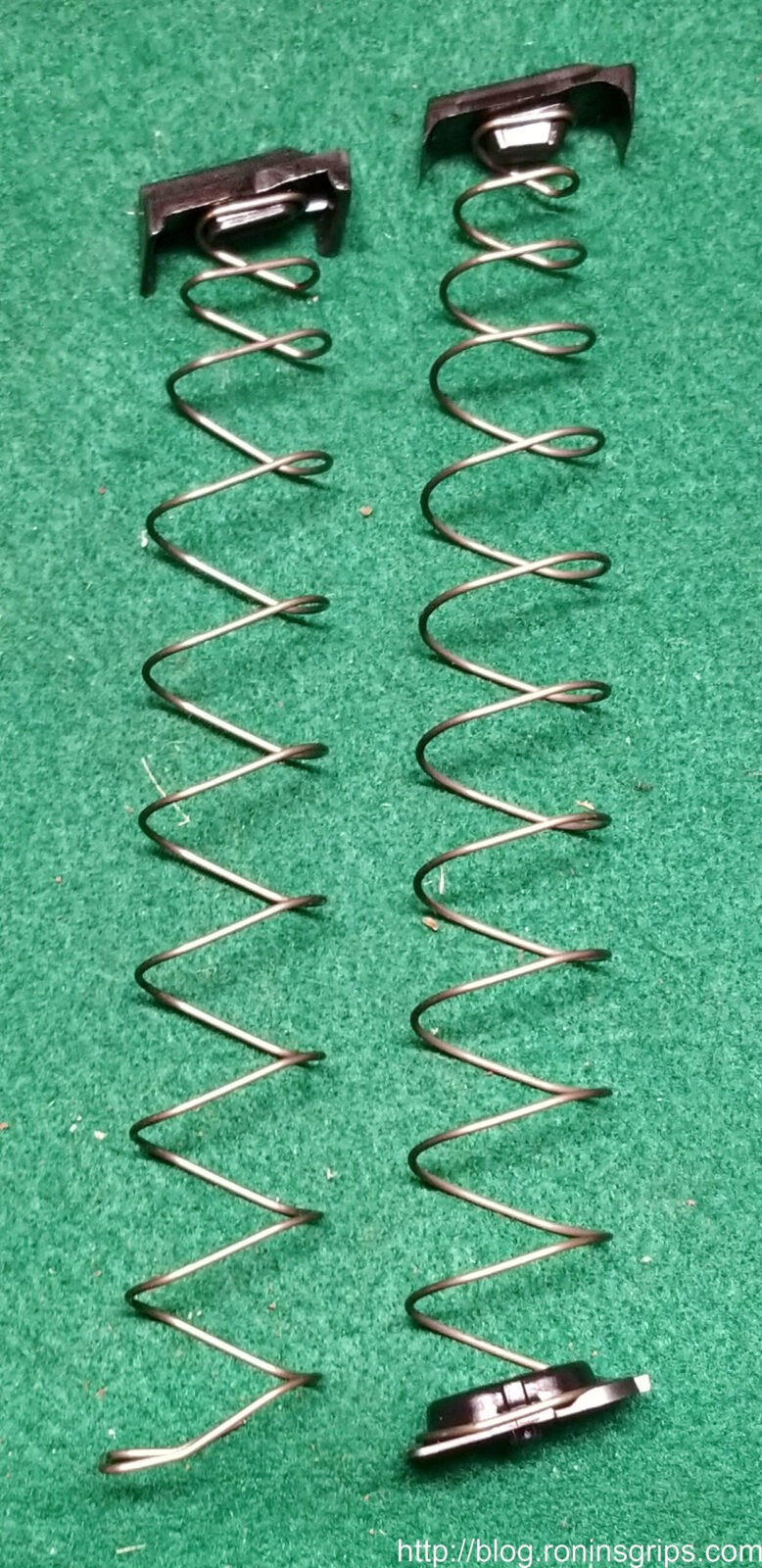
Third, we use a variable geometry spring that enables easier loading and reliable feeding regardless of the number of rounds in the magazine plus they can be stored loaded. The whole design of the follower, spring, floor and baseplates is very well thought out.
Custom Yugo M72B1 carbine with Vortex scope and drum magazine
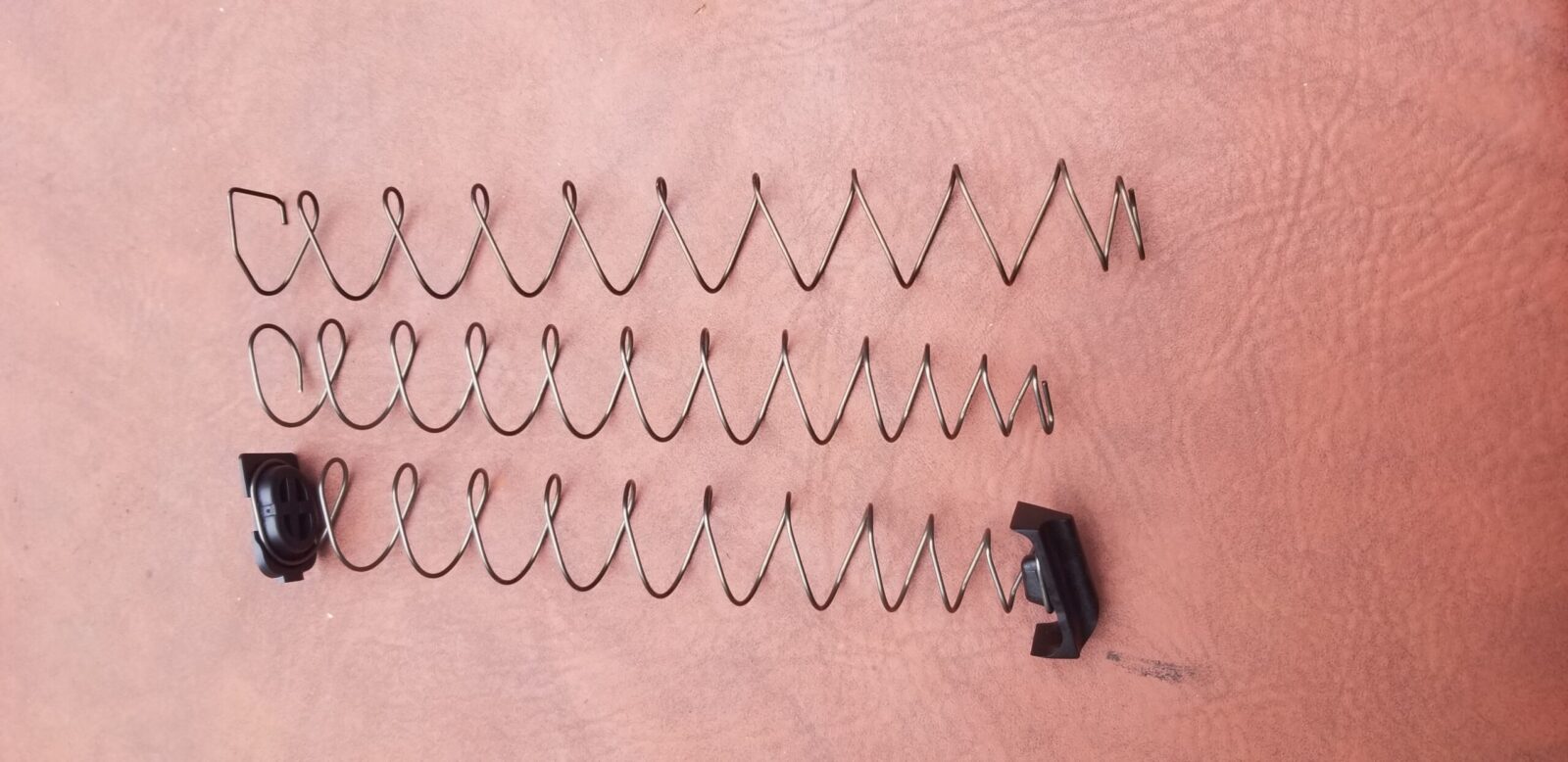
The ACT-Mag spring is on the left and does not use a floor plate. The Mec-Gar’s variable geometry spring and floor plate retainer are on the right. The tab on the right side of the floor plate rests in a notch in the magazine body to orient the plate and spring accordingly.

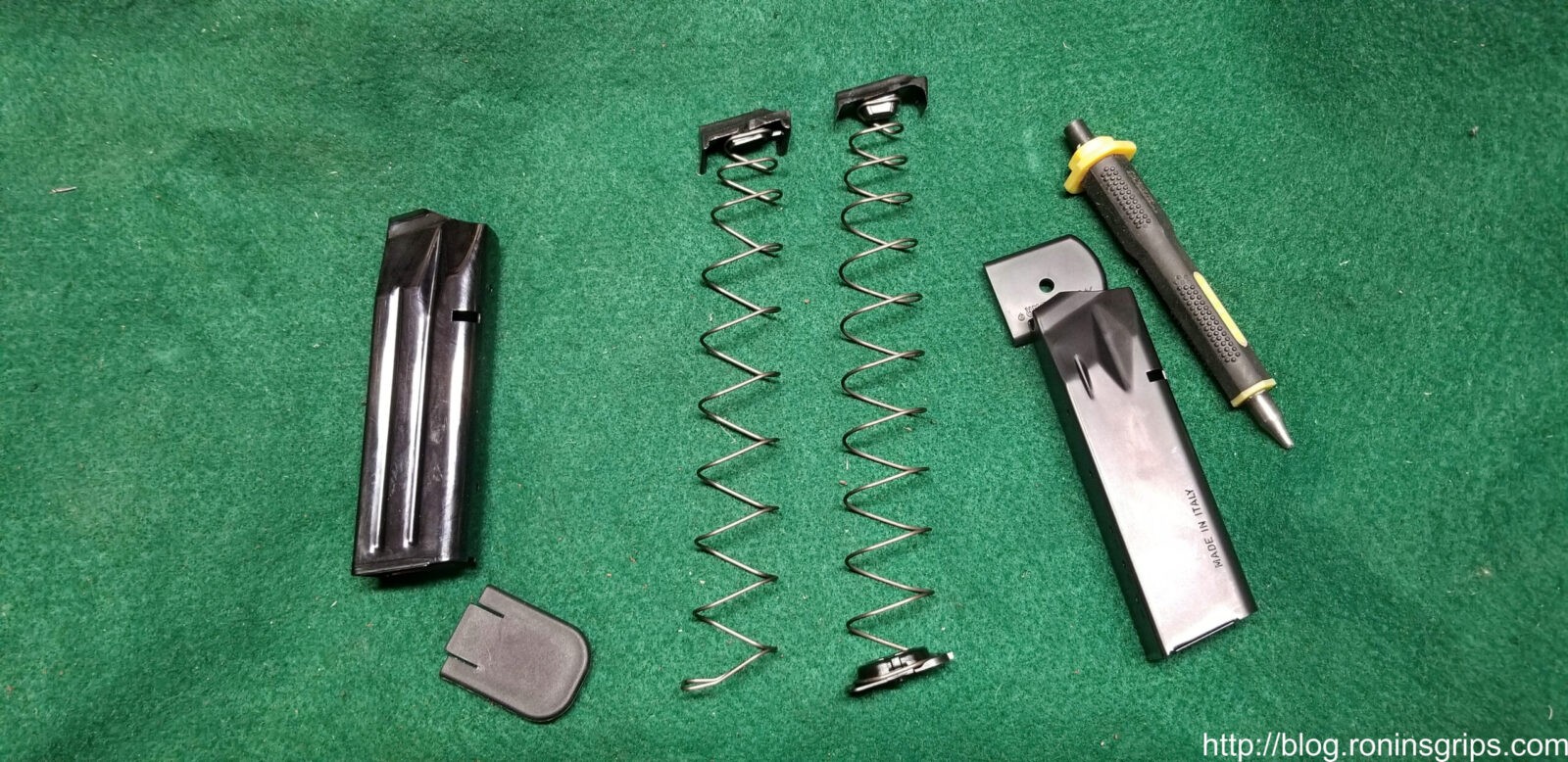
Fourth, our magazine’s spring, floor plate and base plate are all captured / locked in place and aid with easy disassembly and re-assembly for cleaning. The ACT-Mag use a tool-less design and while that makes closing the base plate a bit of a challenge because the bottom of the spring wants to escape plus the base plate can be shoved off the magazine accidentally as well.
Custom Yugo M72B1 carbine with Vortex scope and drum magazine
The ACT-Mag tube, tool-less base plate and magazine spring assembly are to the left. To the right of the middle are the Mec-Gar variable geometry spring, locking base plate and tube — all based on years and years of experience and innovation at Mec-Gar. The tool in the photo is something I made to speed up the disassembly of the magazines in bulk.
Custom Yugo M72B1 carbine from Two Rivers Arms with drum magazine and Vortex scope.
An OEM ACT-Mag is to the left and one of our Mec-Gars is to the right. The notch in the front of the magazine body’s base is where a tab from the base plate on the spring sits. Everything is nicely locked in place by this elegant design.
Custom Yugo M72B1 carbine from Two Rivers Arms with drum magazine and Vortex scope.
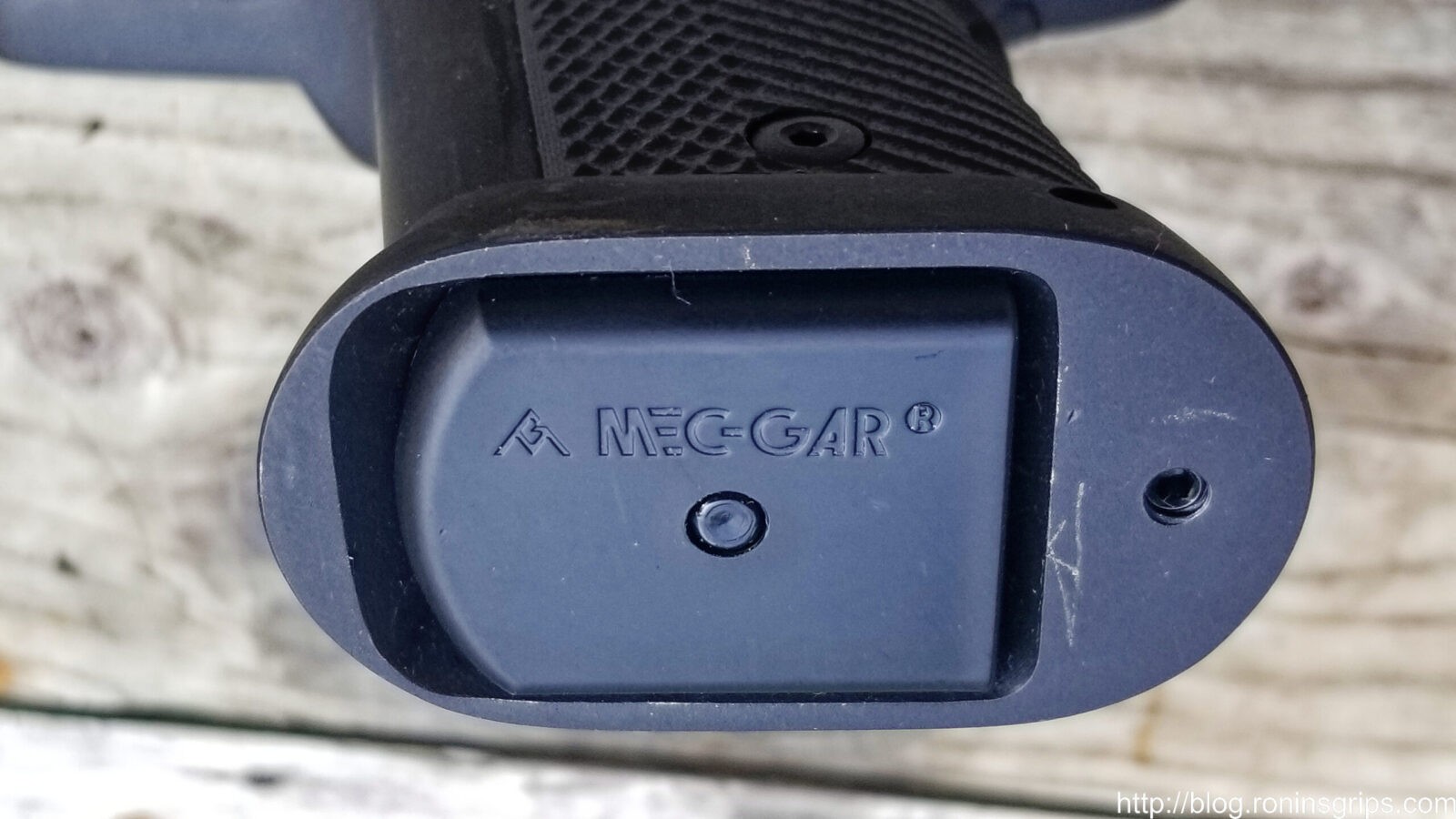
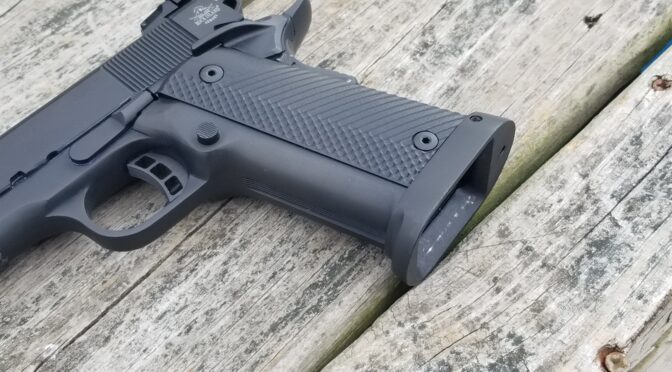
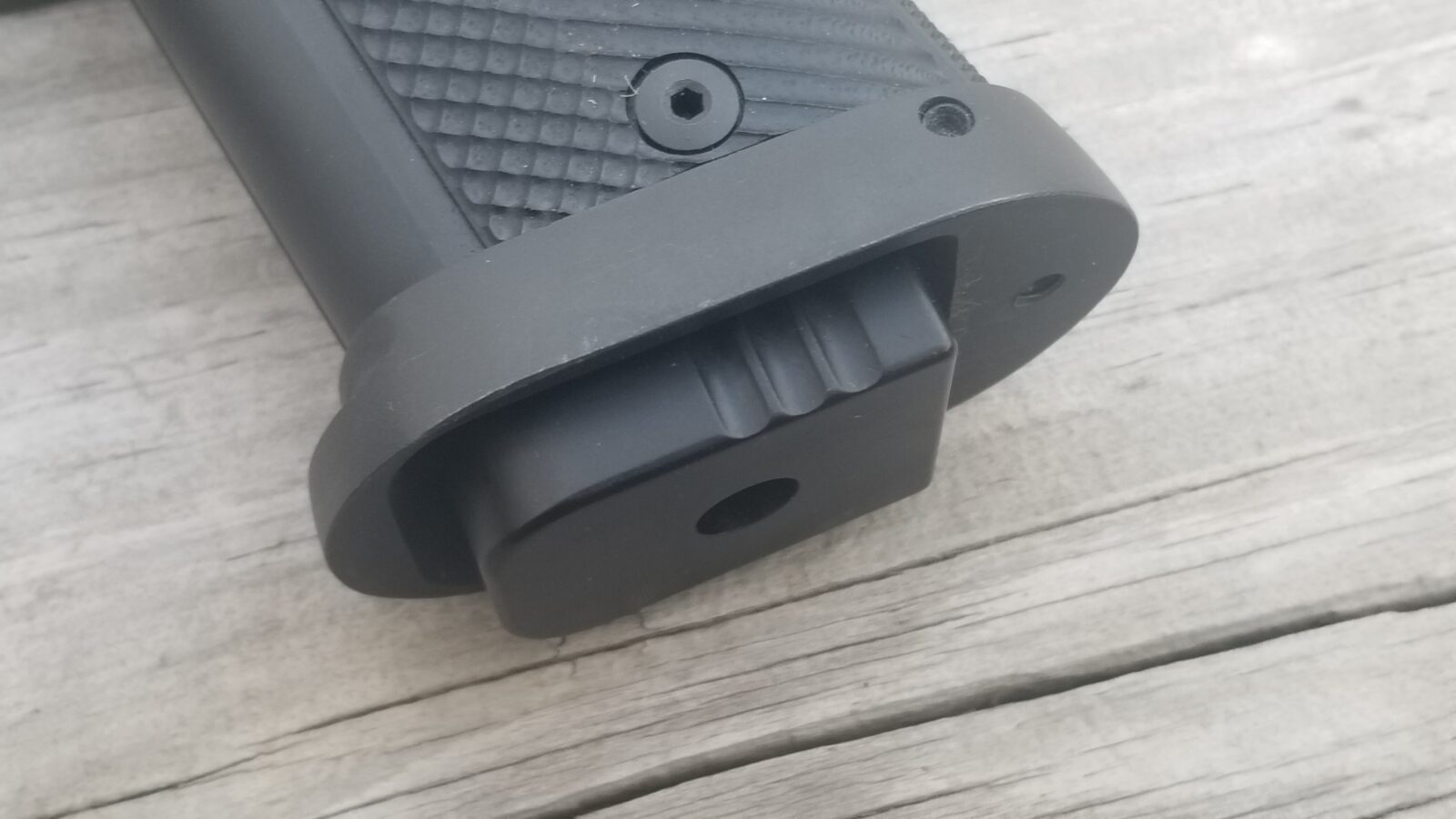
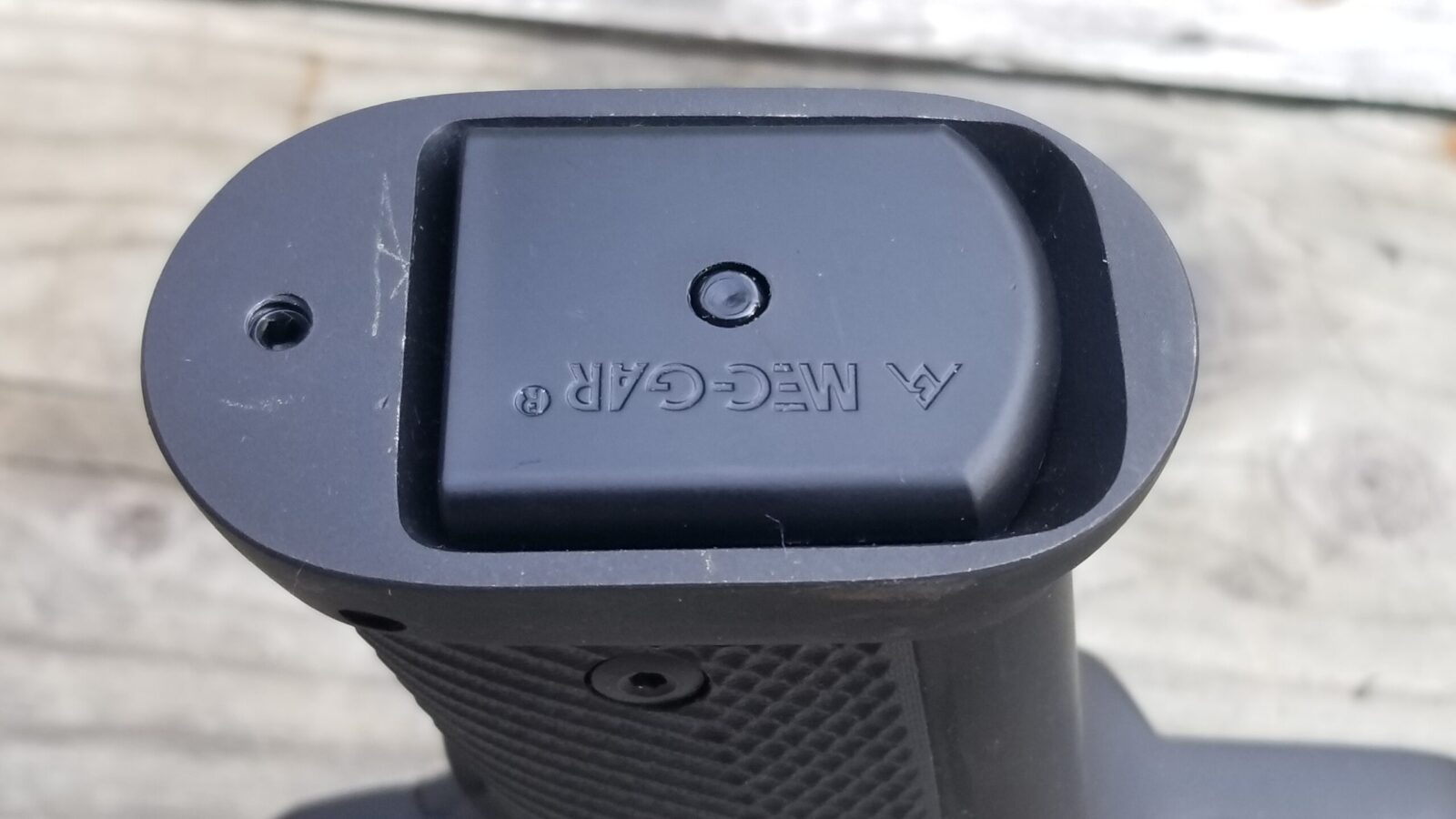
Here’s a view of one of the magazines fully seated in the pistol. You have the big flared mag well around it and the button in the middle locks the base plate to the floor plate. It needs to be depressed for the base plate to come off.

Fifth and most important – every single magazine we sell has the feed lips adjusted specifically for the RIA pistols. I use tooling that I developed to change the feed lips for optimal feeding and retetion.

For testing, I use dummy 10mm rounds and insert them by hand to feel if anything is wrong during loading. I also cycle them by hand through either my 52009 or 51679 to ensure proper feeding, retention and slide lock on empty. I’ve found tons of things that can go wrong and have refined my tooling, processes and testing to produce a magazine you can count on. This RIA-specific tuning is where we add the value and I will stand behind them if you run into a problem and need help.
Custom Yugo M72B1 carbine with Vortex scope and AK303 rail
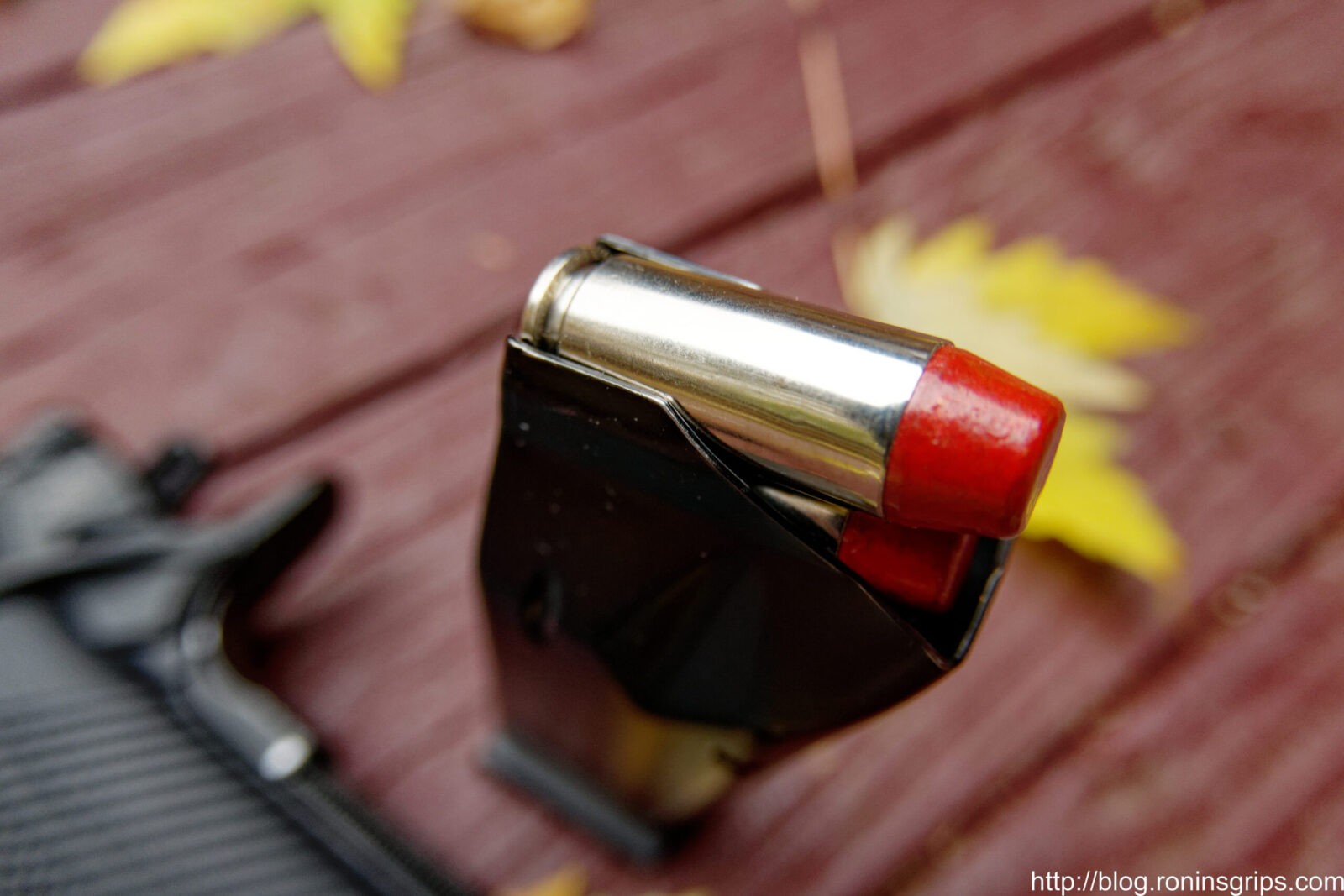
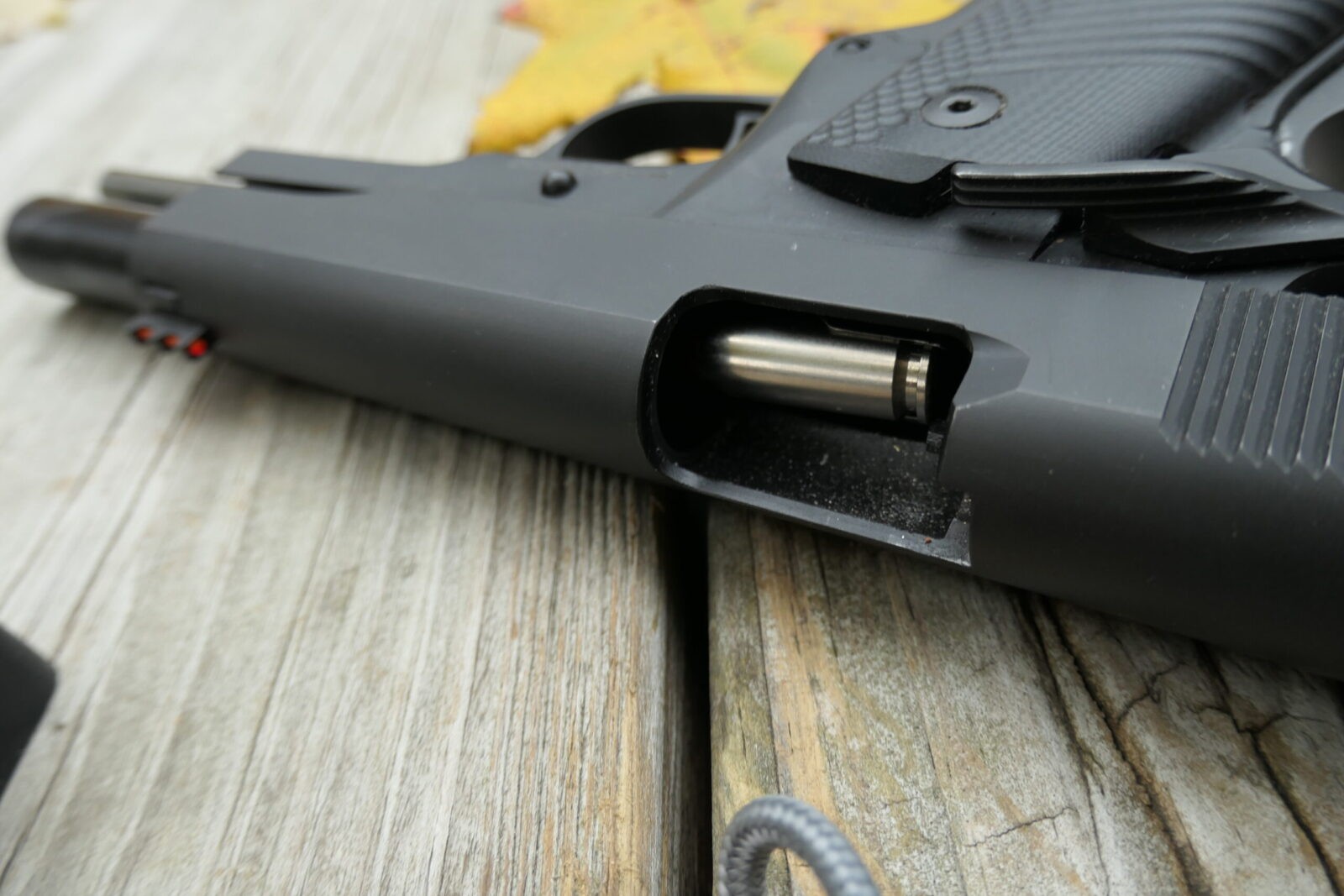
Every magazine is tuned and tested to confirm it will load a 10mm round directly in the chamber. Testing is done with dummy rounds but for the sake of the photo, this is an Underwood 155 grain HP round.
We make 10, 15 and 16 round magazines for Rock Island A2 HC 10mm & .40 S&W.
Please click here for the product listings.

A Few More Photos

Custom Yugo M72B1 carbine with Vortex scope and AK303 rail
Some oddball rounds left from range visits.
Custom Yugo M72B1 carbine with Vortex scope and AK303 rail
Underwood 220 grain hard cast – One of my bear defense loads. I carry Buffalo Bore also. Note how the front of the feed lips are securely holding the round in place. The lips are not just about feeding but retention also or the rounds would be popping out from under them at the wrong time.
Custom Yugo M72B1 carbine from Two Rivers Arms with drum magazine and Vortex scope.
One last photo 🙂

Summary

We pride ourselves on our customer service and small town family owned business values. We only sell stuff that we actually use as well. I really do think our magazines are solid and reliable and are worth it. I wouldn’t be using or selling them if I thought otherwise.

We make 10, 15 and 16 round magazines for Rock Island A2 HC 10mm & .40 S&W.
Please click here for the product listings.

Note, I have to buy all of my parts – nothing here was paid for by sponsors, etc. I do make a small amount if you click on an ad and buy something but that is it. You’re getting my real opinion on stuff.


Please share the link on Facebook, Forums, with colleagues, etc. Your support is much appreciated and if you have any feedback, please email us in**@*********ps.com. If you’d like to request a report or order a reprint, please click here for the corresponding page to open in new tab.
Introducing Our New Third Generation 16 Round 10mm Magazines for Rock Island Armory High Capacity FS A2 Pistols

This is our third generation of magazine for the Rock Island High Capacity FS A2 10mm and .40 S&W pistols that use the 16 round magazines – not the single stack 7-8 round mags.

John's WASR rifle with Romy Brown STK grip and EOTech sight
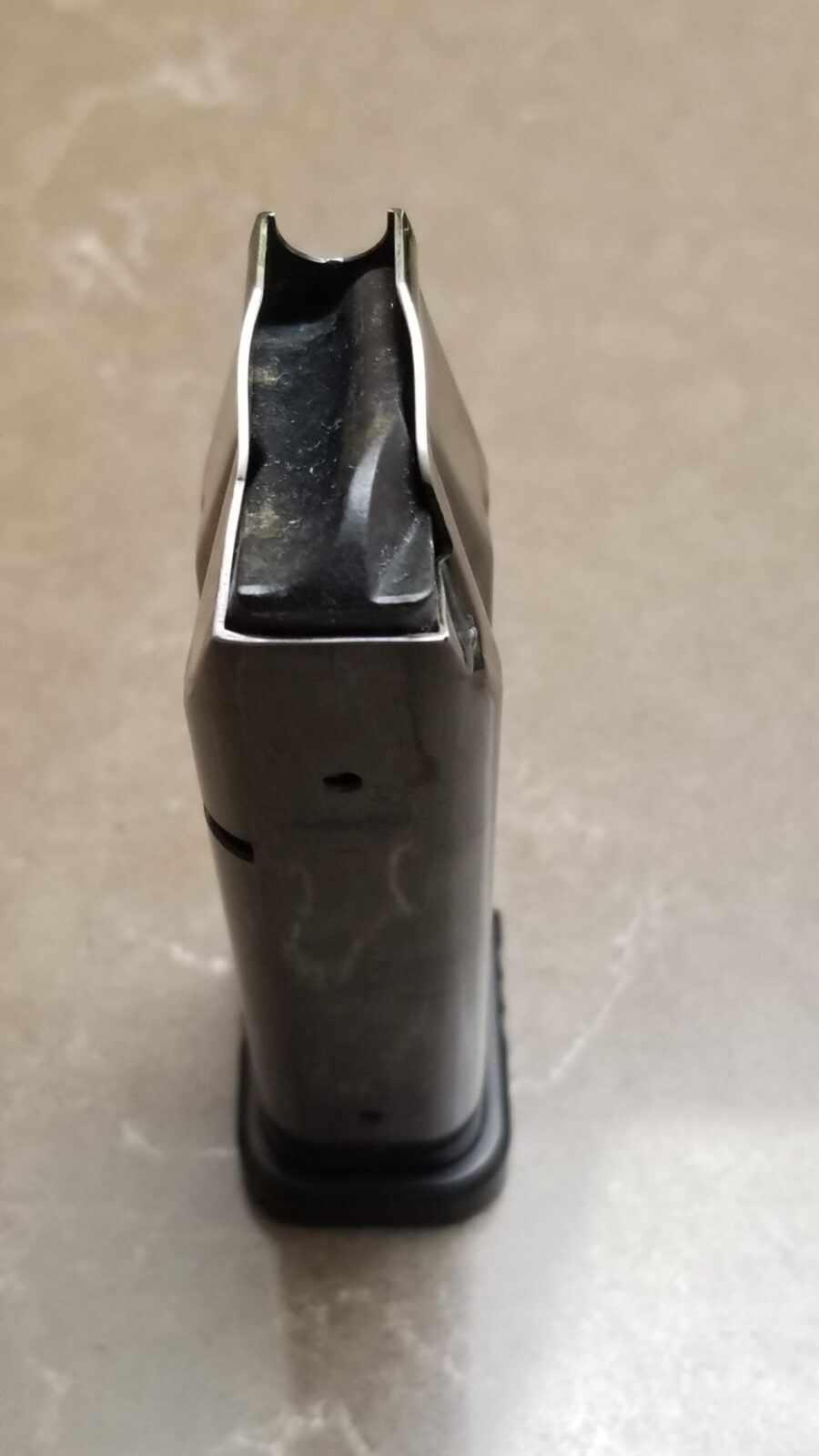
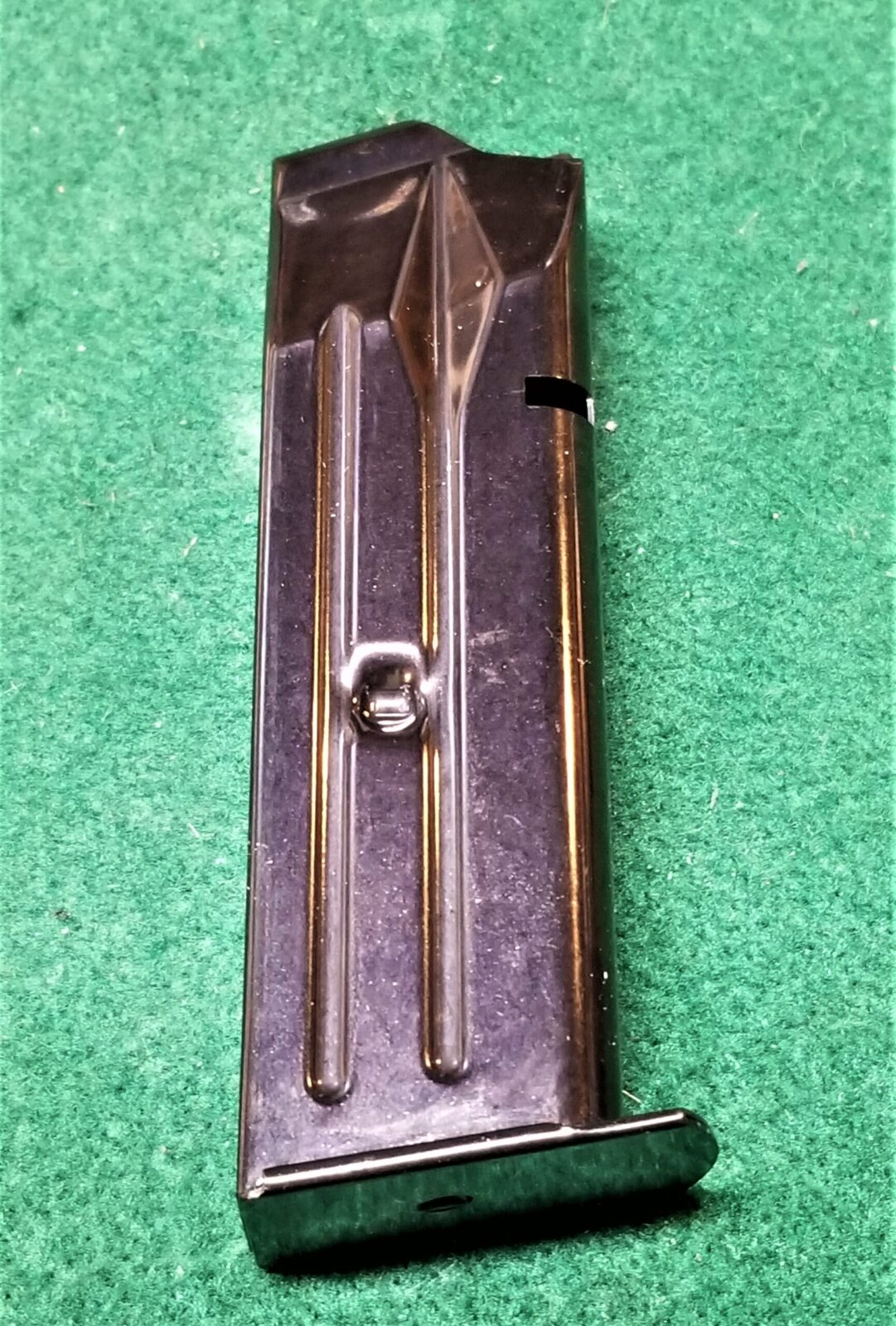
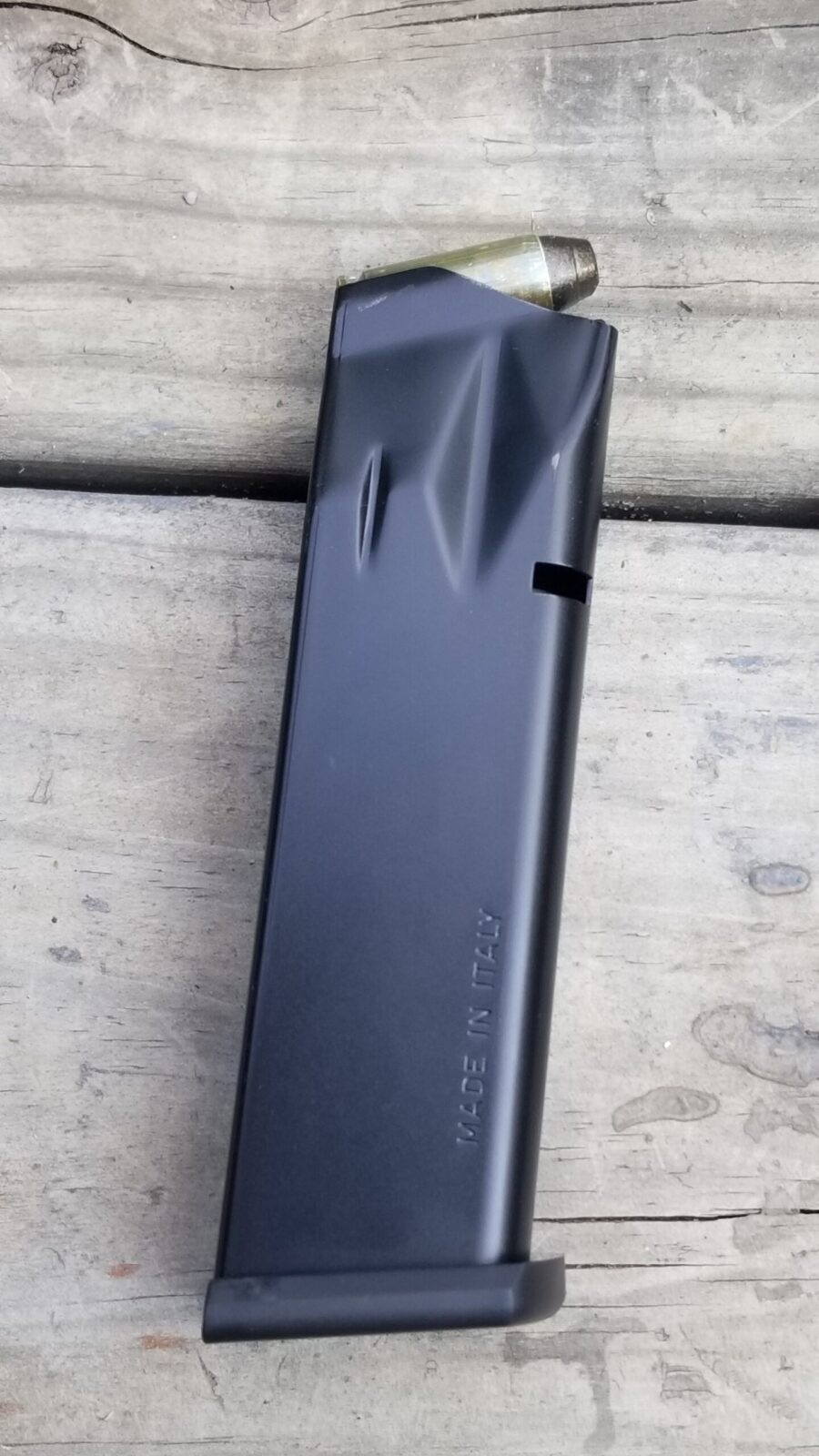
This is one of the new mags. You can see a dummy 10mm round poking out from during testing.

These are converted Mec-Gar Para P14-45 magazines that have the feedlips adjusted and fine tuned to properly retain and feed 10mm rounds.  Note, a normal P14 mag can’t securely retain a 10mm round.  These tuned mags will only work with 10mm and .40 S&W.  They will not work on any other calibers or in a pistol that requires P14 mags.

John's WASR rifle with Romy Brown STK grip and EOTech sight
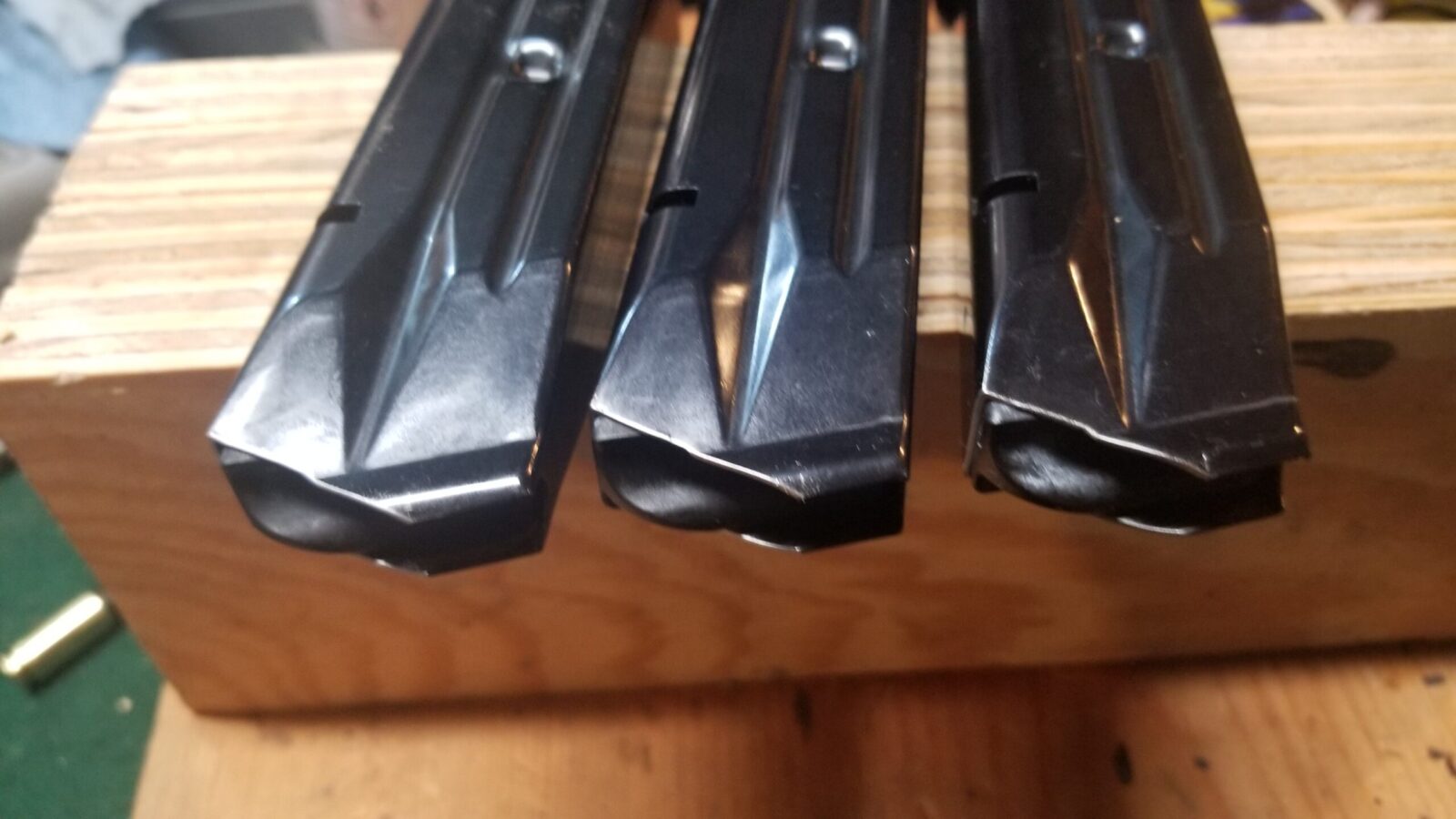
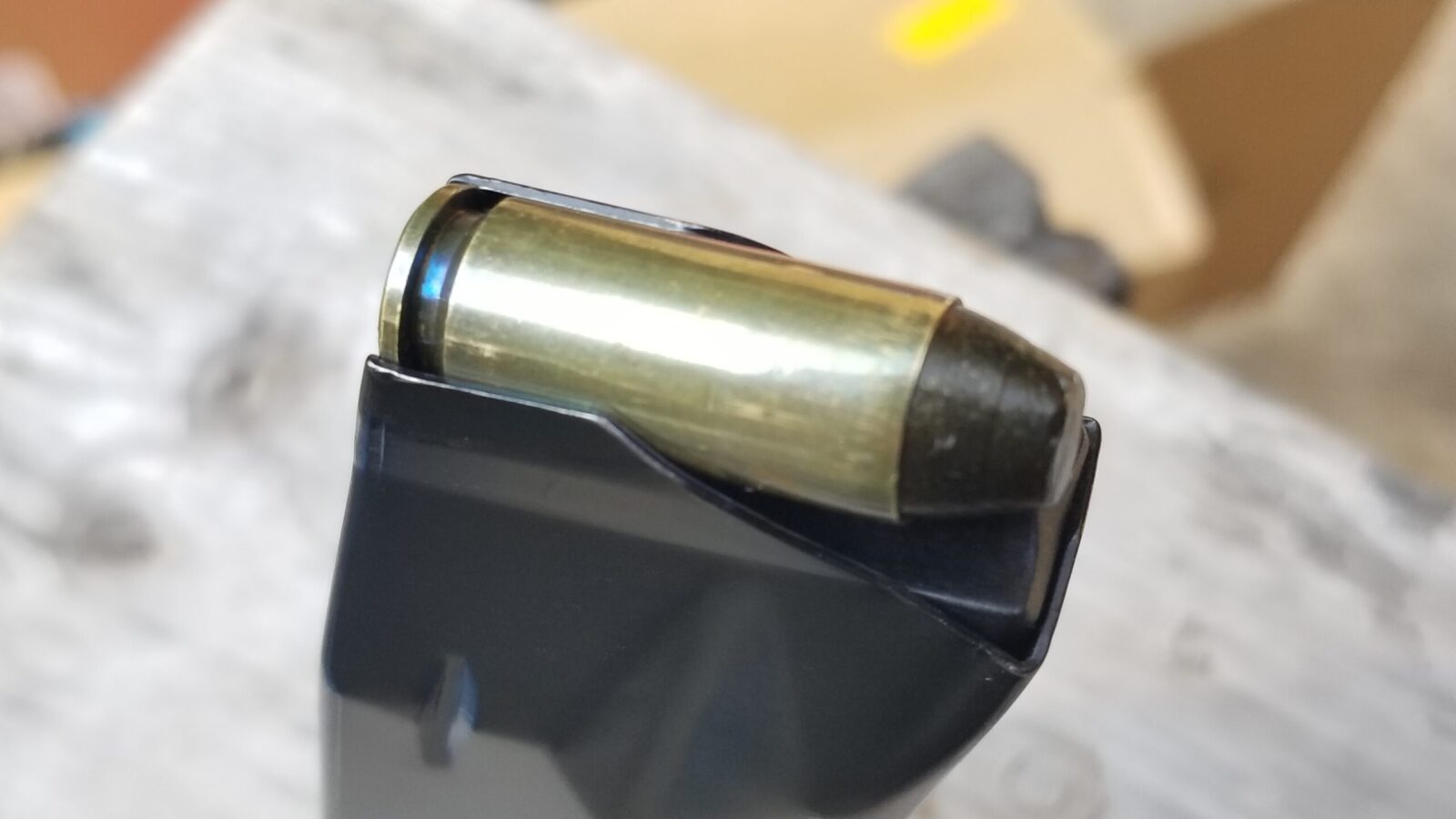
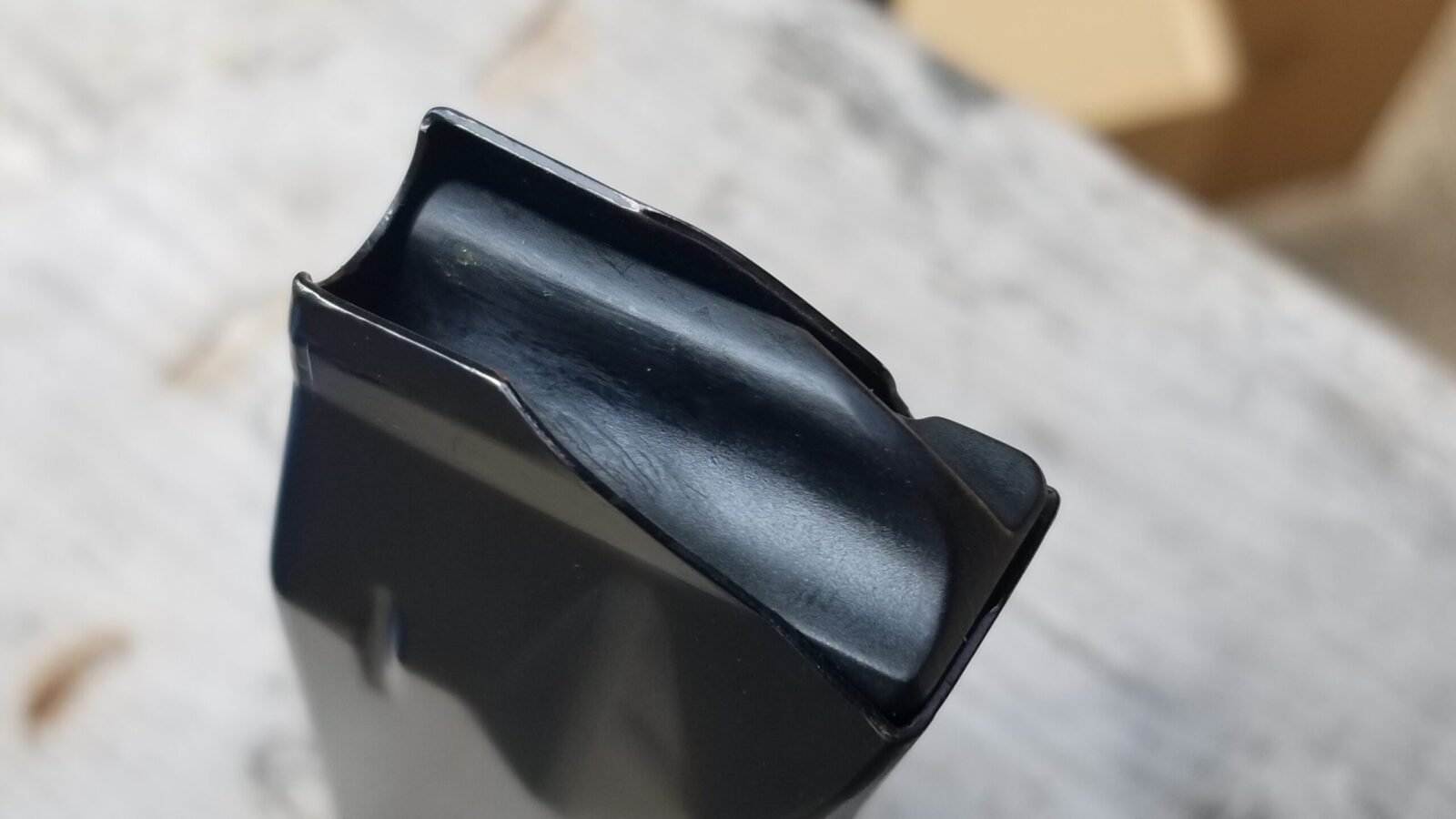
To properly retain a 10mm round, the feed lips must be properly spaced plus this must be done correctly or the feed angle will be wrong.

The adjustment process and tooling took some work because Mec-Gar uses surprisingly resilient hardened steel magazine bodies and feed lips.  I had to develop a means to convert the magazines using a forming jig I developed.

Streamlight Stylus Pro performance curve: lumens vs. hours
Here’s a closer look at the mag lips. The finish wear is from the adjustment process.

Compatibility

These custom mags should work with RIA pistols that use the OEMP164015B magazine including the following pistols:

  • 51994 TAC Ultra MS 10mm
  • 51914 TAC Ultra FS 10mm
  • 56862 TAC Ultra Threaded 10mm
  • 52000 PRO Match Ultra 6″ HC 10mm
  • 52009 Rock Ultra FS HC 10mm
  • 51738 Pro Match Ultra H – 40S&W – note, I tune for 10mm as I don’t have a .40 so some minor adjustments might be needed.

Observations

Based on my past experience and some research, there are some really cool benefits from the new Mec-Gar P14 design:

  • Hardened steel bodies and feed lips will hold up very well with extreme use
  • Mec-Gar developed an anti-friction coating that aids in feeding
  • The magazine spring is made from type “D” music wire and holds up nicely
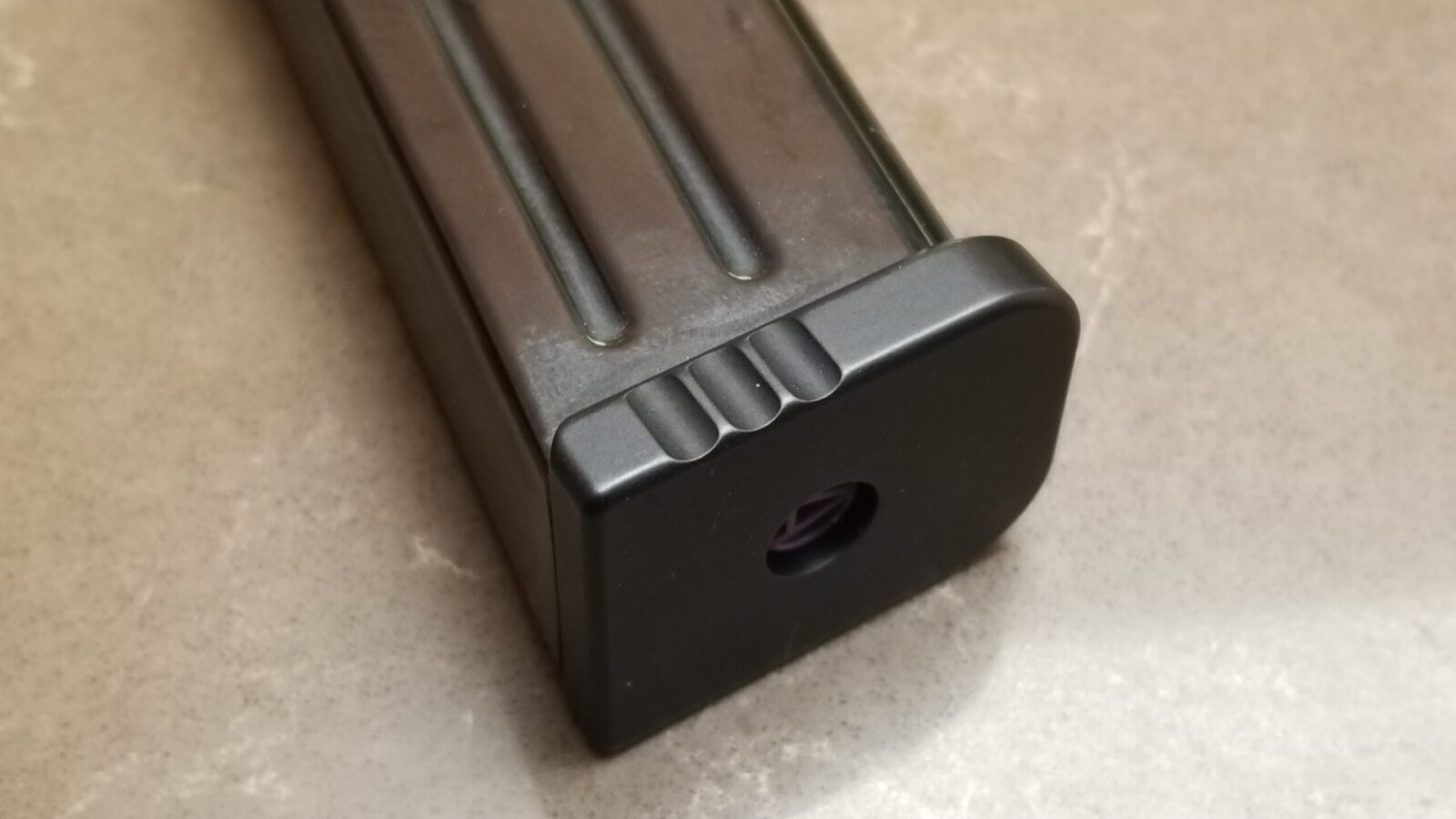
  • They developed a polymer base plate that fits very nicely in the large RIA mag well funnels
  • The slightly taller magazine body clears the RIA mag-well funnel very easily.  It’s longer than our previous generations of magazines and is even slightly longer than the original RIA/Act-Mag magazine
  • The magazine’s capacity is 16 rounds of 10mm. I was able to get 17 rounds in during testing but I feel that last round is just too tight. Thus, I am listing it as 16 rounds.

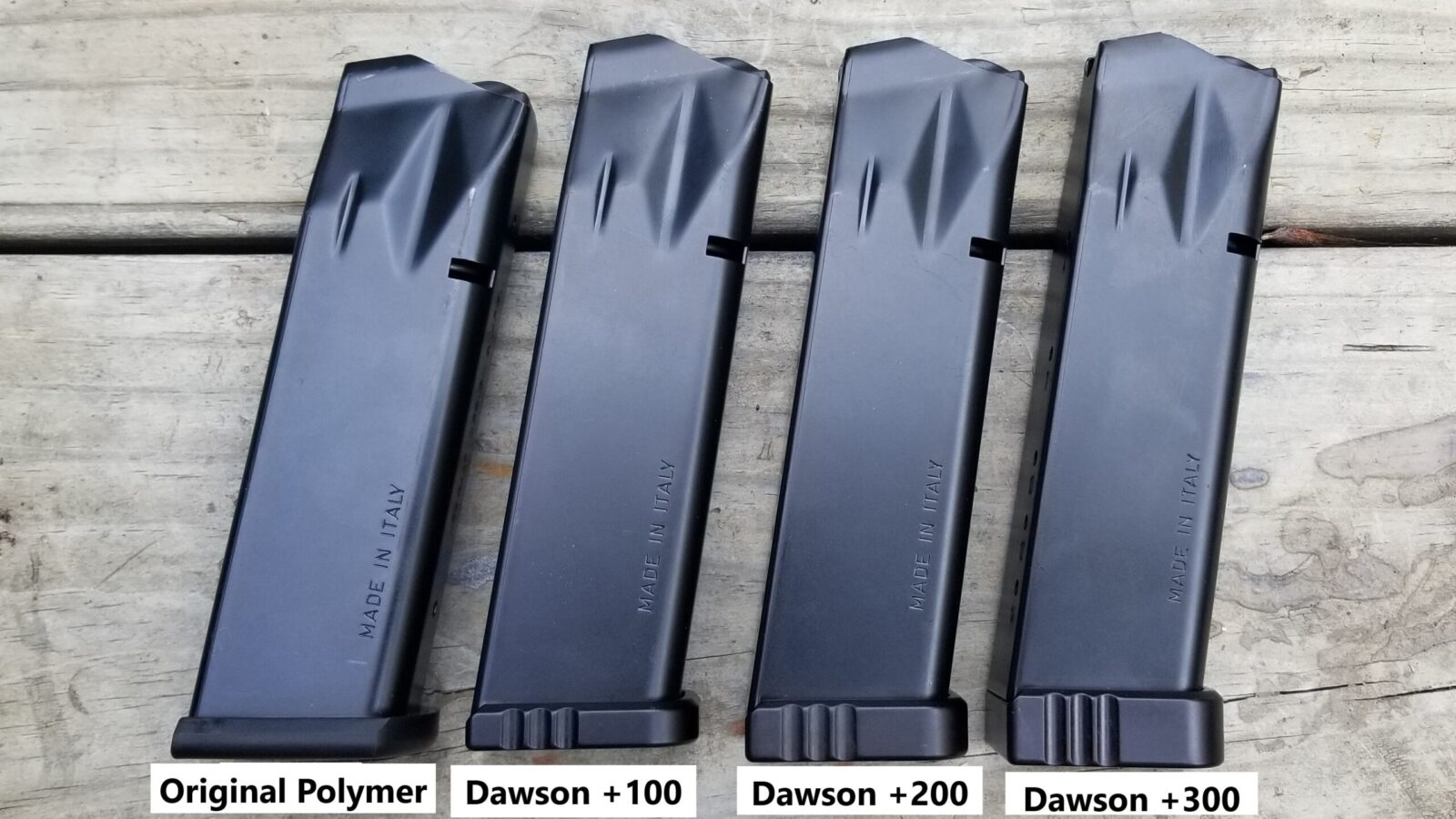
The polymer base plates work very nicely with the RIA pistols. You don’t need to change them unless you prefer longer plates. We do sell Dawson base plates if you wish to have one that extends further than the included Mec-Gar plate – The Dawson +100 plate is about the same height so if you do want the mags to be taller, you’d need either a +200 or +300 to see a difference. Please click here if you are interested in the Dawson plates.

Streamlight Microstream performance curve showing lumens over hours
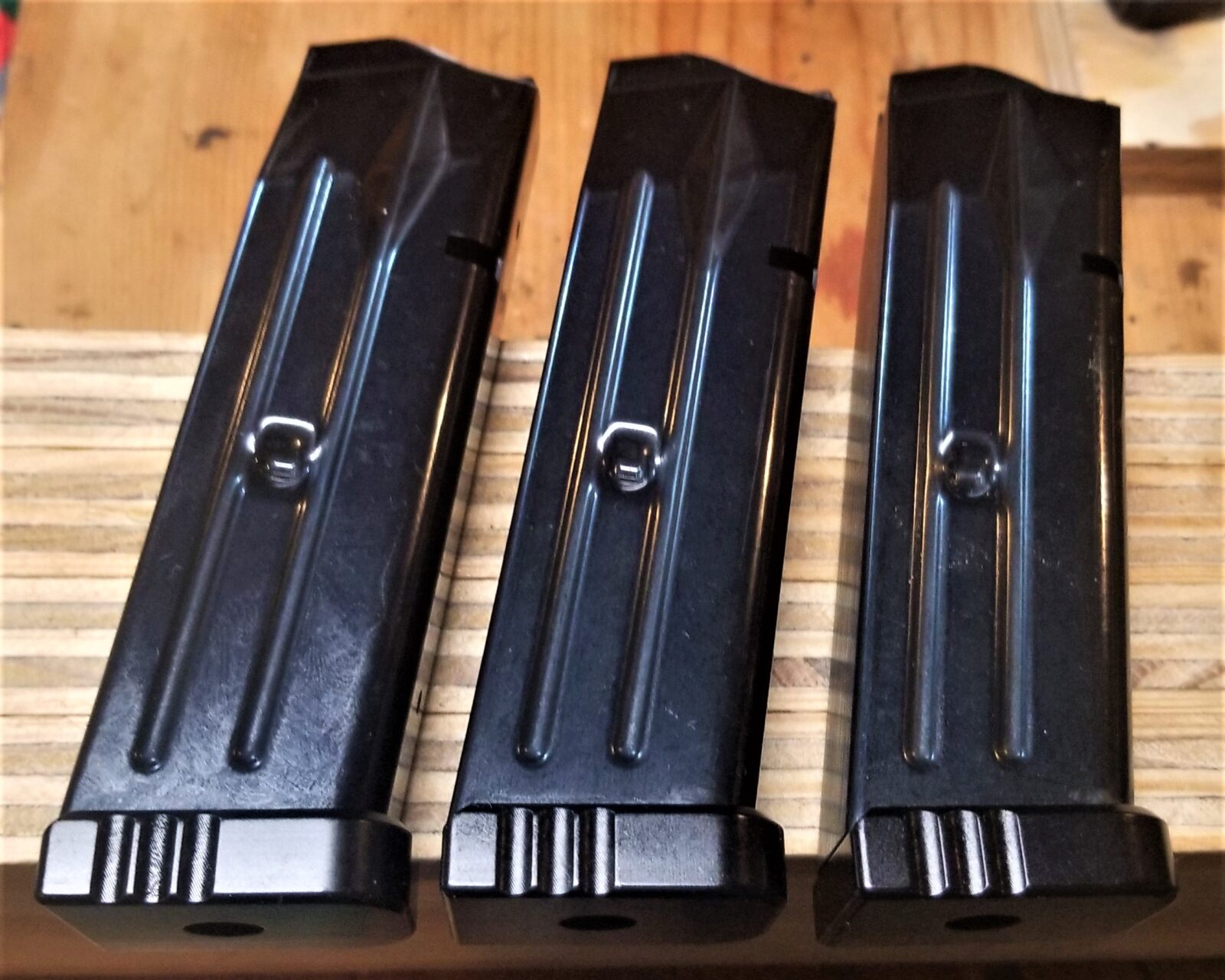
These are all P14 mag bodies but with the different base plates installed so you can see the difference in thicknesses. The plates just change how tall the magazine is – they do not add capacity.
Streamlight Microstream performance curve showing lumens over hours
The OEM Mec-Gar base plate fits the RIA mag well funnel just fine. I set aside four mags for myself and am using the original base plate for them.

The Mec-Gar spring seems pretty robust.  If you want an even stiffer spring, we do sell Wolff magazine springs that are 10% stronger than the originals.  Please click here if you are interested.

Streamlight Microstream performance curve showing lumens over hours
The top mag is the Wolff +10% model. The middle is an OEM Mec-Gar without the floor plate and follower and the bottom is one with the floor plate and follower. Note, the Wolff Spring does require bending at the top to properly hold the follower.

After the mag lips are tuned, each magazine is tested in both my 10mm RIA 52009 Rock Ultra FS HC and 10mm 56862 Tac Ultra pistols to ensure proper fit and feeding.  You may find some final tuning is needed on your particular pistol and it is easy to do – please click here for more information.

Streamlight Microstream performance curve showing lumens over hours
This is my 56862. You can see one of the new mags peaking out of the bottom of the big flared mag well.
Streamlight Microstream performance curve showing lumens over hours
Here, one of the new magazines is in my 52009 that is locked open.

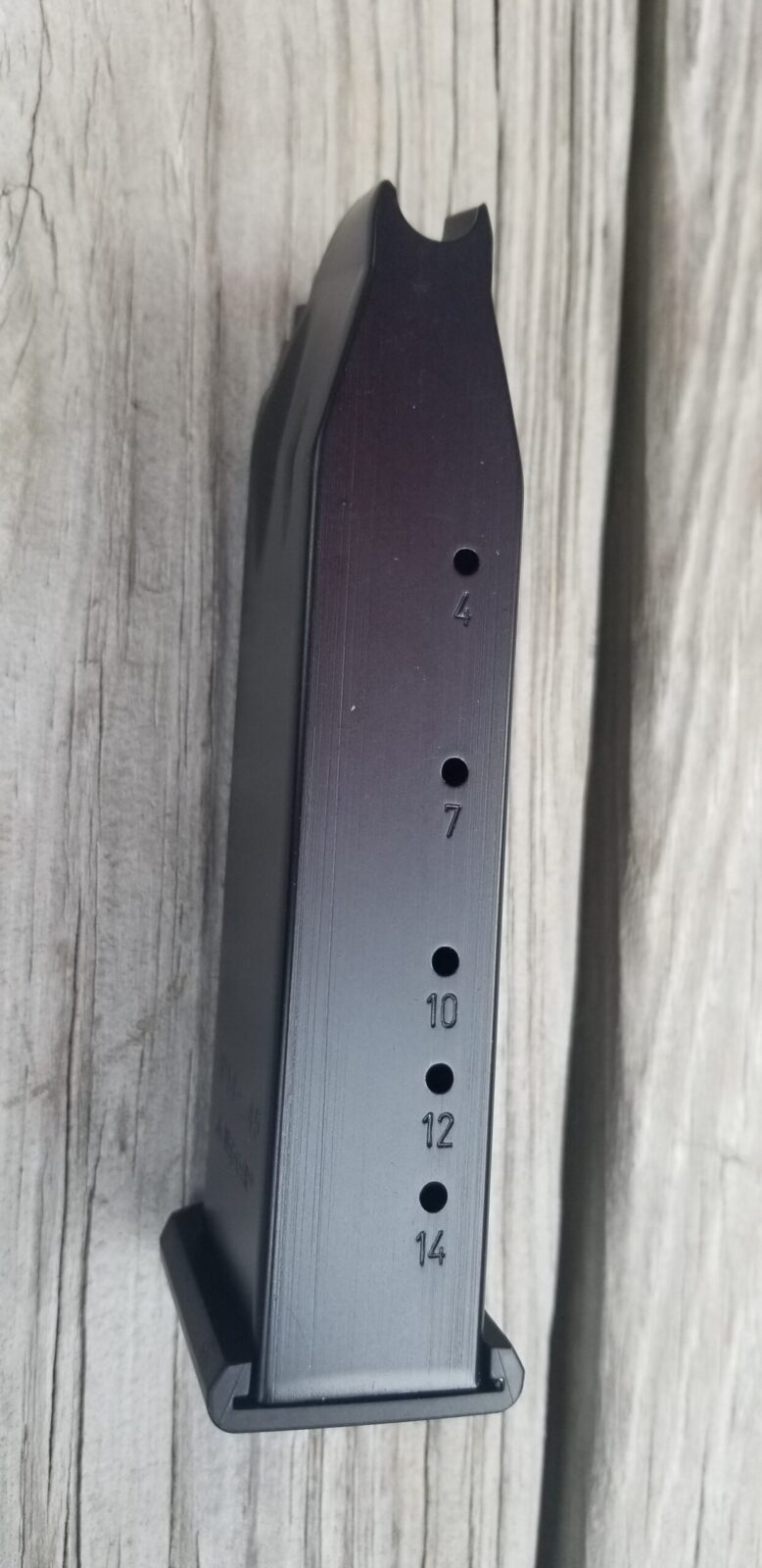
One small detail, since these were originally for .45 rounds, the mag round indicator counts doesn’t match since you will be loading either 10mm or .40 – usually you have one or two more rounds of 10mm/.40 compared to what the round count hole label says.

Streamlight Microstream performance curve showing lumens over hours
These holes were calibrated to .45 ACP rounds so the slightly thinner 10mm / .40 rounds don’t quite match up. You can fit 16 rounds of 10mm in here – not just 14.
Streamlight Microstream performance curve showing lumens over hours
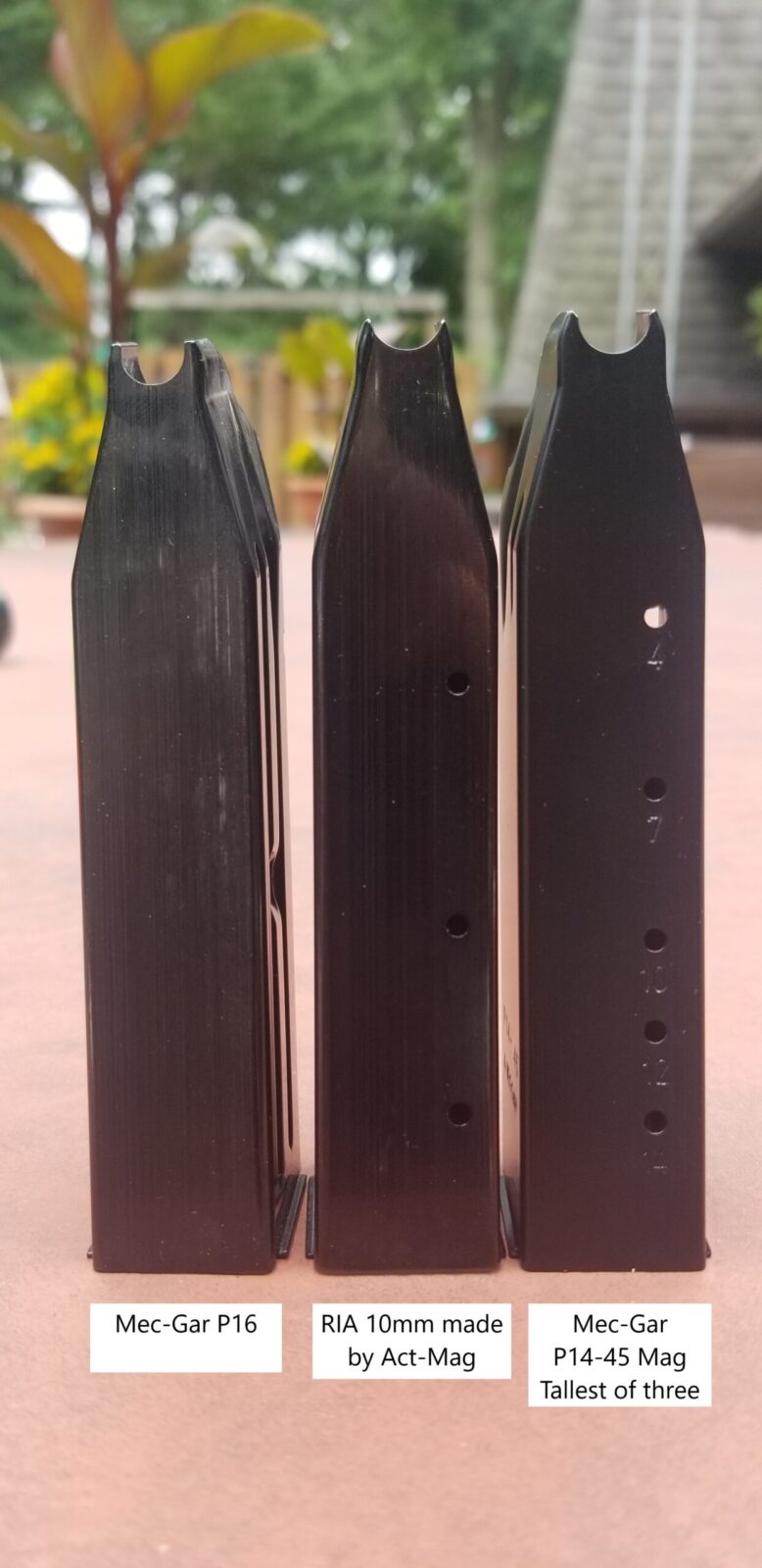
Ok, this is pretty interesting. The magazine that Rock Island ships with the high cap pistols is made by Act-Mag and is in the middle. Notice that the original Mec-Gar P16 is a bit shorter and the P14 is just a tad taller. For anyone who found our earlier mags to be a tight fit, I’d bet the new ones will fit a lot better.

Conclusion

I feel like we’ve come a long way since the first P16 conversions. This mag is solid and comes in at a far more affordable price point than the P16s that needed the Dawson base plates also.

We make 10, 15 and 16 round magazines for Rock Island A2 HC 10mm & .40 S&W.
Please click here for the product listings.


Please share the link on Facebook, Forums, with colleagues, etc. Your support is much appreciated and if you have any feedback, please email us in**@*********ps.com. If you’d like to request a report or order a reprint, please click here for the corresponding page to open in new tab.


We Now Have Windowed 15 Round .40/10mm Magazines for Rock Island Armory High Cap FS A2 Pistols

I’ve written in the past how I have a new RIA 52009 High Cap 10mm and it’s virtually impossible to find the original OEMP164015B mags right now. Seizing on this business opportunity, I started converting Mec-Gar MGP164015B for use in the RIA double stack/staggered .40 & 10mm pistols (they share the same magazine). Things were going great until all sources of the Mec-Gar MGP164015B dried up too (thank you panic buying). So what to do?

8/25/2023 – We do not carry the Windowed mags at this time but we do have three different capacity magazines for the RIA 10mm/.40 S&W – 10, 15 and 16 round – click here to open that page of the store in a new tab.

I started digging and found out that the Mec-Gar MGP164010B is the exact same magazine except Mec-Gar used a hydraulic press to form dimples in the tube to stop the follower at 10 rounds for folks with Para 16 pistols in areas that had a 10-round limit.

I brought in a bunch of the 10 round mags and converted them for use in the RIA pistols. Then, the supply of the MGP164015B mags dried up and I decided to figure out how to convert the MGP164010B magazines for use in 16 round RIA .40 and 10mm pistols.

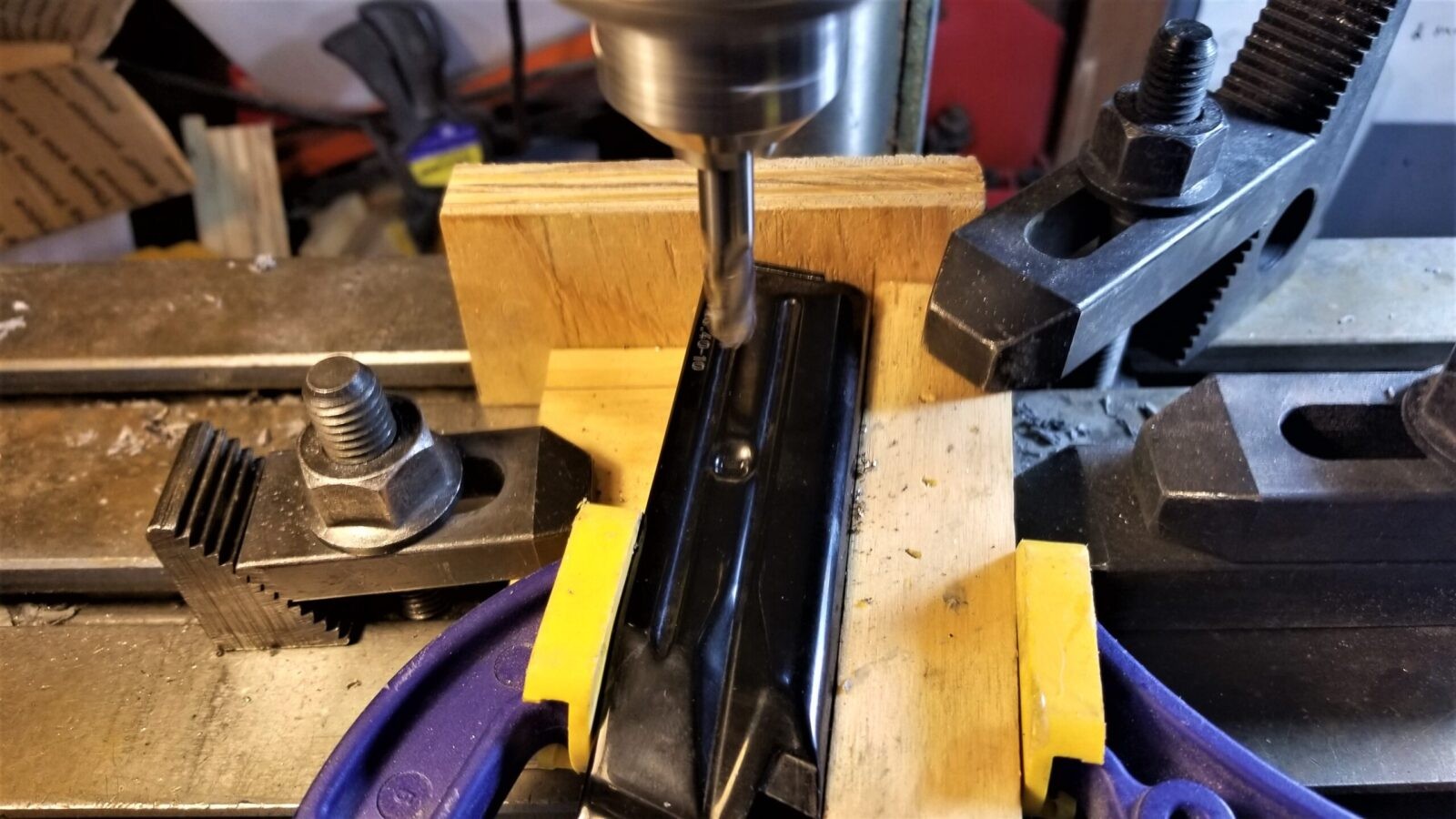
To make a long story short, you drill out the dimples, remove the burrs from the inside of the tube and then sand it down. That’s why the mags have 3/8″ windows drilled in them. The fact the magazine bodies were tempered steel definitely made life interesting when it came to the drilling and deburring operations.

Drilling a window into a 15-round .40/10mm magazine for Rock Island Armory pistols.
Here’s a Mec-Gar 20 round magazine that is about to get the dimple drilled out. I made the jig to securely hold the magazines during the drilling operations.
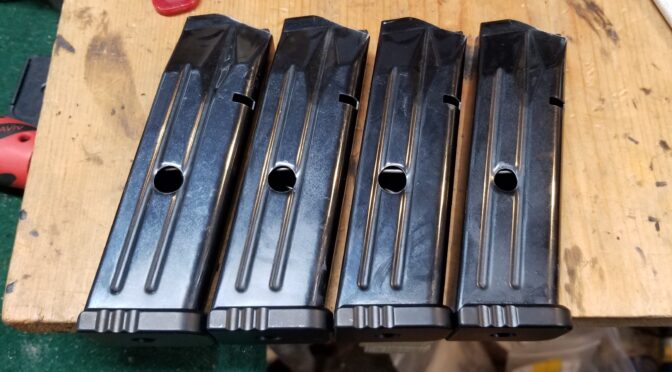
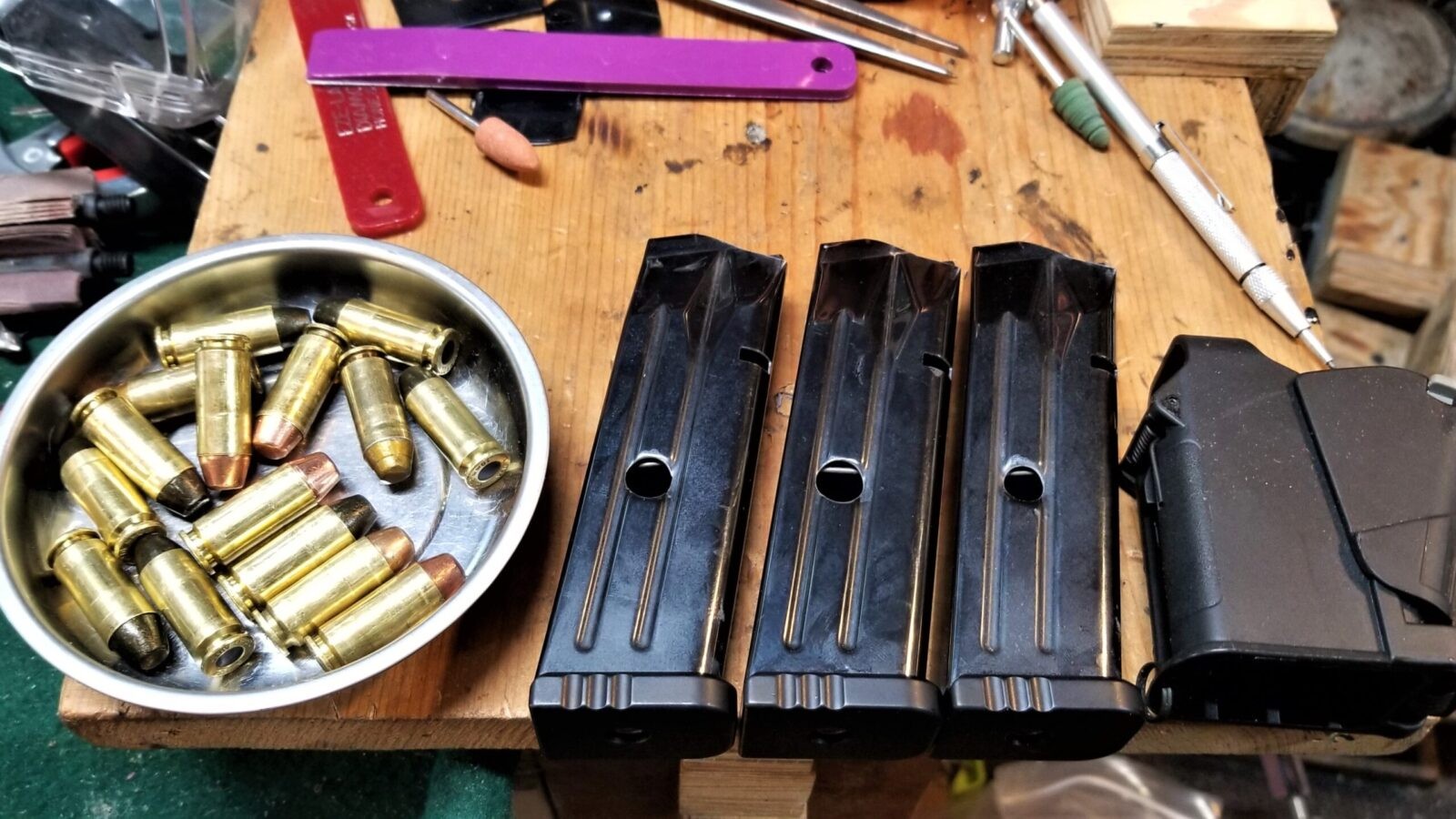
Windowed 15-round .40/.10mm magazines and ammo for Rock Island Armory pistols
Folks, I have gone through a ton of dummy rounds prototyping and now testing the magazines. I also use a MagLula to help me load every magazine and with 15 rounds. I am testing that the load and feed smoothly. If they do not then that would tell me something needs more work in the tube.

Bottom line, I was able to make more of the RIA high cap (HC) 15 round magazines. They all have a Teflon dry lube internally and Dawson Precision +100 black base plates. These are really nice and extend just a hair below the funnel allowing you to positively seat the magazine in the weapon.

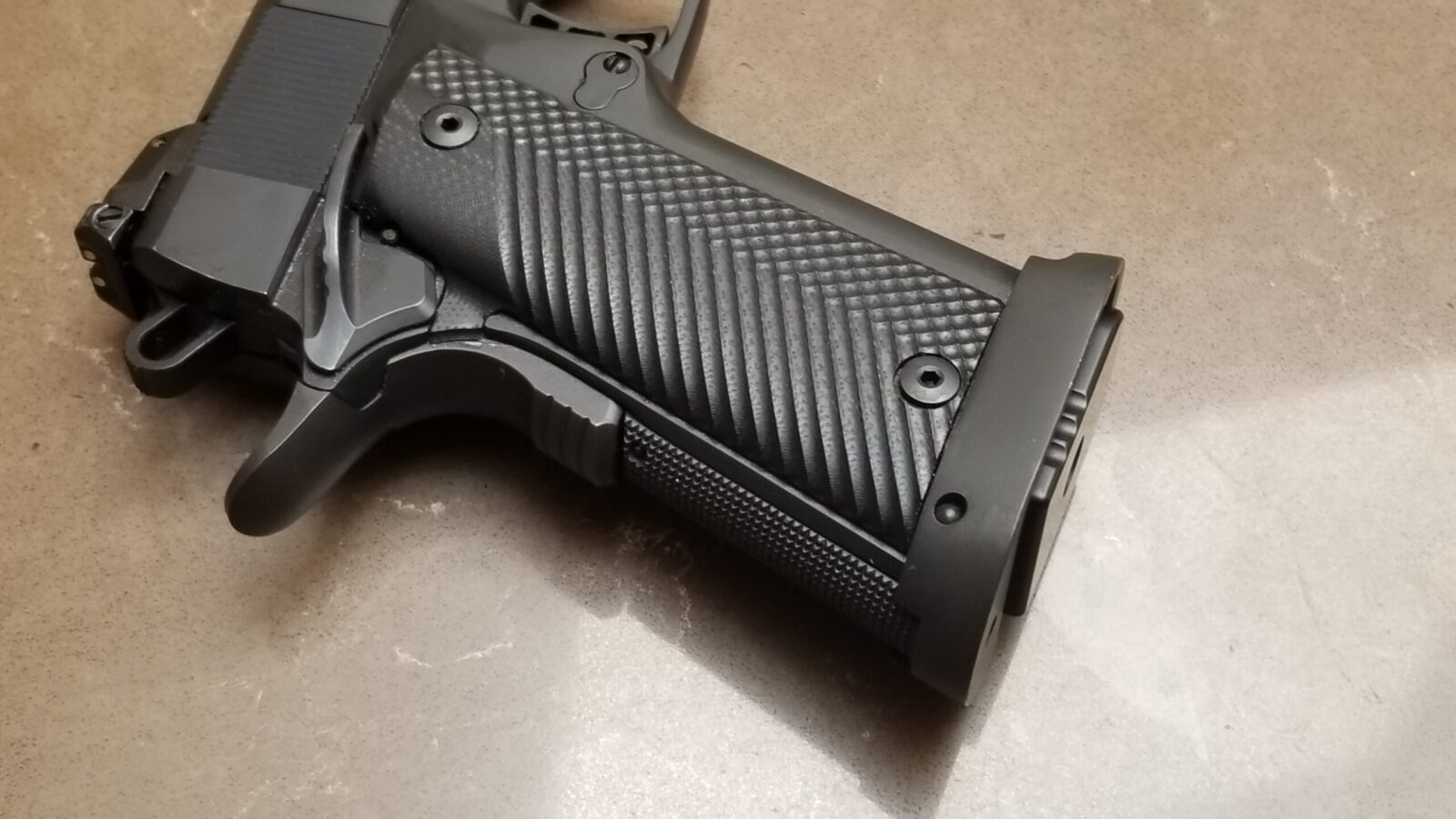
Close-up of a black Rock Island Armory pistol grip with textured panels.
The Dawson +100 base plate fits very nicely. They make other lengths that you can buy directly from them if you are interested.
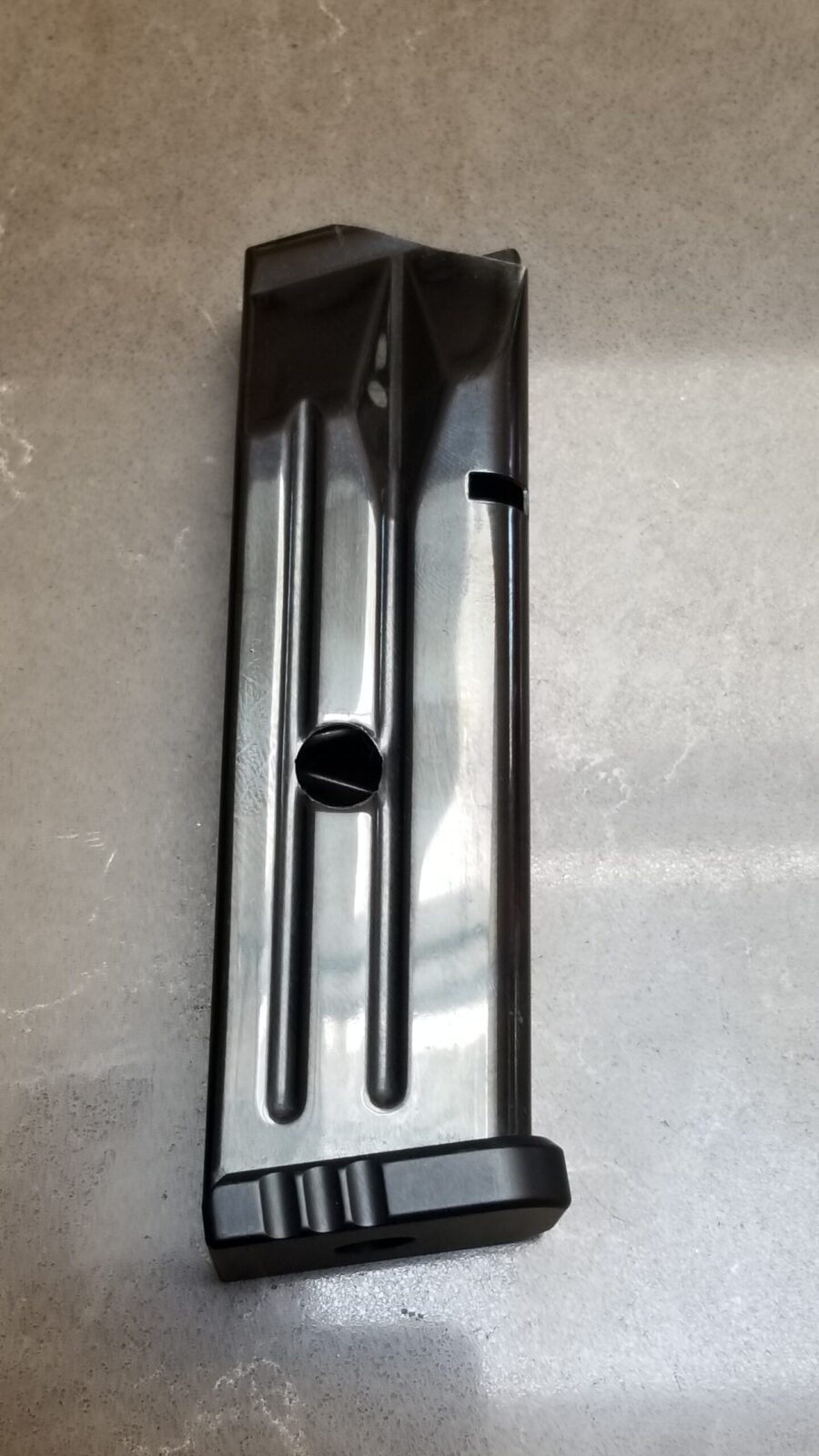
Windowed 15-round .40/10mm magazine for Rock Island Armory High Cap FS A2 pistols
Here’s one side.|
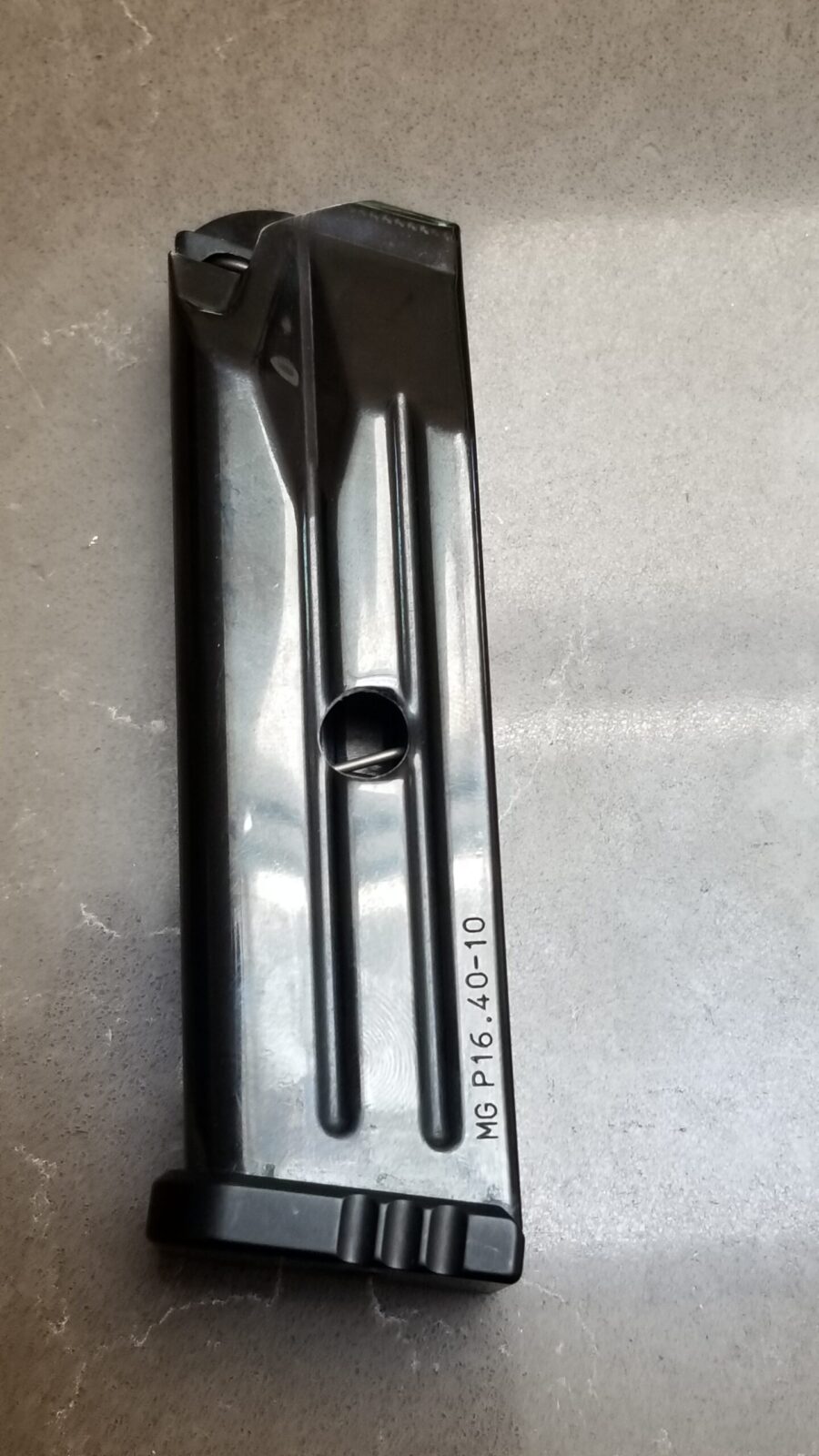
Windowed 15-round .40/.10mm Rock Island Armory magazine, marked "MG P.16 .40-10
Here’s the other side.
Windowed 15-round .40/10mm magazine for Rock Island Armory High Cap FS A2 pistols.
Here’s a close up of the top nose.
Windowed 15-round magazine for Rock Island Armory High Cap FS A2 pistols
Here’s a close up of the Dawson +100 base plate. Note, these are Para magazine style base plates.

In Conclusion

Now you know why we have windowed magazines for sale (I had to drill out the dimples). If you are interested, click here to go to our online store and you can see what magazines we have in stock right now.

8/25/2023 – We do not carry the Windowed mags at this time but we do have three different capacity magazines for the RIA 10mm/.40 S&W – 10, 15 and 16 round – click here to open that page of the store in a new tab.


Note, I have to buy all of my parts – nothing here was paid for by sponsors, etc. I do make a small amount if you click on an ad and buy something but that is it. You’re getting my real opinion on stuff.


Please share the link on Facebook, Forums, with colleagues, etc. Your support is much appreciated and if you have any feedback, please email us in**@*********ps.com. If you’d like to request a report or order a reprint, please click here for the corresponding page to open in new tab.


Range Report For The Desert Eagle 1911, RIA Rock Ultra FS HC, and Springfield Armory 6″ TRP Operator 10mm Pistols

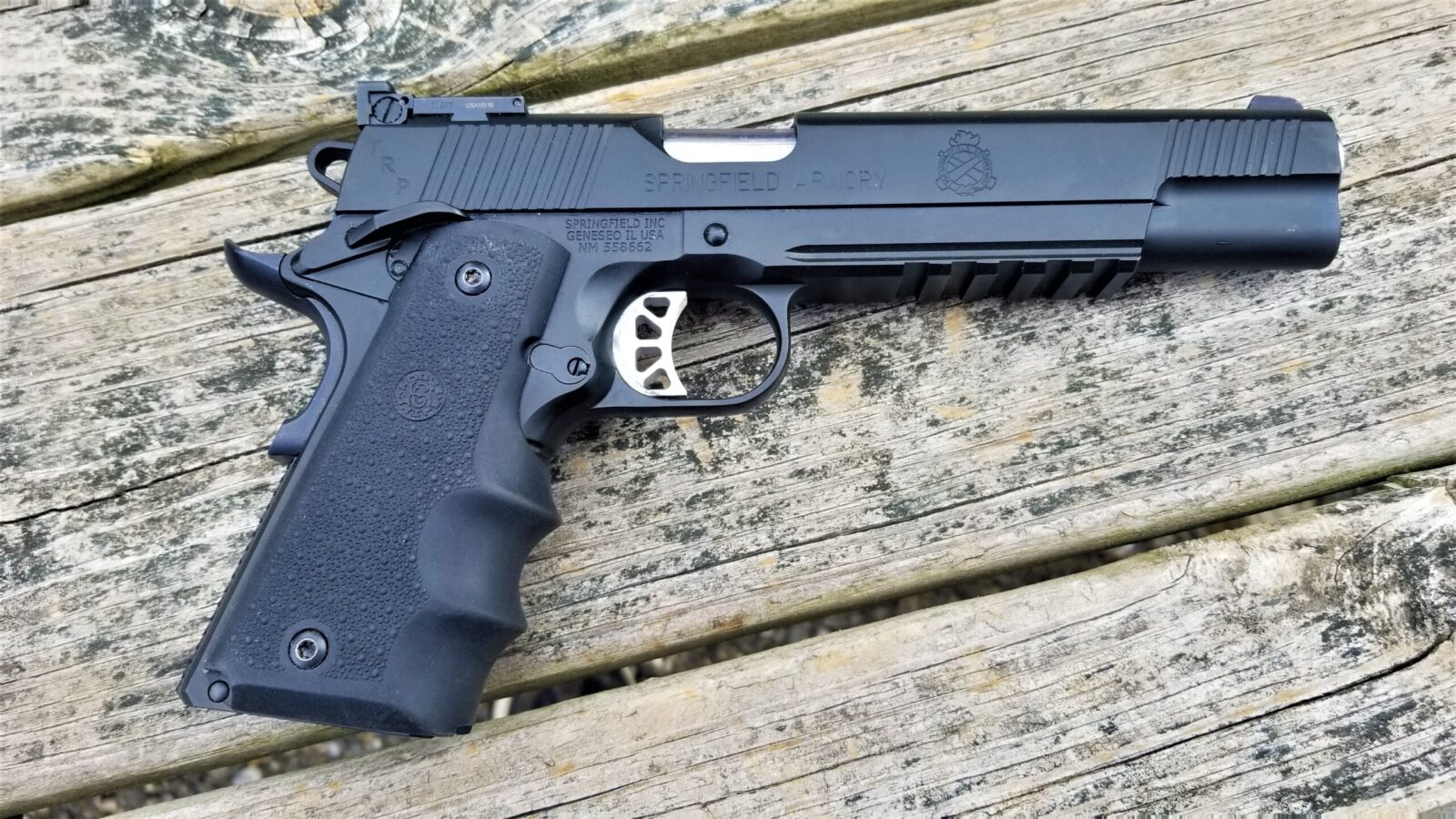
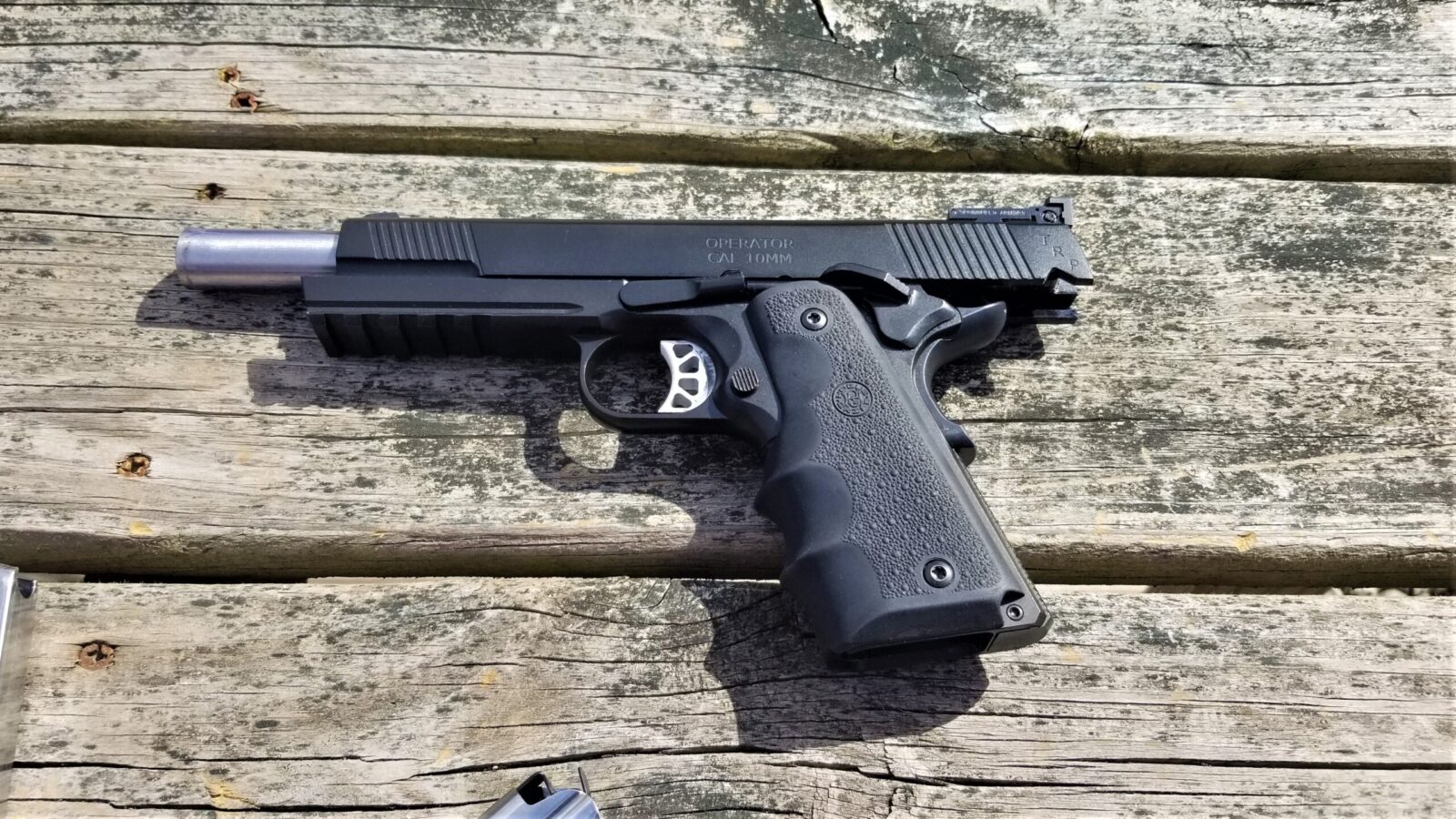
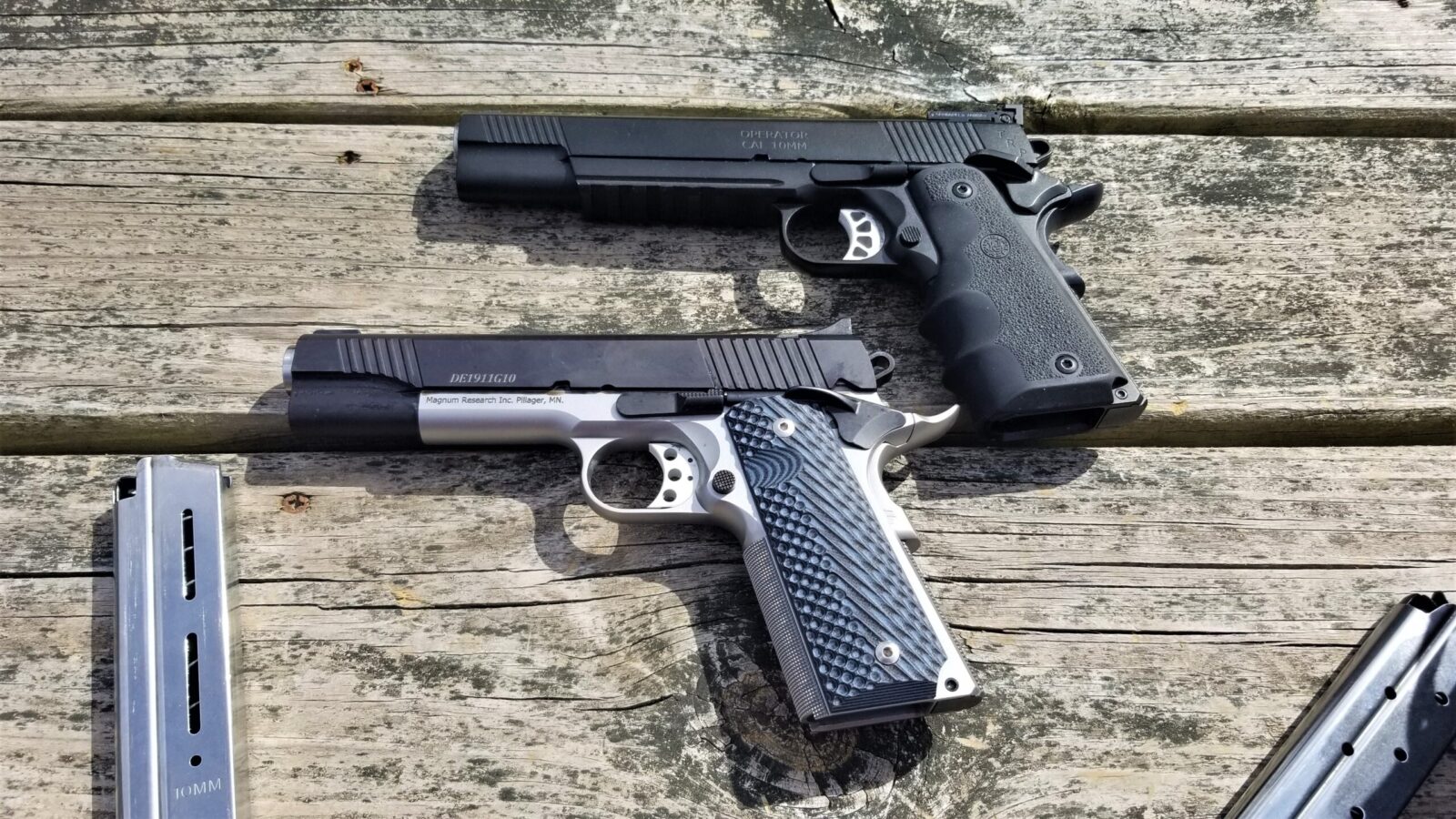
Well folks, at one point I had three 1911-style 10mm pistols. A Magnum Research Desert Eagle (model DE1911G10), a Rock Island Armory (RIA) Rock Ultra FS HC (model 52009) and a Springfield Armory TRP Operator (model PC9610L18). While I like the 10mm cartridge, I didn’t really need three pistols so I decided to take them to the range to decide what I would keep and what I would sell.

The Ammo

I took with me about 200 rounds of Ammo Inc’s 180gr TMC load that I had purchased from Palmetto State Armory during one of their daily deals. TMC stands for “total metal case” – meaning the lead is fully encapsulated by the copper jacket. With full metal jacket (FMC) ammo, the base often has the lead core exposed. Ammo Inc is interesting in that they decided to go the public company route and we’ll have to wait and see how they fare when the panic buying dies down.

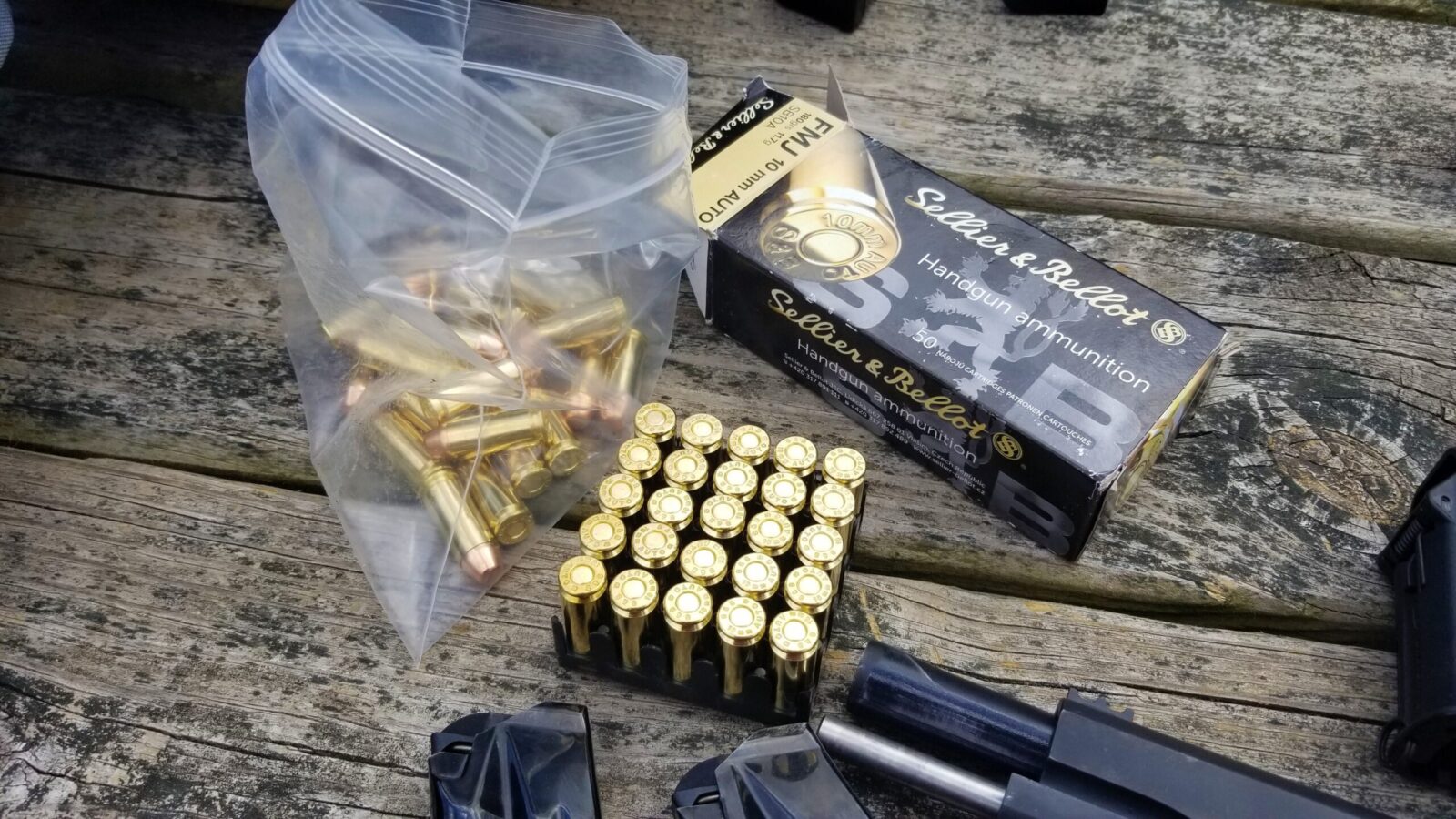
I also took about 200 rounds of Sellier & Bellot (S&B) 180gr FMJ ammo as well. It’s been my “go to ” 100 range ammo for years. If you don’t know S&B, they are an excellent ammunition producer located in the Czech Republic dating back to 1825.

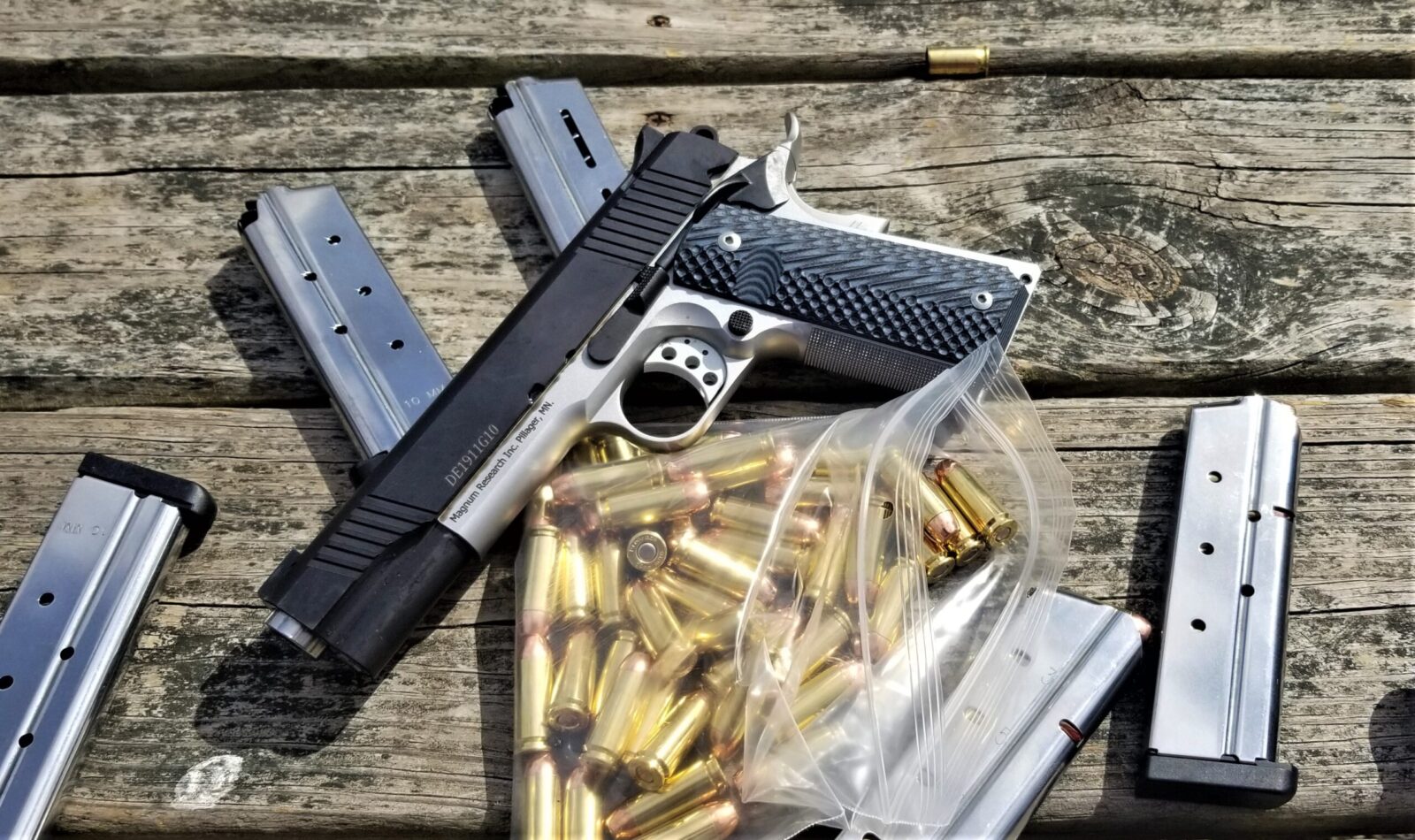
10mm ammunition and handguns for Desert Eagle 1911, RIA Rock Ultra, TRP Operator
That is some of the Ammo Inc 180gr TMC ammo in the bag and S&B 180gr FMJ in the tray.

To round out the test ammo, I took some Underwood 155gr XTP and 200gr XTP jacketed hollow points (JHP). I only had about 50 rounds of this and I wanted to save it for the final round of testing.

For the past six months, finding ammo has been a bear but suppliers are starting to build up inventory. Judging by my inbox, more and more emails are being sent saying “we have ammo in stock” and even a few sales. These tend to come shortly before prices start to drop based on past panic buying ammo shortages [click here for my blog post on the economics of ammo during a panic].

The Range

It was a beautiful March day when I arrived at the Berrien County Sportsman’s Club to use the pistol plate range. The plates are about 30-35′ feet back from the firing line and I had it all to myself.

BCSC is my favorite range hands down and I have been a member there for many years. Definitely a cool place for a variety of sportsman and family activities.

Shooting range with steel targets for 10mm pistols
The 10″ steel plates are located about 30-35 feet from the firing line. I really enjoy these for testing pistols. Note the pull cord to reset the plates.

First, the 6″ TRP Operator

As I have written in the past, the TRP Operator was not reliable out of the box and this was a do or die outing for the pistol in terms of whether I would keep or sell it. The TRP Operator is basically a 6″ 1911 and the marketing would lead you to expect that it would have been stunning out of the box but it wasn’t to be perfectly blunt.

Thankfully, after work both myself and Springfield Armory’s repair groups did, it finally handled the way it should have when I first got it. This time around, functioning was reliable and the recoil was handled nicely by the heavy pistol with it’s 6″ bull barrel.

Springfield Armory 6" TRP Operator 10mm pistol with rail
The TRP put in a good showing this time around. All the kinks had been worked out and it ran great.

I was able to fire round after round at the plates at 30-35 feet and hit them. I really wasn’t shooting for benchrest accuracy – just shooting at plates to decide what to do.

Springfield Armory 10mm TRP Operator pistol on a wooden surface
Honestly, I had a take-it-or-leave it mentality on front serrations on a slide until I got into 10mm 1911s. Their recoil spring is stout. All of a sudden, those front serrations are really handy. My RIA 52009 does not have them and is way harder for me to hold when racking the slide from the front that the TRP or the Bul.
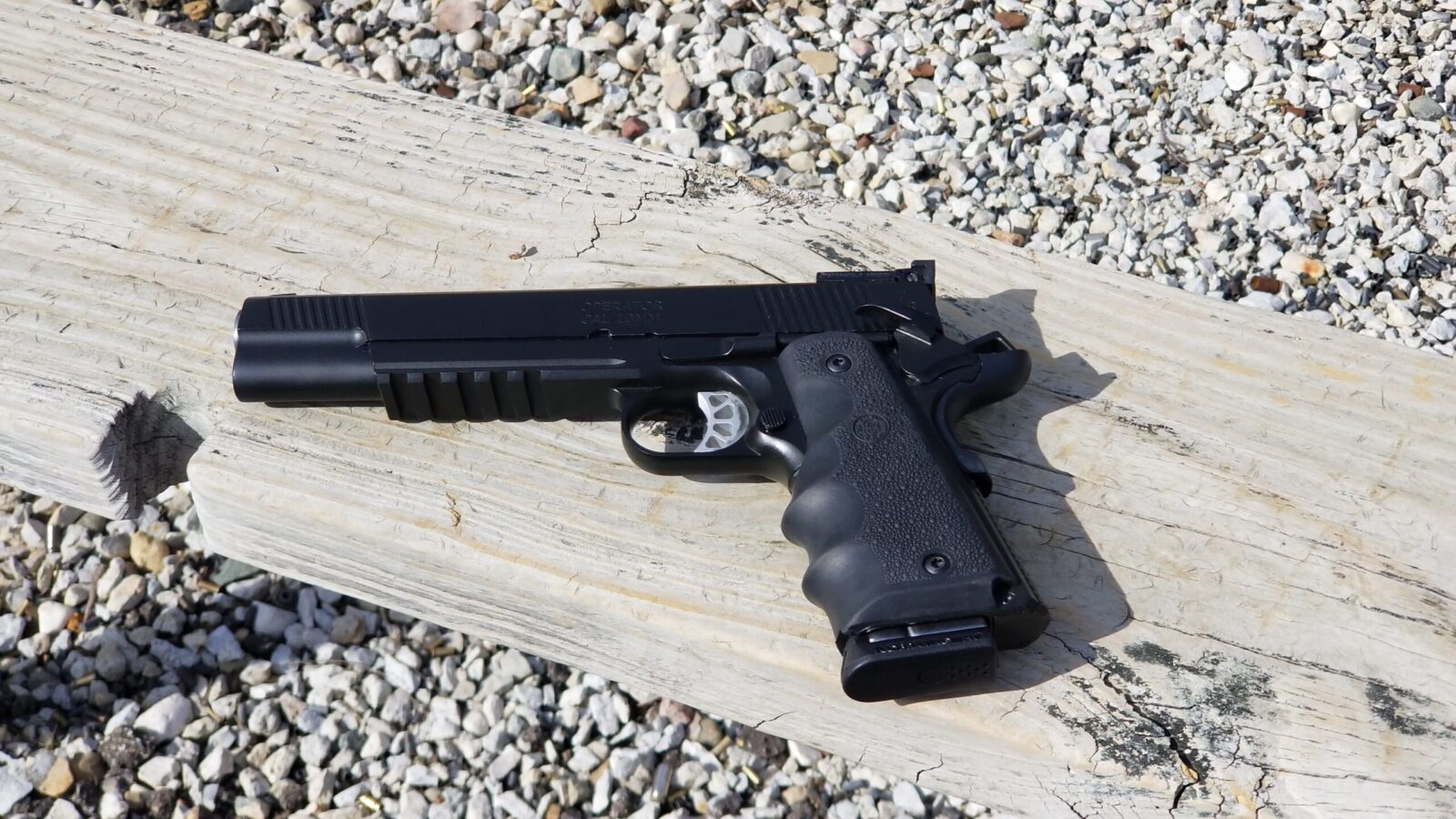
Black handgun on wooden bench with gravel background, part of Desert Eagle 1911 pistol range report
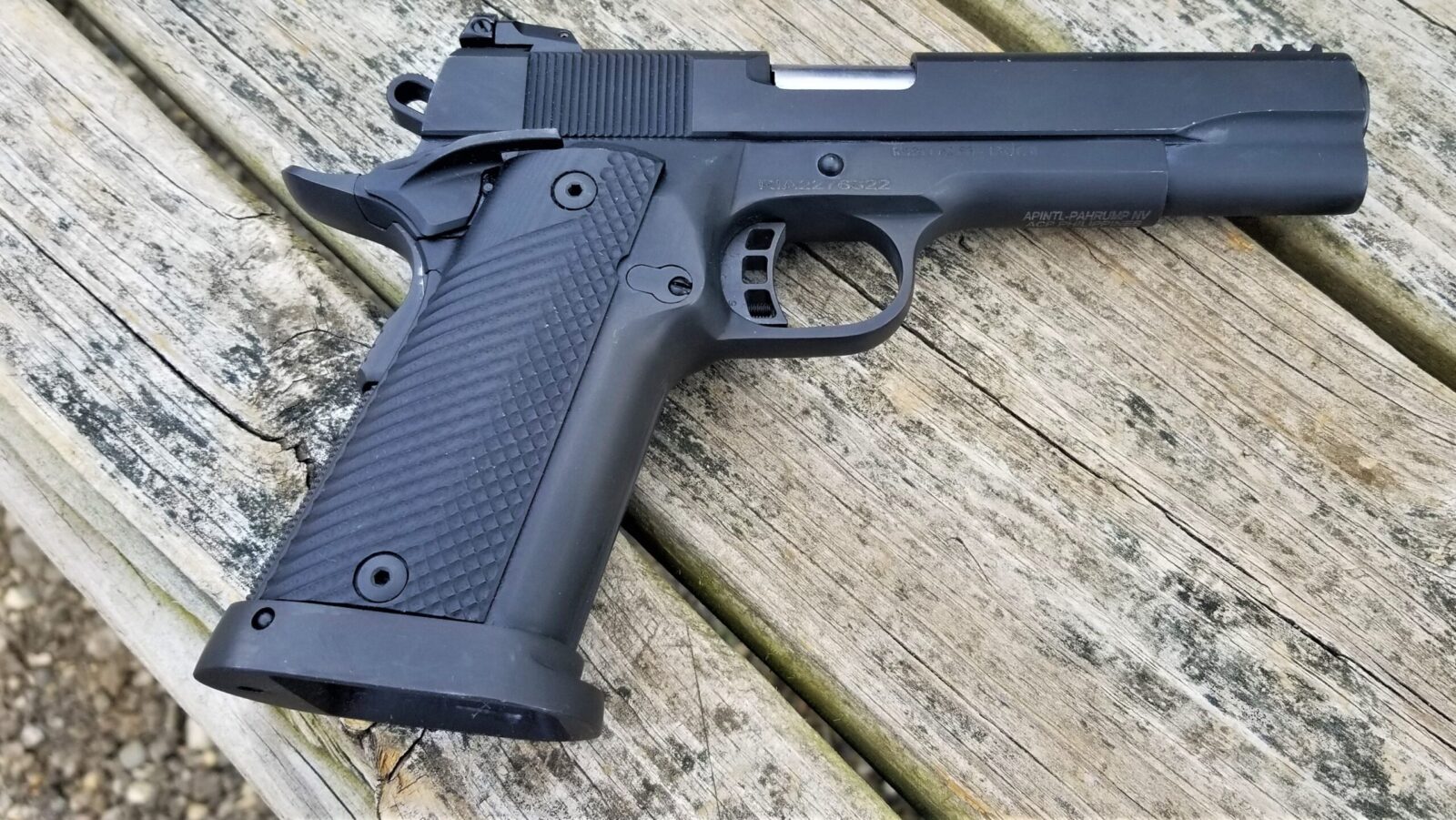
I was running both Wilson Combat ,and Tripp Cobra mags in both the TRP and the Bul. Both brands are excellent. You can see a Cobra 9-round magazine peaking out of the mag well in this photo. Their beveled base plate is an immediate give away.

In summary for the TRP, it ran just fine but it did nothing to wow me.

Next – The Magnum Research Desert Eagle (model DE1911G10) by Bul Armory

Okay, next up on the testing list for the first time was my new Desert Eagle 10mm that is actually made by Bul Armory of Israel. Out of the box it had the best trigger of any 1911 I have owned and the action was very smooth.

Now I have written about this particular pistol going to the range before – it’s just that I am finally sitting down to write this bigger post about all three pistols just under two months after the range trip. Here are a few pictures for you:

Kydex cross draw khukuri sheath and red tool on a workbench
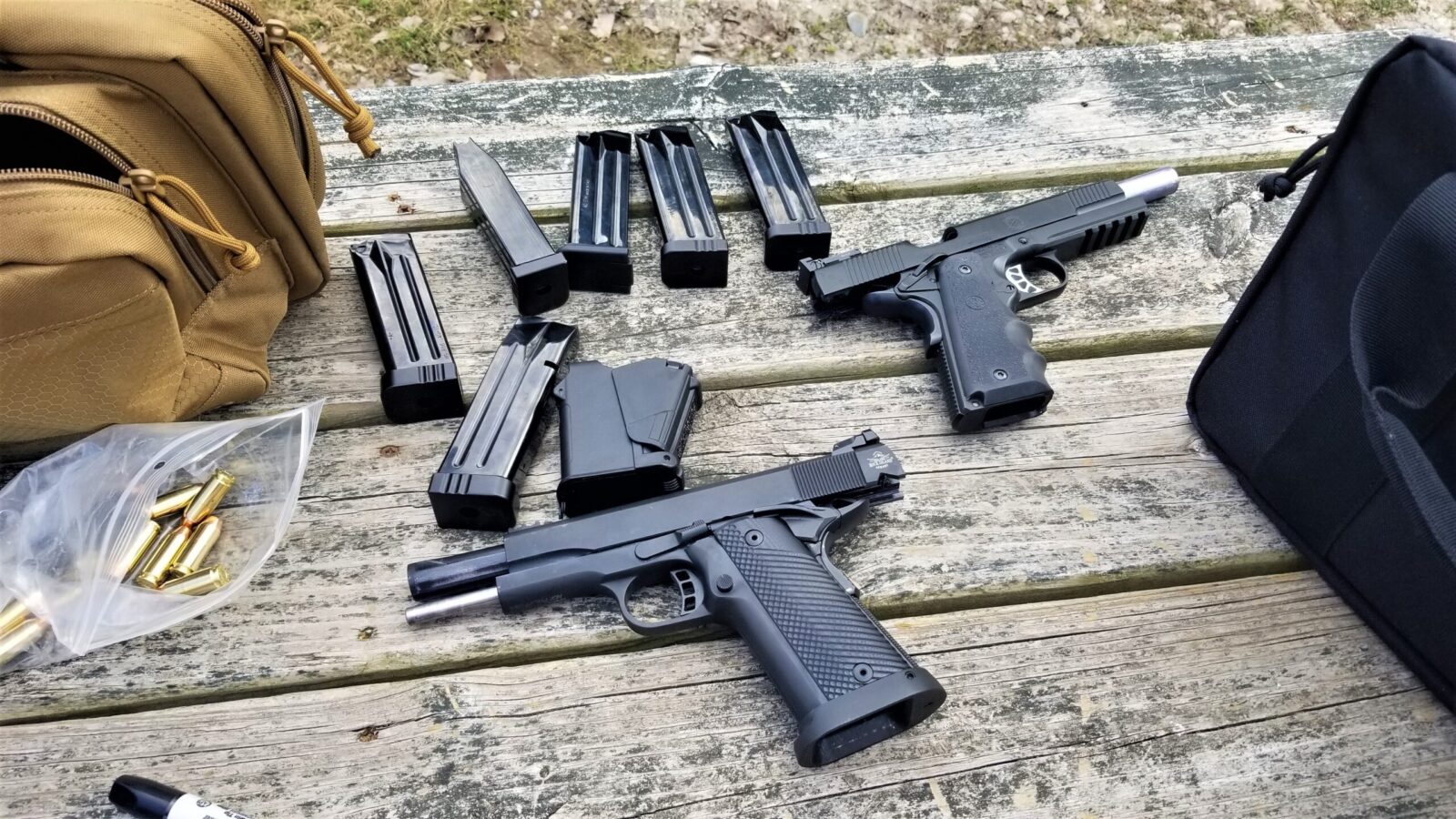
Here’s the Bul with some of the Ammo Inc 180gr TMC ammo and a collection of Wilson and Cobra mags – it ran through everything I brought including the Underwood JHPs with no problems.

Kydex cross draw khukuri sheath and red tool on a workbench
Here’s the 6″ TRP on top and the 5″ Bul on the bottom. Those front slide serrations make racking their slides a lot easier.

Let me sum it up and say – I really, really like this pistol. It functioned flawlessly and felt great. With the TRP, I was not impressed by the time it finally worked right. The Bul’s performance was nothing short of fantastic.

Last But Not Least: The Rock Island Armory (RIA) Rock Ultra FS HC (model 52009)

This was the first trip for the RIA Rock Ultra FS HC – let’s just call it the 52009. I wrote a blog post about my first takes and things were looking good so far. At any rate, I knew with the RIA pistols that you needed to clean and lube them plus I slightly beveled the chamber edges and polished the ramp.

I was really curious to see how it would function not only in general but also with the new magazines I was making for them. I also wanted a higher capacity 10mm 1911 if possible so there was a lot riding on the trip.

Kydex cross draw khukuri sheath and red tool on a workbench
It looks familiar until you notice the really thick pistol grip and the big mag well funnel.
Kydex cross draw khukuri sheath and red tool on a workbench
The 52009 is the bottom pistol and the TRP is the top right. You can see the collection of custom mags I was testing – what you don’t see is that their mag lips are different lengths. I actually found the 52009 very tolerant of different lengths – reliable feeding was a function of how spread open the lips were to point the cartridge towards the chamber. See the magazine laying with it’s back up in the top row? The magazine to the right was the only original RIA ACT-Mag I had to base my work on the shop.
Kydex cross draw khukuri sheath and red tool on a workbench
See how short the lips are? By adjusting the lips, it fed surprisingly fine. I have one mag with even shorter lips and it worked.
Kydex cross draw khukuri sheath and red tool on a workbench
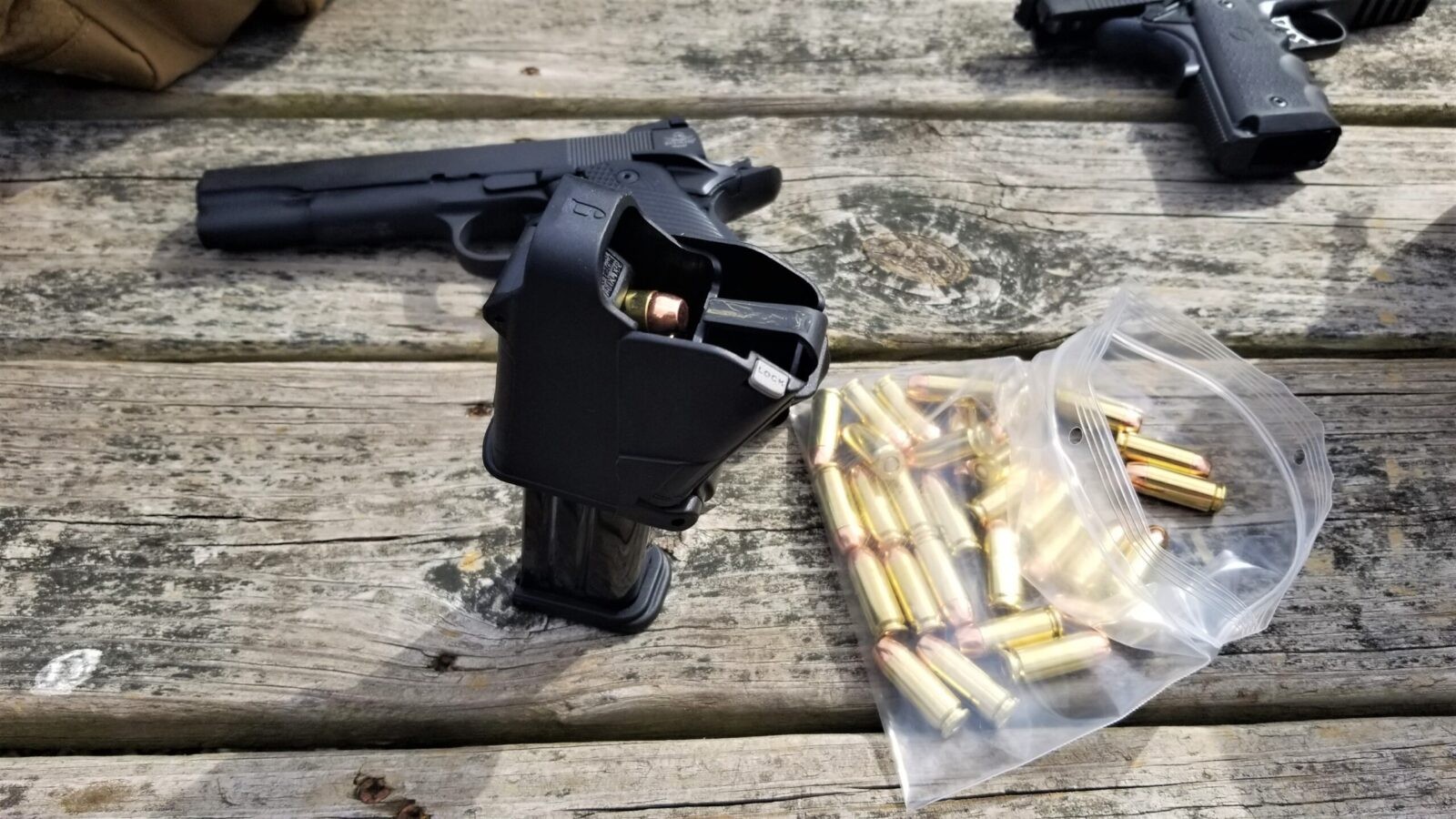
The stock of 10mm Ammo Inc rounds was dwindling. Let me tell you something – the Mag-Lula universal pistol magazine filler is worth its weight in gold. I really can’t tell you how many 8, 9 and 10 round mags I filled (and emptied) shooting the TRP and Bul pistols but by the time I got to the 52009, my hands were aching thanks to my carpal tunnel issues. By the way, two months later and that loading “finger” you see in the Mag-Lula is now brass colored from all of the magazine test fitting I have done 🙂

To sum up the 52009 – it was starting to wear in and felt surprisingly good. I sure missed having the front serrations on the slide because by the end my hands were starting to ache and my ability to squeeze hard enough to hold the slide and rack it was dwindling.

Once I identified the good mags and problem mags and focused my efforts, it ran great. I was quite pleased with it and I can tell you now that I have cycled it thousands of times fitting magazines, it is quite smooth. The 52009 and RIA 1911/2011 pistols in general are really good examples of parts need to wear in, or get to know each other, to get rid of tiny burrs/imperfections left over from manufacturing.

Would I buy it again? Yes. Was it my first choice? No, actually it wasn’t. I really wanted a high cap 5″ pistol styled after one of their Tac or Tac Ultra pistols that has the forward serrations and a Picatinny rail on the bottom of the frame. The reason being is that they are lighter and more compact than the 6″ Big Rock that I had years ago. Their 56862 model has a 5.5″ threaded barrel (hence the extra half inch) that I would have preferred but with the panic buying, it is impossible to find. Who knows – I may find one some day.

In the mean time, my only wish was that the 52009 hand front serrations – other than that it is a solid pistol.

Final Decision

As you can probably guess, the TRP Operator was voted off the island and my friend, and FFL, Scott Igert sold it for me. I felt pretty good about the decision too.

What’s interesting is that if you go to the Springfield Armory website today – the 10mm TRP Operator is gone. It could be that the demand just wasn’t there. I talked to a fellow at Dawson Precision awhile back about Stacattos (STI changed their name a few months back) and if they had any 10mm pistols because they used to have a number of models including the “Perfect 10.”) At any rate, he told me the demand just isn’t there – everyone is going for the 9mms these days. That might be the case for Springfield though I notice they are offering their Ronin model in 10mm.

Kydex cross draw khukuri sheath and red tool on a workbench
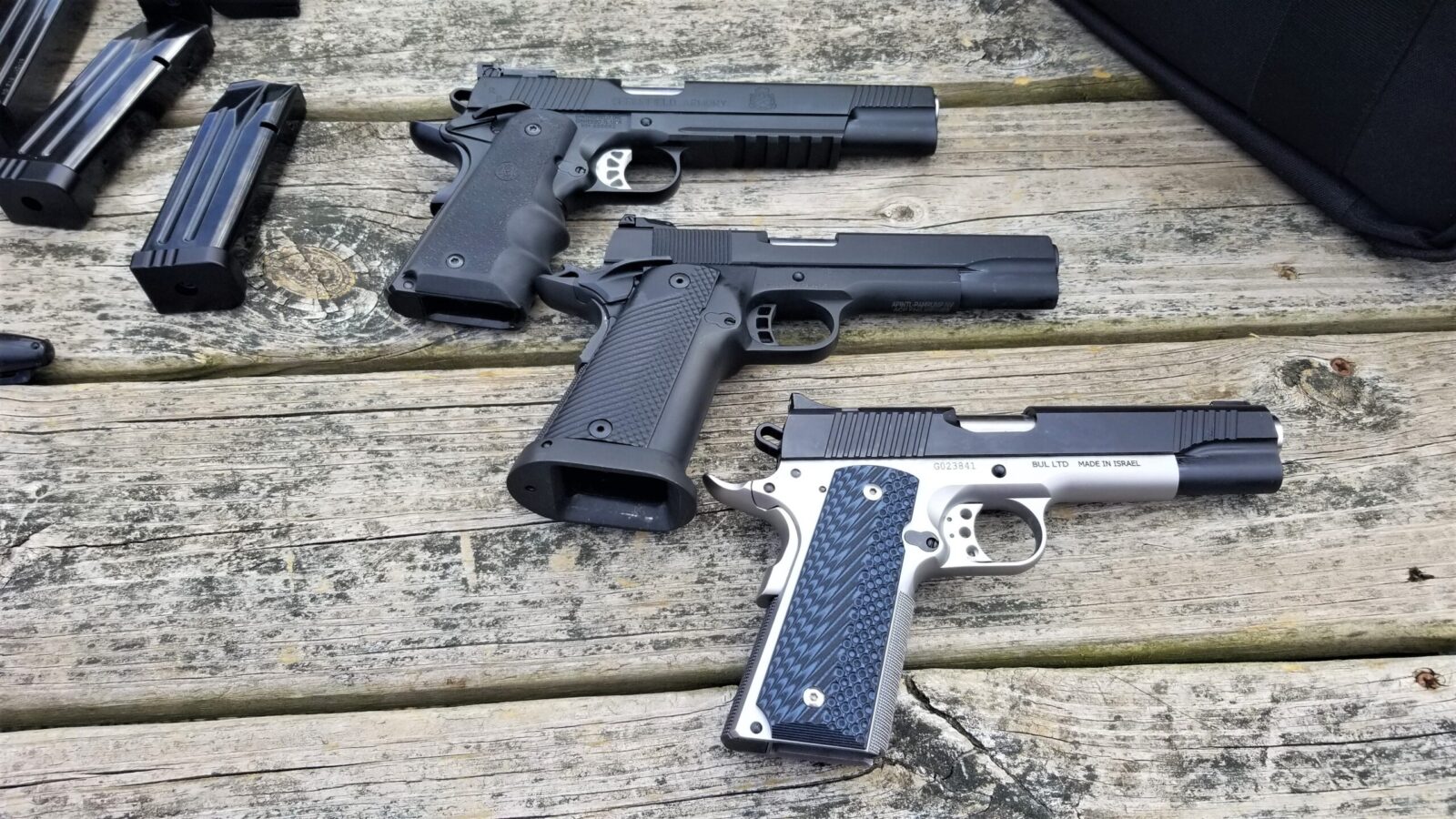
TRP at the top, 52009 in the middle and the Bul is at the bottom.
Kydex cross draw khukuri sheath and red tool on a workbench
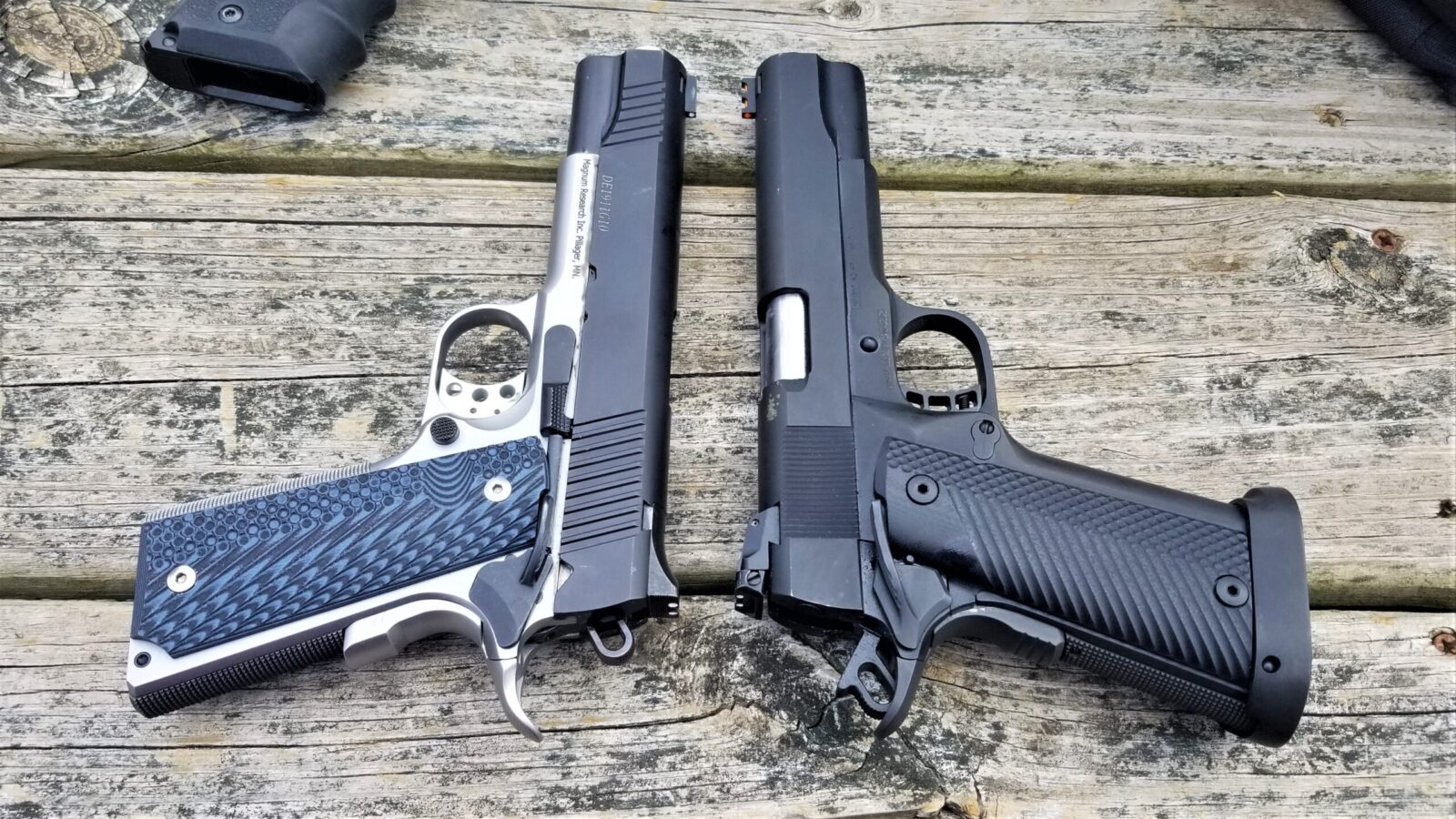
Bul on the left and the 52009 on the right. Note how the 52009 has an ambidextrous safety and the Bul does not. Since I am right handed, I really don’t use the safety on the other side. Some guys train to shoot with both hands just in case their right hand injured and use the safety on both sides as a result so I can understand why it is a feature that some folks want.

That’s it for now. I hope you found this post useful.


Note, I have to buy all of my parts – nothing here was paid for by sponsors, etc. I do make a small amount if you click on an ad and buy something but that is it. You’re getting my real opinion on stuff.


Please share the link on Facebook, Forums, with colleagues, etc. Your support is much appreciated and if you have any feedback, please email us in**@*********ps.com. If you’d like to request a report or order a reprint, please click here for the corresponding page to open in new tab.


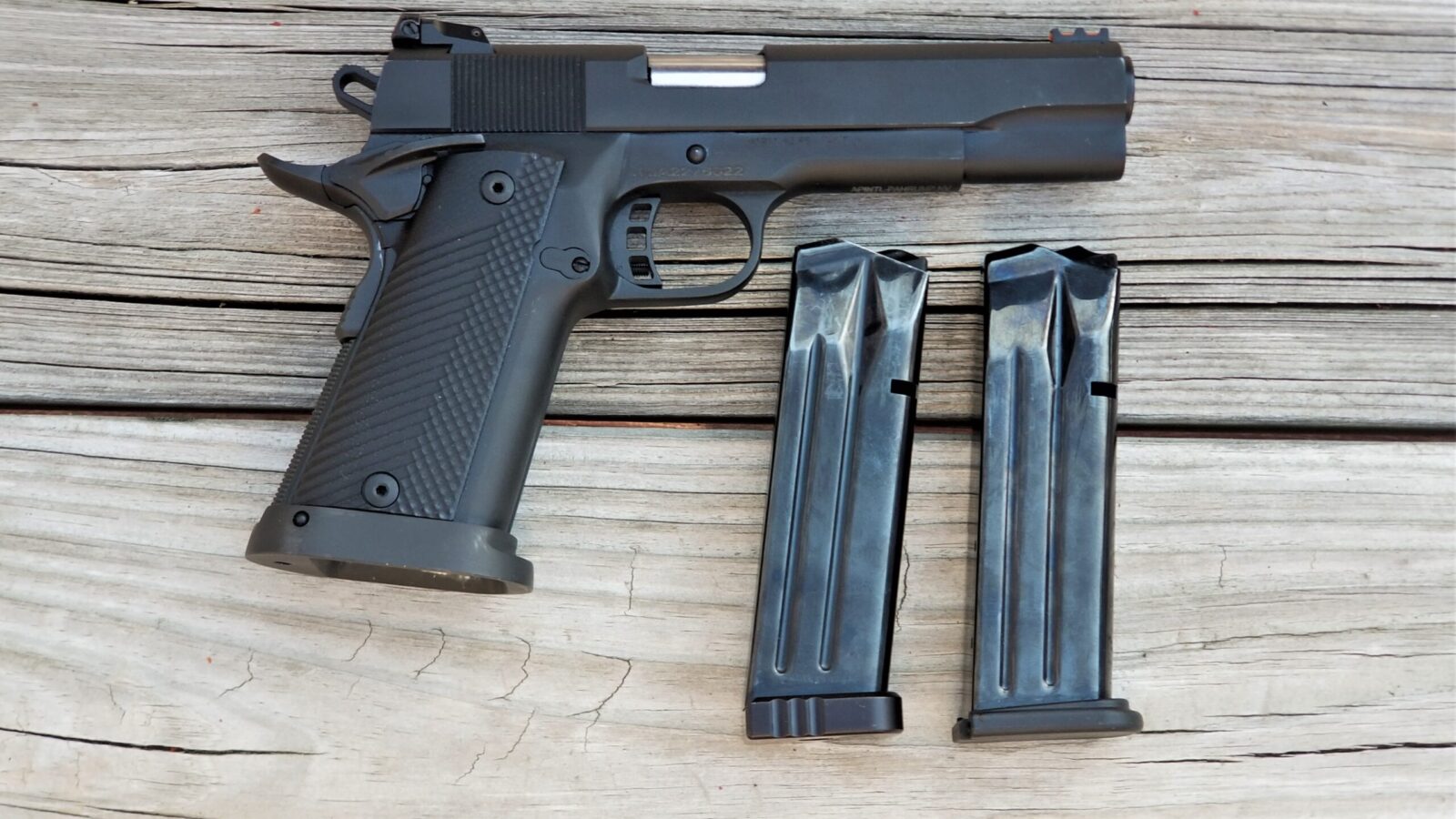
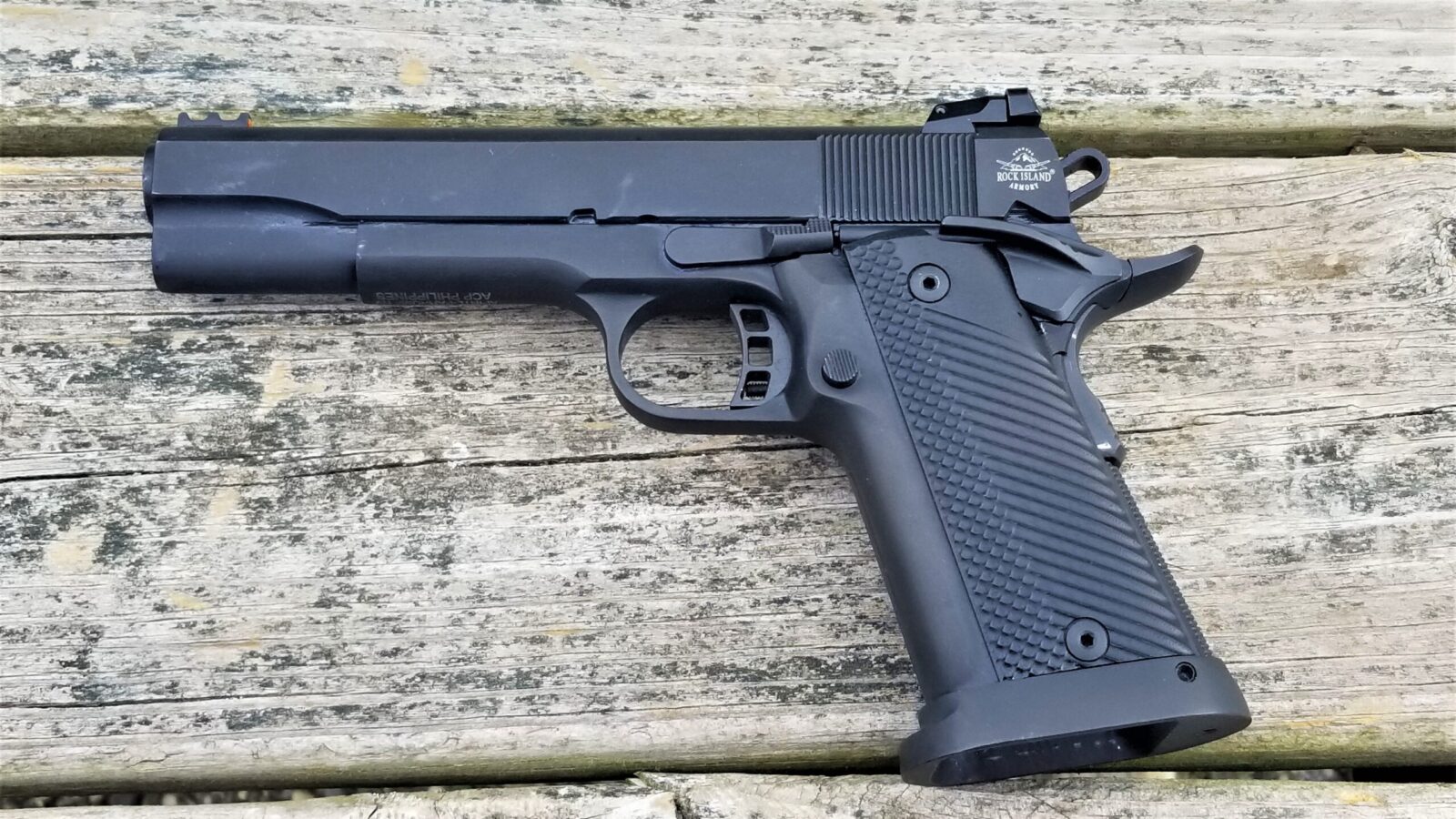
Rock Island Armory’s 52009 Ultra FS HC 10mm Packs a Punch

Hi folks – this is my second Rock Island Armory (RIA) 15 round 10mm 1911 high cap-style pistol that I have owned. My first one was a 6″ Rock Ultra that I sold years ago because I didn’t really need it. Lately I have gotten back into 10mms for situations where I need to pack a punch such as back country hiking in black bear country.

At this point, I have two 10mm pistols. My 1911-style Desert Eagle and now this 2011-style RIA 52009 Rock Ultra FS HC. FS meaning Full Size – it’s based on a series 70 5″ 1911 in terms of the action. The HC means high-capacity because it uses a staggered 15 round magazine that means the pistol can hold 16 rounds when topped off with one in the chamber.

In my opinion, Rock Island pistols are work horses. They may have a very plain parkerized finish and be a tad rough but they were made for use – not just sitting in someone’s safe. In terms of the rough action, they do wear in and give you a very good pistol.

In the case of this 52009, the pistol was well assembled and just felt a little rough. Folks, this is just fine in my honest opinion. What happens is that the parts are made and assembled. There isn’t a ton of hand polishing and tuning going on like when you buy a high end pistol but the fundamentals are there.

The way you address this is to clean the brand new pistol, lube it really well and then use it. What happens is that the parts get to know each other – surfaces start to wear together and smooth out. Sure, you could take it apart and do it by hand but just using it can make a world of difference so don’t judge it right out of the box. I use Superlube grease on the parts that slide and their oil/liquid on the parts that rotate.

The only thing RIA honestly did wrong was forget to pack one of the unique 15 round magazines with the pistol. These mags are normally available but with all of the panic buying and COVID screwing up supply chains, they are next to impossible to find. Armscor USA would not even reply to my emails and it wasn’t until Reed Sporting Goods, the Gunbroker seller I dealt with, got a new Armscor/RIA sales rep that I was then able to get a single mag. By the way, Reed is great to deal with if you see them on GB.

The missing mag irked me but I realized there was a business opportunity and made a bunch more for myself and to sell [click here for that story] and click here if you want to buy one. By the way, after hand cycling my slide hundreds and hundreds of times while testing those mags, it is nice and smooth now.

Kydex sheath being formed around a khukuri knife handle in a vacuum former.
The left magazine is one that I made and it works great. The right mag is an original ACT-Mag. Quick shout out to Dawson Precision for making some great Para base plates!

It came coated in oil to protect the steel more than anything but you always want to take a new pistol apart, clean it and then lube it. The 52009 has been to the range a couple of times now and I definitely like it.

Click here to go to the section of our online store that has all of our current 1911/2011 magazines and related products.

Here are a few more pictures:

Kydex sheath being formed around a khukuri knife handle in a vacuum former.
Like I said earlier – it’s definitely well made. The parts all fit together nicely without any slop. The set screw in the trigger allows you to adjust over-travel if you wish. It’s factory set and some folks either remove it or put more thread locker on it. I added wicking thread locker and called it even.
Kydex sheath being formed around a khukuri knife handle in a vacuum former.
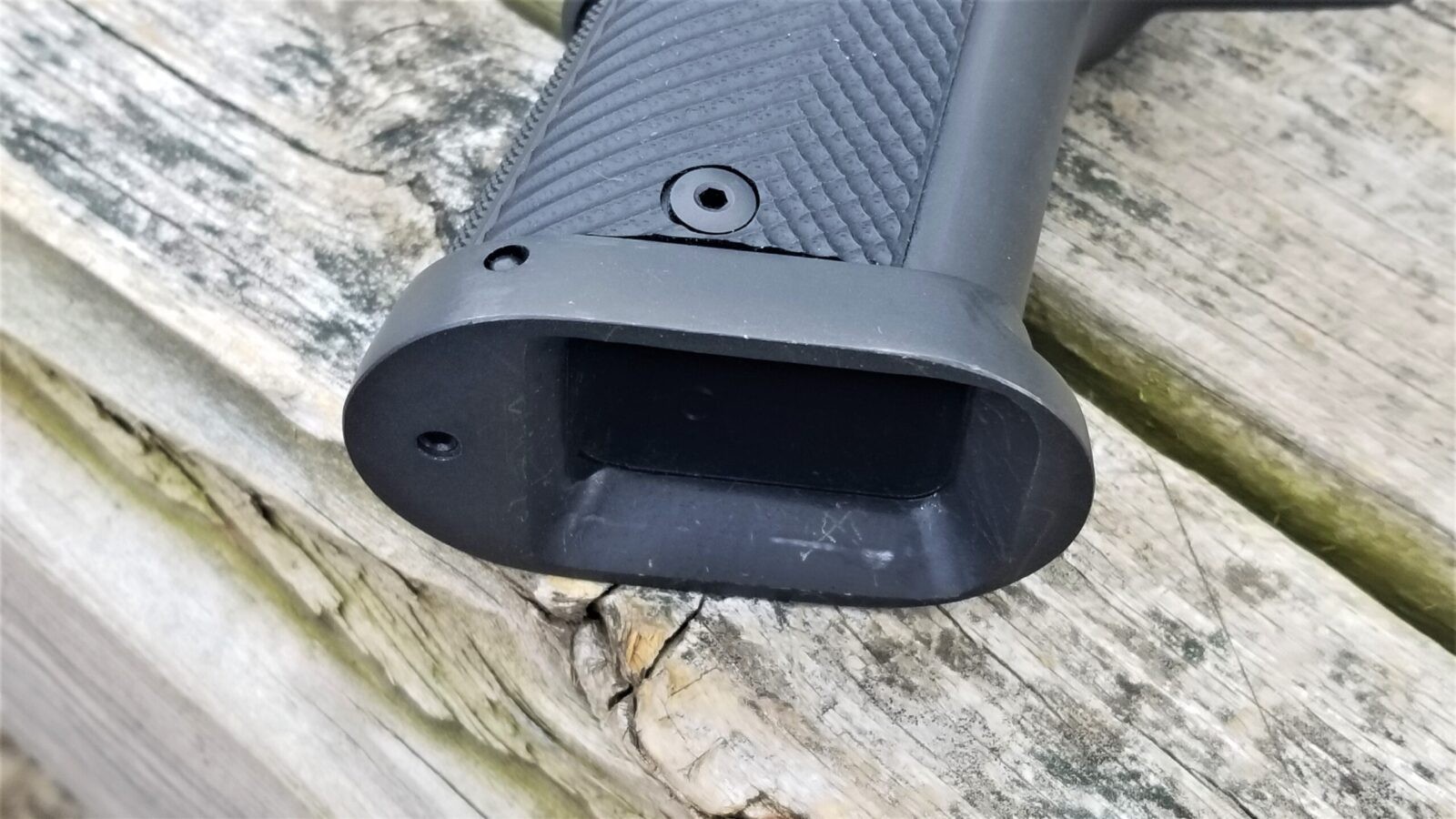
It comes with a huge funnel. Folks, I like funnels and you’ll see them on many of my pistols. They help guide your magazine into place when you are in a rush. In my opinion, any funnel, even a beveled mag well opening, is better than no funnel. I also prefer steel or aluminum funnels to plastic.
Kydex sheath being formed around a khukuri knife handle in a vacuum former.
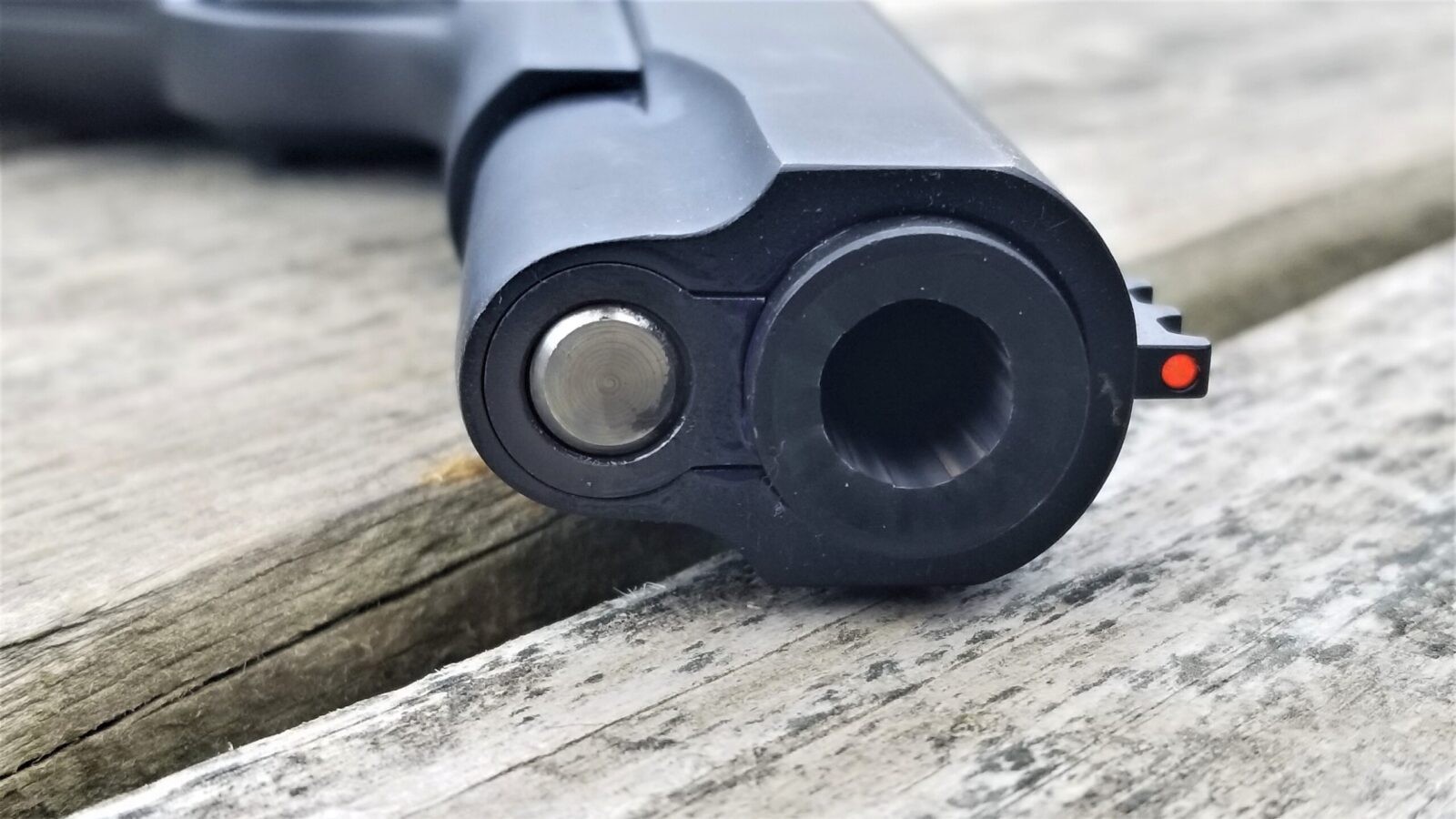
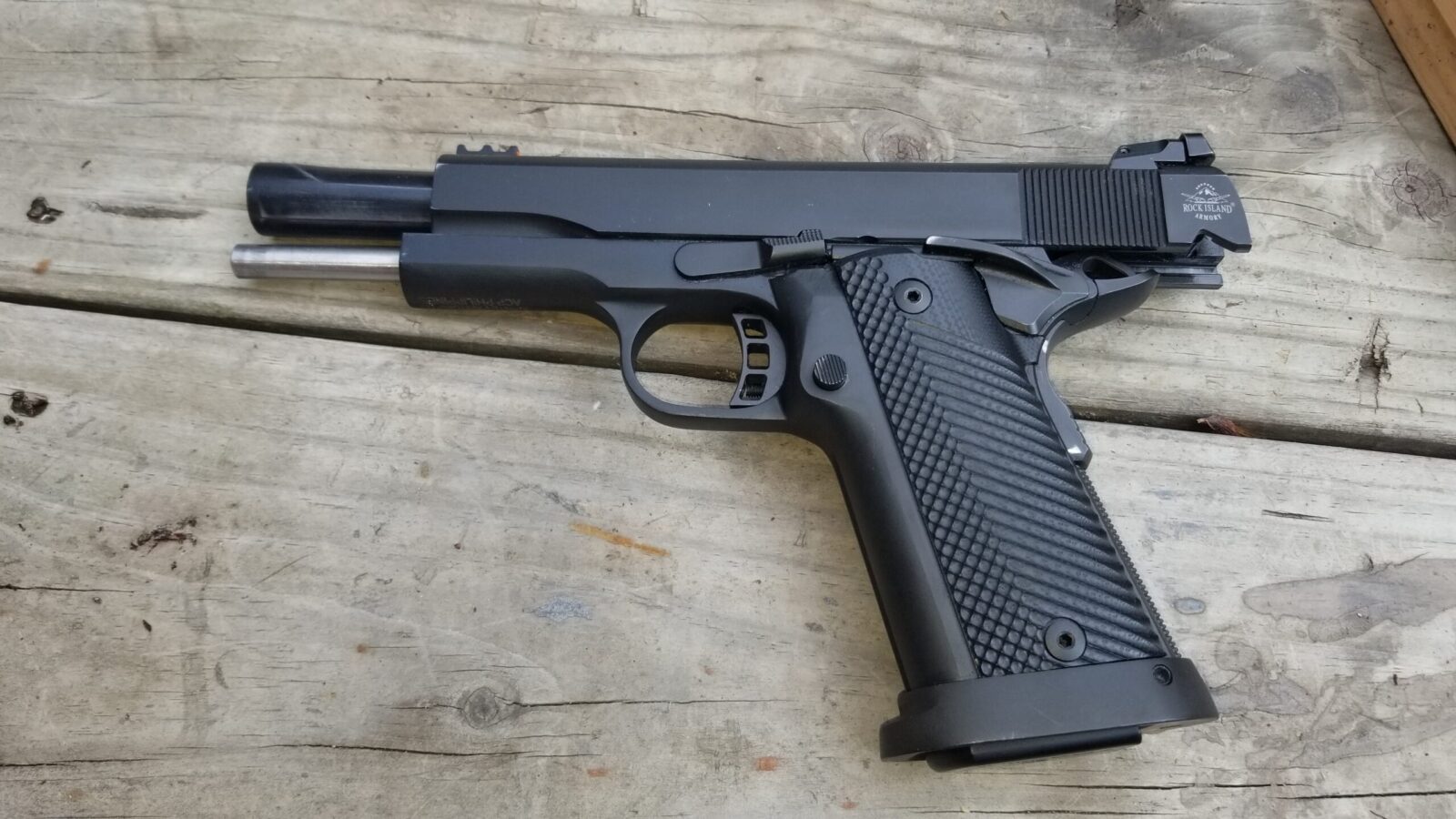
Here’s the business end – you can see the big bull barrel and because of this, it does not have a bushing. Takedown is accomplished by putting a pin in a drilled hole in the silver guide rod you see when the slide is locked open. In this photo you can also see the fiber optics collecting the light and send it out the end – the sights worked real nice at the range when I was shooting steel plates.

Conclusion

I definitely like the pistol and we are still getting to know each other. I did polish the ramp and chamber. In the next blog post, I’ll tell you about my range trip with my three 1911/2011 10mm pistols and the one that got sold after – which is why I said I now have two at the start of the post.

August 24, 2024 Update: Still have the pistol and it runs just fine. I don’t think people know how good these pistols are. I can’t guess how many rounds I’ve put through mine – well over 1,000.

I hope this helps you out.


Note, I have to buy all of my parts – nothing here was paid for by sponsors, etc. I do make a small amount if you click on an ad and buy something but that is it. You’re getting my real opinion on stuff.


Please share the link on Facebook, Forums, with colleagues, etc. Your support is much appreciated and if you have any feedback, please email us in**@*********ps.com. If you’d like to request a report or order a reprint, please click here for the corresponding page to open in new tab.


Concealment Express’ 1911 IWB Kydex Holster Is Nice!

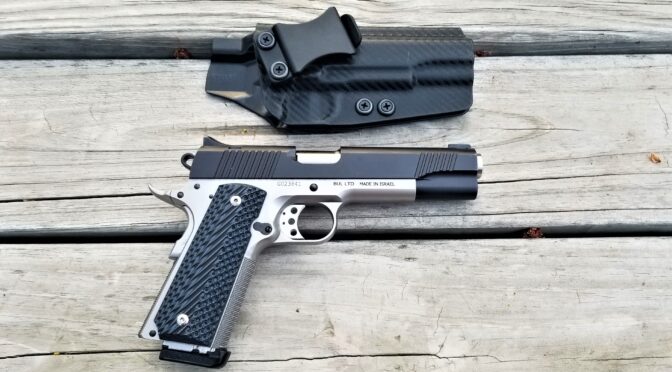
Ok folks, I want to be up front about concealed carrying a full size 1911 – in my case a Desert Eagle 1911 in 10mm (DE1911G10) made Bul Armory in Israel. You will never wonder “Did I remember to put my pistol on?” Why? Because it weights 2 pounds 15 oz with 9 rounds of 155gr Underwood HP ammo and no holster is why. There’s no wondering because you can feel the weight and the big pistol pushing into your side.

With that said though, I do like and trust the 1911 design and the 10mm Desert Eagle 1911 has operated flawlessly since I bought it. Seriously, it is a remarkable pistol. Since I do have a Concealed Pistol License (CPL), I wanted a couple of carry options and started with an inside the waistband (IWB) holster.

After doing a bit of digging on affordable options, I bought a Kydex IWB holster made by Concealment Express off Amazon (I’ve since found that if you sign up for their newsletter from their website they will email you a 10% off coupon code for “joining the club” plus they do have good sales from time to time so you ought to check them out). To cut to the chase, I really like it and want to share some information with you about the holster.

Concealment Express is located in Jacksonville, FL, and makes their own holster. What I think makes them different is that they CNC machine their own aluminum molds so this lets them really pay attention to the details of the firearm and dial in their process for making them. Amazon carries a ton of their models – click here.

I used to make Kydex holsters but it was more of a artisan craft approach vs. cranking them out in a manufacturing setting. The reason I mention this is that I like their designs and their attention to detail.

Press tool with punch and die for making Kydex sheath
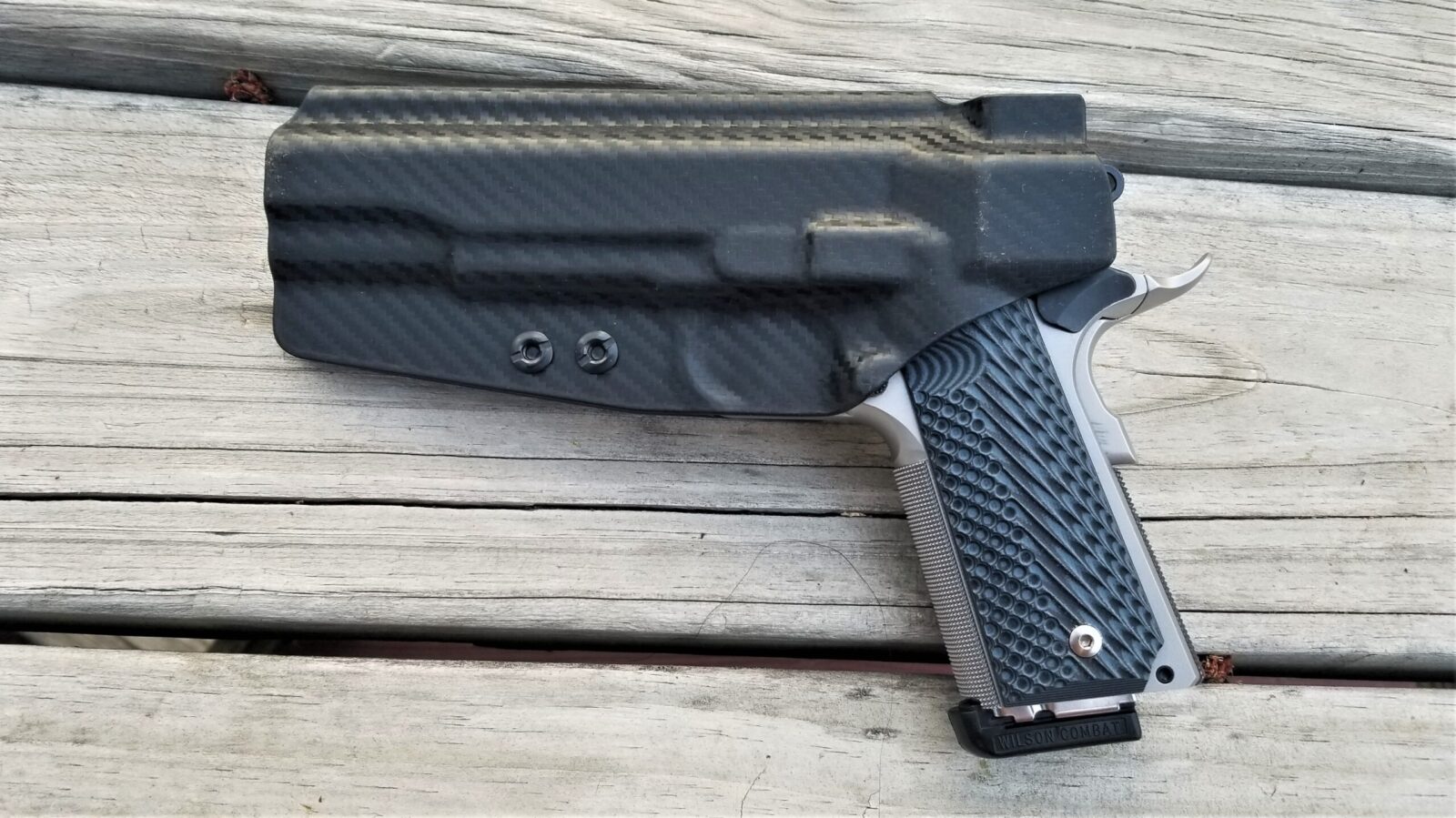
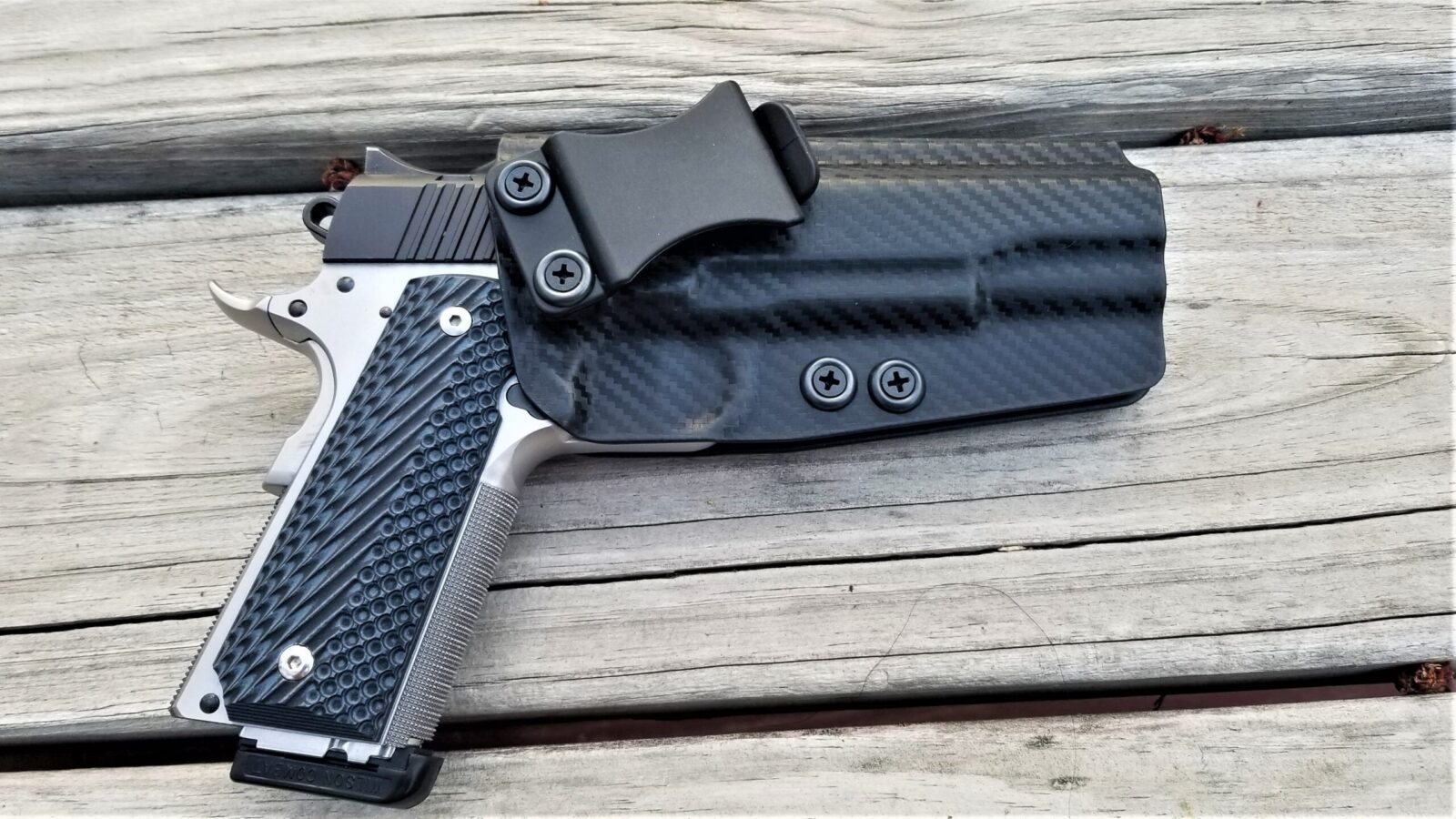
First off, look at the very clean lines of the holster. Both exterior edges and details of the molding are very crisp and distinct.
Press tool with punch and die for making Kydex sheath
The clip is made from ABS plastic, will fit up to a 1.5″ tall belt and the cant (the angle of draw) is adjustable from -5 to 20 degrees allowing for you to adjust it to your preferred carry and draw style. I am right handed and use same-side (strong-side) holsters so this is their right hand carry model – they can make left hand models as well.

Boltatron

Kydex is a brand name of thermal plastic that can be heated and shaped. It’s also become a bit of a catch-all term for plastic holders but there are differences including holsters that are actually injection molded.

In the case of this holster, the material is a 0.80″ thick thermal plastic known as “Boltaron” and it has some cool characteristics. Kydex can get brittle when cold and may crack when dropped plus in high heat (for example, when a hot barrel gets inserted into the holster), Kydex might soften and deform. Boltaron does not get brittle when cold and doesn’t form/deform until a higher temperature.

Press tool with punch and die for making Kydex sheath
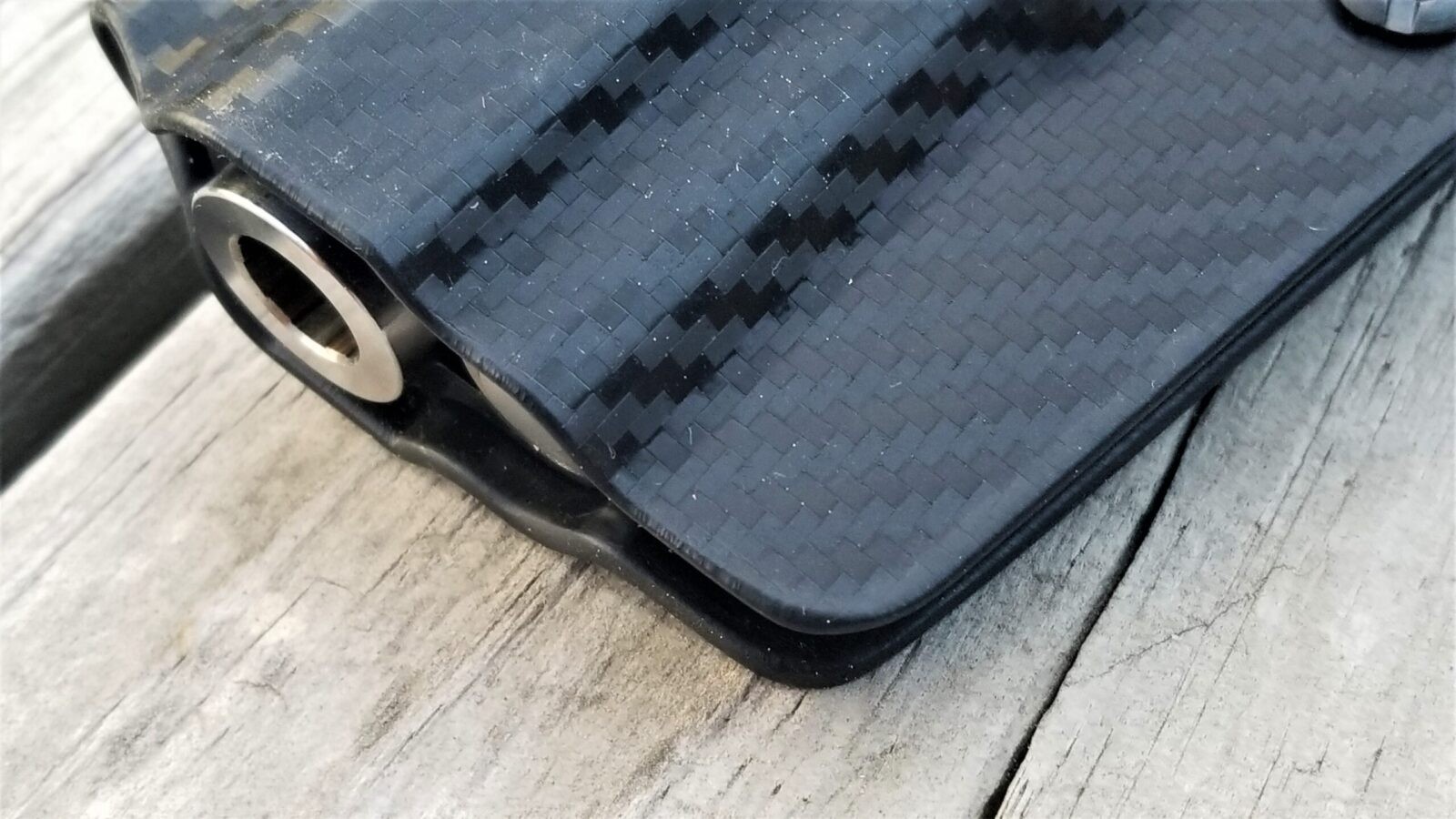
Boltaron has many colors and textures. This is their carbon fiber texture and just to be clear – it’s still the thermal plastic and not carbon fiber. By the way, the white specs are dust on the holster just to be clear. Also, note how corners and edges are rounded.

Safety Details

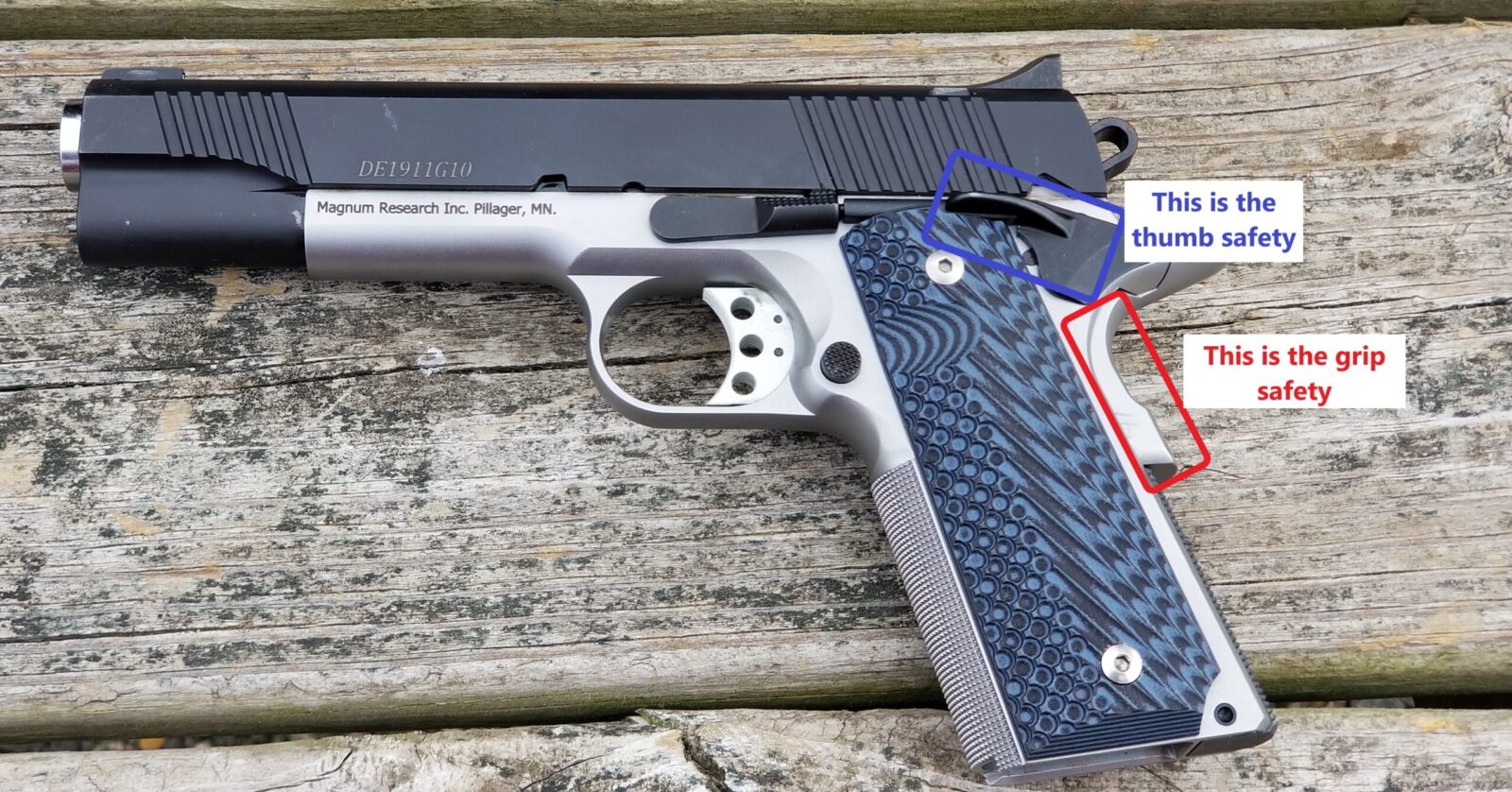
Okay, when I carry a 1911, it is locked and loaded – there is a round in the chamber and the hammer is cocked. Now the 1911 design has two safeties and I really need to rely on them when I have a loaded 10mm in my pants – yes, I can think of a lot of jokes with that comment too but am not going there 🙂 It has the grip safety and a thumb safety just under the rear of the slide.

Press tool with punch and die for making Kydex sheath
These are the two safety mechanisms on a 1911. The most important safety mechanism is you – always remember that.

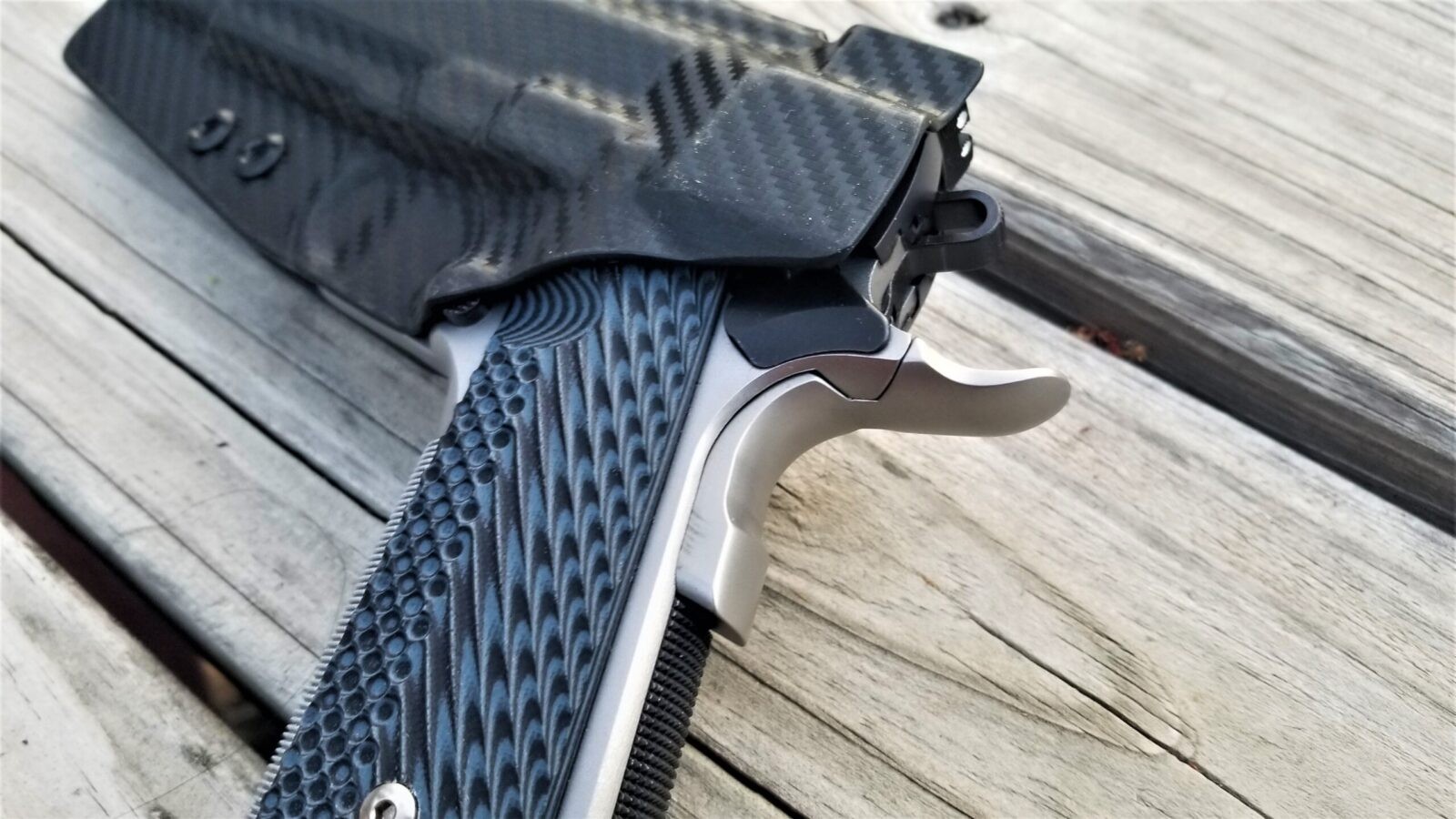
There’s not much you can do to safeguard the grip safety but I really prefer to have something protecting the the thumb safety to keep it from accidentally getting switched from safe to fire. Concealment Express designed their holster to safeguard the thumb safety.

Press tool with punch and die for making Kydex sheath
Note how the Boltaron covers the thumb safety and reduces the odds of it accidentally getting switched off. A nice perk of the Bul design is that it has the traditional single side safety and is not ambidextrous. In many 1911s, there is a thumb catch control on the opposite side as well that could still get accidentally snagged but at least it is not right against your body with you moving up and down right against the safety.
Press tool with punch and die for making Kydex sheath
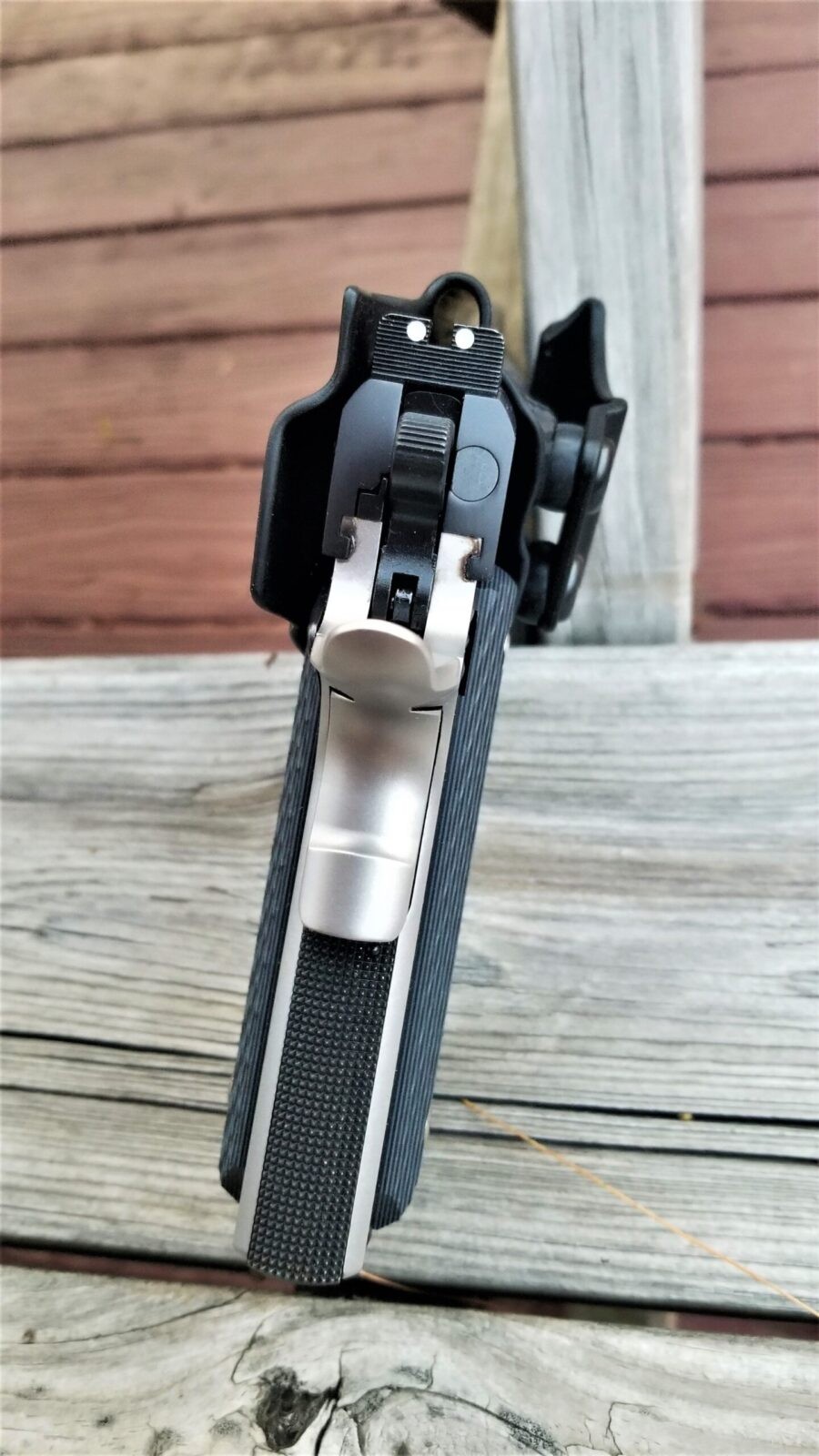
You can see from the rear how the thumb safety is shielded.

Adjustments

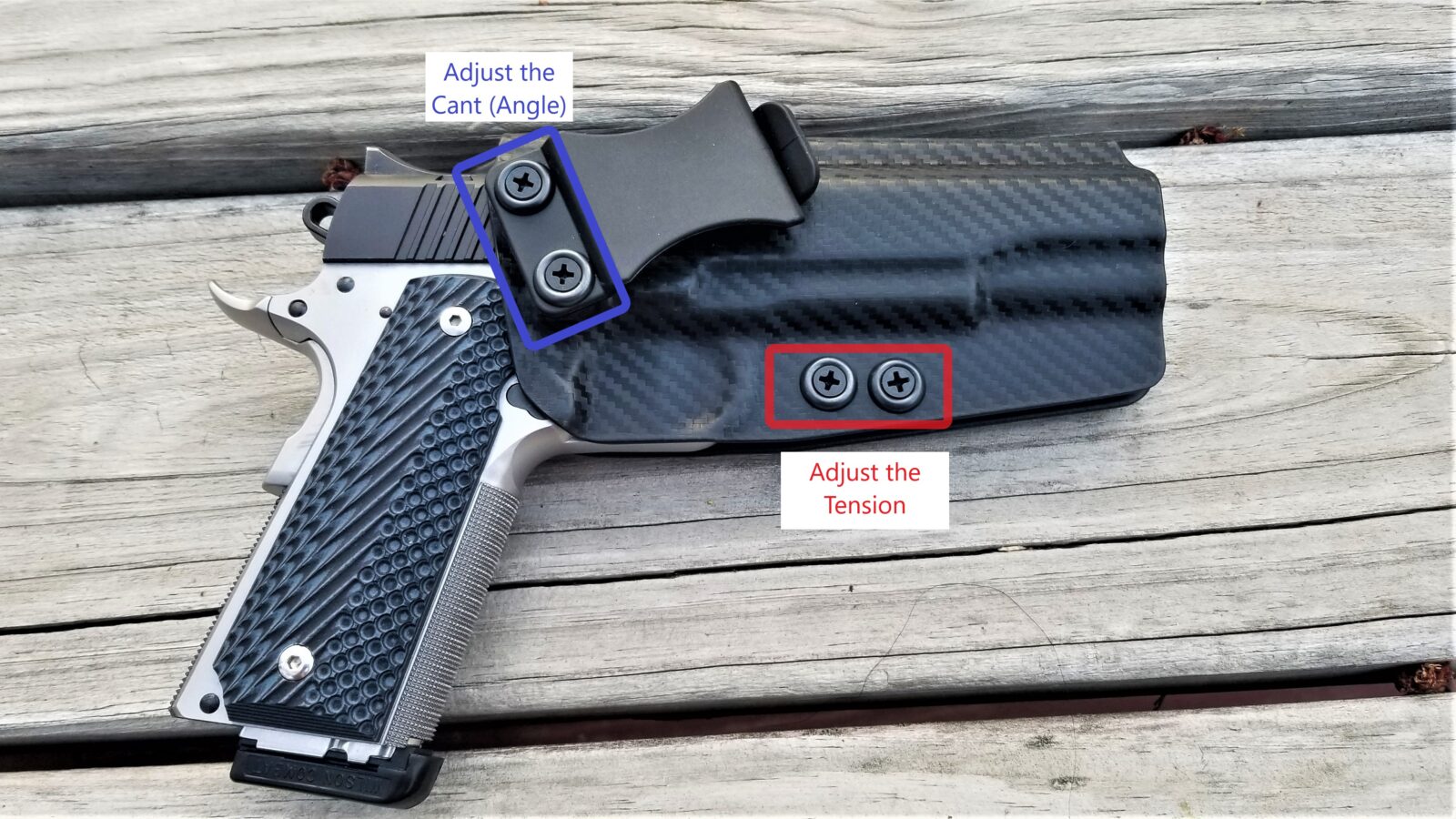
They designed in two things you can adjust – the cant of the belt clip and they also have two screws that you can use to adjust the tension to make the pistol easier or harder to draw. When you tighten down the screws, the tension increases by drawing the two sides of the holster together. When you loosen the screws, the Boltaron wants to open back up and it becomes easier to draw the pistol.

Kydex sheath with drilled holes for a khukuri knife
You can adjust the cant (angle of carry) and the tension that is holding the pistol in the holster.
Kydex sheath with drilled holes for a khukuri knife
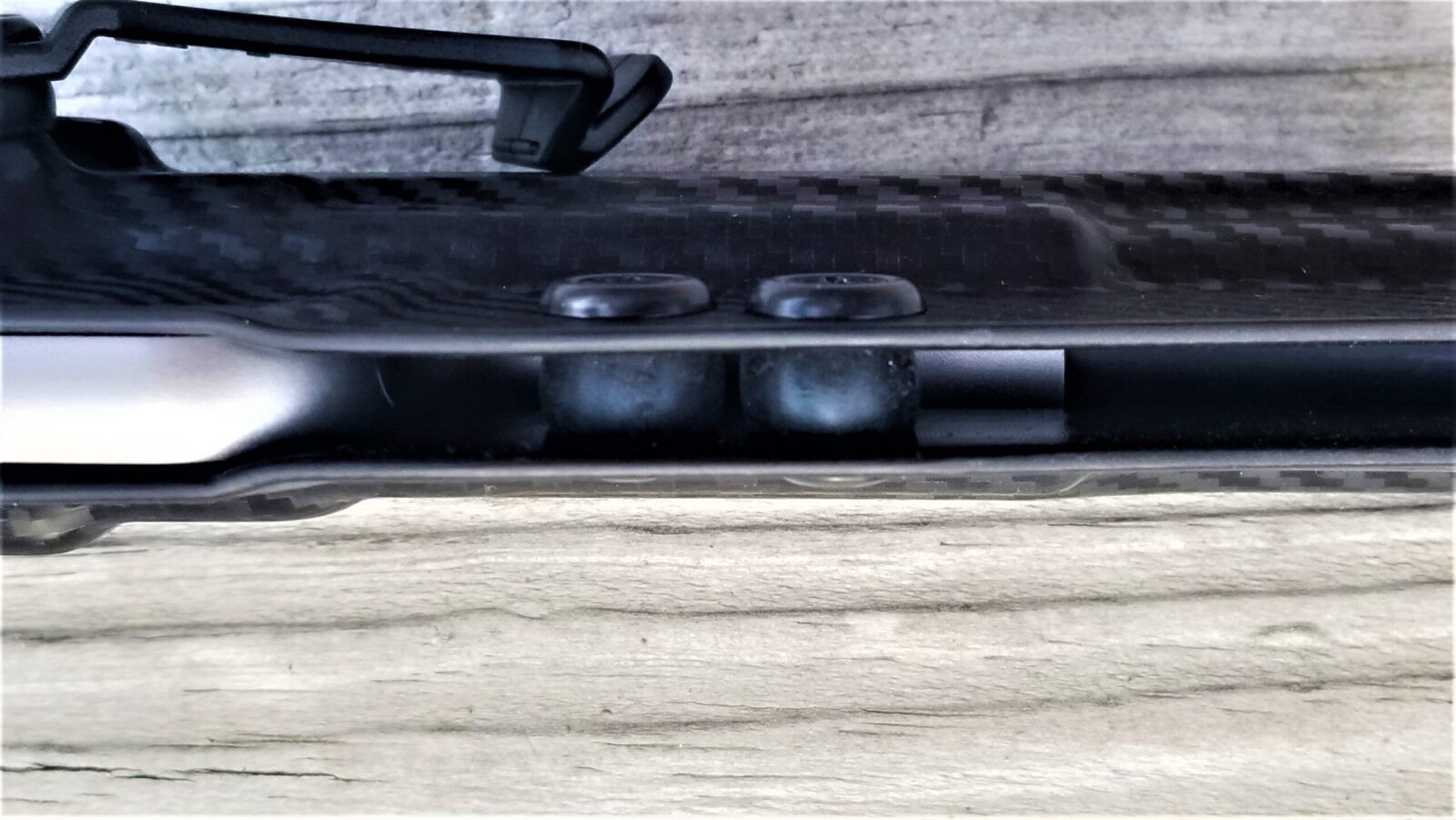
In case you are wondering how it works, the holster is formed formed on a mold under a vacuum. There is a filler that keeps the bottom edges of the holster open. The holes are drilled for the tensioning screws and the magic happens thanks to the two thick rubber washers. They compress when you tighten down the screws thus drawing the sides together and increasing tension. You can make it too tight such that the pistol can’t be drawn or holstered by the way so experiment with what works for you.

One important comment – always apply thread locker or the screws will slowly loosen over time. You can assemble with a blue medium strength compound like Blue Loctite or you can use a wicking medium-strength formula that is very then and is drawn back into the threads via capillary action. Never use red or permanent thread locker – those require heat to be removed and heat is not something you really want around thermal formed plastics.

What 1911s Does It Fit?

Concealment Express says it will fit most 5″ Government model 1911s that do not have rails. This would include models such as my Magnum Research /Bul Armory DE1911G10 as well as models from Colt, KImber, Ruger and Springfield.

As an aside, it does not fit my RIA 52009 for example – that is 16-round Para-inspired design that is more like a 2011 with a much wider grip. If I heated the holster up at the top with a heat gun and made it wider at the top, I could probably get it to work. I just point that out for folks wondering if this would work with one of the bigger 2011-style frames.

Conclusion

Plain and simple, the Concealment Express 1911 Government IWB holster is a perfectly decent holster. It’s built nicely and is easy to carry (albeit with a heavy pistol). “Is that a 1911 in your pants or are you just happy to see me?” springs to mind 🙂 At any rate, I’d recommend and will continue to use it myself when I do carry this big pistol.

Concealment Express Makes Many Holster Models

I’m impressed by their approach and plan to buy one for my Glock 29 Gen 4 and will report back on my experiences. Click on the following ad to go to their website:


Note, I have to buy all of my parts – nothing here was paid for by sponsors, etc. I do make a small amount if you click on an ad and buy something but that is it. You’re getting my real opinion on stuff.


Please share the link on Facebook, Forums, with colleagues, etc. Your support is much appreciated and if you have any feedback, please email us in**@*********ps.com. If you’d like to request a report or order a reprint, please click here for the corresponding page to open in new tab.


We Make Custom 10 Round Magazines for Rock Island FS A2 10mm and .40S&W High Cap Pistols

It was brought to my attention that there are owners of high capacity (HC) Rock Island Armory (RIA) Full Size A2 pistols who are in a jam because where they live limits their magazine capacity to 10 rounds (California, Connecticut, Washington DC, Hawaii, Maryland, Massachusetts and New York state to name a few. The problem is that nobody is making 10 round magazines for these “high cap” RIA pistols — until now.

The following are the 15-round 10mm and .40 high cap RIA pistol models that I am aware of:

  • 51994 TAC Ultra MS 10mm
  • 51914 TAC Ultra FS 10mm
  • 56862 TAC Ultra Threaded 10mm
  • 52000 PRO Match Ultra 6″ HC 10mm
  • 52009 Rock Ultra FS HC 10mm
  • 51738 Pro Match Ultra H – 40S&W

3/24/2024 Update: This is an obsolete post and product. We now make 10 and 15 round magazines by blocking and pinning closed our third generation magazines. These new mags have excellent springs and an anti-friction coating. Please click here for the product listings.

How did we make a 10-round magazines?

Okay, good question. The RIA pistols are related to Para Ordnance pistols (Paras) so magazines for those pistols can be adapted. Mec-Gar is a large players in the magazine market and it just so happens they make a number of magazines for the Paras including ones with 10-round limits – the MGP164010B – “B” meaning blued and MGP164010N – “N” meaning nickel plated.

Empress heat transfer press machine used for Kydex sheath making
This is the Mec-Gar MGP164010B magazine – the feed lips need to be trimmed and opened up and the baseplate needs to be replaced as the long front tab will not fit in the big mag well funnels that RIA puts on their pistols plus they really need to be longer to allow you to effectively smack that mag into position in a rush. Last comment – that dimple is pressed in with a die and limits the follower from going down to far such that only 10 rounds can be limited.

The above magazines are essentially Mec-Gar’s 15-round Para P16 MGP164015B magazine but with the dimples pressed into each size of the magazine limited the capacity to 10 rounds. So everything I learned about converting the Para 16 mags over for RIA HC use applied here not to mention the jigs I had worked out to do the work.

Click here to go to the section of our online store that has all of our current 1911/2011 magazines and related products.

I’m not going to re-invent the wheel – click here for blog post on the MGP164015B conversion. It’ll give you a good idea of what was done and is the same work that needs to be done with these 10-round magazines.

Empress heat transfer press machine used for Kydex sheath making
These are three examples of the converted 10-round magazines ready for RIA HC pistol use. The thicker Dawson Precision +200 base plates protrude just a bit from the big RIA funnel and allow for positive seating of the mags (that’s a fancy way to say “slap them in so they seat fully”).
Empress heat transfer press machine used for Kydex sheath making
This is a better view of the modified feed lips. The magazines retain their original followers that lock the slides open.
Empress heat transfer press machine used for Kydex sheath making
The +200 base plate extends just a bit below the funnel.

Because of pistol and magazine variations, you may find that you need to adjust the feed lips just a bit for your pistol. This sounds daunting but it is actually quite easy. Click here for the blog post on that.

I have an initial batch of magazines ready for sale and have more if the Para mags coming in. I don’t know how secure the supply will be of the Mec-Gar 10 round magazines but I will try to keep them in stock.


3/24/2024 Update: This is an obsolete post and product. We now make 10 and 15 round magazines by blocking and pinning closed our third generation magazines. These new mags have excellent springs and an anti-friction coating. Please click here for the product listings.

I hope this helps you out.


Note, I have to buy all of my parts – nothing here was paid for by sponsors, etc. I do make a small amount if you click on an ad and buy something but that is it. You’re getting my real opinion on stuff.


Please share the link on Facebook, Forums, with colleagues, etc. Your support is much appreciated and if you have any feedback, please email us in**@*********ps.com. If you’d like to request a report or order a reprint, please click here for the corresponding page to open in new tab.


Adjusting Rock Island Armory FS A2 HC Magazine Feed Lips – It’s Easier Than You May Think

In most magazine fed weapons, the angle at which the cartridge feeds into the chamber is critical to reliable functioning. This is certainly the case 1911-style pistols. I wrote up a blog post outlining what I did to modify Mec-Gar Para P16 10mm/.40 magazines over for use in the Rock Island HC-series (High Cap series) pistols such as my 10mm 52009 (click here if you want to read it). I got a few emails from guys asking if I could explain what needs to be done to adjust the cartridge angle.
Okay, so what is controlling the feed angle is in part the shape of the lips, the gap between them and the shape of the follower. Let’s take a look at an ACT-MAG that works for both .40 and 10mm:

Close-up of a black horn khukuri handle with decorative carving and metal bolster
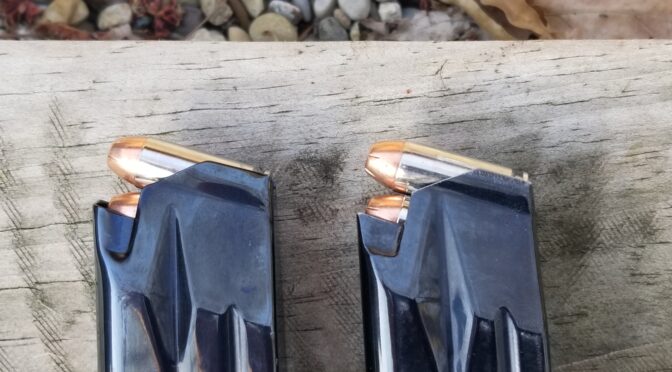
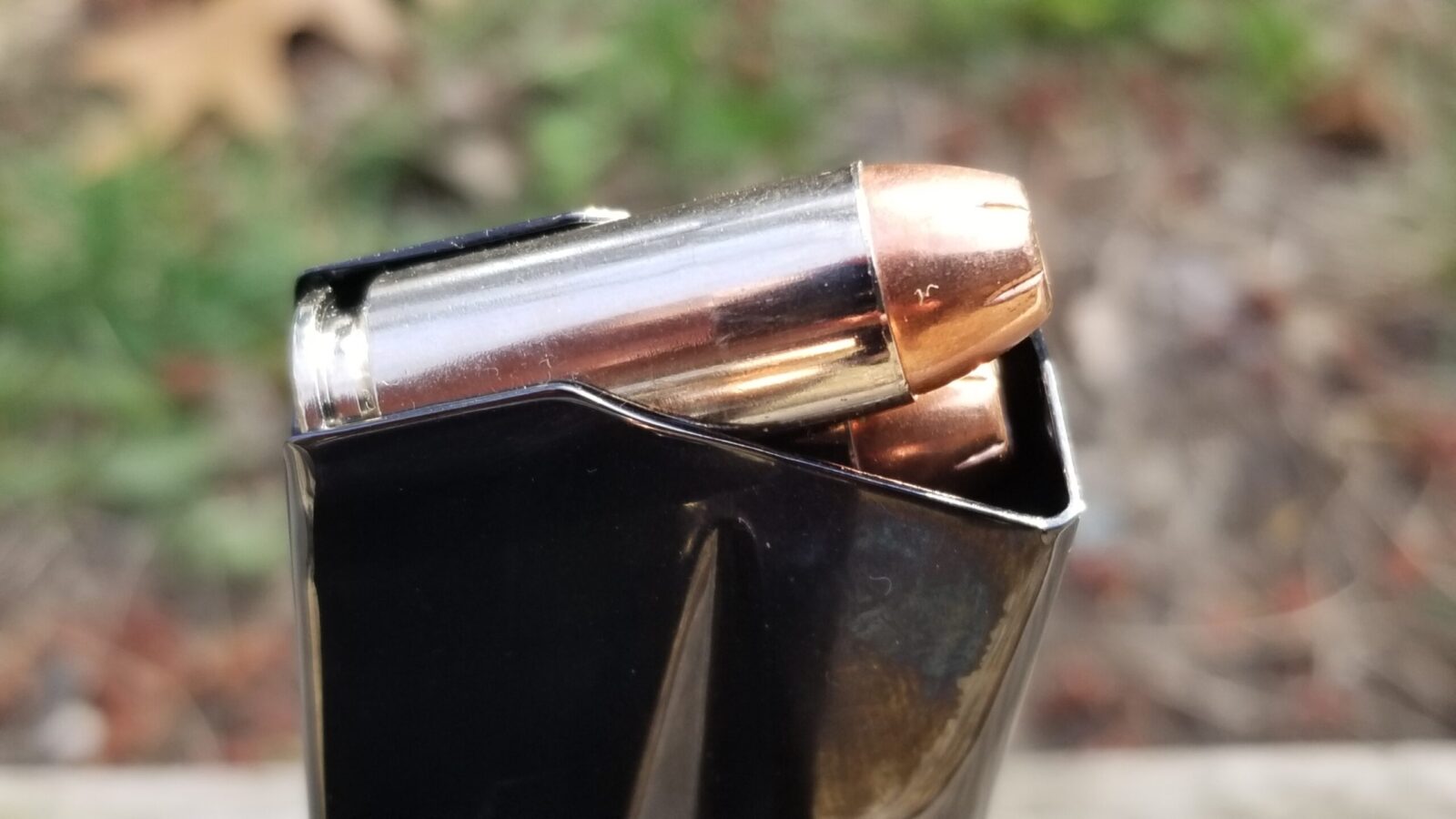
This is a Rock Island Armory 10mm magazine. It’s made by ACT-MAG and is part number  OEMP164015B. RIA worked with them to design the angle of the lips, the gap between the lips and the shape of the follower to feed the round at the right angle. The cartridge is a 10mm Underwood with a 155gr XTP JHP bullet. Look at the angle.

There are a whole bunch of reasons why you need to adjust the angle as a consumer. Slight variations in how the pistol or magazine were made, wear over time, etc.

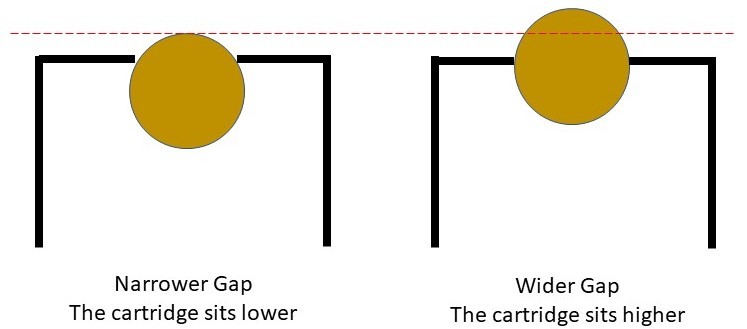
What you can do is to bend the feed lips open or closed in the front to adjust the angle. This works because the cartridge is round and the gap affects how far up that part of the cartridge will rise up.

Close-up of a black horn khukuri handle with decorative carving and metal bolster
By changing the gap between the feed lips, the cartridge goes higher or lower. The trick is to adjust parts of the lips – usually just the front portion. Yeah, I can’t draw to save my life but I hope you get the basic idea.

In general, the back of the lips are relatively fixed because of the extra material around them. Now they can get bent out of shape for one reason or another and I would recommend you compare the front and back feed lip caps of a questionable magazine to a good magazine.

Safety Comment – Use Dummy Cartridges / Snap Caps

I said this in the first post and it is so important that I want to reinforce the message – I knew I was going to need to do a ton of cycling of rounds. Using live ammo is risky because you have the very real risk of a negligent discharge. To avoid this, order yourself in a bunch of dummy cartridges. There are sellers on eBay that will sell you 10+ at time. Order yourself in 10-20 rounds. You are going to smash the crap out of them due to the heavy recoil spring a 10mm uses. I trashed at least 10-15 of them. Most were due to the bullet being smashed back into the case, one dented the case pretty bad and one deformed the case right at the mouth.

I can’t even guess how many cycles I did – especially starting out. I’m going to hazard a guess and say I averaged about three cycles per dummy before something failed on the dummy as I worked out the kinks and I would load three rounds per magazine to do the testing.

I can’t stress it enough – get dummies to tune your magazines.

Actually Adjusting The Lips

The goal is for the bullet to point straight into the chamber so that when the slide goes forward, the cartridge is stripped from the magazine and is fed straight into the chamber. We can move the front of the cartridge up and down by changing the gap between the lips.

In general, the gap at the back of the lips tend to be slightly smaller than the front. What happens is the cartridge gets pinched/stopped at the back while the relatively wider front portion allows the cartridge to be pushed farther upwards per the figure above.

Do not rush! If you take your time this goes pretty smooth. Do a little bit of adjustment and test over and over. It gets easier the more you do it.

If you need to close the lips, you can slightly crush them in a soft-jawed vise, use rubber/plastic tipped/non-marring pliers or light taps with a non-marring hammer. Just do a little and test over and over. In general, I use either the vise or pliers depending on how my hands feel as I prefer the control vs. tapping with a hammer. Everyone has their preferences and I know guys who can rock with a hammer. It’s up to you.

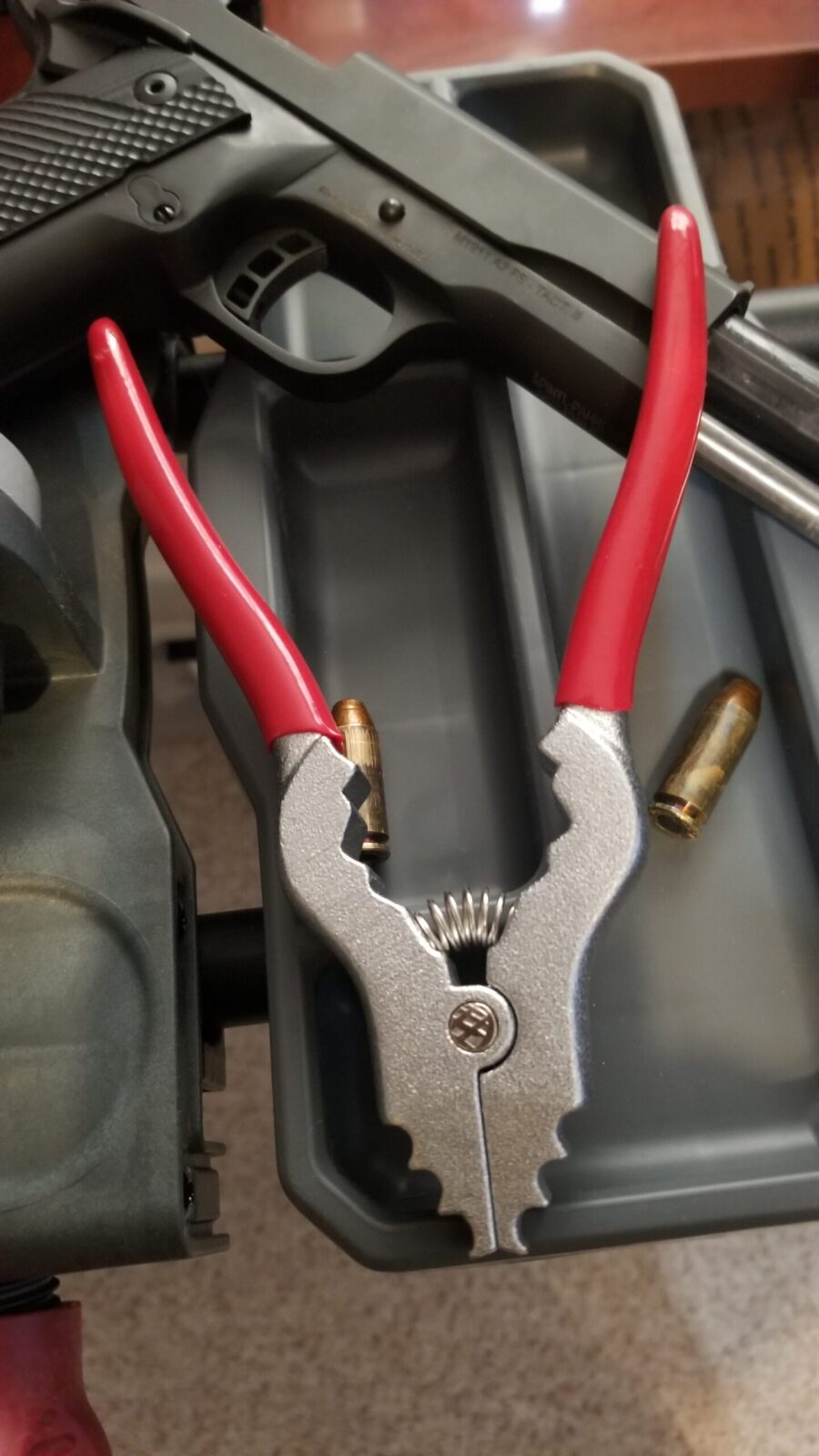
I get it in the ballpark and then I fine tune by spreading the front lips open a bit with malleable chain pliers – these are made for being the links of chain that some hanging light fixtures have. Any plier that opens when you squeeze it, such as external snap ring pliers, can work.

Close-up of a black horn khukuri handle with decorative carving and metal bolster
These are malleable ring chain pliers. You can find them readily on Amazon or eBay – plus there are good odds that your local store selling hanging lights might have them as well. Also not the dummy rounds pictured and the odd mottled color. Those are from Realistic Snap Caps and work great.

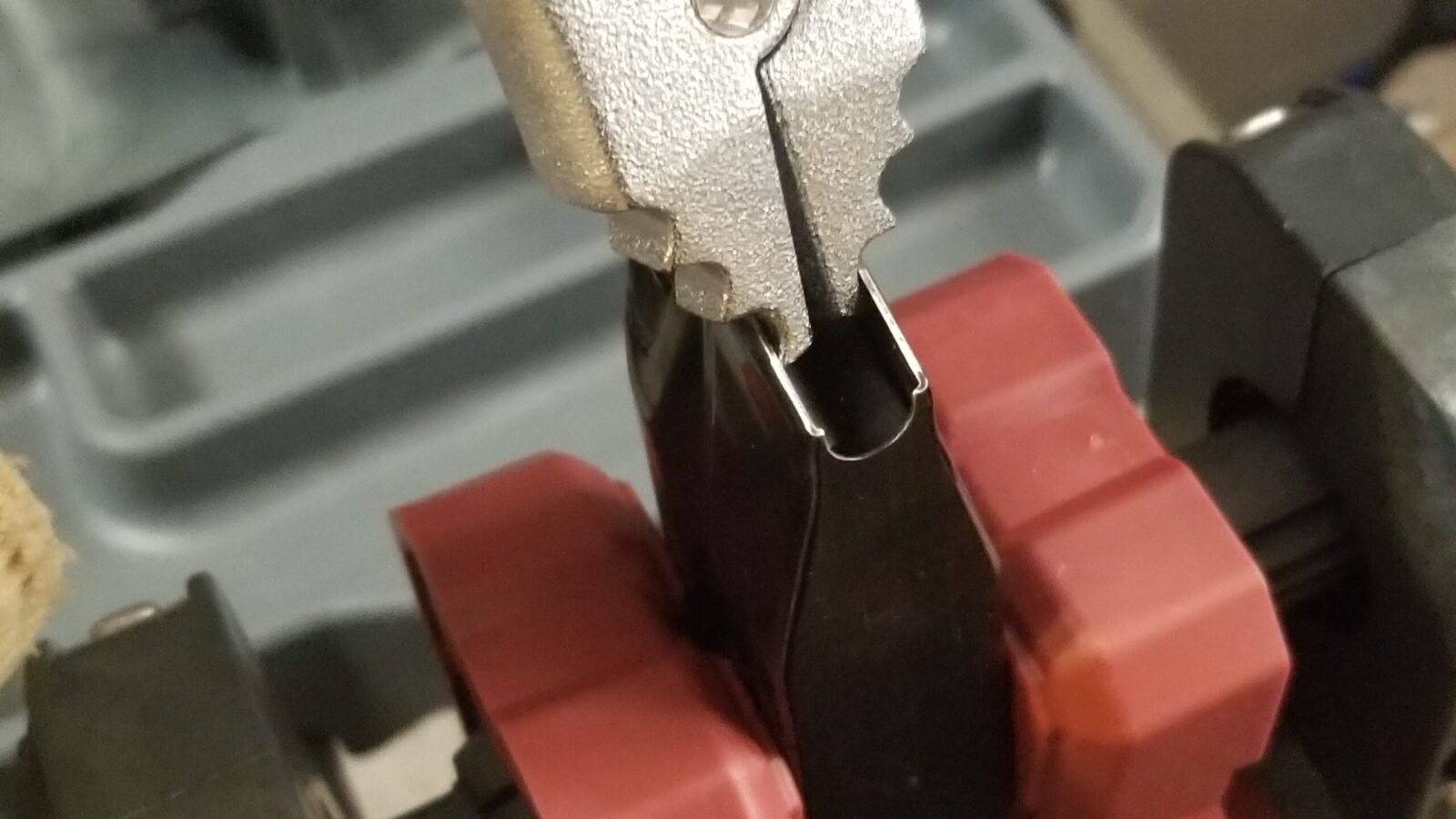
What I do is to put the pliers inside the front edge and open just a tad. I don’t try to do it all at once – it doesn’t take much to open them up a slight bit. So do that and then test with dummy rounds (snap caps) over and over. You will trash a lot of dummy rounds doing this so keep spares around. I absolutely do not recommend doing this with live ammo – it’s an accident waiting to happen.

Close-up of a black horn khukuri handle with decorative carving and metal bolster
You just want to open that front part a bit to raise the cartridge up. If you need to close it. I really prefer using a vise or non marring pliers to squeeze the lips shut. Some guys use a rubber tipped hammer and that works for them but I prefer more control.
Close-up of a black horn khukuri handle with decorative carving and metal bolster
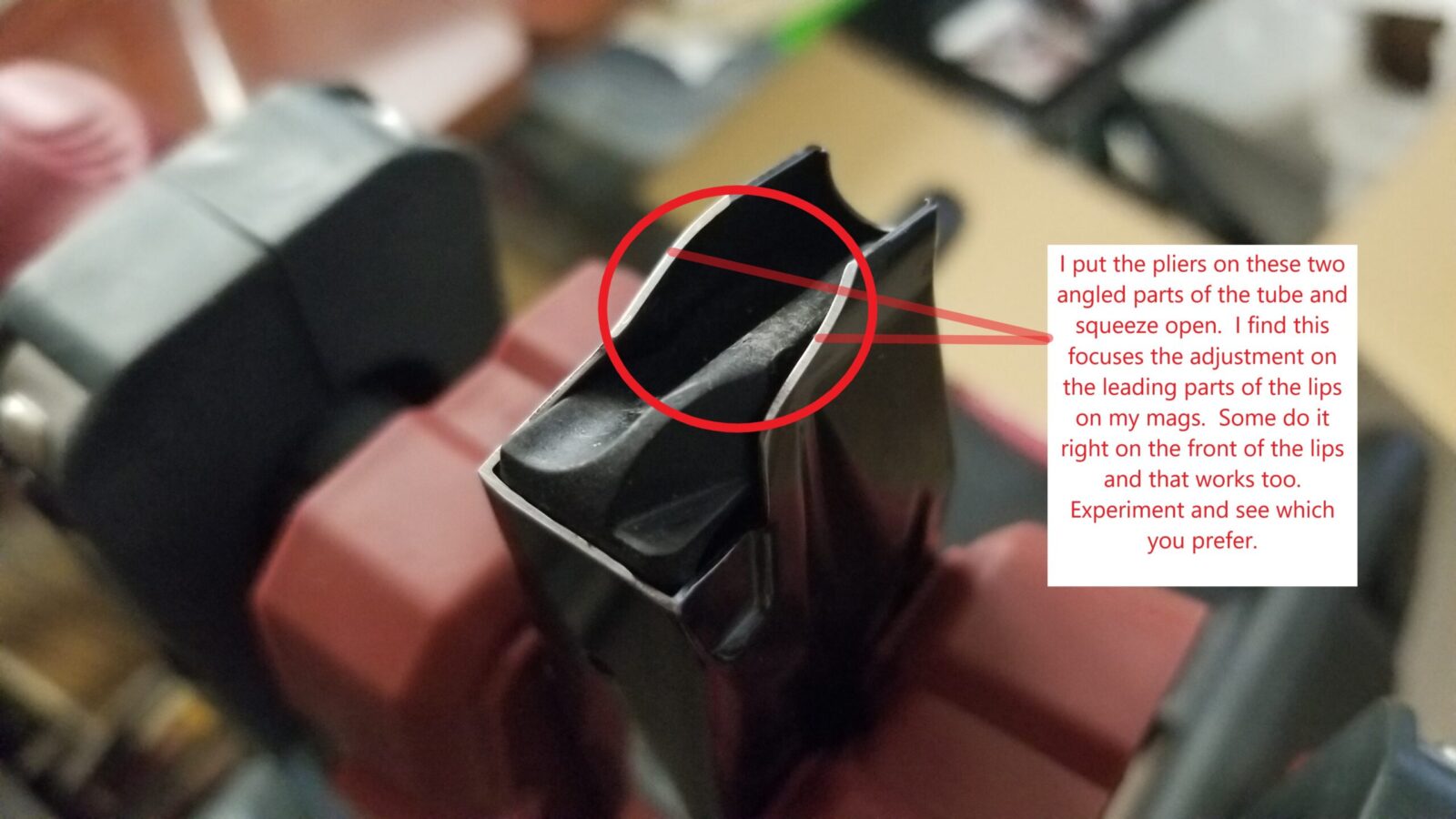
I put my pliers on that angled portion of the magazine tube to spread open the front but there are other approaches also.

You really need to experiment with every mag and fine tune them. I don’t have a set of measures that works perfectly every time. Instead, just remember to aim the bullet at the chamber and tune from there.

Last comment – always take your pistol to the range and make sure a magazine is reliable before you count on it. I like to number my mags to I can keep tabs on ones that are having problems and need adjustment.

Conclusion

This is what I do and it works for me. I know other guys have other approaches so do some searching and decide what works best for you. I hope this helps you out.


Note, I have to buy all of my parts – nothing here was paid for by sponsors, etc. I do make a small amount if you click on an ad and buy something but that is it. You’re getting my real opinion on stuff.


Please share the link on Facebook, Forums, with colleagues, etc. Your support is much appreciated and if you have any feedback, please email us in**@*********ps.com. If you’d like to request a report or order a reprint, please click here for the corresponding page to open in new tab.