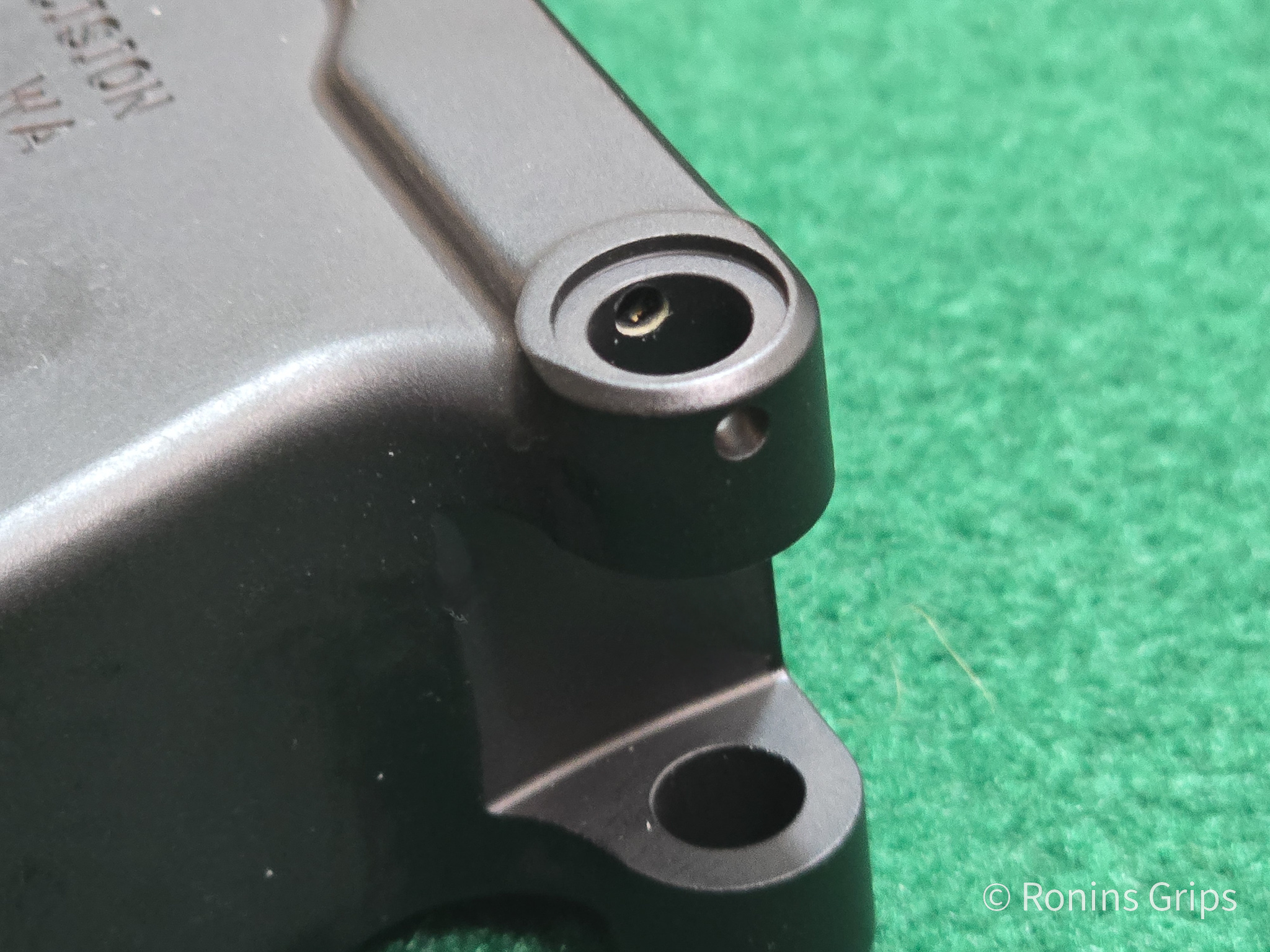
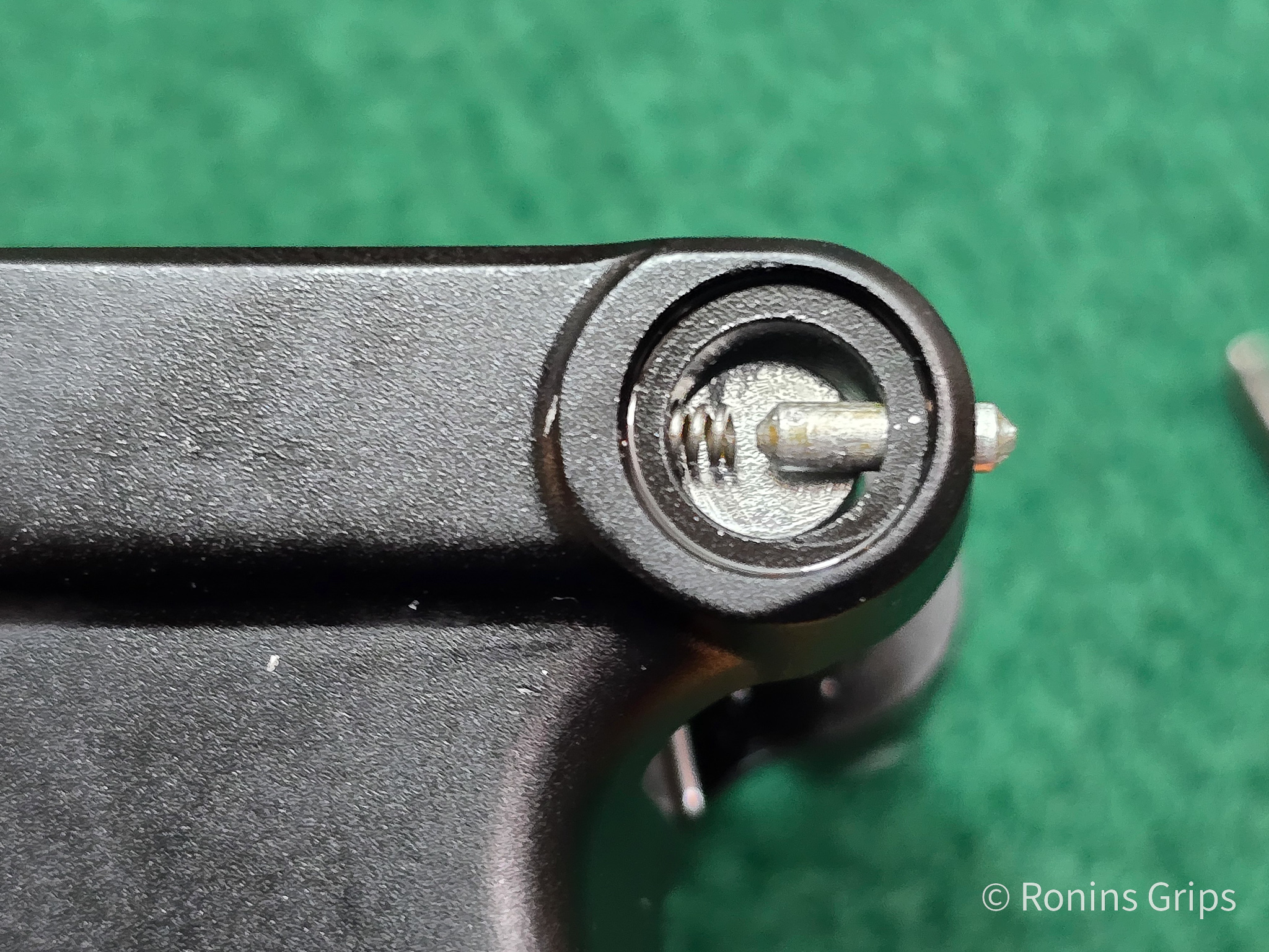
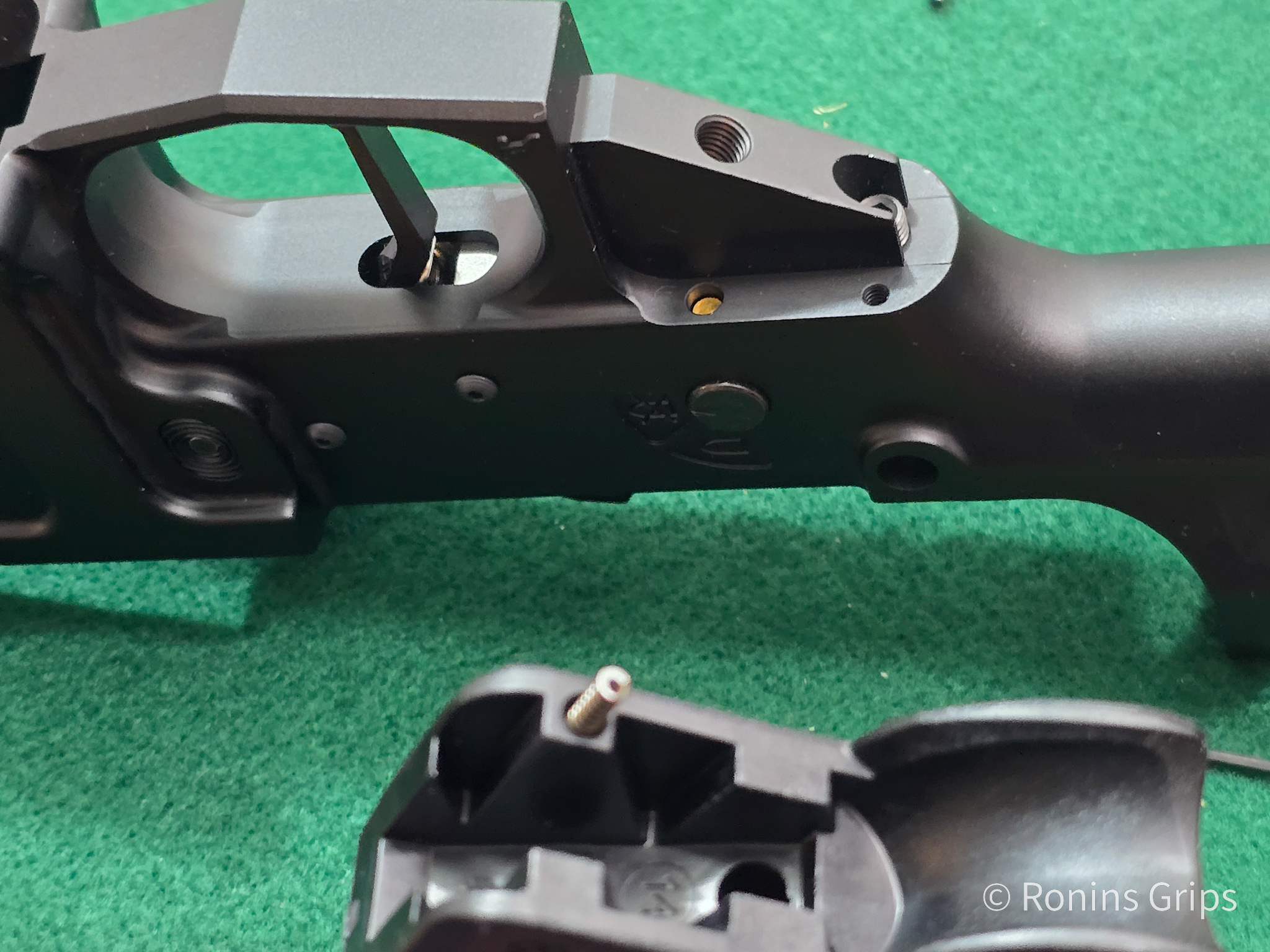
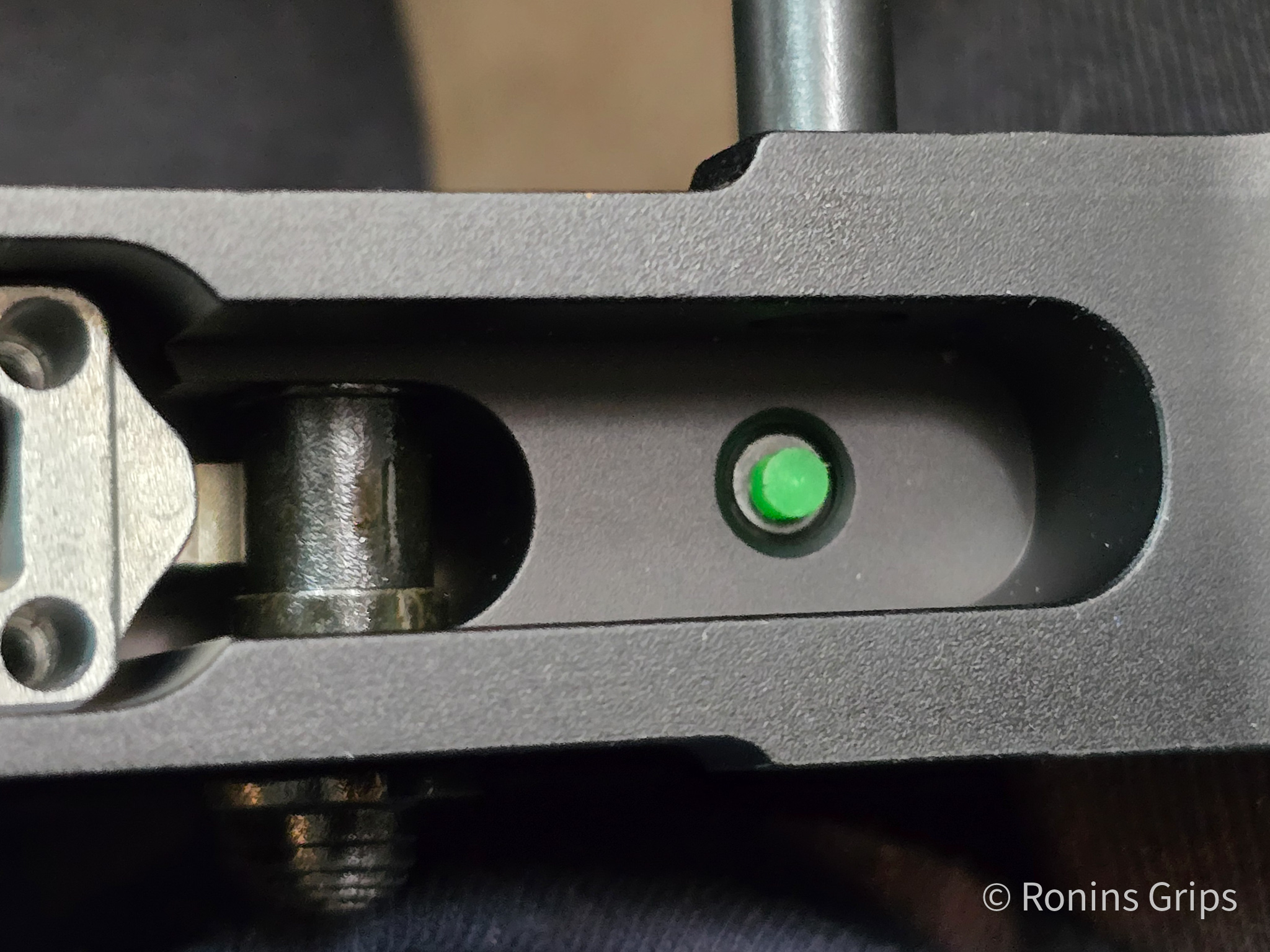
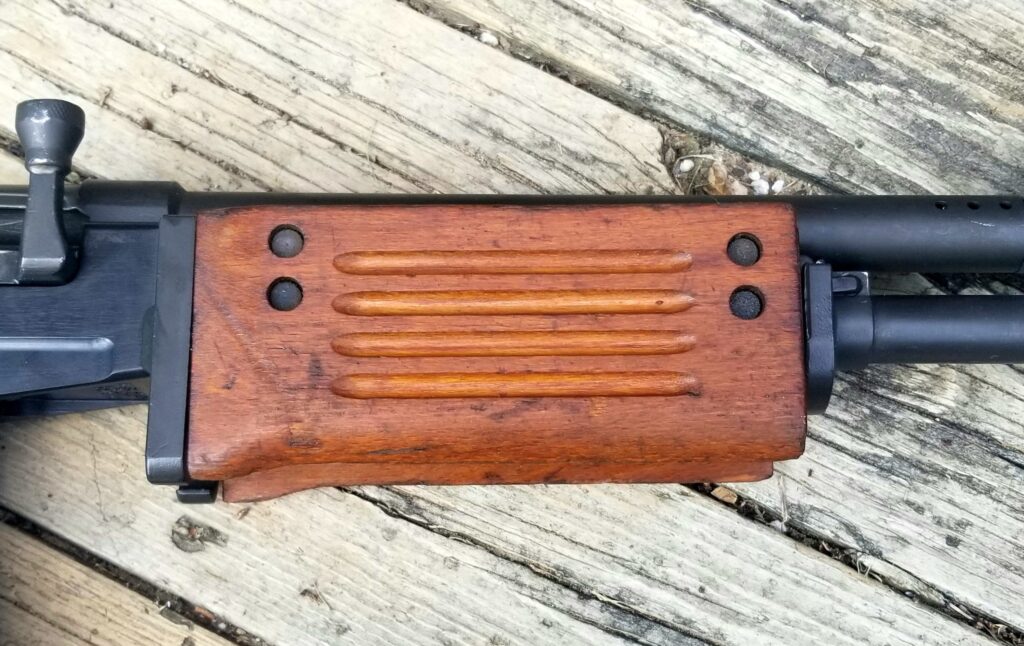
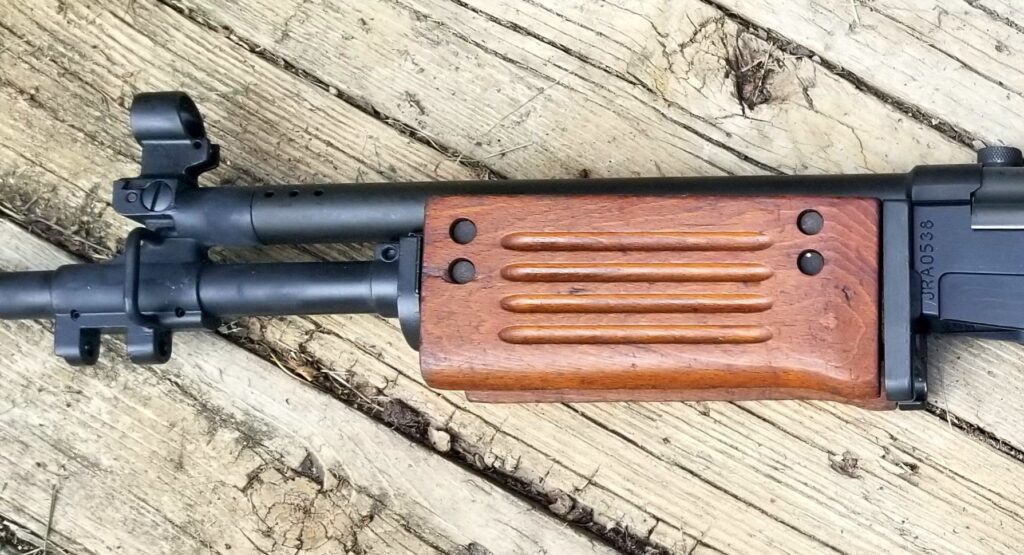
The importation of Zastava M77 parts kits into the United States civilian market provides an opportunity to examine an early Cold War-era battle rifle. These specific kits are derived from the original milled-receiver variants of the M77 and M77A1, chambered in 7.62×51mm NATO1. Sourced primarily from surplus stockpiles in Cyprus and Mali, these parts kits represent the platform in its original, select-fire military configuration1. This report analyzes the historical development, manufacturing evolution, international deployment, demilitarization, and modern civilian rebuilding process of the milled Zastava M77, distinguishing it from modern stamped commercial variants.
2. Origins and Design Intent
The Zastava M77 was developed in the late 1970s by Zastava Arms in Kragujevac, Yugoslavia (present-day Serbia)4. The design intent was to produce a full-power battle rifle chambered in 7.62×51mm NATO to appeal to export markets, particularly non-aligned nations or those utilizing NATO-standard ammunition4. This initiative aligned with Yugoslavia’s strategic push toward self-reliant arms manufacturing and export revenue generation following the 1948 Tito-Stalin split4.
To accommodate the larger and higher-pressure 7.62×51mm cartridge, Zastava engineers scaled up the proven Zastava M70 action, itself a derivative of the Kalashnikov system4. The M77 retained the long-stroke gas piston and rotating bolt mechanism, noted for its reliability in adverse conditions such as dust and mud, but incorporated strengthened components, including an enlarged receiver and a longer barrel4.
3. Manufacturing Evolution: Milled vs. Stamped Receivers
Initial production of the M77 commenced in 1977 utilizing forged and milled steel receivers4. The decision to use milled steel for the early runs was to ensure structural durability and rigidity to handle the recoil and pressure of the 7.62 NATO round4. Milled receivers start as a solid block of steel and undergo machining, resulting in a robust but labor-intensive monobloc receiver7.
By the mid-1980s, Zastava Arms transitioned the M77 production line to utilize 1.5mm stamped steel receivers with reinforced, bulged front trunnions—a structural element adapted from the Soviet RPK light machine gun4. This transition was driven by the need for cost efficiency, reduced machining time, and higher-volume manufacturing capabilities4. While specific weight savings for the M77 platform are not definitively documented by Zastava, transitioning from a milled to a stamped receiver in standard Kalashnikov platforms typically yields a weight reduction of approximately 0.37 kilograms (0.8 pounds)8. A standard stamped M77 B1 weighs approximately 4.35 kg (9.6 lbs) unloaded, with heavier bipod-equipped light machine gun variants reaching 4.8 kg (10.6 lbs)5.
4. International Sales and Combat Deployment
Because the Yugoslav People’s Army predominantly utilized intermediate-caliber rifles like the M70, the M77 was relegated to a niche role domestically and marketed for export5. The milled M77 battle rifles were notably adopted by the Cypriot National Guard and the Armed Forces of Mali3.
The M77 experienced combat across several regional conflicts. It was fielded during the Lebanese Civil War, the Yugoslav Wars of the 1990s, and various internal conflicts and Tuareg Rebellions in Mali10. In Mali, the rifle was specifically issued to elite units, including paratroopers and the Presidential Guard3.
Service in Cyprus: The Cypriot National Guard procured approximately 1,000 milled M77 rifles in the late 1970s12. They obtained both standard battle rifles and heavy-barreled light machine gun variants equipped with bipods13. The weapon was utilized for decades before being phased out of standard issue to modernize their armories9. The design favored rugged field use. The mechanical loose tolerances and simple mechanics ensured reliability, though the heavy baseline weight and increased recoil of the 7.62 NATO round made it more challenging to control in fully automatic fire compared to intermediate-caliber platforms5. Some of the parts kits imported into the U.S. have been noted by consumers as bearing Greek writing on the wooden furniture, pointing directly to their Cypriot service origins3.
5. Demilitarization and U.S. Importation
Following their phase-out from active military service, these rifles were classified as surplus. Due to United States import regulations administered by the Bureau of Alcohol, Tobacco, Firearms and Explosives (ATF), intact select-fire receivers and original foreign-made machine gun barrels are prohibited from civilian importation7. Consequently, the rifles were demilitarized overseas prior to import. The original milled steel receivers were torch-cut (destroyed), and the original 500mm (19.7-inch) cold-hammer-forged, non-chrome-lined barrels were removed14. Unlike some other Warsaw Pact designs, original Yugoslavian military barrels were historically non-chrome-lined, relying instead on the hardness of the steel and rigorous cleaning regimens15.
The parts kits were imported into the United States primarily in the early 2020s. Bowman Arms (which merged with GALLO Inc. in early 2023 to become Bowman Armaments) served as a primary importer of the surplus materials, which were subsequently distributed to the retail market by companies including Apex Gun Parts and Centerfire Systems1. These imported kits included all original matching components—such as the bolt carrier group, adjustable gas block, trigger guard, and wooden furniture—minus the receiver and barrel2.
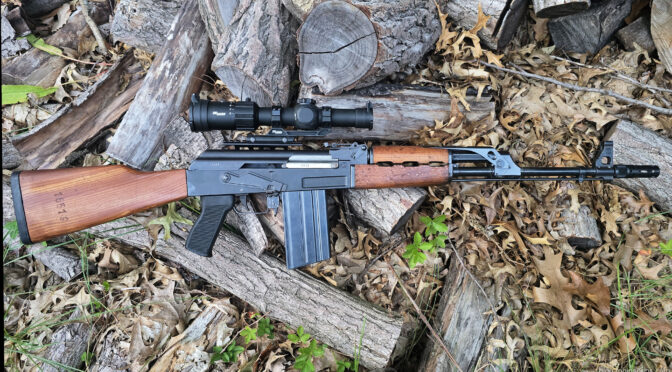
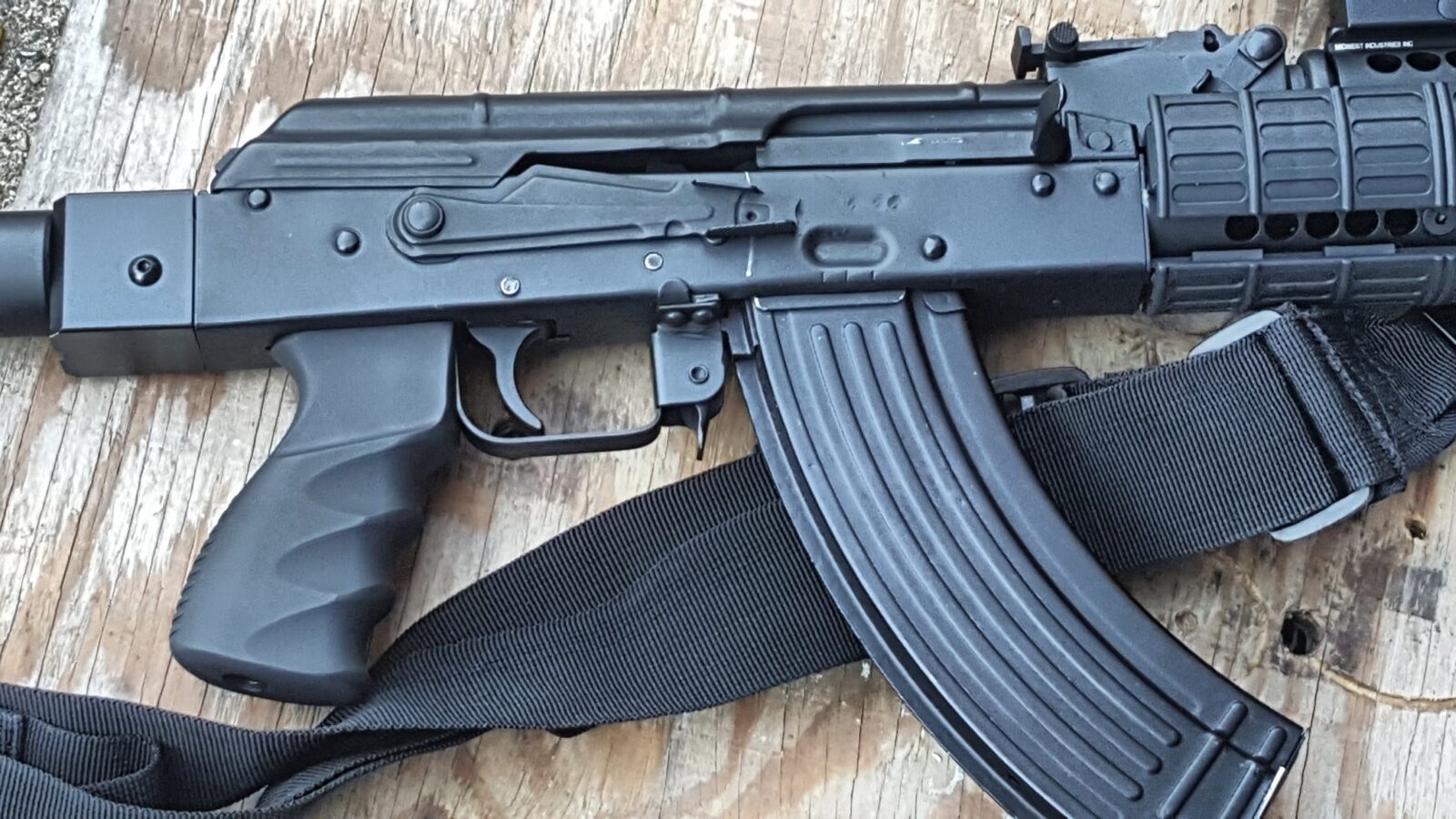
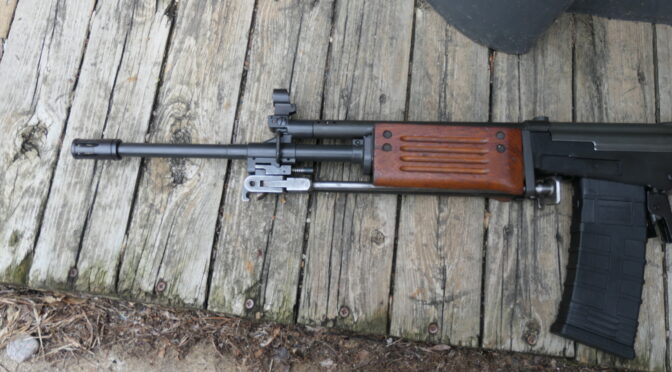
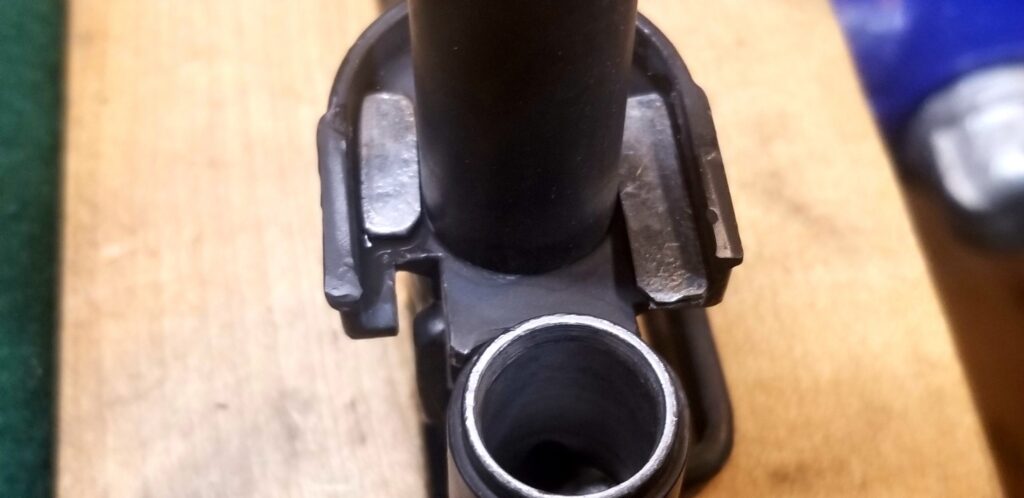
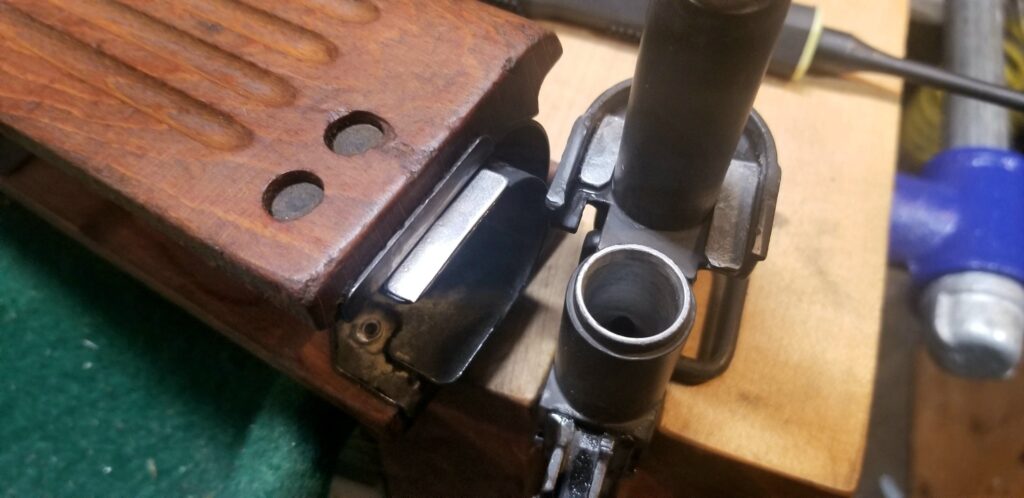
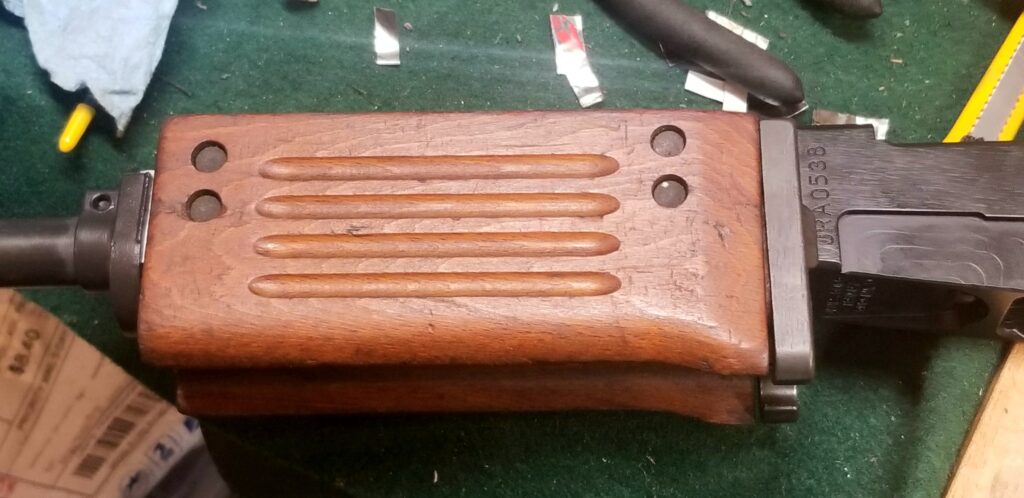
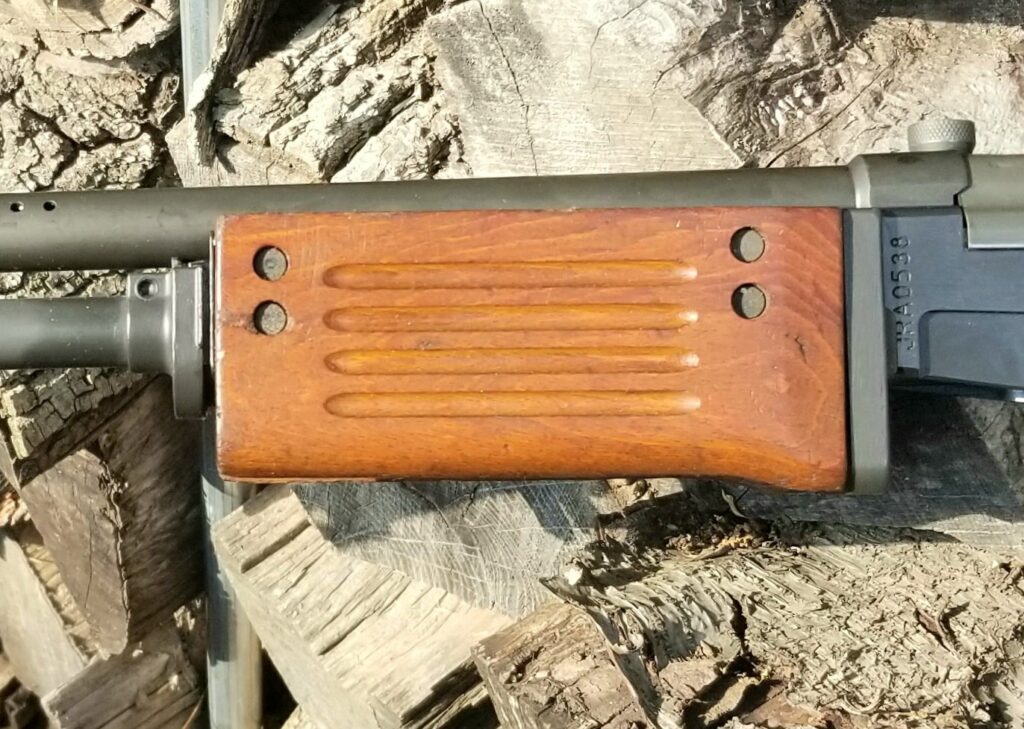
Apex Gun Parts sells Good and Very Good Condition M77 kits and barrels. This photo is of one of the author’s Very Good condition kits.
6. Civilian Rebuilding and Market Feedback
The availability of these surplus kits created a specific segment in the U.S. firearm building community. To reconstruct the rifles into legal, semi-automatic civilian firearms, builders require a new, domestically manufactured receiver and barrel7.
Tortort Receivers and Barrels: A primary replacement for the destroyed original receiver is manufactured by Tortort Manufacturing. Tortort produces a 100% milled receiver CNC-machined from 4140 billet steel, which is then heat-treated to military specifications19. Builders pair these with US-made 4150 nitride-treated barrels21. Builder feedback indicates the Tortort receivers provide accurate dimensional tolerances and rigidity, replicating the original 1970s Zastava design18. Building a milled AK-pattern rifle from a parts kit requires specialized gunsmithing tools, including a hydraulic press to install the barrel and precision gauges to set the headspace correctly16.
Commercial Assemblies (Riley Defense): In addition to home builders, Riley Defense acquired a number of these surplus kits and Tortort receivers to produce and sell complete, assembled rifles known as the RAK-30823. Market feedback on the Riley Defense assemblies varies. Many users report reliable function and appreciate the use of authentic surplus parts paired with the milled Tortort receiver22. However, some consumers have documented assembly and quality control issues. Reported anomalies include side optic rails that do not accommodate standard AKM or Yugo mounts, and systems that feel over-gassed out of the box, requiring manual adjustment of the weapon’s gas block to function smoothly26.
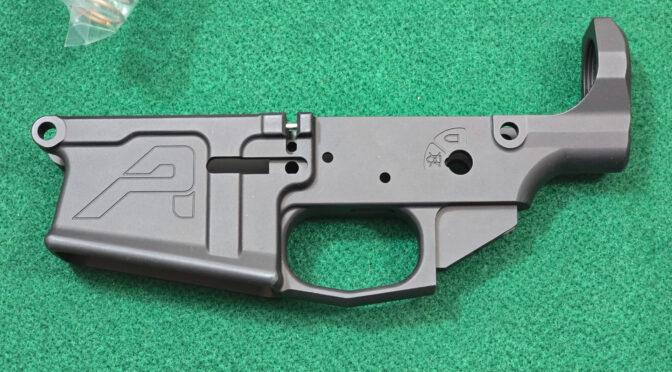
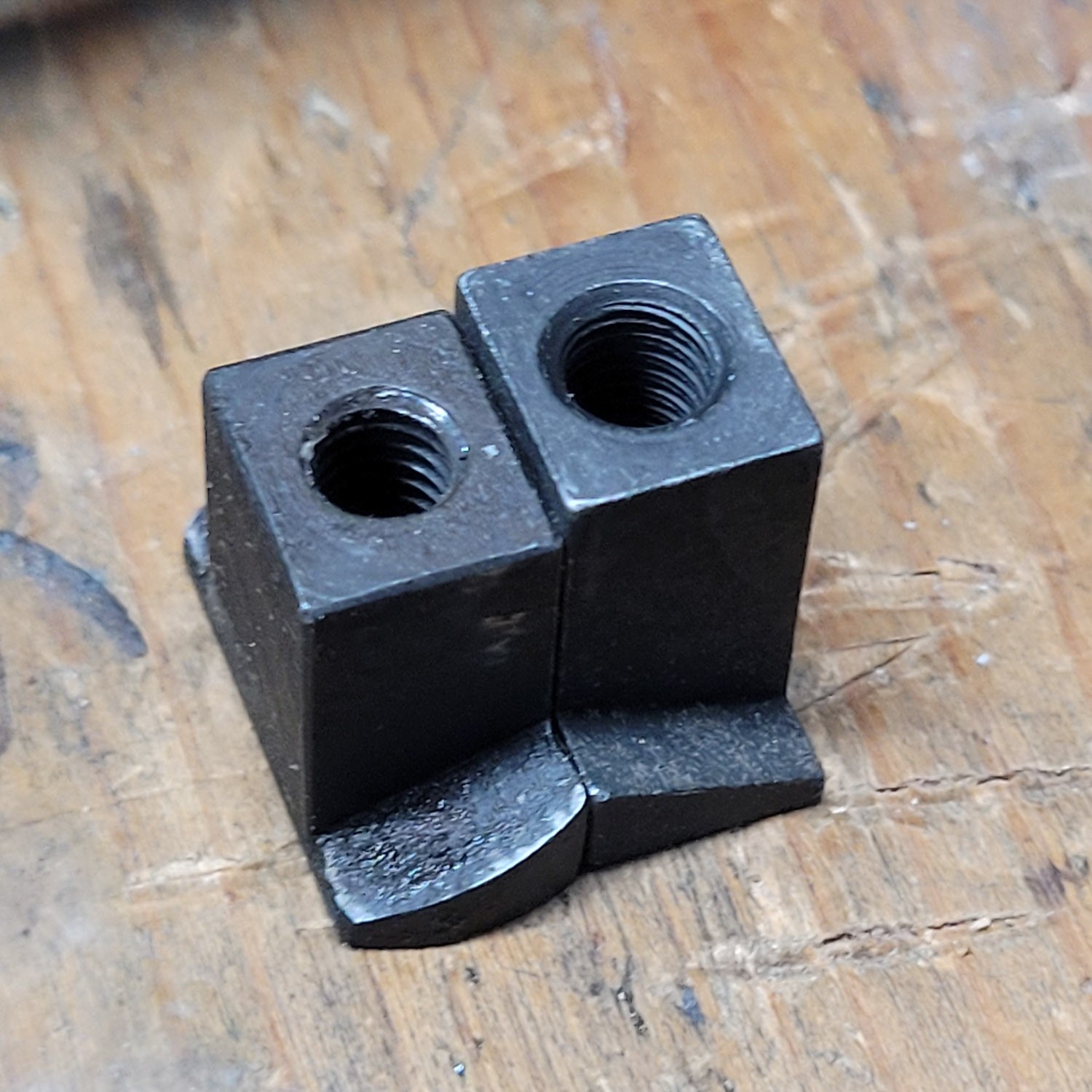
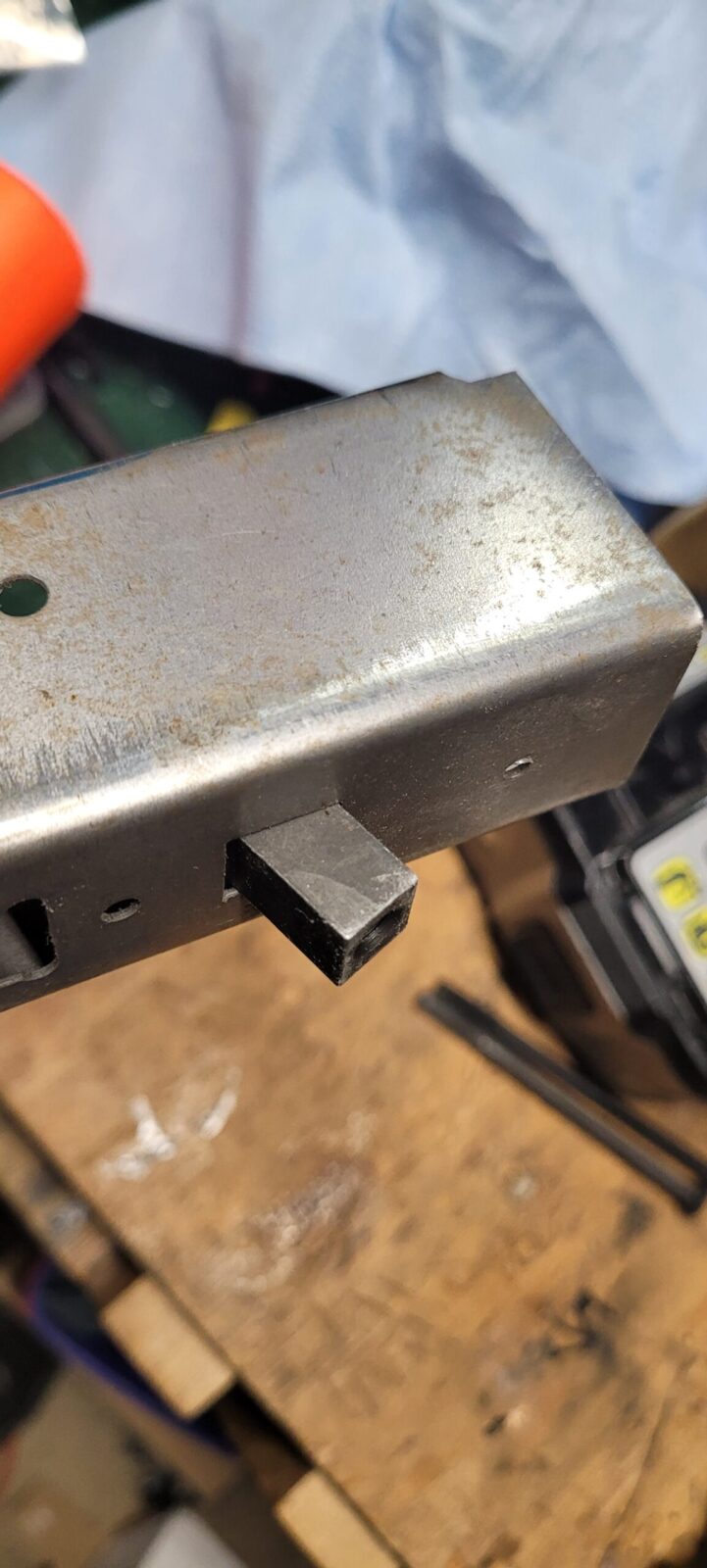
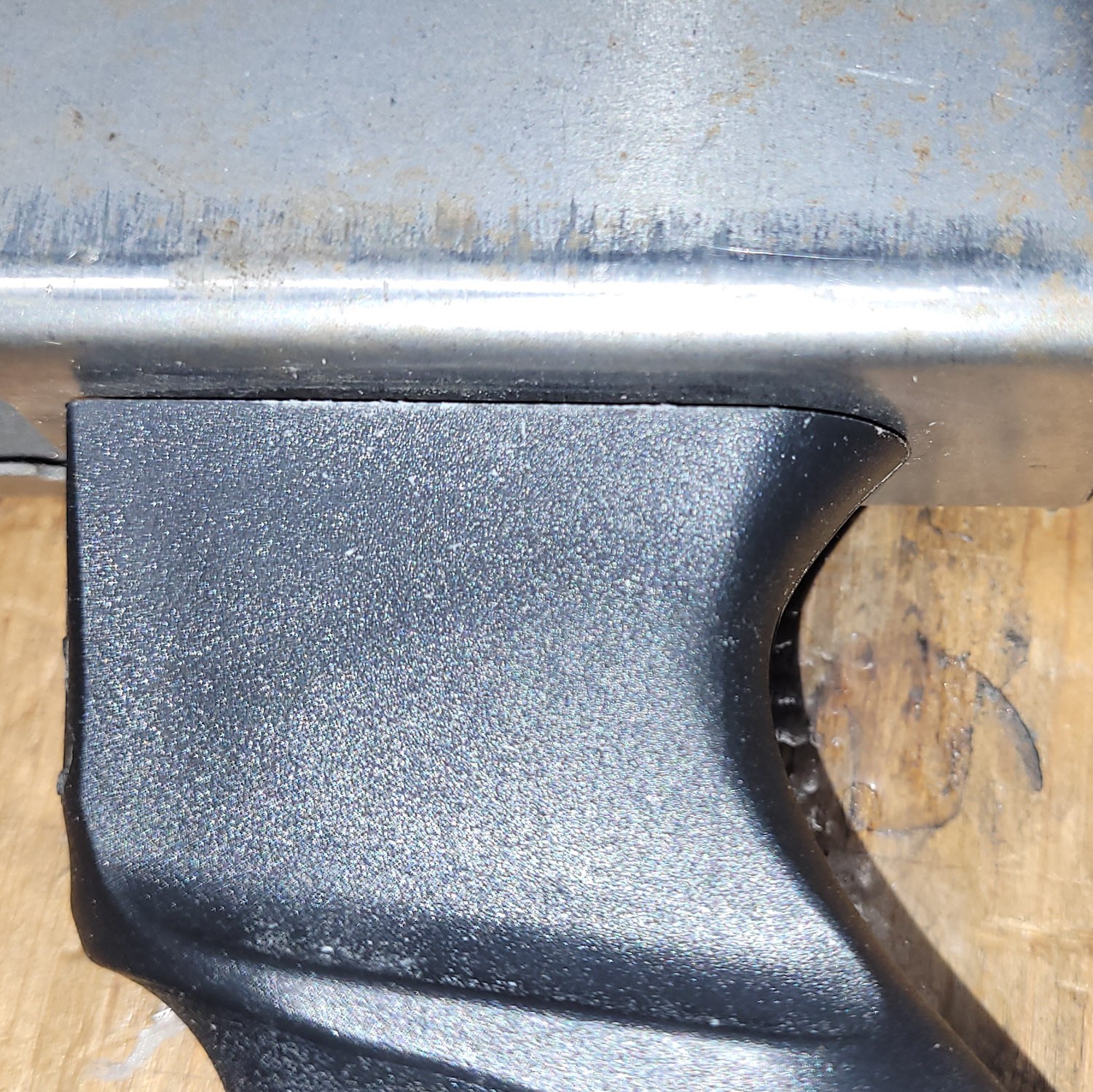
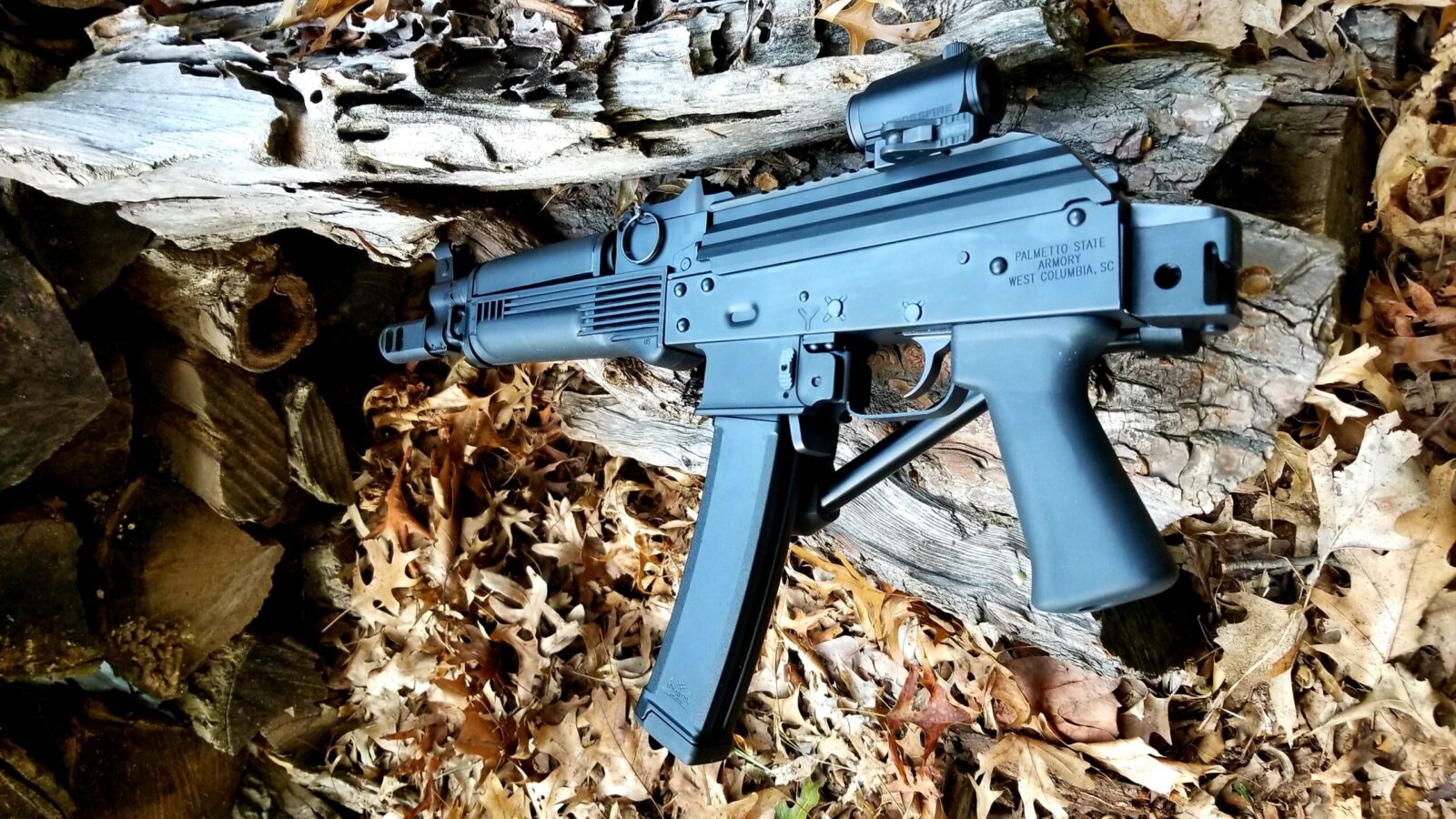
The receiver was made by Tortort for Riley Defense. They include the bullet guide rivet cover plate plus an approximately AKM-sized side scope rail that is mounted in the predrilled receiver holes.
7. Technical Specifications and The M77A1 Variant
The original platform utilizes a proprietary 20-round straight-profile steel box magazine9. As original magazines are scarce, US manufacturers like Csspecs have developed 20- and 25-round replacements that function in rebuilt kits27. Standard mechanical accuracy for rebuilt rifles ranges from 1.5 to 3.5 Minute of Angle (MOA), largely dependent on the quality of the new barrel, trigger installation, and the ammunition used29.
A significant subset of the imported kits belongs to the M77A1 variant. While the standard M77 B1 utilizes a traditional or adjustable gas block, the M77A1 is equipped with a dual-adjustable gas block integrated with a folding rifle grenade ladder sight2. When the grenade sight is deployed vertically, a rotary valve physically shuts off the gas port. This isolates the operating system, preventing the action from cycling and directing the total energy of a blank cartridge forward to launch a rifle grenade3.
8. Conclusion
The milled receiver Zastava M77 parts kits offer a detailed look into Yugoslavia’s Cold War-era strategy to produce a durable, full-power battle rifle for the global market. Designed for durability and utilizing a milled steel receiver, the M77 saw service in Mediterranean and African conflicts before being phased out. The importation of these torch-cut kits into the U.S. market has allowed collectors to reconstruct the platform using domestic receivers and barrels. While the rebuilding process requires specialized tooling and some commercial assemblies present dimensional inconsistencies, the resulting rifles provide a historically accurate representation of the original 1977 design.
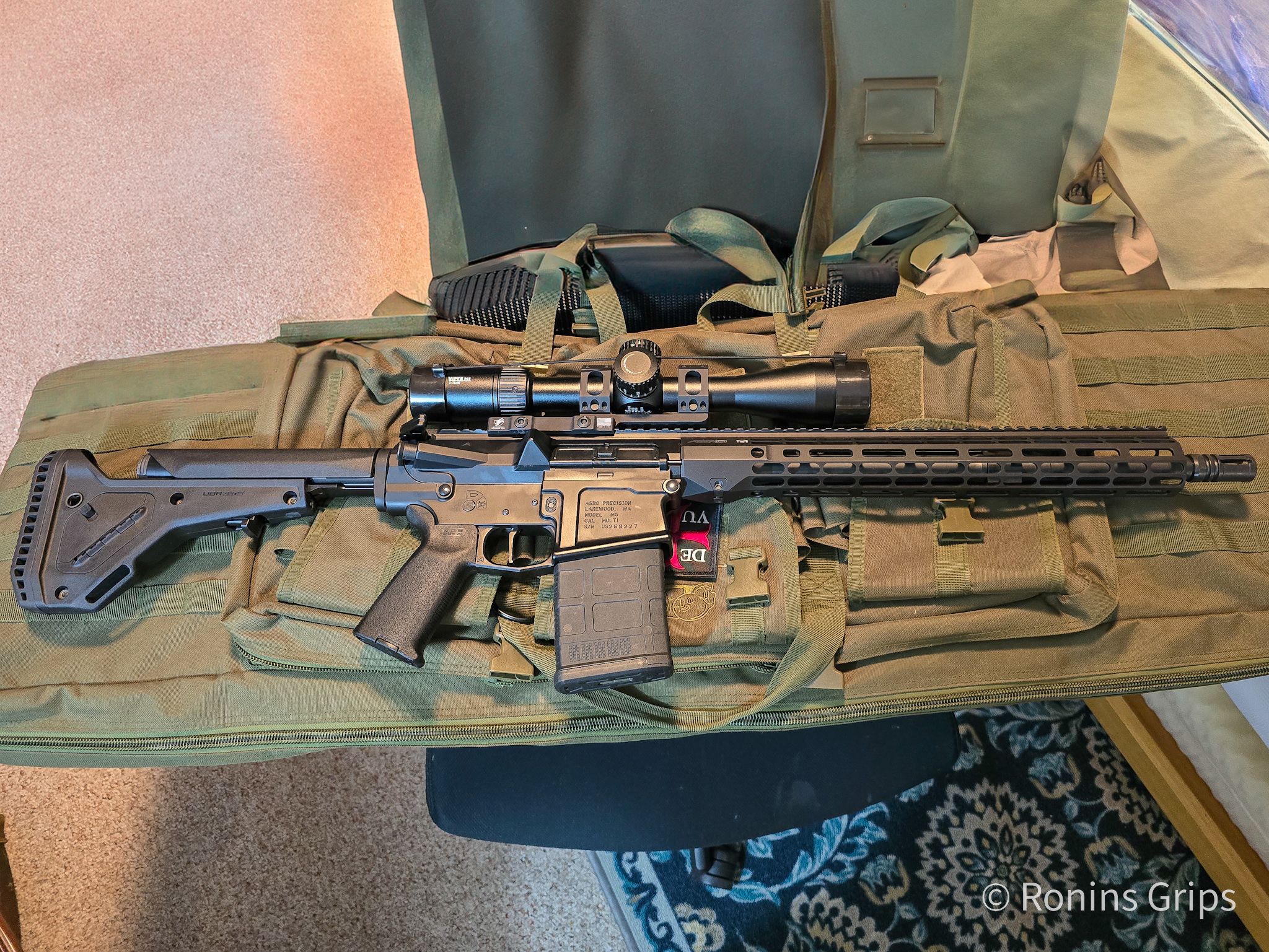
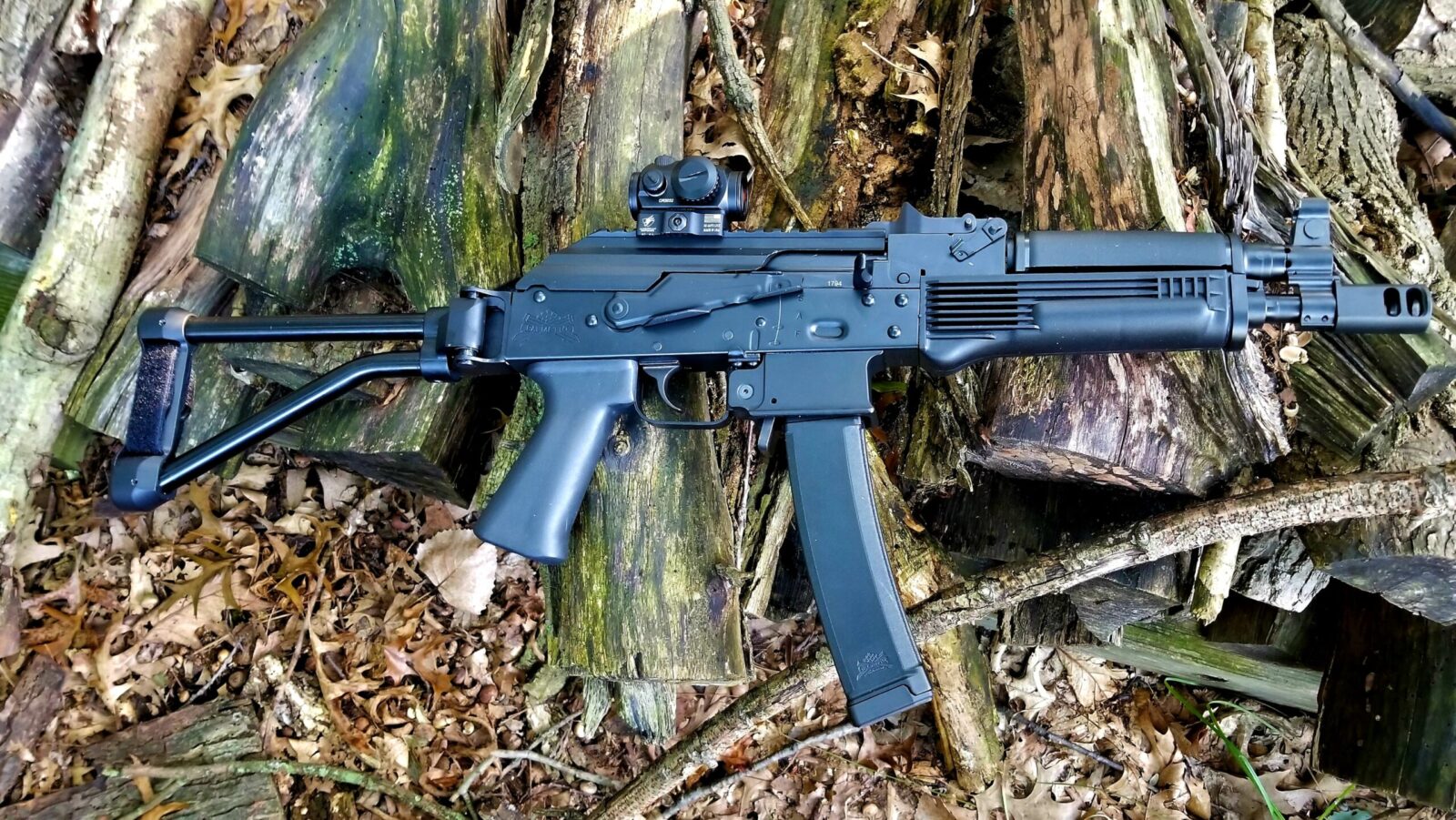
The author’s M77 rifle. CNC Warrior Russian brake, RS-Regulate 303M and AKR optic mounts, SIG 1-8 LPVO and Ronin’s Grips M70 grip. The trigger is an ALG Enhanced unit.
Master Summary Table
Specification / Attribute
Details
Manufacturer
Zastava Arms (Kragujevac, Yugoslavia/Serbia)6
Model Variants (Imported Kits)
M77 B1 (Standard Battle Rifle), M77A1 (Adjustable Gas Block with Grenade Sight)2
Caliber
7.62×51mm NATO / .308 Winchester6
Operating System
Gas-operated, long-stroke gas piston, rotating bolt6
Original Receiver Architecture
Forged and Milled Steel (Introduced 1977); Destroyed/Torch-cut for US import compliance4
Cypriot National Guard (~1,000 rifles), Armed Forces of Mali10
Combat Deployment History
Lebanese Civil War, Tuareg Rebellions (Mali), Yugoslav Wars10
Ammunition Feeding System
20-round proprietary Zastava pattern (U.S. manufactured Csspecs magazines commonly utilized)9
Cyclic Rate (Original Military)
Approximately 620 rounds per minute6
Civilian Accuracy Expectations
1.5 – 3.5 MOA (Dependent on ammunition, barrel, and builder quality)29
Please share this post with colleagues, on forums, etc. Your support is much appreciated, and if you have any feedback, please email us in**@*********ps.com.
The global tactical small arms market, specifically the 12-gauge semiautomatic shotgun sector, has experienced significant structural shifts leading into June 2026. This evolution is driven primarily by the maturation of the secondary import market following the expiration of core patents related to the Auto-Regulating Gas-Operated (A.R.G.O.) system initially developed by Benelli Armi SpA. This development has catalyzed the rapid proliferation of M4-style semiautomatic shotguns. These high-fidelity cloned platforms now compete aggressively on price while attempting to replicate the engineering baseline, metallurgical standards, and modular architecture established by the original Italian design.
A targeted and exhaustive sentiment analysis of social media platforms, specialized firearms forums, and aggregate review data specifically isolated for June 2026 reveals clear market stratification. The data indicates that while the original equipment manufacturer (OEM) models retain the highest positive sentiment regarding absolute reliability, durability under adverse conditions, and deployment readiness, specific tier-one imports have successfully disrupted the market. These clones have achieved acceptable operational thresholds for civilian and recreational applications at a fraction of the capital expenditure required for the OEM platform.
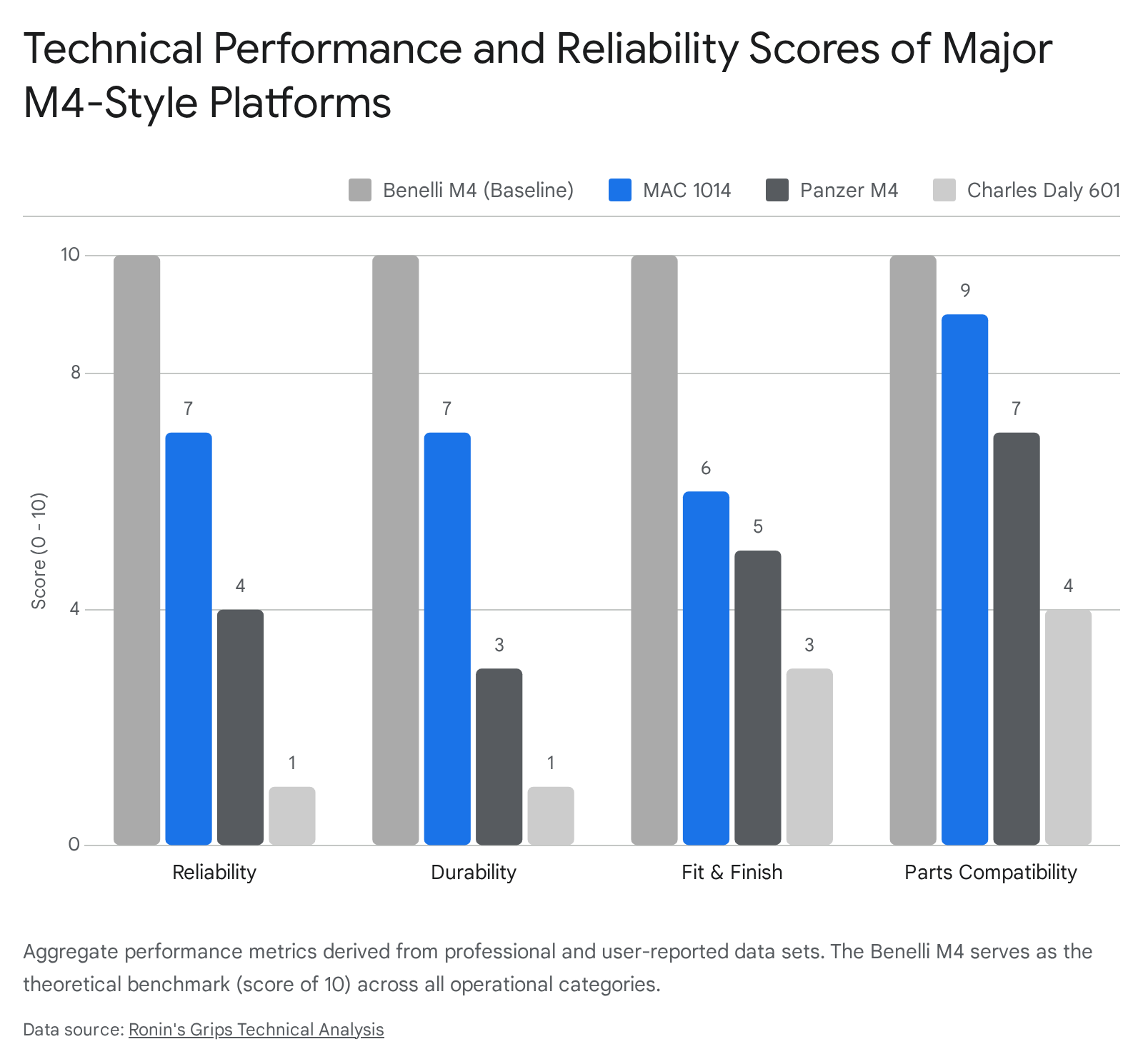
The following table identifies the top ten M4-style firearms ranked by positive consumer sentiment for June 2026. The ranking reflects a synthesis of reported reliability, out-of-the-box functionality, parts interchangeability, and perceived consumer value.
The current landscape of the tactical 12-gauge sector is heavily influenced by the manufacturing capabilities situated in the Beyşehir and Üzümlü regions of Turkey, which serve as the industrial hub for small arms exportation.1 As the original patents for the dual-piston gas system expired, these industrial hubs capitalized on reverse-engineering the action, leading to what industry observers colloquially labeled the “Year of the Clone”.2 This influx of affordable, aesthetically identical shotguns has fundamentally altered consumer purchasing habits, forcing market analysts to re-evaluate the baseline metrics for entry-level tactical shotguns.
The primary driver of positive sentiment in June 2026 is the price-to-performance ratio. Consumers express a strong willingness to tolerate minor cosmetic imperfections, substandard finishing techniques, or the requirement for a physical “break-in” period in exchange for a firearm that costs approximately twenty to twenty-five percent of the original Italian counterpart.3
However, market analysis indicates a clear bifurcation in operational expectations. Professional end-users, law enforcement personnel, and duty-oriented consumers continue to default to the OEM Benelli models. These demographics cite the metallurgical superiority, master craftsmanship, and the zero-tolerance failure rate required for combat or home defense as non-negotiable attributes.4 In these high-stakes applications, the potential for a catastrophic failure or a simple failure to extract (FTE) renders budget clones unacceptable. Conversely, the civilian recreational, target shooting, and practical application markets are actively and enthusiastically absorbing the clone variants.5 The sentiment around these imported models relies heavily on aftermarket compatibility; platforms that achieve a high percentage of parts interchangeability score significantly higher in user satisfaction.7 This interchangeability allows users to purchase a baseline imported receiver and barrel, and subsequently swap inferior factory extractors, magazine springs, or charging handles with OEM Italian parts, effectively creating a hybrid firearm that mitigates the most common failure points of budget manufacturing.9
3. Theoretical and Engineering Foundations of the A.R.G.O. Platform
To properly contextualize the product analysis and understand why specific clones fail while others succeed, a deep understanding of the underlying operating system is required. The Auto-Regulating Gas-Operated (A.R.G.O.) system is a marvel of late-20th-century firearms engineering. Originally developed in 1998 by Benelli to meet the stringent requirements of the U.S. Marine Corps’ Joint Service Combat Shotgun program, the system relies on dual, self-cleaning stainless steel pistons positioned just forward of the chamber.7
The mechanical genius of this system lies in its departure from traditional long-stroke gas operation. In standard gas-operated shotguns, a single, elongated gas system is routed beneath the barrel, utilizing complex, heavy action bars that run the length of the magazine tube to cycle the bolt. The A.R.G.O. short-stroke piston design operates directly against the bolt assembly. High-pressure gas is tapped from the barrel directly forward of the chamber, driving the dual short-stroke pistons rearward against the bolt assembly to initiate the unlocking sequence. This architecture significantly reduces the total mass of the moving parts, mitigates felt recoil, and isolates the gas ports from environmental fouling.11
Furthermore, the “auto-regulating” nomenclature refers to the system’s mechanical ability to bleed off excess gas pressure. When firing high-velocity magnum loads, the system dynamically expels unnecessary kinetic energy, preventing the bolt carrier from battering the rear of the receiver. Simultaneously, it retains sufficient dwell time and pressure to cycle standard 2.75-inch tactical buckshot or slugs reliably without user adjustment.10
The primary engineering failure point observed in lower-tier clones involves improper gas port sizing, poor surface finishing on the pistons, or inferior metallurgy. If the gas ports are drilled with excessive variance, or if the stainless steel pistons lack the requisite hardness and polish, the system experiences immense parasitic friction. This results in sluggish cycling speeds and failures to extract (FTE), particularly when operating with lower-pressure European tactical loads.13 The success of top-tier clones in the current market is directly proportional to their ability to precisely machine these critical gas system components to match the OEM tolerances.
4. Product Analysis and Vendor Pricing
The following sections detail the top ten platforms identified in the June 2026 sentiment analysis. For each platform, current market street pricing has been meticulously assessed, and active product listings from the specified vendor network have been verified to reflect real-world acquisition costs.
4.1 Benelli M4 Tactical
The baseline Benelli M4 Tactical remains the undisputed industry standard and the benchmark against which all other semiautomatic tactical shotguns are measured. Developed specifically for the U.S. Marine Corps and extensively tested at the Aberdeen Proving Ground in Maryland, the platform is renowned for its combat-proven reliability.7 Testing protocols have demonstrated that the M4 can fire upwards of 25,000 rounds without requiring major component replacement, a testament to its exceptional metallurgy and robust A.R.G.O. design.10
Sentiment in June 2026 continues to highlight its unyielding reliability, perfectly mated internal components, and superior external fit and finish, which end-users believe offsets the high capital cost of entry.4 The standard configuration (Model 11707) includes fully adjustable ghost-ring sights with a front post protected by robust wings, a drilled and tapped aluminum receiver featuring a Picatinny rail for optical sight integration, and a heavy-duty phosphate barrel finish.14 The pistol-grip synthetic buttstock is constructed from a rubber and polymer blend that withstands extreme environmental degradation while aiding in weapon retention during dynamic movement.11
The H2O variant of the Benelli M4 commands exceptionally high positive sentiment, specifically from end-users operating in maritime, coastal, or highly corrosive environments. Historically, Benelli utilized a proprietary NP3 coating for its maritime shotguns; however, the modern H2O Tactical utilizes a highly advanced Titanium Cerakote finish applied to the barrel, receiver, and internal components.21 This ceramic-polymer composite coating significantly enhances corrosion resistance, chemical resistance, and surface hardness, ensuring the firearm remains fully operational even after prolonged exposure to saltwater spray and high humidity.
The ergonomic layout and internal mechanics remain identical to the standard M4, facilitating instinctive handling and ensuring that muscle memory transfers seamlessly between platforms.22 Market sentiment praises the aesthetic distinction and functional durability of the Titanium Cerakote, though the specialized nature of the finish and high demand often cause slight price fluctuations on the secondary market.
The Law Enforcement (LE) specific iteration of the M4 consistently generates strong positive sentiment, largely due to its restricted feature set that appeals immensely to authorized buyers, government agencies, and qualified security professionals.6 This model distinguishes itself by arriving from the factory with an extended 7-round magazine tube and a highly desirable 3-position telescoping stock.25
Civilian-imported M4 models are strictly bound by 922(r) compliance regulations, which dictate that imported shotguns cannot possess certain “non-sporting” features unless a specific number of foreign-made parts are replaced with American-made components.26 The LE model bypasses these civilian import restrictions, providing end-users with the ultimate, unadulterated combat configuration directly from the Italian factory floor. The combination of increased firepower capability and length-of-pull adjustability makes it highly sought after within qualified professional circles.
Imported by SDS Imports under the Military Armament Corp branding, the MAC 1014 has achieved the highest sentiment score among all clone variants in the June 2026 analytical window. Extensive data analysis indicates that the manufacturer has successfully navigated the gas piston tolerance issues that plagued earlier waves of Turkish imports.7 Professional reviews and user aggregates frequently characterize the MAC 1014 as running flawlessly through intense, high-volume firing schedules (often referred to as “burn downs”) with widely varied ammunition types, ranging from low-brass birdshot to magnum rifled slugs.13
A critical and defining factor in its high ranking is its astonishing 98% parts compatibility with the original Benelli M4.7 This architectural faithfulness ensures that users can utilize the vast, established aftermarket support network originally designed for the Italian gun. Whether swapping out charging handles, upgrading to a Mesa Tactical Urbino stock, or installing an extended magazine tube, the MAC 1014 accepts these components with zero requirement for hand-fitting. The shotgun features a self-regulating piston system, a ghost ring rear sight, a blade front sight, and a receiver-mounted Picatinny rail, offering unparalleled value for the budget-conscious consumer.28
The standard Panzer Arms M4 occupies a solid, reliable middle ground in the market and has maintained consistent positive sentiment for several years. It offers a direct 1:1 structural clone of the Benelli M4 design, making it a highly attractive baseline platform for consumers seeking tactical performance.3 While the external finish and internal machining marks do not parallel the Italian standard—often displaying tool marks on the bolt carrier and slightly grittier trigger pulls—the inertia-driven and gas-assisted operating system ensures reliable cycling, particularly with standard and heavier defensive loads.31
Sentiment remains heavily buoyed by its absolute compatibility with Benelli replacement parts. Notably, the standard Panzer M4 includes a buffer tube that is notched in three positions directly from the factory, accommodating aftermarket telescoping stocks without requiring the user to apply heat and entirely replace the recoil tube assembly.32 It features standard ghost ring sights, a Picatinny accessory rail, and accepts standard Benelli Mobil choke tubes.34
The Speed Pro variant from Panzer Arms represents a strategic attempt by the Turkish manufacturer to offer highly requested, factory-upgraded features directly to the consumer, bypassing the need for immediate aftermarket modification. Sentiment for this model trends strongly upward in competitive and modern tactical circles due to the inclusion of an extended M-LOK handguard for advanced accessory mounting (such as weapon lights and laser designators), and visually striking contrasting finishes like Grey/Gold, Distressed Copper, or Flat Dark Earth Scorpion Camo.31
The minor price premium over the standard Panzer model is generally well-received by the market, as it completely negates the immediate need for expensive aftermarket rail purchases. The internals remain true to the A.R.G.O. design, providing fast-handling performance built to excel in diverse environments.37
Operating on a similar conceptual framework to the Benelli H2O, the Panzer Marine Tactical applies an advanced electrolysis nickel-phosphorus plating on the metal components.33 This specialized finish provides dramatically enhanced corrosion resistance and surface durability compared to standard anodizing or bluing.
Social media sentiment for June 2026 demonstrates specific, highly targeted appreciation for this model among consumers operating in humid, coastal, or maritime environments. These users require a sacrificial, heavy-use tool for boat defense or coastal property protection without risking the severe financial penalty of degrading a $2,000 primary firearm. The Marine Tactical typically features a fixed skeletonized stock and retains full Benelli M4 parts compatibility, ensuring that maintenance in austere environments remains straightforward.33
The GForce GF4 (also widely distributed under the SAX2T designation) is a robust Turkish import that utilizes a slightly modified gas-assisted inertia dual-piston architecture.41 The consumer sentiment surrounding this firearm is grounded strictly in its utility as an extreme budget alternative rather than a precision engineering marvel.
While it possesses all the requisite tactical features—an 18.5-inch 4140 chromoly steel barrel, a durable Cerakote finish, ambidextrous thumb safety, an M-LOK equipped forend, and ghost ring sights 41—it does not command the same level of absolute aftermarket compatibility certainty as the MAC or Panzer models. It serves adequately as an entry-level platform for users unwilling or unable to invest in higher-tier clones, providing baseline semiautomatic capability.
The Charles Daly 601 DPS (Defense/Practical/Survival) leverages a venerable, century-old brand name in the shooting sports industry to market a tactical shotgun utilizing a hybrid gas piston and rotary bolt locking system.47 The receiver is machined from solid bars of aluminum alloy, keeping weight to a manageable 8.05 lbs, and it features standard Beretta/Benelli Mobil choke threads (MC-3), allowing users to precisely tune their shot patterns with Improved Cylinder, Modified, or Full chokes.47
While the external aesthetics and tactical furniture closely mimic the M4 platform, sentiment metrics indicate historical concerns regarding the longevity and durability of its gas pistons.7 Although recent manufacturing iterations have demonstrably improved reliability, it ranks lower than the newer, highly refined MAC 1014 platform in absolute user confidence, serving primarily as a recognizable legacy option.
Positioned as the absolute most affordable entry point into the tactical semi-automatic 12-gauge sector, the Charles Daly 601 Tactical relies on a traditional, older-generation gas-operated bolt system rather than a strict 1:1 short-stroke A.R.G.O. clone architecture.50 Positive sentiment in this tier is driven almost entirely by the exceptionally low barrier to entry, often dropping below $200, rather than mechanical excellence.
It functions reliably with standard high-brass loads but fundamentally lacks the modularity, extreme heavy-duty durability, and operational smoothness characteristic of higher-tier platforms.51 The shotgun features a single trigger, a checkered synthetic forend, auto ejection, and a hooded fixed front sight paired with a ghost ring rail.50 It is recommended purely for low-volume recreational use.
5. Engineering Review: Ammunition Sensitivity and Aftermarket Ecology
A comprehensive and nuanced analysis of the M4-style ecosystem requires directly addressing the primary friction point reported in user sentiment across all platforms: ammunition sensitivity. The reliability of any gas-operated firearm is inherently dictated by a complex interplay of gas dwell time, powder burn rates, internal friction, and specific wad designs.13
5.1 The Velocity Threshold
The OEM Benelli M4 is engineered with incredibly rigid metallurgical tolerances and a highly polished internal track that allows the self-cleaning pistons to cycle a vast and unpredictable spectrum of ammunition. An operator can load alternating rounds of 1-ounce light field birdshot and 3-inch magnum buckshot, and the firearm will cycle flawlessly with negligible user intervention.11
In sharp contrast, the imported clones—such as the Panzer Arms and Charles Daly series—often require a dedicated and sometimes frustrating “break-in” period. Data analysis suggests that consumers must aggressively run 100 to 200 rounds of high-velocity ammunition (minimum 1300 Feet Per Second) to mate the rougher machined surfaces and overcome stiff, unrefined factory recoil springs.13
Furthermore, specific European “low-recoil” or “reduced-recoil” tactical loads, which typically operate around 1250 FPS to minimize operator fatigue, frequently generate insufficient gas pressure to cycle the heavier, less refined bolt carrier groups found in standard clones. This specific mismatch between low-pressure ammunition and high-friction clone internals leads to consistent, repeatable failures to extract (FTE).13 Users of clone platforms are universally advised to test their chosen defensive loads thoroughly to ensure they exceed the required pressure thresholds.
5.2 The Modularity and Compliance Paradigm
The remarkably high sentiment scores of the MAC 1014 and Panzer M4 are intrinsically linked to their modularity. Because these specific platforms utilize a near-identical structural footprint to the OEM Benelli model, consumers can actively exploit a mature, decades-old aftermarket.
Users frequently upgrade critical failure points on Turkish clones by installing genuine Benelli extractors, high-performance aftermarket magazine tube springs, and oversized tactical charging handles.8 This widespread practice effectively allows a user to purchase a $450 base gun and achieve a significantly elevated level of reliability with minor internal component investments. Furthermore, the importation of these firearms is governed by Title 18 U.S.C. § 922(r), which prohibits the assembly of a semiautomatic shotgun utilizing more than 10 imported parts from a restricted list if it possesses certain “non-sporting” features (like pistol grips and extended magazine tubes). Domestic manufacturers have responded by producing 922(r) compliant American-made parts—such as followers, handguards, and trigger components—allowing users to legally expand the capacity and capability of their cloned shotguns.26
6. Comparative Analysis: A.R.G.O. vs. Competing Operating Systems
To fully understand the enduring popularity of the M4-style platform, it must be evaluated against competing modern operating systems, specifically the Benelli Inertia-Driven system (found in the M2) and the Beretta BLINK gas system (found in the 1301 Tactical).
The Benelli M2 utilizes an inertia-driven semi-automatic action, relying on the rearward recoil energy of the firearm to compress a heavy spring inside the bolt carrier, which subsequently rebounds to unlock the rotating bolt head.52 While incredibly reliable and vastly cleaner than gas guns (as no carbon is vented into the receiver), inertia guns are highly sensitive to weight addition. Hanging heavy tactical accessories like flashlights, side-saddles, and heavy optics on an M2 can absorb the recoil energy required to cycle the action, inducing malfunctions.
The Beretta 1301 Tactical utilizes the BLINK gas system, which is widely recognized as the fastest-cycling system on the market, operating up to 36% faster than competing models.52 However, it is optimized for speed and competition, whereas the M4 was purposefully built from its inception as an indestructible combat shotgun.53 The M4’s dual-piston A.R.G.O. system is heavier, resulting in a firearm that is slower to swing transitionally, but it is vastly more tolerant of added weight and harsh environmental fouling. This fundamental design philosophy—prioritizing absolute, unstoppable reliability under extreme duress over pure cyclical speed—is the foundational reason the M4 architecture continues to dominate the tactical duty space and inspire the current wave of clones.
Specification
Benelli M4 Tactical (OEM)
MAC 1014 (Clone)
Beretta 1301 Tactical
Benelli M2 Tactical
Operating System
A.R.G.O. Dual-Piston Gas
Gas-Operated Piston
BLINK Gas Semi-Auto
Inertia-Driven
Capacity
5+1 (Civilian) / 7+1 (LE)
5+1
5+1
5+1
Barrel Length
18.5 Inches
18.5 Inches
18.5 Inches
18.5 Inches
Weight
7.8 lbs
8.0 lbs
6.4 lbs
6.7 lbs
Primary Advantage
Absolute Combat Reliability
Value & 98% Compatibility
Cyclical Speed
Clean Operation / Light
7. Recoil Mitigation and Ergonomic Assessment
The ergonomic interface of the M4 platform contributes significantly to its lethal efficiency. The gas operation inherent in the A.R.G.O. system mechanically absorbs a portion of the kinetic energy during the rearward travel of the bolt carrier.13 Combined with the substantial 7.8-pound overall weight of the firearm (which anchors the gun against the shoulder) and the rubber recoil pad, the felt recoil impulse is dramatically dampened.10 This mechanical and mass-based recoil mitigation aids directly in rapid target acquisition during successive firing, allowing operators to deliver fast follow-up shots without losing the sight picture.
Sight acquisition is facilitated by military-style ghost ring sights.10 The rear aperture, paired with a protected front post, allows the human eye to naturally center the front blade, providing rapid engagement at close quarters while retaining the precision necessary to engage point targets with rifled slugs out to 100 yards.10 The length of pull (LOP) on standard fixed-stock models generally hovers around 14.375 inches, which provides a stable platform for standard shooters, though it can be slightly elongated for operators wearing heavy body armor, highlighting the demand for adjustable stocks in the aftermarket.14
8. Strategic Market Outlook and Concluding Assessment
The data parsed from June 2026 establishes unequivocally that the tactical 12-gauge market has successfully integrated the imported A.R.G.O. clones into its permanent ecosystem. The expiration of foundational patents has democratized access to one of the most reliable operating systems in modern firearms history.
While the OEM Benelli M4 retains unquestioned supremacy in military, law enforcement, and high-stakes defensive contexts due to its impeccable metallurgy and zero-defect manufacturing, manufacturers like Military Armament Corp and Panzer Arms have proven that the core operating architecture can be mass-produced at an acceptable quality threshold for the civilian sector. The defining metric for commercial success among these secondary platforms is no longer merely an aesthetic resemblance to the Italian original, but absolute internal parts compatibility. By providing a structurally accurate canvas, these manufacturers allow the end-user to bridge the remaining engineering gap through targeted aftermarket support, ensuring the M4-style shotgun remains the dominant force in the tactical sector for the foreseeable future.
Appendix: Methodology and Data Sources
Methodology: Data synthesis for this intelligence report was conducted by analyzing an aggregated data set of social media interactions, specialized firearm forum threads (e.g., Reddit’s r/Shotguns, r/Tacticalshotguns, and dedicated Benelli USA forums), and professional industry reviews temporally restricted to the month of June 2026. Sentiment ranking was determined by evaluating the frequency of positive qualitative descriptors (e.g., “reliability,” “flawless,” “high value,” “1:1 compatibility”) against negative indicators (e.g., “FTE,” “cheap internals,” “jam,” “ammunition sensitive”).
Average street prices were calculated by cross-referencing MSRP data against the standard retail rates actively published by a controlled list of eight major U.S. firearm distributors.
Data Sourcing Constraints: Price indexing relies solely on active data captures from the specified vendors (Brownells, Grabagun, Global Ordnance, Midway USA, KYGunCo, Palmetto State Armory, Primary Arms, and Sportsmans Warehouse) during the analytical window. All cited metrics regarding parts interchangeability, mechanical engineering specifications, metallurgical properties, and gas system reliability are synthesized directly from the provided field reports, technical write-ups, and manufacturer specifications.
Note: Vendor Sources listed are not an endorsement of any given vendor. It is our software reporting a product page given the direction to list products that are between the minimum and average sales price when last scanned.
Please share this post with colleagues, on forums, etc. Your support is much appreciated, and if you have any feedback, please email us in**@*********ps.com.
The Alpha Foxtrot AF1911 Atilla—frequently cataloged in internal manufacturer documentation, patent literature, and retail vendor databases simply as the “Atilla”—represents a highly ambitious and mechanically complex crossover within the modern concealed carry and tactical everyday carry (EDC) market. Operating on the venerated single-action, hammer-fired architecture of the classic 1911 platform designed by John Moses Browning, the Atilla introduces a highly specialized, modern hybrid framework engineered to maximize ammunition capacity while meticulously retaining an exceptionally slim profile that is traditionally associated with single-stack sub-compact firearms.1 The engineering challenge of modernizing the 1911 platform has historically been met by the “2011” architecture, which relies on a multi-piece frame utilizing a steel internal chassis mated to a bulky polymer grip module designed to house proprietary double-column, dual-feed magazines. In stark contrast, Alpha Foxtrot engineered the Atilla specifically around the aftermarket Shield Arms S15 magazine ecosystem—a double-column, single-feed metal-bodied magazine originally designed to increase the native capacity of the Slimline Glock 48 and Glock 43X striker-fired pistols.1 In addition to the proprietary S15 magazines, the platform will also natively accept standard Slimline Glock 48/43X magazines and aftermarket PSA Dagger Micro magazines, increasing logistical flexibility for the end-user.
By successfully adapting this specific single-feed magazine geometry to a one-piece forged 7075-T6 aluminum frame, the Atilla achieves an impressive 15+1 capacity (with restricted 10-round and extended 20-round configurations also available direct from the factory) while remaining remarkably thin across the grip circumference.1 This dimensional triumph effectively circumvents the primary ergonomic complaint associated with modern double-stack 1911 variants, which often prove too wide and cumbersome for discrete inside-the-waistband (IWB) concealment by users with smaller hands or those restricted by stringent sartorial limitations.1 Targeted squarely at the premium EDC, plainclothes law enforcement, and discerning civilian CCW demographics, the Atilla is optimized for absolute low-visibility deployment without sacrificing the control, recoil mitigation, and shootability of a full-sized dutypistol.1
Its primary and most popular configuration features a 3.5-inch ramped bull barrel meticulously machined from SUS416 stainless steel, uniquely distinguished by an integrated expansion-chamber compensator that sits perfectly flush with the forward edge of the M1913 Picatinny dustcover.1 By machining the compensator directly into the barrel forging rather than utilizing a thread-on attachment, Alpha Foxtrot sought to maintain a compact overall footprint (measuring approximately the same length as a traditional 4.25-inch Commander 1911) while maximizing the available mass at the muzzle.1 Furthermore, recognizing the pervasive shift toward reflex sights in the defensive handgun market, the platform is optics-ready right out of the box. It features a proprietary adapter plate system specifically optimized for the Trijicon RMR footprint (with RMSc adapters available), accompanied by direct co-witnessing iron sights featuring a high-visibility tritium front post manufactured by Night Fision.1 The slide, machined from forged steel billet, and the stainless steel barrel are both treated with a highly resilient Diamond-Like Carbon (DLC) physical vapor deposition (PVD) finish to resist the highly corrosive saline environments inherent to human perspiration and daily concealed carry.1
Despite the theoretical brilliance of the Atilla’s fundamental design—which successfully merges the crisp kinematics of the 1911, the sub-compact concealability of a single-stack, integrated recoil mitigation technology, and striker-fire magazine ubiquity—the general consensus regarding its real-world execution remains deeply polarized. Ergonomically, the platform is widely and universally celebrated across high-level user communities. The integration of a cross-hatch texture directly into the aluminum frame negates the need for external grip panels, resulting in an exceptionally comfortable and concealable profile further aided by a rounded “bobtail” mainspring housing.1 The ~4.0-pound flat-faced trigger delivers the crisp, glass-rod break expected from a tuned 1911 mechanism, contributing to an overall shooting experience that is consistently described as soft, flat, and remarkably controllable for a sub-compact, lightweight 9mm.1
However, this ergonomic triumph is severely overshadowed by widespread, independently verified reports of catastrophic quality assurance (QA) failures, deeply concerning mechanical unreliability during live-fire scenarios, and a highly antagonistic warranty support structure. Extensive metallurgical and kinematic analysis of long-term ownership data reveals a deeply troubling trend of mechanical inconsistencies. These issues range from the spontaneous and complete disassembly of the two-piece guide rod under the harmonic vibration of live fire 3, to severe barrel lock-up geometry failures that result in the discharged projectile physically striking the internal SUS416 stainless steel baffles of the integrated compensator.1 These critical structural and kinematic defects, coupled with customer service policies that have historically attempted to dismiss dangerous safety failures as “intermittent” non-issues, have fostered a highly critical and skeptical sentiment among high-round-count operators and defensive instructors.9 Consequently, while the Atilla undeniably serves as a fascinating proof-of-concept for the future of micro-2011 kinematics, its immediate viability as a dependable, life-saving defensive tool remains heavily contested and largely dependent on aftermarket user intervention.12
Reliability and Accuracy
The theoretical mechanical accuracy potential of the Alpha Foxtrot Atilla is firmly rooted in its heavy-profile SUS416 stainless steel bull barrel, which features a 1:10 right-hand twist rate strictly optimized for stabilizing modern 9mm Luger projectiles across the entire defensive weight spectrum, ranging from standard 115-grain target loads to 147-grain subsonic hollow points.1 When appropriately hand-fitted at the factory, the 1911’s short-recoil, swinging-link operation allows the barrel to lock consistently and concentrically into the slide’s radial recesses, providing exceptional return-to-battery precision that typically outpaces modern striker-fired alternatives. Furthermore, the 3.5-inch barrel utilizes an integrated compensator to manage the snappy recoil impulse typical of short-barreled aluminum-framed pistols.1
The fluid dynamics governing the Atilla’s compensator dictate that as the rapidly expanding, burning propellant gases push the projectile down the bore, a portion of these high-pressure, high-velocity gases is vented upward through the precisely milled compensator ports just prior to the bullet exiting the muzzle. According to basic Newtonian mechanics, this upward jet of escaping gas creates an equal and opposite downward force vector on the muzzle end of the firearm. This downward force effectively mitigates the rotational torque—commonly referred to as muzzle flip or muzzle rise—generated by the pistol’s bore axis sitting above the shooter’s grip fulcrum.1 When executed correctly, this allows the shooter to track their red dot sight continuously through the recoil stroke, resulting in drastically reduced split times between follow-up shots.
However, long-term reliability and practical, real-world accuracy are entirely dependent on the precise geometric tolerances maintained during the CNC machining and subsequent manual hand-fitting processes. It is precisely within this critical manufacturing phase that the Atilla demonstrates significant, documented, and highly dangerous vulnerabilities. The most alarming trend identified in the analytical data involves severe, systemic inconsistencies in the barrel lock-up mechanism. In a properly functioning 1911, the lower barrel lugs (the feet) must maintain perfect, continuous, and hard contact with the hardened steel slide stop pin when the weapon is fully in battery. Analysis of independent technical reviews and high-speed telemetry reveals instances where the Atilla shipped from the factory with excessive vertical and horizontal barrel play within the slide.9
This excessive tolerance stacking results in a distinct lack of concentricity when the slide closes. Because the compensator is integrated directly into the barrel forging rather than sitting independent of the barrel on the frame, any angular deviation at the breech translates to a massive lateral misalignment of the compensator’s internal aperture relative to the projectile’s straight-line flight path. High-speed video analysis, coupled with post-firing forensic examinations utilizing bore-scopes, have conclusively documented physical bullet strikes (baffle strikes) occurring inside the Atilla’s compensator.13 The undeniable presence of vaporized copper jacketing, lead smearing, and physical scoring on the internal compensator surfaces not only degrades the projectile’s ballistic trajectory—resulting in severe accuracy degradation, grouping inconsistencies, and key-holing on target—but also poses a catastrophic safety hazard to the operator.13 Over time, repeated baffle strikes cause severe micro-fracturing within the compensator’s web. Left unchecked, this can lead to the structural failure and shearing of the barrel, potentially resulting in an explosive, high-pressure disassembly of the slide assembly mere inches from the operator’s hands and face.
A secondary, yet highly prevalent and deeply frustrating, reliability failure centers specifically on the Atilla’s recoil spring assembly (RSA). Due to the extreme spatial constraints dictated by housing a 3.5-inch compensated slide, a traditional single-piece full-length guide rod or a standard GI-style short guide rod with a spring plug cannot be installed or removed without physically colliding with the barrel’s lower lugs during disassembly. Consequently, Alpha Foxtrot engineers utilized a two-piece, threaded guide rod system. Under the intense, high-frequency harmonic vibration and rapid thermal expansion generated during the aggressive slide velocity of the firing cycle, the threaded joint of this two-piece rod is highly susceptible to unspooling.
Multiple independent users across various forums and professional testing groups have documented the guide rod spontaneously unscrewing itself entirely and physically popping out of the front of the slide during live-fire strings.3 While the firearm may occasionally manage to finish the immediate magazine by relying solely on the remaining compressed spring tension trapped inside the dustcover 8, the structural failure of the RSA renders the firearm temporarily inoperable for subsequent reloads and highlights a glaring, critical flaw in the platform’s defensive reliability.12 A defensive handgun that disassembles itself during a high-stress, high-volume engagement is fundamentally compromised.
Furthermore, extraction reliability has surfaced as an intermittent but notable issue. The Atilla relies on the traditional John Browning internal extractor—a piece of spring steel that acts as its own tensioning leaf.1 If the factory fails to manually bend and tension this extractor correctly, the altered, sharper pressure curve generated by the compensated barrel can cause the slide to cycle faster than the extractor can maintain purchase on the spent casing’s rim. This results in horrific double-feed malfunctions, often referred to as a Failure to Extract (FTE).1
The table below meticulously maps the verified malfunction types associated with the Atilla platform, detailing their specific mechanical descriptions, primary phases of occurrence within the cycle of operations, and the mechanically verified root causes.
Malfunction Type
Mechanical Description
Primary Phase of Occurrence
Verified Root Cause(s)
Baffle/Compensator Strikes
The fired projectile physically grazes or impacts the internal geometry of the integrated compensator aperture, leaving copper deposits, destabilizing the bullet in flight, and severely degrading downrange accuracy.
Firing / Bullet Exit
Excessive slide-to-barrel machining tolerances; improper hand-fitting of the lower barrel lugs to the slide stop pin, resulting in inconsistent lock-up and severe bore axis angular misalignment.13
Recoil Spring Assembly (RSA) Separation
The proprietary two-piece threaded guide rod unspools, unscrews, and violently ejects itself from the front of the slide housing during recoil.
Cycling / Recoil Stroke
Intense harmonic vibration overcoming the mechanical friction of the threaded joint; inadequate application of high-temperature thread-locking compound during factory assembly.3
Thumb Safety Disengagement Failure
The external bilateral thumb safety physically binds, fails to fully disengage, or becomes permanently locked in the upward position, preventing the sear from dropping out of the hammer hooks.
Pre-Firing / Draw
Improper factory hand-fitting of the safety lug to the sear block; excessive internal friction within the detent plunger tube; lack of proper lubrication on porous Metal Injection Molded (MIM) components.9
Failure to Extract (FTE)
The internal 1911-style spring steel extractor fails to pull the spent brass casing from the chamber, causing the slide to ram a live round into the rear of the stuck casing, resulting in a complex double-feed jam.
Extraction
Inadequate manual tension applied to the internal spring steel extractor at the factory; carbon fouling accumulation under the extractor claw due to the altered pressure curve and gas blowback of the compensated barrel.1
Durability and Maintenance
The macro-durability of the Alpha Foxtrot Atilla is heavily anchored by the premium selection of its primary external structural materials, which are generally beyond reproach. The one-piece frame is forged from 7075-T6 aluminum, an aerospace-grade alloy universally recognized for possessing an exceptional strength-to-weight ratio, yielding tensile strength that rivals many mid-carbon steels while maintaining the lightweight properties essential for a comfortable concealed carry pistol.1 To aggressively combat the galvanic corrosion, aggressive saline perspiration, and physical abrasion typical of daily inside-the-waistband (IWB) carry in Kydex holsters, the carbon steel slide and the SUS416 stainless steel barrel are both treated with a Diamond-Like Carbon (DLC) coating.1
DLC is applied via physical vapor deposition (PVD) in a vacuum chamber, creating a micro-thin, molecularly bonded layer that boasts a surface hardness frequently surpassing that of natural diamond (often exceeding 70-80 Rockwell C). Crucially, DLC also maintains an incredibly low coefficient of friction, acting almost as a permanent dry lubricant. Extended wear testing, including documented evaluations surpassing the 500-round threshold, indicates that the DLC coating on the Atilla’s slide and barrel performs exceptionally well in austere conditions. It shows almost zero appreciable wear on the external surfaces, with only minor, mechanically expected friction burnishing manifesting on the primary barrel locking lugs.7 From an external metallurgical standpoint, the Atilla is built to withstand extreme environmental abuse.
However, the micro-durability of the Atilla’s internal ignition and control systems introduces a stark and deeply troubling juxtaposition in material quality. To offset the immense manufacturing costs inherently associated with the forged aluminum frame and expensive DLC vacuum coatings, Alpha Foxtrot relies heavily on Metal Injection Molding (MIM) for the platform’s internal micro-components and critical fire-control group (FCG). Independent metallurgical teardowns and forensic armorer analyses confirm that the sear, the hammer (excluding the spur), the disconnector, the firing pin stop, and the grip safety are all manufactured utilizing the MIM process rather than being machined from solid bar-stock or forged tool steel.10
It is also critically important for end-users to note that the official owner’s manual explicitly states the AF1911 Atilla is NOT rated for +P (overpressure) ammunition.10 Regular use of defensive +P loads will likely accelerate the degradation of the internal MIM components and further stress the already volatile barrel lock-up geometry. The MIM process involves mixing finely powdered metal with a polymer or wax binder, injecting this mixture into a highly precise mold, and then subsequently dissolving the binder before sintering the remaining metal part in a high-temperature atmospheric furnace to fuse the metal particles.15 While modern MIM parts are vastly superior to early 1990s iterations and can offer exceptional dimensional consistency out of the mold 15, they fundamentally lack the dense, directional grain structure found in forged or billet-machined tool steel. In a finely tuned 1911 ignition system, the engagement surfaces between the sear nose and the hammer hooks are microscopic—often meticulously cut to depths of merely 0.018 to 0.020 inches. Subjecting these potentially brittle, porous MIM edges to the repeated shear stress of a ~4.0-pound trigger break creates a massive vulnerability to premature micro-chipping and edge degradation.1 A chipped or degraded sear nose can lead to highly dangerous kinematic conditions, including “hammer follow” (where the hammer drops to the half-cock notch upon slide closure) or, in worst-case scenarios, uncontrolled multi-round slam-fire discharges.
Routine maintenance of the Atilla introduces a secondary, highly documented layer of mechanical complexity and potential component damage, primarily revolving around the aforementioned two-piece guide rod assembly. Because the threaded rod is prone to violently backing out during live fire as previously established 8, factory assembly protocols at Alpha Foxtrot occasionally overcompensate for this design flaw by applying excessive amounts of high-strength anaerobic thread-locker (such as red Loctite 271, which typically requires localized heat exceeding 500°F to break) directly to the threaded joint.16
When the consumer attempts to perform standard, manufacturer-recommended field-stripping and routine maintenance (which necessitates removing the guide rod to separate the slide from the frame), the torque required to break this chemical bond often vastly exceeds the structural integrity of the small Allen key sockets machined into the rod. Users have widely reported stripping hex wrenches, permanently rounding out the guide rod sockets, and requiring the use of heavy bench vises, extended cheater bars, industrial heat guns, and raw percussive force just to unscrew the guide rod.16 This excessive factory torque application frequently results in the user inadvertently damaging the internal recoil springs, scoring the underside of the stainless barrel, or completely destroying the guide rod interface, necessitating a total replacement of the RSA before the weapon can be reassembled.16
To actively mitigate these systemic durability and maintenance issues, a robust secondary market of extensive DIY modifications has emerged among high-round-count operators and defensive purists. Because the Atilla thankfully utilizes largely standardized 1911-pattern internal architecture 10, knowledgeable owners frequently elect to strip the factory MIM components entirely upon purchase. They replace them with high-grade, wire-EDM machined tool steel alternatives to guarantee long-term defensive reliability and predictable wear patterns.
The following table details the most highly recommended OEM part substitutions based on verified consumer wear trends, metallurgical failure rates, and professional armorer consensus.
Original OEM Part
Recommended Replacement
Reason for Intervention
Two-Piece Recoil Spring Assembly (RSA)
DPM Systems Mechanical Recoil Reduction System (or equivalent single-piece capture rod)
Eliminates the critical failure point of the threaded two-piece rod unscrewing during live fire. Furthermore, it prevents the need to break aggressive factory thread-locker during routine maintenance, drastically streamlining field-stripping and preventing socket stripping.3
MIM Sear, Disconnector, and Hammer (Ignition Group)
Completely replaces brittle, potentially porous MIM engagement surfaces with hardened, directional-grain tool steel. Eliminates the high risk of sear nose chipping under repeated shear stress, ensuring a consistent, safe, and durable 4-pound trigger break over a high round count.1
Ambidextrous Thumb Safety
Fusion Firearms, EGW, or Wilson Combat 1911-Pattern Single-Sided Billet Thumb Safety
The factory thumb safety has demonstrated catastrophic engagement failures and binding. A machined steel replacement, when properly and meticulously hand-fitted to the sear block by a gunsmith, provides a much more positive, tactile detent and eliminates the ambidextrous right-side linkage lag.9
Standard Coil Plunger Spring
Wolff Gunsprings Extra Power Plunger Tube Spring
Significantly increases the static tension applied to the thumb safety and slide stop detents, ensuring that the safety does not inadvertently disengage during aggressive holstering, drawing, or under heavy recoil impulses.10
Ownership Experience
From a purely ergonomic and aesthetic perspective, the Alpha Foxtrot Atilla delivers an ownership experience that frequently exceeds the highest expectations of the modern concealed carry practitioner. By entirely discarding the traditional 1911 architecture of utilizing external, screw-on grip panels (typically crafted from G10, exotic wood, or polymer), the engineers were able to mill an aggressive, high-traction cross-hatch checkering pattern directly into the side flanks, front strap, and rear mainspring housing of the raw 7075-T6 aluminum frame.1 This deliberate design choice results in an incredibly slim grip circumference that rivals the dimensions of single-stack sub-compacts (such as the Glock 43 or standard M&P Shield), despite housing a high-capacity, double-stack 15-round magazine.3
To further enhance its viability as an everyday carry weapon designed for deep concealment, the heel of the frame features a rounded “bobtail” profile. This geometric relief removes the sharp bottom corner of the mainspring housing, significantly reducing the visual signature (printing) of the firearm when carried beneath light clothing, particularly when bending over or reaching.1 This makes the Atilla exceptionally forgiving regarding wardrobe choices compared to traditional blocky 2011 grip modules.
The integration of the flat-faced, serrated trigger shoe provides a consistent, vertical index point for the shooter’s index finger, promoting a straight, linear rearward pull that mitigates lateral muzzle disturbance.1 Paired with a highly accessible, adjustable overtravel screw, the ~4.0-pound trigger break is universally praised by end-users for maintaining the legendary, glass-rod characteristics of a hand-tuned 1911.1 Furthermore, the highly unique recoil impulse of the Atilla is a major focal point of praise for consumers. The mechanical synergy of the heavy SUS416 stainless steel bull barrel, the high-velocity gas-redirecting integral compensator, and the extremely low bore-axis facilitated by the high-ride beavertail grip safety results in a sub-compact 9mm that shoots incredibly flat and soft—often drawing favorable comparisons to full-sized competition pistols weighing twice as much.3 The ability to track a red dot sight effortlessly through the recoil stroke of such a small handgun is an undeniable engineering achievement.
However, this exceptional ergonomic baseline is heavily compromised and often entirely negated by the psychological anxiety induced by the platform’s mechanical volatility and the immense risks associated with necessary aftermarket modifications. Because the Atilla utilizes a complex blend of proprietary external frame geometries and standard 1911 internal ignition components, owners looking to upgrade the brittle MIM parts face the highly dangerous reality of “tolerance stacking”.10
The 1911 is fundamentally not a modular, drop-in platform like modern polymer striker-fired pistols (e.g., Glocks or P320s). Every internal component relies on precise geometric relationships with its neighbors. Replacing the thumb safety 10, for example, is not a simple swap. It requires the owner or a qualified gunsmith to manually file the safety’s internal engagement lug with a micron-level precision to ensure it perfectly blocks the new sear from moving when the safety is engaged. If an owner miscalculates this angle or over-files the lug while fitting a Wilson Combat or Fusion safety into the Atilla, a minute gap is created. If the trigger is pulled with the safety engaged, the sear can crash into the hammer hooks, permanently damaging the highly stressed ignition system, rounding off the hooks, and resulting in a dead trigger or a gun that will fire when the safety is eventually disengaged.
The duality of the ownership experience is therefore incredibly stark. When functioning correctly and tuned properly, owners view the Atilla as an ergonomic masterpiece—a perfectly balanced, soft-shooting, hyper-concealable micro-2011 that represents the pinnacle of carry design.3 Conversely, when the weapon experiences a guide rod separation mid-drill, a locked thumb safety during a draw stroke, or a catastrophic baffle strike that destroys a barrel, confidence in the platform evaporates entirely.8 For a firearm explicitly marketed, sized, and priced for self-defense, this severe inconsistency forces a paradigm shift, transitioning the Atilla from a reliable, life-saving defensive tool into an experimental, high-maintenance range toy for many frustrated end-users.12
Warranty and Support
The post-purchase support infrastructure and corporate warranty philosophy are arguably the most critically deficient and highly scrutinized aspects of the Alpha Foxtrot ecosystem. On paper, the manufacturer provides a standard 1-year limited warranty drafted strictly in compliance with the Magnuson-Moss Warranty Federal Trade Commission Improvement Act, guaranteeing the firearm to be free from defects in material and workmanship for twelve months from the exact date of the original retail purchase as new merchandise.17 The explicit text of the warranty stipulates that Alpha Foxtrot will correct verified defects via repair or replacement with a comparable model without charge, provided the user supplies a dated bill of sale, records the serial number, and strictly adheres to their rigid Return Merchandise Authorization (RMA) shipping protocols, which prohibit the shipment of live ammunition and demand specific packaging.17
Notably, this 1-year limitation falls significantly short of the industry standard. Lifetime warranties or extremely generous multi-year service policies are frequently offered by competing premium 1911 and 2011 manufacturers occupying similar price brackets (such as Bul Armory, Springfield Armory, and Staccato). Furthermore, there is absolutely no publicized, consumer-friendly “self-defense replacement policy” in place—a growing trend among defensive firearm manufacturers (like Shadow Systems) that expedites replacements or provides loaner firearms for weapons lawfully seized as evidence following a justified defensive shoot.
While the written policy appears relatively standard, albeit brief, the practical, real-world execution of Alpha Foxtrot’s customer service and warranty repair departments is overwhelmingly cited as hostile, highly unresponsive, and mechanically incompetent. The qualitative data surrounding factory repair realities paints a grim picture for the consumer. Users consistently report systemic corporate communication failures, including prolonged periods of unanswered emails, disconnected or unmonitored customer service phone lines, and general institutional unresponsiveness when attempting to initiate RMAs for highly visible, objective manufacturing defects, such as egregiously misaligned optics cuts milled into the slide.18
The most damning indictment of Alpha Foxtrot’s support network stems from a highly documented and publicized interaction regarding severe mechanical and safety failures.9 In a thoroughly verified case involving a standard retail-purchased (non-T&E, non-media) Atilla, the user contacted Alpha Foxtrot to report a litany of catastrophic failures: a right-side thumb safety that was failing to engage and binding internally, severe barrel lock-up play causing rattling, and undeniable physical evidence of internal bullet strikes on the compensator baffles.13
The customer service department initially denied the RMA request entirely. They officially stated in writing that a safety failure was not considered a valid safety issue if the failure was merely “intermittent,” and completely dismissed the deep concerns regarding the loose barrel fitment as normal operating tolerances.9 It was only after the user—who happened to be a prominent firearms reviewer operating a well-known YouTube channel—submitted video evidence that inadvertently revealed their high-end media production capabilities and public platform that Alpha Foxtrot rapidly reversed their decision, changed their tone, and authorized the return.9
This specific incident indicates a severe systemic failure and ethical breach in triage protocols. Had the claimant been a standard civilian consumer without a massive media platform to leverage, the manufacturer would have deliberately forced them to retain possession of a mechanically compromised, highly unsafe firearm that was actively shedding copper inside the compensator.9 General forum consensus echoes this exact sentiment across multiple threads, with numerous consumers anecdotally branding Alpha Foxtrot as possessing “the worst customer service of any firearm company” they have ever encountered in their tenure as firearms owners.10 This profound lack of reliable, honest support renders the platform a massive liability for those intending to stake their lives on its functionality.
Voice of the Customer (VoC)
The following synthesized statements deeply represent the median sentiment gathered from high-round-count users, professional reviewers, defensive instructors, and dedicated 1911 community forums. They accurately capture the overarching duality and intense frustration associated with the Atilla platform.
“In the hand, it is an absolute ergonomic triumph. The integration of the aluminum cross-hatch frame and the bobtail cut make it vastly thinner and easier to conceal than any double-stack STI-pattern grip on the market. Furthermore, the integrated compensator allows it to shoot incredibly flat, tracking the dot effortlessly. From a purely conceptual and design standpoint, it is exactly what the modern micro-2011 market desperately needs.”1
“The insistence on using a two-piece threaded guide rod is a catastrophic engineering oversight for a weapon intended for defensive use. Mine unscrewed itself completely and popped out of the front of the slide during a fast string of fire. When the factory attempts to ‘fix’ this by flooding the threads with red Loctite, you end up stripping allen keys and practically destroying the gun just trying to perform basic field-stripping and cleaning.”8
“The internal quality control is frankly terrifying for a $1,000+ firearm. Between the heavy reliance on brittle MIM ignition parts that belong on a budget plinker and the severe barrel lock-up issues causing actual bullet strikes on the compensator baffles, I cannot legally or morally trust this weapon for carry. A 1911 requires meticulous, highly skilled hand-fitting; you cannot simply assemble loose-tolerance parts from a bin and expect it to survive high pressures.”13
“Dealing with their warranty department is an exhausting, combative, and highly insulting experience. They actively attempt to deny RMAs for critical, objective safety hazards, ignore basic emails regarding misaligned optics cuts, and only seem to honor their own written warranty when they feel pressured by someone with a massive YouTube audience. As a self-defense tool, the total lack of reliable support is an absolute dealbreaker.”9
Quantitative Ratings
Based on the rigorous synthesis of mechanical specifications, metallurgical analysis, kinematic performance, and verified long-term consumer data, the following matrix quantifies the performance of the Alpha Foxtrot AF1911 Atilla across six critical metrics on a 10-point scale.
Evaluation Metric
Score (1-10)
Analytical Justification
Ergonomics
9
Delivers exceptional, class-leading thinness due to the aggressively machined aluminum grip texture that eliminates the need for bulky panels. The intelligent bobtail cut, low bore axis, and crisp 4-pound trigger make it highly shootable and incredibly concealable under light garments.1
Durability (Materials)
7
The foundational 7075-T6 aluminum frame and the external DLC PVD coatings applied to the slide and barrel are virtually impervious to standard EDC wear, abrasion, and corrosion.1 The score is held back strictly by the highly questionable reliance on internal, porous MIM ignition parts for high-shear surfaces.10
Accuracy
6
The heavy SUS416 stainless bull barrel is inherently accurate from a mechanical standpoint 6; however, extremely poor factory locking geometry and the high potential for internal baffle strikes severely degrade practical consistency, leading to key-holing and wandering groups.13
Reliability
4
The fundamental, highly repeatable engineering flaw of the unscrewing two-piece guide rod under recoil 3, coupled directly with documented, dangerous thumb safety failures and extraction issues 9, renders it an absolute liability for serious defensive use without heavy modification.12
Maintenance
3
Factory over-torquing of the thread-locked guide rod forces end-users to employ extreme measures like bench vises, cheater bars, and high heat simply to field-strip the weapon, frequently resulting in stripped screws, gouged barrels, and entirely destroyed recoil assemblies.16
Warranty/Support
2
An unacceptably restrictive 1-year warranty 17 executed by an unresponsive, combative customer service department that actively attempts to deny RMAs for critical, life-threatening safety hazards unless pressured by public exposure.9
Overall Score
5.1
A mechanically fascinating, ergonomically brilliant, but ultimately deeply flawed proof-of-concept that requires significant user intervention and gunsmithing to be deemed safe for daily carry.
Research Phase: The Alpha Foxtrot AF1911 Atilla in its standard 9mm configuration (featuring the 3.5-inch compensated barrel and optics-ready slide) carries a factory Manufacturer’s Suggested Retail Price (MSRP) of $1,199.00.1 However, a comprehensive analysis of the retail market indicates that the platform rarely commands full MSRP on the open market. By evaluating active, in-stock listings across primary verified distributors, factoring in standard clearance discounts, dynamic pricing algorithms, and dealer incentives, the current average street price for the Atilla has been determined to be significantly lower, hovering near the $1,000 threshold.2
Output:
Determined Average Street Price: $1,010.00
Active Vendor Listings at or Below Average Street Price:
(Note: Extensive searches across Brownells, Global Ordnance, Midway USA, Palmetto State Armory, and Primary Arms did not yield active, in-stock product listings for the AF1911 Atilla priced at or below the determined average street price at the time of this analysis.)
The qualitative and quantitative analyses presented throughout this exhaustive report were conducted utilizing a highly stringent signal-to-noise filtering methodology applied directly to large-scale, high-traffic firearms communities (specifically including Reddit’s r/2011 and r/AlphaFoxtrot subreddits, the 1911Addicts forums, Pistol-Forum, and independent metallurgical tear-downs provided by professional armorers).5 Because the modern firearms industry is heavily influenced by subjective “fanboy” praise, honeymoon-phase reviews (where novice users fire a single 50-round box of ammunition and prematurely declare a weapon flawless), and undisclosed manufacturer-sponsored media content, isolated anecdotes lacking deep mechanical substantiation were strictly discarded from this dataset.
To ensure the absolute integrity and technical validity of the defect trend analysis, a forensic, mechanical-first approach to data aggregation was utilized. A reported failure was only integrated into the final analysis if it successfully met two uncompromising criteria: First, the exact failure mode had to be documented and corroborated by multiple, completely independent end-users across different digital platforms or geographical locations to rule out isolated lemon units. Second, and most importantly, the failure had to be supported by a highly verified mechanical explanation rooted in physics and established gunsmithing principles.
For example, the recurring, highly alarming complaint of the guide rod separating and ejecting 8 was explicitly not treated as a user-error anomaly because independent armorer teardowns confirmed the fundamental engineering vulnerability of a non-captured, threaded two-piece RSA design being continuously subjected to the violent harmonic vibration of a lightweight, 3.5-inch compensated slide.3 Similarly, vague consumer complaints regarding poor downrange accuracy were not dismissed as simple shooter error; they were correlated directly with high-definition visual evidence of improper lower-lug lockup geometry that led definitively to copper baffle strikes.13 This rigorous filtering process ensures that the findings contained within this report reflect systemic manufacturing realities and engineering constraints rather than isolated quality-control anomalies or user-induced malfunctions resulting from poor grip technique.
Note: Vendor Sources listed are not an endorsement of any given vendor. It is our software reporting a product page given the direction to list products that are between the minimum and average sales price when last scanned.
Please share this post with colleagues, on forums, etc. Your support is much appreciated, and if you have any feedback, please email us in**@*********ps.com.
The adaptation of the Kalashnikov (AK) platform to chamber the 5.56x45mm NATO cartridge requires specific engineering modifications to bridge Soviet-era mechanical architecture and Western ballistic specifications. Originally designed around the highly tapered 7.62x39mm and 5.45x39mm cartridges, the AK’s operating system relies on specific geometric tolerances to function consistently. Chambering the high-pressure 5.56x45mm NATO round within this action requires precision-engineered modifications across multiple subsystems. This report provides an analysis of the mechanical adaptations required to chamber the Kalashnikov platform in 5.56x45mm NATO.
The analysis focuses on three areas of mechanical interface: front trunnion reinforcement and metallurgy, bolt face geometry and extractor mechanics, and magazine feeding geometry. Furthermore, the report evaluates the dichotomy in modern 5.56 Kalashnikov design philosophies by comparing rifles utilizing proprietary “rock-and-lock” magazines, such as the FB Radom Beryl and Zastava M90, against platforms engineered with STANAG-compatible magazine adapters, such as the Palmetto State Armory (PSA) AK-556.
Data indicates that the 5.56x45mm Kalashnikov demands a reinforced pressure vessel. This structural reinforcement is achieved via 1.5mm bulged receivers, bulged front trunnions, or through the use of specific cold hammer-forged alloys to manage the pressure curve of the NATO cartridge. Bolt modifications require extractor claw undercutting and the implementation of spring-loaded firing pins to mitigate slam fires with commercial primers. Feeding geometry presents notable engineering hurdles; the physical profile of the 5.56x45mm necessitates specialized, steeply angled bullet guides and conservative feed ramp chamfering.
Operationally, empirical field data highlights a contrast between the two primary magazine interfaces. Proprietary rock-and-lock systems maintain the mechanical consistency of the baseline AK design, requiring dedicated magazines. Conversely, STANAG-compatible platforms offer cross-platform ammunition logistics but require modifications to the bolt carrier group that can impact long-term component wear and introduce narrower tolerances for magazine variance.
2. Ballistic and Geometric Considerations
To evaluate the engineering requirements of a 5.56x45mm Kalashnikov, it is necessary to analyze the ballistic and geometric differences between the NATO cartridge and the original Soviet rounds. The mechanical architecture of the AK was optimized for the 7.62x39mm M43 cartridge, which features a pronounced case taper. This taper minimizes friction during primary extraction, allowing the casing to break contact with the chamber walls immediately as the bolt rotates.
Introduced in 1974, the AK-74 was chambered for the smaller 5.45x39mm cartridge. While adopting a lighter projectile, engineers ensured the 5.45x39mm round maintained a significant body taper and a thick rim, preserving the platform’s standard extraction parameters.
The 5.56x45mm NATO possesses a straighter case profile, presenting a mechanical variance for the AK operating system. The base diameter of the 5.56x45mm case is 0.377 inches, while the 5.45x39mm features a wider base diameter of 0.394 inches. Additionally, the overall case length of the 5.56x45mm is 1.760 inches, compared to the 1.568-inch length of the 5.45x39mm.
The reduced body taper of the 5.56x45mm cartridge means the brass casing expands and adheres more uniformly to the steel chamber walls during obturation. Consequently, the straight-walled casing requires more mechanical force for primary extraction compared to tapered Soviet cartridges.
Internal ballistics and pressure curves also differ. The 5.56x45mm NATO cartridge generates maximum chamber pressures that approach 62,366 psi under EPVAT testing protocols, whereas the 5.45x39mm operates at lower pressures, averaging around 55,000 psi. The combination of projectile weight and muzzle velocity translates to a sharper pressure spike in the 5.56x45mm system. This alters the cyclical timing of the gas system and increases the structural stress placed upon the front trunnion and the locking lugs of the bolt.
3. Trunnion Reinforcement and Structural Architecture
In the stamped-receiver Kalashnikov platform, the front trunnion acts as the primary pressure vessel. It is the mechanical nexus where the cold hammer-forged barrel is pinned, the stamped sheet-metal receiver is riveted, and the bolt’s forward locking lugs rotate to seal the chamber. Because the 5.56x45mm NATO cartridge generates higher chamber pressures and distinct rearward bolt thrust forces, the front trunnion requires specific structural and metallurgical adaptations to prevent the loss of headspace over high round counts.
3.1 The Bulged Trunnion Architecture
Engineers have developed architectural solutions to handle the stresses of the 5.56x45mm cartridge, notably the utilization of a reinforced, bulged front trunnion. This design philosophy is prominently observed in the Zastava M90 and the Palmetto State Armory (PSA) AK-556.
The Zastava M90, which currently carries an average street price of approximately $1,200, traces its origins back to the Yugoslav military’s M70 platform, engineered to withstand the thermal and kinetic stress of launching rifle grenades. Yugoslav engineers increased the stamped sheet metal receiver thickness from the standard 1.0mm to 1.5mm. To accommodate this thicker steel, the front trunnion was enlarged, resulting in a distinct bulge on the sides above the magazine well. When adapted for the 5.56x45mm cartridge, the 1.5mm bulged receiver provides a highly rigid locking surface that reduces flex and stabilizes the barrel, though it results in a heavier overall weapon system.
The PSA AK-556, positioned with an average street price of roughly $1,100, adopts a hybrid structural approach; it utilizes a bulged, forged 4340 AQ steel front trunnion to manage the specific pressure curve, but pairs it with a standard 1.0mm stamped receiver. This design balances the required front-end structural reinforcement with a reduction in overall receiver weight.
3.2 The Standard Forged Trunnion Architecture
Manufacturers operating out of Europe, such as Fabryka Broni (FB) Radom in Poland and WBP, utilize a standard 1.0mm stamped receiver paired with a standard-profile forged front trunnion for their 5.56x45mm platforms. To ensure the platform handles the 5.56x45mm pressure curve without relying on the added mass of a bulged trunnion, these manufacturers rely on material science and specific metallurgy.
FB Radom utilizes a proprietary steel alloy optimized for cold hammer forging. The forging process aligns the grain structure within the steel, increasing resistance to cyclical fatigue. The FB Radom Beryl platform currently commands an average street price of approximately $1,500. WBP similarly relies on machined, forged steel trunnions, maintaining durability within a lighter 1.0mm receiver footprint, with rifles like the WBP Jack averaging around $1,200.
Reinforces primary locking surfaces while maintaining standard receiver weight.
PSA AK-556
Standard AKM Pattern
1.0mm
Standard Forged
Lightweight, standard handling characteristics; requires premium forging metallurgy.
FB Radom Beryl, WBP Jack
3.3 Barrel Journal Sizing
The mechanical interface between the barrel and the front trunnion—the barrel journal—is a critical metric. Kalashnikov platforms generally utilize two standard barrel journal sizes: 22mm (typical of the 5.45x39mm AK-74) and 23mm (typical of the 7.62x39mm AKM).
For dedicated 5.56x45mm builds, the industry standard leans toward the larger 23mm journal. Components from WBP, Arsenal Bulgaria, and Palmetto State Armory are engineered to accept 23mm barrel journals. The 23mm journal provides additional material thickness at the chamber end of the barrel, enhancing the radial hoop strength required to contain the expanding gases of the 5.56x45mm pressure spike.
4. Bolt Face Geometry, Extraction Mechanics, and Firing Pin Dynamics
The bolt assembly of a 5.56x45mm Kalashnikov must smoothly strip a round from the magazine, guide it up the feed ramp, lock into the front trunnion, detonate the primer, and extract the straight-walled casing under residual pressure.
4.1 Bolt Stem Thickness and Carrier Compatibility
The physical dimensions of the bolt stem—the cylindrical rear portion of the bolt that rides inside the bolt carrier—are not uniform across 5.56 AK variants. Mixing components from different origins can result in improper lockup. There are three primary bolt stem profiles:
Thin Stem (AK-74 Specification): Bolts manufactured by FB Radom for the Beryl utilize a “thin stem” profile, dimensionally identical to the standard Soviet 5.45x39mm AK-74 bolt stem.
Medium Stem (WBP Specification): WBP Polish 5.56 bolts feature a proprietary “medium” stem. It is dimensionally thicker than the FB Radom 74-spec thin stem, but thinner than a standard 7.62x39mm AKM bolt stem.
Thick Stem (AKM Specification): Some platforms, such as the Arsenal SLR-106 series, utilize an AKM pattern bolt carrier, requiring a 5.56 bolt manufactured with a thick stem matching 7.62x39mm dimensions.
4.2 Extractor Geometry
A frequent modification within the manufacturing community is the adaptation of surplus Soviet 5.45x39mm AK-74 bolts to cycle 5.56x45mm ammunition. Because the rim diameter difference between the two cartridges is minimal, a 5.56mm cartridge will physically fit onto a 5.45mm bolt face.
However, the geometric profile of the extraction groove differs. When utilizing an unmodified 5.45mm bolt for a 5.56mm build, the standard extractor claw often lacks sufficient depth to purchase fully on the NATO case rim. To adapt the bolt, the extractor claw must be relieved (undercut) from the inner face where it contacts the bolt stem. This material removal allows the extractor claw to pivot further inward under spring tension, ensuring positive primary extraction. Despite this workaround, dedicated 5.56x45mm bolts with factory-set extractor geometry are recommended for consistent operation.
4.3 Firing Pin Mass and Slam Fire Mitigation
The original AK-47, AKM, and AK-74 designs utilize a free-floating firing pin. When the bolt locks into battery, the pin travels forward under its own inertia, lightly striking the primer. Soviet military ammunition features hard primers designed to withstand these inertial strikes.
However, commercial.223 Remington and 5.56x45mm NATO ammunition often utilize softer, more sensitive primers. When a standard free-floating AK firing pin impacts a soft primer during chambering, the inertial force can ignite the compound, causing a slam fire. To mitigate this risk, premium 5.56 AK manufacturers replace the free-floating pin with a spring-loaded assembly. Manufacturers like Arsenal Bulgaria and WBP Poland manufacture bolts featuring a firing pin held securely to the rear by a coil spring, guaranteeing consistent ignition only when the hammer physically strikes the pin.
5. Magazine Feeding Geometry and Chamber Adaptations
The transition of the cartridge from the magazine into the chamber is geometrically sensitive. The lack of body taper on the 5.56x45mm cartridge requires dedicated feed ramps and precisely angled bullet guides.
5.1 Bullet Guide Geometry
The AK bullet guide is a hardened steel ramp riveted into the floor of the front trunnion. Its purpose is to strike the nose of the cartridge as it is stripped forward, elevating the projectile into the chamber. Because the 5.56x45mm cartridge has a longer overall length and a different ogive compared to Soviet rounds, a caliber-specific bullet guide is required. The 5.56 guide features a steeper ramp angle to elevate the longer, straight-walled cartridge quickly enough to avoid striking the barrel face.
The installation of the bullet guide is dictated by the internal geometry of the front trunnion:
Round Trunnion: The interior floor is smooth and curved, matching the barrel journal. The corresponding round bullet guide features a curved base that sits flush against the trunnion floor.
Flat Trunnion: The interior floor features a machined notch. The corresponding flat bullet guide features a squared base that drops into this notch, often presenting a stepped ramp style.
5.2 Chamber Face Chamfering
To prevent the sharp edges of the barrel face from binding the copper jacket of the projectile, manufacturers often cut a slight chamfer (a beveled edge) into the lower lip of the chamber face. This creates a secondary feed ramp directly on the barrel.
Caution is required during this alteration. If the chamfer is cut too deeply, a portion of the cartridge’s brass casing will be left unsupported when the bolt is locked into battery. Upon detonation, the brass can flow into the void, potentially resulting in a case head separation. Thus, chamber chamfering must be conservative, balancing smooth feeding with safe pressure containment.
6. The STANAG Magazine Adapter Paradigm
While traditional 5.56 Kalashnikovs utilize proprietary “rock-and-lock” magazines, an engineering movement has emerged to adapt the AK to accept standard AR-15/M16 STANAG pattern magazines. Platforms like the PSA AK-556 attempt to merge Kalashnikov mechanics with Western logistical commonality.
6.1 Mechanical Integration
The native Kalashnikov relies on a flat magwell where the magazine is rocked rearward to lock. The AR-15 utilizes a straight-insertion method into a restrictive magazine well. To bridge this gap, a STANAG magwell adapter is pinned or riveted into the stamped steel receiver. The PSA AK-556 adapter acts as a billet alloy housing that accepts the straight insertion of an AR-15 magazine. This typically introduces a dual magazine release system: a traditional AK paddle release, and an AR-style push-button release on the right-hand side of the receiver.
6.2 Bolt Override and Feed Lip Clearance
The primary engineering hurdle of the STANAG adapter system is the geometric interference between the reciprocating AK bolt carrier and the AR-15 magazine feed lips. STANAG magazines sit higher relative to the bore axis, and their feed lips are narrower than traditional AK magazines.
If an unmodified AK bolt carrier travels over an inserted STANAG magazine, the lower stripping lugs of the bolt will impact the rear feed lips. To resolve this, extensive machining is required on the moving parts. Engineers must mill relief cuts into the sides and bottom of the bolt and bolt carrier to clear the STANAG feed lips. Removing material from the lower stripping lugs reduces the bolt’s overall surface area for grabbing the cartridge rim, making the feeding system highly sensitive to magazine spring tension and follower tilt.
6.3 Last Round Bolt Hold Open (LRBHO)
STANAG-adapted AKs frequently integrate a Last Round Bolt Hold Open (LRBHO) feature. Traditional Kalashnikovs do not lock open when empty. The STANAG adapters incorporate an internal mechanical linkage that interacts with the follower of the AR-15 magazine. When the final round is fired, the follower pushes upward against an internal sear within the adapter block, catching the reciprocating bolt and locking it to the rear.
7. Operational Reliability Comparison: STANAG vs. Rock-and-Lock
Analyzing empirical field data reveals a contrast between the operation of proprietary rock-and-lock systems and the ammunition-sensitive nature of STANAG-adapted rifles.
7.1 Proprietary Systems (FB Radom Beryl, Zastava, WBP)
Rifles engineered to use proprietary 5.56 AK magazines exhibit high reliability. The FB Beryl (average street price ~$1,500) was utilized by the Polish Armed Forces as their standard service rifle. Because the receiver, bolt, trunnion, and magazine were designed synergistically, the geometric presentation of the cartridge is natively optimized. The Zastava M90 (average street price ~$1,200) exhibits similar feeding geometry, aided by an adjustable gas block that allows operators to tune the rifle’s cyclical rate.
A notable operational variable in the proprietary rock-and-lock system is the material science of the magazines. FB Radom Beryl magazines are manufactured from a rigid, translucent polycarbonate material. While lightweight, polycarbonate can become brittle in sub-zero temperatures and is prone to stress-cracking at the feed lips if dropped onto hard surfaces. Consequently, many shooters utilize Bulgarian “Circle 10” magazines, which are constructed from a thermally stable polymer and feature steel-reinforced feed lips.
7.2 STANAG Systems (PSA AK-556)
The operational reliability of STANAG-adapted AKs is more variable. The mechanical integration of an AR-15 magazine into a Kalashnikov action introduces geometric friction points. While the PSA AK-556 (average street price ~$1,100) is advertised as STANAG-compatible, optimal reliability is often heavily dependent on the geometry of specific polymer magazines, such as Magpul PMAGs. Attempting to utilize standard USGI aluminum magazines or other variants can result in the modified bolt overriding the cartridge.
Furthermore, the mechanical modifications required to clear the STANAG feed lips can impact long-term durability. Field data indicates that modified bolt lugs can experience accelerated wear where the bolt impacts the trunnion and the magazine adapter during cycling.
Reliability Metric
Proprietary Rock-and-Lock (e.g., FB Beryl, Zastava M90)
STANAG Adapter (e.g., PSA AK-556)
Magazine Compatibility
High within the 5.56 AK ecosystem (FB Radom, WBP, Circle 10).
Variable (Heavily dependent on specific polymer magazine geometry).
Feeding Geometry
Optimized native presentation angle.
Requires bolt lug milling to clear AR feed lips, reducing stripping surface area.
Headspace Retention
Excellent track record utilizing military-pedigree forged components.
Variable; documented instances of accelerated bolt lug wear.
Operational Features
Standard AK manual of arms, typically lacks LRBHO.
Features LRBHO and AR-style push-button release.
Logistical Availability
Low (Magazines are proprietary and premium-priced).
High (Standard AR-15 magazines are abundant and cost-effective).
8. Consumer Reception and Market Dynamics
The consumer reception of 5.56x45mm AK platforms fractures the commercial market into two demographics: shooters seeking logistical efficiency, and purists prioritizing native mechanical designs.
When evaluating the commercial market, average street pricing plays a significant role in consumer adoption. The current average street prices for the platforms analyzed are approximately $1,500 for the FB Radom Beryl, $1,200 for the Zastava M90, $1,200 for the WBP Jack, and $1,100 for the PSA AK-556.
A review of the eight requested vendors (Brownells, Grabagun, Global Ordnance, Midway USA, KYGunCo, Palmetto State Armory, Primary Arms, and Sportsmans Warehouse) was conducted to find up to five active product listings priced at or below these averages. Imported military-pedigree rifles (the FB Radom Beryl, Zastava M90, and WBP Jack) are typically distributed through exclusive specialty importers rather than these specific commercial retailers, yielding no results.
Active product pages for the domestic PSA AK-556 are hosted directly by the manufacturer; however, correcting for real-time inventory data, these specific models are presently out of stock. The listings with their MSRPs are as follows:
For the pragmatic consumer, the STANAG-compatible AK represents logistical simplicity. The PSA AK-556 allows an operator invested in the AR-15 ecosystem to utilize standard magazines. The inclusion of the LRBHO mechanism and the AR-style magazine release lowers the manual-of-arms learning curve. The market presence of these platforms is often supported by comprehensive manufacturer warranties that mitigate concerns regarding component wear.
Conversely, professional end-users and collectors show a strong preference against STANAG-adapted platforms, viewing the required bolt lug modifications as a compromise to the baseline reliability of the Kalashnikov system. These consumers prefer proprietary platforms like the FB Radom Beryl or Zastava M90. While proprietary 5.56 AK magazines are costly, the consumer is rewarded with a military-pedigree weapon system engineered specifically for those tolerances.
9. Strategic Conclusions
Chambering the Kalashnikov platform in 5.56x45mm NATO demands a calculated redesign of internal geometry. The high-pressure, straight-walled characteristics of the NATO cartridge require specific front trunnion reinforcement, extractor claw tuning, spring-loaded firing pins, and precise feed ramp and bullet guide angles.
The implementation of STANAG magazine adapters appeals to consumers seeking logistical commonality but introduces mechanical vulnerabilities. Modifying the bolt lugs to clear AR-15 feed lips alters the platform’s geometric harmony, which can result in accelerated wear and magazine sensitivity. Therefore, for applications prioritizing long-term durability, the proprietary “rock-and-lock” geometry remains the optimal engineering solution.
Note: Vendor Sources listed are not an endorsement of any given vendor. It is our software reporting a product page given the direction to list products that are between the minimum and average sales price when last scanned.
Please share this post with colleagues, on forums, etc. Your support is much appreciated, and if you have any feedback, please email us in**@*********ps.com.
I’d bought an Aero M5 lower receiver on sale a while back and decided to build it. Over the years, I’ve assembled a couple of M4s and one M5 where I bought an assembled lower and upper but this was my first actual build. I’ve always found the quality of the Aero parts to be good and they definitely made some unique tweaks to their M5 vs. their M4.
Rather than “yet another post about how to build an AR”, I decided to comment on the differences I noticed about the M5 lower. In general, the AR10-series of weapons aren’t standardized and you have no guarantee that parts from different vendors can interchange so you need to do some research and plan your build.
It is a DPMS Gen 2 pattern lower with Aero’s own spin on it. With that said, even though it is patterned after the DPMS, verify any other brand parts before you try to use them. I can tell you that AR grips and stocks work plus triggers.
I opted for a 16″ Aero upper, bolt, charging handle, recoil spring, buffer and lower parts kit. However, I had a Trigger Tech Duty trigger pack I wanted to try out plus I wanted to use a Magpul grip and UBR stock. The UBR has been on my radar for years but hadn’t tried one before now.
It starts with a pile of parts.
The pile was getting more organized. Huh … I had two LPKs – one with a Magpul MOE grip and one without. Well, spare parts never hurt … especially when the detents launch into orbit…
A Closer Look At The Aero M5 Receiver
It is a forged receiver using 7075-T6 aluminum and that is just fine. Now, arguing forged vs. billet will start all kinds of arguments about which is stronger, lasts longer, can solve world peace, etc.
Ignore the marketing and people weighing in on forums who have no idea. From a purely practical perspective, buy a receiver that you like the looks of from a reputable firm and have read reviews about. Honestly, forget about forged vs. billet. End of story.
There are plenty of other things to worry about rather than theory vs. practical reality. A receiver is just part of the puzzle that includes the other parts of the firearm, the ammo, the optics, you (the shooter), the environment, the situation, and far, far more.
It’s a gracefully executed design. You can see the large flared mag well,the stylized “A” for Aero symbol, the integral oversized trigger guard, a shoulder screw is used instead of a roll pin for the bolt catch, pictogram around the selector, the rear takedown pin is oversized, and the buffer tube has a flat area on the side. Everything is nicely machined and the anodized surface has a nicely done uniform finish.
The bolt catch having a shoulder screw makes that part of the assembly very easy not to mention lowering the odds of scuffing the receiver if someone lacks the proper tools. The M5 just requires a 1.5mm hex head bit. In this case, I am using one from my Strebito precision screwdriver set.
Ok, did not expect this. The front detent spring and pin go in through the boss. It’s not exposed like an AR15/M4 so none of my regular tools would work.
I used a 1/4″ clevis pin to go through the bosses, I pushed the pin and spring down with a thin hex key while sliding the pin forward. The pin then captured/retained the detent and spring. I then carefully slid in the front takedown pin while keeping the clevis pin pushed against it. Once the channel in the pin was over the detent, it sprang forward and everything was set. I carefull rotated the pin to make sure the detent was in the channel and then pushed it into the open position to make sure the takdown pin was correctly captured.
There are two changes I want to point out in the grip screw area. Just to the right of the grip screw hole is the bottom of the nylon tipped tensioning screw. Before you install everything, install your upper and adjust this screw to get the tension you want so the upper doesn’t rattle. Too much tension and you will not be able to disassembe the rifle without a punch if at all. Note, I have the selector detent in there. I dumped it out before I flipped it over to install the upper. The hole to the right of the selector detent is the takedown detent hole. Because the M5 lower is longer, putting it here makes sense. Aero does have it tapped for a 4-40 set screw so you can elegantly capture the detent spring if you want to. Note, you do need to trim the detent spring level with the receiver using some nippers before you install the set screw if you go this route. Oddly enough, my lower parts kit either did not have the set screw or I lost the set screw so I did not go that route.
Here’s the hylon-tipped top of the tensioning set screw.
I set the tensioning screw just enough so the upper didn’t rattle but also such that I could push out the takedown pin by hand. Since I lacked the 4-40 set screw to capture it, I just juggled both detent springs as I installed the pistol grip. It wasn”t too hard actually but the set screw would definitely have made it easier.
Summary
First off, kudos to Aero for another fine set of parts. I found the small differences with the Aero M5 interesting. Aero Precision turns out quality – I’ve owned various ARs and even have a .308 Solus bolt rifle from them right now. I have no hesitation recommending their products.
I hope this helps you out.
Note, I have to buy all of my parts – nothing here was paid for by sponsors, etc. I do make a small amount if you click on an ad and buy something but that is it. You’re getting my real opinion on stuff.
Please share this post with colleagues, on forums, etc. Your support is much appreciated, and if you have any feedback, please email us in**@*********ps.com.
Some time back in 2017 or 2018, I bought some original Beryl second generation grips – the larger one with finger grip cut outs. I then made a couple of molds based on the originals. I thought they would be popular right away, but I’d sell one here and there and then Arms of America started importing Beryls with the AKM-looking grip. Guys started buying my grip and reports started coming back to me this year that my grip was loose on their Beryl rifles. This really confused me as my mold was cast from an original. At first I thought it was occasional issues with the customer or the rifle but then more reports came back and I had to dig in.
A customer, Phillip, sent me a ton of photos and links to posts of guys sharing how they fit my grips to their rifles. Whoa! I had no idea! Thanks to Phillip’s help, I was able to figure out what was going on and write this post.
What is keeping the grip from sitting all the way is the grip nut – the small square forging that the pistol grip screw threads into for securing the grip against the receiver and trigger guard. It’s just a tad too long and the inside top of the grip is hitting it.
The grip nut is hitting the inside top of the grip. That inside top shelf was in the original grip. Maybe they had a grip reinforcement plate or shorter grip nuts when using this style of grip – I’m not sure.
Not all grip nuts are too long – this is a Romy G kit that I built way, way back sometime between 2004 and 2006. I know I did not need to trim the nut. This is what threw me off when guys said they weren’t fitting. In hindsight, different countries and makers of grip nuts having different lengths isn’t surprising – you often see a lot of differing parts tolerances across AK makers and models.
Trimming the Nut
At this point, I can’t change the mold so you need to make any adjustments on your end. You either need to carve open the inside top of the grip using a bur, sanding tip or even a small 1-2″ saw blade. That seems like a lot of work – the easiest seems to be to file or grind the grip nut’s bottom so it is a tad shorter.
If you want to save your original grip nut, you can buy another and trim it if you want. Any AKM-style grip nut ought to work. For the screw though, use the one we supply with the grip.
The left is a Romanian MD.63 nut and the right is a new slightly taller LBE Unlimited nut, The LBE is just a tad taller but either one would need to be trimmed to sit flush. Regardless, it is the part of the grip nut that is face up in this photo that you need to shorten via a file, sanding belt, end mill or whatever. Normally, this flat part is facing downwards the the grip screw slides into it.
It’s that bottom edge that needs to be trimmed.
To fit it, trim off a bit and test over and over. You don’t need to do it all at once. If the threads seem off at some point, run the grip screw in from the other direction to clear the threads.
Trim the bottom of the grip nut until the grip sits nice and flush against the receiver.
By the way, if you are wondering what the grip is against, it is an old AK-Builder bent flat where I messed up the top rails years ago and now use it for mocking things up.
Summary
I didn’t know the grip nut length was going to be a problem and don’t have a way to change the molds at this point. What I’d recommend is either trimming your nut or buying a replacement and trimming it as needed.
I hope this helps you out.
Please share this post with colleagues, on forums, etc. Your support is much appreciated, and if you have any feedback, please email us in**@*********ps.com.
I’ve had a few guys ask me about my experience with the Palmetto State Armory AK-V and if I thought it was worth it. Well, I bought mine on July 20, 2019 and it was solid right out of the box. Although I did do a bunch of customizations, none of those changes were to improve reliability – they were all cosmetic.
An AK-V is basically an AK that has a blow back operating system to handle the little 9×19 (or 9mm Luger) cartridge. They did have some initial problems with the design such as cartridges getting stuck under the dust cover, they had fixed them by the time I bought mine.
This is my AK-V right out of the box still sporting the Magpul MOE grip, handguard and SBA-3 brace.
Palmetto State Armory (PSA) has a stunning array of Kalashnikov firearms now. AK-47s, AK74s, 100 series, rifles, pistols … it’s impressive. Click here to go to their main AK menu.
The biggest problem I had was finding one. There were a bunch of us watching the PSA website trying to snag any model we could. Finally, on July 1, 2019, I snagged one of their MOE SBA3 models and proceeded to change it to my liking – first with an SBA4 brace and then to look more like a Vintorez. [Click here for a listing of all of my posts on the AK-V].
This was my AK-V after my first round of modifications – I move to the stiffer SBA-4 brace, added one of our quick takedown rings so I could get the dust cover out of the way when cleaning the pistol and one of the Vortex Crossfire red dots.
This is my current confiruation – a CNC Warrior/Bonesteel Arms side folding brace (they are way beefier than the side folding triangles PSA sells), K-Var handguards and one of our Molot Gen 2 grips.
To be very clear, I bought it so I can saw whatever I want about my experience.
I really had fun with the little braced pistol and found it reliable, accurate and just an all around fun little gun to shoot. The good news is that for people looking for AK-Vs now, PSA production has finally caught up and you can hop right over to their website and buy one.
I do want to give you a tip for breaking in the AK-V before your first range trip:
Field strip the rifle
Clean the bore and make sure the action doesn’t have any junk in it.
Use a light grease on the frame rails, where the bolt goes into the bolt carrier and on the bottom. You can switch to oil but the grease really helps lubricate things druing the wear in period — If you are in cold weather, say below 30F, then use oil as the grease will be too thick.
Reassemble the AK-V
Without a magazine in the AK-V, rack the slide (meaning move it back and forth) a couple hundred times to help the wear in process get started. You do not need to use anything abrasive to wear things in – I’ve heard of folks using valve compound to accelerate wear in but it’s just not needed 99.9% of the time.
I would also recommend using a stout/strong/stiff load initially. Rather than 115gr FMJ ball ammo, I will use 124gr FMJ as it generates more of a recoil impulse. I use 124gr Sellier & Bellot (S&B) FMJ 9mm a lot for this.
After a few hundred rounds you can shoot anything you want and it will cycle.
I kid, you not, this can make a world of difference when you go to the range the first time. What I find frequently happens is that a new gun owner gets excited and takes his/her brand new purchase right out of the box at the range, loads it and then gets upset at the weapon and labels it as an unreliable POS, which isn’t fair. I always tell new owners to do the above for any semi-automatic firearm.
Another view
Here it is with the brace folded. I would have preferred a left-folding brace but CNC Warrior was sold ouut so I opted for the rifle-folding model. Regardless of the model, this is the best in class folding triangle brace and I highly recommend it.
So, with that said, get an AK-V, do the above to break it in and have fun. There is a huge parts aftermarket for the AK rifles and pistol and I am sure you’ll enjoy it.
Note, I have to buy all of my parts – nothing here was paid for by sponsors, etc. I do make a small amount if you click on an ad and buy something but that is it. You’re getting my real opinion on stuff.
Please share this post with colleagues, on forums, etc. Your support is much appreciated, and if you have any feedback, please email us in**@*********ps.com.
Second on the list of things I needed to fix right after the buttstock was the loose handguard. It’s a personal preference thing but I don’t like handguards that wiggle and this thing could move front to back as well as side to side. The reason this happens is usually because the handguard retaining slot on the barrel was cut too far forward such that the cam lever on the retainer couldn’t push the handguard far enough backward.
I expected this. Classic Firearms, and presumably James River Arms (JRA) were up front in the product listing that the handguard would probably be loose and it was. Thankfully, from years of working on AK rifles, I knew I had a number of options:
I could weld the handguard retainer channel closed on the barrel and cut a new one. Pro – the right way to do it. Con – would take more time than I wanted to invest.
Some guys will add layers of epoxy liquid or putty inside the retainer but I am not a huge fan of that one due to the epoxy getting warm and likely breaking down under the relatively sharp edge of the sheet metal nose of the Galil handguard.
I could extend the front edge of the handguard retainer by building it up with small welds. Pro – easier than redoing the barrel channel. Con – would take more time than I wanted plus it’s really hot out and welding did not sound pleasant.
I could fabricate some shims and insert them into the handguard retainer. Pro – an age old method with soliders putting everything from wood and gum wrappers to folded steel and aluminum cans in there Cons – can fall out when you remove the handguard.
I opted for the fourth one and decided to make shims. You’ll notice a common theme – I do not have a ton of time and am dancing around the battle worn theme with the rifle leaning more towards the newer end of the spectrum vs. extremely worn.
To shim a handguard, I prefer a metal vs. wood, paper or plastic as they tend to all break down with time. An age old trick on the AK community is to take an aluminum soda or beer can and then cut either into strips or in an approximate shape that fits inside the retainer.
The shape of the Galil handguard added a bit of a challenge in that it is a “U” shaped piece of sheet metal that slides into the retainer. The front edge is relatively thin vs. the old days of a big thick piece of wood or plastic going into the retainer. This approach can be seen elsewhere also such as in modern Bulgarian and Russian handguards.
So, given the shapes of the handguard and the retainer,I decided to cut two strips that would closely fit between the barrel and the inside lip of the retainer and also be sufficiently think to secure the handguard. Given the “U” shape I was betting that I would get enough support from the left and right sides and that I would not need to worry about supporting the bottom.
I measured the gap from the barrel to the inside wall/edge of the retainer on the left and right sides and it was about 6mm (0.236″). That meant I needed something that either started at a 1/4″ and grind it down or find something closer to 6mm.
My first try was to look for 6mm wide shim sets and none was to be had. A shim set or shim assortment is a collection of steel of varying thicknesses so you can combine whatever thicknesses you neeed to get your final thickness plus you cut them to what is needed.
I ordered in a steel shim assortment set as I haven’t needed any for quite a long time. I also scrounged around for what sheet metal I had in stock. I had some rediculously thick 16 (0.0598″) and 18 (0.0478″) gauge pieces plus a good sized piece of 22 gauge (0.0299″) sheet metal. I decided to start with the 22 gauge set and fine tune with the shim assortment but a bigger question was forming – what did I have to cut this stuff cleanly that wouldn’t make a big mess.
Good old fashioned sheet metal shears / tin snips were an option but I’ve never been that consitent with the things. I had an air nibbler that I could set up with a straight edge to cut strips … and then it dawned on that I had a Harbor Freight 14 gauge swivel head double cut sheer (item #92115) that might do the trick and – here’s the plus – it cuts a metal strip out of the source stock to avoid deformation.
I dug the thing out and lubed the cutter. It had probably been at least a year since I had used it. Guess what? That “waste” strip turned out to be about 6mm and gave me what I needed.
Here’s the business end of the double cut shear. Note the strip it cuts out. I just ran it into the stock with a straight edge just to keep the donor sheet clean and had all I needed and then some in a few seconds of actual cutting.
Plain 22 gauge sheet metal is 0.029″ thick and I knew I had a fair sized gap to address so I tried folding it in half and then trimmed to to fit in each side of the handguard. The best way I found for test fitting was to clamp the whole rifle with the muzzle down in my big woodworking vise. From there I could rest the shims in the handguard retainer, insert the handguard and pull up on everything trying to get the locking lever to flip.
Much to my surprise, that double thickness of the sheet metal worked perfectly. I had expected to get close and then keep adding pieces of shim stock until I had a solid lock up.
The next thing I had to consider was how to hold the shims in place when I normally assembled the rifle. I decided to keep things simple – I super glued them in. My reasoning was that I rarely take off handguards and if the two shims fell out in the future I could glue them back.
These are the two shims. Notice I made them as long as I could for each siide but I did not make one for the bottom and that has not proven to be a problem thus far.
Now one thing was still bugging me – there was too much movement left to right in the retainer as well. What I did to fix that was to glue a shim on on the outside edge of one part of the metal handguard’s front steel U-shaped nose.
Here is the single 22 ga shim I needed to stop lateral movement. It turned out that the shim was visible in the gap between the retainer and the handguard, I wound up painting it with some of the Rustoleum Satin Black pain also.With the shim painted black, you don’t even know it is there.
The Results
The handguard is now rock solid. I decided not to change the wood at all. I really like the coloring and for me it’s really part of the iconic look of this rifle.
With the handguard done, next up was to switch the fire control group to an ALG enhanced set so I can have the appropriate 922r parts count and be able to use some of the cool IMI surplus mags that are out there.
Note, I have to buy all of my parts – nothing here was paid for by sponsors, etc. I do make a small amount if you click on an ad and buy something but that is it. You’re getting my real opinion on stuff.
Please share this post with colleagues, on forums, etc. Your support is much appreciated, and if you have any feedback, please email us in**@*********ps.com.