In the West, folks tend to think that Russian special operations groups, collectively termed “Spetsnaz” are one entity. In fact, there are many special operations groups in Russia both in the military as well as the police.
FTD Facts assembled a brief video focusing on a number of groups wherein he provides a historical narrative with photos as well as modern footage as well. It’s very informative if you ware wanting to understand a bit more about some of the Spetsnaz groups and how they were formed.
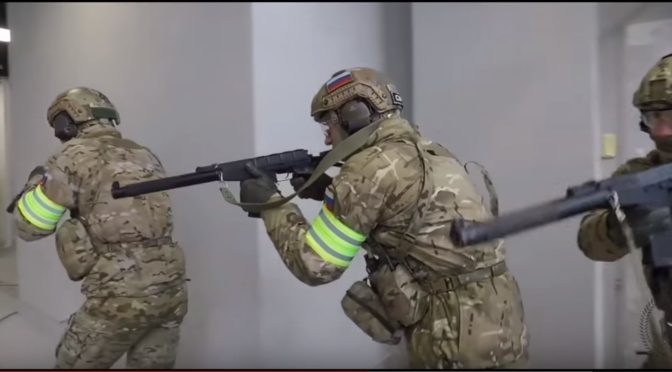
This is a video of a training exercise at the Kalingrad stadium simulating a hostage situation. Units from the FSB, police, Regardie and MOE were involved.
Parachute drop to the stadiumGoing up a frozen ditch
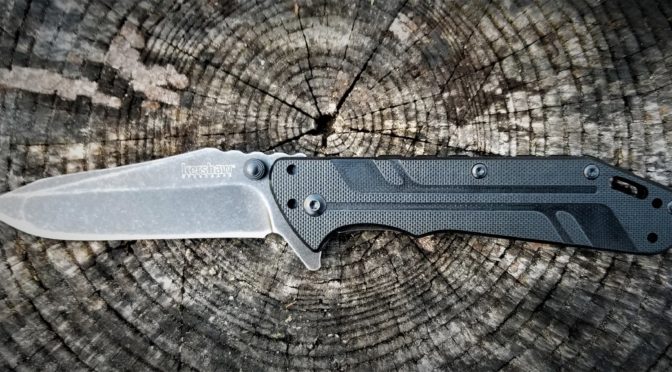
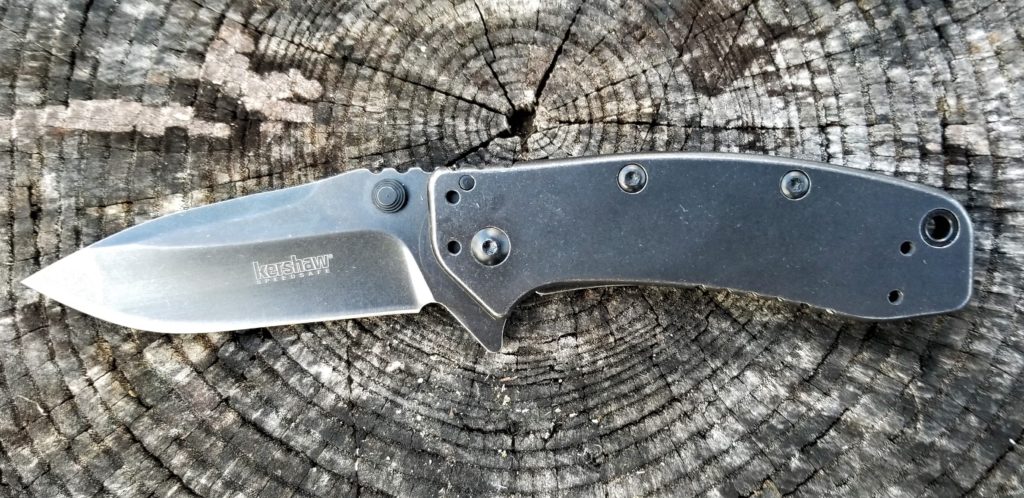
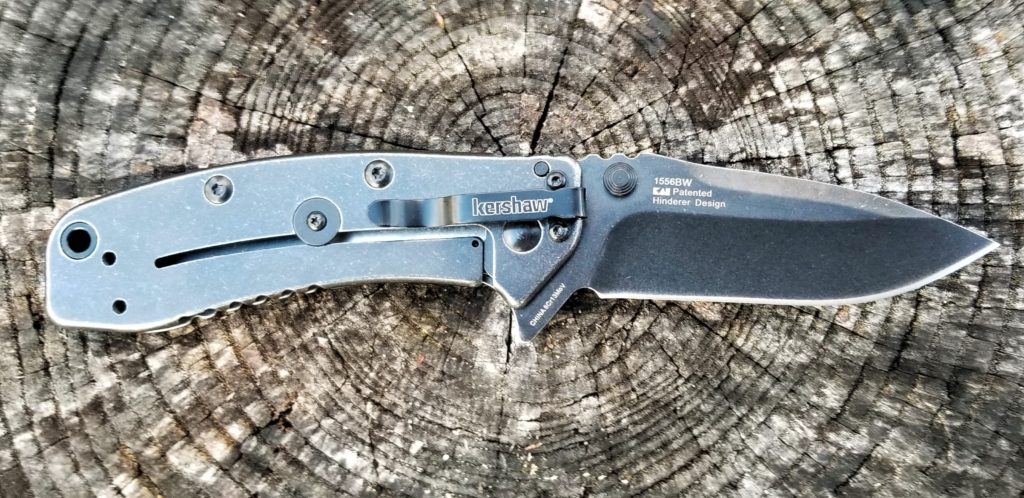
The Thermite has been on my radar for a while because it is a Rick Hinderer design but I was in no rush to buy one. Then Kershaw announced they were discontinuing it in 2017 and that made me watch out for a deal. Their Amazon price is still only $21.59.
One of the the reasons I wanted one was that it had a 3.5″ blade but only weighed 4.9oz, in part due to the relatively light weight G11 handles. Add to this that it has the SpeedSafe Assisted Opening (AO) mechanism and it makes for a very decent utilitarian pocket knife. The blackwash finish is a nice touch.
The Thermite’s Specifications
Blade length: 3.5″
Blade Steel: 8CR13MoV – A nice mid-range stainless steel that Kershaw makes extensive use of. They treat it to a 58-59 Rockwell Hardness
It’s a cool knife and I’ll definitely be using it more. I really like the combination of light weight, size and balance. For the price, you can’t beat it.
I did some bodywork on my 1996 Landcruiser (an 80-series Landcruiser) this past summer and had to replace the weatherstripping clips on the bottom of the driver side door. I did some digging and found that these clips are the correct size (5mm with a 15mm head) and they worked great for me. The one guy complains that these are green so he only scored it three stars. My originals were a pinkish color so green didn’t matter to me at all plus once installed, you can’t see them.
I popped the remaining originals out with a removal tool. If you don’t have one, they make a world of difference in the removal of clips. In a truck this old, I try to replace old plastic clips when I can as often find them to be brittle and either break during removal or re-insertion.
Here is a clip removal tool. The green clips under it are the brand new replacement units.
The tool you see in the above photo came with the following replacement Toyota Trim Clips package that has helped me out a number of times such as securing drooping engine bay plastic shields on a 2002 Toyota Camry.
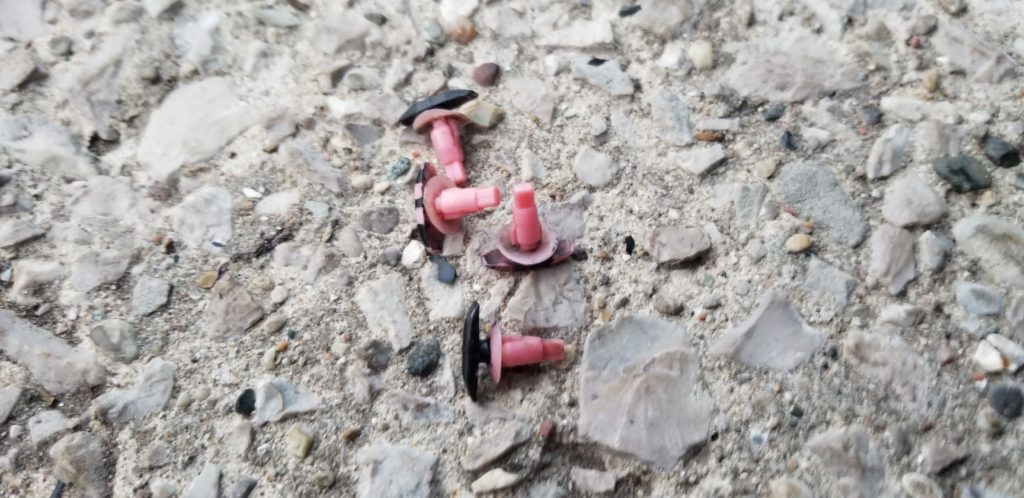
Here were the remaining original clips. Note the lovely pink-ish color thus I really didn’t mind what colors the originals were as long as they worked.
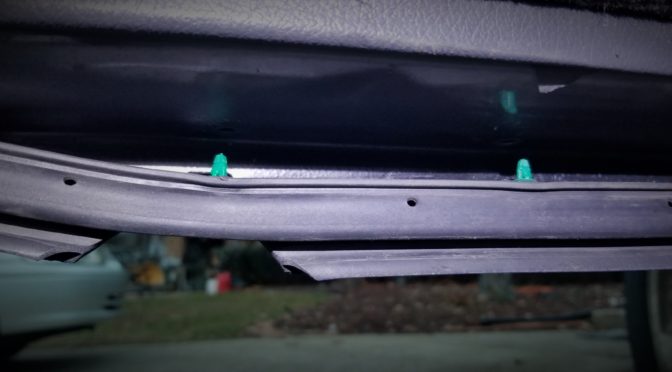
Here is the end result – I worked the clips into each hole in the weather stripping and then simply pushed them into the body holes. I think I installed a total of five to six clips. The drooping problem was solved.
The heads securely fit in the holes in the weather stripping and into the body. No more drooping weatherstripping!
In Summary
These clips worked great. I just did this post to try and save anyone trying to find clips specifically for an 80 series Landcruiser.
Without a doubt, Kershaw makes a ton of interesting knives. Many times they bring in design talent such as Rick Hinderer. I’ve been a fan of Rick’s work for years and own a number of his designs plus I had a huge surprise one year when I happened to meet him on a flight! He was wearing a Hinderer T-shirt and I couldn’t help but tell him while we were waiting to get off the plane that those were great knives. He turned and said “I’m glad to hear that – I’m Rick Hinderer.” We chatted for a bit as we walked through the terminal and he really struck me as a down-to-earth guy.
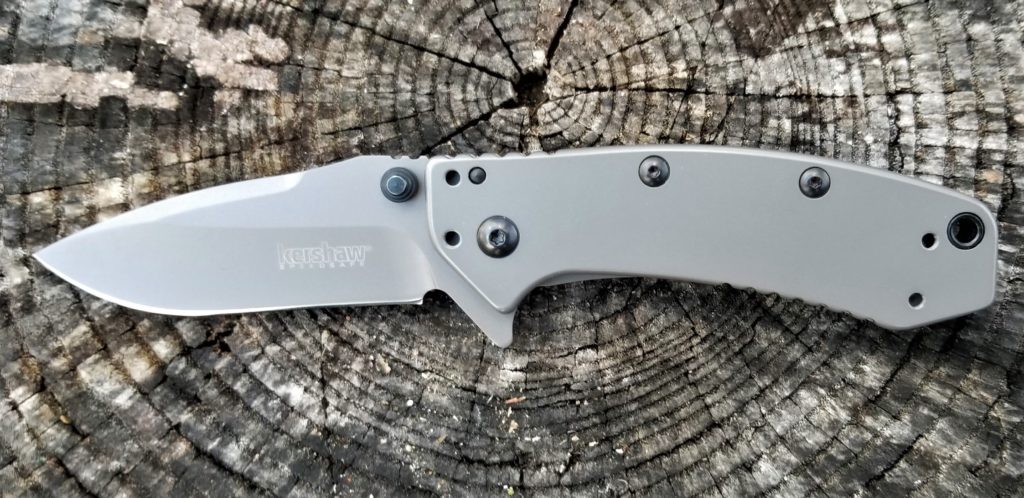
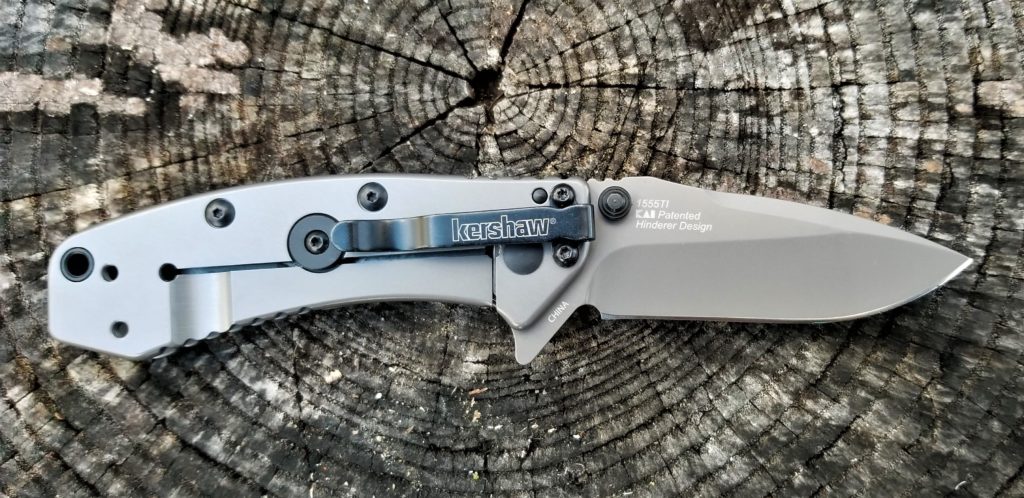
The Kershaw Cryo 1555TI – a 2.75″ Blade
At any rate, I was surfing and saw the Kershaw Cryo. It’s not a new design by any means – It got Best Buy in 2012 by Blade Magazine. For whatever reason though, it had never caught my eye until that point. Specifically, the 2.75″ model with a Titanium Carbo-Nitride coating did. I was looking for a small light knife and it was affordable enough to simply order one in and I am glad I did.
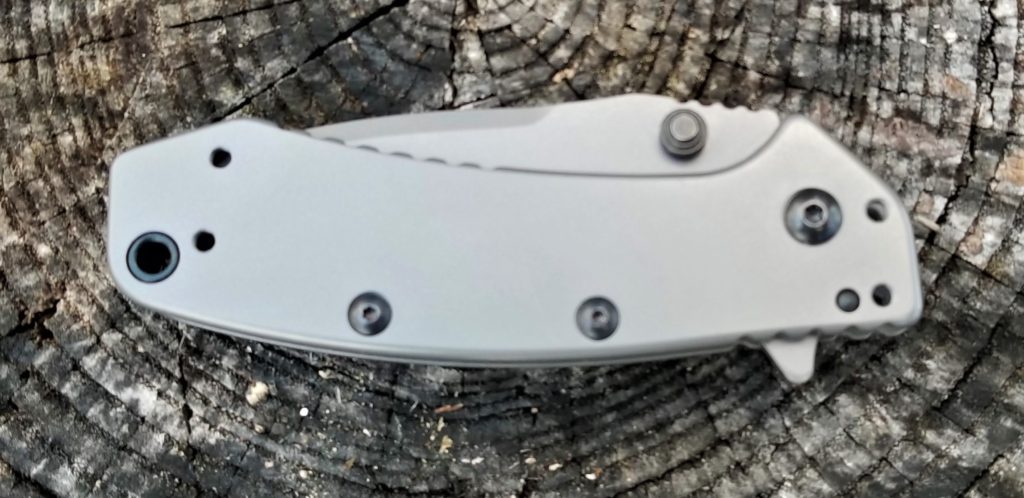
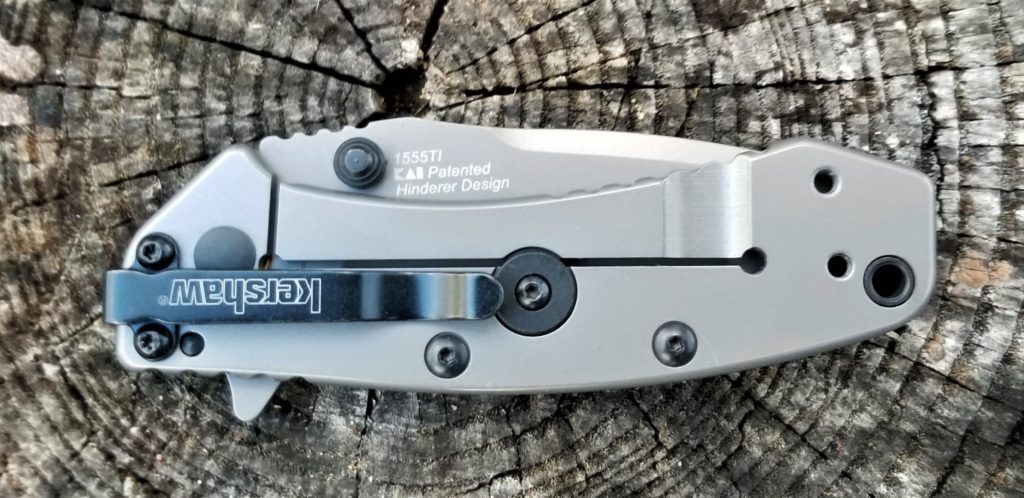
With the Titanium Carbo Nitride finish, the knife is a nice grey-ish color and the black hardware contrasts nicely. The clip can be moved around to suit the user.
Boy does it look nice. Right out of the box I was stuck by it being a modern day gentleman’s pocket knife. It was small, light and had a quality look to it.
The Cryo’s Specs:
Blade Length: 2.75″
Blade Material: 8Cr13MoV – a decent Chinese steel roughly the same as AUS-8. Kershaw blades make extensive use of it and do a good job of heat treating it to a hardness of 58-59 Rockwell.
Closed Length: 3.75″
Overall Length: 6.5″
Weight: 4.1 oz
My Take
I really like it for those cases where you want a pocket knife just in case you need to do something light duty but don’t want it really weighing down your slacks or whatever. Honestly, Amazon has it for a great price.
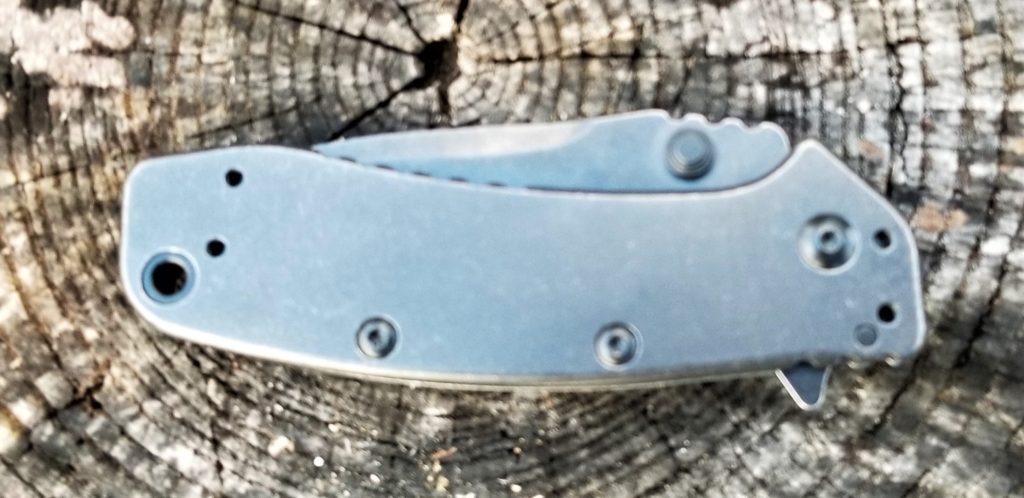
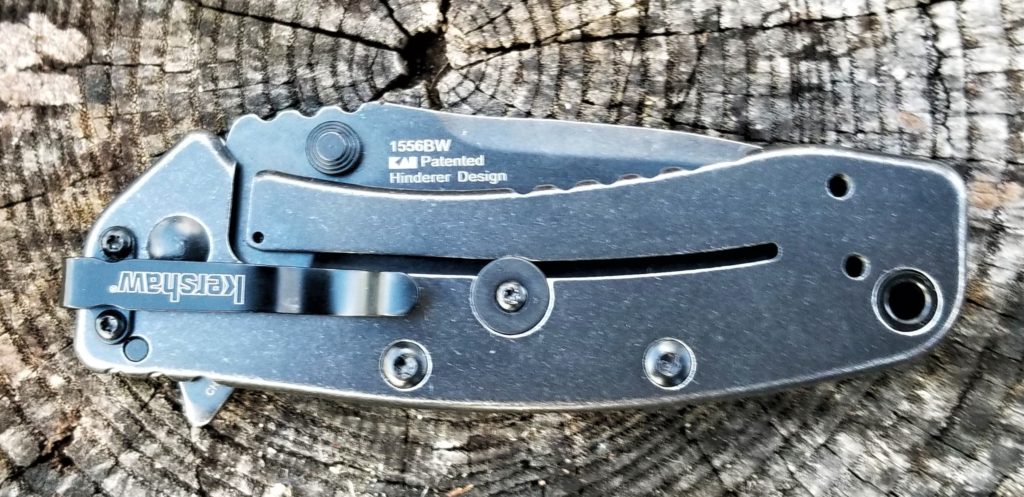
The Cryo II – 1556BW – a 3.25″ Blade
I actually bought these knives, it’s not like someone asked me to do a review. In this case I bought both the Cryo and Cryo II because I couldn’t decide which I would like more and they are both very affordable.
This is also a Hinderer design and is 20% larger than the original Cryo. The Black Wash finish mutes the shiny grey steel considerably without going completely black.
The Cryo II’s Specs
Blade Length: 3.25″
Blade steel: 8Cr13MoV – Kershaw makes extensive use of this mid-range stanless steel and heat treats it to 58-59 Rockwell hardness.
Closed Length: 4.4″
Overall Length: 7.75″
Weight: 5.5 oz.
My Take
Yeah, I like this one also. I wind up leaving knives scattered all over so I bet there will be times I am using this one also. It definitely feels beefier than the Cryo but is still very easily carried. Amazon has a good price on them.
Comparison Photos
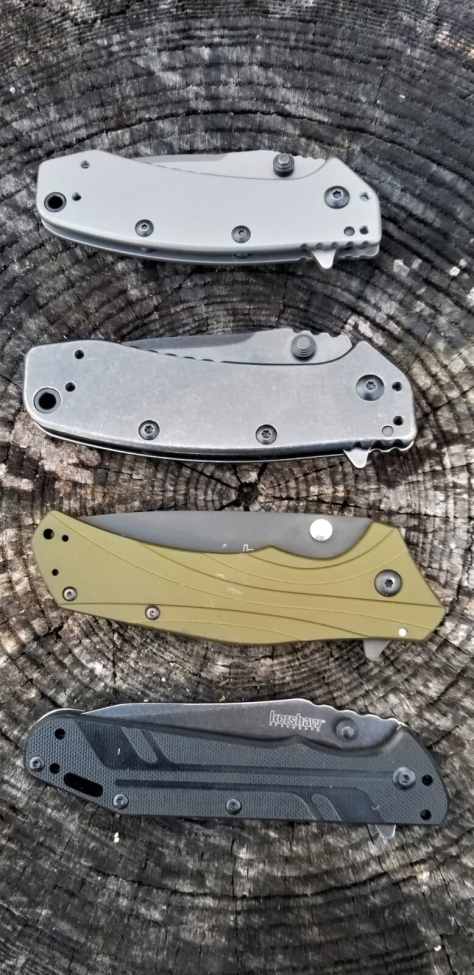
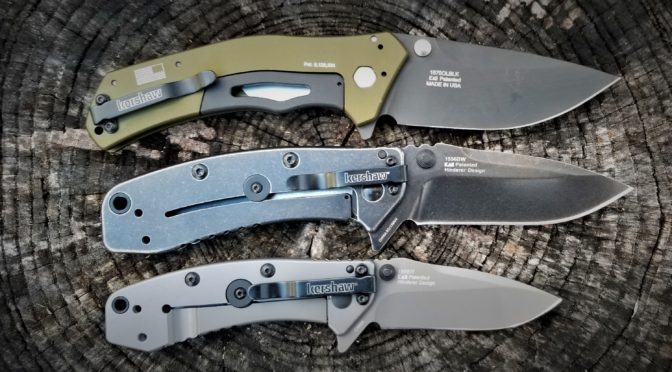
I figured this would be a great chance to let you visually compare the Cryo and Cryo II to one another as well as my Kershaw Knockout. In the photos below, I tried to be consistent – the Knockout is at the top, followed by the Cryo II with its Blackwashed finish and the Cryo with its Titanium Carbo-Nitride finish at the bottom.
In Summary
I didn’t review the Knockout in this post as I felt it really was for a different intended type of use. The Cryos are lighter and more elegant. I’m glad I have all three and have no reservations in recommending them at their respective price points.
Sellier & Bellot (S&B) is one of the oldest ammunition manufacturers in the world and was founded in 1825. S&B has grown dramatically since then and was acquired by the Brazilian firm of Companhia Brasileira de Cartuchos (CBC) in 2009. Americans will know CBC better as “MagTech”. Not to go too far off topic, it’s interesting to note that CBC also owns the German ammunition maker Metallwerk Elisenhütte GmbH (MEN) also.
S&B is located in the town of Vlašim, not far from Prague in the Czech Republic. The factory is on 385 acres, including a game preserve they oversee, and they are the largest employer there.
Larry Vickers, of Vickers Tactical, toured the factory and had a chance to discuss their business model with them. S&B is producing about 3 million rounds per day of pistol and rifle ammunition in 71 calibers and about 70% are exported. The two dominant calibers are 9×19 and 5.56×45 not surprisingly. Larry commented that he sees this dominance everywhere.
Larry touring the factory floor.
Here’s The Video
I think S&B makes great ammo and here are links to deals:
I’m pretty pragmatic when it comes to pocket knives. Looks matter but the knife must also be something I can use as a tool. For me, I am always having to cut down boxes, cut plastic, strip wires, and so forth and a knife may well get wet from rain, snow, or plumbing. Furthermore, I need something that I can readily carry in a pocket. Kershaw has made a knife I really like with their 1870OLBLK Knockout. Let me take a few minutes of your time to say why I am impressed.
Made in the USA
The first thing I noticed when the knife arrived was Kershaw’s proudly placing the USA label on the box. Many of Kershaw’s blades are made in China but the Knockout is made in the USA – Tualatin, Oregon, to be specific.
Usually, I get excited and forget to take photos right after I pull a knife from the bag. This time, I had the camera ready and took the following:
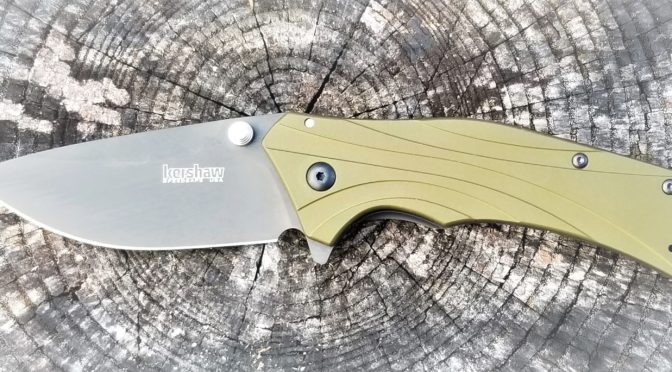
The olive drab handle and blackwashed blade really make a good looking combination. You can see the holes for the pocket clip if you wanted it positioned up front on the nose. There’s a generous thumb stud and the Speedsafe flipper lever protrudes from the bottom.Here’s the reverse side with the clip plus use can clearly see the black colored sub-frame lock. The handle has three positions drilled and tapped so you can move the clip around. The stylized US flag is a nice touch just under the clip plus you can see “Made in the USA” on the blade through the sub-frame.
Specifications
The Knockout has some nice stats:
The blade is 3.25″ long
The blade steel is 14C28N. I appreciate blade steels and this is a pretty decent middle-of-the road steel made by Sandvik. It can take a keen edge, is corrosion resistant and holds up pretty well.
The blade is colored black using the DLC – Diamond Like Coating – process.
The handle is made from 6061-T6 anodized aluminum
The handle is colored an olive drab green
When closed, it is 4.6″ long
When open, it is 7.9″
Overall weight is 3.4 oz.
The Feel
It’s fairly thin and light. I wear XL-sized gloves and the knife fills my hand very nicely. The combination of a relatively tall blade and the weight of the handle gives it both a good heft and a balance that I like. It does not feel cheap by any means.
The flipper mechanism is solid and does a good job. The sub-frame lock does its job firmly yet is also is easy to unlock. You can’t say this for all frame locks – some can be more cumbersome to move out of the way than others. By using the sub-frame they can get the right geometry and tension to do the job yet also be easy to move out of the way to unlock the blade. This cut out, or knock out, that they did in the frame to hold the riveted in sub-frame is actually where the knife gets its name.
Look carefully at the handle and then look at your hand with the fingers bent just a tad. The handle’s curve and the bumps will conform to most hands very nicely. Your hand will index on the big finger groove they made for your index finger – no pun intended. In other words, your hand’s position will begin by putting your big first finger in that groove.
Kershaw’s Overview Video
Kershaw actually has a short overview video so you can see the blade at different angles.
Comparing the KnockOut to my Hogue X5 with a 3.5″ Wharncliffe Blade
Now, so you have a comparison, here’s the Knockout next to my Hogue X5 with a 3.5″ Wharncliffe blade, which is my most frequently carried blade now. I’ve given up saying every day carry because I seem to be rotating through a few but more often than the others, it’s the Hogue. We’ll just have to see if Knockout dethrones the X5 over time.
The Hogue X5 3.5″ Wharncliffe is striking to look at but let me tell you something really cool – the CPM154 steel is really excellent and the profile of the blade makes it excellent for scraping a surface with a relatively straight edge.
In Summary
It arrived quite sharp and I just did a few test cuts. At this point, I need to see how the Knockout holds up over time. As far as first impressions go, I really like it and will keep folks posted.
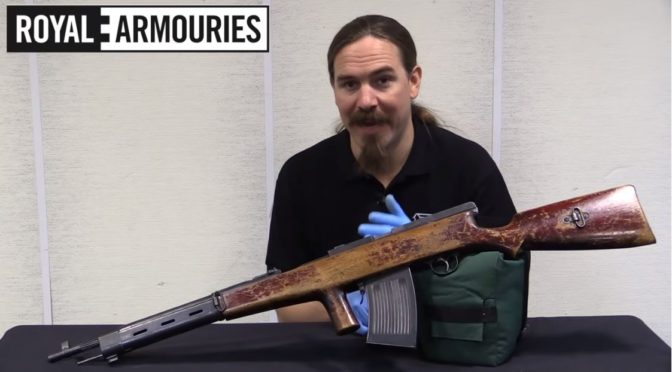
The Federov Automat rifle has an interesting niche in history as being an early successful design that enabled an infantryman to have a select fire weapon that didn’t weigh a ton. Design work began around 1906, a model was submitted to the Army in 1911 and it saw service from 1915-1917, 1920-1928 and limited use after 1940. Only about 3,200 of the Federovs were built and far, far fewer survive to this day.
Here’s the barreled action removed from the stock.Here is the Federov disassembled. Ian noted that while the manufacturing was very complicated the design was surprisingly straight forward.
As with all of Ian’s videos, he provides some very interesting history and design commentary as he is taking the Federov apart. Here’s the video: