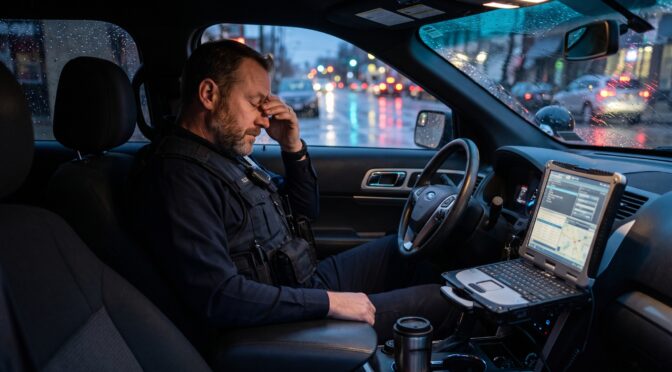
The operational landscape of modern law enforcement has fundamentally shifted, evolving into a highly complex, hyper-vigilant environment defined by relentless operational tempo, sophisticated threat matrices, and unprecedented levels of public, legal, and administrative scrutiny. For organizations like Ronin’s Grips—a data-driven intelligence resource providing analytical reporting on tactical programs, law enforcement procurement, and human performance 1—analyzing the internal architecture of the human operator is just as critical as evaluating external hardware. Amidst the external pressures of the policing profession lies a critical, yet frequently overlooked, internal vulnerability: the physiological and cognitive collapse of the frontline patrol officer. Data synthesized from the 2026 operational environment paints a stark portrait of a profession operating at the bleeding edge of human endurance, routinely pushing personnel past the point of biological failure.
The finding that 57% of patrol officers finish their shifts mentally exhausted is not merely an occupational grievance or a metric of low morale; it is a profound tactical liability.2 Mental exhaustion of this magnitude jeopardizes situational awareness, escalates the probability of fatal tactical errors, and accelerates the deterioration of an officer’s long-term survivability in the field. When officers are deployed in a continuous, compounding state of depletion, the foundational systems required for threat assessment and survival are systematically dismantled.
This exhaustive analysis dissects the hidden, compounding costs of the modern patrol shift. By bridging advanced neurobiology, cognitive science, cardiovascular physiology, and empirical tactical data, the following report examines how the structural reality of back-to-back dispatching and the systematic eradication of inter-call recovery time degrades the architecture of the human brain. When officers are denied the biological necessity of autonomic reset, the resulting physiological state—characterized by chronic sympathetic arousal and acute executive depletion—creates a compounding vector for operational failure. The downstream effects are measurable and severe: degraded use-of-force decision-making, elevated rates of lethal motor vehicle collisions, and a physiological “dual-hit” vulnerability that precipitates sudden cardiac death.
The Anatomy of Shift Exhaustion: A Data-Driven Reality
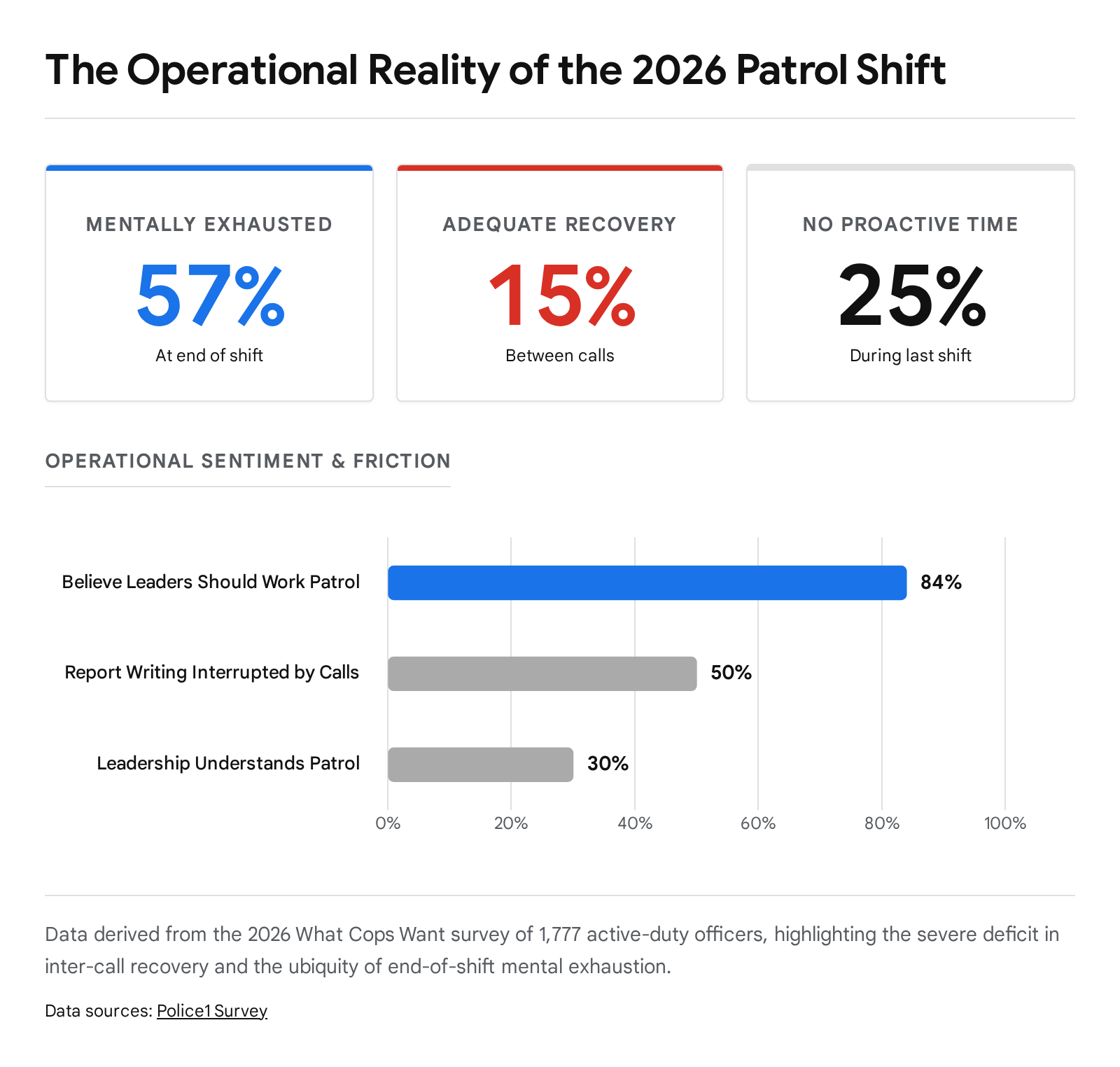
To comprehend the sheer magnitude of the physiological and cognitive crisis facing modern law enforcement, one must first examine the empirical realities of the patrol environment as it exists today. Polling and demographic data from the 2026 “What Cops Want” survey, encompassing 1,777 active-duty professionals, reveal a structural framework in which the fundamental biological requirements for human cognitive recovery are entirely absent.2 The modern patrol shift operates on a deficit model, demanding continuous cognitive output while providing zero physiological input in the form of rest.
According to this exhaustive industry polling, a staggering 85% of officers report operating in an environment where they are denied adequate time to recover after stressful or physically demanding calls, as only 15% indicate they actually receive this necessary downtime.2 This chronic lack of an inter-call recovery buffer dictates that the vast majority of personnel transition directly from high-stress, adrenaline-fueled encounters—such as violent domestic disputes, high-speed pursuits, or foot chases—to the next dispatch without the requisite period of physiological normalization. Consequently, 57% of officers finish their shifts in a state of severe mental exhaustion, a condition that severely compromises their ability to perform their duties safely and effectively.2
| Metric Category | Percentage of Officers Reporting | Operational Implication |
| End-of-Shift Mental Exhaustion | 57% | Severe degradation of prefrontal cortex functioning, leading to impaired judgment, delayed reaction times, and heightened emotional reactivity.2 |
| Inadequate Recovery Time | 85% | Chronic sympathetic nervous system dominance, preventing cortisol clearance and accelerating the onset of allostatic load and cardiovascular strain.2 |
| Interrupted Report Writing | Over 50% | Forced cognitive context-switching, rapid depletion of executive functioning resources, and heightened decision fatigue throughout the shift.2 |
| Zero Proactive Policing Time | 25% | Operational posture reduced to pure reaction; inability to engage in strategic deterrence, leading to a feeling of inefficacy and loss of tactical control.2 |
| Leadership Disconnect | 84% | Erosion of institutional trust; 84% of officers demand leaders periodically work a patrol shift to comprehend the compounding fatigue, while only 30% believe leaders currently understand it.2 |
This mental exhaustion does not occur in a vacuum; it is actively compounded by administrative burdens, staffing shortages, and the fragmentation of attention. Over half of the active patrol force indicates that their report writing and administrative duties are frequently or always interrupted by new calls for service.2 This constant interruption forces the human brain to continuously engage in context-switching, a highly taxing cognitive process that rapidly depletes metabolic resources in the prefrontal cortex, stripping the officer of the mental bandwidth required for complex problem-solving.
Furthermore, the operational reality of “single crewing”—where officers are forced to patrol without a partner due to severe staffing deficits—exponentially exacerbates this fatigue. Officers subjected to frequent single crewing bear the absolute entirety of the cognitive load for situational awareness, navigation, radio communication, and threat assessment. Data proves that this heightened vulnerability translates directly to increased danger; single-crewed officers are statistically over 100% more likely to be verbally insulted, verbally threatened, and physically attacked during their shifts compared to double-crewed units.3
The systemic nature of this fatigue crisis is further exacerbated by structural resource deficits, which leave officers completely unsupported. A National Institute of Health (NIH) study demonstrated that smaller police departments experience a significantly higher suicide rate than larger departments, a disparity likely driven by the lack of available mental health assistance, increased workload, and high community visibility.4 While high-risk occupations such as commercial aviation and maritime transportation have universally adopted biometric fatigue monitoring and dynamic risk mitigation strategies 5, conventional law enforcement remains largely tethered to antiquated, endurance-based operational models that ignore the biological limits of the human operator.6
The compounding nature of this specific environment dictates that officers are not simply experiencing acute, transient tiredness; they are accumulating massive sleep debt and profound cognitive depletion that carries over from one shift to the next, year after year. This relentless operational tempo fundamentally alters the neurochemical balance and structural connectivity of the brain, degrading the very physiological systems required for survival, ethical policing, and effective force application in high-stakes encounters.
The Neurobiology of the “Back-to-Back” Call Environment
To accurately comprehend why mental exhaustion degrades tactical performance to such a severe degree, the analysis must shift from external dispatch metrics to the internal neurobiological architecture governing threat response and executive functioning. The human brain, despite its immense capabilities, is not evolutionarily designed to sustain high levels of acute stress without subsequent, proportional periods of downregulation and recovery. When a police officer responds to a critical incident, the autonomic nervous system (ANS) shifts dramatically and instantaneously into sympathetic dominance—the physiological state commonly understood as the “fight, flight, or freeze” response.7
The Amygdala, the Limbic System, and Neural Hijacking
During a stressful or threatening encounter, the limbic system takes immediate precedence over conscious thought. The amygdala acts as the brain’s primary emotional radar, rapidly assessing the threat value of incoming sensory information—often processing danger milliseconds before the conscious mind is even aware of it.7 Upon detecting a threat, the amygdala triggers the hypothalamus, which floods the bloodstream with catecholamines (adrenaline and noradrenaline) and cortisol.7 This initiates powerful autonomic responses: heart rate spikes, pupils dilate to broaden the field of vision, and muscular tension increases to prepare for explosive physical action.7
Simultaneously, the hippocampus rapidly searches for past encounters similar to the current threat, amplifying the sense of danger based on prior trauma or experience, while the Anterior Cingulate Cortex (ACC) spikes in activity.7 This entire cascade is a vital survival adaptation designed to keep the organism alive in the face of immediate physical danger.
However, this massive mobilization of biological resources comes at a steep cognitive cost. Under acute stress, the amygdala effectively bypasses the slower, highly rational, and analytical pathways of the brain in a neurobiological phenomenon known as “neural hijacking”.7 Concurrently, the prefrontal cortex (PFC)—the highly evolved region of the brain responsible for critical thinking, executive functioning, impulse control, problem-solving, and complex, nuanced decision-making—is actively suppressed.8 Cortisol prevents the amygdala from relaxing, and when the amygdala is locked in full activation mode, it cuts off the flow of information to the prefrontal cortex.8 The officer is kept on extreme high alert, stripped of the cognitive apparatus required to consider mitigating information, formulate long-term plans, or exercise fine impulse control.8
In a biologically healthy operational cycle, the resolution of the physical threat would be followed by a commensurate period of rest. This recovery window allows the parasympathetic nervous system (the “rest and digest” branch of the ANS) to engage, clear the residual cortisol, lower the heart rate, and restore baseline metabolic functioning to the prefrontal cortex. In the modern patrol environment, however, this crucial recovery window is systematically eliminated. The mere 15% of officers who report having adequate recovery time are the extreme exception; the vast majority are immediately dispatched to subsequent calls, forcing their neurobiology to remain suspended in a state of synthetic, cortisol-driven arousal.2
Allostatic Load and the Shrinking Window of Tolerance
When the human body is repeatedly subjected to sympathetic arousal without adequate parasympathetic recovery, the physiological result is elevated “allostatic load”.9 Allostatic load refers directly to the cumulative, physical wear and tear on biological systems resulting from chronic, unmitigated stress system activation.9 Every single traumatic exposure and rapid transition from boredom to terror adds a measurable, physical weight to this systemic load.9
As the allostatic load increases over months and years of a patrol career, the body’s regulatory systems begin to break down, manifesting psychologically as a severely narrowed “window of tolerance”.9 When chronically exhausted, officers are relentlessly pushed out of this optimal window and begin to oscillate violently between states of hyperarousal (extreme hypervigilance and reactive hostility) and hypoarousal (emotional numbness and dissociation).9
The architecture of the brain literally alters its network connectivity in response to this chronic load. Neuroimaging studies of individuals with high occupational trauma show structural hyperactivity in the default mode network (DMN) and the salience network, leading directly to amygdala and insula hyperreactivity, alongside systemic hypoactivity in the ventromedial prefrontal cortex (vmPFC).10 This depletion of metabolic resources in the dorsolateral prefrontal cortex (dlPFC)—the executor of rational control—means the officer physically lacks the neurotransmitter flux required to suppress impulsive responses or interpret nuanced environmental cues accurately.11
Cognitive Depletion, Decision Fatigue, and the SIDI Model
The operational intersection of high allostatic load, sleep debt, and continuous prefrontal cortex suppression manifests most dangerously in the realm of tactical decision-making and the application of lethal force. High-stress environments demand “shared cognition” and implicit, rules-based procedural knowledge, which allows highly trained officers to bypass slow memory retrieval and act decisively in fractions of a second.12 However, severe fatigue forcefully degrades these very cognitive functions, specifically targeting attention, spatial perception, pattern recognition, and action/reaction time.13
The Architecture of Decision Fatigue
Throughout a standard patrol shift, officers are forced to make hundreds of decisions, drawing from a strictly finite cognitive resource pool and resulting in profound decision fatigue.14 Decision fatigue is rooted in the dynamic interplay of metabolic resource allocation; as the shift progresses, the brain’s physical ability to evaluate options degrades.11 Science dictates that officers just starting their shifts possess a significantly higher capacity for sound, rational decision-making than those who have been on duty for several hours.15 Reduced processing speed and impaired executive functioning cement decision fatigue as a structural failure of the brain’s capacity, not a time management issue.16
This biological vulnerability is ironically compounded by modern administrative attempts to regulate police behavior. “Policy inflation”—the proliferation of excessively detailed or poorly structured operating procedures—creates severe cognitive collision.17 When exhausted officers are confronted with highly complex use-of-force continuums during a rapidly unfolding physical confrontation, the required cognitive load vastly exceeds their depleted processing capacity.17 This dynamic invites extreme decision fatigue, forcing the exhausted brain to abandon policy entirely in favor of primitive, survival-based heuristics.17
The Stress Induced Deliberation-to-Intuition (SIDI) Model
To understand how officers react when their executive functioning is depleted by fatigue and overwhelmed by policy complexity, neuroscience offers the “Stress Induced Deliberation-to-Intuition” (SIDI) model.18 Under the SIDI model, researchers propose that high levels of stress and fatigue elicit a hard switch from the brain’s slow, demanding analytic reasoning system to fast, effortless, intuitive processes.18
When the stakes are highest, the fatigued brain abandons goal-directed choices, becomes incapable of adjusting initial judgments based on new information, and relies entirely on unexamined innate responses generated by subcortical reactive emotion areas.18 The stress heavily influences the arbitration between the emotional responses of the amygdala and the deliberative processes of the prefrontal cortex, effectively severing the connection.18
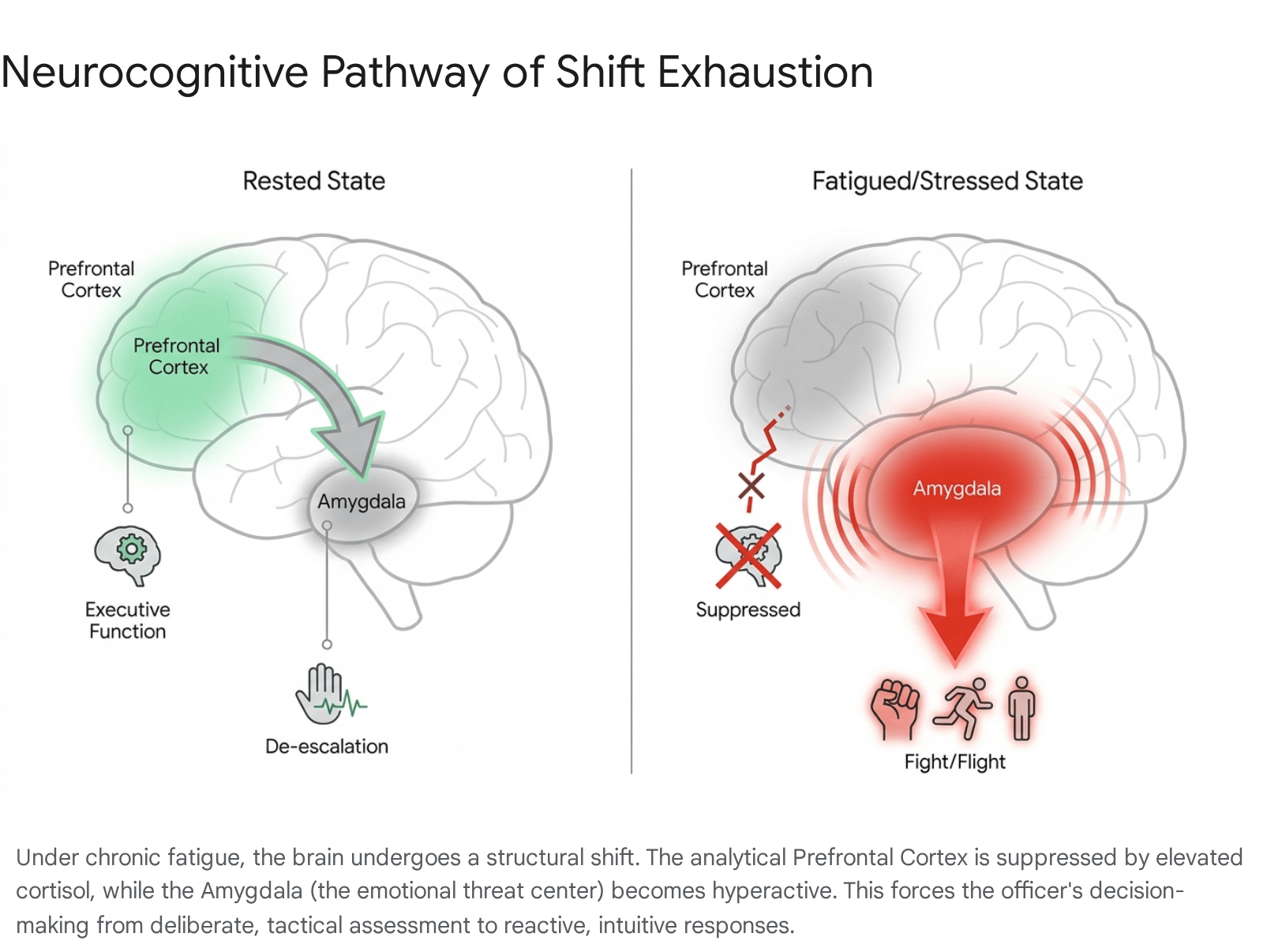
In a practical tactical setting, this neurobiological switch is devastating. Without mental clarity, the officer is left with only raw survival instincts, defaulting to either an immediate, potentially excessive application of physical force, or a highly dangerous state of “freezing”.14 If an officer is confronted with an active aggressor and is in a state of profound decision fatigue, the possibility of the officer taking no action at all—freezing because the brain cannot compute the policy matrix—becomes statistically likely, resulting in catastrophic injury or death for the officer.14
Degradation of Tactical Decision-Making and Lethal Force Errors
The correlation between compounding fatigue and severely degraded use-of-force execution is heavily documented in clinical law enforcement studies. Groundbreaking research by David Blake (MSc, a retired police officer) and Dr. Edward Cumella (a professor of psychology) directly addressed the profound impact of sleep deprivation and fatigue on officers’ performance within deadly-force situations.19
The Blake and Cumella Fatigue Studies
Testing 53 active-duty police officers over the course of a week, the researchers meticulously tracked the participants’ total time awake (TTA), sleep quality, shift schedules, and consecutive days worked.19 The officers were then subjected to rigorous, simulated shoot/don’t shoot scenarios utilizing imagery of potential targets classified into three categories: clear “shoot” responses, clear “don’t shoot” responses, and highly ambiguous scenarios.19
The empirical findings present a severe warning regarding current operational tempos. High levels of fatigue—specifically driven by greater total time awake, poor subjective sleep quality, consecutive days worked, and the execution of disruptive night or swing shifts—strongly and negatively correlated with impaired decision-making and significantly slowed reaction times.19
Critically, Blake and Cumella noted that these cognitive failures occurred most frequently when officers were faced with the more difficult, highly nuanced decisions within the “don’t shoot” or ambiguous scenarios.19 When an officer is presented with a clear lethal threat, the amygdala correctly identifies it and initiates survival responses. However, when the scenario is ambiguous—such as a suspect reaching into a waistband for a dark object—the brain requires the analytical processing power of the prefrontal cortex to decipher contextual clues.19 When the prefrontal cortex is exhausted by a 57% exhaustion rate and 85% lack of recovery time, the ability to process ambiguity collapses.2
Furthermore, the study conclusively demonstrated that fatigue effects compound throughout the workday, with officers’ reaction times increasing consistently from their pre-shift assessments to their post-shift assessments.20 This means an officer responding to a high-risk call at hour eleven of a shift is physiologically operating with severe tactical latency, placing both the officer and the public in extreme peril.
Postural Freezing and the Illusion of Shared Cognition
Further compounding the danger, high spatial and temporal variability is observed in fatigued officers responding to identical tactical scenarios.12 A comprehensive study analyzing the behavioral responses of 42 officers to a live-acted assailant scenario revealed extensive variability in movement patterns, final positioning, and weapon responses.12 The researchers found that the officers’ prior training and years of experience did not positively impact their responses during the threat.12 Instead, longer hours awake and lower reported rest directly constrained their visual search patterns and negated the effects of their training, proving they could not utilize “shared cognition” due to fatigue.12
Neuroimaging studies utilizing fMRI on police recruits provide further context to this phenomenon. Preparation for shooting decisions under the threat of shock is associated with intense midbrain activity, specifically in the periaqueductal gray (PAG), and PAG-amygdala connectivity.21 This network is deeply associated with postural freezing as the brain rapidly attempts to process the threat.21 The switch from this freezing state to overt defensive action requires the medial prefrontal cortex (mPFC) to override the amygdala.21 If the mPFC is offline due to exhaustion, the officer remains locked in the freezing response.
The Physical Manifestations: Motor Vehicle Collisions and Lethality
While the degradation of tactical decision-making captures immense attention, the physical toll of the compounding patrol shift manifests most lethally in motor vehicle operations. Motor vehicle collisions account for nearly 9% of all police officer injuries nationwide and remain a leading cause of accidental on-duty deaths year after year.22 Officers frequently spend half their total shift inside their vehicles, frequently required to multi-task by operating mobile data terminals, reading dispatch screens, and utilizing cell phones while navigating complex roadways.22 When this intense, divided-attention environment is combined with the reality that 57% of the force is mentally exhausted 2, the patrol vehicle transforms into a highly dangerous kinetic weapon.
The Blood Alcohol Content (BAC) Equivalency of Fatigue
Transportation and occupational health research directly equates extreme fatigue to alcohol intoxication. A human being awake for 17 to 19 hours exhibits cognitive and motor impairment directly comparable to a Blood Alcohol Content (BAC) of 0.05.23 At 24 hours awake, the impairment equates to a BAC of 0.10, well beyond the legal limit for operating a motor vehicle.23
The specific metrics associated with this sleep debt are catastrophic for high-speed driving:
| Impairment Metric | Degradation at 17-19 Hours Awake | Degradation at 24 Hours Awake |
| Reaction Time Speed | Decreased by 9% | Decreased by 16% 23 |
| Dual Task Speed | Decreased by 10% | Decreased by 20% 23 |
| Hand-Eye Coordination | Decreased by 10% | (Data extrapolates severe drop) 23 |
| Reaction Time Accuracy | Decreased by 225% | Decreased by 680% 23 |
These impairment metrics synthesize into a terrifying probability matrix: officers who have been awake for more than 20 hours are up to 63 times more likely to be involved in a motor vehicle collision than a rested counterpart.23
The Ubiquity of the Danger and the 10-Year Veteran Anomaly
Data highlights the absolute ubiquity of this danger across the profession. A comprehensive survey revealed that 85% of officers admit to driving their patrol vehicles while drowsy, and a deeply concerning 39% admit to having actually fallen asleep at the wheel while on duty.24 Furthermore, 56% of officers report getting less than 6.5 hours of sleep daily.24 Analysis of collision timing reveals that 41.6% of crashes occur between 0000 and 0759 hours, aligning perfectly with the deepest troughs of the human circadian rhythm.24 Additionally, in fatality accidents, 42.4% of officers were not wearing seatbelts, leading to a 15.1% total ejection rate.24
Intriguingly, demographic analysis reveals a counter-intuitive anomaly regarding the officers most at risk. In law enforcement, the officers most at risk of dying in a motor vehicle collision are not inexperienced rookies, but rather officers in their mid-30s possessing approximately 10 years of policing experience.22 This anomaly suggests a lethal intersection of psychology and physiology. Officers with a decade of experience have accumulated a massive, unresolved allostatic load and chronic sleep debt, while simultaneously developing a deeply ingrained sense of invincibility that overrides their conscious risk-assessment capabilities.22
Sudden Cardiac Death and the “Dual-Hit” Vulnerability
Beyond the immediate kinetic dangers, the compounding patrol shift exacts a silent and frequently lethal toll on the officer’s cardiovascular system. Police officers represent an exceptionally high-risk group for Sudden Cardiac Death (SCD).25 Cardiology researchers have elucidated a distinct “dual-hit model” that links the unique stressors of the modern patrol shift directly to SCD, demonstrating that it is rarely a random genetic event.25
Under this model, the chronic stress of the job—the continuous, unresolved sympathetic arousal—acts as the first hit. It progressively disrupts cardiovascular homeostasis (via autonomic imbalance, myocardial electrophysiological instability, endothelial dysfunction, and systemic inflammation), fundamentally remodeling the architecture of the officer’s heart and creating a highly vulnerable substrate.25 The mental exhaustion reported by 57% of the force is therefore a direct warning sign of profound underlying cardiovascular vulnerability.2 When the acute operational trigger (the second hit, such as sudden high-intensity physical exertion) occurs, the weakened cardiovascular system simply shorts out, resulting in a fatal arrhythmia.25
Advanced Biomarkers and Real-Time Monitoring: The Role of HRV
The primary administrative challenge in mitigating the hidden costs of the patrol shift has historically been the inability to objectively measure fatigue in real-time. Heart Rate Variability (HRV)—the physiological measure of the specific variation in time between consecutive heartbeats—has emerged as the premier, non-invasive biomarker for assessing an officer’s resilience and allostatic load.26 HRV directly mirrors the dynamic, real-time balance between the sympathetic and parasympathetic branches of the ANS.27
A consistently high HRV indicates a highly resilient autonomic nervous system, while a consistently low HRV is a clinical indicator of heightened stress levels and homeostatic disturbance.27 While an acute operational stressor appropriately precipitates a temporary decrease in HRV 28, repeated exposure to potentially psychologically traumatic events (PPTEs) without adequate inter-call recovery leads to a permanently exhausted autonomic response and chronically depressed HRV.28 Crucially, HRV monitoring serves as an accurate diagnostic tool; individuals suffering from PTSD almost universally exhibit severely depressed HRV.27 By utilizing biometric wearables to track HRV daily, command staff can objectively identify specific officers whose autonomic systems are failing under the load.
Tactical Recovery Interventions: Reversing the Damage
Acknowledging the severe cognitive and physiological degradation intrinsic to the modern shift requires the immediate implementation of evidence-based, tactical recovery interventions aimed at the deliberate, manual stimulation of the parasympathetic nervous system.
Autonomic Override via Tactical Breathing
The most immediate, field-expedient method for an officer to forcefully shift their nervous system back to a balanced state is through highly controlled respiratory protocols.29 Deep, diaphragmatic breathing techniques mechanically stimulate the vagus nerve, which commands an immediate physiological response: a rapid decrease in heart rate, lowered blood pressure, and a cessation of stress hormone secretion.29 This mechanical process effectively “re-boots” the prefrontal cortex.8
“Box breathing” (also known as tactical breathing)—a specific pattern involving equal counts of inhalation, breath retention, exhalation, and a post-exhale empty-lung pause (most commonly a 4-4-4-4 second cadence)—has been widely adopted by military special operations units and is highly applicable to law enforcement.30 Initiating the breath through the nose is particularly critical, as it is directly linked to the release of nitric oxide, which promotes vasodilation.31
Implementing a brief box breathing protocol immediately after clearing a high-stress call provides an engineered “tactical pause” that manually clears the chemical remnants of the acute stress response, preventing the trauma from compounding into the next dispatch.29
Structured Cardiovascular Remodeling
Mitigating the long-term, systemic risk of Sudden Cardiac Death requires actively reversing the physical remodeling of the heart. Structured physical exercise acts as a targeted, multi-level modulator for the cardiovascular system.32 Evidence-based exercise prescriptions restore autonomic rebalancing, act as a powerful systemic anti-inflammatory, and directly improve endothelial integrity.32 By enhancing the body’s stress recovery capabilities, targeted high-intensity exercise protocols directly reduce the cumulative allostatic load, modifying the vulnerable cardiovascular substrate so that it can successfully withstand the massive adrenaline dump of an operational trigger.32
Institutional Evolution: Fatigue Risk Management Systems (FRMS)
The traditional model of managing police fatigue relies almost exclusively on simplistic, compliance-based restrictions regarding consecutive hours worked.5 This legacy model is dangerously inadequate because it fails to account for sleep quality or the compounding neurobiological nature of the back-to-back call environment.6
High-risk, zero-fail sectors such as commercial aviation have long recognized that hours-compliance is insufficient and rely heavily on Fatigue Risk Management Systems (FRMS).6 An FRMS is a formalized, dynamic, data-driven set of management practices designed to systematically identify and actively mitigate fatigue-related safety risks.5 Integrated directly into an organization’s broader Safety Management System, an FRMS utilizes advanced biomathematical models to proactively predict periods of high fatigue risk across the force.33
Implementing an FRMS is a tactical necessity that requires moving beyond subjective self-reporting to utilize anonymized biometric data, adopting forward-rotating schedules optimized for sleep hygiene, and establishing strict dispatch protocols that mandate biologically necessary buffer periods for autonomic downregulation. With 84% of officers stating agency leadership needs to periodically work a patrol shift to truly understand these compounding realities 2, transitioning from an endurance-based culture to a highly analytical risk-management culture via FRMS bridges this dangerous operational disconnect.
Conclusions and Strategic Directives
The exhaustive data surrounding the modern patrol shift reveals a systemic, catastrophic failure to respect the biological and neurological limits of the human operator. When 57% of a tactical force finishes daily operations in a state of severe mental exhaustion, and 85% are denied the basic physiological requirement of recovery time, the organization exists in a state of extreme, constant vulnerability.2 The systematic eradication of inter-call recovery time creates a compounding cycle of autonomic dysregulation, characterized by a hyperactive amygdala, a chronically suppressed prefrontal cortex, and a steadily accumulating allostatic load.
Neurobiological exhaustion physically degrades the brain’s capacity for complex decision-making, drastically elevating the probability of fatal errors in ambiguous, lethal-force encounters.19 Furthermore, operational sleep debt induces impairment levels exceeding legal intoxication, transforming routine vehicle operation into highly lethal endeavors 23, while remodeling the officer’s cardiovascular system to be uniquely susceptible to Sudden Cardiac Death.25
Strategic imperatives for the modern force must include:
- The Institutionalization of Tactical Recovery: Agencies must mandate and rigorously train vagal nerve stimulation techniques, specifically box breathing, to act as forced, non-negotiable “tactical pauses” between calls.30
- Biometric Monitoring as Standard Issue: Deploying HRV tracking wearables to establish baseline autonomic health across the force, allowing leadership to objectively identify personnel approaching operational failure or clinical PTSD.27
- The Adoption of FRMS: Discarding purely hours-based compliance models in favor of dynamic Fatigue Risk Management Systems utilizing biomathematical forecasting to mandate true inter-call recovery periods.5
- Eradication of Policy Inflation: Reversing the administrative trend of excessively complex operational policies to ensure that an officer’s depleted prefrontal cortex is not further burdened by bureaucratic collision during split-second incidents.17
The modernization of law enforcement strategy can no longer be limited solely to the acquisition of advanced hardware. The true tactical imperative lies in defending and optimizing the neurobiological architecture of the human operator.
Please share the link on Facebook, Forums, with colleagues, etc. Your support is much appreciated and if you have any feedback, please email us in**@*********ps.com. If you’d like to request a report or order a reprint, please click here for the corresponding page to open in new tab.
Sources Used
- Ronin’s Grips | Firearms Analytics & Intelligence Reports | Connecticut – Boise Gun Club, accessed June 25, 2026, https://boisegunclub.com/connecticut/directory/blog-20
- What Cops Want in 2026: The reality of patrol – Police1, accessed June 25, 2026, https://www.police1.com/what-cops-want/what-cops-want-in-2026-the-reality-of-patrol
- 2016 Police Officer Welfare, Demand, and Capacity Survey Inferential Results, accessed June 25, 2026, https://polfed.org/media/14062/pfew-inferential-results-report-27-12-17-v10-002.pdf
- Officer Safety and Wellness Backgrounder | MN.gov, accessed June 25, 2026, https://assets.dps.mn.gov/files/ca/officer-safety-and-wellness-backgrounder.pdf
- AC 120-103A – Fatigue Risk Management Systems for Aviation Safety – FAA, accessed June 25, 2026, https://www.faa.gov/regulations_policies/advisory_circulars/index.cfm/go/document.information/documentid/1021088
- Developing Tools for Fatigue Risk Management in First Responders – safte-fast, accessed June 25, 2026, https://www.saftefast.com/safte-fast-blog/developing-tools-for-fatigue-risk-management-in-first-responders
- The Limbic System Deep Dive: How Does This Relate to Successful Proactive Policing?, accessed June 25, 2026, https://bluetogold.com/the-limbic-system-deep-dive-how-does-this-relate-to-successful-proactive-policing/
- What threat does to the brain – American Police Beat Magazine, accessed June 25, 2026, https://apbweb.com/2023/09/what-threat-does-to-the-brain/
- The Window of Tolerance in First Responders: Managing Hyperarousal and Shutdown, accessed June 25, 2026, https://balancedmindofny.com/blog/window-of-tolerance-in-first-responders/
- Cumulative trauma, neural circuits, and burnout: an integrative model of healthcare worker post-traumatic stress syndromes – PMC, accessed June 25, 2026, https://pmc.ncbi.nlm.nih.gov/articles/PMC12997488/
- Neurobiological Exhaustion: Metabolic and Network Mechanisms of Decision Fatigue, accessed June 25, 2026, https://gc-bs.org/articles/neurobiological-exhaustion-metabolic-and-network-mechanisms-of-decision-fatigue/
- Full article: Assessing between-officer variability in responses to a live-acted deadly force encounter as a window to the effectiveness of training and experience – Taylor & Francis, accessed June 25, 2026, https://www.tandfonline.com/doi/full/10.1080/00140139.2023.2278416
- Factoring Fatigue into Police Deadly Force Encounters: Decision-Making and Reaction Times – Human Performance Training and Consulting Inc, accessed June 25, 2026, https://www.hptc-pro.com/wp-content/uploads/2014/01/Fatigue-David-Blake.pdf
- Decision Fatigue and Why It Should Be Understood by Law Enforcement Leadership: Can Science Provide Insight into How Officers Make Decisions? – Police Chief Magazine, accessed June 25, 2026, https://www.policechiefmagazine.org/decision-fatigue/
- Do cops have too many tools on their belts? – Police1, accessed June 25, 2026, https://www.police1.com/officer-safety/articles/do-cops-have-too-many-tools-on-their-belts-plEoIDNnPG6NrTYu/
- The Precision of Capacity and Why Decision Fatigue is Not a Time, accessed June 25, 2026, https://www.brainzmagazine.com/post/the-precision-of-capacity-and-why-decision-fatigue-is-not-a-time-problem
- Designing policies for real-world policing: From compliance to cognitive accessibility, accessed June 25, 2026, https://www.police1.com/law-enforcement-policies/designing-policies-for-real-world-policing-from-compliance-to-cognitive-accessibility
- Stress potentiates decision biases: A stress induced deliberation-to-intuition (SIDI) model, accessed June 25, 2026, https://pmc.ncbi.nlm.nih.gov/articles/PMC5146206/
- How lack of sleep may cause deadly police errors – Police1, accessed June 25, 2026, https://www.police1.com/officer-safety/articles/how-lack-of-sleep-may-cause-deadly-police-errors-GBdpITo4dm1hhlZU/
- (PDF) Factoring Fatigue into Police Deadly Force Encounters …, accessed June 25, 2026, https://www.researchgate.net/publication/284553924_Factoring_Fatigue_into_Police_Deadly_Force_Encounters_Decision-Making_and_Reaction_Times
- Neural Dynamics of Shooting Decisions and the Switch from Freeze to Fight – PMC, accessed June 25, 2026, https://pmc.ncbi.nlm.nih.gov/articles/PMC6414631/
- UNDERSTANDING AND REDUCING RCMP MOTOR VEHICLE COLLISIONS – UFV, accessed June 25, 2026, https://www.ufv.ca/media/assets/criminal-justice-research/Police-Motor-Vehicle-Crash-Report.pdf
- The Role of Law Enforcement Culture in Officer Safety During Driving and Roadway Operations – National Policing Institute, accessed June 25, 2026, https://www.policinginstitute.org/wp-content/uploads/2024/03/NLERSP-Roadway-Safety-Culture-Issue-Brief_web-FINAL.pdf
- Officer Roadside Safety Program Student Handout Materials, accessed June 25, 2026, https://nleomf.org/wp-content/uploads/2022/09/Master-Handout-05-22-16.pdf
- Occupational stress, cardiovascular vulnerability and sudden cardiac death in police officers: mechanisms and the protective role of structured exercise – Frontiers, accessed June 25, 2026, https://www.frontiersin.org/journals/public-health/articles/10.3389/fpubh.2026.1838794/full
- Trends in Daily Heart Rate Variability Fluctuations Are Associated with Longitudinal Changes in Stress and Somatisation in Police Officers – PMC, accessed June 25, 2026, https://pmc.ncbi.nlm.nih.gov/articles/PMC8776208/
- The Role of HRV in Enhancing Police Officers’ Resilience Against PTSD – Biostrap, accessed June 25, 2026, https://biostrap.com/academy/enhancing-police-officers-resilience-hrv-monitoring-combating-ptsd/
- Cardioautonomic lability assessed by heart rate variability changes in Royal Canadian Mounted Police cadets during the cadet training program – Frontiers, accessed June 25, 2026, https://www.frontiersin.org/journals/psychology/articles/10.3389/fpsyg.2023.1144783/full
- 3 effective breathwork techniques for first responders (and when to use them) – EMS1, accessed June 25, 2026, https://www.ems1.com/wellness-week/3-effective-breathwork-techniques-for-first-responders-and-when-to-use-them
- Box Breathing: How It Works and Why It’s So Effective | Neurosity, accessed June 25, 2026, https://neurosity.co/guides/box-breathing-how-it-works
- Unload your backpack: 8 strategies to improve police health, wellness and resilience, accessed June 25, 2026, https://www.police1.com/wellness-week/unload-your-backpack-8-strategies-to-improve-police-health-wellness-and-resilience
- Occupational stress, cardiovascular vulnerability and sudden cardiac death in police officers – Frontiers, accessed June 25, 2026, https://www.frontiersin.org/journals/public-health/articles/10.3389/fpubh.2026.1838794/pdf
- 5. Fatigue Risk Management Systems | Office of Rail and Road – ORR, accessed June 25, 2026, https://www.orr.gov.uk/managing-rail-staff-fatigue/5-fatigue-risk-management-systems