Tag Archives: military

The New Battlespace: Gray Zone Conflict in an Era of Great Power Competition

The primary arena for great power competition has shifted from conventional military confrontation to a persistent, multi-domain struggle in the “gray zone” between peace and war. This report provides a comprehensive analysis of the alternative forms of conflict employed by the United States, the Russian Federation, and the People’s Republic of China. It moves beyond theoretical frameworks to assess the practical application and effectiveness of economic warfare, cyber operations, information warfare, proxy conflicts, and legal warfare (“lawfare”). The analysis reveals distinct strategic approaches: the United States acts primarily as a defender of the existing international order, using its systemic advantages for targeted coercion; Russia operates as a strategic disrupter, employing asymmetric tools to generate chaos and undermine Western cohesion; and China functions as a systemic revisionist, patiently executing a long-term strategy to displace U.S. influence and reshape global norms in its favor.

The key finding of this report is that while these gray zone methods have proven effective at achieving discrete objectives and managing escalation, their long-term strategic success is mixed. Critically, they often produce significant unintended consequences that are actively reshaping the global security and economic order. The use of broad economic sanctions and tariffs, for example, has accelerated the formation of an alternative, non-Western economic bloc and spurred efforts to de-dollarize international trade. Similarly, persistent cyber and information attacks, while achieving tactical surprise and disruption, have hardened defenses and eroded the trust necessary for international cooperation. The gray zone is not a temporary state of affairs but the new, permanent battlespace where the future of the international order will be decided. Navigating this environment requires a fundamental shift in strategy from crisis response to one of perpetual, integrated competition across all instruments of national power.

Section I: The Strategic Environment: Redefining Conflict in the 21st Century

From Open War to Pervasive Competition

The 21st-century strategic landscape is defined by a distinct shift away from the paradigm of declared, conventional warfare between major powers. The overwhelming military and technological superiority of the United States and its alliance network has created a powerful disincentive for peer competitors to engage in direct armed conflict.1 Consequently, rivals such as Russia and China have adapted by developing and refining a sophisticated toolkit of alternative conflict methods. These strategies are designed to challenge the U.S.-led international order, erode its influence, and achieve significant strategic gains without crossing the unambiguous threshold of armed aggression that would trigger a conventional military response from the United States and its allies.1 This evolution does not signify an era of peace, but rather a transformation in the character of conflict to a state of persistent, pervasive competition waged across every domain of state power, from the economic and digital to the informational and legal.

Anatomy of the Gray Zone

This new era of competition is primarily conducted within a strategically ambiguous space known as the “gray zone.” The United States Special Operations Command defines this arena as “competitive interactions among and within state and non-state actors that fall between the traditional war and peace duality”.3 The central characteristic of gray zone operations is the deliberate calibration of actions to remain below the threshold of what could be legally and politically defined as a use of force warranting a conventional military response under international law (jus ad bellum).2

Ambiguity and plausible deniability are the currency of the gray zone. Actions are designed to be difficult to attribute and interpret, thereby creating confusion and sowing hesitation within an adversary’s decision-making cycle.4 This calculated ambiguity is particularly effective against democratic nations. The legal and bureaucratic structures of democracies are often optimized for a clear distinction between peace and war, making them slow to recognize and counter threats that defy this binary.3 This can lead to policy paralysis or responses that are either disproportionately escalatory or strategically insignificant, a vulnerability that actors like Russia and China consistently exploit.3 The toolkit for gray zone operations is extensive, including but not limited to information operations, political coercion, economic pressure, cyberattacks, support for proxies, and provocations by state-controlled forces.1 While many of these tactics are as old as statecraft itself, their integrated and synergistic application, amplified by modern information and communication technologies, represents a distinct evolution in the nature of conflict.1

The Hybrid Warfare Playbook

If the gray zone is the strategic arena, “hybrid warfare” is the tactical playbook used to compete within it. While not a formally defined term in international law, it is widely understood to describe the synchronized use of multiple instruments of power—military and non-military, conventional and unconventional, overt and covert—to destabilize an adversary and achieve strategic objectives.2 The objective is to create synergistic effects where the whole of the campaign is greater than the sum of its parts.2

The Russian strategic approach, often associated with Chief of the General Staff Valery Gerasimov, explicitly elevates the role of non-military means, viewing them as often more effective than armed force in achieving political and strategic goals.5 This doctrine was vividly demonstrated in the lead-up to the full-scale invasion of Ukraine, where Russia combined a massive military buildup with a sophisticated disinformation campaign, cyberattacks, economic pressure on European energy markets, and nuclear blackmail to shape the strategic environment.2

It is essential to distinguish between these two concepts: the gray zone describes the operational space where competition occurs, while hybrid warfare describes the methods employed within that space.2 Most hybrid tactics are deliberately applied in the gray zone precisely to exploit its ambiguity and avoid triggering a formal state of armed conflict as defined by international humanitarian law.3 This strategic choice is not an accident but a calculated effort to wage conflict in a manner that neutralizes the primary strengths of a conventionally superior adversary. The gray zone is, therefore, an asymmetric battlespace, deliberately crafted to turn the foundational pillars of the liberal international order—its commitment to the rule of law, open economies, and freedom of information—into exploitable vulnerabilities.

Section II: The Economic Arsenal: Geopolitics by Other Means

The US-China Tariff War: A Case Study in Economic Coercion

The economic competition between the United States and China escalated into open economic conflict in 2018, providing a clear case study in the use, effectiveness, and limitations of tariffs as a tool of modern statecraft.

Goals vs. Reality

The Trump administration initiated the trade war with a set of clearly articulated objectives: to force fundamental changes to what it termed China’s “longstanding unfair trade practices,” to halt the systemic theft of U.S. intellectual property, and to significantly reduce the large bilateral trade deficit.8 Beginning in January 2018 with tariffs on solar panels and washing machines, the conflict rapidly escalated. The U.S. imposed successive rounds of tariffs, eventually covering hundreds of billions of dollars of Chinese goods, citing Section 301 of the Trade Act of 1974 as its legal justification.8 China responded with immediate and symmetrical retaliation, targeting key U.S. exports with high political sensitivity, such as soybeans, pork, and automobiles, directly impacting the agricultural and manufacturing heartlands of the United States.8 This tit-for-tat escalation continued through 2019, culminating in a tense “Phase One” agreement in January 2020 that sought to de-escalate the conflict.8

Effectiveness Assessment: A Blunt Instrument

Despite the scale of the tariffs, the trade war largely failed to achieve its primary stated goals. The purchase commitments made by China in the Phase One deal were never fulfilled, with Beijing ultimately buying none of the additional $200 billion in U.S. exports it had pledged.8 Rigorous economic analysis has demonstrated that the economic burden of the tariffs was borne almost entirely by U.S. firms and consumers, not by Chinese exporters.11 This resulted in higher prices for a wide range of goods and was estimated to have reduced U.S. real income by $1.4 billion per month by the end of 2018.12

Furthermore, the pervasive policy uncertainty generated by the conflict had a chilling effect on global business investment and economic growth.13 Companies, unable to predict the future of the world’s most important trade relationship, delayed capital expenditures, disrupting global supply chains and slowing economic activity far beyond the borders of the two belligerents.13 The trade war thus serves as a powerful example of how broad-based tariffs function as a blunt and costly instrument, inflicting significant self-harm while yielding limited strategic gains.

Unintended Consequences

The most profound and lasting impacts of the trade war were not its intended effects but its unintended consequences. Rather than forcing a rebalancing of the U.S.-China economic relationship, the conflict accelerated a process of strategic decoupling. It compelled multinational corporations to begin the costly and complex process of diversifying their supply chains away from China, a trend that benefited manufacturing hubs in other parts of Asia, particularly Vietnam.15

Perhaps more significantly, the trade war reinforced Beijing’s conviction that it could not rely on an open, rules-based global economic system dominated by the United States. In response, China has intensified its national drive for technological self-sufficiency in critical sectors like semiconductors, a move that could, in the long term, diminish U.S. technological and economic leverage.16 By sidelining the World Trade Organization (WTO) in favor of unilateral action, the United States also weakened the very multilateral institutions it had built, encouraging a global shift toward protectionism and regional trade blocs.14

The Sanctions Regime Against Russia: Testing Economic Containment

The Western response to Russia’s 2022 full-scale invasion of Ukraine represents the most comprehensive and coordinated use of economic sanctions against a major power in modern history. This campaign serves as a critical test of the efficacy of economic containment in the 21st century.

Targeting the War Machine

The sanctions regime implemented by the United States and a broad coalition of allies was designed with a clear purpose: to cripple the Russian Federation’s ability to finance and technologically sustain its war of aggression.19 The measures were unprecedented in their scope and speed, targeting the core pillars of the Russian economy. Key actions included freezing hundreds of billions of dollars of the Russian Central Bank’s foreign reserves, disconnecting major Russian banks from the SWIFT financial messaging system, imposing a near-total ban on the export of high-technology goods like semiconductors, and implementing a novel price cap on Russian seaborne crude oil exports.21 This multi-pronged assault aimed to deny Moscow the revenue, financing, and technology essential for its military-industrial complex.20

The Limits of Efficacy and Russian Adaptation

While the sanctions have inflicted undeniable and significant damage on the Russian economy, they have failed to deliver a knockout blow or compel a change in Moscow’s strategic objectives. Estimates suggest that Russia’s GDP is now 10-12% smaller than it would have been without the invasion and subsequent sanctions.22 However, the Russian economy has proven far more resilient than initially expected.19

Moscow’s adaptation has been threefold. First, it transitioned its economy onto a full war footing, with massive increases in defense spending fueling industrial production and stimulating GDP growth, albeit in an unsustainable manner.19 Second, it proved adept at sanctions evasion. Russia successfully rerouted the majority of its energy exports from Europe to new markets in China and India, often selling at a discount but still generating substantial revenue.21 It also developed a “shadow fleet” of oil tankers operating outside of Western insurance and financial systems to circumvent the G7 price cap.22 Third, and most critically, it leveraged its partnership with China to procure essential dual-use technologies, such as microelectronics and machine tools, that were cut off by Western export controls.20

Strategic Realignment

The most significant long-term consequence of the sanctions regime has been a fundamental and likely irreversible strategic realignment of the Russian economy. Forced out of Western markets and financial systems, Moscow has dramatically deepened its economic, technological, and financial integration with China. Bilateral trade has surged to record levels, and the Chinese yuan has increasingly replaced the U.S. dollar in Russia’s trade and foreign reserves.17 This has accelerated the consolidation of a powerful Eurasian economic bloc positioned as a direct counterweight to the U.S.-led financial and trade system. The sanctions, intended to isolate Russia, have inadvertently catalyzed the creation of a more robust and resilient alternative economic architecture, thereby spurring global de-dollarization efforts and potentially weakening the long-term efficacy of U.S. financial power.19

This dynamic illustrates a central paradox of modern economic warfare: the aggressive use of systemic economic power, while effective at inflicting short-term pain, simultaneously provides a powerful incentive for adversaries to build parallel systems designed to be immune to that very power. Each application of sanctions against Russia or tariffs against China acts as a catalyst for the construction of an alternative global economic order, eroding the foundations of U.S. leverage over time.

China’s Belt and Road Initiative: Influence Through Investment

China’s Belt and Road Initiative (BRI) is a cornerstone of its foreign policy and a primary instrument of its economic statecraft. While often portrayed through a simplistic lens, its strategic function is nuanced and far-reaching.

Beyond the “Debt-Trap” Narrative

In Western strategic discourse, the BRI is frequently characterized as a form of “debt-trap diplomacy”.27 This narrative posits that China intentionally extends unsustainable loans to developing nations for large-scale infrastructure projects. When these nations inevitably default, Beijing allegedly seizes control of the strategic assets—such as ports or railways—thereby expanding its geopolitical and military footprint.27 The case of Sri Lanka’s Hambantota Port is consistently cited as the primary evidence for this strategy.27

A Nuanced Reality

A detailed examination of the Hambantota Port case, however, reveals a more complex reality that undermines the simplistic debt-trap thesis. The proposal for the port originated with the Sri Lankan government, not with Beijing, as part of a long-standing domestic development agenda.27 Furthermore, Sri Lanka’s severe debt crisis in the mid-2010s was not primarily caused by Chinese lending, but by excessive borrowing from Western-dominated international capital markets and unsustainable domestic fiscal policies.27 Chinese loans constituted a relatively small portion of Sri Lanka’s overall foreign debt.27

Crucially, the port was not seized in a debt-for-equity swap. Instead, facing a balance of payments crisis, the Sri Lankan government chose to lease a majority stake in the port’s operations to a Chinese state-owned enterprise for 99 years in exchange for $1.1 billion in hard currency.27 These funds were then used to shore up Sri Lanka’s foreign reserves and service its more pressing debts to Western creditors.27

While the debt-trap narrative is an oversimplification, it does not mean the BRI is benign. It is a powerful instrument of geoeconomic influence. By becoming the primary financier and builder of critical infrastructure across the developing world, China creates long-term economic dependencies, secures access to resources, opens new markets for its companies, and builds political goodwill that can be translated into diplomatic support on the international stage.30 The BRI allows China to systematically expand its global footprint and embed its economic and, increasingly, technological standards across Asia, Africa, and Latin America, thereby challenging the post-Cold War economic order.

Section III: The Digital Frontlines: Cyber and Electronic Warfare

The cyber domain has emerged as a central theater for great power competition, offering a low-cost, high-impact, and plausibly deniable means of projecting power and undermining adversaries. Russia and China have both developed sophisticated cyber capabilities, but they employ them in pursuit of distinct strategic objectives, reflecting their different geopolitical positions and long-term goals.

Russia’s Doctrine of Disruption

Russia’s approach to cyber warfare is fundamentally asymmetric and disruptive, designed to compensate for its relative weakness in the conventional military and economic domains. Its cyber operations prioritize psychological impact and the creation of societal chaos over permanent destruction.

This doctrine has been demonstrated through a series of high-profile operations against the United States. The cyberattacks on the Democratic National Committee (DNC) in 2015-2016 were not merely an act of espionage but an influence operation designed to disrupt the U.S. presidential election and erode public trust in the democratic process.32 The 2020 SolarWinds supply chain attack represented a new level of sophistication, compromising the networks of numerous U.S. government agencies and thousands of private sector companies by inserting malicious code into a trusted software update.34 This operation provided Russia with widespread, persistent access for espionage and potential future disruption. Similarly, the 2021 ransomware attack on Colonial Pipeline, while attributed to a criminal group, highlighted the profound vulnerability of U.S. critical infrastructure to disruptive cyberattacks, causing widespread fuel shortages along the East Coast.34

The strategic objective underpinning these actions is the generation of uncertainty and the degradation of an adversary’s will to act.37 By demonstrating the vulnerability of critical infrastructure and democratic institutions, Russia aims to create a psychological effect that far exceeds the direct technical damage, sowing division and decision-making paralysis within the target nation.37 Joint advisories from the Cybersecurity and Infrastructure Security Agency (CISA), the National Security Agency (NSA), and the Federal Bureau of Investigation (FBI) repeatedly confirm that Russian state-sponsored actors are persistently targeting U.S. critical infrastructure sectors, including energy, finance, and defense, for both espionage and disruptive purposes.38

China’s Strategy of Espionage and Exploitation

In contrast to Russia’s disruptive tactics, China’s cyber strategy is characterized by its industrial scale, persistence, and systematic focus on long-term intelligence gathering and intellectual property (IP) theft. It is not primarily a tool of chaos but a core component of China’s comprehensive national strategy to supplant the United States as the world’s leading economic and military power.

The People’s Liberation Army (PLA) maintains dedicated units, such as the infamous Unit 61398 (also known as APT1), tasked with conducting large-scale cyber espionage campaigns against foreign targets.42 These operations have successfully exfiltrated vast quantities of sensitive data from the United States. Notable examples include the systematic theft of design data for numerous advanced U.S. weapons systems, including the F-35 Joint Strike Fighter, the F-22 Raptor, and the Patriot missile system.34 This stolen IP directly fuels China’s own military modernization, allowing it to reverse-engineer and replicate advanced technologies, thereby leapfrogging decades of costly research and development and rapidly eroding America’s qualitative military edge.34

Beyond military secrets, China’s cyber espionage targets a wide array of sectors to advance its economic goals. This includes the theft of trade secrets from leading U.S. companies in industries ranging from energy to pharmaceuticals.34 The massive 2015 breach of the U.S. Office of Personnel Management (OPM), which compromised the sensitive personal data of over 21 million current and former federal employees, provided Beijing with an invaluable database for identifying, targeting, and recruiting intelligence assets for decades to come.34 Recent intelligence reports indicate a dramatic surge in Chinese cyber espionage operations, with a 150% increase in 2024 alone, highlighting the unabated intensity of this campaign.44

Effectiveness and Asymmetry

Both Russia and China have successfully weaponized the cyber domain as a highly effective asymmetric tool. It allows them to contest U.S. power and impose significant costs while operating below the threshold of armed conflict and maintaining a degree of plausible deniability.45 The difficulty of definitive, public attribution for cyberattacks creates a permissive environment for aggression, allowing state sponsors to operate with relative impunity.45

This reality reveals a critical divergence in strategic timelines. Russia’s cyber doctrine is optimized for the short term, employing disruptive attacks to achieve immediate political and psychological effects that can shape a specific crisis or event. China, in contrast, is waging a long-term, strategic campaign of attrition. Its patient, industrial-scale espionage is designed to fundamentally alter the global balance of technological, economic, and military power over the course of decades. The United States, therefore, faces a dual cyber threat: Russia’s acute, shock-and-awe style disruptions and China’s chronic, corrosive campaign of exploitation. Effectively countering these divergent threats requires distinct strategies, mindsets, and capabilities.

Section IV: The War for Minds: Information and Influence Operations

In the gray zone, the cognitive domain is a primary battlefield. The strategic manipulation of information to shape perceptions, control narratives, and undermine societal cohesion has become a central pillar of modern conflict. Russia and China, while often collaborating in this space, pursue fundamentally different long-term objectives with their information and influence operations.

Russia’s “Active Measures 2.0”

Russia’s contemporary information warfare is a direct evolution of the Soviet Union’s “active measures,” updated for the digital age.37 The core strategy is not to persuade foreign audiences of the superiority of the Russian model, but to degrade and disrupt the political systems of its adversaries from within.37

The 2016 U.S. presidential election serves as the canonical example of this doctrine in practice. The operation, directed by President Vladimir Putin, was multifaceted, combining the cyber theft of sensitive information with a sophisticated social media campaign.33 The GRU, Russia’s military intelligence agency, hacked the computer networks of the DNC and Clinton campaign officials, subsequently leaking the stolen emails through fronts like Guccifer 2.0 and platforms like WikiLeaks to generate damaging news cycles.33

Simultaneously, the St. Petersburg-based Internet Research Agency (IRA), a state-sponsored “troll farm,” created thousands of fake social media accounts to impersonate American citizens and political groups.33 The IRA’s primary tactic was not to spread pro-Russian propaganda, but to identify and inflame existing societal fault lines in the United States, particularly those related to race, gun control, immigration, and religion.50 By creating and amplifying hyper-partisan content on both the far-left (e.g., supporting Black Lives Matter) and the far-right (e.g., supporting secessionist movements), the IRA’s goal was to deepen polarization, foster distrust in institutions, suppress voter turnout among targeted demographics, and ultimately undermine faith in the American democratic process itself.50 This approach is highly effective because it acts as a social parasite, feeding on and magnifying organic divisions within an open society, making it difficult for citizens and policymakers to distinguish foreign manipulation from authentic domestic discourse.37

China’s Quest for “Discourse Power”

China’s information strategy is more systematic, ambitious, and long-term than Russia’s. It is explicitly guided by the doctrine of the “Three Warfares”: public opinion warfare (shaping public perception), psychological warfare (influencing the cognition and decision-making of adversaries), and legal warfare (using law to seize the “legal high ground”).54 The ultimate goal of this integrated strategy is to achieve what the Chinese Communist Party (CCP) calls “discourse power” (话语权).56

Discourse power is the ability to shape global norms, values, and narratives to create consensus around a new, China-led international order.56 This involves a multi-pronged effort to legitimize China’s authoritarian governance model and present it as a superior alternative to what it portrays as the chaotic and declining system of Western liberal democracy.56 The CCP pursues this goal through several mechanisms:

  • Massive Investment in State Media: Beijing has poured billions of dollars into expanding the global reach of its state-controlled media outlets, such as CGTN and Xinhua, to broadcast the CCP’s narratives directly to international audiences.54
  • United Front Work: The CCP’s United Front Work Department orchestrates a vast, global effort to co-opt and influence foreign elites, including politicians, academics, business leaders, and media figures, to advocate for China’s interests and silence criticism.54
  • Digital Dominance: China seeks to shape the global digital ecosystem by exporting its model of “cyber sovereignty,” which prioritizes state control over the free flow of information, and by promoting its own technical standards for next-generation technologies like 5G and AI.56

While Russia’s information operations are often opportunistic and focused on tactical disruption, China’s are patient, strategic, and aimed at a fundamental, long-term revision of the global information order.58 Russia seeks to burn down the existing house; China seeks to build a new one in its place, with itself as the architect.

The U.S. Response: Public Diplomacy

The primary instrument for the United States in the information domain is public diplomacy, executed largely through the U.S. Agency for Global Media (USAGM). The USAGM oversees a network of broadcasters, including Voice of America (VOA), Radio Free Europe/Radio Liberty (RFE/RL), and Radio Free Asia (RFA).60 The stated mission of these entities is to provide accurate, objective, and comprehensive news and information to audiences in countries where a free press is restricted, thereby serving as a counterweight to state propaganda and supporting the principles of freedom and democracy.60 However, the USAGM has historically faced challenges, including internal political disputes and questions regarding its strategic effectiveness in a modern, saturated, and highly fragmented digital media landscape.61

This reveals a fundamental divergence in strategic approaches. Russian information warfare is a strategy of cognitive disruption, designed to confuse, divide, and ultimately paralyze an opponent by turning its own open information environment against it. Chinese information warfare is a strategy of cognitive displacement, a long-term project aimed at methodically replacing the norms, values, and narratives of the liberal international order with its own. Countering the former requires tactical resilience and societal inoculation against division, while countering the latter requires a sustained, global competition of ideas and a compelling reaffirmation of the value of the democratic model.

Section V: Conflict by Other Means: Proxies and Lawfare

Beyond the economic and digital realms, great powers continue to engage in conflict through indirect means, leveraging third-party actors and legal frameworks to advance their interests while avoiding direct confrontation. Proxy warfare and lawfare are two prominent tools in the gray zone playbook, used to alter the strategic landscape and impose costs on adversaries without resorting to open hostilities.

The Modern Proxy War

Proxy warfare, a hallmark of the Cold War, has been adapted to the contemporary environment. States support and direct non-state or third-party state actors to wage conflict, allowing the sponsoring power to achieve strategic objectives with limited direct risk and cost.

Syria as a Microcosm

The Syrian Civil War serves as a stark example of modern, multi-layered proxy conflict. The Russian Federation intervened militarily in 2015 with the explicit goal of preserving the regime of its client, Bashar al-Assad, which was on the verge of collapse.63 This intervention was a direct pushback against U.S. and Western influence, as it placed Russian forces and their proxies, including the Wagner Group, in direct opposition to various Syrian opposition groups that were receiving support from the United States and its regional partners.63 This created a complex and dangerous battlespace where the proxies of two nuclear powers were engaged in active combat. Throughout this period, the People’s Republic of China played a crucial supporting role for Russia, using its position on the UN Security Council to provide diplomatic cover. Beijing repeatedly joined Moscow in vetoing resolutions that would have condemned or sanctioned the Assad regime, demonstrating a coordinated Sino-Russian effort to thwart Western policy objectives in the Middle East.65

Ukraine and the “Proxy Supporter” Model

The war in Ukraine represents a different but equally significant model of proxy conflict. The United States and its NATO allies are engaged in a classic proxy war, providing massive military, financial, and intelligence support to Ukraine to enable its defense against direct Russian aggression.25 A critical evolution in this conflict is the role played by China as a “proxy supporter” for Russia. While Beijing has refrained from providing large quantities of direct lethal aid, its comprehensive economic and technological support has been indispensable to sustaining Russia’s war effort.25 China has become the primary destination for sanctioned Russian energy, the main supplier of critical dual-use components like microelectronics for Russia’s military-industrial complex, and a key diplomatic partner in shielding Moscow from international condemnation.17 This support, while falling short of a formal military alliance, effectively makes China a co-belligerent in a gray-zone context. The dynamic is further complicated by North Korea’s role as a direct arms supplier to Russia, providing vast quantities of artillery shells and even troops, illustrating a multi-layered proxy network designed to sustain Russia’s war and bleed Western resources.25

China’s Lawfare in the South China Sea

“Lawfare” is the strategic use of legal processes and instruments to achieve operational or geopolitical objectives.69 China has masterfully employed lawfare in the South China Sea as a primary tool to assert its expansive territorial claims and challenge the existing international maritime order.

Challenging the International Order

China’s strategy is centered on enforcing its “nine-dash line” claim, which encompasses nearly the entire South China Sea. This claim was authoritatively invalidated in 2016 by an arbitral tribunal under the United Nations Convention on the Law of the Sea (UNCLOS), a ruling that Beijing has rejected and ignored.69 China’s lawfare is a systematic effort to create a new legal reality that conforms to its territorial ambitions.

Tactics of Creeping Jurisdiction

Beijing’s lawfare tactics are methodical and multi-faceted, designed to create a state of perpetual contestation and gradually normalize its control:

  1. Domestic Legislation as International Law: China passes domestic laws that treat the international waters of the South China Sea as its own sovereign territory. For example, its 2021 Coast Guard Law authorizes its forces to use “all necessary means,” including lethal force, against foreign vessels in waters it claims, in direct contravention of UNCLOS.70
  2. Creating “Facts on the Water”: China has engaged in a massive campaign of land reclamation, building and militarizing artificial islands on submerged reefs and shoals. These outposts serve as forward operating bases for its military, coast guard, and maritime militia, allowing it to project power and physically enforce its claims.69
  3. Reinterpreting Legal Norms: China actively seeks to redefine long-standing principles of international law. It argues that the right to “freedom of navigation” applies only to commercial vessels and does not permit foreign military activities within its claimed Exclusive Economic Zone (EEZ), a position contrary to the consensus interpretation of UNCLOS.70

This strategy of lawfare is not merely a legal or diplomatic maneuver; it is a foundational element of China’s gray zone strategy. By passing domestic laws that criminalize the lawful activities of other nations in international waters, China is attempting to create the legal and political pretext for future military action. This approach aims to reframe a potential act of aggression—such as firing on a Philippine or Vietnamese vessel—not as a violation of international law, but as a legitimate domestic law enforcement action within what it defines as its own jurisdiction. This calculated ambiguity is designed to paralyze the decision-making of adversaries and their allies, most notably the United States, thereby achieving a key objective of gray zone conflict.

Section VI: Strategic Assessment and Outlook

The preceding analysis demonstrates that the contemporary security environment is characterized by persistent, multi-domain competition in the gray zone. The United States, Russia, and China have each developed distinct doctrines and toolkits to navigate this new battlespace, with varying degrees of success and significant long-term consequences for the international order.

Comparative Analysis of National Strategies

The strategic approaches of the three major powers can be synthesized into a comparative framework that highlights their overarching goals and preferred methods across the key domains of conflict. The United States generally acts to preserve the existing international system from which it derives significant benefit, using its power for targeted enforcement and coercion. Russia, as a declining power with significant conventional limitations, acts as a disrupter, seeking to create chaos and exploit divisions to weaken its adversaries. China, as a rising and patient power, acts as a systemic revisionist, seeking to methodically build an alternative order and displace U.S. leadership over the long term.

Conflict DomainUnited States ApproachRussian ApproachChinese Approach
EconomicSystemic dominance (dollar, SWIFT), targeted sanctions, alliance-based trade pressure.Asymmetric coercion (energy), sanctions evasion, strategic pivot to China, weaponization of food/commodities.Systemic competition (BRI), supply chain dominance, technological self-sufficiency, targeted economic coercion.
CyberIntelligence gathering, offensive/defensive operations, alliance-based threat sharing.Disruption of critical infrastructure, sowing chaos, psychological impact, election interference.Industrial-scale espionage for economic/military gain, IP theft, strategic pre-positioning in critical networks (Volt Typhoon).
InformationPublic diplomacy (USAGM), countering disinformation, promoting democratic values.“Active Measures 2.0”: Exploiting and amplifying existing societal divisions, tactical disinformation.“Discourse Power”: Long-term narrative shaping, censorship, promoting authoritarian model, co-opting elites.
ProxySupport for state/non-state partners (e.g., Ukraine, Syrian opposition) to uphold international order.Direct intervention with proxies (Wagner) and state forces to prop up clients and challenge U.S. influence.Economic/military support to partners (e.g., Russia), avoiding direct military entanglement, using proxies for resource access.
LegalUpholding international law (e.g., FONOPs), use of legal frameworks for sanctions.Manipulation of legal norms, undermining international bodies, using legal pretexts for aggression.“Lawfare”: Using domestic law to rewrite international law, creating new “facts on the ground” to legitimize claims.

What Works, What Doesn’t, and Why

A critical assessment of these strategies reveals clear patterns of effectiveness and failure.

What Works:

  • Asymmetric and Low-Cost Tools: For Russia and China, gray zone tools like cyber operations, information warfare, and the use of proxies have proven highly effective. They impose significant strategic, economic, and political costs on the United States and its allies at a relatively low cost and risk to the aggressor.73 These methods are particularly potent because they are designed to exploit the inherent openness and legal constraints of democratic societies.
  • Incrementalism and Patience: China’s strategy of “creeping” aggression, particularly its lawfare and island-building campaign in the South China Sea, has been effective at changing the physical and strategic reality on the ground. By avoiding any single, dramatic action that would demand a forceful response, Beijing has incrementally advanced its position over years, achieving a significant strategic gain through a thousand small cuts.74
  • Targeted, Multilateral Coercion: For the United States, economic and diplomatic actions are most effective when they are targeted, multilateral, and leverage the collective weight of its alliance network. The initial shock of the coordinated financial sanctions against Russia demonstrated the immense power of this collective approach, even if its long-term coercive power has been blunted by Russian adaptation.19

What Doesn’t Work:

  • Broad, Unilateral Economic Pressure: The U.S.-China trade war demonstrated that broad, unilateral tariffs are a blunt instrument that often inflicts more economic pain on the imposing country than on the target, while failing to achieve its core strategic objectives and producing negative unintended consequences for the global trading system.12
  • A Purely Defensive Posture: A reactive and defensive strategy is insufficient to deter persistent gray zone aggression. Russia’s continued campaign of sabotage and subversion in Europe, despite heightened defensive measures, indicates that without the credible threat of proactive and costly consequences, adversaries will continue to operate in the gray zone with relative impunity.47
  • Building Compelling Alternative Narratives: While Russia is effective at disruptive information warfare and China is effective at censorship and control, both have largely failed to build a compelling, positive narrative that resonates with audiences in democratic nations. Their influence operations are most successful when they are parasitic on existing grievances rather than when they attempt to promote their own models.59

Recommendations for the United States

To compete more effectively in this new battlespace, the United States must adapt its strategic posture. The following recommendations are derived from the analysis in this report:

  1. Embrace Pervasive Competition: The U.S. national security apparatus must shift from a traditional crisis-response model to a posture of continuous, proactive competition across all domains. This requires institutional and cultural changes that recognize the gray zone as the primary arena of conflict.
  2. Strengthen Societal Resilience: The most effective defense against information warfare and foreign influence is a resilient society. This requires a national effort to enhance media literacy, secure critical election infrastructure, and address the deep-seated domestic social and political divisions that adversaries so effectively exploit.
  3. Integrate All Instruments of National Power: Gray zone threats are inherently multi-domain; the response must be as well. The U.S. must break down bureaucratic silos and develop a national strategy that seamlessly integrates economic, financial, intelligence, diplomatic, legal, and military tools to impose coordinated costs on adversaries.
  4. Leverage Alliances Asymmetrically: The U.S. alliance network remains its greatest asymmetric advantage. This network must be leveraged not just for conventional military deterrence, but for gray zone competition. This includes building coalitions for coordinated cyber defense, developing joint strategies for economic security and supply chain resilience, and crafting unified diplomatic and informational campaigns to counter authoritarian narratives.

Future Trajectory of Conflict

The trends identified in this report are likely to accelerate and intensify. The proliferation of advanced technologies, particularly artificial intelligence, will supercharge gray zone conflict. AI will enable the creation of hyper-personalized disinformation campaigns, deepfakes, and autonomous cyber weapons at a scale and speed that will overwhelm current defenses.58 The ongoing fragmentation of the global economic and technological landscape will create more clearly defined blocs, turning the economic domain into an even more central and contentious battlefield. The gray zone is not a passing phase of international relations. It is the new, enduring reality of great power competition, a permanent battlespace where ambiguity is the weapon, attribution is the prize, and the contest for influence is constant.


If you find this post useful, please share the link on Facebook, with your friends, etc. Your support is much appreciated and if you have any feedback, please email me at in**@*********ps.com. Please note that for links to other websites, we are only paid if there is an affiliate program such as Avantlink, Impact, Amazon and eBay and only if you purchase something. If you’d like to directly contribute towards our continued reporting, please visit our funding page.


Works cited

  1. Gray Zone Project | CSIS, accessed August 22, 2025, https://www.csis.org/programs/gray-zone-project
  2. Metaphors, Rules and War: Making Sense of Hybrid Threats and Grey Zone Conflict, accessed August 22, 2025, https://www.ejiltalk.org/metaphors-rules-and-war-making-sense-of-hybrid-threats-and-grey-zone-conflict/
  3. Grey-zone (international relations) – Wikipedia, accessed August 22, 2025, https://en.wikipedia.org/wiki/Grey-zone_(international_relations)
  4. ‘Hybrid threats’, ‘grey zones’, ‘competition’, and ‘proxies’: When is it …, accessed August 22, 2025, https://blogs.icrc.org/law-and-policy/2025/01/16/hybrid-threats-grey-zones-competition-and-proxies-when-is-it-actually-war/
  5. Hybrid Warfare: Aggression and Coercion in the Gray Zone | ASIL, accessed August 22, 2025, https://www.asil.org/insights/volume/21/issue/14/hybrid-warfare-aggression-and-coercion-gray-zone
  6. “Hybrid Warfare: How to Escape the Conceptual Gray-Zone” by …, accessed August 22, 2025, https://digitalcommons.usf.edu/jss/vol17/iss1/1/
  7. Russia’s hybrid war against the West – NATO Review, accessed August 22, 2025, https://www.nato.int/docu/review/articles/2024/04/26/russias-hybrid-war-against-the-west/index.html
  8. China–United States trade war – Wikipedia, accessed August 22, 2025, https://en.wikipedia.org/wiki/China%E2%80%93United_States_trade_war
  9. A Timeline of the U.S.-China Trade War During Trump’s Second Term – Time Magazine, accessed August 22, 2025, https://time.com/7292207/us-china-trade-war-trump-tariffs-timeline/
  10. US-China Trade War | PIIE, accessed August 22, 2025, https://www.piie.com/research/trade-investment/us-china-trade-war
  11. Trade Wars: History, Pros & Cons, and U.S.-China Example – Investopedia, accessed August 22, 2025, https://www.investopedia.com/terms/t/trade-war.asp
  12. The Impact of the 2018 Trade War on U.S. Prices and Welfare – National Bureau of Economic Research, accessed August 22, 2025, https://www.nber.org/system/files/working_papers/w25672/w25672.pdf
  13. Five Economists Explain: Impacts of the U.S.-China Trade War – NCUSCR, accessed August 22, 2025, https://www.ncuscr.org/podcast/economists-explain-trade-war/
  14. The global costs of the US-China tariff war are mounting. And the worst may be yet to come – Down To Earth, accessed August 22, 2025, https://www.downtoearth.org.in/economy/the-global-costs-of-the-us-china-tariff-war-are-mounting-and-the-worst-may-be-yet-to-come
  15. Four years into the trade war, are the US and China decoupling? | PIIE, accessed August 22, 2025, https://www.piie.com/blogs/realtime-economics/2022/four-years-trade-war-are-us-and-china-decoupling
  16. The New U.S.-China Trade War: Strategic Motives, Domestic Consequences, and Global Ramifications | Beyond the Horizon ISSG, accessed August 22, 2025, https://behorizon.org/the-new-u-s-china-trade-war-strategic-motives-domestic-consequences-and-global-ramifications/
  17. A Protracted U.S.-China Trade War Would Be a Gift to Moscow, accessed August 22, 2025, https://carnegieendowment.org/russia-eurasia/politika/2025/05/russia-china-trade-wars-opportunities?lang=en
  18. Trade War – CEPR, accessed August 22, 2025, https://cepr.org/system/files/publication-files/60137-trade_war_the_clash_of_economic_systems_threatening_global_prosperity.pdf
  19. The Economic Impact of Russia Sanctions – Congress.gov, accessed August 22, 2025, https://www.congress.gov/crs-product/IF12092
  20. How Sanctions Have Reshaped Russia’s Future – CSIS, accessed August 22, 2025, https://www.csis.org/analysis/how-sanctions-have-reshaped-russias-future
  21. Three Years of War in Ukraine: Are Sanctions Against Russia Making a Difference?, accessed August 22, 2025, https://www.cfr.org/in-brief/three-years-war-ukraine-are-sanctions-against-russia-making-difference
  22. Sanctions effectiveness: what lessons three years into the war on Ukraine?, accessed August 22, 2025, https://www.economicsobservatory.com/sanctions-effectiveness-what-lessons-three-years-into-the-war-on-ukraine
  23. US sanctions against Russia – Brookings Institution, accessed August 22, 2025, https://www.brookings.edu/collection/us-sanctions-against-russia/
  24. Sanctions and Russia’s War: Limiting Putin’s Capabilities | U.S. Department of the Treasury, accessed August 22, 2025, https://home.treasury.gov/news/featured-stories/sanctions-and-russias-war-limiting-putins-capabilities
  25. Ukraine Is Now a Proxy War for Asian Powers – RAND, accessed August 22, 2025, https://www.rand.org/pubs/commentary/2024/11/ukraine-is-now-a-proxy-war-for-asian-powers.html
  26. How the Latest Sanctions Will Impact Russia—and the World …, accessed August 22, 2025, https://carnegieendowment.org/russia-eurasia/politika/2024/06/finance-sanctions-russia-currency?lang=en
  27. Debunking the Myth of ‘Debt-trap Diplomacy’ | 4. Sri Lanka and the BRI, accessed August 22, 2025, https://www.chathamhouse.org/2020/08/debunking-myth-debt-trap-diplomacy/4-sri-lanka-and-bri
  28. China’s Debt-Trap Diplomacy in Central Asia – CACI Analyst, accessed August 22, 2025, https://www.cacianalyst.org/publications/analytical-articles/item/13823-chinas-debt-trap-diplomacy-in-central-asia.html
  29. Full article: Chinese debt trap diplomacy: reality or myth? – Taylor & Francis Online, accessed August 22, 2025, https://www.tandfonline.com/doi/full/10.1080/19480881.2023.2195280
  30. Debt Distress on the Road to “Belt and Road” – Wilson Center, accessed August 22, 2025, https://www.wilsoncenter.org/blog-post/debt-distress-road-belt-and-road
  31. Belt and Road Initiative – Wikipedia, accessed August 22, 2025, https://en.wikipedia.org/wiki/Belt_and_Road_Initiative
  32. Democratic National Committee cyber attacks – Wikipedia, accessed August 22, 2025, https://en.wikipedia.org/wiki/Democratic_National_Committee_cyber_attacks
  33. Russian interference in the 2016 United States elections – Wikipedia, accessed August 22, 2025, https://en.wikipedia.org/wiki/Russian_interference_in_the_2016_United_States_elections
  34. Cyber Clash with China (NSC) | CFR Education – Council on Foreign Relations, accessed August 22, 2025, https://education.cfr.org/learn/simulation/cyber-clash-china-nsc/background
  35. CrowdStrike Chaos Highlights Key Cyber Vulnerabilities with Software Updates | U.S. GAO, accessed August 22, 2025, https://www.gao.gov/blog/crowdstrike-chaos-highlights-key-cyber-vulnerabilities-software-updates
  36. Russian Cyber Threats to U.S. Critical Infrastructure – SecuLore, accessed August 22, 2025, https://seculore.com/resources/russian-cyber-threats-to-u-s-critical-infrastructure/
  37. Russian Cyber Information Warfare – Marine Corps University, accessed August 22, 2025, https://www.usmcu.edu/Outreach/Marine-Corps-University-Press/MCU-Journal/JAMS-vol-12-no-1/Russian-Cyber-Information-Warfare/
  38. Russia Threat Overview and Advisories | CISA, accessed August 22, 2025, https://www.cisa.gov/topics/cyber-threats-and-advisories/advanced-persistent-threats/russia
  39. Russia State-Sponsored Cyber Threat: Advisories – CISA, accessed August 22, 2025, https://www.cisa.gov/topics/cyber-threats-and-advisories/nation-state-cyber-actors/russia/publications
  40. Russian Military Cyber Actors Target US and Global Critical Infrastructure – CISA, accessed August 22, 2025, https://www.cisa.gov/news-events/cybersecurity-advisories/aa24-249a
  41. Russian Military Cyber Actors Target U.S. and Global Critical Infrastructure – Department of Defense, accessed August 22, 2025, https://media.defense.gov/2024/Sep/05/2003537870/-1/-1/0/CSA-Russian-Military-Cyber-Target-US-Global-CI.PDF
  42. Cyberwarfare and China – Wikipedia, accessed August 22, 2025, https://en.wikipedia.org/wiki/Cyberwarfare_and_China
  43. A Discussion on the Defense Department’s 2024 China Military Power Report – CSIS, accessed August 22, 2025, https://www.csis.org/analysis/discussion-defense-departments-2024-china-military-power-report
  44. Significant Cyber Incidents | Strategic Technologies Program | CSIS, accessed August 22, 2025, https://www.csis.org/programs/strategic-technologies-program/significant-cyber-incidents
  45. Cyberwarfare and the United States – Wikipedia, accessed August 22, 2025, https://en.wikipedia.org/wiki/Cyberwarfare_and_the_United_States
  46. CYBER THREATS FROM CHINA, RUSSIA, AND IRAN: PROTECTING AMERICAN CRITICAL INFRASTRUCTURE | Congress.gov, accessed August 22, 2025, https://www.congress.gov/event/113th-congress/house-event/LC801/text
  47. Russia’s Shadow War Against the West – CSIS, accessed August 22, 2025, https://www.csis.org/analysis/russias-shadow-war-against-west
  48. Background to “Assessing Russian Activities and Intentions in Recent US Elections”: The Analytic Process and Cyber Incident – DNI.gov, accessed August 22, 2025, https://www.dni.gov/files/documents/ICA_2017_01.pdf
  49. Report on the Investigation into Russian Interference in the 2016 Presidential Election – Department of Justice, accessed August 22, 2025, https://www.justice.gov/archives/sco/file/1373816/dl?inline=
  50. Fact Sheet: What We Know about Russia’s Interference Operations – German Marshall Fund, accessed August 22, 2025, https://www.gmfus.org/news/fact-sheet-what-we-know-about-russias-interference-operations
  51. The IRA and Political Polarization in the United States – DemTech, accessed August 22, 2025, https://demtech.oii.ox.ac.uk/research/posts/the-ira-and-political-polarization-in-the-united-states/
  52. New Evidence Shows How Russia’s Election Interference Has Gotten More Brazen, accessed August 22, 2025, https://www.brennancenter.org/our-work/analysis-opinion/new-evidence-shows-how-russias-election-interference-has-gotten-more
  53. What’s Old Is New Again: Cold War Lessons for Countering Disinformation, accessed August 22, 2025, https://tnsr.org/2022/09/whats-old-is-new-again-cold-war-lessons-for-countering-disinformation/
  54. To Win without Fighting – Marine Corps University, accessed August 22, 2025, https://www.usmcu.edu/Outreach/Marine-Corps-University-Press/Expeditions-with-MCUP-digital-journal/To-Win-without-Fighting/
  55. Political Warfare against Intervention Forces – Air University, accessed August 22, 2025, https://www.airuniversity.af.edu/JIPA/Display/Article/4167178/political-warfare-against-intervention-forces/
  56. CHINESE DISCOURSE POWER: AMBITIONS AND REALITY IN THE DIGITAL DOMAIN – Atlantic Council, accessed August 22, 2025, https://www.atlanticcouncil.org/wp-content/uploads/2022/11/Chinese-Discourse-Power-Ambitions-and-Reality-in-the-Digital-Domain.pdf
  57. Asked and Answered: China’s Strategy of Political Warfare – CSIS, accessed August 22, 2025, https://www.csis.org/analysis/asked-and-answered-chinas-strategy-political-warfare
  58. Chinese information operations and information warfare – Wikipedia, accessed August 22, 2025, https://en.wikipedia.org/wiki/Chinese_information_operations_and_information_warfare
  59. Sino-Russian Convergence in Foreign Information Manipulation and Interference: A Global Threat to the US and Its Allies – CEPA, accessed August 22, 2025, https://cepa.org/comprehensive-reports/sino-russian-convergence-in-foreign-information-manipulation-and-interference/
  60. United States Agency for Global Media – U.S. Government Manual, accessed August 22, 2025, https://www.usgovernmentmanual.gov/Agency?EntityId=oPpn5fYQYfM=&ParentEId=+klubNxgV0o=&EType=jY3M4CTKVHY=
  61. United States Agency for Global Media – Wikipedia, accessed August 22, 2025, https://en.wikipedia.org/wiki/United_States_Agency_for_Global_Media
  62. U.S. Agency for Global Media: Background, Governance, and Issues for Congress, accessed August 22, 2025, https://www.congress.gov/crs-product/R46968
  63. Russian intervention in the Syrian civil war – Wikipedia, accessed August 22, 2025, https://en.wikipedia.org/wiki/Russian_intervention_in_the_Syrian_civil_war
  64. Russia’s Strategic Success in Syria and the Future of Moscow’s Middle East Policy, accessed August 22, 2025, https://www.washingtoninstitute.org/policy-analysis/russias-strategic-success-syria-and-future-moscows-middle-east-policy
  65. China’s Role in the Middle East, accessed August 22, 2025, https://www.mei.edu/events/chinas-role-middle-east
  66. China’s Evolving Stance on Syria – Middle East Institute, accessed August 22, 2025, https://www.mei.edu/publications/chinas-evolving-stance-syria
  67. The potential and limitations of Russia-China cooperation in the Middle East, accessed August 22, 2025, https://www.mei.edu/publications/potential-and-limitations-russia-china-cooperation-middle-east
  68. US ambassador: China believes it is waging a proxy war through Russia – Atlantic Council, accessed August 22, 2025, https://www.atlanticcouncil.org/blogs/ukrainealert/us-ambassador-china-believes-it-is-waging-a-proxy-war-through-russia/
  69. What Has China’s Lawfare Achieved in the South China Sea? – ISEAS-Yusof Ishak Institute, accessed August 22, 2025, https://www.iseas.edu.sg/wp-content/uploads/2023/06/ISEAS_Perspective_2023_51.pdf
  70. Lawfare: China’s new gambit for global power – Universidad de Navarra, accessed August 22, 2025, https://www.unav.edu/web/global-affairs/lawfare-china-s-new-gambit-for-global-power
  71. 2023/51 “What Has China’s Lawfare Achieved in the South China Sea?” by Christian Schultheiss – ISEAS-Yusof Ishak Institute, accessed August 22, 2025, https://www.iseas.edu.sg/articles-commentaries/iseas-perspective/2023-51-what-has-chinas-lawfare-achieved-in-the-south-china-sea-by-christian-schultheiss/
  72. Chinese Lawfare in the South China Sea | Journal of Political Risk, accessed August 22, 2025, https://www.jpolrisk.com/chinese-lawfare-in-the-south-china-sea-a-threat-to-global-interdependence-and-regional-stability/
  73. Hybrid warfare – Wikipedia, accessed August 22, 2025, https://en.wikipedia.org/wiki/Hybrid_warfare
  74. The Changing Face of Conflict: What is Hybrid Warfare? – Global Security Review, accessed August 22, 2025, https://globalsecurityreview.com/hybrid-and-non-linear-warfare-systematically-erases-the-divide-between-war-peace/
  75. Russia is Winning the Global Information War | Royal United Services Institute – RUSI, accessed August 22, 2025, https://www.rusi.org/explore-our-research/publications/commentary/russia-winning-global-information-war
  76. how the US, China, and Russia are using artificial intelligence in their information warfare and influence operations – ResearchGate, accessed August 22, 2025, https://www.researchgate.net/publication/378764079_Artificial_intelligence_and_information_warfare_in_major_power_states_how_the_US_China_and_Russia_are_using_artificial_intelligence_in_their_information_warfare_and_influence_operations
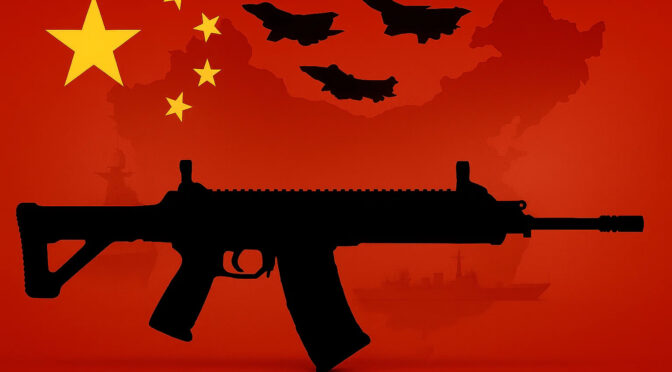
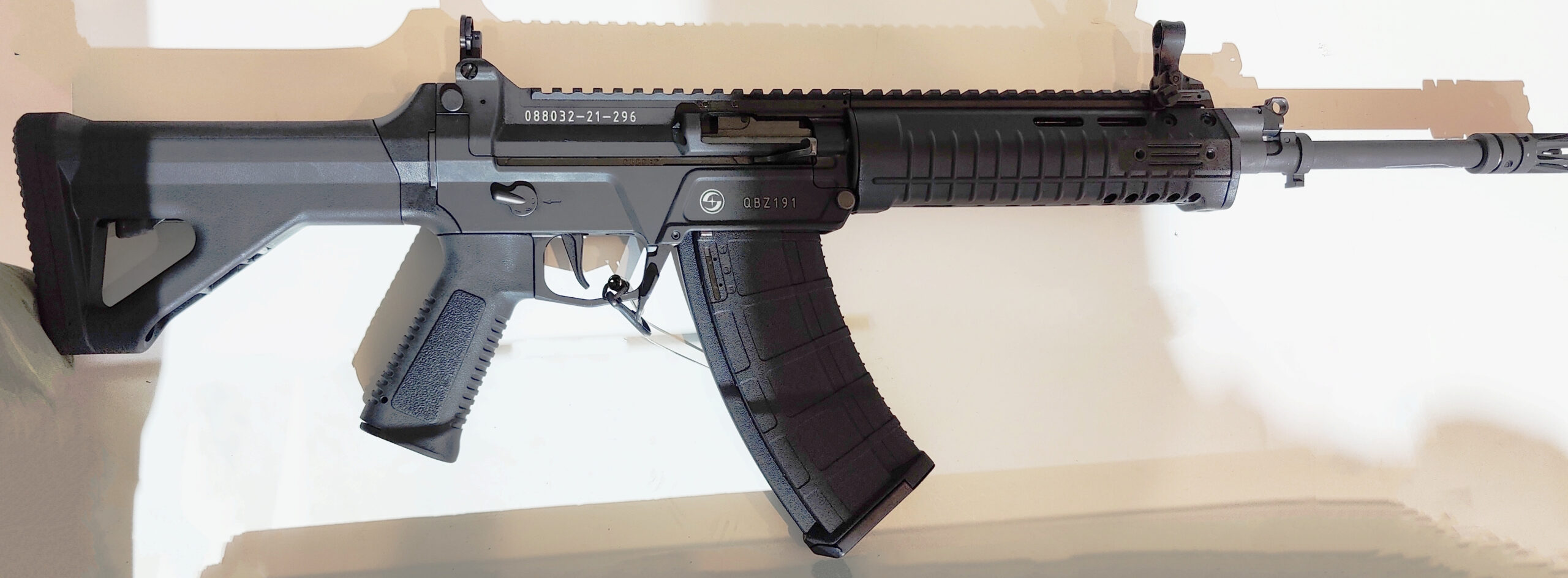
Small Arms of the People’s Republic of China: A Technical and Strategic Assessment

The People’s Liberation Army (PLA) of the People’s Republic of China is currently executing the most comprehensive and technologically ambitious small arms modernization program in its history. This transformation is centered on the system-wide adoption of the QBZ-191 modular weapon family, a development that signifies a profound strategic and doctrinal evolution. The prevailing trend is a decisive pivot away from the isolated, proprietary, and ergonomically challenged designs of the past, most notably the bullpup QBZ-95 family. In its place, the PLA is embracing a design philosophy rooted in modularity, superior ergonomics, and the seamless integration of advanced electro-optics and accessories, aligning Chinese infantry weapons with global design paradigms for the first time.

This report provides a detailed technical and strategic assessment of the small arms currently in service across all branches of China’s armed forces, including the PLA Ground Force (PLAGF), Navy (PLAN), Air Force (PLAAF), the paramilitary People’s Armed Police (PAP), and the China Coast Guard (CCG). The analysis indicates that the current modernization is far more than a simple equipment upgrade. It is a direct reflection of a deeper doctrinal shift towards information-centric, combined-arms warfare, where the individual soldier is a networked sensor and shooter. The new generation of weapons is engineered to enhance the lethality, tactical flexibility, and operational sustainability of small units, empowering them to fight and win on a complex, multi-domain battlefield.

While the new QBZ-191 system is being prioritized for frontline combat units, a vast inventory of legacy weapons, including millions of QBZ-95 family rifles and a significant reserve of Type 81 rifles, remains in service. This demonstrates a pragmatic, tiered, and cost-conscious approach to modernization. Equipment is cascaded from elite units to second-line troops, reserves, and internal security forces, maximizing the combat effectiveness of the entire force structure within realistic fiscal and logistical constraints. This report will dissect each major weapon system, analyze its role within the PLA’s evolving doctrine, and provide a concluding assessment of China’s defense-industrial capacity and the future trajectory of its small arms development.

II. The New Generation: The QBZ-191 Modular Weapon System

The centerpiece of the PLA’s infantry modernization is the weapon family officially designated the QBZ-191. Its introduction marks a definitive break with the preceding generation of bullpup rifles and represents a wholesale adoption of contemporary, conventional rifle design principles. This shift is not merely stylistic; it is a fundamental realignment of the infantryman’s weapon with the demands of modern, informationized warfare.

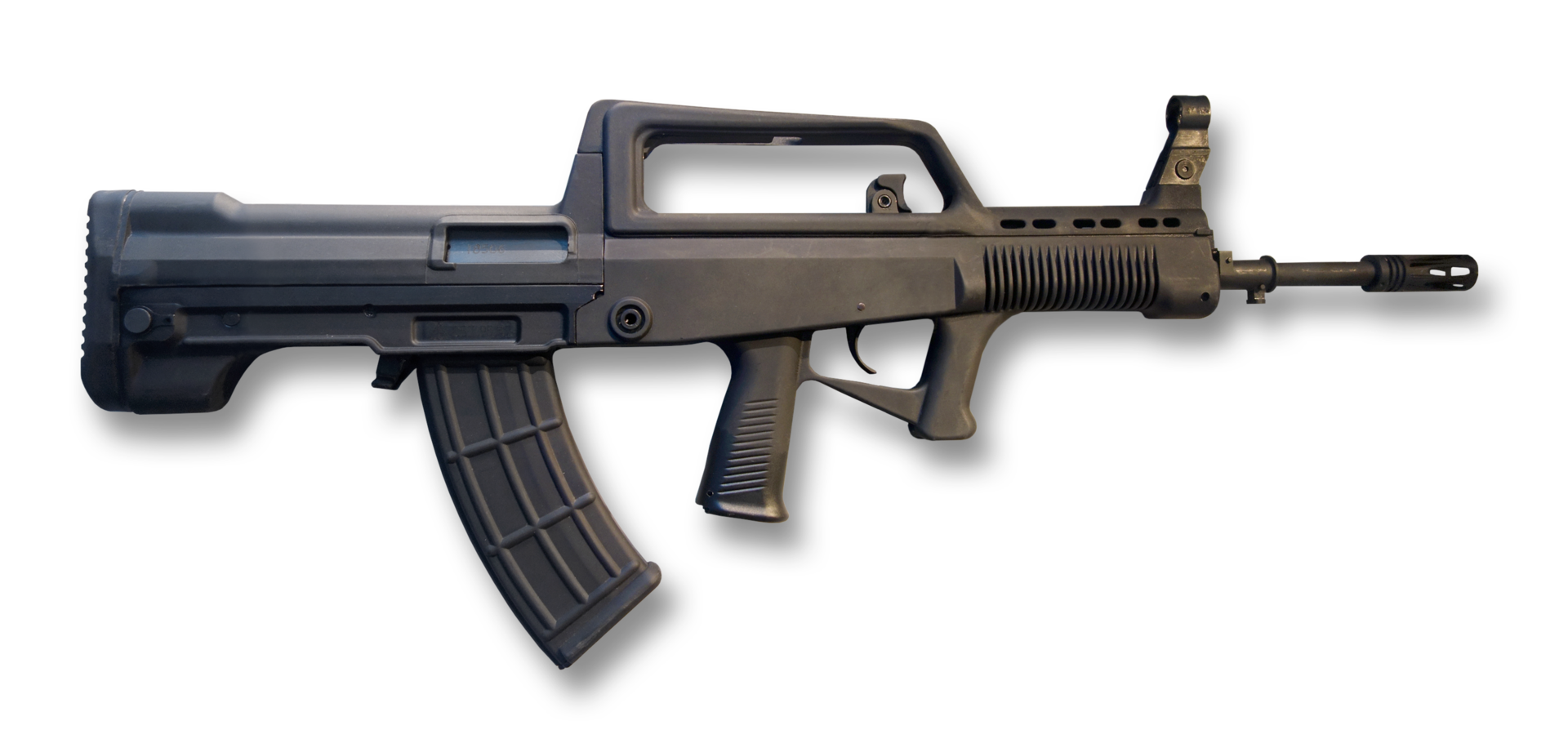
This is a photo of a QBZ-191 taken at the 2021 China Airshow. Photo by: By Dan3031949 – Own work, CC BY-SA 4.0, https://commons.wikimedia.org/w/index.php?curid=112466629

Core Design Philosophy and Doctrinal Shift

The QBZ-191 (191式自动步枪, 191 Shì Zìdòng Bùqiāng, Type 191 Automatic Rifle) family abandons the bullpup configuration of its QBZ-95 predecessor in favor of a conventional layout. Mechanically, it operates on a short-stroke gas piston and rotating bolt system, a mechanism renowned for its reliability and adopted by many of the world’s most advanced assault rifles, such as the Heckler & Koch HK416 and the FN SCAR. The weapon’s architecture includes features now considered standard for a modern military rifle: a multi-position adjustable stock, improved ergonomics for varied shooting positions, and fully ambidextrous controls, including the fire selector and magazine release.

The decision to abandon the bullpup layout, after investing heavily in it for over two decades with the QBZ-95, is the most telling aspect of the new design philosophy. The QBZ-95, while offering the benefit of a long barrel in a compact overall length, was plagued by inherent design flaws that became increasingly untenable. These included a notoriously heavy and imprecise trigger due to the long linkage from the trigger to the rear-mounted action, awkward magazine changes that required breaking a firing grip, and ejection ports located close to the user’s face, making off-hand shooting difficult. Most critically, however, the QBZ-95 was a product of a different doctrinal era.

The most significant physical feature of the QBZ-191, and the clearest indicator of the new doctrine, is its full-length, monolithic MIL-STD-1913 Picatinny rail along the top of the receiver and handguard. The QBZ-95 featured only a short, proprietary dovetail mount that was poorly suited for mounting anything other than a single, specific optic. The adoption of the universal Picatinny standard is a revolutionary step for the PLA. This rail provides ample space for the flexible mounting of a suite of accessories in various combinations—for example, a variable-power magnified optic paired with a clip-on thermal or night vision sight, a laser aiming module, and backup iron sights. This physical change is the direct consequence of a profound doctrinal evolution. The PLA no longer views advanced optics as specialist equipment for designated marksmen but as standard-issue equipment for the common infantryman. This signals a massive parallel investment in the domestic electro-optics industry and a fundamental shift in training methodology. The PLA is moving from an “iron sights first” mentality to an “optics first” doctrine, aiming to increase the effective engagement range, first-hit probability, and all-weather, day/night fighting capability of every soldier. This, in turn, enhances small-unit lethality, situational awareness, and autonomy on the battlefield.

Ammunition: The DBP-191 5.8x42mm Cartridge

The development of the QBZ-191 rifle is inextricably linked to the simultaneous development of a new generation of ammunition: the DBP-191 5.8x42mm cartridge. The weapon and the cartridge were designed as a single, integrated system, with each component optimized to enhance the performance of the other. This holistic approach is a hallmark of a mature and sophisticated research and development process.

The original 5.8x42mm cartridge, DBP-87, was developed in the 1980s and was a contemporary of the 5.56x45mm NATO and 5.45x39mm Soviet rounds. While adequate for its time, it and its successor, the DBP-10, lacked the performance of modern intermediate cartridges, particularly at extended ranges. The DBP-191 was specifically designed to overcome these deficiencies. It features a heavier, longer, and more streamlined projectile with a superior ballistic coefficient. This results in a flatter trajectory, reduced wind drift, and greater retained energy at medium and long ranges. The projectile construction includes a hardened steel core for improved penetration against body armor and light barriers.

In weapons design, the internal and external ballistics of the cartridge are the foundational elements that dictate critical design parameters of the rifle, including barrel length, rifling twist rate, gas system tuning, and the practical effective range of the platform. The PLA’s ordnance establishment clearly identified a performance deficit in its existing 5.8mm ammunition and understood that a new rifle alone could not solve the problem. By developing a new, higher-performance round and then engineering a family of weapons optimized to fire it, they have achieved a synergistic leap in capability. The superior performance of the DBP-191 cartridge is precisely what enables the Designated Marksman Rifle variant of the family, the QBU-191, to be effective out to ranges of 600-800 meters and what gives the standard QBZ-191 rifle a tangible performance advantage over its predecessor.

System Variants

The QBZ-191 was designed from the outset as a modular family of weapons, sharing a common receiver and operating mechanism, to fulfill multiple battlefield roles.

  • QBZ-191 (191式自动步枪, 191 Shì Zìdòng Bùqiāng, Type 191 Automatic Rifle): This is the standard infantry rifle and the core of the family. It features a 14.5-inch (368mm) barrel, providing a good balance between ballistic performance and maneuverability. It is slated to become the most widely issued variant, systematically replacing the QBZ-95-1 in frontline PLAGF combined arms brigades and PLAN Marine Corps units.
  • QBZ-192 (192式短自动步枪, 192 Shì Duǎn Zìdòng Bùqiāng, Type 192 Short Automatic Rifle): This is the compact carbine variant, equipped with a shorter 10.5-inch (267mm) barrel. The reduced length makes it ideal for personnel operating in confined spaces, such as vehicle crews, special forces conducting close-quarters battle (CQB), and naval personnel aboard ships. It serves the same role as the American Mk 18 or the Russian AK-105.
  • QBU-191 (191式精确射手步枪, 191 Shì Jīngquè Shèshǒu Bùqiāng, Type 191 Precision Marksman Rifle): This is the Designated Marksman Rifle (DMR) variant of the family. It is designed to provide accurate semi-automatic fire at the squad level beyond the effective range of standard assault rifles. It achieves this through a longer, heavier, free-floated barrel for enhanced accuracy and consistency, an improved trigger mechanism, and the standard issuance of a new 3-8.6x variable power magnified optic, the QMK-191. The QBU-191 is specifically designed to leverage the superior long-range ballistic performance of the new DBP-191 ammunition, enabling effective engagements out to 600-800 meters.
  • QJB-201 (201式班用机枪, 201 Shì Bānyòng Jīqiāng, Type 201 Squad Machine Gun): While not officially designated as part of the ‘191’ family, the QJB-201 is a new-generation 5.8x42mm light machine gun whose development was concurrent with and complementary to the QBZ-191 program. It is designed to replace the magazine-fed QJB-95-1 Squad Automatic Weapon. The most significant improvement is its switch to a belt-feed mechanism, allowing for a much higher volume of sustained suppressive fire. This addresses a major deficiency of its predecessor and provides PLA squads with a true light machine gun capability comparable to the FN Minimi/M249.

III. Prevalent Service Rifles and Carbines: The QBZ-95 Era

Despite the rollout of the QBZ-191, the incumbent QBZ-95 family of bullpup rifles remains the most numerous and widely distributed weapon system in the PLA’s inventory. Its vast numbers ensure that it will continue to see service for at least another decade, particularly with second-line units, reserves, and the People’s Armed Police, as the PLA undertakes its phased modernization.

QBZ-95/95-1 Family (95/95-1式枪族, 95/95-1 Shì Qiāngzú, Type 95/95-1 Gun Family)

Introduced in the late 1990s to coincide with the handover of Hong Kong, the QBZ-95 was a radical departure for the PLA. It was a gas-operated, bullpup rifle chambered for the then-new, domestically developed 5.8x42mm DBP-87 cartridge. This move represented a major technological leap, transitioning the PLA from its lineage of 7.62x39mm Kalashnikov-derived platforms (the Type 56 and Type 81) to a proprietary design utilizing a modern small-caliber, high-velocity round. The bullpup configuration, placing the action and magazine behind the trigger, allowed for a full-length 18.2-inch barrel in an overall package shorter than many carbines, a significant advantage for mechanized infantry.

Around 2010, an upgraded version, the QBZ-95-1, was introduced. This model addressed some of the original’s ergonomic flaws, most notably by relocating the safety selector from the rear of the stock to a more accessible position above the pistol grip. It also featured a heavier barrel and was chambered for the improved DBP-10 ammunition, which used a heavier projectile for better long-range performance.

The rapid and expensive decision by the PLA to abandon the entire bullpup concept after only one major upgrade suggests that the perceived flaws of the QBZ-95 were not minor but fundamental to its design. The platform’s legacy is therefore complex. It should not be viewed simply as a failed rifle, but rather as a crucial and necessary transitional system. The QBZ-95 project achieved its primary strategic objective: it forced the Chinese defense industry to master modern rifle manufacturing techniques, including the use of engineering polymers, and successfully introduced a proprietary small-caliber cartridge, breaking the PLA’s long-standing dependence on Soviet calibers and designs. In this, it was an unqualified success. Its secondary goal, to be a world-class fighting rifle, was only partially met. The institutional flexibility demonstrated by the PLA and Norinco in critically evaluating their own flagship product and making the bold decision to replace it entirely is a sign of a mature and pragmatic military-industrial complex, one that prioritizes combat capability over institutional prestige.

  • Variants in Service:
  • QBZ-95/95-1: The standard rifle variant. For two decades, it has been the primary individual weapon of the PLAGF, PAP, and other branches.
  • QBZ-95B/95B-1: A compact carbine version with a significantly shorter barrel. It has been used by special forces, vehicle crews, and naval boarding parties, but its utility was hampered by a severe muzzle blast, flash, and a significant reduction in projectile velocity and effective range.
  • QJB-95/95-1: The Squad Automatic Weapon (SAW) variant. It is essentially a heavy-barreled version of the rifle, designed to be fed from a 75-round drum magazine. While providing more sustained fire capability than a standard rifle, it is not a true light machine gun. It is prone to overheating during prolonged firing and lacks the advantages of a quick-change barrel or a belt-feed system.

Legacy Systems in Reserve/Second-Line Service

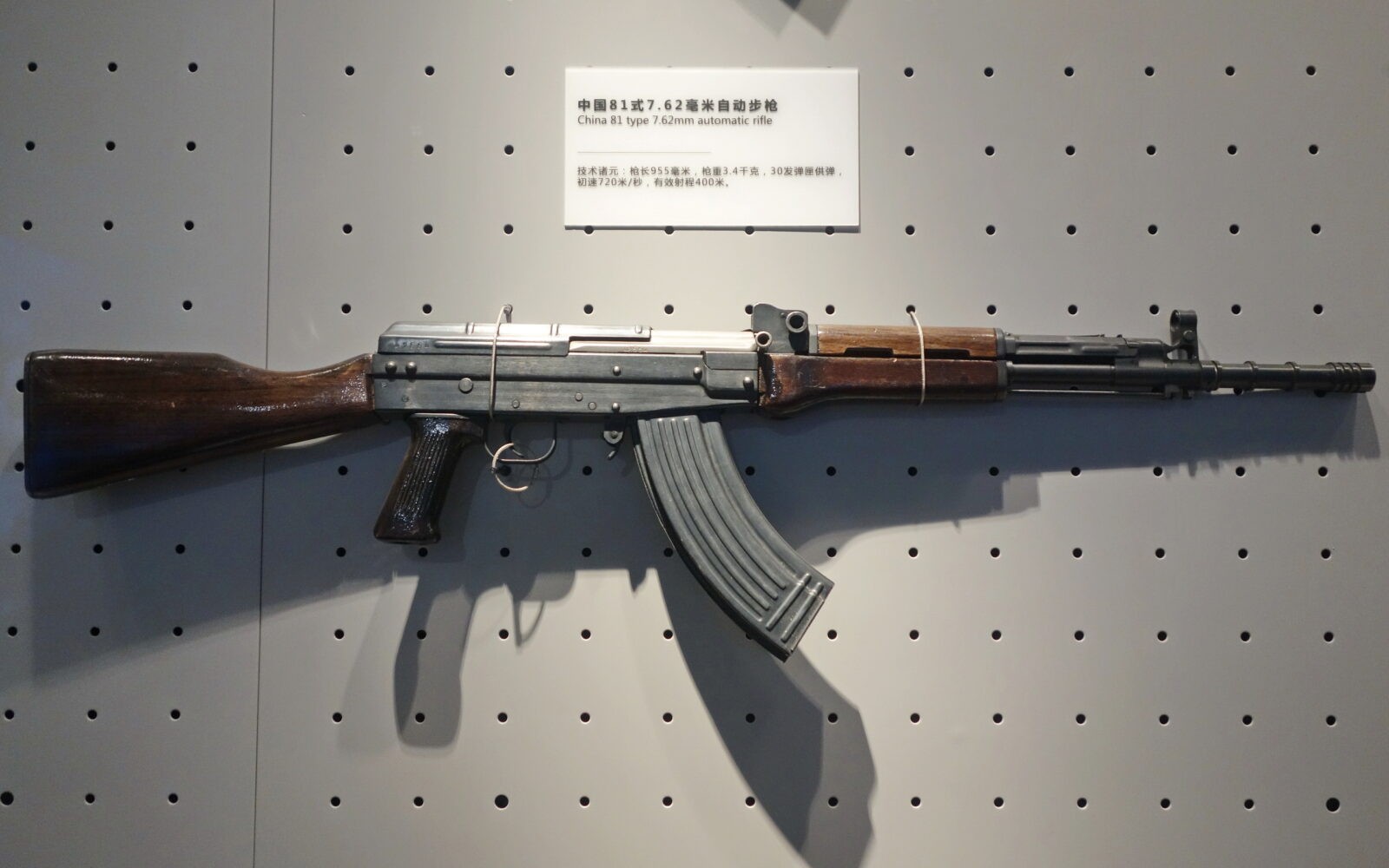
The Type 81 (81式自动步枪, 81 Shì Zìdòng Bùqiāng) rifle, a 7.62x39mm weapon system, continues to serve with reserve formations, militia units, and some border defense forces. The Type 81, while visually resembling the Kalashnikov, is a distinct design featuring a short-stroke gas piston system (unlike the AK’s long-stroke piston), which contributed to its improved accuracy over the Type 56 (a direct Chinese copy of the AK-47). It is a robust, reliable, and simple weapon that remains effective for its intended role.

Tyoe 81 Rifle. By Tyg728 – Own work, CC BY-SA 4.0, https://commons.wikimedia.org/w/index.php?curid=114962053

The continued presence of the Type 81 and the gradual displacement of the QBZ-95 is not an indication of logistical failure or economic hardship, but rather the product of a deliberate and cost-effective strategy of tiered modernization. Equipping the entirety of China’s massive armed forces—including millions of active duty personnel, PAP, and reservists—with the latest QBZ-191 system simultaneously is financially prohibitive and logistically unfeasible. Instead, the PLA employs a cascading procurement model. New QBZ-191 systems are fielded to high-readiness, frontline combat brigades. Their displaced QBZ-95-1 rifles are then refurbished and re-issued to second-line units, garrison troops, or the PAP. This pushes older but still serviceable weapons like the Type 81 further down the chain to reserve and militia units. This methodical approach maximizes the overall combat power of the force structure by ensuring that even lower-tier units receive upgraded equipment, all while managing the immense cost of a full-scale re-equipment program.

IV. Precision Fire Systems: From Marksman to Anti-Materiel

The PLA has made significant strides in developing and fielding a range of precision fire systems, recognizing the critical importance of engaging targets accurately at ranges beyond that of a standard service rifle. This capability area has evolved from rudimentary sniper rifles to a sophisticated ecosystem of designated marksman, bolt-action sniper, and heavy anti-materiel systems.

Designated Marksman Rifles (DMRs)

  • QBU-191: As detailed previously, the QBU-191 is the PLA’s newest DMR and represents the future of squad-level precision fire. It is being fielded as an integral part of the new modular weapon family.
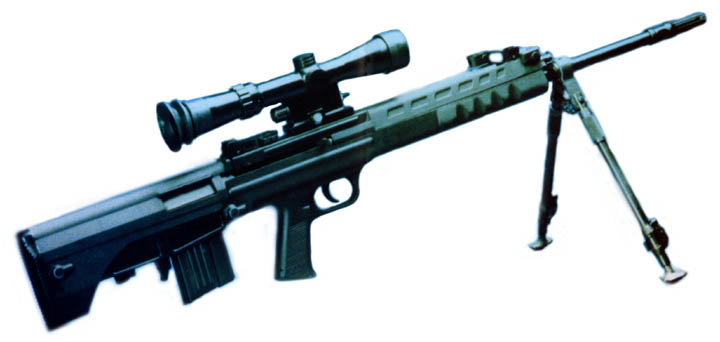
  • QBU-88 (Type 88) (88式狙击步枪, 88 Shì Jūjí Bùqiāng, Type 88 Sniper Rifle): The QBU-88 was the PLA’s first purpose-built DMR, introduced alongside the QBZ-95 family. It is a semi-automatic, bullpup rifle chambered for the 5.8x42mm “heavy round” (a predecessor to the DBP-10). While officially designated a “sniper rifle,” its performance characteristics and intended role place it squarely in the DMR category. For its time, the QBU-88 was a revolutionary concept for the PLA, introducing the principle of a squad-level precision rifle. However, it is based on the QBZ-95 action and suffers from many of the same limitations, including poor ergonomics, a heavy trigger, and inadequate provisions for mounting modern optics. Its accuracy is considered adequate for its role but is surpassed by more modern designs. The QBU-88 is being actively replaced by the superior QBU-191.

Bolt-Action Sniper Rifles

  • CS/LR4 (and variants): The CS/LR4 represents a significant departure in PLA small arms procurement philosophy. It is a modern, high-precision bolt-action sniper rifle system chambered in 7.62x51mm NATO. This system, used by PLAGF special operations forces and elite PAP counter-terrorism units like the Snow Leopard Commando Unit, is a direct equivalent to Western precision rifles like the Remington M24 or Accuracy International Arctic Warfare.
One of the Norinco NSG-1 / CS-LR4 Sniper Rifles that China donated to the Philippine armed forces last June 2017. Photo taken during the Philippine Army’s 121st Anniversary Exhibit at the Bonifacio High Street Activity Center. By Rhk111 – Own work, CC BY-SA 4.0, https://commons.wikimedia.org/w/index.php?curid=67238847

The adoption of a foreign, NATO-standard caliber for a premier sniper rifle is a highly revealing decision. It breaks with the PLA’s long-standing doctrine of logistical self-sufficiency and reliance on domestic calibers. This choice was not made lightly. It indicates that the performance requirements for high-precision, long-range sniping—specifically, consistent sub-Minute of Angle (MOA) accuracy—were so stringent that existing domestic cartridges, such as the 5.8mm or the legacy 7.62x54mmR, were deemed insufficient. The PLA’s ordnance experts and procurement officers made a pragmatic choice, recognizing that the global commercial and military ecosystem for high-quality, match-grade 7.62x51mm ammunition was far more mature and offered superior performance compared to any domestic equivalent. This prioritization of raw capability over logistical purity for a specialized, high-value role suggests a sophisticated, two-tiered approach to ammunition philosophy. For general-issue weapons, domestic calibers are paramount for strategic independence during a major conflict. For elite, special-purpose units where mission success hinges on the highest possible performance, they will adopt the best available global standard.

Anti-Materiel Rifles

  • QBU-10 (10式大口径狙击步枪, 10 Shì Dàkǒujìng Jūjí Bùqiāng, Type 10 Large-Caliber Sniper Rifle): The QBU-10 is a semi-automatic anti-materiel rifle chambered in the powerful 12.7x108mm cartridge, the Eastern Bloc equivalent of the.50 BMG. This is a heavy, team-served weapon, typically deployed on a tripod or mounted on a vehicle. Its purpose is to engage and destroy high-value materiel targets at very long ranges (up to 1,500 meters), such as light armored vehicles, radar and communications equipment, parked aircraft, and enemy personnel behind substantial cover. A key feature of the QBU-10 system is its sophisticated, integrated day/night optic, which reportedly incorporates a laser rangefinder and a ballistic computer to aid the gunner in achieving first-round hits at extreme distances. This weapon provides PLA infantry units with an organic capability to defeat targets that would otherwise require dedicated anti-tank guided missiles or heavier fire support, making it a key asset for long-range interdiction and battlefield dominance.
A Chinese marine holding a QBU-10 in a Ghillie Suit. By Mil.ru, CC BY 4.0, https://commons.wikimedia.org/w/index.php?curid=109882081

V. Sidearms and Close-Quarters Systems

This category includes weapons designed for personal defense, urban combat, and special operations, where compactness, rate of fire, and specialized capabilities like sound suppression are paramount. Recent developments in this area show a clear trend towards standardization on globally accepted calibers.

Pistols (手枪, Shǒuqiāng)

  • QSZ-92 (92式手枪, 92 Shì Shǒuqiāng, Type 92 Pistol): The QSZ-92 has been the standard service pistol for the PLA and PAP for over two decades. It is a polymer-framed, short-recoil-operated pistol. Uniquely, it was produced in two distinct caliber variants. The primary military version fires the proprietary 5.8x21mm DAP-92 armor-piercing cartridge, issued to officers and combat troops. A second version, chambered in the ubiquitous 9x19mm Parabellum, was produced primarily for PAP units and for export. The 5.8mm version was designed with the specific doctrinal goal of defeating enemy body armor, a concept shared by the Western FN 5.7x28mm. However, like its Western counterparts, the small-caliber pistol round concept has been widely criticized for having questionable terminal ballistics and stopping power against unarmored targets compared to larger, heavier conventional pistol rounds.
QSZ92 Pistol. By Tyg728 – Own work, CC BY-SA 4.0, https://commons.wikimedia.org/w/index.php?curid=62580963
  • QSZ-193 (193式手枪, 193 Shì Shǒuqiāng, Type 193 Pistol): The QSZ-193 is a new, compact, striker-fired pistol that has been observed in service with PLAAF pilots and special forces units. Crucially, it is chambered in 9x19mm Parabellum. The emergence of this new 9mm pistol as the apparent next-generation sidearm for specialized roles effectively signals the end of the PLA’s two-decade experiment with the 5.8x21mm pistol cartridge. The decision to standardize on the globally dominant 9x19mm caliber for its new sidearm indicates that the PLA has reached the same conclusion as many Western militaries: modern 9mm ammunition, particularly with advanced hollow-point or controlled-expansion projectiles, offers a superior overall balance of terminal performance, magazine capacity, and controllability, while the perceived advantage of armor penetration from small-caliber pistol rounds is marginal in most real-world scenarios.

Submachine Guns (冲锋枪, Chōngfēngqiāng)

  • QCQ-171 (171式冲锋枪, 171 Shì Chōngfēngqiāng, Type 171 Submachine Gun): A modern, lightweight submachine gun (SMG) chambered in 9x19mm, the QCQ-171 is being issued to special operations forces and other units with a specific requirement for a compact, high-rate-of-fire weapon for close-quarters combat. It features a telescopic stock, accessory rails for optics and lights, and appears to be a direct competitor to Western designs like the Heckler & Koch MP5 or B&T APC9.
  • QCW-05 (05式轻型冲锋枪, 05 Shì Qīngxíng Chōngfēngqiāng, Type 05 Light Submachine Gun): The QCW-05 is a unique bullpup SMG chambered in the proprietary 5.8x21mm pistol cartridge. Its most notable feature is its large, integral sound suppressor, which makes the weapon very quiet. It is fed from a 50-round, four-column “quad-stack” magazine located in the pistol grip. While effective in its niche role for stealth operations, it suffers from the same ballistic limitations as the QSZ-92 pistol in the same caliber. Its use is primarily confined to PLA special forces and PAP counter-terrorism units. The fielding of the 9mm QCQ-171 in many frontline SOF roles further reinforces the PLA’s strategic move away from the 5.8x21mm cartridge ecosystem.
QCW-5 Bullpup Submachine Gun. By Tyg728 – Own work, CC BY-SA 4.0, https://commons.wikimedia.org/w/index.php?curid=62566026

VI. Crew-Served and Support Weapons

These weapons provide sustained fire support at the platoon and company level, giving infantry units the ability to suppress and destroy enemy positions and light vehicles. This category includes machine guns and automatic grenade launchers.

Machine Guns (机枪, Jīqiāng)

  • QJY-88 (88式通用机枪, 88 Shì Tōngyòng Jīqiāng, Type 88 General Purpose Machine Gun): The QJY-88 was developed as the PLA’s first true General Purpose Machine Gun (GPMG), intended to be fired from a bipod in the light machine gun role or from a tripod in the sustained-fire medium machine gun role. It was designed to replace the aging 7.62x54mmR Type 67 machine gun. However, in a highly unusual design choice, the QJY-88 was chambered in the 5.8x42mm “heavy round”. This decision represents a rare doctrinal mismatch in PLA weapon development. The GPMG concept, epitomized by the German MG3, the American M240, and the Russian PKM, is predicated on the use of a full-power rifle cartridge (e.g., 7.62x51mm or 7.62x54mmR). These powerful rounds are essential for providing effective, long-range suppressive fire and for penetrating cover, light vehicles, and field fortifications. By chambering their GPMG in an intermediate cartridge, even a heavy-for-caliber one, the PLA created a weapon that lacked a significant performance advantage in range and barrier penetration over a modern squad automatic weapon, yet was heavier and more cumbersome. The weapon has been widely criticized as being underpowered for its intended role, and the notable lack of a clear successor suggests that the PLA is re-evaluating its entire machine gun doctrine.
  • QJZ-89 (89式重机枪, 89 Shì Zhòng Jīqiāng, Type 89 Heavy Machine Gun): The QJZ-89 is the PLA’s standard heavy machine gun (HMG), chambered in 12.7x108mm. Its most remarkable feature is its exceptionally low weight. At approximately 26 kg (57 lbs) for the gun and tripod combined, it is the lightest HMG in service anywhere in the world, weighing significantly less than the American M2 Browning or the Russian Kord. This light weight is achieved through the use of advanced alloys and a hybrid direct-impingement/short-stroke piston operating system. This makes it more man-portable than its peers, allowing infantry units to reposition it on the battlefield more rapidly. It is used in both tripod-mounted infantry support roles and as a primary or secondary armament on a wide variety of PLA vehicles.

Automatic Grenade Launchers (榴弹发射器, Liúdàn Fāshèqì)

  • QLZ-87/11 (87/11式榴弹发射器, 87/11 Shì Liúdàn Fāshèqì, Type 87/11 Grenade Launcher): The QLZ-87 is a 35mm automatic grenade launcher (AGL) that provides devastating anti-personnel and light anti-materiel fire support for infantry units. It is a selectively-fired weapon that can be fired from an integral bipod in a direct-fire role or from a tripod for indirect fire. It is fed from 6- or 15-round drum magazines. The newer QLZ-11 is a lightened and improved version of the design. The 35mm grenades provide a significant area-effect capability, allowing a small infantry unit to suppress and neutralize enemy troops in trenches, behind cover, or in the open at ranges out to 1,700 meters.

VII. Armament by Service Branch: A Comparative Analysis

While there is increasing standardization around the new QBZ-191 family, the specific small arms loadouts vary between the different branches of China’s armed forces, reflecting their unique operational requirements and mission sets.

PLA Ground Force (PLAGF) (中国人民解放军陆军, Zhōngguó Rénmín Jiěfàngjūn Lùjūn)

  • Standard Infantry: The PLAGF’s frontline combined arms brigades are at the forefront of the modernization effort. Standard infantry squads are actively transitioning from the QBZ-95-1 to the new QBZ-191 as their primary service rifle. A typical squad will be augmented with the QBU-191 for designated marksman duties and the new belt-fed QJB-201 as the squad’s light machine gun. Officers and vehicle crews are typically issued the QSZ-92 pistol for personal defense. Second-line and garrison units will continue to operate the QBZ-95-1 for the foreseeable future.
  • Special Operations Forces (SOF): PLAGF special forces are among the first to receive the full suite of new-generation weapons. They are likely to be fully equipped with the compact QBZ-192 carbine for its maneuverability in direct action missions. Their specialized inventory also includes the high-precision CS/LR4 bolt-action sniper rifle for long-range engagements and the new 9mm QCQ-171 SMG for suppressed, close-quarters operations.

PLA Navy (PLAN) (中国人民解放军海军, Zhōngguó Rénmín Jiěfàngjūn Hǎijūn)

  • Marines (海军陆战队, Hǎijūn Lùzhànduì): As an elite expeditionary force analogous to the USMC, the PLAN Marine Corps is receiving the QBZ-191 family concurrently with the PLAGF’s frontline units. Given their focus on amphibious assault, littoral operations, and potential urban warfare scenarios, the compact QBZ-192 carbine is expected to be a common issue weapon alongside the standard QBZ-191 rifle.
  • Shipboard Personnel: For general security, anti-piracy, and visit, board, search, and seizure (VBSS) operations, compactness is the key driver of weapon selection. Personnel were historically armed with the QBZ-95B carbine, but are now likely transitioning to the superior QBZ-192 carbine. The QSZ-92 pistol remains the standard sidearm.

PLA Air Force (PLAAF) (中国人民解放军空军, Zhōngguó Rénmín Jiěfàngjūn Kōngjūn)

  • Base Security/Ground Personnel: PLAAF ground personnel, such as those in airfield security units, are typically equipped with standard infantry rifles. They currently operate the QBZ-95-1 and will likely be among the later recipients of the QBZ-191 as production ramps up.
  • Pilots: Aircrew are issued compact weapons for survival and self-defense in the event of an ejection over hostile territory. This role was historically filled by machine pistols like the Type 80, but is now transitioning to the new, more reliable, and compact QSZ-193 pistol in 9x19mm.

People’s Armed Police (PAP) (中国人民武装警察部队, Zhōngguó Rénmín Wǔzhuāng Jǐngchá Bùduì)

The PAP is a massive paramilitary force responsible for internal security, counter-terrorism, and border control. Its armament reflects this dual law enforcement and military role.

  • Internal Security Units: The vast majority of PAP units, tasked with roles like riot control and guarding critical infrastructure, widely use the QBZ-95-1 rifle and the QSZ-92 pistol (often the 9mm version).
  • Counter-Terrorism Units: Elite PAP units, such as the Beijing-based Snow Leopard Commando Unit and various regional special police units, maintain a diverse and highly specialized inventory. Their requirements overlap significantly with military SOF but with a greater emphasis on surgical urban operations. They utilize the CS/LR4 sniper rifle for precision hostage rescue shots, both the integrally suppressed 5.8mm QCW-05 and the new 9mm QCQ-171 SMGs for close-quarters battle, and specialized tactical shotguns like the QBS-09 (09式军用霰弹枪, 09 Shì Jūnyòng Xiàndànqiāng, Type 09 Military Shotgun).

China Coast Guard (CCG) (中国海警局, Zhōngguó Hǎijǐng Jú)

As a paramilitary maritime law enforcement agency, the CCG’s armament is more standardized and focused on its mission set. Boarding teams are typically equipped with compact weapons suitable for use on ships, primarily the QBZ-95B carbine and the QSZ-92 pistol. Their cutters and larger vessels are armed with deck-mounted heavy machine guns and autocannons.

VIII. Concluding Analysis: Industrial Capacity and Future Trajectory

The ongoing modernization of the PLA’s small arms inventory reveals several key strategic trends and provides a clear indication of the capabilities of China’s domestic defense industry. The trajectory points towards a force that is rapidly closing the technological and doctrinal gap with leading Western militaries at the level of the individual soldier.

The analysis synthesizes four dominant trends. First is the primacy of modularity and optics integration, exemplified by the QBZ-191’s conventional layout and full-length Picatinny rail. Second is the shift towards a holistic, systems-based design approach, where the rifle, cartridge (DBP-191), and optic (QMK-191) are developed concurrently as an optimized package. Third is the pragmatic adoption of international standards, such as the MIL-STD-1913 rail and the 9x19mm pistol caliber, when they offer a clear performance advantage over proprietary solutions. Fourth is the implementation of a deliberate, cost-effective, tiered modernization strategy that maximizes the combat power of the entire force structure during a prolonged transition period.

The development and mass production of the QBZ-191 family is a testament to the maturity of China’s state-owned defense industry, primarily represented by the corporate giant Norinco. It demonstrates a sophisticated capability for rapid, clean-sheet design, the use of modern materials and manufacturing methods (such as advanced polymers for furniture and aluminum forgings and extrusions for receivers), and the large-scale production and integration of complex electro-optics. The ability to identify the doctrinal shortcomings of a previous flagship system (QBZ-95) and execute a complete and rapid course correction speaks to an agile and capability-focused industrial base.

Looking forward, the full replacement of the QBZ-95 family in all frontline PLAGF and PLAN Marine Corps units is likely to be completed within the next 5-10 years. Future development will likely focus on addressing remaining gaps in the PLA’s small arms portfolio. A high-priority area will likely be the development of a new GPMG, probably chambered in a full-power cartridge, to rectify the doctrinal and performance shortcomings of the 5.8mm QJY-88. Furthermore, the PLA will almost certainly continue the trend of integrating “smart” technologies into the infantry weapon system, including networked sights that can share data, integrated command and control links, and other technologies that further embed the individual soldier into a digital battlefield network. The overall trajectory is clear: China is committed to equipping its infantry with small arms systems that are not merely sufficient, but are technologically on par with, and in some cases potentially superior to, those of any potential adversary.

IX. Appendix: Comprehensive Small Arms Summary Table

The following table provides a consolidated, at-a-glance reference for the primary small arms systems currently in service with the armed forces of the People’s Republic of China.

CategoryChinese Designation (Hanzi)Pinyin RomanizationU.S. English Name/TranslationManufacturerCaliberOperating PrincipleWeight (Unloaded)Overall LengthPrimary Users
Service Rifle191式自动步枪191 Shì Zìdòng BùqiāngType 191 Automatic RifleNorinco State Arsenals5.8x42mm DBP-191Short-stroke gas piston, rotating bolt~3.25 kg~950 mm (stock extended)PLAGF, PLAN Marines
Carbine192式短自动步枪192 Shì Duǎn Zìdòng BùqiāngType 192 Short Automatic RifleNorinco State Arsenals5.8x42mm DBP-191Short-stroke gas piston, rotating bolt~3.0 kg~810 mm (stock extended)SOF, Vehicle Crews, PLAN
Service Rifle95-1式自动步枪95-1 Shì Zìdòng BùqiāngType 95-1 Automatic RifleNorinco State Arsenals5.8x42mm DBP-10Short-stroke gas piston, rotating bolt3.25 kg745 mmPLAGF, PAP, PLAN, PLAAF
Legacy Rifle81式自动步枪81 Shì Zìdòng BùqiāngType 81 Automatic RifleNorinco State Arsenals7.62x39mmShort-stroke gas piston, rotating bolt3.4 kg955 mm (fixed stock)PLA Reserve, Militia
Pistol92式手枪92 Shì ShǒuqiāngType 92 PistolNorinco State Arsenals5.8x21mm / 9x19mmShort recoil, rotating barrel0.76 kg190 mmPLA, PAP
Pistol193式手枪193 Shì ShǒuqiāngType 193 PistolNorinco State Arsenals9x19mmShort recoil, striker-firedN/A (Compact)N/A (Compact)PLAAF Pilots, SOF
SMG171式冲锋枪171 Shì ChōngfēngqiāngType 171 Submachine GunNorinco State Arsenals9x19mmBlowback~2.8 kg~690 mm (stock extended)SOF, PAP
SMG05式轻型冲锋枪05 Shì Qīngxíng ChōngfēngqiāngType 05 Light Submachine GunNorinco State Arsenals5.8x21mmBlowback, integrally suppressed2.2 kg500 mmSOF, PAP
DMR191式精确射手步枪191 Shì Jīngquè Shèshǒu BùqiāngType 191 Precision Marksman RifleNorinco State Arsenals5.8x42mm DBP-191Short-stroke gas piston, rotating bolt~4.5 kg (est.)~1100 mm (est.)PLAGF, PLAN Marines
DMR88式狙击步枪88 Shì Jūjí BùqiāngType 88 Sniper RifleNorinco State Arsenals5.8x42mm (Heavy)Short-stroke gas piston, rotating bolt4.1 kg920 mmPLAGF, PAP
Sniper RifleCS/LR4CS/LR4CS/LR4 High-Precision Sniper RifleNorinco State Arsenals7.62x51mm NATOBolt-action6.5 kg1100 mmPLAGF SOF, PAP CTU
Anti-Materiel10式大口径狙击步枪10 Shì Dàkǒujìng Jūjí BùqiāngType 10 Large-Caliber Sniper RifleNorinco State Arsenals12.7x108mmGas-operated, semi-automatic13.3 kg1380 mmPLAGF
LMG201式班用机枪201 Shì Bānyòng JīqiāngType 201 Squad Machine GunNorinco State Arsenals5.8x42mm DBP-191Gas-operated, belt-fed< 5 kg (est.)N/APLAGF
SAW95-1式班用机枪95-1 Shì Bānyòng JīqiāngType 95-1 Squad Machine GunNorinco State Arsenals5.8x42mm DBP-10Short-stroke gas piston, rotating bolt3.95 kg840 mmPLAGF, PAP
GPMG88式通用机枪88 Shì Tōngyòng JīqiāngType 88 General Purpose Machine GunNorinco State Arsenals5.8x42mm (Heavy)Gas-operated, belt-fed11.8 kg (gun & bipod)1150 mmPLAGF
HMG89式重机枪89 Shì Zhòng JīqiāngType 89 Heavy Machine GunNorinco State Arsenals12.7x108mmGas-operated, belt-fed17.5 kg (gun only)1192 mmPLAGF
AGL87/11式榴弹发射器87/11 Shì Liúdàn FāshèqìType 87/11 Grenade LauncherNorinco State Arsenals35x32mmSRBlowback, semi/full auto12 kg (gun & bipod)970 mmPLAGF


If you find this post useful, please share the link on Facebook, with your friends, etc. Your support is much appreciated and if you have any feedback, please email me at in**@*********ps.com. Please note that for links to other websites, we are only paid if there is an affiliate program such as Avantlink, Impact, Amazon and eBay and only if you purchase something. If you’d like to directly contribute towards our continued reporting, please visit our funding page.


Convergence and Collision: A Comparative Analysis of U.S. and Chinese Military Philosophies in the 21st Century

The strategic competition between the United States and the People’s Republic of China is the defining geopolitical dynamic of the 21st century, and at its core lies a fundamental divergence in military philosophy, doctrine, and strategic posture. This report provides a comparative analysis of these competing military worldviews. The United States continues to operate under a philosophy of global power projection, enabled by a network of alliances and underpinned by a new doctrine of Joint All-Domain Operations (JADO) designed to achieve decision dominance through superior integration. In contrast, China’s military thought is rooted in a concept of “Active Defense,” a strategically defensive but operationally offensive posture designed to secure its regional periphery and deter outside intervention. This philosophy is operationalized through a doctrine of “Intelligentized Warfare” and “System Destruction,” which aims to paralyze a technologically superior adversary by attacking the network-centric systems that provide its strength.
These philosophies are not evolving in a vacuum; they are a direct response to one another, creating a dynamic of doctrinal competition. Where the U.S. seeks to build a resilient, integrated “kill web,” China seeks to develop the “assassin’s mace” capabilities to break it. Where the U.S. leverages a global network of allies, China pursues strategic self-reliance. This analysis reveals that while both powers converge on the belief that future warfare will be a contest of information and decision speed, their methods for achieving victory are starkly different, creating a complex and potentially volatile military balance.


Table 1: Comparative Matrix of U.S. and Chinese Military Philosophies

Capability/MindsetUnited StatesChinaAreas of SimilarityAreas of DifferenceKey Lessons
Overarching PhilosophyGlobal Power Projection: An expeditionary mindset focused on defending global interests far from home, maintaining access to the global commons, and supporting allies.1Active Defense: A strategically defensive posture focused on securing the national periphery, allowing for tactically and operationally offensive actions to deter or defeat intervention.3Both philosophies are designed to secure national interests and deter aggression, adapting to perceived threats.Geographic Scope: Global and expeditionary vs. Regional and counter-interventionist. Strategic Posture: Proactive and forward-deployed vs. Reactive and bastion-focused.U.S. power is inherently expeditionary, creating logistical vulnerabilities. China’s philosophy leverages geography as a strategic asset.
Core DoctrineJoint All-Domain Operations (JADO): Integration of effects across all domains (air, land, sea, space, cyber, EMS) to overwhelm an adversary’s decision-making cycle.5Intelligentized Warfare / System Destruction: Use of AI-enabled systems to attack an adversary’s C4ISR network, causing systemic collapse rather than attriting forces.7Both doctrines prioritize information superiority and decision speed, viewing the network as the central battlefield. Both are moving toward AI-enabled C2.Targeting Logic: U.S. targets adversary decision-making (paralysis). China targets the adversary’s system itself (collapse). Method: U.S. seeks integration (“kill web”). China seeks disintegration (“system destruction”).The central conflict is a doctrinal race: the U.S. builds an integrated network while China builds the tools to break it.
Geographic FocusGlobal: Postured to operate in multiple theaters simultaneously, with a significant focus on the Indo-Pacific and Europe.2Regional Periphery: Focused on the First and Second Island Chains, particularly scenarios involving Taiwan and the South China Sea.11Both view the Indo-Pacific as the primary theater of strategic competition.U.S. faces the “tyranny of distance” and must project power across vast oceans. China enjoys the “tyranny of proximity,” a home-field advantage.Geography remains a dominant factor. China’s A2/AD strategy is a direct exploitation of its geographic advantage.
Role of AlliancesCentral Pillar: A global network of formal treaty allies is integral to strategy, providing basing, legitimacy, and combat power.13Strategic Self-Reliance: Advocates “partnerships, not alliances,” avoiding binding mutual defense commitments to maintain strategic autonomy.16Both engage in military diplomacy and joint exercises with other nations.Nature of Commitment: U.S. has formal, binding defense treaties. China has pragmatic, non-binding partnerships.Alliances are a key U.S. asymmetry, providing mass but adding complexity. China’s approach provides speed but risks isolation.
Technological DriverNetwork-Centric “Kill Webs”: Focus on connecting any sensor to any shooter across all domains via JADC2 to create a resilient, integrated force.18Asymmetric “Assassin’s Mace”: Focus on developing niche, high-impact capabilities (e.g., ASBMs, hypersonics) to exploit specific U.S. vulnerabilities.20Both are heavily investing in AI, autonomy, cyber, and space capabilities as force multipliers.U.S. seeks to enhance its existing system through networking. China seeks to bypass and defeat the U.S. system with asymmetric weapons.Technology is not just about quality but about the strategic logic of its application.
Industrial ModelDistinct Defense Industrial Base: A largely separate ecosystem of specialized defense contractors, though with increasing ties to commercial tech.22Military-Civil Fusion (MCF): A national strategy to eliminate barriers between civilian and military R&D and industry, leveraging the entire national economy for military modernization.24Both recognize the need to leverage national technological and industrial power for military advantage.Integration Level: U.S. model is one of partnership between distinct sectors. China’s model is one of state-directed fusion.MCF presents a whole-of-nation challenge that blurs the lines between economic and military competition.
Theory of VictoryParalysis through Overwhelm: Present the adversary with so many simultaneous, multi-domain dilemmas that their ability to command and control their forces is paralyzed.5Disintegration through Disruption: Degrade and destroy the adversary’s C4ISR systems, severing the links between sensors and shooters, causing their warfighting system to collapse.7Both aim to win decisively and quickly by targeting the adversary’s cognitive and command functions, not just their physical forces.U.S. theory is based on the resilience of its own network. China’s theory is based on the fragility of the adversary’s network.Victory is increasingly defined by disruption, not attrition.
Civil-Military RelationsStrict Civilian Control: The military is subordinate to elected civilian leadership (President, Congress) as mandated by the Constitution.27Party-Army Fusion: The People’s Liberation Army (PLA) is the armed wing of the Chinese Communist Party (CCP), not the state. Its ultimate loyalty is to the Party.3In both, the military is an instrument of national policy.Source of Authority: U.S. military serves the Constitution and the nation. The PLA serves the CCP.This fundamental difference shapes strategic objectives, risk tolerance, and the ultimate purpose for which military force is used.

The 10 Key Lessons Learned

  1. The central battlefield of the 21st century is the network. Both the United States and China have concluded that victory in modern warfare hinges on achieving “decision dominance” by processing information and executing commands faster and more effectively than the adversary.
  2. U.S. military power is fundamentally expeditionary and alliance-dependent. Its ability to project force globally is its greatest strength, but the long logistical chains and complex political coordination required are also its most critical vulnerabilities.
  3. China’s military philosophy is fundamentally regional and counter-interventionist. It is designed to leverage geography and asymmetric technology to create a formidable bastion within the Indo-Pacific, making it prohibitively costly for the U.S. to intervene in matters China defines as its core interests.
  4. The U.S. and China are engaged in a direct doctrinal race. The U.S. is building integrated “kill webs” (JADO) to connect all its assets, while China is simultaneously developing “system destruction” capabilities specifically designed to find and break the links in those webs.
  5. The U.S. relies on a distinct, highly advanced defense industry, while China’s Military-Civil Fusion (MCF) strategy presents a whole-of-nation challenge. MCF blurs the lines between economic and military competition, turning the entire global technology ecosystem into a contested space.
  6. Alliances are a defining asymmetry. The U.S. fights as a coalition, gaining immense capability and legitimacy at the cost of operational complexity and slower decision-making. China fights alone, gaining speed and unity of command at the cost of strategic isolation.
  7. The character of conflict is shifting from attrition to disruption. Victory may be defined not by destroying the most enemy platforms, but by paralyzing an adversary’s ability to command them, causing a systemic collapse.
  8. Geography remains paramount. The United States faces the “tyranny of distance” in any potential Pacific conflict, while China enjoys the “tyranny of proximity”—a home-field advantage that its Anti-Access/Area Denial (A2/AD) strategy is built to exploit.
  9. The PLA’s modernization is a reactive process. Much of its doctrinal and technological development has been shaped by decades of meticulously studying U.S. military operations to identify and build capabilities to exploit perceived American weaknesses.
  10. Both powers believe emerging technologies like AI are revolutionary. However, China’s state-directed, fused civil-military approach aims to “leapfrog” U.S. capabilities, while the United States seeks to integrate these technologies to enhance its existing joint force structure and operational concepts.

Part I: The American Way of War: Global Expeditionary Power and All-Domain Integration

The military philosophy of the United States is intrinsically linked to its status as a global power with interests that span the globe. Its military is not postured primarily for homeland defense but as an expeditionary force designed to project power, deter aggression, and defend national interests far from its own shores. This philosophy has evolved from the Cold War’s containment strategy to a modern doctrine of integrated, all-domain operations designed to maintain a competitive edge in an era of renewed great power competition.

The Philosophy of Global Power Projection

The foundational strategic mindset of the U.S. military is that of a global power with global interests.2 Its economic prosperity depends on global trade, its security is tied to a network of international allies, and its influence is challenged by competitors in key regions worldwide. Consequently, its military is tasked with protecting the nation’s interests on a correspondingly global scale, including safeguarding the freedom to use the global commons—the sea, air, space, and cyberspace domains.2 This mandate necessitates a force capable of power projection, which the U.S. Department of Defense defines as the “ability of a nation to apply all or some of its elements of national power—political, economic, informational, or military—to rapidly and effectively deploy and sustain forces in and from multiple dispersed locations to respond to crises”.1

This philosophy is operationalized through a combination of strategic capabilities. At its heart is a reliance on expeditionary forces that can be deployed from bases within the United States and sustained over vast distances.29 This requires immense strategic mobility, including airlift and sealift capabilities, to move troops and equipment to distant theaters.1 To reduce deployment times, this expeditionary posture is augmented by a network of forward bases and prepositioned stocks of equipment at strategic locations around the world.1 This forward presence serves not only a logistical purpose but also a political one, demonstrating U.S. commitment and acting as a deterrent to potential aggressors.30

Crucially, this global posture is built upon a vast and deeply integrated network of alliances. Unlike the temporary arrangements that have characterized much of history, the U.S. network of formal treaty allies is treated as a permanent and indispensable operational platform.15 Allies share the burden of power projection, provide critical basing and overflight rights, and contribute their own military forces to coalition operations.1 This approach was historically shaped by a force-sizing construct intended to handle two “nearly simultaneous major regional conflicts,” a standard that, while no longer official doctrine, continues to inform the scale and ambition of the U.S. force structure.2 Russian military analysis acknowledges this unique characteristic, noting that “the U.S. military has a worldwide presence and can project combat power throughout the globe,” in stark contrast to Russia’s own regionally focused military.10

This reliance on global power projection, however, creates a profound strategic paradox. The very capability that underpins America’s superpower status—its global reach—is simultaneously the source of its greatest logistical vulnerability. The need to deploy and, critically, sustain forces across thousands of miles of ocean and air creates long and potentially exposed supply lines.1 An adversary focused on regional defense can concentrate its efforts on disrupting this logistical chain, preventing the U.S. from bringing its full military might to bear. This dynamic has not been lost on U.S. competitors and forms the central challenge that its modern military doctrine seeks to overcome.

The Doctrine of Joint All-Domain Operations (JADO)

In response to the reemergence of great power competition and the erosion of its traditional military advantages, the United States has developed a new operational concept: Joint All-Domain Operations (JADO). This doctrine represents a fundamental rethinking of how to orchestrate military power in a highly contested, technologically advanced battlespace where adversaries can challenge U.S. forces across every warfighting domain.5 JADO is the U.S. military’s answer to the proliferation of advanced technologies and the development of sophisticated Anti-Access/Area Denial (A2/AD) threats by competitors like China.5

The core principle of JADO is the “convergence of effects,” which involves synchronizing kinetic (e.g., missiles) and non-kinetic (e.g., cyber attacks) capabilities across the domains of air, land, maritime, cyberspace, and space, as well as the electromagnetic spectrum.5 The goal is to present an adversary with multiple, simultaneous dilemmas at a tempo that complicates or negates their response, enabling U.S. forces to operate inside the adversary’s decision-making cycle.5 This approach is “objective-centric and domain-agnostic,” meaning it focuses on achieving a desired outcome using the most efficient and effective tools available, regardless of which military service owns the asset.6 For example, an air operation might be enabled by a preceding cyber operation that disables enemy air defense communications.6

Enabling this complex orchestration is the concept of Joint All-Domain Command and Control (JADC2). JADC2 is the technological and procedural backbone of JADO, designed to create a unified network that connects sensors from all military branches to all “shooters” or effectors.18 The goal is to turn the vast amounts of data collected from disparate sources into actionable intelligence, allowing commanders to “sense, make sense, and act” with a speed and coherence that outpaces the enemy.5 This is a direct application of Colonel John Boyd’s “OODA loop” (Observe, Orient, Decide, Act) theory to 21st-century warfare, where victory is achieved by manipulating the tempo of operations to generate confusion and paralysis in the adversary.5

Successfully implementing JADO requires a “paradigm shift” in military planning and execution. It demands that commanders consider all domains from the very beginning of the planning process, moving away from the traditional, stovepiped approach where each service plans its operations in its primary domain before attempting to deconflict and integrate them later.5 Furthermore, given the U.S. reliance on coalition warfare, JADO explicitly incorporates the challenge of operating in a combined environment with allies, whose capabilities and procedures must be integrated into the all-domain framework.31

The development of JADO is an implicit acknowledgment that the era of guaranteed U.S. domain dominance is over. Past doctrines, such as AirLand Battle, were predicated on the assumption that the U.S. could achieve air superiority, which would then create the conditions for freedom of maneuver on the ground.29 JADO, by contrast, starts from the premise that adversaries can now contest every domain simultaneously.5 Therefore, the new strategic objective is not necessarily to achieve total control of any single domain, but rather to achieve “decision dominance.” This is accomplished by using temporary or localized advantages in one domain to create decisive effects in another, ultimately paralyzing the adversary’s ability to command its forces. It marks a subtle but profound shift from a strategy of annihilation to a strategy of systemic paralysis.

The Engine of Dominance: The U.S. Defense-Industrial Ecosystem

The U.S. military’s technological superiority is sustained by a vast and sophisticated defense-industrial ecosystem. This ecosystem operates under the principle of strict civilian control, a cornerstone of American governance enshrined in the Constitution. The President acts as Commander-in-Chief, while Congress holds the power to declare war and, crucially, to raise, support, and fund the armed forces.22 This creates a clear, formal separation between the Department of Defense and the largely private-sector defense industry that equips it.23

The priorities of this industrial engine are guided by the National Defense Strategy, which explicitly identifies China as the “pacing challenge”.34 The Fiscal Year 2025 budget request reflects this focus, prioritizing investments in modernization to meet 21st-century threats.35 Key modernization priorities are directly aligned with the requirements of JADO and great power competition. These include developing and fielding long-range precision fires, advanced air and missile defense systems, cyber and electronic warfare capabilities, AI-driven command and control systems, and a new generation of unmanned and autonomous platforms.36

Concrete examples of this strategic pivot are evident across the services. The U.S. Army’s 2024 force structure transformation is a prime case, divesting legacy systems designed for counterinsurgency while creating new, high-tech formations such as Multi-Domain Task Forces (MDTFs) built to deliver long-range kinetic and non-kinetic effects.39 Similarly, the U.S. Air Force is investing heavily in its Next Generation Air Dominance (NGAD) family of systems, Collaborative Combat Aircraft (CCA), and the modernization of its nuclear triad with the B-21 Raider bomber and the Sentinel ICBM, all aimed at maintaining strategic superiority over a peer adversary.40

However, this powerful industrial ecosystem faces a significant challenge. The U.S. defense acquisition system has been optimized for decades to produce small numbers of exquisite, technologically complex, and extremely expensive platforms like aircraft carriers and stealth fighters. While these systems remain critical, the emerging character of modern warfare, as observed in conflicts like the war in Ukraine, increasingly demands mass, speed, and affordability—particularly in areas like attritable drones and loitering munitions. Directives to “accelerate delivery of war winning capabilities,” “eliminate wasteful spending,” and “reform the acquisition process” indicate a recognition that the current system is often too slow and inefficient to keep pace with the threat.37 This creates a fundamental tension: the established industrial base excels at large, multi-decade programs, but the future battlefield may be dominated by the rapid, iterative development of cheaper, more numerous, and potentially disposable systems. The U.S. is attempting to pivot, but its deeply entrenched industrial and bureaucratic structures present a formidable hurdle to this transformation.

Part II: The Chinese Way of War: Regional Bastion and System Confrontation

China’s military philosophy is a product of its unique history, political ideology, and strategic circumstances. It has evolved from a continental, revolutionary mindset into a sophisticated, technologically driven approach aimed at securing its regional interests and challenging the post-Cold War, U.S.-led order. Its core tenets are designed to counter a more powerful, expeditionary adversary by leveraging geography, asymmetric technology, and a whole-of-nation approach to military modernization.

The Philosophy of “Active Defense”

The cornerstone of the People’s Liberation Army’s (PLA) strategic thought is “Active Defense” (积极防御, jījí fángyù). This is not a modern invention but a long-standing concept with roots in the revolutionary warfare of the Chinese Communist Party (CCP), first articulated by Mao Zedong as early as 1935.43 The philosophy is a deliberate paradox: it maintains a strategically defensive posture, asserting that China will not be the aggressor, while simultaneously authorizing tactically and operationally offensive actions to defeat an attacking enemy.3 It is a strategy of counter-attack, designed to seize the initiative from an opponent who strikes first.

This philosophy has not been static. The PLA has issued nine major strategic guidelines since 1949, with three representing fundamental shifts in direction.43 The most significant of these occurred in 1993, a direct reaction to two world-changing events: the collapse of the Soviet Union, which removed the primary land threat to China’s north, and the stunning display of U.S. technological prowess in the First Gulf War.3 These events convinced PLA planners that their traditional strategy of “luring the enemy in deep” to swallow an invader in a protracted “People’s War” was obsolete. The new imperative was to win “local wars under high-technology conditions” by fighting a forward defense along China’s periphery, keeping any conflict far from its vital economic and political centers.3

Today, this philosophy is inextricably linked to President Xi Jinping’s overarching national goal of the “great rejuvenation of the Chinese nation”.3 Achieving this “Chinese Dream” requires a powerful military capable of protecting China’s sovereignty, securing its expanding overseas interests, and, crucially, preventing a repeat of the “century of humiliation” when foreign powers intervened in and dominated China.4 Active Defense, in its modern form, is therefore the military expression of this national ambition: a strategy to create a regional bastion so formidable that it deters intervention in what China considers its internal affairs, most notably Taiwan.17 It is a patient, long-term strategy that prioritizes political objectives, seeks to win without fighting where possible, but prepares to win quickly and decisively if conflict becomes unavoidable.

The Doctrine of “Intelligentized Warfare” and System Destruction

The modern operational expression of Active Defense is a doctrine centered on information, technology, and systemic disruption. The PLA’s modernization has progressed through distinct but overlapping phases: from mechanization (building a modern force of tanks, ships, and planes) to informatization (networking those platforms) and now to intelligentization (integrating artificial intelligence, big data, and autonomous systems into every aspect of warfare).8 This final phase, which China believes is the next revolution in military affairs, is intended to allow the PLA to “leapfrog” its competitors.9

The central warfighting concept within this framework is “system destruction warfare” (体系破击战, tǐxì pòjī zhàn). This doctrine, developed from years of studying the U.S. military’s network-centric approach, posits that a modern, technologically advanced military is a highly integrated “system of systems”.9 Its greatest strength—the network that connects sensors, command nodes, and shooters—is also its greatest vulnerability.7 Therefore, victory is achieved not by destroying enemy platforms in a battle of attrition, but by attacking the C4ISR (Command, Control, Communications, Computers, Intelligence, Surveillance, and Reconnaissance) architecture that enables the system to function. The objective is to sever the links, blind the sensors, and jam the communications, causing the adversary’s entire warfighting system to collapse into a collection of isolated, ineffective parts.7

To execute this doctrine, the PLA has invested heavily in asymmetric “assassin’s mace” (杀手锏, shāshǒujiǎn) capabilities—niche, high-impact weapons designed to exploit specific vulnerabilities of a superior foe.21 The most prominent examples are its families of anti-ship ballistic missiles (ASBMs), such as the DF-21D and DF-26, and its development of hypersonic weapons.11 These weapons are designed to hold high-value U.S. assets, particularly aircraft carriers and major forward bases like Guam, at risk from hundreds or even thousands of miles away.11 This doctrine of systemic fragility is a direct counter to the U.S. doctrine of network-centric integration. A PLA campaign would likely commence not with a direct assault on U.S. forces, but with a multi-domain barrage of cyber attacks, electronic warfare, anti-satellite weapons, and long-range missile strikes aimed at blinding, deafening, and decapitating the U.S. military before the main battle is joined.

The Engine of Modernization: Military-Civil Fusion (MCF)

Underpinning the PLA’s rapid technological advancement is a unique national strategy known as Military-Civil Fusion (MCF, 军民融合, jūnmín rónghé). Personally overseen by Xi Jinping, MCF is an aggressive, whole-of-government effort to build a “world-class military” by 2049.24 Its core objective is to systematically eliminate the barriers between China’s civilian research and commercial sectors and its military and defense industrial sectors. The goal is to ensure that any new innovation, whether developed in a state lab, a private company, or a university, simultaneously advances both economic and military development.24

MCF targets key dual-use technologies that are seen as driving the future of warfare: artificial intelligence, quantum computing, big data, semiconductors, 5G, and aerospace technology.24 The Chinese Communist Party implements this strategy through a wide range of licit and illicit means. These include direct state investment in private industries, global talent recruitment programs, directing academic and research collaboration toward military ends, and leveraging intelligence gathering, forced technology transfer, and outright theft to acquire foreign technology.24 The strategy explicitly exploits the open and transparent nature of the global research enterprise to bolster the PLA’s capabilities, often without the knowledge or consent of foreign partners.51

Military-Civil Fusion is far more than a simple defense procurement strategy; it represents a fundamental reconception of national power. It treats technological prowess, economic strength, and military might not as separate pillars of statecraft, but as a single, integrated objective. In the U.S. system, a clear, if sometimes blurry, line exists between a commercial tech firm and a defense contractor. MCF deliberately erases that line. A Chinese company developing AI for commercial logistics is, by national strategy, also developing it for military logistics. A university conducting fundamental research in quantum computing is contributing directly to national defense.51 This creates a strategic competition that transcends the military domain, turning the entire globalized economy and research ecosystem into a potential arena of conflict. For the United States and its allies, this means that competing with China militarily requires competing with its entire national technological and industrial base.

Part III: A Comparative Strategic Framework: Similarities, Differences, and Asymmetries

While the military philosophies of the United States and China are born of different histories and geopolitical realities, they exhibit striking points of convergence alongside their profound divergences. Both powers are grappling with the same technological revolution and have arrived at similar conclusions about the future character of war. Yet, their strategic responses to these shared realities are fundamentally asymmetric, reflecting their different positions in the international system, their geographic circumstances, and their political structures.

Points of Convergence – The Race for Decision Dominance

Despite their opposing strategic postures, both the U.S. and Chinese militaries have independently concluded that the decisive element in modern, high-tech warfare is the ability to make better decisions faster than the enemy. The future battlefield will not be won simply by the side with the superior platforms, but by the side with the superior information processing and command and control architecture. This shared belief has ignited a race for what can be termed “decision dominance.”

The U.S. concept of JADC2 is explicitly designed to “deliver information and decision advantage” to commanders, enabling them to operate inside an adversary’s OODA loop.5 Similarly, China’s doctrine of “Informatized Warfare” seeks to achieve “Information Dominance” by disrupting the enemy’s C2 systems, thereby paralyzing their ability to make coherent decisions.7 Russian military analysis, observing both powers, confirms this convergence, noting that a shared objective is “achieving dominance in decision-making in future wars”.9 To this end, both nations are pouring immense resources into the enabling technologies of this new era of warfare. The U.S. is pursuing “AI-driven command and control” at all echelons 37, while China’s entire concept of “intelligentization” is predicated on the mass integration of AI to accelerate sensing, analysis, and action.45

This convergence on decision-centric warfare creates a deeply unstable dynamic. When victory is perceived to depend on striking first and disabling the enemy’s cognitive functions, it creates a powerful “first-mover advantage.” In a crisis, the side that believes its AI-enabled C2 system can achieve a decisive advantage in the opening moments may be more tempted to launch a preemptive cyber, electronic, or kinetic strike against the adversary’s C2 network. This establishes a dangerous “use it or lose it” pressure on both sides’ most critical command systems, making any crisis over a flashpoint like Taiwan incredibly volatile and prone to rapid, hard-to-control escalation.

Points of Divergence – Expeditionary Offense vs. A2/AD Defense

The sharpest contrast between the two military postures lies in their geographic orientation and operational approach. The U.S. military is fundamentally an expeditionary force, structured for global power projection. Its ability to deploy and sustain forces thousands of miles from its homeland, centered on its fleet of 11 nuclear-powered aircraft carriers and a global network of bases, is the primary instrument of its foreign policy and military strategy.1

China’s military, in direct response, is structured as a regional bastion. Its A2/AD strategy is explicitly designed to counter U.S. power projection by raising the costs of intervention to an unacceptable level.20 This strategy creates a layered, integrated defense network of sensors, long-range anti-ship missiles, submarines, and air power that extends hundreds of miles from its coast, covering the First and Second Island Chains.11 This creates a significant “home game” advantage, where China’s land-based assets, particularly the PLA Rocket Force, can provide immense firepower to augment its naval and air forces.49 This has forced the U.S. to begin shifting its strategic focus from simple power projection to what some analysts call “power protection”—developing the capabilities and concepts needed for its forward forces to survive and operate effectively within a highly contested A2/AD environment.29

This creates a competition that is not symmetric—carrier versus carrier or fighter versus fighter—but is instead highly asymmetric. A U.S. carrier strike group operating in the Western Pacific would not merely face the Chinese Navy; it would be targeted by the full weight of China’s land-based missile forces, its space-based surveillance systems, and its cyber and electronic warfare units.48 China’s land-based “carrier-killer” anti-ship ballistic missiles, for example, possess a range that can exceed that of the aircraft deployed on a U.S. carrier. This forces U.S. naval forces to either operate from farther away, reducing their combat effectiveness and sortie rates, or to enter a “kill zone” and accept a level of risk not faced since World War II. China has successfully weaponized geography to offset the qualitative and quantitative superiority of U.S. expeditionary platforms.

The Alliance Factor – A Networked Coalition vs. Strategic Self-Reliance

A final, profound asymmetry lies in how each nation approaches partnerships. The U.S. military strategy is inseparable from its global network of formal treaty allies, including NATO in Europe and Japan, South Korea, the Philippines, and Australia in the Indo-Pacific.13 These alliances are not merely political arrangements; they are integral to U.S. military operations, providing essential basing, logistical support, intelligence sharing, and substantial additional combat power.14

China, by contrast, officially “advocates partnerships rather than alliances and does not join any military bloc”.17 Its relationships, even its close strategic partnership with Russia, are pragmatic and lack the binding mutual defense commitments of a formal alliance.16 Russian analysis suggests that while military cooperation with China is deep, it is highly unlikely to evolve into a formal alliance, primarily because Beijing is unwilling to cede any of its strategic autonomy or be drawn into conflicts not of its own choosing.58

This divergence presents a fundamental strategic trade-off for both sides. The U.S. approach generates potentially overwhelming combat mass and enhances the political legitimacy of its actions. However, operating as a coalition introduces immense friction. The need to coordinate the command and control, technological systems, and political objectives of multiple nations is an extraordinary challenge—one that the JADO concept explicitly seeks to address.31 This complexity inevitably slows down the decision-making cycle that JADO is trying to accelerate. China’s approach, conversely, preserves absolute unity of command and action. Decisions can be made and executed with a speed and coherence that a coalition would struggle to match. However, this self-reliance comes at the cost of potential strategic isolation. In a major conflict, China could find itself facing a coalition of powerful nations with no formal allies obligated to come to its aid. In essence, the United States trades speed for mass, while China trades mass for speed.

Part IV: Strategic Implications and Future Outlook

The collision of these competing military philosophies is reshaping the strategic landscape, particularly in the Indo-Pacific. The doctrinal and technological race between the United States and China is not an abstract exercise; it is actively playing out in the gray zone and defining the potential character of a future conflict. Understanding this dynamic is critical for assessing risk and navigating the turbulent decades ahead.

The Shifting Military Balance and Flashpoint Scenarios

The theoretical comparison of military doctrines becomes starkly practical when applied to the region’s most volatile flashpoints: Taiwan and the South China Sea. These are the arenas where the U.S. philosophy of power projection directly confronts China’s strategy of Active Defense and A2/AD.

Taiwan remains the most dangerous potential flashpoint for a direct U.S.-China conflict.59 The PLA’s modernization is increasingly postured to provide Beijing with a credible military option to compel unification, with a key benchmark set for 2027.46 A Chinese campaign against Taiwan could manifest in several ways, from a “gray zone” quarantine led by its coast guard to disrupt shipping and assert administrative control, to a full-scale military blockade and invasion.61 Any such scenario would represent a direct clash of doctrines. A Chinese A2/AD bubble would be established to deter or defeat U.S. intervention, employing the principles of system destruction warfare against incoming U.S. naval and air forces. A U.S. response, guided by its obligations under the Taiwan Relations Act, would be a textbook application of JADO, attempting to penetrate this A2/AD zone and disrupt China’s invasion plans through integrated, multi-domain attacks.62

In the South China Sea, this doctrinal clash is already a daily reality. China’s assertion of sovereignty via its “nine-dash line,” coupled with its construction and militarization of artificial islands, is a direct challenge to the principle of freedom of navigation, a core U.S. interest.64 U.S. Freedom of Navigation Operations (FONOPS), where naval vessels sail through waters claimed by China, are a tangible application of the power projection philosophy, demonstrating that Washington does not accept Beijing’s claims and will operate its military wherever international law allows.65 China’s response—using its navy, coast guard, and maritime militia to shadow, harass, and attempt to expel U.S. ships—is a real-world application of its A2/AD and Active Defense mindset in the gray zone, short of open conflict.66 These interactions are a constant, high-stakes dialogue conducted with military hardware, where both sides test each other’s resolve, refine their operational procedures, and signal their strategic intent. The inherent risk is that a miscalculation by a single ship captain or pilot in this tense environment could rapidly escalate into the high-intensity conflict that both militaries are preparing to fight.

The Future Character of Conflict

The trajectory of this strategic competition points toward a future battlefield that is radically different from those of the past. It will be a battlespace saturated with ubiquitous sensors, from satellites in orbit to unmanned systems underwater, all connected through resilient networks and processing data at machine speed.69 The defining characteristic of future conflict will be a relentless “contest of data and deception.”

In response, the U.S. is driving its forces to become “leaner, more lethal,” and more adaptable. Its modernization efforts are focused on developing the tools for this new era: long-range autonomous weapons, AI-driven command and control, and resilient, networked communications.37 The goal is to create a force that can absorb an initial blow and still generate overwhelming, coordinated effects across all domains.

China, meanwhile, is pursuing its strategy of “intelligentization” with the explicit goal of leapfrogging U.S. capabilities. It believes that by mastering AI and autonomy within its state-directed, military-civil fused system, it can achieve an enduring advantage in decision speed and operational effectiveness, rendering traditional U.S. platform superiority irrelevant.9

This sets the stage for a future conflict defined by a “battle of the logics.” The United States is betting on the logic of network resilience. Its JADO concept is a wager that it can build a network of networks so robust, redundant, and intelligent that it can withstand systemic attacks and continue to function, ultimately overwhelming the enemy. China is betting on the logic of systemic fragility. Its doctrine of System Destruction is a wager that any complex network, no matter how resilient, contains critical nodes and unavoidable dependencies that can be identified and severed, triggering a cascading collapse that paralyzes the entire force. This is not just a technological race to build better hardware; it is a conceptual struggle over the fundamental nature of networked warfare. The winner of a future conflict may not be the side with the most advanced ship or plane, but the side whose underlying assumption about this new character of war proves more correct.

Conclusion – Ten Key Lessons for the Modern Strategist

The strategic competition between the United States and China is a multi-faceted and dynamic challenge that will define the international security environment for decades to come. A comparative analysis of their military philosophies reveals a complex interplay of converging technological paths and diverging strategic cultures. For the modern strategist, policymaker, and industry analyst, ten key lessons emerge from this analysis:

  1. The central battlefield of the 21st century is the network. Both powers have concluded that victory hinges on “decision dominance.” The U.S. JADC2 and China’s “Informatized Warfare” are parallel efforts to achieve information superiority, making the command, control, and communications architecture of each side the primary target and the primary weapon in any future conflict.
  2. U.S. military power is fundamentally expeditionary and alliance-dependent. The ability to project force across the globe is the defining feature of the U.S. military. However, this strength is predicated on secure logistical chains and the political cohesion of its alliances, both of which are now primary targets for adversary strategies.
  3. China’s military philosophy is fundamentally regional and counter-interventionist. The PLA is not currently configured for global power projection but is optimized for a single, overriding task: to dominate its immediate periphery and make it impossible for the U.S. to intervene effectively in a regional crisis, thereby leveraging geography as a decisive strategic asset.
  4. The U.S. and China are engaged in a direct doctrinal race. This is the central dynamic of the military competition. The U.S. concept of JADO aims to create a perfectly integrated “kill web.” China’s concept of “System Destruction” is designed to be the ultimate “web breaker.” This is a classic offense-defense spiral playing out in the information age.
  5. The U.S. relies on a distinct, highly advanced defense industry, while China’s Military-Civil Fusion (MCF) strategy presents a whole-of-nation challenge. MCF transforms the competition from a military-to-military affair into a nation-to-nation contest across the technological, industrial, and economic domains, posing a systemic challenge to the traditional Western model of defense procurement.
  6. Alliances are a defining asymmetry. The U.S. strategy is built on the overwhelming combat potential and political legitimacy of its coalition of allies. This provides strategic depth and mass but introduces operational friction. China’s preference for self-reliance ensures unity of command and speed of action but risks strategic isolation in a widespread conflict.
  7. The character of conflict is shifting from attrition to disruption. The theories of victory for both nations prioritize the paralysis and systemic collapse of the adversary’s military over the physical destruction of its forces. This suggests that future wars could be decided with shocking speed, with the decisive blows being struck in cyberspace and the electromagnetic spectrum.
  8. Geography remains paramount. Despite technological advances, the physical realities of the Indo-Pacific theater are critical. The U.S. must overcome the “tyranny of distance” to bring its power to bear. China, by contrast, is weaponizing the “tyranny of proximity” through its A2/AD strategy, turning its geographic position into a formidable defensive advantage.
  9. The PLA’s modernization is a reactive process. For three decades, the PLA has been a dedicated student of the American way of war. Its doctrines, technologies, and force structure have been systematically developed to counter specific, perceived U.S. strengths and exploit perceived weaknesses, making it a force tailored to fight the United States.
  10. Both powers believe emerging technologies like AI are revolutionary. The race to operationalize AI is central to the competition. China’s state-directed MCF model aims to use AI to “leapfrog” the U.S. technologically. The U.S. seeks to integrate AI to perfect its vision of a fully networked, all-domain force. The nation that most effectively harnesses this technology will likely hold a decisive military advantage for years to come.


If you find this post useful, please share the link on Facebook, with your friends, etc. Your support is much appreciated and if you have any feedback, please email me at in**@*********ps.com. Please note that for links to other websites, we are only paid if there is an affiliate program such as Avantlink, Impact, Amazon and eBay and only if you purchase something. If you’d like to directly contribute towards our continued reporting, please visit our funding page.


Works cited

  1. Power projection – Wikipedia, accessed August 21, 2025, https://en.wikipedia.org/wiki/Power_projection
  2. Introduction: An Assessment of U.S. Military Power | The Heritage Foundation, accessed August 21, 2025, https://www.heritage.org/military-strength/intro-assessment-us-military-power
  3. Xi Jinping’s PLA Reforms and Redefining “Active Defense”, accessed August 21, 2025, https://www.armyupress.army.mil/Journals/Military-Review/English-Edition-Archives/September-October-2023/Active-Defense/
  4. Xi Jinping’s PLA Reforms and Redefining “Active Defense” – Army University Press, accessed August 21, 2025, https://www.armyupress.army.mil/Portals/7/military-review/Archives/English/September-October-23/Active-Defense/Active-Defense-UA1.pdf
  5. USAF Role in Joint All-Domain Operations – Air Force Doctrine, accessed August 21, 2025, https://www.doctrine.af.mil/Portals/61/documents/Notes/Joint%20All-Domain%20Operations%20Doctrine–CSAF%20signed.pdf
  6. Joint All-Domain Operations (JADO): The Maneuver Concept for …, accessed August 21, 2025, https://othjournal.com/2024/11/22/joint-all-domain-operations-jado-the-maneuver-concept-for-future-conflict/
  7. Chinese information operations and information warfare – Wikipedia, accessed August 21, 2025, https://en.wikipedia.org/wiki/Chinese_information_operations_and_information_warfare
  8. The Path to China’s Intelligentized Warfare: Converging on the Metaverse Battlefield – The Cyber Defense Review, accessed August 21, 2025, https://cyberdefensereview.army.mil/Portals/6/Documents/2024-Fall/Baughman_CDRV9N3-Fall-2024.pdf
  9. Russia and China Look at the Future of War | Institute for the Study …, accessed August 21, 2025, https://www.understandingwar.org/backgrounder/russia-and-china-look-future-war
  10. Introduction Be Aware That the Russian and U.S. Army Military Decision-Making Systems Differ Greatly Know That Russians Do Not T – Army University Press, accessed August 21, 2025, https://www.armyupress.army.mil/Portals/7/Hot%20Spots/Documents/Russia/Bartles-russian.pdf
  11. China’s Anti-Access/Area-Denial Strategy – TDHJ.org, accessed August 21, 2025, https://tdhj.org/blog/post/china-a2ad-strategy/
  12. China’s Modernizing Military | Council on Foreign Relations, accessed August 21, 2025, https://www.cfr.org/backgrounder/chinas-modernizing-military
  13. The National Military Strategy of the United States of America 2015 – Joint Chiefs of Staff, accessed August 21, 2025, https://www.jcs.mil/portals/36/documents/publications/2015_national_military_strategy.pdf
  14. Military Alliances, Partnerships Strengthened Through Defense Strategy Execution, accessed August 21, 2025, https://www.defense.gov/News/News-Stories/Article/Article/2300352/military-alliances-partnerships-strengthened-through-defense-strategy-execution/
  15. Grand strategy: Alliances – Defense Priorities, accessed August 21, 2025, https://www.defensepriorities.org/explainers/grand-strategy-alliances/
  16. The China-Russia relationship and threats to vital US interests – Brookings Institution, accessed August 21, 2025, https://www.brookings.edu/articles/the-china-russia-relationship-and-threats-to-vital-us-interests/
  17. Defense Policy, accessed August 21, 2025, http://eng.mod.gov.cn/xb/DefensePolicy/index.html
  18. Summary of the Joint All-Domain Command and Control Strategy – Department of Defense, accessed August 21, 2025, https://media.defense.gov/2022/Mar/17/2002958406/-1/-1/1/SUMMARY-OF-THE-JOINT-ALL-DOMAIN-COMMAND-AND-CONTROL-STRATEGY.pdf
  19. Joint All-Domain Command and Control – Wikipedia, accessed August 21, 2025, https://en.wikipedia.org/wiki/Joint_All-Domain_Command_and_Control
  20. Anti-access/area denial – Wikipedia, accessed August 21, 2025, https://en.wikipedia.org/wiki/Anti-access/area_denial
  21. A Low-Visibility Force Multiplier: Assessing China’s Cruise Missile Ambitions, accessed August 21, 2025, https://inss.ndu.edu/Media/News/Article/699509/a-low-visibility-force-multiplier-assessing-chinas-cruise-missile-ambitions/
  22. Relationship: The DoD and the Government – Challenge Coin Nation, accessed August 21, 2025, https://challengecoinnation.com/blogs/news/relationship-between-the-u-s-military-and-the-government
  23. United States Armed Forces – Wikipedia, accessed August 21, 2025, https://en.wikipedia.org/wiki/United_States_Armed_Forces
  24. Military-Civil Fusion – State Department, accessed August 21, 2025, https://www.state.gov/wp-content/uploads/2020/05/What-is-MCF-One-Pager.pdf
  25. Commercialized Militarization: China’s Military-Civil Fusion Strategy, accessed August 21, 2025, https://www.nbr.org/publication/commercialized-militarization-chinas-military-civil-fusion-strategy/
  26. China’s Strategy of ‘Informationised and Intelligent’ Warfare, accessed August 21, 2025, https://www.spsnavalforces.com/story/?id=802&h=Chinas-Strategy-of-Informationised-and-Intelligent-Warfare
  27. Military Power and Congress – Stennis Center for Public Service, accessed August 21, 2025, https://stennis.gov/new-brief-military-power-and-congress/
  28. Modernization of the People’s Liberation Army – Wikipedia, accessed August 21, 2025, https://en.wikipedia.org/wiki/Modernization_of_the_People%27s_Liberation_Army
  29. From Power Projection to Power Protection – Department of Defense, accessed August 21, 2025, https://media.defense.gov/2019/Mar/21/2002104239/-1/-1/0/DP_0033_LOHSE_FROM_POWER_PROJECTION_TO_POWER_PROTECTION.PDF
  30. Forward Naval Presence: A Political, Not Military, Leadership Problem | Proceedings, accessed August 21, 2025, https://www.usni.org/magazines/proceedings/2022/january/forward-naval-presence-political-not-military-leadership-problem
  31. All-Domain Operations in a Combined Environment – Joint Air Power Competence Centre, accessed August 21, 2025, https://www.japcc.org/flyers/all-domain-operations-in-a-combined-environment/
  32. ‘NATO JADO’: A Comprehensive Approach to Joint All-Domain Operations in a Combined Environment, accessed August 21, 2025, https://www.japcc.org/wp-content/uploads/NATO-Joint-All-Domain-Operations.pdf
  33. Russian Military Doctrine – Geopolitical Futures, accessed August 21, 2025, https://geopoliticalfutures.com/russian-military-doctrine/
  34. FY2025 President’s Budget Highlights – Army Financial Management & Comptroller, accessed August 21, 2025, https://www.asafm.army.mil/Portals/72/Documents/BudgetMaterial/2025/pbr/Army%20FY%202025-Budget%20Highlights.pdf
  35. FY2025 Defense Budget – Department of Defense, accessed August 21, 2025, https://www.defense.gov/Spotlights/FY2025-Defense-Budget/
  36. An Army Modernization Update | AUSA, accessed August 21, 2025, https://www.ausa.org/publications/land-warfare-paper/an-army-modernization-update
  37. Army Transformation and Acquisition Reform – Department of Defense, accessed August 21, 2025, https://media.defense.gov/2025/May/01/2003702281/-1/-1/1/ARMY-TRANSFORMATION-AND-ACQUISITION-REFORM.PDF
  38. U.S. Army 2025 Restructuring: Strategic Realignment and Industrial Impact, accessed August 21, 2025, https://defense-update.com/20250505_us-army-2025-restructuring.html
  39. The 2024 Army Force Structure Transformation Initiative | Congress …, accessed August 21, 2025, https://www.congress.gov/crs-product/R47985
  40. Air, Space Force Leaders Stress Modernization, Readiness – Department of Defense, accessed August 21, 2025, https://www.defense.gov/News/News-Stories/Article/Article/4193428/air-space-force-leaders-stress-modernization-readiness/
  41. DAF releases 2025 budget proposal > United States Space Force > Article Display, accessed August 21, 2025, https://www.spaceforce.mil/News/Article-Display/Article/3703322/daf-releases-2025-budget-proposal/
  42. Hegseth Tasks Army to Transform to Leaner, More Lethal Force – Department of Defense, accessed August 21, 2025, https://www.defense.gov/News/News-Stories/Article/Article/4172313/hegseth-tasks-army-to-transform-to-leaner-more-lethal-force/
  43. Active Defense: China’s Military Strategy since 1949, accessed August 21, 2025, https://digital-commons.usnwc.edu/cgi/viewcontent.cgi?article=8120&context=nwc-review
  44. The (evolving) art of war | MIT News | Massachusetts Institute of Technology, accessed August 21, 2025, https://news.mit.edu/2019/active-defense-chinese-military-0508
  45. PLA’s Perception about the Impact of AI on Military Affairs*, accessed August 21, 2025, https://www.nids.mod.go.jp/english/publication/security/pdf/2022/01/04.pdf
  46. A New Step in China’s Military Reform – National Defense University Press, accessed August 21, 2025, https://ndupress.ndu.edu/Media/News/News-Article-View/Article/4157257/a-new-step-in-chinas-military-reform/
  47. Military Artificial Intelligence, the People’s Liberation Army, and U.S.-China Strategic Competition | CNAS, accessed August 21, 2025, https://www.cnas.org/publications/congressional-testimony/military-artificial-intelligence-the-peoples-liberation-army-and-u-s-china-strategic-competition
  48. Fighting DMO, Pt. 8: China’s Anti-Ship Firepower and Mass Firing Schemes – CIMSEC, accessed August 21, 2025, https://cimsec.org/fighting-dmo-pt-8-chinas-anti-ship-firepower-and-mass-firing-schemes/
  49. China’s aircraft carriers in Pacific signals ability to ‘contest’ US power – Al Jazeera, accessed August 21, 2025, https://www.aljazeera.com/news/2025/8/15/china-navy-power-on-show-in-pacific-signals-ability-to-contest-us-access
  50. Military-civil fusion – Wikipedia, accessed August 21, 2025, https://en.wikipedia.org/wiki/Military-civil_fusion
  51. The Chinese Communist Party’s Military-Civil Fusion Policy – state.gov, accessed August 21, 2025, https://2017-2021.state.gov/military-civil-fusion/
  52. U.S.-China Competition and Military AI – CNAS, accessed August 21, 2025, https://www.cnas.org/publications/reports/u-s-china-competition-and-military-ai
  53. US and China’s Aircraft Carriers Show Force in Contested Waters – Newsweek, accessed August 21, 2025, https://www.newsweek.com/us-china-news-aircraft-carriers-george-washington-shandong-2094003
  54. China Naval Modernization: Implications for U.S. Navy Capabilities—Background and Issues for Congress, accessed August 21, 2025, https://www.congress.gov/crs-product/RL33153
  55. Attaining All-domain Control: China’s Anti-Access/Area Denial (A2/AD) Capabilities in the South China Sea – Pacific Forum, accessed August 21, 2025, https://pacforum.org/publications/issues-insights-issues-and-insights-volume-25-wp-2-attaining-all-domain-control-chinas-anti-access-area-denial-a2-ad-capabilities-in-the-south-china-sea/
  56. Is China or Russia the bigger threat to the United States? There’s a clear answer., accessed August 21, 2025, https://www.atlanticcouncil.org/blogs/new-atlanticist/is-china-or-russia-the-bigger-threat-to-the-united-states-theres-a-clear-answer/
  57. China-Russia Military Relationship – Walter H. Shorenstein Asia-Pacific Research Center, accessed August 21, 2025, https://aparc.fsi.stanford.edu/research/china-russia-military-relationship
  58. Partnership Short of Alliance: Military Cooperation Between Russia and China – CEPA, accessed August 21, 2025, https://cepa.org/comprehensive-reports/partnership-short-of-alliance-military-cooperation-between-russia-and-china/
  59. The United States, China and Taiwan and the Role of Deterrence in Scenarios Short of War, accessed August 21, 2025, https://usa.embassy.gov.au/APCSS24
  60. The Risks of Rushing to Denial in the Taiwan Strait – CSIS, accessed August 21, 2025, https://www.csis.org/analysis/risks-rushing-denial-taiwan-strait
  61. How China Could Quarantine Taiwan: Mapping Out Two Possible Scenarios – CSIS, accessed August 21, 2025, https://www.csis.org/analysis/how-china-could-quarantine-taiwan-mapping-out-two-possible-scenarios
  62. Great Power Competition in Contested States: The Case of Taiwan – Project MUSE, accessed August 21, 2025, https://muse.jhu.edu/article/953086
  63. Why China-Taiwan Relations Are So Tense, accessed August 21, 2025, https://www.cfr.org/backgrounder/china-taiwan-relations-tension-us-policy-trump
  64. Territorial disputes in the South China Sea – Wikipedia, accessed August 21, 2025, https://en.wikipedia.org/wiki/Territorial_disputes_in_the_South_China_Sea
  65. Territorial Disputes in the South China Sea | Global Conflict Tracker, accessed August 21, 2025, https://www.cfr.org/global-conflict-tracker/conflict/territorial-disputes-south-china-sea
  66. A quiet path to peace in the South China Sea – Asia Times, accessed August 21, 2025, https://asiatimes.com/2025/08/a-quiet-path-to-peace-in-the-south-china-sea/
  67. Bejing Chases Off US Warship! China Challenges Trump In South China Sea? – YouTube, accessed August 21, 2025, https://www.youtube.com/watch?v=P8DH7sxZB_A
  68. Navigating Tensions in the South China Sea: A Multidimensional Analysis, accessed August 21, 2025, https://www.cjfp.org/navigating-tensions-in-the-south-china-sea-a-multidimensional-analysis/
  69. Next Army: Envisioning the U.S. Army at 250 and Beyond [CSIS] – Reddit, accessed August 21, 2025, https://www.reddit.com/r/army/comments/1lb5pw0/next_army_envisioning_the_us_army_at_250_and/

US Coast Guard Response Boat Medium (RB-M) 45754 Stationed In Saint Joseph, MI

We were walking on the south pier in Saint Joseph, MI, on a fine June evening enjoying the cool Lake Michigan air. Coming in from the lake was one of the US Coast Guard boats that are stationed here. As it came in I decided to snap a number of photos plus look up just what the boat was when I had an opportunity.

In doing some digging, the vessel was a Response Boat Medium (RB-M) and the hull number 45754. It was delivered to the Saint Joseph USCG station in May 2014.

The RB-M is a 45-foot versatile utility boat used for search and rescue, The USCG has the following to say about the design:

The 45-foot RB-M is being procured to replace the 41-foot
utility boat (UTB). It is an all-aluminum boat that has a wire-
less crew communication system and is powered by twin
diesel engines and water jet propulsion. Unlike the 41-foot
UTB, the RB-M has the ability to self-right if it should ever
capsize. This feature allows the RB-M to operate in higher
seas, ensuring the crew (and rescued survivors) comes
home safely. For example, RB-M’s survivability parameters
are 12-foot seas and 50 knots of wind, whereas the UTB’s
limits are 8-foot seas and 30 knots of wind. The RB-M has
a top speed in excess of 40 knots and cruises at 30 knots,
compared to the 41-foot UTB top speed of 26 knots. All 174
RB-Ms have been delivered.

Click here for the USCG equipment guide PDF that I extracted the above info from if you want to learn more.

So, it’s a pretty cool versatile boat. Here are the photos that I took – if you click on one it will open up full size:

We definitely appreciate the service the Coasties provide the nation and our community. I thought it would be cool to share these photos in case others might like to see them.


If you find this post useful, please share the link on Facebook, with your friends, etc. Your support is much appreciated and if you have any feedback, please email me at in**@*********ps.com. Please note that for links to other websites, we are only paid if there is an affiliate program such as Avantlink, Impact, Amazon and eBay and only if you purchase something. If you’d like to directly contribute towards our continued reporting, please visit our funding page.


Ever Hear About The Time US Special Ops Snatched a Mi-25 Hind D Attack Helicopter?

Back in 1987, a damaged Libyan Mi-25 Hind D attack helicopter was captured by French and Chadian troops. The US wanted to inspect the helicopter and negotiated with the government of Chad to retrieve it.

Libyan MI-24 Hind D captured by Chadian forces at Wadi Doum, Chad .
Source: Wikipedia

On June 10, 1988, Operation Mount Hope III commenced to retrieve the Hind. The famous NightStakers (the 160th Special Operations Regiment) flew almost 500 miles at night with two MH-47 Chinooks to successfully retrieve the Hind and load it on a C-5.

On 21 June 1988, the captured Mi-25 arrived in N’Djamena where it was loaded into a USAF C-5
Source: Wikipedia

Videos

There are a couple of cool videos on Youtube that can give you some good background. The first one is very informative but please note the Hind D is not the fastest helicopter currently.

The next video has the same cover photo but is different:

Reading

If you want to read more, check out:

I hope you found this as interesting as I did.


Please note that the still photos are from the Wikipedia page listed above.


If you find this post useful, please share the link on Facebook, with your friends, etc. Your support is much appreciated and if you have any feedback, please email me at in**@*********ps.com. Please note that for links to other websites, we are only paid if there is an affiliate program such as Avantlink, Impact, Amazon and eBay and only if you purchase something. If you’d like to directly contribute towards our continued reporting, please visit our funding page.


Video: Manufacturing an Eight Inch High Explosive Howitzer Shell Circa 1917 – Shows a Ton of Machining Operations

If you like to watch old school machining, this video from the Library and Archives Canada is pretty amazing. It’s a silent black and white video that is just shy of 54 minutes long. The title of the video is “Manufacturing an Eight Inch High Explosive Howitzer Shell At The Works Of The John Bertram & Sons Company, Ltd., Dundas, Ontario – Canada”.

The video steps you through the process as well as general view of the shop. This shows you manufacturing in an era where a lot of artisan skill was required to turn out products. It’s really fascinating to watch. The following are some screen shots from the video:

Here’s the Video:


I hope you enjoyed this bit of history!


Please note that all images were extracted from the video and are the property of their respective owner.


If you find this post useful, please share the link on Facebook, with your friends, etc. Your support is much appreciated and if you have any feedback, please email me at in**@*********ps.com. Please note that for links to other websites, we are only paid if there is an affiliate program such as Avantlink, Impact, Amazon and eBay and only if you purchase something. If you’d like to directly contribute towards our continued reporting, please visit our funding page.


The Russian Ratnik Program – The Evolution of the Future Infantry Combat System

In past blog posts, I have featured the modernization efforts of the base Kalashnikov rifle that resulted in the 5.45×39 AK-12. What many people do not know is that this was just part of a much broader Russian program to create a future infantry combat system. The name of this program is “Ratnik” (Ратник) that translates as warrior.

While R&D started ear;lier, prototype Ratnik kits for the first generation components were delivered in 2013. Firearms, optics, communication, navigation, uniform, load bearing and body armor elements were accepted into service on October 23, 2014. Approximate 200,000 sets were delivered by September 2017, and 100% adoption is estimated in 2020 of the Ratnik-2 system. Ratnik-3 hasn’t been released yet but the suit will include a powered exoskeleton to improve strength, speed and stamina.

Overall, what you are seeing is a concerted move away from the Soviet doctrine of volumes of relative untrained and marginally equipped armed forces personnel (all branches exclude Spetsnaz) to that of a professional modern force of trained and well equipped soldiers.

Soldier with an AK-12 rifle with a blank firing adapter. He is wearing a 6B45 ballistic vest, 6sh117 lightweight individual carrying equipment, and, 6B47 helmet.

Soldier with an AK-12 rifle with a blank firing adapter. He is wearing a 6B45 ballistic vest, 6sh117 lightweight individual carrying equipment, and, 6B47 helmet. 6B50 Protective goggles, 6B51 knee and elbow pads were part of Ratnik also.
Better view of the 76B47 helpes with covers and the 6B50 eye goggles.
This is the 6B46 tactical vest
Improved communications capabilities.

The Videos

The following video is in Russian but affords the viewer a really good opportunity to see the Ratnik-1 and -2 equipment first hand.

The following is a brief video showing Russian Paratroopers doing drills in Pskov.


If you find this post useful, please share the link on Facebook, with your friends, etc. Your support is much appreciated and if you have any feedback, please email me at in**@*********ps.com. Please note that for links to other websites, we are only paid if there is an affiliate program such as Avantlink, Impact, Amazon and eBay and only if you purchase something. If you’d like to directly contribute towards our continued reporting, please visit our funding page.


Please note that any images shown were extracted from the videos and remain the property of their respective owner(s).


Special Forces 2017 Video – You Can Run, But You Can’t Hide

Here’s a cool military tribute video for you – Special Forces 2017:  You Can Run, But You Can’t Hide.  It features special operations groups from:  

  • Germany
  • Hungary
  • Lithuania
  • Poland
  • Portugal
  • Ukraine

This collection of videos shows a lot of drills and weapons including M4, HK 416, HK MP5 and AKs.

Here’s the Video:


If you find this post useful, please share the link on Facebook, with your friends, etc. Your support is much appreciated and if you have any feedback, please email me at in**@*********ps.com. Please note that for links to other websites, we are only paid if there is an affiliate program such as Avantlink, Impact, Amazon and eBay and only if you purchase something. If you’d like to directly contribute towards our continued reporting, please visit our funding page.