Category Archives: Military Analytics

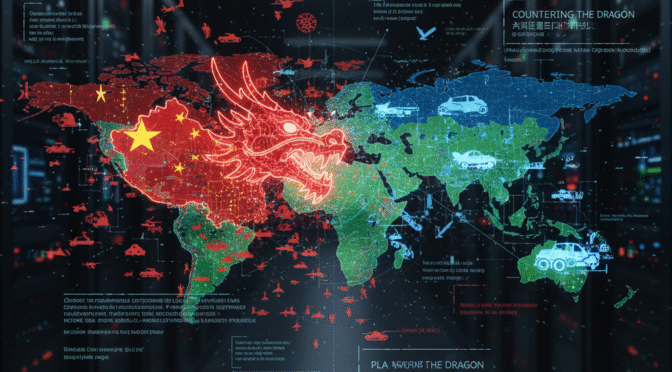
The Gray Dragon and the Archipelago: Five Scenarios for an Unconventional Conflict in the South China Sea

The strategic competition between the United States and the People’s Republic of China (PRC) is increasingly centered on the South China Sea, with the U.S.-Philippines alliance emerging as a critical focal point. While the prospect of conventional, high-intensity warfare often dominates strategic planning, the most probable form of conflict will be unconventional, waged across a spectrum of non-military domains. This report posits that an unconventional war between the U.S.-Philippines alliance and China will not be a singular, decisive event but a protracted, integrated campaign of coercion designed to test the alliance’s resilience, political will, and legal foundations. China’s strategy is calibrated to achieve strategic objectives below the threshold of what would traditionally constitute an “armed attack,” thereby complicating the invocation of the 1951 Mutual Defense Treaty (MDT) and placing the onus of escalation on Washington and Manila.

This analysis presents five plausible scenarios for such a conflict, each rooted in a different primary domain: maritime lawfare, cyber warfare, economic coercion, information warfare, and proxy conflict. These scenarios are not mutually exclusive; rather, they represent distinct but interconnected fronts in a single, cohesive strategy of integrated coercion. From a legally ambiguous “quarantine” of a Philippine outpost to a crippling cyberattack on critical infrastructure and an AI-driven disinformation blitz aimed at fracturing the alliance from within, these scenarios illustrate the multifaceted nature of the threat.

Key findings indicate a fundamental asymmetry in strategic philosophy. China pursues a patient, indirect strategy of accumulating advantages over time, akin to the game of Go, aimed at creating a new status quo. The U.S.-Philippines alliance, conversely, is postured to respond to discrete, escalatory events, a more reactive model. China deliberately exploits this doctrinal gap, employing gray-zone tactics to create strategic dilemmas that force the alliance into a perpetual state of reactive uncertainty, caught between the risks of overreaction and the erosion of credibility.

The report concludes with strategic recommendations for the alliance. These include bolstering integrated deterrence through multi-domain exercises, enhancing Philippine national resilience with a focus on cyber defense and societal immunity to disinformation, and, most critically, clarifying alliance commitments to address severe non-kinetic attacks. To prevail in this unconventional arena, the alliance must shift from a posture of event-based response to one of proactive, persistent, and integrated resistance across all domains of national power.

I. The Arena: Doctrines and Capabilities in the South China Sea

Understanding the nature of a potential unconventional conflict requires a foundational assessment of the competing doctrines, capabilities, and strategic philosophies of the primary actors. The South China Sea is not merely a geographic theater; it is an arena where fundamentally different approaches to statecraft and coercion collide. China’s actions are guided by a holistic doctrine of integrated coercion, while the U.S.-Philippines alliance is adapting a more traditional defense posture to confront these 21st-century challenges.

A. China’s Doctrine of Integrated Coercion

Beijing’s strategy is not predicated on winning a conventional military battle but on achieving its objectives—namely, the assertion of sovereignty over the South China Sea and the displacement of U.S. influence—without firing a shot. This is accomplished through a sophisticated, multi-layered approach that blurs the lines between war and peace.

The Gray Zone as the Primary Battlefield

The central feature of China’s strategy is its mastery of the “gray zone,” an operational space where actions are coercive and aggressive but deliberately calibrated to remain below the threshold of conventional armed conflict. This approach is designed to paralyze an adversary’s decision-making cycle. By using paramilitary and civilian assets, such as the China Coast Guard (CCG) and its vast maritime militia, Beijing creates a deliberate ambiguity that complicates a response under international law and the terms of existing defense treaties. Actions like ramming, the use of water cannons, and deploying military-grade lasers against Philippine vessels are designed to intimidate and assert control without constituting a clear “armed attack” that would automatically trigger a U.S. military response under the MDT. This strategy of “salami-slicing” allows China to gradually erode the sovereignty of other claimants and establish a new status quo, one incident at a time.

The “Three Warfares” in Practice

Underpinning China’s gray-zone operations is the People’s Liberation Army (PLA) doctrine of the “Three Warfares”: Public Opinion (Media) Warfare, Psychological Warfare, and Legal Warfare (“Lawfare”). This doctrine provides the intellectual framework for integrating non-kinetic efforts into a cohesive campaign.

  • Legal Warfare (Lawfare) involves using and manipulating domestic and international law to assert the legitimacy of China’s actions. Declaring vast swathes of the South China Sea as subject to Chinese domestic law and then using CCG vessels to “enforce” those laws against foreign vessels is a textbook example. This tactic seeks to reframe acts of coercion as legitimate law enforcement, putting the burden of challenge on other nations.
  • Public Opinion Warfare aims to shape domestic and international narratives to support China’s objectives. This involves a constant stream of state-sponsored media content that portrays China as a peaceful and constructive regional actor, while casting the United States as an external provocateur and the Philippines as an illegitimate claimant.
  • Psychological Warfare seeks to erode an adversary’s will to resist. This is achieved through demonstrations of overwhelming force, such as swarming disputed features with hundreds of militia vessels, or conducting provocative military exercises intended to signal inevitability and intimidate regional states into accommodation.

Key Actors and Their Tools

China employs a diverse set of state and parastatal actors to execute this strategy:

  • China Coast Guard (CCG) & Maritime Militia: These are the frontline forces in the gray zone. The CCG, now under the command of the Central Military Commission, is the world’s largest coast guard and acts as the primary enforcer of China’s maritime claims. It is supported by a state-subsidized maritime militia, comprised of fishing vessels trained and equipped by the military, which provides a deniable force for swarming, blockading, and harassing foreign ships. These forces operate from a well-established playbook of 18 core tactics, including bow-crossing, blocking, ramming, and using sonic and optical weapons.
  • PLA Strategic Support Force (SSF): Established in 2015, the SSF is the nerve center of China’s information-centric warfare. It integrates the PLA’s space, cyber, electronic, and psychological warfare capabilities into a single, unified command. The SSF is responsible for conducting sophisticated cyber operations against foreign military and civilian targets, as well as executing the disinformation campaigns that form the backbone of China’s Public Opinion Warfare.

Asymmetric Philosophy: “Warfare of Non-Matching Facets”

The Chinese approach is deeply rooted in an ancient strategic tradition that emphasizes asymmetry. Often translated as “warfare of non-matching facets,” this philosophy seeks to leverage a weaker party’s strengths against a stronger adversary’s vulnerabilities. Rather than attempting to match the U.S. military ship-for-ship or plane-for-plane, Chinese doctrine, influenced by strategists from Sun Tzu to Mao Zedong, focuses on “overcoming the superior with the inferior”. This explains the heavy investment in asymmetric capabilities like anti-ship ballistic missiles, cyber warfare, and gray-zone tactics. These tools are designed to counter America’s comprehensive power by targeting specific “pockets of excellence” and vulnerabilities, such as its reliance on digital networks and its legalistic, alliance-based approach to conflict.

B. The Alliance’s Evolving Defense Posture

In response to China’s integrated coercion, the U.S.-Philippines alliance is undergoing a significant modernization and recalibration, shifting its focus from decades of internal security operations to the pressing challenge of external territorial defense.

The MDT as Bedrock and Ambiguity

The 1951 Mutual Defense Treaty remains the “ironclad” foundation of the bilateral relationship, obligating both nations to defend each other against an external armed attack. For decades, the precise conditions for the treaty’s invocation remained ambiguous. However, facing escalating Chinese gray-zone aggression, both sides have worked to add clarity. The May 2023 Bilateral Defense Guidelines explicitly state that an armed attack in the Pacific, “including anywhere in the South China Sea,” on either nation’s armed forces, public vessels, or aircraft—including those of their Coast Guards—would invoke mutual defense commitments. This clarification was a crucial act of strategic signaling, intended to deter China from escalating its harassment of Philippine Coast Guard vessels, which are often on the front lines of encounters with the CCG.

Operationalizing the Alliance: EDCA and Joint Exercises

The alliance is being operationalized through tangible agreements and activities. The 2014 Enhanced Defense Cooperation Agreement (EDCA) grants U.S. forces rotational access to nine strategic locations within the Philippines. These sites are critical for prepositioning equipment for humanitarian assistance and disaster relief, and they also serve as vital forward staging points for U.S. forces, enhancing joint operational readiness and responsiveness in a crisis. This presence is complemented by increasingly complex and large-scale joint military exercises. Annual drills like Balikatan and KAMANDAG now involve thousands of U.S. and Philippine personnel, often joined by partners like Japan and Australia, training in amphibious operations, maritime security, and counterterrorism. These exercises are not merely for training; they are a powerful form of strategic messaging, demonstrating the alliance’s growing interoperability and collective resolve.

The AFP’s Strategic Pivot: From Internal to External Defense

For the Armed Forces of the Philippines (AFP), the current era represents the most significant strategic shift in its modern history. After decades of being primarily focused on internal counter-insurgency campaigns, the AFP is now reorienting toward external and territorial defense. This pivot is backed by the ambitious “Re-Horizon 3” modernization program, a decade-long, $35 billion initiative to acquire a credible deterrent capability. Key acquisitions include multi-role fighter jets like the FA-50, modern missile-capable frigates, offshore patrol vessels, and land-based anti-ship missile systems like the BrahMos. This effort aims to remedy decades of neglect and build a force capable of defending Philippine sovereignty in the maritime and air domains, moving beyond a reliance on decommissioned U.S. vessels for patrols.

U.S. Unconventional Warfare (UW) Doctrine

The U.S. military’s role in an unconventional conflict would be guided by its doctrine of Unconventional Warfare (UW). This doctrine is not about direct U.S. combat but focuses on enabling a partner force to “coerce, disrupt or overthrow an occupying power or government”. In the context of a conflict with China, U.S. Special Operations Forces (SOF) would apply this doctrine by advising, assisting, training, and equipping their AFP counterparts to counter Chinese gray-zone tactics, resist cyber intrusions, and combat disinformation. The U.S. role would be that of a force multiplier, supplementing and substituting for conventional forces in politically sensitive or denied areas, and working “through, with, and by” the AFP to build its capacity to resist Chinese coercion independently.

This doctrinal landscape reveals a fundamental mismatch. China’s strategy is holistic, patient, and indirect, seeking to win by accumulating small, non-military advantages over time to change the strategic environment—a philosophy comparable to the board game Go. The alliance, with its focus on the MDT, EDCA sites, and conventional modernization, is structured to deter and respond to discrete, escalatory events—a more direct, force-on-force approach reminiscent of Chess. China’s entire gray-zone playbook is designed to operate within this doctrinal gap, to probe and coerce in ways that fall just short of the “armed attack” that would trigger the alliance’s primary response mechanism. This creates a dangerous “MDT Trap”: if the U.S. responds to a non-military provocation (like a CCG water cannon) with a military asset (a U.S. Navy destroyer), it risks falling into China’s narrative of U.S. militarization and escalating the conflict on Beijing’s terms. If it fails to respond, it risks undermining the credibility of its “ironclad” security guarantee. The central challenge for the alliance is to adapt its event-response model to counter China’s process-oriented strategy of coercion.

II. Five Scenarios of Unconventional War

The following scenarios illustrate how an unconventional conflict between the U.S.-Philippines alliance and China could unfold. These narratives are designed to be plausible, grounded in current doctrines and capabilities, and representative of the multi-domain nature of modern coercion. They explore how conflict could be initiated and contested across the maritime, cyber, economic, information, and proxy domains.

Table 1: Scenario Summary Matrix

Scenario TitlePrimary Domain of ConflictTrigger EventKey Chinese ActorsKey Alliance RespondersPrimary Escalation Risk
1. The Quarantine of Second Thomas ShoalMaritime / LegalAFP completes major reinforcement of the BRP Sierra Madre, signaling permanence.China Coast Guard (CCG), Maritime Militia, Ministry of Foreign AffairsPhilippine Coast Guard (PCG), AFP, U.S. INDOPACOM, Dept. of State, Allied Navies (Japan, Australia)Miscalculation during enforcement leads to a kinetic clash between coast guard vessels.
2. The Cyber Pearl HarborCyberHeightened regional tension (e.g., major U.S. arms sale to Taiwan, start of Balikatan exercises).PLA Strategic Support Force (SSF), Ministry of State Security (MSS), APT groups (e.g., Volt Typhoon)DICT/CICC, AFP Cyber Group, U.S. Cyber Command, CISA, NSACascading failure of critical infrastructure leading to civil unrest; debate over MDT invocation.
3. The Economic Strangulation GambitEconomicPhilippines wins a new international tribunal ruling against China (e.g., on fishing rights).Ministry of Commerce, General Administration of Customs, CCG, Maritime MilitiaDept. of Trade and Industry, Dept. of Agriculture, Dept. of Foreign Affairs, U.S. Trade Representative, USAIDSevere economic pain creates domestic political instability in the Philippines, pressuring a policy change.
4. The Disinformation BlitzInformation / CognitiveLead-up to a Philippine national election with a pro-alliance candidate favored to win.PLA SSF, MSS, United Front Work Dept., State-controlled media, “Spamouflage” networksDICT/CICC, Presidential Comms Office, U.S. State Dept. (GEC), U.S. Intelligence CommunityErosion of public trust in democratic institutions and the U.S. alliance, regardless of the election outcome.
5. The Proxy IgnitionAsymmetric / ProxyA new EDCA site in a strategic northern province becomes fully operational.Ministry of State Security (MSS), PLA intelligence assetsArmed Forces of the Philippines (AFP), Philippine National Police (PNP), U.S. Special Operations ForcesAFP resources are diverted from external to internal defense, achieving a key Chinese objective without direct confrontation.

Scenario 1: The Quarantine of Second Thomas Shoal

Trigger: After months of escalating harassment during resupply missions, the Philippines, with covert U.S. Navy Seabee technical assistance and materials delivered in small, successive batches, successfully completes a major reinforcement of the BRP Sierra Madre. The operation reinforces the ship’s hull and living quarters, signaling to Beijing that Manila intends to maintain a permanent physical outpost on the shoal indefinitely.

China’s Move (Lawfare & Maritime Coercion): In response to what it calls an “illegal and provocative” alteration of the status quo, Beijing initiates a novel coercive measure. It avoids a military blockade, which is an unambiguous act of war under international law. Instead, it announces the establishment of a “temporary maritime traffic control and customs supervision zone” around Second Thomas Shoal, citing its domestic laws on maritime safety and customs enforcement. This is a carefully constructed “quarantine,” a law enforcement-led operation designed to control traffic rather than seal off the area completely, thereby creating legal and operational ambiguity.

Within hours, a flotilla of over a dozen CCG cutters and three dozen maritime militia vessels establish a persistent presence, forming a tight cordon around the shoal. They do not fire upon approaching vessels. Instead, they use their physical mass to block access, hailing all ships—including Philippine Coast Guard (PCG) patrols—on marine radio channels, informing them they have entered a “Chinese law enforcement zone” and must submit to “on-site safety and customs inspections” before proceeding. Any Philippine vessel that refuses to comply is subjected to escalating non-lethal harassment: aggressive bow-crossing, shadowing, and sustained high-pressure water cannon attacks.

Alliance Counter-Move (Diplomacy & Assertive Presence): The alliance, anticipating this move, refrains from sending a U.S. Navy warship to directly breach the quarantine line, thereby avoiding the “MDT Trap” of a military-on-civilian confrontation. Instead, the response is multi-layered and multilateral. The Philippines immediately launches a campaign of “assertive transparency,” embedding journalists from international news agencies onto its PCG vessels and live-streaming the CCG’s coercive actions to a global audience.

Diplomatically, the U.S. and the Philippines convene an emergency session of the UN Security Council and issue a joint statement with G7 partners condemning China’s actions as a violation of UNCLOS and a threat to freedom of navigation. Operationally, the U.S. organizes a multinational “maritime security patrol” consisting of a Philippine Coast Guard cutter, an Australian frigate, and a Japanese destroyer. The U.S. contribution is a Coast Guard cutter, emphasizing the law enforcement nature of the mission, while a U.S. Navy Arleigh Burke-class destroyer provides over-the-horizon intelligence, surveillance, and reconnaissance (ISR) support but remains outside the immediate area. This multinational flotilla escorts a Philippine supply ship toward the shoal, publicly declaring its mission is to ensure the “safe passage of humanitarian supplies consistent with international law.”

Strategic Implications: This scenario transforms the standoff from a simple maritime dispute into a high-stakes test of political will and legal narratives. China’s objective is to demonstrate it can control access to disputed features at will, using civilian means that make a military response from the U.S. appear disproportionate and aggressive. The alliance’s counter-move aims to internationalize the crisis, framing it as a defense of the global maritime order rather than a bilateral U.S.-China confrontation. The outcome hinges on the critical moment when the multinational escort flotilla approaches the Chinese quarantine line. If the CCG backs down, its lawfare gambit fails. If it uses force against the ships of multiple nations, it risks a significant diplomatic and potentially military escalation that it may not be prepared for.

Scenario 2: The Cyber Pearl Harbor

Trigger: Tensions in the region are at a peak following the announcement of a landmark U.S. arms sale to Taiwan. In the South China Sea, the annual U.S.-Philippines Balikatan exercises are underway, featuring live-fire drills and simulated retaking of islands, which Beijing publicly denounces as a “provocation.”

China’s Move (Cyber Warfare): The PLA’s Strategic Support Force, operating through a known advanced persistent threat (APT) group like Volt Typhoon, activates malware that has been covertly pre-positioned for months, or even years, within Philippine critical infrastructure networks. The attack is not a single event but a coordinated, cascading series of disruptions designed to induce panic and paralyze the country’s ability to respond to an external crisis.

The multi-vectored assault unfolds over 48 hours:

  • Maritime Logistics: The terminal operating systems at the Port of Manila and the strategic port of Subic Bay are targeted. Malware disrupts the software that manages container movements, causing cranes to freeze and creating massive backlogs that halt both commercial shipping and the logistical support for the ongoing Balikatan exercises.
  • Financial System: Several of the Philippines’ largest banks are hit with what appears to be a massive ransomware attack. Online banking portals go down, and ATMs cease to function. The attackers, using criminal fronts to maintain deniability, demand exorbitant ransoms, but their true goal is to shatter public confidence in the financial system and create widespread economic anxiety.
  • Military Command and Control (C2): Simultaneously, a massive distributed denial-of-service (DDoS) attack is launched against the AFP’s primary command-and-control networks and the Department of National Defense. Communications between military headquarters in Manila and naval and air units participating in the exercises become severely degraded, hampering operational coordination. The attack exploits known vulnerabilities in the Philippines’ underdeveloped and fragmented cybersecurity infrastructure.

Alliance Counter-Move (Cyber Defense & Attribution): The Philippine government activates its National Cybersecurity Plan 2023-2028 and its National Computer Emergency Response Team (NCERT). However, the scale and sophistication of the coordinated attack quickly overwhelm the nascent capabilities of these institutions.

Manila formally requests emergency cybersecurity assistance from the United States under the 2023 Bilateral Defense Guidelines, which specifically mandate cooperation to “secure critical infrastructure and build protection against attacks emanating from state and non-state actors”. In response, U.S. Cyber Command, in coordination with the Cybersecurity and Infrastructure Security Agency (CISA), deploys “hunt forward” teams. These elite cyber defense experts work alongside their Philippine counterparts inside compromised networks to identify the malware, eject the intruders, and restore services.

Crucially, the U.S. intelligence community rapidly analyzes the malware’s code, tactics, and infrastructure, attributing the attack with high confidence to the Chinese state. The White House, in a coordinated action with the Philippines and other “Five Eyes” partners, publicly exposes China’s role, releasing detailed technical indicators of compromise and imposing a new round of economic and diplomatic sanctions against entities linked to the PLA’s SSF.

Strategic Implications: The “Cyber Pearl Harbor” exposes the extreme vulnerability of a key U.S. ally to modern, multi-domain warfare. It demonstrates that an adversary can inflict strategic-level damage and chaos comparable to a military strike without firing a single missile. The attack forces a critical and difficult debate within the alliance: does a state-sponsored cyberattack that cripples a nation’s economy and critical infrastructure constitute an “armed attack” under the MDT? The U.S. response—providing defensive assistance and leading a campaign of public attribution and sanctions—tests whether non-military countermeasures can effectively deter future cyber aggression.

Scenario 3: The Economic Strangulation Gambit

Trigger: The Philippines, building on its 2016 legal victory, wins another significant ruling at the Permanent Court of Arbitration. The new ruling holds China financially liable for causing massive environmental damage through its island-building activities and for systematically violating the traditional fishing rights of Filipinos around Scarborough Shoal. Manila announces its intention to enforce the ruling through all available diplomatic and legal channels.

China’s Move (Economic & Gray-Zone Coercion): Beijing, which rejects the tribunal’s authority, retaliates with a campaign of calibrated economic coercion designed to inflict maximum pain on key sectors of the Philippine economy and foment domestic opposition to the government’s foreign policy. The Ministry of Commerce announces an immediate and indefinite ban on all imports of Philippine bananas, mangoes, and other agricultural products, citing fabricated “phytosanitary concerns” and a sudden outbreak of “pests”. This move targets a politically sensitive industry and a major source of export revenue.

Simultaneously, the CCG and maritime militia escalate their gray-zone operations across the South China Sea. They shift from harassment to interdiction, systematically detaining Filipino fishing vessels in disputed waters. Boats are impounded, catches are confiscated, and crews are held for weeks at Chinese-controlled outposts in the Spratly Islands before being released. This campaign effectively paralyzes the Philippine fishing industry in the region, threatening the livelihoods of tens of thousands.

This economic pressure is amplified by a coordinated information campaign. Chinese state-controlled media and affiliated social media accounts run stories highlighting the plight of struggling Filipino farmers and fishermen, blaming their suffering directly on the Marcos administration’s “provocative” and “pro-American” policies. The narrative suggests that prosperity can only return if Manila abandons its legal challenges and adopts a more “cooperative” stance with Beijing.

Alliance Counter-Move (Economic Resilience & Diplomatic Pressure): The Philippine government immediately seeks emergency economic support. The Department of Trade and Industry works with diplomats from the U.S., Japan, South Korea, and the European Union to secure temporary alternative markets for its agricultural exports. The government also rolls out a program of direct subsidies to the thousands of farmers and fishermen affected by the Chinese actions, using emergency funds supported by U.S. development aid.

The United States leads a diplomatic counter-offensive. The U.S. Trade Representative, in concert with the G7, formally condemns China’s actions at the World Trade Organization as a blatant act of economic coercion and a violation of international trade norms. Washington provides the Philippines with a substantial economic support package, including grants and loan guarantees, explicitly designed to bolster its economic resilience against foreign pressure. To counter the maritime pressure, the U.S. Navy and Coast Guard significantly increase ISR patrols throughout the South China Sea. They use drones and patrol aircraft to meticulously document every instance of a Filipino fishing vessel being illegally detained, sharing the imagery and tracking data with international media to expose and publicize China’s actions, providing a steady stream of evidence for future legal challenges.

Strategic Implications: This scenario shifts the primary battlefield from the sea to the economy, testing the domestic political resilience of the Philippines. China’s objective is to create a pincer movement of economic pain and information pressure to generate a powerful domestic lobby within the Philippines that advocates for accommodation with Beijing. The goal is to demonstrate to the Philippines—and all other regional states—that closer alignment with the United States comes at an unacceptably high economic price. The success of the alliance’s response depends entirely on its speed and effectiveness in mitigating the economic damage and sustaining Manila’s political will to resist the coercion.

Scenario 4: The Disinformation Blitz and Leadership Crisis

Trigger: The Philippines is in the final, heated weeks of a presidential election campaign. The leading candidate is a staunch advocate for the U.S. alliance and has pledged to accelerate the AFP’s modernization and expand U.S. access to EDCA sites. Polling indicates a likely victory, which would solidify the pro-U.S. strategic alignment for another six years.

China’s Move (Information Warfare & Cognitive Manipulation): Beijing launches its most sophisticated and daring information operation to date, aiming to directly interfere in the democratic process and fracture the alliance from within. The operation is a multi-pronged “disinformation blitz” that leverages cutting-edge technology and a deep understanding of Philippine societal fissures.

The centerpiece is a series of hyper-realistic deepfake audio and video clips, generated using advanced AI. The first is an audio clip, “leaked” online, that appears to be a wiretapped phone call in which the pro-alliance candidate is heard promising a lucrative construction contract for a new EDCA facility to a family member. A week later, a deepfake video is released showing a high-ranking U.S. military official meeting with the candidate’s brother at a hotel bar, seemingly exchanging documents. The content is meticulously crafted to exploit long-standing Filipino sensitivities regarding corruption and national sovereignty vis-à-vis the U.S. military presence.

These deepfakes are not simply posted online; they are strategically disseminated. The initial release is on obscure forums to avoid immediate detection, then laundered through a vast network of thousands of automated and human-managed fake social media accounts—part of the “Spamouflage” network—that have been dormant for months. These accounts amplify the content, which is then picked up and promoted by pro-Beijing political influencers and alternative news websites in the Philippines. The narrative quickly spreads: the leading candidate is corrupt, selling out Philippine sovereignty to the Americans for personal gain.

Alliance Counter-Move (Rapid Debunking & Pre-bunking): The alliance, having war-gamed this exact scenario, executes a pre-planned counter-disinformation strategy. The Philippine Department of Information and Communications Technology (DICT) and its Cybercrime Investigation and Coordinating Center (CICC) immediately activate their rapid-response channel with Google, Meta, and X (formerly Twitter), flagging the deepfake content for immediate takedown based on violations of platform policies against manipulated media.

Simultaneously, the U.S. government provides critical support. The National Security Agency and FBI’s forensic analysis units work around the clock to analyze the digital artifacts of the video and audio files, producing a technical report within 24 hours that proves they are AI-generated fakes. This unclassified report is shared with the Philippine government and released to major international news organizations.

Both governments launch a joint public information campaign. The Philippine government holds a high-profile press conference, with the U.S. ambassador present, to present the forensic evidence and denounce the operation as foreign election interference. This is supported by a “pre-bunking” campaign, using social media and public service announcements to educate the public on how to spot deepfakes and reminding them of China’s documented history of using such tactics against Taiwan and other democracies.

Strategic Implications: This scenario represents a direct assault on the cognitive domain and the integrity of a democratic process. It is a test of a society’s resilience to sophisticated information manipulation. The primary challenge is the “liar’s dividend”—even after the content is definitively debunked, a significant portion of the population may continue to believe the fake narrative or become so cynical that they distrust all information. China’s goal is not necessarily to swing the election, but to sow chaos, erode public trust in democratic institutions, and poison the perception of the U.S. alliance for years to come, regardless of who wins. The success of the counter-operation is measured not just in how quickly the fakes are removed, but in how effectively the public can be inoculated against the lingering effects of the disinformation.

Scenario 5: The Proxy Ignition

Trigger: A new EDCA site in Cagayan, a province in the northern Philippines, becomes fully operational. Its strategic location, just 400 kilometers from Taiwan, allows the U.S. to position long-range precision missile batteries and an advanced air and missile defense radar system, giving the alliance a commanding view of the critical Bashi Channel, the waterway between the Philippines and Taiwan. Beijing views this as a direct threat and a key node in a U.S. strategy to intervene in a future Taiwan contingency.

China’s Move (Covert & Asymmetric Warfare): Recognizing that its past support for communist insurgencies in the Philippines is a defunct and counterproductive strategy from a bygone era , China adopts a modern, deniable proxy approach. Agents from the Ministry of State Security (MSS) make covert contact not with ideological rebels, but with a local, non-ideological grievance group—a radical environmental movement protesting the destruction of ancestral lands for the base construction, combined with a local political clan that lost influence due to the base’s establishment.

The support provided is carefully non-attributable. The MSS does not provide weapons or direct training. Instead, it supplies the group with advanced encrypted communication devices, funding laundered through a series of offshore shell corporations and charitable foundations, and critical intelligence, such as AFP patrol schedules and schematics of the local power grid, obtained via cyber espionage.

Empowered by this support, the proxy group launches an escalating campaign of sabotage and disruption. It begins with large-scale protests that block access roads to the EDCA site. This escalates to the sabotage of key infrastructure—blowing up a crucial bridge, toppling power transmission towers that supply the base, and contaminating a local water source used by AFP personnel. The campaign is designed to create a severe and persistent internal security crisis, making the EDCA site a logistical and political nightmare for both Manila and Washington.

Alliance Counter-Move (Partner-led Counter-Insurgency): The alliance response is deliberately calibrated to avoid validating the proxy group’s anti-American narrative. The AFP, leveraging its decades of hard-won counter-insurgency experience, takes the public lead in all security operations. The focus is on classic counter-insurgency tactics: winning the support of the local population to isolate the radical elements, conducting patient intelligence-gathering to uncover the network of external support, and using police action rather than overt military force where possible.

The U.S. role is strictly in the background, guided by its UW doctrine of enabling a partner force. Small, specialized U.S. Special Operations Forces teams are co-located with their AFP counterparts far from the crisis zone. They provide crucial, non-combat support: advanced training in intelligence analysis, signals intelligence (SIGINT) capabilities to help trace the encrypted communications back to their source, and ISR support from unmanned aerial vehicles to monitor the remote, mountainous terrain used by the saboteurs. No U.S. soldier engages in direct action.

Strategic Implications: This scenario achieves a key Chinese strategic objective without a single PLA soldier crossing a border. It forces the AFP to divert significant resources, attention, and political capital away from its primary mission of external territorial defense and back toward internal security, effectively bogging down a key U.S. ally. It creates a major political headache for the Marcos administration and tests the maturity of the alliance, requiring the United States to demonstrate strategic patience, trust its partner to lead the direct fight, and resist the temptation to intervene overtly. The ultimate goal for China is to make the strategic cost of hosting U.S. forces so high that future Philippine governments will reconsider the value of the alliance.

III. Cross-Domain Escalation and Alliance Red Lines

The five scenarios demonstrate that an unconventional conflict will not be confined to a single domain. China’s doctrine of integrated coercion ensures that actions in one sphere are designed to create effects in others. A successful cyberattack (Scenario 2) could degrade the AFP’s command and control, emboldening the CCG to be more aggressive at sea (Scenario 1). A U.S. diplomatic response to economic coercion (Scenario 3) could be met with a targeted disinformation campaign (Scenario 4) to undermine the U.S. position. This interconnectedness creates complex escalation pathways and forces the alliance to confront the fundamental, and dangerously ambiguous, question of what constitutes an “armed attack” in the 21st century.

A. The Escalation Ladder: From Gray Zone to Open Conflict

The primary risk in this environment is unintended escalation born from miscalculation. Each move and counter-move carries the potential to climb the escalation ladder. A confrontation between a PCG cutter and a CCG vessel over a “quarantine” could result in a collision and loss of life, pushing both sides toward a kinetic response. A RAND Corporation analysis on the nature of a potential U.S.-China conflict highlights that such wars could become protracted, with the opening unconventional phase setting the conditions for a much longer and more costly struggle than traditional force planning envisions.

The normalization of high-intensity military signaling, such as large-scale exercises and freedom of navigation operations, also contributes to escalation risk. While intended to deter, these actions can inflate both sides’ tolerance for risk over time, requiring ever-stronger signals to achieve the same effect and narrowing the space for de-escalation once a crisis begins. China’s strategy is to control this ladder, using non-military actions to force a military response from the alliance, thereby framing the U.S. as the escalator.

B. Defining an “Armed Attack” in the 21st Century

The central challenge for the U.S.-Philippines alliance is that the MDT was written for a different era of warfare. China’s unconventional tactics are deliberately designed to exploit the treaty’s 20th-century definition of an “armed attack.” The scenarios presented raise critical questions that the alliance must answer to maintain credible deterrence:

  • Maritime Coercion: Does a CCG-enforced “quarantine” that denies the Philippines access to its own territory and causes severe economic harm, but results in no casualties, meet the threshold for an armed attack? The 2023 Bilateral Defense Guidelines’ inclusion of the Coast Guard was a significant step, but the line between harassment and an “armed attack” remains dangerously blurry.
  • Cyber Warfare: Can a massive, state-sponsored cyber operation that cripples a nation’s financial system, disrupts its power grid, and paralyzes its transportation networks be considered an armed attack? Such an event could cause more damage, death, and chaos than a limited kinetic strike. The alliance guidelines call for cooperation on cyber defense, but do not specify where the red line for a collective defense response lies.
  • Information Warfare: At what point does a foreign-directed disinformation campaign that incites widespread civil unrest, paralyzes government function, and fundamentally subverts a democratic election constitute an attack on the sovereignty and political independence of the state?

Without clear, privately agreed-upon, and publicly signaled red lines for these non-kinetic actions, the deterrent power of the MDT is weakened. China is incentivized to continue pushing the boundaries, confident that its actions will not trigger a decisive response.

C. The Role of Third Parties and Off-Ramps

De-escalation in any of these scenarios will depend heavily on the actions of third parties. China’s diplomatic strategy consistently seeks to frame disputes as bilateral issues to be resolved between it and the other claimant, resisting external “interference”. This approach allows Beijing to leverage its immense comprehensive power against a smaller neighbor.

Conversely, the U.S. and Philippine strategy is to multilateralize the conflict, framing China’s actions as a threat to the entire rules-based international order. The active participation of allies like Japan, Australia, and partners in the EU and ASEAN is critical. By forming multinational maritime patrols, issuing joint diplomatic condemnations, and providing coordinated economic support, the alliance can amplify the costs of Chinese aggression and build a broader coalition to defend international law. The success of any de-escalation effort will hinge on which side more effectively shapes the international environment and isolates its adversary diplomatically.

IV. Strategic Recommendations for a Resilient Alliance

The challenges posed by China’s unconventional warfare strategy require the U.S.-Philippines alliance to move beyond traditional defense planning. Deterrence and defense in the 21st century demand a resilient, integrated, and proactive posture that spans all domains of statecraft. The following recommendations are designed to address the specific vulnerabilities identified in the preceding scenarios.

A. Bolstering Integrated Deterrence

The alliance’s current approach, while strengthening, often addresses threats in domain-specific silos. To counter a strategy of integrated coercion, the alliance must adopt a posture of integrated deterrence.

  • Recommendation 1: Conduct Integrated Alliance Exercises. The alliance should move beyond conventional, domain-specific exercises. It must design and regularly conduct complex, integrated exercises that simulate a multi-domain crisis. A future Balikatan or KAMANDAG should feature a scenario that combines a maritime standoff (Scenario 1) with a simultaneous cyberattack on critical infrastructure (Scenario 2) and a coordinated disinformation campaign (Scenario 4). This would force a whole-of-government response, training personnel from the AFP, PCG, DICT, Department of Foreign Affairs, and their U.S. counterparts to work together under pressure.
  • Recommendation 2: Establish a Joint Alliance Fusion Center. To break down intelligence and operational stovepipes, the U.S. and the Philippines should establish a joint “Alliance Fusion Center for Gray-Zone Threats.” This center would co-locate personnel from the AFP, PCG, DICT, U.S. INDOPACOM, NSA, and CISA to share and analyze real-time intelligence on maritime movements, cyber intrusions, and information operations. This would enable a common operating picture and facilitate a rapid, coordinated response to ambiguous threats before they escalate into a full-blown crisis.

B. Enhancing Philippine National Resilience

The primary target of China’s unconventional strategy is often not the AFP, but the stability and resilience of the Philippine state itself. Therefore, strengthening Philippine national resilience is a core component of collective defense.

  • Recommendation 1: Prioritize Cyber and C4ISR Modernization. While conventional platforms like jets and frigates are important, the scenarios reveal that the Philippines’ most immediate vulnerabilities lie in the cyber and command, control, communications, computers, intelligence, surveillance, and reconnaissance (C4ISR) domains. The U.S. should prioritize Foreign Military Financing, Foreign Military Sales, and technical assistance toward hardening the Philippines’ critical infrastructure, securing military and government networks, and building a robust national cyber defense capability. This is the most likely “first front” in any future conflict.
  • Recommendation 2: Co-Invest in Societal Resilience to Disinformation. The alliance should jointly fund and support a nationwide media literacy and critical thinking program in the Philippines. Modeled on successful initiatives in states that have long faced information warfare, such as Taiwan and the Baltic nations, this program should be integrated into the national education curriculum and public information campaigns. Building societal “cognitive immunity” is the most effective long-term defense against information warfare and is essential for preserving democratic integrity and the political viability of the alliance itself.

C. Clarifying Alliance Commitments for the Gray Zone

Ambiguity is the currency of gray-zone warfare. To re-establish deterrence, the alliance must reduce the ambiguity surrounding its most solemn commitment.

  • Recommendation 1: Issue a Joint Supplementary Statement to the MDT. The 2023 Bilateral Defense Guidelines were a positive step, but further clarity is needed. The U.S. and the Philippines should negotiate and issue a formal joint supplementary statement to the Mutual Defense Treaty. This statement should not alter the treaty’s text but should explicitly clarify the alliance’s shared understanding that certain severe, non-kinetic actions could be considered tantamount to an armed attack. This could include, for example, a state-sponsored cyberattack that results in the sustained disruption of critical infrastructure leading to widespread societal harm. Such a declaration would reduce China’s perceived freedom of action in the gray zone and strengthen the deterrent power of the alliance for the unconventional challenges of the 21st century.

If you find this post useful, please share the link on Facebook, with your friends, etc. Your support is much appreciated and if you have any feedback, please email me at in**@*********ps.com. Please note that for links to other websites, we are only paid if there is an affiliate program such as Avantlink, Impact, Amazon and eBay and only if you purchase something. If you’d like to directly contribute towards our continued reporting, please visit our funding page.


Sources Used

  1. Military Confrontation in the South China Sea | Council on Foreign Relations, accessed October 3, 2025, https://www.cfr.org/report/military-confrontation-south-china-sea
  2. GREY ZONE WARFARE IN CHINA’S STALLED SOUTH CHINA SEA AMBITIONS, accessed October 3, 2025, https://www.cyfirma.com/research/grey-zone-warfare-in-chinas-stalled-south-china-sea-ambitions/
  3. Combating the Gray Zone: Examining Chinese Threats to the Maritime Domain, accessed October 3, 2025, https://carnegieendowment.org/posts/2024/06/combating-the-gray-zone-examining-chinese-threats-to-the-maritime-domain?lang=en
  4. China’s Evolving Risk Tolerance and Gray-Zone Operations: From the East China Sea to the South Pacific | The Heritage Foundation, accessed October 3, 2025, https://www.heritage.org/defense/report/chinas-evolving-risk-tolerance-and-gray-zone-operations-the-east-china-sea-the-south
  5. How to Respond to China’s Tactics in the South China Sea | RAND, accessed October 3, 2025, https://www.rand.org/pubs/commentary/2024/06/how-to-respond-to-chinas-tactics-in-the-south-china.html
  6. Expect More U.S. Military in South China Sea – Du Lan, accessed October 3, 2025, https://www.chinausfocus.com/foreign-policy/expect-more-us-military-in-south-china-sea
  7. China’s Gray War on America – The Cipher Brief, accessed October 3, 2025, https://www.thecipherbrief.com/china-gray-zone-war
  8. Decoding Beijing’s Gray Zone Tactics: China Coast Guard Activities and the Redefinition of Conflict in the Taiwan Strait, accessed October 3, 2025, https://globaltaiwan.org/2024/03/decoding-beijings-gray-zone-tactics-china-coast-guard-activities-and-the-redefinition-of-conflict-in-the-taiwan-strait/
  9. APRSA 2024 | Chapter 5: Driving Wedges: China’s Disinformation Campaigns in the Asia-Pacific – The International Institute for Strategic Studies, accessed October 3, 2025, https://www.iiss.org/publications/strategic-dossiers/asia-pacific-regional-security-assessment-2024/chapter-5/
  10. driving wedges: china’s disinformation campaigns in the asia-pacific – The International Institute for Strategic Studies, accessed October 3, 2025, https://www.iiss.org/globalassets/media-library—content–migration/files/publications—free-files/aprsa-2024/aprsa24-chapter-5.pdf
  11. Introducing China’s Maritime Gray Zone Tactics Playbook – SeaLight, accessed October 3, 2025, https://www.sealight.live/posts/introducing-china-s-maritime-gray-zone-tactics-playbook
  12. China’s Cyber Playbook for the Indo-Pacific – Foreign Policy Research Institute, accessed October 3, 2025, https://www.fpri.org/article/2025/08/chinas-cyber-playbook-for-the-indo-pacific/
  13. WINNING THE HUNDRED BATTLES: CHINA AND ASYMMETRIC WARFARE A thesis presented to the Faculty of the US Army Command and General S, accessed October 3, 2025, https://cgsc.contentdm.oclc.org/digital/api/collection/p4013coll2/id/104/download
  14. Asymmetric War? Implications for China’s Information Warfare Strategies – UR Scholarship Repository, accessed October 3, 2025, https://scholarship.richmond.edu/polisci-faculty-publications/55/
  15. China’s Development of Asymmetric Warfare and the Security of Taiwan, Republic of China – DTIC, accessed October 3, 2025, https://apps.dtic.mil/sti/tr/pdf/ADA429889.pdf
  16. Contrasting Chinese and American Approaches to Irregular Warfare …, accessed October 3, 2025, https://irregularwarfarecenter.org/publications/insights/contrasting-chinese-and-american-approaches-to-irregular-warfare/
  17. The Philippines | Congress.gov, accessed October 3, 2025, https://www.congress.gov/crs-product/IF10250
  18. U.S. Security Cooperation with the Philippines – United States Department of State, accessed October 3, 2025, https://www.state.gov/u-s-security-cooperation-with-the-philippines
  19. The United States and the Republic of the Philippines … – DoD, accessed October 3, 2025, https://media.defense.gov/2023/May/03/2003214357/-1/-1/0/THE-UNITED-STATES-AND-THE-REPUBLIC-OF-THE-PHILIPPINES-BILATERAL-DEFENSE-GUIDELINES.PDF
  20. The United States-Philippine Security Cooperation – CRDF Global, accessed October 3, 2025, https://www.crdfglobal.org/news/the-united-states-philippine-security-cooperation/
  21. Riding Unruly Waves: The Philippines’ Military Modernisation Effort, accessed October 3, 2025, https://www.crisisgroup.org/asia-pacific/south-east-asia/philippines-china-united-states/349-riding-unruly-waves-philippines-military-modernisation-effort
  22. AFP Modernization Act – Wikipedia, accessed October 3, 2025, https://en.wikipedia.org/wiki/AFP_Modernization_Act
  23. The Philippines’ Horizon 3 Military Modernisation Programme – MP-IDSA, accessed October 3, 2025, https://www.idsa.in/publisher/issuebrief/the-philippines-horizon-3-military-modernisation-programme
  24. Unconventional warfare (United States) – Wikipedia, accessed October 3, 2025, https://en.wikipedia.org/wiki/Unconventional_warfare_(United_States)
  25. Unconventional warfare – Wikipedia, accessed October 3, 2025, https://en.wikipedia.org/wiki/Unconventional_warfare
  26. Unconventional Warfare on the Conventional Battlefield – Army University Press, accessed October 3, 2025, https://www.armyupress.army.mil/Journals/Military-Review/English-Edition-Archives/Nov-Dec-2024/Unconventional-Warfare/
  27. South China Sea | International Crisis Group, accessed October 3, 2025, https://www.crisisgroup.org/asia-pacific/south-east-asia/south-china-sea
  28. BLOCKADE TO QUARANTINE IN INTERNATIONAL LAW – HeinOnline, accessed October 3, 2025, https://heinonline.org/hol-cgi-bin/get_pdf.cgi?handle=hein.journals/naval17§ion=32
  29. Blockade – Wikipedia, accessed October 3, 2025, https://en.wikipedia.org/wiki/Blockade
  30. How China Could Quarantine Taiwan – CSIS, accessed October 3, 2025, https://features.csis.org/chinapower/china-quarantine-taiwan/
  31. Imposing a Maritime Quarantine to Enforce the Houthi Arms Embargo – Lieber Institute, accessed October 3, 2025, https://lieber.westpoint.edu/imposing-maritime-quarantine-enforce-houthi-arms-embargo/
  32. Navigating the South China Sea: Key Developments in 2024 and What to Expect in 2025, accessed October 3, 2025, https://chinaus-icas.org/research/navigating-the-south-china-sea-key-developments-in-2024-and-what-to-expect-in-2025/
  33. Three ideas for countering China in the gray zone – Defense One, accessed October 3, 2025, https://www.defenseone.com/ideas/2024/03/how-can-deterrence-seize-initiative-three-approaches-countering-china-gray-zone/394748/
  34. U.S. Position on Maritime Claims in the South China Sea – state.gov, accessed October 3, 2025, https://2017-2021.state.gov/u-s-position-on-maritime-claims-in-the-south-china-sea/
  35. China-Linked Cyber Operations Targeting US Critical Infrastructure – NJCCIC – NJ.gov, accessed October 3, 2025, https://www.cyber.nj.gov/threat-landscape/nation-state-threat-analysis-reports/china-linked-cyber-operations-targeting-us-critical-infrastructure
  36. Chinese Government Poses ‘Broad and Unrelenting’ Threat to US Critical Infrastructure, FBI Director Says, accessed October 3, 2025, https://www.fbi.gov/news/stories/chinese-government-poses-broad-and-unrelenting-threat-to-u-s-critical-infrastructure-fbi-director-says
  37. PHILIPPINES THREAT OVERVIEW – CYFIRMA, accessed October 3, 2025, https://www.cyfirma.com/research/philippines-threat-overview/
  38. Cybersecurity in the Philippines: Global Context and Local Challenges – The Asia Foundation, accessed October 3, 2025, https://asiafoundation.org/wp-content/uploads/2022/03/Cybersecurity-in-the-Philippines-Global-Context-and-Local-Challenges-.pdf
  39. The Philippines’ National Cyber Security Plan 2023-2028: Roadmap to Cyberspace Resilience – Lumify Work, accessed October 3, 2025, https://www.lumifywork.com/en-ph/blog/the-philippines-national-cyber-security-plan-2023-2028-roadmap-to-cyberspace/
  40. Data Breaches Plague Philippines as Country Scrambles to Bolster Cyber Defences, accessed October 3, 2025, https://www.asiapacific.ca/publication/data-breaches-plague-philippines-country-scrambles-bolster
  41. Cyber Security in Philippine Organizations, accessed October 3, 2025, https://securityquotient.io/cyber-security-and-grc-use-cases/cyber-security-for-philippines
  42. Philippines’ National Cybersecurity Plan (NCSP) 2023-2028 | Digital Watch Observatory, accessed October 3, 2025, https://dig.watch/resource/philippines-national-cybersecurity-plan-ncsp-2023-2028
  43. National Cybersecurity Plan – Department of Information and Communications Technology, accessed October 3, 2025, https://dict.gov.ph/national-cyber-security-plan?utm
  44. NCSP 2023-2028 – FINAL-DICT, accessed October 3, 2025, https://cms-cdn.e.gov.ph/DICT/pdf/NCSP-2023-2028-FINAL-DICT.pdf
  45. Cybersecurity in the Philippines: Advancing a Cyber Defense Posture – FACTS Asia, accessed October 3, 2025, https://www.factsasia.org/blog/cybersecurity-in-the-philippines-advancing-a-cyber-defense-posture
  46. Cybersecurity features prominently in new US-Philippines bilateral defense guidelines, accessed October 3, 2025, https://defensescoop.com/2023/05/03/cybersecurity-features-prominently-in-new-us-philippines-bilateral-defense-guidelines/
  47. Shutdown guts U.S. cybersecurity agency at perilous time, accessed October 3, 2025, https://www.washingtonpost.com/technology/2025/10/02/cisa-shutdown-cybersecurity/
  48. People’s Republic of China Threat Overview and Advisories – CISA, accessed October 3, 2025, https://www.cisa.gov/topics/cyber-threats-and-advisories/nation-state-cyber-actors/china
  49. China and the South China Sea Territorial Disputes – Dr Jorge’s World, accessed October 3, 2025, https://drjorge.world/2025/04/10/china-and-the-south-china-sea-territorial-disputes/
  50. AI-Generated Deepfake News Anchors Used in Pro-China Disinformation Campaigns, accessed October 3, 2025, https://oecd.ai/en/incidents/2023-02-07-addb
  51. Making Deepfakes With Chinese AI – China Media Project, accessed October 3, 2025, https://chinamediaproject.org/2024/10/16/making-deepfakes-with-chinese-ai/
  52. The Red Wave: How China Weaponizes Disinformation | ASP American Security Project, accessed October 3, 2025, https://www.americansecurityproject.org/the-red-wave-how-china-weaponizes-disinformation/
  53. Democracy disconnected: Social media’s caustic influence on Southeast Asia’s fragile republics – Brookings Institution, accessed October 3, 2025, https://www.brookings.edu/articles/democracy-disconnected-social-medias-caustic-influence-on-southeast-asias-fragile-republics/
  54. China’s AI-Powered Disinformation Tactics: Threats and Implications, accessed October 3, 2025, https://nspcbatten.org/chinas-ai-powered-disinformation-tactics-threats-and-implications/
  55. DICT, Google Unite to Fight Fake News; Expand Digital Bayanihan Nationwide, accessed October 3, 2025, https://dict.gov.ph/news-and-updates/19733
  56. How campaigns can protect themselves from deepfakes, disinformation, and social media manipulation – Brookings Institution, accessed October 3, 2025, https://www.brookings.edu/articles/how-campaigns-can-protect-themselves-from-deepfakes-disinformation-and-social-media-manipulation/
  57. NSA, U.S. Federal Agencies Advise on Deepfake Threats, accessed October 3, 2025, https://www.nsa.gov/Press-Room/Press-Releases-Statements/Press-Release-View/Article/3523329/nsa-us-federal-agencies-advise-on-deepfake-threats/
  58. How to Protect Yourself Against Deepfakes – National Cybersecurity Alliance, accessed October 3, 2025, https://www.staysafeonline.org/articles/how-to-protect-yourself-against-deepfakes
  59. 4 ways to future-proof against deepfakes in 2024 and beyond | World Economic Forum, accessed October 3, 2025, https://www.weforum.org/stories/2024/02/4-ways-to-future-proof-against-deepfakes-in-2024-and-beyond/
  60. The Weaponization of Deepfakes: Digital Deception on the Far-Right, accessed October 3, 2025, https://icct.nl/publication/weaponization-deepfakes-digital-deception-far-right
  61. Chinese Support for Communist Insurgencies in Southeast Asia during the Cold War+ – Institute of China Studies, accessed October 3, 2025, https://ics.um.edu.my/img/files/stanislav(1).pdf
  62. Philippine Communist Rebels Grow New Aid Sources as China Steps Away – VOA, accessed October 3, 2025, https://www.voanews.com/a/philippine-communists/4866210.html
  63. Don’t Bring a Knife to a Gunfight with China – The Strategy Bridge, accessed October 3, 2025, https://thestrategybridge.org/the-bridge/2020/6/2/dont-bring-a-knife-to-a-gunfight-with-china

Thinking Through Protracted War with China: Nine Scenarios – RAND, accessed October 3, 2025, https://www.rand.org/pubs/research_reports/RRA1475-1.html

Signa et Sententiae: A Global Compendium and Analysis of Military Mottos

The military motto, a concise and potent phrase, is far more than a mere slogan. It is a foundational element of a unit’s identity, a distillation of its history, values, and martial ethos. From the battle cries of ancient warriors to the heraldically approved phrases on modern regimental colours, the motto serves as a critical instrument for forging cohesion, instilling purpose, and reinforcing the psychological resilience required for military service. Its evolution mirrors the development of warfare itself, tracing a path from personal allegiance to a feudal lord to the abstract loyalty demanded by the modern nation-state.

From Vexillum to Regimental Colour: The Ancient and Medieval Origins of the Motto

The conceptual roots of the military motto lie in the standards and symbols of antiquity. The vexillum of a Roman legion, for instance, was not just a marker for battlefield navigation; it was the physical embodiment of the legion’s honor and spirit. While not mottos in the textual sense, symbols like the eagle of a legion served an identical purpose: to provide a unique, revered identifier that commanded loyalty and served as a rallying point in the chaos of battle.

This tradition of personal and unit identification evolved into the complex system of heraldry in medieval Europe. A knight’s coat of arms was accompanied by a motto, a personal declaration of intent, faith, or family value. This direct link between a commander and a motto was carried forward into the early era of professional armies. Regimental colonels, who often raised and funded their own units, would place their personal arms, crests, or mottos on the appointments of the regiment.1 This practice reflected a system where a soldier’s loyalty was often directed as much toward their commanding officer as it was to the sovereign.

A pivotal shift occurred with the increasing professionalization of state armies. The British Royal Warrant of 1751, for example, was a landmark in this transition. It explicitly forbade colonels from using personal devices and mandated that regiments be known by their number in the order of precedence.1 This act transferred the symbolic ownership of the unit from the individual commander to the state. Consequently, the motto, once a feature of the colonel’s private heraldry, became an institutionalized component of the regiment’s official “colours”—the sacred flags that embody the unit’s history and honor.3 This evolution of the motto from a personal vow to a state-sanctioned institutional statement is a direct reflection of the development of the modern army, where personal allegiance is superseded by an abstract duty to the nation.

The Psychology of Esprit de Corps: The Motto as a Unifying Force

The primary function of a military motto in the modern era is to cultivate esprit de corps—the shared consciousness, morale, and camaraderie that binds a unit together. Military organizations are tasked with transforming individuals into a cohesive collective capable of functioning under extreme duress. This transformation is achieved through a process of instilling a common set of values, such as courage, discipline, integrity, and loyalty.5 The motto serves as the most succinct and memorable encapsulation of these values.

It functions as a cognitive shortcut to a unit’s core ethos. In high-stress environments, complex doctrines or lengthy codes of conduct are difficult to recall. A short, powerful motto, however, can be brought to mind instantly, reinforcing the required mindset and strengthening resolve. For example, the motto of the United States Marine Corps, “Semper Fidelis” (Always Faithful), is not just a phrase but a complete ethical framework that governs a Marine’s conduct.8 Similarly, the motto of the Royal Military Academy Sandhurst, “Serve to Lead,” provides a simple yet profound summary of the institution’s entire leadership philosophy.9

These phrases become a form of psychological armor. Mottos that evoke aggression (“Death or Glory” 10), readiness (“Utrinque paratus” – Ready for Anything 10), or solemn purpose (“This We’ll Defend” 8) serve as powerful touchstones during the rigors of training and the terror of combat. They are repeated, memorized, and internalized until they become an inseparable part of the soldier’s identity and the unit’s collective spirit.

A Thematic and Linguistic Analysis of Global Military Mottos

A global survey of military mottos reveals distinct patterns in language and theme. These patterns are not arbitrary; they reflect deep-seated historical traditions, strategic cultures, and national identities. The choice of language can signal a connection to an ancient martial heritage or a sharp break from a colonial past, while the thematic content of the motto itself projects a unit’s core identity and intended purpose.

The Lingua Franca of War: Latin, English, and the Rise of the Vernacular

The languages used for military mottos fall into three broad categories: prestige languages of martial tradition, the global reach of English, and the deliberate use of national or indigenous languages.

The most prominent prestige language is Latin. Its persistent use across Western and Western-influenced militaries—from the United States and the United Kingdom to Canada, Australia, and across Europe—serves as a form of “linguistic credentialing”.12 A motto such as “Per Ardua ad Astra” (Through Adversity to the Stars), used by the Royal Air Force and the Royal Australian Air Force, creates a symbolic lineage back to the classical world, suggesting a timeless, stoic virtue.15 Latin is both politically neutral among modern nations and temporally stable, imbuing phrases like “De Oppresso Liber” (To Free the Oppressed) with a gravity and permanence that a modern vernacular equivalent might lack. This shared lexicon creates a common cultural and historical frame of reference, particularly among NATO and Commonwealth countries, subtly reinforcing a shared “Western” military tradition.

In contrast, the deliberate adoption of indigenous or national languages in the mottos of many nations is a powerful statement of sovereignty and a tool for forging a distinct national identity. The armed forces of India provide a compelling example, with mottos frequently drawn from Sanskrit (e.g., Indian Army: “Sewa Paramo Dharma” – Service is our prime duty), Hindi, and other regional languages.13 This practice grounds the army’s ethos in millennia of Indian philosophical and martial traditions, marking a clear departure from the linguistic customs of the former British Indian Army. Similarly, New Zealand’s armed forces incorporate Te Reo Māori phrases like “Ake Ake Kia Kaha” (Forever and ever be strong), embedding the nation’s unique bicultural identity into its military’s heart.13 For many post-colonial states, the choice of language for a military motto is a linguistic act of decolonization, projecting a message of unique national identity to the world.

A Taxonomy of Martial Ethos: Recurring Thematic Clusters

Despite linguistic and cultural differences, military mottos across the globe tend to coalesce around a set of archetypal themes. These themes represent the fundamental virtues and capabilities that military organizations seek to cultivate and project.

  • Valor and Aggression: These mottos are the most direct expressions of a unit’s purpose as a fighting force. They emphasize bravery, ferocity, and lethality. Examples include “Death or Glory” (The Royal Lancers, UK 10), “
    Vaincre ou Mourir” (To Conquer or to Die) (1er Régiment de Chasseurs Parachutistes, France 19), and “
    Mors Ab Alto” (Death From Above) (7th Bomb Wing, USA 12).
  • Duty and Faithfulness: This cluster focuses on the moral and ethical foundations of military service. Mottos in this category emphasize service to the nation, loyalty to comrades, and unwavering reliability. Prominent examples include “Semper Fidelis” (Always Faithful) (US Marine Corps 8), “Duty First” (Royal Australian Regiment 13), and “
    Honneur et Patrie” (Honour and Fatherland) (French Army 20).
  • Readiness and Swiftness: Highlighting a state of constant preparedness and the ability to act with speed, these mottos are common among rapid-response, airborne, and naval units. They include “Semper Paratus” (Always Ready) (US Coast Guard 11), “
    Utrinque paratus” (Ready for Anything) (Parachute Regiment, UK 10), and “Strike Swiftly” (1st Commando Regiment, Australia 13).
  • Endurance and Resolve: These mottos speak to the psychological fortitude required to withstand the hardships of military life and the attrition of combat. They project an image of tenacity and an unbreakable will. Examples are “The Only Easy Day Was Yesterday” (US Navy SEALs 21), “
    Être et durer” (To be and to last) (3e Régiment de Parachutistes d’Infanterie de Marine, France 13), and “Perseverance” (Lord Strathcona’s Horse, Canada 13).
  • Functional and Technical Prowess: Some mottos serve a more descriptive purpose, directly referencing the unit’s specific role or technical skill. These are common in support, intelligence, and technical branches. Examples include “Teevra chaukas” (Swift and Secure) (Indian Army Corps of Signals 13), “By Skill and Fighting” (Royal New Zealand Electrical and Mechanical Engineers 22), and “
    Videmus Omnia” (We See All) (55th Wing, USAF 12).

The Elite Vernacular: The Distinctive Mottos of Special Operations Forces

The mottos of elite and special operations forces (SOF) often diverge from the themes common to conventional units. While still valuing courage and readiness, SOF mottos frequently emphasize intellectual, philosophical, and even audacious traits over the more direct physical valor celebrated elsewhere. This reflects their unique mission sets, which demand a blend of intelligence, unconventional thinking, guile, and the acceptance of extreme risk.

The motto of the British Special Air Service, “Who Dares Wins,” is a prime example.10 It is not a statement of strength but a philosophy of calculated risk-taking. Similarly, the motto of Canada’s Joint Task Force 2, “Facta non verba” (Deeds, not words), underscores a culture of clandestine professionalism and quiet effectiveness, eschewing overt displays of power.13 The German Kommando Spezialkräfte (KSK) uses “Facit omnia voluntas” (The will is decisive), pointing to psychological strength, rather than physical might, as the ultimate determinant of success.13 The US Army Special Forces motto, “De Oppresso Liber” (To Free the Oppressed), frames their mission in political and ideological terms, reflecting their role in unconventional warfare and foreign internal defense. This distinction highlights the specialized function of SOF units as strategic assets, often employed in politically sensitive and complex environments where brute force is insufficient. Their mottos reflect the necessity of a more nuanced, cerebral, and audacious warrior.

Master Compendium of Global Military Unit Mottos

The following table presents a comprehensive, though not exhaustive, list of military unit mottos from a selection of nations. The data has been compiled from publicly available official and historical sources. The compendium is organized alphabetically by country. Within each country, units are listed by branch and, where possible, in a hierarchical order to provide organizational context. This table is intended as a foundational dataset for comparative analysis of military culture, history, and ethos.

CountryMilitary BranchUnitSlogan (Native Language/Script)Slogan (Roman Script)English Translation
AlbaniaLand ForcesLand ForcesAtëdheu, Nderi dhe DetyraAtëdheu, Nderi dhe DetyraFatherland, Honor, And Duty
Land ForcesCommando BattalionN/AN/ACommando lead the way
Land ForcesSpecial Operations RegimentN/AN/AWe better die for something than live for nothing
ArgentinaArmy (Ejército Argentino)ArmyNació con la Patria en mayo de 1810Nació con la Patria en mayo de 1810Born with the Fatherland in May 1810
Army (Ejército Argentino)I Brigada BlindadaNone foundNone foundNone found
Army (Ejército Argentino)Regimiento de Infantería Mecanizado 3 ‘General Belgrano’None foundNone foundNone found
Army (Ejército Argentino)Regimiento de Infantería Mecanizado 7 ‘Coronel Conde’None foundNone foundNone found
Army (Ejército Argentino)Regimiento de Caballería de Tanques 8 ‘Cazadores General Necochea’None foundNone foundNone found
Army (Ejército Argentino)Regimiento de Caballería de Tanques 9Nacer, Vivir y Morir Siempre de CaballeríaNacer, Vivir y Morir Siempre de CaballeríaTo be Born, to Live and to Die Always of Cavalry
Army (Ejército Argentino)IX Brigada MecanizadaNone foundNone foundNone found
Army (Ejército Argentino)IV Brigada AerotransportadaCustodiando el Cielo ArgentinoCustodiando el Cielo ArgentinoGuarding the Argentine Sky
Army (Ejército Argentino)VI Brigada de MontañaLa montaña nos uneLa montaña nos uneThe mountain unites us 23
Army (Ejército Argentino)Regimiento de Infantería de Monte 28None foundNone foundNone found
AustraliaRoyal Australian NavyRoyal Australian NavyN/AN/ATo fight and win at sea
Royal Australian NavyClearance Diving BranchN/AN/AUnited and undaunted
Royal Australian NavyFleet Air ArmN/AN/AUnrivalled
Royal Australian NavySubmarine ServiceN/AN/ASilent service
Royal Australian NavyHMAS Stalwart (A304)N/AN/AHeart of Oak
Australian ArmyAustralian ArmyN/AN/ADuty and Honour
Australian ArmyRoyal Australian RegimentN/AN/ADuty First
Australian ArmyRoyal Regiment of Australian ArtilleryQuo fas et gloria ducuntQuo fas et gloria ducuntWhere right and glory lead
Australian ArmyRoyal Australian EngineersUbiqueUbiqueEverywhere
Australian Army1st Armoured RegimentParatusParatusPrepared
Australian Army1st Commando RegimentN/AN/AStrike swiftly
Australian Army2nd Cavalry RegimentN/AN/ACourage
Australian Army2nd Commando RegimentForas admonitioForas admonitioWithout warning
Australian ArmySpecial Air Service RegimentN/AN/AWho dares wins
Royal Australian Air ForceRoyal Australian Air ForcePer Ardua ad AstraPer Ardua ad AstraThrough Struggle to the Stars
Royal Australian Air ForceNo. 20 SquadronFacta non verbaFacta non verbaDeeds Not Words
Royal Australian Air ForceNo. 41 WingN/AN/APass not unseen
Royal Australian Air ForceNo. 42 WingN/AN/ADefend from above
Royal Australian Air ForceNo. 81 WingN/AN/APrepared to fight
Royal Australian Air ForceNo. 82 WingN/AN/AFind and destroy
Royal Australian Air ForceNo. 92 WingN/AN/AWatch and ward
Royal Australian Air ForceNo. 203 SquadronOccidens Oriens QueOccidens Oriens QueWest And East
AustriaArmy (Bundesheer)Army (Bundesheer)Schutz und HilfeSchutz und HilfeProtection and help
Army (Bundesheer)JagdkommandoNumquam retroNumquam retroNever back down
Army (Bundesheer)Jägerbataillon 25 (Airborne)Mutig Tapfer TreuMutig Tapfer TreuBrave, Valiant, Faithful
BangladeshArmed ForcesArmed Forcesচির উন্নত মম শিরCira unnata mama śiraEver High is My Head
ArmyArmyসমরে আমরা শান্তিতে আমরা সর্বত্র আমরা দেশের তরেSamarē āmarā śāntitē āmarā sarbatra āmarā dēśēra tarēIn War, In Peace We are Everywhere for our Country
NavyNavyশান্তিতে সংগ্রামে সমুদ্রে দুর্জয়Śāntitē saṅgrāmē samudrē durjaẏaIn War and Peace Invincible at Sea
Air ForceAir Forceবাংলার আকাশ রাখিব মুক্তBānlāra ākāśa rākhiba muktaFree shall we keep the sky of Bengal
BrazilArmy (Exército Brasileiro)1º Batalhão de Ações de Comandos (1º BAC)O máximo de confusão, morte e destruição na retaguarda do inimigoO máximo de confusão, morte e destruição na retaguarda do inimigoThe maximum of confusion, death and destruction in the enemy’s rear
Army (Exército Brasileiro)1º Batalhão de Forças Especiais (1º BFEsp)Qualquer missão, em qualquer lugar, a qualquer hora, de qualquer maneiraQualquer missão, em qualquer lugar, a qualquer hora, de qualquer maneiraAny mission, anywhere, anytime, in any way
Army (Exército Brasileiro)Brigada de Infantaria ParaquedistaEterno heróiEterno heróiEternal hero
Army (Exército Brasileiro)1ª Brigada de Infantaria de SelvaA Selva nos une e a Amazônia nos pertenceA Selva nos une e a Amazônia nos pertenceThe Jungle unites us and the Amazon belongs to us
Army (Exército Brasileiro)52º Batalhão de Infantaria de SelvaO Pioneiro da TransamazônicaO Pioneiro da TransamazônicaThe Pioneer of the Trans-Amazonian
Navy (Marinha do Brasil)Força de Fuzileiros da EsquadraNa vanguarda que é honra e deverNa vanguarda que é honra e deverIn the vanguard that is honor and duty
Navy (Marinha do Brasil)Batalhão de Operações Especiais de Fuzileiros Navais (Batalhão Tonelero)None foundNone foundNone found
CanadaRoyal Canadian NavyRoyal Canadian NavyParati vero paratiParati vero paratiReady aye ready
Royal Canadian NavyHMCS CarletonVincemus ArmisVincemus ArmisWith these arms we shall conquer
Royal Canadian NavyHMCS EdmontonIndustria DitatIndustria DitatIndustry enriches
Royal Canadian NavyHMCS Harry DeWolfVincit Qui PatiturVincit Qui PatiturWhoever endures, conquers
Royal Canadian NavyHMCS MontréalTon bras sait porter l’épéeTon bras sait porter l’épéeWe stand on guard for thee
Canadian ArmyCanadian ArmyVigilamus pro teVigilamus pro teWe stand on guard for thee
Canadian ArmyRoyal Regiment of Canadian ArtilleryQuo fas et gloria ducuntQuo fas et gloria ducuntWhere duty and glory lead
Canadian Army2 Canadian Mechanized Brigade GroupAudacia et fortitudoAudacia et fortitudoStrength and courage
Canadian Army5 Canadian Mechanized Brigade GroupAllons-yAllons-yLet’s go
Canadian ArmyThe Royal Canadian RegimentPro patriaPro patriaFor country
Canadian ArmyRoyal 22e RégimentJe me souviensJe me souviensI remember
Royal Canadian Air ForceRoyal Canadian Air ForceSic itur ad astraSic itur ad astraSuch is the pathway to the stars
Royal Canadian Air Force400 Tactical Helicopter SquadronPercussuri VigilesPercussuri VigilesOn the watch to strike
Royal Canadian Air Force401 Tactical Fighter SquadronMors Celerrima HostibusMors Celerrima HostibusVery swift death for the enemy
Royal Canadian Air Force405 Long Range Patrol SquadronDucimusDucimusWe lead
Royal Canadian Air Force409 Tactical Fighter SquadronMedia Nox Meridies NosterMedia Nox Meridies NosterMidnight is our noon
Royal Canadian Air Force425 Tactical Fighter SquadronJe te plumeraiJe te plumeraiI shall pluck you
Royal Canadian Air Force427 Special Operations Aviation SquadronFerte manus certasFerte manus certasStrike with a sure hand
Canadian Special Operations Forces CommandCANSOFCOMViam inveniemusViam inveniemusWe will find a way
Canadian Special Operations Forces CommandJoint Task Force 2 (JTF 2)Facta non verbaFacta non verbaDeeds, not words
Canadian Special Operations Forces CommandCanadian Special Operations Regiment (CSOR)AudeamusAudeamusWe dare
ChileArmy (Ejército de Chile)ArmySiempre vencedor, jamás vencidoSiempre vencedor, jamás vencidoAlways Victorious, Never Defeated
ChinaPeople’s Liberation Army (PLA)People’s Liberation Army为人民服务Wèi Rénmín FúwùServe the People
People’s Liberation Army (PLA)People’s Liberation Army听党指挥、能打胜仗、作风优良Tīng dǎng zhǐhuī, néng dǎshèngzhàng, zuòfēng yōuliángFollow the Party! Fight to Win! Forge Exemplary Conduct!
People’s Liberation Army (PLA)People’s Liberation Army一不怕苦、二不怕死yī bùpà kǔ, èr bùpà sǐFear Neither Hardship nor Death
ColombiaArmy (Ejército Nacional de Colombia)ArmyPatria, Honor, LealtadPatria, Honor, LealtadFatherland, Honor, Loyalty
Army (Ejército Nacional de Colombia)Segunda BrigadaNone foundNone foundNone found
Army (Ejército Nacional de Colombia)Séptima DivisiónPatria, Honor, LealtadPatria, Honor, LealtadFatherland, Honor, Loyalty
Army (Ejército Nacional de Colombia)Brigada de Selva N.º 22None foundNone foundNone found
Army (Ejército Nacional de Colombia)Fuerza de Despliegue Rápido (FUDRA)Cualquier misión, en cualquier lugar, a cualquier hora, de la mejor manera, listos para vencerCualquier misión, en cualquier lugar, a cualquier hora, de la mejor manera, listos para vencerAny mission, anywhere, at any time, in the best way, ready to win
Army (Ejército Nacional de Colombia)Batallón de Infantería No. 37 ‘Guardia Presidencial’En defensa del honor hasta la muerteEn defensa del honor hasta la muerteIn defense of honor until death
Navy (Armada de la República de Colombia)Batallón de Infantería de Marina N.º 12La voluntad todo lo superaLa voluntad todo lo superaThe will overcomes everything
EstoniaArmy (Maavägi)Scouts BattalionE pluribus unumE pluribus unumOut of many, one
Air Force (Õhuvägi)Air ForcePro patria ad astra!Pro patria ad astra!For the Fatherland to the Stars!
FinlandArmy (Maavoimat)Armoured Brigade (Panssariprikaati)Iske ja murraIske ja murraStrike and break through
Air Force (Ilmavoimat)Air ForceQualitas potentia nostraQualitas potentia nostraQuality is our strength
FranceArmy (Armée de Terre)ArmyHonneur et PatrieHonneur et PatrieHonour and Fatherland
Army (Armée de Terre)French Foreign Legion (Légion étrangère)Legio Patria NostraLegio Patria NostraThe Legion is our Fatherland
Army (Armée de Terre)1er Régiment de Chasseurs (1er RCh)Sans peur ni trépasSans peur ni trépasWithout fear nor death
Army (Armée de Terre)1er Régiment de Chasseurs Parachutistes (1er RCP)Vaincre ou mourirVaincre ou mourirTo conquer or to die
Army (Armée de Terre)1er Régiment de Spahis (1er RS)Faire faceFaire faceTo face up
Army (Armée de Terre)1er Régiment de Tirailleurs (1er RTir)Le premier, toujours le premierLe premier, toujours le premierThe first, always the first
Army (Armée de Terre)2e Brigade Blindée (2e BB)Pour le service de la France, en faisant nôtre l’esprit Leclerc : ne me dites pas que c’est impossible!Pour le service de la France, en faisant nôtre l’esprit Leclerc : ne me dites pas que c’est impossible!For the service of France, making the Leclerc spirit our own: don’t tell me it’s impossible!
Army (Armée de Terre)3e Régiment d’Infanterie de Marine (3e RIMa)Debout les mortsDebout les mortsArise, you dead
Army (Armée de Terre)3e Régiment de Parachutistes d’Infanterie de Marine (3e RPIMa)Être et durerÊtre et durerTo be and to last
Army (Armée de Terre)5e Régiment de Dragons (5e RD)Victoria PingetVictoria PingetVictory ennobles it
Army (Armée de Terre)6e Brigade Légère Blindée (6e BLB)Vite, Fort et LoinVite, Fort et LoinFast, Strong and Far
Army (Armée de Terre)7e Brigade Blindée (7e BB)Force et AudaceForce et AudaceStrength and Audacity
Army (Armée de Terre)9e Brigade d’Infanterie de Marine (9e BIMa)Semper et UbiqueSemper et UbiqueAlways and Everywhere
Army (Armée de Terre)11e Brigade Parachutiste (11e BP)Droit devantDroit devantStraight ahead
Army (Armée de Terre)27e Brigade d’Infanterie de Montagne (27e BIM)Vivre libre ou mourirVivre libre ou mourirLive free or die
Army (Armée de Terre)35e Régiment d’Infanterie (35e RI)Tous Gaillards, pas d’trainardsTous Gaillards, pas d’trainardsAll stout-hearted, no stragglers
Air and Space Force (Armée de l’Air et de l’Espace)Air and Space ForceFaire faceFaire faceTo face up / To rise up
Navy (Marine Nationale)NavyHonneur, Patrie, Valeur, DisciplineHonneur, Patrie, Valeur, DisciplineHonour, Fatherland, Valour, Discipline
GermanyArmed Forces (Bundeswehr)Armed ForcesWir. Dienen. Deutschland.Wir. Dienen. Deutschland.We. Serve. Germany.
Army (Heer)ArmySchützen, helfen, vermitteln, kämpfenSchützen, helfen, vermitteln, kämpfenProtect, help, moderate, fight
Army (Heer)Kommando Spezialkräfte (KSK)Facit omnia voluntasFacit omnia voluntasThe will is decisive
Army (Heer)1. PanzerdivisionMan Drup – Man To!Man Drup – Man To!Let’s go, let’s tackle it!
Army (Heer)Panzerlehrbrigade 9Nec aspera terrentNec aspera terrentDifficulties be damned
Army (Heer)Panzerbrigade 21 ‘Lipperland’Einsatz für den FriedenEinsatz für den FriedenCommitment for Peace
Army (Heer)Panzergrenadierbrigade 37 ‘Freistaat Sachsen’None foundNone foundNone found
Army (Heer)Gebirgsjägerbrigade 23 ‘Bayern’None foundNone foundNone found
Army (Heer)Panzerbataillon 104‘s mou gei‘s mou geiIt has to work / It must be done
Army (Heer)Panzerbataillon 203Worte – nur der Taten SchattenWorte – nur der Taten SchattenWords – only the shadow of deeds
Army (Heer)Panzergrenadierbataillon 33Dran, Drauf, Drüber!Dran, Drauf, Drüber!On it, Over it, Through it!
Army (Heer)Panzergrenadierbataillon 212Muth und AusdauerMuth und AusdauerCourage and Endurance
Army (Heer)Panzerbataillon 393None foundNone foundNone found
Army (Heer)Jägerbataillon 292Horrido – Joho!Horrido – Joho!(Traditional hunter’s call)
Army (Heer)Fallschirmjägerregiment 26Wie Pech und SchwefelWie Pech und SchwefelLike pitch and sulfur (thick as thieves)
Navy (Deutsche Marine)Combat Swimmers (Kampfschwimmer)Lerne leiden ohne zu klagen!Lerne leiden ohne zu klagen!Learn to suffer without complaining!
GreeceHellenic ArmyI Army CorpsΜολών λαβέMolon LabeCome and get them
IndiaArmyArmyसेवा परमो धर्म:Sewa Paramo DharmaService is our prime duty
ArmyParachute Regimentशत्रुजीतShatrujeetThe Conqueror
ArmyThe Grenadiersसर्वदा शक्तिशालीSarvada ShaktishaliEver Powerful
ArmyRajputana Riflesवीर भोग्या वसुन्धराVeer Bhogya VasundharaThe brave shall inherit the earth
ArmyGorkha Rifles (All)कायर हुनु भन्दा मर्नु राम्रोKayar hunu bhanda marnu ramroBetter to die than live like a coward
NavyNavyशं नो वरुणःSham no VarunaḥMay the Lord of the Oceans be auspicious unto us
Air ForceAir Forceनभः स्पृशं दीप्तम्Nabhaḥ Spr̥śaṁ DīptamTouch the sky with glory
IndonesiaNational Armed ForcesNational Armed ForcesTri Dharma Eka KarmaTri Dharma Eka KarmaThree duties, one action
ArmyArmyKartika Eka PaksiKartika Eka PaksiThe Unmatchable Bird with Noble Goals
ArmySpecial Forces Command (Kopassus)Berani, Benar, BerhasilBerani, Benar, BerhasilBrave, Right, Successful
NavyNavyJalesveva JayamaheJalesveva JayamaheOn the Sea We Are Glorious
NavyMarine CorpsJalesu Bhumyamcha JayamaheJalesu Bhumyamcha JayamaheGlorious on the Land and the Sea
Air ForceAir ForceSwa Bhuwana PaksaSwa Bhuwana PaksaWings of The Motherland
IsraelDefense ForcesGivati Brigadeיחידת סגולהYehidat SgulaA Unit of Virtue
Defense ForcesSayeret Matkalמי שמעז מנצחMi Sheme’ez, Menatze’ahHe Who Dares Wins
MossadMossadבאין תחבולות יפול עם, ותשועה ברוב יועץBe’ein Tachbulot Yipol Am, Uteshua Berov YoetzWhere no counsel is, the people fall, but in the multitude of counselors there is safety
ItalyArmy (Esercito Italiano)ArmySalus Rei Publicae Suprema Lex EstoSalus Rei Publicae Suprema Lex EstoThe safeguard of the republic shall be the supreme law
Army (Esercito Italiano)Brigata meccanizzata ‘Granatieri di Sardegna’A me le guardie!A me le guardie!To me, the guards!
Army (Esercito Italiano)Brigata meccanizzata ‘Aosta’Östa la vejaÖsta la vejaPush the old one (Piedmontese dialect)
Army (Esercito Italiano)Brigata paracadutisti ‘Folgore’Come folgore sempre e dovunqueCome folgore sempre e dovunqueLike lightning, always and everywhere
Army (Esercito Italiano)132ª Brigata corazzata ‘Ariete’In hostem ruitIn hostem ruitIt rushes against the enemy
Army (Esercito Italiano)Brigata alpina ‘Taurinense’Animo Et Scientia Una VisAnimo Et Scientia Una VisSpirit and Science are One Force
Army (Esercito Italiano)1º Reggimento ‘Granatieri di Sardegna’A me le guardie!A me le guardie!To me, the guards!
Army (Esercito Italiano)6º Reggimento bersaglieri…e vincere bisogna…e vincere bisogna…and we must win
Army (Esercito Italiano)8º Reggimento bersaglieriVelox ad ImpetumVelox ad ImpetumSwift to the assault
Army (Esercito Italiano)187º Reggimento paracadutisti ‘Folgore’Di fulgida gloria vigile scoltaDi fulgida gloria vigile scoltaOf shining glory, a vigilant sentinel
Army (Esercito Italiano)Reggimento ‘Savoia Cavalleria’ (3°)Savoye bonnes nouvellesSavoye bonnes nouvellesSavoy good news
Army (Esercito Italiano)Reggimento ‘Lancieri di Montebello’ (8°)Impetu hostem perterreoImpetu hostem perterreoWith impetus I terrify the enemy
Air Force (Aeronautica Militare)Air ForceVirtute siderum tenusVirtute siderum tenusWith valour to the stars
Navy (Marina Militare)NavyPatria e onorePatria e onoreCountry and honour
JapanSelf-Defense ForcesSelf-Defense ForcesNone foundNone foundNone found
Ground Self-Defense ForceGround Self-Defense Force守りたい人がいるMamoritai hito ga iruThere is someone I want to protect
Maritime Self-Defense ForceMaritime Self-Defense ForceNone foundNone foundNone found
Air Self-Defense ForceAir Self-Defense ForceN/AN/AKey to Defense, Ready Anytime!
Air Self-Defense ForceAir Rescue WingN/AN/AThat others may live
Korea, Republic ofArmyArmy강한친구 대한민국 육군Ganghanchingu Daehanminguk Yuk-gunA Strong Friend, Republic of Korea Army 24
Army3rd Infantry Division “White Skull”살아도 백골, 죽어도 백골Sal-ado baekgol, jug-eodo baekgolWe are white skull. Dead or Alive
ArmySpecial Warfare Command안되면 되게하라Andoe-myeon doege-haraMake the impossible possible
MalaysiaArmyRoyal Ranger RegimentAgi Idup Agi NgelabanAgi Idup Agi NgelabanAs long as I live, I fight
NetherlandsArmy (Koninklijke Landmacht)Commando Corps (Korps Commandotroepen)Nunc aut nunquamNunc aut nunquamNow or never
Navy (Koninklijke Marine)Marine Corps (Korps Mariniers)Qua patet orbisQua patet orbisAs far as the world extends
New ZealandDefence ForceDefence CollegeIn Sapientia et Virtute RoburIn Sapientia et Virtute RoburStrength through Wisdom and Virtue
Royal New Zealand NavyHMNZS TaupōKia ŪKia UStandfast
New Zealand ArmyNew Zealand Special Air ServiceN/AN/AWho Dares Wins
New Zealand ArmyQueen Alexandra’s Mounted RiflesAke Ake Kia KahaAke Ake Kia KahaForever and ever be strong
New Zealand ArmyRoyal New Zealand Army Logistic RegimentMā Ngā Hua Tū TangataMā Ngā Hua Tū TangataBy our actions we are known
Royal New Zealand Air ForceRoyal New Zealand Air ForcePer Ardua ad AstraPer Ardua ad AstraThrough Struggle to the Stars
Royal New Zealand Air ForceNo. 3 SquadronKimihia ka patuKimihia ka patuSeek out and destroy
Royal New Zealand Air ForceNo. 5 SquadronKeitou kalawaca no wasaliwaKeitou kalawaca no wasaliwaWe span the ocean
Royal New Zealand Air ForceNo. 14 SquadronKia maia, kia ū, kia ngawariKia maia, kia u, kia ngawariActive, ardent, adaptable
Royal New Zealand Air ForceNo. 75 SquadronAke ake kia kahaAke ake kia kahaFor ever and ever be strong
NorwayArmed Forces (Forsvaret)Armed ForcesFor alt vi har. Og alt vi er.For alt vi har. Og alt vi er.For all we have. And all we are.
Army (Hæren)Armoured Battalion (Panserbataljonen)Bitit fyrstBitit fyrstStrike first
PakistanArmy (پاک فوج)Armyایمان، تقوی، جہاد فی سبیل اللہIman, Taqwa, Jihad fi SabilillahFaith, Piety, Struggle for Allah
PhilippinesArmed ForcesArmed Forces of the PhilippinesN/AN/AProtecting the People, Securing the State
ArmyPhilippine ArmyN/AN/AServing the People, Securing the Land
Air ForcePhilippine Air ForceN/AN/AGuardians of our Precious Skies, Bearers of Hope
Marine CorpsPhilippine Marine CorpsKarangalan, Katungkulan, KabayanihanKarangalan, Katungkulan, KabayanihanHonor, Duty, Heroism
Marine CorpsMarine Special Operations GroupN/AN/ASwift, Silent, Deadly
SpainArmy (Ejército de Tierra)Special Operations Command (Mando de Operaciones Especiales)GuerrillerosGuerrillerosGuerrilla fighters
Army (Ejército de Tierra)6th Paratroopers Brigade “Almogávares”Desperta, ferro!Desperta, ferro!Awake, iron!
Navy (Armada Española)Navy Marines (Infantería de Marina)Valientes por tierra y por marValientes por tierra y por marBravery in land and in the sea
Air and Space Force (Ejército del Aire y del Espacio)Paratrooper Sappers Squadron (EZAPAC)Sólo merece vivir quién por un noble ideal está dispuesto a morirSólo merece vivir quién por un noble ideal está dispuesto a morirOnly he who is willing to die for a noble ideal deserves to live
TaiwanArmed ForcesArmed Forces防衛固守,有效嚇阻Fángwèi gùshǒu, yǒuxiào hèzǔPersistent defense, effective intimidation
ArmyAviation and Special Operations Command高山低頭,海水讓路Gāoshān dītóu, hǎishuǐ ràng lùThe mountain bows, the ocean gives way
NavyMarine Corps永遠忠誠Yǒngyuǎn zhōngchéngAlways faithful
United KingdomRoyal NavyRoyal NavySi vis pacem, para bellumSi vis pacem, para bellumIf you wish for peace, prepare for war
Royal NavySpecial Boat Service (SBS)N/AN/ABy Strength and Guile
Royal NavyHMS Daring (D32)Splendide audaxSplendide audaxFinely Daring
Royal NavyHMS Diamond (D34)Honor clarissima gemmaHonor clarissima gemmaHonour is the brightest jewel
British ArmyBritish ArmyN/AN/ABe the Best
British ArmyRoyal Military Academy SandhurstN/AN/AServe to Lead
British ArmySpecial Air Service (SAS)N/AN/AWho Dares Wins
British ArmyParachute RegimentUtrinque paratusUtrinque paratusReady for Anything
British ArmyThe Royal LancersN/AN/ADeath or Glory
British ArmyThe Royal Gurkha Riflesकायर हुनु भन्दा मर्नु राम्रोKayar hunu bhanda marnu ramroBetter to Die Than Live A Coward
British ArmySeaforth HighlandersCuidich ‘n RighCuidich ‘n RighAid the King
British ArmyColdstream GuardsNulli SecundusNulli SecundusSecond to None
Royal Air ForceRoyal Air ForcePer Ardua ad AstraPer Ardua ad AstraThrough Adversity to the Stars
Royal Air ForceNo. 1 SquadronIn Omnibus PrincepsIn Omnibus PrincepsForemost in everything
Royal Air ForceNo. 9 SquadronPer noctem volamusPer noctem volamusThrough the night we fly
Royal Air ForceNo. 41 SquadronN/AN/ASeek and destroy
Royal Air ForceNo. 617 SquadronApreˋs moi, le deˊlugeAprès moi, le délugeAfter me, the flood
United States of AmericaNational GuardNational Guard of the United StatesN/AN/AAlways Ready, Always There 12
Department of the ArmyU.S. ArmyN/AN/AThis We’ll Defend
Department of the ArmyU.S. Army Infantry SchoolN/AN/AFollow Me 12
Department of the Army1st Special Forces Command (Airborne) (Green Berets)De oppresso liberDe oppresso liberTo Free the Oppressed
Department of the Army75th Ranger RegimentSua SponteSua SponteOf their own accord
Department of the Army1st Infantry DivisionN/AN/ANo Mission Too Difficult, No Sacrifice Too Great, Duty First!
Department of the Army2nd Infantry DivisionN/AN/ASecond to None 12
Department of the Army3rd Infantry DivisionNous Resterons LaNous Resterons LaWe Shall Remain There 12
Department of the Army10th Mountain DivisionN/AN/AClimb to Glory 12
Department of the Army25th Infantry DivisionN/AN/ATropic Lightning 12
Department of the Army101st Airborne Division (Air Assault)N/AN/ARendezvous with Destiny
Department of the Army5th Infantry RegimentN/AN/AI’ll Try, Sir 12
Department of the Army9th Infantry RegimentN/AN/AKeep Up The Fire! 12
Department of the Army506th Infantry RegimentCurraheeCurraheeStand alone 12
Department of the NavyU.S. NavyN/AN/AHonor, Courage, Commitment 12
Department of the NavyUSS Ronald Reagan (CVN-76)N/AN/APeace Through Strength 21
Department of the NavyNaval Construction Forces (Seabees)Construimus, BatuimusConstruimus, BatuimusWe build, we fight 12
Department of the NavyNavy DiversN/AN/AWe dive the world over 12
Department of the NavyU.S. Marine CorpsSemper FidelisSemper FidelisAlways Faithful
Department of the Navy1st Battalion, 4th MarinesN/AN/AWhatever It Takes 21
Department of the Navy1st Battalion, 5th MarinesN/AN/AMake Peace or Die 21
Department of the Navy1st Marine DivisionN/AN/ANo Better Friend, No Worse Enemy 12
Department of the Navy1st, 2nd, and 3rd Recon BattalionsN/AN/ASwift, Silent, Deadly 21
Department of the Navy2nd Battalion, 5th MarinesN/AN/ARetreat Hell 21
Department of the Navy2nd Battalion, 7th MarinesN/AN/AReady for All, Yielding to None 21
Department of the Navy3rd Battalion, 1st MarinesN/AN/ABalls of the Corps 21
Department of the Navy3rd Battalion, 2nd MarinesN/AN/AWe Quell the Storm, and Ride the Thunder 21
Department of the Navy3rd Battalion, 5th MarinesN/AN/AGet Some 21
Department of the NavyMarine Heavy Helicopter Squadron 362 (HMH-362)Semper MalusSemper MalusAlways Ugly 21
Department of the NavyNavy SEALsN/AN/AThe Only Easy Day Was Yesterday
Department of the Air ForceU.S. Air ForceN/AN/AAim High… Fly-Fight-Win
Department of the Air ForceStrategic Air CommandN/AN/APeace is Our Profession 12
Department of the Air Force1st Special Operations WingN/AN/AAny Time, Any Place
Department of the Air Force2d Bomb WingLibertatem DefendimusLibertatem DefendimusLiberty We Defend 12
Department of the Air Force7th Bomb WingMors Ab AltoMors Ab AltoDeath From Above
Department of the Air Force33rd Tactical Fighter WingN/AN/AFire From the Clouds 12
Department of the Air Force55th WingVidemus OmniaVidemus OmniaWe See All
Department of the Air Force100th Air Refueling WingN/AN/APeace Through Strength 12
Department of the Air ForceU.S. Air Force Pararescue (PJs)N/AN/AThat Others May Live 25
Department of the Air ForceU.S. Space ForceSemper SupraSemper SupraAlways Above
Department of the Air ForceSpace Delta 4Videmus MundumVidemus MundumWe see the world 12
Department of the Air ForceSpace Delta 9N/AN/AStormbringers 12
Department of Homeland SecurityU.S. Coast GuardSemper ParatusSemper ParatusAlways Ready
Department of Homeland SecurityOffice of Search and RescueN/AN/ASo Others May Live 12

Synthesis and Concluding Observations

The comprehensive cataloging and analysis of military mottos reveals them to be far more than decorative phrases. They are artifacts of history, instruments of psychology, and indicators of strategic culture. The language, themes, and origins of these mottos provide a unique lens through which to view the identity and purpose of armed forces around the world.

The Motto as a Geopolitical Mirror

The mottos of a nation’s military can serve as a form of soft intelligence, offering a window into its strategic posture, national identity, and historical consciousness. The phrases a country chooses to define its fighting forces often reflect its geopolitical realities and self-perception. For example, the modern German Army’s motto, “Schützen, helfen, vermitteln, kämpfen” (Protect, help, moderate, fight), is a carefully constructed phrase that places the act of fighting last.13 This sequence is a deliberate reflection of Germany’s post-World War II constitutional and cultural identity as a defensive force, primarily oriented toward stabilization and peacekeeping within a collective security framework.

This stands in stark contrast to the motto of the Chilean Army, “Siempre vencedor, jamás vencido” (Always Victorious, Never Defeated).13 This unambiguous and martial statement reflects a national identity forged in the decisive military victories of the 19th century that established Chile’s regional prominence. By comparing these and other national examples, one can infer how a country views the fundamental role of its military. A shift in mottos over time, or the choice of mottos for newly formed units, could even signal a subtle but significant shift in national strategy or foreign policy.

Official vs. Unofficial: The Duality of Military Identity

A complete analysis of a unit’s ethos requires examining the distinction between its official, heraldically approved motto and the informal slogans, catchphrases, and war cries used by its soldiers. This duality reveals the difference between the institution’s projected image and the ground-level subculture of its warriors.

The armed forces of India provide a clear illustration of this concept, explicitly distinguishing between a “Motto” and a “War Cry” for many regiments.13 The motto is often a formal, philosophical statement in Sanskrit, such as the Madras Regiment’s “

Swadharme nidhanam shreyaha” (It is a glory to die doing one’s duty). The war cry, however, is a visceral, aggressive shout in a vernacular language intended for the height of battle, such as the same regiment’s “Veera Madrasi, adi kollu, adi kollu” (Brave Madrasi, hit and kill, hit and kill!). The official motto represents the contract between the military and the society it serves, articulating its values in elevated terms. The informal slogan or war cry represents the bond between the soldiers within the unit, articulating the raw aggression and identity required for combat. Examining both provides a richer, more nuanced picture of military identity.

Concluding Remarks and Avenues for Further Research

Military mottos are a dense and valuable source of data for the historian and analyst. They are the distilled essence of a unit’s identity, reflecting its origins, its perceived role, and the values it seeks to embody. They function as a psychological tool for building cohesion and as a cultural signifier that communicates a unit’s ethos both internally and externally. This global compendium demonstrates clear patterns in language and theme, revealing a shared global understanding of martial virtues while also highlighting the unique cultural and historical factors that shape each nation’s armed forces.

Further research could build upon this foundation in several ways. A diachronic analysis, tracing the evolution of mottos within a single military over several centuries, could provide a granular view of how that nation’s strategic culture has changed. A more focused study on the mottos of non-state actors, such as insurgent or revolutionary groups, could offer valuable information about their motivations, ideologies, and self-perception. Ultimately, the study of these signa et sententiae—these signs and sayings—is the study of the very soul of the armies that adopt them.

Works cited

  1. Regimental badges | National Army Museum, accessed September 7, 2025, https://www.nam.ac.uk/explore/regimental-badges
  2. British Colours, 1747-1800 – 62nd Regiment of Foot, accessed September 7, 2025, https://www.62ndregiment.org/colours.htm
  3. Understanding The Colours, accessed September 7, 2025, https://stories.durham.ac.uk/understanding-colours/
  4. Save the Colours! | National Army Museum, accessed September 7, 2025, https://www.nam.ac.uk/explore/save-colours
  5. our values – Royal Navy, accessed September 7, 2025, https://www.royalnavy.mod.uk/organisation/our-people/our-values
  6. Values & Ethos – Canadian Armed Forces, accessed September 7, 2025, https://forces.ca/en/values-ethos/
  7. Values and standards | The British Army, accessed September 7, 2025, https://www.army.mod.uk/learn-and-explore/about-the-army/values-and-standards/
  8. US Army Slogan and Mottos: importance and origins – Garmont Tactical, accessed September 7, 2025, https://garmonttactical.com/post/us-army-slogan-and-mottos.html
  9. British Army ranks | National Army Museum, accessed September 7, 2025, https://www.nam.ac.uk/explore/british-army-ranks
  10. 5 Well Known Regimental Mottos – Give us time – Breaks for service personnel and their families, accessed September 7, 2025, https://giveustime.org.uk/news/5-well-known-regimental-mottos/
  11. Mottos of Different Military Branches – CollegeVine, accessed September 7, 2025, https://www.collegevine.com/faq/88402/mottos-of-different-military-branches
  12. List of United States Armed Forces unit mottoes – Wikipedia, accessed September 7, 2025, https://en.wikipedia.org/wiki/List_of_United_States_Armed_Forces_unit_mottoes
  13. List of military unit mottoes by country – Wikipedia, accessed September 7, 2025, https://en.wikipedia.org/wiki/List_of_military_unit_mottoes_by_country
  14. RAF squadron mottoes – Wischik, accessed September 7, 2025, https://wischik.com/damon/Texts/squadronmottoes.html
  15. Introduction and Meet the RAF, accessed September 7, 2025, https://www.rafmuseum.org.uk/documents/LargePrintGuides/Introduction%20and%20Meet%20the%20RAF.pdf
  16. Brand – Royal Australian Air Force, accessed September 7, 2025, https://www.airforce.gov.au/about-us/overview/brand
  17. Infantry of the Indian Army – Wikipedia, accessed September 7, 2025, https://en.wikipedia.org/wiki/Infantry_of_the_Indian_Army
  18. Ships’ Mottos — National Museum of the Royal New Zealand Navy, accessed September 7, 2025, https://navymuseum.co.nz/explore/by-themes/customs-and-traditions/ships-mottos/
  19. www.sengager.fr, accessed September 7, 2025, https://www.sengager.fr/tous-nos-regiments/1er-regiment-de-chasseurs-parachutistes#:~:text=%C2%ABVAINCRE%20OU%20MOURIR%C2%BB
  20. French Army – Wikipedia, accessed September 7, 2025, https://en.wikipedia.org/wiki/French_Army
  21. These are the best military unit mottos – We Are The Mighty, accessed September 7, 2025, https://www.wearethemighty.com/popular/military-unit-mottos/
  22. By Words We Are Known: The Mottos of New Zealand’s Army …, accessed September 7, 2025, https://rnzaoc.com/2025/04/27/by-words-we-are-known-the-mottos-of-new-zealands-army-logistic-corps/
  23. Hace 199 años nacía el Regimiento de Caballería de Tanques 8 “Cazadore… – TikTok, accessed September 7, 2025, https://www.tiktok.com/@mindefensa_ar/video/7528791961126325560
  24. Republic of Korea Army – Wikipedia, accessed September 7, 2025, https://en.wikipedia.org/wiki/Republic_of_Korea_Army
  25. Pararescuemen Overview | Military.com, accessed September 7, 2025, https://www.military.com/military-fitness/air-force-special-operations/usaf-pararescue-jumper-fact-sheet
  26. Homepage for Pararescue History, accessed September 7, 2025, https://pjhistory.org/
  27. German Army – Wikipedia, accessed September 7, 2025, https://en.wikipedia.org/wiki/German_Army

FACTA NON VERBA: An Analytical History and Future Assessment of Canada’s Joint Task Force 2

This report provides a comprehensive analysis of Canada’s Joint Task Force 2 (JTF2), charting its three-decade transformation from a narrowly focused domestic counter-terrorism (CT) unit into a globally respected, full-spectrum Tier 1 Special Operations Force (SOF). Established on April 1, 1993, JTF2 inherited the national CT and hostage rescue mandate from the Royal Canadian Mounted Police (RCMP), marking a strategic militarization of this critical capability. The unit’s initial decade was characterized by a tight focus on its primary mandate, punctuated by early overseas deployments that provided invaluable experience in unconventional environments.

The post-9/11 era served as a strategic inflection point, catalyzing a massive expansion in the unit’s size, budget, and operational scope. JTF2’s performance in Afghanistan as part of Task Force K-Bar was a trial by fire that validated its capabilities on the world stage, earning it the distinction of being the “first choice” for direct action missions among a coalition of elite international SOF. This operational success directly led to the 2006 formation of Canadian Special Operations Forces Command (CANSOFCOM), a unified command that institutionalized Canada’s SOF capabilities and positioned JTF2 as its premier high-readiness asset.

Today, JTF2 is a mature, multi-mission force proficient in the full spectrum of special operations, from direct action and special reconnaissance to foreign internal defense and counter-proliferation. Its unparalleled proficiency in long-range precision fire, exemplified by the 2017 world-record sniper kill in Iraq, demonstrates a strategic capability that delivers disproportionate effects. The unit’s small arms inventory reflects a mission-configurable philosophy, employing a suite of highly advanced and customized weapon systems.

Looking forward, JTF2 is poised to evolve further in alignment with Canada’s 2024 defence policy, Our North, Strong and Free. Its future role will be increasingly defined by operations in new strategic environments, particularly the Arctic, and its function as a multi-domain integrator, linking kinetic effects on the ground with capabilities in cyberspace and space. The imperative for interoperability with key allies, particularly the United States, suggests the unit will continue to adopt next-generation small arms to maintain overmatch against near-peer adversaries. JTF2 remains one of Canada’s most vital strategic assets, providing the government with a precise, agile, and discreet tool to protect national interests at home and abroad.


Section 1: Genesis: From Law Enforcement to Military Command (1993-2001)

The establishment of Joint Task Force 2 represented a fundamental shift in Canada’s approach to national security and counter-terrorism. It was a deliberate move to transfer the ultimate responsibility for responding to high-threat domestic incidents from a civilian law enforcement framework to a dedicated military command. This initial period was defined by the careful construction of a new capability, the adoption of a narrow but critical mandate, and the foundational operational experiences that would shape the unit’s doctrine and culture for decades to come.

1.1 The Predecessor: The Royal Canadian Mounted Police Special Emergency Response Team (SERT)

Prior to JTF2’s existence, Canada’s national-level counter-terrorism and hostage rescue capability resided with the Royal Canadian Mounted Police’s Special Emergency Response Team (SERT).1 Formed in 1986, SERT was an elite police tactical unit created to provide a response to major terrorist incidents anywhere in Canada.1 Its lineage began with the Hostage Assault and Rescue Program (HARP), an ad-hoc unit trained by the British Army’s 22 Special Air Service (SAS) in 1981, indicating an early influence of military SOF doctrine on Canadian CT tactics.1

SERT was composed of highly experienced RCMP officers who volunteered for this demanding role and underwent a rigorous selection and training process based on the methods of the SAS, the US FBI Hostage Rescue Team, and Germany’s GSG 9.1 The Canadian government invested significantly in this capability, constructing the purpose-built Dwyer Hill Training Facility near Ottawa. This advanced complex provided SERT with an indoor swimming pool, multiple shooting ranges, a Close Quarter Battle (CQB) house, a multi-story tower for rappelling, and mock-ups of a passenger bus and a Douglas DC-8 aircraft for realistic hostage rescue training.1

Despite its high level of training and dedicated infrastructure, SERT faced institutional challenges. By the early 1990s, concerns had been raised within the government regarding the unit’s size and capacity. With an initial strength of only 49 operators, SERT itself was worried it lacked the manpower to competently assault a wide-bodied aircraft during a major hijacking incident.1 Furthermore, a 1989 Senate report criticized a lack of joint training between SERT and other Canadian police tactical units, some of which believed their own capabilities were sufficient, creating potential for inter-agency friction during a crisis.1 These limitations were critical drivers in the decision to seek an alternative solution.

1.2 Forging a New Capability: The Rationale and Activation of JTF2

In 1992, Deputy Minister of Defence Robert Fowler recommended that the federal counter-terrorism role be transferred from the RCMP to the Canadian Armed Forces (CAF).5 This proposal was not merely a logistical handover but a deliberate strategic realignment. The government’s stated rationale was twofold. First, the CAF offered a significantly larger and more sustainable pool of physically fit and professionally trained personnel from which to select candidates, compared to the more limited numbers available within civilian police forces.5 Second, the move was politically pragmatic; it stemmed potential public uproar about a national police force being trained to primarily use lethal means, a role more traditionally and acceptably associated with the military.5 This decision underscored a fundamental reclassification of Tier 1 counter-terrorism, framing it not as a law enforcement problem, but as a military special operations mission set.

Following the government’s acceptance of this recommendation, Joint Task Force 2 was officially activated on April 1, 1993.5 The initial unit stood up with a strength of just over 100 members.5 The first cadre of operators was drawn primarily from the ranks of Canada’s most elite conventional units at the time: the Canadian Airborne Regiment and Princess Patricia’s Canadian Light Infantry.5 JTF2 inherited the state-of-the-art Dwyer Hill facility from the disbanded SERT, immediately providing the new unit with the specialized infrastructure required for its demanding training regimen.4

1.3 Initial Mandate and Doctrine: A Singular Focus on Counter-Terrorism and Hostage Rescue

JTF2’s initial mandate was narrow and precisely defined: to assume the federal responsibility for domestic counter-terrorism and hostage rescue, directly replacing SERT.2 The unit’s early structure reflected this singular focus, consisting of a small headquarters element, one assault troop, one sniper troop, and a dedicated training cadre.7 This organization was optimized for the core tactical elements of CT operations: precise marksmanship and dynamic CQB.

From its inception, the unit adopted the motto Facta non verba—”Deeds, not words”—which established an enduring culture of extreme secrecy, operational focus, and a preference for mission success over public recognition.5 This deep-seated institutional discretion would become a defining characteristic of the force.

1.4 Early Deployments and Tactical Application: Bosnia, Haiti, and VIP Protection

While JTF2’s primary mandate was domestic, the unit was quickly deployed on a series of overseas missions that proved crucial in preventing doctrinal stagnation. These early “out-of-area” operations forced the nascent unit to develop skills beyond rehearsed CT scenarios, laying the essential groundwork for its later transformation into a full-spectrum SOF unit.

  • Bosnia (Yugoslav Wars): JTF2 operators were inserted into the war-torn region of Bosnia, operating in small, two-to-four-man teams.5 Their primary mission was hunting Serbian snipers who were targeting United Nations peacekeepers in Sarajevo’s infamous “sniper alley”.5 This task required a high degree of fieldcraft, surveillance skills, and expert marksmanship under combat conditions. The unit was also tasked with planning a hostage rescue mission, codenamed Operation Freedom 55, to free approximately 55 captive peacekeepers, though the operation was cancelled when the hostages were released voluntarily.5
  • Haiti (1996): In a significant early step beyond pure CT, JTF2 deployed to Haiti to conduct a mission akin to Foreign Internal Defense (FID). Operators advised the security forces of President René Préval, trained local SWAT teams in advanced tactics, and conducted raids against weapons smugglers in Port-au-Prince.5
  • VIP Protection: The unit’s versatility and the government’s trust in its capabilities were demonstrated through several high-risk close protection details. In November 1996, JTF2 operators accompanied Lieutenant-General Maurice Baril to Zaire.5 In 1998, they provided security for General Roméo Dallaire in Tanzania during his testimony related to the Rwandan genocide.5 The Zaire mission established a key precedent for the unit’s operational security protocols; when media photographs were released showing the faces of operators, they were immediately redacted and re-issued with the faces removed.5

These early missions, though not part of its core domestic mandate, were an accidental but critical incubator for JTF2’s future SOF role, building a more versatile and experienced force than one that only trained for domestic scenarios.

1.5 The Arsenal of a CT Specialist: Small Arms and Equipment of the First Decade

JTF2’s initial small arms inventory was tailored specifically for its counter-terrorism and hostage rescue role, emphasizing platforms optimized for close-quarters combat. The equipment was largely similar to that used by its predecessor, SERT, and other contemporary international CT units.

  • Primary Weapon: The standard-issue primary weapon for assaulters was the Heckler & Koch MP5 submachine gun.14 Chambered in 9x19mm Parabellum, the MP5 was prized for its accuracy, reliability, and low recoil, making it the ideal weapon for the surgical application of force in the confined spaces of buildings, buses, and aircraft where over-penetration was a significant concern. Both standard and integrally suppressed (MP5SD) variants were employed.
  • Sidearm: The unit’s standard sidearm was the SIG Sauer P226 pistol.8 This 9x19mm handgun was, and remains, highly regarded for its accuracy and exceptional reliability, and was the choice of many elite military and police units worldwide, including the U.S. Navy SEALs.
  • Support Weapons: For breaching operations, JTF2 utilized 12-gauge pump-action shotguns, such as the Remington 870, to defeat locks and hinges on doors.18 These platforms could also be employed to fire less-lethal munitions if required.

Section 2: Trial by Fire: The Global War on Terror and Mission Expansion (2001-2014)

The terrorist attacks of September 11, 2001, served as a powerful external forcing function that irrevocably altered the trajectory of Joint Task Force 2. This period was the most transformative in the unit’s history, breaking it out of its specialized CT niche and compelling its evolution into a globally recognized combat force. A massive increase in government investment was validated by the unit’s performance in the crucible of Afghanistan, which in turn justified the creation of a permanent, institutionalized command structure for all Canadian Special Operations Forces.

2.1 A Strategic Inflection Point: The Post-9/11 Expansion

In the immediate aftermath of the 9/11 attacks, the Canadian government recognized that the nature of the terrorist threat had fundamentally changed, requiring a more robust and proactive special operations capability. This led to a direct and substantial investment in JTF2. The federal budget of December 2001 allocated approximately $120 million over six years specifically for the unit’s expansion.4 This new funding was explicitly intended to double JTF2’s size from an estimated 297 members to around 600 personnel and to significantly enhance its operational capabilities.5 This act marked a clear strategic decision to evolve JTF2 from a boutique domestic CT unit into a larger, more versatile strategic asset for projecting Canadian interests abroad.

2.2 Afghanistan – Task Force K-Bar: JTF2’s Emergence on the World Stage

In late 2001, approximately 40 JTF2 operators were deployed to southern Afghanistan as a component of the Combined Joint Special Operations Task Force-South, a multi-national coalition of elite units known as Task Force K-Bar.5 This deployment marked the first time JTF2 was used in a major combat role outside Canada.10

Initially, JTF2’s capabilities were an unknown quantity to its allies. U.S. commanders were reportedly hesitant to employ the Canadian contingent, with some accounts suggesting they were considered for static security roles like guarding gates.11 However, this skepticism was rapidly dispelled. After their first joint direct action mission with U.S. Army Special Forces, JTF2’s professionalism and tactical proficiency earned them immediate respect.20 The commander of Task Force K-Bar, U.S. Navy SEAL Captain (later Vice Admiral) Robert Harward, was so impressed that he subsequently designated the JTF2 team as his “first choice for any direct action”.5

Operating under Task Force K-Bar, JTF2 conducted a wide array of demanding missions that went far beyond their original CT mandate. Their operations included:

  • Direct Action: Conducting raids and offensive operations that resulted in the capture of 107 and the killing of at least 115 Taliban and al-Qaeda fighters, including key leaders.19
  • Special Reconnaissance: Deploying reconnaissance teams into hostile territory, such as the cave complexes of Zhawar Kili in January 2002, to gather critical intelligence.5
  • Support to Conventional Operations: Participating in major combat operations, such as providing reconnaissance teams for Operation Anaconda in March 2002.5
  • Sensitive Site Exploitation: Clearing and gathering intelligence from an estimated 70 caves and 60 structures in former enemy-held areas.8

For its collective service and heroism, Task Force K-Bar was awarded the Presidential Unit Citation by the U.S. government in 2004, a prestigious honor shared by the JTF2 contingent for its critical contributions.5

2.3 Doctrinal Shift: Adapting from Surgical Strikes to Sustained Asymmetric Warfare

The operational environment of Afghanistan demanded a profound evolution in JTF2’s doctrine and tactics. The unit was forced to adapt from the predictable, short-duration, and highly rehearsed scenarios of domestic CT to the complexities of sustained asymmetric warfare in a non-permissive environment. This period is widely regarded as the “critical turning point” in the unit’s history.7

The transformation involved expanding its skill set to include classic special forces tasks such as long-range patrolling, advanced field-craft, and operating as part of a larger coalition campaign.7 The mission set definitively grew to encompass the three core pillars of a Tier 1 SOF unit: Direct Action (DA), Special Reconnaissance (SR), and Counter-Terrorism in an active combat zone.5 This hard-won combat experience forged the unit’s modern identity.

2.4 A New Command Structure: The Establishment of CANSOFCOM

The success of JTF2 in Afghanistan and the recognized need for a permanent, integrated structure to manage Canada’s growing SOF capabilities led directly to the formation of Canadian Special Operations Forces Command (CANSOFCOM) on February 1, 2006.25 This was a strategic move to protect JTF2’s core Tier 1 mission set and institutionalize the lessons learned from the Global War on Terror. As the demand for all types of special operations grew, there was a significant risk of JTF2 being over-tasked with missions, such as training local forces, that were not the best use of a high-end DA/SR asset.

The creation of CANSOFCOM provided a solution by establishing a family of complementary units, allowing JTF2 to remain focused on the highest-risk, highest-value missions. JTF2 was positioned as the “tip of the spear” Tier 1 unit, while other elements were created to handle broader tasks.7 These units include:

  • Canadian Special Operations Regiment (CSOR): Established in August 2006 as a Tier 2 SOF unit, CSOR is tasked with a wider range of missions, including FID and DA, often in support of JTF2 or on independent operations.27 Its creation allowed JTF2 to divest itself of these broader tasks and maintain its razor-sharp focus on the Tier 1 mission.
  • 427 Special Operations Aviation Squadron (427 SOAS): Provides dedicated and highly trained rotary-wing aviation support, including insertion and extraction capabilities, for CANSOFCOM units.24
  • Canadian Joint Incident Response Unit (CJIRU): A specialized unit focused on responding to Chemical, Biological, Radiological, and Nuclear (CBRN) threats.30

2.5 Arming for a New War: The Adoption of the C8 Carbine

The operational realities of Afghanistan, with its rugged terrain and longer engagement distances, rendered the 9mm MP5 submachine gun inadequate as a primary individual weapon. To meet the demands of modern combat, JTF2 transitioned to the Colt Canada C8 carbine family.8 Chambered in the intermediate 5.56x45mm NATO cartridge, the C8 offered significantly greater range, accuracy, and lethality. Its modular design, based on the AR-15 platform, allowed operators to mount a wide array of accessories such as optical sights, laser aiming modules, and tactical lights, making it a versatile weapon system for the complexities of the new battlefield. The C8SFW (Special Forces Weapon) variant, with its heavier profile barrel, was particularly favored for its ability to maintain accuracy during sustained engagements.33


Section 3: The Modern Operator: Full-Spectrum Capabilities (2014-Present)

In the contemporary era, Joint Task Force 2 has matured into a versatile, full-spectrum special operations force. It is a unit capable of operating with precision and discretion across the continuum of conflict, from politically sensitive “grey zone” operations to high-intensity combat. This period is defined by the unit’s high-level interoperability with allied forces, a demonstrated world-leading proficiency in specialized skills, and the adoption of a diverse and highly advanced arsenal of small arms.

3.1 Operations in the Grey Zone: Counter-ISIS and Evolving Conflict

Following the main combat phase in Afghanistan, JTF2’s focus shifted to the complex and ambiguous challenges of “grey zone” warfare. As part of Operation IMPACT, Canada’s contribution to the global coalition against the Islamic State (ISIS), JTF2 elements deployed to Iraq.5 While the official mission was to “advise and assist” Iraqi and Kurdish security forces, this role often required operators to work at or near the front lines, providing expert guidance and enabling coalition effects.36 This type of deployment highlights the nature of modern SOF employment, where units achieve strategic objectives through indirect action in politically sensitive environments.

The unit’s expertise in hostage rescue was again demonstrated during the 2005-2006 Christian Peacemaker hostage crisis in Iraq. A small team of JTF2 operators and Canadian intelligence experts integrated seamlessly with the British 22 SAS Regiment (Task Force Knight).5 They played an instrumental role in the intelligence-gathering and raiding operations across Baghdad that ultimately led to the successful rescue of the hostages.8 This operation showcased JTF2’s high degree of interoperability with its closest allies and its continued mastery of its foundational mission set in a complex, active combat zone.

3.2 A Showcase of Unmatched Proficiency: The 2017 World-Record Sniper Kill

In June 2017, JTF2’s reputation for excellence in long-range precision fire was cemented in military history. A two-person sniper team operating in Iraq successfully neutralized an ISIS fighter from a confirmed distance of 3,540 meters (2.2 miles), setting a new world record for the longest confirmed military kill shot.5

  • Technical Analysis: The shot was executed using a McMillan TAC-50 rifle, designated by the Canadian Armed Forces as the C15 Long-Range Sniper Weapon (LRSW).5 Achieving a first-round hit at such an extreme range is a monumental feat of skill and science. The sniper team had to precisely calculate and compensate for a host of complex ballistic variables, including wind speed and direction (which can vary at different points along the bullet’s path), air density, temperature, barometric pressure, and even the Coriolis effect caused by the Earth’s rotation.39 The.50 BMG bullet had a time of flight of nearly 10 seconds, during which it experienced a staggering amount of gravitational drop.36
  • Tactical and Strategic Significance: This was far more than a record-setting event. A military source confirmed that the shot disrupted an impending ISIS attack on Iraqi security forces, thereby achieving a strategic effect—saving friendly lives and thwarting an enemy operation—with a single round.36 This action perfectly encapsulates a key tenet of modern special operations: the ability to achieve disproportionate, strategic outcomes with minimal kinetic force and risk.

While JTF2 is a hyper-secretive organization, the official confirmation of this event by CANSOFCOM was a deliberate departure from protocol.36 This act of strategic communication served as a powerful message of deterrence to adversaries and a clear demonstration of a unique, world-leading capability to allies. It showcased a proficiency that elevates Canada’s military standing and provides a strategic deterrent capability far greater than the small size of the unit would suggest. The success is also a direct validation of JTF2’s unique organizational structure, which maintains a separate, dedicated sniper squadron, allowing for a level of specialization and mastery that is arguably unmatched globally.11

3.3 Current Mandate and Core Tasks

Under the unified structure of CANSOFCOM, JTF2’s mandate has officially expanded to encompass the full spectrum of special operations.32 Its core tasks are:

  • Counter-Terrorism & Hostage Rescue: The foundational mission, both domestically and internationally, for which the unit maintains an extremely high state of readiness.5
  • Direct Action (DA): Short-duration strikes and small-scale offensive actions to seize, destroy, capture, or recover in denied areas.5
  • Special Reconnaissance (SR): Clandestine reconnaissance and surveillance in hostile, denied, or politically sensitive environments.5
  • Foreign Internal Defense (FID): The training, advising, and assisting of foreign military and paramilitary forces to help them provide for their own security.24
  • Special Protection: Providing close protection to designated persons in high-threat environments.5
  • Counter-Proliferation of Weapons of Mass Destruction (WMD): A strategic-level task involving operations to locate, secure, or neutralize WMD, their delivery systems, and related materials.32

3.4 The Contemporary JTF2 Arsenal: A Technical Assessment

The modern JTF2 operator employs a diverse and highly advanced suite of small arms. The unit’s inventory demonstrates a “mission-configurable” philosophy, prioritizing the selection of the optimal weapon system for a specific operational environment over logistical simplicity. This approach, a hallmark of a mature and well-funded Tier 1 unit, ensures operators can tailor their loadout for maximum effectiveness in any given scenario.

Sidearms

  • SIG Sauer P226: This highly reliable 9x19mm DA/SA pistol has been the unit’s trusted sidearm for decades and remains in service.8 Its proven track record under harsh conditions makes it a dependable secondary weapon.
  • SIG Sauer P320 (C22): JTF2 adopted this modern, modular, striker-fired 9x19mm pistol for its superior ergonomics and adaptability.8 In 2020, the fleet was temporarily withdrawn from service following an accidental discharge that injured an operator.16 Subsequent investigation determined the cause was an improper, modified P226 holster that allowed a foreign object to depress the trigger, not a technical failure of the weapon itself.17 The unit has since returned to using their legacy P226 pistols, and the P320’s long-term status remains under review.

Submachine Guns / Personal Defense Weapons

  • Heckler & Koch MP5: While largely superseded by carbines for general use, the 9x19mm MP5 is likely retained for specialized roles. Its low recoil and the subsonic nature of its ammunition when suppressed make it an excellent choice for maritime operations or other CQB scenarios where over-penetration and noise discipline are critical concerns.14
  • FN P90: Used exclusively by JTF2 within the CAF, this 5.7x28mm Personal Defense Weapon (PDW) offers a unique capability.45 Its compact bullpup design makes it ideal for use in confined spaces, such as during close protection details or from within vehicles. The high-velocity 5.7mm round provides superior performance against soft body armor compared to traditional pistol-caliber submachine guns.46

Carbines / Assault Rifles

  • Colt Canada C8 Carbine Variants (C8SFW, MRR): The 5.56x45mm C8 carbine is the primary individual weapon for JTF2 assaulters.8 It is a highly modular platform that operators heavily customize with a wide range of accessories, including EOTech holographic sights, Elcan C79 optical sights, AN/PEQ series laser aimers, tactical lights, and suppressors. The C8SFW (Special Forces Weapon) variant features a 15.7-inch heavy-profile barrel that offers improved accuracy and heat dissipation during sustained fire compared to standard carbine barrels.33 More recent imagery shows operators also employing the Colt Canada Modular Rail Rifle (MRR), which features a monolithic upper receiver and M-LOK attachment points for a lighter, more modern configuration.47
  • SIG Sauer MCX: Recent photographs from JTF2’s 2024 deployment to Haiti confirmed that operators are also equipped with the SIG Sauer MCX rifle.47 This adoption demonstrates the unit’s commitment to fielding the most advanced platforms available. The MCX’s short-stroke gas piston system offers high reliability, and its design facilitates effective sound suppression and the ability to quickly change calibers (e.g., to.300 Blackout for optimized subsonic performance).

Shotguns

  • Remington 870 / Mossberg 590: These robust 12-gauge pump-action shotguns are the unit’s primary tools for ballistic breaching.48 Firing specialized breaching rounds, they allow for the rapid and effective defeat of locked doors during dynamic entries. They can also be used to fire less-lethal munitions for crowd control or de-escalation.18

Sniper / Precision Rifles

  • Colt Canada C20 DMR: While not explicitly confirmed for JTF2 use, the Canadian Army’s adoption of this 7.62x51mm semi-automatic Designated Marksman Rifle means it is almost certainly available to the unit.51 The C20 provides sniper sections with the ability to engage multiple targets with rapid, precise fire out to 800 meters, filling a critical capability gap between the 5.56mm carbine and the larger-caliber bolt-action sniper rifles.53
  • PGW Defence C14 Timberwolf MRSWS: This Canadian-made bolt-action rifle is the unit’s Medium Range Sniper Weapon System.8 Chambered in the powerful.338 Lapua Magnum cartridge, the C14 is capable of engaging targets with high precision out to 1,500 meters.56
  • McMillan TAC-50 (C15 LRSW): The cornerstone of JTF2’s strategic long-range capability is the C15 Long-Range Sniper Weapon, a bolt-action rifle chambered in.50 BMG (12.7x99mm).5 As an anti-materiel rifle, it can disable or destroy targets such as light vehicles, radar equipment, and parked aircraft. As an extreme long-range anti-personnel system, it is unmatched, as proven by the 2017 record shot.36

Table 3.1: Current JTF2 Small Arms Inventory

Weapon TypeDesignationManufacturerCaliberActionRole
PistolP226SIG Sauer9x19mmDA/SA Semi-AutoStandard/Legacy Sidearm
PistolP320 (C22)SIG Sauer9x19mmStriker-Fired Semi-AutoModern Sidearm (Status under review)
PDWP90FN Herstal5.7x28mmBlowback Full-AutoCQB, Personal Protection
CarbineC8SFW / MRRColt Canada5.56x45mmGas-Operated Select-FirePrimary Individual Weapon
CarbineMCXSIG Sauer5.56x45mm /.300 BLKGas-Piston Select-FireSpecialized/Alternate Primary Weapon
Shotgun870 / 590Remington / Mossberg12-GaugePump-ActionBreaching, Less-Lethal
DMRC20 DMRColt Canada7.62x51mmGas-Operated Semi-AutoSquad-Level Precision Fire
Sniper RifleC14 TimberwolfPGW Defence.338 Lapua MagnumBolt-ActionMedium-Range Anti-Personnel
Sniper RifleC15 LRSWMcMillan TAC-50.50 BMGBolt-ActionExtreme Long-Range, Anti-Materiel

Section 4: The Path Forward: JTF2 in Future Operating Environments

The future security environment, characterized by the return of great power competition, rapid technological advancement, and the emergence of new contested domains, will demand further evolution from Joint Task Force 2. The unit’s path forward will be shaped by its alignment with Canada’s national defence strategy, its adaptation to new battlefields, and its adoption of next-generation technology to maintain a competitive edge against sophisticated state and non-state adversaries.

4.1 Aligning with National Strategy: Implications of Our North, Strong and Free

Canada’s April 2024 defence policy update, Our North, Strong and Free, signals a significant strategic pivot, prioritizing the defence of Canadian sovereignty in the Arctic, the modernization of NORAD, and preparing for an era of strategic competition with near-peer adversaries.58 This renewed focus on continental defence will likely elevate JTF2’s importance as a strategic instrument of national sovereignty. Conventional military forces are notoriously difficult and expensive to deploy and sustain across the vast, infrastructure-poor Arctic.60 JTF2’s inherent ability to operate in small, self-sufficient teams with a minimal logistical footprint makes it one of the few credible military options for projecting force, conducting clandestine surveillance, and asserting Canadian presence in the most remote regions of the North.61 This effectively transforms the unit from a primarily expeditionary force into a key component of Canada’s domestic and continental defence posture.

4.2 New Battlefields: The Arctic, Cyberspace, and “Grey Zones”

JTF2’s future operational environments will be increasingly complex and multi-domain, requiring new skills and technologies.

  • The Arctic: Operating effectively in the High North presents immense tactical and logistical challenges, including extreme cold that can degrade equipment and human performance, and vast distances that strain communications and mobility.60 JTF2 will need to continue investing in specialized equipment, including cold-weather weapon systems, advanced survival gear, and over-snow mobility platforms. Its tactics will need to be refined for long-duration, low-signature operations in one of the world’s most unforgiving environments.64
  • Cyber and Space: The future of warfare is defined by the integration of data, networks, and effects across multiple domains.66 Canada is making significant investments in space-based surveillance, cyber operations, and long-range strike capabilities.59 JTF2’s greatest future value may lie not simply in its kinetic capabilities but in its role as the critical link that connects these non-physical domains to the physical battlefield. A JTF2 team, clandestinely inserted, can act as the forward sensor and human enabler on the ground—confirming targets for a long-range missile strike, directing a localized cyber-attack against an enemy command node, or providing real-time ground truth for satellite intelligence. This represents a critical evolution from a direct-action force to a multi-domain integrator, a concept sometimes referred to as the “space-cyber-SOF triad”.60
  • Grey Zone Conflict: In an era of strategic competition that often falls below the threshold of declared armed conflict, JTF2’s characteristics—low visibility, high proficiency, and scalability—make it an ideal instrument of national power. The unit can be employed for missions that require surgical precision and plausible deniability, allowing the government to signal intent or counter adversarial action without escalating to conventional conflict.26

4.3 The Next Generation of Small Arms: The Influence of Global Programs

The small arms landscape is on the cusp of a major technological shift, driven by the U.S. military’s Next Generation Squad Weapon (NGSW) program.68 This program is fielding the XM7 rifle and XM250 automatic rifle, both chambered in a new, high-pressure 6.8x51mm cartridge.69 The primary driver for this change is the proliferation of advanced ceramic body armor among near-peer adversaries, which is increasingly capable of defeating standard 5.56mm ammunition.68

As JTF2’s primary mission will involve operating alongside, and often integrated with, U.S. SOF, the need for logistical and ammunition interoperability is paramount. Furthermore, the threat posed by advanced body armor is not unique to U.S. forces. To maintain overmatch against future threats and ensure seamless coalition operations, it is highly probable that CANSOFCOM will seek to adopt a 6.8mm platform for JTF2 within the next decade, once the technology has matured and been proven in U.S. service.

4.4 Evolving Threats and Tactical Adaptation

The shift in strategic focus from Countering Violent Extremist Organizations (C-VEO) to competition with technologically advanced state actors will require significant tactical adaptation. Operating against a near-peer adversary means confronting sophisticated intelligence, surveillance, and reconnaissance (ISR) capabilities, robust electronic warfare systems, and the potential for precision strikes.

JTF2’s tactics will need to place a greater emphasis on counter-surveillance, advanced camouflage, electronic signature management (both communications and physical), and operating in environments where allied technological and air superiority is not guaranteed. The unit will have to train to function effectively in degraded or denied communications environments, relying on decentralized command and operator initiative—attributes already core to SOF culture but which will become even more critical in future conflicts.


Section 5: Conclusion and Synthesis

The history of Joint Task Force 2 is a narrative of deliberate and continuous evolution. For over three decades, the unit has transformed in response to the changing character of conflict and the strategic needs of Canada. Its journey from a specialized domestic asset to a globally deployed, full-spectrum force demonstrates a remarkable institutional capacity for adaptation and the pursuit of excellence.

5.1 Summary of JTF2’s Three-Decade Evolution

JTF2’s history can be divided into three distinct but overlapping eras. The first, the Counter-Terrorism Era (1993-2001), saw the unit’s establishment with a singular focus on domestic hostage rescue, employing CQB tactics and 9mm submachine guns. The second, the Global War on Terror Era (2001-2014), was its trial by fire. Thrust into combat in Afghanistan, the unit rapidly expanded its mandate to include direct action and special reconnaissance, adopted the 5.56mm C8 carbine, and proved its mettle as a world-class SOF, leading to the formation of CANSOFCOM. The third and current phase, the Full-Spectrum Era (2014-Present), represents the unit’s maturation into a versatile force capable of operating in the “grey zone,” showcased by its advise-and-assist role in Iraq and its demonstrated mastery of extreme long-range precision fire.

5.2 Final Assessment of JTF2’s Strategic Value to Canada

Joint Task Force 2 provides the Government of Canada with a strategic military and policy option that is agile, precise, and scalable. In an unpredictable world, it is a force that can be deployed rapidly and discreetly to address threats before they escalate, achieve specific objectives with minimal collateral damage, and operate in environments inaccessible to conventional forces. It delivers strategic effects that are disproportionate to its relatively small size and budget, making it one of Canada’s most valuable and effective instruments of national power. Its motto, Facta non verba, continues to define its culture, ensuring that its reputation is built not on words, but on a consistent record of operational success.

5.3 Summary Table: The Evolution of JTF2

EraPrimary MandateDominant TacticsPrimary Individual WeaponKey Deployments/Events
1993-2001: The CT EraDomestic Counter-Terrorism, Hostage RescueClose Quarters Battle (CQB), Surgical Strikes, VIP ProtectionH&K MP5 (9mm)Formation (1993), Bosnia, Haiti, Zaire
2001-2014: The GWOT EraGlobal Counter-Terrorism, Direct Action, Special ReconnaissanceAsymmetric Warfare, Kill/Capture Raids, Long-Range PatrollingColt Canada C8 Carbine (5.56mm)Afghanistan (TF K-Bar), Iraq (Hostage Rescue), CANSOFCOM Formation (2006)
2014-Present: The Full-Spectrum EraFull-Spectrum SOF, Counter-Insurgency, Advise & Assist“Grey Zone” Operations, Extreme Long-Range Precision FireColt Canada C8/SIG MCX (5.56mm)Iraq (Op IMPACT), World-Record Sniper Kill (2017), Renewed Domestic Security
Future (Speculative)Strategic Competition, Multi-Domain OperationsArctic Warfare, Clandestine Surveillance, Cyber/Space IntegrationNext-Gen Carbine (e.g., 6.8mm)Arctic Sovereignty Operations, Near-Peer Deterrence Missions

If you find this post useful, please share the link on Facebook, with your friends, etc. Your support is much appreciated and if you have any feedback, please email me at in**@*********ps.com. Please note that for links to other websites, we are only paid if there is an affiliate program such as Avantlink, Impact, Amazon and eBay and only if you purchase something. If you’d like to directly contribute towards our continued reporting, please visit our funding page.


Sources Used

  1. Special Emergency Response Team – Wikipedia, accessed September 6, 2025, https://en.wikipedia.org/wiki/Special_Emergency_Response_Team
  2. THE CANADIAN SPECIAL OPERATIONS LEGACY, accessed September 6, 2025, https://publications.gc.ca/collections/collection_2018/mdn-dnd/D2-405-2018-eng.pdf
  3. RCMP (Royal Canadian Mounted Police) Special Emergency Response Team, accessed September 6, 2025, https://www.ojp.gov/ncjrs/virtual-library/abstracts/rcmp-royal-canadian-mounted-police-special-emergency-response-team
  4. Security & Defence: Canadian Armed Forces: Joint Task Force 2 – CraigMarlatt.com, accessed September 6, 2025, https://www.craigmarlatt.com/canada/security&defence/jtf2.html
  5. Joint Task Force 2 – Wikipedia, accessed September 6, 2025, https://en.wikipedia.org/wiki/Joint_Task_Force_2
  6. JTF2 – Canadian Forces, accessed September 6, 2025, https://canadianforces.yourwebsitespace.com/jtf2.html
  7. Joint Task Force Two (JTF 2) Selection & Training – Boot Camp & Military Fitness Institute, accessed September 6, 2025, https://bootcampmilitaryfitnessinstitute.com/elite-special-forces/canadian-elite-special-forces/joint-task-force-two-jtf-2-selection-training/
  8. JTF2: Canada’s Elite Joint Task Force 2 – Grey Dynamics, accessed September 6, 2025, https://greydynamics.com/jtf2-canadas-elite-joint-task-force-2/
  9. Joint Task Force 2 – Canada’s ELITE Tier One Unit – YouTube, accessed September 6, 2025, https://www.youtube.com/shorts/OsNGAUkVuAo
  10. Joint Task Force 2 (JTF 2) – Canada.ca, accessed September 6, 2025, https://www.canada.ca/en/special-operations-forces-command/corporate/organizational-structure/joint-task-force-2.html
  11. JTF2 team pic in the early GWOT : r/SpecOpsArchive – Reddit, accessed September 6, 2025, https://www.reddit.com/r/SpecOpsArchive/comments/1904qqh/jtf2_team_pic_in_the_early_gwot/
  12. TIL the Canadian JTF2 were supposed to carry out a hostage-rescue operation in Bosnia, dubbed “Operation: Freedom 55”. : r/todayilearned – Reddit, accessed September 6, 2025, https://www.reddit.com/r/todayilearned/comments/d9e7l/til_the_canadian_jtf2_were_supposed_to_carry_out/
  13. Special Forces – Canada, accessed September 6, 2025, https://www.militarydespatches.co.za/Special%20Forces%20-%20Canada.pdf
  14. Awesome Photos Show Early Days of Canada’s Most Elite Special Operators, accessed September 6, 2025, https://www.twz.com/8288/awesome-photos-show-early-days-of-canadas-most-elite-special-operators
  15. Airsoft loadout: Canadian Special Forces JTF 2 CADPAT, accessed September 6, 2025, https://www.heritage-airsoft.com/en/584-airsoft-loadout-canadian-special-forces-jtf-2-cadpat
  16. Special Forces pulls new pistols from service after soldier injured in misfire | CBC News, accessed September 6, 2025, https://www.cbc.ca/news/politics/special-forces-pistols-1.5897942
  17. Canadian soldier wounded by accidental discharge used wrong holster: SIG Sauer – CBC, accessed September 6, 2025, https://www.cbc.ca/news/politics/soldier-wounded-wrong-holster-1.5903723
  18. Remington Model 870 – Wikipedia, accessed September 6, 2025, https://en.wikipedia.org/wiki/Remington_Model_870
  19. Joint Task Force 2: Canada’s elite fighters | CBC News, accessed September 6, 2025, https://www.cbc.ca/news/canada/joint-task-force-2-canada-s-elite-fighters-1.873657
  20. Operation Apollo – Legion Magazine, accessed September 6, 2025, https://legionmagazine.com/operation-apollo/
  21. TIL Canada’s elite special forces unit JTF2 once earned a US presidential unit citation whilst serving with Task Force K-Bar. Vice admiral Robert Harward, a US Navy SEAL in charge of the task force also stated that the JTF2 team under his command was his first choice for any direct action. : r/todayilearned – Reddit, accessed September 6, 2025, https://www.reddit.com/r/todayilearned/comments/34t5w2/til_canadas_elite_special_forces_unit_jtf2_once/
  22. A small collection of photos of JTF-2 operators in Afghanistan with Task Force K-Bar, 2001-2002 : r/SpecOpsArchive – Reddit, accessed September 6, 2025, https://www.reddit.com/r/SpecOpsArchive/comments/nzwwno/a_small_collection_of_photos_of_jtf2_operators_in/
  23. Task Force K-Bar – Wikipedia, accessed September 6, 2025, https://en.wikipedia.org/wiki/Task_Force_K-Bar
  24. Canada’s Special Operations Forces (CANSOFCOM): Every Unit Explained – General Discharge, accessed September 6, 2025, https://gendischarge.com/blogs/news/canada-special-operations
  25. SPECIAL OPERATIONS FORCES: – Publications du gouvernement du Canada, accessed September 6, 2025, https://publications.gc.ca/collections/collection_2023/mdn-dnd/D2-278-1-2011-eng.pdf
  26. ploughshares – spotlight, accessed September 6, 2025, https://ploughshares.ca/wp-content/uploads/2025/05/CANSOFCOMReport2020.pdf
  27. CSOR: The Canadian Special Operations Regiment – Grey Dynamics, accessed September 6, 2025, https://greydynamics.com/csor-the-canadian-special-operations-regiment/
  28. Canada’s Special Forces: Is This How They Fall Apart? – 19FortyFive, accessed September 6, 2025, https://www.19fortyfive.com/2025/01/canadas-special-forces-is-this-how-they-fall-apart/
  29. Canadian Special Operations Regiment (CSOR) – Canada.ca, accessed September 6, 2025, https://www.canada.ca/en/special-operations-forces-command/corporate/organizational-structure/so-regiment.html
  30. Special Operations Forces organizational structure – Canada.ca, accessed September 6, 2025, https://www.canada.ca/en/special-operations-forces-command/corporate/organizational-structure.html
  31. Canadian Special Operations Forces Command (CANSOFCOM) Officer – Carleton University, accessed September 6, 2025, https://carleton.ca/psychology/wp-content/uploads/special-forces-officer.pdf
  32. Canadian Special Operations Forces Command – Wikipedia, accessed September 6, 2025, https://en.wikipedia.org/wiki/Canadian_Special_Operations_Forces_Command
  33. Canada’s superior C7 and C8 – Service rifles from around the world | – Sandboxx, accessed September 6, 2025, https://www.sandboxx.us/news/colt-canadas-c7-and-c8-service-rifles-around-the-world/
  34. Does the C8SFW Assault Rifle exist in the game in some form? : r/BreakPoint – Reddit, accessed September 6, 2025, https://www.reddit.com/r/BreakPoint/comments/s10r9d/does_the_c8sfw_assault_rifle_exist_in_the_game_in/
  35. JTF2/Special Forces – Canadian Foreign Policy Institute, accessed September 6, 2025, https://www.foreignpolicy.ca/jtf2special-forces
  36. Unbelievable reality of the world’s longest sniper shot at over 2 miles shown in resurfaced footage – LADbible, accessed September 6, 2025, https://www.ladbible.com/news/us-news/record-breaking-sniper-shot-canadian-jtf2-iraq-830081-20250411
  37. Ottawa’s JTF2 commandos part of Iraq hostages rescue: reports | CBC News, accessed September 6, 2025, https://www.cbc.ca/news/canada/ottawa/ottawa-s-jtf2-commandos-part-of-iraq-hostages-rescue-reports-1.587161
  38. What fighting styles does JTF2 use? – Quora, accessed September 6, 2025, https://www.quora.com/What-fighting-styles-does-JTF2-use
  39. How JTF2 snipers set a war record in Iraq – Asia Times, accessed September 6, 2025, https://asiatimes.com/2020/07/how-canadian-snipers-set-a-war-record-in-iraq/
  40. C15A2 .50 Calibre Long Range Sniper Weapon – Canada.ca, accessed September 6, 2025, https://www.canada.ca/en/army/services/equipment/weapons/c15-sniper-rifle.html
  41. Canada’s Elite Secret Army – Canadian Intelligence Resource Centre Archives, accessed September 6, 2025, https://circ.jmellon.com/docs/html/canadas_elite_secret_army.html
  42. SIG Sauer P226 – Wikipedia, accessed September 6, 2025, https://en.wikipedia.org/wiki/SIG_Sauer_P226
  43. Special Forces pistol discharge not caused by technical failure | Canadian Army Today, accessed September 6, 2025, https://canadianarmytoday.com/special-forces-pistol-discharge-not-caused-by-technical-failure/
  44. Heckler & Koch MP5 – Wikipedia, accessed September 6, 2025, https://en.wikipedia.org/wiki/Heckler_%26_Koch_MP5
  45. List of equipment of the Canadian Armed Forces – Wikipedia, accessed September 6, 2025, https://en.wikipedia.org/wiki/List_of_equipment_of_the_Canadian_Armed_Forces
  46. FN P90 – Wikipedia, accessed September 6, 2025, https://en.wikipedia.org/wiki/FN_P90
  47. Assaulters from JTF2 during an excercise : r/SpecOpsArchive – Reddit, accessed September 6, 2025, https://www.reddit.com/r/SpecOpsArchive/comments/1g37vph/assaulters_from_jtf2_during_an_excercise/
  48. Remington vs. Mossberg! Which pump action wins? – YouTube, accessed September 6, 2025, https://www.youtube.com/watch?v=SWypSMTMFL0
  49. Former JTF2 Asssaulter chooses between 2 semi auto shotguns. You won’t believe what happens! – YouTube, accessed September 6, 2025, https://www.youtube.com/watch?v=L47ZW_OVGLM
  50. Mossberg 500 – Wikipedia, accessed September 6, 2025, https://en.wikipedia.org/wiki/Mossberg_500
  51. Colt Canada C20 DMR – Wikipedia, accessed September 6, 2025, https://en.wikipedia.org/wiki/Colt_Canada_C20_DMR
  52. colt canada, semi-automatic sniper rifle, c20, 7.62x51mm, accessed September 6, 2025, https://www.coltcanada.com/c20/
  53. C20 Semi-Automatic Sniper Weapon – Canada.ca, accessed September 6, 2025, https://www.canada.ca/en/army/services/equipment/weapons/c20-sniper-weapon.html
  54. Colt Canada C20 7.62mm Semi-Auto Precision Rifle – Arms Unlimited, accessed September 6, 2025, https://armsunlimited.com/colt-canada-c20-762-semi-auto-precision-rifle/
  55. Timberwolf – PGW Defence Technologies Inc., accessed September 6, 2025, https://pgwdti.com/product/timberwolf/
  56. canadian c14 timberwolf – Sniper Central, accessed September 6, 2025, https://snipercentral.com/canadian-c14-timberwolf/
  57. PGW Timberwolf | Weaponsystems.net, accessed September 6, 2025, https://weaponsystems.net/system/822-PGW+Timberwolf
  58. Canada’s New Defence Policy Marks a Shift in Strategic Thinking …, accessed September 6, 2025, https://www.cigionline.org/articles/canadas-new-defence-policy-marks-a-shift-in-strategic-thinking/
  59. Our North, Strong and Free: A Renewed Vision for Canada’s Defence, accessed September 6, 2025, https://www.pm.gc.ca/en/news/news-releases/2024/04/08/our-north-strong-and-free-renewed-vision-canadas-defenc
  60. Space and Ice: Envisioning Special Operations Forces’ Role in Future Operational Environments – Irregular Warfare Initiative, accessed September 6, 2025, https://irregularwarfare.org/articles/space-and-ice-envisioning-special-operations-forces-role-in-future-operational-environments/
  61. Defence Policy Series – Canadian Global Affairs Institute, accessed September 6, 2025, https://www.cgai.ca/canada_s_special_forces
  62. Operations – Canada.ca, accessed September 6, 2025, https://www.canada.ca/en/department-national-defence/corporate/reports-publications/departmental-plans/departmental-plan-2024-25/planned-results/operations.html
  63. Applying NATO Strategic Foresight Analysis to Canadian Arctic Defence and Security, accessed September 6, 2025, https://www.naadsn.ca/wp-content/uploads/2021/01/NAADSN-SFA-2020-high-res.pdf
  64. Addressing Arctic Vulnerabilities – CSIS, accessed September 6, 2025, https://www.csis.org/analysis/addressing-arctic-vulnerabilities
  65. An Evolution in Arctic Collective Defense | The Arctic Institute – Center for Circumpolar Security Studies, accessed September 6, 2025, https://www.thearcticinstitute.org/evolution-arctic-collective-defense/
  66. Future force design – Canada.ca, accessed September 6, 2025, https://www.canada.ca/en/department-national-defence/corporate/reports-publications/departmental-plans/departmental-plan-2024-25/planned-results/future-force-design.html
  67. Volume 28 -Towards 2030 | Perspectives on Canadian Special Operations Forces, accessed September 6, 2025, https://cdainstitute.ca/volume-28-towards-2030-perspectives-on-canadian-special-operations-forces/
  68. Next Generation Squad Weapon – Wikipedia, accessed September 6, 2025, https://en.wikipedia.org/wiki/Next_Generation_Squad_Weapon
  69. Army Announces 2 New Rifles for Close-Combat Soldiers – DoD, accessed September 6, 2025, https://www.defense.gov/News/News-Stories/Article/article/3005746/army-announces-2-new-rifles-for-close-combat-soldiers/
  70. Army chooses Sig Sauer to build its Next Generation Squad Weapon, accessed September 6, 2025, https://www.armytimes.com/news/your-army/2022/04/19/army-chooses-sig-sauer-to-build-its-next-generation-squad-weapon/

Tertia Optio: An Analysis of the Evolution, Mission, and Capabilities of the CIA’s Special Activities Center

In the lexicon of United States national security, the Central Intelligence Agency’s (CIA) Special Activities Center (SAC) represents a unique and often decisive instrument of statecraft. Its Latin motto, Tertia Optio, translates to the “Third Option,” a phrase that encapsulates its core mission: to provide the President with a strategic choice that exists in the high-risk seam between diplomacy (the first option) and overt military intervention (the second option).1 When diplomatic channels are exhausted or infeasible, and the deployment of uniformed military forces is politically untenable or strategically unwise, SAC is the tool the National Security Council turns to for action in the shadows.

The foundation of SAC’s mission is the concept of “covert action.” Legally defined in Title 50 of the United States Code, a covert action is an “activity or activities of the United States Government to influence political, economic, or military conditions abroad, where it is intended that the role of the United States Government will not be apparent or acknowledged publicly”.3 This principle of plausible deniability is the defining characteristic of SAC’s work, distinguishing its operations from the clandestine activities of traditional espionage, where the operation itself is secret but the sponsor’s identity may be revealed if compromised. For SAC, the primary objective is to ensure that even if an operation is exposed, the hand of the United States government remains hidden, thereby mitigating diplomatic fallout and strategic consequences.1

This report provides a comprehensive analysis of the evolution, mission, and capabilities of the Special Activities Center and its predecessors. It traces the unit’s lineage from its genesis in the crucible of World War II with the Office of Strategic Services (OSS), through the crucible of the Cold War, the complexities of the Vietnam conflict, and its transformation into the primary counterterrorism vanguard in the post-9/11 era. The analysis will deconstruct the unit’s legal mandate, organizational structure, and the rigorous processes for recruiting and training its elite operators. Furthermore, it will examine the specialized funding, logistics, and armament required to execute its high-stakes missions, providing a definitive assessment of this critical, yet poorly understood, component of American power.

I. Genesis: The OSS and the Forging of a Paramilitary Capability (1942-1960)

The operational DNA of the CIA’s Special Activities Center was forged not in the Cold War but in the global conflict that preceded it. The establishment of the Office of Strategic Services created a new American capability for unconventional warfare and political influence, establishing a doctrinal template and an organizational ethos that would be inherited directly by the CIA. The early covert operations of the Cold War, from political subversion in Italy to coups in Iran and Guatemala, were the first applications of this new instrument of power, demonstrating its effectiveness while simultaneously revealing its potential for controversy.

The Office of Strategic Services (OSS) Paramilitary Model

Prior to World War II, the United States lacked a centralized, national-level intelligence organization. Intelligence activities were conducted on an ad-hoc basis by various government departments, leaving the nation strategically vulnerable, a fact made brutally apparent by the attack on Pearl Harbor in December 1941.6 In response to this critical deficiency, President Franklin D. Roosevelt, at the urging of figures like William Stephenson, the senior British intelligence officer in the Western Hemisphere, tasked Colonel William “Wild Bill” Donovan with creating a new intelligence service.6 On June 13, 1942, the Office of Strategic Services was formally established by presidential military order.6 The OSS was explicitly modeled on its British counterparts, the Secret Intelligence Service (MI6) for espionage and the Special Operations Executive (SOE) for unconventional warfare, reflecting a foundational reliance on allied expertise in the early stages of its development.2

The OSS was conceived with a dual mission that would become the hallmark of its CIA successor: the collection and analysis of foreign intelligence, and the execution of unconventional warfare.7 This mission was carried out by a diverse and eclectic organization that grew to over 13,000 men and women by 1944, drawing personnel from the military as well as a wide array of civilian professions, including lawyers, academics, and even Hollywood figures, giving rise to the moniker “Oh, So Social”.2

The paramilitary arm of the OSS was the Special Operations (SO) Branch, tasked with conducting guerrilla operations, sabotage, and subversion behind enemy lines.2 The SO Branch pioneered the American way of unconventional warfare, often in close collaboration with the British SOE. Two key examples illustrate the operational template it established:

  • Jedburgh Teams: These were the quintessential force multipliers. Small, three-man teams—typically comprising one American OSS officer, one British SOE officer, and one radio operator from the local resistance (often the Free French)—parachuted into occupied France ahead of the D-Day invasion.2 Their mission was not to engage in large-scale combat themselves, but to arm, train, and lead local resistance fighters. They coordinated airdrops of weapons and supplies, organized guerrilla attacks on German infrastructure, and gathered critical intelligence for advancing Allied conventional forces.2 This model of a small cadre of elite operators embedding with and leading a much larger indigenous force to achieve strategic objectives became the foundational doctrine for future CIA paramilitary operations.
  • Detachment 101: Operating deep in the jungles of Burma, this OSS unit demonstrated the profound impact of unconventional warfare in a different theater. Led by Colonel Carl Eifler, a small contingent of Americans successfully organized, trained, and led an 11,000-strong indigenous force of Kachin tribesmen against the Japanese army.2 This guerrilla army conducted intelligence gathering, sabotage of key Japanese installations, rescue of downed Allied pilots, and direct action missions, inflicting thousands of casualties on the enemy at a minimal cost in American lives.2

Alongside the SO Branch, the OSS also developed a sophisticated psychological warfare capability in its Morale Operations (MO) Branch. Established in 1943, the MO Branch was responsible for creating and disseminating “Black Propaganda”—material designed to appear as if it originated from an enemy source—to sow dissent, confusion, and demoralization within enemy ranks and civilian populations.2 The early integration of kinetic paramilitary action with non-kinetic influence operations established a symbiotic link that would define the CIA’s approach to covert action. The understanding that the “hard” power of paramilitary force is most effective when amplified by the “soft” power of political and psychological influence is a direct legacy of the OSS experience. This integrated approach is the true essence of covert action and is reflected today in the dual structure of SAC’s Special Operations Group (SOG) and Political Action Group (PAG).

The National Security Act of 1947 and the Birth of the CIA’s Clandestine Arm

With the end of World War II, the OSS was dissolved in October 1945, deemed by some, including President Harry S. Truman, to be a wartime necessity unsuited for peace.9 Its functions were fragmented, with its intelligence analysis branch moving to the State Department and its espionage and counter-espionage elements merging into the Strategic Services Unit (SSU) under the War Department.8 In 1946, Truman created the Central Intelligence Group (CIG) as a civilian entity to coordinate intelligence, which soon absorbed the SSU’s clandestine responsibilities.2

The intensifying Cold War, however, quickly demonstrated the need for a permanent, centralized intelligence agency with a global reach. The National Security Act of 1947, a landmark piece of legislation that restructured the U.S. national security apparatus, formally established the Central Intelligence Agency.2 The new agency inherited the OSS’s paramilitary legacy and a significant portion of its veteran personnel.8

The CIA’s authority to conduct covert action was established almost immediately. Within weeks of its founding, a secret annex to National Security Council (NSC) Directive 4 (NSC-4) granted the Agency this powerful and controversial mandate.11 This authority was expanded and codified in June 1948 with NSC 10/2, which authorized the CIA to conduct a wide range of covert operations, including propaganda, economic warfare, sabotage, and “subversion against hostile states, including assistance to underground resistance movements, guerrillas and refugee liberation groups”.13

To manage this new mission, the Office of Policy Coordination (OPC) was established within the CIA.12 However, in an unusual and ultimately problematic arrangement, the OPC was directed to take its policy guidance from the Departments of State and Defense, operating with significant independence from the rest of the CIA’s clandestine structure.11 This created intense bureaucratic rivalry and operational friction with the CIA’s existing espionage and counter-espionage arm, the Office of Special Operations (OSO).11 The disarray caused by this dual structure became glaringly apparent during the Korean War. In 1952, DCI General Walter Bedell Smith ordered the merger of the OSO and OPC into a single, unified clandestine service: the Deputy Directorate of Plans (DDP).11 This consolidation was a pivotal moment, bringing the Agency’s espionage (intelligence collection) and covert action (influence and paramilitary operations) capabilities under a single, powerful command structure, a model that persists to this day within the Directorate of Operations.

Foundational Case Studies: Early Cold War Covert Action

With its new mandate and consolidated structure, the DDP quickly became a primary instrument of U.S. foreign policy in the Cold War, executing a series of audacious and consequential covert operations that served as the foundational case studies for its future work.

  • 1948 Italian Election: The first major test of the CIA’s political action capabilities came in the Italian general election of 1948. Facing the strong possibility of a victory by the Italian Communist Party (PCI), which was part of the leftist Popular Democratic Front, the Truman administration authorized the CIA to intervene.16 The operation was a textbook example of political action, designed to prevent a democratic outcome deemed hostile to U.S. interests. The CIA funneled millions of dollars to the centrist Christian Democrats and other anti-communist parties to fund their campaigns.1 It orchestrated a massive propaganda campaign, which included writing tens of thousands of letters to Italian-Americans urging them to contact their relatives in Italy, making anti-communist radio broadcasts, and funding the publication of books and articles warning of the consequences of a communist victory.17 The operation was a success; the Christian Democrats won a decisive victory, and the PCI was kept from power.17 This case established the template for the future work of the Political Action Group.
  • 1953 Coup in Iran (Operation Ajax): In 1951, the democratically elected Prime Minister of Iran, Mohammad Mosaddegh, nationalized the Anglo-Iranian Oil Company, a move that threatened British economic interests and, in the view of Washington, opened the door to Soviet influence.9 After diplomatic efforts failed, the U.S. and Britain decided to remove him from power. Operation Ajax was a joint CIA/MI6 operation led on the ground by senior CIA officer Kermit Roosevelt, Jr..20 The operation was a sophisticated blend of political action and psychological warfare. Roosevelt and his team used CIA funds to bribe members of the Iranian parliament, military officers, and religious leaders.9 They used propaganda assets to plant stories in the press attacking Mosaddegh and organized mob violence, hiring one mob to pose as communists and attack religious symbols, and then hiring a second mob to attack the first, creating chaos and turning public opinion against the Prime Minister.23 The operation culminated in a military-backed coup that overthrew Mosaddegh and restored the Shah, Mohammad Reza Pahlavi, to absolute power.20
  • 1954 Coup in Guatemala (Operation PBSuccess): Encouraged by the low-cost success of Ajax, the Eisenhower administration authorized a more ambitious operation the following year in Guatemala.20 The target was President Jacobo Arbenz, another democratically elected leader whose agrarian land reforms threatened the vast holdings of the American-owned United Fruit Company.9 Operation PBSuccess was a multi-faceted covert action. The CIA selected and funded a proxy leader, Colonel Carlos Castillo Armas, and trained a small rebel army of a few hundred men in neighboring Honduras and Nicaragua.24 The paramilitary component, however, was secondary to the psychological warfare campaign, codenamed “Operation Sherwood”.25 The CIA established a clandestine radio station, the “Voice of Liberation,” which broadcast propaganda into Guatemala, creating the illusion of a massive popular uprising and reporting fictional battles and defections.25 The psychological pressure, combined with the small-scale invasion by Castillo Armas’s force, was enough to cause the Guatemalan military to abandon Arbenz, who resigned on June 27, 1954.25 Declassified documents reveal that the planning for PBSuccess was ruthless, including the creation of “disposal lists” of Guatemalan officials and communists to be assassinated through “Executive Action,” though the extent to which this part of the plan was carried out remains unclear.24

II. Trial by Fire: The Cold War and Vietnam (1961-1980)

The period from the early 1960s through the mid-1970s was a crucible for the CIA’s covert action arm. It began with a defining and public failure at the Bay of Pigs, which prompted a re-evaluation of the Agency’s role in large-scale paramilitary operations. This led to the creation of a unique hybrid military-intelligence unit in Vietnam, MACV-SOG, which executed some of the most dangerous and clandestine missions of the war. At the same time, the Agency’s global engagements continued, from the jungles of the Congo to the mountains of Bolivia. This era of intense operational activity, however, also sowed the seeds of a profound crisis of accountability, as revelations of assassination plots and other abuses led to the landmark Church Committee investigations and the first-ever legislative framework for congressional oversight of covert action.

The Bay of Pigs (1961): A Defining Failure

In April 1961, the CIA executed a plan, conceived under the Eisenhower administration and approved by the newly inaugurated President John F. Kennedy, to overthrow the communist regime of Fidel Castro in Cuba. The operation was designed as a classic paramilitary endeavor: CIA Paramilitary Operations Officers (PMOOs) from the DDP’s Special Operations Division (SOD) trained and armed a 1,500-man brigade of Cuban exiles, known as Brigade 2506, to conduct an amphibious invasion of the island at a remote location called the Bay of Pigs.2

The invasion was a catastrophic failure. The landing site was poorly chosen, and Castro’s forces quickly pinned down the exile brigade. The critical element of the plan—U.S. air support to destroy Castro’s small air force—was scaled back and ultimately withheld by President Kennedy at the last minute, fearing that overt U.S. involvement would be exposed.2 Without air cover, the brigade was overwhelmed. Within three days, the invasion was crushed, with over 100 exiles killed and nearly 1,200 captured.

The Bay of Pigs was a profound public humiliation for the Kennedy administration and the CIA. The failure had a lasting institutional impact. An internal review of the disaster led Secretary of Defense Robert McNamara and other senior officials to conclude that the CIA was not equipped to manage large-scale paramilitary operations. This led to a significant policy shift, transferring the primary responsibility for such operations from the Agency to the Department of Defense.27 This decision reflected a persistent tension and interdependence between the two organizations that would shape covert operations for decades. The military possessed the scale, logistical capability, and firepower for major operations, but the CIA retained the clandestine tradecraft, indigenous networks, and legal authorities necessary for deniability. The failure in Cuba thus set in motion a cyclical transfer of authority for paramilitary action, a pendulum that would swing back toward a hybrid model in the jungles of Southeast Asia.

Military Assistance Command, Vietnam – Studies and Observations Group (MACV-SOG)

The need for a deniable, unconventional warfare capability in the escalating Vietnam conflict led to the creation of one of the most secret and legendary special operations units in U.S. history. Activated on January 24, 1964, the Military Assistance Command, Vietnam – Studies and Observations Group (MACV-SOG) was a joint special operations task force that absorbed many of the CIA’s existing paramilitary programs in the region.28 The unit’s name was deliberately innocuous, a cover for its true purpose.2

MACV-SOG was a unique hybrid organization. Nominally, it was a subordinate command of the U.S. military’s MACV headquarters in Saigon. In reality, it was a clandestine instrument of U.S. policy, with its missions controlled not by the theater commander but by the Special Assistant for Counterinsurgency and Special Activities (SACSA) at the Pentagon, and ultimately by the White House.29 The unit was a multi-service organization staffed by elite volunteers from Army Special Forces (who formed the majority of its personnel), Navy SEALs, Marine Force Reconnaissance, and the Air Force, alongside a significant contingent of CIA paramilitary officers who brought their expertise in clandestine operations.28

SOG’s mandate was to conduct highly classified, cross-border operations “over the fence” into the officially neutral territories of North Vietnam, Laos, and Cambodia.28 Its mission scope was vast and included strategic reconnaissance, direct action raids, ambushes, sabotage, personnel recovery of downed pilots, and large-scale psychological operations (PSYOP).28 The primary target of SOG’s ground operations was the Ho Chi Minh Trail, the vital North Vietnamese logistical network that supplied communist forces in the South.29

The operational doctrine of SOG’s reconnaissance teams (RTs) was a direct descendant of the OSS Jedburgh model. Small teams, typically consisting of two to three American special operators leading six to nine indigenous personnel (often Montagnards, Vietnamese, or Cambodians), would be inserted deep into enemy territory for missions lasting several days.28 To maintain plausible deniability for these violations of neutral territory, SOG operators went “sterile.” They carried no U.S. identification or dog tags, wore sanitized or non-U.S. uniforms like the distinctive “tiger stripe” camouflage, and were armed with non-attributable weapons, including captured AK-47s or weapons with their serial numbers removed.29

Global Engagements

While Vietnam dominated the headlines, the CIA’s paramilitary arm remained active across the globe during this period, executing smaller-scale but politically significant operations.

  • Congo (1960s): In the turbulent post-colonial Congo, CIA PMOOs worked alongside Belgian soldiers and mercenaries to support the pro-Western government of Joseph Mobutu and suppress various rebel factions, including those led by communist-backed insurgents.2
  • Bolivia (1967): Following Che Guevara’s attempt to foment a communist revolution in Bolivia, the CIA dispatched paramilitary specialists to assist the Bolivian military. One of these officers, Felix Rodriguez, a Cuban-American veteran of the Bay of Pigs operation, operated undercover as a Bolivian army officer. He played a key role in coordinating the intelligence and tactical operations of the U.S. Army Special Forces-trained Bolivian Ranger Battalion that ultimately hunted down and captured Guevara.2

The Church Committee and the Dawn of Oversight

The intense operational tempo of the 1960s and early 1970s occurred in an environment of minimal congressional oversight. For the first 27 years of its existence, the CIA operated with a high degree of autonomy, its covert actions largely shielded from legislative scrutiny.9 This era came to an abrupt end in the mid-1970s. The political climate, soured by the Vietnam War and the Watergate scandal, had fostered a deep public and congressional suspicion of government secrecy and executive power.33

Against this backdrop, a series of explosive revelations in the press, most notably by journalist Seymour Hersh in The New York Times, exposed some of the CIA’s most sensitive secrets, the so-called “family jewels.” These included plots to assassinate foreign leaders like Fidel Castro and Patrice Lumumba, efforts to destabilize the government of Salvador Allende in Chile, and a massive, illegal domestic spying program against anti-war activists, codenamed Operation CHAOS.9

These revelations prompted Congress to launch the most extensive investigation of the U.S. intelligence community in history. In 1975, the Senate established the Select Committee to Study Governmental Operations with Respect to Intelligence Activities, chaired by Senator Frank Church. The “Church Committee” hearings brought the CIA’s covert actions into the public spotlight and documented a pattern of abuses and executive overreach.9

The establishment of this formal oversight was not a proactive measure of good governance but a direct, reactive consequence of public scandal. The legislative response was swift and profound. In 1974, Congress passed the Hughes-Ryan Amendment to the Foreign Assistance Act.33 This landmark legislation provided the first statutory basis for congressional oversight of covert action. It prohibited the expenditure of any appropriated funds by the CIA for operations “other than for obtaining necessary intelligence” unless the President issued a formal, written “Finding” that the operation was “important to the national security of the United States”.33 Crucially, the amendment required that this Finding be reported to the appropriate committees of Congress “in a timely fashion”.5 The Hughes-Ryan Amendment fundamentally altered the legal and political landscape of covert action. It pierced the veil of “plausible deniability” that had long shielded the presidency, establishing for the first time a clear chain of accountability running from the Oval Office to Capitol Hill.37 This marked the end of the era of unrestrained covert action and the beginning of a new, and often contentious, relationship between the spies and their overseers.

III. The Late Cold War and its Consequences (1980-2001)

The 1980s represented a decade of stark contrasts for the CIA’s paramilitary arm, showcasing both the apex of its strategic effectiveness and a profound crisis of legal and constitutional accountability. In Afghanistan, the Agency executed its largest and most successful covert war, a textbook case of unconventional warfare that helped precipitate the collapse of the Soviet Union. Simultaneously, a rogue operation run from the White House to arm rebels in Nicaragua plunged the Reagan administration into the Iran-Contra scandal, a crisis that exposed the fragility of the post-Church Committee oversight framework. The fallout from this scandal would lead directly to the passage of the 1991 Intelligence Authorization Act, a landmark piece of legislation that codified the rules for covert action and represented a forceful reassertion of congressional authority over secret foreign policy.

Operation Cyclone (Afghanistan, 1979-1989): The Apex of Paramilitary Success

Following the Soviet Union’s invasion of Afghanistan in December 1979, the Carter administration authorized the CIA to provide covert support to the Afghan resistance fighters, known as the Mujahideen. Under the Reagan administration, this program, codenamed Operation Cyclone, grew into the largest and most expensive covert action in CIA history.1

The mission was a classic application of the unconventional warfare doctrine honed by the OSS and MACV-SOG. CIA paramilitary officers, working closely with Pakistan’s Inter-Services Intelligence (ISI), managed a massive logistical pipeline to arm, train, and advise the Mujahideen factions fighting the Soviet army.2 The program’s budget swelled from an initial allocation of a few hundred thousand dollars to over a billion dollars per year by the late 1980s, demonstrating a massive national commitment to the cause.2 The CIA supplied a vast arsenal of weapons, from basic rifles and mortars to sophisticated anti-tank missiles and, most decisively, thousands of FIM-92 Stinger man-portable air-defense systems, which allowed the Mujahideen to effectively challenge Soviet air superiority.

Operation Cyclone is widely credited as a major factor in the Soviet Union’s decision to withdraw its forces from Afghanistan in 1989, a bloody and costly quagmire that contributed to the eventual collapse of the Soviet empire. From a purely operational and strategic perspective, it was a resounding success. However, the operation also had profound and unforeseen long-term consequences. In its single-minded pursuit of defeating the Soviets, the program empowered and armed Islamist factions that would later coalesce into the Taliban and Al-Qaeda, creating the very threat that would draw the United States into its own long and costly war in Afghanistan two decades later.

The Iran-Contra Affair (1985-1987): A Crisis of Accountability

While the CIA was waging a congressionally-sanctioned covert war in Afghanistan, a small group of officials within the Reagan administration’s National Security Council (NSC) staff were conducting a secret and illegal foreign policy in the shadows. The Iran-Contra Affair was a complex web of two intertwined covert operations, both of which were designed to circumvent U.S. law and congressional oversight.39

The first operation involved the secret sale of arms to the Islamic Republic of Iran, which was the subject of an international arms embargo and officially designated as a state sponsor of terrorism. The administration’s motive was to secure the release of seven American hostages being held in Lebanon by Hezbollah, a terrorist group with close ties to Tehran.39

The second, and more constitutionally damaging, operation involved the illegal diversion of profits from these arms sales to fund the Contra rebels fighting the leftist Sandinista government in Nicaragua.39 This was in direct violation of the Boland Amendment, a series of legislative acts passed by Congress between 1982 and 1984 that explicitly prohibited the use of U.S. government funds to support the Contras’ military or paramilitary operations.40

The entire scheme was run by a small cadre of NSC staff, most notably Lieutenant Colonel Oliver North, who established a clandestine off-the-books organization referred to as “the Enterprise”.40 This operation deliberately bypassed the CIA and the established legal framework for authorizing and reporting covert action. No Presidential Finding was issued for the diversion of funds, and Congress was not notified; in fact, when questioned, senior administration officials, including National Security Advisor Robert McFarlane, repeatedly lied to congressional committees about the NSC’s activities.40 The affair demonstrated a clear and calculated attempt by elements within the Executive branch to subvert the post-Church Committee oversight structures and conduct a secret foreign policy in defiance of the law.

The Iran-Contra scandal was a constitutional crisis that pitted the Executive branch’s claims of authority in foreign policy against the Legislative branch’s power of the purse and its oversight responsibilities. The subsequent investigations and public outcry made it clear that the existing oversight laws contained loopholes that could be exploited.

The passage of the Intelligence Authorization Act for Fiscal Year 1991 was not merely a technical legal update; it was the culmination of a 15-year institutional struggle between the President and Congress over the control of secret foreign policy. It represented Congress’s forceful reassertion of its authority after the Executive branch had actively sought to undermine it. The act significantly strengthened and clarified the legal framework for covert action, closing the specific loopholes that the Iran-Contra actors had exploited.41

The act consolidated the various legislative requirements into a new, comprehensive section of the National Security Act of 1947 (now codified as 50 U.S.C. § 3093).3 Its key provisions were a direct response to the abuses of Iran-Contra:

  • Written, Prospective Findings: It mandated that a Presidential Finding must be in writing and signed by the President before the initiation of a covert action. It explicitly stated that a Finding could not be retroactive, preventing the post-hoc legalization of an already-executed operation.3
  • Specificity and Scope: The Finding must specify every U.S. government department or agency authorized to participate in the operation, a measure designed to prevent the use of deniable cut-outs like the NSC staff.3 It also required the Finding to address whether any third parties (such as foreign governments or private individuals) would be used to fund or execute the operation, a direct response to the secret foreign funding of the Contras.3
  • Timely Notification: It strengthened the requirement for congressional notification, stating that the Finding must be reported to the House and Senate intelligence committees “as soon as possible” and “before the initiation of the covert action,” allowing for an exception for “extraordinary circumstances” where prior notice could be limited to the “Gang of Eight”.3
  • CIA Primacy: It legally designated the CIA as the sole authority for conducting covert action, unless the President formally finds that another agency should do so and reports that decision to Congress.1

This legislation created the modern legal architecture that governs covert action today. It reflects a hard-won and often fragile balance between the Executive’s need for secrecy and flexibility in foreign policy and Congress’s constitutional responsibility to provide oversight and maintain the rule of law.

IV. The Modern Special Activities Center: Post-9/11 Transformation

The terrorist attacks of September 11, 2001, were a watershed moment for the U.S. intelligence community and served as a powerful catalyst for the transformation of the CIA’s paramilitary capabilities. In the ensuing years, the Special Activities Division—formally renamed the Special Activities Center (SAC) in a 2015 reorganization—was “reinvigorated with a bigger budget and a newfound sense of purpose”.1 The unit’s focus shifted decisively to counterterrorism, and it assumed a new role as the vanguard of U.S. intervention in hostile environments. This era has been defined by an unprecedented level of integration with U.S. Special Operations Command (USSOCOM), creating a hybrid operational model that has blurred the traditional lines between intelligence and military activities.

Reinvigoration and Expanded Mandate

In the immediate aftermath of 9/11, the United States needed to project power rapidly into one of the most remote and inhospitable places on earth: Afghanistan. With no conventional forces postured in the region, the first responders were not soldiers, but spies.

  • Afghanistan (2001): SAC teams were the first U.S. forces on the ground, arriving in-country a mere 15 days after the attacks.2 The initial eight-man team, codenamed “Jawbreaker” and led by Gary Schroen, linked up with commanders of the Northern Alliance, the loose coalition of Afghan militias opposed to the Taliban regime.45 Operating with large bags of cash to secure allegiances, these small teams of paramilitary officers and case officers acted as the advance force that prepared the operational environment. They built the critical relationships, gathered the intelligence, and designated the targets that enabled the devastatingly effective U.S. air campaign that followed.45 They then guided the U.S. Army Special Forces “A-Teams” that arrived later, famously fighting on horseback alongside their Afghan allies to topple the Taliban regime in a matter of weeks.44 The extreme risks of these early missions were underscored by the death of SAC officer Johnny Michael Spann during the Battle of Qala-i-Janghi, a violent prison uprising of captured Taliban and Al-Qaeda fighters. Spann was the first American to be killed in combat in Afghanistan.45
  • Iraq (2002-2003): The success of the Afghanistan model was replicated in the run-up to the 2003 invasion of Iraq. Months before the main invasion began, SAC teams covertly inserted into the Kurdish-controlled regions of northern Iraq.45 Their mission was twofold: to gather intelligence on Saddam Hussein’s regime and to organize the Kurdish Peshmerga forces into a viable northern front. SAC officers, working alongside U.S. Army Special Forces, trained, equipped, and led the Peshmerga in combat. They successfully defeated the Al-Qaeda-affiliated terrorist group Ansar al-Islam and went on to engage and fix numerous divisions of the Iraqi army, preventing them from moving south to counter the main coalition invasion force.1

This strategic pattern, first demonstrated in Afghanistan and then refined in Iraq, solidified SAC’s role as the “tip of the spear” for U.S. intervention. The ability of small SAC teams to operate under the deniable legal authority of Title 50 allows the U.S. to enter a conflict zone, shape the battlefield, and build alliances with indigenous forces long before committing overt military assets. Covert action, in this new paradigm, is not merely an alternative to military force, but a critical preparatory phase for it.

Integration with USSOCOM and High-Value Targeting (HVT)

The post-9/11 era has been defined by an unprecedented level of operational synergy between SAC and the military’s most elite special operations units, particularly the Joint Special Operations Command (JSOC), which includes Delta Force and SEAL Team Six (also known as the Naval Special Warfare Development Group, or DEVGRU).1 This deep integration has created a hybrid operational model that combines the CIA’s unique legal authorities, extensive intelligence networks, and expertise in clandestine tradecraft with the military’s specialized direct-action capabilities.

This fusion has proven exceptionally effective in the relentless campaign to hunt and eliminate high-value terrorist targets (HVTs) across the globe. The quintessential example of this model is the May 2011 raid that killed Osama bin Laden in Abbottabad, Pakistan. While the operation was executed by operators from SEAL Team Six, it was legally a CIA-led covert action, authorized under a Presidential Finding.46 The CIA’s years of painstaking intelligence work located the compound, and the Agency retained overall command and control of the mission.

This hybrid model, however, has created a fundamental ambiguity at the intersection of intelligence and military operations. It is often difficult to distinguish between a Title 50 intelligence operation (governed by the National Security Act and overseen by the intelligence committees) and a Title 10 military operation (governed by the laws of armed conflict and overseen by the armed services committees). Is the bin Laden raid an intelligence operation because the CIA had the legal authority and command, or a military operation because uniformed soldiers executed the mission? This blurring of lines provides significant operational flexibility, allowing policymakers to choose the legal and command structure best suited to a particular mission’s political sensitivities and operational requirements. However, it also creates profound challenges for legal interpretation and congressional oversight, as different legal frameworks and oversight bodies may have competing jurisdictions over the same activity.35 This hybrid paradigm, which began as an ad-hoc arrangement in the jungles of Vietnam with MACV-SOG, has now become the dominant and institutionalized model for U.S. counterterrorism efforts in non-permissive environments around the world.

The authority for the Special Activities Center to conduct operations that can alter the course of foreign governments is rooted in a complex and evolving architecture of laws, executive orders, and oversight procedures. This framework is designed to provide a legal basis for secret presidential action while simultaneously imposing a system of accountability to prevent abuse. At its core is the mission to provide the President with a “Third Option” that preserves plausible deniability for the United States government.

Defining Covert Action and Plausible Deniability

The fundamental mission of SAC is to execute covert actions as directed by the President.21 As established, the legal definition of covert action is an activity designed to influence foreign conditions where the role of the U.S. government is not apparent or publicly acknowledged.3 This is the essence of plausible deniability, a concept that allows senior policymakers, including the President, to deny knowledge of or responsibility for an operation if it is publicly exposed, thereby mitigating the diplomatic or political consequences.5 This distinguishes SAC’s work from that of the military, whose actions are overt and attributable to the United States.

The legal authority for covert action does not stem from a single source but is built upon a foundation of three key pillars:

  • The National Security Act of 1947: This foundational statute created the CIA and authorized it to “perform such other functions and duties related to intelligence affecting the national security as the National Security Council may from time to time direct”.1 This broad and somewhat ambiguous clause has historically been interpreted as the statutory basis for the CIA to engage in activities beyond simple intelligence collection, including covert action.
  • Executive Order 12333: Originally issued by President Ronald Reagan in 1981 and subsequently amended, this executive order provides a more detailed framework for the conduct of U.S. intelligence activities. It formally defined covert action as “special activities” and designated the CIA as the executive agent for conducting such operations, unless the President specifically directs another agency to do so.1
  • The Intelligence Authorization Act of 1991: This act, passed in the wake of the Iran-Contra affair, codified into law the procedures for authorizing and reporting covert actions. It made the Presidential Finding the sole legal instrument for approving a covert action and established the modern framework for congressional oversight.3

This complex web of laws and executive orders serves a dual purpose. On one hand, it imposes significant constraints on the Executive branch, creating a formal process of authorization and accountability through the Finding and congressional notification requirements. On the other hand, it provides a clear, congressionally-sanctioned legal basis for the President to take secret action. Once a Finding is signed and Congress is duly notified, the resulting operation is, for all practical purposes, a legally sanctioned act of the U.S. government.32 This framework insulates the activity from domestic legal challenge and provides a defensible position should the operation be exposed. In this sense, the law acts not just as a leash to restrain covert action, but also as a shield to legitimize it.

The Presidential Finding Process

A covert action cannot be legally undertaken on the verbal command of a President alone. The 1991 Intelligence Authorization Act established the Presidential Finding as the formal mechanism of authorization.21

  • A Finding is a written document, signed by the President, which determines that a specific covert action is “necessary to support identifiable foreign policy objectives of the United States and is important to the national security of the United States”.3
  • The process typically begins with a proposal that is reviewed by the National Security Council (NSC), which then makes a policy recommendation to the President.21
  • The Finding must be in writing before an operation is initiated. The only exception is in cases of extreme urgency, where a verbal order can be given, but it must be contemporaneously documented and reduced to a written Finding within 48 hours.3
  • Crucially, a Finding cannot be retroactive; it cannot be used to authorize an operation that has already occurred.4 It must also specify all U.S. government entities that will be involved in a significant way.3

The Oversight Structure

The modern oversight structure is a direct legacy of the Church Committee and the legislative reforms that followed. The CIA is required by law to keep the two congressional intelligence committees—the House Permanent Select Committee on Intelligence (HPSCI) and the Senate Select Committee on Intelligence (SSCI)—”fully and currently informed” of its activities, including all covert actions.34

The Presidential Finding must be reported to the leadership of HPSCI and SSCI before the operation begins.4 However, the law recognizes that some operations are so sensitive that even this limited disclosure is deemed too risky by the Executive branch. In these “extraordinary circumstances affecting vital interests of the United States,” the President may limit the initial notification to a small group of eight senior congressional leaders: the Speaker of the House, the House Minority Leader, the Senate Majority and Minority Leaders, and the Chairmen and Ranking Minority Members of the HPSCI and SSCI.3 This group is known colloquially as the “Gang of Eight”.48

This “Gang of Eight” provision represents a fragile and often contentious compromise between the Executive’s demand for secrecy and the Legislative’s demand for oversight. While it provides a mechanism for notifying Congress of the most sensitive operations, it also creates a two-tiered system of oversight. The full intelligence committees, which have the staff and expertise to conduct detailed reviews, may not learn of a major covert action until long after it is underway, severely limiting their ability to question, influence, or halt it.5 This remains a point of significant institutional tension between the two branches of government.

VI. Organization and Structure

The Special Activities Center does not operate as an independent entity but is a critical component within the CIA’s broader clandestine service. Its internal structure is designed to provide a full-spectrum covert action capability, combining paramilitary force with political influence operations. This organization has evolved significantly over the decades, often accompanied by a confusing series of name changes for both the unit and its parent directorate.

The Directorate of Operations (DO)

SAC is a division within the CIA’s Directorate of Operations (DO).1 The DO is the Agency’s clandestine arm, responsible for the two core human-centric intelligence missions: Human Intelligence (HUMINT) collection, which involves recruiting foreign agents to provide secret information, and the execution of covert action.11 All SAC officers, including the paramilitary operators, are trained as clandestine case officers, capable of performing both functions.1

The history of the DO’s nomenclature is complex and reflects the organizational shifts and reforms the Agency has undergone. A clear understanding of this evolution is essential to deconflicting historical records.

EraParent Directorate NameParamilitary Unit NameKey Mandate/Focus
1947-1952Central Intelligence Agency (Fragmented)Office of Special Operations (OSO) & Office of Policy Coordination (OPC)OSO: Espionage/Counter-espionage. OPC: Covert Action (Propaganda, Subversion).11
1952-1973Deputy Directorate of Plans (DDP)Special Operations Division (SOD)Consolidation of espionage and covert action under a single directorate.2
1973-2005Directorate of Operations (DO)Special Activities Division (SAD)Renaming and streamlining of the DDP structure.2
2005-2015National Clandestine Service (NCS)Special Activities Division (SAD)Renamed to reflect a broader role in coordinating HUMINT across the Intelligence Community.11
2015-PresentDirectorate of Operations (DO)Special Activities Center (SAC)Reverted to the traditional DO name as part of a modernization initiative; unit renamed to Center.1

The Two Pillars of SAC

The modern Special Activities Center is built upon two distinct but complementary groups, reflecting the dual nature of covert action that dates back to the OSS.1

  • Special Operations Group (SOG): This is the tactical, paramilitary component of SAC, responsible for applying kinetic force in a deniable manner.1 SOG executes the most direct and high-risk missions, including direct action (raids, ambushes, sabotage), unconventional warfare (training and leading foreign guerrilla forces), personnel and material recovery, and special reconnaissance in “non-permissive environments”.1 Its officers are the hybrid operator-spies who are expected to conduct both combat operations and clandestine intelligence collection.1
  • Political Action Group (PAG): This group is the modern successor to the OPC and is responsible for the more traditional, non-violent forms of covert action.1 Its mission is to covertly influence the political, economic, and psychological environment of a foreign country to advance U.S. policy objectives. Its methods include providing secret funding and advice to favored foreign political parties or movements, supporting labor unions or civic groups, conducting psychological operations (PSYOP) through the dissemination of propaganda via media platforms, and engaging in economic warfare and cyberwarfare.1 While SOG represents the “hard edge” of covert action, PAG represents the “soft edge,” manipulating environments rather than destroying targets.

SOG’s Combined Arms Capability

To execute its global paramilitary mission, the Special Operations Group is structured as a small, self-contained, combined-arms force, with specialized branches dedicated to operating in different physical domains.2

  • Ground Branch: This is the primary land-based element of SOG. It is responsible for the full spectrum of ground-based paramilitary operations. The Ground Branch heavily recruits its personnel from the U.S. Army’s elite special operations units, particularly the 1st Special Forces Operational Detachment-Delta (Delta Force) and the 75th Ranger Regiment, as well as Army Special Forces (Green Berets).1
  • Maritime Branch: This is the waterborne element of SOG, specializing in operations in coastal, riverine, and open-ocean environments. Its missions can include clandestine infiltration and exfiltration by sea, underwater sabotage, and ship-boarding operations. The Maritime Branch primarily recruits its personnel from the U.S. Navy’s elite special operations units, particularly the Naval Special Warfare Development Group (SEAL Team Six) and other SEAL teams, as well as the Marine Corps’ Force Reconnaissance and Raider Regiment.2
  • Air Branch: This branch provides SAC with a dedicated, clandestine aviation capability. It is responsible for covertly inserting, extracting, and resupplying SAC operators and their assets in denied or politically sensitive areas. The Air Branch is the modern successor to the CIA’s famous proprietary airlines of the Cold War era, such as Air America, which provided critical and deniable air support for Agency operations throughout Southeast Asia.2 Its pilots and aircraft are capable of operating a wide variety of fixed-wing and rotary-wing platforms, often under the cover of front companies, to maintain operational security.

VII. The Operators: Recruitment, Profile, and Training

The effectiveness of the Special Activities Center rests entirely on the quality of its personnel. The unit seeks to create a unique type of operative who combines the tactical lethality and physical toughness of a Tier 1 special operator with the intellectual acuity, interpersonal skills, and clandestine tradecraft of an elite intelligence officer. This “hybrid” operative is forged through a highly selective recruitment process that targets the best of the U.S. military’s special operations community, followed by a rigorous and transformative training regimen.

Personnel Sourcing: The Tier 1 Nexus

Unlike traditional CIA case officers who may be recruited from universities or other civilian professions, SAC’s Paramilitary Operations Officers (PMOOs) and Specialized Skills Officers (SSOs) are almost exclusively drawn from the veteran ranks of U.S. Special Operations Command (USSOCOM).45 The recruitment process is exceptionally selective, focusing on individuals who have already proven themselves in the most demanding military environments.

There is a heavy emphasis on recruiting from so-called “Tier 1” special mission units (SMUs), such as the U.S. Army’s Delta Force and the U.S. Navy’s SEAL Team Six (DEVGRU).1 These individuals are already masters of direct action, counterterrorism, and other specialized military skills. The CIA does not attempt to build this capability from scratch; it acquires it by recruiting personnel who are already at the pinnacle of the military special operations profession.55

The minimum requirements for a PMOO position are formidable. Candidates are typically required to have a bachelor’s degree, a minimum of eight years of active duty experience in a combat arms or special operations field, and a proven record of combat leadership, often including multiple combat deployments.54 Foreign language proficiency and extensive foreign travel are not always required but are highly valued attributes.54

The Psychological Profile

The ideal SAC operator must possess a rare combination of psychological traits. They must be capable of extreme violence and aggression when required, yet also possess the patience, discipline, and subtle interpersonal skills needed to recruit and handle a sensitive human intelligence source.1 They must be able to operate with a high degree of autonomy, making life-or-death decisions with minimal supervision in ambiguous, high-stress, and culturally complex environments.55

Formal psychological studies of elite special forces operators, who form the recruitment pool for SAC, identify a consistent personality profile. Successful candidates tend to score high in conscientiousness (organized, reliable, self-disciplined) and emotional stability (resilient, calm under pressure, low in neuroticism).57 They also demonstrate high levels of adaptability, integrity, and a calculated tolerance for risk.58 They are not reckless thrill-seekers, but rather masters of risk mitigation who can maintain composure and make sound decisions when faced with immediate physical danger.58

The Crucible: Training at “The Farm”

Once selected, new PMOO candidates are put through the CIA’s Clandestine Service Trainee (CST) program, the same initial training pipeline as traditional case officers.1 A significant portion of this and subsequent advanced training takes place at Camp Peary, a highly secure, 9,000-acre U.S. military reservation near Williamsburg, Virginia, known within the intelligence community simply as “The Farm”.60

Training at The Farm is designed to layer the full spectrum of intelligence tradecraft on top of the operator’s existing military skills. The curriculum is immersive and intense, pushing recruits to their physical and mental limits.61 Trainees master the arts of espionage:

  • Tradecraft: They learn how to create and maintain false identities (cover), use secure communication methods, conduct surveillance and counter-surveillance to detect if they are being followed, and plan and execute clandestine operations such as dead drops (leaving material in a secret location for another person to retrieve) and brush passes (exchanging items in a fleeting, unnoticed encounter).61
  • Asset Recruitment and Handling: The core skill of a case officer is the ability to spot, assess, develop, and recruit foreign nationals to become clandestine sources (assets), and then to manage the relationship with those assets to collect intelligence.56
  • Paramilitary Skills: This intelligence training is supplemented with advanced paramilitary instruction. Trainees hone their proficiency with a wide range of U.S. and foreign weapons, practice close-quarters combat in realistic “urban-combat scenarios,” and master skills such as tactical driving, parachuting, and advanced survival, evasion, resistance, and escape (SERE) techniques.55 Former officers have also described training in interrogation techniques, including the use of sleep deprivation and mock executions, though the Agency states such courses were dropped from the curriculum following the Watergate-era investigations.60

The end product of this process is the “hybrid” operative, an individual who does not exist elsewhere in the U.S. government. A single SAC officer is expected to be able to lead an indigenous force in a raid on a terrorist compound, and then, on the same mission, conduct a clandestine meeting to debrief a high-level government source providing critical intelligence. This unique, dual-capability is the core value proposition of the Special Activities Center.

VIII. Funding and Logistics

The execution of deniable covert operations requires a financial and logistical infrastructure that is as clandestine as the operations themselves. Funding for the Special Activities Center is shielded from public scrutiny through the classified “black budget,” and its logistical chain is designed not merely for efficiency, but as a core component of maintaining plausible deniability. For SAC, the ability to acquire and move weapons and equipment that cannot be traced back to the United States is as critical to mission success as the operator’s skill with a firearm.

The Black Budget

Covert actions are not funded through standard, publicly-disclosed government appropriations. Instead, their financing is hidden within the classified portion of the U.S. budget, often referred to as the “black budget”.63 The legal basis for this secrecy dates back to the Central Intelligence Agency Act of 1949. This law granted the DCI the authority to expend funds “without regard to the provisions of law and regulations relating to the expenditure of Government funds”.13 It specifically allows the Agency to use “unvouchered funds,” meaning that expenditures can be accounted for solely on the certificate of the Director, a mechanism that provides extreme financial secrecy and is essential for funding clandestine operations with minimal risk of exposure.13

While the overall top-line budget for the National Intelligence Program is now declassified and made public each year, the specific budgets for individual agencies like the CIA, and for specific programs within those agencies, remain highly classified. The congressional intelligence committees (HPSCI and SSCI) are the sole bodies responsible for authorizing and providing oversight for these classified budgets, reviewing the funding requests for covert action programs as part of the annual Intelligence Authorization Act.35

The Logistics of Plausible Deniability

For a standard military unit, logistics is the science of moving and maintaining forces and equipment. For SAC, logistics is a central element of the art of covertness. A mission’s deniability can be instantly and catastrophically compromised if an operator is killed or captured with equipment that is clearly of U.S. government origin, such as a standard-issue M4A1 carbine with a traceable serial number.29 Consequently, the entire logistical apparatus supporting SAC must be designed to procure and deliver “sterile” or “non-attributable” materiel.

This requirement has been a constant throughout the unit’s history. During the Vietnam War, MACV-SOG went to extraordinary lengths to support its cross-border operations with deniable equipment. This was a primary mission of the Counterinsurgency Support Office (CISO), which procured everything from sterile, unmarked combat knives made in Japan to suppressed pistols of World War II vintage and captured Soviet-bloc weapons.31 The objective was to ensure that if a SOG team was wiped out in Laos or Cambodia, the enemy would find no equipment that could be definitively linked to the United States.

This principle continues today. The modern SAC contains a dedicated Armor and Special Programs Branch, whose responsibilities include the development, testing, and, crucially, the covert acquisition of new weapons and equipment.52 This branch is tasked with sourcing foreign-made weaponry, such as AK-47 variants and other arms common in conflict zones, through clandestine channels. It also works to sanitize or modify other equipment to remove any identifying marks. This implies the existence of a global, clandestine supply chain that operates in parallel to the overt Department of Defense logistics system, dedicated to ensuring that the operators of the Third Option are equipped to fight and win without leaving a trace.

IX. Armament and Equipment

The weapons and equipment employed by the Special Activities Center are a direct reflection of its unique mission requirements, balancing the need for state-of-the-art lethality with the overriding imperative of plausible deniability. Operators have access to the same high-end, specialized systems used by U.S. military special mission units, but they must also be proficient with a wide array of foreign and “sterile” weapons to suit the clandestine nature of their work. The choice of armament for any given mission is a deliberate calculation based on the operational environment, the political sensitivities, and the need to maintain deniability.

The Operator’s Toolkit

Beyond firearms, a SAC operator’s loadout includes a wide range of specialized equipment designed for clandestine operations in hostile environments. This toolkit often includes:

  • Secure Communications: Encrypted, often concealable, communication devices for maintaining contact with team members and headquarters without risk of interception.67
  • Surveillance and Counter-Surveillance: Miniature cameras, audio recording devices, and handheld signal detectors to sweep for hostile bugs or tracking devices.52
  • Breaching Tools: Portable, non-mechanical tools like the “Breachpen,” a thermite cutting tool, for gaining access to locked or barricaded areas with speed and relative silence.67
  • Concealable Body Armor: Lightweight, low-profile body armor with a protection rating of at least NIJ Level IIIA, designed to be worn covertly under civilian clothing.67
  • Identity Documents: Multiple sets of authentic and backstopped passports and other identity documents for various cover identities to facilitate clandestine international travel.67

Small Arms of the Special Activities Center: A Historical and Contemporary Arsenal

The selection of firearms by SAC and its predecessors has always been a mix of standard U.S. special operations weaponry and non-attributable foreign or sanitized systems.

  • Primary Carbines and Rifles: The compact carbine is the primary individual weapon for most paramilitary operations.
  • During the Vietnam War, the Colt XM177 series, a short-barreled carbine variant of the M16 often referred to as the CAR-15, was the trademark weapon of MACV-SOG recon teams. Its compact size was ideal for the dense jungle environment.31
  • In the modern era, SAC operators have access to the full range of advanced carbines used by USSOCOM. This includes the ubiquitous M4A1 and its highly modified, shorter-barreled variants like the Close Quarters Battle Receiver (CQBR) / Mk 18.69 The Heckler & Koch
    HK416, a piston-driven carbine favored by units like Delta Force and DEVGRU for its enhanced reliability, is also a primary weapon.69 For missions requiring greater range and stopping power, the 7.62x51mm NATO FN
    SCAR-H (Mk 17) is likely available.69
  • Sidearms and Personal Defense Weapons:
  • The modern sidearm of choice is often the Glock series of pistols, particularly the compact Glock 19 in 9mm.62 The Glock’s legendary reliability, simplicity, and global ubiquity make it an excellent choice for a clandestine operative; its widespread use by military and police forces around the world makes it more difficult to trace back to a specific U.S. unit.72 Other high-quality pistols, such as the
    SIG Sauer P226 and P228, long favored by Navy SEALs, are also used.69
  • For specialized roles requiring a high rate of fire and armor-piercing capability in a concealable package, the Heckler & Koch MP7 Personal Defense Weapon (PDW) is employed.69
  • Specialized and Suppressed Systems:
  • Sound suppressors are critical tools for covert operations, used for eliminating sentries, ambushing enemy patrols, and capturing prisoners without alerting nearby forces. Historically, SAC’s predecessors used a variety of suppressed weapons. The High Standard HDM, a.22 caliber pistol with an integral suppressor, was an OSS legacy weapon used well into the Vietnam War.31 Other specialized systems included the British-made
    Welrod, a manually operated bolt-action pistol that was exceptionally quiet, and suppressed submachine guns like the Carl Gustaf m/45, known as the “Swedish K”.31
  • Today, suppressors are modular and can be readily attached to most modern carbines and pistols, making them a standard accessory rather than a specialized weapon system.
  • Non-Attributable and Foreign Weaponry:
  • The most critical category of weapons for maintaining plausible deniability is foreign-made, non-attributable firearms. The Kalashnikov family of assault rifles, particularly the AK-47 and its many variants, is the archetypal sterile weapon. Its presence in every conflict zone on the planet makes it impossible to trace its origin to the CIA.29 SAC operators are proficient in the use of these and other foreign weapon systems, which are often procured clandestinely to arm both the operators themselves and the indigenous forces they are training and leading.
EraWeapon SystemTypeCaliberNoteworthy Characteristics/Use
OSS / WWIIHigh Standard HDMSuppressed Pistol.22LROSS legacy weapon; highly effective for silent elimination of sentries.31
OSS / WWIIM3 “Grease Gun”Submachine Gun.45 ACPSimple, inexpensive U.S. submachine gun used by OSS operatives.69
Vietnam / SOGXM177E2 (CAR-15)Carbine5.56x45mmTrademark weapon of SOG recon teams; compact with a distinctive moderator.31
Vietnam / SOGAK-47Assault Rifle7.62x39mmPrimary sterile/non-attributable weapon used by SOG and supplied to indigenous forces.29
Vietnam / SOG“Swedish K” (Carl Gustaf m/45)Suppressed SMG9x19mmCIA-supplied, untraceable weapon; valued for its accuracy in suppressed fire.31
Vietnam / SOGM79 Grenade LauncherGrenade Launcher40mmOften cut down (“pirate gun”) for portability; provided immense firepower for small teams.29
Post-9/11HK416Carbine5.56x45mmStandard Tier 1 weapon; piston system offers high reliability in harsh environments.69
Post-9/11Mk 18 CQBRCarbine5.56x45mmShort-barreled M4A1 variant, highly effective for close-quarters battle.69
Post-9/11Glock 19Pistol9x19mmReliable, concealable, and globally ubiquitous, aiding in plausible deniability.69
Post-9/11HK MP7Personal Defense Weapon4.6x30mmCompact, high rate of fire, armor-piercing capability; used by elite units.69

Conclusion: The Enduring Role of the Third Option

The history of the Central Intelligence Agency’s Special Activities Center is a microcosm of the evolution of American power in the post-World War II era. From the ad-hoc brilliance of the OSS Jedburghs in occupied France to the hyper-professionalized, legally-structured, and technologically-advanced operators of the 21st century, the unit has undergone a profound transformation. Yet, its fundamental mission has remained remarkably constant: to provide the President of the United States with a deniable instrument to achieve foreign policy objectives in the shadows, a “Third Option” when diplomacy and overt military force are not viable.

The analysis demonstrates a clear through-line of operational doctrine, originating with the OSS’s pioneering use of small teams to lead large indigenous forces, a model of unconventional warfare that has been replicated and refined in every major conflict since. This paramilitary capability has always been inextricably linked with political and psychological action, a symbiotic relationship that allows SAC to shape environments through both influence and force.

The evolution of the unit has not been a smooth or linear progression. It has been shaped by a recurring cycle of secret action, public exposure, operational failure, and legislative reaction. The public failure of the Bay of Pigs led to a re-evaluation of the CIA’s role in large-scale paramilitary operations. The scandals of the 1970s, exposed by the Church Committee, gave birth to the modern era of congressional oversight. The constitutional crisis of the Iran-Contra affair forced a further strengthening of the legal framework, creating the robust, if sometimes contentious, system of Presidential Findings and congressional notification that governs covert action today.

In the post-9/11 world, SAC has been reinvigorated, assuming the role of the vanguard force in the global war on terrorism. Its deep integration with U.S. Special Operations Command has created a new paradigm of hybrid intelligence-military operations, blurring traditional lines of authority and oversight but proving devastatingly effective on the battlefield.

Looking forward, the Special Activities Center faces a new and complex set of challenges. The shift in U.S. national security focus from counterterrorism to great power competition with near-peer adversaries like China and Russia will require a different set of skills and a higher tolerance for risk. The ubiquity of surveillance technology, from satellites to social media, makes maintaining plausible deniability more difficult than ever before. Furthermore, the rise of cyber warfare as a primary domain of conflict presents both new opportunities and new threats for the Political Action Group.

Despite these challenges, the core logic that led to the creation of the OSS in 1942 remains as relevant today as it was then. There will always be situations where overt diplomacy is insufficient and overt military action is too escalatory. In that dangerous space between words and war, the need for a clandestine, deniable capability—a Third Option—will remain an enduring and indispensable feature of U.S. national security strategy, ensuring the continued relevance of the Special Activities Center for the foreseeable future.


If you find this post useful, please share the link on Facebook, with your friends, etc. Your support is much appreciated and if you have any feedback, please email me at in**@*********ps.com. Please note that for links to other websites, we are only paid if there is an affiliate program such as Avantlink, Impact, Amazon and eBay and only if you purchase something. If you’d like to directly contribute towards our continued reporting, please visit our funding page.


Sources

  1. Special Activities Center – Wikipedia, accessed September 19, 2025, https://en.wikipedia.org/wiki/Special_Activities_Center
  2. CIA Special Activities Center: The Third Option – Grey Dynamics, accessed September 19, 2025, https://greydynamics.com/cia-special-activities-center-the-third-option/
  3. 50 U.S. Code § 3093 – Presidential approval and reporting of covert actions, accessed September 19, 2025, https://www.law.cornell.edu/uscode/text/50/3093
  4. (a) Presidential findings – U.S.C. Title 50 – WAR AND NATIONAL DEFENSE, accessed September 19, 2025, https://www.govinfo.gov/content/pkg/USCODE-2009-title50/html/USCODE-2009-title50-chap15-subchapIII-sec413b.htm
  5. COVERT ACTION AND CONGRESSIONAL OVERSIGHT – CIA, accessed September 19, 2025, https://www.cia.gov/readingroom/docs/CIA-RDP90B00017R000200380004-8.pdf
  6. Office of Strategic Services – Wikipedia, accessed September 19, 2025, https://en.wikipedia.org/wiki/Office_of_Strategic_Services
  7. The Office of Strategic Services (OSS): A Primer on the Special Operations Branches and Detachments of the OSS – ARSOF History, accessed September 19, 2025, https://arsof-history.org/articles/v3n4_oss_primer_page_1.html
  8. Secret Agents, Secret Armies: The Short Happy Life of the OSS | The National WWII Museum, accessed September 19, 2025, https://www.nationalww2museum.org/war/articles/wwii-secret-agents-the-oss
  9. Central Intelligence Agency – Wikipedia, accessed September 19, 2025, https://en.wikipedia.org/wiki/Central_Intelligence_Agency
  10. Establishment of the CIA – the Harry S. Truman Presidential Library and Museum, accessed September 19, 2025, https://www.trumanlibrary.gov/education/presidential-inquiries/establishment-cia
  11. Take a Peek Inside CIA’s Directorate of Operations – CIA, accessed September 19, 2025, https://www.cia.gov/stories/story/take-a-peek-inside-cias-directorate-of-operations/
  12. Approved For Release 2002/01/04: CIA-RDP89B00552R000800090005-8, accessed September 19, 2025, https://www.cia.gov/readingroom/docs/CIA-RDP89B00552R000800090005-8.pdf
  13. Note on U.S. Covert Action Programs – Historical Documents – Office …, accessed September 19, 2025, https://history.state.gov/historicaldocuments/frus1964-68v26/actionsstatement
  14. Note on U.S. Covert Actions – Historical Documents – Office of the Historian – State Department, accessed September 19, 2025, https://history.state.gov/historicaldocuments/frus1969-76v27/actionsstatement
  15. Note on U.S. Covert Action Programs – state.gov, accessed September 19, 2025, https://2001-2009.state.gov/r/pa/ho/frus/johnsonlb/xxvi/4440.htm
  16. Approaches to understanding the inaugural CIA covert operation in Italy: Exploding useful myths – University of East Anglia, accessed September 19, 2025, https://research-portal.uea.ac.uk/en/publications/approaches-to-understanding-the-inaugural-cia-covert-operation-in
  17. 1948 Italian general election – Wikipedia, accessed September 19, 2025, https://en.wikipedia.org/wiki/1948_Italian_general_election
  18. “By All Feasible Means” | Wilson Center, accessed September 19, 2025, https://www.wilsoncenter.org/blog-post/all-feasible-means
  19. CIA activities in Italy – Wikipedia, accessed September 19, 2025, https://en.wikipedia.org/wiki/CIA_activities_in_Italy
  20. Operation Ajax (1953) – The Latin Library, accessed September 19, 2025, https://www.thelatinlibrary.com/imperialism/notes/operationajax.html
  21. Covert Action | The Belfer Center for Science and International Affairs, accessed September 19, 2025, https://www.belfercenter.org/publication/covert-action
  22. A SHORT HISTORY OF CIA INTERVENTION IN SIXTEEN FOREIGN COUNTRIES, accessed September 19, 2025, https://www.cia.gov/readingroom/docs/CIA-RDP74B00415R000400170054-7.pdf
  23. The Secret CIA Operation That Haunts U.S.-Iran Relations | Retro Report, accessed September 19, 2025, https://www.pbslearningmedia.org/resource/secret-cia-operation-ajax-oil-us-iran-video/retro-report/
  24. (ESTIMATED PUB DATE) CIA AND GUATEMALA ASSASSINATION PROPOSALS 1952-1954, accessed September 19, 2025, https://www.cia.gov/readingroom/docs/DOC_0000135796.pdf
  25. CIA and Assassinations: The Guatemala 1954 Documents – The National Security Archive, accessed September 19, 2025, https://nsarchive2.gwu.edu/NSAEBB/NSAEBB4/
  26. (ESTIMATED PUB DATE) OPERATION PBSUCCESS; THE UNITED STATES AND GUATEMALA 1952- – CIA, accessed September 19, 2025, https://www.cia.gov/readingroom/docs/DOC_0000134974.pdf
  27. About SOG – MACV-SOG, accessed September 19, 2025, https://sogsite.com/about-sog/
  28. MACV-SOG History | Article | The United States Army – Army.mil, accessed September 19, 2025, https://www.army.mil/article/216498/macv_sog_history
  29. MACV-SOG: The special operators who took on the Vietnam War’s most dangerous and secret missions – SOF Support Foundation, accessed September 19, 2025, https://sofsupport.org/macv-sog-the-special-operators-who-took-on-the-vietnam-wars-most-dangerous-and-secret-missions/
  30. Military Assistance Command, Vietnam – Studies and Observations Group – Wikipedia, accessed September 19, 2025, https://en.wikipedia.org/wiki/Military_Assistance_Command,_Vietnam_%E2%80%93_Studies_and_Observations_Group
  31. Behind Enemy Lines: Guns of Vietnam’s SOG Warriors | An Official Journal Of The NRA, accessed September 19, 2025, https://www.americanrifleman.org/content/behind-enemy-lines-guns-of-vietnam-s-sog-warriors/
  32. Covert Operations – Scholarship Archive, accessed September 19, 2025, https://scholarship.law.columbia.edu/context/faculty_scholarship/article/5134/viewcontent/Damrosch_Covert_Operations.pdf
  33. Hughes–Ryan Amendment – Wikipedia, accessed September 19, 2025, https://en.wikipedia.org/wiki/Hughes%E2%80%93Ryan_Amendment
  34. Congressional Oversight of US Intelligence Activities – Scholarship @ GEORGETOWN LAW, accessed September 19, 2025, https://scholarship.law.georgetown.edu/cgi/viewcontent.cgi?article=3593&context=facpub
  35. Covert Action and Clandestine Activities of the Intelligence Community: Selected Definitions | Congress.gov, accessed September 19, 2025, https://www.congress.gov/crs-product/R45175
  36. Hughes-Ryan Act – Oxford Reference, accessed September 19, 2025, https://www.oxfordreference.com/display/10.1093/oi/authority.20110803095949292?p=emailAmp1RubaImX1Y&d=/10.1093/oi/authority.20110803095949292
  37. en.wikipedia.org, accessed September 19, 2025, https://en.wikipedia.org/wiki/Hughes%E2%80%93Ryan_Amendment#:~:text=The%20act%2C%20as%20amended%2C%20established,President%20regarding%20exposed%20covert%20actions.
  38. 12 Reaching the inflection point | The Hughes-Ryan Amendment and intelligence oversight | Genevieve Lester – Taylor & Francis eBooks, accessed September 19, 2025, https://api.taylorfrancis.com/content/chapters/oa-edit/download?identifierName=doi&identifierValue=10.4324/9781003164197-18&type=chapterpdf
  39. The Iran-Contra Affair – Levin Center for Oversight and Democracy, accessed September 19, 2025, https://levin-center.org/what-is-oversight/portraits/the-iran-contra-affair/
  40. Excerpts of the Report of Congressional Committees Investigating the Iran-Contra Affair | The American Presidency Project, accessed September 19, 2025, https://www.presidency.ucsb.edu/documents/excerpts-the-report-congressional-committees-investigating-the-iran-contra-affair
  41. Intelligence Authorization Act – Wikipedia, accessed September 19, 2025, https://en.wikipedia.org/wiki/Intelligence_Authorization_Act
  42. COVERT ACTION AND CONGRESSIONAL OVERSIGHT: A DEONTOLOGY | Office of Justice Programs, accessed September 19, 2025, https://www.ojp.gov/ncjrs/virtual-library/abstracts/covert-action-and-congressional-oversight-deontology
  43. S.2834 – Intelligence Authorization Act for Fiscal Year 1991 101st Congress (1989-1990), accessed September 19, 2025, https://www.congress.gov/bill/101st-congress/senate-bill/2834
  44. CIA Paramilitary Operations – National Defense Briefing Series, accessed September 19, 2025, https://ndbsinc.org/cia_paramilitary_operations/
  45. CIA Special Activities Division (SAD) / Special Operations Group – American Special Ops, accessed September 19, 2025, https://www.americanspecialops.com/cia-special-operations/
  46. Covert Action as an Intelligence Subcomponent of the Information Instrument – National Defense University Press, accessed September 19, 2025, https://ndupress.ndu.edu/Media/News/News-Article-View/Article/1841071/covert-action-as-an-intelligence-subcomponent-of-the-information-instrument/
  47. COVERT ACTION POLICY APPROVAL AND COORDINATION PROCEDURES – CIA, accessed September 19, 2025, https://www.cia.gov/readingroom/docs/CIA-RDP97M00248R000500190016-9.pdf
  48. Covert Action and Clandestine Activities of the Intelligence Community: Selected Congressional Notification Requirements | Congress.gov, accessed September 19, 2025, https://www.congress.gov/crs-product/R45191
  49. What the CIA Tells Congress (Or Doesn’t) about Covert Operations …, accessed September 19, 2025, https://nsarchive.gwu.edu/briefing-book/intelligence/2019-02-07/what-cia-tells-congress-or-doesnt-about-covert-operations-barrcheneybush-turning-point-cia
  50. CIA Job Requirements | Go Law Enforcement, accessed September 19, 2025, https://golawenforcement.com/federal-law-enforcement-job-requirements/cia-job-requirements/
  51. en.wikipedia.org, accessed September 19, 2025, https://en.wikipedia.org/wiki/Special_Activities_Center#:~:text=Within%20SAC%20there%20are%20at,Group)%20for%20covert%20political%20action.
  52. CIA Special Operations: The SECRET World of America’s Black Ops Units, accessed September 19, 2025, https://gendischarge.com/blogs/news/cia-special-operations
  53. 10 Fascinating CIA Missions, accessed September 19, 2025, https://www.cia.gov/stories/story/ten-fascinating-cia-missions/
  54. CIA Paramilitary Operations and Specialized Skills Officer Jobs, Degrees and Training Requirements, accessed September 19, 2025, https://www.ciaagentedu.org/paramilitary-operations-and-specialized-skills-officer/
  55. CIA Paramilitary Operations Officers: CIA’s Elite Operatives – General Discharge, accessed September 19, 2025, https://gendischarge.com/blogs/news/cia-paramilitary-operations
  56. Camp Peary aka “The Farm” : r/homeland – Reddit, accessed September 19, 2025, https://www.reddit.com/r/homeland/comments/1k4ets7/camp_peary_aka_the_farm/
  57. Personality Traits of Special Forces Operators: Comparing Commandos, Candidates, and Controls – Gwern, accessed September 19, 2025, https://gwern.net/doc/psychology/personality/conscientiousness/2022-huijzer.pdf
  58. Spies & Spying Personality Profiling: Special Forces – Spyscape, accessed September 19, 2025, https://spyscape.com/article/spies-spying-personality-profiling-special-forces
  59. An Exploration of the Psychological Traits Deemed Crucial for Success in UK Special Forces Operators – MDPI, accessed September 19, 2025, https://www.mdpi.com/2076-328X/15/9/1194
  60. Camp Peary – Wikipedia, accessed September 19, 2025, https://en.wikipedia.org/wiki/Camp_Peary
  61. Cia Training At The Farm – Welcome Home Vets of NJ, accessed September 19, 2025, https://www.welcomehomevetsofnj.org/textbook-ga-24-1-03/cia-training-at-the-farm.pdf
  62. Spy School Confidential: CIA Officers Spill Secrets About What Really Happens at ‘the Farm’, accessed September 19, 2025, https://spyscape.com/article/spy-school-confidential-cia-officers-spill-secrets-about-what-really-happens-at-the-farm
  63. Covert operation – Wikipedia, accessed September 19, 2025, https://en.wikipedia.org/wiki/Covert_operation
  64. Note on U.S. Covert Action Programs – Historical Documents – Office of the Historian, accessed September 19, 2025, https://history.state.gov/historicaldocuments/frus1969-76ve10/actionsstatement
  65. History of the MACV/SOG Knife – The Armory Life, accessed September 19, 2025, https://www.thearmorylife.com/history-of-the-macv-sog-knife/
  66. SOG Knife – Wikipedia, accessed September 19, 2025, https://en.wikipedia.org/wiki/SOG_Knife
  67. CIA Gear + Kit | TRDCRFT, accessed September 19, 2025, https://trdcrft.com/cia-gear/
  68. MACV-SOG: Secret Operations in Vietnam – Grey Dynamics, accessed September 19, 2025, https://greydynamics.com/macv-sog-secret-operations-in-vietnam/
  69. US Special Operations | Weapons – American Special Ops, accessed September 19, 2025, https://www.americanspecialops.com/special-ops-weapons/
  70. Special operations forces armament requirements – European Security & Defence, accessed September 19, 2025, https://euro-sd.com/2024/05/articles/38258/special-operations-forces-armament-requirements/
  71. 10 Guns of the Special Forces – Warrior Lodge, accessed September 19, 2025, https://warriorlodge.com/pages/10-guns-of-the-special-forces
  72. Realistically, what would the modern primary hand gun used by an MI6 agent in today’s world be? : r/JamesBond – Reddit, accessed September 19, 2025, https://www.reddit.com/r/JamesBond/comments/1mb7o0n/realistically_what_would_the_modern_primary_hand/
  73. The Glock handgun- the CIA and Law Enforcement weapon of choice | by Robert Morton, accessed September 19, 2025, https://spyauthor.medium.com/the-glock-handgun-the-cia-and-law-enforcement-weapon-of-choice-3f52572b8573

Tokushusakusengun: An Analysis of the Japan Special Forces Group’s Evolution, Capabilities, and Future Trajectory

The Japan Special Forces Group (特殊作戦群, Tokushusakusengun), or SFGp, represents a critical and rapidly evolving component of Japan’s national security architecture. Established on March 27, 2004, the unit’s creation marked a significant departure from Japan’s post-war defense posture, which had been strictly limited by its constitution. Born from the necessity to address modern asymmetric threats like international terrorism and guerrilla warfare, the SFGp was developed through a deliberate “leapfrog” strategy, leveraging intensive mentorship from elite U.S. Special Operations Forces to rapidly achieve a high level of proficiency. In the two decades since its inception, the unit has matured from a nascent, domestically-focused counter-terrorism force into a seasoned, operationally-tested Tier 1 asset. Through deployments to Iraq, Afghanistan, and Sudan, and continuous, complex joint exercises with key allies like the United States and Australia, the SFGp has honed its tactics and proven its strategic utility. Its current arsenal reflects a preference for world-class, battle-proven weapon systems that ensure interoperability with its primary partners. Looking forward, as Japan implements its transformative 2022 National Security Strategy and assumes a more proactive role in regional security, the SFGp is poised to become an even more vital instrument of national policy. Its future missions will likely expand to include enabling Japan’s new counterstrike capabilities, countering grey-zone aggression, and deepening security partnerships throughout the increasingly contested Indo-Pacific.

Section 1: Genesis and Doctrinal Foundation (1998-2008)

The formation of the Special Forces Group was a deliberate and calculated response to a changing global security landscape that rendered Japan’s traditional defense posture insufficient. Its establishment required navigating unique constitutional constraints and relied heavily on foundational mentorship from experienced foreign partners, setting the stage for its rapid development into a capable special operations force.

1.1. Post-Cold War Imperatives: The Strategic Need for a Japanese Special Operations Force

The security framework of post-World War II Japan was fundamentally defined by Article 9 of its 1947 Constitution, which renounced war as a sovereign right and prohibited the maintenance of land, sea, or air forces.1 The Japan Self-Defense Forces (JSDF), established in 1954, were consequently cast in a strictly defensive role, designed to repel a direct invasion of Japanese territory.3 While this model was adequate during the bipolar standoff of the Cold War, the subsequent era introduced a new spectrum of asymmetric threats, including transnational terrorism and state-sponsored guerrilla warfare, for which conventional military forces were ill-equipped to counter.5

This capability gap became increasingly apparent throughout the 1990s. In response, the Japan Defense Agency (JDA), the precursor to the Ministry of Defense, formally proposed in 1998 the creation of a specialized unit within the Japan Ground Self-Defense Force (JGSDF) to handle counter-terrorism and related special warfare missions.6 This was a significant evolution in Japanese defense policy, acknowledging that the existing police-led Special Assault Teams (SAT), whose existence was officially confirmed in 1996, were insufficient to counter military-level threats on Japanese soil.8

1.2. Foundational Mentorship: The Critical Role of U.S. SOF in Shaping Doctrine and Structure

Recognizing a near-total lack of domestic experience in modern special operations doctrine and tactics, the JGSDF embarked on a strategy of importing expertise from the world’s most seasoned practitioners. A select cadre of soldiers, drawn primarily from the JGSDF’s elite 1st Airborne Brigade, was dispatched to the United States for intensive training.6 This was not an incremental evolution of existing capabilities but a deliberate “leapfrog” development model, designed to bypass decades of organic doctrinal development and create a peer-level SOF unit in a compressed timeframe.

The choice of mentors was highly strategic. Initial training was conducted with the U.S. Army’s 1st Special Forces Operational Detachment-Delta (Delta Force), signaling a clear intent to build a high-end direct action and hostage rescue capability from the unit’s inception.6 This was supplemented by extensive and ongoing training with the U.S. Army Special Forces (Green Berets), which shaped the unit’s broader understanding of unconventional warfare, special reconnaissance, and foreign internal defense.7 The unit’s first commander, Colonel Takashi Araya, personally underwent a year of training with the Green Berets to fully immerse himself in these modern concepts.7

This foundational knowledge was institutionalized through two precursor platoons formed within the 1st Airborne Brigade: the “G Platoon” (Formation Unit) and the “S Platoon” (Research Unit).6 These elements were tasked with adapting the lessons learned in the U.S. to the Japanese context and developing the new unit’s framework. The U.S. involvement was deeply integrated; bilingual personnel from the U.S. Army’s 1st Special Forces Group (Airborne) (1st SFG(A)), forward-deployed in Okinawa, were instrumental in helping the JGSDF establish its initial Table of Organization and Equipment (TO&E), ensuring doctrinal and material compatibility from day one.10

1.3. Activation of the Special Operations Group (SOG): Initial Mandate, Organization, and Armament

On March 27, 2004, the unit was officially activated as the Special Operations Group (SOG) (特殊作戦群, Tokushusakusengun), under the direct command of the JDA chief.9 Its initial mandate was primarily focused on domestic contingencies: countering terrorist activities and deterring or defeating guerrilla-style attacks on Japanese soil.9 The unit is headquartered at Camp Narashino in Funabashi, Chiba, a strategic co-location with the 1st Airborne Brigade, which serves as its primary recruitment pool for ranger and airborne-qualified soldiers.1

The initial structure was modeled on Western counterparts, comprising a headquarters element, three combat companies, and a training unit, with an estimated total strength of approximately 300 operators.1 To ensure mission flexibility across diverse environments, each company was organized with specialized platoons proficient in different insertion methods and operational environments, including High Altitude-Low Opening (HALO) parachuting, maritime operations, mountain warfare, and urban combat.7 Initial small arms were a combination of standard JGSDF issue, such as the Howa Type 89 rifle, and foreign-procured weapons that reflected the influence of their U.S. mentors.10

1.4. Early Integration and Re-designation to Special Forces Group (SFGp)

The unit’s strategic importance was further solidified on March 28, 2007, when it was integrated into the newly established Central Readiness Force (CRF). The CRF was a high-readiness command designed to centrally manage the JGSDF’s specialized units to respond to a wide range of domestic and international crises, including disaster relief and overseas deployments.1 This organizational change formally embedded the SOG as a key national crisis response asset.

A year later, on March 26, 2008, the unit’s English designation was officially changed from Special Operations Group to Special Forces Group (SFGp).6 This seemingly subtle change in nomenclature was strategically significant. While “Special Operations” is a term often associated with the direct-action missions of counter-terrorism, “Special Forces” carries the broader doctrinal connotations of its primary U.S. partner, the Green Berets, encompassing missions like unconventional warfare and security force assistance. The name change signaled an official expansion of the unit’s mission set, moving beyond a purely reactive, domestic counter-terrorist role toward that of a more versatile force capable of supporting Japan’s evolving “proactive contribution to peace” policy on the international stage.

Section 2: Operational Maturation and Tactical Evolution (2008-Present)

Since its initial establishment, the SFGp has transitioned from a newly-formed unit into a seasoned, operationally-tested force. This maturation has been driven by a combination of real-world deployments under challenging conditions and a relentless pace of intensive, continuous joint training with allied special operations forces. These experiences have been the primary catalysts for shaping the unit’s tactics, procedures, and strategic utility to the Japanese state.

2.1. Evolving Mission Profile: From Domestic Contingency to Overseas Deployment

The SFGp’s core mission set is officially defined as direct action, special reconnaissance, and unconventional warfare, encompassing tasks such as infiltration into hostile territory, sabotage, hostage rescue, and combating guerrilla or enemy commando forces.10 While its initial focus was on domestic threats, the unit’s operational mandate quickly expanded to include overseas missions, primarily centered on the protection and evacuation of Japanese nationals and assets abroad.1 These deployments are carefully conducted within the constraints of Japan’s constitution, typically limiting them to roles designated as non-combat.7

Domestically, the SFGp sits at the apex of Japan’s national counter-terrorism response framework. Its first publicly acknowledged domestic operation was providing high-level security and a crisis response capability during the 42nd G7 Summit in Mie Prefecture in 2016. The unit was placed on standby to support and augment police tactical units like the SAT in the event of a major terrorist attack, demonstrating its role as the nation’s ultimate backstop for complex security threats.7

2.2. Analysis of Key Operations: A Catalyst for Capability Growth

Though officially non-combatant, the SFGp’s overseas deployments have served as invaluable proving grounds, testing the unit’s full operational cycle under the extreme stress of real-world crises. These missions provide the hard data and experience necessary to validate and refine tactics, techniques, and procedures (TTPs), forging a far more effective force than one that has only ever trained.

  • Iraq (2005): The unit’s baptism by fire occurred just a year after its formation. A small detachment of at least four operators deployed to Samawah, Iraq, to provide low-profile close protection for the commander of the JGSDF’s humanitarian contingent, the Japanese Iraq Reconstruction and Support Group.7 Operating in a persistent, low-intensity conflict zone, this mission tested advanced skills in surveillance detection, secure movement, and emergency response, providing critical lessons in operational security and sustainment in a hostile environment.
  • Afghanistan (2021): During the chaotic collapse of the Afghan government and the subsequent evacuation from Kabul, SFGp personnel were deployed as part of the JSDF task force for the “Evacuation of Japanese Nationals and Others from Afghanistan”.10 The mission was severely hampered by the rapidly deteriorating security situation at Hamid Karzai International Airport, limiting the number of evacuees.15 However, it served as a critical test of the SFGp’s strategic reach, rapid deployment capabilities, and ability to execute a non-combatant evacuation operation (NEO) in a high-threat, non-permissive environment.
  • Sudan (2023): SFGp operators were again tasked with a NEO mission, deploying to Djibouti to support the evacuation of Japanese citizens from the escalating conflict in Sudan.10 This deployment further cemented the unit’s role as Japan’s premier tool for complex overseas rescue and evacuation missions, demonstrating a maturing capability to project a specialized force globally on short notice.

2.3. Forging Interoperability: The Doctrinal Impact of Joint Exercises

Continuous, high-level joint training with allied SOF remains the primary engine for the SFGp’s tactical and doctrinal advancement. This consistent engagement ensures the unit remains at the cutting edge of SOF TTPs and maintains seamless interoperability with its key partners.

  • Silent Eagle: This is the cornerstone training event for the SFGp, a recurring bilateral exercise held with the U.S. Army’s 1st SFG(A).1 These exercises are highly sophisticated, often simulating complex scenarios directly relevant to Japan’s primary security concerns, such as repelling an amphibious invasion of a disputed island.1 The training curriculum is comprehensive, covering the full spectrum of special operations skills, including military free-fall (MFF) parachuting, advanced marksmanship, and close-quarters battle (CQB).1
  • Partnership Diversification: Beyond its foundational relationship with U.S. SOF, the SFGp has actively pursued a strategy of partnership diversification. This is not merely for tactical benefit but represents a strategic hedge, creating a more resilient and flexible regional security network. The deepening training relationship with Australian SOF is the prime example. This partnership has evolved from basic counter-terrorism skill-sharing in preparation for the Tokyo Olympics to “much more complex training activities” in direct response to regional instability caused by China and North Korea.16 Exercises like “Dusk Samurai 2022,” a joint counter-terrorism drill with the Australian Army’s 2nd Commando Regiment, build deep interoperability and create a potent U.S.-Japan-Australia trilateral SOF network.10
  • Global Engagement: The unit’s commitment to learning and interoperability extends globally. SFGp operators have been observed at multinational exercises such as Operation Flintlock in Africa and have attended the Special Operations Forces Industry Conference (SOFIC) in the U.S., ensuring they remain abreast of the latest global SOF trends and technologies.7

2.4. Command and Control Integration

In a significant organizational restructuring in March 2018, the Central Readiness Force was disbanded. The SFGp, along with other high-readiness units, was placed under the command of the newly established Ground Component Command (Rikujō Sōtai).7 This move streamlined the command and control structure for all JGSDF ground operations, better integrating the SFGp into Japan’s overall defense architecture and facilitating more effective joint operations.

Section 3: Current Arsenal: A Technical Analysis of SFGp Small Arms

The selection of small arms by the Special Forces Group reflects a clear doctrine prioritizing performance, modularity, and interoperability with key allied special operations forces. The unit’s arsenal is dominated by proven, high-performance systems of foreign design, indicating a procurement philosophy that values battlefield effectiveness over domestic production for its most critical tools. This technical analysis details the primary weapon systems confirmed to be in service with the SFGp.

3.1. Primary Carbines: The Shift to Piston-Driven Systems

The SFGp has largely standardized on short-stroke gas piston carbines, which offer significant reliability advantages over traditional direct impingement systems, particularly when suppressed or used in harsh maritime environments.

  • Heckler & Koch HK416: Procured by the Ministry of Defense as “Special Rifle B,” the HK416 is a primary weapon for the SFGp.10 Its piston operating system prevents hot propellant gases from entering the receiver, which keeps the action cleaner and cooler, significantly reducing malfunctions and maintenance requirements.18 The weapon features a free-floating, cold hammer-forged barrel with an extended service life, and a cyclic rate of fire of approximately 850 rounds per minute.20 SFGp operators have been observed using variants with both 10.4-inch and 14.5-inch barrels, outfitted with a full suite of modern accessories.10
  • FN SCAR Family (L & H): Developed for U.S. Special Operations Command (USSOCOM), the modular FN SCAR family is also in service with the SFGp.7 Its key features include a short-stroke gas piston system, a monolithic upper receiver, and the ability for operators to quickly change barrels to suit mission requirements.24 The 5.56x45mm NATO SCAR-L provides a lightweight, adaptable platform, while the 7.62x51mm NATO SCAR-H offers substantially increased range and barrier penetration capability.23
  • Colt M4A1: While piston-driven systems are favored, the JGSDF acquired M4A1 carbines via Foreign Military Sales (FMS) in 2007-2008.10 These likely serve in training roles and ensure baseline interoperability with U.S. forces, who widely field the platform.7

3.2. Battle Rifles and Designated Marksman Systems

For engagements requiring greater range and terminal effect than 5.56mm platforms can provide, the SFGp employs 7.62x51mm NATO battle rifles.

  • Heckler & Koch HK417: This rifle is essentially a scaled-up version of the HK416, sharing its reliable short-stroke gas piston operating system and ergonomic controls.26 This commonality simplifies training and logistics. The HK417 is a versatile weapon, capable of providing a high volume of suppressive fire in its battle rifle configuration or engaging targets with high precision out to 800 meters when employed as a Designated Marksman Rifle (DMR) with a longer, accurized barrel and magnified optics.27

3.3. Sidearms and Sub-Machine Guns

Sidearms and specialized close-quarters weapons are selected for reliability, accuracy, and specific mission profiles.

  • SIG Sauer P226: A legendary service pistol renowned for its exceptional reliability and accuracy, the P226 is a primary sidearm for the SFGp.10 Used by numerous elite units, including the U.S. Navy SEALs, this 9x19mm DA/SA pistol features a durable alloy frame and a standard magazine capacity of 15 to 20 rounds.29
  • Heckler & Koch USP Tactical: The selection of this pistol indicates a requirement for a highly accurate, suppressor-ready sidearm.10 The USP Tactical features an extended, threaded barrel with a rubber O-ring for consistent lockup, adjustable high-profile sights to clear a suppressor, and an adjustable match trigger.32
  • Heckler & Koch MP7: A compact Personal Defense Weapon (PDW) that bridges the gap between a sub-machine gun and a carbine. It fires a proprietary high-velocity, small-caliber 4.6x30mm round capable of defeating soft body armor.7 Its light weight and compact size make it an ideal weapon for close protection details, vehicle operations, and extreme close-quarters battle.

3.4. Sniper Systems

For precision long-range engagements, the SFGp relies on a proven, military-grade bolt-action rifle.

  • Remington M24 Sniper Weapon System (SWS): The standard sniper rifle of the U.S. Army for decades, the M24 is built on the robust and accurate Remington 700 long action.34 Chambered in 7.62x51mm NATO, it features a 24-inch, heavy, free-floating barrel with specialized 5R rifling that enhances accuracy and reduces fouling.36 The system is capable of consistent sub-minute-of-angle (MOA) accuracy and is effective against man-sized targets out to 800 meters and beyond.36

3.5. Support Weapons

To provide sustained suppressive fire at the team level, the SFGp utilizes a light machine gun that is standard issue across the JGSDF.

  • FN MINIMI: Known in U.S. service as the M249 Squad Automatic Weapon (SAW), the 5.56x45mm MINIMI is a reliable, air-cooled, gas-operated light machine gun.10 It is typically fed by disintegrating-link belts but has the capability to accept standard STANAG rifle magazines in an emergency, providing crucial logistical flexibility.38 With a cyclic rate of 750-1,000 rounds per minute, it allows a small team to gain and maintain fire superiority.

3.6. Ancillary Systems

The effectiveness of these weapon platforms is magnified by the integration of modern ancillary systems. The SFGp is confirmed to use a wide array of attachments, including M203 40mm grenade launchers, Knight’s Armament QDSS-NT4 suppressors, and advanced electro-optics such as the GPNVG-18 quad-tube night vision goggle, ensuring the unit has technological parity with other world-class special operations forces.10

Table 3.1: Summary of Current SFGp Small Arms

Weapon SystemTypeCaliberOperationWeight (Unloaded)Rate of Fire (Cyclic)Effective RangeSources
H&K HK416Assault Rifle / Carbine5.56×45mm NATOShort-Stroke Gas Piston3.12 kg (6.88 lb) (10.4″ bbl)~850 rpm300−600 m10
FN SCAR-LAssault Rifle / Carbine5.56×45mm NATOShort-Stroke Gas Piston3.29 kg (7.3 lb)550−650 rpm~500 m10
FN SCAR-HBattle Rifle7.62×51mm NATOShort-Stroke Gas Piston3.58 kg (7.9 lb)550−650 rpm~600 m10
H&K HK417Battle Rifle / DMR7.62×51mm NATOShort-Stroke Gas Piston4.40 kg (9.7 lb) (16.5″ bbl)~600 rpm~800 m10
Remington M24 SWSSniper Rifle7.62×51mm NATOBolt-Action5.4 kg (12.1 lb)N/A800−1,000 m10
FN MINIMI (M249)Light Machine Gun5.56×45mm NATOGas-Operated, Open Bolt7.5 kg (16.5 lb)750−1,000 rpm600−800 m (Area)10
H&K MP7Personal Defense WeaponHK 4.6×30mmShort-Stroke Gas Piston1.9 kg (4.2 lb)~950 rpm~200 m7
SIG Sauer P226Sidearm9×19mm ParabellumShort Recoil, DA/SA964 g (34.0 oz)N/A~50 m10
H&K USP TacticalSidearm9mm /.45 ACPShort Recoil, DA/SA748 g (26.4 oz) (9mm)N/A~50 m10

Section 4: The Future of the SFGp in a New Era of Japanese Defense

The future trajectory of the Special Forces Group is inextricably linked to the profound shifts occurring in Japan’s national defense policy. As Tokyo moves toward a more proactive security posture to address an increasingly severe regional environment, the SFGp’s role, missions, and capabilities are set to expand significantly, cementing its position as a critical tool of Japanese statecraft.

4.1. The Influence of Japan’s National Security Strategy on Special Operations

The trio of strategic documents released in December 2022—the National Security Strategy, National Defense Strategy, and Defense Buildup Plan—collectively represent the most significant evolution in Japan’s defense policy since the end of World War II.41 These documents officially pivot Japan from a passive, “exclusively defense-oriented” posture to a proactive one designed to deter and respond to specific threats, with a clear focus on the challenges posed by China, North Korea, and Russia.42

Key tenets of this new strategy include the acquisition of long-range “counterstrike capabilities” and a major emphasis on strengthening cross-domain operations that integrate space, cyber, and electromagnetic warfare with traditional domains.45 This strategic reorientation will inevitably broaden the scope of missions assigned to the SFGp, as it is the JSDF’s most suitable asset for the kind of high-risk, low-visibility, and asymmetric tasks that this new doctrine requires.

4.2. Projected Mission Sets: Counterstrike, Grey-Zone, and Regional Security

As Japan’s defense policy evolves, the SFGp’s mission set is expected to expand into new and more complex areas.

  • Counterstrike Enablement: Japan’s investment in stand-off munitions like Tomahawk cruise missiles and domestically developed hypersonic glide vehicles is a strategic game-changer.46 However, the effectiveness of these “hammers” depends entirely on the “scalpel” that can provide accurate, real-time targeting data in a contested environment. The SFGp is the only JSDF asset capable of covertly infiltrating hostile territory to conduct special reconnaissance, terminal guidance for precision munitions, or pre-strike direct action against enemy air defenses and command-and-control infrastructure. Their role will be less about independent action and more about being the critical enabling node in a larger, cross-domain kill chain.
  • Grey-Zone Warfare: The SFGp is the ideal instrument to counter “grey-zone” aggression—coercive actions by state and non-state actors that fall below the threshold of conventional warfare.7 This includes scenarios like the infiltration of Japan’s remote southwestern islands by hostile “maritime militias” or unidentified special forces. The unit’s extensive training in counter-guerrilla warfare and island defense, honed during exercises like Silent Eagle, makes it the primary response option for such ambiguous threats.1
  • Expanded Regional Security Cooperation: As Japan deepens its security partnerships throughout the Indo-Pacific with nations like Australia, India, the Philippines, and others, the SFGp will likely assume a greater role in security force assistance.3 This could involve training and advising partner-nation special forces, conducting joint exercises to build regional capacity, and enhancing interoperability among a coalition of like-minded nations. This mission mirrors the traditional role of U.S. Special Forces and would position the SFGp as a key contributor to regional stability.
  • Information and Psychological Warfare: In a notable public statement, a former SFGp commander highlighted the need for SOF to engage in non-kinetic warfare, including psychological operations and counter-intelligence, to “deliver a message to opponents” and create doubt in an adversary’s mind.16 This indicates a doctrinal shift toward leveraging the SFGp’s unique skills in the cognitive domain of modern conflict.

4.3. Anticipated Armament Modernization

To meet the demands of these future missions, the SFGp will continue to be a priority recipient of advanced equipment.

  • Howa Type 20 Assault Rifle: The JGSDF’s new standard-issue rifle, the Howa Type 20, is a modern, domestically produced platform featuring a short-stroke gas piston system, excellent ergonomics, M-LOK rails for modularity, and enhanced environmental resistance.49 While the SFGp currently uses premier foreign rifles, it will likely adopt the Type 20. This adoption serves a dual purpose: it provides a modern rifle while also allowing the SFGp to function as an operational testbed. By subjecting the Type 20 to the extreme demands of special operations, any weaknesses in the design can be rapidly identified and fed back to the manufacturer, ultimately improving the weapon for the entire JGSDF.10
  • Next-Generation Systems: With Japan’s defense budget slated to approach 2% of GDP, significant funds will be available for advanced technology.43 The SFGp will be a prime candidate to field next-generation systems, including sophisticated unmanned aerial and ground systems for reconnaissance and strike, advanced networked soldier systems, and cutting-edge optics and sensors that provide a decisive information advantage on the battlefield.52

4.4. The SFGp’s Role within a Restructured JSDF

The planned establishment of a permanent joint headquarters (PJHQ) by March 2025 is a critical reform designed to unify command of the JGSDF, JMSDF, and JASDF, enabling seamless cross-domain operations.41 The SFGp, as an inherently joint-enabling asset, will be a cornerstone of this new structure. The PJHQ will provide a streamlined, centralized command-and-control mechanism for deploying the SFGp in complex, multi-service operations. Furthermore, the PJHQ commander will serve as the direct counterpart to the U.S. Indo-Pacific Command commander, which will dramatically enhance the speed and effectiveness of bilateral SOF coordination in a crisis.41

Conclusion

In the two decades since its founding, the Japan Special Forces Group has undergone a remarkable transformation. It has evolved from a conceptual necessity, born in response to the post-Cold War threat environment, into a mature, highly capable, and strategically vital special operations force. This evolution was not accidental but the result of a deliberate strategy of intensive foreign mentorship, rigorous training, and validation through real-world operational deployments. The unit’s current capabilities and world-class arsenal place it among the premier special operations forces in the Indo-Pacific region.

The SFGp’s journey is a direct reflection of Japan’s own transformation on the world stage. As Japan sheds the last vestiges of its post-war passivity and embraces its role as a proactive contributor to regional and global security, the SFGp stands as the most potent and flexible military instrument to advance these new strategic objectives. From countering grey-zone coercion in the East China Sea to enabling long-range counterstrike capabilities and building the capacity of regional partners, the SFGp will be at the forefront of Japan’s efforts to defend its interests and uphold a free and open Indo-Pacific. It is, and will continue to be, the tip of this new Japanese spear.


If you find this post useful, please share the link on Facebook, with your friends, etc. Your support is much appreciated and if you have any feedback, please email me at in**@*********ps.com. Please note that for links to other websites, we are only paid if there is an affiliate program such as Avantlink, Impact, Amazon and eBay and only if you purchase something. If you’d like to directly contribute towards our continued reporting, please visit our funding page.


Sources Used

  1. silent eagle – ARSOF History, accessed September 6, 2025, https://arsof-history.org/articles/pdf/v19n1_silent_eagle.pdf
  2. Self-Defense Force – Military – Britannica, accessed September 6, 2025, https://www.britannica.com/topic/Self-Defense-Force
  3. Japan Self-Defense Forces – Wikipedia, accessed September 6, 2025, https://en.wikipedia.org/wiki/Japan_Self-Defense_Forces
  4. Japan’s Self-Defense Forces | Proceedings – December 1965 Vol. 91/12/754, accessed September 6, 2025, https://www.usni.org/magazines/proceedings/1965/december/japans-self-defense-forces
  5. Evolution of Japanese security policy and the House of Councilors – Cambridge University Press & Assessment, accessed September 6, 2025, https://www.cambridge.org/core/services/aop-cambridge-core/content/view/C5A73EE2329E505FE3BBAFBE5F2B51F2/S1468109921000086a.pdf/evolution_of_japanese_security_policy_and_the_house_of_councilors.pdf
  6. Special Forces – A Comparative Look at Japan’s JSFG and the U.S. Green Berets, accessed September 6, 2025, https://www.warhistoryonline.com/history/us-japan-armys-special-forces.html
  7. Japanese Special Forces Group (SFGp) – – Grey Dynamics, accessed September 6, 2025, https://greydynamics.com/japanese-special-forces-group-sfgp/
  8. Special Assault Team – Wikipedia, accessed September 6, 2025, https://en.wikipedia.org/wiki/Special_Assault_Team
  9. About: Special Forces Group (Japan) – DBpedia, accessed September 6, 2025, https://dbpedia.org/page/Special_Forces_Group_(Japan)
  10. Special Forces Group (Japan) – Wikipedia, accessed September 6, 2025, https://en.wikipedia.org/wiki/Special_Forces_Group_(Japan)
  11. Special Forces Group (Japan) – Wikiwand, accessed September 6, 2025, https://www.wikiwand.com/en/articles/Special_Forces_Group_(Japan)
  12. 特殊作戦群 – Wikipedia, accessed September 6, 2025, https://ja.wikipedia.org/wiki/%E7%89%B9%E6%AE%8A%E4%BD%9C%E6%88%A6%E7%BE%A4
  13. Weapons of the JGSDF – Small Arms Defense Journal, accessed September 6, 2025, https://sadefensejournal.com/weapons-of-the-jgsdf/
  14. Japanese Iraq Reconstruction and Support Group – Wikipedia, accessed September 6, 2025, https://en.wikipedia.org/wiki/Japanese_Iraq_Reconstruction_and_Support_Group
  15. Examining Japan’s Afghanistan Evacuation Operations | Nippon.com, accessed September 6, 2025, https://www.nippon.com/en/in-depth/d00765/
  16. Japan’s special forces need more ‘regional’ cooperation, officer says – Breaking Defense, accessed September 6, 2025, https://breakingdefense.com/2024/05/japans-special-forces-need-more-regional-cooperation-officer-says/
  17. US Army, JGSDF and Australian Army Unite for Yama Sakura 89, accessed September 6, 2025, https://www.usarpac.army.mil/Our-Story/Our-News/Article-Display/Article/4285321/us-army-jgsdf-and-australian-army-unite-for-yama-sakura-89/
  18. Heckler & Koch HK416 – Wikipedia, accessed September 6, 2025, https://en.wikipedia.org/wiki/Heckler_%26_Koch_HK416
  19. The history of the HK416 in modern warfare – Task & Purpose, accessed September 6, 2025, https://taskandpurpose.com/military-life/history-hk416-modern-warfare/
  20. HK416 – Heckler & Koch, accessed September 6, 2025, https://www.heckler-koch.com/en/Products/Military%20and%20Law%20Enforcement/Assault%20rifles/HK416
  21. HK 416 / HK416-A5 5.56mm x 45, accessed September 6, 2025, https://hk-usa.com/wp-content/uploads/2023/09/HK416_HK416-A5-Info-Sheet.pdf
  22. HK416 | Delta Force – American Special Ops, accessed September 6, 2025, https://www.americanspecialops.com/delta-force/weapons/hk416.php
  23. FN SCAR – Wikipedia, accessed September 6, 2025, https://en.wikipedia.org/wiki/FN_SCAR
  24. Smooth Operator: A Brief History of the FN SCAR – NRA Blog, accessed September 6, 2025, https://www.nrablog.com/articles/2016/10/smooth-operator-a-brief-history-of-the-fn-scar/
  25. Special Forces Weapons – American Special Ops, accessed September 6, 2025, https://www.americanspecialops.com/special-forces/weapons/
  26. HK417 – Heckler & Koch, accessed September 6, 2025, https://www.heckler-koch.com/en/Products/Military%20and%20Law%20Enforcement/Assault%20rifles/HK417
  27. SAS – Weapons – HK417 – Elite UK Forces, accessed September 6, 2025, https://www.eliteukforces.info/special-air-service/weapons/hk417.php
  28. Heckler & Koch HK417 – Wikipedia, accessed September 6, 2025, https://en.wikipedia.org/wiki/Heckler_%26_Koch_HK417
  29. SIG Sauer P226 – Wikipedia, accessed September 6, 2025, https://en.wikipedia.org/wiki/SIG_Sauer_P226
  30. SIG P226 | SIG P228| US Special Operations | Weapons – American Special Ops, accessed September 6, 2025, https://www.americanspecialops.com/special-ops-weapons/sig-p226-p228.php
  31. Heckler & Koch USP – Wikipedia, accessed September 6, 2025, https://en.wikipedia.org/wiki/Heckler_%26_Koch_USP
  32. USP TACTICAL – HK USA, accessed September 6, 2025, https://hk-usa.com/product/usp-tactical/
  33. 10 Guns of the Special Forces – Warrior Lodge, accessed September 6, 2025, https://warriorlodge.com/pages/10-guns-of-the-special-forces
  34. M24 American 7.62mm Sniper Weapon System (SWS) – ODIN – OE Data Integration Network, accessed September 6, 2025, https://odin.tradoc.army.mil/WEG/Asset/869709ced4929b17ef961a1bf210be13
  35. M24 Sniper Rifle Review – rifleshooter.com, accessed September 6, 2025, https://rifleshooter.com/2022/10/m24-sniper-rifle-review/
  36. U.S. ARMY M24 SWS – Sniper Central, accessed September 6, 2025, https://snipercentral.com/u-s-army-m24-sws/
  37. M24 SWS | Sniper Weapon System | US Special Operations, accessed September 6, 2025, https://www.americanspecialops.com/special-ops-weapons/m24-sniper-weapon-system.php
  38. Minimi Machine Gun | British Army LMG Gun Overview & Specs – Defense Advancement, accessed September 6, 2025, https://www.defenseadvancement.com/projects/5-56mm-minimi-light-machine-gun/
  39. F89A1 Minimi – Royal Australian Navy, accessed September 6, 2025, https://www.navy.gov.au/capabilities/weapons/f89a1-minimi
  40. FN HERSTAL SCAR H CAL. 7,62x51mm – TR Equipement, accessed September 6, 2025, https://www.tr-equipement.com/en/our-products/armement/armes/44-fn-herstal-scar-h-cal-762x51mm.html
  41. What Japan’s Military Reorganization Means for US-Japanese Bilateral Operations, accessed September 6, 2025, https://mwi.westpoint.edu/what-japans-military-reorganization-means-for-us-japanese-bilateral-operations/
  42. Japan’s Shift to a More Robust Self-Defense Policy | Arms Control Association, accessed September 6, 2025, https://www.armscontrol.org/act/2023-06/features/japans-shift-more-robust-self-defense-policy
  43. Japan: an emerging security provider in the Indo-Pacific? – Friends of Europe, accessed September 6, 2025, https://www.friendsofeurope.org/insights/critical-thinking-japan-an-emerging-security-provider-in-the-indo-pacific/
  44. Military Trends in the Neighboring Countries of Japan, accessed September 6, 2025, https://www.mod.go.jp/en/publ/w_paper/wp2019/pdf/DOJ2019_1-1-2.pdf
  45. MINISTRY OF DEFENSE, accessed September 6, 2025, https://www.mod.go.jp/j/press/wp/wp2025/pdf/DOJ2025_Digest_EN.pdf
  46. Japan´s changing defense strategy | DEFENSEMAGAZINE.com, accessed September 6, 2025, https://www.defensemagazine.com/article/japans-changing-defense-strategy
  47. Japan Announces Deployment Plans for Upgraded Type-12 SSM and Hypersonic Glide Missile – The Aviationist, accessed September 6, 2025, https://theaviationist.com/2025/09/03/japan-announces-deployment-ssm-hypersonic-missiles/
  48. Japan–India Strategic Evolution in the Indo-Pacific: Partnerships, Security, and Regional Order – Air University, accessed September 6, 2025, https://www.airuniversity.af.edu/JIPA/Display/Article/4266921/japanindia-strategic-evolution-in-the-indo-pacific-partnerships-security-and-re/
  49. Japan’s modern Howa Type 20 – Service rifles from around the world | Sandboxx, accessed September 6, 2025, https://www.sandboxx.us/news/japans-modern-howa-type-20-service-rifles-from-around-the-world/
  50. Howa Type 20 – Wikipedia, accessed September 6, 2025, https://en.wikipedia.org/wiki/Howa_Type_20
  51. Howa Type 20 – Wikiwand, accessed September 6, 2025, https://www.wikiwand.com/en/articles/Howa_Type_20
  52. Japan’s Defence Budget Surge: A New Security Paradigm – RUSI, accessed September 6, 2025, https://www.rusi.org/explore-our-research/publications/commentary/japans-defence-budget-surge-new-security-paradigm
  53. Japan Defense Market Size, Growth Drivers, Trends Report 2025-2030 – Mordor Intelligence, accessed September 6, 2025, https://www.mordorintelligence.com/industry-reports/japan-defense-market
  54. Joint Forces HQ in Japan Planned – FEDweek, accessed September 6, 2025, https://www.fedweek.com/armed-forces-news/joint-forces-hq-in-japan-planned/

The Strategic Acceleration of U.S.-Philippine Defense Cooperation in 2025

The year 2025 has marked a historic and unprecedented acceleration in the U.S.-Philippine defense alliance, transforming a partnership historically focused on counter-terrorism and legacy obligations into a forward-looking, integrated defense architecture aimed at establishing credible deterrence against state-level coercion. This strategic deepening is not a unilateral U.S. initiative but a symbiotic response to a rapidly evolving regional security environment, characterized by persistent “gray zone” aggression in the West Philippine Sea, and a fundamental doctrinal shift within the Armed Forces of the Philippines (AFP). The confluence of these factors has created the political will and strategic imperative for a series of landmark cooperative actions.

Key vectors of this transformation in 2025 include: the operationalization of the Enhanced Defense Cooperation Agreement (EDCA) sites as a distributed network of strategic support and power projection hubs; a qualitative leap in the complexity and strategic messaging of joint military exercises, most notably Balikatan 25; the approval of major Foreign Military Sales, including F-16 multi-role fighter aircraft, that promise to modernize the AFP’s conventional capabilities; and the establishment of foundational agreements for defense industrial and classified intelligence cooperation.

Collectively, these year-to-date activities represent the most significant enhancement of the alliance in decades. They signal a shared commitment to uphold international law and defend Philippine sovereignty through a posture of “Peace through Strength.” The United States has moved decisively to equip, train, and posture alongside a Philippine ally that has, in turn, demonstrated a clear-eyed resolve to pivot its defense strategy from internal security to external, archipelagic defense. The result is a more resilient, capable, and interoperable alliance, better positioned to deter conflict and maintain stability in a critical corridor of the Indo-Pacific. This report details and analyzes the specific actions undertaken since January 2025 that constitute this strategic acceleration.

I. The Strategic Imperative: Context for an Alliance Reinvigorated

The rapid deepening of the U.S.-Philippine defense partnership in 2025 did not occur in a vacuum. It is a direct and necessary response to a strategic environment defined by escalating coercion and a corresponding realignment of defense priorities in Manila. U.S. actions throughout the year are best understood as a calculated effort to reinforce an ally facing sustained pressure, while capitalizing on a window of strategic alignment to modernize the alliance for the challenges of the 21st century.

The Evolving Threat Landscape: China’s Coercive “Gray Zone” Campaign

Throughout 2025, the People’s Republic of China (PRC) has continued and intensified its campaign of coercion against the Philippines in the West Philippine Sea (WPS), the portion of the South China Sea within the Philippines’ Exclusive Economic Zone (EEZ). This campaign deliberately operates in the “gray zone”—below the threshold of conventional armed conflict—utilizing maritime law enforcement and paramilitary assets to assert unlawful territorial claims and harass Philippine vessels. This pattern of behavior, building on incidents from previous years, has been a primary catalyst for Manila’s strategic reorientation.1

Incidents in 2025 have demonstrated a consistent and dangerous pattern. Both the China Coast Guard (CCG) and the People’s Liberation Army Navy (PLAN) have been implicated in a long list of offenses against Philippine sovereignty, including routine harassment of Filipino fishermen and dangerous altercations with Philippine servicemembers conducting resupply missions.1 In January, China deployed the 165-meter CCG vessel 5901, colloquially known as the “monster ship,” to Scarborough Shoal, a traditional Filipino fishing ground well within the Philippine EEZ, in a clear act of intimidation.3

The behavior of Chinese vessels has grown increasingly reckless. In one notable incident, a PLAN warship collided with a CCG ship while aggressively pursuing a Philippine vessel, highlighting the dangerous and unprofessional seamanship employed by Chinese forces.1 In another, CCG vessels shadowed a multilateral naval exercise involving the Philippines, U.S., Australia, and Canada, with a Type 052 destroyer and a Type 054 frigate maneuvering within 40 nautical miles of the allied flotilla near Scarborough Shoal.4 These actions are not random encounters but part of a calculated strategy to normalize a Chinese presence, challenge Philippine sovereignty, and test the resolve of the U.S.-Philippine alliance. Compounding this physical intimidation is a persistent disinformation campaign, in which Beijing consistently and bizarrely blames the Philippines for instigating these incidents, signaling a clear intent to continue its coercive activities without de-escalation.1

Manila’s Doctrinal Shift: The Comprehensive Archipelagic Defense Concept (CADC)

In response to this sustained pressure, the administration of President Ferdinand Marcos Jr. has initiated a fundamental rewriting of Philippine national defense strategy. For decades, the Armed Forces of the Philippines (AFP) was structured and postured primarily for internal security operations, focusing on counter-insurgency and counter-terrorism. Recognizing that the principal threat to national sovereignty had shifted from internal actors to an external state aggressor, Philippine policymakers developed the Comprehensive Archipelagic Defense Concept (CADC).1

The CADC represents a historic pivot for the AFP. It refocuses the military’s procurement, training, and force posture on external threats and the defense of the nation’s maritime territory.1 The core tenets of the new strategy emphasize the development of capabilities in littoral combat operations, maritime security, air defense, and asymmetric warfare, all designed to protect the full extent of the Philippine archipelago.1 This doctrinal shift is not merely theoretical; it is being backed by tangible investments. In 2025, the Philippines accepted the delivery of two new guided-missile corvettes from South Korea, a clear move to bolster its maritime operational capabilities in line with the CADC’s priorities.1 The CADC provides the U.S. with a clear strategic framework for its security assistance, ensuring that American support is aligned with a coherent, Philippine-led vision for its own defense. This has created a fertile ground for deeper cooperation, as Manila’s strategic priorities are now fully synchronized with U.S. regional objectives of upholding a free and open Indo-Pacific.

Washington’s Response: Reaffirming the Mutual Defense Treaty and “Peace through Strength”

The United States has responded to both China’s coercion and the Philippines’ strategic resolve with a series of high-level policy affirmations designed to add clarity and credibility to its alliance commitments. The inaugural visit of U.S. Secretary of Defense Pete Hegseth to the Philippines on March 27-28, 2025, was a landmark event in this regard. In a joint statement with Philippine Secretary of National Defense Gilberto Teodoro Jr., the two leaders set a robust agenda for the alliance, framed by the guiding principle of achieving “Peace through Strength”.5

The most significant outcome of this visit was the explicit and public reaffirmation that the 1951 U.S.-Philippines Mutual Defense Treaty (MDT) extends to armed attacks on either country’s armed forces, public vessels, and aircraft—including those of their coast guards—anywhere in the South China Sea.5 This clarification was a critical strategic move. China has overwhelmingly relied on its “white hull” CCG vessels to harass the Philippines, operating under the assumption that such actions would not trigger a military response covered by the MDT. By explicitly including the coast guard under the treaty’s umbrella, the U.S. has removed this calculated ambiguity. An armed attack on a Philippine Coast Guard vessel is now publicly defined as a potential trigger for a U.S. military response, forcing Beijing to recalculate the risks of its primary tool of coercion. This extends the U.S. security guarantee directly to the front lines of the gray zone conflict, a powerful deterrent message delivered without the deployment of a single new asset.

This combination of factors has created a unique dynamic in 2025. Each aggressive act by Beijing, intended to intimidate Manila, has instead provided the Marcos administration with the political capital and strategic justification to deepen its security relationship with Washington.1 This, in turn, allows the U.S. to accelerate its support for a willing and strategically aligned partner. In effect, China’s coercive strategy has become a catalyst for the very outcome it seeks to prevent: a more robust, capable, and integrated U.S. military partnership with the Philippines, postured to defend the archipelago and uphold the rules-based order in the South China Sea.

II. Enhancing Interoperability: From “Shoulder-to-Shoulder” to a Combined Force

The renewed strategic alignment between Washington and Manila has been translated into tangible operational capability through a series of increasingly complex and realistic joint military exercises and patrols in 2025. These activities have moved beyond foundational interoperability drills to rehearse specific, high-end warfighting scenarios directly relevant to the defense of the Philippine archipelago. The scale, scope, and multilateral nature of these engagements underscore a clear intent to build a truly combined force capable of deterring and, if necessary, defeating external aggression.

Balikatan 25: A Deep Dive into the Alliance’s Most Complex Exercise

The 40th iteration of Exercise Balikatan (Tagalog for “shoulder-to-shoulder”), held from April 21 to May 9, was the largest and most complex to date. The exercise involved more than 14,000 service members, including 10,000 U.S. troops and 6,000 from the Philippines, with significant participation from the Australian Defence Force and the Japan Self-Defense Force.7 This year’s exercise was distinguished by several key innovations that signal a profound shift in its strategic purpose.

The centerpiece of Balikatan 25 was the introduction of a “Full Battle Test,” a novel concept that incorporated real-world forces into a virtual and constructive exercise scenario.9 This test simulated a full-scale defense of Philippine sovereignty, moving beyond traditional field training to stress high-level command and control (C2), bilateral planning, and joint decision-making processes in a contested environment.9 The exercise spanned all five operational domains—air, land, sea, space, and cyber—reflecting the alliance’s commitment to preparing for the complexities of modern, multi-domain warfare.9

A powerful demonstration of the exercise’s new focus was the deployment of the U.S. Navy-Marine Expeditionary Ship Interdiction System (NMESIS) to Batan Island.5 NMESIS is a mobile, ground-based anti-ship missile system. Its deployment to a key island in the Luzon Strait, a critical maritime chokepoint, was not a generic training event but a practical rehearsal for denying access to a strategic sea lane to a hostile navy. This deployment, along with six other Combined Joint All-Domain Operations (CJADO) events, enhanced capabilities in air and missile defense, counter-landing, and maritime security and strike.8

The exercise was structured around four primary components to ensure comprehensive training 9:

  1. Command-and-Control Exercise (C2X): U.S. and AFP forces operated parallel Joint Task Forces, synchronizing actions through a Combined Coordination Center to refine high-level C2.
  2. Field Training Exercise (FTX): This component included the CJADO live-fire events focused on maritime security and coastal defense across Luzon and Palawan.
  3. Multilateral Maritime Exercise (MME): The U.S. Navy, Philippine Navy, and Japan Maritime Self-Defense Force conducted joint naval drills in the Philippines’ EEZ along the coast of Luzon.
  4. Combined Joint Logistics Over-the-Shore (CJLOTS): This operation enhanced the combined force’s ability to deliver heavy equipment and supplies to shore without relying on fixed port facilities, a critical capability for archipelagic operations.

Maintaining Presence and Asserting Rights: A Year of Joint Patrols

Complementing the capstone Balikatan exercise, 2025 has seen a sustained tempo of joint patrols designed to maintain presence, uphold freedom of navigation, and build operational familiarity in the South China Sea. These Maritime Cooperative Activities (MCAs) have grown in both scale and multilateral participation.

The year began with a significant show of force from January 17-18, when the U.S. and the Philippines conducted their first MCA of 2025. Unprecedentedly, the exercise involved the entire U.S. Navy Carl Vinson Carrier Strike Group (CSG-1), including the aircraft carrier, its air wing, a guided-missile cruiser, and multiple destroyers. They operated alongside the Philippine Navy’s BRP Andres Bonifacio and BRP Antonio Luna.12 The inclusion of a full carrier strike group represented a major escalation in the scale and visibility of these patrols, sending an unambiguous message of U.S. commitment.

This was followed by a joint air patrol in February over the South China Sea near Scarborough Shoal. This patrol featured Philippine Air Force FA-50 fighter jets flying in formation with U.S. Air Force B-1B Lancer strategic bombers, explicitly demonstrating the allies’ commitment to freedom of overflight in international airspace.15

The trend toward multilateralism was further solidified during the September 12-13 Multilateral MCA. This activity brought together the U.S. Navy’s Arleigh Burke-class destroyer USS John Finn, the Japan Maritime Self-Defense Force’s tank landing ship JS Osumi, and the Philippine Navy’s frigate BRP Jose Rizal.16 The inclusion of Japan, along with Australia’s participation in exercises like ALON 2025—their largest-ever joint exercise with the Philippines, held in Palawan—demonstrates a deliberate strategy to build a “networked security architecture”.6 By involving other like-minded regional partners, the U.S. and the Philippines are internationalizing the issue of freedom of navigation and demonstrating a broad, unified front in support of the rules-based order. This approach complicates Beijing’s strategic calculus, transforming what it attempts to frame as a bilateral dispute into a wider test of regional stability and international law.


Table 1: Major U.S.-Philippine Joint Military Exercises and Patrols (2025)

Exercise/Activity NameDatesKey U.S. AssetsKey AFP AssetsKey Partner NationsStrategic Objectives / Key “Firsts”
Maritime Cooperative Activity (MCA)Jan 17-18USS Carl Vinson Carrier Strike Group (CSG-1), P-8A PoseidonBRP Andres Bonifacio, BRP Antonio Luna, FA-50 FightersN/AFirst full U.S. Carrier Strike Group inclusion in a bilateral MCA; reinforced deterrence and freedom of navigation.12
Joint Air PatrolFebruaryB-1B Lancer Strategic BombersFA-50 Fighter JetsN/AUnderscored freedom of navigation and overflight near Scarborough Shoal; enhanced air domain awareness and interoperability.15
Exercise Balikatan 25Apr 21 – May 910,000 troops, NMESIS, F-16s, F/A-18s, Apaches, Ospreys6,000 troops, various naval and air assetsAustralia, Japan40th iteration; first-ever “Full Battle Test” scenario; first deployment of NMESIS to the Luzon Strait; comprehensive multi-domain operations.7
Exercise ALON 2025AugustU.S. Forces (unspecified)AFP Forces (unspecified)AustraliaLargest-ever joint exercise between the Philippines and Australia, focused on forcible entry operations in Palawan.6
Multilateral Maritime Cooperative Activity (MMCA)Sep 3-4U.S. Naval AssetsBRP Jose RizalAustralia, CanadaQuadrilateral exercise inside the Philippine EEZ; shadowed by Chinese warships, demonstrating real-world operational context.4
Multilateral Maritime Cooperative Activity (MMCA)Sep 12-13USS John Finn (DDG-113), P-8A PoseidonBRP Jose Rizal (FF-150), FA-50s, C-208BJapanTrilateral exercise focused on anti-submarine warfare, interdiction, and combined maneuvers in the West Philippine Sea.16

III. Building a Credible Defense: U.S. Materiel Support and Capability Development

Parallel to enhancing operational interoperability, the United States has made substantial commitments in 2025 to the material modernization of the Armed Forces of the Philippines. This support, channeled through Foreign Military Sales (FMS) and a new framework for industrial cooperation, is directly tailored to address the capability requirements outlined in the Philippines’ Comprehensive Archipelagic Defense Concept (CADC). The year’s initiatives signal a strategic evolution from a simple FMS relationship to a more integrated partnership aimed at building a credible, self-reliant Philippine defense posture for the long term.

Modernizing the Philippine Air Force: The F-16 and TH-73A Foreign Military Sales

The year 2025 witnessed two landmark FMS approvals that promise to transform the capabilities of the Philippine Air Force (PAF). These sales represent a significant U.S. investment in the Philippines’ ability to defend its own airspace and maritime territory.

On April 1, 2025, the U.S. State Department approved a possible Foreign Military Sale to the Philippines of a squadron of F-16 fighter jets for an estimated cost of $5.58 billion.20 The proposed package includes sixteen F-16C Block 70/72 single-seat aircraft and four F-16D Block 70/72 two-seat aircraft, along with advanced engines, radars, and a comprehensive suite of munitions.22 This sale, if finalized, would be the Philippines’ largest-ever arms purchase and would provide the PAF with a modern, fourth-generation multi-role fighter capability for the first time in decades.23 According to the Defense Security Cooperation Agency (DSCA), the F-16s will enhance the PAF’s ability to conduct maritime domain awareness, air defense, and suppression of enemy air defenses, while also expanding interoperability with U.S. forces.22 This is more than a simple hardware transfer; it represents a multi-decade strategic commitment that will bind the two air forces through integrated training, maintenance, and operational planning.

Just two weeks later, on April 15, 2025, the State Department approved a possible sale of TH-73A training helicopters and associated support for an estimated $120 million.24 While smaller in value, this sale is a critical enabler for the AFP’s overall modernization. The DSCA noted that the TH-73A platform will serve as the primary method for improving pilot training and skills, helping to ensure the development of a proficient rotary-wing aviator corps.25 This foundational investment is essential for the AFP to effectively operate its current and future helicopter fleet.


Table 2: Proposed U.S. Foreign Military Sales to the Philippines (2025)

Platform/SystemDSCA Notification DateEstimated CostKey ComponentsStated Capability Enhancement for AFP
F-16 C/D Block 70/72 AircraftApril 1, 2025$5.58 billion16 F-16C & 4 F-16D aircraft, F110-GE-129D or F100-PW-229 engines, APG-83 SABR AESA radars, Viper Shield EW systems, advanced missiles and bombs.22Enhance maritime domain awareness, close air support, suppression of enemy air defenses (SEAD), and aerial interdiction capabilities; expand interoperability with U.S. forces.22
TH-73A Training HelicoptersApril 15, 2025$120 millionTH-73A helicopters, aircraft simulator, spare engines, fuel tanks, commercial avionics, and support services.25Improve pilot training and skills to ensure the development of a proficient rotary-wing aviator corps capable of meeting current and future threats.25

Investing in Asymmetric Advantage: Unmanned Systems and Advanced Sensors

Recognizing the economic constraints facing the Philippines and the asymmetric nature of the threat in the West Philippine Sea, a major focus of U.S. support in 2025 has been on providing cost-effective unmanned systems.1 Unmanned platforms were identified as a priority area during Secretary Hegseth’s March visit and in the subsequent Joint Vision Statement.5

This effort is being operationalized through the U.S. Department of Defense’s Maritime Security (MARSEC) Consortium, a public-private initiative designed to rapidly deliver asymmetric and autonomous capabilities to partners in Southeast Asia.28 The Philippines is a key recipient of this program, which is providing unmanned surface vessels (USVs) and other autonomous systems to enhance maritime domain awareness and surveillance capabilities within its EEZ.3 These systems offer a persistent, low-cost means of monitoring vast maritime areas, directly supporting the CADC’s emphasis on asymmetric capabilities to deter aggression.1

Defense Industrial Cooperation: From Purchaser to Partner

Perhaps the most strategically significant development in 2025 was the shift toward deeper defense industrial cooperation, aimed at transforming the Philippines from a passive recipient of U.S. hardware into an active partner in the regional defense industrial base. This policy was formalized in the Joint Vision Statement on U.S.-Philippine Defense Industrial Cooperation, released on March 28.27

This foundational document outlines a shared interest in strengthening defense industrial resilience to advance mutual security and prosperity. It identifies several priority areas for near-term cooperation, including:

  • Unmanned systems (co-production and logistics)
  • Ammunition components and energetics
  • Critical minerals refinement
  • Logistics support, including ship and aircraft maintenance and repair
  • Additive manufacturing (3-D printing) 27

The stated goal is to support the Philippines as it develops its own defense industrial base, in line with its Self-Reliant Defense Posture (SRDP) Revitalization Act, while also contributing to the resilience of the broader U.S. and allied supply chain.27 This vision was put into action in August, when the US-ASEAN Business Council led its largest-ever Aerospace, Defense, and Security (ADS) Mission to the Philippines. The mission brought 26 leading U.S. companies, including Boeing and Lockheed Martin, to Manila to explore concrete opportunities for co-production, joint development, and technology transfers with Philippine counterparts.29 This initiative represents a strategic evolution from a patron-client FMS relationship to a more sustainable and integrated partnership. By fostering a local defense industry, the U.S. helps make the AFP’s modernization more affordable and resilient, while also creating a distributed industrial network in a critical region, providing a strategic hedge against supply chain disruptions in a crisis.

IV. Fortifying the Archipelago: The Acceleration of EDCA

The physical manifestation of the revitalized U.S.-Philippine alliance is most evident in the accelerated implementation of the Enhanced Defense Cooperation Agreement (EDCA). Signed in 2014, the agreement allows for the rotational presence of U.S. forces and the prepositioning of defense materiel at agreed-upon locations within Philippine military bases.31 After years of slow progress, 2025 has seen a concerted effort to develop these sites, transforming them from notional locations into functional hubs for combined operations, logistics, and humanitarian response.

Strategic Basing and Access: The Nine EDCA Sites

The EDCA framework currently encompasses nine sites, strategically distributed throughout the archipelago to address a range of contingencies.31 These include the five original locations agreed upon in 2016 and four additional sites announced in 2023:

  • Original Sites: Cesar Basa Air Base (Pampanga), Fort Magsaysay (Nueva Ecija), Antonio Bautista Air Base (Palawan), Mactan-Benito Ebuen Air Base (Cebu), and Lumbia Air Base (Cagayan de Oro).31
  • New Sites: Naval Base Camilo Osias (Santa Ana, Cagayan), Lal-lo Airport (Lal-lo, Cagayan), Camp Melchor Dela Cruz (Gamu, Isabela), and Balabac Island (Palawan).31

The geographic placement of these sites is deliberate and strategically significant. The three new sites in Northern Luzon (Camilo Osias, Lal-lo, and Dela Cruz) provide critical access to the Luzon Strait, a vital chokepoint for any potential conflict involving Taiwan.31 The sites in Palawan (Antonio Bautista and Balabac Island) are directly oriented toward the South China Sea, serving as forward staging areas for maritime security and domain awareness operations.3

2025 Infrastructure Developments

The year 2025 has been marked by an acceleration of infrastructure projects at these sites, backed by increased U.S. funding. The U.S. has committed to expanding its investment on top of the initial $82 million allocated for the first five sites, with the President’s FY2025 budget request including an additional $128 million for EDCA projects.33 This funding is being translated into tangible construction designed to support the specific operational needs of the alliance.

In Palawan, the U.S. announced plans in July to fund and construct a new fast boat base on the province’s western coast in the municipality of Quezon.3 This facility, strategically located just 160 miles from the contested Second Thomas Shoal, is designed to support rigid-hulled inflatable boats (RHIBs) and assault boats, enabling rapid deployment into the Spratly Islands.3 This directly addresses the CADC’s requirement for enhanced littoral combat capabilities. Additionally, upgrades are underway at Naval Detachment Oyster Bay, including a new boat repair facility equipped to service both manned and unmanned surface vessels.3

In Northern Luzon, the Philippines is seeking U.S. assistance for critical upgrades at the new sites. Planned projects include the construction of a new pier and repairs to the airstrip at Naval Base Camilo Osias, as well as the construction of a fuel storage facility and a command center at Lal-lo Airport.36 These improvements will enhance the ability of U.S. and Philippine forces to conduct sustained air and maritime operations in and around the Luzon Strait.

From Logistics Hubs to Power Projection Platforms

The function of the EDCA sites has demonstrably evolved in 2025. While their official purpose remains to support rotational access and prepositioning of equipment, their practical application has expanded, proving their value in both peacetime and as a foundation for contingency operations.

A prime example of this was the activation of all nine EDCA sites in July 2025 to serve as hubs for Humanitarian Assistance and Disaster Response (HADR) efforts during severe monsoon rains and flooding.32 This was not a theoretical exercise but a real-world operation. Prepositioned supplies funded by the U.S., such as 2,500 tarps stored at Fort Magsaysay, were distributed to affected communities, and fuel stored at Lal-lo Airport was used to support U.S. Marine Corps MV-22B Ospreys flying relief missions to the remote Batanes islands.39

This HADR activation served a crucial dual purpose. First, it provided tangible, life-saving benefits to the Filipino people, generating significant domestic goodwill and creating a powerful positive narrative that counters criticism of the U.S. presence.38 Second, it served as a real-world stress test of the logistical network underpinning the EDCA concept. The process of coordinating U.S. and Philippine assets and moving supplies from these strategic locations exercised the exact same command, control, and logistical functions that would be essential in a military conflict. The HADR mission was, in effect, a full-scale “dress rehearsal” for conflict logistics, conducted under a politically palatable and humanitarian justification, which enhanced both alliance readiness and public acceptance.

Furthermore, the specific infrastructure projects initiated in 2025 are not generic but are precisely tailored to support the Philippines’ CADC. The fast boat base in Palawan and the pier and airfield upgrades in Northern Luzon directly enable the AFP to better project power into its own maritime zones, demonstrating a highly responsive and integrated approach to alliance planning and investment.3


Table 3: Status of Enhanced Defense Cooperation Agreement (EDCA) Sites (2025)

Site NameLocation (Province)Strategic SignificanceKey 2025 U.S.-Funded Projects / Activities
Cesar Basa Air BasePampangaMain fighter base for PAF; hub for air defense operations over Luzon and SCS.Continued upgrades to runway and facilities; largest recipient of initial EDCA funding.42
Fort MagsaysayNueva EcijaAFP’s largest military reservation; primary site for large-scale joint training like Balikatan.Activated as HADR hub; 2,500 prepositioned tarps distributed during July monsoon relief.39
Antonio Bautista Air BasePalawanKey AFP base for air and maritime patrols over the West Philippine Sea.Serves as a staging point for operations in the Spratly Islands.31
Mactan-Benito Ebuen Air BaseCebuStrategic logistics and mobility hub in the central Philippines.Ongoing projects from previous funding allocations.31
Lumbia Air BaseCagayan de OroLogistics and air mobility hub for Mindanao and the Sulu Sea.Ongoing projects from previous funding allocations.31
Naval Base Camilo OsiasCagayanNorthernmost EDCA site; provides access for maritime control of the Luzon Strait.Proposed projects include pier construction and airstrip repairs.36
Lal-lo AirportCagayanAirfield in Northern Luzon, crucial for air operations and logistics in a Taiwan contingency.Activated as HADR hub; prepositioned fuel used for U.S. Osprey relief flights to Batanes.41
Camp Melchor Dela CruzIsabelaMajor army base in Northern Luzon; staging area for ground forces.Designated for future development projects.31
Balabac IslandPalawanSouthernmost Palawan site; enhances monitoring and response capabilities in the southern SCS.New fast boat base to be constructed on Palawan’s western coast nearby; new boat repair facility at Oyster Bay.3

V. Securing the Digital and Intelligence Domains

Beyond the visible enhancements in hardware and infrastructure, 2025 has been a pivotal year for strengthening the less tangible, yet critically important, foundations of the U.S.-Philippine alliance: intelligence sharing and cybersecurity. The initiatives launched this year are creating an integrated “nervous system” for the alliance, enabling the secure, rapid exchange of information necessary for true combined operations in the modern era.

Operationalizing GSOMIA: The Transformation of U.S.-Philippine Intelligence Sharing

A cornerstone of this transformation is the operationalization of the General Security of Military Information Agreement (GSOMIA). Signed in late 2024, this legally binding accord came into effect in 2025, establishing a standardized framework for the two countries to handle and protect classified military information.44

Prior to GSOMIA, the exchange of sensitive intelligence was often ad-hoc, slow, and procedurally complex. The agreement provides a robust legal and procedural backbone that allows for a smoother, more frequent, and more secure flow of classified data.44 The impact of this is profound. It is the essential prerequisite that enables the U.S. to share higher-level intelligence, such as real-time data from satellite and unmanned surveillance platforms, which is critical for building maritime domain awareness in the West Philippine Sea.45 Furthermore, GSOMIA is a key enabler for the transfer of advanced U.S. weapons systems, like the F-16, which involve sensitive, proprietary technology that requires stringent security protocols.45 Without the assurances provided by GSOMIA, the level of materiel and operational cooperation seen in 2025 would not be possible.

The New Frontier: The Bilateral Cybersecurity Campaign

Recognizing that any future conflict will be fought across all domains, Secretary Hegseth and Secretary Teodoro announced the launch of a new bilateral cybersecurity campaign during their March meeting.5 This initiative acknowledges that digital infrastructure is both a critical enabler and a key vulnerability. The campaign is structured around three primary lines of effort:

  1. Establishing a secure defense network for reliable communication.
  2. Developing a capable and skilled cybersecurity workforce within the AFP.
  3. Enabling advanced operational cooperation in the cyber domain.5

This campaign was immediately put into practice during Exercise Balikatan 25, which for the first time featured a comprehensive Cyber Defense Exercise (CYDEX).48 Held at Camp Aguinaldo, the CYDEX challenged joint U.S.-Philippine teams to defend simulated critical national infrastructure, such as telecommunications and healthcare systems, against realistic cyberattacks launched from remote locations.48 This hands-on training allowed participants to exchange tactics, techniques, and procedures, building not only technical skills but also the trust and procedural interoperability needed to jointly respond to a major cyber incident—which could very well be the first shot fired in a future crisis.48

Building a Common Operating Picture

To translate shared intelligence into coordinated action, the alliance requires a physical nexus for planning and operations. To this end, U.S. and Philippine officials broke ground on a new Combined Coordination Center (CCC) at Camp Aguinaldo in Manila.44 Scheduled to open in the fall of 2025, the CCC will provide a dedicated, secure facility where U.S. and Philippine military personnel can work side-by-side.44 The center will be equipped with both classified and unclassified information feeds, allowing planners to fuse intelligence from multiple sources, develop a shared common operating picture, and coordinate responses to regional challenges, particularly in the South China Sea.44

These advanced initiatives build upon a foundation of continued cooperation in the law enforcement and counter-terrorism spheres. The U.S. continues to provide support to the FBI-assisted Anti-Terrorism Task Force in the Philippines.49 In March 2025, the U.S. Defense Threat Reduction Agency (DTRA) conducted a joint maritime security training workshop in Manila focused on countering the trafficking of chemical, biological, radiological, and nuclear (CBRN) materials through seaports, involving a wide range of Philippine agencies including the Coast Guard, Navy, and Bureau of Customs.50

Together, these three pillars—the GSOMIA legal framework, the cybersecurity campaign, and the physical CCC—form a cohesive architecture. GSOMIA allows the data to flow, the cyber initiatives protect the digital pathways, and the CCC provides the human-machine interface to analyze that data and direct a coordinated response. This represents a quantum leap in the alliance’s C2 capabilities, a force multiplier more significant than any single weapons platform.

VI. Strategic Assessment and Forward Outlook

The year-to-date activities in 2025 have fundamentally reshaped the U.S.-Philippine alliance, accelerating its modernization at a pace not seen in decades. The confluence of policy affirmations, advanced military exercises, significant materiel support, infrastructure development, and foundational intelligence agreements has substantially enhanced the alliance’s posture. This final section provides a strategic assessment of this progress and identifies key challenges and recommendations for sustaining this momentum.

Gauging Success: Progress in Establishing Credible Deterrence

The cumulative effect of the initiatives undertaken in 2025 has been a marked increase in the credibility of the U.S.-Philippine alliance and its collective deterrent posture. The strategic ambiguity that once clouded the application of the Mutual Defense Treaty has been significantly reduced, particularly with its explicit extension to the Philippine Coast Guard.5 This policy clarity, backed by tangible capability enhancements, presents a more complicated and costly proposition for any potential aggressor.

The alliance is clearly shifting toward a strategy of “deterrence by denial.” This approach seeks not to match an adversary symmetrically but to field capabilities that can deny an aggressor its objectives or make the cost of achieving them prohibitively high. The deployment of the mobile, land-based NMESIS anti-ship missile system during Balikatan is a textbook example of this strategy in action.8 By distributing such systems across the Philippine archipelago, enabled by the network of EDCA sites, the alliance can threaten to contest key sea lanes and littoral areas, thereby deterring an attack by making its success uncertain and its potential losses unacceptable. The proposed F-16 sale, the focus on unmanned systems, and the hardening of the EDCA sites are all mutually reinforcing components of this denial-focused defense posture.

Challenges and Vulnerabilities

Despite the significant progress, several challenges must be managed to ensure the long-term success and sustainability of this strategic acceleration.

  1. Pacing and Absorption Capacity: The AFP is being asked to absorb a tremendous amount of new technology, doctrine, and training in a very short period. High-end platforms like the F-16 require a massive, multi-year investment in pilot training, maintenance infrastructure, and logistical support.22 The United States must carefully pace its provision of advanced capabilities to align with the AFP’s ability to effectively operate, maintain, and integrate them. Rushing this process could lead to “hollow” capabilities that look impressive on paper but lack the human capital and logistical tail to be effective in a crisis.
  2. Political Sustainability: The current alignment between the Marcos administration and Washington is exceptionally strong. However, U.S. policy must be insulated from the vagaries of domestic Philippine politics to ensure the durability of these initiatives. Building broad-based institutional and public support for the alliance is critical. The successful use of EDCA sites for HADR missions is a powerful tool in this regard, as it demonstrates the alliance’s direct benefit to the Filipino people beyond abstract security concerns.38
  3. Economic Constraints: While the Philippines has committed to a significant military modernization budget, its economic realities differ from those of other key U.S. allies in the region, such as Japan or Australia.1 The long-term lifecycle costs of operating and sustaining sophisticated systems like the F-16 fleet will be a persistent challenge. Without a sustainable funding model, these new assets risk becoming an operational and financial burden. This underscores the strategic importance of the defense industrial cooperation initiative, which aims to lower long-term costs and build a more self-reliant defense posture.27

Recommendations for Sustaining Momentum into 2026

To build upon the successes of 2025 and mitigate the identified challenges, the United States should pursue the following lines of effort:

  • Prioritize and Expedite EDCA Execution: The nine EDCA sites are the physical bedrock of the alliance’s modernized posture. The U.S. Department of Defense should work with Congress to ensure consistent and accelerated funding for infrastructure projects at all sites. The timely completion of key projects, such as the fast boat base in Palawan and the airfield and port upgrades in Northern Luzon, should be a top priority, with a goal of having them substantially complete by the end of 2026.1
  • Deepen Defense Industrial Cooperation: The alliance must move swiftly from the Joint Vision Statement to tangible pilot projects. The U.S. should facilitate partnerships between American and Philippine firms for the co-production of high-priority, lower-complexity items such as unmanned systems, ammunition, or small watercraft. Success in this area is essential for the long-term sustainability of AFP modernization and for building deeper political and economic buy-in for the alliance within the Philippines.
  • Institutionalize Multilateral Security Cooperation: The participation of Japan and Australia in major exercises and maritime patrols should become the rule, not the exception. The U.S. should work to regularize trilateral and quadrilateral activities, creating a persistent, combined presence in the South China Sea. This normalizes a broader international commitment to the rule of law and distributes the burden of presence patrols.
  • Expand Professional Military Education (PME): Hardware is only as good as the personnel who operate it. The U.S. should significantly increase the number of training slots for AFP officers at U.S. PME institutions, such as war colleges and command and staff schools.1 This investment in human capital is crucial for developing the next generation of Filipino strategic thinkers and alliance managers who can effectively employ the new capabilities being acquired.
  • Plan for the 2026 Mutual Defense Board-Security Engagement Board (MDB-SEB): The annual MDB-SEB meetings are the primary venue for planning future alliance activities.2 Planning for the 2026 iteration should begin now, with an emphasis on building upon the complexity of Balikatan 25 and introducing even more integrated, multi-domain scenarios to ensure the strategic acceleration of the alliance continues unabated.

Image Source

Poto by U.S. Air Force Senior Airman Madelyn Keech. Image obtained from Wikimedia on 9/21/2025. Description: Secretary of Defense Pete Hegseth signs the Filipino Department of National Defense guest book at Camp Aguinaldo, Philippines, March 28, 2025. (DOD photo). Note, that is Filipino Secretary of National Defense Gilbert Teodoro watching SecDef Hegseth sign.


If you find this post useful, please share the link on Facebook, with your friends, etc. Your support is much appreciated and if you have any feedback, please email me at in**@*********ps.com. Please note that for links to other websites, we are only paid if there is an affiliate program such as Avantlink, Impact, Amazon and eBay and only if you purchase something. If you’d like to directly contribute towards our continued reporting, please visit our funding page.


Sources cited

  1. Next Steps for the U.S.–Philippine Alliance | The Heritage Foundation, accessed September 21, 2025, https://www.heritage.org/global-politics/report/next-steps-the-us-philippine-alliance
  2. U.S., Philippine Forces to Hold 500 Military Exercises in 2026 – USNI News, accessed September 21, 2025, https://news.usni.org/2025/08/22/u-s-philippine-forces-to-hold-500-military-exercises-in-2026
  3. U.S.-Philippines Military Cooperation: Fast Boat Bases and Unmanned Systems Contribute to South China Sea Strategy – Second Line of Defense – SLDinfo.com, accessed September 21, 2025, https://sldinfo.com/2025/07/u-s-philippines-military-cooperation-fast-boat-bases-and-unmanned-systems-contribute-to-south-china-sea-strategy/
  4. Chinese Warships Shadow US and Allies in South China Sea: Official – Newsweek, accessed September 21, 2025, https://www.newsweek.com/china-warships-shadow-us-allies-navy-exercise-south-china-sea-2124260
  5. United States–Philippines Joint Statement on Secretary Hegseth’s …, accessed September 21, 2025, https://www.war.gov/News/Releases/Release/Article/4137869/united-statesphilippines-joint-statement-on-secretary-hegseths-inaugural-visit/
  6. Strategic De-Escalation in the South China Sea – Richard Javad Heydarian, accessed September 21, 2025, https://www.chinausfocus.com/peace-security/strategic-de-escalation-in-the-south-china-sea
  7. Balikatan Exercise 2025: A Full Battle Test | Taiwan Talks – YouTube, accessed September 21, 2025, https://www.youtube.com/watch?v=MuujJg9Tu80
  8. Philippines, U.S. conclude Exercise Balikatan 25 – PACOM, accessed September 21, 2025, https://www.pacom.mil/Media/NEWS/News-Article-View/Article/4180743/philippines-us-conclude-exercise-balikatan-25/
  9. Philippine, U.S. Troops Kick off Exercise Balikatan 2025 > United …, accessed September 21, 2025, https://www.marines.mil/News/News-Display/Article/4156181/philippine-us-troops-kick-off-exercise-balikatan-2025/
  10. About Balikatan Exercise between United States and Philippines, accessed September 21, 2025, https://www.iasgyan.in/daily-current-affairs/exercise-balikatan-2025
  11. Philippines, U.S. conclude Exercise Balikatan 25 – U.S. Pacific Fleet, accessed September 21, 2025, https://www.cpf.navy.mil/Newsroom/News/Article/4181821/philippines-us-conclude-exercise-balikatan-25/
  12. Philippine, U.S. Hold First 2025 Joint Patrol in South China Sea – Naval News, accessed September 21, 2025, https://www.navalnews.com/naval-news/2025/01/philippine-u-s-hold-first-2025-joint-patrol-in-south-china-sea/
  13. Philippines First Joint Maritime Patrol as China Continues its Intrusion in West PH Sea, accessed September 21, 2025, https://www.youtube.com/watch?v=va3zsGJO8ps
  14. Philippines, U.S. Partner in Maritime Cooperative Activity in South China Sea – Navy.mil, accessed September 21, 2025, https://www.navy.mil/Press-Office/News-Stories/Article/4033900/philippines-us-partner-in-maritime-cooperative-activity-in-south-china-sea/
  15. Philippines, U.S. highlight freedom of navigation with South China Sea joint air patrol, accessed September 21, 2025, https://ipdefenseforum.com/2025/03/philippines-u-s-highlight-freedom-of-navigation-with-south-china-sea-joint-air-patrol/
  16. Japan, the Philippines and the U.S. Conduct Maritime Cooperative …, accessed September 21, 2025, https://www.navy.mil/Press-Office/News-Stories/display-news/Article/4303807/japan-the-philippines-and-the-us-conduct-maritime-cooperative-activity/
  17. PH, US, Japan hold fresh naval drills in West Philippine Sea, accessed September 21, 2025, https://www.pna.gov.ph/articles/1258670
  18. China holds drills as Philippines, US conduct exercise in South China Sea – Radio Free Asia, accessed September 21, 2025, https://www.rfa.org/english/southchinasea/2025/01/20/china-philippines-us-exercises/
  19. LOOK: MAJOR US WEAPONS ARRIVE IN PHILIPPINES FOR BALIKATAN 2025! – YouTube, accessed September 21, 2025, https://www.youtube.com/watch?v=DvEATIs_E4M
  20. Major Arms Sales – Defense Security Cooperation Agency, accessed September 21, 2025, https://www.dsca.mil/Press-Media/Major-Arms-Sales?Category=24979&Page=2
  21. F-16 aircraft – Major Arms Sales | Defense Security Cooperation Agency, accessed September 21, 2025, https://www.dsca.mil/Press-Media/Major-Arms-Sales/Tag/229718/f-16-aircraft
  22. Philippines – F-16 Aircraft – Defense Security Cooperation Agency, accessed September 21, 2025, https://www.dsca.mil/Press-Media/Major-Arms-Sales/Article-Display/Article/4142323/philippines-f-16-aircraft
  23. Philippines set to augment burgeoning arsenal with 20 F-16 fighter jets, accessed September 21, 2025, https://ipdefenseforum.com/2025/04/philippines-set-to-augment-burgeoning-arsenal-with-20-f-16-fighter-jets/
  24. Philippines – Major Arms Sales | Defense Security Cooperation Agency, accessed September 21, 2025, https://www.dsca.mil/Press-Media/Major-Arms-Sales/Tag/45735/philippines
  25. Philippines – TH-73A Training Helicopters and Support, accessed September 21, 2025, https://www.dsca.mil/Press-Media/Major-Arms-Sales/Article-Display/Article/4155316/philippines-th-73a-training-helicopters-and-support
  26. Philippines – TH-73A Training Helicopters and Support, accessed September 21, 2025, https://media.defense.gov/2025/Apr/15/2003689492/-1/-1/1/PRESS%20RELEASE%20-%20PHILIPPINES%2025-20%20CN.PDF
  27. Joint Vision Statement on U.S.-Philippine Defense Industrial Cooperation – DoD, accessed September 21, 2025, https://media.defense.gov/2025/Mar/28/2003677420/-1/-1/1/JOINT-VISION-STATEMENT-ON-U.S.-PHILIPPINE-DEFENSE-INDUSTRIAL-COOPERATION.PDF
  28. Aerospace, Defense, and Security (ADS) Mission to the Philippines August 14-15, 2025 in Manila – International Trade Administration, accessed September 21, 2025, https://www.trade.gov/sites/default/files/2025-06/Philippines%20ADS%20Mission%20Invitation.pdf
  29. US-ASEAN Business Council Concludes Largest-Ever Aerospace, Defense, & Security Mission to the Philippines, accessed September 21, 2025, https://press.usasean.org/us-asean-business-council-concludes-largest-ever-aerospace-defense–security-mission-to-the-philippines
  30. US defense, security firms exploring business prospects in PH – Philippine News Agency, accessed September 21, 2025, https://www.pna.gov.ph/articles/1256731
  31. Enhanced Defense Cooperation Agreement – Wikipedia, accessed September 21, 2025, https://en.wikipedia.org/wiki/Enhanced_Defense_Cooperation_Agreement
  32. EDCA sites to be used for disaster relief – AFP chief – Philippine News Agency, accessed September 21, 2025, https://www.pna.gov.ph/articles/1254818
  33. Philippines, U.S. Announce Locations of Four New EDCA Sites – PACOM, accessed September 21, 2025, https://www.pacom.mil/Media/NEWS/Article/3350502/philippines-us-announce-locations-of-four-new-edca-sites/
  34. Joint Statement on the Philippines-United States Fourth 2+2 Ministerial Dialogue, accessed September 21, 2025, https://2021-2025.state.gov/joint-statement-on-the-philippines-united-states-fourth-22-ministerial-dialogue/
  35. Accelerated US preparations to use the Philippines as base for imperialist war – PRWC, accessed September 21, 2025, https://philippinerevolution.nu/2025/07/21/accelerated-us-preparations-to-use-the-philippines-as-base-for-imperialist-war/
  36. More Than Meets the Eye: Philippine Upgrades at EDCA Sites | Asia …, accessed September 21, 2025, https://amti.csis.org/more-than-meets-the-eye-philippine-upgrades-at-edca-sites/
  37. What’s next for the US-Philippines basing agreement? – Defense News, accessed September 21, 2025, https://www.defensenews.com/global/asia-pacific/2024/02/05/whats-next-for-the-us-philippines-basing-agreement/
  38. All EDCA sites ‘activated’ for use in relief efforts amid monsoon rains | Philstar.com, accessed September 21, 2025, https://www.philstar.com/headlines/2025/07/22/2459861/all-edca-sites-activated-use-relief-efforts-amid-monsoon-rains
  39. EDCA sites activated for delivery of relief goods—US envoy – Manila Bulletin, accessed September 21, 2025, https://mb.com.ph/2025/08/03/edca-sites-used-for-delivery-of-relief-goods-to-flood-typhoon-victims
  40. EDCA sites activated as relief hubs amid Crising, Habagat | GMA News Online, accessed September 21, 2025, https://www.gmanetwork.com/news/topstories/nation/953372/edca-sites-activated-as-relief-hubs-amid-crising-habagat/story/
  41. Philippine, U.S. armed forces jointly aid thousands affected by severe weather, accessed September 21, 2025, https://ipdefenseforum.com/2025/08/philippine-u-s-armed-forces-jointly-aid-thousands-affected-by-severe-weather/
  42. U.S., Philippines Complete Largest EDCA Project to Date – USNI News, accessed September 21, 2025, https://news.usni.org/2023/11/06/u-s-philippines-complete-largest-edca-project-to-date
  43. PBBM transforms, reinvigorates PH-US alliance through EDCA, accessed September 21, 2025, https://pia.gov.ph/pbbm-transforms-reinvigorates-ph-us-alliance-through-edca/
  44. US, Philippines expand classified intel-sharing | DefenseScoop, accessed September 21, 2025, https://defensescoop.com/2024/11/18/us-philippines-expand-tech-cooperation-classified-intel-sharing/
  45. Philippines, U.S. sign pact to secure shared military intelligence and weapons technology, accessed September 21, 2025, https://sentry-magazine.com/philippines-u-s-sign-pact-to-secure-shared-military-intelligence-and-weapons-technology/
  46. PH, US armed forces agree to secure military intel sharing – Philippine Information Agency, accessed September 21, 2025, https://pia.gov.ph/ph-us-armed-forces-agree-to-secure-military-intel-sharing/
  47. US signs long-sought intelligence sharing deal with the Philippines – Defense News, accessed September 21, 2025, https://www.defensenews.com/pentagon/2024/11/18/us-signs-long-sought-intelligence-sharing-deal-with-the-philippines/
  48. Balikatan 25: Strengthening Cyber Security Ties with the Philippines …, accessed September 21, 2025, https://www.pacom.mil/Media/NEWS/News-Article-View/Article/4179489/balikatan-25-strengthening-cyber-security-ties-with-the-philippines/
  49. Criminal Division | Asia and the Pacific Region – Department of Justice, accessed September 21, 2025, https://www.justice.gov/criminal/criminal-opdat/worldwide-activities/asia
  50. U.S., Philippines Conduct Joint Training on Anti-Trafficking of …, accessed September 21, 2025, https://ph.usembassy.gov/u-s-philippines-conduct-joint-training-on-anti-trafficking-of-hazardous-materials-in-seaports/

The EDCA Network: Revitalizing the U.S.-Philippines Alliance for a New Strategic Era

The Enhanced Defense Cooperation Agreement (EDCA) between the United States and the Philippines, after nearly a decade of fluctuating progress, has been revitalized and expanded, representing a fundamental strategic realignment of the bilateral alliance. This report provides a comprehensive analysis of the nine designated EDCA sites, the operational activities that bring them to life, and the critical role of non-EDCA locations like Subic Bay and Clark. The central finding is that the EDCA network has evolved from an initial concept focused on counter-terrorism and humanitarian assistance into a cornerstone of an integrated deterrence posture aimed at addressing state-level security challenges in the Indo-Pacific.

The nine EDCA sites are now strategically positioned across the Philippine archipelago. The original five locations, established in 2016, provide a dispersed footprint for logistics and training. The four additional sites, announced in 2023, are geographically concentrated in Northern Luzon and Palawan, directly addressing potential contingencies in the Luzon Strait and the South China Sea. Concurrently, the former U.S. military strongholds of Subic Bay and Clark are being re-established as central logistics, maintenance, and power-projection hubs through a symbiotic mix of military initiatives and private-sector investment.

This physical infrastructure is being operationalized through an increasing tempo of large-scale, complex, and often multilateral military exercises. These joint activities serve as the primary mechanism for enhancing interoperability, testing new capabilities, and signaling the alliance’s collective resolve. The EDCA network, therefore, is not merely a collection of facilities but an active and evolving ecosystem designed to bolster Philippine defense modernization and provide the United States with a resilient, distributed, and strategically vital foothold in a contested region.

The Enhanced Defense Cooperation Agreement: Strategic Context and Evolution

The Enhanced Defense Cooperation Agreement is not a standalone treaty but the latest evolution in a multi-layered defense relationship between the United States and the Philippines, built upon decades of security cooperation. Its legal and political legitimacy is anchored in two foundational pacts: the 1951 Mutual Defense Treaty (MDT), which commits both nations to defend each other in the event of an external attack, and the 1998 Visiting Forces Agreement (VFA), which provides the legal framework for the presence of U.S. troops in the Philippines.1

Signed on April 28, 2014, EDCA supplements these earlier agreements by granting U.S. forces rotational access to designated Philippine military bases, referred to as “Agreed Locations”.1 The agreement’s core tenets permit the United States to conduct joint training, construct and operate facilities for mutual use, and preposition defense equipment, supplies, and materiel.1 Critically, EDCA explicitly prohibits the establishment of permanent U.S. military bases, and the Philippines retains ownership and sovereignty over all Agreed Locations—a politically crucial distinction that addresses historical sensitivities surrounding foreign military presence.1 The agreement has an initial term of ten years and continues automatically unless terminated by either party with one year’s written notice.1

A Decade of Fluctuation: From Stagnation to Revival

The implementation of EDCA has served as a direct barometer of the political and strategic alignment between Manila and Washington. The agreement was originally conceived under the administration of President Benigno Aquino III as a direct strategic response to China’s seizure of the Scarborough Shoal in 2012, an event that exposed the Philippines’ vulnerability to external coercion and prompted a rethinking of its defense posture.5

However, the election of President Rodrigo Duterte in 2016 ushered in a period of strategic ambiguity and near-stagnation for the agreement. President Duterte’s pivot towards China and open disdain for the United States effectively froze significant progress on EDCA projects for six years.1 This period was marked by political turbulence that nearly resulted in the abrogation of the VFA, which would have rendered EDCA inoperable.6

A dramatic reversal occurred with the 2022 election of President Ferdinand Marcos Jr. Facing escalating maritime pressure from China, the Marcos administration has “breathed new life” into the alliance, bringing Manila and Washington closer than they have been in a generation.5 This rapprochement was solidified by unequivocal statements from U.S. officials confirming that the MDT’s mutual defense obligations apply to attacks on Philippine armed forces, public vessels, or aircraft in the South China Sea—a clarification that had been intentionally vague for decades.6 This renewed political will has led to an immediate and rapid acceleration of EDCA projects and the landmark expansion of the agreement in 2023.5

The Strategic Pivot: From HADR to Integrated Deterrence

The publicly stated purpose of EDCA has evolved in lockstep with the changing geopolitical landscape. Initially, the agreement was framed primarily around goals of promoting regional peace, enhancing military interoperability, and, most visibly, enabling a more rapid response to the frequent natural disasters that strike the region.1 The groundbreaking for the very first major EDCA project—a Humanitarian Assistance and Disaster Relief (HADR) warehouse at Basa Air Base in 2018—underscored this official narrative.7

While HADR remains a key component, the 2023 expansion and the nature of recent infrastructure projects and military exercises reveal a clear and decisive strategic pivot. The consistent emphasis on HADR in official communications serves a dual purpose. It provides a politically palatable justification for infrastructure development that assuages domestic concerns about sovereignty and avoids direct provocation of regional actors.8 At the same time, this “soft” mission provides cover for the construction of “hard” military infrastructure. Facilities such as rehabilitated runways capable of handling heavy lift aircraft, expanded fuel storage, and integrated command-and-control centers are fundamentally dual-use, optimized for both disaster response and high-end military contingencies.11 This allows the alliance to build tangible capacity for conflict under a less escalatory banner. The focus has now broadened to territorial defense, maritime security, and deterring coercion, aligning with the U.S. Indo-Pacific strategy of dispersing forces across a wider geographic area to create a more resilient, responsive, and lethal posture.5

The EDCA Network: A Comprehensive Overview of Agreed Locations

The EDCA network currently comprises nine Agreed Locations, established in two distinct phases. The first tranche of five sites was agreed upon in March 2016, providing a geographically dispersed footprint across the archipelago that reflected the initial multi-purpose goals of counter-terrorism, maritime security, and disaster relief.1 The second tranche of four sites, announced in April 2023, represents a deliberate strategic concentration in Northern Luzon and the southern province of Palawan, signaling the alliance’s pivot toward territorial defense and regional contingency planning.1

The following table provides a consolidated list of all nine designated EDCA sites.

Table 1: Location of Designated EDCA Sites

Base NameCity / MunicipalityProvince
Original Five (2016)
Antonio Bautista Air BasePuerto PrincesaPalawan
Cesar Basa Air BaseFloridablancaPampanga
Fort MagsaysayPalayan City / Santa RosaNueva Ecija
Mactan-Benito Ebuen Air BaseLapu-Lapu CityCebu
Lumbia AirfieldCagayan de OroMisamis Oriental
Additional Four (2023)
Balabac Island (Naval Station Narciso Del Rosario)BalabacPalawan
Camp Melchor F. dela CruzGamuIsabela
Lal-lo Airport (Cagayan North Int’l Airport)Lal-loCagayan
Naval Base Camilo OsiasSanta AnaCagayan

Operational Tempo: Joint Military Exercises and Activities

The physical infrastructure being developed at the EDCA sites represents the “hardware” of the alliance’s revitalized strategy. The “software” that activates this network is a robust and expanding schedule of joint military exercises. These exercises are the primary vehicle for enhancing interoperability, testing logistics and command-and-control from the Agreed Locations, and signaling collective resolve to allies and potential adversaries alike.1 The immediate use of newly designated sites during major exercises demonstrates that they are not merely being developed for future contingencies but are being actively integrated into operational plans in real-time. This process effectively beta-tests the strategic concept, allowing both militaries to refine tactics and procedures and transform static infrastructure into a cohesive, functional military network.

Key recurring exercises include:

  • Balikatan (“Shoulder-to-Shoulder”): The premier and largest annual bilateral exercise, Balikatan involves thousands of troops conducting complex missions across maritime, land, air, and cyber domains. Recent iterations have focused on maritime security, air and missile defense, amphibious operations, and dynamic missile strikes, with growing participation from allies like Australia and France.12
  • Salaknib: An annual exercise between the U.S. Army and the Philippine Army, Salaknib is designed to enhance land power capacity and interoperability. It is increasingly used as a venue to deploy and test advanced U.S. Army systems, including the Mid-Range Capability (MRC) missile system and the Joint Pacific Multinational Readiness Center-Exportable (JPMRC-X) training package.15
  • Sama Sama (“Together”): A multilateral maritime exercise hosted by the Philippines and the U.S., Sama Sama focuses on enhancing naval cooperation with partners such as Japan, Canada, France, and Australia. Drills typically occur in the vicinity of Subic Bay and cover the full spectrum of naval warfare, including anti-submarine, anti-surface, and anti-air operations.18
  • Other Specialized Exercises: A host of other exercises, such as Cope Thunder (air combat), Marine Aviation Support Activity (MASA), and Alon (with Australia), provide specialized training opportunities that further deepen integration between the allied forces.21

The following table details recent and upcoming military exercises held at EDCA sites and other key strategic locations.

Table 2: Military Exercises at EDCA Sites and Key Locations (2024-2025)

LocationExercise NameDates (2024-2025)Nature of Military Exercises and Activities
Fort Magsaysay, Nueva EcijaSalaknib 24Apr 8 – Jun 10, 2024Opening ceremony; Live-fire exercises (HIMARS, blank/live rounds); Deployment of Joint Pacific Multinational Readiness Center-Exportable (JPMRC-X) for jungle combat training center development. 10
Balikatan 24Apr 22 – May 10, 2024Central basing location for the exercise, specifically hosting jungle training components. 4
Lal-lo Airport, CagayanBalikatan 24Apr 27 – May 9, 2024Staging for air assault missions into northern islands (Batanes); Fly-away Forward Arming and Refueling Point (FARP) operations; Utilized by C-130, CH-47, UH-60 aircraft; Firefighting technique lectures. 4
Balikatan 25April 2025Engineering activities (multipurpose gymnasium construction); Simulated runway repair and recovery operations. 22
Naval Base Camilo Osias, CagayanBalikatan 24Apr 22 – May 9, 2024Utilized as a major event site for the exercise, testing its strategic effectiveness for territorial defense. 4
Balabac Island, PalawanBalikatan 24Apr 22 – May 9, 2024Utilized as a major event site, testing strategic effectiveness for territorial defense in proximity to the South China Sea. 4
Antonio Bautista AB, PalawanExercise Alon 25Aug 15 – 29, 2025Headquarters for Joint Task Force 661; Establishment of a Combined Fusion Centre with AFP Western Command. 4
Dynamic Force EmploymentDec 9 – 13, 2024Bilateral training featuring USAF A-10 Thunderbolt IIs and C-130 Hercules aircraft to enhance regional security and interoperability. 4
Basa Air Base, PampangaMASA 24June 13 – 21, 2024Inaugural landing of USAF F-22 Raptors; Integrated tactical flights with PAF FA-50s; Subject Matter Expert Exchanges on low-level tactical flying. 21
Balikatan 24May 5, 2024Humanitarian Civic Assistance: Joint US-PH Air Force school clean-up project at Basa Air Base National High School. 28
Mactan-Benito Ebuen AB, CebuDynamic Force EmploymentAug 9, 2024Refueling of USAF F-22A Raptors; Knowledge exchange involving USAF C-130J Super Hercules. 4
Clark Air Base, Pampanga (Non-EDCA)Cope Thunder 25-2July 7 – 19, 2025First-ever deployment of USAF F-35A Lightning IIs to the Philippines; Joint patrols over the West Philippine Sea; Drills focused on Northern Luzon. 22
Dynamic Force EmploymentDec 9 – 13, 2024Integrated training with USAF A-10s and PAF assets to enhance interoperability. 31
Subic Bay, Zambales (Non-EDCA)Sama Sama 24Oct 7 – 18, 2024Multilateral maritime exercise with US, PH, Australia, Canada, France, Japan. Focus on anti-submarine, surface, and air warfare; Refueling-at-sea training; CBRN defense, TCCC, and communications drills. 18
KAMANDAG 9June 11, 2025Security drills involving US and Philippine Marines at Oyster Bay. 39
Northern Luzon (General)Salaknib 24April 7 – 11, 2024Historic first deployment of the U.S. Army’s Mid-Range Capability (MRC) missile system to enhance Philippine maritime defense capabilities. 16

Deep Dive—The Original Five Sites (Announced 2016)

The initial five EDCA sites provide a foundational network across the Philippines. While progress was slow for several years, development at these locations has accelerated since 2022. This process is not a unilateral U.S. endeavor; rather, U.S. investments are running in parallel with, and often catalyzing, the Philippines’ own long-term military modernization efforts. U.S. funding for specific, high-value projects like command-and-control centers complements larger, foundational investments by the Armed Forces of the Philippines (AFP) in runway and hangar upgrades, accelerating the overall improvement of these bases for mutual benefit.2

Cesar Basa Air Base (Pampanga)

As the traditional home of the Philippine Air Force’s fighter wing, Basa Air Base in Floridablanca, Pampanga, has become the flagship location for EDCA infrastructure investment.40 It has received more U.S. funding than any other site, positioning it as a premier air hub for joint operations. Key projects include the first-ever EDCA project, a HADR warehouse inaugurated in 2019 1; a major $25 million runway rehabilitation completed in late 2023 to accommodate larger and heavier aircraft 11; and a new $32 million, 625,000-square-foot aircraft parking apron funded under the Pentagon’s Pacific Deterrence Initiative (PDI).42 This new apron will be able to host up to 20 U.S. aircraft, addressing a critical shortfall in parking space.42 The base hosted the historic first landing of U.S. Air Force F-22 Raptors in the Philippines during Exercise MASA 24 and was inspected by the heads of the U.S. Indo-Pacific Command and the AFP in August 2024, underscoring its strategic importance.21

Fort Magsaysay (Nueva Ecija)

Fort Magsaysay is the largest military reservation in the Philippines and a primary training ground for the Philippine Army.45 It serves as a central staging area for major land-based exercises, including the jungle training components of Balikatan and the live-fire drills of Salaknib.4 The U.S. has allocated $11.4 million for EDCA projects at the base, including a HADR warehouse, command-and-control infrastructure, and urban combat training facilities.11 Satellite imagery from mid-2023 showed the HADR warehouse nearing completion.11 Future plans include the construction of an intermediate staging area for the U.S. Army’s Multi-Domain Task Force, a unit designed to operate long-range precision fires like HIMARS.47 The U.S. Army is also actively assisting in the improvement of the base’s live-fire ranges.4

Antonio Bautista Air Base (Palawan)

Located in Puerto Princesa, Palawan, Antonio Bautista Air Base is the EDCA site with the most strategic proximity to the contested Spratly Islands in the South China Sea.11 The U.S. has allocated approximately $1.8 million for projects including an ammunition warehouse, fuel storage, and command-and-control infrastructure.11 While U.S. investment has been modest, the AFP has undertaken significant upgrades independently since 2016, including runway resurfacing and the construction of new hangars and parking aprons.11 The base’s strategic value was highlighted during Exercise Alon 25, when it served as the headquarters for a joint task force and a combined fusion center, and again in late 2024 when it hosted U.S. Air Force A-10s for a Dynamic Force Employment exercise.23

Mactan-Benito Ebuen Air Base (Cebu)

Situated in Lapu-Lapu City, this air base is a critical logistics and air mobility hub for the central Philippines.50 It served as the center for HADR operations following the devastation of Super Typhoon Haiyan in 2013.11 The sole announced U.S.-funded EDCA project is a $2.7 million, 40,000-gallon fuel storage facility, which was scheduled for completion in late 2023.11 The base has also benefited significantly from major upgrades to the co-located Mactan-Cebu International Airport, including a second runway.11 The Philippine government has also funded its own projects, including a newly renovated hangar for C-130 aircraft turned over in September 2024 and another hangar for Black Hawk helicopters nearing completion.52 In August 2024, the base hosted U.S. F-22 Raptors for refueling during a joint training exercise.30

Lumbia Airfield (Cagayan de Oro)

Formerly the main civilian airport for Cagayan de Oro in Mindanao, Lumbia Airfield is now a key Philippine Air Force base for operations in the southern Philippines.53 U.S. EDCA projects include a $3.7 million allocation for a HADR warehouse and runway lighting improvements.11 The base has also seen major upgrades funded by the Philippines, including runway resurfacing, new hangars, and expanded parking aprons.11 A November 2024 inspection by the Philippine Secretary of National Defense confirmed that work was ongoing on the HADR warehouse, a new air traffic control tower, and runway repairs, all intended to enhance support for AFP missions and HADR operations in Mindanao.56

The Northern Luzon Pivot and Palawan’s Frontier: Analysis of the New Sites (Announced 2023)

The selection of the four new EDCA sites in April 2023 is the clearest physical evidence of the U.S.-Philippines alliance’s strategic realignment. The original five sites were geographically dispersed, reflecting a broad mission set that included internal security and nationwide disaster response. In stark contrast, the new sites are geographically concentrated in two critical theaters: Northern Luzon, which overlooks the Luzon Strait and Taiwan, and the southern approach to the Spratly Islands. This deliberate geographic clustering is not random; it is a map of the alliance’s updated threat assessment, directly corresponding to the primary areas of potential friction with China and transforming EDCA from a general cooperation agreement into a focused framework for integrated deterrence.

Naval Base Camilo Osias (Santa Ana, Cagayan)

Positioned at the northeastern tip of Luzon, this naval base offers strategic access to the Luzon Strait, a critical maritime chokepoint for global trade and a key theater in any potential Taiwan contingency.5 Its location is ideal for maritime domain awareness and sea lane control. The Philippines is seeking U.S. assistance to repair the base’s airstrip and construct a new pier, upgrades that would significantly enhance its operational capacity.60 The base’s strategic value was tested during Balikatan 24, where it served as a key staging area for territorial defense drills.4

Camp Melchor F. dela Cruz (Gamu, Isabela)

As the headquarters of the Philippine Army’s 5th Infantry Division, this large camp in Northern Luzon is positioned to support and sustain land-based operations across the region.62 While it was not utilized during Balikatan 24, it is slated for significant future development under EDCA.4 Planned U.S.-funded projects include warehouses for prepositioned assets, a helicopter landing pad, a joint training facility, and, most notably, a command-and-control fusion center designed to synchronize U.S.-Philippine operations during exercises and contingencies.47

Lal-lo Airport (Lal-lo, Cagayan)

This civilian airport, also known as Cagayan North International Airport, possesses a 2,100-meter runway capable of handling military transport aircraft and fighter jets.65 Its location in Northern Luzon makes it an invaluable logistical hub for projecting power into the Batanes Islands and the Luzon Strait.4 The airport has already proven its utility, serving as a critical staging base for air assault missions and as a Forward Arming and Refueling Point (FARP) during Balikatan 24.4 Future EDCA projects are expected to include a fuel storage facility and a command center.61

Balabac Island (Palawan)

Located at the southernmost tip of Palawan, Balabac directly overlooks the South China Sea and the strategic Balabac Strait, a key transit route between the South China Sea and the Sulu Sea.67 This makes it a critical outpost for monitoring the southern approaches to the Spratly Islands. The island is undergoing a major transformation, with Philippine-funded projects including a nearly complete 3-kilometer military runway and a new pier at Naval Station Narciso del Rosario.67 Future EDCA projects are set to include a HADR warehouse and barracks.68 The site’s strategic importance was validated through its use during Balikatan 24 exercises.4

Special Report: The Strategic Revival of Subic Bay and Clark Air Base

While not formally part of the EDCA network, the former U.S. military hubs of Subic Bay and Clark Air Base are experiencing a strategic revival that is indispensable to the broader U.S. force posture in the Philippines. A sophisticated, two-tiered basing architecture is emerging. The nine EDCA sites act as distributed, politically sensitive tactical nodes for forward operations and training. In parallel, Subic and Clark are being re-established as centralized, strategic-level logistical and industrial backbones. This approach leverages private-sector investment and commercial agreements to rebuild a capacity that would be politically difficult to achieve through a formal basing treaty, providing the alliance with both operational flexibility and strategic depth.

Subic Bay: The Re-emerging Logistics and Naval Hub

Once the largest U.S. overseas naval base, Subic Bay’s closure in 1992 was a landmark event in the post-Cold War drawdown.1 Today, it is undergoing a multi-faceted revitalization:

  • Industrial Revival: In a major strategic development, U.S. investment firm Cerberus Capital Management acquired the massive, defunct Hanjin shipyard. In partnership with South Korea’s Hyundai Heavy Industries, the yard has been reopened as Agila Subic, reviving a world-class shipbuilding and repair facility in a critical location.71
  • Logistics and Prepositioning: In early 2025, the U.S. Marine Corps established its new Marine Corps Prepositioning Program-Philippines (MCPP-P) by leasing a warehouse at the former Naval Supply Depot. This facility will stage non-lethal equipment such as vehicles and engineering assets for rapid deployment during HADR or other contingencies.72
  • Future Weapons Hub: The U.S. and the Philippines are advancing ambitious plans to establish a massive weapons manufacturing and logistics hub at Subic. This facility would produce essential materials for munitions, bolstering both Philippine self-reliance and U.S. regional readiness.70 The U.S. Navy is also seeking to lease a large, climate-controlled storage facility in the Subic-Clark corridor by 2026.72
  • Operational Staging Area: Subic Bay consistently serves as the primary venue for complex naval exercises like Sama Sama and hosts specialized units, including U.S. Naval Special Warfare, during training events.18

Clark Air Base: The Premier Air Power Staging Ground

Clark Air Base, formerly a pillar of U.S. air power in the Pacific, now operates as the Clark Freeport Zone.1 While it is not an EDCA site, its extensive, high-quality infrastructure makes it the preferred staging ground for advanced U.S. Air Force deployments. It has demonstrated its role as a key forward operating location by hosting the first-ever deployment of F-35A Lightning II fighters to the Philippines for Exercise Cope Thunder in 2025, as well as A-10 Thunderbolt IIs for Dynamic Force Employment exercises in 2024.22 This allows U.S. airpower to operate from a secure, well-equipped location with easy access to the region’s strategic airspaces.

Synthesis and Strategic Outlook

The revitalization of the U.S.-Philippines alliance, manifested through the expansion and operationalization of the EDCA network, marks a significant shift in the Indo-Pacific’s security architecture. The nine Agreed Locations, complemented by the resurgent strategic hubs at Subic Bay and Clark, form a comprehensive and layered defense network. This network is designed to achieve three interrelated goals: accelerate the modernization of the Armed Forces of the Philippines, deepen bilateral military interoperability across all domains, and provide the United States with a distributed, resilient, and strategically located footprint for regional contingencies.

The future trajectory of the agreement points toward continued investment in infrastructure, particularly at the newer sites in Northern Luzon and Palawan, which are central to the alliance’s deterrence posture. The operational tempo is expected to increase, with joint exercises likely growing in scale, complexity, and multilateral participation.

The evolution of EDCA will remain a key barometer of the health of the U.S.-Philippines alliance and a central element in the region’s response to security challenges. The ultimate success of this strategic realignment will depend on sustained political will in both Manila and Washington and the ability to skillfully manage the complex geopolitical dynamics of the Indo-Pacific.


If you find this post useful, please share the link on Facebook, with your friends, etc. Your support is much appreciated and if you have any feedback, please email me at in**@*********ps.com. Please note that for links to other websites, we are only paid if there is an affiliate program such as Avantlink, Impact, Amazon and eBay and only if you purchase something. If you’d like to directly contribute towards our continued reporting, please visit our funding page.


Sources cited

  1. Enhanced Defense Cooperation Agreement – Wikipedia, accessed September 21, 2025, https://en.wikipedia.org/wiki/Enhanced_Defense_Cooperation_Agreement
  2. U.S. Security Cooperation with the Philippines – United States Department of State, accessed September 21, 2025, https://www.state.gov/u-s-security-cooperation-with-the-philippines
  3. DEFENSE Cooperation – State Department, accessed September 21, 2025, https://www.state.gov/wp-content/uploads/2019/02/14-625-Philippines-Defense-Cooperation.pdf
  4. US troops put new Philippine military sites to test in Balikatan drill, accessed September 21, 2025, https://www.defensenews.com/pentagon/2024/05/12/us-troops-put-new-philippine-military-sites-to-test-in-balikatan-drill/
  5. US-Philippines Enhanced Defense Cooperation Agreement Revived – Foreign Policy Research Institute, accessed September 21, 2025, https://www.fpri.org/article/2023/06/us-philippines-enhanced-defense-cooperation-agreement-revived/
  6. The Transformation of the U.S.-Philippines Alliance – CSIS, accessed September 21, 2025, https://www.csis.org/analysis/transformation-us-philippines-alliance
  7. Enhanced Defense Cooperation Agreement Groundbreaking Ceremony – PACOM, accessed September 21, 2025, https://www.pacom.mil/Media/News/News-Article-View/Article/1495964/enhanced-defense-cooperation-agreement-groundbreaking-ceremony/
  8. New EDCA Sites Named in the Philippines – SAF/IA, accessed September 21, 2025, https://www.safia.hq.af.mil/IA-News/Article/3357767/new-edca-sites-named-in-the-philippines/
  9. Philippines, U.S. Announce Locations of Four New EDCA Sites – PACOM, accessed September 21, 2025, https://www.pacom.mil/Media/NEWS/Article/3350502/philippines-us-announce-locations-of-four-new-edca-sites/
  10. Palace identifies 4 new EDCA sites – Philstar.com, accessed September 21, 2025, https://www.philstar.com/headlines/2023/04/04/2256722/palace-identifies-4-new-edca-sites
  11. More Than Meets the Eye: Philippine Upgrades at EDCA Sites, accessed September 21, 2025, https://amti.csis.org/more-than-meets-the-eye-philippine-upgrades-at-edca-sites/
  12. Palace names four more Edca sites – News – Inquirer.net, accessed September 21, 2025, https://newsinfo.inquirer.net/1751973/palace-names-four-new-localities-as-edca-sites
  13. Exercise Balikatan 2024 kicks off with opening ceremony highlighting ironclad alliance, accessed September 21, 2025, https://www.marforpac.marines.mil/Media-Room/Pacific-Marines-Stories/Article/Article/3749906/exercise-balikatan-2024-kicks-off-with-opening-ceremony-highlighting-ironclad-a/
  14. Philippine, U.S. Troops to Kick Off Exercise Balikatan 2024, accessed September 21, 2025, https://ph.usembassy.gov/philippine-u-s-troops-to-kick-off-exercise-balikatan-2024/
  15. U.S. Army Pacific and Philippine Army Kick Off Salaknib 2024 – PACOM, accessed September 21, 2025, https://www.pacom.mil/Media/News/News-Article-View/Article/3737830/us-army-pacific-and-philippine-army-kick-off-salaknib-2024/
  16. US Army’s Mid-Range Capability makes its first deployment in the Philippines for Salaknib, accessed September 21, 2025, https://www.usarpac.army.mil/Our-Story/Our-News/Article-Display/Article/3740807/us-armys-mid-range-capability-makes-its-first-deployment-in-the-philippines-for/
  17. The Joint Pacific Multinational Readiness Center deploys to Salaknib 2024 in Partnership with the Philippines Armed Forces | Article | The United States Army, accessed September 21, 2025, https://www.army.mil/article/276773/the_joint_pacific_multinational_readiness_center_deploys_to_salaknib_2024_in_partnership_with_the_philippines_armed_forces
  18. Philippine Navy and U.S. Navy commence Sama Sama 2024 > U.S. Pacific Fleet > News, accessed September 21, 2025, https://www.cpf.navy.mil/Newsroom/News/Article/3928734/philippine-navy-and-us-navy-commence-sama-sama-2024/
  19. Canada, Philippines and U.S conduct a maneuvering exercise during Sama Sama 2024 [Image 4 of 4] – DVIDS, accessed September 21, 2025, https://www.dvidshub.net/image/8707111/canada-philippines-and-us-conduct-maneuvering-exercise-during-sama-sama-2024
  20. Military Sealift Command Far East Participates in Sama Sama – U.S. Pacific Fleet, accessed September 21, 2025, https://www.cpf.navy.mil/Newsroom/News/Article/3939802/military-sealift-command-far-east-participates-in-sama-sama/
  21. Hawaiian Raptors Land at Basa Air Base in Philippines – The National Guard, accessed September 21, 2025, https://www.nationalguard.mil/News/Article-View/Article/3836462/hawaiian-raptors-land-at-basa-air-base-in-philippines/
  22. U.S., Philippine Air Forces Kick off Aerial Combat Exercise – USNI News, accessed September 21, 2025, https://news.usni.org/2025/07/10/u-s-philippine-air-forces-kick-off-aerial-combat-exercise
  23. Exercise Alon 25 Underway | The Australian Naval Institute, accessed September 21, 2025, https://navalinstitute.com.au/exercise-alon-25-underway/
  24. Lal-lo Airport Site of Balikatan 2024 – Cagayan Economic Zone …, accessed September 21, 2025, https://ceza.gov.ph/lal-lo-airport-site-of-balikatan-2024/
  25. Philippine, U.S. Troops Kick off Exercise Balikatan 2025 – Marines.mil, accessed September 21, 2025, https://www.marines.mil/News/News-Display/Article/4156181/philippine-us-troops-kick-off-exercise-balikatan-2025/
  26. Strengthening Partnerships: U.S. and Philippine Air Forces Execute Dynamic Force Employment Training in the Philippines [Image 15 of 20] – DVIDS, accessed September 21, 2025, https://www.dvidshub.net/image/8793887/strengthening-partnerships-us-and-philippine-air-forces-execute-dynamic-force-employment-training-philippines
  27. Strengthening Partnerships: U.S. and Philippine Air Forces Execute Dynamic Force Employment Training in the Philippines [Image 9 of 20] – DVIDS, accessed September 21, 2025, https://www.dvidshub.net/image/8793853/strengthening-partnerships-us-and-philippine-air-forces-execute-dynamic-force-employment-training-philippines
  28. U.S. and Philippine Air Force Clean Up School Together in 2024 – YouTube, accessed September 21, 2025, https://www.youtube.com/watch?v=e3ug9uRESBo
  29. U.S. F-22s Land at Mactan–Benito Ebuen Air Base, Philippines during DFE operations [Image 1 of 13] – DVIDS, accessed September 21, 2025, https://www.dvidshub.net/image/8585834/us-f-22s-land-mactan-benito-ebuen-air-base-philippines-during-dfe-operations
  30. U.S. F-22s Land at Mactan–Benito Ebuen Air Base, Philippines during DFE operations [Image 13 of 13] – DVIDS, accessed September 21, 2025, https://www.dvidshub.net/image/8585846/us-f-22s-land-mactan-benito-ebuen-air-base-philippines-during-dfe-operations
  31. A decades-long partnership continues: U.S. and Philippine Air Forces conduct DFE – DVIDS, accessed September 21, 2025, https://www.dvidshub.net/video/947183/decades-long-partnership-continues-us-and-philippine-air-forces-conduct-dfe
  32. U.S. and Philippine Air Forces complete Dynamic Force Employment exercise – PACOM, accessed September 21, 2025, https://www.pacom.mil/Media/News/News-Article-View/Article/4009141/us-and-philippine-air-forces-complete-dynamic-force-employment-exercise/
  33. Dynamic Force Employment exercise continues in the Philippines [Image 14 of 18] – DVIDS, accessed September 21, 2025, https://www.dvidshub.net/image/8800132/dynamic-force-employment-exercise-continues-philippines
  34. Dynamic Force Employment exercise continues in the Philippines [Image 10 of 18] – DVIDS, accessed September 21, 2025, https://www.dvidshub.net/image/8800113/dynamic-force-employment-exercise-continues-philippines
  35. Marine Rotational Force – Southeast Asia Begins Third Annual Deployment – DVIDS, accessed September 21, 2025, https://www.dvidshub.net/news/482276/marine-rotational-force-southeast-asia-begins-third-annual-deployment
  36. Philippine Navy and U.S. Navy commence Sama Sama 2024 > United States Navy > News Stories, accessed September 21, 2025, https://www.navy.mil/Press-Office/News-Stories/Article/3927885/philippine-navy-and-us-navy-commence-sama-sama-2024/
  37. Images – Exercise Sama Sama 2024 – DVIDS, accessed September 21, 2025, https://www.dvidshub.net/image/8681924/exercise-sama-sama-2024
  38. Video – Transfer of Knowledge: Sama Sama 2024 – DVIDS, accessed September 21, 2025, https://www.dvidshub.net/video/940582/transfer-knowledge-sama-sama-2024
  39. U.S., Philippine Forces to Hold 500 Military Exercises in 2026 – USNI News, accessed September 21, 2025, https://news.usni.org/2025/08/22/u-s-philippine-forces-to-hold-500-military-exercises-in-2026
  40. Cesar Basa Air Base – Wikipedia, accessed September 21, 2025, https://en.wikipedia.org/wiki/Cesar_Basa_Air_Base
  41. PBBM transforms, reinvigorates PH-US alliance through EDCA, accessed September 21, 2025, https://pia.gov.ph/pbbm-transforms-reinvigorates-ph-us-alliance-through-edca/
  42. U.S. Funded Airport in the Philippines will Host MODERN Drones and Fighter Jets, accessed September 21, 2025, https://www.youtube.com/watch?v=9ubHTRDHFVg
  43. Philippine Air Base Gets U.S.-Funded Upgrade Under China Deterrence Plan – USNI News, accessed September 21, 2025, https://news.usni.org/2024/01/29/philippine-air-base-gets-u-s-funded-upgrade-under-china-deterrence-plan
  44. PH, US military officials inspect Basa Air Base – Philippine News Agency, accessed September 21, 2025, https://www.pna.gov.ph/articles/1232166
  45. Fort Magsaysay – Wikipedia, accessed September 21, 2025, https://en.wikipedia.org/wiki/Fort_Magsaysay
  46. Fort Magsaysay – Wikiwand, accessed September 21, 2025, https://www.wikiwand.com/en/map/Fort%20Magsaysay
  47. Gen. C.Q. Brown Visits Philippines, Tours EDCA Site Ahead of New Projects – USNI News, accessed September 21, 2025, https://news.usni.org/2024/07/17/gen-c-q-brown-visits-philippines-tours-edca-site-ahead-of-new-projects
  48. antonio bautista air base: OneLook Thesaurus, accessed September 21, 2025, https://onelook.com/reverse-dictionary?s=antonio%20bautista%20air%20base
  49. How Antonio Bautista Air Base is Strategically Positioned to Counters China’s Nine-Dash Line Claim? – YouTube, accessed September 21, 2025, https://www.youtube.com/watch?v=4IrVWGUgXo8
  50. en.wikipedia.org, accessed September 21, 2025, https://en.wikipedia.org/wiki/Mactan%E2%80%93Benito_Ebuen_Air_Base#:~:text=Mactan%E2%80%93Benito%20Ebuen%20Air%20Base%20is%20located%20on%20Mactan%20island,Visayas%20region%20of%20the%20Philippines.
  51. Mactan–Benito Ebuen Air Base – Wikipedia, accessed September 21, 2025, https://en.wikipedia.org/wiki/Mactan%E2%80%93Benito_Ebuen_Air_Base
  52. Newly renovated hangar at Ebuen Air Base officially turned over – Cebu Daily News, accessed September 21, 2025, https://cebudailynews.inquirer.net/596153/newly-renovated-hangar-at-ebuen-air-base-officially-turned-over
  53. Lumbia Airfield – Wikipedia, accessed September 21, 2025, https://en.wikipedia.org/wiki/Lumbia_Airfield
  54. Lumbia Airfield – Wikiwand, accessed September 21, 2025, https://www.wikiwand.com/en/articles/Lumbia_Airfield
  55. Lumbia Air Base remains under AFP control despite being an EDCA site – Business Week National – BusinessWeek Mindanao, accessed September 21, 2025, https://businessweekmindanao.com/lumbia-air-base-remains-under-afp-control-despite-being-an-edca-site/
  56. DND, AFP chiefs visit EDCA site in CDO – Philstar.com, accessed September 21, 2025, https://www.philstar.com/headlines/2024/12/01/2404129/dnd-afp-chiefs-visit-edca-site-cdo
  57. Lumbia basing development ongoing, Teodoro inspects planned EDCA sites, accessed September 21, 2025, https://pia.gov.ph/lumbia-basing-development-ongoing-teodoro-inspects-planned-edca-sites/
  58. en.wikipedia.org, accessed September 21, 2025, https://en.wikipedia.org/wiki/Naval_Base_Camilo_Osias#:~:text=Naval%20Base%20Camilo%20Osias%20is,It%20has%20an%20airstrip.&text=The%20United%20States%20Armed%20Forces,United%20States%20and%20the%20Philippines.
  59. Naval Base Camilo Osias is a Key to Strengthen the Philippines’ Defense Against China, accessed September 21, 2025, https://www.youtube.com/watch?v=K1rhldfulXc
  60. Naval Base Camilo Osias – Wikipedia, accessed September 21, 2025, https://en.wikipedia.org/wiki/Naval_Base_Camilo_Osias
  61. Upgrades and Expansion Under the US-Philippines Defense …, accessed September 21, 2025, https://www.sofx.com/upgrades-and-expansion-under-the-us-philippines-defense-agreement/
  62. en.wikipedia.org, accessed September 21, 2025, https://en.wikipedia.org/wiki/Camp_Melchor_F._dela_Cruz#:~:text=dela%20Cruz%20is%20a%20military,barangay%20Upi%20in%20Gamu%2C%20Isabela.
  63. Camp Melchor F. dela Cruz – Wikipedia, accessed September 21, 2025, https://en.wikipedia.org/wiki/Camp_Melchor_F._dela_Cruz
  64. 5th Infantry Division (Philippines) – Wikipedia, accessed September 21, 2025, https://en.wikipedia.org/wiki/5th_Infantry_Division_(Philippines)
  65. Gateway To The Pacific – Cagayan Economic Zone Authority, accessed September 21, 2025, https://ceza.gov.ph/gateway-to-the-pacific/
  66. Cagayan North International Airport – Wikipedia, accessed September 21, 2025, https://en.wikipedia.org/wiki/Cagayan_North_International_Airport
  67. Balabac Island – Wikipedia, accessed September 21, 2025, https://en.wikipedia.org/wiki/Balabac_Island
  68. Philippine Defense Officials Tour New EDCA Sites – USNI News, accessed September 21, 2025, https://news.usni.org/2023/05/23/philippine-defense-officials-tour-new-edca-sites
  69. Military Runway of U.S. and PH EDCA Site Near Spratly Island Almost Complete – YouTube, accessed September 21, 2025, https://www.youtube.com/watch?v=kEPEy_6tNWo
  70. The US Returns to Subic Bay With Expanded Military Role – MyBaseGuide, accessed September 21, 2025, https://mybaseguide.com/subic-bay
  71. Ex-US Navy Base Revived in China’s Backyard – Newsweek, accessed September 21, 2025, https://www.newsweek.com/ex-us-navy-base-revived-philippines-2131660
  72. Subic Bay Shipyard Re-Opens after U.S., South Korean Investments – USNI News, accessed September 21, 2025, https://news.usni.org/2025/09/05/subic-bay-shipyard-re-opens-after-u-s-south-korean-investments
  73. U.S. Marines to Stage Equipment at Subic Bay Under New Prepositioning Plan – USNI News, accessed September 21, 2025, https://news.usni.org/2025/03/17/u-s-marines-to-stage-equipment-at-subic-bay-under-new-prepositioning-plan
  74. U.S. to build world’s largest weapons hub in Subic Bay, accessed September 21, 2025, https://www.chosun.com/english/world-en/2025/09/09/DT7YMXMA75BCNEIGU4SP7ZASFM/
  75. United States bases in the Philippines – Wikipedia, accessed September 21, 2025, https://en.wikipedia.org/wiki/United_States_bases_in_the_Philippines
  76. Marcos: No additional EDCA sites in Philippines | Philstar.com, accessed September 21, 2025, https://www.philstar.com/headlines/2024/04/16/2347988/marcos-no-additional-edca-sites-philippines
  77. Antonio Bautista Air Base (Military district) – Mapy.com, accessed September 21, 2025, https://mapy.com/en/?source=osm&id=1048374477&base=
  78. Antonio Bautista Air Base – Wikipedia, accessed September 21, 2025, https://en.wikipedia.org/wiki/Antonio_Bautista_Air_Base
  79. Basa Air Base, Floridablanca, Pampanga Profile – PhilAtlas, accessed September 21, 2025, https://www.philatlas.com/luzon/r03/pampanga/floridablanca/basa-air-base.html
  80. www.wikiwand.com, accessed September 21, 2025, https://www.wikiwand.com/en/map/Fort%20Magsaysay#:~:text=Fort%20Magsaysay%20spans%20the%20provinces,Tinio%2C%20Laur%2C%20and%20Dingalan.
  81. UK eyes visiting forces agreement with Philippines | ABS-CBN News, accessed September 21, 2025, https://www.abs-cbn.com/news/nation/2025/9/17/uk-eyes-visiting-forces-agreement-with-philippines-1133
  82. FBO & Ground Handling – Lumbia Airfield (RPML) | Cagayan De Oro, Philippines – Universal Aviation, accessed September 21, 2025, https://www.universalaviation.aero/locations/philippines/cagayan-de-oro-rpml/
  83. CAMP MELCHOR DELA CRUZ MILITARY RESERVATION | Senate of the Philippines Legislative Reference Bureau, accessed September 21, 2025, https://ldr.senate.gov.ph/subject/camp-melchor-dela-cruz-military-reservation
  84. en.wikipedia.org, accessed September 21, 2025, https://en.wikipedia.org/wiki/Balabac,_Palawan#:~:text=Balabac%2C%20officially%20the%20Municipality%20of,the%20province%20of%20Palawan%2C%20Philippines.
  85. ceza.gov.ph, accessed September 21, 2025, https://ceza.gov.ph/gateway-to-the-pacific/#:~:text=Lal%2Dlo%20Airport%2C%20also%20known,Freeport%20(CSEZFP)%20in%20Sta.

The Israeli Sayeret Matkal (Unit 269): An Analytical History of Doctrine, Tactics, and Materiel

The formation of Israel’s Sayeret Matkal in 1957 was not a spontaneous creation but a deliberate strategic response to an identified capabilities gap within the Israel Defense Forces (IDF). Its genesis and early doctrine were shaped by the lessons learned from its predecessors, the vision of its founder, and the direct influence of established Western special forces, creating a unique entity that would fundamentally alter Israel’s capacity for strategic operations.

The Post-Unit 101 Void: The Need for a Strategic Reconnaissance Asset

The operational history of Israeli special forces in the 1950s was dominated by Unit 101, an aggressive commando force commanded by Ariel Sharon.1 While highly effective in conducting retaliatory raids, the unit was disbanded in 1954 following international outcry over the Qibya massacre, in which a reprisal mission resulted in significant civilian casualties.1 The subsequent merger of Unit 101’s personnel into the Paratroopers Brigade transformed the latter into a more conventional elite infantry formation.2 This left the IDF without a dedicated small-unit force capable of deep penetration and strategic-level missions, a void that the naval-centric Shayetet 13 could not fully address.1 The political fallout from Unit 101’s operations created the strategic necessity for a new type of unit—one that was equally effective but more disciplined and operated under the tight control of the highest command echelon. Sayeret Matkal was conceived not as a direct replacement for Unit 101, but as a doctrinal evolution designed to avoid its predecessor’s political pitfalls while retaining its operational edge.

Avraham Arnan’s Vision: Hand-Picking the Best and Brightest

In 1957, Major Avraham Arnan, an intelligence officer and former Palmach fighter, petitioned the IDF General Staff with a proposal to fill this strategic gap.3 His vision, which received the crucial backing of senior leaders like David Ben-Gurion and Yitzhak Rabin, was for a unit with a singular mandate: to be dispatched deep into enemy-held territory to conduct top-secret intelligence-gathering missions of strategic importance.1 Central to Arnan’s concept was an exceptionally rigorous and selective recruitment philosophy. The unit was to be composed of not merely physically superior soldiers, but the “best and the brightest” of Israeli youth, hand-picked for their intellectual acuity, mental fortitude, and physical prowess.1

Initially formed within the administrative structure of the Military Intelligence Directorate’s (Aman) Unit 157 (also cited as Unit 504), Sayeret Matkal began to operate as an independent entity directly under the General Staff in 1958.1 Its founding cadre was a blend of experience and ideology, comprising veterans from the pre-state Palmach, the Intelligence Corps, the disbanded Unit 101, and the Paratroopers Brigade, alongside highly motivated young members of the kibbutz movement.3

Forged in the SAS Mold: “Who Dares Wins” and Early Doctrine

Sayeret Matkal was explicitly modeled on the British Army’s Special Air Service (SAS), a unit whose legacy was known in the region from its training bases in Mandatory Palestine during World War II.4 This influence was overt, with Sayeret Matkal adopting the SAS’s structure and its renowned motto, “Who Dares Wins”.1

A defining feature of the new unit’s doctrine was its unique command-and-control arrangement. It was the first unit in the IDF’s history to receive its missions directly from the General Staff (Matkal), bypassing the entire regional command hierarchy.1 This direct line of tasking ensured that the unit’s operations were always aligned with Israel’s highest strategic priorities and subject to stringent oversight, a direct institutional correction to the perceived autonomy of Unit 101. Arnan’s vision extended beyond intelligence collection; the unit was also intended to serve as a testbed for new weapons systems and tactical doctrines that could later be disseminated throughout the IDF.3

Initial Operations: Proving the Concept in the Sinai and Beyond

The concurrent establishment of the IDF’s first helicopter squadron in 1957 was not a coincidence but a symbiotic development that fundamentally altered the potential for deep-penetration operations.1 The existence of a dedicated special reconnaissance unit provided the mission set to drive the development of advanced helicopter infiltration and exfiltration tactics, while the helicopters provided the platform that made Sayeret Matkal’s strategic mandate feasible. This synergy allowed the unit to deploy deeper and for longer durations inside enemy territory than any of its predecessors, establishing Sayeret Matkal as the IDF’s original developer of helicopter infiltration techniques.1

The unit quickly proved its value. Its first successful operational activity was a mission in Lebanon in May 1962, which was followed by another successful operation in Syria five months later.3 Throughout the early 1960s, Sayeret Matkal conducted a series of critical strategic intelligence-gathering operations in the Sinai Peninsula, providing vital information on Egyptian military dispositions.3 However, the very nature of its missions—requiring extensive, meticulous planning and preparation—meant that the unit did not see direct combat action during the Six-Day War in 1967. It was, however, heavily engaged in the subsequent War of Attrition, where its unique capabilities were brought to bear in a sustained, low-intensity conflict.3

Section 2: The Crucible of Terror: The Shift to Counter-Terrorism (1968-1976)

The period following the 1967 Six-Day War witnessed a dramatic shift in the strategic threat landscape facing Israel. The rise of transnational Palestinian militant organizations and their adoption of terrorism as a primary tactic forced Sayeret Matkal to undergo a fundamental evolution. Originally conceived for strategic reconnaissance against conventional armies, the unit was thrust into a new role, becoming a laboratory for the development of modern counter-terrorism and hostage-rescue doctrine. This era, defined by a series of high-stakes operations, forged the unit’s global reputation and established a new paradigm for special operations forces worldwide.

A New Threat Paradigm: The Rise of International Terrorism

After 1967, the proliferation of attacks by groups such as the Palestine Liberation Organization (PLO) presented Israel with an asymmetric threat that its conventional military and existing special operations doctrine were ill-equipped to handle.3 Aircraft hijackings, hostage-takings, and attacks on civilian targets became the new frontline. This reality compelled Sayeret Matkal to expand its charter and begin developing the world’s first dedicated counter-terrorism (CT) and hostage-rescue (HR) techniques from the ground up.3 This was not a gradual shift but a rapid, necessity-driven transformation from a reconnaissance unit into a direct-action counter-terror force.

Pioneering Hostage Rescue: The Tactical Laboratory of Operation Isotope (1972)

The hijacking of Sabena Flight 571 on May 8, 1972, by members of the Black September Organization provided the first major test of the unit’s new capabilities.17 The operation to resolve the crisis, codenamed

Operation Isotope, became a textbook example of tactical innovation. The core of the plan was deception. While negotiators feigned compliance with the terrorists’ demands, a 16-man Sayeret Matkal team, led by Ehud Barak and including a young team leader named Benjamin Netanyahu, prepared to storm the aircraft.5 The operators disguised themselves as aircraft maintenance technicians clad in white coveralls, approaching the Boeing 707 under the pretext of repairing its hydraulic system, which had been discreetly sabotaged the night before.5 This ruse allowed the team to get within feet of the aircraft unchallenged. They then stormed the plane through multiple emergency exits, neutralizing the four hijackers within minutes and rescuing all but one of the 90 passengers.18 The operation’s success was heavily reliant on specialized equipment; operators were armed with Beretta Model 71 pistols chambered in.22LR, a seemingly unconventional choice. The caliber was selected for its low recoil, which aided in precision shooting in the close confines of an aircraft cabin, and its reduced risk of over-penetration that could puncture the fuselage or harm hostages.23

The Beirut Raid: Deception and Audacity in Operation Spring of Youth (1973)

Less than a year later, on the night of April 9, 1973, Sayeret Matkal executed an even more complex mission, Operation Spring of Youth. As a key part of Operation Wrath of God—Israel’s response to the 1972 Munich Olympics massacre—the unit was tasked with assassinating three high-level PLO leaders residing in the heart of Beirut.25 The operation demonstrated a significant scaling-up of the deception tactics used in

Isotope. It was a sophisticated joint operation involving naval insertion via missile boats and Zodiacs, ground transportation provided by pre-positioned Mossad agents with rented cars, and coordinated assaults by Sayeret Matkal and Paratrooper units.25 The mission’s success hinged on meticulous intelligence, which included the precise architectural plans of the targets’ apartment buildings.27 The most audacious element of the plan was the disguise; to avoid suspicion while moving through Beirut’s streets at night, several commandos, including the unit’s commander Ehud Barak, were dressed as women, walking arm-in-arm with their male counterparts as if they were couples on a late-night stroll.5 The teams used suppressed Uzi submachine guns and explosive charges to breach the apartments, eliminating their targets with lethal speed and precision before exfiltrating back to the coast.27

Tragedy and Adaptation: The Lessons of the Ma’alot Massacre (1974)

The unit’s record of success was tragically broken on May 15, 1974, during the Ma’alot school hostage crisis. An attempted rescue of over 100 students and teachers held by terrorists from the Democratic Front for the Liberation of Palestine (DFLP) ended in disaster, with 21 children and several adults killed.4 The failed operation exposed critical deficiencies in the unit’s equipment and specialized training at the time. A key tactical failure occurred when a sniper, tasked with initiating the assault by eliminating a terrorist guarding the hostages, was equipped with a World War II-era Mauser 98 bolt-action rifle. Unsuited for a short-range precision headshot, the sniper only wounded the terrorist, who then began shooting and throwing grenades at the children, triggering the massacre.4

The debacle at Ma’alot was a painful but transformative moment for Israel’s counter-terrorism apparatus. It served as a data point that forced a systemic reform, leading directly to the creation of the Yamam (Special Central Unit), a dedicated civilian CT/HR unit under the authority of the Border Police. The establishment of Yamam to handle domestic hostage situations allowed Sayeret Matkal to divest itself of that responsibility and refocus its doctrine and training on its core competencies: foreign counter-terrorism, hostage rescue beyond Israel’s borders, and strategic intelligence operations.1 This division of labor created a more specialized and effective national counter-terrorism framework.

The Zenith of an Era: Strategic Reach and Deception in Operation Entebbe (1976)

The lessons learned throughout this turbulent period culminated in Sayeret Matkal’s most legendary and audacious operation on July 4, 1976. Codenamed Operation Thunderbolt, the mission was to rescue 102 Israeli and Jewish hostages from an Air France flight that had been hijacked by PFLP and German Revolutionary Cells terrorists and flown to Entebbe, Uganda, over 4,000 kilometers from Israel.30

The operation was a synthesis of all the tactical principles the unit had developed: strategic deception, long-range logistical planning, multi-unit coordination, and decisive, violent action. Four IDF C-130 Hercules transport aircraft flew a circuitous, low-altitude route over Africa to avoid radar detection.31 The centerpiece of the assault plan was a stunning act of deception: the lead C-130 carried a black Mercedes-Benz limousine, an exact replica of Ugandan dictator Idi Amin’s personal vehicle, complete with escort Land Rovers.15 Upon landing at Entebbe, this motorcade drove directly from the aircraft’s cargo bay toward the old terminal building where the hostages were held, momentarily confusing the Ugandan army sentries and allowing the assault team to reach the building with the element of surprise.31 The subsequent assault was swift, freeing the hostages in under an hour. To prevent any pursuit, other teams systematically destroyed 11 of Uganda’s Soviet-made MiG fighter jets on the tarmac.31 The mission was a resounding success, though it came at the cost of the unit’s on-scene commander, Lieutenant Colonel Yonatan Netanyahu (brother of Benjamin Netanyahu), who was killed during the exfiltration, along with three hostages.31 For this operation, operators were armed with a mix of weapons, including the compact Uzi SMG and the more powerful IMI Galil ARM assault rifle, which provided the greater range and firepower needed for engaging Ugandan soldiers in a more conventional firefight.37 The global impact of this operation was immense, cementing Sayeret Matkal’s reputation and demonstrating that direct action was a viable, if risky, alternative to capitulation in the face of international terrorism.

Section 3: The Era of Clandestine Warfare and Targeted Operations (1977-2000s)

Following the high-profile hostage rescues of the 1970s, Sayeret Matkal entered a new phase of its evolution. With its counter-terrorism credentials firmly established and the domestic mission largely transferred to Yamam, the unit refined its focus, concentrating on clandestine foreign operations, targeted assassinations, and serving as a strategic asset in Israel’s regional conflicts. This period was characterized by a deeper integration with the national intelligence apparatus and a persistent doctrinal debate over the unit’s proper role in conventional warfare.

Refined Mission Set: The Focus on Foreign Counter-Terrorism and Strategic Strikes

The formalization of Yamam’s role in handling domestic crises allowed Sayeret Matkal to dedicate its resources and training to the complex challenges of operating in non-permissive foreign environments.1 Its primary responsibilities solidified around three pillars: hostage rescue outside of Israel’s borders, strategic direct-action missions against high-value targets, and its original mandate of deep intelligence gathering. This specialization enabled the unit to cultivate an unparalleled expertise in long-range infiltration, covert action, and joint operations with other elements of Israel’s security establishment.

The Long Reach: The Assassination of Abu Jihad in Tunis (1988)

The targeted killing of PLO second-in-command Khalil al-Wazir, known as Abu Jihad, on April 16, 1988, stands as a quintessential example of the unit’s capabilities during this era.5 The operation was a showcase of the seamless integration between Israel’s intelligence and special operations arms. The long-term intelligence gathering, surveillance, and planning were conducted by the Mossad, which provided the precise details of Abu Jihad’s residence, routine, and security arrangements in Tunis.39 Sayeret Matkal provided the specialized military capability to execute the mission with surgical precision at extreme range.

The tactical execution was a complex, multi-layered affair. A 26-man Sayeret Matkal team was inserted by sea via rubber boats launched from naval vessels offshore.39 An advance reconnaissance team once again employed deception, with one operator disguised as a woman, posing as a vacationing couple to approach the target’s villa. This allowed them to neutralize the first bodyguard with a silenced weapon that was reportedly concealed inside a large box of chocolates.39 With the outer security compromised, the main assault team breached the residence, eliminated Abu Jihad and two other guards, and rapidly exfiltrated.39 The entire operation was supported by an IDF aircraft flying off the coast, which jammed local telecommunications networks to disrupt any potential Tunisian or PLO response.41 The operators were reportedly armed with Uzi submachine guns, some equipped with sound suppressors, which were the ideal weapon for such a close-quarters, clandestine operation.41

Operations in the Shadows: The First and Second Lebanon Wars

The unit’s role during Israel’s major conventional conflicts in Lebanon revealed a persistent doctrinal tension regarding the optimal use of such a high-value strategic asset. During the First Lebanon War in 1982, the unit’s commander at the time, Shay Avital, insisted that Sayeret Matkal be deployed as a front-line infantry force.8 This decision sparked internal debate, as it risked the attrition of uniquely trained operators in missions that could potentially be performed by conventional elite infantry, thereby squandering their specialized capabilities for strategic tasks.

By the Second Lebanon War in 2006, the doctrine appeared to have shifted back towards leveraging the unit’s unique strengths. Sayeret Matkal conducted a series of deep-penetration special operations inside Lebanon. One such mission, codenamed Operation Sharp and Smooth, was designed to disrupt Hezbollah’s weapons smuggling routes.5 In another, more prominent raid, a large force of approximately 200 commandos from Sayeret Matkal and the Shaldag unit fast-roped from helicopters to assault a hospital in the city of Baalbek, 100 kilometers deep inside Lebanon. The hospital was being used by Hezbollah as a command-and-control center and a meeting point with Iranian instructors. While the precise objectives remain classified, the raid resulted in the deaths of several Hezbollah militants and sent a powerful strategic message that no location in Lebanon was beyond the IDF’s reach.15

Doctrinal Maturity and Inter-Unit Cooperation

This period saw the maturation of Sayeret Matkal’s working relationships with Israel’s other Tier 1 special forces units. Joint operations with Shayetet 13 (Naval Commandos) and the Shaldag Unit (Air Force Commandos) became more formalized and frequent, allowing for the integration of land, sea, and air special operations capabilities.13 Sayeret Matkal’s role as an incubator of talent and doctrine for the wider Israeli SF community was further solidified. The Shaldag Unit, for example, was originally formed in 1974 from a Sayeret Matkal reserve company, tasked specifically with improving cooperation with the Air Force—a need identified after the Yom Kippur War.1 This demonstrates Matkal’s foundational influence on the development of the IDF’s entire special operations ecosystem.

Section 4: The Modern Operator: Sayeret Matkal in the 21st Century

In the 21st century, Sayeret Matkal continues to operate at the apex of Israel’s national security apparatus, adapting its missions and tactics to a strategic environment dominated by asymmetric threats, hybrid warfare, and the proliferation of advanced weapons technology. While its core mandate of strategic intelligence gathering remains, the nature of that mission has evolved, positioning the unit as a key instrument in Israel’s proactive defense posture.

Contemporary Roles: Strategic Intelligence in the Modern Asymmetric Battlespace

The unit’s primary function continues to be conducting deep reconnaissance behind enemy lines to obtain strategic intelligence.8 However, the “enemy lines” are no longer the clearly defined borders of conventional state armies. Instead, the unit operates in the ambiguous, complex battlespace of non-state actors, proxy forces, and transnational terror networks. Its official designation as the General Staff Reconnaissance Unit underscores its direct link to the highest levels of IDF command, ensuring its missions are driven by national strategic priorities.9 Today, Sayeret Matkal is often described as the meeting point between Israel’s intelligence community and its special operations forces, uniquely positioned to translate high-level intelligence into direct, kinetic effects.15

Adapting to New Threats: Counter-Proliferation and Hybrid Warfare

A critical contemporary mission for Sayeret Matkal is counter-proliferation—preventing hostile states and non-state actors from acquiring strategic weapons capabilities. This role has moved the unit’s focus from mapping enemy tank formations to identifying and neutralizing threats like nuclear programs and precision missile factories before they become operational. This evolution represents a return to the unit’s original strategic reconnaissance mandate, but adapted for the threats of the modern era. The “reconnaissance” is now often a direct precursor to, or an integral part of, a direct-action mission.

A prime example of this mission set occurred in 2007, ahead of Operation Orchard, the Israeli airstrike that destroyed a clandestine Syrian nuclear reactor. Sayeret Matkal operators were reportedly involved in covert missions inside Syria to gather physical evidence, including soil samples from the vicinity of the site, to confirm the nature of the facility.5 More recently, in September 2024, the unit executed a direct-action counter-proliferation raid against an underground Iranian-built precision missile factory near Masyaf, Syria.3 This operation showcased the full spectrum of the unit’s modern capabilities: helicopter insertion via fast-roping, a direct firefight with Syrian guards, the use of explosives to destroy sophisticated underground machinery, and the crucial exfiltration of documents and equipment for intelligence exploitation.3

These operations are the primary kinetic tool for executing Israel’s “Campaign Between the Wars” (Hebrew: Mabam). This doctrine involves a continuous series of low-signature, often deniable actions designed to systematically degrade enemy capabilities, disrupt arms transfers, and postpone the next full-scale conflict. Sayeret Matkal’s ability to conduct surgical, high-impact strikes deep within enemy territory makes it the ideal instrument for this proactive, preventative strategy.

Analysis of Recent Operations and Evolving Tactical Imperatives

The 2024 Syria raid highlights the tactical imperatives of the modern battlespace: speed, precision, and the integration of direct action with intelligence gathering. The mission was not merely to destroy a facility but to seize valuable intelligence materials that could inform future operations. This dual objective of destruction and exploitation is a hallmark of contemporary special operations.

The unit’s versatility extends beyond high-end kinetic missions. During the initial stages of the COVID-19 pandemic, Sayeret Matkal was tasked with the critical logistical mission of transporting medical test samples from collection points to laboratories.44 While seemingly mundane, this assignment underscores the unit’s reputation within the IDF as the default solution for any complex, no-fail task requiring absolute reliability, discipline, and efficiency, regardless of the context.

Section 5: Small Arms and Technology: The Tools of the Trade

The operational effectiveness of any elite unit is intrinsically linked to its materiel. As a military and small arms analyst, an examination of Sayeret Matkal’s arsenal reveals a clear evolutionary trajectory from pragmatic, often nationally-produced systems to the adoption of the globalized, best-in-class standard for Tier 1 special operations forces. The unit’s choice of weaponry has consistently reflected a focus on reliability, modularity, and tactical suitability for its specific and evolving mission sets.

Historical Armory: From Pragmatism to Specialization

In its formative years, Sayeret Matkal’s armory was characterized by weapons chosen for specific tactical niches, often showcasing Israeli ingenuity and a willingness to adopt unconventional solutions.

  • Beretta Model 71: This compact, Italian-made pistol chambered in.22LR was a highly specialized tool for the unit’s early counter-terrorism and sky marshal roles in the 1960s and 1970s.23 Its selection for high-stakes missions like
    Operation Isotope was driven by a pragmatic assessment of the operational environment. Inside a pressurized aircraft fuselage, the risk of over-penetration from a more powerful cartridge was a significant concern. The.22LR offered sufficient terminal ballistics for close-range engagements while minimizing the danger to hostages and the aircraft’s structural integrity. Its low recoil also enabled rapid, accurate follow-up shots. This choice demonstrates a focus on selecting the optimal tool for a specific task, even if it defied conventional wisdom regarding military calibers.23
  • Uzi Submachine Gun: The iconic Israeli-designed Uzi was a mainstay of the unit for decades. Its compact size, simple blowback operation, and high rate of fire made it an exceptional weapon for the close-quarters battle (CQB) that characterized many of the unit’s hostage-rescue and direct-action missions, including Operation Spring of Youth and the Tunis raid.27 The unit’s extensive operational experience with the weapon led its operators to provide direct feedback to its manufacturer, Israel Military Industries (IMI), resulting in the development of an Uzi variant with a folding metal stock for enhanced stability and accuracy.3
  • IMI Galil: Officially adopted by the IDF in 1972, the Galil assault rifle represented a significant step up in firepower for the unit. Based on the Kalashnikov action for reliability but chambered in the Western 5.56×45mm NATO cartridge, the Galil offered greater range, accuracy, and barrier penetration than the Uzi.37 Its use by Sayeret Matkal operators during
    Operation Entebbe highlights its role as a primary combat rifle, suitable for engaging not just terrorists but also conventional military forces like the Ugandan soldiers at the airport.37

Current-Issue Small Arms Arsenal: The Global SOF Standard

Today, Sayeret Matkal’s arsenal reflects the global convergence of special operations weaponry. The unit prioritizes modular, adaptable platforms that represent the best available technology, regardless of national origin. This shift indicates that the tactical problems faced by elite units worldwide have produced a set of globally recognized “best-in-class” solutions.

Primary Carbines: Colt M4A1 & IWI Arad

The unit’s primary individual weapon is the AR-15 platform carbine, prized for its ergonomics, accuracy, and unparalleled modularity. Operators are known to use both the American-made Colt M4A1 and the newer, Israeli-designed IWI Arad.45

  • Colt M4A1: The M4A1, with its 14.5-inch barrel and full-auto capability, has been the standard for Western SOF for decades. Its direct impingement gas system is lightweight and accurate.
  • IWI Arad: The Arad is a more recent development, representing an evolution of the AR-15 platform. It utilizes a short-stroke gas piston operating system, which is widely considered to offer enhanced reliability over direct impingement, especially when suppressed and in harsh environmental conditions.49 The Arad is fully ambidextrous and features a quick-change barrel system, allowing for potential caliber conversions (e.g., to.300 Blackout for suppressed use) at the operator level.49
  • Configuration: Both platforms are heavily customized to mission requirements. They are equipped with MIL-STD-1913 Picatinny or M-LOK handguards that allow for the mounting of a full suite of accessories, including advanced optics (such as red dot sights with magnifiers), infrared laser aiming modules for use with night vision, tactical lights, and sound suppressors.51

Sidearms: Glock 17 / 19 Series

The standard-issue sidearm for Sayeret Matkal is the Austrian-made Glock pistol, typically the full-size Glock 17 or the compact Glock 19.45 The Glock’s global dominance in military and police circles is due to its simple design, exceptional reliability, high-capacity magazine, and durable polymer frame that is highly resistant to corrosion.54 It serves as a secondary weapon system for operators, used as a backup to their primary carbine or for operations where a rifle would be too conspicuous.

Sniper & Designated Marksman Systems: Barrett MRAD & IWI DAN.338

For precision long-range engagements, the unit employs state-of-the-art, modular sniper systems capable of engaging targets at extreme distances.

  • Barrett MRAD (Mk22): The Barrett Multi-Role Adaptive Design (MRAD) is a bolt-action rifle that was selected by U.S. Special Operations Command (USSOCOM) as its Mk22 Advanced Sniper Rifle.56 Its defining feature is a field-interchangeable barrel system. This allows an operator to switch between calibers—typically
    7.62×51mm NATO,.300 Norma Magnum, and.338 Norma Magnum—by changing the barrel, bolt head, and magazine.56 This modularity provides immense tactical flexibility, enabling the sniper team to configure the rifle for anti-personnel engagements at standard ranges or for anti-materiel or extreme long-range shots with the more powerful magnum calibers.59
  • IWI DAN.338: This is a dedicated extreme long-range precision rifle, developed by IWI in direct collaboration with IDF elite units.60 Chambered in the powerful.338 Lapua Magnum cartridge, the DAN is designed for exceptional accuracy at ranges exceeding 1,200 meters. It features a heavy, free-floating barrel, a fully adjustable chassis, and a two-stage trigger, all contributing to its sub-Minute of Angle (MOA) precision.60

Support Weapons: IWI Negev SF / NG7 & SIG Sauer LMG

To provide suppressive fire for assaulting elements, the unit utilizes light machine guns.

  • IWI Negev SF/NG7: The IWI Negev is the standard IDF light machine gun. Sayeret Matkal employs the Negev SF (Special Forces), a compact version with a shorter barrel chambered in 5.56×45mm.61 For increased range and barrier penetration, the unit also uses the Negev NG7, chambered in the larger
    7.62×51mm NATO cartridge.61
  • SIG Sauer LMG: Recent reports and imagery from late 2024 indicate that the IDF has acquired the new SIG Sauer Light Machine Gun, a variant of the U.S. Army’s XM250, chambered in 7.62×51mm.66 This weapon is significantly lighter than legacy machine guns and features AR-15 style ergonomics. It is highly probable that elite units like Sayeret Matkal are among the first to field and evaluate this next-generation system.66

Summary Table: Current Sayeret Matkal Small Arms

Weapon TypeModel Name(s)Caliber(s)Country of OriginKey Characteristics & Tactical Role
CarbineColt M4A1 / IWI Arad5.56×45mm NATO,.300 BLKUSA / IsraelModular, highly adaptable primary weapon for direct action and CQB.
SidearmGlock 17 / Glock 199×19mm ParabellumAustriaHighly reliable secondary/backup weapon system.
Sniper RifleBarrett MRAD (Mk22)7.62×51mm,.300 NM,.338 NMUSAModular, multi-caliber system for engaging personnel and materiel at variable ranges.
Sniper RifleIWI DAN.338.338 Lapua MagnumIsraelDedicated extreme long-range anti-personnel precision rifle.
Light Machine GunIWI Negev SF / NG75.56×45mm / 7.62×51mmIsraelCompact and lightweight for mobile, suppressive fire support.
Light Machine GunSIG Sauer LMG7.62×51mmUSA/GermanyPotential next-generation, ultra-lightweight support weapon.

Section 6: The Future of ‘The Unit’: Speculative Analysis

The future trajectory of Sayeret Matkal will be defined by the convergence of evolving geopolitical threats, rapid technological advancement, and shifts in Israeli national security doctrine. The unit’s historical capacity for adaptation suggests it will not only absorb these changes but will likely be at the forefront of defining the next generation of special warfare. Its future role will be less that of a standalone direct-action force and more that of the critical human element within a deeply integrated, technologically-driven, multi-domain combat system.

Integration into the Multi-Domain Battlespace: The Role of AI, Cyber, and Unmanned Systems

Modern warfare is increasingly fought across integrated domains of land, air, sea, space, and cyberspace. The IDF is making substantial investments in Artificial Intelligence (AI) for intelligence analysis and targeting, as well as in offensive and defensive cyber capabilities.67 As the special operations unit of the Military Intelligence Directorate, Sayeret Matkal is uniquely positioned at the nexus of human intelligence (HUMINT) and the emerging technological domains of signals intelligence (SIGINT) and cyber operations.71

The proliferation of unmanned systems, particularly drones, is set to fundamentally reshape special operations. The future role of Sayeret Matkal is not to be replaced by this technology, but to become its essential human partner in a man-unmanned teaming paradigm. While drones and AI can collect and process vast quantities of data, they currently lack the judgment, ingenuity, and physical capability to act on that data in a complex, non-permissive environment. Future missions will likely see Matkal operators acting as forward controllers for autonomous systems, covertly deploying swarms of sensor and strike drones, validating AI-generated targets in real-time, and executing the final kinetic or non-kinetic effect that only a human on the ground can achieve.73

Evolving IDF Doctrine: Preemption, Prevention, and the “Campaign Between the Wars”

The primary driver of Sayeret Matkal’s future operational tempo and mission set will be the IDF’s strategic shift toward a proactive doctrine of prevention and preemption.75 This doctrine, known as the “Campaign Between the Wars” (

Mabam), moves away from a reactive, deterrence-based posture to one of continuous, low-intensity operations designed to degrade enemy capabilities and prevent the outbreak of major conflicts.67 A doctrine of prevention requires constant action, which cannot take the form of large-scale invasions. It demands small, precise, sustainable, and often deniable operations. Sayeret Matkal is the ideal military instrument for this strategy. The unit’s ability to conduct surgical strikes deep in enemy territory allows Israel to manage strategic threats on the “seam” between peace and war without triggering a full-scale conflagration. Consequently, the demand for the unit’s unique capabilities is likely to increase, driving its funding, training priorities, and operational tempo for the foreseeable future.

The Future Matkal Operator: Skillsets for the Next Generation of Special Warfare

The operator of the future will need to be a “multi-domain” warrior. The core commando skills of marksmanship, navigation, fieldcraft, and infiltration will remain the bedrock of their training. However, these will be augmented by a new layer of technological proficiency. The future Sayeret Matkal operator will likely require skills in controlling unmanned aerial and ground systems, employing tactical cyber-warfare tools, managing encrypted communications networks, and processing and acting upon AI-driven intelligence feeds delivered directly to them on the battlefield. The unit’s selection process, which has always prioritized superior intellect and cognitive ability, will likely place an even greater emphasis on technological aptitude, problem-solving under immense data loads, and the mental flexibility to operate seamlessly between the physical and digital worlds.1

Concluding Analysis: The Enduring Legacy and Future Trajectory of Sayeret Matkal

Sayeret Matkal’s history is a testament to its remarkable capacity for continuous adaptation. Born from a need for strategic reconnaissance, it was forced by geopolitical necessity to become the world’s pioneering counter-terrorism and hostage-rescue force. Having shaped that field, it has now evolved again into a primary tool for proactive, preventative warfare in the 21st century. Its enduring legacy is not tied to any single mission or weapon system but to an organizational culture that prizes intellectual creativity, operational audacity, and ruthless pragmatism.

The unit’s future trajectory points toward a deeper fusion with technology. It will increasingly serve as the human tip of a technologically-driven spear, integrating with AI, cyber capabilities, and autonomous systems to achieve strategic effects for the State of Israel. Sayeret Matkal will continue to be the force that is sent when the mission is deemed impossible, leveraging the most advanced tools available to ensure that, for them, the motto “Who Dares Wins” remains a statement of operational reality.

Sources Used

  1. SAYERET MATKAL – fight club mk, accessed September 6, 2025, https://fight-club-mk.de/sayeret-matkal
  2. Unit 101 – Wikipedia, accessed September 6, 2025, https://en.wikipedia.org/wiki/Unit_101
  3. Sayeret Matkal – Wikipedia, accessed September 6, 2025, https://en.wikipedia.org/wiki/Sayeret_Matkal
  4. Background & History of Israel’s Special Forces Units, accessed September 6, 2025, https://www.jewishvirtuallibrary.org/background-and-history-of-israel-s-special-forces-units
  5. Sayeret Matkal | Elite Israeli Commando Unit | Britannica, accessed September 6, 2025, https://www.britannica.com/topic/Sayeret-Matkal
  6. Arnan (Herling), Avraham – Honor Israel’s Fallen, accessed September 6, 2025, https://honorisraelsfallen.com/fallen/arnan-herling-avraham/
  7. Review: Sayeret Matkal: The Greatest Operations of Israel’s Elite Commandos by Avner Shur and Ayiram Halevi – CIA, accessed September 6, 2025, https://www.cia.gov/resources/csi/static/ea5be432dbb60c144c21cb63cab2c076/Review-Sayeret-Matkal-Israel-Commandos-Sep-2023.pdf
  8. Sayeret Matkal | IDF, accessed September 6, 2025, https://www.idf.il/en/mini-sites/our-corps-units-brigades/elite-units/sayeret-matkal/
  9. Sayeret Matkal : Israel Operation – Simran IAS Academy, accessed September 6, 2025, https://simranias.com/blog/sayeret-matkal-israel-operation/
  10. 10.06.2023 The British Inspiration for the IDF’s Sayeret Matkal – the SAS., accessed September 6, 2025, https://www.idf.il/en/articles/2023/the-british-inspiration-for-the-idfs-sayeret-matkal-the-sas/
  11. What is Sayeret Matkal Unit? – Vajiram & Ravi, accessed September 6, 2025, https://vajiramandravi.com/current-affairs/what-is-sayeret-matkal-unit/
  12. What Is Sayeret Matkal, Israel’s Special Forces Unit Set For Hostage Rescue Operation In Gaza? – YouTube, accessed September 6, 2025, https://www.youtube.com/watch?v=_CwtKiW3xFo
  13. Israeli Special Forces: A Comprehensive Guide – Grey Dynamics, accessed September 6, 2025, https://greydynamics.com/the-israeli-special-forces/
  14. Sayeret Matkal: the greatest operations of Israel’s elite commandos: by Avner Shur and Aviram Halevi, New York, Skyhorse Publi, accessed September 6, 2025, https://www.tandfonline.com/doi/pdf/10.1080/13537121.2024.2318942
  15. Sayeret Matkal | Best SF Unit On Earth? – Agilite, accessed September 6, 2025, https://agilitegear.com/blogs/news/sayeret-matkal
  16. Sayeret Matkal | Most Elite Special Forces Unit On Earth? – YouTube, accessed September 6, 2025, https://www.youtube.com/watch?v=7NTlT1qRDYM
  17. Sabena Flight 571/Operation Isotope – World Bnei Akiva, accessed September 6, 2025, https://www.worldbneiakiva.org/items/sabena-flight-571%2Foperation-isotope
  18. Sabena Flight 571 – Wikipedia, accessed September 6, 2025, https://en.wikipedia.org/wiki/Sabena_Flight_571
  19. What was Operation Isotope? – CFI-USA, accessed September 6, 2025, https://cfi-usa.org/operation-isotope/
  20. When the prime ministers took down the hijackers | The Times of Israel, accessed September 6, 2025, https://www.timesofisrael.com/when-the-prime-ministers-took-down-the-hijackers/
  21. Israel’s Most Famous Hostage-Rescue Commando Faces His …, accessed September 6, 2025, https://www.newsweek.com/israel-most-famous-hostage-rescue-commando-faces-his-toughest-test-1836656
  22. Sabena Flight 571 Hijacking | IDF, accessed September 6, 2025, https://www.idf.il/en/mini-sites/wars-and-operations/sabena-flight-571-hijacking/
  23. The unassuming Beretta Model 71 was the pistol of choice for some of Israel’s best units, accessed September 6, 2025, https://www.sandboxx.us/news/the-unassuming-beretta-model-71-was-the-pistol-of-choice-for-some-of-israels-best-units/
  24. Israeli Spy/Assassination Pistol – Beretta Model 71/ [ Mad Lads ] Mossad + Sayeret Matkal stories – YouTube, accessed September 6, 2025, https://www.youtube.com/watch?v=OLufq-CA7bM&pp=0gcJCfwAo7VqN5tD
  25. Operation Spring of Youth | IDF, accessed September 6, 2025, https://www.idf.il/en/mini-sites/wars-and-operations/operation-spring-of-youth/
  26. 1973 Israeli raid in Lebanon – Wikipedia, accessed September 6, 2025, https://en.wikipedia.org/wiki/1973_Israeli_raid_in_Lebanon
  27. Operation Spring of Youth (1973) – Jewish Virtual Library, accessed September 6, 2025, https://www.jewishvirtuallibrary.org/operation-spring-of-youth-1973
  28. Israeli Commandos Raid Beirut | CIE – Center for Israel Education, accessed September 6, 2025, https://israeled.org/israeli-commandos-raid-beirut/
  29. On This Day: Operation Spring of Youth – IDSF, accessed September 6, 2025, https://idsf.org.il/en/history-en/operation-spring-of-youth/
  30. Black Ops Special Forces: Operation Thunderbolt – YouTube, accessed September 6, 2025, https://www.youtube.com/watch?v=UzlDX8TaP94&vl=en
  31. Entebbe raid – Wikipedia, accessed September 6, 2025, https://en.wikipedia.org/wiki/Entebbe_raid
  32. Operation Entebbe. On this day in 1976, after Arab terrorists hijacked a plane with 106 passengers, the Israeli special forces unit Sayeret Matkal carried out an unprecedented operation in Entebbe, Uganda. The successful rescue of 102 hostages. – Reddit, accessed September 6, 2025, https://www.reddit.com/r/tjournal_refugees/comments/1lrka00/%D0%BE%D0%BF%D0%B5%D1%80%D0%B0%D1%86%D0%B8%D1%8F_%D1%8D%D0%BD%D1%82%D0%B5%D0%B1%D0%B1%D0%B5_%D0%B2_%D1%8D%D1%82%D0%BE%D1%82_%D0%B4%D0%B5%D0%BD%D1%8C_%D0%B2_1976_%D0%B3%D0%BE%D0%B4%D1%83_%D0%BF%D0%BE%D1%81%D0%BB%D0%B5/?tl=en
  33. This day in 1976, following the hijacking of a plane with 105 passengers by Palestinian terrorists, the IDF Sayeret Matkal special forces conducted a daring raid in Entebbe, Uganda. Saving 102 of the hostages successfully : r/Israel – Reddit, accessed September 6, 2025, https://www.reddit.com/r/Israel/comments/1lrewdv/this_day_in_1976_following_the_hijacking_of_a/
  34. This day in 1976, following the hijacking of a plane with 105 passengers by Palestinian terrorists, the IDF Sayeret Matkal special forces conducted a daring raid in Entebbe, Uganda. Saving 102 of the hostages successfully – Reddit, accessed September 6, 2025, https://www.reddit.com/r/SnapshotHistory/comments/1lrewf1/this_day_in_1976_following_the_hijacking_of_a/
  35. Yonatan Netanyahu – Wikipedia, accessed September 6, 2025, https://en.wikipedia.org/wiki/Yonatan_Netanyahu
  36. Operation Entebbe/Yonatan | World Bnei Akiva, accessed September 6, 2025, https://www.worldbneiakiva.org/items/operation-entebbe%2Fyonatan
  37. Classic Guns: The Israeli Galil | An Official Journal Of The NRA – Shooting Illustrated, accessed September 6, 2025, https://www.shootingillustrated.com/content/classic-guns-the-israeli-galil/
  38. Assassination in Tunis | PLO – Al Jazeera, accessed September 6, 2025, https://www.aljazeera.com/video/al-jazeera-world/2020/4/15/assassination-in-tunis
  39. Israel ‘admits’ killing Arafat’s deputy | News | Al Jazeera, accessed September 6, 2025, https://www.aljazeera.com/news/2012/11/1/israel-admits-killing-arafats-deputy
  40. Khalil al-Wazir: Paving the Way of Armed Struggle – Jadaliyya, accessed September 6, 2025, https://www.jadaliyya.com/Details/25670
  41. Letter dated 19 April 1988 from the Permanent Representative of Tunisia – the United Nations, accessed September 6, 2025, https://main.un.org/securitycouncil/sites/default/files/en/sc/repertoire/85-88/Chapter%208/85-88_08-38-Letter%20dated%2019%20April%201988%20from%20the%20Permanent%20Representative%20of%20Tunisia.pdf
  42. Sayeret Matkal – Jewish Virtual Library, accessed September 6, 2025, https://www.jewishvirtuallibrary.org/sayeret-matkal
  43. The Sayeret Matkal: Israel’s Lethal Warriors – The Melting Thought, accessed September 6, 2025, https://themeltingthought2000.wordpress.com/2016/09/21/the-sayeret-matkal-israels-lethal-warriors/
  44. The Role of the Israel Defense Forces in Israel’s COVID-19 Crisis: Review, Lessons, and Assessment – The Jerusalem Strategic Tribune, accessed September 6, 2025, https://jstribune.com/idf-role-in-israels-covid-19-crisis/
  45. 2 Israeli Tier 1 raiders from shayetet 13 with their new sig mcx rifle , 2023 – Reddit, accessed September 6, 2025, https://www.reddit.com/r/SpecOpsArchive/comments/17efxja/2_israeli_tier_1_raiders_from_shayetet_13_with/
  46. List of equipment of the Israel Defense Forces – Wikipedia, accessed September 6, 2025, https://en.wikipedia.org/wiki/List_of_equipment_of_the_Israel_Defense_Forces
  47. Israeli Special forces tier 1 operator from the Intelligence Corps Holding in his hand the flag of the State of Israel , Oct 2023 : r/SpecOpsArchive – Reddit, accessed September 6, 2025, https://www.reddit.com/r/SpecOpsArchive/comments/177ckeh/israeli_special_forces_tier_1_operator_from_the/
  48. Does Israel use the M4 Carbine still, or have they phased all of them out in favor of the Tavor? – Reddit, accessed September 6, 2025, https://www.reddit.com/r/WarCollege/comments/173xskj/does_israel_use_the_m4_carbine_still_or_have_they/
  49. IWI ARAD – Wikipedia, accessed September 6, 2025, https://en.wikipedia.org/wiki/IWI_ARAD
  50. IWI ARAD HIGHLY EFFICIENT & RELIABLE MODULAR BATTLE RIFLE, accessed September 6, 2025, https://iwi.net/arad/
  51. Rifle Parts, Accessories & Upgrades, accessed September 6, 2025, https://armsunlimited.com/rifle-parts/
  52. AR-15 Accessories | M4 Accessories | GG&G Tactical Accessories, accessed September 6, 2025, https://www.gggaz.com/ar-15-m4-accessories.html
  53. IDF Combat Accessories – zahal, accessed September 6, 2025, https://zahal.org/all-categories/rifle-accessories-parts/idf-combat-accessories/
  54. Why There Is No Gun Like a Glock (And Why the World’s Militaries Love Them), accessed September 6, 2025, https://nationalinterest.org/blog/buzz/why-there-no-gun-glock-why-the-worlds-militaries-love-them-25842/
  55. Top Choice of Elite Military Units: SpecOps Glocks – SWAT Survival | Weapons | Tactics, accessed September 6, 2025, https://www.swatmag.com/article/top-choice-elite-military-units-specops-glocks/
  56. Barrett MRAD – Wikipedia, accessed September 6, 2025, https://en.wikipedia.org/wiki/Barrett_MRAD
  57. MK22 MRAD Sniper Rifle, accessed September 6, 2025, https://www.specialforceshistory.info/weapons/MK22-MRAD.html
  58. MRAD® – Barrett Firearms, accessed September 6, 2025, https://barrett.net/products/mrad/
  59. Barrett MRAD Review [ 2025 ]: Military Grade Sniper Rifle – Gun University, accessed September 6, 2025, https://gununiversity.com/barrett-mrad-review/
  60. IWI DAN .338 Sniper Rifle | Product Info, accessed September 6, 2025, https://iwi.net/iwi-dan-338-sniper-rifle/
  61. IWI Negev – Wikipedia, accessed September 6, 2025, https://en.wikipedia.org/wiki/IWI_Negev
  62. NEGEV NG5 SF – 18″ Lightweight Machine Gun | IWI US, accessed September 6, 2025, https://iwi.us/firearms/negev/ng5-sf-lmg/
  63. negev sf – light machine gun (lmg) – IWI, accessed September 6, 2025, https://iwi.net/iwi-negev-machine-gun/negev-sf/
  64. NEGEV NG7 SF 7.62 NATO – Compact Machine Gun | IWI US, accessed September 6, 2025, https://iwi.us/firearms/negev/ng7-sf-lmg/
  65. IWI Negev Machine Gun | Product Info, accessed September 6, 2025, https://iwi.net/iwi-negev-machine-gun/
  66. Israel Buys 7.62x51mm Version Of U.S. Army’s New Sig Sauer M250 …, accessed September 6, 2025, https://www.twz.com/land/israel-buys-7-62x51mm-version-of-u-s-armys-new-sig-sauer-m250-light-machine-gun-report
  67. Israel Defense Forces Strategy Document | The Belfer Center for …, accessed September 6, 2025, https://www.belfercenter.org/research-analysis/israel-defense-forces-strategy-document
  68. The IDF Introduces Artificial Intelligence to the Battlefield – A New Frontier? – Lieber Institute, accessed September 6, 2025, https://lieber.westpoint.edu/idf-introduces-ai-battlefield-new-frontier/
  69. Israel – Hamas 2024 Symposium – Beyond the Headlines: Combat Deployment of Military AI-Based Systems by the IDF – Lieber Institute, accessed September 6, 2025, https://lieber.westpoint.edu/beyond-headlines-combat-deployment-military-ai-based-systems-idf/
  70. The Impact of Israeli Cyber Operations on Hezbollah – Arab Center Washington DC, accessed September 6, 2025, https://arabcenterdc.org/resource/the-impact-of-israeli-cyber-operations-on-hezbollah/
  71. Military Intelligence Directorate | IDF, accessed September 6, 2025, https://www.idf.il/en/mini-sites/directorates/military-intelligence-directorate/military-intelligence-directorate/
  72. Military Intelligence Directorate (Israel) – Wikipedia, accessed September 6, 2025, https://en.wikipedia.org/wiki/Military_Intelligence_Directorate_(Israel)
  73. Ungentlemanly Robots: Israel’s Operation Rising Lion and the New …, accessed September 6, 2025, https://www.csis.org/analysis/ungentlemanly-robots-israels-operation-rising-lion-and-new-way-war
  74. A Perspective on Israel – Proliferated Drones – CNAS, accessed September 6, 2025, https://drones.cnas.org/reports/a-perspective-on-israel/
  75. Time to Revise Israel’s Military Doctrine – JISS, accessed September 6, 2025, https://jiss.org.il/en/inbar-time-to-revise-israels-military-doctrine/
  76. A new security doctrine is needed, even if the price is perpetual war – Israel Hayom, accessed September 6, 2025, https://www.israelhayom.com/2024/10/24/a-new-security-doctrine-is-needed-even-if-the-price-is-perpetual-war/
  77. Going on the Attack: The Theoretical Foundation of the Israel Defense Forces’ Momentum Plan | IDF, accessed September 6, 2025, https://www.idf.il/en/mini-sites/dado-center/vol-28-30-military-superiority-and-the-momentum-multi-year-plan/going-on-the-attack-the-theoretical-foundation-of-the-israel-defense-forces-momentum-plan-1/