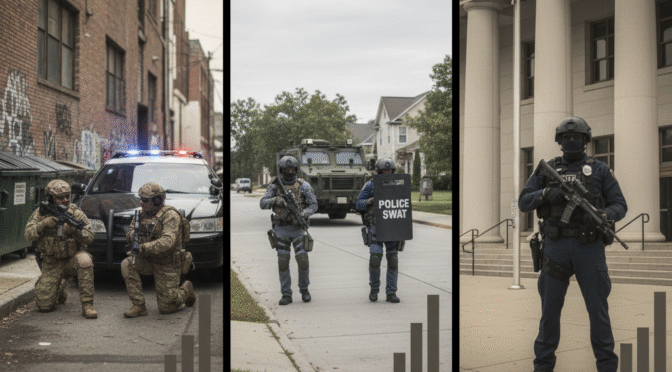
This report presents a comprehensive analytical assessment of the tactical response capabilities of police departments in the 25 most populous municipalities in the United States. In an era of evolving threats, from sophisticated criminal enterprises to the persistent risk of complex coordinated terrorist attacks, the readiness and effectiveness of these specialized units are a critical component of national domestic security. This analysis is grounded in a proprietary four-pillar methodology that evaluates each tactical team across Funding, Resources, Training, and Effectiveness to produce a standardized, data-driven ranking.
The primary findings of this report indicate a clear stratification of tactical capabilities, with a distinct top tier of units characterized by several common attributes. The highest-ranked teams, notably the New York City Police Department (NYPD) Emergency Service Unit (ESU) and the Los Angeles Police Department (LAPD) Special Weapons and Tactics (SWAT) platoon, operate as full-time, dedicated units. This structure affords them a significantly higher operational tempo and allows for a depth and breadth of training that is unattainable for part-time or collateral-duty teams. Furthermore, the analysis reveals a strong correlation between tactical excellence and diversified funding streams. Departments that successfully leverage non-municipal funding, either through active non-profit police foundations or the aggressive pursuit of federal grants, consistently demonstrate superior levels of equipment, technology, and access to specialized training.
A strategic overview of the current landscape reveals several key trends. There is a near-universal standardization of primary long arms around the AR-15/M4 carbine platform, reflecting a doctrinal shift toward patrol-rifle capabilities and precision engagement over the area-suppression role of older submachine guns. Concurrently, a trend toward regionalization is evident among many departments, which pool resources to field a multi-jurisdictional tactical team. While fiscally pragmatic, this model presents potential challenges in command interoperability and response time compared to a self-sufficient, municipally-controlled unit.
Based on these findings, this report offers several key recommendations. First, law enforcement leadership in major metropolitan areas with high-threat profiles should prioritize the transition from part-time, collateral-duty tactical teams to a full-time, dedicated unit model to maximize readiness and expertise. Second, police departments should actively cultivate relationships with non-profit foundations to serve as a force multiplier, enabling the acquisition of advanced technology and training that falls outside of constrained city budgets. Finally, federal grant programs, such as the Urban Area Security Initiative (UASI), should be leveraged to enhance the standardization and interoperability of these top-tier municipal units, recognizing them as vital assets in the national counter-terrorism framework.
Section 1: The Landscape of Modern Urban Tactical Policing
1.1 Genesis and Evolution
The concept of the modern police tactical unit was forged in the tumultuous 1960s, a period that starkly exposed the limitations of conventional law enforcement tactics against unprecedented forms of violence. Two seminal events are widely credited with catalyzing this evolution. The 1965 Watts Riots in Los Angeles presented police with a scenario of widespread urban unrest for which they were tactically unprepared.1 Former LAPD Chief Daryl Gates, who led the response, described facing not a single mob but “people attacking from all directions,” a situation that overwhelmed traditional patrol formations.1 A year later, the University of Texas Tower shooting, where a lone sniper held a campus hostage, demonstrated the deadly effectiveness of a fortified, determined adversary against responding officers armed only with service revolvers and shotguns.3
These incidents created an undeniable need for a new type of police response. The Philadelphia Police Department is credited with forming the first such unit in 1964, a 100-man team specifically designated “Special Weapons and Tactics” to counter a surge in bank robberies.1 However, it was the Los Angeles Police Department that institutionalized and popularized the concept. In 1967, under the direction of Inspector Daryl Gates, the LAPD officially formed its own Special Weapons and Tactics (SWAT) team, an acronym that would become the generic term for such units worldwide.1 The initial mission was clear: to provide a disciplined, heavily armed, and specially trained cadre of officers capable of resolving high-risk situations involving barricaded suspects, snipers, or violent civil unrest with a minimum loss of life.2
The mission and prevalence of these units expanded significantly in the subsequent decades. The “War on Drugs” of the 1980s and 1990s saw SWAT teams increasingly utilized for serving high-risk narcotics warrants, a task that remains a primary function for many units today.1 The post-9/11 era introduced another paradigm shift, adding counter-terrorism as a core competency. The threat of complex, coordinated attacks on urban centers necessitated that municipal tactical teams develop capabilities in counter-assault, dignitary protection, and response to incidents involving weapons of mass destruction.1 This evolution has transformed tactical units from purely reactive crisis-response assets into proactive instruments of high-risk law enforcement and homeland security.
1.2 Defining the Modern Tactical Unit
While “SWAT” has become the ubiquitous term, police departments across the United States employ a variety of official designations for their tactical units. The New York City Police Department refers to its team as the Emergency Service Unit (ESU), a name that reflects its broader mission set encompassing technical rescue and emergency medical services.6 The San Jose Police Department uses the designation MERGE (Mobile Emergency Response Group and Equipment) Unit 8, while the Washington D.C. Metropolitan Police Department fields an Emergency Response Team (ERT).10 Understanding this nomenclature is the first step in accurately cataloging and assessing these distinct capabilities.
Beyond nomenclature, the most significant structural differentiator among municipal tactical units is their operational status. A fundamental dichotomy exists between full-time, dedicated teams and part-time, collateral-duty teams.
- Full-Time Teams: In this model, officers are permanently assigned to the tactical unit. This is their sole function and responsibility within the department. Examples include the LAPD SWAT “D Platoon,” the Fort Worth Police Department SWAT Section, and the NYPD Emergency Service Unit.7 The advantages of this structure are profound. It allows for a continuous and intensive training regimen, fostering a deep level of specialization and team cohesion. Officers can dedicate their entire duty cycle to honing perishable skills, maintaining complex equipment, and conducting operational planning. This results in an exceptionally high state of readiness and expertise.
- Part-Time Teams: In the collateral-duty model, officers have primary assignments in other divisions, such as patrol or investigations, and serve on the tactical team as a secondary, on-call responsibility. Examples include the San Diego Police Department’s Primary Response Team (PRT) and the Columbus Police Department’s SWAT team.3 This model is more cost-effective for a municipality, as it does not require funding a full-time cadre of specialized officers. However, it presents inherent challenges. Training time is limited, typically to a set number of hours per month, making it difficult to maintain the same level of proficiency as a full-time unit. Mobilizing the team for a call-out can be slower and more complex, as members must be pulled from their disparate primary assignments across the city. This structural choice is a primary determinant of a unit’s overall capability and is a recurring analytical theme throughout this report.
1.3 Analytical Framework: The Four Pillars of Tactical Capability
To provide a standardized and objective comparison of the tactical units within the scope of this report, a proprietary analytical framework has been developed. This framework assesses each unit across four distinct pillars, which together provide a holistic view of its capabilities. Each pillar is assigned a weight in a final 100-point scoring system, detailed in the Appendix.
- Pillar 1: Funding: This pillar evaluates the financial health and support structure of the unit’s parent department. It considers the department’s overall budget as a proxy for available resources, the existence of supplemental private funding through police foundations, and the successful acquisition of federal and state grants. A well-funded department is better positioned to support a resource-intensive tactical unit.
- Pillar 2: Resources: This pillar assesses the tangible assets available to the tactical unit. This includes the quantity and quality of specialized vehicles (e.g., armored rescue vehicles), the availability of dedicated air support, the sophistication of its training facilities, and the integration of specialized support elements such as K-9 units, Explosive Ordnance Disposal (EOD) teams, and tactical medics.
- Pillar 3: Training: This pillar examines the rigor, frequency, and quality of the unit’s training and selection programs. Key metrics include the team’s operational status (full-time vs. part-time), the stringency of its selection process, the duration and intensity of its basic tactical school, and the frequency of its ongoing in-service training.
- Pillar 4: Effectiveness: This pillar provides a qualitative and quantitative assessment of the unit’s operational proficiency and experience. It considers the unit’s operational tempo (the number of high-risk missions conducted annually), the depth of its operational history, the diversity of its mission set, and its reputation among peer agencies as a doctrinal leader or “Tier One” asset.
Table 1: Profile of Major US City Police Departments and Tactical Units
| City Rank | City | State | Police Department | Dept. Size (Sworn) | Tactical Unit Official Designation |
| 1 | New York City | New York | New York City Police Department (NYPD) | 33,475 15 | Emergency Service Unit (ESU) 7 |
| 2 | Los Angeles | California | Los Angeles Police Department (LAPD) | 8,784 15 | Special Weapons and Tactics (SWAT) 1 |
| 3 | Chicago | Illinois | Chicago Police Department (CPD) | 11,580 15 | Special Weapons and Tactics (SWAT) Team 16 |
| 4 | Houston | Texas | Houston Police Department (HPD) | 5,195 15 | Special Weapons and Tactics (SWAT) Detail 17 |
| 5 | Phoenix | Arizona | Phoenix Police Department (PPD) | 2,563 15 | Special Assignments Unit (SAU) 18 |
| 6 | Philadelphia | Pennsylvania | Philadelphia Police Department (PPD) | 5,021 15 | Special Weapons and Tactics (SWAT) Unit 20 |
| 7 | San Antonio | Texas | San Antonio Police Department (SAPD) | 2,403 15 | Special Weapons and Tactics (SWAT) 21 |
| 8 | San Diego | California | San Diego Police Department (SDPD) | 1,870 15 | Special Weapons and Tactics (SWAT) Unit 14 |
| 9 | Dallas | Texas | Dallas Police Department (DPD) | 3,168 15 | Special Weapons and Tactics (SWAT) 22 |
| 10 | Jacksonville | Florida | Jacksonville Sheriff’s Office (JSO) | 2,082 23 | Special Weapons and Tactics (SWAT) Team 24 |
| 11 | Fort Worth | Texas | Fort Worth Police Department (FWPD) | 1,896 15 | Special Weapons and Tactics (SWAT) Section 25 |
| 12 | Austin | Texas | Austin Police Department (APD) | 1,807 26 | Special Weapons and Tactics (SWAT) Team 27 |
| 13 | San Jose | California | San Jose Police Department (SJPD) | 939 28 | Mobile Emergency Response Group & Equipment (MERGE) 9 |
| 14 | Charlotte | North Carolina | Charlotte-Mecklenburg Police Dept. (CMPD) | 1,746 15 | Special Weapons and Tactics (SWAT) Team 29 |
| 15 | Columbus | Ohio | Columbus Division of Police (CPD) | 2,117 15 | Special Weapons and Tactics (SWAT) Team 30 |
| 16 | Indianapolis | Indiana | Indianapolis Metro Police Dept. (IMPD) | 1,460 31 | Special Weapons and Tactics (SWAT) Team 32 |
| 17 | San Francisco | California | San Francisco Police Department (SFPD) | 1,888 15 | Tactical Company (SWAT) 33 |
| 18 | Seattle | Washington | Seattle Police Department (SPD) | 1,384 28 | Special Weapons and Tactics (SWAT) Team 34 |
| 19 | Denver | Colorado | Denver Police Department (DPD) | 1,483 28 | METRO/SWAT 35 |
| 20 | Oklahoma City | Oklahoma | Oklahoma City Police Department (OCPD) | 1,113 28 | Tactical Team (SWAT) 36 |
| 21 | Nashville | Tennessee | Metro Nashville Police Department (MNPD) | 1,720 15 | Special Weapons and Tactics (SWAT) Team 37 |
| 22 | Washington | D.C. | Metropolitan Police Department (MPDC) | 3,266 15 | Emergency Response Team (ERT) 11 |
| 23 | El Paso | Texas | El Paso Police Department (EPPD) | 1,013 28 | Special Weapons and Tactics (SWAT) Team 38 |
| 24 | Las Vegas | Nevada | Las Vegas Metropolitan Police Dept. (LVMPD) | 3,398 15 | Special Weapons and Tactics (SWAT) Bureau 40 |
| 25 | Boston | Massachusetts | Boston Police Department (BPD) | 2,128 15 | Special Operations Unit (SWAT) 41 |
Section 2: Comparative Analysis of Tier 1 Metropolitan Tactical Units (Cities 1-10)
This section provides in-depth analytical profiles for the tactical units of the police departments in the ten most populous cities in the United States. Each profile assesses the unit across the four pillars of tactical capability.
2.1 New York City Police Department: Emergency Service Unit (ESU)
- Unit Overview: The NYPD Emergency Service Unit (ESU) is arguably the most renowned and experienced police tactical unit in the world. Its origins trace back to the Emergency Automobile Squad formed in 1925, with the modern ESU officially established on April 10, 1930.7 This makes it the oldest continuously operating unit of its kind in the United States, predating the common use of the “SWAT” acronym by over three decades. The unit operates on a full-time basis, with approximately 350 members, most holding the rank of Detective Specialist, assigned to ten Emergency Service Squads (ESS) or “Trucks” geographically distributed across the five boroughs.7 ESU is unique in its exceptionally broad mission set. Beyond the standard tactical responsibilities of hostage rescue, barricaded suspect resolution, and high-risk warrant service, ESU is a comprehensive emergency response asset for the entire department. Its members are cross-trained in technical rescue disciplines, including high-angle rope rescue, confined space rescue, and vehicle extrication, as well as hazardous materials (HAZMAT) and CBRNE response.7 This expansive role has led to the unit being described as “911 for the NYPD”.43 The unit’s operational tempo is considered the highest of any tactical team in the nation, handling as many as 4,500 diverse callouts per year.7
- Funding & Resources: The NYPD operates with an annual budget exceeding $5.6 billion, providing a substantial financial foundation for its specialized units.26 The city’s capital strategy specifically allocates significant funding for the life-cycle replacement of large specialty vehicles, including ESU’s heavy rescue trucks and armored assets.45 This dedicated funding stream is reflected in ESU’s unparalleled fleet of specialized vehicles. The unit operates 11 E-One Heavy Rescue trucks, which serve as mobile tool caches for tactical and rescue operations.7 These are supported by a fleet of 55 smaller Radio Emergency Patrol (REP) trucks, which carry a complement of tactical, rescue, and medical gear.7 For tactical deployments, ESU fields a formidable armored contingent, including eight Lenco BearCat armored personnel carriers, two larger Lenco B.E.A.R.s, and multiple Mine-Resistant Ambush Protected (MRAP) vehicles.7 This extensive and varied fleet provides ESU with the resources to handle virtually any tactical or rescue scenario within the dense urban environment of New York City.
- Training & Selection: Entry into the ESU is highly competitive and requires significant prior experience. A candidate must have a minimum of five years of patrol experience within the NYPD before they can apply.7 The selection process is followed by an arduous ten-month “Specialized Training School” at the NYPD’s state-of-the-art academy in College Point, Queens.7 This extended training period far exceeds that of most other tactical units and is necessary to cover the unit’s vast responsibilities. Recruits receive months of specialized training in tactical operations, including close-quarters battle, active shooter response, and heavy weapons proficiency. Concurrently, they must complete certifications in a multitude of rescue disciplines, including advanced medical training to the level of Emergency Medical Technician (EMT), SCUBA certification for underwater operations, and HAZMAT/CBRNE mitigation techniques.7 This comprehensive and multi-disciplinary training regimen ensures that every ESU officer is a versatile operator capable of seamlessly transitioning between tactical and rescue missions.
- Effectiveness & Doctrine: ESU’s effectiveness is a direct result of its full-time operational status, immense institutional experience, and high operational tempo. The unit’s doctrine is fundamentally different from that of a pure SWAT team; it is a hybrid tactical/rescue model that has been refined over nearly a century of continuous operation. The fact that ESU members are constantly on patrol in their specialized trucks means they are not just a reactive call-out unit but a proactive, first-responding asset for any major incident in the city.7 This constant exposure to a wide range of critical incidents, from suicidal jumpers on bridges to barricaded gunmen, builds a deep reservoir of practical experience that cannot be replicated in training alone. The unit’s long history and its central role in responding to major events, including the September 11th attacks, have cemented its reputation as a global leader in urban tactical and emergency response.
- Standard-Issue Small Arms: ESU operators are equipped with a standardized set of firearms selected for reliability and effectiveness in urban environments. The primary sidearm is the Glock 19 pistol in 9mm.7 For close-quarters engagements, the Heckler & Koch MP5 submachine gun is utilized, a weapon renowned for its accuracy and control in a compact platform.7 The primary long gun is the Colt M4 Commando, a short-barreled variant of the M4 carbine, which provides superior ballistic performance and range compared to a submachine gun while remaining maneuverable inside buildings.7 A 2016 department-wide upgrade ensured that ESU’s long guns were converted to be fully automatic.47
2.2 Los Angeles Police Department: Special Weapons and Tactics (SWAT)
- Unit Overview: The LAPD SWAT team, officially established in 1967, is the unit that defined the modern police tactical concept and created the “SWAT” acronym.1 It operates as “D Platoon,” a full-time, dedicated component of the LAPD’s elite Metropolitan Division.12 The unit is renowned worldwide as a premier police tactical unit, providing a ready response to high-risk situations that are beyond the capabilities of normally equipped and trained department personnel, including hostage rescue, barricaded suspects, and high-risk warrant service.48 The unit provides 24-hour coverage for the city, ensuring immediate response capabilities.12
- Funding & Resources: The LAPD’s annual budget of approximately $1.9 billion provides the foundational funding for the unit.49 However, a significant factor in the unit’s resourcing is the Los Angeles Police Foundation (LAPF). The LAPF is a private, non-profit organization that serves as the major source of private financial support for the LAPD, awarding over $55 million in grants since 1998.50 It explicitly funds state-of-the-art equipment, cutting-edge technology, and specialized training that are not provided for in the city’s budget.50 This parallel funding stream acts as a powerful force multiplier, allowing SWAT to acquire advanced assets that might otherwise be inaccessible. For example, the Dallas Police SWAT team has a specific foundation fund for its needs, illustrating how targeted private funding can directly enhance a unit’s capabilities.52 The LAPF provides similar, albeit broader, support, ensuring that LAPD SWAT has access to top-tier resources. The unit’s vehicle fleet includes specialized Lenco B.E.A.R. and BearCat armored rescue vehicles, which are critical for safely approaching hostile environments and rescuing civilians or officers.12
- Training & Selection: Assignment to LAPD SWAT is a highly sought-after and competitive process. The training regimen is rigorous and standardized under California’s Commission on Peace Officer Standards and Training (POST) guidelines for SWAT operations.53 New members must complete a demanding 12-week Basic SWAT course, which is mandated prior to deployment.53 The curriculum is exhaustive, covering advanced proficiency and tactical qualification with all SWAT weapons systems, dynamic and covert entry techniques, room clearing, arrest and control methods, and the use of lethal and less-lethal force options.53 A heavy emphasis is placed on the department’s guiding value of “Reverence for Human Life,” which serves as the ethical foundation for de-escalation, tactics, and the application of reasonable force.53 This foundational training is supplemented by continuous in-service training, including live-fire tactical drills and scenario-based exercises, to maintain the unit’s high level of readiness.53
- Effectiveness & Doctrine: LAPD SWAT’s doctrine has shaped tactical policing across the nation for over 50 years. The unit’s operational history includes some of the most significant tactical incidents in U.S. law enforcement history. The four-hour shootout with the Black Panthers in December 1969 was the unit’s first major deployment and a formative experience that validated the SWAT concept.1 The televised 1974 shootout with the Symbionese Liberation Army (SLA) brought the unit to national prominence and served as a case study in tactical operations for agencies worldwide.1 These and countless other operations have built an institutional knowledge base that is second to none. The unit’s doctrine emphasizes meticulous planning, speed, surprise, and overwhelming force to resolve critical incidents while minimizing casualties. By the time of the SLA shootout, the unit had already organized into six 10-man teams, each subdivided into five-man elements, a structure that has been emulated by many other departments.1
- Standard-Issue Small Arms: LAPD SWAT has a long and distinct history with its choice of sidearms. While the rest of the department used.38 Special revolvers, the original SWAT officers were authorized to carry the Model 1911.45 ACP pistol, a weapon prized for its superior ergonomics and stopping power.54 This tradition continues today. The current standard-issue sidearm for LAPD SWAT is the Kimber Custom II, a customized 1911-platform pistol chambered in.45 ACP, which was selected after a rigorous testing process in 2002.54 The primary long guns are AR-15 platform carbines, which replaced older submachine guns and shotguns as the main entry weapon.1 The unit also fields high-caliber, bolt-action sniper rifles for precision engagement at extended ranges.1
2.3 Chicago Police Department: Special Weapons and Tactics (SWAT) Team
- Unit Overview: The Chicago Police Department’s SWAT Team is a specialized unit tasked with providing a tactical response to high-risk incidents where the potential for injury or loss of life is present and circumstances are beyond the capabilities of a normal police response.16 Historically, the SWAT team was a component of the Special Operations Section (SOS), a unit known for its aggressive, proactive enforcement against street gangs and drug crimes.56 Following the disbandment of SOS in 2007 due to corruption concerns, the SWAT team and other specialized units were reorganized into the Special Functions Group.56 The unit’s core missions include serving high-risk arrest and search warrants, hostage rescue, resolving incidents with barricaded suspects, and responding to active threats.16
- Funding & Resources: The Chicago Police Department (CPD) is the second-largest municipal police agency in the country, with a proposed 2025 budget of nearly $2.1 billion.15 This substantial city funding is augmented by significant federal grants. The CPD has been a major recipient of funding from the Department of Justice’s COPS Hiring Program and the Department of Homeland Security’s Homeland Security Grant Program (HSGP), which includes the Urban Area Security Initiative (UASI).58 These federal funds support the hiring of officers, the acquisition of technology and equipment, and counter-terrorism efforts. In addition to public funding, the Chicago Police Foundation, a non-profit organization, provides supplemental support by funding programs and equipment not covered by the official department budget.59 This multi-pronged funding approach ensures the SWAT team has access to necessary resources for its demanding mission.
- Training & Selection: The selection process for the CPD SWAT team is exceptionally demanding, with a heavy emphasis on firearms proficiency. The process is divided into phases, with the first stage being a handgun qualification course of fire. To be eligible for a Tier 1 SWAT Team Operator position, a candidate must consistently score 90% or higher on this test.60 This stringent marksmanship standard ensures that only the most capable shooters are considered for the team. A passing score of 80% or higher is required for Tier 2 eligibility.60 The training curriculum, offered by both internal instructors and external providers like Spartan Tactical Training Group, focuses on refining advanced gun-handling skills, balancing speed and accuracy, and mastering combat marksmanship under stress.60 The overall selection process also includes rigorous physical fitness tests, patrol scenarios to evaluate decision-making, and a board interview.62
- Effectiveness & Doctrine: The CPD SWAT team’s doctrine is shaped by the high-threat environment of a major metropolitan area with significant violent crime challenges. The unit’s primary function is to serve as the department’s tool for resolving incidents that exceed the capabilities of patrol officers.16 This includes a heavy caseload of high-risk warrant services for violent offenders and narcotics traffickers. The unit’s history within the proactive and aggressive Special Operations Section indicates a doctrine that supports direct action to suppress violent crime.56 The team is also responsible for providing direct support in response to incidents involving weapons of mass destruction (WMD) and has a waterborne response capability.16
- Standard-Issue Small Arms: As of 2018, the CPD authorizes its officers to carry a variety of striker-fired semiautomatic pistols chambered in 9mm. This includes models from Glock (17, 19), Springfield Armory (XD series), Smith & Wesson (M&P), and SIG Sauer (P320).63 This provides officers with a degree of choice based on personal preference and ergonomics. While specific long guns for the SWAT team are not explicitly detailed in the provided materials, they would align with national standards, including AR-15/M4 platform carbines for entry and precision sniper rifles for standoff engagements.64
2.4 Houston Police Department: Special Weapons and Tactics (SWAT) Detail
- Unit Overview: The Houston Police Department (HPD) formed its first Special Weapons and Tactics (SWAT) squad in 1975.65 The modern unit is known as the SWAT Detail and operates within the Tactical Operations Division.17 It is a 24/7 operational unit responsible for responding to high-risk incidents involving snipers, barricaded suspects, suicide threats, hostage situations, and terrorist activities.17 The SWAT Detail works in close conjunction with other specialized components of the Tactical Operations Division, including the Bomb Squad, the Patrol Canine Detail, and the Hostage Negotiation Team, to provide a comprehensive response to critical incidents.17
- Funding & Resources: The Houston Police Department’s overall budget provides the primary funding for the SWAT Detail. The department has a history of leveraging private and non-profit support through the Houston Police Foundation (HPF).67 The HPF is a non-profit organization formed by local business leaders to fund special programs, officer safety initiatives, training, and equipment that fall outside the city’s budget.67 The foundation has awarded over $12 million in grants to the HPD and identifies officer safety as its top priority.68 While specific grants for the SWAT Detail are not itemized publicly, the foundation’s focus on funding essential equipment and supporting high-priority needs makes it a critical resource for the unit.69 This model, similar to that of the LAPF, provides a vital secondary funding stream to ensure the tactical team is equipped with modern technology and assets.
- Training & Selection: The HPD maintains its own state-of-the-art police academy, which provides both cadet training and continuing education for all personnel, including specialized units.71 The department has a long history of providing high-quality, practical SWAT training, even sponsoring courses for other local law enforcement agencies. A 5-day basic SWAT course historically emphasized physical conditioning, firearms proficiency, hostage negotiation theory, and extensive field exercises covering tactics like perimeter control, camouflage, and reconnaissance.72 The selection process for modern tactical teams requires candidates to pass a rigorous physical agility test, which for HPD includes a 500-meter row, a 1-mile run, and a weapons compatibility test.73 More advanced tactical courses, such as those offered by TEEX (Texas A&M Engineering Extension Service), set a high bar that likely informs HPD’s standards, requiring a minimum 90% score on a demanding handgun qualification course and passing a stringent physical fitness test on the first day of class.74
- Effectiveness & Doctrine: The HPD SWAT Detail’s doctrine is focused on the safe resolution of special threat situations that warrant a tactical response. The unit is a key component of the city’s public safety infrastructure, supporting not only patrol operations but also major events like the Super Bowl.17 The unit’s operational effectiveness is enhanced by its direct integration with other tactical assets within the same division, such as negotiators and bomb technicians, allowing for a seamless, coordinated response under a unified command structure.17 The department’s focus on interagency training and collaboration further enhances its capabilities.71
- Standard-Issue Small Arms: The HPD’s general orders on firearms provide a framework for authorized weapons. While the specific inventory of the SWAT Detail is not listed, the orders specify that only divisions, units, weapons, and ammunition designated in writing by the Chief of Police shall be considered specialized.75 The department authorizes a range of primary and backup weapons for its officers, with a clear process for approval and registration.75 Tactical units like SWAT would be authorized to carry specialized weapons, including select-fire carbines, precision rifles, and various shotgun platforms, in addition to their service pistols.75 National tactical standards suggest these would primarily be AR-15 platform rifles and specialized shotguns for breaching and less-lethal applications.64
2.5 Phoenix Police Department: Special Assignments Unit (SAU)
- Unit Overview: The Phoenix Police Department’s primary tactical team is the Special Assignments Unit (SAU).18 The SAU operates under the Strategic and Tactical Services Division and is responsible for handling high-risk incidents that require specialized tactical capabilities.19 The unit works in concert with other specialized elements, including the K-9 Unit and the Air Support Unit, to resolve critical situations.18
- Funding & Resources: The Phoenix Police Department’s annual budget approaches $1 billion, a 72% increase over the past decade, providing a strong financial base for its operations.76 The department is also a successful recipient of federal and state grant funding. Records show numerous grants from the Department of Homeland Security’s HSGP/UASI program and the Department of Justice’s Edward Byrne Memorial Justice Assistance Grant (JAG) and Project Safe Neighborhoods programs.77 These grants provide funding for equipment, technology, and specific law enforcement initiatives, which can directly or indirectly benefit the capabilities of the SAU.77 A 2018 city council vote approved up to $750,000 specifically for Glock firearms and replacement parts for the department, demonstrating a commitment to maintaining its weapons systems.78
- Training & Selection: Prospective officers must meet the Arizona Peace Officer Standards and Training (AZPOST) board requirements and pass a multi-stage screening process that includes a physical aptitude test (POPAT), background investigation, polygraph, and psychological and medical examinations.79 Upon hiring, recruits undergo an intensive academy program that prepares them for patrol duties.80 Assignment to a specialty detail like the SAU requires additional experience and a separate, rigorous selection process and specialized training. The department’s field training program for new officers is an intensive 640-hour block of on-the-job training, setting a high standard for operational readiness from the outset.81 The SAU conducts its own specialized training to maintain proficiency in tactical operations, often coordinating with the Phoenix Fire Department for medical standby during high-risk deployments like warrant service or barricade situations.82
- Effectiveness & Doctrine: The SAU’s doctrine is focused on the resolution of high-risk incidents where specialized tactics are necessary. The unit is frequently deployed for serving high-risk warrants, particularly on fugitives, and for resolving barricade and hostage situations.82 In recent years, the department has placed a significant emphasis on expanding its less-lethal capabilities to provide officers with more options to resolve situations without resorting to deadly force. This includes the deployment of 37mm and 40mm projectile launchers, with the 37mm variants being restricted to use by tactical teams like the SAU.83 This doctrinal emphasis on less-lethal options, combined with tactical proficiency, aims to enhance officer and public safety during critical incidents.
- Standard-Issue Small Arms: The Phoenix Police Department has officially issued Glock pistols as its primary duty weapon since 1993.80 Officers are permitted to carry several models, with the most common being the Glock 22 (.40 S&W), Glock 17 (9mm), and Glock 21 (.45 Auto).80 This indicates a degree of flexibility allowing officers to choose a caliber and frame size that best suits them. As a specialized tactical unit, the SAU would also be equipped with AR-15 platform carbines as their primary long guns and precision sniper rifles for standoff engagements. The department’s focus on less-lethal options means the SAU is also proficient with 37mm launchers firing plastic projectiles designed for “pain compliance”.83
2.6 Philadelphia Police Department: Special Weapons and Tactics (SWAT) Unit
- Unit Overview: The Philadelphia Police Department (PPD) holds the distinction of establishing the first unit to be formally designated “Special Weapons and Tactics” in 1964.1 This pioneering unit was created to address an alarming increase in bank robberies, predating the more widely known formation of the LAPD team. The modern PPD SWAT unit is an elite team equipped and trained to handle extreme law enforcement situations such as hostage incidents, riots, and mass shooter events.20 While trained for these rare events, the unit’s most frequent deployments are for the service of high-risk search and arrest warrants.20 The SWAT unit works in conjunction with the department’s Crisis Negotiation Teams to resolve incidents peacefully.85
- Funding & Resources: The Philadelphia Police Department operates with an annual budget of approximately $782 million.86 Like other major departments, the PPD benefits from the support of a non-profit foundation. The Philadelphia Police Foundation provides charitable contributions to outfit officers with needed safety and tactical equipment when funding through the city budget is unavailable.87 This supplemental funding is crucial for resource-intensive units like SWAT, which require specialized body armor, tactical weapons, and less-lethal options that are not issued to the department at large.20
- Training & Selection: The path to becoming a Philadelphia Police Officer involves a multi-step hiring process, including a reading examination, a personal history questionnaire, a background investigation, and medical and psychological evaluations.88 A key component is the physical fitness and agility test, which is based on standards mandated by the Municipal Police Officers’ Education and Training Commission (MPOETC) and includes sit-ups, a 300-meter run, push-ups, and a 1.5-mile run.89 Assignment to the SWAT unit requires several years of patrol experience and a separate, highly competitive selection process that would test for advanced physical fitness, superior marksmanship, and sound tactical decision-making.
- Effectiveness & Doctrine: As the nation’s first SWAT team, the PPD unit has a deep operational history. Its modern doctrine emphasizes the use of specialized equipment and training to create an overwhelming presence during high-risk operations, with the goal of de-escalating threats and detaining dangerous individuals with minimal force.20 A 2017-2018 analysis showed that 82% of the unit’s deployments were for warrant service, highlighting its role as a primary tool for apprehending violent offenders.20 The unit’s distinctive black military-style uniforms and heavy equipment are intended to provide a tactical advantage and a psychological shock effect on armed subjects, increasing the likelihood of a peaceful resolution.20
- Standard-Issue Small Arms: Philadelphia police officers are authorized to carry a range of Glock pistols. The primary service weapon being issued is the Glock 17 (9mm), with other authorized models including the Glock 22 (.40 S&W) and Glock 21 (.45 Auto).91 The SWAT unit is equipped with tactical weapons beyond standard issue, including AR-15 platform rifles, shotguns, and a variety of less-lethal launchers.20
2.7 San Antonio Police Department: Special Weapons and Tactics (SWAT)
- Unit Overview: The San Antonio Police Department (SAPD) SWAT team is a component of the Special Operations Unit (SOU), which also includes the K-9, Bomb Squad, and Hostage Negotiation teams.21 The unit is responsible for handling a variety of high-risk incidents and providing tactical training support to other departmental units, including Patrol, Street Crimes, and the Training Academy.93
- Funding & Resources: The SAPD’s proposed 2026 budget is over $630 million, representing a significant portion of the city’s general fund.94 The department actively seeks and has been awarded federal grants to enhance its capabilities. In 2023, the city was awarded a $6.25 million COPS grant from the Department of Justice to hire 50 new police officers, which helps free up resources and allows existing officers more time for proactive policing and training.95 The SWAT team is equipped with specialized vehicles, including a tactical armored vehicle known as “The Rook,” which was purchased in 2022 for nearly $400,000 using federal grant funds from the Urban Area Security Initiative (UASI).97 This vehicle serves as a critical rescue and recovery tool in situations ranging from natural disasters to hostage rescue.97
- Training & Selection: The SAPD maintains a state-of-the-art Training Academy on a 165-acre facility that includes an academic building, a driving track, multiple firearms ranges, and a tactical training village.98 The academy provides over 1300 hours of training for new cadets, more than double the state-mandated 643 hours, ensuring a high level of foundational training for all officers.70 The curriculum includes rigorous academic, physical, and skills-based instruction, including firearms, driving, and defensive tactics.98 Selection for the SWAT team requires a proven track record as a patrol officer and passing an additional specialized selection and training process. The SWAT team itself contributes to departmental readiness by assisting with training for other units.93
- Effectiveness & Doctrine: The SAPD SWAT team’s doctrine emphasizes the safe resolution of high-risk incidents through the application of specialized skills and equipment. The unit’s integration within the broader Special Operations Unit allows for seamless coordination with negotiators, K-9 handlers, and bomb technicians during complex critical incidents.92 The team’s role extends beyond reactive calls to include proactive assistance with training across the department, which enhances the tactical proficiency of the entire force and reinforces the unit’s position as the department’s subject matter experts on tactical operations.93
- Standard-Issue Small Arms: The standard-issue sidearm for SAPD officers is the Smith & Wesson M&P pistol chambered in.40 S&W.99 This replaced the previously issued Glock 22 pistols.99 As a tactical unit, the SWAT team would be equipped with a range of additional specialized firearms, including AR-15 platform rifles, precision sniper rifles, and shotguns for both lethal and less-lethal applications, consistent with national SWAT standards.64
2.8 San Diego Police Department: Special Weapons and Tactics (SWAT) Unit
- Unit Overview: The San Diego Police Department (SDPD) SWAT Unit was created shortly after a 1965 shootout and further developed in response to the civil unrest of the 1960s and 70s.100 The unit is a section of the Special Services Division and is structured with both full-time and part-time elements.14 The full-time component is the Special Response Team (SRT), a dedicated hostage rescue team composed of veteran SWAT officers.14 The part-time elements consist of the Sniper Team and the Primary Response Team (PRT), which is made up of patrol officers with collateral SWAT duties.14 This unique hybrid structure ensures that at least seven SWAT-trained officers (the PRT) are on patrol in the city at any given time, enabling a rapid initial response to a critical incident.100
- Funding & Resources: The SDPD’s budget for military equipment in FY2025 was over $1.1 million, a small fraction of the department’s total $681 million budget but essential for specialized units.101 A crucial element of the SWAT unit’s resourcing is the San Diego Police Foundation, a non-profit organization established in 1998 to fund vital equipment and specialized training not covered by the city budget.102 The foundation has provided over $12 million in grants and does not fund lethal weapons but focuses on other critical needs.102 A separate non-profit, Citizens for SWAT, was created in 2005 specifically to ensure the San Diego SWAT team is equipped with the most effective and up-to-date equipment, including vehicles, personal protection, robots, and advanced weapons.100 This dedicated foundation support is a significant advantage, directly addressing the high cost of outfitting a large, 80-100 member team.100
- Training & Selection: SDPD officer recruits attend a six-month police academy at the San Diego Regional Public Safety Training Institute, which provides 944 hours of training—significantly more than the 664 hours required by the state.103 This is followed by a minimum of 16 weeks in a Field Training Program.103 To join SWAT, officers must have at least three years of patrol experience and pass a rigorous selection process, followed by a 4-week SWAT academy.105 The full-time SRT is responsible for leading training not only for the rest of the SWAT team but for the entire police department on specialized topics.100 All SWAT officers must pass physical tests and firearms qualifications twice a year to remain on the team.105
- Effectiveness & Doctrine: The SDPD SWAT unit’s doctrine has been shaped by significant local events. The 1984 McDonald’s massacre, a mass murder event, made it clear that a dedicated hostage rescue team was a vital component, leading to the formation of the full-time SRT.100 The unit’s hybrid structure with the PRT is a doctrinal innovation designed to solve the problem of response time. By having SWAT-trained officers already on patrol, the department can deploy tactical resources to a scene much faster than a traditional on-call team.100 The unit’s mission is broad, encompassing not only tactical response but also mob and riot containment, underwater evidence recovery, and dignitary protection.100 This wide range of responsibilities, combined with its tiered response structure, makes the SDPD SWAT unit a highly flexible and effective tactical asset.
- Standard-Issue Small Arms: The SDPD’s 2021 Military Equipment Report lists an inventory of specialized firearms that includes rifle caliber carbines, sniper rifles, and associated ammunition of less than.50 caliber.106 The team also utilizes 40mm projectile launchers for less-lethal munitions like bean bags and specialty impact munitions (SIMs).106 While specific makes and models are not listed, general information on SWAT weaponry indicates these would include AR-15 platform rifles, various shotguns, and semi-automatic handguns.107 The Citizens for SWAT foundation specifically raises funds to provide the team with “advanced weapons”.100
2.9 Dallas Police Department: Special Weapons and Tactics (SWAT)
- Unit Overview: The Dallas Police Department (DPD) SWAT unit is a full-time team within the department’s Tactical Division.22 The Tactical Division is a comprehensive special operations command that also includes the Mounted Unit, Canine Unit, Explosive Ordnance Squad, and Helicopter Unit, providing the SWAT team with immediate access to integrated support assets.22 The unit was featured in the A&E reality series “Dallas SWAT,” which brought it to national public attention.108
- Funding & Resources: The City of Dallas’s proposed budget includes a $61.3 million increase for the police and fire departments, aimed at hiring new recruits and purchasing updated technology and equipment.110 The DPD SWAT team also benefits from a dedicated non-profit funding source, the Dallas SWAT Foundation Fund, which is managed by the Communities Foundation of Texas.52 This fund’s specific purpose is to provide support for Dallas Police SWAT officers in the areas of equipment, technology, and continuing education, training, and certification.52 This direct and targeted private funding stream is a significant advantage, allowing the unit to acquire specialized resources beyond the scope of the municipal budget.
- Training & Selection: The DPD Basic Training Academy is a 40-week program consisting of 1400 hours of instruction, followed by 24 weeks of field training.111 This extensive initial training provides a strong foundation for all officers. Selection for the SWAT team is a separate and highly competitive process. The Dallas County Sheriff’s Department Training Academy, a licensed TCOLE facility, provides high-quality training for the region’s law enforcement community and includes a comprehensive firearms training center with multiple ranges and live-fire shoot houses, facilities likely utilized by DPD SWAT for advanced training.112
- Effectiveness & Doctrine: The DPD SWAT team’s operational history includes a notable 2005 incident where a sniper utilized a Barrett M82A1.50 caliber rifle to disable an armored van driven by a lone gunman, marking one of the first uses of such a weapon against a human threat in civilian law enforcement.113 This event highlights the unit’s willingness to adopt and train with specialized heavy weapon systems to counter extreme threats. The unit’s doctrine is focused on resolving high-risk critical incidents, and its full-time status ensures a high level of readiness and proficiency. The integration of the SWAT team within a comprehensive Tactical Division allows for a highly coordinated response with other specialized assets like EOD and K-9.22
- Standard-Issue Small Arms: The standard-issue sidearm for the DPD is the SIG Sauer P226, typically chambered in 9mm, though some officers carry it in.357 SIG.108 Officers are also permitted to carry various Glock models.63 The DPD SWAT team is uniquely equipped with Barrett M82A1.50 caliber semi-automatic rifles for anti-materiel and hard target interdiction roles.113 Their primary long guns would be AR-15 platform rifles, and LWRC International has noted a partnership with the team, highlighting their use of the IC-A5 and IC-MKII rifle systems.114
2.10 Jacksonville Sheriff’s Office: Special Weapons and Tactics (SWAT) Team
- Unit Overview: The Jacksonville Sheriff’s Office (JSO) is a consolidated city-county law enforcement agency serving Duval County, Florida.23 The agency’s tactical unit is its Special Weapons and Tactics (SWAT) Team. While the JSO provides law enforcement for the city of Jacksonville, the neighboring, smaller Jacksonville Beach Police Department has its own SWAT team, which was formally activated on November 1, 1976.24 The JSO SWAT team is a specialized unit responsible for handling high-risk operations beyond the scope of patrol.
- Funding & Resources: The JSO’s annual budget is approximately $482 million.23 The department actively seeks state and other funding to enhance its capabilities. In 2025, the JSO sought over $700,000 in state funding to upgrade its Real-Time Crime Center, a technology hub that can provide critical intelligence support during tactical operations.116 The department has also previously requested budget increases to hire additional officers to keep pace with the city’s growth.117
- Training & Selection: The Jacksonville area is served by the Northeast Florida Criminal Justice Center at Florida State College at Jacksonville, which provides basic law enforcement training and advanced courses, including access to a Tactical Weapons Training Center.118 The JSO also runs a Citizens Police Academy, which provides community members with an overview of the agency’s operations and includes presentations from specialized units, including the SWAT team.119 The nearby Jacksonville Beach PD runs its own annual Basic SWAT school, a 65-hour course that attracts officers from across Florida and from federal agencies, indicating a high level of tactical training expertise within the region.24 Selection for the JSO SWAT team would require officers to pass a rigorous process testing physical fitness, firearms proficiency, and tactical acumen.
- Effectiveness & Doctrine: The JSO SWAT team is the primary tactical response asset for the consolidated city-county of Jacksonville. Its doctrine would align with national standards, focusing on the resolution of high-risk incidents such as hostage situations, barricaded suspects, and the service of high-risk warrants. The unit’s effectiveness is supported by other specialized JSO assets, including an Aviation Unit, a Canine Unit, and a Bomb Squad.120 The operational history of the Jacksonville Beach SWAT team, with over a thousand successful missions since 1976, demonstrates a long-standing tradition of tactical operations in the region.24
- Standard-Issue Small Arms: While the specific firearms of the JSO SWAT team are not detailed, a review of department policy for the Jacksonville, Arkansas Police Department (often confused but indicative of regional standards) shows a biannual qualification requirement for all duty weapons, including specialized weapons like rifles and fully-automatic firearms used by tactical teams.121 Authorized rifles on that policy include various AR-15 platforms (Colt, Bushmaster, Daniel Defense) in.223 caliber, and a Remington 700 in.308 caliber is restricted to SWAT use only.122 The JSO would likely follow similar standards, equipping its team with AR-15 platform carbines and precision sniper rifles.
Section 3: Analysis of Tier 2 Metropolitan Tactical Units (Cities 11-25)
This section provides analytical profiles for the tactical units in the next fifteen most populous cities. While the level of publicly available information varies, the same four-pillar framework is applied to assess their capabilities.
3.1 Fort Worth Police Department: Special Weapons and Tactics (SWAT) Section
- Unit Overview: The Fort Worth Police Department (FWPD) SWAT Section is a full-time team operating within the Tactical Operations Division.13 The unit consists of 29 members: one lieutenant, three sergeants, three corporals, and 22 officers.13 Its primary mission is to resolve special threat situations, including serving high-risk warrants, hostage rescue, counter-terrorism, and engaging heavily-armed criminals.25 The unit maintains a high operational tempo, executing over 250 tactical operations per year.25
- Funding & Resources: The FWPD SWAT Section is funded through the general police department budget.13 It receives additional support from the FWPD SWAT Support Group, a non-profit organization dedicated to assisting the team.13
- Training & Selection: Before assignment to the full-time team, officers must pass a tactical assessment and physical fitness test. All members attend Basic and Advanced SWAT training courses, with leadership receiving additional training in hostage negotiation and command.13 Due to limited funds, officers often pay for additional specialized training themselves in areas like explosive breaching, rappelling, and sniper skills.13
- Effectiveness & Doctrine: The unit’s full-time status and high operational tempo are key indicators of its effectiveness. Executing over 250 missions annually provides a level of practical experience that is difficult to achieve for part-time units. Its doctrine covers the full spectrum of high-risk tactical operations.25
- Standard-Issue Small Arms: Specific models are not listed, but training focuses on enhancing rifle and pistol skills, indicating the standard complement of AR-15 platform carbines and semi-automatic pistols.13
3.2 Austin Police Department: Special Weapons and Tactics (SWAT) Team
- Unit Overview: The Austin Police Department (APD) Special Weapons and Tactics (SWAT) Team is the department’s primary tactical unit.27 Its mission is to professionally resolve life-threatening critical incidents and provide tactical support to all members of the department.27 The region also features multi-agency teams, such as the Central Texas Regional SWAT (CTRS), which includes members from surrounding cities like Cedar Park and Georgetown, indicating a collaborative tactical environment.125
- Funding & Resources: Funding is provided through the APD’s general budget. The regional CTRS team utilizes a variety of specialized equipment, including armored vehicles, surveillance equipment, and a robot, which suggests the level of resources available to tactical teams in the Austin metropolitan area.125
- Training & Selection: The Texas Department of Public Safety (DPS) operates a statewide Special Weapons and Tactics Team (SWAT) headquartered in Austin, which provides a high standard of training and operational capability that likely influences APD’s own standards.126 Regional teams like CTRS have a difficult selection process emphasizing physical fitness, firearms proficiency, and critical thinking.125
- Effectiveness & Doctrine: The APD SWAT team’s doctrine is focused on the resolution of critical incidents with minimal negative impact on the community.27 The presence of both a dedicated city team and regional multi-agency teams provides a layered tactical response capability for the Austin area.
- Standard-Issue Small Arms: Specific models are not detailed, but would include standard tactical firearms such as AR-15 platform rifles and semi-automatic pistols.
3.3 San Jose Police Department: Mobile Emergency Response Group & Equipment (MERGE)
- Unit Overview: The San Jose Police Department (SJPD) refers to its tactical unit as the MERGE (Mobile Emergency Response Group and Equipment) Unit.8 MERGE consists of two ten-person teams and two supervisors.9 The unit is responsible for providing special skills and equipment to address critical incidents involving threats to life.9
- Funding & Resources: The unit is funded through the SJPD budget. The department also operates an Air Support Unit with an Airbus AS-350 helicopter, which provides a critical aerial support capability for MERGE operations.127
- Training & Selection: All officers in the Special Operations Division, including MERGE, receive specialized training and develop a high level of proficiency for their assignment.127 The unit is supported by a specialized Dispatch Response Team (DRT), which consists of 18 dispatchers trained in special operations police tactics and command post functions, enhancing command and control during incidents.9
- Effectiveness & Doctrine: The MERGE Unit’s doctrine covers not only critical incident response but also proactive apprehension of violent career criminals, often working in a covert capacity.9 This dual proactive and reactive mission set makes the unit a versatile tool for the department. Their support for Secret Service dignitary protection details further highlights their high level of tactical capability.9
- Standard-Issue Small Arms: While specific models are not listed, the unit is described as being highly trained in a variety of different weaponry.9
3.4 Charlotte-Mecklenburg Police Department: Special Weapons and Tactics (SWAT) Team
- Unit Overview: The Charlotte-Mecklenburg Police Department (CMPD) SWAT Team is part of the Special Operations Division.128 The team is a composite unit, comprising a tactical element, a crisis negotiation team, and tactical medics.29
- Funding & Resources: The team is funded through the CMPD budget. It operates alongside other specialized units in the Special Operations Division, including Aviation, K-9, and the Bomb Unit, allowing for integrated tactical support.29
- Training & Selection: Members of the SWAT team have a focus on specialized training in firearms, hostage rescue, mass public violence response, and vehicle apprehension tactics.129
- Effectiveness & Doctrine: The mission of the CMPD SWAT team is to preserve life in high-risk situations through the use of specialized training, equipment, and tactics.29 The unit is deployed for a range of missions, including high-risk warrants, response to barricaded suspects, dignitary protection, and large venue threat mitigation.129
- Standard-Issue Small Arms: Specific models are not detailed in the provided materials.
3.5 Columbus Division of Police: Special Weapons and Tactics (SWAT) Team
- Unit Overview: The Columbus Division of Police (CPD) SWAT Team is a special unit within the department’s Special Operations Subdivision.30 The team is a part-time, collateral-duty unit comprised of Columbus Police officers and Bartholomew County Sheriff’s deputies who train together.3 The unit was reformed in 1987 as the Emergency Response Team (ERT) and was renamed SWAT in 2002.3
- Funding & Resources: The unit is funded through the CPD budget. It is equipped with a large van carrying specialized equipment like ballistic shields and breaching tools.3
- Training & Selection: Applicants go through a physical fitness test and an interview process. Once accepted, new members complete a 30-40 hour basic training course. The team trains a minimum of 16 hours each month on tactics and firearms skills.3
- Effectiveness & Doctrine: The team is on call 24/7 and is called upon an average of 8 times per year for incidents such as high-risk warrants, barricaded subjects, and hostage situations.3 Its part-time nature and relatively low operational tempo are typical of units in cities of its size.
- Standard-Issue Small Arms: Weapons assigned to the team include light-mounted pistols, AR-15 rifles, MP5 submachine guns, semi-auto shotguns, a 37mm projectile launcher, and high-powered rifles.3
3.6 Indianapolis Metropolitan Police Department: Special Weapons and Tactics (SWAT) Team
- Unit Overview: The Indianapolis Metropolitan Police Department (IMPD) was formed in 2007 through the consolidation of the Indianapolis Police Department and the Marion County Sheriff’s Office.31 The department fields a Special Weapons and Tactics (SWAT) team.32
- Funding & Resources: The IMPD’s annual budget is approximately $222 million.31 The IMPD SWAT Advisory Board was established in 2019 to provide recognition, resources, training, and support for the team, acting as a non-profit support organization similar to a police foundation.32
- Training & Selection: IMPD recruits undergo a 24-week, 932-hour academy training program.132 Selection for the SWAT team requires additional experience and passing a specialized selection process.
- Effectiveness & Doctrine: The unit’s mission aligns with standard SWAT doctrine for resolving high-risk incidents. The creation of an advisory board specifically for the SWAT team indicates a strong commitment to ensuring the unit is well-resourced and supported.32
- Standard-Issue Small Arms: The IMPD utilizes the Colt CAR-15A3 (M4A1) as its patrol rifle, and this weapon is also used by the SWAT unit.31 The department’s standard-issue sidearm is the Glock 17M in 9mm.31
3.7 San Francisco Police Department: Tactical Company (SWAT)
- Unit Overview: The San Francisco Police Department (SFPD) SWAT team is part of the Tactical Company, which falls under the Special Operations Bureau.33 The Tactical Company is a comprehensive unit that also includes the Bomb Squad, K-9 Unit, Mounted Unit, and Hostage Negotiation Team.33
- Funding & Resources: The SFPD’s annual budget is over $761 million.133 The department benefits from a regional tactical ecosystem, with several Bay Area agencies forming multi-jurisdictional teams like the North Central Regional S.W.A.T. team.134
- Training & Selection: SWAT training for the region is coordinated through The Academy, a POST-certified training provider, ensuring a standardized level of instruction.136
- Effectiveness & Doctrine: The SFPD SWAT team’s integration within the Tactical Company allows for close collaboration with other specialized assets. The department’s policy emphasizes the use of Extended Range Impact Weapons (ERIW) and shields as de-escalation tools, indicating a doctrine focused on resolving situations with less-lethal force where possible.137
- Standard-Issue Small Arms: The department has deployed Extended Range Impact Weapons (ERIW) to all radio cars, and the SWAT team would be equipped with standard AR-15 platform rifles and semi-automatic pistols.137
3.8 Seattle Police Department: Special Weapons and Tactics (SWAT) Team
- Unit Overview: The Seattle Police Department (SPD) maintains its own Special Weapons and Tactics (SWAT) Team.34 However, the tactical landscape in the Seattle/King County region is characterized by a high degree of regionalization. The Port of Seattle Police, which secures the airport, is a member of Valley SWAT, a large regional team composed of six member agencies from south King County.139 The King County Sheriff’s Office fields its own tactical team, TAC30.140
- Funding & Resources: This regional model allows for increased financial responsibility by spreading the high costs of maintaining a tactical team across multiple jurisdictions.139
- Training & Selection: Valley SWAT, one of the region’s premier teams, conducts region-wide active shooter training and is known for its explosive breaching certification courses, drawing students from across the Pacific Northwest.139 This indicates a very high level of training expertise is available in the region.
- Effectiveness & Doctrine: The reliance on regional teams is a key feature of the Seattle area’s tactical posture. While the SPD has its own team, the existence of large, well-equipped regional teams like Valley SWAT provides significant backup and specialized capabilities. This model trades some measure of immediate, autonomous control for greater resource depth and cost-sharing.
- Standard-Issue Small Arms: The Seattle Police SWAT team is equipped with 5.56mm carbines and Glock handguns, with sniper teams using DPMS.308 weapons systems. They also operate a Lenco BearCat armored vehicle.34
3.9 Denver Police Department: METRO/SWAT
- Unit Overview: The Denver Police Department (DPD) tactical unit is designated METRO/SWAT.35 The unit is responsible for critical incident response to situations such as barricaded subjects, hostage situations, and riots.35 The Denver area also features a multi-agency regional team, the Douglas County Regional SWAT, which serves the southern metro area.141
- Funding & Resources: The DPD’s budget is a subject of ongoing city council debate regarding officer salaries and funding for new equipment.142
- Training & Selection: The neighboring Aurora Police Department’s SWAT team, formed in 1978, has a selection process that requires three years of service and successful completion of a rifle certification course, followed by an intense testing process. Their team trains twice monthly.143 DPD’s standards would be comparable.
- Effectiveness & Doctrine: The DPD METRO/SWAT unit is the primary tactical asset for the City and County of Denver. Its operational history includes numerous high-risk deployments.144 The presence of strong regional teams provides additional depth for major incidents.
- Standard-Issue Small Arms: While specific models are not listed, recent incidents involving the DPD have highlighted the presence of replica firearms, which complicates use-of-force decisions for officers who must assume any produced firearm is real and lethal.146 The unit would be equipped with standard tactical firearms.
3.10 Oklahoma City Police Department: Tactical Team (SWAT)
- Unit Overview: The Oklahoma City Police Department (OCPD) established its Tactical Team (SWAT) in the 1970s.36 The unit operates alongside other specialized units such as the Bomb Squad, Air Support, and K-9.147
- Funding & Resources: The overall policing budget for Oklahoma City in FY2020 was approximately $226.6 million, accounting for 29% of the city’s funds.148
- Training & Selection: Law enforcement tactical training in Oklahoma is certified by the Council on Law Enforcement Education and Training (CLEET).149 Specialized courses like “Tactical Patrol Officer” are available to bridge the gap between patrol and SWAT operations, focusing on high-stress decision making and room clearing.149
- Effectiveness & Doctrine: The OCPD Tactical Team is the primary response unit for high-risk incidents in the city. It is supported by a robust Special Operations group that includes units for investigating organized crime, large-scale drug cases, and human trafficking.150
- Standard-Issue Small Arms: State-level tactical team equipment standards for Oklahoma provide a baseline for likely OCPD equipment. This includes Glock or equivalent 9mm handguns, Remington 870 or equivalent 12-gauge shotguns, and Colt AR-15 or equivalent.223 rifles. Sniper teams are authorized to use.308 caliber bolt-action rifles.151
3.11 Metropolitan Nashville Police Department: Special Weapons and Tactics (SWAT) Team
- Unit Overview: The Metro Nashville Police Department (MNPD) tactical unit was originally formed in 1976 as the Metro Unique Situation Team (MUST) and was renamed the Special Weapons and Tactics (SWAT) Team in 1979.37 It is a part-time, collateral-duty unit, with members having primary assignments in various sections throughout the department.37 The team conducts over 125 SWAT-related missions per year.37
- Funding & Resources: The MNPD annual budget is approximately $289 million.152
- Training & Selection: Membership was opened department-wide in 1983. Members are specialists selected and trained to resolve high-risk tactical problems.37
- Effectiveness & Doctrine: The team’s doctrine is focused on resolving unusual and high-risk tactical situations. Despite being a part-time unit, it maintains a relatively high operational tempo with over 125 annual missions, providing a significant level of practical experience.37
- Standard-Issue Small Arms: Specific models are not detailed in the provided materials.
3.12 Metropolitan Police Department of the District of Columbia: Emergency Response Team (ERT)
- Unit Overview: The Metropolitan Police Department of the District of Columbia (MPDC) operates the Emergency Response Team (ERT) as its primary tactical unit.11 The ERT is part of the Special Operations Division’s (SOD) Critical Incident Response Branch.10 The SOD itself was officially formed in 1968, consolidating various tactical and special units.153
- Funding & Resources: The MPDC has a large force of over 3,200 sworn officers.15 The SOD is a comprehensive division with its own Air Support, K-9, and Harbor Patrol units, providing integrated support for the ERT.10
- Training & Selection: The ERT is responsible for developing and presenting ongoing training in physical fitness, hostage rescue, negotiation, and special weapons and tactics.10 They also provide training assistance to other local and federal law enforcement agencies.10
- Effectiveness & Doctrine: The ERT’s doctrine covers a wide range of critical incidents, including barricade/hostage situations, terrorist incidents, and the service of high-risk warrants.10 Its location in the nation’s capital means it has a significant role in dignitary protection and response to civil disturbances, working in close liaison with federal agencies.10
- Standard-Issue Small Arms: Standard patrol officers are issued Glock 17 or 19 pistols in 9mm. The Emergency Response Team (ERT) is issued the SIG Sauer P226 in 9mm, a common choice for elite tactical units due to its reputation for reliability and accuracy.63
3.13 El Paso Police Department: Special Weapons and Tactics (SWAT) Team
- Unit Overview: The El Paso Police Department (EPPD) fields a Special Weapons and Tactics (SWAT) Team.38 The El Paso County Sheriff’s Office also operates a SWAT team (renamed Emergency Response Team), which was established in 1993, creating a multi-layered tactical capability for the region.38 The region is also home to the U.S. Border Patrol’s elite BORTAC unit.38
- Funding & Resources: The region’s tactical capabilities are enhanced by grant funding. A regional ERT, spearheaded by the neighboring Socorro Police Department, was established to enhance the capability to prevent and respond to acts of terrorism.38
- Training & Selection: The El Paso County Sheriff’s SWAT team members are certified instructors in various tactical disciplines through the Texas Tactical Police Officers Association (TTPOA) and ALERRT, providing specialized training to other deputies and outside agencies.154 This indicates a high level of tactical expertise in the region.
- Effectiveness & Doctrine: The EPPD SWAT team operates in a unique and high-threat environment due to its location on the U.S.-Mexico border. The presence of multiple tactical teams (EPPD, County Sheriff, FBI, BORTAC) allows for a robust, multi-agency response to large-scale critical incidents.38
- Standard-Issue Small Arms: Specific models for EPPD SWAT are not listed.
3.14 Las Vegas Metropolitan Police Department: Special Weapons and Tactics (SWAT) Bureau
- Unit Overview: The Las Vegas Metropolitan Police Department (LVMPD) SWAT team, also known as the “Zebra Unit,” is a full-time unit within the Homeland Security Bureau.40 The 40-member team is one of the most active in the country, with an average of over 350 high-risk warrants and 50 hostage rescues per year.155
- Funding & Resources: The LVMPD operates with an annual budget of over $856 million.157 The department recently opened the Joint Emergency Training Institute, a state-of-the-art tactical training village with realistic house, hotel, and casino facades for scenario-based training.158
- Training & Selection: The Zebra Unit is renowned for its training, hosting an annual advanced tactical course for officers from around the country.155 Their expertise in explosive breaching is particularly notable, with over 250 operational explosive breaches conducted.155
- Effectiveness & Doctrine: The LVMPD SWAT team is widely considered a “Tier One” non-federal law enforcement tactical unit.155 Its extremely high operational tempo, diverse operating environment (from urban high-rises to desert terrain), and commitment to advanced training and innovation make it one of the most effective and experienced units in the nation. Their mission is to peacefully resolve critical incidents with no loss of life.40
- Standard-Issue Small Arms: Specific models are not detailed but would include a full complement of advanced tactical weapons suited for their high-risk mission profile.155
3.15 Boston Police Department: Special Operations Unit (SWAT)
- Unit Overview: The Boston Police Department (BPD) SWAT team is part of its Special Operations Unit.42 The tactical landscape in the Boston metropolitan area is heavily reliant on regional, multi-agency teams. Two of the most prominent are the Northeastern Massachusetts Law Enforcement Council (NEMLEC) and the Metropolitan Law Enforcement Council (METROLEC).41
- Funding & Resources: These regional councils pool resources from dozens of member police departments, allowing them to field well-equipped SWAT teams, Regional Response Teams (for crowd control), K-9 units, and Crisis Negotiation Teams that would be too costly for a single smaller municipality to maintain.159
- Training & Selection: Officers from member departments, such as Braintree PD, can be selected to join the METROLEC SWAT team after passing the council’s own selection process.159 The Massachusetts State Police also fields its own full-time Special Tactical Operations (STOP) Team, which serves as a statewide tactical resource and provides training to local and federal teams.160
- Effectiveness & Doctrine: The response to the 2013 Boston Marathon bombing showcased this regional model in action. The NEMLEC SWAT team was activated and deployed alongside BPD and other agencies to conduct searches and secure the city.41 This model provides immense manpower and resources for a large-scale event but can also lead to command-and-control challenges with numerous tactical agencies responding simultaneously.41
- Standard-Issue Small Arms: Specific models are not detailed.
3.16 Detroit Police Department: Special Response Team (SRT)
- Unit Overview: The Detroit Police Department (DPD) fields a tactical unit known as the Special Response Team (SRT). The department considered establishing an “Emergency Service” unit modeled on LAPD SWAT as early as 1974-75.161
- Funding & Resources: The DPD budget supports over 100 specialized units, including Air Support, Bomb Squad, and K-9, which provide support to the SRT.162
- Training & Selection: The Michigan State Police operates its own Emergency Support Team, which provides a statewide tactical capability and likely sets a high standard for training that influences municipal teams like Detroit’s.161
- Effectiveness & Doctrine: The DPD SRT operates in a city with a long history of significant public safety challenges.163 The department was under federal oversight for its use of force from 2003 to 2014, a period which brought significant reforms.164 The SRT’s doctrine is focused on resolving high-risk incidents within this complex urban environment.
- Standard-Issue Small Arms: Specific models are not detailed, but would align with national standards for tactical teams.1
3.17 Portland Police Bureau: Special Emergency Response Team (SERT)
- Unit Overview: The Portland Police Bureau (PPB) tactical unit is the Special Emergency Response Team (SERT).165 The region also features other tactical teams, such as the Southern Maine Regional (SMR) SWAT Team, a multi-agency unit.166 The PPB also recently revamped its Rapid Response Team (RRT), a 50-member unit focused on crowd control and civil disturbance response, which was disbanded in 2021 and reformed in 2024.167
- Funding & Resources: The PPB’s annual budget is approximately $262 million.168
- Training & Selection: SERT members are highly trained and specially equipped to respond to incidents that exceed the capabilities of standard patrol resources.169
- Effectiveness & Doctrine: SERT’s mission is to provide tactical response to a wide range of incidents, from barricaded suspects and hostage events to active shooters and high-risk warrant service.165 The unit works in conjunction with a Crisis Negotiation Team to achieve peaceful resolutions.165 The re-establishment of the RRT for civil disturbances allows SERT to remain focused on its primary high-risk tactical mission.
- Standard-Issue Small Arms: Specific models are not detailed in the provided materials.
3.18 Louisville Metro Police Department: Special Weapons and Tactics (SWAT) Team
- Unit Overview: The Louisville Metro Police Department (LMPD) was formed in 2003 by the merger of the Louisville and Jefferson County police departments.170 The department’s Special Weapons and Tactics (SWAT) Team is part of the Special Operations Division.171 In a significant organizational change, the department transitioned from a part-time team to a full-time SWAT Division of approximately 20 officers, citing an increase in call volume that made the collateral-duty model inefficient.172
- Funding & Resources: The transition to a full-time team represents a major financial and resource commitment by the department, aimed at increasing efficiency and effectiveness.172
- Training & Selection: The original Jefferson County SWAT team was formed in 1971, giving the unit a long operational history.170 Members of the team are specially trained to handle incidents involving threats to human life.171
- Effectiveness & Doctrine: The shift to a full-time model is a critical enhancement to the team’s effectiveness. It allows for dedicated training, faster response times, and eliminates the strain of pulling officers from their primary duties for call-outs.172 This structural change elevates the LMPD SWAT team’s capabilities significantly.
- Standard-Issue Small Arms: Specific models are not detailed.
3.19 Memphis Police Department: TACT Unit
- Unit Overview: The Memphis Police Department (MPD) tactical unit is known as the TACT Unit.173 It is an elite unit within the Special Operations Division, specially trained to respond to various emergency situations.173 The unit was involved in a notable hostage rescue at St. Jude Research Hospital in 1982.175
- Funding & Resources: The TACT Unit is supported by other assets within the Special Operations Division, including Air Support, K-9, and the Bomb Unit.173
- Training & Selection: The unit is described as “elite” and “specially trained”.173 The region has a number of tactical teams, including the DeSoto County Sheriff’s Office SWAT team, which hosts a nationally known SWAT course through the Mississippi Tactical Officers Association, indicating a high level of available training expertise.176
- Effectiveness & Doctrine: The TACT Unit’s responsibilities include handling barricade situations, hostage rescues, counter-terrorism, and high-risk felony apprehensions.173 The unit also participates in VIP security details and community outreach programs.173
- Standard-Issue Small Arms: The first MPD recruit class was trained with 9mm pistols in the early 1990s.175 Specific weapons for the TACT unit are not detailed.
3.20 Baltimore Police Department: Special Weapons and Tactics (SWAT)
- Unit Overview: The Baltimore Police Department (BPD) tactical unit was originally formed in 1976 as the Quick Response Team (QRT).177 The name was chosen to distinguish the unit from the more aggressive-sounding “SWAT” of other departments.177 In 2007, the unit was officially renamed SWAT.177 The unit’s history traces back to the Emergency Vehicle Unit created in 1963.179
- Funding & Resources: The BPD’s annual budget is approximately $536 million.180
- Training & Selection: The first formal, on-duty training for the unit occurred in July 1975, with early members conducting physical fitness and operational training on their own time.178
- Effectiveness & Doctrine: The unit was formed in the wake of a 1976 sniper incident where one officer was killed and four others were shot, highlighting the need for a specialized tactical response capability.177 The unit’s doctrine covers the full range of tactical situations.
- Standard-Issue Small Arms: An early photo of the QRT shows an officer with a.30 caliber carbine rifle.177 Current weapons would align with modern tactical standards.
Section 4: National Rankings and Strategic Insights
4.1 Consolidated National Rankings
The following table presents the final consolidated rankings of the 25 municipal tactical units analyzed in this report. The ranking is derived from the proprietary four-pillar methodology detailed in the Appendix. Each unit was scored on a 100-point scale across Funding (20 points), Resources (30 points), Training (25 points), and Effectiveness (25 points). The scores reflect the data and analysis presented in the preceding sections.
Table 2: Final Consolidated Ranking of Tactical Units
| Rank | City/Department | Unit Name | Funding Score | Resources Score | Training Score | Effectiveness Score | Final Score |
| 1 | New York City (NYPD) | Emergency Service Unit (ESU) | 19 | 29 | 25 | 25 | 98 |
| 2 | Los Angeles (LAPD) | Special Weapons and Tactics (SWAT) | 18 | 27 | 25 | 24 | 94 |
| 3 | Las Vegas (LVMPD) | SWAT Bureau (“Zebra Unit”) | 16 | 25 | 24 | 24 | 89 |
| 4 | Chicago (CPD) | Special Weapons and Tactics (SWAT) | 17 | 24 | 22 | 22 | 85 |
| 5 | Dallas (DPD) | Special Weapons and Tactics (SWAT) | 16 | 23 | 21 | 21 | 81 |
| 6 | Houston (HPD) | Special Weapons and Tactics (SWAT) | 15 | 22 | 20 | 20 | 77 |
| 7 | Fort Worth (FWPD) | Special Weapons and Tactics (SWAT) | 13 | 20 | 22 | 21 | 76 |
| 8 | San Diego (SDPD) | Special Weapons and Tactics (SWAT) | 16 | 21 | 19 | 19 | 75 |
| 9 | Washington (MPDC) | Emergency Response Team (ERT) | 15 | 22 | 18 | 19 | 74 |
| 10 | Phoenix (PPD) | Special Assignments Unit (SAU) | 14 | 20 | 18 | 18 | 70 |
| 11 | Louisville (LMPD) | Special Weapons and Tactics (SWAT) | 12 | 18 | 21 | 18 | 69 |
| 12 | Charlotte (CMPD) | Special Weapons and Tactics (SWAT) | 13 | 19 | 17 | 17 | 66 |
| 13 | San Francisco (SFPD) | Tactical Company (SWAT) | 17 | 20 | 15 | 13 | 65 |
| 14 | Seattle (SPD) | Special Weapons and Tactics (SWAT) | 14 | 18 | 16 | 16 | 64 |
| 15 | Philadelphia (PPD) | Special Weapons and Tactics (SWAT) | 14 | 17 | 15 | 17 | 63 |
| 16 | Jacksonville (JSO) | Special Weapons and Tactics (SWAT) | 13 | 17 | 16 | 15 | 61 |
| 17 | Denver (DPD) | METRO/SWAT | 12 | 16 | 15 | 15 | 58 |
| 18 | San Jose (SJPD) | Mobile Emergency Response Group (MERGE) | 10 | 18 | 15 | 14 | 57 |
| 19 | Austin (APD) | Special Weapons and Tactics (SWAT) | 11 | 16 | 14 | 14 | 55 |
| 20 | Memphis (MPD) | TACT Unit | 10 | 15 | 14 | 15 | 54 |
| 21 | Indianapolis (IMPD) | Special Weapons and Tactics (SWAT) | 11 | 15 | 13 | 13 | 52 |
| 22 | Baltimore (BPD) | Special Weapons and Tactics (SWAT) | 12 | 14 | 12 | 13 | 51 |
| 23 | Columbus (CPD) | Special Weapons and Tactics (SWAT) | 10 | 13 | 13 | 12 | 48 |
| 24 | Oklahoma City (OCPD) | Tactical Team (SWAT) | 9 | 13 | 12 | 12 | 46 |
| 25 | El Paso (EPPD) | Special Weapons and Tactics (SWAT) | 8 | 12 | 11 | 11 | 42 |
4.2 Pillar-Specific Analysis and Key Correlations
The final rankings reveal critical correlations between the four analytical pillars. The data strongly suggests that a unit’s operational structure and access to diverse funding streams are the primary drivers of its overall capability.
The most decisive factor separating the top-tier units from the rest is their operational status. The highest-scoring teams—NYPD ESU, LAPD SWAT, LVMPD SWAT, and FWPD SWAT—are all full-time, dedicated units.7 This structure is a direct antecedent to high scores in the Training and Effectiveness pillars. A full-time assignment allows for a training tempo and level of specialization that is simply not feasible for a collateral-duty team. The 10-month initial training for NYPD ESU or the 12-week basic course for LAPD SWAT are examples of an immersive training environment that builds a foundation of deep expertise.7 This intensive training, combined with a high operational tempo—such as the 250+ annual missions for Fort Worth or the 400+ for Las Vegas—creates a virtuous cycle where constant training is validated by frequent real-world application, building an unmatched level of institutional experience and individual skill.25 The recent decision by the Louisville Metro Police Department to transition its SWAT team from a part-time to a full-time model, explicitly because the part-time structure was becoming inefficient under a rising number of calls, serves as a powerful case study validating this conclusion.172
A second critical factor is the role of non-municipal funding, primarily through non-profit police foundations. The analysis shows that departments with active, well-supported foundations—such as those in Los Angeles, Dallas, Houston, and San Diego—have a distinct advantage in the Resources pillar.51 These foundations act as force multipliers, providing funds for state-of-the-art equipment, technology, and specialized training that are often the first items cut from constrained city budgets.50 The Dallas SWAT Foundation Fund is a particularly salient example, as it is dedicated solely to supporting the tactical unit, ensuring its needs are prioritized.52 This ability to procure advanced assets like Lenco BearCats, specialized optics, or robotics outside of the normal budget process gives these units a significant technological edge.
Finally, the analysis highlights the growing trend of regionalization, particularly among mid-sized and smaller departments. The tactical environments in Seattle and Boston are defined by multi-agency teams like Valley SWAT and NEMLEC.41 This model offers a pragmatic solution to the immense cost of maintaining a top-tier tactical capability, allowing smaller municipalities to access resources they could not afford alone.139 However, it introduces complexity in command and control and may result in longer response times for any single member agency compared to a self-sufficient, dedicated municipal team. This trade-off is reflected in the scores, where these otherwise capable regional teams rank below the elite full-time, city-specific units.
4.3 Small Arms and Tactical Trends
The arming of municipal tactical units reflects a national trend toward patrol-rifle-caliber carbines as the primary long gun, supplemented by specialized sniper systems and less-lethal platforms. The following table catalogs the known small arms for the analyzed units.
Table 3: Standard-Issue Small Arms Catalog
| City/Department | Unit Name | Standard Sidearm | Standard Rifle/Carbine | Notable Specialized Weapons |
| New York City (NYPD) | ESU | Glock 19 (9mm) 7 | Colt M4 Commando 7 | Heckler & Koch MP5 7 |
| Los Angeles (LAPD) | SWAT | Kimber Custom II (.45 ACP) 54 | AR-15 Platform (.223) 1 | Bolt-Action Sniper Rifles 55 |
| Chicago (CPD) | SWAT | Glock/SIG/S&W/Springfield (9mm) 63 | AR-15 Platform | Not Specified |
| Houston (HPD) | SWAT | Department-Authorized Pistols 75 | AR-15 Platform Carbines | Not Specified |
| Phoenix (PPD) | SAU | Glock 17/22/21 (9mm/.40/.45) 80 | AR-15 Platform | 37mm/40mm Less-Lethal Launchers 83 |
| Philadelphia (PPD) | SWAT | Glock 17/22 (9mm/.40) 91 | AR-15 Platform | Less-Lethal Options 20 |
| San Antonio (SAPD) | SWAT | S&W M&P (.40 S&W) 99 | AR-15 Platform | Not Specified |
| San Diego (SDPD) | SWAT | Not Specified | AR-15 Platform Carbines 106 | 40mm Less-Lethal Launchers 106 |
| Dallas (DPD) | SWAT | SIG Sauer P226 (9mm/.357 SIG) 108 | LWRC IC-A5/MKII 114 | Barrett M82A1 (.50 Cal) 113 |
| Indianapolis (IMPD) | SWAT | Glock 17M (9mm) 31 | Colt CAR-15A3 (M4A1) 31 | Not Specified |
| Washington (MPDC) | ERT | SIG Sauer P226 (9mm) 63 | Not Specified | Not Specified |
| Columbus (CPD) | SWAT | Department-Authorized Pistols | AR-15 Rifles 3 | H&K MP5, 37mm Launcher 3 |
| Seattle (SPD) | SWAT | Glock Pistols | 5.56mm Carbines 34 | DPMS.308 Sniper Rifles 34 |
| Oklahoma City (OCPD) | Tactical Team | Glock (9mm) 151 | AR-15 (.223) 151 | Remington 700 (.308) Sniper Rifle 151 |
The data reveals a near-universal adoption of the AR-15/M4 carbine platform as the primary tactical long gun. This reflects a broader law enforcement trend away from pistol-caliber submachine guns, like the venerable H&K MP5 (still retained by some units like NYPD ESU), in favor of the superior range, accuracy, and barrier penetration capabilities of an intermediate rifle cartridge like the 5.56mm/.223 caliber.
Sidearm selection shows more diversity. While Glock pistols in 9mm or.40 S&W are prevalent, several elite units have made distinct choices. The LAPD SWAT’s selection of the Kimber Custom II, a high-end 1911-style pistol in.45 ACP, and the D.C. ERT’s use of the SIG Sauer P226, suggest a preference in top-tier teams for hammer-fired pistols with single-action trigger mechanisms, which are often perceived as offering a superior trigger press for precision shooting under stress.54
4.4 Strategic Recommendations
The findings of this comprehensive analysis lead to several strategic recommendations for law enforcement executives and national security policymakers aiming to enhance the readiness and capability of domestic tactical assets.
For Law Enforcement Leadership:
- Prioritize the Full-Time Model: For police departments in the nation’s largest and highest-threat urban areas, the transition from a part-time, collateral-duty tactical team to a full-time, dedicated unit should be a primary strategic goal. The data unequivocally shows that the full-time model produces a higher level of training, readiness, and operational effectiveness. While requiring a greater initial investment, the enhanced capability provides a critical return in public and officer safety.
- Cultivate Non-Profit Partnerships: Departments should actively establish or strengthen relationships with independent, non-profit police foundations. These organizations are an invaluable resource for acquiring cutting-edge technology, specialized equipment, and advanced training opportunities that are often beyond the reach of municipal budget cycles. A dedicated fund specifically for the tactical unit, as seen in Dallas, is a best-practice model.
- Standardize Regional Command Protocols: For departments participating in regional, multi-agency tactical teams, a priority should be placed on developing and regularly exercising standardized command-and-control protocols. While regionalization is a cost-effective force multiplier, its effectiveness during a large-scale, chaotic incident depends on seamless interoperability, which can only be achieved through joint training and pre-established unified command structures.
For National Security Planners:
- Recognize Municipal Teams as Key Counter-Terrorism Assets: The nation’s top-tier municipal tactical units, such as the NYPD ESU and LAPD SWAT, represent a critical front-line defense against domestic terrorism. Their daily operational experience in complex urban environments provides a level of practical skill that is difficult to replicate. Federal homeland security strategy should formally recognize these units as key national assets.
- Direct Grant Funding to Enhance Interoperability: Federal grant programs, particularly the Department of Homeland Security’s Urban Area Security Initiative (UASI), should prioritize funding that enhances the standardization and interoperability of Tier 1 municipal tactical teams. Funding should be directed toward joint training exercises, standardized communications equipment, and compatible specialized equipment to ensure these teams can work together effectively during a multi-city or multi-state coordinated attack.
Appendix: Ranking Methodology
A.1 Scoring Framework
The ranking methodology is based on a 100-point weighted scoring system distributed across four analytical pillars. The framework is designed to provide a balanced and objective assessment of a unit’s overall capabilities, weighting tangible assets (Resources) most heavily, followed by personnel quality (Training) and demonstrated proficiency (Effectiveness), with foundational financial support (Funding) as a key enabling factor.
A.2 Pillar I: Funding (20 Points)
This pillar assesses the financial resources available to the parent department, which directly impacts the tactical unit’s ability to be properly staffed, trained, and equipped.
- Parent Department Budget Per Sworn Officer (10 pts): This metric provides a standardized measure of financial investment per officer. It is calculated by dividing the department’s total annual budget by its number of sworn officers. Scores are scaled, with the highest ratio receiving 10 points.
- Presence of Active Police Foundation (5 pts): A binary score awarded to departments with an active, independent 501(c)(3) police foundation that provides supplemental funding for equipment and training. (5 pts for Yes, 0 pts for No).
- Evidence of Specific Federal/Grant Funding (5 pts): A score based on documented evidence of the department successfully securing major federal grants (e.g., UASI, HSGP, COPS) that support tactical capabilities. (5 pts for significant, documented grants, 0-4 pts for limited or no evidence).
A.3 Pillar II: Resources (30 Points)
This pillar evaluates the tangible assets and specialized support available to the tactical unit.
- Armored Vehicle Fleet (10 pts): Scored based on the documented presence, number, and type of specialized armored vehicles (e.g., Lenco BearCat, B.E.A.R., MRAP). A diverse and modern fleet receives the highest score.
- Dedicated Air Support (5 pts): A binary score awarded if the parent department operates its own aviation unit, providing a readily available aerial surveillance and support platform. (5 pts for Yes, 0 pts for No).
- Dedicated Training Facilities (10 pts): Scored based on the quality and comprehensiveness of training facilities available to the unit. Access to state-of-the-art facilities, including multi-story live-fire shoot houses, tactical villages, and advanced driving tracks, receives the highest score.
- Integrated Specialized Support (5 pts): Scored based on whether the tactical unit is organizationally integrated with other critical special operations assets, such as a K-9 unit, an Explosive Ordnance Disposal (EOD) or Bomb Squad, and tactical medics. Full integration within a single command receives the highest score.
A.4 Pillar III: Training (25 Points)
This pillar assesses the quality, intensity, and frequency of the unit’s selection and training regimen.
- Team Status (10 pts): A score based on the unit’s operational structure. Full-time, dedicated units receive the maximum score, reflecting their ability to maintain a higher state of readiness and training. (10 pts for Full-Time, 5 pts for Part-Time/Collateral).
- Selection Process Rigor (5 pts): Scored based on documented selection criteria, particularly stringent physical fitness standards and exceptionally high firearms qualification scores (e.g., 90% or higher).
- Basic SWAT School Length/Intensity (5 pts): Scored based on the documented duration and comprehensiveness of the initial training academy for new team members. Longer, more intensive courses (e.g., 10+ weeks) receive higher scores.
- In-Service Training Frequency (5 pts): Scored based on the documented frequency of ongoing team training. Units that train more frequently (e.g., weekly or bi-weekly) receive higher scores than those training monthly or quarterly.
A.5 Pillar IV: Effectiveness (25 Points)
This pillar provides a qualitative and quantitative assessment of the unit’s operational experience and reputation.
- Operational Tempo (10 pts): Scored based on the reported number of annual high-risk deployments, call-outs, or missions. Units with a higher operational tempo receive a higher score, reflecting greater practical experience.
- Operational History & Mission Diversity (10 pts): Scored based on the unit’s documented history of significant tactical operations and the breadth of its mission set. Units with a long, storied history and a diverse mission that includes tactical, rescue, and protective services receive higher scores.
- Reputation/Peer Standing (5 pts): A qualitative score based on the unit’s reputation as a doctrinal leader, a “Tier One” asset, or a pioneer in the field (e.g., oldest unit, creator of the “SWAT” concept).
A.6 Final Weighted Score Calculation
The final score for each unit is the sum of the scores from the four pillars:
Final Score=Funding Score+Resources Score+Training Score+Effectiveness Score
The units are then ranked ordinally based on their final score, from highest to lowest.
Sources Used
- SWAT – Wikipedia, accessed September 7, 2025, https://en.wikipedia.org/wiki/SWAT
- Special weapons and tactics teams (SWAT) | Research Starters – EBSCO, accessed September 7, 2025, https://www.ebsco.com/research-starters/law/special-weapons-and-tactics-teams-swat
- S.W.A.T. Team – Police – City of Columbus, Indiana, accessed September 7, 2025, https://www.columbus.in.gov/police/special-units/s-w-a-t-team/
- History of SWAT | Paulding County, GA, accessed September 7, 2025, https://www.paulding.gov/519/History-of-SWAT
- How NYPD’s Hercules team serves as a model for counterterrorism – Police1, accessed September 7, 2025, https://www.police1.com/swat/articles/how-nypds-hercules-team-serves-as-a-model-for-counterterrorism-c8oz9NBwYkx78Bx1/
- Special Operations – NYPD – NYC.gov, accessed September 7, 2025, https://www.nyc.gov/site/nypd/bureaus/patrol/citywide-operations.page
- NYPD Emergency Service Unit – Wikipedia, accessed September 7, 2025, https://en.wikipedia.org/wiki/NYPD_Emergency_Service_Unit
- Department Information | San Jose Police Department, CA, accessed September 7, 2025, https://www.sjpd.org/about-us/inside-sjpd/department-information
- Communications – Dispatch | San Jose Police Department, CA, accessed September 7, 2025, https://www.sjpd.org/about-us/bureau-of-administration/communications-dispatch
- Special Operations Division | mpdc – Metropolitan Police Department – DC.gov, accessed September 7, 2025, https://mpdc.dc.gov/page/special-operations-division
- Specialized Units | mpdc – Metropolitan Police Department, accessed September 7, 2025, https://mpdc.dc.gov/page/specialized-units
- LAPD Metropolitan Division – Wikipedia, accessed September 7, 2025, https://en.wikipedia.org/wiki/LAPD_Metropolitan_Division
- Fort Worth SWAT – FWPD SWAT Support Group – Fort Worth, Texas, accessed September 7, 2025, https://fortworthswat.org/
- OPERATIONS MANUAL – City of San Diego, accessed September 7, 2025, https://www.sandiego.gov/sites/default/files/2023-11/SWAT%20Operations%20Manual%202023%20Redacted.pdf
- List of largest local police departments in the United States – Wikipedia, accessed September 7, 2025, https://en.wikipedia.org/wiki/List_of_largest_local_police_departments_in_the_United_States
- CLASS TITLE: POLICE OFFICER (ASSIGNED AS SPECIAL WEAPONS AND TACTICS (SWAT) TEAM MEMBER) – City of Chicago, accessed September 7, 2025, https://www.chicago.gov/content/dam/city/depts/dhr/supp_info/JobSpecifications/PublicSafetyServices/9100_PoliceGeneralDutySeries/9149_POLICE_OFFICER_(ASSIGNED_AS_SWAT).pdf
- Tactical Operations – POLICE Department – City of Houston, accessed September 7, 2025, https://www.houstontx.gov/police/divisions/tactical_operations/index.htm
- Specialty Details – JOINPHXPD – Phoenix Police Recruitment, accessed September 7, 2025, https://joinphxpd.com/sworn/specialty-details/
- Phoenix Police Department – Wikipedia, accessed September 7, 2025, https://en.wikipedia.org/wiki/Phoenix_Police_Department
- CITY OF PHILADELPHIA POLICE ADVISORY COMMISSION, accessed September 7, 2025, https://www.phila.gov/media/20200630153832/PAC-SWAT-and-Warrant-Service-Explainer.pdf
- Divisions & Specialized Units – City of San Antonio, accessed September 7, 2025, https://www.sa.gov/Directory/Departments/SAPD/About/Divisions
- Division Contacts – Dallas Police Department, accessed September 7, 2025, https://www.dallaspolice.net/division/fieldservices/divisioncontacts
- Jacksonville Sheriff’s Office – Wikipedia, accessed September 7, 2025, https://en.wikipedia.org/wiki/Jacksonville_Sheriff%27s_Office
- Special Weapons & Tactics (S.W.A.T.) | Jacksonville Beach, FL, accessed September 7, 2025, https://www.jacksonvillebeach.org/300/Special-Weapons-Tactics-SWAT
- SWAT (Special Weapons & Tactics) – Fort Worth Police Department, accessed September 7, 2025, https://police.fortworthtexas.gov/Support-Services/swat
- The Largest Police Departments In The US – WorldAtlas, accessed September 7, 2025, https://www.worldatlas.com/articles/the-largest-police-departments-in-the-us.html
- Special Weapons and Tactics (SWAT) Team – AustinTexas.gov, accessed September 7, 2025, https://www.austintexas.gov/department/special-weapons-and-tactics-swat-team
- Police Employment, Officers Per Capita Rates for U.S. Cities – Governing Magazine, accessed September 7, 2025, https://www.governing.com/archive/police-officers-per-capita-rates-employment-for-city-departments.html
- Is One of CMPD’s Most In-Demand Specialized Units Right for You? – CMPD Recruitment, accessed September 7, 2025, https://charlottepolicejobs.org/is-one-of-cmpds-most-in-demand-specialized-units-right-for-you/
- Columbus Division of Police – Wikipedia, accessed September 7, 2025, https://en.wikipedia.org/wiki/Columbus_Division_of_Police
- Indianapolis Metropolitan Police Department – Wikipedia, accessed September 7, 2025, https://en.wikipedia.org/wiki/Indianapolis_Metropolitan_Police_Department
- IMPD SWAT Experience, accessed September 7, 2025, https://www.impdswatexperience.com/
- San Francisco Police Department – Wikipedia, accessed September 7, 2025, https://en.wikipedia.org/wiki/San_Francisco_Police_Department
- Team Profile – WSTOA, accessed September 7, 2025, https://www.wstoa.org/team-profile/
- Police Directory – City and County of Denver, accessed September 7, 2025, https://denvergov.org/Government/Agencies-Departments-Offices/Agencies-Departments-Offices-Directory/Police-Department/Police-Directory
- Oklahoma City Police Department – Wikipedia, accessed September 7, 2025, https://en.wikipedia.org/wiki/Oklahoma_City_Police_Department
- Police Special Weapons and Tactics Team (SWAT) – Nashville.gov, accessed September 7, 2025, https://www.nashville.gov/departments/police/support-services/emergency-services/tactical-operations/swat-and-negotiation/swat-team
- Schools and small city police forces are creating an “emergency response team.” El Paso’s sheriff calls it “a waste of taxpayers’ money”, accessed September 7, 2025, https://elpasomatters.org/2021/05/10/schools-and-small-city-police-forces-are-creating-an-emergency-response-team-el-pasos-sheriff-calls-it-a-waste-of-taxpayers-money/
- El Paso Police Department First SWAT Team | wall – digie.org, accessed September 7, 2025, https://www.digie.org/media/15337?page=3
- Special Weapons and Tactics Bureau (SWAT) – Las Vegas Metropolitan Police Department, accessed September 7, 2025, https://www.lvmpd.com/about/bureaus/homeland-security/special-weapons-and-tactics-bureau-swat
- Special Weapons and Tactics Team (SWAT) – ACLU Massachusetts, accessed September 7, 2025, https://www.aclum.org/sites/default/files/wp-content/uploads/2015/07/AAR_4__13_Tsarnaev.pdf
- Boston Police Department – Wikipedia, accessed September 7, 2025, https://en.wikipedia.org/wiki/Boston_Police_Department
- Inside the NYPD Emergency Service Unit (ESU) – YouTube, accessed September 7, 2025, https://www.youtube.com/watch?v=fa2zdO6ihhQ
- New York City Fiscal History-Police Department – Independent Budget Office, accessed September 7, 2025, https://ibo.nyc.ny.us/RevenueSpending/nypd.html
- NYPD budget overview and federal funding | Committee on Public Safety | New York City Council | March 11, 2025 | citymeetings.nyc, accessed September 7, 2025, https://citymeetings.nyc/meetings/new-york-city-council/2025-03-11-0930-am-committee-on-public-safety/chapter/nypd-budget-overview-and-federal-funding/
- Police Academy – NYPD – NYC.gov, accessed September 7, 2025, https://www.nyc.gov/site/nypd/about/police-academy/police-academy-landing.page
- Safe Cops, Safer City: NYPD Training, Technology, and … – NYC.gov, accessed September 7, 2025, https://www.nyc.gov/assets/nypd/downloads/pdf/publications/safe-cops-safer-city.pdf
- LAPD SWAT – Run To Remember Los Angeles, accessed September 7, 2025, https://www.runtorememberla.org/los-angeles-fire-foundation
- Los Angeles Police Department – Wikipedia, accessed September 7, 2025, https://en.wikipedia.org/wiki/Los_Angeles_Police_Department
- Grants – Los Angeles Police Foundation, accessed September 7, 2025, https://supportlapd.org/grants/
- Los Angeles Police Foundation – Helping to keep our city SAFER …, accessed September 7, 2025, https://supportlapd.org/
- Dallas SWAT Foundation Fund – Donate Today – CFT, accessed September 7, 2025, https://www.cftexas.org/donors/fund-options/dallas-swat-foundation-fund/
- LOS ANGELES POLICE DEPARTMENT Special Weapons and …, accessed September 7, 2025, https://lapdonlinestrgeacc.blob.core.usgovcloudapi.net/lapdonlinemedia/2022/07/Special_Weapons_and_Tactics_23000.pdf
- LAPD SWAT – Shooting Times, accessed September 7, 2025, https://www.shootingtimes.com/editorial/handgun_reviews_st_0212_lapd/100477
- S.W.A.T.: Special Weapons and Tactics Teams in Policing | Office of Justice Programs, accessed September 7, 2025, https://www.ojp.gov/ncjrs/virtual-library/abstracts/swat-special-weapons-and-tactics-teams-policing
- SPECIAL OPERATIONS SECTION | ChicagoCop.com, accessed September 7, 2025, https://chicagocop.com/history/specialized-units/special-operations-section/
- Report on the Proposed Chicago Police Department Budget for 2025, accessed September 7, 2025, https://www.chicago.gov/content/dam/city/depts/ccpsa/pdfs/CCPSA%20Report%20on%20Proposed%202025%20CPD%20Budget%20–%2011-25-2024.pdf
- LDF | TMI – Chicago grant funding | Police Funding Database, accessed September 7, 2025, https://policefundingdatabase.org/explore-the-database/locations/illinois/chicago/grant-funding
- Chicago Police Foundation, accessed September 7, 2025, https://www.chicagopolicefoundation.org/
- SPARTAN TACTICAL FIREARMS TRAINING SERVICES – SWAT OFFICER HANDGUN QUALIFICATION PREP COURSE, accessed September 7, 2025, https://www.teamspartan.com/teamspartan_Spartan_Tactical_firearms_training_in_Illinois_Chicago_Police_Department_SWAT_Handgun_Qualification_Prep_Course.htm
- Chicago PD SWAT Officer Handgun Qual Prep Course – Spartan Tactical Training Group, accessed September 7, 2025, https://www.teamspartan.com/documents/Chicago_PD_SWAT_Officer_Handgun_Qual_Prep_Course_flyer-2_000.pdf
- How does one join SWAT? : r/AskLE – Reddit, accessed September 7, 2025, https://www.reddit.com/r/AskLE/comments/1fu0r7e/how_does_one_join_swat/
- Police Sidearms: Handguns of America’s 10 Largest Departments – Athlon Outdoors, accessed September 7, 2025, https://athlonoutdoors.com/article/largest-departments-police-sidearms/
- SWAT Team Weapons and Equipments – Blauer, accessed September 7, 2025, https://www.blauer.com/dispatch/swat-team-weapons-and-equipments
- Houston Police Department – Wikipedia, accessed September 7, 2025, https://en.wikipedia.org/wiki/Houston_Police_Department
- History of the Houston Police Department – Wikipedia, accessed September 7, 2025, https://en.wikipedia.org/wiki/History_of_the_Houston_Police_Department
- Volunteer Initiatives Program – Houston Police Foundation, accessed September 7, 2025, https://www.houstontx.gov/police/vip/houston_police_foundation.htm
- Grants – Houston Police Foundation, accessed September 7, 2025, https://www.houstonpolicefoundation.org/grants
- Funding – Houston Police Foundation, accessed September 7, 2025, https://www.houstonpolicefoundation.org/funding
- Houston Police Foundation, accessed September 7, 2025, https://www.houstonpolicefoundation.org/
- Training Division – Houston Police Department, accessed September 7, 2025, https://www.houstontx.gov/police/divisions/training/index.htm
- SWAT (Special Weapons and Tactics) – Training Texas Style – Office of Justice Programs, accessed September 7, 2025, https://www.ojp.gov/ncjrs/virtual-library/abstracts/swat-special-weapons-and-tactics-training-texas-style
- physical agility test/fitness – Houston – HPD Career, accessed September 7, 2025, https://www.hpdcareer.com/physical_agility_test_fitness.html
- SWAT Physical Requirements | TEEX, accessed September 7, 2025, https://teex.org/wp-content/uploads/SWAT%20Physical%20Requirements.pdf
- 400-05 Firearms Qualification and Control – City of Houston, accessed September 7, 2025, https://www.houstontx.gov/police/general_orders/400/400-05%20Firearms%20Qualification%20and%20Control.pdf
- A look at staffing numbers at the Phoenix Police Department – YouTube, accessed September 7, 2025, https://www.youtube.com/watch?v=PS8aF9HkKr8
- LDF | TMI – Phoenix grant funding | Police Funding Database, accessed September 7, 2025, https://policefundingdatabase.org/explore-the-database/locations/arizona/phoenix/grant-funding
- Phoenix Approves Plan to Spend Up to $750,000 on Firearms for PD | Police Magazine, accessed September 7, 2025, https://www.policemag.com/weapons/news/15317051/phoenix-approves-plan-to-spend-up-to-750000-on-firearms-for-pd
- Sworn – JOINPHXPD – Phoenix Police Recruitment, accessed September 7, 2025, https://joinphxpd.com/sworn/
- Sun Valley Defenders: Phoenix PD Relies On Glock 17, Glock 22 – Athlon Outdoors, accessed September 7, 2025, https://athlonoutdoors.com/article/phoenix-pd-glock-17-glock-22/
- Field Training – Phoenix Police Department Reserve Division, accessed September 7, 2025, https://www.phoenixpolicereserve.org/field-training.html
- POLICE DEPARTMENT SAU OPERATIONS – City of Phoenix, accessed September 7, 2025, https://www.phoenix.gov/content/dam/phoenix/firesite/documents/074821.pdf
- Howard Center: Police weapons lead to deadly and severe consequences – Indianz.Com, accessed September 7, 2025, https://indianz.com/News/2025/08/12/howard-center-police-weapons-lead-to-deadly-and-severe-consequences/
- The History and Evolution of SWAT – The Blue Magazine, accessed September 7, 2025, https://www.thebluemagazine.com/new-blog/2023/9/25/the-history-and-evolution-of-swat
- PHILADELPHIA POLICE DEPARTMENT DIRECTIVE 10.7, accessed September 7, 2025, https://www.phillypolice.com/wp-content/uploads/2017/05/D10.7-REV-7-1-22-REDACTED.pdf
- Philadelphia Police Department – Wikipedia, accessed September 7, 2025, https://en.wikipedia.org/wiki/Philadelphia_Police_Department
- The PHL Way – Philadelphia Police Department, accessed September 7, 2025, http://www.phillypolice.com/wp-content/uploads/2024/09/PHLWay.pdf
- Hiring Process Overview – JoinPhillyPD, accessed September 7, 2025, https://joinphillypd.com/index.php/recruit-lateral-hiring-process/overview
- Agility Testing – Philadelphia – JoinPhillyPD, accessed September 7, 2025, https://joinphillypd.com/index.php/recruit-lateral-hiring-process/agility-testing
- Qualifications and Requirements – JoinPhillyPD, accessed September 7, 2025, https://joinphillypd.com/index.php/qualifications/overview
- Philadelphia Police Department Directive 10.6, accessed September 7, 2025, https://www.phillypolice.com/wp-content/uploads/2024/11/D10.6-REV-10-31-19-REDACTED.pdf
- San Antonio Police Department – National Law Enforcement Officers Memorial Fund, accessed September 7, 2025, https://nleomf.org/wp-content/uploads/2022/09/San-Antonio-PD-TX-General-Safety-Program-Overview.pdf
- SWAT Sniper Spotlight – San Antonio Police Officers’ Association, accessed September 7, 2025, https://sapoa.org/swat-sniper-spotlight/
- San Antonio budget proposal of $4B funds new departments and reduces some services, accessed September 7, 2025, https://www.tpr.org/government-politics/2025-08-14/san-antonio-budget-proposal-of-4b-funds-new-departments-and-reduces-some-services
- City Awarded Federal Grant to Enhance Community Policing Efforts – City of San Antonio, accessed September 7, 2025, https://www.sa.gov/Directory/News-Releases/City-of-San-Antonio-Awarded-Federal-Grant-to-Enhance-Community-Policing-Efforts-with-50-New-Police-Officer-Positions
- San Antonio City Council divided over police hiring for 2026 budget, accessed September 7, 2025, https://sanantonioreport.org/san-antonio-city-council-divided-over-police-hiring-for-2026-budget/
- San Antonio Police SWAT to get new tactical vehicle after city council approval | kens5.com, accessed September 7, 2025, https://www.kens5.com/article/news/local/law-enforcement/san-antonio-police-swat-gets-new-tactical-vehicle-after-city-council-approval/273-7295aad9-8c97-4891-9a77-5262315ba7f9
- Training & Academy – Police – City of San Antonio, accessed September 7, 2025, https://www.sa.gov/Directory/Departments/SAPD/About/Careers/Training-Academy
- San Antonio Police Department – Wikipedia, accessed September 7, 2025, https://en.wikipedia.org/wiki/San_Antonio_Police_Department
- ABOUT – SD SWAT Golf Tournament, accessed September 7, 2025, https://www.sdswat.org/about
- San Diego Police Department California Assembly Bill 481 Military Equipment Outline, accessed September 7, 2025, https://www.sandiego.gov/sites/default/files/2025-05/ab-481-presentation-2024.pdf
- About Us | San Diego Police Foundation, accessed September 7, 2025, https://sdpolicefoundation.org/about-us/
- Officer Training | City of San Diego Official Website, accessed September 7, 2025, https://www.sandiego.gov/police/data-transparency/officer-training
- POST Academy | San Diego Miramar College, accessed September 7, 2025, https://sdmiramar.edu/programs/administration-justice/academy
- Inside San Diego Police Department SWAT Training | The Law Offices of Mark Deniz APLC, accessed September 7, 2025, https://www.denizdefense.com/blog/2015/02/inside-san-diego-police-department-swat-training/
- Annual Military Equipment Report 2021 – City of San Diego, accessed September 7, 2025, https://www.sandiego.gov/sites/default/files/2021_annual_military_equipment_report_public_draft.pdf
- What Weapons Do SWAT Teams Use? – CountyOffice.org – YouTube, accessed September 7, 2025, https://www.youtube.com/watch?v=hF0qvKNTE8k&pp=0gcJCfwAo7VqN5tD
- Dallas Police Department – Wikipedia, accessed September 7, 2025, https://en.wikipedia.org/wiki/Dallas_Police_Department
- Dallas SWAT – Wikipedia, accessed September 7, 2025, https://en.wikipedia.org/wiki/Dallas_SWAT
- Budget proposes $63.1M more for Dallas police and fire | NBCDFW – YouTube, accessed September 7, 2025, https://www.youtube.com/watch?v=DpUlQwP56K0
- Training-Academy – Dallas Police Department, accessed September 7, 2025, https://www.dallaspolice.net/join-dpd/training-academy
- Training Academy – Sheriff Department – Dallas County, accessed September 7, 2025, https://www.dallascounty.org/departments/sheriff/training-academy/
- Tactical Edge Magazine (NTOA) The Emergence of the SWAT .50 Caliber Rifle, accessed September 7, 2025, https://www.tacflow.com/tactical-edge-magazine-ntoa-emergence-swat-50-caliber-rifle/
- LWRC International LE sits down with members of the Dallas Police Department’s(SWAT) team – YouTube, accessed September 7, 2025, https://www.youtube.com/watch?v=cBaisJZl9nU
- The History of the Jacksonville Sheriff’s Office, accessed September 7, 2025, https://www.jaxsheriff.org/Sheriffs-Office/History.aspx?searchtext=%22History%22&searchmode=anyword
- Inside JSO’s Real-Time Crime Center: New state-funded expansion planned – YouTube, accessed September 7, 2025, https://www.youtube.com/watch?v=JlcQHbnLeb8
- Jacksonville sheriff asks city for $33 million more in JSO funding, 40 more officers as city grows – YouTube, accessed September 7, 2025, https://www.youtube.com/watch?v=qUpNthmVZw8
- Northeast Florida Criminal Justice Center – Florida State College at Jacksonville, accessed September 7, 2025, https://www.fscj.edu/campuses/north-campus/cjc
- Citizens Police Academy – JaxSheriff.org, accessed September 7, 2025, https://www.jaxsheriff.org/Bizforms/Citizens-Police-Academy.aspx
- Jacksonville Sheriff’s Office Organizational Chart, accessed September 7, 2025, https://www.jaxsheriff.org/Your-Sheriff-s-Office/docs/JSO-Organizational-Chart.aspx
- JACKSONVILLE POLICE DEPARTMENT, accessed September 7, 2025, https://cityofjacksonville.net/DocumentCenter/View/6665
- JACKSONVILLE POLICE DEPARTMENT Iil, accessed September 7, 2025, https://www.cityofjacksonville.net/DocumentCenter/View/6664
- Executive Staff – Fort Worth Police Department, accessed September 7, 2025, https://police.fortworthtexas.gov/executive-staff
- Who We Are – Fort Worth SWAT, accessed September 7, 2025, https://fortworthswat.org/who-we-are
- Part-Time Specialty Units | Cedar Park, TX, accessed September 7, 2025, https://www.cedarparktexas.gov/358/Part-Time-Specialty-Units
- Specialized Units – the Texas Department of Public Safety, accessed September 7, 2025, https://www.dps.texas.gov/section/texas-rangers/specialized-units
- Special Operations | San Jose Police Department, CA, accessed September 7, 2025, https://www.sjpd.org/about-us/bureau-of-field-operations/special-operations
- Our Organization – Charlotte-Mecklenburg Police Department, accessed September 7, 2025, https://www.charlottenc.gov/cmpd/Our-Organization
- King, Michael | Riddle, Andrew | Kurcsak, Brian | Holmes, Grant, accessed September 7, 2025, https://public.ntoa.org/default.asp?action=confcourse&numc=20250180&confid=34
- Special Units – Police – Columbus, Indiana, accessed September 7, 2025, https://www.columbus.in.gov/police/special-units/
- IMPD History – indy.gov, accessed September 7, 2025, https://www.indy.gov/activity/impd-history
- What it takes to join the IMPD – Indy.gov, accessed September 7, 2025, https://www.indy.gov/activity/what-it-takes-to-join-the-impd
- CITY AND COUNTY OF SAN FRANCISCO BOARD OF SUPERVISORS – BUDGET AND LEGISLATIVE ANALYST 1390 Market Street, Suite 1150, San Francisco, CA 94102 PHONE (415) 552-9292 FAX (415) 252-0461, accessed September 7, 2025, https://sfbos.org/sites/default/files/BLA.SF_Police_Dept._Budget_032023.pdf
- Special Weapons And Tactics (SWAT) | Foster City California, accessed September 7, 2025, https://www.fostercity.org/police/page/special-weapons-and-tactics-swat
- Department – City of South San Francisco, accessed September 7, 2025, https://www.ssf.net/Departments/Police-Department/Department
- SWAT (San Francisco Co. SO) – The Academy – CA.gov, accessed September 7, 2025, https://theacademy.ca.gov/event/swat-san-francisco-co-so-2/
- Use of Force | San Francisco Police Department, accessed September 7, 2025, https://www.sanfranciscopolice.org/your-sfpd/policies/use-force
- Command Staff – Police | seattle.gov, accessed September 7, 2025, https://www.seattle.gov/police/about-us/about-the-department/command-staff
- Tactical Units | Port of Seattle, accessed September 7, 2025, https://www.portseattle.org/police-units/tactical-units
- TAC30 – King County, Washington, accessed September 7, 2025, https://kingcounty.gov/en/dept/sheriff/courts-jails-legal-system/special-operations/tac30
- SWAT – Douglas County Sheriff’s Office, accessed September 7, 2025, https://dcsheriff.net/sheriffs-office/special-teams/swat/
- Denver police officers could receive raises after hundreds of city employees were laid off, accessed September 7, 2025, https://www.youtube.com/watch?v=q9o-VqZFUrg
- Special Weapons and Tactics Team (S.W.A.T.) – City of Aurora, accessed September 7, 2025, https://www.auroragov.org/residents/public_safety/police/special_assignments/special_weapons_and_tactics_team
- Ruby Johnson v. Gary Staab and Gregory Buschy of the Denver Police Department, accessed September 7, 2025, https://www.aclu-co.org/cases/ruby-johnson-v-gary-staab-and-gregory-buschy-denver-police-department/
- Denver Police Department – Wikipedia, accessed September 7, 2025, https://en.wikipedia.org/wiki/Denver_Police_Department
- Denver chief says replica firearms a growing trend in officer-involved shootings – YouTube, accessed September 7, 2025, https://www.youtube.com/watch?v=IRVLWO2p3hg
- Police Support Units – Oklahoma City – OKC Gov, accessed September 7, 2025, https://www.okc.gov/Services/Public-Safety/Police/Police-Support-Units
- Oklahoma City, OK – Vera Institute, accessed September 7, 2025, https://www.vera.org/publications/what-policing-costs-in-americas-biggest-cities/oklahoma-city-ok
- Tactical Patrol Officer – Oklahoma.gov, accessed September 7, 2025, https://oklahoma.gov/cleet/training/cleet-training/out-of-state-classroom-courses/fredonia/tactical-patrol-officer.html
- Special Operations | City of OKC, accessed September 7, 2025, https://www.okc.gov/Services/Public-Safety/Police/Investigative-Units/Special-Operations
- Law Enforcement Equipment Matrix – Oklahoma.gov, accessed September 7, 2025, https://oklahoma.gov/content/dam/ok/en/doc/documents/policy/section-04/040106aa.pdf
- Metropolitan Nashville Police Department – Wikipedia, accessed September 7, 2025, https://en.wikipedia.org/wiki/Metropolitan_Nashville_Police_Department
- Special Operations Division – Washington D.C. Metropolitan Police, accessed September 7, 2025, https://dcmetropolicecollector.com/special-operations-division/
- SWAT – El Paso County Sheriff’s Office, accessed September 7, 2025, https://www.epcounty.com/sheriff/swat.htm
- Las Vegas Metro’s Zebra Force, accessed September 7, 2025, https://lvppa.com/article/las-vegas-metros-zebra-force/
- Tactical Medicine – UNLV Emergency Medicine Residency, accessed September 7, 2025, http://www.lasvegasemr.com/tactical-medicine.html
- Las Vegas Metropolitan Police Department – Wikipedia, accessed September 7, 2025, https://en.wikipedia.org/wiki/Las_Vegas_Metropolitan_Police_Department
- Las Vegas Metro Police unveils tactical training building – YouTube, accessed September 7, 2025, https://www.youtube.com/watch?v=KLCQh-HIWok
- BRAINTREE POLICE DEPARTMENT, accessed September 7, 2025, https://braintreema.gov/DocumentCenter/View/4546/Tactical-Team-and-Metro-Activation
- Specialized Units | Mass.gov, accessed September 7, 2025, https://www.mass.gov/info-details/specialized-units
- Police Para-military Unit Proposed Is There A Swat In Detroit’s Future? | Ann Arbor District Library, accessed September 7, 2025, https://aadl.org/node/199705
- Detroit Police Department Careers, accessed September 7, 2025, https://detroitmi.gov/departments/police-department/detroit-police-department-careers
- Detroit Police Department, accessed September 7, 2025, https://detroithistorical.org/learn/encyclopedia-of-detroit/detroit-police-department
- Detroit Police Department – Wikipedia, accessed September 7, 2025, https://en.wikipedia.org/wiki/Detroit_Police_Department
- Special Emergency Reaction Team – Portland.gov, accessed September 7, 2025, https://www.portland.gov/police/divisions/sert
- SWAT & Crisis Negotiators | South Portland, ME, accessed September 7, 2025, https://www.southportland.gov/339/SWAT-Crisis-Negotiators
- Portland Police unveils new Rapid Response Team, ready for fall 2024 challenges, accessed September 7, 2025, https://www.youtube.com/watch?v=oQXRmXy2VBA
- Portland Police Bureau – Wikipedia, accessed September 7, 2025, https://en.wikipedia.org/wiki/Portland_Police_Bureau
- Specialty Teams | Portland, ME – Official Website, accessed September 7, 2025, https://www.portlandmaine.gov/456/Specialty-Teams
- Louisville Metro Police Department – Wikipedia, accessed September 7, 2025, https://en.wikipedia.org/wiki/Louisville_Metro_Police_Department
- Special Weapons and Tactics Team | Louisville Metro PD, KY, accessed September 7, 2025, https://www.lmpd.gov/229/Special-Weapons-and-Tactics-Team
- LMPD realigning staff; creating full-time SWAT and Community Policing divisions | LouisvilleKY.gov, accessed September 7, 2025, https://louisvilleky.gov/news/lmpd-realigning-staff-creating-full-time-swat-and-community-policing-divisions
- Special Services – The Memphis Police Department, accessed September 7, 2025, https://www.memphispolice.org/divisions/special-operations/special-services/
- Special Operations – The Memphis Police Department, accessed September 7, 2025, https://www.memphispolice.org/divisions/special-operations/
- History – The Memphis Police Department, accessed September 7, 2025, https://www.memphispolice.org/about/history/
- S.W.A.T | DeSoto County, MS – Official Website, accessed September 7, 2025, https://www.desotocountyms.gov/815/SWAT
- QRT/SWAT – Baltimore Police History, accessed September 7, 2025, https://baltimorepolicemuseum.com/index.php/politics-diplomacy/524-qrt-swat
- Quick Response Team – Baltimore Police History – My portal, accessed September 7, 2025, http://www.baltimorepolicemuseum.org/portal/index.php/en/item/1042-quick-response-team?tmpl=component&print=1
- Tactical Section – Baltimore Police History, accessed September 7, 2025, https://baltimorepolicemuseum.com/index.php/politics-diplomacy/109-tactical-section
- Baltimore Police Department – Wikipedia, accessed September 7, 2025, https://en.wikipedia.org/wiki/Baltimore_Police_Department