This isn’t one of our normal reports. All of our analytic reports use data pulled in from the websites and social media and then analysis is done. A recurring accuracy/quality issue with our reports has been that Radian Weapons Systems Model One keeps showing up as being in general, or large scale, use by tier one military and federal agencies when that is not the case. To be very clear, this is through no fault of Radian’s at all. There are multiple reasons for this that we will monitor for going forward but I wanted to share the results of the analysis to help explain some of the errors in reports such as the one on AR tiering.
This analysis constitutes a forensic examination of the adoption, procurement, and operational utilization of the Radian Model 1 rifle system by United States Special Operations Forces (SOF), Special Mission Units (SMU), and federal law enforcement agencies. The analysis rigorously distinguishes between the deployment of the complete weapon system—specifically the distinct billet receiver set featuring the Ambidextrous Dual-Action Catch (A-DAC)—and the pervasive integration of Radian Weapons’ component ecosystem, namely the Raptor charging handle and Talon safety selector, which have achieved near-ubiquitous status across the defense sector.
The investigation synthesizes procurement contract data, agency Authorized Personally Owned Weapon (POW) protocols, open-source intelligence (OSINT) regarding unit inventories, and technical specifications to determine the extent of the Model 1’s penetration into the federal sphere. Contrary to persistent rumors circulating within the tactical community—often fueled by digital simulacra in tactical training software—the research indicates that the Radian Model 1 has not been adopted as a standard “Program of Record” by any major US Military Special Operations Command (USSOCOM) element or federal law enforcement agency (e.g., FBI, DEA, USMS).
Instead, the operational reality of the Radian Model 1 is defined by its status as a “boutique” precision instrument, procured primarily through unit-level discretionary funds, donation programs, or individual officer authorization. This report details the technical architecture that creates this bifurcation, isolating the features that make the Model 1 highly desirable for individual operators while simultaneously presenting logistical barriers to large-scale federal standardization. Furthermore, it dissects the “circular reporting” phenomenon where video game modifications have generated false positives regarding US Marshals Service adoption, and clarifies the existence of National Stock Numbers (NSNs) assigned to licensed non-lethal training replicas rather than the kinetic firearm itself.
1. Technical Architecture and Operational Differentiators
To understand the specific deployment profile of the Radian Model 1, it is necessary to first deconstruct the technical characteristics that situate it within the “super-premium” tier of the AR-15 market. This technical positioning directly influences its procurement classification, separating it from standard-issue military carbines such as the Colt M4A1, the FN America M4, or the Daniel Defense Mk18.
1.1 The A-DAC Interface and Ergonomic Philosophy
The defining mechanical innovation of the Radian Model 1 is the Ambidextrous Dual-Action Catch (A-DAC) system housed within the lower receiver. In a standard AR-15 manual of arms, locking the bolt to the rear requires the operator to pull the charging handle with one hand while simultaneously depressing the bolt catch paddle with the other—a complex motor skill that can degrade under high-stress conditions or when an operator is injured.
The A-DAC system radically alters this manipulation protocol by mechanically linking the magazine release button to the bolt catch. When the operator depresses the magazine release button while pulling the charging handle to the rear, the bolt is automatically locked open.1 This capability allows for malfunction clearance—specifically the complex “Type 3” double feed—without the operator ever removing their hand from the fire control group or the pistol grip.
For Special Operations Forces (SOF) and specialized law enforcement units, who frequently operate under the encumbrance of night vision goggles (NVGs), plate carriers, and suppressed weapon systems, this ergonomic consolidation offers a distinct tactical advantage. The Model 1 further extends this philosophy with fully ambidextrous controls for the safety selector, magazine release, and bolt catch/release, ensuring seamless operation for both right and left-handed shooters or during transition drills.2
However, this innovation creates a deviation from the standard “Mil-Spec” manual of arms. Federal acquisition programs typically prioritize standardization to ensure that training muscle memory is transferable across all issued platforms. The A-DAC’s unique manual of arms, while functionally superior in isolation, represents a training liability for large agencies that rely on lowest-common-denominator training standards, thus limiting its adoption to specialized units with higher training tempos.
1.2 Metallurgy and Manufacturing Precision
The construction of the Model 1 deviates significantly from the forged aluminum standard typical of military rifles. The receivers are CNC-machined from 7075-T6 billet aluminum.1 Billet manufacturing allows for complex geometries—such as the integral trigger guard and the A-DAC mechanism itself—that are impossible to achieve with traditional forging.
Radian pairs this receiver set with a match-grade 416R stainless steel barrel, featuring a polished crown and M4 feed ramps.2 The use of 416R stainless steel, as opposed to the chrome-moly vanadium (CMV) steel typically found in machine gun-rated barrels (like the Colt SOCOM barrel), signals a prioritization of precision accuracy over sustained high-volume automatic fire durability. Radian guarantees sub-MOA (Minute of Angle) accuracy with match-grade ammunition 2, placing the Model 1 in the role of a “Recce” or precision carbine rather than a general-purpose infantry rifle.
The upper receiver and handguard are mated via a proprietary extended aluminum interface with a stainless steel anti-rotation pin.1 This rigid coupling is critical for modern night fighting, where aiming lasers (such as the PEQ-15 or NGAL) mounted on the handguard must maintain zero relative to the barrel. A loose handguard results in a “wandering zero,” rendering the laser useless. While effective, this proprietary interface renders the Model 1 incompatible with standard M4 rail systems, complicating field repair and logistics—a significant negative factor for military logistics commands.
1.3 Weight and Balance Considerations
Despite the focus on precision, the billet construction and heavy-profile stainless barrel contribute to a total system weight of 6.0 to 8.0 lbs depending on configuration.1 Independent operational reviews have noted that the Model 1 can feel heavy compared to contemporary “ultralight” builds, with a balance point that may be less than ideal for extended patrols.3
Reviewers in the tactical community, specifically Thin Line Defense Co, have questioned the rifle’s suitability for general duty application due to this weight penalty, describing the handguard as a “legacy style” that adds mass without corresponding utility compared to newer, slimmer profiles.3 This “heavy but precise” profile further pigeonholes the Model 1 into a designated marksman or specialized entry role rather than a fleet-wide patrol rifle solution.
1.4 Update Cycles and Evolution
Radian continues to iterate on the platform to address these weight concerns. The 2025 operational updates include a new weight-reducing fluted barrel and a matching fluted buffer tube.2 Furthermore, the introduction of calibers like the 6mm ARC (Advanced Rifle Cartridge) 2 demonstrates an alignment with Department of Defense (DoD) interests in intermediate cartridges that offer extended range and lethality over the 5.56mm NATO, potentially positioning the Model 1 for future specialized solicitation requirements involving long-range engagement capabilities.
2. The Federal Procurement Landscape: Mechanisms of Adoption
To accurately assess the presence of the Radian Model 1 in government inventories, one must distinguish between the various mechanisms by which federal entities acquire weaponry. The absence of a “big Army” contract does not preclude the rifle’s presence in the hands of federal agents.
2.1 Program of Record vs. Commercial Off-The-Shelf (COTS)
A “Program of Record” represents a major, multi-year acquisition strategy (e.g., the M4 Carbine contract or the NGSW contract won by Sig Sauer 4). There is no evidence in the Federal Procurement Data System (FPDS) or contract award announcements indicating that Radian Weapons (or its predecessor, AXTS) holds a Program of Record contract for the Model 1 rifle with any branch of the US military or major federal agency.
However, specialized units utilize “Unit Level Purchasing” or Commercial Off-The-Shelf (COTS) procurement. This mechanism allows a unit commander to use discretionary Operations and Maintenance (O&M) funds or Government Purchase Cards (GPC) to buy small batches of non-standard equipment. The Radian Model 1, with its high unit cost (~$3,000) 5, fits firmly into this category. It is a high-performance item purchased in limited quantities for specific requirements, rather than a fleet replacement.
2.2 The “Personally Owned Weapon” (POW) Protocol
The most pervasive mechanism for the Model 1’s entry into service is the Authorized Personally Owned Weapon program. Many federal law enforcement agencies (and some local SWAT teams) maintain an “Approved Weapons List.” Agents are permitted to purchase a rifle from this list using their own funds and deploy it for duty use after it passes an armorer’s inspection and the agent qualifies with it.
Radian’s marketing literature claims that their products are “approved for duty by over 325 law enforcement agencies”.7 This phrasing is deliberate; it does not imply 325 contracts, but rather that 325 agencies have cleared the rifle for individual officer purchase and deployment. This distinction is critical for understanding the “scattered” nature of Radian sightings in the wild—a solitary agent on a task force may carry a Model 1 while their partner carries a standard issue Colt.
2.3 Lead Time as a Logistic Barrier
Procurement is also a function of availability. Radian explicitly states that Model 1 rifles are “built to order” with shipping lead times historically extending to 13 weeks or even 10 months during demand surges.2 Federal contracts typically include strict delivery schedule requirements (e.g., “Delivery Indefinite Quantity” or IDIQ contracts) that require manufacturers to surge production to thousands of units per month. Radian’s boutique, hand-assembled manufacturing model 2 is fundamentally misaligned with the logistics of mass-issue procurement, reinforcing the rifle’s status as a specialized, low-volume asset.
3. Forensic Investigation of Specific Federal Entities
The following sections analyze specific federal agencies and military units, contrasting rumored adoption with verifiable evidence.
3.1 United States Marshals Service (USMS) Special Operations Group (SOG)
A persistent narrative within online tactical communities asserts that the USMS SOG issues the Radian Model 1. This investigation has traced the genesis of this claim and identified it as a likely conflation of digital simulation and physical reality.
3.1.1 The Digital Simulacra Effect
Multiple references to “USMS SOG” utilizing the Radian Model 1 originate from the “Steam Workshop” and modding communities for tactical shooters such as Ready or Not, Arma 3, and Ground Branch.
Evidence: A modification pack titled “STI USMS SOG” explicitly lists the Radian Model 1 alongside the Staccato pistol as part of a “USMS loadout” for players.9 Other mods describe the Model 1 as the “newest service gun” in a fictionalized context.10
Analysis: In the absence of public property books, enthusiasts often treat “Milsim” (Military Simulation) mod descriptions as authoritative OSINT. This creates a feedback loop where a game developer adds a “cool” rifle to a Marshal skin, and forum users subsequently cite the game as proof of adoption. This investigation categorizes the USMS SOG connection as a “False Positive” derived from this digital feedback loop.
3.1.2 Verified USMS Weaponry
In verified reality, the USMS SOG is distinguished by its adoption of the 2011 Staccato-P (formerly STI) pistol.9 While SOG deputies have latitude in rifle selection, verified photos and procurement records point to a mix of Colt, Rock River Arms, and more recently, short-barreled rifles from major defense contractors. The high-maintenance requirements of the Radian’s tight tolerances and the non-standard bolt catch would likely be viewed as a liability for a service that operates nationwide in diverse environmental conditions.
3.2 The Federal Bureau of Investigation (FBI) and Hostage Rescue Team (HRT)
The FBI maintains one of the most rigorous firearms testing protocols in the world, often setting the standard for American law enforcement.
3.2.1 Current FBI Rifle Standards
The FBI HRT and regional SWAT teams have transitioned through several rifle platforms, most notably the Springfield Armory Professional (1911s) in the past and currently specialized AR-15 builds. The modern standard involves Upper Receiver Group Improved (URGI) style rails (Geissele) and components from Knights Armament Company (KAC).8
Testing Protocol: Historical data indicates that when the FBI (along with DEA) tested 11 top-tier manufacturers, Rock River Arms was the only vendor to pass the specific “torture test” criteria at that time.14
Radian Status: There is no record of the Radian Model 1 being submitted for or winning a solicitations contract for the FBI. The FBI’s approved list for personally owned rifle optics is exhaustive 15, but the bureau generally issues bureau-owned rifles to agents rather than authorizing personal rifles for patrol use, further limiting the vector for Radian adoption.
3.2.2 The “Robot” Inventory Anomaly
A specific document from the Orange County Sheriff’s Department (OCSD) references an “FBI trained… bomb technician” and a robot in the same inventory list as a “Radian Model 1”.16
Contextual Correction: It is crucial to interpret this document accurately. The document is an OCSD inventory manifest. It mentions the FBI only to establish the certification standard for the robot operators. The “Radian Model 1” listed on the same page is an asset of the OCSD, not the FBI. Misreading this document has likely contributed to rumors of FBI usage.
3.3 United States Secret Service (USSS)
The Secret Service Counter Assault Team (CAT) and Emergency Response Team (ERT) have a long-standing relationship with Knights Armament Company.
Standard Issue: The KAC SR-16 CQB remains the gold standard for the USSS.17
Comparative Analysis: The KAC SR-16 and Radian Model 1 are peer competitors in the “super-premium” space. However, KAC benefits from decades of institutional inertia, NATO stock numbers for every spare part, and a proven combat record. Displacing the SR-16 with the Radian Model 1 would require a massive solicitation effort, of which there is no public record.
3.4 Drug Enforcement Administration (DEA)
The DEA has historically authorized a wide range of personally owned weapons.
Authorized Lists: Snippets confirm that the DEA has approved specific commercial firearms, such as the Smith & Wesson M&P pistol series, for duty use.18
Radian Absence: While the DEA allows agent-purchased rifles, verified discussions and documents point to Rock River Arms and Colt as the primary authorized rifle vendors.14 The “Radian Model 1” does not appear on published DEA authorized lists, though individual Special Agents in Charge (SAC) may have discretionary authority to approve non-standard weapons on a case-by-case basis.
4. Law Enforcement Case Study: The “Donated” Asset Model
If federal contracts are non-existent, where are the “325 agencies” Radian claims? The answer lies in the local and county law enforcement sector, which often acquires equipment through donation frameworks that bypass municipal budget committees.
4.1 Orange County Sheriff’s Department (OCSD): A Microcosm of Adoption
The most granular data available comes from the OCSD’s compliance reports for California Assembly Bill 481 (Military Equipment Use). These documents provide an unprecedented look at how boutique rifles enter police inventories.
Table 1: OCSD Radian Model 1 Inventory Evolution
Reporting Period
Item Description
Cost/Funding Source
Quantity
2022/2023
Radian Model 1 5.56 Rifle
Donated
1
2024
Radian Model 1 5.56 Rifle
Donated
1
2025 (Projected)
Radian Model 1 5.56 Rifle
Donated
5
Source: 16
Analysis of “Donated” Status: The consistent listing of “Cost: Donated” or “Personal purchase… for official use” 21 is the “smoking gun” of Radian adoption. It reveals that the department did not use taxpayer funds to procure these rifles. Instead, they were likely gifted by wealthy community support foundations (a common practice in affluent counties) or purchased by individual deputies and legally transferred to the department for liability coverage.
Operational Implication: This confirms that the Radian Model 1 is a “prestige” asset. It is not the standard issue patrol rifle (which OCSD lists as the Colt M4 or Bravo Company BCM4 20); rather, it is a specialized tool likely assigned to a SWAT sniper or a lead instructor who prefers its specific ergonomics.
4.2 Texas Parks and Wildlife Department (TPWD)
The TPWD selection process offers another model of adoption: the “Hybrid Component” approach.
The Platform: TPWD selected the Daniel Defense DDM4V7 as their service carbine.24
The Modification: Crucially, they customized these rifles with Radian Talon safety selectors.
Insight: This highlights that agencies often value Radian’s controls (ambidextrous safety) more than the rifle platform itself. The Radian Model 1 rifle was likely viewed as too expensive or proprietary, but the Talon safety provided the necessary ergonomic upgrade at a fraction of the cost.
5. The Component vs. System Distinction
A critical source of confusion in identifying user groups is the ubiquity of Radian components on government-issued rifles from other manufacturers. The “Radian ecosystem” has penetrated federal agencies far more deeply than the Model 1 rifle itself.
5.1 The Raptor Charging Handle Phenomenon
The Radian Raptor is widely considered the industry standard for ambidextrous charging handles. It addresses a specific mechanical weakness in the standard M4 charging handle: the inability to easily charge the weapon with one hand while clearing a malfunction or when a large optical sight overhangs the rear of the receiver.
US Army Special Forces (URGI): The Geissele URGI upper receiver, used by Green Berets and Rangers, officially uses the Airborne Charging Handle (ACH). However, photo analysis of deployed rifles frequently shows operators swapping this for the Radian Raptor due to personal preference for its larger latch surface area.
Suppressed Operations: The Raptor-SD (Silencer Dedicated) 1 features porting to redirect gas away from the shooter’s face. This makes it a critical upgrade for units running suppressed short-barreled rifles (like the Mk18), where gas blowback is a significant health and visibility hazard.
Procurement: These handles are easily purchased via GPC cards or personal funds (approx. $80-$100), avoiding the bureaucratic threshold of a “weapon system” procurement.
5.2 The Talon Safety Selector
Similarly, the Talon safety offers a 45-degree short throw option, allowing for faster engagement than the standard 90-degree military safety. Its installation on the Texas Parks rifles 24 proves that institutional buyers are willing to mix and match components to achieve desired ergonomics without committing to a boutique rifle chassis.
Conclusion: An observer seeing a federal agent with a rifle featuring the distinctive Radian logo on the charging handle may incorrectly identify the weapon as a “Radian Model 1.” In 99% of cases, this is a standard Colt, FN, or Daniel Defense rifle upgraded with Radian controls.
6. The Training Simulation Market and NSN Confusion
The investigation uncovered a significant data pollution vector: the existence of licensed training weapons (Airsoft) that carry National Stock Numbers (NSNs), creating false positive hits in logistics databases.
6.1 The KWA/PTS Radian Model 1
Snippet 25 explicitly identifies a “PTS Radian Model 1” with NSN 6910-01-644-498.
NSN Analysis: The Federal Supply Class (FSC) code is the key to deciphering this data.
FSC 1005: Guns, through 30mm (Lethal Firearms).
FSC 6910: Training Aids (Simulators, Dummies, Replicas).
The False Positive: A logistics officer or researcher searching for “Radian Model 1” in the Defense Logistics Agency (DLA) database will find a match. However, this match is for the Gas Blow Back Rifle (GBBR) manufactured by KWA/PTS under license.25 These units are used for force-on-force training where non-lethal projectiles (6mm plastic BBs) are required.
Operational Use: It is highly probable that agencies like the Secret Service or FBI utilize these training replicas for “active shooter” scenarios in kill houses. The presence of these training tools in an inventory does not indicate the adoption of the lethal firearm for field use.
6.2 The “Double Angle Bracket” NSN
Another NSN linked to Radian Weapons is 5342-01-656-1639.27
FSC 5342: Hardware, Weapon System.
Item Name: Bracket, Double Angle.
Identification: This likely refers to a mounting interface or accessory component, further confirming that government purchases from Radian are often piecemeal hardware rather than complete rifle systems.
7. Operational Analysis: The “Gucci” Factor and Field Reality
Why has the Radian Model 1 not achieved the same widespread federal adoption as Geissele, Daniel Defense, or Sig Sauer? The answer lies in a convergence of cost, weight, and the cultural perception of “Gucci” gear.
7.1 The “Gucci” Rifle Dilemma
In the tactical vernacular, “Gucci” refers to gear that is expensive, aesthetically pristine, and high-status.3 The Radian Model 1, with its seamless Cerakote finish, intricate milling, and high price tag, epitomizes this category.
Cultural Liability: For military procurement, “Gucci” traits can be negatives. A mirror-perfect finish is unnecessary for a tool that will be spray-painted and abused.
Tolerances: The Model 1 is built to “match” tolerances.2 In the desert grit of a deployment environment, extremely tight tolerances can sometimes lead to reliability issues if the weapon is not meticulously maintained. The “loose” rattle of a standard Colt M4 is a design feature that allows it to function while fouled with carbon and sand. While Radian claims high reliability, the perception of “tight equals sensitive” persists in military acquisition circles.
7.2 Weight vs. Utility
Reviewers have noted that the Model 1 is “heavy for its size”.3 Modern SOF trends are moving toward the “Mini-Recce” concept—maximizing capability while minimizing weight.
Comparison: A Knight’s Armament SR-15 E3 Mod 2 is often lighter than a comparably equipped Radian Model 1 due to the forged vs. billet difference.
The Handguard: The proprietary proprietary extended aluminum handguard 2 is robust but heavy. In an era where operators are counting ounces to offset the weight of armor, batteries, and communications gear, a heavier rifle starts with a disadvantage in the selection process.
7.3 Field Maintenance and Logistics
The Model 1’s proprietary upper/handguard interface 2 means that a standard unit armorer cannot easily swap the barrel or rail using standard tools.
Logistics Chain: If a Green Beret damages their handguard in the field, they can typically source a standard rail from supply. A Radian rail would require a specific replacement from the manufacturer, creating a single point of failure in the logistics chain. This “proprietary lock-in” is a major deterrent for adoption by large forces.
8. Summary of Findings
The table below synthesizes the verified status of the Radian Model 1 across the queried entities, distinguishing between rumor and verified inventory.
Table 2: Verified Adoption Status by Entity
Entity
Adoption Status
Procurement Mechanism
Notes/Evidence
US Army (Regular)
No Adoption
Program of Record
Contract awarded to Sig Sauer (XM5/XM250).4
US Army SOF
No Adoption
Program of Record
Use URGI (Geissele), M4A1, Sig MCX. Radian charging handles used as COTS upgrades.
USMS (Marshals)
False Positive
N/A
“USMS SOG” link traced to Steam Workshop game mods.9 Real unit uses Staccato pistols.
FBI / HRT
No Adoption
Unit Purchase
HRT uses Geissele/custom builds. “Radian Model 1” in OCSD report is Sheriff’s inventory.16
DEA
No Adoption
Approved List
Authorized S&W M&P pistols.18 No evidence of Radian rifle authorization.
Secret Service
No Adoption
Program of Record
Standard issue is KAC SR-16.17
Local LE (e.g., OCSD)
Confirmed
Donated / POW
Listed as “Donated” in official inventory.20 Represents the primary vector of professional use.
Texas Parks & Wildlife
Partial
Hybrid
Adopted Daniel Defense rifles with Radian Talon safeties.24
Training Units
Confirmed
Class IX (Training)
PTS Radian Model 1 (Airsoft) has a training NSN (6910-01-644-498).25
9. Conclusion
The Radian Model 1 represents a masterpiece of modern machining and ergonomic design, offering what is arguably the most intuitive manual of arms on the AR-15 platform. However, strictly defined as the actual rifle, it has not secured a footing as a standard-issue weapon for any US federal agency, Special Operations Force, or Special Mission Unit.
The presence of the Radian Model 1 in the federal sphere is driven almost exclusively by individual choice. It is a weapon carried by operators who are granted the latitude to purchase their own rifles (Authorization of Personally Owned Firearms), or by well-funded local law enforcement tactical teams utilizing donation funds to bypass standard procurement channels.
The persistent association of the rifle with elite units like USMS SOG is a byproduct of the rifle’s cultural cachet in digital media and video games, rather than government procurement data. For the professional observer, a “Radian” in the wild is almost certainly a standard government carbine equipped with a Raptor charging handle, or a privately purchased Model 1 carried by an officer with discerning taste and a generous equipment allowance. The rifle serves as a status symbol of the “professional gunman” rather than a standard tool of the state.
If you find this post useful, please share the link on Facebook, with your friends, etc. Your support is much appreciated and if you have any feedback, please email me at in**@*********ps.com. Please note that for links to other websites, we are only paid if there is an affiliate program such as Avantlink, Impact, Amazon and eBay and only if you purchase something. If you’d like to directly contribute towards our continued reporting, please visit our funding page.
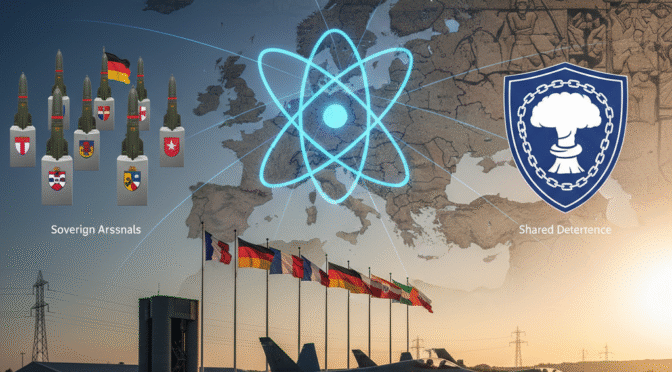
The European security landscape is defined by a complex, multi-layered nuclear deterrent posture designed to preserve peace and deter aggression. This posture is composed of two distinct but complementary elements: the sovereign, independent nuclear arsenals of the United Kingdom and France, and the extended deterrence framework of the North Atlantic Treaty Organization (NATO), which includes the forward-deployment of United States tactical nuclear weapons on the territory of five allied nations. This report provides a comprehensive analysis of these components, detailing the capabilities, doctrines, command structures, and geopolitical alignments of the relevant European states.
The United Kingdom maintains a singular, sea-based deterrent through its policy of Continuous At-Sea Deterrence (CASD). Its four Vanguard-class ballistic missile submarines, armed with U.S.-sourced Trident II D5 missiles, provide a secure second-strike capability. In a significant policy shift reflecting a deteriorating security environment, the UK has reversed a decades-long disarmament trend by announcing an increase to its nuclear warhead stockpile cap. While operationally sovereign, the UK’s deterrent is technologically intertwined with the United States and doctrinally committed to the defense of NATO.
France, in contrast, adheres to a doctrine of staunch strategic autonomy for its Force de dissuasion. Its nuclear dyad, comprising sea-based M51 ballistic missiles and air-launched ASMPA cruise missiles, operates entirely outside of NATO’s integrated military command. Governed by a principle of “strict sufficiency,” France’s arsenal is designed to protect its vital interests, which it has increasingly stated possess a “European dimension.” This has opened a strategic dialogue with European partners who are reassessing their security architecture amid questions about the long-term reliability of the U.S. security guarantee.
The most tangible expression of this guarantee is NATO’s nuclear sharing program. An estimated 100 U.S. B61 tactical gravity bombs are hosted at six air bases in Belgium, Germany, Italy, the Netherlands, and Turkey. While host nations provide dual-capable aircraft and participate in consultations through the Nuclear Planning Group, the United States retains absolute custody and control of the weapons. This arrangement serves not only as a military deterrent but also as a critical tool for alliance cohesion and non-proliferation. The strategic environment has been further complicated by Russia’s forward-deployment of nuclear weapons in Belarus, a direct counter to NATO’s posture, and the return of U.S. nuclear weapons to the United Kingdom, re-establishing a layered deterrent posture in Northern Europe.
Geopolitically, all European nuclear-armed and host nations are firmly aligned with the United States within the NATO framework, with their collective posture oriented against the primary threat posed by the Russian Federation. The relationship with China is more complex, characterized by a dichotomy of economic interdependence and systemic rivalry, but it does not supersede the primary transatlantic security alignment. The central dynamic shaping the future of European security is the burgeoning debate over “strategic autonomy,” driven by concerns over the durability of the U.S. nuclear umbrella. This has prompted an unprecedented discussion about a more independent European deterrent, a development that signals the end of the post-Cold War security order and will define the continent’s strategic trajectory for decades to come.
Part I: Sovereign European Nuclear Arsenals
Two European nations, the United Kingdom and France, possess independent, sovereign nuclear arsenals. As recognized nuclear-weapon states under the Treaty on the Non-Proliferation of Nuclear Weapons (NPT), their forces represent distinct centers of nuclear decision-making on the continent.1 While both contribute to the overall deterrence posture of the North Atlantic Treaty Organization (NATO), they operate under unique national doctrines and command and control structures that reflect different strategic traditions and philosophies.
The United Kingdom’s Continuous At-Sea Deterrent (CASD)
The United Kingdom’s nuclear strategy is defined by the principle of “minimal credible deterrence,” a posture designed to be the smallest and most cost-effective force capable of deterring a major attack by inflicting a level of damage that any potential aggressor would deem unacceptable.3 This doctrine is executed through a singular, sea-based delivery system governed by a policy of “Continuous At-Sea Deterrence” (CASD), an operational imperative known as Operation Relentless.3 This posture ensures that at least one of the Royal Navy’s nuclear-armed ballistic missile submarines (SSBNs) is on patrol, submerged and undetected, at all times. This provides a highly survivable, guaranteed second-strike capability, meaning the UK can retaliate even after absorbing a surprise first strike. The UK is the only one of the five officially recognized nuclear-weapon states to have consolidated its deterrent into a single system, having retired its air-delivered tactical nuclear weapons in 1998.3
A unique feature of the UK’s doctrine is that its nuclear forces are explicitly assigned to the defense of NATO, a commitment dating back to 1962.3 While the ultimate decision to launch remains a sovereign act of the British Prime Minister, this doctrinal integration underscores the UK’s deep commitment to the transatlantic alliance. In line with this, the UK does not adhere to a ‘no-first use’ policy. Instead, it maintains a posture of deliberate ambiguity regarding the precise circumstances under which it would employ its nuclear arsenal, stating only that it would be in “extreme circumstances of self defence, including the defence of NATO allies”.4
The physical manifestation of this deterrent is centered on a fleet of four Vanguard-class SSBNs, which are based at Her Majesty’s Naval Base Clyde in Scotland.1 These submarines are armed with the Trident II D5 submarine-launched ballistic missile (SLBM), a weapon system manufactured in the United States and procured through the deep technological and strategic partnership between the two nations.4 While each submarine is capable of carrying up to sixteen missiles, as a disarmament measure, the number of operational missiles per patrol has been reduced to eight.4 The Trident II D5 missile has an intercontinental range of approximately 12,000 km, allowing it to hold targets at risk from vast, remote patrol areas in the Atlantic Ocean.5
The nuclear warheads atop these missiles are designed and manufactured indigenously by the UK’s Atomic Weapons Establishment.5 As of early 2025, the UK’s total military stockpile is estimated at approximately 225 warheads, with an operational ceiling of 120 available for deployment on the SSBN fleet.1 Each deployed Trident missile can be equipped with up to eight Multiple Independently Targetable Re-entry Vehicles (MIRVs), enabling a single missile to strike multiple targets. However, in practice, the number of warheads loaded per submarine has been reduced from a maximum of 48 to 40 as part of past disarmament commitments.4
The United Kingdom is in the midst of a comprehensive, multi-decade modernization of its nuclear deterrent to ensure its viability well into the mid-21st century. The cornerstone of this effort is the Dreadnought program, which will see the four Vanguard-class submarines replaced by a new class of four Dreadnought-class SSBNs, scheduled to begin entering service in the early 2030s.3 Concurrently, the UK is participating in the U.S.-led service-life extension program for the Trident II D5 missile and is actively developing a new, replacement nuclear warhead to maintain the credibility of the system against evolving adversary defenses.3
This modernization program is occurring alongside a significant shift in the UK’s nuclear posture. The 2021 Integrated Review of Security, Defence, Development and Foreign Policy marked a formal end to the UK’s post-Cold War trajectory of gradual disarmament. Citing a worsening global security environment, the review announced that the UK would no longer pursue a previously stated goal of reducing its stockpile to 180 warheads. Instead, it raised the ceiling on its total warhead stockpile to no more than 260.3 Simultaneously, the government declared it would no longer provide public figures on its operational stockpile of warheads or deployed missiles, reversing a long-standing transparency policy.3 This decision predated Russia’s full-scale invasion of Ukraine but clearly reflected a strategic reassessment of the threat posed by a resurgent Russia and the proliferation of advanced military technologies. In this sense, the UK’s policy reversal can be seen as a strategic bellwether for Europe. It signaled that a major European power, one with deep intelligence and security ties to the United States, had concluded that the era of post-Cold War optimism was over and that a more robust and opaque nuclear posture was necessary. This shift helped legitimize and likely foreshadowed the broader turn toward hard-power security policies and increased defense spending seen across the continent in subsequent years.
The structure of the UK’s deterrent reveals a strategic paradox of interdependent sovereignty. Legally and operationally, the deterrent is entirely sovereign; the British Prime Minister alone holds the authority to authorize a launch, a power symbolized by the “letters of last resort” carried on board each SSBN. This sovereign capability is a cornerstone of the UK’s status as a major global actor.5 However, the deterrent’s technological foundation is deeply dependent on the United States. The Trident II D5 missiles are procured from and maintained with the support of the U.S. Navy under the terms of the Polaris Sales Agreement.5 This deep integration means that while the UK provides NATO with a valuable separate center of decision-making that complicates an adversary’s strategic calculations, the long-term viability of its nuclear force is inextricably linked to the health of the US-UK “Special Relationship” and the broader transatlantic alliance. A severe political rupture with Washington could, over time, jeopardize the very sustainability of the UK’s independent deterrent, a reality that stands in stark contrast to the French model of complete strategic autonomy.
France’s Force de Dissuasion
France’s nuclear doctrine is rooted in the Gaullist tradition of absolute national independence and strategic autonomy.9 The country’s nuclear arsenal, known as the Force de dissuasion (Deterrent Force), was developed in the 1960s to ensure France could defend itself and deter a major-power aggressor without relying on the security guarantees of other nations, particularly the United States.9
The primary purpose of the force is to deter a state-level attack on France’s “vital interests” (intérêts vitaux). This term is deliberately left undefined in public doctrine to create uncertainty in the mind of a potential adversary and thereby enhance the deterrent effect by complicating their risk calculations.10
The French posture is governed by the principle of “strict sufficiency” (stricte suffisance), which dictates that the arsenal should be maintained at the lowest possible level necessary to inflict damage so catastrophic as to be unacceptable to any aggressor, thereby deterring an attack in the first place.12 In sharp contrast to the United Kingdom, France’s nuclear forces are not integrated into NATO’s military command structure. France does not participate in the Alliance’s Nuclear Planning Group, a decision that preserves the absolute and unilateral authority of the French President to order the use of nuclear weapons.10
France currently maintains a nuclear dyad, having dismantled its land-based missile silos at the Plateau d’Albion in 1996.12 The two remaining components are:
The Sea-Based Component (Force Océanique Stratégique – FOST): This is the backbone of the French deterrent, providing a permanent, survivable, and secure second-strike capability. It consists of a fleet of four Triomphant-class SSBNs, which ensures that at least one submarine is on patrol at all times, with a second often able to deploy on short notice.12 These submarines are armed with the domestically developed M51 SLBM. The M51 is a modern, solid-fueled missile with a range reported to be over 9,000 km and is capable of carrying up to six MIRVed warheads.14 This sea-based leg accounts for the vast majority of France’s nuclear firepower, with approximately 83 percent of its warheads assigned to the FOST.15
The Air-Based Component (Forces Aériennes Stratégiques – FAS): This component provides the French President with greater strategic flexibility, including the ability to conduct a single, limited strike known as the ultime avertissement (final warning). This doctrinal concept envisions a carefully calibrated nuclear strike intended to demonstrate resolve and signal the unacceptable cost of continued aggression, thereby restoring deterrence before a full-scale strategic exchange. The delivery platforms are the Dassault Rafale multirole fighter aircraft. The French Air and Space Force operates nuclear-capable Rafale BF3/4 aircraft from land bases, while the French Navy operates a squadron of carrier-based Rafale MF3/4 aircraft from the nuclear-powered aircraft carrier Charles de Gaulle.1 These aircraft are armed with the ASMPA ( Air-Sol Moyenne Portée-Amélioré) medium-range, ramjet-powered supersonic cruise missile. The ASMPA has a range of approximately 600 km and is armed with a 300-kiloton thermonuclear warhead.15
France possesses the world’s fourth-largest nuclear arsenal. Its stockpile has remained remarkably stable for several decades, currently estimated at approximately 290 operational warheads, with no weapons held in reserve.1 This reflects the doctrine of strict sufficiency, which does not require a large arsenal for counterforce targeting but rather a survivable force sufficient for a counter-value (city-targeting) retaliatory strike.
Like the UK, France is engaged in a comprehensive modernization of its deterrent. The M51 SLBM is being progressively upgraded, with the M51.3 variant expected to be operational by 2025.13 A new class of third-generation SSBNs (SNLE 3G) is under development to begin replacing the Triomphant-class in the 2030s.12 The air-based component is also being enhanced, with a program underway to develop a next-generation hypersonic air-launched missile, the ASN4G, to replace the ASMPA.
While fiercely protective of its strategic independence, France has in recent years begun to cautiously evolve its declaratory policy. Successive French presidents have stated that France’s vital interests have a “European dimension”.10 This concept was given more substance in 2020 when President Emmanuel Macron formally invited European partners to engage in a “strategic dialogue” on the role of the French deterrent in their collective security.11 This dialogue is not an offer to share command and control, which remains a sovereign prerogative of the French President. Rather, it is an effort to build a common strategic culture and understanding of the deterrent’s contribution to European stability. This has led to symbolic but significant gestures of cooperation, such as the participation of an Italian air-to-air refueling tanker in a French FAS nuclear exercise.11
This evolution in French policy can be understood as a cautious pivot from a purely national sanctuary to a potential European umbrella. Historically, the Force de dissuasion was conceived solely to guarantee the inviolability of French territory.9 However, the contemporary security environment, marked by a newly aggressive Russia and growing doubts about the long-term reliability of the U.S. security guarantee for Europe, has created a potential strategic vacuum.17 As the European Union’s only sovereign nuclear power, France is uniquely positioned to address this void.9 President Macron’s rhetoric is a calculated and incremental response to this new reality, signaling a willingness to extend the deterrent’s protective logic beyond France’s borders. This is a profound strategic development, but one that faces significant hurdles. France’s categorical refusal to share nuclear decision-making means that any French guarantee would be unilateral. This raises questions of credibility for potential beneficiary states, who may be hesitant to rely on a guarantee over which they have no influence. Nonetheless, this strategic dialogue represents the first, tentative step in a long and complex process of building the political trust that would be necessary for a credible, French-led European deterrent to emerge.
Part II: NATO’s Extended Deterrence and Nuclear Sharing
A cornerstone of the transatlantic alliance’s collective defense is the framework for U.S. nuclear weapons hosted on European soil. This posture, a direct legacy of the Cold War, is the most tangible expression of the U.S. “nuclear umbrella” over Europe. It is designed not only as a military deterrent but also as a critical political instrument for maintaining alliance cohesion and preventing nuclear proliferation among member states.
Framework and Strategic Rationale
Nuclear sharing is a unique arrangement within NATO whereby non-nuclear member states participate directly in the Alliance’s nuclear mission.19 This participation involves two key commitments from the host nations: allowing the United States to store nuclear weapons on their territory and maintaining fleets of national aircraft, known as dual-capable aircraft (DCA), that are certified to deliver these weapons in the event of a conflict.19 The underlying logic of this program is threefold and has remained consistent for decades.21
First and foremost is deterrence. The forward-deployment of U.S. tactical nuclear weapons on the continent is intended to deter aggression, principally from the Russian Federation. It signals to any potential adversary that a major conflict in Europe could cross the nuclear threshold, thereby ensuring the direct and immediate involvement of the United States’ strategic forces. This coupling of European security with American nuclear might is meant to raise the perceived costs of aggression to an unacceptably high level.
Second is alliance cohesion. By sharing the risks, responsibilities, and political burdens of nuclear deterrence, the program binds the alliance together. It provides the non-nuclear host nations with a direct role and a “seat at the table” in the formulation of NATO’s nuclear policy, primarily through their participation in the Nuclear Planning Group (NPG).19 This sense of shared ownership reinforces the principle of collective defense and demonstrates transatlantic unity and resolve.
Third is non-proliferation. Historically, the nuclear sharing program was a critical tool to dissuade key allies, notably West Germany, from pursuing their own indigenous nuclear weapons programs during the Cold War.22 By providing a credible security guarantee and a role within the NATO nuclear framework, the U.S. obviated the need for these states to develop their own arsenals. This function remains relevant today, as the presence of the U.S. nuclear umbrella is seen as a key factor in preventing further nuclear proliferation in Europe.19
The legality of these arrangements under the NPT has been a subject of debate since the treaty’s inception. Articles I and II of the NPT prohibit the transfer of nuclear weapons from nuclear-weapon states to non-nuclear-weapon states.25 NATO and the United States argue that the sharing program is fully compliant with the treaty based on a specific legal interpretation: in peacetime, the U.S. maintains absolute and exclusive custody and control of the weapons. No “transfer” of weapons or control over them occurs. The scenario in which a transfer might take place—a decision to go to war—is considered a circumstance under which the treaty’s peacetime constraints would no longer be controlling.16 While this interpretation was understood and accepted by the Soviet Union during the NPT negotiations, it remains a point of contention for many non-aligned states and disarmament advocates who view the practice as a violation of the spirit, if not the letter, of the treaty.
Host Nations and Forward-Deployed Assets
The sole type of U.S. nuclear weapon currently deployed in Europe under the sharing arrangement is the B61 tactical gravity bomb.1 These weapons are undergoing a comprehensive Life Extension Program to modernize them into the B61-12 variant. This new version is a significant upgrade; it incorporates a new tail kit that provides GPS guidance, dramatically increasing its accuracy and allowing it to be used against a wider range of targets. It also features a variable-yield capability, allowing its explosive power to be dialed down for more limited, tactical strikes or up for greater effect, making it a more flexible and, in the view of some strategists, a more “usable” weapon.28
An estimated 100 of these U.S.-owned B61 bombs are stored in highly secure underground WS3 vaults at six air bases across five NATO host nations.1 The table below provides a consolidated overview of these deployments.
PA-200 Tornado (at Ghedi, being replaced by F-35A)
Netherlands
Volkel
10–15
F-16 Fighting Falcon (replaced by F-35A)
Turkey
Incirlik
20–30
F-16 Fighting Falcon (Note: Turkey removed from F-35 program)
Data compiled from sources 1, and.25
The modernization of the host nations’ DCA fleets is a critical component of maintaining the credibility of the sharing program. Belgium, Germany, Italy, and the Netherlands are all in the process of procuring the nuclear-capable F-35A Lightning II stealth fighter to replace their aging F-16 and Tornado aircraft.27 This transition to a 5th-generation platform significantly enhances the survivability of the delivery mission against modern air defense systems. Turkey’s participation has been complicated by its removal from the F-35 program in 2019 following its purchase of the Russian S-400 air defense system, leaving its future role in the nuclear mission reliant on its existing F-16 fleet.27
Command, Control, and Consultation
The command and control structure for NATO’s shared nuclear weapons is designed to ensure absolute political control and safety. Despite the weapons being hosted on allied territory and designated for delivery by allied aircraft, the United States maintains absolute and unilateral custody and control over them at all times during peacetime.6 The security of the weapons on the ground is handled by U.S. Air Force personnel. Crucially, the Permissive Action Link (PAL) codes, which are sophisticated cryptographic locks required to arm the weapons, remain exclusively in American hands.28 Without these codes, the bombs are inert.
The term “dual-key” is often used to describe the arrangement, but this can be misleading. It does not refer to a physical system where two parties must turn a key simultaneously. Instead, it represents the dual political authority required for any use of the weapons. Any decision to employ a shared nuclear weapon would require explicit authorization from the President of the United States. This presidential authorization would only be given following a collective political decision reached through intense consultation among the allies within NATO’s highest nuclear policy body, the Nuclear Planning Group (NPG).19 In a conflict scenario, following such a dual political decision, U.S. personnel would release the armed weapon to the host nation’s certified DCA crew for the delivery mission.
The NPG is the primary consultative body for all matters concerning NATO’s nuclear policy and posture. All NATO allies are members with the notable exception of France, which has chosen to remain outside this structure to preserve its strategic independence.6 The NPG provides the formal forum where non-nuclear allies, particularly the host nations, can participate in shaping the Alliance’s nuclear strategy, doctrine, and operational planning. It is the institutional heart of the political dimension of nuclear sharing.19
The persistence and modernization of the nuclear sharing program, despite ongoing debates about the military utility of air-delivered gravity bombs against an adversary with sophisticated air defenses like Russia, points to its deeper strategic value.31 While some strategists question whether a non-stealthy aircraft could successfully penetrate Russian airspace to deliver a B61 bomb, the program’s political and symbolic importance to the Alliance is consistently emphasized by NATO officials.19 The program is a prime example of a military posture whose political value is arguably greater than its purely operational utility. The physical presence of U.S. weapons and personnel on European soil serves as the ultimate “tripwire,” a tangible commitment that inextricably links America’s security to that of its European allies. It is this political act of sharing the nuclear burden and risk that binds the alliance, making the program a vital instrument of transatlantic cohesion, irrespective of the evolving military-technological landscape.
Part III: The Broader European Nuclear Landscape
Beyond the sovereign arsenals of the UK and France and the formal NATO nuclear sharing arrangements, several other crucial developments shape the European nuclear environment. These elements, occurring both as a direct counter to and as an evolution of the established NATO posture, are reshaping the strategic calculus and introducing new complexities to deterrence and stability on the continent.
The Russian Counterpart: Nuclear Basing in Belarus
In a significant strategic development that alters the post-Cold War security architecture, the Russian Federation has forward-deployed tactical nuclear weapons onto the territory of its ally, Belarus.2 Moscow has explicitly framed this action as a direct and symmetric response to NATO’s long-standing nuclear sharing arrangements, arguing that it is merely mirroring a practice the West has engaged in for decades.2 This move, however, carries profound strategic implications that extend far beyond simple reciprocity.
Geographically, placing nuclear assets in Belarus moves them significantly closer to NATO’s eastern flank. This positioning drastically reduces warning times for potential targets and holds key political centers, military bases, and critical infrastructure in Poland, the Baltic States, and even eastern Germany at greater risk. The deployment provides Russia with additional, more flexible options for nuclear signaling or limited use in a regional conflict. It complicates NATO’s defense planning and escalation management by creating new attack vectors and forcing the Alliance to account for nuclear threats originating from outside Russian sovereign territory.
Furthermore, the deployment serves as a powerful tool of political subjugation. It effectively cements Belarus’s status as a military client state of Russia, stripping Minsk of any remaining strategic autonomy and transforming its territory into a forward operating base for Russian power projection. This move is not merely a tactical repositioning of military assets; it is a deliberate political act designed to dismantle a key pillar of the post-Cold War European security order. Following the collapse of the Soviet Union, the 1991 Presidential Nuclear Initiatives led to a mutual, albeit informal, withdrawal of thousands of tactical nuclear weapons from forward deployments by both the United States and Russia. Former Soviet republics like Ukraine, Kazakhstan, and Belarus voluntarily returned their inherited nuclear weapons to Russia, establishing a de facto norm against the stationing of Russian nuclear weapons outside its own borders.2 The deployment to Belarus shatters this three-decade-old norm, signaling Russia’s definitive rejection of past arms control conventions and its intent to pursue a more confrontational, nuclear-backed coercive diplomacy against NATO.
A Special Case: U.S. Nuclear Weapons in the United Kingdom
The nuclear landscape in Europe is further layered by the unique situation in the United Kingdom. After being withdrawn in 2008, marking the end of a 50-year presence, U.S. nuclear weapons are confirmed to be returning to the Royal Air Force (RAF) base at Lakenheath.5 It is anticipated that these weapons will be the modernized B61-12 gravity bombs, intended for delivery by U.S. Air Force F-35A aircraft stationed at the base.20
This deployment is strategically distinct from the NATO nuclear sharing program. The UK is a sovereign nuclear-weapon state in its own right. The weapons at Lakenheath will be stored, maintained, and, if ever used, delivered by U.S. forces, not by RAF pilots.5 This arrangement does not involve the “sharing” of nuclear burdens with a non-nuclear host but rather the forward-basing of U.S. assets on the territory of a nuclear-armed ally.
The rationale for this move is multifaceted. Operationally, it provides the U.S. and NATO with an additional, highly secure forward-basing location in Northern Europe. This increases the survivability of the tactical nuclear force by dispersing the assets and enhances operational flexibility. Politically, the move is a powerful reaffirmation of the unique US-UK “Special Relationship” in defense and security matters. It creates a multi-layered nuclear deterrent posture on British soil, combining the UK’s sovereign sea-based deterrent with hosted U.S. air-delivered assets. Most importantly, the return of U.S. nuclear weapons to a location from which they were previously removed sends an unambiguous signal to Moscow. It demonstrates a heightened threat perception and a renewed, long-term commitment to nuclear deterrence in Europe in response to Russian aggression.
This development signifies a full-circle return to a more robust and complex deterrence architecture reminiscent of the Cold War. During that era, the UK hosted a vast array of U.S. nuclear systems, including gravity bombs, missiles, and artillery, in addition to its own sovereign force, creating a dense, “layered” deterrent posture.5 The post-Cold War period saw a dramatic consolidation and reduction of this presence, culminating in the 2008 withdrawal.25 The decision to return U.S. weapons to Lakenheath, coupled with the UK’s own arsenal modernization and its recent decision to acquire F-35As to contribute to the NATO nuclear mission, effectively re-establishes this layered model.3 This suggests that strategic planners in Washington and London have concluded that a single deterrent system is no longer sufficient to address the current threat environment. The new posture aims to maximize complexity for Russian military planners by creating multiple, redundant, and geographically dispersed nuclear options under different command structures (USAFE and UK sovereign), thereby strengthening the overall credibility and resilience of NATO’s deterrent posture.
Part IV: Geopolitical Alignment and Strategic Imperatives
The technical details and operational doctrines of Europe’s nuclear forces are underpinned by a clear and deeply entrenched geopolitical alignment. This section synthesizes the preceding analysis into a broader assessment of the strategic posture of European nuclear actors, the overarching purpose of their capabilities, and the emerging dynamics that will shape the future of deterrence on the continent.
Unaltered Alignment within the Transatlantic Alliance
The geopolitical posture of all European nations possessing or hosting nuclear weapons—the United Kingdom, France, Belgium, Germany, Italy, the Netherlands, and Turkey—is fundamentally and unequivocally aligned with the United States through their membership in the North Atlantic Treaty Organization (NATO).24 This alliance forms the bedrock of their national security policies. Their collective defense posture, including its nuclear dimension, is explicitly oriented against the primary perceived military and existential threat from the Russian Federation.
Russia’s full-scale invasion of Ukraine in 2022 served as a powerful and clarifying event, forcing a hard realignment of European security policy and dispelling any lingering post-Cold War illusions about a potential partnership with Moscow. The war effectively terminated decades of policies predicated on economic engagement, such as Germany’s Ostpolitik (Eastern Policy) and the concept of Wandel durch Handel (change through trade), which posited that economic interdependence would lead to political moderation.34 Across the continent, from Rome to Brussels, national governments subordinated economic interests to the overriding imperative of collective defense against Russian aggression.37
Even France, which maintains a posture of strategic independence from NATO’s integrated military command, remains a core political member of the Alliance. Its independent deterrent is widely understood, both in Paris and within NATO, to contribute significantly to the overall security of the Alliance. By creating a second, sovereign center of nuclear decision-making, France complicates the strategic calculations of any potential adversary, thereby strengthening NATO’s overall deterrent effect.6
Navigating the China Challenge
The relationship of these European nations with the People’s Republic of China is significantly more nuanced and complex. For all European capitals, China represents a multifaceted challenge, simultaneously acting as a vital economic partner, a formidable technological competitor, and a systemic rival that promotes an alternative vision of global governance that challenges the Western-led, rules-based international order.35
This has led to the adoption of a strategy broadly defined as “de-risking, not decoupling”.40 This approach seeks to reduce critical strategic dependencies on Chinese supply chains—particularly in sensitive areas like rare earth minerals, semiconductors, and pharmaceuticals—without completely severing the deep economic ties that are vital to European prosperity.41 This creates a persistent tension within European policymaking, as governments attempt to balance pressing economic interests against long-term security concerns.
However, despite these deep economic entanglements, the primary security alignment of European nations remains firmly with the United States. In the face of a direct military threat, there is no ambiguity. European nations are increasingly coordinating with Washington on strategic challenges posed by China, including through increased naval presence in the Indo-Pacific and stricter controls on technology transfers. Nevertheless, this relationship lacks the formal, treaty-based collective defense obligation that defines their posture towards Russia. In the strategic hierarchy of European capitals, China is a long-term, systemic challenge; Russia is a direct and present existential threat.
Strategic Implications and Future Trajectories
The core strategic purpose of Europe’s multifaceted nuclear posture remains threefold. First is deterrence: to prevent a major conventional or nuclear attack by the Russian Federation by ensuring the costs of such aggression would be unacceptably high. Second is reassurance: to assure non-nuclear NATO allies that they are protected under a credible nuclear umbrella, thereby obviating any incentive for them to develop their own nuclear weapons and preventing proliferation on the continent. Third is political solidarity: to serve as the ultimate symbol of the transatlantic security bond, demonstrating that an attack on one member is an attack on all.
The central dynamic shaping the future of European nuclear policy is a growing crisis of confidence in the long-term reliability and durability of the U.S. security guarantee.16 This uncertainty is driven by a perception of a long-term U.S. strategic pivot towards Asia to counter China, as well as by concerns about American political volatility and the potential for a future administration to adopt a more isolationist or transactional foreign policy.17
This crisis of confidence has ignited an unprecedented and increasingly mainstream debate across Europe about the need for greater “strategic autonomy” and the potential development of a more independent European nuclear deterrent.7 This discussion, once confined to academic circles, is now being publicly broached by senior political leaders. Proposals range from the more plausible, such as extending the existing French and/or British deterrents to formally cover other allies, to more radical and complex ideas of a “Eurobomb” with shared financing, command, and control.23 Key nations like Germany and Poland, which have historically been the primary beneficiaries of and strongest advocates for the U.S. nuclear umbrella, are now openly engaging in strategic dialogues with France about these very options.10 This emerging debate confronts Europe with a fundamental strategic trilemma: accept a future of potential vulnerability under a possibly wavering U.S. guarantee; pursue a collective European deterrent that would require an unprecedented ceding of national sovereignty over matters of ultimate survival; or risk a future of uncontrolled national proliferation as individual states seek their own security solutions.42
These developments collectively signal the definitive end of the post-Cold War interregnum. For three decades following the fall of the Berlin Wall, the European security order was predicated on a set of assumptions: the unchallenged military and political supremacy of the U.S./NATO alliance, the relative weakness and integration of Russia, and the primacy of economic interdependence as a guarantor of peace. Nuclear weapons were often viewed as a legacy issue, their relevance fading in a new era of cooperation. Russia’s revanchist war in Ukraine, China’s rise as a systemic rival, and a perception of U.S. strategic retrenchment have shattered all three of these foundational pillars. As a result, nuclear deterrence has returned to the forefront of European strategic thought for the first time in a generation.7 Europe is at the end of a historical interregnum and is being forced to fundamentally re-architect its security framework. The current nuclear posture is a product of the Cold War. The ongoing debates about extending the French deterrent, the return of U.S. nuclear weapons to the UK, and Russia’s forward-deployment in Belarus are not isolated events but symptoms of a system in profound flux. The key strategic question for the next decade is whether the existing transatlantic framework will be reinforced and adapted, or if it will be supplemented—or even partially replaced—by a new, more distinctly European nuclear deterrent structure. The outcome of this debate will define the continent’s security landscape for the 21st century.
Summary of European Nuclear Deployments
Table 1: Sovereign European Nuclear Arsenals
This table details the nuclear arsenals under the independent, sovereign control of European nations.
Country
Estimated Total Warheads
Primary Locations / Delivery Systems
United Kingdom
~225 1
Sea-based: Four Vanguard-class ballistic missile submarines operating from HMNB Clyde, Scotland, armed with Trident II D5 missiles.5
France
~290 2
Sea-based: Four Triomphant-class ballistic missile submarines armed with M51 missiles.12
Air-based: Rafale fighter aircraft (land and carrier-based) armed with ASMPA cruise missiles.12
Table 2: U.S. Forward-Deployed Nuclear Weapons in Europe
This table details the U.S.-owned B61 tactical nuclear bombs deployed in Europe under NATO’s nuclear sharing program and other bilateral agreements. The U.S. retains absolute custody and control of these weapons.6
Host Nation
Air Base(s)
Estimated U.S. B61 Warheads
Belgium
Kleine Brogel 1
10–15 20
Germany
Büchel 1
10–15 20
Italy
Aviano & Ghedi 1
30–45 20
Netherlands
Volkel 1
10–15 20
Turkey
Incirlik 1
20–30 20
United Kingdom*
RAF Lakenheath 5
25–30 20
*Note: The deployment to the UK is distinct from the NATO nuclear sharing program. The weapons are for delivery by U.S. forces stationed at the base, not RAF pilots.5
Table 3: Combined Summary of All Nuclear Weapons in Europe
This table provides a consolidated overview of all known nuclear weapons physically located in Europe, combining sovereign arsenals and U.S. forward-deployed assets.
The nuclear posture in Europe is a complex tapestry woven from sovereign capabilities, alliance commitments, and a shared perception of threat. It is not a monolithic entity but a dynamic, multi-layered system with distinct centers of command and diverse strategic logics. The independent arsenals of the United Kingdom and France provide two sovereign pillars of deterrence. The UK’s sea-based force is technologically linked to the United States and doctrinally integrated with NATO, while France’s dyad stands as a testament to the enduring Gaullist ideal of strategic autonomy. Complementing these is the NATO nuclear sharing arrangement, a Cold War legacy that remains a potent symbol of transatlantic cohesion and the ultimate guarantee of the U.S. commitment to European security.
All European nations involved in this nuclear architecture—whether as sovereign powers or as hosts for U.S. weapons—are firmly aligned within the transatlantic security framework. Their collective deterrent is unambiguously aimed at countering the primary threat posed by the Russian Federation, a reality that has been starkly reinforced by the war in Ukraine. While navigating a complex economic relationship with China, their fundamental security orientation remains fixed on the Euro-Atlantic area.
However, this long-standing architecture is now facing its most significant challenge since the end of the Cold War. A crisis of confidence in the long-term reliability of the U.S. nuclear umbrella has forced European nations to confront uncomfortable questions about their own security. The resulting debate on strategic autonomy and the potential for a more independent European deterrent marks a pivotal moment. The decisions made in the coming years in Paris, London, Berlin, and Warsaw will determine whether the continent reinforces its reliance on the transatlantic partnership or begins to forge a new, more autonomous path. The nuclear landscape in Europe, stable for decades, has entered a period of profound and consequential transformation.
If you find this post useful, please share the link on Facebook, with your friends, etc. Your support is much appreciated and if you have any feedback, please email me at in**@*********ps.com. Please note that for links to other websites, we are only paid if there is an affiliate program such as Avantlink, Impact, Amazon and eBay and only if you purchase something. If you’d like to directly contribute towards our continued reporting, please visit our funding page.
The character of modern warfare is undergoing a fundamental transformation, driven by the rapid proliferation and operationalization of unmanned aerial systems (UAS), particularly in the form of autonomous swarms. This report provides a comprehensive analysis of the strategic, doctrinal, and technological approaches to drone swarm warfare being pursued by the United States, the People’s Republic of China, the Russian Federation, and Ukraine. The analysis reveals a strategic divergence in development and employment philosophies. The United States and its allies are pursuing a technologically-driven approach, developing high-cost, deeply integrated “quality” swarms designed to function as collaborative extensions of exquisite manned platforms, emphasizing human-on-the-loop control. In contrast, observations from the Russo-Ukrainian War and analysis of Chinese military doctrine point toward a strategy centered on “quantity”—the mass employment of low-cost, attritable, and rapidly iterated drones to achieve victory through saturation and an advantageous cost-exchange ratio.
The conflict in Ukraine serves as a crucible for these concepts, demonstrating the devastating effectiveness of both bottom-up, adaptive swarm tactics and sophisticated, top-down combined-arms saturation attacks. It has exposed the critical importance of the electromagnetic spectrum as the primary battleground for swarm conflict and has accelerated a relentless cycle of innovation in both drone capabilities and counter-UAS (C-UAS) measures. China’s doctrine of “intelligentized warfare” represents the most structured pursuit of this new paradigm, viewing autonomous swarms not as a support tool but as the decisive element of future conflict.
This report concludes that the rise of the drone swarm erodes the concept of the rear-area sanctuary, democratizes precision strike capabilities, and forces a re-evaluation of traditional military force structures and procurement models. The future security landscape will likely be defined by a bifurcation of military power: a high-tech competition in fully autonomous swarm warfare among major powers, and a proliferation of low-cost, attritable swarm capabilities among smaller states and non-state actors, each presenting distinct and formidable challenges.
Section 1: The Anatomy of a Swarm: Foundational Concepts and Technologies
To comprehend the strategic implications of drone swarms, it is essential to first dissect their foundational technical and conceptual underpinnings. A swarm is not merely a multitude of drones; it is a complex, cohesive entity defined by its internal communication, collective intelligence, and degree of autonomy. This section establishes the core principles that differentiate a true swarm from a simple multi-drone formation.
1.1 Defining the Swarm: From Multi-Drone Operations to Collective Intelligence
A drone swarm is a system of interconnected agents that exhibit collective, emergent behavior through autonomous coordination.1 The U.S. Government Accountability Office (GAO) formally defines a swarm as a coordinated system of at least three drones capable of performing missions with minimal human oversight.3 This stands in stark contrast to “multiple drone operation,” a distinct concept where several drones fly independent, predefined routes under the management of a single operator, without the inter-agent communication and collaboration that defines a swarm.2
The principle animating this collective behavior is “swarm intelligence,” which posits that a group of simple agents, each following a basic set of rules, can collectively perform complex tasks and exhibit intelligence beyond the capabilities of any single member.5 This concept, inspired by the emergent behavior of natural systems like ant colonies, schools of fish, and flocks of birds, holds that the whole is greater than the sum of its parts.5 This emergent behavior is typically governed by three fundamental rules, first modeled by Craig Reynolds, which are applied to each individual drone in relation to its neighbors:
Separation: Maintain a minimum distance to avoid collisions.6
Alignment: Adjust heading to match the average direction of nearby drones.6
Cohesion: Move toward the average position of the group to maintain unity.5
These simple, localized interactions generate sophisticated, coordinated global behavior without requiring a central leader or controller. Despite the clear military significance of this technology, the U.S. Department of Defense (DOD) currently lacks a standardized joint definition for “swarm” in its doctrinal lexicon. This omission hinders the development of a common operational picture, impedes acquisition efficiency, and complicates interoperability among allied forces.9 The urgent need for a formal definition is underscored by rapid adversarial advancements and the DOD’s own strategic initiatives, such as Replicator, which are centered on deploying autonomous systems at scale.9
1.2 Command, Control, and Communication (C3): The Swarm’s Nervous System
The command, control, and communication (C3) architecture forms the nervous system of a swarm, dictating how it processes information and coordinates action. These architectures exist on a spectrum between two principal models, the choice of which carries profound strategic implications.
The first model is centralized control, where a single ground control station (GCS) or a designated “leader” drone serves as the central brain, processing all sensor data and issuing specific commands to each “follower” drone in the swarm.2 While this leader-follower structure is simpler to design and implement, it is inherently “brittle.” The central node represents a critical single point of failure; its neutralization through kinetic attack or electronic warfare can cause the catastrophic collapse of the entire swarm’s operational capability.6
The second, more advanced model is decentralized (or distributed) control. In this paradigm, each drone is an autonomous agent equipped with its own processing capabilities. They share information across the network, collaboratively build a shared understanding of the environment, and make collective decisions based on local data and overarching mission objectives.2 This architecture is fundamentally more “resilient.” The loss of one or even several drones does not compromise the mission, as the remaining agents can adapt and continue to operate, exhibiting the “self-healing” properties demonstrated in early U.S. tests.1 A nation’s capacity to field these truly resilient swarms is therefore a direct function of its software prowess in artificial intelligence and edge computing, not merely its drone manufacturing output.
This resilience is enabled by a wireless mesh network topology, where each drone functions as a communication node, relaying data for the entire network.13 This creates redundant communication paths and allows the network to dynamically reconfigure around damaged or jammed nodes.13 However, maintaining these links in a contested electromagnetic environment is the single greatest challenge in swarm warfare. Protocols such as MQTT and UDP are used to ensure the low-latency data exchange essential for real-time coordination, but adversaries will aggressively target these links with jamming, spoofing, and cyber-attacks.15
Consequently, the development of robust anti-jamming (AJ) and resilient communication techniques is a primary focus of military research. This has spurred significant investment in countermeasures that move beyond traditional frequency hopping (FHSS).19 Advanced methods include:
Directional Communications: Using smart, beam-steering antennas to create narrow, focused data links that are difficult for an enemy to detect and disrupt, while simultaneously creating “nulls” in the direction of jamming sources.18
Optical Communication: Employing laser-based systems for inter-drone communication, which are inherently resistant to radio frequency (RF) jamming and interception due to their high bandwidth and narrow, directional beams.23
AI-Driven Spectrum Management: Using reinforcement learning algorithms to enable the swarm to autonomously sense the electromagnetic environment, identify jammed frequencies, and dynamically switch channels or reroute data to maintain connectivity.20
This intense focus on communications reveals that the primary battleground for swarm warfare will be the electromagnetic spectrum. A swarm whose C3 links are severed is no longer a cohesive weapon but a collection of isolated, ineffective drones. The decisive action in a future swarm engagement may not be a kinetic dogfight, but a battle of electronic warfare to control the network itself.
1.3 The Engine of Autonomy: Swarm Intelligence and AI
The behavior of a swarm is orchestrated by a sophisticated suite of algorithms that govern everything from basic flight to complex tactical decision-making.25 These include algorithms for path planning, obstacle avoidance, task allocation, and maintaining specific geometric formations (e.g., line, grid, V-shape) optimized for different missions like search or attack.1
Central to decentralized operation are consensus algorithms, such as Raft, which are drawn from the field of distributed computing.15 These protocols allow all drones in the swarm to agree on a single, consistent state—such as the location of a newly detected threat or the position of a friendly unit—without a central authority. This capability is critical for maintaining coherence and enabling autonomous operation in environments where GPS or communication with a ground station may be denied.28
Artificial intelligence (AI) and machine learning (ML) are the key technologies that elevate a swarm from a pre-programmed formation to a truly adaptive and intelligent system.4 Deep Reinforcement Learning (DRL), for example, allows drones to learn optimal behaviors through trial-and-error interaction with a simulated or real environment, enabling them to devise novel tactics for complex, unpredictable scenarios without explicit programming.2
In modern military concepts, particularly in the U.S., the ultimate goal is not full autonomy but effective human-machine teaming. In this model, AI handles the computationally intensive tasks—processing vast sensor datasets, optimizing flight paths for hundreds of drones, and identifying potential targets—while a human operator provides high-level commander’s intent, sets mission objectives, and defines the rules of engagement.5 This synergistic structure leverages the speed and data-processing power of AI while retaining the contextual understanding and ethical judgment of a human commander.
Section 2: The Vanguard of Autonomy: United States Swarm Doctrine and Programs
The United States military’s approach to swarm warfare is characterized by a top-down, technology-centric strategy, driven by well-funded, long-term research and development programs. The overarching goal is to create highly capable, “exquisite” swarms that are deeply integrated with existing force structures and function as autonomous extensions of the human warfighter, enhancing the lethality and survivability of high-value platforms.
2.1 Department of Defense Strategic Framework
The Department of Defense’s official strategy for countering unmanned systems explicitly acknowledges that future adversaries will employ networked, autonomous swarms and that U.S. forces must be prepared for “stressing cases,” such as attacks involving large numbers of increasingly capable systems.31 The U.S. response is twofold: developing its own offensive swarm capabilities while simultaneously fielding a robust, multi-layered defense.
A cornerstone of this strategy is the Replicator Initiative, announced in 2023. This program aims to field thousands of small, attritable, autonomous systems across multiple domains by August 2025, with the explicit goal of countering the numerical mass of potential adversaries, particularly the People’s Republic of China.9 This initiative represents a significant acknowledgment at the highest levels of the Pentagon that technological superiority alone may be insufficient and must be complemented by scalable mass.
On the defensive side, the DOD’s counter-UAS (C-UAS) strategy emphasizes that drone defense is the responsibility of the entire Joint Force, not just specialized air defense units.33 It calls for a layered defense integrating both active systems (interceptors, directed energy) and passive measures (camouflage, hardening), with significant investment in emerging technologies like high-power microwaves (HPM) deemed essential for defeating swarm attacks.33
2.2 The DARPA Engine: Pioneering Swarm Concepts
The Defense Advanced Research Projects Agency (DARPA) has been the primary engine for innovation in U.S. swarm technology, laying the conceptual and technological groundwork that service-level programs now build upon.
The seminal program was the OFFensive Swarm-Enabled Tactics (OFFSET) initiative, which ran from 2017 to 2021.30 OFFSET’s vision was to enable small infantry units to command heterogeneous swarms of up to 250 air and ground robots in complex urban environments.30 The program’s key technological thrusts were not just the drones themselves, but the human-swarm interface. It pioneered the use of immersive technologies like virtual and augmented reality (VR/AR), as well as voice and gesture controls, to allow a single operator to manage a large swarm by communicating high-level intent rather than micromanaging individual drones.30 By creating a virtual “wargaming” environment and an open systems architecture, OFFSET fostered a community of developers to rapidly create and test new swarm tactics, proving the feasibility of the human-swarm teaming model.35
Other foundational DARPA efforts validated key enabling capabilities. The Perdix program famously demonstrated the launch of 103 micro-drones from canisters ejected by F/A-18 fighter jets. The drones then autonomously formed a swarm, demonstrating collective decision-making and “self-healing” behaviors when individual units failed.1 The Gremlins program explored the more complex concept of launching and recovering drone swarms in mid-air from a mothership aircraft, tackling the challenge of reusable swarm assets.9
2.3 Service-Specific Applications and Platforms
Building on DARPA’s research, each U.S. military service is developing swarm capabilities tailored to its unique operational domains and doctrinal concepts.
U.S. Air Force: Collaborative Munitions and Autonomous Wingmen
The Air Force is focused on integrating swarming and autonomy into its air superiority and strike missions. The Golden Horde program, one of the service’s priority Vanguard initiatives, seeks to network munitions together into a collaborative swarm.38 By modifying weapons like the GBU-39 Small Diameter Bomb (SDB) and the ADM-160 Miniature Air-Launched Decoy (MALD) with a collaborative autonomy payload, the program enables them to communicate with each other after launch.39 This allows the swarm of weapons to share sensor data, autonomously re-allocate targets based on battlefield developments (e.g., a higher-priority target appearing), and cooperatively defeat enemy defenses without real-time input from the launch aircraft.40
On a larger scale, the Collaborative Combat Aircraft (CCA) program is developing attritable, autonomous drones designed to operate as robotic wingmen for manned fighters like the F-22 and F-35.41 While a single CCA is not a swarm, Air Force doctrine envisions these platforms operating in teams and potentially swarms, extending the sensor and weapons reach of manned formations and absorbing risk in highly contested airspace.41 This deep integration of autonomy is forcing the service’s doctrinal thinkers in the Air Force Doctrine 2035 (AFD35) initiative to fundamentally reassess core concepts of air superiority and airspace control in an era of “proliferated autonomous drones”.42
U.S. Navy & Marine Corps: Distributed Lethality and Expeditionary Warfare
For the maritime services, swarms offer a means to distribute offensive and defensive capabilities across the fleet. Early work by the Office of Naval Research (ONR) in the LOCUST (Low-Cost UAV Swarming Technology) program demonstrated the ability to rapidly launch swarms of tube-launched drones, like the Coyote, from ships to overwhelm adversary defenses.43 More recently, the Silent Swarm exercise has shifted focus to using swarms of air and surface drones for non-kinetic effects, such as distributed electronic warfare (EW) and deception, to control the electromagnetic spectrum and create tactical advantages for the fleet.45
The U.S. Marine Corps views swarming drones as a “critical” enabler for its Expeditionary Advanced Base Operations (EABO) doctrine.46 EABO envisions small, mobile, and low-signature Marine units operating from austere, temporary bases within an adversary’s weapons engagement zone. Air-launched swarms, designated Long-Range Attack Munitions (LRAMs), launched from platforms like MV-22 Ospreys or F-35Bs, would provide these dispersed units with organic, long-range intelligence, surveillance, and reconnaissance (ISR), electronic warfare, and precision strike capabilities, dramatically increasing their lethality and survivability.46
U.S. Army: Swarms for the Combined Arms Fight
The U.S. Army is exploring swarm applications to enhance its ground combat operations. The annual Project Convergence experiment serves as a primary venue for testing how swarms can act as a “bridge across domains,” linking ground-based sensors to air- and sea-based shooters, coordinating EW effects, and accelerating the joint kill chain.48 The Army is also investigating practical applications for sustainment operations, such as using autonomous drone swarms to provide a persistent ISR “bubble” for convoy security and to monitor the perimeters of large support areas, compensating for personnel shortfalls and providing early warning of threats.37 The Army’s draft UAS strategy reflects this broader shift, emphasizing the need for autonomous systems that can understand and execute a commander’s intent rather than requiring continuous, hands-on piloting.50
A consistent theme across all U.S. development is the doctrinal insistence on maintaining a “human on the loop” for lethal decision-making.51 While ethically and legally crucial, this framework introduces a potential “decision-speed mismatch.” A U.S. swarm that must await human authorization for each engagement could be tactically outpaced by a fully autonomous adversary swarm capable of executing the entire kill chain at machine speed. This places U.S. doctrine in a difficult position, balancing the imperative for ethical control against the demands of tactical effectiveness in a future, high-speed conflict.
Section 3: The Dragon’s Swarm: China’s Doctrine of “Intelligentized Warfare”
The People’s Liberation Army (PLA) is pursuing a comprehensive, state-directed strategy for swarm warfare that is deeply integrated into its national military modernization goals. Unlike the U.S. model, which often treats swarms as a supporting capability, China’s emerging doctrine of “intelligentized warfare” positions autonomous systems and swarm intelligence as a central, and potentially decisive, feature of future conflict. This approach leverages a whole-of-nation effort, including a robust civil-military fusion strategy, to achieve both technological superiority and overwhelming mass.
3.1 From Informatization to Intelligentization: A New Theory of Victory
The PLA’s modernization framework has progressed through three distinct, overlapping phases: first Mechanization, then Informatization (信息化), and now Intelligentization (智能化).52 “Intelligentized warfare” is the PLA’s conceptual answer to future conflict, a theory of victory predicated on the pervasive use of artificial intelligence, big data, and autonomous systems to gain and maintain a decisive advantage on the battlefield.53
Within this doctrine, the PLA outlines a clear technological and conceptual progression for the employment of unmanned systems 56:
Fleet Operations: The initial stage, analogous to mechanization, where combat power is generated by the sheer quantity of drones operating with limited coordination.
Group Operations: The informatized stage, where drones are networked under a unified command structure and operate as a single, cohesive group to achieve a common task.
Swarm Operations: The ultimate, intelligentized stage, characterized by a group of autonomous, networked UAVs that are decentralized, self-organizing, and exhibit emergent group intelligence. PLA strategists believe this capability will “subvert traditional warfare concepts” through autonomous self-adaptation, self-coordination, and self-decision making.56
PLA research on human-machine collaboration (人机协同) mirrors this progression, envisioning a future where human input is reduced to high-level command, such as launch and recovery, while the swarm itself handles complex coordination and execution autonomously.58 This doctrinal embrace of full autonomy aims to create a military that can leapfrog traditional Western advantages in areas like manned air superiority by shifting the paradigm of conflict to one of intelligent mass and machine-speed decision-making.
3.2 Key Platforms and Industrial Actors
China’s rapid progress in swarm technology is fueled by its national strategy of Civil-Military Fusion (军民融合), which systematically breaks down barriers between the defense and commercial technology sectors.59 This allows the PLA to rapidly identify and militarize cutting-edge commercial innovations. A prime example is the containerized mass launch-and-recovery system developed by DAMODA, a company specializing in drone light shows. This system, capable of deploying thousands of quadcopters with the push of a button, has obvious and direct military applications for launching saturation attacks.61 This fusion creates an unpredictable innovation cycle, presenting a significant challenge for Western intelligence, which must now monitor a vast commercial ecosystem for breakthrough technologies that could be weaponized with little warning.
Key industrial players in China’s swarm ecosystem include:
State-Owned Defense Giants:
China Electronics Technology Group Corporation (CETC): A leader in military swarm R&D, CETC has conducted multiple record-breaking tests with fixed-wing drone swarms of up to 200 units.62 It has also demonstrated mature, truck-mounted, 48-tube launchers for deploying swarms of loitering munitions.64
AVIC and CAAA: These corporations produce the widely exported Wing Loong and Caihong (CH) series of combat drones, which serve as foundational platforms for more advanced capabilities.65
Private and Dual-Use Companies:
Ziyan: This company develops and markets advanced unmanned helicopter drones, such as the Blowfish A3. These platforms are explicitly advertised with the capability to form intelligent swarms of up to 10 units for coordinated strikes, carrying mixed payloads including machine guns, grenade launchers, and mortars.67
The “Mothership” Concept: China is actively developing large unmanned “mothership” aircraft, such as the 10-ton Jiu Tian. These platforms are designed to carry and deploy swarms of smaller drones deep into contested airspace, dramatically extending their operational range and providing a survivable launch mechanism far from enemy defenses.32
3.3 Strategic Application: The Taiwan Scenario
Analysis of PLA doctrinal writings and technical papers reveals a central organizing principle for its swarm development: solving the immense military challenge of a potential invasion of Taiwan.72 In this context, the PLA envisions using swarms to execute several critical missions:
Suppression of Enemy Air Defenses (SEAD): The PLA plans to use massed swarms of “suicide drones” and decoys to saturate and overwhelm Taiwan’s sophisticated, but numerically limited, air defense network.75 This could involve using large numbers of converted legacy fighter jets, like the J-6, as large, fast decoys or crude cruise missiles to absorb interceptors ahead of more advanced strikes.75
Amphibious Assault Support: PLA simulations and exercises depict a phased attack where drone swarms first neutralize enemy radar and command centers, followed by saturation strikes from anti-ship missiles to isolate the island, and finally, precision strikes from loitering munitions to support landing forces.70
Anti-Access/Area Denial (A2/AD): In a broader conflict, the PLA would likely deploy swarms from land, air, and sea-based platforms to conduct anti-ship missions, targeting U.S. and allied naval forces attempting to intervene.73
3.4 Global Proliferation and Export Strategy
China has leveraged its massive industrial base to become the world’s leading exporter of combat drones, selling systems like the Wing Loong and CH-4 to at least 17 countries, many of which are denied access to comparable Western technology.65 This success is driven by a combination of significantly lower costs, “good enough” capabilities that meet the needs of many regional powers, flexible financing, and fewer end-use restrictions.65
This export strategy extends to counter-swarm systems as well. Norinco is actively marketing its “Bullet Curtain” system, a 35mm cannon designed specifically to defeat swarm attacks by firing airburst munitions that create a dense cloud of sub-projectiles.53 By exporting both swarm and counter-swarm technologies, China is positioning itself as an indispensable defense partner for a growing number of nations and shaping the global landscape of unmanned warfare.
Section 4: The Crucible of Combat: Lessons from the Russo-Ukrainian War
The Russo-Ukrainian War has become the world’s foremost laboratory for drone warfare, providing an unprecedented volume of real-world data on the employment, limitations, and rapid evolution of unmanned systems. The conflict serves as a practical crucible, testing theoretical concepts and forcing a relentless pace of innovation from both sides. It demonstrates a clear bifurcation in approach: Ukraine’s bottom-up, asymmetric strategy versus Russia’s top-down, increasingly sophisticated use of massed drone attacks.
4.1 Ukraine’s “Drone Wall”: Asymmetric Innovation at Scale
Facing a numerically and technologically superior adversary, Ukraine has embraced a strategy of asymmetric warfare heavily reliant on drones. This effort is characterized by rapid, decentralized, and battlefield-driven innovation, fueled by a unique ecosystem of state funding, extensive volunteer networks, and direct feedback from frontline units.78 This has enabled the domestic production and deployment of millions of First-Person View (FPV) drones.78
This mass deployment has given rise to the “Drone Wall” or “Drone Line” concept—a defensive strategy designed to compensate for critical shortages in conventional artillery and trained infantry.79 This doctrine envisions a 10-15 kilometer-deep “kill zone” along the front, saturated with a layered network of FPV strike drones, reconnaissance drones, interceptors, and electronic warfare systems. The objective is to attrit any and all Russian activity, preventing enemy forces from massing for assaults and effectively holding the line with technology rather than manpower.78
While often not constituting a true “intelligent swarm” with full autonomy, Ukrainian FPV operators employ sophisticated coordinated tactics. Using “wolfpack” or sequential attacks, multiple drones are directed at a single high-value target, such as a tank. The first drone might be used to disable the tank’s protective “cope cage” armor or its electronic warfare jammer, creating a vulnerability for subsequent drones to exploit with a direct, disabling hit.81 This tactical coordination has made FPV drones the primary source of Russian casualties on the battlefield.78
This innovative spirit extends to the maritime domain. Ukraine has used swarms of MAGURA V5 unmanned surface vessels (USVs) to inflict devastating losses on the Russian Black Sea Fleet. These attacks typically involve packs of 6-10 USVs approaching a target warship from multiple axes in sequential waves.82 The primary tactic is to achieve a single successful impact, which slows or disables the vessel, rendering it a stationary target for follow-on strikes from the rest of the swarm.82 This strategy has been remarkably successful, neutralizing approximately one-third of the Black Sea Fleet and sinking or heavily damaging numerous vessels, including the missile corvette Ivanovets and the patrol ship Sergey Kotov.83 This has effectively broken Russia’s naval blockade without a conventional navy.
Furthermore, the MAGURA platform has evolved into a multi-purpose “mothership.” Ukrainian forces have adapted these USVs to launch FPV drones against coastal targets and have even armed them with modified R-73 air-to-air missiles, successfully shooting down Russian helicopters and Su-30 fighter jets over the Black Sea.84 This tactical validation of the mothership concept—using a larger platform to extend the range of smaller unmanned systems—is a significant development being implemented with low-cost, rapidly iterated technology.
4.2 Russia’s Evolving Swarm Tactics: From Uncoordinated to Sophisticated
Russia’s employment of drones has evolved dramatically throughout the conflict. Its primary tactical loitering munition is the domestically produced ZALA Lancet, a precision weapon used to strike high-value Ukrainian targets like artillery systems, air defenses, and command vehicles, typically cued by a separate reconnaissance drone.87 For long-range strategic attacks, Russia relies heavily on the Iranian-designed Shahed-136 (localized as the Geran-2), targeting Ukrainian energy infrastructure and cities.88
The tactics for employing these strategic drones have progressed through several distinct phases 89:
Initial Phase (2022): Uncoordinated, individual drones were launched during the day, often following predictable low-altitude flight paths, making them vulnerable to interception.
Second Phase (Early 2023): Russia shifted to simple nighttime “swarm attacks,” launching small groups of 6-8 drones simultaneously to complicate defensive efforts.
Current Phase (Late 2023-Present): Russia now employs highly sophisticated, combined-arms saturation attacks. A typical strike package begins with waves of cheap Gerbera decoy drones, which have no warhead but are designed to trigger Ukrainian air defense radars. This allows Russia to map the location and activity of the defensive network. This is followed by multiple, coordinated waves of Shahed drones and conventional cruise and ballistic missiles, timed to arrive at their targets simultaneously from different directions and altitudes. This complex tactic is designed to confuse, saturate, and ultimately overwhelm Ukraine’s entire air defense system.
Russia is also beginning to integrate AI into its newest drone models. The latest Shahed variants reportedly use AI to coordinate their terminal attacks, gathering near a target area and then striking in a synchronized swarm to overload point-defense systems, a development that has reportedly decreased Ukrainian interception success rates from 95% down to 70-85%.90
4.3 The Electronic Battlefield: The Constant War of Measures and Countermeasures
The Russo-Ukrainian War has unequivocally demonstrated that the electromagnetic spectrum is a decisive domain in modern conflict. The battlefield is saturated with powerful electronic warfare (EW) systems from both sides, creating a highly contested environment where drone command, video, and navigation links are under constant attack.80 This has led to extremely high attrition rates for drones, with some estimates suggesting that 60-80% of Ukrainian FPV strikes fail due to Russian jamming.78
This intense electronic battle has ignited a rapid and relentless innovation-adaptation cycle:
Widespread Russian jamming of common drone frequencies prompted Ukrainian developers to shift to different, less-congested frequency bands and incorporate frequency-hopping capabilities.92
As EW systems became more sophisticated and broad-spectrum, both sides began developing and deploying fiber-optic-guided drones. These drones are physically tethered to their operator by a long, thin fiber-optic cable, making their command link immune to RF jamming.80
The RF emissions from drone operators’ control stations became a liability, as Russian forces began using signals intelligence to triangulate their positions and target them with artillery, glide bombs, and other drones. This has made the human drone operator a high-value target, leading to a significant increase in casualties among these skilled personnel.91
To counter both EW and the threat to operators, the latest evolutionary step is the integration of AI-powered terminal guidance and machine vision. This allows a drone to autonomously lock onto and home in on a target even if the connection to its operator is severed by jamming in the final phase of its attack.94
This cycle reveals a critical shift in battlefield calculus. In many situations, it is now more effective to target the human operator than the drone itself. This reality forces a doctrinal focus on operator survivability, demanding mobile tactics, hardened control stations, and the development of longer-range, more autonomous systems that allow operators to be positioned further from the front lines.
Section 5: Breaking the Swarm: A Multi-Layered Approach to Counter-UAS
The proliferation of drone swarms has catalyzed a global effort to develop effective counter-unmanned aerial system (C-UAS) technologies and tactics. Defeating a swarm presents a unique challenge distinct from countering a single, sophisticated aircraft; it requires a defense capable of handling overwhelming mass and a severe cost imbalance. The most effective strategies employ a layered, “system of systems” approach that integrates kinetic effectors, directed energy weapons, electronic warfare, and passive measures.
5.1 Kinetic Defeat Mechanisms: Interceptors and Guns
Kinetic solutions aim to physically destroy incoming drones. The leading concept is “it takes a swarm to kill a swarm,” which involves using dedicated interceptor drones to engage attackers.96
Interceptor Drones: The Raytheon Coyote is a premier C-UAS effector in the U.S. arsenal, adopted by both the Army and Navy.97 The Coyote Block 2 is a tube-launched, jet-powered interceptor with a blast-fragmentation warhead, designed for high-speed engagements against single drones and swarms.99 It is the primary kinetic effector for the U.S. Army’s Low, slow, small-unmanned aircraft Integrated Defeat System (LIDS), where it is cued by the Ku-band Radio Frequency Sensor (KuRFS) radar.97 The U.S. Army has committed to multi-billion dollar contracts for Coyote systems, signaling its importance in their C-UAS architecture.102 Other dedicated interceptors are also in development, such as Anduril’s Roadrunner.96
Gun Systems: Conventional air defense artillery offers a cost-effective solution. Ammunition is cheap and widely available, making gun systems an efficient tool against low-cost drone threats.33 Systems like the 35mm Gepard self-propelled anti-aircraft gun have proven highly effective in Ukraine against Shahed drones.90 China has developed a purpose-built anti-swarm weapon, the “Bullet Curtain,” a 35mm gun system that fires programmable airburst munitions designed to create a dense cloud of sub-projectiles, emphasizing area saturation over single-target precision.53
The fundamental challenge for all kinetic defenses is the cost-exchange ratio. Employing a multi-million-dollar surface-to-air missile, like an SM-2, to intercept a $35,000 Shahed drone is economically unsustainable in a protracted conflict.32 This adverse asymmetry is the primary driver for developing low-cost kinetic solutions like the Coyote (with a unit cost around $100,000) and revitalizing gun-based air defense.104
5.2 Directed Energy and Non-Kinetic Effectors: Lasers and Microwaves
Directed Energy Weapons (DEWs) offer a transformative solution to the cost and magazine depth problems of kinetic interceptors.
High-Energy Lasers (HEL): HEL systems use a focused beam of light to burn through a drone’s airframe or disable its optical sensors.107 They provide speed-of-light engagement, extreme precision, and a near-zero cost-per-shot, limited only by the availability of electrical power.107 Key developmental systems include the U.S. Army’s DE M-SHORAD, a 50 kW-class laser mounted on a Stryker vehicle, and the British Royal Navy’s DragonFire, a 50 kW-class naval laser weapon.107 However, HELs are generally single-target engagement systems, making them less suited for defeating a dense, simultaneous swarm attack, and their effectiveness can be degraded by adverse atmospheric conditions like rain, fog, or smoke.108
High-Power Microwaves (HPM): HPM systems are widely considered the most promising technology for defeating swarm attacks.33 Instead of destroying targets one by one, an HPM weapon emits a wide cone of intense microwave radiation that disrupts or permanently disables the unshielded electronics of multiple drones simultaneously.110 The leading U.S. system is the Air Force Research Laboratory’s THOR (Tactical High-power Operational Responder). THOR is a containerized system designed for base defense that can be rapidly deployed and can neutralize a swarm with an instantaneous, silent burst of energy.110 The development of HPM systems signifies a critical shift in defensive thinking, moving from single-target interception to area-effect neutralization.
The rise of DEWs fundamentally alters the concept of “magazine depth.” For traditional air defense, it is a physical limit—the number of missiles in a launcher. For DEWs, it is an electrical limit—the capacity and resilience of the power source.107 This shifts the logistical focus for air defense from resupplying munitions to ensuring robust, high-output mobile power generation on the battlefield.
5.3 Passive and Integrated Defense
No active defense system is infallible. Therefore, a comprehensive C-UAS strategy must include passive measures and an integrated command structure.
Passive Defense: When active defenses are saturated or fail, passive measures are essential for survival. These include traditional military arts like camouflage, concealment, and dispersal of forces, as well as physical hardening of critical infrastructure.33 On the modern battlefield, this has also led to the widespread adoption of simple but effective measures like anti-drone netting and vehicle-mounted “cope cages” designed to prematurely detonate the warhead of an FPV drone.87
Integrated, AI-Enabled C2: Effectively countering a swarm requires a “system of systems” approach that fuses data from diverse sensors—including radar, electro-optical/infrared (EO/IR) cameras, and RF detectors—into a single common operating picture.113 AI and machine learning are critical to this process. AI algorithms can rapidly process fused sensor data to detect and classify threats within a swarm, assess their trajectory and level of threat, and automatically assign the most appropriate and cost-effective effector (jamming, HPM, laser, interceptor, or gun) to each target.33 This automation is essential to accelerate the kill chain to a speed capable of coping with a high-volume swarm attack. This necessity is forcing a convergence of the historically separate disciplines of air defense (kinetic effects) and electronic warfare (spectrum control), requiring future air defenders to be proficient in managing both the physical and electromagnetic domains.101
Section 6: Strategic Implications and Future Outlook
The ascent of drone swarm technology is not merely an incremental improvement in military capability; it represents a paradigm shift with profound implications for the calculus of attrition, military doctrine, and the very character of future conflict. As swarms become more autonomous, interconnected, and prevalent, they will reshape the strategic landscape, challenge established military hierarchies, and force a fundamental rethinking of force design and investment priorities.
6.1 The New Calculus of Attrition: Mass Over Exquisiteness
The most significant strategic impact of drone swarms is the “democratization of precision strike”.31 The availability of cheap yet highly effective unmanned systems allows smaller nations and even non-state actors to wield the kind of massed, precision-fire capabilities that were once the exclusive domain of major military powers.
This trend is driven by cost-asymmetry as a strategic weapon. The core principle of swarm warfare is to force a technologically superior adversary into an economically unsustainable exchange: trading swarms of low-cost, attritable offensive drones for the adversary’s limited stocks of high-cost, exquisite defensive munitions.32 A successful attrition strategy can deplete an opponent’s advanced air defense arsenal, rendering them vulnerable to subsequent attacks by more conventional and valuable platforms like manned aircraft or ballistic missiles.
This strategy necessitates a profound cultural and doctrinal shift toward an attritable mindset. The resilience of a decentralized swarm is predicated on the idea that the loss of individual units is not only acceptable but expected.6 The swarm’s strength lies in the collective, not the individual platform. This directly challenges the traditional Western military focus on force preservation, where every platform, from a fighter jet to a main battle tank, is a high-value asset whose loss is significant.
6.2 Doctrinal and Organizational Imperatives
Adapting to the reality of swarm warfare requires significant changes to military doctrine, training, and organization.
Force-Wide Training: Counter-UAS can no longer be the exclusive responsibility of specialized air defense units. Every military unit, from a frontline infantry squad to a rear-area logistics convoy, must be trained and equipped for self-protection against drone threats.33 This may necessitate the creation of new military occupational specialties (MOS) dedicated to drone operations and C-UAS, as the U.S. Army is currently exploring.50
Agile Acquisition: The rapid, iterative innovation cycles observed in the Russo-Ukrainian War, where new drone variants and countermeasures appear in a matter of months, render traditional, multi-year defense acquisition processes obsolete.83 Militaries must adopt more agile procurement models that can rapidly identify, fund, and field new technologies, with a greater emphasis on leveraging the commercial sector and open-systems architectures.116
The Imperative for Mass: For decades, Western military philosophy has prioritized small numbers of technologically superior platforms over numerical mass. The swarm paradigm challenges this assumption. Initiatives like the U.S. DOD’s Replicator are a direct response to this challenge, but fully embracing the need for mass will require a fundamental transformation in procurement philosophy, industrial base capacity, and a willingness to field “good enough” systems in large numbers.32
6.3 The Future Trajectory of Swarm Warfare
The evolution of swarm technology is proceeding along several key vectors that will further intensify its impact on the battlefield.
Increasing Autonomy: The clear trend is toward greater autonomy, with advancements in AI and ML enabling swarms to conduct increasingly complex missions with progressively less human intervention. The ultimate goal for nations like China is to shorten the “observe-orient-decide-act” (OODA) loop to machine speed, creating fully autonomous swarms that can execute kill chains faster than a human-in-the-loop system can react.56
Cross-Domain Integration: The future of swarm warfare lies in integrated, cross-domain operations. A single commander will likely orchestrate swarms operating simultaneously in the air, on land, and at sea.44 For example, aerial drones could provide ISR and electronic warfare cover for a swarm of unmanned ground vehicles seizing an objective, while unmanned surface vessels provide perimeter security.
The Proliferation of “Motherships”: The use of large platforms—manned aircraft, large drones, ships, or even ground vehicles—to transport, launch, and potentially recover swarms of smaller drones will become a standard tactic.71 This concept overcomes the range and endurance limitations of small drones, enabling their deployment deep within contested territory and fundamentally altering concepts of standoff distance and force projection.
The proliferation of long-range swarms effectively marks the end of the “sanctuary.” Rear-area logistics hubs, airbases, and command-and-control centers, once considered safe from direct attack, are now vulnerable to persistent, low-cost, high-volume threats.37 This reality erodes the distinction between the front line and the rear, forcing a doctrinal shift toward dispersal, mobility, and hardening for all elements of a military force.
Ultimately, the high technological barrier to entry for developing exquisite, AI-driven swarms (the U.S./China model) compared to the low barrier for fielding massed, simpler drones (the Ukraine/Russia model) may lead to a bifurcation of global military power. Future great-power conflicts may be defined by contests between highly autonomous, intelligent swarms. Simultaneously, the majority of regional conflicts will likely be dominated by the kind of attritional, grinding warfare demonstrated in Ukraine, enabled by the widespread proliferation of low-cost, commercially-derived drone technology. To remain effective, modern militaries must develop the force structures, technologies, and doctrines necessary to compete and win in both of these distinct environments.
Summary Table
Table 1: Comparative Analysis of National Drone Swarm Strategies
Metric
United States
People’s Republic of China
Russian Federation
Ukraine
Core Doctrinal Concept
Manned-Unmanned Teaming (MUM-T) / Collaborative Platforms: Swarms as force multipliers and enablers for exquisite platforms, with a human-on-the-loop.118
Intelligentized Warfare (智能化战争): Swarms as a central, decisive component of future warfare, leveraging AI and autonomy to achieve victory through intelligent mass.53
Asymmetric Saturation & Attrition: Use of massed, low-cost drones in combined arms operations to overwhelm, deplete, and map enemy air defenses for follow-on strikes.89
Asymmetric Defense / “Drone Wall”: Use of massed, low-cost FPV and naval drones to offset conventional disadvantages in artillery and manpower, creating deep attritional zones.79
Development & Innovation Model
Top-Down, R&D-Driven: Led by agencies like DARPA and service research labs; long development cycles focused on technological overmatch.30
State-Directed, Civil-Military Fusion: Centralized planning leveraging both state-owned defense giants and the commercial tech sector for rapid, dual-use innovation.59
State-Directed Adaptation & Import: Initial reliance on imported technology (e.g., Iranian Shaheds), now shifting to domestic mass production and tactical innovation based on battlefield lessons.89
Bottom-Up, Battlefield-Driven: Decentralized, rapid innovation cycle fueled by volunteer networks, commercial off-the-shelf tech, and direct feedback from frontline units.78
Key Platforms / Programs
– Air Force: Golden Horde (Collaborative Munitions), CCA 39- Navy/USMC: Silent Swarm (EW), LRAM for EABO 45- Army: Project Convergence experiments 48
Decentralized Execution with Human-in-the-Loop: Focus on intent-based command where operators manage swarms, but humans retain lethal authority.30
Pursuit of Full Autonomy: Doctrine aims for self-organizing, self-coordinating, and self-decision-making swarms as the ultimate goal of “intelligentization”.56
Centralized Planning, Pre-Programmed Execution: Attacks are centrally planned and coordinated, with drones often following pre-set routes, but evolving toward on-board AI for terminal guidance/coordination.89
Decentralized, Operator-Centric: Primarily direct, real-time human control of individual FPVs, but developing AI for terminal guidance and exploring true swarm capabilities.78
Primary Application Focus
Enabling Operations: SEAD/DEAD, ISR, Electronic Warfare, and deception to create advantages for manned platforms.40
Decisive Operations: SEAD/DEAD, amphibious assault support, anti-ship saturation attacks, and achieving battlefield dominance through intelligent mass.73
Strategic & Operational Attrition: Degrading enemy air defenses, destroying high-value targets (artillery, C2), and striking critical infrastructure.87
Tactical Attrition & Area Denial: Destroying armored vehicles and infantry at the front line; achieving sea denial against a superior naval force.78
Counter-Swarm Focus
Layered, Technology-Centric Defense: Investment in a “system of systems” including kinetic interceptors (Coyote), HPM (THOR), and Lasers (DE M-SHORAD).33
Integrated & Volumetric Defense: Development of systems like the “Bullet Curtain” gun system, combined with EW and investment in directed energy.53
Electronic Warfare Dominance: Heavy reliance on a dense, layered network of mobile and fixed EW systems to jam and disrupt drone operations.91
EW and Kinetic Interceptors: Development of domestic EW systems and reliance on Western-supplied air defense systems (e.g., Gepard) and development of interceptor drones.90
Appendix: Data Collection and Assessment Methodology
This appendix documents the systematic methodology employed to gather, process, and analyze the information presented in this report, ensuring transparency and analytical rigor.
A.1 Phase 1: Scoping and Keyword Definition
The initial phase involved defining the scope of the analysis and establishing a consistent lexicon. Key search terms and concepts were defined, including “drone swarm,” “swarm intelligence,” “manned-unmanned teaming,” “collaborative autonomy,” “loitering munition,” “counter-UAS (C-UAS),” and “intelligentized warfare” (and its Chinese equivalent, 智能化战争). This ensured a focused and consistent data collection process.
A.2 Phase 2: Source Identification and Collection
A multi-source collection strategy was employed, focusing on authoritative and recent information (primarily from 2017-2025) from the four specified countries of interest: the United States, Ukraine, Russia, and China.
Source Categories:
Official Government & Military Documents: U.S. DOD strategy documents, GAO reports, DARPA program descriptions, service branch (Army, Navy, Air Force, Marines) publications, and official press releases.
Military Journals and Academic Publications: Papers from institutions like the U.S. Army War College (e.g., Military Review), National Defense University (e.g., JFQ), technical papers from journals (e.g., MDPI, IEEE), and Chinese academic sources (e.g., 航空学报).
Think Tank and Research Institute Reports: In-depth analyses from organizations such as the RAND Corporation, Center for a New American Security (CNAS), Center for Strategic and International Studies (CSIS), Royal United Services Institute (RUSI), Jamestown Foundation, and the Institute for the Study of War (ISW).
Specialized Defense and Technology News Outlets: Reporting from reputable sources like Defense News, The War Zone (TWZ), Breaking Defense, DefenseScoop, and others that provide timely information on program developments, tests, and battlefield applications.
State-Affiliated Media (for Russia and China): Sources such as CCTV, Global Times, and Voennoe Delo were consulted to understand official narratives and publicly disclosed capabilities, while maintaining awareness of inherent state bias.
A.3 Phase 3: Data Extraction and Thematic Categorization
All collected data was systematically reviewed and tagged based on a thematic framework aligned with the report’s structure.
Primary Themes:
Foundational Technology: C3 architectures, communication protocols, AI algorithms.
National Doctrine: Official strategies, conceptual frameworks, and military writings.
Platforms & Programs: Specific drone systems, munitions, and development programs.
Tactics & Employment: Observed or documented methods of use in exercises and combat.
Counter-Measures: Defensive systems and tactics (kinetic, non-kinetic, passive).
Country of Origin/Focus: US, China, Russia, Ukraine.
A.4 Phase 4: Comparative Analysis and Insight Generation
This phase involved synthesizing the categorized data to identify patterns, contrasts, and causal relationships. The methodology focused on moving beyond first-order observations (e.g., “China is developing swarms”) to second and third-order insights (e.g., “China’s civil-military fusion doctrine accelerates its swarm development by allowing rapid militarization of commercial tech, creating a shorter warning cycle for Western intelligence”).
The analysis was guided by key questions:
How do the doctrinal approaches of the four nations differ, and what drives these differences (e.g., strategic culture, technological base, perceived threats)?
What is the relationship between technological capabilities and tactical employment observed in combat?
What are the key feedback loops in the innovation-counter-innovation cycle, particularly in the Russo-Ukrainian War?
What are the strategic implications of the emerging cost-asymmetry in swarm vs. counter-swarm warfare?
A.5 Phase 5: Validation and Bias Mitigation
Information was cross-referenced across multiple source types to validate claims and identify consensus findings. For example, a capability mentioned in a state media report was considered more credible if also analyzed in a Western think tank report or observed in combat footage. An awareness of source bias was maintained throughout. Information from state-controlled media (Russia, China) was treated as indicative of official messaging and intended perception, while analysis from independent think tanks and battlefield reporting was used to assess actual capabilities and effectiveness. Contradictory information was noted and analyzed as part of the complex information environment surrounding this topic.
If you find this post useful, please share the link on Facebook, with your friends, etc. Your support is much appreciated and if you have any feedback, please email me at in**@*********ps.com. Please note that for links to other websites, we are only paid if there is an affiliate program such as Avantlink, Impact, Amazon and eBay and only if you purchase something. If you’d like to directly contribute towards our continued reporting, please visit our funding page.
Secure Communication and Dynamic Formation Control of Intelligent Drone Swarms Using Blockchain Technology – MDPI, accessed October 23, 2025, https://www.mdpi.com/2078-2489/16/9/768
A Genetic Algorithm Approach to Anti-Jamming UAV Swarm Behavior This work was supported by national funds through FCT, Fundação para a Ciência e a Tecnologia, under project UIDB/50021/2020 – arXiv, accessed October 23, 2025, https://arxiv.org/html/2510.07292v1
Joint Communication and Action Learning in Multi-Target Tracking of UAV Swarms with Deep Reinforcement Learning – MDPI, accessed October 23, 2025, https://www.mdpi.com/2504-446X/6/11/339
This analysis concludes that pistols manufactured by Tisas (Turkey) are, by a significant and measurable margin, “better made” from a metallurgical and materials standpoint. Tisas is executing a deliberate market disruption strategy by leveraging a 100% forged-steel frame and slide construction, combined with a “no Metal Injection Molding (MIM)” parts philosophy.1 It offers this superior-quality product at a price point directly competitive with the market’s long-standing budget incumbent, Armscor/Rock Island Armory (RIA).
Armscor/RIA (Philippines) remains a formidable force, offering the industry’s most extensive range of 1911 models. Its value proposition is built on a “cast-and-forged” model (investment cast 4140 steel frame, forged 4140 steel slide).3 RIA’s strength lies in its vast selection and its proven status as an affordable “base gun” for customization.4
The most critical finding of this report is the fundamental, non-negotiable platform difference in their double-stack (“2011-style”) offerings. Tisas has adopted the modern, market-dominant STI/Staccato 2011 magazine and parts standard 5, making its “DS” series a true, low-cost entry point into the modern 2011 ecosystem. Conversely, Armscor’s “TAC Ultra HC” series uses the older, legacy Para-Ordnance A2 magazine pattern 7, placing it in a separate and less-supported category.
Market sentiment directly reflects this quality differential. Tisas generates reviews of surprise and exceptional value, with owners calling it “a steal for the money”.2 Armscor/RIA sentiment is that of a known quantity: “good for the price”.9 Furthermore, Tisas’s US importer (SDS Imports) demonstrates superior, responsive customer service, described by users as “Staccato-level”.10 Armscor, meanwhile, is currently warning its customers of significant, 30- to 45-day service delays as it reorganizes its Manila-based call center.11
The final recommendation is clear and profile-dependent. Tisas is the definitive choice for the 1911 purist or the “best value” shopper. For the “2011” buyer, the Tisas DS is the only logical choice of the two. Armscor/RIA remains a viable option only for the tinkerer who intends to immediately replace the pistol’s internal components and is not interested in the 2011-style platform.
II. Core Philosophy: A Comparative Analysis of Manufacturing and Materials
The determination of which pistol is “better made” is not subjective; it is a direct function of material science and manufacturing processes. Tisas and Armscor have fundamentally different production philosophies that are the primary drivers of quality, durability, and market perception.
Tisas (Turkey): The “Forged-Only” Value Proposition
Tisas’s core marketing and value proposition are built on superior metallurgy, a point they emphasize as their primary differentiator in the budget market. Their official US site repeatedly highlights “forged and machined parts” 1 and “forged steel frames and slides” on all their 1911 models.13
This is not mere marketing copy. Tisas explicitly states they use “no cast or MIM (Metal Injection Molding) parts,” 1 a claim that directly attacks a long-standing point of contention for 1911 purists. This claim has been independently verified by expert reviewers. A detailed strip-down of the Tisas Night Stalker DS, for example, “revealed the internal parts to be all forged, no metal-injection-molded internals,” a fact the reviewer was so surprised by that they confirmed it directly with the importer.15
Gunsmith and armorer commentary available online is exceptionally strong. One armorer with 25 years of 1911 experience stated that Tisas 1911s are “fitted and built better then 95% of whats rolling off the lines at Colt, Kimber… [with] forged slides and frames that are heat treated BEFORE machining”.2 This indicates a high-level manufacturing competence and adherence to desirable, traditional 1911 build practices.
Armscor/RIA (Philippines): The “Cast-and-Forged” Production Model
Armscor/RIA, a long-standing and high-volume manufacturer 16, utilizes a different, more cost-effective manufacturing process. This process is the foundation of their ability to offer such a wide variety of models at their price point.
Per Armscor’s own official FAQ, their 1911s are made with “Cast 4140 Carbon Steel” frames and “Forged 4140 Steel” slides.3 The use of an investment cast frame 17 is a well-established and perfectly serviceable, but metallurgically inferior, cost-saving measure compared to a forged frame.18
RIA is also known to use MIM parts for its internals, such as the slide stop, hammer, and sear.19 While forum sentiment suggests RIA’s MIM is “pretty decent” and of a higher quality than the MIM parts that damaged Kimber’s reputation in the past 22, it remains a negative for 1911 purists. MIM technology, while cost-effective, is known to be less resistant to shear forces, making parts like ejectors and ambi thumb safeties more prone to breakage than their fully machined or forged counterparts.19
This difference in manufacturing is not accidental. It is a fundamental difference in manufacturing calculus. RIA, as the established incumbent, built its reputation on a vertically integrated process that leverages casting and MIM to achieve its industry-leading low price.23 Tisas, as the aggressive new-market entrant 24, is weaponizing material quality. They are deliberately using a more expensive and desirable (forged/no-MIM) manufacturing process as a market-penetration strategy. Tisas is attacking RIA’s “budget” crown not by being cheaper, but by offering vastly superior material value at the same price. This strategy is the primary driver of the market sentiment discussed in Section V.
III. The Classic 1911 (Single-Stack) Competitive Analysis
Both manufacturers offer a wide array of single-stack 1911s, from bare-bones military “G.I.” clones to “tactical” models with modern features.
The “G.I.” Base Models: Tisas 1911 A1 US Army vs. Armscor/RIA GI Standard
This is the most direct, apples-to-apples comparison between the two companies. Both are full-size, 5-inch-barreled clones of the M1911A1 service pistol.
Tisas 1911 A1 US Army: This pistol is lauded for its historical accuracy and material quality. It is built on a forged steel frame and slide14, uses 70 Series (no firing pin block) machined internals 14, and features an authentic phosphate finish, Type E hammer, and walnut grips.14 Its sights are basic, small “GI Style” 14, which reviewers note are “crappy” but historically correct.25 It is consistently rated as a “best pistol below $500,” with street prices reported as low as $367.24
Armscor/RIA GI Standard FS: This is the pistol that arguably built RIA’s brand. It is built on a cast 4140 steel frame and forged 4140 slide.3 It also uses 70 Series internals, but with MIM parts.20 It features a black parkerized finish and smooth, uncheckered wood grips.27 Its sights are also basic “GI type” 27, which reviewers describe as “abysmally small” and “terrible”.9 The MSRP is $499 27, with street prices around $438.29
In the base-model “G.I.” category, the Tisas is the clear winner. For less money26, the buyer receives a metallurgically superior forged frame and non-MIM parts. The primary negative of this category (poor sights) is identical on both models.
The Modernized/Tactical Models: Tisas Duty/Raider vs. Armscor/RIA Rock/TAC
Both companies “tier” their offerings, adding modern features like beavertail grip safeties, skeletonized hammers, accessory rails, and upgraded sights as the price increases.
Tisas: Offers the “Duty” and “Carry” series, which add modern enhancements like Cerakote finishes and better sights.30 Their high-end “Raider” model is a close copy of the Marine Corps M45A1 Colt Rail Gun, featuring a forged frame/slide, FDE Cerakote, Picatinny rail, and G10 grips.32
Armscor/RIA: Has a well-defined three-tier system: “GI” (base), “Rock” (upgraded sights, skeletonized parts, G10 grips), and “TAC” (adds accessory rails and magwells).23
The analysis remains consistent. RIA’s primary advantage is its breadth of selection. It offers a massive catalog of configurations, sizes, and calibers, including 10mm,.40 S&W,.38 Super, and.22 TCM.33 However, every upgraded Tisas model is built on the superior forged/no-MIM foundation, while every upgraded RIA model is built on the cast/MIM foundation. The Tisas Raider 32 versus the RIA TAC Standard 26 is a prime example: both are railed, tactical.45s, but the Tisas is forged, and the RIA is cast.
Tisas is objectively superior. Forged steel is stronger and more durable.
Slide Material
Forged Steel 14
Forged 4140 Steel 3
This is a tie; both use the industry standard.
Internal Parts
Machined / Forged (No MIM)1
MIM (Metal Injection Molding) [20]
Tisas is superior. Prized by 1911 purists for durability.
Sights
Fixed GI Style 14
Fixed GI Type 27
Tie (Both are poor). This is the most common complaint for both base models.[25, 28]
Finish
Phosphate 14
Black Parkerized 27
Tie. Both are durable, historically accurate military finishes.
MSRP/Price
~$367 – $429 24
~$438 – $499 [27, 29]
Tisas wins on price. It offers superior materials for less money.
Overall
Winner: Superior materials at a lower price point.
Runner-Up: A proven, serviceable entry point, but materially outclassed.
IV. The 2011-Style (Double-Stack) Platform Analysis
The comparison of “2011” offerings is where the most significant and consequential differences between the two brands emerge. The terms “Double Stack 1911” and “2011” are often used interchangeably, but they are not the same.38
A “2011” specifically refers to the platform trademarked by Staccato (formerly STI) that uses a modular frame/grip and a specific, now-dominant, magazine pattern.
A “double-stack 1911” is a broader term, often referring to older, monolithic-frame designs like the Para-Ordnance. This distinction is central to the Tisas vs. RIA comparison.
Tisas “DS” Series: Adherence to the Modern STI/2011 Standard
Tisas’s “Double Stack Series” 5 is a true 2011-pattern pistol. Tisas USA’s website explicitly states their DS pistols “ensure maximum compatibility with the 2011® and Double Stack 1911 market” 5 and are “Built with a Colt® 70-Series-based slide”.5
Crucially, they use “STI pattern grip-modules”5 and are compatible with “standard STI pattern 2011 magazines”.39 Tisas sells branded Check-Mate 2011 magazines 40, and owner forums confirm they are cross-compatible with Staccato and Springfield Prodigy magazines.6 Like their 1911s, these also feature forged/machined internals with no MIM parts.15
Armscor/RIA “TAC Ultra HC”: Loyalty to the Para-Ordnance A2 Standard
Armscor’s “TAC Ultra FS HC” (High Capacity) line 41 is not a 2011-pattern pistol. It is a monolithic (one-piece) frame double-stack 1911 built on the 1911-A2 (Para-Ordnance) platform.
The research proves this decisively: a standard Check-Mate 2011 (STI/Staccato pattern) magazine “will not work” in an RIA 2011 Tac Ultra Hi Cap.7 The correct magazine for an RIA TAC Ultra HC is a “Para-Ordnance Mec-Gar” magazine (model MGP183817N).7 This is a completely different, non-interchangeable magazine format.
This is not an arbitrary design choice. RIA’s platform is an evolution of the older 1911-A2 standard they have produced for years. Tisas, as a new entrant to this specific market, had no legacy platform. They leapfrogged the old Para standard and went straight to the current, market-dominant 2011 standard.
This is the single most important factor for a double-stack buyer. The STI/2011 magazine pattern is the lingua franca of the modern double-stack world. It is used by Staccato, Atlas Gunworks, Springfield (Prodigy), and now Tisas. This creates a massive ecosystem of compatible magazines, magwells, and accessories.
A buyer of a Tisas DS is buying an entry ticket into the modern 2011 ecosystem. Their magazines will work in a $2,500 Staccato P or a $1,400 Springfield Prodigy.6 A buyer of an RIA TAC Ultra HC is buying into a legacy, proprietary-style ecosystem. Their magazine choice is limited, and they are walled off from the rest of the 2011 market. For any buyer who sees a 2011 as a “platform,” the Tisas is the only viable option.
Critical Divergence. Tisas adheres to the modern, dominant standard.
Frame/Grip
Modular Grip (STI Pattern) 5
Monolithic (One-Piece) Frame
Tisas’s modularity [43] allows for grip swaps, just like high-end 2011s.
Magazine Pattern
STI / Staccato 20116
Para-Ordnance A27
The Decisive Factor. Tisas joins the universal 2011 ecosystem. RIA is in a legacy, walled garden.
Magazine Inter-op
Yes. (Staccato, Prodigy, Checkmate) 6
No. (Proprietary to Para-pattern) 7
This dramatically impacts cost and availability of magazines.
Internals
Forged / No-MIM15
MIM Parts22
Tisas maintains its material quality advantage.
Overall
Winner: A true, modern 2011-pattern pistol with superior materials and ecosystem compatibility.
Loser: A legacy high-capacity 1911, not a “2011.” It is materially inferior and in an obsolete category.
V. Analysis of Market and Owner Sentiment
Tisas: The “Exceeding Expectations” Contender
Sentiment for Tisas is overwhelmingly positive and characterized by surprise at the quality-to-price ratio. Owners and reviewers consistently use language like “impressed” 44, “flawless” 45, “reliable, accurate” 24, and “more accurate than they have any right to be”.46
In direct head-to-head discussions, Tisas is frequently preferred over RIA, with users noting “markedly better metallurgy and fit”.17 The sentiment is so strong that Tisas products are compared favorably to much more expensive brands, with users stating they are “built better” than modern Colts and Kimbers 2 and that Tisas holds its own in direct shootouts against them.47
Armscor/RIA: The “Entry-Level Workhorse” Incumbent
Sentiment for Armscor/RIA is more established and qualified. It is respected as the long-time king of the “budget 1911”.9 Common praise includes “solid as a rock” 50, “great starter-priced 1911” 9, and a “solid range gun”.17 The trigger on their upgraded models is also often praised as “crisp” and “nice for such an affordable firearm”.28
However, this praise is almost always qualified. It is a “good budget gun”.17 Common complaints include the “terrible GI sights” 9, being “pickier” on ammunition and feed ramp design 17, and some complaints of “iffy-qc” (quality control).17 A prevailing theme is that the RIA is a project gun—a “top-notch introduction to 1911s” 23 that serves as a “great base gun” 4 to be upgraded over time.
This difference in sentiment is a direct result of the manufacturing philosophies discussed in Section II. RIA, the incumbent, meets the market’s expectation for a $450 cast-frame gun. Tisas, however, exceeds these expectations. The consumer is expecting a $450 cast-frame gun but is receiving a forged-frame, no-MIM gun that feels and looks like an $800+ product.2 The glowing sentiment for Tisas is the market’s reaction to discovering this value arbitrage. Tisas has successfully captured the “best value” narrative 26 that RIA owned for decades.
VI. Post-Purchase Value: Warranty and Customer Service
Tisas (via SDS Imports): The Responsive Service Advantage
Tisas pistols are offered with a “1yr Warranty/Lifetime Service Plan”.31 While a one-year warranty appears short on paper, the de facto service provided by the US importer (SDS Imports) is reported as exceptional.
Anecdotal evidence from owners is glowing: “really good CS” 53, and a specific, detailed account of “Staccato-level Customer Support”.10 This account details a user with a barrel fitment issue who contacted service, received an immediate personal email from a representative, and had a new barrel shipped via FedEx with tracking less than 24 hours after the initial call.10 This indicates a well-funded, responsive, US-based support team.
Armscor/RIA: The Lifetime Warranty and its Operational Realities
Armscor/RIA offers a “Limited Lifetime Warranty”.11 On paper (de jure), this appears superior to Tisas. In practice (de facto), the data reveals two significant problems:
Strict Exclusions: The warranty is voided by “any addition of aftermarket parts” and only warrants function with “Factory FMJ Brass Cased Ammo”.11 For the 1911 platform, which is defined by user customization, voiding a warranty for “any addition of aftermarket parts” is a massive, almost fatal, exclusion.
Operational Delays: As of this report, Armscor’s own website features an “IMPORTANT UPDATE” warning customers of “delays of approximately 30 to 45 days”.11 This is attributed to “reorganizing our primary customer service call center in Manila, Philippines”.11 Owner anecdotes confirm this is a long-standing issue, with reports of “voicemail… full” 54 and at least one user in a nightmarish, multi-return saga with an unhelpful VP.55
Tisas’s importer is clearly using customer service as another market-penetration tool to build brand loyalty. Armscor, a larger global company, is experiencing logistical failures and relies on a legalistic warranty to limit its liability. A buyer’s actual post-purchase risk is lower with Tisas. The Tisas warranty works, even if it’s shorter. The RIA warranty is a gamble, first on whether the user has voided it 11 and second on whether they can even get through to the call center.11
VII. Analyst’s Conclusion: What Every Buyer Must Know
Whose pistols are “better made?”
Answer: Tisas.
This is not a subjective opinion; it is a-la-carte conclusion based on verifiable manufacturing data. Tisas builds its pistols on a 100% forged-steel (frame and slide) foundation and uses no MIM parts for its internals.1
Armscor/RIA uses a cast-steel frame and MIM internals.3
A Tisas pistol is, therefore, constructed from objectively more durable, more desirable, and more expensive-to-produce materials, yet is sold at the same price point. It represents a superior intrinsic value.
What does a buyer need to know? (Buyer Profiles)
The choice between these two brands is dependent on the buyer’s specific goals.
Profile 1: The 1911 Purist / “Best Value” Shopper
Recommendation: Buy Tisas.
Rationale: This buyer is getting a forged-frame, no-MIM 1911 for the price of RIA’s cast/MIM model.2 The Tisas 1911 A1 US Army is arguably the best-value G.I. clone on the market today.52 The fit, finish, and materials are superior to everything in its price class.
Profile 2: The “Project Gun” Tinkerer / First-Time 1911 Smith
Recommendation: Buy Armscor/RIA (GI or Rock Series).
Rationale: This buyer is purchasing the pistol as a “base gun” 4 and intends to replace the sights, trigger, and internals anyway. RIA’s cast frame is a perfectly serviceable, G.I.-spec foundation 57 that is proven and affordable. There is no need to pay for Tisas’s (admittedly better) forged parts if the plan is to gut the pistol.
Profile 3: The Aspiring “2011” Enthusiast / Competitor
Recommendation: Buy Tisas DS.
Rationale: This is the most clear-cut decision in this report. The Tisas DS is a true 2011-pattern pistol that buys entry into the modern, market-dominant STI/Staccato magazine ecosystem.5 The Armscor/RIA TAC Ultra HC is not a 2011 and will lock the buyer into the legacy, unsupported Para-Ordnance magazine pattern.7 The Tisas is the only choice.
Profile 4: The Risk-Averse Buyer (Concerned with Warranty)
Recommendation: Buy Tisas.
Rationale: The buyer should not be fooled by Armscor’s “Lifetime” warranty. It is a de jure promise crippled by de facto reality. It has massive exclusions (e.g., voided by any aftermarket parts) 11 and the company is currently advertising 30-45 day service delays.11 Tisas’s “1-Year” warranty is backed by a “Lifetime Service Plan” and a US-based importer (SDS) with a documented, “Staccato-level” record of immediate, no-hassle support.10 The actual risk is lower with Tisas.
Appendix: Methodology
This report is a comprehensive industry analysis based on a structured synthesis of three primary data streams:
Manufacturer-Provided Data: Official product specifications, model catalogs, and corporate FAQ sections were extracted from the Tisas (Tisasarms.com, TisasUSA.com) 1 and Armscor/Rock Island Armory (Armscor.com) 3 corporate websites. This data was treated as the baseline for manufacturer-admitted specifications.
Expert & Media Reviews: Qualitative analysis was performed on reviews from established media outlets (e.g., Guns.com, American Rifleman, Shooting Illustrated, Pew Pew Tactical, Gun University) 9 and high-influence subject matter experts.
Aggregated Consumer Sentiment: Qualitative themes were identified and aggregated from high-traffic, specialized online forums (e.g., Reddit subreddits r/Tisas, r/1911, r/2011, r/guns) 8 to assess real-world owner experiences, identify common issues, and corroborate service claims.
This multi-source synthesis allows for the corroboration of manufacturer claims (e.g., Tisas’s “no-MIM” claim 1 was independently verified by expert review 15) and a direct contrast with competitor admissions (e.g., RIA’s “cast frame” admission 3), leading to the high-confidence conclusions presented.
If you find this post useful, please share the link on Facebook, with your friends, etc. Your support is much appreciated and if you have any feedback, please email me at in**@*********ps.com. Please note that for links to other websites, we are only paid if there is an affiliate program such as Avantlink, Impact, Amazon and eBay and only if you purchase something. If you’d like to directly contribute towards our continued reporting, please visit our funding page.
This report provides a comprehensive evaluation of the TISAS Nightstalker series of 1911-pattern pistols for the United States market. The analysis finds that the Nightstalker series represents a significant market disruption, characterized by a fundamental paradox: it offers exceptional, premium-grade construction materials—including forged steel frames, slides, and barrels with no Metal Injection Molded (MIM) parts—at a budget-level price point. This high material value, however, is frequently counter-balanced by a high incidence of out-of-the-box reliability issues, particularly failures-to-feed.
The most significant strengths identified are the pistol’s high-quality forged components, its exceptional accuracy, and its intelligent use of non-proprietary aftermarket standards (e.g., 2011-pattern magazines, Glock-standard sight cuts). The most significant weakness is a widely documented need for a 300-500 round “break-in” period and, in many cases, minor gunsmithing or a factory warranty service to address extractor and feed ramp issues. The 10mm-chambered models appear disproportionately affected by these reliability concerns.
Based on an analysis of public sentiment over the last 24 months, the overall consumer reception is split, resulting in an Overall Sentiment Score of 65% Positive / 35% Negative. Positive sentiment is driven almost entirely by the unmatched value-for-money, while negative sentiment is driven by out-of-the-box performance failures.
The analysis concludes that the TISAS Nightstalker series is an outstanding value proposition for experienced firearms enthusiasts, hobbyists, and individuals seeking a high-potential “project gun” who are willing to perform minor tuning or utilize the warranty. However, due to the documented potential for initial failures, it is not recommended for immediate duty use or for novice owners seeking a turnkey defensive firearm.
2. Opening (Introduction)
The TISAS Nightstalker is a series of 1911-pattern pistols manufactured in Turkey by Tisas (Trabzon Silah Sanayi) and imported into the United States by TISAS USA, a division of SDS Imports. The Nightstalker line was formally introduced to the US market through 2023, with initial announcements appearing as early as February 2023.1
The series is positioned as a market-disrupting “budget-premium” platform. Its core marketing premise is the offering of features typically reserved for pistols at double its price, including forged steel frames and slides, cold hammer-forged barrels, Cerakote finishes, tritium front sights, and accessory rails.3
This competitive positioning is highly aggressive. Tisas’s marketing explicitly emphasizes its use of forged and machined parts and the absence of “cast or MIM (Metal Injection Molding) parts”.5 This is a direct strategic attack on established mid-market American competitors, such as Springfield Armory and Kimber, which utilize MIM components in their 1911s to manage costs.6 Tisas has leveraged its manufacturing efficiencies to produce a pistol with, by enthusiast standards, superior materials for a significantly lower price. This forces the consumer to question the value proposition of paying more for a competing pistol built with components that are often considered less durable.
The Nightstalker line is fragmented into two primary categories:
Single-Stack Models: Traditional 1911-pattern pistols chambered in.45 ACP, 9MM, and 10MM, competing with offerings from Rock Island Armory and Springfield Armory.4
Double-Stack (DS) Models: 2011-pattern pistols, chambered in 9MM, which are positioned as direct, mass-market competitors to the Springfield Prodigy 9 and as a low-cost entry point into the high-end platform dominated by Staccato.11
3. Technical Specifications
The “Nightstalker” designation applies to a growing series of pistols with significant variations. The specifications for the primary models available in the US market are detailed below. It is common to find discrepancies in reported specifications (e.g., trigger pull weight) between manufacturer data and third-party testing, likely reflecting production variances.11
Single-Stack “1911” Nightstalker Models
These models form the core of the line, based on the traditional single-stack 1911 Government frame. This includes standard 5-inch models and “SF” models featuring threaded barrels.
Feature
Nightstalker.45
Nightstalker SF.45
Nightstalker SF 9
Nightstalker SF 10
Caliber
.45 ACP
.45 ACP
9MM
10MM
Action Type
Single Action
Single Action
Single Action
Single Action
Frame
Forged Carbon Steel
Forged Carbon Steel
Forged Carbon Steel
Forged Carbon Steel
Slide
Forged Carbon Steel
Forged Carbon Steel
Forged Carbon Steel
Forged Carbon Steel
Barrel
5-in, Cold Hammer Forged
5-in, Cold Hammer Forged, Threaded
5.5-in, Cold Hammer Forged, Threaded
5.5-in, Cold Hammer Forged, Threaded
Thread Pitch
N/A
.578 – 28 TPI
1/2 – 28 TPI
9/16 – 24 TPI
OAL
8.62 in
9.22 in
9.22 in
9.22 in
Height
5.3 in
5.75 in
5.75 in
5.75 in
Width
1.41 in
1.41 in
1.41 in
1.41 in
Weight (Unl.)
2.33 lbs
TBD
TBD
TBD
Capacity
8+1
8+1
10+1
8+1
Sights
Tritium/Orange Front, Black Rear
Tritium/Orange Front, Black Rear
Tritium/Orange Front, Black Rear
Tritium/Orange Front, Black Rear
Optics Ready
No
No
No
No
Safety
Ambidextrous Thumb Safety, Grip Safety
Ambidextrous Thumb Safety, Grip Safety
Ambidextrous Thumb Safety, Grip Safety
Ambidextrous Thumb Safety, Grip Safety
MSRP
$750 – $880 [4, 14]
$1,007 [3, 15]
$1,007 [15, 16]
$1,007 [8]
Street Price
$650 – $750
$700 – $800
$700 – $800
$629 – $685 [17, 18, 19]
Sources: 3
Double-Stack “DS” (2011-Pattern) Models
This strategically distinct model utilizes a 2011-style double-stack frame with a polymer grip module and is optics-ready from the factory.
Feature
Nightstalker DS 9mm
Caliber
9MM
Action Type
Single Action
Frame
4140 Forged Carbon Steel
Grip Module
Polymer
Barrel
5.5-in, Forged Steel, Threaded (1/2×28 TPI)
System
Barrel Bushing & G.I. Plug 11
OAL
9.3 in
Height
5.74 in
Width
1.62 in
Weight (Unl.)
35 oz (2.18 lbs)
Capacity
17+1
Sights
Tritium/Orange Front, U-Notch Rear
Optics Ready
Yes (Direct-mount Holosun K / RMSc footprint) 11
Trigger Pull
~4.75 lbs (Tested) 11
Safety
Ambidextrous Thumb Safety, Grip Safety
MSRP
$959.99 11
Street Price
$850 – $950
Sources: 11
Carry / Compensated Models
Tisas has also introduced specialized carry-oriented models featuring commander-length slides (4.25-in), factory compensators, and optics-ready cuts.
Feature
Night Stalker Bobtail Comp 10mm (B10B NSSF C)
Night Stalker SF Carry 9mm
Caliber
10MM
9MM
Frame
Forged Steel, Ed Brown Bobtail Cut®
Aluminum Frame
Barrel
4.25-in w/ Bushing Compensator
4.25-in w/ Compensator
Capacity
8+1
9+1
Optics Ready
Yes (Holosun K – RMSc footprint)
Yes (Direct-mount RMSc footprint)
MSRP
$911.23
~$900 (Est.)
Sources: 22
4. Sentiment Analysis
The public reception of the TISAS Nightstalker series over the past 24 months has been highly polarized. The sentiment data reveals a clear dichotomy in the user base, leading to a split in overall perception.
Overall Sentiment Score
Positive Sentiment: 65%
Negative Sentiment: 35%
Key Positive Themes
Exceptional Value for Money: This is the single most dominant positive theme. Users consistently state the pistol “punches way above its price” 23 and represents an “unbeatable” deal for the features offered.26
High-Quality Construction & Materials: The core driver of the positive value perception is the pistol’s construction. Owners repeatedly praise the forged frame and slide and the explicit lack of MIM parts, a critical factor for 1911 enthusiasts.5
Good Accuracy and Shootability: When the pistols function correctly, they are widely praised as highly accurate 14, “soft shooting” (even in 10mm) 29, and equipped with a quality stock trigger.27
Excellent Customer Service: A crucial counter-balance to the negative themes. When issues occur, TISAS USA (SDS) is reported as having “Staccato-level Customer Support” 30, being highly responsive, fast to send replacement parts, and quick to issue repair labels.31
Key Negative Themes
Out-of-the-Box Reliability Failures: This is the most significant and frequent complaint. There are widespread user reports of Failure-to-Feed (FTF) 33 and severe, repeated jamming. In some cases, users report the gun “jamming literally every single round”.37
The “10mm Problem”: The 10mm models appear disproportionately affected by these reliability issues.33 Multiple 10mm owners describe reliability as “terrible” 35, with one user reporting that the pistol still exhibited failures even after being returned from factory service.35
Required “Break-In” Period and Tuning: There is a community consensus that the pistols require a mandatory 300-500 round “break-in” period to function reliably.27 Many users and reviewers report the need to perform “fixes” themselves, such as polishing the feed ramp 35 or tuning the extractor.36
Minor QC Issues: A recurring minor complaint is the front sight becoming loose or falling off.31 Other users have noted the slide action feeling “raspy” out of the box.41
Notable Community Observations
Magazine Compatibility: It is widely celebrated that the Tisas DS (double-stack) models are compatible with the industry-standard STI / Staccato 2011 magazine pattern 11 and, by extension, the widely available Springfield Prodigy magazines.43
Recall Awareness: Some users in the community have noted a past Tisas 1911 recall for hammer-follow issues, advising new buyers to be aware of the brand’s history.45
The sentiment data (65% positive / 35% negative) reveals that the Nightstalker is largely perceived as a “project gun” or “hobbyist’s gun.” The positive user base is dominated by those who praise the pistol’s materials and value, and who either had no issues or successfully fixed the issues they encountered.27 The negative base consists of users who expected turnkey performance and were met with severe failures.35
This suggests the core value proposition is not “it works like a $2,000 gun,” but rather “it is made of $2,000 materials and can be made to work like one.” The exceptional customer service 30 appears to be a non-negotiable component of the business model, serving as the post-sale quality control and fitting process that is bypassed at the factory level to achieve the disruptive price point.
5. Performance Evaluation
Reliability
Reliability is the TISAS Nightstalker’s most significant and controversial performance attribute. While some professional reviewers report flawless performance and complete reliability 14, this is strongly contradicted by a large volume of user-generated reports and in-depth video reviews detailing significant malfunctions.36
The 10mm models are a particular area of concern, with a documented trend of failures.33 These issues are often traced to correctable, out-of-spec factory finishing, including:
Excessively high extractor tension.36
Cerakote overspray on the breach face, increasing friction.36
Improperly profiled slide components that “dig into the brass of the next round”.31
A “break-in” period of 300-500 rounds is considered mandatory by the user community.27 Once this period is complete, or after minor tuning (polishing, extractor adjustment) is performed, reliability is widely reported to become good or excellent.40
Assessment: Poor to Average (out of the box); Good to Excellent (after user/factory tuning).
Accuracy and Shootability
This is a primary strength. The pistols are consistently praised for high mechanical accuracy.14 Professional testing of the DS model by Shooting Illustrated produced 25-yard, 5-shot groups as small as 1.9 inches.11 This is corroborated by user reports, with one claiming “1 inch 10 rd groups at 25 yds” from a bench rest.28
The pistol’s heavy, all-steel construction 4 results in a very low-recoil, flat-shooting experience. This characteristic is noted even on the 10mm models, which are described as “by far the softer shooter” compared to polymer-framed competitors.29 The single-action trigger is clean and crisp, with tested pull weights varying by model from 4.75 lbs to 5.75 lbs.11
Assessment: Excellent.
Durability and Construction
The core construction of the Nightstalker series is its greatest asset. The use of a forged 4140 carbon steel frame, forged carbon steel slide, and a cold hammer-forged barrel is a set of features not typically seen at this price point.3
Furthermore, Tisas has confirmed its pistols use all forged and machined internal components, with no MIM parts.5 This promises excellent long-term durability and parts longevity, surpassing many mid-market competitors.
Minor durability weaknesses are primarily cosmetic. The Cerakote finish has been noted to show holster wear more quickly than other common finishes.11 On the DS models, the mainspring housing and magwell are polymer, a cost-saving measure.11
Assessment: Excellent.
Ergonomics and Controls
The Nightstalker series comes standard with a premium control set, including ambidextrous thumb safeties, an extended beavertail grip safety, and skeletonized “SF” style hammers and triggers.3 The DS model’s grip, while large to accommodate the double-stack magazine, is reported as manageable.11 The primary ergonomic complaints are minor: the stock aluminum grips on single-stack models have been criticized as overly “slick” 14, and one reviewer noted the thumb safety “clicks” were not sufficiently positive.14
Assessment: Good.
Maintenance and Warranty
Maintenance is standard for a 1911-pattern pistol, involving field stripping via the slide stop.49 Notably, the DS model uses a traditional barrel bushing and G.I.-style recoil spring plug, and Tisas includes the necessary bushing wrench.11 This is a departure from the bushingless bull barrels common on most modern 2011s.11
The warranty (a 1-Year Warranty / Lifetime Service Plan) 3 and the outstanding reputation of TISAS USA (SDS) customer service are critical components of the pistol’s overall value. The importer is widely praised for being fast, responsive, and effective at resolving the very QC issues that plague some new owners, effectively acting as the pistol’s final quality control checkpoint.30
Assessment: Good (Maintenance), Excellent (Warranty/Service).
Aftermarket Support
The aftermarket support for the Nightstalker series is exceptionally strong, not by accident, but by a deliberate and intelligent design strategy. Tisas systematically avoided proprietary standards, thereby eliminating the “new gun penalty” of a non-existent aftermarket.
Magazines: The DS models use the industry-standard STI/Staccato 2011 magazine pattern.11 This gives owners immediate access to a vast and mature market of high-quality magazines from Staccato, Checkmate, MBX, and Springfield.42
Sights: Most Nightstalker models utilize a “Glock Dovetail Rear” sight cut.3 This is a brilliant choice, as it opens the platform to the single largest and most diverse aftermarket iron sight market in the world.52
Optics: The optics-ready models (DS and Carry Comp) use the popular direct-mount Holosun K / RMSc footprint 11, a logical standard for carry-sized optics.
Holsters: The pistols fit common holster patterns. The single-stack models fit standard railed 5-inch 1911 holsters 54, and the DS models fit many 5-inch railed 2011 / Springfield Prodigy holsters.57
Internals: The pistols are built on the Colt 70-Series 1911 platform, making internal parts, tuning, and gunsmithing services universally available.4
This design philosophy signals to the US hobbyist market that the Nightstalker is not a proprietary “dead end,” but a base platform for the entire existing 1911/2011/Glock aftermarket, radically lowering the risk of adoption.
Assessment: Excellent.
6. Summary Table of Findings
Feature
Assessment
Key Observations
Reliability
Average
Poor-to-Average out of the box, especially 10mm models.[35, 36, 37] Can become Good/Excellent after 300-500 round break-in and/or extractor/ramp tuning.[39, 40]
Accuracy
Excellent
Consistently praised for high mechanical accuracy; 25-yard groups under 2 inches are documented.[11, 14, 28]
Durability
Excellent
Forged steel frame, slide, and barrel.[3, 11] Confirmed no MIM internals.5 This is a primary selling point.
Ergonomics
Good
Excellent control set (ambi safety, beavertail).3 Stock aluminum grips can be “slick”.14 DS grip is large but functional.11
Trigger Quality
Good
Clean, crisp Single Action trigger.[13] Pull weights vary by model/QC (4.75 – 5.75 lbs).11
Sights/Optics System
Good
Tritium front sight is a premium feature.[3] QC issues with loose front sights reported.31 Optics-ready models use the excellent direct-mount RMSc/Holosun K cut.[11, 22]
Ease of Maintenance
Good
Standard 1911 field strip.[49, 51] DS uses a traditional bushing.11 Cerakote on internals 36 can require initial cleaning/polishing.
Aftermarket Support
Excellent
A key strategic strength. Uses Glock rear sights [3], Staccato/2011 mags 11, RMSc optics cut 11, and 70-series parts.[4]
Warranty/Service
Excellent
TISAS USA (SDS) customer service is widely reported as fast, effective, and “Staccato-level,” 30 acting as a crucial backstop for QC issues.31
Value for Money
Excellent
The defining feature. Unmatched combination of materials (forged steel) and features (tritium sights, optics-ready) for the sub-$1,000 price point.[24, 25, 26]
Sentiment Score
(65% Positive)
Positive sentiment is driven by value and materials; negative sentiment is driven by out-of-the-box reliability.
7. Appendix: Methodology
Data Collection
This report synthesized technical data from the manufacturer’s official US-facing website, TisasUSA.com 3, and the global TisasArms.com site.13 Pricing data was sourced from official MSRPs and cross-referenced with average market prices from major online US retailers.17 Performance data was aggregated from established professional publications (e.g., Guns & Ammo, Shooting Illustrated, Recoil).11
Sentiment Analysis Methodology
Platforms Searched: Reddit (including, but not limited to, r/Tisas, r/guns, r/CCW, and r/2011), major firearm forums (via Google search proxy), and YouTube (video reviews and associated comments).
Time Frame: Analysis was restricted to discussions and reviews posted within the last 24 months (Approx. early 2023 – Present) to align with the product’s US market release.1
Analysis: A significant sample of distinct user/reviewer sentiment interactions was analyzed. Comments were classified as Positive if the user expressed satisfaction with the value, materials, accuracy, or customer service. Comments were classified as Negative if they reported significant out-of-the-box failures, defects, or unresolved poor performance. Themes were identified by tracking the frequency of specific praises or complaints (e.g., “FTF,” “forged,” “customer service”).
Performance Evaluation
The final assessments in Section 5 and 6 were derived by synthesizing data from all sources. Objective metrics (e.g., accuracy, group sizes) from professional reviews 11 were weighted heavily. Subjective metrics (e.g., real-world reliability) were based on trends and volume from user reports 33 and were used to contextualize and, where necessary, challenge the findings of individual professional reviews.
Disclaimer
This report is based on aggregated public information and subjective reviews as of. Individual firearm performance, pricing, and specifications may vary by production run, retailer, and individual unit.
If you find this post useful, please share the link on Facebook, with your friends, etc. Your support is much appreciated and if you have any feedback, please email me at in**@*********ps.com. Please note that for links to other websites, we are only paid if there is an affiliate program such as Avantlink, Impact, Amazon and eBay and only if you purchase something. If you’d like to directly contribute towards our continued reporting, please visit our funding page.
Springfield Prodigy Vs Tisas Night Stalker 1911 DS: If You Could Only Have One?? #comparison #review – YouTube, accessed November 2, 2025, https://www.youtube.com/watch?v=gerTPW15iE8
This report is intended to bridge the critical gap between academy instruction and the chaotic, high-stress reality of a lethal force encounter. Its purpose is not to replace foundational training but to augment it with hard-won lessons from the street, scientific research into human performance, and after-action reviews of pivotal incidents. Survival in a gunfight is not a matter of luck. It is the direct result of a superior combat mindset, realistic training that inoculates against stress, and a deep, unflinching understanding of the ten realities detailed herein. For the rookie officer, internalizing these lessons is a non-negotiable component of going home at the end of every shift.
1. Your Brain and Body Under Fire: The Science of Combat Stress
A lethal force encounter triggers a massive, involuntary neurochemical dump that fundamentally alters an officer’s perception, cognition, and physical capabilities. Understanding these changes is the first step to managing them. Most officers who have been involved in a deadly force shooting describe one or more alterations in perception, thinking, and behavior. These are not signs of failure but predictable physiological responses to extreme emergency stress.
Key perceptual distortions include tunnel vision, where the officer’s focus narrows intensely on the perceived threat—typically the suspect’s weapon or hands—while blocking out everything in the periphery. This explains why an officer may not see a secondary threat or even their own partner. Auditory exclusion is also common, where sounds may seem muffled, amplified, or are not heard at all; officers frequently report not hearing their own or other officers’ gunshots. Furthermore, officers often experience time distortion, with the majority recalling the event as occurring in slow motion, though a smaller percentage report it speeding up.
Cognitively, officers may experience a sense of dissociation, describing their actions as being on “automatic” or feeling as if they were observing the event from outside their own body. This “mental autopilot” is the brain’s way of functioning when conscious processing is overloaded, relying instead on ingrained training. A direct consequence of this hyper-aroused state is significant memory impairment. Recall for parts of the incident, or even one’s own actions, is often fragmented, distorted, or completely absent. This is compounded by the degradation of fine motor skills, which are essential for complex weapon manipulations, even as gross motor skills like running are enhanced by adrenaline.
These physiological realities create a fundamental conflict with the procedural demands of the post-incident investigation. The investigative process, which includes criminal, administrative, and civil reviews, is built upon the assumption of perfect, linear, and objective recall from the involved officer. The officer’s statement is a cornerstone of these reviews, yet the system demands a level of clarity that the officer’s brain is physiologically incapable of providing in the immediate aftermath. An officer’s fragmented or distorted memory is not evidence of deception but a scientifically documented symptom of trauma. Therefore, rookies must be trained not only to fight but to articulate these phenomena. Possessing the vocabulary to explain why their memory has gaps or their perception of time was altered is a critical career survival skill for navigating the “second fight” that begins after the last shot is fired. This knowledge transforms an officer from a potentially “unreliable witness” into an educated professional explaining the known effects of human performance under duress.
2. The Myth of the Perfect Shot: Marksmanship vs. Gunfighting
The skills that earn a perfect score on a static qualification range often have little bearing on survival in a dynamic gunfight. Gunfighting is not precision marksmanship; it is a violent, close-range, and often one-handed affair. Analysis of thousands of officer-involved shootings reveals that lethal encounters are overwhelmingly close-quarters events. Data from the New York City Police Department’s (NYPD) SOP 9 reports show that 69% of shooting incidents occur at a distance of 0-2 yards, with 88% occurring within 7 yards. A veteran Chicago PD officer with experience in 14 gunfights noted that most of his engagements were under 12 feet.
At these distances, the perfect two-handed Weaver or Isosceles stance is a “luxury” seldom achieved in combat. Officers are frequently moving, seeking cover, or using their support hand for other critical tasks like opening a door, using the radio, or fending off an attacker. The same veteran officer reported using a two-handed grip in only two or three of his 14 shootings. Similarly, under the extreme stress of a close-range attack, achieving a perfect sight picture is rare. Data from 1981 indicated that 70% of NYPD officers did not use sight alignment when firing. Officers often revert to “instinctive” or “point shooting,” bringing the weapon to eye level to create a rapid visual index with the target.
Despite these extremely close ranges, hit probabilities are shockingly low. The mean hit rate for NYPD officers in gunfights between 1990 and 2000 was a mere 15%. Even at 0-2 yards, where most fights happen, the hit rate was only 38%. This reveals an inverse correlation between proximity and perceived control. While logic suggests a closer target is an easier target, the data proves otherwise. A gunfight at two yards is not a shooting problem; it is a fighting problem. The extreme proximity introduces variables of explosive movement, the suspect’s actions, the officer’s startle response, and the overwhelming physiological effects of combat stress. It is the proximity itself that generates the chaos that degrades performance more than distance does. Consequently, training must shift its focus from pure marksmanship at these ranges to integrated skills. Close-quarters training must involve force-on-force scenarios, weapon retention drills, and shooting while moving or off-balance to replicate the chaos of a close-range fight, not just its distance.
3. The Lethal Math: Action, Reaction, and the Unforgiving Clock
A suspect’s action will always be faster than an officer’s reaction. This scientific certainty, known as the “reactionary gap,” is one of the most critical and least understood concepts for rookies. Relying on the ability to “react” to a drawn gun is a fatal mistake. Research from the Force Science Institute has extensively documented human performance in lethal encounters, providing hard data on this principle. Studies show a suspect can draw a concealed firearm from their waistband and fire in an average time of just 0.25 seconds. In contrast, an officer with their firearm securely holstered requires an average of 1.71 seconds to draw, get on target, and fire. Even if an officer’s weapon is already drawn and at a “high-ready” position, the response time to return fire averages over 0.8 seconds.
The principle is simple and unforgiving: “Action is faster than reaction every time”. The suspect initiates a pre-planned action. The officer must first perceive that action, process it as a threat, decide on a response, and then physically execute that response. This sequence guarantees the officer will always be behind the assailant’s action-decision curve.
The reactionary gap provides the scientific justification for proactive policing based on pre-attack indicators. The data proves that waiting for a suspect to present a weapon is a losing proposition; an officer will likely be shot before they can effectively respond. Therefore, effective training, such as courses focused on “reading people,” emphasizes identifying pre-attack cues: furtive movements, target glances at an officer’s weapon, “security pats” to check for a concealed weapon, or pre-assaultive postures. Officers are trained to act on these cues to preempt an assault. However, this same principle creates a significant vulnerability for officers in the court of public and legal opinion. A layperson, juror, or prosecutor viewing body-camera footage in hindsight may only see an officer using force against a suspect whose gun was not yet visible. This can lead to accusations of “officer-created jeopardy,” where the officer is blamed for escalating the situation. Rookies must understand that the tactics necessary for survival may look aggressive to the untrained eye. They must be trained to meticulously articulate the specific pre-attack indicators they observed that forced their actions. Their justification for using force began long before the suspect’s gun cleared leather, and their ability to explain this is paramount to surviving both the physical and legal fight.
4. Movement is Life: The Principles of Cover and Dynamic Engagement
In a gunfight, a static officer is a target. Movement is essential for survival—it disrupts the assailant’s aim, creates better tactical angles, and allows the officer to seize the initiative. Cover is not a place to hide, but a position from which to fight effectively. Firing while moving and the proper recognition and use of cover are identified as two of the ten essential skills needed to win a gunfight.
The proper use of cover is a science. It is critical to differentiate between cover and a simple barricade. Resting a weapon on an object for stability is a competition technique that exposes the officer’s head and chest and can induce weapon malfunctions. To minimize risk from ricochets and back-splatter from incoming rounds, officers should maintain a distance of at least three feet from their cover when possible. When engaging a threat from behind cover, exposure must be minimized. The “roll out” technique, where an officer leans out from the waist, exposes only an eye and the gun barrel, not the entire body. Finally, movement must be unpredictable. An officer should constantly change positions and levels (e.g., from standing to kneeling) to prevent the suspect from anticipating where they will reappear.
Cover and movement are not merely defensive tactics; they are offensive tools for managing time and manipulating the adversary’s decision-making process. While the primary function of cover is physical protection from incoming rounds, the principles of how to use cover—moving between positions, changing levels—are about more than just defense. Every time an officer moves, they force the assailant to re-engage their own decision-making cycle. The assailant must find the officer, re-aim, and decide to shoot again, a process that takes time. Therefore, movement is a method of “stealing time” from the attacker. It disrupts their mental cycle and creates windows of opportunity for the officer to act. Rookies should be taught to view movement not as “running away” but as “tactical repositioning.” Training must incorporate drills that force officers to shoot, move, and communicate simultaneously, treating movement as integral to the act of fighting, not a separate action.
5. The Fallacy of the “One-Shot Stop”: Terminal Ballistics and Incapacitation
Handgun rounds are relatively poor incapacitators. Determined, intoxicated, or mentally ill adversaries can absorb multiple, even anatomically fatal, wounds and continue to fight. The objective is not to shoot an assailant, but to stop their threatening actions.
The 2008 gunfight involving Skokie, Illinois, Officer Timothy Gramins is a quintessential case study. His attacker, a bank robber, was struck 17 times with.45 caliber rounds. Six of these wounds were to vital organs—the heart, both lungs, the liver, diaphragm, and a kidney—yet the suspect continued to fight and return fire for nearly a minute. As Gramins later stated, “People don’t die the way we think they do”. The will to win can also overcome grievous injury. Officer Jared Reston was shot seven times, including in the face, yet was able to stay in the fight and neutralize his attacker. These incidents demonstrate that even severe wounds are not guaranteed to stop a determined individual.
This reality debunks the myth of “shooting to wound.” The idea of intentionally aiming for an arm or leg is scientifically, legally, and tactically nonsensical. Limbs are small, fast-moving targets, making an accurate hit highly unlikely under stress. A non-incapacitating hit fails to stop the threat and may only enrage the attacker. The legal standard for use of force is what is “reasonable,” not the “least intrusive method”. The goal must be immediate incapacitation, which generally requires hits to the central nervous system or massive damage to the cardiovascular system. After his first shooting, veteran officer Bob Stash and his partner began training for headshots to “better assure a quicker stop”.
The disparity between physiological incapacitation (a medical state) and tactical incapacitation (the cessation of hostile action) is the primary driver of high round counts in officer-involved shootings. The Gramins case clearly shows a suspect who was medically dying but remained a lethal tactical threat. An officer’s legal and moral justification for using deadly force continues as long as the suspect poses a deadly threat. Therefore, the officer is required to continue shooting until the threatening behavior stops, regardless of how many rounds have already been fired or how wounded the suspect appears to be. This creates a major point of friction with public perception, where a high round count is often misconstrued as excessive force. Rookies must be mentally prepared to shoot until the threat is truly over, and they must be trained to articulate that their actions were dictated by the suspect’s continued aggression, not a desire to be punitive.
6. Forging the Will to Win: The Primacy of a Combat Mindset
In a gunfight, technical skill is useless without the psychological resilience to apply it under unimaginable duress. The “will to win” or “combat mindset” is the single most important factor in survival. This is not hyperbole; it is a conclusion drawn from the actions of officers who survived unwinnable situations.
During the 1986 FBI Miami Shootout, Special Agent Ed Mireles was severely wounded with a disabled arm and a head wound. Despite his injuries, he “raged against the dying of the light,” improvised a one-handed technique to operate his shotgun, and ended the fight. Officer Jared Reston, after being shot seven times, “angrily rose to the occasion and won the gunfight,” refusing to quit. Officer Anna Carrizales, shot in the face and chest, not only returned fire but pursued her attackers and assisted in their capture. These officers survived because they possessed an indomitable will.
This mindset is a trainable skill. Effective training deliberately induces stress to help officers learn to manage it, a process known as stress inoculation. Trainer Chris Ghannam advocates for linking firearms skills to a strong emotional component, such as listening to a message from a loved one before training, to “supercharge your memory” and “mainline right to your will to survive”. He also suggests cultivating an attitude of gratitude—embracing the responsibility of being the one in the crisis rather than recoiling from it—as a powerful psychological asset.
The “will to win” is not an abstract platitude but a tangible skill forged by deliberately exposing officers to failure in a controlled training environment. Effective training involves managing “impaired functionality” and fighting through “externalities”. This means training is designed to be difficult and to push officers to their limits. By experiencing and overcoming difficulty, frustration, and even failure in training—such as fumbling a reload with iced hands or being pelted with tennis balls while shooting—officers build confidence that they can function even when things go wrong. They learn that a mistake is not a catastrophe. Rookies should not fear failure in training; they should seek it out. A training regimen where the officer always succeeds is a “luxury” that builds a “liability”. The true value of training is in learning to problem-solve and fight through adversity, which builds the mental toughness essential for when a real fight goes sideways.
7. The Brutal Arithmetic of Ammunition
The number of rounds carried on duty should not be based on administrative convenience or minimum qualification standards, but on the statistical and anecdotal reality of modern gunfights. These encounters frequently involve high round expenditures to stop resilient threats.
The most powerful lesson comes from Officer Tim Gramins, who went from carrying 47 rounds on duty to 145 “every day, without fail” after his 2008 gunfight. He fired 33 rounds in 56 seconds and was left with only four rounds in his last magazine. He did not view this increased loadout as “paranoia,” but as “preparation”. This decision was a direct result of facing an adversary who simply would not stop despite being hit with numerous rounds.
Statistical data supports this anecdotal evidence. NYPD SOP 9 reports show the mean number of shots fired per gunfight was over 10, with the number escalating since the adoption of higher-capacity semi-automatic pistols. The inefficiency of combat, driven by low hit probabilities (Section 2) and the failure of single shots to incapacitate (Section 5), means that a high volume of fire is often necessary to end a threat. Furthermore, in a sudden ambush, accessing a patrol rifle or shotgun is often impossible. Gramins had both an AR-15 and a Remington 870 in his squad car but could not get to them during the fight. The handgun is the weapon that will be used, so it must be adequately supplied.
An officer’s ammunition loadout is a direct reflection of their agency’s understanding—or lack thereof—of real-world gunfight dynamics. Many agencies issue a standard loadout of three magazines based on tradition or budget, not on an analysis of modern gunfight data. This creates a potential institutional failure. An officer who runs out of ammunition in a gunfight has been failed by a policy that did not equip them for the known realities of their job. Rookies must take personal responsibility for their own survival. While they must adhere to department policy, they should understand the why behind carrying extra ammunition if permitted. It is not about looking “tactical”; it is a data-driven decision based on the high probability of needing more rounds than a standard qualification course would suggest. Ammunition capacity is a critical piece of life-saving equipment, just like a ballistic vest.
8. The Fog of War: Communications, Identification, and Fratricide Risk
A gunfight is not a sterile, one-on-one duel. It is a chaotic event in a 360-degree environment where managing information, communicating with partners and dispatch, and positively identifying threats are as critical as marksmanship.
The 1986 FBI Miami Shootout serves as a stark case study in communications breakdown. The lead agents became so task-saturated with the pursuit and planning the takedown that they failed to provide timely location updates. As a result, responding backup units were delayed by several valuable minutes and arrived too late to influence the outcome of the fight. The same incident highlights the extreme danger of misidentification. The plainclothes FBI agents were difficult for uniformed backup officers to identify as friendlies. The danger spiked dramatically when the felons attempted to escape in an FBI car with its blue emergency light flashing, creating a scenario ripe for a “blue-on-blue” shooting.
The proliferation of legally armed citizens adds another layer of complexity. An officer arriving at a chaotic scene may have difficulty distinguishing a “good guy with a gun” from the suspect. Civilians who attempt to assist law enforcement in a gunfight are at extreme risk of being misidentified and shot by responding officers who arrive “hot” and do not know who is who.
In a gunfight, an officer is not just a shooter; they are a real-time information processor and communicator operating under extreme cognitive load. The Miami Shootout demonstrates that even highly trained agents can fail at basic tasks like communication when overloaded. This highlights that fighting, moving, communicating, and identifying are not separate skills performed sequentially; in a real incident, they must all be performed simultaneously. The human brain is not well-equipped for this level of multi-tasking under life-or-death stress, which leads to critical errors. Therefore, training must reflect this complexity. Simple shoot/don’t-shoot drills are insufficient. Rookies need to be put into team-based scenarios that force them to manage multiple information streams at once. Drills that require officers to provide radio updates while engaging a threat, or scenarios with ambiguous targets that require verbal challenges and identification, are essential to build the cognitive resilience needed to manage the “fog of war.”
9. The Second Fight: Surviving the Aftermath
For an officer, the gunfight does not end when the shooting stops. A second, and in many ways more grueling, fight begins immediately: the administrative, legal, and psychological aftermath. Rookies must be prepared for this marathon. An officer-involved shooting (OIS) triggers multiple, parallel investigations: a criminal investigation of the suspect, a criminal investigation of the officer, an administrative investigation for policy compliance, and often a civil investigation for liability.
The officer’s statement is a crucial piece of evidence in all these proceedings. However, as established in Section 1, memory is profoundly affected by stress. Officers may be unable to provide a perfect, linear account of events, which can be misconstrued by investigators. Agencies are now grappling with this reality; some policies allow officers to review body-worn camera (BWC) footage before giving a statement to aid recall, while others fear it could taint memory and allow for the perception of dishonesty.
An OIS is a profound psychological event that almost always leaves a psychological trace. Departments have a responsibility to provide robust mental health support, including access to licensed psychotherapists and peer support officers. A structured reintegration plan—which may include returning to the scene and firing on the range—can be critical for recovery. Many officers struggle with Post-Traumatic Stress Disorder (PTSD) and survivor’s guilt. Special Agent Ed Mireles took years to “forgive himself” after the Miami Shootout. Historically, a high percentage of officers involved in shootings left law enforcement within five years, though better support systems may be improving this statistic.
The post-OIS process is a system that, while necessary for accountability, is inherently at odds with the human element of trauma and recovery. The goal of the investigative system is to find objective truth through procedural rigor. The officer, the primary source of information, is in a state of psychological trauma where objective truth is clouded by perceptual distortions and memory gaps. This creates an immediate conflict. The officer needs time and support to process the trauma, but the system demands statements and reports immediately to preserve the integrity of the investigation. Rookies must be taught that the aftermath is a formal, legal process, not a casual debriefing. They must understand their rights, such as the right to have an attorney present. They should be trained to report what they remember, and to be comfortable stating what they don’t remember, rather than guessing. Training on how to write a use-of-force report that accurately reflects their perceptions, including the physiological effects they experienced, is a vital and often overlooked survival skill.
10. Training for the Real Thing: Beyond Checking the Box
The ultimate lesson is that survival is a direct product of training. However, not all training is created equal. To prepare officers for the realities outlined in the previous nine sections, training must be realistic, stress-inducing, and focused on integrated decision-making rather than isolated mechanical skills.
Traditional, static range training is repeatedly criticized by combat veterans as “useless” for preparing officers for a real fight because it fails to incorporate movement, stress, or realistic scenarios. Top-tier training uses tools like reactive steel targets and shoot houses with moveable walls to create realistic environments and induce stress. The goal is not stress prevention, but “stress management, one’s ability to proactively manage fluctuating levels of arousal”. Training must move beyond marksmanship to focus on tactics and decision-making in scenario-based learning. It should also incorporate “impaired functionality” drills (e.g., shooting with cold hands) and surprise attacks while the officer is preoccupied with another task to build confidence in one’s ability to perform under degraded conditions. Premier training organizations like Calibre Press offer courses that blend tactical skills with crucial “soft” skills like de-escalation, communication, and managing stress.
A comprehensive training philosophy must prepare officers to transition through the five variables that impede success at the start of any fight: Time, Availability (of the right weapon), Mental State, Environment, and the Enemy’s unknown capabilities. The ultimate goal of training is not to create a perfect operator who never makes a mistake, but to forge a resilient and adaptive problem-solver who can win even when everything goes wrong. A training methodology that demands perfection sets officers up for psychological failure. When an officer trained for perfection makes their first mistake under stress, they may freeze or become frustrated, compounding the problem. In contrast, a training methodology that embraces chaos and teaches officers to “manage impaired functionality” builds adaptability. It teaches them to expect things to go wrong and gives them the tools to improvise, adapt, and overcome, as Ed Mireles did in Miami. The most valuable lesson a rookie can learn in training is not how to shoot a perfect group, but how to clear a complex malfunction under fire, how to fight effectively after being knocked to the ground, and how to communicate vital information while their heart is pounding. The training philosophy must be to “train for chaos, not for qualification.” This builds officers who are not just skilled, but are mentally unbreakable.
Summary Table: The 10 Gunfight Realities
The Lesson
The Harsh Reality (What Seasoned Officers Know)
Critical Training Implication (What Rookies Must Do)
1. Combat is a Biological Event
Your body will betray your training. You will experience tunnel vision, auditory exclusion, time distortion, and memory loss. This is normal, not a failure.
Train to function despite these effects. Learn to articulate these phenomena to explain memory gaps and perceptual distortions during post-incident investigations.
2. Marksmanship is Not Gunfighting
Gunfights are close, fast, and ugly. You will likely be moving, shooting one-handed, and will not have a perfect sight picture. Hit rates are abysmal.
Focus training on close-quarters, dynamic scenarios. Master one-handed weapon manipulations and shooting from unconventional positions.
3. You Cannot Out-React a Bullet
Action is always faster than reaction. A suspect can draw and fire before you can react to their movement. Waiting to see a gun is a death sentence.
Train to recognize and act on pre-attack indicators. Proactive threat management, not reactive speed, is the key to survival.
4. A Static Cop is a Dead Cop
Standing still makes you an easy target. Movement disrupts the enemy’s aim, buys you time, and allows you to seize the tactical advantage.
Treat movement as integral to fighting. Practice shooting while moving to cover, changing levels, and using the environment to your advantage.
5. Handguns are Weak Stoppers
Suspects do not fall down like in the movies. Motivated adversaries can absorb multiple, even fatal, handgun wounds and continue to fight.
Train to shoot until the threat is stopped, not just until you have hit the suspect. Understand that a high volume of fire is often necessary.
6. Mindset is Your Primary Weapon
Your will to win—your refusal to quit, even when wounded—is more important than your gear or your marksmanship score.
Engage in realistic, stress-inoculating training that builds mental toughness. Forge an emotional connection to your will to survive.
7. You Will Need More Ammo
Gunfights are ammo-intensive due to low hit rates and resilient opponents. You will expend more rounds faster than you can possibly imagine.
Carry more ammunition than the minimum requirement if policy allows. Understand that your handgun is your primary weapon, as long guns are often inaccessible in an ambush.
8. Gunfights are 360° Chaos
You will be overloaded with information. Communication will be difficult, positive ID will be a challenge, and the risk of blue-on-blue shootings is very real.
Practice in complex, team-based scenarios that force you to communicate, identify, and shoot simultaneously. Manage information as a primary survival skill.
9. The First Fight is for Your Life; The Second is for Your Career
After the shooting stops, a prolonged and stressful legal and administrative battle begins. Your memory of the event will be flawed.
Understand your rights and the investigative process. Train to write detailed use-of-force reports that articulate your perceptions, including the physiological effects of stress.
10. You Fight How You Train
On the street, you will not rise to the occasion; you will default to the level of your training. “Checking the box” is not enough.
Seek out and demand realistic, scenario-based training that induces stress and forces decision-making under pressure. Train for chaos, not just qualification.
If you find this post useful, please share the link on Facebook, with your friends, etc. Your support is much appreciated and if you have any feedback, please email me at in**@*********ps.com. Please note that for links to other websites, we are only paid if there is an affiliate program such as Avantlink, Impact, Amazon and eBay and only if you purchase something. If you’d like to directly contribute towards our continued reporting, please visit our funding page.
This report provides a comprehensive analysis of the Turkish small arms manufacturer TİSAŞ Trabzon Silah Sanayi A.Ş. (TİSAŞ), charting its origins, strategic evolution, and current market position. TİSAŞ has successfully evolved from a state-supported regional industrial project into a global export powerhouse. This success is built upon a sophisticated and highly effective dual-pronged strategy.
First, the company has aggressively targeted the lucrative United States commercial market by establishing a U.S.-based entity, Tisas USA.1 This entity has successfully neutralized traditional consumer resistance to Turkish firearms by offering a U.S.-based “Lifetime Service Plan” 1 and executing a marketing strategy centered on a high-material-quality, low-price “value” proposition. This is most evident in its 1911-pattern pistol line, which is marketed as featuring forged-steel frames and slides at a price point that directly competes with competitors using cast frames.2
Second, TİSAŞ has simultaneously expanded beyond handguns into a full-spectrum defense manufacturer, producing modern assault rifles, machine guns, and Gatling systems for government and law enforcement contracts.4 This expansion positions TİSAŞ as a NATO-aligned source for both Western-pattern (5.56mm, 7.62mm) and, strategically, Eastern-bloc-pattern (7.62x54mmR) weapon systems, opening a significant global market.6
The company’s primary headwind is not its product quality, which is generally regarded as high for its price, but its vulnerability to geopolitical risk. Its entire U.S. business model is predicated on favorable trade relations, which remain a persistent variable.
I. Corporate Origins and Strategic Evolution
Founding (1993) and Early Production (1994-1998)
TİSAŞ Trabzon Silah Sanayi A.Ş. was founded in 1993 in Trabzon, Turkey.8 Its establishment was not a purely entrepreneurial venture but a component of a deliberate industrial strategy, the “Eastern Black Sea Firearms Project”.4 The company was coordinated by KOSGEB (Small and Medium Industry Development Organization) and M.K.E (Mechanical and Chemical Industry Corporation), indicating significant state-supported backing to develop a domestic arms industry.9
The company’s development followed a classic “crawl-walk-run” industrial model. The “crawl” phase began in 1994 with the production of its first pistol, the 7.65mm Fatih-13.8 This pistol was not an original design but a clone of the Beretta 84 9, a common method for building foundational manufacturing competence, tooling, and know-how without incurring R&D risk.
The “walk” phase commenced in 1998, when TİSAŞ leveraged its acquired expertise to design and register its first original Turkish pistol, the Kanuni-16.8 This step was crucial, transitioning TİSAŞ from a simple copyist to a legitimate firearms designer.
Pivotal Milestones: The Zigana, ISO Certification, and Military Adoption
The “run” phase began in 2001, which stands as the company’s most critical inflection point. TİSAŞ achieved ISO 9001 Quality Certification.8 This was not a passive milestone but a strategic imperative, serving as a “passport” to the global export market. This certification signaled to international buyers, particularly in the West, that TİSAŞ’s quality management systems were compliant with international standards.
This move was synchronized with the 2001 launch of its flagship 9mm pistol, the Zigana, one of the first original-design Turkish pistols to enter mass production.8 The strategic value of the ISO certification was validated in 2004 when the TİSAŞ Zigana T model was accepted into the inventory of the Turkish Armed Forces.8 This domestic military adoption became the company’s ultimate marketing tool, allowing TİSAŞ to enter the global market with a “duty-proven” product, effectively combatting the “cheap Turkish gun” stereotype.
This period was also marked by investment in manufacturing technology. In 2006, TİSAŞ adopted cold hammer forging (CHF) barrel technology.8 This commitment to a high-quality, durable manufacturing process would become a core tenet of its marketing claims, particularly in its successful 1911 line.
II. The U.S. Market Pivot: Analysis of the Tisas USA & SDS Imports Strategy
While TİSAŞ products had been available in the U.S. through various importers since 2004, the brand suffered from fragmentation, inconsistent marketing, and no centralized service.1 This brand dilution was a significant inhibitor to growth.
Consolidating the Brand: The 2022 Launch of Tisas USA
In early 2022, TİSAŞ “recognized the need to take control of their US identity” and announced the formation of Tisas USA.1 This new entity, headquartered in Knoxville, Tennessee, was established as the exclusive importer of TİSAŞ products, operating as a division of SDS Imports, LLC.1
This move was a direct implementation of the successful U.S. operational strategy employed by other foreign giants like Glock, SIG Sauer, and CZ. By creating a single, U.S.-based entity, TİSAŞ centralized its brand narrative, stabilized distribution and pricing, and, most critically, provided a U.S. base for customer service.
Marketing and Service: The “Lifetime Service Plan” Value Proposition
The primary headwind for Turkish firearms in the U.S. market has historically been a consumer perception of inconsistent quality control 16 and non-existent after-sales support.18 Tisas USA was designed to neutralize this objection.
Its mission is to “Provide high-quality firearms at an unrivaled value,” 1 a promise anchored by the “TISAS LIFETIME SERVICE PLAN”.1 This U.S.-based service plan is a tactical masterstroke. It de-risks the purchase for the consumer, who is reassured that any potential issues will be handled by a U.S. company in Tennessee 19, not an office in Trabzon. This service plan is the critical enabler of the TİSAŞ value proposition; the value is not just the low price, but the low risk.
Strategic Partnership: The Civilian Marksmanship Program (CMP) M1911A1
In 2024, Tisas USA executed its most significant strategic move to date: an exclusive partnership with the Civilian Marksmanship Program (CMP).15 Tisas is the first commercial manufacturer to build a 1911 pistol for the CMP.15
The product is a “museum-grade” reproduction of a mid-war (1943-45) Remington-Rand M1911A1, complete with a CMP logo imprint, sold exclusively through CMP stores.15 The significance of this partnership cannot be overstated. The CMP is a Congressionally-chartered, quasi-governmental organization revered by shooters as the definitive custodian of American marksmanship and U.S. military arms history.
By securing this exclusive partnership, Tisas has brilliantly associated its Turkish-made replica with American military heritage. It achieves a level of “authenticity” and validation that no marketing campaign could buy and that no competitor, including Rock Island Armory or Girsan, can claim. This move fundamentally elevates the Tisas 1911 brand from a “cheap clone” to a “CMP-approved historical reproduction.”
III. 2025 Commercial Product Portfolio Analysis: Handguns
The TİSAŞ 1911 strategy is built on a foundation of “forged steel frame and slide” 2 and “hammer-forged” barrels 20, with internals compatible with “Colt® 70-Series” parts.2 This “forged vs. cast” 3 argument is their primary marketing weapon against their main rival, Rock Island Armory.
The 1911 portfolio employs a classic “flank and segment” operation:
“Issued Series” (Historical Replicas): This line targets the purist and collector. It includes the “MODEL 1911A1 U.S. ARMY” 23, the “Armed Services Family” (ASF) 2, and the “Museum-Grade 1911A1”.20 These models are lauded for their fidelity to wartime originals, featuring details like small fixed sights, an arched mainspring housing with a lanyard ring, a spurred hammer, and a Parkerized finish.20
“Duty” & “Carry” Lines (Modernized Single Stack): This line targets the pragmatist and first-time 1911 buyer. It includes “Duty” 22 and “Carry” 22 models. These add modern features like enhanced sights, beavertail grip safeties, skeletonized hammers, and modern Cerakote finishes.25
Double Stack (DS / 2011-Style) Series: This line is a direct assault on the high-end “2011” market. Models like the 1911 Carry B9R 26 and Night Stalker DS 28, along with the Tisas-manufactured MAC 1911 DS 30, offer double-stack capacity (17+ rounds of 9mm) using STI-pattern magazines.26 They come standard with features like optics-ready slides, flared magwells, and accessory rails at a price point that is a fraction of their U.S.-made competitors.
Specialty/Target Models: This line includes the 10mm “D10” 31, the lightweight aluminum-frame “Bantam” 33, and the competition-focused “1911 Match”.21
III.B. The Polymer Front: PX-Series and Clones
TİSAŞ competes directly in the polymer, striker-fired market with its modern PX-series and legacy clones.
PX-9 Series: This is the company’s modern, polymer-framed flagship.35 The 2025 lineup is focused on the “Gen 3” models.38 The strategy for the PX-9 is to win on the spec sheet. For a street price often under $300 39, the package includes the pistol, an optics-ready slide 35, Glock-pattern sights, two or three magazines, an extensive set of interchangeable grip panels 35, a hard case, and often an IWB holster.35 This “all-in-one” package is unmatched in the industry. The line is segmented into models like the PX-9 Gen3 Duty (full-size), Carry (compact), and Tactical (threaded barrel).38
PX-5.7: This new pistol, chambered in 5.7x28mm, demonstrates a sophisticated evolution in TİSAŞ’s strategy.4 It is not a clone but a new product developed to rapidly capitalize on a “hot” U.S. market trend 4 with very few competitors. The fact that Tisas sold 22,000 units in the U.S. in 2024 and aims to double that figure in 2025 4 proves that TİSAŞ possesses an agile, market-aware R&D and marketing operation capable of identifying and exploiting new market niches.
Legacy & Clone Platforms: TİSAŞ continues to produce its “classic” pistols, including the Fatih B380 9 and the TT33.10 The original Zigana line (K, KC, T, F, Sport) is also still listed in the company’s catalog.42
IV. 2025 Defense & Law Enforcement Portfolio Analysis: Rifles & Heavy Weapons
The most significant evolution in TİSAŞ’s corporate profile is its expansion into a full-spectrum defense manufacturer, moving far beyond its pistol-manufacturing origins.9
ZPT-Series Assault Rifles
TİSAŞ now produces a line of short-stroke gas piston, AR-pattern rifles for law enforcement and military contracts.5 This line includes:
ZPT-556: Chambered in 5.56x45mm NATO. Offered in multiple barrel lengths, including a 10.5-inch (K), 14.5-inch, and 16-inch (L) configurations.44
ZPT-762: A 16-inch battle rifle chambered in 7.62x51mm NATO.47
Crew-Served Systems
At the IDEF 2025 defense exposition, TİSAŞ showcased its new heavy weapons capabilities.4 These systems include:
PKM Machine Gun: TİSAŞ has begun production of a 7.62x54mm PKM-pattern General Purpose Machine Gun.4
12.7mm Gatling System: A high-rate-of-fire, platform-mounted 12.7mm (.50 cal) Gatling gun.4 (It should be noted that the Turkish CANiK M2 QCB, a 12.7mm heavy machine gun, is produced by a different Turkish firm, Samsun Yurt Savunma/Canik, and not TİSAŞ 50).
This move into rifles and heavy machine guns represents an exceptionally shrewd geopolitical and economic strategy. By producing a PKM (and a Tokarev pistol clone), TİSAŞ is positioning itself as a reliable, NATO-aligned source for Eastern-bloc-compatible arms and ammunition (7.62x54mmR). Amidst global sanctions on Russia, this opens a massive and lucrative export market to dozens of nations in Africa, the Middle East, and Asia that operate legacy Soviet inventories but can no longer source parts or new weapons from Russia.
V. Market Positioning and Competitive Landscape
TİSAŞ’s strategy is best understood by analyzing its position against its key market rivals.
V.A. Comparative Analysis: Tisas vs. Rock Island Armory (RIA)
This is TİSAŞ’s primary rivalry, fought in the budget 1911 segment.52 While forum users often see them as similar in price and performance 3, TİSAŞ has a clear marketing and material advantage. TİSAŞ’s marketing of “forged frames” 2 is a direct and successful attack on RIA’s “cast frames”.3 For the savvy consumer, this material difference, combined with a perceived edge in “fitment and finish” 3, makes Tisas the clear winner on paper. TİSAŞ is actively displacing RIA as the “default” budget 1911 recommendation.
V.B. Comparative Analysis: Tisas vs. Girsan
In the intra-Turkish rivalry for U.S. 1911 imports 18, TİSAŞ is widely perceived as the superior offering. End-user sentiment indicates Tisas pistols are “tighter” and have better triggers.18 The most significant differentiator, however, is customer service. Girsan’s importer has a “sketchy” reputation, whereas Tisas USA (SDS) is consistently praised for excellent, responsive, U.S.-based service.18 This directly demonstrates the success of the Tisas USA strategy.
V.C. Comparative Analysis: Tisas (PX-9) vs. Canik (TP9)
In the budget polymer, striker-fired category 55, Canik is the established “budget trigger king”.55 TİSAŞ is the challenger. While Canik is often seen as having a superior trigger and, in the case of the Canik METE MC9, a thinner, lighter-to-carry profile 55, TİSAŞ is competing and winning on the overall value package. The PX-9 39 includes the holster, multiple magazines, optics cut, and extensive grip kit for a price that often undercuts Canik. Tisas is the “best value package” while Canik remains the “best budget trigger.”
VI. Consolidated Market & Internet Sentiment Analysis
Analysis of online forums, social media, and publication reviews reveals consistent themes.
VI.A. Primary Positive Sentiment: The “Value King”
The most dominant, universal theme is “value.” This is expressed in phrases like “insane cost to value ratio” 40, “a steal for the money” 60, and “best bang-for-your-buck”.39 Consumers are consistently impressed by the combination of low price 23 and high-quality materials.15 Many users report Tisas products, particularly the PX-9, have replaced their more expensive Glocks and CZs in their regular rotation.40
VI.B. Secondary Positive Sentiment: Materials, Accuracy, and Features
Beyond price, users praise tangible quality. “Forged steel frame, slide, and barrel” 15 and “excellent machining” 15 are common callouts for the 1911s. Both the 1911s and PX-9s are frequently described as “accurate out of the box” 15 and “extremely accurate”.39 The PX-9 is lauded as “feature packed” 40, and the 1911s are seen as “loaded” with features (e.g., optic cuts, ambi safeties) for their price.32
VI.C. Persistent Negative Sentiment & Quality Control Concerns
The “cost” of the low price point manifests as a consistent pattern of minor, but significant, quality control and component issues.
Break-In Period: The most common complaint. Many users report being “hesitant” due to reviews of “failure to feed and jamming issues”.40 Reports of “numerous failure to chamber” 63 or stoppages 24 are common when the guns are new. However, the consensus is that these issues disappear after a “break in” of 200-500 rounds.60
Magazines: The included magazines are a frequent source of failure. 1911 users report the guns “hated 8rd mags” 60, and the common advice is to “deep six all of the magazines and replace them” with reputable aftermarket brands like Wilson Combat or Chip McCormick.65
Small Parts & QC “Lottery”: Some users report receiving guns “broken from the factory” 17 or with cosmetic blemishes.16 The general sentiment is that TİSAŞ’s primary “shortcoming is their springs”.17
This sentiment pattern reveals TİSAŞ’s core manufacturing strategy: spend money on the big, marketable items (forged frames, CHF barrels, optics cuts) but save money on the small, high-failure-rate items (springs, magazines) and final-stage QC tuning (which results in the consumer-led “break-in period”). This creates a “Tisas Lottery”: most guns are flawless, but a significant percentage require new springs/magazines or a 500-round break-in. This entire risk profile is what makes the Tisas USA “Lifetime Service Plan” 1 the most critical pillar of their U.S. strategy, as it acts as the safety net for this “lottery.”
VII. Analyst’s Strategic Outlook and Projections
Projection 1: Continued Dominance in “Value” Segment. TİSAŞ is projected to continue its aggressive “pincer movement” on the U.S. 1911 market. It will use “authenticity” 15 to win over collectors and “hyper-modern” features 26 to win over enthusiasts. This will continue to erode Rock Island Armory’s market share, forcing them to either adopt forged frames (a costly re-tooling) or compete on price alone, a losing battle.
Projection 2: Forcing a Market-Wide “Race to the Bottom” on Features. The Tisas PX-9 “package deal” 39 is unsustainable for competitors. We project that other budget brands (Taurus, Ruger, PSA) will be forced to start including optic cuts, extra magazines, and holsters as standard at the sub-$300 price point to remain competitive on the shelf, reducing profit margins for the entire “budget polymer” category.
Projection 3: The “Two-Engine” Business Model. TİSAŞ is successfully operating a “two-engine” business model. Engine 1 is the high-volume, low-margin, high-visibility U.S. commercial market.1Engine 2 is the low-volume, high-margin, low-visibility defense contract market.4 The stable revenue from Engine 2 will be used to subsidize the aggressive pricing, R&D, and marketing of Engine 1, creating a highly resilient and anti-fragile business model.
Projection 4: Geopolitical Risk is the Primary Headwind. The single greatest threat to TİSAŞ’s U.S. success is geopolitical. The company’s “unrivaled value” proposition 1 is entirely dependent on favorable U.S.-Turkey trade relations. Any future political or military actions by Turkey that result in U.S. sanctions or punitive import tariffs (similar to those on Russian or Chinese goods) would instantly and perhaps permanently destroy the Tisas USA business model.
Appendix
Appendix I: Summary Product Tables
Table 1: TİSAŞ Corporate Milestones, 1993-2025
Year
Milestone
Source(s)
1993
TİSAŞ Trabzon Silah Sanayi A.Ş. founded.
4
1994
First pistol produced: Fatih-13 (7.65mm Beretta 84 clone).
8
1998
First original Turkish pistol design: Kanuni-16.
8
2001
Achieved ISO 9001 Quality Certification.
8
2001
Began production of the original Zigana M16 pistol.
[8, 12]
2004
Zigana T model included in Turkish Armed Forces inventory.
8
2004
First TİSAŞ products imported into the United States.
Poor Magazines: Included magazines are a common failure point.
[15, 60, 65]
Excellent Accuracy: “Accurate out of the box.”
Weak Small Parts: “Shortcoming is their springs.”
[15, 17, 40]
Feature-Packed: PX-9/DS models are “loaded” (optics cuts, etc.).
QC “Lottery”: Most are perfect, but some are “lemons” (cosmetic or factory flaws).
[16, 40, 62]
Good U.S. Customer Service: Tisas USA (SDS) is responsive.
Ergonomics: Some models (PX-9) are “thicker” than rivals (Canik MC9).
[18, 19, 55]
Appendix II: Methodology
This report was compiled by synthesizing open-source intelligence (OSINT) from three primary streams:
Official Corporate Data: Analysis of TİSAŞ Trabzon Silah Sanayi A.Ş. and Tisas USA corporate websites, including 2025 product catalogs (digital PDF), official product pages, and corporate milestone announcements.1
Professional Media Analysis: Review of reports and reviews from established firearms industry publications, defense journals, and news agencies.4
Consumer & End-User Sentiment Analysis: Aggregation and qualitative analysis of end-user feedback from high-traffic online forums (Reddit, Palmetto State Armory Forum) and social media platforms (YouTube influencer reviews and comment sections).3
Data from these streams was then cross-referenced and synthesized to identify persistent strategic themes, product-specific trends, competitive advantages, and market risks.
If you find this post useful, please share the link on Facebook, with your friends, etc. Your support is much appreciated and if you have any feedback, please email me at in**@*********ps.com. Please note that for links to other websites, we are only paid if there is an affiliate program such as Avantlink, Impact, Amazon and eBay and only if you purchase something. If you’d like to directly contribute towards our continued reporting, please visit our funding page.
Sources Used
Tisas USA / Proudly a SDS Arms Brand – World renowned 1911 Single & Double Stack Pistols, PX-9 and PX-5.7 Series Pistols, accessed November 2, 2025, https://tisasusa.com/about/
Better Than Canik: The BEST BUDGET Handgun Package On The Market for $320 – Tisas PX9 Carry – YouTube, accessed November 2, 2025, https://www.youtube.com/watch?v=QC1wF9tlWME
This report provides a strategic assessment of the primary operational strategies that a People’s Liberation Army (PLA) commander will employ in a land confrontation with United States forces. It further outlines the corresponding counter-strategies that a US commander must be prepared to execute to seize the initiative and achieve decisive outcomes. The foundational premise of this analysis is that any future conflict with the PLA will not be a traditional war of attrition focused on the destruction of opposing mechanized forces. Instead, it will be a “systems confrontation”. The PLA’s overarching operational doctrine, “Systems Destruction Warfare” (系統破壞戰), is designed not to annihilate but to paralyze the US operational system by disrupting its critical functions and shattering its cohesion. This philosophy permeates every facet of their warfighting doctrine and capability development, transforming the modern battlefield into a contest between opposing operational systems.
The PLA’s doctrinal evolution has been rapid and deliberate. It has transitioned from its historical roots in a “people’s war” concept to a focus on fighting and winning “informatized local wars”. This shift, heavily influenced by observations of US military operations, moved the PLA’s doctrinal focus from being weapon platform-centric to being cyber- and network-centric. The PLA is now aggressively advancing toward “intelligentized warfare,” a future form of conflict supported primarily by artificial intelligence (AI) technologies. This evolution is not merely a technological upgrade; it represents a fundamental change in their theory of victory. The ultimate goal is to achieve decision dominance by disrupting and collapsing the adversary’s Observe, Orient, Decide, and Act (OODA) loop, rendering them unable to respond coherently.
Critically, any assessment of the PLA’s military strategy must begin with an understanding of its political nature. The PLA is not the army of the Chinese state; it is the armed wing of the Chinese Communist Party (CCP). Its primary mission, above all else, is the defense of the Party and its continued rule. This political reality is the bedrock upon which its command structure, doctrine, and battlefield conduct are built. Consequently, political warfare is not an ancillary or supporting effort for the PLA; it is an inseparable and central component of its military operations, fully integrated into its concept of systems destruction.
A surface-level analysis of PLA doctrine reveals a significant degree of imitation. Concepts such as “Multi-Domain Precision Warfare” (MDPW) and “informatized warfare” appear to “mirror,” “replicate,” or “copy” US military concepts like Joint All-Domain Command and Control (JADC2) and net-centric warfare. The PLA is clearly observing and learning from the US military, adopting analogous terminology and pursuing similar technological goals, including networked C4ISR, AI integration, and multi-domain precision strike. However, this mirroring masks a fundamental and exploitable asymmetry. The underlying command philosophies of the two forces are diametrically opposed. The United States is developing JADC2 to empower and accelerate a decentralized Mission Command philosophy, which relies on disciplined initiative at the lowest echelons. The PLA, in contrast, is developing MDPW to enhance and enforce a rigidly centralized, top-down command structure where deviation from the Party’s directives is impermissible.
The PLA is not simply adopting US methods. It is attempting to harness the speed and lethality of a networked force without accepting the political risks associated with decentralized authority, a concept that is anathema to the CCP’s existential need for absolute control. AI and automation are being pursued as a technological solution to a political problem: how to shorten the OODA loop without empowering subordinate commanders. This creates a critical vulnerability. The PLA’s entire operational system is becoming increasingly dependent on a complex, technologically advanced, yet philosophically brittle, centralized architecture. While their system may look like ours on the surface, its “brain” is singular and centralized, making it susceptible to systemic shock. Disrupting their network is not merely a degradation of their command and control (C2); it is a fundamental attack on their entire command philosophy, one that can lead to systemic paralysis. This report will analyze the five key strategies the PLA will employ based on this doctrine and the corresponding US counters designed to exploit these inherent vulnerabilities.
I. Strategy 1: Information Paralysis – Seizing Dominance in the Electro-Cyber Domain
The PLA Commander’s Approach: Integrated Network Electronic Warfare (INEW)
The PLA’s opening salvo in any land confrontation will not be kinetic; it will be an all-out assault on the information domain. PLA doctrine views information as the central resource on the modern battlefield and cyberspace as a primary domain of conflict, co-equal with land, sea, and air. Their primary objective is to achieve information dominance in the earliest phases of a conflict, possibly preemptively, to create “blind spots” and decision-making paralysis within US forces before significant ground combat is joined. This strategy is designed to fragment the US operational system into isolated components, rendering it less than the sum of its parts.
This offensive will be executed by the PLA’s Cyberspace Force, a strategic arm established in April 2024 from the cyberwarfare capabilities of the former Strategic Support Force (SSF). This organization consolidates China’s space, cyber, electronic warfare (EW), and psychological warfare capabilities into a single, integrated force designed to secure the information domain. Their operational approach is “Integrated Network Electronic Warfare” (INEW), which calls for the simultaneous and coordinated application of computer network attacks (CNA) and EW against the entirety of the US C4ISR architecture.
The tactical application of INEW will be multi-faceted and relentless:
Disrupting Sensors and Data Links: The PLA has invested heavily in ground- and air-based jammers and spoofing systems designed to interfere with wireless communications, tactical data links, radar systems, and GPS signals. The goal is to sever the connections between US sensors and shooters, breaking the kill chains that underpin our precision-strike capabilities. This includes jamming low-orbit satellites and degrading SATCOM links that are vital for beyond-line-of-sight communications.
Degrading Command Nodes: The PLA’s Cyberspace Force will conduct offensive cyber operations targeting our command posts, logistics hubs, and critical infrastructure. These attacks will aim to disrupt, degrade, or destroy networks by manipulating or corrupting data, deploying ransomware, and executing distributed denial-of-service attacks to slow our decision-making and erode confidence in our own information systems.
Counter-Space Operations: Recognizing US dependence on space-based assets, the PLA will employ a range of counter-space capabilities. This includes co-orbital anti-satellite (ASAT) weapons, direct-ascent kinetic kill vehicles, and ground-based directed energy weapons and jammers designed to deny US forces access to space-based ISR, communication, and PNT (Positioning, Navigation, and Timing) assets.
A critical element of this strategy is the PLA’s concept of “peacetime-wartime integration”. This doctrine posits that effective cyber warfare is an unending activity that seamlessly transitions across the spectrum of conflict. Therefore, PLA cyber activities—such as intelligence gathering, mapping critical infrastructure, operational preparation of the environment (OPE), and pre-positioning malicious code on vulnerable networks—are not activities that will begin at the onset of hostilities. They are continuous operations that will simply intensify, aiming to achieve decisive effects before the first shot is fired.
The US Commander’s Response: Assured C2 through Network Resilience and Offensive Cyber
The US response to the PLA’s information paralysis strategy is not predicated on building an impenetrable, static network defense. Such a defense is impossible against a peer adversary with the resources and capabilities of the PLA. Instead, our core response is to build and operate a resilient network architecture that can “fight through” sustained attacks and continue to enable effective command and control. This philosophy of resilience is the central technological and doctrinal pillar of our Joint All-Domain Command and Control (JADC2) concept.
Our approach to achieving this resilience is multi-layered:
Technical Resilience: We will execute a robust Primary, Alternate, Contingency, and Emergency (PACE) communications plan built upon the principle of transport diversity. This involves creating and maintaining multiple, redundant communication pathways for data to travel, leveraging a hybrid network of Low Earth Orbit (LEO), Medium Earth Orbit (MEO), and Geostationary Orbit (GEO) SATCOM; high-capacity terrestrial microwave and fiber; and line-of-sight optical communication systems. Automated network management systems will intelligently and seamlessly route data over the best available pathway, automatically switching when a primary link is degraded or jammed, often without the user even noticing. To harden our signals, we will employ advanced techniques such as frequency-hopping waveforms, low probability of intercept/low probability of detection (LPI/LPD) transmissions, advanced encryption standards, and complex modulation schemes to make it more difficult for the adversary to detect, target, and disrupt our communications.
Organizational Resilience: The US Army’s Multi-Domain Task Forces (MDTFs) are the primary organizational tool for this fight. At the heart of each MDTF is the Multi-Domain Effects Battalion (MDEB), a unique formation that integrates cyber, EW, space, intelligence, and information operations capabilities. The MDEB is our maneuver element in the electro-cyber domain. Its mission is not only to defend our own networks but to conduct offensive operations to disrupt the PLA’s C4ISR system. The MDEB will actively sense the electromagnetic environment, identify and locate PLA emitters and network nodes, and then deliver converged non-kinetic effects—jamming, spoofing, and cyber-attacks—to degrade their ability to command their forces.
Doctrinal Resilience (JADC2): JADC2 is fundamentally designed to function in a contested, degraded, and intermittent communications environment. By establishing a data-centric enterprise—where data is uncoupled from specific systems and made available to all authorized users—and employing AI-enabled processing at the edge, JADC2 can rapidly re-route information from any available sensor, fuse data from disparate sources, and provide commanders with a “good enough” common operational picture to continue making timely and effective decisions. JADC2 accepts that some nodes will be lost; its purpose is to ensure that the loss of individual nodes does not lead to the collapse of the entire system.
The PLA’s sophisticated doctrine for EW, which outlines a comprehensive campaign plan for achieving electromagnetic dominance, reveals their strategic calculus. Their “Systems Destruction” doctrine correctly identifies an adversary’s C4ISR network as the primary center of gravity in modern warfare. The electromagnetic spectrum (EMS) is the physical terrain upon which this network operates. Therefore, a PLA commander will not view the fight for control of the EMS as a supporting effort; it will be the main effort in the initial phase of any conflict. Their doctrine is explicit: “Whoever controls the EMS…will retain enormous advantages in securing victory”. This necessitates a paradigm shift in our own thinking. We must treat the EMS as maneuver space, on par with land, sea, and air. Our MDEBs cannot be held in reserve or treated as specialized support assets. They must be deployed forward and postured to compete for and establish pockets of electromagnetic superiority from the very outset of hostilities. Our ability to maneuver and win in the physical domains will be directly contingent on our ability to win, or at a minimum achieve a stalemate, in the EMS. This elevates the role of the EW and Cyber operator from that of a supporting specialist to a primary combatant in the opening hours of a modern conflict.
II. Strategy 2: Political Disintegration – The “Three Warfares” on the Battlefield
The PLA Commander’s Approach: Weaponizing Narrative and Law
A PLA commander will view the cognitive and political domains as a battlefield co-equal to the physical domains. For the PLA, political warfare is not an adjunct to military operations; it is a “central pillar” of their strategy and a “critical component of systems destruction warfare”. The objective of this warfare is to achieve victory before the decisive battle is even fought by weakening our will to fight, fracturing our alliances, shaping our strategic assessments, and undermining the morale of our soldiers. This approach is encapsulated in the doctrine of the “Three Warfares” (三戰), which will be employed directly and continuously against our deployed forces, our leadership, and our home front.
The “Three Warfares” will be integrated into every phase of a PLA operation:
Public Opinion Warfare (輿論戰): The PLA will leverage the CCP’s vast state-controlled media apparatus and its sophisticated social media manipulation capabilities to wage a global information campaign. This will involve disseminating targeted disinformation and propaganda through every available channel to erode US domestic support for the conflict, create and exacerbate rifts between the US and its regional allies, and portray US military actions as aggressive, illegitimate, or incompetent. The goal is to isolate the US politically and create domestic pressure to de-escalate or withdraw.
Psychological Warfare (心理戰): This warfare will be aimed directly at the minds of US soldiers and commanders. The PLA will conduct tailored psychological operations (PSYOP) designed to instill fear, doubt, and a sense of hopelessness. Tactics will likely include the use of AI-generated deepfakes to create false orders or demoralizing messages from supposed US leaders, exploiting any captured US personnel for coerced “confessions” or propaganda statements—a tactic with deep historical roots in PLA operations from the Korean War—and flooding tactical networks and social media with content designed to create a sense of futility and undermine trust in leadership.
Legal Warfare (法律戰 or “Lawfare”): The PLA will weaponize international and domestic legal frameworks to constrain US military action. This involves meticulously crafting operations to appear compliant with international law while simultaneously lodging legal challenges and protests that accuse the US of violations. The objective is to challenge the legality of US deployments and operations, restrict our Rules of Engagement (ROE), create hesitation and delay in our decision-making cycles by bogging down commanders and policymakers in legal reviews, and ultimately achieve strategic paralysis through legal ambiguity.
These three “warfares” are not separate lines of effort; they are a converged, mutually reinforcing campaign. A psychological operation targeting US soldiers might be amplified by a public opinion campaign at home, which is then reinforced by a legal challenge at the United Nations. The cumulative effect is intended to disintegrate the political and psychological cohesion of the US operational system.
The US Commander’s Response: Seizing the Narrative and Hardening the Force
To defeat this strategy, we must recognize that we are engaged in an information and political fight from “Phase 0,” long before any shots are fired. Our response cannot be reactive; it must be a proactive campaign of narrative control and comprehensive force inoculation.
Our counter-strategy will be built on the following pillars:
Proactive Counter-Narrative: We cannot cede the information environment to the adversary. We must develop and articulate a clear, concise, and persistent counter-political warfare strategy. This involves educating our own forces, the American public, and our international partners about the PLA’s methods and objectives. Our Public Affairs elements must be empowered to rapidly deconstruct and expose PLA disinformation. We will “pre-bunk” likely PLA narratives by anticipating their lines of attack and preemptively providing factual context. We must aggressively and transparently highlight the PLA’s coercive, deceptive, and aggressive actions to seize and maintain the initiative in the global narrative.
Force Resilience and Cognitive Hardening: Our training must evolve to prepare soldiers for the cognitive battlefield. This includes mandatory “cognitive hardening” programs that educate every soldier on the nature of PLA PSYOP, including specific training on identifying deepfakes, resisting social media manipulation, and understanding the historical precedent of the PLA’s use of POWs for propaganda purposes. Critically, this requires reinforcing information discipline and operational security (OPSEC) at all levels, from the individual soldier to the command post, to deny the PLA the raw material for their psychological and public opinion campaigns.
Legal Preparation and Integration: Our legal teams (JAG) must be fully integrated into the operational planning process from the very beginning. They will not be consulted merely for review; they will be part of the design of operations. Their role is to anticipate and prepare robust responses to likely PLA lawfare tactics, ensuring that our ROE are clear, legally defensible, and provide commanders with the necessary operational flexibility. We must be prepared to counter their legal arguments swiftly and authoritatively on the international stage, defending the legitimacy of our actions.
Organizational Empowerment: US Army Civil Affairs, Psychological Operations (PSYOP), and Public Affairs units are our primary maneuver arms in this non-physical domain. They must be resourced, trained, and empowered to compete effectively against the PLA’s whole-of-government approach to information warfare. This requires deep integration with the intelligence community and interagency partners to ensure their efforts are synchronized and effective.
The PLA’s long and documented history of using intense indoctrination and psychological coercion on prisoners of war is not merely a historical footnote; it is a window into their strategic mindset. Their doctrine explicitly aims to “weaken the enemy’s will to fight” as a primary line of effort. Western military tradition often treats morale as an outcome of physical combat—if you win the battle, morale will be high. The PLA, however, stemming from its revolutionary and CCP roots, views the psychological state of the enemy as a distinct center of gravity to be actively targeted, degraded, and shattered. The goal of their PSYOP is not simply to demoralize, but to induce “lasting behavioral changes” and create a stream of propaganda that serves their strategic objectives. In the 21st century, this means that every US soldier with a smartphone is a potential target for tailored, AI-driven psychological attacks designed to undermine their trust in their leaders, their faith in their mission, and their connection to their country. This reality demands that our definition of force protection expand beyond the physical domains of armor and fortifications. We must implement and institutionalize robust “cognitive force protection” measures. This requires a paradigm shift in training and leadership, where commanders at every level are held responsible for the psychological and informational resilience of their troops with the same gravity and seriousness they apply to physical security, maintenance, and combat readiness.
III. Strategy 3: Stand-off Strike – The “Multi-Domain Precision Warfare” Kill Web
The PLA Commander’s Approach: Achieving Victory through Fires
The PLA’s core operational concept for the kinetic fight is “Multi-Domain Precision Warfare” (MDPW). This concept is the physical manifestation of their “Systems Destruction Warfare” doctrine. It leverages a vast, networked C4ISR system, increasingly enhanced by big data analytics and AI, to rapidly identify key vulnerabilities and critical nodes in the US operational system and then launch overwhelming, multi-axis precision strikes against them. Instead of seeking to close with and destroy US ground forces in direct combat, the PLA commander will attempt to achieve victory from a distance, using their massive arsenal of Long-Range Precision Fires (LRPF) to attack the nodes that provide our system with its cohesion and lethality—our command posts, logistics hubs, air and missile defense sites, and concentrations of forces.
This strategy is enabled by a formidable and growing suite of capabilities:
Massed Rocket and Cannon Artillery: The PLA has made significant breakthroughs in MRLS (Multiple Rocket Launcher Systems) and self-propelled artillery. Systems like the PHL-03 and the newer PHL-16 are not simply area-fire weapons; they are precision-strike systems capable of launching guided rockets to ranges of 70-130 km and over 220 km, respectively. The PHL-16 is reportedly capable of launching tactical ballistic missiles, blurring the line between conventional artillery and strategic assets. These systems will be used to provide a high volume of precision fires against tactical and operational targets.
Ballistic and Hypersonic Missiles: The PLA Rocket Force (PLARF) is a separate service branch that controls the world’s largest and most diverse arsenal of conventional land-based ballistic and cruise missiles. This includes hundreds of short-range (SRBM), medium-range (MRBM), and intermediate-range (IRBM) ballistic missiles, as well as ground-launched cruise missiles. The introduction of hypersonic glide vehicles, which are highly maneuverable and travel at speeds greater than Mach 5, is designed specifically to defeat advanced air and missile defense systems and hold critical fixed sites like ports, airfields, and command centers at risk from hundreds or thousands of kilometers away.
Integrated Targeting Kill Chain: The lethality of these strike systems is entirely dependent on a robust, multi-domain “system-of-systems” for targeting. The PLA has invested heavily in a network of ISR satellites, over-the-horizon radars, electronic intelligence platforms, and a growing fleet of UAVs to find, fix, track, and target US forces across the theater. This network is designed to provide high-fidelity, real-time targeting information to their shooters, enabling them to strike both static and mobile targets with precision at extended ranges.
The PLA commander’s intent will be to use this kill web to establish an anti-access/area denial (A2/AD) environment, attriting our forces as they deploy into the theater and then systematically dismantling our operational system by destroying its key nodes before we can bring our combined arms capabilities to bear.
The US Commander’s Response: A Multi-Layered Counter-Fire Strategy
Our response to the PLA’s stand-off strike strategy cannot be a single system or a simple tit-for-tat exchange of fires. It must be a comprehensive, multi-layered approach that attacks every link in the PLA’s kill chain—from their sensors to their shooters to their C2 nodes. This is a central tenet of our Multi-Domain Operations (MDO) doctrine, which emphasizes the convergence of effects from all domains to create and exploit windows of superiority.
Our counter-fire strategy comprises three mutually supporting lines of effort:
Passive Defense and Deception: The most effective way to defeat a missile is to ensure it is never fired, and the second most effective is to ensure it has nothing to hit. We must deny the PLA’s ISR systems a clear and static target. This requires a radical commitment to dispersal of forces, hardening of critical assets, constant mobility of command posts and logistics nodes, and the sophisticated use of camouflage, concealment, and deception (CCD). We cannot allow our forces to concentrate in predictable locations that are easily targeted by PLA LRPF.
Active Defense: We will protect our critical assets and maneuver forces with a layered and resilient Integrated Air and Missile Defense (IAMD) architecture. This architecture will integrate sensors and effectors from all services to provide a comprehensive defense against the full spectrum of PLA threats, from UAV swarms and cruise missiles to ballistic and hypersonic weapons. This includes kinetic interceptors like Patriot and THAAD, as well as emerging directed energy and other advanced capabilities.
Offensive Counter-Fire: We will not assume a defensive posture and absorb the PLA’s first punch. The Army’s MDTFs are specifically designed and equipped to penetrate and disintegrate enemy A2/AD networks. The Strategic Fires Battalion within the MDTF will employ its own organic LRPF assets—including the Precision Strike Missile (PrSM) with a range exceeding 500 km, the Mid-Range Capability (MRC) based on the SM-6 and Tomahawk missiles, and the Long-Range Hypersonic Weapon (LRHW)—to hold the PLA’s own sensors, launchers, and C2 nodes at risk. These land-based fires provide a persistent, 24/7 strike capability that is highly survivable and complicates the adversary’s targeting problem.
JADC2-Enabled Dynamic Targeting: The key to defeating the PLA’s numerous and often mobile missile launchers is speed. JADC2’s “any sensor, best shooter” architecture is the doctrinal and technical solution to this problem. By networking all available sensors (from satellites to ground-based radar to special operations forces) with all available shooters across the joint force, and by using AI/ML algorithms to rapidly process data and generate targeting solutions, we can dramatically compress our own OODA loop. This will enable us to find, fix, and finish time-sensitive PLA targets before they can fire and relocate.
The PLA’s MDPW and the US JADC2 are conceptually parallel; both are ambitious efforts to build a “system-of-systems” that links sensors to shooters across all domains. However, their developmental priorities reveal their underlying strategies. The PLA has invested massively in the “shooters”—the long-range missiles themselves. The US, while also developing new LRPF, has placed a primary emphasis on perfecting the network that connects the system. This sets the stage for a duel not of missiles, but of kill chains. A kill chain consists of several links: find, fix, track, target, engage, and assess (F2T2EA). The PLA’s strategy is to overwhelm us at the “engage” link with a massive volume of high-speed, long-range munitions. Our counter-strategy is to dominate the “find, fix, track, and target” links through a superior, more resilient, and faster network (JADC2), and then use our own precision fires to break the PLA’s kill chain at its most vulnerable points—their sensors and their C2 nodes. Victory in the fires duel will go to the side that masters information, not just ballistics. Therefore, our primary effort must be to attack the PLA’s kill chain before they can launch. This means prioritizing our MDEBs to blind their sensors and disrupt their command networks, turning their technologically advanced missiles into inert munitions on the launcher. Our own LRPF will be most effective not when trading salvos with their launchers, but when used to destroy the “eyes” and “brain” of their entire strike system.
IV. Strategy 4: Asymmetric Overwhelm – The Use of Unmanned and Autonomous Swarms
The PLA Commander’s Approach: Manned-Unmanned Teaming and Saturation
The PLA is aggressively pursuing what it terms “intelligentized warfare,” a concept that centers on the integration of AI-enabled unmanned and autonomous systems to create asymmetric advantages and achieve decision dominance. A PLA commander will leverage these emerging capabilities to create tactical and operational dilemmas that are difficult to solve with traditional, platform-centric military forces. The PLA is already testing and fielding drone swarm technology for a wide range of missions, including ISR, ground surveillance, precision strike, and amphibious landing support.
In a land confrontation, a PLA commander will likely employ two primary tactics leveraging unmanned systems:
Saturation Attacks with Drone Swarms: The PLA understands the economic asymmetry of modern air defense. They will use swarms of small, low-cost, expendable drones, potentially numbering in the hundreds, to saturate and overwhelm our sophisticated air defense systems. A single high-value interceptor, such as a Patriot missile, cannot be economically or logistically sustained to defeat a large number of inexpensive drones on a one-for-one basis. This tactic is designed to exhaust our limited supply of advanced interceptors, open gaps in our defensive coverage, and allow their more valuable assets, like cruise missiles or manned aircraft, to penetrate our defenses.
Manned-Unmanned Teaming (MUM-T): The PLA is actively exercising with “human-machine collaborative combat teams,” integrating unmanned ground vehicles (UGVs), often referred to as “robot wolves,” and Unmanned Combat Aerial Vehicles (UCAVs) directly with their conventional combined arms brigades. In complex terrain, such as urban environments, these unmanned systems will be used to lead the advance. They will conduct reconnaissance into high-threat areas, breach obstacles under fire, provide direct fire support for dismounted infantry, and absorb the initial casualties of an engagement, thereby preserving the lives of their own soldiers while increasing the tempo and lethality of their assault. This approach also creates immense psychological pressure on defending forces, who must contend with a relentless, unfeeling mechanical advance.
This strategy of asymmetric overwhelm is designed to invert the traditional strengths of US forces. It targets our reliance on technologically advanced, high-cost platforms by presenting a threat that is too numerous and too cheap to defeat with conventional means, while simultaneously reducing the PLA’s own historical vulnerability to high casualty rates.
The US Commander’s Response: Layered, Integrated Counter-UAS Defense
There is no single “silver bullet” solution to the threat of unmanned and autonomous swarms. An effective response requires a layered, integrated, defense-in-depth that is made organic to all units, not just siloed within specialized air defense formations. Every unit on the battlefield must have the ability to defend itself against small uncrewed aerial systems (UAS).
Our counter-swarm strategy is built on a framework of layered effectors and AI-enabled command and control:
Layered and Diverse Effectors:
Kinetic Systems: For high-volume, short-range defense, we will employ gun-based systems (like the C-RAM) and low-cost, guided rocket interceptors. These systems provide an immediate and proven capability to engage individual drones or small groups.
Electronic Warfare: Our EW systems, organic to the MDEBs and other formations, will provide a non-kinetic option to defeat less sophisticated drones by jamming their command and control links or spoofing their GPS navigation.
Directed Energy (DE): High-energy laser systems offer a critical advantage: a deep magazine with a very low cost-per-shot. These systems are ideal for engaging large numbers of drones and can be mounted on tactical vehicles to provide mobile protection for maneuvering forces.
High-Power Microwave (HPM): HPM weapons are the most promising technology for defeating entire swarms simultaneously. Systems like the Tactical High-power Operational Responder (THOR) can emit a cone of energy that disables the electronics of multiple drones with a single pulse, providing a true area-defense capability against saturation attacks.
AI-Enabled Command and Control: Defeating a drone swarm, which can involve hundreds of targets moving in a coordinated fashion, is a problem that exceeds human cognitive capacity. The response must occur at machine speed. We will use AI-enabled C2 systems that can autonomously fuse data from multiple sensors (radar, electro-optical/infrared, RF detection), classify and prioritize threats, and then recommend or direct the optimal effector for each engagement. This AI-driven C2 is essential to shorten the kill chain and effectively manage a layered defense against a high-volume attack.
Offensive Action: We will not remain purely on the defensive. A key part of our counter-swarm strategy is to attack the system at its source. This involves using our own ISR and strike assets to target the drone operators, their ground control stations, their launch vehicles, and their C2 networks. Furthermore, the US is developing its own autonomous swarm capabilities, which can be employed offensively to counter PLA swarms or to conduct our own saturation attacks against their critical assets.
The PLA correctly assesses that small, expendable drones offer “key offensive and defensive asymmetric advantages”. The US military is rightly concerned about the unsustainable economics of wasting expensive precision munitions on low-cost drones. This dynamic fundamentally alters battlefield geometry and economics. Traditional warfare has often been a contest of exquisite, high-cost platforms against each other, where the side with the qualitatively and quantitatively superior platforms held the advantage. Drone swarms introduce a new paradigm: the triumph of mass over class. A swarm of hundreds of drones, each costing only a few thousand dollars, can potentially disable or destroy a multi-billion-dollar asset, such as an advanced IAMD radar or a theater-level command post. This inverts the traditional cost-imposition curve, making it economically impossible to rely on million-dollar interceptors for defense. This reality forces a strategic shift in our defensive thinking, moving from a focus on platform protection to a broader concept of area defense, and from a model of attrition to one of cost-effective engagement. We must therefore accelerate the development, procurement, and fielding of non-kinetic and low-cost kinetic C-UAS solutions across the entire force. The future of battlefield air defense against this threat will be dominated by directed energy and high-power microwave systems, and our resourcing and acquisition priorities must reflect this fundamental change in the character of war.
V. Strategy 5: Command Decapitation – Exploiting Centralization through Combined Arms Assault
The PLA Commander’s Approach: System Warfare at the Tactical Level
The PLA’s doctrine of system warfare extends down to the tactical level. Here, it translates into a focus on identifying and destroying the high-value battlefield systems that enable the enemy’s operational effectiveness, with a particular emphasis on command and communication nodes. A PLA commander will seek to physically decapitate US command and control on the battlefield, believing that this will induce systemic paralysis and create the conditions for a rapid victory.
Their Combined Arms Brigades (CA-BDEs) are the primary tool for this mission. These are not the infantry-heavy formations of the past; modern PLAA CA-BDEs are powerful, mobile, artillery-heavy formations designed for rapid and violent offensive action, with envelopment and penetration being their primary offensive tactics. PLA guidelines for offensive operations call for achieving overwhelming local superiority, suggesting a four-to-one advantage in maneuver forces and a five-to-one to seven-to-one advantage in artillery firepower at the point of attack.
The likely PLA approach to command decapitation will follow a clear sequence:
Find and Fix: The PLA will dedicate significant ISR assets, including unmanned aerial systems, electronic intelligence, and forward-deployed Special Operations Forces (SOF), to the task of locating and fixing the position of our operational and tactical command posts (CPs).
Isolate and Suppress: Once a CP is fixed, the PLA commander will leverage their overwhelming advantage in organic artillery firepower to suppress and isolate the target. Massed fires from 122mm/155mm self-propelled guns and 122mm rocket artillery will be used to disrupt the CP’s operations, sever its communication links, and prevent reinforcement or withdrawal.
Penetrate and Destroy: With the CP suppressed and isolated, a mechanized CA-BDE will execute a high-speed penetration or envelopment. Using its organic infantry fighting vehicles and assault guns, the brigade will bypass frontline defenses and drive directly to the CP’s location with the singular objective of physically destroying the node.
This tactic is designed to directly attack what the PLA perceives as our critical vulnerability—our reliance on a networked command structure. It is also perfectly suited to their own centralized, prescriptive command philosophy, which excels at executing well-defined, pre-planned operations against a fixed objective and requires less freedom of action and initiative from subordinate commanders.
The US Commander’s Response: Leveraging Mission Command for Asymmetric Advantage
The PLA’s greatest perceived strength—its ability to orchestrate highly centralized, controlled operations—is simultaneously its most profound weakness. Our response to their command decapitation strategy is to turn this strength against them by fully embracing our own unique and powerful command philosophy: Mission Command.
Our counter is not primarily technological, but philosophical and doctrinal, enabled by technology:
Command Post Survivability: We will refuse to present the PLA with a fixed target. Our command posts will not be static, high-signature headquarters. We will employ active survivability measures, including constant mobility and frequent displacement, and passive measures, including dispersal of CP functions across multiple smaller nodes and rigorous signature management (EMCON, thermal, acoustic). Agile, distributed, and low-signature command nodes are significantly harder to find, fix, and target, complicating the PLA’s entire operational sequence.
Decentralized Execution through Mission Command: Mission Command is the conduct of military operations through decentralized execution based upon mission-type orders. By providing subordinate leaders with a clear commander’s intent—the purpose, key tasks, and desired end state of the operation—we empower them to exercise disciplined initiative. They understand why they are fighting, not just what they are supposed to do. This means they are trained and trusted to adapt to the local situation and continue the fight to achieve the commander’s intent even if communications with higher headquarters are severed. The successful destruction of a single brigade or division command post, while a serious blow, will not paralyze our force. Subordinate units will continue to operate based on their understanding of the intent, preventing the systemic collapse the PLA seeks to achieve.
Turning the Tables on the Attacker: A PLA CA-BDE executing a deep, prescriptive penetration against a single objective is a powerful but predictable force. With its focus narrowed on a single goal dictated from a higher headquarters, its flanks, rear area, and logistical tail become exposed and vulnerable. Empowered by Mission Command, our subordinate units, who are not paralyzed by the attack on a single CP, can seize the initiative. They can transition from a defensive posture to launching decisive counter-attacks against the over-extended and exposed PLA force. By exploiting the predictability inherent in the PLA’s centralized system, we can disrupt their timetable, shatter their operational plan, and turn their decapitation strike into a decisive engagement fought on our terms.
The battlefield is a crucible that tests not only technology and tactics but also command philosophies. The PLA employs a strict, top-down command structure where deviation from centrally directed orders is not permitted, and the ever-present political commissar ensures absolute loyalty to the Party’s directives. The US system of Mission Command is built on the foundations of trust, mutual understanding, and the empowerment of subordinate leaders to act—and even to act contrary to the last received order if the situation demands it, as long as their actions remain within the commander’s intent. The PLA’s command system is optimized for planned, deliberate operations in a controlled environment; it is inherently brittle and struggles to adapt to the friction, chaos, and uncertainty of modern combat. The US Mission Command philosophy, in contrast, is designed for chaos and uncertainty. It assumes that plans will fail, communications will be lost, and opportunities will emerge unexpectedly. It empowers leaders at the lowest possible level to adapt, innovate, and win. The PLA’s attempt to decapitate our command structure is a direct attempt to force their preferred style of warfare upon us—to remove our flexible, distributed “brain” and make us as rigid and fragile as they are. Our response—resilient CPs and decentralized execution—is a direct counter that leverages our most powerful asymmetric advantage. We will refuse to fight on their terms. Our single most crucial advantage over the PLA is not a particular weapon system, but our philosophy of command. We must therefore relentlessly train and cultivate Mission Command in our leaders at every echelon. In a chaotic, contested environment where networks are degraded and units are isolated, the side whose junior leaders are best able to understand intent, seize the initiative, and make bold, decisive actions will win. The PLA’s political system makes it structurally incapable of replicating this advantage. Therefore, our leader development programs are as critical to future victory as our weapons modernization programs.
Conclusion: Prevailing in the Contest of Systems
The five core strategies a People’s Liberation Army commander will employ in a land confrontation—Information Paralysis, Political Disintegration, Stand-off Strike, Asymmetric Overwhelm, and Command Decapitation—are not disparate lines of effort. They are the integrated components of a singular, overarching warfighting philosophy: Systems Destruction Warfare. The PLA will not seek a linear, attrition-based fight. It will wage a holistic, multi-domain campaign aimed at finding and exploiting the critical vulnerabilities within the US operational system to induce paralysis and collapse.
To prevail in this contest of systems, US forces must counter with a system that is not only technologically superior but also doctrinally and philosophically more resilient. Our response must be equally integrated, leveraging the technological backbone of Joint All-Domain Command and Control (JADC2) and the profound doctrinal strength of Mission Command. JADC2 provides the means to build a resilient, adaptable, and lethal network that can withstand and fight through the PLA’s initial information onslaught. Mission Command provides the human element—the trained and trusted leader who can adapt, innovate, and seize the initiative in the chaos and uncertainty that JADC2 is designed to endure.
This combination creates a powerful asymmetry. The PLA’s system, for all its technological sophistication and impressive scale, is ultimately constrained by the political imperatives of the Chinese Communist Party. Its reliance on rigid, centralized control makes it powerful when executing a pre-ordained plan but brittle and slow to adapt when confronted with unexpected friction and complexity. The US system, in contrast, is designed for chaos. It embraces decentralized execution and empowers initiative at the edge, creating a more resilient, adaptable, and ultimately more lethal force in the fluid reality of modern combat.
By understanding the PLA’s system-centric approach and its inherent vulnerabilities, we can tailor our operational concepts, training, and capabilities to attack their system at its weakest points. We will win not by fighting their preferred battle of systems—a deliberate, centralized, and predictable contest—but by forcing them to fight ours: a fast-paced, decentralized, and chaotic engagement that their rigid command structure is fundamentally ill-equipped to handle. The key to victory lies in exploiting the philosophical gap between our two armies—a gap that no amount of technology can bridge.
Table 1: PLA Strategy vs. US Counter-Strategy Matrix
All units equipped with organic C-UAS capabilities
AI-enabled C2 / Directed Energy / High-Power Microwave (HPM)
5. Command Decapitation
System Warfare / Combined Arms Brigade (CA-BDE) Assault
Decentralized Execution / Command Post Survivability
All echelons trained in Mission Command
Agile/Mobile Command Posts / Resilient Comms
Works cited
1. PLA Reform and Systems Attack – Capstone – National Defense …, https://capstone.ndu.edu/Portals/83/Wed%20-%20PLA%20Systems%20Attack%20-%20Saunders.pdf 2. Political Warfare against Intervention Forces > Air University (AU …, https://www.airuniversity.af.edu/JIPA/Display/Article/4167178/political-warfare-against-intervention-forces/ 3. Military and Security Developments Involving the People’s Republic of China 2024 – DoD, https://media.defense.gov/2024/Dec/18/2003615520/-1/-1/0/MILITARY-AND-SECURITY-DEVELOPMENTS-INVOLVING-THE-PEOPLES-REPUBLIC-OF-CHINA-2024.PDF 4. China developing own version of JADC2 to counter US – C4ISRNet, https://www.c4isrnet.com/battlefield-tech/it-networks/2023/01/05/china-developing-own-version-of-jadc2-to-counter-us/ 5. Political Warfare against Intervention Forces – DoD, https://media.defense.gov/2025/Apr/28/2003698966/-1/-1/1/FEATURE%20-%20CHAN%20&%20GERSHANECK%20DISCLAIMER.PDF 6. China Military Power Report Examines Changes in Beijing’s Strategy, https://www.war.gov/News/News-Stories/Article/Article/3230682/china-military-power-report-examines-changes-in-beijings-strategy/ 7. Chinese information operations and information warfare – Wikipedia, https://en.wikipedia.org/wiki/Chinese_information_operations_and_information_warfare 8. PLA’s Perception about the Impact of AI on Military Affairs*, https://www.nids.mod.go.jp/english/publication/security/pdf/2022/01/04.pdf 9. Chinese Information Operations and Information Warfare – Encyclopedia.pub, https://encyclopedia.pub/entry/29211 10. The size, scope and sophistication of Chinese military modernization programs is breathtaking.” One of China’s primary strategic objectives is multi-domain precision warfare which seeks to incorporate advances in big data and AI to rapidly identify – Reflections, https://reflections.quora.com/The-size-scope-and-sophistication-of-Chinese-military-modernization-programs-is-breathtaking-One-of-China-s-primary 11. Army Cites China’s AI-Based “Intelligentized Warfare” As Growing Threat – Warrior Maven, https://warriormaven.com/news/land/army-cites-chinas-ai-based-intelligentized-warfare-as-growing-threat 12. Military Artificial Intelligence, the People’s Liberation Army, and US-China Strategic Competition, https://www.uscc.gov/sites/default/files/2024-02/Jacob_Stokes_Testimony.pdf 13. People’s Liberation Army – Wikipedia, https://en.wikipedia.org/wiki/People%27s_Liberation_Army 14. The PLA and Mission Command: Is the Party Control System Too …, https://www.ausa.org/publications/pla-and-mission-command-party-control-system-too-rigid-its-adaptation-china 15. The PLA and Mission Command – AUSA, https://www.ausa.org/sites/default/files/publications/LWP-159-The-PLA-and-Mission-Command-Is-the-Party-Conrol-System-Too-Rigid-for-Its-Adaptation-by-China.pdf 16. China’s New “Multi-Domain Precision Warfare” Operational Concept …, https://warriormaven.com/news/china/chinas-new-multi-domain-precision-warfare-operational-concept-completely-mirrors-us-strategy 17. MISSION COMMAND IN THE 21ST CENTURY – Army University Press, https://www.armyupress.army.mil/Portals/7/Primer-on-Urban-Operation/Documents/mission-command-in-the-21st-century.pdf 18. The People’s Liberation Army’s Command and Control Affects the Future of Out-of-Area Operations > Air University (AU) > Journal of Indo-Pacific Affairs Article Display, https://www.airuniversity.af.edu/JIPA/Display/Article/3371571/the-peoples-liberation-armys-command-and-control-affects-the-future-of-out-of-a/ 19. Informatized Wars: How China Thinks About Cyber | American …, https://www.aei.org/articles/informatized-wars-how-china-thinks-about-cyber/ 20. Commander’s Toolkit: Cyber – Air University, https://www.airuniversity.af.edu/Portals/10/CASI/documents/Toolkit%20presentations/4%20CASI%20Commanders%20Toolkit-%20Cyber.pdf 21. Capability of the People’s Republic of China to Conduct Cyber Warfare and Computer Network Exploitation – The National Security Archive, https://nsarchive2.gwu.edu/NSAEBB/NSAEBB424/docs/Cyber-030.pdf 22. Cyberwarfare and China – Wikipedia, https://en.wikipedia.org/wiki/Cyberwarfare_and_China 23. SECTION 2: CHINA’S CYBER CAPABILITIES: WARFARE, ESPIONAGE, AND IMPLICATIONS FOR THE UNITED STATES Abstract, https://www.uscc.gov/sites/default/files/2022-11/Chapter_3_Section_2–Chinas_Cyber_Capabilities.pdf 24. Catching Up: China’s Developing Military Power – Georgetown Journal of International Affairs, https://gjia.georgetown.edu/2020/01/06/chinas-developing-military-power/ 25. Countering Anti-Access / Area Denial – Joint Air Power Competence Centre, https://www.japcc.org/articles/countering-anti-access-area-denial/ 26. PLA Stratagems for Establishing Wartime Electromagnetic …, https://jamestown.org/program/pla-stratagems-for-establishing-wartime-electromagnetic-dominance-an-analysis-of-the-winning-mechanisms-of-electronic-countermeasures/ 27. Summary of the Joint All-Domain Command and Control Strategy – DoD, https://media.defense.gov/2022/Mar/17/2002958406/-1/-1/1/SUMMARY-OF-THE-JOINT-ALL-DOMAIN-COMMAND-AND-CONTROL-STRATEGY.pdf 28. SPECIAL REPORT: Joint All-Domain Command, Control A Journey, Not a Destination, https://www.nationaldefensemagazine.org/articles/2023/7/10/joint-all-domain-command-control-a-journey-not-a-destination 29. Resilient Communications: Synchronizing the U.S. Army’s Contested …, https://www.l3harris.com/newsroom/editorial/2023/08/resilient-communications-synchronizing-us-armys-contested-logistics 30. Path of greatest resilience – USAASC – Army.mil, https://asc.army.mil/web/path-of-greatest-resilience/ 31. MULTIPLE PATHS LEAD TO NETWORK RESILIENCY | Article | The United States Army, https://www.army.mil/article/281863/multiple_paths_lead_to_network_resiliency 32. Resilient Military Communication – AFWERX Challenge, https://afwerxchallenge.com/resilient-military-communication 33. Reimagining Contested Communications – Modern War Institute -, https://mwi.westpoint.edu/reimagining-contested-communications/ 34. Multi-Domain Task Forces – AUSA, https://www.ausa.org/sites/default/files/publications/SL-22-2-Multi-Domain-Task-Forces-A-Glimpse-at-the-Army-of-2035.pdf 35. Multi-Domain Effects Battalion: Space Integration and Effects in Multidomain Operations – Army University Press, https://www.armyupress.army.mil/Journals/Military-Review/English-Edition-Archives/March-2024/Multi-Domain-Effects-Battalion/ 36. Joint All-Domain Command and Control – Wikipedia, https://en.wikipedia.org/wiki/Joint_All-Domain_Command_and_Control 37. Joint All-Domain Command and Control – JADC2 – SAIC, https://www.saic.com/what-we-do/mission-it/jadc2 38. Chief Digital and Artificial Intelligence Office > Initiatives > CJADC2, https://www.ai.mil/Initiatives/CJADC2/ 39. Political Warfare – Marine Corps University, https://www.usmcu.edu/Outreach/Marine-Corps-University-Press/MCU-Journal/JAMS-vol-11-no-1/Political-Warfare/ 40. PLA Artillery Technology Absorption, Force Levels and Capabilities …, https://seniorstoday.in/history/pla-artillery-technology-absorption-force-levels-and-capabilities 41. People’s Liberation Army Rocket Force – Wikipedia, https://en.wikipedia.org/wiki/People%27s_Liberation_Army_Rocket_Force 42. Long-range precision fires modernization a joint effort, Army tech leader says | Article, https://www.army.mil/article/210198/long_range_precision_fires_modernization_a_joint_effort_army_tech_leader_says 43. Attaining All-domain Control: China’s Anti-Access/Area Denial (A2/AD) Capabilities in the South China Sea – Pacific Forum, https://pacforum.org/publications/issues-insights-issues-and-insights-volume-25-wp-2-attaining-all-domain-control-chinas-anti-access-area-denial-a2-ad-capabilities-in-the-south-china-sea/ 44. Defense Primer: Army Multi-Domain Operations (MDO) | Congress.gov, https://www.congress.gov/crs-product/IF11409 45. TRADOC Pamphlet 525-3-1: The U.S. Army in Multi-Domain Operations 2028, https://adminpubs.tradoc.army.mil/pamphlets/TP525-3-1.pdf 46. What are the steps in dealing with an enemy that has artillery …, https://www.reddit.com/r/WarCollege/comments/us70p3/what_are_the_steps_in_dealing_with_an_enemy_that/ 47. Suppression of enemy air defenses – Wikipedia, https://en.wikipedia.org/wiki/Suppression_of_enemy_air_defenses 48. The Army’s Multi-Domain Task Force (MDTF) – Congress.gov, https://www.congress.gov/crs_external_products/IF/PDF/IF11797/IF11797.16.pdf 49. The Army’s Multi-Domain Task Force (MDTF) – DTIC, https://apps.dtic.mil/sti/trecms/pdf/AD1225403.pdf 50. U.S. Army Long-Range Precision Fires: Background … – Congress.gov, https://www.congress.gov/crs_external_products/R/PDF/R46721/R46721.2.pdf 51. The Impact of Base Politics on Long-Range Precision Fires – Army University Press, https://www.armyupress.army.mil/Journals/Military-Review/English-Edition-Archives/July-August-2021/Pazdzierski-LR-Precision-Fires/ 52. Lockheed Martin’s Long Range Precision Fires Solutions Increase Response Times and Enhance Effectiveness in High Threat Environments, https://www.lockheedmartin.com/en-us/news/features/2022/ausa-lockheed-martins-long-range-precision-fires-solutions.html 53. Army programs promote strength, agility of Long Range Precision Fires | Article – U.S. Army, https://www.army.mil/article/257137/army_programs_promote_strength_agility_of_long_range_precision_fires 54. Fires for Effect: 10 Questions about Army Long-Range Precision Fires in the Joint Fight, https://www.ausa.org/publications/fires-effect-10-questions-about-army-long-range-precision-fires-joint-fight 55. C2-Enabled Long-Range Precision Fires for the Army – Booz Allen, https://www.boozallen.com/insights/defense/c2-command-and-control/c2-enabled-long-range-precision-fires-for-the-army.html 56. China Readies Drone Swarms for Future War | CNA, https://www.cna.org/our-media/indepth/2025/09/china-readies-drone-swarms-for-future-war 57. US Can’t Go for One-for-One Kills in Drone Warfare with China – Air & Space Forces Magazine, https://www.airandspaceforces.com/us-china-drone-warfare-one-for-one-kills/ 58. China’s land-based unmanned combat systems unveiled at V-Day parade, to support amphibious landing, urban warfare: expert – Global Times, https://www.globaltimes.cn/page/202509/1342520.shtml 59. Countering the Swarm | CNAS, https://www.cnas.org/publications/reports/countering-the-swarm 60. CounterUAS | Anduril, https://www.anduril.com/capability/counter-uas/ 61. www.airandspaceforces.com, https://www.airandspaceforces.com/us-china-drone-warfare-one-for-one-kills/#:~:text=The%20Pentagon%20has%20launched%20many,power%20Operational%20Responder%2C%20or%20THOR. 62. (U) CHINA: PLAA COMBINED-ARMS BRIGADE’S OFFENSIVE …, https://g2webcontent.z2.web.core.usgovcloudapi.net/OEE/China%20Landing%20Zone/PLAA-Combined-Arms-Brigade-Offensive-Operations-.pdf 63. People’s Liberation Army Ground Force – Wikipedia, https://en.wikipedia.org/wiki/People%27s_Liberation_Army_Ground_Force 64. Sections of a PLA medium combined arms brigade. [ALBUM] : r/TankPorn – Reddit, https://www.reddit.com/r/TankPorn/comments/1k6o2zb/sections_of_a_pla_medium_combined_arms_brigade/ 65. China Military Studies Review – Marine Corps University, https://www.usmcu.edu/Outreach/Marine-Corps-University-Press/China-Military-Studies-Review/CMSR-2025-Adapting-to-Future-Wars/ 66. Army Publishes New Doctrine for Multi-Domain Operations – National Defense Magazine, https://www.nationaldefensemagazine.org/articles/2022/10/11/army-publishes-new-doctrine-for-multi-domain-operations