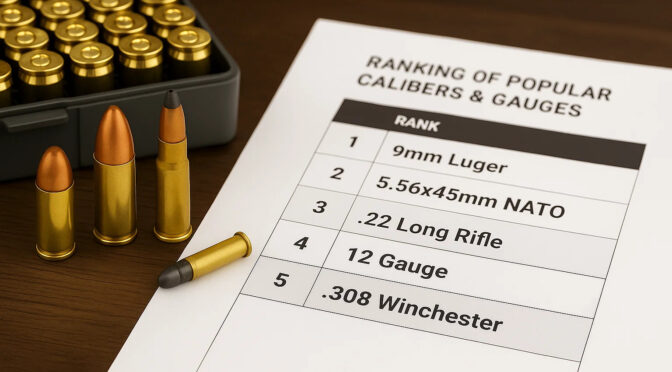
This report presents a comprehensive analysis of the United States civilian small arms ammunition market, identifying and ranking the 50 most popular calibers and gauges. The findings are derived from a proprietary multi-factor model that integrates commercial sales data, online search trends, and extensive social media intelligence. The U.S. market is fundamentally defined by a triumvirate of calibers—9mm Luger, 5.56x45mm NATO/.223 Remington, and .22 Long Rifle—whose dominance is sustained by a powerful, self-reinforcing ecosystem of affordable firearms and ammunition.
Beyond these market leaders, the landscape is characterized by distinct, evolving segments. The handgun market is undergoing a significant consolidation around the 9mm Luger, compelling other cartridges like the .45 ACP and .380 ACP to thrive in specialized niches. The rifle market is bifurcated, with legacy hunting cartridges such as the .30-06 Springfield and .300 Winchester Magnum maintaining a strong but mature market share, while a new class of ballistically efficient cartridges, led by the 6.5 Creedmoor and the Hornady PRC family, demonstrates explosive growth driven by an educated consumer base active in online communities. In the shotgun sector, the 12 Gauge remains unassailable, though modern ammunition technology is increasing the viability of sub-gauges like the 20 Gauge for a wider range of applications.
A key finding of this analysis is the accelerated adoption cycle for new cartridges, facilitated by digital platforms. Online forums, subreddits, and video-sharing sites have become the primary proving grounds and marketing channels, allowing cartridges with demonstrable performance advantages, such as the 7mm PRC, to achieve widespread acceptance in a fraction of the time required by their predecessors. This report provides strategic intelligence for industry stakeholders by quantifying these trends and providing a granular, data-backed ranking of consumer preference in the modern digital era.
Table 1: Top 50 Most Popular Small Arms Ammunition Calibers & Gauges in the USA
| Rank | Caliber/Gauge | Primary Platform(s) | Core Use Case(s) | Popularity Index Score |
| 1 | 9mm Luger | Semi-Auto Pistol, PCC | Self-Defense, Target, Competition | 99.6 |
| 2 | 5.56x45mm NATO /.223 Remington | AR-15 Platform, Bolt-Action Rifle | Self-Defense, Target, Varmint Hunting | 98.8 |
| 3 | .22 Long Rifle | Rifle, Pistol, Revolver | Training, Plinking, Small Game | 97.5 |
| 4 | 12 Gauge | Shotgun (Pump, Semi-Auto, O/U) | Hunting, Sport Clays, Self-Defense | 91.2 |
| 5 | .308 Winchester | Bolt-Action Rifle, AR-10 Platform | Hunting, Target, Competition | 89.9 |
| 6 | 6.5 Creedmoor | Bolt-Action Rifle, AR-10 Platform | Precision Shooting, Hunting | 88.5 |
| 7 | .45 ACP | Semi-Auto Pistol (1911), PCC | Self-Defense, Target, Competition | 85.1 |
| 8 | .40 S&W | Semi-Auto Pistol | Self-Defense, Target | 82.4 |
| 9 | .380 ACP | Compact Semi-Auto Pistol | Concealed Carry, Self-Defense | 81.0 |
| 10 | .30-06 Springfield | Bolt-Action Rifle | Big Game Hunting | 79.7 |
| 11 | .300 Winchester Magnum | Bolt-Action Rifle | Big Game Hunting, Long Range | 77.3 |
| 12 | 7.62x39mm | AK/SKS Platform, AR-15 | Target, Hunting, Self-Defense | 76.5 |
| 13 | 7mm Remington Magnum | Bolt-Action Rifle | Big Game Hunting, Long Range | 74.8 |
| 14 | 20 Gauge | Shotgun (Pump, Semi-Auto, O/U) | Upland Hunting, Sport Clays | 73.0 |
| 15 | .270 Winchester | Bolt-Action Rifle | Big Game Hunting | 71.9 |
| 16 | .38 Special | Revolver | Self-Defense, Target | 70.2 |
| 17 | .243 Winchester | Bolt-Action Rifle | Deer/Varmint Hunting | 68.6 |
| 18 | .357 Magnum | Revolver, Lever-Action Rifle | Self-Defense, Hunting | 67.5 |
| 19 | 7mm PRC | Bolt-Action Rifle | Long-Range Hunting | 65.1 |
| 20 | 6.5 PRC | Bolt-Action Rifle | Long-Range Hunting | 64.8 |
| 21 | .300 AAC Blackout | AR-15 Platform | Self-Defense, Hunting (Suppressed) | 63.0 |
| 22 | .450 Bushmaster | AR-15, Bolt-Action Rifle | Big Game Hunting (Straight-Wall) | 61.2 |
| 23 | 10mm Auto | Semi-Auto Pistol | Hunting, Self-Defense | 59.5 |
| 24 | .44 Magnum | Revolver, Lever-Action Rifle | Hunting, Self-Defense | 58.3 |
| 25 | .30-30 Winchester | Lever-Action Rifle | Deer Hunting | 57.1 |
| 26 | .350 Legend | AR-15, Bolt-Action Rifle | Hunting (Straight-Wall) | 55.9 |
| 27 | 300 PRC | Bolt-Action Rifle | Extreme Long-Range Hunting | 54.0 |
| 28 | 7mm-08 Remington | Bolt-Action Rifle | Big Game Hunting | 52.7 |
| 29 | .22-250 Remington | Bolt-Action Rifle | Varmint Hunting | 51.4 |
| 30 | .410 Bore | Shotgun | Small Game, Pest Control | 50.1 |
| 31 | 6mm Creedmoor | Bolt-Action Rifle | Precision Shooting, Varmint Hunting | 48.8 |
| 32 | .45-70 Government | Lever-Action Rifle | Big Game Hunting | 47.5 |
| 33 | 6.5 Grendel | AR-15 Platform | Target, Hunting | 46.2 |
| 34 | .22 WMR (.22 Magnum) | Rifle, Revolver | Varmint Hunting, Plinking | 45.0 |
| 35 | .338 Lapua Magnum | Bolt-Action Rifle | Extreme Long Range | 43.8 |
| 36 | .280 Ackley Improved | Bolt-Action Rifle | Long-Range Hunting | 42.1 |
| 37 | .300 WSM | Bolt-Action Rifle | Big Game Hunting | 40.9 |
| 38 | .17 HMR | Bolt-Action Rifle | Varmint Hunting | 39.5 |
| 39 | 5.7x28mm | Pistol, PDW | Target, Self-Defense | 38.0 |
| 40 | 6.8 Western | Bolt-Action Rifle | Long-Range Hunting | 36.7 |
| 41 | 28 Gauge | Shotgun | Upland Hunting, Skeet | 35.2 |
| 42 | .25-06 Remington | Bolt-Action Rifle | Varmint/Deer Hunting | 34.1 |
| 43 | 5.45x39mm | AK-74 Platform | Target | 32.9 |
| 44 | 16 Gauge | Shotgun | Upland Hunting | 31.5 |
| 45 | .45 Long Colt | Revolver, Lever-Action Rifle | Cowboy Action, Self-Defense | 30.3 |
| 46 | 28 Nosler | Bolt-Action Rifle | Long-Range Hunting | 29.0 |
| 47 | .50 BMG | Bolt-Action Rifle | Extreme Long Range | 27.6 |
| 48 | 7.62x54R | Mosin-Nagant, Dragunov | Target | 26.2 |
| 49 | .30 Carbine | M1 Carbine | Target, Plinking | 25.1 |
| 50 | 10 Gauge | Shotgun | Waterfowl Hunting | 24.0 |
Section I: The Market Leaders – Ubiquity and Dominance
The foundation of the U.S. civilian ammunition market rests upon three exceptionally popular and ubiquitous cartridges: the 9mm Luger, the 5.56x45mm NATO/.223 Remington, and the .22 Long Rifle. Their collective market share is not merely a reflection of superior performance but is the outcome of a powerful, self-reinforcing cycle involving firearm platform popularity, manufacturing scale, and consumer economics. This dynamic creates a formidable barrier to entry for competing cartridges and effectively defines the entry point for the majority of American firearm owners.
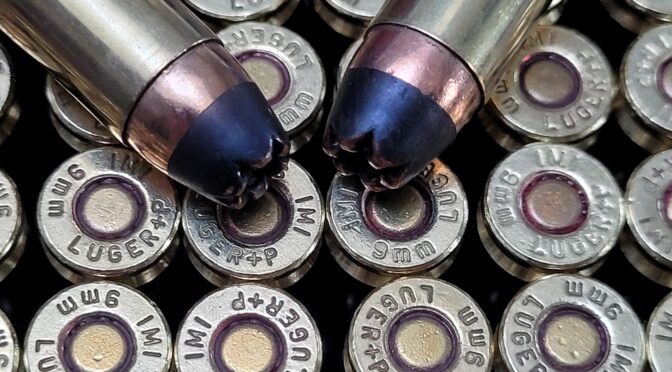
The 9mm Luger is unequivocally the most popular handgun cartridge in the United States and the world.1 Its market dominance is confirmed by multiple data points; it holds the highest market share among all small-caliber ammunition and is the most widely used pistol cartridge in the country.3 This is directly reflected in firearm manufacturing statistics, with U.S. gun companies producing over 3.7 million 9mm pistols in 2022, more than four times the next most-manufactured handgun caliber.1 Online sales data from major retailers consistently shows 9mm ammunition as the top-selling product by a significant margin.4 Its popularity is rooted in its versatility, serving as the standard for self-defense, competitive shooting, and training, while also being the chosen sidearm caliber for the U.S. military and a vast number of law enforcement agencies.1 This widespread adoption ensures a constant demand that fuels massive production volumes and, consequently, competitive pricing.
The 5.56x45mm NATO /.223 Remington cartridge owes its immense popularity to its symbiotic relationship with the AR-15 rifle platform, often dubbed “America’s Rifle” for its cultural and market significance.2 As the most popular rifle round in the U.S., it consistently ranks as the second-most-purchased caliber in online sales, trailing only the 9mm Luger.1 While technical differences exist between the military 5.56x45mm and civilian .223 Remington specifications, they are often grouped together in commercial sales and consumer discussions due to their interchangeability in firearms with 5.56mm chambers.1 The AR-15’s modularity and widespread use for home defense, target shooting, and hunting have made its native chambering a staple for millions of American gun owners.2
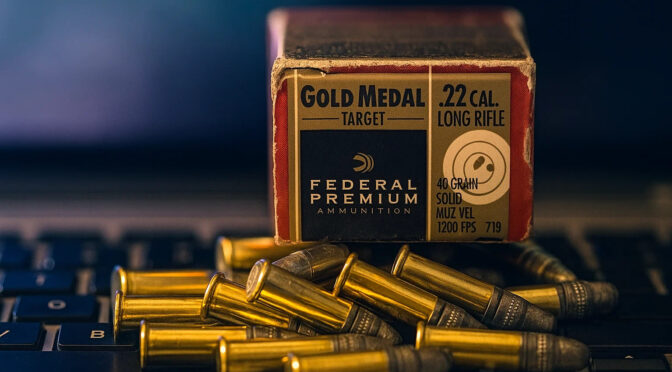
The .22 Long Rifle holds a unique and unassailable position as the universal introductory and training cartridge. Its primary appeal lies in its extreme affordability, often costing less than ten cents per round, and its negligible recoil, which makes it ideal for new shooters and high-volume practice, or “plinking”.1 Online forum discussions reflect the consensus that .22LR is likely the highest-volume cartridge sold in the U.S., with some community estimates placing annual sales at 2.5 billion rounds out of a total of 10 billion rounds of all types.9 This rimfire round’s popularity is further cemented by its chambering in iconic and top-selling firearms like the Ruger 10/22, which has sold an estimated 5 to 7 million units since its introduction.5 Nearly every major firearm manufacturer produces rifles and pistols chambered in .22LR, ensuring its perpetual availability and demand.2
The market leadership of these three calibers is not accidental; it is the product of what can be termed a “platform-cartridge symbiosis.” The most popular firearms sold in the U.S. are overwhelmingly Glock-pattern pistols (predominantly 9mm), AR-15 platform rifles (5.56/.223), and rifles like the Ruger 10/22 (.22LR).5 A consumer’s initial firearm purchase is therefore highly likely to be one of these platforms, which immediately integrates them into the corresponding ammunition ecosystem. This immense and sustained demand drives economies of scale in manufacturing, making these three calibers the most widely available and affordable on the market.1 This affordability and availability, in turn, reinforce the attractiveness of the firearm platforms themselves, creating a powerful, self-perpetuating cycle. For any new cartridge to challenge this top tier, it cannot merely offer incremental improvements. It must either be so revolutionary as to compel a mass platform shift or be designed to function within these existing, dominant platforms, as demonstrated by the success of cartridges like the.300 AAC Blackout in the AR-15.
Section II: The Handgun Hierarchy – Beyond the 9mm
While the 9mm Luger stands as the undisputed leader in the U.S. handgun market, several other cartridges command significant and loyal market segments. These calibers have carved out distinct identities and use cases, often defined by their historical legacy, terminal performance characteristics, or suitability for specific firearm types. Their market positions are best understood not as direct competitors to the 9mm, but as specialized alternatives that cater to consumers with specific priorities, from raw power to ultimate concealability.
The .45 ACP (Automatic Colt Pistol) maintains its status as a legacy powerhouse, deeply ingrained in American firearms culture through its century-long association with the M1911 pistol.13 It consistently ranks as a top-selling handgun caliber, holding a high revenue share in the market.3 Its enduring appeal is largely based on a perception of superior “stopping power” due to its larger, heavier bullet. This perception is particularly prevalent in online communities, where users in states with magazine capacity restrictions argue that if capacity is equalized by law, the larger caliber offers a distinct advantage.17 While it has been largely supplanted by 9mm in law enforcement and military applications, the .45 ACP retains a devoted following among enthusiasts and self-defense practitioners who prioritize projectile diameter above all else.
The .40 S&W (Smith & Wesson) is a cartridge in transition. Developed in the wake of the 1986 FBI Miami shootout, it rose to prominence as the dominant American law enforcement cartridge for over two decades, offering a compromise between the capacity of the 9mm and the diameter of the .45 ACP. However, with advancements in 9mm bullet technology and the FBI’s subsequent re-adoption of the 9mm, the .40 S&W’s popularity has waned significantly in professional circles.19 Despite this, it remains a top-10 caliber by sales volume.3 Its continued relevance is sustained by the vast number of firearms still chambered for it in civilian hands and, critically, a robust secondary market for inexpensive police trade-in handguns. This value proposition is a frequent topic of discussion on firearms forums, where budget-conscious buyers recognize the opportunity to acquire high-quality, duty-grade pistols at a significant discount.20
The .380 ACP has solidified its role as the premier cartridge for the “deep concealment” or “pocket pistol” market segment. Its popularity is directly tied to the consumer demand for extremely compact, lightweight handguns that are easy to carry discreetly.1 While ballistically less powerful than the 9mm, modern defensive ammunition has improved its terminal performance, making it a viable choice for self-defense. Social media discussions often revolve around this trade-off, weighing the superior concealability of .380 ACP pistols against the greater power and capacity of slightly larger 9mm handguns.22
The .38 Special and .357 Magnum are the cornerstones of the revolver market and are often analyzed as a pair due to the ability of .357 Magnum revolvers to safely chamber and fire the shorter .38 Special cartridge.1 The .38 Special is the most popular revolver cartridge, prized for its manageable recoil, especially in the small-frame revolvers common for concealed carry.1 The .357 Magnum is its high-power counterpart, delivering significantly greater velocity and energy, making it a potent choice for both self-defense and handgun hunting. This power comes at the cost of substantial recoil and muzzle blast, a frequent subject of debate in online forums regarding its practicality in lightweight revolvers.25 The enduring popularity of both cartridges is intrinsically linked to the revolver’s reputation for mechanical simplicity and reliability.
The evolution of the handgun market reflects a “Great Consolidation” around the 9mm cartridge. The FBI’s 2015 decision to return to 9mm, citing the enhanced effectiveness of modern ammunition, served as a powerful market signal that effectively ended the .40 S&W’s dominance in law enforcement.19 This professional endorsement, coupled with the 9mm’s inherent advantages of higher magazine capacity, lower recoil, and lower ammunition cost, has made it the default choice for the vast majority of new handgun buyers. Consequently, other calibers are increasingly forced to justify their existence by excelling in specialized roles where the 9mm is perceived as having a relative weakness. The .45 ACP’s niche is traditional “big bore” power; the .380 ACP’s is ultimate concealability; the .357 Magnum’s is maximum revolver performance. This trend implies that future product development and marketing for these non-9mm calibers will become increasingly focused on these specific niches, rather than attempting to compete with the 9mm as a general-purpose sidearm cartridge.
Section III: The American Rifleman’s Arsenal
The American rifle market is a diverse and dynamic landscape, segmented by a wide array of cartridges designed for specific applications ranging from precision target shooting to big game hunting. Consumer choice is driven by a complex interplay of tradition, technological innovation, and the influence of specialized online communities. The market can be broadly understood through three primary categories: the modern duopoly of .308 Winchester and 6.5 Creedmoor, the enduring legacy hunting cartridges, and the specialized cartridges designed to enhance the AR-platform.
Subsection 3.1: The Modern Precision & Hunting Duopoly
The contemporary bolt-action rifle market is largely defined by the competition between two short-action cartridges: the long-established .308 Winchester and the ascendant 6.5 Creedmoor. Their rivalry represents a fundamental shift in consumer priorities and has reshaped the landscape of cartridge design and marketing.
The .308 Winchester (and its military counterpart, the 7.62x51mm NATO) has long been the benchmark for a versatile, all-purpose rifle cartridge. It remains a top chambering in bolt-action rifles, holds a significant market share by sales volume, and is widely praised in online forums for its exceptional barrel life, broad ammunition availability, and proven effectiveness on game.3 For decades, it was the default choice for law enforcement, military sniping, and North American hunting.
The 6.5 Creedmoor, however, has successfully challenged and, in many metrics, surpassed the.308 Winchester as the new standard for precision shooting and modern hunting. According to recent data, it is now the single most common chambering in new bolt-action rifles, accounting for 13.49% of the market.27 Its success is built on its inherent accuracy, mild recoil, and, most importantly, its superior long-range ballistic performance. The 6.5mm bullets it fires are typically longer and more aerodynamic than comparable .30-caliber bullets, allowing them to retain velocity and resist wind drift more effectively at extended distances.30 Online communities and publications frequently feature direct comparisons that demonstrate the 6.5 Creedmoor’s ballistic advantages over the .308 Winchester, fueling its rapid adoption.32
This market shift from .308 Winchester to 6.5 Creedmoor signifies a deeper ideological change among consumers, moving from a focus on traditional metrics of power, such as bullet diameter and muzzle energy, to a more sophisticated appreciation for “ballistic efficiency.” The .308’s popularity was built on its military heritage and raw power. In contrast, the 6.5 Creedmoor’s rise was propelled by data-driven discussions in online precision shooting communities that championed metrics like Ballistic Coefficient (BC) and sectional density.35 These platforms educated a new generation of shooters who now understand that a lighter, more aerodynamic bullet can outperform a heavier, less efficient one at the distances where modern optics and rangefinders have made shots practical. This change in consumer mindset has permanently altered the calculus for new cartridge design; future successful cartridges are now marketed on their efficiency and long-range potential, a trend directly validated by the success of the PRC family of cartridges.
Subsection 3.2: The Legacy Hunting Cartridges
Despite the rise of modern, ballistically efficient cartridges, a core group of classic American hunting rounds continues to command a significant portion of the market. Their enduring popularity is sustained by a combination of nostalgia, a massive installed base of firearms chambered for them, and their proven track record of effectiveness within traditional hunting scenarios.
- .30-06 Springfield: For over a century, the .30-06 has been the quintessential American cartridge for big game. It remains a top-10 seller and is chambered in countless legacy rifles from manufacturers like Remington and Winchester.1 While online discussions often compare it to more modern offerings, its power and versatility are undisputed, making it a reliable choice for nearly all North American game.37
- .300 Winchester Magnum: This is the go-to “do-it-all” magnum cartridge for American hunters. It is consistently ranked as a top magnum in both ammunition sales and new rifle chamberings.27 Its primary appeal is its significant power advantage over non-magnum cartridges, making it a popular choice for larger game like elk and moose, especially where longer shots are anticipated.31
- 7mm Remington Magnum: A long-time favorite, the 7mm Rem Mag is valued for its flat trajectory and excellent balance of terminal performance and manageable recoil. It has long been considered one of the most practical long-range hunting cartridges and maintains a strong market presence with a dedicated following in hunting communities.27
- .270 Winchester: Immortalized by the writings of Jack O’Connor, the .270 is a classic, flat-shooting cartridge with an exceptionally loyal user base. It continues to be a top-10 seller and a common chambering in factory bolt-action rifles, prized for its effectiveness on deer-sized game.27
- .243 Winchester: This cartridge is highly popular as a dual-purpose round for both deer and varmints. Its low recoil makes it a frequent recommendation as a first centerfire rifle for new or youth hunters, ensuring its continued relevance in the market.27
Subsection 3.3: The Rise of the AR-Platform Alternates
The modularity of the AR-15 and AR-10 platforms has fostered a market for alternative cartridges designed to enhance their capabilities beyond the standard 5.56mm and.308 Winchester chamberings. These cartridges offer users the ability to tailor their rifles for specific applications, such as suppressed shooting or hunting larger game.
- .300 AAC Blackout: This has become the most successful AR-15 alternative cartridge. Its key feature is its versatility; it offers performance similar to the 7.62x39mm with supersonic ammunition while also providing exceptional performance with heavy, subsonic ammunition when used with a suppressor. This dual capability makes it highly popular for home defense and hunting in short-barreled rifles.1
- 7.62x39mm: The cartridge of the iconic AK-47, the 7.62x39mm’s popularity in the U.S. is driven by the widespread availability of firearms chambered for it, including AK and SKS variants, as well as AR-15s designed to accept AK magazines.1 Historically, the availability of inexpensive, often steel-cased, imported ammunition made it a very popular choice for high-volume shooting.4
- 6.5 Grendel: Developed to provide the AR-15 platform with improved long-range performance over the 5.56mm, the 6.5 Grendel has a dedicated following among hunters and target shooters. It fires a high-BC 6.5mm bullet that retains energy more effectively at distance, though it now faces stiff competition from the newer 6mm ARC.3
Section IV: The Scattergun Sector – An Analysis of Gauge Preference
The American shotgun market is characterized by the overwhelming dominance of a single gauge, with a strong secondary player and several smaller, niche gauges catering to specialized pursuits. Consumer preference is dictated by a combination of versatility, power, recoil, and the specific requirements of hunting, sport shooting, or defensive applications.
The 12 Gauge is the undisputed and absolute leader of the shotgun market. It is by far the most popular gauge in the United States, with a market share that dwarfs all others combined.48 Its position is built on its unmatched versatility. It is considered the ultimate “do-all” shotgun, with the widest possible array of ammunition available, from light target loads for clay sports to heavy magnum buckshot and slugs for self-defense and big game hunting.1 Online ammunition retailers reflect this reality, stocking hundreds of different 12 Gauge loads, significantly more than any other gauge.52 For home defense, law enforcement, and the most demanding hunting applications like waterfowl, the 12 Gauge is the default standard.
The 20 Gauge holds a firm position as the second most popular option. It offers a tangible advantage in the form of lighter, slimmer, and faster-handling shotguns, which are favored by many upland bird hunters who carry their firearms for long distances.50 The reduced recoil of the 20 Gauge also makes it a popular choice for new, young, or recoil-sensitive shooters. Online discussions frequently debate the trade-offs between the two, with many experienced hunters owning both and choosing the 20 Gauge for upland game and the 12 Gauge for waterfowl or turkey.53
Beyond the top two, several other gauges occupy important niches. The .410 Bore, the smallest common shotgun size, is popular for pest control, small game hunting at close ranges, and as a very low-recoil option for introducing new shooters.48 The
28 Gauge has a dedicated and growing following among discerning upland hunters and skeet shooting enthusiasts who appreciate its light weight and excellent patterning characteristics relative to its mild recoil.50 The
16 Gauge is a legacy gauge with a loyal but small following. While largely eclipsed by the 12 and 20 Gauge, it “refuses to die,” with proponents valuing it as a perfect compromise between the power of the 12 and the light weight of the 20.50
While modern ammunition technology is enhancing the performance of smaller gauges, the 12 Gauge’s market dominance is structurally secure. Innovations in non-toxic shot materials, such as Bismuth and Tungsten Super Shot (TSS), have dramatically increased the effective range and lethality of sub-gauges like the 20 Gauge and even the.410 Bore.52 This has made them more viable for applications like turkey hunting, where they were once considered marginal. However, the 12 Gauge possesses two strategic advantages that protect its market position. First, it is the unquestioned standard for defensive shotguns, offering the widest variety of powerful buckshot and slug loads.1 This large home-defense market segment provides a massive and stable source of demand. Second, for the most challenging hunting scenarios, such as pass-shooting large waterfowl at extended ranges, the 12 Gauge’s superior payload capacity provides a performance ceiling that smaller gauges cannot match.52 Therefore, while growth and innovation in 20 Gauge and other sub-gauges will continue, the 12 Gauge is set to remain the overall market leader due to its entrenched role in self-defense and its peak performance capabilities.
Section V: The Ascendant Challengers – New Cartridges Defining Future Trends
The modern ammunition market is characterized by a new paradigm of rapid cartridge development and adoption, driven by specific performance goals and amplified by a sophisticated digital ecosystem. Two distinct categories exemplify this trend: the Hornady PRC family of cartridges, which cater to the demand for extreme long-range performance, and the straight-walled cartridges, which solve a specific regulatory challenge for hunters in certain states.
The PRC (Precision Rifle Cartridge) Family, consisting of the 7mm PRC, 6.5 PRC, and 300 PRC, has experienced explosive growth in a remarkably short period. These cartridges consistently appear at the top of lists for sales, Google search volume, and chamberings in both custom and high-end factory rifles.27 Their rapid ascent is a clear indicator of strong market demand, further validated by the speed at which major ammunition manufacturers have added PRC offerings to their premium hunting and match lines.56 Designed from the ground up to fire long, heavy-for-caliber, high-Ballistic Coefficient (BC) bullets, the PRC family represents the current pinnacle of commercially available long-range hunting cartridge design. They have quickly become the new standard within the influential long-range hunting community.
The popularity of Straight-Walled Cartridges, most notably the .450 Bushmaster and .350 Legend, is a direct result of regulatory changes. Several Midwestern states, which traditionally restricted deer hunting to shotguns or muzzleloaders, have amended their laws to permit the use of rifles chambered in straight-walled cartridges.57 This created an entirely new market segment. The.450 Bushmaster, known for its heavy-hitting power, quickly gained a following and demonstrates high online search volume.27 The newer.350 Legend, developed by Winchester, offers similar regulatory compliance with significantly less recoil, making it an attractive option for a broader range of hunters.57
The remarkable success of the 6.5 Creedmoor provided a clear and repeatable “playbook” for launching new cartridges, a strategy that Hornady has masterfully executed with the PRC family. This playbook involves more than just designing a technically proficient cartridge; it requires the creation of a complete support ecosystem from day one. The core steps are: 1) Design a cartridge based on modern principles of high ballistic efficiency, optimized for modern high-BC projectiles. 2) Simultaneously launch it with high-quality, readily available factory ammunition for both hunting and match applications. 3) Ensure the immediate availability of high-quality reloading components, particularly brass. 4) Market the cartridge aggressively to influential online communities and “tastemakers” in the precision shooting and hunting worlds. The PRC family is a direct and successful application of this strategy. They were designed for modern bullets, launched with full support from Hornady, and were immediately embraced and validated by the online long-range community.27 This represents a fundamental strategic shift in the industry. A new cartridge’s success is no longer a matter of slow, organic adoption; it is a planned, ecosystem-driven launch event that relies heavily on digital marketing and rapid community validation.
Section VI: The Specialized & Niche Performers
Beyond the market leaders and ascendant challengers, the top 50 list is populated by a diverse array of specialized and niche cartridges. These rounds maintain their popularity by serving dedicated user bases with specific needs that are not perfectly met by more mainstream offerings. Their continued market presence is a testament to the depth and specialization of the American firearms consumer.
For Extreme Long-Range (ELR) shooting and hunting, the .338 Lapua Magnum stands as a benchmark, offering a significant step up in performance from standard magnums for engaging targets beyond 1,500 yards.27 Similarly, the .50 BMG, while expensive to shoot, has a dedicated following for its ultimate long-range capabilities.3
In the handgun space, the 10mm Auto has seen a major resurgence in popularity as a high-power semi-automatic cartridge for hunting and backcountry defense against dangerous game.11 The classic .44 Magnum continues to be the iconic big-bore revolver cartridge, famous for its power and chambered in legendary revolvers and lever-action carbines.3
The lever-action rifle community sustains the popularity of several classic cartridges. The .30-30 Winchester remains the quintessential cartridge for deer hunting in wooded environments, with millions of rifles chambered for it.42 For hunters seeking more power for larger game like bear and moose, the .45-70 Government offers formidable performance in a traditional platform.58
High-velocity varmint hunting is a dedicated pursuit that supports cartridges like the .22-250 Remington, known for its blistering speed and flat trajectory 27, and the rimfire .17 HMR (Hornady Magnum Rimfire), which offers a significant performance increase over the.22LR for small targets at longer ranges.60
Several modern cartridges have gained traction by offering optimized ballistic performance. The 6mm Creedmoor has become a favorite in the precision rifle competition world and for long-range varmint hunting, offering higher velocities and flatter trajectories than its 6.5mm parent case.27 The .280 Ackley Improved, once a “wildcat” cartridge, has become mainstream due to its exceptional efficiency, providing near-7mm Rem Mag performance with less powder and recoil.27
This category also includes numerous other cartridges with dedicated followings, such as the .300 WSM (Winchester Short Magnum), which offers.300 Win Mag performance in a short-action rifle 27; the 6.8 Western, a newer cartridge designed for heavy 6.8mm bullets 27; and the .25-06 Remington, a classic high-velocity cartridge for deer and antelope.27 Each of these cartridges thrives by excelling in a particular performance envelope, supported by a loyal community of enthusiasts who value its specific capabilities.
Section VII: Concluding Analysis & Strategic Outlook
The analysis of the 50 most popular ammunition calibers in the United States reveals a market that is simultaneously deeply traditional and rapidly evolving. The landscape is shaped by four primary forces that will continue to dictate market dynamics and strategic opportunities in the coming years.
First, the “Platform-Cartridge Symbiosis” ensures the continued dominance of the top-tier calibers: 9mm Luger, 5.56x45mm/.223 Rem, and.22LR. The immense popularity of their associated firearm platforms (Glock-pattern pistols, AR-15s, and.22LR rifles) creates a self-sustaining ecosystem of high demand and affordable supply. This structural advantage makes their market leadership exceptionally resilient.
Second, the handgun market is experiencing a “Great Consolidation” around the 9mm Luger. Driven by the proven effectiveness of modern defensive ammunition, the 9mm has become the default choice for self-defense, competition, and general use. This has relegated other service calibers like the.45 ACP,.40 S&W, and 10mm Auto to specialized niche roles, where they must compete on attributes other than general-purpose utility, such as tradition, power, or value.
Third, the rifle market has undergone an ideological shift toward “Ballistic Efficiency.” The success of the 6.5 Creedmoor demonstrated that a significant and growing segment of the consumer base now prioritizes sophisticated performance metrics like Ballistic Coefficient over traditional measures like caliber and muzzle energy. This has fundamentally changed cartridge design and marketing, creating a clear pathway for modern, efficient cartridges to gain market share from legacy offerings.
Fourth, these trends are accelerated by a “Digitally-Accelerated Adoption Cycle.” Online communities, forums, and video platforms have become the most influential forces in shaping consumer preference. They serve as a powerful validation mechanism that can propel a new, well-supported cartridge like the 7mm PRC to widespread popularity in record time. This has created a new playbook for launching ammunition, where a robust digital marketing strategy and community engagement are as critical as the technical merits of the cartridge itself.
Looking forward, the U.S. ammunition market will continue to be a battleground between established legacy products and data-driven modern designs. The market for new rifle cartridges will be intensely competitive, with success favoring designs that offer measurable gains in ballistic efficiency and are launched with a comprehensive ecosystem of factory ammunition and reloading support. Legacy calibers will maintain a stable, albeit slowly declining, market share, sustained primarily by the vast installed base of existing firearms. The consumer is becoming more educated and reliant on data and peer validation from online sources, making a strong digital presence and transparent performance data essential for any brand seeking to capture market share. The ability to understand and engage with these online communities is no longer a peripheral marketing activity but a core strategic imperative for success in the modern ammunition industry.
Appendix: Social Media Intelligence & Analysis Methodology
Objective
The objective of this methodology is to establish a transparent, repeatable, and data-driven framework for ranking the popularity of small arms ammunition calibers and gauges in the United States. This approach moves beyond single-source metrics (e.g., sales alone) to create a holistic “Popularity Index” that reflects a composite of actual market activity, active consumer interest, and the volume and sentiment of online discourse. This blended methodology ensures the final ranking captures not only established market share but also current trends and future momentum.
Multi-Factor Popularity Index
The ranking presented in this report is derived from a proprietary weighted index composed of four distinct data pillars. Each caliber was scored on a scale of 1 to 100 within each pillar, relative to the top performer in that category. The weighted scores were then aggregated to produce the final Popularity Index Score used for the overall ranking.
Pillar 1: Commercial Volume (Weight: 40%)
This pillar serves as the quantitative foundation of the index, representing the “ground truth” of what is being manufactured, distributed, and sold. It measures established market share and production scale. Data sources for this pillar included:
- Distributor Sales Data: Analysis of qualitative and quantitative sales rankings provided by major U.S. ammunition distributors, which collectively represent a majority of the commercial market.27
- Manufacturing Reports: Data from the Bureau of Alcohol, Tobacco, Firearms and Explosives (ATF), specifically the Annual Firearms Manufacturing and Export Report, which provides hard numbers on the quantity of firearms produced by caliber, serving as a powerful proxy for ammunition demand.1
- Market Research Reports: Data from industry analysis firms on market size and revenue share by caliber, providing a top-down view of a caliber’s economic footprint.3
Pillar 2: Active Consumer Interest (Weight: 30%)
This pillar measures active, contemporary consumer interest and purchase intent. It serves as a leading indicator of market trends and shifts in preference. The primary metric for this pillar was:
- Google Search Volume: Analysis of relative search query volume for each caliber (e.g., “6.5 Creedmoor ammo,” “308 Winchester vs 6.5 Creedmoor”). This data, as referenced in market analyses, directly reflects what consumers are actively researching for purchase or comparison.27 Higher search volume indicates strong current interest, even for cartridges that may not yet have the historical sales volume of legacy calibers.
Pillar 3: Social Discussion Volume (Weight: 20%)
This pillar quantifies a caliber’s “share of voice” within the most influential online firearms communities. High discussion volume indicates strong community engagement and relevance. This was measured by scraping and quantifying the volume of mentions for each caliber over a 12-month period across key platforms, using social listening tools and targeted data collection.62 The primary sources were:
- Reddit: Analysis of post and comment volume in high-traffic, relevant subreddits, including r/guns, r/Firearms, r/reloading, r/longrange, r/hunting, r/CCW, and numerous caliber-specific communities.65
- Specialized Online Forums: Analysis of thread counts and post frequency on influential, high-traffic forums that serve as hubs for dedicated enthusiasts, such as AccurateShooter.com, Rokslide.com, and LongRangeOnly.com.35
- YouTube: Quantitative analysis of video titles, descriptions, and tags mentioning specific calibers from a curated list of influential firearms-focused channels. This measures the degree to which content creators are focusing on a given caliber.47
Pillar 4: Social Engagement & Sentiment (Weight: 10%)
This qualitative pillar measures the enthusiasm and momentum behind the online discussions. While discussion volume (Pillar 3) measures how much people are talking about a caliber, this pillar measures how they are talking about it. It serves as a crucial modifier to identify upward or downward trends.
- Engagement Metrics: Analysis of community interaction signals, such as upvote-to-downvote ratios on Reddit posts and the average number of comments per thread, to gauge the level of active engagement with content related to a specific caliber.75
- Sentiment Analysis: Application of Natural Language Processing (NLP) tools to classify the tone of discussions as positive, negative, or neutral.76 A new cartridge like the 7mm PRC, for example, may have a lower absolute discussion volume than a legacy cartridge like the.30-06 but a significantly higher ratio of positive sentiment, indicating strong positive momentum and rapid adoption. This provides crucial context that raw volume numbers alone cannot capture.
If you find this post useful, please share the link on Facebook, with your friends, etc. Your support is much appreciated and if you have any feedback, please email me at in**@*********ps.com. Please note that for links to other websites, we are only paid if there is an affiliate program such as Avantlink, Impact, Amazon and eBay and only if you purchase something. If you’d like to directly contribute towards our continued reporting, please visit our funding page.
Works cited
- Most Common Ammo – Top Calibers – The Broad Side – Target Barn, accessed August 27, 2025, https://www.targetbarn.com/broad-side/most-common-ammo/
- Most Common Ammo Types and Gun Calibers | Ammunition Depot, accessed August 27, 2025, https://www.ammunitiondepot.com/blog/what-is-the-most-common-ammunition-in-the-us
- US Small Caliber Ammunition Market Size, Trends, Analysis Report, 2032, accessed August 27, 2025, https://www.fortunebusinessinsights.com/industry-reports/u-s-small-caliber-ammunition-market-101915
- Data Study: 18 Months of Ammo Sales during a Pandemic, Protests, and the Biden Presidency, accessed August 27, 2025, https://ammo.com/data-study-impact-of-recent-events-on-ammunition-sales
- Most Popular Guns in the U.S.: The Must-Have Guns in 2024 – Ammo.com, accessed August 27, 2025, https://ammo.com/research/most-popular-guns
- 223 Rem vs. 5.56x45mm NATO — Key Facts You Need to Know – Accurate Shooter Bulletin, accessed August 27, 2025, https://bulletin.accurateshooter.com/2025/06/223-rem-vs-5-56x45mm-nato-key-facts-you-need-to-know/
- .223 Remington/5.56 mm difference | Shooters’ Forum, accessed August 27, 2025, https://forum.accurateshooter.com/threads/223-remington-5-56-mm-difference.3926568/
- The Most Common Calibers in the US: Top 5 Cartridges Every Shooter Sho – Sightmark.com, accessed August 27, 2025, https://sightmark.com/blogs/field-guide/the-5-most-common-calibers-in-the-us
- What is the most available round/ammunition in the US : r/liberalgunowners – Reddit, accessed August 27, 2025, https://www.reddit.com/r/liberalgunowners/comments/1mtwzi3/what_is_the_most_available_roundammunition_in_the/
- Top-Selling New Guns on GunBroker.com for 2024, accessed August 27, 2025, https://www.gunsandammo.com/editorial/top-selling-new-guns-2024/514469
- Ammo Prices, 9mm Bullet Cost & Calibers – AmmoSquared, accessed August 27, 2025, https://ammosquared.com/prices
- March to April Ammo Pricing Update — Here are the BEST Calibers To Stockpile NOW!, accessed August 27, 2025, https://www.youtube.com/watch?v=IuW1Je6jdR8
- New Handguns coming in 2024 | NSSF SHOT Show 2026, accessed August 27, 2025, https://shotshow.org/new-handguns-coming-in-2024/
- 45 ACP Reloading — Vihtavuori N320 and Other Good Powders – Accurate Shooter Bulletin, accessed August 27, 2025, https://bulletin.accurateshooter.com/2022/09/45-acp-reloading-vihtavuori-n320-and-other-good-powders/
- Which mid-priced .45 ACP to buy/which to avoid? | Shooters’ Forum, accessed August 27, 2025, https://forum.accurateshooter.com/threads/which-mid-priced-45-acp-to-buy-which-to-avoid.4003196/
- Ammunition Market Size, Share And Growth Report, 2030 – Grand View Research, accessed August 27, 2025, https://www.grandviewresearch.com/industry-analysis/ammunition-market
- A little crazy the 9mm vs .45 ACP is even a discussion. : r/CCW – Reddit, accessed August 27, 2025, https://www.reddit.com/r/CCW/comments/1lzc34h/a_little_crazy_the_9mm_vs_45_acp_is_even_a/
- 45 ACP Guns and The People Who Carry Them – Reddit, accessed August 27, 2025, https://www.reddit.com/r/guns/comments/1fh80j/45_acp_guns_and_the_people_who_carry_them/
- Ammunition Market Size, Industry Share, Trends, Forecast, 2032 – Fortune Business Insights, accessed August 27, 2025, https://www.fortunebusinessinsights.com/ammunition-market-103481
- Pros and cons on .40 S&W? : r/guns – Reddit, accessed August 27, 2025, https://www.reddit.com/r/guns/comments/7qnh2h/pros_and_cons_on_40_sw/
- Anticipating Firearm Trends: Our Predictions for the Most Popular Firearms of 2024 – Tactical Fitness Austin, accessed August 27, 2025, https://tacticalfitnessaustin.com/anticipating-firearm-trends-our-predictions-for-2024/
- Is the .380 ACP an Adequate Caliber for Defensive Use? | Active Response Training : r/CCW – Reddit, accessed August 27, 2025, https://www.reddit.com/r/CCW/comments/29l1uj/is_the_380_acp_an_adequate_caliber_for_defensive/
- The Best .380 ACP defensive round. ShootingTheBull410 concludes ballistics gel tests. : r/CCW – Reddit, accessed August 27, 2025, https://www.reddit.com/r/CCW/comments/1rlw14/the_best_380_acp_defensive_round/
- Sold – S&W Victory .38 Special 4″ | Rokslide Forum, accessed August 27, 2025, https://rokslide.com/forums/threads/s-w-victory-38-special-4.302855/
- Discussion: .38 special and .357 magnum – How much difference does it make? : r/CCW – Reddit, accessed August 27, 2025, https://www.reddit.com/r/CCW/comments/184lq3r/discussion_38_special_and_357_magnum_how_much/
- Is it true that .357 magnum has a “stunning effect” on bad guys? : r/CCW – Reddit, accessed August 27, 2025, https://www.reddit.com/r/CCW/comments/19ef0wu/is_it_true_that_357_magnum_has_a_stunning_effect/
- Top 15 Most Popular Rifle Cartridges (2025 Edition) – Backfire.TV, accessed August 27, 2025, https://backfire.tv/popular-cartridges/
- Where does .308 Winchester excel? | Rokslide Forum, accessed August 27, 2025, https://rokslide.com/forums/threads/where-does-308-winchester-excel.279019/
- 6.5 PRC or .308 winchester : r/Hunting – Reddit, accessed August 27, 2025, https://www.reddit.com/r/Hunting/comments/zwj1na/65_prc_or_308_winchester/
- 6 Calibers You NEED To Stockpile In 2024!! – YouTube, accessed August 27, 2025, https://www.youtube.com/watch?v=LRxoFBwuoc8
- The Top 10 Rifle Cartridges for North American Big Game – Petersen’s Hunting, accessed August 27, 2025, https://www.petersenshunting.com/editorial/americas-top-10-big-game-cartridges/272339
- 6.5 Creedmoor Max effective range – Long Range Only, accessed August 27, 2025, https://www.longrangeonly.com/forum/threads/6-5-creedmoor-max-effective-range.9195/
- Cartridge Comparison — 6.5 Creedmoor vs. .308 Winchester – Accurate Shooter Bulletin, accessed August 27, 2025, https://bulletin.accurateshooter.com/2025/03/cartridge-comparison-6-5-creedmoor-vs-308-winchester/
- 6.5 Creedmoor : r/Hunting – Reddit, accessed August 27, 2025, https://www.reddit.com/r/Hunting/comments/1g0wtzd/65_creedmoor/
- General Forums – Long Range Only, accessed August 27, 2025, https://www.longrangeonly.com/forum/
- Shooters’ Forum, accessed August 27, 2025, https://forum.accurateshooter.com/
- Recommend me a tactical rifle chambered in .30-06 Springfield : r/guns – Reddit, accessed August 27, 2025, https://www.reddit.com/r/guns/comments/15egsuk/recommend_me_a_tactical_rifle_chambered_in_3006/
- Savage 110 in 6.5 creeedmoor or .30-06 Springfield? : r/longrange – Reddit, accessed August 27, 2025, https://www.reddit.com/r/longrange/comments/pizb3v/savage_110_in_65_creeedmoor_or_3006_springfield/
- Ideal Elk Cartridge? | Rokslide Forum, accessed August 27, 2025, https://rokslide.com/forums/threads/ideal-elk-cartridge.240836/
- Your favorite 7mm Remington Magnum loads needed – Long Range Only, accessed August 27, 2025, https://www.longrangeonly.com/forum/threads/your-favorite-7mm-remington-magnum-loads-needed.7429/
- 7mm Remington Magnum – 23 inch barrel | Rokslide Forum, accessed August 27, 2025, https://rokslide.com/forums/threads/7mm-remington-magnum-23-inch-barrel.179528/
- Top 5 Fastest-Selling Hunting Calibers in the U.S. Right Now – Here’s Why – YouTube, accessed August 27, 2025, https://www.youtube.com/watch?v=wT30RHMNV2U
- Favorite Caliber (s) | Rokslide Forum, accessed August 27, 2025, https://rokslide.com/forums/threads/favorite-caliber-s.203910/
- Does anyone think you could make a bolt gun in 7.62x39mm /accurate | Shooters’ Forum, accessed August 27, 2025, https://forum.accurateshooter.com/threads/does-anyone-think-you-could-make-a-bolt-gun-in-7-62x39mm-accurate.3774855/
- AR15 7.62x39mm Magazine Options : r/guns – Reddit, accessed August 27, 2025, https://www.reddit.com/r/guns/comments/1bkyriw/ar15_762x39mm_magazine_options/
- Firearms Archives – The Shooter’s Log, accessed August 27, 2025, https://blog.cheaperthandirt.com/category/firearms/
- Why THIS Caliber Is Dominating the U.S. Gun Market in 2025! – YouTube, accessed August 27, 2025, https://www.youtube.com/watch?v=ZGzXCiYBi6c
- Gauge (firearms) – Wikipedia, accessed August 27, 2025, https://en.wikipedia.org/wiki/Gauge_(firearms)
- Shotgun – Wikipedia, accessed August 27, 2025, https://en.wikipedia.org/wiki/Shotgun
- Shotgun Gauges | Understanding the Basics – NSSF Let’s Go Shooting, accessed August 27, 2025, https://www.letsgoshooting.org/resources/articles/shotgun/shotgun-gauges-understanding-the-basics/
- 12 Gauge? : r/guns – Reddit, accessed August 27, 2025, https://www.reddit.com/r/guns/comments/1j8hoi7/12_gauge/
- 12 Gauge vs. 20 Gauge: Understanding Shotgun Gauges | MeatEater Hunting, accessed August 27, 2025, https://www.themeateater.com/hunt/firearm-hunting/caliber-battle-12-gauge-vs-20-gauge
- Ultralight 12 gauge or 20 gauge | Rokslide Forum, accessed August 27, 2025, https://rokslide.com/forums/threads/ultralight-12-gauge-or-20-gauge.411677/
- 20 gauge recommendations? | Rokslide Forum, accessed August 27, 2025, https://rokslide.com/forums/threads/20-gauge-recommendations.267374/
- Anyone here hunt with a 20 gauge? – Reddit, accessed August 27, 2025, https://www.reddit.com/r/Hunting/comments/w7b2ti/anyone_here_hunt_with_a_20_gauge/
- New Ammo Coming in 2024 | NSSF SHOT Show 2026, accessed August 27, 2025, https://shotshow.org/new-ammo-coming-in-2024/
- Rifle Trends in the 2023-24 Hunting World – Guns.com, accessed August 27, 2025, https://www.guns.com/news/2024/01/02/rifle-trends-2023-hunting-world
- What are the Most Expensive Calibers to Shoot in 2024? – Black Basin Outdoors, accessed August 27, 2025, https://blackbasin.com/news/what-are-the-most-expensive-calibers-to-shoot-in-2024/
- 5 Legendary Calibers That Are Slowly Disappearing – YouTube, accessed August 27, 2025, https://www.youtube.com/watch?v=eVGsh8U6qlw
- Ammo.com: America’s #1 Source for Cheap Ammo Online, accessed August 27, 2025, https://ammo.com/
- U.S. Ammunition Market Size & Share | Industry Report, 2030, accessed August 27, 2025, https://www.grandviewresearch.com/industry-analysis/us-ammunition-market-report
- 15 Social media monitoring tools + tips for better insights in 2025 – Hootsuite Blog, accessed August 27, 2025, https://blog.hootsuite.com/social-media-monitoring-tools/
- Talkwalker – Leading consumer intelligence platform, accessed August 27, 2025, https://www.talkwalker.com/
- The Best Subreddit Analytics Tool for Marketers and Content Creators | Brandwatch, accessed August 27, 2025, https://www.brandwatch.com/blog/subreddit-analytics-tools/
- Gun related subreddits : r/guns, accessed August 27, 2025, https://www.reddit.com/r/guns/comments/55zbr9/gun_related_subreddits/
- List of ALL Gun Subreddits : r/guns, accessed August 27, 2025, https://www.reddit.com/r/guns/comments/r0i7ab/list_of_all_gun_subreddits/
- Personal protection: 9mm vs. .357Magnum : r/CCW – Reddit, accessed August 27, 2025, https://www.reddit.com/r/CCW/comments/7mk0nz/personal_protection_9mm_vs_357magnum/
- 7mm Remington Magnum : r/reloading – Reddit, accessed August 27, 2025, https://www.reddit.com/r/reloading/comments/eq2iid/7mm_remington_magnum/
- Firearms – Forums – Rokslide, accessed August 27, 2025, https://rokslide.com/forums/forums/firearms.73/
- 9mm Luger – Norma Monolithic 108gr | Long Range Only, accessed August 27, 2025, https://www.longrangeonly.com/forum/threads/9mm-luger-norma-monolithic-108gr.13595/
- low noise 20 gauge rounds for rats? – Shooters’ Forum, accessed August 27, 2025, https://forum.accurateshooter.com/threads/low-noise-20-gauge-rounds-for-rats.3931241/
- 5 Underrated Calibers That Drop Big Game Without Breaking Your Shoulder – YouTube, accessed August 27, 2025, https://www.youtube.com/watch?v=XgQLm5Bp2P8
- Ammo Alert! MASSIVE Surge In Demand For THESE 5 Calibers! – YouTube, accessed August 27, 2025, https://www.youtube.com/watch?v=9T81xUe1s5E
- The MOST Popular Rifle Caliber, By FAR! – YouTube, accessed August 27, 2025, https://www.youtube.com/watch?v=uBeq1Syyzr0
- How to Use Reddit for Better Market Research [Step By Step Guide] – Agorapulse, accessed August 27, 2025, https://www.agorapulse.com/blog/social-media-monitoring/market-research-with-reddit/
- Visualizing Sentiment Analysis on a User Forum – ACL Anthology, accessed August 27, 2025, https://aclanthology.org/L12-1239/
- An improved approach for online trending forum detection based on sentiment analysis, accessed August 27, 2025, https://www.researchgate.net/publication/313121103_An_improved_approach_for_online_trending_forum_detection_based_on_sentiment_analysis
- Sentiment analysis of online discussion of LIS professionals using R | Emerald Insight, accessed August 27, 2025, https://www.emerald.com/insight/content/doi/10.1108/lhtn-01-2022-0013/full/html