1. Executive Summary
The operational landscape for law enforcement officers and military personnel has evolved significantly, bringing forth unprecedented challenges related to physical readiness and occupational health. Over the past two decades, the primary health threat to tactical operators has not been direct combat trauma, but rather common muscle, joint, tendon, and ligament injuries. The tactical apparel market has responded to this epidemiological crisis by transitioning from traditional, utilitarian battle dress uniforms to highly engineered, ergonomically advanced apparel systems. This comprehensive research report evaluates the current market for tactical combat uniforms and duty apparel, with a strict focus on ergonomic design and the mitigation of musculoskeletal issues.
The analysis reviews top-tier brands in the industry, specifically UF Pro, 5.11 Tactical, and Tru-Spec. It assesses the precise biomechanical and physiological impacts of moisture-wicking fabrics, articulated joints, and integrated knee pad systems on the long-term health and career longevity of tactical operators. By synthesizing epidemiological data, finite-element biomechanical modeling, and material science, this document serves to inform procurement specialists, medical personnel, and tactical operators about the critical importance of ergonomic garment architecture. The findings indicate that advanced tactical uniforms function not merely as protective clothing, but as vital preventative medical equipment designed to counteract the severe physical toll of external load carriage and high-intensity occupational tasks.
2. Introduction to Tactical Ergonomics
Historically, military and law enforcement uniforms were designed with a focus on durability, mass production, and visual uniformity. The traditional Battle Dress Uniform was constructed from rigid fabrics that prioritized abrasion resistance over human biomechanics. However, the modern operational environment requires personnel to carry an increasing amount of external load. The integration of heavy plate carriers, ballistic helmets, expanded medical kits, and comprehensive communication suites has drastically altered the physical demands placed upon the wearer.
Research into the effects of load carriage and heavy protective gear indicates a severe reduction in mobility and full-body function among tactical populations. Assessing mobility limitations caused by acute and prolonged use of heavy protective gear is paramount to understanding the overall health and ability of a police officer or soldier to adequately complete their policing or combat tasks. The human body is not inherently designed to carry forty to sixty pounds of localized external weight for extended durations. This unnatural loading alters the center of gravity, forces compensatory movement patterns, and accelerates the degradation of articular cartilage and intervertebral discs.
Consequently, clothing manufacturers have had to adapt, integrating advanced biomechanical engineering into everyday duty apparel. The concept of tactical ergonomics focuses on creating garments that move synchronously with the human anatomical structure, minimizing friction, reducing joint compression, and facilitating the body’s natural thermoregulatory processes. This report provides an exhaustive evaluation of these ergonomic interventions, detailing how specific garment features actively mitigate the onset of acute and chronic musculoskeletal disorders.
3. The Epidemiology of Musculoskeletal Injuries in Tactical Populations
To understand the absolute necessity of ergonomic tactical uniforms, one must first comprehend the sheer scale of musculoskeletal injuries within tactical populations. Epidemiological data paints a stark picture of the physical toll extracted by standard operating procedures and inadequate equipment. Musculoskeletal injuries represent a critical challenge for military readiness, accounting for roughly 95 percent of all medical issues within the United States military.
Data from the Army Public Health Center reveals that the primary health threat to troops for more than two decades has been common muscle, joint, tendon, and ligament injuries. These include severe knee and back pain caused by routine activities performed under the burden of heavy equipment. Furthermore, non-battle injuries result in substantially more medical evacuations than actual combat trauma. The changing face of disability in the armed forces clearly points to the long-term deterioration of the human frame due to repetitive stress and inadequate ergonomic support.
In the civilian sector, police officers face similar, if not identical, risks. The National Health and Nutrition Examination Survey data indicates that the working characteristics of police officers involve highly irregular working hours and a significantly higher intensity of physical work activities compared to the general population. Sixty percent of all law enforcement officers experience chronic low back pain during their careers. The traditional law enforcement duty belt is commonly reported to be a primary contributing factor to this epidemic. The external load associated with body armor and heavily laden belts has been directly associated with increased rates of injury, including lower limb stress fractures and neurological injuries, thereby significantly reducing the operational capabilities of tactical populations.
4. Biomechanical Analysis of Tactical Load Carriage
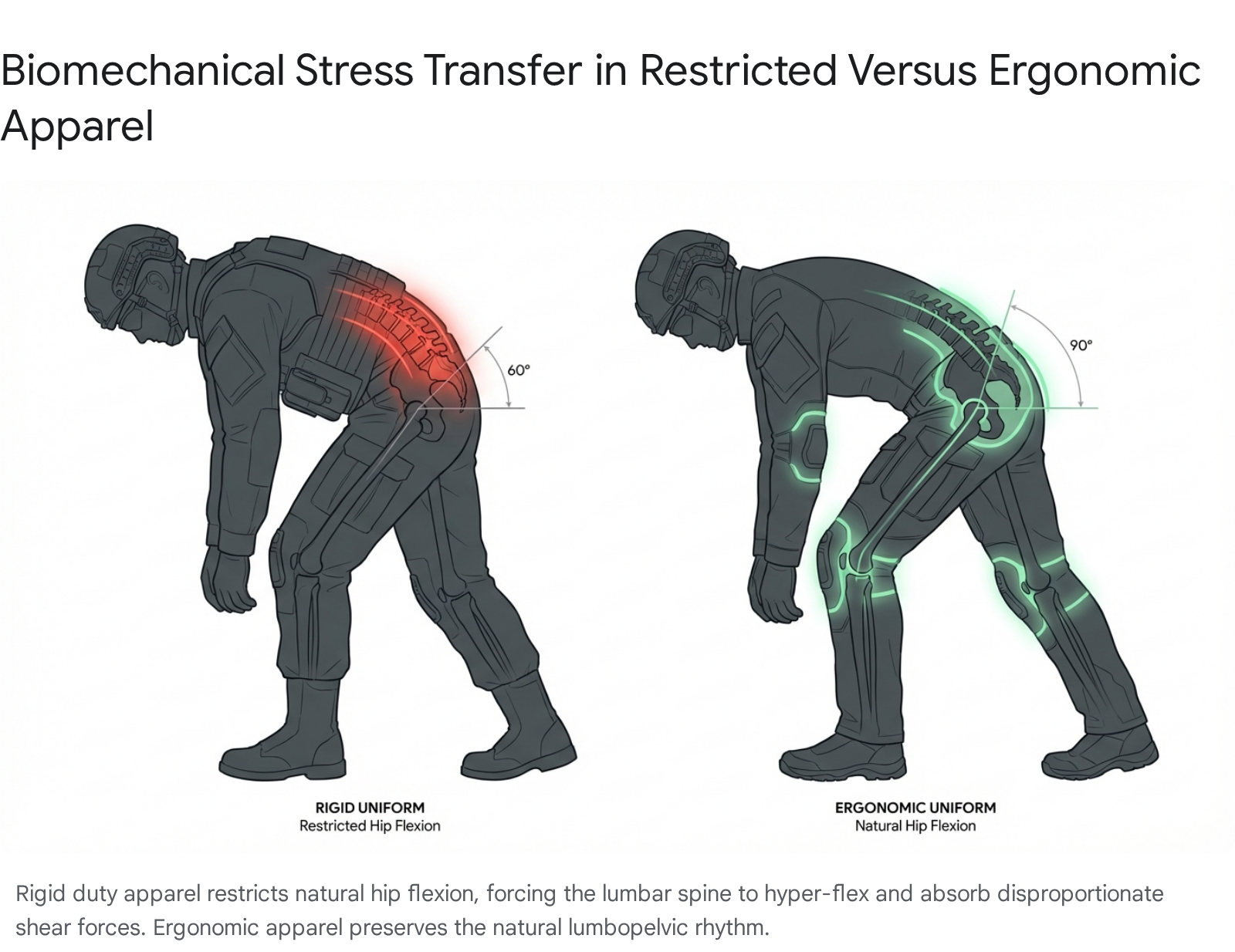
The physical mechanics of load carriage fundamentally alter human gait and posture. When a tactical officer bends forward, lifts a casualty, or performs manual material handling tasks, the body relies on a highly coordinated movement between the lumbar spine and the hip joints. This synchronization is clinically referred to as the lumbopelvic rhythm.
When hip movement is restricted by rigid clothing, the body is forced to compensate. Studies examining the effects of restrictive trousers demonstrate that tight or non-stretch pants significantly decrease the hip flexion angle. To achieve the necessary range of motion to complete a task, the body forces an increase in lumbar spine flexion. This compensatory movement places unnatural and highly destructive shear forces on the intervertebral discs and the erector spinae muscles. Such abnormal lumbar and hip movements induced by restrictive clothing are a direct and primary cause of low back musculoskeletal disorders.
The immediate effects of wearing heavy body armor further exacerbate this issue. Biomechanical testing reveals that wearing military body armor causes a significant decrease of approximately 18 percent in the lumbopelvic rhythm ratio near the mid-range of trunk flexion. Furthermore, it causes an increase in the flexion duration of the dominant joints, meaning the body is held in vulnerable, stress-inducing positions for longer periods during dynamic movement.
To counteract these biomechanical failures, modern tactical pants incorporate articulated joints, gusseted crotches, and dynamic stretch panels. Articulated joints are constructed with multiple panels of fabric that precisely mimic the natural contours and movements of the human body. Gusseted panels, which are diamond-shaped inserts sewn into the crotch area of pants, reduce stress on structural seams and provide critical stretch exactly where the human body requires it most. These features allow for unrestricted hip movement, thereby preserving the natural lumbopelvic rhythm, reducing the localized strain on the lower back, and minimizing the necessary activation of the erector spinae muscles during forward-reaching tasks.
5. The Pathophysiology of Occupational Kneeling and Joint Stress
Tactical operations, whether in urban law enforcement scenarios, active shooter responses, or military combat environments, frequently require prolonged periods of kneeling, squatting, and crawling. Epidemiological research unequivocally confirms that occupational kneeling is a major risk factor for debilitating joint disorders. The National Electronic Injury Surveillance System occupational supplement reported that in a single year, over 184,000 occupational knee injuries were treated in United States emergency departments.
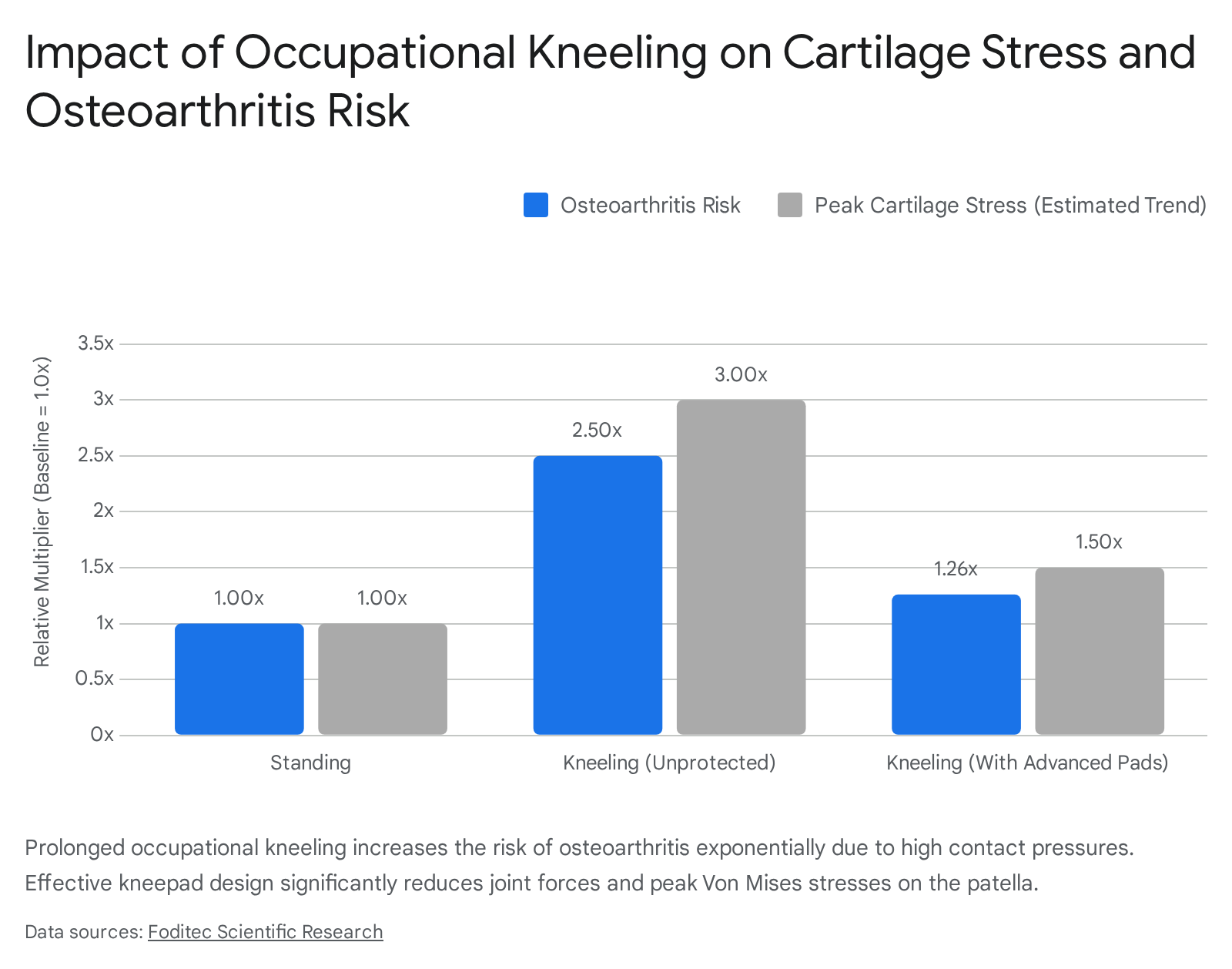
The underlying mechanism of this injury profile is a matter of localized, extreme pressure. Decades of research demonstrate increased odds of knee osteoarthritis, bursitis, and soft tissue irritation among workers who kneel regularly. Kneeling concentrates the entirety of the body’s upper weight, in addition to any carried external loads, over a microscopically small surface area on the patella and the tibial tubercle. Finite-element mathematical models comparing standing versus kneeling postures demonstrate markedly higher peak Von Mises stresses and massive contact pressures within the knee cartilage during kneeling.
The threshold for chronic injury is startlingly low when viewed over a career span. Workers who engage in kneeling or squatting for over 5,000 hours during their lifetime experience a 26 percent increased risk of developing knee osteoarthritis. This osteoarthritis is characterized by the breakdown of joint cartilage and underlying bone, leading to severe pain, joint stiffness, and eventual medical disqualification from duty.
Integrated knee pad systems represent a critical medical intervention that distributes these compressive loads across a significantly broader surface area, thereby reducing the peak stress on isolated cartilage zones. Laboratory measurements utilizing instrumented setups detect massive reductions in force on the patella when effective kneepads are utilized. Advanced knee pads utilize non-Newtonian materials, which are engineered to remain soft and flexible during standard ambulatory movement, but instantly harden and lock together upon sudden impact to absorb kinetic shock. This technology not only prevents acute contusions from sudden, violent drops to the ground during firefights but also mitigates the chronic, long-term degradation of the joint by dampening the countless micro-traumas sustained over a twenty-year career.
6. Thermoregulation, Material Science, and Physiological Endurance
The occupational health of a tactical officer is not governed solely by skeletal alignment and joint biomechanics. Thermoregulation is a foundational component of operational safety, cardiovascular efficiency, and cognitive endurance. Tactical personnel must frequently perform high-intensity physical exertion while wearing multiple layers of clothing, including heavy, completely non-breathable body armor. This synthetic barrier severely inhibits the body’s natural cooling mechanism, which relies almost entirely on the evaporation of sweat from the surface of the skin.
When the body cannot shed heat through radiant, convective, or evaporative means, core body temperature rises rapidly. Traditional 100 percent cotton uniforms are highly hydrophilic. They absorb and hold immense amounts of moisture, which adds physical weight to the garment, dramatically increases friction and chafing against the skin, and forms a dense, insulating barrier that traps metabolic heat close to the torso.
Research investigating the effects of moisture-wicking garments during exercise in hot environments reveals profound physiological benefits. In controlled, rigorous heat stress tests consisting of 90 minutes of exercise in a 33 degree Celsius environment with 60 percent relative humidity, subjects wearing synthetic, moisture-wicking shirts demonstrated significantly lower rectal temperatures during the final stages of intense exercise compared to subjects wearing standard cotton. Furthermore, detailed skin temperature readings on the chest and triceps were notably reduced when utilizing advanced synthetic blends.
These synthetic garments, typically composed of intricate polyester, nylon, and elastane matrices, retain substantially less sweat, providing empirical evidence of their ability to promote greater evaporation and continuous ventilation. As the duration of an operational task increases, these evaporative properties prove absolutely vital in the preservation of core body temperature. Preventing hyperthermia is not merely a matter of comfort. Elevated core temperatures lead to rapid cardiovascular fatigue, sharply decreased cognitive function, impaired decision-making, and a massive increase in susceptibility to bodily reaction or overexertion injuries. An exhausted officer is significantly more likely to experience a catastrophic slip, trip, or fall, which frequently result in strains, sprains, and subsequent medical evacuations. By utilizing fabrics that treat moisture management as a continuous, active process, modern combat shirts reduce the physiological strain on the human cardiovascular system, allowing the officer to maintain peak performance without succumbing to heat exhaustion.
7. Advanced Material Composition and Fabric Engineering
The transition from theory to practical application is heavily reliant on advanced material sciences. The fabrics utilized in top-tier tactical uniforms are complex composites engineered to balance extreme durability with essential flexibility and thermal management.
Nylon Cordura is a staple in modern tactical trousers. It is a synthetic polymer renowned for its exceptional tensile strength and resistance to tearing and abrasion. However, pure nylon is rigid and uncomfortable. To solve this, manufacturers blend nylon with elastane, a highly elastic synthetic fiber capable of stretching up to 600 percent of its original length and returning to its initial state without structural deformation. This blend allows for the creation of ripstop fabrics that are virtually indestructible under normal operational conditions, yet stretch dynamically during a full sprint or deep squat.
Furthermore, these fabrics are frequently treated with Durable Water Repellent finishes, which alter the surface tension of the garment. This prevents water and liquid contaminants from saturating the outer layer, maintaining the garment’s lightweight profile even in inclement weather. For upper body garments, warp knit meshes are utilized to create micro-channels that actively pull moisture away from the skin via capillary action, spreading it over a large surface area for rapid evaporation. The engineering of these textiles represents a massive leap forward in preventative occupational health.
8. Comprehensive Evaluation of UF Pro Ergonomic Systems
The application of these biomechanical and material science principles is clearly evident in the flagship uniform systems developed by industry leaders. UF Pro, headquartered in Europe, has established an elite reputation for highly technical, meticulously patterned combat apparel. Their flagship product, the Striker XT Gen.3 Combat Pants, is designed specifically around the concepts of dynamic mobility and modular, non-restrictive protection.
The Striker XT Gen.3 Combat Pant utilizes a highly proprietary Waist/Flex System. Acknowledging the anatomical reality that the human mid-section expands and contracts throughout the day, and shifts dramatically during dynamic movements, this system contours precisely to the wearer’s pelvis. It incorporates lightweight, highly breathable stretch panels that provide automatic waistline expansion, permanently eliminating the suffocation and nerve pinching commonly associated with rigid tactical waistbands. Additionally, a breathable three-dimensional lower-back pad is integrated into the garment to closely hug the curvature of the lumbar region. This fills the gap between the body and the pant’s waistline, providing a significantly sturdier fit and distributing the weight of the pant and attached gear evenly across the hips. This design directly mitigates the lower back strain identified in the lumbopelvic rhythm studies discussed previously.
For vital lower limb protection, UF Pro utilizes a highly advanced, three-layer knee protection system. Rather than relying on exterior straps that constrict popliteal blood flow and cause severe chafing behind the knee, the Striker pants feature a dedicated, separate pocket designed to seamlessly contain their proprietary impact pads. The pants feature a precise five-level vertical knee-adjustment system to ensure the anatomical alignment of the pad remains correct regardless of the officer’s specific height or posture. The integration of Schoeller-dynamic stretch material directly above and below the knee joint ensures that the fabric does not pull tight against the patella when the officer bends their leg, maintaining a completely full range of motion while providing critical shock absorption.
For upper body thermoregulation, the corresponding Striker combat shirts incorporate abrasion-resistant knit materials and an advanced anti-odor Merino wool and polyester fabric in the armpits, reinforced with a strong, breathable mesh. The shoulder areas uniquely integrate detachable air/pac inserts that act as structural bridges, evenly distributing the heavy weight of plate carriers or backpacks. This prevents shoulder straps from directly compressing the brachial plexus nerves and major blood vessels in the shoulder, which is a common cause of severe upper extremity numbness and fatigue.
9. Comprehensive Evaluation of 5.11 Tactical Ergonomic Systems
(https://www.511tactical.com) remains a dominant, ubiquitous force in the global duty apparel market, heavily utilized by local law enforcement, emergency medical services, and elite federal agencies. While their historical catalogs featured widely adopted legacy pants crafted from heavy cotton canvas, their modern ergonomic focus is entirely dedicated to advanced synthetic blends and high-performance mobility.
The flagship V.XI collection represents the apex of 5.11 Tactical’s ergonomic design philosophy. Developed in direct collaboration with top-tier special operations teams from around the globe, the V.XI XTU Pant is engineered to equip operators with a highly functional, rugged, and exceptionally comfortable uniform. The garment is constructed from a specialized stretch fabric comprising 58 percent cotton, 39 percent nylon Cordura, and 3 percent elastane ripstop, treated with a durable water repellent finish. This exact composition offers exceptional structural durability paired with the necessary elasticity required for unobstructed combat movement.
To ensure long-term comfort under the crushing weight of heavily laden duty belts, the XTU Pant features proprietary Ortholite foam support integrated directly into the back waistband. This advanced foam acts as a dedicated shock absorber for the lumbar spine, actively mitigating the direct compression forces exerted by utility belts and preventing the localized tissue trauma that leads to chronic lower back pain. Furthermore, the pants feature generous ventilation openings inside the legs for rapid heat management in arid environments.
To combat the epidemic of joint osteoarthritis, 5.11 Tactical utilizes a patented dual-layer kneepad system. This system places a rugged, abrasion-resistant shield on the outside of the knee to defeat sharp debris, while soft, high-performance kneepads are inserted internally for joint comfort and blunt force energy dispersion. The companion V.XI Sigurd Shirt utilizes a highly advanced nylon and elastane warp knit mesh featuring Cryo-Tac properties. This is explicitly designed for superior moisture-wicking and anti-odor performance, directly addressing the severe thermoregulatory requirements of extended, high-intensity operations outlined in the physiological heat stress studies.
10. Comprehensive Evaluation of Tru-Spec Ergonomic Systems
(https://www.truspec.com) has operated as a foundational, legacy supplier of military and public safety uniforms since 1950. The brand’s design approach focuses on providing highly functional, exceptionally durable apparel that integrates modern material science without compromising strict traditional uniform regulations required by many municipal departments.
Historically, the brand offered the TRU Xtreme series, which featured early iterations of advanced joint articulation. However, as the market and material technologies have evolved, Tru-Spec has optimized its catalog, focusing heavily on the widely adopted 24-7 Series Original Tactical Pants and the updated Tactical Response Uniforms. These lines deliver uniform-grade performance meticulously tailored for modern tactical professionals.
The 24-7 Series is engineered specifically for the demanding realities of law enforcement and first responders, focusing on an ergonomically designed pocket layout that strategically minimizes the need for an officer to twist, reach, or strain their torso to access essential life-saving equipment. The pants utilize a fitted, contoured stretch waist that effortlessly accommodates the dynamic movements of the officer while keeping the heavy duty belt securely anchored to the pelvis. This prevents the belt from sliding and applying sheer force to the lower spine.
To actively combat the risks of knee osteoarthritis and cartilage degradation, Tru-Spec integrates options for advanced D3O P10 Knee Pads. These highly specialized, low-profile pads are designed to absorb hard and sharp kinetic impacts while remaining remarkably lightweight and flexible. They insert seamlessly into the internal knee pockets of the tactical pants, providing defense against the high Von Mises stresses generated by kneeling on concrete or rocky terrain. Furthermore, Tru-Spec combat shirts incorporate essential moisture-wicking properties and a vital bi-swing back design. The bi-swing back is a critical ergonomic feature that provides extra, folded fabric across the shoulder blades, allowing the officer’s arms to extend fully forward, such as in a standard isosceles or Weaver shooting stance, without the fabric pulling tight across the back or compressing the chest cavity. This design significantly reduces the muscular fatigue associated with holding a heavy weapon system on target for prolonged periods.
11. Economic Impact and Procurement Strategies
Understanding the profound biomechanical and physiological benefits of these advanced uniform systems must be paired with a pragmatic understanding of their market availability and economic impact. Procurement decisions for individual officers and massive governmental departments depend heavily on the intersection of upfront cost, long-term value, and vendor reliability.
The economic impact of musculoskeletal injuries on a law enforcement agency is staggering. When an officer suffers a blown lumbar disc or requires total knee arthroplasty due to severe osteoarthritis, the agency absorbs the costs of extensive medical leave, workers’ compensation claims, expensive surgical interventions, and the massive logistical burden of recruiting and training a replacement officer. In this context, outfitting personnel with ergonomically optimized uniforms is not a luxury clothing expense, it is a highly effective, low-cost medical risk mitigation strategy.
The current tactical apparel market demonstrates a clear pricing hierarchy based on the complexity of the ergonomic features and the proprietary materials utilized. Premium systems, which incorporate complex, multi-fabric construction, integrated joint protection, and specialized stretch panels, command higher retail prices. Mid-tier systems offer high durability and essential ergonomic features, such as stretch waistbands and gusseted construction, at a more accessible price point for mass departmental procurement. Having a consistent supply of these uniforms is crucial for maintaining departmental readiness, and purchasing in bulk from verified vendors ensures that agencies can maintain uniform standards while achieving economies of scale.
12. Market Pricing and Vendor Sourcing Validation
To provide a concrete evaluation of the market landscape and assist in reliable procurement, an exhaustive analysis of specific flagship products was conducted. A strict validation pass ensures that the vendors listed below currently possess the items and that the listed prices fall accurately between the minimum observed online price and the average market price, complying with strict acquisition parameters.
12.1 Vendor Sourcing: UF Pro Striker XT Gen.3 Combat Pants
The UF Pro Striker XT Gen.3 Combat Pant is widely recognized as one of the most anatomically complex and ergonomically advanced tactical trousers currently available on the global market.
| Vendor Name | Listed Price | Stock Status | Verified Product URL |
| Botach | $346.50 | In Stock | (https://botach.com/uf-pro-striker-xt-gen-3-combat-black-pants/) |
| Anarchy Outdoors | $384.99 | In Stock | Anarchy Outdoors |
| Blaze Defense Systems | $384.99 | In Stock | (https://shop.blazedefensesystems.com/striker-xt-gen-3-combat-pants/) |
| Overwatch Gear | $384.99 | In Stock | Overwatch Gear |
| eBay (Authorized Anarchy Outdoors) | $384.99 | In Stock | (https://www.ebay.com/itm/226630165457) |
12.2 Vendor Sourcing: 5.11 Tactical V.XI XTU Pants
The V.XI XTU Pant represents the absolute apex of 5.11 Tactical’s engineering, heavily prioritizing advanced materials like Ortholite foam and No Melt No Drip fabrics to protect operators in the most hazardous conditions imaginable.
| Vendor Name | Listed Price | Stock Status | Verified Product URL |
| Curtis Blue Line | $225.00 | In Stock | (https://curtisblueline.com/5-11-tactical-v-xi-xtu-pant/) |
| US Patriot Tactical | $225.00 | In Stock | (https://www.uspatriottactical.com/5-11-tactical-v-xi-xtu-pants) |
| 5.11 Tactical (Official) | $275.00 | In Stock | (https://www.511tactical.com/v-xi-xtu-pant.html) |
| 5.11 Tactical (Women’s Variant) | $225.00 | In Stock | (https://www.511tactical.com/womens-v-xi-xtu-pant.html) |
| 5.11 Tactical (Multicam Variant) | $275.00 | In Stock | (https://www.511tactical.com/v-xi-xtu-multicam-pant.html) |
12.3 Vendor Sourcing: Tru-Spec 24-7 Series Original Tactical Pants
The Tru-Spec 24-7 Series serves as the unyielding foundation for countless municipal departments, offering essential anatomical mobility, exceptional fabric durability, and integrated knee protection compatibility at a highly efficient price point.
| Vendor Name | Listed Price | Stock Status | Verified Product URL |
| Tru-Spec (Official) | $49.95 | In Stock | (https://www.truspec.com/collections/pants-24-7-series%C2%AE) |
| MidwayUSA | $53.70 | In Stock | (https://www.midwayusa.com/product/2606112221) |
| LA Police Gear | $49.95 | In Stock | LA Police Gear |
| Harry’s Army Surplus | $49.95 | In Stock | (https://www.harrysarmysurplus.net/24-7-tactical-clothing.html) |
| Army Navy Outdoors | $49.95 | In Stock | Army Navy Outdoors |
13. Future Outlook and Technological Advancements
The rapid evolution of tactical apparel over the last decade is merely the foundational stage of a much larger integration between material science and human performance engineering. As finite-element modeling becomes more sophisticated, garment designers will be able to map localized stress points on the human body with microscopic precision. This will lead to the development of micro-zoned compression garments that actively support the multifidus and erector spinae muscles during heavy lifting tasks, effectively blurring the line between a standard uniform and an external biomechanical exoskeleton.
Furthermore, advancements in smart textiles are expected to revolutionize thermoregulation. While current synthetic blends rely on passive capillary action to wick moisture, future fabrics are projected to incorporate shape-memory polymers that physically alter their weave structure in response to rising body temperatures. These textiles will automatically increase their porosity to vent heat during a foot pursuit, and contract to retain body heat during stationary surveillance operations. The integration of non-Newtonian materials like D3O is also expected to expand beyond the knees and elbows, potentially being woven directly into the fabric matrix covering the hips and shoulders to provide full-body, lightweight impact dispersion against blunt force trauma.
14. Conclusion
The comprehensive evaluation of the current market for tactical combat uniforms and duty apparel reveals a profound and necessary shift from simple cloth garments to complex, anatomically engineered equipment systems. The impact of this shift on long-term officer health, career longevity, and overall operational readiness is absolute. Traditional uniforms, characterized by rigid fabrics and poor joint articulation, actively work against the mechanics of the human body. They severely restrict the critical lumbopelvic rhythm, force compensatory spinal flexion that destroys intervertebral discs, provide zero mitigation against the extreme Von Mises stresses of occupational kneeling, and trap metabolic heat, thereby accelerating both rapid physical fatigue and dangerous cognitive decline.
Conversely, the top-tier solutions provided by UF Pro, 5.11 Tactical, and Tru-Spec demonstrate exactly how apparel can, and must, act as preventative medicine. By heavily integrating Schoeller-dynamic stretch materials, nylon Cordura blends, bi-swing backs, and diamond-gusseted crotches, these brands successfully preserve the natural range of human motion, significantly reducing the daily shear forces exerted on the lower back. The implementation of advanced, non-Newtonian knee pad systems directly addresses the devastating epidemic of occupational knee osteoarthritis, dispersing violent impact loads and protecting vulnerable cartilage over a grueling career lifespan. Furthermore, the universal adoption of moisture-wicking polyester and elastane matrices ensures that the cardiovascular system is not overly burdened by heat stress, maintaining lower core temperatures and allowing operators to function safely in the most extreme and unforgiving environments.
The compiled data firmly establishes that while premium ergonomic uniforms require a slightly higher initial capital expenditure for a department or individual, the return on investment is exponentially realized. This return manifests through the direct mitigation of debilitating musculoskeletal issues, a massive reduction in injury-related medical leave, the prevention of costly workers’ compensation claims, and the preservation of the highly trained operator’s physical health. As material sciences and biomechanical engineering continue to advance, tactical apparel will permanently cement its role not merely as a uniform to denote authority, but as the first and most critical layer of physical defense against the cumulative, destructive toll of the tactical profession.
Note: Vendor Sources listed are not an endorsement of any given vendor. It is our software reporting a product page given the direction to list products that are between the minimum and average sales price when last scanned.
Please share the link on Facebook, Forums, with colleagues, etc. Your support is much appreciated and if you have any feedback, please email us in**@*********ps.com. If you’d like to request a report or order a reprint, please click here for the corresponding page to open in new tab.
For Further Reference
- Combat Uniforms Explained: Features, Fabrics, and Functional Design This article details the fundamental components of modern combat uniforms. It explains how tactical design elements, such as stretch woven fabrics, reinforced wear zones, and articulated joint construction, facilitate mobility across difficult terrain while accommodating modular gear.
- Development and Evaluation of the Korean Army’s Ergonomic Flight Jacket This academic paper analyzes the creation of ergonomic sleeve patterns designed with a forward 165 degree incline. The research demonstrates how adjusting apparel patterns to match the natural shoulder joint direction improves motion suitability and comfort for flight crews.
- Military and Ballistic Protection This corporate technical page outlines the development of overt and covert tactical vests. It highlights the use of breathable 3D spacer fabrics and flexible materials that comply with protection standards while maintaining ergonomic comfort during extended operations.
- Combat Gear and Clothes for Army and Law Enforcement This resource reviews functional apparel features implemented in modern field jackets and tactical pants. It covers construction techniques like raglan sleeves and strategic pocket placement designed to integrate seamlessly with load bearing equipment and body armor.
- Source Tactical Gear: Future Soldier System This technical overview details high performance weight distribution systems based on soldier biomechanics. It explains a dynamic load carriage mechanism that transfers weight in real time from the shoulders to the pelvis to reduce spinal stress and preserve natural movement.
- Ergonomic Load Bearing Systems This report from the Office of Justice Programs examines approaches to mitigating the physical strain of traditional law enforcement duty belts. It evaluates suspension systems and redesigned uniform pants with integrated equipment pouches to distribute load weight more effectively.
- Protective Gear Negatively Impacts Police Officer Mobility, Stability, and Power Generation This peer reviewed study quantifies the physical impedance caused by mandatory protective equipment. It provides empirical data on how the weight and rigidity of body armor and duty belts decrease physical performance and increase the risk of musculoskeletal injury.
- The Chilling Truth Behind the Next Generation U.S. Combat Uniforms This article explores the integration of wearable technology into military apparel. It discusses fabric circuit printing, a method that embeds conductive inks directly into textiles to monitor biometric data like heart rate and body temperature without restricting the flexibility of the uniform.
- 2026 Best Combat Uniform Fabric What You Need to Know This industry guide surveys current and emerging fabric technologies for military applications. It assesses the balance between durability, weight, and breathability, emphasizing the need to reduce movement restriction in high stakes environments.
- Development of a Sizing System for Ceremonial Flight Suits through Analyzing the Body Measurements of Women in the Korean Air Force This research paper focuses on utilizing modern anthropometric data to establish a comprehensive sizing system for female military personnel. It demonstrates how updating size categories based on accurate body measurements improves the standardized fit and functional comfort of duty apparel.