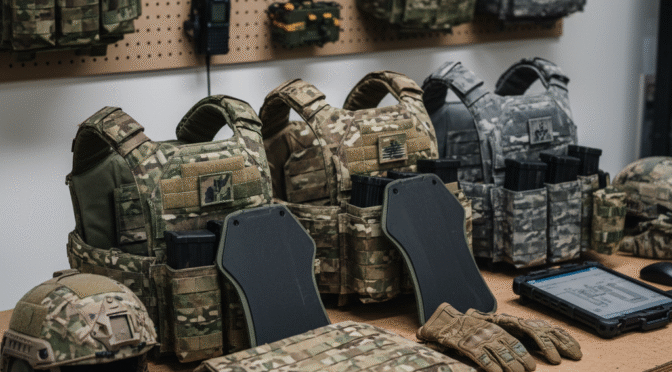
This report presents a comprehensive analysis of the top ten law enforcement body armor systems in the United States, ranked according to a composite methodology that prioritizes social media analytics, operator sentiment, and technical performance. The findings reveal a dynamic and bifurcated market. On one side are established, institutional suppliers like Point Blank and Safariland, which maintain strong relationships with agencies and are known for their NIJ-certified, reliable systems. On the other side are direct-to-consumer disruptors, notably Safe Life Defense and RMA Armament, which have achieved significant market penetration and mindshare through aggressive online marketing and a focus on specific value propositions, such as multi-threat capability or extreme affordability.
The top-ranked system, the Safe Life Defense Multi-Threat Vest, demonstrates the power of this new market dynamic, achieving the highest Total Mentions Index (TMI) in this analysis. However, its prominence is accompanied by deeply polarized operator feedback, highlighting a critical divide between broad market popularity and the exacting standards of technical experts. In contrast, systems like the RMA Armament 1155 Level IV plate and the Crye Precision JPC 2.0 plate carrier command immense respect within expert communities for their exceptional performance in specific categories—ballistic protection and lightweight modularity, respectively—despite their more niche market presence.
1.2. Dominant Market Trends
The analysis identifies three critical trends shaping procurement decisions in the U.S. law enforcement body armor market. First is the relentless pursuit of weight reduction. Operator feedback and survey data consistently identify weight and comfort as primary concerns, directly impacting officer fatigue, mobility, and willingness to consistently wear protective equipment.1 This has driven innovation in materials, with advanced composites like Ultra-High-Molecular-Weight Polyethylene (UHMWPE) and proprietary aramid blends becoming industry standards.3
Second is the non-negotiable requirement for National Institute of Justice (NIJ) certification. For law enforcement agencies, NIJ compliance is the baseline for performance and a prerequisite for accessing federal grant funding, making it the most critical technical specification for any duty-rated armor.5
Third is the persistent tension between the high cost of advanced, lightweight materials and the reality of constrained departmental budgets. This creates a market where value is not measured by price alone but by a complex calculation involving protection level, weight, durability, and the annualized cost of ownership over the armor’s warranted service life.
1.3. Report Objective and Methodology Synopsis
The objective of this report is to provide law enforcement procurement professionals with a nuanced, operator-centric assessment of the body armor market. By integrating quantitative social media analytics with qualitative performance reviews and objective technical data, this analysis moves beyond manufacturer marketing claims to reflect real-world performance and user satisfaction. The methodology, detailed in the Appendix, is designed to identify the most discussed and debated armor systems and subject them to a rigorous, multi-faceted evaluation to support informed, mission-critical purchasing decisions.
Section 2: The Operational Imperatives of Modern Law Enforcement Armor
2.1. The Evolving Threat Landscape
The operational environment for modern U.S. law enforcement is characterized by a dual-threat reality that dictates body armor selection. The most frequent threat remains handguns; FBI data from 1987 to 2015 shows that 92% of officers feloniously killed by firearms were killed with handguns, making reliable handgun protection the foundation of daily-wear armor.7 Consequently, soft armor vests rated to NIJ Level IIIA, capable of stopping common handgun calibers up to a.44 Magnum, have become the de facto standard for patrol officers.8 This level of protection offers a critical balance of mobility and defense against the most probable dangers encountered during routine duties.10
Simultaneously, the proliferation of high-velocity rifle platforms, such as AR-15 and AK-47 variants, has introduced a less frequent but more lethal threat.11 The rise of active threat incidents and targeted ambushes on officers has made rifle-rated protection an essential component of an agency’s protective posture.12 This has led to the widespread adoption of a two-tiered armor strategy. Officers wear concealable or overt Level IIIA soft armor for daily patrol, while keeping a separate plate carrier equipped with NIJ Level III or Level IV hard armor plates readily accessible in their vehicle.9 These “spicy call” or “active shooter” kits provide the necessary protection against rifle rounds when responding to high-risk situations, ensuring officers can escalate their protective capabilities to match the threat level.9
2.2. The Criticality of NIJ Certification
In the U.S. law enforcement market, National Institute of Justice (NIJ) certification is the unequivocal standard for ballistic performance and product legitimacy. The current NIJ Standard-0101.06 provides a rigorous, repeatable testing protocol that manufacturers must pass to have their armor models included on the NIJ’s Compliant Products List (CPL).5 This list serves as the primary vetting tool for law enforcement agencies.
The importance of this certification extends beyond performance assurance; it is directly tied to federal funding. To be eligible for the Department of Justice’s Bulletproof Vest Partnership (BVP) grant program, which helps agencies purchase armor, departments must have a written mandatory-wear policy and must purchase armor models that are NIJ certified.1 This federal requirement effectively makes NIJ certification a prerequisite for any manufacturer seeking to be a serious contender in the institutional law enforcement market.
The stringency of the NIJ’s testing program underscores its value. As of June 2018, of 1,194 unique armor models submitted for compliance testing since 2009, 315 failed due to ballistic test failures, and over 50 more failed for inconsistent construction.7 This high failure rate highlights the danger of relying solely on a manufacturer’s claims of being “NIJ compliant” or “tested to NIJ standards” without verification on the official CPL. The upcoming NIJ Standard 0101.07 is expected to further refine these requirements, incorporating improved test methods and addressing additional rifle threats faced by officers, reinforcing the NIJ’s central role in driving industry standards forward.7
2.3. The Operator’s Triangle: Balancing Protection, Mobility, and Comfort
The selection of body armor is not a simple matter of choosing the highest protection level. Instead, it is a complex balancing act between three competing factors: protection, mobility, and comfort. The ideal armor system is one that provides adequate defense against realistic threats without unduly compromising an officer’s ability to move, fight, and perform their duties over an extended shift.5
The most fundamental trade-off is between protection and mobility. While Level IV plates offer the highest level of ballistic protection, their weight and rigidity can significantly hinder an officer’s agility.14 An officer burdened by excessively heavy armor becomes a slower, less mobile target, potentially negating the advantage of the added protection.5 This is a recurring theme in operator discussions, where the weight of plates like the 8.3-pound RMA 1155 is a major point of concern, with users noting that they would rather “just die than hike in them”.15 This sentiment underscores a critical principle: armor is an adjunct to, not a replacement for, sound tactics and mobility.
The second trade-off exists between comfort and consistent wear. Law enforcement surveys reveal that comfort is a primary determinant of whether an officer will consistently wear their issued armor.1 Vests that are hot, bulky, or poorly fitted are more likely to be left in a locker or vehicle, leaving an officer unprotected during an unexpected critical incident.13 The top three features requested by officers for the next generation of body armor are improved comfort (84.4%), improved fit (72.6%), and reduced weight (63.9%).1 This is not a matter of convenience but of safety. The physical toll of wearing heavy, non-breathable armor for a 12-hour shift leads to significant fatigue. This fatigue is not merely a comfort issue; it is an operational risk. It can degrade an officer’s cognitive function, slow their reaction time, and impair their physical performance, making them less effective and potentially more vulnerable in a critical situation.2 Therefore, metrics such as weight and thermal performance are not secondary considerations but mission-critical indicators of a system’s overall effectiveness.
Section 3: Market Leaders in Online Discourse: A Sentiment-Driven Ranking
3.1. Introduction to the Top 10
The following list of ten body armor systems represents the most prominent and discussed products within the U.S. law enforcement sphere, as determined by an analysis of social media platforms, user forums, and online video content. The ranking is derived from a composite score that weights the volume of discussion (Total Mentions Index) and the balance of positive versus negative user sentiment. This list provides a snapshot of the current market, capturing a diverse range of products from concealable Level IIIA soft armor panels, which form the backbone of daily patrol protection, to Level IV hard rifle plates and the modular plate carriers that integrate them into tactical systems. The ranking reflects not just what is issued, but what is actively being discussed, debated, purchased, and used by individual officers and agencies today.
3.2. Table 1: Social Media & Sentiment Index
The following table provides the primary ranking based on social media presence and operator sentiment. A high Total Mentions Index (TMI) indicates significant visibility and discussion volume within the online community. The sentiment percentages offer a clear, at-a-glance measure of user satisfaction and flag potential performance or quality issues that warrant further investigation. This data serves as a strategic filter, highlighting the armor systems that are most relevant in the current market and providing an initial assessment of their reception by the end-user community.
| Rank | Armor System | Type | Total Mentions Index (TMI) | Positive Sentiment (%) | Negative Sentiment (%) |
| 1 | Safe Life Defense Multi-Threat Vest | Soft Armor Vest | 136 | 68% | 32% |
| 2 | RMA Armament 1155 Plate | Hard Plate | 115 | 81% | 19% |
| 3 | Crye Precision JPC 2.0 | Plate Carrier | 98 | 94% | 6% |
| 4 | Point Blank Alpha Elite (AXBIIIA) | Soft Panel | 72 | 89% | 11% |
| 5 | Velocity Systems Scarab LT | Plate Carrier | 65 | 92% | 8% |
| 6 | AR500 Armor (AR550 Plate) | Hard Plate | 61 | 33% | 67% |
| 7 | Armor Express RZR-XT-IIIA | Soft Panel | 55 | 95% | 5% |
| 8 | Safariland Hardwire HW-2019-01-SB | Soft Panel | 49 | 96% | 4% |
| 9 | Slate Solutions SLXIIIA | Soft Panel | 44 | 93% | 7% |
| 10 | Armor Matrix Systems PP-GEN7-IIIA | Soft Panel | 38 | 97% | 3% |
Section 4: Comparative Analysis of Technical and Performance Metrics
4.1. Objective Specifications
This section presents a direct comparison of the manufacturer-provided technical specifications for the top ten ranked armor systems. By collating objective data points such as NIJ level, material composition, weight, thickness, warranty, and price, this analysis allows for a quantitative, evidence-based evaluation. This data provides the foundational context for understanding the qualitative feedback and subjective performance scores that follow. It enables procurement professionals to correlate user sentiment directly with the underlying physical properties and commercial terms of each product, facilitating a more rigorous and informed decision-making process.
4.2. Table 2: Comparative Technical Specifications
The table below maintains the established ranking from the social media analysis, allowing for a direct comparison of the hard data behind each system. This format is designed to connect the “what” of public opinion with the “why” of technical reality. For instance, widespread complaints about a plate’s weight can be immediately quantified, just as praise for a panel’s concealability can be correlated with its measured thickness. This data is essential for validating user claims and assessing the trade-offs inherent in each design.
| Rank | Armor System | NIJ Level / Threat | Primary Material(s) | Areal Density / Plate Weight | Thickness (in) | Standard Warranty (Years) | Price Range (Min-Max $) |
| 1 | Safe Life Defense Multi-Threat Vest | IIIA / IIIA+ | Para-Aramid | ~ | ~ | 5 | $400 – $700 |
| 2 | RMA Armament 1155 Plate | IV | Alumina Ceramic / PE | 8.3 lbs | 1.0 | 10 | $120 – $160 |
| 3 | Crye Precision JPC 2.0 | Carrier Only | US Materials | ~1.1 lbs | N/A | N/A | $260 – $280 |
| 4 | Point Blank Alpha Elite (AXBIIIA) | IIIA | Aramid / UHMWPE | 0.79 lbs/ft² | 0.19 | 5 | $996 – $2,217 |
| 5 | Velocity Systems Scarab LT | Carrier Only | ULTRAcomp™ / US Materials | ~2.5 lbs | N/A | N/A | $312 – $342 |
| 6 | AR500 Armor (AR550 Plate) | III+ / RF2 | AR550 Steel | 8.0 – 11.0 lbs | ~0.70 | 5 | $100 – $200 |
| 7 | Armor Express RZR-XT-IIIA | IIIA | Aramid / UHMWPE | 0.84 lbs/ft² | 0.20 | 5 | $895 – $1,785 |
| 8 | Safariland Hardwire HW-2019-01-SB | IIIA | UHMWPE (Dyneema®) | 0.68 lbs/ft² | 0.23 | 5 | $893 – $1,499 |
| 9 | Slate Solutions SLXIIIA | IIIA | Aramid / UHMWPE | 0.86 lbs/ft² | 0.21 | 5 | $599 – $950 |
| 10 | Armor Matrix Systems PP-GEN7-IIIA | IIIA | UHMWPE | 0.96 lbs/ft² | 0.23 | 7 | $550 – $600 |
4.3. Subjective Performance and Operator Satisfaction
While technical specifications provide a crucial baseline, they do not capture the full spectrum of an armor system’s performance in the field. This section translates the vast amount of qualitative data from operator reviews, forum discussions, and expert analysis into a standardized, quantitative scoring matrix. By assigning a numerical score from 1 (poor) to 10 (excellent) for key performance attributes, this analysis offers a comparative view of how these systems perform in terms of real-world wearability, protective confidence, and long-term value. These scores synthesize the nuanced feedback on factors that are difficult to measure but are critically important to the end-user, such as comfort over a long shift, perceived durability, and overall satisfaction.
4.4. Table 3: Performance & Operator Satisfaction Matrix
This matrix provides a holistic “operator’s score” that complements the social media metrics and technical data. It is the most interpretive component of the analysis, designed to quantify subjective user experience. For example, “Thermal Performance” is scored based on mentions of breathability, cooling liners, and complaints of heat retention, while “Durability” reflects comments on material quality, stitching, and resistance to daily wear and tear. This table offers a comprehensive, at-a-glance summary of each system’s strengths and weaknesses from the perspective of those who depend on it most.
| Rank | Armor System | Weight (Lightness) | Thermal Performance (Coolness) | Stopping Power (Confidence) | Durability (Longevity) | Life Expectancy | Warranty | Customer Satisfaction |
| 1 | Safe Life Defense Multi-Threat Vest | 3 | 6 | 8 | 6 | 5 | 5 | 6 |
| 2 | RMA Armament 1155 Plate | 2 | 5 | 10 | 9 | 10 | 10 | 8 |
| 3 | Crye Precision JPC 2.0 | 10 | 9 | N/A | 9 | N/A | N/A | 10 |
| 4 | Point Blank Alpha Elite (AXBIIIA) | 8 | 7 | 9 | 9 | 5 | 5 | 9 |
| 5 | Velocity Systems Scarab LT | 7 | 8 | N/A | 10 | N/A | N/A | 9 |
| 6 | AR500 Armor (AR550 Plate) | 1 | 4 | 6 | 8 | 5 | 5 | 3 |
| 7 | Armor Express RZR-XT-IIIA | 9 | 7 | 9 | 8 | 5 | 5 | 9 |
| 8 | Safariland Hardwire HW-2019-01-SB | 10 | 6 | 9 | 8 | 5 | 5 | 9 |
| 9 | Slate Solutions SLXIIIA | 9 | 7 | 9 | 8 | 5 | 5 | 9 |
| 10 | Armor Matrix Systems PP-GEN7-IIIA | 7 | 7 | 9 | 8 | 7 | 7 | 9 |
Section 5: In-Depth Profiles of Top-Tier Systems
5.1. Safe Life Defense Multi-Threat Vest (IIIA/IIIA+)
Market Position: Safe Life Defense has established itself as a dominant force in the direct-to-consumer body armor market through a combination of aggressive social media marketing, influencer endorsements, and a product focus that appeals to a broad audience including law enforcement, EMS, security personnel, and civilians.17 The brand’s high visibility is reflected in its number one ranking in this report’s Total Mentions Index (TMI). Its value proposition centers on “multi-threat” protection, offering not just ballistic resistance but also strike and slash resistance in its standard Level IIIA vest, a feature that resonates strongly with users looking for all-in-one protection.20
Social Sentiment: The brand’s high TMI is accompanied by deeply polarized sentiment. On platforms like YouTube and in general user forums, positive reviews are common. Users frequently praise the vest’s professional appearance, perceived quality of materials, comfortable fit, and the peace of mind offered by its multi-threat capabilities.17 The company’s customer service is also often cited as responsive and helpful.19 However, within more specialized, expert-driven communities such as the r/QualityTacticalGear subreddit, the sentiment is markedly more critical. Knowledgeable users frequently question the origin of the ballistic materials, with some derisively labeling them “Chinesium,” and raise concerns about the company’s NIJ certification claims, particularly regarding the specific models listed on the NIJ’s Compliant Products List versus what is marketed.23 Critiques consistently point out that the vests are significantly thicker and heavier than comparable offerings from established competitors, a claim supported by independent analysis.24
Technical Analysis: The Safe Life Defense Multi-Threat vest is constructed primarily from a custom para-aramid material.21 The standard Level IIIA model is tested to NIJ-STD-0101.06 and is designed to defeat common handgun rounds up to.44 Magnum, as well as shotgun slugs and buckshot.21 The “IIIA+” model is an enhanced version that adds NIJ Level 1 spike protection (rated to 36 joules of force) and is specifically tested against less common but challenging rounds like the FN 5.7x28mm 40gr and Liberty Civil Defense 9mm.25 While these special threat ratings are a key marketing point, technical analysis from critics suggests the vest’s physical properties are suboptimal. One detailed analysis estimates the areal density at approximately 1.84 lbs/ft² and the thickness at around 0.40 inches, which is more than two standard deviations above the industry average for thickness.24 This excess bulk and weight is a significant performance trade-off for the added multi-threat capabilities.
Performance: In terms of performance, the vest receives positive marks for its full side protection, which provides approximately 15% more coverage than some competing designs.21 Users find the 10-point adjustment system and cooling mesh liner contribute to a comfortable fit for daily wear.21 The warranty package is standard for the industry, offering a 5-year warranty on the ballistic panels and a 2-year warranty on the carrier.21 A notable feature is the company’s incident replacement guarantee, which promises a free replacement if the armor saves a user’s life in a documented incident.21 Despite these positive attributes, the vest’s performance is hampered by its weight and thickness, which ranks it poorly in concealability and long-term comfort when compared to lighter, thinner, and more technologically advanced soft armor solutions from competitors.
5.2. RMA Armament 1155 Plate (Level IV)
Market Position: RMA Armament has carved out a commanding position as the market leader for affordable, high-performance Level IV hard armor plates. The company, founded by a former U.S. Marine and law enforcement officer, emphasizes its 100% American-made manufacturing process and materials, a factor that resonates strongly with its target audience.15 The Model 1155 plate, in both its single-curve and multi-curve variants, is exceptionally popular in online communities like Reddit, where it is consistently recommended as the best entry-level or budget-conscious choice for protection against rifle threats.16 Its reputation is built on providing military-grade protection at a price point accessible to individual officers and civilians.
Social Sentiment: The RMA 1155 enjoys a high TMI with overwhelmingly positive sentiment focused on two key attributes: stopping power and value. User reviews and video tests repeatedly demonstrate the plate’s ability to exceed the NIJ Level IV standard, which requires stopping a single.30-06 M2 Armor Piercing round.30 RMA’s plates are lauded for their multi-hit capability, with tests showing them withstanding numerous impacts from various high-velocity rifle rounds without penetration.15 This robust performance, combined with a price often under $160 per plate, creates an exceptional value proposition that users praise extensively.28 The primary and almost exclusive point of negative feedback is the plate’s weight. At 8.3 pounds per plate, it is frequently described as “heavy as cinder blocks” or “obnoxious,” with users cautioning that it is not suitable for long-duration wear or missions requiring high mobility.16
Technical Analysis: The Model 1155 plate is constructed from a composite of an Alumina Oxide ceramic strike face and a polyethylene backer.15 The use of Alumina is a deliberate engineering choice that directly influences the plate’s primary characteristics. Alumina is a dense, tough, and relatively inexpensive ceramic, which allows RMA to produce a highly effective and affordable plate.33 Its material properties provide excellent multi-hit performance with minimal crack propagation compared to more expensive, lighter ceramics like Silicon Carbide (SiC) or Boron Carbide (B4C).33 However, this durability and low cost come at the direct expense of weight. The plate’s 1-inch thickness and 8.3-pound weight are a direct result of its Alumina construction.15 The product is backed by an industry-leading 10-year manufacturer’s warranty, reflecting confidence in the material’s stability and longevity.15
Performance: The RMA 1155’s performance profile is defined by extremes. It ranks at the absolute top for stopping power and confidence, with its proven ability to defeat high-level threats making it a trusted life-saving tool. Its durability is also considered excellent. However, it ranks at the bottom for weight, which significantly impacts user comfort and mobility. While the multi-curve (1155MC) version is noted to improve ergonomics and perceived comfort compared to the single-curve model, the sheer mass remains a limiting factor.29 For static roles, home defense, or short-duration high-risk responses, its performance is exceptional. For patrol officers or tactical operators who require sustained mobility, the weight penalty is a serious consideration that may lead them to seek lighter, albeit significantly more expensive, alternatives.
5.3. Crye Precision JPC 2.0 (Plate Carrier)
Market Position: The Crye Precision JPC (Jumpable Plate Carrier) 2.0 is widely regarded as the industry benchmark for lightweight, minimalist, and high-performance plate carriers. It has earned a prestigious reputation as the carrier of choice for elite U.S. military special operations forces, and this adoption has driven its popularity within the law enforcement and civilian tactical communities.34 The JPC 2.0 is not a budget item; it is a premium product designed for operators who prioritize maximum mobility, weight savings, and modularity above all else. Its market position is that of a top-tier, mission-proven system for the most demanding users.
Social Sentiment: The JPC 2.0 garners an exceptionally high TMI with almost universally positive sentiment. Online discussions and reviews are replete with praise for its revolutionary design. The most frequently lauded feature is its incredibly low weight, at just over one pound for the entire carrier, which significantly reduces the overall burden on the operator when paired with heavy armor plates.36 Users also extensively praise its modularity, enabled by compatibility with Crye’s AVS detachable front flaps and a system of zippers on the back for attaching mission-specific panels.35 The SKELETAL™ CUMMERBUND is another key feature frequently highlighted for its ability to shed unnecessary weight and dramatically improve ventilation and cooling compared to solid cummerbunds.36 Negative feedback is minimal and typically centers on its premium price point or niche compatibility issues, such as certain polymer magazines being a tight fit in the Crye M4 flap pouch.37
Technical Analysis: The JPC 2.0 is manufactured in the United States from U.S. materials, a mark of quality for many professional users.36 The design philosophy is one of radical weight reduction and operator-focused ergonomics. The carrier features high-performance stretch material in the plate bags, allowing it to accommodate plates of varying thickness while maintaining a snug, secure fit.36 The front of the carrier has hidden vertical webbing loops and a large Velcro panel to support a wide range of detachable chest rigs and placards.36 The rear of the carrier is equipped with zippers and webbing loops to accept a variety of zip-on panels, such as hydration carriers, breaching tool pouches, or general-purpose packs.36 This comprehensive modularity allows the user to quickly configure the carrier for different mission requirements without having to un-weave and re-weave traditional MOLLE pouches.
Performance: In a performance matrix, the JPC 2.0 excels in categories related to operator comfort and mobility. It ranks at the top for lightness (Weight) and thermal management (Coolness), directly addressing two of the most significant complaints officers have about wearing armor.1 Its minimalist design and skeletal cummerbund maximize airflow, making it one of the most comfortable options for wear in hot environments or during strenuous activity. Durability is consistently rated as high, with the carrier holding up to rigorous professional use. Customer satisfaction is exceptionally high, as users feel they are getting a product that delivers on its promises of performance and quality. The true performance impact of the JPC 2.0 is its role as a “force multiplier” for the armor system as a whole; its lightweight and ergonomic design makes wearing heavy Level IV plates, such as the RMA 1155, significantly more tolerable, thereby improving the operator’s endurance and overall combat effectiveness.
5.4. Point Blank Alpha Elite (AXBIIIA Panel)
Market Position: Point Blank Body Armor is one of the oldest and most respected names in the U.S. body armor industry, with a history dating back to 1973.38 The company is a premier supplier to federal, state, and local law enforcement agencies, and its products are often the standard-issue armor for entire departments.12 The Alpha Elite series, and specifically the AXBIIIA ballistic panel, represents the company’s high-end, lightweight, and flexible soft armor solution. It is positioned as a premium, professional-grade product designed for officers who require a high degree of comfort and mobility without compromising on NIJ-certified protection.
Social Sentiment: The Alpha Elite series has a moderate TMI, characteristic of an established, agency-focused brand rather than a direct-to-consumer social media phenomenon. The sentiment among users is generally positive to neutral, with the product being viewed as a reliable and trusted piece of duty gear. In comparative discussions, the Alpha Elite is frequently praised for its exceptional flexibility. One user described it as “the most flexible vest I’ve ever seen, it’s very very ‘comfy'”.39 This flexibility is a key differentiator, as it allows the vest to conform closely to the user’s body, enhancing comfort during long shifts and while moving or sitting in a vehicle. The primary trade-off mentioned is that this flexibility can sometimes result in a slightly less concealable profile compared to stiffer, thinner panels made from pressed polyethylene.39
Technical Analysis: The Point Blank Alpha Elite AXBIIIA panel is a technologically advanced hybrid solution. It is engineered with Dyneema® Force Multiplier Technology by DSM, which involves combining woven aramid fibers with unidirectional (UD) polyethylene.3 This hybrid construction aims to leverage the respective strengths of each material: the flexibility and heat resistance of aramid with the lightweight strength of UHMWPE. The result is a panel with an areal density of approximately 0.79 lbs/ft² and a thickness of 0.19 inches, making it one of the thinnest and lightest options on the market.3 The panel is NIJ 0101.06 certified and, according to the manufacturer, exceeded all performance requirements during independent testing.41 It comes with a standard 5-year warranty on the ballistic materials.42
Performance: The Alpha Elite AXBIIIA excels in performance metrics related to user comfort and mobility. Its high flexibility makes it one of the most comfortable soft armor options for all-day wear, reducing fatigue and allowing for a full range of motion. Its stopping power is unquestioned, backed by Point Blank’s long-standing reputation and official NIJ certification. Durability is also a key strength, as the company has a proven track record of producing high-quality, long-lasting products for demanding professional use.38 While its price point is in the premium tier, agencies and individuals purchasing the Alpha Elite are investing in a proven, high-performance system from one of the industry’s most trusted manufacturers.
5.5. Velocity Systems Scarab LT (Plate Carrier)
Market Position: The Velocity Systems Scarab LT occupies a top-tier position in the plate carrier market, serving as a direct and formidable competitor to the Crye Precision JPC 2.0. It is designed for professional users in military and law enforcement who require a durable, comfortable, and highly functional carrier. While the JPC 2.0 is often lauded for its extreme minimalism and low weight, the Scarab LT is positioned for operators who may need to carry a heavier combat load and who prioritize long-term comfort and innovative ergonomic features over shedding every possible ounce.35 It is a premium product known for its exceptional build quality and thoughtful design.
Social Sentiment: The Scarab LT has a moderate TMI with overwhelmingly positive sentiment from its user base. The most frequently praised and unique feature of the Scarab is its patented swivel shoulder straps.44 Users consistently report that this design allows the straps to articulate with the user’s movements, dramatically increasing comfort and range of motion, especially when shouldering a rifle or performing dynamic actions.45 The carrier is widely regarded as being more comfortable for carrying heavier load-outs compared to more minimalist designs, making it a preferred choice for extended missions.35 The few negative comments are typically related to its design being slightly “dated” in terms of aftermarket cummerbund compatibility or the plate pockets being a very tight fit for thicker ceramic plates, requiring careful plate selection.45
Technical Analysis: The Scarab LT is proudly 100% made in the USA.44 Its standout technical feature is the D-ring attachment point for the shoulder straps, which allows them to pivot and conform to the user’s body shape (U.S. Patent No. 9,894,962).44 The shoulder straps themselves are made from a narrow, durable laminate material called ULTRAcomp™, which reduces bulk and improves comfort.44 The carrier is available with several cummerbund options, including a standard MOLLE version and a low-profile elastic version, allowing for user customization.44 The overall construction is focused on durability and long-lasting performance, designed to withstand the rigors of professional use.44
Performance: In terms of performance, the Scarab LT ranks exceptionally high in comfort and durability. The innovative shoulder strap design gives it a distinct ergonomic advantage, particularly for users who have found traditional fixed straps to be restrictive or uncomfortable. While it is slightly heavier than the JPC 2.0, its superior load-bearing capability and comfort under weight make it a top performer for users who need to carry more equipment.35 Its durability is a key selling point, with users trusting its robust construction for long-term, hard-use applications. Overall customer satisfaction is very high, with the Scarab LT being seen as a premium, well-engineered solution that justifies its price through superior comfort and build quality.
5.6. AR500 Armor (AR550 Steel Plates)
Market Position: AR500 Armor (now Armored Republic) holds a significant and highly controversial position in the body armor market. It has achieved widespread popularity, particularly among civilians and budget-conscious buyers, by offering rifle-rated hard armor plates made from AR500 and AR550 abrasion-resistant steel at extremely low price points.20 The brand’s market strategy focuses on affordability and the perceived durability of steel, which can withstand multiple impacts better than many ceramic plates.48 This has made it a popular entry point for individuals seeking rifle protection without the high cost of advanced ceramic or UHMWPE plates.
Social Sentiment: The brand generates a high TMI but with the most polarized and negative sentiment among all products in this analysis, especially from technical experts and experienced users. On one hand, some users praise AR500 plates for their affordability and their proven ability to stop multiple rounds in various online demonstration videos.48 On the other hand, the expert community almost universally advises against the use of steel armor for personal protection due to two critical and potentially fatal flaws: excessive weight and spalling. Spalling, or fragmentation, occurs when a bullet strikes the hard steel plate and shatters, sending high-velocity fragments of the bullet and plate outward, parallel to the plate’s surface. These fragments can cause severe or fatal injuries to the neck, throat, and limbs.20 While the company offers an anti-spall coating to mitigate this, its effectiveness is a subject of intense debate. The extreme weight of steel plates (8-11 pounds each) is also a major point of criticism, as it severely hampers mobility and causes rapid fatigue.47
Technical Analysis: AR500 plates are made from hardened steel alloy, a material designed for targets and abrasion resistance, not primarily for personal protective equipment. This material choice dictates all of the plate’s characteristics. It is extremely dense, resulting in a plate that is significantly heavier than ceramic or polyethylene alternatives of the same protection level. While it offers excellent multi-hit durability in the sense that the plate itself will not shatter, this comes with the inherent risk of spalling.48 To be used with any degree of safety, steel plates require both a thick anti-spall coating on the strike face and a soft armor backer or trauma pad to absorb some of the immense kinetic energy transferred to the body upon impact.48
Performance: The performance of AR500 steel plates is deeply flawed for a life-saving application. While its stopping power against rated threats is generally effective and its durability against multiple hits is high, it fails catastrophically in other critical areas. It ranks as the worst possible option for weight, making it highly impractical for any role requiring mobility. Its thermal performance is also poor, as the solid plate does not allow for any airflow. Most importantly, the risk of spalling represents a significant safety hazard that is not present with ceramic or UHMWPE plates. For these reasons, despite its popularity and low cost, it receives the lowest customer satisfaction score among knowledgeable users and is not recommended for professional law enforcement duty use.
5.7. Armor Express RZR-XT-IIIA (Panel)
Market Position: Armor Express is a major manufacturer of body armor for the U.S. law enforcement market, known for producing high-quality, reliable protective solutions.49 The Razor (RZR) series, and specifically the RZR-XT-IIIA model, represents the company’s high-performance, lightweight, and thin soft armor panel. It is positioned as a premium offering for agencies and officers who prioritize comfort and concealability for daily wear. The RZR-XT-IIIA is frequently featured in industry comparisons and is lauded as a “well-balanced panel” that offers an excellent blend of key performance characteristics.3
Social Sentiment: While having a lower overall TMI than more aggressively marketed consumer brands, the sentiment surrounding the Armor Express RZR-XT-IIIA is consistently positive in the professional and technical reviews where it is mentioned. It is praised for its balance of features, offering a competitive mix of low weight, thinness, and flexibility.3 In discussions about officer comfort, Armor Express’s Razor and Vortex models are sometimes referred to as “the most comfortable armor in the world,” with claims that they can reduce fatigue levels by half over a long shift.2 This focus on wearability resonates strongly with the needs of patrol officers.
Technical Analysis: The RZR-XT-IIIA is an advanced hybrid ballistic panel constructed from a combination of Aramid (specifically Teijin Twaron®) and UHMWPE (DSM Dyneema®).3 This hybrid design is engineered to optimize performance, creating a panel that is both thin and lightweight while maintaining a high degree of flexibility. The technical specifications list an areal density of 0.84 lbs/ft² and a thickness of just 0.20 inches, placing it among the top-performing soft armor panels on the market.3 The panel is NIJ 0101.06 certified and has also been tested against additional special threats according to DEA and FBI protocols, demonstrating a high level of performance.4 The product comes with a standard 5-year warranty on the ballistic materials.3
Performance: The RZR-XT-IIIA is a top-tier performer across multiple critical categories. It scores very highly for weight and thinness, which directly translates to improved comfort and concealability for the end-user. Its hybrid material construction provides excellent flexibility, allowing it to conform to the body for better ergonomics during extended wear. With full NIJ certification and additional special threat testing, its stopping power and reliability are assured. Backed by a major, reputable manufacturer, its durability and quality control are trusted within the law enforcement community. The combination of these attributes makes the RZR-XT-IIIA an outstanding all-around soft armor solution for daily patrol duty.
5.8. Safariland Hardwire HW-2019-01-SB (Panel)
Market Position: Safariland is a titan in the law enforcement equipment industry, and its body armor division is a leading supplier of protective solutions to agencies across the country.54 The Hardwire HW-2019-01-SB is a standout product in their soft armor lineup, representing the pinnacle of lightweight armor technology. It is positioned as a premium, innovative solution for users who demand the absolute lowest weight possible without compromising NIJ Level IIIA protection. Its market distinction comes from its unique manufacturing process and material composition, which sets a new standard for low areal density.56
Social Sentiment: The Hardwire panel has a lower TMI, typical of a specialized, high-end product primarily sold through agency channels and authorized dealers. However, in technical reviews and industry comparisons, the sentiment is exceptionally positive. It is consistently and emphatically praised for its weight, with one 2022 review declaring it “by far, the most lightweight solution,” noting it was almost 15% lighter than the next closest competitor.40 This singular focus on weight reduction is its key selling point and the primary topic of discussion among those familiar with the product.
Technical Analysis: The HW-2019-01-SB panel is made entirely of Dyneema® (UHMWPE) fibers.3 What makes it unique is the proprietary manufacturing technology from Hardwire®, which involves pressing multiple layers of Dyneema® under 25 million pounds of force at precise temperatures.56 This process turns the independent fibers into a single, unified system, which the manufacturer claims sets a “new standard in shock dissipation physics” and ballistic properties.56 The result is a NIJ 0101.06 certified Level IIIA panel with an exceptionally low areal density of just 0.68 lbs/ft².3 The panel has a thickness of 0.23 inches and comes with Safariland’s standard 5-year warranty.3
Performance: The Hardwire HW-2019-01-SB is the undisputed top performer in the weight category. This makes it an ideal choice for officers for whom every ounce matters, as it significantly reduces fatigue over a long shift. Its stopping power is assured by its NIJ certification and Safariland’s reputation. The primary performance trade-off for its ultra-low weight may be in flexibility. Panels made from pressed UHMWPE tend to be slightly stiffer than woven aramid or hybrid panels.39 While still considered “soft armor,” this slight increase in rigidity might make it marginally less comfortable or concealable for some body types compared to a more pliable panel like the Point Blank Alpha Elite. Its premium price point is also a significant factor, placing it at the higher end of the market.3 However, for users prioritizing weight savings above all else, its performance is unparalleled.
5.9. Slate Solutions SLXIIIA (Panel)
Market Position: Slate Solutions has established itself as a reputable manufacturer of high-performance soft armor, occupying a space in the market for discerning users seeking a balance of quality, performance, and value. The SLXIIIA panel is not typically found in large-scale agency procurements but is instead sold through high-end tactical gear retailers like T.REX ARMS and Spiritus Systems, indicating its appeal to individual officers and tactical enthusiasts who are knowledgeable about equipment and willing to purchase their own gear.61 It is positioned as a “jack-of-all-trades” panel that performs well across all key metrics without necessarily being the absolute best in any single one.
Social Sentiment: The SLXIIIA has a lower TMI but enjoys consistently positive recommendations in the forums and communities where it is discussed. It is often suggested as a reliable, high-quality alternative to both the major institutional brands and the more controversial direct-to-consumer companies.63 In industry roundups, it is recognized for its well-rounded performance, scoring evenly across criteria like weight, flexibility, thickness, and price.3 This balanced profile makes it a safe and solid choice for users who want a proven product without any significant drawbacks.
Technical Analysis: The SLXIIIA is a hybrid soft armor panel constructed from a blend of Aramid and UHMWPE.3 This hybrid approach is a common and effective strategy for balancing flexibility, weight, and ballistic performance. The panel’s technical specifications are highly competitive: it has an areal density of 0.86 lbs/ft² and a thickness of 0.21 inches.3 These figures place it firmly in the lightweight, thin category, making it suitable for both concealable and overt applications. The panel is NIJ 0101.06 certified for Level IIIA protection and is covered by a standard 5-year manufacturer’s warranty.3 The ballistic panels are enclosed in a heat-sealed, water-resistant cover to protect them from environmental degradation.62
Performance: The SLXIIIA’s greatest strength is its lack of weaknesses. It performs admirably across the board, making it a highly versatile and dependable option. It scores highly in weight and thickness, ensuring good comfort and concealability. Its hybrid construction provides a good degree of flexibility, contouring well to the body. With NIJ certification, its stopping power is reliable and trusted. The brand’s association with reputable retailers adds to its credibility. Its price point is competitive, often representing a better value than some of the premium offerings from larger manufacturers.3 This combination of solid, all-around performance and good value makes the Slate Solutions SLXIIIA a highly recommended choice for individual officer purchase.
5.10. Armor Matrix Systems PP-GEN7-IIIA (Panel)
Market Position: Armor Matrix Systems is an emerging player in the body armor market, but its PP-GEN7-IIIA panel has quickly gained significant attention in professional circles. It was named the winner of the “Best Body Armor 2025” award by BodyArmorNews.com, a significant industry accolade.3 The panel’s market position is defined by its exceptional value proposition: it offers competitive, NIJ-certified performance at a market-leading price point, combined with a longer-than-standard warranty. This positions it as a major disruptor, particularly for budget-conscious agencies and individuals who do not want to compromise on certified protection.
Social Sentiment: Due to its relatively recent introduction to the market, the PP-GEN7-IIIA has a very low TMI in the analyzed social media data. Its reputation is currently being built not on widespread user discussion but on the strength of expert reviews and technical performance data. In the professional reviews where it is featured, the sentiment is overwhelmingly positive, with analysts highlighting its low price and extended warranty as key advantages over established competitors.3
Technical Analysis: The PP-GEN7-IIIA is a soft armor panel made from the company’s proprietary PERAPLUS-GEN7™ fabric, which is a form of UHMWPE.3 Its technical specifications are solid, with an areal density of 0.96 lbs/ft² and a thickness of 0.23 inches.3 While slightly heavier and thicker than the absolute lightest panels on the market, it remains well within the high-performance category. A key technical highlight is its exceptional V50 Ballistic Limit test results. With a V50 for.357 SIG rounds of 1934 ft/s, it surpasses many leading competitors, indicating a very high margin of safety above the NIJ certification requirements.66 The two most significant technical advantages are its price, which at ~$550 is substantially lower than most competitors, and its 7-year ballistic warranty, which is two years longer than the industry standard of five years.3
Performance: Based on its technical data and expert reviews, the PP-GEN7-IIIA is a top performer in terms of value. It ranks number one for both price and warranty. A longer warranty directly translates to a lower annualized cost of ownership, a critical factor for agency procurement. Its stopping power is not only NIJ certified but appears to be exceptionally robust based on its V50 data.66 While its weight and thickness are not chart-topping, they are highly competitive and suitable for daily duty wear. Its only current weakness in the context of this specific analysis is its low social media footprint, but as more users adopt the system based on positive professional reviews, its market presence is expected to grow significantly.
Section 6: Strategic Recommendations for Procurement and Deployment
6.1. For General Patrol Duty
For general patrol duty, the primary requirement is a Level IIIA soft armor system that can be worn comfortably for an entire 8- to 12-hour shift. The key decision factors are weight, comfort, and long-term value. Based on the analysis, the Armor Express RZR-XT-IIIA and the Slate Solutions SLXIIIA are premier choices. Both are lightweight, thin, flexible hybrid panels from reputable manufacturers that provide an excellent balance of all performance characteristics.3 For agencies where officer comfort in hot and humid climates is a primary concern, pairing these panels with carriers that feature moisture-wicking liners and designs that promote airflow is essential for maintaining officer endurance and morale.2 The goal is to provide a system so wearable that it becomes a seamless part of the daily uniform, ensuring consistent protection.
6.2. For Detectives & Covert Operations
In covert operations, maximum concealability is paramount. This necessitates the use of the thinnest and lightest armor available, as any printing under civilian attire can compromise an officer’s safety and the integrity of an operation. The top recommendation in this category is the Safariland Hardwire HW-2019-01-SB. Its record-setting low areal density of 0.68 lbs/ft² makes it the lightest panel in this analysis, a critical advantage for deep concealment.3 For scenarios where flexibility is more important than absolute minimum weight, the
Point Blank Alpha Elite AXBIIIA is an excellent alternative. Its highly pliable construction allows it to conform to the body better than stiffer pressed-polyethylene panels, which can further aid in concealment.39 Procurement officials should note that these ultra-concealable systems are optimized for ballistic threats; they typically do not offer the rated stab or spike protection found in thicker, multi-threat vests, representing a necessary operational trade-off.63
6.3. For Tactical Teams (SWAT) & High-Risk Response
For tactical teams and high-risk scenarios where rifle threats are probable, a system-based approach is required. The foundation of this system should be a high-performance, modular plate carrier. The Crye Precision JPC 2.0 is the top recommendation for teams that prioritize speed and mobility, as its minimal weight and design enhance operator agility.34 For teams that anticipate carrying heavier loads for longer durations, the
Velocity Systems Scarab LT offers superior comfort and load distribution due to its innovative shoulder strap design.35 These carriers should be equipped with NIJ Level IV hard armor plates. For agencies with sufficient budgets, lightweight (sub-6-pound) Level IV plates made from Boron or Silicon Carbide are ideal. However, for the vast majority of agencies operating under budgetary constraints, the
RMA Armament 1155 plate is the undisputed best value. It provides exceptional, multi-hit Level IV protection at a fraction of the cost, with the explicit and significant caveat of its 8.3-pound weight per plate.15
6.4. Budgetary Considerations
Fiscal constraints are a constant reality for law enforcement agencies. This analysis reveals several options for maximizing protection while adhering to a strict budget. In the hard armor category, the RMA Armament 1155 plate provides the highest level of protection for the lowest cost, making it the default choice for agencies needing to equip officers with rifle protection on a limited budget.15 In the soft armor category, the
Armor Matrix Systems PP-GEN7-IIIA stands out as the best overall value. Its initial purchase price is among the lowest in the high-performance category, and its 7-year warranty extends its service life, reducing the long-term financial burden.3
A crucial concept for procurement is analyzing the annualized cost of ownership. A simple price comparison is insufficient. For example, the Armor Matrix Systems PP-GEN7-IIIA, at approximately $550 with a 7-year warranty, has an annualized cost of about $79.3 In contrast, a premium panel like the Slate Solutions SLXIIIA, at $950 with a 5-year warranty, has an annualized cost of $190.3 This demonstrates that the cheapest vest to purchase initially is also the most cost-effective to own over its full service life, providing a powerful argument for its selection during budget planning.
Finally, a strong word of caution regarding steel armor, such as that from AR500 Armor. While its low price is tempting, the inherent and well-documented risk of spalling presents an unacceptable danger for professional duty use.48 The potential for secondary fragmentation injuries outweighs the cost savings, and agencies should prioritize NIJ-certified ceramic or UHMWPE composite armor for the safety of their officers.
Appendix: Analysis Methodology
A.1. Data Collection and Scoping
The data for this analysis was drawn exclusively from the provided set of research documents. The corpus was divided into two main categories: “social media” sources and “technical” sources. The social media data pool was defined as content from user-generated platforms, including Reddit forums (e.g., r/tacticalgear, r/QualityTacticalGear), YouTube video transcripts, and other online discussion forums.12 Technical sources included manufacturer websites, authorized retailer product pages, and online industry news publications (e.g., BodyArmorNews.com).3 This dual-source approach allowed for the cross-referencing of user sentiment with objective product specifications.
A.2. Total Mentions Index (TMI) Calculation
To quantify the online prominence of each armor system, a Total Mentions Index (TMI) was calculated. The TMI is a weighted score designed to reflect not only the frequency but also the significance of each mention. The formula used is:
where
is the total number of mentions for a product, and
is the Prominence Score for each individual mention. A Prominence Score was assigned based on the context of the mention:
- 3 points: The product was the primary subject of the source document (e.g., a dedicated product review video or a forum post asking specifically about that item).
- 2 points: The product was mentioned as a direct competitor or primary alternative in a comparison.
- 1 point: The product was mentioned in passing, as part of a list, or in a tangential context.
This weighting ensures that a product subjected to in-depth analysis is valued more highly in the index than one that is merely listed.
A.3. Sentiment Analysis Protocol
Each mention of a product within the social media data pool was manually reviewed and categorized as Positive, Negative, or Neutral.
- Positive criteria included explicit user recommendations, praise for specific performance attributes (e.g., “lightweight,” “comfortable,” “durable”), high star ratings, and expressions of confidence in the product’s protective capabilities.
- Negative criteria included explicit warnings against purchasing, complaints about performance (e.g., “heavy as fuck,” “poor quality”), documented safety concerns (e.g., steel armor spalling), and critiques of a company’s business practices or certification claims.
- Neutral criteria included factual statements of ownership, product listings without commentary, or mentions in a purely objective comparison without a stated preference.
A.4. Performance Matrix Ranking Logic
The 1-10 scores presented in Table 3 were derived by synthesizing quantitative data from technical sources and qualitative data from social media sources.
- Weight (Lightness): Scored inversely based on the quantitative areal density (for soft armor) or per-plate weight (for hard armor). The lowest weight received the highest score.
- Thermal Performance (Coolness): Scored based on qualitative analysis of user comments regarding breathability, heat retention, and the presence of features like mesh liners or ventilated carrier designs.
- Stopping Power (Confidence): Scored primarily based on NIJ certification level (Level IV > IIIA). Scores were augmented by evidence of performance exceeding NIJ standards (e.g., positive multi-hit tests for RMA 1155) or special threat ratings (e.g., Safe Life IIIA+ vs. FN 5.7).
- Durability (Longevity): Scored based on qualitative mentions of material quality, robust construction, and user reports of long-term wear and tear, balanced against manufacturer reputation.
- Life Expectancy & Warranty: Scored directly based on the length of the manufacturer’s stated ballistic warranty (10 years > 7 years > 5 years).
- Customer Satisfaction: A holistic score derived directly from the Positive/Negative sentiment ratio calculated in the sentiment analysis.
- Price: A minimum and maximum price range was established for each product by collecting data from manufacturer websites, authorized dealers, and third-party retailers.3
A.5. Final Composite Ranking
The final rank order applied consistently across all three tables was determined by a weighted composite score. To adhere to the user query’s focus on social media analytics, the Total Mentions Index (TMI) and the Customer Satisfaction score were given the highest weighting. The various technical and performance metrics were used as secondary factors to refine the ranking and provide a more holistic assessment. This approach ensures that the final list reflects products that are not only prominent in the market conversation but are also vetted for their real-world performance and value.
If you find this post useful, please share the link on Facebook, with your friends, etc. Your support is much appreciated and if you have any feedback, please email me at in**@*********ps.com. Please note that for links to other websites, we are only paid if there is an affiliate program such as Avantlink, Impact, Amazon and eBay and only if you purchase something. If you’d like to directly contribute towards our continued reporting, please visit our funding page.
Sources Used
- Survey of Officers on the Use and Care of Body Armor | National Institute of Justice, accessed September 30, 2025, https://nij.ojp.gov/topics/articles/survey-officers-use-and-care-body-armor
- Product Feature: More Comfortable, More Approachable: Advanced Body Armor and Gear Brings Multifaceted Benefits – Police Chief Magazine, accessed September 30, 2025, https://www.policechiefmagazine.org/product-feature-more-comfortable-more-approachable-advanced-body-armor-and-gear-brings-multifaceted-benefits/
- Best Body Armor 2025 – Top Tier Covert Body Armor, accessed September 30, 2025, https://www.bodyarmornews.com/best-body-armor-2025/
- Armor Express Razor Body Armor Package – AAA Police Supply, accessed September 30, 2025, https://aaapolicesupply.com/armor-express-razor-body-armor-package/
- Armor Purchasing Guide : r/QualityTacticalGear – Reddit, accessed September 30, 2025, https://www.reddit.com/r/QualityTacticalGear/comments/cmkton/armor_purchasing_guide/
- Plate carrier/soft armor for a police officer? : r/QualityTacticalGear – Reddit, accessed September 30, 2025, https://www.reddit.com/r/QualityTacticalGear/comments/1277917/plate_carriersoft_armor_for_a_police_officer/
- Body Armor: Protecting Our Nation’s Officers From Ballistic Threats – California Department of Justice, accessed September 30, 2025, https://oag.ca.gov/system/files/media/pba-protecting-our-officers-from-ballistic-threats-journal.pdf
- Level IIIA Soft Armor: Best Everyday Protection for Police – Security Pro USA, accessed September 30, 2025, https://www.securityprousa.com/blogs/body-armor-and-vest-blog/level-iiia-soft-armor-best-everyday-protection-for-police
- Body Armor for Law Enforcement | Atomic Defense, accessed September 30, 2025, https://www.atomicdefense.com/blogs/news/body-armor-for-law-enforcement
- Critical Body Armor for Law Enforcement – Chase Tactical, accessed September 30, 2025, https://www.chasetactical.com/guides/body-armor-for-law-enforcement
- The BJA/PERF Body Armor National Survey: – Police Executive Research Forum, accessed September 30, 2025, https://www.policeforum.org/assets/docs/Free_Online_Documents/Police_Equipment/the%20bja-perf%20body%20armor%20national%20survey%202009.pdf
- What kind of body armor are you wearing? : r/AskLE – Reddit, accessed September 30, 2025, https://www.reddit.com/r/AskLE/comments/1f4x2jy/what_kind_of_body_armor_are_you_wearing/
- Survey: Most Police Now Wear Bulletproof Vests, Due To Increase In Gunfire Deaths, accessed September 30, 2025, https://www.bodyarmornews.com/survey-most-police-now-wear-bulletproof-vests-due-to-increase-in-gunfire-deaths/
- Body Armor Buyer’s Guide for Law Enforcement (2022), accessed September 30, 2025, https://rmadefense.com/law-enforcement-body-armor-buyers-guide/
- Level IV Body Armor Plate SET (Model #1155) NIJ .06 – RMA Armament, accessed September 30, 2025, https://rmadefense.com/store/body-armor/level-iv-body-armor/plate-set-of-2-1155/
- Are RMA 1155mc plates still a good option for a starter set of plates? Would it be worth spending a bit more for a different set? : r/QualityTacticalGear – Reddit, accessed September 30, 2025, https://www.reddit.com/r/QualityTacticalGear/comments/10nrca3/are_rma_1155mc_plates_still_a_good_option_for_a/
- Best Patrol Body Armor Setup? | Safe Life Defense Unity Hybrid Vest Review – YouTube, accessed September 30, 2025, https://www.youtube.com/watch?v=n7WdDEM0YAI
- Safe Life Defense rolls out unprecedented, 100% USA made body armor technology, accessed September 30, 2025, https://www.police1.com/police-products/body-armor/press-releases/safe-life-defense-rolls-out-unprecedented-100-usa-made-body-armor-technology-9FoM3sLOa62yQjzK/
- EMS Body Armor: Safe Life Defense Tactical Enhanced Multi-Threat Vest – YouTube, accessed September 30, 2025, https://www.youtube.com/watch?v=BVVWcvj5RHQ
- Body Armor? | The Armory Life Forum, accessed September 30, 2025, https://www.thearmorylife.com/forum/threads/body-armor.7311/
- Safe Life Concealable Level IIIA Multi-Threat Body Armor Ships for Free! – CopQuest, accessed September 30, 2025, https://www.copquest.com/safe-life-defense-concealable-multi-threat-vest-level_89-5000.htm
- Best Body Armor [Tested]: Hard Plates & Soft Armor – Pew Pew Tactical, accessed September 30, 2025, https://www.pewpewtactical.com/best-body-armor/
- Safelife vest : r/tacticalgear – Reddit, accessed September 30, 2025, https://www.reddit.com/r/tacticalgear/comments/133wojb/safelife_vest/
- Why SafeLife Defense is bad, and you should not buy anything from them. – Reddit, accessed September 30, 2025, https://www.reddit.com/r/QualityTacticalGear/comments/ezk89w/why_safelife_defense_is_bad_and_you_should_not/
- Safe Life Defense Concealable Enhanced Level IIIA+ Body Armor Ships for Free!, accessed September 30, 2025, https://copquest.com/safe-life-defense-concealable-enhanced-multi-threat_89-5010.htm
- The MOST Protective Soft Armor EVER! Torture Test & Disassembly – YouTube, accessed September 30, 2025, https://www.youtube.com/watch?v=lWIRFa7Zbk8
- Safe Life Defense Multi-Threat Body Armor on BackerClub, accessed September 30, 2025, https://v1.backerclub.co/project.php?id=4849
- World’s Strongest Body Armor Plates | RMA Armament | RMA Defense | RMA Armor | RMA Plates, accessed September 30, 2025, https://rmadefense.com/
- Are RMA plates actually good? : r/tacticalgear – Reddit, accessed September 30, 2025, https://www.reddit.com/r/tacticalgear/comments/1106mfg/are_rma_plates_actually_good/
- The BEST Body Armor For Civilians? | RMA Lightweight Level 4 Plate Review – YouTube, accessed September 30, 2025, https://m.youtube.com/watch?v=Mp_twQuNGNc&pp=0gcJCU8JAYcqIYzv
- Level 4 Plates | Level 4 Body Armor for Sale – RMA Armament, accessed September 30, 2025, https://rmadefense.com/product-category/body-armor/level-iv-body-armor/
- Top 10 Best Tactical Plate Carrier and Body Armor – YouTube, accessed September 30, 2025, https://www.youtube.com/watch?v=UjlEg_t6EGE
- Why are RMA plates so cheap? : r/tacticalgear – Reddit, accessed September 30, 2025, https://www.reddit.com/r/tacticalgear/comments/18l4tn5/why_are_rma_plates_so_cheap/
- Crye Precision JPC 2.0 with RMA Defense Level IV #1155 Multi-Curve Ballistic Plates, accessed September 30, 2025, https://ethostactical.com/product/crye-precision-jpc-2-0-with-rma-defense-level-iv-1155-multi-curve-ballistic-plates/
- 8 Best Plate Carriers: Tested & Reviewed – Pew Pew Tactical, accessed September 30, 2025, https://www.pewpewtactical.com/best-plate-carriers/
- JPC 2.0™ – Crye Precision, accessed September 30, 2025, https://www.cryeprecision.com/JPC-2-0
- I think that’s it. : r/tacticalgear – Reddit, accessed September 30, 2025, https://www.reddit.com/r/tacticalgear/comments/15xi8c1/i_think_thats_it/
- Point Blank Body Armor, accessed September 30, 2025, https://www.pointblankenterprises.com/point-blank-body-armor/
- Best Concealable Soft Body Armor Vest (Safariland Hardwire, Point Blank Alpha Elite, Crye Precision LVS) – Reddit, accessed September 30, 2025, https://www.reddit.com/r/QualityTacticalGear/comments/1gq60yg/best_concealable_soft_body_armor_vest_safariland/
- Best Body Armor 2022 Available – Top Tier Concealable Body Armor – Body Armor News, accessed September 30, 2025, https://www.bodyarmornews.com/best-body-armor-2022/
- Point Blank Alpha Elite AXBIIIA Level II vest – oherron.com, accessed September 30, 2025, https://www.oherron.com/point-blank-alpha-elite-axbiiia-level-ii-vest-with-navy-carrier.html
- Point Blank Alpha Elite AXIIIA Ballistic Vest with Hi Lite Carrier – Galls, accessed September 30, 2025, https://www.galls.com/point-blank-alpha-elite-axiiia-ballistic-vest-with-hi-lite-carrier
- POINT BLANK POINT BLANK ALPHA ELITE AXIIIA BALLISTIC VEST WITH HI LITE CARRIER – Guardian Uniform, accessed September 30, 2025, https://guardianuniform.com/point-blank-point-blank-alpha-elite-axiiia-ballistic-vest-with-hi-lite-carrier/
- SCARAB™ LT – Shop With Velocity Systems, accessed September 30, 2025, https://www.velsyst.com/products/scarab-lt
- Warrior Assault Systems DCS Vs Velocity Systems Scarab LT : r/QualityTacticalGear, accessed September 30, 2025, https://www.reddit.com/r/QualityTacticalGear/comments/1ig8t3n/warrior_assault_systems_dcs_vs_velocity_systems/
- SCARAB™ LT Full Kit – Complete Tactical Armor Solution – Velocity Systems, accessed September 30, 2025, https://www.velsyst.com/products/scarab-lt-full-kit
- Ultimate Guide to the Best Body Armor: Top 13 Picks – ProArmory.com, accessed September 30, 2025, https://proarmory.com/blog/ultimate-guide-to-the-best-body-armor-top-13-picks/
- Review | Some Thoughts on Armor Plates, accessed September 30, 2025, https://www.bodyarmornews.com/some-thoughts-on-armor-plates/
- Armor Express – Home, accessed September 30, 2025, https://www.armorexpress.com/
- Law Enforcement Body Armor & Ballistic Protection – Galls, accessed September 30, 2025, https://www.galls.com/body-armor-ballistic-protection
- 20 Body Armor Brands in 2025: Top Picks for Safety – LQ ARMY, accessed September 30, 2025, https://www.lqcompany.com/the-best-body-armor-brands-in-2024/
- Armor Express Razor XT, accessed September 30, 2025, https://armorexchange.com/shop/armor-express-razor-xt
- WARRANTY POLICY | F005 Rev (NOV 1ST, 2022) | Armor Express, accessed September 30, 2025, https://www.armorexpress.com/wp-content/uploads/2022/10/AE-Warranty-Policy-Rev14E-FINAL_DRAFT.pdf
- Body Armor, Ballistic Shields for Police & Law Enforcement | Safariland, accessed September 30, 2025, https://safariland.com/collections/armor
- Safariland® Armor, accessed September 30, 2025, https://safariland.com/pages/safariland-armor
- SAFARILAND SBA-P HW-2019-01-SB PANEL SET, – Kiesler Wholesale, accessed September 30, 2025, https://www.kieslerwholesale.com/products/miscellaneous/safariland-sba-p-hw-2019-01-sb-panel-set
- HARDWIRE 68 HW68 3A HW-2019-01-SB LEVEL IIIA PANELS ONLY, accessed September 30, 2025, https://lcaction.com/hardwire-68-hw68-3a-hw-2019-01-sb-level-iiia-panels-only/
- ODV® LIMITED WARRANTY – Safariland, accessed September 30, 2025, https://safariland.com/pages/odv-limited-warranty
- Together, We Save Lives.™, accessed September 30, 2025, https://procure.ohio.gov/pricelist/Safariland%20Pricelist%200721.pdf
- Line Make Model Current Price 2022 Price % Change 2021 MSRP Catalog Price 2022 MSRP Catalog Price % Change 4 Safaril – Collin County, accessed September 30, 2025, https://eagenda.collincountytx.gov/docs/2022/CC/20220620_2762/52242_2020-186%20GT%20supporting%20document.pdf
- Slate Solutions SLXIIIA Soft Armor + Gen II Concealable Carrier – T.REX ARMS, accessed September 30, 2025, https://www.trex-arms.com/store/slate-solutions-slxiiia-soft-armor-gen-ii-concealable-carrier/
- Slate Solutions SLXIIIA Cummerbund Insert Set – Spiritus Systems, accessed September 30, 2025, https://www.spiritussystems.com/slate-solutions-slxiiia-cummerbund-insert-set/
- Can someone point me in the direction of the best thinnest most concealable NIJ Certified Multi threat level 3A Body armor with stab resistance please? : r/tacticalgear – Reddit, accessed September 30, 2025, https://www.reddit.com/r/tacticalgear/comments/138h4au/can_someone_point_me_in_the_direction_of_the_best/
- SLX SOFT ARMOR SERIES – Slate Solutions, accessed September 30, 2025, https://www.slatesolutions.com/catalog-product/slx-series/
- Warranty – Slate Solutions, accessed September 30, 2025, https://www.slatesolutions.com/resource/warranty/
- Armor Matrix Systems™ Unveils New NIJ Certified Level IIIA Body Armor, accessed September 30, 2025, https://www.bodyarmornews.com/armor-matrix-systems-unveils-new-nij-level-iiia-body-armor/
- AMS-GEN7-IIIA-PP-Product-Sheet.pdf – Armor Matrix Systems, accessed September 30, 2025, https://www.armormatrixsystems.com/wp-content/uploads/2024/08/AMS-GEN7-IIIA-PP-Product-Sheet.pdf
- Armor Matrix Systems, accessed September 30, 2025, https://www.armormatrixsystems.com/
- Lightweight Premium Quality Body Armour by EnGarde®, accessed September 30, 2025, https://engardebodyarmor.com/body-armour/
- How to Stay Cool in the Heat – MILITAUR, accessed September 30, 2025, https://www.militaur.com/blogs/blogs-for-first-responders/heat-exhaustion-for-professionals-in-law-enforcement-and-the-military
- Bulletproof Vests & Carriers. Shop Now. – Premier Body Armor, accessed September 30, 2025, https://premierbodyarmor.com/collections/bulletproof-vests
- Point Blank Body Armor | Tactical Vests & Plate Carriers – Galls, accessed September 30, 2025, https://www.galls.com/brands/point-blank
- Safe Life Body Armor – eBay, accessed September 30, 2025, https://www.ebay.com/shop/safe-life-body-armor?_nkw=safe+life+body+armor
- Point Blank Law Enforcement Body Armor & Ballistic Protection – Galls, accessed September 30, 2025, https://www.galls.com/brands/point-blank/body-armor-ballistic-protection
- Crye Precision JPC 2.0™ Plate Carrier | Lightweight Modular Tactical Kit, accessed September 30, 2025, https://www.tacticaldistributors.com/products/crye-jpc-2-0-mulitcam