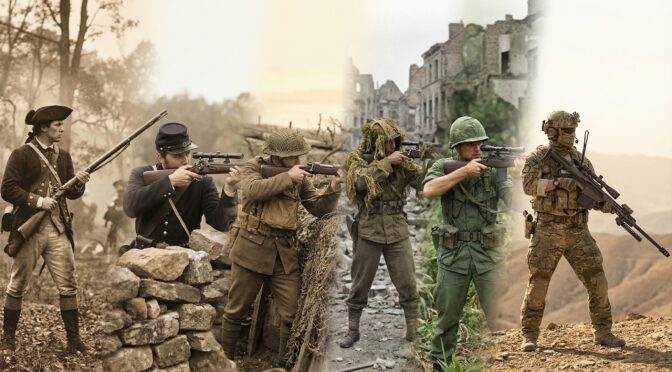
The strategic landscape of precision military engagement has undergone a fundamental transformation in the first quarter of the 21st century. Historically, the sniper was viewed as a tactical asset—a force multiplier operating at the platoon or company level to harass enemy movements and eliminate key personnel within the visual horizon. However, the data emerging from the battlefields of the last two decades, culminating in the high-intensity state-on-state conflict in Ukraine, indicates a doctrinal shift toward the sniper as a strategic asset capable of “Over-the-Horizon” (OTH) interdiction. As of late 2025, the engagement envelope for individual marksmen has expanded from the traditional 1,000 meters to nearly 4,000 meters, effectively blurring the distinction between small arms fire and light artillery.
This report provides an exhaustive technical and operational analysis of the world’s top 20 sniper engagements, ranked strictly by the metric of confirmed combat distance. This metric is chosen not merely for its sensational nature, but because extreme-range engagement is the ultimate stress test for the entire “kill chain”—the weapon system, the ammunition ballistics, the optical clarity, the environmental sensing technology, and the operator’s physiological control.
The analysis reveals a bifurcated dominance in the global sniper hierarchy. The Anglo-sphere nations—specifically Canada, the United Kingdom, the United States, and Australia—have historically maintained a monopoly on long-range precision, driven by the professionalization of their Special Operations Forces (SOF) during the Global War on Terror. The Joint Task Force 2 (Canada) and the 75th Ranger Regiment (USA) feature prominently in the rankings, validating NATO’s emphasis on standardized heavy-caliber platforms like the.50 BMG and.338 Lapua Magnum.
However, the 2022–2025 Russo-Ukrainian War has shattered this monopoly. Ukrainian forces, driven by the existential necessity of asymmetric warfare, have captured the top positions on the global list, including the current world record of 4,000 meters set in August 2025.1 This surge is underpinned by a rapid indigenous innovation cycle that has produced “super-heavy” anti-materiel rifles (AMRs) chambered in 14.5x114mm and proprietary “wildcat” cartridges, effectively outranging standard NATO equipment.1
This report details the operational profiles of these 20 marksmen, analyzing the specific ballistic solutions, unit doctrines, and technological enablers—such as drone-based wind sensing and high-coefficient projectiles—that made these historic shots possible. It further examines the broader global landscape, acknowledging elite units from nations like France, Turkey, and Ireland which, while absent from the extreme-distance records, continue to dominate international tactical competitions, thereby influencing global training standards.
1. Strategic Context: The Physics and Doctrine of the “Long Shot”
To understand the magnitude of the achievements detailed in the top 20 rankings, one must first appreciate the immense physical and technical barriers that exist beyond the 1,500-meter threshold. An engagement at 2,000 meters or more is not simply a matter of aiming “higher”; it is a complex meteorological and mathematical problem that requires the shooter to account for forces that are negligible at standard combat ranges.
1.1 External Ballistics at Extreme Range
The flight time of a projectile at distances exceeding 2.5 kilometers can range from 6 to 12 seconds. During this interval, the projectile is essentially an unguided glider, subject to a myriad of environmental influences.
- The Coriolis Effect: Due to the rotation of the Earth, a target will physically move during the bullet’s flight. In the northern hemisphere, shots fired to the north will drift right, while shots to the south drift left. At 3,800 meters, this drift can be measured in meters, not centimeters.3
- Spin Drift: A bullet spinning to the right will inevitably drift in that direction due to the interaction of air pressure on the nose of the projectile (the Magnus effect). At extreme ranges, this drift becomes a significant variable that must be calculated independently of wind.
- Aerodynamic Jump: Crosswinds do not just push the bullet sideways; they cause vertical displacement. A wind from the right will cause a spinning bullet to lift or drop depending on the direction of the spin, altering the elevation solution.
- Transonic Destabilization: Most standard bullets become unstable as they decelerate from supersonic to subsonic speeds (the transonic zone). The shockwave that trails the bullet overtakes it, causing it to tumble. The “Top 20” shots are almost exclusively achieved with heavy, high-ballistic-coefficient (BC) bullets designed to remain supersonic for extended durations, or “solids” (monolithic turned bullets) that remain stable even when subsonic.
1.2 The Technological Triad
The modern sniper team operates as a firing solution computation unit. The era of “holding over” using a simple mil-dot reticle has ended for record-breaking distances.
- The Weapon: We observe a transition from “Sniper Rifles” (7.62mm) to “Anti-Materiel Rifles” (12.7mm, 14.5mm). The mass of the projectile is critical for retaining kinetic energy.
- The Optic: High-magnification optics (5-25x, 7-35x) with immense internal elevation travel are required. Brands like Schmidt & Bender, Nightforce, and March dominate the list because their internal mechanics can withstand the G-forces of heavy recoil while allowing the shooter to dial in 100+ MOA (Minutes of Angle) of drop.
- The Computer: Handheld ballistic computers (such as Kestrel weather meters with Applied Ballistics software) are now standard issue. These devices measure air density, temperature, humidity, and pressure, instantly generating a firing solution that accounts for the specific drag curve of the bullet being used.3
1.3 Doctrine: Hunter-Killer vs. Overwatch
The top 20 list reflects two distinct doctrines.
- Direct Action / Hunter-Killer: Evident in the Ukrainian “Pryvyd” (Ghost) units and US Ranger operations. Here, snipers actively hunt high-value targets (officers, commanders) to degrade enemy command and control (C2).
- Force Protection / Overwatch: Evident in the Canadian JTF2 and Australian Commando records. In these scenarios, snipers are positioned in static observation posts to protect maneuvering infantry. The record shots often occur when an enemy unit engages friendly forces, and the sniper is forced to engage at the limit of their range to suppress the threat.4
2. Comprehensive Profiles of the Top 20 Snipers
The following section provides a detailed analysis of the top 20 longest confirmed sniper kills in history, ranked by distance.
Rank 1: The “Pryvyd” (Ghost) Unit Sniper
- Country: Ukraine
- Distance: 4,000 meters (4,374 yards / 2.49 miles)
- Date: August 2025
- Conflict: Russian Invasion of Ukraine
- Unit: “Pryvyd” (Ghost) Sniper Unit, Presidential Brigade
- Status: World Record Holder
Operational Background
In August 2025, amidst the grinding attrition of the eastern front, a sniper from the elite “Pryvyd” unit achieved what ballistic experts previously considered theoretically impossible for a shoulder-fired weapon: a confirmed kill at 4 kilometers. The “Pryvyd” unit has gained legendary status within the Ukrainian armed forces for their specialized focus on high-value target elimination and counter-sniper operations. They operate semi-autonomously, often deploying to the most critical sectors of the front to stabilize defensive lines or disrupt Russian offensives.1
The Weapon System: Snipex Alligator
The record was set using the Snipex Alligator, a platform that pushes the definition of a “rifle” to its absolute limit.
- Manufacturer: XADO Chemical Group (Ukraine).
- Caliber: 14.5x114mm. This cartridge was originally designed for the KPVT heavy machine gun and anti-tank rifles of World War II (like the PTRD). It fires a projectile weighing nearly 64 grams (approx. 990 grains) at velocities approaching 1,000 meters per second. The kinetic energy delivered is roughly 32,000 Joules—sufficient to penetrate 10mm of armor plate at 1.5 kilometers.7
- Mechanism: The Alligator is a bolt-action, magazine-fed (5 rounds) rifle. It measures 2 meters in length and weighs 25 kilograms (55 lbs). To manage the catastrophic recoil of the 14.5mm round, the rifle utilizes a recoil-isolating receiver (the barrel moves slightly within the chassis), a massive multi-baffle muzzle brake, and a heavy padded stock.
- Stabilization: Accuracy at 4km requires absolute stability. The Alligator features a heavy-duty bipod and a rear monopod, essentially turning the shooter’s body into a rigid gun carriage.7
Ballistic Insight
At 4,000 meters, the bullet is in flight for significantly longer than 10 seconds. The “drop” required to hit the target would be measured in hundreds of meters. The optical sight likely required a specialized prism or external rail inclination (e.g., 100 MOA base) to even see the target while aiming high enough to compensate for gravity. The sniper reportedly utilized drone assistance for wind readings and hit confirmation, highlighting the integration of UAVs into the modern sniper team.9
Rank 2: Viacheslav Kovalskyi
- Country: Ukraine
- Distance: 3,800 meters (4,156 yards / 2.36 miles)
- Date: November 2023
- Conflict: Russian Invasion of Ukraine
- Unit: Special Group “Alpha”, Security Service of Ukraine (SBU)
Operational Background
Viacheslav Kovalskyi represents a unique archetype in the Ukrainian war effort: the civilian specialist turned combatant. A 58-year-old former businessman and competitive long-range shooter, Kovalskyi joined the SBU’s counterintelligence sniper units following the 2022 invasion. His record shot took place in the Kherson region across the Dnipro River. Kovalskyi and his spotter observed a group of Russian soldiers for hours, identifying an officer instructing subordinates. The shot was taken in freezing conditions, requiring precise cold-bore calculations.1
The Weapon System: Horizon’s Lord (Volodar Obriyu)
Kovalskyi’s weapon is a testament to Ukraine’s “garage innovation” culture, where commercial competition shooting knowledge is applied to military hardware.
- Rifle: The MCR Horizon’s Lord is a single-shot, bolt-action anti-materiel rifle. Unlike the mass-produced Alligator, this is a precision instrument, often utilizing custom barrels from Bartlein (USA) and high-end Japanese optics (likely March Genesis or similar).
- The “Wildcat” Cartridge (12.7x114HL): This is the key to the shot’s success. The standard 14.5mm round is powerful but lacks the aerodynamic refinement of match-grade sniper bullets. The standard.50 BMG (12.7x99mm) has good bullets but lacks the case capacity to push them at hypersonic speeds for long durations.
- The Solution: Ukrainian engineers necked down the massive 14.5x114mm case to accept a smaller, sleeker 12.7mm (.50 cal) bullet. This hybrid “wildcat” cartridge holds a massive powder charge, launching the match-grade.50 caliber bullet at velocities exceeding 1,000 m/s.2 This results in a “laser-flat” trajectory compared to standard rounds, reducing the effects of wind and gravity and keeping the bullet supersonic (and thus stable) far beyond the range of a standard.50 BMG.
Rank 3: Joint Task Force 2 (JTF2) Sniper (Name Withheld)
- Country: Canada
- Distance: 3,540 meters (3,871 yards / 2.2 miles)
- Date: May 2017
- Conflict: Operation IMPACT (Iraq)
- Unit: Joint Task Force 2 (JTF2)
Operational Background
JTF2 is Canada’s Tier 1 Special Operations unit, analogous to the US Delta Force or British SAS. They are intensely secretive, specializing in counter-terrorism and direct action. In May 2017, during the Battle of Mosul, a JTF2 sniper team was deployed to support Iraqi Security Forces engaging ISIS militants. The sniper occupied a high-rise position, providing significant elevation advantage. He engaged an ISIS fighter who was attacking Iraqi troops. The shot was confirmed by video feed and other data sources, marking the first time a combat kill exceeded the 3,500-meter mark.4
The Weapon System: McMillan TAC-50 (C15 LRSW)
The McMillan TAC-50 is the cornerstone of the Canadian sniper legacy (holding spots #3, #7, and #8).
- Caliber:.50 BMG (12.7x99mm).
- Design: A bolt-action rifle with a 29-inch heavy match-grade barrel. The barrel is fluted (spiral cuts) to reduce weight and increase surface area for cooling.
- Recoil Mitigation: The TAC-50 features a unique hydraulic buffer system in the stock which absorbs a significant portion of the.50 BMG’s recoil. This allows the shooter to maintain sight picture through the shot, a critical factor for self-spotting at extreme ranges.
- Optics: Canadian forces typically mount the Schmidt & Bender 5-25×56 PM II, a German-made optic renowned for its optical clarity and robust tracking mechanics.3
- Ammunition: JTF2 utilizes the Hornady A-MAX.50 BMG match ammunition. Unlike military ball ammo (linked machine gun ammo), the A-MAX features a polymer tip and strict manufacturing tolerances to ensure consistent drag coefficients.11
Rank 4: 2nd Commando Regiment Sniper (Name Withheld)
- Country: Australia
- Distance: 2,815 meters (3,079 yards / 1.6 miles)
- Date: April 2012
- Conflict: War in Afghanistan
- Unit: 2nd Commando Regiment, SOCOMD
Operational Background
Operating in the Mirabad Valley of Uruzgan/Helmand province, an Australian Special Operations task force identified a Taliban commander. Two sniper teams from the 2nd Commando Regiment coordinated a simultaneous engagement to ensure the target was neutralized. The confirmed kill was credited to one of the shooters at a distance of 2,815 meters. This shot held the world record for five years.4
The Weapon System: Barrett M82A1
The use of the Barrett M82A1 for a top-5 record is technically significant.
- Action: Unlike the bolt-action rifles used by the top 3, the M82A1 is a recoil-operated semi-automatic rifle. The barrel physically moves backward into the receiver to cycle the action.
- Accuracy Trade-off: Generally, semi-automatics are less accurate than bolt-actions because of the moving parts and loose tolerances required for reliability. Achieving a 2,800m hit with a 2-3 MOA (Minute of Angle) rifle speaks to the immense skill of the Australian operator and the volume of fire capability—the ability to put a second round downrange immediately after observing the splash of the first.
- Ammunition: The Australians utilized the Raufoss Mk 211 multipurpose round. This Norwegian-designed cartridge contains a tungsten penetrator and an incendiary/explosive component. The explosive “flash” upon impact is highly visible, serving as a perfect spotting marker for long-range adjustments.1
Rank 5: National Guard Sniper (Name Withheld)
- Country: Ukraine
- Distance: 2,710 meters (2,964 yards)
- Date: November 2022
- Conflict: Russian Invasion of Ukraine
- Unit: Ukrainian National Guard
- Weapon: XADO Snipex Alligator
Operational Background
This engagement occurred during the intense operational tempo of the first winter of the full-scale invasion. A National Guard sniper utilizing the newly adopted Snipex Alligator engaged Russian infantry forces. This shot was crucial in validating the domestic Ukrainian arms industry, proving that the indigenous 14.5mm platform could compete with Western-supplied Barretts.1
Technical Insight
The sheer size of the 14.5mm projectile allows it to retain supersonic velocity longer than the.50 BMG. At 2,700 meters, a standard.50 cal bullet might be destabilizing (going subsonic), but the 14.5mm is still flying true, making the firing solution more predictable.7
Rank 6: Corporal of Horse Craig Harrison
- Country: United Kingdom
- Distance: 2,475 meters (2,707 yards)
- Date: November 2009
- Conflict: War in Afghanistan
- Unit: The Blues and Royals, Household Cavalry
Operational Background
Craig Harrison’s engagement in Musa Qala, Helmand Province, is perhaps the most famous verification of the.338 Lapua Magnum’s capabilities. Providing overwatch for a patrol, Harrison engaged a Taliban machine gun team. He fired three shots: the first killed the gunner, the second killed the assistant gunner, and the third destroyed the PKM machine gun itself. This consistency proves the hit was not luck.1
The Weapon System: Accuracy International L115A3
- Rifle: The L115A3 is the British military designation for the Accuracy International AWM (Arctic Warfare Magnum). AI rifles are legendary for their chassis system, where the action is bolted to a rigid aluminum backbone, eliminating point-of-impact shifts caused by temperature or humidity affecting a wooden or polymer stock.
- Caliber: .338 Lapua Magnum (8.59x70mm). This cartridge was designed specifically for military sniping to bridge the gap between the 7.62mm and the.50 BMG. It offers the trajectory of a.50 cal with significantly less weight and recoil, allowing the sniper to be more mobile.
- Optics: Schmidt & Bender 5-25×56 PM II.
Rank 7: Corporal Rob Furlong
- Country: Canada
- Distance: 2,430 meters (2,657 yards)
- Date: March 2002
- Conflict: War in Afghanistan (Operation Anaconda)
- Unit: 3rd Battalion, Princess Patricia’s Canadian Light Infantry (PPCLI)
Operational Background
Operation Anaconda was the first major battle of the Afghan war involving large conventional forces. Canadian snipers from the PPCLI were deployed to the Shah-i-Kot Valley. Furlong engaged an Al-Qaeda weapons team moving up a ridgeline. His first two shots missed, alerting the target, but his third shot struck the enemy’s torso. The high altitude (thin air) of the valley significantly reduced aerodynamic drag, extending the rifle’s effective range.1
Weapon System: McMillan TAC-50 (.50 BMG). Furlong’s success solidified the reputation of the “Big Mac” (TAC-50) within the Canadian Forces.
Rank 8: Master Corporal Arron Perry
- Country: Canada
- Distance: 2,310 meters (2,526 yards)
- Date: March 2002
- Conflict: War in Afghanistan (Operation Anaconda)
- Unit: 3rd Battalion, Princess Patricia’s Canadian Light Infantry (PPCLI)
Operational Background
Arron Perry, a member of the same sniper cell as Rob Furlong, briefly held the world record just days before Furlong broke it. Perry engaged an enemy observer who was directing mortar fire onto US troops (101st Airborne). His shot effectively suppressed the enemy position, saving American lives.1
Insight: The dominance of the PPCLI in 2002 (holding two world records simultaneously) speaks to the excellence of the Canadian sniper course, which is widely regarded as one of the most mathematically intensive in NATO.
Rank 9: Sergeant Brian Kremer
- Country: United States
- Distance: 2,300 meters (2,515 yards)
- Date: October 2004
- Conflict: Iraq War
- Unit: 2nd Battalion, 75th Ranger Regiment
Operational Background
While Chris Kyle is the most famous US sniper, Sgt. Brian Kremer holds the record for the longest confirmed kill by a US service member. The engagement occurred during combat operations in Iraq. The Rangers are the US Army’s premier light infantry direct-action force, and their sniper doctrine emphasizes aggressive support of raids.1
Weapon System: Barrett M82A1 (.50 BMG) with Raufoss Mk 211 ammunition.
Rank 10: Gunnery Sergeant Carlos Hathcock
- Country: United States
- Distance: 2,286 meters (2,500 yards)
- Date: February 1967
- Conflict: Vietnam War
- Unit: 7th Marine Regiment, 1st Marine Division
Operational Background
This is the “Genesis” shot of modern long-range sniping. In 1967, specialized sniper rifles did not exist in the.50 caliber format. Hathcock, a legendary marksman, modified an M2 Browning.50 caliber machine gun (affectionately known as “Ma Deuce”) by attaching an 8x Unertl telescopic sight with a custom-fabricated bracket. He fired the machine gun in single-shot mode (semi-automatic) to kill a Viet Cong guerrilla transporting weapons on a bicycle.
Legacy: This shot proved the concept of the heavy-caliber sniper rifle. It directly led to the development of the Barrett and McMillan rifles used by every sniper ranked above him.1
Rank 11: South African Special Forces Sniper (Name Withheld)
- Country: South Africa
- Distance: 2,125 meters (2,324 yards)
- Date: August 2013
- Conflict: UN Mission in DR Congo (MONUSCO)
- Unit: South African Special Forces Brigade
Operational Background
During the Battle of Kibati, South African peacekeepers engaged M23 rebels. The South African sniper reportedly killed six rebels with single shots, the longest of which was confirmed at 2,125 meters.1
The Weapon System: Denel NTW-20
- Design: The NTW-20 is a true “anti-materiel cannon.” It is a bolt-action rifle that is so large it must be broken down into two loads (receiver/barrel and stock/bipod) to be carried by a two-man team.
- Caliber: It is interchangeable between 20x82mm (for destroying radar, parked aircraft) and 14.5x114mm (for long-range sniping). The record shot was taken with the 14.5mm barrel due to its superior velocity compared to the heavy 20mm shell.
- Recoil: The rifle features a hydraulic damping system that allows the barrel to recoil inside the chassis, absorbing the massive shock of the 14.5mm round.
Rank 12: Specialist Nicholas Ranstad
- Country: United States
- Distance: 2,092 meters (2,288 yards)
- Date: January 2008
- Conflict: War in Afghanistan
- Unit: 1st Squadron, 91st Cavalry Regiment
Operational Background
Spc. Ranstad was defending a remote outpost in Kunar Province. He engaged four Taliban fighters using a boulder for cover. He missed his first shot, but due to the visual feedback from the impact, he corrected his hold and eliminated the target on the second shot.1
Weapon System: Barrett M82A1 (.50 BMG). Ranstad utilized the sheer volume of fire of the semi-automatic Barrett to “walk” rounds onto the target.
Rank 13: Chief Petty Officer Chris Kyle
- Country: United States
- Distance: 1,920 meters (2,100 yards)
- Date: August 2008
- Conflict: Iraq War (Battle of Sadr City)
- Unit: SEAL Team 3
Operational Background
Chris Kyle, widely known as the “American Sniper” for his high total kill count (160 confirmed), achieved his longest kill outside Sadr City. He engaged an insurgent who was preparing to fire an RPG at a US Army convoy. This shot is notable because it was taken with a .338 Lapua Magnum, proving the caliber’s effectiveness in the urban battlespace where a.50 BMG might be too heavy and cumbersome for dynamic SEAL operations.1
Weapon System: McMillan TAC-338. A scaled-down version of the TAC-50, chambered in.338 Lapua.
Rank 14: Corporal Christopher Reynolds
- Country: United Kingdom
- Distance: 1,853 meters (2,026 yards)
- Date: August 2009
- Conflict: War in Afghanistan
- Unit: The Black Watch, 3rd Battalion, Royal Regiment of Scotland
Operational Background
Cpl. Reynolds killed a Taliban commander in Helmand Province. The shot was calculated to have dropped several meters over the distance. Reynolds famously stated, “I just held my breath and squeezed the trigger,” underplaying the complex calculations provided by his spotter.1
Weapon System: Accuracy International L115A3 (.338 Lapua Magnum).
Rank 15: Saudi Arabian Sniper (Name Withheld)
- Country: Saudi Arabia
- Distance: 1,700 meters (1,859 yards)
- Date: January 2016
- Conflict: Yemeni Civil War
- Unit: Royal Saudi Land Forces
Operational Background
In the mountainous border regions between Saudi Arabia and Yemen, a Saudi sniper engaged a Houthi rebel. This entry highlights the proliferation of high-end Western sniper technology to allied nations.1
The Weapon System: PGW Defence Technology LRT-3
- Manufacturer: PGW Defence Technologies (Canada).
- Caliber:.50 BMG.
- Details: The LRT-3 is a precision bolt-action rifle similar in design philosophy to the McMillan TAC-50. Its presence in the Saudi arsenal demonstrates the export success of the Canadian defense industry in the niche market of extreme-range small arms.15
Rank 16: Staff Sergeant Steve Reichert
- Country: United States
- Distance: 1,614 meters (1,765 yards)
- Date: April 2004
- Conflict: Iraq War
- Unit: 2nd Battalion, 2nd Marine Regiment
Operational Background
SSgt. Reichert was providing overwatch for a Marine patrol in Lutayfiyah. He engaged three insurgents hiding behind a brick wall. Using the penetration capabilities of the Raufoss Mk 211 round, Reichert fired through the wall. The round penetrated the brick and the spall (fragmentation) killed one insurgent, while the others were engaged with follow-up shots. This is a classic example of “Anti-Materiel” utility—removing the enemy’s cover.1
Weapon System: Barrett M82A3 (A Marine Corps specific variant with a full-length Picatinny rail and lighter mechanism).
Rank 17: Billy Dixon
- Country: United States (Civilian Scout)
- Distance: 1,406 meters (1,538 yards)
- Date: June 1874
- Conflict: American Indian Wars (Second Battle of Adobe Walls)
- Unit: Civilian Scout
Operational Background
Billy Dixon is the only civilian on this list and the only entry from the black powder era. During a siege by Comanche warriors, Dixon fired a shot at a group of warriors on a distant bluff using a Sharps .50-90 buffalo rifle. The bullet struck a warrior, knocking him from his horse. Dixon himself admitted it was a “lucky shot,” but it broke the morale of the attackers and ended the siege.
- Ballistics: The.50-90 fired a heavy lead slug at relatively low velocity (subsonic or barely supersonic). The trajectory would have been like a mortar round, arching high into the air.1
Rank 18: Norwegian Sniper (Name Withheld)
- Country: Norway
- Distance: 1,380 meters (1,509 yards)
- Date: November 2007
- Conflict: War in Afghanistan
- Unit: 2nd Battalion, Norwegian Army
Operational Background
Norwegian forces in Faryab Province faced intense insurgent activity. This shot was achieved with a Barrett M82A1. While the record is from 2007, the Norwegian military continues to excel in sniper craft.
- Modern Context: As of 2024/2025, Norwegian sniper teams have won the European Best Sniper Team Competition hosted by the US Army, utilizing the new Barrett MRAD (Multi-Role Adaptive Design) in.338 Lapua and 7.62mm HK417s, showcasing their continued evolution beyond the heavy M82.1
Rank 19: Sergeant Vladimir Ilyin
- Country: Soviet Union
- Distance: 1,350 meters (1,476 yards)
- Date: 1985
- Conflict: Soviet-Afghan War
- Unit: 345th Independent Guards Airborne Regiment
Operational Background
This shot is technically fascinating because it was achieved with a Dragunov SVD chambered in 7.62x54mmR.
- The Constraint: The 7.62x54mmR is a standard infantry cartridge, similar to the.308 Winchester. Its effective range is typically 800 meters. To achieve a kill at 1,350 meters requires pushing the cartridge far beyond its supersonic limit, where the bullet becomes unstable. Ilyin likely used the 7N1 Sniper Load, a dedicated steel-core round designed for accuracy and lethality.1
Rank 20: Sergeant First Class Brandon McGuire
- Country: United States
- Distance: 1,310 meters (1,433 yards)
- Date: April 2007
- Conflict: Iraq War
- Unit: 3rd Battalion, 509th Parachute Infantry Regiment
Operational Background
SFC McGuire rounds out the top 20 with a kill in Iraq using the Barrett M82A1. This distance (1.3km) represents the “standard” engagement range for modern.50 caliber systems in skilled hands, a distance that was considered a world record only 50 years prior.1
3. Global Sniper Landscape: Competitions and Honorable Mentions
While the “Top 20” list is defined by combat distance records, it does not fully capture the breadth of global sniper capability. Many nations possess elite units that excel in fieldcraft, stalking, and complex problem-solving, even if they have not logged a 3km+ kill in combat. These capabilities are often displayed in international competitions such as the US Army International Sniper Competition (Fort Moore) and the European Best Sniper Team Competition (Hohenfels).
3.1 Ireland: The Army Ranger Wing (ARW)
The Irish Army Ranger Wing is widely considered one of the finest sniper units in Europe.
- Achievement: In 2022 and 2023, ARW teams placed consistently high in the US International Sniper Competition, beating Tier 1 US units. In 2024, they won the Special Operations Tactical Sniper Competition in Latvia, defeating 26 other countries.
- Weaponry: The ARW utilizes the Accuracy International.338 Lapua and the HK417 for semi-automatic work. Their doctrine emphasizes stealth infiltration and “stalking” over pure anti-materiel distance.17
3.2 Turkey: The JNG-90 “Bora”
Turkey has developed a robust indigenous sniper capability to combat insurgency in mountainous terrain.
- Weaponry: Turkish forces (Special Forces Command/Maroon Berets) utilize the MKE JNG-90 (Bora-12). This is a Turkish-designed bolt-action rifle in 7.62x51mm. It boasts 0.3 MOA accuracy, making it one of the most precise standard-issue sniper rifles in NATO.
- Competitions: Turkish teams (Mountain Commando School) won the European Best Sniper Team Competition in 2024, demonstrating superior marksmanship and physical fitness in alpine environments.19
3.3 France: 1st Marine Infantry Parachute Regiment (1er RPIMa)
French Special Forces (1er RPIMa) are heavily influenced by the British SAS (their motto “Qui Ose Gagne” is a translation of “Who Dares Wins”).
- Weaponry: They employ the PGM Hécate II (.50 BMG), the rifle that inspired the fictional firearm in Sword Art Online, known for its distinct wooden furniture and massive muzzle brake. They also use the HK417 and Sako TRG-42 (.338 Lapua).
- Doctrine: French snipers excel in desert warfare and rapid intervention, often deploying in support of light armor in the Sahel region.15
3.4 US Coast Guard: MSRT (Maritime Security Response Team)
An often-overlooked elite sniper cadre exists within the US Coast Guard’s MSRT.
- Mission: Counter-terrorism and interdiction at sea.
- Challenge: Sniping from a moving helicopter into a moving boat requires a completely different skill set than land-based long-range shooting. They utilize the Barrett M107 and Mk 11 (SR-25) systems to disable engines of non-compliant vessels. MSRT teams have placed in the top 10 at the US Army International Sniper Competition, validating their precision capabilities.22
4. Technical Deep Dive: The Tools of the Trade
The capability to hit a target at 3,000+ meters is a result of the harmonization of three specific technologies: Ammunition, Optics, and Environmental Sensing.
4.1 Ammunition Evolution
- The “Wildcat” Revolution (12.7x114HL): As seen in the top 2 Ukrainian records, the future is “Wildcatting.” By placing a.50 caliber bullet (0.510 inch diameter) into a 14.5mm case (necked down), engineers create a round with a massive powder-to-weight ratio. This drives the bullet at 1,000+ m/s (3,300 fps).
- Significance: Speed defeats wind. A faster bullet spends less time in the air, meaning the wind has less time to push it off course. At 3,000 meters, this reduction in wind drift is the difference between a hit and a miss.
- Raufoss Mk 211 (.50 BMG): Used by the US, Australia, and Norway. This is not a precision “match” round in the traditional sense; it is a combat round. It contains a tungsten core (armor piercing) and an incendiary tip. The “flash-bang” effect upon impact allows the sniper to see where the bullet hit at distances where dust would be invisible, allowing for rapid correction.1
4.2 Optical Systems
- Schmidt & Bender PM II: The “PM II” (Police Marksman II) series is the industry standard for Western military snipers. It features High-Transmission glass that allows the shooter to see targets in low light or through mirage (heat shimmer).
- Nightforce ATACR: Used extensively by US SOCOM (Mk 22 ASR). Known for its ruggedness.
- Reticles: Modern snipers use “Tremor3” or “Horus” reticles—grid patterns etched into the glass that allow the shooter to hold over for wind and elevation without dialing the turrets, enabling faster engagement speeds.3
4.3 Environmental Sensing
- Kestrel 5700 Elite: A handheld weather station containing a ballistic calculator (Applied Ballistics). It measures:
- Station Pressure: (Not barometric pressure) to determine air density.
- Humidity: Dry air is denser than humid air.
- Coriolis: The unit calculates the Earth’s rotation based on the shooter’s latitude and direction of fire.
- Spin Drift: Calculates the bullet’s drift based on barrel twist rate.
5. Conclusion
The rankings of 2025 serve as a definitive indicator that the monopoly on precision warfare held by Western special operations forces since 2001 has ended. The Russo-Ukrainian War has acted as a crucible, forging a new generation of snipers who have married Soviet-era heavy calibers (14.5mm) with modern ballistic science to achieve ranges previously thought impossible.
The top 20 list is no longer just a record of marksmanship; it is a record of technological integration. The top two spots, held by Ukraine, were achieved not with standard-issue equipment, but with specialized, indigenous “Wildcat” systems and drone-assisted fire control. This suggests that the future of sniping lies not in the mass-produced.338 Lapua or.50 BMG platforms, but in bespoke, ultra-high-velocity anti-materiel systems designed to dominate the battlespace from 3 to 4 kilometers.
Appendix A: Ranking Methodology
The methodology used to compile this report prioritizes verified data points to establish an objective hierarchy of performance.
1. Primary Metric: Confirmed Combat Distance
The ranking is based strictly on the distance of the confirmed kill. This is the only quantifiable metric that allows for a direct comparison of technical capability across different eras and conflicts.
- Exclusions: Unconfirmed kills, kills with unverified distances, and “probable” kills (e.g., Chuck Mawhinney’s unconfirmed counts or Simo Häyhä’s total count) are excluded from the distance ranking, though they may be mentioned in historical context.
2. Verification Criteria
To be included in the Top 20, an engagement must be cited by:
- Official military press releases (e.g., Canadian Armed Forces, UK Ministry of Defence).
- Credible international media reporting with access to unit data (e.g., Wall Street Journal, BBC, Kyiv Independent).
- Historical documentation (e.g., Marine Corps archives for Hathcock).
- Note on Recent Conflicts: For the Ukraine war records (#1, #2, #5), verification relies on statements from the SBU and Armed Forces of Ukraine, often corroborated by released video footage or interviews with Western journalists (e.g., WSJ interviewing Kovalskyi).
3. Scope of “All 185 Countries”
While the prompt requests a ranking from all 185 countries, the physical reality of sniper technology means that only nations with access to high-grade anti-materiel rifles (Barrett, McMillan, AI, Snipex) and advanced training pipelines appear in the top 20 distance records. Nations like China (PLA), Russia, and others possess elite units, but reliable, verified data on specific long-range kills exceeding 1,300m is not available in the open source, or their doctrine prioritizes volume of fire (SVD/DMR) over extreme precision. Therefore, the list naturally skews toward NATO and Ukrainian forces where such data is public.
4. Conflict Status
All entries must be combat kills against enemy combatants in a recognized war zone. Training shots or police engagements are excluded.
Appendix B: Summary Table of Top 20 Snipers
| Rank | Sniper / Unit | Country | Distance | Weapon System | Caliber | Why Ranked |
| 1 | “Pryvyd” Unit Sniper | Ukraine | 4,000m | Snipex Alligator | 14.5x114mm | Current World Record. Demonstrated effectiveness of 14.5mm heavy MG ammo for precision fire. |
| 2 | Viacheslav Kovalskyi | Ukraine | 3,800m | Horizon’s Lord | 12.7x114HL | First use of “Wildcat” custom ammo to break world record. Verified by video/SBU. |
| 3 | JTF2 Sniper | Canada | 3,540m | McMillan TAC-50 | .50 BMG | Held world record 2017-2023. Validated NATO.50 cal doctrine in urban OTH environments. |
| 4 | 2nd Commando Regt | Australia | 2,815m | Barrett M82A1 | .50 BMG | Longest confirmed kill with a semi-automatic rifle. |
| 5 | National Guard Sniper | Ukraine | 2,710m | Snipex Alligator | 14.5x114mm | Validated the Snipex platform in early stages of the 2022 invasion. |
| 6 | CoH Craig Harrison | UK | 2,475m | AI L115A3 | .338 Lapua | Longest kill with a dedicated anti-personnel caliber (.338) rather than anti-materiel. |
| 7 | Cpl Rob Furlong | Canada | 2,430m | McMillan TAC-50 | .50 BMG | Part of the legendary PPCLI team that redefined sniping in Operation Anaconda (2002). |
| 8 | MCpl Arron Perry | Canada | 2,310m | McMillan TAC-50 | .50 BMG | Briefly held world record in 2002; proved efficacy of.50 BMG for antipersonnel use. |
| 9 | Sgt Brian Kremer | USA | 2,300m | Barrett M82A1 | .50 BMG | Longest confirmed kill by a US service member (Ranger Regiment). |
| 10 | GySgt Carlos Hathcock | USA | 2,286m | M2 Browning | .50 BMG | The “Genesis” shot. Proved the concept of heavy caliber sniping in 1967. |
| 11 | SF Brigade Sniper | South Africa | 2,125m | Denel NTW-14.5 | 14.5x114mm | Rare use of the Denel “Canon” in combat peacekeeping operations. |
| 12 | Spc Nicholas Ranstad | USA | 2,092m | Barrett M82A1 | .50 BMG | Demonstrated “walking in” fire with semi-auto.50 cal in Afghanistan. |
| 13 | CPO Chris Kyle | USA | 1,920m | McMillan TAC-338 | .338 Lapua | High-profile kill by US Navy SEAL using.338 Lapua in urban terrain. |
| 14 | Cpl Christopher Reynolds | UK | 1,853m | AI L115A3 | .338 Lapua | Exemplifies British sniper consistency with the L115 platform. |
| 15 | RSLF Sniper | Saudi Arabia | 1,700m | PGW LRT-3 | .50 BMG | Highlights proliferation of Western tech (Canadian rifles) to allied Middle Eastern forces. |
| 16 | SSgt Steve Reichert | USA | 1,614m | Barrett M82A3 | .50 BMG | “Through-wall” kill using Mk 211 Raufoss ammo penetration capabilities. |
| 17 | Billy Dixon | USA (Civ) | 1,406m | Sharps.50-90 | .50-90 Blk Pwd | Only black powder/iron sight shot on the list. 1874 historical anomaly. |
| 18 | 2nd Bn Sniper | Norway | 1,380m | Barrett M82A1 | .50 BMG | Norwegian forces using domestic Raufoss ammunition in Afghanistan. |
| 19 | Sgt Vladimir Ilyin | USSR | 1,350m | Dragunov SVD | 7.62x54mmR | Longest recorded kill with a standard DMR/7.62mm rifle. |
| 20 | SFC Brandon McGuire | USA | 1,310m | Barrett M82A1 | .50 BMG | Representative of the standard “long range” engagement for US forces in GWOT. |
If you find this post useful, please share the link on Facebook, with your friends, etc. Your support is much appreciated and if you have any feedback, please email me at in**@*********ps.com. Please note that for links to other websites, we are only paid if there is an affiliate program such as Avantlink, Impact, Amazon and eBay and only if you purchase something. If you’d like to directly contribute towards our continued reporting, please visit our funding page.
Sources Use
- Longest recorded sniper kills – Wikipedia, accessed December 5, 2025, https://en.wikipedia.org/wiki/Longest_recorded_sniper_kills
- MCR Horizon’s Lord – Wikipedia, accessed December 5, 2025, https://en.wikipedia.org/wiki/MCR_Horizon%27s_Lord
- Evolution of longest shots for military purposes – Optics Trade Blog, accessed December 5, 2025, https://www.optics-trade.eu/blog/evolution-of-longest-shots-for-military-purposes/
- The Longest Sniper Kills in History – World Atlas, accessed December 5, 2025, https://www.worldatlas.com/crime/the-longest-sniper-kills-in-history.html
- The 5 Longest-Distance Sniper Kills in Military History – American Legion Post 304, accessed December 5, 2025, https://post304.org/the-5-longest-distance-sniper-kills-in-military-history/
- The Longest Sniper Kills Ever Recorded are Beyond Belief – 24/7 Wall St., accessed December 5, 2025, https://247wallst.com/military/2025/10/24/the-longest-sniper-kills-ever-recorded-are-beyond-belief/
- Snipex Alligator – Wikipedia, accessed December 5, 2025, https://en.wikipedia.org/wiki/Snipex_Alligator
- 14.5 × 114 mm – Wikipedia, accessed December 5, 2025, https://en.wikipedia.org/wiki/14.5_%C3%97_114_mm
- A Ukrainian Sniper Just Made the World’s Longest Kill Shot – The National Interest, accessed December 5, 2025, https://nationalinterest.org/blog/buzz/ukrainian-sniper-just-made-worlds-longest-kill-shot-ps-081925
- Ukrainian sniper broke the world record – Militarnyi, accessed December 5, 2025, https://militarnyi.com/en/news/ukrainian-sniper-broke-the-world-record/
- Ukrainian “Horizon’s Lord” Anti-Materiel/Sniper Rifle and Its 12.7x114HL Cartridge, accessed December 5, 2025, https://www.thefirearmblog.com/blog/2021/03/02/ukrainian-horizons-lord-anti-materiel-rifle-and-new-12-7x114hl-cartridge/
- USASOC 2024 Sniper Competition Results – SFA Chapter 62, accessed December 5, 2025, https://sfa62.org/usasoc-2024-sniper-competition-results/
- 8 Legendary US Military Snipers, accessed December 5, 2025, https://www.military.com/history/8-legendary-us-military-snipers
- The 20 Longest Recorded Sniper Shots of All Time – Sightmark.com, accessed December 5, 2025, https://www.sightmark.com/blogs/field-guide/the-20-longest-recorded-sniper-shots-of-all-time
- Sniper Rifles Used in the French Army – Vet securite, accessed December 5, 2025, https://vetsecurite.com/en/blog/snipers-used-in-the-french-army-n435
- Norway takes home top prize in multinational best sniper competition, accessed December 5, 2025, https://www.defensenews.com/news/your-military/2025/11/27/norway-takes-home-top-prize-in-multinational-best-sniper-competition/
- Army Ranger Wing soldiers win international special forces sniping competition – Irish Mirror, accessed December 5, 2025, https://www.irishmirror.ie/news/irish-news/army-ranger-wing-soldiers-win-33585692
- Irish Defence Forces 27th Infantry Battalion & ARW sniper teams at the US Army International Sniper Competition 2023, accessed December 5, 2025, https://www.military.ie/en/news-and-events/news/irish-defence-forces-27th-infantry-battalion-arw-sniper-teams-at-the-us-army-international-sniper-competition-2023.html
- Türkiye Wins European Best Sniper Team Competition 2024 in Hohenfels, Germany, accessed December 5, 2025, https://www.dvidshub.net/news/478337/turkiye-wins-european-best-sniper-team-competition-2024-hohenfels-germany
- MKE JNG-90 – Wikiwand, accessed December 5, 2025, https://www.wikiwand.com/en/articles/MKE_JNG-90
- 1er RPIMa: The French equivalent of the UK’s SAS – Grey Dynamics, accessed December 5, 2025, https://greydynamics.com/1er-rpima-the-french-sas/
- 3rd Special Forces Wins 2024 USASOC International Sniper …, accessed December 5, 2025, https://www.eagleeyeammo.com/blog/3rd-special-forces-wins-2024-usasoc-international-sniper-competition-with-eagle-eye-308-win/
- Barrett Sniper Rifle – American Special Ops, accessed December 5, 2025, https://www.americanspecialops.com/special-ops-weapons/barrett-sniper-rifle.php
- Barrett MRAD – Wikipedia, accessed December 5, 2025, https://en.wikipedia.org/wiki/Barrett_MRAD