Category Archives: Analytics and Reports

Yugoslavia’s AK Path: Where Did the 2,000 Russian AK-47 Rifles Come From

So far, we have covered the history of Yugoslavian and Soviet relations and then the two Albanian defectors and early Yugo AK development leading to the M64 but we glossed over an enduring mystery that deserves its own post. In this artice, we dive into the riddle of what third world nation Yugoslavia purchased 2,000 Soviet AK-47 rifles from to reverse engineer and why it had to be covert.

A. The Core Question and Its Significance

This report addresses the question of the identity of the “Third World nation” from which the Socialist Federal Republic of Yugoslavia secretly procured approximately 2,000 Soviet-designed AK-47 assault rifles in 1959. This transaction, a relatively obscure event in the annals of Cold War arms proliferation, was nonetheless of considerable importance for Yugoslavia’s military development. The acquisition of these rifles proved pivotal for Zastava Arms, Yugoslavia’s premier weapons manufacturer, in its ambitious endeavor to independently develop and produce a domestic version of the Kalashnikov rifle. This effort culminated in the Zastava M70, a weapon that would become a mainstay of the Yugoslav People’s Army (JNA) and a significant export item.1

The clandestine nature of this purchase and the persistent anonymity of the supplier nation underscore the intricate geopolitical landscape of the late 1950s. Yugoslavia, under Marshal Josip Broz Tito, navigated a complex path of non-alignment, maintaining independence from both the NATO and Warsaw Pact blocs. This unique position influenced its foreign policy and its methods of military procurement, often necessitating unconventional approaches to acquire advanced weaponry.

B. Methodology and Scope

The analysis herein is based on an examination of available research materials, encompassing English, Russian, Serbian, and Arabic language sources. A central piece of evidence for this specific arms deal is C.J. Chivers’ comprehensive work, The Gun: The AK-47 and the Evolution of War.1 This report will critically assess the claim made by Chivers, situating it within the broader context of Soviet arms export policies of the era and Yugoslavia’s diplomatic and military relations. The objective is to evaluate the plausibility of potential candidate nations and, if the evidence permits, to identify the most likely intermediary.

C. Unraveling the Layers of Secrecy

The clandestine nature of the 1959 rifle purchase points towards a multi-faceted diplomatic maneuver. Yugoslavia, due to its political estrangement from the Soviet Union following the 1948 Tito-Stalin split, could not openly or directly procure sensitive military technology like the AK-47 from Moscow.1 The term “secret purchase” strongly implies a deliberate effort to bypass official channels and to shield the transaction from public scrutiny, particularly from Soviet intelligence. A “Third World nation” already receiving Soviet military aid would have had legitimate access to such weapons. This intermediary role could have offered benefits to all parties: the supplier nation might have gained financially or strengthened its diplomatic ties with Yugoslavia; Yugoslavia would secure the much-needed rifles for its reverse-engineering program. The Soviet Union itself might have tacitly approved such a transfer if it served a broader, albeit unstated, strategic objective, such as subtly bolstering a non-aligned nation’s defense capabilities against Western influence without direct Soviet commitment. Alternatively, the Soviets might have been unaware of, or unable to prevent, a relatively small diversion of arms.

The specified quantity of “approximately 2,000” rifles is a critical detail. This number is substantial enough to provide a sufficient sample base for detailed reverse engineering, including disassembly, metallurgical analysis, live-fire testing, and comparison of components – a significant step up from the mere two rifles acquired earlier from Albanian defectors which proved insufficient.1 Simultaneously, a batch of 2,000 units is arguably small enough to have been diverted from a larger consignment of Soviet military aid, or siphoned from existing stockpiles within the recipient nation, without triggering immediate alarm or major geopolitical fallout. Soviet aid packages to favored client states, such as Egypt or Iraq, were often extensive.2 Diverting such a quantity, especially if oversight and record-keeping for every individual small arm were not meticulously stringent, would be more feasible and less likely to provoke a severe diplomatic crisis than, for example, the unauthorized transfer of tanks or combat aircraft.

II. Yugoslavia’s Pursuit of the Kalashnikov: A Non-Aligned Nation’s Arms Dilemma

A. The Political Context: Independence and Necessity

Yugoslavia’s foreign policy under President Tito was characterized by a resolute commitment to independence and non-alignment. This stance meant a refusal to join the Warsaw Pact, leading to periods of significant political tension with the Soviet Union, particularly in the aftermath of the 1948 Informbiro period.1 While relations with Moscow experienced thaws and freezes, Yugoslavia could not depend on the Soviet Union for direct, licensed production of critical military hardware such as the AK-47 assault rifle.1 Consequently, the nation adopted a pragmatic approach to arms procurement, seeking weaponry and military technology from both Eastern and Western sources as opportunities arose.6 The inability to secure technical specifications for the AK-47 directly from the USSR compelled Zastava Arms, the national arsenal, to embark on the challenging path of reverse engineering.1

B. Early Steps: The Albanian Defectors’ Rifles

A significant, albeit insufficient, breakthrough occurred in 1959 when two Albanian soldiers defected to Yugoslavia, bringing with them their Soviet-manufactured AK-47s.1 These weapons were promptly handed over to Zastava engineers for detailed examination. While the engineers were able to create metal castings from these two samples, they quickly realized that this limited number of rifles did not provide enough technical data to fully understand the design intricacies, material specifications, or manufacturing processes required to reproduce the weapon or its components accurately.1 This initial encounter with the Kalashnikov highlighted the pressing need for a larger quantity of rifles to complete the reverse-engineering process successfully.

C. The Imperative for More Samples: The Road to the Zastava M70

The development of what would become the Zastava M70 assault rifle took place between 1962 and 1968, with the rifle officially entering service with the Yugoslav People’s Army (JNA) in 1970.1 The acquisition of a more substantial batch of AK-47s in late 1959 would have been a critical enabler for this development timeline, providing Zastava’s engineers with the necessary physical examples for comprehensive study and analysis. The Zastava M70 was ultimately an unlicensed derivative, closely based on the Soviet AK-47 Type 3 variant.1 The AK-47 Type 3, which featured a milled receiver, was produced by the Soviet Union from 1955 until 1959, when it began to be phased out in favor of the modernized, stamped-receiver AKM.8 This transition in Soviet production could have made surplus Type 3 models more readily available through third-party channels.
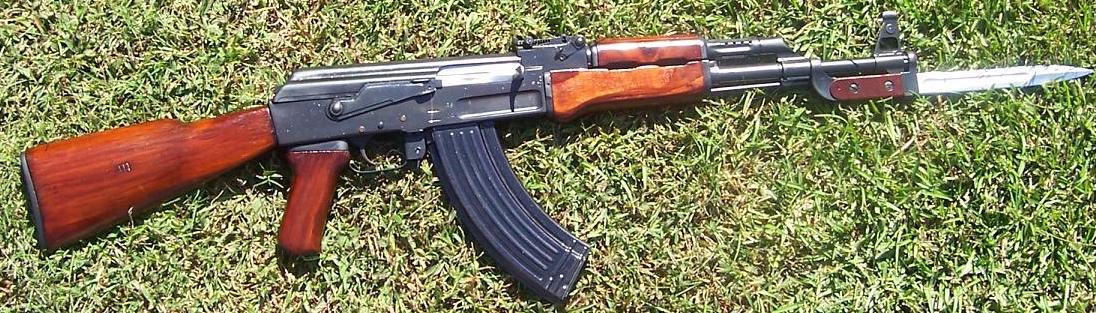
Yugoslavia’s unique non-aligned status presented both challenges and opportunities. It constrained direct access to Soviet military technology but simultaneously allowed Belgrade to cultivate a wide network of relationships with numerous “Third World” nations, many of which were emerging from colonial rule or navigating their own paths between the Cold War blocs. Several of these nations became recipients of Soviet military assistance as Moscow sought to expand its global influence.2 Yugoslavia’s prominent role within the Non-Aligned Movement (NAM), of which it was a founding member 4, provided a diplomatic framework that could facilitate discreet arms deals and technology transfers that would have been impossible through conventional East-West channels. This network of non-aligned partners became an invaluable asset for Yugoslavia’s unconventional procurement strategies.

The sequence of events in 1959 – the arrival of the Albanian defectors’ rifles early in the year, the rapid assessment by Zastava that these were insufficient, and the subsequent “secret purchase” of approximately 2,000 additional AKs “by the end of the year” 1 – suggests a swift and opportunistic response by Yugoslav intelligence and arms procurement agencies. Once the limitations of the initial two samples became clear, an active search for more examples was likely initiated, leveraging existing diplomatic or intelligence contacts, or rapidly activating networks to locate and secure a larger quantity of the desired rifles. This was not a passive waiting game but a proactive effort to seize any available opportunity.

III. The 1959 Transaction: Corroborating the “Secret Purchase”

A. C.J. Chivers’ “The Gun” as the Primary Source

The specific assertion that “by the end of the year , however, the Yugoslav government had obtained more early pattern AKs from an unidentified Third World nation that was receiving Soviet military aid” is directly attributed to C.J. Chivers’ book, The Gun, published in 2011, on pages 250-251.1 Chivers, a former Marine officer and Pulitzer Prize-winning journalist, produced a work generally acclaimed for its meticulous research into the history of automatic weapons, with a particular focus on the Kalashnikov.12 His book meticulously documents the origins, global proliferation, and multifaceted impact of the AK-47 and its variants. The information provided indicates that this 1959 purchase was crucial, furnishing Zastava Arms with a sufficient number of AK-47s to “study and effectively reverse engineer the weapon type”.1

B. Contextualizing the Purchase in Zastava’s M70 Development

The timeline and technical details surrounding the development of the Zastava M70 lend credence to Chivers’ account. The Zastava M64, an early prototype that directly led to the M70, incorporated design features heavily based on the Soviet AK-47 Type 3, which utilized a milled receiver.1 Soviet production of the Type 3 AK-47 spanned from 1955 to 1959.8 This aligns perfectly with the claim that Yugoslavia acquired “early pattern AKs” in 1959, as these would likely have been Type 3 models. The successful reverse-engineering effort, facilitated by this larger batch of rifles, enabled Zastava to commence unlicensed production of its AK-47 derivative in 1964.1 This production start date is consistent with a 1959 acquisition followed by several years of intensive research, development, and tooling.

The fact that the Soviet Union began to replace the AK-47 with the modernized AKM (Avtomat Kalashnikova Modernizirovanniy) in 1959 is also significant.8 The AKM featured a stamped sheet-metal receiver, making it lighter and cheaper to mass-produce than the milled-receiver AK-47 Type 3. This transition in Soviet small arms production could have rendered existing stocks of AK-47 Type 3s obsolescent in Soviet eyes, or at least less critical. Consequently, Soviet client states that had received Type 3s might have found it easier to re-transfer a portion of their inventory, perhaps in anticipation of receiving newer AKM models. Such a re-transfer, especially of older models, might have been viewed as less diplomatically sensitive by the Soviets or easier for the intermediary nation to justify. Thus, the “early pattern AKs” mentioned by Chivers were likely Type 3s, a plausible type of weapon to be involved in a clandestine deal of this nature at that specific time.

The absence of other readily available public sources explicitly naming the “Third World nation” involved in this specific 1959 transaction is noteworthy. This suggests that C.J. Chivers may have had access to unique primary sources, such as declassified intelligence reports, internal Zastava documents, or interviews with individuals directly or indirectly involved, which are not yet in the public domain or widely known to other researchers. Alternatively, the details of this transaction may remain obscure precisely because of the success of the secrecy that originally enveloped it. The conclusions drawn in this report must, therefore, rely on interpreting Chivers’ historically credible claim within the broader framework of circumstantial evidence regarding Soviet arms recipients and Yugoslav foreign relations during this period.

IV. Identifying Potential Supplier Nations: Soviet Arms in the “Third World”

A. Overview of Soviet Military Aid and AK-47 Proliferation (Late 1950s)

During the Cold War, the Soviet Union strategically employed military aid as a key instrument of its foreign policy, aiming to expand its influence, support ideologically aligned regimes, and counter Western power.10 The AK-47 assault rifle, renowned for its simplicity, reliability, and ruggedness, became a ubiquitous symbol of this policy. It was widely supplied to “developing countries,” nations espousing communist ideals, and various national liberation movements that Moscow sought to cultivate as allies or proxies.11 By the late 1950s, a significant number of “Third World” nations across the Middle East, Asia, and Africa had become recipients of Soviet military assistance, which often included consignments of AK-47s.2 The AK-47 (Type 3) was the standard Soviet rifle until the introduction of the AKM in 1959, meaning that AK-47s were already in circulation through Soviet supply lines to these recipient states prior to or during that year.8

B. Egypt: A Prime Candidate

  • Soviet-Egyptian Arms Deals: Egypt, under Gamal Abdel Nasser, emerged as a major recipient of Soviet bloc weaponry following the landmark Egyptian-Czechoslovak arms deal announced in September 1955.25 This agreement, valued at over $83 million, effectively ended the Western monopoly on arms supplies to the Middle East and signaled a significant geopolitical shift.2 The 1955 deal explicitly included small arms and munitions.25 While the initial manifests detailed in the provided material do not itemize AK-47s specifically, subsequent Soviet military aid to Egypt was extensive and continuous. By 1966, the total value of Soviet military equipment extended to the United Arab Republic (UAR), of which Egypt was the dominant part, reached $1.16 billion, with approximately 90% of this aid reportedly delivered by that time.2 This substantial aid program commenced in 1955.2 Given the AK-47’s status as the standard Soviet infantry rifle during this period, it is highly probable that significant quantities were supplied to the Egyptian armed forces well before 1959. Russian sources confirm deliveries of various Soviet armaments to Egypt between 1955-1957, including tanks, artillery, and aircraft, though specific numbers for AK-47s are not provided in these particular texts.26 The AK-47 was indeed being developed into the AKM by 1959, implying its prior establishment.27
  • Yugoslav-Egyptian Relations: Relations between Yugoslavia and Egypt were exceptionally close during this period. Both countries were founding and influential members of the Non-Aligned Movement (NAM), sharing a common vision of independence from superpower blocs.4 Diplomatic ties strengthened considerably following the 1948 Soviet-Yugoslav split and the 1952 Egyptian Revolution.4 The year 1959, the precise timeframe of the AK-47 purchase, was marked by high-level diplomatic exchanges: President Tito visited Egypt in February 1959, and President Nasser visited Yugoslavia in November 1959.29 Such frequent top-level interactions indicate a robust and trusting political relationship, conducive to arranging sensitive, clandestine transactions. Furthermore, there is a documented instance from 1954 where Egypt is believed to have supported Yugoslav efforts to arm Algerian National Liberation Front (FLN) rebels by nominally purchasing Yugoslav-made weapons, which were then discreetly transferred to Algeria.4 This historical precedent suggests a pattern of cooperation in complex, covert arms movements involving both Egypt and Yugoslavia, making Egypt a very strong candidate.
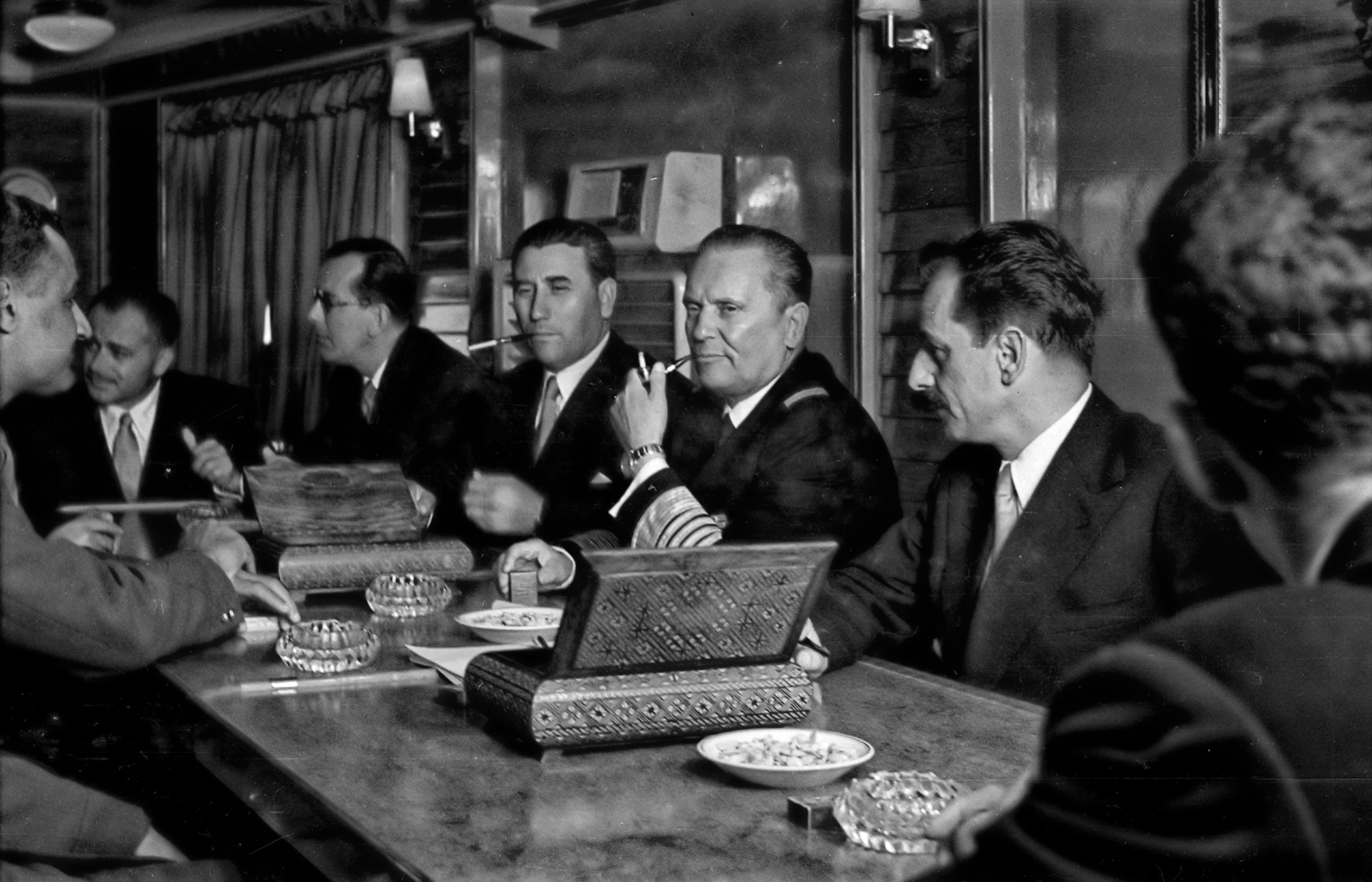
The first ever meeting between Josip Broz Tito and Gamal Abdel Nasser – onboard the Yugoslav ship Galeb in the Suez Canal (1955). (Photo from the Online Museum of Syrian History, Shared on Wikimedia.
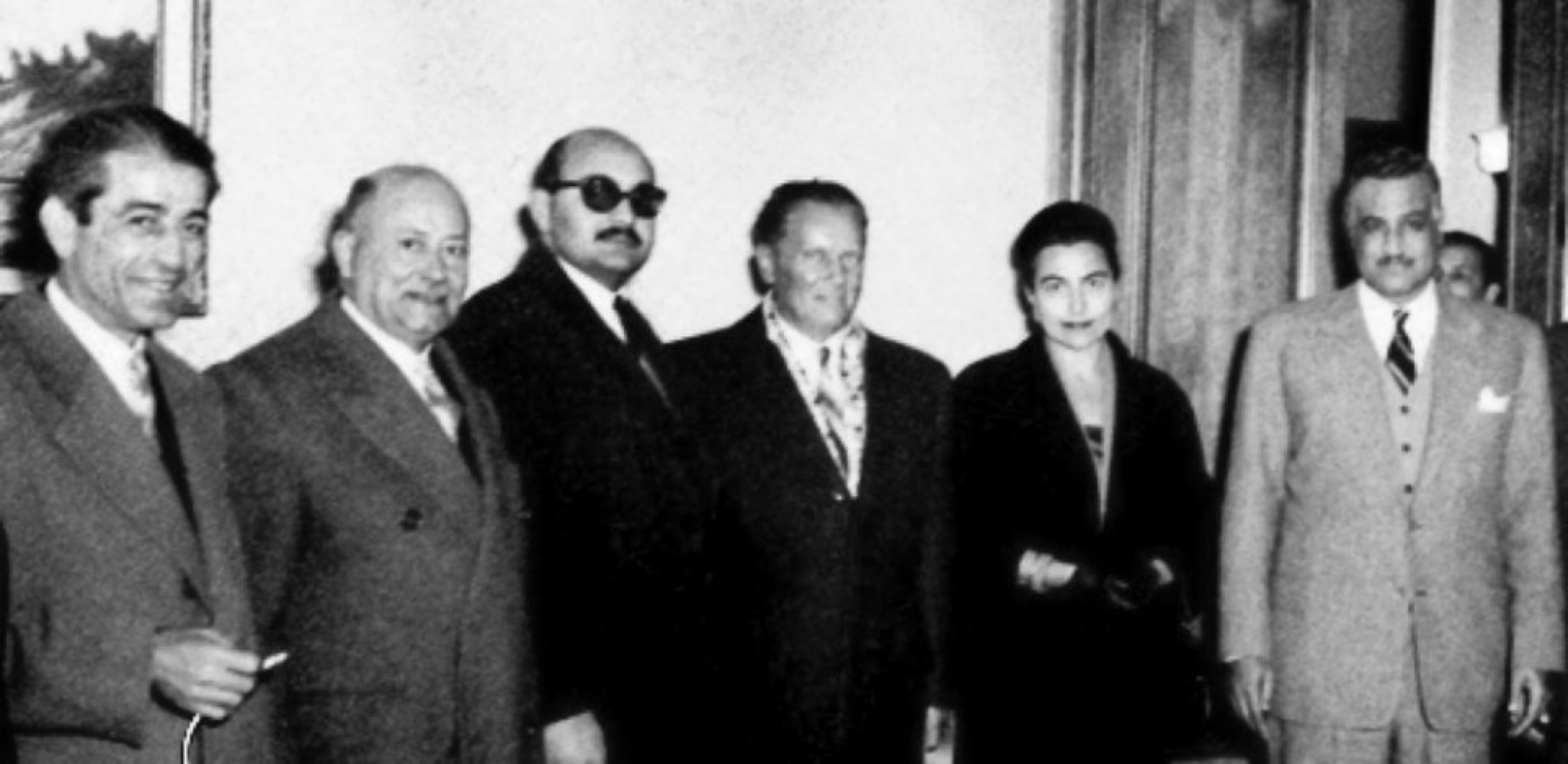
President Gamal Abdul Nasser and Yugoslavian President Josip Tito in Aleppo in 1959 / From left to right: United Arab Republic Vice President Akram al-Hawrani, the Aleppo industrialist Sami Saem al-Daher, director of Egyptian Intelligence Salah Nasr, President Josip Tito, his wife Jovanka Broz, President Gamal Abdul Nasser. The photo was taken in the home of Sami Saeb al-Daher, who was nationalized by President Nasser and left in bankrupcy in 1960 (Photo from the Online Museum of Syrian History, Shared on Wikimedia.

C. Iraq: A Plausible Alternative

  • Soviet-Iraqi Arms Deals: Iraq emerged as another significant recipient of Soviet military assistance following the 14 July Revolution in 1958, which overthrew the Hashemite monarchy and established a republic under Abd al-Karim Qasim.30 The new Iraqi regime quickly pivoted away from Western alliances and sought closer ties with the Soviet bloc and non-aligned nations. In February 1959, the Soviet Union extended a substantial loan of $137.5 million to Iraq for economic and technical development, which likely included provisions for military hardware.32 The USSR became a major arms supplier to Iraq commencing in 1958.3 While specific quantities of AK-47s delivered to Iraq between 1958 and 1959 are not detailed in the available materials, it is highly probable that these rifles formed part of the initial arms packages supplied to the new revolutionary government. Later Iraqi consideration of replacing Kalashnikovs with M16s implies prior widespread adoption of the Soviet rifle.33
  • Yugoslav-Iraqi Relations: Diplomatic relations between Yugoslavia and Iraq were formally established in 1958, in the immediate aftermath of the Iraqi revolution.30 Crucially, a Trade and Cooperation Agreement between Yugoslavia and Iraq was signed and came into force on February 19, 1959.30 This development aligns perfectly with the timeframe of the secret AK-47 purchase later that year. Yugoslavia would go on to become a major arms exporter to Iraq, particularly during the Iran-Iraq War in the 1980s 30, indicating the foundation of a long-standing military-technical relationship that may have had its early, discreet origins in transactions like the one in question. The new Iraqi regime, eager to assert its independence and forge new international partnerships, might have been willing to facilitate such a transfer to Yugoslavia to build goodwill, for financial considerations, or as part of its broader realignment.

D. Other “Third World” Recipients (Brief Assessment)

  • Syria: Syria had been a recipient of Soviet military aid since the early 1950s.34 However, early arms supplies from other Eastern Bloc countries like East Germany sometimes consisted of WWII surplus before transitioning to more modern Soviet-pattern weapons like the AK-47, typically in later periods (e.g., post-1967 for significant AK-47s from GDR).34 While direct Soviet supply lines to Syria for AK-47s would have existed by 1959, the available information does not highlight the same degree of intimate political alignment or specific diplomatic activity with Yugoslavia in 1959 that is evident with Egypt or the nascent relationship with Iraq.
  • Indonesia: Indonesia began receiving Soviet arms, with initial deliveries noted in 1958 (such as GAZ-69 military vehicles).35 The extent to which AK-47s were delivered and available in sufficient quantity for a 2,000-unit re-transfer by late 1959 is not clearly established by the provided sources.
  • India: India started to receive Soviet military technology and arms, including licenses for local manufacture, primarily in the 1960s, although some foundational agreements may have been laid earlier.22 The timeline for substantial AK-47 deliveries to India that could have been re-transferred by 1959 appears less probable compared to Middle Eastern recipients.
  • Cuba: The Cuban Revolution, led by Fidel Castro, triumphed in January 1959. Significant Soviet military assistance to Cuba commenced in the early 1960s, notably escalating around the time of the Bay of Pigs invasion and the Cuban Missile Crisis.36 It is therefore highly unlikely that Cuba would have been in a position to act as a supplier of Soviet-made AK-47s to Yugoslavia in 1959.
  • African Nations (e.g., Angola, Ethiopia, Mozambique): While the Soviet Union did provide arms to various African states and liberation movements 37, the large-scale proliferation of AK-47s to these specific sub-Saharan African nations is generally associated with independence struggles and post-colonial conflicts of the 1960s and 1970s, rather than a 1959 timeframe for re-export.

The political ideologies and strategic alignments of these potential Third World suppliers are crucial factors. A nation deeply enmeshed within the Soviet ideological sphere might have been less inclined to engage in an unauthorized or clandestine re-transfer of Soviet-supplied arms. However, many “Third World” recipients of Soviet aid, while benefiting from Moscow’s support, pursued their own distinct national interests. Egypt under Nasser, for instance, adeptly navigated the Cold War currents, leveraging relations with both East and West to its advantage.25 Such a nation, particularly one like Egypt that shared leadership with Yugoslavia in the Non-Aligned Movement, might have viewed a discreet arms deal as a means of strengthening its own non-aligned credentials, assisting a fellow NAM state, or gaining diplomatic or economic leverage, even if it involved Soviet-origin weaponry. Iraq, with its new revolutionary government, was in a phase of actively seeking new international partnerships and asserting its autonomy, which could have provided a motive for such a transaction.

Furthermore, a secret arms purchase of this nature would necessitate a degree of trust and established communication channels. Yugoslavia, as a key architect and proponent of the Non-Aligned Movement, actively cultivated diplomatic, economic, and intelligence relationships with a wide array of nations within this group.4 This favors nations with which Yugoslavia had demonstrably active and positive diplomatic interactions in or before 1959, such as Egypt, and the rapidly developing ties with post-revolution Iraq.

Table 1: Assessment of Potential “Third World” Nations for the 1959 AK-47 Transfer to Yugoslavia

Candidate NationRecipient of Soviet Military Aid (incl. AK-47s) by 1959? (Evidence & Likelihood)Nature & Strength of Yugoslav Relations by 1959 (Political, Diplomatic, Military)Specific Chronological Markers Supporting/Contradicting 1959 TransferPlausibility as the “Unnamed Nation”Key Supporting Snippets
EgyptYes. Major recipient since 1955. Highly likely to possess AK-47s in quantity.Very Strong. Founding NAM members, frequent high-level visits (Tito Feb ’59, Nasser Nov ’59). Precedent of arms facilitation.Supports: Close ties in 1959. Soviet arms flow well established.High & Most Likely2
IraqYes. Recipient since 1958 revolution. Likely included AK-47s in early packages.Developing. Diplomatic relations established 1958. Trade/Cooperation agreement effective Feb 1959.Supports: New regime seeking partners. Trade agreement in place.High, but second to Egypt3
SyriaYes. Recipient since early 1950s.Moderate. Established relations, but less intimacy highlighted for 1959 specifically compared to Egypt/Iraq.Possible, but less direct evidence of specific 1959 impetus.Medium34
IndonesiaYes. Initial Soviet arms deliveries in 1958.Moderate.Less clear if AK-47s available in sufficient quantity for re-transfer by late 1959.Low-Medium35

V. The “Unnamed Nation”: Deciphering the Secrecy

A. Motivations for Anonymity

The enduring anonymity of the supplier nation in most historical accounts points to a convergence of interests in maintaining secrecy:

  • Yugoslavia’s Perspective: For Yugoslavia, discretion was paramount. The country meticulously maintained a delicate geopolitical equilibrium between the Eastern and Western blocs. Openly acknowledging a clandestine arms deal involving Soviet-origin weapons, even if acquired through a third party, could have unnecessarily strained its already complex relationship with the USSR. It might also have compromised its carefully cultivated image as a genuinely non-aligned nation, potentially inviting suspicion or pressure from either superpower.
  • The Supplier Nation’s Perspective: The intermediary country would have had strong reasons to ensure the transaction remained covert. Re-transferring military aid, particularly weapons as significant as assault rifles, without the explicit consent or knowledge of the original supplier (the Soviet Union) could have invited serious repercussions. These could range from a curtailment of future Soviet aid to diplomatic censure or other punitive measures. Protecting its own ongoing diplomatic and trade relationships with both the USSR and Yugoslavia, as well as other international actors, would have been a key concern.
  • Soviet Perspective (if aware or subsequently discovered): Even if Soviet intelligence became aware of the transfer, Moscow might have preferred the matter to remain quiet. If the USSR tacitly approved the deal for its own strategic reasons – for instance, to subtly aid Yugoslavia’s independent defense posture without direct involvement, thereby keeping it from leaning too heavily towards the West – publicity would be counterproductive. Conversely, if the transfer occurred without Soviet knowledge or approval, publicizing it would reveal a potentially embarrassing lack of control over its arms exports and the actions of its client states.

B. Weighing the Evidence: Egypt vs. Iraq

When comparing the two strongest candidates, Egypt and Iraq, both present compelling arguments:

  • Arguments for Egypt:
  • By 1959, Egypt had a well-established, deep, and multifaceted relationship with Yugoslavia. This included close personal ties between President Nasser and President Tito, shared leadership in the Non-Aligned Movement, and frequent high-level diplomatic consultations, including visits by both leaders to each other’s countries in 1959.4 Such a strong foundation of trust and mutual understanding would be highly conducive to arranging a secret arms transfer.
  • Egypt was a very significant recipient of Soviet arms from 1955 onwards and would have possessed substantial stocks of AK-47s by 1959.2
  • The precedent of Egypt reportedly facilitating the transfer of Yugoslav arms to Algerian rebels in 1954 demonstrates a historical willingness and capability to engage in complex, discreet arms movements in cooperation with Yugoslavia.4
  • Arguments for Iraq:
  • Iraq’s relationship with Yugoslavia was newer but developing rapidly in the crucial 1958-1959 period. The establishment of diplomatic relations in 1958 was quickly followed by a Trade and Cooperation Agreement that came into force in February 1959.30 This formal framework for interaction was in place at the time of the AK-47 deal.
  • Following its 1958 revolution, Iraq became a recipient of Soviet arms and was actively seeking to diversify its international partnerships beyond its former Western patrons.3 A deal with a prominent non-aligned country like Yugoslavia would fit this new foreign policy orientation.
  • The new revolutionary government in Baghdad might have been motivated by political solidarity, financial gain, or a desire to quickly establish Iraq as an independent actor on the regional stage.

While both nations are strong candidates, Egypt appears to hold a slight edge. The depth and maturity of its political relationship with Yugoslavia by 1959, coupled with the precedent for cooperation in sensitive arms transfers, make it a particularly compelling possibility. However, the confluence of Iraq’s recent political transformation, its immediate embrace of Soviet military aid, and the formalization of ties with Yugoslavia in early 1959 make it an almost equally plausible source. The critical factors are the combination of access to Soviet-supplied AK-47s and a motive or willingness to transfer approximately 2,000 of them to Yugoslavia under conditions of secrecy.

Logistical considerations, though not detailed in the available materials, would also have played a role. The transfer of 2,000 rifles and their ammunition is not a trivial undertaking. Both Egypt and Iraq, being Middle Eastern nations, share maritime proximity with Yugoslavia via the Mediterranean Sea. Existing trade routes (e.g., Yugoslav timber for Egyptian cotton mentioned in 4, or the general trade agreement with Iraq 30) could have provided cover for such shipments, perhaps disguised as other goods or moved through less scrutinized channels.

C. Limitations of the Provided Material

It is crucial to acknowledge that the available research documentation, while extensive, does not contain a definitive, explicit statement from an undeniable primary source (such as a declassified Yugoslav, Soviet, Egyptian, or Iraqi government document or a direct admission from a key participant) that unequivocally names the country involved in this specific 1959 AK-47 transfer to Yugoslavia. The identification process relies heavily on interpreting C.J. Chivers’ well-regarded but singular claim regarding this transaction, and then constructing a circumstantial case based on the known patterns of Soviet arms supplies and Yugoslav foreign relations during the specified period.

The successful execution of this secret purchase likely had a reinforcing effect on Yugoslavia’s broader strategy of acquiring foreign military technology through various means, including reverse engineering. It would have demonstrated the feasibility of such clandestine operations and underscored the value of cultivating diverse international relationships to achieve strategic defense objectives, ultimately contributing to the growth and capabilities of its significant domestic arms industry.6

VI. Conclusion: Assessing the Probabilities and the Lingering Mystery

A. Summary of Findings

The evidence strongly supports the claim, primarily advanced by C.J. Chivers, that in late 1959, Yugoslavia secretly purchased approximately 2,000 “early pattern” Soviet AK-47 assault rifles from an unnamed “Third World nation” that was itself a recipient of Soviet military aid.1 This acquisition was a critical step for Zastava Arms, providing the necessary physical examples to successfully reverse-engineer the Kalashnikov design, leading directly to the development and subsequent mass production of the Zastava M70 assault rifle, a cornerstone of Yugoslav military armament.

B. The Most Plausible Candidate(s)

Based on a comprehensive analysis of Soviet arms distribution patterns in the late 1950s, Yugoslav foreign relations, and specific chronological markers, Egypt emerges as the most plausible candidate for the role of the unnamed intermediary.

Key factors supporting this assessment include:

  • Its status as a major recipient of Soviet weaponry, including AK-47s, by 1959.2
  • The exceptionally close political and diplomatic ties between Yugoslavia and Egypt, exemplified by their joint leadership in the Non-Aligned Movement and reciprocal presidential visits in 1959.4
  • A documented precedent of Egypt facilitating complex arms transfers involving Yugoslavia.4

Iraq stands as another strong contender. The 1958 revolution brought a new regime to power that rapidly sought Soviet military assistance and established diplomatic and trade relations with Yugoslavia in early 1959, making the timeline and political context feasible for such a transaction.3 The new Iraqi government may have seen this as an opportunity to solidify new alliances or gain other advantages.

Without more explicit, declassified documentary evidence directly naming the nation in the context of this specific 1959 AK-47 transaction, a definitive identification remains an educated deduction based on the available circumstantial evidence rather than an absolute certainty.

C. The Enduring Nature of the “Unnamed” Nation

The continued anonymity of the supplier nation in most historical accounts, with Chivers’ work being a notable exception in detailing the event itself, underscores the initial success of the secrecy surrounding the deal. This secrecy was vital for all parties involved: Yugoslavia needed to protect its non-aligned stance and its complex relationship with the USSR; the supplier nation needed to avoid Soviet repercussions for re-transferring arms; and the USSR itself may have preferred the transaction to remain unpublicized. This episode highlights the intricate and often opaque nature of Cold War diplomacy, where non-aligned nations frequently resorted to clandestine means to achieve their strategic security objectives while navigating the treacherous currents between the superpowers.

D. Implications for Yugoslav Arms Self-Sufficiency

This successful, albeit covert, acquisition of a significant quantity of AK-47s was a landmark achievement for Yugoslavia’s burgeoning defense industry. It directly enabled Zastava Arms to overcome the hurdles of reverse engineering and eventually mass-produce the Zastava M70. This rifle not only equipped the Yugoslav People’s Army but also became a notable export product, reflecting Yugoslavia’s determined pursuit of military self-reliance and its capacity for indigenous arms development.1

The very fact that this inquiry is prompted by a specific passage in a relatively recent historical work (Chivers’ The Gun, published in 2011) suggests that this particular detail of Cold War arms proliferation may still be emerging from historical obscurity. The Cold War was characterized by extensive secrecy, and archives from that period are continually being declassified and re-examined by historians. It is plausible that the “unnamed” status of the intermediary nation persists simply because the specific documents, testimonies, or archival records that could provide definitive confirmation have not yet entered the public domain or been widely analyzed. Future archival research in Yugoslav (now Serbian and other successor states’), Russian, Egyptian, Iraqi, or other relevant national archives could one day yield a conclusive answer.

Ultimately, the story of Yugoslavia’s 1959 secret AK-47 purchase serves as a compelling microcosm of the broader phenomenon of Kalashnikov proliferation. It illustrates that the global spread of this iconic weapon was not solely due to direct state-to-state transfers from the Soviet Union or licensed production by its allies. Secondary and tertiary movements of these arms, through various overt and covert channels and involving a diverse range of state and non-state actors, played a crucial role in the AK-47 achieving its unparalleled global ubiquity.10 This particular transaction demonstrates the resourcefulness of a non-aligned state in securing vital defense technology and the complex, often hidden, networks that facilitated the movement of arms during the Cold War.

Author’s Comment

This question intrigued me because Yugoslavia needed more AK-47 Type III samples to reverse engineer their milled M70s. To investigate this question, I ran a number of searches and scenarios and it is my opinion based on what I found that the most likely country was Egypt with Iraq being a less likely second. To be clear, I can’t guarantee it, but the odds favor Egypt given the factors indentified. I was once told that “It’s surprising how little history we really know” and this is an example of an event in recent history where we may never know the details.


Image Sources

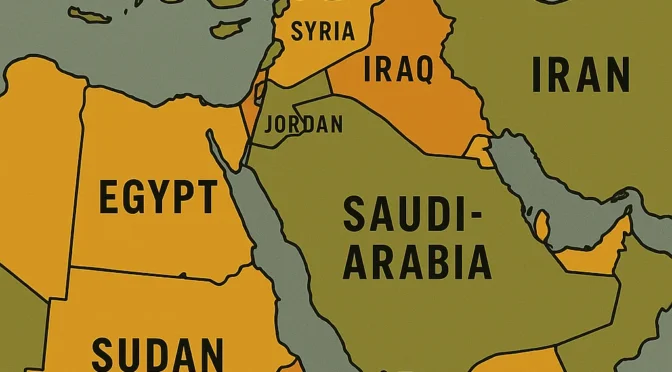
The map of the Middle East in 1959 was generated by the author using Sora. The intent was to mainly show Egypt, Saudia Arabia, Iraq and Iran to give some geographical context.

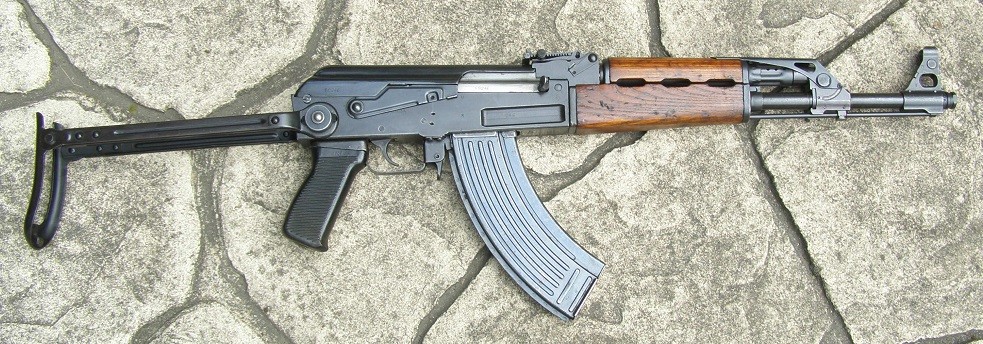
Russian AK-47 Type III (Photo by Gunrunner123 shared on Wikimedia)

The first ever meeting between Josip Broz Tito and Gamal Abdel Nasser – onboard the Yugoslav ship Galeb in the Suez Canal (1955). (Photo from the Online Museum of Syrian History, Shared on Wikimedia.

President Gamal Abdul Nasser and Yugoslavian President Josip Tito in Aleppo in 1959 / From left to right: United Arab Republic Vice President Akram al-Hawrani, the Aleppo industrialist Sami Saem al-Daher, director of Egyptian Intelligence Salah Nasr, President Josip Tito, his wife Jovanka Broz, President Gamal Abdul Nasser. The photo was taken in the home of Sami Saeb al-Daher, who was nationalized by President Nasser and left in bankrupcy in 1960 (Photo from the Online Museum of Syrian History, Shared on Wikimedia.


Works cited

  1. Zastava M70 assault rifle – Wikipedia, accessed May 11, 2025, https://en.wikipedia.org/wiki/Zastava_M70_assault_rifle
  2. SOVIET MILITARY AID TO THE UNITED ARAB REPUBLIC, 1955-66 (RR IR 67-9) – CIA, accessed May 11, 2025, https://www.cia.gov/readingroom/docs/DOC_0000496350.pdf
  3. Russia Reemerging as Weapons Supplier to Iraq – The Jamestown Foundation, accessed May 11, 2025, https://jamestown.org/program/russia-reemerging-weapons-supplier-iraq/
  4. Egypt–Yugoslavia relations – Wikipedia, accessed May 11, 2025, https://en.wikipedia.org/wiki/Egypt%E2%80%93Yugoslavia_relations
  5. Yugoslavia and the Non-Aligned Movement – Wikipedia, accessed May 11, 2025, https://en.wikipedia.org/wiki/Yugoslavia_and_the_Non-Aligned_Movement
  6. 60. Interdepartment Policy Paper Prepared by the Departments of State and Defense, Washington, undated. (7/5/73), accessed May 11, 2025, https://2001-2009.state.gov/r/pa/ho/frus/nixon/e15/107794.htm
  7. YUGOSLAV MILITARY EQUIPMENT AND ITS SOURCES – CIA, accessed May 11, 2025, https://www.cia.gov/readingroom/docs/CIA-RDP79T00429A001100010022-0.pdf
  8. Guns in Movies, TV and Video Games – AK-47 – Internet Movie Firearms Database, accessed May 11, 2025, https://www.imfdb.org/wiki/AK-47
  9. AK-47 | Definition, History, Operation, & Facts – Britannica, accessed May 11, 2025, https://www.britannica.com/technology/AK-47
  10. www.macalester.edu, accessed May 11, 2025, https://www.macalester.edu/russian-studies/about/resources/miscellany/ak47/#:~:text=Recognizing%20its%20demand%20in%20developing,being%20sold%20exclusively%20to%20governments.
  11. AK 47 – Russian Studies – Macalester College, accessed May 11, 2025, https://www.macalester.edu/russian-studies/about/resources/miscellany/ak47/
  12. The Gun (Chivers book) – Wikipedia, accessed May 11, 2025, https://en.wikipedia.org/wiki/The_Gun_(Chivers_book)
  13. The Gun by C.J. Chivers | Goodreads, accessed May 11, 2025, https://www.goodreads.com/book/show/7775851-the-gun
  14. The Gun – CJ Chivers – Amazon.com, accessed May 11, 2025, https://www.amazon.com/Gun-C-J-Chivers/dp/0743270762
  15. The Gun By C.j. Chivers Summary PDF – Bookey, accessed May 11, 2025, https://www.bookey.app/book/the-gun-by-c-j-chivers
  16. The Gun | Book by C. J. Chivers | Official Publisher Page – Simon & Schuster, accessed May 11, 2025, https://www.simonandschuster.com/books/The-Gun/C-J-Chivers/9780743271738
  17. THE GUN – Kirkus Reviews, accessed May 11, 2025, https://www.kirkusreviews.com/book-reviews/cj-chivers/the-gun/
  18. AK-47 History – C.J. Chivers The Gun Excerpt – Esquire, accessed May 11, 2025, https://www.esquire.com/news-politics/a25677/ak-47-history-1110/
  19. ОРУЖИЕ ДЛЯ ПРОФИ – Українська Спілка ветеранів Афганістану (воїнів-інтернаціоналістів), accessed May 11, 2025, http://www.usva.org.ua/mambo3/index.php?option=com_content&task=view&id=337
  20. AKM – Wikipedia, accessed May 11, 2025, https://en.wikipedia.org/wiki/AKM
  21. How did the Middle East get a hold of Russian firearms like the AK-47 and RPG-7? – Quora, accessed May 11, 2025, https://www.quora.com/How-did-the-Middle-East-get-a-hold-of-Russian-firearms-like-the-AK-47-and-RPG-7
  22. The Avtomat Kalashnikov Model of Year 1947 – Sites at Penn State, accessed May 11, 2025, https://sites.psu.edu/jlia/the-avtomat-kalashnikov-model-of-year-1947/
  23. Methodology: Kalashnikov & Variant Factory Dataset (1947-present) – Audrey Kurth Cronin, accessed May 11, 2025, https://www.audreykurthcronin.com/p2p-pvid/p2p-pvid-kalashnikov/kalashnikov-variant-factory-dataset-1947-present/methodology-kalashnikov-variant-factory-dataset-1947-present/
  24. األسلحة الصغيرة – Small Arms Survey, accessed May 11, 2025, https://www.smallarmssurvey.org/sites/default/files/2021-09/SAS-HB-06-Weapons-ID-ch3-ARA.pdf
  25. Egyptian–Czechoslovak arms deal – Wikipedia, accessed May 11, 2025, https://en.wikipedia.org/wiki/Egyptian%E2%80%93Czechoslovak_arms_deal
  26. Группа советских военных специалистов в Египте – Википедия, accessed May 11, 2025, https://ru.wikipedia.org/wiki/%D0%93%D1%80%D1%83%D0%BF%D0%BF%D0%B0_%D1%81%D0%BE%D0%B2%D0%B5%D1%82%D1%81%D0%BA%D0%B8%D1%85_%D0%B2%D0%BE%D0%B5%D0%BD%D0%BD%D1%8B%D1%85_%D1%81%D0%BF%D0%B5%D1%86%D0%B8%D0%B0%D0%BB%D0%B8%D1%81%D1%82%D0%BE%D0%B2_%D0%B2_%D0%95%D0%B3%D0%B8%D0%BF%D1%82%D0%B5
  27. شاهد بالصور والفيديو: بعد وفاة مصممه “اليوم” ما هو سلاح الكلاشنكوف ومن هو ميخائيل كلاشنكوف القائل: “أنا لا اقتل ولكن يقتل من يضغط زنادي” – دنيا الوطن, accessed May 11, 2025, https://www.alwatanvoice.com/arabic/news/2013/12/23/476461.html
  28. Odnosi Jugoslavije i Egipta — Википедија, accessed May 11, 2025, https://sr.wikipedia.org/sr-el/%D0%9E%D0%B4%D0%BD%D0%BE%D1%81%D0%B8_%D0%88%D1%83%D0%B3%D0%BE%D1%81%D0%BB%D0%B0%D0%B2%D0%B8%D1%98%D0%B5_%D0%B8_%D0%95%D0%B3%D0%B8%D0%BF%D1%82%D0%B0
  29. العلاقات المصرية اليوغوسلافية – ويكيبيديا, accessed May 11, 2025, https://ar.wikipedia.org/wiki/%D8%A7%D9%84%D8%B9%D9%84%D8%A7%D9%82%D8%A7%D8%AA_%D8%A7%D9%84%D9%85%D8%B5%D8%B1%D9%8A%D8%A9_%D8%A7%D9%84%D9%8A%D9%88%D8%BA%D9%88%D8%B3%D9%84%D8%A7%D9%81%D9%8A%D8%A9
  30. Iraq–Yugoslavia relations – Wikipedia, accessed May 11, 2025, https://en.wikipedia.org/wiki/Iraq%E2%80%93Yugoslavia_relations
  31. العلاقات العراقية اليوغوسلافية – ويكيبيديا, accessed May 11, 2025, https://ar.wikipedia.org/wiki/%D8%A7%D9%84%D8%B9%D9%84%D8%A7%D9%82%D8%A7%D8%AA_%D8%A7%D9%84%D8%B9%D8%B1%D8%A7%D9%82%D9%8A%D8%A9_%D8%A7%D9%84%D9%8A%D9%88%D8%BA%D9%88%D8%B3%D9%84%D8%A7%D9%81%D9%8A%D8%A9
  32. Революция в Ираке 1958 г. И изменение ситуации на Ближнем Востоке – КиберЛенинка, accessed May 11, 2025, https://cyberleninka.ru/article/n/revolyutsiya-v-irake-1958-g-i-izmenenie-situatsii-na-blizhnem-vostoke
  33. القوة البرية العراقية – ويكيبيديا, accessed May 11, 2025, https://ar.wikipedia.org/wiki/%D8%A7%D9%84%D9%82%D9%88%D8%A9_%D8%A7%D9%84%D8%A8%D8%B1%D9%8A%D8%A9_%D8%A7%D9%84%D8%B9%D8%B1%D8%A7%D9%82%D9%8A%D8%A9
  34. Syrian Civil War: WWII weapons used – wwiiafterwwii – WordPress.com, accessed May 11, 2025, https://wwiiafterwwii.wordpress.com/2017/06/27/syrian-civil-war-wwii-weapons-used/
  35. Russia’s arms exports to Indonesia top USD 2.5 billion over 25 years – Army Recognition, accessed May 11, 2025, https://armyrecognition.com/news/army-news/army-news-2018/russia-s-arms-exports-to-indonesia-top-usd-2-5-billion-over-25-years
  36. THE SOVIET-CUBAN CONNECTION IN CENTRAL AMERICA AND THE CARIBBEAN – CIA, accessed May 11, 2025, https://www.cia.gov/readingroom/docs/CIA-RDP88B00745R000100140026-6.pdf
  37. Soviet Arms Transfers to Sub-Saharan Africa: What are they Worth in the United Nations? – DTIC, accessed May 11, 2025, https://apps.dtic.mil/sti/tr/pdf/ADA212065.pdf
  38. YUGOSLAVIA, MIDDLE EAST AND CREATION OF THE NON-ALIGNED MOVEMENT Текст научной статьи по специальности – КиберЛенинка, accessed May 11, 2025, https://cyberleninka.ru/article/n/yugoslavia-middle-east-and-creation-of-the-non-aligned-movement
  39. The World’s Most Popular Gun – The New Atlantis, accessed May 11, 2025, https://www.thenewatlantis.com/publications/the-worlds-most-popular-gun
Yugoslavia’s AK Path: The Launch of the Zastava Family of Automatic Weapons and the M64

In the last post, we reviewed the political climate and how the USSR did not want to share their revolutionary AK-47 design with Yugoslavia. At this point, we need to look at the ambitious 1959 launch of the project “Familija Automatskog Oružja Zastava” (FAZ), or the Zastava Family of Automatic Weapons and how the Yugoslav’s worked around the Soviets to create their own version of the AK.

Forging Their Own Path: Yugoslavia’s Independent Rifle

In the fractured landscape of post-World War II Europe, the Socijalistička Federativna Republika Jugoslavija (Socialist Federal Republic of Yugoslavia – SFRJ) charted a uniquely independent course. Initially aligned with the Soviet Union, Yugoslavia’s relationship with Moscow ruptured dramatically following the Tito-Stalin split in 1948. This political schism cast Yugoslavia adrift from the burgeoning Eastern Bloc, leading to its refusal to join the Warsaw Pact and forcing it into a precarious non-aligned position during the Cold War.1 Wary of potential aggression from both NATO and the Soviet sphere, Belgrade recognized that national survival depended on military self-sufficiency.2

This drive for independence created a significant arms dilemma. The break with Moscow severed access to the latest Soviet military technology and, crucially, the licenses to produce advanced weaponry like Mikhail Kalashnikov’s revolutionary AK-47 assault rifle.1 While Yugoslavia remained a socialist state, its ideological divergence and independent streak meant Western powers were equally hesitant to provide significant military aid or technology transfers.2 The Jugoslovenska Narodna Armija (Yugoslav People’s Army – JNA), still largely equipped with World War II-era weapons including locally produced Mauser M48 bolt-action rifles, faced the challenge of modernization alone.2

Yugoslav planners understood the changing nature of warfare. As early as 1952, the defense industry began experimenting with automatic rifle designs, initially drawing inspiration from captured German StG 44 assault rifles, large numbers of which had fallen into Yugoslav Partisan hands during the war.1 This early research underscored the awareness within the JNA of the need for an intermediate-caliber automatic rifle, but the path to acquiring or developing such a weapon remained blocked by geopolitical realities. The quest for a domestic Kalashnikov variant, therefore, was not merely a technical undertaking; it was a direct manifestation of Yugoslavia’s defiant assertion of independence and its commitment to self-reliance in a world dominated by two opposing superpowers. The rifle project became intrinsically linked to the nation’s unique political identity under Marshal Josip Broz Tito.

Glimpses of the Future: Acquiring the Kalashnikov

The first crucial breakthrough came unexpectedly in 1959. Two Albanian border guards, armed with Soviet-made AK-47 rifles, defected across the border into Yugoslavia.1 This event provided the Yugoslav military establishment with its first tangible examples of the weapon they desperately sought to understand. The captured rifles, believed to be the milled-receiver Type 3 variant which was then standard Soviet issue, were promptly handed over to engineers at the renowned Zastava arms factory (then operating as Crvena Zastava, or Red Banner) located in the city of Kragujevac, Serbia.1

While this windfall was invaluable, the two rifles presented significant limitations. Engineers at Zastava meticulously studied the weapons, even making metal castings of components using sulfur to understand their form.2 However, two samples were simply insufficient to reverse-engineer the design effectively. Critical information regarding manufacturing tolerances, precise material specifications, and the intricacies of heat treatment remained elusive.1 Reproducing the rifle reliably based solely on these examples proved impossible. A technical impasse had been reached, threatening to stall the project before it truly began.

Overcoming this obstacle required intervention from the highest levels of the Yugoslav state. By the end of 1959, or shortly thereafter, the government managed to secure a much larger quantity of AK-47s.1 Accounts suggest that Marshal Tito himself played a direct role during a state visit to an unnamed non-aligned nation.2 This country, possibly Egypt, Indonesia, or India, was a recipient of Soviet military aid.3 Through discreet negotiations, Yugoslavia arranged the clandestine purchase of approximately 2,000 AK rifles from a batch supplied by the USSR.2 This covert acquisition, bypassing official channels and Soviet oversight, provided Zastava with the critical mass of samples needed for thorough analysis. The fact that such a significant acquisition required top-level political maneuvering underscores the project’s importance as a national priority, essential for breaking the technical deadlock and enabling the engineers to finally unlock the secrets of the Kalashnikov.

The question of which country they bought those 2,000 AKs from has never been formally answered but I have a real strong hunch and that will be the next blog post.

Unlocking the Kalashnikov: The Zastava Challenge

With a substantial number of Soviet AKs now available for study, the engineers at Crvena Zastava, which translates into English approximately as “Red Flag” works, in Kragujevac could finally begin the complex process of reverse engineering in earnest.1 This historic arms factory, the heart of Serbian and later Yugoslav weapons manufacturing, became the crucible for Yugoslavia’s Kalashnikov ambitions.2

In 1959, the effort was formalized under the project designation FAZFamilija automatskog oružja Zastava (Family of Automatic Weapons Zastava).2 This name itself revealed a strategic vision extending beyond merely cloning the AK-47. The goal was to develop an integrated family of infantry weapons tailored to the JNA’s needs, encompassing not only an assault rifle but also potentially a self-loading rifle and, significantly, a light machine gun (LMG).2 This mirrored the Soviet small arms doctrine (which featured the SKS carbine alongside the AK rifle and RPD/RPK machine guns) but aimed for entirely domestic design and production. This indicated a comprehensive, long-term strategy for infantry armament, rather than a simple stopgap measure.

The FAZ project was a collaborative effort, spearheaded by a team of talented Zastava engineers and designers. Key figures included Božidar Blagojević (who would later design the CZ99 pistol), Major Miloš Ostojić, Miodrag Lukovac, Milutin Milivojević, Stevan Tomašević, Predrag Mirčić, and Mika Mudrić, with engineer Milan Čirić leading the project.2 Their task was immense: to meticulously disassemble, measure, analyze materials, and create complete technical drawings for a weapon system they had no license or official documentation for.1 Every dimension, tolerance, and material property had to be painstakingly deduced through careful examination of the acquired Soviet rifles.

The First Yugoslavian AK: Enter the M64

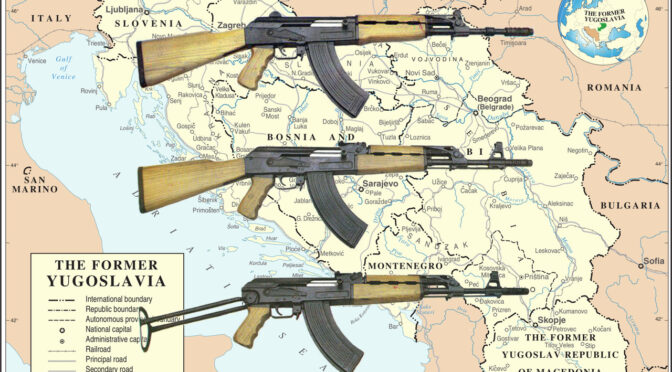
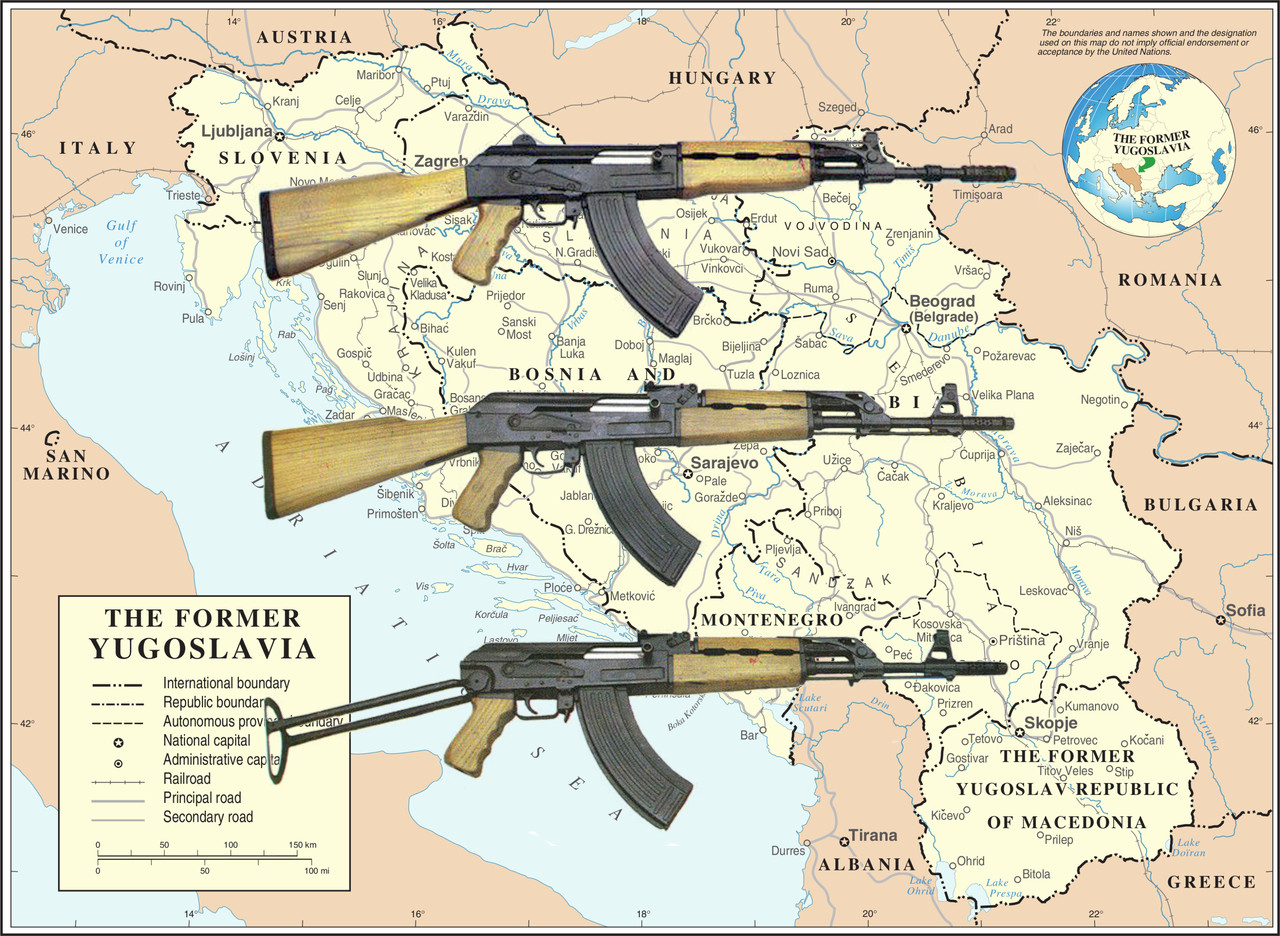
By 1964 and 1965, the intensive work at Zastava bore fruit. The first prototypes of a distinctly Yugoslavian Kalashnikov emerged, designated the M64A (featuring a fixed wooden stock) and M64B (equipped with an underfolding metal stock).1 Alongside these rifles, prototypes for a companion light machine gun, the M65A and M65B (featuring a quick-detach barrel), were also developed, though these LMGs would ultimately not see mass production.2

While based on the Soviet Type 3 AK-47, the M64 prototypes incorporated several unique features and modifications, reflecting both Yugoslav ingenuity and specific JNA requirements. This early design demonstrated that Zastava‘s engineers were not content with mere replication; they sought to adapt and potentially improve upon the Kalashnikov design. Key differences included:

  • Milled Receiver: Like its Soviet progenitor, the M64 utilized a robust milled steel receiver. However, the Yugoslav receiver had distinct geometry: the characteristic lightning cut above the magazine well was present only on the right side, while the left side featured a unique profile incorporating a visible pin intended to retain the bolt hold-open mechanism.5
  • Bolt Hold-Open (BHO): Perhaps the most significant innovation was a fully functional bolt catch mechanism. This device locked the bolt to the rear after the last round was fired from the magazine, offering a potential tactical advantage by speeding up reloads and providing immediate visual confirmation of an empty weapon. However, this system required specially modified magazines featuring a unique cutout on the follower or feed lip.1
  • Integrated Grenade Launching Capability: Reflecting a strong emphasis in JNA doctrine, the M64 was designed from the outset to launch rifle grenades. It featured a built-in, flip-up grenade sight mounted on the gas block and incorporated a gas cut-off mechanism, allowing the rifle’s gas system to be shut off to safely propel grenades.2 This was a notable difference from standard Soviet AKs, where grenade launching often required separate attachments.
  • Distinct Furniture: The M64 sported longer wooden handguards compared to the Soviet AK, giving it a different profile. These handguards were not interchangeable with standard AK parts.1 The M64B underfolding stock was borrowed directly from the existing Yugoslav M56 submachine gun, showcasing resourcefulness in utilizing existing production lines.2
  • Modified Sights and Charging Handle: The rear sight was positioned further back on the receiver compared to the standard AK placement on the rear sight block (though some very early prototypes experimented with receiver cover mounting), providing a longer sight radius for potentially improved aiming accuracy.1 Additionally, engineers pragmatically adopted the hollow cylindrical charging handle design from the domestically produced M59 rifle (Yugoslavia’s licensed SKS variant, known colloquially as the Papovka), again leveraging existing manufacturing capabilities.2

These modifications highlight a design philosophy that blended adaptation to specific military needs (grenade launching), innovation (BHO), and practical resource management (reusing existing parts). The M64 was clearly shaping up to be more than just a copy; it was becoming a uniquely Yugoslavian interpretation of the Kalashnikov system.

Feature Comparison: Soviet AK-47 Type 3 vs. Zastava M64 Prototype

FeatureSoviet AK-47 (Type 3)Zastava M64A/B PrototypeSnippet Reference(s)
Receiver TypeMilledMilled (Yugoslav pattern)6
Bolt Hold-OpenNoYes (requires modified magazine)1
Grenade Sight/Gas Cut-offNo (added later/separate)Yes (integrated)2
HandguardsStandard lengthLonger, unique design1
Rear Sight LocationStandard (rear sight block)Further rearward on receiver1
Charging HandleStandard AKHollow cylindrical (from M59 SKS)2
Folding Stock (M64B)N/A (AKS was different)Underfolder (from M56 SMG)2

Towards a Standard: Trials, Tribulations, and Transition

Despite the successful development of the M64 prototypes and reportedly satisfactory performance during initial field trials 1, the path to mass adoption by the JNA was not immediate. A degree of conservatism existed within the military leadership; some senior officers remained skeptical about the utility and cost-effectiveness of equipping every infantry soldier with a fully automatic rifle, fearing it would lead to excessive ammunition expenditure.2 Yugoslavia had, after all, only recently standardized its licensed version of the semi-automatic SKS, the Zastava M59.8

This institutional hesitation was significantly challenged by external events. The Warsaw Pact invasion of Czechoslovakia in August 1968 served as a stark demonstration of modern Soviet military doctrine, where entire infantry units were equipped with Kalashnikov assault rifles. Witnessing the effectiveness of massed automatic fire likely swayed opinions within the JNA command structure, highlighting the urgent need for a comparable domestic capability.2 The geopolitical situation acted as a catalyst, pushing the JNA to overcome its previous reservations and accelerate the process of adopting a modern assault rifle. Interestingly, around this period, warming relations with Moscow led Yugoslavia to briefly enter negotiations to purchase Soviet AKs directly, primarily for special forces units.2 This development undoubtedly put pressure on Zastava and proponents of the domestic FAZ program to prove their rifle was ready.2

However, the M64 faced a critical technical hurdle on the path to standardization: its innovative bolt hold-open mechanism. While potentially useful, the BHO necessitated the use of proprietary magazines, incompatible with the standard AK magazines that were becoming increasingly common worldwide.6 From a logistical perspective, introducing a non-standard magazine for the army’s main service rifle presented significant challenges. The JNA leadership ultimately prioritized interoperability and logistical simplicity, deciding that the new standard rifle must be compatible with commonly available AK-pattern magazines.6 This pragmatic decision, favoring ease of supply and potential use of captured magazines over a unique but non-standard feature, sealed the fate of the M64’s BHO system.

As the design moved towards finalization for mass production, the Vojnotehnički institut Beograd (Military Technical Institute Belgrade – VTI) likely played an increasingly important role.10 While Zastava engineers had driven the initial design and prototyping of the M64 2, the VTI, as the JNA’s central research and development body, would have been involved in refining the technical requirements based on trial results, overseeing final testing protocols, and preparing the definitive technical documentation for the production rifle.2 This included incorporating the mandated changes, most notably the removal of the bolt hold-open feature, paving the way for the weapon that would become Yugoslavia’s standard assault rifle.

Conclusion: On the Brink of the M70

The journey from Yugoslavia’s post-war isolation to the verge of mass-producing its own Kalashnikov variant was a testament to national determination, engineering skill, and political will. Blocked from acquiring licensed Soviet technology due to the Tito-Stalin split, Yugoslavia embarked on a challenging path of independent development.1 The opportunistic acquisition of initial AK-47 samples via Albanian defectors in 1959 provided the crucial spark.1 Overcoming the limitations of these few examples required high-level political intervention to secure a larger batch of rifles through clandestine channels, enabling Zastava engineers to undertake a comprehensive, unlicensed reverse-engineering effort under the ambitious FAZ program.1

The resulting M64 prototypes were far more than simple copies. They represented an innovative adaptation of the Kalashnikov design, incorporating features tailored to JNA doctrine, such as integrated grenade-launching capabilities, alongside novel additions like the bolt hold-open mechanism and resourceful use of existing domestic components.1 However, trials, evolving military thought spurred by events like the 1968 Czechoslovakia invasion, and pragmatic logistical considerations—specifically the need for standard magazine compatibility—led to crucial design revisions.2

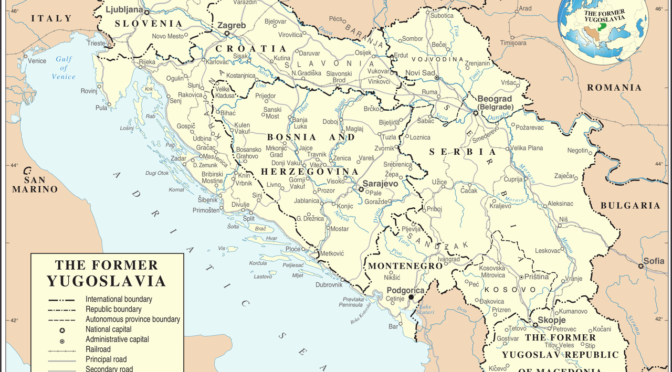
These are photos of M64 prototypes overlaid on a map of Yugoslavia
This is a photo of a Zastava M64B (B designating that it is an underfolder model) shared on Wikimedia by AZ2001

By 1970, the culmination of over a decade of effort was at hand. The lessons learned from the M64 program, the strategic decisions made by the JNA leadership, and the collaborative work between Zastava and the VTI had refined the design into a production-ready rifle. In that year, the Yugoslav government formally approved this modified design for serial production, designating it the Automatska Puška Model 1970 (Automatic Rifle Model 1970), or AP M70.1 The stage was set for the introduction of Yugoslavia’s first mass-produced Kalashnikov, a rifle born from political necessity and forged through ingenuity and perseverance. The detailed story of the M70 itself would be a new chapter, but its foundations were now firmly laid in the experiences chronicled here.

Image Source

The rifles were uploaded to Wikimedia by TheLokov. And the Yugoslavian map is also from Wikimedia and was shared by the UN. The author created the combined image.
https://commons.wikimedia.org/wiki/File:Zastava_M-64_prototypes.png
https://commons.wikimedia.org/wiki/File:Former_Yugoslavia_Map.png

The M64B image is from Wikimedia also and was shared by AZ2001.
https://commons.wikimedia.org/wiki/File:ZastavaM64B.jpg

Works cited

  1. Zastava M70 assault rifle – Wikipedia, accessed May 12, 2025, https://en.wikipedia.org/wiki/Zastava_M70_assault_rifle
  2. Zastava M64. Part 1. The Unusual History of Yugoslavian AKs …, accessed May 12, 2025, https://www.thefirearmblog.com/blog/2024/05/07/zastava-m64-part-1-unusual-history-yugoslavian-aks/
  3. Zastava M70 (автомат) — Википедия, accessed May 12, 2025, https://ru.wikipedia.org/wiki/Zastava_M70_(%D0%B0%D0%B2%D1%82%D0%BE%D0%BC%D0%B0%D1%82)
  4. Is the Yugoslav, Zastava M-70, the best licensed built Ak-47 and maybe the best Ak-47 variant to this day? : r/ak47 – Reddit, accessed May 12, 2025, https://www.reddit.com/r/ak47/comments/10r4iq9/is_the_yugoslav_zastava_m70_the_best_licensed/
  5. Guns in Movies, TV and Video Games – Zastava M70 – Internet Movie Firearms Database, accessed May 12, 2025, https://www.imfdb.org/wiki/Zastava_M70
  6. Zastava AKs, Part 2. M70 – The First Mass-Produced Yugoslavian …, accessed May 12, 2025, https://www.thefirearmblog.com/blog/2024/05/14/zastava-aks-part-2-m70-first-mass-produced-yugoslavian-kalashnikov/
  7. How Does The Yugoslavian Zastava M70 Compare To Other Ak-47 Variants? – GunCreed, accessed May 12, 2025, https://guncreed.com/2024/08/17/how-does-the-yugoslavian-zastava-m70-compare-to-other-ak47-variants/
  8. My Complete Yugoslavian Smallarms Collection History (Zastava Trek VIII: Communist First Contact) – YouTube, accessed May 12, 2025, https://www.youtube.com/watch?v=kzJ5v_HREt0
  9. A country’s weapons can be a good indication of whether they wanted to be a Soviet puppet state : r/NonCredibleDefense – Reddit, accessed May 12, 2025, https://www.reddit.com/r/NonCredibleDefense/comments/17jukc7/a_countrys_weapons_can_be_a_good_indication_of/
  10. PROCEEDINGS, accessed May 12, 2025, https://scindeks-clanci.ceon.rs/data/pdf/proc-0018/OTEH_2024.pdf
  11. Војнотехнички институт — Википедија, accessed May 12, 2025, https://sr.wikipedia.org/wiki/%D0%92%D0%BE%D1%98%D0%BD%D0%BE%D1%82%D0%B5%D1%85%D0%BD%D0%B8%D1%87%D0%BA%D0%B8_%D0%B8%D0%BD%D1%81%D1%82%D0%B8%D1%82%D1%83%D1%82
  12. ПОЛИТИКА ОДБРАНЕ ЈУГОСЛАВИЈЕ (1945–1958): ИДЕЈЕ И ПРАКСА, accessed May 12, 2025, https://nardus.mpn.gov.rs/bitstream/id/143356/Disertacija_12293.pdf
  13. Zakon o Opasnim Materijama | PDF – Scribd, accessed May 12, 2025, https://www.scribd.com/document/395551284/Zakon-o-Opasnim-Materijama


If you find this post useful, please share the link on Facebook, with your friends, etc. Your support is much appreciated and if you have any feedback, please email me at in**@*********ps.com. Please note that for links to other websites, we are only paid if there is an affiliate program such as Avantlink, Impact, Amazon and eBay and only if you purchase something. If you’d like to directly contribute towards our continued reporting, please visit our funding page.


Yugoslavia’s AK Path: The USSR Would Not Share Their AK-47 Rifles or Designs With Yugoslavia

I’ve owned and built a number of AK-47 pattern rifles over the years and slowly one of my favorite series are the ones from Zastava when they were part of Yugoslavia partly because they are unique. Now, that opens the door – why were they unique? There is some very interesting history behind that and so let’s dive into this further. This first piece will set the stage by explaining why the Soviets didn’t share their AK-47 rifles or designs with Yugoslavia so let’s dive in.

I. Introduction: A Strained Fraternity and a Strategic Weapon

In the shadow of World War II, a brotherhood forged in shared ideology between the Soviet Union (СССР – Soyuz Sovetskikh Sotsialisticheskikh Respublik) and the newly minted Federal People’s Republic of Yugoslavia (ФНРЈ – Federativna Narodna Republika Jugoslavija) was destined for a dramatic unraveling. What began as a seemingly tight-knit alliance, cemented by the fight against fascism, quickly soured, descending into a bitter schism by 1948. A cautious, often fraught, attempt at reconciliation in the post-Stalin years would follow, but the scars of division ran deep.1 This turbulent political saga inevitably cast a long shadow over every aspect of their relationship, particularly in the sensitive arena of military cooperation.

At the heart of the Soviet Union’s rapidly expanding military and geopolitical might lay a revolutionary piece of hardware: the Avtomat Kalashnikova obraztsa 1947 goda (Автомат Калашникова образца 1947 года), the AK-47. Officially entering service in 1949, this assault rifle didn’t just arm Soviet soldiers; it became a potent symbol of Moscow’s technological prowess and a key instrument of its foreign policy.3 The Kremlin wielded the AK-47, and especially the rights to produce it, with calculated precision, using its distribution to reward allies and exert influence.4 Whether a nation received this coveted weapon, or its blueprints, became a telling barometer of its standing in Moscow’s eyes.

Yugoslavia, by the close of 1959, found itself on the outside looking in, denied both the AK-47 and its designs. This wasn’t a simple oversight. It was the culmination of a complex web of factors, chief among them the deep-seated animosity stemming from the 1948 Tito-Stalin split. That seismic event saw Yugoslavia unceremoniously booted from the Cominform (Информбиро / Informbiro – Информационное бюро коммунистических и рабочих партий / Informatsionnoye byuro kommunisticheskikh i rabochikh partiy), the Soviet-led bloc of communist parties, and subjected to a barrage of political and economic pressure.1 This rupture forced Belgrade to chart a new course.

The plot thickened as Yugoslavia embraced an independent, non-aligned stance on the world stage, a move that saw it increasingly reliant on military aid from the West, particularly the United States. Moscow, meanwhile, maintained a tight grip on its arms exports, prioritizing nations that toed the ideological line. Adding another layer to this complex dynamic was Yugoslavia’s own burgeoning ambition to build its own weapons, a drive that would eventually see the Zastava (Застава Оружје / Zastava Oružje) arms factory successfully reverse-engineer the very AK-47s it couldn’t officially obtain. The story of the unshared rifle is thus a tale of clashing ideologies, geopolitical chess, and one nation’s determined, and ultimately successful, quest for self-reliance in a world divided.

II. From Alliance to Animosity and Uneasy Reconciliation: Soviet-Yugoslav Political Dynamics (1945-1959)

A. Post-War Comradeship and Emerging Fissures (1945-1948)

The early days after World War II painted a picture of camaraderie between Moscow and Belgrade. United by communist ideology and their recent joint struggle against the Axis, the Soviet Union and the Federal People’s Republic of Yugoslavia seemed natural partners. A formal Treaty of Friendship and Cooperation, inked in Moscow (Москва / Moskva) on April 11, 1945, by delegations headed by Josip Broz Tito (Јосип Броз Тито) himself, appeared to seal this bond.1 The USSR officially recognized the new Yugoslav state on December 19, 1945, and Belgrade even became the headquarters for the Cominform in 1946, further underscoring the initial closeness.1

Soviet aid flowed into war-torn Yugoslavia: vital food supplies, assistance in repatriating prisoners of war, and the deployment of Soviet technical and military advisors.8 Soviet experts even helped organize Tito’s personal security detail.8 On the economic front, joint ventures like the “Juspad” (пароходство «Юспад») shipping company and the “Justa” (ЮСТА – Югославско-советское акционерное общество гражданской авиации / YUSTA) civil aviation firm were launched, aimed at fostering economic growth and integration.8 For the Yugoslav leadership, who had largely liberated their nation through their own partisan efforts, the Soviet Union was initially seen as an indispensable ally and a blueprint for building a socialist society.9

But beneath this veneer of cooperation, cracks were beginning to show. Tito, a leader with his own strong vision, harbored ambitions for Yugoslavia that didn’t always align with Moscow’s grand strategy. He envisioned Yugoslavia as a dominant force in the Balkans, pursuing plans for a Balkan Federation (Balkanska federacija) that might draw in Bulgaria (Бугарска / Bugarska) and Albania (Албанија / Albanija; Albania – Russian), and he actively backed communist insurgents in the Greek Civil War.2 These moves, often made without Moscow’s full blessing, were viewed by Joseph Stalin (Иосиф Сталин) as potentially reckless and disruptive, especially concerning delicate relations with Western powers.1 Moscow also eyed Yugoslavia’s assertive territorial claims – against Italy over Trieste (Трст / Trst) and Austria (Аустрија / Austrija) regarding Carinthia (Корушка / Koruška; Каринтия / Karantiniya – Russian) – with a degree of apprehension.1

Stalin expected unwavering loyalty from the Eastern European communist states, seeing them as a vital buffer zone and an extension of Soviet might.2 Tito, however, having led a successful indigenous liberation, saw Yugoslavia as an equal partner, not a subordinate.2 This fundamental clash of perspectives was starkly illustrated in November 1945 when Tito, speaking to The Times, declared that while Yugoslav friendship with the Soviet peoples was deep, there was “nothing exclusive about it,” firmly asserting his nation’s independence.1 Even the early Soviet aid, including the presence of advisors, likely served as an intelligence channel for Moscow. As Yugoslavia began to assert its own path, these points of contact may have become sources of friction, with Soviet officials in Belgrade reportedly sending dispatches to Moscow accusing the Yugoslav leadership of ideological straying and “leaderism” (вождизм / vozhdizm).8 The initial “comradeship,” it seemed, was built on shaky ground, with Moscow perhaps viewing its assistance as an investment that demanded Yugoslav compliance, making Belgrade’s subsequent divergence all the more galling to the Kremlin.

B. The 1948 Tito-Stalin Split (Raskol Tito—Staljin / Раскол Тито—Стаљин): A Bitter Divorce and the Informbiro Storm

The simmering pot of Soviet-Yugoslav tensions finally boiled over in 1948, erupting into the infamous Tito-Stalin split (Раскол Тито—Стаљин / Raskol Tito—Staljin; Советско-югославский конфликт / Sovetsko-yugoslavskiy konflikt – Russian) – a dramatic and acrimonious divorce that sent shockwaves through the communist world.7 The Kremlin’s patience with Yugoslavia’s independent streak had worn thin. Tito’s ambitious plans for a Balkan Federation, his assertive stance on Trieste, and his continued support for Greek communists – all actions Stalin feared might provoke a Western backlash – became intolerable to Moscow.2 Stalin’s attempts to tighten his grip on Yugoslav internal affairs, from its economic blueprints to its security forces, met with staunch resistance from Tito, who commanded a loyal and powerful base within the Communist Party of Yugoslavia (КПЈ – Komunistička partija Jugoslavije) and the state apparatus.2

The crisis escalated with alarming speed in early 1948. In a clear signal of displeasure, the Soviet Union abruptly withdrew its military and civilian advisors from Yugoslavia in March.8 What followed was a volley of increasingly venomous letters exchanged between the Central Committees of the Yugoslav and Soviet Communist Parties. The Soviet missives were laden with accusations, painting the Yugoslav leadership as anti-Soviet, nationalistic, Trotskyite, and guilty of straying from the sacred tenets of Marxism-Leninism.8 The Yugoslavs, unbowed, fiercely defended their policies and their sovereign right to forge their own path to socialism.10

The conflict reached its zenith on June 28, 1948. Meeting in Bucharest (Букурешт / București), Romania (Румунија / Rumunija; Румыния / Rumyniya – Russian) – a gathering from which Yugoslav delegates were notably absent – the Cominform adopted a resolution that formally cast Yugoslavia out. The KPJ leadership was condemned for pursuing policies hostile to the USSR, for abandoning Marxism-Leninism in favor of bourgeois nationalism, and for cultivating a “terroristic regime” within its own party.1 This act marked the dawn of the “Informbiro period” (Информбиро период), an era of intense political, economic, and psychological warfare waged by the Soviet Union and its Eastern Bloc allies against a defiant Yugoslavia.7

The Soviet bloc slapped a comprehensive economic embargo on Yugoslavia, hoping to bring its economy, heavily reliant on trade with these nations, to its knees.7 Ominous military maneuvers were conducted along Yugoslavia’s borders with Hungary (Мађарска / Mađarska; Венгрия / Vengriya – Russian), Romania, Bulgaria, and Albania, creating a very real threat of invasion.7 A ferocious propaganda war was unleashed, with outlets like Radio “Free Yugoslavia” (Радио Слободна Југославија / Radio Slobodna Jugoslavija), broadcasting from Bucharest, and newspapers such as “For Socialist Yugoslavia” (За социјалистичку Југославију / Za socijalističku Jugoslaviju) and “New Struggle” (Нова борба / Nova borba), relentlessly denouncing Tito and his government.8 Moscow also threw its weight behind anti-Tito Yugoslav émigrés and allegedly backed plots to topple the Yugoslav leadership from within, including a failed coup attempt linked to high-ranking military officer Arso Jovanović (Арсо Јовановић).11

Yugoslavia’s response was one of unwavering defiance. Tito rallied the nation, framing the struggle as a defense of Yugoslav sovereignty and independence.1 Internally, the regime unleashed a brutal crackdown on anyone suspected of Soviet sympathies. These individuals, derisively labeled “Cominformists” (информбировци / informbirovci or ибеовци / ibeovci), faced arrest, imprisonment, and horrific conditions in notorious camps like Goli Otok (Голи оток, literally “Bare Island”).7 Isolated from the East and staring down the barrel of potential Soviet military action, Yugoslavia had little choice but to turn to the West, primarily the United States, for economic and, critically, military lifelines.1

The repercussions of the Tito-Stalin split were immense. It cemented Tito’s authority at home and dramatically boosted his international standing as a leader who had dared to defy Stalin.1 It set Yugoslavia on the unique path of “Titoism” (титоизам / titoizam), a brand of socialism characterized by worker self-management and a non-aligned foreign policy.7 The split also triggered purges of suspected “Titoists” in other Eastern Bloc countries as Stalin moved to consolidate his control.7 For Yugoslavia, the immediate economic and military fallout was severe, forcing a wholesale reorientation of its foreign and defense strategies.7 The failure of the Informbiro campaign to unseat Tito, despite its ferocity, not only hardened Yugoslav resolve but also, ironically, spurred the development of a more self-reliant defense posture and a domestic arms industry. The very real threat of invasion, coupled with the initial uncertainty of finding alternative arms suppliers, drove home the strategic necessity for Yugoslavia to bolster its own defenses – a lesson that would profoundly shape its approach to national security, including its eventual quest to produce its own version of the AK-47, and later leading to its “Total National Defence” (Општенародна одбрана / Opštenarodna odbrana) doctrine.15

C. Navigating the Thaw: Khrushchev’s Olive Branch and Lingering Shadows (1953-1959)

The death of Joseph Stalin in March 1953 signaled a potential sea change in the icy relations between Moscow and Belgrade, ushering in a period of gradual, though decidedly cautious, normalization.1 The new Soviet leadership, with Nikita Khrushchev (Никита Хрущёв) eventually emerging at the helm, embarked on a broader policy of de-Stalinization and sought to dial down international tensions. Mending fences with Yugoslavia was part of this new playbook.17 The Kremlin hoped to repair the rift within the socialist world and perhaps coax Yugoslavia back into a closer orbit.

A pivotal moment arrived with Khrushchev’s landmark visit to Belgrade in May-June 1955. The visit culminated in the signing of the Belgrade Declaration (Београдска декларација / Beogradska deklaracija; Белградская декларация / Belgradskaya deklaratsiya – Russian) on June 2, 1955.1 This document was a diplomatic breakthrough, formally acknowledging the legitimacy of “different paths to socialism” and enshrining principles of mutual respect for sovereignty, independence, and non-interference in internal affairs.8 Diplomatic ties were fully restored, and trade agreements were struck, easing the economic vise that had squeezed Yugoslavia since 1948.17

But this thaw, while welcome, had its limits, and a deep-seated distrust lingered beneath the surface. Tito’s Yugoslavia remained fiercely committed to its non-aligned foreign policy, carefully navigating a path between the Eastern and Western blocs.1 Tito famously quipped that Yugoslavia would receive Soviet overtures “with a grain of salt,” a clear indication of Belgrade’s enduring skepticism about Moscow’s true intentions.17 While Khrushchev harbored hopes of bringing Yugoslavia back into the Soviet-led “socialist camp” (often dubbed the “Lager“), Tito was resolute in safeguarding Yugoslavia’s hard-won independence.22 Suspicions cut both ways: Yugoslav leaders feared Moscow’s ultimate aim was to reassert dominance, while the Kremlin remained wary of Tito’s independent spirit.17

The fragility of this rapprochement became starkly clear by late 1956. The Soviet military crackdown on the Hungarian Uprising (Мађарска револуција 1956. / Mađarska revolucija 1956.) and the events of the Polish October (Пољски октобар / Polski oktobar) drew criticism from Yugoslavia, reigniting ideological clashes and chilling the recently warmed relations.13 Soviet accusations of Yugoslav “revisionism” resurfaced, and in a throwback to earlier pressure tactics, the USSR in 1958 postponed previously agreed-upon loans to Yugoslavia.8

Military relations during this period of normalization mirrored this complex dance. High-level military delegations were exchanged. Yugoslav State Secretary for National Defence, General Ivan Gošnjak (Иван Гошњак), journeyed to Moscow in June 1957, and Soviet Defence Minister Marshal Georgy Zhukov (Георгиј Жуков / Georgiy Zhukov; Георгий Жуков / Georgiy Zhukov – Russian) paid a return visit to Belgrade in October 1957.23 These visits saw discussions on potential military cooperation and Soviet offers to showcase their latest military hardware.23 However, a significant catch remained: the Soviets consistently tied any substantial military-technical assistance, especially the provision of modern weaponry, to Yugoslavia severing its military aid relationship with the West – a price Belgrade was unwilling to pay.23 Since 1948, Yugoslavia had become a major recipient of US military aid, a lifeline crucial for modernizing the Yugoslav People’s Army (ЈНА – Југословенска народна армија / Jugoslovenska narodna armija).13 While Yugoslavia did announce the end of the US grant aid program in 1957, it continued to purchase spare parts and sought to diversify its arms suppliers, signaling no intent to become wholly reliant on Moscow.14 Adding another twist, Marshal Zhukov’s sudden ouster from his posts in late October 1957, immediately after his Yugoslav trip, further complicated and ultimately derailed the tentative military rapprochement.23

The post-Stalin normalization, therefore, while politically important in ending the overt hostility of the Informbiro era, failed to forge deep military-technical trust, particularly when it came to advanced offensive weapons like the AK-47. Yugoslavia adeptly used the thaw to cement its non-aligned status and maintain its vital Western military connections. This independent posture, heavily reliant on Western arms, was fundamentally at odds with the Soviet Union’s strategic desire for bloc unity and tight control over its key military technologies. The “thaw,” in essence, remained more of a political maneuver than a genuine strategic military partnership that would have justified Moscow sharing its sensitive arms designs with Belgrade.

III. The Kalashnikov Doctrine: Soviet Arms Export Policy and the AK-47

A. The AK-47: Birth of an Icon (1949) and Early Years (up to 1959)

The Avtomat Kalashnikova obraztsa 1947 goda (АК-47) was born from the harsh lessons of World War II and the Soviet Union’s urgent post-war drive to modernize its infantry. Drawing inspiration from weapons like the German Sturmgewehr 44 (StG 44) and built around the new intermediate 7.62x39mm M43 cartridge, the AK-47 was the brainchild of a design team spearheaded by Mikhail Timofeyevich Kalashnikov (Михаил Калашников).3 Early prototypes, dubbed the AK-46, underwent a significant overhaul with input from Aleksandr Zaitsev (Александр Зайцев), leading to the version that would become legendary.4 Following successful trials, the rifle was officially adopted by the Soviet Army in 1949, earning the GRAU index 56-А-212.3 The green light for its technical documentation and initial experimental production at the Izhevsk Motozavod (Ижевский мотозавод / Izhevsk Motozavod) came from Minister of Armaments D.F. Ustinov (Д.Ф. Устинов) on January 21, 1948.29

Getting the AK-47 into mass production wasn’t without its headaches. The initial design called for a receiver made from stamped sheet metal – a method ideal for churning out large numbers. However, difficulties in welding crucial components like the guide and ejector rails led to a high number of rejected units.4 To overcome these hurdles and speed up production, a heavier, more expensive machined (milled) receiver was temporarily adopted. These milled receiver versions, known as Type 2 (from 1951) and the later, lightened Type 3 (from 1954/55), became the standard for several years.4 As a result, the AK-47 didn’t reach Soviet troops in large numbers until around 1956, with the older SKS carbine continuing in production as a stopgap.4

The quest for a more efficient and cost-effective design didn’t stop there. By 1959, the Soviet military rolled out the AKM (Автомат Калашникова Модернизированный / Avtomat Kalashnikova Modernizirovanniy), or Modernized Kalashnikov Automatic Rifle.3 The AKM boasted a redesigned stamped sheet metal receiver that was lighter and cheaper to make, a distinctive slanted muzzle brake to counter muzzle climb, and a hammer retarder to boost reliability during automatic fire.4 This evolution underscores that the AK-47 platform was a top-priority, constantly developing system for the Soviet military throughout the 1950s. The rifle’s own lengthy development, early production snags, and its significant upgrade to the AKM by decade’s end suggest an intense internal focus. This, coupled with its immense strategic value, naturally meant Moscow would be extremely cautious about exporting it, especially when it came to sharing the latest designs with nations not firmly under its military and political thumb.

B. Moscow’s Armory: The Politics of Soviet Arms Transfers

During the Cold War, the Soviet Union’s arms export strategy was less about profit and almost entirely about politics and power.5 The Kremlin’s main goals were to bolster the socialist bloc, support nations taking an “anti-imperialist” line, cultivate allies in international arenas like the United Nations, and, crucially, to foster dependencies that would tie recipient countries closer to Moscow.5 This was clear in the preferential treatment given to Warsaw Pact members, who got first dibs on Soviet weaponry and were pushed to standardize their arsenals along Soviet lines to improve coalition fighting capabilities.5

But this didn’t mean an open tap for all military technology. The Soviets were careful, keeping a tight rein on what went where. They generally avoided sending arms to countries that might use them aggressively, destabilize a region, or whose political loyalty was shaky.5 Secrecy often shrouded the technical details of exported weapons, especially newer systems, to protect Soviet security and prevent sensitive information from falling into enemy hands.5 Notably, the export of nuclear weapons, strategic missiles, and the most cutting-edge military technologies was severely limited or outright banned for most countries, even many socialist allies.5 Often, arms packages included a mix of modern gear and updated, but essentially older, systems.5

Licensing weapon designs, like that of the AK-47, was a meticulously controlled affair, typically reserved for the most trusted allies within the Warsaw Pact or key strategic partners who showed unwavering political devotion. China, for example, received a license to produce its AK-47 variant, the Type 56, in 1956 3, and other Warsaw Pact nations also set up their own production lines.6

The Khrushchev era (1953-1964) saw Moscow extend its reach to newly independent and non-aligned nations in the developing world, courting countries like India, Egypt, and Indonesia.34 This was a pragmatic move to chip away at Western influence, gain Cold War allies, and project Soviet power globally. Aid, including military assistance and arms, was a key tool in this game.34 However, this didn’t translate into freely sharing the most advanced Soviet military tech or production licenses with every non-aligned state. Even under Khrushchev’s more flexible foreign policy, Soviet arms exports operated on a tiered system of trust. Full licensing and transfer of top-tier infantry weapons like the AK-47 were likely kept for nations deeply embedded in the Soviet security sphere (i.e., Warsaw Pact members) or those, unlike Yugoslavia, that weren’t simultaneously cozying up to Western powers for military hardware, training, and political backing. Yugoslavia’s unique tightrope walk – a socialist state outside the Soviet bloc, actively cultivating ties with the West, and a major recipient of Western military aid – put it in a distinctly less trusted category when it came to accessing Moscow’s sensitive military technology.

C. The AK-47: A Crown Jewel in the Soviet Arsenal

The AK-47 wasn’t just another rifle for the Soviets; it was a game-changer in infantry firepower. Renowned for its straightforward design, ruggedness, reliability in the toughest conditions, and suitability for mass production, it was a weapon perfectly adapted for both conventional armies and revolutionary fighters.3 These qualities made it an incredibly valuable military asset, and Moscow was understandably careful about who got their hands on it.

The early spread of the AK-47 illustrates this cautious approach. Even a close ally like the People’s Republic of China was initially supplied with the older SKS semi-automatic carbine before eventually receiving the license to manufacture its own AK-47 version, the Type 56, in 1956.3 This points to a deliberate, phased rollout of this critical technology, even with ideologically aligned partners. The introduction of the modernized and more cost-effective AKM in 1959 only increased the strategic value of the Kalashnikov system, and the Soviets would have been keen to control the dissemination of this improved design.3

Ideologically, the AK-47 was often portrayed as the weapon for the “liberation of the proletariat” and the arming of “socialist workers and peasants.”6 This framing implied that any nation receiving such a weapon, particularly the know-how to make it, needed to be deemed ideologically pure and politically reliable by Moscow. Yugoslavia, after the 1948 split, was seen by the Kremlin as an ideological traitor, guilty of “revisionism” and nationalism.8 Despite the later political thaw under Khrushchev, this deep-seated ideological mistrust never fully evaporated.17 To provide the AK-47 or its designs to a nation that had so publicly defied Soviet authority, was charting its own “path to socialism,” and was actively building ties with the West would have flown in the face of core Soviet principles of ideological conformity and strategic control. The AK-47’s status as both a revolutionary icon and a vital military tool meant its export, especially licensing, was a decision freighted with significance. For Yugoslavia – a nation that had not only broken from the Soviet orbit but had also become a major recipient of Western military aid – the chances of getting this premier Soviet rifle or its blueprints were slim to none.

IV. Yugoslavia’s Armament Dilemma: Between Western Aid and Indigenous Ambition

A. Rearming the JNA Post-1948: A Lifeline from the West

The 1948 Tito-Stalin split threw the Yugoslav People’s Army (JNA – Југословенска народна армија / Jugoslovenska narodna armija) into a perilous situation. Suddenly facing open hostility and the looming threat of invasion from the Soviet Union and its Eastern Bloc allies, Yugoslavia was in desperate need of modernizing its armed forces.15 The JNA’s arsenal at the time was a patchwork of captured World War II weapons (German and Italian), some pre-war domestic models, and the limited Soviet aid received before the bitter divorce – hardly enough to deter a potential Soviet-led onslaught.1

Out of necessity, Yugoslavia turned its gaze westward, primarily to the United States, for military assistance. Beginning in late 1951, under the Mutual Defense Assistance Program (MDAP), Washington began to supply substantial quantities of military hardware and provide crucial training to the JNA.13 This aid was a game-changer, transforming the JNA’s inventory. By 1957, when Yugoslavia requested an end to US grant aid (which officially ceased in 1959, though some purchases continued), it had received a massive infusion of military support.14

Table: Major US Military Equipment Deliveries to Yugoslavia (approx. 1951-1959)

Equipment TypeModel(s)Approximate QuantityDelivery Period (approx.)Sources
Jet FightersF-86D Sabre, F-86E Sabre, F-84G Thunderjet405 (total US jets)1950s14
TanksM4A3 Sherman, M-47 Patton860 (US models)1950s14
Self-Propelled GunsM7 Priest, M18 Hellcat, M36 Jackson7151950s25
Armored/Scout CarsM3A1 Scout Car, M8 Greyhound5651950s25
Artillery Pieces105mm, 155mm, 203mm howitzers7601950s25
TrainersT-33 Shooting Star (TV-2)701950s46
Transport AircraftC-47 Skytrain, DC-627 (C-47), 2 (DC-6)1950s46
HelicoptersH-5, S-55 Whirlwind, H-23Small numbers1950s46
Naval VesselsMinesweepers, Patrol BoatsSome1950s14
Small Arms & Other GFEVarious (e.g., M20 recoilless rifles)Large quantities1950s46

Note: Quantities are approximate and reflect data available for the period. “GFE” refers to Ground Forces Equipment.

Yugoslavia also procured limited military equipment from other Western nations, such as the United Kingdom, which supplied items like Anson aircraft, destroyers, and jet engines for Yugoslav-made aircraft.14 This massive influx of US military aid, while indispensable for Yugoslavia’s defense in the early 1950s, simultaneously widened the gulf with Moscow regarding sensitive military technology. The aid cemented a Western orientation in much of the JNA’s equipment, training, and operational thinking.13 Such strong Western military ties made the idea of integrating a key Soviet system like the AK-47 not only politically thorny for the USSR but also practically challenging for the JNA. Handing over AK-47s to an army largely equipped and trained by the West would have been counterproductive to Soviet goals of bloc unity and risked their top small arms technology being compromised. Yugoslavia’s termination of US grant aid in 1957 was a nod to Moscow during the normalization period, but it didn’t signal a complete break from Western military ties or a wholesale embrace of Soviet arms.14

B. Zastava Arms (Zastava Oružje / Застава Оружје): Forging an Independent Path to the AK

The Yugoslav People’s Army’s approach to small arms in the post-war era was deeply influenced by its partisan roots and the changing face of infantry warfare. Initially, the JNA fielded a diverse collection of weapons, including captured German Mauser Kar98k rifles. The Zastava factory in Kragujevac (Крагујевац / Kragujevac) began reworking these and producing its own version, the M48 bolt-action rifle.44 Soviet-designed small arms, like the SKS carbine (later made domestically as the Zastava M59) and various submachine guns, also filled the JNA’s racks.43 However, the world was moving on. The limitations of bolt-action rifles in terms of sheer firepower and the shorter reach of submachine guns were becoming increasingly obvious with the rise of intermediate-cartridge assault rifles.55 Having witnessed the effectiveness of weapons like the German StG 44 during the war, the JNA knew it needed a modern automatic rifle.56

As early as 1952, Zastava Arms began experimenting with automatic rifle designs, often drawing inspiration from the StG 44.56 This early interest signaled Yugoslavia’s intent to keep pace with global military advancements.

The year 1959 became a pivotal moment in Yugoslavia’s quest for the AK-47. Shut out from official Soviet designs or licensed production due to the chilly political climate, Belgrade turned to unconventional methods. In a stroke of luck, or perhaps shrewd opportunism, two Albanian soldiers defected to Yugoslavia in 1959, carrying their Soviet-made AK-47s. These rifles were swiftly delivered to Zastava’s engineers for meticulous inspection.56 While these initial samples provided a crucial first look and even allowed for metal castings, they weren’t enough to unlock all the secrets of the rifle’s precise technical data and manufacturing tolerances needed for full-scale reproduction.56

Later that year, or soon after, Yugoslavia managed a more significant acquisition, secretly purchasing a batch of reportedly around 2,000 early-pattern AK-47s. Legend has it this deal was struck during one of President Tito’s visits to an unnamed African nation that was a recipient of Soviet military aid.57 With a larger pool of rifles to dissect and study, Zastava’s engineers finally had what they needed to effectively reverse-engineer the prized weapon.

This clandestine effort culminated in the Zastava M64, Yugoslavia’s first domestically produced, unlicensed version of the AK-47.30 Based on the milled receiver design of the Soviet AK Type 3, the M64 incorporated several distinctly Yugoslav features. These included modifications for launching rifle grenades – a key element of JNA doctrine – different handguard designs (often with three cooling slots instead of the Soviet two), and, on some early prototypes, a mechanism to hold the bolt open after the last round was fired.56 The Zastava design team, featuring engineers like Božidar Blagojević (Божидар Благојевић) and Major Miloš Ostojić (Милош Остојић), worked under the “FAZ” (Фамилија Аутоматика Застава / Familija Automatika Zastava – Family of Automatic Weapons Zastava) concept, aiming to create a whole family of weapons based on the Kalashnikov system.57

Yugoslavia’s success in acquiring AK-47s through these back channels in 1959 and then launching its own reverse-engineering program was a testament not only to its ingenuity but also to its unwavering commitment to an independent defense. This proactive stance was a direct result of the post-1948 reality, where relying on former allies had proven a dangerous game. It sent a clear message: if denied critical military technology by one bloc, Yugoslavia was ready and able to get it elsewhere, reinforcing its non-aligned position and diminishing any leverage Moscow might have hoped to exert through arms denial. This bold move set a precedent for Yugoslav technological autonomy and significantly boosted the capabilities of its burgeoning domestic arms industry.

V. The Withheld Design: Why Moscow Said No

The Soviet Union’s refusal to hand over AK-47s or their blueprints to Yugoslavia by 1959 wasn’t a simple “no.” It was a decision born from a complex cocktail of deep-seated political mistrust, cold geopolitical calculations, established arms export policies, Yugoslavia’s own determined push for military self-reliance, and the AK-47’s own development and rollout schedule.

A. The Ghost of ’48: A Chasm of Mistrust

The 1948 Tito-Stalin split wasn’t just a diplomatic disagreement; it was a seismic ideological and political earthquake that shattered the foundations of trust between Moscow and Belgrade.1 In the Kremlin’s eyes, Tito’s defiance was nothing short of a betrayal of the socialist cause. Stalin himself reportedly harbored such intense animosity towards the Yugoslav leader that he even sanctioned assassination attempts.1 This profound bitterness didn’t simply vanish with time. Even after Stalin’s death and Khrushchev’s attempts at reconciliation, a thick fog of suspicion hung heavy in the air between the two nations.16 Yugoslav leaders remained deeply skeptical of Soviet intentions, fearing a renewed push for dominance, while the Soviets doubted Tito’s commitment to any form of socialist solidarity that didn’t place Moscow at the top.17 The Soviet Union had, after all, publicly and vehemently denounced the Yugoslav leadership for “anti-Soviet” policies and dangerous “revisionism.”8 In such a poisoned atmosphere, the idea of transferring a premier military technology like the AK-47 design – a weapon that embodied Soviet military might – to a nation seen as ideologically wayward and politically untrustworthy was almost unthinkable. The essential ingredient for such a sensitive deal – mutual confidence – was conspicuously absent. Moscow simply couldn’t be sure that Yugoslavia wouldn’t share the technology with its newfound Western friends or use it in ways that undermined Soviet interests.

B. Geopolitical Chess: Yugoslavia’s Western Embrace as a Deal-Breaker

Yugoslavia’s strategic pivot to the West for military support after the 1948 schism was a game-changer in Soviet calculations. The substantial military aid flowing from the United States and other Western countries from 1951 onwards forged undeniable links – both in terms of hardware and doctrine – between the JNA and Western militaries.13 This wasn’t just a trickle; it was a flood of modern tanks, jet aircraft, artillery, and extensive training programs.14 Adding to Moscow’s alarm was the formation of the Balkan Pact (Balkanski pakt) in 1953-1954, a mutual defense treaty that brought Yugoslavia together with Greece and Turkey – both NATO members.10 Although Tito tried to downplay its military significance to Khrushchev, the Soviets saw it as a move that, at least indirectly, pulled Yugoslavia into a Western-aligned military orbit.22

A fundamental rule in the Soviet arms export playbook was to prevent its advanced military technology from falling into Western hands or bolstering countries with strong Western military ties.5 During military discussions in 1956-1957, any Soviet offer of significant military aid, including modern weaponry, came with strings attached: Yugoslavia had to cut its military ties with the West and send the US military mission in Belgrade packing.23 Tito, however, wasn’t willing to pay that price, as Western support remained crucial for Yugoslavia’s security and economic stability. Consequently, from Moscow’s perspective, providing AK-47s to a Yugoslav military heavily equipped, trained, and influenced by the United States would have been akin to indirectly arming a Western-leaning force. Worse, it risked the rifle’s technology being dissected, exploited, and potentially countered by NATO. The potential for technological leakage or strategic misuse far outweighed any slim chance of wooing Tito with this particular weapon, especially while Yugoslavia kept its Western military lifelines open.

C. Moscow’s Prudence: Guarding Key Tech from an Independent Outsider

The AK-47 was more than just an effective rifle; it was a cutting-edge piece of Soviet military innovation, a prized technological asset.3 Soviet policy on licensing and exporting such critical military designs was notoriously tight-fisted, generally reserved for its most loyal Warsaw Pact brethren or exceptionally close, ideologically pure states, like China in the early days of their alliance.3 Yugoslavia, an independent, non-aligned nation that had openly thumbed its nose at Moscow’s authority and carved out its own distinct foreign policy, simply didn’t fit the bill as a trusted recipient for such a crucial weapon system.1

A general principle of Soviet arms export strategy was caution, especially with its most advanced systems. Moscow aimed to prevent uncontrolled proliferation, avoid unnecessarily inflaming regional conflicts, and maintain a degree of control over the capabilities of recipient nations.5 The Cold War was, in many ways, a technological arms race, and both superpowers were intensely wary of their key military innovations falling into the hands of, or being exploited by, states they couldn’t fully control. Yugoslavia, with its unique geopolitical balancing act and proven independence, was a textbook example of such a nation. Handing over AK-47 designs or large quantities of the rifle would have meant relinquishing control over a vital military technology to a state operating outside its direct sphere of influence, risking its adaptation or spread in ways that didn’t serve Soviet strategic interests.

D. Yugoslav Autonomy: Belgrade’s Go-It-Alone Spirit

The shock of the 1948 split and the subsequent Soviet-led blockade left an indelible mark on Yugoslavia’s approach to national security. It drove home the harsh lesson about the dangers of relying too heavily on a single foreign power for essential military gear.15 As a result, building a strong domestic arms industry became a top strategic priority for Belgrade. Zastava Arms in Kragujevac already had a history of arms manufacturing, churning out Mauser-pattern M48 rifles and other small arms in the post-war years.51 This existing industrial foundation provided a springboard for more ambitious endeavors.

The clandestine acquisition of AK-47 samples in 1959, followed by Zastava’s dedicated efforts to reverse-engineer the weapon and develop the M64 prototype, stands as a powerful testament to Yugoslavia’s proactive and determined pursuit of modern military technology, even without Moscow’s blessing or a license.56 This independent streak demonstrated a clear commitment to achieving a degree of self-sufficiency in critical defense areas. It’s plausible that even if the Soviets under Khrushchev had offered the AK-47 designs or a license, the political strings or economic terms attached might have been unacceptable to a Yugoslavia fiercely protective of its sovereignty. Having already embarked on a path of diversifying its arms sources (thanks to Western aid) and nurturing its own capabilities, Belgrade might have preferred the longer, more challenging road of independent development over a Soviet deal that could have entailed unwelcome dependencies. The Soviet refusal to provide the AK-47, therefore, met a Yugoslav determination to acquire the capability one way or another. This, in turn, ultimately strengthened its military-industrial complex and reinforced its non-aligned defense posture, making Yugoslavia less vulnerable to future political pressure through arms supplies from any bloc.

E. The AK-47/AKM Timeline: A Premier System, Sparingly Shared

The AK-47’s own development and deployment timeline also played a role. Though officially adopted in 1949, getting the rifle into the hands of Soviet troops in large numbers took several years due to initial production hiccups, especially with the stamped receiver.4 The significantly improved and modernized AKM version, featuring a more easily mass-produced stamped receiver, only made its debut in 1959.3 This means that throughout the entire period of Yugoslav-Soviet normalization (1955-1959), the AK-47 was the USSR’s primary, relatively new assault rifle, and its definitive mass-production iteration, the AKM, was just appearing on the scene as the decade closed.

The transfer of such cutting-edge military technology, particularly its production license, typically followed a strict pecking order: first, equip your own forces, then provide it to your most trusted and strategically vital allies. Even a major communist power like China only began licensed production of its AK-47 variant, the Type 56, in 1956 – several years after the AK-47’s formal adoption by the Soviet Army.3 This points to a deliberate and controlled process for sharing AK-47 technology. Given this internal Soviet timeline for the AK-47’s own development, production refinement, and initial dissemination, Yugoslavia – with its complicated and often strained political relationship with Moscow – was simply not high enough on the priority list to receive such a sensitive and relatively new technology transfer by 1959. Even if political relations had been significantly warmer and free of the deep-seated mistrust, it’s likely that widespread licensing or export of the AK-47, let alone the just-emerging AKM, to a non-Warsaw Pact country like Yugoslavia would have been deemed premature from the Soviet strategic viewpoint, which naturally prioritized its own forces and its closest, most reliable allies. The profound political issues merely sealed a fate already influenced by the weapon’s own lifecycle and Soviet dissemination practices.

VI. Conclusion: Forging Arms and Independence

The Soviet Union’s decision to keep its AK-47 rifles and their designs out of Yugoslav hands by the end of 1959 was not a simple “no.” It was a complex verdict shaped by a potent mix of factors. The deep, lingering mistrust from the 1948 Tito-Stalin split, which painted Yugoslavia as an ideological maverick in Moscow’s eyes, set the stage.1 This fundamental distrust was amplified by Yugoslavia’s determinedly non-aligned stance and its significant reliance on Western military aid, particularly from the United States, making any transfer of sensitive Soviet military technology to Belgrade a geopolitical non-starter for the Kremlin.13

Moreover, Soviet arms export policies during the early Cold War were notoriously restrictive when it came to advanced weaponry. Moscow prioritized its Warsaw Pact allies and ideologically compliant states, exercising extreme caution with nations like Yugoslavia that charted an independent foreign policy course and maintained strong Western ties.5 The AK-47, and its successor the AKM (which arrived in 1959), were crown jewels of Soviet military technology, and their dissemination was tightly controlled.3 The AK-47’s own development and deployment timeline meant it was still a relatively new and evolving system within the Soviet military itself, making widespread export or licensing to a country outside its immediate security bloc highly unlikely by 1959.4

Meanwhile, Yugoslavia, steeled by the hard lessons of the Informbiro period and driven by a powerful imperative for self-reliance, was actively building its own domestic arms industry.51 The clandestine acquisition of AK-47 samples in 1959, followed by the impressive reverse-engineering efforts at Zastava Arms that led to the M64 prototype, showcased Belgrade’s resolve to obtain modern assault rifle technology, with or without Soviet approval.56 This bold initiative not only highlighted Yugoslav ingenuity but also underscored a deep commitment to an autonomous defense posture.

In the end, the Soviet refusal to share the AK-47 did not stop Yugoslavia from arming itself with Kalashnikov-pattern rifles. Instead, it spurred the nation’s engineers and defense industry to develop their own versions, most notably the Zastava M70 series. These rifles became a mainstay of the Yugoslav People’s Army and a significant export success in their own right. This outcome fostered a crucial degree of self-sufficiency in small arms production for Yugoslavia, a cornerstone of its independent defense doctrine and its distinctive non-aligned identity on the turbulent stage of the Cold War.

The story of the Soviet-Yugoslav AK-47 dynamic is a vivid illustration of how the intricate dance of Cold War power politics, ideological clashes, national interests, and technological ambitions shaped military relationships. It underscores that the transfer – or denial – of arms and military technology was a powerful tool of statecraft, with far-reaching consequences for industrial development, strategic autonomy, and the geopolitical paths nations chose to tread in a bipolar world. For Yugoslavia, the rifle Moscow withheld ultimately became a catalyst, driving it to forge not only its own weapons but also a more independent destiny.


The next post will explore more about the early phases of the Zastava AK program because then it gets really interesting. Click here to open a new browser tab and read about how Zastava developed the first “Yugo” AK – the M64 – that preceded the M70 series.


Image Sources

The Map of Yugoslavia was obtained from Wikimedia. Image source was “The Cartographic Section of the United Nations (CSUN) Date=2007-03-10” https://commons.wikimedia.org/wiki/File:Former_Yugoslavia_Map.png

Works cited

  1. Soviet Union–Yugoslavia relations – Wikipedia, accessed May 11, 2025, https://en.wikipedia.org/wiki/Soviet_Union%E2%80%93Yugoslavia_relations
  2. The Soviet Union’s Foreign Policy in the Balkans during the First Years of the Cold War (1945-1960) – Digital Commons @ Wayne State, accessed May 11, 2025, https://digitalcommons.wayne.edu/cgi/viewcontent.cgi?article=1081&context=honorstheses
  3. Gun History: The Origin Story of the AK-47 – Outdoor Life, accessed May 11, 2025, https://www.outdoorlife.com/blogs/gun-shots/gun-history-origin-story-ak-47/
  4. AK-47 – Wikipedia, accessed May 11, 2025, https://en.wikipedia.org/wiki/AK-47
  5. 3. Conventional arms transfers during the Soviet period – SIPRI, accessed May 11, 2025, https://www.sipri.org/sites/default/files/files/books/SIPRI98An/SIPRI98An03.pdf
  6. The Breakout: The Mass Production, Distribution, and Early Use of the AK-47 – The Gun, accessed May 11, 2025, https://erenow.org/ww/the-gun/7.php
  7. Tito–Stalin split – Wikipedia, accessed May 11, 2025, https://en.wikipedia.org/wiki/Tito%E2%80%93Stalin_split
  8. Советско-югославские отношения – Википедия, accessed May 11, 2025, https://ru.wikipedia.org/wiki/%D0%A1%D0%BE%D0%B2%D0%B5%D1%82%D1%81%D0%BA%D0%BE-%D1%8E%D0%B3%D0%BE%D1%81%D0%BB%D0%B0%D0%B2%D1%81%D0%BA%D0%B8%D0%B5_%D0%BE%D1%82%D0%BD%D0%BE%D1%88%D0%B5%D0%BD%D0%B8%D1%8F
  9. Yugoslavia and the USSR 1945 – 1980: The History of a Cold War Relationship, accessed May 11, 2025, https://www.yuhistorija.com/int_relations_txt01c1.html
  10. Раскол Тито—Стаљин — Википедија, accessed May 11, 2025, https://sr.wikipedia.org/wiki/%D0%A0%D0%B0%D1%81%D0%BA%D0%BE%D0%BB_%D0%A2%D0%B8%D1%82%D0%BE%E2%80%94%D0%A1%D1%82%D0%B0%D1%99%D0%B8%D0%BD
  11. Informbiro period – Wikipedia, accessed May 11, 2025, https://en.wikipedia.org/wiki/Informbiro_period
  12. Советско-югославский конфликт – Википедия, accessed May 11, 2025, https://ru.wikipedia.org/wiki/%D0%A1%D0%BE%D0%B2%D0%B5%D1%82%D1%81%D0%BA%D0%BE-%D1%8E%D0%B3%D0%BE%D1%81%D0%BB%D0%B0%D0%B2%D1%81%D0%BA%D0%B8%D0%B9_%D0%BA%D0%BE%D0%BD%D1%84%D0%BB%D0%B8%D0%BA%D1%82
  13. Foreign Relations of the United States, 1958–1960, Eastern Europe; Finland; Greece; Turkey, Volume X, Part 2 – Historical Documents – Office of the Historian, accessed May 11, 2025, https://history.state.gov/historicaldocuments/frus1958-60v10p2/d158
  14. THE CHANGING PATTERN OF YUGOSLAVIA’S ARMS PROCUREMENT – CIA, accessed May 11, 2025, https://www.cia.gov/readingroom/docs/CIA-RDP85T00875R001600040005-2.pdf
  15. Total National Defense in Yugoslavia – DTIC, accessed May 11, 2025, https://apps.dtic.mil/sti/tr/pdf/AD0742397.pdf
  16. Yugoslav-Soviet relations, 1953-1957: normalization, comradeship, confrontation, accessed May 11, 2025, http://etheses.lse.ac.uk/2525/
  17. YUGOSLAV- SOVIET RELATIONS – CIA, accessed May 11, 2025, https://www.cia.gov/readingroom/docs/CIA-RDP91T01172R000300020025-1.pdf
  18. СОВЕТСКО-ЮГОСЛАВСКИЙ КОНФЛИКТ 1948 – Большая российская энциклопедия, accessed May 11, 2025, https://old.bigenc.ru/domestic_history/text/3589560
  19. Югославия – Советский Союз. 1955-1956. Первые встречи после развода – LiveJournal, accessed May 11, 2025, https://humus.livejournal.com/2526263.html
  20. Односи Југославије и Совјетског Савеза — Википедија, accessed May 11, 2025, https://sr.wikipedia.org/wiki/%D0%9E%D0%B4%D0%BD%D0%BE%D1%81%D0%B8_%D0%88%D1%83%D0%B3%D0%BE%D1%81%D0%BB%D0%B0%D0%B2%D0%B8%D1%98%D0%B5_%D0%B8_%D0%A1%D0%BE%D0%B2%D1%98%D0%B5%D1%82%D1%81%D0%BA%D0%BE%D0%B3_%D0%A1%D0%B0%D0%B2%D0%B5%D0%B7%D0%B0
  21. SOVIET-YUGOSLAV RELATIONS – CIA, accessed May 11, 2025, https://www.cia.gov/readingroom/docs/CIA-RDP79R00890A000700100003-6.pdf
  22. YUGOSLAV-SOVIET RELATIONS, 1953- 1957: Normalization, Comradeship, Confrontation – LSE Theses Online, accessed May 11, 2025, http://etheses.lse.ac.uk/2525/1/U615474.pdf
  23. Др Александар ЖИВОТИЋ УСПОН И ПАД ЈУГОСЛОВЕНСКО-СОВЈЕТСКИХ ВОЈНИХ ОДНОСА 1957. – Токови Историје, accessed May 11, 2025, https://tokovi.istorije.rs/cir/uploaded/1%202014/CLANAK%20-%20ZIVOTIC%20ALEKSANDAR.pdf
  24. Нови хоризонти спољне политике Југославије: Балкан, Европа, свет – SANU, accessed May 11, 2025, https://dais.sanu.ac.rs/bitstream/id/64017/bitstream_64017.pdf
  25. Yugoslav People’s Army – Wikipedia, accessed May 11, 2025, https://en.wikipedia.org/wiki/Yugoslav_People%27s_Army
  26. 60. Interdepartment Policy Paper Prepared by the Departments of State and Defense, Washington, undated. (7/5/73), accessed May 11, 2025, https://2001-2009.state.gov/r/pa/ho/frus/nixon/e15/107794.htm
  27. AK-47 Automatic Rifle | Smithsonian Institution, accessed May 11, 2025, https://www.si.edu/object/ak-47-automatic-rifle%3Anmah_439260
  28. Автомат Калашникова – Википедия, accessed May 11, 2025, https://ru.wikipedia.org/wiki/%D0%90%D0%B2%D1%82%D0%BE%D0%BC%D0%B0%D1%82_%D0%9A%D0%B0%D0%BB%D0%B0%D1%88%D0%BD%D0%B8%D0%BA%D0%BE%D0%B2%D0%B0
  29. История автомата Калашникова (АК-47) – Ижевский мотозавод «Аксион-холдинг, accessed May 11, 2025, https://www.axion.ru/kalashnikov-100/
  30. AK-47 – Survival, accessed May 11, 2025, http://landsurvival.com/schools-wikipedia/wp/a/AK-47.htm
  31. AK-47 | Definition, History, Operation, & Facts – Britannica, accessed May 11, 2025, https://www.britannica.com/technology/AK-47
  32. Russian Military-Technical Cooperation: Structures and Processes – Columbia International Affairs Online, accessed May 11, 2025, https://ciaotest.cc.columbia.edu/olj/sa/sa_june01bab01.html
  33. Soviet Union Study_9 – Marines.mil, accessed May 11, 2025, https://www.marines.mil/portals/1/publications/soviet%20union%20study_9.pdf
  34. The Main Drivers of Soviet Foreign Policy Towards India, 1955–1991, accessed May 11, 2025, https://tnsr.org/wp-content/uploads/2024/11/TNSR-Journal-Vol-8-Issue-1-SAHNI.pdf
  35. The Main Drivers of Soviet Foreign Policy Towards India, 1955–1991, accessed May 11, 2025, https://tnsr.org/2024/11/the-main-drivers-of-soviet-foreign-policy-towards-india-1955-1991/
  36. Comparison of the AK-47 and M16 – Wikipedia, accessed May 11, 2025, https://en.wikipedia.org/wiki/Comparison_of_the_AK-47_and_M16
  37. Kalashnikov rifle – Wikipedia, accessed May 11, 2025, https://en.wikipedia.org/wiki/Kalashnikov_rifle
  38. Khrushchev’s Peaceful Coexistence: The Soviet Perspective | Guided History – BU Blogs, accessed May 11, 2025, https://blogs.bu.edu/guidedhistory/russia-and-its-empires/michelle-van-sleet/
  39. Yugoslavia and the Soviet Policy of Force in the Mediterranean Since 1961. – DTIC, accessed May 11, 2025, https://apps.dtic.mil/sti/tr/pdf/ADA106190.pdf
  40. SKS – Wikipedia, accessed May 11, 2025, https://en.wikipedia.org/wiki/SKS
  41. The Avtomat Kalashnikov Model of Year 1947 – Sites at Penn State, accessed May 11, 2025, https://sites.psu.edu/jlia/the-avtomat-kalashnikov-model-of-year-1947/
  42. Chapter 4 The Tito Doctrine in – Brill, accessed May 11, 2025, https://brill.com/display/book/9789004358997/BP000016.xml
  43. Did the USSR give Yugoslavia weapons before 1948? – Quora, accessed May 11, 2025, https://www.quora.com/Did-the-USSR-give-Yugoslavia-weapons-before-1948
  44. Why did the Yugoslavs during the war employ the MG42 and its derivatives like the Zastava M53, although most of their firearms are of Soviet origin? – Quora, accessed May 11, 2025, https://www.quora.com/Why-did-the-Yugoslavs-during-the-war-employ-the-MG42-and-its-derivatives-like-the-Zastava-M53-although-most-of-their-firearms-are-of-Soviet-origin
  45. What weapons were used in the Yugoslav War? – Quora, accessed May 11, 2025, https://www.quora.com/What-weapons-were-used-in-the-Yugoslav-War
  46. YUGOSLAV MILITARY EQUIPMENT AND ITS SOURCES – CIA, accessed May 11, 2025, https://www.cia.gov/readingroom/docs/CIA-RDP79T00429A001100010022-0.pdf
  47. YUGOSLAV MILITARY EQUIPMENT AND ITS SOURCES | CIA FOIA (foia.cia.gov), accessed May 11, 2025, https://www.cia.gov/readingroom/document/cia-rdp79t00429a001100010022-0
  48. Foreign Relations of the United States, 1950, Central and Eastern Europe; The Soviet Union, Volume IV – Historical Documents – Office of the Historian, accessed May 11, 2025, https://history.state.gov/historicaldocuments/frus1950v04/d768
  49. Yugoslav Nuclear Diplomacy between the Soviet Union and the United States in the Early and Mid‑Cold War – OpenEdition Journals, accessed May 11, 2025, https://journals.openedition.org/monderusse/11239
  50. Советско-Югославский конфликт. 1948-1953гг – Холодная война, accessed May 11, 2025, http://www.coldwar.ru/conflicts/yugoslaviya/conflict-1948-1953.php
  51. Zastava Arms, accessed May 11, 2025, https://sadefensejournal.com/zastava-arms/
  52. Zastava Arms – Wikipedia, accessed May 11, 2025, https://en.wikipedia.org/wiki/Zastava_Arms
  53. Zastava M59/66 – Wikipedia, accessed May 11, 2025, https://en.wikipedia.org/wiki/Zastava_M59/66
  54. Why did the Yugoslav People’s Army use the Zastava M48 (a locally produced variant of the German K98k) as their primary service rifle until the mid-1960s, even though bolt action rifles were already obsolete during WW2? – Quora, accessed May 11, 2025, https://www.quora.com/Why-did-the-Yugoslav-Peoples-Army-use-the-Zastava-M48-a-locally-produced-variant-of-the-German-K98k-as-their-primary-service-rifle-until-the-mid-1960s-even-though-bolt-action-rifles-were-already-obsolete-during-WW2
  55. Intermediate cartridge – Wikipedia, accessed May 11, 2025, https://en.wikipedia.org/wiki/Intermediate_cartridge
  56. Zastava M70 assault rifle – Wikipedia, accessed May 11, 2025, https://en.wikipedia.org/wiki/Zastava_M70_assault_rifle
  57. Zastava M64. Part 1. The Unusual History of Yugoslavian AKs – The Firearm Blog, accessed May 11, 2025, https://www.thefirearmblog.com/blog/2024/05/07/zastava-m64-part-1-unusual-history-yugoslavian-aks/
  58. Chinese and Yugo AK similarities : r/ak47 – Reddit, accessed May 11, 2025, https://www.reddit.com/r/ak47/comments/vhvwa4/chinese_and_yugo_ak_similarities/
  59. Yugoslavian Serbia AK-47 History – Zastava – Faktory 47, accessed May 11, 2025, https://www.faktory47.com/blogs/kalashnikov/yugoslavian-serbia-ak-history
  60. Последняя «Zastava», сербский взгляд на автомат Калашникова – Военное обозрение, accessed May 11, 2025, https://topwar.ru/8858-poslednyaya-zastava.html
  61. Автомат (штурмовая винтовка) Zastava M64 / M70 / M77 / M92 – ВКонтакте, accessed May 11, 2025, https://vk.com/@weapons-avtomat-shturmovaya-vintovka-zastava-m64-m70-m77-m92
  62. We’ve Got a List of Every AK-47 Ever Made – The National Interest, accessed May 11, 2025, https://nationalinterest.org/blog/buzz/weve-got-list-every-ak-47-ever-made-78141
  63. Zastava M64 – The Unusual History of Yugoslavian AKs | The Armory Life Forum, accessed May 11, 2025, https://www.thearmorylife.com/forum/threads/zastava-m64-the-unusual-history-of-yugoslavian-aks.19074/
  64. Српски “калашњиков” осваја Америку – Lovački savez Republike Srpske, accessed May 11, 2025, https://lovcirs.com/aktivnosti/srpski-kalasnjikov-osvaja-ameriku/1402/
  65. Автомат Калашникова по рецепту Иосипа Броза Тито – Военное обозрение, accessed May 11, 2025, https://topwar.ru/29027-avtomat-kalashnikova-po-receptu-iosipa-broza-tito.html
  66. Zastava M70 (автомат) – Википедия, accessed May 11, 2025, https://ru.wikipedia.org/wiki/Zastava_M70_(%D0%B0%D0%B2%D1%82%D0%BE%D0%BC%D0%B0%D1%82)
  67. Топ-5 малоизвестных разновидностей “Калашникова” – новости Подоляка, accessed May 11, 2025, https://podolyaka.ru/top-5-maloizvestnyh-raznovidnostey-kalashnikova/
  68. Югославская автоматическая винтовка «Застава» – боевой и гражданский варианты, accessed May 11, 2025, https://www.militaryplatform.ru/10307-jugoslavskaja-avtomaticheskaja-vintovka-zastava-boevoj-i-grazhdanskij-varianty.html
  69. Guns in Movies, TV and Video Games – Zastava M70 – Internet Movie Firearms Database, accessed May 11, 2025, https://www.imfdb.org/wiki/Zastava_M70
  70. AK-47 Assault Rifle | PDF | Firearms | Projectile Weapons – Scribd, accessed May 11, 2025, https://www.scribd.com/document/137558177/AK-47-Assault-Rifle
  71. Yugoslavian M64 AK Overview – YouTube, accessed May 11, 2025, https://www.youtube.com/watch?v=B1MB4jX_0QM
  72. Yugo M64 reweld – SKSBOARDS.COM, accessed May 11, 2025, http://www.sksboards.com/smf/index.php?topic=96259.0
  73. Ak 47 | PDF | Magazine (Firearms) | Personal Weapons – Scribd, accessed May 11, 2025, https://fr.scribd.com/document/175746045/AK-47
  74. What’s your opinion on the M70 Zastava rifle? – Quora, accessed May 11, 2025, https://www.quora.com/Whats-your-opinion-on-the-M70-Zastava-rifle
  75. Nonaligned Movement: Liberation Movements – Yugoblok, accessed May 11, 2025, https://yugoblok.com/nonaligned-movement2/
  76. Zastava M57 – Википедия, accessed May 11, 2025, https://ru.wikipedia.org/wiki/Zastava_M57
  77. Югославская снайперская. Винтовка Zastava M 48B | Оружейный журнал «КАЛАШНИКОВ» – KALASHNIKOV.ru, accessed May 11, 2025, https://www.kalashnikov.ru/yugoslavskaya-snajperskaya/
  78. A country’s weapons can be a good indication of whether they wanted to be a Soviet puppet state : r/NonCredibleDefense – Reddit, accessed May 11, 2025, https://www.reddit.com/r/NonCredibleDefense/comments/17jukc7/a_countrys_weapons_can_be_a_good_indication_of/
  79. Is the Yugoslav, Zastava M-70, the best licensed built Ak-47 and maybe the best Ak-47 variant to this day? : r/ak47 – Reddit, accessed May 11, 2025, https://www.reddit.com/r/ak47/comments/10r4iq9/is_the_yugoslav_zastava_m70_the_best_licensed/
  80. Selling the Russians the Rope? Soviet Technology Policy and U.S. Export Controls – RAND, accessed May 11, 2025, https://www.rand.org/content/dam/rand/pubs/reports/2008/R2649.pdf
  81. Watching the Bear: Essays on CIA’s Analysis of the Soviet Union, accessed May 11, 2025, https://www.cia.gov/resources/csi/static/Watching-the-Bear-Essays-on-CIAs-Analysis-of-the-Soviet-Union-1.pdf