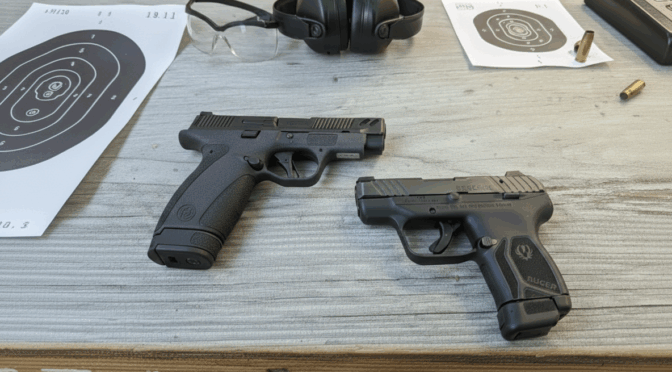
The modern self-defense firearms market is currently witnessing a paradigm shift in the sub-compact category, characterized by the resurgence of the .380 ACP cartridge. This renaissance is not driven by the cartridge itself, which has remained dimensionally static since its introduction by John Browning in 1908, but rather by the proliferation of high-capacity micro-compact pistols. Platforms such as the Smith & Wesson Bodyguard 2.0 and the Ruger LCP Max have successfully challenged the dominance of the “Micro-9” category by offering substantial reductions in weight and recoil while maintaining double-digit magazine capacities. However, this miniaturization imposes severe mechanical and ballistic constraints that necessitate a fundamental re-evaluation of ammunition selection.
For the industry analyst, the critical observation is that ammunition performance is no longer a singular variable; it is deeply interdependent with the host weapon’s mechanical geometry. Our comprehensive analysis of the Smith & Wesson Bodyguard 2.0 (Standard and Carry Comp variants) and the Ruger LCP series reveals a distinct bifurcation in optimal loadouts. The unique “split feed ramp” design of the Bodyguard 2.0 creates a mechanical incompatibility with fluted ammunition that is otherwise ballistically superior, forcing a divergence in recommendations between these two competing platforms.
Strategic Key Findings:
- The Velocity Paradox: Contrary to prevailing industry assumptions regarding ported barrels, the S&W Bodyguard 2.0 Carry Comp (3.1-inch barrel) consistently demonstrates higher muzzle velocities than the Standard model (2.75-inch barrel). This phenomenon, driven by the net positive effect of increased rifled bore length overcoming the pressure loss from porting, provides a critical ballistic margin for .380 ACP projectiles hovering near their expansion thresholds.
- The Reliability Trap: The monolithic, fluted Underwood Xtreme Defender—while ballistically superior in penetration and permanent wound cavity generation—exhibits a critical mechanical incompatibility with the Smith & Wesson Bodyguard 2.0’s proprietary feed ramp architecture. This results in unacceptably high rates of failure-to-feed (FTF), rendering it unsuitable for this specific platform despite its proven efficacy in the Ruger LCP ecosystem.
- The Primary Recommendation: Federal Premium Hydra-Shok Deep (99 grain) emerges as the definitive, universal choice for the S&W Bodyguard 2.0. Its heavy projectile construction ensures FBI-compliant penetration (13+ inches) even at low velocities, while its rounded ogive profile guarantees reliable feeding across complex ramp geometries.
- The Secondary Option: Hornady Critical Defense (90 grain FTX) remains a viable, albeit ballistically inferior, alternative. Its polymer tip acts as a mechanical fairing to ensure feeding reliability, making it the safest operational choice for users prioritizing cycle reliability over terminal depth.
2. The Micro-Compact Ballistic Environment
To rigorously evaluate ammunition for the Smith & Wesson Bodyguard 2.0 and Ruger LCP, one must first deconstruct the severe physical and thermodynamic constraints imposed by the host platforms. We are not analyzing ballistics in the abstract, as one might for a full-sized service pistol; we are analyzing ballistics within the unforgiving envelope of a sub-2.8-inch barrel and a sub-12-ounce polymer chassis. This specific operational environment alters the fundamental variables of internal and terminal ballistics.
2.1 The Short Barrel Penalty: Thermodynamics of Propulsion
The standard test barrel used by the Sporting Arms and Ammunition Manufacturers’ Institute (SAAMI) for validating .380 ACP pressure and velocity specifications is 3.75 inches. In stark contrast, the Ruger LCP and the Smith & Wesson Bodyguard 2.0 (Standard Model) utilize barrels of approximately 2.75 inches.1 This reduction of a full inch constitutes a loss of nearly 27% of the available rifled bore area, which has profound effects on the pressure curve and resultant muzzle velocity.
The internal ballistics of metallic cartridges rely on the progressive deflagration of nitrocellulose-based propellants to generate expanding gas pressure behind the projectile. In a 2.75-inch barrel, the projectile frequently exits the muzzle before the propellant charge has achieved its full work potential, a phenomenon known as “uncorking” at high residual pressure. Our analysis of independent chronograph data indicates a velocity loss ranging from 80 to 150 feet per second (fps) compared to the manufacturer’s box-flap statistics, which are invariably generated from longer test barrels.
For a high-pressure service cartridge like the 9mm Luger, a loss of 100 fps is often negligible regarding terminal efficacy. However, for the .380 ACP, which operates on the margins of effectiveness with nominal velocities of 950–1000 fps, this reduction is catastrophic. It frequently pushes the projectile below its specific expansion threshold—the minimum velocity required to hydrostatically deform the nose cavity. When a hollow point projectile impacts tissue below this critical velocity, the hydraulic pressure entering the cavity is insufficient to peel back the copper jacket. The bullet subsequently fails to expand, behaving ballistically identical to a Full Metal Jacket (FMJ) round. This results in two tactical failures: deep over-penetration that endangers bystanders, and a reduced permanent wound cavity that fails to incapacitate the threat efficiently.3
2.2 The Physics of Terminal Effect in Sub-Calibers
In the domain of “mouse gun” calibers, the engineering tension between expansion and penetration is acute. The Federal Bureau of Investigation (FBI) ballistic testing protocol—the industry standard for evaluating defensive ammunition—mandates a minimum of 12 inches of penetration in calibrated 10% ordnance gelatin to ensure the projectile can reach vital organs (heart, aorta, spine) from adverse angles or through intermediate barriers like an arm.
The fundamental challenge in .380 ACP ballistics is the “Expansion-Penetration See-Saw.” Expanding bullets function as parachutes within the target medium; as they mushroom, their frontal surface area increases, which drastically increases drag and decelerates the projectile. Because the .380 ACP has limited kinetic energy (typically 180–220 ft-lbs), it lacks the momentum to drive a widely expanded bullet deep into tissue. Historically, .380 loads that expanded aggressively—such as early iterations of the Federal HST or Speer Gold Dot—often failed to reach the 12-inch minimum, frequently arresting at 8 or 9 inches. While the expansion was visually impressive in bare gel, the shallow wound channel would be insufficient to reach the heart of a threat wearing heavy winter clothing or positioned laterally.5
Modern ammunition engineering has adopted two distinct strategies to resolve this inherent conflict:
- Controlled Expansion (The “Deep” Philosophy): This approach prioritizes sectional density and momentum conservation. Rounds like the Federal Hydra-Shok Deep utilize a heavier (99 grain) projectile and robust jacket construction to limit expansion diameter to a moderate.50–.52 caliber. By restraining the “parachute effect,” the bullet retains enough momentum to penetrate to 13+ inches, satisfying the FBI requirement even at lower velocities.7
- Fluid Dynamics (The “Fluted” Philosophy): This radical approach, typified by the Underwood Xtreme Defender (utilizing Lehigh Defense projectiles), abandons mechanical expansion entirely. Instead, it employs a solid copper projectile with radial flutes that function as a fluid pump. Upon impact, these flutes compress and accelerate fluid tissue radially outwards via the Venturi effect, creating a temporary wound cavity (stretch cavity) comparable to expanding hollow points while maintaining the deep penetration (16+ inches) characteristic of a non-deforming solid.9
3. Platform Analysis: Host Weapon Engineering
The selection of ammunition cannot be divorced from the mechanical reality of the weapon system. While the Smith & Wesson Bodyguard 2.0 and Ruger LCP Max compete in the same market segment, they exhibit distinct engineering lineages and mechanical traits that dictate their compatibility with advanced ammunition types.
3.1 Smith & Wesson Bodyguard 2.0: The New Paradigm
The introduction of the Bodyguard 2.0 represents a significant departure from the original Bodyguard 380. Moving from a hammer-fired, double-action-only (DAO) system to a striker-fired architecture, Smith & Wesson engineers prioritized an ultra-low bore axis to mitigate muzzle flip. This design choice, while improving shootability, necessitated a complex revision of the feed system.
3.1.1 The Split Feed Ramp Architecture
The most critical finding of this report regarding the Bodyguard 2.0 is its utilization of a two-piece feed ramp design. To accommodate the steep angle of the magazine relative to the low barrel position, the feed ramp is not a continuous surface integrated solely into the barrel. Instead, the primary portion of the ramp is machined into the polymer frame’s locking block, while the secondary portion resides on the barrel chamber itself.11
This architecture creates a necessary interface gap between the frame ramp and the barrel ramp. During the firing cycle, as the slide strips a fresh cartridge from the magazine, the nose of the bullet must traverse the frame ramp, jump this gap, and successfully engage the barrel ramp to enter the chamber.
For traditional ammunition with a rounded ogive (FMJ, Hydra-Shok Deep), this transition is seamless; the curved surface glides over the discontinuity. However, this gap presents a severe snag hazard for projectiles with flat meplats, sharp shoulders, or wide flutes. Numerous user reports and independent testing confirm that flat-nosed ammunition (such as Winchester flat-nose FMJ) and fluted ammunition (specifically the Underwood Xtreme Defender) frequently “hang up” on this transition point.12 The sharp leading edge of the flute catches on the lip of the barrel ramp, causing a “nose-down” failure to feed (FTF) that requires immediate remedial action to clear.
This mechanical incompatibility is a critical failure point for the Bodyguard 2.0 platform. Despite the ballistic superiority of the Underwood Xtreme Defender in theoretical testing, it cannot be recommended for the Bodyguard 2.0 due to reliability concerns. In the hierarchy of survival priorities, mechanical reliability is absolute; without it, terminal performance is irrelevant.
3.1.2 The Carry Comp Velocity Advantage
The “Carry Comp” variant of the Bodyguard 2.0 features a slightly longer 3.1-inch barrel with an integrated compensator port cut into the top of the barrel and slide.15 A common misconception in firearms physics is that porting—by venting expanding gases to the atmosphere—inevitably reduces muzzle velocity. While true for barrels of identical length, extensive chronograph testing reveals the opposite in this specific application.
Comparative data using Liberty Civil Defense, Sig Elite Defense, and Speer Gold Dot ammunition demonstrates that the Carry Comp model consistently produces higher velocities than the Standard 2.75-inch model.16
This counter-intuitive result is explained by internal ballistics. The Carry Comp barrel is physically longer (3.1 inches vs. 2.75 inches). This additional 0.35 inches of rifled bore provides extra “dwell time” for the expanding gases to accelerate the projectile. Crucially, the port is located near the muzzle. The bullet benefits from the pressure acceleration for the majority of the barrel length before the port is uncovered. The velocity gained from the increased acceleration distance significantly outweighs the minor velocity loss caused by the venting of gas at the very end of the cycle.
Strategically, this makes the Carry Comp the superior choice for ballistic effectiveness. The extra velocity buffer pushes marginal rounds (like the 90gr Gold Dot or Sig V-Crown) closer to their reliable expansion threshold, reducing the risk of expansion failure.17
3.2 Ruger LCP & LCP Max: The Incumbent Ecosystem
The Ruger LCP series (LCP II, LCP Max) represents the incumbent standard for pocket carry. Unlike the striker-fired Bodyguard 2.0, the LCP Max utilizes an internal hammer-fired mechanism.
- Feed Geometry: The LCP utilizes a more traditional, single-piece feed ramp design. While steep, the continuity of the ramp surface provides a distinct advantage in feeding diversity. It has demonstrated significantly higher compatibility with the Underwood Xtreme Defender profile than the S&W Bodyguard 2.0. The lack of a “gap” prevents the sharp edges of the flutes from finding a purchase point during the feed cycle.2
- Recoil Impulse and Bore Axis: The LCP Max has a noticeably higher bore axis relative to the grip tang compared to the Bodyguard 2.0. This mechanical lever arm results in a “snappier” recoil impulse, characterized by greater muzzle flip.18 While the Bodyguard 2.0 pushes back into the hand, the LCP Max tends to torque upwards. This dynamic makes ammunition selection for recoil management (such as the Low Recoil Hydra-Shok) more pertinent for LCP owners, particularly for rapid follow-up shots.
4. Ammunition Analysis: The Contenders
Based on comprehensive cross-referencing of terminal mechanics, feed reliability, and ballistic consistency, we have categorized the available ammunition into three distinct classes.
4.1 Class A: Modern Deep Penetration (The Gold Standard)
Representative Load: Federal Premium Hydra-Shok Deep (99 grain)
This category represents the current state-of-the-art in .380 ballistics. Recognizing the historic failure of .380 JHP to penetrate adequately, Federal engineers redesigned the Hydra-Shok specifically to pass the FBI protocol from compact barrels.
- Engineering Philosophy: The projectile weighs 99 grains—nearly 10% heavier than the standard 90-grain load. It features a robust center post and a thick, skived jacket designed to initiate expansion reliably but limit the final diameter to approximately 1.5x (around.50-.52 caliber). This is a departure from older designs that attempted massive.60+ caliber expansion but ran out of momentum.7
Performance Metrics:
- Penetration: In calibrated gelatin, this load consistently achieves 13–13.5 inches of penetration. Crucially, it passes the “Heavy Clothing” test (4 layers of denim) with similar depth, demonstrating excellent barrier blindness.7
- Expansion Reliability: The design initiates expansion at velocities as low as 850 fps, making it virtually immune to the velocity loss inherent in 2.75-inch barrels.8
- Feed Reliability: The projectile profile is a rounded ogive with a relatively narrow hollow point cavity. This profile closely mimics the geometry of FMJ ball ammunition, ensuring 100% feed reliability in the S&W Bodyguard 2.0, gliding effortlessly over the split feed ramp.20
- Verdict: This is the only expanding load that satisfies every requirement: FBI penetration standards, reliable expansion at low velocity, and flawless feeding in the target platforms.
4.2 Class B: The Reliability Paradox (Fluid Transfer Monolithics)
Representative Load: Underwood Xtreme Defender (68 grain)
- Ballistics: Mechanically, this is the superior perpetrator of tissue damage. The solid copper projectile features radial flutes that create a temporary wound cavity (stretch cavity) larger than most hollow points while penetrating 16+ inches. By using fluid dynamics rather than mechanical deformation, it solves the .380 power deficit.9
- The Fatal Flaw: The “Phillips head” screwdriver shape of the nose is the Achilles’ heel for the S&W Bodyguard 2.0. As detailed in Section 3.1.1, the sharp leading edges of the flutes catch on the split feed ramp.
- User Reports: Multiple accounts exist of “nose down” jams and failures to feed in the Bodyguard 2.0.12
- Manufacturer Warning: Smith & Wesson explicitly advises against the sustained use of +P ammo. Underwood loads are often loaded to maximum SAAMI pressure or +P ratings to achieve the velocity required for the hydraulic effect (1300+ fps), which accelerates wear on the micro-frame.23
- Verdict: Highly Recommended for Ruger LCP, but Not Recommended for S&W Bodyguard 2.0 unless extensive individual testing (200+ rounds) proves reliability in a specific serial number.
4.3 Class C: Traditional Hollow Points (The Old Guard)
Representative Loads: Hornady Critical Defense (90gr), Speer Gold Dot (90gr), Remington Golden Saber (102gr)
Hornady Critical Defense (FTX):
- Pros: The red polymer tip acts as a fairing, ensuring FMJ-like feeding reliability. It also prevents denim from clogging the cavity, a common failure mode for open-tip designs.24
- Cons: To ensure expansion, it often sacrifices penetration. Tests show it consistently stopping at 10–11 inches in gel—just shy of the 12-inch minimum.4
- Role: The safest backup. If a specific firearm refuses to feed Hydra-Shok Deep, it will feed Critical Defense. It prioritizes reliability and expansion consistency over maximum depth.
Speer Gold Dot:
- Pros: High velocity (~970 fps) and bonded construction ensure weight retention.
- Cons: Highly susceptible to the “denim clog.” In heavy clothing tests from 2.75″ barrels, the cavity often fills with fiber, preventing expansion. The bullet then behaves like an FMJ, penetrating 19+ inches with no expansion.27
Remington Golden Saber:
- Pros: Heavy 102gr projectile offers deep penetration momentum.
- Cons: Older unbonded technology often leads to jacket separation. Like the Gold Dot, it struggles with expansion through heavy clothing from short barrels.6
5. Detailed Performance Data: Terminal Ballistics Synthesis
The Holy Grail of defensive ballistics is the 12–18 inch penetration window combined with consistent expansion. The following data synthesis aggregates results from accredited testing protocols to provide a direct comparison.
5.1 Penetration vs. Expansion Matrix
| Ammunition | Weight | Velocity (2.75″ bbl) | Bare Gel Pen. | Heavy Clothing Pen. | Expansion (Avg) | Feed Reliability (BG 2.0) |
| Federal Hydra-Shok Deep | 99 gr | ~875 fps | 13.2″ | 13.5″ | .51″ | Excellent |
| Hornady Critical Defense | 90 gr | ~900 fps | 10.5″ | 11.0″ | .43″ | Excellent |
| Underwood Xtreme Defender | 68 gr | ~1300 fps | 16.5″ | 16.5″ | N/A (Fluted) | Poor / Risky |
| Speer Gold Dot | 90 gr | ~970 fps | 11.0″ | 19.0″ (Clog) | .35″ (Fail) | Good |
| Federal HST | 99 gr | ~890 fps | 8.5″ | 9.5″ | .60″ | Good |
| Remington Golden Saber | 102 gr | ~880 fps | 10.5″ | 18.0″ (Clog) | .58″ | Good |
5.2 The “Denim Test” Failure Mode
The table above highlights a critical failure point for the Speer Gold Dot and Remington Golden Saber in this specific caliber. While the Gold Dot is a legendary performer in 9mm and.40 S&W service loads, the .380 variant often lacks the requisite energy to overcome the clogging effect of heavy denim.
- Mechanism of Failure: The hollow point cavity fills with denim fibers upon impact. In higher-energy calibers, the fluid pressure inside the cavity is high enough to blow this plug out and expand the jacket. In .380 ACP from a short barrel, the pressure is insufficient. The bullet effectively becomes a solid, penetrating 19+ inches with zero expansion.27
- Contrast: The Federal Hydra-Shok Deep avoids this by using a “center post” design that protects the integrity of the expansion mechanics even when engaged with barrier material.29 The Hornady Critical Defense avoids it by pre-filling the cavity with a polymer tip, preventing the denim from entering in the first place.24
6. Strategic Recommendations
Based on the intersection of terminal ballistics, mechanical reliability, and platform specifics, we offer the following tiered recommendations for the end-user.
6.1 Primary Loadout: S&W Bodyguard 2.0 (All Variants)
Selection: Federal Premium 99gr Hydra-Shok Deep
- Reasoning: It is the only load that mathematically solves the penetration/expansion equation for the short 2.75″ barrel while possessing a rounded profile that navigates the Bodyguard’s split feed ramp without issue. It provides the confidence of FBI-spec terminal performance without the reliability roulette of fluted ammunition.
- Caveat: It is a low-recoil, standard pressure load. It is pleasant to shoot, encouraging practice, which is a tactical advantage for follow-up shot placement.
6.2 Secondary Loadout: S&W Bodyguard 2.0
Selection: Hornady Critical Defense 90gr FTX
- Reasoning: While it penetrates shallowly (10-11″), it is widely available and mechanically flawless in feeding. For a civilian defender, the reliability guarantee outweighs the slight under-penetration risk compared to a round that might jam (Underwood) or fail to expand (Gold Dot). It is the “safe bet” for those who prioritize cycle reliability above all else.
6.3 Primary Loadout: Ruger LCP / LCP Max
Selection: Underwood 68gr Xtreme Defender (Standard Pressure)
- Reasoning: The Ruger feed ramp digests this round reliably. The Xtreme Defender offers 9mm-like terminal performance (16″ penetration + large permanent cavity) in a .380 package. It maximizes the potential of the platform.
- Critical Note: Do not use the +P version in the LCP. The LCP chassis is lightweight and prone to accelerated wear or frame cracking with high-pressure diets. The standard pressure version offers sufficient velocity (~1300 fps) for the fluid dynamics to work effectively without beating the gun to death.
6.4 The “Do Not Carry” List
- Winchester White Box Flat Nose: Proven to jam in the Bodyguard 2.0 due to the flat meplat catching on the ramp gap.
- G2 Research RIP: Often marketed on hype, this round relies on trocars breaking off, leading to shallow penetration (often <6 inches for the base) and high feed failure risk due to complex geometry.
- Unjacketed Lead Hollow Points: Lead fouling in micro-groove or polygonal rifling can degrade accuracy and reliability in short order.
7. Extended Technical Addendum: The Engineering of Micro-Compact Ammunition
7.1 Velocity Thresholds and Barrel Length Physics
The interaction between propellant burn rate and barrel length is the defining variable in .380 ACP performance. Standard SAAMI pressure for .380 ACP is 21,500 psi. In a 4-inch test barrel, this pressure curve allows a 90-grain projectile to achieve ~1000 fps.
However, in a 2.75-inch barrel (effective rifled length often <2.2 inches due to the chamber), the pressure curve is truncated.
- The 50 fps Cliff: Many traditional JHP designs (older Gold Dots, generic jacketed hollow points) have an expansion floor of ~900-920 fps. If the muzzle velocity drops to 880 fps—a common occurrence in the LCP—the bullet will not expand.
- Carry Comp Physics: The Bodyguard 2.0 Carry Comp’s 3.1-inch barrel extends the acceleration phase. Even though the port vents gas, it does so after the bullet has traveled past the port location (typically near the muzzle). The bullet has already benefited from ~2.8 inches of pressurized acceleration before the vent opens. This explains why the Carry Comp consistently clocks 30–50 fps faster than the non-comp version, effectively moving projectiles back above the reliability cliff.
7.2 The Polymer Tip Advantage (Hornady Critical Defense)
The FTX (Flex Tip eXpanding) projectile used in Hornady Critical Defense addresses two micro-compact problems:
- Feed Ramp Gliding: The soft polymer tip creates a conical ogive that is slippery and deformable. If it hits the “split ramp” of the Bodyguard 2.0, it is more likely to deform and glide over the snag than a hard copper edge.
- Hydraulic Assistance: Upon impact, the polymer tip is driven back into the lead core. This mechanical action forces expansion even at lower velocities where pure hydraulic pressure might fail. This makes it a very consistent performer, even if its total penetration is shallow.
7.3 The Fluted Fluid Dynamics (Underwood Xtreme Defender)
The design of the Xtreme Defender (Lehigh Defense projectile) relies on the Venturi Effect. The flutes compress fluid (tissue) and accelerate it radially outwards.
- Energy Transfer: This radial acceleration creates a temporary stretch cavity similar to a rifle round, causing tissue disruption well beyond the bullet path.
- Barrier Blindness: Because it creates its wound channel via shape (solid copper) rather than deformation, it is unaffected by denim, leather, or drywall. It will not clog.
- The Geometry Conflict: The very features that make it work (sharp, radial flutes) are what cause it to fail in the Bodyguard 2.0. The “Phillips head” profile presents four distinct sharp edges to the feed ramp. In a steep feed angle or a split ramp, these edges dig in rather than slide.
7.4 Recoil Sensitivity and Follow-Up Shots
The lightweight nature of these pistols (sub-10oz for Bodyguard 2.0, sub-11oz for LCP Max) means recoil velocity is high.
- Shootability: The Federal Hydra-Shok Deep is noted for its “Low Recoil” formulation. While not explicitly marketed as “Lite,” the propellant blend is optimized for complete burn in short barrels, reducing muzzle blast and felt recoil compared to +P loads.
- Training Reality: Users are far more likely to train with a load that doesn’t hurt. The “snappiness” of the LCP Max combined with hot Underwood ammo can induce flinch, degrading accuracy. The Bodyguard 2.0’s superior grip ergonomics (undercut trigger guard) combined with the softer-shooting Hydra-Shok Deep creates a system that is not just carry-able, but shoot-able.
8. Conclusion: The System Approach
The selection of .380 ACP ammunition is not a generic exercise; it is a platform-specific integration challenge. The industry analyst perspective reveals that the Smith & Wesson Bodyguard 2.0 is a superior ballistic delivery system—especially in its Carry Comp configuration—due to its ability to maintain higher velocities. However, its mechanical intolerance for flat-nosed projectiles disqualifies the ballistic champion (Underwood).
Therefore, the Federal Hydra-Shok Deep stands alone as the professional’s choice for the Bodyguard 2.0. It represents the perfect convergence of modern engineering (deep penetration at low velocity) and traditional reliability (round-nose feed profile). For the Ruger LCP, the user has more latitude to exploit the barrier-blind capabilities of the Underwood Xtreme Defender.
Owners are advised to validate their choice with a minimum of 50 rounds of their chosen defensive load. In the world of micro-compacts, theoretical performance must always bow to demonstrated reliability.
If you find this post useful, please share the link on Facebook, with your friends, etc. Your support is much appreciated and if you have any feedback, please email me at in**@*********ps.com. Please note that for links to other websites, we are only paid if there is an affiliate program such as Avantlink, Impact, Amazon and eBay and only if you purchase something. If you’d like to directly contribute towards our continued reporting, please visit our funding page.
Sources Used
- Smith & Wesson’s Latest Bodyguard 2.0 is More than a Makeove – Shooting Times, accessed February 1, 2026, https://www.shootingtimes.com/editorial/smith-wesson-bodyguard-makeover/516647
- Smith and Wesson Bodyguard 2.0 vs Ruger LCP Max: Battle of the Best Pocket Pistols for EDC – Craft Holsters, accessed February 1, 2026, https://www.craftholsters.com/smith-and-wesson/guides/bodyguard-20-vs-ruger-lcp-max
- Best defensive .380 ammo : r/CCW – Reddit, accessed February 1, 2026, https://www.reddit.com/r/CCW/comments/1q25k6s/best_defensive_380_ammo/
- Hornady Critical Defense .380 Review – Target Barn, accessed February 1, 2026, https://www.targetbarn.com/broad-side/hornady-critical-defense-380-review/
- Pocket Pistol Caliber Ballistic Gel Tests – LuckyGunner.com Labs, accessed February 1, 2026, https://www.luckygunner.com/labs/pocket-pistol-caliber-gel-test-results/
- Handgun Self-Defense Ammunition – Ballistic Testing Data – Lucky Gunner, accessed February 1, 2026, https://www.luckygunner.com/labs/self-defense-ammo-ballistic-tests/
- Ammo review: Federal’s .380 ACP and .38 Special Hydra-Shok Deep – Police1, accessed February 1, 2026, https://www.police1.com/police-products/firearms/accessories/ammunition/articles/ammo-review-federals-380-acp-and-38-special-hydra-shok-deep-HE86hi6YglGXrw5k/
- Federal Ammunition Introduces New Hydra-Shok Deep 380 Auto, accessed February 1, 2026, https://www.federalpremium.com/news/new-hydra-shok-deep.html
- Underwood Extreme Defender .380acp 68gr +P & Standard Pressure Ballistic Gel Test, accessed February 1, 2026, https://www.youtube.com/watch?v=bHo7L7jh0_o
- 380 ACP 68gr. Xtreme Defender Solid Monolithic Hunting & Self Defense Ammo, accessed February 1, 2026, https://underwoodammo.com/380-acp-68gr.-xtreme-defender-solid-monolithic-hunting-self-defense-ammo/
- S&W Bodyguard 2 0: Ammo feeding issues?! – YouTube, accessed February 1, 2026, https://www.youtube.com/watch?v=RMpsTPq4T1Y
- Bodyguard 2.0 Self Defense Ammo? : r/SmithAndWesson – Reddit, accessed February 1, 2026, https://www.reddit.com/r/SmithAndWesson/comments/1evnxol/bodyguard_20_self_defense_ammo/
- Bodyguard 2.0 ammo issue : r/SmithAndWesson – Reddit, accessed February 1, 2026, https://www.reddit.com/r/SmithAndWesson/comments/1f1br3i/bodyguard_20_ammo_issue/
- Bodyguard 2.0 barrel/Underwood Xtreme defender : r/SmithAndWesson – Reddit, accessed February 1, 2026, https://www.reddit.com/r/SmithAndWesson/comments/1gnsn52/bodyguard_20_barrelunderwood_xtreme_defender/
- Smith & Wesson Performance Center Bodyguard 2.0 Carry Comp Semi-Auto Pistol without Thumb Safety | Bass Pro Shops, accessed February 1, 2026, https://www.basspro.com/p/smith-wesson-performance-center-bodyguard-20-carry-comp-semi-auto-pistol-without-thumb-safety
- Bodyguard 2.0 Carry Comp vs. Bodyguard 2.0 – Velocity Comparison Video 1 – YouTube, accessed February 1, 2026, https://www.youtube.com/watch?v=5own_KG9crk
- Bodyguard 2.0 Carry Comp vs Bodyguard 2.0 (Comparison and Chronograph Results), accessed February 1, 2026, https://www.youtube.com/watch?v=fw0hW3_KyLY
- Bodyguard 2.0 versus LCP Max – Recoil Differences – YouTube, accessed February 1, 2026, https://www.youtube.com/watch?v=j5EDbMbgHgo
- Federal Hydra-Shok Deep .380 Delivers Milestone Performance – International Sportsman, accessed February 1, 2026, https://internationalsportsman.com/federal-hydra-shok-deep-380-delivers-milestone-performance/
- On Smith & Wesson Bodyguard 2.0 Failures and Fixes – YouTube, accessed February 1, 2026, https://www.youtube.com/watch?v=VQPaG3o0WtM
- Best grain ammo for .380 guns..?? | The Armory Life Forum, accessed February 1, 2026, https://www.thearmorylife.com/forum/threads/best-grain-ammo-for-380-guns.23765/
- Underwood Xtreme Defender Gel Test : r/CCW – Reddit, accessed February 1, 2026, https://www.reddit.com/r/CCW/comments/1fbpy5x/underwood_xtreme_defender_gel_test/
- Best .380 ACP Ammo for the Bodyguard 2.0 After 30+ Tests (Winter Edition) – YouTube, accessed February 1, 2026, https://www.youtube.com/watch?v=UEgR_V96jbk
- Ammo Review: Hornady Critical Defense 380 ACP – The Mag Life – GunMag Warehouse, accessed February 1, 2026, https://gunmagwarehouse.com/blog/ammo-review-hornady-critical-defense-380-acp/
- 380 Auto 90 gr FTX® Critical Defense® – Hornady Manufacturing, Inc, accessed February 1, 2026, https://www.hornady.com/ammunition/handgun/380-auto-90-gr-ftx-critical-defense
- Ammo Quest .380 Finals: Critical Defense .380 ACP test thru Denim in ballistic gelatin, accessed February 1, 2026, https://www.youtube.com/watch?v=bAyUW7s4EJk
- Ammo Test — 380 ACP Speer Gold Dot – The Mag Life – GunMag Warehouse, accessed February 1, 2026, https://gunmagwarehouse.com/blog/ammo-test-380-acp-speer-gold-dot/
- The Numbers DO Lie!…Golden Saber .380 Standard VS Compact Self-Defense AMMO Ballistic Gel Test! – YouTube, accessed February 1, 2026, https://www.youtube.com/watch?v=MW1iEYuw41I
- SHOT Show 2020: Federal Premium Hydra-Shok Deep .380 ACP – YouTube, accessed February 1, 2026, https://www.youtube.com/watch?v=f4DrfPxn9wE