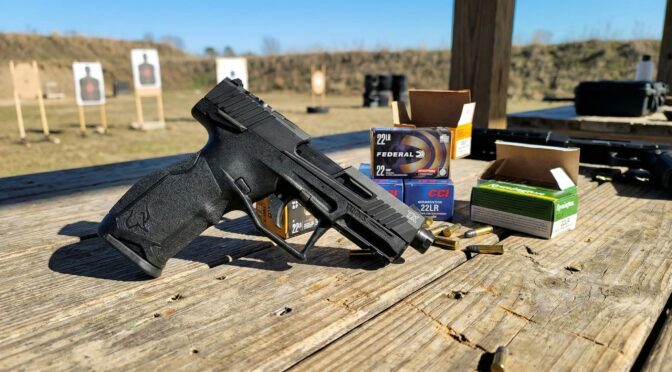
The contemporary firearms market has witnessed a paradigm shift in the utilization of rimfire platforms, moving from pure recreational “plinking” toward serious tactical cross-training. In this evolving landscape, the Taurus TX22 has emerged not merely as a budget-friendly option, but as a disruptive engineering case study that challenged the hegemony of legacy manufacturers. This report provides an exhaustive technical and market analysis of the Taurus TX22 ecosystem, with a specific focus on the T.O.R.O. (Taurus Optic Ready Option) variants and the Generation 2 (Gen 2) platform updates.
The analysis synthesizes metallurgical data, mechanical engineering reviews, ballistic performance metrics, and aggregate consumer sentiment to evaluate the platform’s viability. The findings indicate that while the TX22 faced significant quality control hurdles in its infancy—most notably barrel machining defects and structural slide fatigue—the platform has matured into a class-leading system. Its success is predicated on a proprietary magazine architecture that solved the rim-lock issues plaguing high-capacity.22LR feeding for decades. Furthermore, the Generation 2 updates demonstrate a responsive engineering culture at Taurus, addressing structural vulnerabilities with reinforced slide geometry and bull barrel harmonics.
However, the report also identifies critical caveats for institutional and private acquisition. The firearm remains sensitive to ammunition quality due to the inherent constraints of blowback physics, and the manufacturer’s customer support infrastructure continues to lag behind the product’s engineering quality. This dichotomy defines the TX22: a mechanically brilliant product supported by a logistical system that requires end-user self-sufficiency.
1. Introduction: The Rimfire Market Context
To understand the engineering significance of the Taurus TX22, one must first analyze the market conditions into which it was introduced in 2019.1 Historically, the semi-automatic.22 Long Rifle (.22LR) pistol market was bifurcated into two distinct and largely non-overlapping categories.
On one side stood the Target/Precision Class, dominated by the Ruger Mark series (Mark I through IV) and the Browning Buck Mark.2 These pistols feature heavy steel barrel assemblies, tubular receivers, and grip angles that mimic vintage target pistols rather than modern service weapons. While mechanically reliable and accurate, they fail to replicate the manual of arms, ergonomics, or holster compatibility of the striker-fired 9mm pistols used by law enforcement and concealed carriers.
On the other side was the “Replica” Class, often termed “pot-metal plinkers.” These firearms, such as the early Walther P22 or the Sig Mosquito, were designed to look like service pistols (e.g., the Walther P99 or Sig P226) but were often constructed from zinc alloy (Zamak) to reduce costs. They frequently suffered from catastrophic reliability issues, slide cracking, and an inability to cycle standard velocity ammunition.
The Taurus TX22 was engineered to bridge this chasm. It was designed from the ground up to be a “trainer”—a pistol that mimicked the size, weight, and trigger characteristics of a mid-sized striker-fired duty gun (like a Glock 19 or S&W M&P) while utilizing the economy of.22LR ammunition.3 The platform’s release marked a pivotal moment for Taurus, a company historically plagued by reputation issues, signaling a shift toward US-based design and manufacturing focused on innovation rather than mere imitation.1
2. System Architecture and Engineering Design
2.1 The Internal Mechanism: Nomenclature vs. Physics
A point of frequent confusion in the technical analysis of the TX22 is its classification. While marketing literature and even some technical reviews loosely categorize the firearm as “striker-fired” due to its enclosed chassis and lack of an external hammer spur, a forensic examination of the fire control group (FCG) reveals a Single-Action-Only (SAO) Internal Hammer mechanism.4
In a true striker-fired system (e.g., the Glock Safe Action), the striker is partially or fully tensioned by the movement of the slide, and the trigger pull completes this tensioning before releasing the sear. Conversely, the TX22 utilizes a concealed hammer housed within the polymer receiver. When the slide reciprocates rearward, it cocks this internal hammer against its mainspring. The trigger pull serves a single function: to release the sear, allowing the hammer to fall and strike a transfer firing pin located in the slide.4
Engineering Implications:
The choice of an internal hammer over a striker was likely driven by the physics of the.22LR cartridge. Rimfire primers require a sharp, distinct impact for reliable ignition. Striker springs in.22LR platforms often need to be quite heavy to ensure ignition, which can result in a heavy, gritty trigger pull—detrimental to a training pistol. By using a hammer, engineers could leverage the mechanical advantage of the hammer’s rotational mass to deliver a solid strike while maintaining a lighter, crisper trigger break via the “Pittman Trigger System” (PTS).7 This results in a trigger pull weight of approximately 4-5 lbs, which is conducive to accuracy and mimics a tuned service pistol.8
2.2 The “Pittman Trigger System” (PTS)
The PTS represents a departure from the traditional blade safety triggers found on many polymer pistols. Instead of a small, articulating lever in the center of the trigger shoe, the entire trigger face serves as part of the safety linkage. This design minimizes the tactile interference often complained about with blade safeties, providing a smooth surface for the finger pad. The system incorporates a striker block (firing pin block) and a trigger safety, ensuring the firearm is drop-safe despite the potential energy stored in the cocked hammer.6 This level of redundancy is critical for a pistol that is often carried “cocked and locked” (if the manual safety is engaged) or simply with a round in the chamber.
2.3 Materials Science and Structural Analysis
The construction of the TX22 balances mass optimization with structural durability, a difficult equilibrium in blowback rimfire design.
Slide Metallurgy and Mass Management:
The slide is machined from 7075 Aluminum and treated with a hard-coat anodized finish.8 The selection of aluminum is necessitated by the blowback operating principle. In a blowback system, the only force keeping the breech closed during ignition is the inertia of the slide and the resistance of the recoil spring. A steel slide, typical of 9mm firearms, would possess too much mass for the relatively low-pressure impulse of a.22LR cartridge to cycle effectively. By utilizing aluminum, Taurus engineers reduced the reciprocating mass, allowing the pistol to function with a wider variety of ammunition velocities, including lower-pressure standard velocity loads.12
However, this material choice introduced a vulnerability. Aluminum has a finite fatigue life compared to steel. In early Gen 1 models, the impact of the recoil spring assembly bottoming out against the front of the slide caused stress fractures, leading to catastrophic slide separation at the muzzle.13 This failure mode highlighted the importance of wall thickness and radius geometry in high-cycle aluminum components, a lesson Taurus addressed in subsequent iterations.
Barrel Composition:
The barrels are manufactured from alloy steel, offering the necessary hardness to resist erosion from the propellant gases and the friction of the bullet.6 The rifling twist rate has been a subject of optimization throughout the product’s life cycle. Standard Gen 1 models utilized a 1:16 twist, a standard for.22LR. Later high-performance variants, including the Competition and Gen 2, have experimented with optimized twist rates (often cited as 1:10 in specific marketing, though 1:16 remains standard for the caliber) to better stabilize heavier projectiles or subsonic loads often used with suppressors.6
2.4 The Magazine Geometry Innovation
Perhaps the singular most important engineering achievement of the TX22 platform is its magazine design. For decades, the reliable feeding of rimmed.22LR cartridges from a box magazine was believed to be limited to single-stack geometries, capping capacity at 10 rounds. The rim of the cartridge creates a natural curve when stacked, and if a rim slips behind the rim of the cartridge below it (“rim-lock”), a stoppage occurs.
Taurus engineers circumvented this limitation by designing a proprietary magazine with a specific internal taper and a follower that maintains dynamic pressure on the nose of the cartridge stack. This allows the rimmed cartridges to nestle in a staggered, double-column configuration without interlocking. The result was a standard flush-fit magazine with a 16-round capacity 6, and eventually extended magazines reaching 22 rounds in the Gen 2.6 This capacity shattered the industry standard, forcing competitors like Glock (10 rounds) and Sig Sauer (20 rounds, released later) to respond to a new baseline.3
3. Detailed Variant Analysis and Evolutionary Engineering
The TX22 is not a static product; it is a platform that has undergone significant iterative engineering. Tracking these changes is essential for understanding the reliability profile of any specific unit.
3.1 Generation 1 Standard (The Disruptor)
The initial release established the form factor: a full-size polymer frame with the approximate dimensions of a Glock 19. While the ergonomics and capacity were universally praised, the engineering execution suffered from early production quality control issues.
- Barrel Chatter: One of the most pervasive complaints in the 2019-2020 production era was “barrel chatter.” This refers to transverse ridges inside the bore caused by tool vibration during the rifling process. These ridges acted like a file, stripping lead from bullets as they passed. This led to rapid “leading” (lead buildup) in the barrel, causing keyholing (bullets tumbling in flight) and a total loss of accuracy within mere hundreds of rounds.15
- Slide Structural Fatigue: As previously noted, the thin aluminum walls at the front of the slide proved susceptible to cracking under high-round-count firing schedules, particularly when using high-velocity ammunition.13
3.2 TX22 Competition (The Precision Evolution)
Recognizing the platform’s potential for Steel Challenge and rimfire optics divisions, Taurus released the Competition model. This variant introduced a radical departure in slide design.
- The “Skeletonized” Open-Top Slide: To mount an optic without adding reciprocating mass to the slide (which would induce failures), engineers cut away the top of the slide entirely, exposing the barrel.10
- Barrel-Mounted Optic Interface: The optic mounts directly to a plate system integral to the barrel breech block. This means the optic does not move when the gun fires. This “non-reciprocating optic” setup is superior for tracking the dot during rapid fire and eliminates the ejection failures caused by optic weight on the slide.17 The system uses two double-sided adapter plates to accommodate varying optic footprints (Trijicon RMR, C-More, Vortex, etc.).10
- Bull Barrel: The Competition model introduced a thicker, 5-inch bull barrel to aid in thermal management and harmonic stability.10
3.3 TX22 Compact (The Carry Hybrid)
The Compact bridged the gap between a range toy and a carry trainer. It introduced the T.O.R.O. slide-mounted optic concept to the line.
- Slide lightening: To allow the optic to ride on the slide, Taurus engineers removed material from the slide’s non-critical areas to balance the weight equation.18
- Shortened Dwell Time: The 3.6-inch barrel results in a shorter pressure impulse. To ensure reliability, the recoil spring assembly was tuned to handle the faster slide velocities.8
3.4 Generation 2 T.O.R.O. (The Synthesis)
The Gen 2 T.O.R.O. is the culmination of the platform’s engineering journey, integrating the best features of the Competition and Compact models into the standard frame size.
- Reinforced Slide: Comparative measurements and user analysis indicate that the Gen 2 slide features thickened walls at the muzzle end, directly addressing the cracking issues of the Gen 1.13
- Bull Barrel Standardization: The Gen 2 adopts a heavy-profile bull barrel as standard. This adds mass to the firearm, reducing felt recoil (which is already minimal) and increasing accuracy potential through greater stiffness.14
- Advanced Recoil System: The Gen 2 moves from a single flat-wire captive spring (Gen 1) to a complex dual-captive spring assembly. This telescoping spring design provides a more progressive recoil impulse, reducing the shock of the slide impacting the frame and smoothing out the cycling action.14
Table 1: Technical Specification Comparison Across Variants
| Feature | Gen 1 Standard | TX22 Competition | TX22 Compact | Gen 2 T.O.R.O. |
| Action | SAO Internal Hammer | SAO Internal Hammer | SAO Internal Hammer | SAO Internal Hammer |
| Barrel Length | 4.1″ (Standard) | 5.0″ Bull Barrel | 3.6″ | 4.6″ Bull Barrel |
| Twist Rate | 1:16 | 1:16 | 1:10 (Cited in some specs) | 1:10 6 |
| Slide Material | 7075 Aluminum | 7075 Al (Open Top) | 7075 Aluminum | 7075 Aluminum |
| Optic Ready | No | Yes (Barrel Mount) | Yes (Slide Mount) | Yes (Slide Mount) |
| Capacity | 16+1 | 16+1 | 13+1 | 22+1 |
| Recoil System | Single Flat Wire | Single Flat Wire | Single Flat Wire | Dual Captive 14 |
| Slide Strength | Low (Prone to crack) | High (Design dependent) | High | High (Reinforced) |
Source Data: 6
4. The T.O.R.O. Optic Ecosystem
The “Taurus Optic Ready Option” (T.O.R.O.) on the TX22 Gen 2 and Compact utilizes a specific footprint architecture that deviates from the standard “plate system” seen on centerfire pistols like the Glock MOS. Understanding this footprint is critical for consumers, as it dictates optic compatibility without the need for bulky adapters.
4.1 Footprint Analysis: The Modified RMSc/Holosun K
The optic cut on the TX22 slide is machined to a Modified RMSc footprint, which is functionally identical to the Holosun K-Series footprint.21
- Standard Shield RMSc Footprint: This industry standard features four recoil lugs (two at the front, two at the rear) and two screw holes.
- Modified RMSc (TX22/Holosun K): The TX22 slide features only the two front recoil lugs and shallower lug recesses. The rear lugs are completely eliminated.22
Engineering Rationale:
This design choice is highly deliberate. By removing the rear lugs, Taurus allows for the direct mounting of optics like the Holosun 407K/507K and EPS Carry. These optics have a flat rear base and do not have recesses for rear lugs. If Taurus had used a true RMSc footprint, users would have to physically grind off the rear lugs on their pistol or use an adapter plate to mount a Holosun K optic.
Direct mounting offers two distinct engineering advantages:
- Lower Bore Axis: The optic sits lower on the slide (lower “deck height”). This allows for a more natural index, meaning the shooter does not have to hunt for the dot. It also facilitates co-witnessing with the iron sights.23
- Structural Stability: Removing an intermediate adapter plate reduces the number of threaded interfaces that can loosen under vibration. It creates a stronger, simpler mechanical connection between the optic and the slide.
4.2 Compatibility Matrix
Not all “micro” optics fit the TX22 T.O.R.O. directly. Optics requiring rear recoil lugs (true RMSc standard) may require modification or an adapter plate, which negates the benefits of the system.
Table 2: Optic Compatibility for TX22 T.O.R.O. (Direct Mount)
| Optic Model | Fitment Status | Engineering Notes |
| Holosun 407K / 507K | Direct Fit | Perfect match for modified RMSc footprint; industry standard for this gun.21 |
| Holosun EPS Carry | Direct Fit | Enclosed emitter prevents debris blockages; highly recommended for duty/carry simulation.22 |
| Shield RMSc / SMSc | Compatible | Will mount, but relies solely on the front lugs and screw tension for retention. |
| Sig Romeo Zero | Compatible | Polymer housing allows for some flex; typically a direct fit.24 |
| Vortex Defender CCW | Direct Fit | Designed to accommodate both legacy RMSc and modified K footprints.23 |
| Trijicon RMRcc | Incompatible | Uses a proprietary footprint that is longer; requires an adapter plate. |
| Trijicon RMR (Type 2) | Incompatible | Too wide and uses a completely different screw pattern. Requires a bulky plate.25 |
5. Reliability, Ballistics, and Ammunition Sensitivity
Reliability in semi-automatic rimfire pistols is a complex function of the interplay between ammunition velocity, propellant burn rate, slide mass, and recoil spring tension. Unlike centerfire pistols which have ample energy to cycle the action, rimfire pistols operate on the margins of available energy. The TX22 demonstrates a higher tolerance for ammunition variance than many competitors, but physics still imposes limitations.
5.1 Ammunition Sensitivity and Velocity Testing
Performance data indicates a clear preference for High Velocity (HV) ammunition to ensure reliable cycling of the slide, particularly when an optic adds mass to the system. Standard velocity ammunition may fail to fully cycle the slide, leading to stovepipe jams or failure-to-feed malfunctions.
Velocity Data Analysis:
Testing of the TX22 Compact yielded the following velocity averages, which serve as a baseline for system performance.19 Note that the shorter barrel of the Compact (3.6″) yields lower velocities than the 4.6″ Gen 2 or 5.0″ Competition models.
Table 3: Ammunition Velocity Performance (TX22 Compact)
| Ammunition Brand | Weight | Classification | Avg Velocity (fps) | Extreme Spread (fps) | Reliability Status |
| Federal AutoMatch | 40gr | Target/Bulk | 1,040 | 95 | Reliable |
| Aguila SuperExtra HP | 38gr | High Velocity | 1,123 | 56 | Reliable |
| Norma TAC-22 | 40gr | Standard Velocity | 915 | 73 | Reliable (Marginal) |
| CCI Mini-Mag | 40gr | High Velocity | N/A | N/A | Highly Reliable 14 |
Analysis of Velocity Variance:
The Federal AutoMatch showed a relatively high extreme spread of 95 fps. In a rimfire blowback action, inconsistent velocity can lead to inconsistent slide travel. If a round is at the lower end of that spread, it may not push the slide back far enough to pick up the next round (short stroking). However, the TX22’s slide is light enough that even the Norma TAC-22 at a subsonic 915 fps cycled successfully in testing, proving the efficiency of the aluminum slide design.19
5.2 The “Wax Buildup” Failure Mode
A specific failure mode identified in user sentiment analysis involves Remington Golden Bullet and Winchester White Box bulk ammunition.26 These rounds often feature a heavy, inconsistent wax coating on the lead projectile.
- Mechanism of Failure: As the magazine is loaded, excess wax shaves off inside the magazine body. Over time, this wax mixes with carbon fouling to create a sticky sludge that retards the movement of the magazine follower.
- Result: The magazine spring cannot push the next round up fast enough to meet the returning slide, causing the slide to ride over the round (failure to feed) or catch it halfway (bolt-over-base malfunction).
- Mitigation: Users are advised to wipe down heavily waxed ammunition or simply avoid these brands. Regular cleaning of the magazine internals is mandatory for high reliability.28
6. Operational Durability and Failure Analysis
While the current generation TX22 is robust, a historical analysis of failure points is necessary for prospective buyers to understand potential risks, especially when buying used or older stock.
6.1 Slide Cracking (The Stress Concentration Issue)
- The Issue: On Gen 1 pistols, the area of the slide that impacts the recoil spring guide rod during rearward travel was identified as a weak point. The sharp impulse of high-velocity ammo caused fatigue cracking in the thin aluminum web.13
- Engineering Fix: The Gen 2 slide features a redesigned “chin” area with increased wall thickness. Furthermore, the Dual Captive Spring recoil assembly acts as a progressive buffer. As the slide nears the end of its travel, the second spring engages, ramping up resistance and “cushioning” the final impact. This significantly reduces the peak stress load on the aluminum slide.14
6.2 Barrel Leading (The Chatter Issue)
- The Issue: The “chatter marks” in early barrels were a result of suboptimal machining speeds or worn tooling at the factory. These micro-serrations perpendicular to the bullet path acted as an abrasive.
- Consequence: Rapid accumulation of lead in the grooves effectively smoothed out the rifling with lead deposits, destroying accuracy. Bullets would destabilize and hit the target sideways (“keyholing”) at distances as short as 7 yards.15
- Status: Taurus has largely rectified this manufacturing process defect. However, knowledgeable buyers still inspect the bore of a new TX22 with a light to ensure the rifling is smooth and distinct before accepting the transfer.
6.3 Customer Service Infrastructure: The Achilles Heel
Despite the mechanical excellence of the Gen 2 platform, the Taurus support infrastructure remains a significant liability.
- Turnaround Times: Analysis of consumer complaints reveals that warranty repairs often take 6 to 12 weeks. This includes wait times for parts to be shipped from manufacturing centers in Brazil if domestic stock runs dry.30
- Communication Gaps: Users frequently report a “black hole” experience where firearm status is unknown for weeks.
- Strategic Implication: For an institutional buyer (e.g., a police department using these for cheap training), this is unacceptable. For a private user, it necessitates a strategy of self-repair. Investing in a spare extractor, recoil spring, and firing pin from aftermarket sources is a prudent insurance policy against months of downtime.32
7. Aftermarket Ecosystem and Customization
The popularity of the TX22 has spawned a robust aftermarket, which serves not only to enhance performance but to address the engineering limitations of the stock pistol.
7.1 Tandemkross (TK) Components
Tandemkross has developed a suite of parts that specifically target the TX22’s weak points.
- “Sentinel” Guide Rod: A stainless steel captured spring assembly. This replaces the plastic factory guide rod (Gen 1) or enhances the Gen 2. The steel rod adds non-reciprocating weight to the front of the gun (reducing muzzle flip) and provides a smoother surface for the spring to compress against, eliminating the “gritty” feel of the slide.29
- “Game Changer” Compensator: Because the TX22 comes with a threaded barrel adapter, compensators are popular. While they do redirect gas to reduce recoil, their primary function on a.22LR is often just adding weight to the muzzle for stability.
7.2 Lakeline LLC
Lakeline focuses on durability upgrades.
- Recoil Assembly with Delrin Buffer: Lakeline developed a recoil spring assembly with a Delrin (acetal resin) buffer washer. This buffer absorbs the shock of the slide impact, specifically designed to prevent the slide cracking issue on Gen 1 pistols.13
- Stainless Steel Striker Guide: The factory plastic striker guide can deform over time. A stainless replacement ensures consistent striker travel and ignition reliability.
8. Competitive Landscape Analysis
The TX22 does not exist in a vacuum. It competes directly with offerings from industry giants.
8.1 Taurus TX22 vs. Glock 44
The Glock 44 was anticipated to dominate this segment but failed to do so.
- Capacity: The G44 is strictly limited to 10-round magazines. Glock engineers cited reliability as the reason, but Taurus proved 16+ rounds was possible. This puts the G44 at a massive disadvantage for training simulations.3
- Construction: The G44 uses a hybrid slide (polymer with steel rail inserts). While durable, it feels less “substantial” than the aluminum slide of the TX22.
- Reliability: The G44 is notorious for requiring high-velocity ammo and specific stacking of rounds in the magazine to function.34
8.2 Taurus TX22 vs. Sig Sauer P322
The P322 is the most direct competitor, released as a response to the TX22.
- Capacity: The P322 holds 20 rounds, rivaling the TX22 Gen 2’s 22 rounds.35
- Issues: The P322 has suffered from severe barrel leading issues and light primer strikes in its early production runs. The magazine design is also more complex to load correctly than the Taurus; if rounds are not perfectly staggered, the P322 will jam.3
- Price: The P322 typically commands a $50-$100 premium over the TX22.35
8.3 Taurus TX22 vs. Ruger SR22 / Mark IV
- SR22: A hammer-fired DA/SA compact. It is incredibly reliable but small. It does not replicate the grip size of a duty gun.
- Mark IV: The gold standard for accuracy and build quality. However, the steep grip angle and unique manual of arms make it a poor cross-trainer for modern defensive pistolcraft. It is a target pistol, not a tactical trainer.2
Table 4: Competitive Landscape Summary
| Metric | Taurus TX22 Gen 2 T.O.R.O. | Sig Sauer P322 | Glock 44 | Ruger SR22 |
| Capacity | 22+1 | 20+1 | 10+1 | 10+1 |
| Operating System | Internal Hammer (SAO) | Internal Hammer (SAO) | Hybrid Blowback | Hammer (DA/SA) |
| Optic Ready | Yes (Direct Mount) | Yes (Direct Mount) | No (Standard) | No (Standard) |
| Street Price (2025) | ~$350 – $399 36 | ~$400 – $450 37 | ~$360 – $400 38 | ~$330 – $450 39 |
| Reliability Rep. | High (Gen 2) | Mixed (Lead fouling) | High (OEM mags only) | Very High |
| Primary Advantage | Capacity & Value | Capacity & Brand | Holster Compat. | Reliability |
9. Conclusion and Strategic Recommendations
The Taurus TX22, specifically the Gen 2 T.O.R.O., represents a triumph of product engineering over brand perception. By solving the rimfire magazine capacity problem and delivering a striker-fired-feel trigger in a lightweight package, Taurus created the definitive “tactical trainer” of the current generation.
The engineering updates seen in the Gen 2—specifically the slide reinforcement, bull barrel, and dual recoil system—demonstrate that Taurus is actively listening to failure data and iterating the design. This responsiveness has largely mitigated the structural risks associated with the Gen 1.
9.1 Acquisition Guidelines
- For Defensive Cross-Training: The TX22 Gen 2 is the primary recommendation. It offers the closest analog to a 9mm duty pistol in terms of capacity and optics usage. The cost savings on ammunition allow for high-volume drill repetition that is cost-prohibitive with centerfire ammo.
- For Competition (Steel Challenge): The TX22 Competition model is preferred due to the non-reciprocating optic mount, which allows for faster target transitions and greater reliability with lighter loads.
- For Carry: While the TX22 Compact is a viable trainer for sub-compact carry, the use of.22LR for actual defensive carry remains controversial due to the cartridge’s lack of stopping power and rimfire reliability issues. It should only be considered for defense by those physically unable to manage the recoil of a centerfire firearm.
9.2 Final Operational Advisory
Users should anticipate the need to perform their own maintenance. The purchase of a TX22 should be accompanied by the immediate acquisition of a Tandemkross “Eagle’s Talon” extractor and a spare recoil spring assembly. These low-cost parts address the most common wear items and insulate the user from the long wait times associated with Taurus factory warranty service. With these precautions in place, the TX22 delivers performance that punches well above its weight class.
Appendix A: Methodology
This report was compiled using a multi-source intelligence gathering approach, synthesizing data from 173 distinct information snippets to construct a comprehensive operational picture of the Taurus TX22 platform.
1. Data Classification and Hierarchy:
- Tier 1 (Technical Specifications & Measurements): Manufacturer data sheets, patent filings regarding the magazine geometry, and independent engineering measurements (e.g., slide wall thickness, velocity chronograph data) were given the highest evidentiary weight.6
- Tier 2 (Expert Evaluation): Reviews from credentialed firearms instructors, competition shooters, and industry publications (e.g., American Rifleman, The Shooting Wire) were used to contextualize raw data into performance expectations.8
- Tier 3 (User Sentiment & Failure Data): Aggregate data from high-traffic user forums (Reddit r/guns, RimfireCentral, TaurusArmed) provided longitudinal data on reliability and customer service experiences that short-term professional reviews often miss.30
2. Analytical Framework:
- Conflict Resolution: When marketing terminology (e.g., “striker-fired”) conflicted with mechanical reality (internal hammer), the mechanical engineering assessment was prioritized.
- Trend Analysis: Failure reports were mapped against production timelines to distinguish between systemic design flaws (e.g., Gen 1 slide cracking) and isolated QC escapes (e.g., barrel chatter).
- Comparative Scoring: Competitor products were evaluated not just on specs, but on their “training fidelity”—how well they replicate the experience of a duty pistol.
3. Limitations:
This report relies on reported data and open-source intelligence. It does not encompass independent metallurgical lab testing by the author. Pricing estimates are based on Q1 2025 market projections and are subject to fluctuation. Customer service metrics are anecdotal and regional.
If you find this post useful, please share the link on Facebook, with your friends, etc. Your support is much appreciated and if you have any feedback, please email me at in**@*********ps.com. Please note that for links to other websites, we are only paid if there is an affiliate program such as Avantlink, Impact, Amazon and eBay and only if you purchase something. If you’d like to directly contribute towards our continued reporting, please visit our funding page.
Sources Used
- The Keefe Report—The New Taurus TX22 and What it Means | An Official Journal Of The NRA – American Rifleman, accessed November 23, 2025, https://www.americanrifleman.org/content/the-keefe-report-the-new-taurus-tx22-and-what-it-means/
- Top 8 .22LR Pistols for 2024 – ProArmory.com, accessed November 23, 2025, https://proarmory.com/blog/top-8-22lr-pistols-for-2024/
- New Sig Sauer P322 22lr Tested against our Top Four .22 Handguns – YouTube, accessed November 23, 2025, https://www.youtube.com/watch?v=paige1cVKpE
- Hammer Vs. Striker-Fired Guns – Sporting Systems, accessed November 23, 2025, https://sporting-systems.com/blog/hammer-vs-striker-fired-guns/
- Striker-Fired vs. Hammer-Fired: Which Is Better? – Pew Pew Tactical, accessed November 23, 2025, https://www.pewpewtactical.com/striker-fire-vs-hammer-fire/
- Taurus TX22 TORO Improves Great .22 Pistol – Guns.com, accessed November 23, 2025, https://www.guns.com/news/reviews/taurus-tx22-toro-pistol-review
- Taurus tx22 “we got a problem” – YouTube, accessed November 23, 2025, https://www.youtube.com/watch?v=7dAMFW_2YhM
- Review: Taurus TX-22 Compact TORO | An Official Journal Of The NRA, accessed November 23, 2025, https://www.shootingillustrated.com/content/review-taurus-tx-22-compact-toro/
- Review: Taurus TX22 Black T.O.R.O. | An Official Journal Of The NRA – American Rifleman, accessed November 23, 2025, https://www.americanrifleman.org/content/review-taurus-tx22-black-t-o-r-o/
- Competition SCR Hard Anodized Black 22 LR Black Polymer Frame 10-Rounds – TaurusTX 22 – Taurus USA, accessed November 23, 2025, https://www.taurususa.com/product/pistols/taurustx-22/taurustx-tm-22-competition-scr-hard-anodized-black-22-lr-black-polymer-frame-10-rounds/
- Taurus TX22, accessed November 23, 2025, https://taurustx22.com/
- How to Test a Handgun for Accuracy, accessed November 23, 2025, https://www.handgunsmag.com/editorial/handgun-accuracy-testing/374315
- Taurus Got Me Again (TX22 Slide Cracked) | The Armory Life Forum, accessed November 23, 2025, https://www.thearmorylife.com/forum/threads/taurus-got-me-again-tx22-slide-cracked.10871/
- Generation 2 of the Ever Fun Taurus TX22! – Lakeline LLC, accessed November 23, 2025, https://lakelinellc.com/blog/generation-2-of-the-ever-fun-taurus-tx22/
- Taurus TX22 questions for owners – Pistols (Non-AR) – Palmetto State Armory | Forum, accessed November 23, 2025, https://palmettostatearmory.com/forum/t/taurus-tx22-questions-for-owners/28401
- Taurus TX-22 – is Taurus having problems making barrels? – YouTube, accessed November 23, 2025, https://www.youtube.com/watch?v=Luf09iOhUKc
- Taurus TX22 Competition Review: Best Budget Competition Pistol? – Pew Pew Tactical, accessed November 23, 2025, https://www.pewpewtactical.com/taurus-tx22-competition-review/
- Testing the Taurus Optics-Ready TX22 Compact .22 LR Pistol – NRA Women, accessed November 23, 2025, https://www.nrawomen.com/content/testing-the-taurus-optics-ready-tx22-compact-22-lr-pistol
- Ammo Test: TX22 Compact | Shooting Wire, accessed November 23, 2025, https://www.shootingwire.com/features/08a12ae0-6fdc-4e21-b5f5-764c644a4b23
- Taurus TX22 T.O.R.O GEN 2 Optic Ready With Threaded Barrel 22 Long Rifle Pistol, accessed November 23, 2025, https://www.scheels.com/p/taurus-tx22-t.o.r.o-gen-2-optic-ready-with-threaded-barrel-22-long-rifle-pistol/2739-1-2TX22P141/
- Top 5 Taurus TX22 Compact & TX22 T.O.R.O Holosun Red & Green Dot Optic, accessed November 23, 2025, https://freedomgorilla.com/blogs/news/top-4-taurus-tx22-compact-holosun-red-green-dot-optics
- Holosun K Series vs Shield RMSc Footprint – All You Need to Know – Freedom Gorilla, accessed November 23, 2025, https://freedomgorilla.com/blogs/news/holosun-k-series-vs-rmsc-footprint
- Can u suggest a beginner red dot for my new Taurus TX 22 Compact? – The Armory Life, accessed November 23, 2025, https://www.thearmorylife.com/forum/threads/can-u-suggest-a-beginner-red-dot-for-my-new-taurus-tx-22-compact.23728/
- Composite Sight Mounting Plate for RMSC sized sights on the TX22 Competition, accessed November 23, 2025, https://lakelinellc.com/composite-sight-mounting-plate-for-rmsc-sized-sights-on-the-tx22-competition/
- Red dot mounts for Taurus TX22 – Optics Spot, accessed November 23, 2025, https://www.optics-spot.com/collections/red-dot-mounts-for-taurus-tx22
- Taurus TX22 Pistol – Simple Fix To An Irritating Feeding Problem – YouTube, accessed November 23, 2025, https://www.youtube.com/watch?v=8CCskGKNcyw
- Pandemic-Era Bulk Ammo Reliability | The Armory Life Forum, accessed November 23, 2025, https://www.thearmorylife.com/forum/threads/pandemic-era-bulk-ammo-reliability.6384/
- How to fix major Taurus TX22 Compact issues? – Craft Holsters, accessed November 23, 2025, https://www.craftholsters.com/taurus/guides/tx22-compact-problems
- Sentinel Stainless Steel Captured Spring Guide Rod for TaurusTX 22 – Tandemkross, accessed November 23, 2025, https://tandemkross.com/sentinel_steel_guide_rod-taurustx_22
- Taurus USA | BBB Complaints | Better Business Bureau, accessed November 23, 2025, https://www.bbb.org/us/ga/bainbridge/profile/gun-equipment/taurus-usa-0743-100389/complaints
- Taurus Warranty : r/guns – Reddit, accessed November 23, 2025, https://www.reddit.com/r/guns/comments/13k41mg/taurus_warranty/
- SOLUTION for TX-22 Competition Jamming (If Polishing Did NOT Help) – YouTube, accessed November 23, 2025, https://www.youtube.com/watch?v=ptXjbYOdmn0
- THE GUIDE ROD TAURUSTX™ 22 OWNERS HAVE BEEN WAITING FOR! – YouTube, accessed November 23, 2025, https://www.youtube.com/watch?v=-VXPYXo4A9A
- How Much is My Glock 44 Worth? – We Buy Guns, accessed November 23, 2025, https://www.webuyguns.com/valuations/glock/44
- SIG P322 for Sale | Buy Online at GunBroker, accessed November 23, 2025, https://www.gunbroker.com/sig-p322/search?keywords=sig%20p322&s=f&cats=3026
- Taurus TX22 Pistols for Sale – Reliable .22LR Handguns | Palmetto State Armory, accessed November 23, 2025, https://palmettostatearmory.com/brands/taurus/taurus-pistols/taurus-tx22.html
- Sig Sauer P322 & SRD22X Review: The Quiet Couple – Gun Digest, accessed November 23, 2025, https://gundigest.com/gun-reviews/handguns-reviews/sig-sauer-p322-srd22x-review
- Firearms review: Glock G44 .22 LR caliber pistol – Police1, accessed November 23, 2025, https://www.police1.com/police-products/firearms/articles/first-look-glock-releases-g44-a-22-caliber-based-on-the-g19-zpArcOzXA0PrBpaB/
- Ruger SR22 22 LR Pistols – Sportsman’s Warehouse, accessed November 23, 2025, https://www.sportsmans.com/shooting-gear-gun-supplies/handguns/model/c/cat-ruger-sr22-22-lr-pistols
- Does anyone have a Taurus TX22? Do you like it? : r/NJGuns – Reddit, accessed November 23, 2025, https://www.reddit.com/r/NJGuns/comments/1ll73xw/does_anyone_have_a_taurus_tx22_do_you_like_it/