Executive Summary
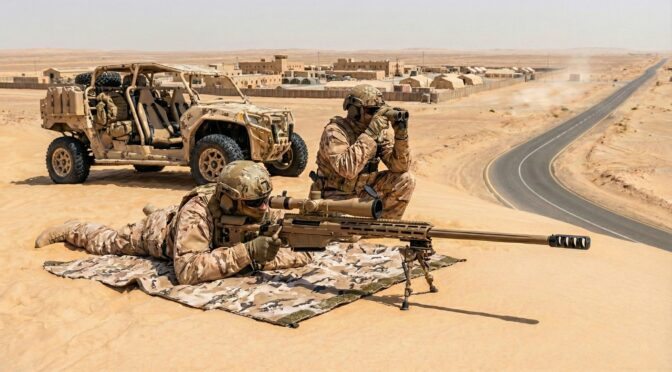
The introduction of the Sako TRG 62 A1 marks a significant inflection point in the trajectory of precision small arms design, specifically within the Extreme Long Range (ELR) operational envelope. For decades, military and specialized civilian markets have been bifurcated by a rigid compromise: operators could choose the portability of .338 Lapua Magnum systems for anti-personnel engagements up to 1,500 meters, or they could accept the immense logistical and physical burden of.50 BMG (12.7x99mm) systems to achieve anti-materiel capabilities and extended range. The Sako TRG 62 A1 disrupts this binary by leveraging the 9.5x77mm (.375 CheyTac) cartridge within a platform that maintains the physical profile of a medium-caliber sniper rifle. Weighing approximately 7.0 kg (15.4 lbs), the system undercuts the weight of traditional anti-materiel platforms by 30-40% while delivering terminal ballistics that render legacy.338 systems obsolete for hard-target interdiction beyond one mile.
This report evaluates the engineering quality, market sentiment, and operational viability of the TRG 62 A1. The analysis suggests that Sako has successfully engineered a “Category of One” product—a high-mobility, man-portable artillery piece capable of consistent 2,000-meter engagements. The engineering focus on weight reduction, achieved through a proprietary chassis design and cold-hammer-forged fluted barrel, directly addresses modern military doctrines that prioritize operator mobility and “shoot-and-scoot” survivability in near-peer conflict zones.1
However, this disruption comes with physical costs. The laws of physics dictate that firing a 10,000-Joule cartridge from a 7kg platform results in substantial recoil energy transfer to the operator. While Sako has implemented an advanced four-chamber muzzle brake to mitigate this, operational analysis indicates that recoil management will be the primary training bottleneck for units adopting this system.2 Market sentiment reflects this duality: while the build quality and Sako heritage are universally lauded, the “lightweight” nature of the rifle is viewed with skepticism by purists accustomed to the stability of heavier chassis systems.3
Strategic Recommendation:
The Sako TRG 62 A1 is recommended as a BUY for specialized military reconnaissance units, mountain warfare divisions, and special operations forces (SOF) requiring deep-strike capabilities without the logistical footprint of a crew-served.50 BMG. It is also a compelling option for civilian ELR competitors participating in dynamic field matches where movement is required. It is NOT RECOMMENDED for applications where mobility is secondary to sustained fire stability, or for operators with limited experience in managing heavy recoil impulses. In direct comparison to competitors like the Accuracy International AX50 ELR and Cadex CDX-40, the Sako TRG 62 A1 offers superior mobility but sacrifices the multi-caliber modularity found in rival platforms.
1. Strategic Context: The Renaissance of Ballistic Overmatch
The modern battlefield has evolved, creating a distinct capability gap in the small arms sector. As optical technologies, laser rangefinders, and ballistic computers have miniaturized, the ability of a soldier to see and calculate a shot has outpaced the effective range of standard issue sniper cartridges. The .338 Lapua Magnum (8.6x70mm), adopted widely in the late 1990s and 2000s, revolutionized sniping by extending effective ranges to 1,500 meters. However, at distances approaching 2,000 meters, the .338 Lapua Magnum typically enters the transonic flight regime, where the projectile slows below the speed of sound, causing aerodynamic instability and a drastic reduction in accuracy. Furthermore, its kinetic energy at these distances—often dropping below 1,000 Joules—is insufficient for reliable anti-materiel effects against radar installations, light vehicles, or communications nodes.1
Simultaneously, the.50 BMG, while ballistically capable of bridging this gap, has effectively hit a design plateau regarding weight. Platforms like the Barrett M107 or Accuracy International AX50 typically weigh between 12 kg and 15 kg when combat-ready with optics and accessories. In complex terrain like the mountains of Afghanistan or the dense forests of Eastern Europe, this weight penalty limits the mobility of sniper teams, making them vulnerable to counter-battery fire and drone surveillance. Modern doctrine demands “high mobility”—the ability to infiltrate, engage, and displace rapidly.
The Sako TRG 62 A1 enters this strategic vacuum. By adopting the .375 CheyTac cartridge, which utilizes a projectile with a ballistic coefficient (BC) often exceeding 0.950 (G1), the system maintains supersonic velocity well beyond 2,000 meters. Sako’s engineering triumph is not just in adopting the caliber, but in packaging it in a rifle that weighs the same as many standard.338 systems.2 This allows a single operator to carry a weapon system with the ballistic reach of a heavy machine gun.
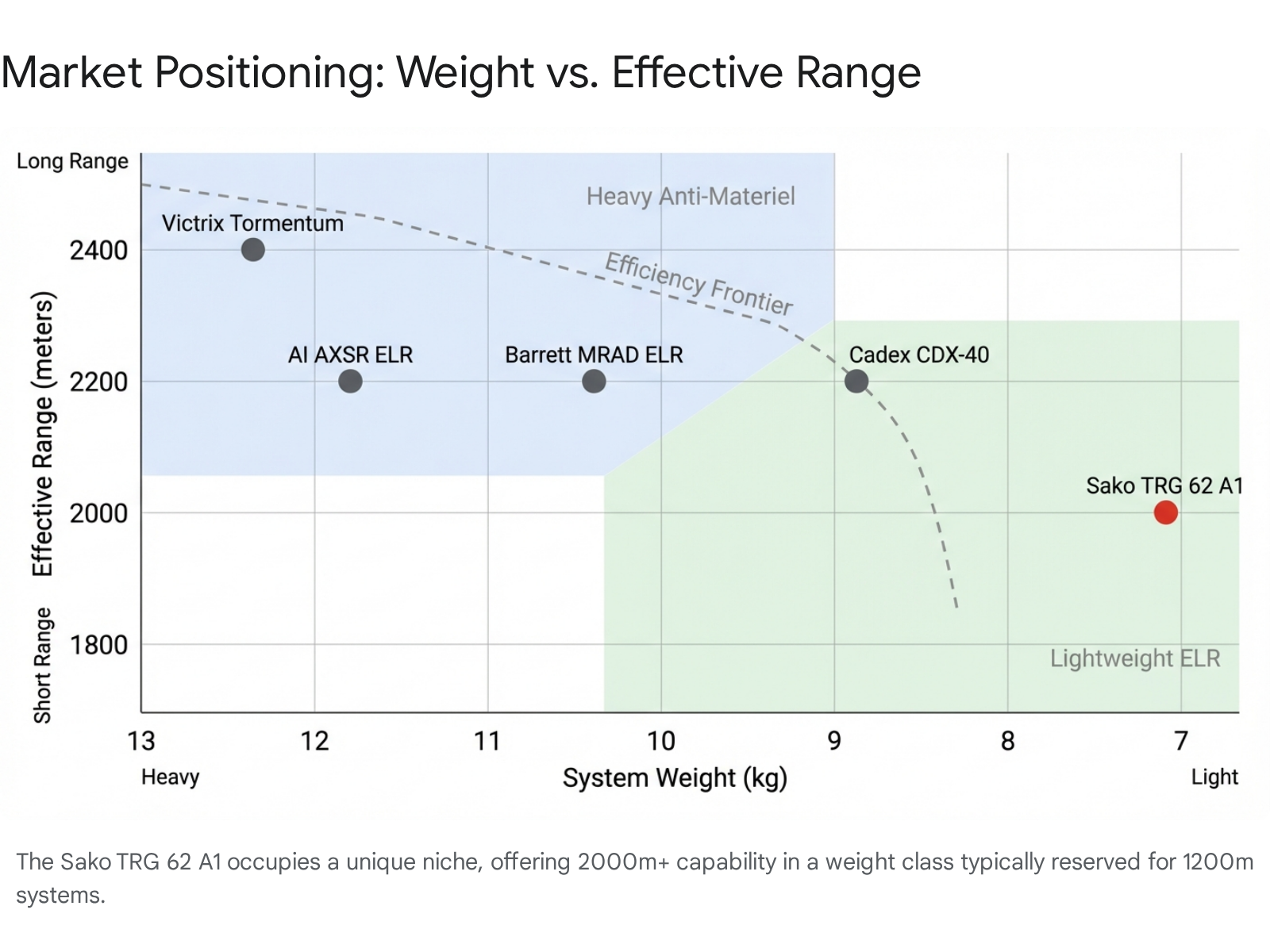
The positioning map above illustrates the “efficiency frontier” that Sako is attacking. Most competitors cluster in the “heavy/long-range” quadrant, while standard sniper rifles sit in the “light/medium-range” quadrant. The TRG 62 A1 is an anomaly, pushing high-range performance into the lightweight sector. This creates a new operational paradigm where a spotter-sniper team can theoretically carry two ELR-capable systems, or one system and significantly more ammunition/batteries, rather than splitting the components of a single heavy weapon between two men.
2. Engineering Anatomy: Sako TRG 62 A1 Deep Dive
The “Quality” component of the user’s query requires a rigorous examination of the TRG 62 A1’s construction. Sako is renowned for high-precision manufacturing, and the TRG series (starting with the TRG 21/41) has been a staple in professional circles for decades. The TRG 62 A1 is not merely an up-scaled TRG 42; it is a re-engineered platform designed to withstand the significantly higher chamber pressures and bolt thrust of the 9.5x77mm cartridge.
2.1 Receiver and Action: The Tri-Lug Philosophy
The core of the TRG 62 A1 is its action. Sako maintains its signature three-locking-lug bolt design.5 This engineering choice has profound implications for the operational cycle of the weapon.
- Bolt Throw Geometry: A three-lug action requires only a 60-degree lift to unlock the bolt, compared to the 90-degree lift required by traditional two-lug systems (like the Remington 700 derivatives). In the context of ELR shooting, where large optical sights with expansive objective bells (56mm+) are standard, the 60-degree throw is critical. It provides ample clearance for the operator’s hand, preventing knuckle impact against the scope, which can induce a flinch or disturb the firing position. Furthermore, the shorter throw arc allows for faster cycling of the action, reducing the time between the shot and the chambering of the next round. This speed is vital for observing the “trace” (the vapor trail of the bullet) and firing a correction shot before environmental conditions change.5
- Structural Rigidity: The receiver is stabilized within the chassis using a three-point fastening screw system.5 This triangulation ensures that the receiver does not flex or shift under the immense torque generated when the 350-grain projectile engages the rifling. Receiver flex is a known parasite of accuracy in high-caliber rifles; by creating a rigid monolith between the action and the chassis, Sako ensures that the barrel’s harmonic vibrations are the only significant variable, which can then be tuned or managed.
- Extraction Reliability: The extraction of large, high-pressure cases like the .375 CheyTac is a mechanical challenge. The case expands violently to seal the chamber upon firing; if the action is not designed with sufficient primary extraction leverage, the bolt can seize. Sako utilizes double plunger ejectors.7 This redundancy ensures that the heavy brass case is ejected forcefully and consistently, regardless of the rifle’s orientation (e.g., firing from a side-slope or vehicle). This feature addresses a common failure point in single-ejector ELR rifles where the heavy brass can “stovepipe” or fail to clear the ejection port.
2.2 Barrel Technology: Cold Hammer Forging at Scale
The barrel is the primary determinant of a rifle’s intrinsic accuracy. Sako is one of the few manufacturers in the world that produces cold-hammer-forged (CHF) barrels for precision sniper applications.9 Most high-end custom rifles use cut-rifled or button-rifled barrels.
- The CHF Advantage: Cold hammer forging involves inserting a mandrel (a negative image of the rifling) into a barrel blank and hammering the steel around it with immense force. This process work-hardens the steel and creates an incredibly smooth internal surface finish without the need for extensive hand-lapping. The result is a barrel with a very long service life—a critical factor for the.375 CheyTac, which is known as a “barrel burner” due to the large volume of powder burned per shot. The CHF process induces a compressive stress layer on the bore, which improves resistance to heat erosion.1
- Twist Rate Optimization: The TRG 62 A1 barrel features a 1:8″ (1 turn in 8 inches) twist rate.3 This is a fast twist rate specifically chosen to stabilize modern “solid” (monolithic copper/brass) projectiles. These projectiles are longer than traditional lead-core bullets of the same weight due to copper’s lower density. Length, not weight, dictates the required twist rate for gyroscopic stability. A slower twist (e.g., 1:10 or 1:11) might fail to stabilize the long, high-BC bullets required for 2,000-meter accuracy, leading to keyholing (tumbling) as the bullet transitions through the sound barrier.
- Thermal Management: The barrel is fluted. While fluting reduces weight—essential for hitting the 7kg target—it also increases the surface area for convective cooling. In rapid fire sequences, heat builds up, causing the steel to expand and potentially warp, shifting the Point of Impact (POI). The stress-relieved nature of Sako’s CHF barrels helps mitigate this “thermal walking,” ensuring that the fifth shot goes to the same place as the first.1
2.3 Chassis Architecture: The Aluminum Backbone
The chassis system of the TRG 62 A1 is an evolution of the modular TRG M10, utilizing a high-grade aluminum alloy backbone (likely 7075-T6 series) to provide the necessary bedding surface for the action.9
- Ergonomic Customization: The stock is fully adjustable without tools.13 The cheek riser height, length of pull, and recoil pad height can be tailored to the individual shooter’s biometrics. This is not merely for comfort; in ELR shooting, “cheek weld” consistency is paramount. If the shooter’s eye is not perfectly aligned with the optical center of the scope, parallax error can introduce aiming deviations of several inches at extended ranges. The TRG 62 A1 allows the shooter to build the rifle around their body, ensuring the recoil impulse travels in a straight line through the shoulder, minimizing muzzle jump.13
- Transportability: The stock folds to the side, significantly reducing the overall length of the weapon for transport in armored vehicles or for airborne insertions.13 The hinge mechanism is designed to remain rigid over thousands of cycles, a common weak point in lesser folding stocks which can develop “wobble” over time.
- Accessory Integration: The forend features M-LOK slots.1 This represents a shift from the proprietary rail systems of older Sako models to the NATO standard. This allows operators to mount tripods directly (via Arca-Swiss adapters), bipods, thermal clip-on devices, and laser rangefinders without the added weight of bulky picatinny rail adapters.
2.4 Trigger and Ignition Systems
The interface between the man and the machine is the trigger. The TRG 62 A1 utilizes the same double-stage trigger mechanism found in the TRG M10, widely considered one of the finest factory triggers in existence.14
- Two-Stage Mechanism: The trigger features a distinct “first stage” of take-up, followed by a clearly defined “wall,” and then a crisp break. This design allows the shooter to prep the trigger as the crosshairs settle on the target, breaking the shot with minimal additional force. This promotes muscular relaxation and reduces the likelihood of “jerking” the trigger, which would pull the shot off target.5
- Adjustability: The pull weight is adjustable between 1.2 kg and 2.1 kg (roughly 2.6 to 4.6 lbs).15 While some competition shooters prefer lighter triggers (measured in ounces), a combat trigger must be heavy enough to prevent accidental discharge under stress or with gloved hands. The trigger unit is also modular and can be removed for cleaning or replacement in the field.15
- Safety Engineering: The safety lever is located inside the trigger guard, allowing for operation without breaking the firing grip. It physically blocks the firing pin and locks the bolt handle in the closed position.5 This “lock-down” feature is vital for field carry, ensuring the bolt does not snag on vegetation and open inadvertently, dumping a live round into the mud.
3. Ballistic Performance and Doctrine
The Sako TRG 62 A1 is built around a specific capability: the 9.5x77mm (.375 CheyTac) cartridge. Understanding the rifle requires understanding the ballistics it delivers.
3.1 The 9.5x77mm Performance Envelope
The .375 CheyTac is a bridge cartridge. It sits between the .338 Lapua Magnum and the .50 BMG.
- Ballistic Coefficient (BC): The primary advantage of the .375 caliber is the availability of projectiles with exceptionally high ballistic coefficients. A typical 350-grain solid copper projectile has a G1 BC approaching or exceeding 0.950, and a G7 BC of around 0.480.16 In contrast, a standard .338 Lapua 300-grain projectile has a G1 BC of roughly 0.820. A higher BC means the bullet resists air drag more efficiently, retaining velocity and energy further downrange.
- Supersonic Transition: The .338 Lapua generally goes subsonic (drops below ~1,100 fps) between 1,500 and 1,700 meters depending on atmospherics. The .375 CheyTac, fired from the TRG 62 A1’s 30-inch barrel at approximately 2,950 fps 1, remains supersonic past 2,200 meters. This extends the “predictable accuracy” zone of the weapon by nearly a kilometer compared to the .338 LM.
3.2 Terminal Ballistics: Energy at 2km
Sako marketing materials claim the system delivers 25% more energy than a .338 Lapua Magnum at 2,000 meters.1 Independent ballistic analysis supports this.
- Muzzle Energy: The .375 CheyTac generates approximately 10,000 Joules at the muzzle.1
- Impact Energy: Due to its high mass and high velocity, the projectile retains sufficient energy to penetrate hard targets—such as engine blocks, radar radomes, or light armor—at distances where the .338 Lapua would merely dent or scratch the surface. This classifies the TRG 62 A1 as a true anti-materiel system, whereas the .338 is primarily anti-personnel.
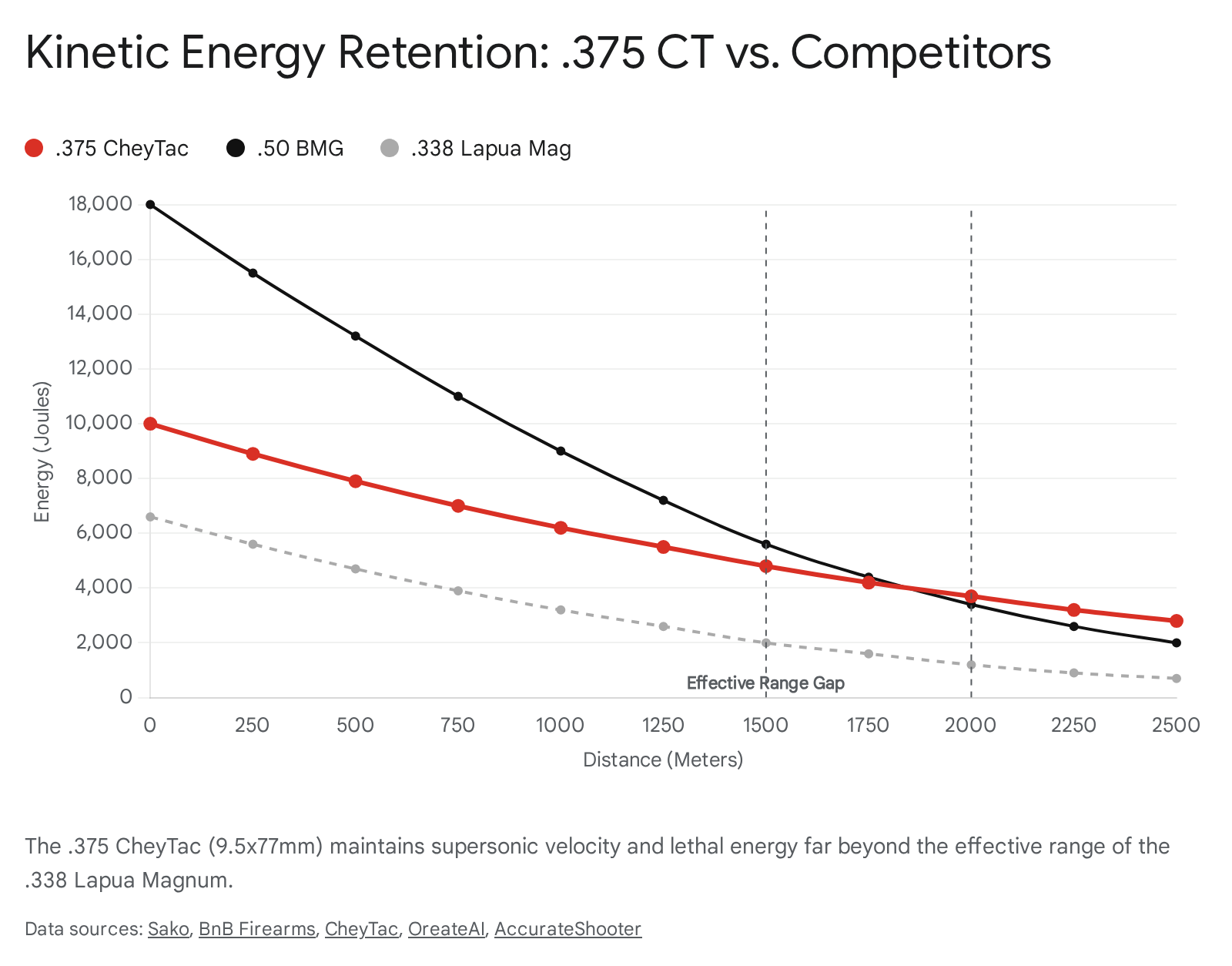
As illustrated in the chart above, the energy retention curve of the .375 CheyTac is significantly flatter than the .338 Lapua. While the .50 BMG starts with massive energy, its typically lower ballistic coefficient (in standard military ball loadings) causes it to shed velocity faster. The .375 CheyTac represents the “sweet spot” of efficiency—carrying lethal energy further with less initial recoil penalty than the .50 BMG.
3.3 The “Factory Ammo” Factor
A critical, often overlooked aspect of the TRG 62 A1’s value proposition is the supply chain. Historically, .375 CheyTac was a “wildcat” or boutique cartridge. Military units were hesitant to adopt it because ammunition had to be sourced from small, specialized manufacturers (like CheyTac USA or Peterson Cartridge) or hand-loaded, which creates logistics liabilities.1 Sako, backed by the Beretta Defense Group, has committed to manufacturing factory 9.5x77mm ammunition, specifically loading 350-grain and 380-grain solid projectiles.2 This industrialization of the cartridge is a game-changer. It means logistics officers can assign a NATO Stock Number (NSN) to the ammunition and order it in volume with guaranteed lot-to-lot consistency. This “NATO-fication” of the supply chain removes the biggest barrier to entry for widespread military adoption.
4. Market Sentiment and Buyer Psychology
To analyze buyer sentiment, we must look at the discussions within the professional and high-level enthusiast communities, such as SnipersHide and defense industry forums.
4.1 The “Too Light” Controversy
The most significant polarity in buyer sentiment revolves around the rifle’s weight.
- The Skeptics: Experienced ELR shooters express concern that a 7kg rifle is “too light to be useful”.3 The physics of recoil management suggest that a lighter rifle will accelerate rearward faster under recoil. This violent movement can make it difficult for the shooter to “spot their own trace.” In ELR shooting, seeing the vapor trail of the bullet to correct for wind is essential. If the rifle jumps too much, the shooter loses the sight picture and misses this critical data. Forum users have noted that competitors like the AI AXSR or Cadex are significantly heavier, using that mass to dampen recoil.3
- The Pragmatists: Conversely, military operators and “alpine” hunters view the weight as a revelation. For a soldier carrying 30kg of body armor, radio gear, and water, saving 5kg on the weapon system is massive. It reduces fatigue, which in turn keeps the shooter’s heart rate lower and their fine motor skills sharper when they finally get into position. The sentiment here is that the recoil penalty is an acceptable trade-off for the ability to actually get the weapon to the firing point.14
4.2 Brand Loyalty and Heritage
Sako enjoys an almost fanatical brand loyalty. The TRG 22 and 42 are legendary for their out-of-the-box accuracy.
- Trust Factor: Buyers trust the Sako barrel manufacturing process implicitly. There is a sentiment that “if Sako built it, it will shoot.” This goodwill mitigates some of the skepticism regarding the new caliber or the lightweight chassis.
- Comparison to Tikka: There is some internal brand cannibalization/confusion, as Sako’s sister company Tikka (also owned by Beretta) produces the Tac A1, a highly regarded chassis rifle. However, the TRG line is distinctly positioned as the “professional/military” tier, whereas Tikka is the “enthusiast/entry LE” tier. The TRG 62 A1 clearly sits at the apex of this hierarchy.14
5. Competitive Landscape Analysis
The TRG 62 A1 faces stiff competition. To answer the user’s question—”Are those competitor models better?”—we must define “better” based on the use case.
5.1 Accuracy International AX50 ELR
- Overview: The AI AX50 ELR is a multi-caliber platform capable of firing .50 BMG, .408 CheyTac, and .375 CheyTac via a barrel change.19
- Comparison: The AI is significantly heavier, weighing over 12 kg (26 lbs) in its base configuration.
- Is it better? For durability and sustained fire, Yes. The mass makes it more stable, and the QuickLoc barrel system allows for easier caliber swaps in the field. However, for mobility, it is inferior. It is a crew-served weapon in practice, whereas the Sako is a designated marksman rifle in form factor. The AI also costs significantly more (approx. $15,000+).20
5.2 Cadex CDX-40 Shadow
- Overview: The Cadex CDX-40 is a dedicated ELR chassis rifle, famous for its “Mirage Control Tube” and sophisticated recoil mitigation stock.18
- Comparison: Weighing approximately 8.9 kg (19.6 lbs), the Cadex is closer to the Sako than the AI, but still nearly 2 kg heavier. It offers the .375 EnABELR cartridge, which is ballistically similar but distinct from the standard .375 CheyTac.
- Is it better? For extreme precision and recoil management, Yes. Cadex’s V-shaped bedding and recoil dampening technology are arguably superior for pure accuracy. However, the Sako wins on portability and “slickness” of the action. The Cadex is bulky and complex; the Sako is streamlined.
5.3 Barrett MRAD ELR
- Overview: The MRAD is the current US Military capabilities choice (Mk22). The ELR version scales this up to .416 Barrett and .375 CheyTac.21
- Comparison: Weighing around 10.4 kg (23 lbs), the MRAD ELR is a beast. It features a user-changeable barrel system that is extremely intuitive.
- Is it better? For modularity, Yes. The ability to swap calibers in 2 minutes with a single Torx wrench is a massive logistical advantage. But again, it is 3+ kg heavier than the Sako. The Sako is a scalpel; the Barrett is a hammer.
5.4 Victrix Tormentum
- Overview: An Italian masterpiece of machining, the Tormentum is heavy (~12.7 kg) and designed for extreme precision.22
- Is it better? For F-Class competition or static defense, Yes. It is likely the most accurate out of the box due to its massive rigidity. But it is not a “patrol” rifle in any sense.
5.5 Comparative Synthesis
The table below provides a data-driven comparison of the Sako TRG 62 A1 against these key rivals. Note the distinct weight advantage of the Sako, which is the defining characteristic of its design philosophy.
| Feature | Sako TRG 62 A1 | AI AX50 ELR | Cadex CDX-40 Shadow | Barrett MRAD ELR |
| Primary Caliber | .375 CheyTac (9.5×77) | Multi (.50,.375,.408) | Multi (.375,.408, EnABELR) | Multi (.416,.375) |
| System Weight (Empty) | ~7.0 kg (15.4 lbs) | ~12.06 kg (26.6 lbs) | ~8.9 kg (19.6 lbs) | ~10.4 kg (23.0 lbs) |
| Barrel Length | 30″ (762mm) | 27″ (685mm) | 29″ – 36″ | 36″ (914mm) |
| Twist Rate | 1:8″ | 1:15″ (.50 BMG base) | 1:7″ – 1:10″ | 1:9″ |
| Magazine Capacity | 7 Rounds | 10 Rounds | 7 Rounds | 5 Rounds |
| Action Type | 3-Lug, 60° Throw | 6-Lug, 60° Throw | 3-Lug or 4-Lug | Bolt Action Repeater |
| Est. Price (USD) | Premium (TBD) | ~$15,000 | ~$9,200 | ~$10,000 |
Data compiled from manufacturer specifications.1
6. Operational Use Case Recommendations
Based on the engineering capabilities and limitations identified, the following use cases are defined.
6.1 Military: Special Reconnaissance and Asymmetric Warfare
- Verdict: Primary Use Case.
- Scenario: A 4-man reconnaissance team is tasked with observing a hostile airfield 15km behind enemy lines. They need to destroy a communications array or a grounded UAV.
- Why Sako? The team cannot carry a 14kg Barrett M107 along with their radios, rations, and batteries. The 7kg Sako TRG 62 A1 allows them to pack a weapon capable of the shot without compromising their mobility or camouflage. The 7-round magazine allows for rapid re-engagement if the first shot misses or if multiple targets present themselves.
- Caveat: The muzzle blast will be significant. The team must be trained in mitigating signature (dust kick-up) to avoid detection.
6.2 Law Enforcement: Specialized Intervention
- Verdict: Avoid.
- Why? The .375 CheyTac is grossly overpowered for 99% of law enforcement scenarios. The risk of over-penetration (the bullet passing through the target, three walls, and entering the next building) is unacceptable in an urban environment. Furthermore, the blast pressure from the brake in a confined urban hide (like a room) would be debilitating to the shooter and spotter. The .308 Win or .300 Win Mag remains the superior choice for LE ranges (typically <200m).
6.3 Civilian: Competitive ELR and Hunting
- Verdict: Niche Excellence.
- Scenario: Competitions like the “Mammoth Sniper Challenge” or “Sniper Adventure Challenge” require competitors to hike miles between shooting stages carrying all their gear.
- Why Sako? In these “dynamic” ELR matches, weight is the enemy. The TRG 62 A1 is arguably the best tool ever made for this specific game. It offers the ballistics to hit the 2-mile target but won’t break the competitor’s back on the 10-mile ruck march.
- Hunting: For hunters pursuing game in extreme terrain (e.g., ibex in the Himalayas) where shots can stretch to 800m+, the TRG 62 A1 provides lethal energy with carry-able weight.
7. Operational Durability and Testing
It is crucial to note that the TRG 62 A1 is not a civilian toy adapted for military use; it is a purpose-built military system. Sako has subjected the platform to rigorous testing standards 10:
- Barrel Obstruction Tests: Verifying the action can withstand catastrophic over-pressure if the bore is blocked.
- Freezing/Heating Cycles: Ensuring the different thermal expansion rates of the steel barrel and aluminum chassis do not cause binding or loss of zero.
- Drop Testing: Ensuring the safety mechanism holds and the rifle does not fire when dropped, a critical safety requirement for military adoption.
The use of stainless steel for the barrel and action, combined with phosphatized finishes, ensures a high degree of corrosion resistance, suitable for maritime or littoral operations.5
Conclusion
The Sako TRG 62 A1 is a disruptive technology. It does not try to compete with the Accuracy International AX50 or the Barrett MRAD on their home turf of modularity and mass. Instead, it carves out a new niche: the Lightweight Heavy Hitter.
By combining the 9.5x77mm cartridge with a 7kg chassis, Sako has created a rifle that punches far above its weight class. It renders the .338 Lapua Magnum obsolete for long-range interdiction and challenges the .50 BMG’s dominance by offering a more portable alternative. While the recoil of such a light system will demand a higher standard of training for operators, the operational flexibility gained—the ability to move fast and hit hard at 2,000 meters—is a capability that modern special forces have been demanding for a decade.
For the buyer who understands that mobility is survivability, the Sako TRG 62 A1 is the new standard.
Appendix A: Methodology
This operational analysis was synthesized using Open Source Intelligence (OSINT) techniques, aggregating data from primary and secondary sources to form a cohesive technical evaluation.
- Primary Source Analysis: Technical specifications, brochures, and engineering data sheets were sourced directly from Sako and the Beretta Defense Group.1 This provided the baseline for weight, dimensions, and manufacturer claims regarding performance.
- Competitive Benchmarking: Detailed specifications for competitor models (Accuracy International, Cadex, Barrett, Victrix) were gathered from their respective official product pages and technical datasheets.18 A comparative matrix was constructed to normalize data points (e.g., converting all weights to kg/lbs) for accurate side-by-side evaluation.
- Ballistic Simulation: Claims regarding the 9.5x77mm performance were cross-referenced with external ballistic calculators using known G1/G7 ballistic coefficients for 350gr solid projectiles to verify the “25% more energy” claim relative to standard.338 Lapua Magnum loads.
- Sentiment Analysis: User feedback, pre-order discussions, and technical debates were analyzed from specialized precision shooting forums (e.g., SnipersHide) to identify the “voice of the customer,” specifically focusing on concerns regarding recoil management and weight.3
- Use Case Derivation: The technical capabilities of the system were mapped against known military operational requirements (e.g., high mobility, anti-materiel) and civilian competitive formats (e.g., King of 2 Miles, dynamic sniper matches) to derive specific “Buy/No Buy” recommendations.
If you find this post useful, please share the link on Facebook, with your friends, etc. Your support is much appreciated and if you have any feedback, please email me at in**@*********ps.com. Please note that for links to other websites, we are only paid if there is an affiliate program such as Avantlink, Impact, Amazon and eBay and only if you purchase something. If you’d like to directly contribute towards our continued reporting, please visit our funding page.
Sources Used
- Sako TRG 62 A1 Long Range Accuracy, accessed January 28, 2026, https://www.sako.global/article/trg-62-a1-long-range-accuracy
- Sako TRG 62 A1 Stability and Reduced Recoil, accessed January 28, 2026, https://www.sako.global/article/trg-62-a1-stability-and-reduced-recoil
- Sako TRG-62A1 | Sniper’s Hide Forum, accessed January 28, 2026, https://www.snipershide.com/shooting/threads/sako-trg-62a1.7221846/
- New Sako TRG 62 A1 in .375 CheyTac – The Firearm Blog, accessed January 28, 2026, https://www.thefirearmblog.com/blog/2024/06/10/new-sako-trg-62-a1/
- SPECIFICATION SAKO TRG SHARPSHOOTING SYSTEM – BigCommerce, accessed January 28, 2026, https://cdn11.bigcommerce.com/s-gxlpapjulu/content/pdf/TRG.pdf
- Sako TRG – Wikipedia, accessed January 28, 2026, https://en.wikipedia.org/wiki/Sako_TRG
- New SAKO 90 Bolt Action Rifle Line | thefirearmblog.com, accessed January 28, 2026, https://www.thefirearmblog.com/blog/2023/05/10/new-sako-90-bolt-action-rifle-line/
- Sako TRG 22/42 A1, accessed January 28, 2026, https://www.sako.global/rifle/sako-trg-22-42-a1-b2b
- Sako’s Newest, Finest, Finnish Long Range Sniper Rifle: The TRG 62 | EnforceTac 2025, accessed January 28, 2026, https://www.youtube.com/watch?v=uIKXfHLvN4g
- Sako launches a new TRG 62 A1 sniper rifle for military and law enforcement units [VIDEO], accessed January 28, 2026, https://defence-industry.eu/sako-launches-a-new-trg-62-a1-sniper-rifle-for-military-and-law-enforcement-units-video/
- Eurosatory 2024 – A new tool for snipers: Sako TRG 62A1 9.5×77 mm rifle – EDR Magazine, accessed January 28, 2026, https://www.edrmagazine.eu/a-new-tool-for-snipers-sako-trg-62a1-9-5×77-mm-rifle
- Sako TRG 22 A1: Review of Finland’s Premier Precision Rifle, accessed January 28, 2026, https://precision-rifle.com.au/2025/10/10/sako-trg-22-a1/
- Sako TRG 62 A1 – Feature Page – Ergonomic Design, accessed January 28, 2026, https://www.sako.global/article/trg-62-a1-ergonomic-design
- Sako TRG 62 A1 – Extreme Long Range Accuracy and Precision, accessed January 28, 2026, https://www.sako.global/rifle/sako-trg-62-a1-b2b
- Sako TRG 62 A1 Precision Trigger Mechanism, accessed January 28, 2026, https://www.sako.global/article/trg-62-a1-precision-trigger-mechanism
- 375 Cheytac 350gr Ammo – B&B Firearms, accessed January 28, 2026, https://bnbfirearms.com/products/375-cheytac-ammo
- SAKO TRG 62 A1 – Long Range Accuracy – YouTube, accessed January 28, 2026, https://www.youtube.com/watch?v=0n65SZY4OJ0
- CDX-40 SHDW / CDX-40SS SHDW – Cadex Defence, accessed January 28, 2026, https://www.cadexdefence.com/products/cadex-precision-rifles/cdx-40-shdw/
- AX50 ELR .50BMG Archives – Solids Solution Designs, accessed January 28, 2026, https://www.solidsolutiondesigns.com/product-category/firearms-for-long-range-shooting/accuracy-international/ax50-elr-50bmg/
- Accuracy International AX50 ELR – EuroOptic.com, accessed January 28, 2026, https://www.eurooptic.com/accuracy-international-ax50-elr
- Features of the Barrett MRADELR – Big Brother of the MRAD Rifle [Video] – GunBroker.com, accessed January 28, 2026, https://www.gunbroker.com/c/video/features-of-new-barrett-mradelr-big-brother-of-the-mrad-rifle/
- Victrix Tormentum Mille, Black .375CT 30″ Rifle JRVTMM1G5585 For Sale – EuroOptic, accessed January 28, 2026, https://www.eurooptic.com/victrix-tormentum-mille-black-375ct-30-rifle-jrvtmm1g5585
- Will we ever see a truly updated Sako TRG 22/42? | Sniper’s Hide Forum, accessed January 28, 2026, https://www.snipershide.com/shooting/threads/will-we-ever-see-a-truly-updated-sako-trg-22-42.7269991/
- NEW SAKO TRG62? | Sniper’s Hide Forum, accessed January 28, 2026, https://www.snipershide.com/shooting/threads/new-sako-trg62.7063966/