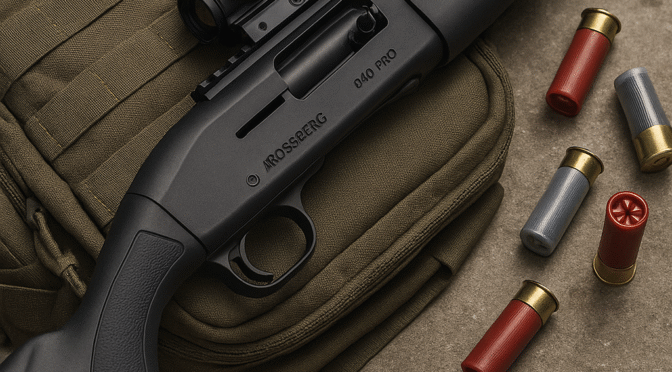
The Mossberg 940 Pro Tactical series represents O.F. Mossberg & Sons’ flagship entry into the modern defensive semi-automatic shotgun market. Designed to compete directly with the Beretta A300 Ultima Patrol and Benelli M2 Tactical, the platform distinguishes itself through a high feature-to-price ratio, offering native optic compatibility (Shield RMSc), adjustable ergonomics, and high-capacity magazine systems as standard equipment.
As of early 2025, the platform is in a transitional state. While the core gas system has proven robust and reliable with defensive loads, the standard “Tactical” model has suffered from widely reported assembly quality control issues regarding its two-piece magazine tube extension. However, the introduction of the 2025 940 Pro Tactical SPX, featuring a redesigned one-piece magazine tube and integrated heat shield, signals a critical engineering pivot intended to resolve these legacy reliability concerns.
This report evaluates the 940 Pro Tactical ecosystem, analyzing the performance differences between the Standard, Thunder Ranch, and SPX variants, and assessing their viability for duty and home defense applications.
2. Tactical Market Context
The domestic tactical shotgun market has shifted from pump-action dominance to a demand for “turn-key” semi-automatics. The 940 Pro Tactical targets the “Duty/Defense” segment, priced aggressively between $950 and $1,250.
Target Demographic:
- LE/Private Security: Officers requiring a reliable gas gun who cannot get department approval for $1,800+ platforms (Benelli M4/Beretta 1301).
- Home Defense: Civilians seeking a “ready-out-of-the-box” solution that includes light mounts, optic cuts, and capacity without needing aftermarket gunsmithing.
- Primary Competitor: Beretta A300 Ultima Patrol. The A300 is the direct market rival, offering similar features at a nearly identical price point.
3. Technical Specifications (Tactical Series)
- Manufacturer: O.F. Mossberg & Sons
- Models: 940 Pro Tactical (Standard), Thunder Ranch, SPX (New for 2025)
- Action: Gas-Operated Semi-Automatic (Self-Regulating)
- Caliber: 12 Gauge (3″ Chamber)
- Barrel Length: 18.5 inches
- Capacity: 7+1 (2.75″ Shells)
- Sights:
- Standard/Thunder Ranch: Fiber Optic Front (Red)
- SPX: Ghost Ring Rear / Fiber Optic Front
- Optic Cut: Direct Mount Shield RMSc Footprint (Slide cover included)
- Choke System: Accu-Choke (Cylinder Bore installed)
- Length of Pull: Adjustable (12.5″ – 14.25″) via modular spacers
- Weight: ~7.5 lbs
- MSRP: $1,189 – $1,333 (Street Price: ~$980 – $1,150)
4. Variant Breakdown and 2025 Updates
The “Tactical” line is no longer a single model; it has split into three distinct tiers. Understanding the mechanical differences between them is vital for purchasing decisions.
A. 940 Pro Tactical (Standard)
The baseline model. It features a two-piece magazine tube consisting of a standard 4-round tube and a +3 extension held by a barrel clamp.
- Key Features: Barrel clamp with M-LOK slots, oversized controls, adjustable stock.
- Known Issues: The junction between the tube and extension is a frequent failure point for spring binding (see Section 5).
B. 940 Pro Thunder Ranch Edition
Designed in collaboration with Clint Smith of Thunder Ranch. Functionally similar to the standard model but adds specific durability and usability enhancements.
- Key Differences:
- Finish: Patriot Brown Cerakote for enhanced corrosion resistance.
- Mounting: Additional QD sling cups on the forend and stock.
- Sights: Simple Fiber Optic front (no ghost rings), adhering to Clint Smith’s philosophy of simplicity.
C. 940 Pro Tactical SPX (New for 2025)
This is the most significant update to the line. Mossberg has re-engineered the front end to address user complaints.
- One-Piece Magazine Tube: Unlike the standard and Thunder Ranch models, the SPX uses a single, continuous magazine tube. This eliminates the coupling nut and the gap that caused spring binding issues.
- Integrated Heat Shield: A new forend design incorporates a heat shield directly, rather than a metal shroud clamped over the barrel.
- Vang Comp Standard: Ships with a Vang Comp Systems “tear-away” elastic shell card attached to the receiver.
- Sights: Features robust Ghost Ring iron sights.1
5. Performance and Usability Review
5.1 Reliability: The Magazine Tube Saga
The reliability of the 940 Pro Tactical is a tale of two designs.
- The “Two-Piece” Problem (Standard/Thunder Ranch): A statistically significant number of users reported inability to load the full 7 rounds out of the box. This is caused by the magazine spring binding at the coupling joint between the main tube and the extension, or incorrect spring lengths installed at the factory.
- Fix: Users often have to trim the spring or aftermarket springs (Wolff) to resolve this.
- The “One-Piece” Solution (SPX): The 2025 SPX model’s single-piece tube mechanically eliminates the binding point. Early reports suggest this has successfully resolved the capacity and feeding issues plaguing the earlier models.
5.2 The Optic Advantage (RMSc Footprint)
Mossberg’s decision to cut the receiver for the Shield RMSc footprint is a major tactical advantage.
- Cheek Weld: Because the optic sits deep in the receiver (direct mount), the shooter maintains a proper cheek weld identical to using iron sights. Competitors like the Beretta A300 often require a rail mount, pushing the optic higher and forcing a “chin weld.”2
- Co-Witness: On the SPX model, the low optic height allows for a true co-witness with the ghost ring iron sights, a critical redundancy for defensive use.
5.3 Handling and Ergonomics
- Loading: The loading port is aggressively beveled from the factory. This “competition-cut” receiver makes reloading under stress significantly easier than on standard receivers (like the Benelli M2), reducing the risk of “thumb bite.”
- Stock Adjustability: The ability to shorten the Length of Pull (LOP) to 12.5″ is a massive benefit for tactical users wearing body armor or heavy winter clothing. Most competitors require purchasing expensive aftermarket stocks (e.g., Mesa Tactical) to achieve this short LOP.
6. Market Sentiment Analysis
- Overall Sentiment: Mixed to Positive (Trending Positive with SPX release).
- Positive Themes:
- Value Proposition: Users consistently praise the feature set (optic cut, beveling, chokes) for the price.
- Recoil Impulse: The gas system is widely cited as soft-shooting, allowing for rapid follow-up shots compared to inertia guns.
- Ergonomics: The short LOP and control layout are frequently highlighted as superior to stock European imports.
- Negative Themes:
- Magazine Spring/Capacity: The most dominant negative theme. “7-round tube only holds 6” is a pervasive complaint for pre-2025 models.
- Quality Control: Reports of canted front sights and loose rail screws on early production units.
- Customer Service: Inconsistent wait times for warranty repairs regarding the magazine tube issues.
7. Comparison: 940 Pro Tactical vs. Beretta A300 Ultima Patrol
| Feature | Mossberg 940 Pro Tactical | Beretta A300 Ultima Patrol |
| Operating System | Gas (Piston) | Gas (Piston) |
| Optic Mount | Direct Cut (Shield RMSc) | Receiver Cut / Rail |
| Iron Sights | Fiber Optic (Std) / Ghost Ring (SPX) | Ghost Ring (Standard) |
| Magazine Tube | 2-Piece (Std) / 1-Piece (SPX) | 1-Piece (Standard) |
| Safety | Top Tang (Ambi) | Cross-bolt (Front of Trigger) |
| Loading Port | Beveled/Enlarged (Factory) | Standard |
| Heat Shield | Integrated (SPX Only) | None |
| Street Price | ~$980 – $1,150 | ~$1,050 – $1,150 |
Verdict: The Beretta A300 generally holds a reputation for higher out-of-the-box refinement. However, the Mossberg 940 Pro SPX (2025) closes the gap significantly by fixing the magazine tube weakness and adding a heat shield, while maintaining superior ergonomic adjustability and loading port geometry.
8. Summary of Findings
| Feature | Assessment | Key Observations |
| Reliability | Good (SPX) / Fair (Std) | SPX 1-piece tube solves the major feeding issue of the 2-piece Standard models. |
| Ergonomics | Excellent | 12.5″ LOP option and beveled loading port are class-leading. |
| Optics | Excellent | Deep RMSc cut provides superior cheek weld compared to rail-mounted rivals. |
| Value | Excellent | Includes features (heat shield, optic cut, chokes) that are expensive upgrades on other guns. |
| Durability | Good | Nitride/Cerakote finishes are robust; polymer quality is adequate but feels less “dense” than Beretta. |
Appendix A: Methodology Statement
A.1 Research Scope: This analysis focused strictly on the “Tactical” SKUs of the 940 Pro line, specifically filtering out data related to Waterfowl/Field/Competition models to ensure relevance for defensive users.
A.2 Data Sourcing: 2025 specific updates (SPX model) were verified through manufacturer press releases and early industry coverage to confirm engineering changes (one-piece tube).
A.3 Sentiment Protocol: User feedback was segmented to prioritize “defensive use” reviews, specifically looking for “failure to feed” and “capacity” keywords to isolate the magazine tube issue.
If you find this post useful, please share the link on Facebook, with your friends, etc. Your support is much appreciated and if you have any feedback, please email me at in**@*********ps.com. Please note that for links to other websites, we are only paid if there is an affiliate program such as Avantlink, Impact, Amazon and eBay and only if you purchase something. If you’d like to directly contribute towards our continued reporting, please visit our funding page.
Sources Used
- 940® Pro Tactical SPX – 940® Pro – Shotguns – Firearms O.F. Mossberg & Sons, accessed November 19, 2025, https://www.mossberg.com/firearms/shotguns/940-pro/940-pro-tactical-spx.html
- Mossberg 940 Pro Tactical Review 2025: Is It Duty Ready? – Gun University, accessed November 19, 2025, https://gununiversity.com/mossberg-940-pro-tactical-review/