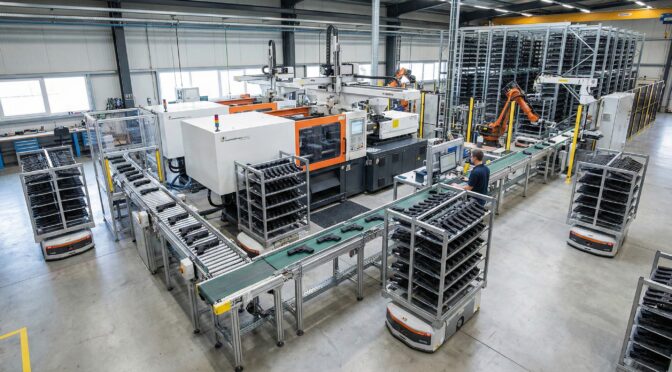
The integration of Metal Injection Molding (MIM) into the global small arms manufacturing ecosystem represents a critical convergence of economic necessity and materials science. It is a technology that has been simultaneously championed as the future of precision mass production and vilified by end-users as a harbinger of planned obsolescence. This dichotomy arises not from the inherent properties of the technology itself, but from a persistent lack of nuance in its application and a misunderstanding of the process spectrum. MIM is not a singular standard; it is a manufacturing capability curve ranging from low-density, void-ridden components suitable only for cosmetic trim, to Hot Isostatic Pressed (HIP), aerospace-grade components that rival wrought steel in specific mechanical properties.
This report provides an exhaustive technical analysis of MIM technology as applied to firearm mechanisms. It is designed for industry stakeholders—engineers, product managers, and analysts—who require a definitive differentiation between “commercial-grade” and “premium-grade” MIM. The analysis demonstrates that the stigma surrounding MIM is frequently rooted in early-generation process failures and the misapplication of rigid alloys in high-elasticity roles. However, modern high-quality MIM, defined by strict feedstock controls, vacuum sintering, and post-sintering densification, has matured to a point where it serves as the superior engineering solution for complex geometries like fire control groups.
Crucially, this report delineates the “Red Zones”—applications where MIM must never be utilized due to inherent microstructural limitations regarding hoop stress and high-cycle fatigue. Pressure-bearing components such as barrels and bolt locking lugs require grain flow characteristics achievable only through forging. Conversely, the report identifies “Green Zones” where MIM offers geometric capabilities impossible to achieve via machining, enhancing firearm ergonomics and function. By establishing clear metallurgical criteria and economic break-even models, this document serves as a roadmap for leveraging MIM to reduce costs without compromising the lethality or reliability of the weapon system.
1. Introduction: The Industrial Context of MIM in Firearms
The firearms industry occupies a unique position in the manufacturing sector, balancing the high-volume requirements of consumer goods with the safety-critical standards of aerospace engineering. A failure in a consumer electronic device results in a warranty claim; a failure in a firearm’s locking mechanism can result in catastrophic injury. Consequently, the materials engineering standards applied to small arms must navigate a narrow channel between the economic necessity of competitive pricing and the absolute requirement for reliability under extreme thermal and mechanical shock.
Metal Injection Molding (MIM) emerged as a disruptive technology in this space in the early 1990s because it addressed a fundamental inefficiency in gunmaking: the exorbitant cost of machining complex, three-dimensional geometries from solid bar stock. Components such as the 1911 sear, the safety selector of an AR-15, or the rebound slide of a revolver involve intricate compound curves, internal cavities, and orthogonal features that are notoriously expensive to produce via Computer Numerical Control (CNC) machining. Investment casting, the traditional alternative, often lacks the dimensional precision required for modern “drop-in” parts, necessitating expensive secondary machining operations to true critical surfaces.1
MIM promised a “net-shape” solution—the ability to produce complex steel parts with the scalability of plastic injection molding, requiring little to no secondary machining. However, the early adoption phase was characterized by a “gold rush” mentality. Manufacturers, eager to harvest the 50-70% cost savings offered by MIM, applied the technology indiscriminately to parts ill-suited for the process, such as the 1911 internal extractor.3 The resulting wave of component failures created a lasting stigma among firearms enthusiasts and armorers, giving rise to the pejorative “MIM parts” label often associated with low quality.
Today, the market has bifurcated. “Budget” firearms are perceived to be riddled with MIM, while “Premium” custom firearms boast “zero MIM” construction. This binary view is technically flawed. High-end custom manufacturers may avoid MIM to satisfy market perception, yet military-contracted service pistols—such as the Glock 17/19 and Sig Sauer P320/M17—utilize MIM extensively for internal components, achieving mean rounds between failure (MRBF) rates in the tens of thousands.4 The difference lies in the process engineering. This report dissects how that reliability is engineered and why it sometimes fails.
2. The Physics of the Process: Defining Quality at the Microstructure Level
To differentiate between “low quality” and “high quality” MIM, one must move beyond the macro view of the part and understand the physics governing the transformation of metal powder into a solid component. The MIM process is a multi-stage consolidation governed by fluid dynamics, thermodynamics, and solid-state diffusion. The quality of a firearm component is determined long before the trigger is pulled; it is encoded in the particle size distribution of the feedstock and the atmospheric control of the sintering furnace.
2.1 Feedstock Formulation: The Foundation of Integrity
The precursor to any MIM part is the feedstock—a homogeneous mixture of fine metal powders and a multi-component binder system. The characteristics of this mixture dictate the potential density and surface finish of the final component.
Low-Quality MIM Precursors: Water Atomization
In cost-sensitive operations, manufacturers often utilize water-atomized powders. The atomization process involves blasting a stream of molten metal with high-pressure water jets. This rapid cooling creates irregular, jagged particle shapes.5
- Packing Inefficiency: The irregular shape of water-atomized particles leads to poor packing density in the mold. When the binder is removed, the inter-particle spacing is larger, requiring more significant shrinkage during sintering to close the voids.
- Oxide Contamination: The interaction with water introduces higher levels of surface oxides (SiO2) on the particles. In the context of firearms, these oxide inclusions act as internal stress risers. If a firing pin is made from feedstock with high oxide content, the repetitive impact energy of the hammer can initiate a crack at the oxide boundary, leading to tip fracture.5
- Rheological Instability: The jagged particles increase internal friction during injection, leading to higher injection pressures and a greater risk of binder separation.
High-Quality MIM Precursors: Gas Atomization
Premium firearms components utilize gas-atomized powders, typically produced in an inert nitrogen or argon atmosphere.
- Spherical Morphology: Gas atomization produces perfectly spherical particles. These spheres act like ball bearings, flowing smoothly into complex mold geometries (such as the sharp engagement hook of a sear) without segregating from the binder.
- High Packing Density: The spherical shape allows for a higher solids loading (up to 65% by volume) in the feedstock. This means there is less binder to remove and less shrinkage to manage, resulting in higher dimensional fidelity.5
- Particle Size Distribution: High-quality MIM typically uses finer powder distributions (e.g., D90 < 22 microns). Finer powders have a higher specific surface area, which drives more active sintering kinetics. This allows for lower sintering temperatures, reducing grain growth and resulting in a tougher microstructure.5
2.2 Molding Dynamics and Defect Formation
The injection phase is where geometric integrity is established. Unlike plastic molding, MIM feedstock is highly viscous, abrasive, and thermally conductive. The fluid dynamics of filling the mold cavity are critical to preventing latent defects.
Jetting and Air Entrapment
If injection speed is too high or the gate design is poor, the material “jets” into the cavity, shooting across the empty space and folding over on itself rather than expanding smoothly. This chaotic filling pattern traps air pockets inside the part.7 In a low-stress plastic part, a bubble is a cosmetic defect. In a MIM hammer or locking block, a subsurface void creates a point of weakness that reduces the effective cross-sectional area and acts as a crack initiation site under shock loading.
Knit Lines (Cold Shuts)
Where two flow fronts meet—for instance, flowing around the hole of a hammer pin—they must fuse together. In low-quality molding, if the feedstock is too cool or injection pressure is insufficient, these fronts do not merge at the atomic level. This results in a “knit line,” which is essentially a pre-existing crack running through the part.7 If this knit line is located on a stress-bearing feature, such as the lug of a barrel link, catastrophic failure is inevitable. High-quality process engineering utilizes Moldflow simulation software to position gates such that knit lines occur in non-critical areas or are eliminated through venting and overflow tabs.
Powder-Binder Separation
If the binder system is poorly formulated or injection pressures are excessive, the liquid binder can separate from the solid metal powder. This results in “binder-rich” zones (which become voids after sintering) and “powder-rich” zones (which are porous and brittle). This inhomogeneity is a hallmark of low-quality feedstock and results in parts with inconsistent density gradients.8
2.3 Debinding: The Critical Transition
Debinding removes the polymer carrier that allowed the metal to be molded. This is the stage most prone to inducing microscopic damage in commercial-grade parts.
- Solvent Debinding: Common in the industry for wax-polymer systems. The part is immersed in a heated solvent bath to dissolve the primary binder. If the process is rushed, the exiting dissolved binder creates internal hydraulic pressure, causing “bloating” or micro-cracking within the part structure. These micro-cracks are often invisible to the naked eye but severely compromise fatigue life.10
- Catalytic Debinding: Used in premium feedstocks (such as the BASF Catamold system). The binder (typically polyacetal) decomposes directly from solid to gas at the molecular level in the presence of an acid catalyst (nitric acid). This reaction proceeds from the outside in, preventing any internal pressure build-up.11 This method is faster and produces a “brown part” with superior dimensional stability, but requires more expensive furnace infrastructure.
2.4 Sintering: Solid State Fusion and Densification
Sintering is the defining moment where the fragile “brown part” becomes a solid metal component. The parts are heated to near-melting temperatures (e.g., 1350°C for 17-4 PH stainless steel) to induce atomic diffusion.
The Density Variable
Density is the primary metric of MIM quality.
- Low Quality (Commercial MIM): typically achieves 94-96% of theoretical density. The remaining 4-6% of the volume consists of pores. Crucially, at this density level, many pores are interconnected (open porosity). This reduces mechanical strength and allows corrosive fluids to wick into the part, leading to internal corrosion.12
- High Quality (Performance MIM): Achieves 97-99% density through optimized sintering profiles and finer powders. At this level, the remaining pores are isolated and spherical. Spherical pores are far less damaging to mechanical properties than the irregular, jagged pores found in lower-density parts, as they result in lower stress concentration factors.12
Atmosphere Control: The Silent Killer
Sintering requires a controlled atmosphere to prevent oxidation and control carbon content.
- Carbon Control: For low-alloy steels like 4140, carbon is the hardening agent. The binder itself is carbon-rich. The sintering process must precisely balance the removal of binder carbon with the preservation of alloy carbon.
- Decarburization: If the atmosphere is too wet (high dew point), surface carbon reacts with oxygen to form CO2, escaping the part. This leaves a soft, ferrite skin on the part.14 A decarburized 4140 sear will be soft on the surface, leading to rapid wear and a “mushy” trigger feel.
- Sooting: If the atmosphere is too carbon-rich, soot deposits on the part and diffuses in, forming brittle cementite networks. This makes the part glass-hard and prone to shattering under impact.
- Vacuum Sintering: The gold standard for stainless steels (17-4 PH). It effectively removes volatile impurities. However, if the vacuum is too deep at peak temperature, essential alloying elements like Copper or Chromium can evaporate, altering the alloy’s chemistry and reducing corrosion resistance.15 High-quality processing utilizes partial pressure backfilling with Argon to suppress evaporation while maintaining a clean environment.
3. Metallurgy of Firearms MIM: Alloy Selection and Performance
The firearm designer does not have the infinite palette of wrought alloys available to the machinist. MIM relies on specific alloy families that are compatible with sintering. Two dominate the industry: Precipitation Hardening Stainless Steels and Low Alloy Steels.
3.1 17-4 PH Stainless Steel (AISI 630)
This is the ubiquitous “stainless” of the MIM world, accounting for the vast majority of corrosion-resistant firearm parts (triggers, hammers, safety levers, slide stops).
Metallurgy and Mechanism
17-4 PH is a martensitic stainless steel containing Copper, Niobium, and Tantalum. Unlike standard carbon steels that harden by quenching, 17-4 PH hardens by “aging” (precipitation hardening). Upon cooling from solution treatment, it forms a martensitic matrix. Subsequent heating precipitates sub-microscopic copper-rich particles that strain the crystal lattice, increasing strength and hardness.6
The “H900” Trap
The most common heat treatment condition for MIM 17-4 PH is H900 (aging at 900°F for 1-4 hours).
- Pros: This condition yields the maximum hardness (~40-44 HRC) and tensile strength (~1300 MPa).
- Cons: H900 results in the lowest impact toughness and ductility. The Charpy impact energy of MIM 17-4 PH in the H900 condition can be as low as 5-8 ft-lbs, compared to 15-20 ft-lbs for wrought material.16
- Failure Analysis: Many MIM failures in firearms (e.g., broken hammers, snapped slide stop levers) occur because the manufacturer specified the H900 condition to maximize wear resistance on engagement surfaces, neglecting the fact that the part endures impact loads. The brittleness of H900, combined with the inherent porosity of MIM, creates a component susceptible to brittle fracture under shock loading.
High-Quality Engineering Approach:
A knowledgeable firearms engineer will specify over-aged conditions like H1025 (aging at 1025°F) or H1150 for impact-critical parts. While hardness drops slightly (to ~35-38 HRC), the impact toughness can double or triple, making the part significantly more durable against recoil forces without sacrificing structural integrity.18
3.2 Low Alloy Steels (4140, 4605, 8620)
These alloys are used for parts requiring high surface hardness and core toughness, typically finishing with a black oxide, Parkerized, or Ferritic Nitrocarburized (Melonite/Tenifer) coating.
4140 (Chromium-Molybdenum)
The industry standard for high-stress parts. MIM 4140 can achieve tensile properties very close to wrought 4140 if carbon control is maintained. It is ideal for parts like safety selectors, magazine catches, and takedown pins.14
4605 (Nickel-Molybdenum)
A MIM-specific alloy often used as a substitute for 4140. It offers excellent hardenability and toughness. Its high nickel content provides good ductility, making it a preferred choice for hammers and sears where a balance of hardness (for the sear edge) and toughness (to resist hammer slap) is required.20
8620 (Nickel-Chromium-Molybdenum)
Traditionally a case-hardening steel used for gears and receivers. In MIM, it is less common for small parts but is used for larger structural components like frame inserts. It is designed to have a hard, wear-resistant case (via carburizing) and a tough, ductile core. This dual-property nature makes it excellent for locking blocks, though MIM 8620 rarely matches the core strength of forged 8620 due to density limitations.21
3.3 316L Stainless Steel
Used exclusively for low-stress, high-corrosion environments.
- Use Cases: Trigger guards, decorative trim, grip screws, magazine base plates.
- Limitations: 316L is austenitic; it cannot be hardened by heat treatment. It is soft, gummy, and prone to galling. It must never be used for sear surfaces, hammer hooks, or locking lugs, as it will deform rapidly under contact pressure, destroying the trigger pull or timing of the firearm.22
Table 1: MIM Alloy Performance Matrix in Firearms
| Material | Common Applications | Key Strength | Critical Weakness | Quality Indicator |
| 17-4 PH (H900) | Sears, Hammers, Triggers | High Hardness (40+ HRC), Corrosion Resistance | Low Impact Toughness, Brittle | Avoid for impact parts; use H1025/H1150 instead. |
| 17-4 PH (H1025) | Slide Stops, Extractors (Pivot) | Good balance of Hardness & Toughness | Lower wear resistance than H900 | Standard for high-quality MIM impact parts. |
| 4140 Low Alloy | Safety Selectors, Mag Catches | Toughness, Wear Resistance | Carbon Control Sensitivity | Carbon content certified; Case hardened properly. |
| 4605 Low Alloy | Hammers, Sears, Disconnectors | High Hardenability, Good Toughness | Lower Corrosion Resistance than 17-4 | Excellent for internal fire control parts. |
| 8620 | Locking Blocks, Frame Inserts | Case Hardenability (Hard Case/Tough Core) | Lower Core Strength than 4140 | Used where surface wear is primary concern. |
| 316L | Trigger Guards, Sights | Extreme Corrosion Resistance | Low Hardness, Low Strength | High density polishing; Cosmetic use only. |
| Tool Steel (S7/M2) | Strikers, Firing Pins | Extreme Impact/Wear Resistance | Processing Difficulty, Cost | Requires vacuum sintering; High density (>99%). |
4. Differentiating “Low Quality” vs. “High Quality” MIM
The term “MIM” is often used pejoratively as a monolith, but the performance gap between a budget commercial MIM part and an aerospace-grade MIM part is vast. Understanding these differentiators allows the analyst to assess the likely reliability of a firearm.
4.1 Density and Porosity: The 95% vs. 99% Threshold
Theoretical density is the density of the alloy if it were a solid wrought bar (100%).
- Low Quality (94-96% Density): The structure contains significant porosity. These pores reduce the effective cross-sectional area of the part, lowering its load-bearing capacity. More importantly, surface pores act as notches. In fatigue loading (cyclic stress), cracks initiate at these pores. A low-density MIM extractor will fail significantly faster than a high-density one because the pores accelerate fatigue crack propagation.13
- High Quality (98%+ Density): Achieved through optimized particle size loading and sintering profiles. At this density, pores are isolated (closed) rather than interconnected. This dramatically improves corrosion resistance (fluids don’t wick into the part) and mechanical properties.
4.2 Hot Isostatic Pressing (HIP): The Premium Standard
This is the single most significant process differentiator for critical MIM parts.
- The Process: After sintering, the parts are placed in a HIP vessel, heated to high temperature, and subjected to immense pressure (15,000+ PSI) using inert argon gas.
- The Mechanism: The uniform gas pressure collapses internal voids and diffusion bonds the material faces, pushing density to near 100% (typically >99.8%).
- The Benefit: HIPing eliminates the internal porosity that leads to premature fatigue failure. It essentially “heals” the microstructure. Studies show that HIPing can increase the fatigue life of 17-4 PH MIM parts by 100-300%.7
- Application: A “High Quality” MIM firing pin, extractor, or bolt stop must be HIPed. “Low Quality” MIM skips this step to save cost (HIP is an expensive batch process), relying solely on the as-sintered density.
4.3 Dimensional Precision and Secondary Operations
- Low Quality: Relies on “as-sintered” tolerances (typically ±0.5%). For a firearm trigger mechanism, a variance of 0.005″ can mean the difference between a crisp trigger pull and a creepy, gritty one. Low-quality parts are often tumble-polished heavily to hide surface defects, rounding off critical edges in the process.
- High Quality: Utilizes “coining” (sizing) or secondary CNC machining. Critical surfaces—such as the sear engagement hook or the hammer notches—are often machined or ground after MIM to ensure perfect geometry and surface finish (Ra < 0.8 µm), while the rest of the part remains net-shape.2 The MIM process provides the blank, but precision machining provides the interface.
4.4 Inspection and QC Protocols
- Low Quality: Batch inspection. If 5 parts in a sample of 1000 are good, the lot ships. This statistical approach allows “outliers” (parts with internal voids) to reach the consumer.
- High Quality: Resonant Acoustic Method (RAM) Testing. This is the gold standard for high-volume MIM QC. Every single part is struck mechanically, and its resonant frequency is measured. A part with internal cracks, voids, or low density will “ring” at a different frequency shift compared to a golden master. It is automatically rejected. This Non-Destructive Testing (NDT) ensures that no internally defective parts reach the assembly line.25
5. Performance Analysis: MIM vs. Traditional Methods
To understand why MIM is not suitable for everything, we must compare it to the traditional methods of machining (billet) and forging.
5.1 MIM vs. Machining (Billet)
- Grain Structure:
- Machined (Bar Stock): Has a directional grain structure from the rolling process of the steel bar. This provides anisotropic properties (stronger in the longitudinal direction).
- MIM: Has an isotropic (uniform) grain structure. It has no directional grain flow. Properties are the same in all axes.22
- Strength: High-quality MIM achieves 95-98% of the static tensile strength of wrought steel. However, ductility (elongation) is often lower (e.g., 4-8% for MIM vs. 10-15% for wrought 17-4 PH).26
- Economic Break-Even: MIM generally becomes viable at volumes exceeding 2,500–5,000 units per year. Below this, CNC machining is more cost-effective due to the absence of tooling costs ($20k-$100k for MIM molds). For complex parts like a safety lever, MIM can reduce unit cost from $15.00 (CNC) to $2.00 (MIM) at volume.28
5.2 MIM vs. Forging
This is the most critical comparison for high-stress parts.
- Grain Flow: Forging physically deforms the metal, aligning the grain structure with the contours of the part. This creates a continuous “grain flow” that follows the shape of a locking lug or extractor hook.
- Impact Toughness: Forged steel has vastly superior impact toughness due to this grain alignment and complete lack of porosity.
- Fatigue Limit: The endurance limit of MIM is typically 70-80% of wrought/forged steel due to surface porosity acting as crack initiators. Forged parts, with their compressed surface grains, have superior resistance to crack initiation.13
Table 2: Comparative Mechanical Properties (17-4 PH Stainless)
| Property | Wrought (Bar Stock) | High Quality MIM (HIPed) | Low Quality MIM (As-Sintered) | Forged |
| Density | 100% | >99.5% | ~95% | 100% |
| Tensile Strength | High (1310 MPa) | High (~1200 MPa) | Moderate (1000-1100 MPa) | Very High |
| Ductility | High (10-15%) | Moderate (6-10%) | Low (2-4%) | High |
| Impact Toughness | High (~20 ft-lbs) | Moderate (8-12 ft-lbs) | Low (5 ft-lbs) | Very High |
| Fatigue Limit | High | Moderate | Low | Very High |
| Grain Structure | Directional (Rolled) | Isotropic (Equiaxed) | Isotropic (Porous) | Directional (Optimized) |
6. Application Engineering: The “Red” and “Green” Zones
For the firearm engineer, the decision to use MIM must be driven by stress analysis, not just cost. There are specific physical regimes within a firearm where MIM’s material properties make it a liability.
6.1 The “Red Zones”: Forbidden Applications
1. The Barrel and Chamber (Pressure Vessels)
- Why Never: A gun barrel is a pressure vessel subjected to hoop stress (circumferential tension) of 35,000 to 65,000 PSI (SAAMI specs). It endures violent thermal shock and triaxial stress states.
- Failure Mode: MIM lacks the continuous, spiral/longitudinal grain structure of forged or button-rifled bar stock. Under peak pressure, microscopic voids in MIM would act as stress concentrators, leading to catastrophic rupture (bursting) rather than yielding (bulging). Furthermore, rifling a MIM part is impractical; it cannot be molded with precision rifling, and machining it negates the cost benefit. Titanium MIM barrels have been proposed but suffer from poor erosion resistance and low modulus.32
2. The Bolt / Locking Lugs (High Shear & Impact)
- Why Never: The locking lugs of a bolt (e.g., AR-15 bolt) sustain the full back-thrust of the cartridge. This is a high-impact shear load.
- Failure Mode: Shear failure. Forged bolts have grain lines flowing into the lugs, providing maximum shear strength. MIM lugs would rely on isotropic strength, which is significantly lower in shear, especially under shock loading. A MIM bolt would eventually shear a lug, potentially causing a catastrophic headspace failure.30
3. The Internal Extractor (The Spring Application)
- Why Never: The internal extractor of a 1911 acts as a leaf spring. It must flex over the cartridge rim during feeding and snap back to hold the casing.
- Failure Mode: Fatigue and Creep. MIM 17-4 PH has poor elasticity compared to spring-tempered carbon steel. It will either take a “set” (lose tension) leading to failure-to-extract, or it will work-harden and snap off the hook. This application requires a material with a high elastic limit and fatigue endurance—properties where wrought spring steel is vastly superior to sintered metal.34
4. Thin, High-Velocity Strikers (Firing Pins)
- Why Avoid: While some manufacturers use MIM strikers, thin firing pins (like in micro-compacts) are prone to buckling or tip fracture if made of MIM.
- Analysis: The tip of the firing pin endures repeated high-velocity impact. Any internal porosity at the tip will lead to it snapping off. Machined S7 tool steel is the superior choice for high-reliability firing pins.4
6.2 The “Green Zones”: Ideal Applications
1. Fire Control Components (With Caveats)
- Examples: Sears, Disconnectors, Hammers.
- Why: These parts require intricate geometry (angles, hooks) and high surface hardness to maintain a sharp trigger pull. MIM 17-4 PH or 4605 steel can be hardened to >50 HRC.
- Requirement: These must be High Quality MIM. The sear surface must be void-free. Ideally, the sear engagement surface is ground/machined post-MIM. S&W and Glock have used MIM here successfully for decades by strictly controlling the process.
2. Complex Static Parts
- Examples: Magazine catches, safety levers, takedown pins, grip safeties, trigger shoes.
- Why: These parts operate under low stress. The complexity of a checkered magazine release button or an ambidextrous safety lever is expensive to machine. MIM produces the texture, the internal cavity, and the precise axle hole in one shot.
3. External Extractors (Pivot Type)
- Why: Unlike the internal 1911 extractor, an external extractor (like on a Glock or Sig) is a rigid claw that pivots on a pin. The tension comes from a separate coil spring.
- Analysis: Because the MIM part does not need to flex, it only needs to be hard and tough. A high-quality MIM 17-4 PH extractor (H1025 condition) works excellently here, as long as the hook geometry is precise.35
Table 3: Process Selection Matrix
| Component | Recommended Process | Is MIM Acceptable? | Reasoning |
| Barrel | Button Rifled / Hammer Forged | NO | Hoop stress, pressure vessel safety, rifling precision. |
| Bolt / Locking Lugs | Forged / Machined | NO | High shear loads, safety critical containment. |
| Extractor (Internal/Leaf) | Machined Spring Steel | NO | High fatigue, requires elasticity. MIM is too stiff/brittle. |
| Extractor (External/Pivot) | MIM (High Quality) | YES | Part is rigid; tension provided by coil spring. MIM works well here. |
| Hammer / Trigger | MIM (High Quality) / EDM | YES | Complex geometry, wear resistance needed. Good candidate. |
| Slide Stop | MIM (High Quality) | YES | Generally acceptable if impact toughness is managed (H1025). |
| Frame / Receiver | Forging / Casting / Machined | Rarely | Size limit of MIM (<100g usually) makes frames impractical. |
7. Case Studies in MIM Performance
7.1 The Kimber 1911 Extractor Failure (The “Low Quality” Lesson)
In the early 2000s, Kimber introduced MIM internal extractors in their 1911 pistols. This became a textbook example of misapplication. The internal extractor is a spring. MIM materials (typically 17-4 PH) possess high stiffness but poor fatigue life in flexural applications compared to spring-tempered carbon steel.
- Outcome: High rates of failure (loss of tension and hook breakage) were reported.
- Root Cause: Misapplication of the technology. MIM cannot replace a spring.
- Resolution: Kimber eventually reverted to machined extractors, but the brand damage regarding “MIM parts” lingered for years.3
7.2 The Glock Generation 4 Extractor (The Process Control Lesson)
When Glock transitioned to MIM extractors (dip-type) for Gen 3/4 pistols, initial batches experienced erratic ejection (brass hitting the shooter).
- Root Cause: Dimensional inconsistency and surface finish. The mold design or sintering shrinkage resulted in an extractor claw that was slightly out of tolerance or had a surface texture that didn’t release the brass cleanly.
- Resolution: Glock refined the mold geometry and QC process. Current Glock MIM extractors are highly reliable.
- Lesson: MIM requires tight process control. A minor variance in shrinkage (0.1%) can cause functional reliability issues in tolerance-stacking assemblies.4
7.3 The Sig P365 Striker Drag (The Design Lesson)
Early Sig P365s exhibited “striker drag” (primers showing deep drag marks) and reported broken striker tips.
- Analysis: The striker was a MIM part. The high slide velocity of the micro-compact pistol caused the striker to drag across the primer before retracting. The lateral force applied to the MIM tip caused shear failure in some units.
- Resolution: Redesigned tip geometry to mitigate stress concentrations.
- Lesson: MIM parts are notch-sensitive. Design For Manufacturing (DFM) must eliminate sharp corners or geometries that concentrate stress, as the material is less forgiving than machined S7 tool steel.36
8. Strategic Recommendations for Industry Stakeholders
For the industry analyst or engineer, the following recommendations serve as a guide for implementing or evaluating MIM in firearm systems:
- Strict Prohibition on Spring Applications: Do not use MIM for components that rely on the material’s elasticity for function (e.g., internal extractors, spring plates). Use stamped or machined spring steel.
- Mandate HIP Processing for Impact Parts: For any MIM part that endures cyclic impact (hammers, slide stops, external extractors), Hot Isostatic Pressing must be a mandatory process step to eliminate fatigue-inducing porosity.
- Optimize Heat Treatment for Toughness: Stop specifying H900 condition for every 17-4 PH part. Use H1025 or H1150 for impact-prone components to gain fracture toughness, even at the cost of slight hardness.
- Implement 100% NDT: For fire control groups, batch testing is insufficient. Implement Resonant Acoustic Method (RAM) testing to screen every single part for internal density variations.
- Hybrid Manufacturing: For critical sear surfaces, use MIM for the bulk shape but mandate secondary grinding or machining of the engagement hooks to ensure geometric perfection and remove surface defects.
9. Conclusion
Metal Injection Molding is neither a panacea nor a plague; it is a specialized manufacturing process that demands rigorous engineering oversight.
- Low Quality MIM is characterized by reliance on “as-sintered” properties, lack of HIP processing, and insufficient inspection. It has no place in the internal mechanisms of defensive firearms and is responsible for the technology’s poor reputation.
- High Quality MIM is characterized by high-density gas-atomized feedstock, catalytic debinding, vacuum sintering, Hot Isostatic Pressing, and resonant acoustic inspection. When applied correctly to fire control groups and static levers, it offers performance indistinguishable from machining at a fraction of the cost.
By adhering to these metallurgical constraints and avoiding the “Red Zone” applications, the firearms industry can leverage the economic benefits of MIM without compromising the lethality or reliability of the weapon system.
If you find this post useful, please share the link on Facebook, with your friends, etc. Your support is much appreciated and if you have any feedback, please email me at in**@*********ps.com. Please note that for links to other websites, we are only paid if there is an affiliate program such as Avantlink, Impact, Amazon and eBay and only if you purchase something. If you’d like to directly contribute towards our continued reporting, please visit our funding page.
Works cited
- Metal Injection Molding Vs Die Casting: Key Differences Explained – HLC Metal Parts Ltd, accessed December 5, 2025, https://www.hlc-metalparts.com/news/metal-injection-molding-vs-die-casting-85223498.html
- Metal Injection Molding Vs. Machining | OptiMIM Article, accessed December 5, 2025, https://www.optimim.com/resources/article/mim-vs-machining
- The MIM in 1911 Bugaboo – RangeHot, accessed December 5, 2025, https://rangehot.com/mim-1911-bugaboo/
- Glock MIM Parts vs Machined: Technical Analysis of Striker, Extractor & Locking Block, accessed December 5, 2025, https://mikeshoppingroom.com/glock-mim-parts-vs-machined-analysis/
- MIM Series Part 2: Feedstock | OptiMIM Article, accessed December 5, 2025, https://www.optimim.com/resources/article/mim-series-part-2-feedstock
- 17-4 PH Stainless Steel Properties: The Ultimate Guide for Engineers, accessed December 5, 2025, https://mikeshoppingroom.com/17-4ph-stainless-steel-properties/
- Metal Injection Molding (MIM): A Complete Guide – Unionfab, accessed December 5, 2025, https://www.unionfab.com/blog/2024/09/metal-injection-molding
- Binder System Composition on the Rheological and Magnetic Properties of Nd-Fe-B Feedstocks for Metal Injection Molding – MDPI, accessed December 5, 2025, https://www.mdpi.com/2076-3417/14/13/5638
- Powder-binder separation in injection moulded green parts | Request PDF – ResearchGate, accessed December 5, 2025, https://www.researchgate.net/publication/45937635_Powder-binder_separation_in_injection_moulded_green_parts
- Binder removal process in metal injection molding – JH MIM, accessed December 5, 2025, https://jhmim.com/binder-removal-process-in-metal-injection-molding/
- MIM Manufacturing: A Complete Guide – Met3DP, accessed December 5, 2025, https://met3dp.com/mim-manufacturing-a-complete-guide/
- The Key to Quality in Metal Injection Molding (MIM) Parts – Moat City, accessed December 5, 2025, https://moatcity.com/blog-kiln-furniture/the-key-to-quality-in-metal-injection-molding-mim-parts/
- Compare the Material Density and Mechanical Properties of MIM and Forged Parts, accessed December 5, 2025, https://www.newayprecision.com/blogs/compare-the-material-density-and-mechanical-properties-of-mim-and-forged-parts
- MIM 4140 – 4140 Steel – ZCMIM, accessed December 5, 2025, https://www.zcmim.com/mim-4140/
- MIM 17-4 – Stainless Steel 17-4 PH – ZCMIM, accessed December 5, 2025, https://www.zcmim.com/mim-17-4/
- Impact properties of sintered and wrought 17–4 PH stainless steel – ResearchGate, accessed December 5, 2025, https://www.researchgate.net/publication/233613212_Impact_properties_of_sintered_and_wrought_17-4_PH_stainless_steel
- MIM Material Properties – ZCMIM, accessed December 5, 2025, https://www.zcmim.com/metal-injection-molding/mim-material-properties/
- 17-4 PH Stainless Steel – Desktop Metal, accessed December 5, 2025, https://www.desktopmetal.com/uploads/SHP-SPC-MDS_17-4PH-210323.pdf
- Untitled – INDO-MIM, accessed December 5, 2025, https://www.indo-mim.com/wp-content/uploads/2025/05/Indo-MIM-Material-Leaflet-Edited__compressed.pdf
- Low Alloy Steel in Metal Injection Molding | APP – Advanced Powder Products, accessed December 5, 2025, https://advancedpowderproducts.com/metal-injection-molding-materials/low-alloy-steels
- MIM-8620 – Neway Precision, accessed December 5, 2025, https://www.newayprecision.com/services/metal-injection-molding/mim-8620-injection-molding
- How Strong Are MIM Parts? A Technical Analysis of Mechanical Performance, accessed December 5, 2025, https://mikeshoppingroom.com/are-mim-parts-strong-technical-analysis/
- Metal Injection Molding (MIM) – Hiperbaric, accessed December 5, 2025, https://www.hiperbaric.com/en/hip-technology/hip-techniques/metal-injection-molding/
- Hot Isostatic Pressing – HIP in MIM – ZCMIM, accessed December 5, 2025, https://www.zcmim.com/hot-isostatic-pressing/
- Are MIM Parts Bad? A Technical Analysis of Metal Injection Molding Quality, accessed December 5, 2025, https://mikeshoppingroom.com/are-mim-parts-bad/
- 17-4 PH Stainless Steel – Markforged, accessed December 5, 2025, https://static.markforged.com/downloads/17-4-ph-stainless-steel.pdf
- 17-4 PH Stainless Steel – RapidMade, accessed December 5, 2025, https://rapidmade.com/wp-content/uploads/2023/04/SHP-SPC-MDS_17-4PH-220427.pdf
- Using Outsourced MIM Part Production For Firearms, Weaponry And Defense Components Is Less Costly Than Buying And Operating A Machining Center In-House, accessed December 5, 2025, https://www.smithmetals.com/using-outsourced-mim-part-production-for-firearms-weaponry-and-defense-components-is-less-costly-than-buying-and-operating-a-machining-center-in-house
- MIM vs CNC Machining: Which Process to Choose? [2025 Guide], accessed December 5, 2025, https://mikeshoppingroom.com/mim-vs-machining/
- Metal Injection Molding vs Forging – ZCMIM, accessed December 5, 2025, https://www.zcmim.com/mim-vs-forging/
- MIM Parts vs Forged: Which Delivers Better Quality? [2025 Guide] -, accessed December 5, 2025, https://jhmim.com/mim-parts-vs-forged/
- Why don’t we see titanium gun barrels? : r/metallurgy – Reddit, accessed December 5, 2025, https://www.reddit.com/r/metallurgy/comments/1aflwkp/why_dont_we_see_titanium_gun_barrels/
- Dynamic stress analysis of anisotropic gun barrel under coupled thermo-mechanical loads via finite element method – SciELO, accessed December 5, 2025, https://www.scielo.br/j/lajss/a/qRVhBhjrvm8tv6pPgkTfWBn/?lang=en
- Cylinder & Slide Ultimate 1911 Extractor, accessed December 5, 2025, https://ezine.m1911.org/showthread.php?251-Cylinder-amp-Slide-Ultimate-1911-Extractor&styleid=3
- Diagnosing Pistol Malfunctions – Part 3: Failure to Eject – Aegis Academy, accessed December 5, 2025, https://aegisacademy.com/blogs/test-blog-post/diagnosing-pistol-malfunctions-part-3-failure-to-eject
- P365XL striker drag – Reddit, accessed December 5, 2025, https://www.reddit.com/r/P365xl/comments/17dbczv/p365xl_striker_drag/
- Top 5 SIG P365 Problems Every Owner Should Know – CYA Supply Co., accessed December 5, 2025, https://www.cyasupply.com/blogs/articles/top-5-sig-p365-problems-every-owner-should-know